
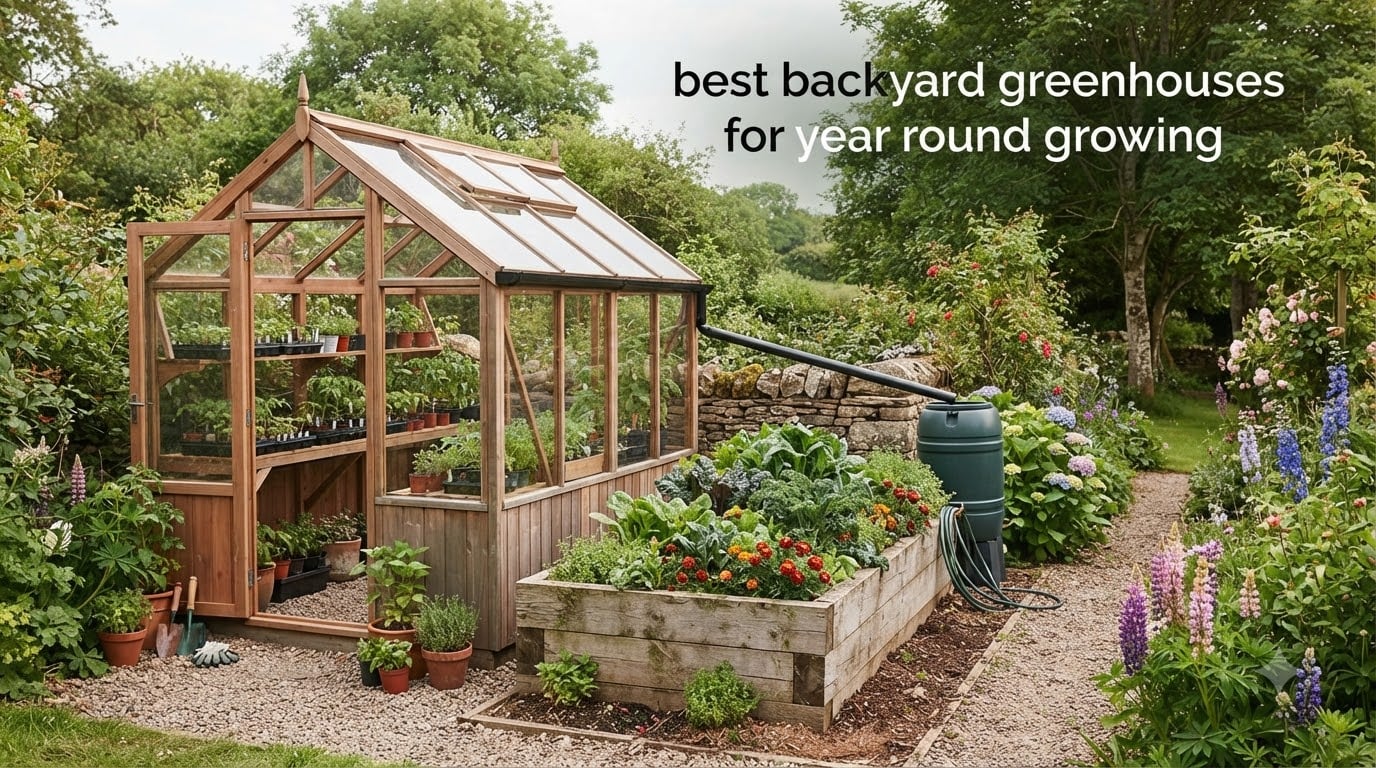
If you are searching for the best backyard greenhouses for year round growing, the frame and panels are only the start. A true four-season greenhouse also needs a sound foundation, reliable heat, active ventilation, and enough strength for the weather where you live.
I compared ten widely available greenhouse kits across the features that matter when winter arrives: insulation, snow and wind ratings, ventilation, access to power, anchoring, and usable growing space. I also weighed what greenhouse owners repeatedly report in forums, where cold snaps, unclear instructions, condensation, and surprisingly high heating demands cause the most frustration.
My best overall pick is the Backyard Discovery Willow because its 4-wall polycarbonate, tested weather resistance, fan, window, shelves, and built-in power make it a complete growing room rather than a seasonal shell. Gardeners with less space or a tighter budget should begin with the Sylviera 10 by 12 or the Ohuhu walk-in model, then plan climate-control equipment before planting.
This guide reflects the available product set and published specifications available in 2026. Ratings and review counts below are copied from the analyzed product data, while practical tradeoffs come from those specifications and customer insight summaries.
Table of Contents
Top 3 Backyard Greenhouse Picks (September 2026)

Backyard Discovery Willow 9 x 6
- 4-wall polycarbonate
- 100 mph wind rating
- built-in fan and power
The Best Backyard Greenhouses in 2026
| Product | Specifications | Action |
|---|---|---|
| Backyard Discovery Willow 9 x 6 |
|
Check Latest Price |
 Backyard Discovery Bellerose 9 x 6 Backyard Discovery Bellerose 9 x 6 |
|
Check Latest Price |
 CDCASA 12 x 10 x 10 CDCASA 12 x 10 x 10 |
|
Check Latest Price |
 Sylviera 8 x 14 Sylviera 8 x 14 |
|
Check Latest Price |
 Sylviera 10 x 12 Sylviera 10 x 12 |
|
Check Latest Price |
 Sylviera 6 x 10 Sylviera 6 x 10 |
|
Check Latest Price |
 KING BIRD 20 x 10 x 6.6 KING BIRD 20 x 10 x 6.6 |
|
Check Latest Price |
 EAGLE PEAK 8 x 6 EAGLE PEAK 8 x 6 |
|
Check Latest Price |
 Ohuhu 3-Tier Walk-In Ohuhu 3-Tier Walk-In |
|
Check Latest Price |
 Greengro 28 x 57 x 76 Greengro 28 x 57 x 76 |
|
Check Latest Price |
1. Backyard Discovery Willow 9 x 6 — Best Overall
Backyard Discovery Willow 9′ x 6′ White Cedar Wood and Polycarbonate Walk-in Greenhouse Kit with Exhaust Fan, Windows, Hose Hook-Ups, PowerPort, Staging Shelves for Year-Round Outdoor Gardening
54 sq ft
4-wall polycarbonate
100 mph wind rating
Pros
- Cedar frame
- built-in fan and power
- 13 ft of staging
- tested snow resistance
Cons
- Takes 2-3 weekends
- requires a solid crew
- roof sealant is hard to reach
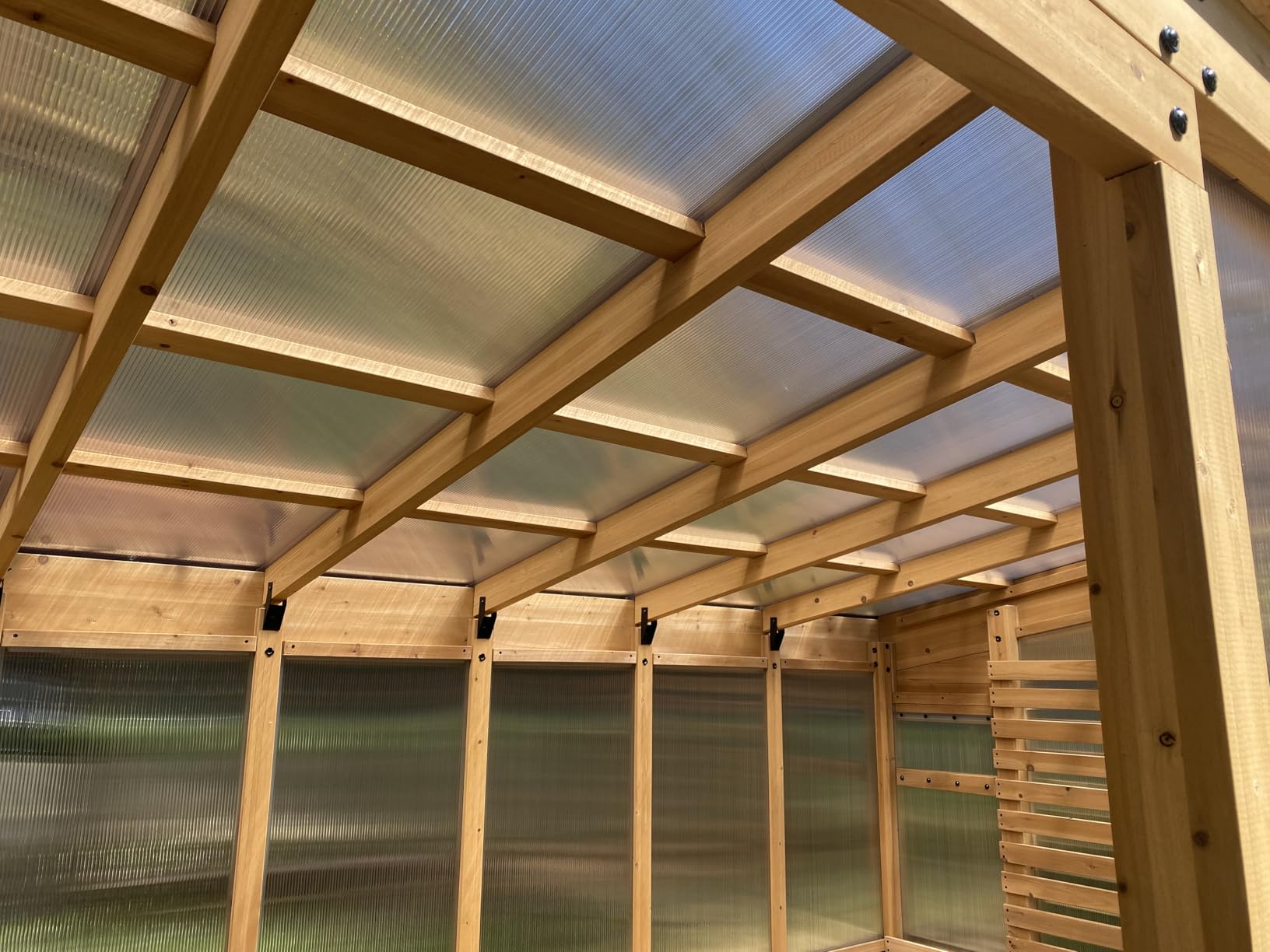
The Willow is the greenhouse I would choose for a permanent backyard installation. Its 100 percent cedar frame feels substantial, while commercial-grade 4-wall roof and window panels provide better heat retention than standard twin-wall polycarbonate.
I value the included PowerPort because winter growing usually means running a fan, heater, or grow light. Three outlets, three USB ports, a temperature-activated exhaust fan, an easy-open window, and hose hookups remove many jobs that otherwise require aftermarket parts.
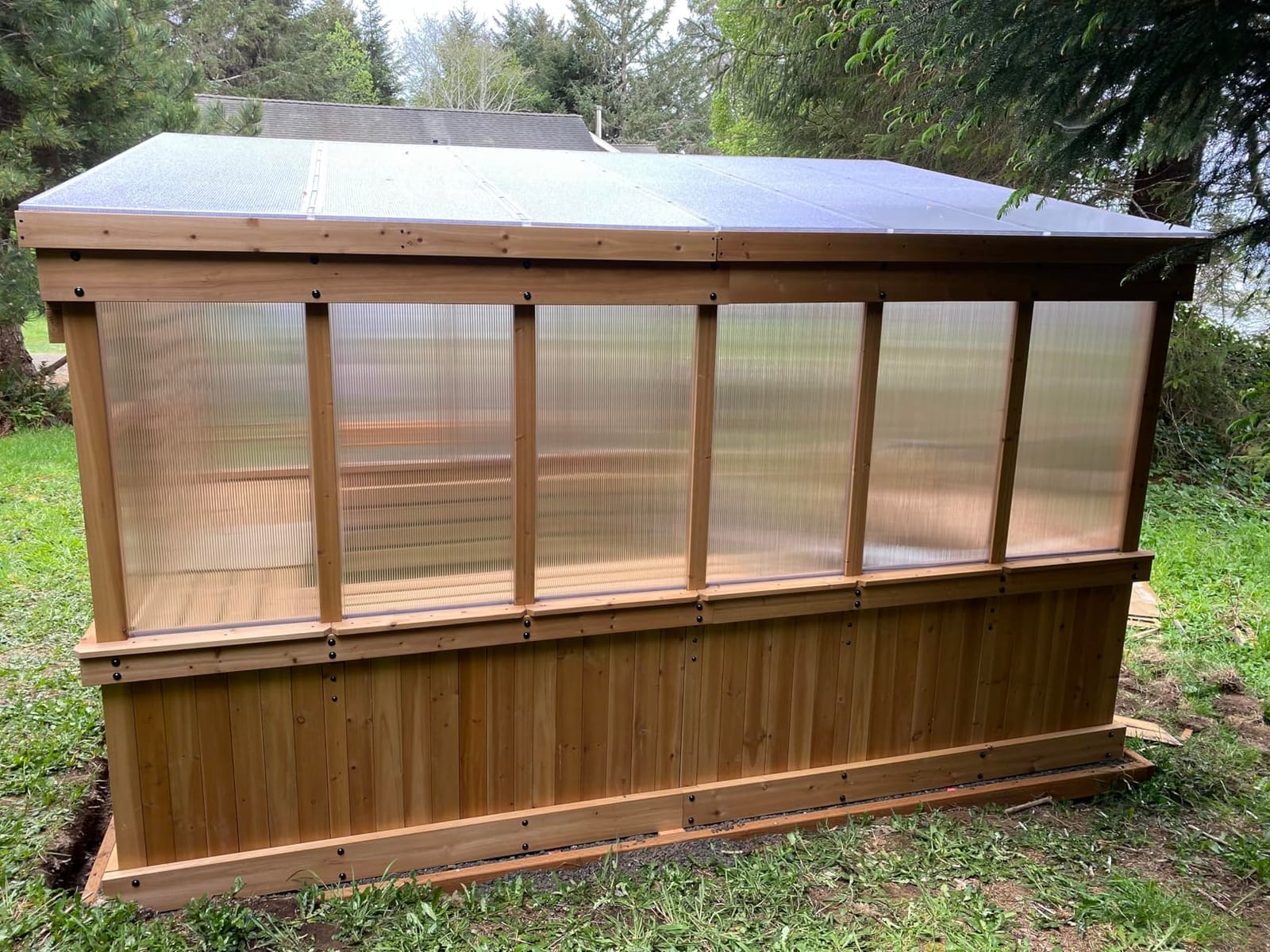
Customer feedback is especially strong on precise pre-drilling, instructions, replacement parts, and build quality. The tradeoff is a serious assembly commitment: plan for two or three people, pre-stain touchups, and careful roof sealing.
With 30 inches of snow-load testing and a 100 mph wind rating when anchored correctly, it is the most defensible four-season choice in this group. It still needs supplemental heat in freezing weather; a greenhouse enclosure does not make winter climate control automatic.
Will the Willow stay warm enough through winter?
It performs best as a well-sealed growing room with insulation where local conditions demand it, active air movement, and a properly sized heater. The 30 percent improvement over standard double-wall polycarbonate is useful, but it is not a substitute for heat during a prolonged cold snap.
I would add a dependable thermostat, a minimum-maximum thermometer, and an independent power-loss alarm. Keep the fan intake clear and use the opening window to release excess solar heat on bright afternoons.
Will the Willow fit a small backyard?
The 54 square foot interior works well for staging and overwintering, but the overall structure measures about 114.25 by 72.75 inches and weighs 571 pounds. Leave working room around it, confirm level ground, and use manufacturer-approved anchoring.
This is not a product to assemble on a whim. Its complete power, shelving, ventilation, and weather package suits a gardener who wants a finished year-round workspace rather than the lowest-maintenance seasonal cover.
2. Backyard Discovery Bellerose 9 x 6 — Premium Garden Feature
Backyard Discovery Bellerose 9′ x 6′ White Cedar Wood and Polycarbonate Walk-in Greenhouse Kit with Pergola, Exhaust Fan, Window, Hose Hook-Ups, PowerPort, Staging Shelves for Outdoor Gardening
54 sq ft
4-wall polycarbonate
attached pergola
Pros
- Cedar construction
- fan and power
- 19 ft of staging
- tested weather strength
Cons
- Heavy 798-pound build
- multi-day assembly
- needs a robust base
The Bellerose takes the Willow’s practical foundation and adds a pergola, upper staging, and plant hooks. I see it as the best choice when the greenhouse must work hard and look like an intentional part of the garden rather than a utility structure.
Its 4-wall polycarbonate reportedly retains heat well, and customers say the structure can remain comfortably above freezing when ambient conditions are not severe. The exhaust fan, opening window, 13 lower shelf feet, and six upper shelf feet give it excellent organization for winter plants.
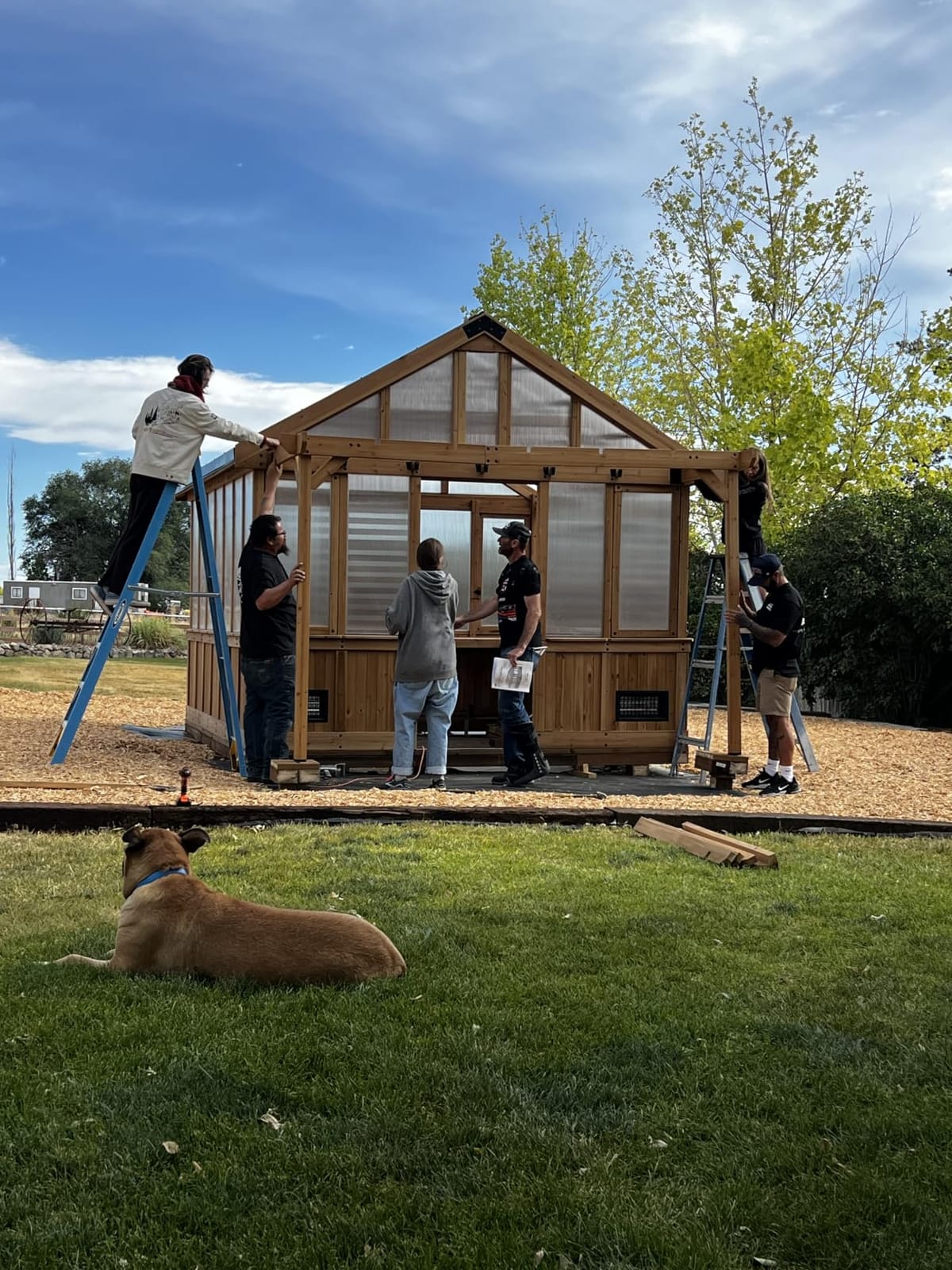
The engineering deserves credit: pilot holes align accurately and the hardware kit is unusually complete. Cedar is attractive but soft, so I would use a torque-limiting driver and avoid over-tightening screws.
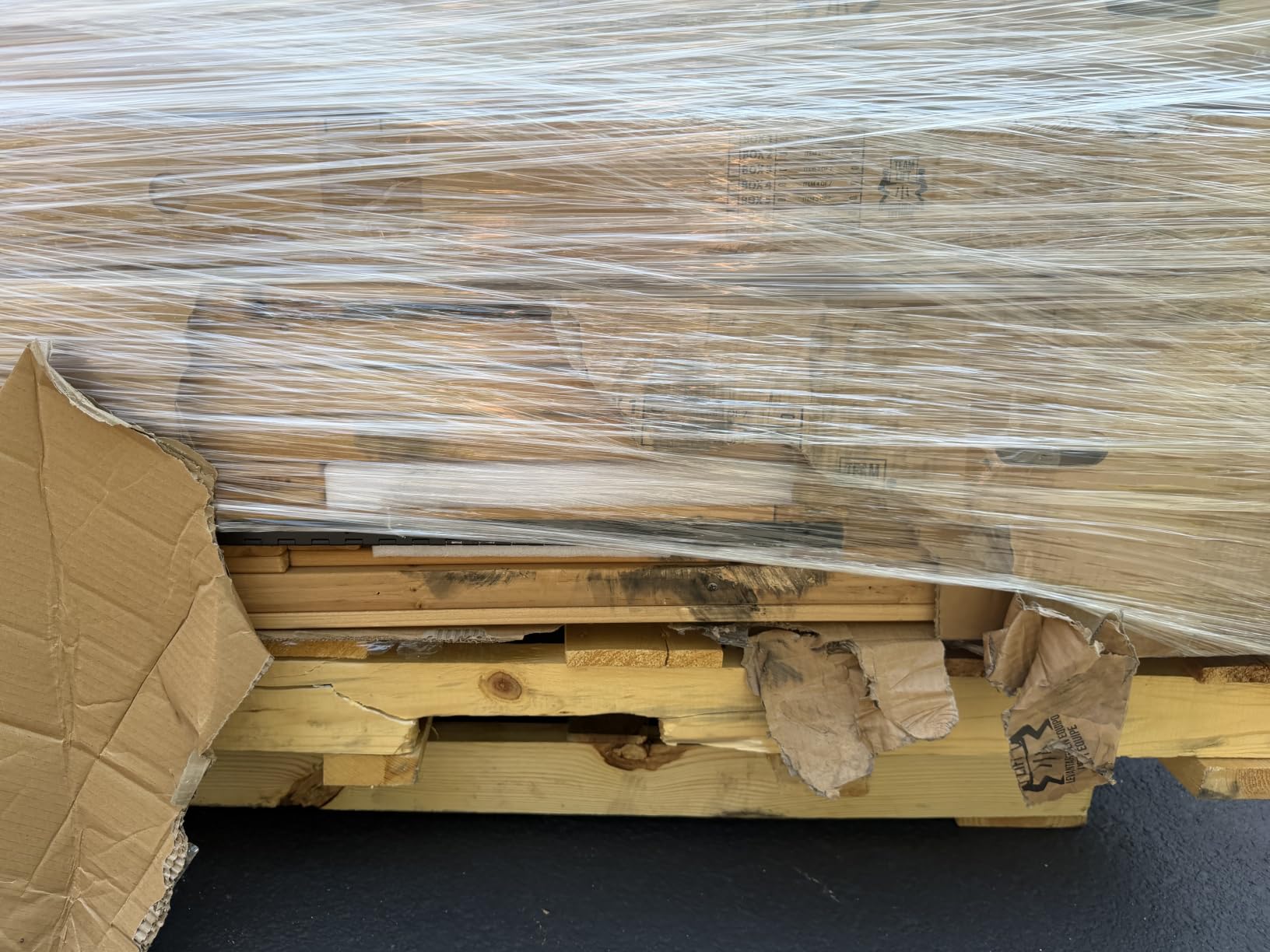
Freight delivery, a 798.1-pound assembled weight, and a recommended concrete foundation make this a major project. The pergola adds character and a place for vines or decorative lighting, but it also expands the footprint and wind exposure.
Does the Bellerose justify its premium status?
It makes sense if you will use the upper staging, pergola, integrated utilities, and precise engineering. For basic propagation, its additional weight and assembly burden may buy features you will not use.
Customer feedback gives it a 4.6 rating from 75 reviews and repeatedly praises fit, finish, warmth, and support. I would budget time for several assembly days and arrange help before the freight arrives.
Can it handle a snowy climate?
Properly anchored, it is tested for up to 30 inches of snow and 100 mph winds. That rating is meaningful only with a level base, intact seals, and prompt snow removal rather than treating the roof as maintenance-free.
In colder zones, add perimeter insulation and a backup heat plan. The pergola should not be used to support anything that changes the structure’s wind load without engineering approval.
3. CDCASA 12 x 10 x 10 — Best for Light-Filled Space
CDCASA 12x10x10 FT Polycarbonate Greenhouse for Outdoors w/2 Windows
4mm twin-wall panels
70% light
2 adjustable windows
Pros
- Large walk-in interior
- rust-resistant frame
- rain gutters
- UV protection
Cons
- Weak instructions
- thin panels
- needs extra vent securing
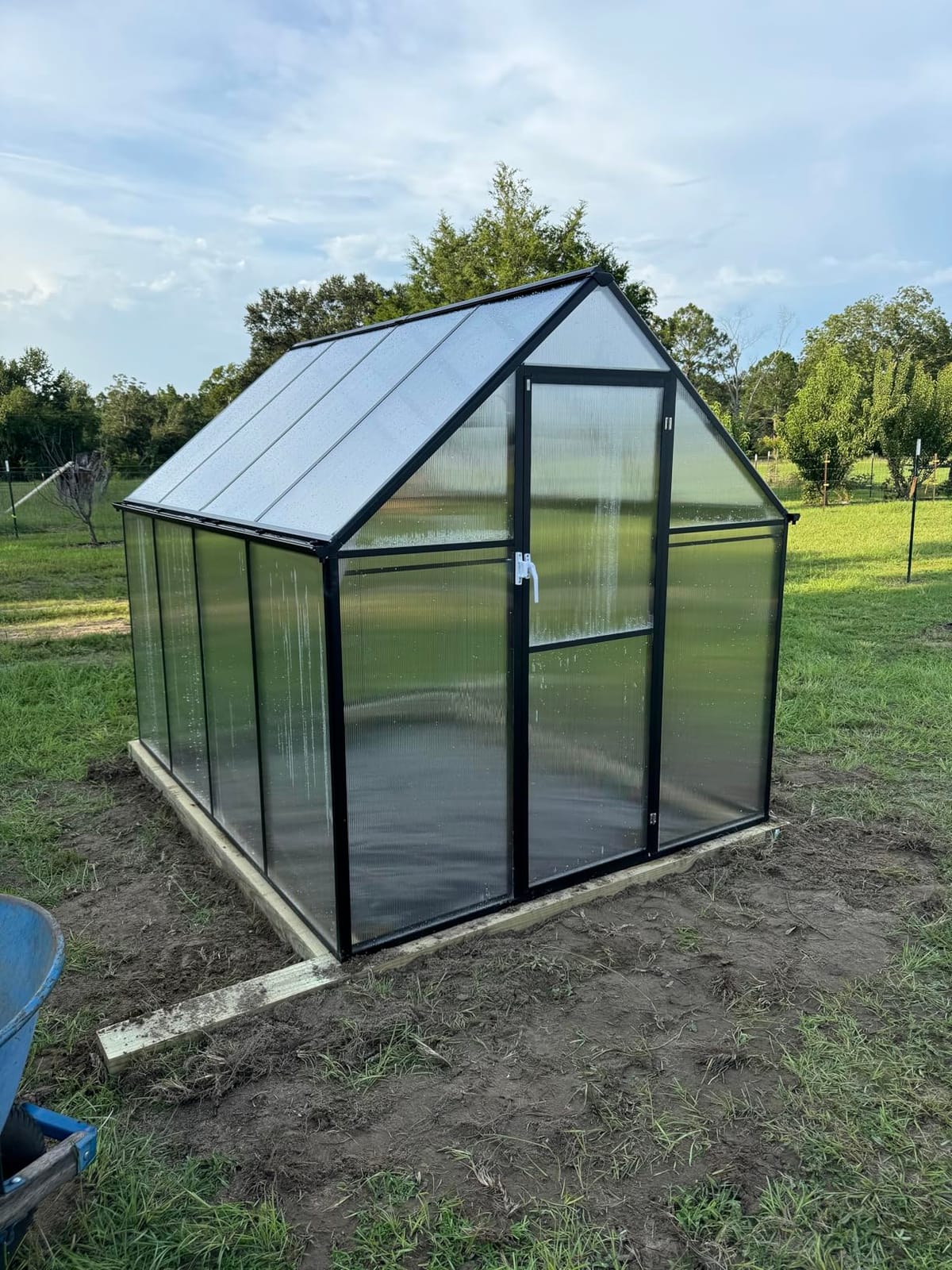
The CDCASA stands out for sheer usable volume: 12 by 10 feet of floor area and 10 feet of height. I would use that height for hanging crops, tall tropicals, or a thermal-mass setup that needs vertical separation from cold ground.
Its 4mm twin-wall polycarbonate admits 70 percent light while blocking over 99.9 percent of harmful UV rays. Two adjustable windows, a swing door, and rain gutters make the basic growing environment practical once assembly is complete.
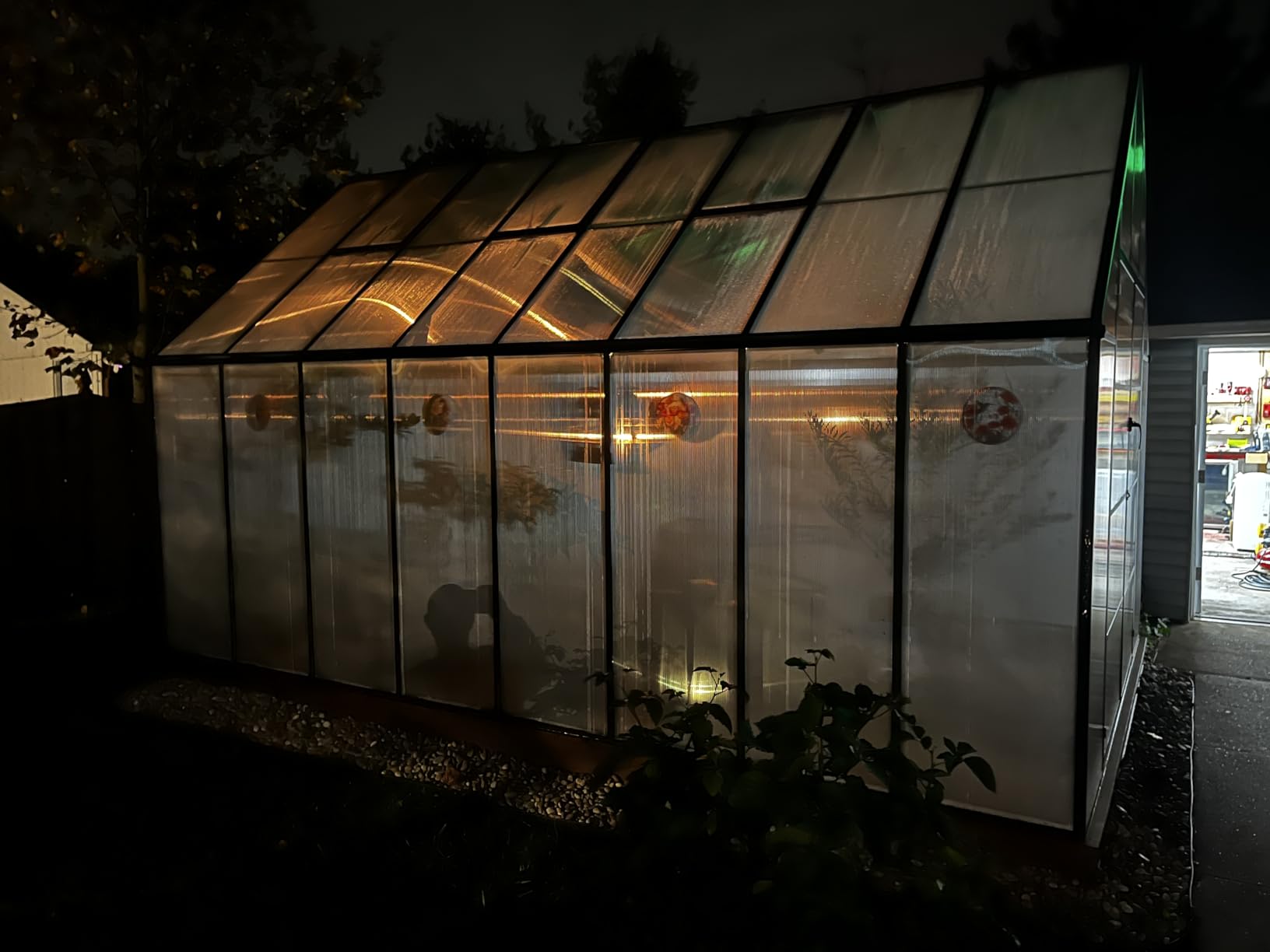
Customer reports describe a sturdy finished structure and a 4.2 rating from 48 reviews. The assembly system is labeled, but the instructions leave too much interpretation, so I would sort every fastener before starting and recruit two skilled helpers.
The published 20 pounds-per-square-foot snow rating and 56 mph wind rating are lower than the premium cedar kits. I would reinforce it, anchor every base foot, and avoid exposed or hurricane-prone sites without an engineered plan.
Is the CDCASA suitable for winter vegetables?
It can protect plants and hold useful heat when sealed and equipped with ventilation and a thermostat-controlled heater. Its twin-wall panels provide insulation, but the thin construction and limited weather rating make climate preparation more important.
I would line the lower walls with removable insulation, use a circulation fan, and add an automatic vent opener. These steps reduce condensation and prevent stale, humid air from stressing plants.
How difficult is the CDCASA to build?
Allow roughly four to six hours with two experienced builders, plus time to correct unclear steps. The included Allen key is too small for comfortable repeated use, so a proper set will make the job much less frustrating.
Check that the frame is square before fully tightening tension connections. The door header should also be aligned carefully so the snap-on handles close without binding.
4. Sylviera 8 x 14 — Best Budget Walk-In Layout
8×14 FT Greenhouse with Hygrometer, Windproof UV Protection Green Houses
8 x 14 ft
4mm double-wall panels
hygrometer
Pros
- Large floor plan
- lockable door
- adjustable roof vents
- UV protection
Cons
- Confusing assembly
- 2-4 people needed
- needs careful leveling
The Sylviera 8 by 14 is a practical compromise for gardeners who want more growing area than a compact shelf house without moving to a full-size premium build. Its long footprint suits a raised bed on one side and staging on the other.
I appreciate the included hygrometer, lockable door, adjustable roof vents, and drainage channel. The 4mm, 580g double-wall panels and reinforced aluminum frame provide a solid starting point for cold protection.
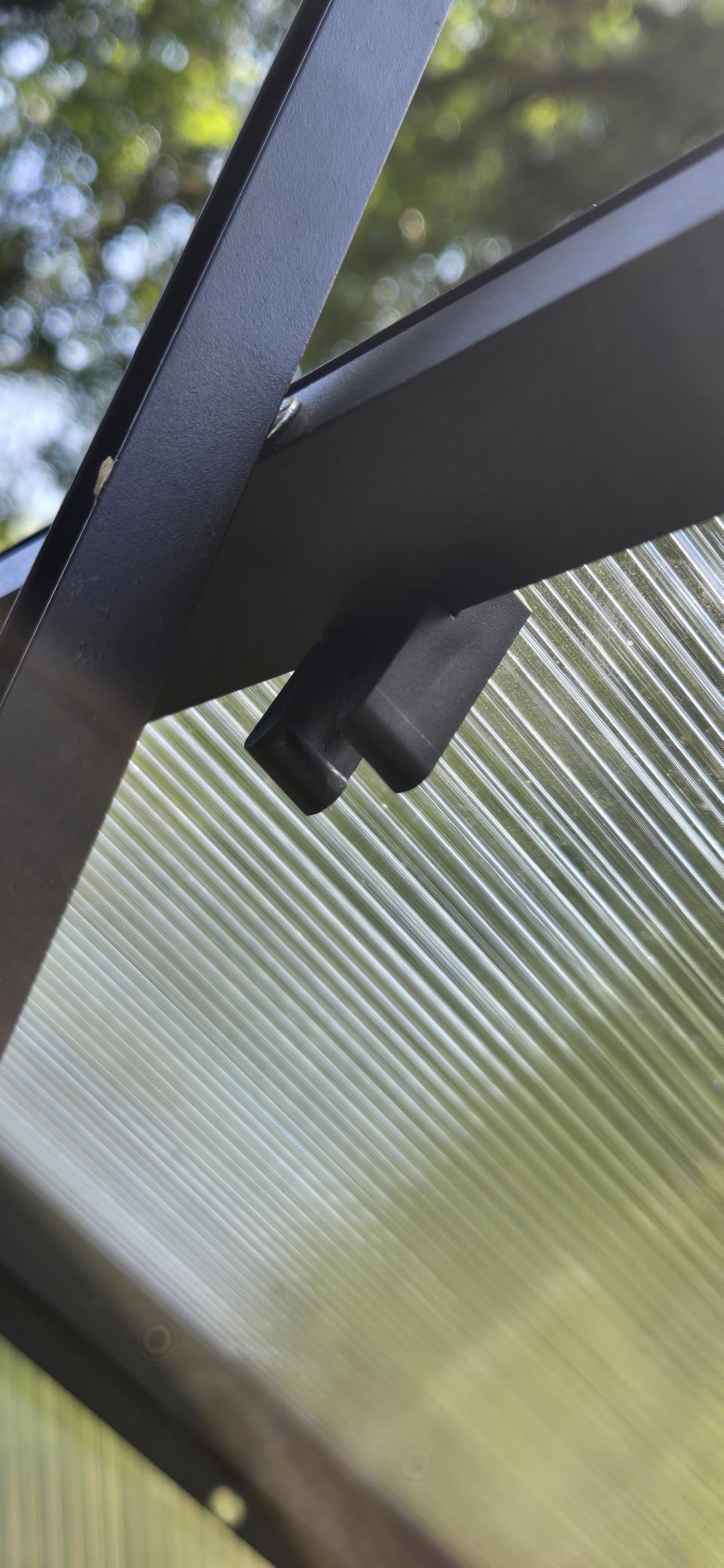
Customers give it a 4.4 rating from 127 reviews and report better-than-expected durability after assembly. They also make the same point I would: the instructions need more detail, and the base must be perfectly level before holes are joined.
Use silicone at panel gaps if pests or drafts are a concern, but do not seal ventilation openings. The design is intended for strong wind, rain, and snow when anchored, yet the product data does not publish a quantified wind or snow rating, so conservative siting matters.
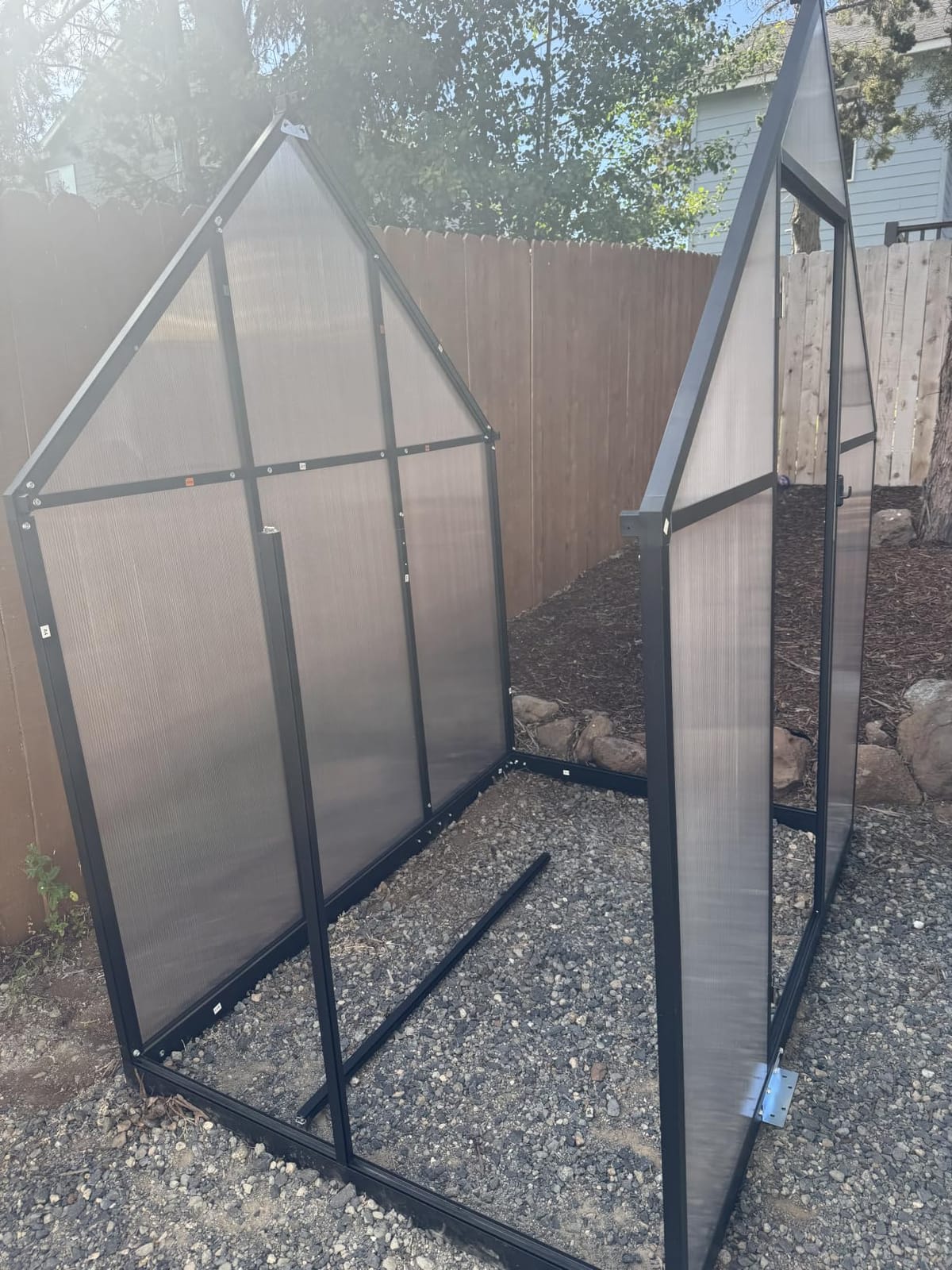
Is an 8 by 14 greenhouse too large to heat?
It is large enough that heating it through a severe winter can be inefficient. I would use it primarily for hardy greens, propagation, and overwintering, then add a thermal curtain or zone partition if tropical plants need warmer conditions.
A long, narrow shape loses heat through its entire envelope, while a partition can reduce the volume you actually need to condition. Place the heater low and use a fan to prevent cold pockets without blasting plants directly.
What foundation does the Sylviera need?
A level, square base is non-negotiable because alignment problems compound across a 14-foot frame. Concrete, compacted pavers, or a properly built perimeter can work if the manufacturer permits them and every anchoring point is secured.
Recruit two to four people and keep a second set of instructions open on a phone or tablet. Seal only after the frame is square, plumb, and fully tightened.
5. Sylviera 10 x 12 — Best Overall Value
10×12 FT Greenhouse with Hygrometer, Windproof UV Protection Green Houses
10 x 12 ft
4mm double-wall panels
double doors
Pros
- Spacious interior
- hygrometer
- roof vents
- drainage channels
Cons
- Poor documentation
- 2-4 person setup
- may need extra hardware
The 10 by 12 Sylviera is my value recommendation because it balances floor area, double-door access, and a full climate-management package. It is large enough for serious winter production but less unwieldy than the 20-foot tunnel.
Its 4mm double-wall panels, adjustable roof vents, lockable double doors, hygrometer, and drainage channels cover the basics. Customers also report effective warmth retention and stable performance in storms when the frame is anchored.
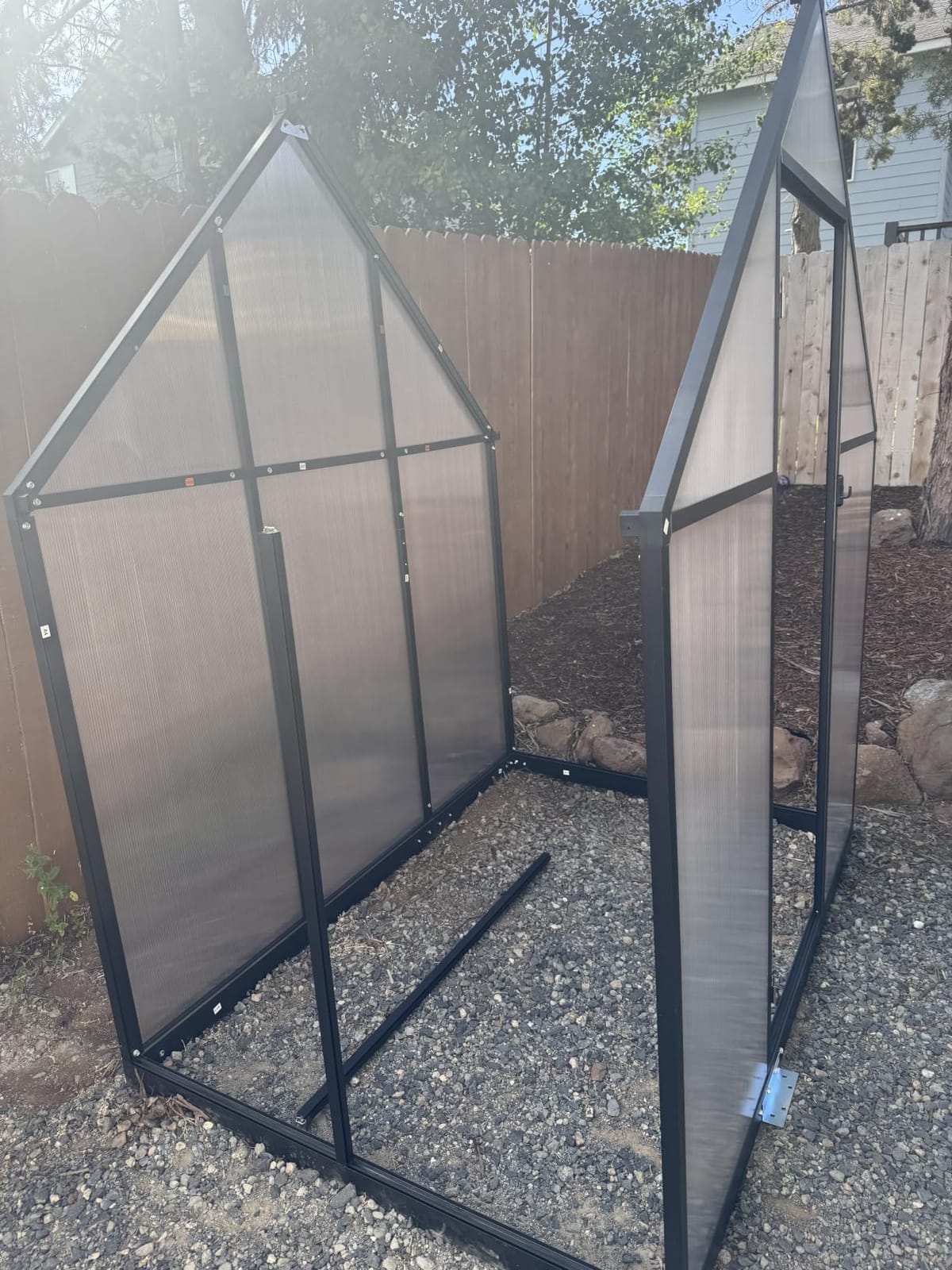
The product data shows a 4.4 rating from 127 reviews, while the review summary rounds a different internal count. I use the exact top-level rating and review count supplied for this product, not the summary’s count.
Assembly is the clear weak point. The manual and videos lack detail, quality control can vary, and a digital thermometer may need troubleshooting, so I would keep a separate thermometer as a backup.
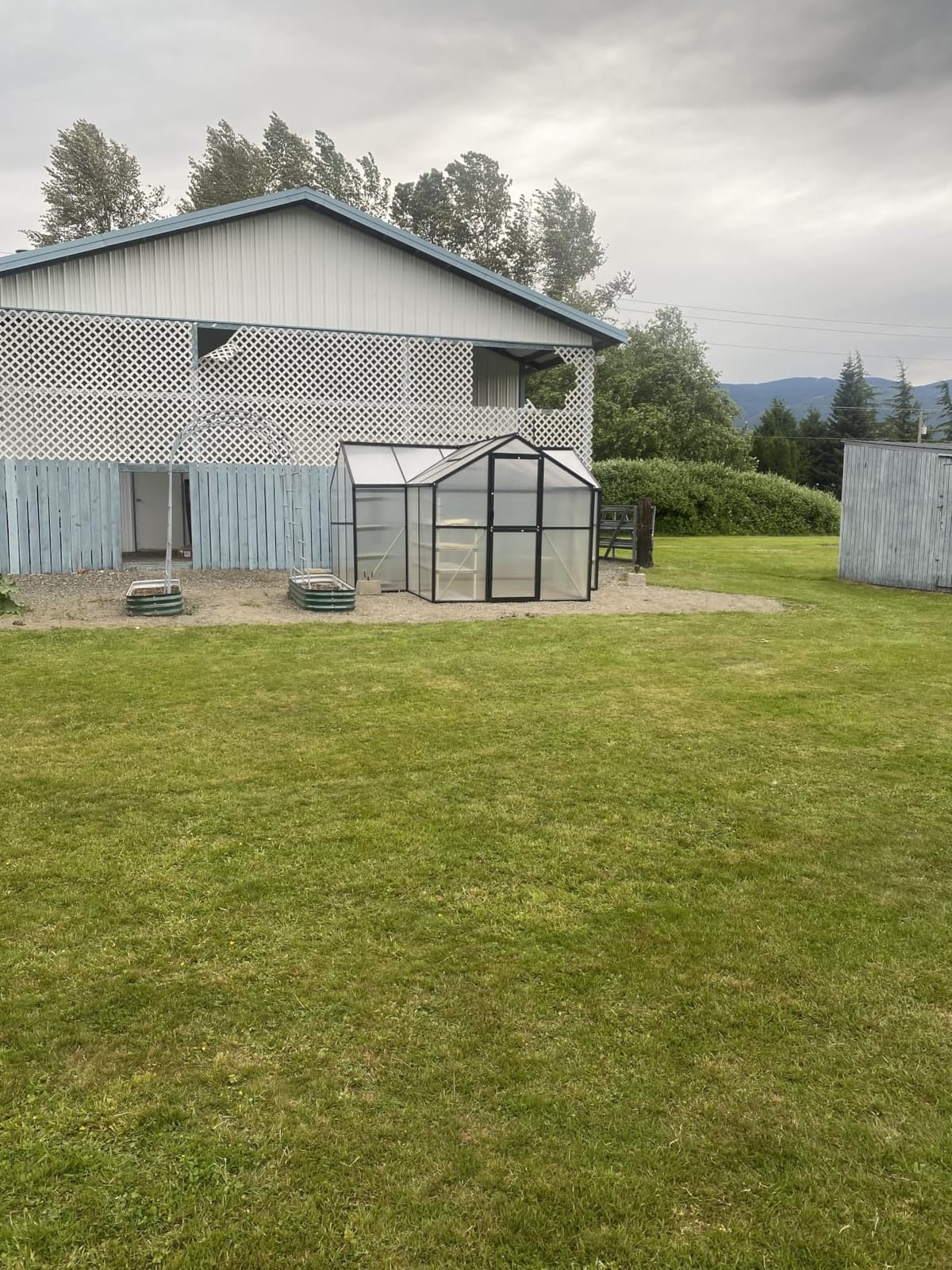
What can I grow in the Sylviera during winter?
Leafy greens, herbs, scallions, radishes, and seedlings are realistic with frost protection and crop-specific temperature targets. Citrus and tender tropicals need more heat and humidity control than an unconditioned polycarbonate shell provides.
Use the hygrometer as a quick check, not the only control. I would monitor overnight lows, daytime highs, and humidity at plant level, then vent before condensation becomes persistent.
Will the double doors help with ventilation?
They improve access and can help dump heat, but opening both doors at once can stress plants and invite pests. Use roof vents for routine airflow and reserve the doors for working, cleaning, or emergency cooling.
A small circulation fan is a better year-round investment than relying on door openings. It mixes warm and cool air, reduces fungal pressure, and makes the greenhouse feel more even.
6. Sylviera 6 x 10 — Best Compact Polycarbonate Pick
6x10FT Greenhouse with Hygrometer, Windproof Warm Plant Green Houses
6 x 10 ft
4mm double-wall panels
2 roof vents
Pros
- Lockable door
- hygrometer
- reinforced corners
- small footprint
Cons
- Lower 77-inch height
- confusing instructions
- vent arms need securing
The 6 by 10 Sylviera is the most approachable rigid-panel greenhouse here for a narrow yard. I see it as a strong choice for propagation, herbs, and a modest collection of overwintered pots rather than a large vegetable room.
Its UV-resistant 4mm double-wall panels, reinforced aluminum corners, adjustable roof vents, lockable door, and included hygrometer are useful features. Customer summaries describe solid heat retention and a professional appearance.
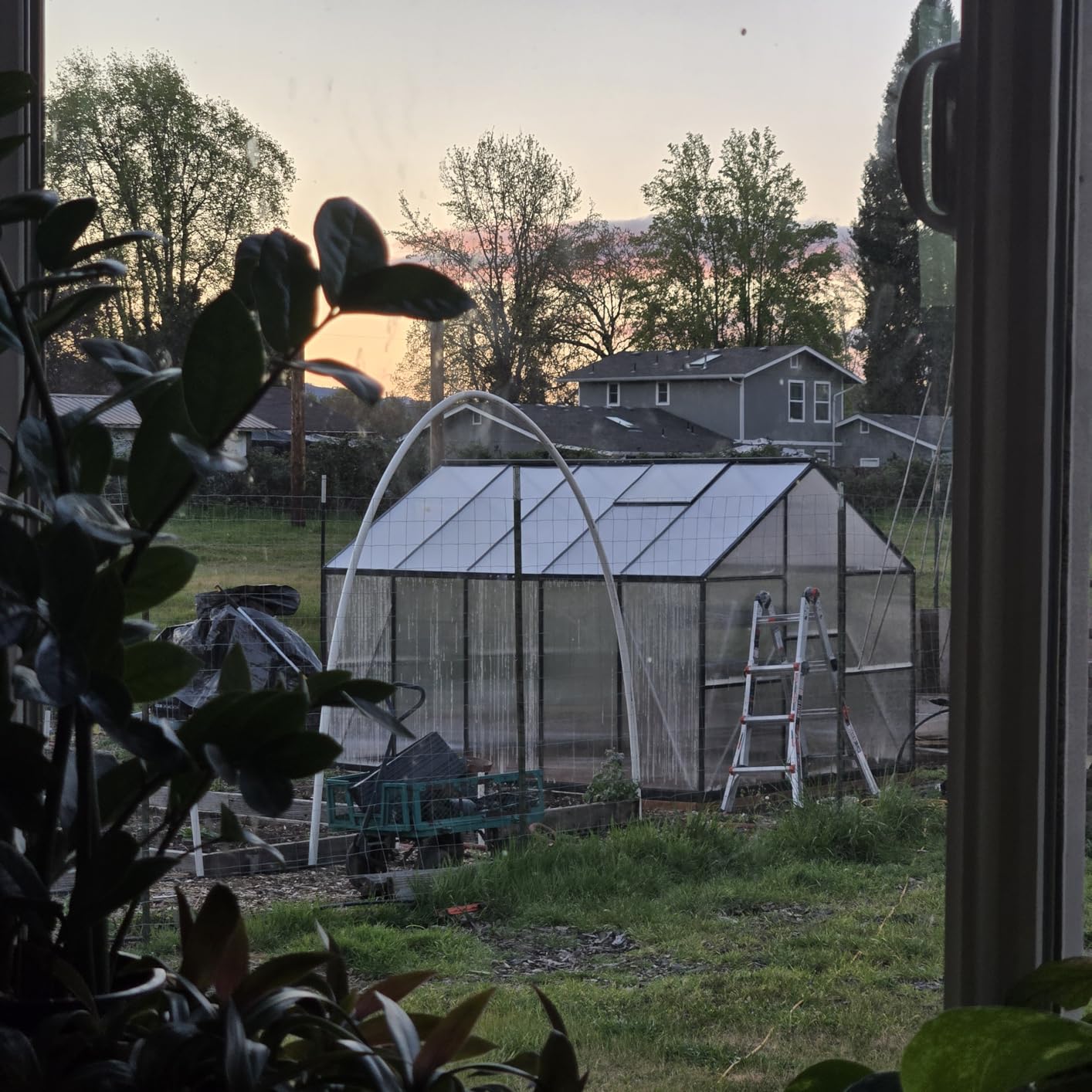
At 77 inches high, it is less comfortable for tall gardeners and may benefit from a raised base. Assembly still requires two people, and the vent prop arms benefit from a small rubber band or clip in windy weather.
The 4.0 rating from 282 reviews reflects a real mix of praise and complaints. I would inspect every panel for bent edges, remove the protective film before it bakes on, and verify that the door frame is square.
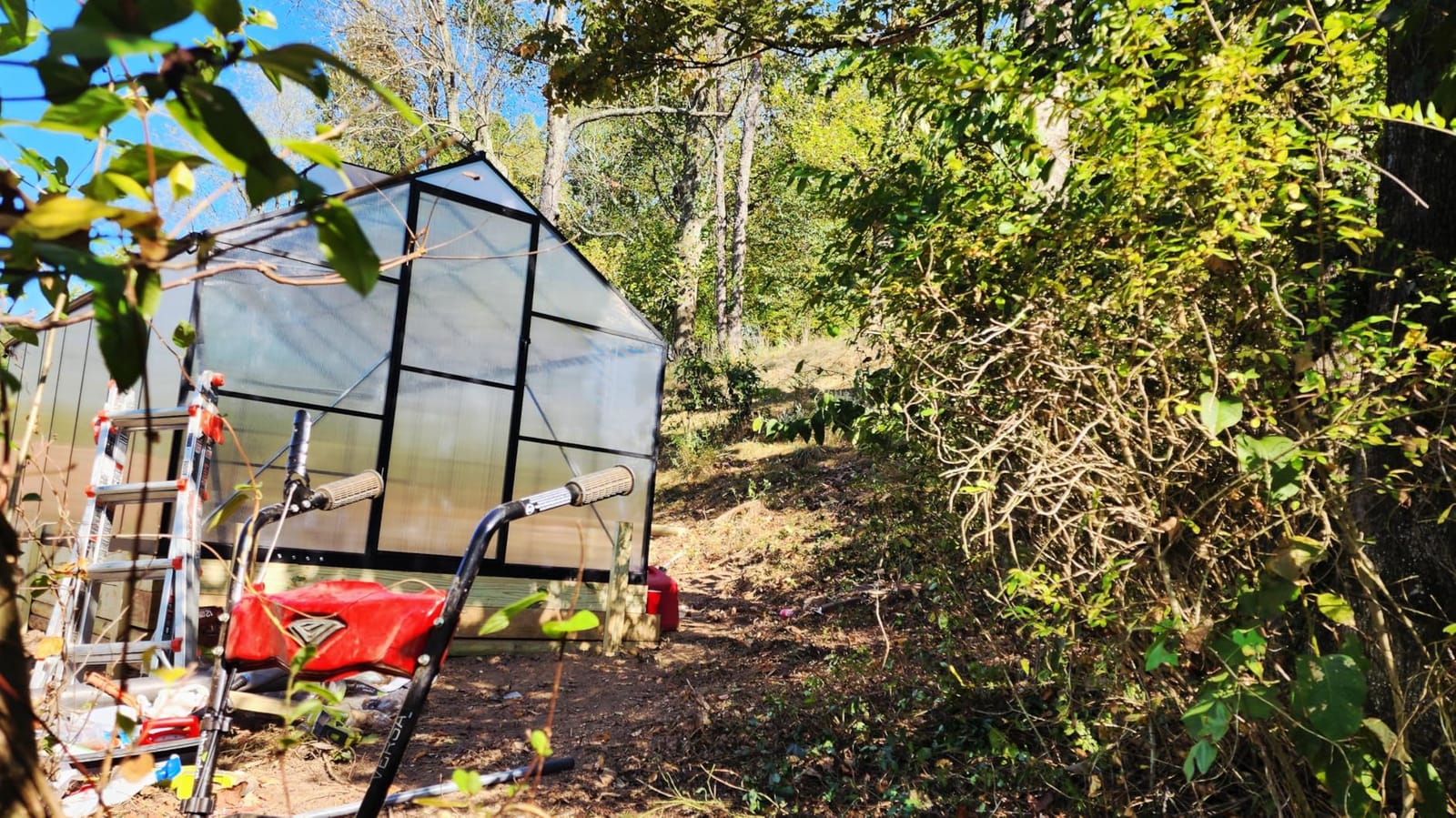
Is the Sylviera tall enough for comfortable work?
It works for short sessions and low crops, but I would not choose it if I planned to stand inside for long periods. A platform can improve headroom, but it also changes anchoring height, access, and stability and should be designed as part of the foundation.
For a similar floor area with more height, compare the 10 by 12 model. That choice costs more, but it may prevent daily frustration and make shelving easier to reach.
Does it need a heater in a cold climate?
Yes, if you want tender plants or active winter growth rather than simple frost protection. The panels slow heat loss, but a thermostat, circulation fan, and reliable electrical supply are still needed when outdoor temperatures fall below your crop target.
Add removable insulation around the lower wall and keep the roof vents clear. Automatic vent openers are especially useful when solar gain can make a greenhouse dangerously hot before you return home.
7. KING BIRD 20 x 10 x 6.6 — Best for Maximum Growing Area
KING BIRD Premium 20x10x6.6FT Greenhouse for Outdoors Large Walk-in House
20 x 10 x 6.6 ft
150g PE cover
10 vents
Pros
- Huge floor plan
- reinforced galvanized frame
- eight screen windows
- dual doors
Cons
- Not a permanent four-season structure
- cover seams need care
- 6.6 ft headroom
The KING BIRD tunnel is the right answer when growing area matters more than permanent construction. Its 20 by 10 foot footprint can hold several raised beds, and the 10 ventilation openings make seasonal temperature control practical.
I like the reinforced galvanized steel frame, diagonal poles, crossbars, stakes, and ropes. The 150g polyethylene cover is UV-protected, while mesh doors and roll-up screen windows provide flexible airflow.
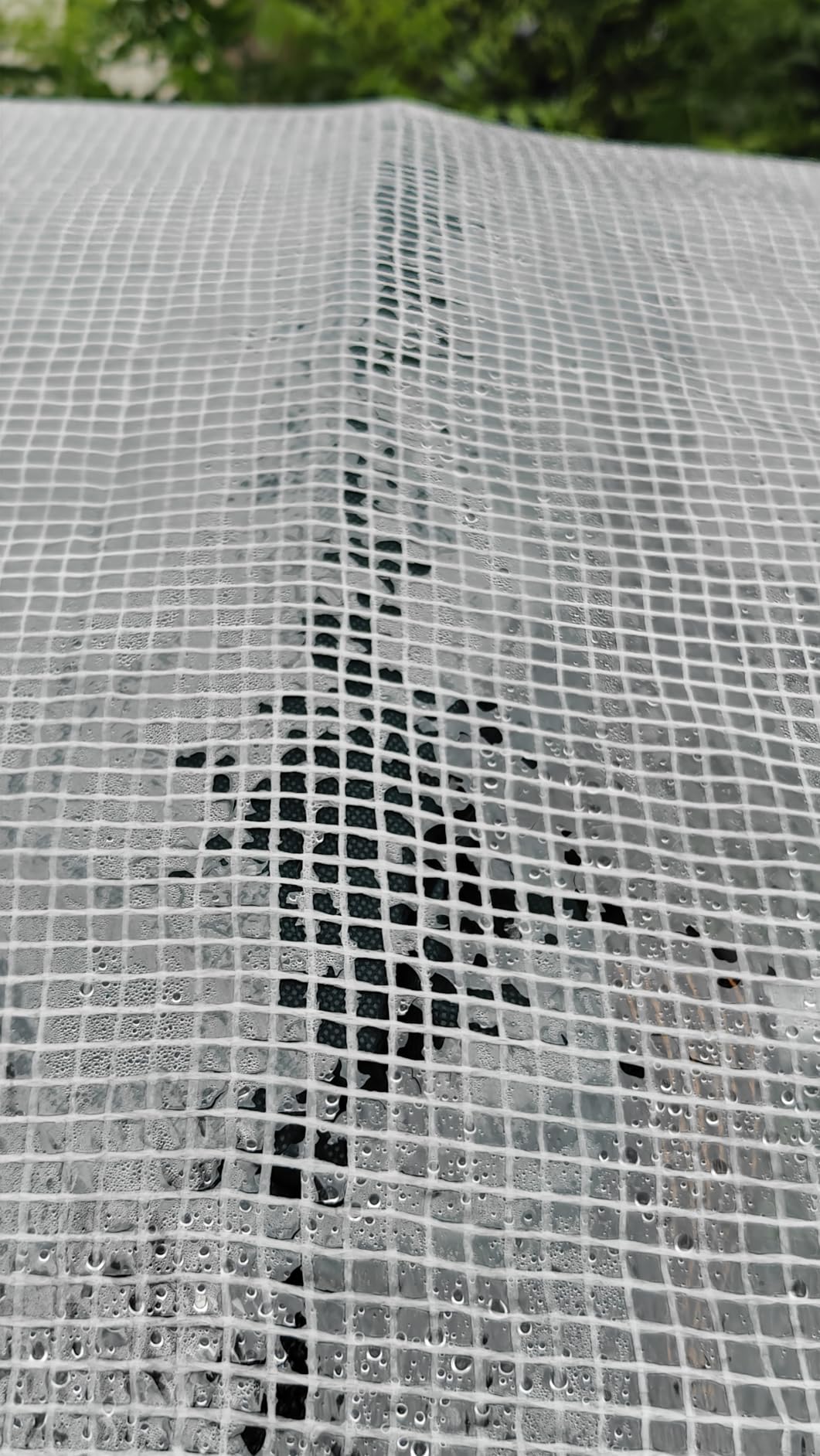
Customer feedback gives it a 4.3 rating from 1,230 reviews and repeatedly praises space and value. It also warns against treating a hoop tunnel like a rigid greenhouse: seams, zippers, and tie-downs need inspection, especially in wind.
The cover is described as needing replacement after one to two years of continuous use. That makes this a season-extension structure, not my first recommendation for dependable winter production in exposed cold zones.
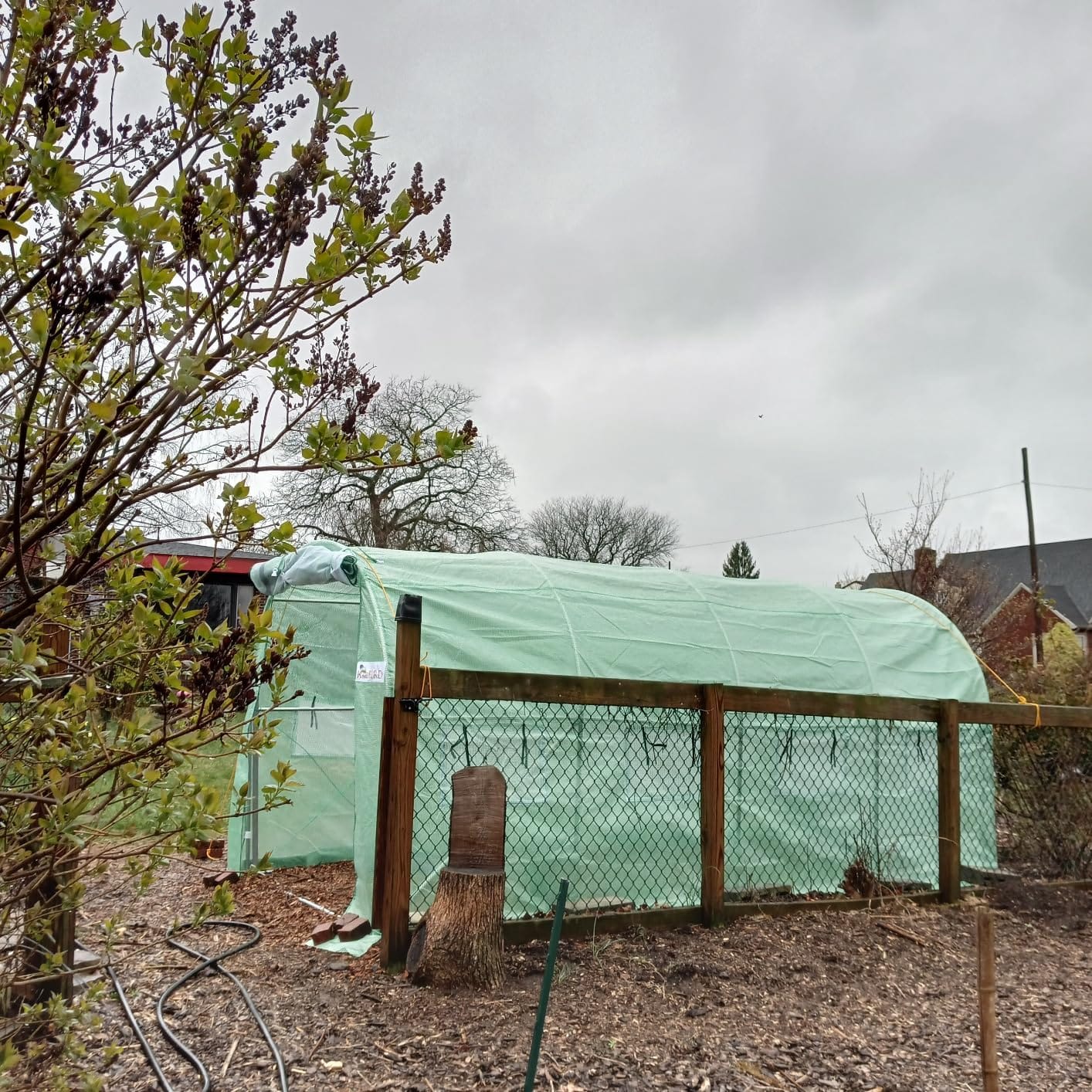
Can the KING BIRD operate year round?
It can in a mild climate with careful anchoring, frequent cover checks, and supplemental heat. In snow country, I would treat its published wind and weather descriptions as a reason to reinforce and monitor it, not as a guarantee.
Remove snow promptly and avoid pressing the cover against sharp frame edges. A second inner layer or row cover can reduce heat loss, but leave room for air circulation and keep combustion equipment out of an unvented greenhouse.
Is the low height a problem?
Six point six feet is workable for many gardeners, but tall people may feel cramped. The trade is a lower profile that can be less exposed than a tall rigid greenhouse, provided the tunnel is properly tensioned.
Position it lengthwise east-west if your main goal is even light across the beds, or north-south if you want maximum seasonal sun distribution. Check your local wind direction before choosing the door ends.
8. EAGLE PEAK 8 x 6 — Easiest Setup for Seasonal Protection
EAGLE PEAK 8×6 Easy Setup Pop Up Greenhouse, Clear/Green
8 x 6 ft
pop-up steel frame
one-person setup
Pros
- Fast setup
- roll-up door
- mesh windows
- compact storage
Cons
- PE seams may wear
- zipper and cover need regular checks
- not a permanent four-season build
The EAGLE PEAK is the easiest greenhouse in the comparison to put up and take down. Its center-lock design and 37.3-pound frame make it a practical option for renters, temporary winter protection, or a gardener who stores the greenhouse between seasons.
It has a water-resistant UV-resistant PE cover, a roll-up door, and two mesh windows. The 4.3 rating from 4,991 reviews makes its setup and portability easy to trust, but the long-term record points to seam and zipper wear.
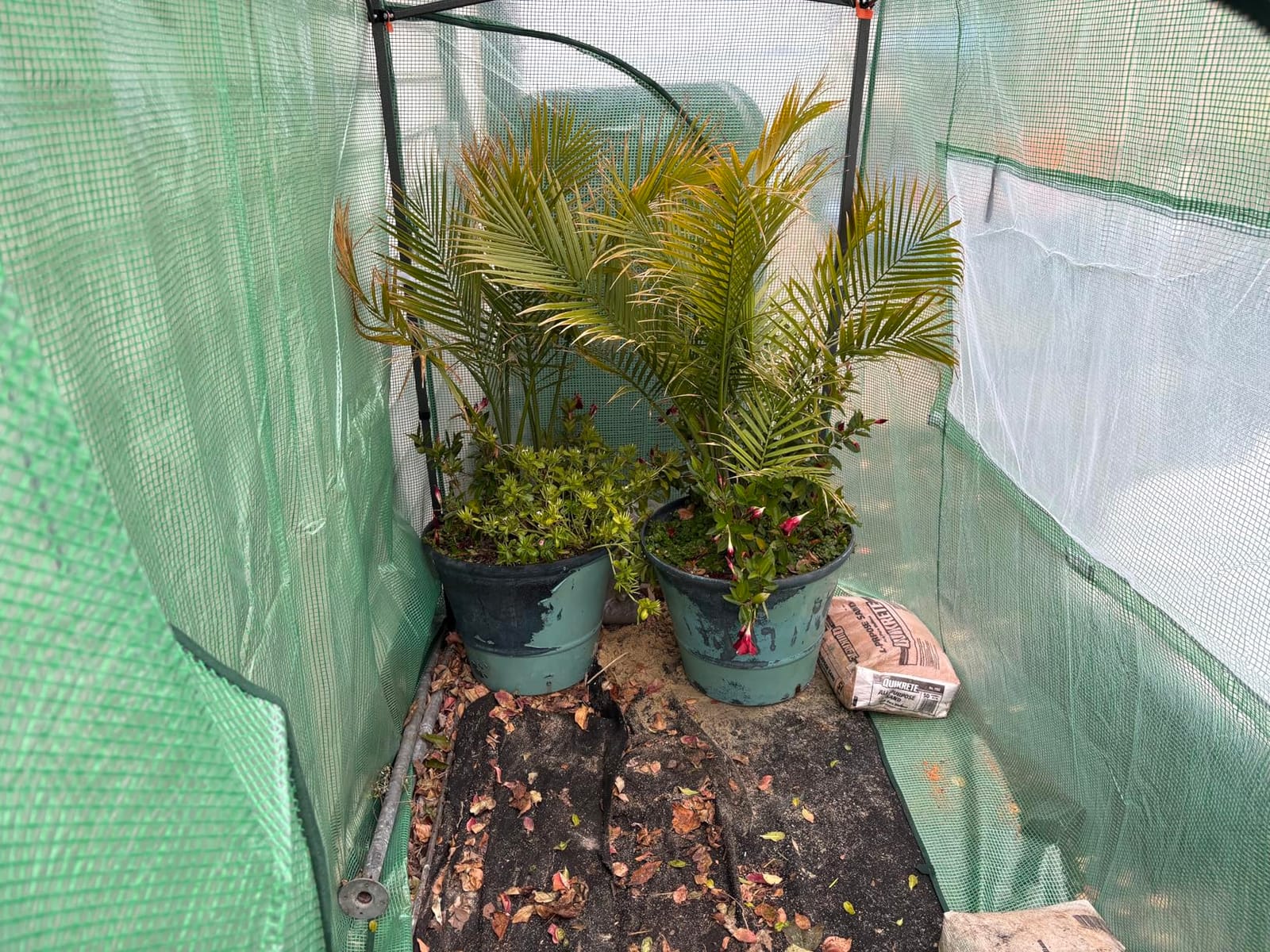
I would anchor it even though the pop-up design feels temporary, and I would clear snow or ice before it loads the roof. Customers report good service, yet a replacement cover is part of the eventual ownership plan.
This is best for extending a season and protecting pots, not for creating a heated, permanent winter room. Its value is speed and convenience, not weather permanence.
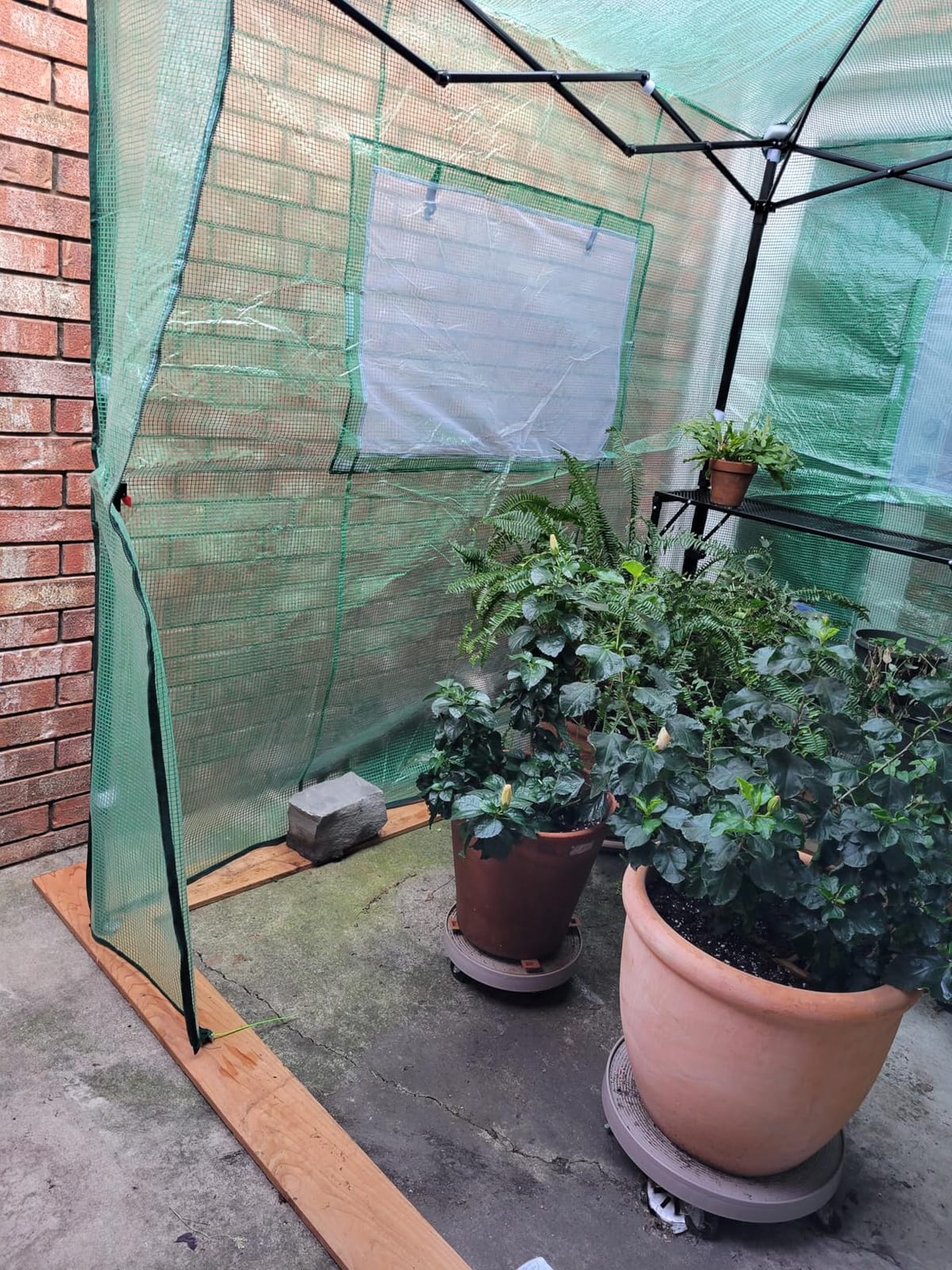
Will the EAGLE PEAK protect plants in a hard freeze?
It can reduce wind and frost exposure, but it will not create a dependable warm room by itself. Add a safe heater designed for greenhouse use, a thermometer, and insulation only after confirming the cover and frame can tolerate the setup.
I would avoid unattended electric heaters in a lightweight structure unless the installation follows local safety guidance. A thermal mass barrel or water containers can moderate temperature swings, but they are supplements rather than emergency heat.
How often will the cover need attention?
Inspect seams, zippers, tie-downs, and the frame after every strong wind or snow event. Customer feedback suggests cover deterioration can appear after six to twelve months in demanding sun and weather.
Keep the cover clean, tension it evenly, and repair small tears before they spread. Replacing a cover is easier than replacing a warped frame.
9. Ohuhu 3-Tier Walk-In — Best for Seed Starting and Small Lots
Ohuhu Greenhouse for Outdoors with Screen Windows, 57 x 57 x 76” Walk in Plant Greenhouses Heavy Duty with Durable PE Cover, 3 Tiers 12 Shelves Stands Plastic Portable Green House with Shelf Clips
3 tiers
12 metal shelves
56.3 x 55.5 x 76.8 in
Pros
- Twelve shelves
- UV-protected PE cover
- roll-up door
- small footprint
Cons
- Thin shelving
- limited headroom
- connectors and cover need anchoring
The Ohuhu is a vertical growing station for people who do not have room for a walk-in rigid greenhouse. Its 12 shelves and compact 56.3 by 55.5 inch footprint keep seedlings, herbs, and small pots organized close to the house.
The reinforced PE cover is UV-protected and double-stitched, while the roll-up door and screened windows support airflow. Each shelf is listed for up to 22 pounds, though I would treat the upper shelves as best for lightweight trays.
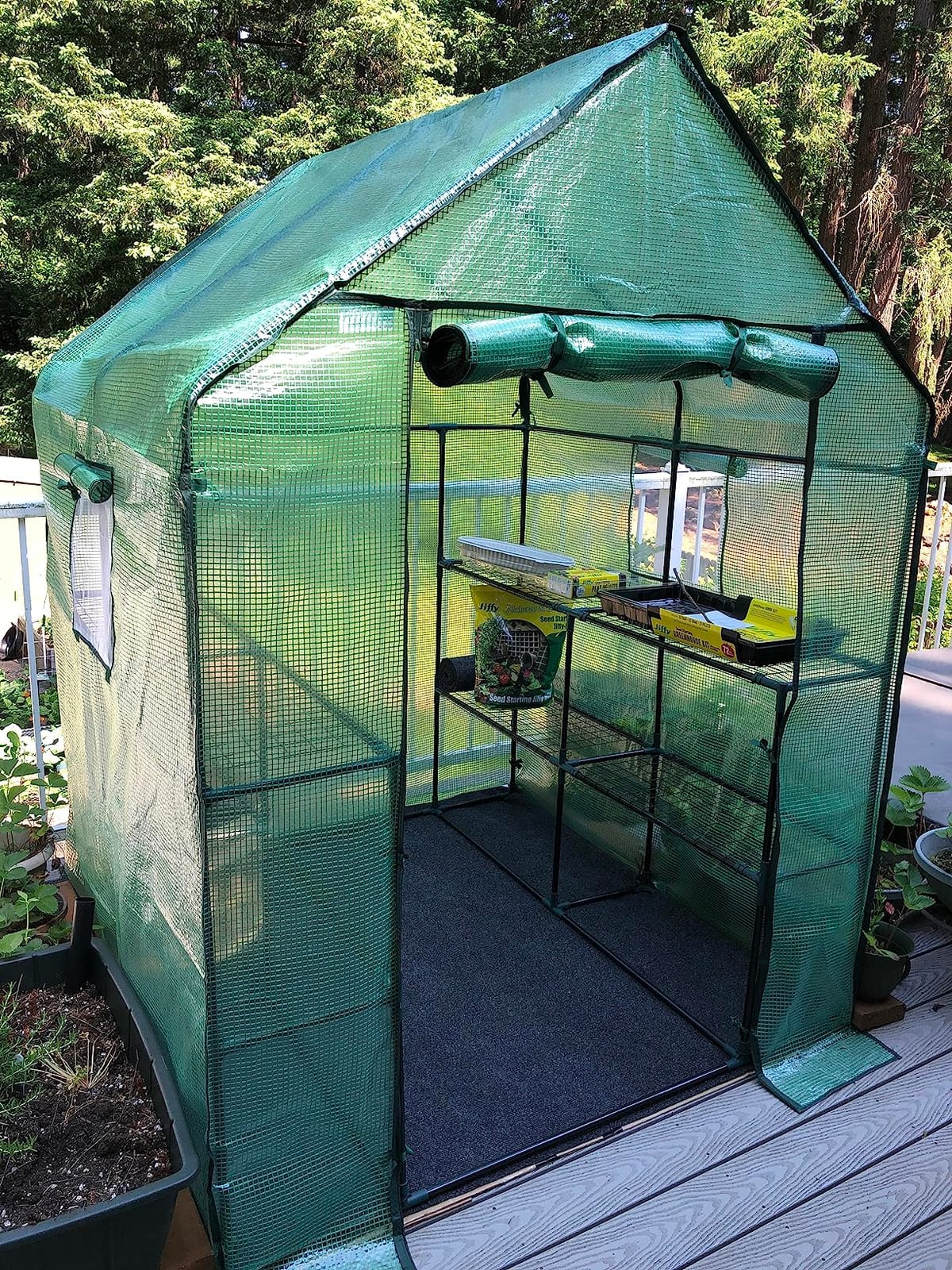
Customer feedback is exceptionally broad, with a 4.3 rating from 7,735 reviews. Users praise the value and organization, while the recurring cautions are thin shelves, slippery surfaces, plastic connectors, and a cover that can age quickly.
It is easy to assemble with a push-fit system, but a lightweight greenhouse still needs every stake and tie-down. I would place it against a sheltered wall and keep heavy pots low.
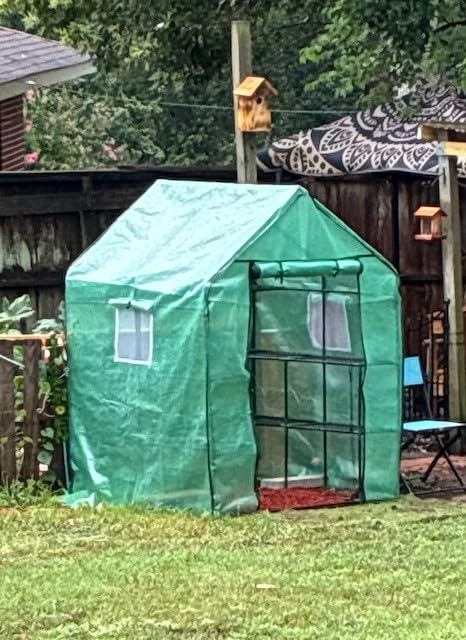
Is the Ohuhu good for year-round vegetables?
It is better for seed starting, herbs, and protected pots than for full-size beds or tall crops. A shelf house has limited floor area and roof volume, so temperature changes happen quickly and heating can be inefficient.
If you want winter greens, choose a wider floor-plan greenhouse and plan a raised bed. The Ohuhu is a smart way to begin earlier in spring or protect a small collection through ordinary frosts.
How should I arrange the shelves?
Put the heaviest, hardiest plants low and lightweight trays above. Leave a clear path for watering, and use trays or anti-slip mats so pots do not slide when the door or shelves move.
Do not overload upper shelves even if the stated capacity sounds sufficient. Shelves that flex can push against the cover and create wear points.
10. Greengro 28 x 57 x 76 — Best Tiny Budget House
Greengro Greenhouse, 28 x 57 x 76” Walk in Greenhouses for Outdoors Indoor
28 x 57 x 76 in
4 shelves
PE cover
Pros
- 15-minute setup
- walk-in height
- small footprint
- ground stakes included
Cons
- Narrow interior
- flimsy clips
- cover and service life are limited
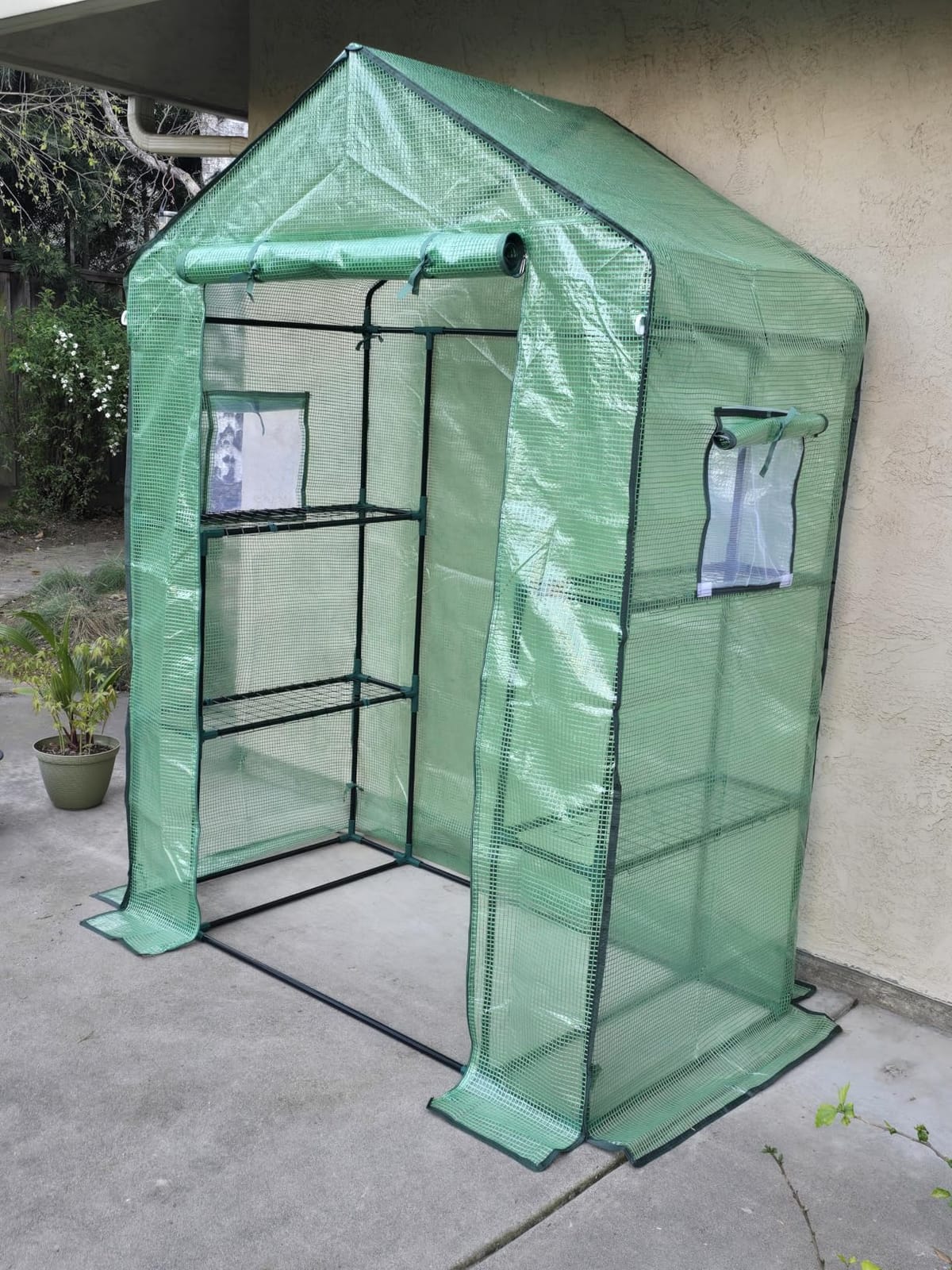
The Greengro is a narrow, low-cost greenhouse for seed starting and a few small plants. Its 28-inch width is the limiting factor, but that narrow footprint can be a genuine advantage on a patio, balcony, or strip beside a shed.
It sets up without tools and is light enough to move when needed. The cover is described as thick and UV-protected, and the package includes ropes and ground stakes for basic stability.
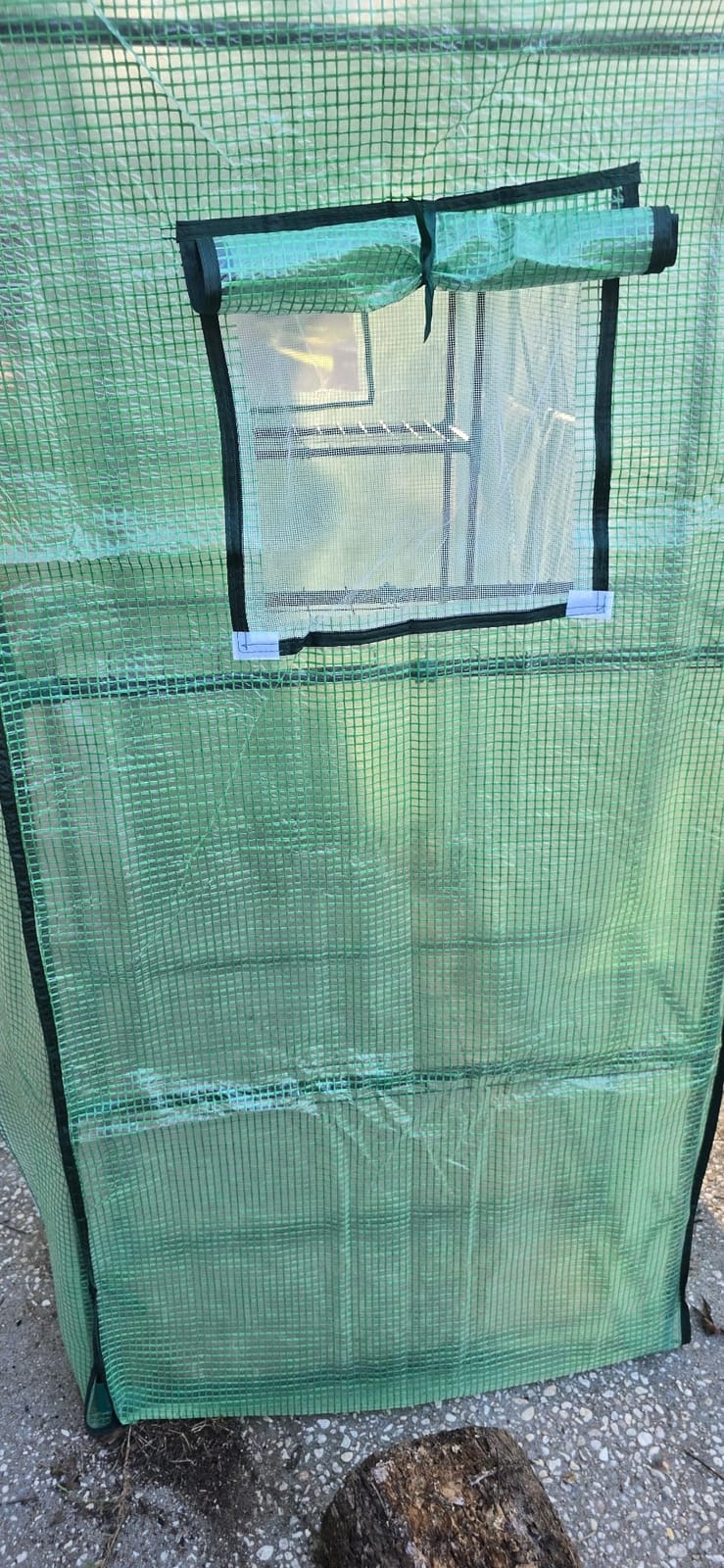
Customers rate it 4.2 from 381 reviews and especially value quick assembly and the six-foot walk-in height. The four shelves are enough for a focused seed-starting station, but clips can pop and the narrow aisle makes larger pots awkward.
I would use it for propagation rather than overwintering a large plant collection. Keep the cover tensioned, inspect tie-downs, and do not treat its portability as a reason to skip anchoring in wind.
Is the Greengro suitable indoors?
Its indoor and outdoor listing makes it useful in a bright garage or sunroom when outdoor weather is severe. Provide airflow, monitor heat, and keep electrical equipment away from the cover and any collected water.
Outdoors, it works best in a sheltered location with morning sun and protection from prevailing wind. A clear path to the door matters because the narrow interior leaves little turning room.
How does it compare with the Ohuhu?
The Greengro is narrower, lighter, and quicker to assemble, but the Ohuhu gives you three times as many shelves. Choose the Greengro for a tiny footprint; choose the Ohuhu for organized propagation capacity.
Neither is my pick for severe winter production. Both require careful anchoring, a watchful eye on seams, and realistic expectations about the service life of flexible covers.
How to Choose a Year-Round Greenhouse?
The best type of greenhouse for year-round growth is a sealed, insulated, well-anchored structure with controllable ventilation and a heat plan sized to your lowest expected temperature. For most backyards, a rigid polycarbonate greenhouse is easier to live with than a lightweight pop-up because it holds heat, tolerates weather, and can be fitted with a real foundation and equipment.
Choose the structure by climate and permanence
Freestanding greenhouses provide light from all sides and work well in an open yard, while lean-to models can use a house wall for shelter and easier utility access. Cold-frame and shelf houses are excellent for season extension but are not dependable unheated winter rooms.
In exposed areas, prioritize a published wind rating, a frame that can be anchored, and a roof you can clear. In a mild climate, ventilation and summer shade may matter more than extreme snow capacity.
For a small urban lot, measure the access route and door clearance before ordering a large kit. I also check whether a replacement panel, cover, connector, or motor can be obtained locally.
Match the covering to the job
Twin-wall polycarbonate offers a practical balance of light diffusion, insulation, impact resistance, and weight. Four-wall panels add another insulating layer, while glass provides excellent clarity but needs a stronger frame and more careful handling.
Polyethylene covers are inexpensive, portable, and useful for temporary protection, but seams, zippers, and UV aging become recurring maintenance. A rigid panel greenhouse usually makes more sense when winter continuity matters.
Look for UV-resistant panels, sealed joints, replaceable glazing, and a roof pitch that sheds snow. Do not rely on a vague “all-weather” label when you can find a quantified wind or snow specification.
Size the greenhouse around heat and workflow
A larger greenhouse is not automatically better because every extra cubic foot costs energy to heat and condition. Measure the usable footprint, then reserve space for aisles, a heater, thermal mass, storage, and future growth.
Mark the full footprint with stakes and string, including door swing and access clearance.
Track sun exposure at different times so shade from trees or buildings does not surprise you.
List the plants and their minimum temperatures, then group crops with similar needs.
Plan a partition if you want to heat only a protected propagation or tropical section.
Confirm electrical access, water access, drainage, and local rules before building the base.
I would add 10 to 15 percent walking and working space to the shelf or bed dimensions. A greenhouse that is cramped in year one often becomes abandoned when watering, cleaning, and harvesting become awkward.
Build the foundation before the frame
A level, square, well-drained foundation protects panel alignment, door operation, and anchoring. Concrete, compacted base material, or a designed perimeter foundation can work, but the selected system must match the manufacturer’s anchoring requirements.
Call local planning or building authorities before you buy. Rules can depend on structure size, height, permanence, utility connections, and whether the greenhouse is considered an accessory building.
Keep combustible storage away from heaters, route power through code-compliant outdoor equipment, and leave room to maintain the roof. A greenhouse that is difficult to clear of snow is not a low-maintenance greenhouse.
Control heat, humidity, and air movement
Set a realistic winter target for the plants you actually grow. Hardy greens can need protection from repeated freezes, while citrus and tropical plants need a warmer, steadier environment and more careful humidity management.
Use a thermostat-rated heater with an independent thermometer, a circulation fan, and automatic roof vents. I also recommend a power-loss alert and a plan for what happens to tender plants during an outage.
Thermal mass such as water-filled barrels moderates daily temperature swings but does not replace heat on a cold night. Compost heat and passive solar gain can reduce demand when the system is well designed, but they need monitoring and a backup.
Ventilation is not optional. Openings remove excess heat and moisture, reduce fungal disease, and replenish carbon dioxide, so seal only after you preserve controllable airflow.
Set a realistic maintenance schedule
Inspect the cover, seals, vents, anchors, and heater before the first freeze, then check them after major wind or snow. Clean panels to preserve light, clear debris from gutters, and repair small tears before they spread.
Track heating use and crop performance through one full season before expanding. A simple log of overnight lows, humidity, energy use, and plant health reveals whether the structure is efficient or merely warm for a few hours.
Forum owners repeatedly warn that small cheap greenhouses struggle to stay above freezing and that heating demand can be high. Their practical advice is consistent: improve insulation, add thermal mass, ventilate automatically, and acknowledge the difference between season extension and true year-round growing.
Frequently Asked Questions
What is the best type of greenhouse for year-round growth?
A rigid, well-sealed greenhouse with twin-wall or four-wall polycarbonate, a strong frame, adjustable ventilation, and a foundation you can anchor is the best general choice. In mild climates, a smaller structure can work; in cold or windy areas, weather ratings and a reliable heat plan matter more than floor area.
What can I grow all year round in a greenhouse?
Leafy greens, herbs, radishes, scallions, and many seedlings can grow through winter with protection. Citrus, tropical plants, and fruiting crops need warmer temperatures, more light, and more careful humidity control.
Can you grow anything in a greenhouse all year round?
You can grow many plants, but not every plant without supplemental heat and light. Winter day length, cloudy weather, humidity, pests, and your local minimum temperature limit what will thrive; match crops to the greenhouse instead of expecting the enclosure to override climate.
What is the best backyard greenhouse for my yard?
Choose by footprint, sunlight, anchoring, wind and snow exposure, access to power, and the temperature your plants need. The Backyard Discovery Willow is the strongest all-around rigid choice, while the Sylviera 10 by 12 offers more space for gardeners willing to manage assembly.
What is the best kind of greenhouse for year-round weather?
For severe weather, choose a rigid aluminum or cedar structure with tested wind and snow capacity, a secure base, sealed panels, and controllable ventilation. A portable PE tunnel is better for seasonal protection in a sheltered yard than for dependable winter production in an exposed site.
How do the Amish heat their greenhouses in the winter?
Many growers combine passive solar orientation, insulated north walls, thermal mass, row covers, and supplemental heat. Black water containers, compost, and careful ventilation can moderate temperatures, but a safe thermostat-controlled heater or other approved heat source is still needed during prolonged cold snaps.
Conclusion
The best backyard greenhouses for year round growing are the ones that match your climate, space, and willingness to maintain them. I would choose the Backyard Discovery Willow for its tested construction and complete winter-oriented features, the Sylviera 10 by 12 for strong value, and the Ohuhu when a compact seed-starting station is the real goal.
Before ordering, mark the foundation, check permits and utilities, choose your crop temperatures, and budget for anchoring, ventilation, heat, and backup power. A thoughtful setup turns a greenhouse from a seasonal shelter into a dependable four-season growing space in 2026.