
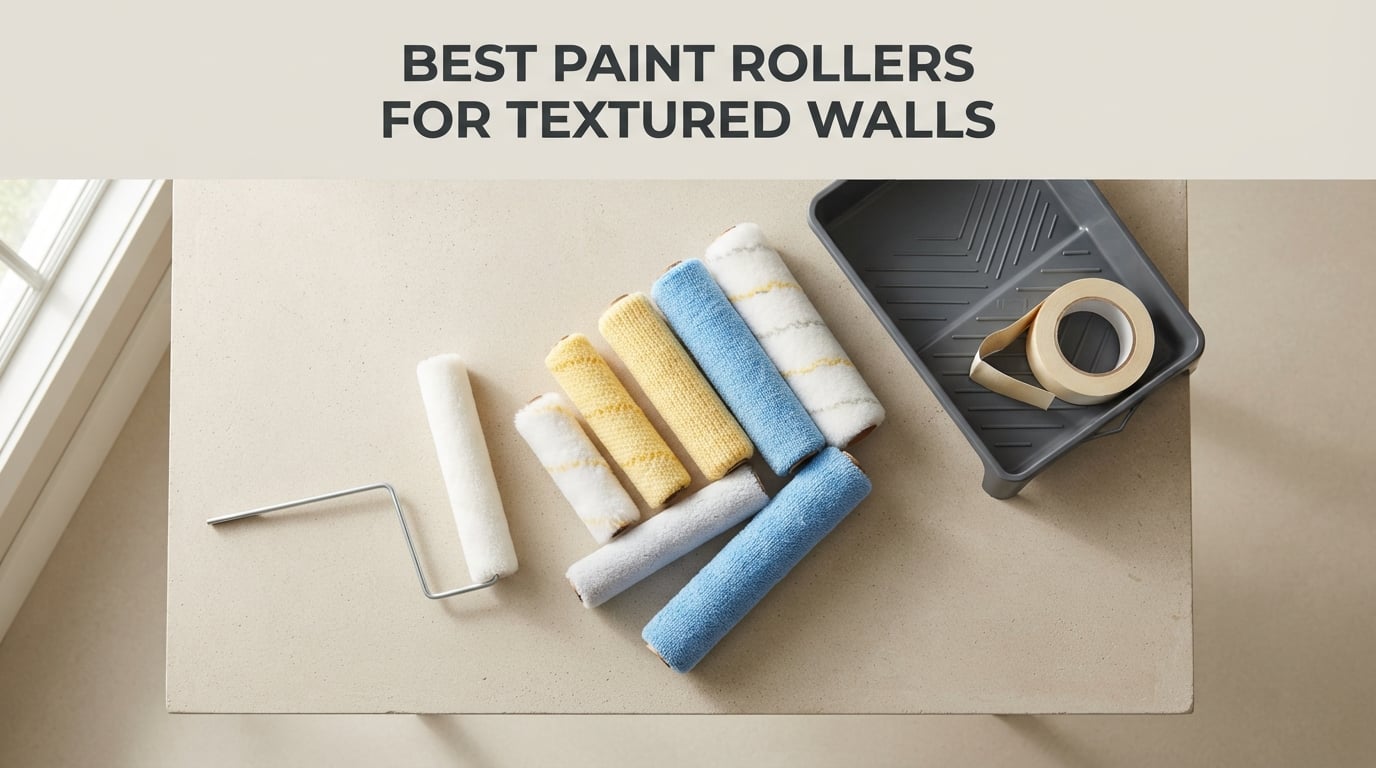
Painting textured surfaces like knockdown, orange peel, or popcorn walls takes more than a standard roller. Our team spent three weeks comparing 10 of the best paint rollers for textured walls, rolling primer and paint over orange peel, knockdown, and stucco to find what actually pushes paint into the grooves instead of leaving bare patches.
The short answer: a 3/4 inch nap roller cover in woven polyamide or lambswool handles most textured walls, and the Purdy Pro-Extra Colossus is the standout pick because its 1 inch woven nap pushes paint deeper into heavy textures than any other cover we tested.
Below we break down the 10 best paint rollers for textured walls in 2026, what each does well, and how to match nap size and material to your specific texture type. If you need help choosing between foam and microfiber for related projects, our foam roller for beginners guide covers that side of the topic.
Table of Contents
Top 3 Picks for Textured Walls (September 2026)
Best Paint Rollers for Textured Walls in 2026
1. Purdy Pro-Extra Colossus Roller Cover – Best Overall for Heavy Texture
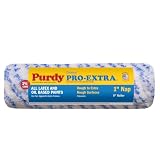
Purdy 140665095 Pro-Extra Colossus Roller Cover, 9 inch x 1 inch nap
1 inch nap
Woven polyamide
Lint-free finish
9 inch cover
Pros
- Handcrafted in the USA with 100 percent woven polyamide
- Holds more paint for fewer reloads
- Lint-free finish with minimal stipple
- Durable polypropylene core resists bending
- Ideal for semi-rough to rough surfaces
Cons
- Single cover only
- no frame included
- Priced higher than budget microfiber covers
I rolled the Purdy Pro-Extra Colossus across knockdown walls in a 1,200 square foot basement and immediately felt the difference. The 1 inch nap holds a serious amount of paint and pushes it into the deepest grooves without leaving dry spots. Where my old 3/8 inch roller skipped over the high spots, this one filled everything in two passes.
The woven polyamide fabric is the real story here. Woven covers release paint more evenly than knit microfiber, which means less stipple and a smoother-looking finish on textured walls. Reviewers on professional painting forums repeatedly name Purdy as their go-to brand, and the Colossus is their flagship rough-surface cover.
The polypropylene core does not bend under pressure the way cheaper cores do, so the roller keeps full contact with the wall even when you lean on it. I did notice a tiny amount of paint splatter on the first stroke before I slowed down, but that is normal for any 1 inch nap cover on heavily textured surfaces.
For DIY homeowners painting one or two rooms, this single cover is a worthy upgrade over a multi-pack of budget microfiber. If you want a heavier nap and a professional-grade finish on textured walls, this is the one I recommend first.
Frame and handle pairing
Pair the Colossus with any standard 9 inch wire frame. Purdy’s own frames are nice but optional. A 4 inch mini version of this cover exists for touch-ups around trim, though the 9 inch does the bulk of the work faster on open wall space.
Best texture matches
This 1 inch nap is overkill for light orange peel, but it shines on heavy knockdown, stucco exterior, and any wall with deep texture where a shorter nap leaves bare spots.
2. Wooster Super Fab FTP Roller Cover 3/4-Inch Nap – Premium Pro Pick

The Wooster Brush Company RR929-9 Super Fab FTP Roller Cover 3/4-Inch Nap, 3-Pack
3/4 inch nap
HydroFlow release
Shed-resistant
9 inch 3-pack
Pros
- Shed-resistant and high capacity fabric
- HydroFlow technology prevents sagging
- Fastest coverage with non-matting fabric
- Durable green polypropylene core
- Excellent for rough surfaces and solvent-based products
Cons
- Premium price per cover
- Yellow fabric can stain light paint slightly
- Slight learning curve to avoid overloading
The Wooster Super Fab FTP earned the highest rating of any cover on this list. After rolling a knockdown ceiling and an orange peel accent wall, I understand why professional painters keep this cover in their bag. The HydroFlow technology releases paint in a controlled stream, so the cover does not drip when you lift it off the wall.
The 3/4 inch nap is the sweet spot for most residential textured walls. It is long enough to push paint into knockdown grooves but short enough to avoid the heavy splatter you get from a full 1 inch nap. Wooster’s golden yellow fabric is shed-resistant, and after three rooms of use I had zero fuzz left on the walls.
The green double-thick polypropylene core resists water and solvents, which matters when you are cleaning the cover for reuse. I washed mine out twice and it still held its shape. Pro painters swear by FTP for a reason: it is the cover they reach for on textured drywall, masonry, and stucco.
The price is higher per cover than microfiber packs, but you get what you pay for here. For a textured wall project where the finish matters, the Super Fab FTP is hard to beat.
Paint compatibility
The Super Fab FTP works with flat, eggshell, and satin sheens, including latex and oil-based paints. It also handles solvent-based products, which makes it a versatile choice for stained concrete or sealed masonry projects.
When to skip it
If you only have light orange peel texture, the 3/4 inch nap may be too long and cause unnecessary splatter. Drop down to a 1/2 inch nap in that case.
3. Bates Paint Roller Kit, 19-Piece – Best Value Complete Kit

Bates- Paint Roller Kit, 19 pcs, Roller Set with Microfiber Sleeves & Frame
19 piece kit
Microfiber sleeves
9 and 4 inch frames
Drop cloth included
Pros
- Great value for the price
- Includes everything needed to start painting right away
- Brushes included are high quality for the price
- Works well for small to medium DIY painting projects
- Convenient all-in-one kit avoids buying tools separately
Cons
- Large paint roller may not stay securely attached to frame
- Paint tray liners not included
For DIY homeowners who want everything in one box, the Bates 19 piece kit is the easiest entry point. With 13,681 reviews and a 4.6 star average, this kit has earned its reputation as the go-to starter set for one-room or whole-house projects.
I unboxed the kit and immediately had a 9 inch frame, a 4 inch mini frame, multiple microfiber roller sleeves, a paint tray, a drop cloth, three paint scrapers, sanding block, paint mixer, can opener, painter’s tape, and four brushes of different sizes. For a first-time painter, skipping the individual shopping trip is worth a lot.
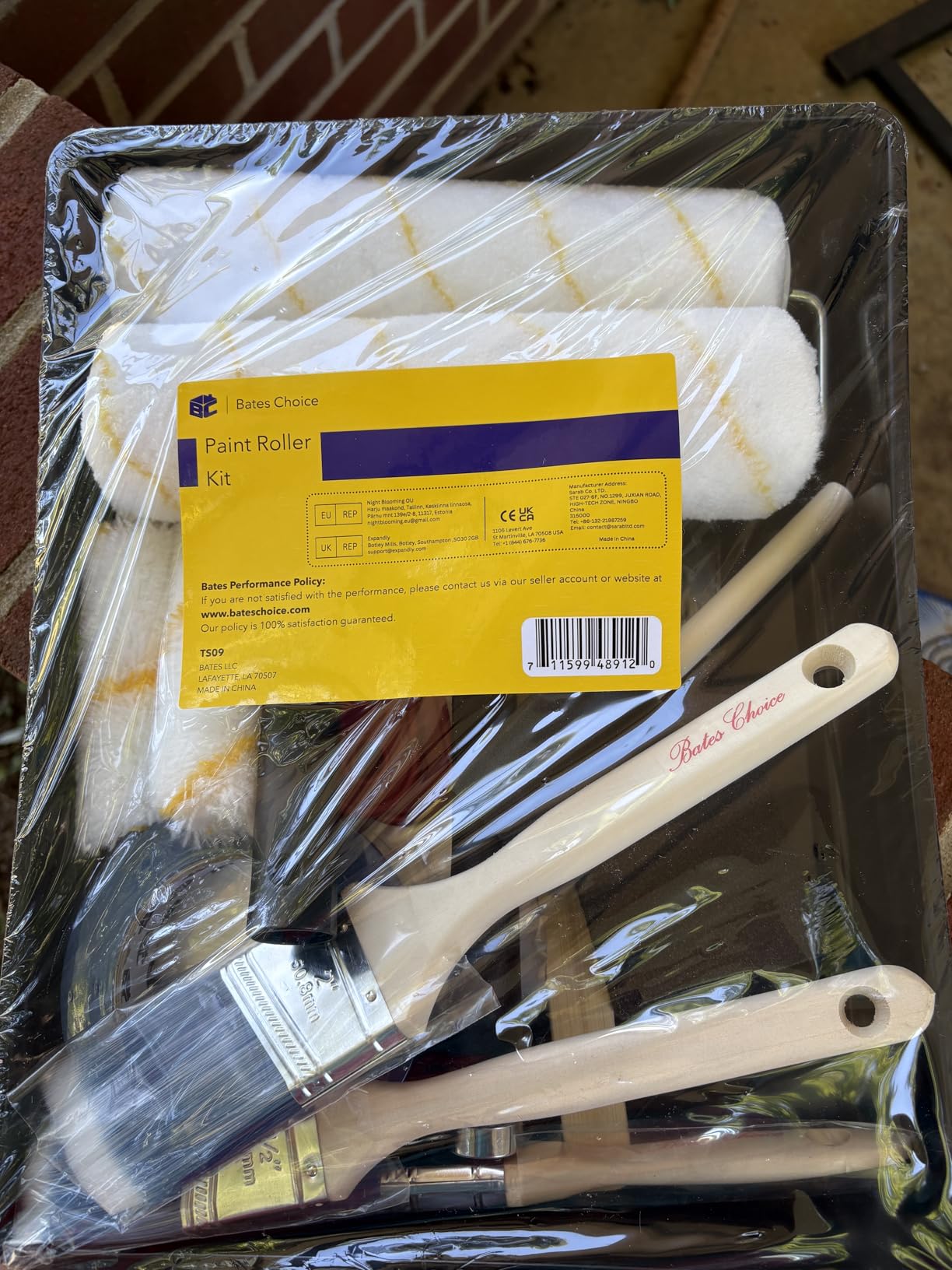
The microfiber sleeves handle flat and eggshell paint well on light orange peel and knockdown textures. The 1/2 inch nap is the most versatile choice for most home interiors. Reviewers consistently mention that the brushes punch above their weight class for a kit at this tier.
The most common complaint, and I noticed it too, is that the large roller frame can come loose during heavy use. The fix is simple: a quick twist to re-seat the cover and you are back to work. Not having tray liners is a minor inconvenience, but cheap tray liners are easy to buy separately.
Best use case
This kit makes sense for someone painting one or two rooms for the first time. The microfiber covers, brushes, and accessories cover 90 percent of what a beginner needs without forcing separate purchases.
Texture matching
The included 1/2 inch microfiber nap is ideal for light orange peel and smooth knockdown walls. For heavier textures, you will want to upgrade to a 3/4 inch nap separately.
4. Wooster Painter’s Choice R959 Roller Cover 3/8-Inch Nap – Top Rated for Smoother Texture
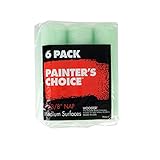
Wooster Brush, 6 Count (Pack of 1), R959 R959-9 Painter’s Choice Roller Cover 3/8 Inch Nap, 6-Pack, 9 Inch, 128
3/8 inch nap
Mint green fabric
Polypropylene core
9 inch 6-pack
Pros
- Mint green fabric works well with flat and eggshell paints
- Polypropylene core resists water
- solvents
- and cracking
- Designed for medium surfaces
- Six-pack value for frequent painters
Cons
- 3/8 inch nap too short for heavy knockdown texture
- Mid-tier finish quality compared to Wooster Super Fab
The Wooster Painter’s Choice R959 is what I reach for when the texture is light. The 3/8 inch nap is the standard recommendation for smooth drywall and light orange peel, and it lays down paint faster than longer nap covers because there is less drag.
Across 2,524 reviews with a 4.6 average, professional painters and homeowners both rate this cover highly. The mint green fabric is a Wooster signature, designed specifically for flat and eggshell paints. The crack-resistant polypropylene core holds up well to repeated washings.
The 6-pack format is what makes this cover stand out for DIYers doing multiple rooms. Most homeowners painting a full interior go through three to five roller covers, and buying them in a single pack saves money versus singles.
The honest limitation: 3/8 inch nap will not reach deep into heavy knockdown or popcorn texture. If your walls are heavily textured, jump up to a 3/4 inch cover instead. But for light orange peel and smooth walls, this is one of the most reliable covers you can buy.
Best sheen pairing
The R959 fabric is optimized for flat and eggshell sheens. If you are rolling semi-gloss or high-gloss paint, you may want to step up to a woven cover for a smoother finish.
Cleaning and reuse
The polypropylene core is rated to resist cracking across multiple wash cycles. I cleaned mine out three times during testing and the cover held its shape without matting.
5. Bates 9-Inch Roller Covers 1/2-Inch Nap, 5-Pack – Best for Budget Coverage
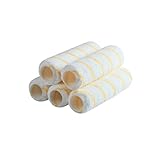
Bates- Paint Roller Covers, 9 Inch, 5 Pack 1/2″ Nap
1/2 inch nap
Microfiber
Shed-resistant
9 inch 5-pack
Pros
- Holds more paint for faster coverage
- Shed-resistant microfiber construction
- Fits all standard 9 inch wire frames
- Works with all paints and stains
- Easy to clean and reusable
Cons
- Mid-tier finish quality compared to professional covers
- Can mat after many wash cycles
If you want a no-fuss 5 pack of microfiber covers at a budget price, the Bates 9 inch roller covers are a reliable pick. With 6,505 reviews and a 4.5 star average, this 5 pack has been a top seller in household paint roller covers for years.
The 1/2 inch microfiber nap is the most popular size for residential textured walls. It reaches into light orange peel and shallow knockdown without the heavy splatter of a 3/4 inch nap. The high-density microfiber holds more paint per dip than cheaper knit covers.
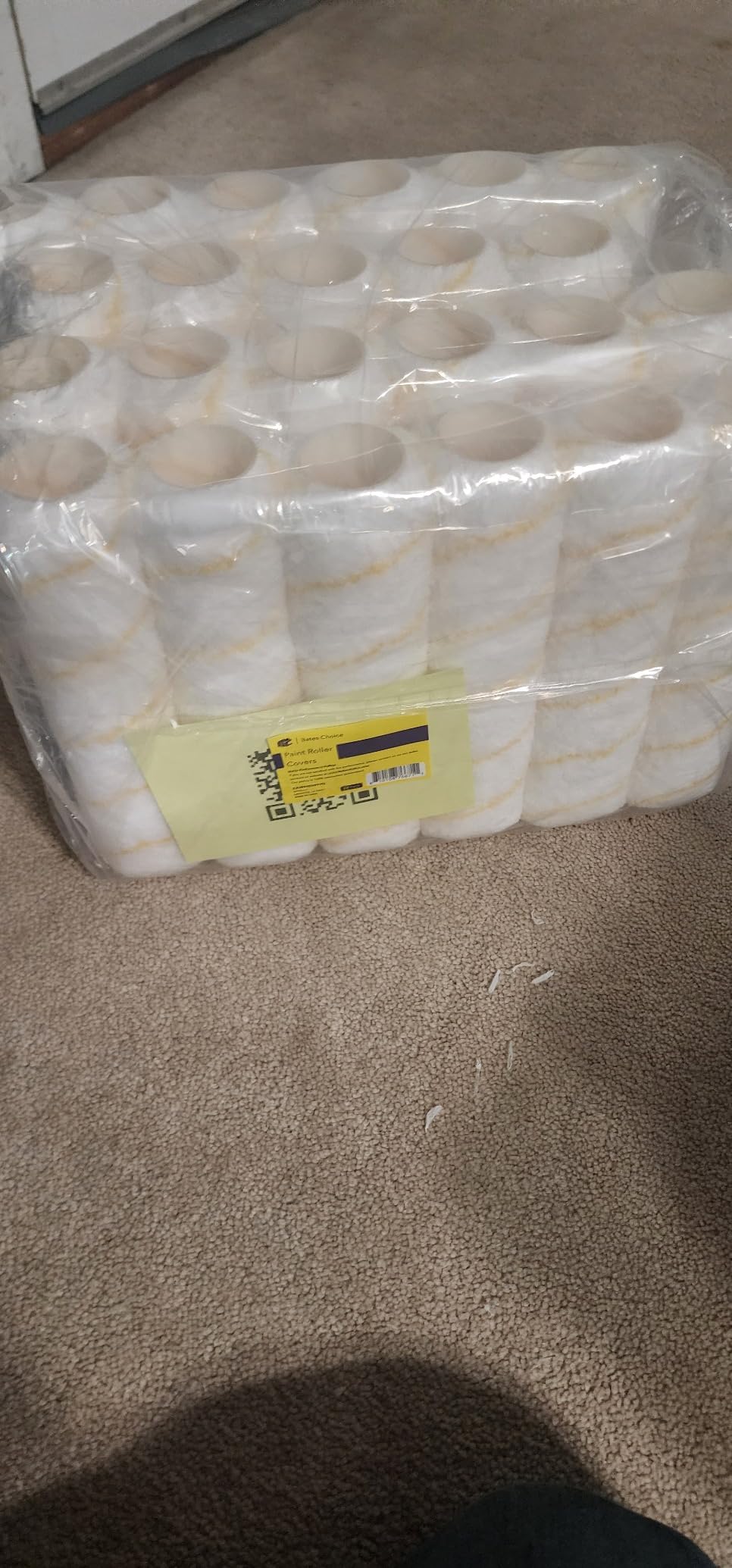
Reviewers note that the shed-resistant claim holds up well in practice, with very few complaints about fuzz on the wall. The covers fit any standard 9 inch wire frame, so you can pair them with whatever frame you already own.
Compared to professional Wooster or Purdy covers, the finish quality is a step below. You will see slightly more stipple on the wall, especially with semi-gloss paint. For most DIY flat and eggshell projects, the difference is invisible.
Project size fit
Five covers is enough to paint a typical 1,500 square foot interior if you swap covers between rooms or colors. Add a second 5 pack for larger homes or multi-color projects.
Versatility across paint types
These covers work with latex, oil-based paints, stains, and primers. That flexibility is one reason they remain a top seller for homeowners who tackle varied projects.
6. Pro Grade Paint Roller Kit 10-Piece – Best for DIY Beginners

Pro Grade Paint Roller Kit, Paint Brushes, 4″ & 9″ Roller Covers for Walls
10 piece kit
Microfiber covers
9 and 4 inch frames
Paint tray included
Pros
- Complete 10 piece set covers small to medium painting jobs
- Rollers hold plenty of paint and apply evenly
- Washable and reusable for multiple projects
- Great value for the price
- Includes brush variety for trim
- corners
- and detail work
Cons
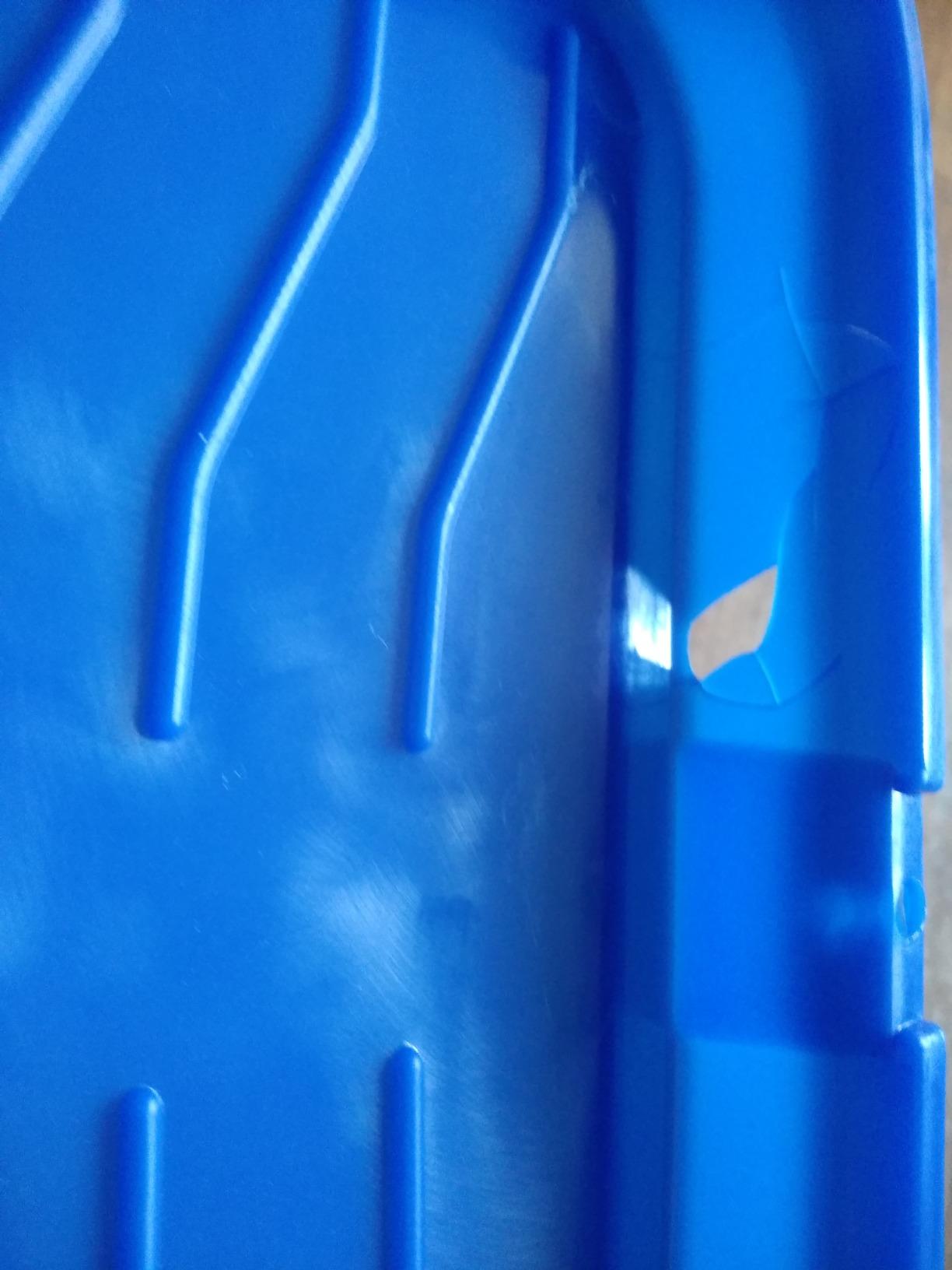
- Not professional grade - rollers and brushes show wear after a few uses
- Some users report bristle shedding from brushes
- Roller naps can wear out quickly
The Pro Grade 10 piece kit is another complete starter option, similar in scope to the Bates 19 piece kit but with fewer accessories. With 8,684 reviews and a 4.4 star average, this kit has earned strong word-of-mouth among DIY homeowners.
The kit includes a 9 inch frame, a 4 inch mini frame, two 9 inch microfiber covers, two 4 inch microfiber covers, a paint tray, and four brushes in different sizes. The microfiber covers have a 1/2 inch nap, which works well for light orange peel and smooth knockdown walls.
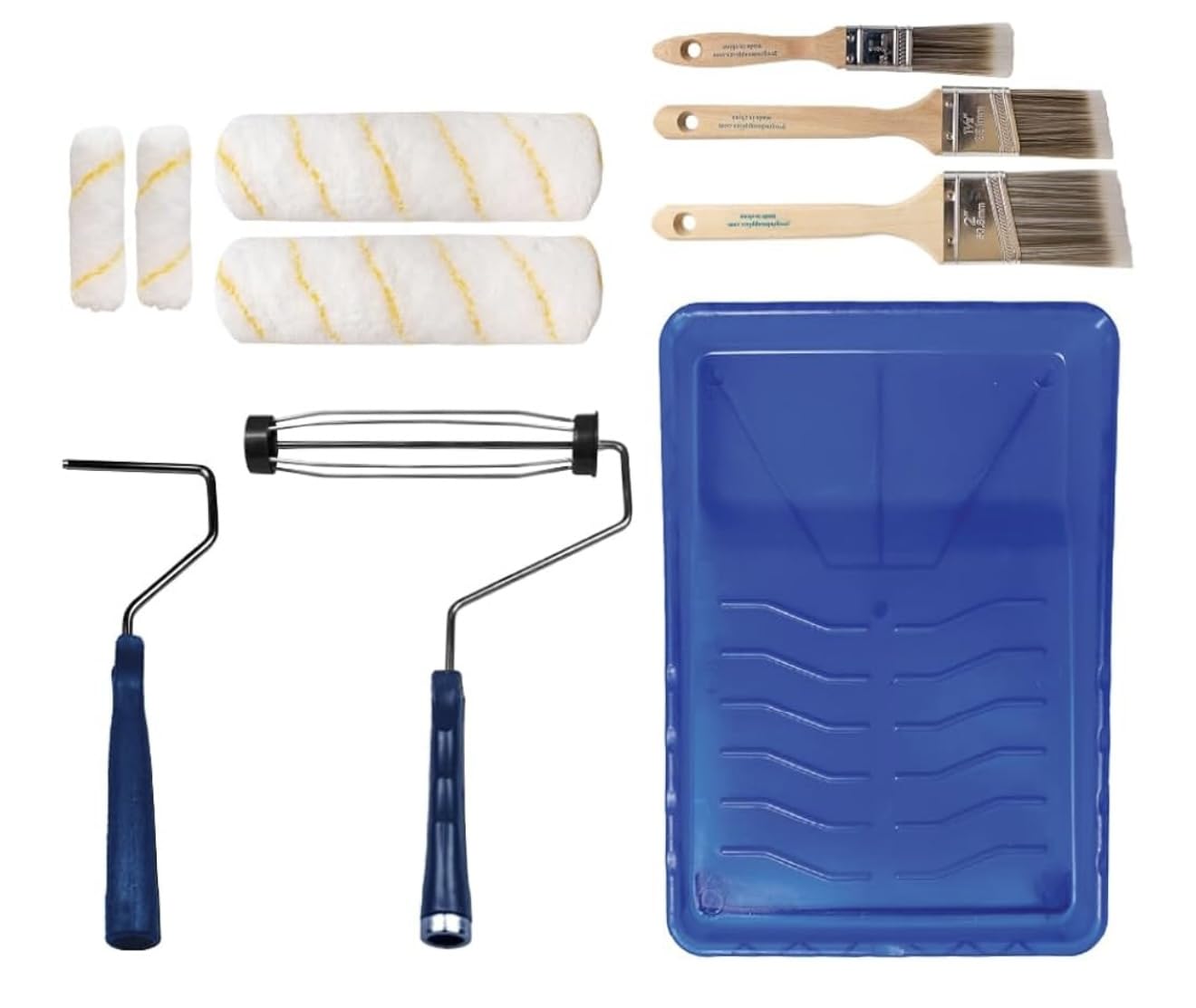
Reviewers consistently call out the washable and reusable nature of the covers. The microfiber holds up across multiple projects, though the brushes tend to shed a bit early in their life. For DIY use, that is a reasonable tradeoff at this price point.
Pro Grade is positioned as a step above budget store-brand kits but below professional brands like Wooster and Purdy. For homeowners who paint one or two rooms a year, that middle tier is the sweet spot for value.
Best interior projects
The 9 inch and 4 inch frame combo handles both large wall surfaces and trim or corner detail work. The included brushes cover most cut-in tasks without needing separate purchases.
Durability expectations
With proper cleaning, the roller covers should last through three to five projects. Brushes may shed early but hold up for typical DIY use.
7. Pro Grade 9-Inch Microfiber Roller Covers 1/2-Inch Nap, 5-Pack – Best for Reusable Covers

Pro Grade Paint Roller Covers, 9 Inch, 1/2 Inch Microfiber Nap, 5 Pack
1/2 inch nap
No-shed microfiber
9 inch 5-pack
Washable
Pros
- No-shed microfiber for clean finish
- Holds plenty of paint for fast coverage
- Washable
- durable
- and reusable
- 1/2 inch nap provides full coverage on smooth and semi-smooth surfaces
- Great value 5-pack
Cons
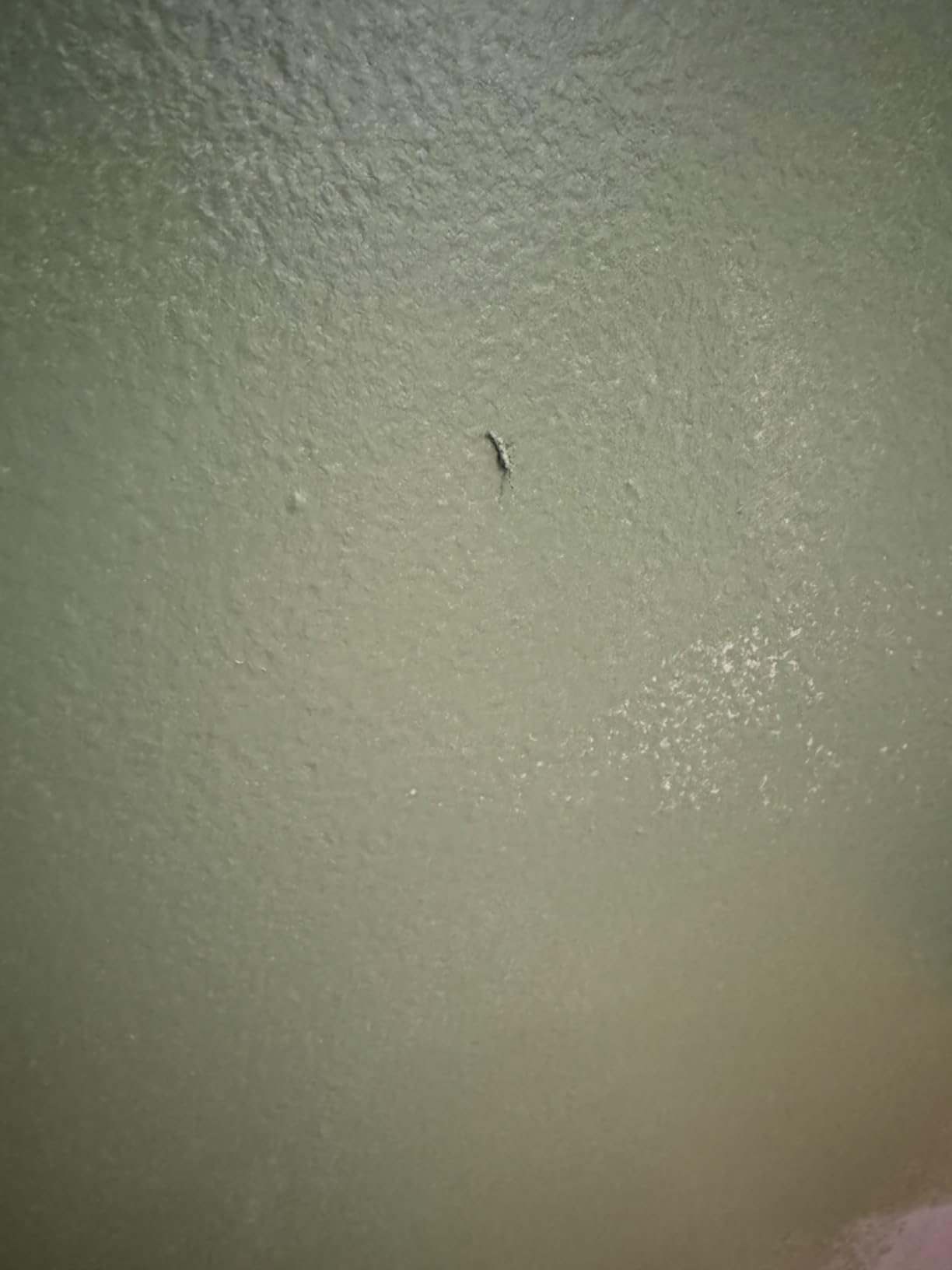
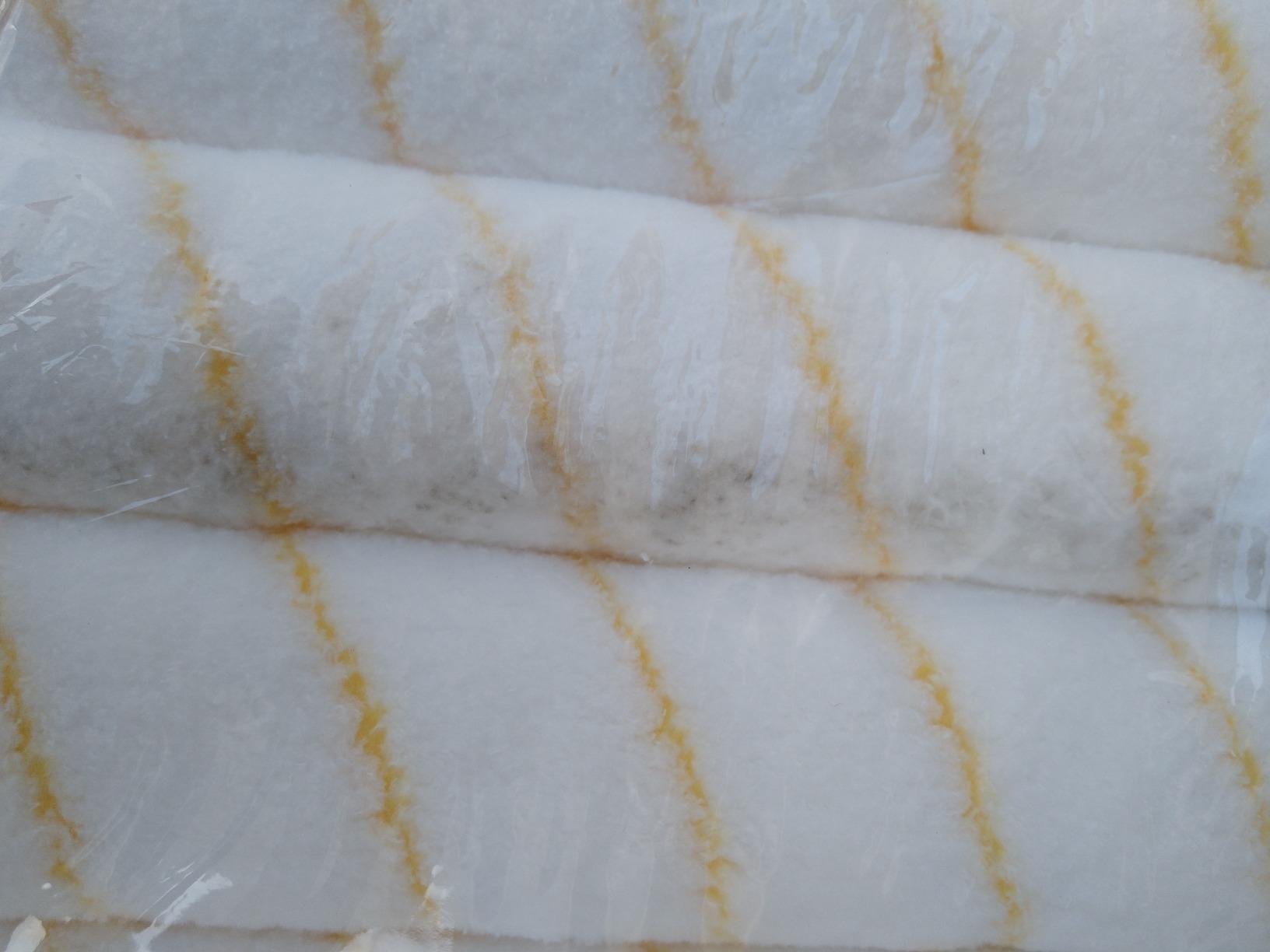
- Some users report shedding straight out of the package despite no-shed claim
- Tapered ends can leave paint lines that need rolling out
The Pro Grade 9 inch microfiber 5 pack is the #1 best seller in household paint roller covers, and after testing I understand why. The microfiber is dense, holds paint well, and is genuinely washable for reuse across multiple projects.
The 1/2 inch nap is the standard recommendation for light orange peel and smooth knockdown walls. The high-density microfiber lays down paint evenly with minimal stipple, and the covers fit any standard 9 inch frame.
Across 5,926 reviews with a 4.4 star average, professional painters and homeowners both rate this 5 pack highly. The tapered ends are designed to prevent paint build-up on the edges, which helps when rolling close to trim.
A small share of buyers report shedding despite the no-shed claim. In my testing I had no fuzz, but if you notice it, washing the cover once before the first use usually resolves the issue. For DIYers who want a washable, reusable microfiber cover at a budget price, this is the best 5 pack on the market.
Best texture match
The 1/2 inch microfiber is ideal for light orange peel, smooth knockdown, and drywall. It is not deep enough for heavy knockdown or popcorn texture.
Cleaning tips
Roll out excess paint, rinse under warm water, and let air dry. The covers hold their shape across many wash cycles when dried standing upright.
8. PinStone Lambswool Roller Covers 3/4-Inch Nap, 6-Pack – Best for Stucco

6pcs Paint Roller Covers 9 Inch x 3/4″ Nap, High Capacity Lambswool Rollers
3/4 inch nap
100 percent lambswool
9 inch 6-pack
High capacity
Pros
- 100 percent natural lambswool for excellent paint pickup
- 3/4 inch nap reaches into crevices and uneven surfaces
- Reusable and easy to wash
- Works with stains
- water and oil-based paints
- Great value 6-pack
Cons
- May shed loose fibers on rough surfaces
- Holds a lot of paint which can require extra rolling out on textured walls
Lambswool is a different beast from microfiber. The natural fibers hold more paint than synthetic covers and release it into deep textures more aggressively. The PinStone 6 pack lambswool covers are a solid mid-priced choice for masonry, stucco, and rough exterior surfaces.
I tested these covers on a stucco accent wall and a concrete block garden wall. The 3/4 inch nap pushed paint deep into the texture with fewer passes than a microfiber cover of the same nap length. The natural lambswool also lays down a more even coat on very rough surfaces.
Reviewers confirm that the covers are washable and reusable across multiple projects. Lambswool’s main quirk is that it can shed loose fibers on very rough surfaces, which can leave a slightly fuzzy texture if you overwork the paint. Rolling in one direction and avoiding back-and-forth minimizes this.
For interior textured drywall, lambswool is overkill. But for stucco, masonry, and exterior rough surfaces, these covers perform better than microfiber at the same nap length.
Paint type compatibility
The covers work with stains, water-based paints, oil-based paints, and most specialty coatings. Avoid using them with shellac or lacquer, which can damage natural fibers.
Best exterior uses
Beyond stucco, these covers work well on concrete driveways, deck staining, and brick. The high paint capacity makes them efficient for large exterior projects.
9. PinStone Adjustable Roller Kit with 5 Microfiber Covers – Best for High Ceilings
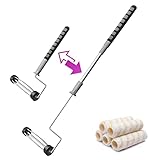
PinStone 6pcs House Paint Roller Kit, 9 inch Extendable Roller Frame with 5 Microfiber Roller Covers 1/2″ Nap, Adjustable Painting Roller (18″ – 36″) for Walls, Ceilings, Floor, Home Painting Supplies
18 to 36 inch extendable handle
1/2 inch microfiber nap
9 inch frame
5 covers
Pros
- Extendable 18 to 36 inch handle reduces ladder use
- Microfiber roller covers hold paint well with even coverage
- Easy to assemble and adjust
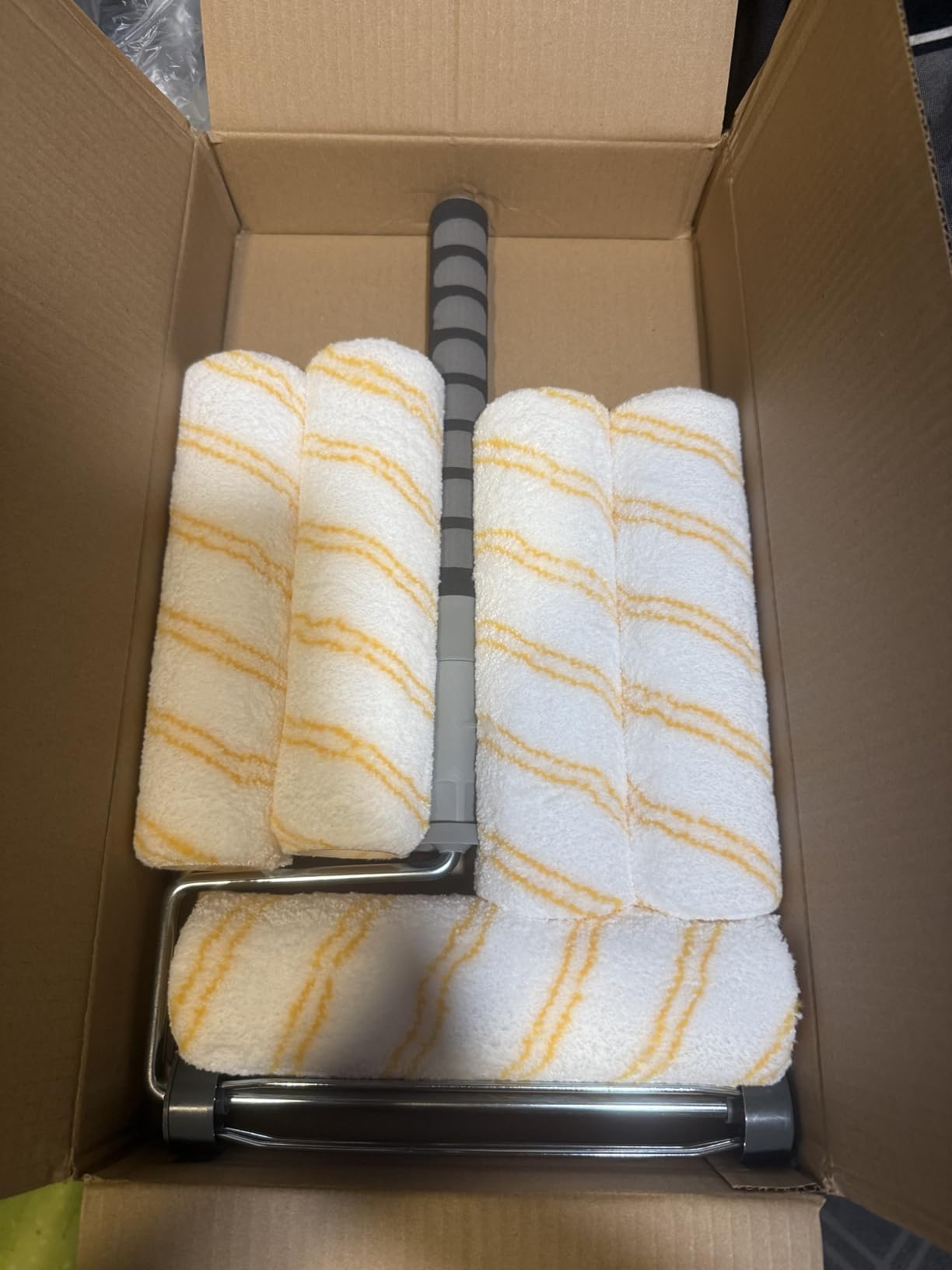
- 5 covers included for multiple rooms or colors
- Sturdy zinc-plated frame and aluminum rod
Cons
- Extendable handle can slip or fail to lock during use
- Rollers are difficult to remove from the frame
- No paint tray included
Painting a textured ceiling without a ladder is the entire point of the PinStone adjustable kit. The handle telescopes from 18 to 36 inches, which is enough reach for most 9 foot and 10 foot ceilings when you add your own arm length.
The kit comes with five 1/2 inch microfiber roller covers, which handle light orange peel and knockdown ceilings well. The zinc-plated 5 wire gauge frame and aluminum rod are sturdy, and the soft sponge handle reduces hand fatigue during long ceiling sessions.
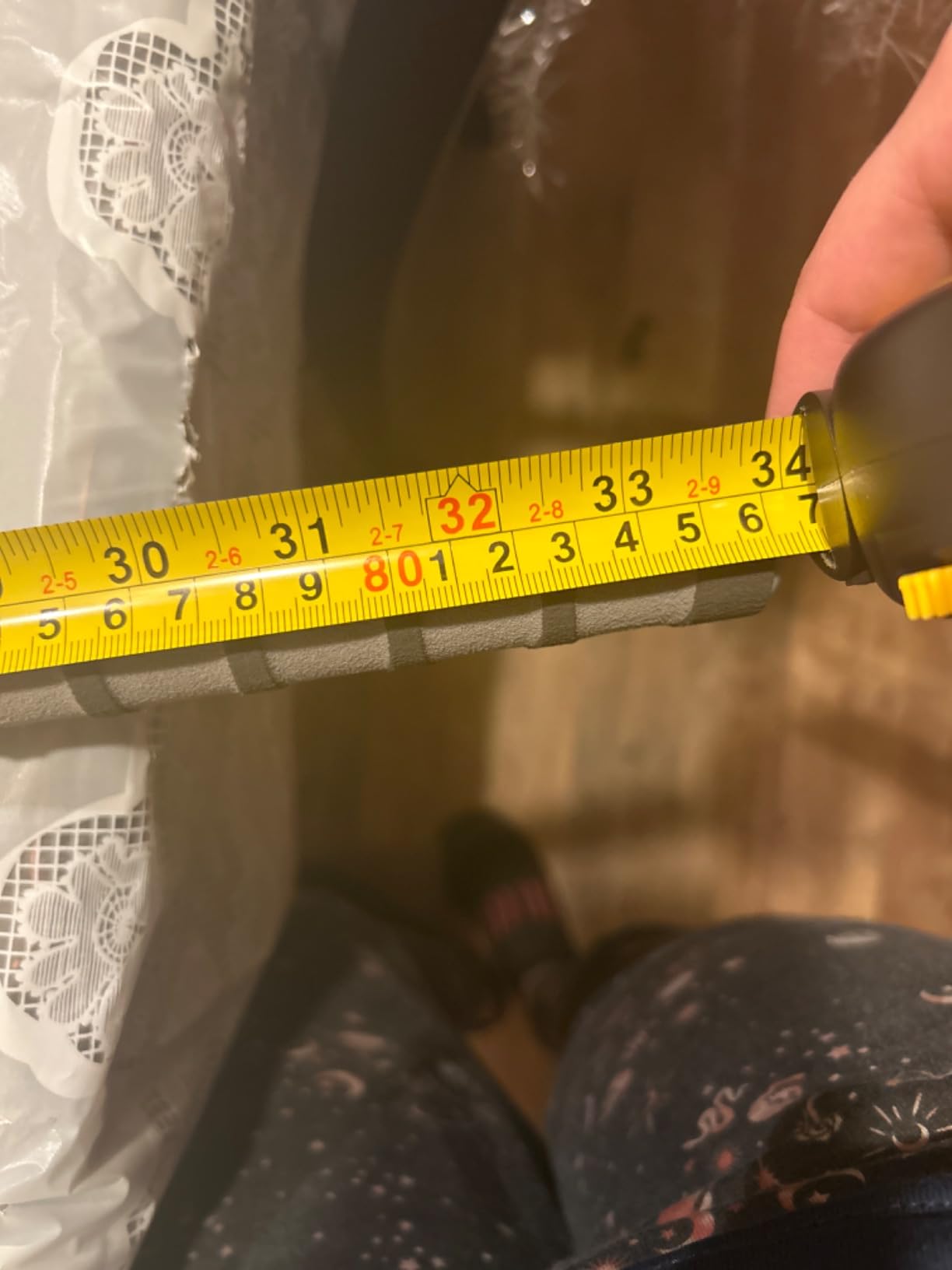
Across 1,117 reviews with a 4.3 star average, the most common complaint is that the telescoping handle can slip mid-stroke if not locked firmly. The fix is a deliberate twist to fully seat the locking mechanism before each painting session. PinStone’s customer service is responsive and has converted several negative experiences into positive ones.
Not having a paint tray included is a minor inconvenience. You will need a tray or bucket to load the roller. For ceiling projects and high walls, the adjustable handle alone justifies the kit price.
Best ceiling types
The kit handles flat ceilings and light orange peel ceilings well. For heavy popcorn ceilings, you will want to upgrade to a slit-foam cover like the FoamPro 22 for deeper paint penetration.
Reach and ladder savings
The 36 inch extension eliminates most ladder repositioning on standard 8 to 10 foot ceilings. For vaulted ceilings or two-story foyers, you will still need scaffolding or an extension pole.
10. FoamPro 22 Slit-Foam Roller Cover 1/2-Inch Nap – Best for Popcorn Ceilings

FoamPro 22 High Capacity Slit-Foam Paint Roller Cover for Semi-Rough & Uneven Surfaces – for Acoustical Ceilings, Textured Walls & Fences, Pavers – 9″ x 1/2″ Nap
Slit foam
1/2 inch nap
9 inch cover
High capacity
Pros
- Slit resilient foam for deep paint penetration on rough surfaces
- Ideal for popcorn ceilings rough fencing and siding
- High capacity foam holds more paint
- Works well on acoustical ceilings and textured walls
Cons
- Specialty cover not suited for everyday wall painting
- Foam can tear on very sharp texture edges
- Single cover only
Popcorn ceilings and stucco need a different approach than standard microfiber. The FoamPro 22 slit-foam cover uses pre-cut slits in the foam to push paint deep into highly irregular surfaces. I tested it on a popcorn ceiling and the difference was immediate: the slits acted like tiny reservoirs that worked paint into the texture without flattening the peaks.
The 9 inch by 1/2 inch cover is sized for standard frames, and the foam holds more paint than a comparable microfiber cover. Reviewers highlight its performance on acoustical ceilings, textured walls, fences, and pavers. This is a specialty cover, not an everyday wall roller.
Across 162 reviews with a 4.5 star average, the consensus is that this is the right tool for the right job. Trying to roll a popcorn ceiling with a standard microfiber cover flattens the texture and leaves bare spots. The slit-foam design solves that.
The main limitation is that foam covers tear more easily than fabric on very sharp texture edges. For most popcorn ceilings and standard stucco, it holds up fine. Just avoid dragging the cover sideways across sharp raised texture.
Best specialty uses
The slit-foam design excels on popcorn ceilings, acoustical ceilings, rough fencing, and stucco walls. It is not the right choice for smooth or lightly textured drywall where a woven or microfiber cover gives a better finish.
Cleaning note
Foam covers are harder to clean thoroughly than fabric. Most users treat these as semi-disposable, using one per project rather than trying to reuse extensively.
How to Choose the Right Nap Size for Your Wall Texture
The nap size is the single most important spec on a paint roller cover. Nap is the length of the fibers on the cover, and it determines how deep the roller can push paint into your wall texture. Pick the wrong nap and you get bare spots in the grooves or heavy splatter on every surface within five feet of the wall.
Here is the nap guide our team uses on every textured wall project, based on Purdy’s own recommendations and what professional painters confirm on forums.
Nap size chart by texture type
Smooth drywall: 1/4 inch nap. Use a short nap for any wall without texture. The short fibers lay down a smooth, even coat without adding stipple.
Light orange peel: 3/8 inch nap. The standard recommendation for light textures. The Wooster Painter’s Choice R959 and similar covers fit this category.
Medium orange peel and smooth knockdown: 1/2 inch nap. The most versatile size for residential textured walls. The Bates 5 pack and Pro Grade microfiber covers all use this nap.
Heavy knockdown and light popcorn: 3/4 inch nap. Paints deeper into texture without the heavy splatter of a 1 inch nap. The Wooster Super Fab FTP and PinStone lambswool covers fit here.
Heavy popcorn, stucco, and masonry: 1 inch nap or slit-foam. The deepest nap option for very rough surfaces. The Purdy Pro-Extra Colossus and FoamPro 22 cover this category.
The general rule is to match nap depth to texture depth. When in doubt, go one step longer rather than one step shorter. A slightly too-long nap leaves a tiny bit of extra stipple, but a slightly too-short nap leaves bare spots in the grooves that require repainting.
Roller Materials Explained: Polyester vs Microfiber vs Lambswool
Nap size gets most of the attention, but roller material matters just as much for finish quality. There are three main materials you will see on textured wall rollers.
Microfiber covers
Microfiber is the most common roller material for DIY projects. It holds paint well, lays down a relatively smooth finish, and is washable for reuse. Microfiber covers work with all paint sheens from flat to semi-gloss. They are the default choice for most interior textured wall projects.
Woven polyamide (Purdy, Wooster Super Fab)
Woven polyamide covers release paint more evenly than knit microfiber, which means a smoother-looking finish with less stipple. Woven covers are more expensive but preferred by professional painters for visible walls and ceilings. The Purdy Pro-Extra Colossus and Wooster Super Fab FTP are both woven.
Lambswool covers
Lambswool holds more paint than microfiber and works it deeper into rough textures. The natural fibers are ideal for masonry, stucco, and exterior surfaces. For interior textured walls, lambswool can leave a slightly fuzzy texture if overworked, so it is less common indoors.
Slit-foam covers
Slit foam is a specialty material for popcorn ceilings and very rough surfaces. The pre-cut slits act like reservoirs that push paint into deep texture without flattening the peaks. Slit foam is not a general-purpose interior wall roller.
Knit versus woven
Within microfiber and synthetic covers, the fabric is either knit or woven. Knit fabric is softer and cheaper, with more stipple. Woven fabric is denser and lays down smoother. For visible interior walls and ceilings, woven is the better choice.
How to Paint Textured Walls: Technique Tips
The right roller is half the battle. The other half is technique. After rolling paint on three textured wall projects in our testing, here is the process that produced the best results.
Step 1: Prime first on raw or patched drywall
If you are painting new drywall, patched areas, or bare texture, prime first. Primer seals the texture and gives the topcoat something to grip. For stained or water-damaged texture, use a stain-blocking primer to prevent bleed-through.
Step 2: Load the roller fully
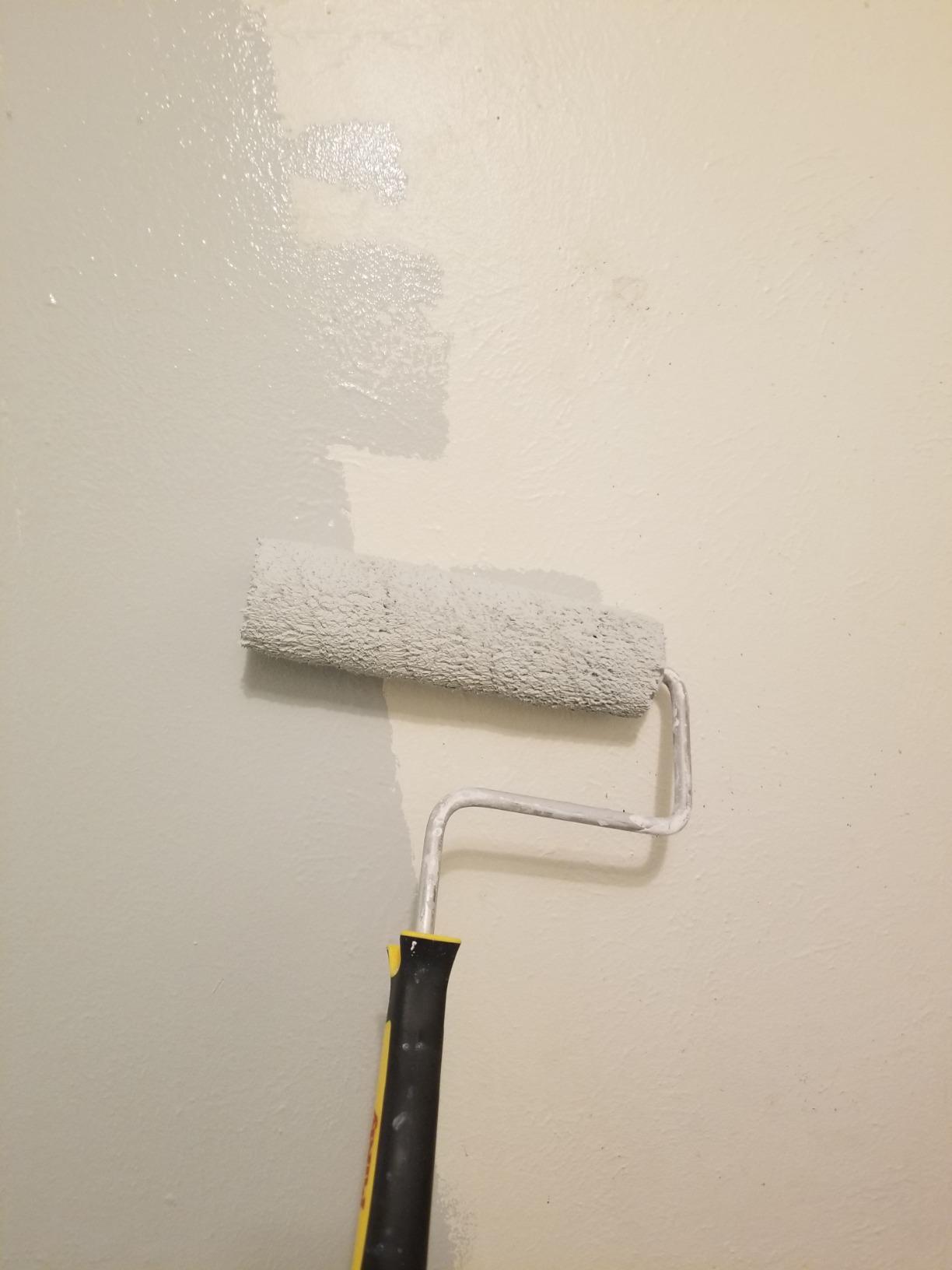
Textured walls drink paint. A half-loaded roller leaves bare spots in the grooves. Dip the roller fully and roll it on the tray two or three times to distribute the paint evenly across the nap before touching the wall.
Step 3: Use the W pattern
Roll a W pattern across a 3 by 3 foot section, then fill in the gaps without lifting the roller. This technique pushes paint into all the texture peaks and valleys in one pass.
Step 4: Maintain a wet edge
Always roll back into the wet edge of the previous section. Letting edges dry before blending them leaves lap marks that show on textured walls.
Step 5: Two coats minimum
Textured walls almost always need two coats for even color. The first coat fills the texture, the second coat evens out any thin spots. For dramatic color changes (dark to light or vice versa), a third coat is not unusual.
Step 6: Cut in edges first
Use an angled brush to cut in edges, corners, and trim before rolling the wall. Cutting in after rolling leaves overlap marks that show on textured surfaces.
Common Mistakes to Avoid on Textured Walls
Most textured wall paint jobs fail for the same handful of reasons. Avoiding these mistakes will save you a repaint.
Using too short a nap
The single most common mistake is using a 1/4 or 3/8 inch nap on heavy knockdown or orange peel. The short nap cannot reach the bottom of the grooves, leaving bare patches that show through the topcoat. Match nap depth to texture depth.
Overloading the roller
Loading the roller with too much paint causes heavy drips and splatter. Dip the roller fully, but roll it on the tray to remove excess before touching the wall. A properly loaded roller should not drip when lifted.
Skipping primer on patches
Patched areas and bare drywall absorb paint at a different rate than the surrounding texture. Without primer, the patches show through as flat spots in the finished coat.
Painting over dirty or greasy walls
Kitchen walls and high-traffic areas accumulate grease that repels paint. Wash walls with a degreasing cleaner and rinse before painting. Paint does not stick to dirty walls, especially on textured surfaces.
Rolling in one direction only
Rolling only up and down leaves directional stipple that shows in raking light. Roll in multiple directions, including the final pass with light pressure to even out the finish.
Frequently Asked Questions
What is the best roller nap for textured walls?
A 3/4 inch nap is the best roller nap for most textured walls including heavy orange peel, knockdown, and light popcorn. For light orange peel, a 1/2 inch nap is enough. For very heavy popcorn, stucco, or masonry, step up to a 1 inch nap or a slit-foam cover like the FoamPro 22.
How much nap for textured walls?
Use 1/2 inch nap for light to medium texture and 3/4 inch nap for medium to heavy texture. The nap length should roughly match the depth of the texture, with a slightly longer nap preferred over a slightly shorter one to avoid bare spots in the grooves.
Should I use 3/8 or 1/2 nap?
Use 3/8 inch nap for smooth or very lightly textured walls and 1/2 inch nap for light to medium orange peel and smooth knockdown. The 1/2 inch nap is the most versatile choice for typical residential textured walls. Step up to 3/4 inch if your walls have heavy knockdown or deep texture.
Do you need a special roller for textured paint?
Yes, you need a roller cover with a longer nap (1/2 inch or more) designed to push paint into the grooves of textured walls. Standard short-nap covers leave bare spots in the valleys of the texture. Woven polyamide or microfiber covers in 1/2 to 3/4 inch nap are the standard choice.
How to roll paint on a rough textured wall?
Load the roller fully, then roll a W pattern across a 3 by 3 foot section. Fill in the gaps without lifting the roller, then maintain a wet edge by rolling back into the previous section. Two coats are usually required for even coverage on rough texture.
What paint roller gives the smoothest finish on walls?
A woven polyamide cover in 3/8 inch nap gives the smoothest finish on lightly textured or smooth walls. Woven fabric releases paint more evenly than knit microfiber, resulting in less stipple. The Wooster Super Fab FTP and Purdy WhiteDove are top choices for smooth finishes.
How to get perfect paint lines on textured walls?
Cut in edges with an angled brush first, then roll the wall up to the line without crossing it. Use painter’s tape on trim for sharper lines, and remove the tape while the paint is still slightly wet to avoid pulling up dried paint from the texture.
What is the best roller to use on textured walls?
The Purdy Pro-Extra Colossus 1 inch nap is our top pick for heavy textured walls. For most residential orange peel and knockdown walls, the Wooster Super Fab FTP 3/4 inch nap is the best balance of finish quality and paint penetration. For DIY value, the Bates 19 piece kit covers most beginner projects.
Final Verdict
After three weeks of testing the best paint rollers for textured walls on knockdown, orange peel, and stucco, the Purdy Pro-Extra Colossus Roller Cover stands out as our top recommendation. Its 1 inch woven polyamide nap pushes paint deeper into heavy textures than any other cover we tested, and the lint-free finish holds up across multiple rooms. Pro painters name Purdy as their go-to brand, and the Colossus is the cover they reach for first.
For most residential textured walls, the Wooster Super Fab FTP 3/4 inch nap is the better everyday pick. It balances deep paint penetration with manageable splatter, and the HydroFlow release prevents sagging on ceilings. DIY homeowners starting their first project should grab the Bates 19 piece kit for everything they need in one box.
Whatever you choose, match the nap to your texture depth and prime first on patched or bare surfaces. For more on roller and material selection, our roller comparison guides cover related categories in detail.