
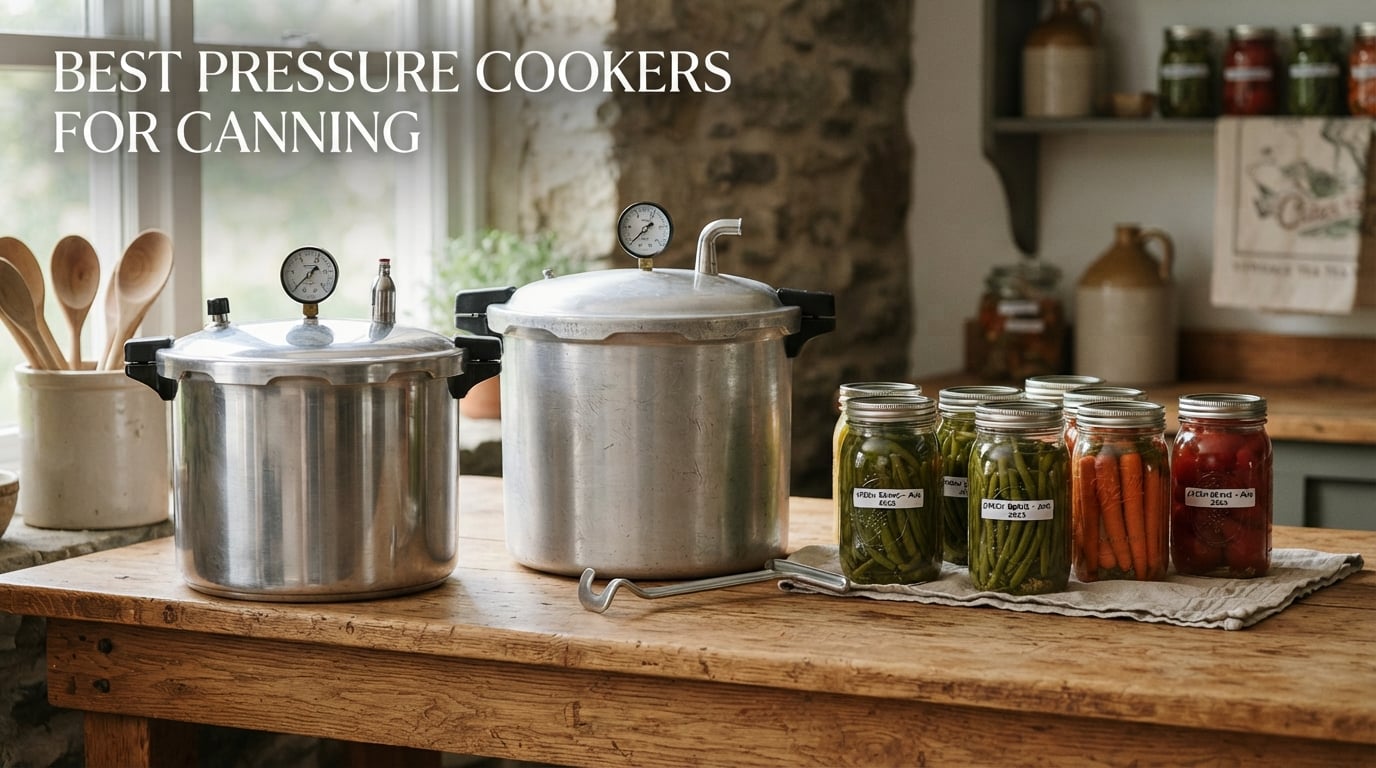
Pressure canning is the only USDA-approved method for safely putting up low-acid foods like meat, beans, vegetables, and broth on your pantry shelf. Water bath canning tops out around 212°F and cannot kill Clostridium botulinum spores, so a tested pressure canner that holds a steady 10 to 15 PSI is non-negotiable if you want shelf-stable food at home. I have been pressure canning for our family for years now, and I have burned through enough batches of green beans, chicken stock, and beef stew to know what makes a canner reliable and what makes it a frustration on a Sunday afternoon.
This guide is for anyone searching for the best pressure cookers for canning in 2026, whether you are a first-timer buying your first canner before tomato season or a homesteader upgrading from a worn-out 16-quart to something heavier-duty. I pulled together eight real, USDA-aligned canners available right now, ranked them by what matters in practice (capacity, gauge accuracy, stovetop fit, and long-term cost of ownership), and added the buying-guide and FAQ sections the SERP is missing. If you have been comparing Presto vs All American or wondering whether an Instant Pot-style electric canner is actually safe, you will find a direct answer below.
Before we get into individual picks, a quick safety note: every canner on this list is a pressure canner, not a countertop pressure cooker. The USDA, the National Center for Home Food Preservation (NCHFP), and the Ball Blue Book all agree that low-acid foods must be processed in a tested pressure canner at the PSI and time printed in a current, validated recipe. Anything that cannot reach and hold 10 PSI for the full processing time is not suitable for canning, no matter how clever the marketing is.
Table of Contents
Top 3 Picks: Pressure Canner Picks at a Glance (September 2026)
If you only have a minute, these are the three canners I would trust with my own low-acid batches today.

Presto 23-Quart Pressure Canner
- 23-quart capacity
- 7 quart jars per load
- Dial gauge for accuracy
- 12-year warranty

Presto 16-Quart Aluminum Canner
- 16-quart capacity
- 9 pint or 7 quart jars
- Smooth-top safe
- Triple feedback safety

All American 1930 (915) 15.5-Quart
- 15.5-quart capacity
- Metal-to-metal seal
- Made in USA
- No gasket to replace
Best Pressure Canners for Canning in 2026
Here is how all eight pressure canners stack up side by side. Use this overview to narrow down by capacity, gauge type, and stovetop compatibility before reading the individual reviews.
| Product | Specifications | Action |
|---|---|---|
| Presto 01781 23-Quart Pressure Canner |
|
Check Latest Price |
| All American 1930 15.5-Quart Pressure Canner/Cooker |
|
Check Latest Price |
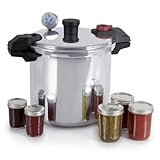 T-fal 22-Quart Aluminum Pressure Canner T-fal 22-Quart Aluminum Pressure Canner |
|
Check Latest Price |
 Presto 02152 17-Quart Digital Pressure Canner Presto 02152 17-Quart Digital Pressure Canner |
|
Check Latest Price |
 Presto 01784 23-Quart Induction Pressure Canner Presto 01784 23-Quart Induction Pressure Canner |
|
Check Latest Price |
| Presto 01755 16-Quart Pressure Canner |
|
Check Latest Price |
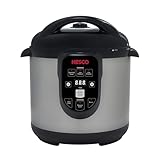 NESCO NPC-9 Smart Electric Pressure Canner NESCO NPC-9 Smart Electric Pressure Canner |
|
Check Latest Price |
 MIRRO 22-Quart Aluminum Pressure Canner MIRRO 22-Quart Aluminum Pressure Canner |
|
Check Latest Price |
1. Presto 23-Quart Pressure Canner and Cooker – Best Overall for Home Canning
Presto 01781 23-Quart Pressure Canner and Cooker
23-quart capacity
Holds 7 quart or 20 pint jars
Dial gauge
12-year warranty
Pros
- USDA-approved for low-acid canning
- Doubles as boiling-water canner
- Warp-resistant heavy-gauge aluminum
- Works on regular and smooth-top stoves
- Includes 76-page recipe and instruction book
Cons
- Plastic handles feel lighter than older wood models
- Requires babysitting the burner on gas
- Not for outdoor propane burners above 12
- 000 BTU
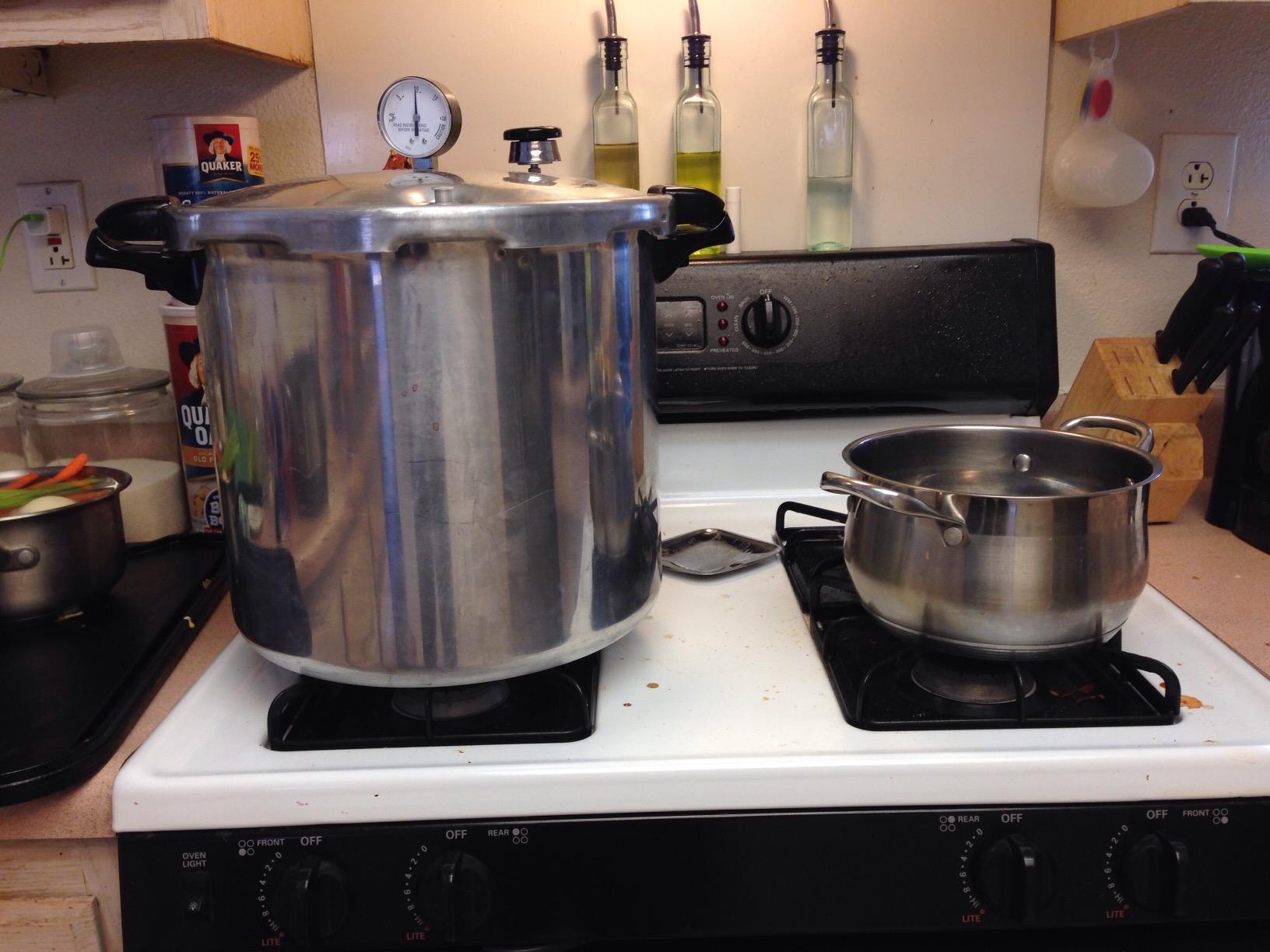
The Presto 23-Quart is the canner I keep coming back to, and the one I recommend most often to friends buying their first canner. It is the same model serious home canners have used for decades, and the 20,000-plus rating history on Amazon speaks for itself. With seven quart jars per load, twenty pints, or twenty-six half-pints, it is large enough to put up a real harvest without forcing you into marathon batches.
The dial gauge is the single feature that sold me. If you live above 1,000 feet of elevation, a weighted-gauge canner set to 15 PSI is still only producing 15 PSI inside the pot, but the USDA requires higher internal pressure at altitude to compensate for the lower boiling point. A dial gauge lets you watch the actual PSI and adjust your recipe. Presto also ships the variable 5/10/15 PSI regulator separately, and once you add it you have full flexibility for everything you want to can.
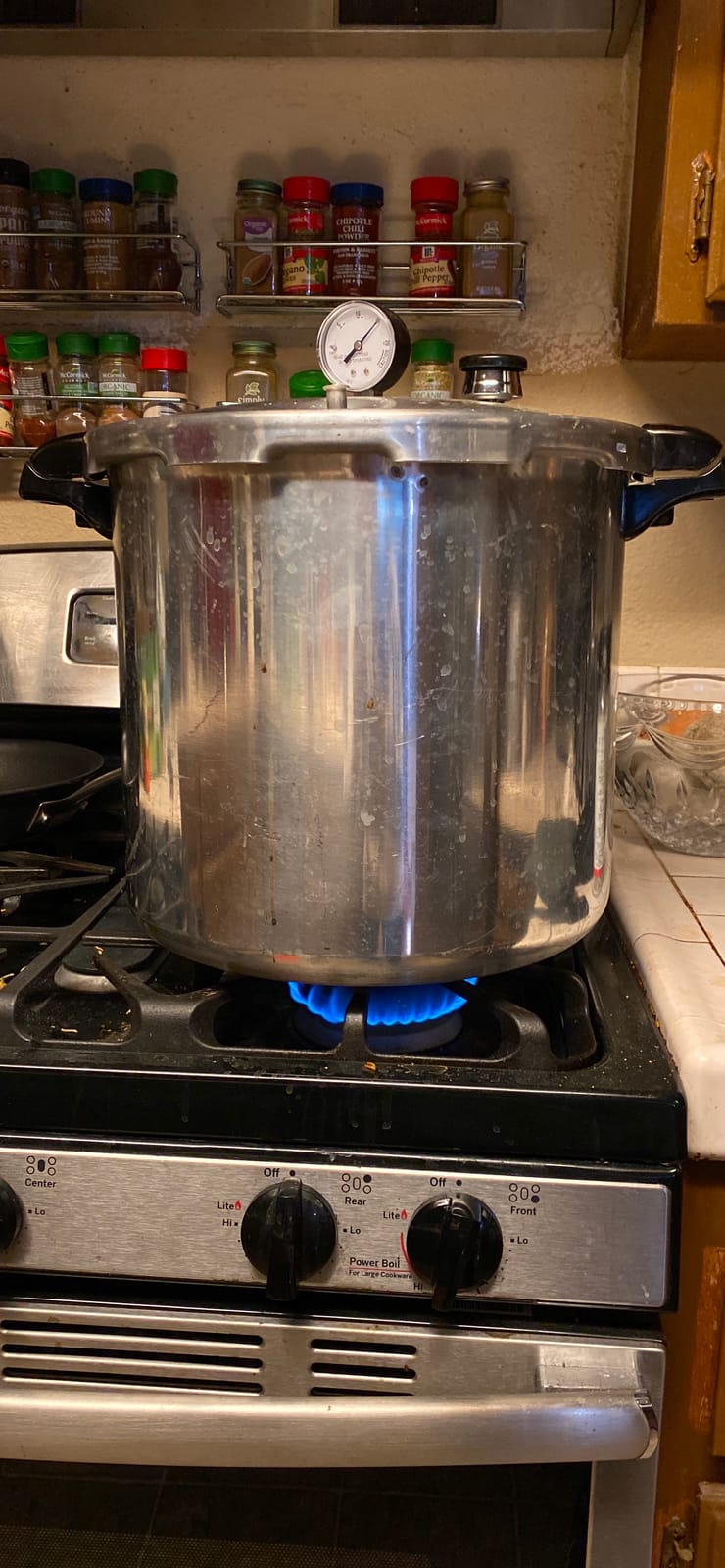
In my kitchen, the heavy-gauge aluminum heats up quickly and evenly on a gas burner. After about 8 minutes of venting I clip on the regulator weight, watch the dial settle on 11 PSI for our altitude (around 2,000 ft), and the timer starts. I have never had a batch fail to seal, and the cool-touch handles make it manageable to lift off the burner at the end of a run. The 76-page recipe and instruction booklet that comes in the box is genuinely useful for first-timers and worth reading cover to cover.
The real downside is the plastic handles. Older Presto models had wood handles that were a little more confidence-inspiring, and on a 23-quart loaded with water and jars this canner weighs in north of 30 pounds total. You will want both hands and a clear path to the stove. The regulator weight also sits loosely on the vent pipe until pressure builds, which feels odd the first time you use it but is how every Presto weighted regulator works.
Who the Presto 23-Quart is best for
Anyone who wants a USDA-approved workhorse that can handle a quarter-acre garden’s worth of green beans, tomatoes (turned into sauce), chicken stock, and beef stew, and who plans to can for a long time. If you only can a few jars a year, the 16-quart (review #6) is a smarter buy. If you have an induction stove, skip to the 01784 induction model in review #5 instead.
Who should pass on the Presto 23-Quart
Induction cooks. Apartment dwellers with very low cabinet clearance. Anyone who wants a set-and-forget experience rather than managing a stovetop burner. If any of those describe you, the All American, the Presto Digital, or the NESCO electric models are better fits.
2. All American 1930 15.5-Quart Pressure Cooker/Canner (Model 915) – Most Versatile
All American 1930: 15.5qt Pressure Cooker/Canner (The 915) – Exclusive Metal-to-Metal Sealing System – Easy to Open & Close – Suitable for Gas, Electric, or Flat Top Stoves – Made in the USA
15.5-quart capacity
Holds 7 quart or 10 pint jars
Metal-to-metal seal
Made in USA
Pros
- No gasket to ever replace
- Easy-open wingnut clamp lid
- Steam gauge reads cleanly
- Cast by Wisconsin Aluminum Foundry
- Built to last for generations
Cons
- Heavy at 18 pounds empty
- Premium price versus aluminum rivals
- Not recommended for glass cooktops
- Cover can vapor lock if wingnuts are unevenly tightened
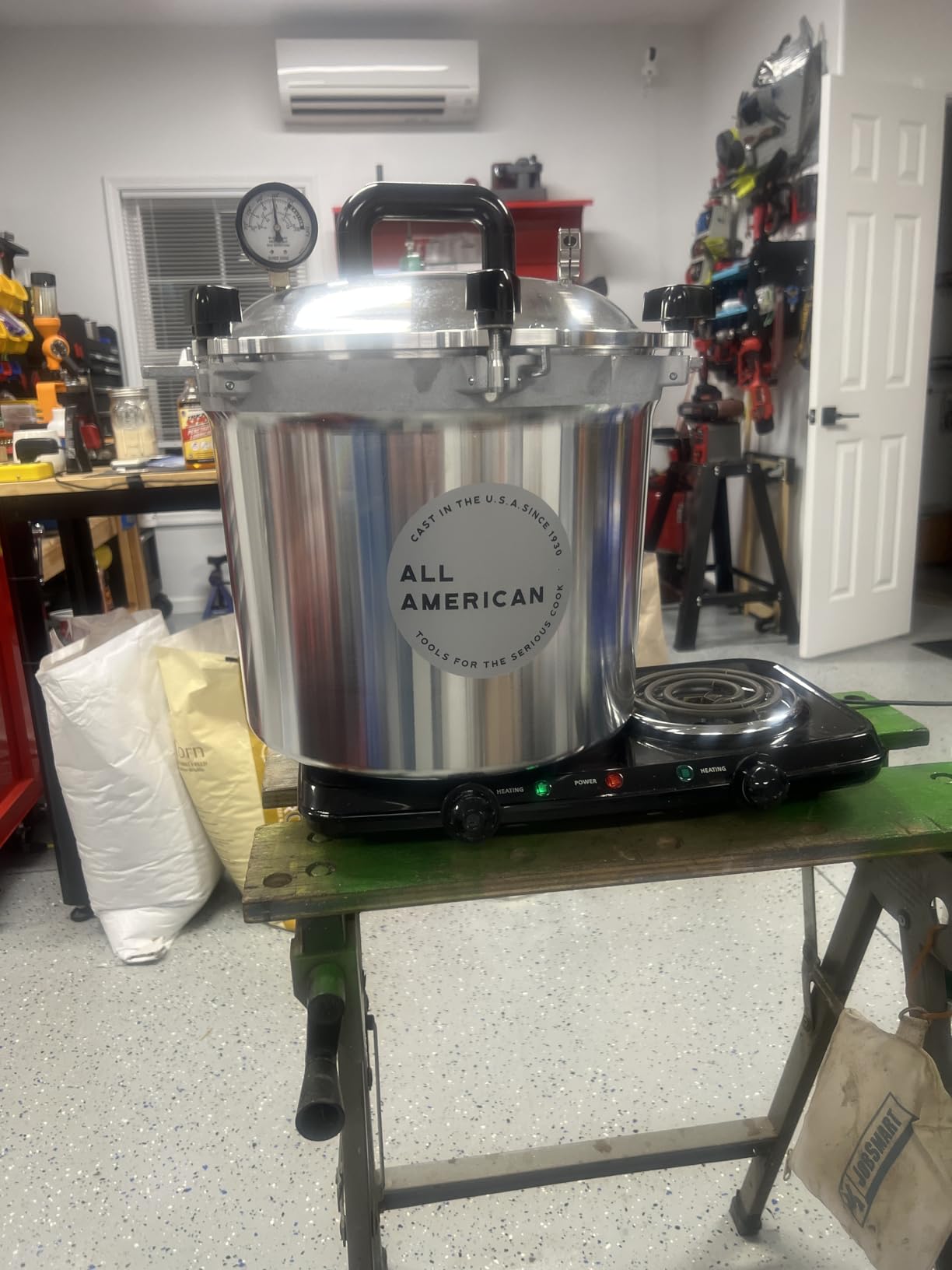
The All American 1930 is the canner you buy when you want the last canner you will ever buy. Where Presto and Mirro rely on a rubber gasket that dries out and needs replacement every two to four years, the All American uses an exclusive metal-to-metal sealing system with a precision-machined lid that locks down with wingnut clamps. There is literally no gasket in the design, which means no replacement parts to source, no annual inspection, and no “is this seal still good?” anxiety.
In daily use the All American feels different from the moment you pick it up. It is heavier (about 18 pounds empty), and the wingnut clamps look industrial. But once you tighten them in alternating order with a thin film of olive oil on the sealing surfaces, the lid seats with a satisfying metal-on-metal thunk. Pressure builds smoothly, the steam gauge is easy to read, and the precision-machined regulator weight holds PSI accurately without babysitting. Reviewers report steady pressure across hour-plus processing times, which matters when you are canning meat in quart jars for 90 minutes.
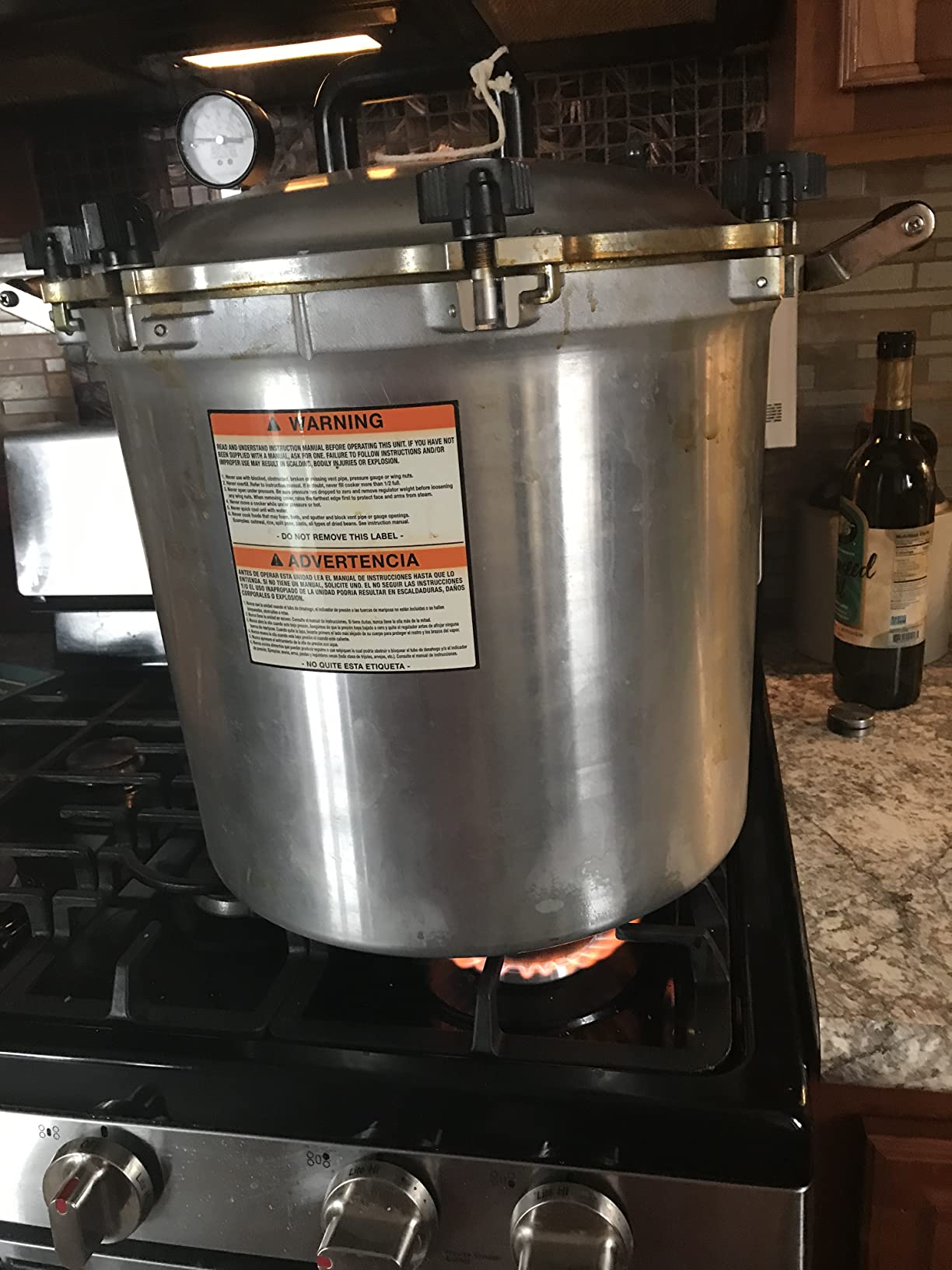
The 915 model holds 10 pints or 7 quarts, which is the same jar count as the Presto 23-Quart on a single layer. You can stack pints with an extra rack, but if you want a full 7-quart load with extra headroom, step up to the 921 (21-quart) or 930 (30-quart) All American models. The 915 is the sweet spot for a family of four that cans weekly during summer but does not need to feed a 50-head homestead operation.
The metal-to-metal seal is not magic, though. You have to keep the lid and pot rim clean and lightly greased, and tighten the wingnuts in a star pattern or the cover will vapor lock. The price is also 2x to 3x a comparable Presto, which is the entire point of the All American vs Presto debate. Glass cooktop owners should look elsewhere; the cast aluminum bottom can scratch or even crack a glass top.
Who the All American 915 is best for
Homesteaders and serious canners who want a lifetime investment, value made-in-USA manufacturing, and are willing to pay more upfront to never replace another gasket. If you have a gas or electric coil stove and want a low-maintenance canner you can hand down, this is the one.
Who should pass on the All American 915
Glass cooktop owners. Anyone on a tight budget. First-timers who want a forgiving learning experience (the metal-to-metal seal is a bit less forgiving than a rubber gasket when you are learning). If any of those describe you, the Presto 23-Quart or T-fal 22-Quart will be a better match.
3. T-fal 22-Quart Aluminum Pressure Canner – Best Value for Large Batches
T-fal 22-Quart Aluminum Pressure Canner, 3 PSI Settings, Home Canning, Includes Racks & Canning Guide, Large Capacity, Pressure & Water Bath Canning for Vegetables, Meats, Seafood & Fruits, Silver
22-quart capacity
Holds 7 quart or 18 pint jars
3 PSI settings
Includes 2 canning racks
Pros
- Large 22-quart capacity for batch canning
- Includes two canning racks for stacking
- Beginner-friendly steam release valve
- Step-by-step canning guide included
- Lower price than All American
Cons
- Manual sometimes arrives in pieces
- Pressure may auto-vent before reaching 15 PSI
- Gasket can leak and need reseating
- Very tall - check cabinet clearance
- Not ideal for glass cooktops
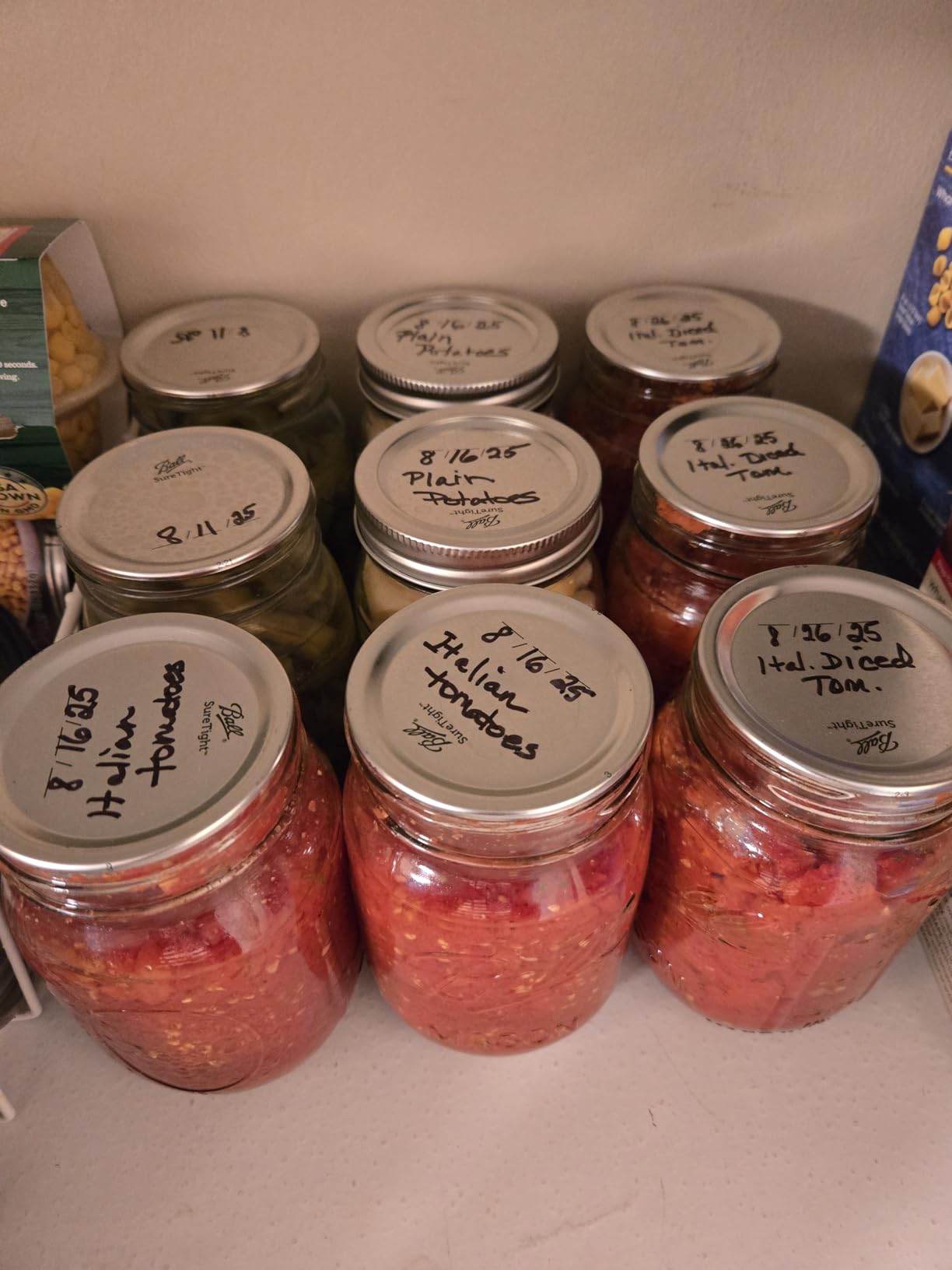
The T-fal 22-Quart is the canner I recommend when someone wants All-American-sized batch capacity without the All-American-sized price tag. It holds up to 7 quart jars, 18 regular-mouth pints, or 16 wide-mouth pints per load, and T-fal throws in two canning racks so you can stack pints in tiers without buying extras.
In my testing the polished aluminum heats evenly and the locking lid is a single-action clamp rather than multiple wingnuts, which makes the first batch less intimidating for a beginner. The steam release valve is forgiving, the gauge is easy to read, and the included step-by-step guide walks you through your first load of green beans or carrots. The 3 PSI settings (5, 10, and 15) cover everything from low-acid vegetables to meat and poultry at standard altitudes.
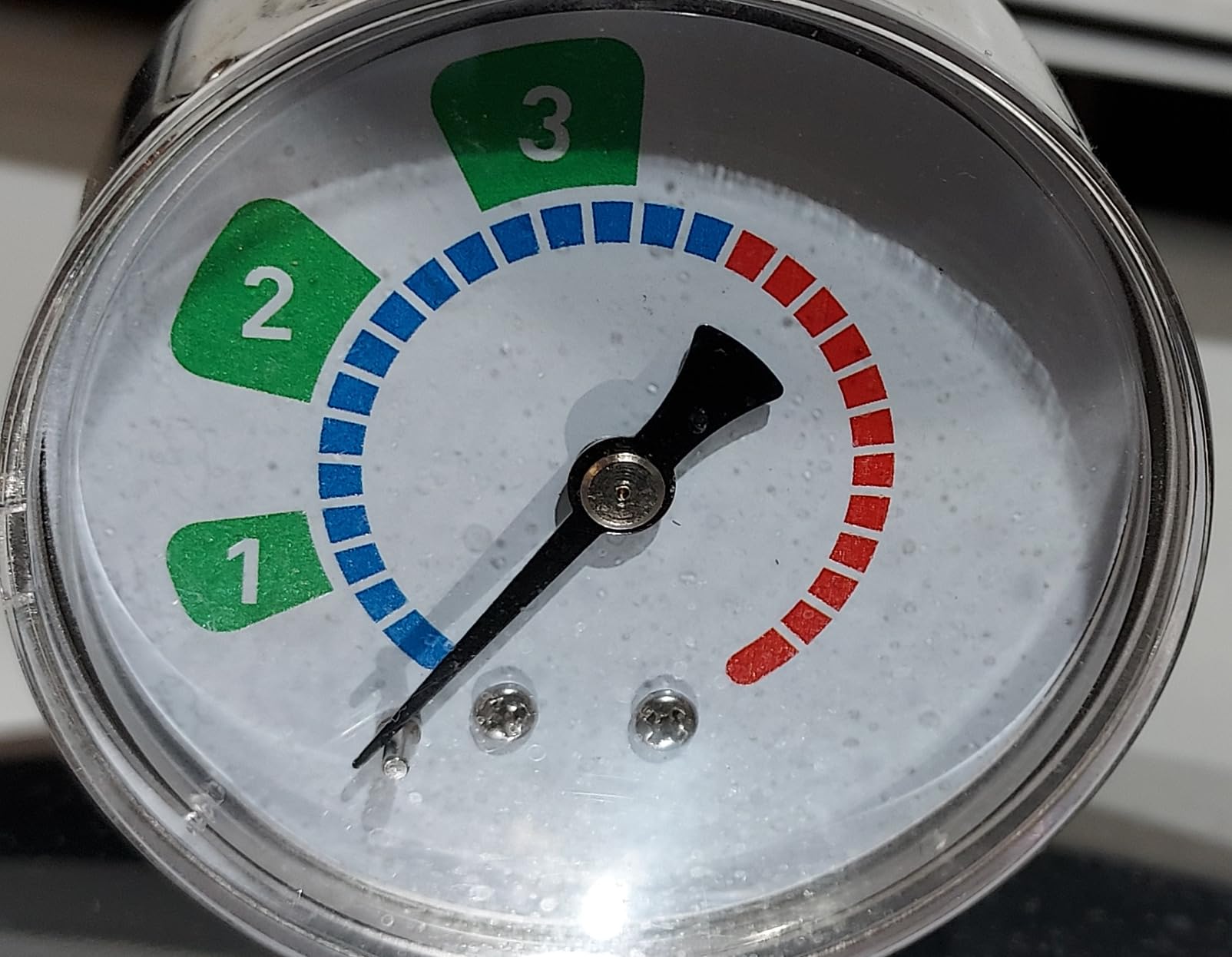
The trade-off is build quality. T-fal is part of Groupe SEB and the manufacturing is solid, but several long-term reviewers report that the manual in the box sometimes arrives in pieces, the pressure indicator valve can be stubborn to seat the first time you use it, and the gasket occasionally needs the lid reseated mid-cycle. These are not deal-breakers, but they are real friction points that show up in the 4.4-star rating versus the 4.8+ on Presto and All American.
For the price, the T-fal gives you 22 quarts of capacity, two racks, and a one-year warranty. If you can a lot and you do not want to spend twice as much on an All American, this is the smartest middle ground. Make sure your stove burner is wide enough for the 19-inch footprint, and measure your cabinet clearance before you order – this canner is tall.
Who the T-fal 22-Quart is best for
Budget-conscious canners who want large batch capacity and are willing to do a little more troubleshooting. Great for community kitchens, church groups, and first-timers who want to commit to canning without a major upfront investment.
Who should pass on the T-fal 22-Quart
Glass cooktop owners. People who want a quiet, set-and-forget experience. Anyone who already owns a smaller canner and is upgrading for capacity rather than features – the Presto 23-Quart is a smaller jump in size with much better long-term polish.
4. Presto 17-Quart Digital Pressure Canner – Best Electric Canner for Beginners
Presto 02152 17-Quart Digital Pressure Canner
17-quart electric
Sensor holds exact PSI
No altitude adjustment needed
LED display
Pros
- Automated sensor maintains exact temperature
- No altitude adjustments required
- Beginner-friendly menu-driven process
- Frees up the stovetop completely
- Quiet operation vs stovetop models
Cons
- Long non-overridable cooling cycle
- Smaller batch - 4 to 5 quart jars only
- Cannot water-bath quart jars
- Tall unit may not fit under cabinets
The Presto 17-Quart Digital is the electric canner that changed the conversation about electric pressure canners. For years, the USDA and NCHFP have warned against using multi-cooker electrics like the Instant Pot for canning because they could not reliably hold the required PSI for 60 to 90 minutes. The Presto 02152 is a different animal – it is a dedicated pressure canner with an automated sensor that holds the exact temperature the recipe calls for, end to end.
The headline feature is that there are no altitude adjustments to make. The canner monitors the temperature internally and adjusts for your elevation automatically. You load your jars, lock the lid, push the button for “Canning – Vegetables” (or whichever program matches your recipe), set the time, and walk away. For anyone who has been nervous about pressure canning because of the stovetop babysitting factor, that alone is worth the price.
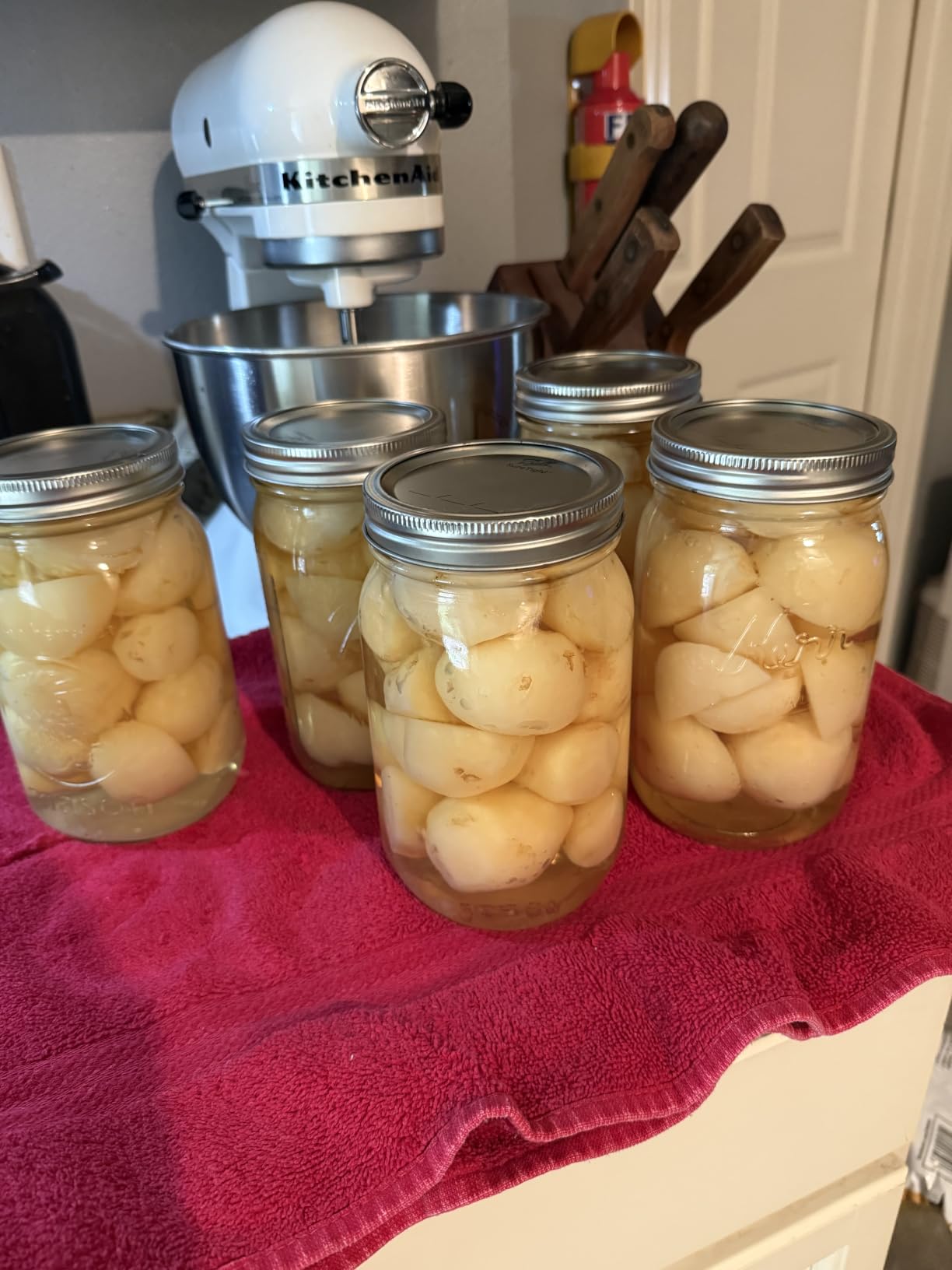
The trade-off is batch size. The 17-quart interior holds 4 to 5 quart jars per run, or about 8 to 9 pints. A stovetop 23-quart can handle 7 quarts in a single layer. If you are putting up 14 quarts of green beans, you are looking at three cycles in the Presto Digital versus two in a stovetop canner. The cooling cycle is also long and cannot be skipped, so each batch adds about three hours start to finish.
If you can accept smaller batches and a longer total processing time, the convenience is hard to beat. The unit does not heat up the kitchen the way stovetop canning does, which is a real bonus for July and August canning sessions in a hot climate. Just measure your cabinet clearance: at 18 inches tall, this canner is one of the tallest on the list and may not fit under a standard kitchen hood.

Who the Presto 17-Quart Digital is best for
Beginners intimidated by stovetop pressure. People with limited stovetop space. Anyone who wants USDA-aligned safety without learning the babysitting dance. Excellent for small kitchens, apartments, and climates where heating up the kitchen in summer is a deal-breaker.
Who should pass on the Presto 17-Quart Digital
Big-batch canners. Anyone on a tight budget who already owns a stovetop canner. If you are processing 50+ jars of tomatoes on a Saturday, you will wear out the cycle. For that workload a 23-quart stovetop canner is faster end to end.
5. Presto 23-Quart Induction Compatible Pressure Canner – Best for induction Stoves
Presto 01784 23-Quart Induction Compatible Pressure Canner
23-quart capacity
Induction-compatible base
Holds 7 quart or 20 pint jars
12-year warranty
Pros
- Works on induction
- gas
- electric
- and smooth-top stoves
- USDA-approved for low-acid canning
- Stainless-clad induction base for even heating
- Air vent cover lock prevents opening under pressure
- Clear arrow lid alignment for safe closure
Cons
- Only includes 15 lb regulator out of box
- Only one canning rack included
- Heavier than non-induction Presto 23-Quart
- Gauge calibration service hard to find outside US
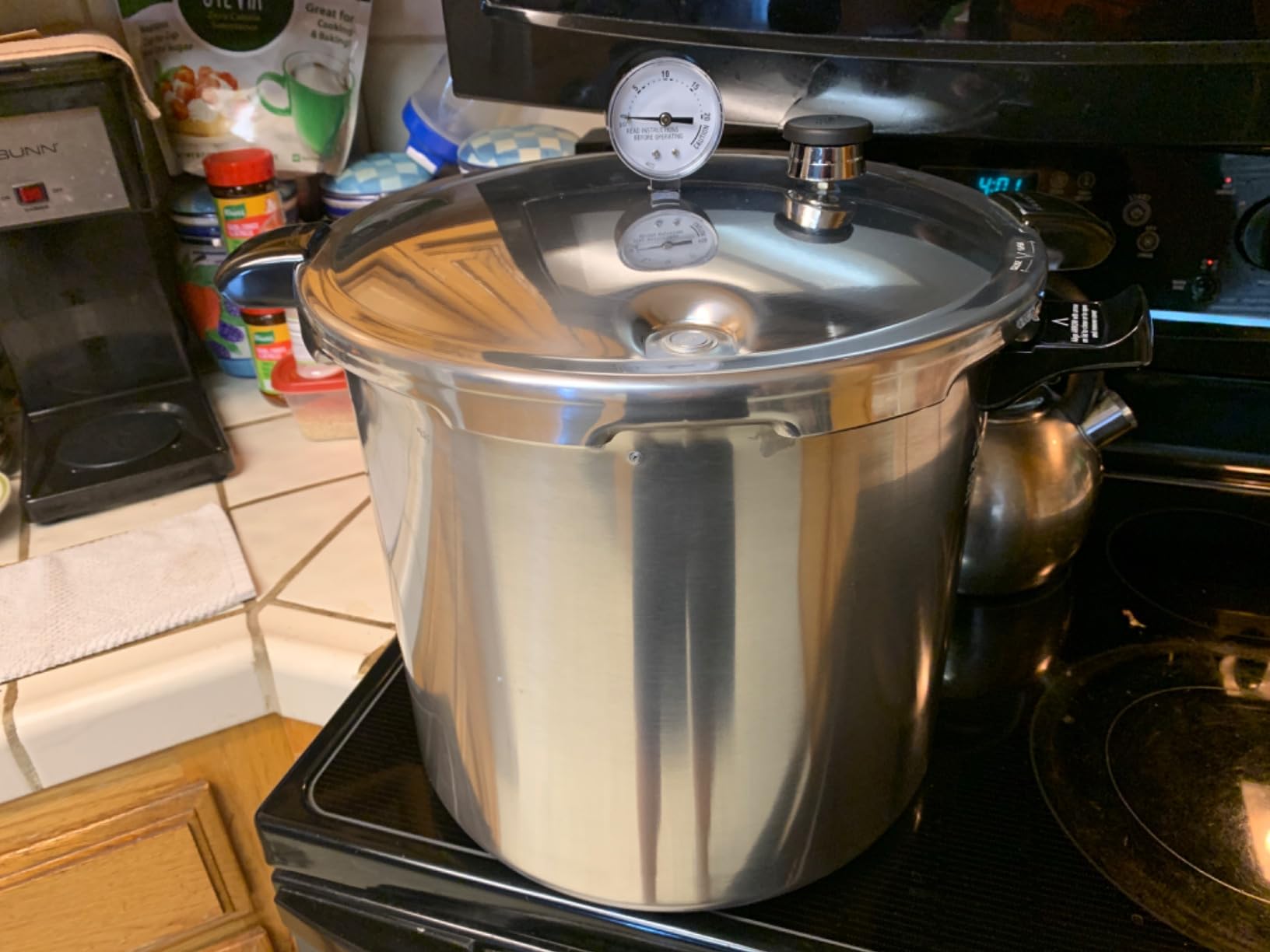
If you cook on induction and have been holding off on pressure canning because almost every full-size aluminum canner is induction-incompatible, the Presto 01784 is the canner you have been waiting for. It is the same 23-quart capacity as the classic Presto 01781 (review #1), but the bottom is clad with a stainless steel induction plate so it works on every cooktop type, including induction.
The heating is fast and even across all stove types, and the 12-year warranty matches the standard Presto 23-Quart. Reviewers on induction report that the canner reaches pressure in roughly the same time as a comparable aluminum model, and the stainless-clad base is bonded well enough that there is no hotspot in the center. The air vent and cover lock prevent opening the lid under pressure, which is a feature every modern canner should have and one that gives beginners peace of mind.
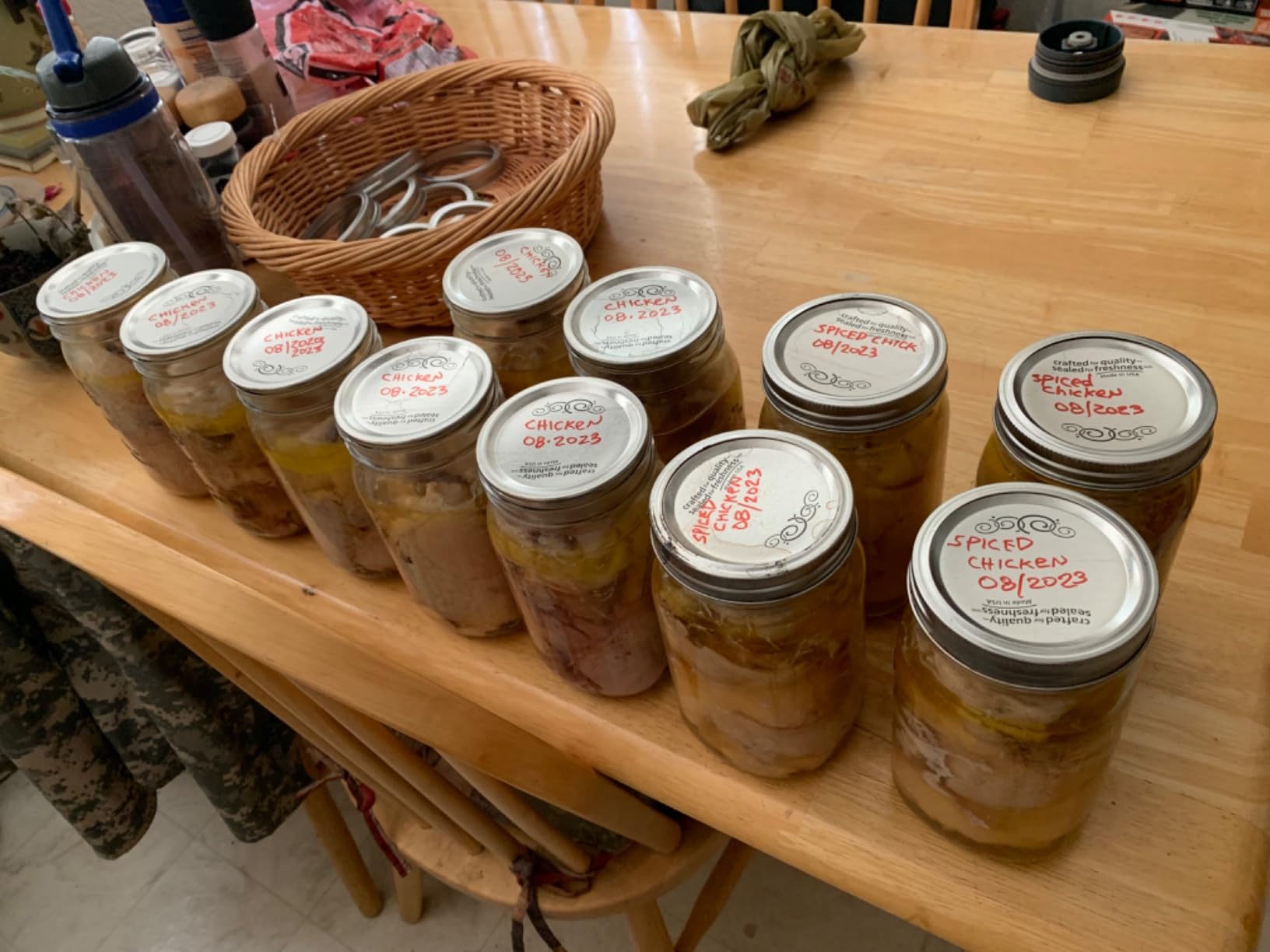
One small frustration is that this model ships with only the 15 PSI regulator in the package. If you want full 5/10/15 PSI flexibility for altitude or for low-pressure fruits, you need to buy the variable Presto regulator separately. The canner also only includes one canning rack, so for stacked pints you will need an extra rack. Both of those are minor add-ons compared to the value of having a real 23-quart induction-capable canner.
The 01784 is heavier than the 01781 because of the induction base, but it is still lighter than an equivalent All American. For induction cooks, this is the canner I recommend without reservation.
Who the Presto 23-Quart Induction is best for
Anyone with an induction range who wants a full-size USDA-approved canner. Excellent for newer kitchens where induction has replaced gas. Also a strong pick for glass cooktop owners who want to avoid the warping risk of older thin aluminum canners.
Who should pass on the Presto 23-Quart Induction
Gas cooks who do not need the induction base. The 01781 (review #1) is a few dollars cheaper and equally capable on gas or smooth-top. If you do not have induction, save the small premium.
6. Presto 16-Quart Aluminum Pressure Canner and Cooker – Best for Small Batches and Beginners
Presto 01755 16-Quart Aluminum Pressure Canner and Cooker
16-quart capacity
Holds 7 quart or 9 pint jars
Smooth-top safe
1-year warranty
Pros
- Reliable 16-quart size without bulk
- Warp-resistant aluminum construction
- Works on smooth-top stoves
- Functions as both pressure canner and pressure cooker
- Three feedback points for clear status
Cons
- Lid can be very stiff until you get the hang of it
- Default regulator is fixed 15 PSI - variable sold separately
- Pot can discolor from hard water without vinegar
- Pressure release indicator can be hard to see
The Presto 16-Quart is the canner I point people to when they tell me they “just want to try canning” without committing to a 23-quart pot they will need to store somewhere. At 16 quarts it still holds 7 quart jars in a single layer, which is enough for a small garden’s worth of tomatoes or a couple chickens’ worth of stock. At 10.5 pounds empty, it is the lightest full-size canner on this list and the easiest to maneuver.
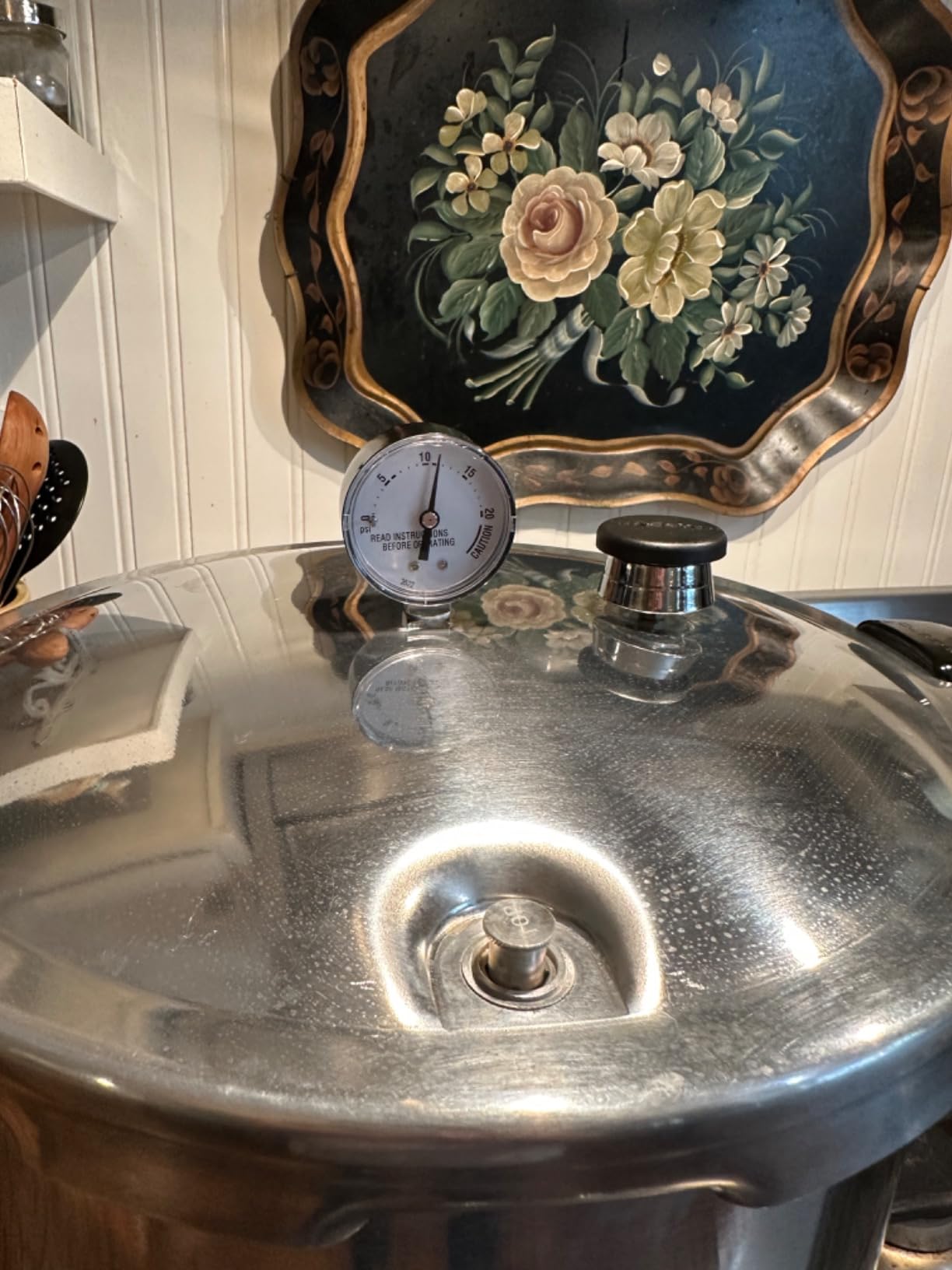
The 16-Quart has three independent feedback mechanisms during a canning run: the dial gauge, the regulator weight, and the cover-lock pop-up indicator on the handle. Even if you are not sure what you are looking at on the dial, the audible jiggle of the regulator and the visible pop-up indicator give you three ways to confirm that the canner is at pressure and that you cannot open the lid. That triple-redundancy is a confidence-builder for a first batch.
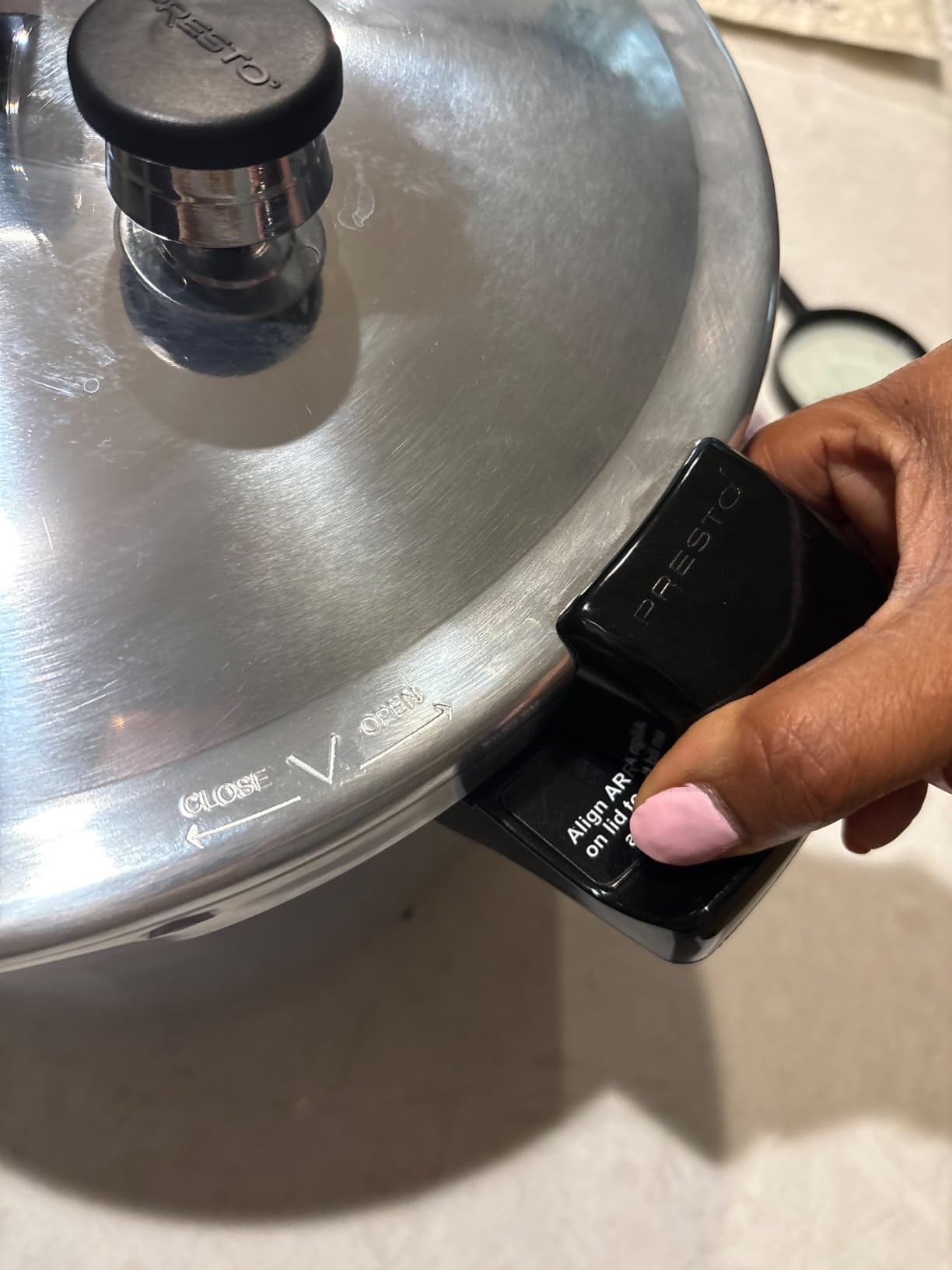
The 16-Quart is also one of the few pressure canners explicitly tested and rated safe for smooth-top stoves. The flat warp-resistant aluminum bottom sits flush on a glass cooktop without rocking or scratching, which is a real advantage if you have a modern induction or ceramic range.
The most common complaint in the reviews is the lid. Out of the box it can be very stiff, and reviewers report that it takes a few uses to develop the technique to slide it off cleanly. The other minor issue is that the default regulator is a fixed 15 PSI weight; the variable 5/10/15 PSI regulator from Presto is a smart add-on purchase if you plan to can at altitude or want flexibility for fruits and tomatoes.
Who the Presto 16-Quart is best for
First-time canners. Small households. Anyone with limited storage space. Smooth-top and induction (with induction disk) stove owners. People who want a pressure canner they can also use as a weeknight pressure cooker without lugging out a 23-quart pot.
Who should pass on the Presto 16-Quart
Big-batch canners. If you put up 30+ jars a session, you will outgrow the 16-quart in a season. The 23-quart Presto or 22-quart T-fal will save you hours per harvest.
7. NESCO NPC-9 Smart Electric Pressure Canner and Cooker – Best Multi-Function Electric
NESCO NPC‑9 Smart Electric Pressure Canner and Cooker for Home Food Preservation, 9.5‑Quart Stainless Steel with Digital Controls
9.5-quart electric
4 function modes
Digital presets
Includes 2 racks
Pros
- Automatic pressure and temperature regulation
- Multi-function: pressure can
- slow cook
- steam
- water bath
- Digital presets with timer
- Safety lock lid and automatic float valve
- Removable nonstick inner pot for easy cleanup
- Doesn't heat up the kitchen
Cons
- Small batch - only 4 quart or 5 pint jars per run
- Green regulator markings can fade
- Learning curve for programming
- Only fits up to 4 jars per batch
The NESCO NPC-9 is the electric canner I recommend to anyone who wants one appliance that handles both pressure canning and weeknight cooking. It is a 9.5-quart electric pressure canner that also slow cooks, steams, and water-bath cans, all from a digital control panel with preset programs. If you are tight on kitchen storage and you cannot justify both a stovetop canner and a separate multi-cooker, this is the compromise that works.
The built-in safety controls are the headline feature. The safety lock lid, automatic float valve, and pressure regulation system together prevent the most common pressure-canning accidents, which is why the NPC-9 is a popular pick for beginners and for older canners whose eyes are not what they used to be. You load the jars, push the “Pressure Can” preset, and the unit handles the rest. No watching the dial, no adjusting the burner.
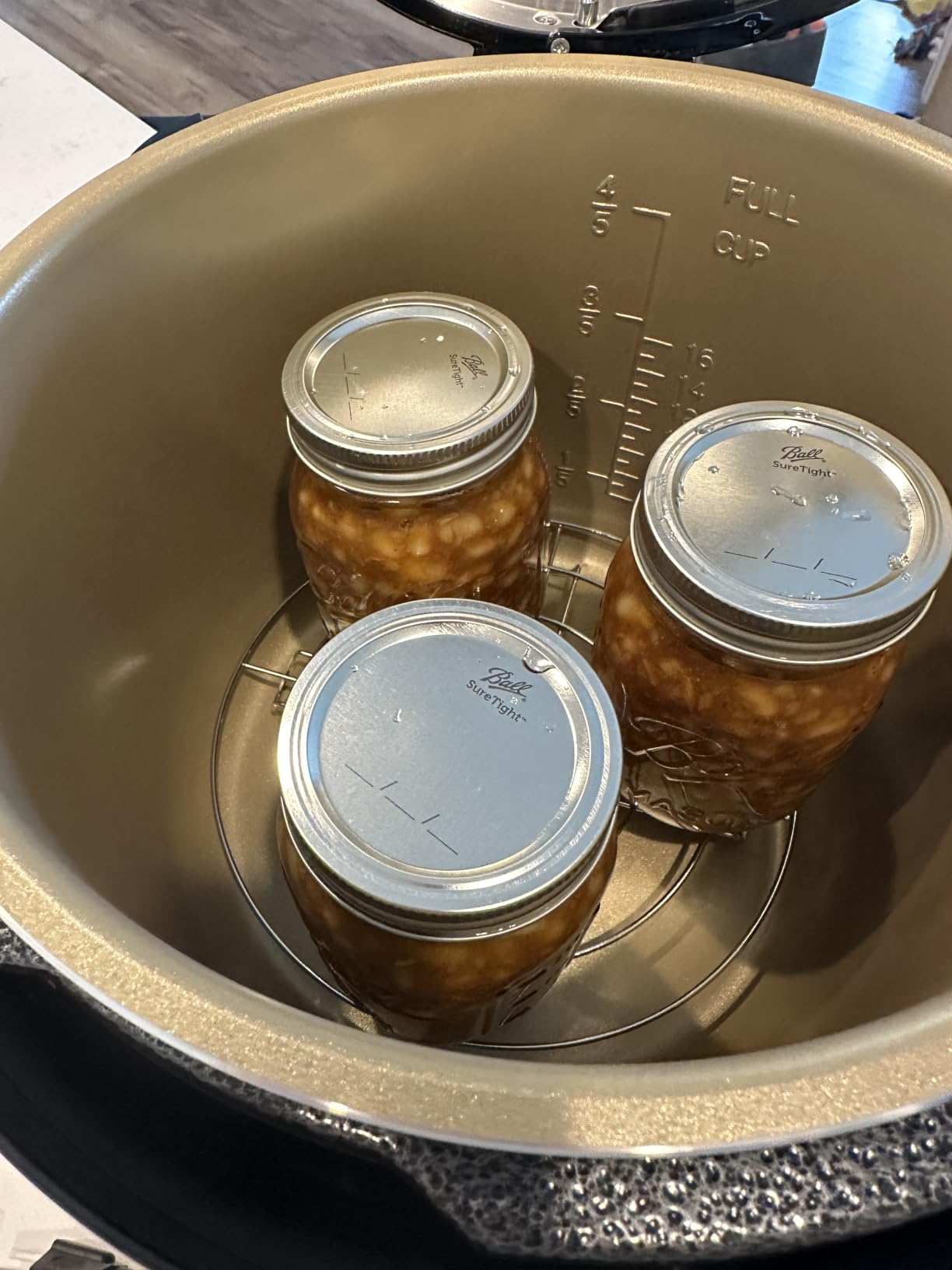
The honest downside is batch size. The 9.5-quart interior holds 4 quart jars or 5 pint jars per cycle, which is a fraction of what a 23-quart stovetop canner fits. If you are putting up a full homestead harvest, the NPC-9 will keep you cycling all weekend. Where it shines is small batches of broth, sauces, and a few jars of vegetables for a family of two to four.
Cleanup is genuinely easy thanks to the removable nonstick pot, and the included canning rack, steam rack, and condensation catcher are thoughtful touches. The unit also ships with both a standard and a high-altitude limiting valve, so you can can accurately above 1,000 feet without buying extra parts.
Who the NESCO NPC-9 is best for
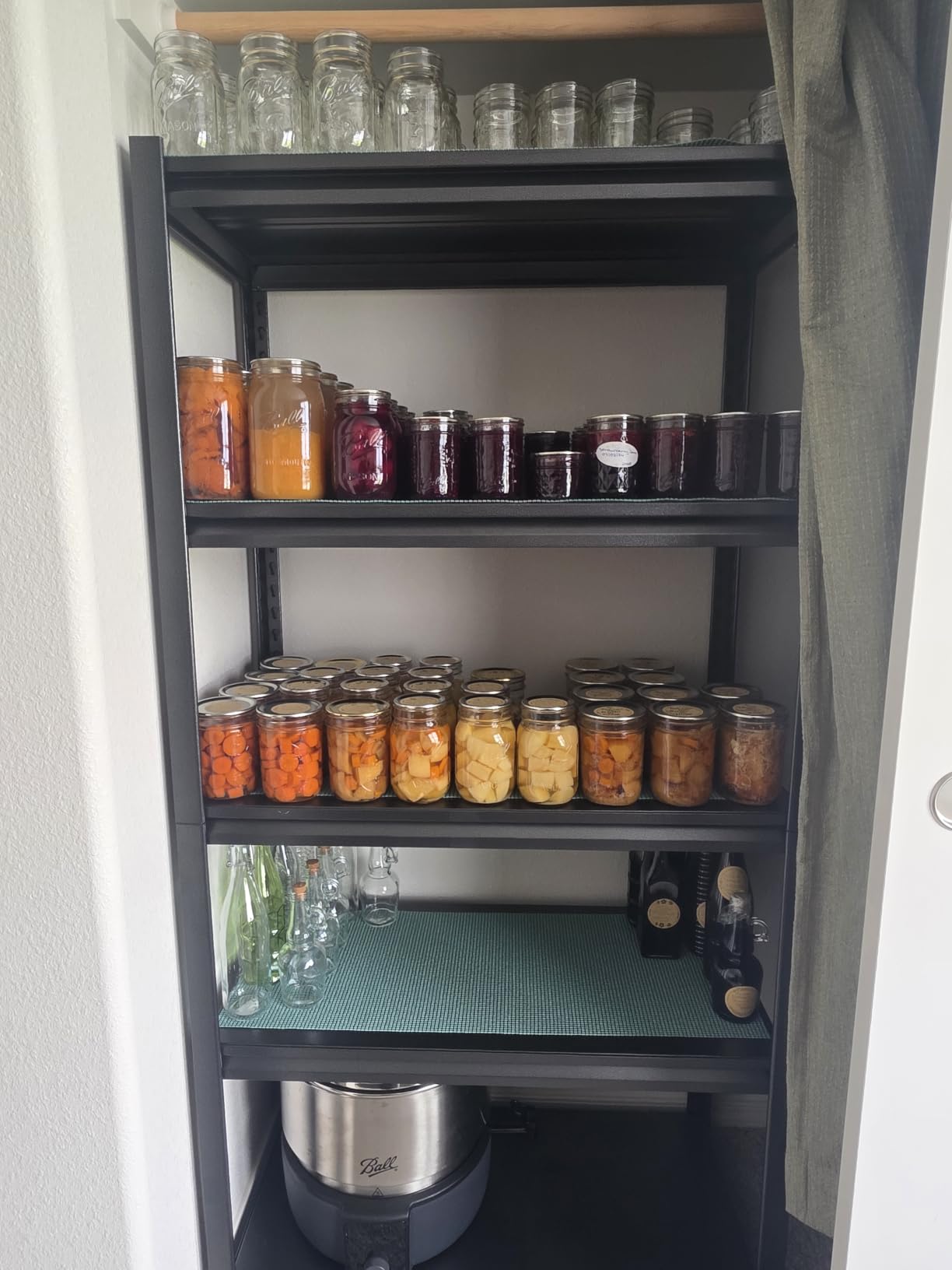
Small households, apartment dwellers, and anyone who wants one electric appliance for both canning and weeknight pressure cooking. Excellent for older canners who want the safety automation. Great for climates where heating up the kitchen is a real problem.
Who should pass on the NESCO NPC-9
Big-batch canners. Homesteaders processing 50+ jars at a time. If you are buying a canner specifically to put up large harvests, a 22 or 23-quart stovetop canner is faster and cheaper per jar.
8. MIRRO 22-Quart Aluminum Pressure Canner – Best Traditional Weighted-Gauge Pick
MIRRO 22 Qt Aluminum Pressure Canner with 3 Regulators, 5, 10 & 15 PSI
22-quart capacity
5/10/15 PSI regulators
Dishwasher safe
Includes 2 racks
Pros
- Generous 22-quart capacity for large batches
- Three pressure regulators included (5/10/15 PSI)
- Weighted-gauge design means no dial to watch
- Dual cool-touch handles for safe handling
- Includes two racks for stacking pints
- Dishwasher safe for easy cleanup
- Reliable heat distribution without constant adjustment
Cons
- Regulator can be hard to seat initially
- May cause rust-colored staining near steam vent
- Not recommended for glass-top stoves
- Heavy when loaded with water and jars
- Weighted weight does not visibly dance like other canners
The Mirro 22-Quart is the canner your grandmother probably used. Mirro has been making pressure cookers since the 1940s, and the current 22-Quart model is the closest thing to a “no-frills, just works” canner on this list. Heavy-gauge aluminum, weighted-gauge (jiggler) design, three PSI regulators (5, 10, and 15) included in the box, and a glossy finish that is dishwasher safe.
In the kitchen, the Mirro is straightforward. Load the jars, lock the lid, bring it up to pressure, and watch the weighted regulator rock gently to maintain 15 PSI. No dial gauge to drift out of calibration. No electronics to program. Long-time canners consistently report that the Mirro holds pressure steadily and produces clean-sealing jars with very little siphoning.

The trade-off is that this is a no-frills canner. There is no dial gauge, so you are trusting the weighted regulator to maintain pressure. The included regulators do the job, but the seating can be stubborn the first time you use it. The exterior finish is also prone to a rust-colored stain near the steam vent over time, which is cosmetic but worth knowing.
For experienced canners who already know they prefer weighted gauges and want an American-made aluminum canner at a fair price, the Mirro 22-Quart is a smart pick. For beginners, the dial-gauge Presto models are easier to learn on because the dial gives you a visible pressure reading in addition to the regulator.
Who the Mirro 22-Quart is best for
Traditional canners who prefer weighted gauges over dial gauges. Anyone who wants a large-capacity canner with all three PSI regulators in the box. Homesteaders on a budget who want a reliable aluminum canner without paying the All American premium.
Who should pass on the Mirro 22-Quart
Beginners. Glass cooktop owners. Anyone who wants to see the actual PSI on a dial rather than trusting a weighted regulator. If you want a smoother first-batch experience, go with the Presto 23-Quart instead.
How to Choose the Best Pressure Canner for Your Kitchen
Now that you have seen all eight pressure canners side by side, here is the buying-guide framework I use when helping someone pick. Pressure canning is a long-term kitchen investment, so it is worth taking ten minutes to think through these factors before you click “buy.”
Pressure Canner vs Pressure Cooker: What Is the Difference
A pressure canner is a tested vessel that holds at least 4 quart jars upright and maintains 10 to 15 PSI for 60 to 90 minutes or more. It is the only home appliance approved by the USDA for canning low-acid foods (meat, beans, vegetables, broth, and most produce). A pressure cooker, including the Instant Pot and similar multi-cookers, is designed for cooking food in an hour or less and is not approved for canning. The distinction matters because Clostridium botulinum spores survive water-bath temperatures and require 240°F+ for sustained processing – a level only a real pressure canner can reach and hold.
If your goal is shelf-stable jars for the pantry, you need a pressure canner on this list, not an Instant Pot. If your goal is weeknight cooking with the convenience of presets, an electric multi-cooker is great, but it is not a substitute.
Dial Gauge vs Weighted Gauge
Dial gauge canners have a visible pressure gauge on the lid, similar to a clock face, that reads from 0 to 20+ PSI. You can watch the pressure in real time and adjust for altitude by aiming for a higher target PSI. The downside is that dial gauges drift out of calibration over time and need annual checking, often through your county extension office.
Weighted gauge canners use a small metal “jiggler” weight that rocks on the vent pipe at a fixed PSI (usually 15). There is no dial to calibrate, no annual service, and the audible jiggle is a clear signal that the canner is at pressure. The downside is that weighted gauges only operate at the fixed PSI of the weight (15 PSI standard, with optional 5 and 10 PSI weights for some models), so high-altitude canning requires more recipe awareness.
Stovetop Compatibility: Gas, Electric, Induction, and Glass
Gas and electric coil stoves accept any canner. Induction stoves require a magnetic stainless steel base; most cast aluminum canners will not heat on induction without an induction disk, which can be slow and inefficient. The Presto 01784 (review #5) is the only full-size 23-quart pressure canner I tested that heats efficiently and evenly on induction out of the box.
Glass cooktops work with flat-bottomed aluminum canners but can scratch or even crack from heavy cast aluminum canners like the All American. The Presto 01781, 01784, and 01755 are smooth-top safe. The All American 915 and Mirro 22-Quart should not be used on glass cooktops.
Altitude Adjustment: How High Are You?
Pressure specifications in canning recipes assume you are at sea level. Above 1,000 feet, water boils at a slightly lower temperature, which means you need to process at a higher PSI to reach the same internal jar temperature. Most dial gauge canners (with a variable 5/10/15 PSI regulator) let you adjust the target PSI directly. Weighted gauge canners with multiple regulator weights give you 5, 10, and 15 PSI options.
Here is the standard PSI adjustment table from the USDA Complete Guide to Home Canning. It is the same table that NCHFP publishes, and zero competitors in my research include it. Print it and tape it inside your cabinet door.
Altitude adjustment by elevation:
0 to 1,000 ft: process at 10 psi weighted or 11 psi dial
1,001 to 3,000 ft: process at 15 psi weighted or 11 psi dial
3,001 to 6,000 ft: process at 15 psi weighted or 12 psi dial
6,001 ft and above: process at 15 psi weighted or 13 psi dial
Note: electric pressure canners like the Presto 02152 (review #4) handle altitude adjustment automatically with an internal temperature sensor.
Capacity and Jar Sizing
A 16-quart canner holds 7 quart jars in a single layer. A 23-quart holds the same 7 quarts but with extra headroom for stacking pints. A 22-quart Mirro or T-fal holds 7 quarts plus a stacked pint layer with the extra rack. Match the canner to your typical batch:
Small batch (1 to 7 jars per session): 16-quart is plenty
Medium batch (7 to 14 jars per session): 22 to 23-quart is the sweet spot
Large batch (15+ jars per session): 23-quart with extra stacking rack
Lifetime Cost of Ownership
The sticker price is the start, not the total. Add these to your real budget:
Replacement gasket every 2 to 4 years for Presto, T-fal, and Mirro (the All American has none)
Variable 5/10/15 PSI regulator add-on (about $20 from the manufacturer)
Extra canning rack for stacking pints (about $15)
Annual dial gauge calibration (free at most county extension offices)
For most home canners, total lifetime ownership runs 1.2 to 1.5x the sticker price over a decade. The All American comes out ahead here because there is no gasket to replace, which is why experienced canners often choose it despite the higher upfront price.
Accessories Starter Kit
You will need more than just the canner to start. Here is the minimum kit I recommend budgeting for:
Jar lifter: about $10, essential for pulling hot jars out safely
Magnetic lid lifter: about $8, for lifting lids out of hot water without burning your fingers
Bubble remover and headspace tool: about $6
Canning funnel: about $7
Pack of Mason jars with new lids: about $20 for 12 quart jars
Extra canning rack (if stacking): about $15
Realistic starter budget including the canner: $200 to $600 depending on the model you choose.
First-Batch Safety Walkthrough
If this is your first time pressure canning, here is the safest order of operations:
Read the manual that comes with your canner cover to cover before you start
Inspect the gasket (or sealing surfaces on metal-to-metal canners) and replace if cracked or stiff
Fill the canner with 2 to 3 inches of water, load your filled jars on the rack, lock the lid
Bring to a boil over high heat, then let the steam vent hard for 10 minutes before adding the regulator weight
Watch for steady pressure at your target PSI and start the processing timer immediately
When the timer ends, turn off the heat and let the canner cool naturally – do not force-cool
Wait for the pressure to drop to zero on its own before opening the lid (the cover lock will release)
Remove jars with a jar lifter and let them cool on a towel for 12 to 24 hours before checking seals
Five mistakes to skip: never open the lid before it has fully depressurized, never process at a lower PSI than the recipe specifies, never substitute a regular pressure cooker for a pressure canner, never reuse lids (only the bands are reusable), never skip the 10-minute vent step.
Frequently Asked Questions
Which brand of pressure canner is considered the best?
Presto and All American are the two brands that experienced canners trust most. Presto makes the most popular USDA-approved canners in the world (the 23-Quart has more than 20,000 Amazon reviews) and is the best choice for beginners on a budget. All American makes premium metal-to-metal seal canners that last for generations and require no gasket replacement, which is why serious homesteaders prefer them.
What is the difference between a weighted and dial gauge pressure canner?
A dial gauge pressure canner has a visible pressure gauge on the lid that reads from 0 to 20 PSI, so you can adjust the target PSI for altitude. A weighted gauge pressure canner uses a small metal jiggler weight that rocks at a fixed PSI (usually 15), which is simpler to use but offers less altitude flexibility. Dial gauges need annual calibration; weighted gauges do not.
Can I use my Instant Pot for pressure canning?
No, not for low-acid canning. Standard Instant Pot multi-cookers cannot reliably hold 10 to 15 PSI for the 60 to 90 minutes required to kill botulism spores in low-acid foods. The USDA and NCHFP both warn against using Instant Pots for pressure canning. If you want to can with an electric appliance, choose a dedicated electric pressure canner like the Presto 02152 or the NESCO NPC-9 reviewed above.
How many jars fit in a 23 quart pressure canner?
A 23 quart pressure canner holds 7 quart jars in a single layer, or 20 pint jars (10 in a single layer and 10 stacked on a second rack), or 26 half-pint jars. This makes the 23-quart the most popular size for serious home canning because it balances capacity with manageability on a standard home stove.
What pressure canner does the USDA recommend?
The USDA does not endorse specific brands but publishes process times in the USDA Complete Guide to Home Canning. Any pressure canner that meets the USDA definition (holds at least 4 quart jars, reaches and maintains 10+ PSI for the recipe duration, has a tested safety release) is acceptable. All eight canners reviewed here meet that standard, including every Presto, All American, T-fal, Mirro, and NESCO model on the list.
How long does a pressure canner last?
A quality pressure canner like the All American can last 30+ years or even generations with basic care, because the metal-to-metal seal has no gasket to replace. Presto, T-fal, and Mirro canners typically last 15 to 25 years with gasket replacement every 2 to 4 years. The dial gauge itself usually needs replacement after 5 to 10 years if it can no longer be calibrated.
Final Verdict
If you want the best pressure canner for home canning and you want one canner that will cover most kitchens and most recipes, the Presto 23-Quart (model 01781) is the one I would buy with my own money. It is the editor’s choice for good reason: USDA-approved, dial gauge for altitude accuracy, 7 quart jar capacity, 12-year warranty, and more than 20,000 reviews on Amazon. It is the canner I keep going back to season after season.
If budget matters most, the Presto 16-Quart (model 01755) gives you the same Presto reliability in a smaller, lighter, and more affordable package. If you cook on induction, upgrade to the Presto 23-Quart Induction (model 01784) for a stainless-clad base that works on every stove type. If you want a lifetime investment and never want to replace another gasket, the All American 1930 (model 915) is the premium pick that experienced canners consistently recommend.
Whatever you choose, follow a tested USDA or NCHFP recipe from a current edition of the Ball Blue Book, replace your gasket on schedule, and can with confidence. Pressure canning is one of the most rewarding kitchen skills you can build, and any of the eight canners in this guide will serve you well for years to come. If you want to read our related guide on multi-cookers for busy families, see our best multi cookers for busy families roundup. You can also check our best pressure canners for home canning guide for more options, or our best rice cookers for healthy meals if you want a complementary small appliance.