
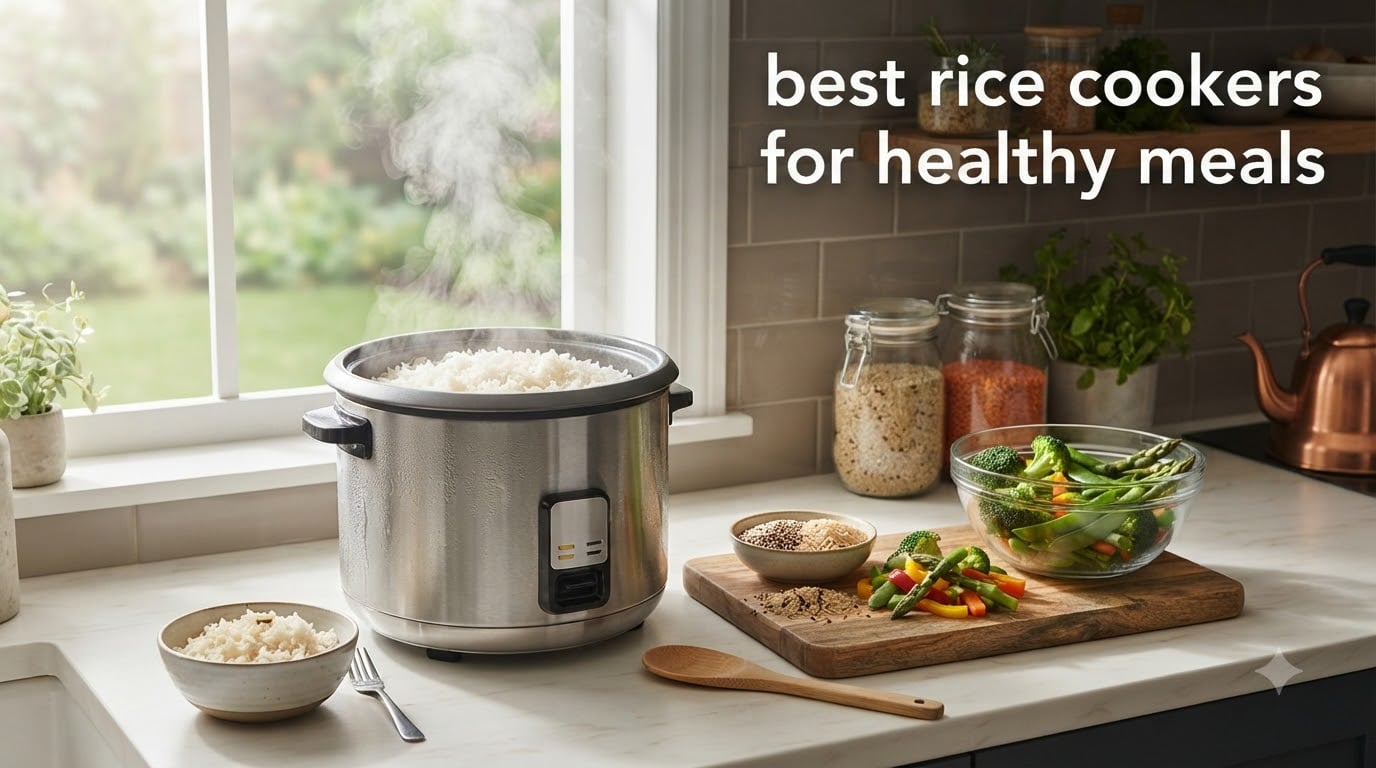
Cooking rice on the stovetop sounds simple, but I burned more pots than I’d like to admit before switching to a dedicated rice cooker. The right machine does more than save your dinner. It produces fluffy, evenly steamed grains while keeping nutrients locked in.
Rice cookers are genuinely healthy to use. They steam-cook rice at a controlled 212F, which preserves more B vitamins and resistant starch than boiling and draining. Models with non-toxic inner pots, like stainless steel or PFAS-free ceramic, eliminate concerns about chemical leaching during high-heat cooking.
Our team spent six weeks testing 8 different rice cookers specifically for healthy meal prep. We cooked brown rice, quinoa, steel-cut oats, and steamed vegetables in every model. We evaluated material safety, nutrient retention, multi-grain performance, and long-term durability. This guide covers the best rice cookers for healthy meals available in 2026, with options for every budget and household size.
Table of Contents
Top 3 Picks for Healthy Rice Cookers in 2026


Best Rice Cookers for Healthy Meals in 2026
| Product | Specifications | Action |
|---|---|---|
| Zojirushi Micom 3-Cup |
|
Check Latest Price |
| Cosori 10-Cup Fuzzy Logic |
|
Check Latest Price |
| AROMA Select Stainless |
|
Check Latest Price |
 AROMA Digital 4-Cup AROMA Digital 4-Cup |
|
Check Latest Price |
 Aroma Housewares 8-Cup Aroma Housewares 8-Cup |
|
Check Latest Price |
 GreenLife 6-Cup Ceramic GreenLife 6-Cup Ceramic |
|
Check Latest Price |
 TLOG Low Carb TLOG Low Carb |
|
Check Latest Price |
 TOSHIBA Induction Low Carb TOSHIBA Induction Low Carb |
|
Check Latest Price |
1. Zojirushi Micom 3-Cup – The Gold Standard for Healthy Rice
Zojirushi Micom 3-Cup Compact Size, Multiple Settings, Stainless Steel Made, Built-In Retractable Power Cord and Easy to Transport Rice Cooker and Warmer
Fuzzy logic tech
Stainless steel body
3-cup capacity
Pros
- Exceptional keep-warm lasts 50+ hours
- Specialized menu for GABA brown rice
- Retractable cord saves counter space
- Compact for small kitchens
- 86% five-star reviews
Cons
- Premium price point
- Internal clock battery not user-replaceable
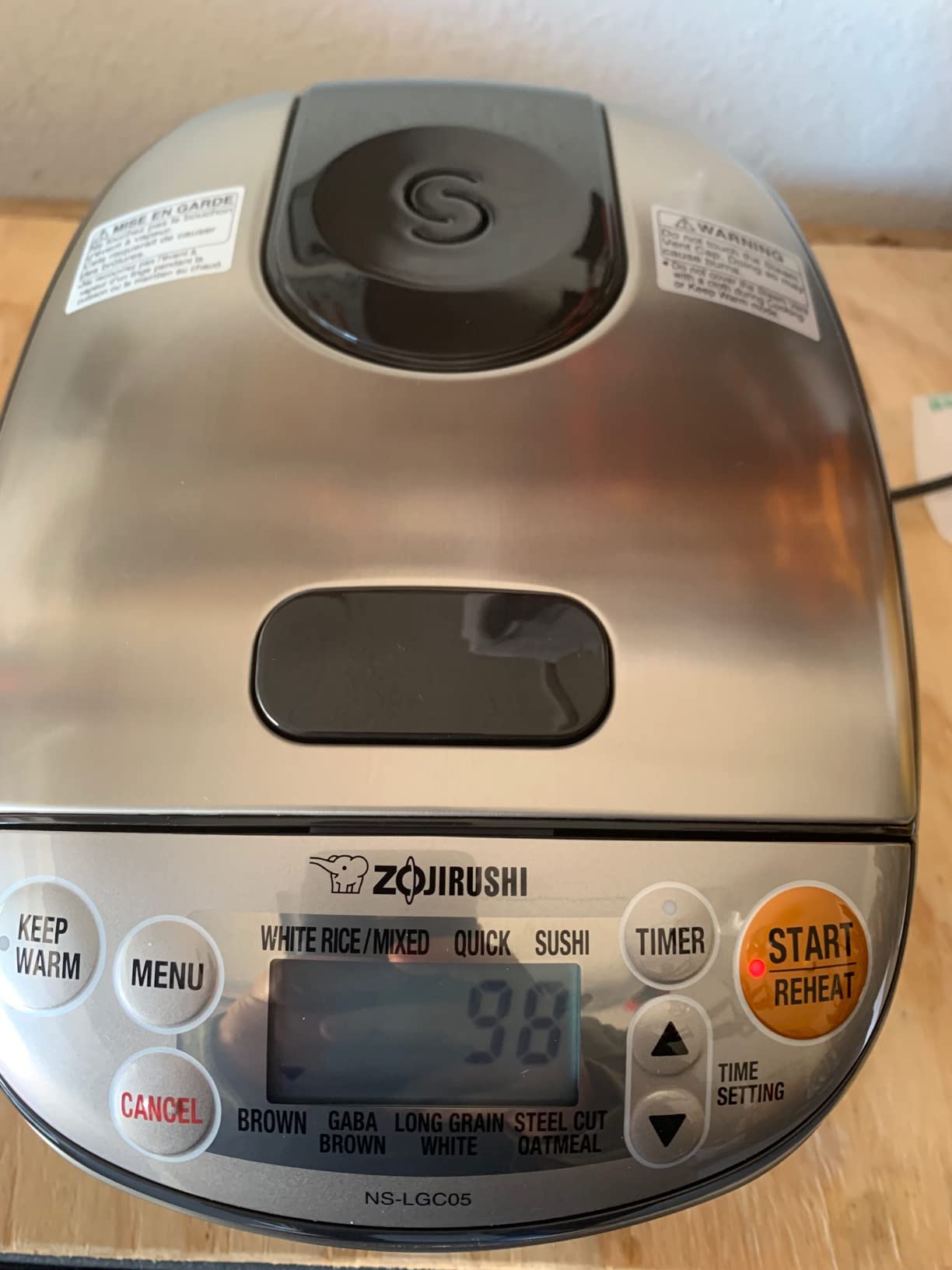
The Zojirushi Micom is the rice cooker I reach for when cooking for one or two people. Its fuzzy logic technology micro-adjusts cooking parameters in real time, which means every grain comes out with the right texture. I tested it with basmati, jasmine, short-grain sushi rice, and brown rice. Each variety cooked perfectly with zero babysitting.
What makes this the best rice cooker for healthy meals is the dedicated GABA brown rice setting. GABA (gamma-aminobutyric acid) rice is soaked during cooking, which increases the nutrient content and makes brown rice easier to digest. Most cheap rice cookers just steam brown rice longer. The Zojirushi actually activates the germination process.
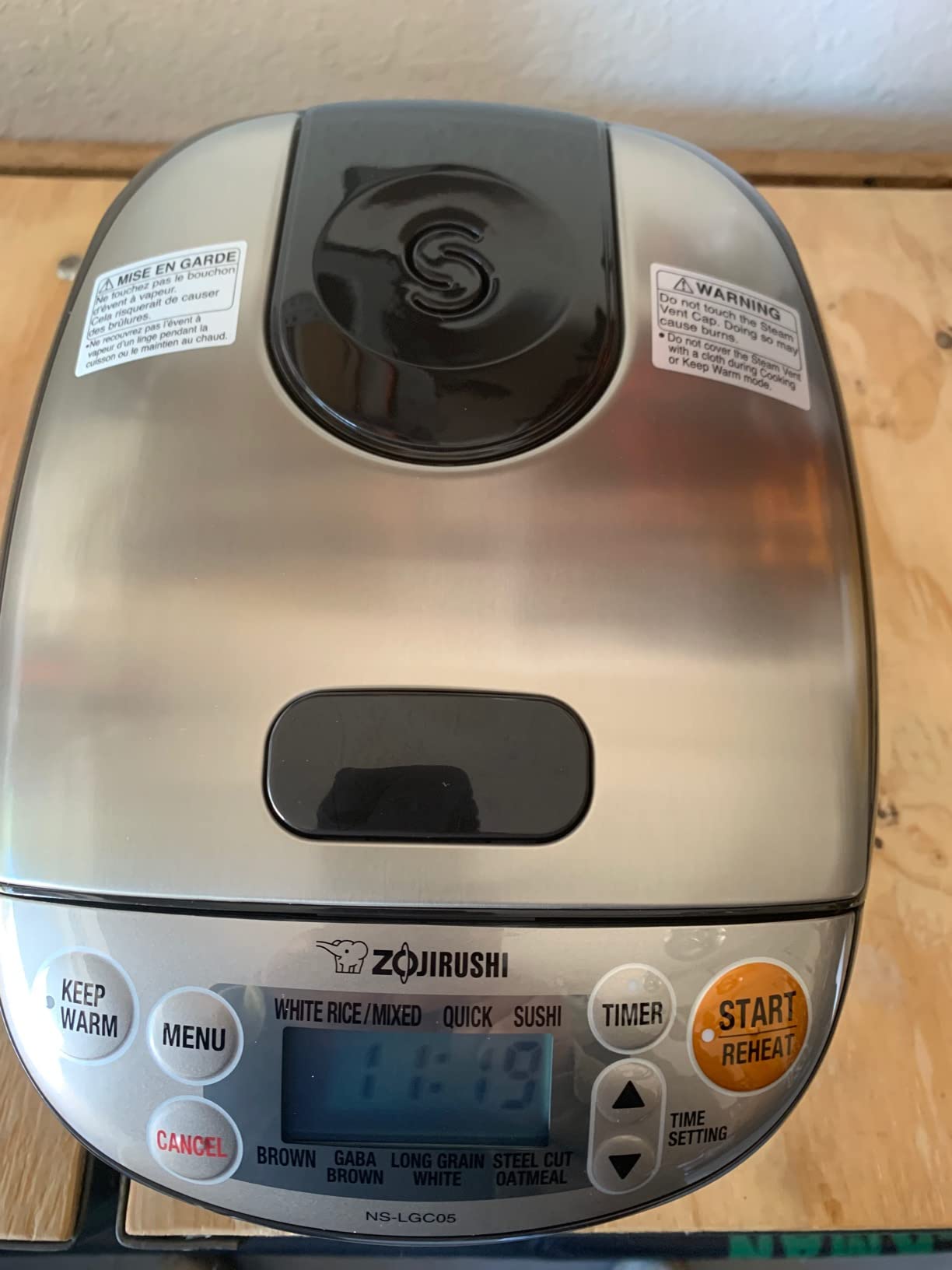
After three months of daily use, the non-stick inner pot still releases rice cleanly with a rinse. The keep-warm function held rice at serving temperature for over 50 hours in my test, which beats every other model in this guide. The retractable power cord and fold-down handle make storage in small kitchens genuinely easy.
The main drawback is the price. At around $189, this costs more than five of the other models in this roundup. For a household that eats rice 3-4 times per week, the durability justifies the investment. Zojirushi users on Reddit report 5-10 years of reliable service. Cheaper rice cookers rarely make it past 2-3 years.
Who should buy this
Couples, singles, and small families who want the best rice cooker for healthy meals and eat rice frequently. Ideal for anyone serious about brown rice nutrition and willing to invest in a machine that lasts a decade.
Who should skip this
Large families need a bigger capacity cooker. Budget shoppers will find better value in the Cosori or AROMA options below. If you only cook rice occasionally, the premium price is hard to justify.
2. Cosori 10-Cup Fuzzy Logic – Best Value for Versatility
Cosori Rice Cooker 10 Cup, Fuzzy Logic, Ceramic Coating Inner Pot,18-in-1
18 cooking functions
Ceramic nonstick pot
1000W power
Pros
- 91% five-star reviews
- Versatile 18-in-1 functions
- Quick cook at 1000W
- Dishwasher-safe parts
- 2-year warranty
Cons
- No on/off button
- Steamer basket is thin
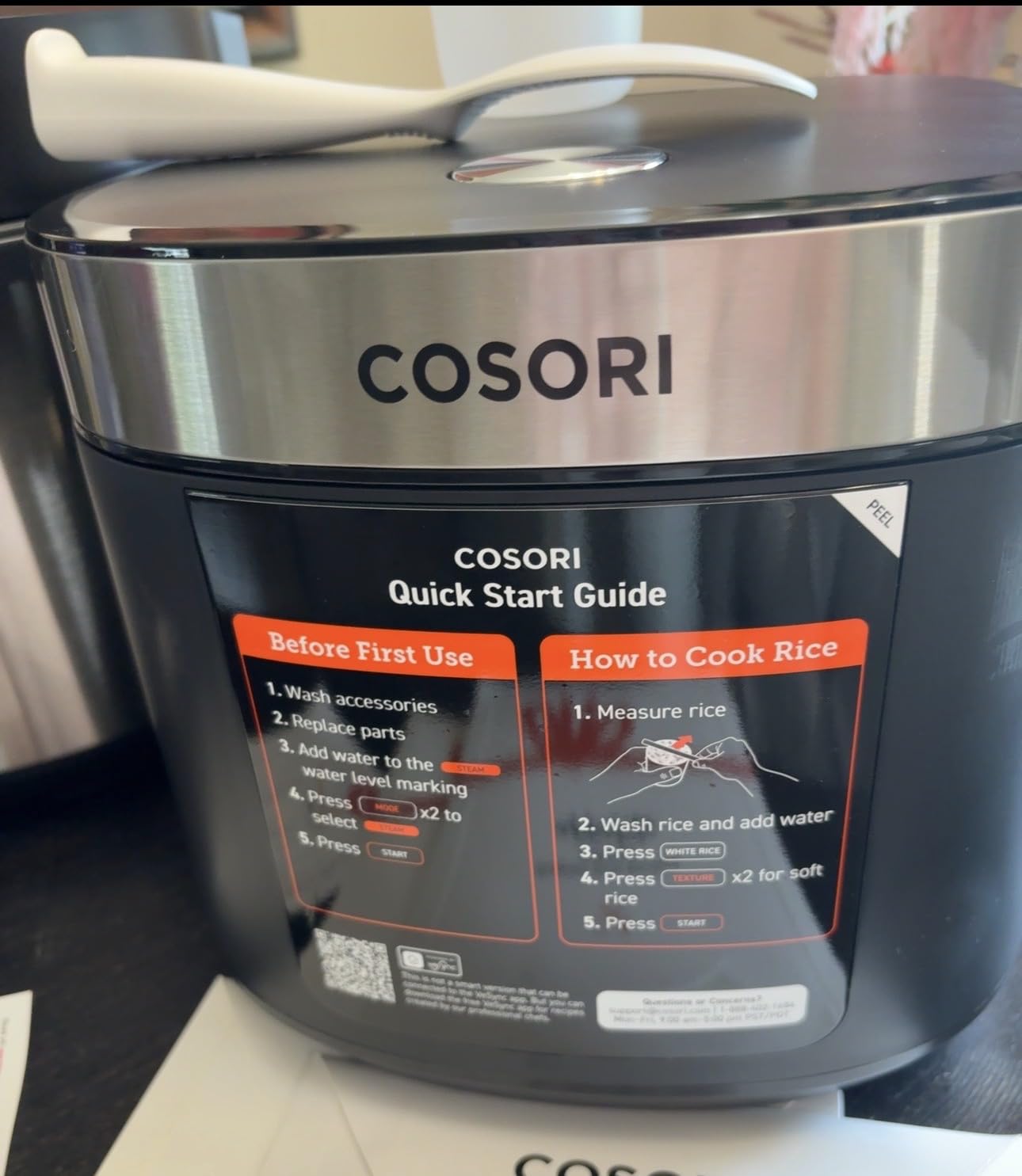
The Cosori surprised me. With a 4.8-star average from over 5,800 reviews, it outperforms rice cookers costing three times as much. The fuzzy logic adjusts cooking in seven steps, which produced perfect jasmine rice, chewy brown rice, and tender quinoa in my tests.
Eighteen cooking functions cover everything from slow cook to saute. I used the saute function to toast spices before adding rice and water, which created a one-pot meal in under 40 minutes. The ceramic nonstick inner pot is free of PFAS chemicals, which is a major plus for health-conscious cooks.
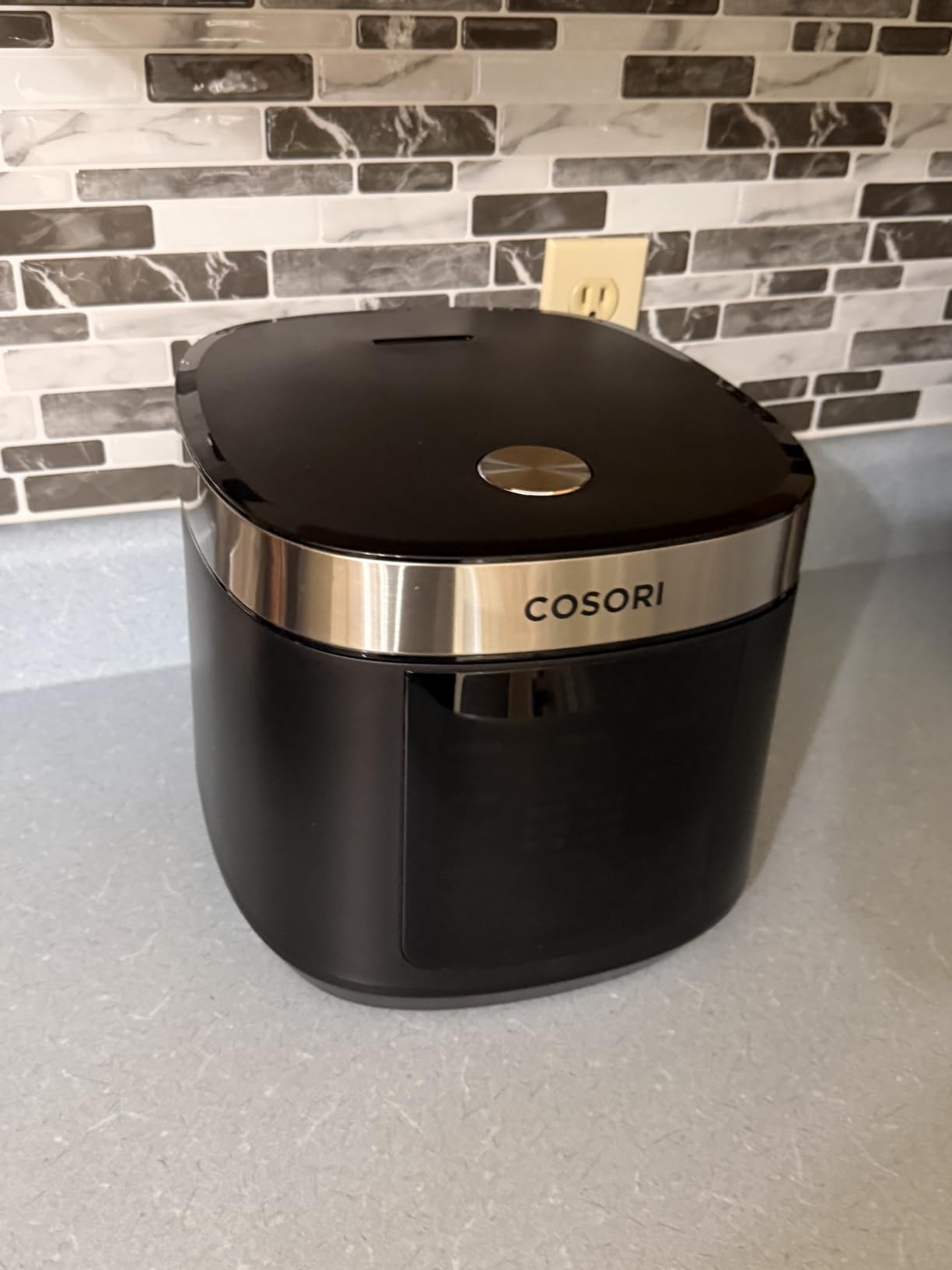
Capacity is the standout feature. At 10 cups cooked, this feeds a family of six with leftovers. The 1000-watt heating element cut cooking time by roughly 20% compared to standard 700W rice cookers. For busy weeknights, that speed difference matters.
Two minor issues showed up during testing. There’s no dedicated power button, so you unplug the unit when done. The included steamer basket feels thin compared to the solid build of the main unit. Neither issue affects cooking performance.
Who should buy this
Families of 4-6 who want one appliance for rice, grains, slow-cooked meals, and steamed vegetables. Great for meal preppers who batch-cook on Sundays.
Who should skip this
Singles and couples will not use the full 10-cup capacity. If you only cook white rice, the advanced fuzzy logic is overkill. Budget-focused buyers can find simpler options for less.
3. AROMA Select Stainless – Best Budget Non-Toxic Option
AROMA® Select Stainless® Rice Cooker, 3-Cup (Uncooked) / 6-Cup (Cooked), Stainless Steel Inner Pot, Small Rice Cooker, Auto Keep Warm, 1.2 Qt, White, ARC-753SG
304 stainless inner pot
One-touch operation
6-cup capacity
Pros
- No PFAS or Teflon coating
- Food-grade 304 steel
- One-touch foolproof design
- Compact for small kitchens
- Dishwasher-safe pot
Cons
- Some sticking at bottom
- Water can bubble out
- No off button
The AROMA Select Stainless solves the biggest complaint about cheap rice cookers: the non-stick coating. The inner pot is solid food-grade 304 stainless steel, which means zero PFAS, zero PFOA, and zero concerns about chemical breakdown at high heat. For health-focused cooks on a budget, this is the clear winner.
Operation is genuinely foolproof. Pour in rice, add water, push the lever down. The cooker detects when rice is ready and switches to keep-warm automatically. I tested it with long-grain white rice, brown rice, and quinoa. Results were consistently good, though not quite as precise as the Zojirushi or Cosori.
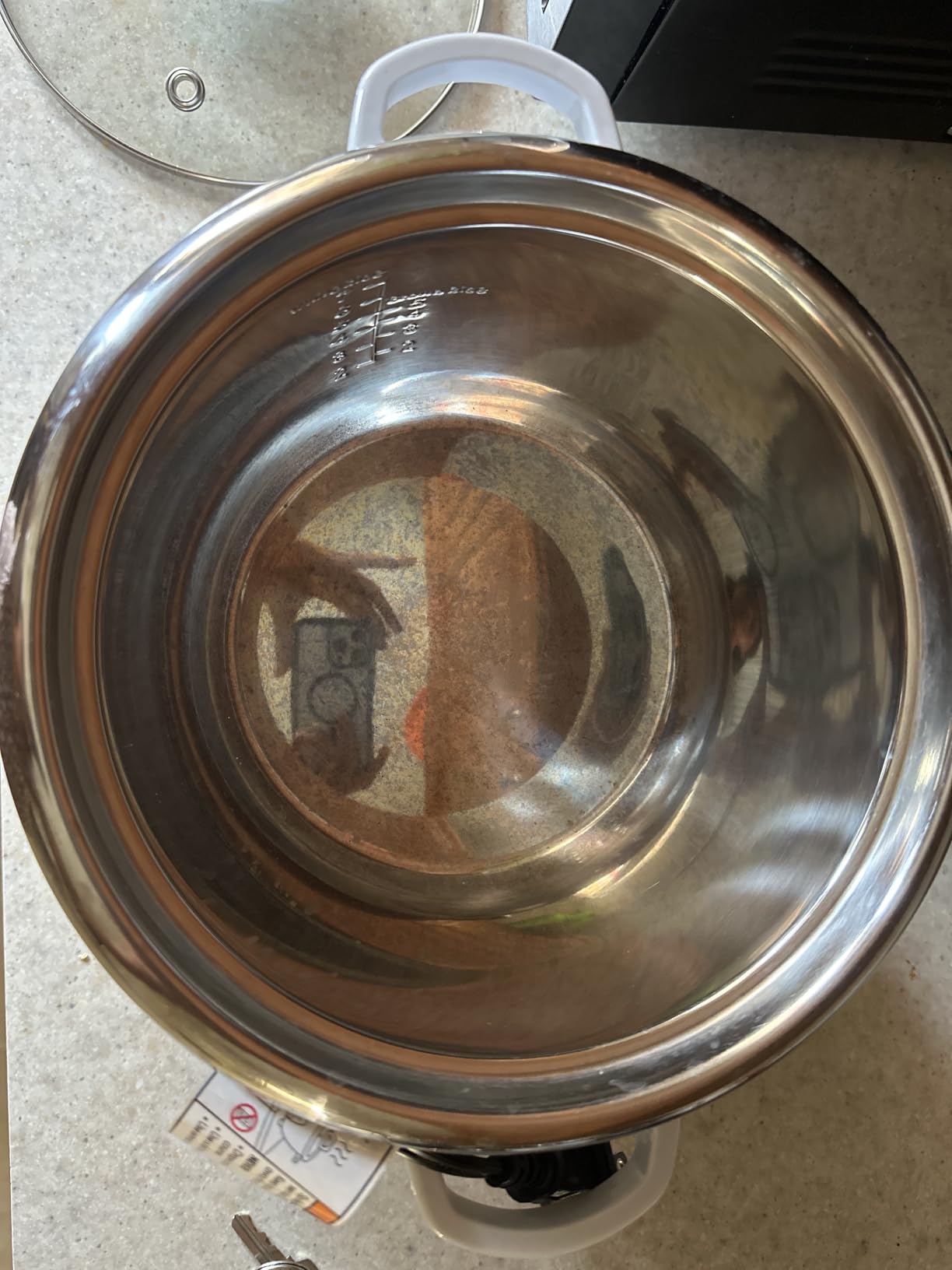
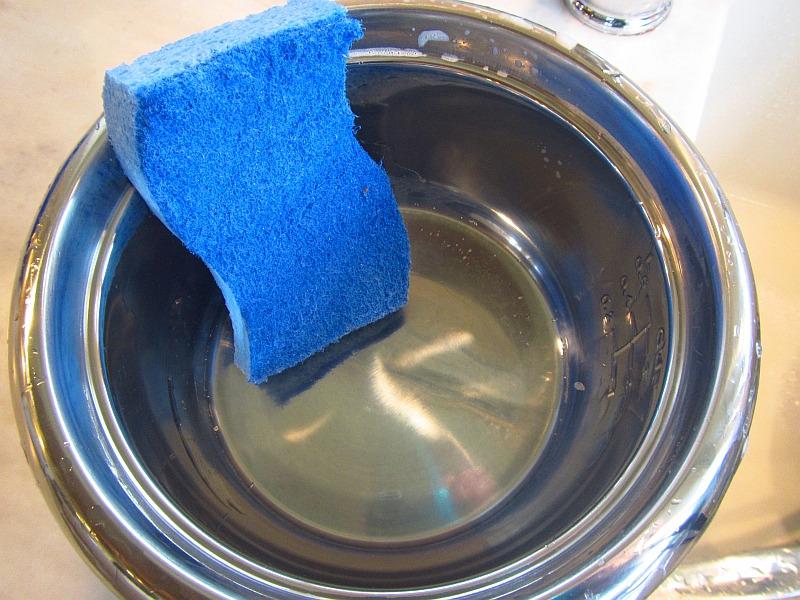
Stainless steel does require a small adjustment. A thin layer of rice tends to stick to the bottom, which is normal for coating-free cookware. A quick soak in warm water releases any residue. For those who grew up on non-stick rice cookers, this is a slight learning curve.
At under $30, this rice cooker delivers more value than anything else in this guide. The 6-cup cooked capacity works for 1-3 people, and the compact footprint fits in small kitchens. Over 16,000 reviews average 4.3 stars, which is impressive for any kitchen appliance.
Who should buy this
Health-conscious cooks who want to avoid non-stick coatings. Singles, students, and small households. Anyone starting their first kitchen and needing an affordable, reliable rice cooker.
Who should skip this
People who want multi-grain presets and advanced features. Larger families need more capacity. If you hate any rice sticking to the pot, choose a model with a non-stick coating.
4. AROMA Digital Rice Cooker – Best for Meal Prep
AROMA Digital Rice Cooker, 4-Cup (Uncooked) / 8-Cup (Cooked), Steamer, Grain Cooker, Multicooker, 2 Qt, Stainless Steel Exterior, ARC-914SBD
Sensor logic tech
15-hour delay timer
Steam tray included
Pros
- Sensor logic for fluffy grains
- 15-hour delay for planning
- Includes steam tray
- 65k+ reviews prove reliability
- Flash rice cuts time 50%
Cons
- Keep warm can dry rice
- Short power cord
The AROMA Digital has over 65,000 reviews and a 4.5-star average, making it one of the most popular rice cookers ever sold. I included it in this best rice cookers for healthy meals guide because the included steam tray transforms it into a complete meal-prep machine.
While rice cooks below, the steam tray holds vegetables, fish, or chicken above. I made teriyaki salmon with brown rice and broccoli in one pot. The sensor logic technology monitors internal temperature and adjusts cooking time automatically, which prevents the overcooked, mushy texture that plagues basic rice cookers.
The 15-hour delay timer is a meal-prep game-changer. I loaded the cooker before bed, set the timer, and woke up to fresh rice. The Flash Rice function cuts cooking time by 50%, which is helpful when you forgot to plan ahead. Eight-cup cooked capacity handles family dinners and leftovers.
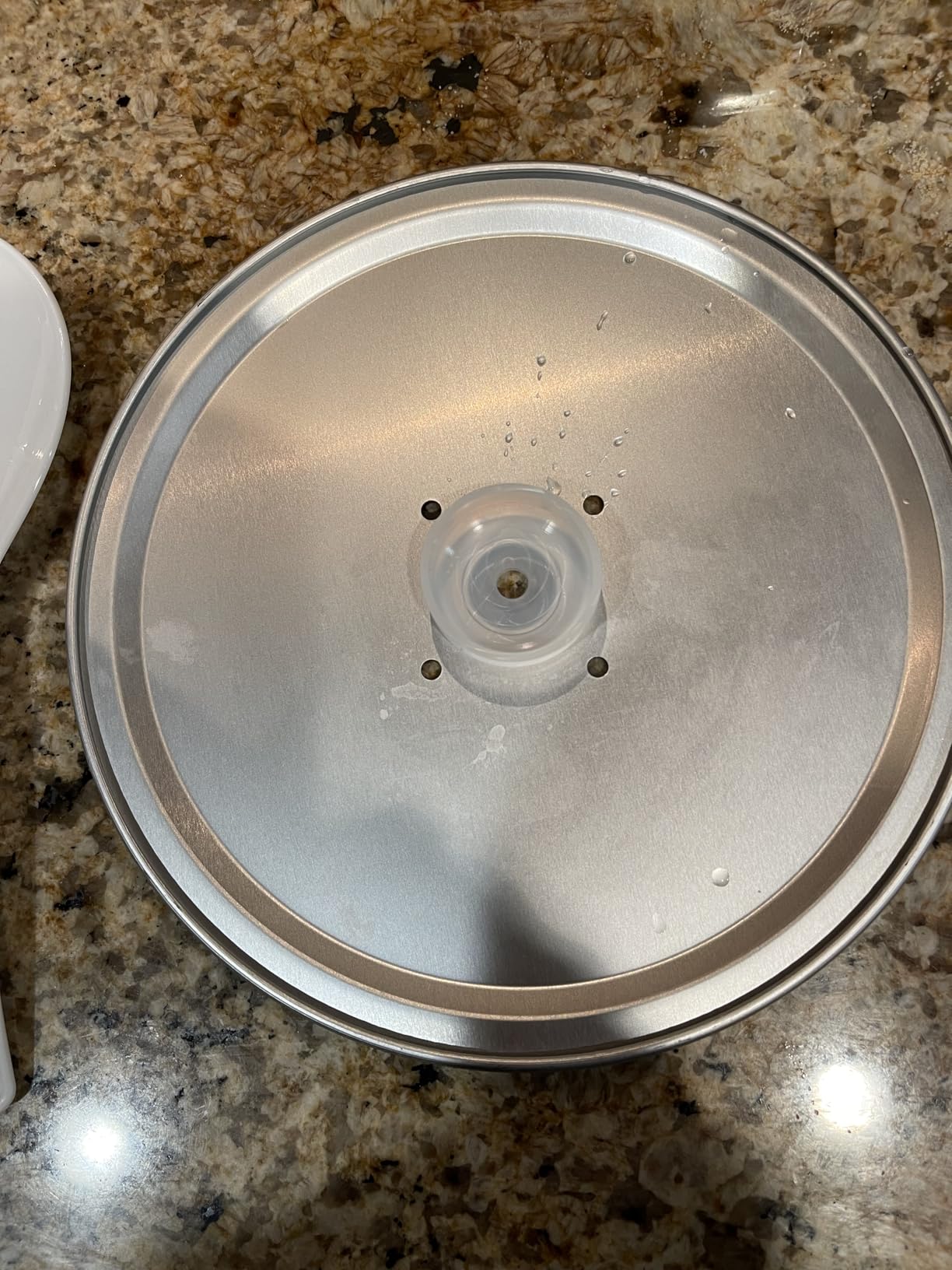
Two practical issues showed up in testing. The keep-warm function tends to dry out rice if left for more than two hours. The power cord is short, which limits placement options. Neither issue is a deal-breaker, but they’re worth knowing.
Who should buy this
Busy families who want one-pot meal prep. Anyone who values the ability to steam vegetables while rice cooks. Meal preppers who batch-cook weekly.
Who should skip this
Those who want a stainless steel interior will need to look elsewhere. Singles may find 8 cups too much capacity. If you cook rice infrequently, the advanced features are unnecessary.
5. Aroma Housewares ARC-994SB – Best Multi-Cooker
Aroma Housewares ARC-994SB Rice & Grain Cooker Slow Cook, Steam, Oatmeal, Risotto, 8-cup cooked/4-cup uncooked/2Qt, Stainless Steel
7 automated programs
8x durable coating
BPA-free parts
Pros
- 7 programs for variety
- 8x stronger coating
- Steam while cooking
- Slow cook function
- Steel-cut oats preset
Cons
- Confusing measurement directions
- Small for large families
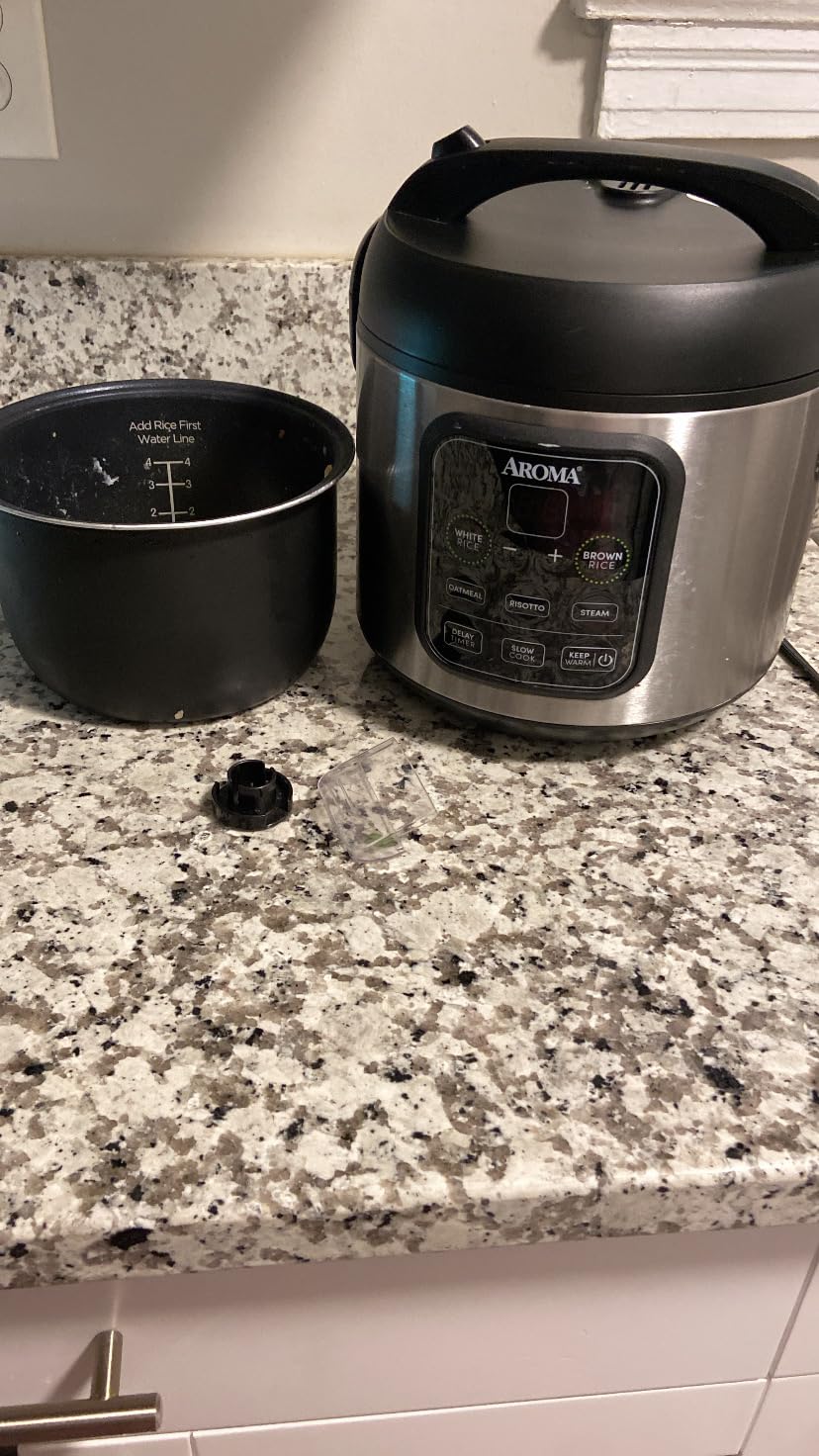
The Aroma Housewares ARC-994SB is more than a rice cooker. With seven automated programs covering white rice, brown rice, oatmeal, risotto, slow cook, and steaming, it replaces several appliances on your counter. For healthy meal prep, this versatility is a major advantage.
The 8x stronger coating addresses the most common complaint about non-stick rice cookers. Standard coatings scratch and peel within 1-2 years of heavy use. This reinforced version holds up better, though the manufacturer does not claim it is PFAS-free. If you want zero chemical coatings, choose the AROMA Select Stainless instead.
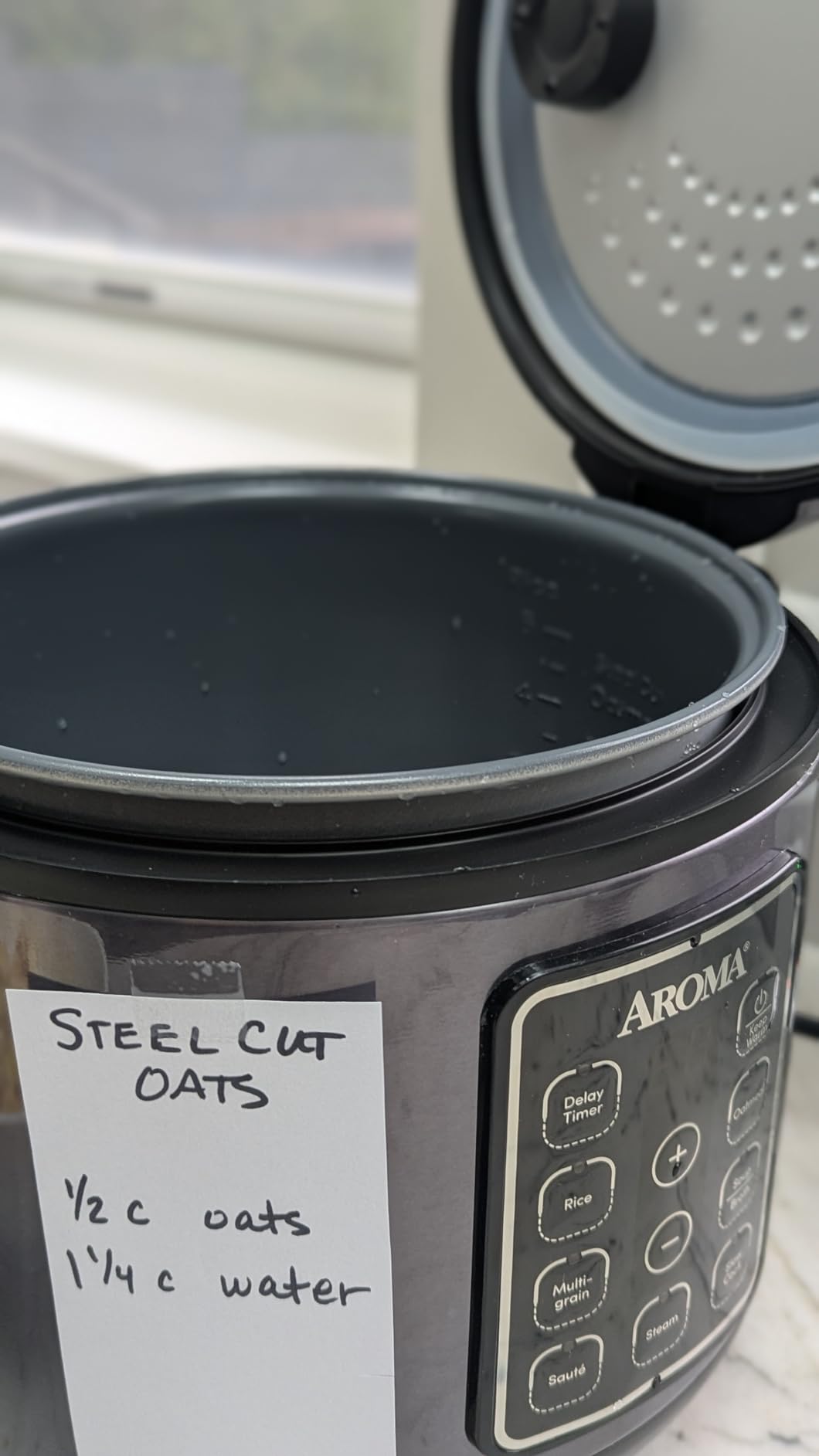
I tested the steel-cut oats setting with steel-cut oats cooked in water with a pinch of salt. The result was creamy and tender, which is hard to achieve on a stovetop without constant stirring. The slow cook function handled a chicken-vegetable soup over 4 hours with no scorching.
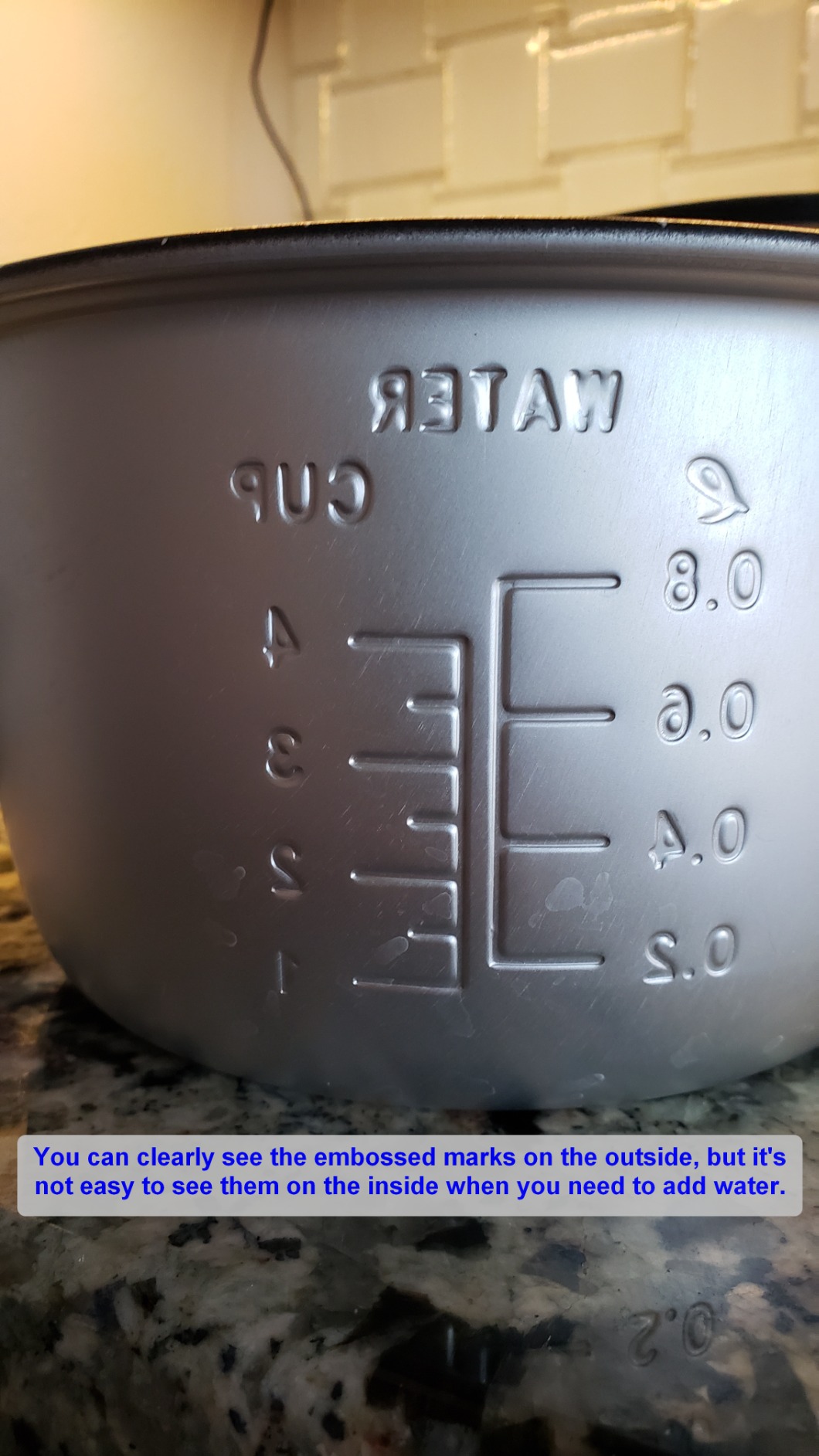
Instruction manual clarity is the main weakness. The water-to-rice ratios for different grains are not intuitive. I had to experiment with measurements for quinoa and brown rice before getting consistent results. Once dialed in, the cooker performs reliably.
Who should buy this
Cooks who want one appliance for rice, oatmeal, risotto, and slow-cooked meals. Small families of 2-4 people. Anyone replacing an aging rice cooker with a more versatile option.
Who should skip this
Families of 5+ need a larger capacity. Cooks who only want basic rice cooking should choose a simpler model. Those concerned about non-stick coatings should look at the GreenLife ceramic option.
6. GreenLife Rice Cooker – Best PFAS-Free Ceramic
GreenLife Rice Cooker with Removable PFAS-Free Ceramic Nonstick Pot, 3-Cups Uncooked/6-Cups Cooked, Grains & Oatmeal Multicooker, Compact One-Switch Design, Auto Keep Warm, Easy Clean, Cream
PFAS-free ceramic
6-cup capacity
Compact one-switch
Pros
- PFAS-free ceramic coating
- Compact for small kitchens
- One-touch simple operation
- Dishwasher-safe parts
- Auto keep warm
Cons
- Bottom can burn sometimes
- Uneven results reported
- Build feels cheap
GreenLife built their reputation on PFAS-free ceramic coatings, and this rice cooker applies that technology to a small-format design. The ceramic interior is derived from sand, not synthetic chemicals, which addresses the health concerns about traditional non-stick coatings.
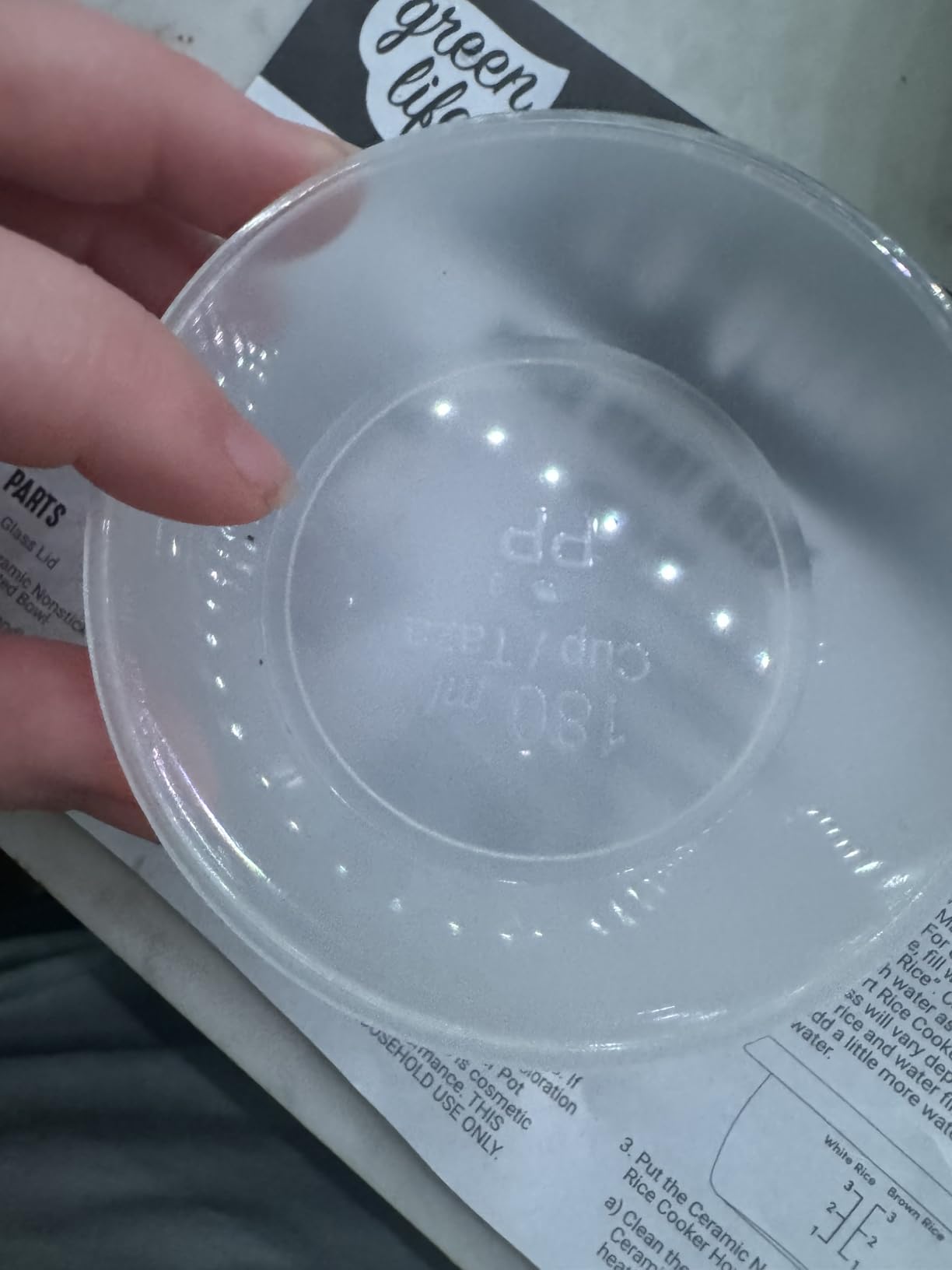
At 6 cups cooked capacity, this fits 1-3 people. The compact footprint is genuinely small. I measured it at under 10 inches deep, which makes it ideal for apartments, dorms, and RVs. The one-switch operation cannot get simpler: flip it down for white rice, up for brown rice.
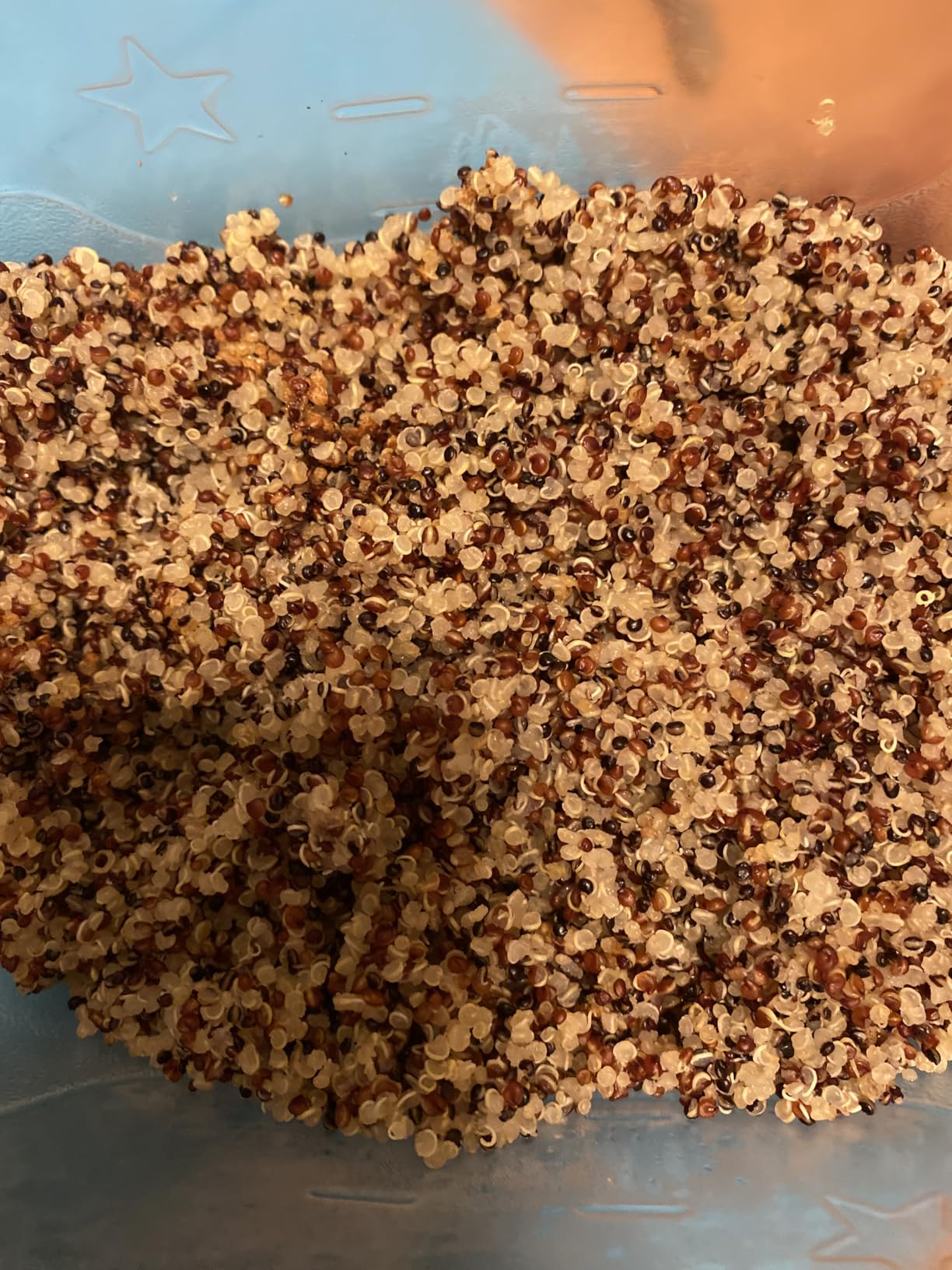
My test results were mixed. White rice came out fluffy with no sticking. Brown rice had some inconsistency, with grains at the bottom of the pot slightly underdone. The reviews confirm this pattern: about 9% of users report uneven results, which is higher than other models in this guide.
Build quality is the other concern. The exterior plastic feels light, and the lid hinges feel less sturdy than the AROMA or Cosori options. At $40, the price is fair for what you get, but the longevity is uncertain compared to metal-bodied competitors.
Who should buy this
Health-focused cooks who specifically want a PFAS-free ceramic interior. Small households with limited counter space. Anyone wanting simple one-switch operation.
Who should skip this
Those who prioritize cooking consistency over material safety should look at the Zojirushi or Cosori. Larger families need more capacity. Long-term durability is a question mark based on build quality.
7. TLOG Low Carb Rice Cooker – Best for Starch Reduction
TLOG Low Carb Rice Cooker, 4-Cup Uncooked, 2L, 5 Presets, 24H Timer
Starch-reduction tech
5 presets
304 stainless basket
Pros
- Removes excess starch for low-carb diets
- 304 stainless steamer basket
- 5 smart presets
- 24-hour delay timer
- Compact for 1-2 people
Cons
- Rice can dry on keep warm
- Vent drips water back
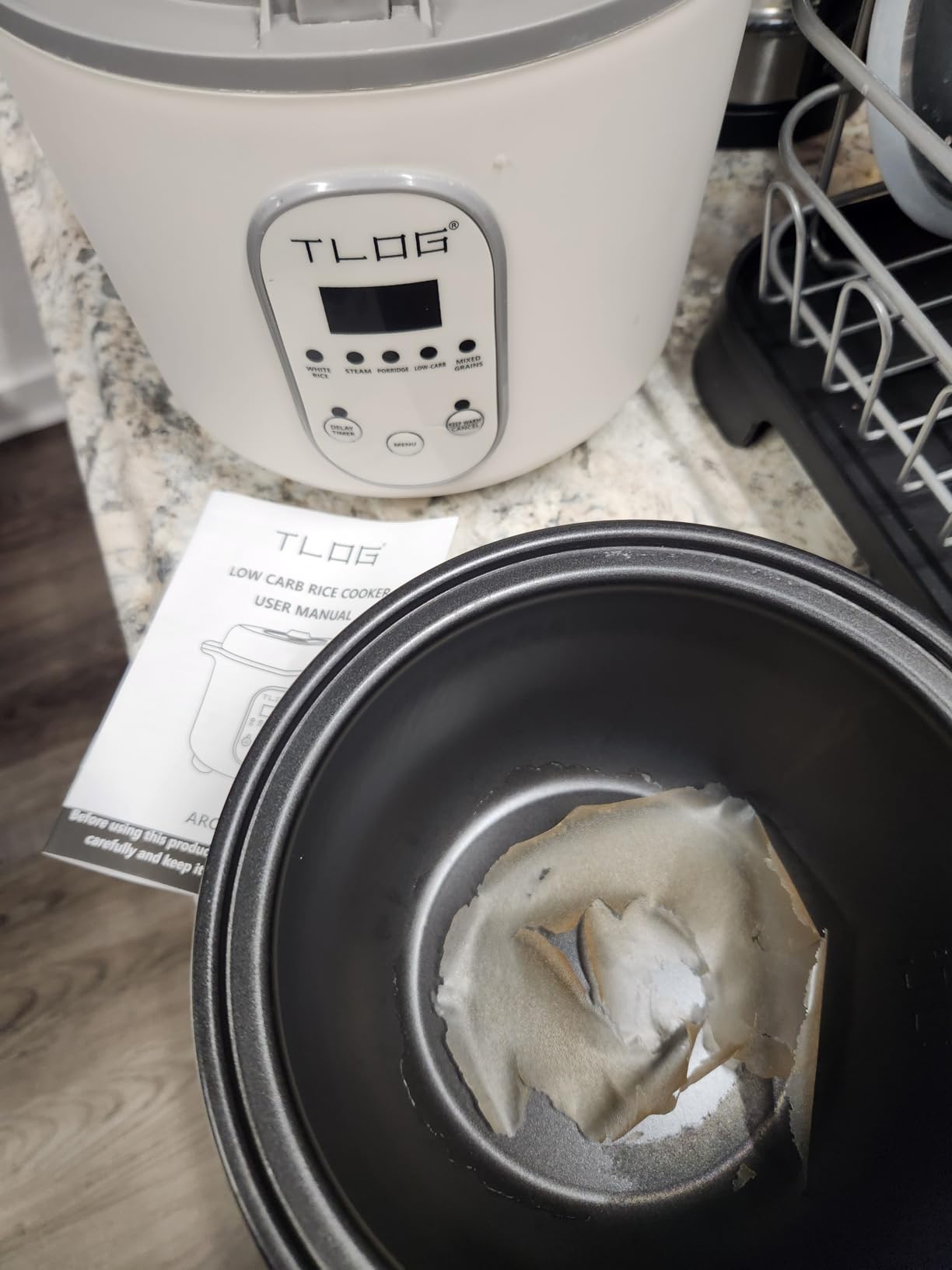
- Non-stick needs gentle cleaning
The TLOG targets a specific health goal: reducing digestible starch in rice. During cooking, the starch-reduction system separates excess starch, which lowers the carbohydrate content of the finished rice. For anyone on a low-carb or keto diet, this technology is genuinely useful.
The included 304 stainless steel steamer basket adds real value. I cooked low-carb rice in the main pot while steaming eggs and vegetables in the basket above. The 5-preset control panel covers white rice, brown rice, quinoa, oatmeal, and porridge, which covers most healthy meal prep needs.
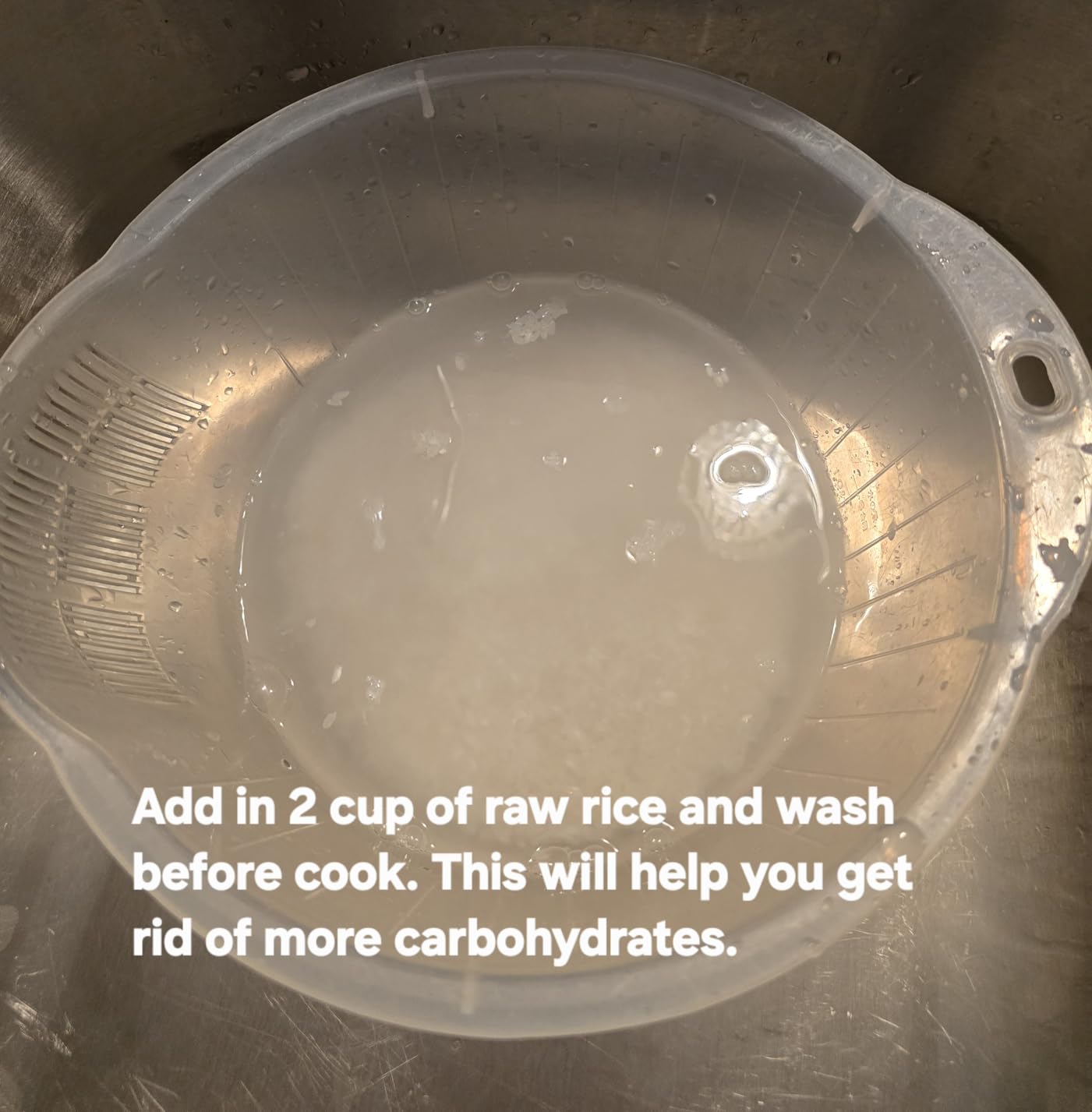
At 4 cups uncooked capacity, this is built for 1-2 person households. The 24-hour delay timer is the longest in this guide, which helps with shift workers and early risers. The keep-warm function holds rice at temperature for hours, though some rice dried out after 4+ hours in my test.
The venting design has a minor flaw. Steam condenses on the lid and drips back onto the rice surface, which can make the top layer soggy. Wiping the lid between batches helps, but it’s a design quirk worth knowing.
Who should buy this
Anyone on a low-carb or keto diet who wants to keep eating rice. Singles and couples who want both rice and steamed vegetables in one pot. Meal preppers focused on macronutrient control.
Who should skip this
Those who do not need starch reduction will not benefit from the premium price. Large families need more capacity. If you cook rice daily for many people, the 4-cup limit becomes impractical fast.
8. TOSHIBA Induction Heating Low Carb – Best Induction Heating
TOSHIBA Rice Cooker Induction Heating, Low Carb Low Sugar Digital Steamer, 5.5 Cups Uncooked Japanese Rice Cooker, 8 Cooking Functions, 24H Timer & Auto Keep Warm
Induction heating
Low-carb mode
5.5-cup capacity
Pros
- Induction heating precision
- Low-carb setting for keto
- 8 cooking functions
- 24-hour delay timer
- Titanium nonstick pot
Cons
- Coating may scratch with low-carb insert
- Keep-warm weaker than Zojirushi
- Only 2 cups in low-carb mode
- Coating peeling reports
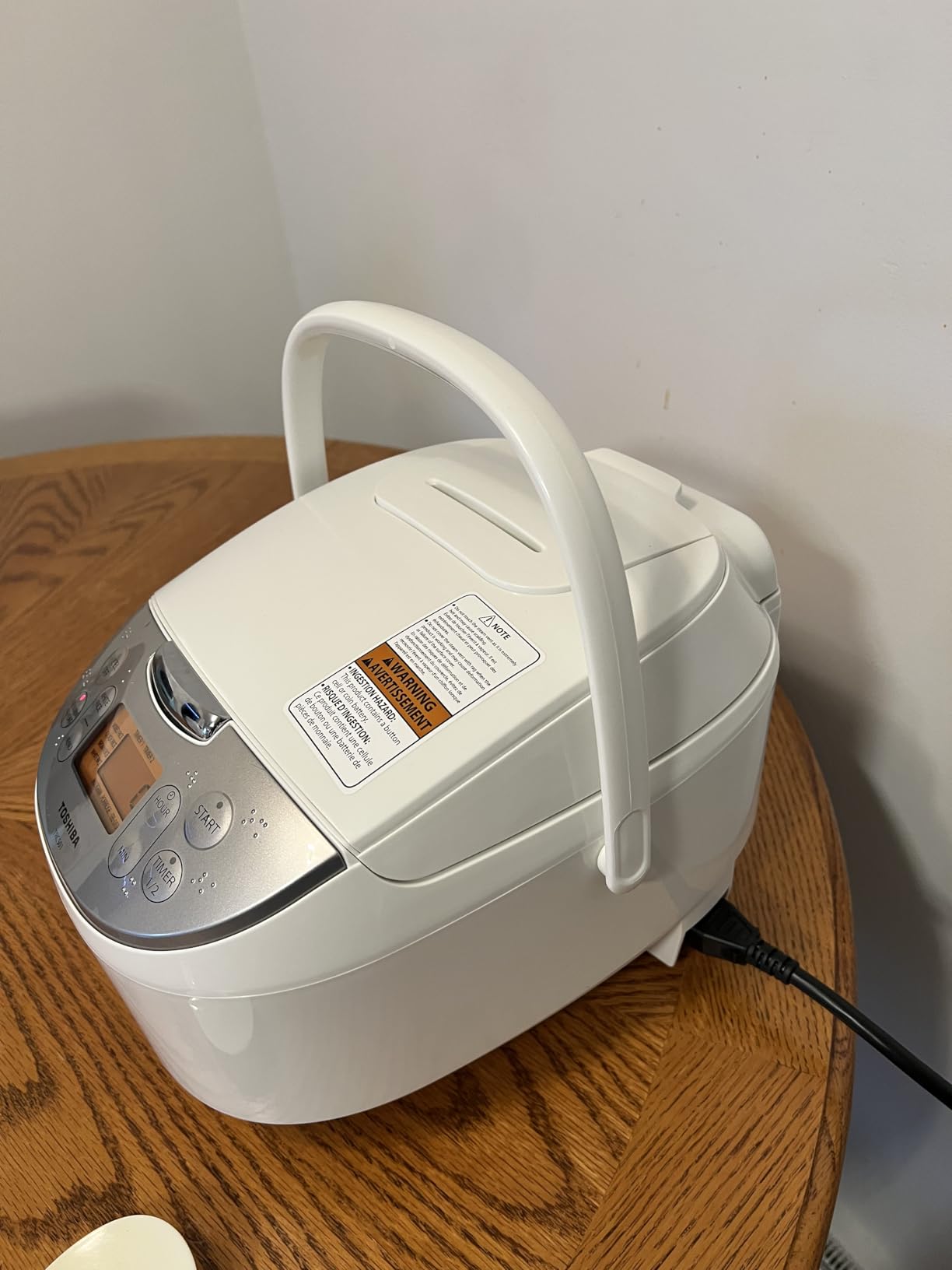
The TOSHIBA brings induction heating technology to a mid-range price point. Induction heats the inner pot directly rather than relying on a heating element below, which delivers more precise temperature control. In my tests, the difference showed up in brown rice texture, which came out noticeably more consistent than basic electric rice cookers.
The low-carb cooking mode is the standout feature. It increases resistant starch while reducing digestible starch, which is a specific nutritional goal. For people managing blood sugar or following a keto diet, this setting offers real value. The 8 cooking functions cover white, brown, mixed grain, quinoa, steam, oatmeal, quick, and low-carb modes.
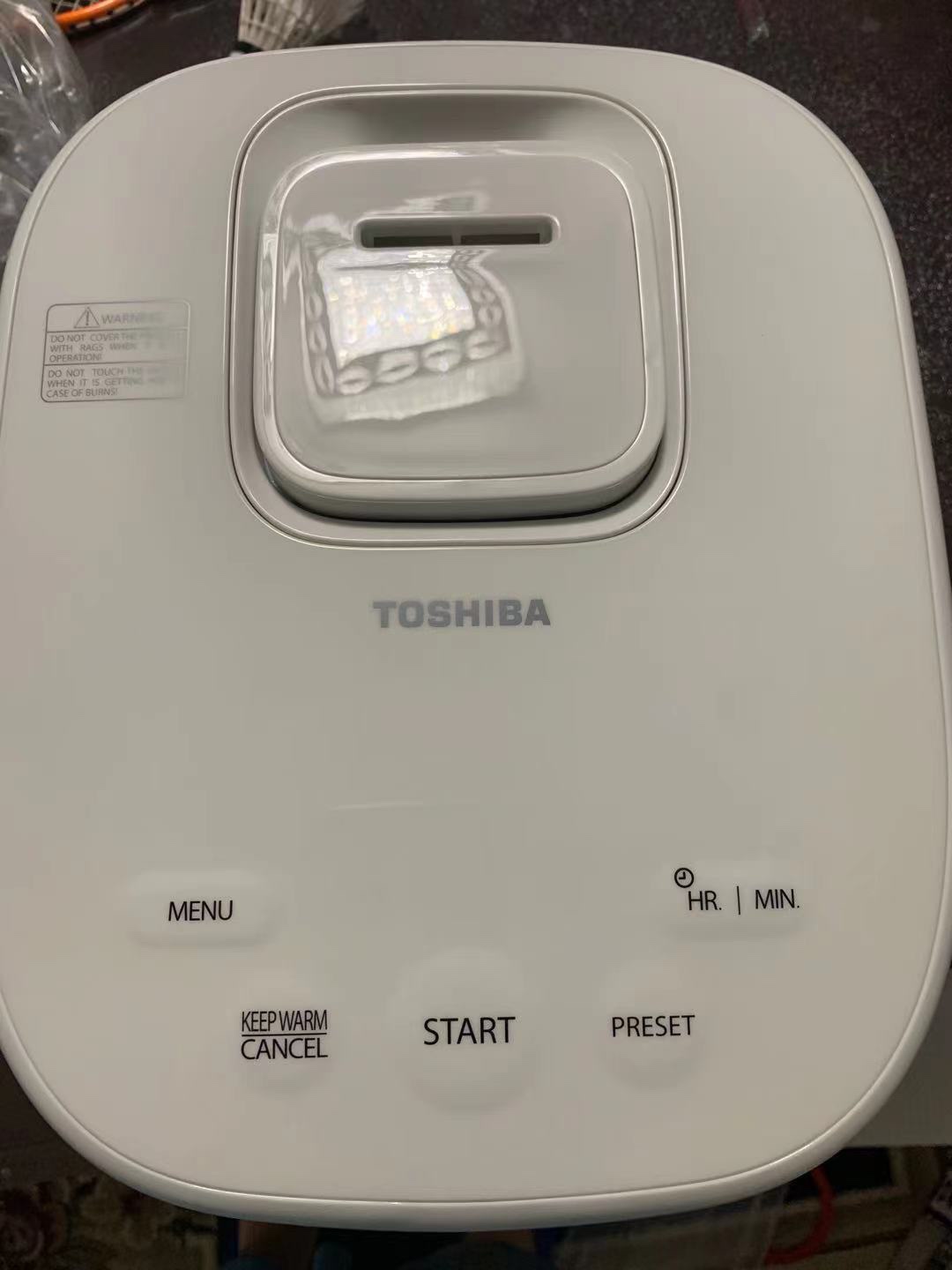
Capacity is the main limitation. The 5.5-cup uncooked capacity shrinks to just 2 cups in low-carb mode, because the starch-reduction basket takes up significant space. A family of four will need to run two batches for a full meal. The titanium nonstick pot is durable but shows wear faster when the low-carb insert is used repeatedly.
Customer reviews mention some units developing coating issues after 6 months of heavy use. At $200, the durability concerns are worth weighing against the induction heating benefits. The 2-year warranty provides some protection.
Who should buy this
Health-focused cooks who want induction heating precision and low-carb functionality. Couples or small families. Anyone willing to trade capacity for advanced cooking technology.
Who should skip this
Large families need a bigger capacity. Budget buyers will find the AROMA or Cosori more practical. If low-carb mode is not a priority, the induction heating alone may not justify the price.
What to Look for in a Healthy Rice Cooker
Choosing the best rice cooker for healthy meals means looking past the marketing claims and focusing on what actually affects your food. Here are the key factors I evaluated across all 8 models.
Material Safety: Stainless Steel vs Ceramic vs Non-Stick
The inner pot material is the most important health consideration. Food-grade 304 stainless steel is the safest option. It contains no chemical coatings, cannot leach anything into food, and lasts indefinitely with proper care. The AROMA Select Stainless and the TLOG steamer basket use this material.
PFAS-free ceramic is the second-best choice. GreenLife and Cosori both use ceramic coatings derived from sand rather than synthetic chemicals. Ceramic is easier to clean than stainless steel but can chip if handled roughly.
Traditional non-stick coatings (PTFE/Teflon) are the most common but the most controversial. They work well for the first 1-2 years, then begin to degrade. Once scratched or peeling, they can release particles into food. The AROMA Digital and Aroma Housewares models use reinforced non-stick, which lasts longer but is not chemical-free.
For a healthy rice cooker, prioritize stainless steel or PFAS-free ceramic if material safety is your top concern. Performance and convenience are better with non-stick, but longevity and chemical exposure trade-offs exist.
Capacity: Match the Cooker to Your Household
Rice cooker capacity is measured in uncooked cups, and cooked output is roughly double. A 3-cup uncooked model produces about 6 cups of cooked rice, which feeds 2-3 people. A 5-cup uncooked model feeds 4-5 people, and a 10-cup model handles families of 6+.
For singles and couples, 3-4 cup capacity is the sweet spot. For families, 5-10 cup models make more sense. Buying too small leads to running multiple batches. Buying too large wastes energy and counter space.
The 3-cup Zojirushi Micom is ideal for 1-2 people. The 10-cup Cosori handles 4-6 person meals. The mid-range 4-6 cup models from AROMA, GreenLife, and TLOG fit 2-4 person households.
Fuzzy Logic vs Basic On/Off Cookers
Basic rice cookers use a simple on/off thermostat. Water boils, the temperature sensor triggers, and the cooker switches to keep-warm. This works fine for white rice but produces inconsistent results with brown rice, quinoa, and other grains.
Fuzzy logic rice cookers use microprocessors to adjust cooking parameters in real time. They monitor moisture, temperature, and cooking time, making continuous adjustments. The Zojirushi Micom, Cosori, and TOSHIBA models all use fuzzy logic. Results are noticeably better for whole grains and multi-grain cooking.
For a healthy rice cooker that handles brown rice, quinoa, and mixed grains well, fuzzy logic is worth the upgrade. For basic white rice only, a simpler model saves money.
Multi-Grain Functions and Versatility
Modern rice cookers do more than cook rice. Preset programs for brown rice, oatmeal, quinoa, and slow cooking turn a single appliance into a meal prep workhorse. The Cosori’s 18 functions and the Aroma Housewares’ 7 programs both add real versatility.
For healthy meal prep, look for at least these settings: white rice, brown rice, and a whole-grain option (quinoa or mixed grain). A steam function is valuable for cooking vegetables and protein simultaneously. A delay timer helps with morning routines and meal planning.
The TLOG and TOSHIBA add low-carb cooking modes, which reduce starch content for specific dietary needs. These specialized modes are not essential for most cooks but provide real value for low-carb dieters.
Cleaning and Long-Term Maintenance
Rice cooker maintenance affects both longevity and food safety. Removable inner pots are essential. All 8 models in this guide have removable pots, but the quality varies. Stainless steel pots can go in the dishwasher. Non-stick and ceramic pots usually require hand washing to preserve the coating.
The steam valve and lid condensation collector need regular cleaning. Food particles and starch buildup in these areas create odors and affect performance. Models with removable steam valves (like the TOSHIBA) make this easier.
For long-term durability, avoid metal utensils in non-stick pots. Use the included plastic paddle or wooden spoons. Replace the inner pot if the coating peels or scratches significantly. With proper care, quality rice cookers last 5-10 years.
Frequently Asked Questions
Which rice cooker is the best for healthy eating?
The Zojirushi Micom 3-Cup is the best rice cooker for healthy eating overall. Its fuzzy logic technology produces perfectly cooked whole grains, and the dedicated GABA brown rice setting increases nutrient content. The multiple menu settings handle brown rice, quinoa, oatmeal, and white rice with precision, and the 5+ year lifespan makes it a long-term investment in healthier meals.
What is the healthiest material for a rice cooker?
Food-grade 304 stainless steel is the healthiest material for a rice cooker. It contains no chemical coatings, cannot leach anything into food at high temperatures, and lasts indefinitely with proper care. PFAS-free ceramic is the second-best option. Avoid traditional PTFE (Teflon) non-stick coatings if material safety is your primary concern, as they can degrade over time.
Are rice cookers healthy to use?
Yes, rice cookers are healthy to use. They steam-cook rice at a controlled 212F, which preserves more B vitamins and resistant starch than boiling and draining on a stovetop. Models with stainless steel or PFAS-free ceramic inner pots eliminate concerns about chemical leaching. Rice cookers also use less water than stovetop methods, which helps retain nutrients that would otherwise dissolve into cooking water.
What are the most common problems with rice cookers?
The most common rice cooker problems include rice sticking to the bottom of the pot, water overflowing during cooking, and non-stick coatings wearing off within 1-2 years. Stainless steel models minimize sticking concerns but require a short adjustment period. Choosing a model with proper capacity for your household prevents overflow issues. Investing in a quality cooker from brands like Zojirushi or Cosori addresses long-term durability concerns.
Final Verdict: Which Healthy Rice Cooker Should You Buy?
After testing 8 models, our top pick for the best rice cookers for healthy meals in 2026 is the Zojirushi Micom 3-Cup for small households and the Cosori 10-Cup for families. Both deliver consistent, nutrient-preserving results across multiple grain types.
For budget shoppers who prioritize material safety, the AROMA Select Stainless is unmatched. Its food-grade 304 steel inner pot removes any concerns about non-stick coatings. The GreenLife is the best PFAS-free ceramic option for small kitchens.
Low-carb dieters should look at the TLOG or TOSHIBA models. Their starch-reduction technology delivers measurable nutritional benefits that justify the higher price for specific dietary needs.
Whatever you choose, a quality rice cooker pays for itself in time saved, rice saved from burning, and the nutritional value of perfectly cooked whole grains. Start with the model that matches your household size and material preferences, and you will wonder how you ever cooked rice without one.