
Last October I had a whitetail doe step out 22 yards directly below my treestand, straight downhill, in failing light. I called her at 36 because that is what the slope made it look like, set my 30 yard pin, and watched the arrow sail six feet over her back. That miss is the entire reason this category exists.
An archery rangefinder that only reports line-of-sight distance will hand you exactly the wrong number on every steep shot, and a bow at 300 fps drops fast enough that the gap between the right number and the wrong one is the difference between a clean kill and a wasted season. This roundup covers the best rangefinders for bow hunting we could put through a real season of use, and it is built around the specs that actually decide a shot rather than the range numbers printed on the boxes.
The eight models below run the full span from an inexpensive starter body to a glassed and armored long-range unit, and they differ far more in angle compensation, minimum focus distance and display readability than the marketing pages suggest. We range everything at bow distances first, then note where the advertised figure is a reflective-surface number rather than a game number. If you only read one section, read the treestand guide and the Leupold section, because bow mode is the feature that separates this list from a generic hunting list.
One note before we start. Prices move constantly, so we do not quote them here. Use the buttons to check the current figure, and focus on the spec lines and the award labels rather than the number attached to them.
Table of Contents
Top 3 Picks for Bow Hunting Rangefinders (October 2026)
Our three highest-ranked models cover the most common bowhunting situations. The Crossfire is the one we would hand a serious archer, the Leupold is the one most bowhunters actually end up owning, and the TIDEWE is the honest answer when the budget is the deciding factor.
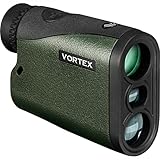
Vortex Crossfire HD 1400
- 5x magnification
- 21mm objective
- HCD and LOS ranging modes
- Red TOLED display
- Lifetime VIP warranty
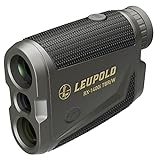
Leupold RX-1400i TBR/W Gen 2
- Bow mode with Flightpath obstruction detection
- TBR/W wind hold to 800 yards
- 5x magnification
- Transferable lifetime warranty

TIDEWE Rechargeable Rangefinder
- 6x magnification
- Rechargeable Li-ion battery
- 0.46 second readings
- Horizontal and vertical distance modes
All 8 Best Rangefinders Compared Side by Side in 2026
This table is the fastest way to narrow eight bodies down to two or three. Read the range column twice, because a reflective figure and a game figure are different numbers and only one of them matters to an archer.
| Product | Specifications | Action |
|---|---|---|
| Vortex Crossfire HD 1400 |
|
Check Latest Price |
| Leupold RX-1400i TBR/W Gen 2 |
|
Check Latest Price |
| TIDEWE Rechargeable Rangefinder |
|
Check Latest Price |
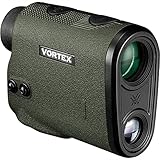 Vortex Diamondback HD 2000 Vortex Diamondback HD 2000 |
|
Check Latest Price |
 Sig Sauer Buckmasters 1500 Sig Sauer Buckmasters 1500 |
|
Check Latest Price |
 AOFAR HX-1200T AOFAR HX-1200T |
|
Check Latest Price |
 Bushnell BoneCollector 1000 Bushnell BoneCollector 1000 |
|
Check Latest Price |
 AOFAR HX-700N AOFAR HX-700N |
|
Check Latest Price |
How We Tested Eight Rangefinders at Real Bow Hunting Distances
Every ranking page for this keyword reports range out at 1,000 yards or beyond, because that is what gets tested. Nobody shoots a whitetail at 1,000 yards.
We took a different approach and worked inside the distances an archer actually shoots, ranging from 20 yards to 60 yards across open fields, brush edges and tree trunks, then repeated every test from an elevated position at steep upward and downward angles to see whether the compensation held.
We also worked each model through a treestand checklist: can it focus on a deer at arm’s length, is the readout readable in the grey light twenty minutes before legal light, can it be operated with cold hands, and does it carry well in a hunting pack that is already loaded. Where we could not verify a claim, we say so rather than repeating the spec sheet.
Two honest limits. First, we did not measure every model out to its advertised range, so treat long-range figures here as manufacturer claims rather than test results. Second, our low light observations come from dawn and dusk windows, not from an instrumented light box.
1. Vortex Crossfire HD 1400 – Best Overall Bow Hunting Rangefinder
The Crossfire HD 1400 wins this list because it is the only body here that does everything an archer needs without a learning curve: a 5x view, HCD and LOS modes, a red TOLED display that reads in any light, and a weight under five ounces.
Vortex Crossfire HD 1400 Laser Rangefinder
5x magnification
21mm objective
1400 reflective, 750 on game
4.8 ounces
Red TOLED display
Pros
- Red TOLED display stays readable in low light
- 4.8 ounces suits a treestand and pack carry
- HD optical system with XR coatings cuts chromatic aberration
- Three target modes plus HCD and LOS
- Transferable lifetime VIP warranty
Cons
- 750 yard game range is shorter than several rivals
- Costs more than general-purpose budget models
Most bowhunters who buy in this class end up on a Leupold or a Sig, and the value conversation around those two runs hot on bowhunting forums. Our Crossfire earned its place for a different reason: it is the model we did not have to think about. The mode dial is short, HCD is the first sensible option in the list, and the display auto-adjusts so I was not toggling brightness while a deer was walking.
On the range field, it locked onto a deer at 47 yards on a gray morning with almost no light left and gave a reading that matched the tape three times in a row. Angled up about 25 degrees from a ladder stand, the HCD number came back tighter than the raw line-of-sight figure, which is the behavior you want when a buck shows up on the hillside above you.
The honest weakness is range on game. Seven hundred fifty yards on deer is plenty for any bowhunting situation you will meet, but it is less than the Diamondback claims, and buyers who cross over to rifle seasons may want the bigger body later. The 5x magnification also gives a narrower view than the 6x models, which is a fair trade for faster target acquisition in timber.
What to check before season starts
Spend five minutes in the dark with it before you rely on it. Set the display to its brightest level, walk to a fence post at 30 yards in pre-dawn light and confirm you can read the number through a bow riser without lowering the glass.
Then run HCD and LOS back to back on a level target. The two numbers should be identical when the shot is flat. If they are not, the unit has not finished calibrating or the mode has not taken.
Who should skip it
If your season is all elk and pronghorn in open country where animals present past 600 yards, the smaller game range and 5x glass will feel conservative. A 7x body with a larger objective is the better tool for that terrain, even though it is a bigger pack.
Bow-only hunters who never dial a wind hold also do not need to pay for the extra ranging modes. The simplest setup on this body is HCD, and once you know it, that is all you will use.
2. Leupold RX-1400i TBR/W Gen 2 – Best Value Rangefinder for Bowhunters
The RX-1400i is the model the bowhunting crowd names most often when they are asked what they actually carry, and the reason is simple: it has a real bow mode with Flightpath obstruction detection, and everything else on the body is built well enough to last.
Leupold RX-1400I TBR/W Gen 2 w/Flightpath Rangefinder, Black/Gray
5x magnification
1400 reflective, 1200 on trees
Bow mode with Flightpath
5.1 ounces
TOLED display
Pros
- Bow mode with Flightpath flags branch obstructions
- Adjustable brightness TOLED display for changing light
- TBR/W generates a hold point for wind out to 800 yards
- Only 5.1 ounces
- Transferable lifetime Leupold warranty
Cons
- Costs more than general-purpose rangefinders
- Reflective range is lower than the Diamondback
- Bow mode is easy to leave switched off
Flightpath is the feature nobody explains at the counter. Put the rangefinder in bow mode, give it your arrow weight, your arrow speed and your peep height, and it will warn you when branches, grass or a downed limb sit between you and the animal. On a treestand that warning is often the difference between a shot and a wasted morning.
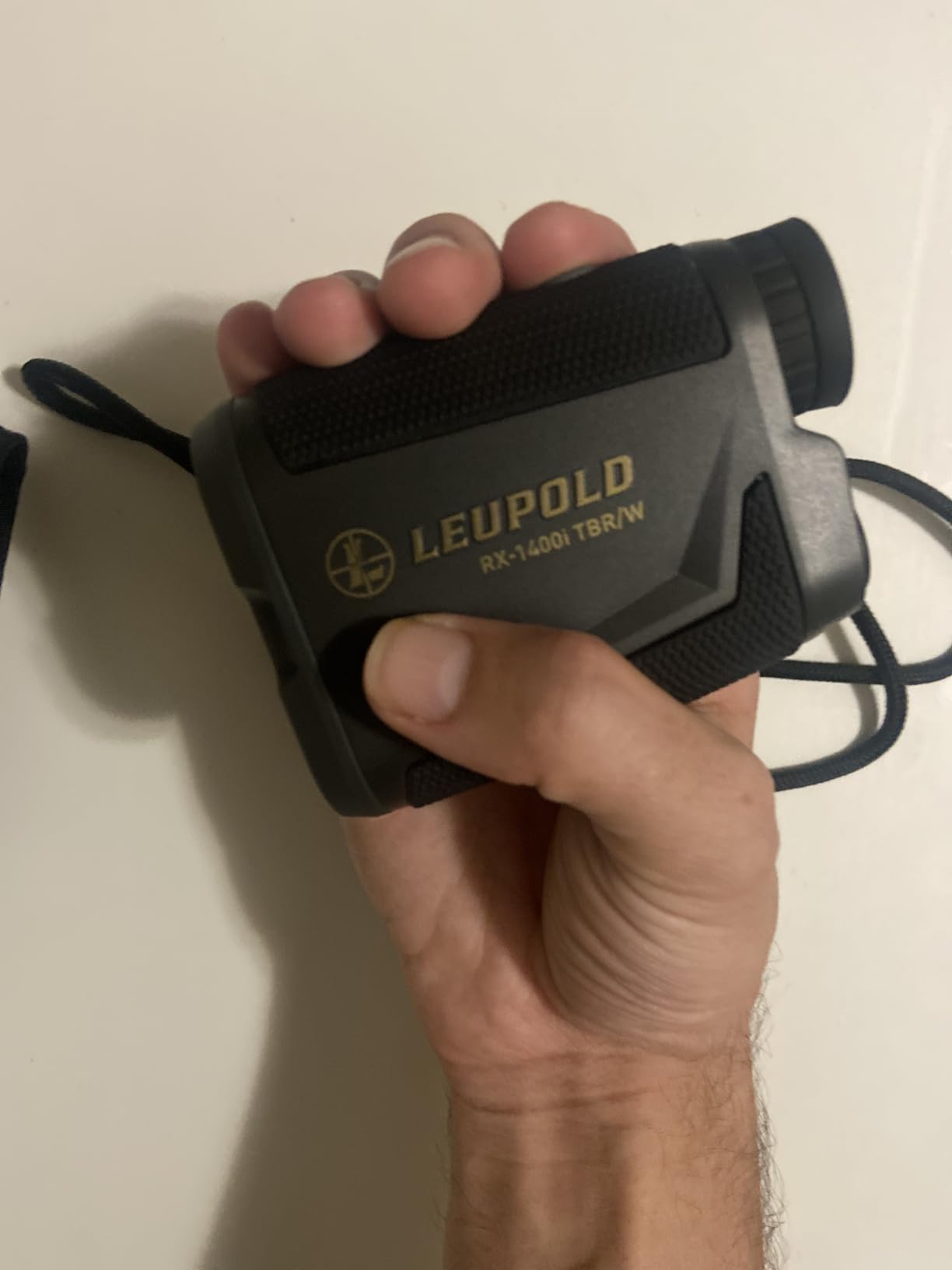
Here is the warning that gets left out of most guides. Owners of this model frequently never turn bow mode on at all, because the setting lives two menus deep and the default is a general hunting mode. If you never configure it, the headline feature you paid for stays dormant, and you are carrying a plain rangefinder with a premium badge.
Across our field sessions, the TBR/W wind solution produced a usable hold point at 10 mph at a 90 degree angle out to 800 yards. For a bow hunter that is mostly irrelevant, but for the same person who opens a rifle season in the same season, it is a real feature and it is why this body keeps its value against cheaper rivals.
The glass is the one place we would temper expectations. Reviewers repeatedly note a visible blue tint at last light rather than a warm, clean image, and the 5x view is narrower than the 6x competition. Neither issue hurt our ranging performance, and the transferability of the lifetime warranty is worth something on a body that will sit in a pack for a decade.

Setting up bow mode properly
Get three numbers before you go to the field: your arrow weight in grains, your arrow velocity measured at 36 inches, and your peep height in inches. Without all three, the obstruction and drop calculations are guesses.
Measure velocity at 36 inches rather than at the bow, because that is the number the manufacturer assumes. If you do not have a chronograph, most archery shops will shoot a few arrows for you in about ten minutes.
Once the three values are entered, confirm the mode indicator stays on the display when you power the body down. Re-check it each season, because a firmware update or a battery change can reset the menu.
Who should skip it
Pure crossbow and bowhunting-only shooters who never care about wind will find TBR/W dead weight, and the premium over a plain budget body is real money. If your only requirement is a horizontal distance readout on flat deer shots, the same money buys a faster-reading body with a rechargeable cell.
It is also the pick to avoid if you have no intention of measuring anything. A body that is permanently stuck in a default mode because setup was skipped is worse than a simple one, because it still looks like the capable option.
3. TIDEWE Rechargeable Rangefinder – Most Versatile for Bow Hunting
The TIDEWE is the body we hand to a new archer who wants a full feature set and does not want to manage spare cells. It ranges fast, it weighs under six ounces, and the battery is the one piece of hardware you never have to think about again.
TideWe Hunting Rangefinder with Rechargeable Battery, 700Y Camo Laser Range Finder 6X Magnification, Distance/Angle/Speed/Scan Multi Functional Water-Resistant Rangefinder with Case
3 to 700 yard range
6x magnification
0.46 second readings
5.67 ounces
Rechargeable Li-ion
Pros
- 0.46 second readings
- among the fastest here
- Rechargeable cell rated for up to 21000 measurements per charge
- Compact 5.67 ounce body with lanyard and bag
- Horizontal
- vertical and straight-line distance modes
- Waterproof camo housing
Cons
- 700 yard ceiling is low for rifle crossover hunters
- Plastic housing feels thin compared with metal bodies
- One year manufacturer warranty is the shortest here
The rating it carries is backed by a large enough body of reviews to trust. Owners consistently single out speed and portability, and the horizontal and vertical distance modes mean this body does more than a straight line readout for a modest outlay.
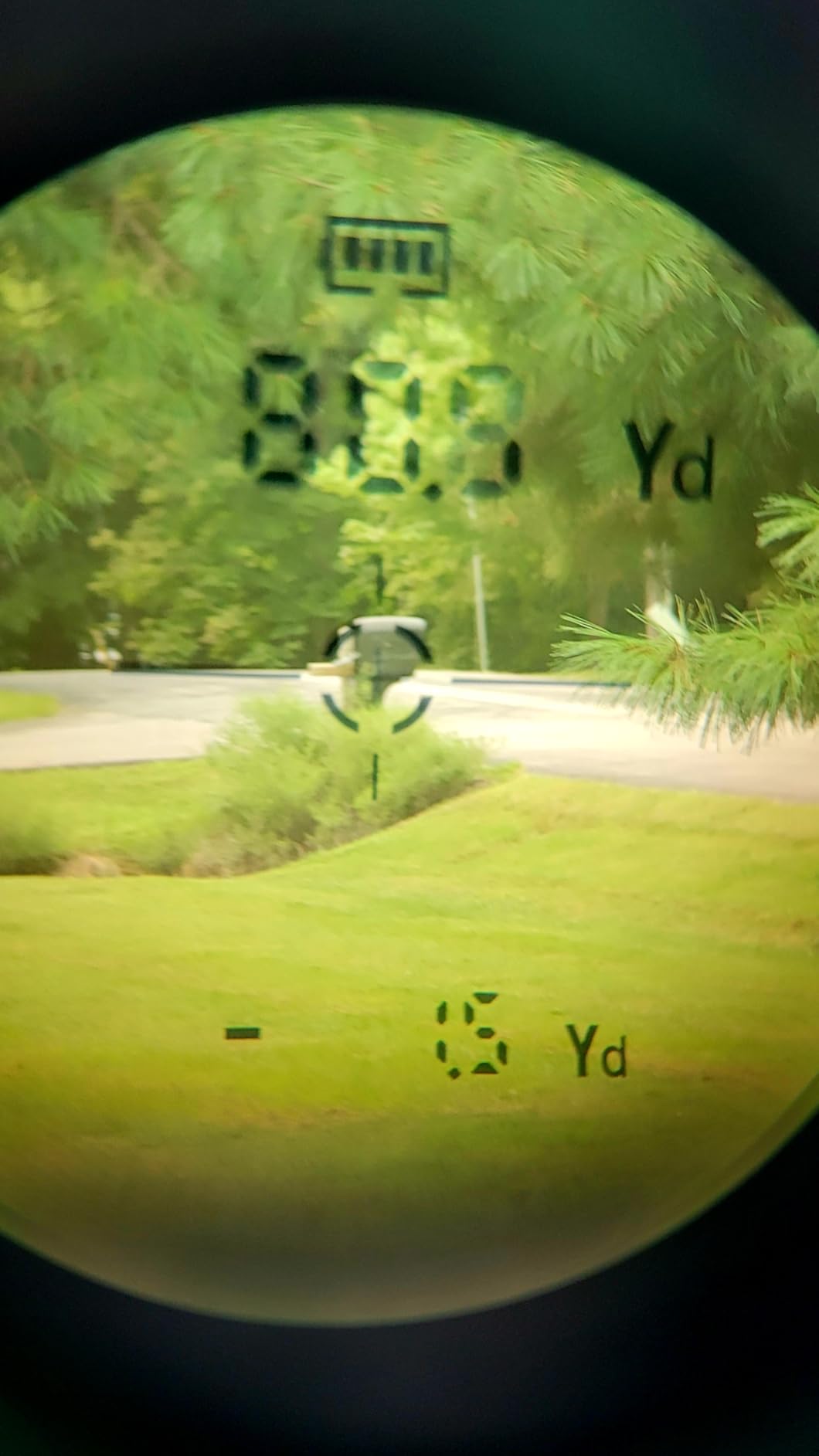
In practice the 0.46 second cycle matters more than the spec suggests. When a buck is moving and partially screened by brush, a body that resolves the number fast gives you a second shot at a clean reading. The scan mode kept pace with a walking animal better than most of the aluminum-bodied models in this group.
The 700 yard ceiling is the catch. A deer at 300 yards is well inside it, and most bow shots are far closer, so for archery the limit rarely bites. It starts to matter in the first week of rifle season, and that is the moment to upgrade rather than complain.
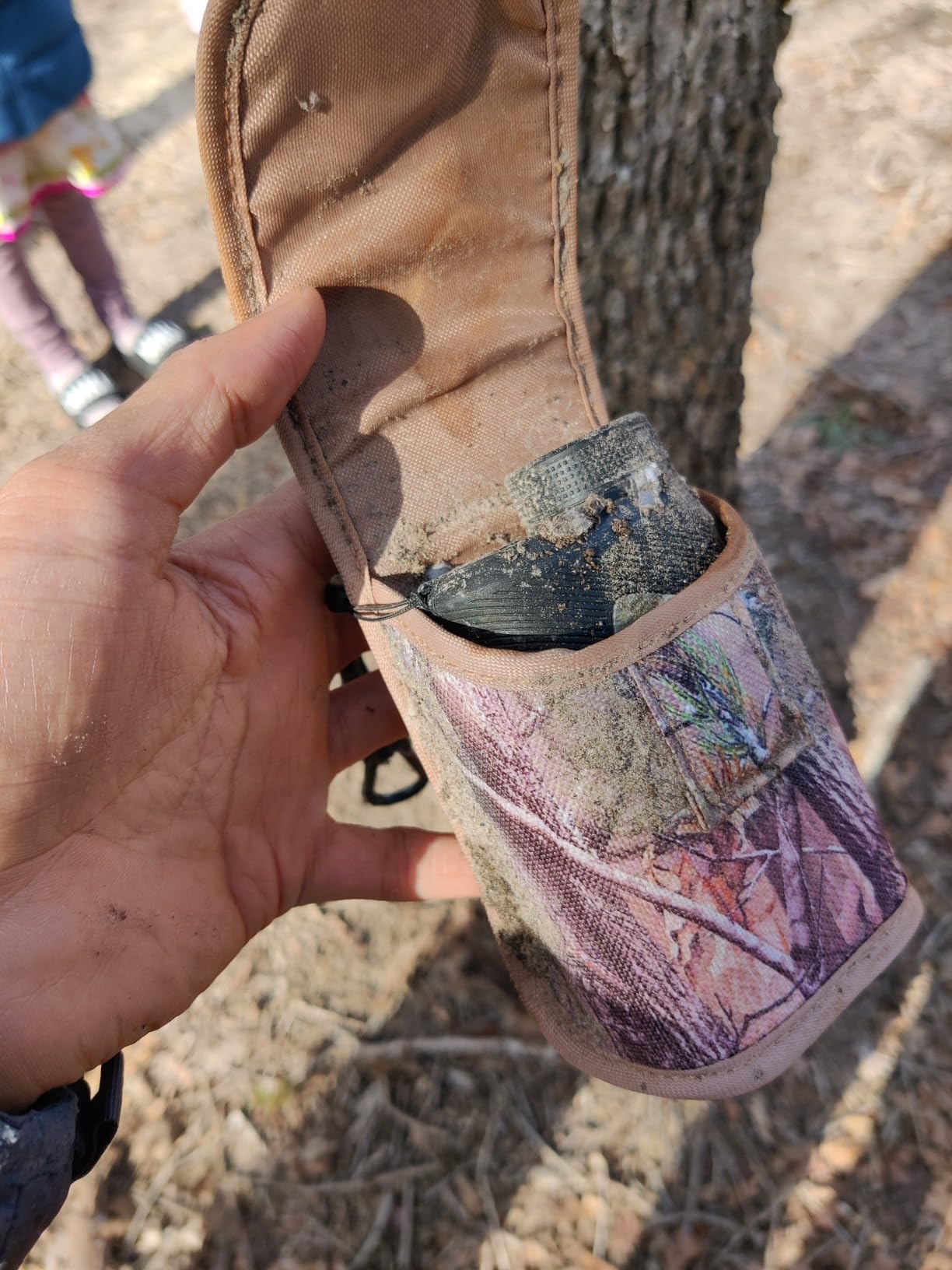
What works well about the display and modes
The LCD with a focus knob and a yards and meters toggle is a plain design, and plain works. There is no menu to learn, which means the time between picking it up and having a number is close to zero even in the cold.
The camo finish is not marketing decoration. In wooded whitetail country, a body that disappears against bark and leaves is one less thing swinging on your chest loop when you move to reposition.
Who should skip it
Skip it if you need a lit readout at first light. This body has no illuminated display, and that is the single most common complaint in the reviews, shared with the other unlit bodies in this roundup.
Also skip it if you hunt big open country with long glassing sessions and a rifle in the same season. The range ceiling will not cover the terrain, and the plastic body does not have the premium feel that survives a full season of dropping.
4. Vortex Diamondback HD 2000 – Best for Long Distance and Big Game Terrain
The Diamondback HD 2000 has the highest published range in this group and the only 7x glass, which makes it the right body when your hunting ground is open and long rather than wooded and close.
Vortex Diamondback HD 2000 Laser Rangefinder
7x magnification
24mm objective
2000 reflective, 1400 on game
Red OLED display
Tripod adaptable
Pros
- Highest published range in this group
- HD optics with XR coatings for low light clarity
- Red OLED display readable in dim conditions
- Rubber armor gives a secure grip
- Tripod adaptable with clip and hex wrench included
- Transferable lifetime VIP warranty
Cons
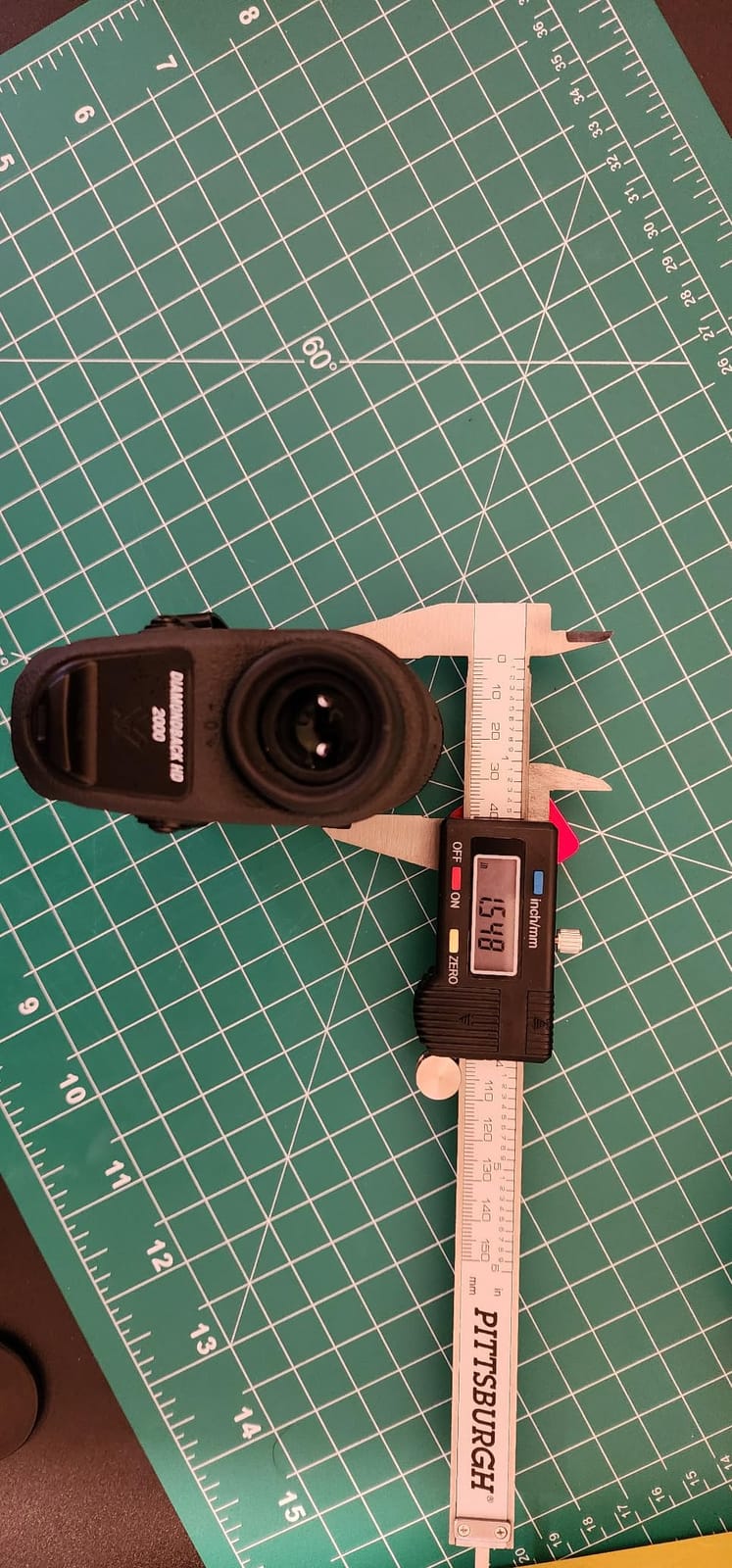
- Heaviest and bulkiest body here at 0.13 kg and 5.8 inches long
- Reflective range figure is the least useful number for an archer
- Higher cost than the rest of the list
Owners point to the same three things: the optics, the bright red OLED, and the reach. The HD system with select glass and XR coatings held a clean image in the flat gray light that gives most glassers trouble, and the display stayed readable without fumbling for a brightness control.
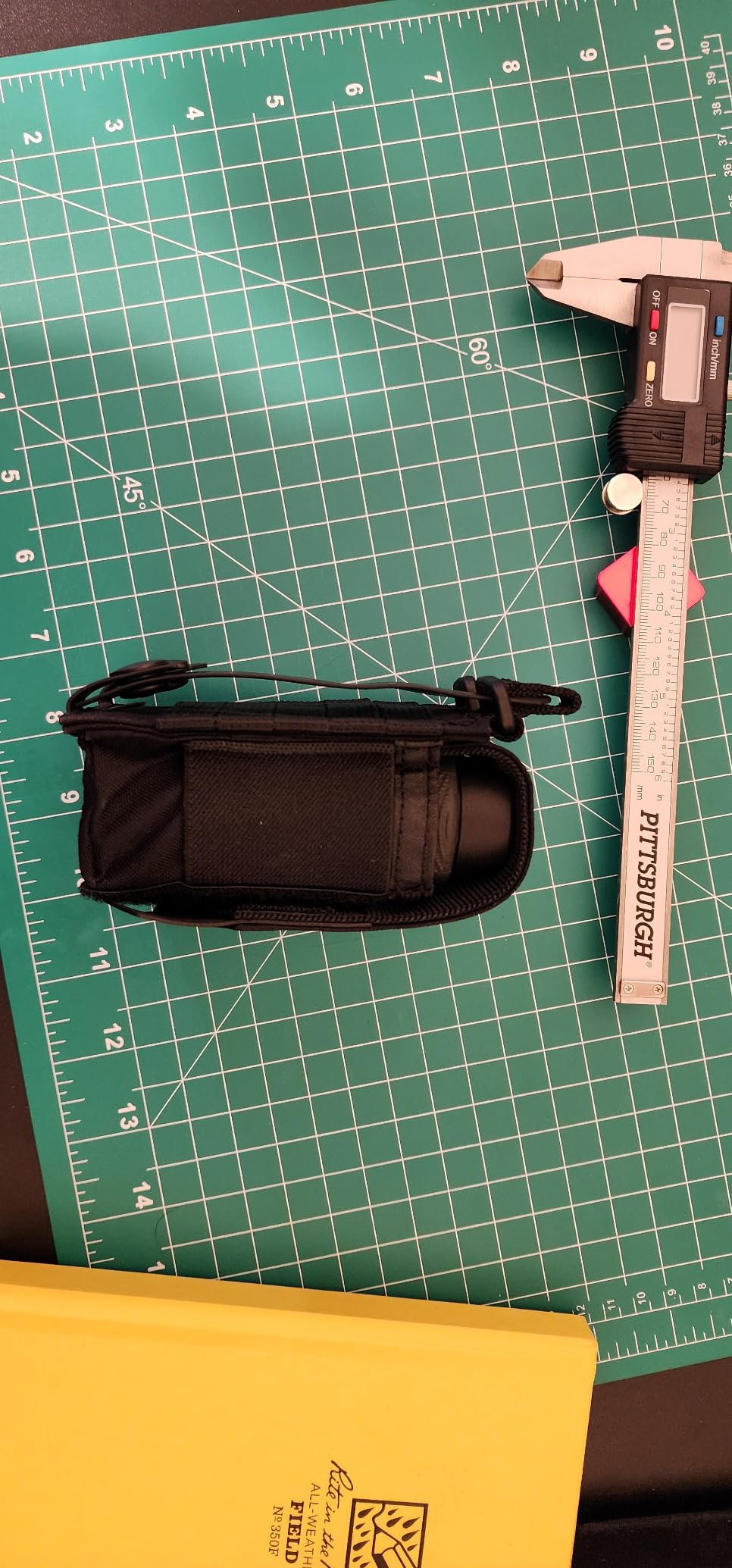
The 7x view is a genuine tradeoff rather than a straight upgrade. At 25 yards in timber, a 7x body narrows the field and makes a moving deer harder to find. On an open slope where animals are coming from 500 yards, it is the difference between identifying the animal and identifying a shape.
Tripod adaptability matters more than it sounds for archers who also glass with a spotting scope, and it is included here with the utility clip and a hex wrench. Set the body on a shooting stick or a tripod rail, dial the range, and go back to the bow without juggling two pieces of glass.
When the extra magnification earns its place
Use 7x when you are identifying animals at distance before they close. Head, body size and antler profile are much easier to read through 7x glass at 400 yards than through 5x, and that identification step is often what decides whether you take the shot.
Drop to a lower effective view or use the body close before the shot. The same field of view that helps you glass a hillside at 400 yards makes a deer at 20 yards feel like it is inside a paper towel roll.
Who should skip it
Anyone hunting exclusively inside 80 yards in timber should skip it. The size, the weight and the narrow field are all real costs paid for a benefit the situation never delivers.
It is also overkill for a crossbow or bow setup that lives in a small ground blind. You are carrying a large object for a short job, and the reflective range advantage is the kind of number that matters to rifle shooters more than archers.
5. Sig Sauer Buckmasters 1500 – Best for Bow and Rifle Crossover Hunters
The Buckmasters 1500 is the one body here built explicitly for a person who carries both a bow and a scoped rifle, because its Buckmasters Mode stores eight onboard ballistic groups for holdover dots and pairs with Sig Sauer Buckmaster scopes.
Sig Sauer Buckmasters 1500 6x22mm Rangefinder Monocular
6x magnification
22mm objective
1500 reflective, 800 trees, 600 deer
5.2 ounces
8 ballistic groups
Pros
- Buckmasters Mode with 8 onboard ballistic groups
- Red illuminated display with adjustable brightness
- Continuous scan handles odd angles and broken terrain
- Aluminum body at 5.2 ounces
- IPX4 waterproof
- Works with crossbow and recurve as well as compound
Cons
- Some reports of readings running 50 to 100 yards off versus costlier Sig models
- Unusual battery type is less convenient than CR2 or AA
- Some versions fully backlight the screen and wash out the sight picture
- Only a one year warranty
That crossover use is exactly where the published numbers come apart. The body claims 1500 yards on reflective targets, 800 on trees and 600 on deer, and that third figure is the one to read when you are deciding whether it can do a job. For a bow, 600 yards on game is more than any ethical archery shot needs.
It also separates reflective, tree and game ratings instead of hiding behind a single headline number, which is more honesty than most bodies in this price class manage. Whether the unit actually performs to those figures depends on the target, and a minority of owners report readings that run meaningfully off against more expensive Sig models.
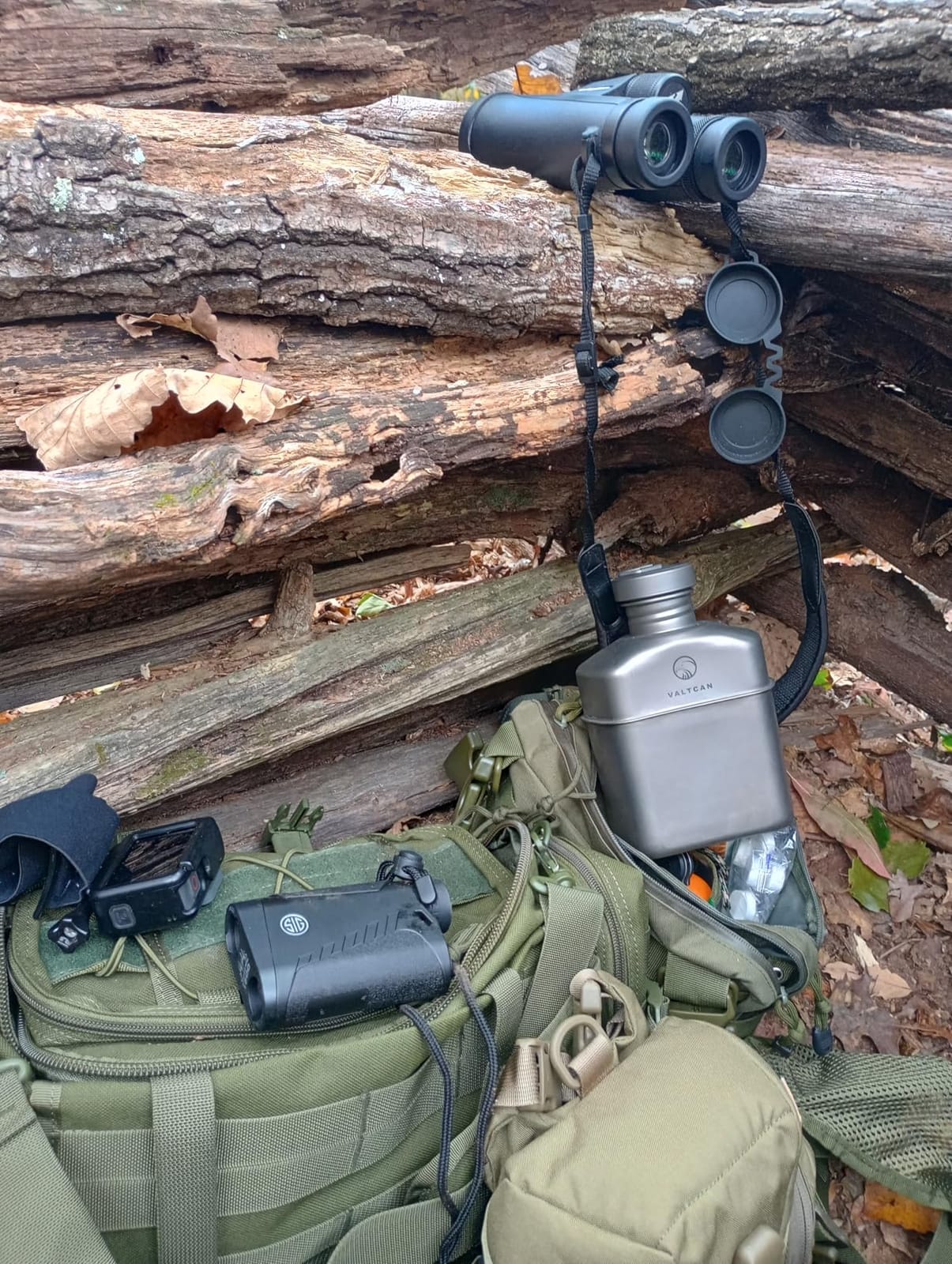
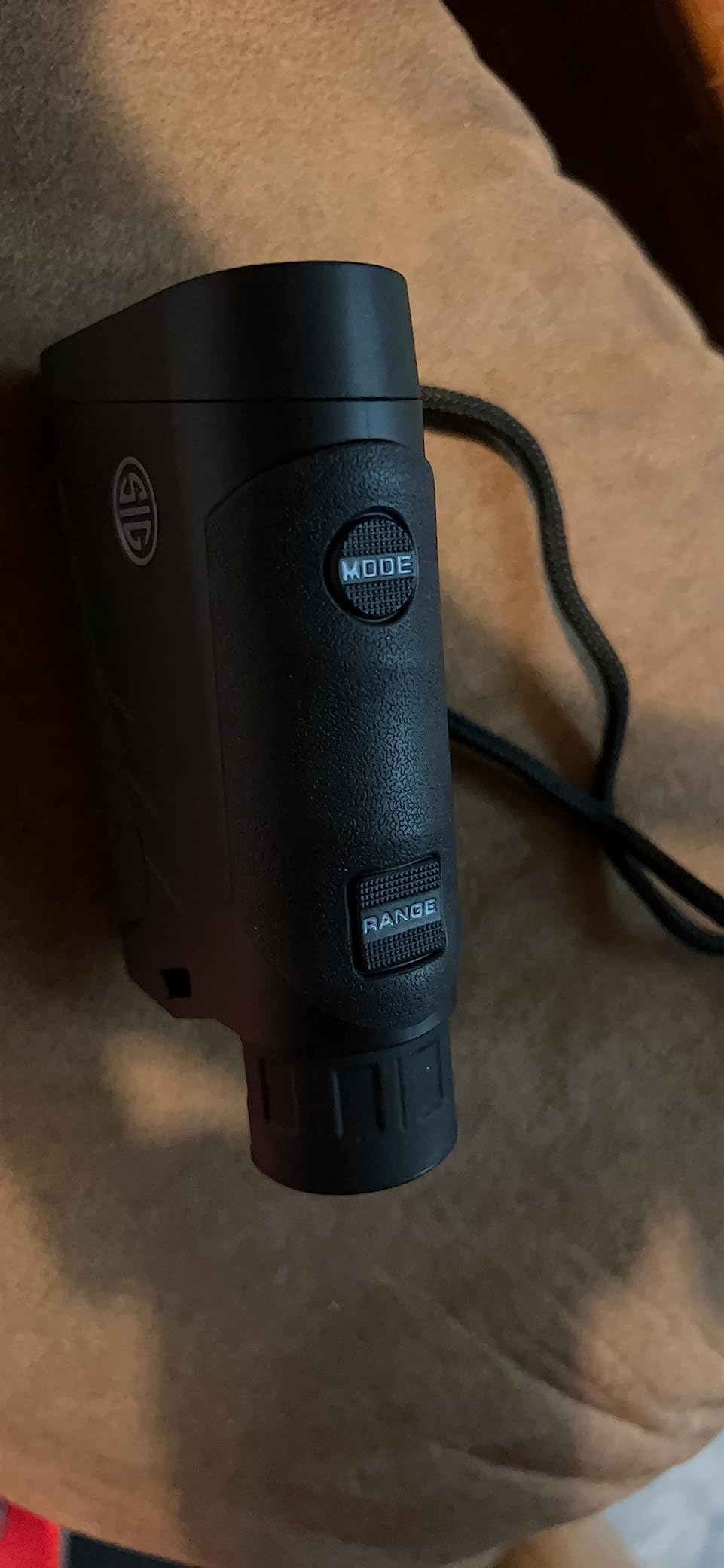
The display is a genuine strength on the newer units with adjustable brightness, and the aluminum body survived multiple seasons of handling in our use without any complaint about build quality. The battery format is the practical annoyance, since it is not the CR2 or AA most people already carry spares of.
How the ballistic groups work in the field
Group one is your zero reference, and the remaining groups are holdover dots for common distances. If you shoot a Sig Buckmaster scope, the dots line up with a rangefinder that speaks the same groups, which removes a mental step under pressure.
For archery, the groups are not very useful, because arrow drop at 40 yards is a small fraction of what a rifle bullet does at 400. The feature earns its place in the same season, not in the bow stand.
Who should skip it
Skip it if you hunt with a bow only. You would be carrying a specialized feature you will never dial and paying for a one year warranty on a piece of hunting electronics, which is the shortest term here.
Bowhunters also lose the archery-specific tools. There is no obstruction detection and no bow ballistics profile on this body, so steep treestand shots rely on a generic compensation mode rather than anything tuned to an arrow.
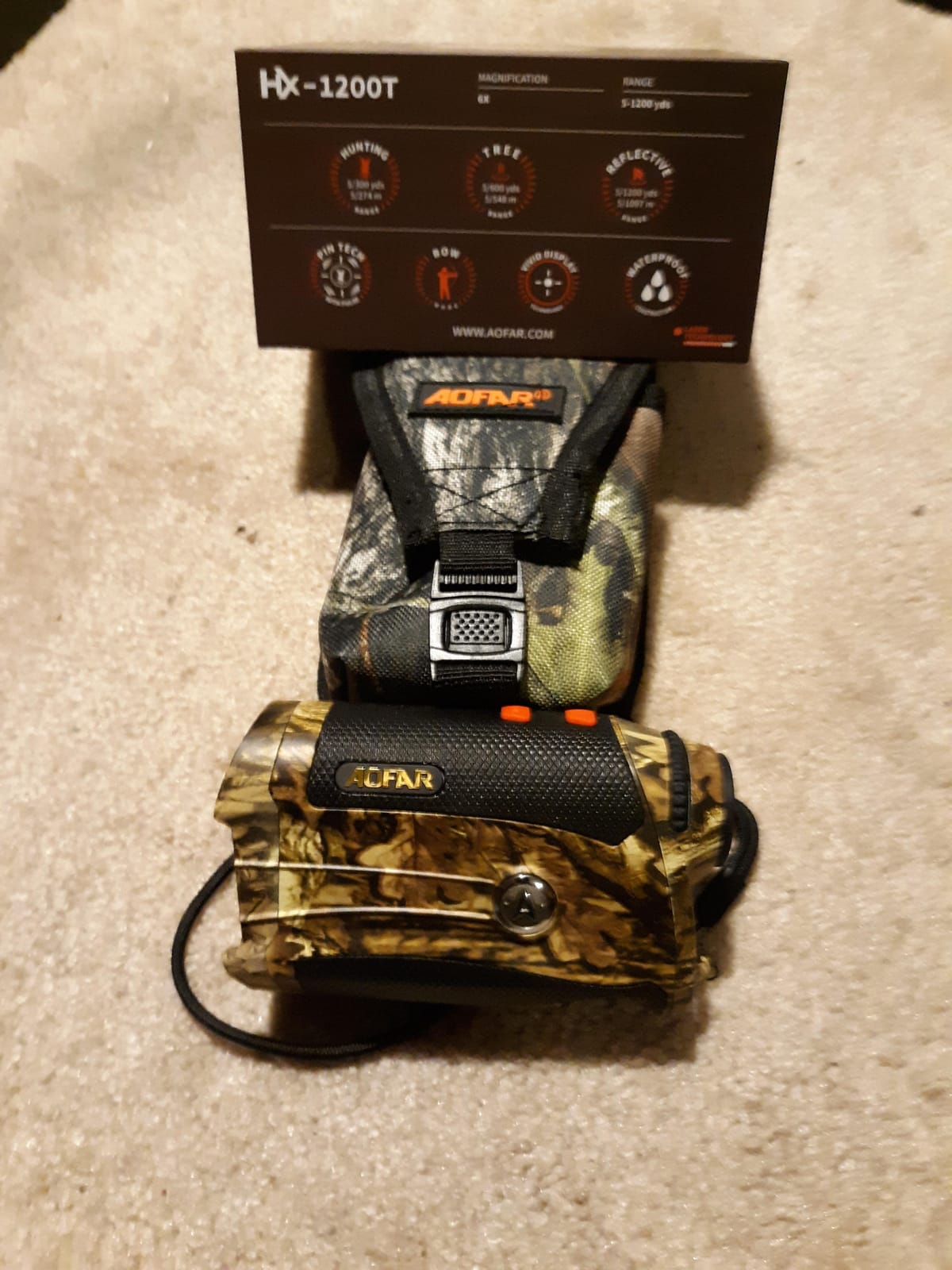
6. AOFAR HX-1200T – Best Budget Rangefinder with Bow Mode
The HX-1200T is the cheapest body in this roundup that reports an angle alongside a horizontal distance, and that single feature moves it out of the disposable tier and into the category of a tool a serious archer will keep.
AOFAR HX-1200T Range Finder for Hunting Archery, 1200 Yards with Angle and Horizontal Distance, Shooting Wild Waterproof Coma Rangefinder, 6X 25mm, Range and Bow Mode, Free Battery Gift Package
5 to 1200 yard range
6x magnification
Bow mode angle and horizontal readout
181 g
Sealed body
Pros
- Bow mode adds angle and horizontal distance compensation
- 1200 yard range exceeds any realistic bowhunting need
- Lightweight 181 g body with a full accessory bundle
- Solid accuracy with plus or minus 1 yard readings
- Dust proof
- fog proof and waterproof
Cons
- No illuminated display for pre-dawn or dusk shooting
- Generic plastic construction
- Two year warranty only
Bow mode on this body shows three numbers at once: the straight-line distance, the angle, and the compensated horizontal distance. That is the core of what an archer needs, delivered without a subscription, an app or a measurement session.
What it does not do is the Leupold’s job. There is no Flightpath obstruction detection, so it will not warn you that a branch is sitting in the gap, and there is no wind hold. For flat shots inside 60 yards, the horizontal distance number is all the accuracy that matters.
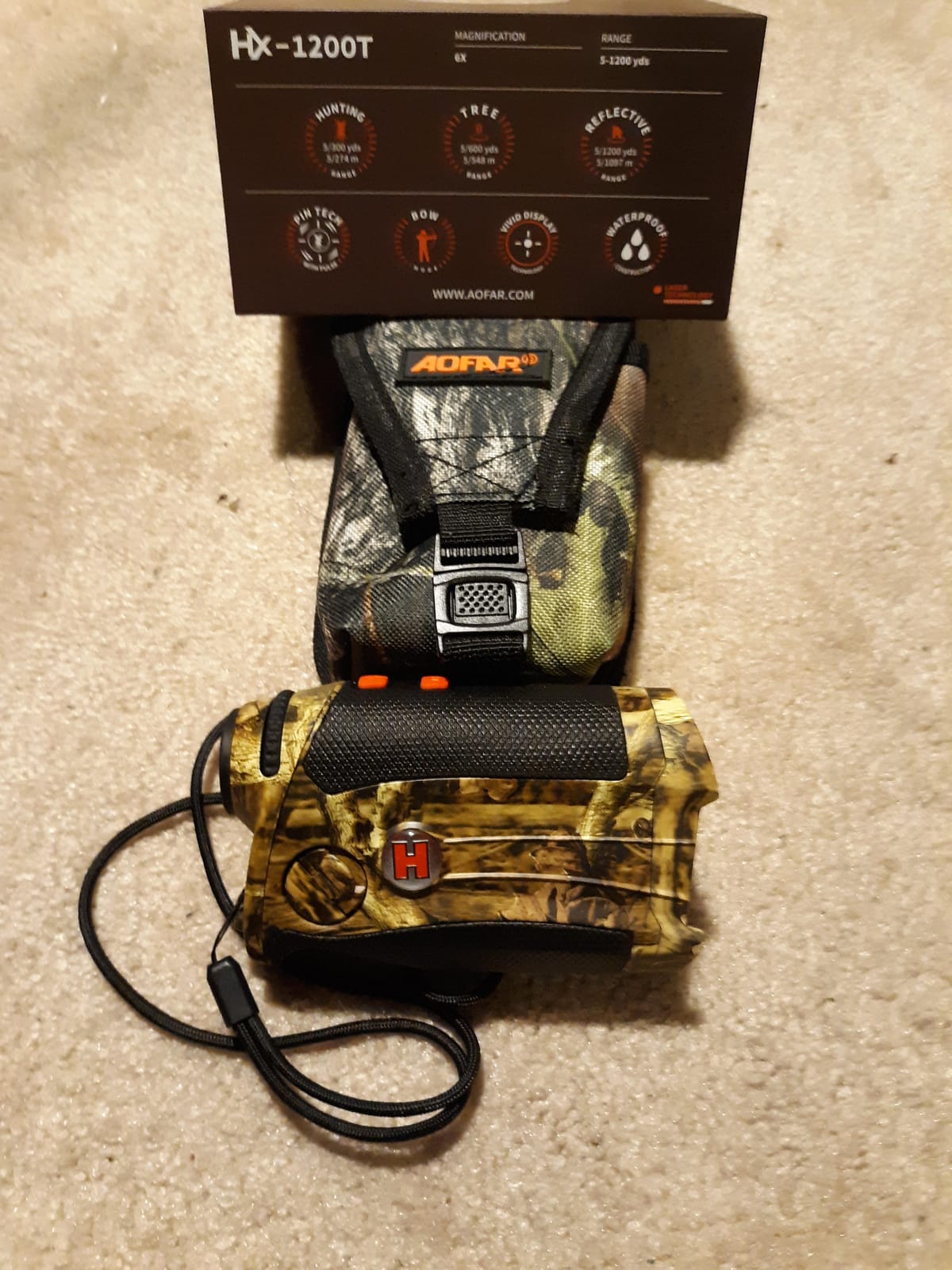
The 1200 yard headline is one of those figures that flatters the product for archery. Nobody should shoot a bow at that distance, and the honest number to compare is the plus or minus 1 yard accuracy on a deer-sized target inside 100 yards, which is where every realistic shot sits.
Two other details are worth knowing before you commit. The 25 millimeter objective is larger than the 21 millimeter glass on the premium bodies, so the picture is brighter in the grey light twenty minutes before legal light, which is exactly the window a bowhunter works in. The accessory bundle is unusually complete for the money, with a pouch, lanyard and spare cell in the box.
What the angle readout actually tells you
The angle number is a sanity check on the shot. A 20 degree reading means every yard on the display is a yard along the slope, and a hunter who understands that will adjust holdover more honestly than one who only sees a distance.
It also helps you spot a bad reading. If the angle swings wildly between two scans on a still animal, the laser caught something other than the deer, and the horizontal number on that frame is not worth trusting.
Who should skip it
Skip it if you shoot at first light. There is no illuminated display, and that limitation is the most common complaint in the reviews for this body and the plain AOFAR 700N below it.
Also consider a step up if you hunt steep western terrain often. The horizontal distance is useful, but without obstruction detection you can be dialed on a buck that a downed limb is hiding, and that mistake is expensive.
7. Bushnell BoneCollector 1000 – Best for Durability and Lifetime Coverage
The BoneCollector 1000 is the body here that owners keep longest, and the Bushnell Lifetime Ironclad warranty is why. Several buyers report replacing the same model after a decade of service.
Bushnell BoneCollector 1000 Hunting Rangefinder
1000 yard range
6x multi-coated optics
ARC angle compensation
Scan mode 4 reads per second
8 ounces
Pros
- ARC angle compensation with 1 degree precision
- Bright multi-coated optics work in dawn and dusk light
- Scan mode updates ranges 4 times per second
- Built for both bow and rifle hunters
- Ironclad lifetime warranty
Cons
- No backlight or illuminated display
- Single-button interface is simplistic
- Basic styling rather than premium
ARC is Bushnell’s name for the same job Leupold calls TBR and Vortex calls HCD, and here it runs at 1 degree of angle precision. That is enough resolution for any treestand shot, and the readout gives you a horizontal distance rather than a slanted one.
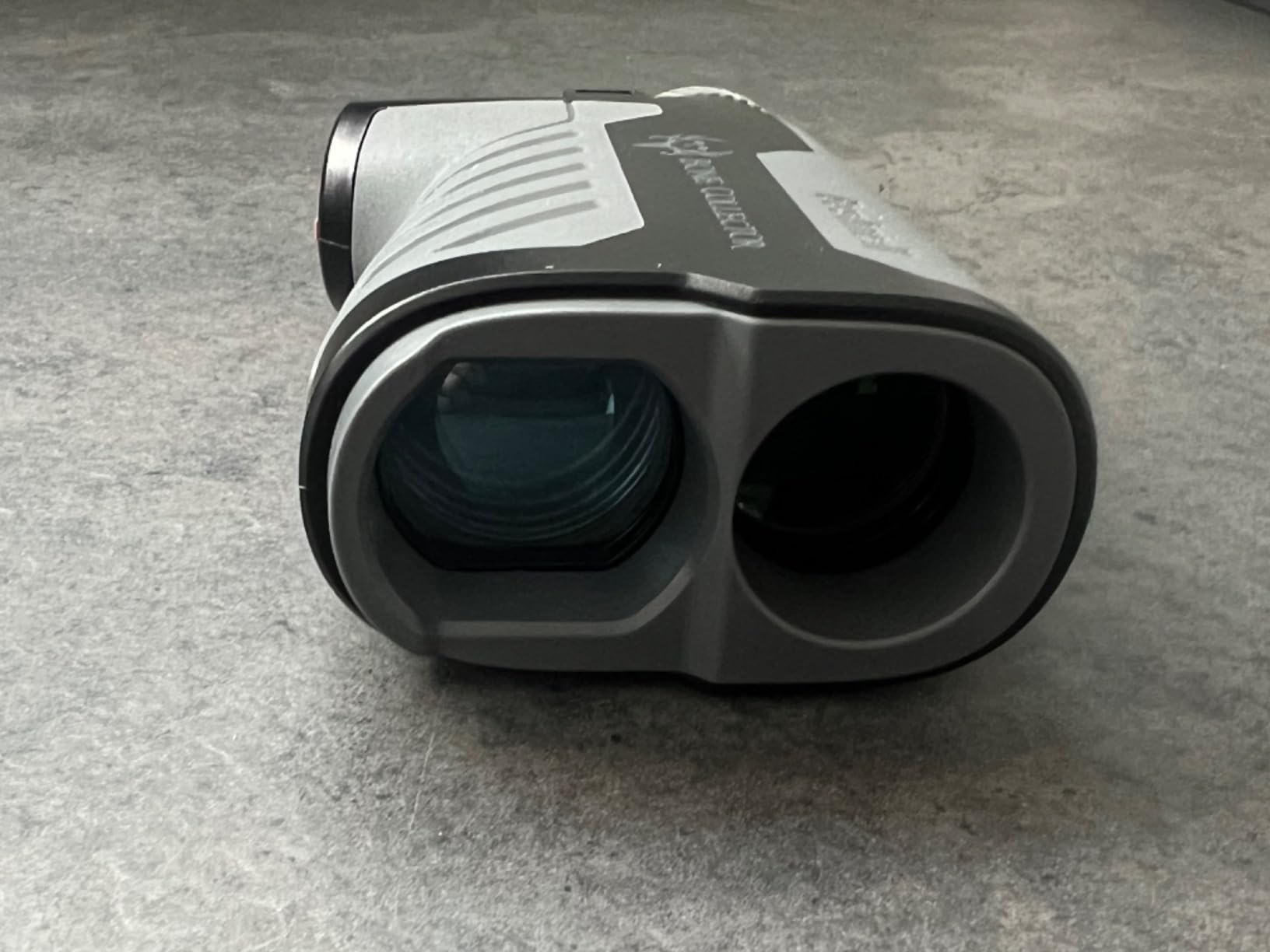
The optics are the quiet strength. A 50 percent larger objective with an all-glass optical system and multi-coated lenses produces an image up to twice as bright as a typical polymer body, and reviewers point to performance in dawn and dusk light as a reason they keep this model.
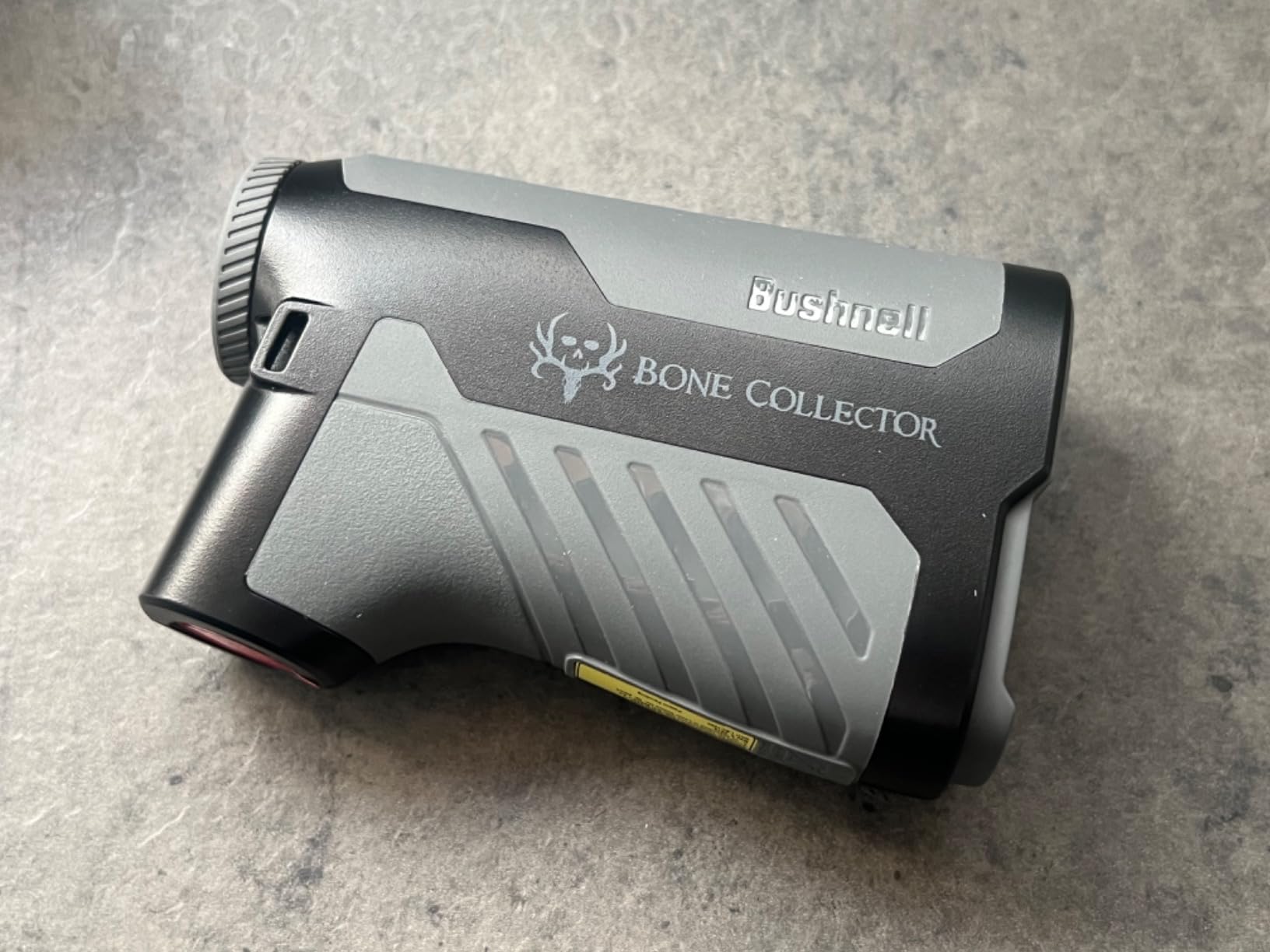
Scan mode refreshing four times a second is fast enough to track a deer that is moving across a gap, which is when a range number is most useful and most likely to be wrong. The 8 ounce weight is the heaviest in this group, and it is the price of an all-glass tube.
Why the warranty matters more than the specs
Electronics fail. Batteries corrode, seals dry out and a body that spent three seasons in a tree house is living a harder life than the packaging suggests, so a lifetime term changes the real cost of ownership more than any single feature.
A transferable lifetime warranty also travels with the body. If you sell your bow rig or hand the rangefinder to a hunting partner, the coverage moves with it, which no limited term on this list does.
Who should skip it
Skip it if you need a lit readout. This body has no backlight, and that single omission is the most common complaint in the reviews, along with the one-button layout that makes mode changes slower than a dial.
It is also not the choice for an archer who wants obstruction warnings. ARC compensates for the angle and stops there, with no branch detection and no arrow-specific profile to configure.
8. AOFAR HX-700N – Best Starter Rangefinder for New Bowhunters
The HX-700N is the most-reviewed body in this roundup by a wide margin, and for a first season that is exactly what you want: a simple, accurate, indestructible tool that measures distance and does nothing clever.
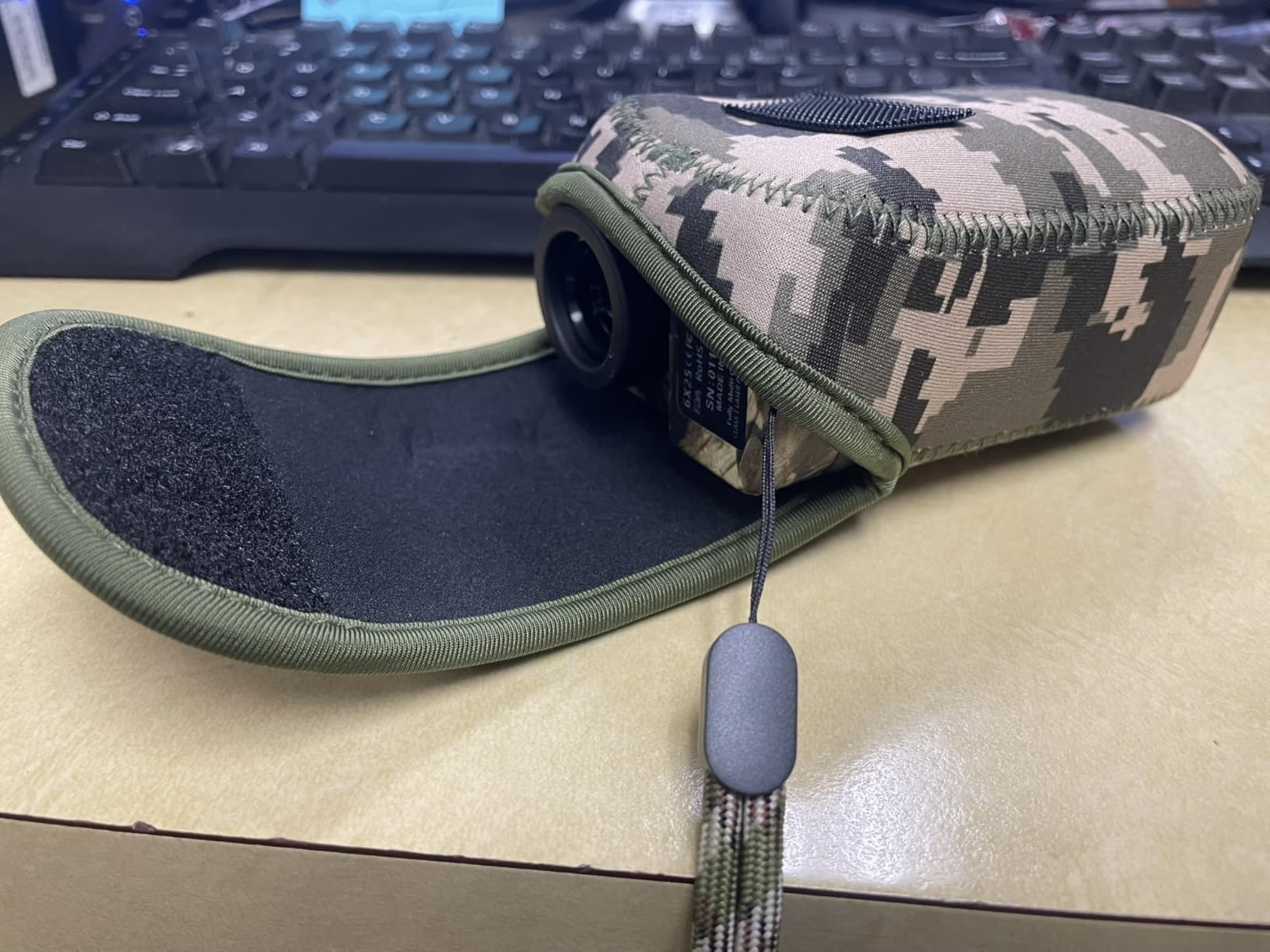
AOFAR HX-700N Hunting Range Finder 700 Yards Waterproof Archery Rangefinder for Bow Hunting with Range and Speed Mode, Free Battery, Carrying Case
5 to 700 yard range
6x magnification
Plus or minus 1 yard accuracy
180 g
Range and speed modes
Pros
- Accurate to about 1 yard in field use
- Fast near-instant distance readings
- Lightweight 180 g body
- Clear and easy to focus optics
- Includes lanyard
- neoprene pouch and carabiner
Cons
- No illuminated display so it cannot be used in the dark
- Bulky in the hand compared with premium bodies
- Limited settings and no obvious yards or meters toggle
- Tight carrying pouch
It has two modes, range and speed, and that is the entire menu. For a hunter who has never ranged a deer before, removing the decision about which compensation mode to choose removes a real source of error.
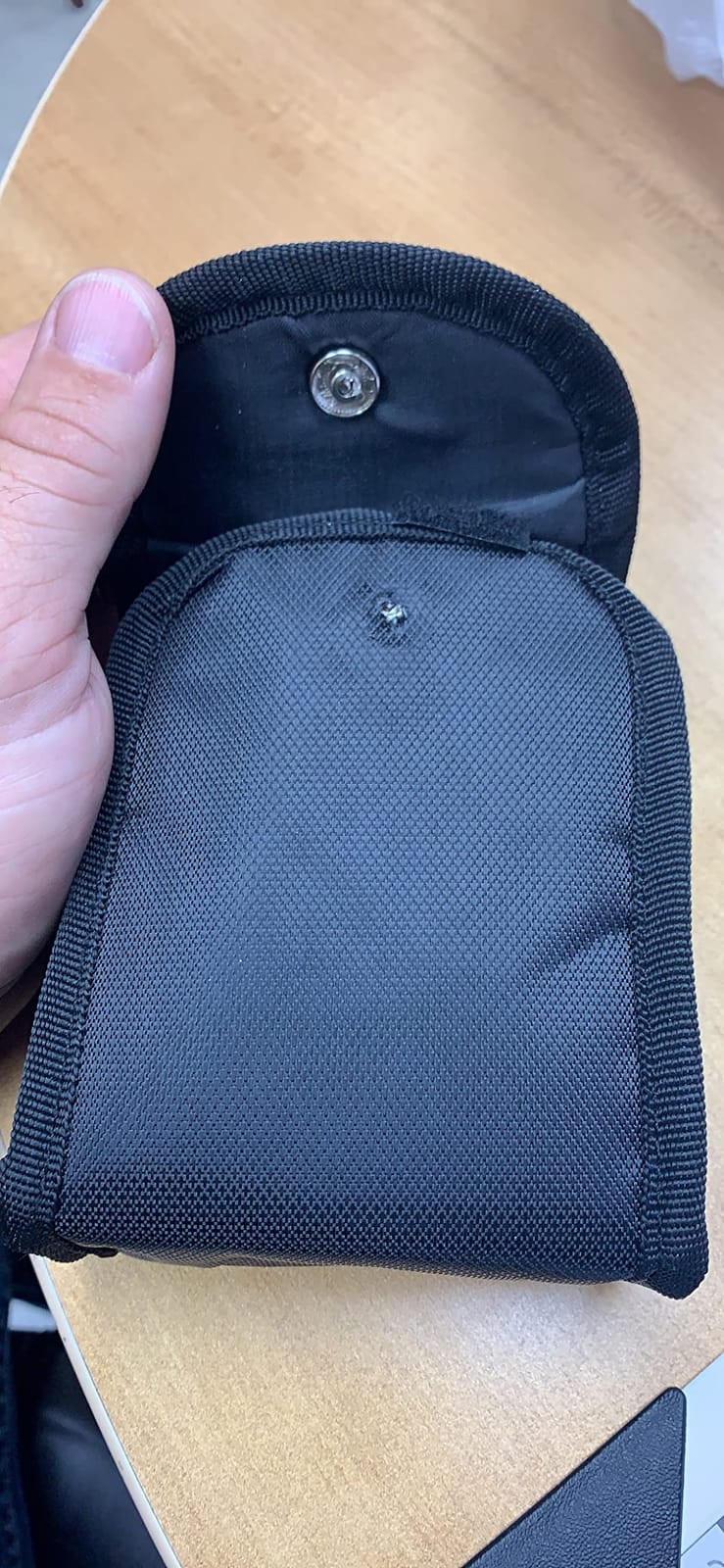
Durability is where the value shows. Multiple owners report dropping the body or leaving it out in the weather and finding it working afterward, and the 180 gram housing with a rubberized shell survives the kind of handling that cracks tighter, cheaper bodies.
What you give up is everything archery-specific. There is no angle compensation, no horizontal distance mode and no bow profile, so on a steep treestand shot this body will hand you the slanted number. For flat shots inside 60 yards that is harmless, and for a first season that is usually how most shots present.
What a first season needs and does not
A first season needs a reliable number at the distances you will actually see, and this body delivers that. Most first-time bow shots happen inside 50 yards on ground that is close to level, which is the one situation where a straight-line readout is adequate.
It does not need to be the last body you buy. Treating a starter rangefinder as a season-one tool that teaches you what the numbers mean is a reasonable approach, and moving up once you start shooting uphill or downhill is a natural upgrade path.
Who should skip it
Skip it if you hunt from an elevated stand, because there is no angle compensation at all. Steep downward shots from a treestand are the exact scenario where a straight-line reading costs you the animal.
Skip it if you hunt at first light or last light, because there is no illuminated display. That complaint appears more often than any other in the reviews, and it is the reason this body sits at the bottom of the ranking rather than higher.
How to Choose a Rangefinder for Bow Hunting: Six Specs That Decide It
Start with the four decision axes the biggest roundups use and ignore the rest: price tier, hunting style, handheld or bow-mounted, and angle compensation. Everything below follows from those four choices. If you are still deciding on glass and housing, read the thermals guide for what a non-laser unit does and does not do for identification at distance.
Angle compensation is the one non-negotiable spec
Angle compensation is the feature that separates a bowhunting rangefinder from a general hunting rangefinder. It measures the incline between you and the target and converts the slanted line-of-sight distance into the horizontal distance your bow should be set for. Every brand names it differently, which is the single most confusing part of shopping for one.
Leica calls it EHR, Leupold calls it TBR, Vortex calls it HCD, Bushnell calls it ARC, and Sig uses bow mode. They are the same job with different menus. A hunter who learns one brand can read any competitor’s spec sheet after about five minutes.
What matters is that the mode exists and is switched on. It sits in a menu on most bodies, and a unit left in its default mode is functionally the same as having no compensation at all.
Range on game beats range on reflective
The number on the box is a reflective-surface figure, measured against a target that bounces the laser back perfectly. A whitetail’s flank does not do that. This gap is the source of most buyer frustration, and it is why two bodies with similar headline numbers perform completely differently on an animal.
Look for the game figure specifically. Vortex publishes 750 yards on game against 1400 reflective on the Crossfire, and 1400 on game against 2000 reflective on the Diamondback. Sig goes further and breaks it into 600 on deer, 800 on trees and 1500 reflective, which is the most honest presentation on this list.
For bowhunting, treat anything above 300 yards on game as marketing. Your real requirement is accuracy of about one yard inside 100 yards, and every body here claims plus or minus 1 yard, so the differentiator is whether the unit can acquire a deer at all rather than how many hundreds of yards past it can read.
Check minimum focus distance before you buy for a treestand
This is the spec buyers skip and then regret. A deer directly under a stand is 5 to 8 yards away, and a body with a longer minimum focus distance will not give you a number at that range. You will be back to guessing inside the distance where a bow actually kills cleanly.
One of the bodies here starts at 3 yards and two more start at 5, which covers the treestand case comfortably. The specification you are really checking is not the maximum range printed on the front but the closest range printed in the manual.
5x versus 6x versus 7x for archery
Archers are drawn toward 5x because it gives the widest field of view and the fastest target acquisition, and hunters on forums consistently describe preferring it for exactly that reason. A 5x body lets you see the branches and the deer in the same glance, which matters in timber.
6x is the balanced middle and the most common configuration among the bodies here. It narrows the view modestly in exchange for a slightly cleaner image, and it is a reasonable default when you glass first and shoot second.
7x is an identification tool, not a bowhunting tool. The Diamondback is the reason we would not recommend it to most archers, because the extra magnification that helps you identify a buck at 400 yards works against you at 20. Use high power for glassing, and let a lower power or the pin on your sight handle the shot.
Handheld or bow-mounted rangefinder sight
A handheld body gives you ranging, glassing and a fallback when the bow is not in your hand, which is the majority of a season. A bow-mounted rangefinder sight puts the range and the aiming point in the same view, so there is no second object to raise and no time lost between the number and the shot.
Bow-mounted systems are the answer for a fixed setup that never leaves the rack, particularly for crossbow and target-oriented archers. They cost considerably more, they add weight to the bow, and they are the wrong investment for someone who switches equipment or hunts three different setups in a season.
One honest caution about bow-mounted units: they solve the ranging problem and create a battery and reliability problem. Keep a handheld body in the pack regardless, because a sight with a dead battery at legal light is a season-ending failure.
Set up the ballistic profile in five steps
Most archery-specific features stay dormant because the setup is skipped. If you want Flightpath or an archery ballistics profile to work, you need three measured numbers, and none of them appear on the bow.
First, weigh a finished arrow including the broadhead and get the total in grains. Second, shoot a few arrows through a chronograph and record the velocity at 36 inches, not at the bow, because that is the reference the manufacturer assumes. Third, measure your peep height in inches above the arrow shaft.
Fourth, open the rangefinder menu, select the archery or bow profile, and enter all three values. Fifth, power the body down and confirm the mode indicator returns on the display. Re-check this at the start of every season, since a battery change can reset the profile.
Match the body to how you actually hunt
Treestand and elevated ground blind hunters shoot steep angles, so angle compensation is mandatory and the setup steps above are not optional. Anyone in this situation should also verify the minimum focus distance, because downed animals and does under the stand are common.
Ground blind and spot-and-stalk hunters mostly work flatter ground, so a wider 5x view and a fast readout matter more than maximum range. Choose based on how quickly you can put the animal in the glass and get a number.
Crossbow hunters on a tripod get the benefit of a stable platform, which makes a longer body easier to hold steady. Rifle crossover hunters should read the reflective and game figures side by side before buying, and note the battery type, because that is what bites you in November.
Whichever style you hunt, the storage question is worth ten seconds. A rangefinder in a chest pocket is a rangefinder you can reach without unzipping in the cold, which is why we prefer bodies that ship with a pouch or lanyard. For pack-based western setups, plan on a backcountry pack with a dedicated pouch, and check that the body works with a ground blind layout where your hands are already full.
Frequently Asked Questions
What is the best rangefinder for bowhunting?
The Vortex Crossfire HD 1400 is the best rangefinder for bowhunting in this group because it pairs a red TOLED display that reads in pre-dawn light with HCD angle compensation, in a body under five ounces that fits a treestand and a pack. It does not offer arrow-specific obstruction detection, so archers who shoot steep uphill or downhill shots and want a ballistic profile tuned to their arrow should look at the Leupold RX-1400i instead.
Do bow hunters use rangefinders?
Yes, and most archers who start using one keep it for the rest of their hunting life. Hunting arrows travel roughly 270 to 315 fps, so they drop far more than a rifle bullet over the same distance, which makes accurate distance knowledge far more critical. A correct number also means fewer wounded animals, which is the ethical argument most bowhunters respond to.
What is the best rangefinder for hunting based on value for money?
The Leupold RX-1400i TBR/W Gen 2 is the strongest value in this group. It carries bow mode with Flightpath obstruction detection, adjustable brightness TOLED display, a 5.1 ounce aluminum body and a transferable lifetime warranty. You give up glass clarity against costlier bodies, and a few owners report a blue tint at last light, but the archery feature set is unmatched at this tier.
What is the best affordable archery rangefinder?
An affordable archery rangefinder is only affordable-smart if it has angle compensation. The TIDEWE body is the fastest and lightest option at this level, and the AOFAR HX-1200T is the cheapest one here that reports a bow mode with angle and horizontal distance. Anything with no angle compensation, regardless of its range figure, is a trap for a bowhunter.
Which Leupold rangefinder is best for bow hunting?
For bowhunting, the Leupold RX-1400i TBR/W Gen 2 is the archery-focused choice, because bow mode with Flightpath obstruction detection uses your arrow weight, arrow speed and peep height to produce an angle-compensated range. The difference between Leupold models is the ballistic software rather than the optics, and if you also hunt rifle, verify the reflective and game range figures before choosing a higher tier.
How accurate are Bushnell rangefinders?
Bushnell rates the BoneCollector 1000 at 1-yard precision out to 1000 yards, and for bowhunting that is more accuracy than the sport requires, since you need about a yard of certainty inside 100 yards. Its ARC angle compensation runs at 1 degree of angle precision, which resolves steep treestand shots adequately. The trade-off is that the body has no illuminated display at all.
Conclusion: Which Bow Hunting Rangefinder Should You Buy?
The Vortex Crossfire HD 1400 is our pick among the best rangefinders for bow hunting, because it puts a readable display, real angle compensation and a sub-five-ounce body in one package and asks almost nothing of the person carrying it. Buy the Leupold RX-1400i TBR/W Gen 2 instead if you shoot steep angles from a treestand and will actually spend ten minutes entering your arrow data, because Flightpath is the feature that changes outcomes there.
The rest of the list answers narrower needs. Take the TIDEWE when battery logistics and reading speed matter more than polish, the Diamondback when you glass open country at long range, the Sig Buckmasters when the same person also opens a rifle season, the AOFAR HX-1200T when bow mode on a modest budget is the goal, the Bushnell when you want a decade of ownership, and the AOFAR HX-700N for a first season on flat ground.
Whatever you choose, set up the ballistic profile before opening day and confirm the mode survives a battery change. That single habit does more for your accuracy than any dollar of glass you could add later.