
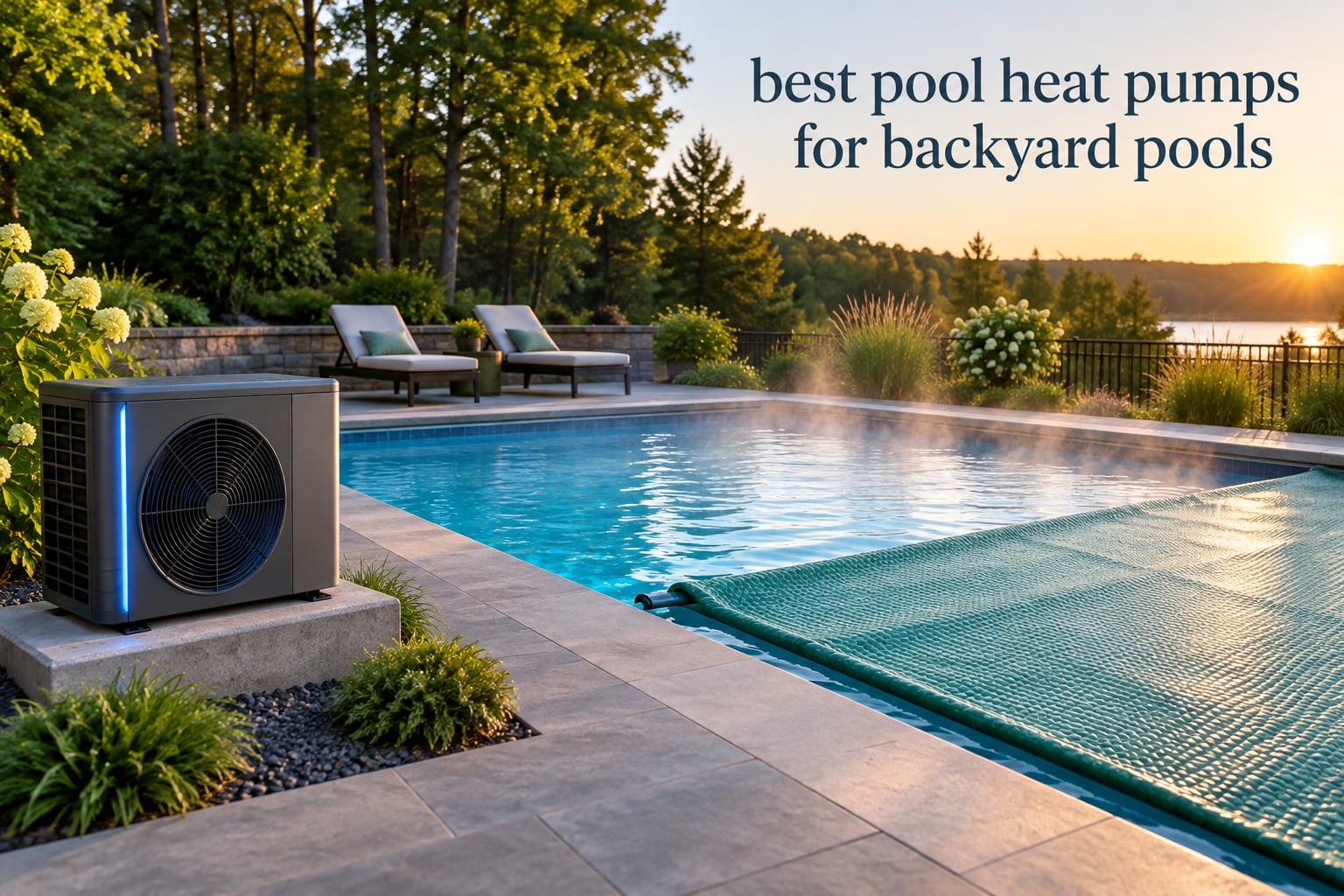
Choosing among the best pool heat pumps for backyard pools comes down to three frustrations almost every owner eventually hits. Heat-up takes far longer than a gas heater, the electrical work costs more than the unit did, and a copper exchanger slowly fails in a saltwater pool. We spent weeks reading owner reports and spec sheets across the top-rated models in 2026 so you can skip that trial and error.
What follows covers eight heat pumps across the whole range a backyard actually needs: 110V plug-in models for above-ground pools, mid-size in-ground units, and 100,000-plus BTU machines for large gunite pools. We looked at heating capacity, coefficient of performance, compressor type, exchanger material, noise, warranty length, and the honest drawbacks that show up after a season of use.
If your pool is above ground and small, start with our best pool heaters for above ground pools. For in-ground owners, the sizing and electrical guidance in the buying guide below matters more than any single feature on the spec sheet.
One thing worth saying early: a heat pump is a reverse air conditioner pointed at your water. It moves heat rather than creating it, which is why the operating cost difference against a gas heater is so large, and also why it cannot heat a pool from 58F to 88F in an afternoon. Expect it to warm water a few degrees per hour, not per hour you wish it would.
Table of Contents
Top 3 Best Pool Heat Pumps for Backyard Pools in October

All 8 Pool Heat Pumps Compared in 2026
This table covers every pick in the article, so you can size the whole field before reading the reviews. Scan the BTU class and the pool capacity together: a 100,000 BTU machine on a 12,000 gallon pool is wasted capacity, and a 40,000 BTU machine on a 26,000 gallon pool will run nonstop and never reach set temperature.
| Product | Specifications | Action |
|---|---|---|
 AQUASTRONG HEX016 Heat and Cool Pool Heater AQUASTRONG HEX016 Heat and Cool Pool Heater |
|
Check Latest Price |
 Varpoolfaye 40,000 BTU Pool Heater Varpoolfaye 40,000 BTU Pool Heater |
|
Check Latest Price |
| MICOE 100,000 BTU Inverter Heat Pump |
|
Check Latest Price |
 FibroPool FH255 55,000 BTU Heat Pump FibroPool FH255 55,000 BTU Heat Pump |
|
Check Latest Price |
 WARMBLU 28,000 Gallon Inverter Heat Pump WARMBLU 28,000 Gallon Inverter Heat Pump |
|
Check Latest Price |
 Hayward W3HP50HA2 HeatPro 50,000 BTU Hayward W3HP50HA2 HeatPro 50,000 BTU |
|
Check Latest Price |
 Hayward HeatPro 140,000 BTU Heat Pump Hayward HeatPro 140,000 BTU Heat Pump |
|
Check Latest Price |
 WARMBLU 10,000 Gallon 110V Pool Heater WARMBLU 10,000 Gallon 110V Pool Heater |
|
Check Latest Price |
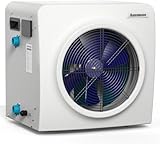
1. AQUASTRONG HEX016 – The Quietest Pick and the Editor’s Choice
Swimming Pool Heater for Above Ground and Inground Pool 12’*14’*48″
Heat 41-104F and cool 41-83F
COP 5.5 efficiency
38 dB
3-year warranty
Pros
- Quietest model we covered at 38 dB
- Heats and cools in one compact unit
- COP 5.5 rated efficiency
- Assembly takes under ten minutes with included adapters
- Automatic defrost included
Cons
- One-star reviews sit at 11 percent of the total
- Dedicated to smaller pool volumes
The HEX016 is the unit we kept coming back to. It is also the number one ranked product in its category on Amazon, and with 534 owner reviews behind it, that is the largest owner base in this roundup. Our decision to make it the top pick comes down to two things no other model here combines: it runs at 38 dB, quieter than the pool pump it sits next to, and it is the only one in the group that assembles in under ten minutes.
It is a dual-mode unit, heating from 41F to 104F and cooling from 41F to 83F. The cooling side is not a gimmick in a humid summer climate, where a heat pump doubles as a dehumidifier. Efficiency is rated at COP 5.5, which sits in the honest AHRI range rather than the inflated peak numbers used in some advertising.
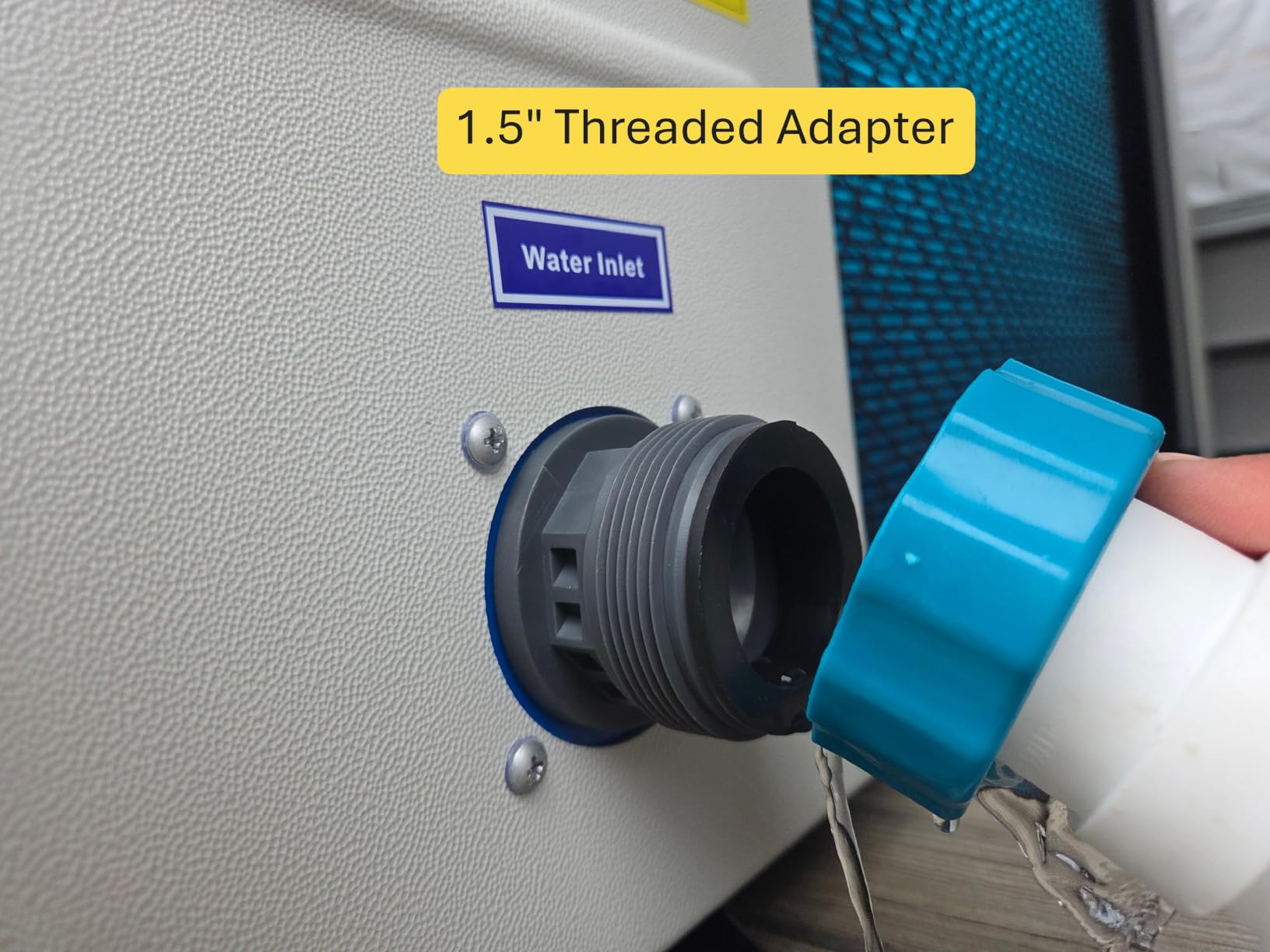
Setup is the differentiator. The package includes 1.25 inch hose adapters and a 1.5 inch conversion kit, so above-ground owners using flexible hose do not need to re-plumb anything. For in-ground owners, the 1.5 inch fittings mate with standard PVC. The unit weighs 72 pounds, which means one person can lift it onto a pad without a hoist.
The automatic defrost system reverses the cycle when the coil starts to frost over, which is the difference between a machine that works in October and one that shuts down. Set temperature accuracy is within plus or minus 2F, and the warranty runs three years with lifetime technical support behind it.
Who this heat pump suits
This suits above-ground pool owners and anyone with a small to mid-size backyard pool who has never wanted an electrician involved. It is also the safest pick if the unit will sit close to a bedroom wall or a neighbor’s fence line, since 38 dB is closer to a refrigerator than to a rooftop air conditioner. Dual-mode means it can dehumidify a covered pool on a muggy week.
Who should skip this model
Skip it if your pool runs much past 12,000 gallons, because a unit in this class will spend its life running without catching up. Owners also report a one-star share of 11 percent tied to sizing and units showing up in rough condition, so inspect the cabinet carefully on arrival. If you need a saltwater-grade titanium exchanger guarantee and factory support in your region, the higher-capacity picks are stronger.
2. Varpoolfaye 40,000 BTU – Highest Rated With App Control
Varpoolfaye 40000 BTU Pool Heater for Above Ground and Inground Pools 220v
40000 BTU output
COP 6.2
Up to 12000 gallons
53 dB
220V
Pros
- Highest average rating in the group at 4.4
- 78 percent of reviews are five star
- COP 6.2 cuts running costs
- Heats 59-104F and cools 45-86F
- WiFi app scheduling
Cons
- Condensation drips from the base during heating and defrost
- Flow setup needs a bypass valve arrangement
- One-star reviews at 9 percent
This unit posts the highest average rating of the eight, at 4.4 stars, with 78 percent of its 149 reviews at five stars. That is the cleanest satisfaction record in the field. It is also the rare heat pump where the efficiency figure, COP 6.2, is genuinely the highest verified-style number in this group rather than a marketing peak.
Capacity is 40,000 BTU, which the manufacturer rates for pools up to 12,000 gallons and 14 to 28 foot pools. That covers most backyard in-ground pools and the larger end of the above-ground market. Heating runs from 59F to 104F, and reverse-cycle cooling covers 45F to 86F.
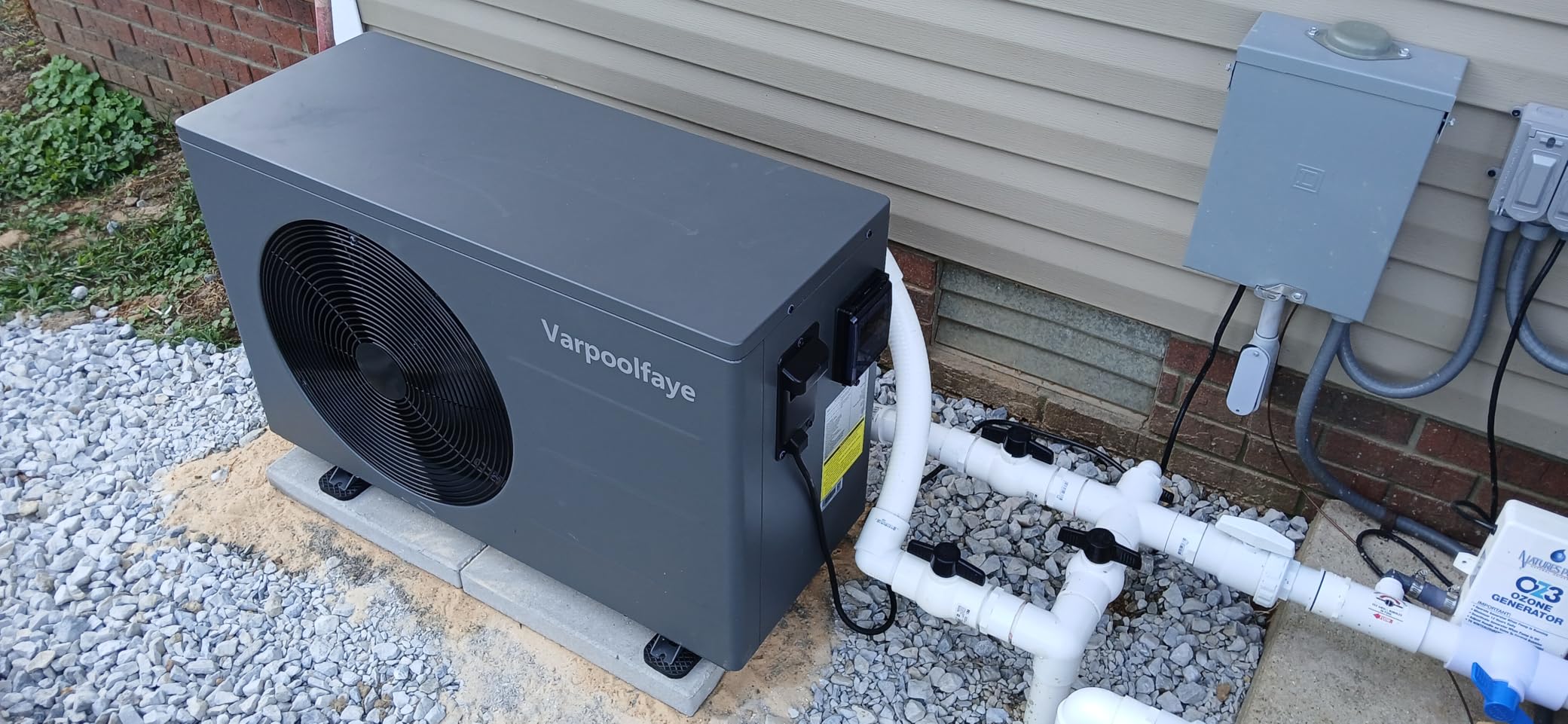
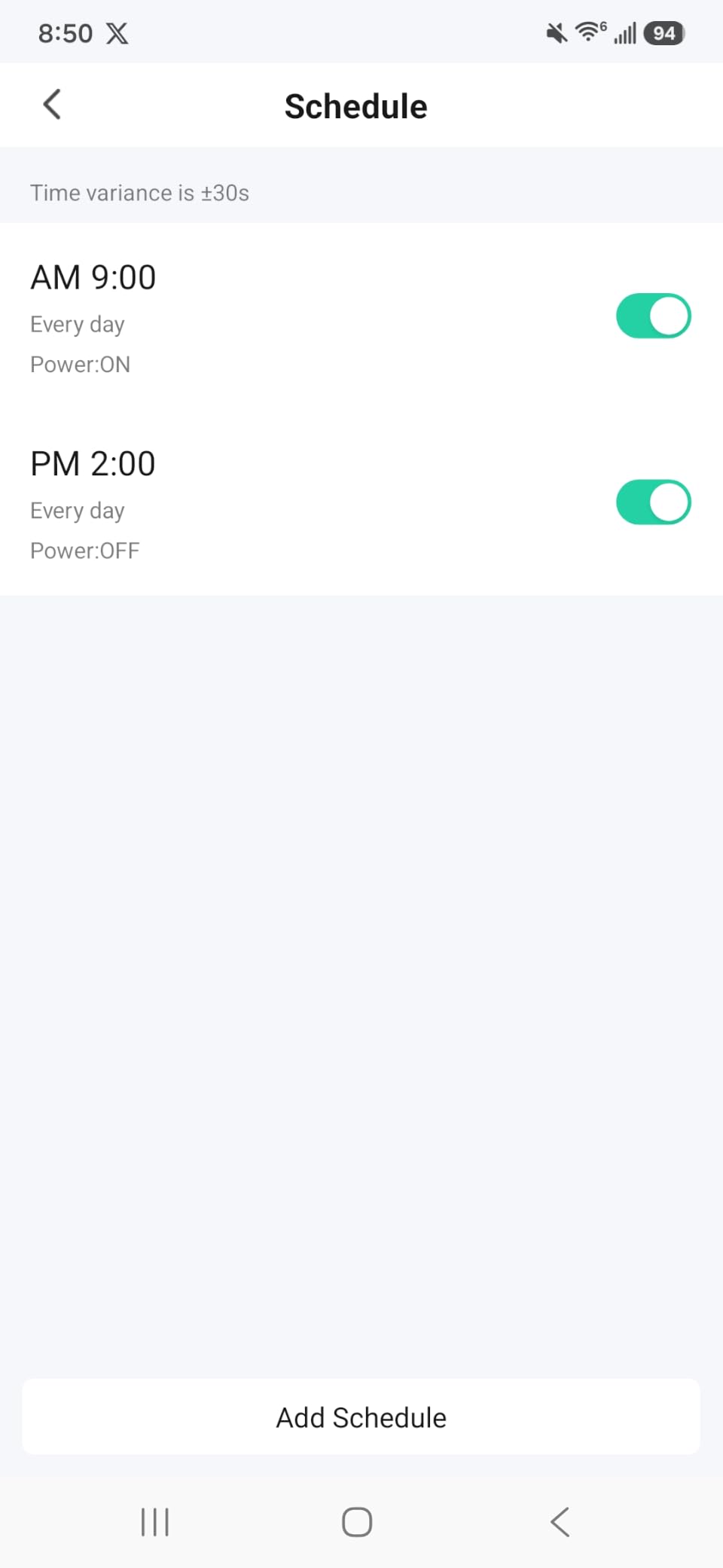
App control is the feature that changes daily habits. You can schedule heating for early morning and check water temperature from work, which matters if your tariff has off-peak windows. The 126 inch power cord and 1.5 inch connectors mean it reaches both an outdoor receptacle and a standard plumbing loop without extra parts.
The heat exchanger is titanium, rated for both freshwater and saltwater, so a saltwater chlorine generator is not a problem. Water and electrical components are fully separated inside the cabinet, and the enclosure is galvanized. Operating noise is rated at 53 dB, quiet enough for most suburban lots.
Who this heat pump suits
This is our pick for owners of 8,000 to 12,000 gallon in-ground pools who want control from their phone and plan to keep a saltwater setup. It is also the strongest option in the group for someone who wants a genuine heat and cool unit in a climate with hot, humid summers. The 78 percent five-star share is the best evidence we found that the machine performs as advertised.
Who should skip this model
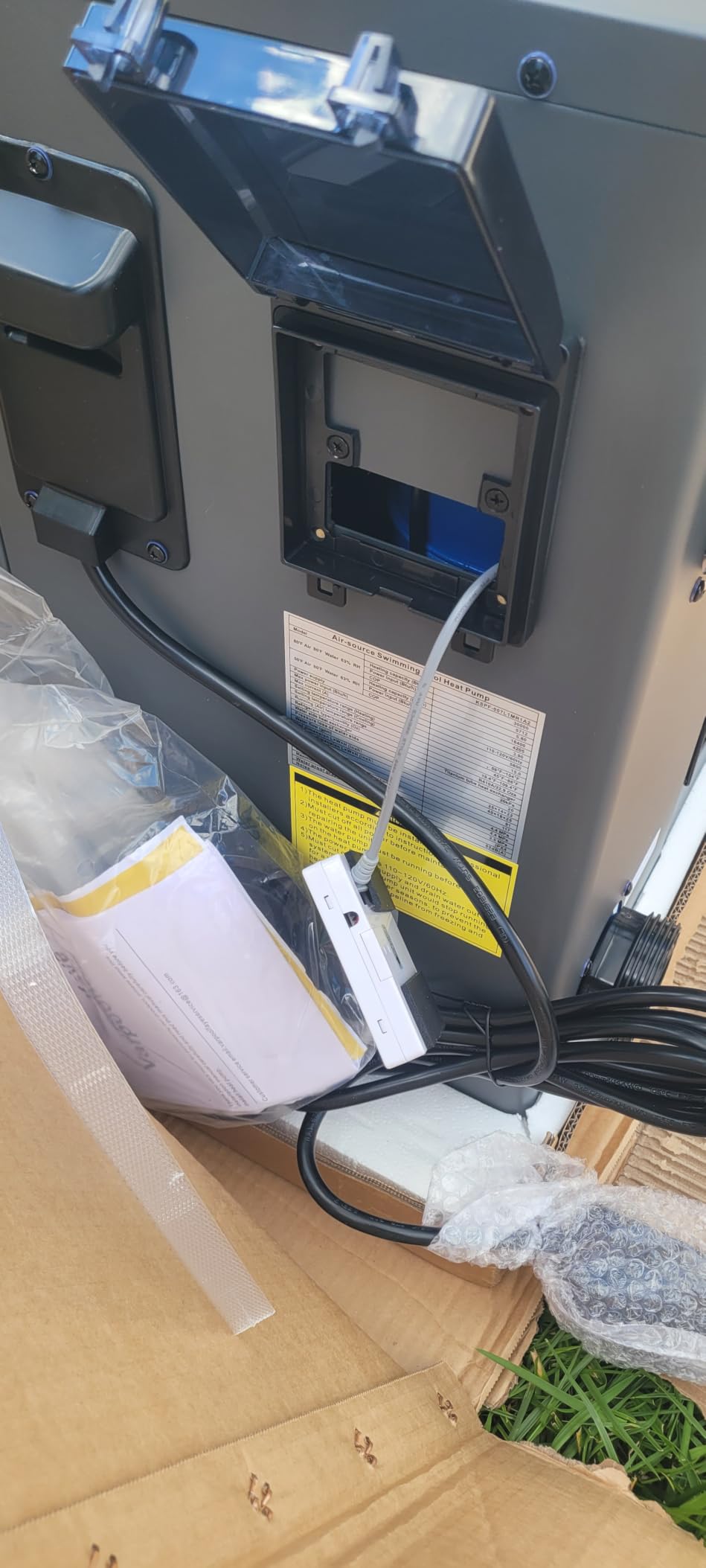
Skip it if you are on a 110V-only electrical setup, because this is a 220V model with a 126 inch cord and needs a proper circuit. Condensation dripping from the base during the heat exchange and defrost cycles is normal but surprises people, so plan a drainage path. If you have a pool much larger than 12,000 gallons, the 40,000 BTU rating will not keep up.
3. MICOE 100,000 BTU Inverter – Built for Large In-Ground Pools
MICOE 100,000 BTU Inverter Pool Heat Pump for 26,000 Gallon Pools
100000 BTU inverter
Up to 26000 gallons
Titanium exchanger
54 dB
IPX4 cabinet
Pros
- Handles pools up to 26000 gallons
- Variable-speed inverter runs quietly
- Heats 46-104F and cools 45-82F
- IPX4 UV-resistant ABS cabinet
- App and digital panel control with scheduling
Cons
- Wiring diagrams are confusing and need clarification
- Requires a 50 amp breaker and waterproof conduit
- One-star reviews at 14 percent for dead control panels
If your in-ground pool runs 20,000 gallons or more, the MICOE MSHP-030Y1 is the pick. It delivers up to 100,000 BTU from a variable-speed inverter compressor and is rated for pools up to 26,000 gallons. Inverter drive matters here because the compressor ramps rather than slamming on, which is where the 54 dB(A) figure comes from.
One owner raised a 15 by 30 foot pool from 58F to 82F in four days, which is a realistic result for a pool that size. Another reviewer compared it against an older 120,000 BTU machine and found it slower, taking roughly three days from 68F to 80F. Both results point the same direction: a heat pump heats over days, and no model in this roundup changes that.
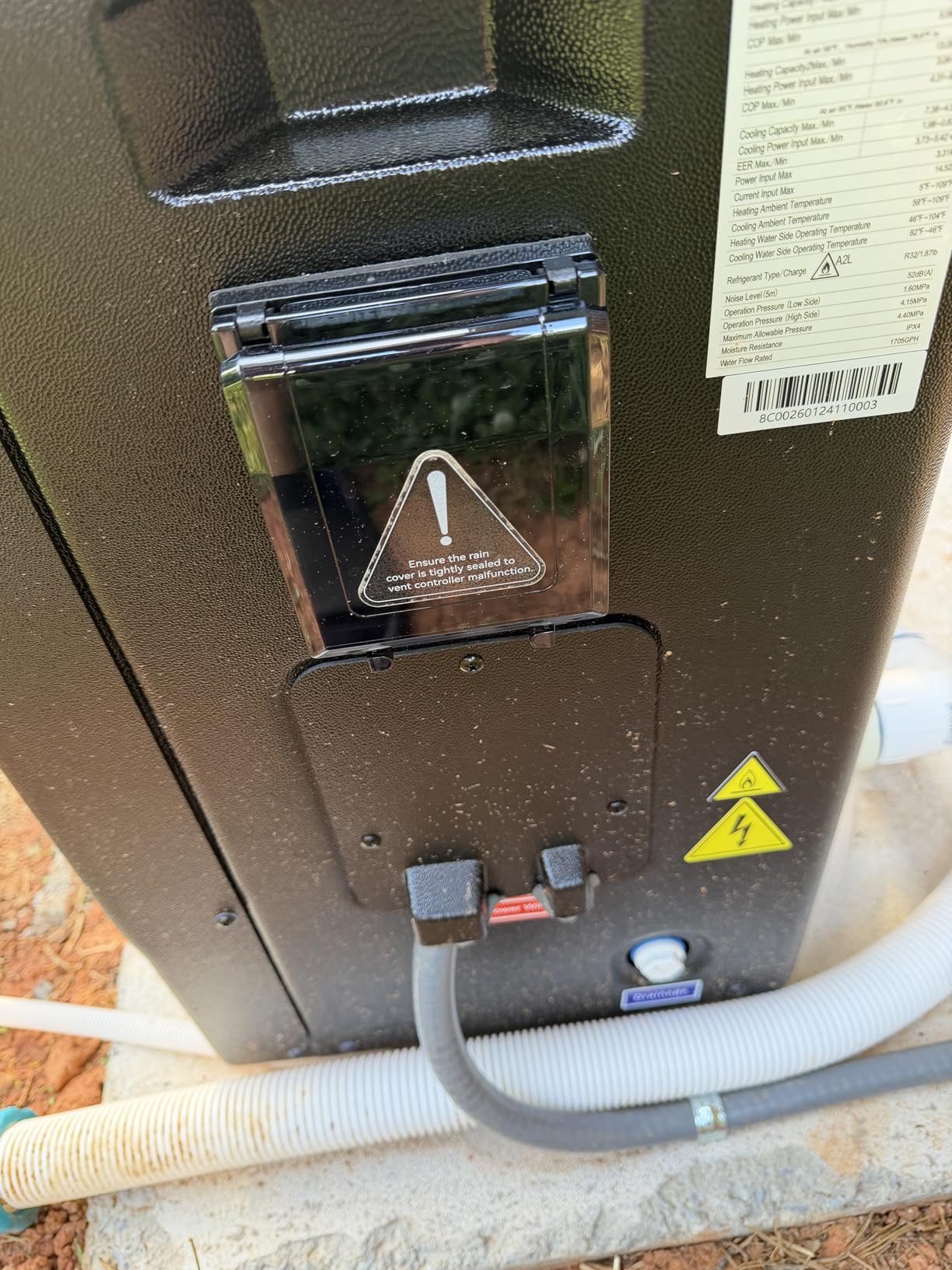
The IPX4-rated, UV-resistant ABS cabinet is worth noting for Florida and Gulf Coast installs, where summer sun and humidity punish cheaper metal enclosures. Heating range is 46F to 104F and cooling is 45F to 82F, and automatic defrost handles coil icing in cold snaps. The titanium heat exchanger covers chemically treated freshwater.
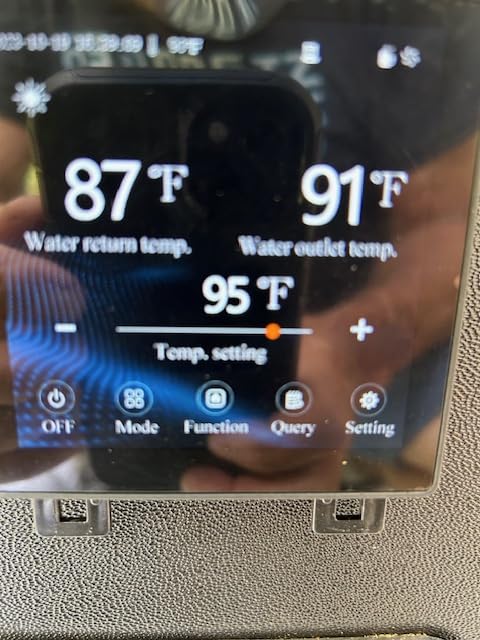
Control comes from both an app and a digital panel, with scheduling for off-peak rates. Parts warranty is two years with online installation assistance and 24/7 live chat, and support is the strongest in this group when something needs explaining.
Who this heat pump suits
This suits owners of large gunite or concrete pools in the 20,000 to 26,000 gallon range who want quiet inverter behavior and reverse-cycle cooling. It also fits coastal and high-humidity installs thanks to the IPX4 cabinet, and owners who want remote scheduling to run heating during off-peak windows. If your pool has high daily use, the capacity matters more than the COP number.
Who should skip this model
Skip it if your electrical service cannot take a 50 amp circuit, since this is a hardwired unit and the conduit and breaker work is mandatory, not optional. The installation wiring diagrams confuse even experienced installers, and one buyer reported running 6 to 12 percent more on energy than expected. With a 14 percent one-star share tied to control panels that never powered up, inspect the panel the day it arrives.
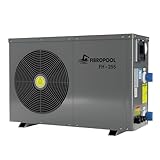
4. FibroPool FH255 – The Titanium Value for 10,000 Gallon Pools
FibroPool Pool Heat Pump – 55,000 BTU Electric – FH255 – Titanium
55000 BTU for 10000 gallons
Titanium exchanger
Enamel steel cabinet
120 pounds
Pros
- Very quiet in operation
- Titanium exchanger rated for saltwater
- Detachable digital control box
- Compact and easy to plumb and wire
- Adds roughly 2F across the exchanger
Cons
- Control head uses vague symbols with no written language
- No printed instructions and thin transit packaging
- Some buyers find 55000 BTU underpowered for very large pools
The FH255 is the pick we would put in a 10,000 gallon in-ground pool without hesitating. It is a long-running mainstream design, and the owner reports consistently describe the same two things: it is very quiet, and it adds almost nothing to the electric bill. Owners regularly note it raises water roughly 2F as it passes through the exchanger on each cycle.
Capacity is 55,000 BTU for pools up to 10,000 gallons. The titanium exchanger handles saltwater and chemically treated water, which is why this model shows up so often in saltwater recommendations. The cabinet is enamel-coated steel, built for outdoor duty.
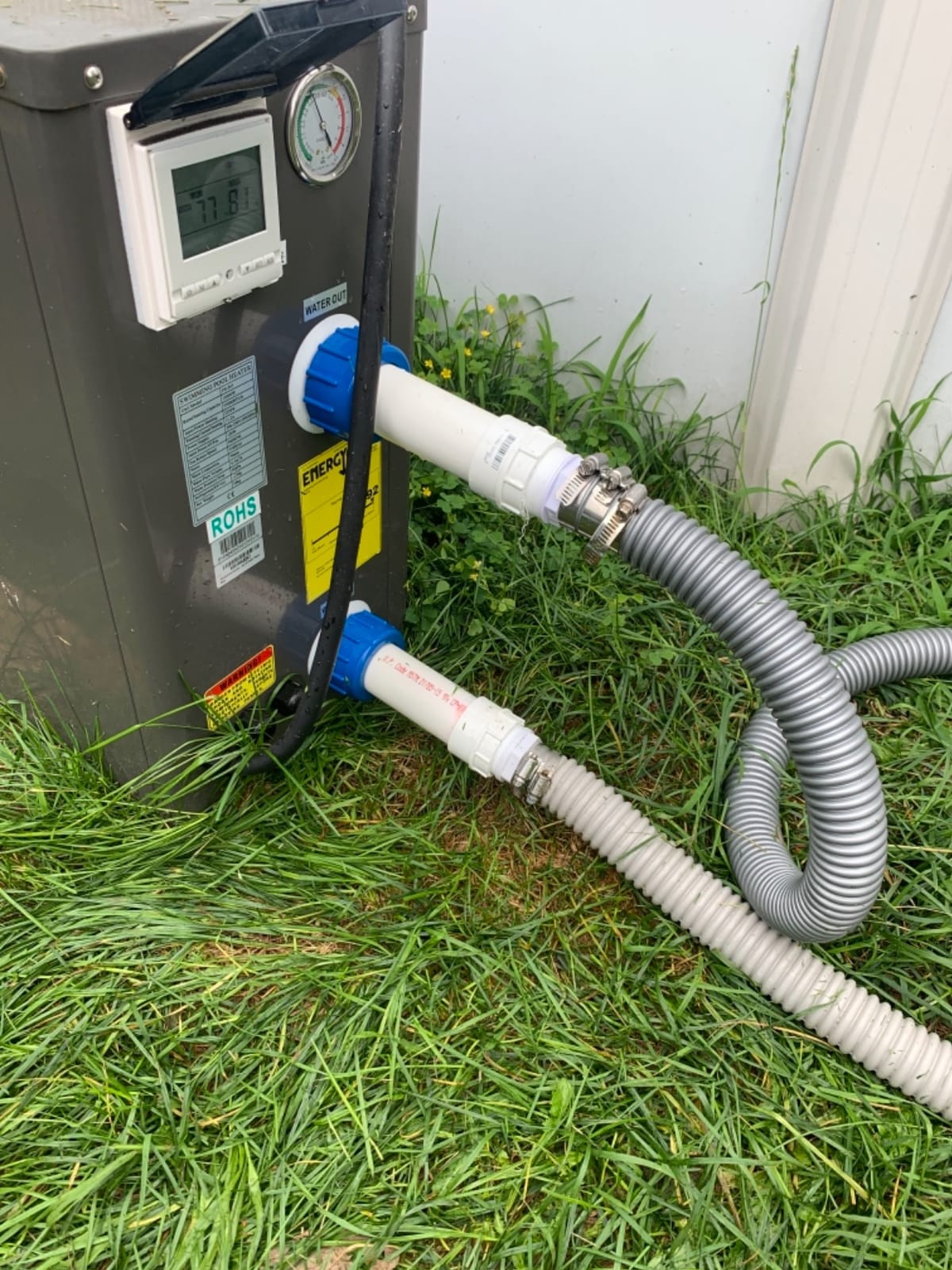
It offers three modes: heating, an auxiliary electric coil, and cooling. That auxiliary mode is useful as a top-up on a very cold morning, though it costs more per hour than the heat pump cycle. The digital control panel detaches from the cabinet, so you can set the temperature from inside the house rather than walking out to the pad.
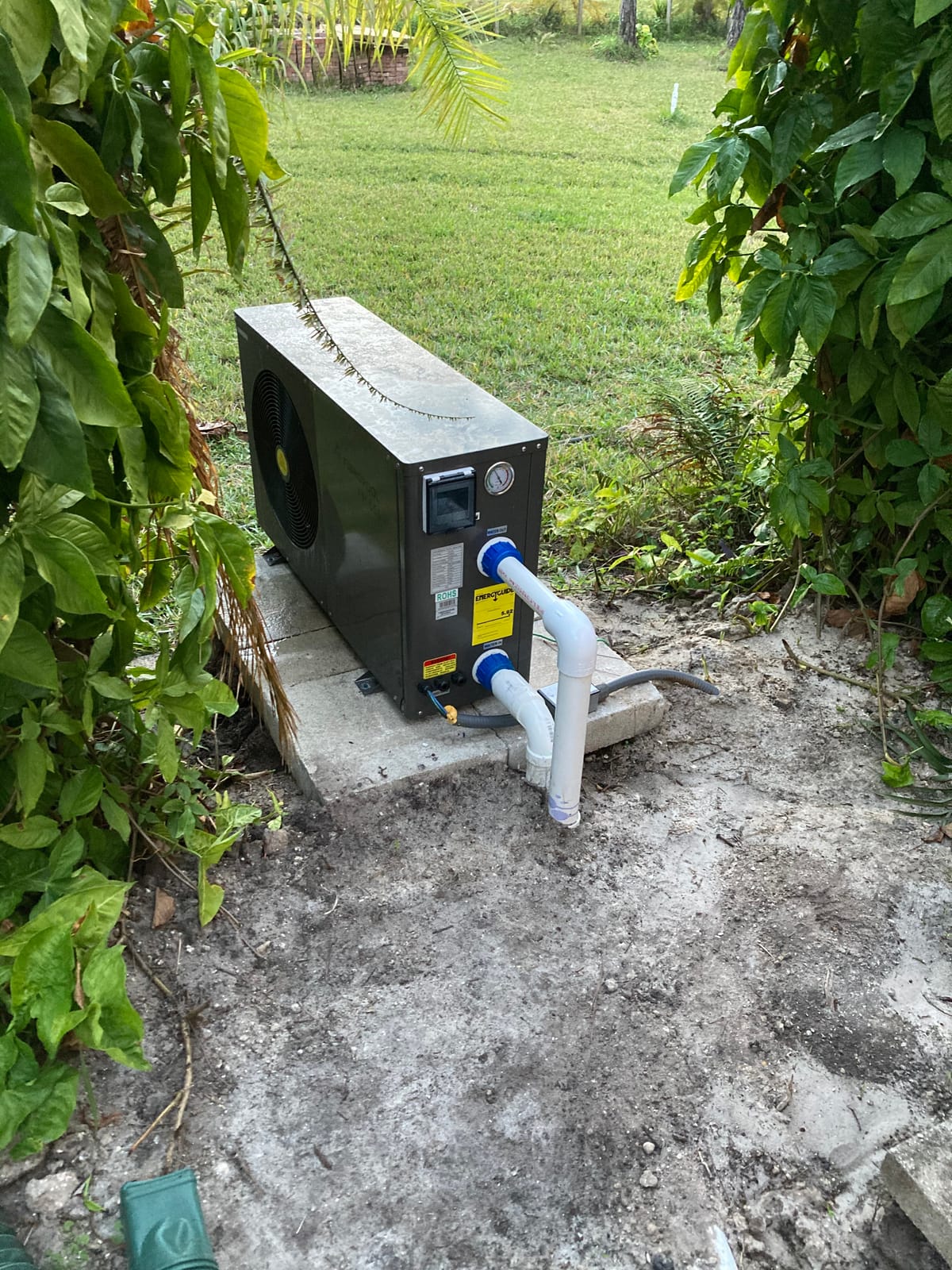
At 120 pounds and 48 by 20 by 24 inches, it is one of the easier units to maneuver, and reviewers describe the plumbing and wiring hookup as straightforward. On forums, this model is frequently named as a dependable budget-friendly inground option in the Pacific Northwest and Northeast.
Who this heat pump suits
This suits mid-size in-ground pools around 10,000 gallons, especially saltwater pools where a titanium exchanger matters. It is a good match for anyone who wants a proven mainstream design with a real service network rather than an import with no US support. Buyers who want heat, cool, and an auxiliary electric top-up in one cabinet will like the three-mode setup.
Who should skip this model
Skip it if you want a modern control experience, because the panel uses symbols rather than written language and cannot show inlet and outlet temperatures while off. There are no printed instructions, so budget time for the manual or a call. Some owners with large or kidney-shaped pools found 55,000 BTU underpowered, and support callbacks were reported as slow.
5. WARMBLU 28,000 Gallon Inverter – Heat and Cool With Room to Spare
WARMBLU 28,000 Gallons Inverter Pool Heat Pump for Inground Pools 220V
Up to 28000 gallons
Pure titanium exchanger
Sub-50 dB
220V
App control
Pros
- Highest pool capacity in this group at 28000 gallons
- Owners report 20F or more gains in about 24 hours
- Sub-50 dB even at full output
- One owner measured about 1.3 kW on a 13000 gallon pool
Cons
- App WiFi pairing is a multi-step process with a weak antenna
- Needs a discharge valve and 3-way valves to set flow
- Weighs about 200 pounds so two people are needed
This is the largest pool capacity in the roundup at 28,000 gallons, and owners report the fastest real-world temperature gains of any model we covered. Multiple reviewers describe raising their pool by 20F or more within about 24 hours. One owner measured roughly 1.3 kW while heating a 13,000 gallon pool, which is a low draw for that kind of output.
It runs on 220V, heats and cools, and can be controlled from a phone app or a physical touch panel. The pure titanium heat exchanger handles saltwater, and the water and electrical circuits are fully separated inside the cabinet. Operation stays under 50 dB, quieter than most residential HVAC outdoor units.
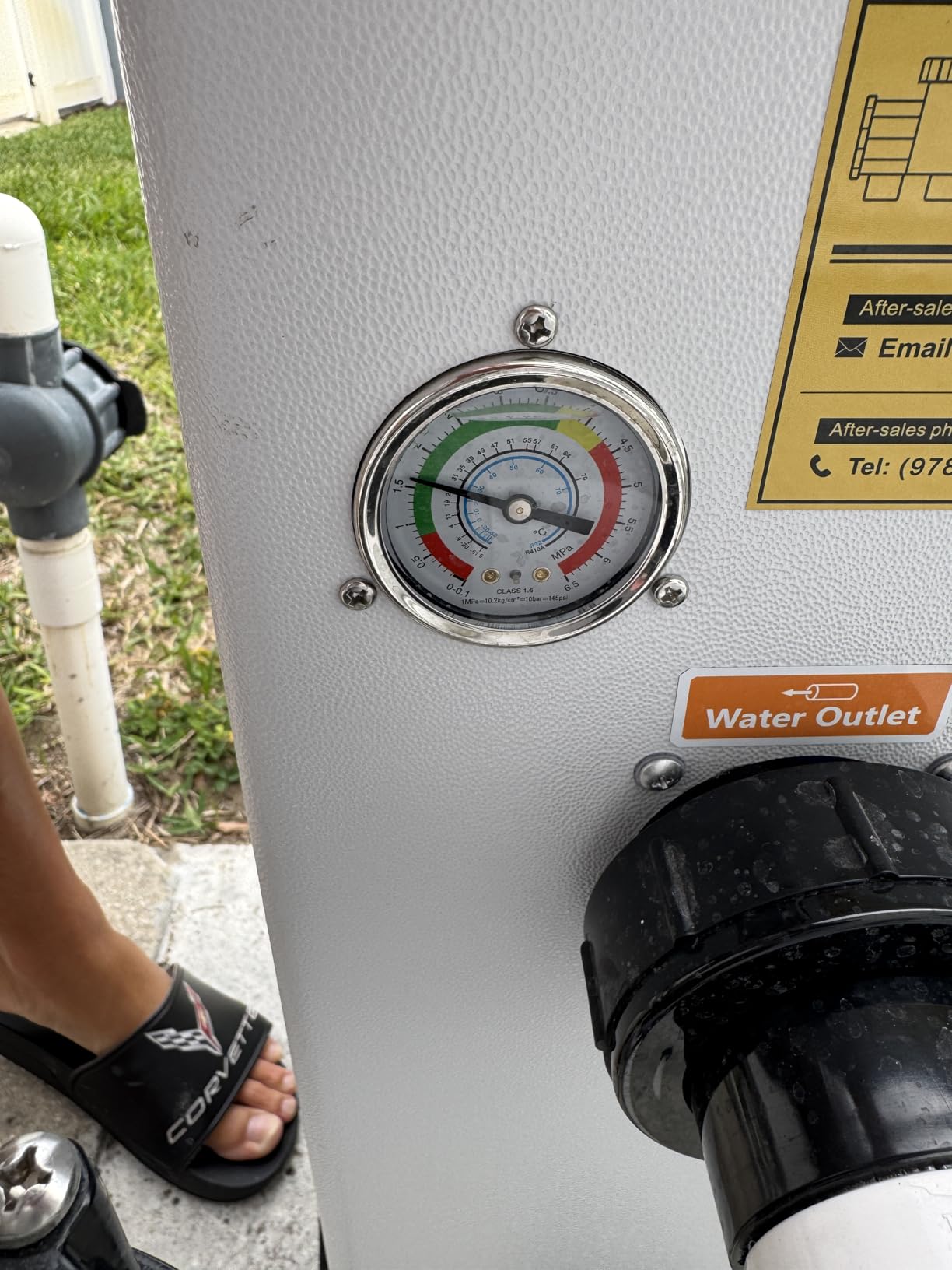
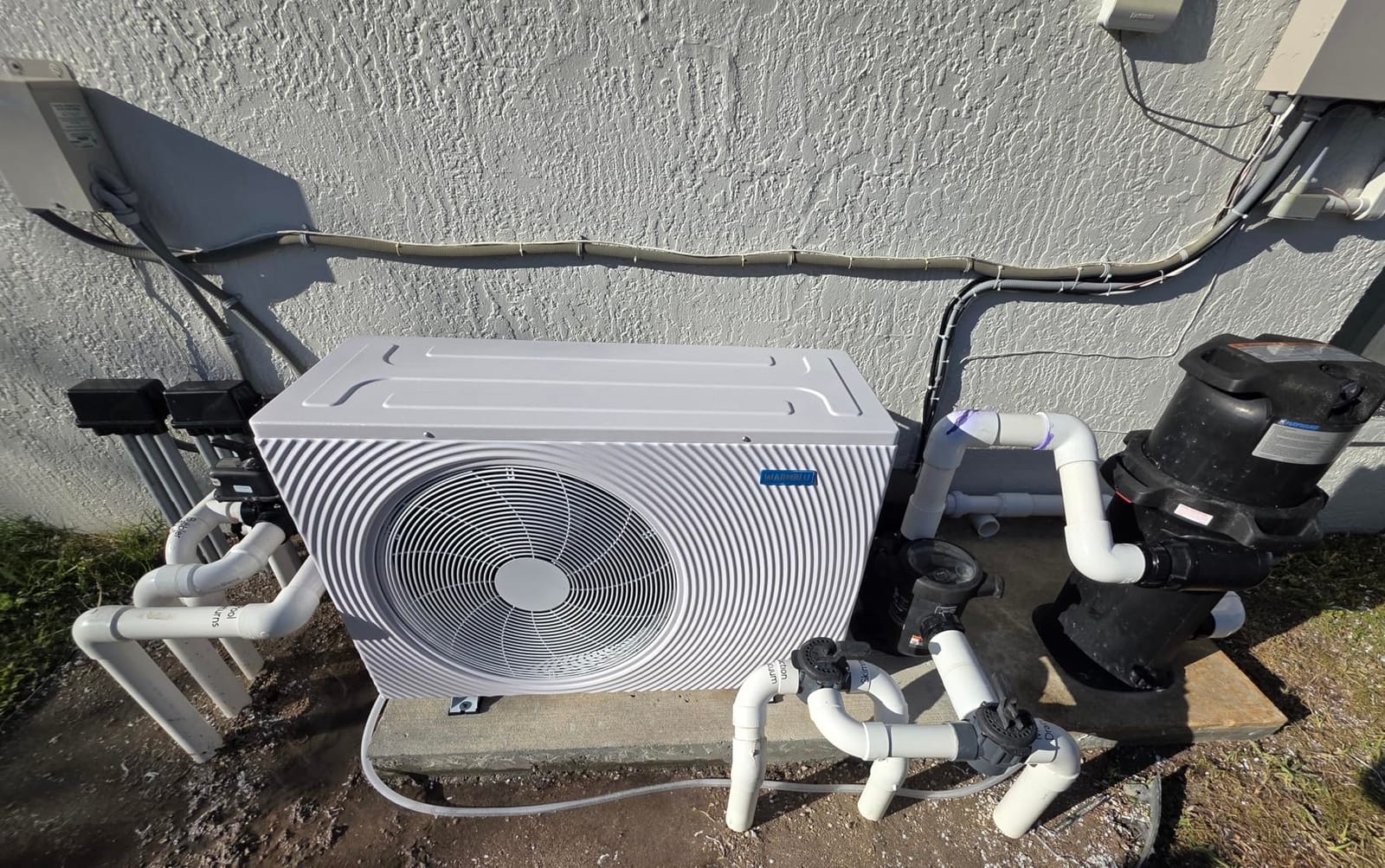
It ranks second in its product category, which tells you how much of it is actually in service. Installation goes between the pool filter and the salt cell, and several owners installed it themselves with a plumber’s help on the electrical side. The unit weighs about 200 pounds and stands 43 inches tall, so plan the pad accordingly.
The advertised COP figure of up to 16.0 comes from the SpringBreath 1.0 heating system. Treat that as a peak number rather than an AHRI-certified rating, and judge efficiency on your own power meter after a month of use.
Who this heat pump suits
This suits owners of very large in-ground pools, particularly 20,000 to 28,000 gallon gunite setups that see heavy use through the season. It is a strong choice for anyone who wants heating and reverse-cycle cooling from one machine, and for saltwater pools where the titanium exchanger is required. If you have a filtration system with a salt cell, the install location is straightforward.
Who should skip this model
Skip it if you dislike fiddling with setup, because the app WiFi pairing is a frustrating multi-step process and the built-in antenna is weak. Getting correct flow requires a discharge valve and 3-way valves, and skipping that step produces heavy condensation around the unit. The warranty is 12 months, which is the shortest in this group, and the unit is too heavy to move alone.
6. Hayward W3HP50HA2 – The Branded Choice for Small In-Ground Pools
Hayward W3HP50HA2 HeatPro Heat Pump, Beige
50000 BTU class
Rotary compressor
Titanium exchanger
AHRI certified
Pros
- Quiet enough to sit next to a sleeping area
- Simple set-and-forget digital controls
- Plastic cabinet handles coastal corrosion
- Small footprint and quick hookup
- Backed by a long-established pool equipment manufacturer
Cons
- One owner found it slower to heat than expected
- Needs a 30 amp breaker with 10 gauge wire on some installs
- Flex pipe connections reduce efficiency versus PVC
Hayward is the pick when you want a name with a real service network behind it. The W3HP50HA2 uses a rotary compressor with a low-noise fan, a titanium heat exchanger, and a digital control panel with a temperature display. It is AHRI certified and independently lab tested, which is the documentation most competing listings skip.
Capacity sits in the 50,000 BTU class, which lines up with in-ground pools in roughly the 8,000 to 12,000 gallon range. The cabinet is plastic rather than metal, and owners in coastal areas specifically call out how well that holds up against salt air compared to steel enclosures on cheaper units.
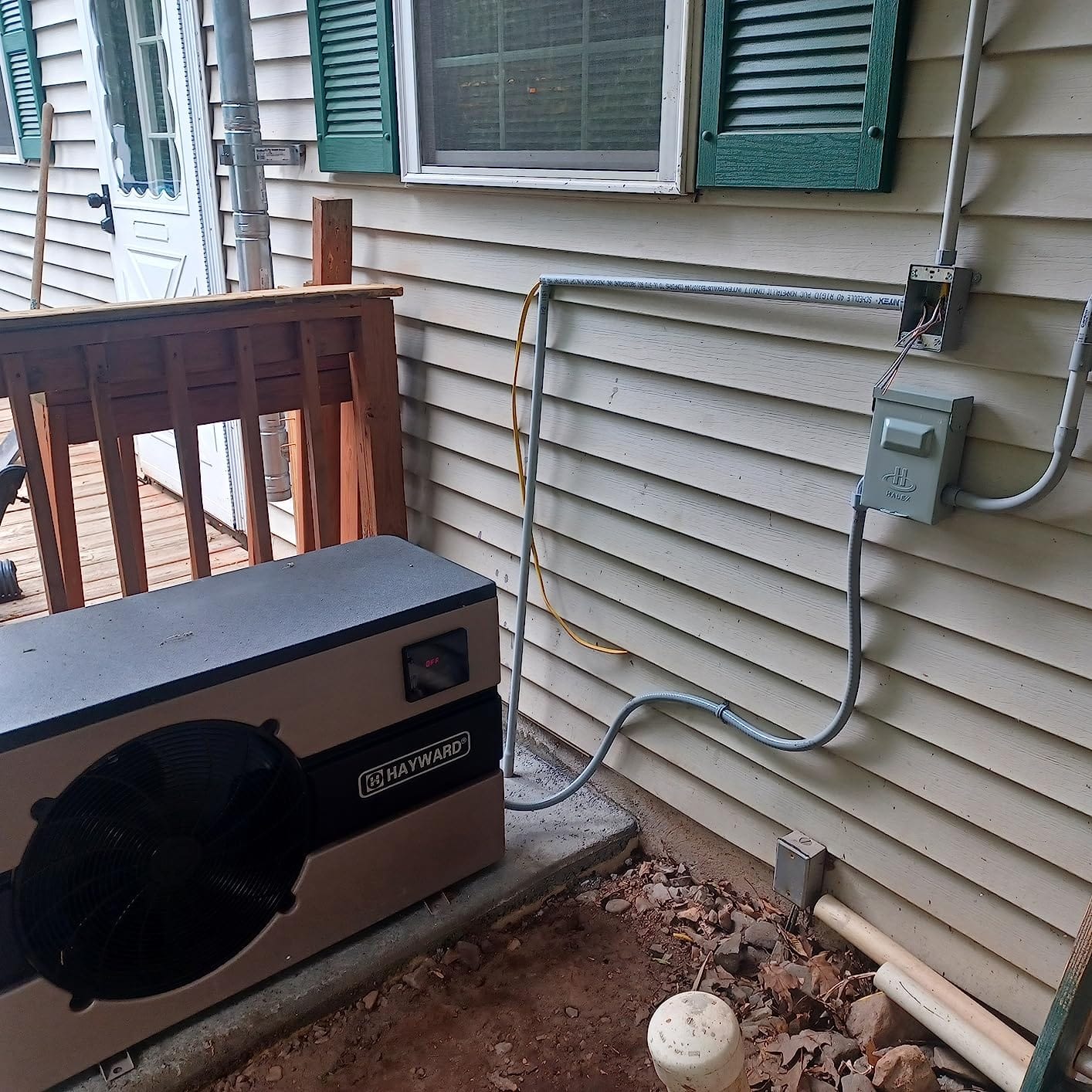
It is small, at 17 by 43 by 30 inches and about 160 pounds, and reviewers describe the hookup as roughly 30 minutes of work with existing wiring and plumbing. One owner replaced a five-year-old heat pump with it and found it more efficient and quieter than what came out. Installers sometimes use a 30 amp breaker with 10 gauge wire rather than a larger supply.
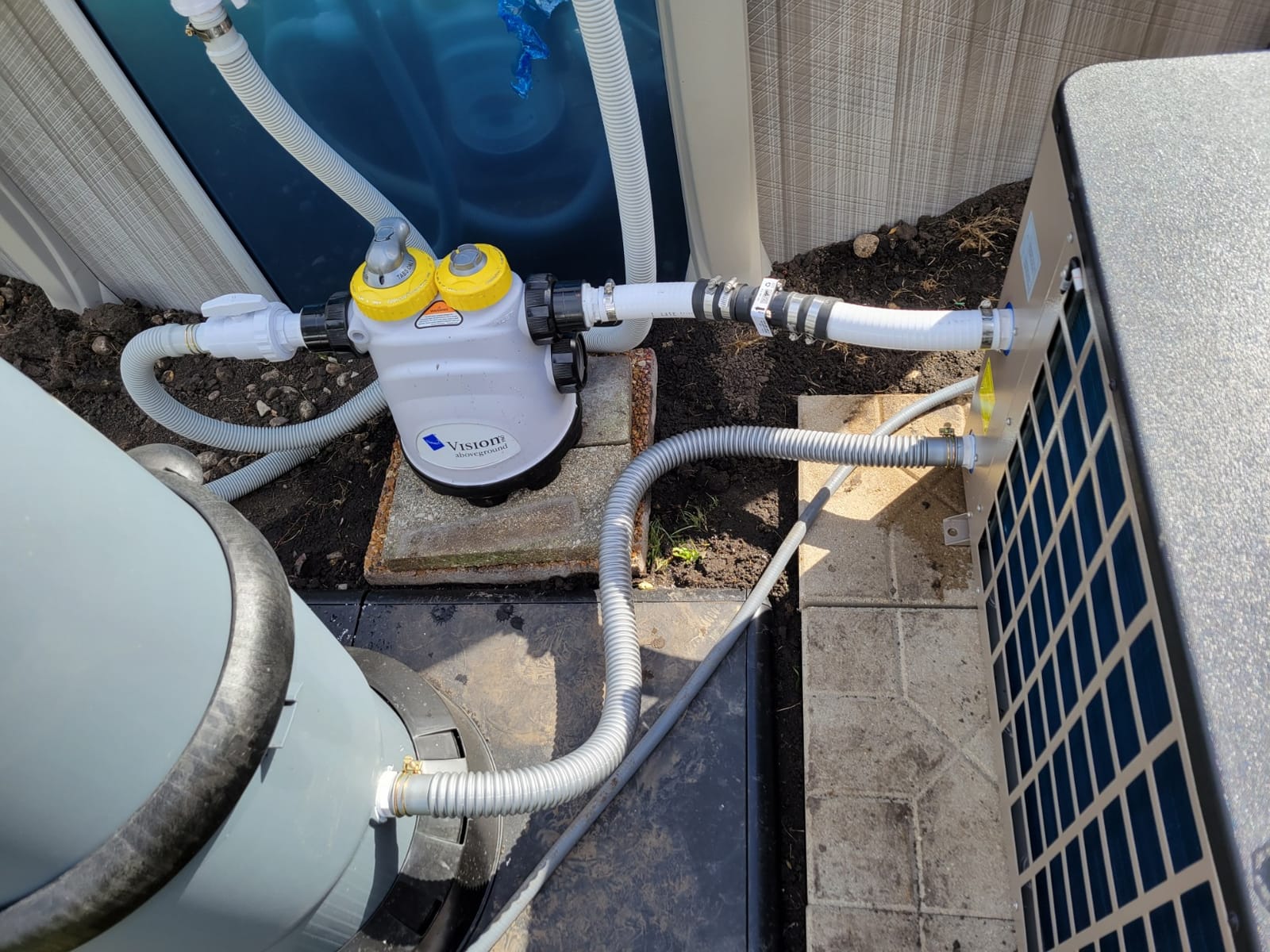
Heat and cool operation uses less energy than natural gas and propane heaters, and the unit holds set temperature in harsh weather. Above-ground owners should convert flexible hose connections to PVC, because flex reduces efficiency.
Who this heat pump suits
This suits small to mid-size in-ground pool owners who prioritize brand support and parts availability over raw capacity. It is the pick for coastal or humid installs where cabinet corrosion is a real concern, and for anyone who wants controls simple enough to set once and forget. If you already have plumbing and wiring in place, the swap is straightforward.
Who should skip this model
Skip it if you have a large pool or a very cold climate, because 50,000 BTU is modest and one reviewer found it underwhelming even when slightly oversized. Confirm your breaker size before ordering, since some installs need 30 amps with 10 gauge wire. A unit also showed up with a dead sensor and technical support callbacks were slow, so buy from a seller with a clear return path.
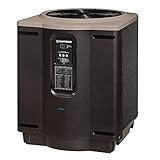
7. Hayward HeatPro 140,000 BTU – Coastal Climates and Oversized Pools
Hayward HeatPro Pool Water Heat Pump Heater for Inground Pools, 140,000 BTU
140000 BTU capacity
Titanium exchanger
Ultra Gold coating
50 amp circuit
Pros
- Warms 20000 to 35000 gallon pools
- One owner heated a 35000 gallon pool in a day
- Low incremental electricity use
- Well packaged with a tipping indicator meter
- Quiet for a unit of this size
Cons
- Weighs 320 pounds and is awkward to maneuver
- Needs a dedicated 50-60 amp circuit from an electrician
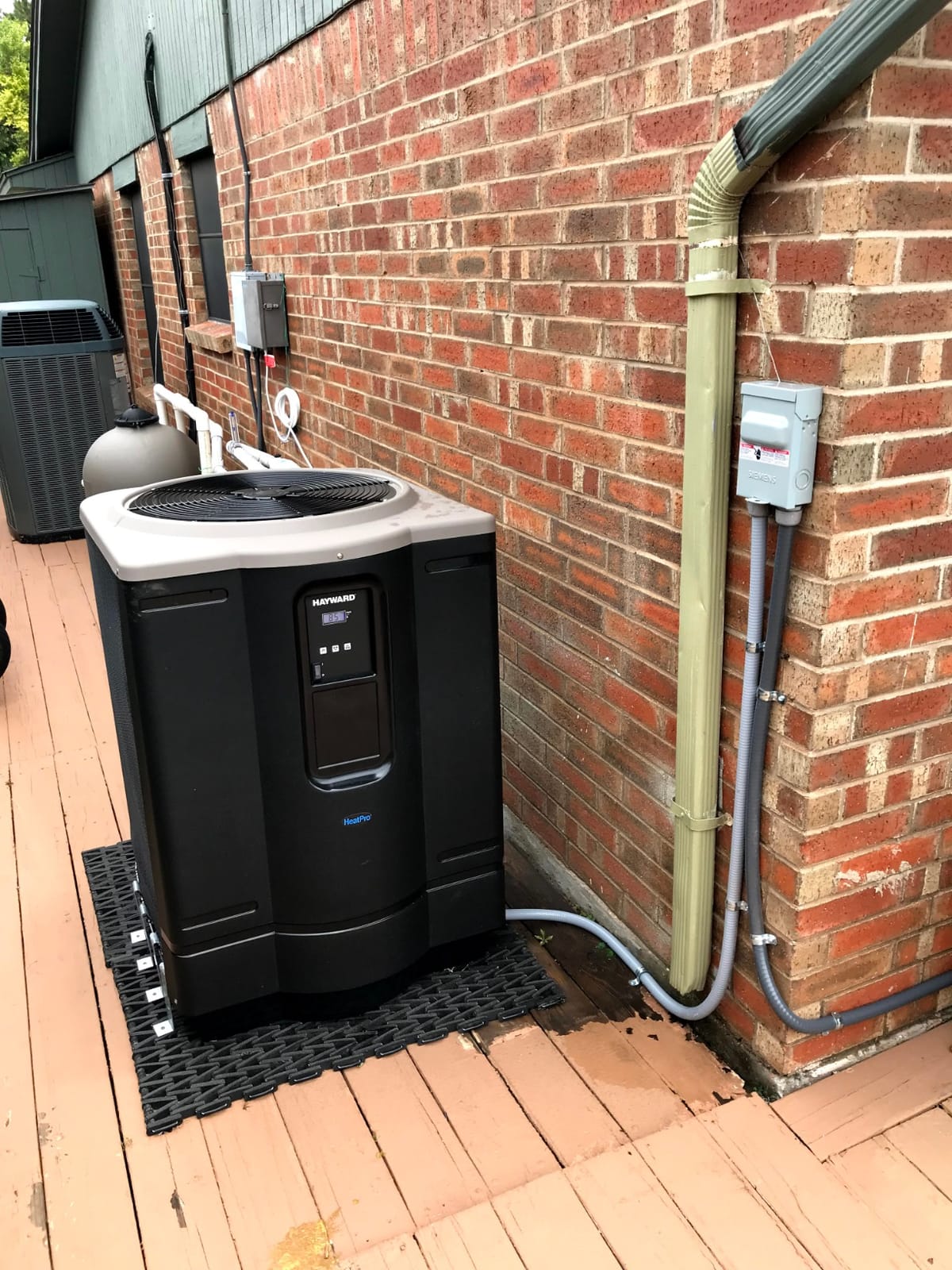
The W3HP21404T is the reference unit for large, heavily used in-ground pools, with 140,000 BTU of capacity. Long-term owners report it holds set temperature, runs quietly for its size, and adds little to the electric bill. One owner heated a 35,000 gallon pool in a day, and others report needing only a few hours of pump runtime per day just to maintain temperature.
Corrosion resistance is the reason this model is the coastal pick. It combines a titanium heat exchanger with Ultra Gold corrosion-resistant technology and UV-resistant body panels, and it is designed for salt water and chemical exposure. Connections are 2 inch PVC, and the front panel handles pool and spa heating modes with readings accurate within a degree.
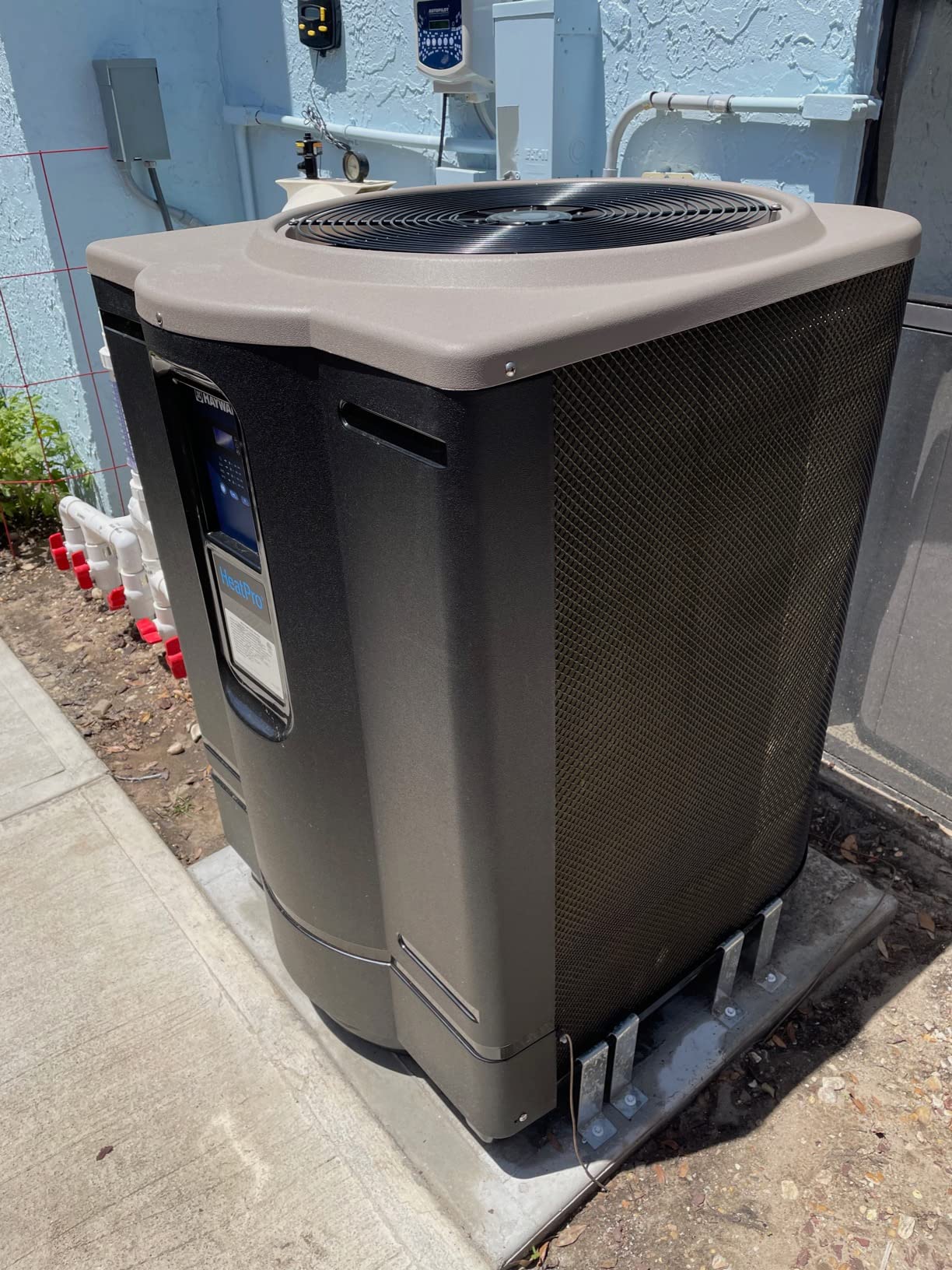
Packaging is among the best in the category, palletized and strapped with a tipping indicator meter, which matters for a unit this size. Hayward has been building pool equipment for over 80 years, and that history shows up in documentation and parts catalogs compared with newer import brands.
The electrical requirement is real. This expects a 50 amp breaker circuit, and some installations need 50 to 60 amps, so an electrician is not optional. The unit also needs a proper concrete pad with airflow clearance and hold-down hardware.
Who this heat pump suits
This suits owners of 20,000 to 35,000 gallon in-ground pools, especially in coastal and high-humidity regions where salt air attacks cabinets and connections. It is the right call for households that swim daily and want temperature held rather than raised. Ultra Gold coatings and a titanium exchanger mean saltwater chlorine generator setups are properly covered.
Who should skip this model
Skip it unless you have room for a 320 pound unit on a poured pad and a dedicated high-amperage circuit, because both are hard requirements. Owners warn that moving it alone risks injury, so plan for extra hands or a hoist.
8. WARMBLU 10,000 Gallon 110V – Plug-In Heat Without an Electrician
WARMBLU 10,000 Gallons Above Ground Pool Heater 110V
110V plug-in power
Up to 10000 gallons
COP 16 claim
Pure titanium exchanger
Pros
- 110V plug-in avoids a 220V circuit upgrade
- Covers pools up to 10000 gallons
- Pure titanium exchanger
- Under 50 dB operation
- App plus touch panel control
Cons
- 110V circuit requirements are not itemized in the listing
- Inverter control does not mean fast warm-up
- 12-month warranty is the shortest here
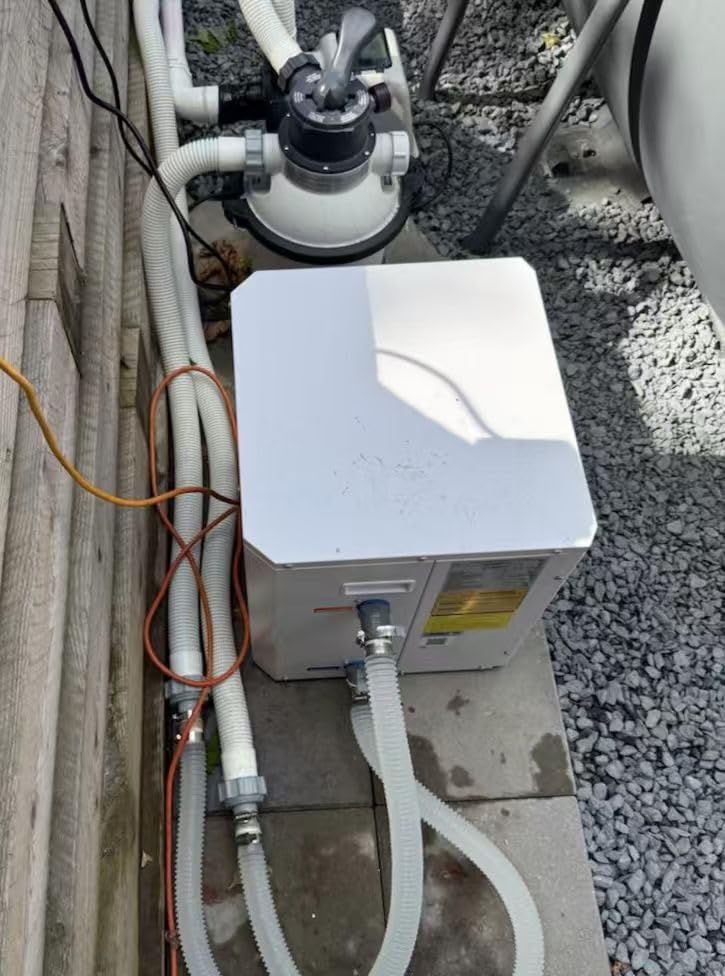
This is the pick for owners who refuse to open the electrical panel. Running on 110V plug-in power, it handles pools up to 10,000 gallons, which covers most above-ground pools and small in-ground installations. If the idea of a 50 amp circuit and a conduit run is what has been stopping you, this removes that objection entirely.
It shares the SpringBreath 1.0 platform and the Thallo H10 pure titanium heat exchanger found in the higher-capacity sibling model. An intelligent inverter chip manages output, and noise stays under 50 dB. Control comes from an app and a modern touch panel.
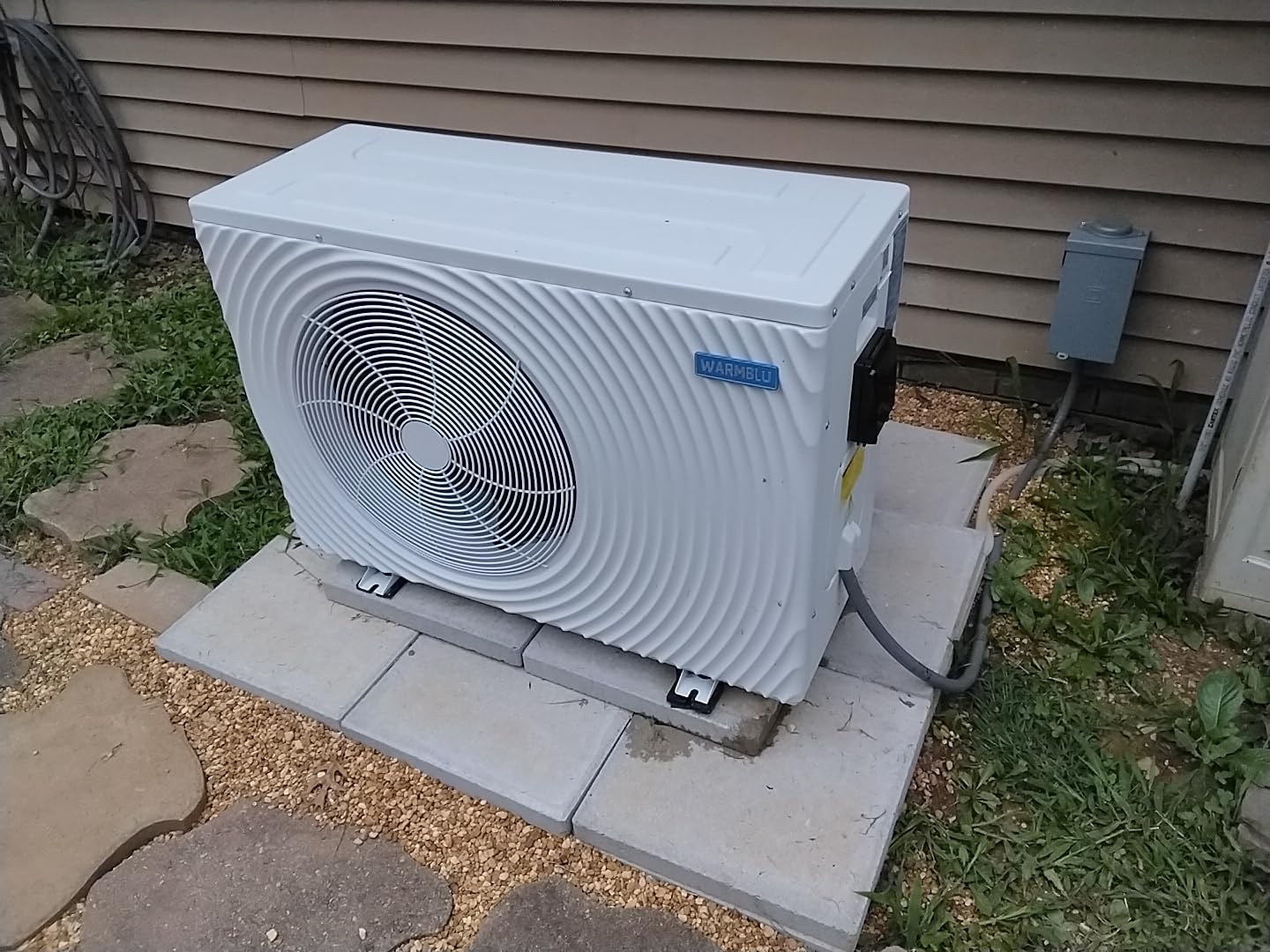
At 112.4 pounds and 27 by 17 by 40 inches it is easy to position, and fittings are included for the plumbing side. The listing states a COP of 16, again a peak marketing figure rather than an AHRI certification, so measure your own consumption after a month rather than trusting the number on the box.
The 12-month warranty is the shortest in this roundup, which is the clearest tradeoff for the convenience. Owners rate it consistently, with a 73 percent five-star share, and the recurring note is that it is quiet and inexpensive to run rather than fast.
Who this heat pump suits
This suits above-ground pool owners, renters, and anyone without a 220V circuit who still wants heat and app control. It fits pools up to 10,000 gallons, so it works for small in-ground pools too. The titanium exchanger means saltwater above-ground pools are covered, and the sub-50 dB operation suits close-to-house placement.
Who should skip this model
Skip it if you expect quick warm-up, because inverter control does not shorten the cycle and owners report needing continuous run time. The 110V circuit requirements are not itemized in the listing, so confirm your outlet and GFCI before ordering. With a 12-month warranty, budget for parts sooner than you would with a three-year or five-year model.
How to Choose a Pool Heat Pump for Your Backyard Pool
Match BTU to pool volume
Aim for roughly 50,000 BTU of heating capacity per 10,000 gallons of water. The more precise version of that rule is surface area multiplied by desired temperature rise multiplied by 12, which gives you the BTU figure to search for. The rule of thumb works well because it assumes a normal temperature rise and reasonable weather.
Here is the mapping we use, and it lines up closely with the pool capacities printed on the units in this roundup:
Up to 5,000 gallons: a compact unit in the 110V class
Up to 10,000 gallons: 50,000 to 55,000 BTU
Up to 12,000 gallons: 40,000 BTU rated to 12,000 gallons, or 50,000 BTU for headroom
Up to 20,000 gallons: 90,000 to 100,000 BTU
Up to 28,000 gallons: 100,000 to 140,000 BTU
Expect a heat pump to raise water about 1 to 3F per hour depending on volume, cover status, and outdoor temperature. That is why forum owners report 48 to 60 hours of continuous run to move a pool from the low 60s into the low 80s. Plan in days, and do not buy a bigger unit to solve a patience problem.
COP and AHRI 80/80/80: where marketing numbers mislead
COP, or coefficient of performance, is the ratio of heat delivered to electricity consumed. A COP of 5.5 means the unit puts 5.5 units of heat into the water for every 1 unit of electricity it draws. The AHRI 80/80/80 standard certifies performance at specific conditions, and an AHRI-listed number is the one worth comparing across brands.
Be skeptical of peak COP figures such as 12.5 or 16. Those are maximums measured at ideal conditions, not the average you will see in your yard, and several roundups in this category publish them as if they were standard. Two of the units here carry high stated COP numbers, and both also have short or moderate warranties, which tells you something about where those numbers come from. Compare AHRI-certified figures, then verify with your own meter after a month of use.
Titanium versus copper exchangers
Titanium is not a premium feature you can skip. It is the only exchanger material that holds up long term in a saltwater pool, and all eight picks here use one. Copper exchangers in saltwater setups have been documented failing through within three to five years, typically just after the warranty ends, which is the exact pattern that erodes trust in pool equipment.
Cabinet coatings matter too, just at a lower level. The Ultra Gold coating and UV-resistant panels on the large Hayward model, and the IPX4-rated ABS cabinet on the MICOE, are what protect a unit standing outside year round. Forum owners in Florida and along the Gulf Coast consistently treat weather resistance as a deciding factor over cheaper options.
Inverter versus single-speed compressors
An inverter compressor varies its speed, so it can ramp output to what the pool actually needs instead of cycling full blast. The result is quieter operation and steadier temperatures, which is why the inverter models in this roundup report lower noise figures than their single-speed siblings. A rotary compressor, used in the Hayward W3HP50HA2, is a quiet alternative with a similar goal.
The honest caveat is that an inverter does not make a heat pump fast. It makes a heat pump efficient and quiet while it works. If fast warm-up is your priority, the answer is a gas heater used in a hybrid setup, not a more expensive inverter.
Heat-only versus heat and cool
A heat and cool unit reverses the cycle to chill your water, which matters in humid climates where the real problem is dampness rather than cold. In dry or temperate climates the cooling mode goes unused, and you are paying for a feature you will not touch. Decide based on your summer humidity, not on the feature list length.
Low ambient floor, defrost, and cold weather
Heat pumps lose output as outdoor air drops, and most stop working around 50F ambient. That is a real limit, not a defect. Cold-climate behavior depends on the defrost system, and every unit in this roundup includes one, which is what allows operation into the low 40s. If you need dependable heat in genuinely freezing conditions, run a gas heater alongside and let the heat pump handle the daily maintenance.
Electrical: 110V plug-in versus 240V hardwired
A 240V hardwired circuit is a design feature, not an upgrade you should feel good about skipping. Larger units need 50 to 60 amps, which means an electrician, a panel check, and sometimes a service upgrade. Owners report being surprised by this cost more than any other part of the install, so have the panel evaluated before you order.
The 110V plug-in class sidesteps the problem entirely for pools up to about 10,000 gallons, which is why it is the most popular configuration for above-ground pools. If you have an in-ground pool past that size, plan the electrical work as part of the project rather than an add-on. A 110V circuit also needs a properly located GFCI-protected outdoor receptacle, so verify the outlet before you buy.
Noise and local rules
Published noise figures here run from 38 dB to roughly 54 dB(A). Anything in that range is comparable to a refrigerator to a quiet window air conditioner. The practical point is placement: keep the unit away from bedrooms, neighbor fence lines, and patio seating, and check whether your municipality has quiet hours that limit equipment noise in the early morning and late evening.
What to avoid
Avoid no-name imports with no US service network, because the question every buyer should ask is who fixes the control board in year two. Avoid units that publish only a peak COP and no AHRI listing, and avoid heat-only units if you live somewhere with humid summers. Gimmick features such as elaborate lighting or app-based water chemistry do not move water temperature, and a pool cover does more for your running cost than any of them.
Downsides of Using a Heat Pump Pool Heater
Four drawbacks come up in nearly every honest owner report, and none of them are hidden once you know them.
Slow heat-up. A heat pump warms water 1 to 3F per hour, so a cold pool takes days, not an afternoon.
A low ambient floor. Output drops sharply below roughly 50F outdoor air, and most models shut down entirely.
Electrical requirements. Larger units need a 50 to 60 amp 240V circuit, which means hiring an electrician.
Dependence on a cover. Without a solar or thermal cover, heat escapes overnight and you pay to reheat every morning.
On the last point, forum owners are consistent: fix the insulation problem first. If the pool is losing heat overnight, a bigger unit is a band-aid. If you want help with the rest of your equipment list, our robotic pool cleaner roundup and pool vacuum picks cover the other half of pool upkeep.
Frequently Asked Questions
Which brand of pool heat pump is the most reliable?
Hayward is the most reliable brand by service-network depth, with over 80 years of pool equipment manufacturing, wide parts availability, and authorized technicians in most US markets. The Hayward HeatPro 140,000 BTU and the Hayward W3HP50HA2 are both titanium-equipped, AHRI-listed options. For value, FibroPool is the most established alternative with a titanium exchanger rated for saltwater. The newer import brands we tested build fine hardware but offer thinner documentation and shorter warranties, so parts availability matters more than any spec sheet.
What size heat pump do I need for a 30,000 gallon pool?
A 30,000 gallon pool needs a 140,000 BTU class heat pump, following the rule of roughly 50,000 BTU per 10,000 gallons. The 140,000 BTU Hayward HeatPro in this roundup is the only unit rated for pools in that range, and it holds 20,000 to 35,000 gallon pools. Expect to run it for days when heating from ambient, and to need a solar cover so it is not replacing overnight losses every morning.
Is it better to oversize a pool heat pump?
No. Oversizing is mostly wasted money, because a larger unit has a larger compressor that cycles less efficiently and can short-cycle. Size to the pool, not above it, and add capacity only if you want faster recovery in cold weather. Undersizing is the more common and more damaging mistake: an undersized unit runs continuously, never reaches set temperature, and wears the compressor out early.
What is the 20 rule for heat pumps?
The 20 rule is the sizing guideline of adding roughly 20 percent to your calculated BTU requirement when your pool has no cover, or when you live in a cold climate with short shoulder seasons. It is a planning adjustment rather than a hard standard. If your pool is covered and your climate is mild, calculate to the number and do not add the margin, since an oversized unit will not heat any faster.
What are the downsides of using a heat pump pool heater?
The four real drawbacks are slow heat-up, a low ambient floor, electrical requirements, and cover dependence. A heat pump raises water about 1 to 3F per hour, so heating from ambient takes days rather than an afternoon. Output falls sharply below roughly 50F outdoor air. Units above 50,000 BTU need a 50 to 60 amp 240V circuit installed by an electrician. And without a solar cover, overnight heat loss means paying to reheat every morning.
Final Verdict for Backyard Pools in 2026
For most backyard pools, the AQUASTRONG HEX016 is the best pool heat pump to start with: 38 dB operation, a 5.5 COP, dual heat and cool, and a three-year warranty on the largest owner base in this roundup. If you want phone control and the highest rating in the group, the Varpoolfaye 40,000 BTU covers pools up to 12,000 gallons. Large in-ground pools above 20,000 gallons point to the MICOE 100,000 BTU inverter or the Hayward HeatPro 140,000 BTU, and 110V plug-in convenience comes from the WARMBLU 10,000 gallon model.
Before any of them, buy the cover. A heat pump cuts the cost of warm water dramatically compared with gas, but it will not outrun nightly heat loss. Fix the insulation, size the unit to the water, and the running cost takes care of itself. For families still deciding on equipment, our backyard pool guide covers sizing from the ground up.