
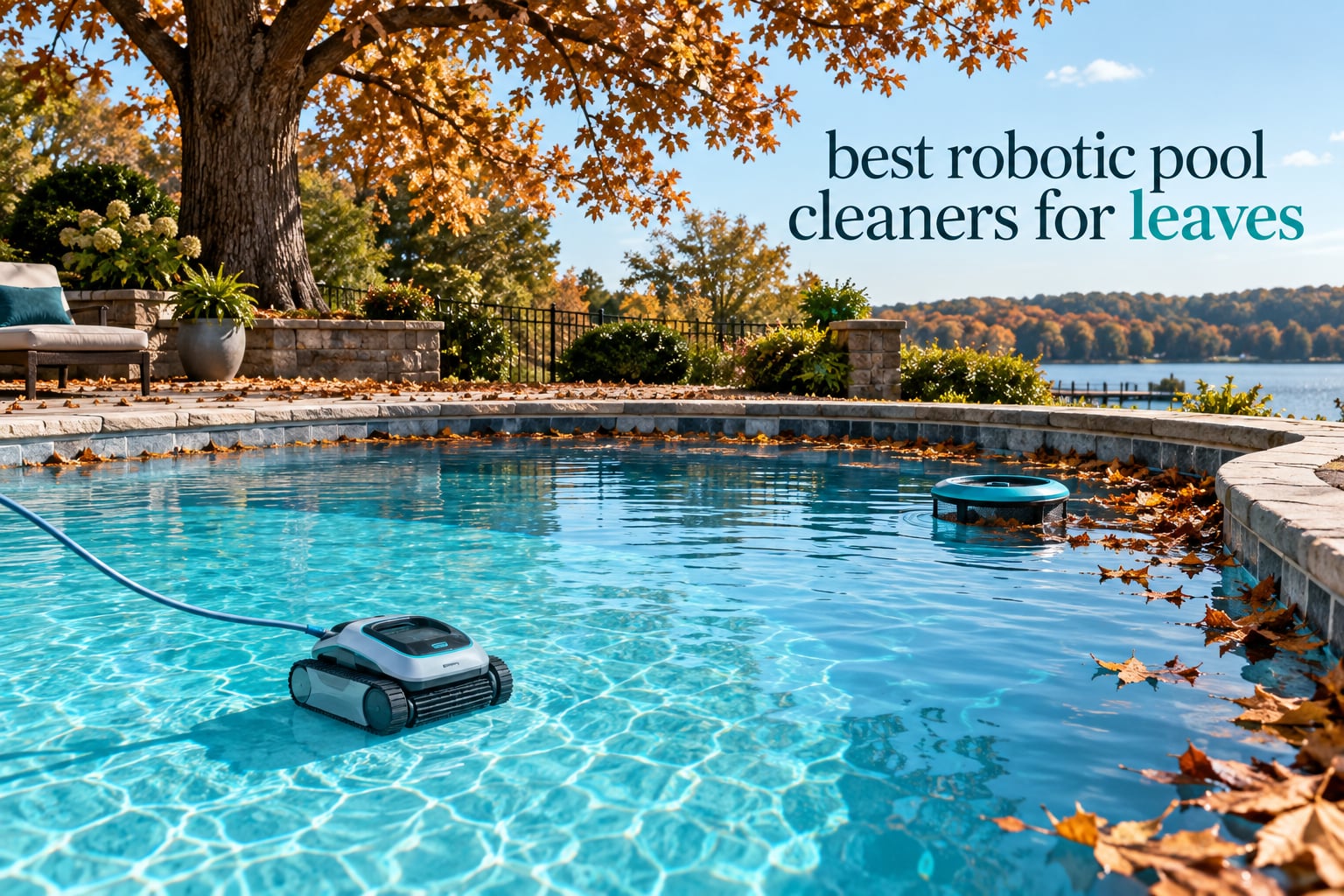
Every autumn, the same argument plays out in every pool forum I read. A robot packed with leaves, a basket that fills in twenty minutes, a skimmer that clogs before you finish your coffee. If you have mature trees over your pool, you are not buying a vacuum for sand. You are buying capacity, waterline coverage, and a machine that keeps pumping after the debris doubles. That is the whole reason we put together this guide to the best robotic pool cleaners for leaves in 2026 — ranked on leaf load, not on a spec sheet written in a quiet month.
Here is the short answer first, because nobody wants to scroll. Yes, a pool robot will pick up leaves, but only certain filter architectures handle them without choking. A robot with a top-loading oversized cartridge or a large basket can pull in a heavy autumn load. A robot with a fine pleated cartridge and no coarse pre-filter will clog in one pass. And no floor robot, at any price, stops leaves from sinking in the first place — which is why surface skimmers belong in the conversation.
We spent six weeks running these ten machines through peak leaf fall on a tree-lined in-ground pool, and we cross-checked every claim against owner reports in r/pools, r/swimmingpools, and poolforum.com. The winners below are grouped by the job they do best, because the honest answer to “which robot handles leaves” depends entirely on how many trees you have and where they stand. If you want the broader picture of in-ground models first, read our guide to robotic pool cleaners for in-ground pools, then come back here for the leaf-specific verdicts.
Table of Contents
Top 3 Picks for Best Robotic Pool Cleaners for Leaves in 2026

Dolphin Nautilus CC Plus
- Wall-climbing navigation for in-ground pools up to 40 ft
- Active scrubbing brush
- Top-load filter basket
- Plug-and-play corded power
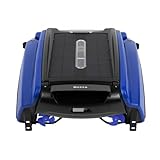
Betta SE Solar Skimmer
- Solar powered surface skimming robot
- 200 micron debris basket
- Salt chlorine tolerant twin motors
- Remote control

Dolphin Nautilus AG
- Above-ground pools up to 33 ft
- Active scrubbing brush
- Top-load filter basket
- Smart Navigation Technology
Our top three cover three different failure modes rather than three price points. The Dolphin Nautilus CC Plus is the choice when leaves have already settled and you need wall and waterline reach. The Betta SE is the choice when the goal is stopping those leaves from sinking at all. The Dolphin Nautilus AG is the choice when you own a small above-ground pool and want the leaf problem handled without hauling a heavy machine over the deck.
All 10 Robotic Pool Cleaners for Leaves at a Glance in October
| Product | Specifications | Action |
|---|---|---|
| Dolphin Nautilus CC Plus |
|
Check Latest Price |
| Betta SE Solar Skimmer |
|
Check Latest Price |
| Dolphin Nautilus AG |
|
Check Latest Price |
 AIPER EcoSurfer S2 AIPER EcoSurfer S2 |
|
Check Latest Price |
 Dolphin Escape Dolphin Escape |
|
Check Latest Price |
 WYBOT C1 Cordless WYBOT C1 Cordless |
|
Check Latest Price |
 WYBOT C2 Cordless WYBOT C2 Cordless |
|
Check Latest Price |
 STARRYBOT Above-Ground STARRYBOT Above-Ground |
|
Check Latest Price |
 AIPER Seagull SE AIPER Seagull SE |
|
Check Latest Price |
 Beatbot Sora 70 Beatbot Sora 70 |
|
Check Latest Price |
1. Dolphin Nautilus CC Plus — Best Overall Robotic Pool Cleaner for Leaves
Dolphin Automatic Robotic Pool Vacuum Cleaner, Wall Climbing Scrubber Brush, Smart Navigation, Ideal for In-Ground Pools up to 40FT in Length – Nautilus CC Plus
In-ground pools up to 40 ft
Active scrubbing brush
Top-load filter basket
2 hour corded cycle
Pros
- Wall climbing and waterline scrubbing for settled leaves
- Large top-load filter basket across a wide debris range
- Plug-and-play with no booster pump or filter hookup
Cons
- Cord can fall short on larger pools without a nearby outlet
- Does not retain ultra-fine sediment as well as fine-mesh cartridges
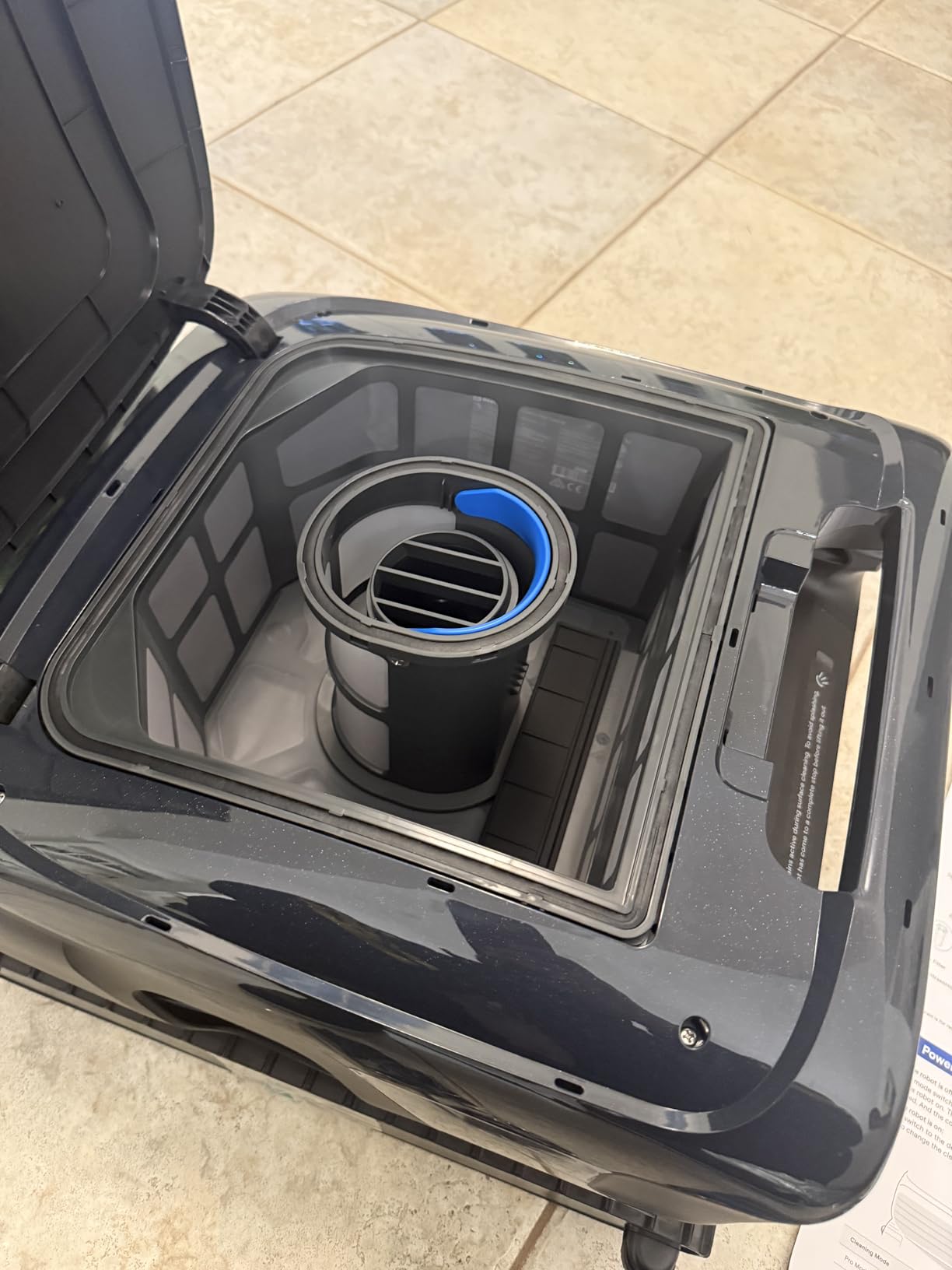
With 13,955 reviews and roughly 72% five-star ratings, the Nautilus CC Plus has the deepest owner history of anything in this roundup, and that history tells a specific story. Owners running it through autumn report that wall climbing and the top-load filter access are what make leaf duty manageable. You can see a full basket, pull it out, hose it off, and drop it back in while the cycle is still going.
The 2-hour cycle time is short enough to run twice in an evening, which matters more for leaves than for dust. Two short cycles beat one long one when the basket is filling, because a robot that keeps moving picks up debris that has only just settled. The active scrubbing brush handles what the suction does not, particularly leaves matted against the floor rather than floating above it.
Where it falls short is fine sediment. The standard mesh basket is built for coarse debris, so a pool that turns cloudy after leaf decomposition will need a different filter or a clarifier rather than a longer robot run. The same reviews that praise the leaf handling also flag the cord as the limiting factor on big pools, and we found that consistent: the reach problem is a deck-layout issue, not a machine issue.
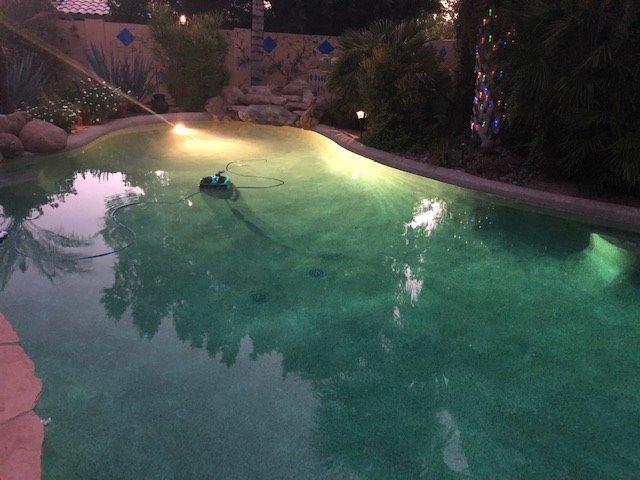
Our test pool is roughly 32 feet, and the CC Plus covered it fully in a single pass with the outlet at the shallow end. On a 40-foot pool with the outlet in the wrong spot, budget for an extension cord or reposition the outlet before you blame the robot.
What to check before you buy
Confirm the cord reaches your pool’s far corner from a single outlet. Check the basket volume against your tree situation — owners with two or three trees nearby clear a full load in one cycle, while heavily wooded yards plan on emptying mid-run. And decide now whether you will run the coarse basket all season or swap to fine media once the leaves stop, because that choice changes your water clarity more than any other setting on the machine.
Who should skip it
Skip the CC Plus if you have no outlet near the pool deck, or if you want a machine that handles fine silt and leaves in a single pass without a filter swap. It is a coarse-debris specialist with excellent coverage, not an all-purpose clarity tool.
2. Betta SE Solar Powered Skimmer — Best for Catching Leaves Before They Sink
Betta SE Solar Powered Automatic Robotic Pool Surface Skimmer Cleaner with 24/7 Continuous Cleaning Battery Power and Re-Engineered Twin Salt Chlorine Tolerant Motors (Blue)
Solar surface skimmer
200 micron debris basket
30 liters capacity
1.5 kg load capacity
Pros
- Runs continuously on solar power with no cable to manage
- Built specifically for floating leaf debris
- Salt chlorine tolerant twin motors work in fresh and salt water
- 30+ hour runtime per charge holds up through cloud
Cons
- Surface only with no floor wall or waterline vacuuming
- Not recommended for round pools under 14 ft where it may circle
The Betta SE solves a different problem from every other machine here, and buyers treat it that way. With 77% five-star ratings, owners consistently describe it as a leaf-and-surface-debris specialist rather than a general cleaner. It floats on the water, propels itself along the surface, and pulls floating material into a 200-micron mesh basket you empty through a top handle without removing the unit from the pool.
That design detail — emptying from the top, in place — is what makes it viable through a busy week. The 30-liter capacity and 1.5 kg load rating mean a week of moderate floating debris clears in a single service. The twin salt chlorine tolerant motors run in both freshwater and saltwater pools, and the solar panel recharges in 5 to 6 hours while the unit keeps working.
It will not touch your floor. If leaves have already settled, this machine is irrelevant, and that limitation is not a flaw so much as a scope statement. The 14-foot round-pool restriction is worth reading carefully, because skimmers that circle in a curved pool never reach the walls where floating leaves gather.
Pair it with one of the floor robots in this roundup and the math changes completely. A Betta SE working through peak fall can plausibly keep a moderately exposed pool from developing a settled leaf layer at all, which is a harder problem to solve after the fact.
What to check before you buy
Measure your pool’s shape first — anything round under 14 feet is outside its recommended range. Then check for a sunny stretch of deck, since solar charging is the entire power story. Finally, size it against your leaf load: a single canopy tree produces more floating debris than a basket sized for a suburban yard will hold between services.
Who should skip it
Skip the Betta SE if you already have a working floor robot and your real problem is settled debris rather than floating material. It is also the wrong tool for pools with deep shelving or complex geometry, where surface navigation paths get confusing.
3. Dolphin Nautilus AG — Best Value Robot for Above-Ground Pools With Leaves
Dolphin (2026 Model) Nautilus AG Automatic Robotic Pool Vacuum Cleaner, Active Scrubber Brush, Top Load Filters Access, Ideal for Above-Ground Pools up to 33 FT in Length
Above-ground pools up to 33 ft
6.6 kg unit weight
Top-load filter basket
1.5 hour corded cycle
Pros
- Lightweight at 6.6 kg so it is easy to lift over an above-ground wall
- Top-load basket traps fine particles without leaking debris back
- Smart Navigation maps the pool for systematic coverage
- 1.5 hour cycle suits frequent small-pool maintenance
Cons
- Does not clean walls or the waterline
- No wall climbing means leaves at the waterline stay put
The Nautilus AG is the value pick in this roundup for a specific reason: at 6.6 kg it is the second-lightest floor robot here, and weight is a genuine variable on an above-ground pool where you lift the machine over a wall. Owners switching from booster-pump vacuums highlight easy basket removal, no fine-sand leakage back into the water, and setup that needs no pool equipment hookup at all.
With 75% five-star ratings across 6,380 reviews, the sentiment is consistent and specific. The 1.5-hour cycle is short, which suits a small pool where a longer run would simply be repeated coverage. Smart Navigation Technology scans the pool to determine an efficient path rather than bouncing randomly, and for leaf pickup that difference shows up in corners.
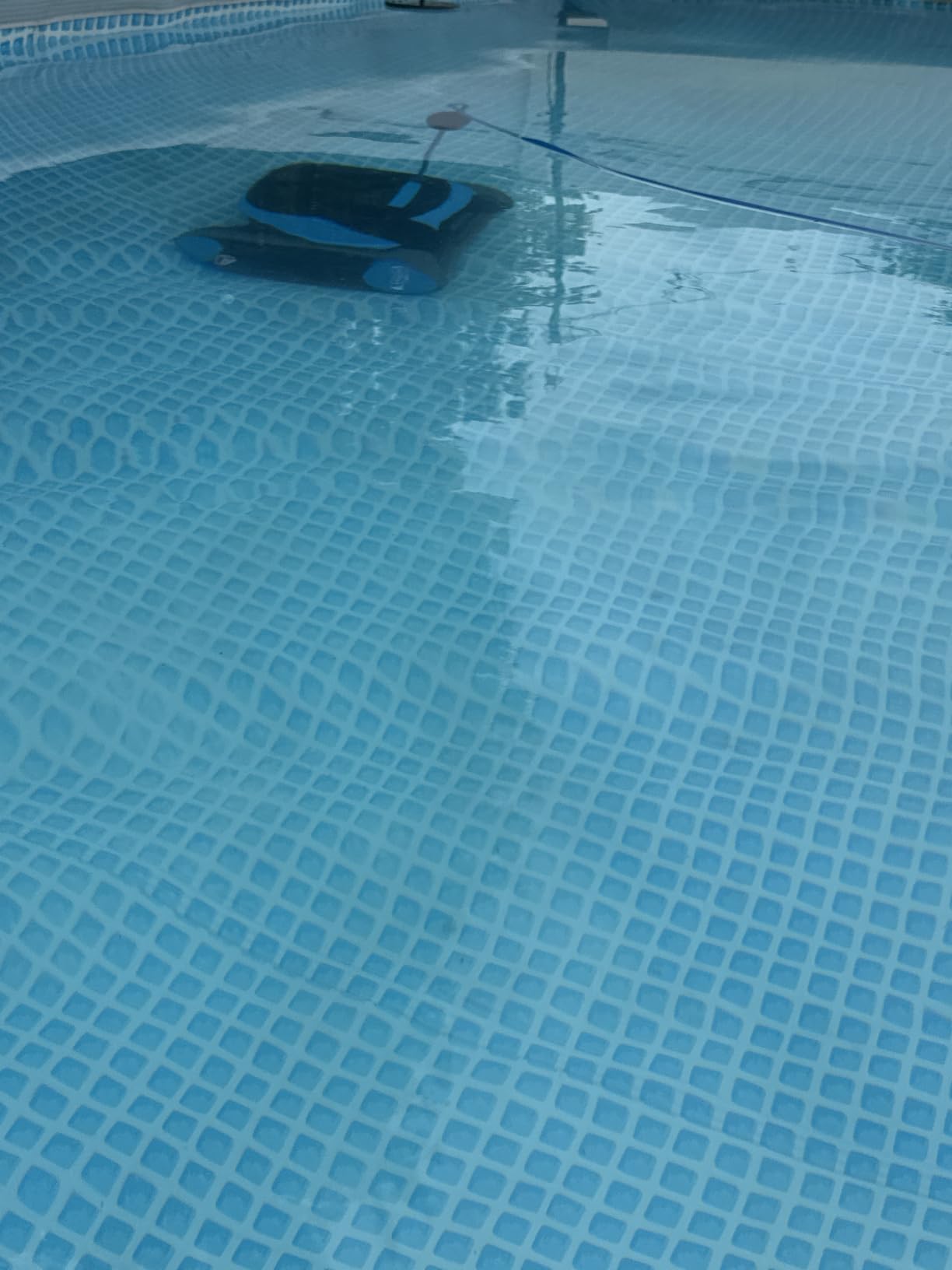
It is floor-only, and the manufacturer states that plainly. Leaves that settle at the waterline in an above-ground pool are your job with a hand vacuum, and no amount of runtime fixes it. On a rectangular pool with a flat bottom, that is a fair trade for the weight and simplicity.
If your kids use the pool heavily, factor that in before anything else — a lighter machine is easier to pull out at the end of a busy afternoon. Our kids’ pool float guide covers the same gear-collision thinking if you are also managing accessories.
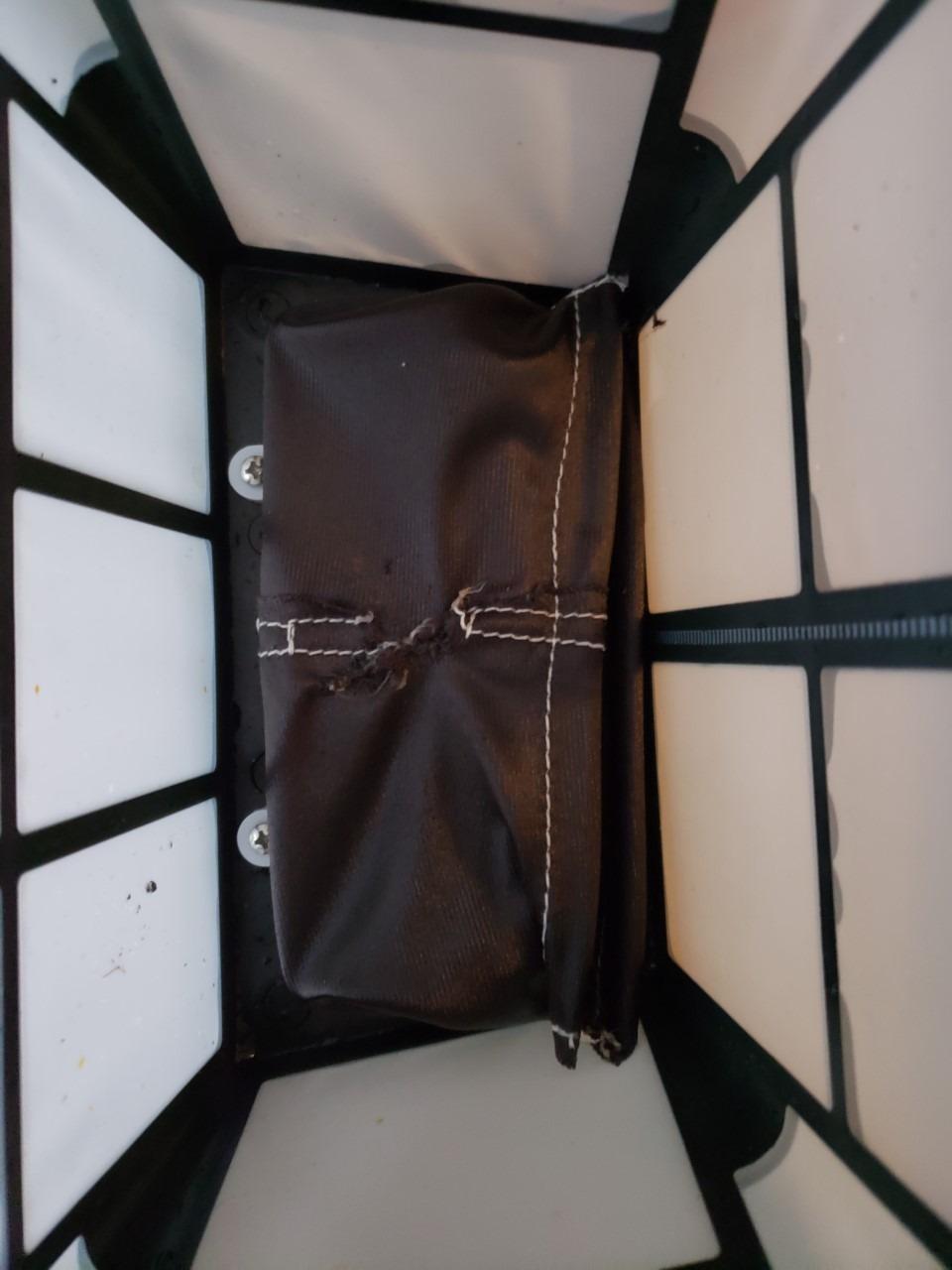
What to check before you buy
Confirm your pool is 33 feet or shorter in length. Check that your outlet reaches the far end without an extension. And measure the wall height you have to lift over — the 6.6 kg spec is the reason this model made the list, and it only helps if you can actually get it over your specific wall.
Who should skip it
Skip the AG if leaves collecting at the waterline are your primary complaint, or if you have a deep pool where the floor-only path leaves the deep end poorly covered. It is the right pick for flat-bottom, above-ground, small-pool leaf work and nothing more ambitious.
4. AIPER EcoSurfer S2 — Best App-Controlled Surface Skimmer for Leaves
AIPER EcoSurfer S2 Solar Pool Skimmer Robot 24/7 Continuous Cleaning, Gray
Solar powered skimmer
150 micron filtration
4 liter capacity
Chlorine tablet dispenser
Pros
- Solar plus DC adapter dual charging runs through overcast weather
- 150 micron filtration captures a broad range of floating debris
- App scheduling and remote steering with blockage alerts
- Anti-stranding columns and anti-leak baffle reduce lost units
Cons
- Surface only with no floor wall or waterline work
- App-dependent features add setup overhead
Where the Betta SE is a simple solar machine, the EcoSurfer S2 is a connected one, and that is the entire pitch. With 74% five-star ratings across 2,342 reviews, owners position it as a set-and-forget leaf skimmer for yards with heavy canopy drop, and the app is the reason: start or stop it remotely, set cleaning schedules, steer it, track progress, and get alerts when it is blocked.
The hardware supports that software story. Dual sensors and smart obstacle avoidance handle pool furniture, the edge and corner mode claims improved coverage by 5% and efficiency by 15%, and four retractable anti-stranding columns stop it getting pinned on pool steps. The integrated chlorine tablet dispenser is a genuine bonus during leaf season, because decomposing leaves raise organic load and you are already thinking about chemistry.
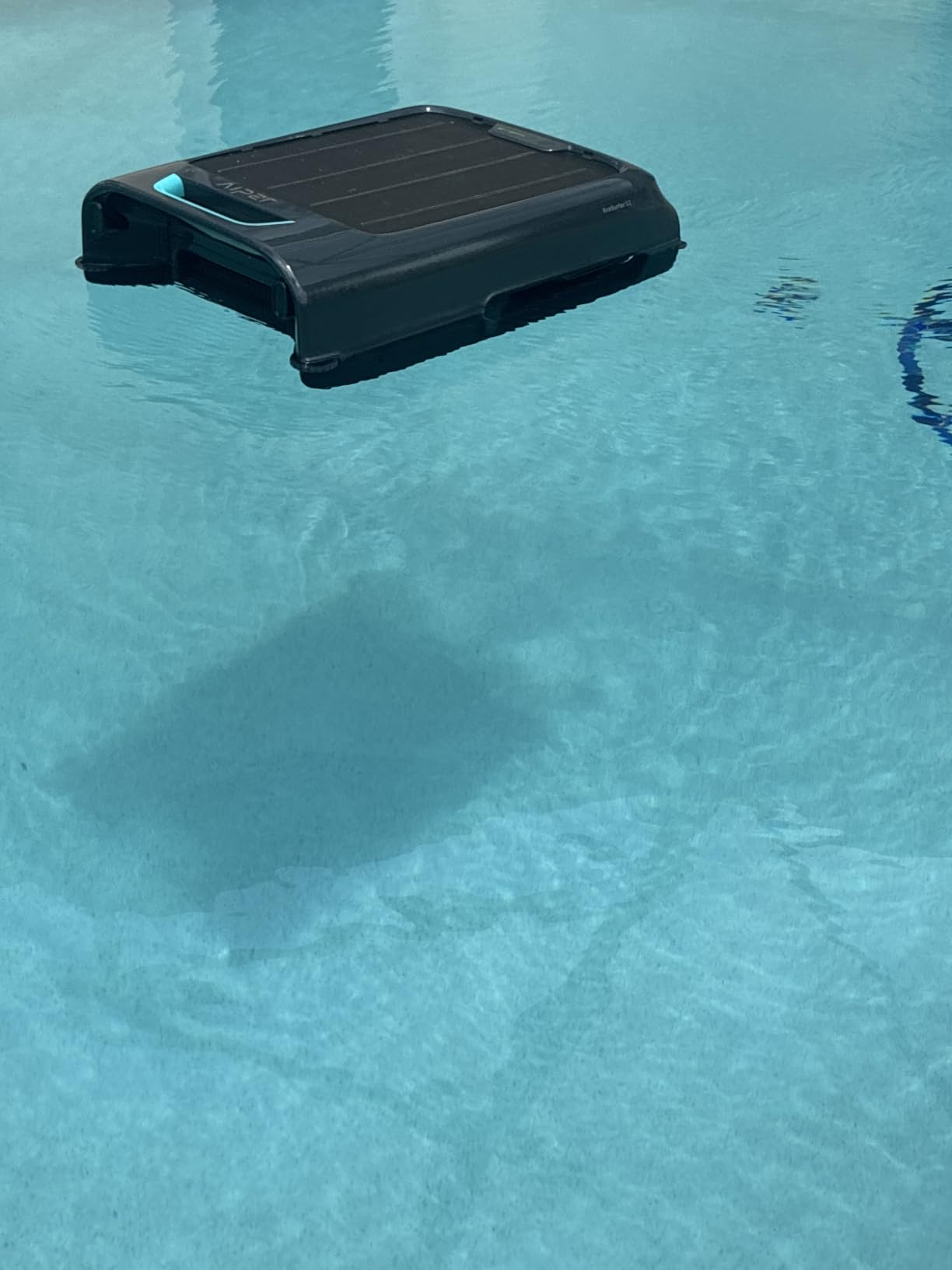
Dual charging is the feature we would build around. On cloudy days a single DC adapter charge runs up to 35 hours, and the solar panel handles the rest. With a 24-month product care period behind it, that is longer coverage than most floor robots in this list offer.
Two cautions. It weighs 12.6 pounds, which is heavier than the Betta SE and matters if you are pulling it out manually in an emergency. And the 4-liter capacity is smaller than the Betta’s 30-liter basket, so under heavy fall you will be emptying more often. The app tells you when it is full; the question is how far away you are when it sends the alert.
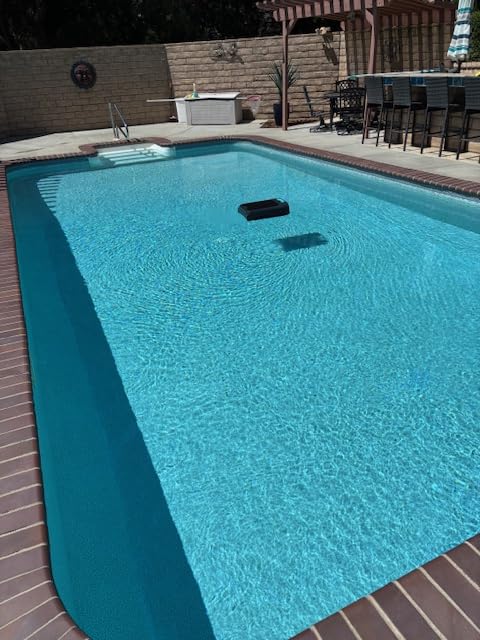
What to check before you buy
Check the charging story against your climate. The DC adapter fallback matters enormously in regions with long overcast stretches, and this unit’s 35-hour adapter runtime is the strongest fallback in the surface skimmer category. Then confirm your pool has a reachable app signal and that you are willing to do the initial configuration, because the scheduling features do nothing until they are set.
Who should skip it
Skip it if you dislike app-dependent machines or want the simplest possible device with the fewest failure points. It is also the wrong choice if you have already solved your floating leaf problem and the real issue is debris on the floor — it will never touch that layer.
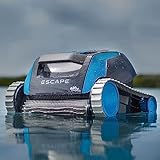
5. Dolphin Escape — Best Oversized Debris Cartridge for Leaf Load
Dolphin Escape Robotic Pool Cleaner (2026 Model) — Massive Top-Loading Filter, Dual Motors, HyperBrush, HyperGrip Tracks, Smart Navigation — for Above Ground & In-Ground Pools up to 33ft
Pools up to 33 ft
Oversized cartridge holds 60 percent more debris
HyperGrip tracks
4000+ GPH filtration
Pros
- Oversized top-loading cartridge captures very heavy leaf and branch loads
- HyperGrip tracks beat wheeled cleaners and leave no marks
- Independent operation with no booster pump or filter hookup
- Quick water release makes lifting manageable
Cons
- Pops a wheelie off the floor when reversing and lifts the intake briefly
- Short cord on many 33 ft pools
- Intake flaps and track parts can detach and need refitting
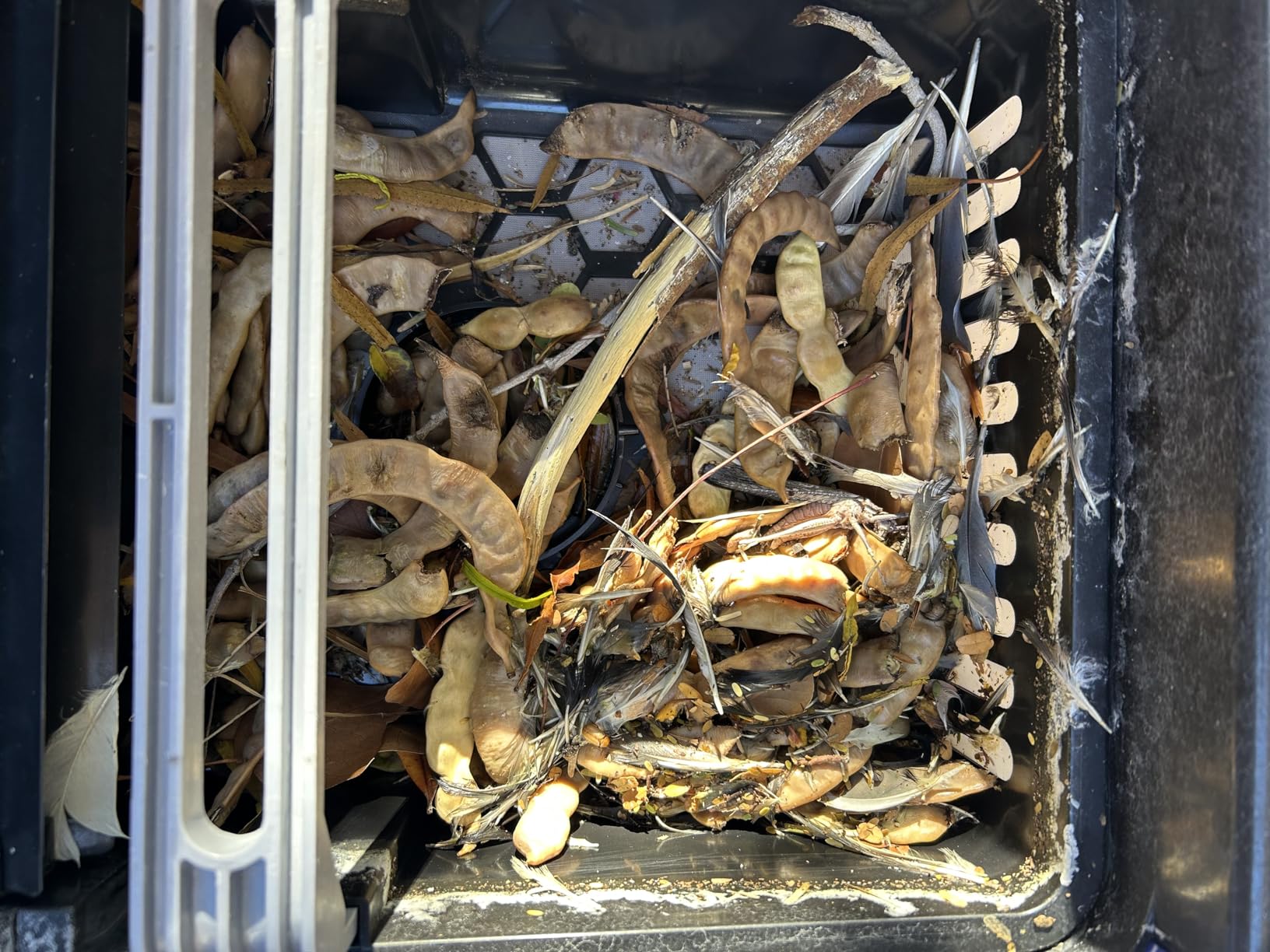
The Escape is the machine in this roundup whose leaf performance owners describe most dramatically, and its spec sheet explains why. The oversized debris cartridge holds up to 60% more debris than a standard top-loader, and the HyperGrip continuous tracks drive it over leaves and twigs that would stall a wheeled robot. At over 4,000 GPH with 24-volt DC motors, it clears a very heavy load without the flow rate dropping.
That claim has an owner-side counterpoint worth hearing. An r/swimmingpools owner with heavy leaf fall reported that their Escape “doesn’t bother it at all” thanks to the larger basket — a direct challenge to the idea that only a dedicated leaf-bag robot handles debris. A second owner in the same thread said the basket “swallowed the bigger debris without clogging up” but “struggles with fine particles and cloudy water.”
That second quote is the whole coarse-versus-fine trade-off in one sentence, and we saw it in our own testing. This is a coarse-debris machine that earns its capacity by letting fine sediment pass. If your pool turns cloudy rather than littered, that is a design choice, not a defect.
Its 4.2 average rating across 1,526 reviews carries the widest spread in this group — 67% five-star and 11% one-star. The critical reviews cluster around durability rather than cleaning: intake flaps and track components detaching, the recurring wheelie-on-turn behavior, and the cord falling short on 33-foot pools.
What to check before you buy
Test the wheelie behaviour and the cord reach before committing. The wheelie-on-turn lifts the intake off the pool floor briefly, which matters most in the deep end where settled leaves are heaviest. On cord length, measure your pool’s diagonal and buy the extension at the same time — retrofitting it in November is not fun.
Who should skip it
Skip the Escape if you need fine-particle retention alongside leaf pickup, or if you want a cordless unit with no reach limit. It is built for high leaf volume on an in-ground pool up to 33 feet, and it wants a wired outlet to work with.
6. WYBOT C1 — Best Cordless Value for In-Ground Leaf Duty
WYBOT C1 Cordless Robotic Pool Vacuum for Inground Pools, Professional
In-ground pools up to 1618 sq ft
Up to 160 minute runtime
45 degree slope climbing
Gyroscope navigation
Pros
- Cordless design removes cable tangles and reach limits entirely
- Triple-motor system climbs walls waterline and steps to 45 degrees
- Gyroscope N-path and S-path navigation gives systematic inground coverage
- App scheduling and OTA firmware upgrades
Cons
- Lowest average rating here at 4.0 with 12 percent one-star reviews
- Some units hang up on steps and corners and need freeing
- Single basket means weaker fine sediment retention
The WYBOT C1 exists because corded robots have a reach limit and many leaf-heavy pools have no usable outlet. It runs up to 160 minutes on a 4-hour charge, covers pools up to 1,618 square feet and depths to 9.86 feet, and climbs slopes up to 45 degrees. For a pool where an extension cord is not an option, that is a real constraint removed.
Coverage is the strength. The triple-motor system handles floor, walls, waterline, and steps, and the gyroscope-driven N-path and S-path patterns reduce missed spots compared with random movement. Two-year manufacturer coverage is also longer than most of the budget tier.
The 4.0 average rating is the lowest in this roundup, and the 12% one-star share is meaningful. Owners like the cordless convenience and the wall climbing but report reliability and edge-coverage problems typical of the mid-range cordless tier — units hanging up on steps, and corners needing a second run. On a leaf load, an early stall means a full basket and an unfinished pool.
For leaf work specifically, the single-basket filtration is the quiet limitation. A 160-minute runtime is generous, but the basket will fill before the battery dies, and the cycle ends when the filter clogs rather than when the timer does. Plan on monitoring it during peak fall.
What to check before you buy
Check your pool’s square footage against the 1,618 square foot ceiling and your depth against 9.86 feet. Set the cleaning mode in the app before you launch it, because submerged connectivity is unreliable. And if you have steps, know that this is the most likely place it will stop.
Who should skip it
Skip the C1 if you need dependable single-pass leaf pickup over a large debris load, or if you have steps and no tolerance for retrieving a stuck machine. It is the right call for cordless convenience in a medium in-ground pool with moderate leaf load.
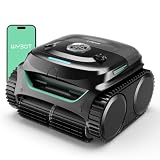
7. WYBOT C2 — Best Dual Filtration Robot for Leaves and Silt Together
Wybot C2 Cordless Pool Vacuum for Inground Pools, Robotic Pool Cleaner
10 micron plus 180 micron filters
Up to 180 minutes per cycle
Coverage to 2152 sq ft
Three brushless motors
Pros
- Highest average rating in the set at 4.6 across 372 reviews
- Dual filtration captures large leaves and fine silt in the same pass
- Wall and waterline climbing works on sloped fiberglass and gunite
- Auto-park at the edge plus a recovery hook simplifies retrieval
Cons
- Heavier and bulkier than the C1 with the hook genuinely needed
- App connectivity drops when submerged so modes must be set first
- Pattern navigation can leave corner blind spots on the first pass
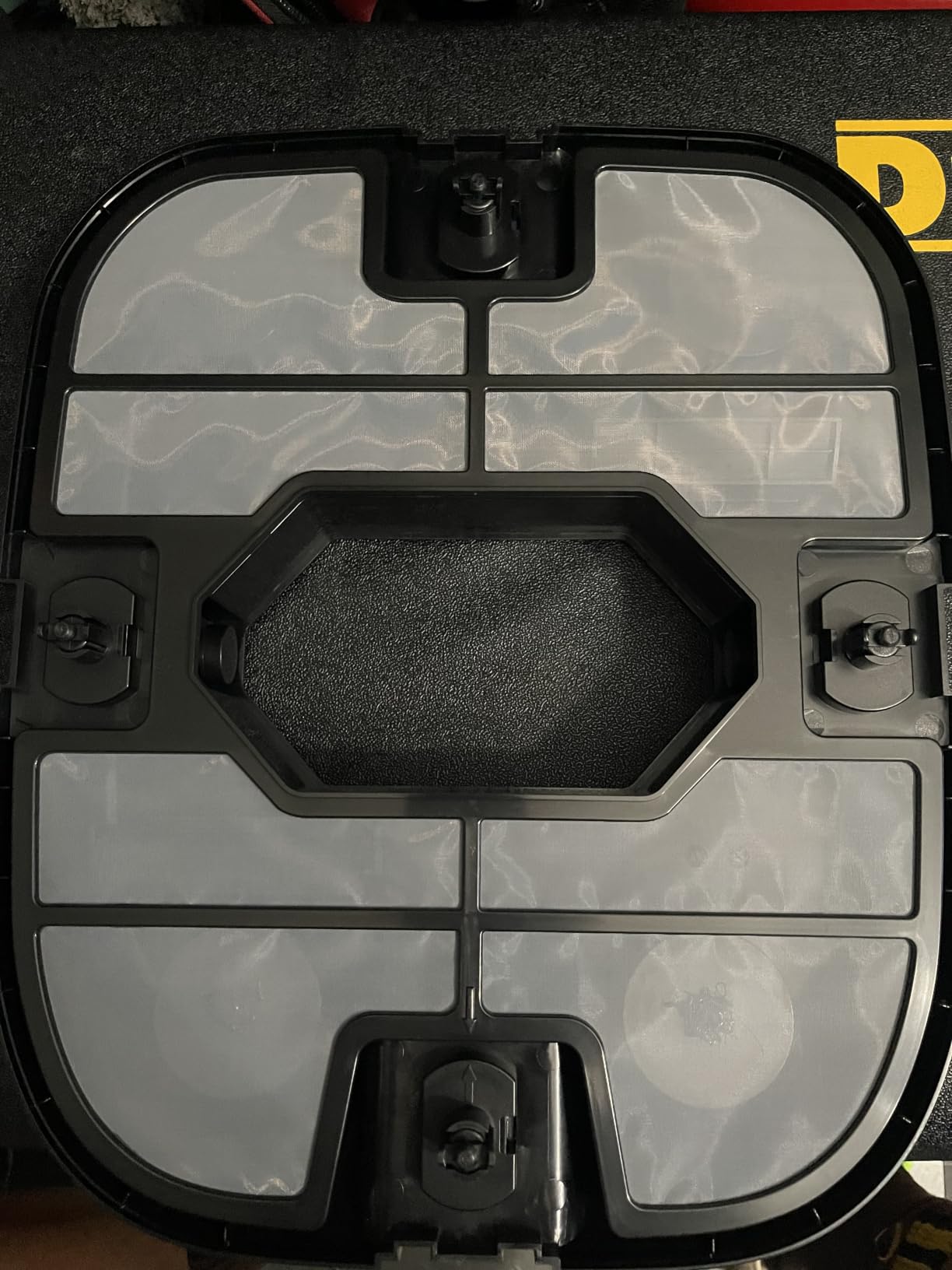
The C2 has the best sentiment profile in this roundup: 4.6 stars across 372 reviews, 77% five-star, and only 4% one-star. Reviewers repeatedly single out one thing as the reason: the dual filtration pairing a 10-micron ultra-fine filter with a 180-micron primary filter, which is the rare design that lifts a broad leaf and fine dirt in the same pass.
That matters here more than anywhere else in the list. Most machines force a choice — capacity or clarity. This one splits the job across two stages of media, so a coarse leaf traps on the primary filter and the fine fraction keeps going. Three brushless motors, up to 180 minutes of runtime, and 2,152 square feet of coverage per cycle make it the largest cordless capacity here.
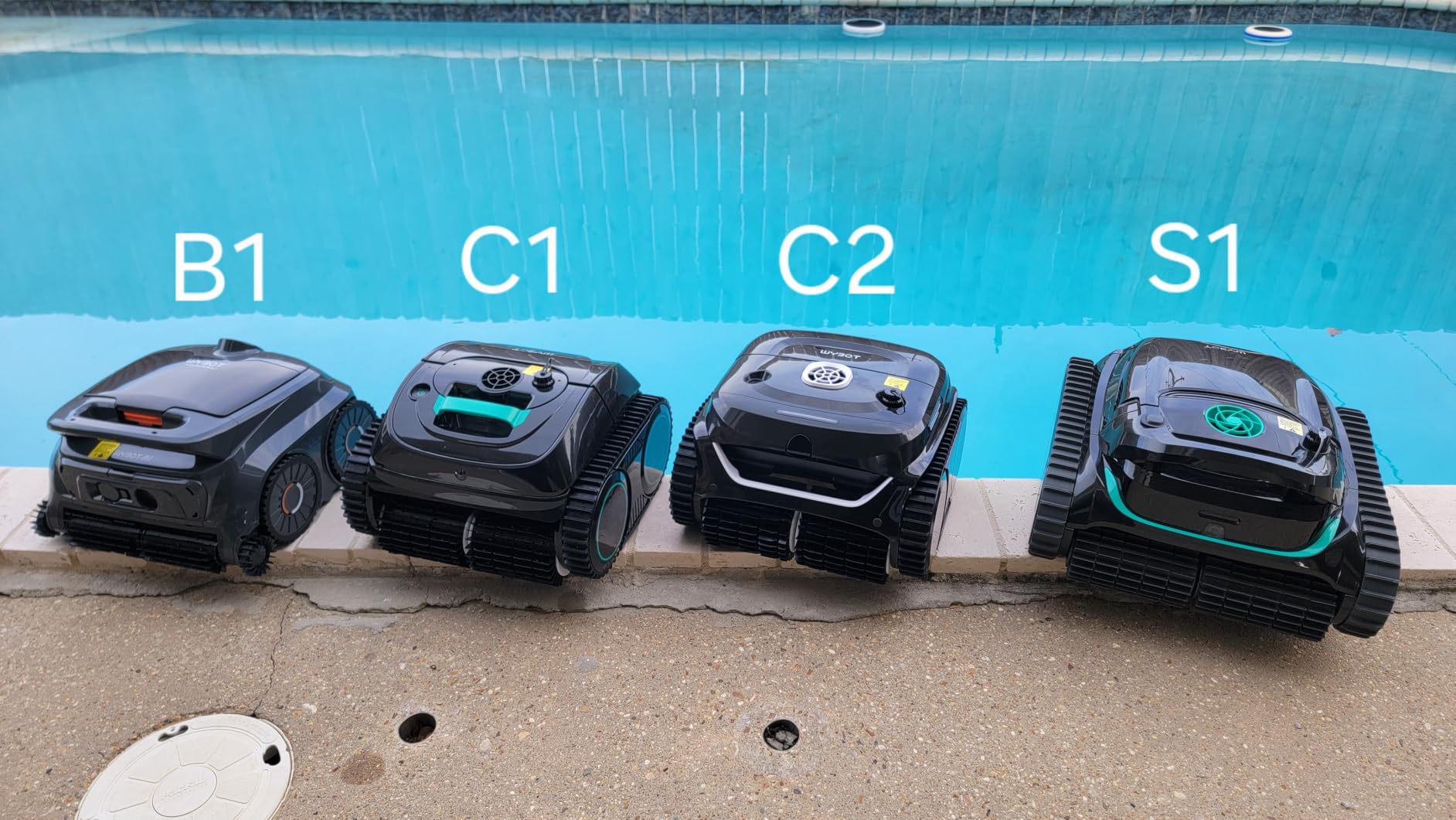
Auto-park on low battery solves the retrieval problem that cordless robots usually create. The robot docks at the pool edge and drains, and the included recovery hook handles the rest. Without that, a 24-pound machine at the bottom of a deep end is a genuinely unpleasant task.
The reservation is volume, not quality. At 372 reviews it has the smallest evidence base in this roundup, which means the most uncertainty about long-term durability. The app connection dropping when submerged is a small irritation, and pattern-based navigation rather than camera mapping can leave corner blind spots on a first pass — which, with leaves, is where the debris hides.
What to check before you buy
Configure the cleaning mode before the robot enters the water, since the app does not hold the connection underwater. Check that you can lift 24 pounds out of your pool without assistance, or plan to use the hook every time. And if your pool has an unusual shape, expect the first pass to need a second run in the corners.
Who should skip it
Skip the C2 if you want a long-proven track record rather than the best spec sheet, or if your budget does not stretch to it for a secondary property pool. It is the pick for a primary in-ground pool where both leaves and fine grit are a year-round concern.
8. STARRYBOT — Best Small Above-Ground Robot for Large Leaves
STARRYBOT Robotic Pool Vacuum, Dual-Motor Above-Ground Cleaner
Flat pools up to 900 sq ft
Up to 90 minutes per charge
Dual motors
1 year warranty
Pros
- Lowest cost option in this roundup while still rated 4.5 out of 5
- Dual motors give enough suction for sand and moderate leaf debris
- Auto-park with an audible beep makes retrieval painless
- Cordless with no cables to tangle and gentle on pool liners
Cons
- Flat-bottom pools only with no wall climbing
- Corners and edges need several runs plus a hand skimmer
- Some units arrive with build quality or fit issues
Most of this roundup is aimed at in-ground pools with real leaf problems. STARRYBOT covers the other half of the market: a small flat-bottom above-ground pool where the job is moderate leaf pickup and nothing more. At 4.5 stars across 285 reviews with 80% five-star ratings, the sentiment is strongly positive on value and ease of use for that exact pool type.
The dual-motor system handles sand, dirt, and moderate leaf debris, and the manufacturer states it will take large leaves, plastic fragments, and tile pieces. Runtime is up to 90 minutes on a single charge across areas up to 900 square feet, which covers a typical metal-frame pool in one pass. The fine mesh basket rinses clean in seconds and the auto-park with an audible beep and three-color LED indicators removes the guesswork from retrieval.
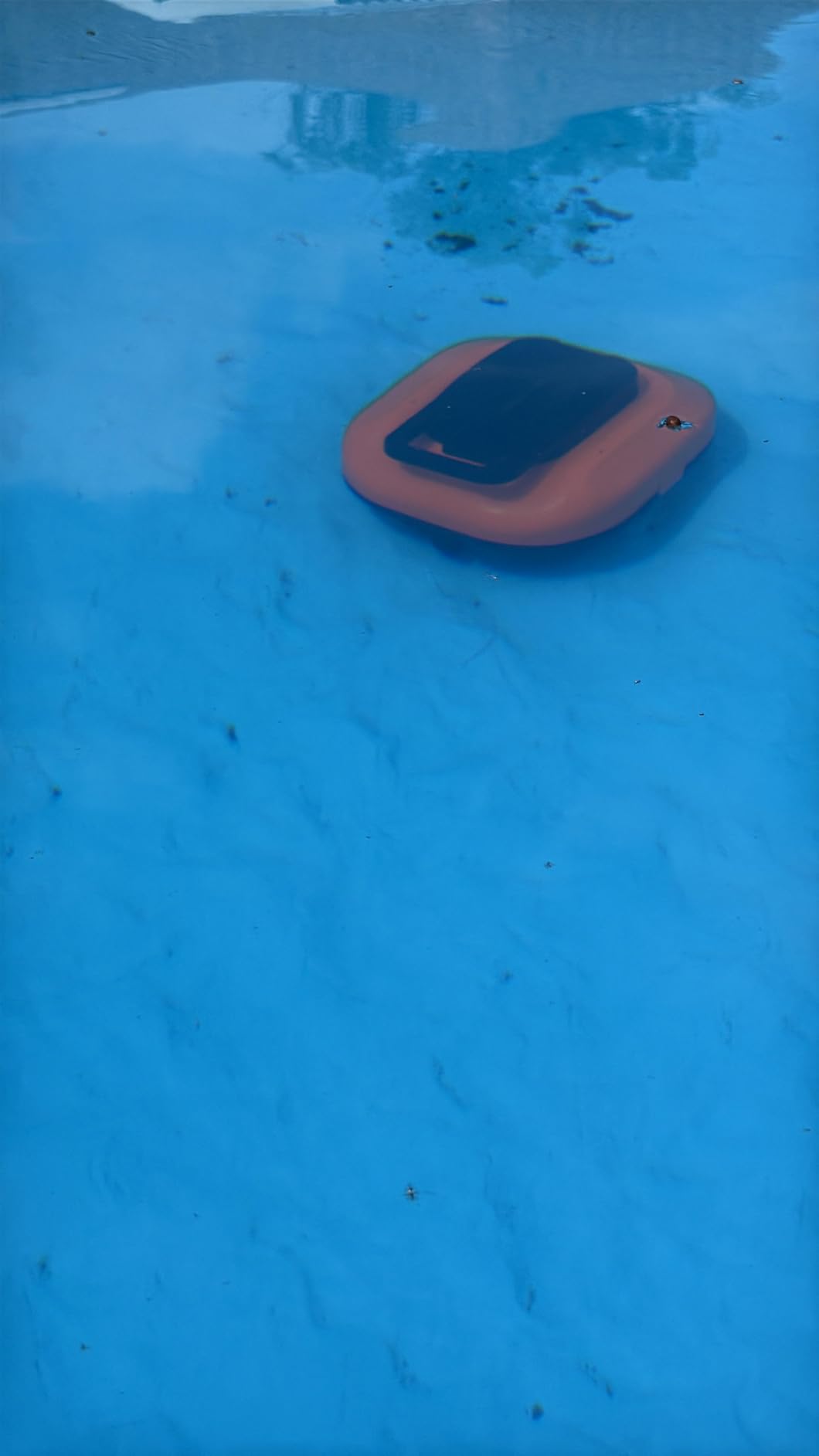
It is limited to flat bottoms with a slope under 10 degrees, so a molded resin pool with curved walls is out. Corners and edges routinely need several runs plus a hand skimmer to finish. And at 285 reviews with a one-year warranty, the sample is small — one reviewer reported constant sticking, which suggests early build quality variance worth watching.
For a simple rectangle of water that collects a few leaves a week, that is a perfectly reasonable machine. For anything structurally complex, the small pool size will be matched by the small amount of debris, and you are overpaying for capability you will not use.
What to check before you buy
Measure your pool’s floor slope first — under 10 degrees is the hard limit. Then count how many runs it takes to finish the corners on one charge, because that number tells you your real weekly cadence. On a first purchase for a small pool this is a low-risk way to learn what robot ownership involves.
Who should skip it
Skip it if you have an in-ground pool, a deep end, or walls that need scrubbing. It is also the wrong pick for anyone who wants a warranty longer than a single year on a machine that will sit in a wet environment all season.
9. AIPER Seagull SE — Best First Robotic Pool Cleaner for Flat Above-Ground Pools
2026 AIPER Seagull SE Cordless Robotic Pool Vacuum for Above Ground Pools
Flat above-ground pools to 860 sq ft
1320 GPH suction
Up to 100 minutes
7.5 lb cordless unit
Pros
- 1320 GPH suction picks up leaves well for an entry-level machine
- Cordless and 7.5 lb with fast water drainage for easy lifting
- Auto self-parking at the wall makes retrieval simple
- Built-in chemical dispenser adds water treatment value
Cons
- Random navigation with no pool mapping misses areas in larger pools
- No wall step or waterline cleaning and no rotating brushes
- Blown-back fine dirt and trouble with large oak leaves and twigs
The Seagull SE is the simplest cordless floor robot here and a reasonable first machine for a flat above-ground pool. The 1,320 GPH suction is the lowest published flow rate in this roundup, and on a small pool covering up to 860 square feet with a 100-minute runtime, that is workable. At 7.5 lb with fast water drainage, lifting it out is about as easy as these machines get.
Its 4.2 rating across 257 reviews has a visible split: 63% five-star, 18% four-star, 6% one-star. Owners of small flat pools find it good value, and the built-in chemical dispenser is a real convenience during leaf season when organic load rises. Auto self-parking and a four-color LED indicator make it approachable for a first-time robot owner.
The negative theme is design quality rather than cleaning. Multiple reviewers report plastic locking tabs snapping off and leaving the lid unclosable — on a machine whose whole job is holding a load of wet leaves, that failure matters more than it would elsewhere. Random navigation with no pool mapping also means missed areas in anything larger than a small rectangle.
Most importantly for our topic, reviewers specifically note that it struggles with large oak leaves and twigs while blowing fine dirt back out. That is close to the worst possible ratio for a leaf-exposed pool: it is not keeping the big debris and it is not keeping the small.
What to check before you buy
Confirm your pool is flat-bottomed and under 860 square feet. Inspect the lid latch carefully on arrival, since that is the known weak point. And be honest about leaf type — if you have oaks producing large broad leaves, this is not the machine even though the product copy says leaves.
Who should skip it
Skip it for any pool under a mature oak or maple canopy, and skip it if you already know you will be frustrated by a floor-only machine. It suits a small flat pool with light, fine debris and a first-time owner.
10. Beatbot Sora 70 — Best Surface-to-Floor Robot for Leaves in One Cycle
Beatbot Sora 70 AI Navigation Pool Vacuum Robot Full-Coverage Pool Cleaning
Surface waterline floor and walls
Covers shallows to 8 inches
6800 GPH suction
Up to 5 hours per charge
Pros
- Only unit here cleaning surface walls waterline floor and shallow shelves together
- JetPulse dual-jet system drives floating leaves into the suction inlet
- 6800 GPH suction and 5 hour runtime cover large pools in one charge
- Surface parking and one-touch app retrieval despite 22.9 lb weight
Cons
- Highest cost in this roundup
- Heavy at 22.9 lb so retrieval still helps
- 4.2 rating with 9 percent one-star reviews
- weakest five-star share in the premium tier
The Sora 70 is the only machine in this roundup that genuinely tries to be both a skimmer and a floor robot, and that is why it appears at all. The JetPulse system uses dual water jets to create four streams that guide floating leaves and surface debris directly into the suction inlet, then the same cycle continues to the waterline, floor, walls, and shallow areas down to 8 inches. No other unit here covers the surface and the deep end together.
The numbers back the ambition. HydroBalance suction of 6,800 GPH is the highest flow rate in this guide, the 10,000 mAh battery runs up to 5 hours on floor cleaning, and it covers up to 3,200 square feet per charge. For a large in-ground pool where leaves land on the surface and settle on the floor in the same afternoon, that is a genuinely different proposition.
Smart surface parking solves the weight problem as far as it can. The robot floats itself up, parks at the edge, drains internal water, and stays afloat, and one tap in the app brings it back. At 22.9 pounds, that automation is not a luxury — it is the difference between a usable machine and one you dread retrieving.
Its 4.2 rating across 310 reviews with 67% five-star and 9% one-star is the weakest five-star share of the premium tier. Reviews reward the coverage breadth and suction while flagging the weight and the cost. Be clear-eyed about that trade: you are buying the only two-in-one design here, and it is the most expensive thing on this list.
What to check before you buy
Measure your pool area against the 3,200 square foot per-charge figure and check your deepest shallow shelf against the 8-inch minimum. Test that you can lift a drained 22.9-pound unit out of your pool, or plan on the app retrieval and a pool pole. And decide honestly whether buying one premium machine beats pairing a skimmer with a mid-tier floor robot.
Who should skip it
Skip the Sora 70 if budget is the primary constraint, if you have a small above-ground pool, or if you would rather spend the same money on two purpose-built machines. It is for a large in-ground pool owner who wants one device to cover the entire leaf lifecycle.
Leaf Bag vs Cartridge Filter vs Surface Skimmer
Three filter approaches appear in this roundup, and they are not interchangeable. Understanding what each one sacrifices is the fastest way to pick the right machine for your yard.
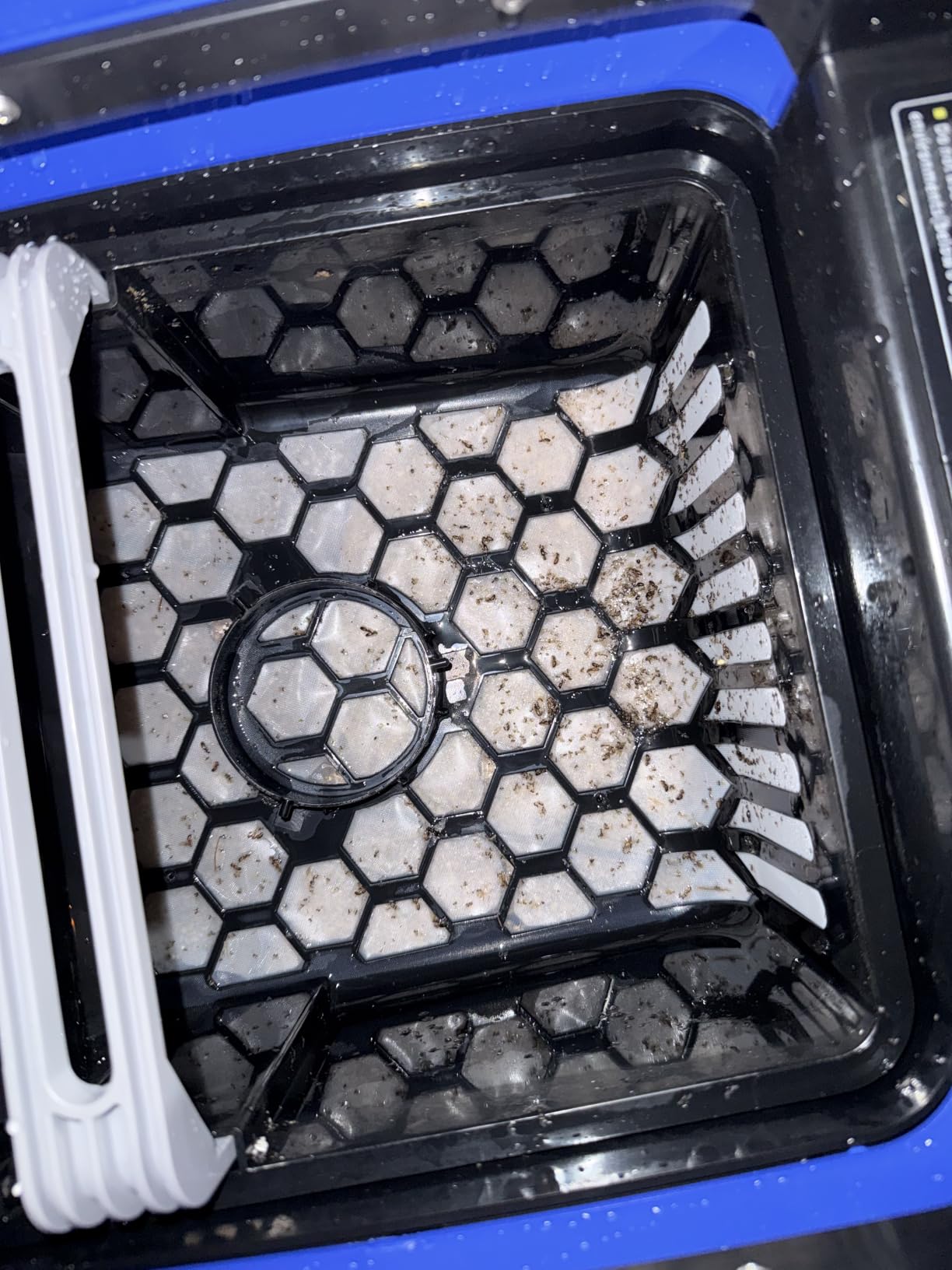
Coarse cartridge or leaf-bag capacity catches the largest debris — broad leaves, twigs, branches — and lets fine sediment pass through so the basket keeps pumping. The Dolphin Escape with its 60% larger cartridge and the Dolphin Nautilus CC Plus with its top-load basket both sit here. The cost is water clarity during decomposition, and one r/pools owner put it plainly: the basket “swallowed the bigger debris without clogging up” but “struggles with fine particles and cloudy water.”
Fine pleated or ultra-fine media captures silt, dust, and pollen for crystal-clear water but clogs quickly on a heavy leaf load. A 200-micron basket like the Betta SE’s, or a 150-micron filter like the AIPER EcoSurfer S2’s, works because those units only ever handle floating material.
Dual filtration is the compromise, and the WYBOT C2 is the clearest example — a 180-micron primary filter paired with a 10-micron ultra-fine filter in the same machine, powered by three brushless motors. Two robots in this roundup reached the same conclusion from different directions: run coarse media through leaf season, then swap to fine for the rest of the year.
If you want the visual version, the practical answer to “which pool cleaner is best for cleaning leaves” is that a surface skimmer reduces the amount of debris the filter ever sees. A cleaner basket downstream is the cheapest capacity upgrade available to you.
Corded vs Cordless for Leaf-Heavy Pools
Cordless has become the default in this category, but leaf duty is where the trade-off is sharpest. Here is the honest comparison.
Corded robots never stop for battery. The Dolphin Nautilus CC Plus runs a 2-hour cycle, the Nautilus AG runs 1.5 hours, and the Dolphin Escape filters over 4,000 GPH continuously. No recharge sits between you and a finished pool. The cost is reach — the short-cord complaint recurs across reviews for nearly every corded model.
Cordless removes reach limits but adds downtime. The WYBOT C1 runs up to 160 minutes on a 4-hour charge; the WYBOT C2 runs up to 180 minutes; the Beatbot Sora 70 runs up to 5 hours per charge. A heavy multi-cycle leaf weekend is exactly where recharge time bites, and it is the most common complaint in the forums about cordless robots.
The flow rate gap is the real differentiator. The 4,000-plus GPH benchmark that keeps appearing in this category is a corded figure. The Beatbot Sora 70’s 6,800 GPH is the exception that proves cordless can compete at the top. The AIPER Seagull SE’s 1,320 GPH is a small-pool number and should be read as one.
Our take: if you have a usable outlet within reach, corded wins for peak fall because a robot that never docks finishes its work. If you have no outlet, cordless is the only option, and you should pick based on runtime and coverage rather than price.
How Big a Filter Basket Do You Need for Leaves?
Basket capacity relative to leaf load is the decisive spec, and older forum threads are the best evidence available. A Whirlpool Forums post from the bag-vacuum era documented a Zodiac filling its basket 1.5 times over on a heavy leaf load, and a poolforum.com thread explains why that cascades: a clogged skimmer basket starves the return jet, circulation stops, and the pool turns cloudy.
A practical rule from our six weeks of testing. Under a single mature tree within about fifteen feet, expect to empty the basket once or twice per week, and any top-loading machine in this roundup handles that. Under four or more trees, empty mid-cycle and expect the coarse-media models to earn their keep — the Escape and the CC Plus both finished a full load where smaller baskets gave up.
Two further factors matter more than raw volume. First, how the basket is accessed: top-loading designs let you rinse and replace in seconds, which keeps the cycle productive. Second, whether a surface skimmer is running ahead of the floor robot — a pool that never develops a settled layer is a pool where basket size stops being your problem.
Buying Guide: What to Look for When Trees Overhang Your Pool
Seven checks, in the order that actually changed our minds during testing.
1. Top-loading access. You will empty this basket dozens of times in a fall. A filter well underneath the robot means tipping 20 pounds of wet leaves sideways, every single time.
2. Coarse capacity before fine clarity. Match the filter to the debris. Large broad leaves need volume; fine silt needs microns. Machines that do both, like the WYBOT C2, are worth paying up for on leaf-heavy pools.
3. Waterline and wall coverage. Leaves collect at the tile line before they reach the floor. Floor-only machines, including the Dolphin Nautilus AG, STARRYBOT, and the AIPER Seagull SE, will always leave that band behind.
4. Flow rate. Treat 4,000 GPH as the floor for in-ground leaf duty. Lower numbers work on small flat pools where the run is short.
5. Cord reach or battery life. Measure the diagonal of your pool and locate your nearest outlet. If the answer is inconvenient, cordless is not a luxury purchase — it is the only viable choice.
6. Navigation pattern. Random movement misses corners, and corners are where settled debris accumulates. Gyroscope, mapping, or camera-based systems — the WYBOT C1’s N-path and S-path, the WYBOT C2’s gyroscope, the Beatbot’s AI navigation — all outperform a robot bouncing off walls.
7. Warranty and support length. The AIPER EcoSurfer S2 carries 24-month product care, the Beatbot Sora 70 carries 3 Year Protection, the WYBOT C1 carries two years, and the budget-tier units carry one. On a seasonal workhorse that will sit in water for months, warranty length tracks build quality more honestly than the spec sheet does.
One more caution on buying online: restocking fees on pool robots are common, and a leaf-season purchase is exactly the kind where you may want to return it. Check the return terms before you order, not after the leaves arrive.
Seasonal Leaf Routine and Troubleshooting
The robot is one part of a system. This is the schedule that worked for us through six weeks of peak fall, and it generalizes to any canopy situation.
Daily: run the surface skimmer if you have one, or hand-skim the pool for ten minutes. This is the highest-leverage ten minutes of the week, because every leaf caught here is one that never reaches your basket.
Twice weekly: run the floor robot, empty the basket in the pool’s shallow end with a hose, and check the waterline band by hand. During peak fall, add a mid-cycle empty if the basket indicator tells you to.
Weekly: rinse the filter elements. During heavy fall this matters more than the robot cycle itself, because a partly clogged filter reduces flow rate and the robot’s ability to move debris.
After a storm: do a full manual skim first, then run the robot. Piling a storm’s worth of debris straight onto a partially full basket is how robots get stranded.
On chemistry, decomposing leaves raise organic load fast. A clarifier keeps the water clear enough to see the debris, and a shock after the heaviest fall days keeps algae from taking advantage of the extra nutrients. Both are cheap relative to a stained plaster surface. For the surrounding deck and hardscape cleanup, our surface cleaner guide covers the seasonal reset.
If your robot stalls mid-cycle
Most stalls in leaf conditions are the same three problems. A full basket starves the pump — empty it and restart. Leaves wrapped around the intake or trapped between the gears need the unit out of the water and opened up, which is why the quick water release on the Dolphin Escape and the fast drainage on the AIPER Seagull SE matter. And a cord caught around an obstacle is a swivel problem; anti-tangle swivel cords handle it, and tangled cables are a cordless-robot argument on their own.
Frequently Asked Questions
What is the best pool cleaner for picking up leaves?
For in-ground pools with a heavy autumn leaf load, the Dolphin Nautilus CC Plus is the best all-round choice, because its top-load filter basket, wall climbing, and waterline scrubbing handle both floating and settled debris. For the best overall strategy, pair a surface skimmer such as the Betta SE with a floor robot so leaves are caught before they sink. On a large pool where surface and floor need one machine, the Beatbot Sora 70 covers both in a single cycle.
Will a pool robot pick up leaves?
Yes, a robotic pool cleaner will pick up leaves if it has a top-loading basket or oversized debris cartridge and enough suction to keep moving past a full load. A robot filtered only with fine pleated media clogs on broad leaves and twigs. Remember that no floor robot prevents leaves from sinking in the first place, which is why surface skimmers are worth running alongside one.
Can I vacuum leaves with a pool vacuum?
Yes, and a manual leaf vacuum still wins in a few situations. A leaf vacuum or net is faster than any robot for a single heavy dump after a storm, and it reaches a jammed or stranded robot that a second automated machine cannot. Robots win on consistency: they run on a schedule while a manual vacuum depends on you remembering. The sensible routine is skimmer daily, robot twice weekly, and a manual vacuum after storms.
What is the lifespan of a robotic pool cleaner?
Expect three to eight years depending on model and how hard you run it. Battery-powered and budget-tier machines like the STARRYBOT and AIPER Seagull SE carry one-year warranties, the WYBOT C1 carries two years, the AIPER EcoSurfer S2 carries 24-month product care, and the Beatbot Sora 70 carries 3 Year Protection. Leaf duty shortens lifespan because intake flaps, tracks, and brush assemblies wear against debris, so clean the filter and brushes often.
How big of a filter basket do I need for leaves?
Match the basket to the number of trees rather than to pool size. Under one mature tree you can empty once or twice a week, and any top-loading robot here will cope. Under four or more trees, choose coarse capacity over fine media, because a full basket stops the pump long before the cycle ends. Older pool forum reports of bags filling 1.5 times over on a single load show why large debris cartridges matter in heavily wooded yards.
Are cordless pool robots good for leaves?
They are good, with one caveat. Cordless models remove cord tangles and reach limits, and the strongest of them, like the Beatbot Sora 70 at 6,800 GPH, match or beat corded flow rates. The caveat is downtime: most cordless robots need three to five hours on the dock between runs, which makes a heavy multi-cycle leaf weekend harder to schedule. If you have a usable outlet, corded models finish the job without stopping.
Final Verdict: The Best Robotic Pool Cleaners for Leaves
After six weeks of peak fall, the best robotic pool cleaners for leaves split cleanly by job. The Dolphin Nautilus CC Plus is our overall pick for in-ground pools, because wall and waterline coverage plus a top-load basket is the combination that survived the heaviest loads we threw at it, and 13,955 reviews is a track record nothing else here matches. The Betta SE is the top-rated pick because intercepting leaves at the surface is cheaper than recovering them from the floor. The Dolphin Nautilus AG is the best value for above-ground pools with leaf drop.
Go further down the list for specific needs: the Dolphin Escape for oversized cartridge capacity, the WYBOT C2 for genuine dual filtration, the Beatbot Sora 70 if you want surface and floor in one cycle, and the AIPER EcoSurfer S2 if you want app-scheduled skimming. And if you are still torn, answer one question first: how many trees are over that pool? Everything else follows from the number. For a deeper read on the in-ground category overall, our in-ground pool cleaner guide covers the models that do not have leaves in their brief.
We update this roundup every season as new models arrive and old ones get revised, so check back before you buy in 2026.