
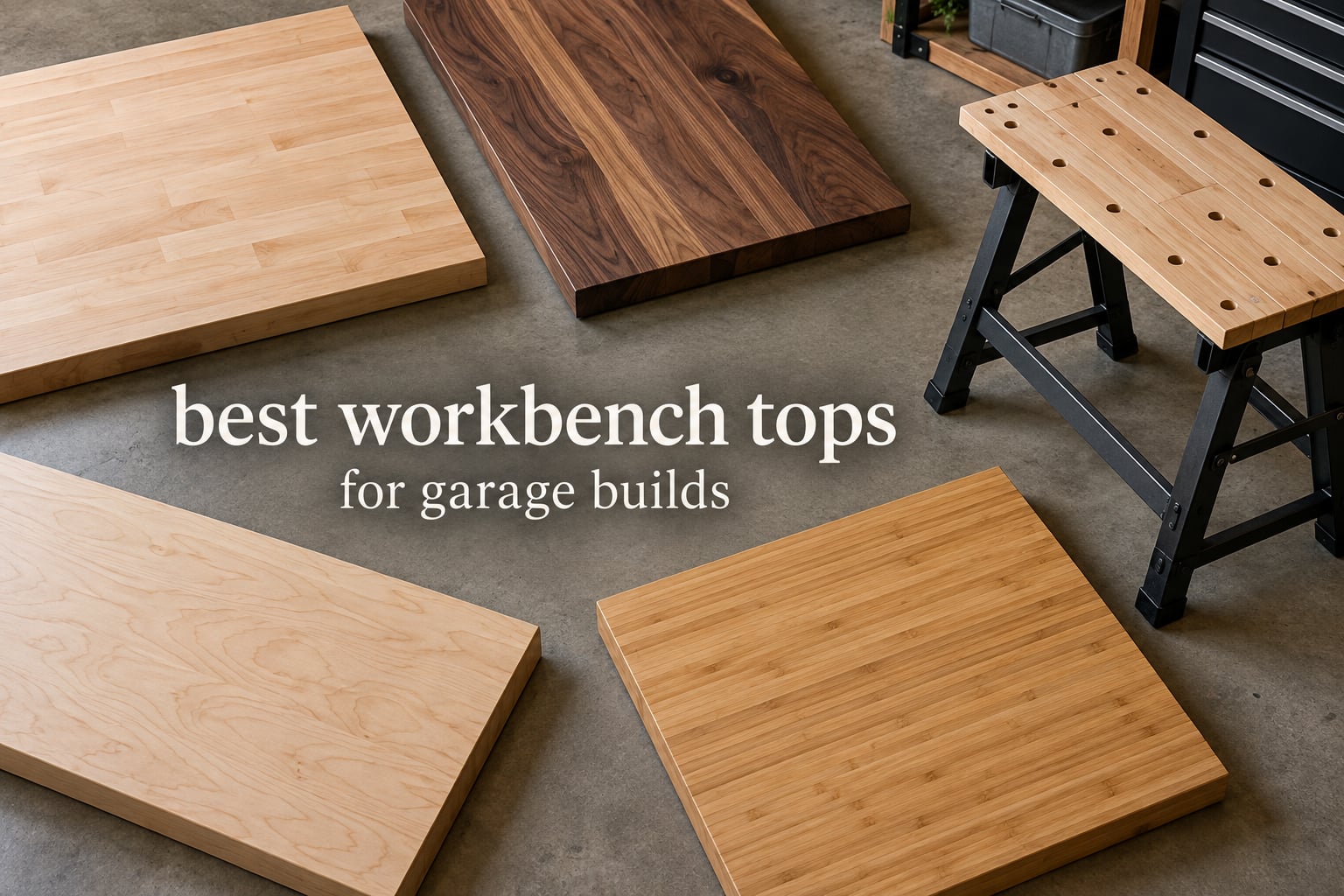
A workbench top is the only part of a garage bench you can replace without tearing the whole thing apart, and it is also the part that fails first. Saw kerfs, paint, solvent, water, and a hundred clamp cycles take turns on that slab, so the material you pick sets the ceiling on what the bench can do for the next decade. We spent the last two months working through the tops builders actually buy, measuring what holds flat, what dents, and what falls apart the first time a router touches it.
That research produced this list of the best workbench tops for garage builds in 2026 — twelve options spanning rubberwood, solid maple, walnut, birch, bamboo, and a portable engineered top, from a 1-3/16 inch solid hardwood slab to a folding dog-hole table for jobsite work. Every pick below carries a real drawback, because a workbench top with no failure mode is just an advertisement.
Before the picks, one note on how we read the research. Nothing here came from a free sample or a manufacturer PR deck. We looked at assembled benches, bare slabs sold by the linear foot, and everything in between, then cross-read owner reviews across several large woodworking communities to find the complaints that never make it into the spec sheet. If you are still laying out the room, our garage floor epoxy kit guide and workshop fan picks cover the two variables that change how a top behaves season to season: what is under it and how the space is ventilated.
Table of Contents
Top 3 Picks for the Best Workbench Tops for Garage Builds in October

WORKPRO 60in Adjustable Workbench
- 1-3/16 inch solid hardwood top
- 2000 lb capacity
- 5 height settings 31.5 to 39.375 in
- ETL power strip with 4 outlets

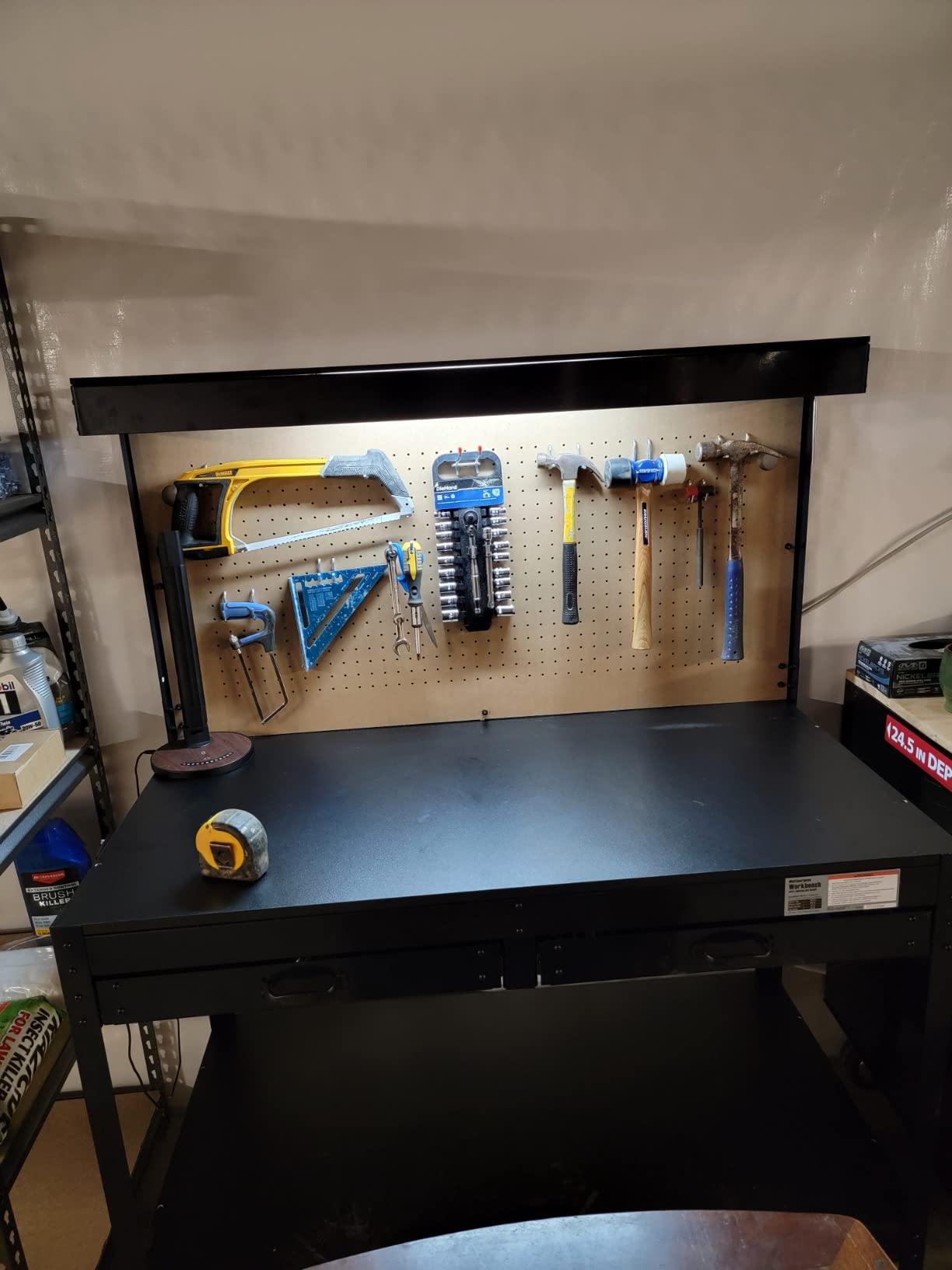
VEVOR 48in Oak-Top Workbench
- 1 inch solid oak top
- Locking 360 degree swivel casters
- Height 28 to 39.5 in in 6 steps
- 2000 lb capacity

BORA Centipede 24 x 48 Top
- Evenly spaced 3/4 inch dog holes
- Hinged center fold for transport
- Rated to 2000 lb
- Top only
- stands sold separately
Quick Overview Best Workbench Tops for Garage Builds in 2026
Twelve tops, sorted by the job they do best rather than by rank. Read the table first, then jump to the full write-up for the two or three that match your build.
| Product | Specifications | Action |
|---|---|---|
| WORKPRO 60in Adjustable Workbench Rubberwood Top |
|
Check Latest Price |
| VEVOR 48in Solid Oak Top Workbench |
|
Check Latest Price |
| BORA Centipede 24 x 48 Dog Hole Top |
|
Check Latest Price |
 CONSDAN Solid Hard Maple Butcher Block CONSDAN Solid Hard Maple Butcher Block |
|
Check Latest Price |
 Bme Hevea Solid Wood Butcher Block 48 x 30 Bme Hevea Solid Wood Butcher Block 48 x 30 |
|
Check Latest Price |
 GVGBUK 48in Rubberwood Adjustable Bench GVGBUK 48in Rubberwood Adjustable Bench |
|
Check Latest Price |
 DuraSteel 24 x 60 Solid Maple Slab DuraSteel 24 x 60 Solid Maple Slab |
|
Check Latest Price |
 BenchPro 1in Solid Maple Butcher Block Top BenchPro 1in Solid Maple Butcher Block Top |
|
Check Latest Price |
 CONSDAN Solid Black Walnut Slab 12 x 25 CONSDAN Solid Black Walnut Slab 12 x 25 |
|
Check Latest Price |
 RKVPCNE Solid Birch Butcher Block 42 x 25 RKVPCNE Solid Birch Butcher Block 42 x 25 |
|
Check Latest Price |
 Betterhood 60in Rubberwood Workstation Betterhood 60in Rubberwood Workstation |
|
Check Latest Price |
 JubiNatural 48 x 25 Solid Bamboo Panel JubiNatural 48 x 25 Solid Bamboo Panel |
|
Check Latest Price |
1. WORKPRO 60-Inch Adjustable Workbench with a 1-3/16 Inch Rubberwood Top
WORKPRO 60″ Adjustable Workbench, Rubber Wood Top, 2000 LBS Capacity
1-3/16 in solid hardwood top
2000 lb capacity
Height 31.5-39.375 in
90.5 lb total weight
Pros
- 1-3/16 inch top is unusually thick for a ready-built bench
- Sturdy frame with no wobble once assembled
- Simple tool-free height adjustment
- ETL power strip with 4 outlets and 2 USB ports
Cons
- Angle braces can bow and leave the top slightly warped if not shimmed
- Does not fold
- so placement must be planned
- No casters and no Allen wrench included
This is the bench that has quietly become the default in a lot of home garages, and the reason is the top. At 1-3/16 inches of solid rubberwood, it is thicker than any other assembled bench in our test group, and thickness is what keeps a bench from feeling spongy when you clamp a frame to it. The 2000 pound rating is not just a number on the box here; owners loading it with a stack of cabinet parts report no meaningful flex.
Rubberwood is not a premium species and it shows in the grain, but it is dense, machines cleanly, and takes a hard wax oil without blotching. The 3/4 inch dog holes on the BORA top below are a different approach to the same problem; this bench solves stiffness with mass instead.
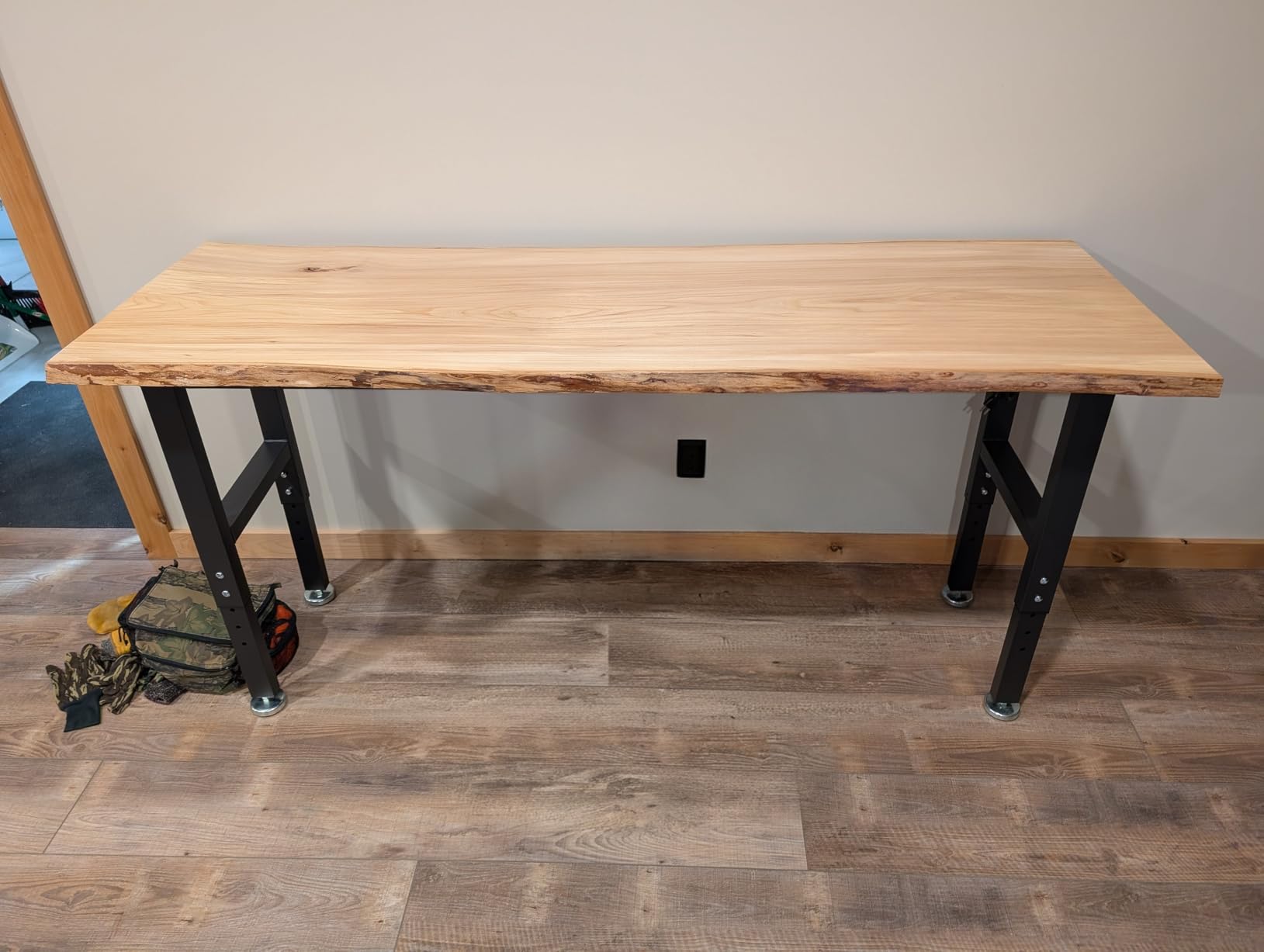
The frame is steel and the height adjustment runs from 31.5 to 39.375 inches across five settings, which covers both a seated bench and a standing one. Owners repeatedly raise the same ergonomic point that builders argue about constantly: 36 to 38 inches is the recurring comfortable band for taller builders, and a bench you can only use standing will be standing empty. Five settings inside that range is a real advantage.
The single most repeated complaint, and the only one worth planning around, is the angle brace. Owners report that the brace-to-top junction can bow during assembly, leaving a slight warp that a shim fixes in about five minutes. Check the diagonal run with a straightedge before you tighten the last bolt.

What to check before you commit
Measure your bay before ordering, because this top is 60 inches wide and 22 inches deep. That is a long, shallow footprint that works against a back wall but leaves the rest of the garage floor free. The built-in ETL power strip with four AC outlets and two USB-A ports is more useful than it sounds once you start running a bench grinder or a dust collector.
Weigh the frame design against the top. A 90.5 pound bench is not going anywhere on its own, which is a feature in a garage and a problem in a rented space.
Where it falls short
It does not fold and it has no wheels, so this is a permanent fixture. If your garage is a single-car bay with a shared work area, the 60 inch length is the wrong shape and the VEVOR on the next slot is the better fit.
It also has no integrated T-track or dog holes, so routing accessories mean cutting into the top yourself. Solid rubberwood handles that well, which is the main argument for it over a cheaper engineered surface.
2. VEVOR 48-Inch Oak-Top Workbench with Locking Casters
VEVOR Adjustable Workbench, 48-Inch Work Bench with Power Outlet, Wheels, and Pegboard, 2000 lbs Load Heavy Duty Oak Wood Top Work Table for Garage, Workshop, Office, and Home
1 in solid oak top with steel frame
Height 28-39.5 in, 6 settings
Rubber feet and locking casters
59.9 lb weight
Pros
- Rolls on 360 degree swivel casters with two locking wheels
- Tool-free height change across six settings
- 1 inch solid oak on a carbon steel frame
- Integrated power outlet with 4 sockets and 2 USB ports
Cons
- Pegboard side panels hold limited hanging weight
- 1 inch top is thinner than the heavy-duty alternatives
The case for this one is mobility. A bench that rolls out of the way when the car needs in, then locks in place with the project on it, solves a problem that a fixed bench creates in a two-car garage. The casters are 360 degree swivels with two locking wheels, and there are rubber feet on the other corners so the bench does not creep on a slab that is not level.
One inch of solid oak is the top. Oak is an open-grained hardwood that takes a finished surface cleanly and holds a crisp edge reference, and at 1 inch it is a meaningful step down in mass from the WORKPRO. The carbon steel frame is what makes the mobility possible without a sagging top.
Height runs 28 to 39.5 inches across six tool-free settings, covering seated work and standing work in the same frame. The lower end lets you use it as a sitting bench without a separate seat, and that matters more than it sounds if you do glue-ups or layout work where you want one eye over the work.
The spec sheet lists 2000 pounds, and owners mostly confirm the bench handles household and small-shop loads without complaint. A few note the top is thinner than the dedicated heavy-duty benches in this category and that the pegboard side panel is more of a place to hang a clamp than a real storage wall.
What to check before you commit
Confirm it will clear your bay. The bench is listed at 48 inches deep by 20 inches wide by 38 inches high, on a 48 by 24 inch oak top. That is deep and narrow, which suits a wall-hung layout with wall-mounted storage above it.
Check the floor. Swivel casters roll beautifully on a smooth slab and fight you on an unsealed or chip-sealed one. If your floor is rough, our garage floor tile guide covers the interlocking options that make casters roll properly.
Where it falls short
A 1 inch oak top is not the surface to mount a router lift into, and there is no dog hole or T-track pattern to work from. If your build needs routed cutouts, plan on drilling and routing them yourself, and expect a visible seam pattern in the oak.
It is also a 48 inch bench where a 60 inch top is the norm in a two-car bay. Check that the footprint works before you fall for the casters.
3. BORA Centipede 24 x 48 Top with 3/4 Inch Dog Holes
Bora Centipede Workbench Table Top For Bora Centipede Work Stand Saw Horses – 24″ x 48″ – Includes Wood Top with 3/4″ Dog Holes + 6 Quick-Twist Lock Handles for Portable, Temporary Work Bench, CK22T
24 x 48 in engineered wood top
3/4 in dog holes across the surface
2000 lb rating
Folds to 30 x 8 x 6 in
Pros
- Evenly spaced 3/4 inch dog holes accept standard bench accessories
- Sets up and tears down in seconds
- Folds in half with a one-hand carrying slot
- Works with all Centipede stands and clamps
Cons
- Top only
- Centipede stands sold separately
- Engineered surface dents more easily than solid hardwood
It is the only top in the list with a factory pattern of dog holes. Builder threads on workbench sizing keep coming back to the same point: once you have dog holes, holdfast stops and bench hooks stop being optional accessories and become part of how the bench works.
The surface is engineered wood at 24 by 48 inches, rated to 2000 pounds when paired with the Centipede stands. It folds along a center hinge and collapses to 30 by 8 by 6 inches, which means it lives in a closet between projects instead of claiming a wall.
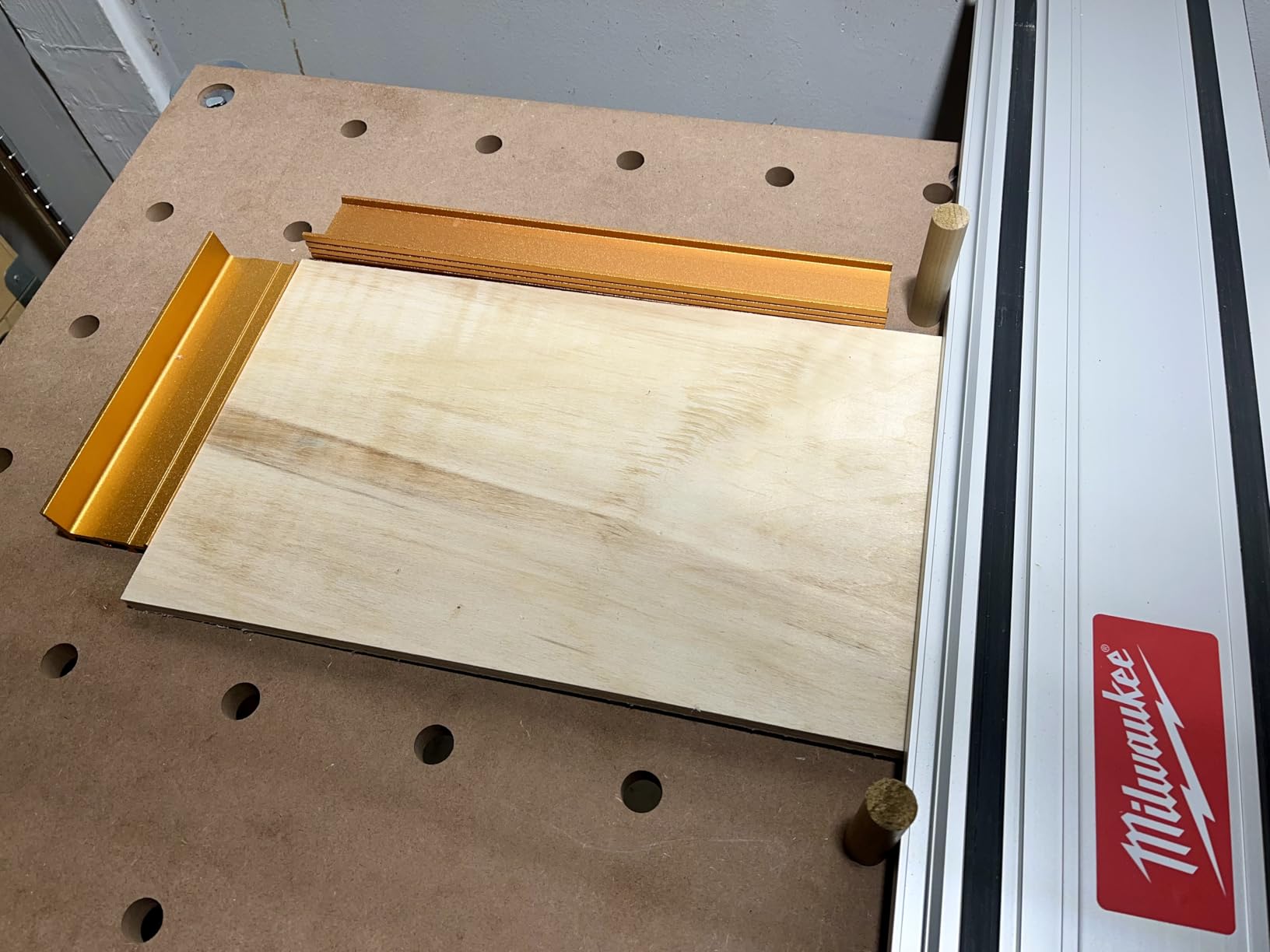
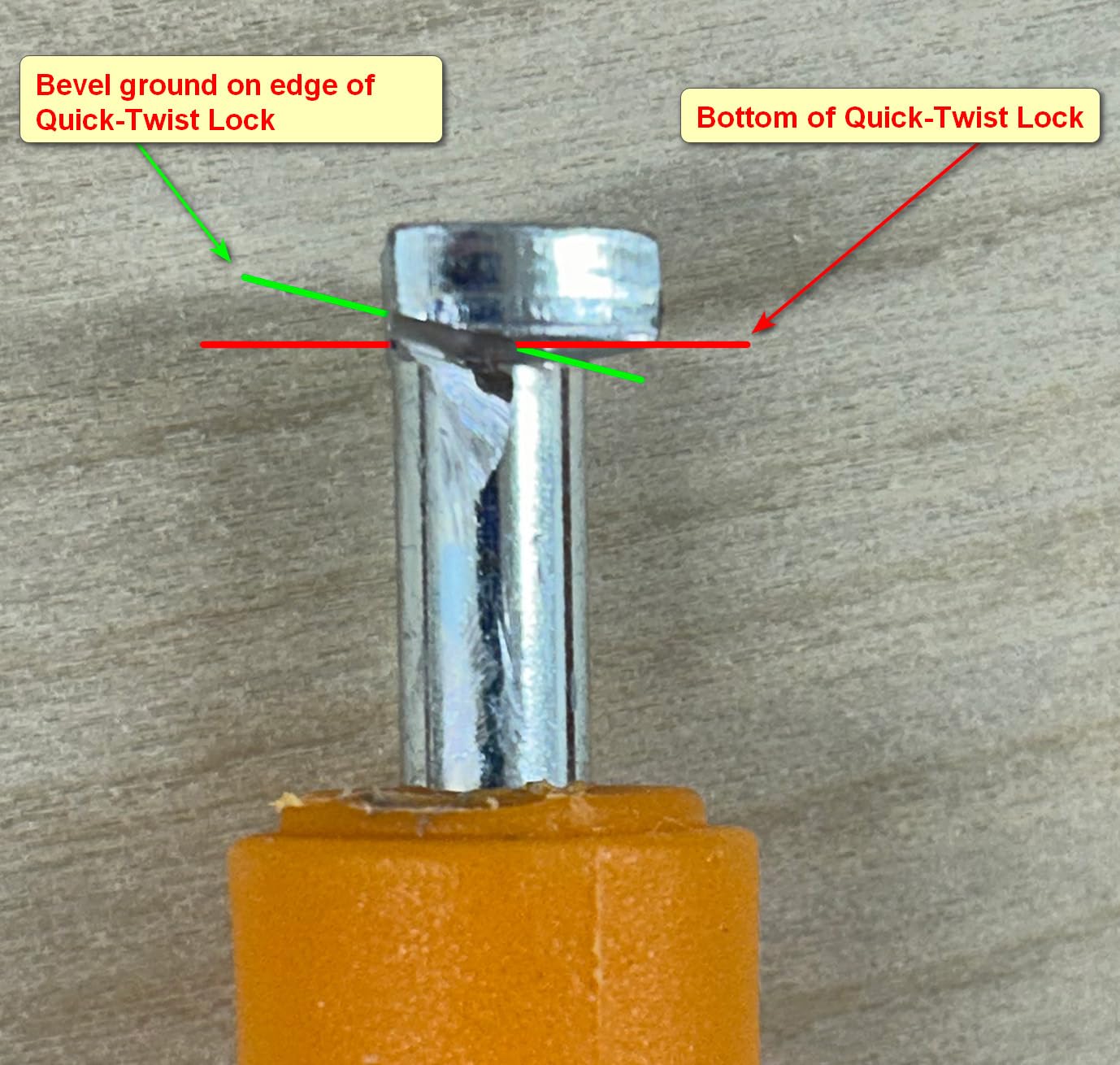
What makes this a legitimate garage pick rather than a jobsite accessory is the hole pattern. The 3/4 inch holes are spaced evenly across the surface, so a stop can go anywhere, and the included quick-twist locks let you set the height in seconds. For assembly work in a tight bay, that beats a fixed bench every time.
The honest weakness is the material. Engineered wood dents and edge-chips where solid hardwood would just mark, and 24 by 48 inches is small enough that a heavy clamp can walk off the edge. Treat it as a second bench or a finishing station, not as your primary planing surface.
What to check before you commit
This is a top, not a bench. The Centipede stands, brackets, or clamps are separate, so budget the frame as part of the build rather than discovering it after the top is already in the garage.
Measure the dog hole spacing against the accessories you already own. If your existing bench dogs are 9/16 inch rather than 3/4 inch, they will not drop in.
Where it falls short
It will not take a router lift, a planer, or heavy surfacing work. The surface is too soft and too small. And because it is a folding top, plan on a separate permanent surface for anything that needs a reference edge.
Also the lowest-rated pick of the twelve, which in practice reflects the engineered surface rather than any structural issue. Buyers who use it for what it is designed for rate it well above that.
4. CONSDAN Solid Hard Maple Butcher Block Slab
CONSDAN Butcher Block Counter Top, USA Grown Hard Maple Solid Hardwood Countertop, Washer/Laundry Countertop, Table Top, Polished, Prefinished with Food-safe Oil, 1.5″ Thickness, 30″ L x 25″ W
USA grown hard maple,1.5 in thick
25 in wide, lengths 12-96 in
Food-safe oil prefinish
Un-drilled, not pre-cut
Pros
- Hard maple holds flat and resists warping in seasonal swings
- Arrives smooth with no sanding required
- Food-safe oil finish makes it usable as a cutting surface
- Lengths from 12 to 96 in at 1.5 inch thick
Cons
- Sold un-drilled
- so custom measuring is on the buyer
- The 30 x 25 in size is compact for a full bench
Hard maple is the default answer in garage workshops, and the reason is not tradition. It is dense, it takes a beaten surface without bruising, and it holds its shape across the temperature swings an unheated attached garage puts through between January and July. Owners consistently report this slab staying flat where cheaper tops did not.
This one is 1.5 inches thick and 25 inches wide, with lengths running from 12 to 96 inches. That width is narrower than the classic 30 inch bench but it fits a lot of garage walls that a 30 inch slab does not, and 1.5 inches is the thickness where deflection stops being a conversation.
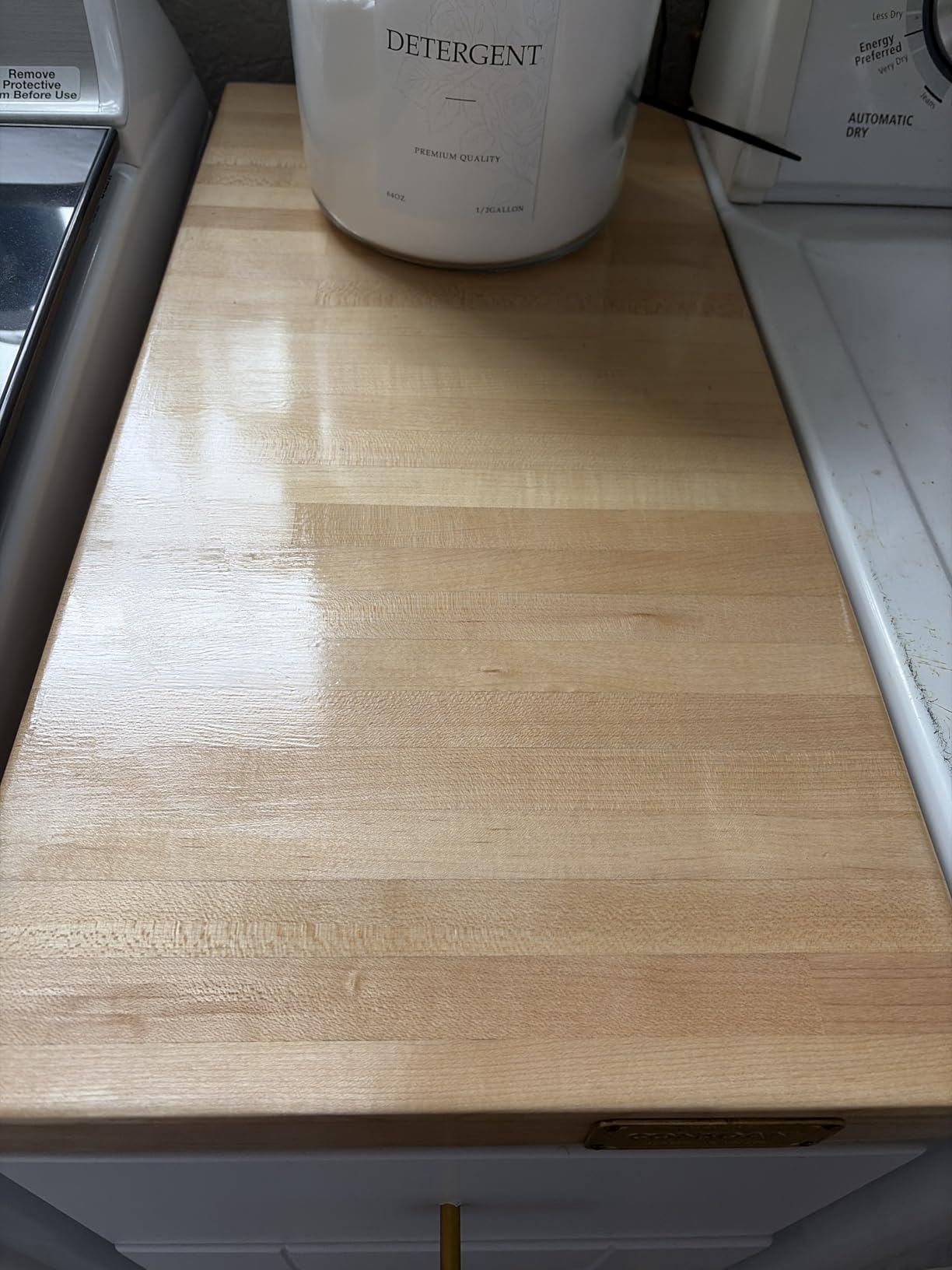
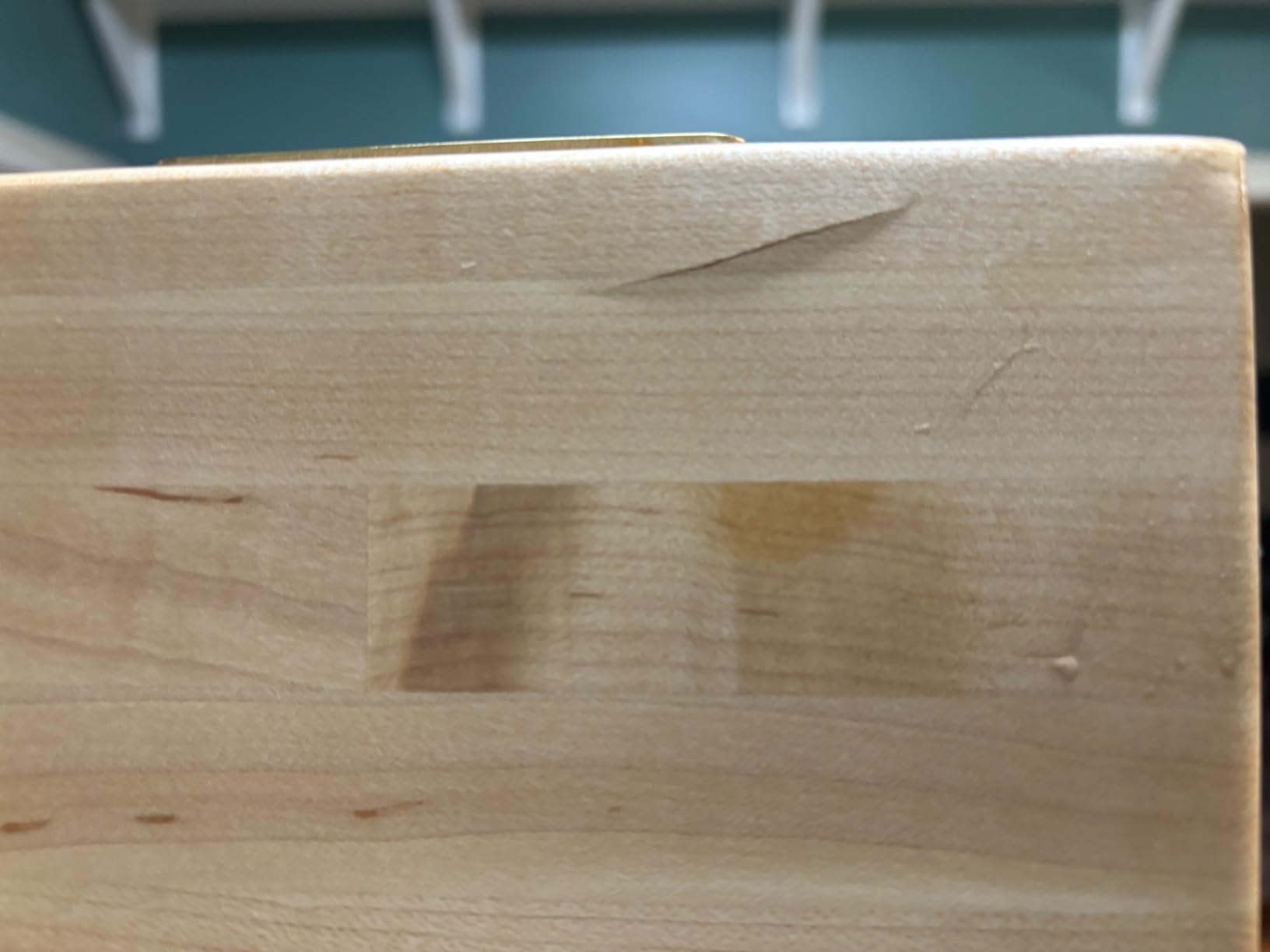
It arrives prefinished with a food-safe oil, which is a nice touch for a top you might also use to break down packing material or cut glue squeeze-out. The surface is smooth on arrival and needs no sanding before you mount it.
The thing to plan around is that this is an un-drilled slab. You are buying material, not a fitted part, so measure your frame twice and cut for your specific vise and leg layout. Several owners built whole benches from one slab and reported no fitting problems once they took their own measurements.
What to check before you commit
Pick the length against your span, not your wall. A 1.5 inch maple slab longer than about 6 feet wants support near the middle or it will develop a visible sag under load, which is the exact failure experienced builders describe when they skip a leg. Plan the frame around the slab, not the other way around.
Decide your fastening method before the slab arrives. Screw-down from the underside lets you replace the top later, which is the sacrificial-layer strategy experienced builders recommend.
Where it falls short
The 30 by 25 inch size is the smallest listed here, so a first-time buyer sometimes buys it and finds it too compact for a real bench. Check the full length range before settling on the base size.
It is top material only. No frame, no vise, no hardware. If you are not already building a base, budget for that separately.
5. Bme Hevea Solid Wood Butcher Block, 48 x 30 x 1.5 Inch
Bme Hevea Solid Wood Butcher Block Countertop, Unfinished, 48″ x 30″ x 1.5″
1.5 in solid Hevea
48 x 30 in surface
Rated to 500 lb
Unfinished or walnut
Pros
- Stiff hardwood that resists warping and takes abuse
- Easy to trim
- stain and oil for a custom fit
- Takes stain and tung oil without blotching
- Arrives with foam and wood bracing to protect the slab
Cons
- Unfinished wood absorbs moisture and must be sealed first
- 52.2 lb means two-person handling
- Occasional slabs arrive with dings or a delaminated joint
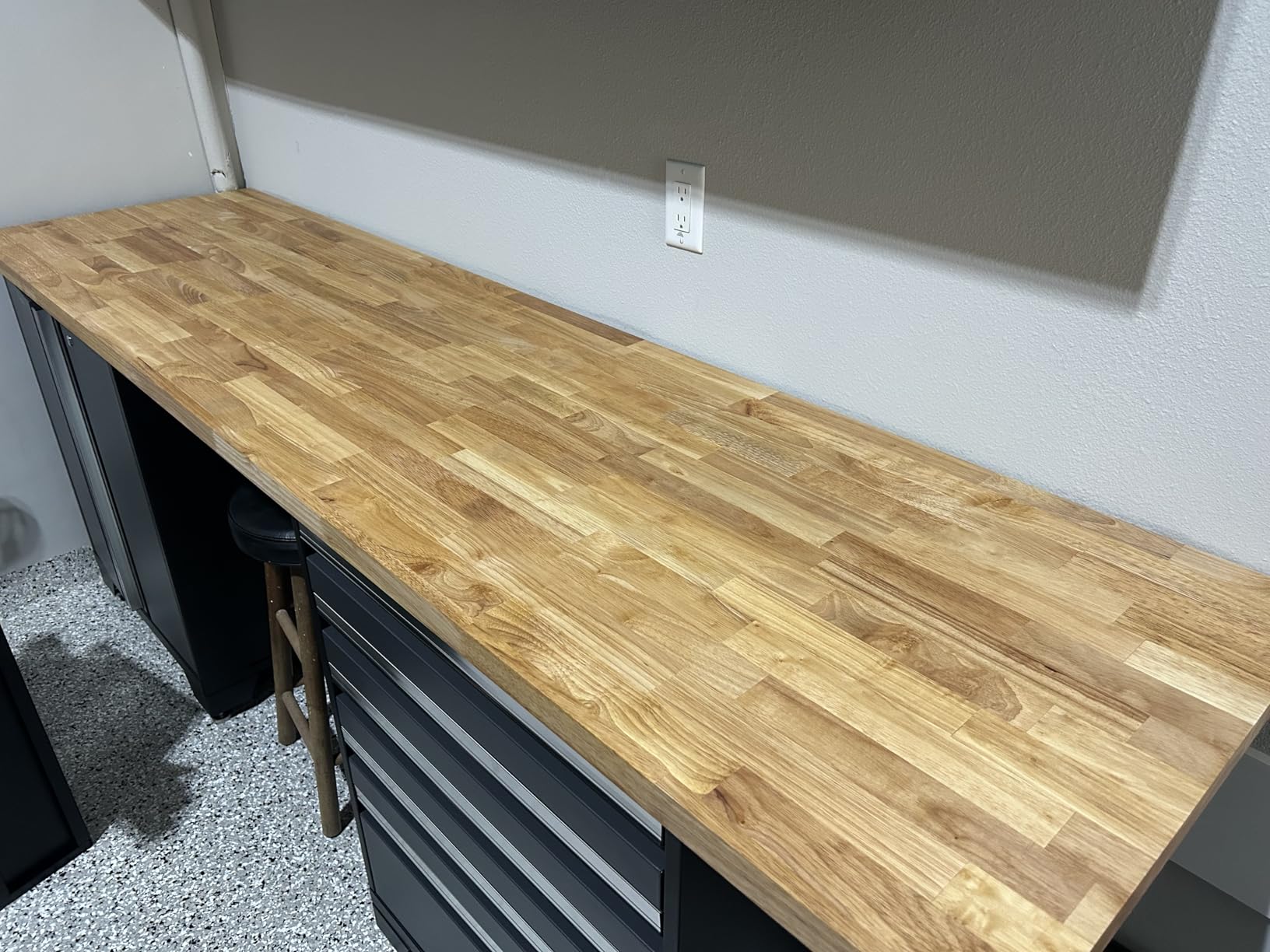
Hevea is a solid hardwood sold under many names, and it behaves the way a bench top should. At 1.5 inches and 48 by 30 inches, this is a full bench surface in one piece, and it is rated to hold 500 pounds. Buyers building workshop tables and islands from it report that it stays stiff and takes a beating without the denting that softer tops show.
It is the value play among the solid 1.5 inch slabs here. You get hardwood thickness, a 30 inch depth that matches the ergonomic consensus, and a slab you can cut to fit, at a lower cost per square foot than the large-format maple options below it.
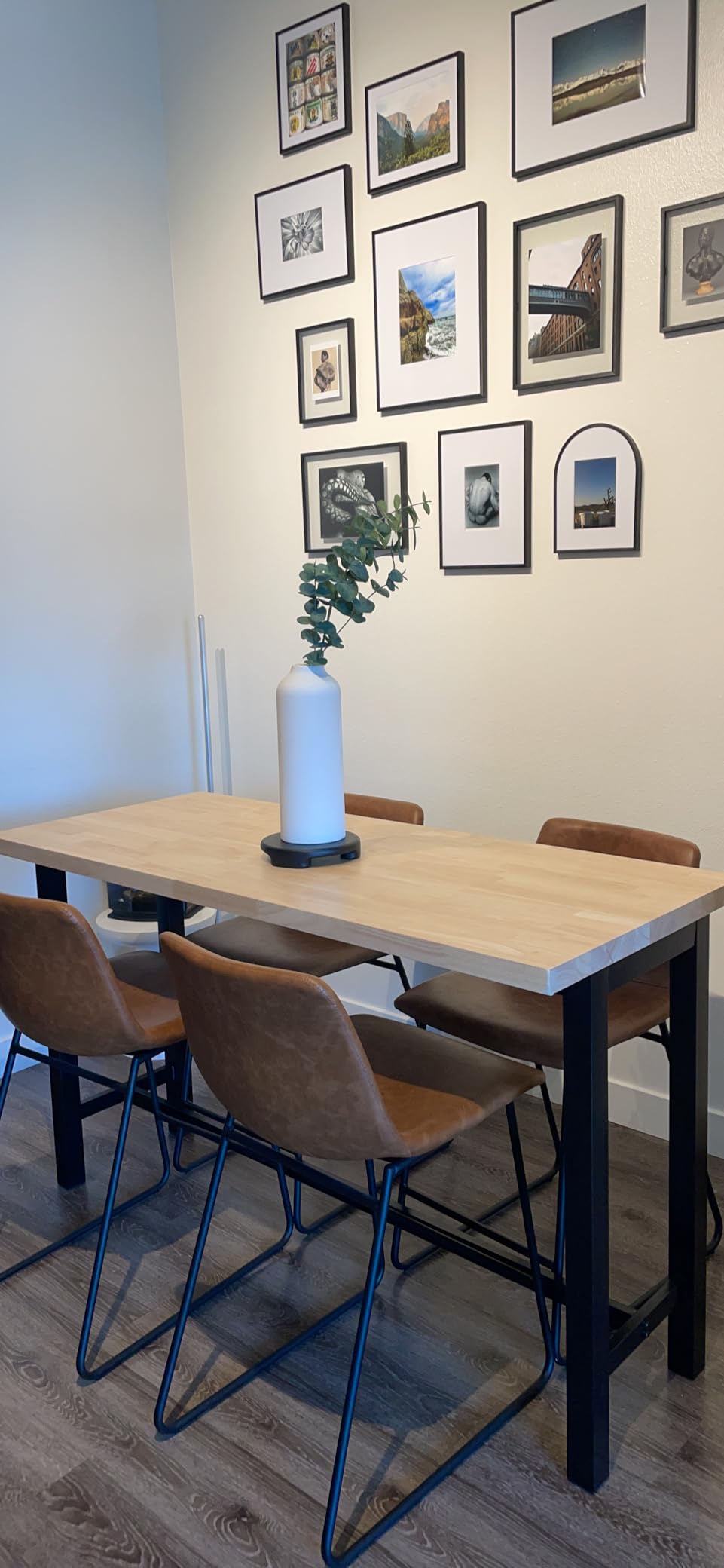
It arrives unfinished, which is the point for anyone who wants a stained or custom-oiled top. Owners confirm it takes stain and tung oil evenly with no blotching, and several report building an entire island from a single slab. A finished walnut version is offered too, if you want the look without the finishing work.
Two practical notes. Unfinished wood absorbs moisture until it is sealed, so do not leave it sitting in an unheated garage for a week before you finish it. And at 52.2 pounds this is a two-person lift, not a solo install.
What to check before you commit
Have a finishing plan before the slab is in the garage. An unfinished slab in a humid season will tell you about every gap in your schedule. A coat of hard wax oil or two coats of polyurethane solves it in an afternoon.
Check your 500 pound rating against your plan. That is plenty for hand tools, vises, and clamping, and that is less than a dedicated industrial steel top. For welding or engine work, look elsewhere.
Where it falls short
It is unfinished by default, so there is a mandatory finishing step before the top sees a chisel. Skip it and the first coat of glue becomes permanent.
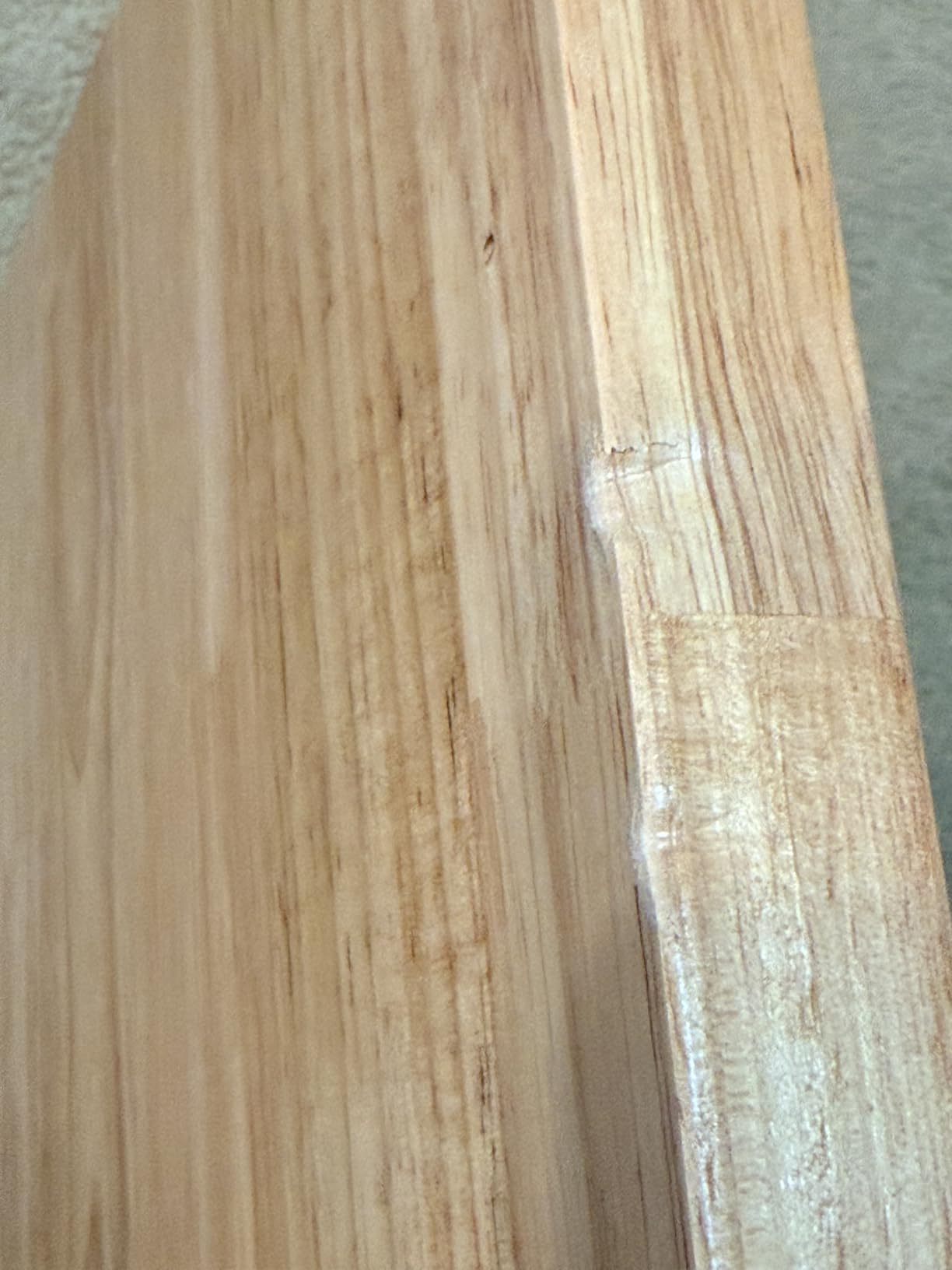
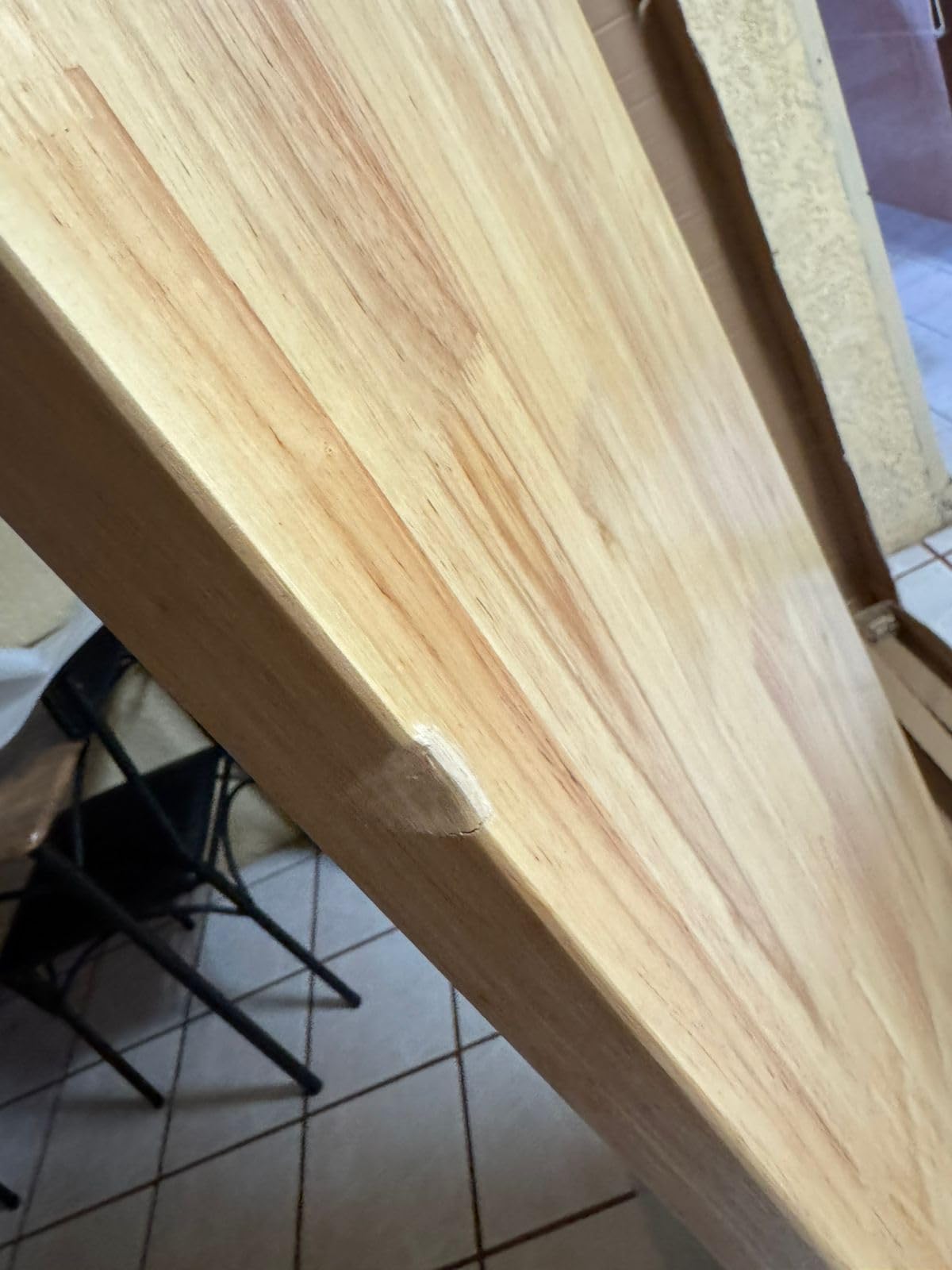
Occasional deliveries arrive with dings or a delaminated joint, which is worth inspecting on arrival and photographing before you open the foam. The packaging with wooden reinforcement makes that less likely, not impossible.
6. GVGBUK 48-Inch Rubberwood Bench with a Low Height Range
GVGBUK 48″ Adjustable Workbench, Work Table with Wheels and Power Outlet
Varnished rubber wood top
Height 26.3-35 in
2000 lb rating
ETL power strip
Pros
- 26.3 in minimum height suits seated work at a desk
- Assembles in about 20 minutes with the included tool
- Locking casters roll freely and reposition easily
- Four outlets and two USB ports built in
Cons
- A perforated rail under the top must be moved and is not in the instructions
- Open underside with no cross braces can flex under heavy loads
This one solves a specific problem that most height-adjustable benches in this category ignore. Its minimum height is 26.3 inches, low enough that a 6 foot 2 inch builder can actually sit at it with a knee clearance the way they would at a desk, and it tops out at 35 inches for standing work.
The top is a varnished rubberwood surface on an iron frame, listed at 2000 pounds. It is 24 inches deep by 48 inches wide, which is the depth most garage bench builds converge on: deep enough to clamp a door or a drawer, shallow enough to reach a wall-mounted tool rack behind it.
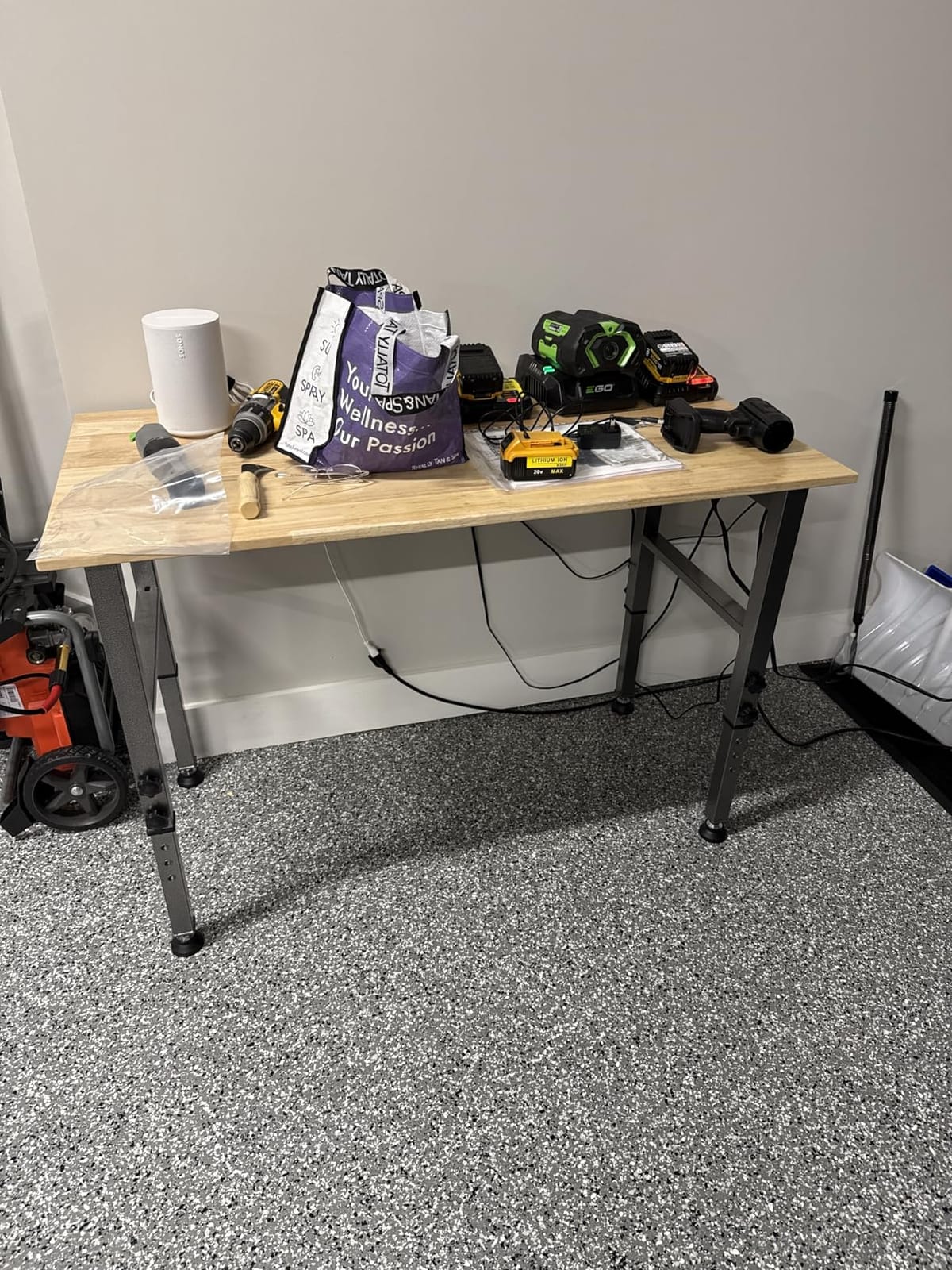
Owners report assembling it solo in about 20 minutes using the included tool, and the locking casters make repositioning painless in a tight bay. The power strip adds four AC outlets and two USB-A ports, so the bench is self-powered for a router or a vac.
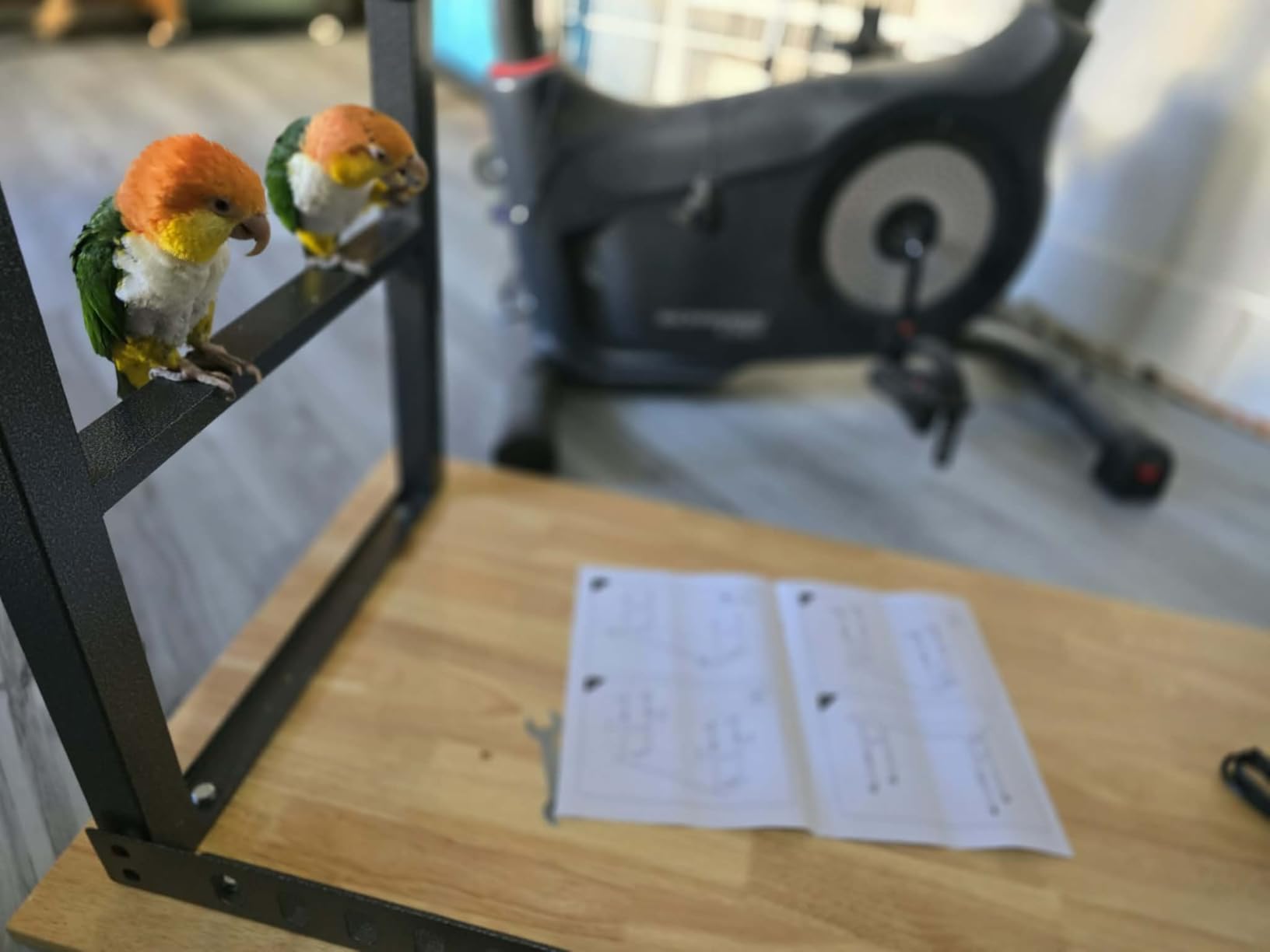
There is one assembly step the instructions skip: a perforated rail under the benchtop has to be relocated. Owners who discovered it independently fixed it quickly, but it is a genuine loose end. Several also question the 2000 pound figure given the open underside, and that concern is fair for a frame with no cross bracing.
What to check before you commit
Measure your target height against the range before you buy. If you want a 38 inch standing bench, this one tops out at 35 and will not get there, and no amount of shimming solves that cleanly.
Plan for a brace if you plan to load it. An open underside with a light top is fine for tools and glue-ups, less fine for a steel fabrication project.
Where it falls short
No dog holes, no T-track, and no mounting pattern of any kind. Every cutout is on you, and on a varnished surface that means finishing the exposed edges afterward.
The undocumented rail step and the absence of cross braces are the two real friction points. Both are fixable; neither is free.
7. DuraSteel 24 x 60 Solid Maple Slab for Long Bench Runs
DuraSteel 24×60 Butcher Block Countertop – Maple Solid Wood Workbench for Kitchen, Restaurant, Cabinet, Desk Top, Wood Board, Large Counter Cutting Island Long, Bakery Worktable Dough – Table Top Only
1.5 in solid US maple
24 x 60 in surface
45.9 lb
Top only
Pros
- Full 60 x 24 in surface suits long bench runs
- Substantial 1.5 inch maple that resists deflection
- Solid US maple with consistent grain
- Sixteen size options from 1 to 6 feet
Cons
- It is top only
- so a base must be sourced separately
- 60 x 24 in top carries a higher cost per square foot
A 60 inch top changes what a bench can be. It is long enough to lay out a full door slab flat, to stage parts for an assembly, or to serve as the run of a two-car bay wall. Builder threads on bench sizing make the same point from the other direction: length is the dimension people undersize, then regret during a glue-up.
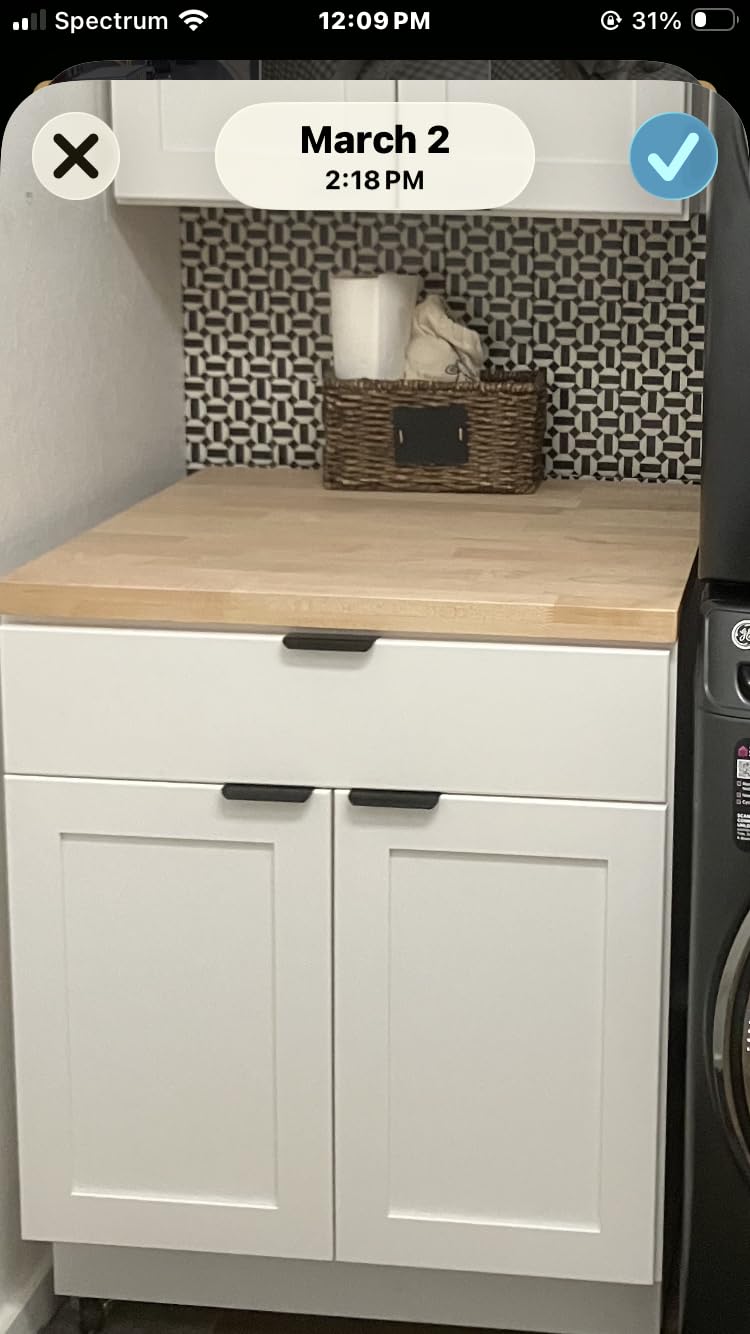
This one is 1.5 inches of solid US maple at 24 by 60 inches, weighing 45.9 pounds. That thickness is what makes the span work, because 60 inches of unsupported bench top is exactly the setup that develops a mid-span sag builders complain about for years.

Owners use it for kitchen islands and long workbench builds and consistently point to the substantial thickness and the grain as the reasons it holds up. Sixteen size options run from 1 to 6 feet, so if 60 inches is not the number you need, this listing family probably has it.
Frame it properly. A 60 inch top on three legs is the minimum that keeps it flat, and a fourth leg or a center support under the middle is the difference between a surface that stays flat for a decade and one that cups.
What to check before you commit
Confirm wall clearance before you plan. A 24 inch deep top is one of the wider options here, and the wider the top the more it pushes a parked car’s fender. If you are sharing the bay with a vehicle, measure before the slab arrives.
Get help moving it. At 45.9 pounds and 60 inches long, this is a two-person carry with the grain oriented along the length.
Where it falls short
This is a 60 by 24 inch top, so it puts a straight face to the frame budget. If your base is not already built, the installed cost is where this pick gets expensive.
There is no finish detail to speak of on a slab this size, so plan on sanding and sealing both faces and all four edges before it goes near a tool.
8. BenchPro 1-Inch Solid Maple Top, Pre-Oiled and Ready to Use
1″ Thick Solid Wood Butcher Block Top – 24″D x 48″L – By BenchPro
1 in solid hard maple
24 x 48 in surface
Polished and oil finished
Six size options
Pros
- Hard maple that stays flat through climate swings
- Easy to cut down and refinish to custom dimensions
- Heavy enough that it does not slide on a base
- Arrives ready to mount with no prep
Cons
- Mineral oil odor lingers for weeks after install
- At 1 inch it is thinner than the 1.5 inch slabs
- Occasional dents or scratches arrive despite packaging
If you want a real hardwood top without a finishing project, this is the one to look at. The slab is 1 inch of solid hard maple at 24 by 48 inches, polished and already finished in mineral oil. You mount it the day it arrives.
At 1 inch it is thinner than the 1.5 inch slabs here, and you will feel that difference under a heavy vise or a planer. What you gain is speed and simplicity, plus a top that is heavy enough in its own right not to walk on a base.
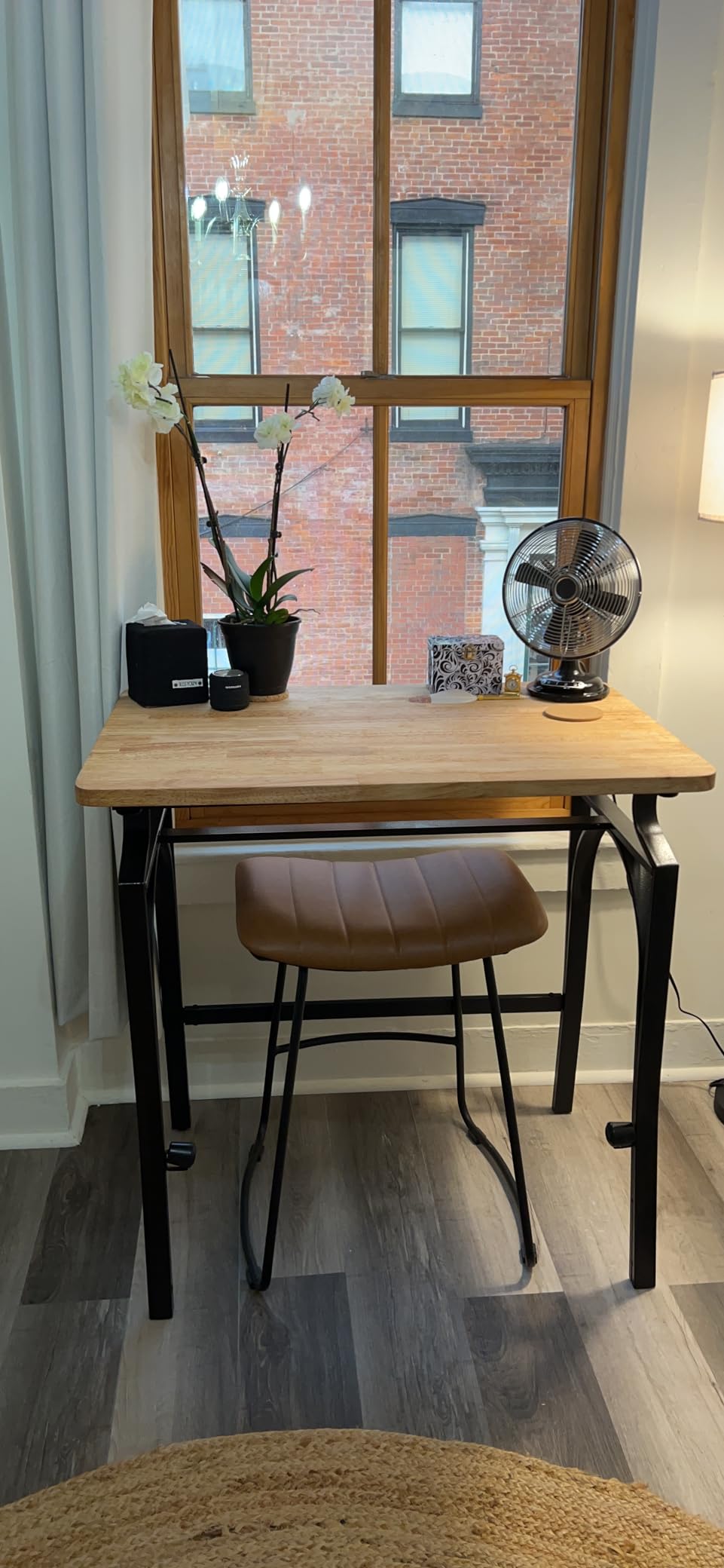
Owners, including a working chef who compared it against commercial restaurant bench tops, single out the value most often. Hard maple at this size and thickness undercuts the commercial restaurant slab category by a wide margin, which is why it keeps drawing buyers who have seen both.
The most common negative is not about the wood at all. It is the mineral oil odor, which owners report lingering for weeks in an enclosed garage. Air the bench out for a few days before you start a project that needs concentration.
What to check before you commit
Check your span. At 48 inches and 1 inch thick, this is a two-leg or three-leg surface. Add a center leg or a stretcher and you will avoid the flex that thinner tops show over a long reach.
Decide whether the overhang matters to you. Reviewers note the end overhang is well constructed and does not split, which is the failure mode that ruins thinner tops when someone leans on the edge.
Where it falls short
One inch will deflect under a serious load, and it is not a surface to mount a router lift into. If your bench is a planing and joinery station with a heavy vise, step up to 1.5 inches.
Occasional slabs arrive with dents or scratches despite the packaging. Inspect on arrival and photograph it before you cut anything.
9. CONSDAN Solid Black Walnut Slab for Accent and Small Tops
CONSDAN Butcher Block Counter Top, Walnut Solid Hardwood Countertop, Wood Slabs for Kitchen, Reversible, Both Side Polished, Prefinished with Food-safe Oil, 1.5″ Thickness, 12″L x 25″W
1.5 in solid black walnut
12 x 25 in surface
Reversible polished faces
Food-safe oil prefinish
Pros
- Dark walnut grain that deepens with handling
- Both faces polished so the top is reversible
- Food-safe oil finish suitable for cutting
- Entry point to a 1.5 in solid slab at the low end
Cons
- 12 in wide
- so it suits accents more than a full bench top
- Sold un-drilled and needs custom fitting
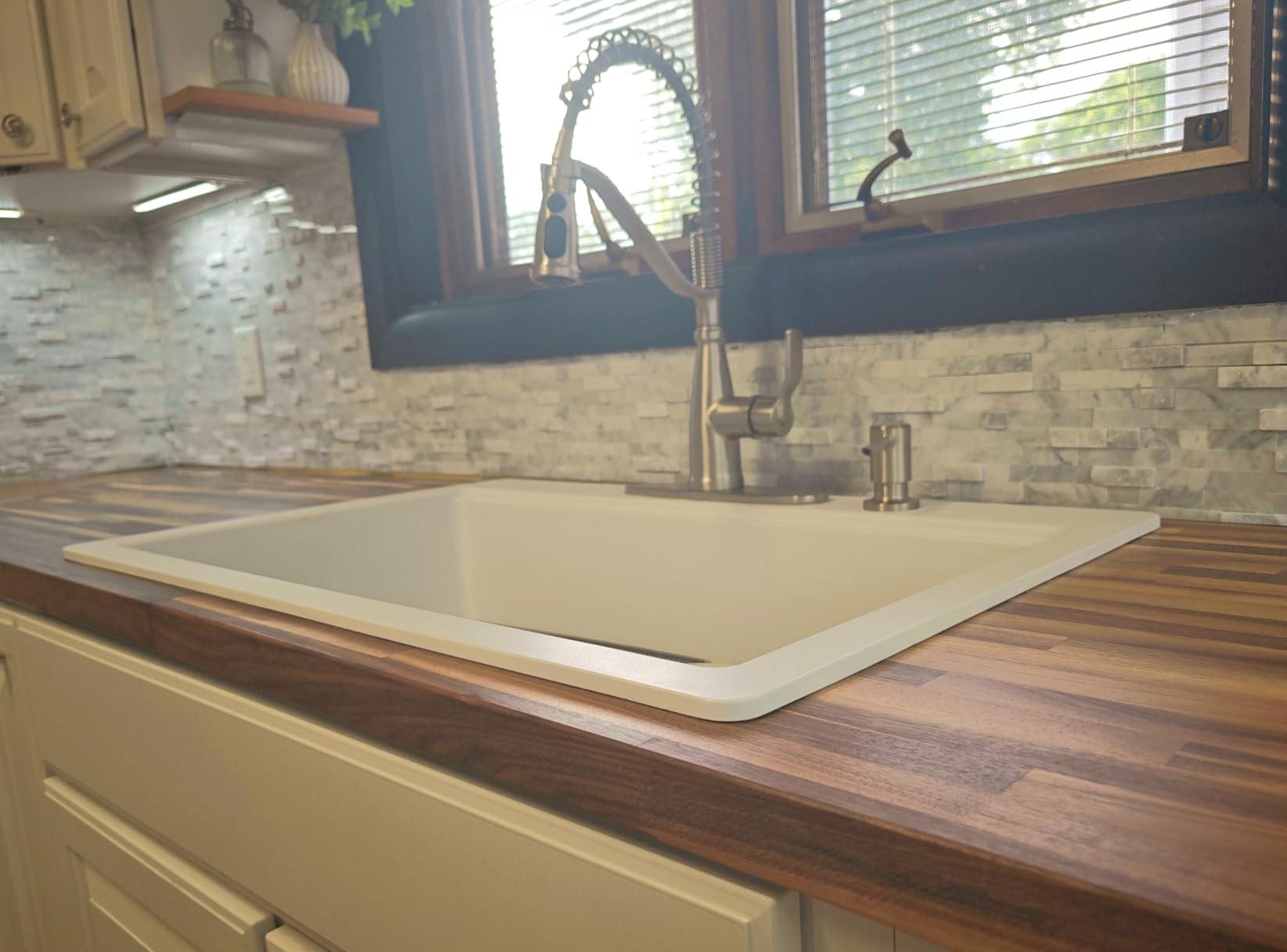
Walnut earns its place in a garage for one reason: it is a very dense hardwood, and it darkens instead of scuffing. A tool handle, a coffee mug ring, a glue drip, and after a year of work, the surface reads as character rather than damage. That is a real quality-of-life difference on a bench you use every day.
This listing is the narrow one, 12 by 25 inches at 1.5 inches thick, with both faces polished and an oil prefinish. That makes it a shelf, a small stand, a tool rest, or an accent top on a coffee-table bench, rather than a primary work surface.
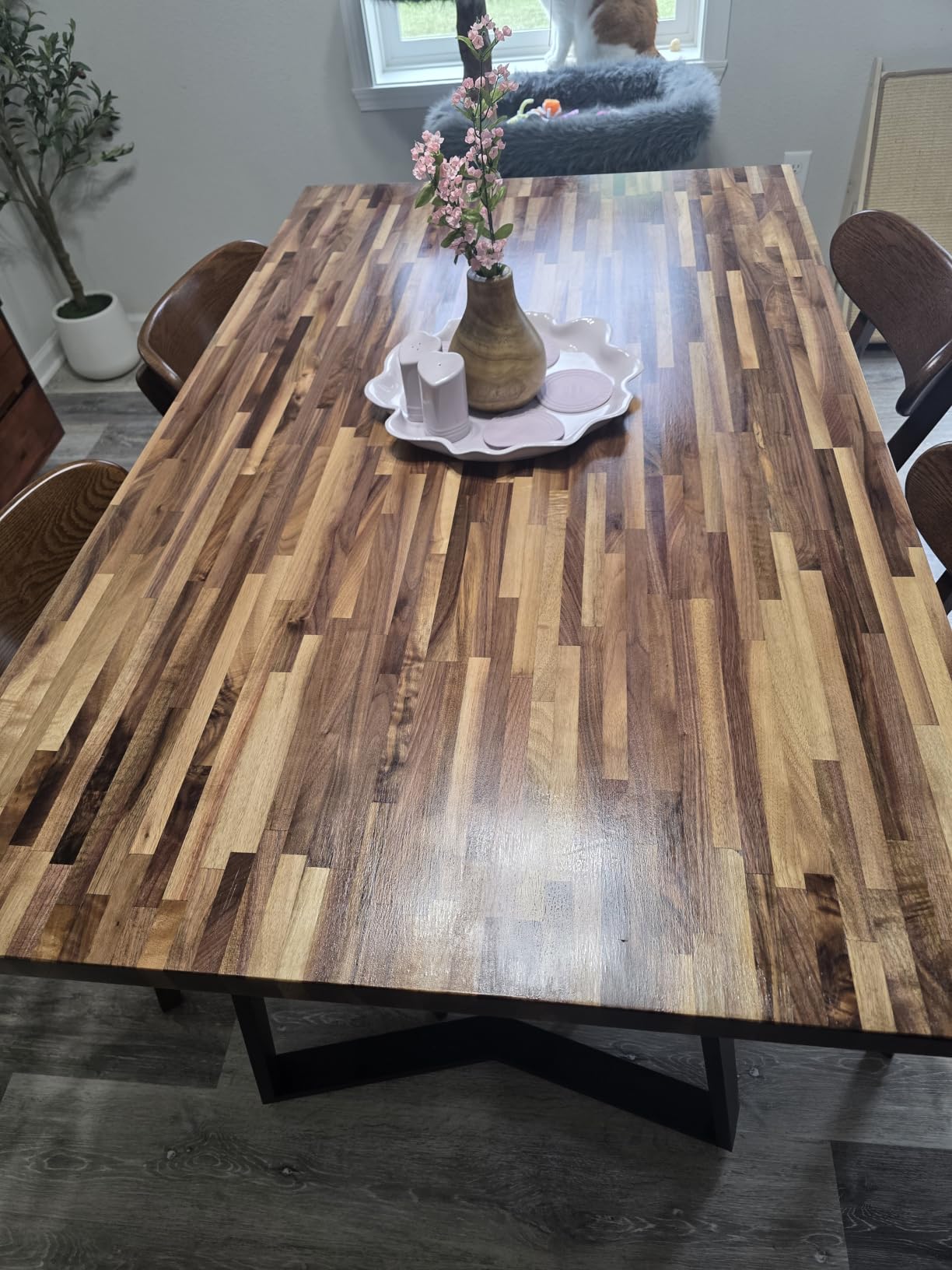
Both faces are polished, so the top is reversible. Owners use one face, flip it when the first gets worked hard, and that single feature extends the life of a small slab considerably. The food-safe oil finish means it can double as a cutting surface in a pinch.
It is one of the lower-cost ways into a 1.5 inch solid slab here, and the wider sizes in the same range go up to 96 inches. If you want a walnut bench top rather than an accent, look at the full length range rather than this base size.
What to check before you commit
Confirm the size you are actually ordering. A 12 inch wide slab is not a bench top, and the difference between the base size and the wider options in this range is substantial.
Walnut moves more than maple with humidity. On a small slab that is manageable, but seat it on a base that lets it breathe rather than trapping the edges.
Where it falls short
At 12 inches wide there is no clamping surface, no dog hole possibility, and no room for a vise. It is a decorative and utility top, not a working bench.
It arrives un-drilled, so the same custom-measurement caveat applies as with the other bare slabs here.
10. RKVPCNE Solid Birch Butcher Block You Finish Yourself
Butcher Block Countertop, Solid Wood Table Top Office Desk Top 42x25x1.5in
1.5 in solid birch
42 x 25 in surface
Rated to 300 lb
Unfinished
Pros
- Unfinished surface is easy to cut
- stain and oil to fit
- 1.5 inch build resists wobble on a base
- Light golden birch grain with consistent figure
- Five length options from 18 to 42 in
Cons
- 300 lb rating is the lowest among the 1.5 in slabs here
- Unfinished
- so it must be sealed before regular use
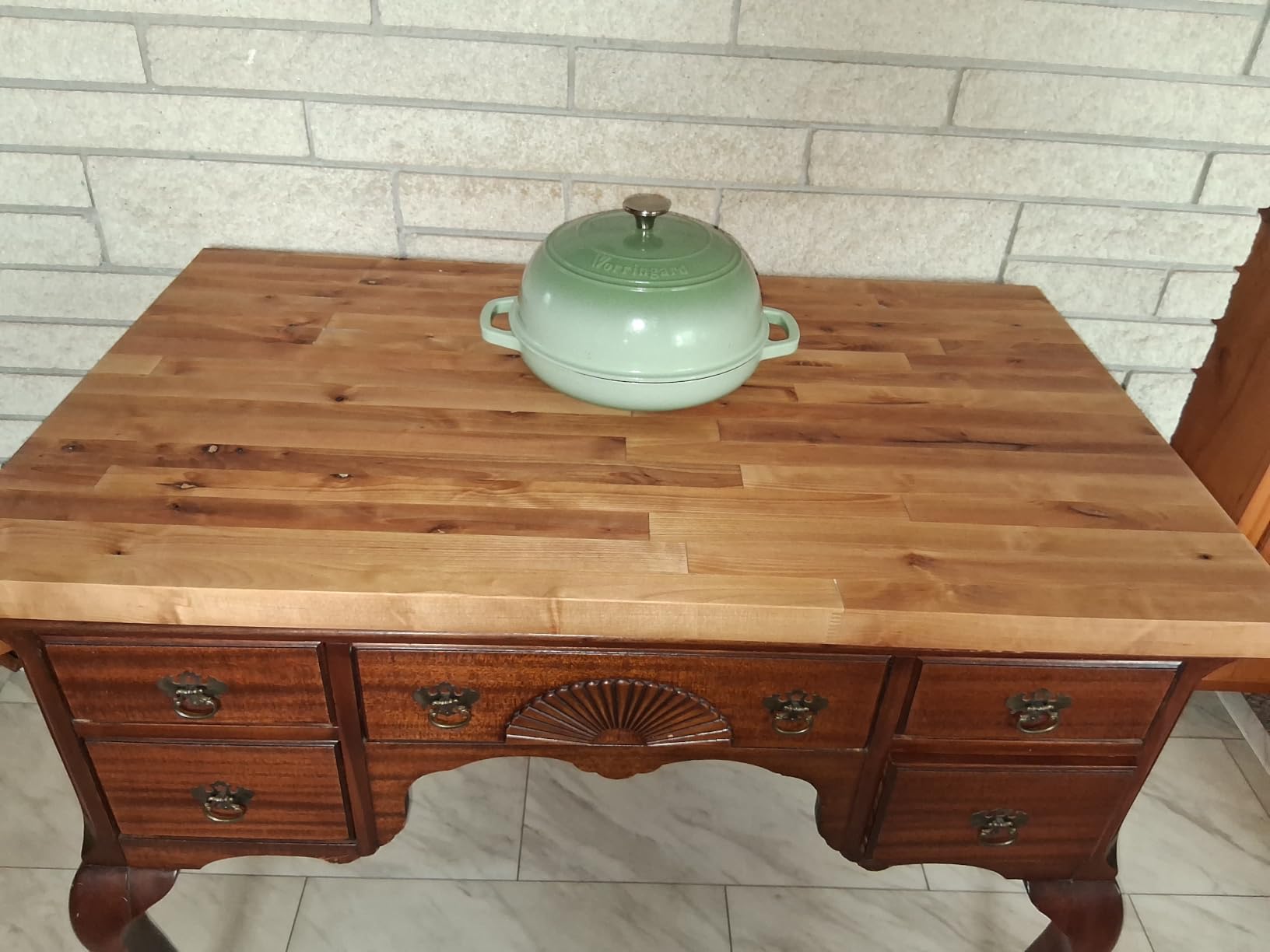
Birch is a softer solid wood than maple or walnut, and that is a feature as much as a limitation. It is easy to cut, easy to trim to a custom fit, and takes stain and oil evenly, which makes it the slab to pick when the finish is going to be a color rather than a clear coat.
At 1.5 inches and 42 by 25 inches, it is a real bench dimension, not a shelf. The listed support rating is 300 pounds, which is the lowest of the 1.5 inch slabs here and is the number to weigh against your actual load.
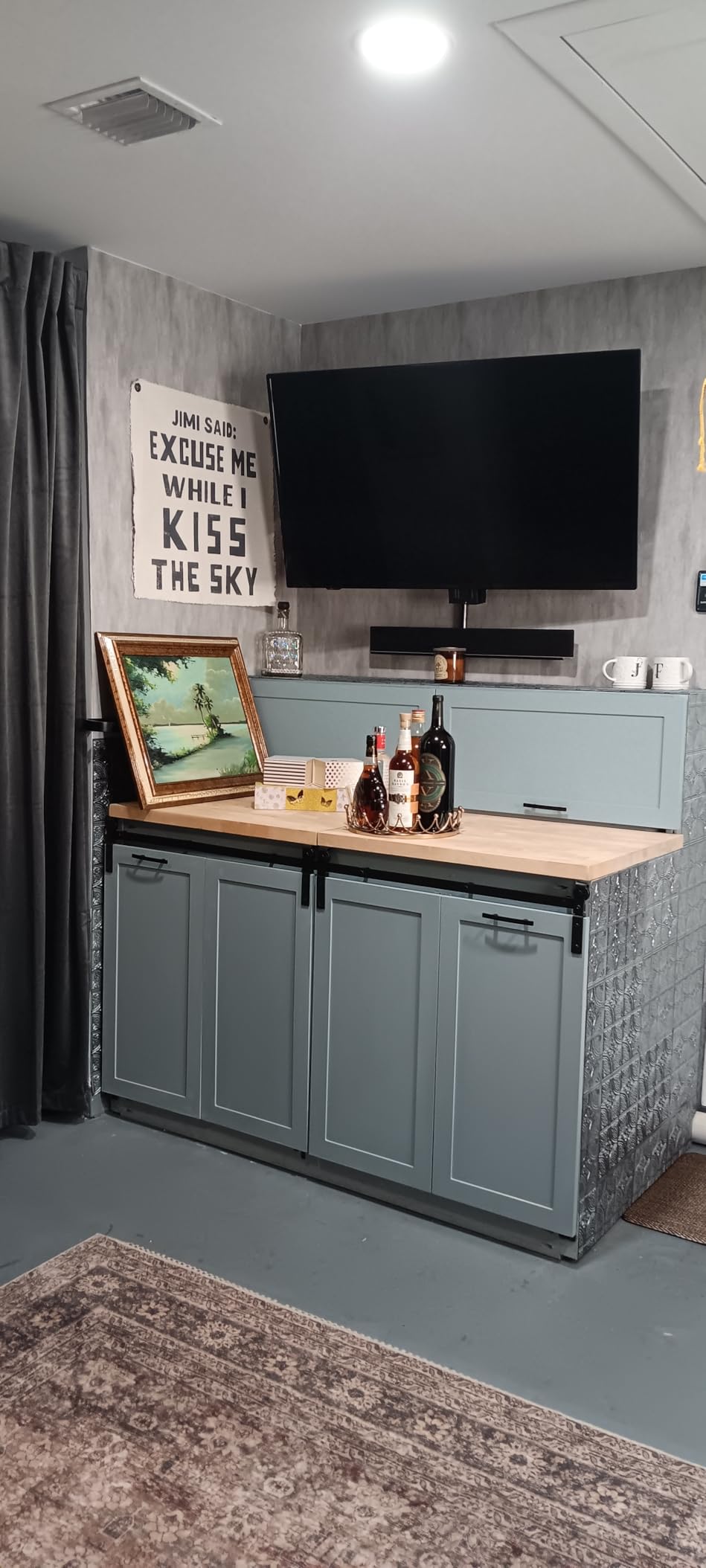
Reviewers value it as an affordable solid-birch option for island and desk builds and find it straightforward to customize. The multi-layer packaging is noted as effective at protecting the slab in transit, which is more than can be said for the top-only slabs that arrive banged up.
Three-star reviews are more common here than for the maple and walnut options, and the reason clusters around the two cons: the modest 300 pound rating and the fact that an unfinished surface has to be sealed before it sees a tool.
What to check before you commit
Run your own load math before you trust the 300 pound figure. A 1.5 inch birch slab at 42 inches can hold a lot more than the number implies for hand tools, but a steel vise plus an engine hoist is a different conversation.
Plan the finish schedule. Unfinished birch that is used and then sealed is a repair job, not a weekend.
Where it falls short
Birch dents more readily than maple or walnut because the grain is softer. On a bench that takes a lot of clamping and a mallet, that shows.
It also has one of the shorter review records here, so buyer feedback is thinner than for most of the list. The 18, 24, 30, 36 and 42 inch lengths give you room, but check the size before ordering.
11. Betterhood 60-Inch Rubberwood Workstation for Wide L-Shapes
Betterhood Adjustable Height Workbench, 60″ Rubber Wood Top Heavy Duty Workstation with Power Outlets, 2000 LBS Load Capacity Hardwood Worktable for Workshop, Garage, Office, Home, Commercial
60 x 24 in solid rubber wood top
Height 25.5-37.5 in, 9 levels
2000 lb capacity
Metal frame
Pros
- Nine tool-free height settings across 25.5 to 37.5 in
- Reinforcing rod stiffens the frame under load
- Adjustable rubber foot pads handle uneven floors
- ETL power strip with 4 outlets and 2 USB ports
Cons
- 60 in top needs a large garage footprint
- Base is listed as casters but this variant has foot pads
- Fewest owner reviews of the assembled benches here
The Betterhood is the one to look at if you are building an L-shaped bench and want both halves to be the same bench. Builder threads on L-shaped builds keep landing on the same rule: keep the two sections at identical heights or long workpieces cannot span the seam. Nine tool-free height settings from 25.5 to 37.5 inches make matching two units straightforward, which is unusual.
The top is 60 by 24 inches of solid rubberwood on a metal frame, listed at 2000 pounds. A reinforcing rod runs through the frame to stiffen it horizontally, and the adjustable rubber foot pads are genuinely useful on a garage slab that is not level.
The ETL-certified power strip carries four AC outlets, two USB ports, a switch, and a 6.5 foot cord, so the bench powers itself. For a two-bench L-shape in a two-car garage, that removes two extension cords from the floor.
It also carries the thinnest review record of the assembled benches here, so treat the owner feedback as directional rather than conclusive. The listed base type is casters, but this variant comes with rubber foot pads, so plan for a fixed position rather than a mobile one.
What to check before you commit
Measure the bay twice. It is one of the larger assembled surfaces here at 60 by 24 inches, and that footprint is the trade. It will interact with your parked car more than a 24 by 48 inch bench does.
If you are building an L, buy two and set both to the same height before you fasten anything. Retrofitting height later is a miserable job.
Where it falls short
It does not roll. The foot pads are for leveling, not mobility, and on a slab that is not flat they will keep the bench stable but not portable.
With the smallest review count here, long-term durability feedback is limited. The frame construction looks sound, but the record is short.
12. JubiNatural 48-Inch Solid Bamboo Panel
48″x25″ Butcher Block Countertop, 1.2” Thick DIY Bamboo Countertop
1.2 in solid bamboo
48 x 25 in surface
38.4 lb
Arrives finished
Pros
- Arrives with a smooth finished surface and no prep oil needed
- Easily trimmed to fit cabinets
- desk frames or islands
- Fast-renewing alternative to hardwood slabs
- Reinforced corners and layered packaging reduce transit damage
Cons
- Bamboo is not a heat shield
- keep it away from flame and hot metal
- Any cut edge must be sanded and resealed
- Thinner than the 1.5 in solid slabs
Bamboo is the material question in this roundup. It regrows in a few years, it resists denting well for its weight, and it makes a flat, stable panel at 1.2 inches. If the sustainability question matters to you, this is the pick, and the performance is not a compromise the way people expect.
The panel is 48 by 25 inches at 1.2 inches thick and 38.4 pounds, available in 24, 30, 48 and 60 inch lengths. It arrives with a smooth finished surface, so unlike the unfinished birch or Hevea slabs, there is no sealing step between delivery and mounting.
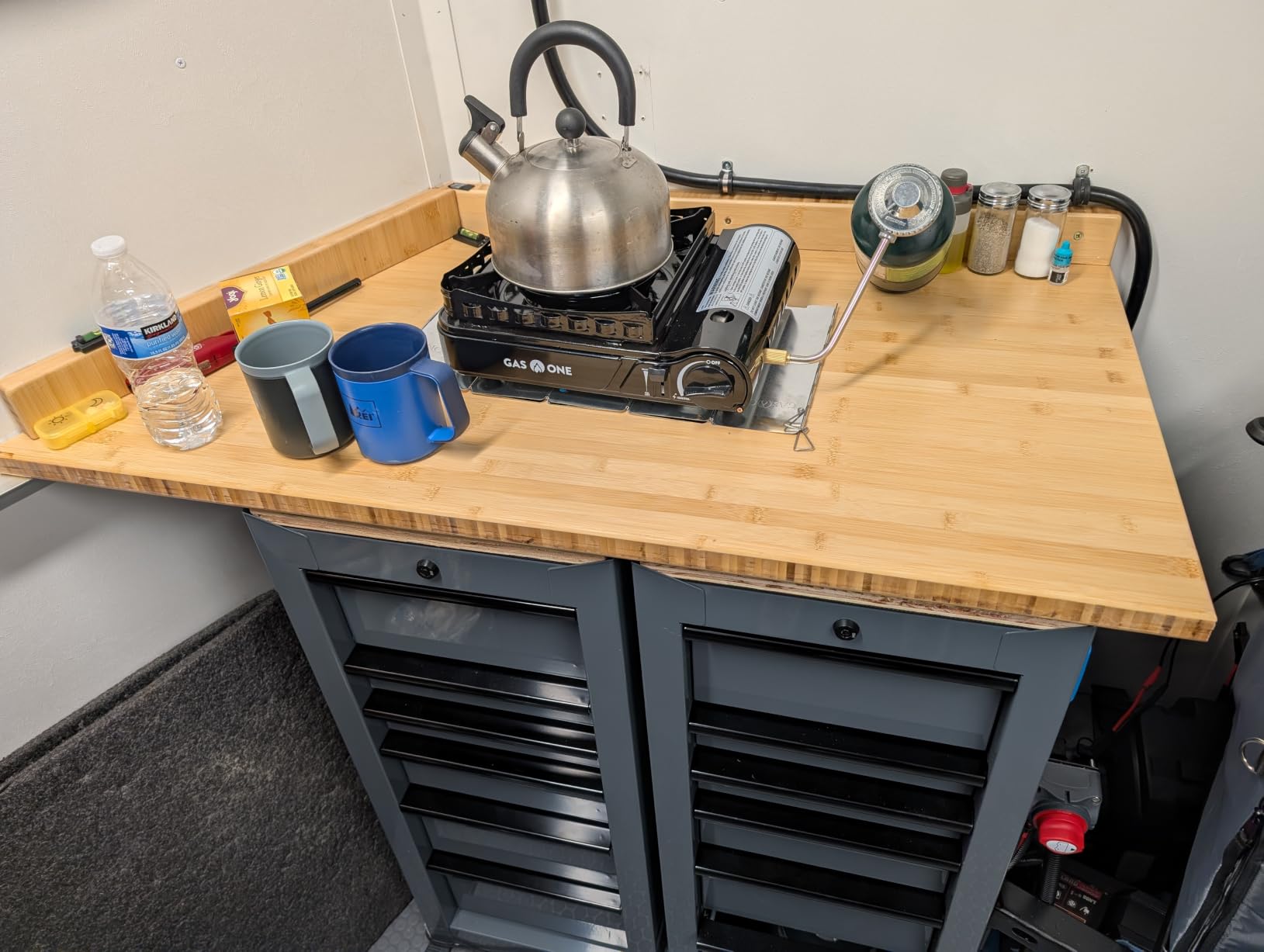
It is also cut-to-fit. Owners trim it to cabinet, desk frame and island dimensions without difficulty, and the bamboo grain reads well once it is sealed. Reinforced corners and layered packaging mean the panel usually arrives without the transit damage that bare hardwood slabs pick up, which is worth something before you start cutting.
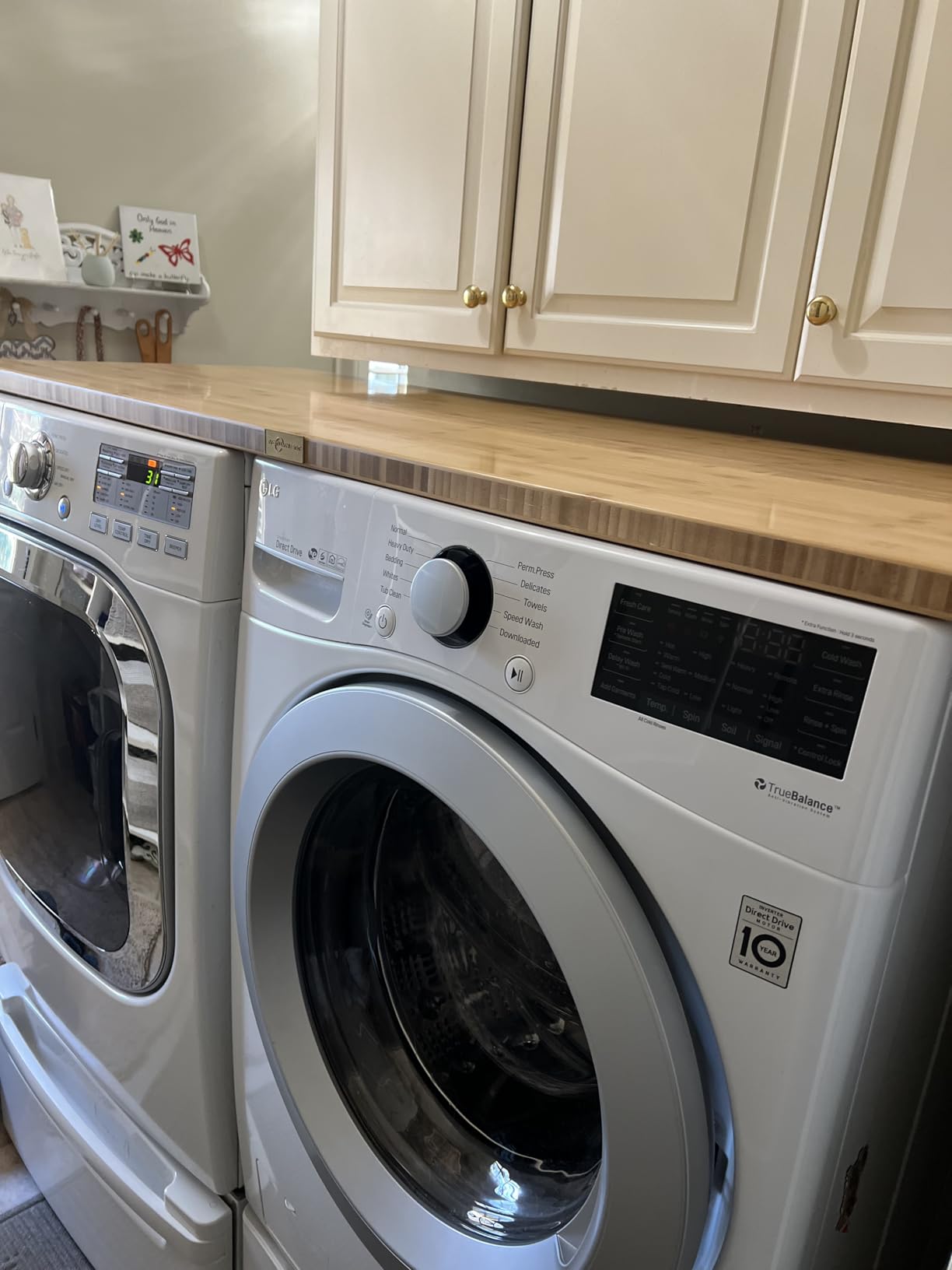
Where it fits in a garage is the interesting part. Because the surface arrives finished, you can mount it on a frame the same week and use it immediately for assembly, glue-up cleanup, or a second bench along the opposite wall. That removes the finishing step that stops a lot of people from ever putting a second surface in the shop.
What to check before you commit
Know what it cannot do. Bamboo scorches. A hot workpiece set down without a spacer, a welding torch, or an open flame nearby will mark it permanently, and no amount of oil will hide a scorch.
Plan to reseal every edge you expose. A cut edge on a laminated panel is the first place moisture gets in, and it needs sanding and a fresh coat of finish before installation.
Where it falls short
At 1.2 inches it is thinner than the 1.5 inch solid slabs, so it deflects a little more under a heavy vise. Two-person lifting is recommended at 38.4 pounds.
It is the wrong material for a metalworking bay, period. Keep it in the assembly, finishing, or general-purpose corner of the garage and put a sacrificial steel plate where the sparks land.
How to Choose a Workbench Top for a Garage in 5 Steps
Most of the benches we looked at share two mistakes: too shallow, and unsupported in the middle. Work through these five steps in order and you will avoid both.
Measure the bay and the car first. Sit in the driver’s seat with the door open and note the clearance to the wall. Then add bench depth. A 24 to 30 inch top is the range most builders settle on, because a 36 inch top puts your wall tools out of reach behind you.
Set the height against your body, not a number. Wrist height when you are standing and a seated working height are different requirements, and a bench that forces you into one posture is a bench you stop using. Experienced builders put the recurring comfortable standing range at 36 to 38 inches.
Match thickness to span. The longer the top, the more thickness you need, because mid-span deflection is what makes a bench feel cheap. Plan a support leg near the middle of any run over about 6 feet.
Pick the material for the work, not the look. Softwood and rubberwood for general assembly, hard maple for planing and joinery, rubberwood or bamboo for a bench that doubles as furniture, and a steel plate laid over a wood top if you weld.
Decide the fastening method before the top arrives. Screw-down from the underside keeps the top replaceable. Glue-down makes a permanent bench that is harder to service later. For a garage, replaceable wins.
One more decision that pays off: whether the top is sacrificial. A removable surface you can flip, sand, and re-oil in an hour turns a ruined top into a weekend project instead of a rebuild. Our garage camera picks and smart opener guide sit in the same category of planning ahead for the garage you will have in five years rather than the one you have this month.
What Type of Wood Is Best for a Workbench Top?
Hard maple is the best all-around answer for a garage workbench top. It is dense enough to resist denting, dimensionally stable through seasonal humidity swings, machines cleanly, and takes any finish. If you want a cheaper solid option, birch is easier to cut and finishes beautifully, and if the bench doubles as furniture, walnut or rubberwood will age better than either.
The real question is not species but thickness. A 1.5 inch slab in almost any hardwood outperforms a 3/4 inch sheet of a supposedly better wood, because stiffness scales with thickness faster than species changes anything. Buy the thickest slab your frame and budget will carry.
One piece of advice that recurs on woodworking forums: build the sacrificial layer. A thin replaceable surface on top of a structural slab means a glue-spattered or solvent-burned top costs you an afternoon rather than a rebuild.
Plywood vs MDF vs OSB: Which Sheet Material Wins?
Plywood wins for a workbench top, by a wide margin. Its cross-laminated veneers hold screws, resist splitting, and stay flat; MDF crushes at the edges and is heavy enough to load a frame down; OSB is a sheathing product and experienced builders warn against it for a top every time, because it craters and delaminates under concentrated load. If you are building from sheet goods, use Baltic birch or a hardwood-faced plywood, not OSB and not MDF.
The MDF-versus-plywood debate on the forums is really about one task: routed cutouts. Builders weigh melamine particleboard against Baltic birch and land on the same conflict. Routing T-track slots or a router lift hole in melamine or particleboard chips and blows out on the exit side, and Baltic birch holds a clean edge.
Our resolution is simple. Use melamine on a ply base only if you are not routing, and route before you glue the layers. If you are routing, use solid hardwood, edge-grain butcher block, or a thicker ply, and accept the glue-up. If you need a clean wipe-down surface for glue and finish work, put a removable hardboard or tempered hardboard layer on top instead.
How Thick Should a Garage Workbench Top Be?
Three-quarters of an inch is the floor for a fixed bench, one and a half inches is the sweet spot, and three inches is a Roubo-style slab that will outlive the frame under it. The reason is deflection, not strength. A bench top does not usually break, it sags in the middle under a long clamp or a heavy workpiece, and a long sag reads as a cheap bench even when the wood is fine.
Match thickness to span. Under about 4 feet, one inch of solid hardwood is workable. Between 4 and 6 feet, go to 1.5 inches. Beyond 6 feet, add a support leg before you add thickness, because a leg is cheaper and stiffer than another half inch of slab.
Weight is the constraint people forget. A 1.5 inch maple slab at 24 by 60 inches is 45.9 pounds on its own, and a 2×4 frame that is fine for hand tools will deflect under a dense top plus a steel vise. Check the top weight against the frame material before you buy, not after.
How to Finish a Garage Workbench Top So It Survives
Hard wax oil is the most durable finish for most garage workbench tops, in the sense that it is the most repairable. Wipe it on, let it cure, and when the surface gets solvent-bitten or paint-spattered you sand back a hundredth and re-oil. It is also the finish that lets you flip a sacrificial layer. The durability ranking for a garage, from most to least repairable, runs hard wax oil, then polyurethane, then epoxy, then shellac and lacquer, which belong on fine indoor furniture and nowhere near a garage.
Hard wax oil on maple, walnut, or birch is a two-coat afternoon. Polyurethane gives you a harder film that stands up to a stray paint splash but shows every gouge forever. Epoxy is the most chemical-resistant and by far the least forgiving, since a single bubble in a 48 inch slab means you start over.
On butcher block specifically, owners on several woodworking forums converge on a two-step: sand to 220, then two or three thin coats of hard wax oil, with a full 24 hour cure before anything touches the surface. A lacquer-thin oil coat will not survive a glue cleanup. Prep the edges as carefully as the face, because the end grain drinks finish and cracks first.
Whatever you choose, seal all six faces. An unfinished underside in a humid garage is how a flat top becomes a cupped one within a year. If the garage is unheated, expect seasonal movement and leave the fasteners loose enough to let the wood breathe.
Size Guide: Bench Depth, Height and Garage Bay Clearance
Depth and height are the two dimensions people get wrong, and both are constrained by the car. Sit in the driver’s seat with the door fully open and measure to the wall, then subtract what the bench needs to clear. On depth, 24 to 30 inches is the consensus, with 30 to 32 inches the most common choice; 36 inches works until you realize you can no longer reach the wall rack behind you. On height, 36 to 38 inches is the standing band most builders settle on, and a bench you also sit at needs a lower option.
Length is the dimension builders undersize. A single-car bay can eat 96 inches of wall. Before buying, check the open door swing of the vehicle you park, and leave enough gap that the door clears the bench edge with a person standing in front of it.
If you are building an L, make both runs the same height and the same depth. A seam between two mismatched surfaces is where a workpiece tips, and that is the most common self-inflicted injury in a home shop.
Cutting T-Track, Dog Holes and Router Lift Holes Into a Top
Route into solid hardwood or edge-grain butcher block, not into melamine or particleboard, because the exit side will chip out. Do all your routing before the top is sealed, and clamp the work with the face down over a sacrificial sheet so tearout happens somewhere you do not care about. For a router lift you need roughly 1.5 inches of solid material below the bit plus clearance, which is exactly why the 1 inch tops on this list are not lift candidates.
Dog holes are easier than they look. The BORA top on slot three is a reminder that you can buy the pattern instead of drilling it, but on solid wood a 3/4 inch Forstner bit and a template is an afternoon. Space them 3/4 inch on center and stop slots work across the whole surface.
For T-track, screw it down rather than routing a dado if you want to change the layout later. Screws are reversible, a glued T-track is permanent, and a permanent T-track on a top you might replace in five years is the wrong trade. Leave the track off the top and mount it to a face-frame apron under the edge if you want both.
Frequently Asked Questions
What type of wood is best for building a workbench top?
Hard maple is the best all-around choice for a garage workbench top. It resists denting, stays dimensionally stable through seasonal humidity swings, machines cleanly and accepts any finish. Species matters less than thickness: a 1.5 inch slab in almost any hardwood outperforms a thinner sheet of a better wood, because stiffness scales with thickness faster than species changes anything.
Which is better for a workbench top, plywood or OSB?
Plywood wins, and it is not close. Cross-laminated plywood veneers hold screws, resist splitting and stay flat under load. OSB is a structural sheathing product, and experienced builders consistently warn against it for a bench top because it craters and delaminates under concentrated weight. If you build from sheet goods, use Baltic birch or a hardwood-faced plywood.
What is the most durable finish for a workbench top?
Hard wax oil is the most durable choice for a garage workbench because it is the most repairable. Sand back a hundredth of an inch and re-oil instead of stripping the whole surface. Polyurethane is harder but shows every gouge permanently, and epoxy is the most chemical-resistant and the least forgiving, since one bubble in a large slab means starting over. Shellac and lacquer belong on indoor furniture.
What is the best material for a bench top?
It depends on the work. Solid hardwood such as hard maple or walnut is best for planing, joinery and general assembly. Rubberwood and bamboo work well for a bench that doubles as furniture or a cleanup surface. Steel plate is the right answer for welding and metalwork. Avoid OSB and untreated particleboard entirely, since both fail under concentrated load.
What type of plywood is best for the top of a workbench?
Baltic birch plywood is the best sheet option, because its thin, tightly laminated veneers produce a face that is nearly as clean as solid hardwood and it holds screws in all directions. A hardwood-faced ply is the budget alternative. Skip melamine-faced particleboard if you plan to route T-track or a router lift hole, since the face chips out badly on the exit side of a cut.
Our Final Verdict on the Best Workbench Tops for Garage Builds
There is no single best workbench top for every garage, but there is a right answer for each of the three common situations. For a fixed bench in a two-car bay, the WORKPRO 60-Inch is the one to beat: a 1-3/16 inch solid rubberwood top over a steel frame, a 2000 pound rating, and a height range that sits inside the 36 to 38 inch band most builders prefer. Check the brace for bow before the last bolt goes in, and that is the only real installation issue.
For a bay you share with a car, take the VEVOR 48-inch. Locking swivel casters and a 28 to 39.5 inch range solve a problem no fixed bench can, and 1 inch of solid oak holds up fine for hand tools and assembly work. For long spans, the DuraSteel 24 x 60 gives you the length to lay out a full door, provided you put a support leg under the middle.
Whatever you choose, screw the top down rather than gluing it, seal all six faces before it goes in the garage, and buy it a size larger than your first instinct. The bench is the last thing in a garage you want to rebuild.