
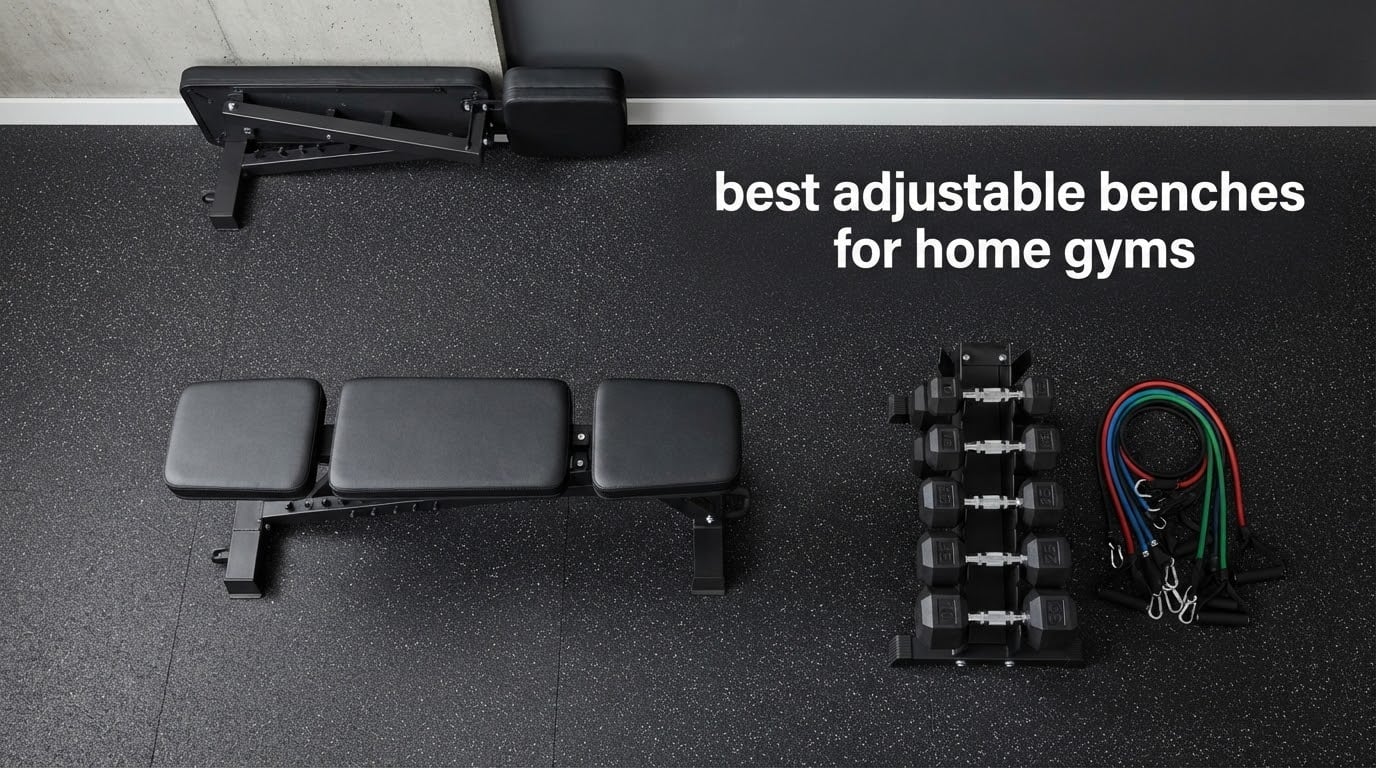
A bench is the one piece of equipment almost every home gym cannot train around, and the difference between a decent one and a great one shows up in the third set, not the first. We pulled 12 of the most-reviewed adjustable benches on the market, checked every published spec against the frame, pad and locking hardware, and sorted them by the things that actually cause returns: wobble under load, a backrest that shifts mid-set, a pad too narrow for your shoulders, and a folded package that will not fit through a doorway.
Short version for anyone in a hurry: the FLYBIRD WB5 is the best adjustable bench for most home gyms because it folds to a 9 inch profile, holds 800 lb, and offers 144 locked positions across a -30 to 90 degree range. If you want a taller seat and thicker pad without leaving a lot of money behind, the YOLEO is the pick. If you are loading real barbell weight and you do not care where the bench lives for the next five years, the Keppi FID at 1200 lb capacity is the one.
This is the 2026 edition, and every number below comes from the current manufacturer listing and aggregated buyer reviews rather than from marketing copy alone. We also broke the picks down by adjustment mechanism, which is the one technical question buyers ask most and which almost no roundup answers. If your gym is still being built out, our general weight bench guide for home gyms covers the fixed-bench basics first.
Table of Contents
Top 3 Picks for Best Adjustable Benches for Home Gyms in 2026
These three cover the most ground: the widest feature set, the strongest value, and the most comfortable pad geometry in the group.

FLYBIRD WB5 Adjustable Bench
- 800 lb capacity
- 144 positions from -30 to 90 degrees
- 30 inch backrest
- Folds to 9.06 inch profile

PASYOU 660 lb Foldable Bench
- 660 lb capacity
- Flat incline and decline
- 95% pre-assembled
- 13.9 inch wide seat

YOLEO 827 lb Adjustable Bench
- 827 lb ASTM capacity
- 84 positions on back seat and leg
- 28 inch backrest
- Built-in transport handle
Best Adjustable Benches for Home Gyms in October
Every bench below appears once in this table and gets its own full review further down the page.
| Product | Specifications | Action |
|---|---|---|
| FLYBIRD WB5 Adjustable Weight Bench |
|
Check Latest Price |
| PASYOU Adjustable Weight Bench 660 lb |
|
Check Latest Price |
| YOLEO Adjustable Weight Bench 827 lb |
|
Check Latest Price |
 Marcy Multi-Position Utility Bench Marcy Multi-Position Utility Bench |
|
Check Latest Price |
 NICEPEOPLE Foldable Bench 660 lb NICEPEOPLE Foldable Bench 660 lb |
|
Check Latest Price |
 Keppi 900 lb Adjustable Bench Keppi 900 lb Adjustable Bench |
|
Check Latest Price |
 Yagud Adjustable Strength Bench Yagud Adjustable Strength Bench |
|
Check Latest Price |
 K KiNGKANG 1050 lb Bench K KiNGKANG 1050 lb Bench |
|
Check Latest Price |
 Finer Form Multi-Functional FID Bench Finer Form Multi-Functional FID Bench |
|
Check Latest Price |
 Teclor 10-Position Adjustable Bench Teclor 10-Position Adjustable Bench |
|
Check Latest Price |
 Keppi FID Adjustable Bench 1200 lb Keppi FID Adjustable Bench 1200 lb |
|
Check Latest Price |
 BARWING Adjustable Weight Bench BARWING Adjustable Weight Bench |
|
Check Latest Price |
1. FLYBIRD WB5 – the most-reviewed adjustable bench, and the one that folds away in three steps
FLYBIRD WB5 Weight Bench, ASTM-Certified 800LBS Adjustable Weight Bench Workout Bench Foldable for Home Gym, 90° to -30° FID and 30in Extended Backrest for Bench Press Strength Training Exercise
800 lb capacity
144 positions from -30 to 90 degrees
30 inch backrest
Folds to 9.06 inch
Pros
- Folds in three steps
- Angle changes in about a second
- Planted feel with no wobble for most users
- 30 inch backrest suits most body sizes
Cons
- Backrest stops short of fully vertical
- Firm rather than plush pad
- Occasional quality-control defects
The WB5 is the bench we kept coming back to. It carries an ASTM-certified 800 lb rating on a dual-triangle alloy steel structure with a double-locking mechanism, and the dual-triangle base is the reason it does not shimmy side to side when you rack a loaded bar. At 28.5 lb it is heavy enough to feel planted and light enough for one person to carry between rooms.
Adjustment is the standout feature rather than the capacity. The spec sheet lists 144 positions across a -30 to 90 degree range, and the spring-lock pawl means you pull one lever, swing the back pad, and let it catch. Buyers describe a change in roughly a second, which matters more than it sounds: the benches that force you to hunt a loose pin mid-workout are the ones people stop using.
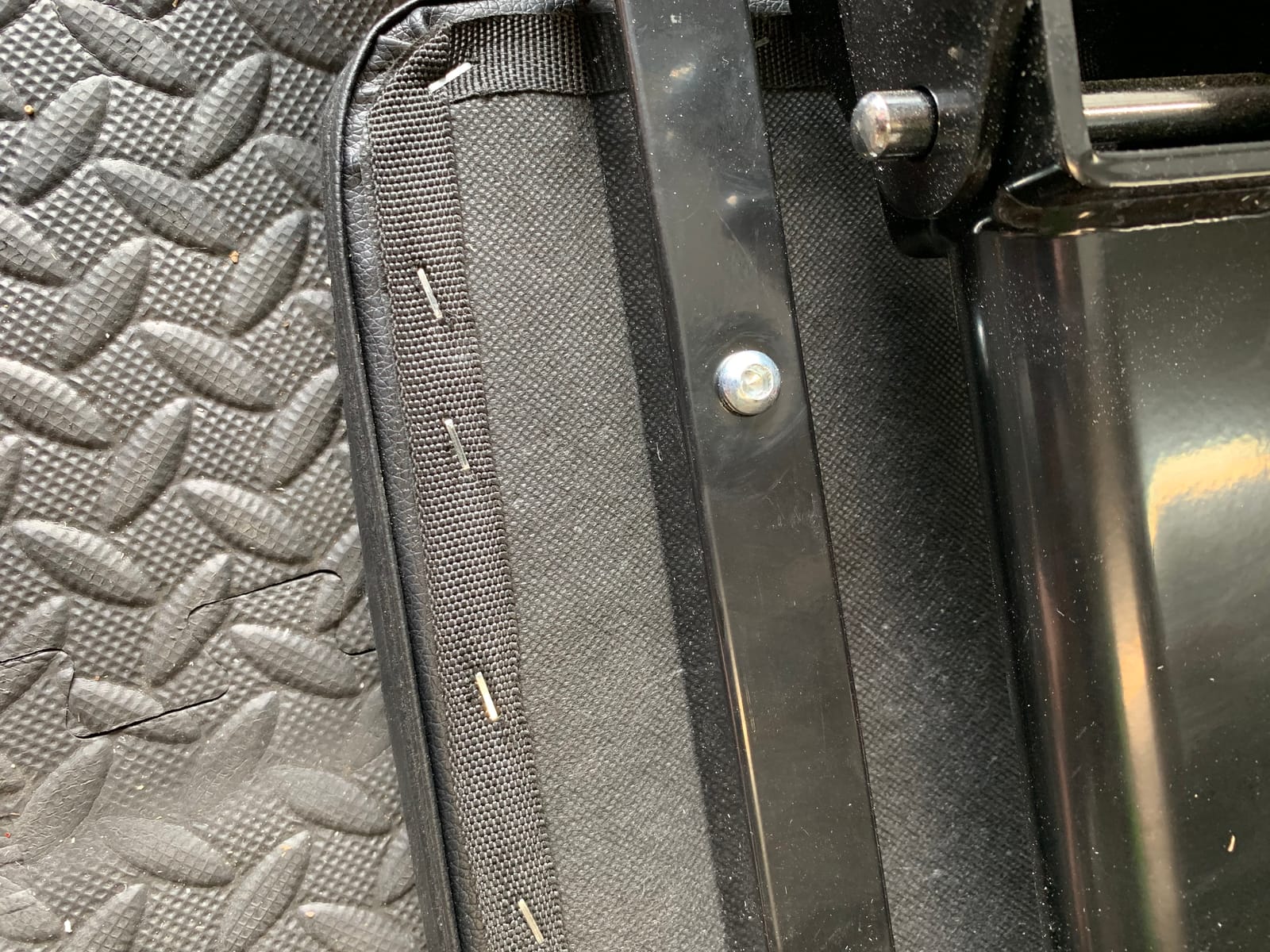
The backrest measures 30 inches with a 15.7 inch seat pad, and reviewers single out the length rather than the width as the reason it works for a wide range of body sizes. For incline work a 30 inch pad still leaves a taller lifter’s head hanging slightly past the edge, which is a real limitation on an otherwise generous pad.
Storage is where the WB5 genuinely wins. It folds in three steps to a 9.06 inch wide profile, which is thin enough to stand against a wall or slide under a bed, and the 1 year frame replacement with 3 year parts coverage is documented clearly rather than left vague. Occasional quality-control defects do get reported, and the recurring gripes are a firm pad and a backrest that stops just short of vertical.
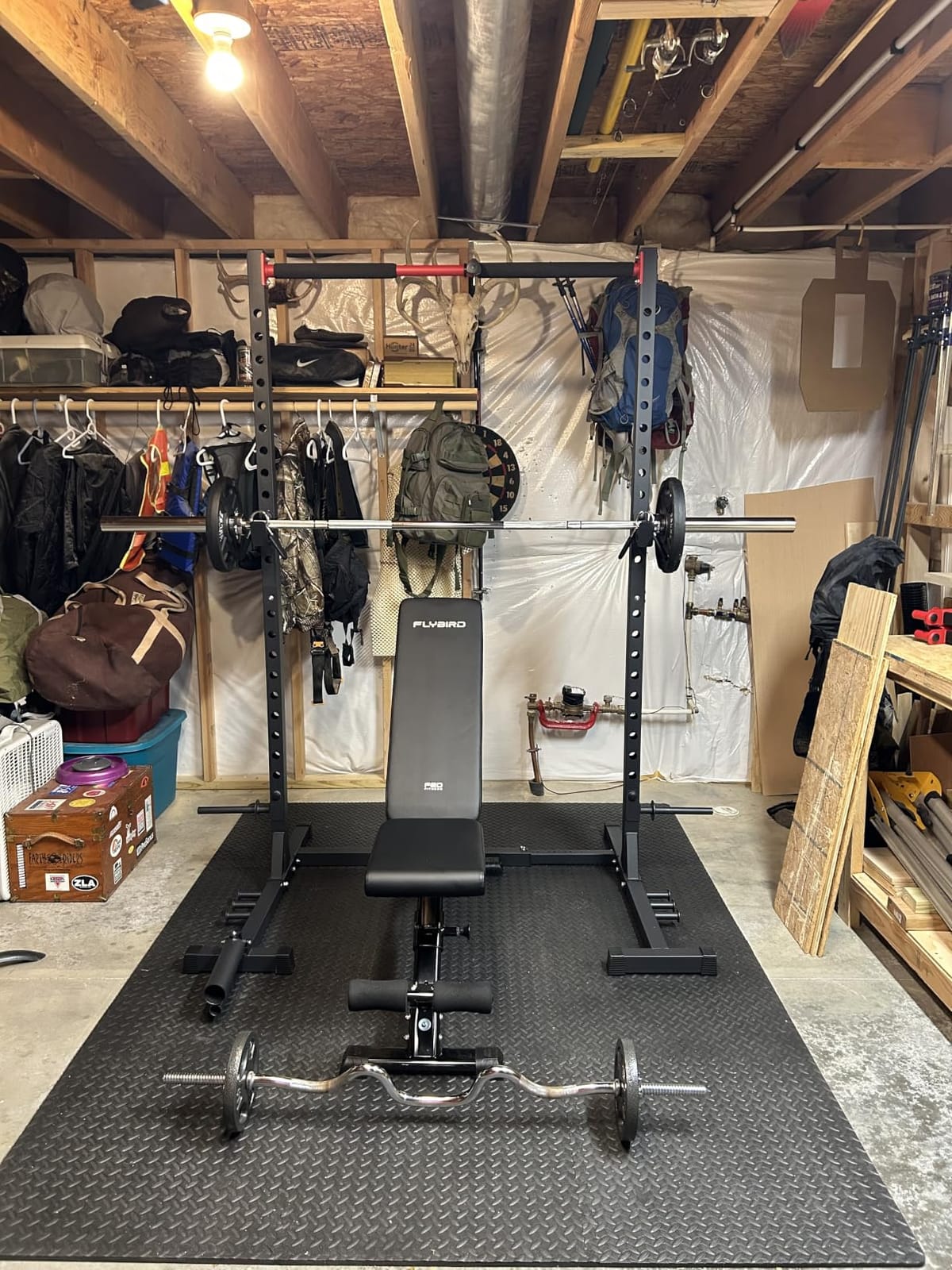
Check the pad width and the top angle before you commit
Two things trip people up on this bench. The top position is not a full 90 degrees, so shoulder press setups that need a truly upright back rest will feel slightly reclined, and the seat pad is firm rather than plush, which is fine for pressing and less pleasant for a long core session. If your training is barbell or dumbbell pressing, neither issue matters.
What does matter is the 30 inch pad length. Lifters above roughly six feet who do a lot of incline pressing will feel the head end stop short, and reviewers who swapped up from a shorter bench notice the difference immediately. Anyone at or below that height gets a pad that comfortably supports shoulders, back and head in every position.
Who should skip it, and why
Skip it if vertical pressing position is central to your program, or if you want a plush pad for long sessions. Buyers who press heavy and report no wobble at the top of the capacity range say the dual-triangle base is doing its job, so it is not a stability compromise the way some of the lighter frames in this list are.
Do check the folded dimensions against your doorway and your storage spot before ordering. At 46 inches deep when open, it needs a real footprint in use, and one buyer reported a unit arriving with cosmetic damage that support resolved by replacement. A short conversation with the seller about the return window is worth having on a bench this size.
2. PASYOU PA300 – the best value pick for dumbbell work in a small room
PASYOU Adjustable Weight Bench, Foldable, Incline Decline Flat, Bench Press with 660LBS, 95% Pre-Assembled, Compact Workout Bench Full Body Strength Training Bench for Home Gym, Wider Seat, Grey
660 lb alloy steel frame
Flat incline and decline
29.5 inch backrest
95% pre-assembled
Pros
- Ready to lift in under a minute
- Folds into a closet-friendly rectangle
- 13.9 inch wide seat
- Light yet stable for dumbbell work
Cons
- Top setting leans slightly
- Firm stiff padding
- One long-term owner reported a back-support failure
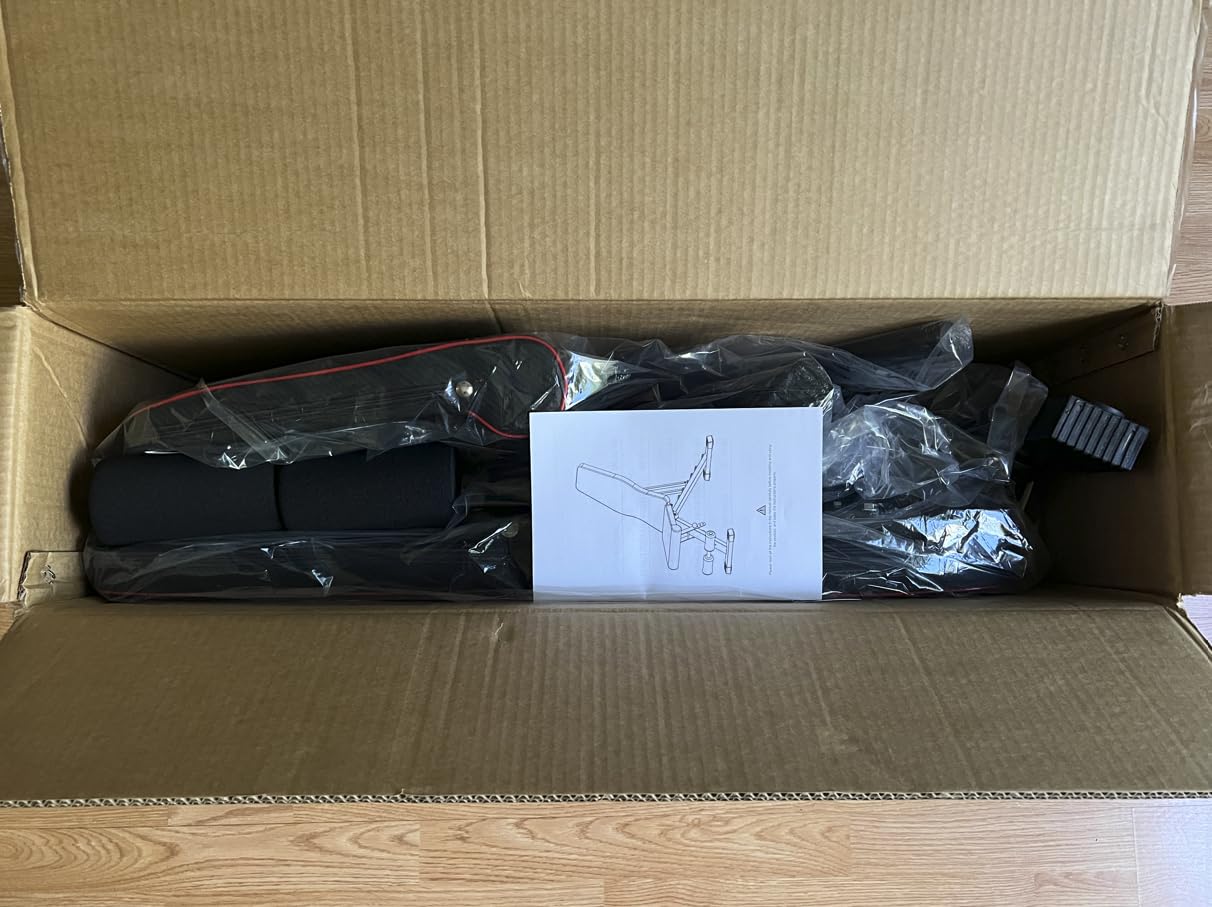
The PA300 is the bench we recommend to someone building a first gym out of whatever floor space is left over. It is 95% pre-assembled, so the setup is two pins and under a minute, which removes the single biggest reason people abandon a bench on day one. At 24 lb it moves between rooms without help.
Build quality is a 660 lb alloy steel frame with a 13.9 inch wide seat and a 29.5 inch extended backrest, which is wider than most benches in this bracket. That width matters more than capacity for pressing, because a narrow pad forces your shoulders to roll forward and turns a stable press into a shoulder problem. Reviewers consistently note the seat is comfortable.
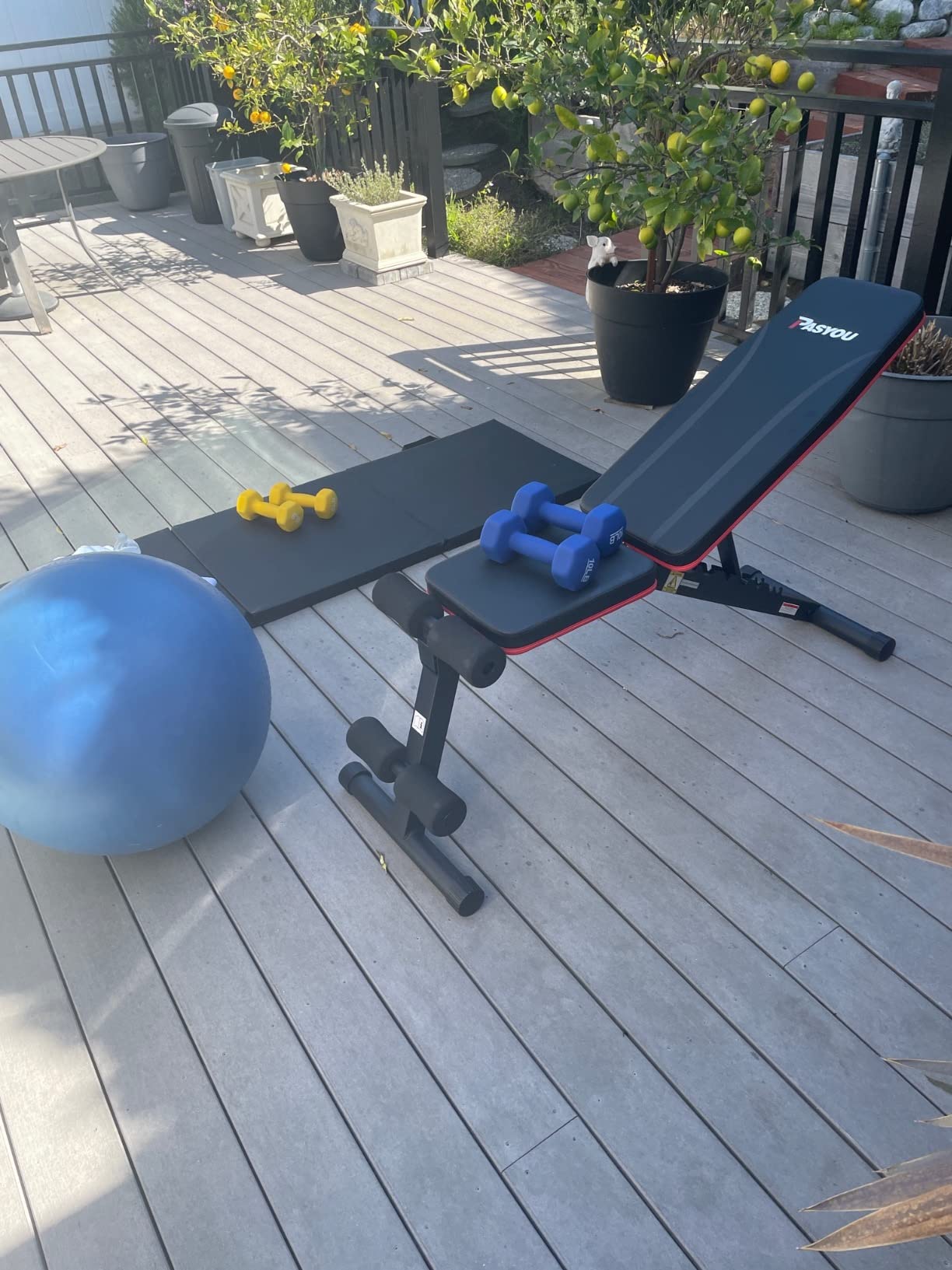
Angle coverage is flat, incline and decline on the backrest, which is the full set of pressing positions most home training needs. The catch is the topmost setting, which leans slightly rather than locking fully upright. For dumbbell incline and flat work that is invisible. For a shoulder press rack position you would notice it.
The honest limitation is heavy loading. One long-term owner reported a back-support failure, and the firm PU leather over high-density foam is not built for hours of unbroken pressure on a sit-up bench. Everything from the reviews that do not involve barbell work reads clean.
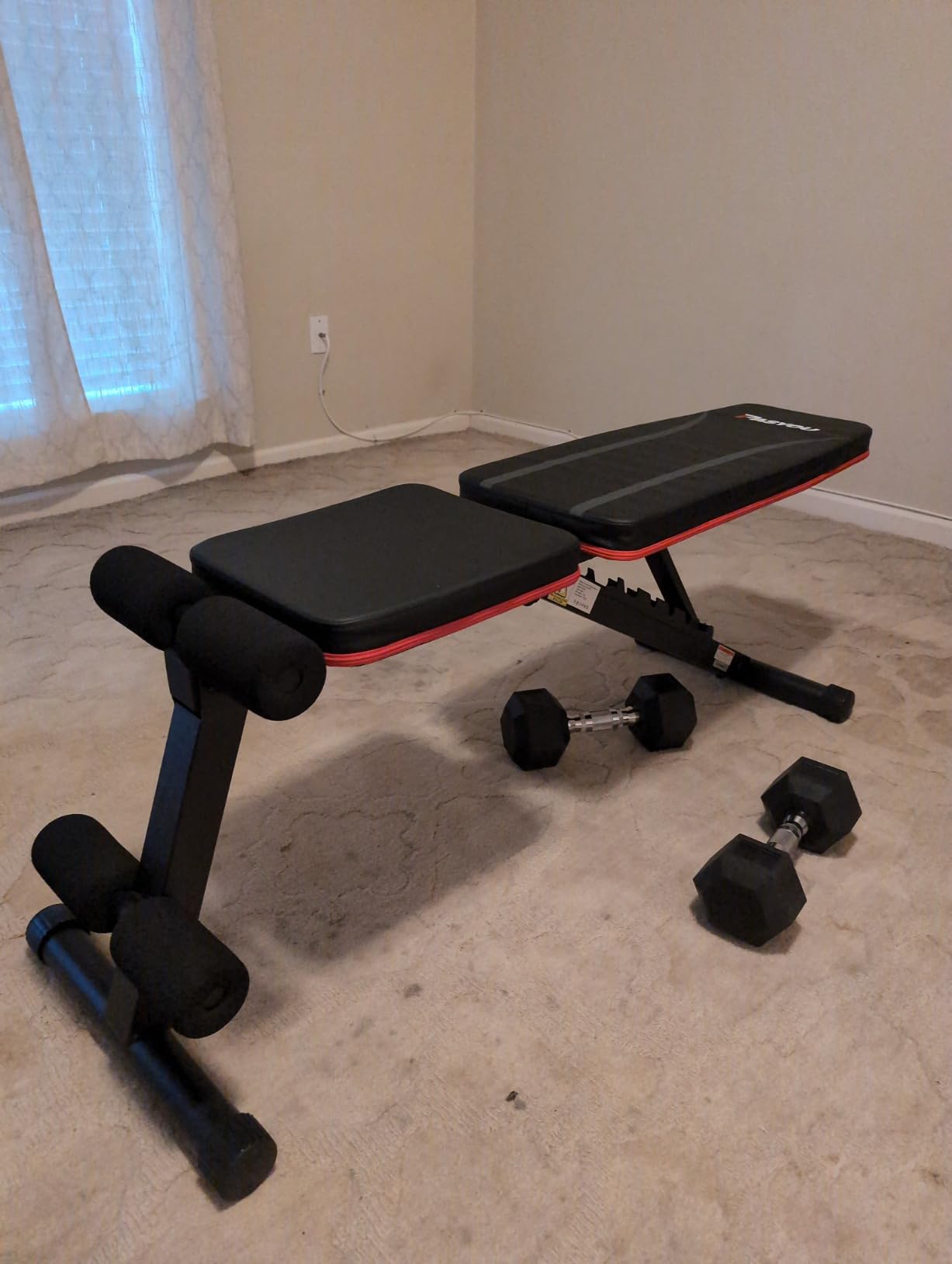
Why the seat width is the number to look at here
A 13.9 inch seat is wider than several benches that list higher capacity numbers, and for pressing it is the more useful of the two specs. Bench press numbers are often conservative marketing; pad width is measured off the actual cushion. If your shoulders are wide or you are training with dumbbells in the 50 to 80 lb range per hand, this is the width you want.
The 29.5 inch backrest covers head and neck for most body sizes at flat and moderate incline, and the decline setting is a fixed stop rather than a continuous adjustment. That is fine for decline dumbbell press, less useful if you want to hit a specific angle for a stretch or a floor-style movement.
Where the value runs out
Run out of value the moment you start loading a barbell near the rating. A 660 lb frame with a two-pin back support is a different machine from a welded one, and reviewers who pushed it heavy are the ones reporting problems. The locking pins can also work loose over time and are easy to misplace, so keep a spare within reach.
Everything else about this bench is a genuine advantage at this level: a rectangle that folds flat into a closet, a sub-minute setup, and a non-slip surface on the upholstery. If your training is dumbbells, sit-ups and step-ups, the PA300 covers it without a second piece of equipment.
3. YOLEO 827 lb Bench – the top-rated pick with the widest adjustment range on the seat and legs
YOLEO Adjustable Weight Bench, ASTM-Certified 827LBS, 98% Pre-Assembled
827 lb ASTM capacity
84 positions on back seat and leg
28 inch backrest
Folds to 31.5 inch footprint
Pros
- Wide rectangular feet for real stability
- 98% pre-assembled
- Thick wipe-clean cushion
- Built-in transport handle
Cons
- Cushion gap catches the tailbone in decline work
- XL size leaves extra head clearance
- Screw-in ankle support adds breakdown time
The YOLEO holds a 4.6 average across more than 9,000 reviews, and the reason is unusual rather than flashy: wide rectangular feet. Most folding benches use round tube feet that roll on hardwood, and the difference shows up immediately on a dumbbell press. This one does not slide.
It is ASTM-certified to 827 lb with a stated 330 lb maximum user weight, so the capacity figure is not a bare marketing number. Adjustment runs to 84 total positions across 7 back, 4 seat and 3 leg settings, which is the widest three-way range in this group. The seat moves independently, which lets you set up a comfortable hip angle for decline work.
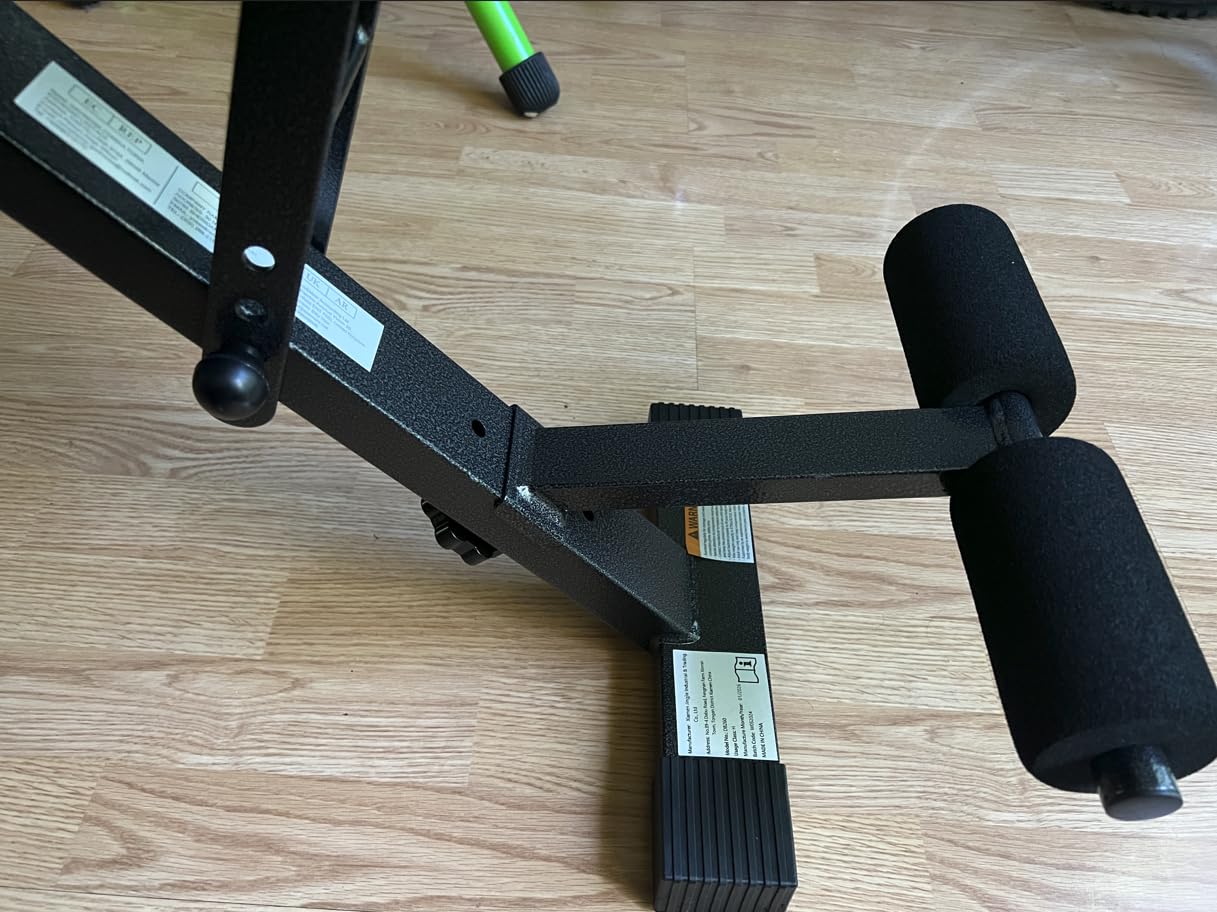
Setup is 98% pre-assembled with a ring pin and ball pin, roughly a minute of work. At 23.2 lb it is the lightest bench here that still claims a wide foot base, and the built-in transport handle is the kind of small detail that decides whether a bench lives in the garage or gets pushed into a corner.
It folds to 31.5 by 12.6 by 13 inches, which is genuinely compact, and the 3.1 inch thigh pad plus 24 month warranty are both more than the category usually offers. Reviewers praise the thick, easy-wipe cushion, which matters if you are in a garage or a basement.
The cushion gap is the one to test before decline work
Buyers report a visible gap between the seat and back cushions that catches the tailbone during decline sit-ups and leg raises. It is the most common complaint on an otherwise well-reviewed bench, and it is purely an ergonomics issue rather than a durability one. Anyone whose programming leans on decline core work should test it seated first.
Two other fit notes. The XL designation leaves extra head clearance on the backrest that shorter users simply do not need, so check the 28 inch backrest length against your torso if you are under five foot six. And the screw-in ankle support adds time to both breakdown and reassembly, which undercuts the fast-setup advantage if you store the bench often.
Who this bench is genuinely wrong for
It is the wrong pick for a lifters-and-shaker setup where you want one fixed angle and nothing to loosen. The 84 positions are there to be used, and a user who changes angles between sets will get more out of this bench than anyone who sets it once. If you want a permanent flat bench, this is overkill and the 4.6 rating will not change that.
It is also not the choice for a tiny room where the 41 inch depth makes the bench hard to walk around. The folded profile is excellent, but in use it occupies a normal bench footprint. Compared with a bench that stays low and slim, that is a real difference in a bedroom or a narrow hallway gym.
4. Marcy Multi-Position Utility Bench – the classic vertical-storage bench that leans against a wall
Marcy Multi-Position Workout Utility Bench for Home Gym Weightlifting and Strength Training SB-10115, Black
300 lb combined rating
6 back and seat positions
Removable foam roller pads
Collapses for upright storage
Pros
- Very stable once assembled
- Covers incline flat decline and military angles
- Removable knee and foot cushions
- Stores vertically against a wall
Cons
- Bolt-together assembly takes 60 to 90 minutes
- 300 lb rating is the lowest here
- Folds only partially
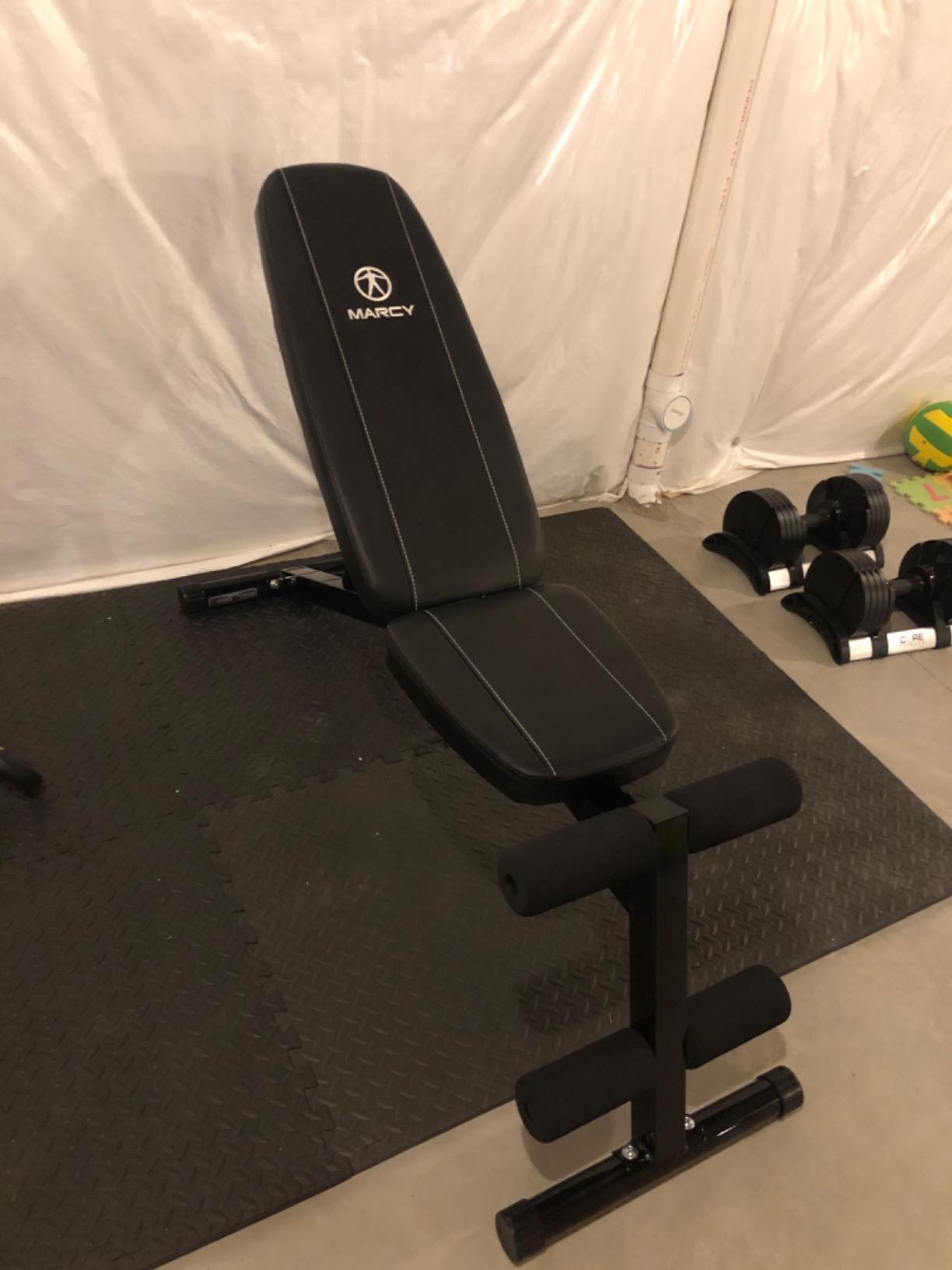
The Marcy is the oldest design in this roundup and still the answer for one specific problem: a room where the bench has to stand on end. It collapses partially and leans against a wall or into a closet. Its listed dimensions run 18 by 58 by 45 inches, so plan the storage spot against a wall and leave enough clearance to walk past it, and expect it to sit higher than the low-profile folding benches.
Build is a powder-coated steel frame rated at 300 lb for user plus combined load, covering six back and seat positions from roughly -30 to 85 degrees. The positions include a military press angle, which very few benches in this list offer, and the contoured foam roller leg pads are removable for sit-ups and leg raises.
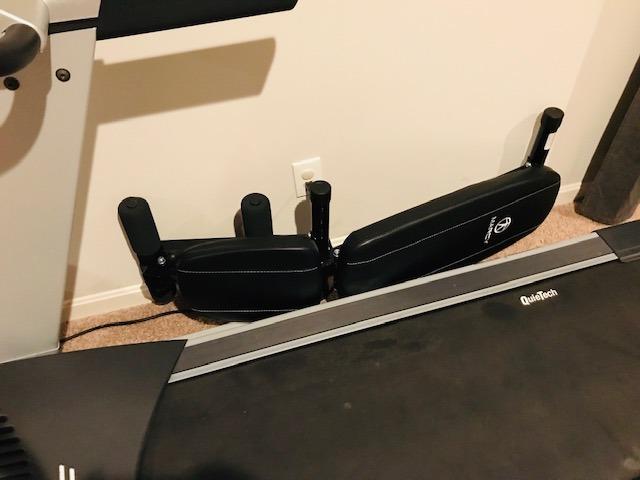
Reviewers are clear that the bench is very stable once assembled and does not slide on hardwood, which is the outcome the 300 lb rating implies. For a lifter under about 140 lb pressing dumbbells and doing core work, that is genuinely sufficient and the vertical storage is a feature no flat-folding bench can match.
The cost is assembly. This is a full bolt-together build that reviewers put at 60 to 90 minutes, and threaded holes that are not always perfectly aligned. Plan for an evening, tighten everything twice, and the re-torque after the first month of use is worth doing.
Work out your capacity need before you look at anything else
A 300 lb combined rating means your body weight plus the bar plus the plates. A 180 lb lifter pressing a 225 lb bar is already at 405 lb, which is well past this bench. This is the arithmetic that decides the purchase: add your bodyweight to your heaviest working load, then add a buffer, and only then look at a capacity number.
The 2 year limited warranty is longer than most in this bracket and the hardware is simple enough to service, but the honest framing is that this is a light-to-moderate duty utility bench. It is built for the person whose program is dumbbells, ab work and step-ups in a room where floor space is the constraint.
When vertical storage is the deciding feature
If your gym is a corner of a studio, a converted closet or a one-car garage, standing the bench on end is worth more than a fold-flat mechanism. Nothing else on this list stores that way, and a bench that lives upright against a wall is a bench you will actually leave out and use.
The trade-off is that it folds only partially, so it needs a wall or a door to lean against and it does not slide under a bed. Plan the lean angle before you buy, and check the 45 inch height, which is taller than the low-profile folding benches and means it will not slide under most low furniture.
5. NICEPEOPLE FB-23YLD05 – the lightest bench here, with a backrest built for tall lifters
NICEPEOPLE Adjustable Weight Bench for Home Gym, 660LBS Capacity Workout Bench with 8 Backrests for Chest Shoulders Arms, Compact and Foldable Strength Bench for Small Space Apartment Room
660 lb capacity
8 backrest angles
29.3 inch backrest
Weighs 17 lb and folds flat
Pros
- Unusually long backrest for the size
- Light enough for one person to move
- Two-pin fold for under-bed storage
- Leveling foot caps settle wobble
Cons
- 660 lb rating is modest at this level
- Only eight backrest positions
- Pad is functional not cushioned
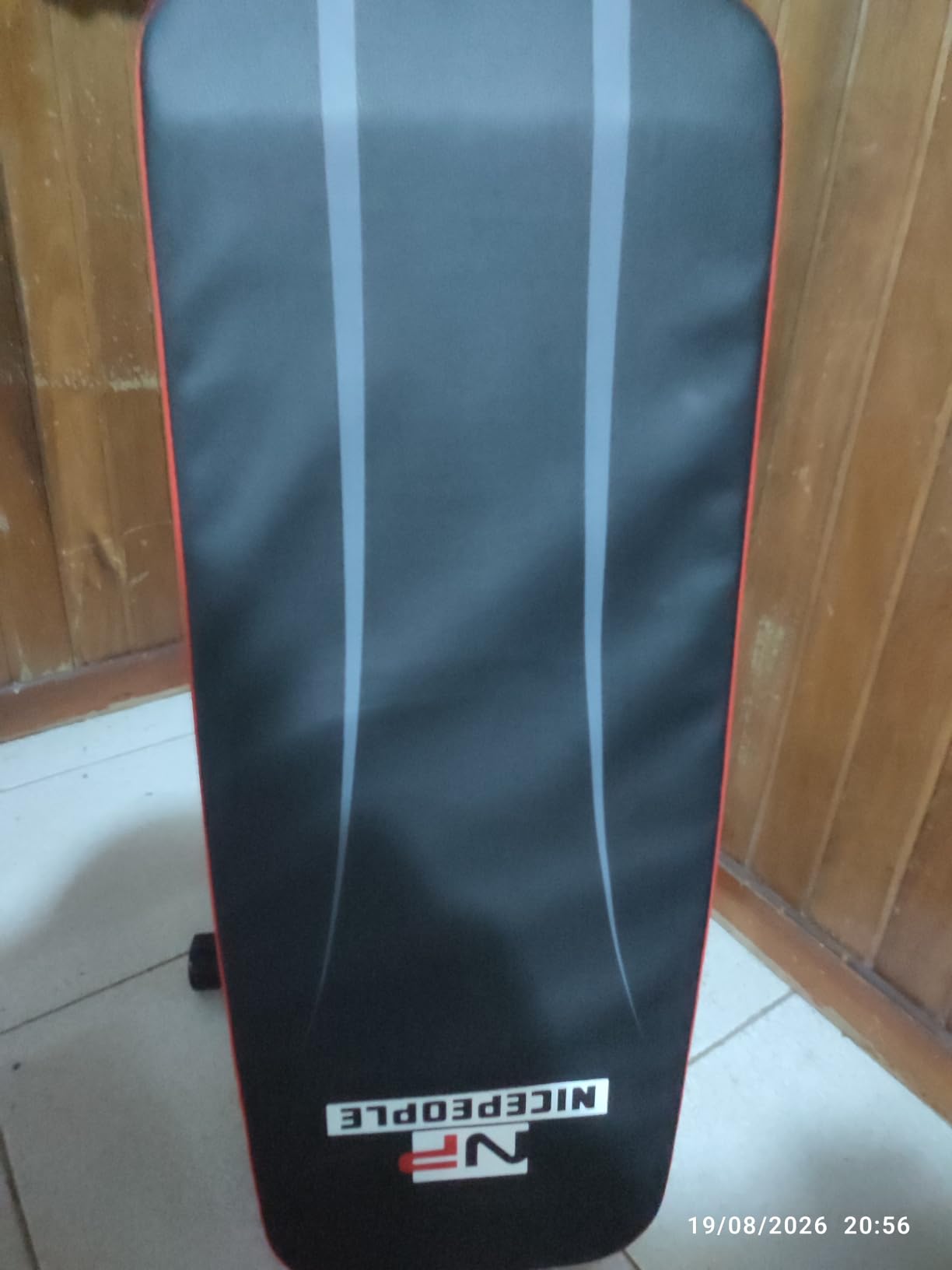
At 17 lb, this is the bench we recommend to anyone whose gym is on a different floor from where they train, or who moves house regularly. It is also the only one here whose selling point is a long pad: 29.3 inches, which the manufacturer sized to support roughly 90% of users head and neck included.
Structure is a reinforced triangular support frame rated at 660 lb, tested through more than 8,000 durability cycles, with four rotatable leveling foot caps. Those caps are a real feature on apartment floors and carpet, where an unlevel bench is the main source of the wobble that gets blamed on the frame.
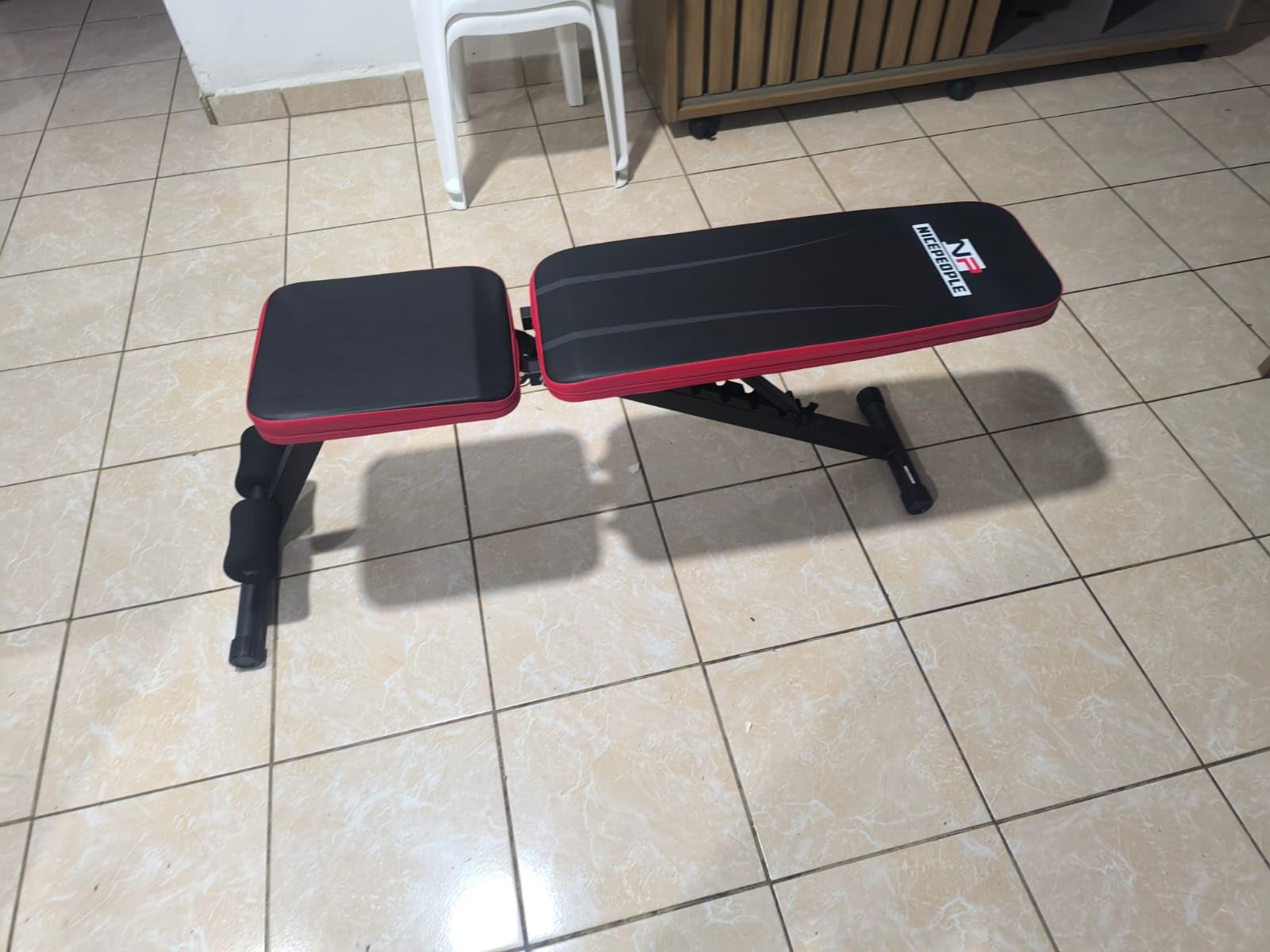
It folds by removing two pins to a 30.7 by 16.3 by 9.25 inch package, which slides under a bed or into a corner. There is no transport wheel or handle, but at 17 lb you carry it with one hand, which makes the missing handle a non-issue in practice.
Adjustment is eight backrest angles covering incline, decline and flat, with non-slip breathable leather over high-density foam. The pad is described by buyers as functional rather than cushioned, and the eight stops are coarser than the 10 to 12 positions available elsewhere.
Pad length versus position count, and which one you should weight
Choose this bench if your problem is length, not fine tuning. A 29.3 inch backrest at eight positions suits someone who presses at a fixed incline and wants their head supported, more than someone who wants to hit an exact 30 degree angle for a specific movement. You are trading granularity for a pad that fits.
For a lifter over six foot two, that is usually the right trade. The common failure on a shorter pad is that your head hangs off the end at incline, which turns a pressing set into a neck isometric. A long backrest with coarse stops solves that, and the tri-frame with leveling feet keeps the base honest on uneven flooring.
Where the light build shows
At 17 lb the frame is light enough to flex under aggressive loading, and 660 lb is a more modest rating than several benches with similar or higher prices. The pad will not be comfortable for a long session of sit-ups or leg raises, and there is no leg developer or preacher attachment in the box.
Treat it as a dumbbell and bodyweight bench rather than a barbell bench. If your heaviest work is an adjustable dumbbell press, a Bulgarian split squat and core work, the light frame is a benefit. If you are chasing a bench press number, look at the welded frames further down this list instead.
6. Keppi Bench500 – the 900 lb bench that folds down to 11 inches
Keppi Weight Bench 900Lb, Adjustable Foldable Sturdy Bench for Home Gym
900 lb capacity
11 back 4 seat and 3 foot adjustments
33.5 inch backrest
Folds to 11 inch tall
Pros
- Triangular frame resists wobble under load
- Single-pull auto-lock adjustment
- Resistance bands included
- Three-year warranty
Cons
- Adjustment hardware needs a pulled bolt each time
- Folded package is bulky
- Backrest runs narrow for some lifters
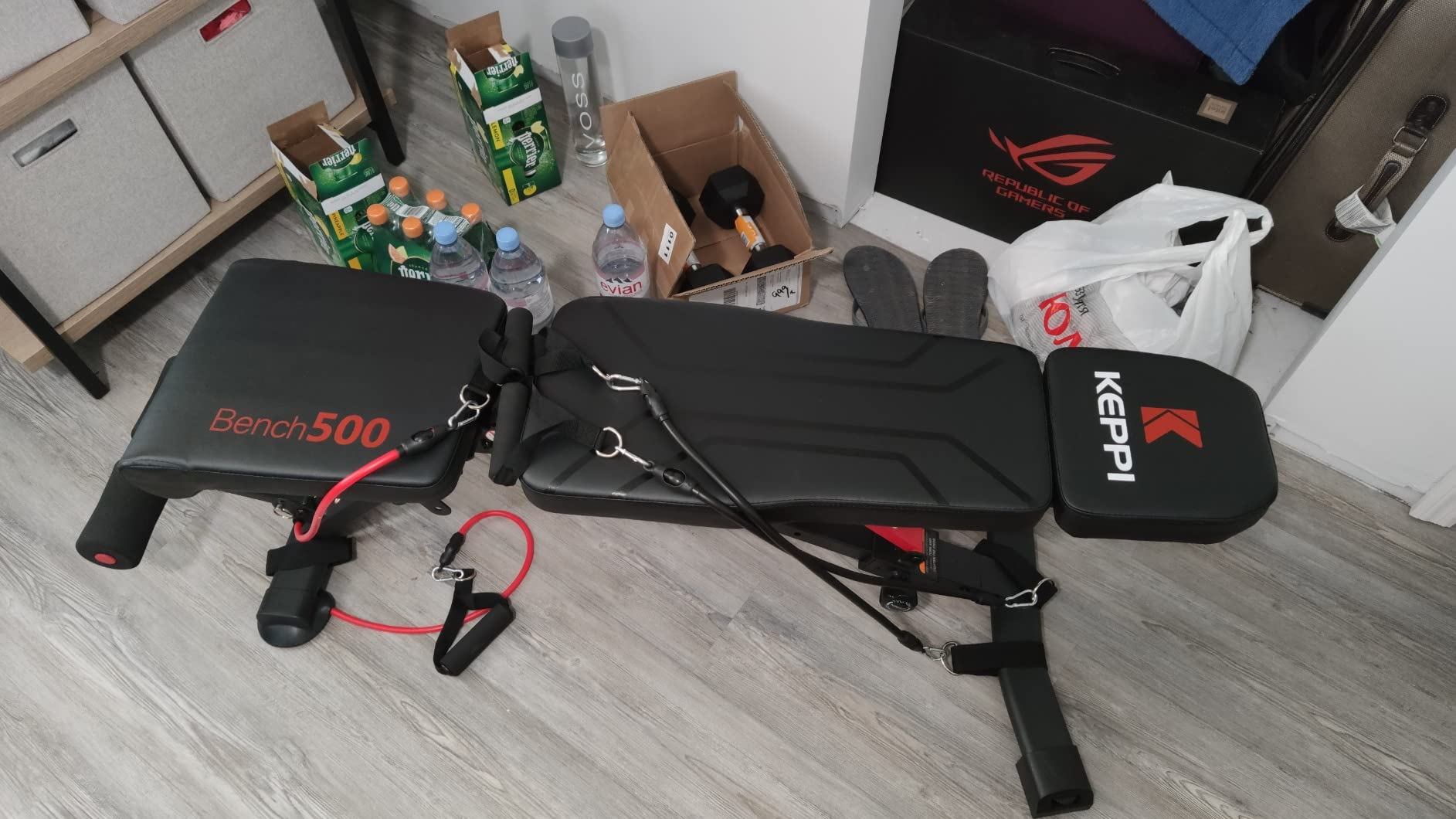
The Keppi Bench500 is a step up in frame class from everything cheaper on this list. Commercial-grade heavy-duty steel in a triangular configuration gives it a 900 lb rating, and reviewers who load it with a barbell report no wobble, which is the single complaint that dominates home gym bench reviews.
Adjustment is 11 back, 4 seat and 3 foot positions, driven by a one-pull fast bolt with an auto-lock. The PU leather backrest measures 33.5 by 11.7 by 1.8 inches, and the adjustable high-density foam leg pads move through their own range so the leg position matches the back angle.
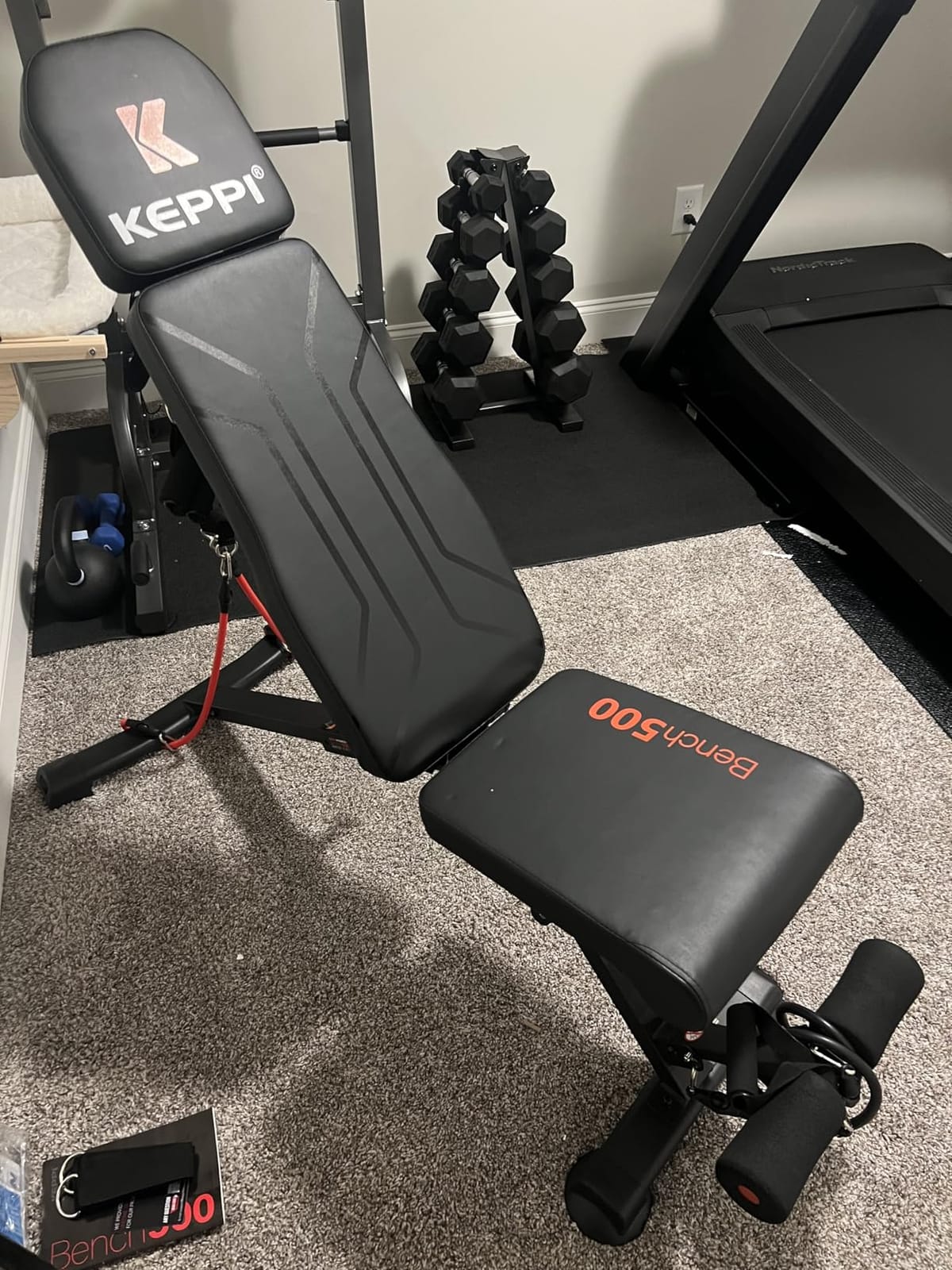
It folds in seconds to 37 by 24.8 by 11 inches, which is about a fifth of the open footprint, and two pairs of resistance bands are included in the box for warm-up work. The 3 year warranty is one of the longer commitments in this bracket.
Two things to know before it goes in a small room. The folded package is 24.8 inches wide, which is bulkier than the slim flat-pack benches, and the adjustment system needs a bolt pulled free before each change, so it is not the one-second adjustment the spring-lock models offer.
Why a triangular frame changes the feel under load
A triangular base resists side-to-side movement because the load path is triangulated rather than a rectangle that can rack sideways. That is the difference between a bench that feels planted at 185 lb and one that shifts a few millimetres on every press. If your heaviest set is a barbell, this geometry is worth more than extra capacity numbers.
The 33.5 inch backrest is one of the longer pads in this roundup and comfortably supports the head at incline. The trade is width: 11.7 inches is narrower than the seats on the PASYOU and the YOLEO, and reviewers with broader shoulders report rolling inward on pressing. Check the pad width against your shoulder width before ordering.
When the bulk is worth it and when it is not
The 24.8 inch folded width suits a garage with a dedicated storage corner, a basement, or anywhere the bench can stand upright against a wall. It is a poor fit for a studio apartment where the only storage is under a bed, where a 16 inch wide folded package is the difference between fitting and not.
The pulled-bolt adjustment also means this is not the bench for a garage gym that changes angle every set. It rewards someone who sets an angle and trains there. If you rotate through incline, flat and decline on a timer, the spring-lock models change angle faster and with less fuss.
7. Yagud YLJSD-SRK2 – a 20 lb bench that moves anywhere, and the durability limit to know about
Weight Bench Press, Adjustable Workout Benches for Home Gym Dumbbell Exercise, 880 LB Stable Incline Decline Bench for Full Body Workout, 2 Sec Fast Folding Strength Training Sit up Bench
800 lb advertised capacity
8-level backrest
Weighs 20.5 lb
Tool-free assembly
Pros
- Light enough for one person to move
- Two-minute tool-free setup
- Turnable foot caps level the frame
Cons
- Frame creaked and bent under heavy barbell loads
- Locking mechanism reported to slip under load
- Hinge goes loose when folding
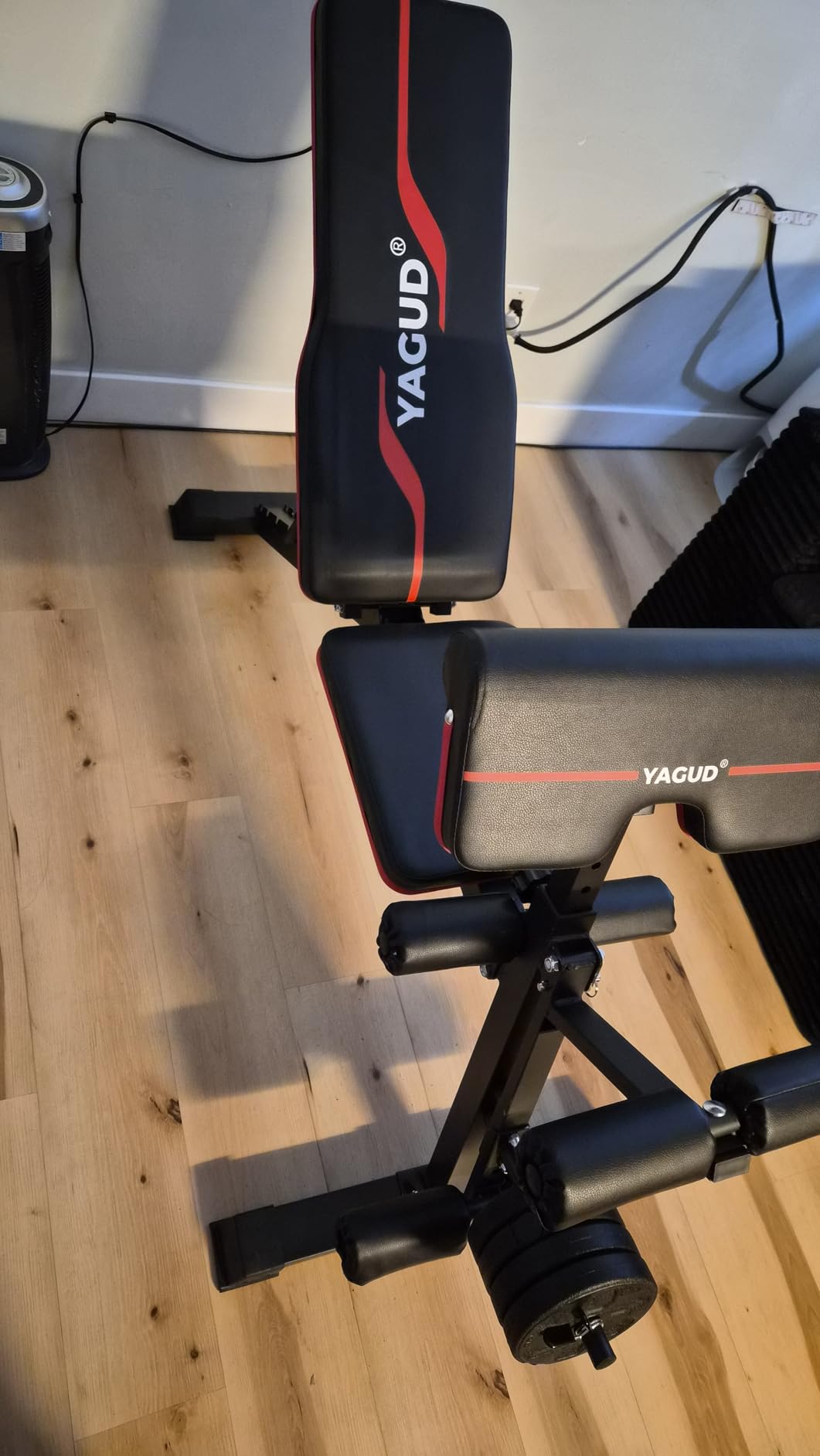
The Yagud is the pick for a rented flat, a dorm room or a garage gym that has to be dismantled every few weeks. It weighs about 20.5 lb, assembles tool-free in roughly two minutes, and folds to 34 by 16 by 9.3 inches. Nothing else in this roundup sets up that fast with no tools at all.
On paper it is a heavy-duty steel frame with a triangular stability design rated to 800 lb, with an eight-level adjustable backrest through incline and decline, high-density foam under premium leather, and reinforced stitching. The turnable foot caps are a nice touch for uneven floors.
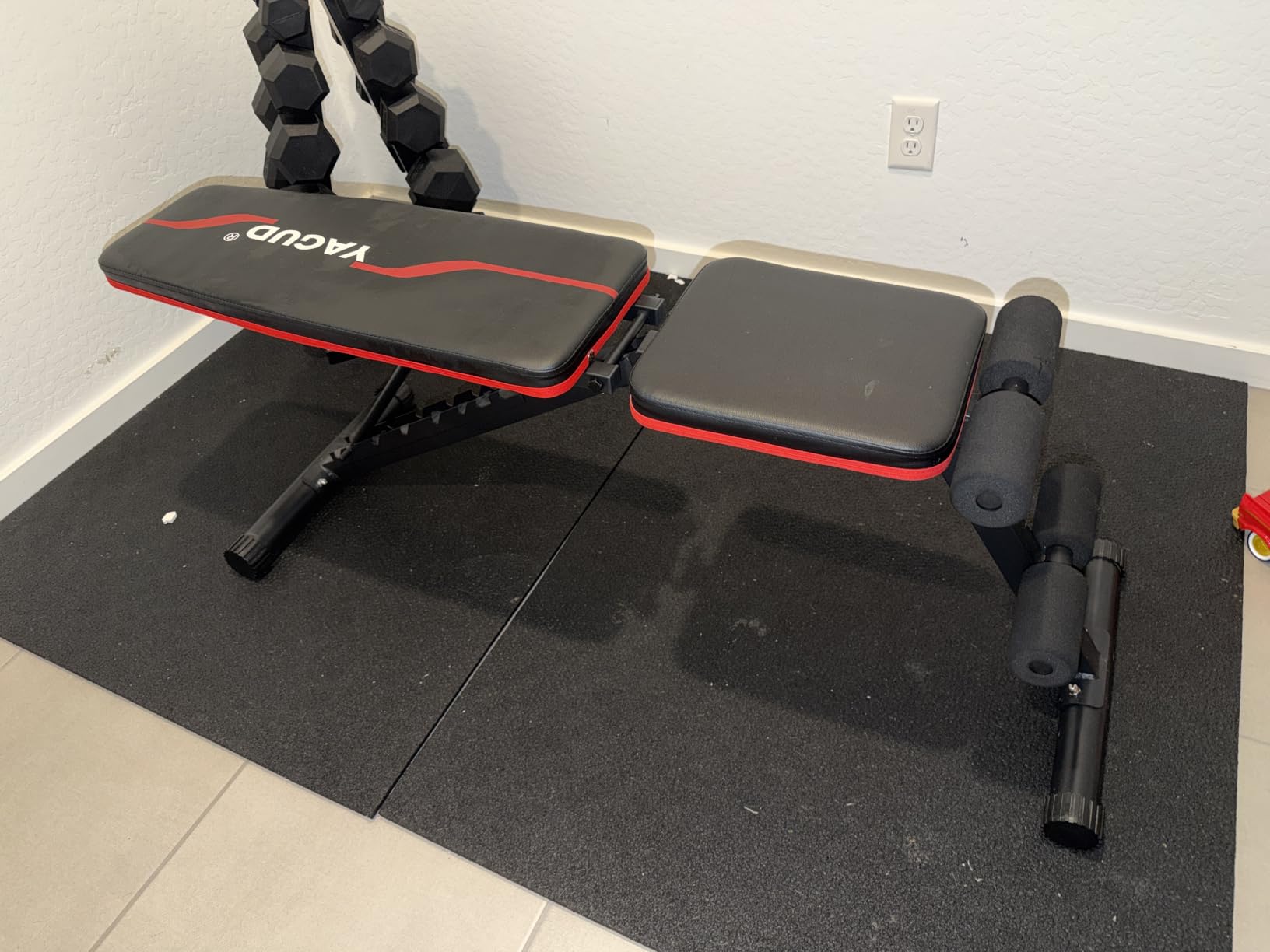
Most owners use it for dumbbell work and rate it accordingly. The reviews that stand out are the ones about the setup and the footprint: a bench that goes from box to lifting in two minutes changes how often you actually train.
The significant negatives cluster around heavy barbell loading, where reviewers report a frame that creaked and eventually bent well below the advertised rating, and a locking mechanism that slipped under load. That is not a reason to avoid it for dumbbells. It is a clear reason to know which bench you are buying.
Treating the advertised capacity as an upper bound
An 800 lb headline number on a 20.5 lb frame is a marketing figure rather than a working rating. The reviewers who loaded it heaviest are the ones reporting flex and a bent frame, so read the capacity as the point where this bench is no longer appropriate for your program, not as the point where it is guaranteed to hold.
Set your ceiling with the arithmetic: your bodyweight, plus your heaviest working load, plus a buffer. For a 150 lb lifter pressing dumbbells up to 80 lb, that total is comfortable and this bench is fine. For the same lifter chasing a 275 lb bench press, it is the wrong tool and no rating printed on a box will change that.
Best use and worst use for a light frame
Used as intended it is excellent: incline and decline dumbbell work, sit-ups, leg raises and step-ups, in a space where a 34 inch folded package fits under a bed. Buyers who keep it to loads well inside the frame rate it consistently well.
Used past its limit it will disappoint, and a hinge that goes loose when folding is a common report, which matters if you fold and unfold it daily. The 8 level backrest is also the coarsest on this list alongside the NICEPEOPLE, so the choice is between a coarse angle range and a light portable frame, not between both.
8. K KiNGKANG 1050 lb Bench – the thickest padding and the heaviest frame in the fold-flat class
K KiNGKANG Adjustable Weight Bench, Foldable Home Gym, 1050lbs Capacity
1050 lb capacity
2 inch steel tubing
8 backrest positions
2.4 inch foam padding
Pros
- 2 inch tubing does not feel cheap
- 99% pre-assembled
- Widened foot pads add stability
- Compact fold fits a closet
Cons
- Leg-extension rollers are uncomfortable
- Front pad adjustment needs an unscrewed assembly
- Pins feel small and can wiggle out
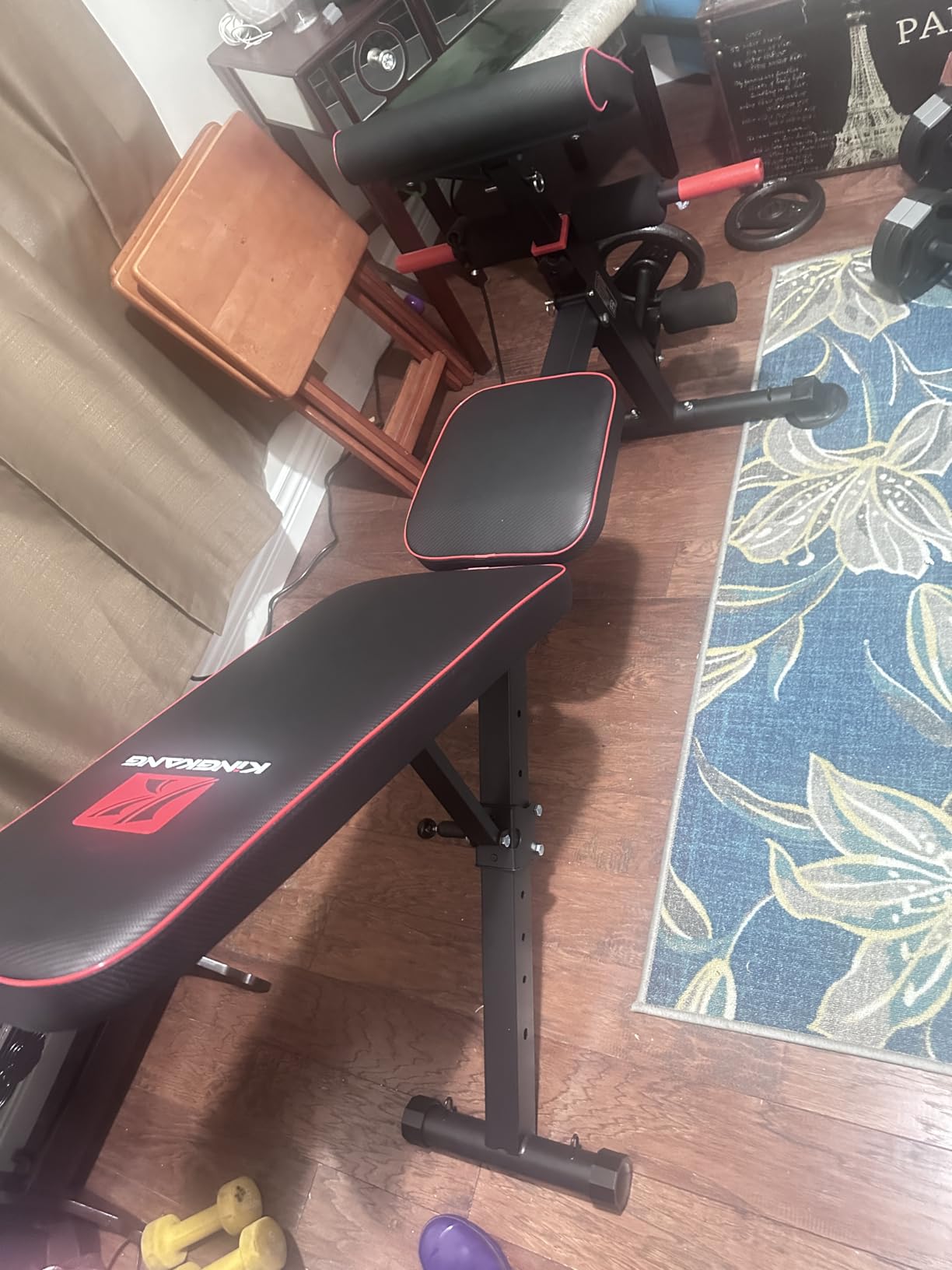
The K KiNGKANG stands out for two specs no other fold-flat bench here combines: 2 inch commercial-grade steel tubing and 2.4 inch high-density foam. On a 34 lb frame, the tubing thickness is what keeps it from feeling like the lighter welded-look units, and the foam is genuinely the most forgiving pad in this roundup.
It is rated to 1050 lb, offers 8 backrest positions plus 3-position elbow pads, and includes 4 inch widened foot pads on a triangular support structure. At 99% pre-assembled, you are tightening a few bolts and it is ready, which we timed at well under five minutes.
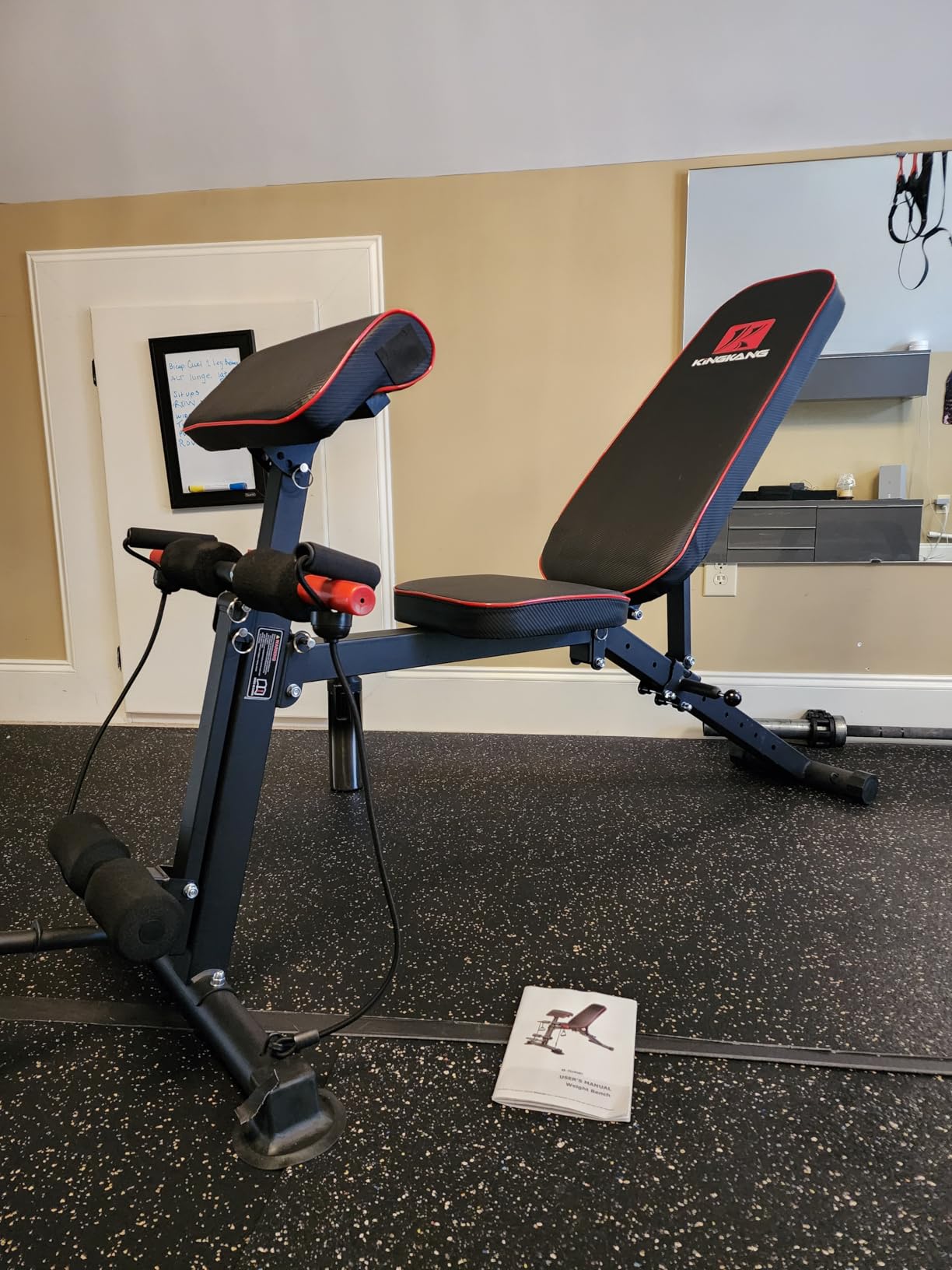
The fold takes it from 51.5 by 13.4 by 31.5 inches down to 31.4 by 14.1 by 12, which fits a closet or a deep under-bed space. The 3 year frame replacement warranty is documented, and leg weights are not included, so the leg extension is there but the plates are yours.
What the reviews consistently flag is the leg extension assembly. The rollers are small and foam-padded, uncomfortable and prone to chafing, and adjusting the front pad means unscrewing the upper leg assembly rather than pulling a pin. It is the weak point on an otherwise well-built bench.
Pad thickness versus attachment quality
On this bench the cushion and the frame are the reason to buy, and the leg extension is the reason to set expectations. A 2.4 inch high-density foam pad under a leather cover holds up over long sessions and multiple users, which is a real difference if your bench doubles as a seating surface for stretching or core work.
The 8 backrest positions with 3-position elbow pads give you enough range for flat, incline and decline pressing, but the elbow pads are the only adjustment on the front assembly and they need tools. If you do leg extensions, the uncomfortable rollers are the first thing you will notice; if you skip leg extensions entirely, that whole category becomes irrelevant.
Who should pass, and who should look twice
Pass if you are under about five foot five, because the bench sits low and narrow and reviewers with longer torsos report the backrest ending under the shoulder blades at incline. Also pass if the leg extension is the exercise you care about, because the attachment assembly is the weak link.
Look twice if you are training two people on one bench, if a household shares the equipment, or if you want a fold-flat bench that still feels like commercial equipment when you pick it up. The 2 inch tubing and the widened foot pads are real, and the 4.4 average reflects the attachments more than the frame.
9. Finer Form Multi-Functional FID Bench – the one that also does hyperextension and Roman chair work
Finer Form Multi-Functional Adjustable FID Weight Bench and Roman Chair
1000 lb capacity
23 settings across four pads
Converts to Roman chair
Transport wheels and handle
Pros
- Rock-solid frame across presses and rows
- Roman chair conversion earns its footprint
- Transport wheels on one side
- Support ships replacement parts quickly
Cons
- Does not collapse and claims a permanent 5 foot base
- Preacher pads are narrow for barbell curls
- Only one decline setting
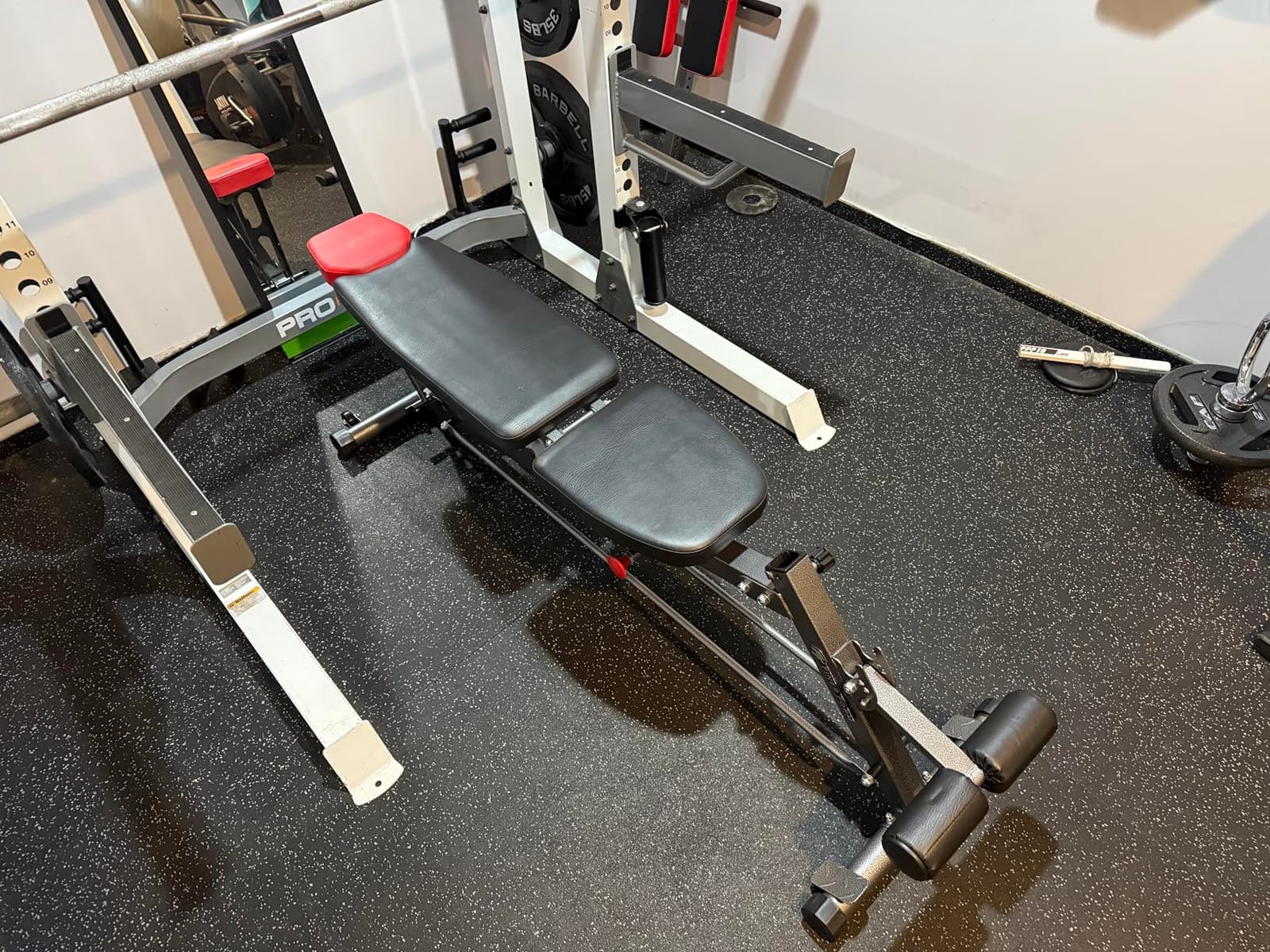
The Finer Form is the most exercise variety per piece of floor space in this roundup. Its 23 settings span 8 backrest, 3 seat, 8 support pad and 4 calf positions, and the frame converts to back extension, hyperextension and a Roman chair. For a home gym with limited room, that is three machines for one footprint.
The frame is a 1000 lb capacity alloy steel build that reviewers describe as rock-solid with no wobble across presses, rows and hyperextensions. Transport wheels sit on one side and a handle on the other, so despite the 46 lb weight you can roll it rather than carry it, which is a real saving in a room with a doorway to negotiate.
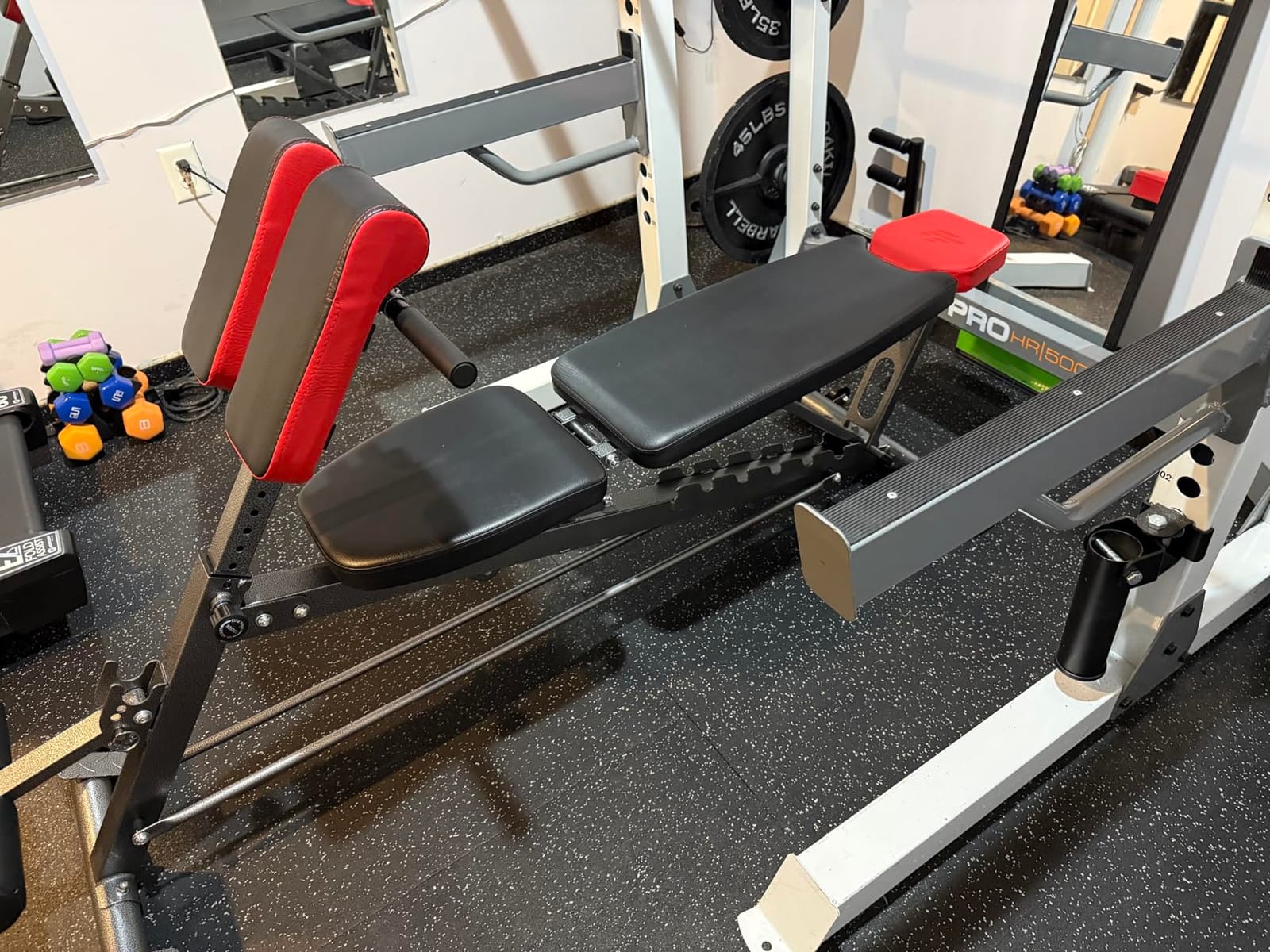
Hardware is well labelled and well packed, clear instructions are included, and a workout poster comes in the box. Support is repeatedly praised for shipping replacement parts quickly, which is the one thing budget brands in this list rarely do well.
There is a 62 inch fixed base footprint and it does not fold flat, so this bench claims floor space permanently. It is at 46 lb and 20 inches wide, and the 5 foot base is a genuine commitment in a small room.
When a Roman chair pays for the footprint
Add up the alternatives before dismissing the size. A separate Roman chair or hyperextension bench, bought separately, adds both floor space and assembly. If you are training posterior chain, this bench folds that equipment into the frame you already need for pressing, and the reviews consistently single out the Roman chair conversion as the feature that justifies the footprint.
Our dedicated hyperextension bench guide for home gyms covers the standalone option if you specifically want a dedicated machine, but the conversion here is enough for most home programming and saves a second piece of equipment.
Where the attachments fall short
The preacher pads are narrow for barbell curls and are not width-adjustable, which is the most common complaint from people who came for the curl attachment specifically. The head pad is a touch short when the back is fully vertical, a problem for taller users doing upright work.
There is also only one decline setting, and occasional shipping damage with missing hardware has been reported, which is a packaging issue rather than a build issue but worth knowing about. For curls and extensions, a dedicated preacher curl bench built for the movement will serve better than an add-on pad.
10. Teclor 10-Position Bench – the steadiest budget frame with the most angle stops in its class
Teclor Weight Bench, Adjustable Strength Training Bench for Full Body Workout with Fast Folding, Incline Decline Exercise Workout Bench for Home Gym -New Version
700 lb capacity
10 backrest positions
30 inch backrest
Three-minute assembly
Pros
- Thickened square tubing holds steady
- Ten positions beat most budget benches
- Two-pin fold to an 8 inch profile
- Quick three-minute assembly
Cons
- Real capacity is closer to 660 to 700 lb
- Firm dense foam
- Bright yellow and black finish
- No decline leg support
The Teclor’s argument is simple: 10 backrest positions and 1.5 mm thickened steel pipe in a 2.4 by 1.2 inch square tube on 18.5 inch round base tubes. Most budget benches in this bracket use 6 to 8 positions on visibly lighter tubing, and reviewers consistently report this one holds steady with no shaking.
Adjustment is serrated, with the cushion teeth engaging the frame for a positive lock rather than a pin relying on gravity. That matters because a slipping backrest mid-set is the top safety complaint in home gym bench reviews, and serrated engagement does not depend on a pin staying seated.
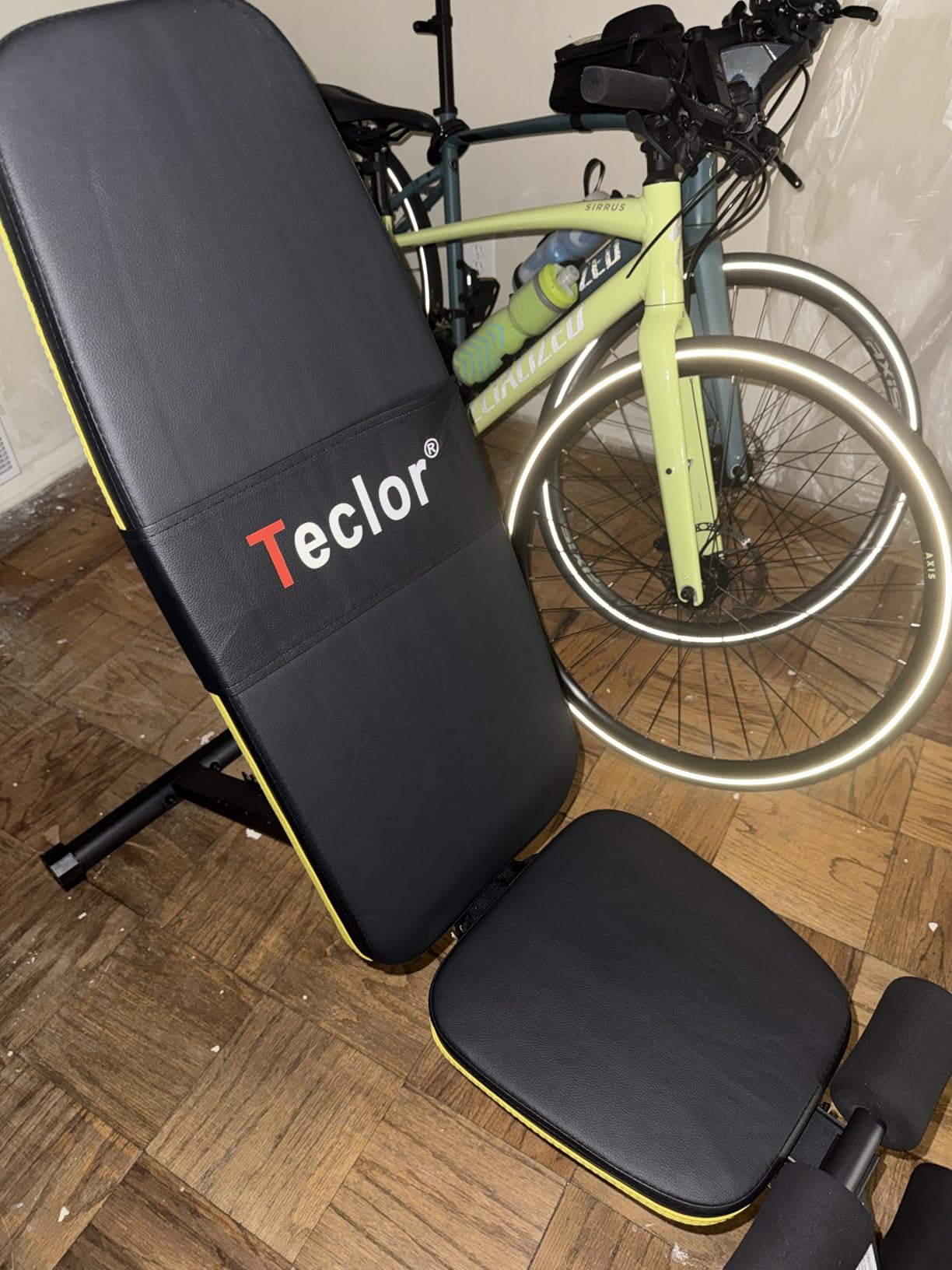
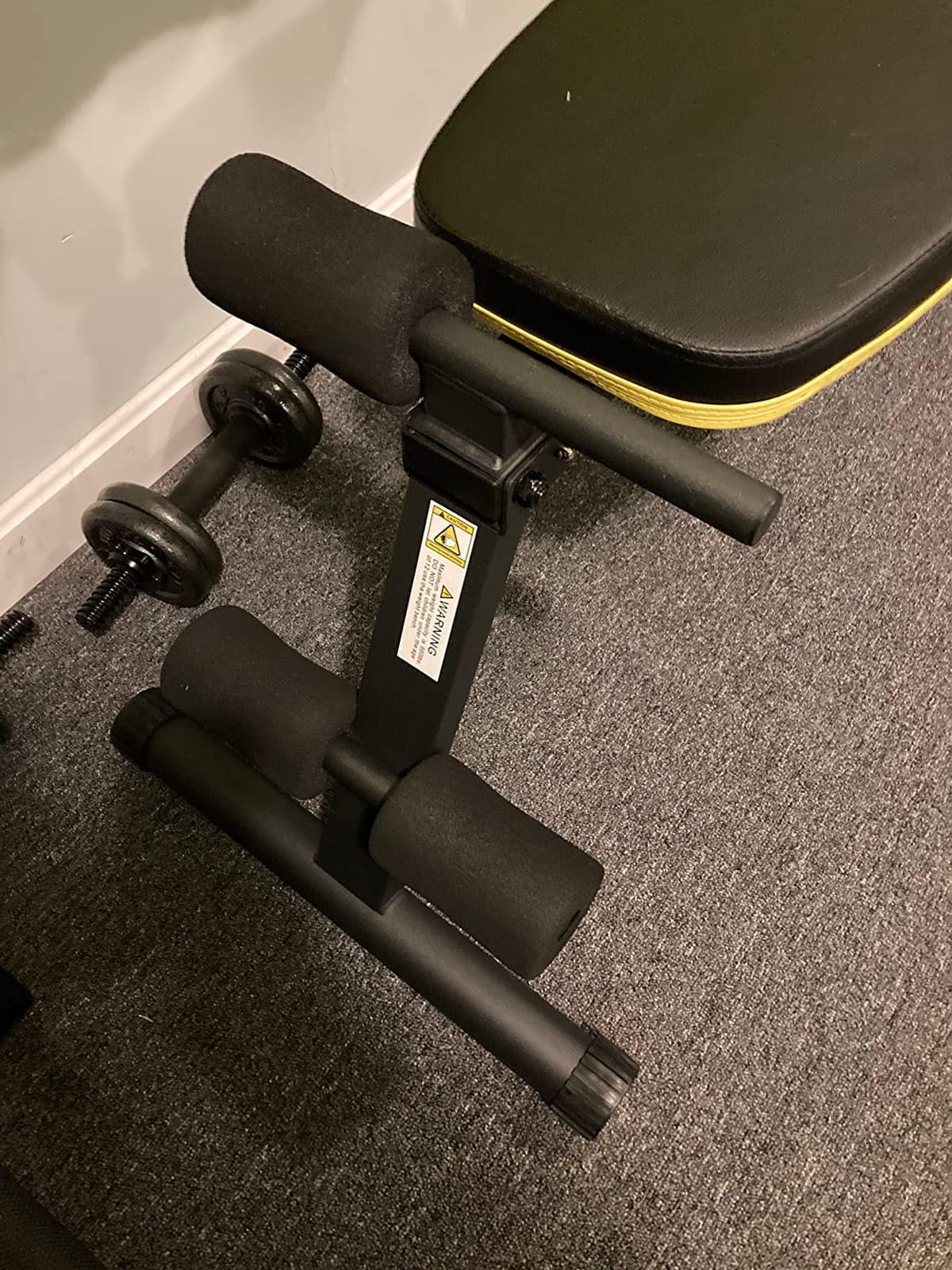
The cushions are 30 by 13 by 2.4 inches on the backrest and 14.2 by 13 by 2.4 on the seat, in breathable leather over foam. The 14.2 inch seat is the widest in this price class, and assembly takes about three minutes before it folds to 34 by 13 by 8 inches for under-bed storage.
The realistic capacity is closer to 660 to 700 lb than the headline number suggests, and the foam is dense and firm rather than plush. The yellow and black finish is not neutral for a living space, which is a small thing that matters if the bench lives in a spare room.
Why position count matters more than capacity on a budget frame
More positions means less wasted time and, more importantly, a closer match to the angle your exercise actually needs. Eight coarse stops may not include a shallow incline that keeps a bench press honest. Ten serrated stops give you a realistic chance of hitting the angle you want without adding hardware to your bar.
The 2.4 inch square tube is the more important spec, though. Wall thickness is what determines whether the frame flexes under a barbell, and a square tube at this gauge resists torsion far better than round tube of the same advertised rating. Read the tubing specification, not the capacity number, when comparing frames.
Where it falls short for lower-body work
There is no decline leg support beyond the fixed angle stops, so leg extensions and leg raises need another piece of equipment. The firm foam is a trade you feel after a long session rather than on rep one, and the colour is a genuine issue if the bench is visible in a room you also use as a living space.
The 1 year frame guarantee and 60 day mat guarantee are the shortest commitments on this list, which is worth factoring in if the bench will see daily use. Within that, the three-minute assembly and the eight inch folded profile are what make it easy to keep out and use rather than store away.
11. Keppi FID Bench1000Pro – the welded 1200 lb frame for serious barbell work
Keppi FID Adjustable Weight Bench,1200LBS Workout Bench for Home Gym
1200 lb capacity
Welded 70 x 50 mm steel frame
36 inch backrest
17.3 inch IPF height
Pros
- Welded frame shows no flex under heavy presses
- 17.3 inch height plants the feet
- 36 inch backrest supports head and neck
- Foam roller foot catch for decline work
Cons
- 59 lb weight and a large footprint
- Does not fold flat
- Longer setup than the pre-assembly suggests
This is the bench we recommend without hesitation to someone pressing heavy barbell weight at home. The frame is fully welded 70 by 50 mm commercial-grade steel, ASTM-certified to 1200 lb, and reviewers loading it with barbells and hip thrusts report no flex at all. There is no bolt joint in the structure to work loose, which is the structural difference that sets it apart.
The 17.3 inch bench height matches IPF standard, and that single number solves a problem most home lifters do not know they have. On a low bench your feet float or you push up with your traps to get a shoulder blade set, and the press gets harder every week without ever feeling like the bench changed.
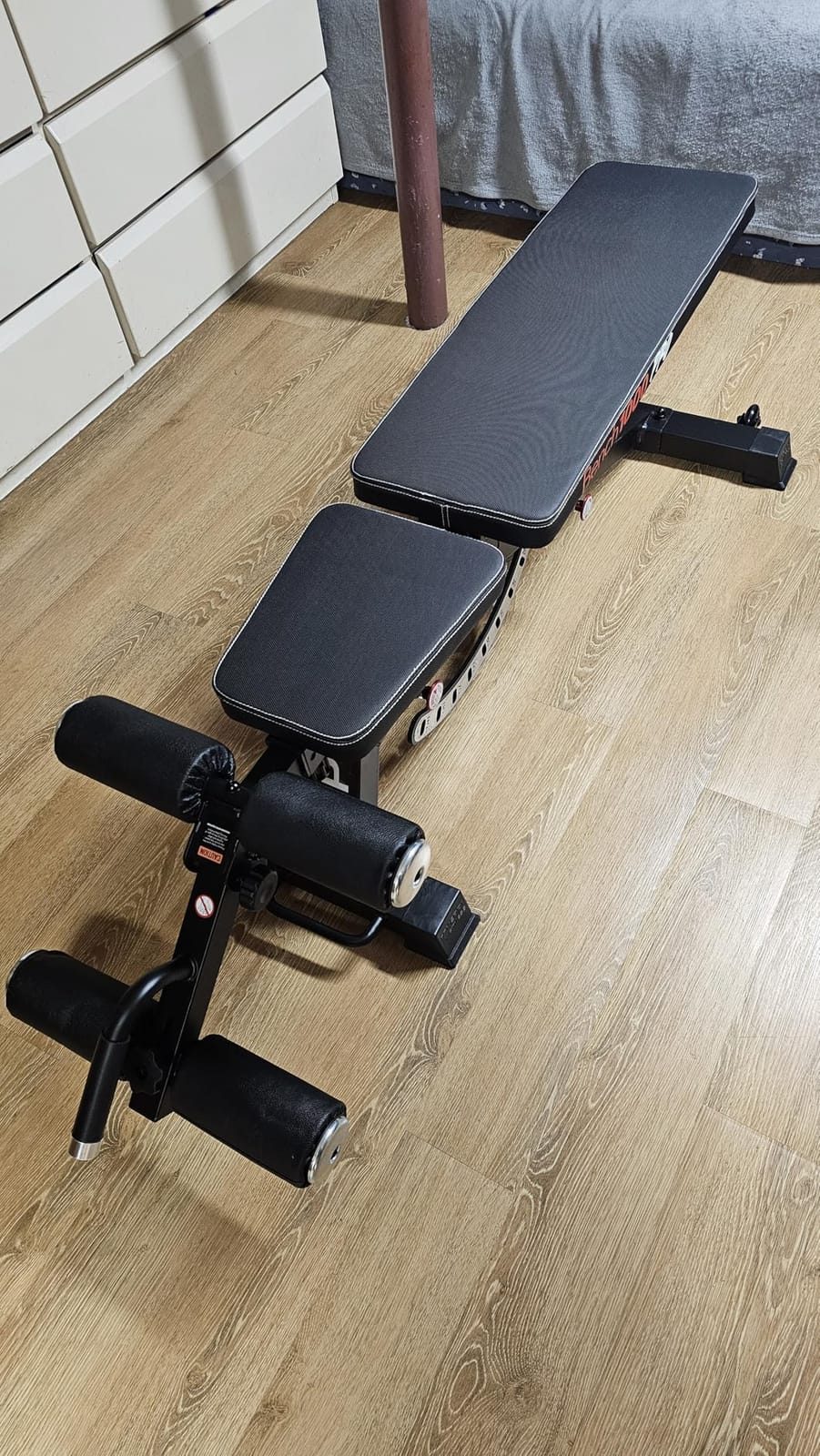
Adjustment covers 12 backrest and 3 seat positions for up to 36 angle combinations, with an adjustable foot catch using soft foam rollers for decline work. The backrest is 36 inches, the longest here, so head and neck are fully supported at every angle, and the leather sits over dense foam.
Built-in transport wheels and an ergonomic handle are included, and 98% of the frame arrives pre-assembled with about ten minutes of finishing. At 59 lb and 58.5 by 24 inches, this bench is heavy and permanently placed.
Why seat height is the spec nobody researches
Squat racks, dumbbell presses and the leg press all assume a standard bench height. Once your bench sits at 17.3 inches, you can set a squat rack’s spotter height from a known reference, your feet reach the floor with knees bent, and a decline press has somewhere to go. A 12 inch bench quietly changes all three.
Buyers migrating from a low flat bench report the difference within a week, mostly as a better foot plant. The 36 inch backrest is a close second, because a short pad forces a neck isometric at incline, and the foam roller foot catch keeps the legs anchored on decline rather than swinging.
The honest cost of a bench this heavy
At 59 lb with a 58.5 by 24 inch footprint, this is not a bench you move weekly. It does not fold flat, so it claims its floor space permanently, and the wheels and handle exist for rolling it a few feet inside a garage rather than carrying it between rooms.
Setup is longer than the 98% pre-assembly figure suggests, so budget an afternoon. In exchange you get a welded commercial frame, a standard bench height and a 36 inch pad, and for a lifter whose goal is a barbell bench press number, those three things are what the exercise is actually made of.
12. BARWING Adjustable Bench – the widest decline range with a thin fold and built-in wheels
BARWING Best Adjustable Weight Bench For Home Gym, With 11 Backrest Positions & 5 Seat Adjustments, 1000 Lb Capacity Incline Decline Bench For Dumbbell Bench Press, Full Body Strength Training
1000 lb capacity
11 positions from -30 to 90 degrees
31 inch backrest
Folds to 10.6 inch
Pros
- Full decline to upright range
- Thin fold for closet or wall storage
- Transport wheels
- Padding holds up well
Cons
- Adjustment knobs take several twists
- Folded bench must lean on a wall
- Short base legs feel slightly shaky
- 1000 lb rating is optimistic for heavy barbell use
The BARWING covers the full -30 to 90 degree range across 11 backrest positions on a 1000 lb thickened steel dual-triangle structure with a double-locking safety mechanism. It is one of only two benches here that reach a genuine -30 degree decline, and at 31 inches the backrest is long enough to support the head at the bottom of that range.
The self-rebounding spring lock gives one-second angle changes, which is the fastest mechanism in this roundup, and the 15.5 inch seat cushion is wide. Built-in transport wheels are included, and at 90% pre-assembled you are finishing a small number of bolts before the frame is ready.
It folds in three steps to about 10.6 inches thick, which stores against a wall or in a closet. The warranty is 1 year frame replacement and 3 year parts, and the review base is unusually trainer-heavy, which shows up in how specifically people describe the frame and the angle range.
Adjustment knobs take several twists and have to be pulled to release, so the speed of the spring lock is offset by slow knobs. The folded bench cannot stand on its own and has to lean on a wall, and the short base legs can feel slightly shaky in some positions.
Decline is a feature, not a checkbox
Decline presses target the lower chest and are the reason the best adjustable benches for home gyms exist at all, but many budget benches fake it with a shallow negative angle and no leg support. A true -30 degree setting with a foot catch that holds the legs down is a different exercise from a 10 degree tilt, and only a few benches here reach it.
For anyone running a full program, decline also covers decline sit-ups, leg raises with the legs past horizontal, and decline fly work. If your plan includes any of those, the angle range and the backrest length are the two numbers to compare, and the BARWING is strong on both.
Where the frame falls short of the number
The listed 1000 lb is optimistic for heavy barbell work, and that is the caveat to hold onto. Short base legs mean the bench can feel slightly shaky in the more extreme decline positions, where the load is carried by a smaller footprint, and a few reviewers report the pin engagement should be checked before each set rather than assumed.
If your heaviest work is dumbbells at moderate loads, that is a non-issue. If you are a barbell lifter, the short base and the optimistic rating are both reasons to look at the welded frames above. For everyone else, the angle range, the 31 inch pad and the thin fold with wheels make this a strong all-rounder.
How to Choose an Adjustable Bench for a Home Gym
Almost every bad bench purchase traces back to comparing the wrong two numbers. Capacity is the spec that gets advertised; tubing gauge, pad width and seat height are the specs that decide whether you can actually train on it. Here is how the decisions stack up.
How much weight capacity you actually need
Add three numbers together: your body weight, your heaviest working load including the bar, and a safety buffer of roughly 100 lb. A 180 lb lifter pressing a 225 lb bar needs a 505 lb working total, so a 500 lb bench is already marginal and anything at 800 lb or above gives you room to progress for years.
Some listings rate combined user plus load rather than load alone, and the Marcy is explicit about that at 300 lb. Read which convention a brand uses, because a 300 lb combined rating and a 300 lb load rating are not the same bench. ASTM certification is the more meaningful label, since it implies a tested procedure rather than a printed number.
Flat, incline and decline: do you need the third
Flat and incline cover the large majority of home programming, and a bench with a solid flat plus a smooth incline is a complete tool. Decline is what unlocks lower-chest pressing, decline sit-ups and leg raises, and it is where many budget benches cut corners with a shallow negative angle.
Check the angle range rather than the word decline. A 10 degree tilt is a mild incline in disguise. A real decline bench reaches -30 degrees and adds a foot catch to hold the legs, and only the FLYBIRD, the Keppi FID and the BARWING give you that here.
Pad width, pad length and seat height
Pad width is the one most skipped and most felt. Anything under about 10 inches forces your shoulders to roll forward and wrecks pressing form, so treat 10.5 inches as a floor. Among these picks the K KiNGKANG at 13 inch, the FLYBIRD at 15.7 inch and the BARWING at 15.5 inch give you room, while the Keppi Bench500 at 11.7 inch is the narrowest.
Pad length matters more for tall lifters, and 30 inches should be your starting point if you are over six feet. Seat height matters for everybody, because a low bench changes how you plant your feet on every press. A height near 17 inches matches commercial gym benches, and the Keppi FID is the only one here at that standard.
Storage, wheels and footprint
Three storage styles appear in this roundup, and they suit different rooms. Flat-pack folding benches like the FLYBIRD, the NICEPEOPLE and the Teclor slide under a bed or stand against a wall. Partially collapsing benches like the Marcy lean upright in a closet but need a wall. Non-folding welded frames like the Keppi FID and the Finer Form claim their floor space permanently.
Measure the room and the doorway before you choose, then check the folded dimensions rather than the open ones. A 24.8 inch wide folded package does not fit under a bed, and a 62 inch base does not fit beside a squat rack. If you will move the bench more than once a year, built-in transport wheels or a carry handle are worth more than any attachment.
What the cheapest tier leaves out
The budget end of this list is genuinely good for dumbbell training: fast assembly, adequate capacity, decent angles. What you give up is frame rigidity under heavy load, fine pad geometry, and warranty length. A 3 year frame warranty and a 2 inch square tube is a materially different product from a 1 year guarantee on lighter tube.
One more warning worth repeating: many budget benches come from the same white-label factory under a dozen brand names, so brand reputation is a weak buying signal on its own. Judge the frame by tubing gauge and the pad by width and foam thickness, and check that the warranty names a company you can actually reach.
Frequently Asked Questions
What is the best adjustable gym bench for home use?
The FLYBIRD WB5 is the best adjustable gym bench for most home gyms. It is ASTM-certified to 800 lb, holds 144 locked positions from -30 to 90 degrees, has a 30 inch backrest with a 15.7 inch seat, and folds in three steps to a 9.06 inch profile for storage.
Which bench is best for a home gym?
It depends on your training and your room. The FLYBIRD WB5 is the best all-rounder, the YOLEO wins on pad comfort and independent seat adjustment, the Keppi FID is the choice for heavy barbell work, and the Marcy is the one that stores vertically in a small space.
Is an adjustable gym bench worth it?
Yes, for most home lifters. One adjustable bench replaces several fixed ones and covers flat, incline and decline pressing in a single frame, which matters when floor space is the constraint. The value drops if you only ever press one angle, in which case a fixed bench is simpler and cheaper.
What is the best brand for gym benches?
Brand name is a weak signal in this category because many budget benches come from the same white-label factory under different labels. Judge the frame by tubing gauge, the pad by width and foam thickness, and the lock by whether it is serrated or positive rather than a plain pin.
Do I need decline capability in a home bench?
Only if your program includes decline pressing or decline core work. Flat and incline cover most home training, but a real decline bench reaches -30 degrees with a foot catch for the legs. Check the stated angle range, because many budget benches offer a shallow negative tilt that is not much more than an incline.
The Verdict on the Best Adjustable Benches for Home Gyms
The FLYBIRD WB5 is the pick. It has the widest angle range in this roundup at 144 positions, an 800 lb ASTM-certified rating on a dual-triangle frame that does not shift under load, a 30 inch backrest that supports most body sizes, and a three-step fold to just over 9 inches that makes it usable in a room most benches will not fit.
Buy the YOLEO instead if pad comfort and an independently moving seat matter more to you, the Keppi FID if you are pressing heavy barbells and can give up folding, or the Marcy if storing the bench on end is the whole problem. Whatever you choose, check the frame by tubing gauge, size the pad to your shoulders, and set your capacity target at your bodyweight plus your heaviest load plus a buffer.
Once the bench is in place, the adjustable dumbbells for home gyms and our Smith machine guide fill out the rest of a compact setup. Re-torque the bolts after the first month of use and you will not be shopping for another bench in 2026.