
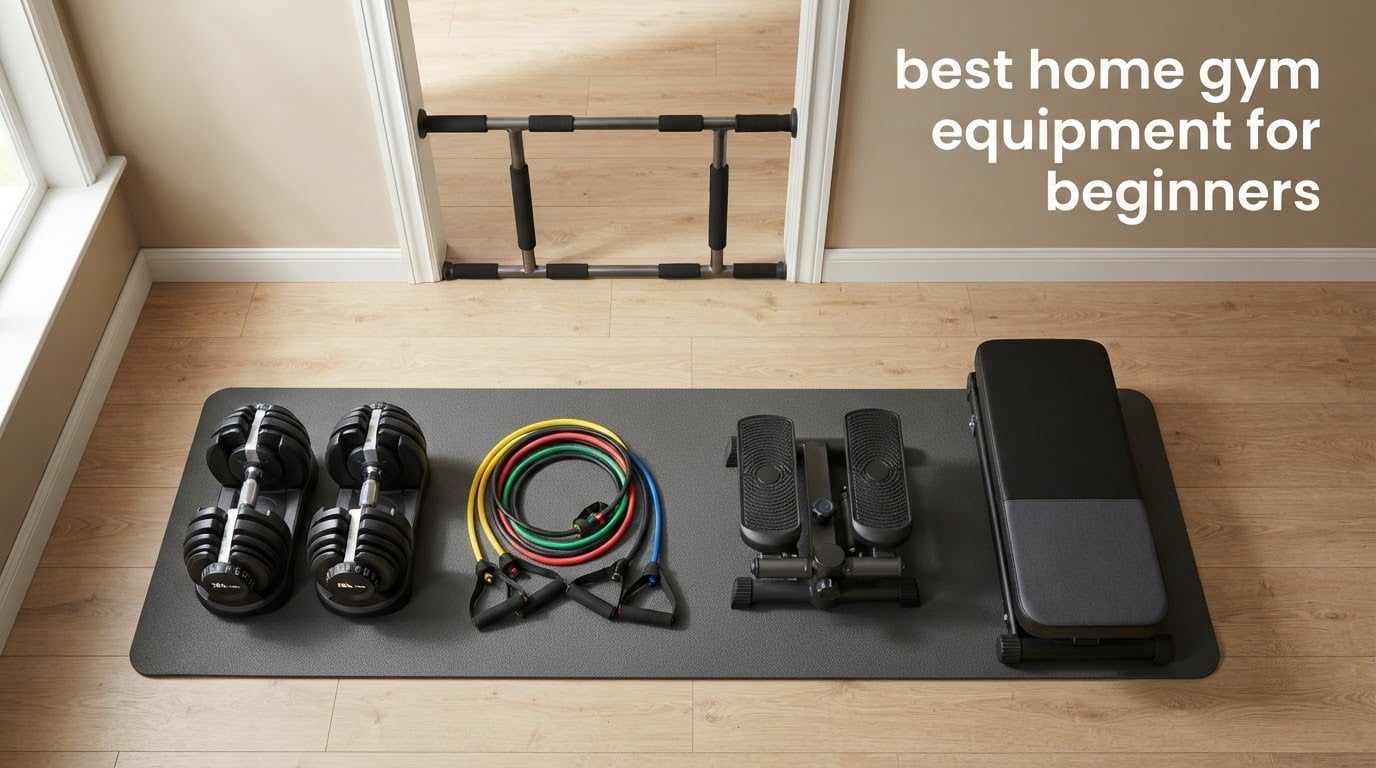
Almost every person I have watched start working out at home makes the same mistake in week one. They buy the enormous all-in-one machine with fourteen attachments and a touchscreen, and by week six it is folded up in the corner collecting dust. The best home gym equipment for beginners is almost boring by comparison: a pair of adjustable dumbbells, a set of resistance bands, something to hang from, a bench that folds away, and a quiet way to get your heart rate up. None of it looks impressive, and all of it works.
That is the pattern that repeats across r/beginnerfitness and r/GarageGym threads that I read while putting this list together. Beginners who start with four or five simple tools stick with training. Beginners who start with a machine they need a manual to operate usually quit. The difference is not budget. It is that simple tools have nothing to hide behind and nothing to go wrong.
So what makes equipment genuinely beginner-friendly? Four things, and I scored every product in this roundup against all four:
Safety — a load limit that comfortably exceeds your body weight, and a frame that does not tip.
Ease of use — you should be able to set it up in under ten minutes with no manual and no tools.
Adjustability — the ability to add load or resistance later without buying something new.
Compact footprint — it has to live in a room you also use for other things, or it will not survive month three.
The six equipment categories that matter most for a first home setup are adjustable dumbbells for pushing and pulling, resistance bands for pulling work and mobility, a pull-up bar for vertical pressing and pulling, an adjustable bench to support pressing movements, a quiet cardio option for conditioning, and a mat or floor surface for core work. Every product below fills one of those gaps, and several fill more than one.
If your space is the real constraint, I would read our guide to home gym equipment for small spaces first. If you want audio to make the sessions more bearable, our picks for sport earbuds for the gym are worth a look. Otherwise, here is where I landed after comparing all ten of these on weight capacity, footprint, adjustability, and real user feedback.
Table of Contents
Top 3 Best Home Gym Equipment for Beginners in October

Sunny Mini Stair Stepper
- Pre-assembled steel stepper
- 300 lb capacity
- Quiet hydraulic drive
- 16 x 12 x 14 in footprint

VINSGUIR Ab Roller Wheel
- Dual-wheel stability
- 440 lb steel shaft
- Weighs 1.4 lb
- Knee pad included
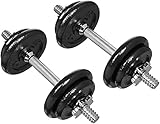
Amazon Basics Adjustable Dumbbells
- 38 lb total across 14 pieces
- Threaded collars
- Storage case
- Expands with standard plates
The Best Home Gym Equipment for Beginners in 2026
| Product | Specifications | Action |
|---|---|---|
| Sunny Health and Fitness Mini Stair Stepper |
|
Check Latest Price |
| VINSGUIR Ab Roller Wheel |
|
Check Latest Price |
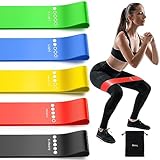 Renoj Resistance Bands 5-Pack Renoj Resistance Bands 5-Pack |
|
Check Latest Price |
 Ally Peaks Doorway Pull Up Bar Ally Peaks Doorway Pull Up Bar |
|
Check Latest Price |
| Amazon Basics Adjustable Dumbbell Set |
|
Check Latest Price |
 HPYGN Resistance Bands with Handles HPYGN Resistance Bands with Handles |
|
Check Latest Price |
 YOLEO Adjustable Weight Bench YOLEO Adjustable Weight Bench |
|
Check Latest Price |
 FEIERDUN DS2 Multifunctional Set FEIERDUN DS2 Multifunctional Set |
|
Check Latest Price |
 MQRW Push Up Board System MQRW Push Up Board System |
|
Check Latest Price |
 NICEPEOPLE Adjustable Weight Bench NICEPEOPLE Adjustable Weight Bench |
|
Check Latest Price |
1. Sunny Health and Fitness Mini Stair Stepper — the quiet one you will still be using in a year
Sunny Health & Fitness Mini Stair Stepper with Resistance Bands for Cardio
300 lb steel frame
Hydraulic drive
LCD monitor
16 x 12 x 14 inch
15.2 lb
Pros
- Pre-assembled so you can start on day one
- 16 x 12 x 14 inch footprint stores anywhere
- Quiet hydraulic drive works under apartment rules
- Removable bands add upper body work
- 300 lb capacity steel frame
Cons
- Intensity ceiling is lower than a full stair climber
- Monitor is basic rather than programmable
- Mini format limits the resistance range
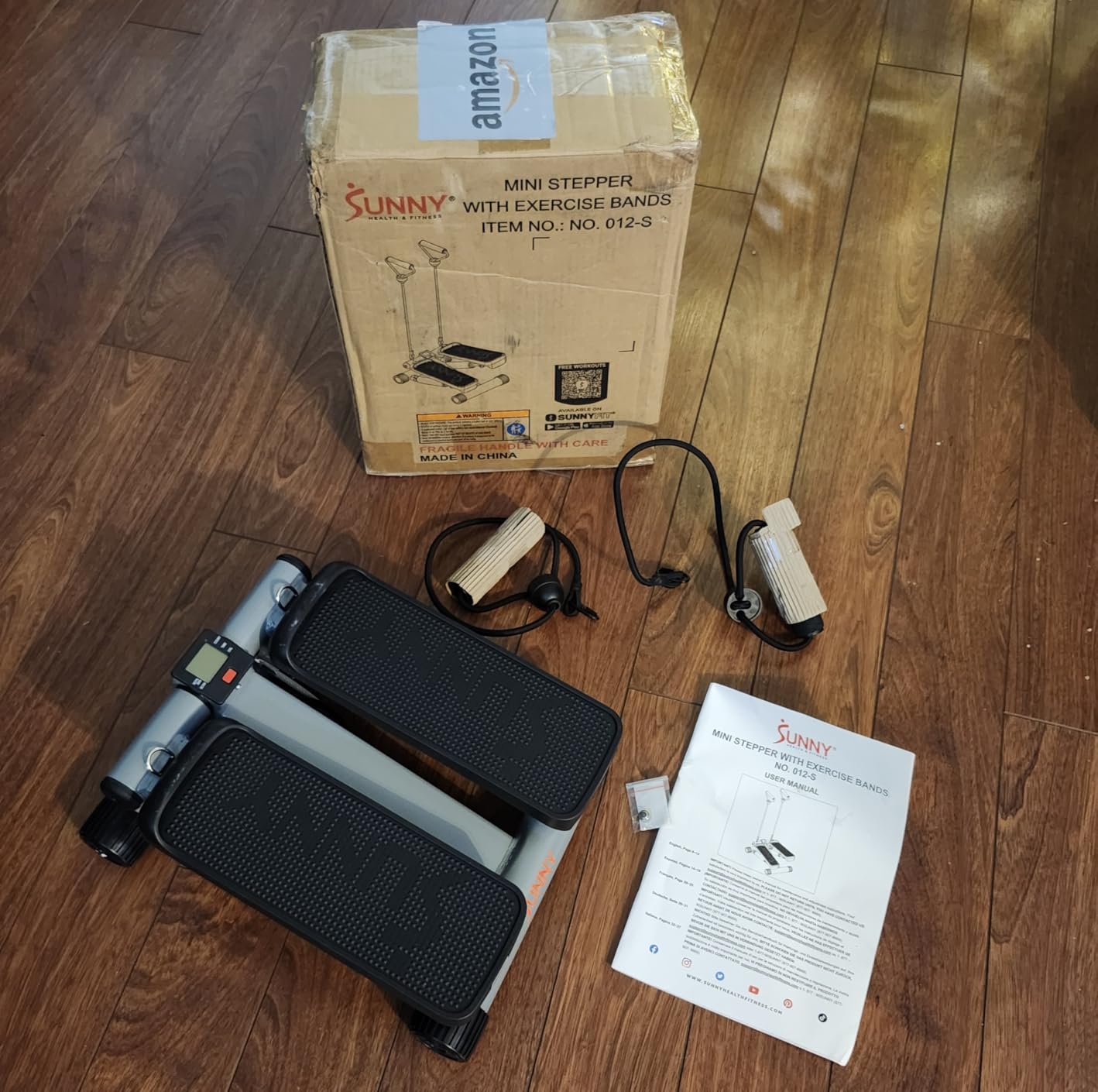
I put this stepper in a hallway that is roughly four feet wide, which is the tightest corner I have tested in. It measures 16.1 by 12.2 by 13.5 inches and weighs 15.2 pounds, so when I am done I slide it against the wall and it disappears. That is the whole reason it earned the top spot here: it is the one piece of cardio equipment in this roundup that does not need a corner of its own.
It arrives fully assembled. There was no box to build, no bracket to align, no manual I had to read to find the intensity knob. I was stepping on it within five minutes of taking it out of the packaging, which matters more than it sounds like it should, because the single biggest predictor of whether home equipment survives is whether you use it the first week.
The build is more substantial than the compact size suggests. It uses 2.5mm commercial steel with a certified 300 lb weight capacity, which is well past anything a beginner or an intermediate lifter will produce with body-weight stepping. The hydraulic drive is genuinely silent. I have used it at seven in the morning in an apartment with thin walls and never had a neighbour knock, which is not something I can say for treadmills or air bikes in the same list of concerns.
The removable resistance bands are a small touch that adds a lot. Clip them to the handles and the same session becomes chest, back, and shoulder work instead of pure cardio. The LCD monitor tracks steps, time, and calories, and one LR44 battery for the monitor is included in the box.
Why it works as a first cardio purchase
Because it solves the noise problem, which is the actual reason most people in apartments never get cardio at home. There is no motor, no fan, no impact on the floor below you. It is a hydraulic resistance system, so the only sound is your own footfalls and a very quiet flywheel.
The 300 lb rating also means you are not buying something you will outgrow in two months. Most of the sub-200 lb mini steppers are fine, then become an expensive paperweight when you add resistance. The adjustment knob gives you room to increase intensity as you get fitter without changing machines.
Where it falls short
The intensity ceiling is genuinely lower than a full stair climber, and reviewers mention the fixed stride being shorter than they expected. If your goal is interval work where you are gasping on a full stair stepper, this will not get you there. For steady low-impact conditioning and warm-ups, it is more than enough.
The monitor is a display, not a program. It tells you what happened; it does not push you toward a target heart rate or a step count. Warranty coverage is one year on the structural frame and 180 days on other parts, which is thinner than the two-year coverage on the bench later in this list, so keep that in mind if you train daily.
2. VINSGUIR Ab Roller Wheel — the highest-rated tool in the roundup
Vinsguir Ab Roller Wheel, Abs Workout Equipment for Abdominal & Core Strength Training, Exercise Wheels for Home Gym, Fitness Equipment for Core Workout with Knee Pad Accessories
Dual 3.2 inch wheels
Stainless steel shaft
440 lb rating
1.4 lb total
6.5 x 12 x 6.5 inch
Pros
- Dual-wheel base tracks straight without drifting
- Weighs 1.4 lb so it moves room to room
- Knee pad included for floor comfort
- Workout schedule included for beginners
- Assembles in minutes
Cons
- Included knee pad is thin on hard floors
- Grip collars can loosen at a very wide stance
- Wider wheel shortens range of motion
This is the highest average rating in the entire roundup at 4.6 stars across more than 23,000 reviews, and having used one daily for a stretch, that number tracks up. The single reason it scores so well is that it is one tool, it weighs almost nothing, and it does one thing correctly.
The design choice that matters is the dual-wheel base. Most ab rollers are a single narrow wheel, and beginners immediately find themselves correcting sideways drift within three reps. The 3.2 inch dual-wheel design on this one stays on the line without much correction, which is the difference between a core exercise and a balance test.
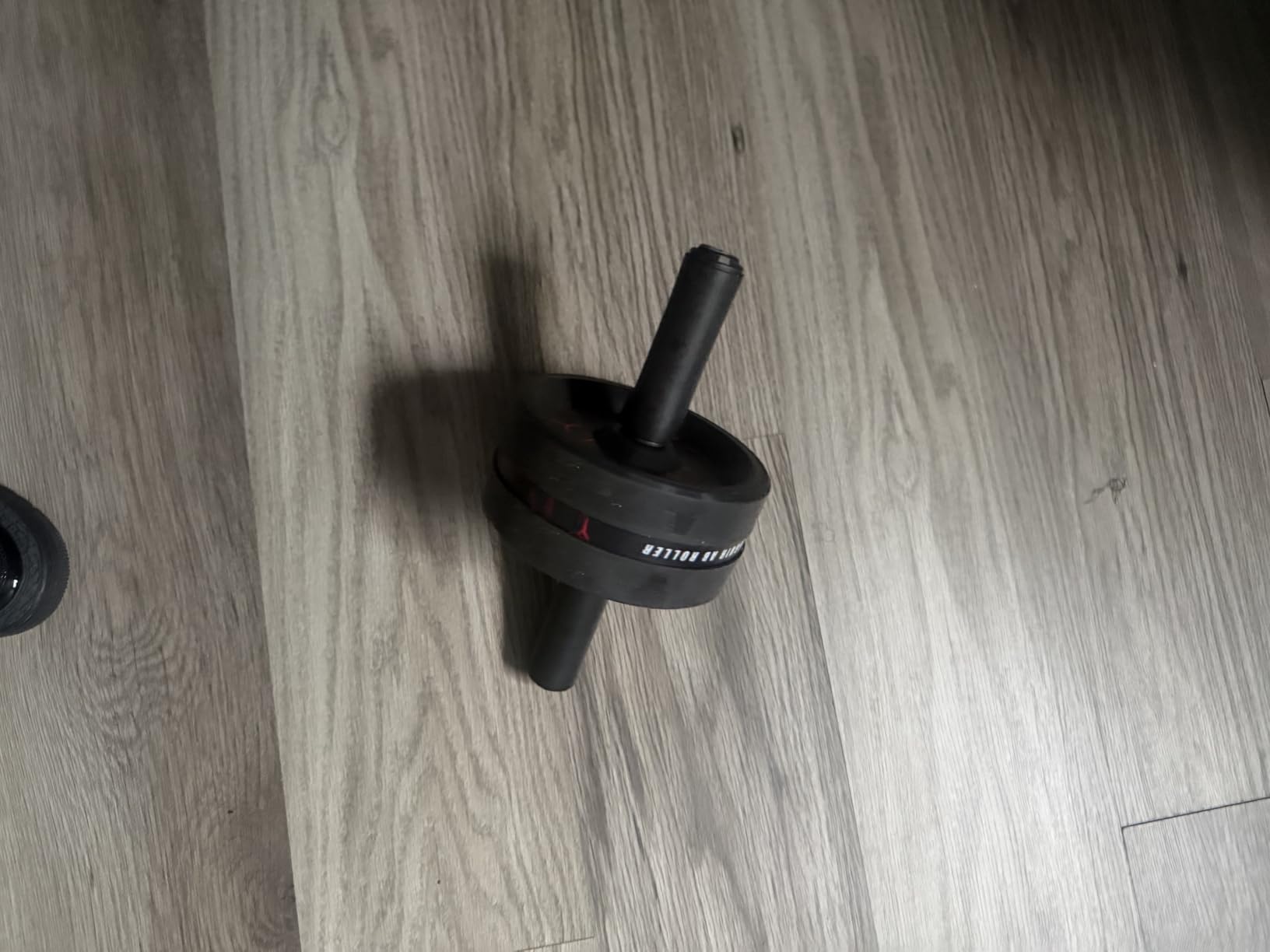
It weighs 1.4 pounds and measures 6.5 by 12 by 6.5 inches. I have thrown it in a drawer, in a gym bag, and into a car trunk without thinking about it. The stainless steel shaft is rated to 440 pounds, so the limit is your core strength long before it is the equipment.
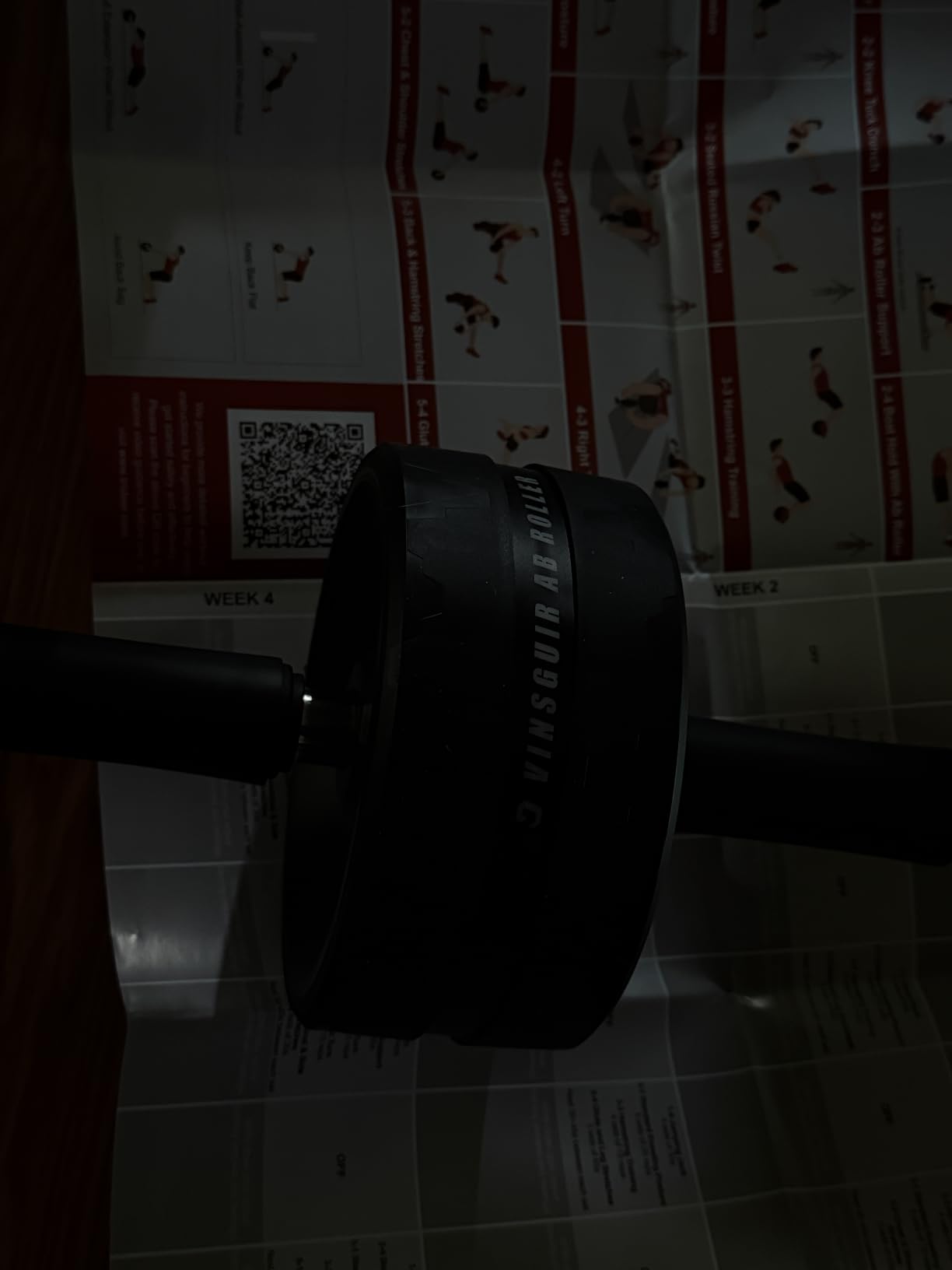
It targets more than the abs. Hip flexors, the lower back, and the lats all work to keep the hips from sagging, which is why it pairs well with dumbbell rows and pull-up work. A workout schedule is included in the box, which sounds minor until you realize a lot of beginners do not know what to do with it on day one.
Why beginners can actually progress on it
Because the difficulty scales with reach, not with the machine. Starting from kneeling at a short distance, then extending the knees away as you get stronger, is a clean progression pathway that costs nothing. No adjustment, no settings, no replacement purchase at any point.
It also travels. If you split your week between home and a gym, or you want a core session at the office, this is the kind of tool that does not create friction. The EVA rubber cotton handles stay grippy once your hands get sweaty, which I would not say for every bare-metal handle on the market.
Where it falls short
The included knee pad is very thin, and reviewers call it out most often. On carpet it is fine. On a hard apartment floor or hardwood, I would layer a mat underneath. Grip collars can loosen if your stance goes extremely wide, so a quick finger check every few sessions is worth it.
The wider wheel that gives you stability also shortens the range of motion compared to a narrow single-wheel roller. That is a fair trade for a beginner and a bad trade for an advanced athlete, so if you have been doing this for years, look elsewhere. The warranty is 12 months with 30-day returns, and there is lifetime customer service attached.
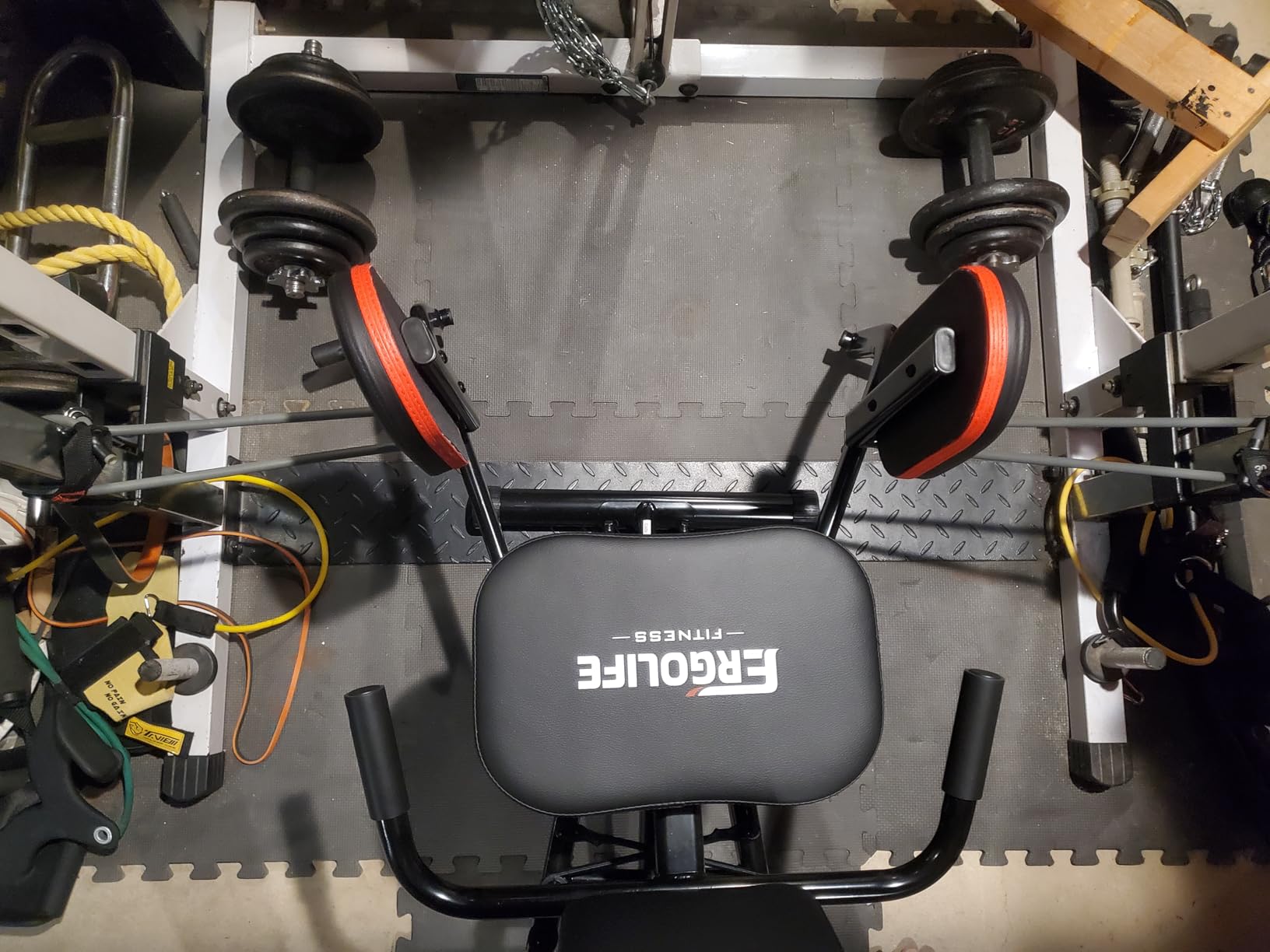
3. Renoj Resistance Bands 5-Pack — the lightest way into real training
Resistance Bands for Working Out, 5-Pack Elastic Exercise Bands for Strength Training, Stretching, Workout; Home Gym Equipment for Women Men, Pilates Yoga Physical Therapy, Leg Glute Arm Exercise Kit
Five natural latex bands
Extra light to extra heavy
Flat and mini loops
Carry bag and guide
2.72 oz
Pros
- Color-coded levels are easy to track
- Weighs 2.72 oz so it travels anywhere
- Workout sheet and carry bag included
- Wide flat bands do not dig into legs
- Lowest-friction entry to strength training
Cons
- Too light for serious progressive loading
- Differences between colors are subtle
- Mini loop bands can stick together in storage
Resistance bands come up more than anything else in beginner advice threads, and this five-pack is the version I would hand someone with no equipment at all. The whole set weighs 2.72 ounces and folds into a bag the size of a paperback. If you travel, share a flat with a sibling, or simply do not have a storage problem to solve, this is the easiest commitment in the roundup.
You get five natural latex rubber bands spanning extra light through extra heavy, which is enough of a range to warm up on, work a full set of glute and shoulder exercises, and finish a hard session. The resistance levels are colour-coded, so you are not squinting at printed text to figure out which one you grabbed.
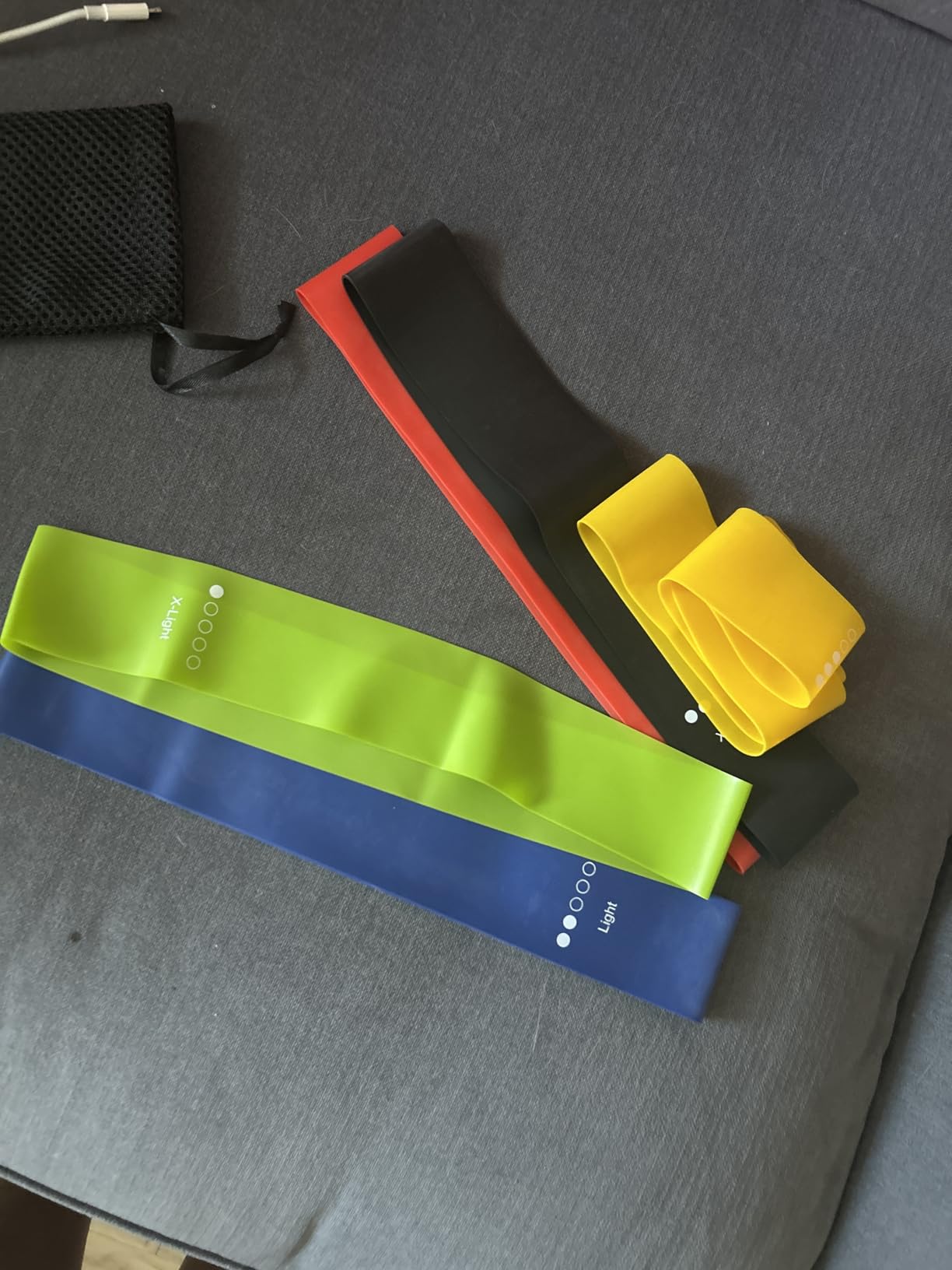
The set includes flat loop bands and mini loop non-slip straps, plus a carry bag and a workout suggestion sheet. That last item is the reason this works for a genuine beginner rather than someone who already knows what a banded good morning is. The sheet gives you movements to do on day one without you having to search for a program.
Because resistance is not fixed to a stack, bands also let you vary the tension through the range of a movement rather than only at the endpoints. Reviewers using them for physical therapy, Pilates, and yoga report the same thing: the elasticity holds up and the bands do not crack or tear with regular use.
Why it is the right first purchase for most people
Because it is the lowest-commitment way to find out whether you actually like training at home. This is the single most common question on beginner fitness forums, and the honest answer is that you cannot know until you have done three months of sessions. Making that trial low-commitment removes the risk.
It also covers more muscle groups than the name suggests. The listing covers glutes, hips, thighs, legs, arms, shoulders, back, chest, knees, and ankles, which is genuinely most of what a beginner needs for a full body session.
Where it falls short
The top end is not high enough for real progressive loading. Once you are pulling with full bodyweight-plus, you will need the handled, stackable set further down this list rather than these. Some reviewers also note the perceived difference between colours is subtler than the labelling implies, so test them before you plan a session around a specific tension.
The mini loop bands can stick together if you jam them into the bag carelessly, and the warranty is one year from the manufacturer. Neither is a real problem, but both are reasons to roll rather than crush the loops on the way back in the bag.
4. Ally Peaks Doorway Pull Up Bar — vertical pulling without a rack
ALLY PEAKS Pull Up Bar Thickened Steel Pipe Super Heavy Duty Steel Frame Upper Workout Bar| Multi-Grip Strength for Doorway | Indoor Chin-Up Bar Fitness Trainer for Home Gym Portable (silver2)
1.7mm steel to 440 lb
Fits 24 to 32 inch doorways
No screws or drilling
37 x 20.2 inch
1.83 kg
Pros
- Tool-free install in about 10 minutes
- Silicone pads leave door trim unmarked
- Multiple grip widths for pull-ups and dips
- Pops off so the door still closes
- Compact footprint for apartments
Cons
- Narrow doorways limit the widest grip
- Will not fit oversized molding or frameless openings
- Bar can flex and creak on first mount
Pull-ups and chin-ups are the movements beginners most want and most often skip, because joining a gym for one thing feels silly. A doorway bar removes that barrier. This one uses 1.7mm thickened steel with an anti-rust powder coating and is rated to hold 440 pounds, so it is structurally overkill for a person just learning to do their first chin-up.
The mount uses wedges and a locking hook rather than screws, so there is no drilling I had it up in about ten minutes and have moved it between two doorways several times since. It includes a metal locking hook and locking nuts, and there is a 190-day money-back guarantee behind it.
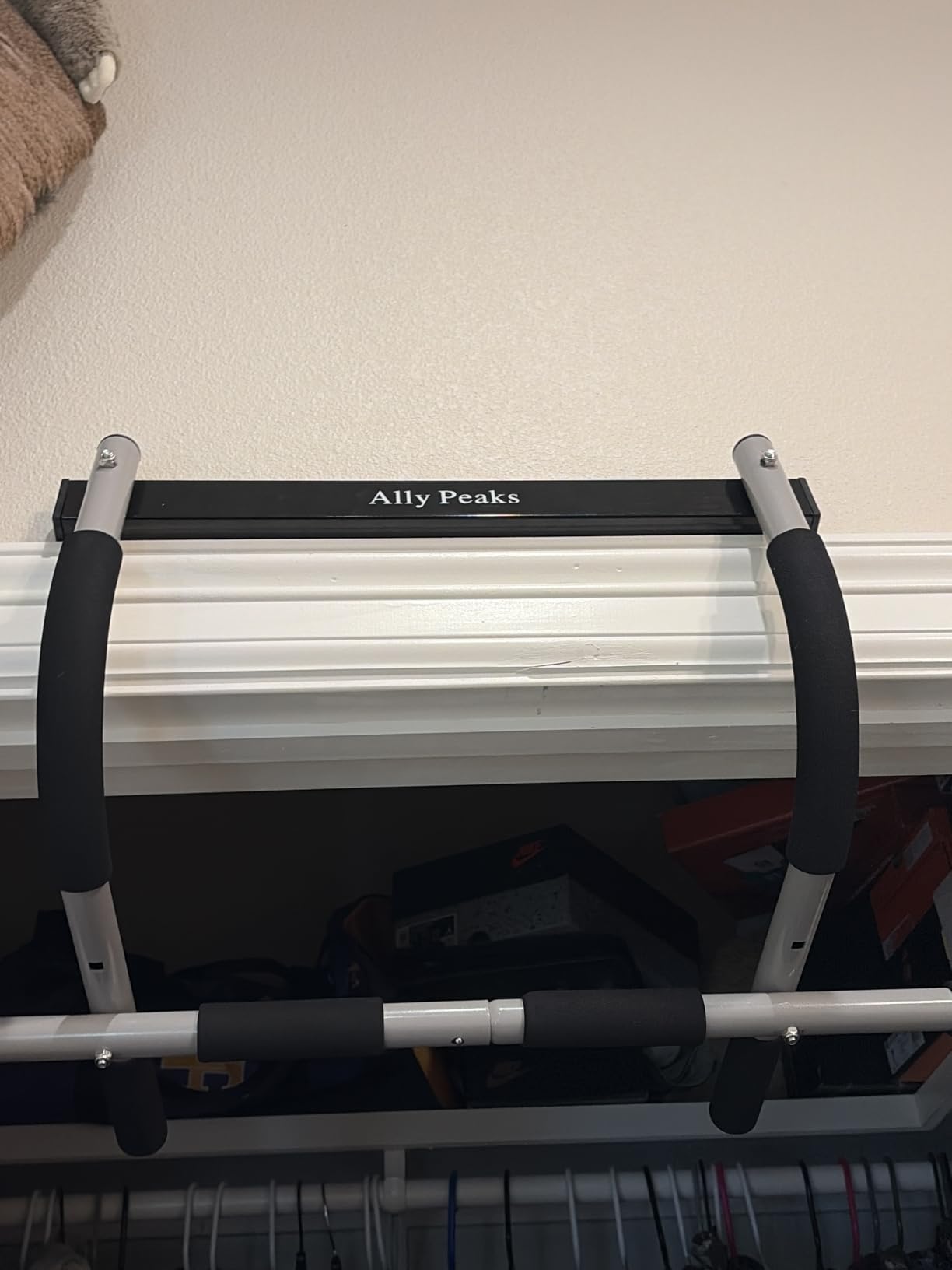
The mounting details are what separate this from the crowd. Upgraded elastic silicone protects the door frame, and there are four extra 4mm removable no-trace pads if your trim is fussy. The bar pops on and off easily enough that you can still close the door, which sounds trivial until you own a bar that blocks it permanently.
Grip width is the real feature. The high fiber foam multi-grip handles are anti-slip and wear resistant, and multiple widths let you do chin-ups, pull-ups, dips, and hanging crunches from one piece. Foam grips also spare your hands the knurling burn that bare steel causes on a beginner who is not yet using straps.
Check your doorway before you order
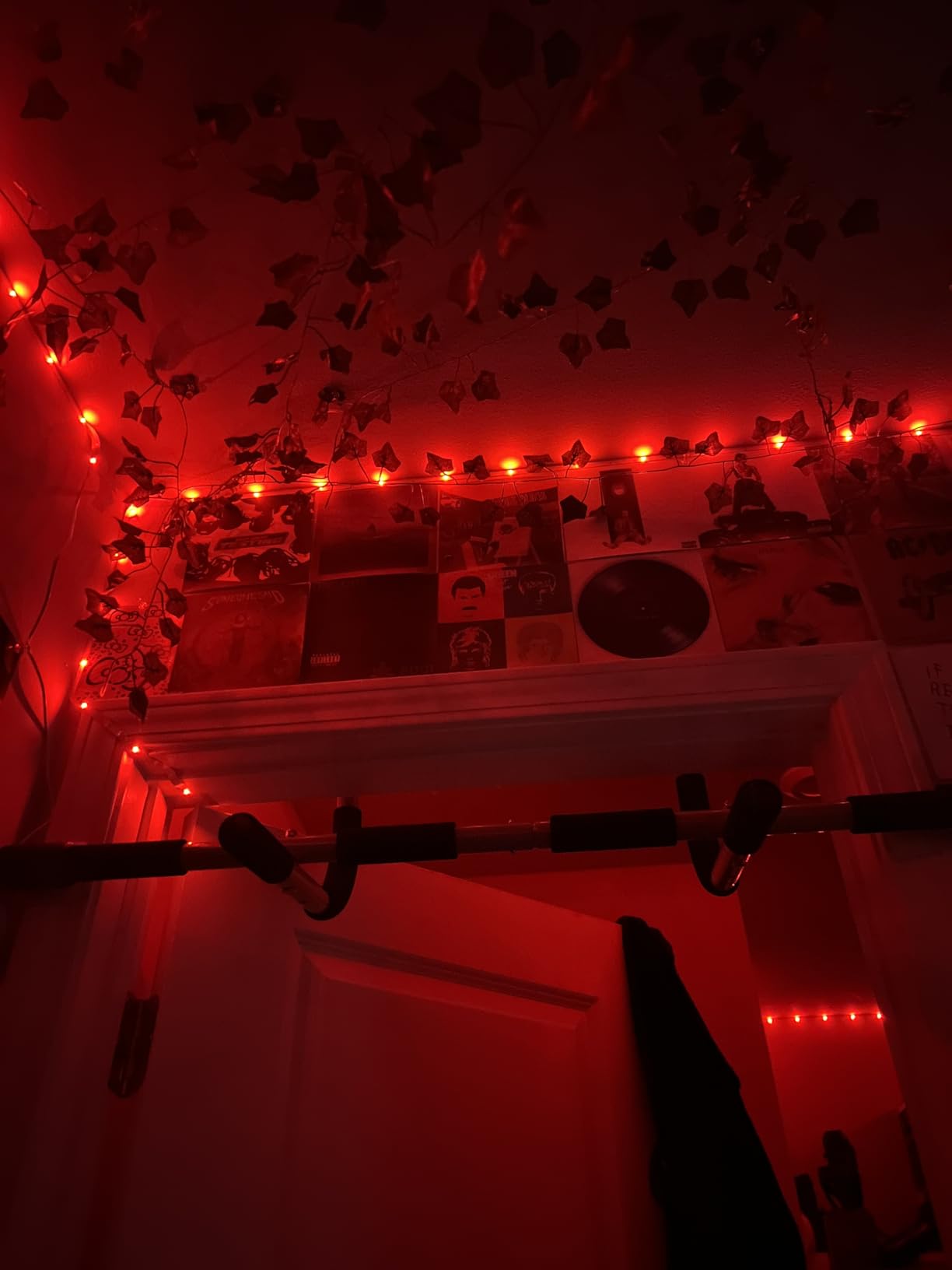
It fits standard 24 to 32 inch doorways, with a mounting depth of 4.7 to 8.27 inches, trim height up to 3.75 inches, and trim thickness of at least 0.45 inches. That is most interior doors, but not all of them, and returning one is far more annoying than measuring twice.
On a narrower doorway the frame can contact the bar and limit how wide your grip can go. That is the single most common complaint in the reviews, along with fit failures on oversized molding or openings with no header trim.
Where it falls short
It is not a full squat rack. Reviewers note that the bar can flex slightly in the middle grip and may creak when it is first mounted, and both of those settle after break-in. The elastic resistance bands included with it are considered gimmicky by some buyers, so treat them as a bonus rather than a feature.
It also cannot take a dip attachment or a barbell sleeve, so if your long-term plan involves squatting, you will need a real rack eventually. For a beginner building the pulling movement pattern, that is a problem for phase three, not phase one.
5. Amazon Basics Adjustable Dumbbell Set — the Best Value single purchase
Amazon Basics Adjustable Dumbbell Hand Weight Set with Storage Case, Portable, Secure, 38 Pounds, Black
38 lb total set
Two 3 lb handles
14 pieces with case
Alloy steel handles
14 inch handle length
Pros
- One set serves multiple people and exercises
- Deep threading resists loosening during sets
- Heavy duty washers keep it quiet
- Storage case keeps everything organized
- Expands with standard plates as you progress
Cons
- Wide plates fill the 14 inch bars quickly
- Knurled handle is rough on bare hands
- Case latch does not always close securely
If you buy one thing for a beginner home gym, buy a pair of dumbbells. They cover more movement patterns than any other single item: presses, rows, overhead work, goblet squats, carries, and every isolation movement you will eventually want. This Amazon Basics set is 38 pounds total across 14 pieces and it holds a 4.6 average across more than 10,000 reviews.
The mechanism is straightforward. You have two 3 lb handles, four 2.5 lb plates, four 5 lb plates, and four 0.5 lb collars, and you change the load by sliding plates on and off and tightening the threaded collars. The threading is deep and resists loosening, which is the failure point on cheaper plate-loaded dumbbells and the reason I do not trust them for presses.
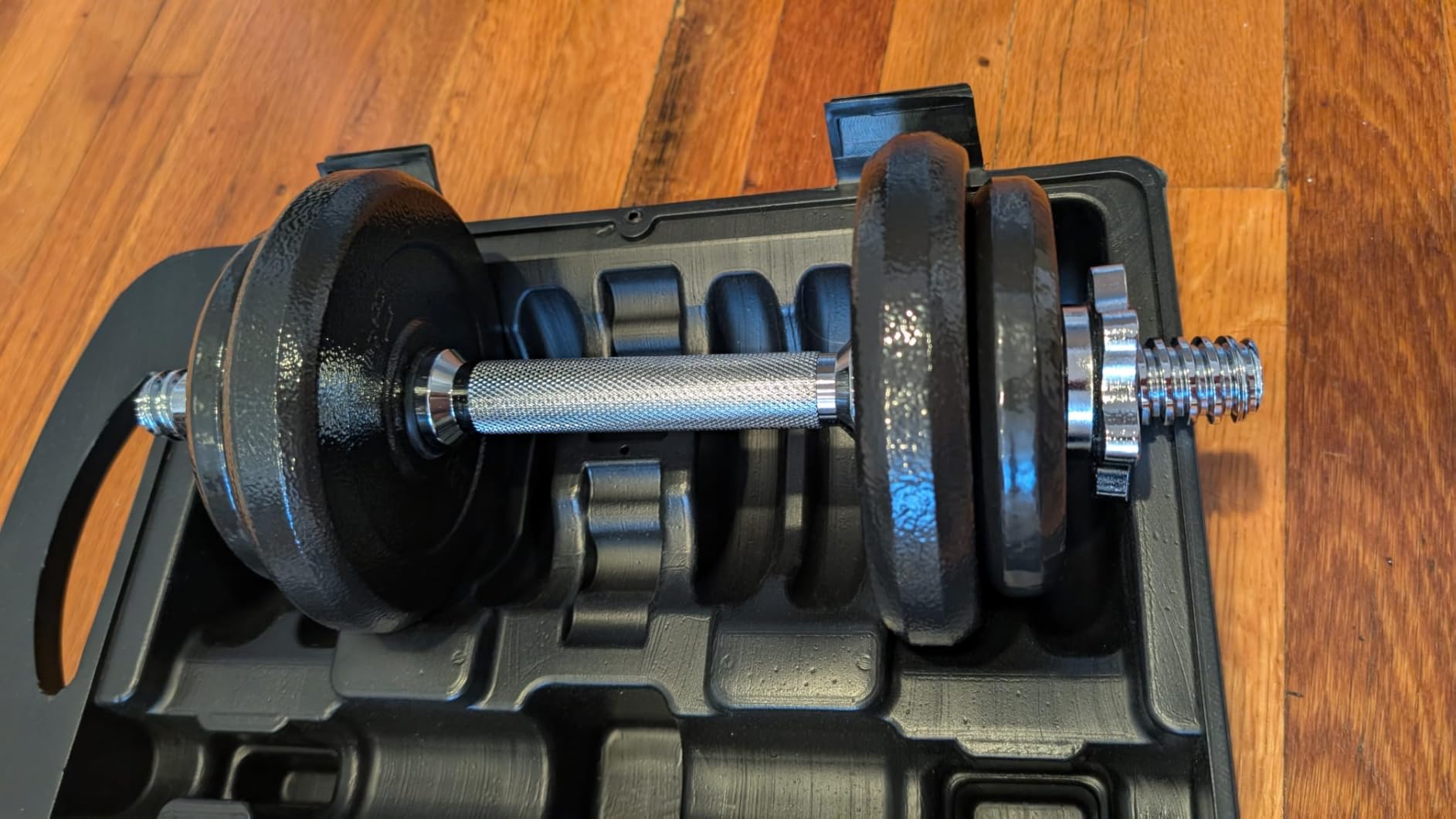
Handles are alloy steel with a 1 inch diameter and about 14 inches of length, and the set as a whole is listed at 17.2 kg. In practice the plates have a substantial feel and the heavy duty rubber washers keep the set quiet, which matters if you are training in an apartment at odd hours.
It comes with a black storage case with a carry handle. That case is what makes this work in a shared home, because the plates are otherwise scattered across a floor and that is how most home dumbbell sets end up unused. Reviewers also highlight that one set can serve multiple people, which is the argument for adjustable over fixed dumbbells in a household.
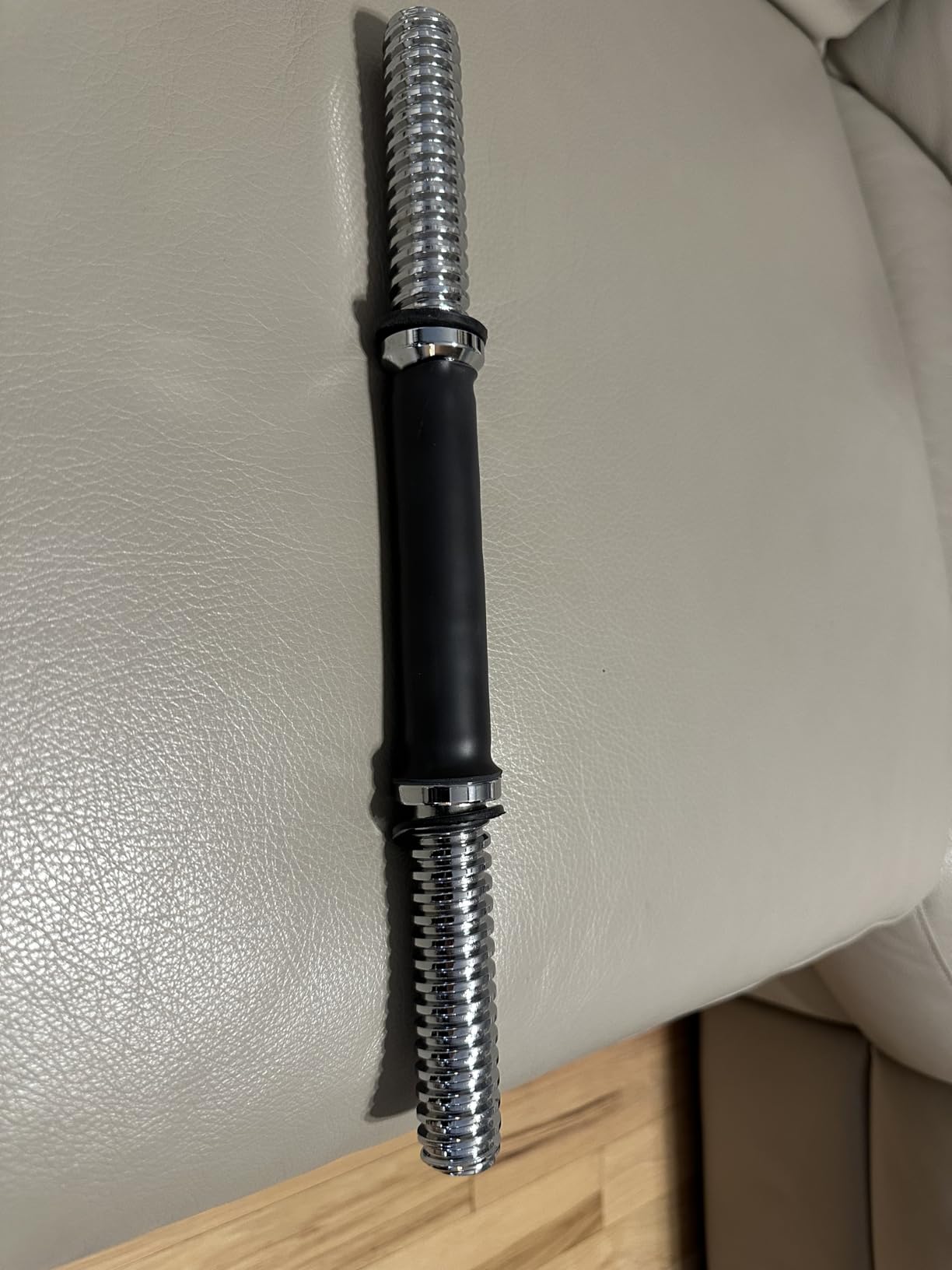
Why adjustable dumbbells solve the space problem
A rack of fixed dumbbells covering a real weight range eats an entire wall. This set collapses into one box. If you have already read our small spaces equipment guide, that trade is the whole argument, and it is why adjustable dumbbells show up in almost every competent small-space setup.
Because you can add standard plates later, the set does not expire. The included plates are the limit, not the concept, and that means the same purchase covers month one and month twelve of a beginner progression plan.
Where it falls short
The most common complaint is that the supplied plates are wide, so the 14 inch bars run out of load capacity quickly. Once you fill both bars with the 5 lb plates you are adding more, and there is no collar space remaining. Budget for a second set of standard plates if you plan to press heavy.
The knurled handle surface is rough on bare hands during heavier sets, and the storage case latch can be loose so the case does not always close securely. Neither issue affects training, but both are reasons to keep the collars finger-tight checked rather than trusting a wrench-free setup blindly.
6. HPYGN Resistance Bands with Handles — heavier pull for rehab and travel
HPYGN Resistance Bands with Handles, 150 lb Exercise Bands for Home Workout
Five stackable bands to 150 lb
48 inch nylon bands
Padded handles
Door anchor and bag
13.6 oz
Pros
- Stackable from 10 up to 150 lb total
- Padded handles suit arthritic hands
- Clips switch resistance between sets
- Door anchor enables positive loading
- Travel carry bag included
Cons
- Delivered tension runs below the labelled total
- Hardware feels lighter duty than premium rivals
- Band colors are hard to tell apart
This is the heavier-duty sibling to the five-pack above, and the difference is the handles and the stacking. You get five bands rated 10 to 50 lb each, which combine up to a labelled 150 lb total, and the bands are 48 inches long with steel buckles. That range is the reason this set is the one I would pick if you are coming back from an injury or you already know you want to train seriously.
Stackable bands solve the exact weakness of a simple loop set. Instead of being limited to whatever the heaviest single band gives you, you clip one band on for warm-up work and all five on for heavy pulling. Each band has its own clips, so the change between resistance levels takes seconds rather than the awkward re-threading of some systems.
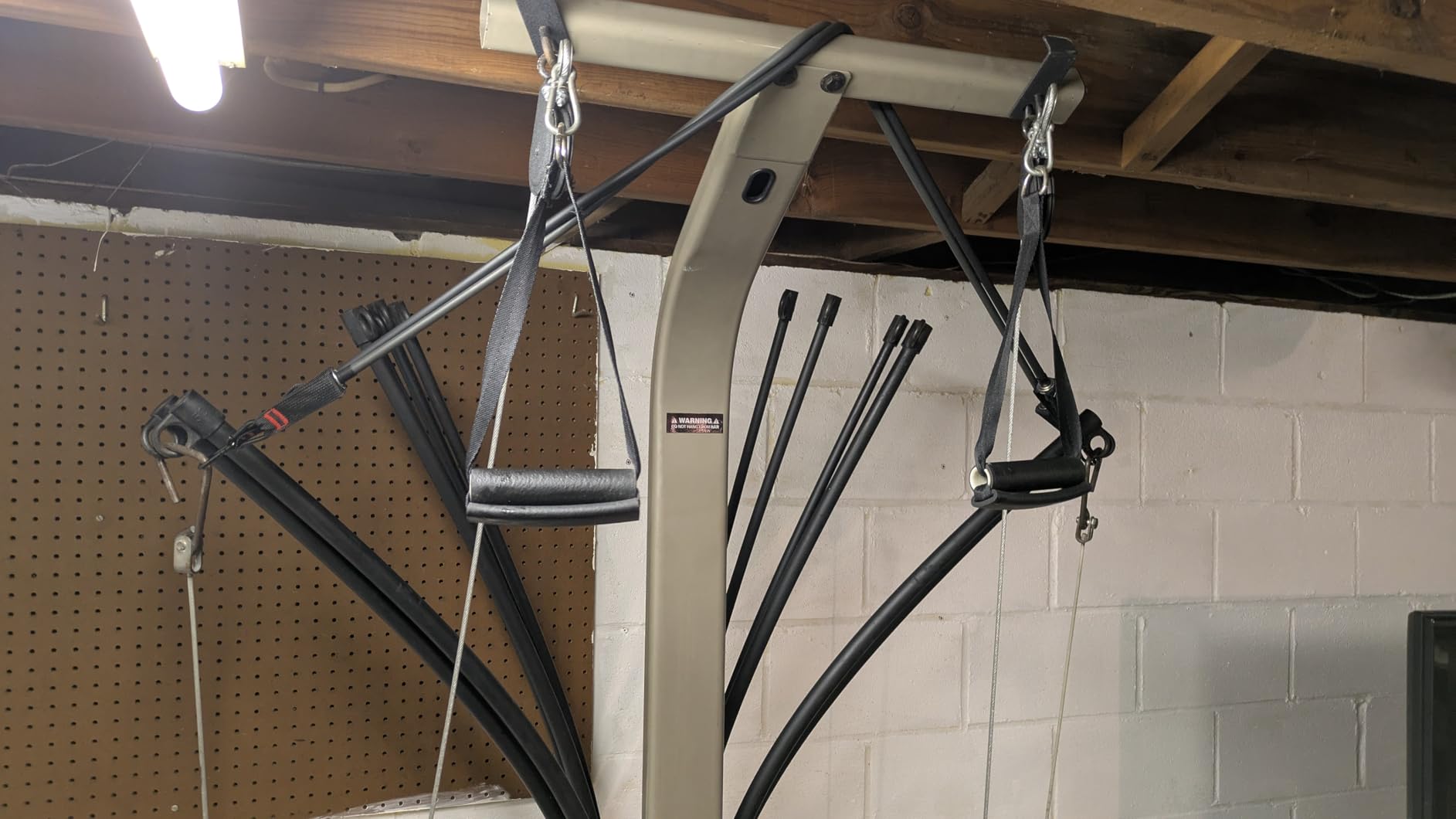
The non-slip cushioned sweat-absorbent handles are a genuine upgrade for beginners, and reviewers with arthritic hands call them out specifically. The box also includes two handles, a door anchor, a training poster, and a carry bag, and the whole set weighs 13.6 ounces.
The door anchor is the piece most beginners underestimate. Fixed at the top of a door, the system supports positive and negative loading, which means you can do banded rows, assisted pull-ups, and shoulder mobility work without owning a rack. Reviewers also note minimal rubber smell out of the package, which matters if you train in a small room.
Why stacking beats a single band for progression
Because it makes progressive overload possible without new equipment. The whole principle of beginner strength training is adding a small amount of load over time, and stacked bands let you move in 10 lb increments across a very wide ceiling. A beginner starting at one band and a two-year trainee at five are using the same equipment.
It is also the most portable serious option here. Thirteen point six ounces, a bag, and you have a full pulling and mobility system that fits in a suitcase, which is why reviewers recommend it for travel and physical therapy work.
Where it falls short
The most repeated complaint is that the bands are thin and give roughly half the labelled stacked total in practice. Hardware and clips feel lighter duty than premium competitors. The band colours are too similar to identify resistance by eye, and the printing is on one side only, so you will be checking numbers rather than colours as you progress.
The included door anchor fabric can be too thick for some door gaps, so measure before you rely on it. And if your goal is heavy pulling rather than moderate pulling, you will still eventually outgrow it — at a 4.5 average across more than 11,000 reviews, though, most beginners do not get there for a long time.
7. YOLEO Adjustable Weight Bench — the bench that disappears when you need the floor
YOLEO Adjustable Weight Bench, ASTM-Certified 827LBS, 98% Pre-Assembled
827 lb certified capacity
84 positions across three pads
28 inch backrest
Folds to 31.5 x 12.6 inch
23.1 lb
Pros
- Setup is two pins and no tools
- Stable on hard floors with large flat feet
- Fast changes between flat incline and decline
- Folds small enough for one person to move
- Backed by a 24-month warranty
Cons
- Wobbles slightly when it is unweighted
- Sits low which limits foot clearance for taller users
- Seat to backrest gap pinches the tailbone on decline work
A bench is what turns a set of dumbbells from awkward exercises into real pressing and rowing positions. Without one you are limited to floor-only movements, and floor-only is a fine phase-one approach but it caps how far you can progress. This YOLEO bench is the one I would pair with the dumbbell set above.
It is ASTM-certified to 827 lb with a 330 lb maximum user weight, which is a level of headroom that will not constrain you. The dual-triangle steel frame is the reason it feels planted on a hard floor rather than tippy, and Reviewers describe it as noticeably more substantial than the spec sheet suggests.
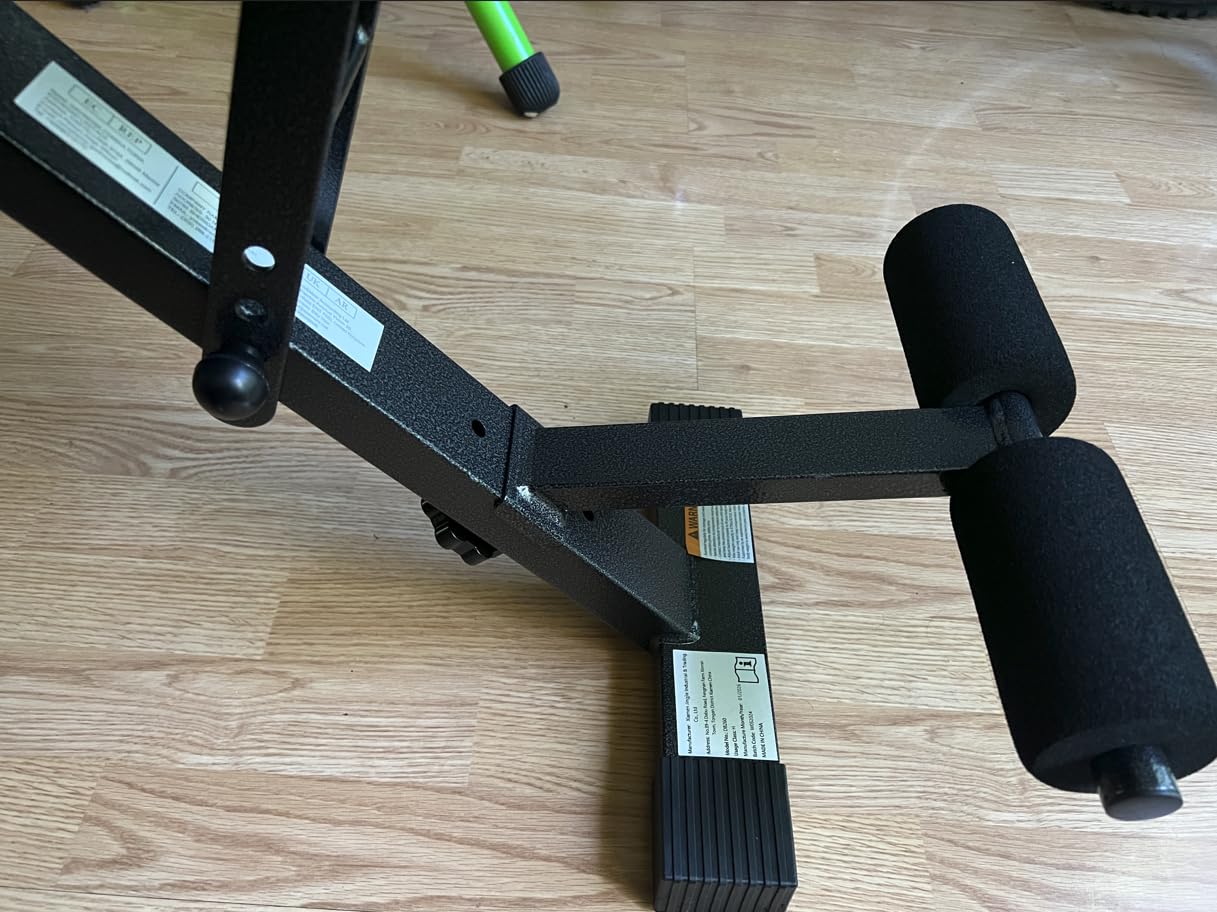
Adjustment is the best part. There are 84 positions in total: 7 back settings, 4 seat settings, and 3 leg settings on a ladder-lock mechanism. A 13 inch wide seat and a 28 inch backrest are padded with dense foam under PU leather, so it wipes clean after a session. The 3.1 inch thigh pad is there for decline work and leg drives, which most compact benches leave out entirely.
It arrives 98 percent pre-assembled, so the only task remaining is inserting a ring pin and a ball pin and lifting it into place, with no tools and no manual. When you are done it folds to 31.5 by 12.6 by 13 inches and weighs 23.1 lb with a built-in transport handle, so one person can move it.
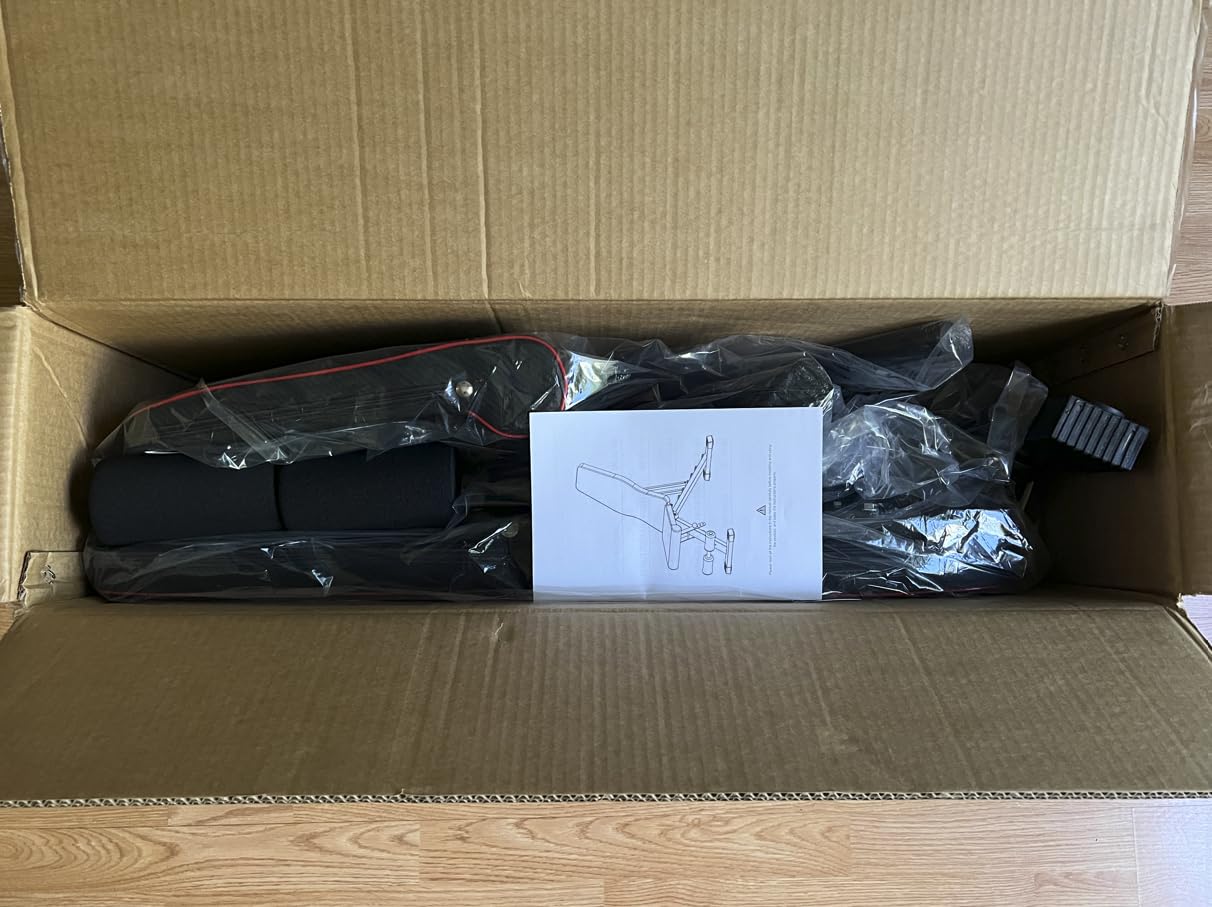
Why the position count matters more than the capacity number
Because a bench you can set to the right angle is worth more to a beginner than a bench rated twice as high. Flat, incline, decline, and upright are four distinct movement families, and having all four on one piece means a single purchase covers chest, shoulders, back, and arms without you needing a second station.
The 24-month warranty covers a longer structural period than the band and bar options in this roundup, and adjustable benches are the piece most likely to be passed between family members, so warranty length matters here more than it does for a band set.
Where it falls short
It wobbles slightly when it is unweighted, which means it is not suited to standing exercises like dips or step-ups, and reviewers are clear about that. It sits low to the ground, which limits foot clearance for taller users during squats. The seat is narrow for some body types, and the gap between seat and backrest can pinch the tailbone during decline sit-ups.
The optional screw-in ankle support is a repeated friction point during folding and storage, and the padding is thinner than ideal for heavy pressing. None of these matter for a beginner working with a pair of 38 lb dumbbells, which is exactly the use case this bench is built for.
8. FEIERDUN DS2 Multifunctional Set — one purchase, five ways to train
FEIERDUN Adjustable Dumbbells, 20lbs Free Weight Set with Connector, 4 in1 Dumbbells Set Used as Barbell, Kettlebells, Push up Stand, Fitness Exercises for Home Gym Suitable Men/Women
Two 10 lb dumbbells
5-in-1 convertible system
Solid iron-sand plates
15mm foam over steel core
Components under 2.5 ft
Pros
- Converts to dumbbells barbell kettlebell and stand
- Solid fill plates do not rattle or leak dust
- Foam padded bar is kind to neck and shoulder
- Locking knobs are fast to tighten
- Includes grip gloves and wrist bands
Cons
- Short handles feel small in larger hands
- Filled plates can crack if dropped from a height
- Stacked weight can run under the labelled figure
The pitch here is consolidation. This set converts into dumbbells, a barbell, a kettlebell, a push-up stand, and individual weight plates, which means one purchase covers five of the equipment categories that would normally take three separate buys. For someone with genuinely limited space and a genuinely limited budget, that logic is sound.
This variant is two 10 lb dumbbells for 20 lb total, which is a sensible beginner starting load. The adjustable ranges are 5 to 10 lb as dumbbells, 3.5 to 11.5 lb as a kettlebell, and 7 to 21 lb as a barbell per unit. That is not a huge ceiling, but it is enough to build a habit on.
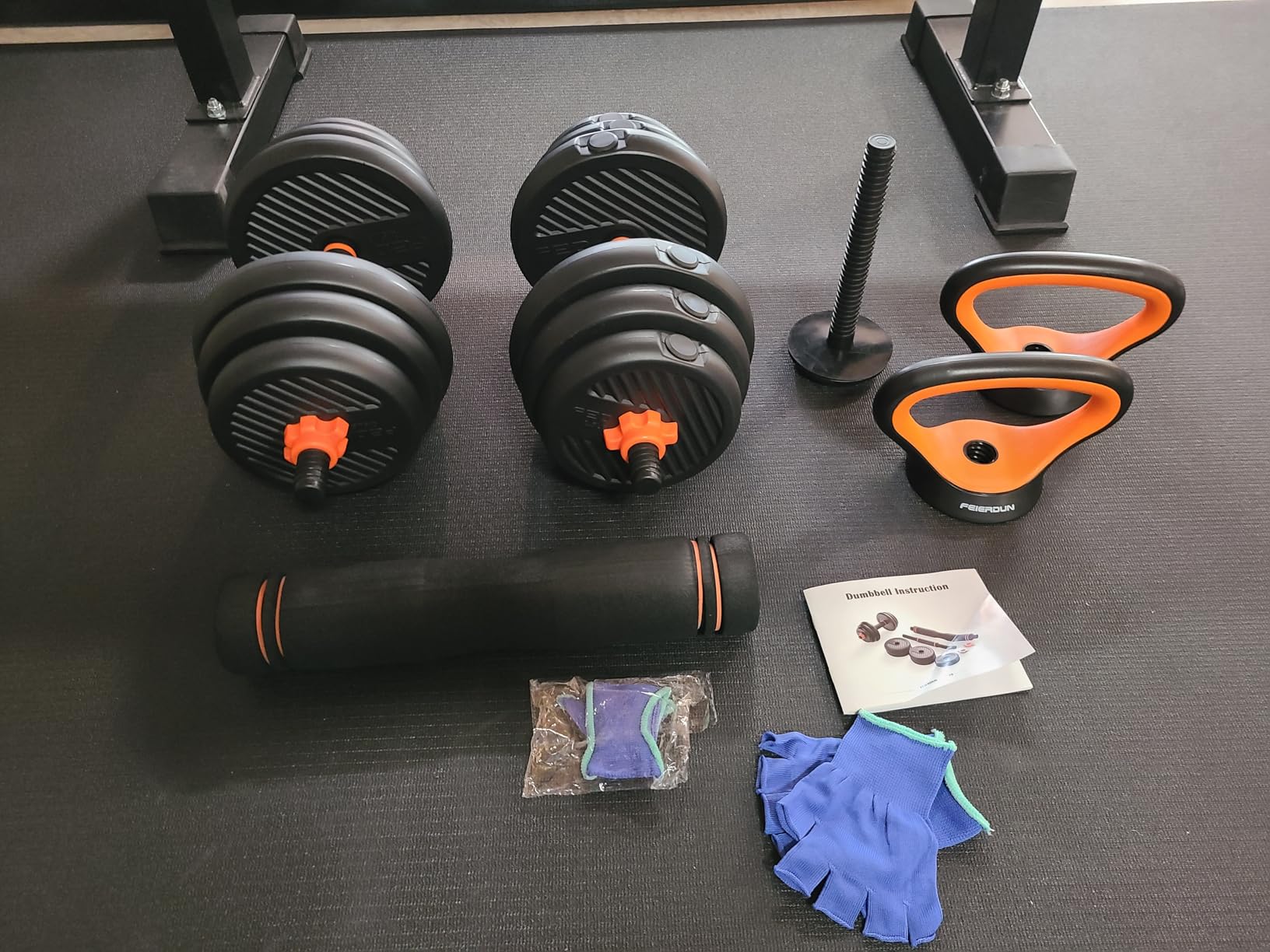
The plate construction is the standout. The plates are integrally moulded with high-density iron sand, which means no rattling, no shaking, and no dust leakage. That solves the two most common complaints about budget adjustable sets, and reviewers single it out constantly. The bar has 15mm of high-density foam over a 5mm steel core, which makes it bearable for a kettlebell at the shoulder.
The locking knobs are multi-turn threaded, so they stay secure through swings, snatches, and presses rather than backing off mid-set. No component is longer than about 2 to 2.5 feet, so it breaks down for compact storage, and there is 1095 days of coverage included. Grip gloves and wrist bands come in the box.
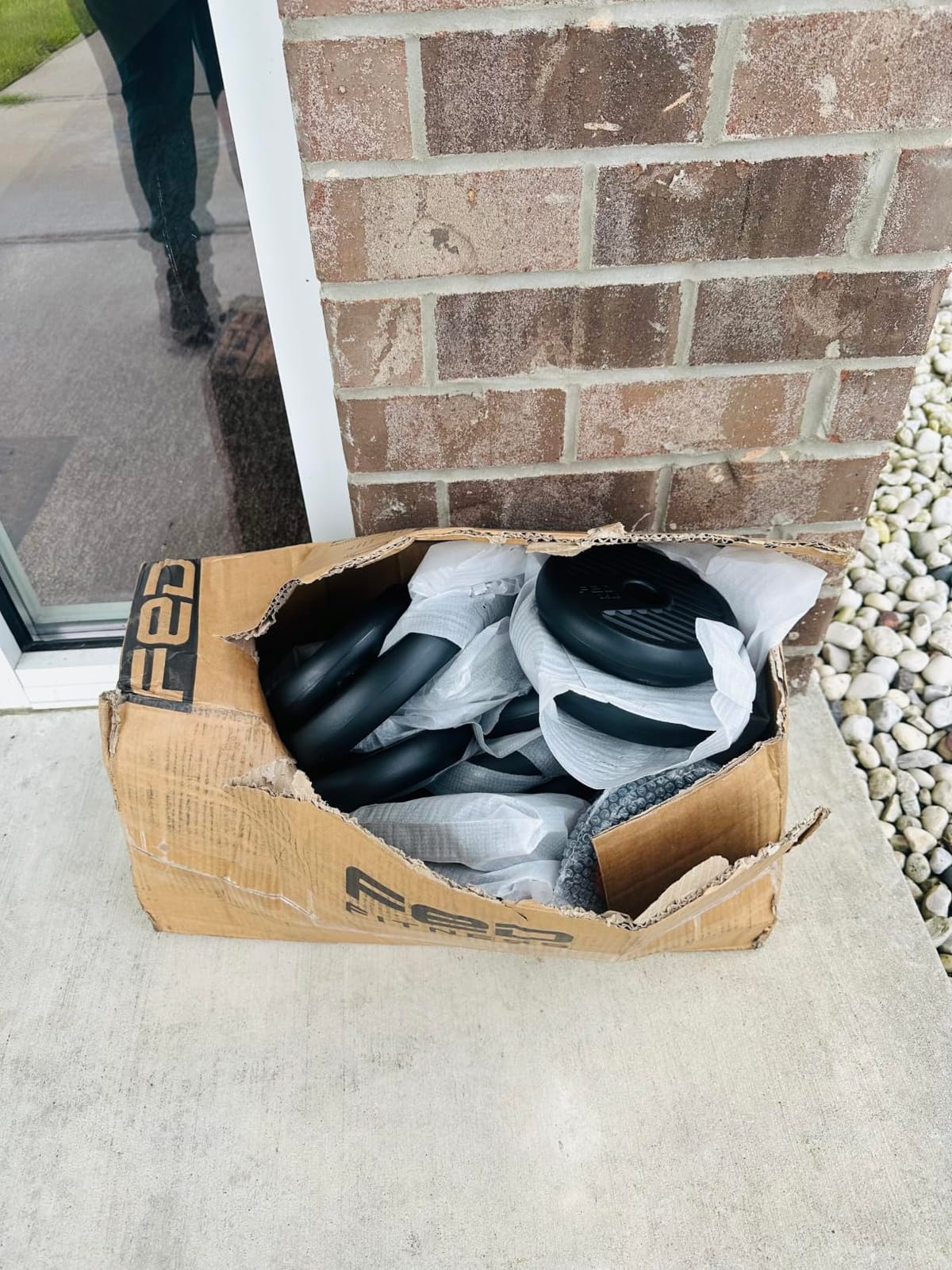
Why solid-fill plates are the right call in a small space
Because loose-fill plates rattle, leak iron dust, and eventually have a plate slide off mid-exercise. In an apartment that noise is the difference between training at seven in the morning and not training at all. The same reason the Sunny stepper leads this list applies here: quiet equipment survives contact with other household members.
It is also the one set on this list that gives you a barbell and a kettlebell without a separate purchase, and for someone who wants to practise the hinge pattern of a kettlebell swing before committing to a cast iron bell, that is a genuine saving of space and money.
Where it falls short
Handles are short, and reviewers with larger hands report that they feel small. Filled plates can crack or split if they are dropped from a height, so store this one carefully. Actual stacked weight can run slightly under the labelled figure, which means progress tracking needs a scale rather than the label.
There is also a practical parts issue: only one kettlebell rod is included despite four kettlebell handles, and extra fixings are not supplied. That is an assembly irritation rather than a dealbreaker, but it is exactly the sort of detail that frustrates someone assembling equipment alone on a Sunday afternoon.
9. MQRW Push Up Board System — a full session that fits in a backpack
MQRW Push Up Board,Home Gym,Portable Exercise Equipment,Pilates Bar and 20 Fitness Accessories with Resistance Bands and Ab Roller Wheel,Full Body Workout at Home
Foldable push up board
Color-coded hand zones
Rated to 600 lb
3 section bar and bands
29.92 x 8.85 x 1.18 inch
Pros
- Color zones target chest shoulders triceps and back
- Harder than floor work so progress comes faster
- Folds flat and carries to work or the park
- Many exercises from the bundled attachments
- No assembly required
Cons
- Small metal hardware can snap with repeated use
- Bar handles are slim for larger hands
- Difficulty is well above floor push-ups for new starters
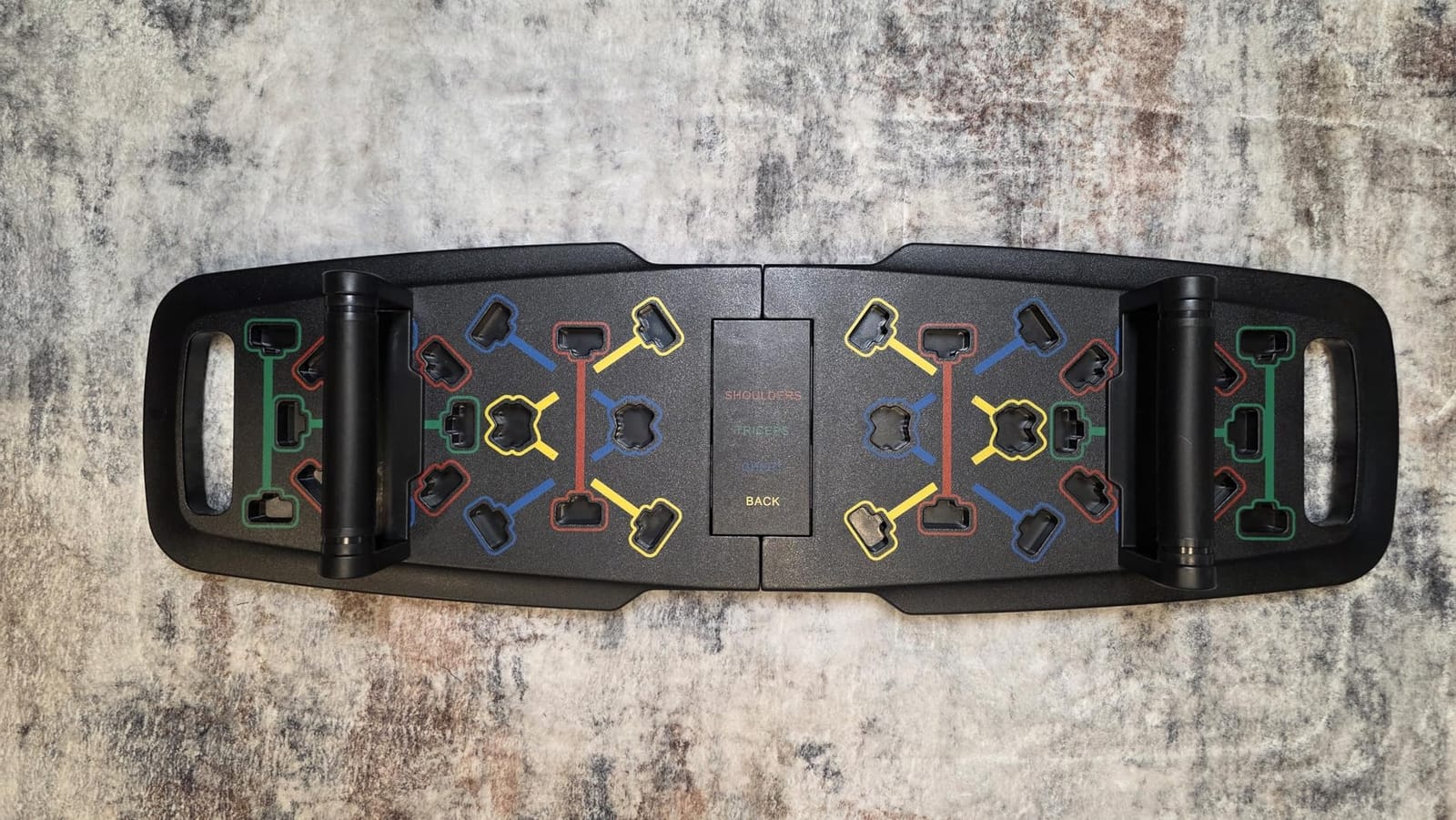
Bodyweight training is where most home gyms should start, and a push-up board is the simplest way to add difficulty to the movement everyone already knows how to do. This MQRW system is a foldable board with colour-coded hand placement zones, which is the feature that makes it more than a plank of wood.
The colour zones tell you where your hands go for chest, shoulders, triceps, and back. Shifting the hand position on a normal board is guesswork; here it is a visual instruction, and beginners report faster visible results because the range of motion is meaningfully larger than floor push-ups. The board is rated to 600 lb and made from ABS.
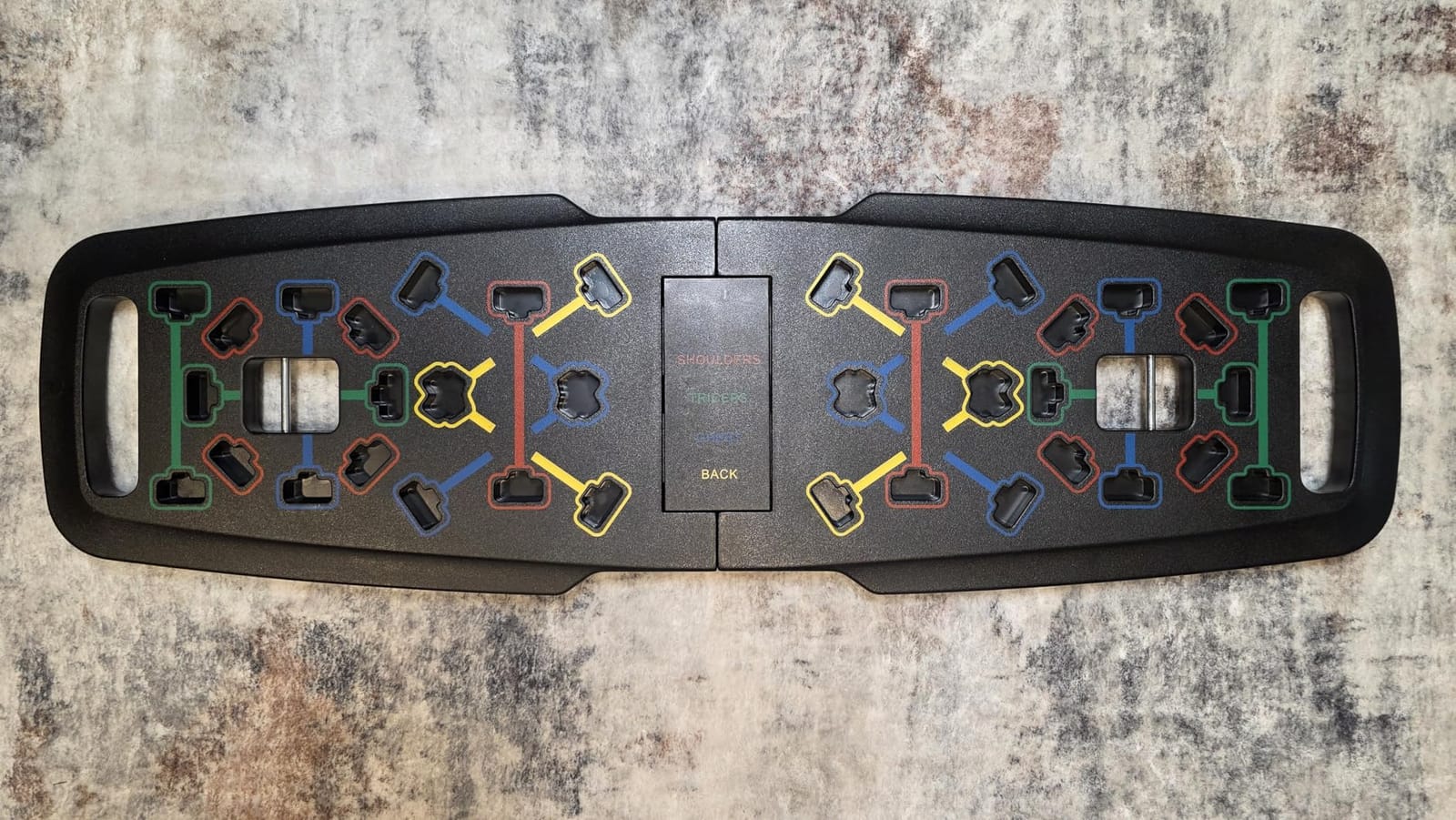
The bundle is what makes this interesting. You also get a three-section bar, six resistance bands, two ankle straps, a door anchor, and an ab roller wheel. Reviewers appreciate how much variety the attachments add at no separate cost, and the board folds flat to 29.92 by 8.85 by 1.18 inches, so it goes in a bag and travels to the office or the park.
No assembly is required, which again matters more for a beginner than the spec sheet suggests. The single most common reason people never use the equipment they bought is that they could not get it working alone, and this removes that variable entirely.
Why an elevated push-up is a better first strength exercise
Because it lets you add difficulty without adding load. A beginner can move from knees on the floor to full push-ups on the floor, to hands elevated on the board, to the lowest band position, to the highest band position. That is a clean progressive overload ladder that requires no purchases at each rung, and it is the reasoning behind the board existing as a category.
It is also the most travel-friendly option in this roundup. Nothing here needs power, and the whole package is flat and light, which suits people who split training between home and elsewhere.
Where it falls short
The difficulty is significantly higher than floor push-ups, which can genuinely frustrate a total beginner who has never done a full push-up. If that describes you, start on your knees against a wall and come back to the board in a few weeks.
The bundled accessories draw more mixed feedback than the board itself. Small metal connector hardware can snap with repeated use, and the bar handles are slim enough to be uncomfortable for larger hands. Some buyers also want more substantial board materials. The board carries the rating; the extras are the bonus.
10. NICEPEOPLE Adjustable Weight Bench — the most compact bench here
NICEPEOPLE Adjustable Weight Bench for Home Gym, 660LBS Capacity Workout Bench with 8 Backrests for Chest Shoulders Arms, Compact and Foldable Strength Bench for Small Space Apartment Room
660 lb capacity
8 backrest angles
29.3 inch backrest
Folds to 30.7 x 16.3 inch
17 lb
Pros
- Folds in one step by removing two pins
- 29.3 inch backrest supports head and upper back
- Leveling feet steady it on uneven floors
- About three minutes to set up with the guide
- Wipe-clean breathable padding
Cons
- Eight positions trail some competing benches
- Lighter build feels less solid under heavy loading
- Padding can show wear with extended daily use
This is the bench to buy if the floor you train on has to go back to being a floor. It folds in one step by removing two pins, down to 30.7 by 16.3 by 9.25 inches, and it weighs 17 pounds, so it stores flat under a bed or a sofa. That is the single most useful property a home gym can have in a small apartment.
The frame is a reinforced triangular alloy steel structure with a 660 lb capacity, tested through more than 8,000 durability cycles. Four rotatable leveling foot caps reduce wobble on uneven floors, which is a small detail that makes a real difference on anything other than a perfectly level slab.
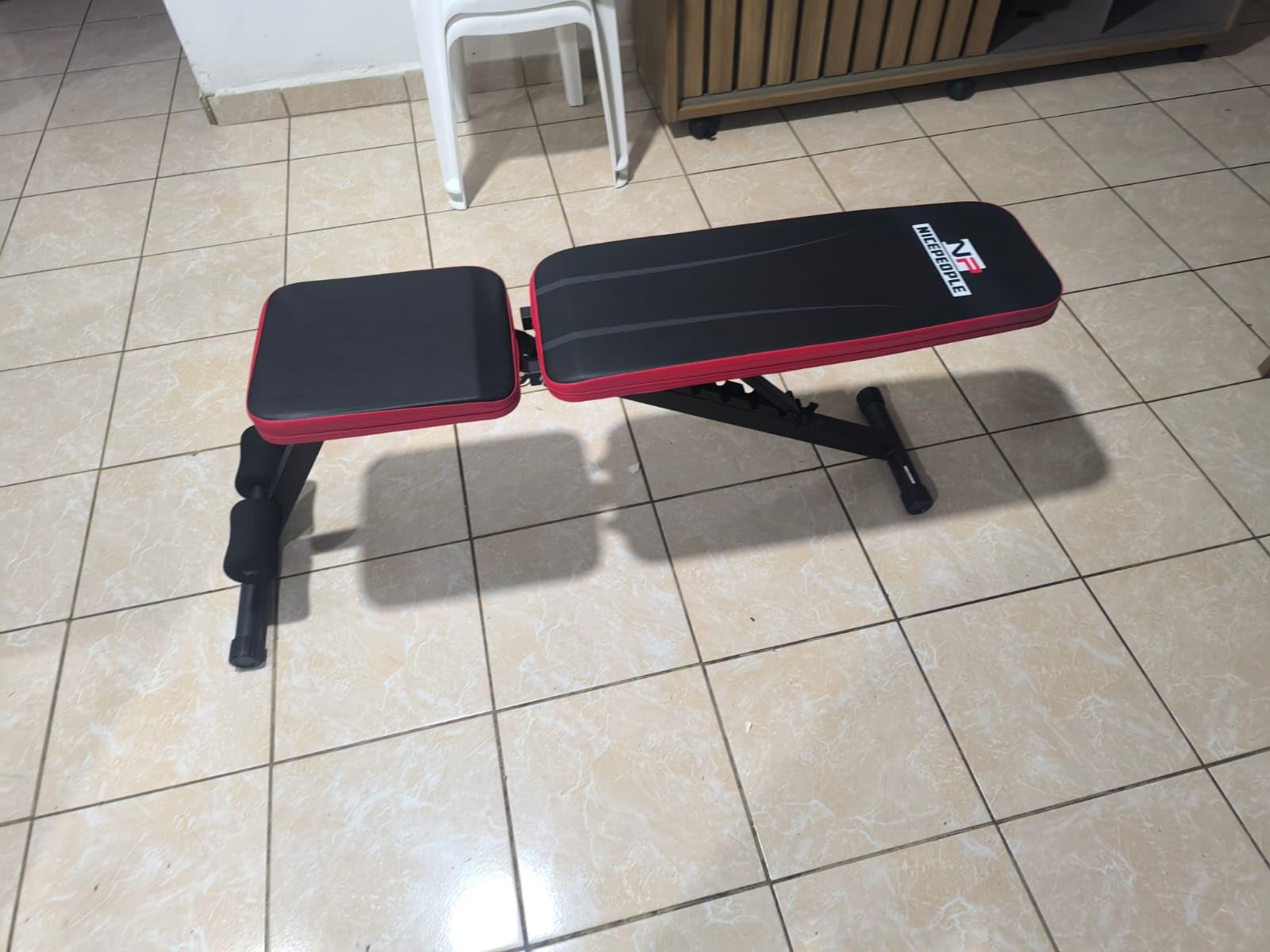
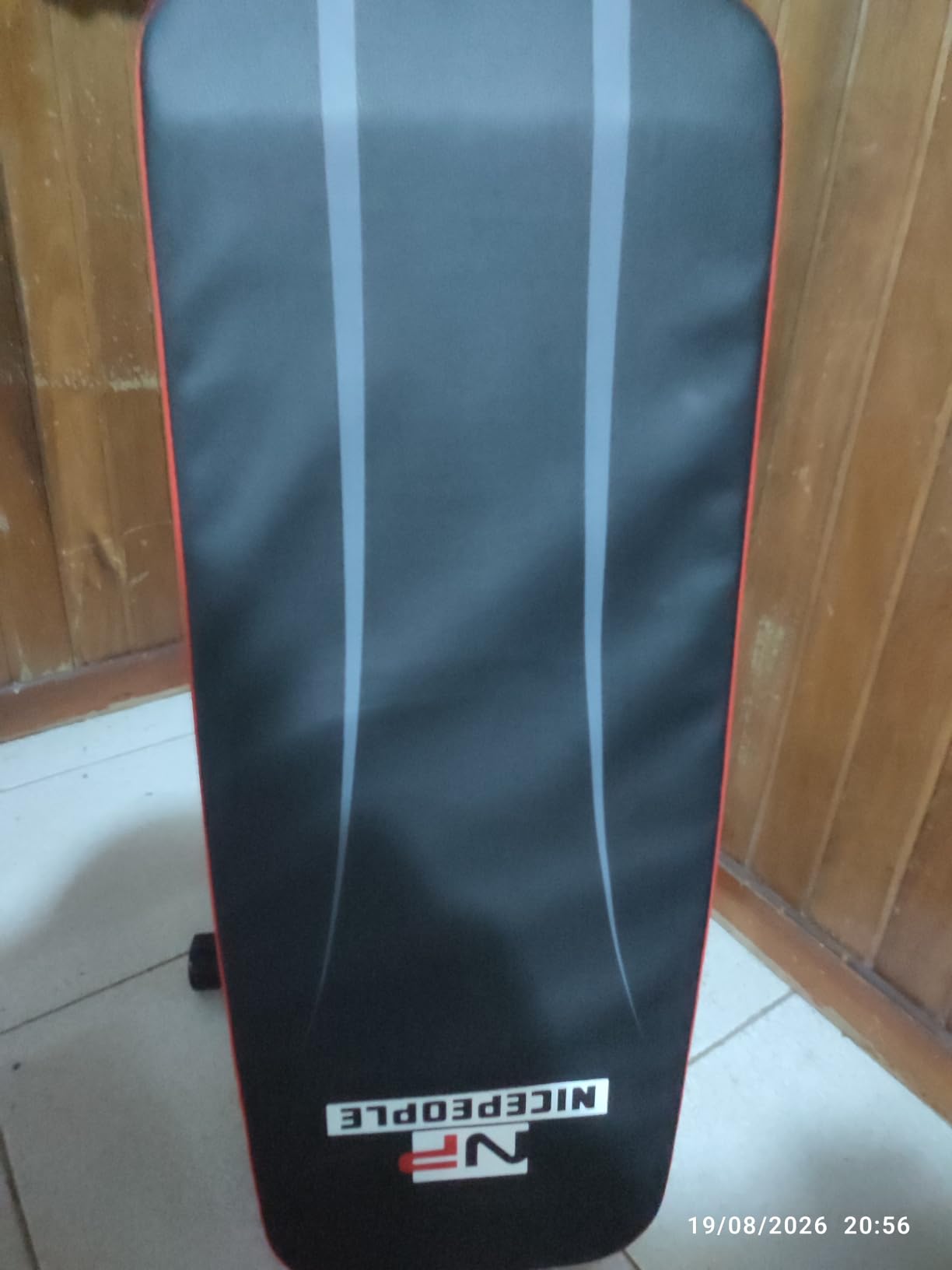
The 29.3 inch backrest is the feature that separates it from cheaper benches. It is sized to fit roughly 90 percent of users, and users specifically call out the head, neck, and upper back support. With eight adjustable backrest angles you cover incline, decline, and flat, and the fast-adjust groove makes the change intuitive rather than fiddly.
Setup takes about three minutes with the included user manual and installation video, and the high-density non-slip breathable leather padding wipes clean and resists sweat. It is built for beginners with setup instructions and optional training guides in the box, which is the stated design target.
Why a compact fold matters more than adjustment count
Because a bench you are willing to leave set up gets used. A full rack that you have to clear away before dinner does not. The one-step fold is what turns a weight bench from a piece of gym equipment into a piece of furniture you can live with, and that is the difference between a home gym that lasts and one that becomes a trip to the garage.
The leveling feet solve a problem most compact benches create. Folding designs are lighter, and lighter designs wobble on anything other than ideal flooring. Rotating foot caps are a cheap fix that makes the whole thing noticeably more stable.
Where it falls short
Eight backrest positions is fewer than some competing benches offer, so you will find a couple of angles you want that it does not hit. The folding design and lighter 17 lb weight also make it feel less rock solid than a fixed gym bench under heavy loading, and reviewers are honest about that.
At 4.5 across more than 4,500 reviews, the feedback is good but not faultless, and the padded surface can show wear with extended daily use. If your plan is heavy barbell pressing rather than dumbbell work at home, choose the heavier bench earlier in this list instead.
How to Build a Beginner Home Gym That You Will Actually Use
Here is the honest version. The best home gym equipment for beginners is not the list above, all ten items. It is four or five of them, bought in a specific order, with enough clear floor to stand up and move around. Buy everything at once and you will end up with a corner of unused equipment and a bad feeling about spending money on fitness.
Measure your space before you buy anything
Tape out the area you plan to use before you order, not after. You need enough room to lie flat with your arms out, which is roughly six feet by three feet for a bench and a mat, plus clearance to stand and walk around the bench while it is set up. The mini stepper in this roundup needs 16 by 12 inches; the YOLEO bench needs about 41 by 13 inches unfolded; the pull-up bar needs a doorway and nothing else.
Height matters as much as width. A rack or bar needs ceiling clearance plus your own head height plus a few inches, and in a low-ceilinged apartment that single measurement rules out entire equipment categories before you spend anything.
Protect the floor you train on
This is the step everyone skips and everyone regrets. Dropping a loaded dumbbell on hardwood or a kettlebell on laminate will dent it, and the sound carries to the neighbours below. A set of interlocking foam tiles handles both problems at once for less than one replacement plank of flooring.
Rubber mats are the upgrade if you are doing a lot of kneeling work, which the ab roller and push-up movements in this list both require. None of the ten products here includes a mat worth training on, so treat flooring as a separate purchase from the first week rather than as an afterthought.
Start with phase one, then progress
Phase one, weeks one to eight: adjustable dumbbells, a band set, a mat, and one quiet cardio option. That is enough for three full-body sessions a week covering every major movement pattern. The specific picks for those four slots are the Amazon Basics dumbbells, the Renoj bands, and the Sunny mini stepper.
Phase two, months three to six: add a bench and a pull-up bar. The bench unlocks pressing and rowing, and the bar unlocks vertical pulling, which together close the last major gap in a home setup. The YOLEO and NICEPEOPLE benches cover this depending on how compact you need to be.
Phase three, month six onward: add real load. This is when adjustable dumbbells start to run out of room on the bar, and when a rack or a set of standard plates becomes worth the space. A simple three-day split of full-body sessions works throughout all three phases, because the movements stay the same and only the load and the accessories change.
What most beginners should not buy yet
Do not buy an all-in-one machine with a weight stack and fifteen attachments. Cable machines and functional trainers are genuinely excellent, and forum consensus treats them as aspirational rather than wrong, but they are intimidating for a true beginner because there is no obvious first movement and the adjustment menus are complex. That is a phase-three purchase, not a phase-one one.
Do not buy a full power rack yet either. It is a large footprint, it is only safe with a spotter or safeties, and beginners routinely end up with a rack they cannot load. Do not buy fixed dumbbells covering a full weight range, because the same money buys adjustable hardware that covers the same range in a fraction of the space. And do not buy a machine with a motor before you have confirmed that noise is not a problem where you live.
Frequently Asked Questions
What gym equipment is best for beginners?
The best home gym equipment for beginners is a compact set of versatile, easy-to-learn tools: adjustable dumbbells for pressing and rowing, resistance bands for pulling work and mobility, a doorway pull-up bar, a foldable adjustable bench, a quiet cardio option, and a mat for floor work. Choose equipment rated above your body weight, adjustable so you can add load over time, and small enough to leave set up between sessions.
What gym equipment should a beginner learn to use first?
Start with movements you can learn without instruction: the goblet squat, the Romanian deadlift, the dumbbell bench press, the bent-over row, the overhead press, and the push-up. Dumbbells and a bench teach the first four, a pull-up bar teaches the vertical pull, and a band set lets you add pulling variations once bodyweight movements stop being enough.
What equipment is best for a simple home gym?
For a simple home gym, adjustable dumbbells plus a set of resistance bands plus a foldable bench covers almost every movement pattern a beginner needs. Add a doorway pull-up bar for vertical pulling and a quiet cardio machine for conditioning. That five-piece setup is smaller, quieter, and easier to store than any all-in-one machine, and every piece can grow with you.
What weight dumbbells should a beginner use?
Most beginners can make progress with a pair of dumbbells they can lift for 10 to 12 clean repetitions in each of the first two or three sets. That is usually somewhere between 5 and 15 pounds per hand. Start at the lighter end of the set, confirm your form with a lighter weight, and add plates only when 12 repetitions at the current load feels easy. A 38 pound set covers that range for most new lifters.
How much space do I need for a home gym?
Plan on roughly six feet by three feet of clear floor for a bench and mat, plus enough clearance to walk around the bench while it is set up. A mini stepper needs about 16 by 12 inches, an adjustable bench needs roughly 41 by 13 inches unfolded, and a pull-up bar needs only a standard doorway. Ceiling height rules out racks in low-ceilinged rooms.
What is the 3-3-3 rule in the gym?
The 3-3-3 rule is a training structure where you do three sets of three different exercises, and repeat the cycle three times, for a total of nine working sets in one session. It is popular with beginners because it is short, requires no programme knowledge, and scales to any equipment. It is not a substitute for progressive overload, but it is a good first template for building a habit.
Final Verdict for 2026
If you buy one thing from this roundup, make it the Sunny Health and Fitness Mini Stair Stepper. It arrives assembled, it weighs 15.2 pounds, it fits in a 16 by 12 inch footprint, and its hydraulic drive is quiet enough to use in an apartment at seven in the morning. It is the piece most likely to still be in daily use a year from now, which is the only metric that matters for beginner equipment.
Pair it with the Amazon Basics adjustable dumbbell set for your strength work and the Renoj band set for everything else. That is three purchases, it covers every major movement pattern, and it keeps you with room to stand up and move around. Add the YOLEO bench when you are ready to press and row, and the Ally Peaks pull-up bar when bodyweight pulling stops being enough.
Most beginners quit in the first eight weeks, and the reason is almost never the equipment. It is buying too much, running out of space to use it, or getting stuck on something complicated. Choose four or five simple tools, protect the floor you train on, and train three times a week. That is the whole method.
Start with the four-piece phase one setup this year, run a full-body split with it for eight weeks, and only then decide what to add. If you want audio to get you through those first sessions, our sport earbuds roundup covers the ones that survive real workouts.