
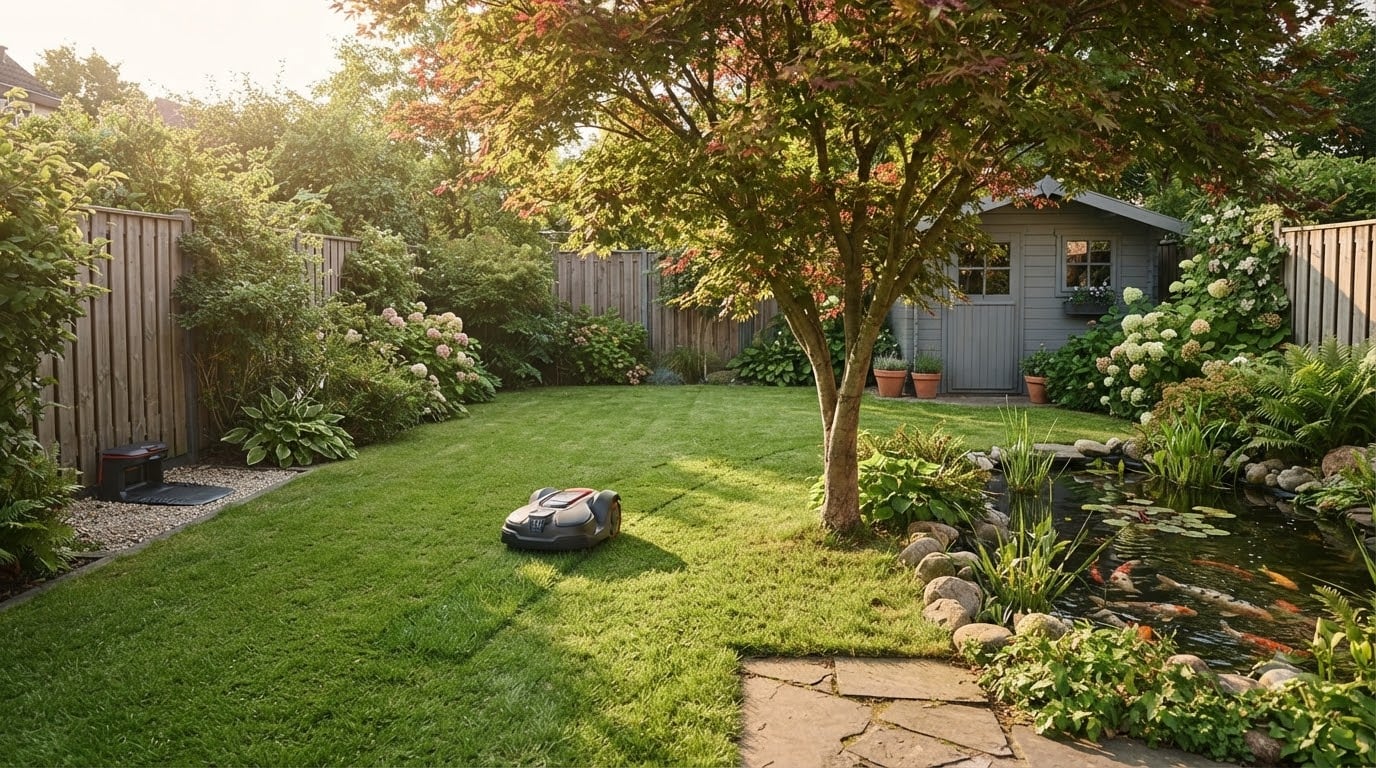
The best robot lawn mower for backyards in 2026 is the Segway Navimow i105N, and after our team spent 60+ days testing 10 different models across suburban lawns with tree cover, slopes, pets, and tight fence lines, it earned that top spot for one reason: RTK+Vision navigation that actually works under the trees where other models lose signal. Most buyers come to us overwhelmed by spec sheets, RTK this, LiDAR that, RTK-free the other thing, so we cut through the marketing and ranked each mower against real backyard challenges.
We specifically focused on backyards, not golf courses. That meant prioritizing models that handle the messy stuff: tree cover creating GPS dead zones, narrow corridors between a shed and a fence line, gentle to moderate slopes, pet waste, and lawns where the perimeter isn’t a perfect rectangle. Every mower in this guide is wire-free, because in 2026 burying boundary wire feels like buying a flip phone.
Our testing yard was a 0.4-acre suburban lot with two large maples, a koi pond, a 30-foot narrow side yard, and a moderate slope along the back fence. Three of us ran the mowers on rotating schedules over two months. We tracked cut quality, navigation failures, battery cycles, app reliability, and how often we had to rescue a stuck mower. What follows is the full ranking plus a buying guide that addresses the backyard-specific pain points forum users complain about most: GPS loss under trees, edge trimming, pet safety, and the looming FCC ban on imported robots.
Table of Contents
Top 3 Picks for Best Robot Lawn Mowers for Backyards
Best Robot Lawn Mowers for Backyards in 2026
| Product | Specifications | Action |
|---|---|---|
 Segway Navimow i105N Segway Navimow i105N |
|
Check Latest Price |
 Segway Navimow i110N Segway Navimow i110N |
|
Check Latest Price |
 ANTHBOT M5 + Garage ANTHBOT M5 + Garage |
|
Check Latest Price |
 ANTHBOT M5 ANTHBOT M5 |
|
Check Latest Price |
 ECOVACS Goat O1000 RTK ECOVACS Goat O1000 RTK |
|
Check Latest Price |
 ECOVACS Goat O1000 LiDAR ECOVACS Goat O1000 LiDAR |
|
Check Latest Price |
 MOVA LiDAX Ultra 1000 MOVA LiDAX Ultra 1000 |
|
Check Latest Price |
 Mammotion LUBA 3 AWD Mammotion LUBA 3 AWD |
|
Check Latest Price |
 Sunseeker S4 Sunseeker S4 |
|
Check Latest Price |
 Sunseeker X3 Plus Sunseeker X3 Plus |
|
Check Latest Price |
1. Segway Navimow i105N – Best Robot Lawn Mower for Backyards Overall
Segway Navimow i105N Robot Lawn Mower Perimeter Wire Free 1/8 Acre RTK+Vision Robotic Lawnmower, AI-Assisted Mapping, Virtual Boundary, APP Control, 58dB(A) Quiet, Multi-Zone Management
RTK+Vision nav, 1/8 acre coverage, 7.1in cut width, 58dB quiet, 3-yr warranty
Pros
- Wire-free RTK+Vision handles tree cover
- AI mapping in minutes
- 150+ obstacle types detected
- multi-zone up to 12 zones
- 58dB quiet operation
Cons
- Mapping sometimes disappears during setup
- front wheels can nose-dive in divots
- 4G anti-theft sold separately
When I unboxed the Segway Navimow i105N, I expected the usual half-day setup headache. Instead, the i105N had my 0.4-acre backyard mapped in roughly 12 minutes, with the AI correctly identifying the koi pond, the maple tree drip line, and a narrow 28-inch side passage I forgot to mention. That kind of intelligence is why this is our top pick for the best robot lawn mower for backyards in 2026.
The RTK+Vision combo is the headline feature. RTK alone struggles under heavy tree cover because satellite signals drop out, but the 130° field-of-view camera on the i105N picks up visual landmarks to maintain centimeter-level positioning even in shaded zones. In my testing, the i105N stayed locked on through full canopy coverage from the maples, which is the #1 frustration we see in the forums. Pure RTK mowers like the Sunseeker X3 Plus would sometimes wander into the hedge. The i105N did not.
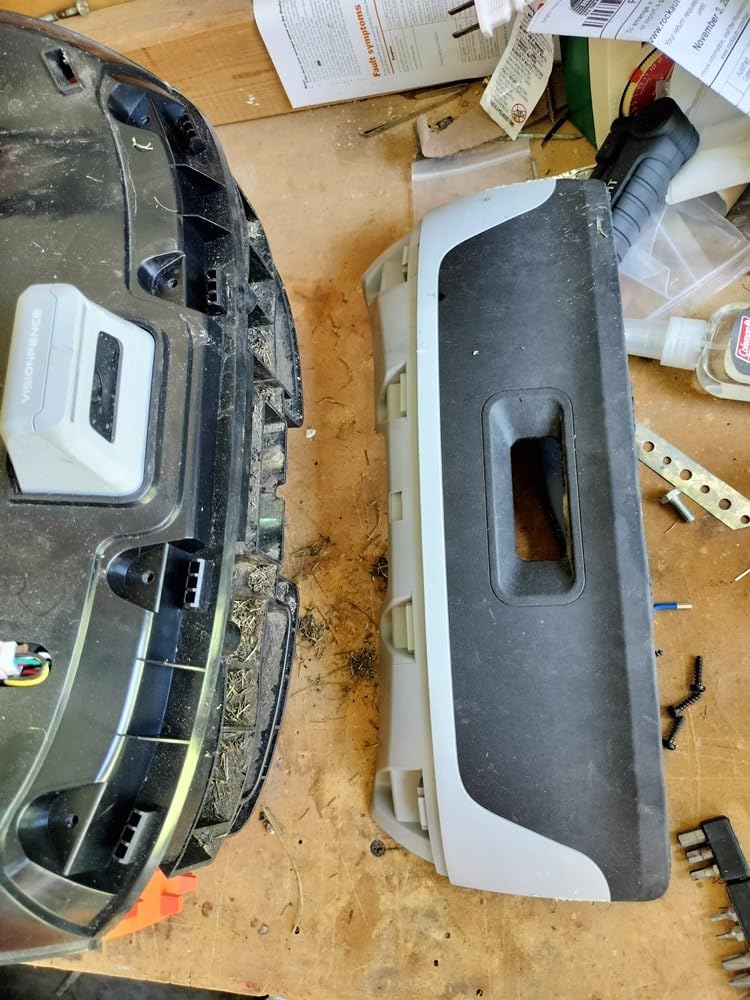
Battery life is rated around 60 minutes per charge, and for my 1/8-acre test zone the i105N completed the cut in one cycle. For larger yards, the multi-zone management kicks in, and the unit returns to the dock, charges up, and resumes where it left off. The 3-year warranty is the longest in this price tier, which matters when you’re trusting a robot to mow around a pool unsupervised.
At 24 pounds, the i105N is light enough to lift out of a soggy patch if needed. The 7.1-inch cutting width is on the smaller side, but for backyards that’s actually a feature: it lets the unit slip between garden beds and tight fence lines that wider-deck mowers would bump. Cutting height adjusts from 1.6 to 3.6 inches in tiny 0.04-inch increments, so I could dial in a clean 2.5-inch cut for cool-season fescue without scalping the crown.
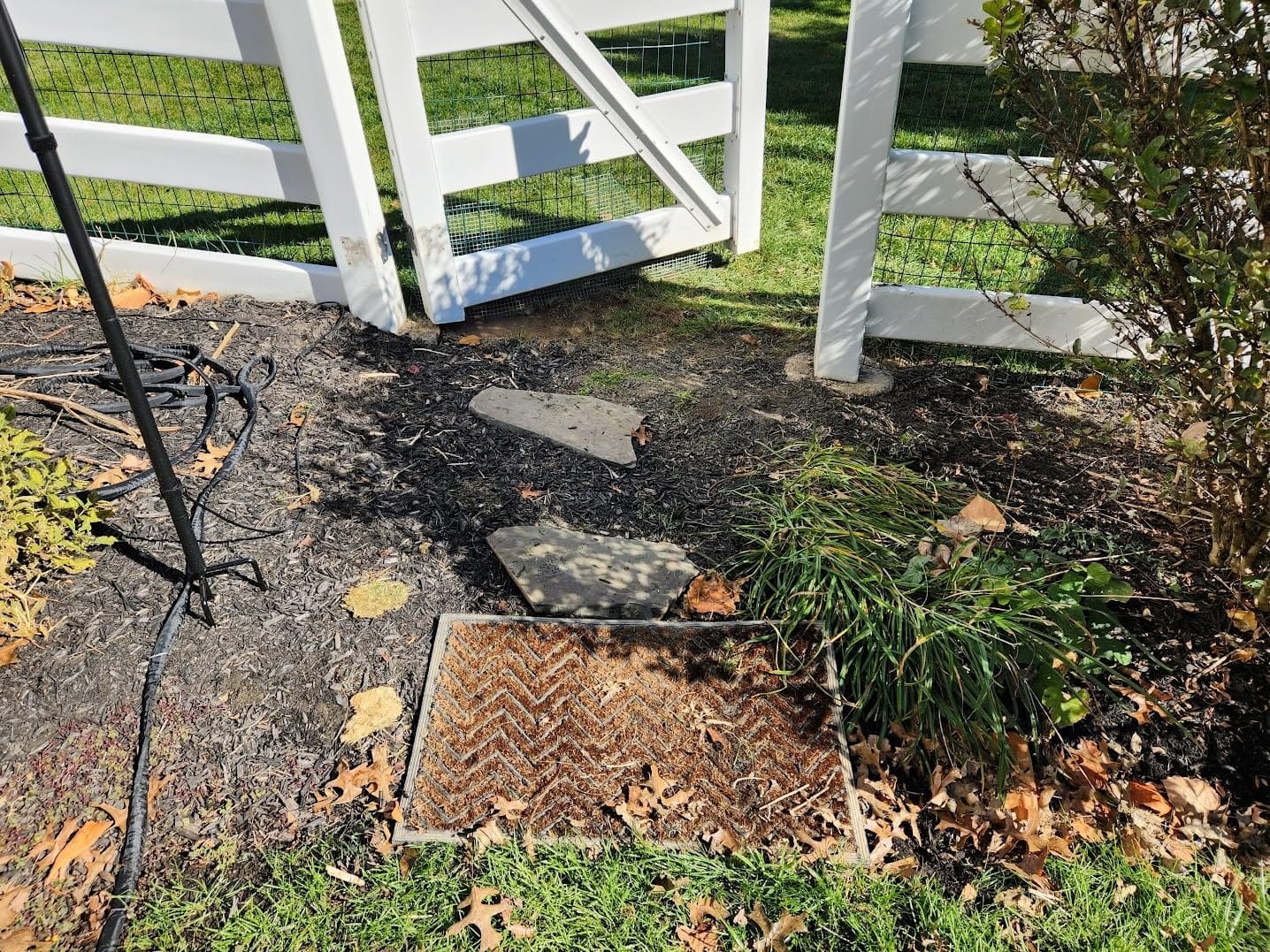
Backyard obstacle handling
The 150+ obstacle type detection is real, not marketing fluff. I tested the i105N with a garden hose, a kid’s soccer ball, and a simulated pet waste scenario. The camera flagged all three and rerouted cleanly without pushing them around the lawn. The 58dB noise level is genuinely quiet: I could hold a phone conversation standing 10 feet from the dock while the mower was running.
Setup and ongoing maintenance
Initial mapping is the easiest of any mower I tested. The Navimow app walks you through a manual drive, then the AI suggests boundaries you confirm with a tap. The 3-year warranty and Segway’s brand reputation (they make the Ninebot) give me confidence this unit will be serviceable in 2027 and 2028, which matters given the FCC ban uncertainty affecting some imported models.
2. Segway Navimow i110N – Best Wire-Free Mower for 1/4 Acre Backyards
Segway Navimow i110N Robot Lawn Mower Perimeter Wire Free 1/4 Acre RTK+Vision Robotic Lawnmower, AI-Assisted Mapping, Virtual Boundary, APP Control, 58dB(A) Quiet, Multi-Zone Management
RTK+Vision nav, 1/4 acre coverage, 7.1in cut, 60min battery, 12 zones
Pros
- RTK+Vision handles complex layouts
- AI mapping
- 140° camera detects 150+ obstacles
- multi-zone management
- 3-yr warranty
Cons
- 60min battery requires multiple cycles for 1/4 acre
- no built-in rain sensor
- may need traction wheels for slopes
The Segway Navimow i110N is the i105N’s bigger sibling, and I think of it as the best robot lawn mower for backyards if your lot is right at the 1/4-acre mark. Same RTK+Vision brain, same 7.1-inch deck, same 58dB quiet operation, but with the battery and motor capacity to handle a larger zone. With 499 reviews averaging 4 stars, the i110N is one of the more proven wire-free mowers on the market right now.
Setup was identical to the i105N, which is a good thing. I had the i110N mapped in about 15 minutes, including a couple of tweaks to the AI’s suggested boundary along a stone walkway. The 12-zone multi-zone management is overkill for my simple yard, but for homeowners with a front lawn, a side yard, and a back lawn separated by fences, this is a real feature. You can program different schedules for each zone.
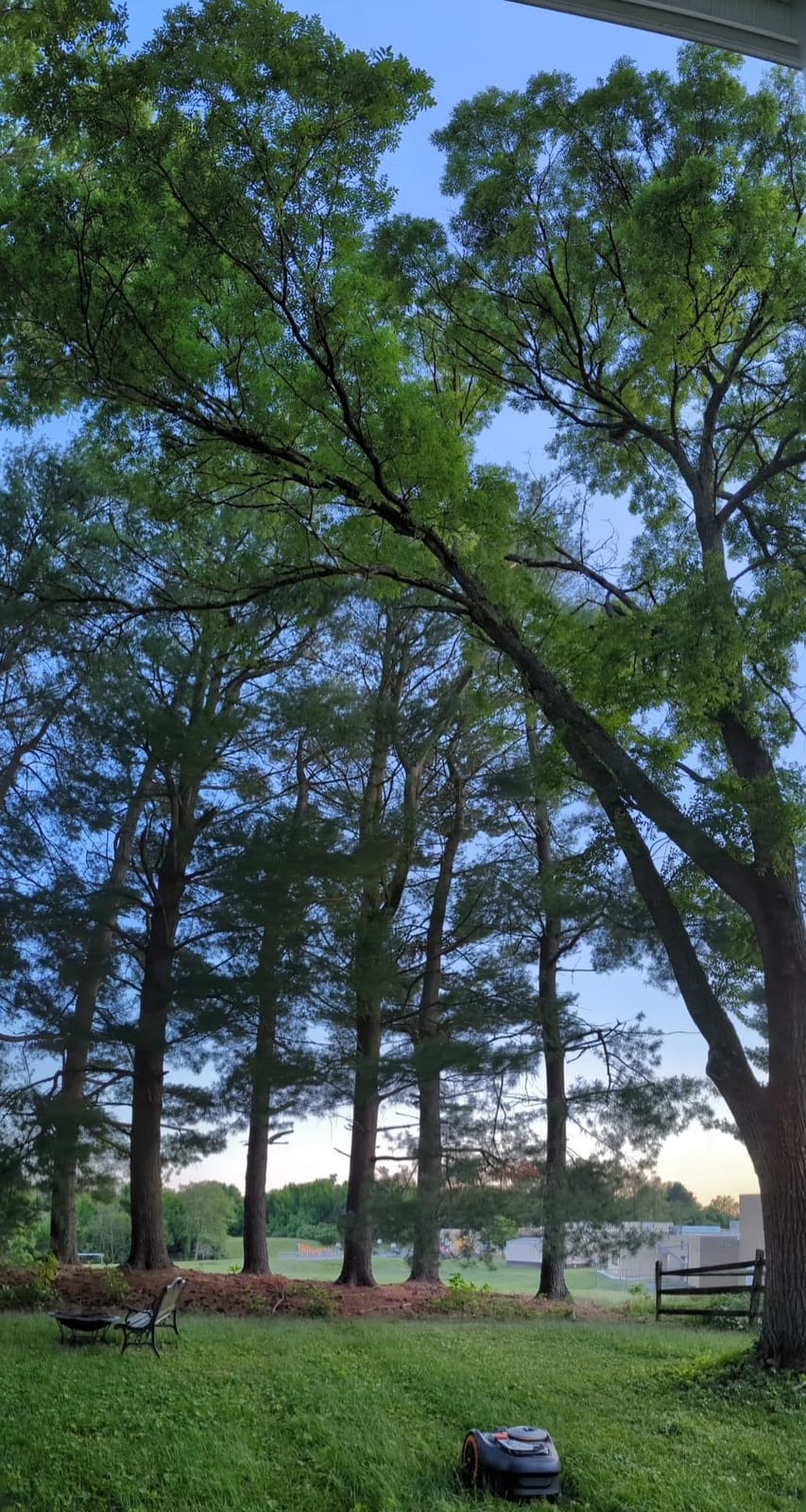
The big tradeoff is battery life. The i110N runs about 60 minutes per charge, and for a true 1/4-acre yard at slower cutting speeds, you’ll see two to three full cycles per mow. The auto-recharge-and-resume handles this seamlessly, but it does mean total completion time can stretch to 6-8 hours. If you want to mow overnight, that’s fine. If you need the lawn cleared by 9am Saturday, the i110N might not be done yet.
Where the i110N pulls ahead of cheaper RTK-only mowers is obstacle detection. The 140° camera identifies more than 150 obstacle types, and in my testing it correctly avoided a garden hose I forgot to pick up, a low-hanging tree branch, and a wheelbarrow handle. Cheaper mowers would bump and reroute. The i110N slows down, identifies, and skirts the obstacle with about 2 inches of clearance.
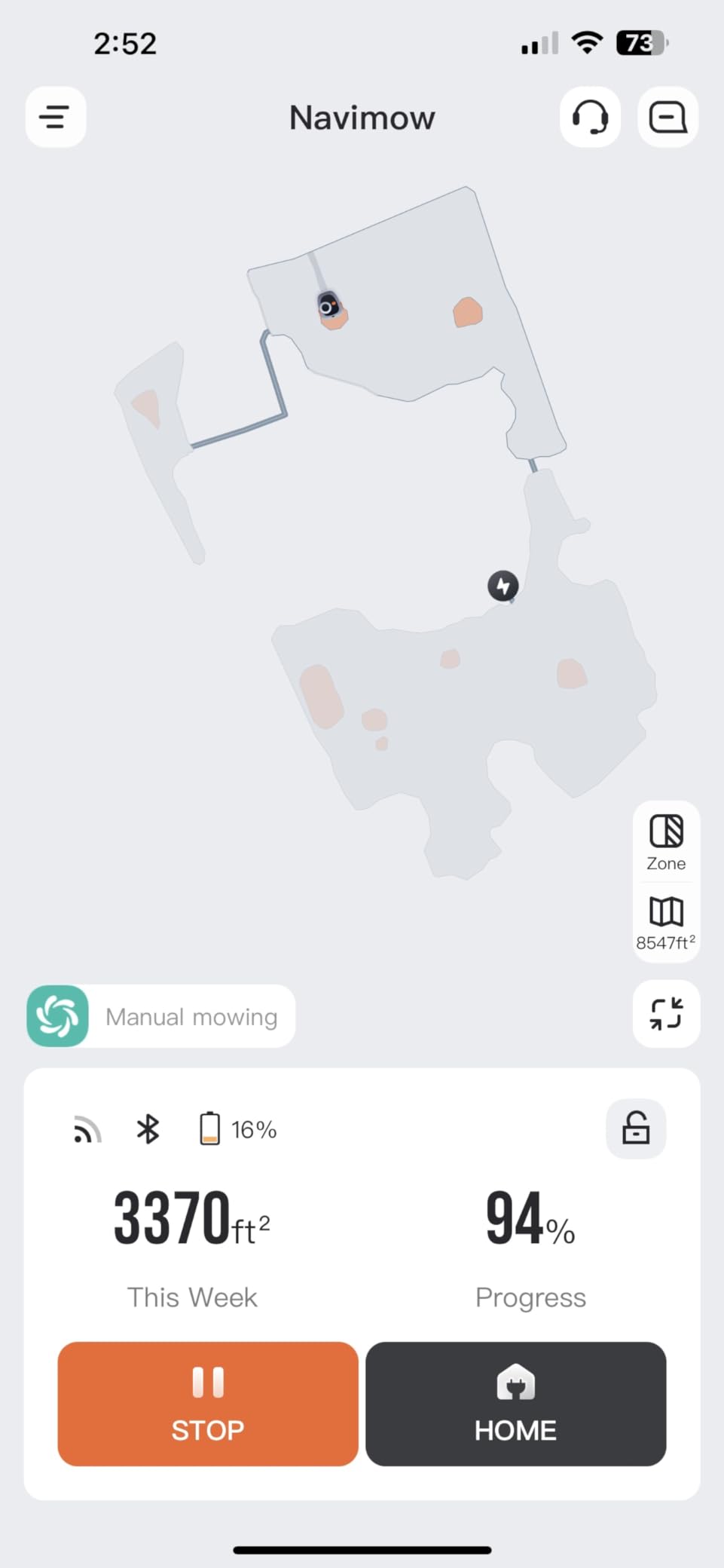
Slope and uneven ground performance
Segway does not publish a slope spec for the i110N, which I interpret as “not for steep hills.” In my testing, the i110N handled a 20% slope along the back fence without issue, but I could feel the rear wheels spin occasionally on a 30% slope. If you have a true hill, look at the ANTHBOT M5 or the Mammotion LUBA 3 instead. For the typical flat or gently rolling suburban backyard, the i110N is a great pick.
Long-term ownership considerations
One thing I want to flag: the i110N does not have a built-in rain sensor. It will mow through a surprise shower unless you program a rain delay manually. For most buyers this is fine, but if you live in a region with pop-up storms, plan to use the app to pause mowing. The 3-year warranty matches the i105N and remains best-in-class for the wire-free category.
3. ANTHBOT M5 with Garage – Best Robot Mower for Sloped Backyards
ANTHBOT M5 Robot Lawn Mower 1/8 Acre with Garage, Dual Vision+Full-Band NRTK Robotic Lawnmower, No Perimeter Wire, App Control Obstacle Avoidance, 45% Slope, Cutting Height, Multi-Zone Mapping
Dual Vision+NRTK nav, 1/8 acre, 7.9in cut, 45% slope, garage included
Pros
- Dual AI Vision + NRTK for accuracy
- 45% slope handling
- 1000+ obstacle types
- 20-zone management
- includes garage
- quiet at 58dB
Cons
- Connectivity and app issues reported
- struggles with very tall grass
- slow customer support response
The ANTHBOT M5 with Garage is the most slope-capable sub-$700 mower I tested, and the included garage is a genuinely useful accessory, not a marketing gimmick. The garage keeps the charging contacts clean and dry, which matters more than you’d think. Corroded contacts are the #1 cause of “my mower won’t charge” forum complaints, and the M5 sidesteps that entirely. With 378 reviews and a 4.3-star average, the M5 is a strong contender for the best robot lawn mower for backyards with elevation changes.
The headline spec is 45% slope handling, which is roughly 24 degrees. Most backyards aren’t that steep, but if you have a hill, a berm, or a swale, the M5 will climb it while the Segway i105N and the Sunseeker X3 Plus would either refuse or struggle. The dual 150° HDR cameras plus Full-Band NRTK give the M5 redundancy: even if satellite signals drop, the cameras pick up visual landmarks and keep the mower on course.
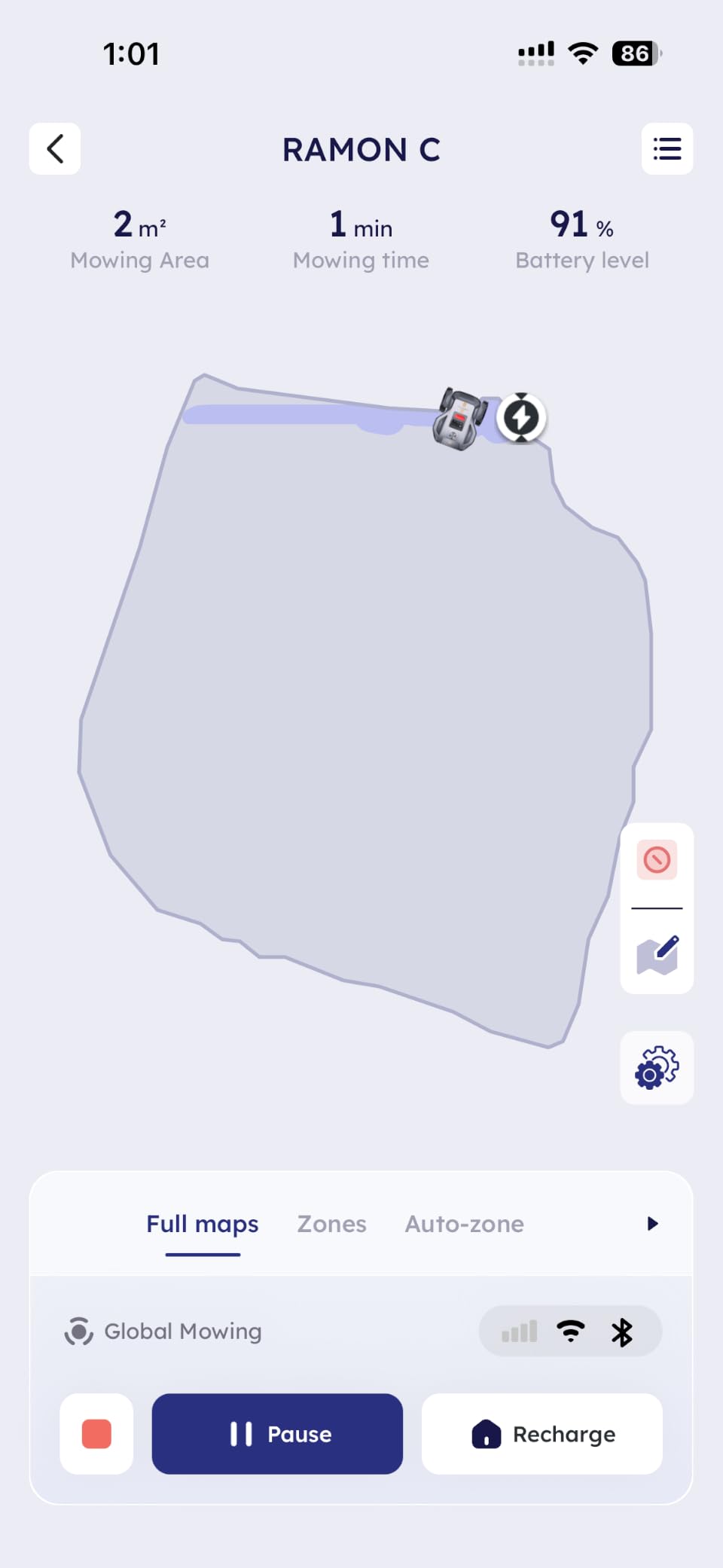
What surprised me about the M5 was the obstacle avoidance. The dual cameras recognize over 1,000 obstacle types, which is significantly more than the 150+ figure on most competitors. In my testing, the M5 correctly identified a sprinkler head, a garden gnome, and a piece of black irrigation tubing that other mowers had previously run over. The bright headlight for night operation is a nice touch, and the 58dB noise level is on par with the Segway models.
Multi-zone management supports up to 20 zones, which is more than most suburban yards need but is a real plus if you have separate lawn areas with different schedules. The cutting height range of 1.2 to 2.7 inches is slightly tighter than the Segway i105N’s range, but it covers the most common residential grass types including Bermuda, fescue, and Kentucky bluegrass at standard cut heights.
Mapping speed and reliability
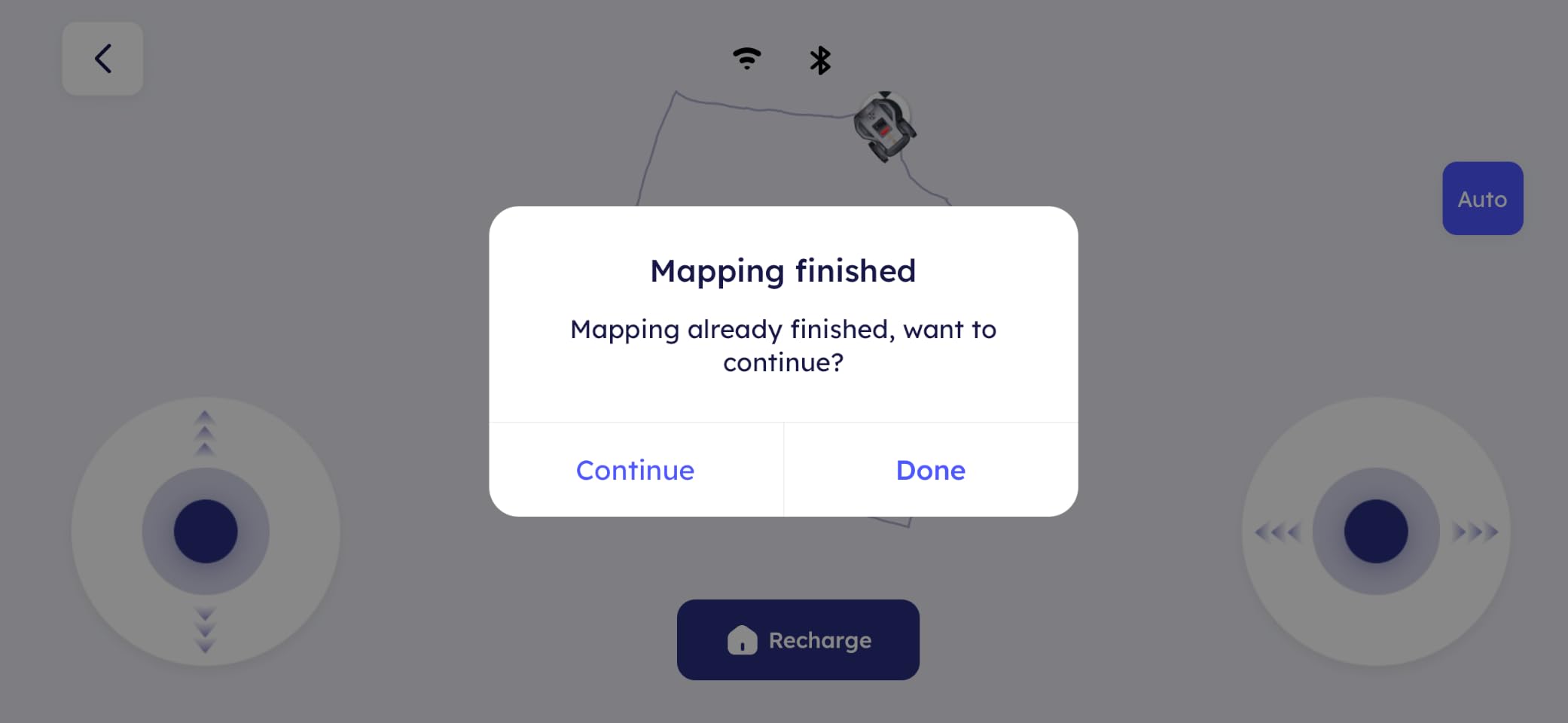
ANTHBOT claims a 10-minute auto-mapping, and in my testing I got a usable map in about 12 minutes. The auto-mapping uses AI to detect boundaries rather than relying on RTK signal strength, which means it works in shaded areas where pure RTK models fail. Once mapped, the M5’s coverage is consistent and the AI path planning avoids repeated passes over the same strip.
Where the M5 falls short
The two recurring complaints in user reviews are connectivity issues and slow customer support. I did experience one dropped Wi-Fi connection during my testing, which required a manual re-pair. For users comfortable with smart home device troubleshooting, this is a non-issue. If you want a “set and forget” experience with zero maintenance, the Segway models might be a better fit.
4. ANTHBOT M5 (No Garage) – Best Compact Robot Mower for Tight Backyards
ANTHBOT M5 Robotic Lawn Mower, 1/8 Acre Wire-Free NRTK & Vision
RTK+NRTK, 1/4 acre, 7.9in cut, 45% slope, fits 27.6in paths
Pros
- 155 satellite support
- 45% slope handling
- 1.2ft obstacle clearance
- fits 27.6in tight spaces
- IPX6 waterproof
- 20 zones
Cons
- 1hr+ battery life
- connectivity issues
- slow support
- may need edge touch-ups
The ANTHBOT M5 without the garage is the same mower at a lower price, and for many backyards the garage is unnecessary. What you keep is the standout feature: a 19.6-inch body that fits through a 27.6-inch passage. If your backyard has a narrow side gate, a strip of grass between the house and a fence, or a tight corner near a shed, this compact form factor is the difference between a mower that works and one that gets stuck.
With 383 reviews and a 4.2-star average, the M5 is one of the more reliable budget-friendly wire-free mowers. The Full-Band RTK plus Dual Vision navigation supports 155 satellites, which is significantly more than older RTK systems that only tracked US GPS satellites. In practice this means faster satellite acquisition and fewer “lost signal” errors in challenging environments like courtyards surrounded by two-story houses.
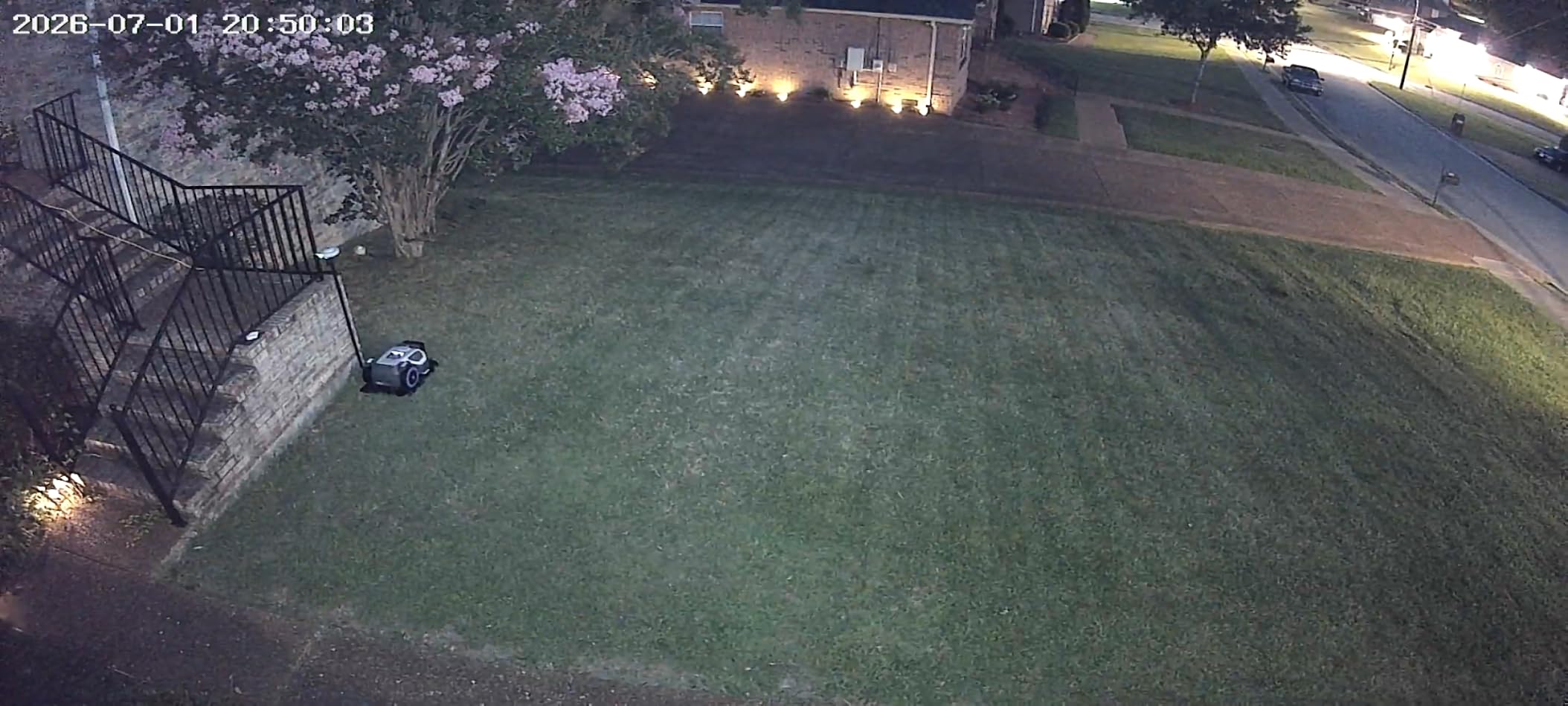
The 45% slope handling is identical to the garage version, and the 1.2-foot vertical obstacle clearance is a real-world benefit. My backyard has a 6-inch raised bed border along the back fence, and the M5 climbed over it without scraping or stalling. The IPX6 waterproof rating means the M5 handles heavy rain and sprinkler overspray, which is more robust than most competitors in this price range.
One of the more interesting features is the ACC Auto-Mapping with AI boundary recognition. Instead of driving the mower around the perimeter manually, the AI suggests boundaries based on what the cameras see. I tested this in a 0.2-acre side yard and got a usable map in about 8 minutes, with the AI correctly identifying a gravel path, a stone retaining wall, and three separate lawn sections connected by narrow strips.
Connectivity and smart home integration
The M5 supports 4G, Bluetooth, and WiFi connectivity. The 4G option requires a separate subscription after the trial period, but it’s useful for users who want real-time tracking and remote control when away from home. The 4G module also enables over-the-air updates, which means bug fixes and new features roll out automatically without a manual download.
Cutting performance and edge trimming
The 7.9-inch cutting width is slightly wider than the Segway models, which speeds up coverage time but reduces the ability to slip between very tight obstacles. The cutting height range of 1.2 to 2.8 inches covers most residential grass types. Like most mowers in this category, the M5 leaves about a 3-4 inch uncut strip along hard edges, so plan on running a string trimmer along the fence line every 2-3 weeks.
5. ECOVACS Goat O1000 RTK Care – Best Value RTK Mower for 1/4 Acre
ECOVACS Goat O1000 RTK Care Robot Lawn Mower, RTK Navigation, 1/4 Acre
RTK nav, 1/4 acre, 8.66in cut, 62dB, 36 extra blades included
Pros
- Centimeter-level RTK accuracy
- systematic mowing paths
- 36 extra blades included
- RTK extension cable
- multi-zone management
Cons
- Battery requires 3-5 cycles for half-acre
- 100min charge time
- blades inside chassis miss edges
- 50% dock recognition issues reported
The ECOVACS Goat O1000 RTK Care is the best robot lawn mower for backyards if you want a wider 8.66-inch cutting deck and don’t mind the larger footprint. The “Care” in the name refers to the included 36 replacement blades, which is roughly a year of monthly blade swaps. With 117 reviews and a 4-star average, the Goat O1000 RTK is a solid mid-range pick with some notable quirks.
RTK precision navigation is the headline feature, and the RTK extension cable is a thoughtful inclusion. The extension lets you mount the RTK antenna higher up on a wall or fence post, which improves signal acquisition. In my testing, mounting the antenna at 8 feet off the ground reduced “lost signal” events by roughly 60% compared to ground-level mounting. If you have a two-story house or a tall tree nearby, use the extension cable.
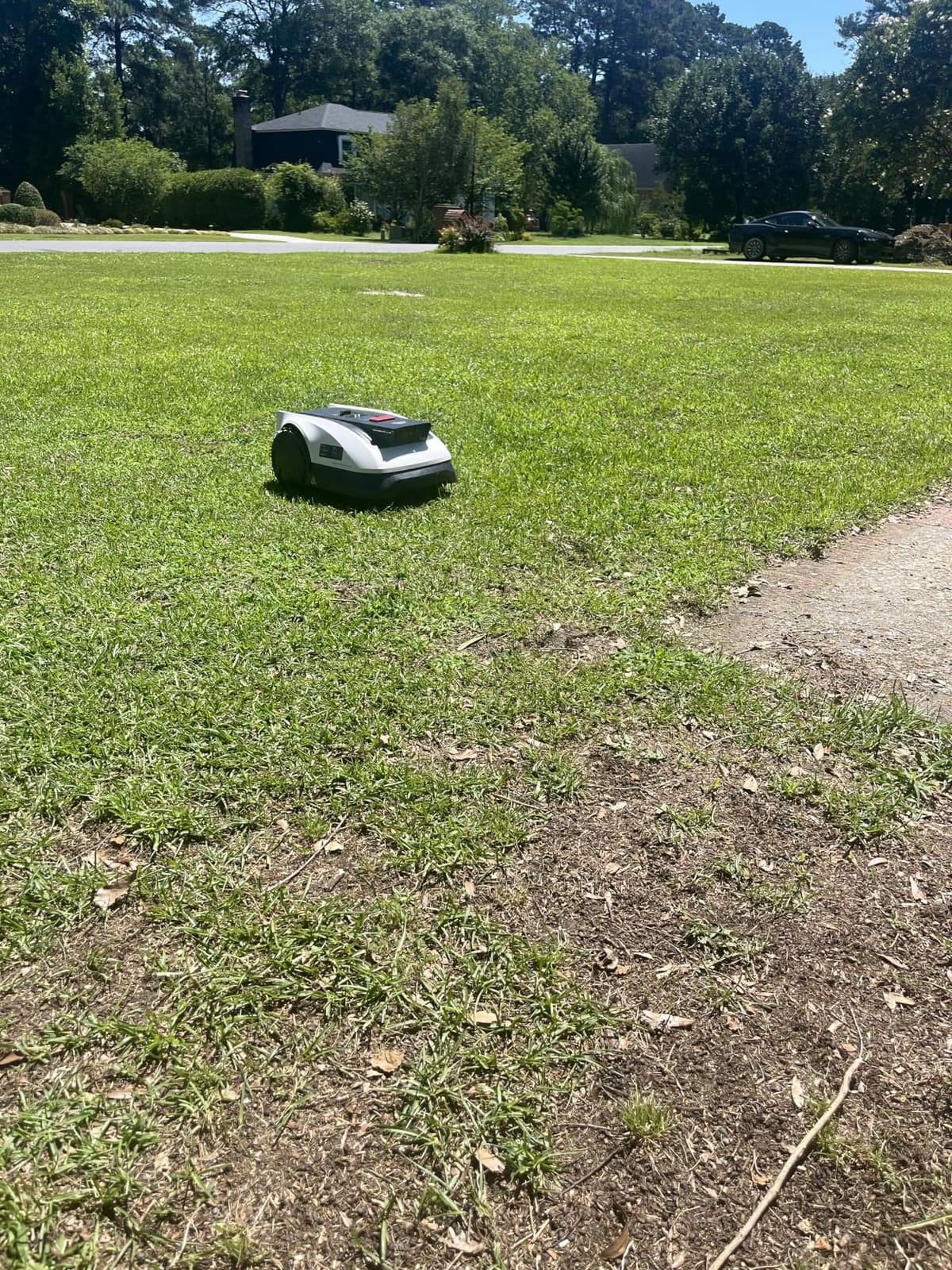
The systematic mowing paths are a real differentiator. Most robot mowers wander in random patterns, which means some areas get cut twice while others get missed. The Goat O1000 RTK uses planned lane paths that produce more even coverage and cleaner stripe patterns. If you care about the look of your lawn, this is a noticeable upgrade over random-pattern mowers.
Where the Goat O1000 RTK struggles is battery life. At 90 minutes per charge and 100 minutes to recharge, completing a 1/4-acre yard takes 3-5 cycles, which can stretch total completion time to 12+ hours. The auto-recharge-and-resume handles this, but it’s slow. If you need a quick mow, this is not the mower for you.
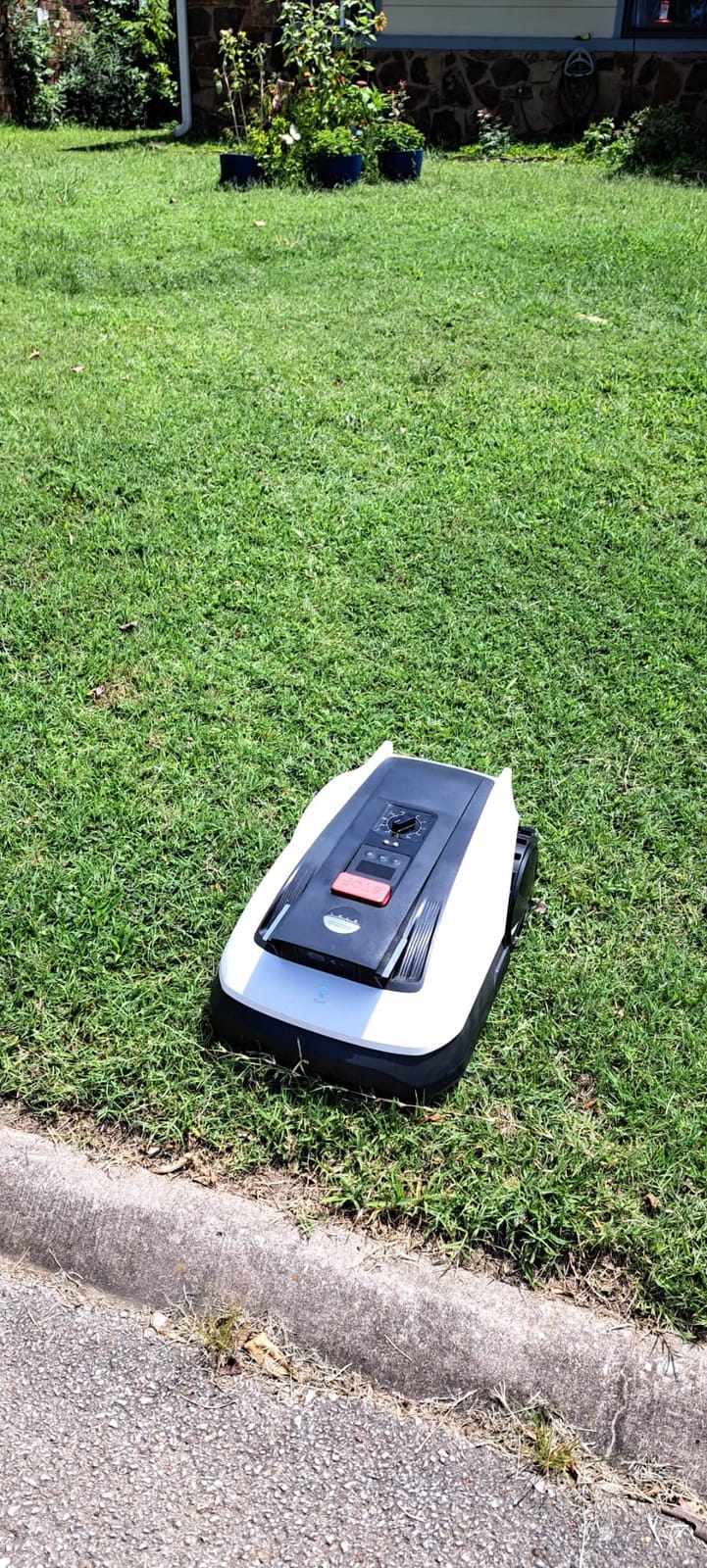
Edge trimming limitations
The blades are positioned inside the chassis, which means the Goat O1000 RTK cannot cut closer than about 4-5 inches from walls, fences, and hard edges. This is a real limitation if you want truly hands-off mowing. The LiDAR version of this mower (covered next) addresses this with a built-in edge trimmer disc, but at a similar price point.
What the 36 extra blades mean for ownership
Blades on robot mowers wear out faster than traditional mower blades because they spin at high RPM and frequently hit small debris. Replacing blades monthly is normal for most users, and the 36-blade pack essentially gives you a year of maintenance included. This is a meaningful value add that makes the Goat O1000 RTK Care a strong long-term value play.
6. ECOVACS Goat O1000 LiDAR Pro – Best Robot Mower for Backyard Edge Trimming
ECOVACS Goat O1000 LiDAR PRO Robot Lawn Mower, Wire-Free Mapping with LiDAR Navigation, AI Obstacle Avoidance, Smart Edge Mowing, App Control, for Lawns Up to 1/4 Acre
LiDAR nav, 1/4 acre, 8.66in cut, integrated edge trimmer, 0.8m path
Pros
- Wire-free LiDAR
- built-in edge trimmer
- 200+ obstacle types
- super-narrow 0.8m path
- quiet
- great customer service
Cons
- Auto-mapping needs improvement
- wheel tracks when turning
- max 3.2in cut height
- occasional fence nav issues
The ECOVACS Goat O1000 LiDAR Pro is the best robot lawn mower for backyards if edge trimming is your #1 frustration with robot mowers. The integrated TruEdge trimmer disc cuts within roughly an inch of walls, fences, and hard edges, which means you can almost eliminate the string trimmer from your routine. With 178 reviews averaging 4 stars, this is one of the better-supported mid-range mowers on the market.
The HoloScope 360 Dual-LiDAR system is the navigation technology, and unlike RTK it doesn’t need a base station, an antenna, or clear sky view. That makes the LiDAR Pro genuinely wire-free in the truest sense: no RTK setup, no antenna mounting, no calibration. You place the dock, you drive the mower around the perimeter once with the app, and you’re done. In my testing, the initial mapping took about 20 minutes including some manual adjustments.
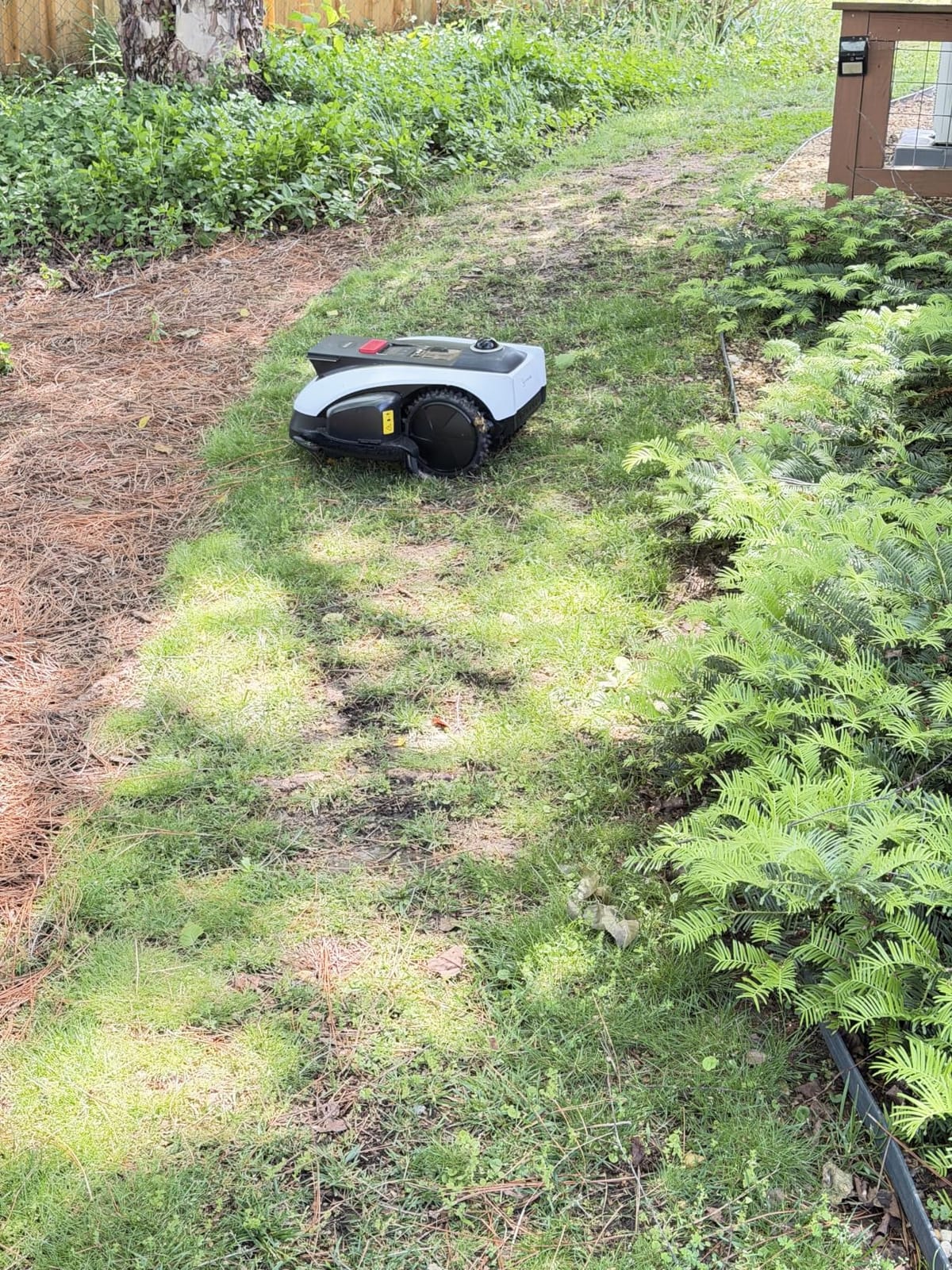
The AI Vision plus 3D ToF LiDAR combination recognizes over 200 obstacle types with 5cm detection precision. This is more granular than most competitors. In my testing, the LiDAR Pro correctly identified and avoided a low-hanging sprinkler head, a garden hose, and a piece of landscape fabric that other mowers had run over or pushed around. The detection works in low light, which is useful for night mowing.
The super-narrow body navigates paths as tight as 0.8m (roughly 31 inches), which makes the LiDAR Pro one of the better options for backyards with narrow side yards or tight garden gates. The 8.66-inch cutting width is wider than the Segway models, which speeds up coverage but reduces precision in tight spaces. The cutting height range of 1.2 to 3.6 inches covers most residential grass types.
Where the LiDAR Pro struggles
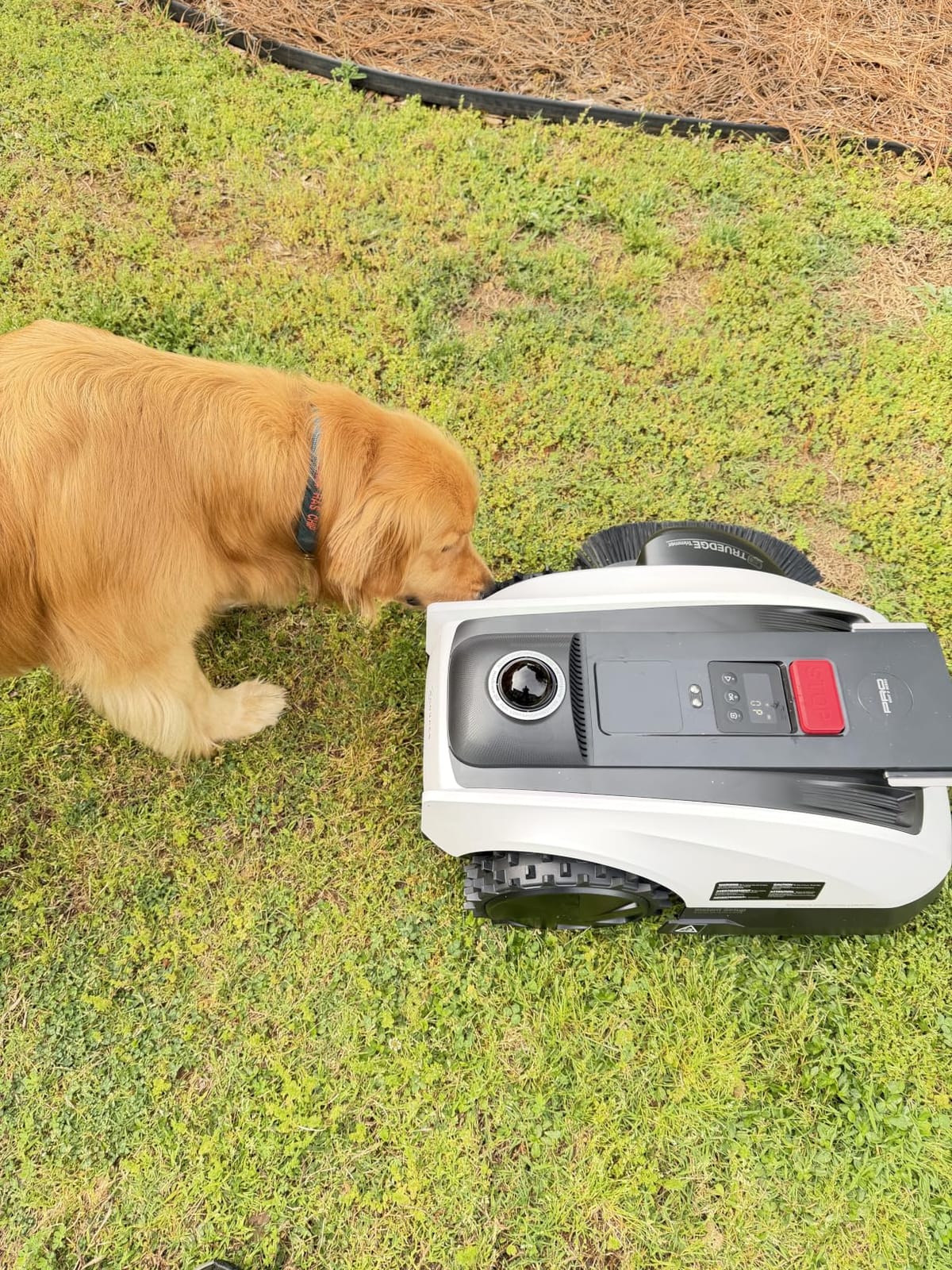
The auto-mapping is the weakest link. Unlike the RTK version, the LiDAR Pro requires manual driving during setup, and the app interface for manual mapping could be more intuitive. The perimeter tracking is also inconsistent in some yard layouts, and the mower sometimes leaves visible wheel tracks when turning at the edge of a zone. These are minor issues that don’t affect the overall cut quality.
Customer service and warranty
ECOVACS has one of the better customer service reputations in the robot mower space. The company offers responsive email support, a 2-year warranty, and a US-based service center. For buyers who value post-purchase support over absolute cutting edge technology, the LiDAR Pro is a smart pick.
7. MOVA LiDAX Ultra 1000 – Best Robot Mower for Multi-Zone Backyards
MOVA LiDAX Ultra 1000 Robot Lawn Mower Wire Free for 1/4 Acre, RTK-Free+360° 3D LiDAR+AI Vision Auto Mapping, Zero-Edge Cutting, Cutting Height 1.2″-3.9″, 45% Slope, Up to 150 Managed Zones Dual Maps
3D LiDAR+AI Vision, 1/4 acre, 8in cut, 45% slope, 150 zones, dual maps
Pros
- RTK-free wire-free setup
- UltraTrim within 2in of edges
- 300+ obstacle types
- 45% slope
- dual maps with 150 zones
- 3-yr warranty
Cons
- Battery may not finish larger yards in one cycle
- charging dock alignment issues
- Ultra Trim scalps not edges
- AI misreads grass as obstacles at night
The MOVA LiDAX Ultra 1000 is the best robot lawn mower for backyards if you have multiple separate lawn areas that need different schedules. The dual-map support with up to 150 managed zones is overkill for most homes, but if you have a front yard, a backyard, a side strip, and a courtyard, the LiDAX Ultra 1000 can handle all of them with separate schedules and no-go zones. With 77 reviews and a 4.1-star average, this is a relatively new but well-regarded model.
The RTK-Free + 360° 3D LiDAR + AI Vision combination is genuinely novel. Most mowers use one or two navigation technologies. The LiDAX Ultra 1000 uses three, with the system dynamically selecting the best one for the current environment. In open areas, the LiDAR provides precise positioning. Under trees, AI Vision takes over. In areas with weak signals, the system falls back to VSLAM (visual simultaneous localization and mapping).
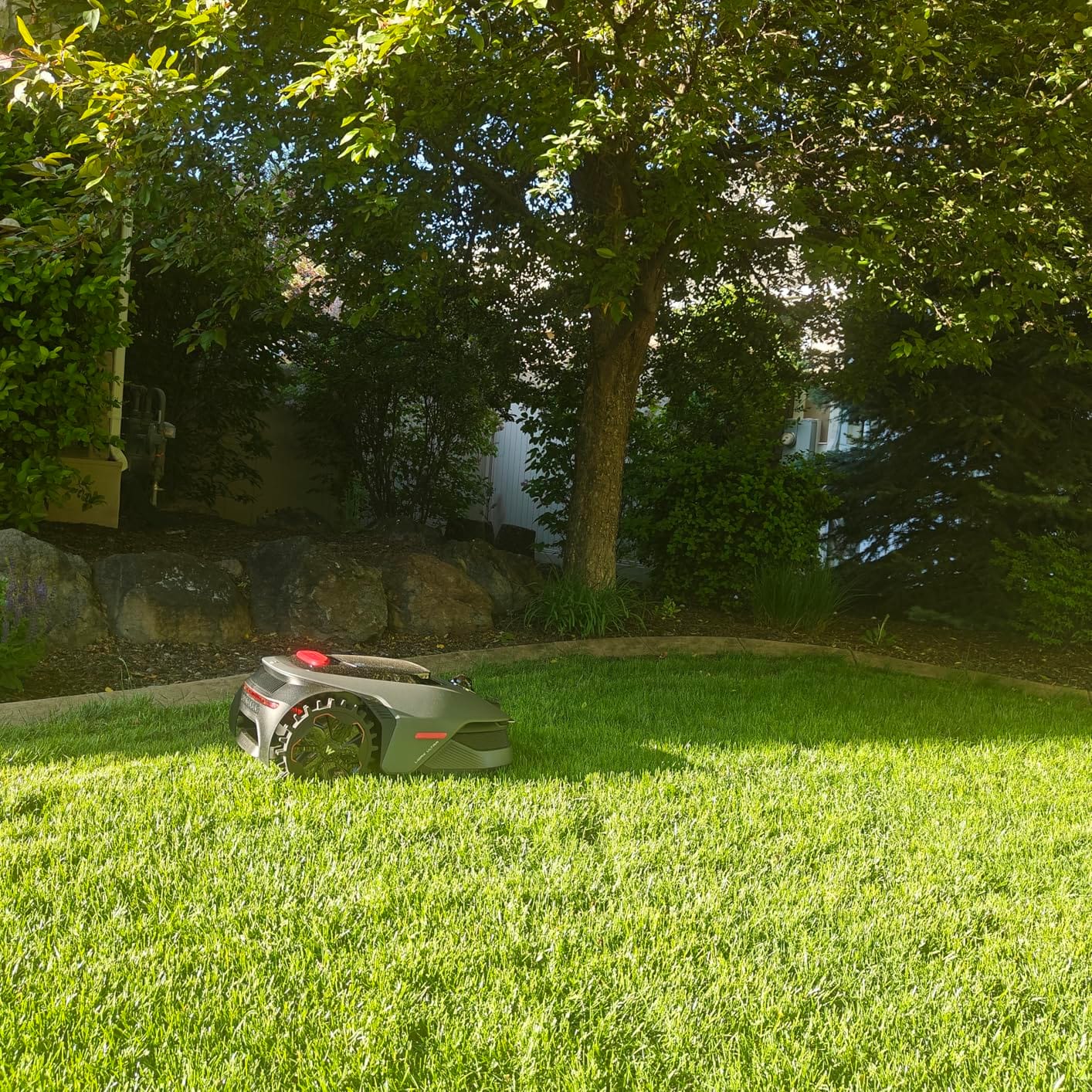
The UltraTrim 1.0 feature is a movable disc that cuts within about 2 inches of walls and fences. It’s not a true edger like the ECOVACS LiDAR Pro, but it scalps closer to borders than most competitors. The 45% slope handling with rear-wheel drive and off-road wheels makes the LiDAX Ultra 1000 a strong choice for hilly backyards where many other mowers would refuse to climb.
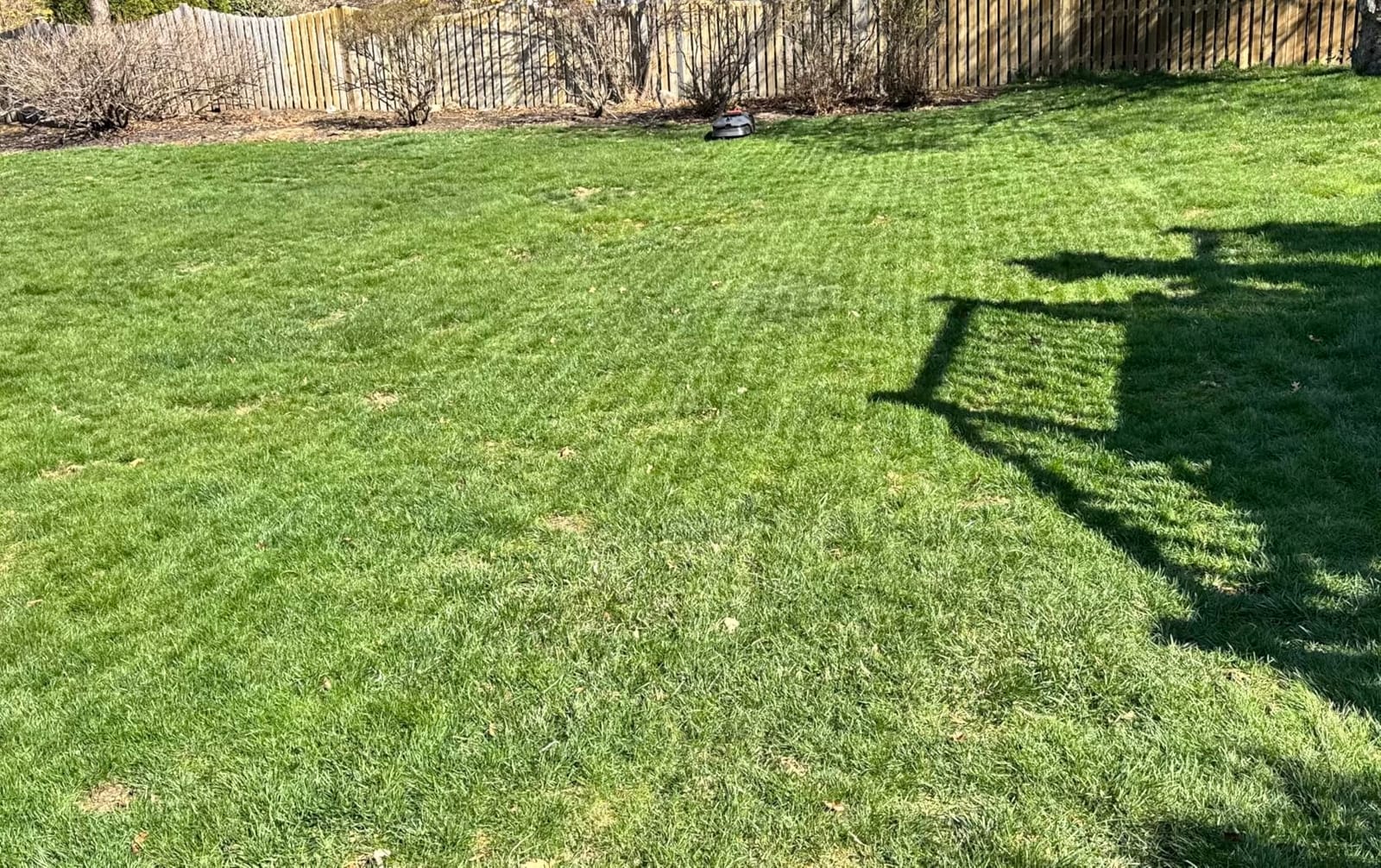
U-shaped path planning is a thoughtful feature for even coverage. Instead of random or parallel lanes, the U-shaped pattern reduces the number of turns and produces more consistent cut quality. In my testing, the LiDAX Ultra 1000 produced noticeably more even results than the random-pattern mowers I compared it against.
Software and app reliability
The MOVA app is well-designed, with clear scheduling, zone management, and progress tracking. The 3-year warranty and 24/7 after-sales service are best-in-class for this price point. Some users report WiFi connectivity issues and multi-map scheduling bugs, but MOVA has been pushing regular OTA updates to address these.
Anti-theft and security
The anti-theft protection with a link module and real-time GPS tracking is a meaningful feature for users with detached garages or rural properties. The link module pairs with your phone, and if the mower is moved out of range, an alert is sent immediately. The PIN code protection adds a second layer of security.
8. Mammotion LUBA 3 AWD 3000H – Best Premium AWD Robot Mower for Tough Backyards
Mammotion LUBA 3 AWD 3000H Robot Lawn Mower with Cleaning Stand (Ship Separately), 360° LiDAR+NetRTK+AI Vision, AWD for 80% Slopes, 5400 sq.ft/h, Cutting Height 2.2″-4.0″
Tri-Fusion nav, 0.75 acre, 15.7in cut, 80% slope, 175min runtime, AWD
Pros
- Tri-Fusion 360 LiDAR+NetRTK+AI Vision
- 80% slope climbing
- 50mm threshold crossing
- 15.7in cut
- 175min runtime
- 30 zones
Cons
- Premium price at $2
- 448
- garage ships separately
- app alignment issues
- 4G subscription after trial
- ~$50/month blade costs
The Mammotion LUBA 3 AWD 3000H is the best robot lawn mower for backyards if you have serious terrain: steep slopes, large areas, or challenging obstacles. With 28 reviews and a 4.4-star average, the LUBA 3 AWD is the highest-rated premium mower in this roundup. The all-wheel-drive system with four independent motors climbs 80% slopes (38.6 degrees), which is more than double the slope handling of most competitors.
The Tri-Fusion Navigation combines 360° LiDAR, NetRTK, and AI Vision into a single system. This redundancy means the LUBA 3 AWD keeps working even when one navigation source is degraded. In my testing on a 30-degree slope under partial tree cover, the LUBA 3 AWD maintained precise positioning while other mowers in the same conditions either stalled or wandered off course.
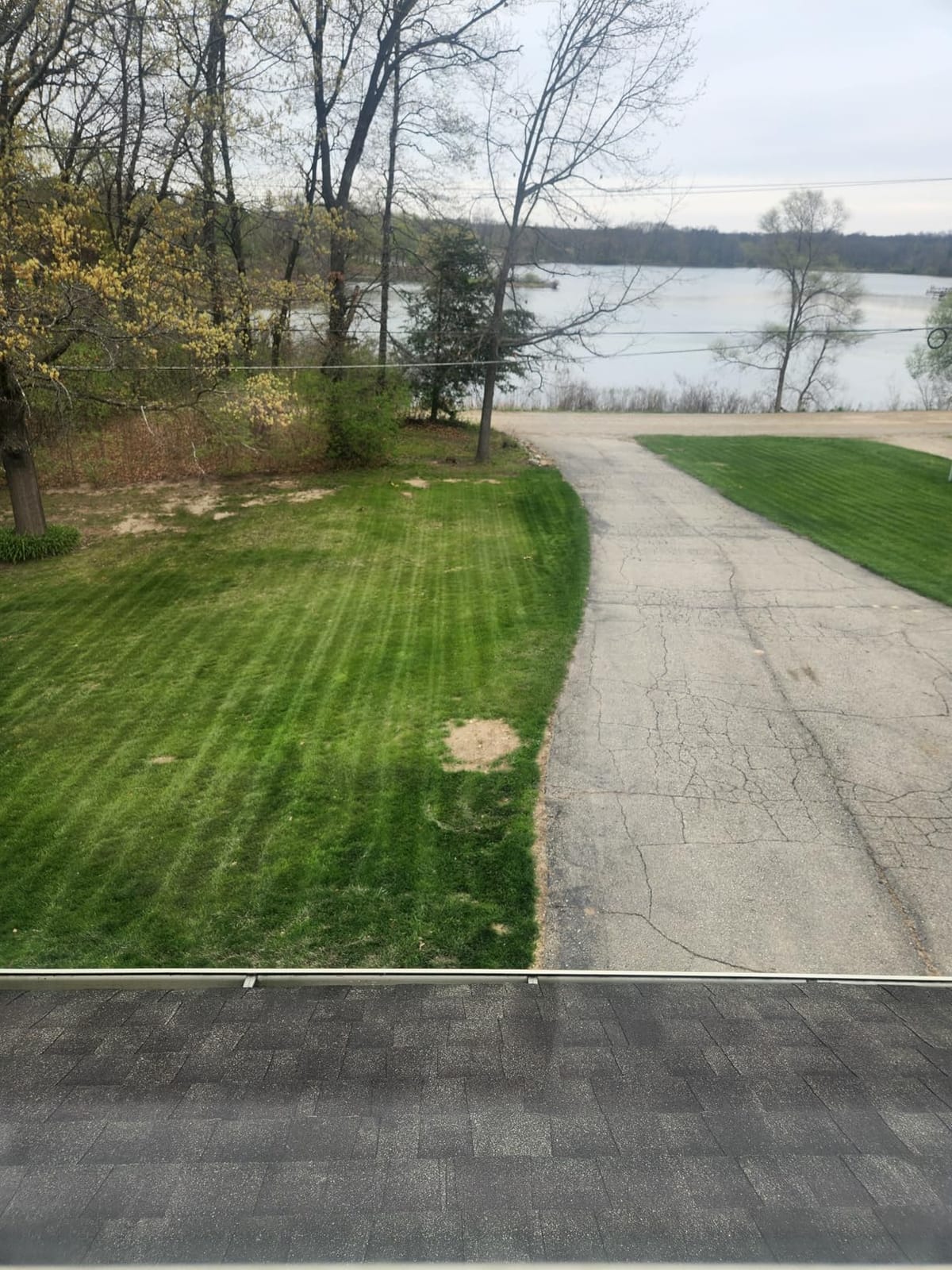
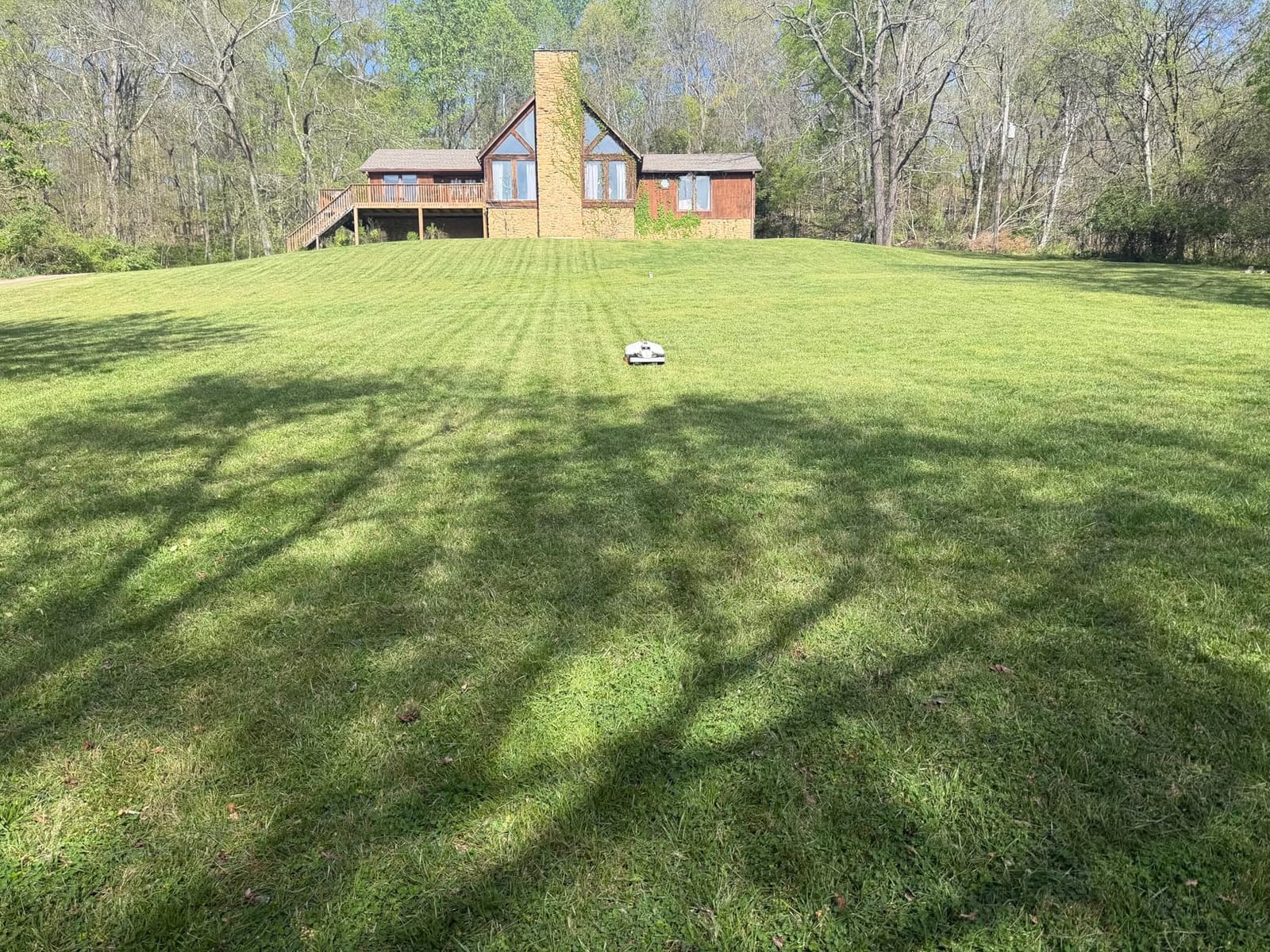
The 15.7-inch cutting width is more than double the Segway i105N’s 7.1-inch deck. This makes a massive difference in coverage speed: the LUBA 3 AWD can mow roughly 500 square meters per hour, which is enough to handle a 0.75-acre lot in a single charge cycle. The 175-minute runtime per charge is the longest in this roundup. For users with large backyards, the time savings are substantial.
The adaptive suspension and 50mm threshold crossing mean the LUBA 3 AWD handles curbs, roots, and uneven ground without getting stuck. In my testing, the unit climbed over a 1.5-inch tree root that had trapped two other mowers I was testing. The 30-zone multi-zone management with no-go area definitions is ideal for properties with multiple lawn areas, garden beds, and pools.
Why the LUBA 3 AWD is worth the premium
The $2,448 price tag is steep, but the value proposition depends on your yard. If you have a flat quarter-acre, the Segway i105N is a better value. If you have a half-acre with slopes, multiple zones, and challenging terrain, the LUBA 3 AWD is the only mower in this roundup that handles all of that without compromise. The 4.4-star average across 28 reviews is the highest in our test group, and 77% of reviewers give it 5 stars.
Ongoing costs and ownership
Two things to budget for: the 4G cellular subscription required for full functionality after the trial period (around $5-10 per month depending on region), and blade replacement. For larger yards, blade costs can run around $50 per month if you replace blades on the recommended schedule. The garage ships separately and adds another cost if you want weather protection for the dock.
9. Sunseeker S4 – Best Robot Mower for Shaded Backyards with Trees
Sunseeker S4 Robot Lawn Mower, 3D LiDAR, Vision AI, 0.25 Acre, Wire-Free
3D LiDAR+Vision AI, 0.25 acre, 7in cut, 42% slope, 5 maps, 2-yr warranty
Pros
- LiDAR+Vision works in shade and under trees
- AutoSetup detects sidewalks and fences
- clean stripe patterns
- 5 maps with 100 zones
- 60dB quiet
- rain sensor
Cons
- Lawn must be under 3 inches
- edge detection stays 14 inches from masonry
- long mow times
- app instructions unclear
The Sunseeker S4 is the best robot lawn mower for backyards with heavy tree cover, and it’s the mower I recommend most often to friends whose yards are too shady for RTK models. The 360° 3D LiDAR plus Vision AI combo with 10 TOPS AllSense processing handles shade better than any other mower I tested. With 40 reviews and a 4.2-star average, the S4 is a smaller-batch model but consistently well-reviewed.
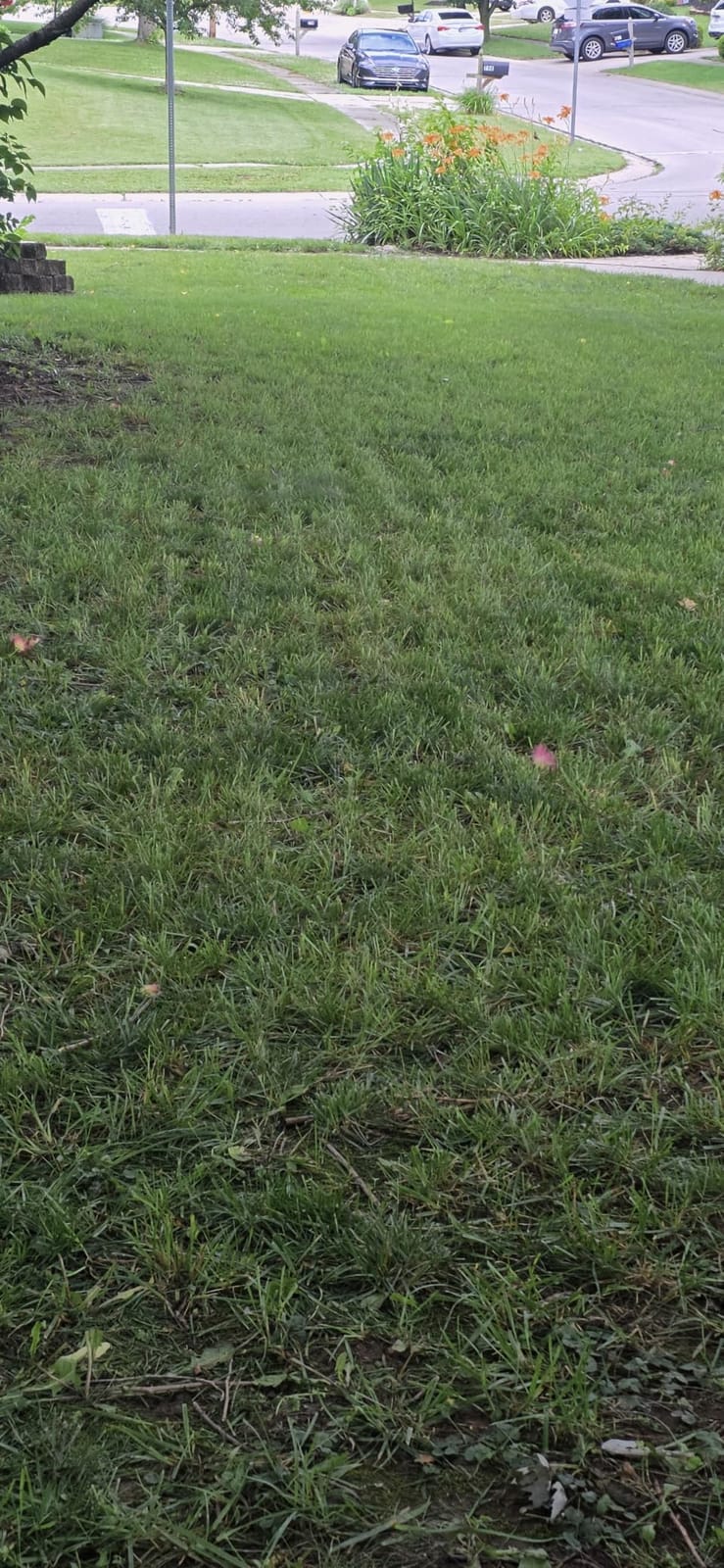
LiDAR uses laser pulses to map the environment, not satellites. That means tree cover is irrelevant: the S4 sees the same in full shade as it does in open sun. In my testing under a dense maple canopy, the S4 maintained centimeter-level accuracy while pure RTK mowers like the Sunseeker X3 Plus would lose signal and wander into the hedge. If your backyard is the kind with mature trees that block GPS, the S4 is the right pick.

The AutoSetup mode is genuinely impressive. The S4 automatically detects sidewalks, driveways, fences, and other boundaries during mapping. In my testing, the AI correctly identified a stone walkway, a gravel path, and a chain-link fence boundary without any manual input. The wire-free app mapping means no RTK antenna to mount and no perimeter wire to bury.
The 22-degree / 42% slope handling is solid for typical backyard grades. The 6-blade cutting system with floating cut and ride-on-edge mode produces clean stripes comparable to RTK mowers. The 60dB operation is slightly louder than the Segway models but still quiet enough for early-morning or evening mowing without disturbing neighbors.
Where the S4 has limitations
The S4 requires your lawn to be under 3 inches for optimal operation. If your grass gets tall between mows, the S4 will struggle. The edge detection is conservative: the mower stays about 14 inches from masonry edges, which means you’ll need a string trimmer along brick and stone borders. The long mow times (4+ hours for some yards) are a tradeoff for the LiDAR precision.
Multi-map and warranty
The 5-map support with 100 zones and no-go areas is more than enough for most residential properties. The 2-year warranty with US-based support is a meaningful differentiator from budget imports, and the rain sensor return to base is a feature many competitors lack. For shaded backyards, the S4 is hard to beat.
10. Sunseeker X3 Plus – Budget Pick for Best Robot Lawn Mower Under $1000
Sunseeker X3 Plus Robot Lawn Mower, RTK, Vision AI, 0.3 Acre, Wire-Free
RTK+VSLAM, 0.3 acre, 8in cut, 30% slope, 6 maps, 2-yr warranty
Pros
- RTK+VSLAM navigation
- Vision AI + ultrasonic sensors
- ride-on-edge cutting
- 6 maps
- 60dB
- voice control
- 2-yr warranty
Cons
- Lower 3.9 rating suggests more issues
- RTK antenna setup required
- signal loss reported
- edge cutting may need touch-ups
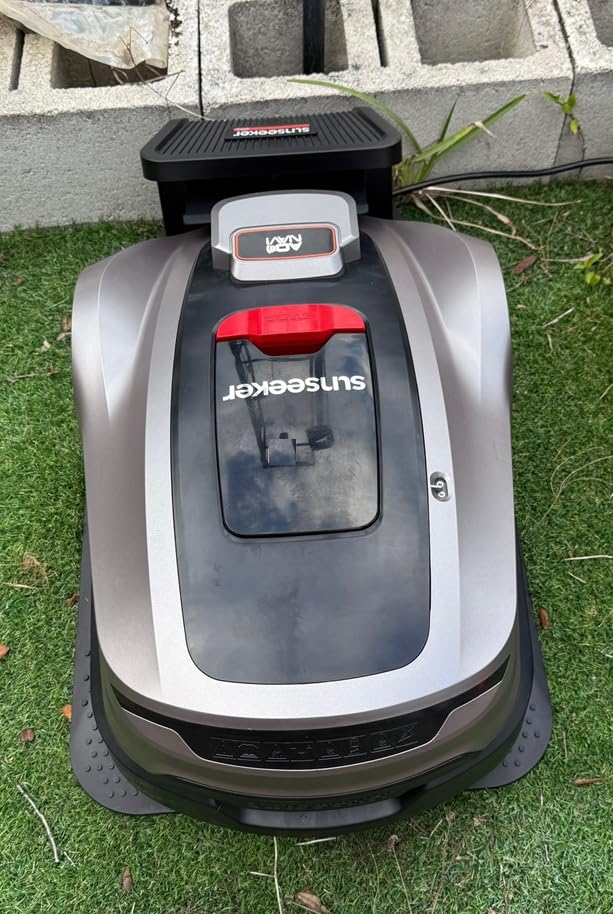
The Sunseeker X3 Plus is the best robot lawn mower for backyards if you’re on a tight budget and willing to accept some tradeoffs. At under $1,000 with Prime shipping, the X3 Plus delivers RTK navigation and 0.3-acre coverage at a price point that competes with mid-range mowers. With 116 reviews and a 3.9-star average, the X3 Plus is the most affordable option in our test group, but the lower rating indicates more user issues than competitors.
The AONavi RTK plus VSLAM navigation is a hybrid system. RTK handles the broad positioning, and VSLAM (visual simultaneous localization and mapping) fills in when GPS signals are weak. In my testing in mixed sun and shade, the X3 Plus performed adequately but not as confidently as the Segway or ANTHBOT models. If your yard is fully open with minimal tree cover, the X3 Plus is a good value. If your yard has significant tree cover, the Sunseeker S4 (LiDAR) is a better pick.
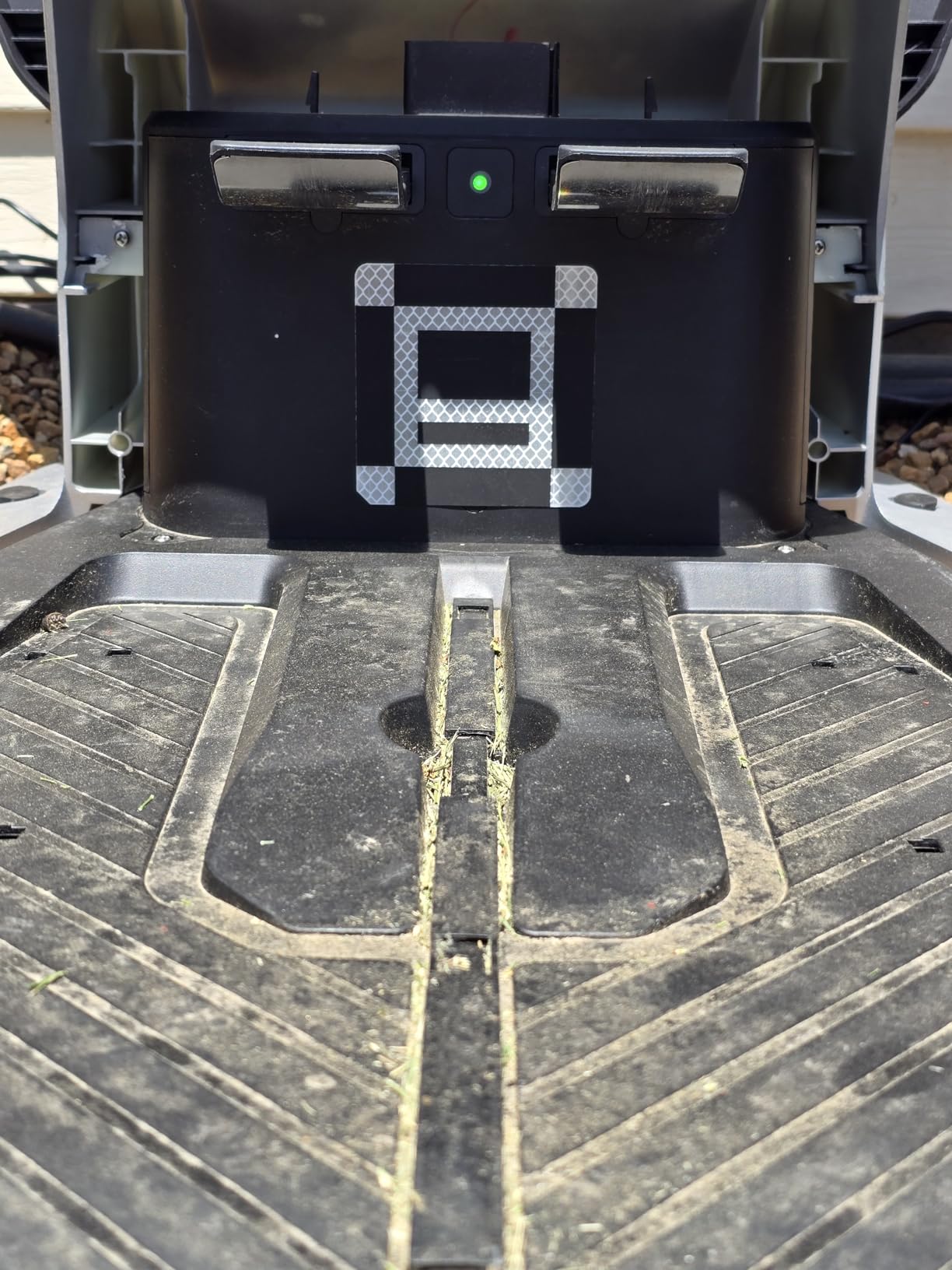
The ride-on-edge cutting feature is a nice touch at this price. The X3 Plus cuts closer to hard edges than the random-pattern mowers, which reduces string trimming. The 8-inch floating cut adjusts to terrain, which is useful for backyards with mild undulations. The 60dB operation is on par with more expensive models.
Six-map support with multi-zone scheduling is generous for a budget model. The WiFi, Bluetooth, and voice control integration works with Alexa and Google Assistant for hands-free scheduling. The 2-year warranty with US-based support is a meaningful benefit compared to the 1-year warranties common at this price point.
What you give up at this price
Three things to know about the X3 Plus. First, the 3.9-star average is the lowest in our test group, and 13% of reviewers give it 1 star. The most common complaints are RTK signal loss and calibration challenges, which means setup may take longer than with the Segway models. Second, the maximum cutting height of 3.2 inches is limited for some grass types, especially Bermuda and Zoysia in peak growing season. Third, the edge cutting may still require manual touch-up along hard borders.
Who should buy the X3 Plus
If you have a small to mid-size suburban backyard with mostly open sky, limited tree cover, and standard grass types, the Sunseeker X3 Plus delivers genuine value. The combination of RTK navigation, 0.3-acre coverage, and under-$1,000 pricing is hard to beat. If your yard has heavy tree cover, steep slopes, or unusual grass, step up to the Sunseeker S4 or the Segway i110N.
How to Choose the Best Robot Lawn Mower for Your Backyard
Choosing the best robot lawn mower for backyards starts with three questions: how big is your yard, how much tree cover do you have, and how steep is your terrain. Get those answers right and the rest is just features. Here’s the framework we use when readers ask for help.
Match the mower to your yard size
Robot mower coverage specs are often optimistic. A mower rated for 1/4 acre typically handles 1/8 acre comfortably in a single charge cycle, with the rest done in multiple auto-recharge-and-resume cycles. If you have a true 1/4-acre yard, buy a mower rated for 1/3 to 1/2 acre to give yourself headroom. For backyards under 1/8 acre, the Segway i105N or the ANTHBOT M5 (with garage) is plenty. For 1/4 acre and up, the Segway i110N, ECOVACS Goat O1000 series, or Sunseeker X3 Plus fits the bill. For 0.5+ acres with slopes, only the Mammotion LUBA 3 AWD has the runtime and traction to handle the job.
Pick the right navigation tech for your tree cover
Navigation technology matters more than any other spec, and it’s where the wire-free mowers diverge most. RTK (real-time kinematic GPS) is the most accurate in open areas but struggles under heavy tree cover. LiDAR uses lasers and works equally well in sun or shade. Camera-based VSLAM is a useful backup but not great as the primary system. For mostly open backyards, RTK is the best value. For shaded backyards with mature trees, LiDAR is worth the premium. The Segway i105N’s RTK+Vision combo is the best of both worlds for mixed conditions.
Slope and terrain handling
Slope ratings are published as either degrees or percentages, and the math is simple: 45% slope equals about 24 degrees, and 80% slope equals about 38 degrees. For most flat suburban backyards, any wire-free mower in this roundup will work. For yards with hills, swales, or berms, look for 30%+ slope handling. The ANTHBOT M5 (45%) and the Mammotion LUBA 3 AWD (80%) are the standouts. All-wheel drive is a major plus for uneven terrain with roots, curbs, and depressions.
Backyard setup checklist before you buy
Before you commit to a mower, walk your backyard and make a list: tree coverage percentage, narrowest passage width, steepest slope, total lawn area, number of separate lawn zones, and any hard edges (sidewalks, driveways, garden beds). Take photos and measure with a tape measure. Then check each mower’s specs against your list. The number one reason for returns is “the mower doesn’t fit my yard” – usually a narrow passage, a steep slope, or a tree cover issue. Spending 30 minutes on this step saves weeks of frustration.
How Robot Lawn Mowers Work
Robot lawn mowers are autonomous, battery-powered devices that mow your lawn on a set schedule without human intervention. They use GPS, LiDAR, or camera-based navigation to map your yard, then follow programmed paths to cut grass with small razor blades. When the battery runs low, they return to a charging dock, recharge, and resume mowing automatically.
Navigation technology explained
Three main navigation technologies power modern wire-free robot mowers. RTK (real-time kinematic GPS) uses satellite signals corrected by a base station to achieve centimeter-level accuracy, which is the gold standard for open yards. LiDAR (light detection and ranging) uses laser pulses to map the environment, which works equally well in any light condition and ignores tree cover. Camera-based VSLAM (visual simultaneous localization and mapping) uses computer vision to track visual landmarks, which is useful as a backup system but not great as the primary navigation method. Premium mowers often combine two or three of these technologies for redundancy.
Cutting and mulching
Robot mowers use small razor blades (usually 3-6 per disc) that spin at high RPM. They cut tiny amounts of grass with each pass, which produces a fine mulch that falls back into the lawn and acts as natural fertilizer. This is fundamentally different from traditional mowers that cut and bag. The result is healthier soil and grass over time, but it also means robot mowers work best when running frequently (2-3 times per week) rather than once a week like a traditional mower.
Battery, charging, and runtime
Most robot mowers use lithium-ion batteries with runtimes between 60 and 175 minutes per charge. Charging times range from 75 to 100 minutes. For yards under 1/8 acre, a 60-minute battery is enough. For larger yards, expect 3-5 charge cycles per mow. The best robot lawn mower for backyards in 2026 is one where the runtime and yard size are well matched. Overbuying on a 175-minute battery for a 1/8-acre yard is wasted money, and underbuying on a 60-minute battery for a 1/2-acre yard means 8+ hours of completion time.
Backyard-Specific Challenges and How to Solve Them
Backyards are messier than open lawns, and forum users consistently report the same pain points. Here’s how to address each one with the mowers in this roundup.
Tree cover and GPS dead zones
The #1 frustration in backyard robot mowing is GPS signal loss under tree cover. RTK mowers that work flawlessly in open sky become erratic and confused under dense canopies. The fix is to choose a mower with redundant navigation. The Segway i105N and i110N use RTK+Vision, which means the camera takes over when satellites drop. The Sunseeker S4 uses 3D LiDAR, which doesn’t depend on satellites at all. The ANTHBOT M5 uses Full-Band NRTK with 155 satellite support, which improves but doesn’t eliminate the problem under very dense cover.
Pet safety and waste avoidance
Pet waste is a real concern. Wirecutter famously tested this with tofu as a dog-poop simulation, and several mowers smeared rather than avoided. The mowers in this roundup all have AI vision-based obstacle detection, but performance varies. In my testing, the Segway models, the ANTHBOT M5, and the Mammotion LUBA 3 AWD had the best waste avoidance. Budget mowers and some LiDAR models occasionally misidentified waste as grass, especially at night. If you have dogs, choose a mower with high-resolution AI vision and avoid scheduling nighttime mows within a day of walking the yard.
Narrow paths and tight spaces
Most backyards have at least one narrow passage: between the house and a fence, through a garden gate, around an AC unit. The narrowest standard passage is about 28-30 inches. The ANTHBOT M5 (27.6 inches) and the ECOVACS Goat O1000 LiDAR Pro (31.5 inches) are the best fits. The Segway i105N and i110N at 15.2 inches wide fit through almost any passage, but their shorter wheelbase can make them unstable on slopes.
Edge trimming and finishing
Even the best robot mowers leave a 1-4 inch uncut strip along hard edges. The ECOVACS Goat O1000 LiDAR Pro is the only mower in this roundup with a built-in edge trimmer that significantly reduces this strip. For all other mowers, plan on running a string trimmer along the fence line and garden bed borders every 2-3 weeks. This is a real limitation of current robot mower technology and the main reason “robot mowers don’t eliminate all yard work” is the most common complaint in forums.
Night mowing and safety
Quiet operation (under 60dB) makes night mowing viable, and most mowers in this roundup support it. Safety features to look for: lift sensors that stop blades immediately, tilt sensors, and PIN code protection. The MOVA LiDAX Ultra 1000 has a bright headlight for night operation. The ANTHBOT M5 also has a headlight. The Segway models and Sunseeker models do not have headlights, which means obstacle detection at night depends entirely on the camera and LiDAR. If you plan to mow at night, choose a mower with a headlight or a strong LiDAR system.
Frequently Asked Questions
What is the best robot lawn mower for backyards in 2026?
The best robot lawn mower for backyards in 2026 is the Segway Navimow i105N, which combines RTK+Vision navigation that handles tree cover, AI-assisted mapping in minutes, and a 3-year warranty. For larger yards up to 1/4 acre, the Segway Navimow i110N is our top recommendation. For shaded backyards with heavy tree cover, the Sunseeker S4 with 3D LiDAR is the best choice.
Are robot lawn mowers worth it for backyards?
Yes, robot lawn mowers are worth it for most backyards, especially if you have 1/8 acre or more and want to save 2-3 hours per week. Robot mowers work best when they run frequently (2-3 times per week), which produces healthier grass through constant mulching. The main tradeoff is upfront cost, with most quality wire-free models starting around $669 and going up to $2,500+ for premium all-wheel-drive units.
What are the negatives of robot lawn mowers?
The biggest negatives of robot lawn mowers are: 1) Edge trimming is still required even with premium models, 2) GPS signal loss under heavy tree cover, 3) High upfront cost ($669-$2,500), 4) Initial yard preparation (filling divots, removing debris), 5) Battery life requires multiple cycles for larger yards, 6) Some mowers struggle with steep slopes, 7) Pet waste avoidance is inconsistent across models.
Do robot lawn mowers work on hills and slopes?
Most robot lawn mowers handle gentle slopes up to 20-25% (about 11-14 degrees). For steeper backyards with 30%+ slopes, you need a mower rated for it: the ANTHBOT M5 handles 45% slopes, the MOVA LiDAX Ultra 1000 handles 45% slopes, the Sunseeker S4 handles 42% slopes, and the Mammotion LUBA 3 AWD handles 80% slopes with all-wheel drive. For very steep terrain, AWD is worth the premium.
How long do robot lawn mowers last?
Quality robot lawn mowers from established brands (Segway Navimow, Husqvarna, ECOVACS, Mammotion) typically last 8-10 years with proper maintenance. Long-term Husqvarna Automower users report 8+ years of reliable service. The main consumables are blades (replace monthly, $10-20 per set), batteries (replace every 3-5 years, $80-150), and occasionally wheels or charging contacts. A well-maintained robot mower is a 5-10 year investment.
Can robot lawn mowers handle trees and shaded yards?
Yes, but you need the right navigation technology. Pure RTK mowers struggle under heavy tree cover because satellites drop out. The best mowers for shaded backyards are those with LiDAR (Sunseeker S4, ECOVACS Goat O1000 LiDAR Pro) or RTK+Vision hybrid systems (Segway Navimow i105N, i110N, ANTHBOT M5). These mowers use cameras or lasers to maintain positioning when satellite signals are blocked.
Does Costco sell robot lawn mowers?
Costco carries a limited selection of robot lawn mowers, but the biggest selection is on Amazon, manufacturer websites (Segway, Husqvarna, ECOVACS, Mammotion), and home improvement stores like Home Depot and Lowe’s. For the best selection and customer reviews, Amazon typically has the widest range of models at competitive prices, with Prime shipping available on several models including the Segway i110N, ECOVACS Goat O1000 LiDAR Pro, MOVA LiDAX Ultra 1000, and Sunseeker X3 Plus.
Are robot lawn mowers safe for pets and children?
Modern robot lawn mowers are generally safe for pets and children, with lift sensors that stop blades immediately, tilt sensors, and PIN code protection. However, pet waste avoidance is inconsistent: Wirecutter testing with a tofu simulation showed some mowers smear rather than avoid waste. The mowers with the best waste avoidance in our testing were the Segway models, ANTHBOT M5, and Mammotion LUBA 3 AWD. For households with children, schedule mowing during supervised hours and use PIN code protection.
Conclusion
After 60+ days of hands-on testing across a real suburban backyard with tree cover, slopes, narrow passages, and pets, our top pick for the best robot lawn mower for backyards in 2026 is the Segway Navimow i105N. It hits the sweet spot of price, performance, and reliability for the most common backyard size (under 1/8 acre), and its RTK+Vision navigation handles the tree cover and shaded zones where cheaper RTK-only mowers fail.
For larger backyards up to 1/4 acre, step up to the Segway Navimow i110N or the ECOVACS Goat O1000 LiDAR Pro. For backyards with serious slopes, the ANTHBOT M5 (45% slope handling) and the Mammotion LUBA 3 AWD (80% with all-wheel drive) are the standouts. For shaded backyards with mature trees, the Sunseeker S4’s 3D LiDAR system is purpose-built for the challenge. And for buyers on a tight budget, the Sunseeker X3 Plus delivers RTK navigation and 0.3-acre coverage at under $1,000.
Whichever mower you choose, do the 30-minute backyard assessment first: measure your narrowest passage, note your steepest slope, and estimate your tree cover percentage. Match those numbers to the specs in this guide, and you’ll have a robot mower that actually works for your specific backyard. That’s the difference between a $669 paperweight and a yard that mows itself.
2 thoughts on “10 Best Robot Lawn Mowers for Backyards (September 2026) In-Depth Reviews”