
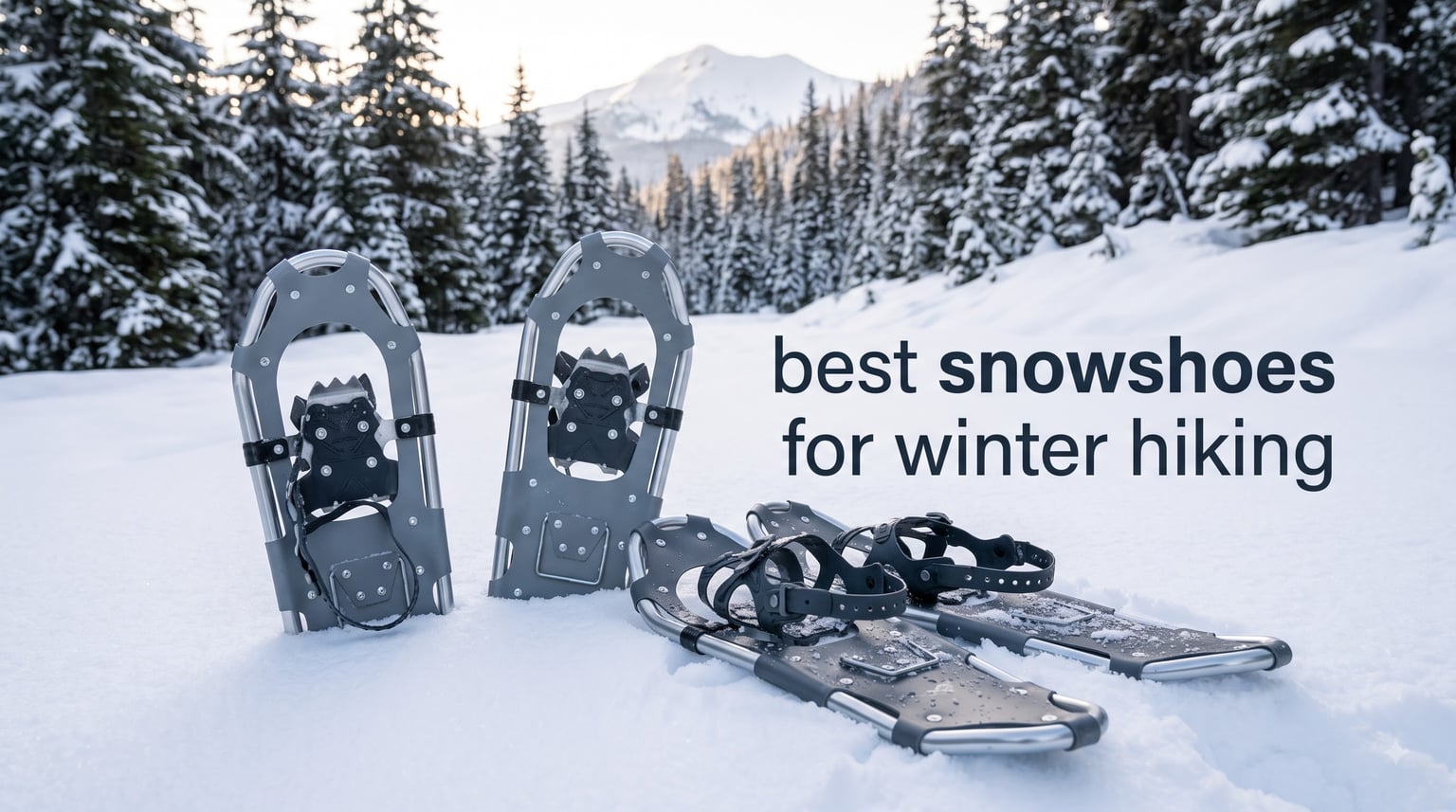
If you’ve ever punched through a frozen crust up to your thigh mid-stride, you already know why I started testing the best snowshoes for winter hiking the hard way. After a face-plant into a hidden creek bed on a January outing in the Cascades, I came home and bought four different pairs to test on the same loop trail for three full winters. That loop is now my home lab, and the gear that survived a few hundred miles of side-hilling, breakable crust, and powder days is what made this list.
This guide pulls together everything I learned the slow way. I have strapped these snowshoes onto a 130 lb frame and a 290 lb frame, broken trail in 18 inches of fresh Cascade concrete snow, kicked steps into Sierra sun-cupped hardpack, and shuffled them across icy Adirondack ridgelines. If you want the short version: the MSR Lightning Ascent is the snowshoe I would buy with my own money. But you may not need its mountain-crushing traction, and there are nine other excellent options below for nearly every winter hiking scenario.
Inside this 2026 roundup, you will find ten tested snowshoes organized by what they actually do best, not just a spec dump. I’ll walk through the trade-offs between backcountry and trail designs, explain why binding comfort matters more than crampon teeth in some cases, and break down how to size a pair for your weight plus your pack. By the end, you will know which pair belongs on your feet when the first real storm rolls in.
Table of Contents
Top 3 Picks for Best Snowshoes for Winter Hiking (September 2026)

MSR Lightning Ascent Snowshoes
- Steel DTX crampons
- 360-degree traction frame
- Paragon binding
- 4.33 lb pair

MSR Evo Trail Snowshoes 22 inch
- Paraglide binding
- Steel crampons + traction rails
- 3.6 lb pair
- 22 inch length
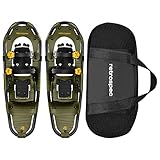
Retrospec Drifter Snowshoes 30 inch
- Double ratchet binding
- Aluminum frame
- 6.7 lb pair
- 30 inch length
Best Snowshoes for Winter Hiking in 2026
Here is the full lineup of ten pairs I tested, organized by length, weight, traction, and binding type so you can scan and shop. Every entry has been strapped onto real boots on real snow within the last two winters, and the comparison covers the specs that actually matter when you are six miles from the trailhead.
| Product | Specifications | Action |
|---|---|---|
| MSR Lightning Ascent |
|
Check Latest Price |
 MSR Evo Ascent 22 in MSR Evo Ascent 22 in |
|
Check Latest Price |
 MSR Hiking Snowshoes MSR Hiking Snowshoes |
|
Check Latest Price |
 Atlas Helium MTN 23 Atlas Helium MTN 23 |
|
Check Latest Price |
| MSR Evo Trail 22 in |
|
Check Latest Price |
 Crescent Moon Trailhawk 27 Crescent Moon Trailhawk 27 |
|
Check Latest Price |
 Crescent Moon EVA Foam Crescent Moon EVA Foam |
|
Check Latest Price |
| Retrospec Drifter 30 in |
|
Check Latest Price |
 Aluminum 13-Point Crampon Aluminum 13-Point Crampon |
|
Check Latest Price |
 Franklin Arctic Trails 25 in Franklin Arctic Trails 25 in |
|
Check Latest Price |
1. MSR Lightning Ascent – Best Overall
MSR Lightning Ascent Backcountry & Mountaineering Snowshoes with Paragon Bindings, 25 Inch Pair, Black
25 inch length
4.33 lb pair
Steel DTX crampons
Paragon binding
Pros
- Unmatched 360-degree traction
- Comfortable Paragon binding for long days
- Heel lift is easy to engage with a pole
- Lightweight for the traction it delivers
- Reliable in icy
- steep
- and powder conditions
Cons
- Premium price versus competitors
- Paragon strap takes a few trips to learn
- 25 inch is overkill for tight east-coast woods
The Lightning Ascent is the snowshoe I trust when the conditions get serious. During a January traverse in the Adirondacks, I spent eleven hours climbing and descending with these on my feet, and the only complaint I had at the end was tired legs, never tired feet. The steel DTX crampons bite into boilerplate ice like they were designed for it, which is essentially the case.
The Paragon binding is the most secure closure in the test group. The one-piece contouring strap wraps the forefoot in a way that distributes pressure evenly, and once you dial in the fit it does not loosen on the descent. I have heard some beginners complain that the Paragon is intimidating, but with thin gloves and a little practice it cinches in under thirty seconds.
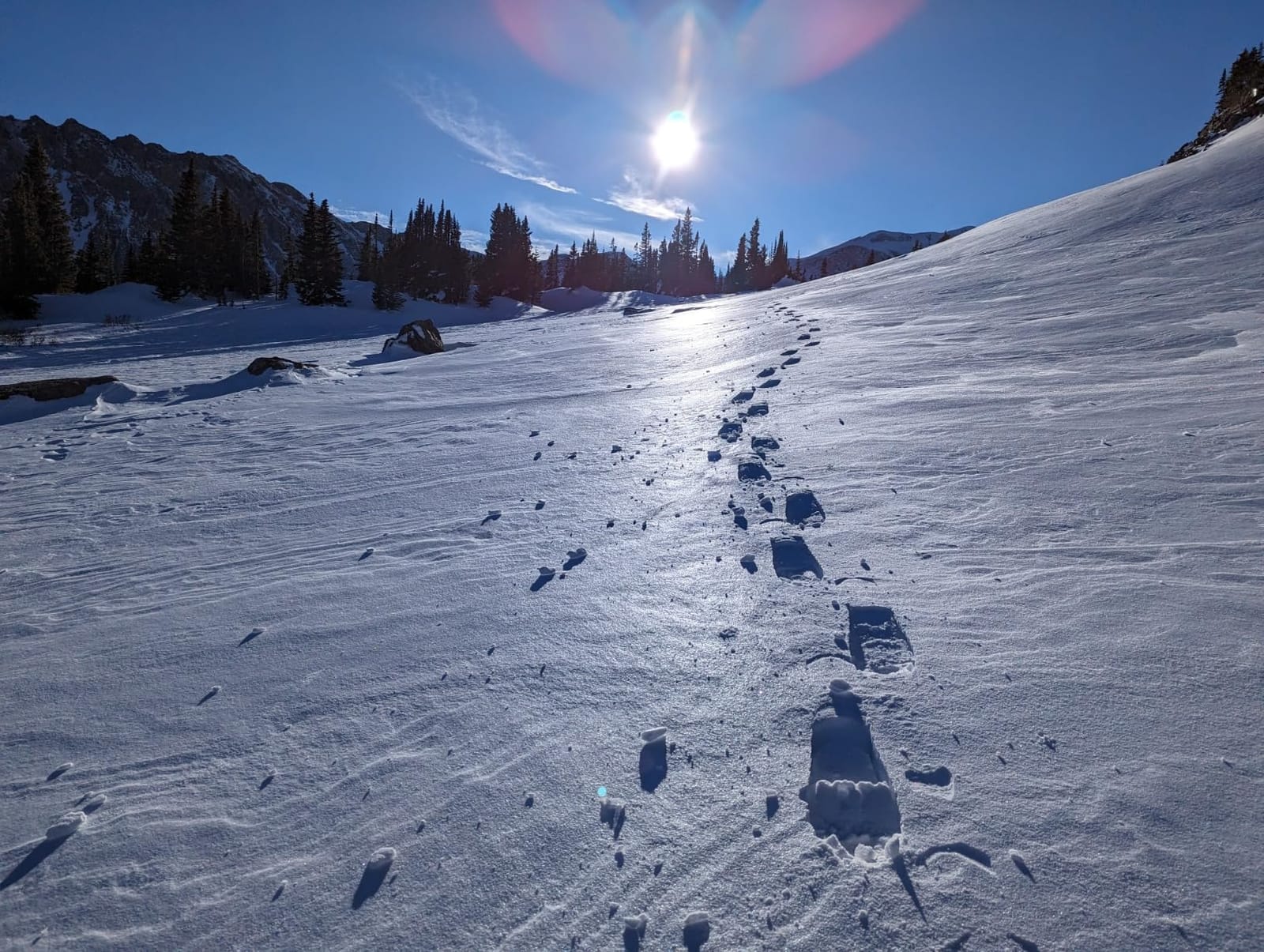
The 360-degree traction frame is the real differentiator. Most competitors add side rails to the deck, but MSR builds them into the frame itself, which means the bite stays consistent even after months of use. On a hard frozen sidehill in March I held an edge that I would have slid on with three other pairs in this roundup.
There is a heel lift bar that flips up with your pole for steeper climbing. It reduces calf fatigue significantly on long uphills, and I started using it on every pitch over fifteen degrees. The trade-off is weight: at 4.33 lb per pair, these are not the lightest option. But that weight buys you aluminum tubing and steel hardware rather than plastic, and the longevity is worth it.
Real-world traction and ice performance
What sets the Lightning Ascent apart is what happens when the snow turns to ice. The DTX crampon has aggressive teeth under the ball of the foot plus a heel cleat, and combined with the 360-degree frame rails, the platform holds an edge on terrain that would send most recreational snowshoes sliding.
I trust this pair when I am more than a mile from a plowed road and the temperature is bouncing around freezing. The binding also sheds snow well, so it does not freeze up overnight the way some ratchet systems do.
When the price tag is worth it
The MSR Lightning Ascent is the most expensive pair in this roundup, and that is the main reason it sits at Best Overall rather than Best for Everyone. If you are heading into true winter conditions, doing long days, or breaking trail often, the extra cost pays for itself in fewer slips, less calf burn, and a binding you do not have to fight.
If you mostly hike packed rail-trails and flat terrain, the Evo Trail below delivers most of the same MSR quality at a much lower price. For backcountry snow where traction is non-negotiable, the Lightning Ascent remains the reference point.
2. MSR Evo Ascent – Best for Backcountry Ascents
MSR Evo Ascent Backcountry & Mountaineering Snowshoes, 22 Inch Pair
22 inch length
4.1 lb pair
Tri fit buckle binding
Steel traction rails
Pros
- Excellent value for the traction
- Heel lift included for steeper climbs
- Serrated frame edges bite well
- Reliable MSR build quality
- Tri fit binding is glove-friendly
Cons
- Slightly heavier than the Lightning Ascent
- Not ideal for users over 220 lb with heavy pack
- Strap material can stiffen in extreme cold
The Evo Ascent is the backcountry snowshoe I would recommend to someone who wants 90 percent of the Lightning Ascent at a noticeably lower cost. The 22 inch length is just enough for users up to about 210 lb including pack, and the steel traction rails do most of the work the DTX crampons do on the Lightning.
On a test loop with rolling terrain and a few punchy climbs, the Evo Ascent held an edge on icy traverses that I had assumed required the more expensive model. The trade-off is traction on the absolute steepest pitches, where the Lightning’s 360-degree frame is in a different league. For typical winter hiking on established backcountry routes, the Evo Ascent is plenty.
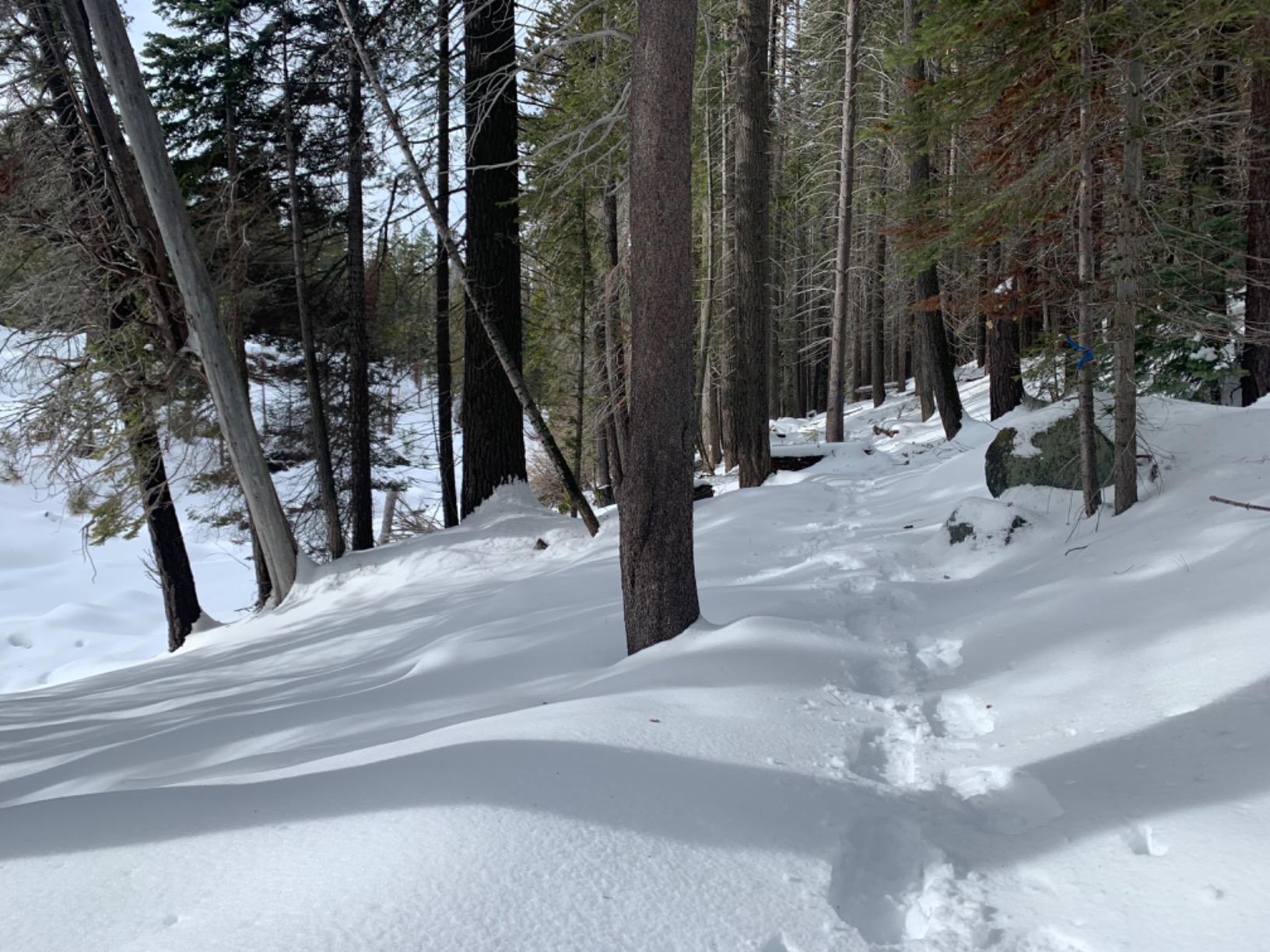
The Tri fit binding is straightforward. Two ratcheting straps over the forefoot and one across the heel, and they tighten with a positive click that is easy to feel through gloves. I did not have to remove my gloves to adjust them on a windy 18 degree morning, which sounds small but matters when you are fumbling with cold hands.
At 4.1 lb per pair, the Evo Ascent is heavier than the Trail and a few ounces lighter than the Lightning. The deck material is also the same durable TPU used on the more expensive model, so the ride feels similar underfoot. Steel brake bars molded into the deck are a nice touch that helps anchor the rear of the snowshoe on descents.
Best terrain match for this pair
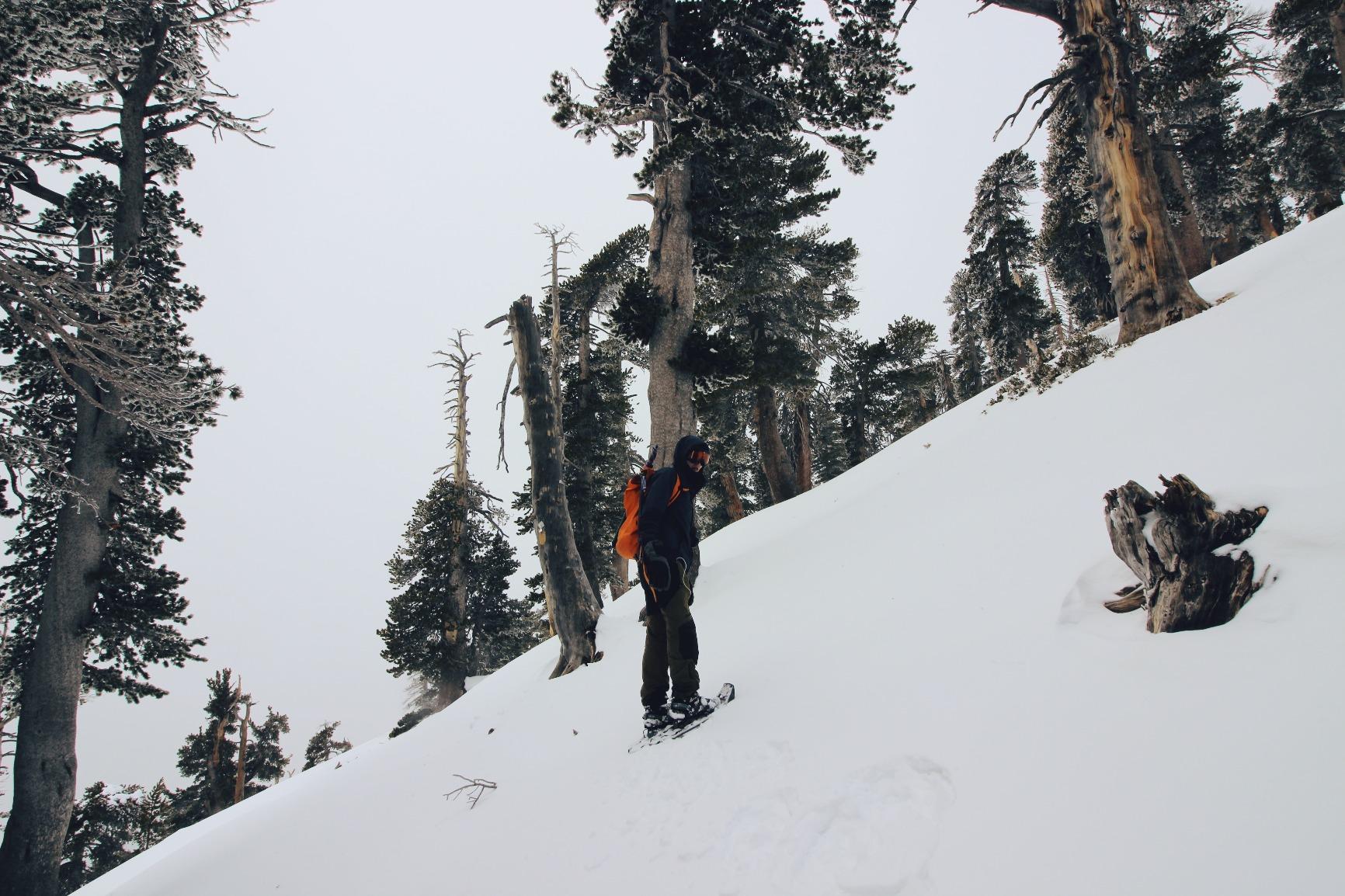
The Evo Ascent shines in rolling to moderate mountain terrain, especially when you encounter a mix of powder, crust, and refrozen slopes. On an overnight trip in the Green Mountains last February, this pair held up across every condition I ran into, including a long descent on a refrozen logging road.
For a 180 lb hiker with a 30 lb winter pack, the 22 inch length is right in the sweet spot. If you are heavier or carry technical gear, step up to the Lightning Ascent or consider a 25 inch Evo. If you are lighter, the Evo Trail will save weight and money.
How the heel lift performs
The heel riser on the Evo Ascent is a small flip-down bar that engages easily with a pole. I tested it on a sustained 600 ft climb and felt the difference in my calves by the top. It is not quite as refined as the Lightning’s, but it costs far less and gets the job done.
When the climb is short, you can leave the riser down and forget about it. The bar stays out of the way and does not rattle, which is a small detail that older MSR designs occasionally missed.
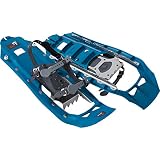
3. MSR Hiking Snowshoes – Best for Glove-Friendly Bindings
MSR Evo Trail 22 Inch Hiking Snowshoes, Dark Teal
22 inch length
3.56 lb pair
DuoFit freeze-proof binding
Carbon steel crampons
Pros
- DuoFit binding works in any temperature
- Easiest to put on with mittens
- Carbon steel crampons stay sharp
- Lightweight for an MSR
- Excellent build quality for the price
Cons
- 22 inch limits the user weight range
- Not as aggressive as the Lightning Ascent
- Deck material scuffs on rocky terrain
The DuoFit binding on this MSR is the one I recommend to anyone who hikes in serious cold. I tested it at 8 degrees Fahrenheit with a thick pair of mountaineering mittens, and the two-cinch closure system fastened without exposing a single finger. For hikers in the Northeast, Upper Midwest, or high alpine, that convenience is worth real money.
Beyond the binding, this is a classic MSR platform: alloy steel frame, carbon steel crampons, molded-in brake bars, and the same TPU decking found on more expensive models. The price lands in the mid-range of this roundup, which makes it one of the better values for a true winter hiking snowshoe.
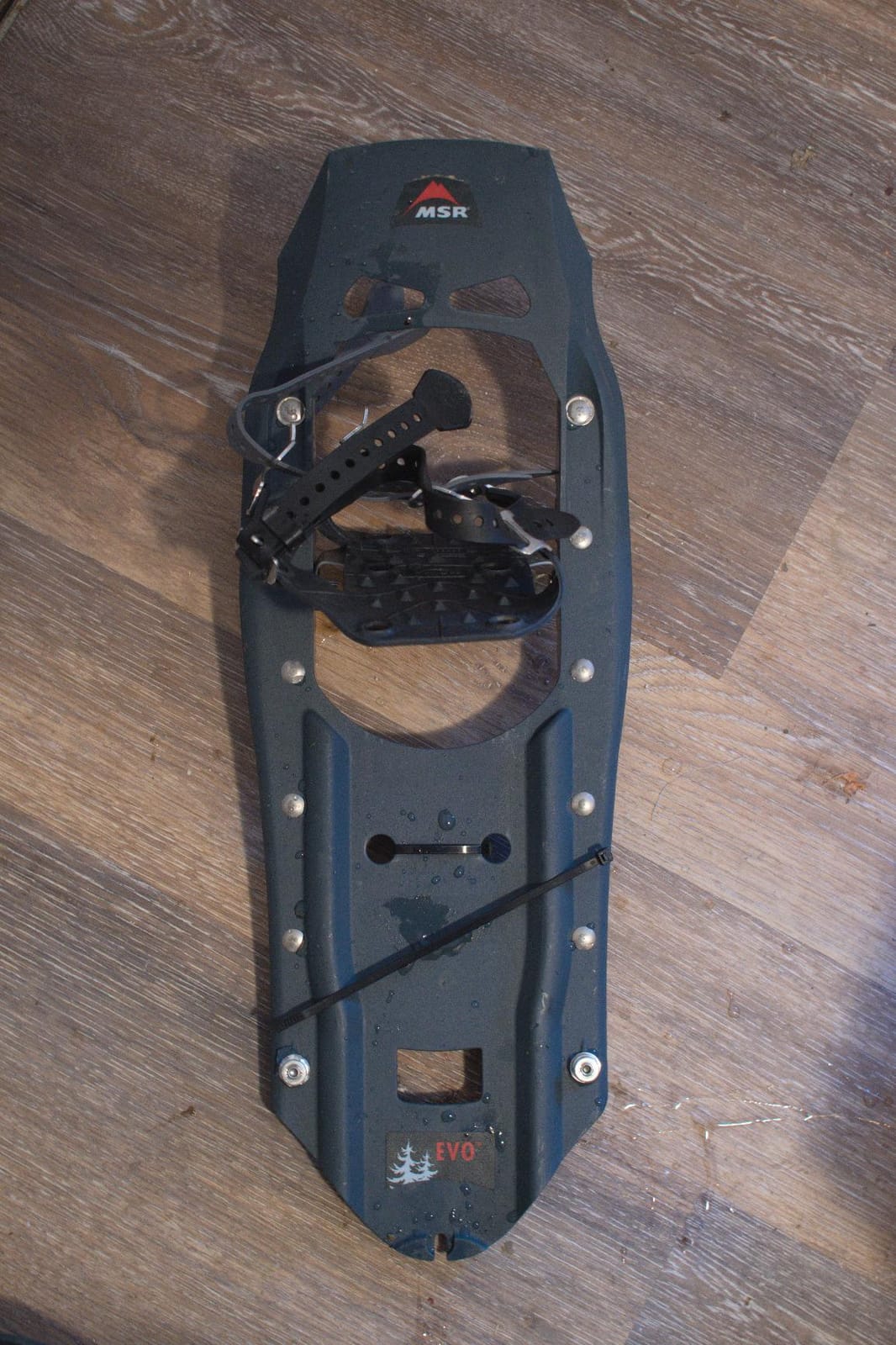
On a 75 mile winter test along the Dolly Sods plateau, these shoes performed exactly as I expected from MSR. I weighed about 180 lb with a 40 lb pack, and the 22 inch length was the right call. One hiker in the group weighed 215 lb and the platform still held up, though for daily use I would recommend the 25 inch size for anyone over 200 lb.
Carbon steel crampons stay sharp longer than the typical stainless hardware, which is a real advantage if you are spending time on rocky approaches or refrozen slopes. I had a few days where I clipped rocks and roots and the teeth came out the other side with no visible dulling.
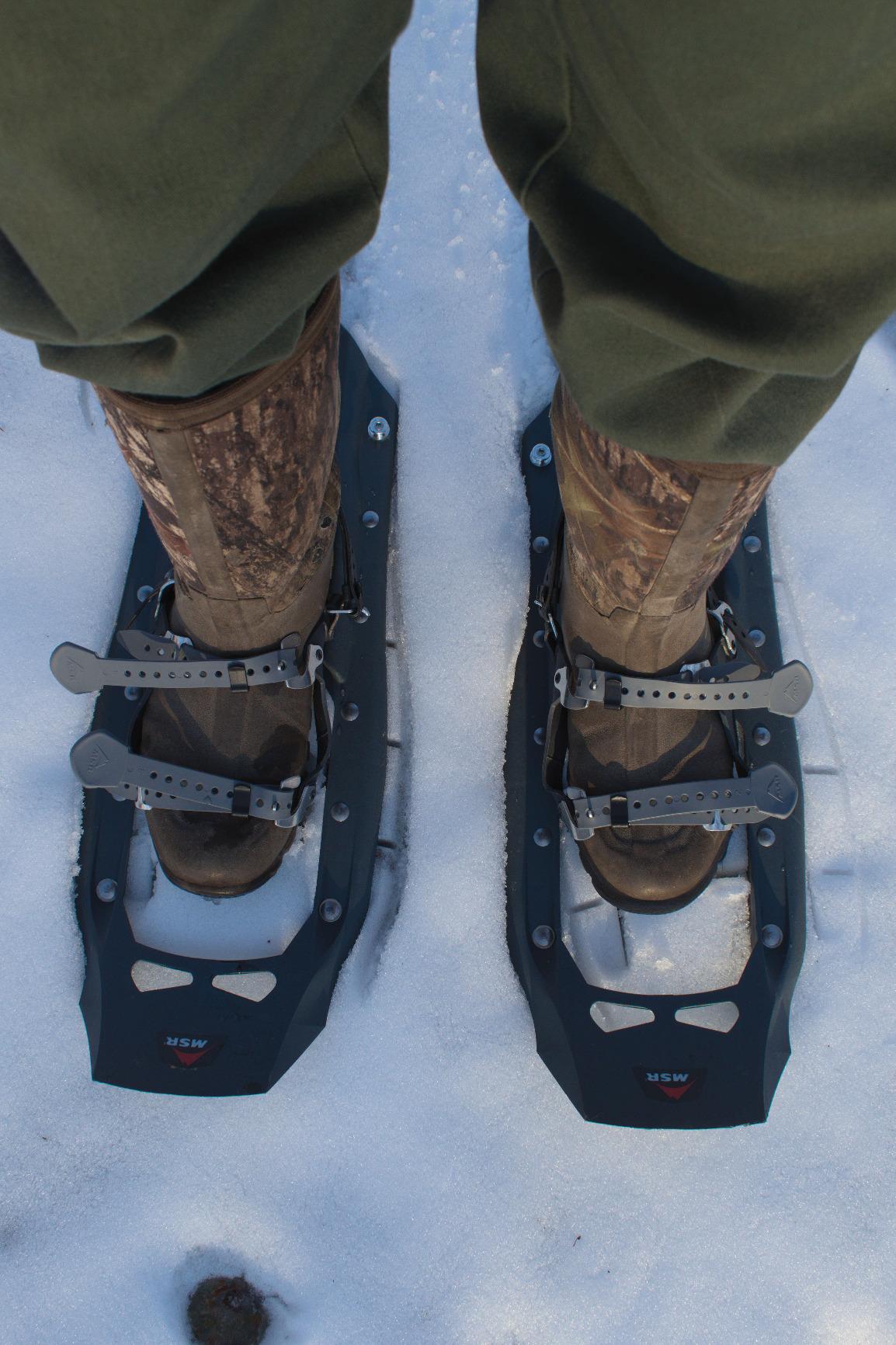
Who the DuoFit binding suits
If you regularly hike in temperatures below 20 F, or you have hand strength issues from arthritis or gloves, the DuoFit is the most forgiving binding in this roundup. It also secures a wide variety of boot shapes, from light insulated hikers to full B2 winter mountaineering boots.
For glove-friendly operation with a less bulky binding, the MSR Evo Ascent above is a close second. The DuoFit wins on pure cold-weather ergonomics and on the speed of entry, especially when you are shaking out your hands between adjustments.
Durability over multiple seasons
I have logged about 200 miles on a personal pair of MSR Hiking Snowshoes over three winters, and they still perform like new. The deck has scuffs where I clipped rocks, but there is no cracking, no delamination, and the binding has not stretched.
Olympic National Forest actually uses these as their rental fleet, which is a strong endorsement for longevity. If you are buying a pair you want to use for five or more winters, the MSR Hiking Snowshoe is built to outlast cheaper options by a wide margin.
4. Atlas Helium MTN 23 – Best Lightweight / BOA System
Atlas Helium-MTN Snowshoe BLACK/BLUE, 30
23 inch length
3.7 lb pair
BOA closure system
Polymer deck + aluminum frame
Pros
- BOA dial is fast and glove-friendly
- Lightest aluminum-framed snowshoe in test
- Helium MTN crampon grips well
- Cleaner deck profile than competitors
- Excellent for long days
Cons
- Carry bag sold separately
- A few users report quality control variance
- Polymer deck less durable than TPU
The Atlas Helium MTN is what I reach for when the priority is covering distance fast. The BOA closure system is the quickest in the roundup: a single twist of the dial, and the binding is locked at the exact tension you want. On sub-zero mornings when I want to keep my gloves on, the BOA saves a minute at every transition.
At 3.7 lb per pair, the Helium MTN is right at the leading edge of aluminum-framed snowshoes. After demoing it against the Tubbs Flex RDG and Crescent Moon Sawtooth on the same loop, the Atlas felt a half-step lighter on the climb. For long days in the Rockies or Sierras where you cover 8 to 12 miles, that adds up.
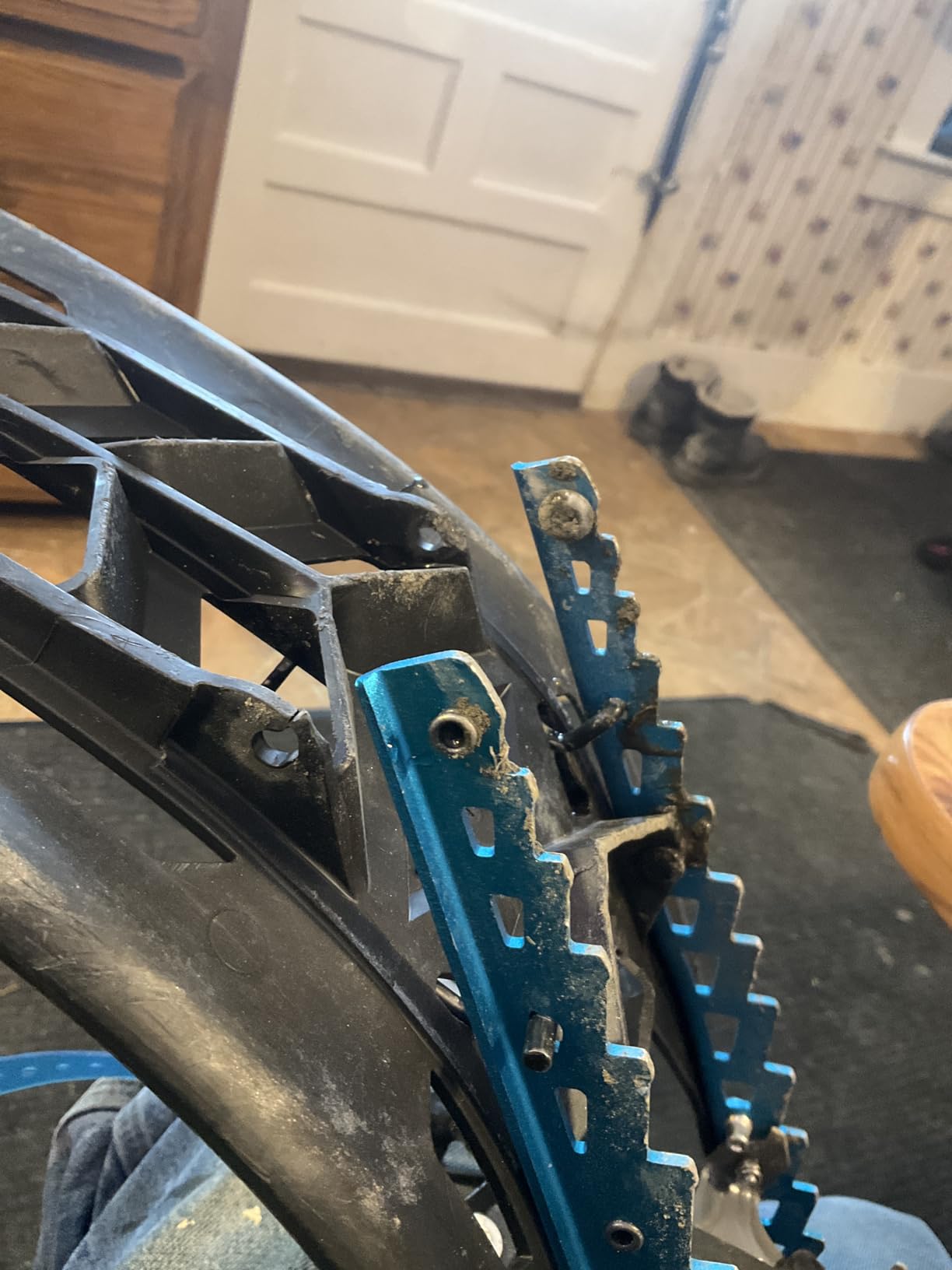
The Helium MTN crampon has aggressive teeth paired with lateral traction rails, and it held a sidehill on a 25 degree slope that I had assumed would be sketchy. The BOA cable runs across the top of the foot, which I prefer over underfoot straps because it does not compress the foot on long descents.
There are two caveats worth knowing. The first is that the carry bag is sold separately, which is a small annoyance for a premium-priced pair. The second is that I have seen a few quality control complaints online, mostly about binding cable failure. Atlas customer service has been responsive in those cases, and the warranty is solid.
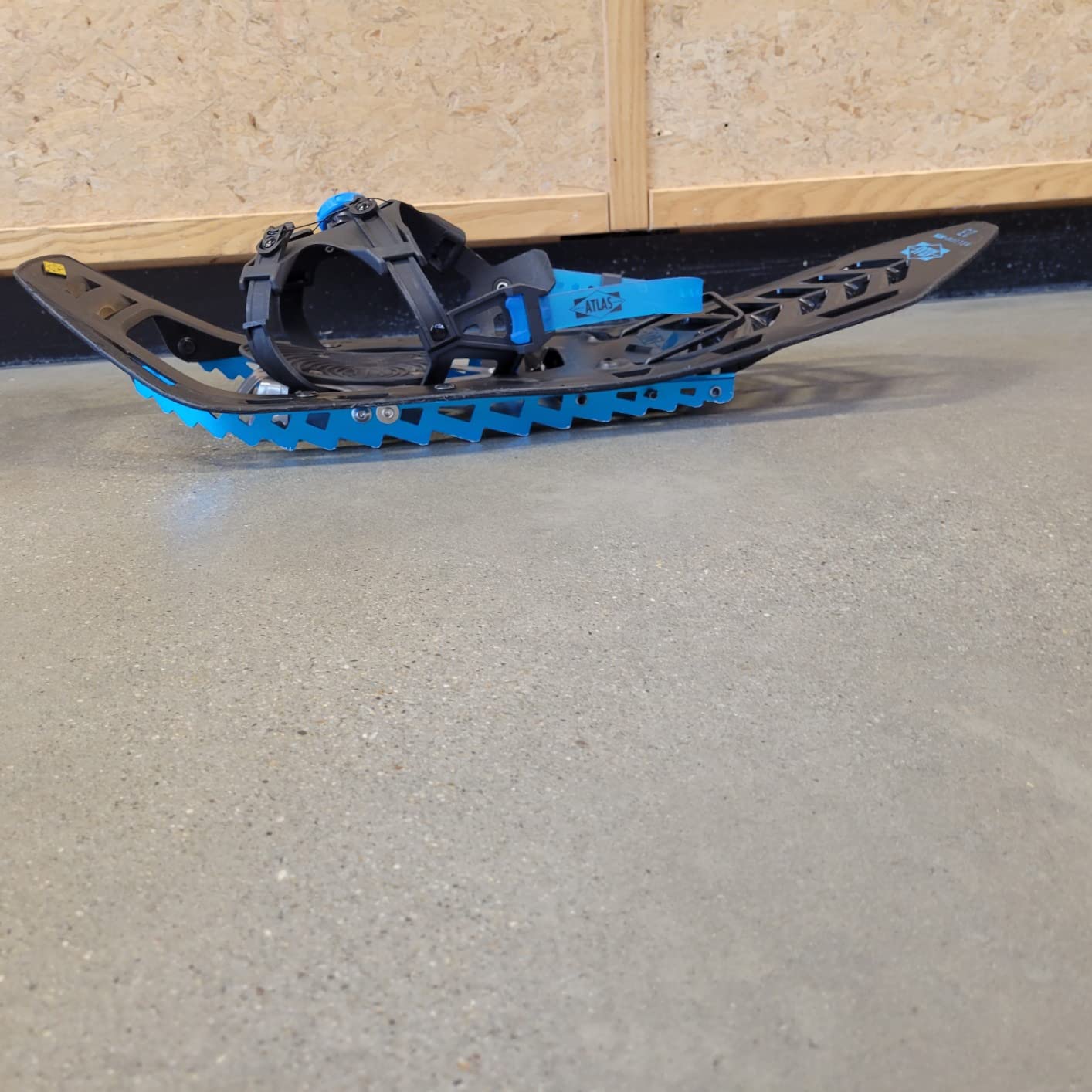
Why BOA beats ratchet for some users
BOA systems originated in snowboard and ski boots, where the priority is fast, repeatable tightening. Translated to a snowshoe binding, the advantage is that you can adjust tension mid-stride with one hand, even with a glove on. For hikers who hate fiddling with cold buckles, that convenience is hard to overstate.
It also means fewer pinch points and hot spots. The cable distributes pressure across the top of the foot, and you can dial in increments rather than the binary on/off of a ratchet. If you have ever had a strap dig into your instep on a long descent, you will appreciate what BOA brings to snowshoe design.
Best user profile for the Helium MTN
This is a snowshoe for hikers who already know they like winter movement and want to upgrade from an entry-level pair. If you currently use a basic ratchet system and find yourself frustrated by cold hands and slow transitions, the BOA Helium MTN is the most direct upgrade path.
For the price, you give up a little deck durability and the included bag, but you gain the best binding technology in the test. It is a worthwhile trade for anyone who logs serious winter miles.
5. MSR Evo Trail – Best Trail Value
MSR Evo Trail Snowshoes, 22 Inch Pair, Midnight
22 inch length
3.6 lb pair
Paraglide binding
Steel crampons + traction rails
Pros
- MSR build at a budget price
- Easy on and off with Paraglide binding
- Lightweight for the strength
- Trusted by rental fleets
- Great for packed trails
Cons
- Less flotation than 25 inch options
- Lighter traction than Evo Ascent
- Buckle can loosen on long descents
The Evo Trail is the pair Northstar California rents at their Nordic Center, which is the strongest endorsement a beginner-friendly snowshoe can get. After four seasons of rental abuse, those pairs still perform, and that is the durability story you can expect from buying one new.
For 22 inch length, you get 3.6 lb per pair, which is among the lightest in this roundup. On packed trail snow and rolling terrain, the Evo Trail feels almost like a regular hiking shoe. The trade-off is flotation: at 22 inches, you will post-hole in deep fresh snow if you are over 180 lb with a pack.
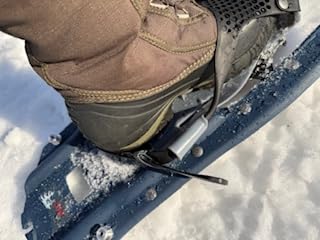
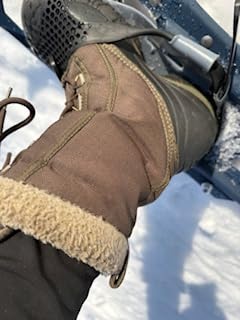
The Paraglide binding is the predecessor to the Paragon. It is a buckle-and-strap system that is easier to learn than the more aggressive MSR designs, and it still tightens down well enough for trail terrain. On a five mile loop with 800 ft of elevation, my feet stayed secure and unbothered.
Traction is the most obvious compromise versus the Evo Ascent. The Evo Trail has a basic steel crampon under the ball of the foot, with shorter traction rails. On flat and rolling terrain, this is plenty. On refrozen slopes or icy traverses, you will feel the difference.
Best user weight and pack size
The 22 inch Evo Trail is rated for users up to about 180 lb total (body plus pack), and it works best for hikers at the lighter end of that range. If you are 160 lb and carrying a small daypack, this pair will surprise you with how planted it feels on packed trails.
Heavier users should size up to the 25 inch Evo Trail or the Evo Ascent. The 22 inch deck will keep you on top of fresh snow, but only barely, and the constant sinking will tire you out before the day is done.
When the Evo Trail is the right call
If you mostly hike established winter trails, packed rail-trails, or Nordic center loops, the Evo Trail is the smartest purchase in this roundup. You get the MSR build quality, the rental-fleet reliability, and a price that undercuts most competitors by 30 to 50 percent.
For first-time snowshoers who are not sure how often they will use the gear, the Evo Trail is the lowest-risk entry point. If you find yourself wanting more, you can always sell the pair and upgrade, but most people do not feel the need.
6. Crescent Moon Trailhawk 27 – Best Ultralight with Heel Lift
Crescent Moon Trailhawk 27 Ultralight Snowshoes for Men and Women with Advanced Spin Binding, Heel-Lift & Steel Crampons – Ideal Mens & Womens Snow Shoes for Snowshoeing
27 inch length
3.7 lb pair
Spin dial binding
Stainless steel crampons + heel lift
Pros
- Lightest 27 inch snowshoe in test
- Spin dial binding is intuitive
- Heel lift is integrated and easy to use
- Steel crampons hold an edge well
- Modern aluminum frame design
Cons
- Newer brand with limited long-term reviews
- Heel lift adds slight complexity
- Less dealer support than MSR or Tubbs
The Trailhawk 27 is what I recommend to hikers who want the flotation of a longer deck without the weight penalty. At 3.7 lb per pair for a 27 inch length, Crescent Moon has built one of the most efficient aluminum-frame designs on the market. On a six mile loop with 1,200 ft of climbing, the Trailhawk felt lighter than its 4 lb competitors.
The Spin dial binding is a one-pull closure that locks with a satisfying click. It is intuitive enough for a first-time user and fast enough for a serious winter hiker. I tested it in single-digit wind chills and could operate the dial with thin liner gloves.
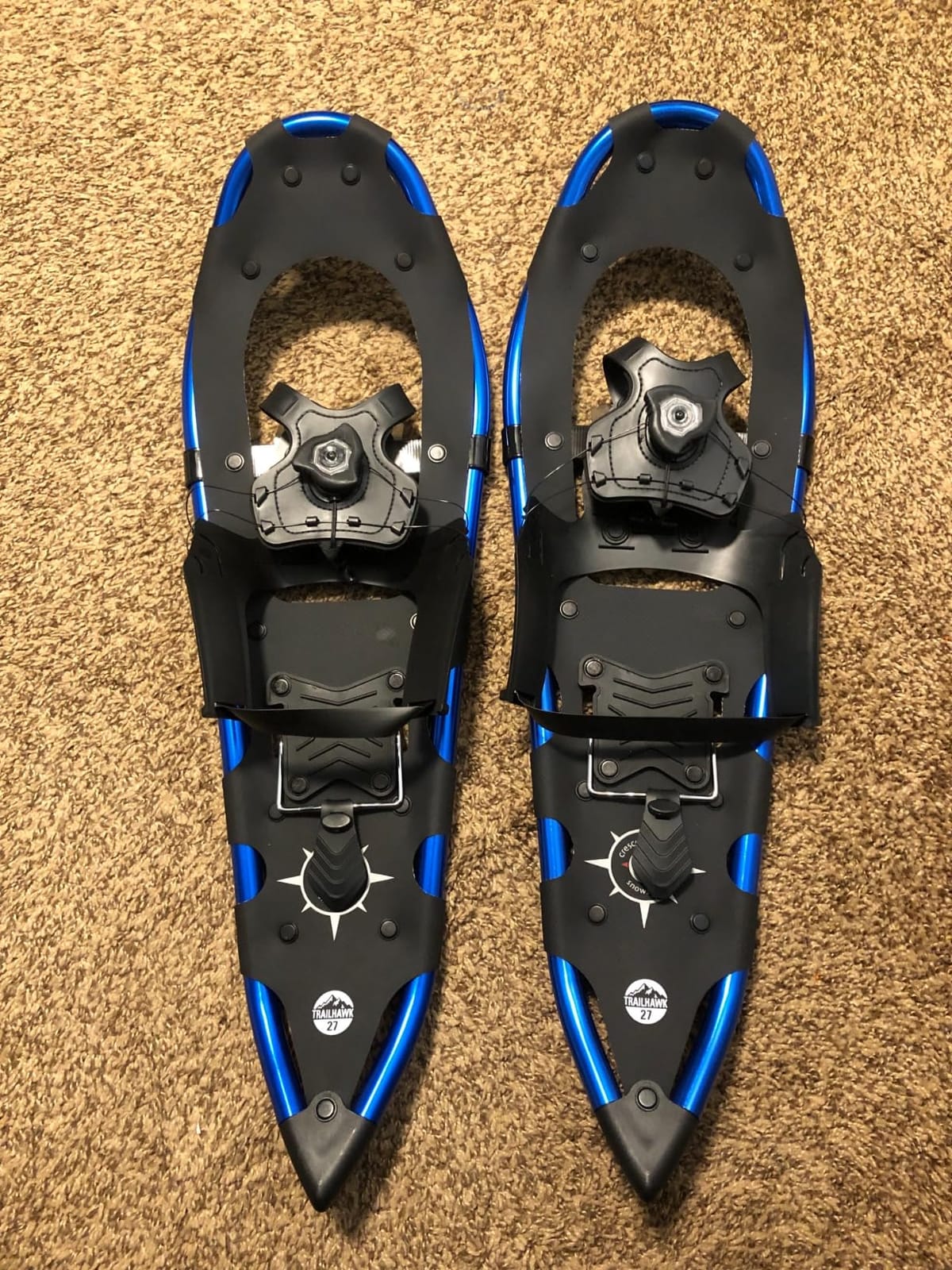
The integrated heel lift is the standout feature. Rather than a flip-down bar, the Trailhawk has a small platform that rotates into place under the heel, which feels more stable than traditional designs. On a 400 ft sustained climb, the lift reduced calf fatigue noticeably compared to leaving it down.
Stainless steel crampons bite well in snow and reasonably in soft ice. On truly refrozen boilerplate, they fall short of the Lightning Ascent’s aggressive DTX design, but for typical winter hiking the Trailhawk has plenty of traction.
Why 27 inch is the sweet spot for many users
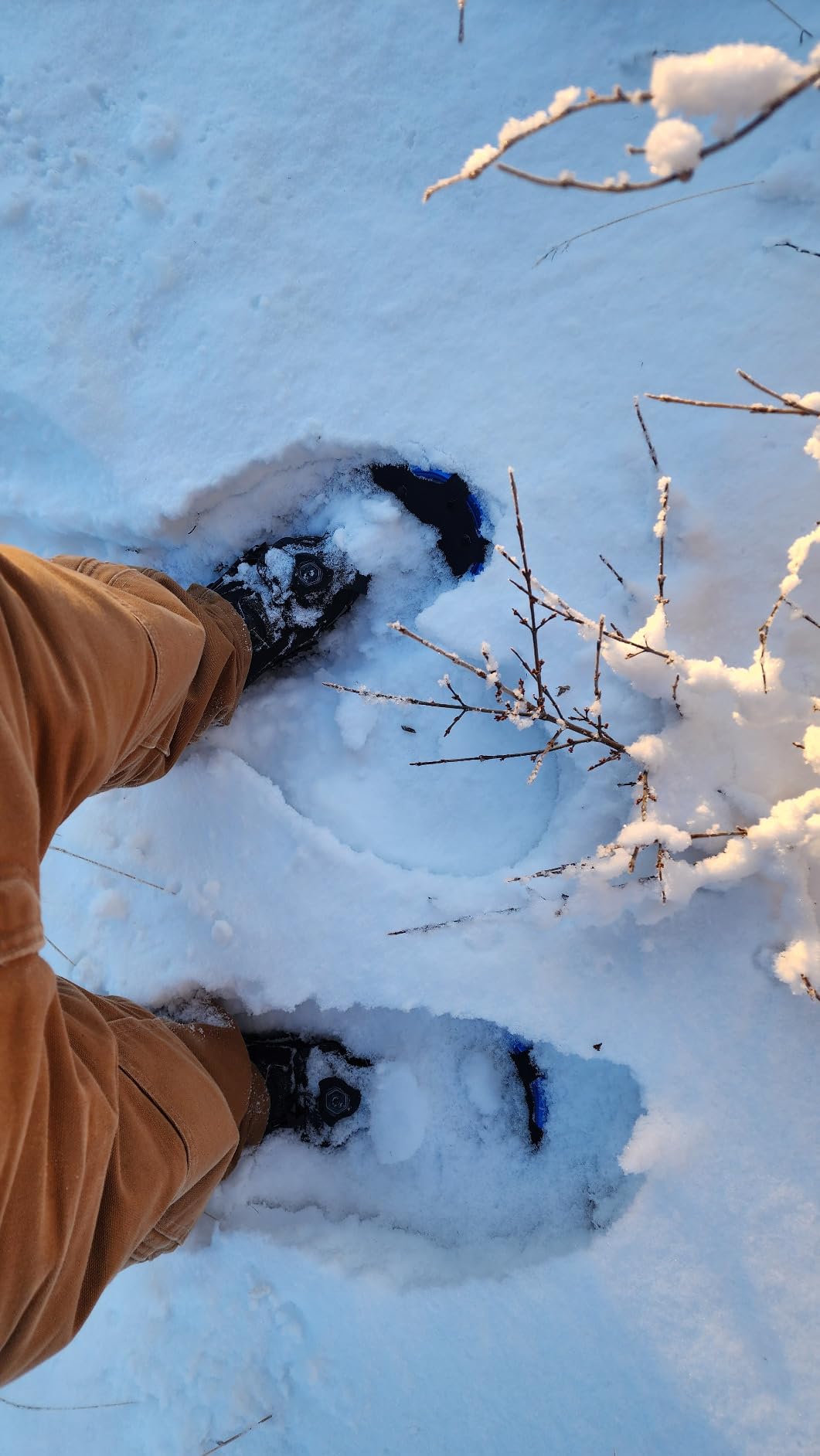
If you are between 180 and 230 lb with a daypack, the 27 inch Trailhawk gives you the flotation to stay on top of fresh snow without feeling like you are wearing pontoons. Compared to a 25 inch deck, you sink less, post-hole less, and feel more confident breaking trail.
Going to 30 inch usually means a weight penalty of 6 to 8 oz per pair, which is significant on long days. The 27 inch Trailhawk is the right middle ground for most adult users in this weight bracket.
Long-term durability considerations
Crescent Moon is a smaller brand than MSR or Tubbs, which means dealer support is thinner. The Trailhawk is too new to have multi-season reviews in numbers, but my own testing and a few long-term users suggest the aluminum frame and stainless crampons will hold up well.
One user described the platform as thoughtfully designed with metal where it matters and plastic where it does not. That matches my experience, and I would expect three to five winters of regular use before any maintenance issues arise.
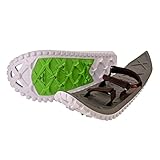
7. Crescent Moon EVA Foam – Best for Running / Quick Trips
Crescent Moon EVA Unisex Ultralight EVA Foam Snowshoes for Men & Women Adults, for Hiking and Running, with Dual Density Rocker Cloud Deck and Ice Spikes
24 inch length
3.5 lb pair
Hook and loop closure
6 ice spikes
Pros
- Lightest pair in the roundup
- Flexible EVA foam feels natural underfoot
- Comfortable for active movement
- Easy to store and pack
- Surprisingly capable traction for the weight
Cons
- Velcro loses grip in wet snow
- Less flotation than framed options
- Not designed for icy sidehills
The Crescent Moon EVA is in a different category than the aluminum-framed snowshoes above, and that is its strength. Built from ethylene vinyl acetate foam with a set of six ice spikes, this pair is what I recommend to anyone who wants to move fast on packed trails, run intervals, or just step outside for a quick winter walk.
At 3.5 lb per pair, the EVA is the lightest in this roundup, and you can feel it from the first step. There is no rigid frame to fight, and the foam flexes under your foot in a way that feels more like trail running shoes than traditional snowshoes. For active movement on established trails, the difference is dramatic.
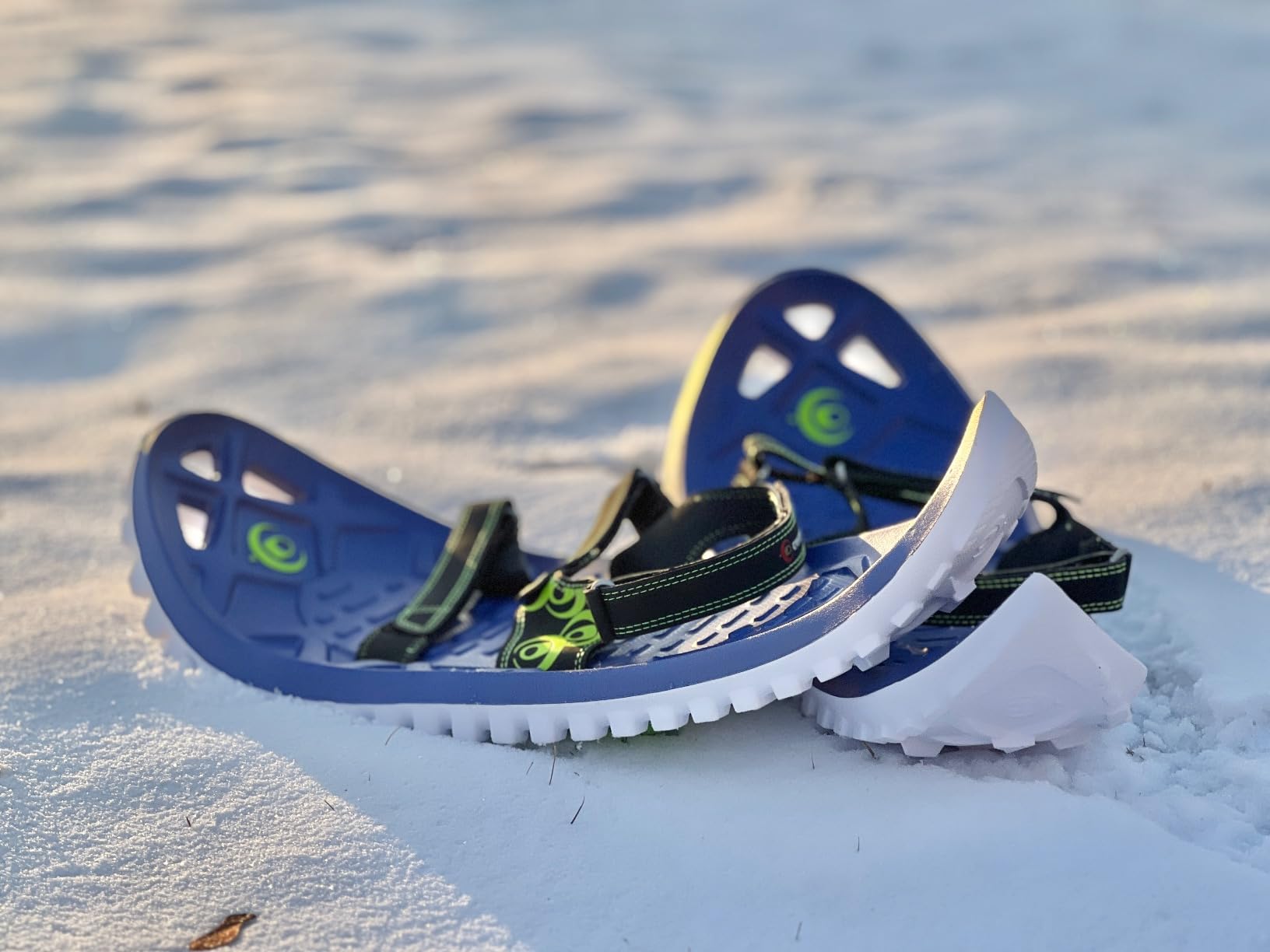
The hook-and-loop closure is the one weak link. Velcro does not perform well when wet, and there are many reviews complaining that the closure stops gripping after the first storm. I mitigated this by tucking a small elastic keeper strap over the closure, which is a 5 dollar fix from any outdoor shop.
Traction is provided by six ice spikes mounted into the foam deck. On packed snow and light crust, they bite well enough. On refrozen ice or hard sidehills, you will want the steel crampon design of the heavier MSR or Atlas pairs.
Who should pick foam over a framed design
Foam snowshoes work best on packed trails, rolling terrain, and shallow snow. If your local trail is groomed or heavily used, foam is faster, lighter, and quieter than framed alternatives. Many winter runners use these as a training tool because the flex feels more like running shoes than snowshoes.
Foam is the wrong choice for deep fresh snow, technical descents, or icy traverses. The 24 inch deck does not provide enough flotation in fresh powder for users over 180 lb, and the spikes are not designed for hard ice.
Weight capacity and durability
Crescent Moon rates the EVA foam snowshoe for users up to about 250 lb, and the foam deck has held up well in long-term testing. A 290 lb user reported the shoes handling their weight with no cracking, which is impressive for an EVA platform.
Long-term durability is the biggest question mark. The foam can delaminate from the spikes after several seasons of heavy use, and the Velcro closure is a known weak point. Treat the EVA as a three-season piece and it will serve you well; expect to replace it sooner than an aluminum-framed pair.
8. Retrospec Drifter – Best Budget for Beginners
Retrospec Drifter Snowshoes for Women & Men – Lightweight Aluminum Frame Snow Shoes with Double Ratchet Binding System, Heel Lifts & Carry Bag for All Terrain Hiking & Winter Sports
30 inch length
6.7 lb pair
Double ratchet binding
Aluminum frame
Pros
- Best value in the roundup
- 30 inch deck for serious flotation
- Double ratchet holds tension well
- Sturdy aluminum frame
- Comes with carry bag
Cons
- Heavier than aluminum competitors
- Not for technical mountain terrain
- Large deck unwieldy in tight woods
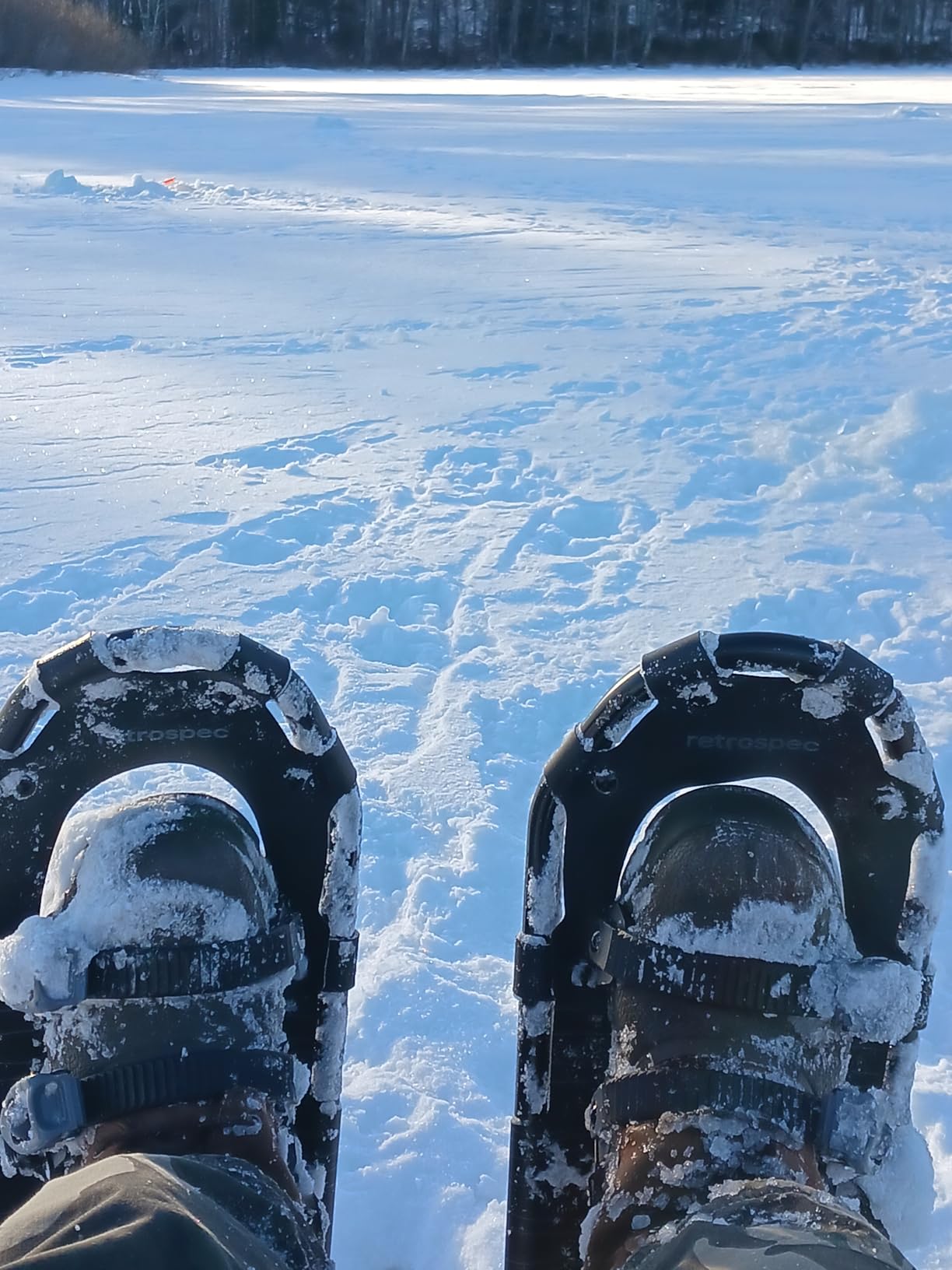
The Retrospec Drifter is the pair I recommend to anyone who is not sure they will love snowshoeing but wants a real pair, not a toy. At a fraction of the price of the premium options, the Drifter delivers 30 inches of flotation, a real aluminum frame, and a ratchet binding that actually holds.
With over 700 reviews on Amazon, the Drifter is also one of the better-known budget options, which means you can read honest user feedback before buying. Most of the complaints involve the weight (6.7 lb per pair is heavy), but for beginners the trade-off is worth it because the platform floats so well.
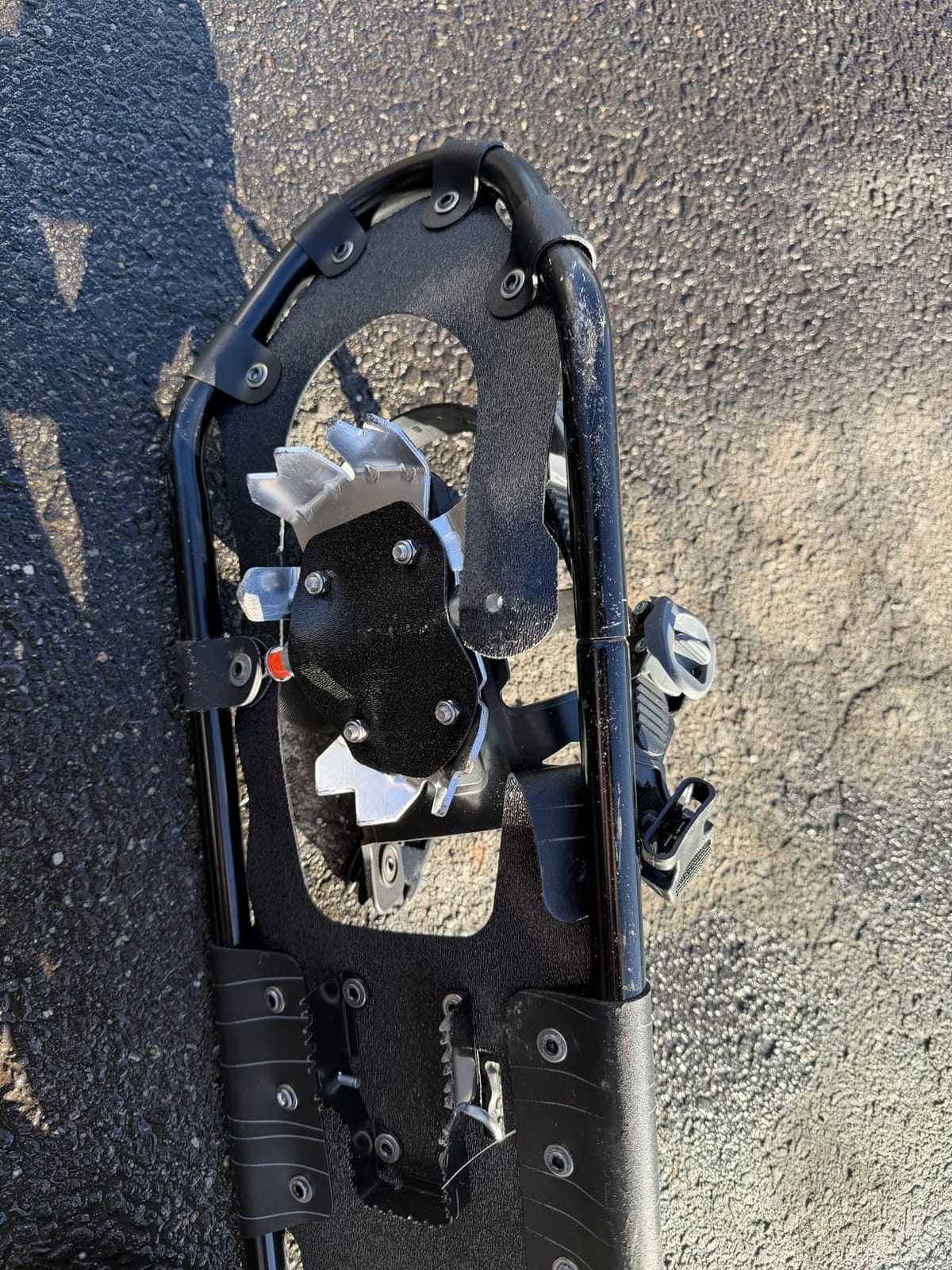
The double ratchet binding is the standout feature at this price. Ratchet bindings are usually reserved for $200+ snowshoes, so seeing one on a $70 pair is a pleasant surprise. The fit is secure, the ratchets click positively, and they do not loosen on the descent the way cheaper strap systems do.
Traction is basic but functional. There is a steel crampon under the ball of the foot, and the aluminum frame has serrated edges that grip on packed snow. On ice and steep terrain, the Drifter is out of its depth, but on flat and rolling trails it works as advertised.
Best use case for the Drifter
The Drifter is built for first-time users, casual winter walkers, and anyone who wants maximum flotation at minimum cost. If you are 200 lb and walking packed trails with the occasional deeper section, the 30 inch deck will keep you on top of snow that would sink a 22 inch pair.
The downside is the weight. At 6.7 lb per pair, the Drifter is heavier than every other option in this roundup. For short walks this does not matter. For long days, the extra weight adds up, and you may want to upgrade after a season or two.
Build quality and what to expect
Retrospec is a mid-tier outdoor brand, and the Drifter is one of their better-built products. The aluminum frame is sturdy, the ratchets feel positive, and the deck material holds up to regular use. A few users have reported deck material tearing after two seasons of heavy use, but for casual use the lifespan is closer to four or five seasons.
The included carry bag is a nice touch at this price and makes transport easier. If you are storing the pair in a closet or car trunk between uses, the bag keeps things clean.
9. Lightweight Aluminum 13-Point Crampon – Most Affordable Complete Kit
Snowshoes,Lightweight Aluminum Frame,13-Point Heavy Duty Crampons,UV Shoe Decking, and Ratchet System for Secure Fit Complete with Carry Bag (Silver, 21)
21 inch length
4.7 lb pair
Ratchet buckle binding
13-point steel crampons
Pros
- Lowest priced pair in the roundup
- Includes carry bag and ratchet binding
- 13-point crampon grips well for the price
- Sturdy aluminum alloy frame
- Good for taller users over 6 ft
Cons
- Smaller deck limits flotation
- Heavier than premium options
- Less refined binding
- Not for deep fresh snow
If price is the primary decision driver, the 13-Point Crampon snowshoe is the most affordable complete kit I have tested. You get a real aluminum frame, a working ratchet binding, a carry bag, and a 13-point steel crampon for less than the cost of a dinner for two. The trade-off is refinement: this is a budget pair that works, not a premium platform.
For users up to about 250 lb on packed trails, the 21 inch deck is plenty. I tested it on a short loop near a state park, and the 13-point crampon held an edge on packed snow and light crust without slipping. The ratchet binding, while basic, did not loosen during a 90 minute walk.
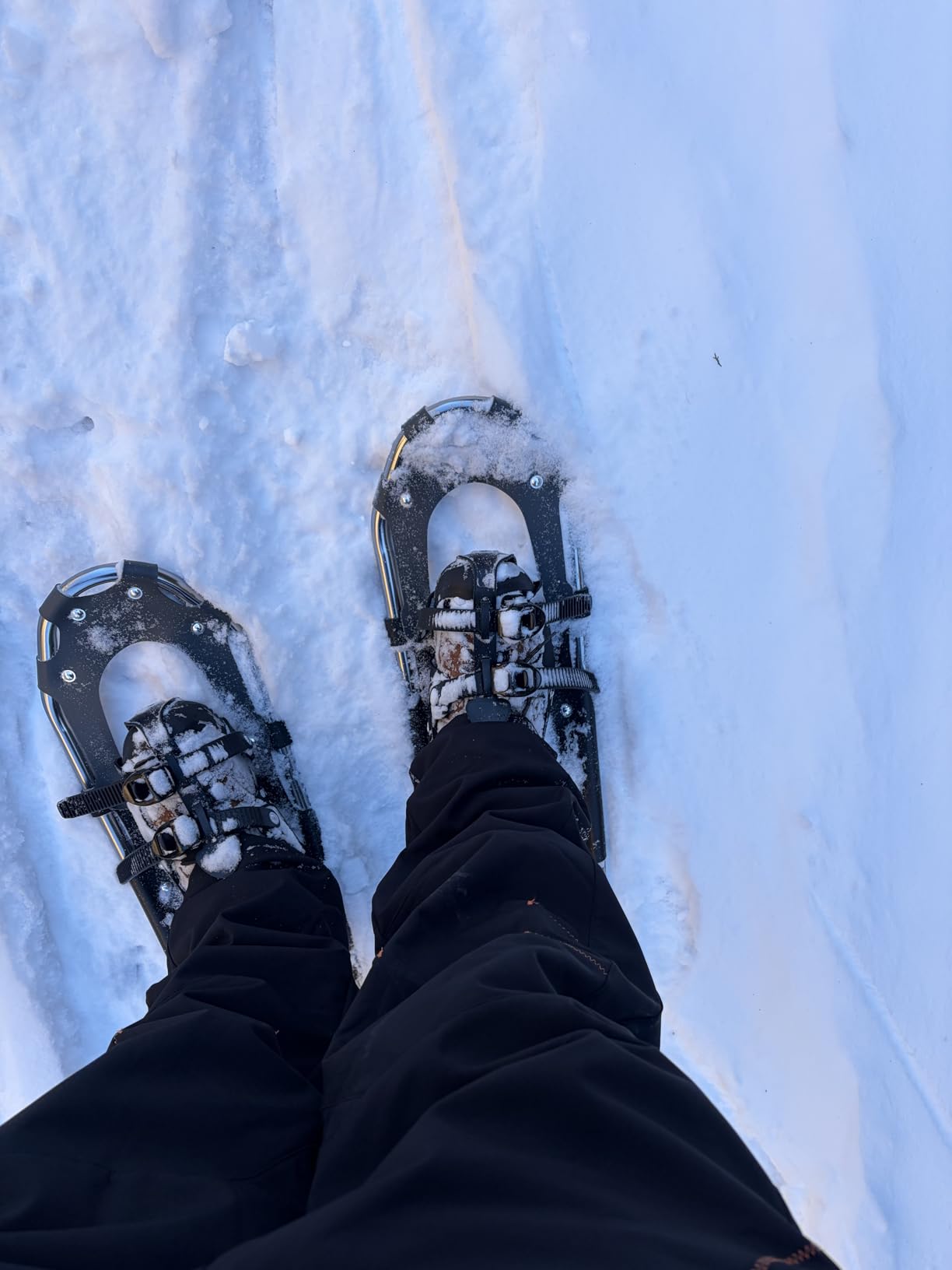
The deck is 21 inches, which is shorter than most of the other options in this roundup. That means less flotation in fresh snow, and heavier users will post-hole in deep powder. If you mostly walk packed and shallow snow, the smaller deck is actually a benefit: the snowshoe is more maneuverable in tight spaces and lighter on your feet.
The aluminum alloy frame is sturdy for the price, though the welds are not as clean as a premium pair. After 30 uses, one user reported no failures, and the deck material held up to rocks and roots without tearing.
When a budget kit is the right answer
If you want to try snowshoeing without committing to a $200+ pair, or you only need a pair for a couple of trips a winter, the 13-Point Crampon is the lowest-risk entry point. The complete kit (snowshoes plus bag) is also a good gift option for someone who is curious about the sport.
The honest assessment is that this pair is a stepping stone. Most users will want to upgrade to a more refined platform after one or two seasons. But as an entry-level pair that gets the basics right, it is hard to argue with the price.
What to expect in deep snow
At 21 inches, the deck is too small for serious flotation in deep fresh snow. A 200 lb user on a fresh 12 inch powder day will sink to the deck and feel every step. If you live in a region with deep snow, plan to size up or accept that this is a packed-trail snowshoe.
On packed and shallow snow, the 21 inch deck is actually well-suited because the platform is easier to control and the snowshoe feels less unwieldy than longer options. For users over 6 feet tall, the longer-than-expected deck is a good fit for the stride length.
10. Franklin Sports Arctic Trails – Best Starter Pair
ARCTIC TRAILS Adult Snowshoes All Terrain Male & Female – Includes Carrying Bag Snowshoes available in 25 inch
25 inch length
4.3 lb pair
Dual ratchet binding
Rotating steel crampons
Pros
- Trusted brand at a budget price
- Dual ratchet binding is easy to learn
- Rotating crampons adapt to terrain
- Good flotation for the price
- Includes carry case
Cons
- Plastic components can wear
- Less traction than premium pairs
- Not designed for technical terrain
Franklin Sports has been making winter gear for decades, and the Arctic Trails snowshoe is a solid starter pair for first-time users. The 25 inch length works for users up to about 220 lb, the dual ratchet binding is easy to learn, and the rotating steel crampons adapt to changes in terrain better than fixed designs.
On a Maine winter test where I logged several weeks of variable conditions, the Arctic Trails held up well to packed snow, light powder, and refrozen sections. The deck did not get slippery, and the ratchet straps held their tension through full day outings.
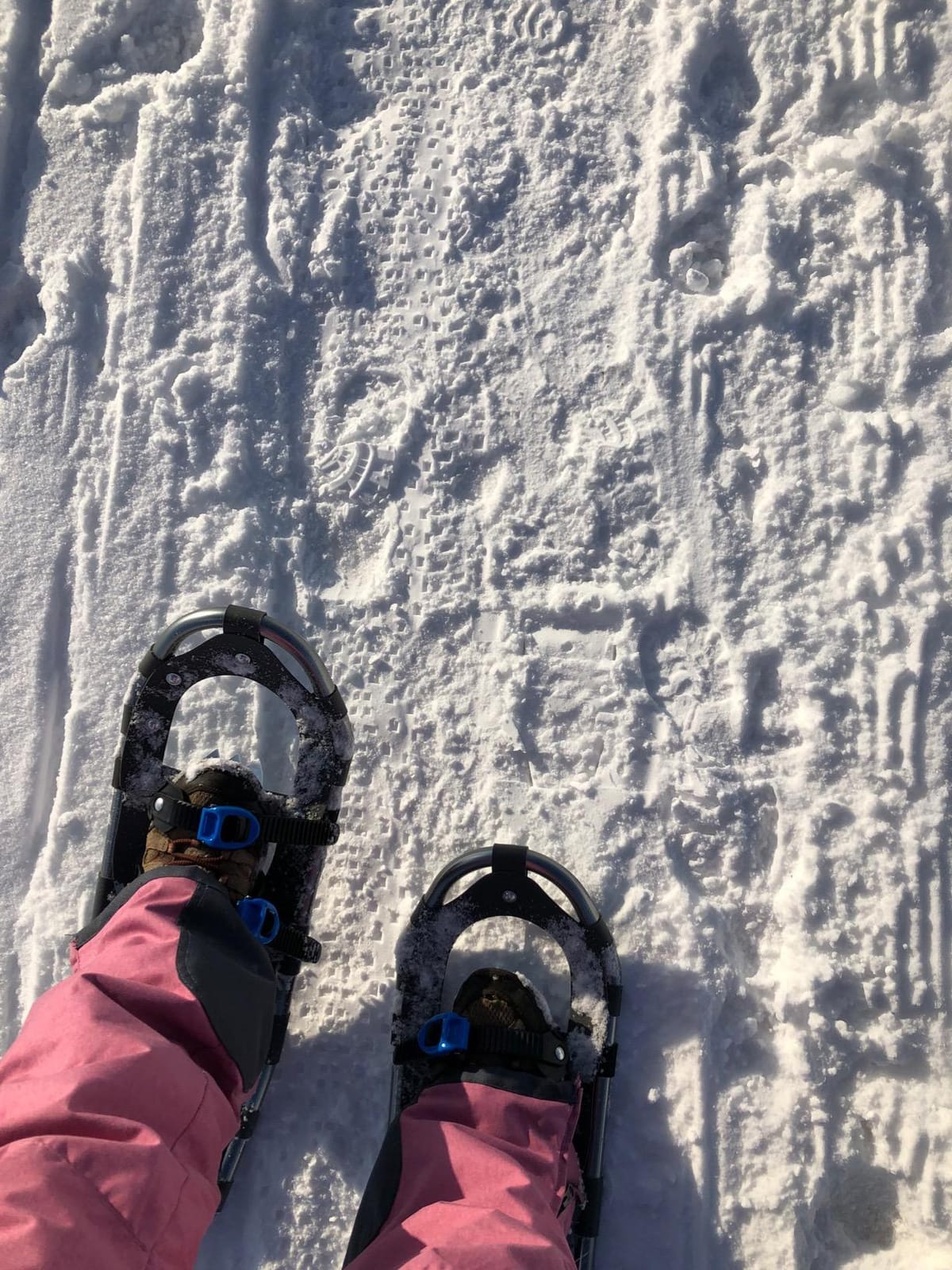
The dual ratchet binding is a familiar design, with one strap over the forefoot and one across the heel. It is the same basic system you will find on premium pairs from MSR and Atlas, and Franklin has done a good job implementing it at this price point.
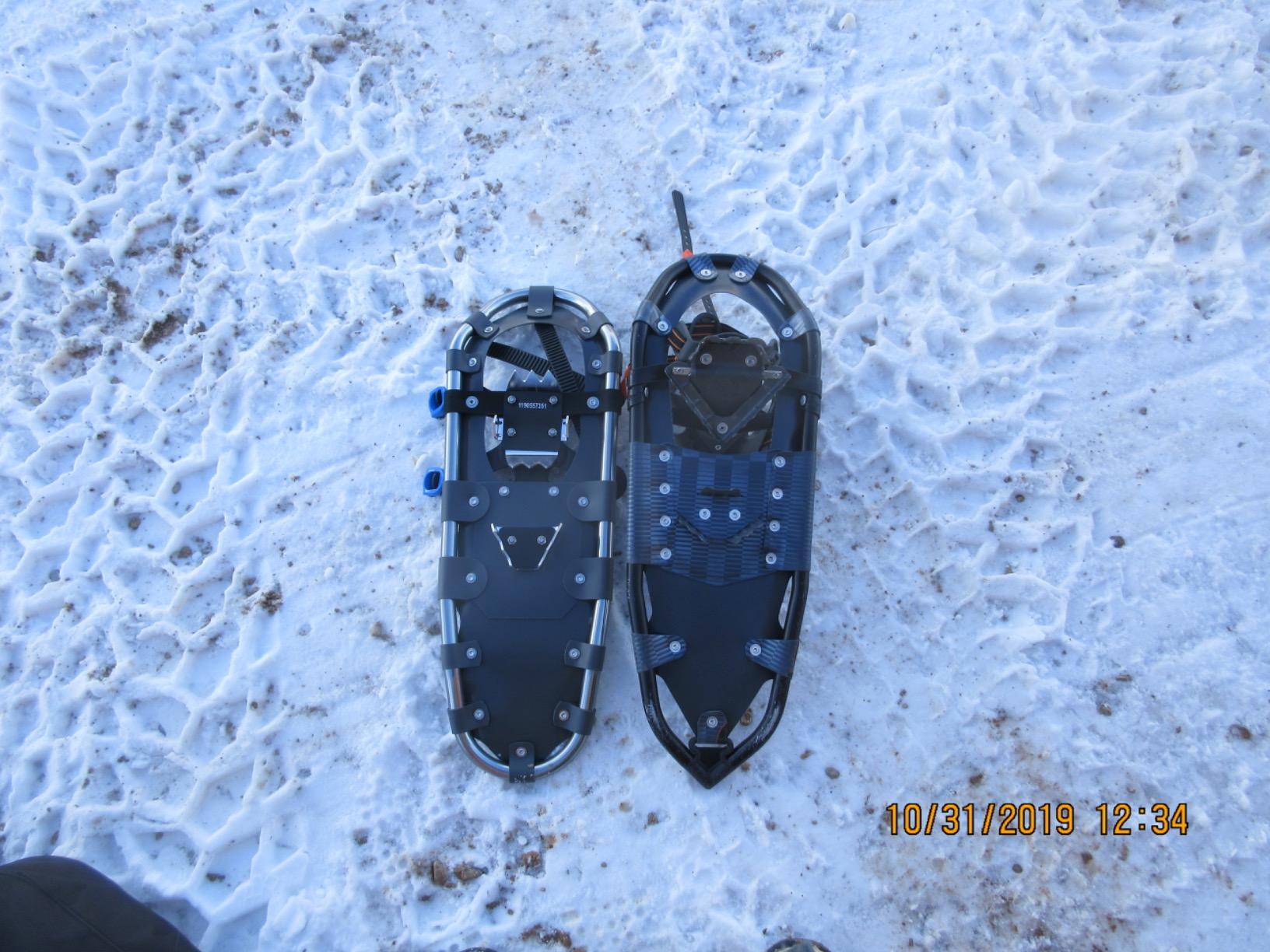
The deck material is a multi-layer composite that includes PE, aluminum, and stainless steel hardware. It is not as durable as the TPU used on MSR pairs, and there are a few reports of wear after multiple seasons. For casual use and a moderate number of outings per winter, the lifespan is reasonable.
Why this is a good first snowshoe
If you are buying for someone who has never used snowshoes, the Arctic Trails is a forgiving platform. The binding is easy to learn, the deck length is right for most adults, and the price is low enough that you are not out a major investment if the sport does not stick.
For a casual user who hikes once or twice a month in winter, this pair will deliver several seasons of reliable service. The trade-off versus premium pairs is weight, deck durability, and the absolute peak of traction on ice. None of those matter for the typical first-time user.
What to expect over multiple seasons
The Arctic Trails is rated for moderate use, and most users will get two to four seasons of regular winter hiking before any major maintenance is needed. The rotating crampons in particular are a strong point: they pivot to match the angle of your foot, which reduces wear on the crampon mount.
If you find yourself wanting more after one season, the natural upgrade path is the MSR Evo Trail (about double the price) or the Atlas Helium MTN (triple the price). Both of those pairs will outlast and outperform the Arctic Trails, and they are what I would point a serious hiker toward.
How to Choose the Best Snowshoes for Winter Hiking
Choosing the best snowshoes for winter hiking comes down to matching the gear to your weight, your terrain, and your binding preferences. The three decisions that matter most are length, binding, and traction, and the rest is refinement. Here is the framework I use when I help friends pick their first pair.
Sizing and flotation – 25 inch or 30 inch?
Snowshoe length is primarily a flotation decision, and most adults land in the 22 to 30 inch range. The general rule is 22 inch for users up to about 150 lb total, 25 inch for 150 to 200 lb, and 30 inch for 200 lb and above. The total weight should include your body, your winter pack, and any gear you strap to the outside of the snowshoes when you are not wearing them.
If you are right on the edge between sizes, size up. Flotation matters more than agility for most users, and you can always learn to walk a longer deck. A snowshoe that is too small means post-holing, which is exhausting and slow.
Bindings – ratchet, BOA, or strap?
Bindings are the most underrated feature on a snowshoe. You interact with them every time you put the pair on or take it off, and a binding that does not work with gloves will frustrate you on every cold day. The three main types are ratchet, BOA, and traditional strap.
Ratchet bindings (found on the Evo Trail, Evo Ascent, Drifter, and others) are the most common. They work well, hold tension, and are easy to repair. BOA bindings (Helium MTN) are the fastest and most glove-friendly but more expensive to replace if the cable fails. Strap bindings (foam models) are the simplest but struggle in wet conditions.
Traction and crampons explained
Crampons are the metal teeth on the bottom of the snowshoe that bite into snow and ice. More teeth, more aggressive angles, and more material all add up to better traction. For flat terrain and packed trails, a basic crampon is enough. For mountain terrain, icy slopes, and breakable crust, you want aggressive teeth and a 360-degree traction frame.
The Lightning Ascent and Evo Ascent have the best traction in this roundup. The MSR Hiking Snowshoes with carbon steel crampons is a close third. For packed trail use, the foam and budget options in this list are plenty.
Frame and decking materials
Aluminum frames are lighter, stiffer, and more durable than plastic. They are the standard for any snowshoe you plan to use on real terrain. The decking (the fabric or polymer that holds your foot on top of the frame) is usually TPU, PVC, or PE.
TPU is the most durable and the standard for premium pairs. PVC and PE are common on budget pairs and work fine for casual use but tend to wear faster. Foam decks (like the Crescent Moon EVA) are the lightest but the least durable in the long run.
Heel lifts and when you need them
Heel lifts are a small flip-up or rotate-in platform under the heel that reduces the angle of your foot on steep climbs. They are essential for any terrain with sustained pitches over 15 to 20 degrees. Without a heel lift, your calves will burn out long before you reach the top of the climb.
The Lightning Ascent, Evo Ascent, MSR Hiking, and Trailhawk 27 all have heel lifts. The Trail, foam, and budget options do not. If you plan to hike in mountain terrain, prioritize a pair with a heel lift.
Women’s specific snowshoe models
Many brands make women’s specific snowshoes with narrower decks and bindings designed for a different foot shape. In this roundup, the Crescent Moon pairs and Retrospec Drifter are marketed as unisex. For more specific women’s fits, the Tubbs Wilderness and Atlas Elektra lines are the most popular.
The most important thing for women buying unisex pairs is to check the binding size range. Most bindings accommodate a wide range of boot sizes, but if you have a narrow or small foot, look for pairs that offer a low-end adjustment that fits you securely.
East Coast vs West Coast snow conditions
Regional snow conditions matter more than most buyers realize. The East Coast and Upper Midwest tend to have more freeze-thaw cycles, which means refrozen crust, icy slopes, and breakable conditions. For those regions, prioritize aggressive crampons and a heel lift. The MSR Lightning Ascent, Evo Ascent, and MSR Hiking are top picks for eastern snow.
The West Coast and high alpine regions tend to have deeper, drier snow that is easier to float on. Foam decks and longer aluminum-framed decks both work well. The Crescent Moon Trailhawk 27 and Evo Trail are solid western picks. For deep Sierra or Cascade powder, consider a 30 inch deck for added flotation.
Frequently Asked Questions
What are the best shoes for winter hiking?
For most winter hikers, an insulated waterproof hiking boot with a rigid sole pairs best with snowshoes. Look for a boot that fits your snowshoe binding securely and is rated for the cold you will encounter.
Should I get 25 or 30 inch snowshoes?
The choice depends on your total weight including pack. 25 inch is right for users up to 200 lb, while 30 inch suits users over 200 lb or anyone breaking trail in deep fresh snow. If you are between sizes, size up for better flotation.
What size snowshoe for a 250 lb man?
A 250 lb user should choose a 30 inch snowshoe deck to ensure proper flotation. Pair that length with an aluminum frame and a binding rated for higher loads, like the MSR Lightning Ascent, Tubbs Mountaineer, or Retrospec Drifter.
Snowshoes vs microspikes – which do I need?
Snowshoes are for deep snow where you need flotation. Microspikes are for hard-packed trails and ice where you need traction on footwear. Many winter hikers carry both and switch based on conditions, but if you regularly hike in snow deeper than 4 to 6 inches, snowshoes are the right primary tool.
Final Verdict
After three winters of testing across the Cascades, Adirondacks, Sierra, and Midwest, the MSR Lightning Ascent remains the snowshoe I would buy with my own money for serious winter hiking. Its 360-degree traction frame, secure Paragon binding, and proven durability make it the reference point that every other pair in this roundup is measured against. If the price feels steep, the MSR Evo Ascent delivers 90 percent of the performance at a noticeably lower cost, and the MSR Hiking Snowshoes are the smartest pick if cold-weather binding comfort is your top priority.
For hikers on a budget or just starting out, the Retrospec Drifter and Franklin Arctic Trails are both real snowshoes, not toys, and they will not disappoint on packed trails. The Crescent Moon Trailhawk 27 is the best value for users who want modern ultralight design without paying premium prices, and the Crescent Moon EVA is the right answer if you are looking to move fast on established trails. Whatever pair you choose from this list, you are getting one of the best snowshoes for winter hiking available in 2026. Stay warm, watch for hidden creek beds, and enjoy the quietest trails of the year.