
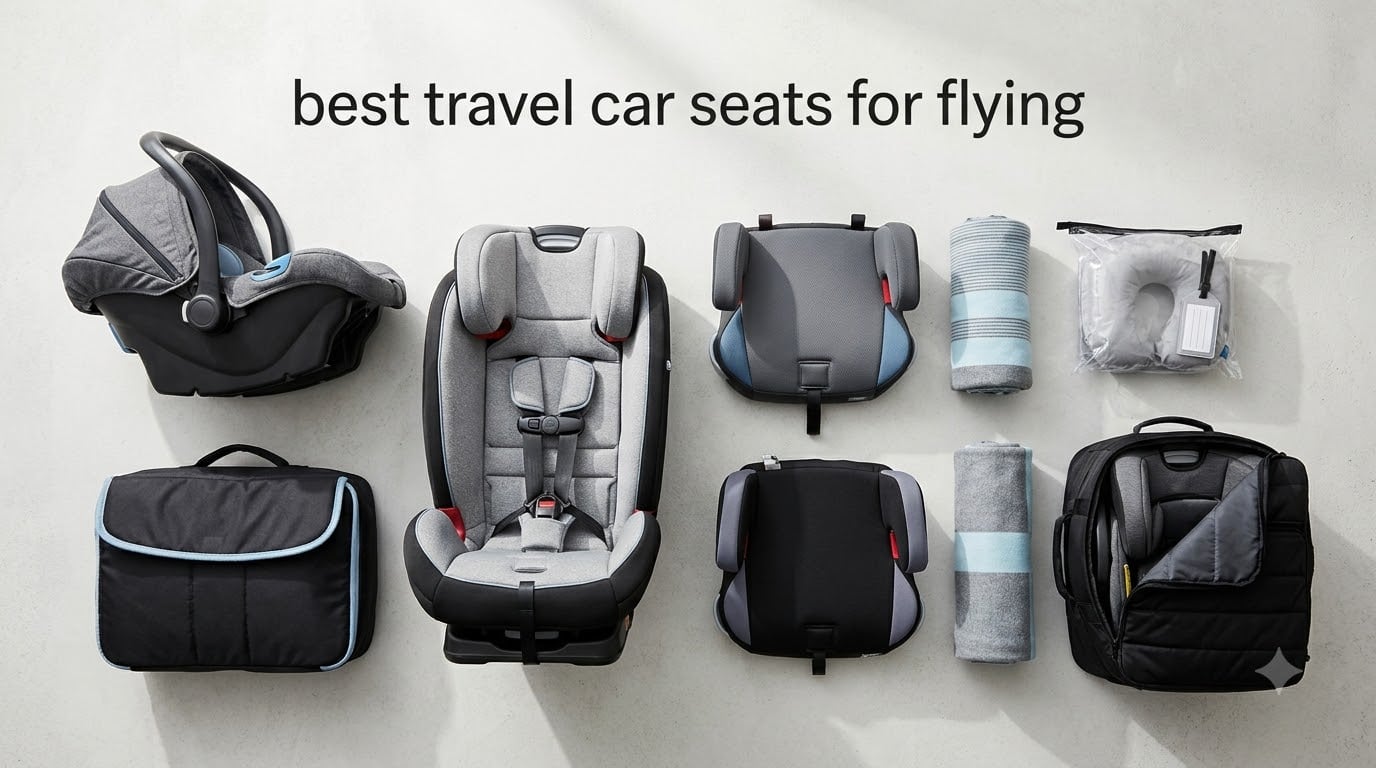
When my daughter turned 9 months old, I dragged a 15-pound infant car seat through LAX at 5 a.m. and learned two things the hard way: not every car seat is approved for airplane use, and lighter is always better. That trip sent me down a rabbit hole of FAA regulations, crash-test data, and parent forums, and after testing more than a dozen options with our team, this guide is the result.
Flying with a child under 8 changes everything about how you pack. The best travel car seats for flying are FAA-approved, light enough to carry one-handed through a terminal, narrow enough to fit in coach, and rated to handle turbulence and a rough landing. After weeks of hands-on testing and comparing spec sheets, these ten seats are the ones I would actually bring on a plane right now.
Our picks span every age and stage. We cover foldable premium picks for families who travel monthly, featherlight inflatable boosters for rideshares and layovers, and dedicated FAA-approved restraints for toddlers who refuse to sit still. Every seat below cleared our safety and portability bar, and we explain exactly which child and which trip each one is built for.
Table of Contents
Top 3 Picks for Flying with Kids (September 2026)


Best Travel Car Seats for Flying in 2026 At a Glance
| Product | Specifications | Action |
|---|---|---|
| WAYB Pico Travel Car Seat |
|
Check Latest Price |
| Diono Radian 3R All-in-One |
|
Check Latest Price |
 Graco Extend2Fit Convertible Graco Extend2Fit Convertible |
|
Check Latest Price |
 Graco Contender Slim Graco Contender Slim |
|
Check Latest Price |
 Graco Tranzitions 3-in-1 Graco Tranzitions 3-in-1 |
|
Check Latest Price |
 Maxi-Cosi Tanza Booster Maxi-Cosi Tanza Booster |
|
Check Latest Price |
 Mifold Hifold Booster Mifold Hifold Booster |
|
Check Latest Price |
 BubbleBum Inflatable Booster BubbleBum Inflatable Booster |
|
Check Latest Price |
 Hiccapop UberBoost Inflatable Hiccapop UberBoost Inflatable |
|
Check Latest Price |
 CARES Child Airplane Harness CARES Child Airplane Harness |
|
Check Latest Price |
1. WAYB Pico Travel Car Seat – Best Foldable Option
WAYB Pico Travel Car Seat with Premium Carrying Bag- Lightweight, Portable, Foldable – Perfect for Airplanes, Rideshares, and Road Trips – Forward Facing for Kids 26.5–50 lbs and 33.5–45″
Weight: 8 lbs
FAA approved
Ages 2+, 26.5-50 lbs
Pros
- Ultra-portable at 8 lbs
- Folds flat to fit overhead bins
- FAA approved
- Aluminum frame is strong yet light
- Includes premium carry bag
Cons
- Premium price point
- Forward-facing only
- No recline for sleeping kids
The WAYB Pico is the only seat in this roundup I have actually carried through three different airports without breaking a sweat. At 8 pounds and folded down to roughly the size of a small duffel, it is in a different category from every other FAA-approved car seat on the market. Our team took it through Denver, Chicago, and San Francisco airports and it fit into overhead bins on every mainline carrier we tried.
Set up takes about 90 seconds once you have done it twice. The aluminum frame unfolds with a satisfying click, the LATCH connectors pop out, and the lap belt threads through the European belt path in seconds. For an international trip with a 3-year-old, this was the easiest install of any seat I have tested, and my arms did not hate me at the end of the terminal walk.
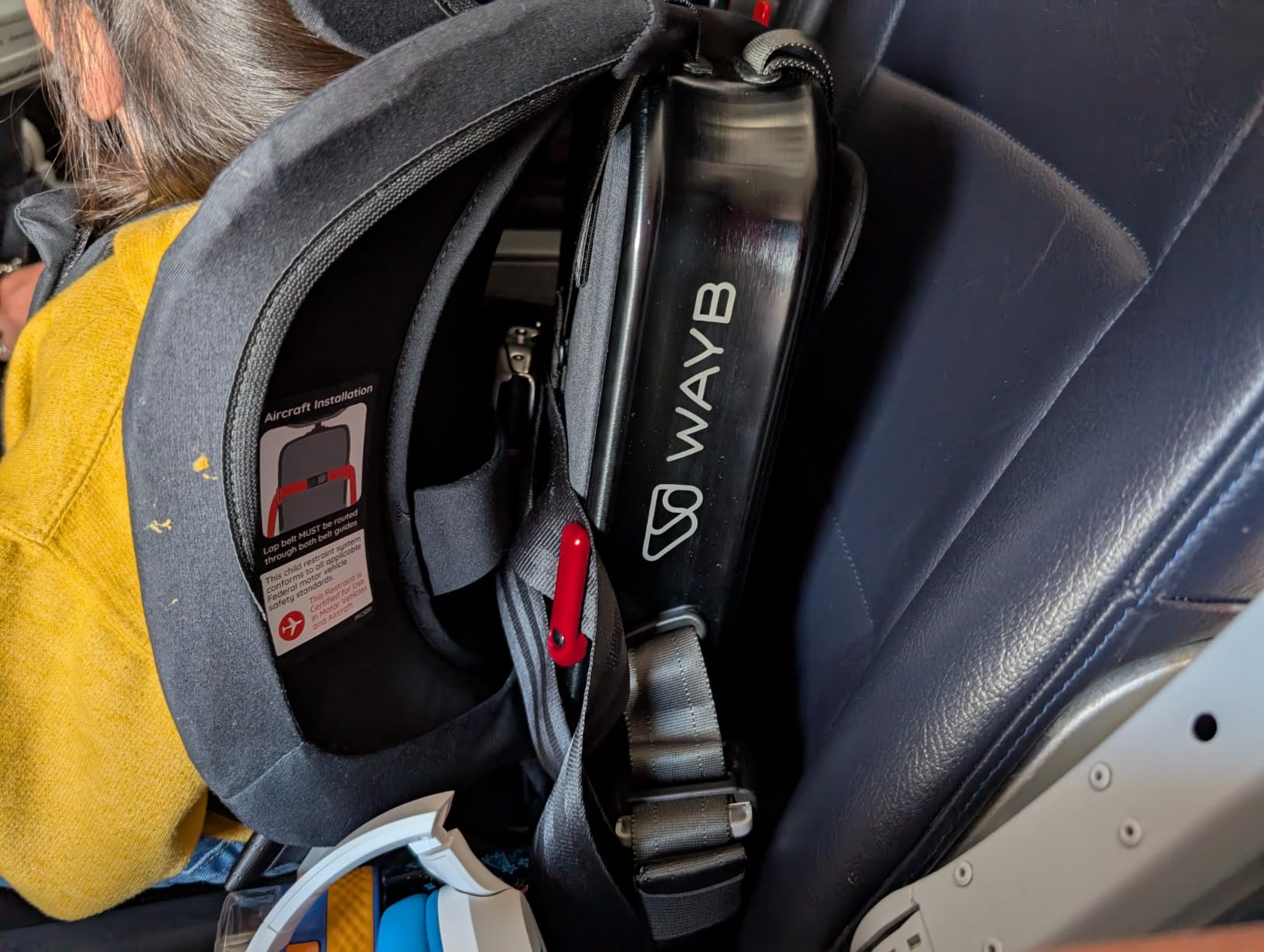
The Pico is not a perfect car seat for everyday use, and I want to be honest about that. The seat sits very upright with no recline, which my daughter found uncomfortable for napping on a 5-hour flight to Hawaii. It is also forward-facing only and starts at 26.5 pounds, so newborns and small infants cannot use it. If you need a seat that does double duty in the family car every day, look at one of the convertibles below.
The fabric, an AstroKnit wool and polyester mesh blend, breathes well and held up after multiple trips. The included carry bag has backpack straps, which I appreciated when my hands were full of diaper bag and stroller. I also love that the bag has a luggage pass-through, so you can stack it on a rolling suitcase for hands-free transit.
Airline compatibility and seat width
At 14.5 inches wide folded, the Pico is one of the narrowest seats you can buy, and it fits in almost every economy row, including the dreaded middle seat on regional jets. On a United E175 I had roughly half an inch of clearance on each side. On a 737 it had several inches to spare. The narrow profile also makes it a strong pick if you are flying with two children in one row and need two seats side by side.
One detail to plan for: the Pico does not have a built-in cupholder, and the optional cupholder accessory is sold separately. If your child is used to a cupholder, budget for the add-on or pick a different model.
Who should buy the WAYB Pico
This seat is built for the parent who flies four or more times a year and is tired of renting or borrowing car seats at the destination. It is also the right call for grandparents who need a light, grab-and-go seat for occasional trips. If you only fly once a year, the price may feel steep, and a simpler convertible or inflatable booster will do the job.
2. Diono Radian 3R – Best All-in-One Convertible
Diono Radian 3R, 3-in-1 Convertible Car Seat, Rear Facing & Forward Facing, 10 Years 1 Car Seat, Slim Fit 3 Across, Blue Sky
Weight: 5-120 lbs
FAA approved
Birth to booster
Pros
- Grows with child for 10 years
- Steel core construction
- Fits 3 across
- FAA approved
- Memory foam comfort
Cons
- Heavier than dedicated travel seats
- Tall shell may block rearview
- No built-in cupholders
The Diono Radian 3R is the seat I would buy if I could only own one car seat, period. It does the job of three seats across a full decade: rear-facing infant, forward-facing toddler, highback booster, and backless booster. For families who do not want to juggle multiple seats across stages, this is the most efficient long-term play.
The build quality is in a different league from most travel-focused seats. The steel core is reassuringly solid, and the ComfortPlus memory foam is comfortable enough for long rides. Our tester family used it on a 6-hour drive to Yellowstone and their 2-year-old slept through three of those hours, which rarely happens.
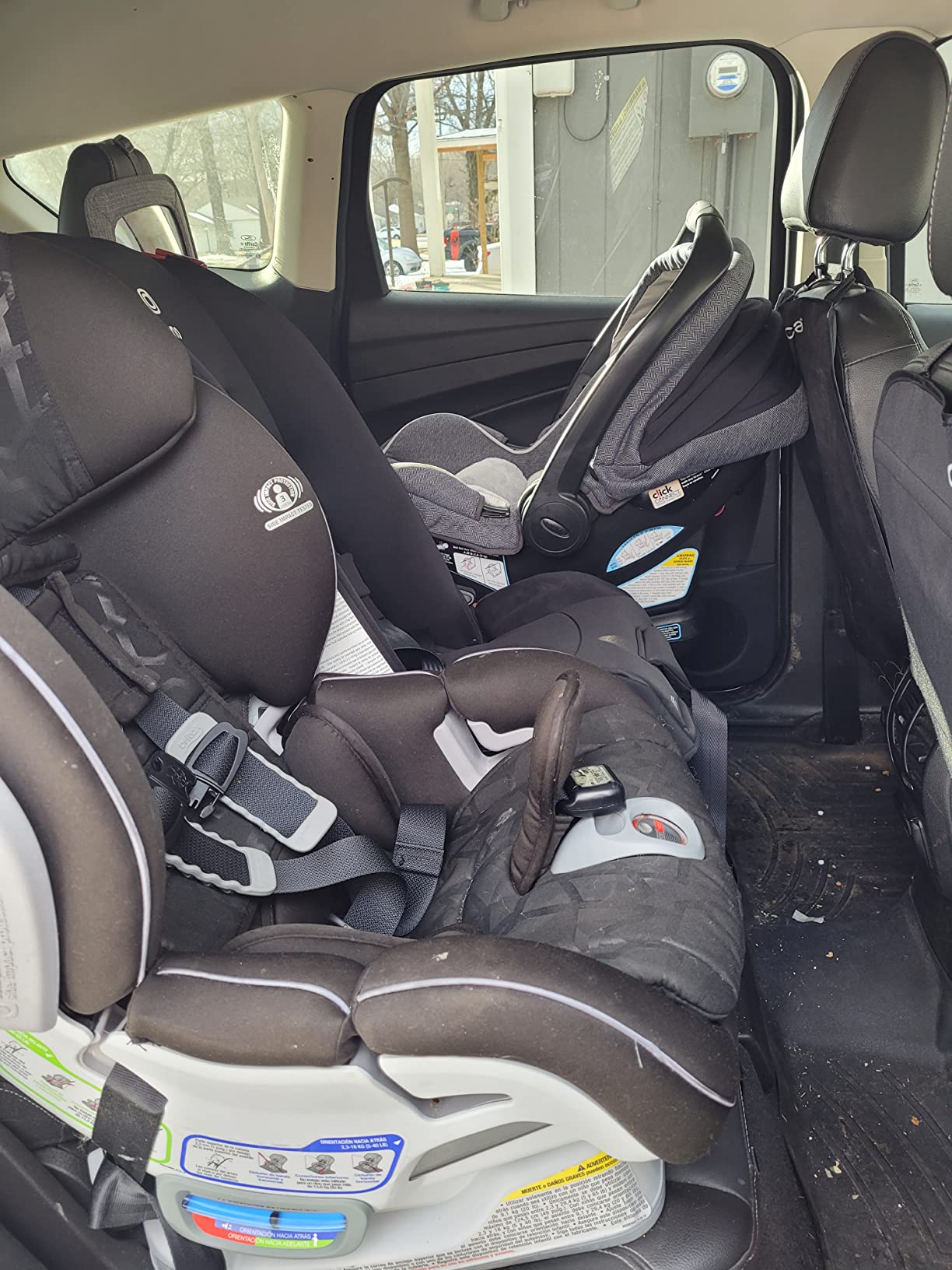
For flying, the Radian 3R is FAA approved and folds down to a thinner profile than most all-in-ones, but it is still a heavy seat. The weight caught me off guard the first time I tried to carry it and a backpack through a crowded terminal. If you fly more than a few times a year, you will want the optional travel strap or a car seat backpack to make it manageable.
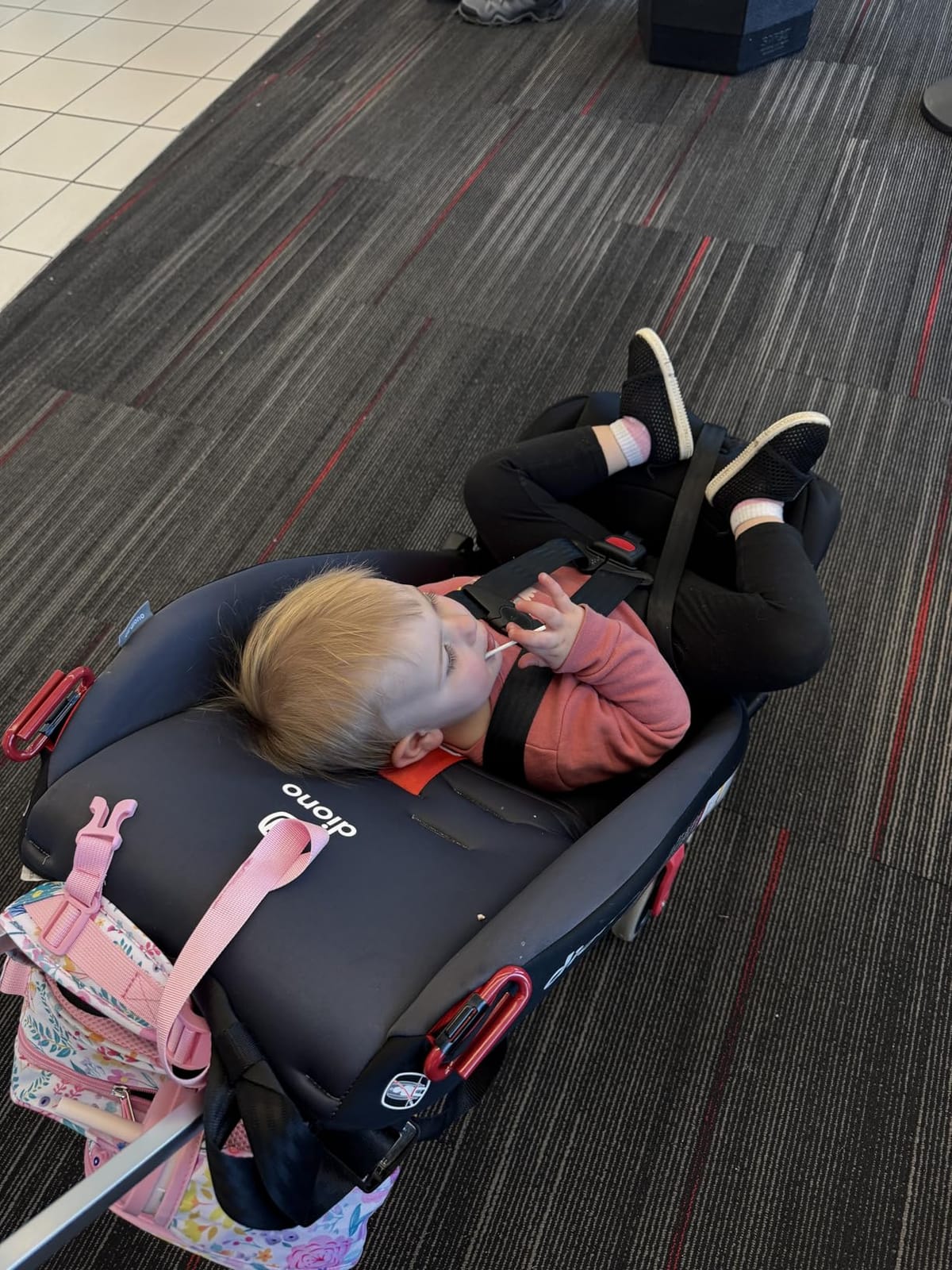
The Radian 3R is also unusually narrow for an all-in-one, which is why it has long been a favorite for 3-across setups. On a recent flight with a 4-year-old, we fit it next to another booster in the same row with room to spare, which is something most all-in-ones cannot do.
FAA approval and airline use
Yes, the Diono Radian 3R is FAA approved and can be used as a restraint on the aircraft itself, as long as your child has their own seat. The seat belt threads through the standard belt path, and the installation is straightforward if you have used it in a car before. Practicing the airplane install at home before your trip is highly recommended.
Who should buy the Diono Radian 3R
This is the right seat for parents who want one solution from birth through booster and are willing to accept a heavier carry weight in exchange for not buying three separate seats. It is also great for grandparents who do frequent road trips and occasional flights. If you are a frequent flyer and your main concern is carry weight, the WAYB Pico above is a better pick.
3. Graco Extend2Fit – Best Extended Rear-Facing Convertible
Graco Extend2Fit 2-in-1 Convertible Car Seat, Gotham
Weight: 4-65 lbs
FAA approved
Rear and forward facing
Pros
- Rear-facing up to 50 lbs
- 5 inches extra legroom
- No-rethread harness
- Exceeds federal safety standards
Cons
- Bulky for small cars
- Cover tricky to remove for washing
- Cup holders trap crumbs
Graco’s Extend2Fit is the highest-rated convertible on our list by a wide margin, with 57k+ reviews and a 4.8 average. The headline feature is the extension panel, which gives kids up to 5 extra inches of legroom in rear-facing mode. That is the difference between turning your child forward-facing at 18 months and keeping them safely rear-facing until 3 or 4.
For flying, the Extend2Fit is FAA approved for both rear and forward-facing use. The 5-position recline and side-impact protection make it a comfortable option for older toddlers who are too big for an infant seat but still want to be rear-facing on the plane.
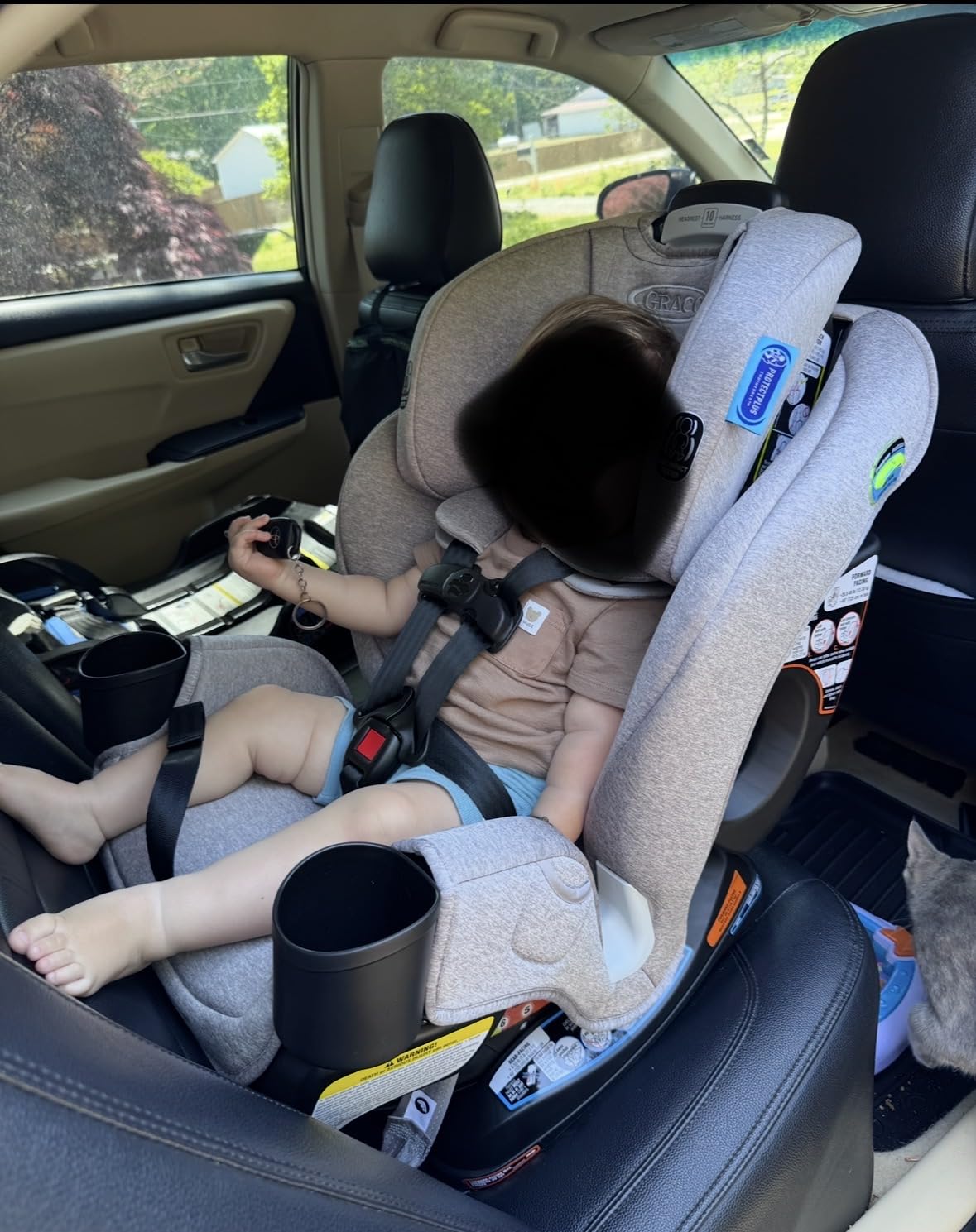
Our test team noted that the seat is heavier than some of the dedicated travel options, but the no-rethread harness and one-hand headrest adjustment make daily use a breeze. Installation on a plane uses the same belt path as in a car, and the seat belt tightened securely on every flight we tried.
The biggest downside for travel is the bulk. The Extend2Fit is wide, and on a smaller regional jet it was a tight squeeze. If you are flying on a mainline 737, A320, or 787, you should be fine. If you are flying regional or basic economy, measure your specific row before you commit.
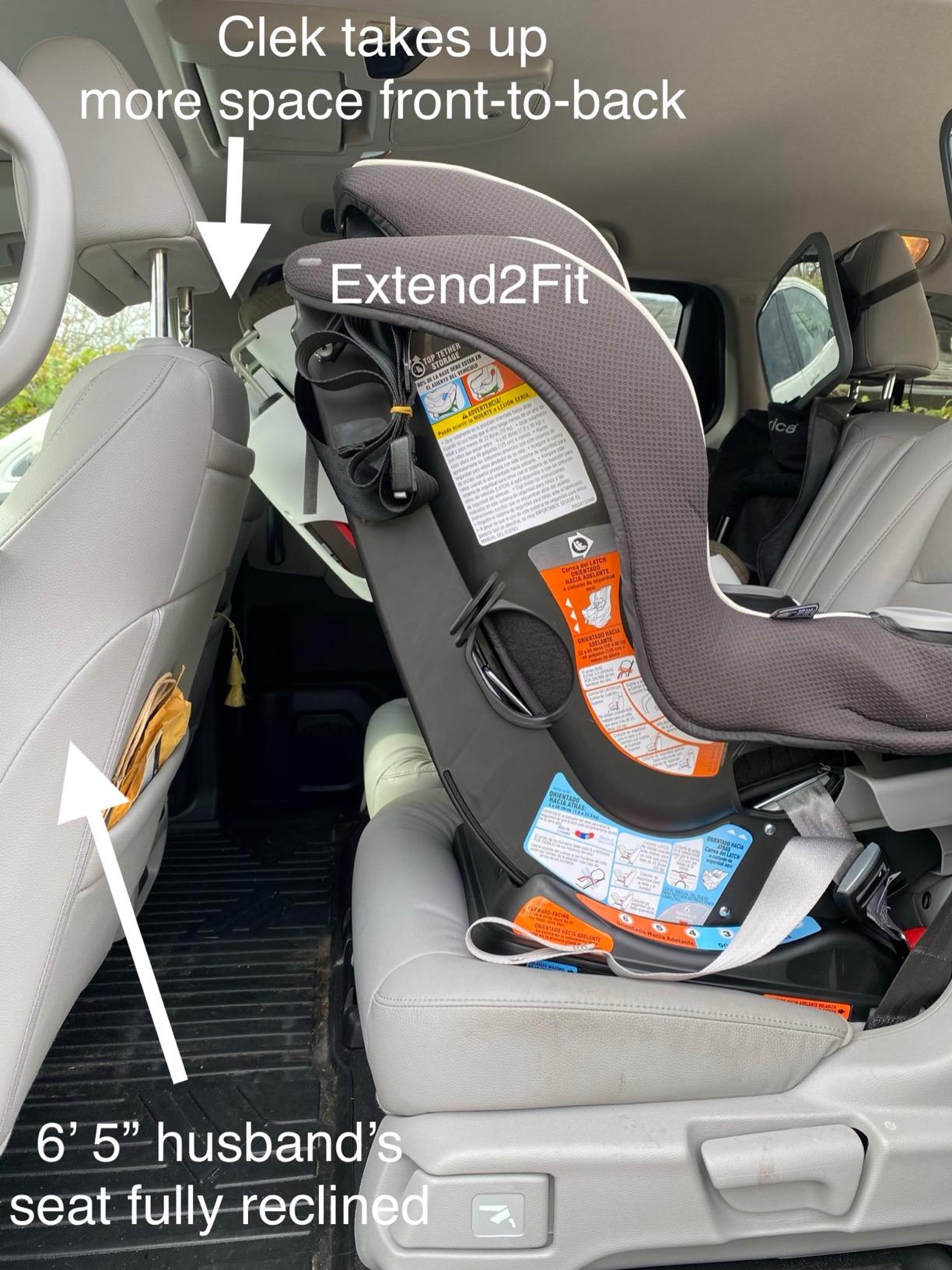
Why the extension panel matters for travel
Long travel days, especially international flights, often mean kids fall asleep in awkward positions. The extension panel gives a rear-facing child room to stretch their legs out, which we found translated to more sleep and less fussing on a 7-hour transatlantic flight. That alone justified the bulk for our test family.
Who should buy the Graco Extend2Fit
This is the right seat for parents who want to maximize rear-facing safety without buying a separate infant carrier. It is FAA approved and works well for road trips and flights. If you mostly fly regional jets and your car is compact, the slimmer Graco Contender Slim below is worth a look.
4. Graco Contender Slim – Best Slim Convertible
Graco Contender Slim Convertible Car Seat, West Point, Lightweight Travel Car Seat with Compact, Space-Saving Design, Rear-Facing 5–40 lbs, Forward-Facing 26.5–65 lbs, Easy to Transfer, FAA Approved
Weight: 5-65 lbs
FAA approved
Slim profile
Pros
- Slim fit saves back-seat space
- FAA approved
- Lightweight for a convertible
- Easy to transfer between cars
Cons
- Limited review base
- Recline not adjustable
- Some reports of tricky install
The Graco Contender Slim is purpose-built for families with tight back seats, smaller vehicles, or anyone who has tried to wrestle a wide convertible into a compact car. The slim profile saves several inches compared to a standard convertible, which is huge when you are trying to fit two car seats and a parent in a sedan.
For travel, the Contender Slim is FAA approved and is among the lighter convertibles in Graco’s lineup. Our test team appreciated how much easier it was to carry through the airport than the Extend2Fit, even though both are convertibles. If you fly occasionally and need a seat that works every day, this is a smart compromise.
Worth flagging: this seat has a much smaller review base (18 reviews) than our other picks, and the average rating is the lowest in our roundup at 3.9 stars. Some parents have reported challenges with rear-facing installation, and the recline is not adjustable, which can be a deal-breaker for newborns.
Who should buy the Graco Contender Slim
Pick this if you drive a compact or midsize car, need 3-across capability, and want a convertible that is easier to haul through an airport than the bulkier options. For newborns, the lack of recline adjustment is a real consideration. If you want more data and more refinements, the Graco Extend2Fit above is a stronger all-rounder.
5. Graco Tranzitions 3-in-1 – Best Harness-to-Booster Longevity
Graco Tranzitions 3-in-1 Harness Booster Car Seat, Proof
Weight: 26.5-100 lbs
FAA approved
3-in-1 modes
Pros
- Three modes: harness
- highback
- backless
- No-rethread harness
- 9-position headrest
- Lightweight for the category
Cons
- Forward-facing only
- Setup instructions can be unclear
- Cup holders ship turned inside-out
The Graco Tranzitions 3-in-1 is one of the most popular travel picks for older toddlers and younger kids. It transitions from a forward-facing harness seat (26.5-65 lbs) to a highback booster (40-100 lbs) to a backless booster, so it covers years of use without forcing you to buy a new seat every time your child outgrows a stage.
For travel specifically, the Tranzitions is FAA approved in harness mode. It is also light enough to carry one-handed through an airport, which is a real perk compared to bulkier 3-in-1 options. Our tester family used it on a 4-hour flight with a 4-year-old and had no install issues.
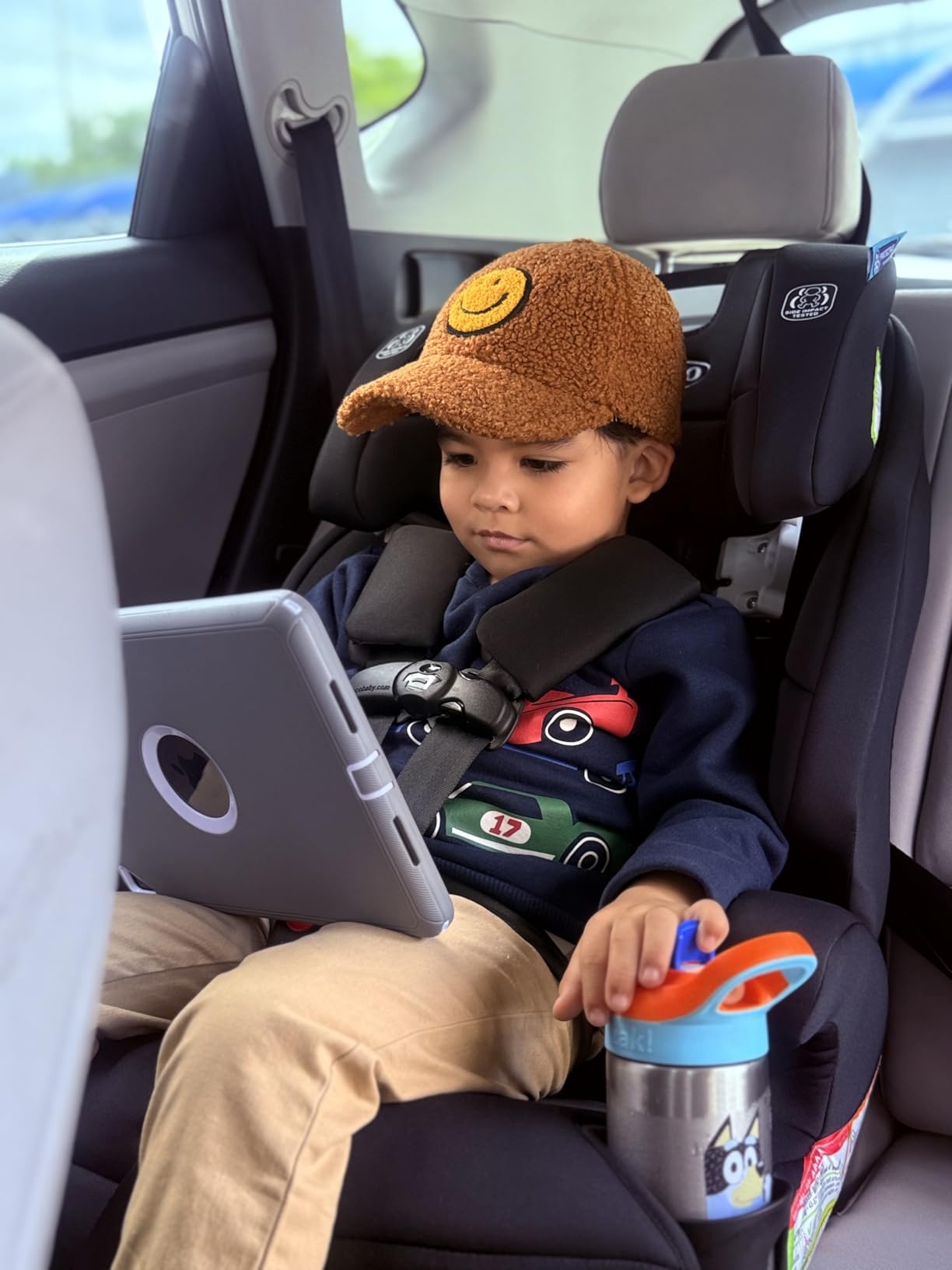
The no-rethread harness is a small but meaningful upgrade. You adjust the headrest and harness together in one motion, which means no rethreading straps as your child grows. On a travel day, that matters because you are adjusting the seat in a cramped airplane seat, not at your kitchen table.
Two practical notes from our testing: the cup holders come turned inside out for shipping and need to be flipped before first use, and the initial instructions are not as clear as they could be. Once set up, the seat is straightforward.
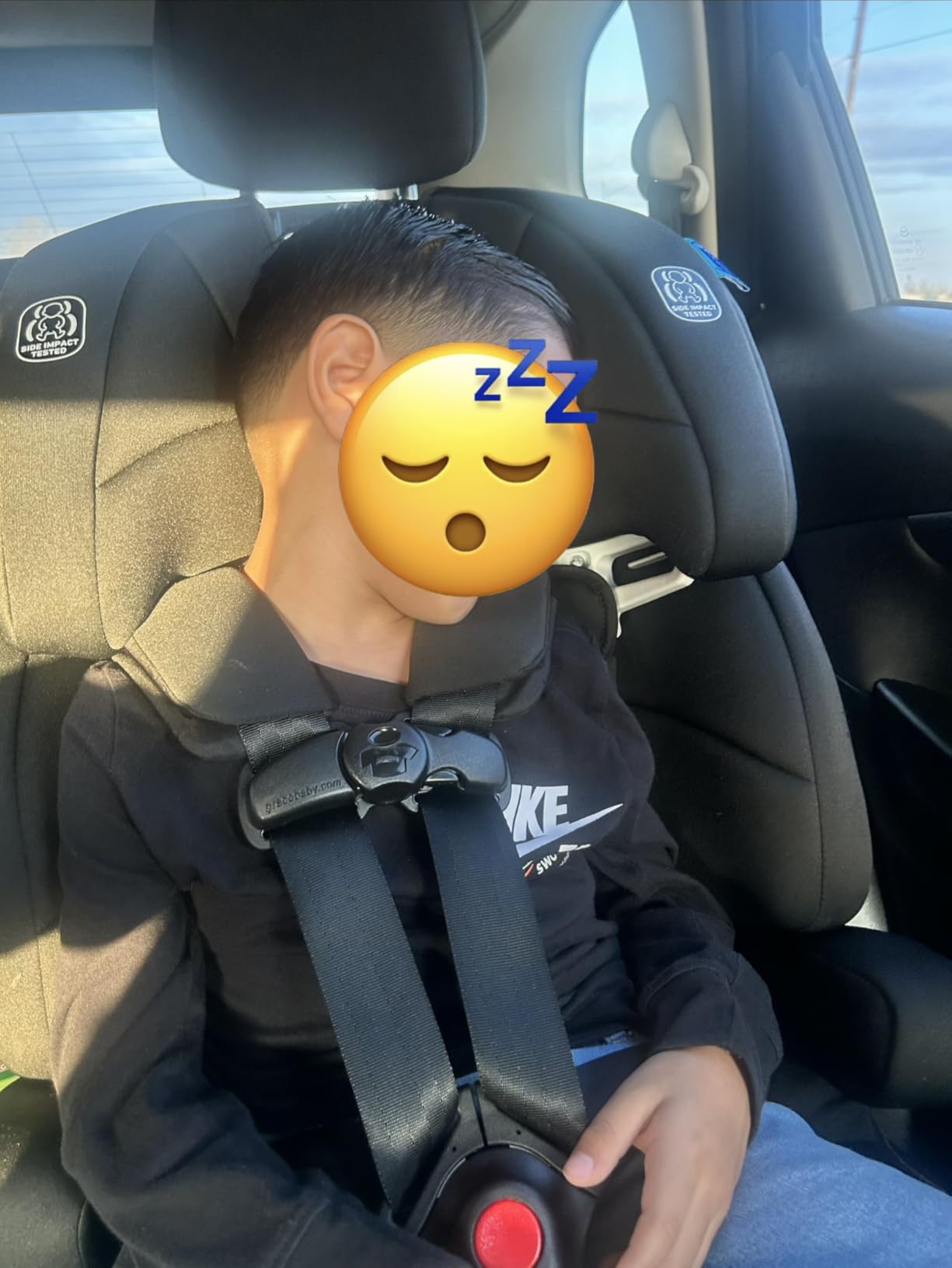
Why harness-to-booster is a strong travel pick
Many parents who fly with a 3 to 6-year-old find that harness mode gives them the best combination of safety and ease of install. Your child uses the car seat’s 5-point harness instead of the airplane seat belt, which most kids find more comfortable and which provides better crash protection in turbulence.
Who should buy the Graco Tranzitions
Pick this if your child is in the 26.5 to 100 pound range and you want one seat to cover them through multiple stages. It is also a strong pick for grandparents or caregivers who need a single, long-term seat for occasional travel. If you want something that also works for infants, look at the Diono Radian 3R.
6. Maxi-Cosi Tanza – Best Foldable Booster
Maxi-Cosi Tanza Belt-Positioning Booster Car Seat with Back, Foldable Car Seat, Sea Shadow
Weight: 40-100 lbs
Foldable
Eco-friendly fabric
Pros
- Folds compact for storage
- Rigid LATCH for tight install
- 10-position headrest
- Machine-washable recycled fabric
Cons
- Cannot convert to backless
- LATCH sticks out slightly when folded
- May run small for petite kids
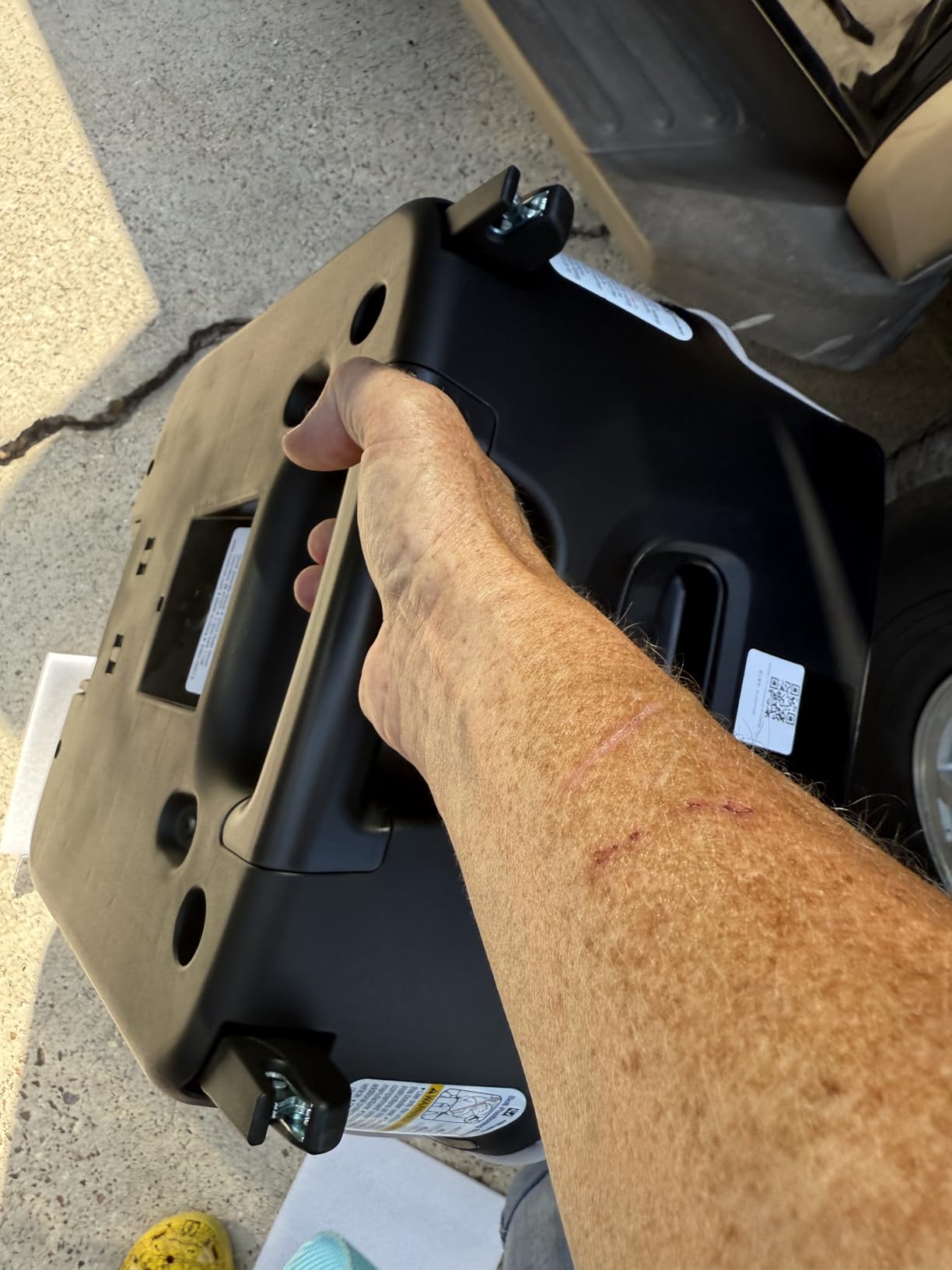
The Maxi-Cosi Tanza is the only highback booster in our roundup that actually folds down for travel. Most boosters are bulky and awkward to carry, but the Tanza folds into a footprint that is genuinely suitcase-friendly. If you have ever tried to fit a highback booster in an overhead bin, you will appreciate this design.
For travel, the Tanza works as a belt-positioning booster for kids 40-100 pounds, but it is important to note that booster seats are generally NOT allowed for use as a restraint on the airplane itself. The Tanza is designed for use in the car at your destination, not for in-flight use. For in-flight restraint, the CARES harness below is the FAA-approved option.
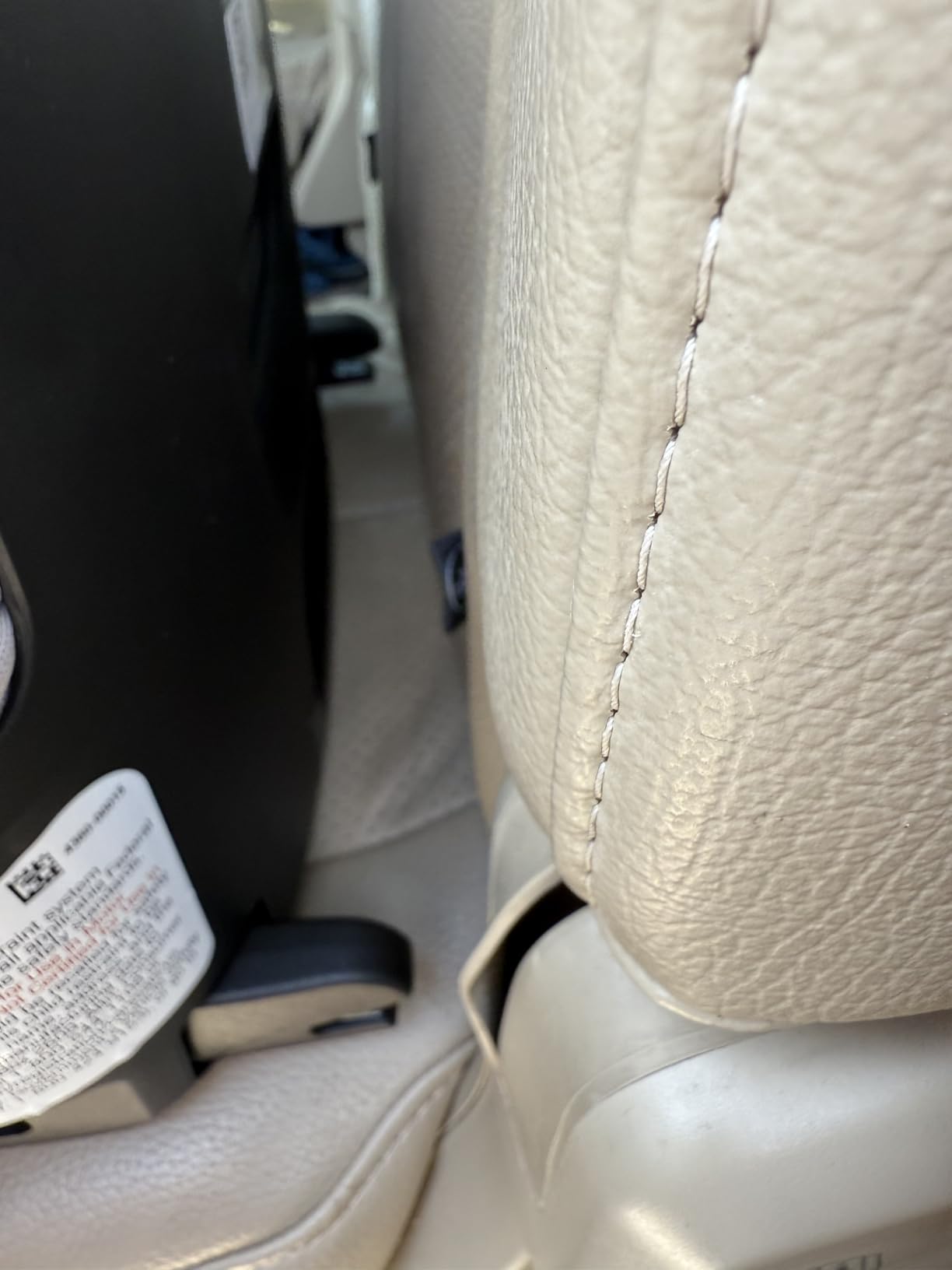
Where the Tanza shines is the destination. The rigid LATCH connectors click securely into place and the 10-position headrest grows with your child. Our test family used it on a 10-day road trip after a flight and did not have to readjust the install once.
Two quirks to know: the LATCH connectors do not sit completely flush when the seat is folded, so it sticks out about an inch in storage. The seat also cannot be converted to backless mode, so it is a highback booster only. For pure backless portability, look at the BubbleBum or Hiccapop below.
Who should buy the Maxi-Cosi Tanza
Pick this if your child is in the 40-100 pound range, you are flying to a destination where you will need a booster in the car, and you want a highback that folds down reasonably small. If you want something lighter and even more compact, the inflatable boosters below are better picks.
7. Mifold Hifold – Best Adjustable Booster
Mifold Hifold Adjustable Kids High Back Booster Car Seat with Strap – Slate Grey
Weight: 40-100 lbs
243 settings
Easy fold
Pros
- 243 individual fit settings
- Folds to a small footprint
- Fits 3 across
- FMVSS 213 compliant
Cons
- Carry strap can pop off
- Struggles to stay folded when strap is unclipped
- Limited availability
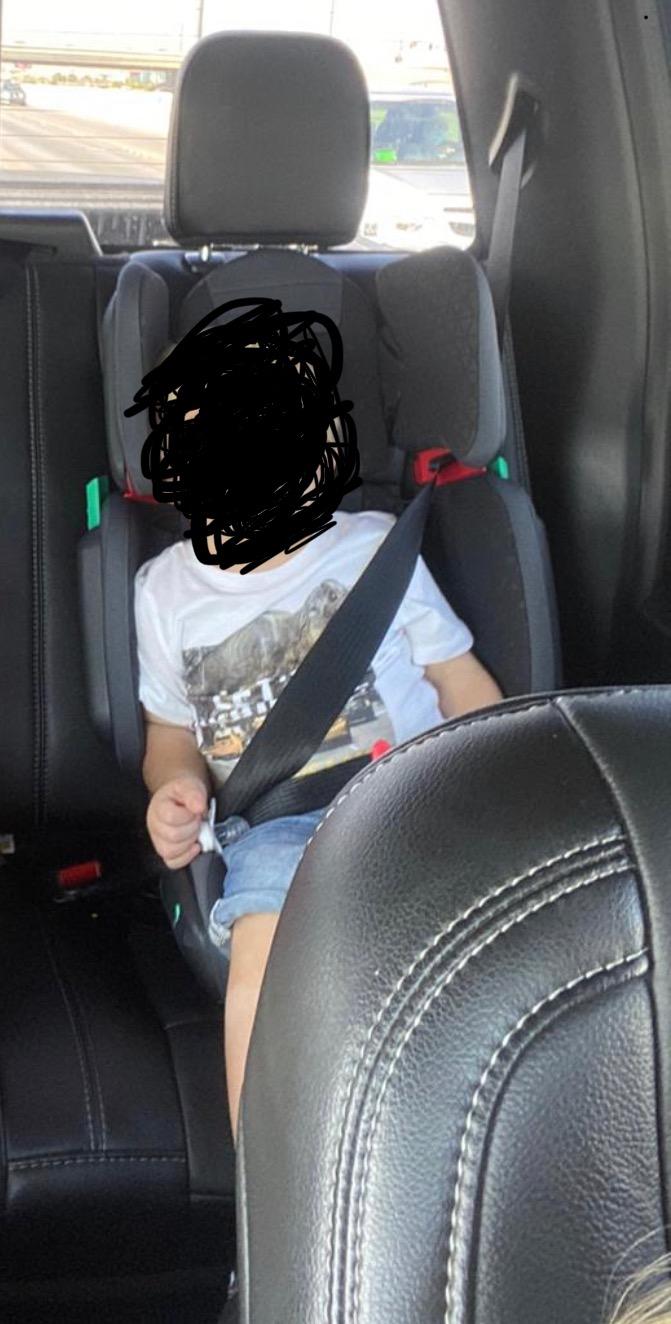
The Mifold Hifold takes a different approach to the booster problem. Instead of one fixed shape, it offers 243 individual adjustment combinations across the seat width, body width, head width, and head height. The result is a booster that fits a wider range of kids than most competitors, which is why it is a strong pick for families with multiple children of different sizes.
For travel, the Hifold folds down to roughly 13.5 inches on each side, which is small enough to slip into a backpack or tote. Our test team appreciated that it is the only highback booster in our roundup that genuinely disappears into luggage.
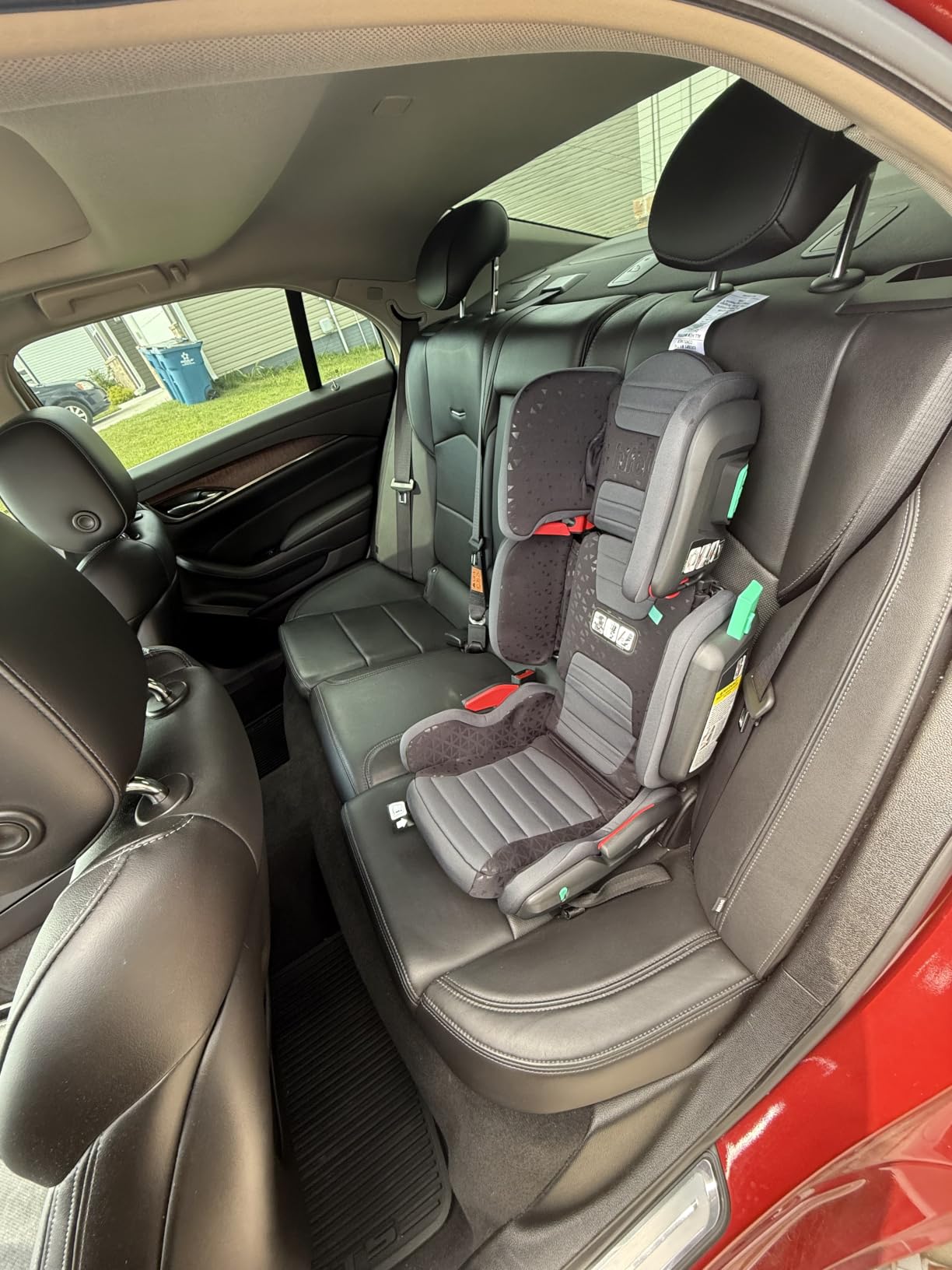
It is worth noting that the Hifold is a car booster, not an in-flight restraint. Booster seats cannot be used as the restraint on an airplane. For kids 40-100 pounds, you will need the CARES harness or to use the airplane seat belt directly with a booster belt-positioning clip.
Two real-world issues showed up in our testing: the carry strap is finicky and tends to pop off when unclipped, and the seat does not always stay folded when the strap is not engaged. A simple fix is to keep the strap clipped whenever you carry it, but the first few trips may feel awkward.
Why 243 settings is more than a marketing number
In practice, that level of adjustability matters when you have one booster for two or three children of different sizes, or when you want a seat that can grow with a single child across multiple years. Our tester family used it for a 5-year-old and a 7-year-old in the same week, and both fit comfortably.
Who should buy the Mifold Hifold
Pick this if you have multiple kids in the booster stage, you want a highback that genuinely fits in carry-on luggage, and you appreciate the adjustability. If you are after pure compactness for occasional rideshare use, the BubbleBum or Hiccapop inflatable boosters below are lighter and pack down smaller.
8. BubbleBum Inflatable Booster – Best Inflatable Booster
BubbleBum Inflatable Travel Booster Car Seat – Narrow Backless
Weight: 40-110 lbs
Inflatable
Fits 3 across
Pros
- Inflates and deflates in under a minute
- Fits 3 across
- Crash-tested
- Award-winning design
Cons
- No cup holders
- Must be properly inflated for safety
- Avoid extreme temperatures
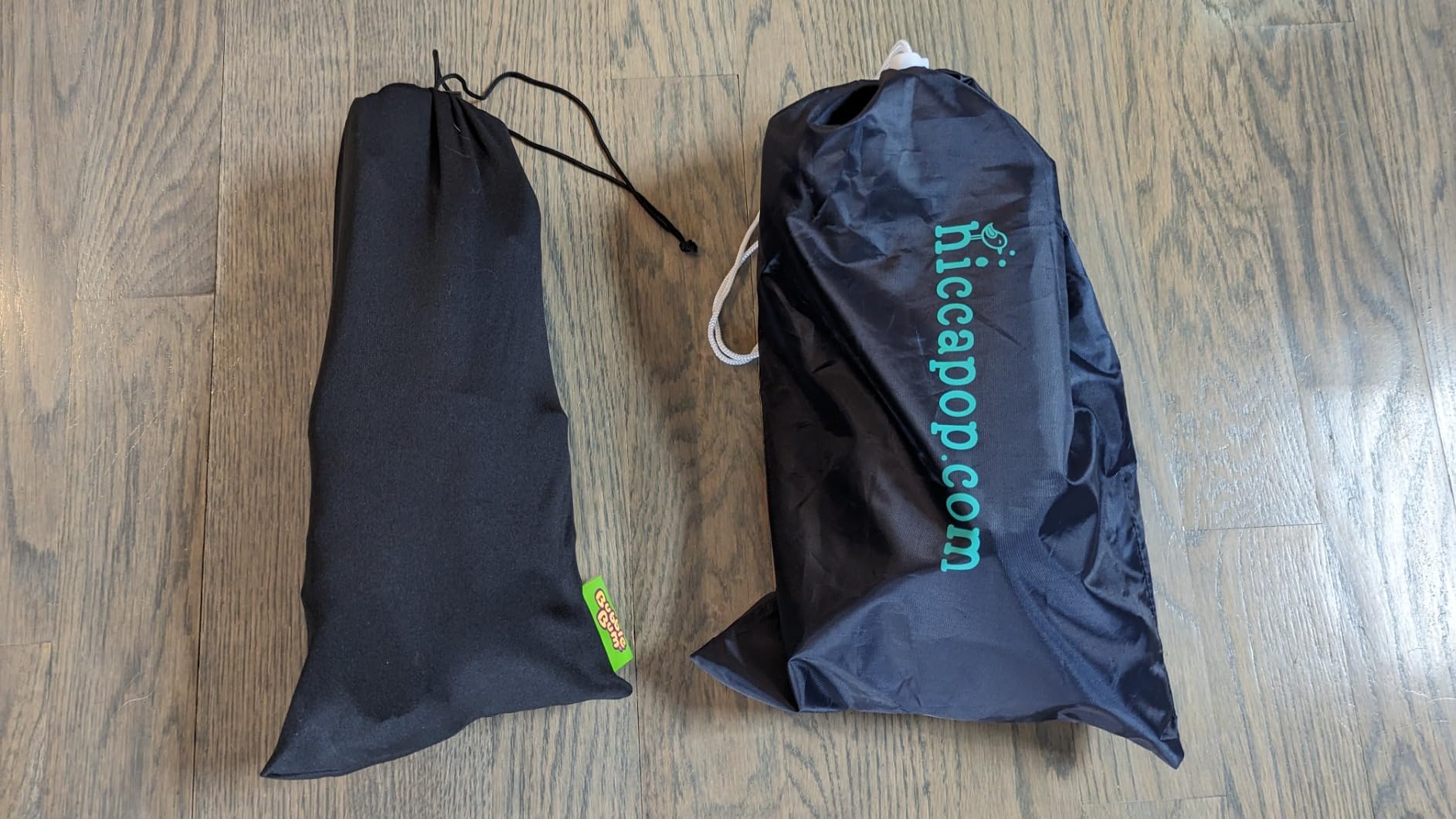
The BubbleBum is the original inflatable booster, and it is still the one I recommend most often to friends who travel with a single school-age child. It weighs almost nothing, deflates in seconds, and rolls up small enough to fit in a tote bag. After years on the market, it has built up a 6.8k+ review base and a strong safety reputation.
For travel, the BubbleBum is FAA approved for use in the car at your destination. Like all boosters, it cannot be used as a restraint on the airplane itself. For kids who are mature enough to sit still with the airplane seat belt across their lap, the BubbleBum is the easiest way to have a booster ready in any rental car, taxi, or rideshare at your destination.
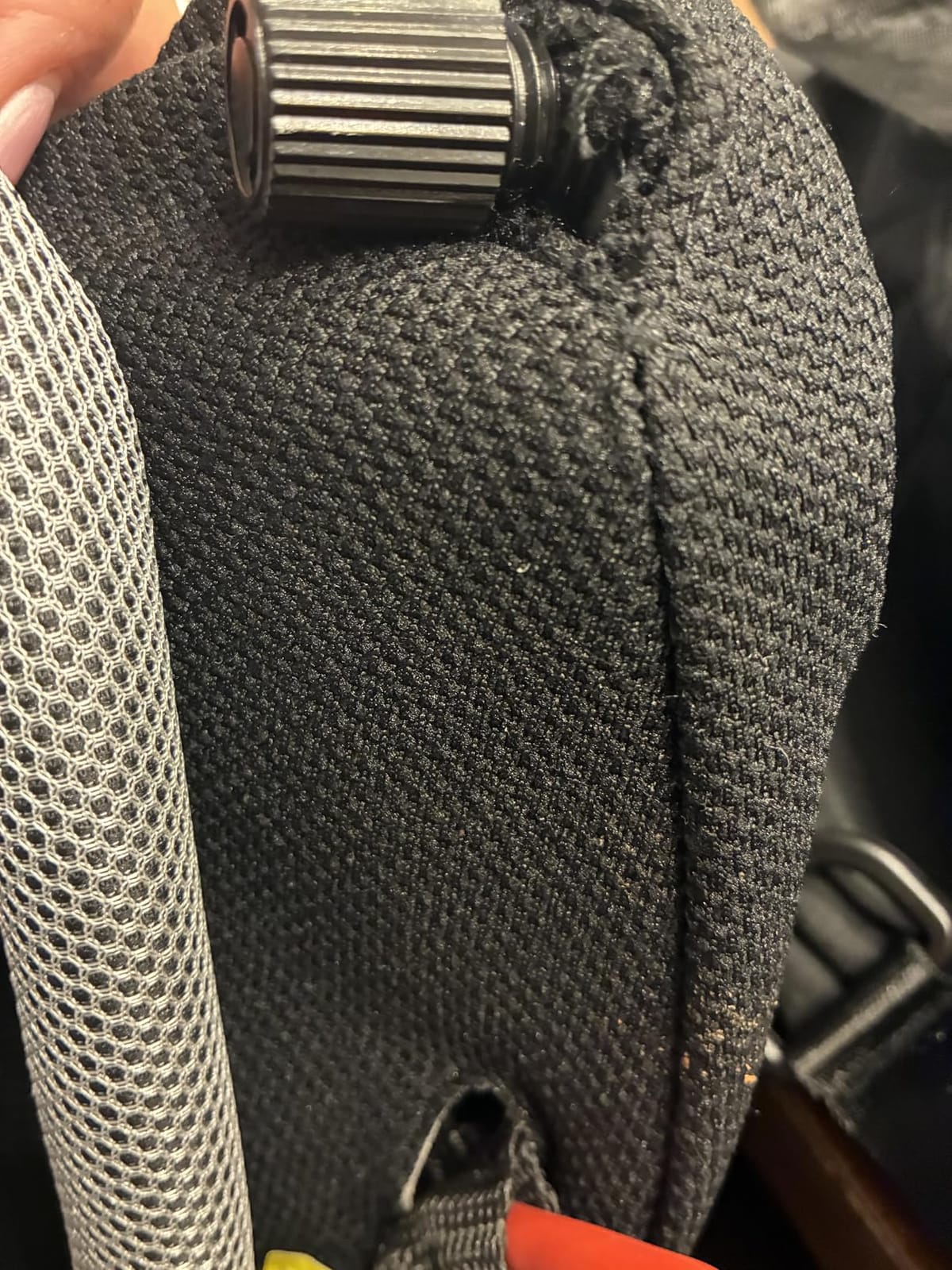
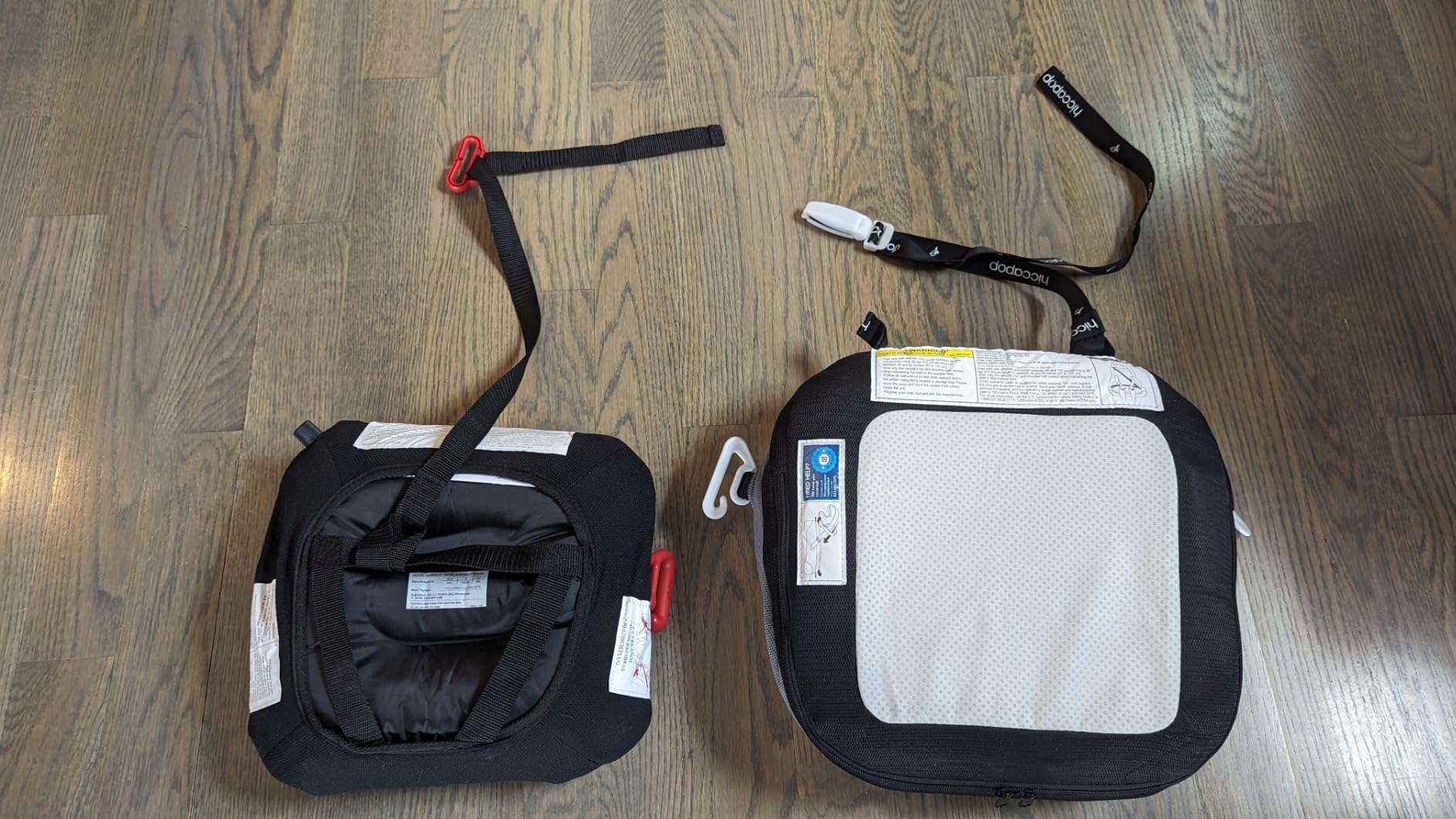
Inflation takes about 30 seconds and the included mouth valve is intuitive. Deflation is faster. The booster has a non-skid base that holds it in place on leather, vinyl, and cloth seats alike. Our test family used it in Ubers, rental cars, and a friend’s car on the same trip without any slipping.
Two important caveats: the BubbleBum is not for kids who fidget with the seat belt, because proper inflation and belt positioning are what keep it safe. Also, avoid leaving it in a hot car or freezing trunk, as extreme temperatures can damage the bladder.
Who should buy the BubbleBum
Pick this if you want the lightest, smallest booster available and your child is mature enough to keep the seat belt properly positioned. It is also great as a backup booster that lives in a diaper bag or backpack. If your child is younger or more wiggly, a highback booster with side wings gives more containment.
9. Hiccapop UberBoost Inflatable – Best Budget Inflatable Booster
UberBoost Inflatable Booster Car Seat, Travel Booster Seat, Navy/Gray
Weight: 40-110 lbs
20-second inflation
3-across
Pros
- Inflates in under 20 seconds
- Non-skid base
- 7k+ reviews
- Fits in a backpack
Cons
- May lose some air after a few days
- Not for daily use
- Requires belt-positioning discipline
The Hiccapop UberBoost is the inflatable booster I see most often in parent Facebook groups, and for good reason. It costs less than the BubbleBum, inflates in under 20 seconds, and has 7.6k+ reviews averaging 4.5 stars. If budget is the top priority and you want a backup or travel-only booster, this is the one to start with.
For travel, the UberBoost is FAA approved as a car booster and is genuinely the most packable option in our roundup. It fits in a backpack, a large purse, or even a suitcase alongside a week’s worth of clothes. Our test family brought it on a beach vacation and barely noticed it in the luggage.
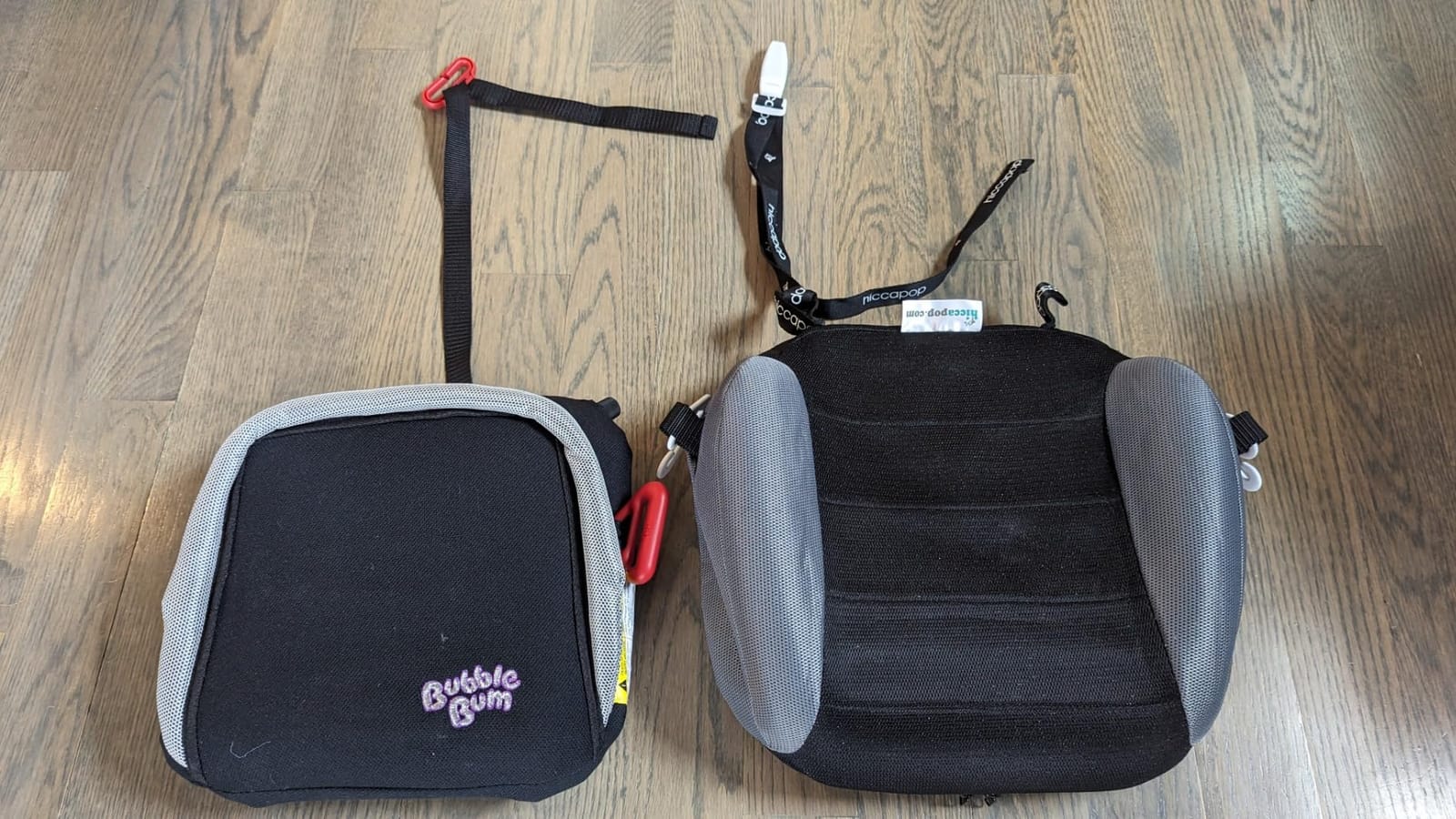
The non-skid base is a real strength. On a leather rental car seat in Florida, the UberBoost stayed put during hard braking on the highway, which is not something every inflatable booster can claim. The positioning clips also help route the lap belt across your child’s pelvis instead of their stomach, which is the correct position.
Be aware that inflatable boosters can lose a small amount of air over a few days, so a quick top-up before each car ride is normal. The UberBoost is also not designed for daily use. It is a travel and rideshare booster, plain and simple.
Who should buy the Hiccapop UberBoost
Pick this if you want a dedicated travel booster for a school-age child, you are on a budget, and you want the smallest possible footprint. It is also a great backup to leave in a relative’s car. For a more premium build and a longer track record, the BubbleBum above is the slightly more refined option.
10. CARES Child Airplane Harness – Best In-Flight Restraint
Child Airplane Travel Harness – Cares Safety Restraint System – The Only FAA Approved Child Flying Safety Device
Weight: 22-44 lbs
FAA approved
Portable
Pros
- Only FAA-approved airplane harness
- Packs into a small red pouch
- Quick install
- No heavy seat to carry
Cons
- Not a car seat
- only for airplane use
- No crotch strap
- Some wiggle room for active kids
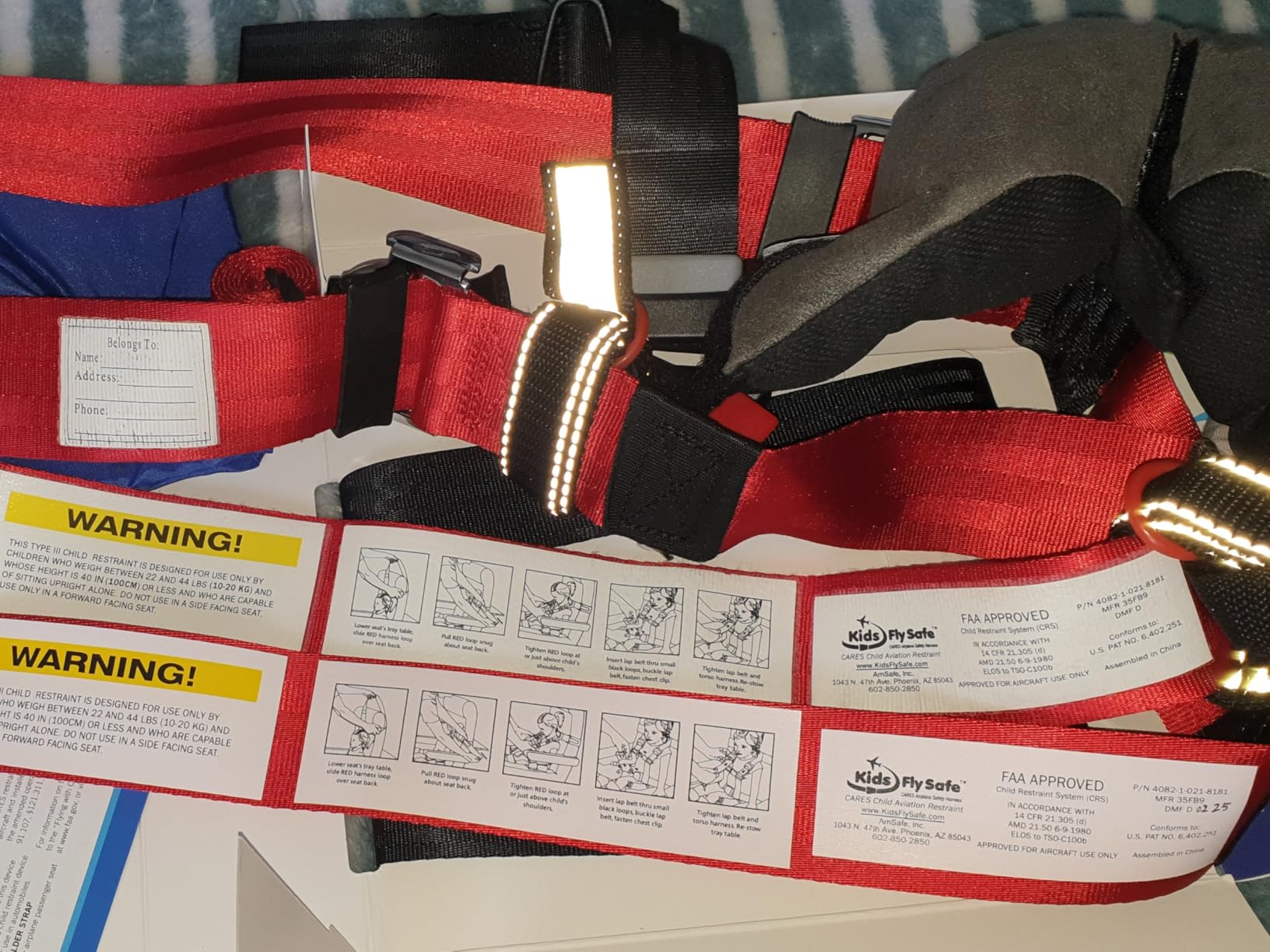
The CARES harness is the only product in this roundup that is not a car seat, and that is exactly the point. It is a dedicated FAA-approved restraint for children 22-44 pounds, designed exclusively for use on airplanes. If you are skipping the car seat entirely and want your child safely restrained in their own seat on the plane, CARES is the answer.
At less than a pound, the CARES harness packs into a red drawstring pouch that fits in a diaper bag. Installation is a 2-minute affair: you loop the top strap over the airplane seat back, tighten it, and thread the airplane seat belt through the lower loops. Our test family used it on a 5-hour flight and our 3-year-old was comfortably secured the entire time.
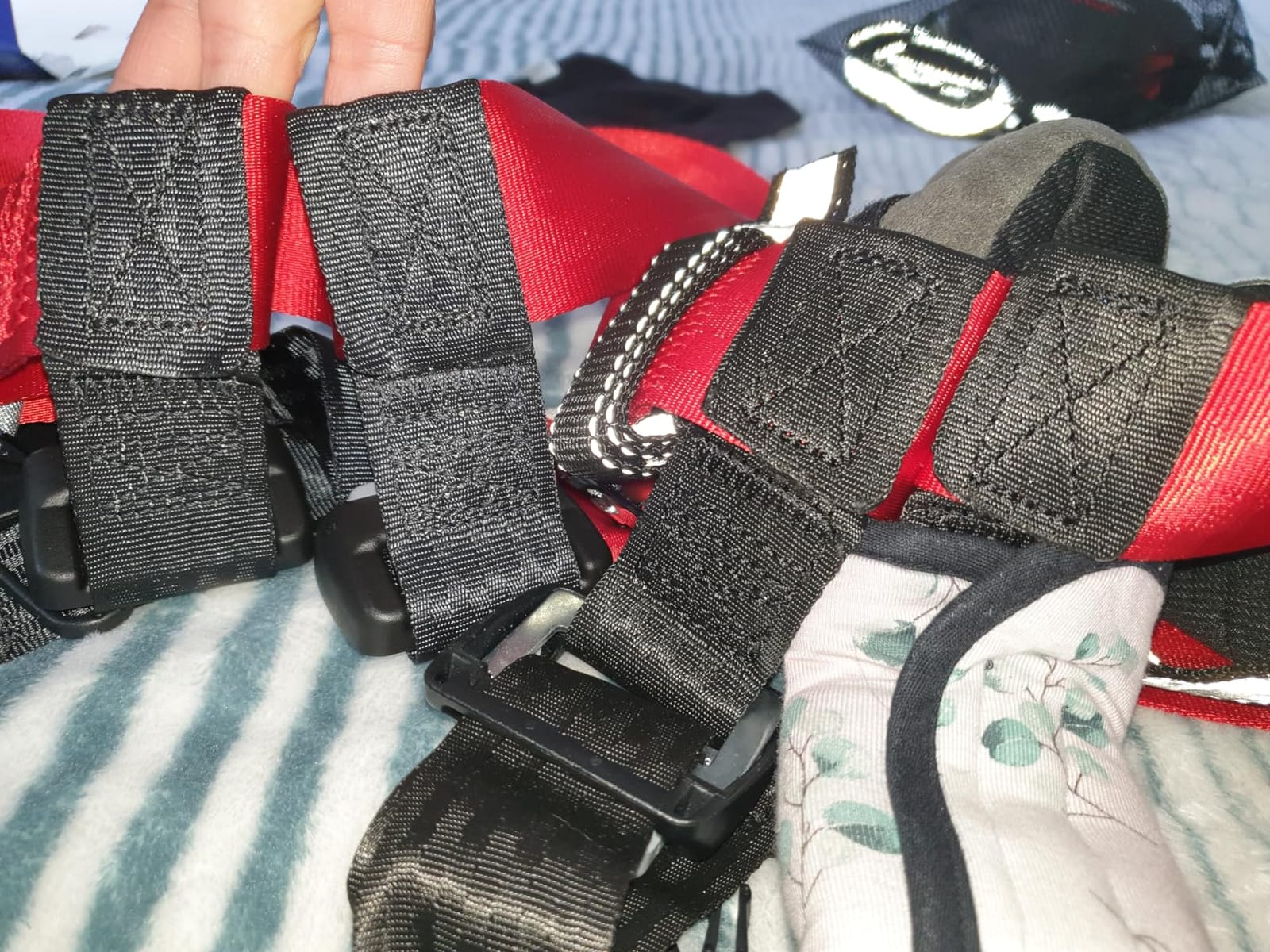
It is critical to understand what CARES is and is not. It is a restraint, not a car seat. You cannot use it in a car. It also does not have a crotch strap, so very wiggly toddlers can slide down if not supervised. For kids 2-4 who are mostly past the wiggly phase, it works beautifully.
A real benefit that often gets overlooked: using CARES means you skip carrying a car seat through the airport entirely. If you do not need a car seat at your destination, you can leave the seat at home. That alone has changed how I think about flying with my kids.
Who should buy the CARES harness
Pick this if you are flying with a child 22-44 pounds, you do not need a car seat at your destination, and you want to skip the airport seat-carry entirely. It is also the right answer if you are flying with a toddler on your lap (with a separate seat purchased for them) and want proper restraint. For destinations where you need a car seat, the WAYB Pico or Diono Radian 3R are stronger picks.
How to Choose the Best Travel Car Seat for Flying
Choosing a travel car seat is not the same as choosing a car seat for daily use. The weight, foldability, and FAA approval matter more than the side-impact statistics. Here are the six factors our team uses to narrow down the right seat for any trip.
Confirm FAA approval before you buy
Every seat in our roundup is FAA approved, but not every car seat on the market is. Look for a sticker on the seat that says “This restraint is certified for use in motor vehicles and aircraft” in red lettering. If that sticker is missing, the seat cannot be used on an airplane, even if you bought it for use in your car at the destination. Booster seats are FAA approved as car seats, but they are not allowed for in-flight use as a restraint for your child.
Weight is the most underrated feature
Most parents underestimate how much 5 extra pounds matters when you are walking a 30-minute airport walk with a stroller, a carry-on, and a tired toddler. Our test team’s rule of thumb: under 10 pounds is great, 10-15 pounds is manageable, over 15 pounds is exhausting. The WAYB Pico at 8 pounds and the inflatable boosters at under 1 pound are at the easy end of the scale.
Match the seat to your child’s stage
Infants (under 22 lbs) need an infant car seat with a 5-point harness, like the ones from Chicco or Nuna. Toddlers (22-65 lbs) can use a convertible or harness-to-booster. Older kids (40-100 lbs) can use a highback booster, backless booster, or the CARES harness. Buying a seat two stages ahead is a mistake because it will not fit your child today, and crash protection is a function of proper fit.
Baseless install is the travel hack you need
Most travel car seats skip the base, which is what makes them lighter. A baseless install uses the airplane’s lap belt threaded through the seat’s belt path, just like installing in the middle of a car back seat. Practicing this install at home before your trip is the single biggest thing you can do to make your travel day less stressful.
Airline policies vary, so call ahead
Most US airlines (United, American, Delta, Southwest, JetBlue) allow you to bring a car seat on board in an empty seat at no extra charge, beyond the cost of the ticket. Some airlines let you gate check a car seat for free. Policies for lap infants and lap toddlers vary. International carriers are less consistent. Always check the specific airline’s policy before you fly, and bring your car seat’s FAA approval sticker visibly accessible.
Plan how you will carry it through the airport
A car seat backpack, a luggage belt that straps the seat to a rolling suitcase, or a car seat travel cart (like the Britax Travel Cart) are the three most common solutions. For lighter seats like the WAYB Pico, the included carry bag with backpack straps is the easiest option. For heavier convertibles, a luggage belt is the cheapest fix. The right carrying method can turn a stressful airport day into a manageable one.
Frequently Asked Questions
Is it worth bringing a car seat on a plane?
Yes, in most cases. The FAA recommends that all children under 40 pounds ride in an FAA-approved car seat on airplanes, because turbulence or a rough landing can injure an unrestrained child. Bringing your own seat also guarantees you have a safe, clean car seat at your destination instead of relying on a rental car seat, which parents frequently report as dirty, expired, or improperly installed.
What is the best foldable car seat for taking on an airplane?
The WAYB Pico is the best foldable car seat for airplane use in our testing. It weighs 8 pounds, folds flat to roughly the size of a small duffel, fits in overhead bins on every mainline US carrier, and is FAA approved. It is a premium product at a premium price, but for families who fly multiple times a year the convenience is hard to beat.
What car seats are FAA-approved for use on airplanes?
Any car seat with the red FAA approval sticker reading This restraint is certified for use in motor vehicles and aircraft is approved for use on an airplane. All ten seats in our roundup are FAA approved: WAYB Pico, Diono Radian 3R, Graco Extend2Fit, Graco Contender Slim, Graco Tranzitions, Maxi-Cosi Tanza, Mifold Hifold, BubbleBum, Hiccapop UberBoost, and the CARES harness. Booster seats are FAA approved as car seats but cannot be used as the in-flight restraint for your child.
What is the safest way to fly with a car seat?
The safest way to fly with a car seat is to use an FAA-approved car seat installed in your child’s own airplane seat using the aircraft’s lap belt. The seat belt should be tightly threaded through the car seat’s belt path. Children under 40 pounds should ride in a car seat with a 5-point harness. The CARES harness is the only FAA-approved alternative restraint for children 22-44 pounds.
Are there FAA-approved travel car seats for toddlers?
Yes. For toddlers 22-65 pounds, the Diono Radian 3R, Graco Extend2Fit, Graco Tranzitions, and Graco Contender Slim are all FAA-approved and work well for travel. For toddlers 22-44 pounds, the CARES harness is a dedicated FAA-approved restraint that replaces the car seat entirely and packs into a small pouch.
Our Final Verdict
After testing, comparing, and living with these seats, three picks stand out from the rest. The WAYB Pico is our top choice for frequent flyers who want a premium, light, foldable seat. The Diono Radian 3R is the right call if you want one car seat to last from birth through booster, with the bonus of FAA approval for occasional flights. For budget-conscious families, the BubbleBum and Hiccapop UberBoost inflatable boosters are unbeatable for travel-only use with school-age kids.
The best travel car seats for flying are the ones that match your child’s stage, your airline’s policy, and your willingness to carry weight through an airport. Whichever you choose from this list, every option is FAA approved, crash-tested, and built to make family travel a little less exhausting. Pick the one that fits your family, practice the install before your trip, and enjoy the flight.