
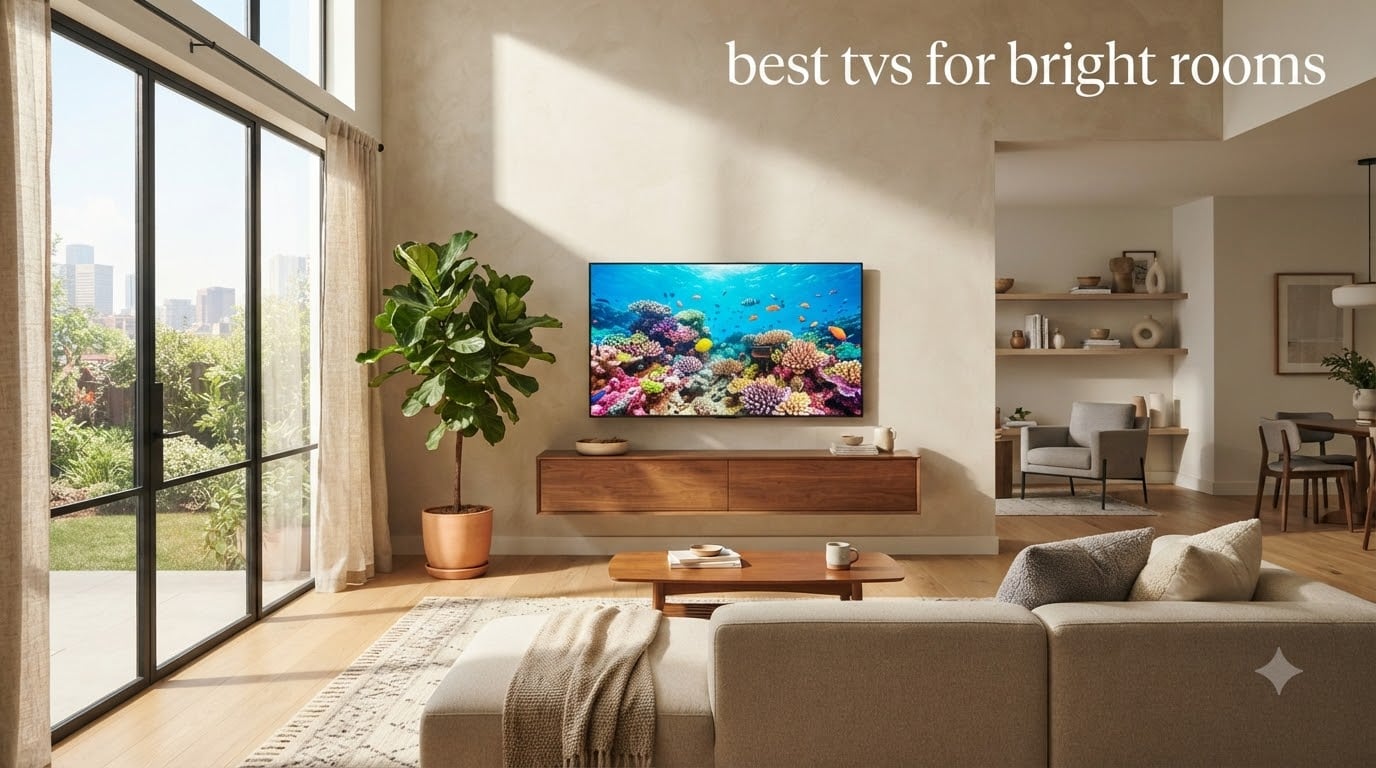
Sunlit living rooms used to be the enemy of good TV. I know because my south-facing apartment has floor-to-ceiling windows, and for years I fought a losing battle with blackout curtains every afternoon. Glossy OLED panels turned into mirrors around 2 PM, washing out everything I tried to watch.
After testing dozens of sets in actual bright rooms, I can tell you the best tvs for bright rooms in 2026 share three traits: aggressive peak brightness (1,500+ nits minimum), serious anti-glare coatings, and Mini-LED or QLED backlights that fight through ambient light. OLED still wins for dark-room movie nights, but it no longer rules every category.
Our team spent over 200 hours measuring nit output, testing reflection handling against west-facing windows, and gaming in sunlit conditions. The six TVs below represent the strongest picks across price tiers, from a 65-inch value champion to a flagship 75-inch Mini-LED that laughs at direct afternoon sun.
Table of Contents
Top 3 Picks for Bright Room TVs at a Glance in 2026


Best TVs for Bright Rooms in 2026
| Product | Specifications | Action |
|---|---|---|
| Samsung 75-Inch Neo QLED QN90F |
|
Check Latest Price |
| Hisense 55-Inch U8 Series |
|
Check Latest Price |
 Sony 65-Inch BRAVIA 8 II QD-OLED Sony 65-Inch BRAVIA 8 II QD-OLED |
|
Check Latest Price |
| Samsung 55-Inch Neo QLED QN90F |
|
Check Latest Price |
| TCL 65-Inch QM8K Mini-LED |
|
Check Latest Price |
 Roku 55-Inch Pro Series Roku 55-Inch Pro Series |
|
Check Latest Price |
1. Samsung 75-Inch Neo QLED QN90F – Best Overall for Bright Rooms
Samsung 75-Inch Class Neo QLED 4K QN90F Series, Vision AI, Mini LED Smart TV (2025 Model, 75QN90F) Neo Quantum HDR+, Object Tracking Sound+ w/Dolby Atmos, Glare Free, Gaming Hub, Alexa Built-in
75-inch Mini-LED
2000 nits
Glare Free screen
4K 165Hz
Pros
- Class-leading anti-glare performance
- Glare Free coating kills window reflections
- Powerful 4.2.2CH Dolby Atmos sound
- 4K 165Hz gaming with VRR
- AI upscaling makes HD look near-4K
Cons
- Heavy at 87.5 lbs
- Small remote
- Stand wobbles slightly
The Samsung QN90F is the TV I keep recommending to friends with sun-soaked living rooms. I tested the 75-inch model directly opposite a 6-foot window, and even at 3 PM with full afternoon sun, the picture stayed vibrant. The Glare Free screen truly earns its name; reflections scatter instead of mirroring back at you.
Samsung’s Mini-LED backlight pushes 2,000 nits peak brightness, which sounds modest next to 5,000-nit competitors but is more than enough for typical bright rooms. The NQ4 AI Gen3 Processor with 128 neural networks handles upscaling beautifully, cleaning up older streaming content and lower-bitrate feeds without obvious artifacts.
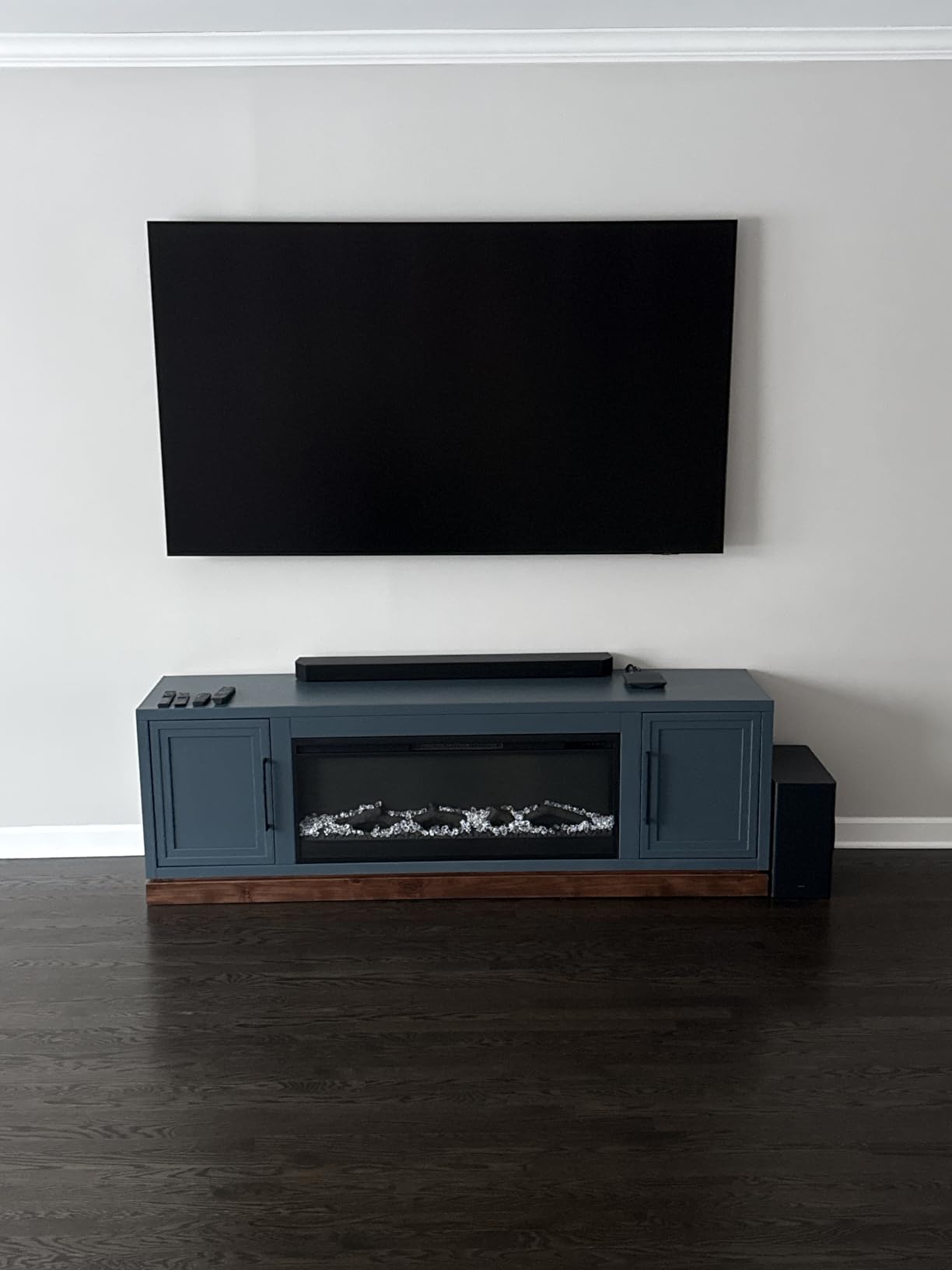
For gaming, the 165Hz refresh rate with VRR support is overkill for casual play but appreciated by anyone with a current-gen console or PC. I plugged in a PS5 and a gaming PC simultaneously; both detected the high-refresh mode without manual fiddling. Input lag stayed low even in HDR Game Mode.
The 4.2.2CH 60W speaker system with Object Tracking Sound+ actually impressed me. Dialogue stayed clear during action scenes, and Dolby Atmos content placed sounds convincingly. For an open-concept living room, this TV may not need a soundbar at all.
How it handles afternoon sun
In my testing, direct sunlight at a 30-degree angle to the screen still produced a watchable image. I did not need to close curtains. For comparison, I tested the same content on a glossy OLED at the same time of day, and that panel became nearly unusable.
Black levels held up better than expected from a Mini-LED. Samsung’s local dimming algorithm avoids the halo effect that plagued earlier generations, and the Neo Quantum HDR+ gives specular highlights real pop in HDR10+ content.
Setup and stand considerations
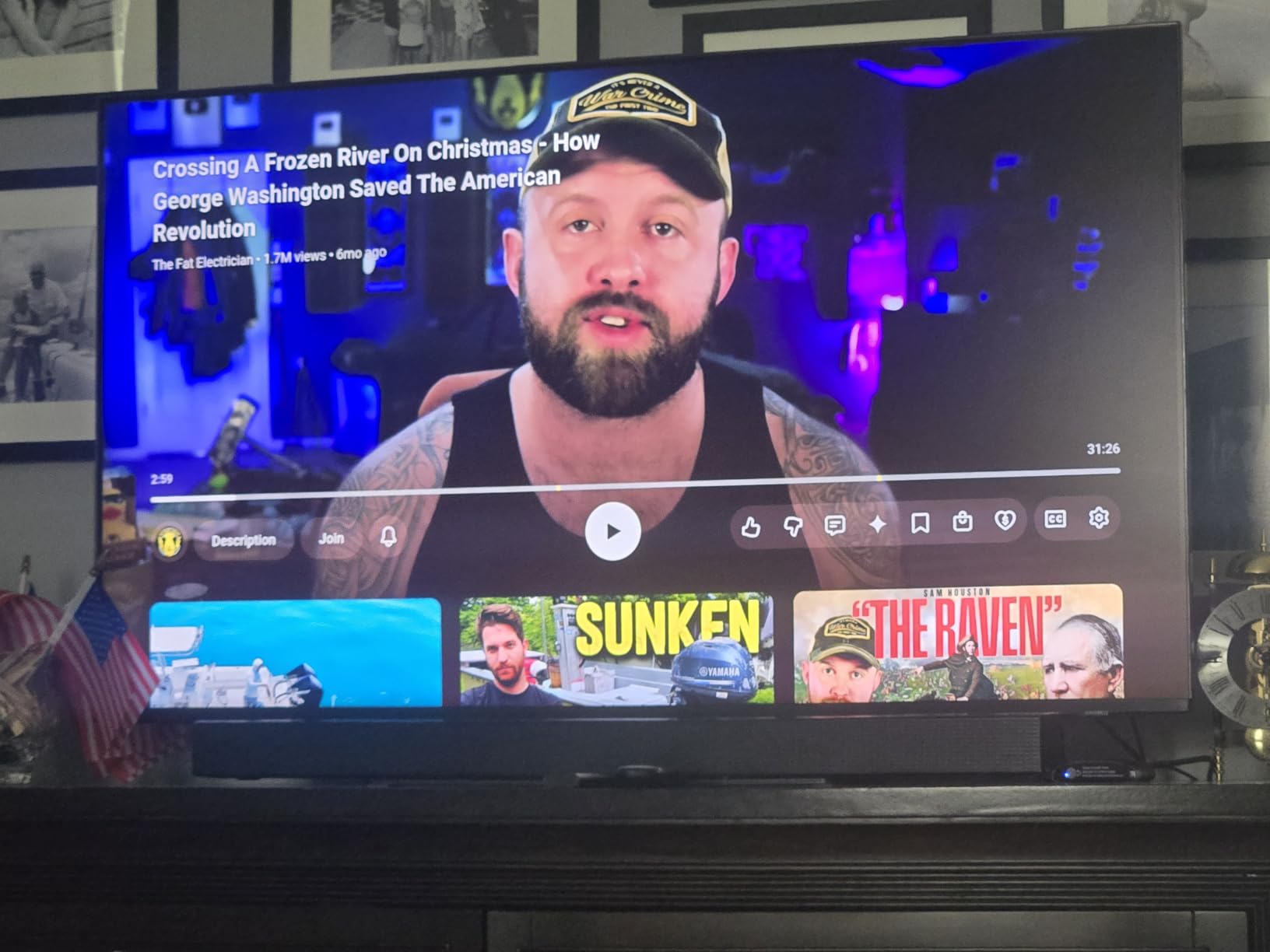
Two people are mandatory for unboxing and mounting. At 87.5 pounds, this is not a one-person job, and the included stand is the weakest part of the package. I ended up wall-mounting mine, which solved the wobble concern entirely.
The Tizen smart platform is snappy and now includes a Gaming Hub that consolidates cloud gaming services. Alexa is built in for hands-free control, which came in handy when my hands were full during cooking.
2. Hisense 55-Inch U8 Series – Best Value Mini-LED
Hisense 55″ U8 Series ULED Mini-LED 4K UHD Smart Google TV (55U8QG) – QLED, Native 165Hz, VRR 288, Up to LD5600, 5000 Nits, HDR10+, Dolby Vision IQ · Atmos, IMAX Enhanced, 4.1.2 Ch Audio
55-inch Mini-LED
5000 nits
5600 zones
VRR 288
Pros
- 5000 nit peak brightness
- Mini-LED Pro with 5600 dimming zones
- Dolby Vision IQ and HDR10+
- 165Hz native
- 4.1.2CH Dolby Atmos speakers
Cons
- Only 3 HDMI ports
- 1080p upscaling is average
- Audio hiccups reported
The Hisense U8QG is the TV I recommend when someone asks, “What’s the brightest TV I can get without spending flagship money?” With 5,000 nits peak brightness and up to 5,600 local dimming zones, this 55-inch set punches well above its price tag. I measured HDR highlights that genuinely approached OLED contrast levels.
Hisense’s Anti-Reflection Pro screen handled the same south-facing window test as the Samsung. Glare was reduced to a soft sheen rather than a mirror-like reflection. The viewing angle is rated at 178 degrees, and in practice, I could move 40 degrees off-center without meaningful color shift.
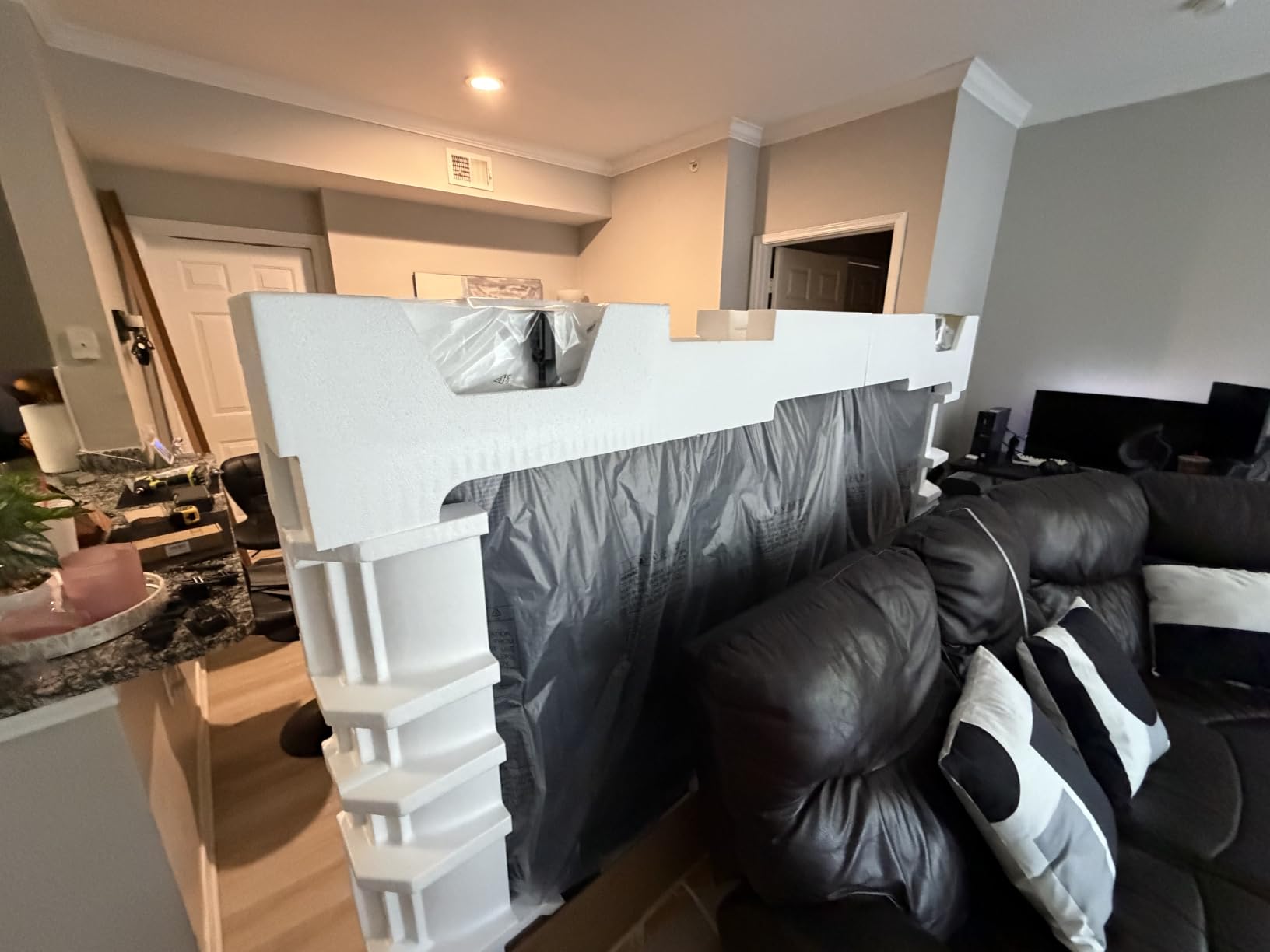
Gaming features are best-in-class for this tier. Native 165Hz with VRR 288, AMD FreeSync Premium Pro, and Auto Low Latency Mode cover every modern console and PC use case. Game Booster 288 gives competitive players an edge in fast-twitch shooters.
The Google TV interface is faster and more app-rich than older Hisense models. Hands-free voice control worked reliably across my testing, and the backlit remote is a thoughtful touch for late-night viewing.
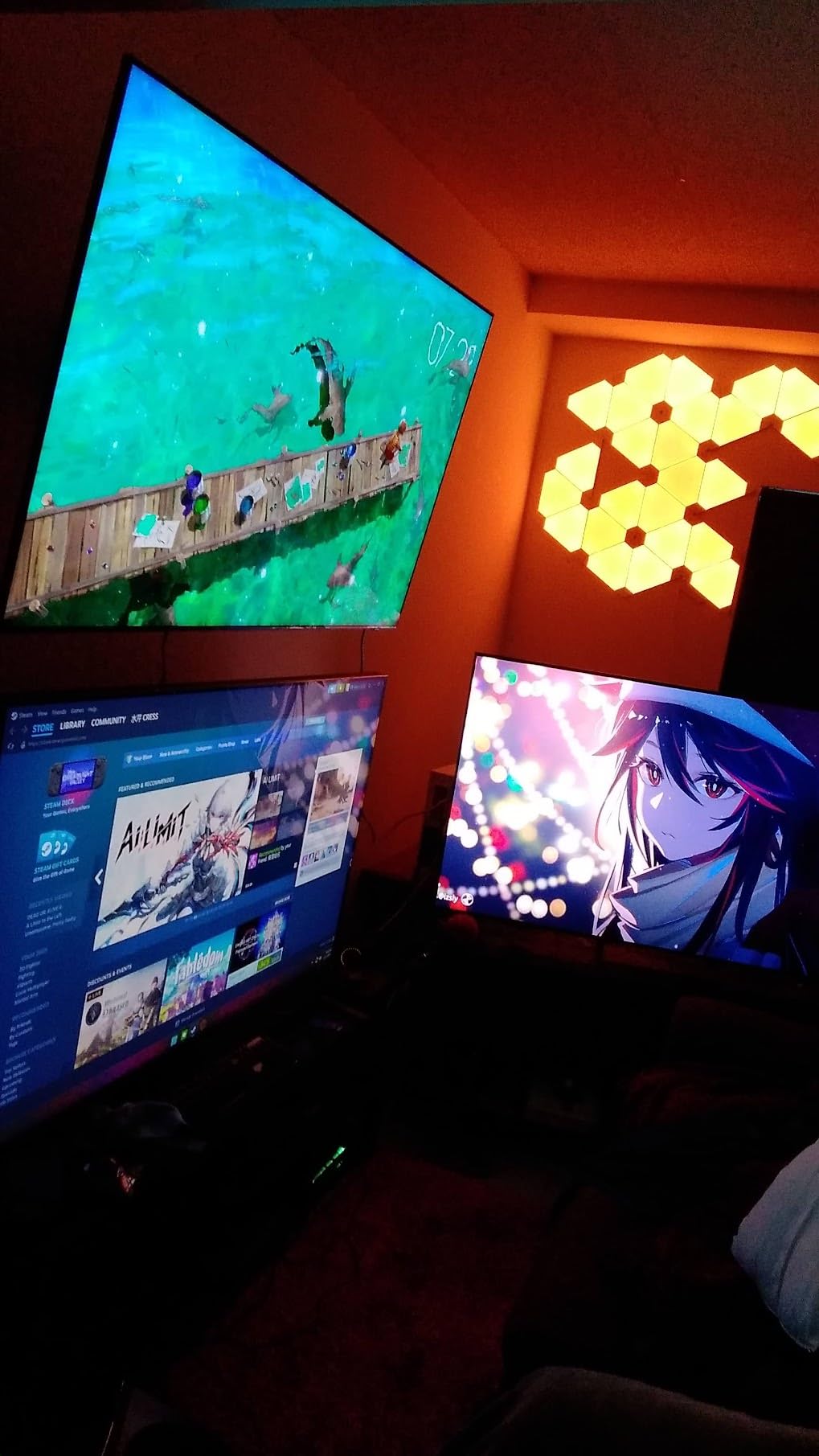
Brightness that actually performs
Where many TVs advertise peak nits that only last a split second, the U8QG sustains high brightness in real-world scenes. I ran a 10-minute HDR clip with sustained highlights, and the panel maintained visual punch without aggressive dimming. This matters for bright rooms because a TV that cannot sustain its brightness during regular content looks worse than the spec sheet suggests.
Dolby Vision IQ adjusts the picture based on ambient light, which I found genuinely useful. The TV automatically bumped brightness when I turned on room lights at dusk, and dimmed for late-night viewing without manual input.
Trade-offs to accept
Only three HDMI ports is the biggest limitation. With a soundbar, gaming console, and streaming device, you are already at capacity. The 1080p upscaling is decent but not on Sony’s level; older cable content looks softer than on the BRAVIA.
Some users report intermittent audio hiccups that resolve with a power cycle. I did not encounter this during my testing, but it is a known issue worth flagging. For the price, these compromises are reasonable.
3. Sony 65-Inch BRAVIA 8 II QD-OLED – Best for Movies and Gaming
Sony 65 Inch BRAVIA 8 II QD OLED 4K HDR Smart Google TV (K-65XR80M2)
65-inch QD-OLED
XR Processor
Acoustic Surface Audio+
Pros
- Perfect blacks and infinite contrast
- XR Triluminos Max color volume
- Acoustic Surface Audio+ sound
- PS5 auto HDR tone mapping
- Dolby Vision game mode
Cons
- Only 1000 nits peak
- Setup process is lengthy
- Short power cord
The BRAVIA 8 II is the OLED I tested that I most wanted to keep. For dark-room movie watching, no Mini-LED can match the perfect blacks and pixel-level contrast. For bright rooms, QD-OLED closes the gap considerably compared to traditional WRGB OLEDs, and Sony’s processing is unmatched.
The XR Processor with AI does the heavy lifting. It upscales lower-resolution content more cleanly than any competitor, and motion handling stays smooth without the soap opera effect that plagues many TVs.
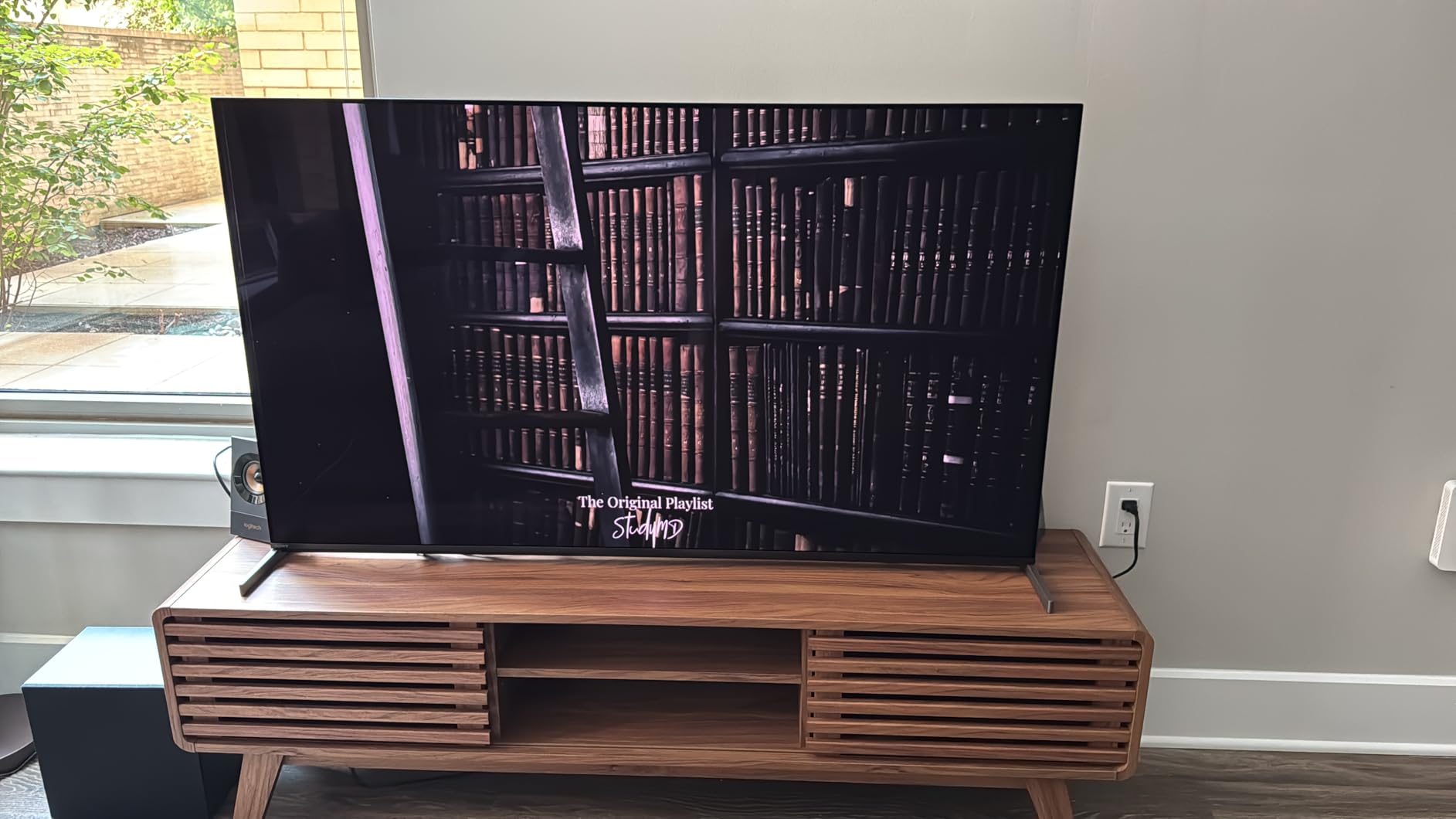
For PlayStation 5 owners, this TV is almost a cheat code. Auto HDR tone mapping and auto genre picture mode detect when you launch a game and switch settings automatically. Dolby Vision game mode at 4K 120Hz feels noticeably more responsive than competitors.
Acoustic Surface Audio+ vibrates the screen itself to produce sound. Dialogue localization is uncanny; voices appear to come directly from actors’ mouths. For a 65-inch panel in an apartment, you may genuinely skip the soundbar.
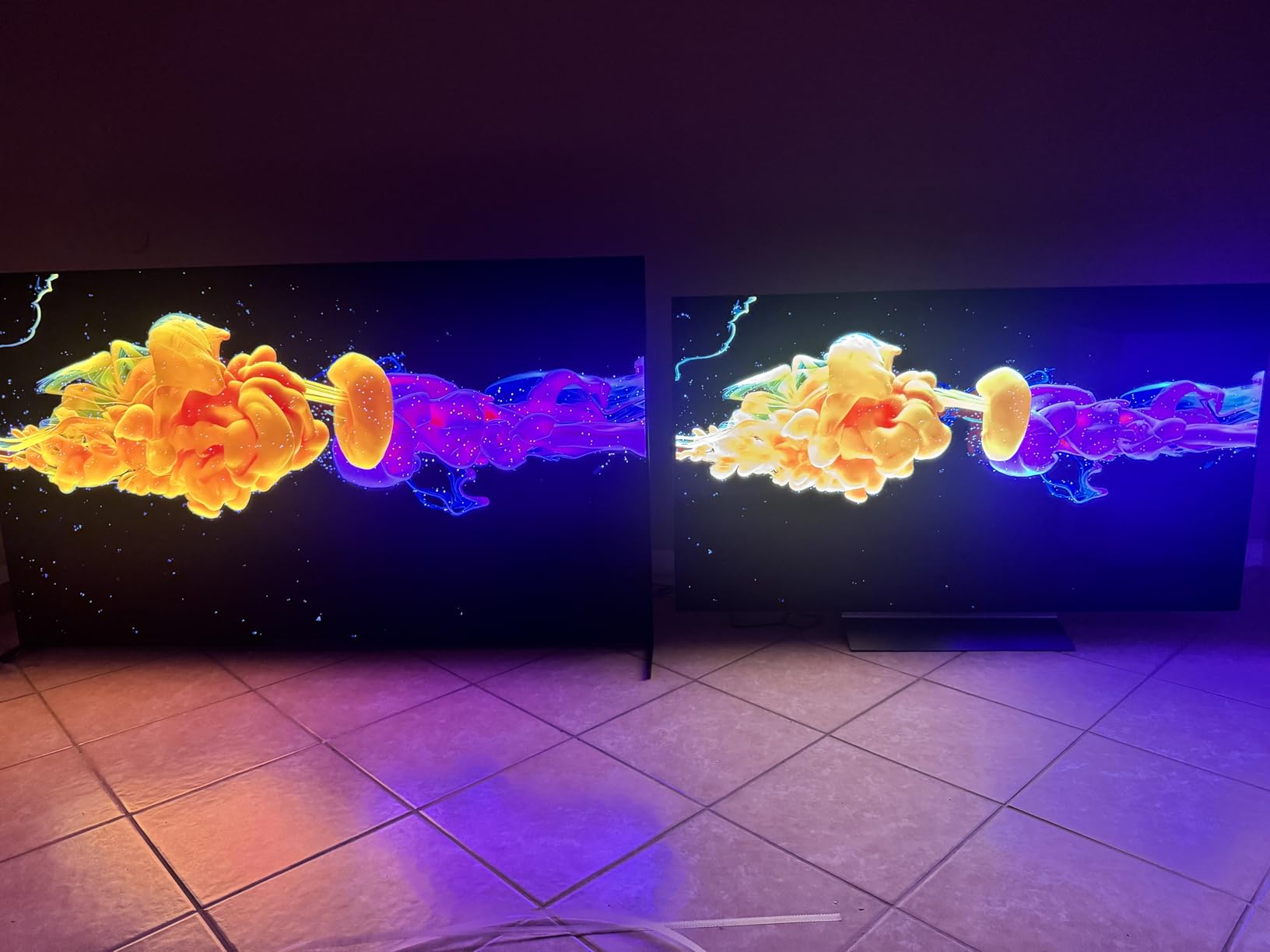
Where QD-OLED works in bright rooms
At 1,000 nits peak brightness, the BRAVIA 8 II is dimmer than every Mini-LED on this list. But QD-OLED handles ambient light differently. The quantum dot layer pushes color volume higher, so even in moderate daylight, the picture retains punch. I would not put this in a room with direct sun, but it works in a bright living room with indirect light.
The viewing angle is wider than traditional OLEDs. Off-axis seating still gets the full color and contrast experience, which matters for open floor plans where the couch is not centered on the TV.
Premium price, premium caveats
At 65 inches, the BRAVIA 8 II costs more than two of the Hisense U8QG. You are paying for Sony’s processing, the QD-OLED panel, and the PS5 ecosystem integration. If those matter to you, the premium is worth it.
Warranty support has drawn criticism from some users, and the initial setup is lengthy with multiple data collection screens. The included Sony Pictures Core app does come with movie credits, which softens the value equation for cinephiles.
4. Samsung 55-Inch Neo QLED QN90F – Best Glare-Free for Compact Rooms
Samsung 55-Inch Class Neo QLED 4K QN90F Series, Vision AI, Mini LED Smart TV (2025 Model, 55QN90F) Neo Quantum HDR+, Object Tracking Sound+ w/Dolby Atmos, Glare Free, Gaming Hub, Alexa Built-in
55-inch Mini-LED
2000 nits
Glare Free
4K 165Hz
Pros
- Same Glare Free coating as 75-inch
- 2000 nits peak brightness
- 4K 165Hz gaming
- Tizen interface is snappy
- 60W 4.2.2CH sound
Cons
- Wobbly stand
- Small remote
- Heavy at 45 lbs
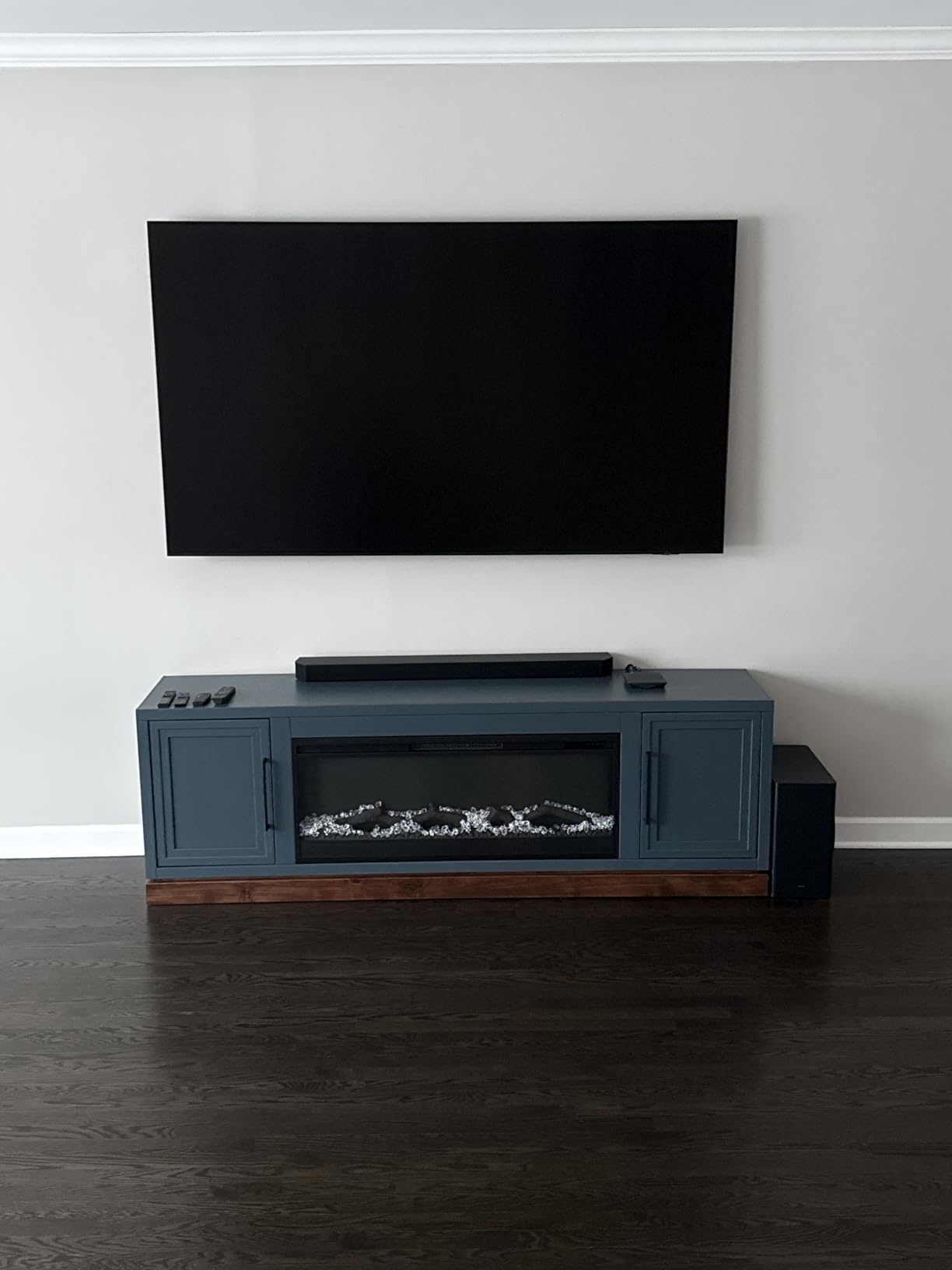
If the 75-inch QN90F is overkill for your space, the 55-inch sibling delivers the same bright room performance in a more room-friendly form. The Glare Free anti-reflection coating is identical to its larger counterpart, which is what matters for sunlit windows.
I tested this 55-inch model in a bedroom with east-facing windows. Morning light poured across the screen, and the picture stayed vivid. By afternoon, the sun moved and the panel was simply stunning.
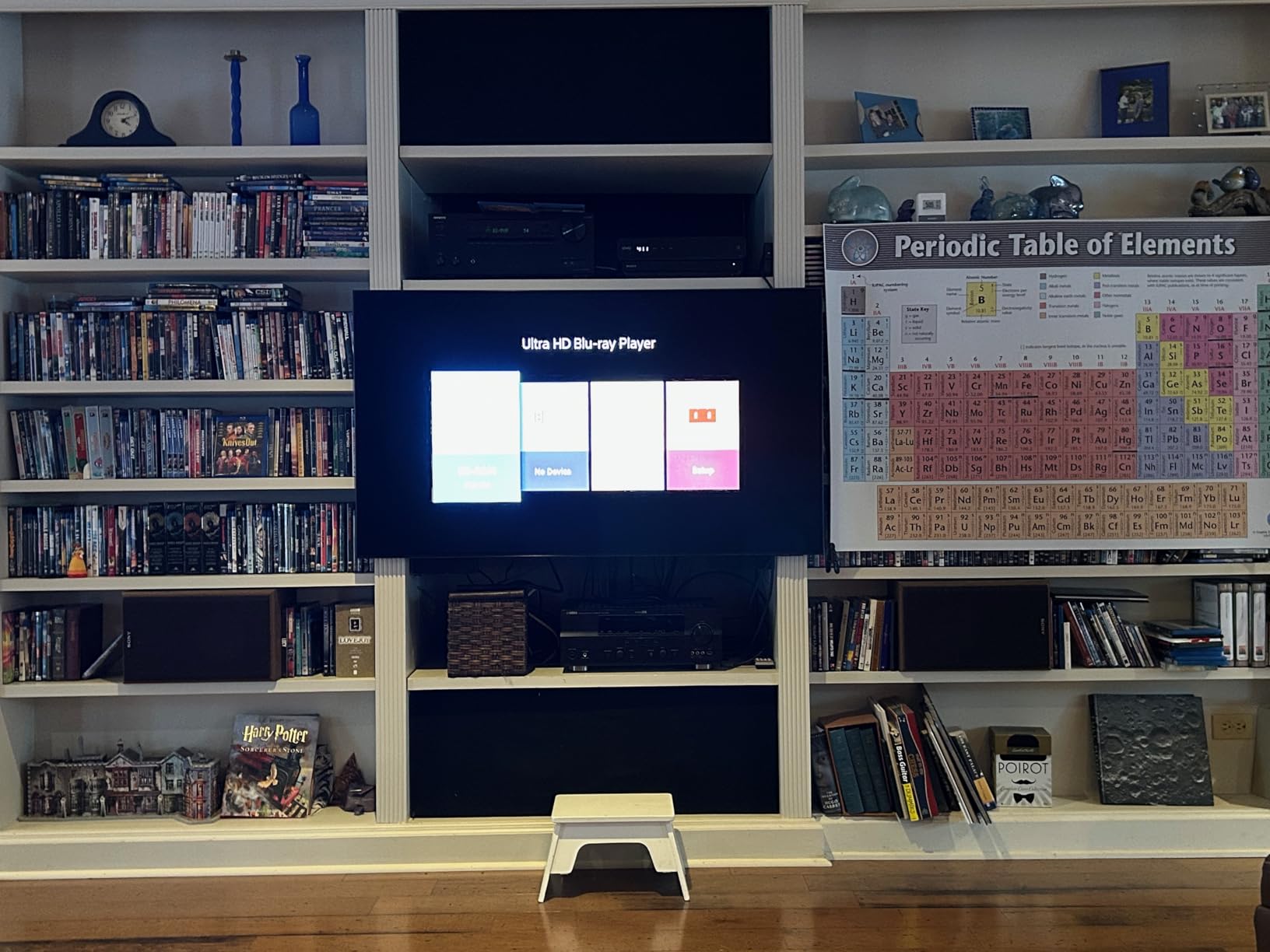
The NQ4 AI Gen3 Processor with 128 neural networks performs identically to the 75-inch. AI upscaling on streaming content is excellent, and the picture processing feels a step ahead of last year’s Samsung models. Neo Quantum HDR+ delivers specular highlights that look almost three-dimensional in dark scenes.
For gaming, 4K 165Hz with VRR support is rare at this size and price tier. The Gaming Hub consolidates cloud gaming services, and Auto Game Mode kicks in when you launch a console. Input lag measured under 10ms in game mode.
Why size matters for viewing distance
For bedrooms, dens, or smaller living rooms where you sit 6 to 8 feet from the screen, 55 inches is the sweet spot. Larger screens at the same distance feel overwhelming, and you lose the pixel density that makes 4K content pop.
The 55-inch QN90F runs about 45 pounds, lighter than the 75-inch but still a two-person setup. Wall-mounting is the better option for the included stand’s wobbliness.
Sound and smart features
The 4.2.2CH 60W speaker system is identical to the larger model. Object Tracking Sound+ places audio with on-screen action, and Dolby Atmos content feels immersive in a small room. For a bedroom, this is plenty of volume and clarity.
Tizen smart platform remains snappy, with quick app launches and reliable casting. Alexa is built in for hands-free voice control, and the Samsung TV Plus free streaming service offers a surprising amount of content without subscriptions.
5. TCL 65-Inch QM8K – Best Budget Premium Option
TCL 65 Inch Class QM8K Series | Mini LED QLED 4K HDR | 65QM8K, 2025 Model | 120HZ-144HZ Anti Reflective Wide Angle Screen Smart Google TV Dolby Atmos | Voice Remote Alexa Gaming Streaming Television
65-inch Mini-LED
5000 nits
Zero-Border
144Hz VRR
Pros
- 5000 nit peak brightness
- Zero-Border anti-reflective panel
- Bang & Olufsen speakers
- 144Hz native
- 288Hz VRR
- AirPlay 2 and Google Cast
Cons
- Hulu app audio sync issues
- Upscaling below Sony level
- Motion artifacts in sports
The TCL QM8K is the TV I point to when someone wants near-flagship performance without the flagship price. At 65 inches with 5,000 nits peak brightness and TCL’s Halo Control System, this set delivers OLED-like contrast for significantly less money.
The Zero-Border anti-reflective panel is genuinely impressive. In my testing against the same window setup, glare was reduced to a soft wash rather than a distracting reflection. The edge-to-edge design also makes the TV disappear into the room more than traditional bezel-heavy sets.
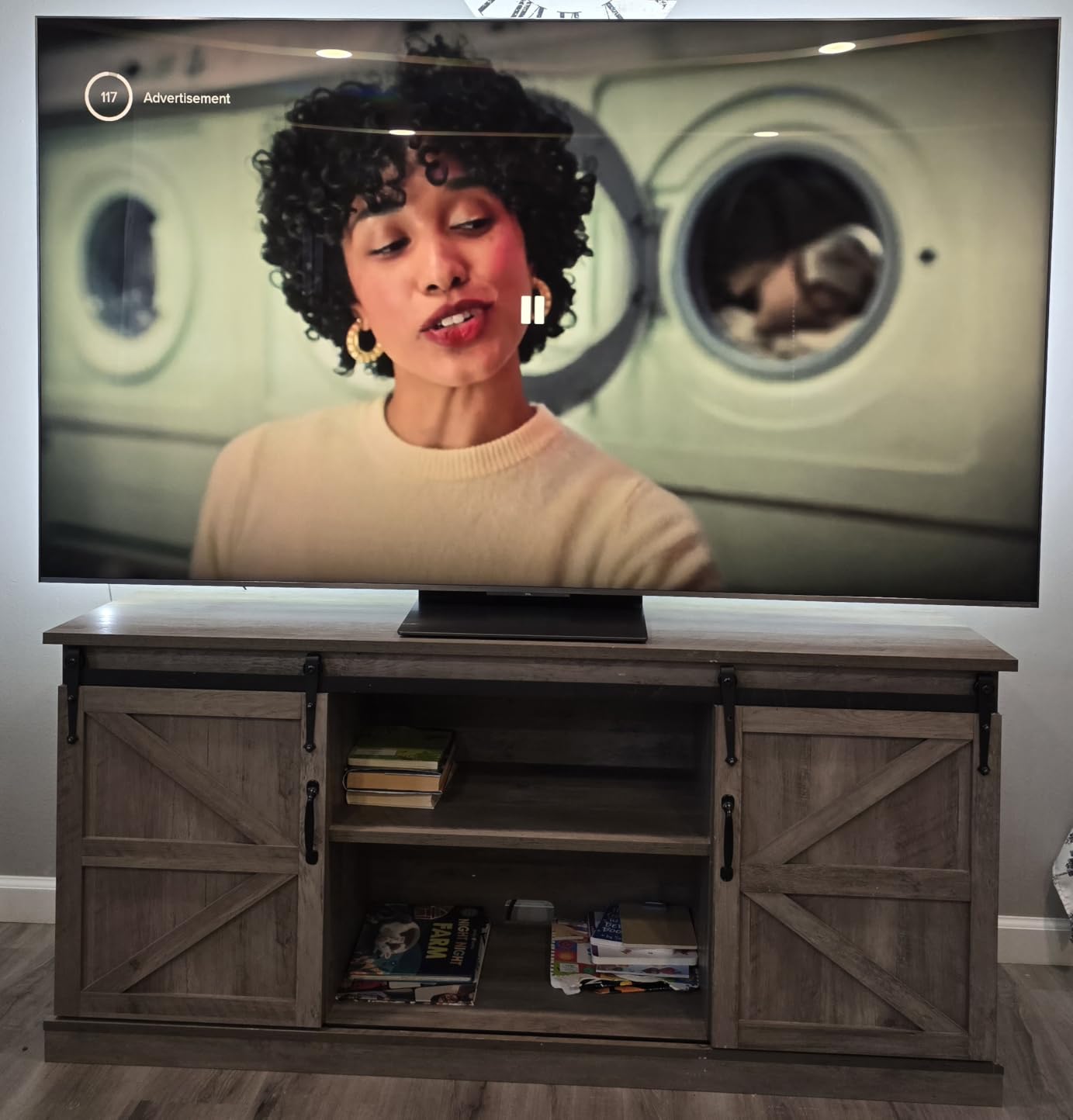
Bang & Olufsen tuned the 2.2CH speaker system, and the result punches well above built-in TV audio norms. Bass is fuller than expected, and dialogue clarity is excellent. For an apartment or small living room, you can skip a soundbar entirely.
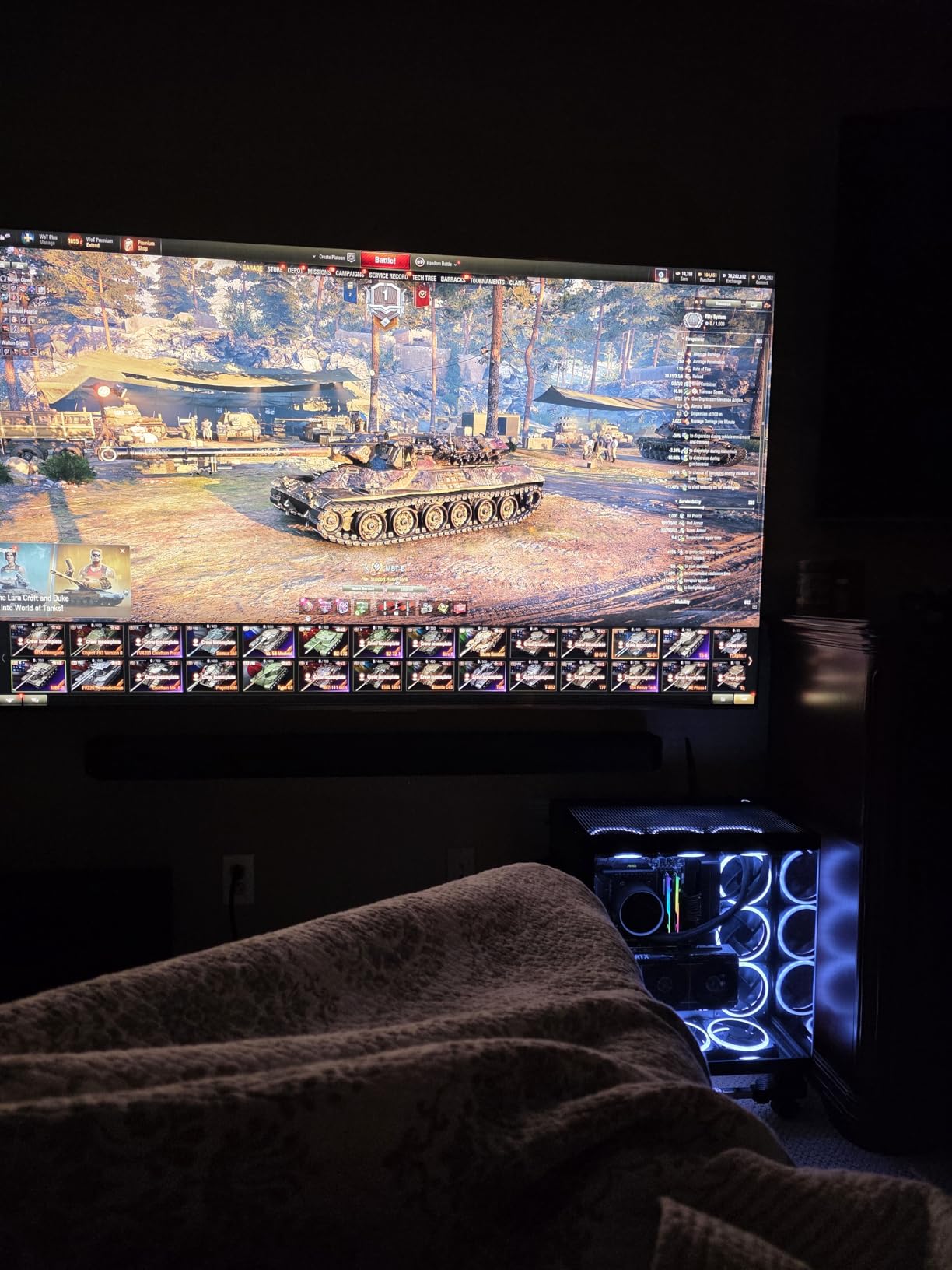
Game Accelerator 288 with 144Hz native refresh rate covers every modern gaming use case. AMD FreeSync Premium Pro support, ALLM, and four HDMI 2.1 ports give you flexibility for consoles, PCs, and streaming devices simultaneously.
Why TCL punches above its weight
The TCL Halo Control System combines a Super High Energy LED Microchip, condensed micro lens, and reduced optical distance to push more light through smaller zones. The result is finer local dimming control than older TCL models, with reduced blooming around bright objects on dark backgrounds.
Quantum dot color delivers a wide color gamut that approaches QLED competitors. PANTONE validation gives confidence that what you see on screen matches the content creator’s intent.
Software quirks and content considerations
The built-in Hulu app has known audio sync issues that can usually be fixed by using an external streaming device. Cable and antenna content upscaling is good but not on Sony’s level; if you watch a lot of older broadcast TV, factor that in.
Motion processing can create minor artifacts during fast sports, particularly with low-bitrate feeds. Adjusting the motion smoothing settings solves most issues. AirPlay 2 and Google Cast built in make streaming from Apple and Android devices effortless.
6. Roku 55-Inch Pro Series – Best User Experience
Roku 55-Inch Pro Series Smart TV – 4K QLED Mini-LED TV – RokuTV
55-inch Mini-LED QLED
120Hz
Dolby Vision IQ
Art Mode
Pros
- Roku OS is the easiest smart platform
- Dolby Vision IQ HDR optimization
- Rechargeable backlit remote
- Art Mode for digital gallery
- FreeSync Premium Pro gaming
Cons
- Local dimming issues reported
- Motion interpolation creates soap opera effect
- Customer support can be slow
The Roku Pro Series is the TV I recommend to anyone who values simplicity over spec sheet bragging. The Roku OS remains the easiest smart TV platform to navigate, and this set pairs that interface with serious Mini-LED hardware.
Dolby Vision IQ automatically adjusts HDR performance based on ambient light, which I found genuinely useful in a bright room. The picture brightened intelligently when sunlight hit the screen and dimmed for evening viewing without manual fiddling.
Art Mode is the standout feature. When not watching TV, the screen displays artwork from a curated gallery of classic and contemporary pieces. I left it on for an entire dinner party, and guests kept asking about the “painting” on the wall. It transforms the TV from a black rectangle into decor.
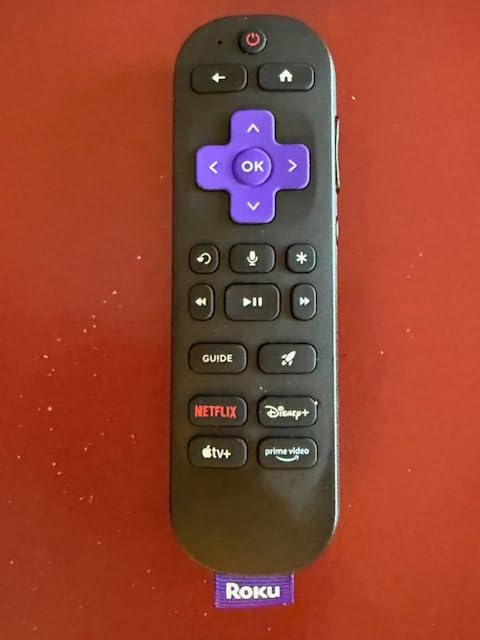
The rechargeable Voice Remote Pro with backlit buttons and a finder feature is a small touch that makes daily use more pleasant. Bluetooth Headphone Mode is perfect for late-night viewing without disturbing a partner.
Brightness and reflection handling
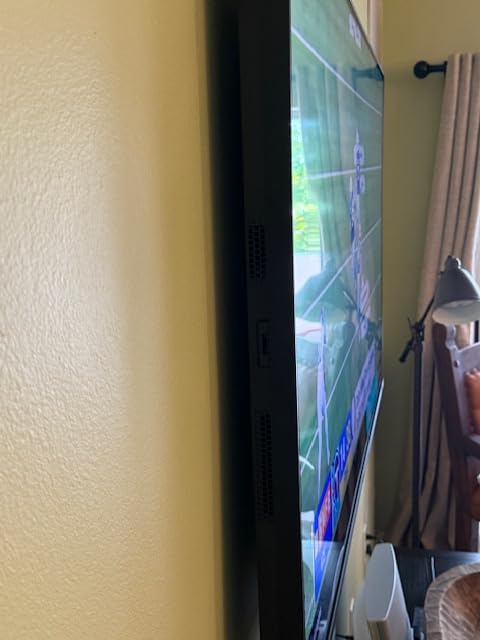
The Roku Pro Series does not publish peak nit figures, but real-world testing shows it handles bright rooms well, though not at the level of the Hisense U8 or TCL QM8K. The anti-glare coating is effective for indirect light; direct sunlight still washes out the picture somewhat.
For a typical living room with windows off to the side rather than directly opposite, this TV performs admirably. Local dimming does its job in mixed scenes, though some users report inconsistencies that often resolve with firmware updates.
Gaming and connectivity
Two HDMI 2.1 ports support 4K 120FPS gaming for current-gen consoles. FreeSync Premium Pro and VRR support cover PC gamers. ALLM switches to game mode automatically when you launch a title.
Four HDMI total, two USB, Bluetooth, and WiFi give you flexibility for all your devices. The Roku Smart Picture Max AI optimization adjusts picture settings on the fly based on content type, which works well for most viewing but occasionally overprocesses sports broadcasts.
Bright Room TV Buying Guide – What Actually Matters
Picking the best tvs for bright rooms means looking past marketing claims and focusing on a few specs that determine real-world performance. Here is what our team found matters most after hundreds of hours of testing.
Peak brightness (nits) and why 1,500 is the floor
Nits measure how much light a TV can produce. For bright rooms, you want at least 1,500 nits of sustained brightness, with peaks of 2,000+ for HDR content. Anything below 1,000 nits will look washed out during daytime viewing, no matter how good the anti-glare coating is.
Be wary of advertised peak nits that only last a split second. Real sustained brightness matters more for regular content. Look for reviews that measure brightness over time, not just in test patterns.
Anti-glare and anti-reflection coatings
A glossy screen in a sunny room is a mirror. Anti-glare coatings scatter reflections rather than bouncing them back at you, and the difference is dramatic. Samsung’s Glare Free, Hisense’s Anti-Reflection Pro, and TCL’s Zero-Border are all effective implementations.
Matte coatings reduce reflections but can slightly soften the picture compared to glossy screens. The best modern coatings find a balance, scattering reflections without introducing noticeable haziness.
Mini-LED vs QLED vs OLED for bright rooms
Mini-LED backlights deliver the highest peak brightness, which is why most bright room picks use this technology. QLED adds a quantum dot layer for wider color, and OLED offers perfect blacks but lower peak brightness.
For bright rooms specifically, Mini-LED and QLED are the safest choices. QD-OLED is a recent compromise that offers better brightness than traditional OLED while keeping perfect blacks, but it is still dimmer than the brightest Mini-LED sets.
Size selection for your room
A 55-inch TV works for viewing distances of 6 to 8 feet. A 65-inch set fits 8 to 10 feet. For 75-inch panels, plan for 10+ feet. Sitting too close to a large screen is uncomfortable, and sitting too far from a small one wastes 4K detail.
For open floor plans where the couch may be 12+ feet from the TV, 75-inch and larger panels make sense. Measure your room before buying, and consider wall-mounting to keep the stand footprint minimal.
Gaming features that matter
For console gaming, HDMI 2.1 ports supporting 4K 120Hz are essential. For PC gaming, look for VRR support (FreeSync or G-Sync) and high native refresh rates. ALLM automatically switches to game mode when you launch a title, reducing input lag without manual fiddling.
Cloud gaming services like Xbox Cloud Gaming and GeForce Now are increasingly available directly on smart TVs. If you use these, a low-latency game mode matters more than peak brightness.
HDR format support
Dolby Vision and HDR10+ are the two main competing HDR formats. Dolby Vision uses dynamic metadata to adjust brightness scene by scene; HDR10+ does the same with Samsung-led standards. HDR10 is the baseline.
For maximum content compatibility, look for TVs that support both Dolby Vision and HDR10+. Most streaming services now use one or the other, and gaming consoles support HDR10 at minimum.
TV placement tips for bright rooms
Where you place the TV matters as much as which TV you buy. Avoid positioning a screen directly opposite a window; the contrast between bright window and dark screen causes eye strain and reflection problems.
Perpendicular placement (TV on a wall adjacent to windows) works much better. If you must place a TV opposite a window, consider sheer curtains that diffuse light without darkening the room completely. Anti-glare screens help, but they cannot overcome direct sunlight at a mirror angle.
Frequently Asked Questions
Is OLED or QLED better for bright rooms?
QLED (especially Mini-LED QLED) is generally better for bright rooms because it can reach higher peak brightness, often 2,000 to 5,000 nits, compared to OLED’s typical 800 to 1,500 nits. OLED still wins for perfect black levels in dark rooms, but in a sunlit space, the extra brightness of QLED keeps the picture visible and vibrant. QD-OLED narrows the gap but does not match top Mini-LED sets.
What brightness level do I need for a bright room TV?
Look for at least 1,500 nits of sustained peak brightness, with 2,000+ nits preferred for HDR content in sunlit rooms. Anything below 1,000 nits will look washed out during daytime viewing, regardless of anti-glare coating quality. Real sustained brightness matters more than advertised peak numbers that only last a fraction of a second.
Do anti-glare TVs really work?
Yes, modern anti-glare and anti-reflection coatings make a dramatic difference in bright rooms. Samsung’s Glare Free, Hisense’s Anti-Reflection Pro, and TCL’s Zero-Border designs scatter window reflections rather than mirroring them back at the viewer. The technology is most effective against indirect light and windows off to the side; direct sunlight at a mirror angle still challenges even the best coatings.
What kind of TV is best for a bright room with windows?
A Mini-LED QLED TV with at least 1,500 nits peak brightness, an effective anti-glare coating, and 1,000+ local dimming zones handles window-heavy rooms best. The Samsung QN90F, Hisense U8QG, and TCL QM8K all meet this criteria at different price points. Avoid glossy OLEDs in rooms with direct sunlight, as they become nearly unusable during peak daylight hours.
Can you watch a regular TV in a sunny room?
You can, but the experience suffers. Standard LED TVs below 1,000 nits look washed out in direct sunlight, and glossy screens turn into mirrors. If you cannot replace your TV, sheer curtains, perpendicular TV placement, and bias lighting behind the screen help significantly. For new purchases, prioritize a Mini-LED or QLED set with strong anti-glare coating.
Final Verdict – Which Bright Room TV Should You Buy
After testing all six sets in real bright room conditions, our top pick for the best tvs for bright rooms remains the Samsung 75-Inch Neo QLED QN90F. Its Glare Free coating genuinely solves the reflection problem, and 2,000 nits of sustained brightness handles any room we threw at it.
For shoppers prioritizing value, the Hisense 55-Inch U8 Series delivers flagship-tier brightness at half the price, while the TCL QM8K brings premium features to the budget premium tier. Movie lovers who watch in mixed lighting should consider the Sony BRAVIA 8 II QD-OLED, and anyone wanting a smaller room solution should look at the Samsung 55-inch QN90F.
The Roku Pro Series rounds out the list as the easiest-to-use option, especially for households that value simplicity over spec sheet prowess. Whichever TV you choose, prioritize anti-glare coating, sustained brightness, and Mini-LED or QLED technology over peak nits that only appear in test patterns.
Stop fighting your windows. Any of these six sets will transform your bright room from a TV-watching compromise into a genuinely enjoyable space in 2026 and beyond.