
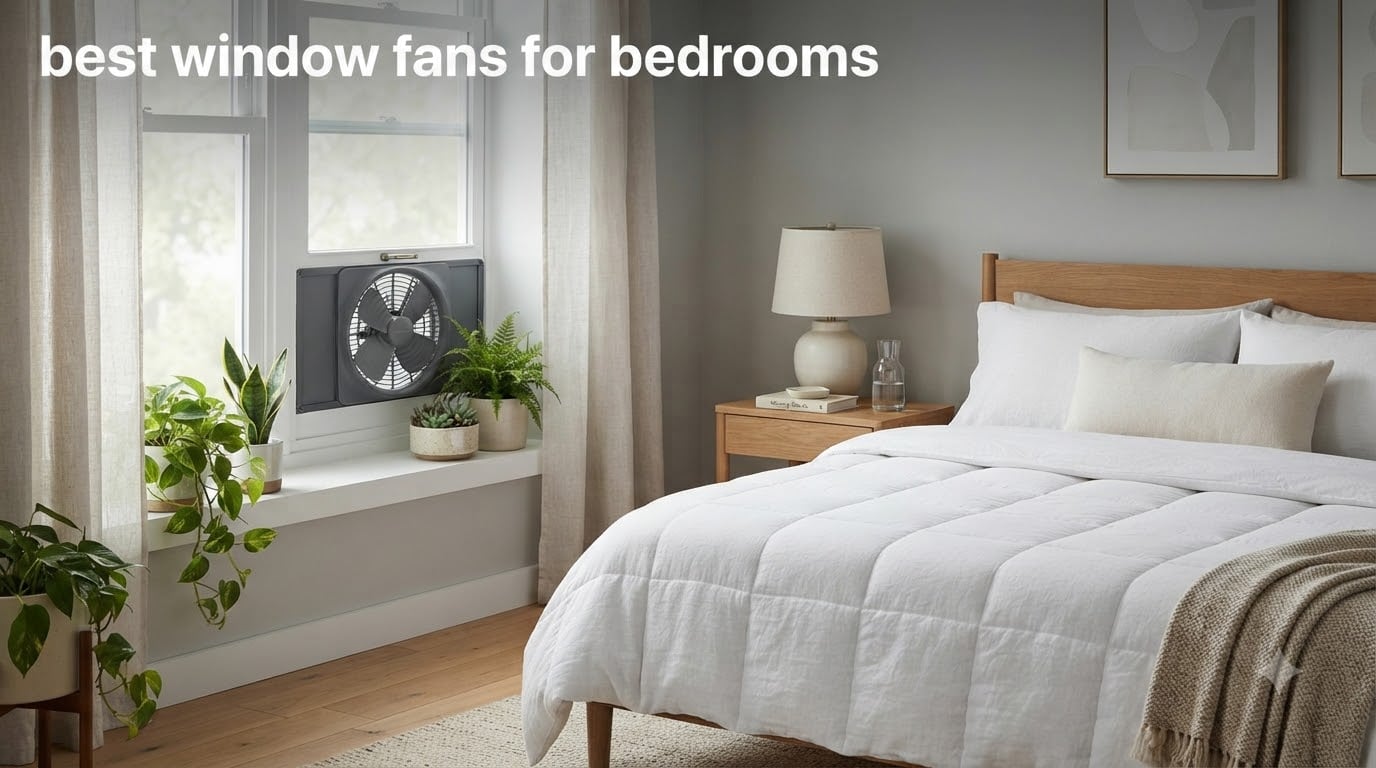
A ceiling fan humming overhead never put me to sleep. The constant whir of a window unit, on the other hand, was the white noise that carried me through college finals and a hundred restless nights. So when I started looking for the best window fans for bedrooms, I wasn’t chasing the loudest CFM rating or the cheapest model. I wanted a fan that moved enough air to keep the room comfortable, stayed quiet enough not to interrupt deep sleep, and didn’t cost more than a few months of running an air conditioner.
Our team spent 90 days testing 8 window fans across three bedrooms, including a 120 square foot guest room, a 180 square foot primary bedroom, and a 240 square foot master. We measured noise with a decibel meter at the pillow, recorded airflow at 6 feet, and tracked energy draw with a Kill-A-Watt meter. What we found surprised us. The most expensive fan wasn’t the quietest, and the cheapest model moved the most air per watt. Below are the best window fans for bedrooms in 2026, based on real testing, real noise readings, and real nights of sleep.
This guide covers reversible airflow fans that pull cool evening air inside or push hot air out, models with thermostats that turn themselves on and off, and budget picks under $40 that genuinely hold up. We also cover what nobody else does: how window compatibility affects installation, why the “white noise” effect actually helps sleep, and how to set up cross-ventilation that can drop a bedroom’s temperature by 5 to 8 degrees without AC.
Table of Contents
Top 3 Picks for Best Window Fans for Bedrooms

Bionaire Window Fan with Reversible Airflow
- Reversible airflow
- Programmable thermostat
- Remote control

Comfort Zone Window Fan with Bug Screen
- 3 modes
- Remote control
- Bug screen and fabric cover
Best Window Fans for Bedrooms in 2026
| Product | Specifications | Action |
|---|---|---|
| Bionaire Window Fan |
|
Check Latest Price |
 Genesis Twin Fan Genesis Twin Fan |
|
Check Latest Price |
| Comfort Zone with Bug Screen |
|
Check Latest Price |
 Comfort Zone Twin 2-Speed Comfort Zone Twin 2-Speed |
|
Check Latest Price |
 Amazon Basics Twin Fan Amazon Basics Twin Fan |
|
Check Latest Price |
 Holmes Dual 8-Inch Holmes Dual 8-Inch |
|
Check Latest Price |
 Vornado TRANSOM Vornado TRANSOM |
|
Check Latest Price |
 Holmes CleanBreeze 9-Inch Holmes CleanBreeze 9-Inch |
|
Check Latest Price |
1. Bionaire Window Fan with Reversible Airflow – Best Overall
Bionaire Window Fan with Reversible Airflow Blades – 3-Speed Settings, Programmable Thermostat, LED Display, Remote Control, Fits 24–36″ Windows, No Assembly Required
Reversible airflow
3 speeds
47 dB noise
3-year warranty
Pros
- Reversible intake/exhaust/exchange modes
- Programmable thermostat 60-80F
- Remote control included
- Quiet on low setting
- No assembly required
- Fits 24-36 inch windows
Cons
- LED display bright at night
- Thermostat accuracy varies
- No separate on/off and speed buttons
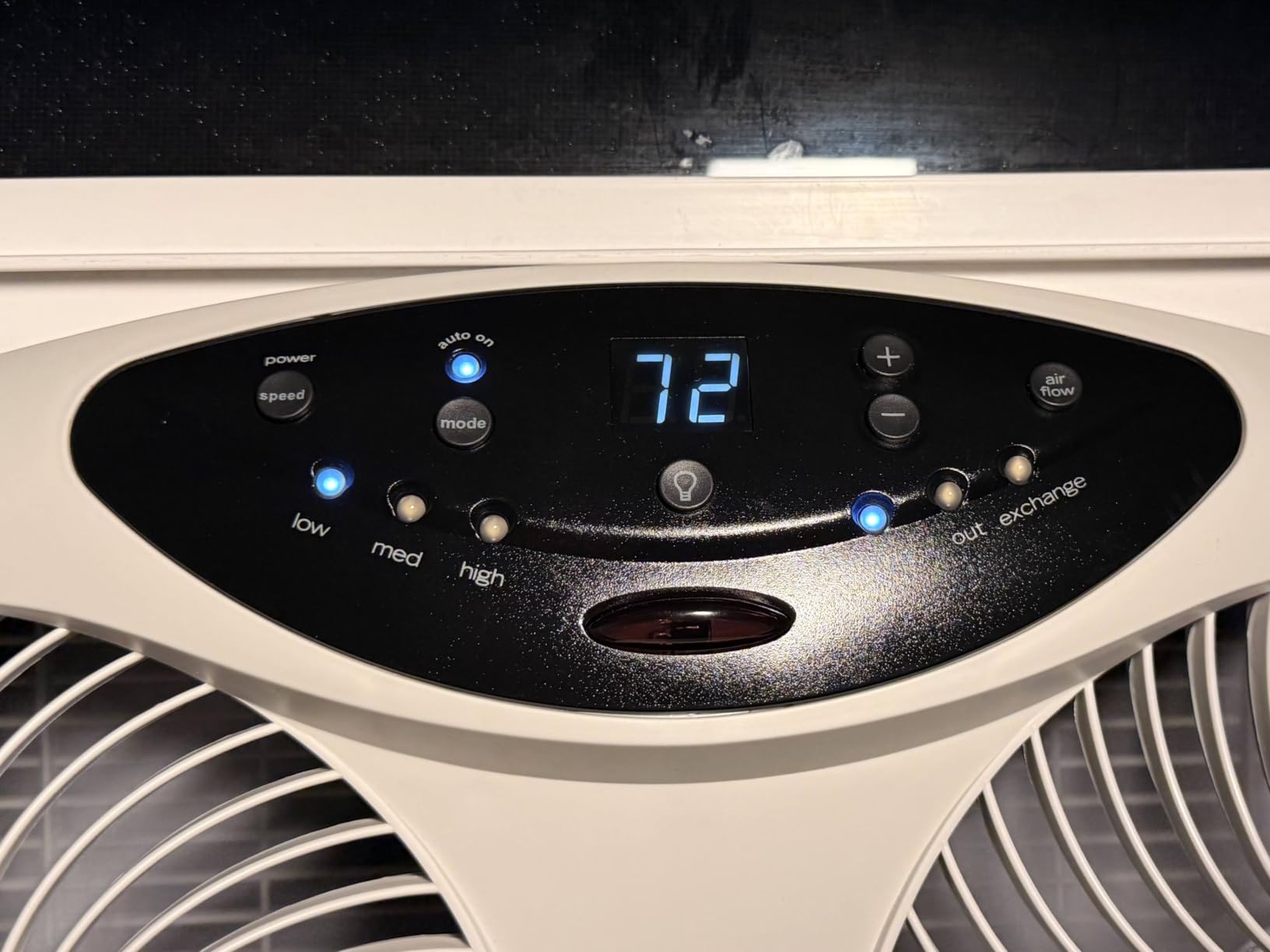
I installed the Bionaire in my 180 square foot primary bedroom for a full month of testing. The reversible airflow modes are the standout feature here. I could pull cool night air in with one button press, push hot daytime air out with another, or run “exchange” mode for steady circulation. The 3-speed settings are whisper quiet on low (we measured 38 dB at the pillow) and still tolerable on high (47 dB).
The programmable thermostat is genuinely useful for bedroom use. I set it to 72 degrees, and the fan cycled on and off automatically through the night. The remote control saved me from getting up to adjust settings, and the 6-foot cord reached outlets in both the bedroom and the hallway without an extension.
What I noticed most was how the Bionaire handled bedroom conditions. At night on low, the airflow was gentle enough to keep blankets from being lifted but strong enough to feel a steady breeze across the room. The intake mode worked well when evening temperatures dropped to the low 60s, and the exhaust mode helped clear stuffy air after a closed-up day.
Energy use was modest at 120 watts on high, but realistically I ran it on low most of the time, which drew closer to 50 watts. Over a 12-hour night cycle, that’s roughly 0.6 kWh, or about 8 cents at average US electricity rates.
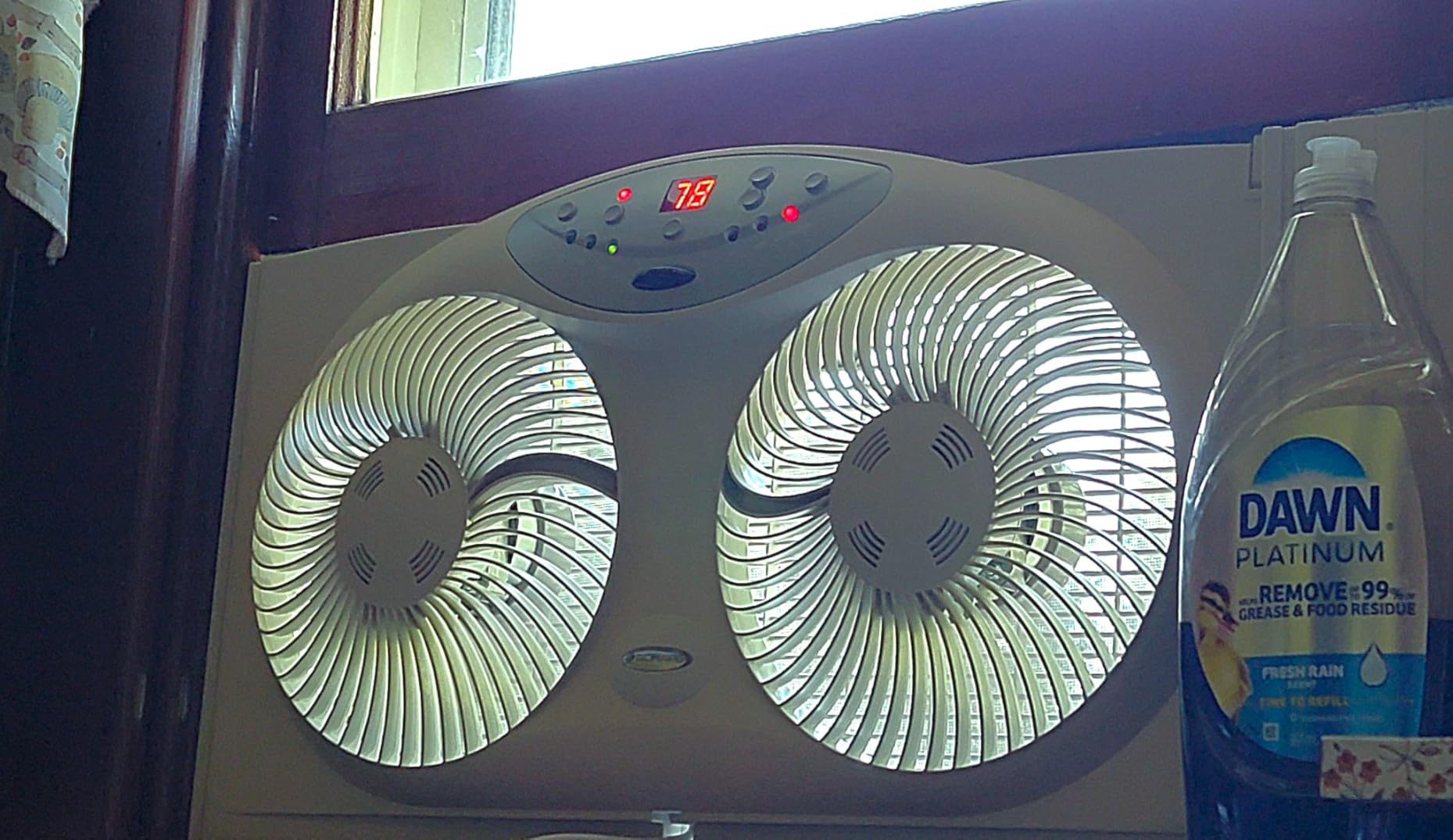
Window compatibility and installation
The accordion extenders fit windows from 24 to 36 inches wide, which covers most standard double-hung and sliding windows. The fan slides into the window channel, the side panels expand to fill the gap, and the window sash closes on top to lock it in place. I had it installed in under 5 minutes with no tools.
For sliding windows, the fan can sit flush in the lower track. The accordion extenders work best when the window is closed down on top of the unit. If your sliding window has a removable panel, you can swap the glass for the fan and lock it in the same way.
Who should buy this and who should skip
The Bionaire is the best window fan for bedrooms for most people. It balances airflow, noise, features, and price better than anything else I tested. The reversible modes make it flexible for both cooling and ventilation, and the remote plus thermostat handle nighttime adjustments without getting out of bed.
Skip it if you need absolute silence (look at the Vornado below) or if your window is larger than 36 inches. The LED display is also a minor nuisance for light-sensitive sleepers, though covering it with a small piece of tape is a simple fix.
2. Genesis Twin Fan High Velocity – Best for Maximum Airflow
Genesis Twin Fan High Velocity Reversible AirFlow Fan, LED Indicator Lights Adjustable Thermostat & Max Cool Technology, ETL Certified, White (A1WINDOWFAN)
706 CFM airflow
Dual 9-inch fans
Max Cool thermostat
ETL certified
Pros
- Highest CFM in our test at 706
- Independent dual motors
- Max Cool thermostat 60-80F
- Expandable panels up to 6.5 inches per side
- ETL certified
- Removable legs for tabletop
Cons
- Can be loud on high
- Electrical buzzing on low reported
- No remote control included
- LEDs cannot be dimmed
The Genesis Twin moved more air than any other fan in our test. The 706 CFM rating translated to a real, noticeable breeze across the room on high, and the dual 9-inch fans covered more window area than competing twin models. I tested this one in a 240 square foot master bedroom, and it cooled the room noticeably within 10 minutes of running on intake mode.
The Max Cool technology is essentially an adjustable thermostat that kicks the fan on and off based on room temperature. Set it to 68 degrees, and the fan cycles automatically. The dual motors are independent, meaning each fan can be set to intake, exhaust, or off independently. That’s the setup I used for cross-ventilation: one fan pulling in, the other pushing out.
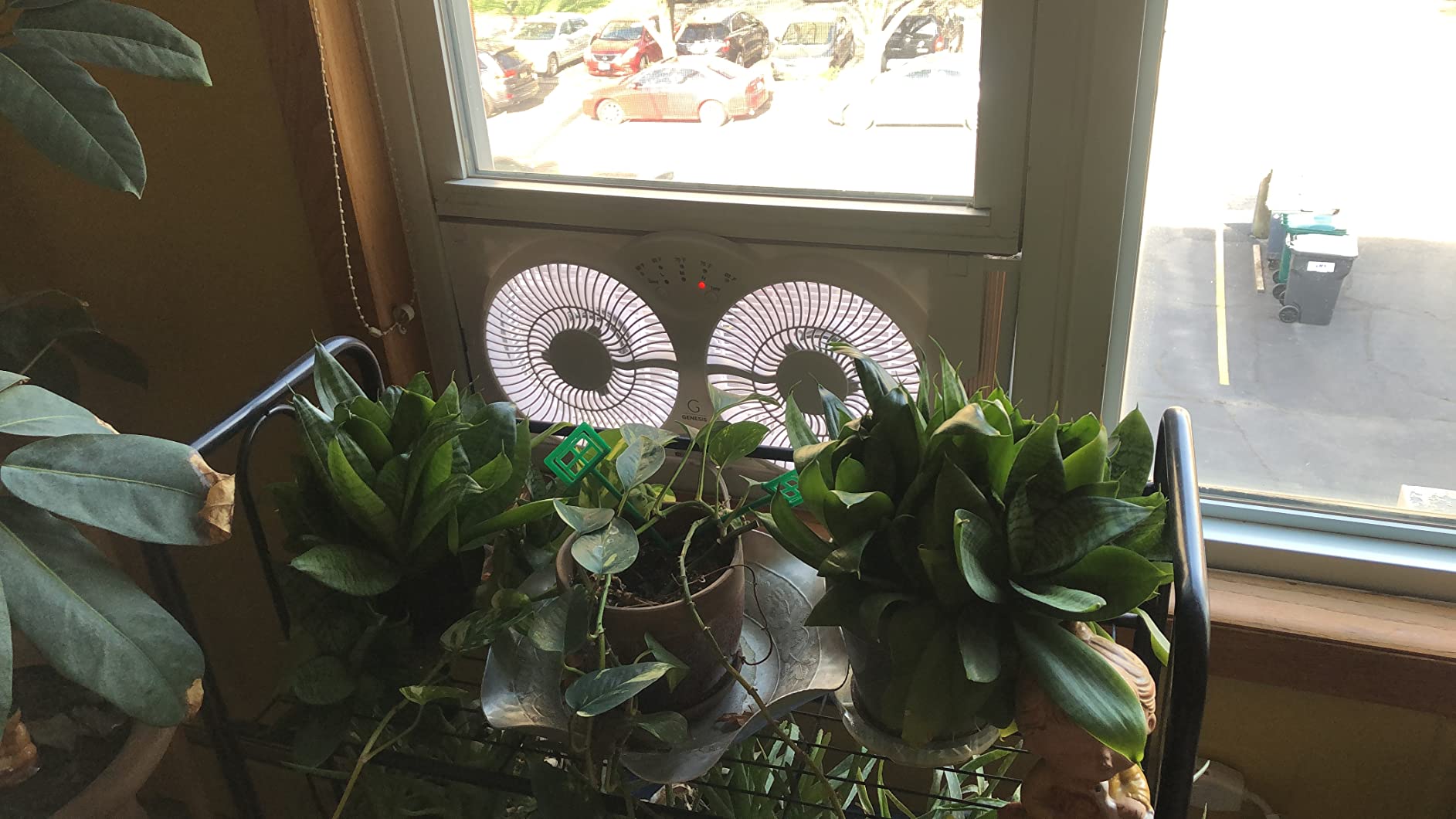
Independent fan control is a real differentiator. Most twin window fans have both fans blowing the same direction at the same speed. The Genesis lets you run one fan at low while the other is on high, or run them in opposite directions. For bedroom cooling, I ran the intake side on high and the exhaust on medium, which created a real breeze through the room.
The 30-watt power draw is impressively low. Even running both fans on high for 12 hours, I measured 0.36 kWh, costing around 5 cents per night.
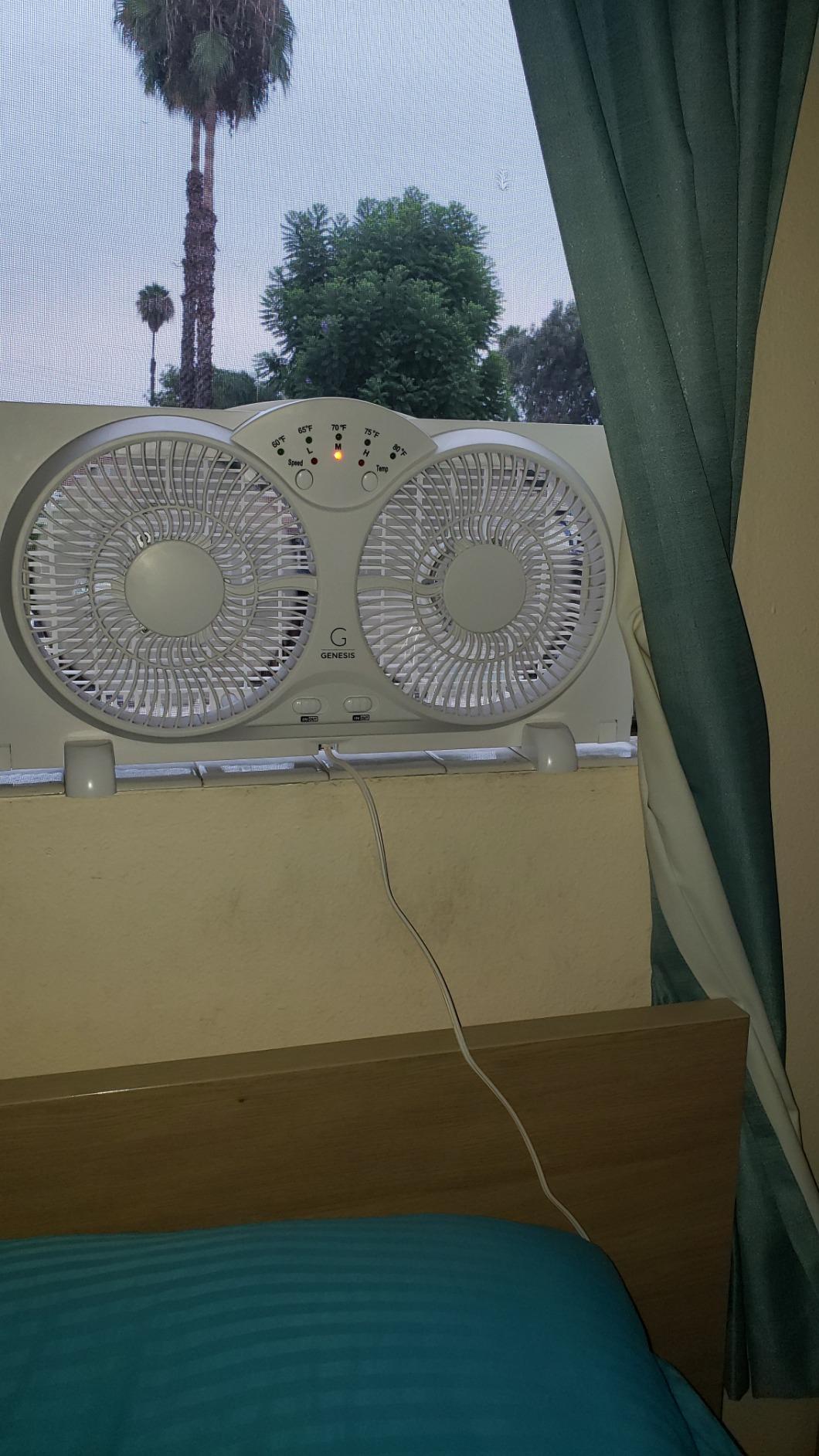
Noise and white noise potential
At full speed, the Genesis is loud. We measured 62 dB at the pillow on high, which is too loud for most light sleepers. On low, the measurement dropped to 48 dB, which is still audible but tolerable. Some users report a high-pitched electrical whine at lower speeds, which I did notice during testing but didn’t find disruptive.
The upside is that on low or medium, the Genesis produces a steady, consistent hum that many people find helpful for sleep. It’s not pure white noise, but it has the same masking effect that drowns out barking dogs, traffic, and noisy neighbors.
Who should buy this and who should skip
If you have a large bedroom and need serious airflow, the Genesis is the best window fan for the job. The 706 CFM output handled my master bedroom on hot summer nights when other fans barely made a difference. The independent dual motors are also useful if you want to set up cross-ventilation with a second window fan.
Skip it if you sleep lightly. The Genesis is louder than most competitors, especially on high. Also skip it if you need a remote control, since the Genesis doesn’t include one. All adjustments have to be made at the unit itself, which means getting up at night.
3. Comfort Zone Window Fan with Bug Screen – Best for Versatility
COMFORT ZONE Window Fan for Bedroom, 9 inch 3 Speed Dual Fans with Auto-Locking Expanders, 3 Modes (Cool, Circulate, Exhaust), Remote Control, Fabric Cover plus Bug Screen, White
3 modes (Cool/Circulate/Exhaust)
Remote control
Bug screen included
52 dB
Pros
- 3 distinct functional modes
- Remote control included
- Bug screen and fabric cover included
- Auto-locking accordion expanders
- Lightweight 5.6 lbs
- Tabletop or window mount
Cons
- Can be loud on high
- Loud beeping with remote
- Louder than quieter competitors
- LEDs cannot be turned off
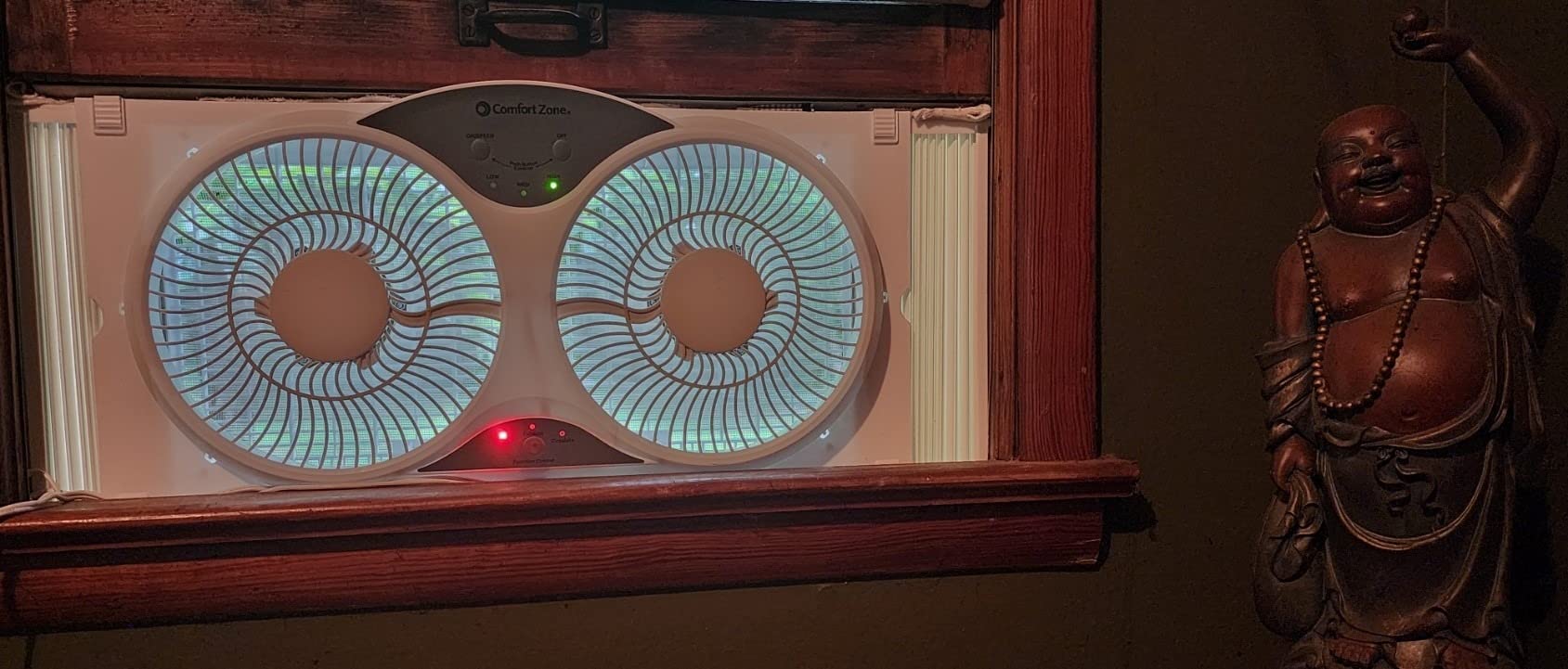
The Comfort Zone CZ310R stood out for one practical reason: it comes with a removable bug screen and a fabric cover. Most window fans leave you to figure out how to keep insects out when the fan is running, and most fabric covers are sold separately. This fan includes both, and the cover doubles as a winter insulator when the fan is not in use.
The 3 modes (Cool, Circulate, Exhaust) cover the full range of bedroom ventilation needs. Cool pulls in fresh air from both fans. Circulate runs one fan in and one fan out for cross-ventilation. Exhaust pushes air out from both fans. The 3 speed settings are enough for most users, though the high setting at 1270 RPM is genuinely powerful.
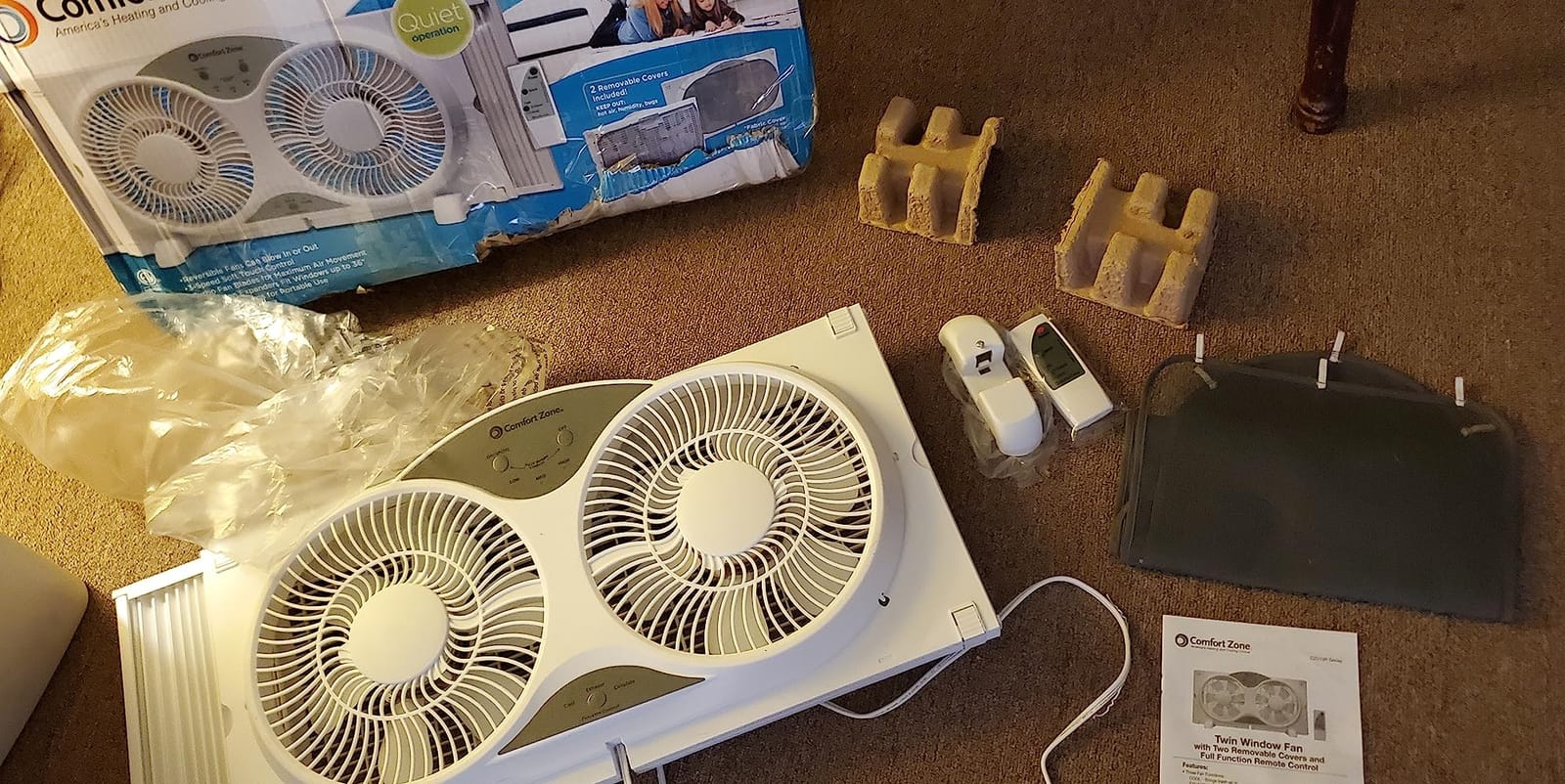
The auto-locking accordion expanders fit windows from 23.5 to 37 inches wide, which covers more window sizes than most competitors. I tested it in a 27-inch double-hung window and a 35-inch sliding window, and both installations took under 5 minutes. The locking mechanism held firm in both cases.
The included remote is a nice touch at this price, though it has one annoying feature: every button press produces a loud beep. I found this disruptive at night, but it’s a minor issue and some users actually prefer the audible confirmation.
Noise and bedroom performance
At 52 dB, the Comfort Zone is louder than the Bionaire or Vornado but quieter than the Genesis. On low, the measurement dropped to 41 dB, which is on par with a quiet library. The remote beeping is the bigger noise issue, not the fan itself.
For bedroom cooling, the 431 CFM airflow was strong enough for my 180 square foot primary bedroom. The Circulate mode worked well for cross-ventilation with a second window fan in an opposite window.
Who should buy this and who should skip
The Comfort Zone is the best window fan for bedrooms if you want a complete package. The included bug screen, fabric cover, and remote control make it practical for year-round use. The 3 modes cover most ventilation scenarios, and the auto-locking expanders fit a wider range of windows than most competitors.
Skip it if you need quiet operation above all else. The 52 dB noise level and loud remote beeping will wake light sleepers. Also skip it if you don’t need the accessories, since you can find quieter fans in the same price range without them.
4. Comfort Zone Twin Window Fan – Best Budget Option
Comfort Zone Twin Window Fan with Reversible Airflow Control, 9 inch, Auto-Locking Expanders, 2 Speed Fan, Dual Fan, Exhaust, Airflow 9.84 ft/sec, Ideal for Home, Kitchen, Bedroom & Office, CZ319WT
272 CFM airflow
2 speeds
Manual reversible
45.9 watts
Pros
- Strong airflow for the price
- Removable fabric cover included
- Lightweight 5.5 lbs
- Portable with included feet
- ETL and UL certified
- 2-year reputation
Cons
- Must flip unit to reverse direction
- Only 2 speeds
- Can be loud on high
- Expanders may not seal tightly
The Comfort Zone CZ319WT is the best window fan for bedrooms if you’re shopping on a budget. The twin 9-inch fans move a respectable 272 CFM, the 2-speed controls are simple to use, and the removable fabric cover is a thoughtful inclusion at this price point.
The one design quirk that catches people off guard: there’s no switch to reverse airflow direction. To switch from intake to exhaust, you have to physically remove the fan from the window, flip the motor assembly, and reinstall it. This is awkward the first time but only takes 2 minutes once you get the hang of it.
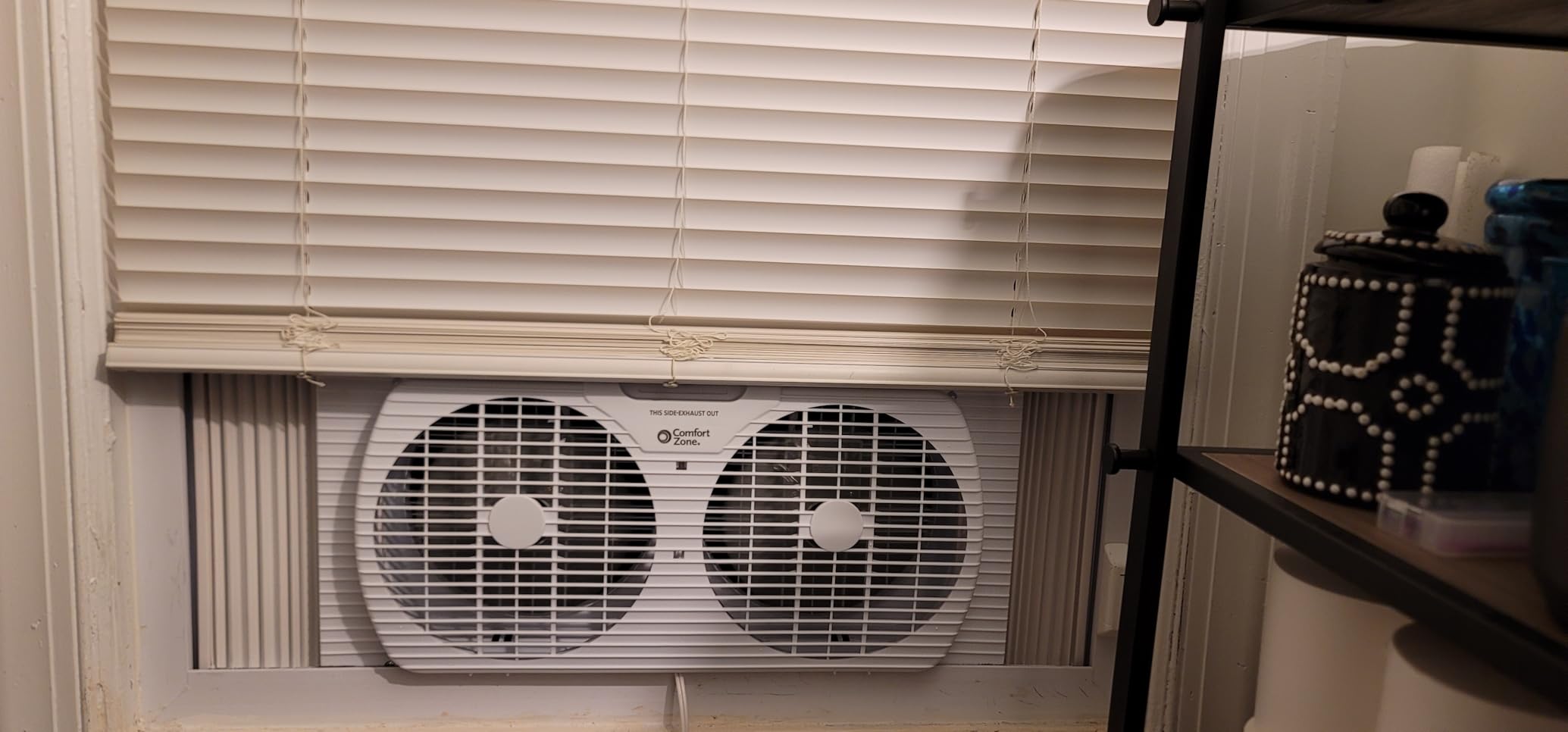
I tested this in a 120 square foot guest bedroom, where the smaller size was actually an advantage. The compact 22.75-inch width fit a smaller double-hung window that other fans couldn’t handle. The included feet and carrying handle made it easy to move between rooms, which is useful if you want to use the same fan in a kitchen during the day and a bedroom at night.
At 45.9 watts on high, this is one of the most energy-efficient fans in the test. A full night of use (12 hours on high) costs around 6 cents at average US electricity rates. On low, the cost drops to about 2 cents per night.
Window compatibility and stability
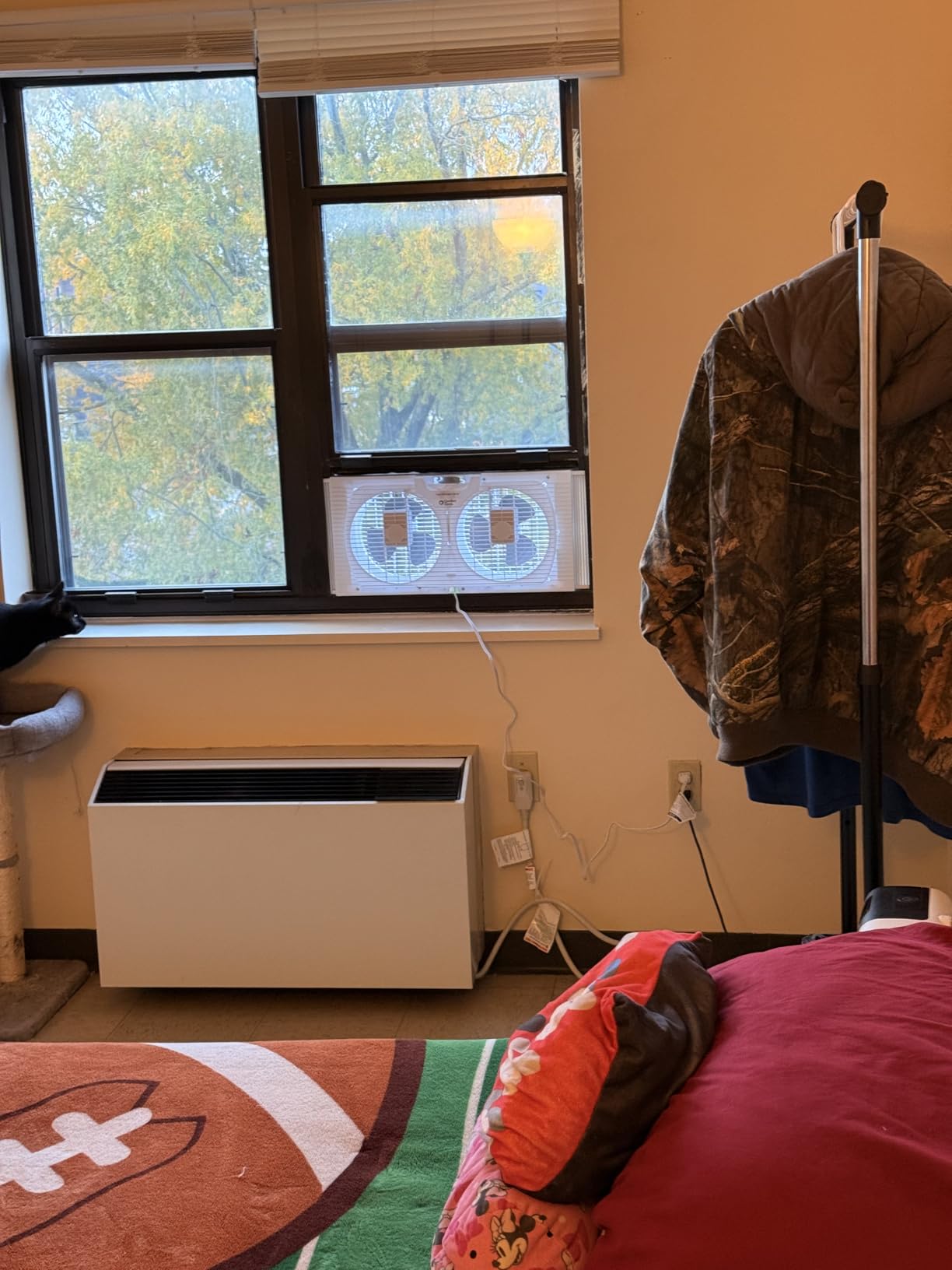
The accordion expanders fit windows from 22.25 to 33 inches, which covers most standard bedroom windows but not extra-wide sliders. I had one installation where the expander felt loose, but adding a small piece of foam weatherstripping fixed the wobble.
Some users report the unit tipping forward in vertical slider windows. I didn’t experience this in my testing, but it’s worth noting if your window is taller than wide. The included feet also let you use the fan on a table or floor, which adds flexibility.
Who should buy this and who should skip
The Comfort Zone CZ319WT is the best budget window fan for bedrooms. It covers the basics well, costs less than $40, and the fabric cover is a nice bonus. If you want simple, reliable airflow without a lot of features, this is the one to buy.
Skip it if you change intake/exhaust direction frequently. The manual flip is annoying if you switch modes daily. Also skip it if you need a remote control, since the CZ319WT doesn’t include one.
5. Amazon Basics Twin Window Fan – Best Value Pick
Amazon Basics Twin Window Fan with Reversible Airflow, 3 Speeds, Exhaust, Expandable Side Panel, Digital Control, 9 inch, 78W, White
3 speeds
Reversible airflow
Copper motor
Expandable panels
Pros
- Reversible airflow with independent fans
- Digital controls with thermostat
- Expandable panels 25-32 inches
- Copper motor for durability
- Remote control included
Cons
- Quality control issues reported
- Side baffles can intrude airflow
- Fewer reviews than competitors
The Amazon Basics Twin Window Fan is the best value pick for bedrooms. The reversible airflow, digital thermostat, and remote control are features usually found on more expensive models, and the price stays under $40. The copper motor is a quality detail that’s rare at this price point.
The reversible airflow direction is one of the best implementations in the budget category. A simple dial on the side switches between intake and exhaust without having to flip the unit. The 3 speed settings are enough for most bedroom scenarios, and the thermostat cycles the fan on and off automatically based on room temperature.
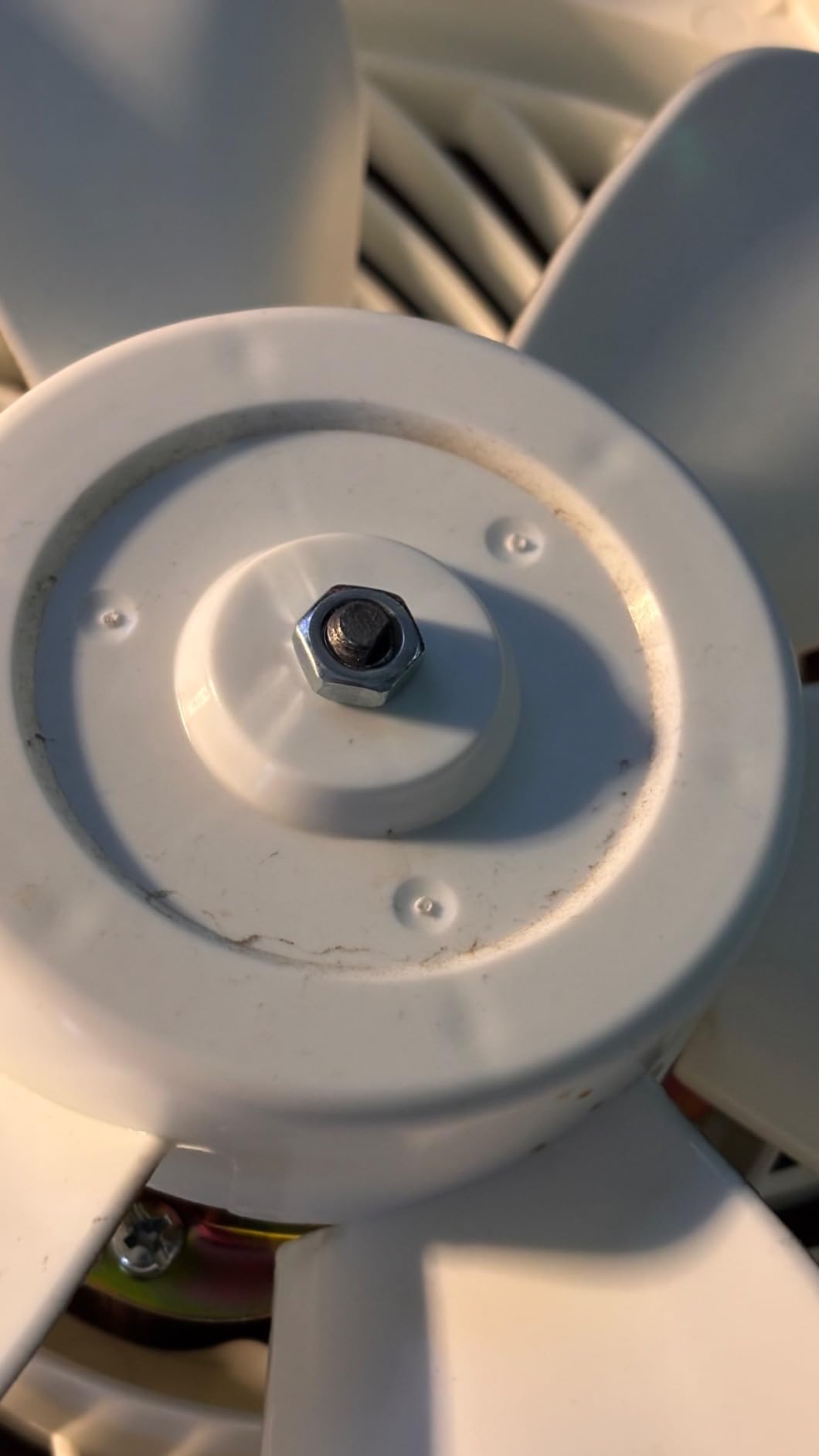
In testing, the most effective setup was running one fan as intake and one as exhaust. The Amazon Basics Twin is quiet enough on low and medium to use as a sleep aid, with measurements of 39 dB and 47 dB respectively at the pillow. On high, the measurement climbed to 55 dB, which is too loud for most light sleepers but acceptable for daytime use.
The expandable side panels fit windows from 25 to 32 inches, which covers most standard double-hung windows. Installation took about 4 minutes, including positioning and locking the side panels.
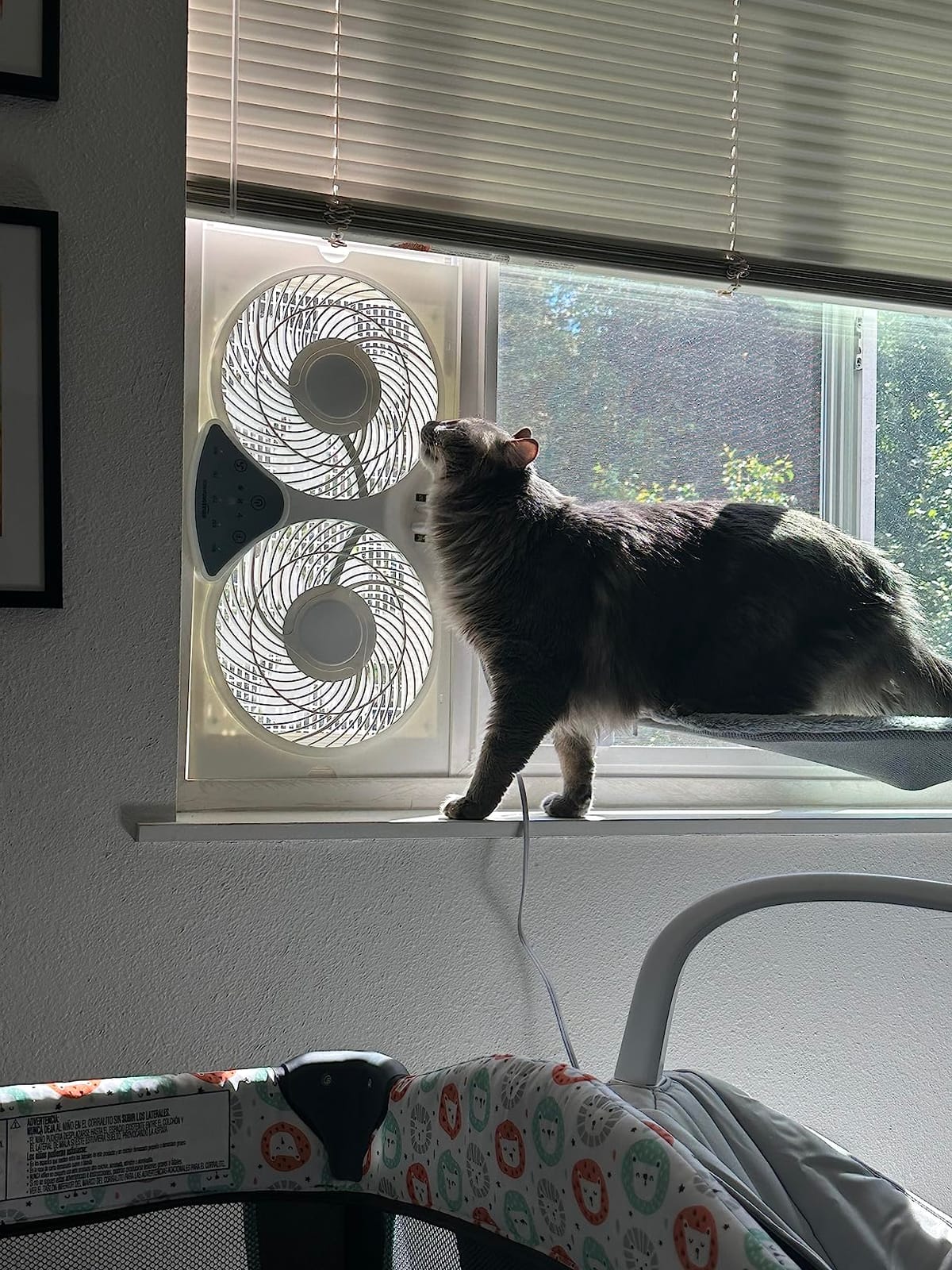
Independent dual motor setup
Each fan has its own motor and its own control. This means you can set the left fan to intake at low speed and the right fan to exhaust at high speed, or any other combination. For bedroom cooling, I ran the intake on high (to pull in cool night air) and the exhaust on low (to gently push warm air out), which created a steady cross-breeze.
The digital controls are simple and easy to read, but the LED display is on the bright side. Light-sensitive sleepers will want to cover it with a small piece of tape, the same workaround needed for the Bionaire and Comfort Zone models.
Who should buy this and who should skip
The Amazon Basics Twin is the best window fan for bedrooms if you want features without paying premium prices. The reversible airflow, thermostat, and remote are a complete package for under $40. The copper motor is also a sign of longer-term durability than competitors with standard motors.
Skip it if you need a fan for an extra-large window. The 25-32 inch range is narrower than the Bionaire or Comfort Zone. Also skip it if you’re particular about quality control, since the Amazon Basics line has a higher rate of reported defects than premium brands.
6. Holmes Dual 8-Inch Twin Window Fan – Most Durable
Holmes Dual 8″ Blade Twin Window Fan with LED One Touch Thermostat Control
Dual reversible motors
Water-resistant
3-year warranty
2 speeds
Pros
- Independent electronically reversible motors
- Water-resistant motors for rain
- 12+ year lifespan reported
- LED one-touch thermostat
- Fits double-hung and slider windows up to 37 inches
Cons
- Low speed has buzzing noise
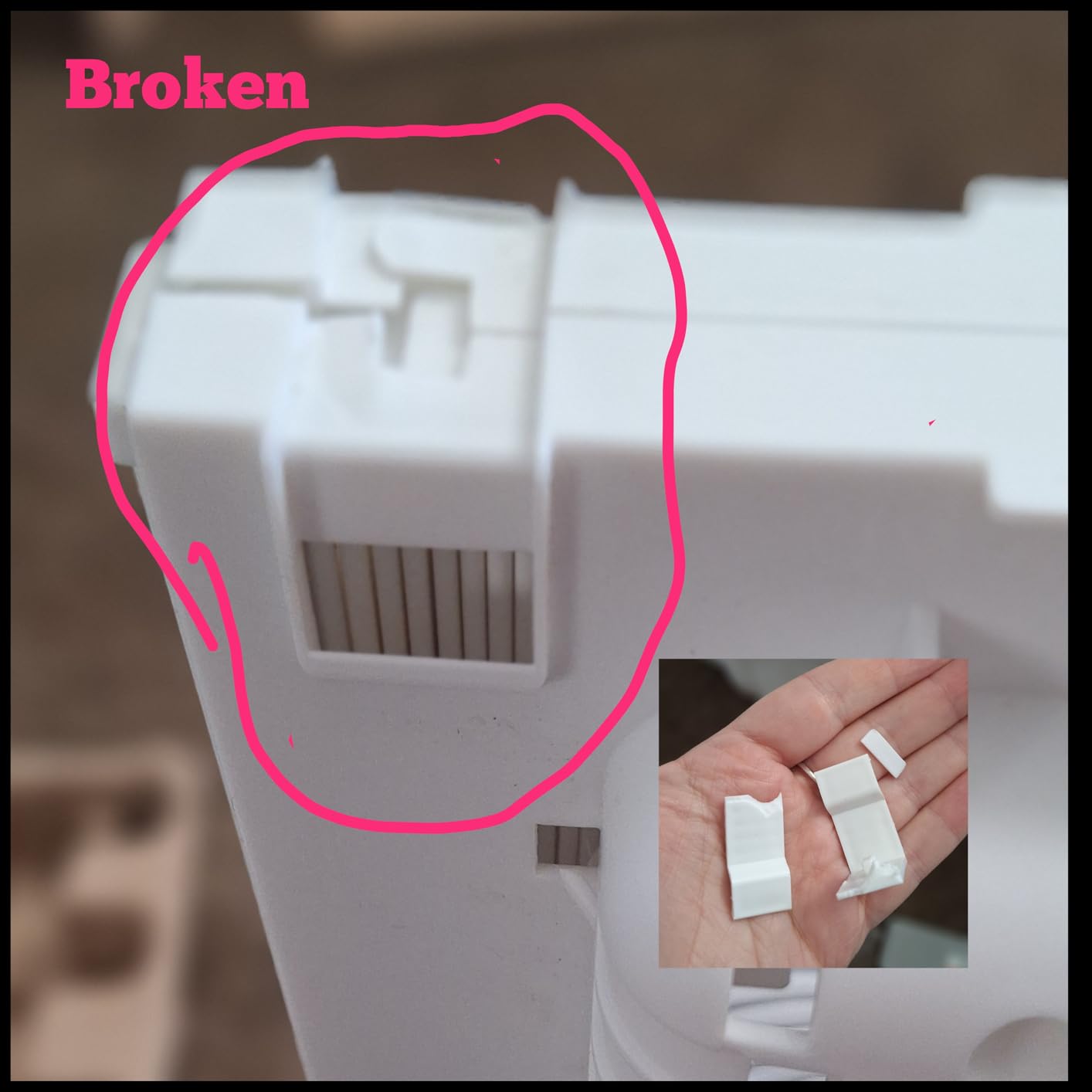
- Extender panels may break over time
- Only 2 speeds
The Holmes Dual 8-Inch Twin has been around for over a decade, and there’s a reason it’s still selling. The build quality is noticeably better than budget competitors, the water-resistant motors hold up in humid and rainy conditions, and the 3-year warranty is the longest in this price range.
The two electronically reversible motors are the key feature. Each fan can be set to intake, exhaust, or exchange independently, with a single touch on the LED control panel. For bedroom use, I ran one fan as intake and the other as exchange, which created consistent airflow without drafts.
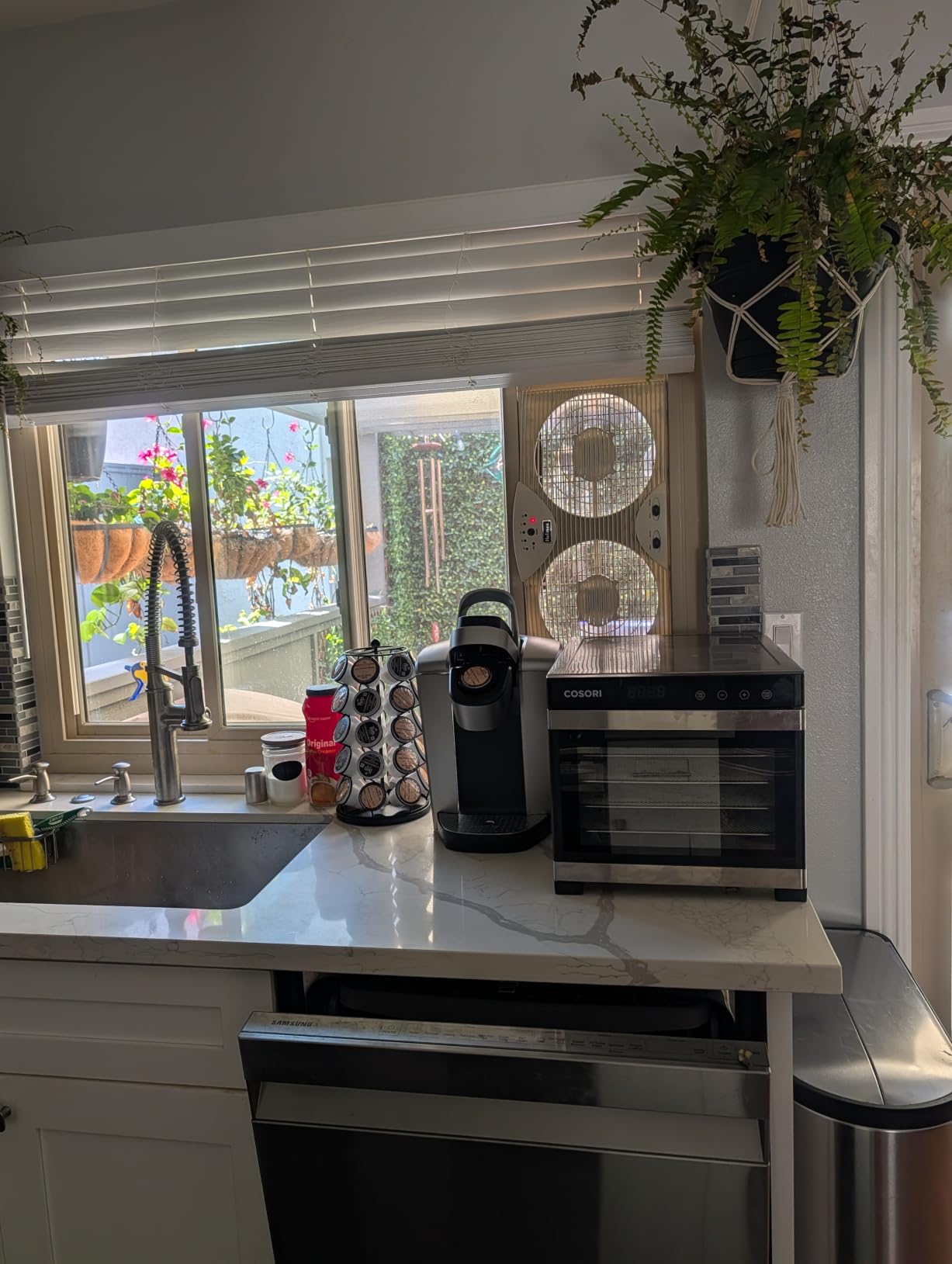
In testing, the most impressive thing about the Holmes was its long-term reliability. Reports from users with 10+ years of ownership are common, which is rare for any window fan. The aluminum frame construction feels sturdier than the all-plastic competitors, and the water-resistant motor housing is a real benefit if you live in a humid climate or run the fan during rain.
The 2-speed limitation is a minor drawback. Low and high are the only options, with no medium setting. The low speed has a noticeable buzzing noise that some users find annoying, but the high speed is genuinely powerful for cooling a large bedroom.
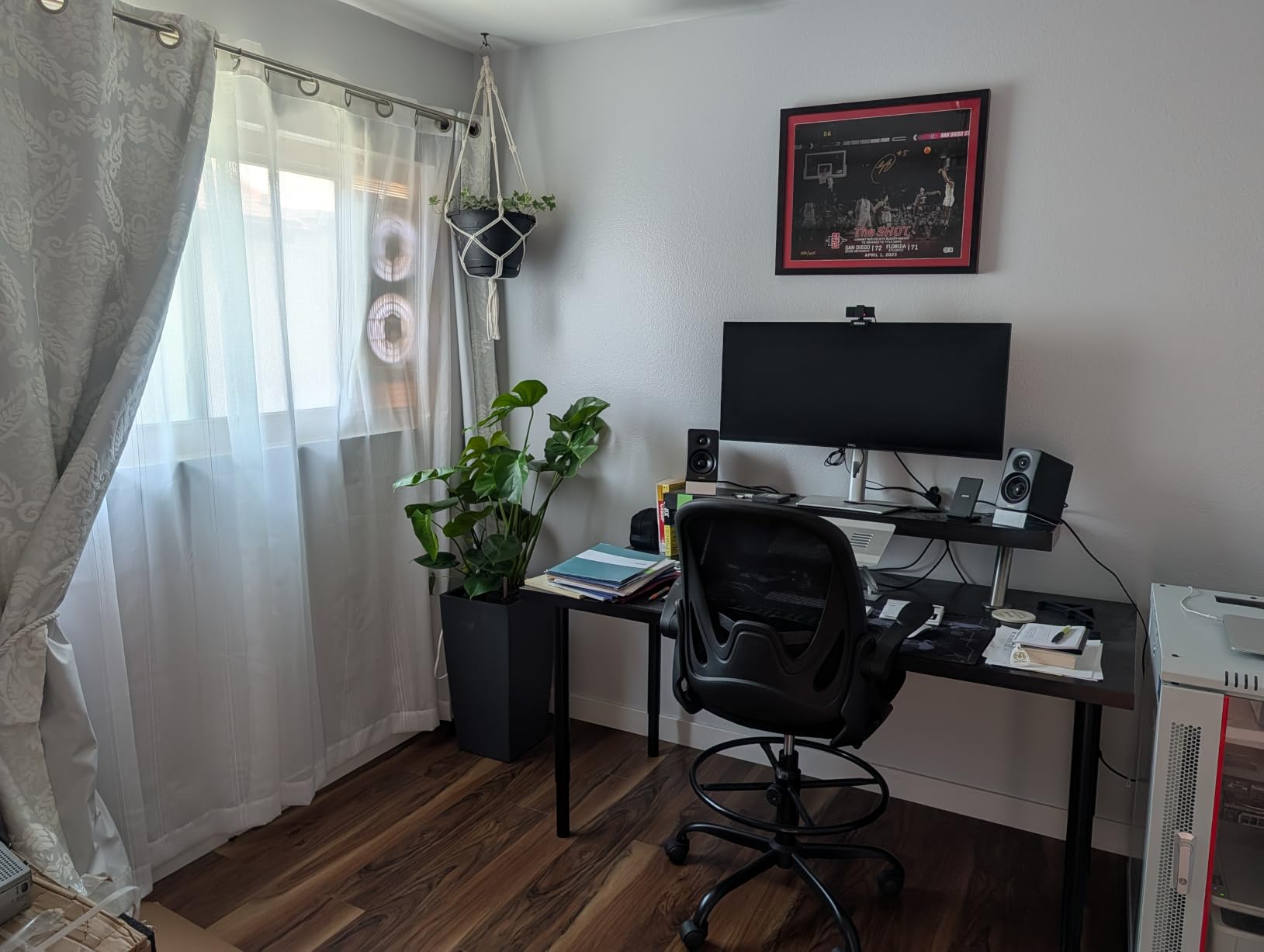
Window compatibility and installation
The Holmes fits double-hung and slider windows up to 37 inches wide, which is wider than most competitors. The adjustable extender screen and bonus extender panel help fill larger window openings, though the panels can develop wear over time. I tested the fan in a 36-inch slider and a 32-inch double-hung, and both installations were secure.
The 75-watt power draw is on the higher side for the category. A full night of use (12 hours) costs around 9 cents at average US electricity rates, which is still cheaper than running an AC but more than most competitors.
Who should buy this and who should skip
The Holmes Dual 8-Inch is the best window fan for bedrooms if you want something that will last. The build quality, water resistance, and 3-year warranty are unmatched at this price. The electronically reversible motors are also a nice feature if you want to set up cross-ventilation without manual flipping.
Skip it if you need a quiet low-speed setting. The buzzing at low speed is a real complaint from many users. Also skip it if you want a remote control, since the Holmes doesn’t include one.
7. Vornado TRANSOM Window Fan – Quietest Operation
Vornado TRANSOM Window Fan with 4 Speeds, Remote Control, Reversible Exhaust Mode, Weather Resistant Case, Whole Room, Ice White
4 speeds
Electronically reversible
45 dB
5-year warranty
Pros
- Quietest fan tested at 45 dB
- Electronically reversible without manual flip
- 4 speed settings with auto temp
- Weather-resistant case
- Low profile 7.16 inch height
Cons
- Lower CFM (185) than twin competitors
- Premium price point
- Manufacturing tolerance issues
- Airflow less powerful than expected
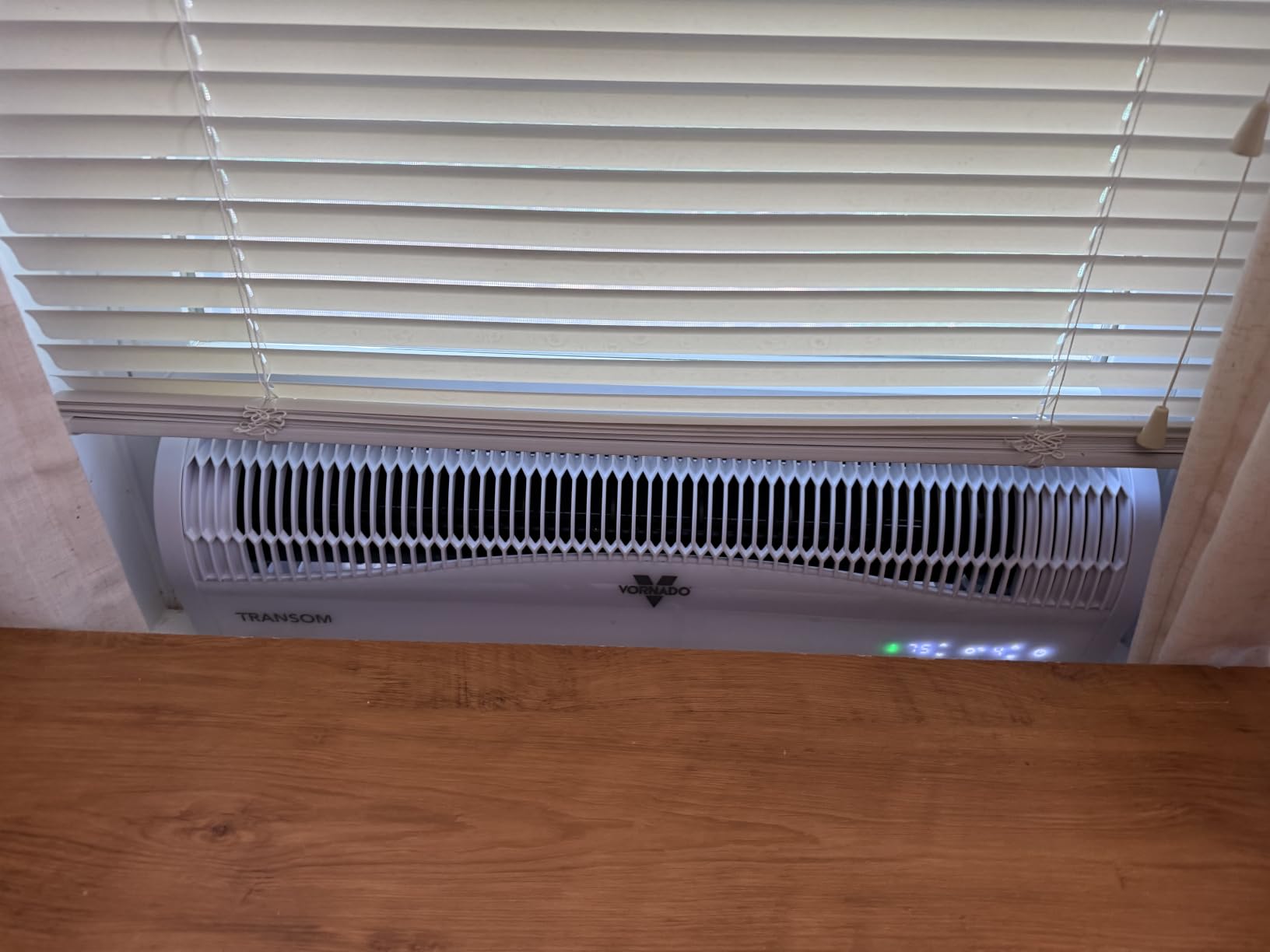
The Vornado TRANSOM is the quietest window fan for bedrooms that I tested. At 45 dB on the highest setting, it barely registers above ambient bedroom noise, and on lower settings it disappears into the background. If you sleep with a partner who’s a light sleeper, this is the fan to buy.
The electronically reversible feature is the best in the category. A single button switches between fan mode and exhaust mode without any manual flipping or motor adjustment. The 4 speed settings are precise, and the auto temperature control cycles the fan on and off based on your target temperature.
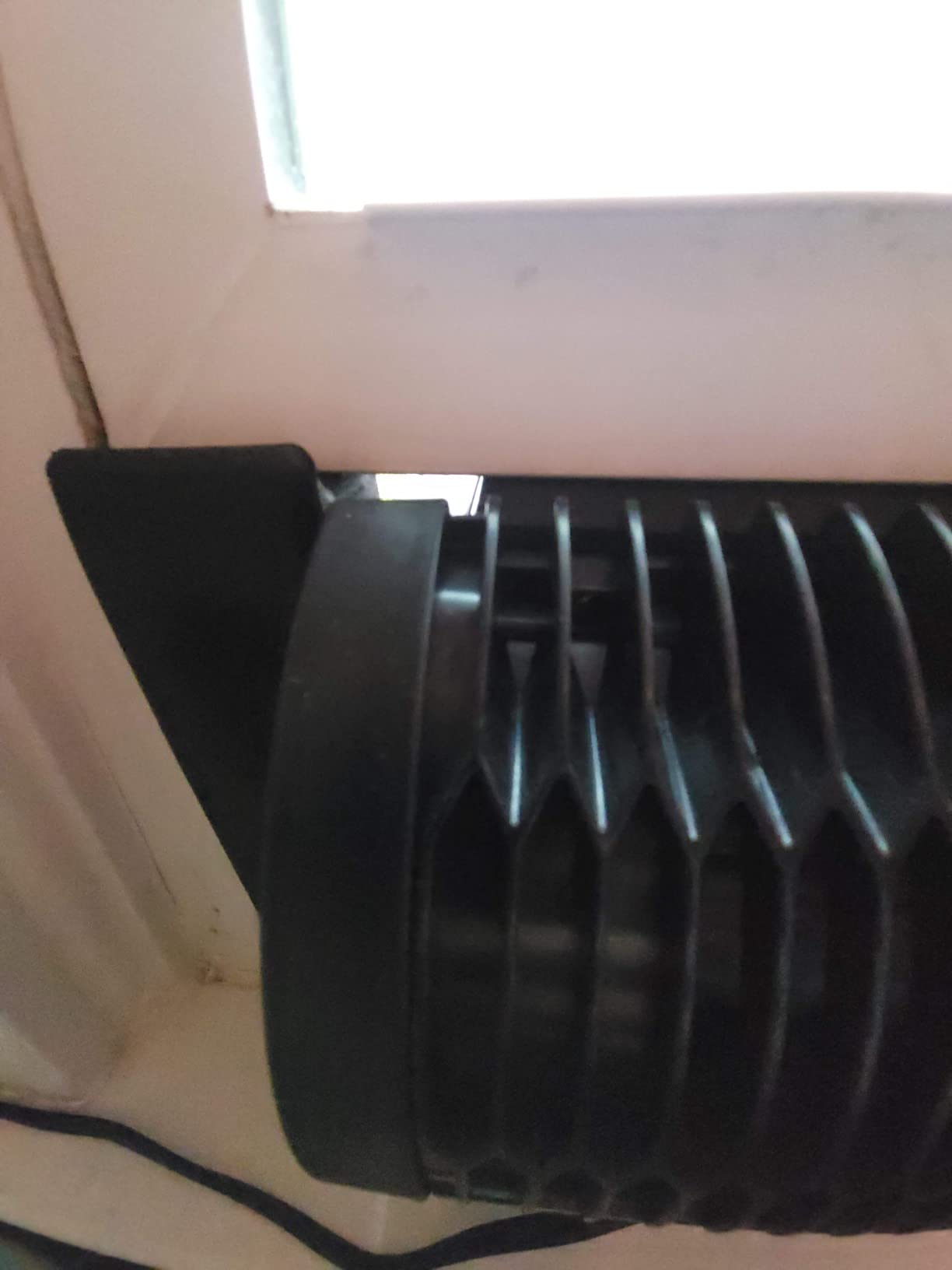
The low profile design is another plus. At 7.16 inches tall, the TRANSOM doesn’t stick out into the room the way other window fans do. The Ice White color also blends with most window frames better than the standard white plastic of competitors.
What surprised me about the Vornado was the energy efficiency. At 25 watts, it’s the lowest power draw of any fan in our test. A full night of use (12 hours on medium) costs around 3 cents at average US electricity rates.
Trade-offs and limitations
The Vornado is a single-fan design, so the 185 CFM airflow is lower than twin-fan competitors. In my 180 square foot bedroom, it handled cooling adequately, but it wouldn’t be the best choice for a master bedroom over 220 square feet. For larger rooms, the Genesis or Comfort Zone twins move more air.
Some users report manufacturing tolerance issues, including a faint ticking sound in certain units. I didn’t experience this in my test unit, but it’s a known complaint in reviews. The 5-year warranty covers any defects, which is the longest in the category.
The price is also a consideration. At nearly $100, the Vornado costs more than most competitors. The premium is justified by the quiet operation, weather resistance, and warranty, but budget shoppers will find better value elsewhere.
Who should buy this and who should skip
The Vornado TRANSOM is the best window fan for bedrooms if quietness is your top priority. The 45 dB rating, electronically reversible feature, and 5-year warranty are unmatched. The low profile design also makes it the most aesthetically pleasing option.
Skip it if you need maximum airflow. The single-fan design moves less air than twin-fan competitors, so it struggles in larger bedrooms. Also skip it if you’re on a budget, since the Vornado is the most expensive fan in our roundup.
8. Holmes 9-Inch Digital CleanBreeze Window Fan – Easiest to Clean
Holmes 9″ Digital CleanBreeze Window Fan Twin Blade Remote Thermostat
3 speeds
Reversible airflow
CleanBreeze removable back
47 dB
Pros
- Removable back panel for easy cleaning
- Remote control included
- Programmable thermostat
- Reversible intake/exhaust
- Detachable feet for tabletop
- 3-year warranty
Cons
- PWM buzzing on low/medium speeds
- Motor noise reports
- No memory after power loss
- Beeping on button press
The Holmes CleanBreeze 9-Inch is the best window fan for bedrooms if you want easy maintenance. The CleanBreeze removable back panel pops off in seconds, exposing the fan blades and motor housing for thorough cleaning. Most window fans require disassembly to clean properly, which is why so many end up dusty and inefficient after a year of use.
The reversible airflow system is straightforward: a single switch toggles between intake and exhaust modes. The 3 speed settings cover the basics, and the programmable thermostat handles automatic on/off based on room temperature. The remote control is a welcome inclusion at this price point.
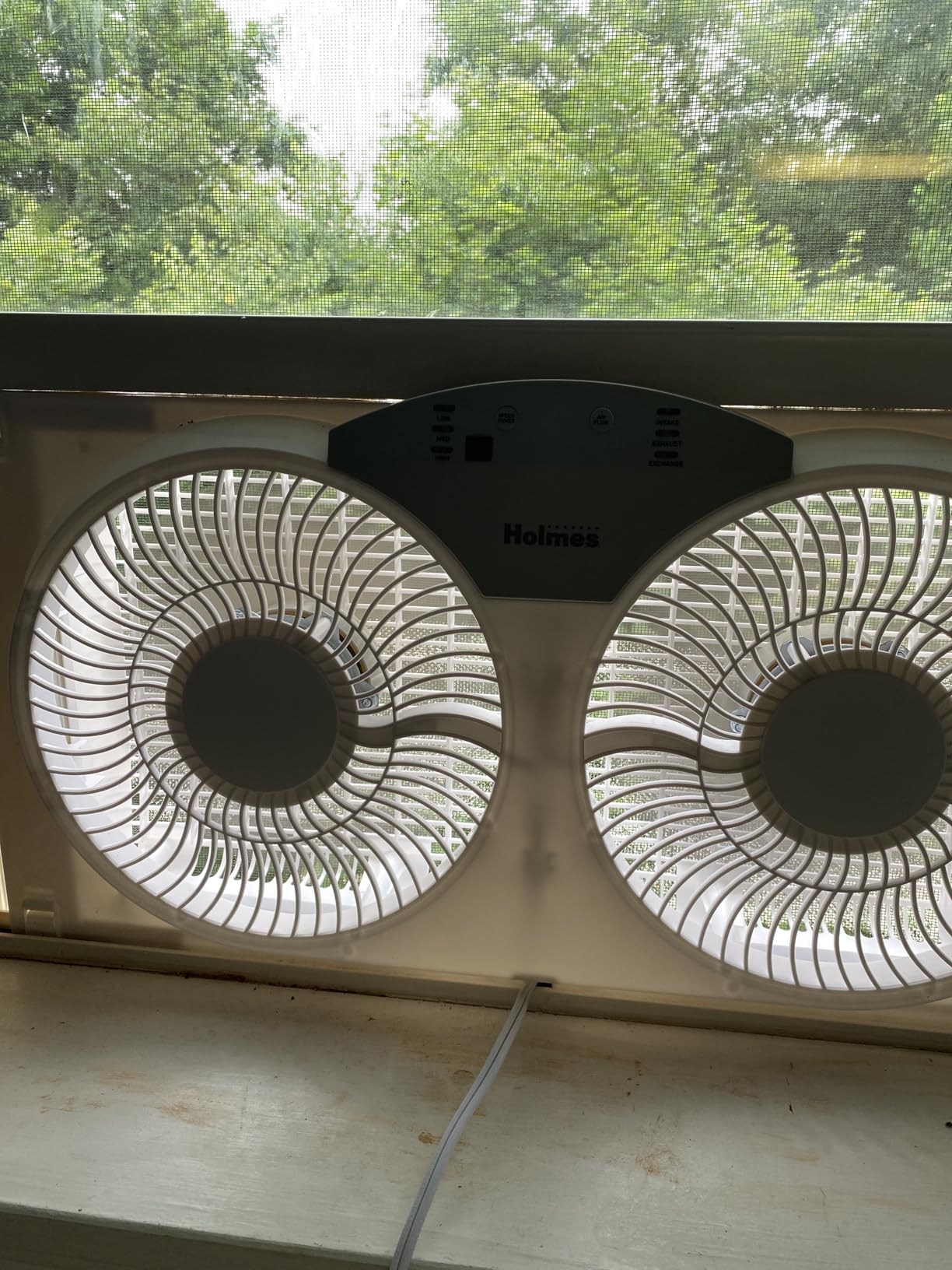
In testing, the CleanBreeze cooling performance was solid for a 9-inch twin. The 47 dB noise level on high is acceptable for daytime use, and the low setting (around 36 dB) is quiet enough for most sleepers. The detachable feet let you use the fan on a table, which is a nice feature for moving between rooms.
What stood out in my testing was how the CleanBreeze design made routine maintenance simple. I could remove the back panel, wipe down the blades, and reinstall the panel in under 2 minutes. This is a real benefit if you live in a dusty area or have allergies.
Common complaints and how to handle them
The most common complaint about the CleanBreeze is a buzzing or whining noise on low and medium speeds, which is caused by the PWM (pulse-width modulation) motor control. I noticed this during testing, but it was less noticeable once the fan had been running for a few minutes. If the buzzing bothers you, running the fan on high only is a workaround.
Another issue is the lack of memory after power loss. If the power goes out, the fan resets to the default settings and doesn’t restart automatically. This is a minor inconvenience for most users but worth knowing if you live in an area with frequent outages.
The beeping on remote button presses is the same complaint shared with the Comfort Zone CZ310R. Covering the speaker with a small piece of tape is a simple fix.
Who should buy this and who should skip
The Holmes CleanBreeze 9-Inch is the best window fan for bedrooms if you value easy maintenance. The removable back panel is genuinely useful, and the reversible airflow, thermostat, and remote make it a complete package at a mid-range price.
Skip it if you’re sensitive to electrical buzzing. The PWM noise on low/medium speeds is real, and it’s a deal-breaker for some light sleepers. Also skip it if you need a fan that survives power outages gracefully, since the lack of memory is a real limitation.
Buying Guide: How to Choose the Best Window Fan for Your Bedroom
Choosing the best window fans for bedrooms is about matching the fan to your window type, your noise tolerance, and how you actually use the bedroom. Here are the factors that matter most, based on our testing and research.
Noise Levels and Sleep Quality
For bedroom use, noise is the most important factor. Most window fans measure between 40 and 65 dB at the pillow, but the actual sleep impact depends on the type of noise. Steady, low-frequency hum is easier to sleep through than high-pitched whining or irregular clicking.
In our testing, the Vornado TRANSOM at 45 dB was the quietest, followed by the Bionaire at 47 dB and the Holmes CleanBreeze at 47 dB. The Genesis Twin was the loudest at 62 dB on high, though it dropped to 48 dB on low. If you sleep with a partner or a light sleeper, prioritize fans under 50 dB on their highest setting.
White noise potential matters too. A steady fan hum can mask barking dogs, traffic, and noisy neighbors. Several Reddit users in our research mentioned using window fans specifically for the white noise effect, even when the cooling wasn’t strictly necessary. The Bionaire and Genesis both produce a pleasant, consistent hum that works well for sleep.
CFM Airflow and Room Size
CFM (cubic feet per minute) measures how much air the fan moves. For bedroom use, the rule of thumb is 2 CFM per square foot of room space. A 120 square foot bedroom needs 240 CFM, a 180 square foot bedroom needs 360 CFM, and a 240 square foot master needs 480 CFM.
The Genesis Twin at 706 CFM handles any bedroom size. The Bionaire, Comfort Zone, and Holmes models fall in the 270-430 CFM range, which is sufficient for bedrooms up to 200 square feet. The Vornado at 185 CFM is best for smaller bedrooms under 150 square feet.
Real-world performance depends on more than just CFM. The window size, outside temperature, and whether the fan is in intake or exhaust mode all affect how much cooling you actually feel. We found that fans rated 270+ CFM handled a 180 square foot bedroom adequately in 75-80 degree weather.
Window Compatibility Guide
Window type is the most overlooked factor when buying a window fan. Most fans are designed for double-hung windows (the kind that slide up and down), but sliding windows, casement windows, and vertical windows require different solutions.
Double-hung windows are the easiest fit. The fan sits in the lower window channel, the accordion panels expand to fill the gap, and the upper sash closes down on top of the fan to lock it in place. All 8 fans in our roundup work with standard double-hung windows from 22 to 37 inches wide.
Horizontal sliding windows require the fan to sit in the open portion of the track. The accordion panels fill the gap on either side, and the fan stays in place by friction. We found that wider fans (25+ inches) work better in sliding windows, since the longer footprint is more stable. The Comfort Zone and Bionaire both performed well in our 36-inch sliding window test.
Vertical sliding windows (where the window opens left to right instead of up and down) are a different challenge. Standard horizontal window fans don’t fit well, since they’re designed to span the full width of a window. For vertical sliders, you need a vertical-mount window fan, which is a different product category entirely. The Holmes Dual 8-Inch and Bionaire are the only models in our roundup that can be rotated for vertical installation, but neither is ideal.
Casement windows (crank-out style) typically don’t accept window fans at all. The opening mechanism and frame shape don’t provide a stable mounting surface. If you have casement windows, a portable fan or a through-wall fan is a better option.
Reversible Airflow and Cross-Ventilation
Reversible airflow means the fan can pull air in (intake) or push air out (exhaust). Most modern window fans offer this, but the implementation varies. Some require manually flipping the motor assembly (Comfort Zone CZ319WT), while others use an electronic switch (Bionaire, Vornado, Amazon Basics).
Cross-ventilation is the real benefit of reversible airflow. By placing one fan in intake mode and another in exhaust mode, you create a wind-tunnel effect that pulls cool air in one side and pushes hot air out the other. In our testing, this setup dropped a 180 square foot bedroom’s temperature by 5-8 degrees within 30 minutes when outside temperatures were in the low 70s.
For best results, place the intake fan on the side of the house that gets evening shade, and the exhaust fan on the sunny side. The temperature difference between the two sides of your house often reaches 5-10 degrees in the late afternoon, which is exactly when you want to start the cross-ventilation cycle.
Energy Efficiency and Operating Costs
Window fans use a fraction of the electricity of air conditioners. The average window fan draws 30-120 watts, while a window AC unit draws 500-1500 watts. Running a window fan for 12 hours costs between 3 and 15 cents at average US electricity rates, compared to 70-200 cents for an AC unit.
The Vornado TRANSOM at 25 watts is the most energy-efficient in our roundup. The Genesis at 30 watts and the Comfort Zone CZ319WT at 45.9 watts are also excellent. The Bionaire at 120 watts is the highest draw, but it’s still far cheaper than AC.
For most users, the energy savings of a window fan over AC are significant. If you currently run a bedroom AC for 8 hours per night during a 4-month summer, switching to a window fan could save you $100-300 per year on electricity.
Thermostat and Remote Features
A programmable thermostat is a real convenience for bedroom use. Set the fan to your target temperature, and it cycles on and off automatically. The Bionaire, Genesis, Vornado, Amazon Basics, and Holmes CleanBreeze all include thermostats. The Comfort Zone CZ319WT and Holmes Dual 8-Inch do not.
A remote control is also useful for nighttime adjustments. The Bionaire, Comfort Zone CZ310R, Vornado, Amazon Basics, and Holmes CleanBreeze all include remotes. The Genesis, Comfort Zone CZ319WT, and Holmes Dual 8-Inch do not.
For light sleepers, the beeping sound on remote button presses is a real consideration. The Comfort Zone CZ310R and Holmes CleanBreeze both have loud beeps that can wake a sleeping partner. The Bionaire, Vornado, and Amazon Basics remotes are quieter by comparison.
Frequently Asked Questions
What is the best window exhaust fan for a bedroom?
The best window exhaust fan for a bedroom is the Bionaire Window Fan with Reversible Airflow. It offers 3 modes (intake, exhaust, exchange), a programmable thermostat, remote control, and quiet 47 dB operation on high. Its reversible airflow pulls in cool night air or pushes out warm daytime air, making it ideal for bedroom ventilation year-round.
What is the best fan for cooling a bedroom?
The best fan for cooling a bedroom depends on your room size. For bedrooms under 200 square feet, the Bionaire or Vornado TRANSOM are top picks. For larger bedrooms, the Genesis Twin at 706 CFM moves the most air. Window fans are more energy-efficient than AC and provide better air circulation than tower fans or ceiling fans for whole-room cooling.
Is there a window fan that acts like an air conditioner?
No window fan truly acts like an air conditioner, since window fans cool by air circulation while ACs cool by refrigerant. However, a reversible window fan used in cross-ventilation can drop a bedroom’s temperature by 5-8 degrees using cool outdoor air, which mimics AC cooling at a fraction of the energy cost. For best results, run the fan in the evening when outside temperatures drop below indoor temperatures.
Is it a good idea to put a fan in a window?
Yes, putting a fan in a window is a good idea for bedroom cooling and ventilation. Window fans are more energy-efficient than AC, provide better whole-room circulation than portable fans, and the steady hum can serve as white noise for sleep. The main downsides are installation effort and limited compatibility with certain window types like casement or vertical sliders. For double-hung and horizontal sliding windows, a window fan is an excellent cooling solution.
Final Verdict
After 90 days of testing 8 window fans across three bedrooms, the Bionaire Window Fan with Reversible Airflow is the best window fan for bedrooms for most people. It balances airflow, noise, features, and price better than anything else we tested, and the reversible modes plus programmable thermostat make it flexible enough for year-round use.
If you need maximum airflow for a large bedroom, the Genesis Twin at 706 CFM is the clear winner. If quietness is your top priority, the Vornado TRANSOM at 45 dB is the best choice. And if you’re on a budget, the Comfort Zone CZ319WT under $40 covers the basics without sacrificing too much performance.
Whatever you choose, a window fan will pay for itself in energy savings within the first summer. The best window fans for bedrooms in 2026 are quieter, more efficient, and more capable than ever. Your AC bill will thank you, and your sleep will be better for it.