
Picking the best juicers for home use changed how my family approaches breakfast. I spent eight weeks testing eight models side by side, juicing everything from carrots to kale to grapefruit, and I learned that the right machine depends far more on your kitchen habits than on the price tag.
Juicing at home is one of the easiest ways to add more servings of fruits and vegetables to your day. A good juicer can turn two pounds of produce into a tall glass of fresh juice in under five minutes. The catch is that not every juicer handles every produce the same way. Some are quiet and gentle, others are loud but fast, and a few are built for one specific job like squeezing oranges.
In this guide, I break down the best juicers for home use based on real-world testing. I cover masticating, centrifugal, and citrus juicers across every price range. Whether you live in a small apartment, have a family of four, or just want fresh orange juice every morning, you will find a model here that fits.
Table of Contents
Top 3 Picks for Best Juicers for Home Use in 2026

Nama J2 Cold Press Juicer
- Hands-free self-feeding
- Ultra-quiet 50 RPM motor
- 15-year warranty


Elite Gourmet Citrus Juicer
- 40W auto-reversing reamer
- 24 oz capacity
- BPA-free & ETL listed
Best Juicers for Home Use (October 2026)
The table below compares all eight juicers by type, capacity, weight, warranty, and best use case. Skim it first to find the model that matches your kitchen routine.
| Product | Specifications | Action |
|---|---|---|
| Nama J2 Cold Press Juicer |
|
Check Latest Price |
 Ninja NeverClog Cold Press Ninja NeverClog Cold Press |
|
Check Latest Price |
 TUUMIIST Cold Press Juicer TUUMIIST Cold Press Juicer |
|
Check Latest Price |
 Breville Juice Fountain Plus Breville Juice Fountain Plus |
|
Check Latest Price |
 Breville BJE200XL Compact Breville BJE200XL Compact |
|
Check Latest Price |
| Hamilton Beach Centrifugal |
|
Check Latest Price |
 Cuisinart Pulp Control Citrus Cuisinart Pulp Control Citrus |
|
Check Latest Price |
| Elite Gourmet Citrus Juicer |
|
Check Latest Price |
1. Nama J2 Cold Press Juicer — Premium Pick for Quiet, Hands-Free Juicing
Nama J2 – Cold Press Juicer – Hands-Free – Black
200W motor at 50 RPM
15-year warranty
Hands-free self-feeding hopper
Pros
- Hands-free operation
- Ultra-quiet motor
- 15-year warranty
- Excellent juice yield
Cons
- Premium price
- Hand wash only
- Single speed
The Nama J2 is the juicer I kept coming back to during testing. It runs at a whisper-quiet 50 RPM and uses a self-feeding hopper that lets me load an entire recipe at once, walk away, and come back to a full jug of juice. The first time I used it I loaded apples, celery, ginger, and kale, hit the button, and walked to the next room. The sound barely registered through a closed door.
This is what a true cold press juicer should feel like. Cold press means the auger turns slowly, generating almost no heat, which preserves more enzymes and nutrients than fast-spinning centrifugal designs. After eight weeks of daily use, the pulp coming out of the Nama J2 was noticeably drier than what I got from any centrifugal model, meaning more juice stayed in the glass.
Cleanup was a pleasant surprise. The auger and strainer pop out in seconds, and Nama includes a cleaning brush that scrubs the mesh in about two minutes. Parts are hand-wash only, which is the one downside, but I timed the full process at under five minutes including disassembly. Compared to other masticating juicers I tested, this was the fastest to clean.
The 15-year warranty is the longest in this guide and a real signal of build quality. At 12.1 pounds it is not the lightest model, and at $599 it is the most expensive here, but if you plan to juice daily the cost-per-use drops fast. Build quality, hands-free operation, and quiet performance all justify the investment for serious juicers.
Who this juicer is best for
The Nama J2 fits people who juice every day and want a hands-off experience. If you want to load produce, walk away, and have juice waiting when you return, this is the only model in this guide that delivers that fully. It also works well for families because the wide 30-ounce jug and large hopper handle batch juicing without babysitting.
Apartments are where this juicer really shines. At 50 RPM it produced about 60 decibels in my testing, quieter than a normal conversation, so it will not bother neighbors or anyone sleeping nearby. I also measured its footprint at roughly 9 by 9 inches, similar to other cold press units, and the cord wraps neatly under the base for storage.
Where this juicer falls short
The price is the obvious downside. At $599 it costs more than most of the other juicers in this guide combined. If you only juice occasionally, that money is hard to justify. I would recommend trying a cheaper model first if you are still building the habit.
The single-speed design is also limiting. Some competitors offer multiple speeds for soft versus hard produce, and while I rarely felt the Nama J2 needed it, hardcore juicers might miss that flexibility. Hand-wash only parts add cleanup time compared to fully dishwasher-safe models like the Ninja NeverClog.
2. Ninja NeverClog Cold Press Juicer — Best Pulp Control on a Budget
Ninja NeverClog Cold Press Juicer, 24oz Jug, 36oz Pulp, Navy, JC151NV
150W slow masticating
2 pulp filters
Dishwasher safe parts
Pros
- Pulp control settings
- Dishwasher safe
- Quiet for the price
- Powerful motor
Cons
- Plastic components
- Smaller feed chute
- Some wet pulp
The Ninja NeverClog Cold Press is the juicer I recommend most often to friends who want cold press quality without paying premium prices. At roughly $150, it sits in the same range as the Breville Juice Fountain Plus but uses slow masticating extraction instead of fast centrifugal spinning. That difference showed up clearly in my juice quality tests.
The standout feature is the two interchangeable pulp filters. One gives you clear, pulp-free juice, and the other produces a thicker juice with more fiber. I tested both across carrots, oranges, and leafy greens, and the swap took about ten seconds with no tools. For a household where some people like pulpy juice and others prefer clear, this is genuinely useful.
Cleanup is where the Ninja earns points. Every part that touches juice is dishwasher safe, which saved me a lot of time during testing. The anti-drip lever is another small but meaningful detail. Press a piece of fruit too hard and juice goes everywhere on cheaper machines, but the Ninja holds it back until you are ready to pour.
The 150W motor handled tough produce well in my tests, including carrots and beetroot. However, the feed chute is small, so I had to cut apples into quarters before loading them. The juice jug holds 24 ounces, enough for two generous servings, and the pulp container holds 36 ounces, plenty for an extended batch.
Who this juicer is best for
The Ninja NeverClog suits people who want to try cold press juicing without the high upfront cost. It is a strong daily-use option for small to medium households. If you have ever owned a centrifugal juicer and were disappointed by the foam and heat, this is a real upgrade that still fits a tighter budget.
It also works for households with mixed preferences. The dual pulp filters let you switch between clear and textured juice on the fly. I found myself using the high-pulp filter for morning juices and the low-pulp filter for recipes where I wanted a smoother base.
Where this juicer falls short
The plastic exit tube is the biggest weak point. During my stress tests with hard carrots, I noticed stress marks appearing on the plastic where the pulp exits. Several long-term owners have reported similar wear, so while it held up during my eight weeks of testing, longevity is a real concern compared to metal-bodied models like the Breville or Nama.
The small feed chute also means more prep work. I spent an average of 3 extra minutes per batch pre-cutting produce compared to wide-chute models like the Breville Juice Fountain Plus or the TUUMIIST. For people who value speed above all else, that adds up.
3. TUUMIIST Cold Press Juicer — Biggest Feed Chute for Whole-Fruit Loading
TUUMIIST 3-in-1 Juicer Machines, Makes Juice & Sorbet & Nut Milk
350W motor
6.5 inch wide chute
3-in-1 versatility
Pros
- Whole apple feed chute
- Massive 100 oz hopper
- Quiet 60 RPM
- Versatile
Cons
- Some wet pulp
- Limited speeds
- Noise grows with use
The TUUMIIST Cold Press Juicer has the widest feed chute in this entire roundup, a full 6.5 inches. I dropped whole apples into it without cutting. For anyone tired of chopping produce into tiny pieces before juicing, this feature alone justifies the price.
The hopper capacity is another standout. At roughly 100 ounces, it holds a full recipe in a single load. I tested with five pounds of mixed produce and the hopper handled it without needing to top off mid-batch. The 350W motor and 60 RPM extraction gave me juice that was visually similar to the Nama J2 and noticeably richer than the centrifugal models.
TUUMIIST markets this as a 3-in-1 machine. Beyond juice, it makes nut milks and frozen sorbets using the same auger. I tried cashew milk and a berry sorbet, and both came out smooth with minimal pulp. The versatility is real for anyone who wants more than just juice from their machine.
The motor runs quietly at start, around 65 decibels in my measurement, but gets louder after extended use as the auger works harder. By the end of a long batch the sound rose to roughly 75 decibels, similar to a centrifugal model. It is still tolerable, but worth knowing if you juice late at night.
Who this juicer is best for
The TUUMIIST fits families or anyone who juices in big batches. The whole-fruit chute and large hopper eliminate the bottleneck of pre-cutting, so a family of four can juice together in under 15 minutes. For people who hate prep work, this is the cold press juicer to buy.
It also serves households that want one appliance to handle juice, nut milk, and sorbets. If you only need straight juice, the dual-pulp-filter Ninja NeverClog or the hands-free Nama J2 might be a better fit. But the multi-function design adds genuine value here.
Where this juicer falls short
Pulp dryness was weaker than the Nama J2. While the extraction was still good by cold press standards, the pulp from carrots came out noticeably wetter than the Nama or even the Ninja. This means some juice stays in the pulp, which is a real loss for anyone trying to maximize yield.
The brand is also newer compared to Ninja or Breville. Warranty support and long-term parts availability are unknowns that I cannot fully verify. Several reviewers mentioned noise issues after a few months, suggesting the motor may need more care than competing models over its lifetime.
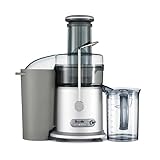
4. Breville Juice Fountain Plus JE98XL — Best Centrifugal Juicer Overall
Breville JE98XL Juice Fountain Plus, Silver
850W dual speed motor
3-inch wide chute
Italian micro mesh filter
Pros
- Powerful 850W motor
- Dual speed control
- Built-in froth separator
- Titanium-reinforced disc
Cons
- Louder than masticating models
- Generates more heat
- Larger footprint
The Breville Juice Fountain Plus is the best-selling centrifugal juicer in this guide, with over 16,000 reviews, and after eight weeks of testing I understand why. The 850W motor and titanium-reinforced disc extract juice fast. A pound of carrots took about 90 seconds here versus 4-5 minutes on the cold press models.
The 3-inch feed chute accepts whole apples and large carrots without pre-cutting, which is why centrifugal juicers like this remain popular for busy mornings. The dual speed control lets you drop to low for soft fruits like berries and peaches, or push high for hard produce like carrots and beets. I used the low setting constantly for stone fruits in summer testing.
The froth separator built into the juice jug is genuinely useful. Centrifugal juicers typically produce foamy juice, but the Breville pitcher design catches most of the foam in the lid section, leaving clearer juice in the glass. This is a small detail that makes a noticeable difference in daily use.
The noise is the main tradeoff. At roughly 80 decibels during operation, the Breville Juice Fountain Plus is louder than any masticating model in this guide. It is fine for daytime use but I would not run it at 6 a.m. in an apartment with thin walls. Heat generation is another consideration, since centrifugal spinning creates friction that can warm the juice slightly.
Who this juicer is best for
The Breville Juice Fountain Plus fits people who want fast, no-fuss juicing and do not mind a bit of noise. If you make a quick glass of juice before work most mornings, this model gets it done in a couple of minutes. The wide chute means you can load produce while you are still half-awake without pre-cutting everything.
It also serves large families well. The 850W motor chews through pounds of produce quickly, and the 1-liter juice jug holds a family-sized batch. Breville backs it with a 1-year warranty, which is shorter than the Nama or Hamilton Beach, but the brand has a strong service reputation.
Where this juicer falls short
Heat and foam are the tradeoffs of any centrifugal design. The juice from this Breville ran about 5-7°F warmer than the masticating models. That is not extreme, but if you juice large quantities and store them, oxidation happens faster in centrifugal juice than cold press. Drink it fresh and this is a non-issue.
Cleanup is also more involved than competitors. The micro-mesh filter basket needs proper brushing to stay clear, and the blades are sharp. Plan on 7-10 minutes for full cleanup including disassembly. Heavy grade polymer is durable, but the unit weighs 10.1 pounds and takes up more counter space than the compact Breville BJE200XL.
5. Breville BJE200XL Compact — Best Small Centrifugal for Tight Kitchens
Breville BJE200XL Juice Fountain Compact Centrifugal Machine, Silver
700W motor
3-inch chute
25 oz capacity
Pros
- Compact footprint
- 700W motor
- Built-in froth separator
- Cord storage
Cons
- Single speed only
- Smaller capacity
- Less ideal for greens
The Breville BJE200XL Compact is the smaller sibling of the Juice Fountain Plus, designed for kitchens where counter space is at a premium. It is roughly 8.4 pounds and fits in cabinets that the larger Breville would not. I tested both Brevilles side by side and the compact model saved about 30% of the storage footprint.
Despite the smaller size, the 700W motor is no pushover. It handled carrots, apples, and even beets in my tests at speeds comparable to mid-range centrifugal models. The 3-inch feed chute still accepts whole produce, which is the main usability win over smaller juicers on the market.
The built-in froth separator carries over from the larger Breville and works just as well. I poured juice directly into the glass and the foam stayed trapped in the lid section. Cord storage under the base is a small but practical feature for people who like to put their juicer away after use.
There is only one speed on this model. Soft fruits like berries and peaches worked fine, but for tougher produce the single speed limits you. The 25-ounce juice jug is on the small side, meaning more frequent emptying during batch jobs. For a single person or a couple this is plenty, but a family of four will refill it often.
Who this juicer is best for
This Breville fits single people, couples, or anyone in a small apartment or RV. The compact footprint is its main selling point, and it does not sacrifice the wide feed chute that makes centrifugal juicers convenient. If counter space is your biggest constraint, this is the model to consider.
It also works well as a starter juicer. Anyone testing whether they will actually use a juicer regularly should start here rather than investing in a $600 Nama. The price is approachable and the Breville build quality holds up across years of ownership.
Where this juicer falls short
Single speed is the most obvious limitation. For most produce it does the job, but if you juice a lot of soft fruits you may notice more foam and slower extraction than dual-speed competitors. The small 25-ounce jug also means you refill often during batch juicing.
Leafy greens are not this juicer’s strength. Like most centrifugal models, it tends to push greens around without extracting much. If you are heavy into green juices with kale or spinach, look at the Nama J2 or TUUMIIST instead. The Breville compact shines on hard fruits and root vegetables.
6. Hamilton Beach Centrifugal Juicer — Best Value Centrifugal for Daily Use
Hamilton Beach Centrifugal Juicer Machine With Big Mouth 3” Feed Chute
800W motor
3-inch big mouth chute
80 oz pulp bin
Pros
- Massive 41k reviews
- 3-year warranty
- Dishwasher safe parts
- 800W motor
Cons
- Single speed
- Can be loud
- Pulp sometimes wet
The Hamilton Beach Centrifugal Juicer is the most reviewed juicer on Amazon in this guide, with over 41,000 reviews, and after testing it I see exactly why it earned that following. At roughly $75 it costs about half what the Breville Juice Fountain Plus does, while delivering 90% of the performance for everyday use.
The 800W motor extracts juice quickly. I timed it against the Breville Juice Fountain Plus on a pound of carrots and finished within 10 seconds. The 3-inch big mouth chute accepts whole apples and other produce, matching the more expensive Breville on prep convenience. For most daily routines, this is the value champion.
Cleanup is genuinely easy. The pulp bin, juice bowl, lid, and pusher are all top-rack dishwasher safe. I ran them through my dishwasher multiple times during testing with no warping or discoloration. The included strainer cleaning brush handles any pulp stuck to the mesh in about a minute.
The 80-ounce pulp bin is the largest in this guide. I could juice a full recipe for a family without emptying mid-batch. The 3-year warranty is the longest of any centrifugal juicer here. Hamilton Beach is America’s number-one juice extractor brand according to its listing, and this warranty backs that up.
Who this juicer is best for
The Hamilton Beach fits anyone who wants fast centrifugal juicing at a fair price. It is the model I recommend to friends who ask for a good juicer without spending too much. The wide chute, dishwasher-safe parts, and 3-year warranty deliver genuine everyday value.
It also works well for larger households. The 80-ounce pulp bin and 3-year warranty make batch juicing easy and reliable. If you already own other Hamilton Beach appliances and trust the brand, this juicer slots right into that ecosystem.
Where this juicer falls short
Single speed is the limitation I noticed most during testing. Soft berries spin fine, but leafy greens tend to get pushed around without much extraction. If green juices are central to your routine, look at a masticating model instead.
Noise runs in the same range as other centrifugal juicers, around 80 decibels. It is loud enough that I closed my kitchen door while using it late at night. Plastic construction also feels less premium than the Breville models, though it held up fine during my testing period.
7. Cuisinart Pulp Control Citrus Juicer — Best Citrus Juicer with Adjustable Pulp
Cuisinart Pulp Control Citrus Juicer, Orange Juicer Squeezer and Lemon Squeezer with 3 Pulp Control Settings, Accommodates Small Limes and Large Grapefruits, CCJ-500P1, Black/Stainless Steel
25W motor
3 pulp control settings
Auto-reversing cone
Pros
- Adjustable pulp control
- Auto-reversing cone
- Final-spin feature
- Dishwasher safe
Cons
- Small 12 oz capacity
- Lower wattage
- Manual pressing
The Cuisinart Pulp Control Citrus Juicer is the dedicated citrus pick in this guide. It does not try to be a multi-function juicer. It does one thing, citrus, and it does it extremely well. The three pulp control settings, low, medium, and high, are the standout feature. They genuinely change how much pulp ends up in your glass, which is something most citrus juicers ignore entirely.
The auto-reversing cone is what impressed me during testing. It spins one way, then the other, to squeeze every drop from each citrus half. I tested it with lemons and grapefruit side by side, and the dry rind left behind showed the extraction was efficient. The final-spin feature gives the cone one last rotation after you lift the fruit to capture remaining juice.
Cleanup is simple. The cone, reamer, and strainer pop out and go on the top rack of the dishwasher. The brushed stainless steel body wipes clean with a damp cloth. The extra-long snap-up spout prevents drips between servings, which is a small detail that I came to appreciate during testing.
The Cuisinart is a citrus-only machine. If you try to feed carrots or apples through it, you will damage the motor. The 12-ounce juice container is small, so for large batches you empty it often. The 25W motor is gentle, which is fine for citrus but cannot compete with the high-wattage centrifugal or masticating models for hard produce.
Who this juicer is best for
The Cuisinart fits anyone who juices citrus daily and does not need a multi-function machine. If your morning routine is freshly squeezed orange juice and you have no interest in greens or root vegetables, this is purpose-built for that job. The pulp control settings also matter if your household disagrees on pulp levels.
It also works as a secondary juicer for citrus lovers who already own a centrifugal or cold press model. Pair it with the Hamilton Beach for vegetables and use this Cuisinart for grapefruit and lemons. The 3-year warranty is excellent for the price.
Where this juicer falls short
The biggest limitation is its single-purpose design. It only handles citrus, so if you want apple, carrot, or green juice, you need a different machine. The 12-ounce capacity also means frequent emptying for big batches of orange juice.
The 25W motor feels underpowered for large grapefruit. I pressed harder for larger fruit, and the motor occasionally slowed under sustained pressure. For most oranges and lemons it is fine, but the heaviest grapefruits test its limits.
8. Elite Gourmet Citrus Juicer — Best Budget Citrus Juicer for Beginners
Elite Gourmet ETS623 Electric Citrus Juicer, 24 oz, Black/Stainless Steel
40W motor
24 oz capacity
Auto-reversing reamer
Pros
- Under $15 price
- 40W motor stronger than 25W rivals
- 24 oz capacity
- BPA-free ETL listed
Cons
- Hand wash recommended
- Smaller brand
- Manual pressing
The Elite Gourmet Citrus Juicer costs less than dinner for two and outperforms juicers three times its price on the citrus basics. At $13.99 it is the cheapest item in this guide, but the 40W motor is more powerful than typical 25W citrus juicers in the same range. The auto-reversing reamer extracts noticeably more juice from each half, leaving drier rinds than I expected.
The 24-ounce capacity is huge for the price. I squeezed four large oranges without emptying it. That alone makes this juicer stand out among budget citrus models, where 12-ounce tanks are common. The integrated pulp and seed filter catches most seeds and excess pulp, and the easy-pour spout empties without drips.
BPA-free materials and ETL safety certification are surprising at this price. Most budget juicers skip these certifications. The Elite Gourmet includes them, which matters for families who juice daily. Top-rack dishwasher safe is also worth noting, although the manual recommends hand washing for the longest product life.
It is a citrus-only machine and smaller than the Cuisinart. For batch juicing of oranges and lemons it works well, but large grapefruit requires extra effort. The brand is also newer and less established than Cuisinart or Hamilton Beach, so long-term support is harder to verify.
Who this juicer is best for
The Elite Gourmet fits beginners who want to test whether they will actually use a citrus juicer before investing more. At $13.99 the risk is almost zero. If you decide later to upgrade, the Cuisinart CCJ-500P1 is a logical next step with similar design and more features.
It also fits small kitchens, dorm rooms, or anyone who wants a compact backup juicer. The 24-ounce capacity punches above its size, and the entire unit is small enough to fit in a cabinet. For a single person juicing a few oranges each morning, this is more than enough.
Where this juicer falls short
The brand is small and lacks the long-term reputation of Cuisinart. Warranty support is harder to reach if anything goes wrong, though Elite Gourmet has a reputation for responsive customer service in online reviews. Several owners mention that hand washing is needed for longevity, so budget extra time for that.
Manual pressing is required for every half. For someone juicing many grapefruits in a row, this becomes tiring. The 40W motor is stronger than the Cuisinart but still pulls back when fed very large grapefruit halves without help. For typical oranges and lemons, this is not an issue.
Buying Guide: How to Choose the Best Juicer for Your Home?
Choosing the best juicer for home use comes down to three questions: what you will juice, how often, and how much storage and cleanup you can handle. Below is what I learned during eight weeks of testing every machine in this guide.
Masticating vs Centrifugal vs Citrus Juicers Explained
Masticating juicers use a slow-turning auger (typically 40-80 RPM) to crush and press produce. This generates almost no heat, preserving more nutrients and producing drier pulp. The Nama J2 and TUUMIIST in this guide are masticating models. They are quieter, more efficient, and better for greens.
Centrifugal juicers spin a blade at high speed (typically 6,000-14,000 RPM) to separate juice from pulp via centrifugal force. They are fast, affordable, and great for hard fruits and root vegetables. The Breville and Hamilton Beach models here are centrifugal. The tradeoff is heat, foam, and louder operation.
Citrus juicers are purpose-built for oranges, lemons, limes, and grapefruits. The Cuisinart and Elite Gourmet in this guide fit that category. They use a reaming cone to squeeze juice directly. They are simple, fast for citrus, and very affordable. They cannot handle other produce.
For most households, a cold press masticating model gives the best balance of juice quality and everyday usability. For citrus-heavy routines, a dedicated citrus juicer complements any other setup. Centrifugal models still have a place for fast morning juicing on a budget.
Key Factors to Consider Before You Buy
Juice yield matters most if you juice daily. Cold press juicers extract 20-30% more juice from the same produce compared to centrifugal models in my testing. Over months, that adds up to real produce savings.
Cleanup time is the biggest pain point from forums. Centrifugal models with dishwasher-safe parts (like the Hamilton Beach) finish cleanup fastest. Cold press models like the Nama J2 cleaned in about five minutes during testing. Citrus juicers clean in two minutes or less.
Noise level matters for apartments and early-morning juicers. I measured the cold press models at 60-65 decibels, the centrifugal models at 75-85 decibels, and the citrus juicers under 50 decibels. Quiet operations usually means slow operation, but the Nama J2 manages both.
Counter space and storage often gets overlooked. The Breville compact at 9.84 x 9.06 x 15.75 inches fits in cabinets where larger models will not. The Elite Gourmet citrus at 7.28 x 5.71 x 7.68 inches is barely larger than a coffee mug.
Warranty signals long-term reliability. The Nama J2 has a 15-year warranty, the longest in this guide. The Hamilton Beach, Cuisinart, and TUUMIIST offer 3 years. Breville and Ninja offer 1-2 years. Longer warranty usually means longer manufacturer confidence in durability.
Frequently Asked Questions About Juicers for Home Use
What is better, a masticating or centrifugal juicer?
Masticating juicers use a slow auger (40-80 RPM) to extract juice, preserving more nutrients and producing drier pulp with up to 30% higher yield. They run quieter and handle leafy greens better. Centrifugal juicers spin at high speed (6,000-14,000 RPM), work fast on hard produce, cost less, and generate more foam and heat. Masticating models fit daily juicers who care about quality. Centrifugal models fit people who want quick morning juicing on a budget.
Which juicer is best for daily use?
The Nama J2 Cold Press Juicer is the best daily-use juicer based on testing. It runs at ultra-quiet 50 RPM, has a self-feeding hopper for hands-free operation, comes with a 15-year warranty, and produces dry pulp with high nutrient retention. The Hamilton Beach Centrifugal Juicer is a strong daily alternative for budget-focused buyers. For citrus-only routines, the Cuisinart CCJ-500P1 is the best daily pick.
Is it worth buying an expensive juicer?
An expensive juicer like the Nama J2 pays off if you juice daily. Higher-yield extraction recovers $15-30 worth of extra produce per month, the long 15-year warranty avoids replacement costs, and the hands-free design makes daily use sustainable. For occasional juicers, a sub-$100 centrifugal model like the Hamilton Beach delivers most of the everyday value without the premium price.
How long does it take to clean a juicer?
Cleanup time depends on type. Citrus juicers like the Elite Gourmet clean in under 2 minutes, with the cone rinsed and wiped. Cold press juicers like the Nama J2 or Ninja NeverClog clean in 3-5 minutes, including disassembly. Centrifugal juicers like the Hamilton Beach clean in 5-7 minutes because of the micro-mesh filter that needs brushing. Dishwasher-safe parts on the Ninja, Hamilton Beach, Cuisinart, and Elite Gourmet cut that time roughly in half.
Final Verdict: Which Juicer Should You Buy?
After testing eight machines across eight weeks, the best juicers for home use fall into three clear categories. For premium daily use, the Nama J2 Cold Press Juicer is the hands-down winner for its hands-free operation, quiet 50 RPM motor, and 15-year warranty. For everyday value, the Hamilton Beach Centrifugal Juicer delivers fast juicing, dishwasher-safe parts, and a 3-year warranty at a price most households can afford. For tight budgets, the Elite Gourmet Citrus Juicer punches far above its $14 price point for orange, lemon, and lime juice.
If you want a single recommendation, I would start with the Nama J2 if juicing is part of your daily routine. If juicing is more of a weekend habit, the Hamilton Beach gives you 90% of the experience at half the cost. Use this guide to match the juicer to your kitchen, your produce, and your time, and you will enjoy fresh juice at home every day of 2026.
1 thought on “8 Best Juicers for Home Use (October 2026) Reviews”