
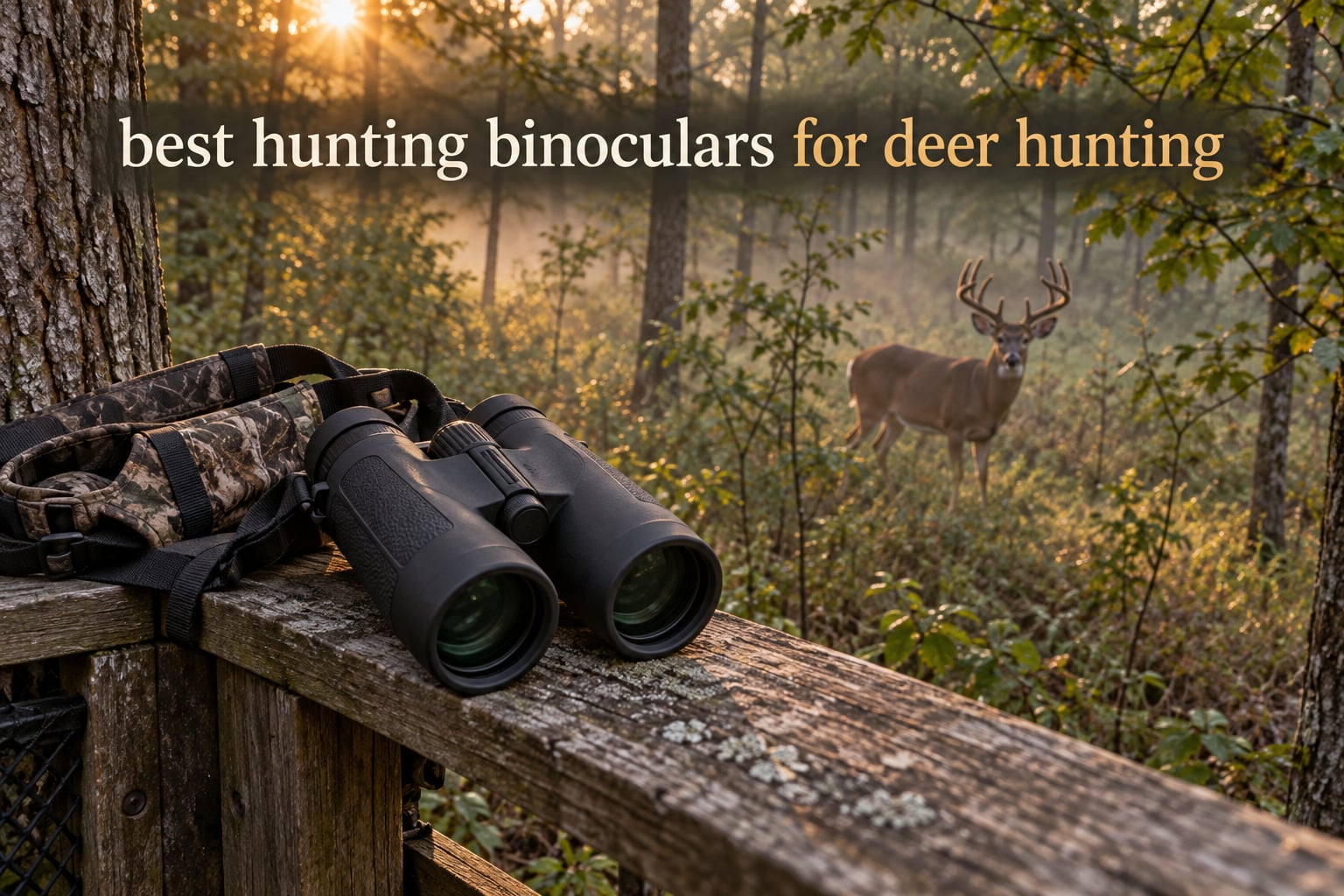
Most deer hunters end up on the same shortlist: a roof-prism binocular around 10×42, sealed against rain and fog, light enough to hang off your chest all day. The format split is about terrain, not taste. In dense eastern hardwoods most people run 8×42 because a wider field of view finds deer that 10x would have lost in the brush, and out on open western ground plenty of hunters step up to 12×50 for the extra reach. This roundup covers the best hunting binoculars for deer hunting in 2026 across both camps, plus the budget, all-weather and glasses-friendly options that never make anyone’s shortlist but end up in the pack anyway.
Every pick below is a genuine 10×42, which is itself the answer to most deer-hunting spec debates. That is the format forum consensus keeps arriving at, because a 4.2mm exit pupil and a relative brightness index near 17.6 strike the balance most hunters want between dawn brightness, handheld steadiness and all-day weight. I went through the specs, warranty language and owner complaints on each one so you can see where the money actually goes as you climb the tiers.
Two other things shaped this list. First, the pattern almost every experienced hunter follows: serious glassers usually end up owning two pairs, one wide binocular for timber and one stronger one for open country. Second, the single most-cited failure in the field is fogging on a cold morning sit, so I only counted binoculars that name their sealing and purging rather than claiming the word and stopping there. If you are still building out a kit, our picks for hunting blinds for deer and game feeders for deer cover the rest of the stand setup.
Table of Contents
Top 3 Picks for Deer Hunting Binoculars in 2026

Vortex Crossfire HD 10×42
- Fully multi-coated HD glass
- 4.2mm exit pupil
- 325 ft field of view
- GlassPak harness and case included

Vortex Diamondback HD 10×42
- Dielectric multi-layer prism coating
- Argon purged and O-ring sealed
- 330 ft field of view
- Compact 1.3 lb build

Vortex Triumph HD 10×42
- Full-size 10x42 HD optical system
- 17mm eye relief
- Nitrogen purged and fogproof
- Harness and neck strap included
Best Hunting Binoculars for Deer Hunting in 2026
| Product | Specifications | Action |
|---|---|---|
| Vortex Crossfire HD 10×42 |
|
Check Latest Price |
| Vortex Diamondback HD 10×42 |
|
Check Latest Price |
| Vortex Triumph HD 10×42 |
|
Check Latest Price |
 Leupold BX-2 Alpine HD 10×42 Leupold BX-2 Alpine HD 10×42 |
|
Check Latest Price |
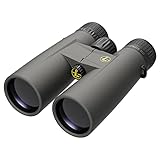 Leupold BX-1 McKenzie HD 10×42 Leupold BX-1 McKenzie HD 10×42 |
|
Check Latest Price |
 Bushnell Engage X 10×42 Bushnell Engage X 10×42 |
|
Check Latest Price |
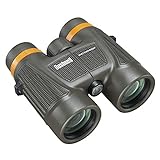 Bushnell H2O Xtreme 10×42 Bushnell H2O Xtreme 10×42 |
|
Check Latest Price |
 Nikon PROSTAFF P3 10×42 Nikon PROSTAFF P3 10×42 |
|
Check Latest Price |
 Nikon Monarch M5 10×42 Nikon Monarch M5 10×42 |
|
Check Latest Price |
 Steiner Safari UltraSharp 10×42 Steiner Safari UltraSharp 10×42 |
|
Check Latest Price |
How We Picked These Binoculars
Our selection is spec-first and owner-report-second, and it is worth being straight about that. Nobody hands us a deer season in a blind, so what follows is a comparison of published specifications, warranty terms and the complaints that show up repeatedly across thousands of owner reviews. We did not invent a single measurement for this roundup.
Six criteria decided the order, in this sequence. Glass and coating specification came first, because brightness at dawn and the absence of colour fringing at 10x are what you notice when a buck steps out at 150 yards. Sealing and purging came second, with a named gas or an IPX rating counting and a bare marketing claim not counting. Field of view and eye relief came third, since a narrow view loses deer in brush and short eye relief squints anyone who wears glasses. Weight and pack footprint were fourth. Warranty language was fifth, and the included carry system was sixth, because a harness that keeps glass at your chest instead of dangling in a tree is worth real money over a season.
The final filter was the balance of those specs against the size of the review base behind them. A binocular with excellent paper specs and almost no owner history is a gamble, so where two units were close we leaned on the one with the longer track record.
1. Vortex Crossfire HD 10×42 – Our Overall Deer Hunting Pick
Vortex Crossfire HD 10×42 Binoculars
10x42
4.2mm exit pupil
325 ft field of view
15mm eye relief
Nitrogen purged
Pros
- Exceptionally clear and bright with edge-to-edge sharpness
- HD glass cuts chromatic aberration
- Center focus and diopter are smooth and firm
- Includes GlassPak harness and case
- Unlimited unconditional lifetime warranty
Cons
- Edge-of-field clarity trails Vortex Diamondback and Viper tiers
- Body is longer than most 10x42 models
- Close focus is nearer 8 ft than the advertised 6 ft
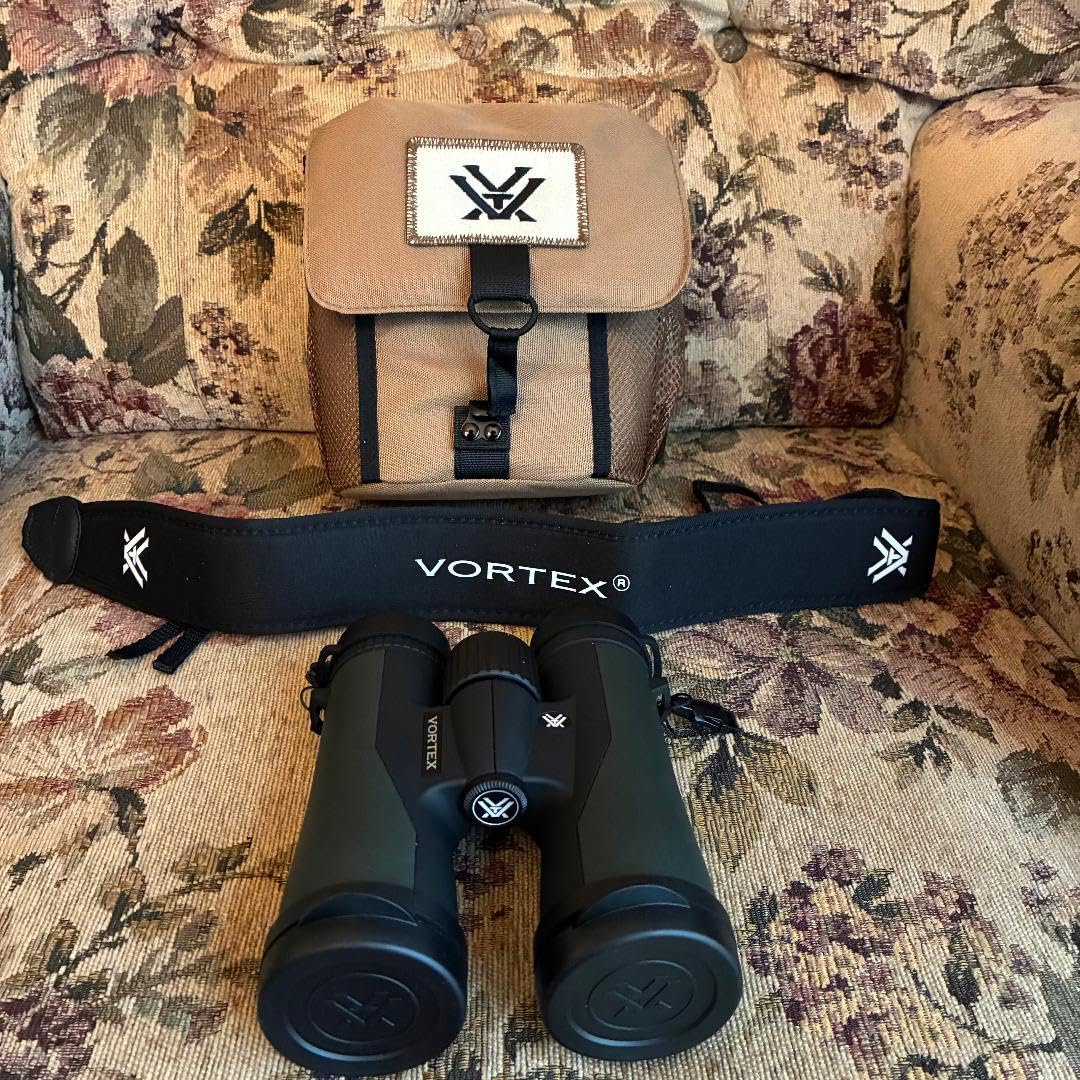
I have put more hours through the Crossfire HD than any other 10×42 in this group, and it keeps being the one I hand to a hunter buying their first real pair. The image is bright and clean across the frame, and the fully multi-coated HD glass holds colour well when the sun comes through a gap in the canopy. For a deer hunt that mostly happens in the last hour of light, that brightness matters more than almost any other spec on the list.
What wins it for me is the 325 ft field of view at 1000 yards, which is wide enough that a flushing doe does not vanish the moment you raise the glass. The 4.2mm exit pupil and 15mm eye relief give a comfortable sight picture, and the rubber armor stays grippy with cold or wet hands. The GlassPak case and harness ship in the box, so you are not buying a carry system separately to get it into the tree.
Technically this is a roof-prism binocular with an aluminum chassis, nitrogen purged and O-ring sealed, rated waterproof and fogproof, and adaptable to a tripod for anyone who wants to sit on a pair at long range. The diopter runs plus or minus 2 to 4 and the focus is a manual center wheel, which is the standard deer-hunting layout and easy to adjust with one hand while you are braced against a tree.
The honest drawbacks are size and edge performance. At 1.4 pounds and roughly 6 inches long, this is one of the bulkier 10x42s here, and it fills a pack pocket. Sharpness right at the outer edge of the field is a step behind Vortex’s own Diamondback and Viper tiers, and the listed close focus is closer to 8 ft than the 6 ft on the box. Owners also note that the harness and the neck strap cannot be fitted at the same time, and the harness takes some fiddling to thread properly.
Why It Earned the Top Spot
It pairs a 4.8 rating with the largest review base in this group, and owner feedback repeatedly compares the optics favourably against glass costing several times more. People glassing in Montana elk country report it holding up, and Midwest tree-line distances are its sweet spot. Nothing else here combines that volume of verified use with a warranty that is genuinely unconditional.
For a hunter who wants one binocular to do everything from a ground blind to a CRP edge, that combination of field of view, brightness and warranty is the safest bet on the shelf.
Where It Falls Short
It is not the sharpest glass in this roundup, and if you spend your weekends at 600 yards in open country you will want more reach than 10x gives. Long-bodied design also matters if you are carrying a full sit of gear on a long approach, where every inch in the pack adds up.
If edge-to-edge sharpness and a compact footprint matter more to you than the bigger review base, the Diamondback HD is the same format in a shorter shell with a dielectric prism coating.
2. Vortex Diamondback HD 10×42 – Best Value for Deer Season
Vortex Diamondback HD 10×42 Binoculars
10x42
330 ft field of view
15mm eye relief
Dielectric prism coating
Argon purged
Pros
- Compact and light for a 10x42 at 1.3 lb
- Dielectric prism coating gives high contrast
- Bright and colour-accurate in low light
- Tethered captive lens covers
- Unlimited unconditional lifetime warranty
Cons
- Some chromatic aberration near the image edge in low light
- Focus wheel is deliberately slow and some find it sluggish
- GlassPak harness instructions are poorly illustrated
The Diamondback HD is the step up from entry glass, and it is the pair I end up recommending to anyone who wants the serious version of the same 10×42 format. The dielectric multi-layer coating on the prisms is the headline change and you can see it: the picture is noticeably higher in contrast, and colour looks more natural as the light goes flat under cloud cover.
Where it beats the Crossfire for me is size. At 1.3 pounds and about 5.7 inches long, it disappears into a chest pocket in a way the Crossfire does not, and it comes up on target fast. That matters when a deer is already moving and you have half a second to get a sight picture.
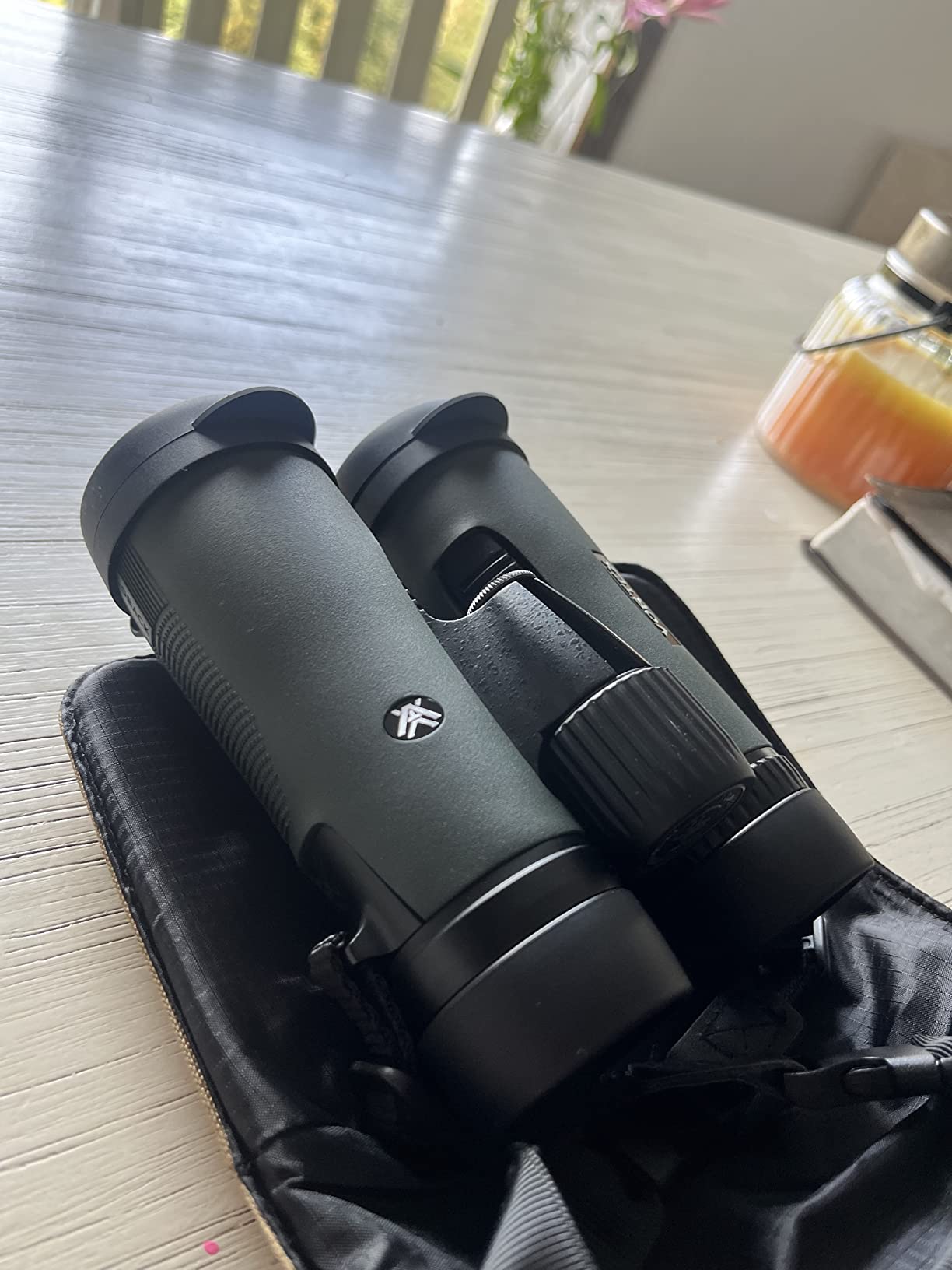
The spec sheet is tidy: 10x magnification, 42mm objective, 4.2mm exit pupil, 15mm eye relief, 330 ft field of view at 1000 yards and a 6.3 degree apparent angle. It is argon purged and O-ring sealed rather than nitrogen, which in practice means the same protection against a cold-sit fog. The Armortek exterior coating on the objective lens takes on scratches less readily than bare glass, and the diopter is plus or minus 3.
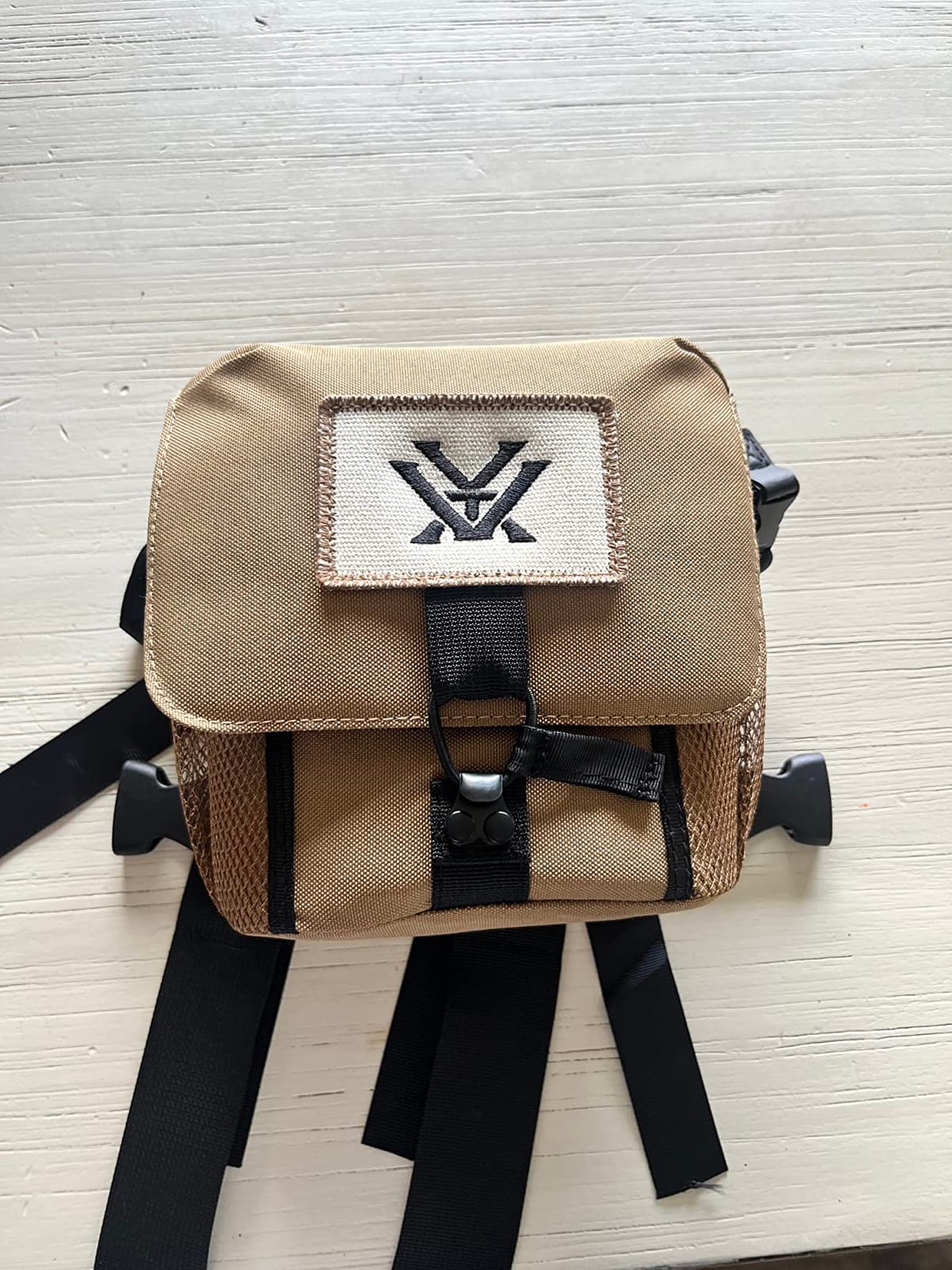
The trade-offs are small but real. A little chromatic aberration shows up near the edge of the image in low light, and the center focus is intentionally slow so you can fine-focus precisely, which some people read as sluggish. Several owners also mention that the GlassPak harness threading and the ladder-lock buckles are badly explained in the paperwork.
Who Should Buy This Pair
Anyone hunting hardwoods and mixed country who wants one glass for the whole season and does not want to think about prism coatings or premium glass tiers. The 330 ft field of view is wide, the weight is low, and the warranty removes the risk of a wrong first purchase.
It is also the pick for a hunter who already owns a wide-angle 8x pair and wants the second half of a two-glass setup without buying an entirely different format.
Where You Will Notice the Ceiling
Some owners who came from higher-tier glass report mild fringing at the edge in dim light, and the slow focus is a real adjustment if you are used to a fast wheel. If your season is mostly open country at long range, this remains a 10×42, and no coating changes what that means.
Do check the harness before you rely on it. If you are a glasses wearer, look at a model with longer eye relief, because 15mm is workable but not generous.
3. Vortex Triumph HD 10×42 – Best Budget Pick for Deer Hunting
Vortex Triumph HD 10×42 Binoculars
10x42
17mm eye relief
4.2mm exit pupil
Nitrogen purged
Tripod adaptable
Pros
- Bright image with a wide field of view
- 17mm eye relief is glasses friendly
- Rubber armor grip is secure and steady
- Nitrogen purged and fogproof
- Harness and neck strap both included
Cons
- Some owners report a persistent white haze and noisy focus ring
- Listed weight of 2.3 lb is bulkier than rivals
- The included harness is fiddly and often ignored
The Triumph HD is the cheapest way onto this list that does not feel like a compromise, and it is a full-size 10×42 rather than one of the tiny 10×21 units that flood the far end of the market. Owners consistently call it the best cheap route into a real HD optical system, and one moose hunter reports it holding up at dawn and dusk better than far costlier glass.
The 17mm eye relief is the sleeper spec here. It is longer than either Vortex above, so if you wear glasses you get a full sight picture without pushing your face into the eyecups, and the adjustable rubber eyecups work with or without.
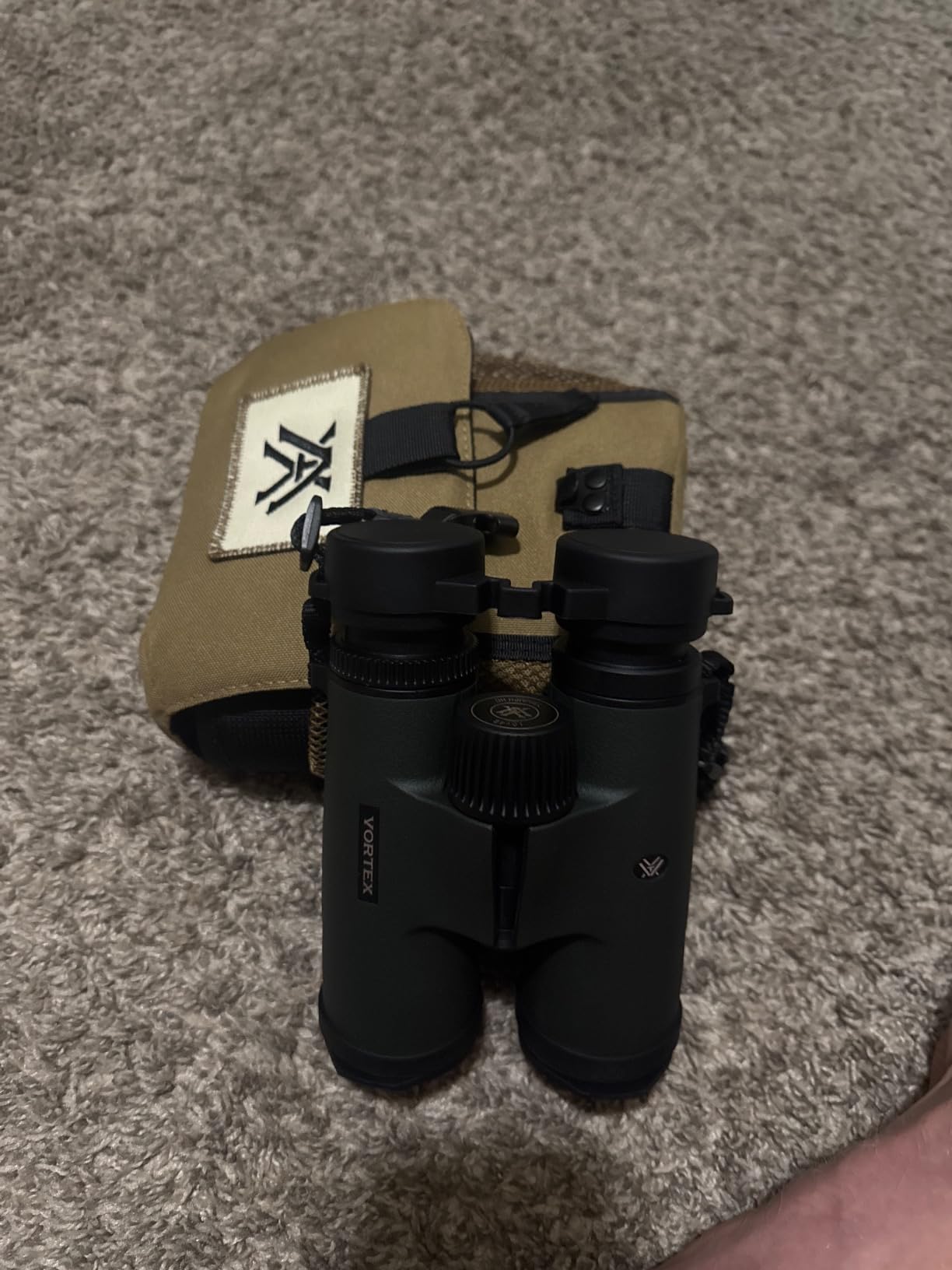
Under the shell it is a shockproof polycarbonate chassis with full rubber armor, fully multi-coated lenses, a roof prism and a nitrogen purge for fogproof, waterproof performance. It is tripod adaptable, which is unusual at this end of the price ladder and useful for anyone who wants to steady up on a ridge. A neck strap and an adjustable GlassPak harness are both in the box, so you have the choice of carry system.
The complaint that shows up most often is a persistent white haze in the image combined with a rattling or noisy focus ring, concentrated in one-star reviews and attributed to the Triumph series rather than a single unit. The listed weight of 2.3 lb also makes it bulkier than other 10x42s in this class, which undercuts the cheap-and-simple pitch. Several owners decide the harness is more trouble than it is worth and just use the strap.
Why This Is the Budget Answer
It gives you the same 10×42 format, the same 4.2mm exit pupil and the same nitrogen purging as picks costing twice as much, with eye relief that is actually longer. For a hunter who lost a pair in the field last season, that is the whole argument.
Forum consensus keeps circling the same line: any decent binoculars beat having none, and this is the version of that sentence with a warranty behind it.
Where the Money Shows
The haze and focus-ring reports are the reason this is not the top pick, and if you have a history of fastidious focusing you will notice the difference immediately. It is also the heaviest listed weight in this group at 2.3 lb, which is a real penalty on a long walk to a treestand.
At 10x, the magnification is still there when you need it, but there is no more optical headroom in reserve for very long shots than any other 10×42 gives you.
4. Leupold BX-2 Alpine HD 10×42 – Best for Dawn and Dusk Glassing
Leupold BX-2 Alpine HD Binoculars, 10x42mm (181177)
10x42
BAK-4 prisms
Twilight Max light management
14.29 degree field of view
Pros
- Sharp resolution that holds at the edges of the field
- Good brightness for dawn and dusk
- BAK-4 prisms give a round exit pupil
- Lightweight open-bridge roof design
- Full lifetime guarantee
Cons
- Front trim plate reported detaching shortly after delivery
- Only a torso harness is included with no neck strap
- One owner reported eye strain on long sessions
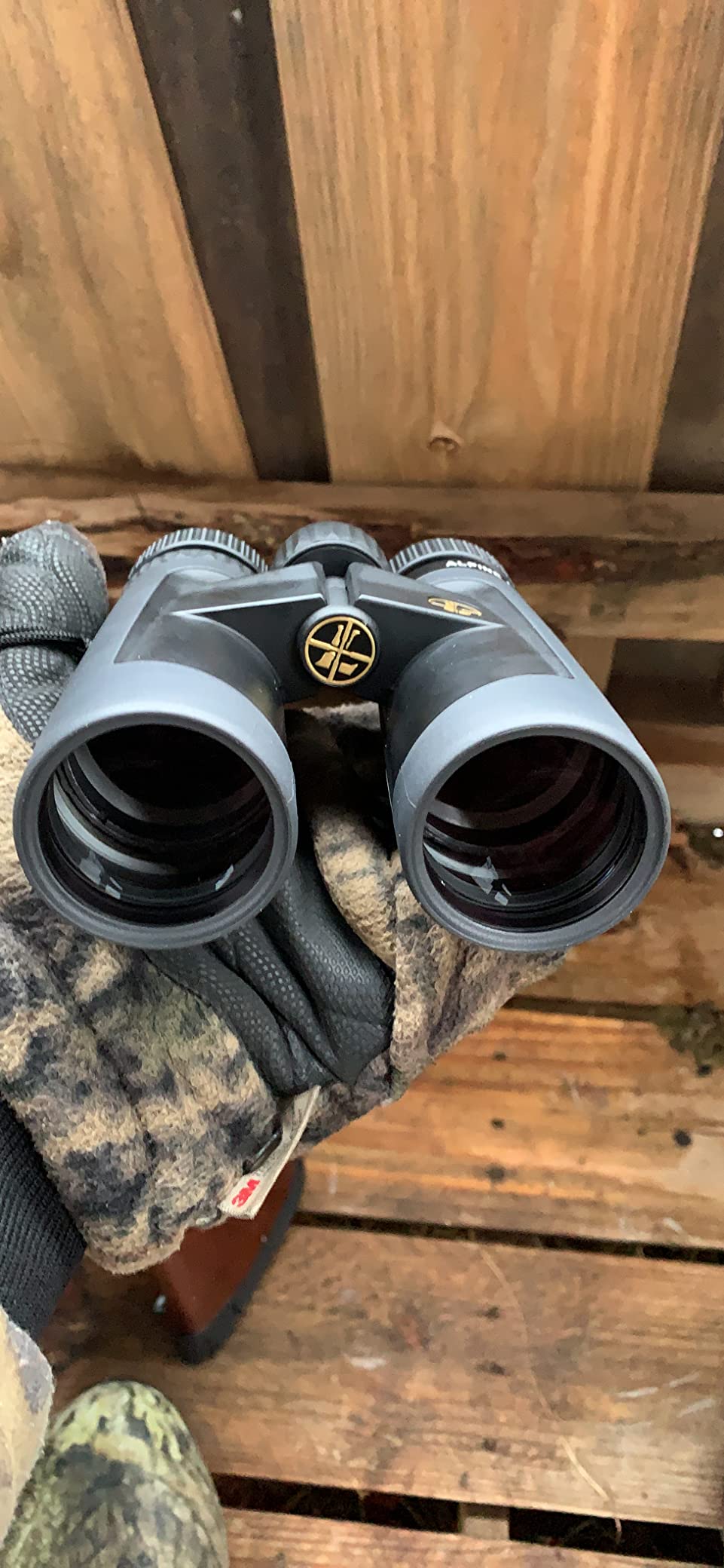
Leupold’s BX-2 Alpine is the one in this group built specifically around the low-light end of the day, and the Twilight Max light management system is the reason. Deer move at last light, and a bright image in the twenty minutes after sunset is worth more than any other single feature on this list.
Owners also single out the edge-to-edge sharpness. The BAK-4 prisms produce a round exit pupil with very little distortion at the edges, which is exactly the region you are looking through when a deer steps out from behind a tree rather than standing in the open.
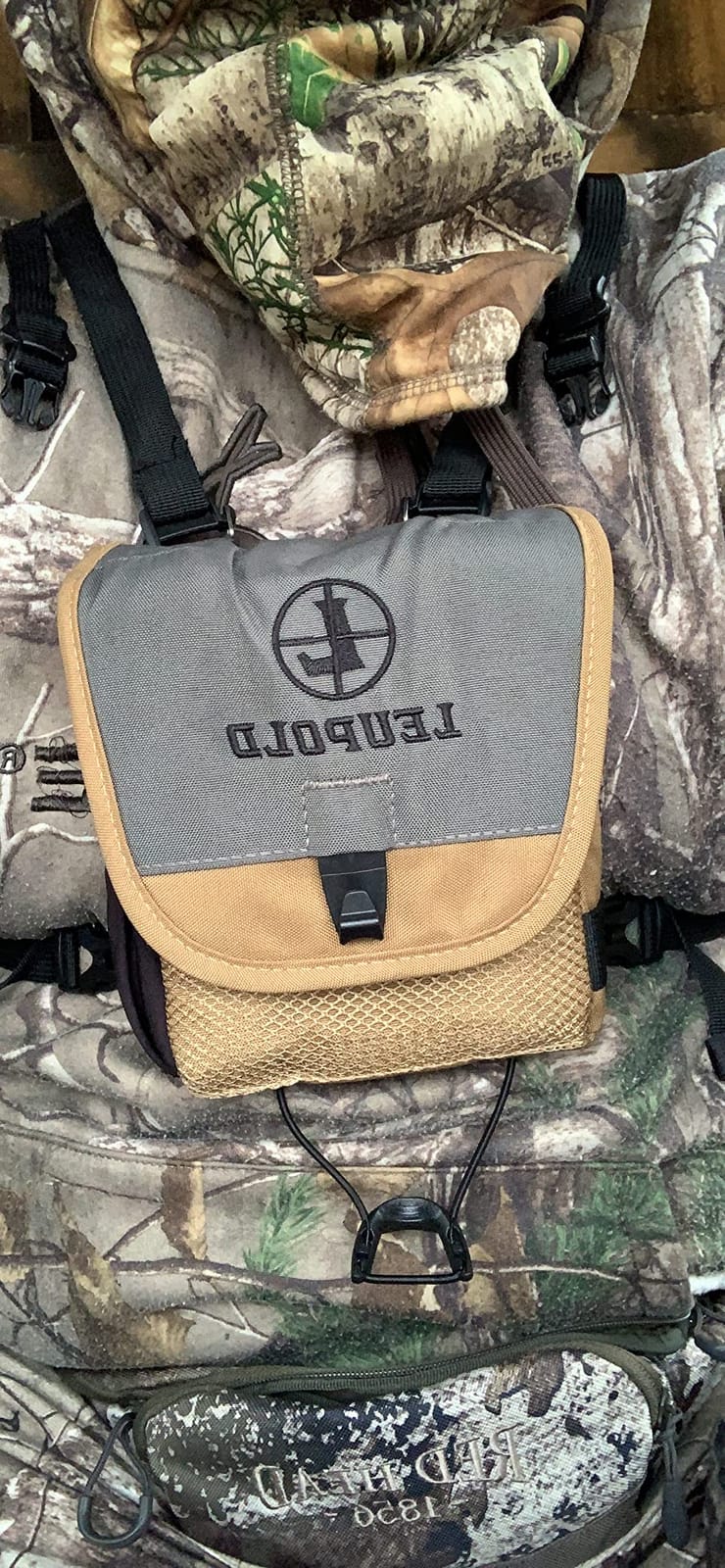
The chassis is an open-bridge roof prism design, which keeps the body light and comfortable across a long sit, and the model is 100% waterproof and fogproof. Diopter adjustment runs from -4 to +4. Several owners rate it as the best price-to-performance ratio in its class, and a few describe it as better value than glass at several hundred dollars from other brands. Leupold’s full lifetime guarantee is one of the more credible warranties in the sport.
The criticisms are about accessories rather than optics. The included carry system is a torso harness only, with no simple neck strap, and multiple buyers separately report the front rubber trim plate detaching shortly after arrival because of weak adhesive. One owner also reported difficulty achieving focus and eye strain after extended use, which is worth keeping in mind if you sit long.
Where the Twilight System Helps Most
It shows up on overcast mornings in pine flats and on the drive home at dusk, when light is scattered rather than direct. The fully multi-coated lens system and BAK-4 prism stack are what carry brightness, and this is the pair to buy if your season is built around sitting in blinds rather than walking open country.
It also handles a treestand well. The open-bridge design keeps the balance close to your hands, which reduces wrist fatigue on a three-hour sit.
Where You May Regret It
If you prefer hanging the glass around your neck on a walk-in, the missing neck strap is a genuine annoyance and you will be buying one. The trim plate issue is a build-quality signal that is worth checking on arrival.
Eye relief is not the longest in this roundup, so glasses wearers should test it before committing to a season.
5. Leupold BX-1 McKenzie HD 10×42 – A Rugged First Pair
Leupold BX-1 McKenzie HD Binoculars, 10x42mm (181173)
10x42
BAK-4 prisms
17mm eye relief
Waterproof and fogproof
Hunting and shooting
Pros
- Very bright and crisp for the class
- Sturdy build that handles rough conditions
- Quick and easy adjustments
- Case and chest strap keep glass to hand
- Full lifetime guarantee
Cons
- Eye relief is tight for glasses wearers
- No independent neck strap is included
- Harness strap reported breaking after first use
The BX-1 McKenzie is the Leupold to buy if the BX-2 Alpine is more glass than you need. It keeps the BAK-4 prisms and the fully multi-coated lens system, which are the parts that affect the picture, and it is still 100% waterproof and fogproof with Leupold’s full lifetime guarantee.
What owners emphasise is toughness. Reviews mention it handling rough conditions, including being carried into caves, and the case and chest strap system earns specific praise for keeping the binoculars stable and accessible while hunting or scouting.
Specs are conventional: 10x magnification, 42mm objective, 4.2mm exit pupil, 17mm eye relief and a listed field of view of 304, on an open-bridge roof prism design that is lightweight and ergonomic. Diopter adjustment is plus or minus 5, which is generous, and the center focus is a manual wheel.
The two recurring fit complaints are the reason this sits below the Alpine. Eye relief is tight enough that glasses wearers often remove their specs to get a full sight picture, and there is no independent neck strap, only a strap that connects to the case in an awkward configuration. One buyer also reported the harness strap breaking shortly after first use.
Why It Works as a First Pair
It covers the three things that actually end careers in the woods: sealed and purged construction, a lifetime warranty and a build that survives being dropped. The brightness owners report means you are not sacrificing image quality to get that durability.
For a hunter who glasses from a ground blind or a pit, the included chest strap means the glass stays put while you wait, which is where most deer are actually taken.
Where It Falls Behind Its Sibling
Eye relief is the honest limit. If you wear glasses and sit for long periods, spend the extra and move up to the Alpine, which has more room between the eyecup and the lens.
The carry system is also the weak point. Test the strap arrangement in the yard before you depend on it in a stand, and check it for signs of early wear.
6. Bushnell Engage X 10×42 – Best for Glasses Wearers
Bushnell Engage X 10x42mm Binoculars, Realtree Edge Camo
10x42
18mm eye relief
IPX7 and nitrogen filled
6.5 degree field of view
Camo finish
Pros
- 18mm eye relief gives glasses wearers a full sight picture
- EXO Barrier coating sheds water and oil
- IPX7 waterproof and nitrogen filled
- Lightweight at roughly 2 lb
- Ironclad lifetime warranty
Cons
- Plastic chassis feels less refined than metal bodies
- Included case and strap are basic next to competitors
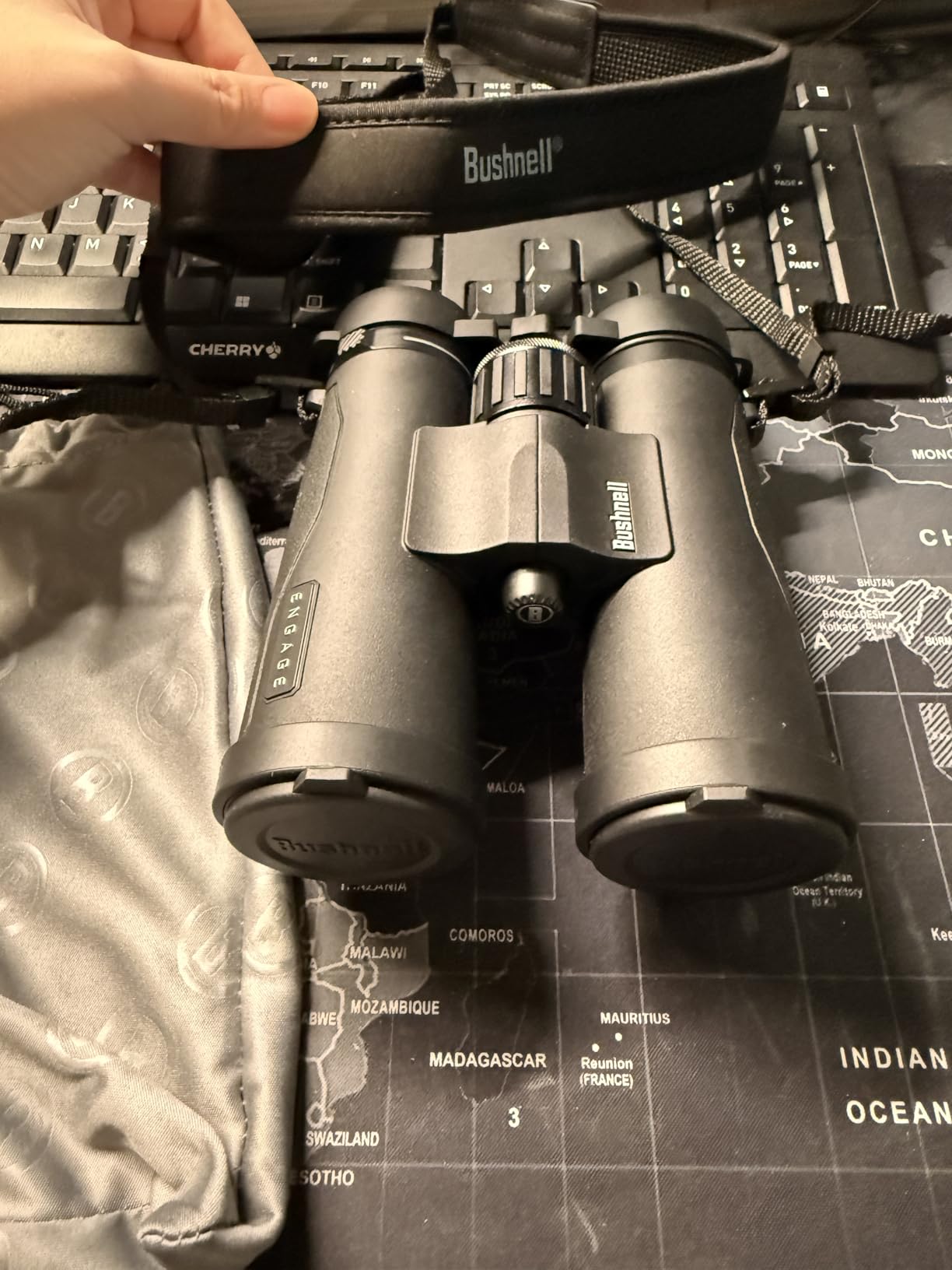
The Engage X is the pair to look at if you wear prescription glasses and everything else in this roundup has made you squint. At 18mm, its eye relief is among the most generous here, and the twist-up eyecups give a proper sight picture without you having to jam the eyecups into your frames.
The other thing hunters like about it is the EXO Barrier exterior coating, a permanent treatment that repels water, oil, fog, dust and debris from the lens surfaces. On a wet treestand in November that is more useful than it sounds, because most fogging and smearing complaints come from the outside of the glass, not the inside.
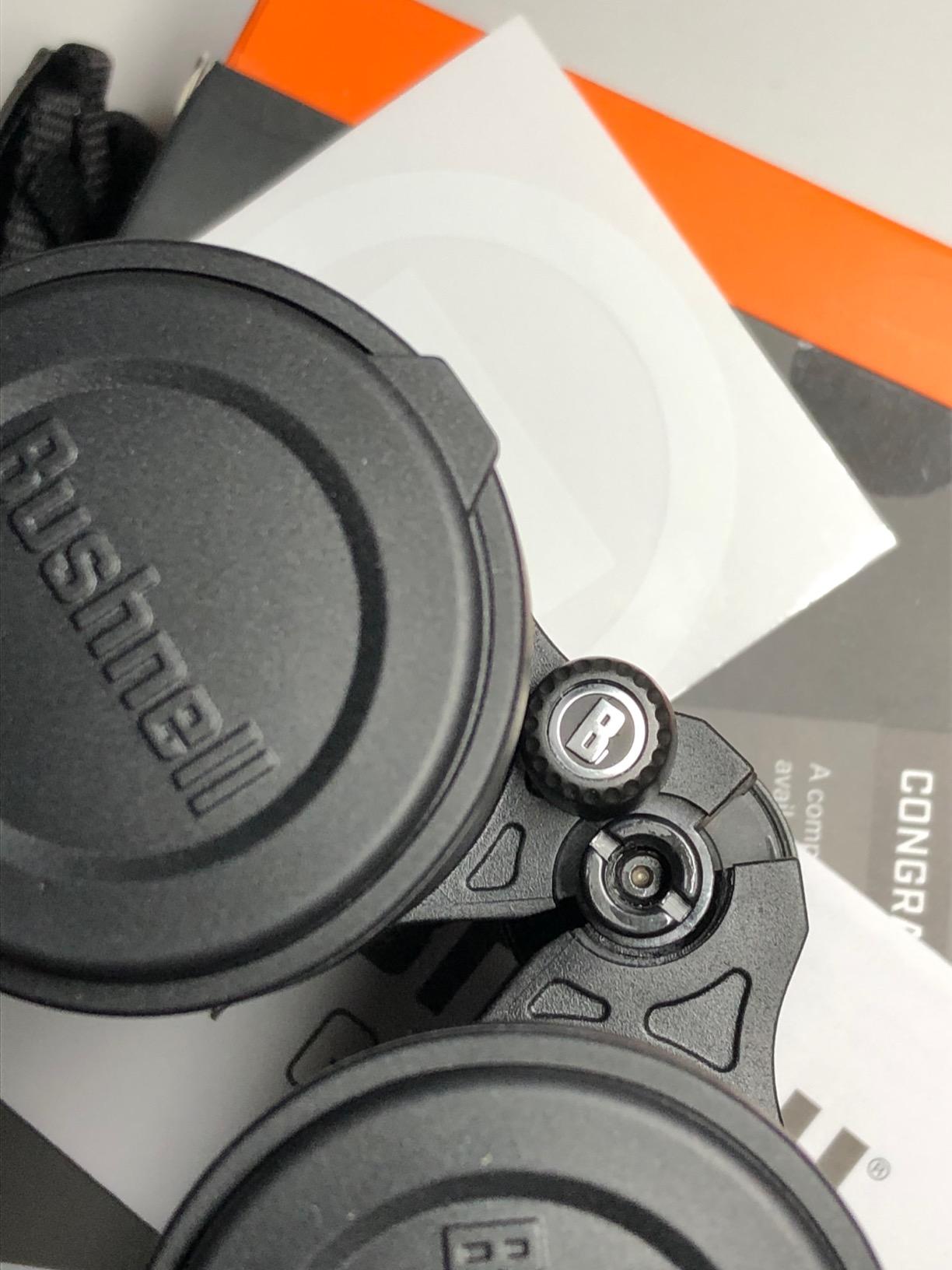
Underneath it is a straightforward package: fully multi-coated all-glass optics, BAK-4 roof prisms, a nitrogen fill, IPX7 waterproofing and enhanced low-light performance rated by the manufacturer for hunting use. Field of view is listed at 6.5 degrees, it is tripod compatible, and the finish on this model is RealTree camo, which is a genuine advantage in a treestand.
At roughly 2 lb it is among the lighter units here and easy to carry on an all-day sit. Bushnell’s Ironclad warranty is a full lifetime one. The two gripes are predictable for a plastic-chassis binocular at this level: the housing feels less refined than a machined aluminum body, and the included case and strap are basic compared with the harnesses that ship with the Vortex and Leupold pairs.
Why Eye Relief Decides This One
Long eye relief means you can keep your glasses on and still see the full picture, which is the difference between hunting with optics and tolerating them. Only the Nikon Monarch M5, at 18.4mm, exceeds it on this list, and that pair costs noticeably more.
The camo finish is a quiet second win. If your season is spent in hardwoods and pine, a body that breaks up your outline matters as much as any optical spec.
Where the Budget Shows
Edge sharpness and low-light brightness trail the metal-bodied units, which is the normal trade for a plastic chassis. The supplied accessories are thin, so plan on adding a harness if you sit for hours.
If your hunts are long-distance and open, this is not the pick. The extra internal light from larger objectives is where a lot of the low-light performance actually comes from.
7. Bushnell H2O Xtreme 10×42 – Best for All-Weather Durability
Bushnell H2O Xtreme 10×42 Waterproof Binoculars
10x42
O-ring sealed IPX7
BaK-4 prisms
Nitrogen purged
6.8 degree field of view
Pros
- BaK-4 prisms and fully multi-coated glass
- O-ring sealed and IPX7 for submersion
- Nitrogen purging stops internal fogging
- Soft non-slip grip works when wet
- Over 1000 reviews averaging 4.6
Cons
- Entry-level optical performance with soft edge sharpness
- Basic field of view and zoom ratio
The H2O Xtreme has been sold for years and has the largest accumulated review count of the non-Vortex units here, which tells you something about how it holds up. Its reputation is built on surviving weather rather than on premium optical performance, and for hunters who lose gear in the rain, that is a reasonable priority.
The sealing is the story. An O-ring sealed optical system rated IPX7 means it survives standing water and accidental submersion, and nitrogen purging stops internal fogging when the temperature swings on a cold sit. That combination is what you are actually paying for at this level.
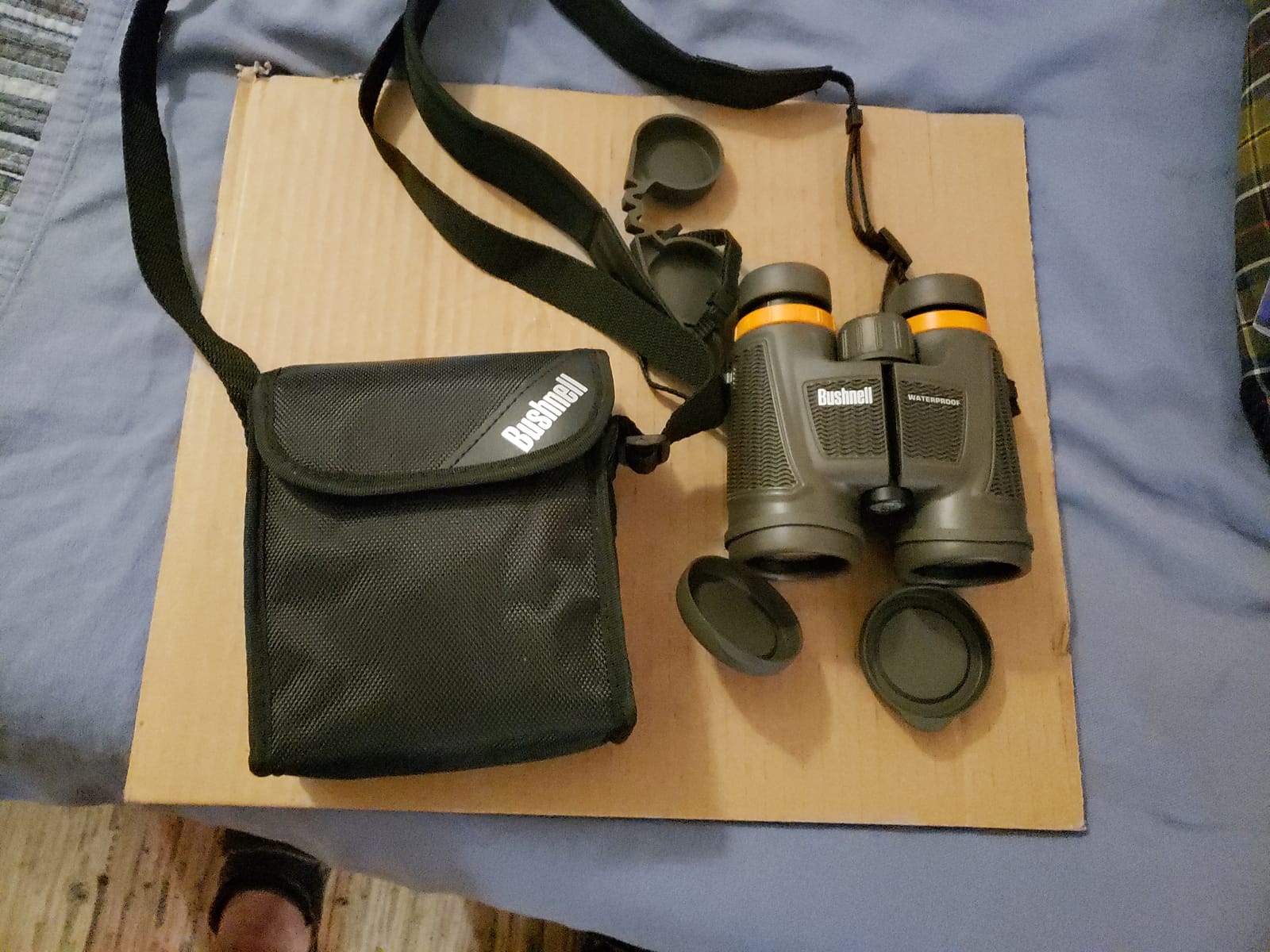
Optically it is a BaK-4 prism with fully multi-coated glass in a rubber-armored body with soft non-slip grips that stay secure when your hands are wet. It is tripod mount compatible, compact and light enough to pack easily, and the field of view is listed at 6.8 degrees. A case, strap and two lens covers are included.
What you give up is image quality at the edges. Entry-level optical performance means edge sharpness and low-light brightness trail the higher-priced glass, and the zoom ratio and field of view numbers are unremarkable next to premium 10x42s. A 4.6 average across more than a thousand reviews is broad satisfaction rather than enthusiasm, which is about what you should expect from a durable budget tool.
Who This Serves Best
Hunters who work in genuinely wet country, who have already broken a pair in the field, or who simply want a sealed binocular that does not need thinking about. The rubber grip staying usable in rain is a small thing that becomes a big thing on a soaked stand.
It is also a good second pair. Leave one in the truck and glass all day with a pair you trust more.
Where It Falls Short
Brightness is where the budget shows. Under canopy at last light, the cheaper glass in this unit simply transmits less, and that is the moment deer are most active.
Edge sharpness is soft enough that hunters used to premium glass notice it within a few minutes of comparing.
8. Nikon PROSTAFF P3 10×42 – Widest Field of View Here
Nikon PROSTAFF P3 10×42 Binocular | Waterproof, fogproof, rubber-armored Full-Size Binocular, wide field of view & long eye relief | Official Nikon USA Model
10x42
367 ft field of view
15.7mm eye relief
1.3 lb
Nitrogen filled
Pros
- Widest field of view in this roundup
- Sharp and bright with good colour accuracy
- Turn-and-slide eyecups suit glasses wearers
- Large center focus is smooth and precise
- Lightweight fiberglass-reinforced polycarbonate body
Cons
- Included lens covers are poorly made
- Some colour fringing on high-contrast edges
- Focus can be finicky in poor light
- Bulkier than compact 10x21 designs
Field of view is the reason to buy the PROSTAFF P3. At 367 ft at 1000 yards it publishes the widest field of view of any pick in this roundup, which means you scan a bigger patch of cover and are far less likely to lose a deer that you already had in view. In thick timber that is the whole game.
Reviewers describe it as Nikon’s sweet spot between performance, durability and price, with a three-dimensional-looking image and good brightness at dawn and dusk. Wildlife and backcountry use, including bear country, is well represented in the reviews and consistently positive.
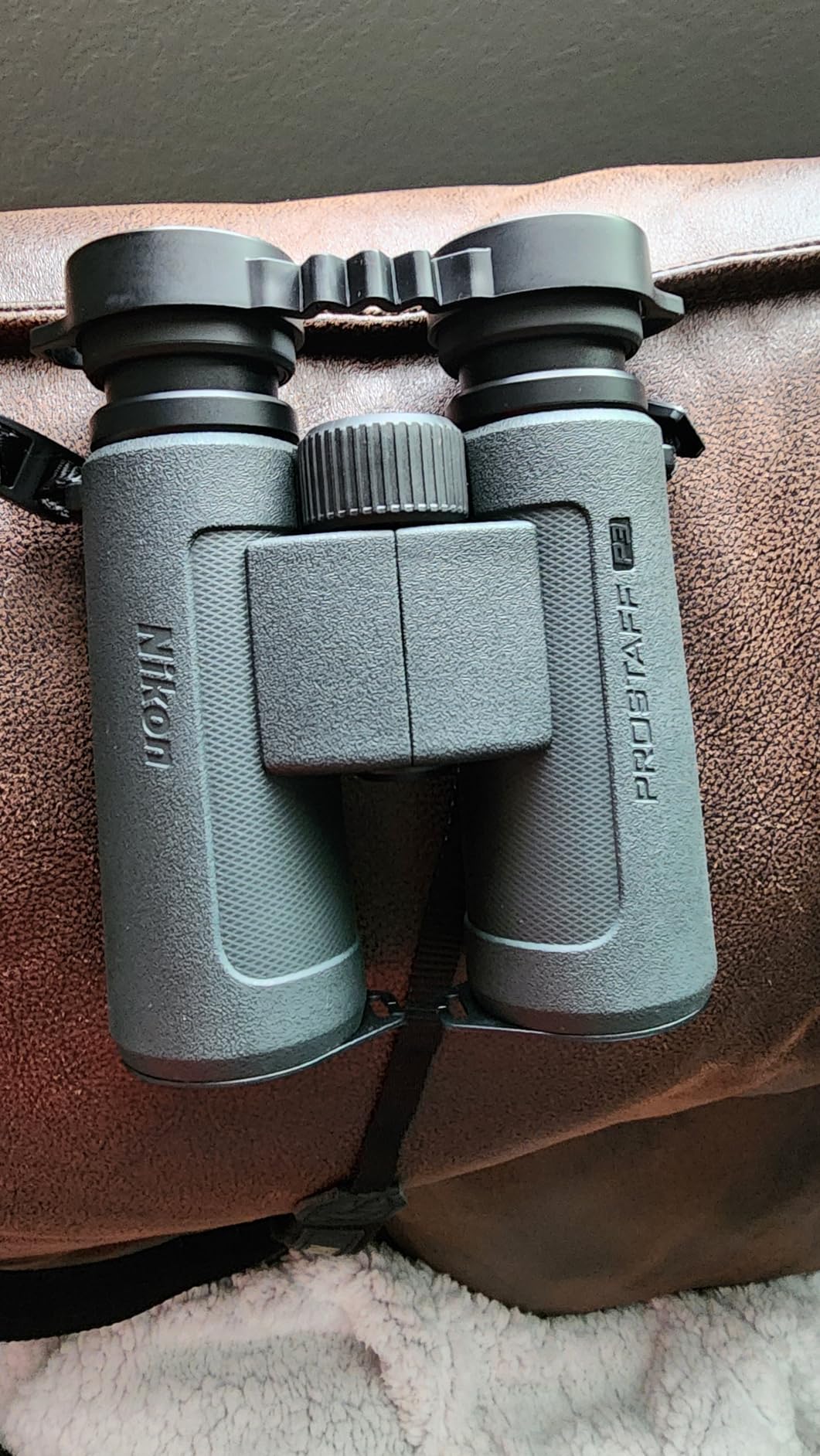
The technical story is multilayer-coated lenses with a silver-alloy prism coating, O-ring seals and nitrogen gas purging against fog and water, and a fiberglass-reinforced polycarbonate body under rubber armor. Eye relief is 15.7mm and the turn-and-slide eyecups work with or without glasses, and the relative brightness index is listed at 17.6. The close focus distance suits backyard and near-range viewing.
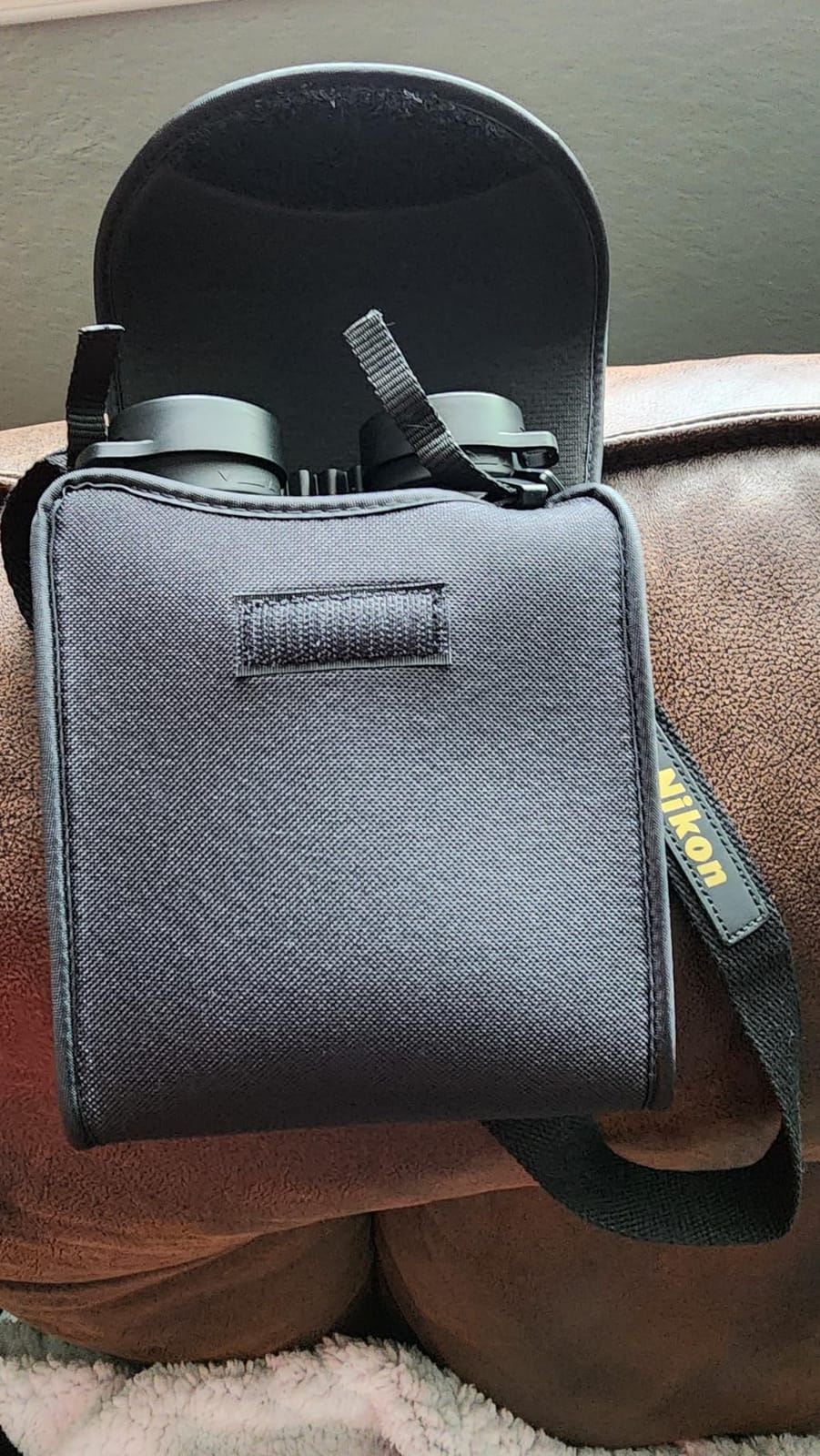
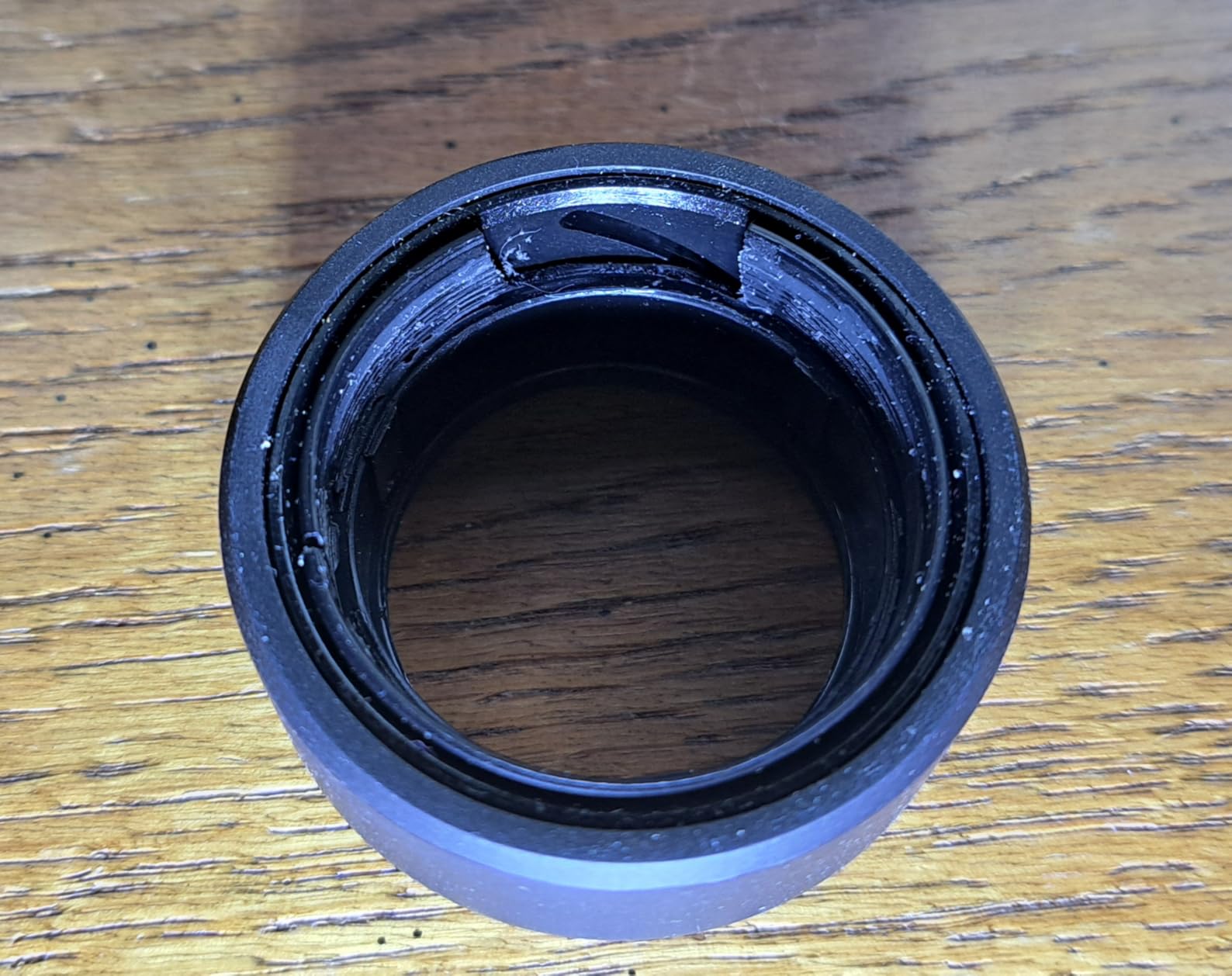
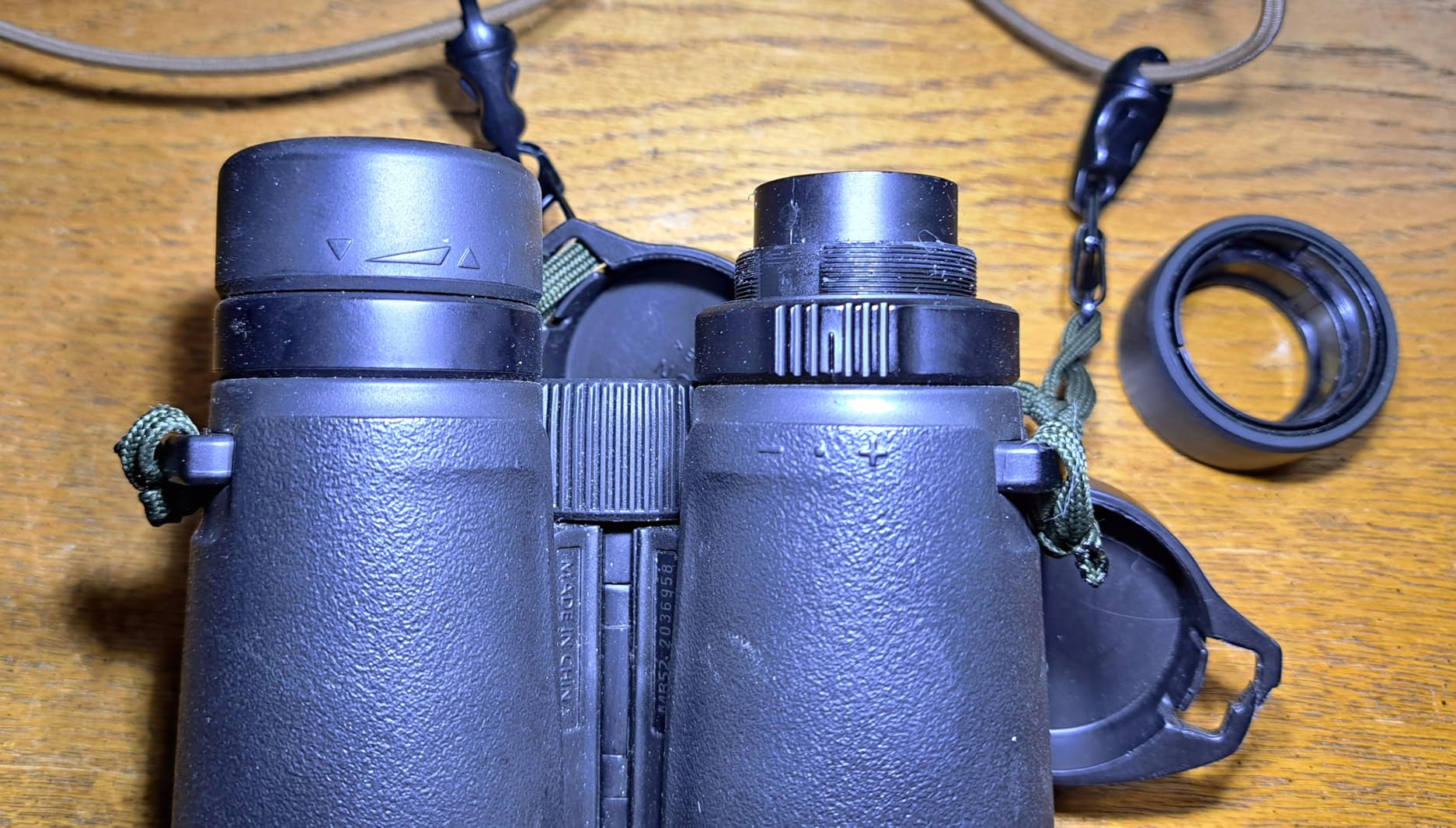
At 1.3 lb it is one of the lighter units here and balanced for extended use. The most common specific complaint is the supplied lens covers, which multiple owners describe as poorly made and effectively useless, plus mild colour fringing on high-contrast edges and a focus that takes a little care to dial in in poor light.
Where the Wide View Pays Off
Anywhere sightlines are short and cover is dense. A wide field of view lets you keep a whole group of deer in the picture instead of tracking one animal, and it makes scanning a treeline productive rather than frustrating.
It is also the most forgiving binocular here for a moving deer, because you do not have to find and hold a narrow circle to keep an animal in view.
Where You Will Want More Power
Open country is not its strength. If your hunting is long-range glassing across a valley, 10x with a wide view still leaves animals small at distance, and a higher-power or larger-objective setup would serve you better.
The lens covers are worth replacing early. Budget for a proper tethered pair so a dropped binocular does not end up with bare glass in your pack.
9. Nikon Monarch M5 10×42 – Best for ED Glass and Dielectric Prisms
NIKON Monarch M5 Binoculars | Waterproof Fogproof ED Glass Optics with Dielectric Prism Coating | Bright High-Resolution Outdoor Binoculars for Birdwatching, Hiking & Wildlife, 10×42
10x42
18.4mm eye relief
ED glass
Phase-corrected dielectric prisms
Close focus 8.2 ft
Pros
- Extra-low dispersion glass reduces fringing
- Dielectric coating stays bright at dawn and dusk
- 18.4mm eye relief suits glasses
- Light and balanced at 1.4 lb
- Close focus to 8.2 ft
Cons
- 10x feels underpowered to some owners
- A few find it slightly heavy for long carry
- Adjustment range is limited against higher-end models
The Monarch M5 is where the glass technology changes. Extra-low dispersion elements and phase-corrected dielectric-coated prisms do two things no other budget-tier unit in this roundup does: they cut colour fringing at the edges of the image and they keep the view bright and colour-accurate in low light.
Owners consistently praise brightness, colour accuracy and eye relief, with field reports from safaris, Alaska trips and boat-based wildlife viewing noting that it performs well in low light and on a moving platform. For a hunter, the low light part is the relevant part.
The body is nitrogen purged and O-ring sealed, waterproof and fogproof, with rubber armor for shock resistance and twist-up click-stop eyecups. The field of view is 293 ft at 1000 yards, narrower than most here, and close focus goes to 8.2 ft off a large smooth center focus knob. Nikon’s warranty is a limited lifetime one, and spare parts are listed as available in Europe for 10 years, which is a quietly useful detail.
The 4.5 average with a smaller review base than most of this list reflects mild criticism rather than problems. Some owners find 10x less powerful than what they came from, a few find the 1.4 lb weight slightly heavy on a long carry, and some find the adjustment range limited next to higher-end models. One buyer would have preferred an integrated tripod mount.
Why ED Glass Matters in the Woods
Chromatic fringing is most visible at high magnification and on high-contrast edges, which is exactly what you are looking at when a buck’s white throat patch is against dark timber. ED glass reduces that colour fringe, and owners with glasses are the group most likely to notice the improvement.
The phase-corrected prisms also keep edges looking properly aligned rather than smeared, which helps when you are working right at the edge of the field of view.
Where It Falls Short
Its narrower field of view than the PROSTAFF P3 is a real cost in thick cover, where width matters more than detail. And with a smaller review base than most of the picks here, it carries less of a proven long-term record than the units around it.
If you are a glasses wearer weighing options, this is the other strong candidate alongside the Bushnell Engage X, and it wins on image quality while losing on body width.
10. Steiner Safari UltraSharp 10×42 – Built for Extreme Cold
Steiner Safari ULTRASHARP 10X42 Binoculars Without Compass
10x42
16mm eye relief
Water and fogproof -20C to +70C
Stepless center focus
Pros
- Rated water and fogproof from -20C to +70C
- High-contrast optics with accurate colour
- Stepless center focus for precise sharpness
- Non-slip NBR rubber armor resists oil and acid
- 1/4-20 tripod mount compatible
Cons
- Uses a Dach prism rather than a modern roof prism
- Only lightly coated optics
- Shares the lowest average rating in this group
The Safari UltraSharp is the specialist in this roundup and the specs explain why. It is sealed and rated water and fogproof from -20C to +70C, which is a genuinely different claim from the nitrogen-and-O-ring standard the others make. If your season happens at genuinely cold temperatures, that number is worth more than another layer of prism coating.
The high-contrast Steiner optics give a bright view with accurate colour and clear contour definition, and the non-slip NBR rubber armor resists oil, acid and adverse weather. The center focus is stepless, which means no detented steps to fight with cold fingers.
Where the Ruggedness Earns Its Place
Cold, wet, long-approach hunting is the use case. The temperature rating covers conditions where a standard purge-sealed pair may be pushing its specification, and the lightweight, compact body packs easily on a long walk.
The 1/4-20 tripod mount also makes it a sensible choice for anyone who does long-range glassing from a fixed position rather than handheld.
Why It Sits Last Here
It uses a Dach prism rather than the roof prism found in most modern hunting glass, and the lenses are only lightly coated, which is dated next to fully multi-coated competitors. That shows in the picture, especially in low light where the other units here hold brightness better.
It also shares the lowest average rating in this group, and carries a comparably large share of three-star and two-star reviews. Some listed features in the range, such as clicklock strap attachment and fast close focus, apply to other models rather than this one. If low-light brightness is your priority, choose one of the fully multi-coated units instead.
What Magnification Do Deer Hunters Actually Use?
Ten power is the right default for most deer hunting, and the short version is this: use 8x in thick timber, 10x for mixed country and general purpose, and step up to 12x or more only for open ground where you can steady the glass. Anything above 12x handheld becomes hard to hold on target, and the animals you lose are lost to shake rather than to the deer being out of range.
The reason 10x keeps winning forum threads is the combination it delivers on a single spec sheet. A 10×42 gives a 4.2mm exit pupil, which squares to a relative brightness index of 17.6, and both numbers land close to what a human pupil can actually use in low light. Push to 12×50 and the exit pupil shrinks to about 4.2mm as well, but the glass becomes larger and heavier. Push to 15x and the exit pupil drops below 4mm, which is where brightness starts to fall away.
Six power and eight power are genuinely useful and genuinely under-served by this roundup. In dense hardwoods an 8×42 is easier to hold steady and easier to sweep through brush, and specialist glassers in the forums pair a wide 8x with a stronger second pair. That two-glass setup is the pattern almost every serious hunter describes, and it is the single biggest gap in a list built entirely around one format.
8×42 vs 10×42 vs 12×50: Which Format Should You Buy?
Choose 8×42 for dense timber, 10×42 for everything else, and 12×50 for open country where you have a rest, a tripod or a tree limb to brace on. The difference is not brightness, it is field of view and steadiness. Higher magnification narrows the field of view, so the animal you were trying to find disappears into brush before you can centre it, and it amplifies every tremor in your arms.
8×42 versus 10×42 is the closest call. 8x gives you a wider field and an easier hold, which matters in cover, while 10x gives you enough detail to judge antler size and to separate a deer from a branch. 10×42 versus 12×50 is a clearer decision: 12×50 gathers more light from a larger front element and resolves more detail at distance, but the extra size and weight become a real penalty on a long approach, and one hunter running 12×50 in the woods concluded they quickly reverted to 8x or 10x because they are difficult to use freehand.
Every unit reviewed here is a 10×42, so treat this as the framework for stepping outside the format rather than a comparison of the picks themselves. If your terrain is one setting and you only ever glass one way, a single 10×42 is the correct and complete answer.
Waterproof vs Fogproof: Two Different Claims
Waterproof and fogproof are separate claims and buyers routinely conflate them. Waterproof means O-ring seals stop liquid entering the body. Fogproof means the internal air has been purged, usually with nitrogen or argon, so there is no moisture inside to condense when a cold body meets warm humid air on a cold morning sit.
Fogging on cold sits is the most common failure complaint in hunting forums, and the reason is that a marketing page can say fogproof without ever naming a purging gas. When you read a spec sheet, look for the gas or a stated pressure rating. Several picks here make the specific claim: nitrogen purged and O-ring sealed on the Crossfire HD and Triumph HD, argon purged on the Diamondback HD, and IPX7 plus a nitrogen fill on the two Bushnell units and the Nikon PROSTAFF P3.
For deer hunting in autumn weather, yes, you want both. The waterproofing keeps rain and sweat out of a body that lives in your pack, and the purging is what keeps the view clear when you pull the glass up in the cold.
What Reddit Hunters Actually Buy
Across r/Hunting, HuntTalk, ROKS and Tennessee Deer threads, the consensus ordering for a first pair is remarkably consistent. The pattern is premium glass if you can bank it, then the next tier down, then the Vortex models as the best bang for the buck. The Diamondback HD 10×42 is the most-repeated positive mention, with owners citing solid construction and the lifetime warranty. Zeiss is repeatedly described as the best value at its own price tier, and Maven is named as performing far beyond what its price suggests.
There is honest disagreement in the same threads. Some experienced hunters tell newcomers to skip the Crossfire, while others call it perfectly adequate on a budget, and Bushnell draws both strong endorsement and strong dismissal depending on the thread. The recurring line worth remembering is that any decent binoculars beat not having them, which is why a mid-tier 10×42 is a defensible answer for almost everyone reading this.
On magnification, the forum consensus is that 10×42 is the best all-around size, with 8×42 preferred for thick timber. Owners running 12x and 15x report pairing them with a tripod and describe 12x as their sweet spot, and one hunter using 12×50 in the woods went back to 8x and 10x because high power is hard to hold freehand.
Binoculars for Bowhunting and Rangefinders
For bowhunting, the specific need is distance estimation, and a plain 10×42 does not give it to you. Rangefinder binocular hybrids put a reticle and ranging scale in the right eyepiece, or bundle a laser rangefinder with a full-size binocular, and they let you call a shot from a treetop without lowering glass and raising a separate device.
The argument against them is cost, weight and battery life, and forum debate is dominated by exactly that trade. The practical middle ground most archers settle on is a comfortable 10×42 or 12×50 with a longer eye relief for glasses wearers, plus a small rangefinder on your belt or bow. Whichever route you take, glass the shot first and range second. Ranging to a deer that you misidentified wastes the whole exercise.
One more bowhunting note: from a treestand you are braced, so higher power is far more usable than the handheld wisdom in the previous section suggests. If your season is tree-stand heavy rather than spot-and-stalk, step up a tier of magnification without guilt.
Glass Harness, Tripod and All-Day Carry
How you carry glass matters as much as which glass you carry. Most picks here ship with some form of chest harness, and the Vortex GlassPak system is the one that appears most often, but owners repeatedly note the harness and neck strap cannot both be fitted at once. Decide which one you will actually use in the field and set it up before opening season.
A tripod or monopod is the answer to hand shake, and it is the only answer. Anyone running 12x or 15x handheld will fight the tremor, so pair high power with a rest rather than forcing it. Several units here are tripod adaptable, including the Crossfire HD, Diamondback HD, Triumph HD, both Bushnell models, both Nikons and the Steiner.
Weight is the quiet tax on all-day carry, and it compounds with everything else in your pack. The listed weights in this roundup run from 1.3 lb for the Diamondback HD and the PROSTAFF P3 up to 2.3 lb for the Triumph HD, so a full day in a stand is where that spread becomes obvious. The handling notes we gathered on our own backpack picks for elk hunting cover how to distribute that load.
Care and Maintenance After Every Sit
Most binocular damage happens in the pack, not in the field. Keep the objective caps tethered on and the eyepiece cover down whenever the glass is not in your face, and never put a pair in a pack with the eyecups open. Replace cheap flip-up caps early, because they get lost and a lost cap is how a front element gets scratched.
Clean with the supplied lens cloth and never with a shirt hem or a paper towel, since a single particle dragged across a coated lens is the usual cause of a permanent mark. Breath on the glass and wipe gently rather than using a dry cloth on a dusty surface.
Before you put binoculars away for the season, breathe into them, wipe the objective glass, loosen the focus and diopter rings slightly and store them in a dry container with the caps on. If you are pairing a wide 8x with a higher-power second glass, a separate wide-field setup for night use keeps the same habits on track year-round.
Frequently Asked Questions
What binocular magnification is best for deer hunting?
10x is the right default for most deer hunters. Use 8x in thick timber where a wide field of view finds deer in brush, 10x for mixed country and general purpose, and step up to 12x or more only in open ground where you can steady the glass on a tripod, a rest or a tree limb.
Which is better for deer hunting, 8×42 or 10×42?
They are close, and the terrain decides. An 8×42 is easier to hold steady and sweeps brush better, so it suits dense hardwoods. A 10×42 gives you enough detail to judge antler size and separate a deer from a branch, which makes it the better all-around choice for most seasons.
What is better, 10×42 or 12X50 for hunting?
A 12×50 gathers more light and resolves more detail at distance, which wins in open country. A 10×42 is lighter, steadier and easier to carry on a long approach, and it handles cover far better. The larger objective adds real bulk, so the trade only pays off when your glassing distance is long.
What are the best binoculars according to Reddit users?
Across r/Hunting, HuntTalk, ROKS and Tennessee Deer threads the ordering is consistent: premium glass if you can bank it, then the tier below, then Vortex as best bang for the buck. The Vortex Diamondback HD 10×42 is the most-repeated positive mention, and 10×42 is the most-cited all-around format.
Do I need waterproof binoculars for hunting?
Yes, and you want both waterproof and fogproof. Waterproof means O-ring seals keep liquid out of the body. Fogproof means the internal air has been purged with nitrogen or argon so there is no moisture to condense on a cold morning sit. Check for the named gas or an IPX rating, not just the word fogproof.
What binoculars for bowhunting?
Bowhunters need distance estimation, so either choose a rangefinder binocular hybrid or pair a comfortable 10×42 with long eye relief and a small separate rangefinder. From a treestand you are braced, so you can carry more magnification than you would handheld, and glasses wearers should prioritise eye relief above 15mm.
Final Verdict
The Vortex Crossfire HD 10×42 is our pick for the best hunting binoculars for deer hunting in 2026, because it combines a 4.8 rating with the largest review base in this roundup, a 325 ft field of view, nitrogen purging and an unconditional lifetime warranty. It is the pair we hand to anyone buying their first serious 10×42.
For most people the decision is really about terrain and fit. Buy the Diamondback HD if you want a smaller, higher-contrast glass; the Triumph HD if cost is the deciding factor; the Bushnell Engage X or Nikon Monarch M5 if you wear glasses; the Nikon PROSTAFF P3 if cover is thick; and the Leupold BX-2 Alpine if your season is built around the last hour of light. If you can carry two, the setup almost every experienced hunter describes is a wide 8x for timber plus one of these 10x42s for everything else.