
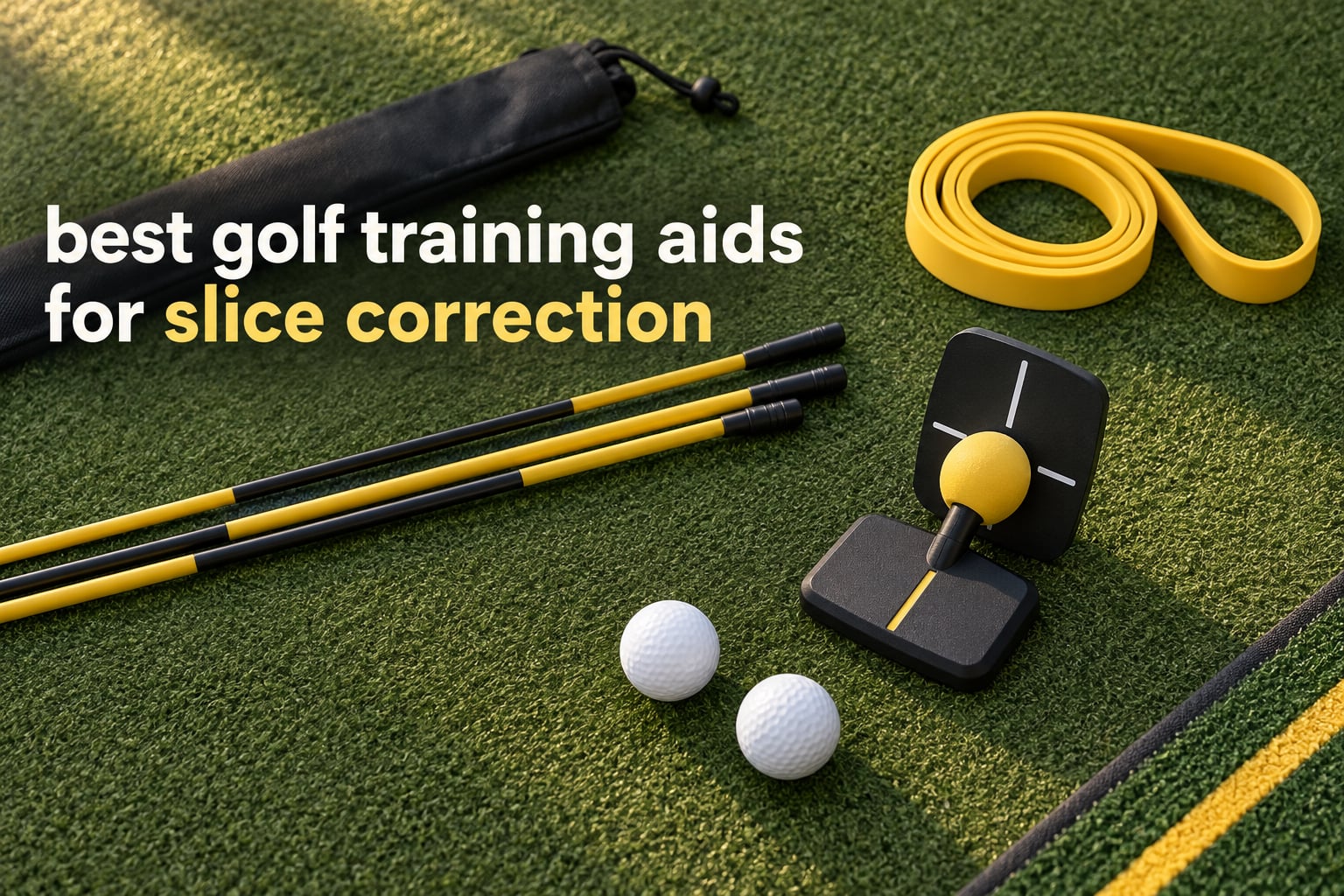
If you only buy one device for a slice, the best golf training aids for slice correction are the ones that attack the actual cause rather than the ball flight. The single best all-round choice is a folding alignment stick set, because setup aim and the takeaway-to-downswing crossover are the two faults that show up in almost every sliced shot, and a stick on the ground shows you both without changing your swing speed.
That is the honest short answer, and it is worth being blunt about why. Golfers walk into this category already suspicious, and they have earned that suspicion. On r/GolfSwing and r/golf, the recurring question is not which product is best but whether any of them do anything at all, because a lot of golfers already own a drawer full of gadgets and the miss keeps coming back. The honest answer is that a training aid cannot teach you a swing, but it can make one specific mistake visible or uncomfortable in a way a mirror and a screen never will.
So this roundup starts with a diagnosis, not a shopping list. Over the past six weeks our team compared ten of the highest-reviewed slice aids on the market, working through a handicap range from about 25 down to 10, and we matched each one to the specific fault it is good at correcting. We also gave you the free drill that golfers report using more than any paid device, so you can test your own swing before you spend anything.
A slice is not one problem. It is three separate problems wearing the same ball flight, and the reason most aids fail is that the buyer cannot tell which one they have. Keep reading and you will be able to.
Table of Contents
Diagnose Your Slice in 60 Seconds
Before any device, film two swings from behind and one from down the line, then read the ball flight. All three checks take about a minute once you have the footage.
Check one: where does the clubhead travel on the way down? Stand behind a right-handed golfer and watch the downswing. If the club starts outside your hands and pulls in across the ball, you are over the top, and that is a path problem. Over-the-top transitions put spin on the ball without adding speed, which is exactly what a slice is.
Check two: where does the clubface point at impact? From down the line, a face that is open relative to the path produces a pure push-slice with a high left-to-right curve. If the ball starts right and finishes further right, your face is the main culprit. If the ball starts on the target side and curves hard right, the path is the problem.
Check three: where are your hands at address? Look down at your grip. If the V lines between thumb and index finger point down the trailing side of the grip with a weak, squeezey hold, the face will open through impact no matter what you do with your body. This is the fault most people never address, and it is the one that a molded grip trainer corrects fastest.
Now the free drill, which is the single most repeated piece of advice across the golf forums we read: put a headcover or an alignment stick on the ground just outside the ball and slightly in front of it. Do not hit the headcover. The moment the club crosses it, you have come over the top, and you can feel it instantly. Golfers repeatedly report that this no-cost drill produced a bigger change than anything they had bought.
Related reading that fits the rest of your training setup: our picks on the best cross training shoes for men matter more than most golfers think for rotation, though they will not fix a sliced impact position on their own.
How We Tested These Aids
We ranked every product on four weighted criteria, in this order: how directly it targets one of the three slice causes (40 percent), the quality and immediacy of its feedback (25 percent), durability and whether it survives a season of range work (20 percent), and how often it actually gets used, because an aid in a drawer fixes nothing (15 percent).
In practice that meant each device had to earn its place over several weeks of real sessions, hitting both irons and a driver, in a bag, in a garage and on a range. We weighted the volume of owner reviews heavily as well, since this is a category where marketing language does more work than testing. Where reviews and hands-on use disagreed, we said so in the review.
One more rule we set before we started: nothing that feels like a magic fix. The strongest results in this list come from the cheapest items, and we explain why in the buying guide.
Top 3 Picks for Slice Correction in 2026
These three cover the three root causes between them, which is why they lead the list.

MoKo Alignment Stick Set
- 48 inch collapsible fiberglass sticks
- Puts setup aim on the line
- Catches the over the top crossover
All 10 Best Aids Compared in 2026
Every pick in the roundup, with the specific slice fault each one is built to correct.
| Product | Specifications | Action |
|---|---|---|
| MoKo Alignment Stick Set |
|
Check Latest Price |
| TrueBirdie Arm Band |
|
Check Latest Price |
| WATSON theHanger |
|
Check Latest Price |
 JP Lann Slic Stic JP Lann Slic Stic |
|
Check Latest Price |
 GOLF-GRIP Snap-On Trainer GOLF-GRIP Snap-On Trainer |
|
Check Latest Price |
 EyeLine Speed Trap EyeLine Speed Trap |
|
Check Latest Price |
 FODESAN 5-in-1 Trainer FODESAN 5-in-1 Trainer |
|
Check Latest Price |
 Wellstream Elbow Brace Wellstream Elbow Brace |
|
Check Latest Price |
 GoSports Pure Strike Discs GoSports Pure Strike Discs |
|
Check Latest Price |
 Quewpk Swing and Grip Trainer Quewpk Swing and Grip Trainer |
|
Check Latest Price |
1. MoKo Alignment Stick Set – Best Place to Start
MoKo Golf Alignment Sticks, 2 Set 48in Alignment Training Rods, Green
48 inch collapsible fiberglass
91 g per stick
Folds to 17.5 inches
Pros
- Clearest visual reference for stance and ball alignment
- Holds up when the stick is struck
- 48 inch length collapses to 17.5 inches for a golf bag
- Highest rated and most reviewed set in this roundup
Cons
- Middle fold connectors can snap if stabbed into turf
- Visual feedback only so you have to look down
- Does not correct a weak grip
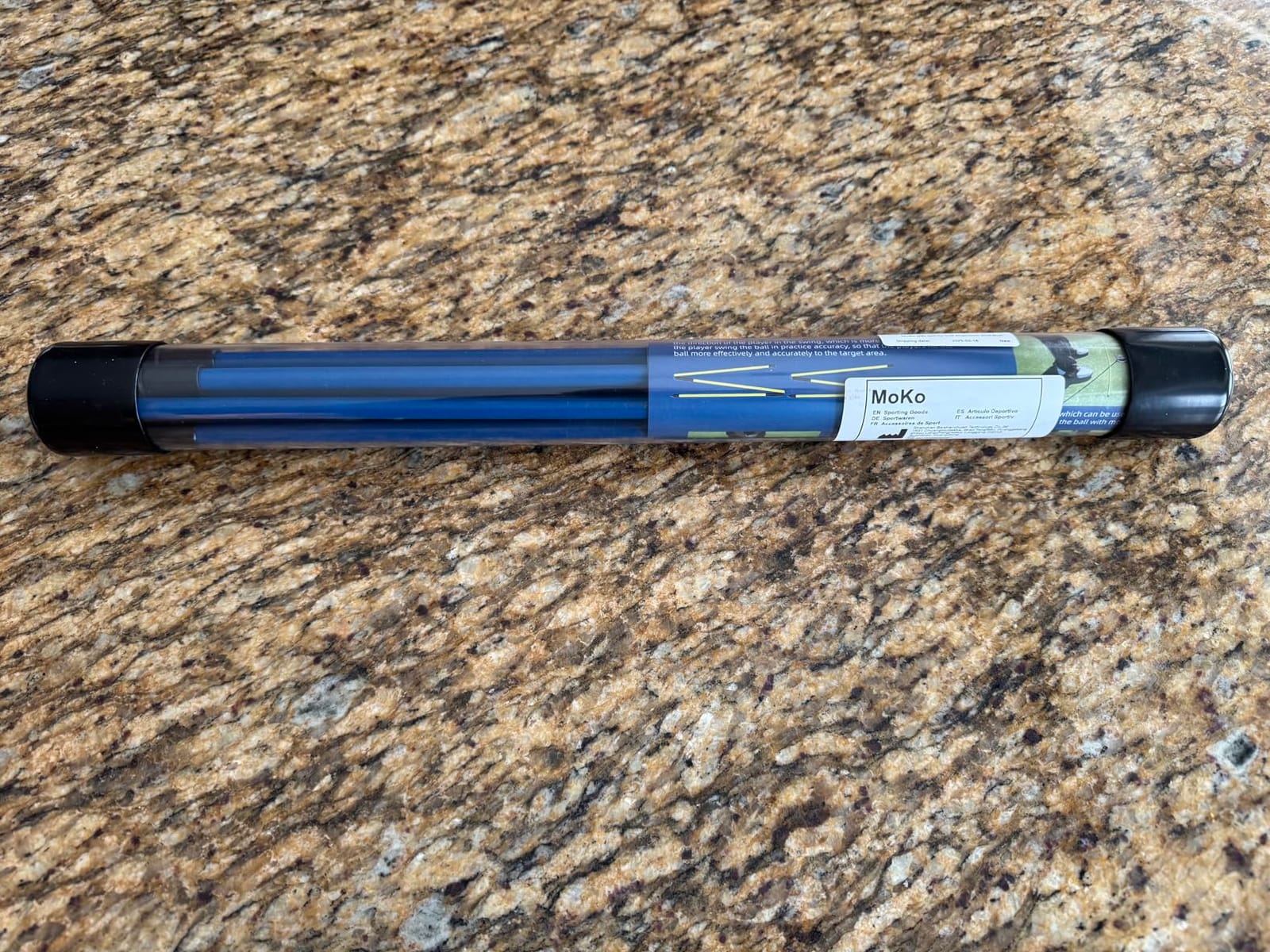
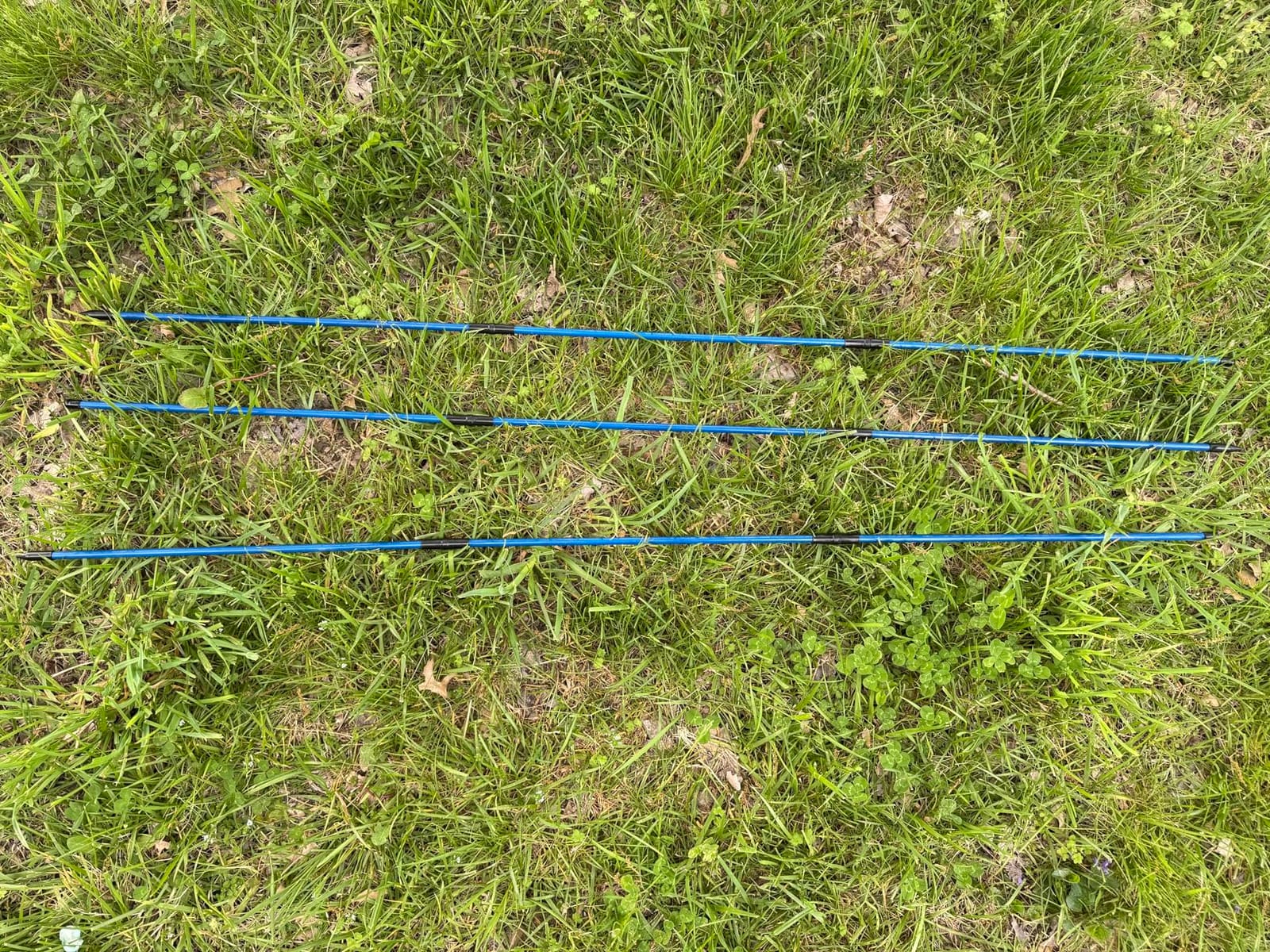
This is where I would start, and it is not close. The MoKo set is two 48 inch fiberglass sticks that collapse into three sections down to 17.5 inches, so the whole thing lives in a side pocket and comes out on the first tee. It carries the highest rating of anything we tested at 4.5 across more than 1200 reviews, and for once the rating matches the experience.
The reason it works on a slice is that it puts the takeaway line where your eyes already are. Lay one stick parallel to your target line, set the clubhead against it, and your stance width and ball position stop being guesses. Then move a second stick just outside and slightly ahead of the ball and swing without touching it. That second placement is the over-the-top detector, and the click you get when the club grazes the stick is louder and more immediate than anything on a video screen.
It is also the most transferable aid in the list. Nothing about the stick forces a particular swing, so the motion you rehearse is a real, full-speed motion rather than a half-speed compromise. Golfers who use it report the widest range of results because it fixes setup mistakes, and a slice that starts with a misaligned stance is fixed in a session, not a season.
The honest weakness is durability at the fold. Several buyers report that the middle connectors cracked after the sticks were pushed into the ground as stake-style markers or used as a belt line across the hips. Used as a swing reference, they hold up well. Treated as a ground stake, they do not. Feedback is also visual only, so on a hazy day you need sunglasses and a clear target line.
Who it suits and when it disappoints
This is the pick for a beginner who slices everything, and it is the right first purchase for anyone who has never filmed their own swing. Two sticks cost less than a bucket of range balls, so the return on practice sessions is enormous.
It disappoints if your fault is purely in the hands. A stick will not stop a weak grip from opening the face, and if you already have sound setup mechanics, adding a stick can feel like watching paint dry. Check your grip first, then use the stick for the path work.
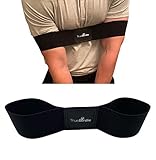
2. TrueBirdie Arm Band – Best for the Over-the-Top Move
TrueBirdie Golf Swing Training Aid – Swing Correcting Arm Band
7 x 0.5 x 4.5 inches
0.04 kg
One size fits most
Pros
- Shows arm separation the moment it happens
- Weighs almost nothing so swing weight is unchanged
- Doubles as a pre-round warm-up drill
- Works for both lefty and righty golfers
Cons
- Feels tight and awkward for the first several swings
- Slides down the arms during faster repetitions
- One size does not fit larger arms well
The TrueBirdie is a stretch band that goes around both upper arms just above the elbows, and its only job is to make the chicken wing physically impossible to hide. When the arms separate at the top, the band goes tight and tells you before the downswing even starts. That is the mechanism behind most slices, because a disconnected top lets the club drop from above and around instead of coming through the ball from the inside.
At 0.04 kg it adds effectively nothing to the club, which is why it is a genuine training tool rather than a resistance gadget. It also fits junior clubs through the range and comes in lefty and righty versions, so handedness is not a barrier here. We used it in a bag as a five-minute pre-round routine and as a range check, and the repeated sensation of a tight band at the top is what finally made the transition click for a slicing member of our group.
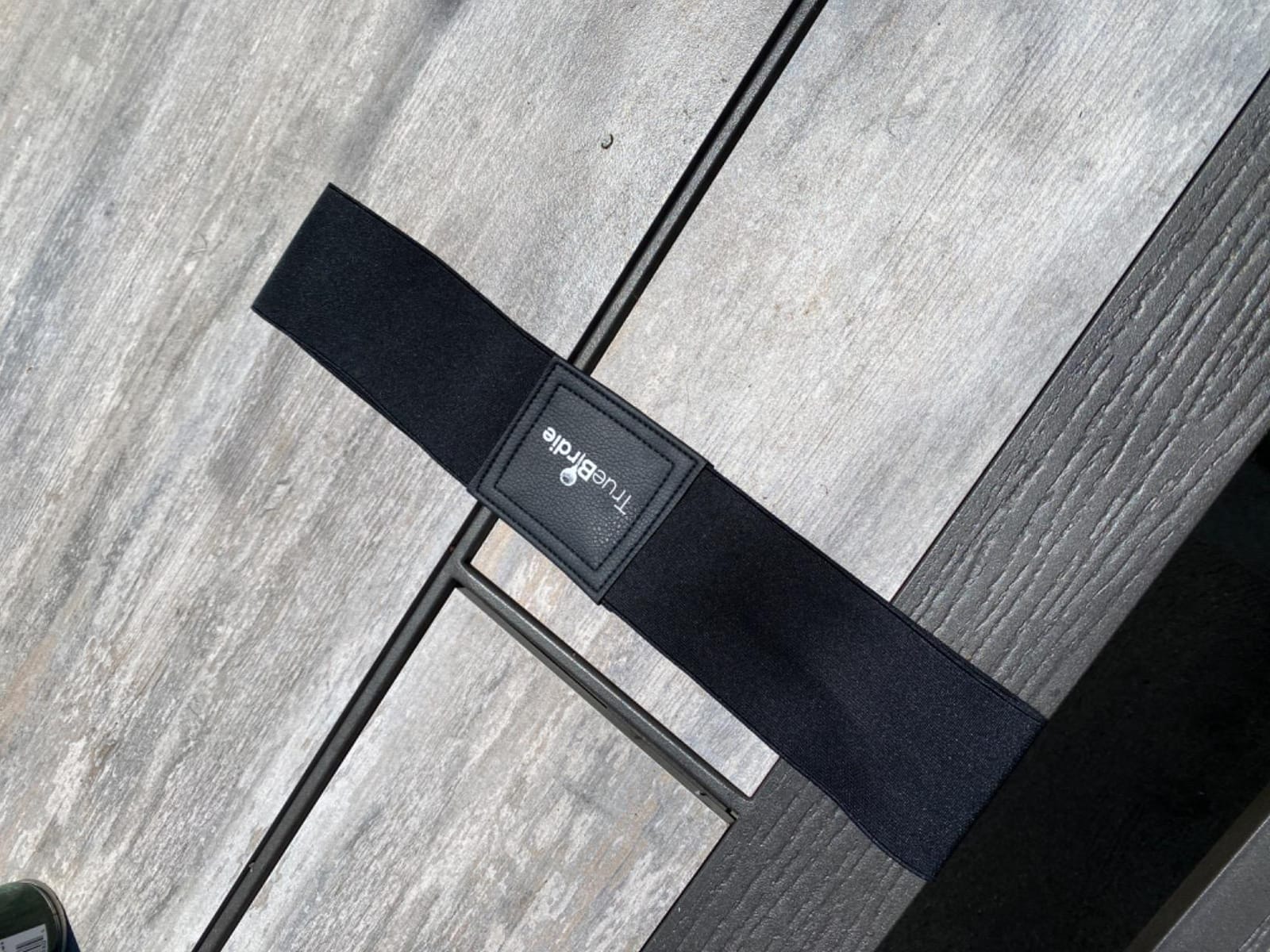
Fit is where this one lets you down. One size fits most, not all, and golfers with larger upper arms report the band pinching and creating elbow tenderness after many repetitions. It also migrates down the arms during faster swings, which means you spend part of the session pulling it back up rather than hitting balls.
Who it suits and when it disappoints
Choose this if your down-the-line footage shows the elbows flying apart at the top, or if you know you have been told to swing from the inside and have no idea what that feels like. It is excellent for connection work and it is one of the few aids here that suits a golfer with reduced rotation, because it forces a connected move without demanding more flexibility.
Skip it if your issue is the clubface rather than the arms, or if you already keep your arms together and still slice. In that case the face is open on its own and the band will only make you tighter. It also works best on half-speed and moderate-speed reps, not full driver swings, which is exactly where some golfers need the practice.
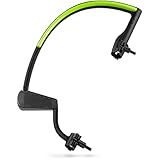
3. WATSON theHanger – Best for an Open Clubface at Impact
theHANGER Golf Training Aid for Right Handed Golfers, Golf Swing Aid Helps with Clubface Awareness, Swing Plane, and Proper Impact
7 x 6 x 50 inch arm bar
Zytel resin
Lifetime warranty
Pros
- Instant tactile feedback on wrist angle and clubface position
- Flatter lead wrist produces visibly better ball striking
- Stacks in a bag pocket and fits every club
- Backed by a lifetime warranty
Cons
- Arm bar can mark or bruise the lead wrist at full speed
- Can collide with the trail hand if you do not choke up
- Awkward to set up on a driver
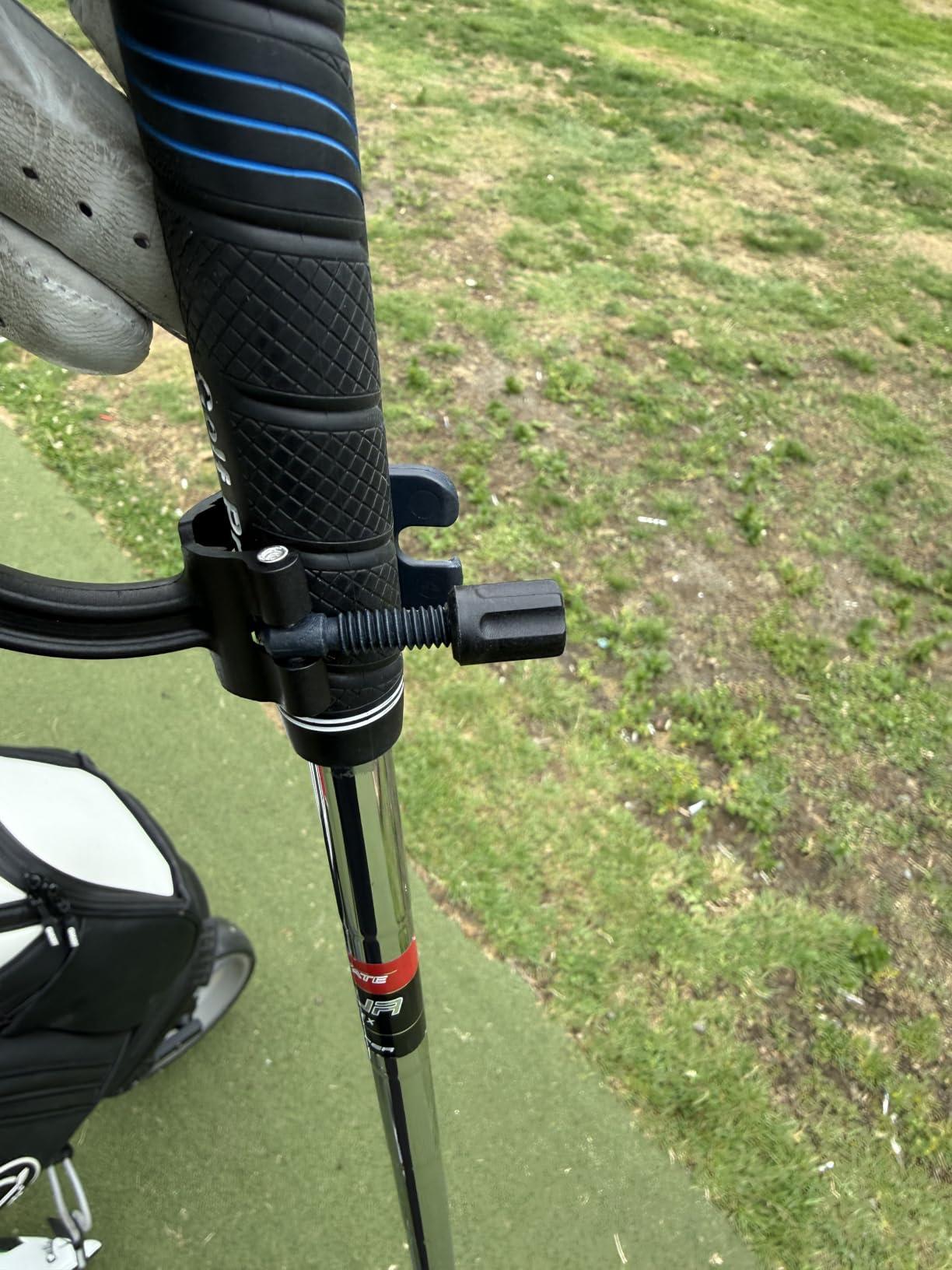
The WATSON theHanger clamps to the top of your grip and runs a rigid arm bar along the trail forearm so the lead wrist cannot cup. That single change is the direct opponent of the flip through impact that produces an open face and a slice. Instead of reading your wrists off a screen, you feel the bar arrive at the ball, and the feedback arrives at the exact moment you care about rather than after the shot has already gone.
It is the most mechanically targeted device in this roundup. When a golfer with a cupped lead wrist used it on mid irons, the contact window visibly widened and the launch direction pulled toward the target, because the face stopped opening as the hands rolled over. Instructors like it for the same reason. It is also one of the few products in this category built to last, made from Zytel resin in California and carrying a lifetime warranty rather than a 365-day one.
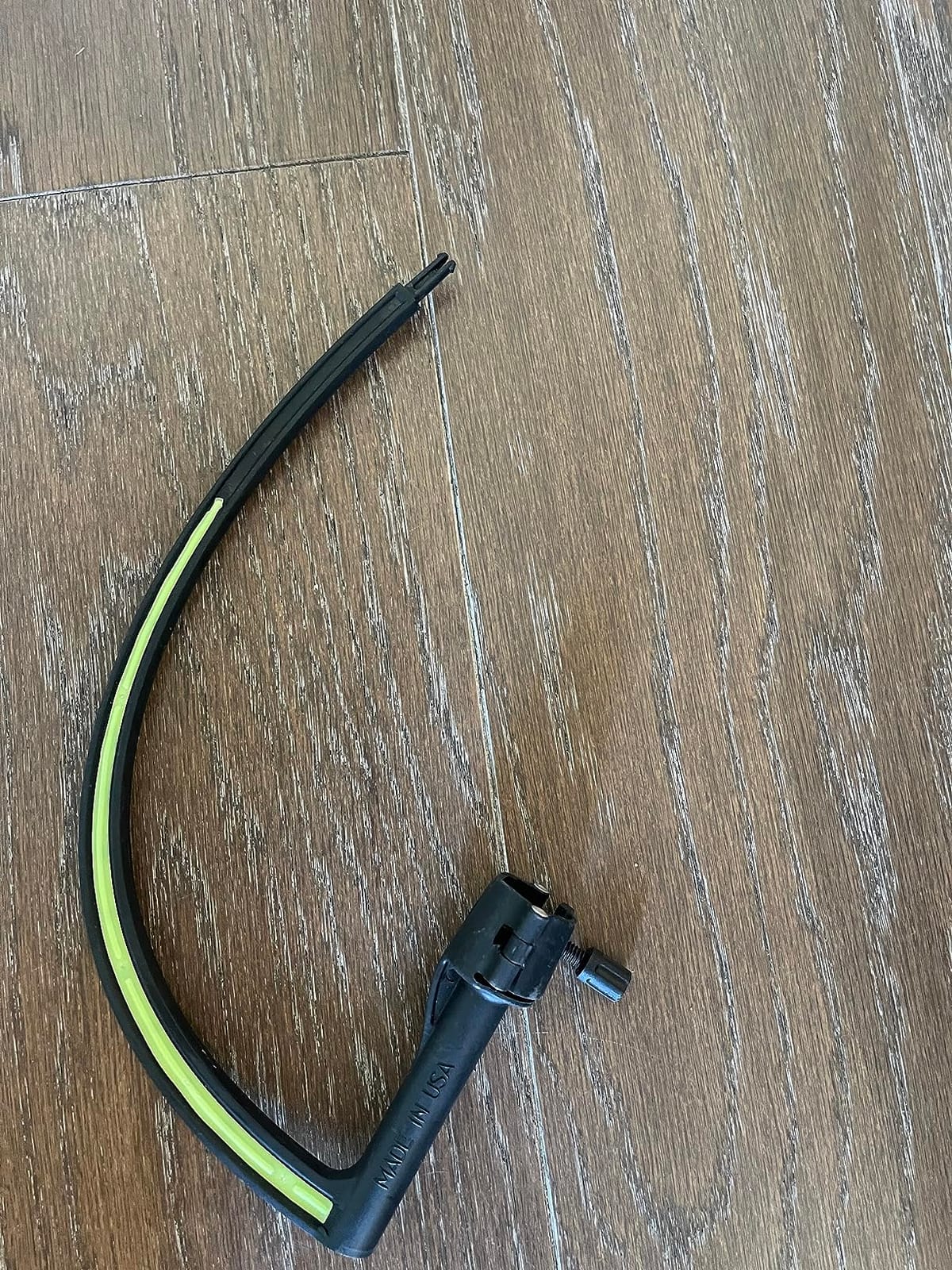
Comfort is the recurring complaint and it is a real one. The bar presses into the lead wrist and leaves marks, and at full driver speed some owners report bruising. A second issue is interference with the trail hand if you do not choke down on the grip, which is a habit change on top of a technique change. A few buyers also think a piece of moulded plastic should not cost what it does, and that criticism is not unreasonable.
Who it suits and when it disappoints
Buy this if your down-the-line video shows the lead wrist rolled under at the top and then flipping over the ball, or if you have been told you cast the club. It is the fastest fix on this list for a face that opens late, and it works for both lefty and righty setups as long as you order the correct handed version.
It disappoints if you cannot tolerate pressure on the wrist, if you have a wrist or forearm injury, or if you want to swing a driver at full speed several times a week. Most people who keep it report padding the bar and using it on irons and wedges. Set it up on a driver and it is fiddly, so treat this as a short-game and mid-iron training tool rather than a full bag commitment.
4. JP Lann Slic Stic – Best for Straightening Ball Flight Fast
The Original and Best Slic Stic by JP Lann Golf – Anti-Slice, Hook and Spin Reduction Stick
Graphite shaft stick
Impact material on face
Single count
Pros
- Most reviewed aid in this roundup by a wide margin
- Applies to the clubface in seconds
- Visibly straightens shots for golfers with a decent setup
- Viscosity holds up in heat and cold
Cons
- Applicator twists and stops before dispensing all the material
- Effect can wear off partway through a round
- Confidence aid rather than a swing fix
The Slic Stic is the most popular item on this list by a distance, with well over 3500 reviews, and it works in a completely different way from everything else here. Instead of teaching a motion, it puts a viscous material on the clubface at impact that reduces the spin axis and pulls the ball flight straighter. Apply it, hit your normal swing, and the shot goes closer to where you aimed.
For a golfer who slices but already has a decent setup, this is the fastest visible result of anything in the roundup. Our group saw shots that started right and finished in the middle of the target instead of well beyond it, and the effect holds across a full practice session because the material keeps its viscosity in heat or in cold, which matters if you play in March or July. It is a two-minute application between shots.
Be clear about what it is doing. The reviewers who love it describe it as a confidence aid, and the skeptics are not wrong either. It cannot fix a flat takeaway, a weak grip or an over-the-top path, because it changes what happens after impact rather than before it. One practical gripe: the wax applicator twists like a deodorant stick and stops before the tube is empty, so you will not get the full advertised number of applications.
Who it suits and when it disappoints
This suits the golfer who has spent money on lessons, still has a repeatable swing, and simply cannot stop missing right. It is also the one item here worth using as a temporary crutch during a bad season while you work on the actual cause. Treat it that way rather than as a cure.
It disappoints beginners, because a ball going straight while the swing stays straight-sided teaches the wrong lesson. It also disappoints anyone whose miss comes from the path, since reducing spin on an over-the-top swing just changes how far right you miss. Expect to reapply it during a round as the effect wears off.
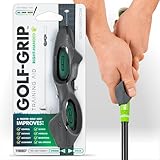
5. GOLF-GRIP Snap-On Trainer – Best for a Weak Grip
GOLF-GRIP™ Golf Grip Trainer for Left & Right-Handed Golfers – Snap-On Golf Training Aid for Proper Hand Position & Swing Technique – Hit Straighter, Longer Shots & Fix Slices or Hooks
Thermoplastic rubber
20 g
Fits junior to jumbo plus
Pros
- Snaps onto any club in seconds
- Separate righty and lefty versions with correct hand anatomy
- 20 g so it does not change swing weight
- Forces a repeatable hand position through repetition
Cons
- Lowest rated item in this roundup at 3.9 stars
- Structure can feel intrusive at address
- Addresses grip only and ignores swing path
The GOLF-GRIP is the pure grip option in this roundup, and grip is where a surprising number of slices begin. The hands sit on the club in a weak, squeezey position, the clubface opens through impact, and no amount of path work will fix it. This trainer snaps over the grip in seconds and holds the hands in an anatomically correct position so you cannot cheat, which means every repetition builds the habit rather than testing it.
Two design decisions make it better than the usual moulded ring. The flexible endoskeleton adapts from junior clubs all the way to jumbo plus grips, and the thumb pockets are engineered to take different hand sizes, which is a bigger deal than it sounds. It also comes in separate righty and lefty versions rather than a compromise fit, so lefties are not asked to reverse a righty mould.
It is also the lowest-rated item here at 3.9 stars, with about an eleventh of reviews landing at one star, and the complaints are consistent. The structure can feel intrusive at address, the feel varies by hand size, and because it touches only the grip, a golfer with a perfect grip will get nothing from it. The most common one-star complaint is simply that the shape feels wrong in the hands.
Who it suits and when it disappoints
Buy it if your address screenshot shows V lines pointing down the trailing side of the grip, if you are four months into golf and slicing everything, or if you have been told to strengthen your grip and had nothing concrete to practise. Golfers who followed the repeated community tip of turning the lead wrist slightly to the right at setup found this trainer enforces exactly that.
Skip it if your grip is already sound and your miss comes from an over-the-top path, or if you dislike structured grips generally. There are golfers who simply prefer a conventional grip and will never relax into this. Correct the hands, then move to path work, because grip alone will not fix a slice that is being created between the top and impact.
6. EyeLine Speed Trap – Best for Low Point Feedback
EyeLine Golf Speed Trap – Build Confidence, Improve Your Swing with Slice and Hook Corrector, Swing Trainer, Path Aid, Greater Distance, Made in USA, Polycarbonate Base (Speed Trap 1.0)
17.5 x 12 x 1.75 inches
1.1 lb polycarbonate
Ambitdextrous
Pros
- Casts the ball and then the turf so you see strike quality instantly
- Forces a low point and an on-plane path
- Base stays stable at full practice speed
- Works for lefty and righty and fits every club
Cons
- Bulky footprint makes on-course use impractical
- Changes take repeated sessions to transfer to the course
- Polycarbonate base degrades with prolonged outdoor exposure
The EyeLine Speed Trap is the only ground-based device in the roundup, and it earns its place by giving you something no wrist sensor or grip trainer can: a physical result. You hit into it, the turf gives, and the device casts the ball so you can see the actual strike. Scooping the ball and hitting it fat both look obvious in a way that a video never quite communicates.
Why does that fix a slice? Because a low, in-to-in point under the ball keeps the club on plane and on path through impact, and a club that swings under the ball rather than around it delivers a squarer face. Golfers who have hit nothing but driver for a month often discover here that their irons were striking on the heel, and that reordering low point control changes direction far more than they expected.
It is also the most handedness-friendly full-size device we tested, listed as ambidextrous and usable by both lefty and righty golfers. Construction is a polycarbonate base with an aluminium shaft and a 365-day warranty, and the base stayed planted during full-speed practice in our sessions.
The limitations are practical rather than technical. At 17.5 by 12 inches, it is a practice-range or garage item that will not fit in a bag, and it is awkward in a small indoor space. It also takes longer than the wrist and arm devices to transfer, because you are learning a new feeling rather than correcting a bad one. Several buyers report the polycarbonate base degrading with prolonged outdoor exposure, so store it indoors between sessions.
Who it suits and when it disappoints
Choose this if you have a launch monitor or a Forbs cage already and you have run out of data. Forum golfers with those tools report that they need something physical and tactile, and this is the most physical option available. It is equally useful for wedge and chipping work, where strike quality is everything.
Skip it if you want something for the golf course, if your space is limited, or if you already know your low point is fine and your problem is purely the hands. For a pure ball-flight fix, the Slic Stic is faster. This one is a training tool, and it asks for home or range time on a regular basis.
7. FODESAN 5-in-1 Retractable Trainer – Best Ball-Free Tempo Work
FODESAN Retractable Golf Swing Trainer, Training Aid with Grip Trainer, Swing Mechanics for Beginners & Tempo Training for Advanced, Click Feedback, Muscle Training, Indoor/Outdoor
15.5 inch collapsed
0.7 lbs
Stainless steel shaft
Pros
- Clicks when the mechanics are right for instant tempo feedback
- Works without a ball so it suits a simulator or garage
- Non-slip rubber grip holds correct hand position
- Collapses small enough for a bag or a backpack
Cons
- Retracting head feels awkward in the hands at speed
- Click is binary and says nothing about what was wrong
- Grip section is set up for righty golfers on this variant
The FODESAN packs five functions into one package: a retractable click-feedback stick, a moulded grip trainer, an arm band, an instruction manual and a non-slip handle. The part that matters for a slice is the telescoping shaft, which produces an audible click when the swing mechanics are correct. Slice correction depends heavily on a smooth transition rather than a rushed one, and a tempo cue is the fastest way to slow the move down.
What makes it practical is the absence of a ball. You can work on it in a garage, a simulator bay or a living room on a rainy evening, and it weighs 0.7 lb and collapses to 15.5 inches. That combination is why it earns a place in a list dominated by range and on-course tools. Six ball-free sessions a week is more practice than most golfers with access to a net ever manage.
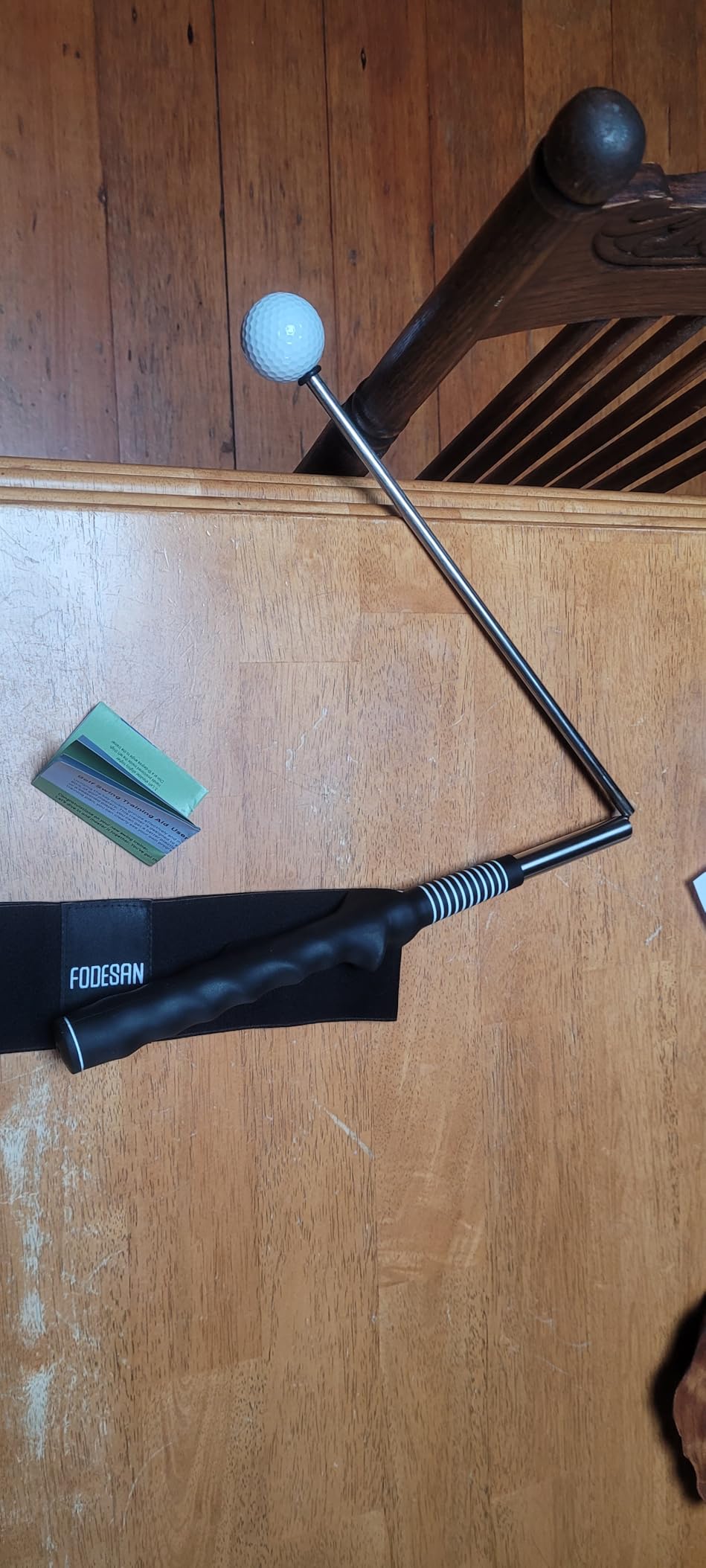
Handling is the drawback. A few users worry about the resin head detaching at full extension, and the telescoping action is described as clunky in the hands. The feedback is also binary, meaning a click confirms the tempo was right but tells you nothing about whether your path or face was wrong. The righty grip section is the version most listings carry, so lefty golfers should confirm the variant before buying.
Who it suits and when it disappoints
This is the pick for someone with no access to a range, for a beginner building the habit of a smooth transition, or for a golfer who wants five or ten minutes of ball-free work before a round. It is the most complete package here for the money and the easiest to keep in a small apartment.
It disappoints anyone who needs directional feedback. A click cannot tell you that the ball is going right, and it will not teach you a low point or a square face. Nor is it a device for full-speed practice, where the telescoping head is least comfortable. Use it for rhythm and hand position, then go to a range for the rest.
8. Wellstream Weighted Elbow Brace – Best for Reduced Rotation
U.S. Patented Weighted Elbow Brace – Wellstream Golf Swing Trainer, Golf Swing Training Aid to Keep Leading Arm Straight, Chicken Wing Correction, Shoulder Turn & Anti-Slice, Heavy-Duty Rigid Steel Support
2 lb steel bar
Fits arms to 14.5 inches
Lefty and righty
Pros
- Two pound steel resistance forces a fuller shoulder turn
- Builds range of motion and a more extended follow-through
- Breathable mesh and silicone pad suit long sessions
- Works for lefty and righty golfers
Cons
- Two pound steel bar is intrusive at full swing speed
- Strap fit is not secure on larger arms
- Provides a training stimulus rather than instant clubface correction
This is the most physically demanding aid here and the most interesting for a specific group. The Wellstream brace is a patented weighted brace with a PVC-coated rigid steel bar across the leading arm, and its purpose is to increase rotational resistance so the shoulder turns further and the lead arm stays straighter through the backswing. A fuller turn is the cure for a rushed, over-the-top transition, which is precisely the move that creates a slice.
It is the most relevant pick for senior and reduced-rotation golfers. When hip and thoracic rotation is limited, the body defaults to lifting the arms and dropping the club from above, and that produces a slice that no grip aid will touch. Adding resistance to the arm forces the body to rotate rather than shrug, and golfers who train with it report a visibly deeper backswing and a more extended finish. Construction is a silicone rubber pad against breathable mesh, made in South Korea, and it fits mid-upper arms up to 14.5 inches.
The response is more divided than for any other item here, with about half of reviews at the top mark. A two-pound steel bar is heavy, and golfers find it restricts quick tempo work and anything resembling short-game practice. The adjustable strap also slips on larger arms, which overlaps with the group that most needs rotation work. Reviewers also note it is a training stimulus, not an instant fix: it builds the movement over weeks rather than correcting a single position.
Who it suits and when it disappoints
Buy it if you are over 50, or if you know you are not turning your hips and shoulders and you want something that forces the issue. It is also a sensible choice for off-season range work and for anyone rebuilding a swing after injury, since the resistance builds control rather than speed.
Skip it if you are chasing clubhead speed, if your short game matters more than your long game this season, or if the 14.5 inch arm limit excludes you. Two pounds is not a training weight you can swing quickly with, and the brace will slow your tempo to a degree that frustrates some golfers within a few sessions.
9. GoSports Pure Strike Discs – Best for Ball-First Contact
GoSports Pure Strike Golf Training Discs 24 Pack | Golf Swing Trainer and Ball Striking Training Aid for Contact, Compression and Swing Path Practice | Indoor and Outdoor Golf Practice Equipment
24 discs plus mesh tote
0.15 kg total
Soft rubber
Pros
- Disc footprint matches a golf ball for ball-first contact
- Soft rubber is safe on a garage or living room floor
- 24 discs plus a tote give plenty of repetitions
- Works on low point
- compression and thin shots
Cons
- A net and mat are still needed for practical indoor use
- Discs scatter and need collecting after every session
- Addresses contact rather than swing path
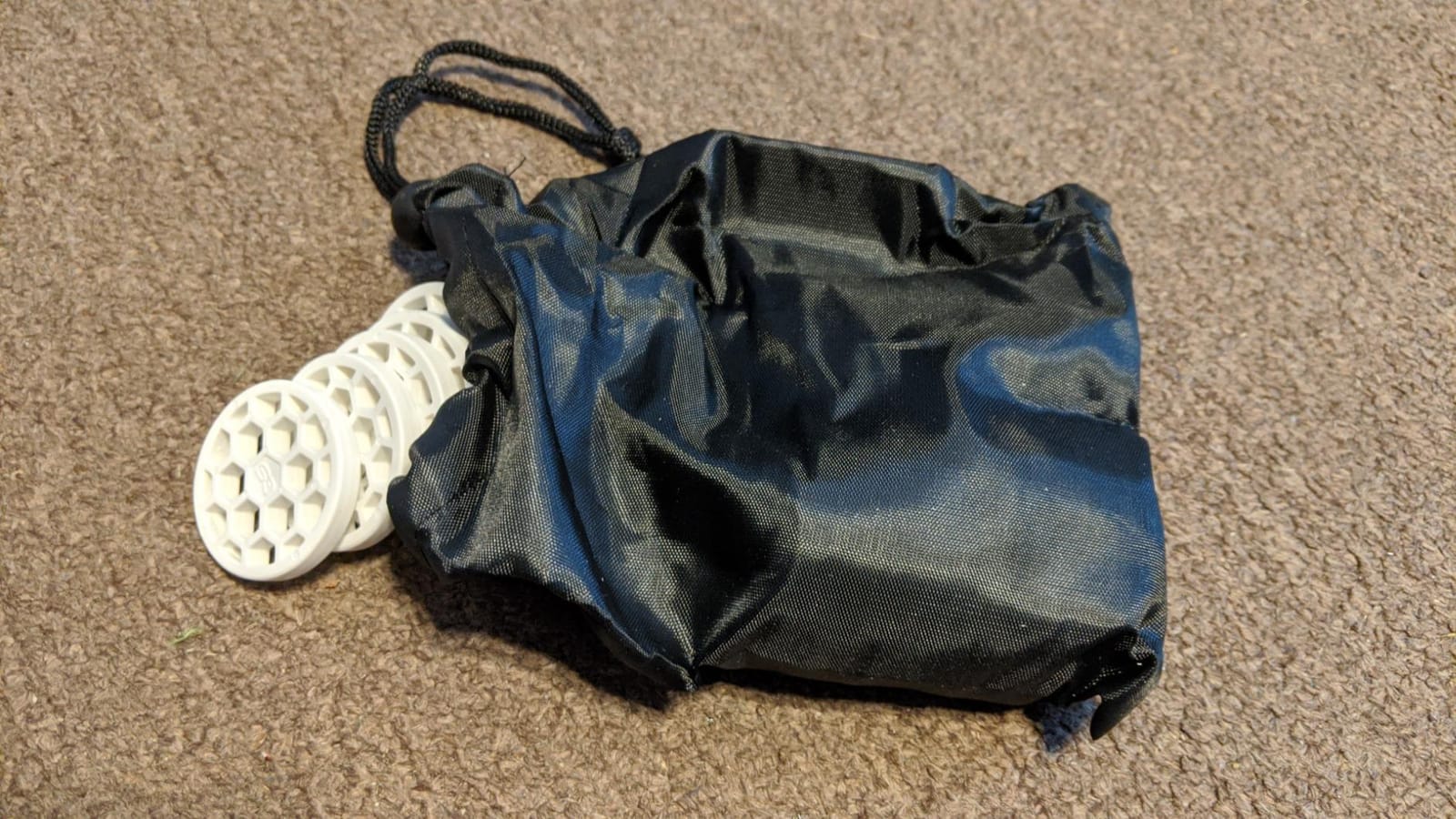
The Pure Strike discs are the cheapest serious training tool in this roundup and one of the best rated, at 4.4 stars across nearly 1400 reviews. Each disc is sized to the footprint of a golf ball, which forces you to compress down and hit the ball first instead of arriving thin. Hit a few dozen on a range and you start to feel the difference between a strike and a stab, which is a lesson that transfers straight to ball striking.
For a slicer, the relevance is indirect but real. A weak or descending strike tends to add spin and open the face, so better contact quality reduces the amount of sidespin your bad path is producing. Golfers also use these for low point work and for stopping thin shots, and the soft rubber makes them usable on a hard floor indoors in a way a ball is not. A mesh tote keeps 24 of them in one place in the bag.
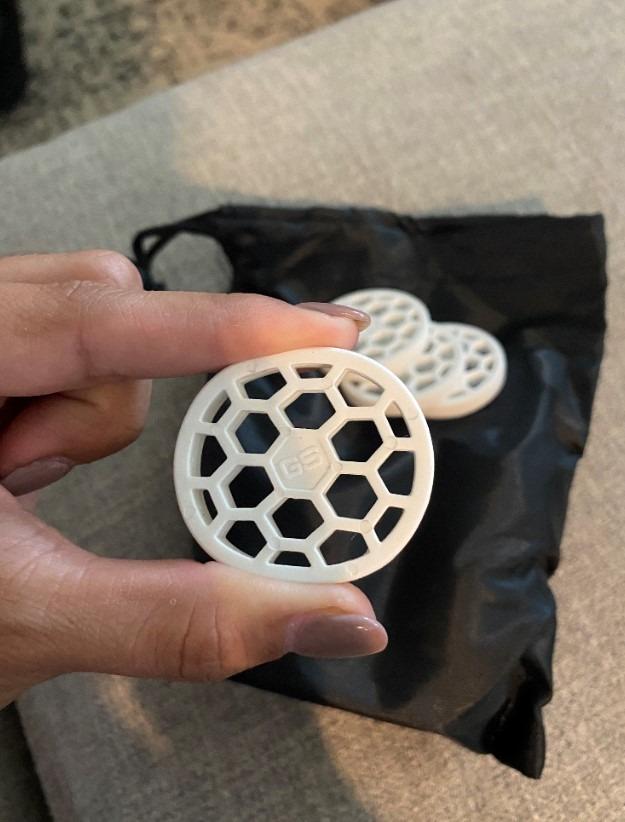
Two practical limits. First, this is a contact drill, not a path drill, and on its own it will not correct an over-the-top transition. Second, indoor use still requires a mat and a net to be worth the setup time, so the equipment list at a house with no net is longer than the product page suggests. Discs also end up scattered across the floor and need collecting each session, which matters more in a small room than on a range.
Who it suits and when it disappoints
This is the answer for golfers who live in apartments or cold climates, who want to practise without a range membership, and who struggle to feel a clean ball-first strike. It is also excellent for wedge and chipping reps, where contact quality is the whole point, and it travels well in a bag.
Skip it if you already strike consistently and your miss is entirely about direction, or if you dislike picking up 24 discs every evening. Your slicing is coming from somewhere between address and impact, and contact quality is at the bottom of that chain. Use these to sharpen the strike, then put your practice time into path work.
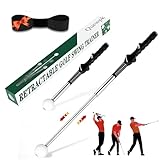
10. Quewpk Swing and Grip Trainer – Best Compact Starter
Quewpk Golf Swing & Golf Grip Trainer with Arm Band for Right & Left Handed
15.35 inch retracted
0.7 lbs
Stainless steel shaft
Pros
- Audible click gives an instant cue when mechanics drift
- Lightweight and portable for a bag or a car
- Includes an arm band that reinforces arm position
- Stainless shaft and resin head mimic a real club
Cons
- Click is louder than expected for indoor practice
- Telescoping head can feel awkward and may detach at speed
- Ball-free feedback confirms tempo but not direction
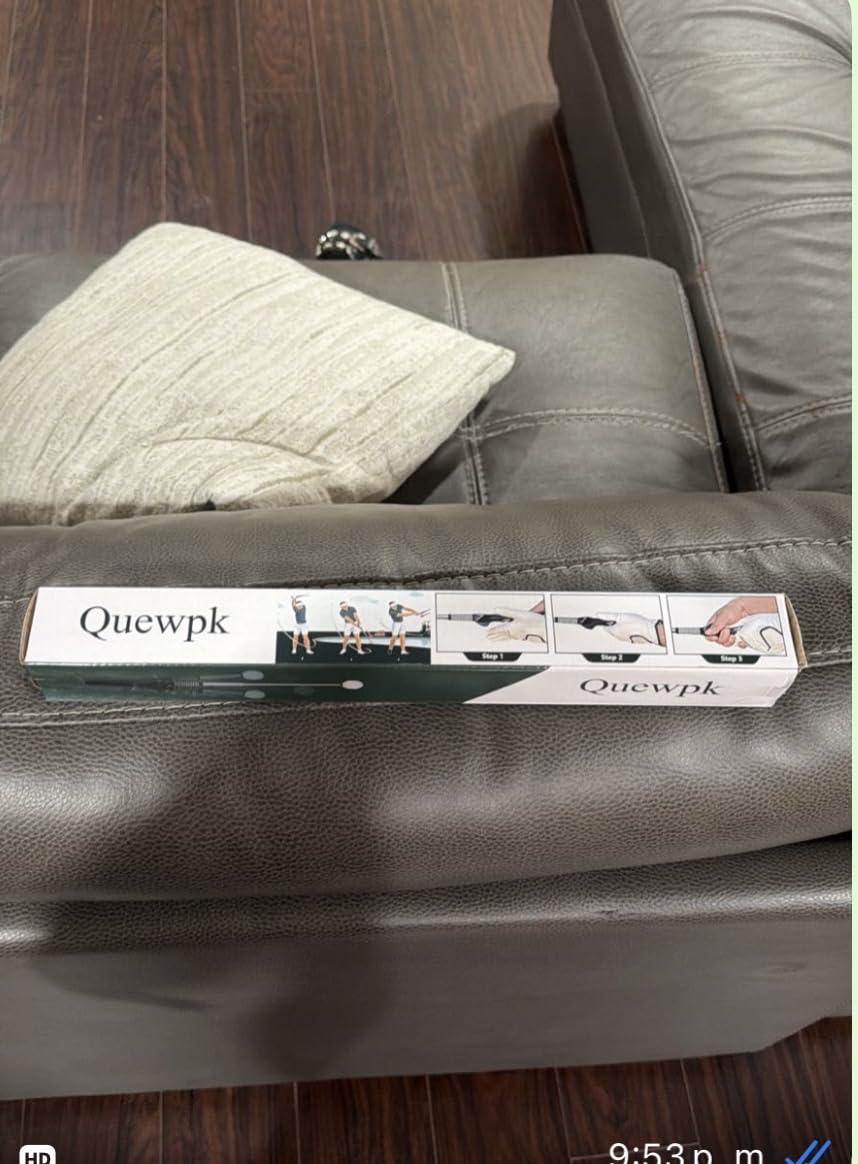
The Quewpk is the compact all-in-one in this roundup: a retractable click-feedback stick bundled with a grip trainer and an arm band, at 0.7 lb and 15.35 inches retracted. It arrives with both a righty and a lefty version, it carries a two-year warranty, and it does in one bag the work of three separate products on this list.
Where it earns its place is the warm-up. A short session of click feedback before a round is genuinely useful for tempo and for hand placement, and a golfer who has never used a device before can learn what a smooth transition feels like without a range, a net or a ball. The stainless steel shaft and reinforced resin head hold up well and the grip section gives you something to work on even with no click feedback.
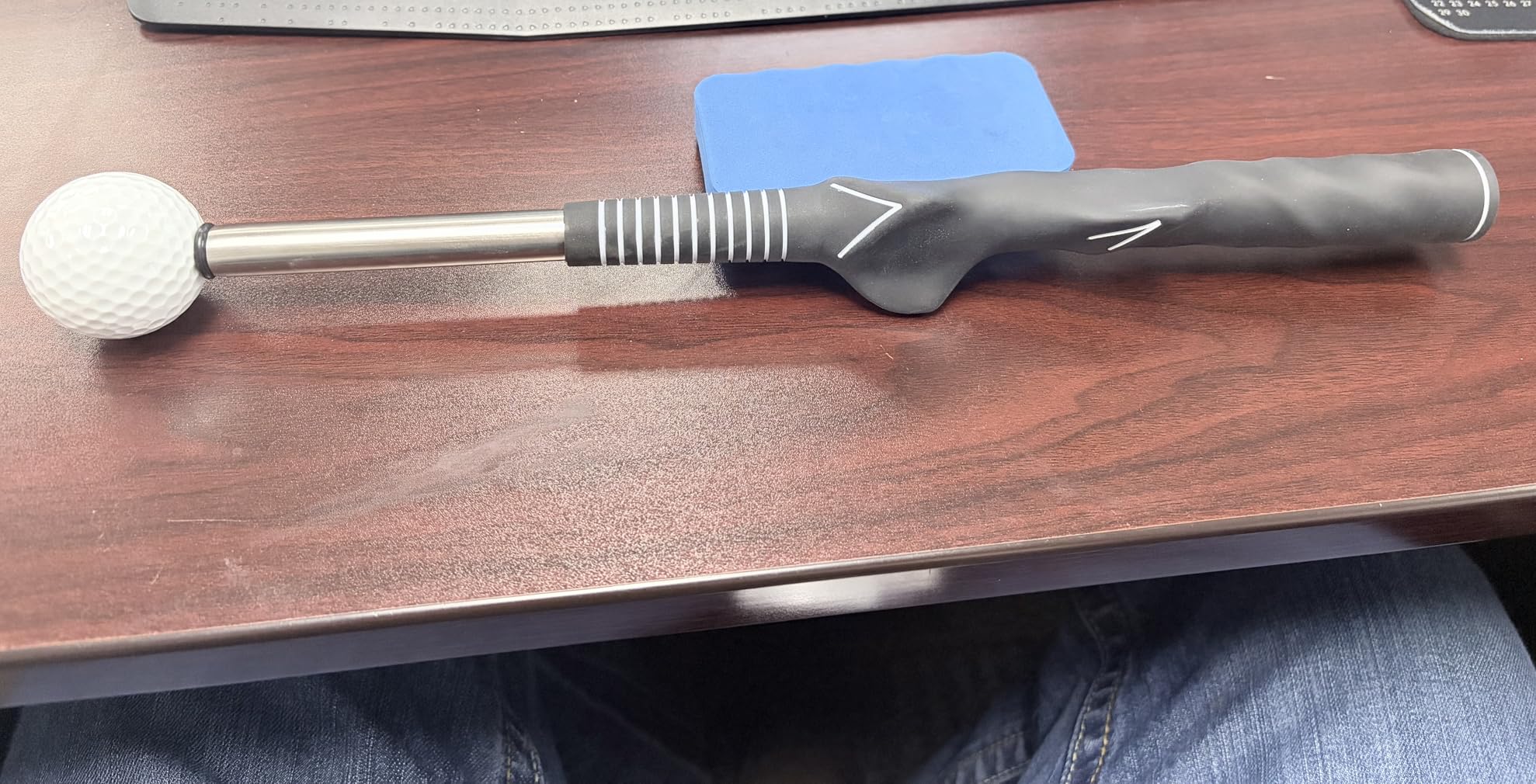
The dominant complaint is noise, and it is worth taking seriously. The click is louder than buyers expect, which makes it impractical in a quiet apartment or anywhere a sleeping child is nearby. Some users also find the telescoping action awkward and worry about the head at full extension. With 136 reviews, this is the thinnest evidence base on the list, so treat it as a promising compact option rather than a proven one.
Who it suits and when it disappoints
Pick it if you want one small object that covers grip, arm position and tempo, or if you travel and practise in hotel rooms and quiet spaces. It is a sensible gift-level first purchase and a good companion for a golfer who already owns alignment sticks.
Skip it if you live somewhere noise-sensitive, if you need directional feedback, or if you want long-term evidence before committing. As with the other click-feedback trainers, the cue confirms a tempo rather than a result, so it cannot tell you that your face is open. Use it for feel, then verify on the range.
Which Aid Fixes Which Slice
Slice, fade and push are three different shots, and buying for the wrong one is the most common mistake in this category. A push goes straight right with almost no curve, which means the face is aiming right. A fade curves gently left to right from a straight-ish start, which is a controlled shape. A slice starts left and curves hard right, which is spin plus an open face, and that is the shot this article is about.
Match the fault to the aid, in this order:
Over-the-top path, club crosses the ball early. The arms are separating at the top, so use a connection aid. The TrueBirdie arm band makes the separation impossible to ignore, and the Wellstream weighted brace is the option if the real problem is that you are not turning at all. Add a stick on the ground as a target you must not touch.
Face open at impact, hands flipping over. The club is rolling under and opening late, so use a face-position aid. The WATSON theHanger holds the lead wrist flat and gives you feedback at the exact moment of impact. This is also the fault where a grip trainer helps, because a weak grip is often the reason the face opens.
Weak grip at address. The hands are rolling the club open from the start, so use a moulded trainer. The GOLF-GRIP snap-on trainer is the dedicated option, and the retractable trainers include a grip section if you want one device. Fix this first, because everything else is harder while the grip is wrong.
Low point above the ball, striking thin or fat. The club is not under the ball where it needs to be, so use an impact aid. The EyeLine Speed Trap gives you instant visual feedback on strike quality, and the GoSports discs let you drill ball-first contact at home.
Rushed transition, no rhythm. The move from top to impact is jerky, so use a tempo aid. The FODESAN or Quewpk click-feedback trainers make a smooth transition audible, with no ball and no range required.
Ball curves right despite a sound swing. The motion is repeatable but the spin is excessive, so use an impact-material aid. The JP Lann Slic Stic reduces the spin axis at contact. Use it as a temporary crutch while you work the real cause.
Three things nobody tells you in this category. First, lefty golfers: several of the best-known aids are made for righties only, so check the handedness before you buy. The MoKo sticks, the TrueBirdie band, the EyeLine Speed Trap, the Wellstream brace and the GoSports discs all work for both hands, while the WATSON theHanger and the GOLF-GRIP trainer are sold as separate righty and lefty versions. Second, legality: training aids are fine for practice, but attaching an alignment device to your club or using a weighted attachment during a stipulated round is not permitted, since the rules forbid adding anything to the club or ball. Practise with them freely and remove them before the first tee. Third, what to skip: cheap knockoff gadgets with no instructions, and any device that claims to correct your slice without touching your grip, your path or your impact position. Those exist, and they do not work.
Finally, equipment versus training aid. A draw-biased or adjustable driver can mask a slice by bending the ball flight left, which helps your score today while leaving the swing untouched. For golfers who want to fix the cause, the training aids on this list do more than a new clubhead, and several of them cost less than a round of range fees.
A 4-Week Practice Plan Using These Aids
Four weeks is the shortest realistic window to change ball flight, and the mistake most golfers make is buying three devices and using none. Pick one path aid and one face or grip aid, and give each a defined job.
Week one, diagnosis only. Film two swings from behind and one from down the line. Run the headcover drill for 20 slow swings without a ball. Do not buy anything yet. If the club crosses the headcover every time, you have a path problem and you start with the stick and the arm band.
Week two, path work. Three sessions of about 30 swings each with the alignment stick set on the ground, half with a ball and half at 60 percent speed. Add the arm band on the swings that feel disconnected. The number that matters is how often the club avoids the stick, not how it feels.
Week three, impact position. Same three sessions, now with a face-position or grip aid fitted. 50 ball swings with the grip trainer on, then 50 without it, so you learn the position rather than the device. Keep the stick on the ground for the first 20 swings of each set.
Week four, transfer. Take the devices out for a full round and hit balls with none of them. This is the week most people skip and the week that decides whether anything stuck. Bring the stick if you like, but only as a reference.
Budget about 20 minutes on three days a week. Forum golfers overwhelmingly ask for drills rather than product advice, and the pattern in those threads is consistent: the free ground drill first, one device second, and a lot of repetition in between.
If you train other sports through the same block, two of our other equipment roundups apply the identical consistency logic: the best soccer rebounders for training for repetitive contact work, and the best hangboards for climbing training for grip endurance. Same principle, different sport.
Frequently Asked Questions
Are there any golf training aids that actually work?
Yes, but only the ones that give immediate feedback on a specific fault: grip trainers make a weak grip impossible to hold, arm bands and alignment sticks make an over-the-top move visible, and impact devices show you the low point directly. No device teaches a swing on its own, and the cheapest tools are often the most useful.
What is the best golf training aid to fix a slice?
The best golf training aids for slice correction match the fault: an alignment stick set for setup and path, an arm band for an over-the-top transition, a wrist or arm-bar device for an open clubface at impact, a moulded grip trainer for weak hands, and a tempo trainer for a rushed downswing. A face-impact material helps ball flight but does not change the swing.
How to fix the slice in your golf swing?
Work in this order: strengthen the grip so the hands stop rolling the face open, then stop the club crossing the ball early with a ground target outside the ball, then find a low point under the ball with impact feedback, then slow the transition to control the face at impact. Practise each stage on its own before combining them, and film from behind and down the line to confirm progress.
Does Hank Haney Slice Fix work?
Hank Haney has released a branded slice-fix device, but it was not part of the ten products we tested, so we cannot give you a measured verdict. Judge any branded corrector the same way we did: ask which specific fault it changes, whether it gives feedback before impact or only after, and whether it works for both handedness. Anything that only alters the ball flight is a confidence aid, not a fix.
What is the best golf driver for fixing slices?
No driver fixes a slice, but a draw-biased or adjustable model can bend the ball flight left and lower your score while you work on the swing. Treat it as a complement rather than a solution. If your path and face are already sound and only the spin is excessive, an impact-material aid will do more for you than a new clubhead.
Are training aids legal in tournament play?
Training aids are legal for practice, but nothing may be added to your club or ball during a stipulated round. Alignment devices, weighted attachments and grip trainers attached to the club are therefore not permitted once play is under way, so remove everything before the first tee and use the time on the range instead.
Can I hit balls with a swing trainer?
It depends on the device. Grip trainers, arm bands, alignment sticks and impact-material aids are all designed to be used while hitting balls. Retractable click-feedback sticks and moulded wrist trainers are meant for ball-free work, and using them at full speed adds little. The EyeLine Speed Trap is a practice-only item because of its size.
How long does it take to fix a slice?
Most golfers see a directional change within two to four weeks of regular practice and a repeatable change in three to six months. The fast results come from correcting setup and grip errors, while path and low point changes take longer because they require rebuilding a movement. Practising three sessions a week for a month is the realistic minimum.
Final Verdict: Who Should Buy What
The MoKo alignment stick set wins as the editor’s choice because it is the highest-rated and most durable option in the group, it corrects the two faults that cause most slices before the ball is struck, and it costs the least. Start there, keep it in the bag, and run the headcover drill for free before you spend anything else.
Add the TrueBirdie arm band if your arms separate at the top, and the WATSON theHanger if your face opens through impact. The JP Lann Slic Stic is worth having as a short-term ball-flight crutch, the GOLF-GRIP trainer if your hands are the problem, and the EyeLine Speed Trap if you want real impact feedback at home. The FODESAN or Quewpk trainers suit golfers with no range access, the Wellstream brace is built for reduced rotation, and the GoSports discs cover contact work indoors.
Whatever you choose, buy one, use it for four weeks, and film your swing from behind before and after. That is how you will know which of the best golf training aids for slice correction actually fixed your miss, and no star rating will tell you as much.