
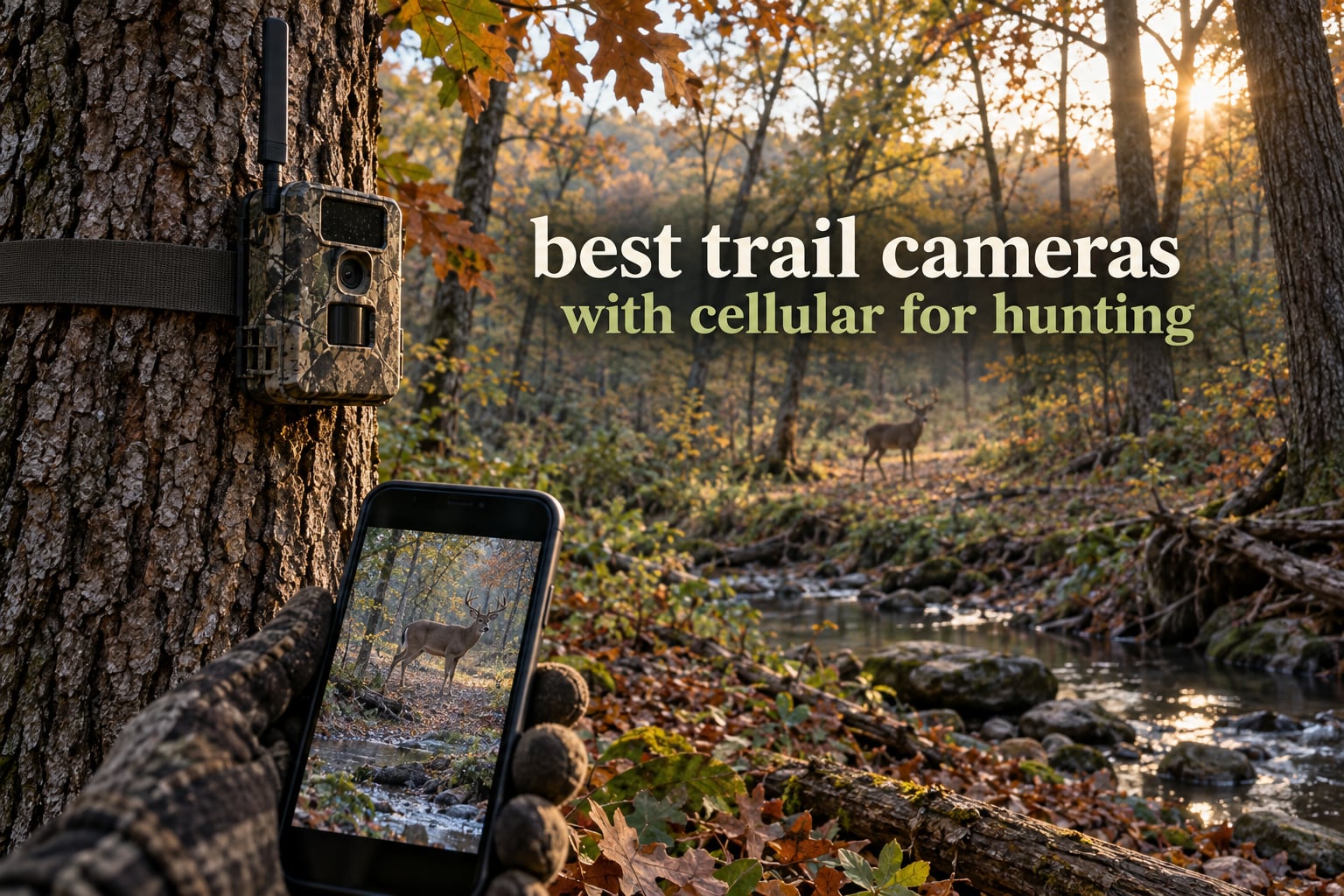
A cellular trail camera is a battery-powered game camera with a built-in 4G LTE radio that sends photos and short video clips to your phone as they are captured. A PIR motion sensor spots movement, the camera fires within a fraction of a second, and the file uploads to the manufacturer’s cloud and on to your app. That means you scout a deer pattern from the truck instead of walking onto it and putting human scent on the ground.
We run cellular units on a mixed lease where the timber is thick and the AT&T signal is a coin flip at best. That experience shaped every pick here, along with hundreds of owner reviews and the honest complaints buried inside them. Below is our ranked list of the best trail cameras with cellular for hunting, with the data plan math, signal behavior, and battery realities that spec sheets skip.
Before you go further, note that this is a cellular-only list. Every camera here transmits to a phone, and most still write to SD or internal memory as a backup when the upload fails. If you also want a straight SD card camera for cheap coverage fill-in, we covered those separately in our trail camera guide for wildlife watchers.
Table of Contents
Top 3 Picks: Cellular Trail Cameras in 2026


At a Glance: The 12 Best Cellular Trail Cameras in 2026
| Product | Specifications | Action |
|---|---|---|
| Moultrie Edge 2 Cellular Trail Camera |
|
Check Latest Price |
 VOOPEAK 4G LTE 360 Live Streaming Camera VOOPEAK 4G LTE 360 Live Streaming Camera |
|
Check Latest Price |
 VOOPEAK 2.5K Auto Tracking Camera 2 Pack VOOPEAK 2.5K Auto Tracking Camera 2 Pack |
|
Check Latest Price |
 Moultrie Edge 2 Pro Cellular Trail Camera Moultrie Edge 2 Pro Cellular Trail Camera |
|
Check Latest Price |
 Oculview 4G LTE 2K Live Streaming Camera Oculview 4G LTE 2K Live Streaming Camera |
|
Check Latest Price |
| SPYPOINT Flex-M and SD Card Starter Pack |
|
Check Latest Price |
 MagicEagle Cellular Trail Camera 13000 mAh MagicEagle Cellular Trail Camera 13000 mAh |
|
Check Latest Price |
| TACTACAM Reveal Ultra Cellular Trail Camera |
|
Check Latest Price |
 Stealth Cam Deceptor 40MP Cellular Trail Camera Stealth Cam Deceptor 40MP Cellular Trail Camera |
|
Check Latest Price |
 Moultrie Edge Solar Cellular Trail Camera Moultrie Edge Solar Cellular Trail Camera |
|
Check Latest Price |
 Stealth Cam Fusion Max 36MP 2 Pack Stealth Cam Fusion Max 36MP 2 Pack |
|
Check Latest Price |
 SPYPOINT Flex-Plus Cellular Trail Camera SPYPOINT Flex-Plus Cellular Trail Camera |
|
Check Latest Price |
1. Moultrie Edge 2 Cellular Trail Camera – Best Overall
Moultrie Edge 2 Cellular Trail Camera 2-Pack – 36MP, Low-Glow Flash
36MP stills
1080p video with audio
100 ft detection
Auto Connect multi-carrier
Pros
- Very sharp 36MP photos and clear 1080p video
- Reliable cellular connection in weak-signal woods
- Fast self-explanatory app setup
- 100-foot detection range beats the previous generation
- 8GB internal memory means no SD retrieval
Cons
- Battery drains faster than some rivals in cold weather
- Occasional reports of motion detection weakening after weeks
- Lens fogging reported after about six weeks
- Paid subscription required to test or use the camera
This is the camera we run the most, and it is the one we recommend to anyone buying their first cellular unit. Moultrie pairs a 36MP sensor with 1080p video that carries audio, and in over a thousand owner reviews the image sharpness comes up more than any other single trait. Daytime antler detail and 100-foot flash range are both strong enough that we stopped carrying a dedicated still camera for identification shots.
The Edge 2 auto-connects across major US networks, which is the single most useful feature on a lease like ours where the tower situation changes a quarter mile up the ridge. We have had units sit for weeks in hollows where a phone shows no bars and the camera still delivered. Pairing takes about a minute through the Moultrie Mobile app, and the setup walkthrough does not assume you have done this before.
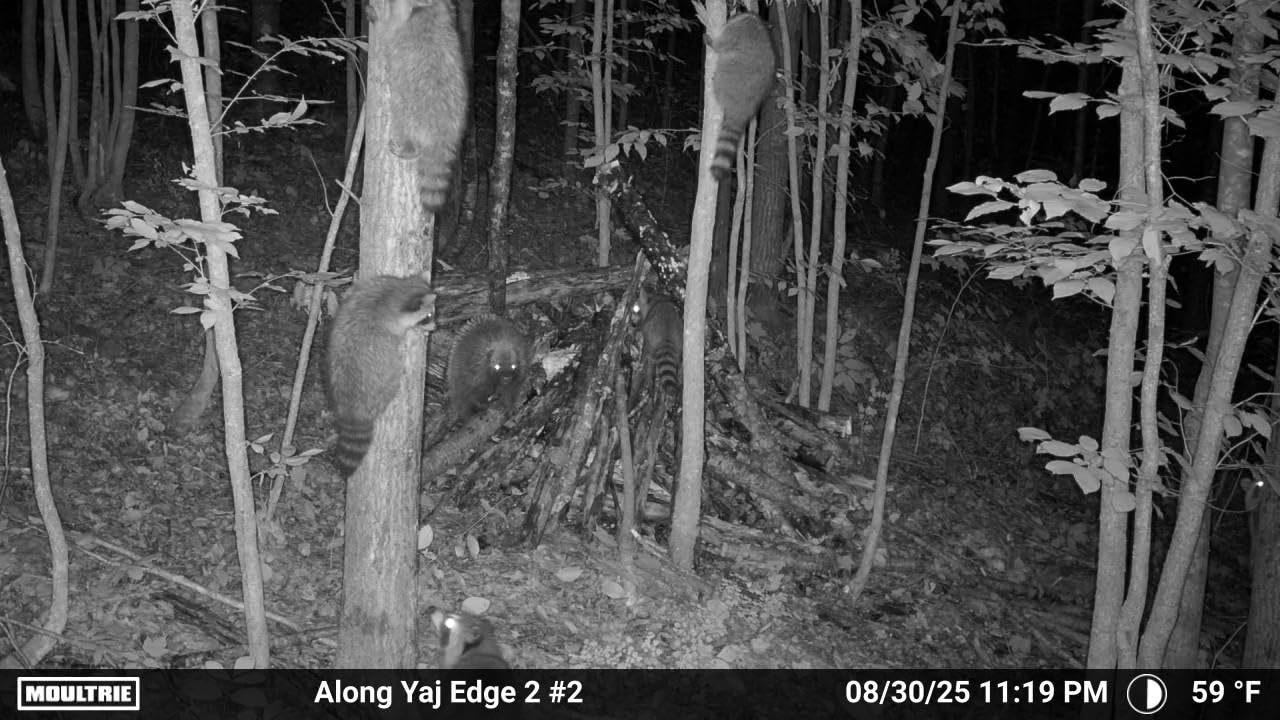
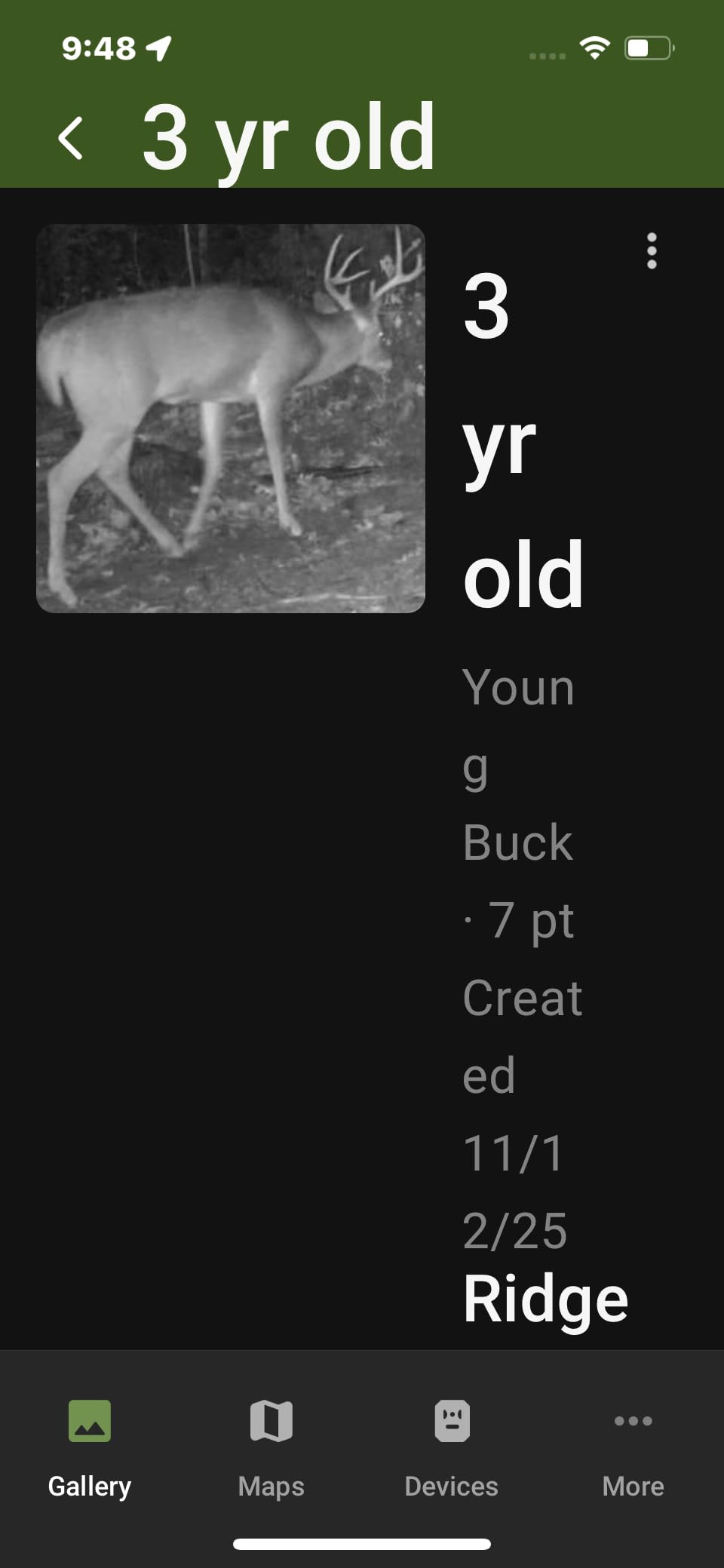
App charting is where Moultrie earns its place. The Activity Chart and interactive maps let us overlay trail crossings and feeding sign against time of day, so we can see whether that ravine is a morning route or an afternoon one. Eight gigabytes of internal memory means there is no card to lose in mud, and everything syncs to unlimited cloud storage in the app.
Where it loses ground is endurance. In cold weather, or in a high-traffic funnel that fires the sensor all night, the batteries go faster than most rivals. Owners also report condensation inside the battery compartment after roughly six weeks, and some units see animal motion triggers weaken over a season. A 2-year warranty from activation softens that, but plan for a spare battery tray in your pack.
What the Edge 2 gets right for a first-time buyer
Setup speed and forgiving app design. If a new hunter asked us where to start, this is the unit we hand over, because the pairing flow and auto-connect remove the two things that cause returns. The 8GB internal memory also removes the single most common field mistake, which is forgetting to format a card before it goes in the tree.
When to pick something else
If your land has no reliable coverage at all, or you are running cameras through the whole winter where cold drains packs hard, the Edge 2 is not the strongest answer. Look at the MagicEagle below for battery capacity, or a solar model if you can reach a panel. It is also a poor choice if you refuse to pay any subscription, since the camera will not function without one.
2. VOOPEAK 4G LTE Cellular Trail Camera with 360 Live Streaming – Best for Food Plots
VOOPEAK Trail Camera, 4G LTE Cellular Game Cameras with 360° Live Streaming
355 degree pan and 100 degree tilt
2.5K live stream
7800 mAh solar battery
IP68
Pros
- 355 degree pan and 100 degree tilt cover broad ground
- 2.5K live streaming and remote phone control
- 0.1 second PIR response time
- Built-in 4G SIM with automatic carrier selection
- 7800 mAh solar panel for long deployments
- Sharp night vision out to 65 feet
Cons
- SD card not included and sold separately
- Each camera needs its own data plan with no sharing
- App subscription purchase flow reported as confusing
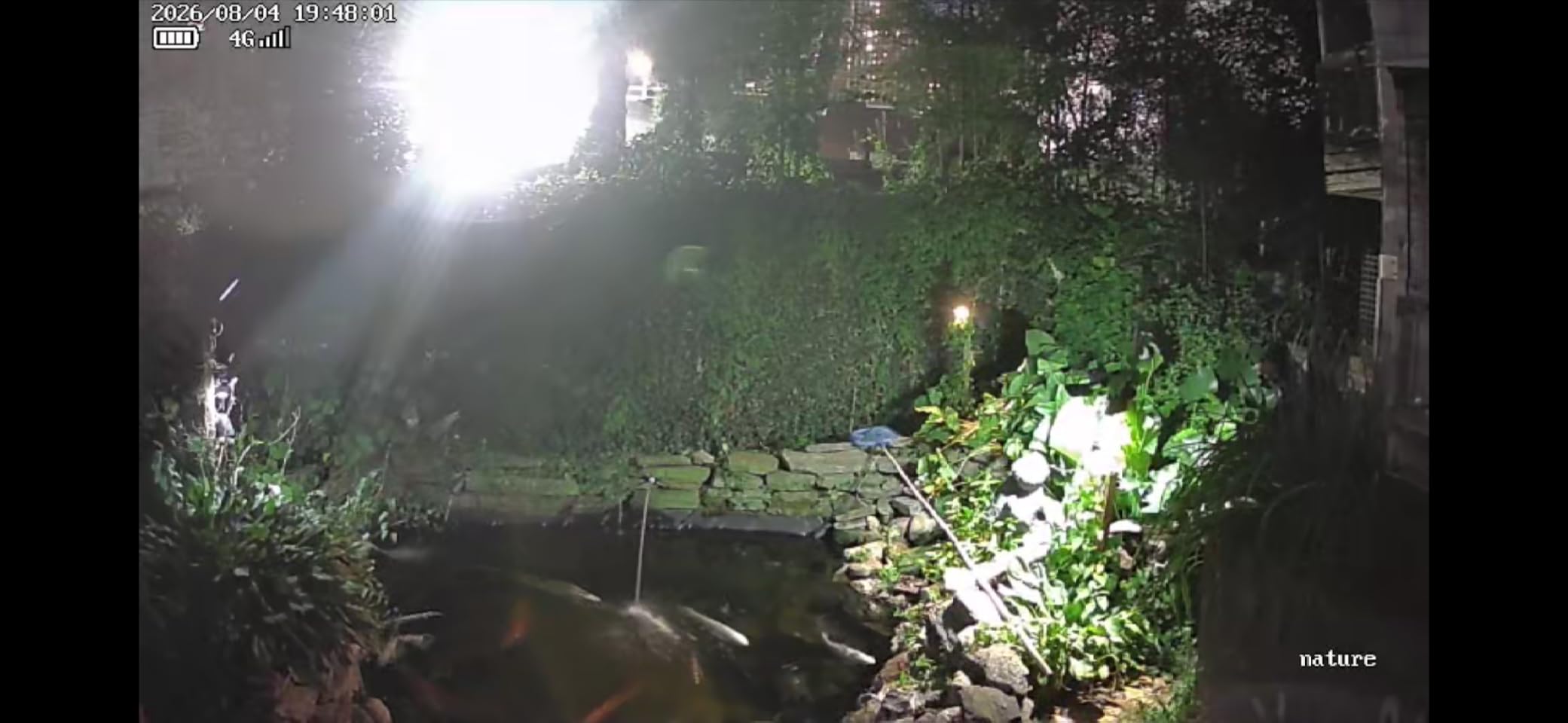
A fixed lens pointed at one trail corner is a wasted camera on a food plot. This VOOPEAK pans 355 degrees and tilts 100, so from a single mount you can watch the whole opening and the far corner without repositioning. The 0.1 second PIR response is the fastest trigger in this group, and on a plot where bucks drift in and out fast that difference shows up in how many usable frames you get.
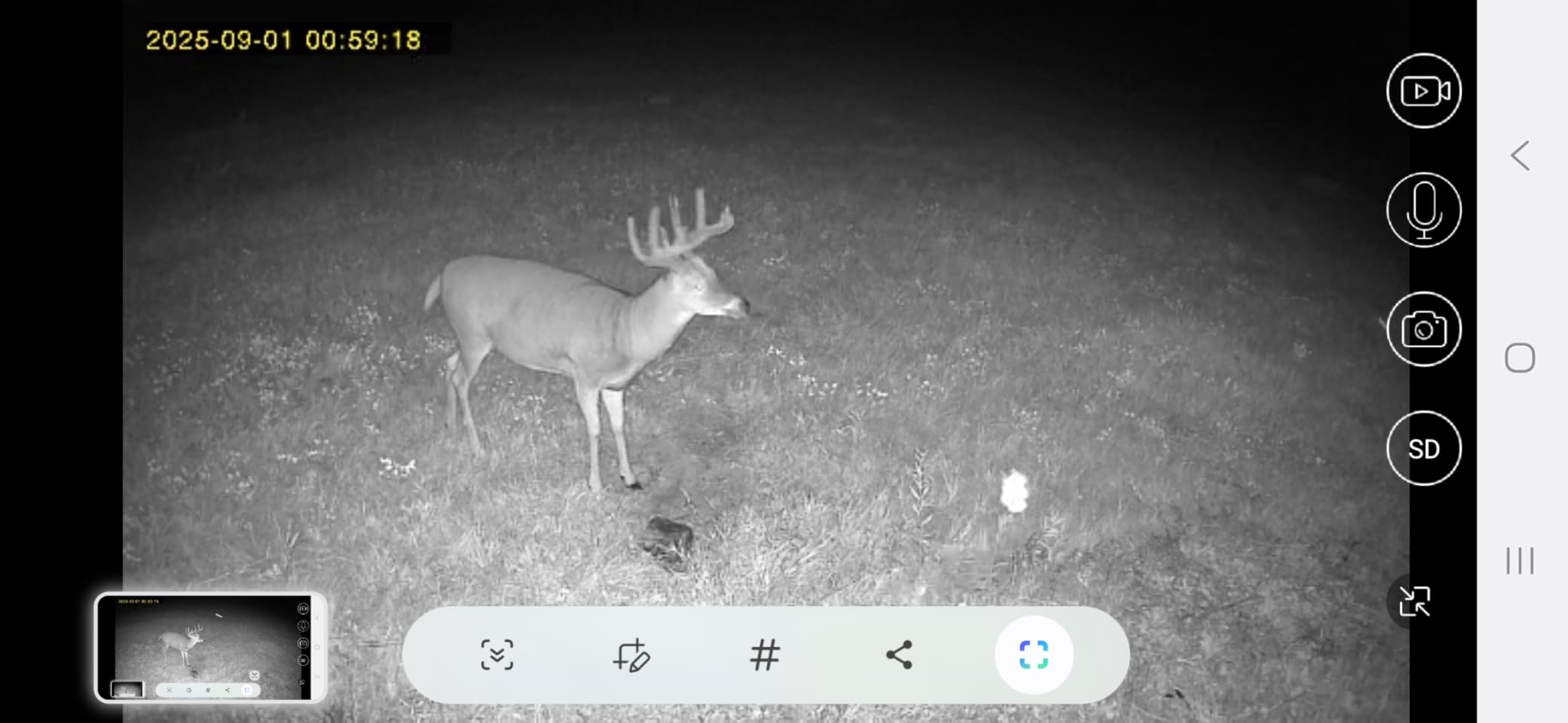
Live streaming is the reason to buy it. We could open the app, pan to the north end, and confirm whether deer were there in the last ten minutes. That changes scouting from a photo review into a conversation with the property. The 7800 mAh battery paired with a 4W solar panel is rated for up to twelve months on a full charge with real sun, and IP68 sealing plus a minus 40 to 140 degree operating range handles the weather extremes.
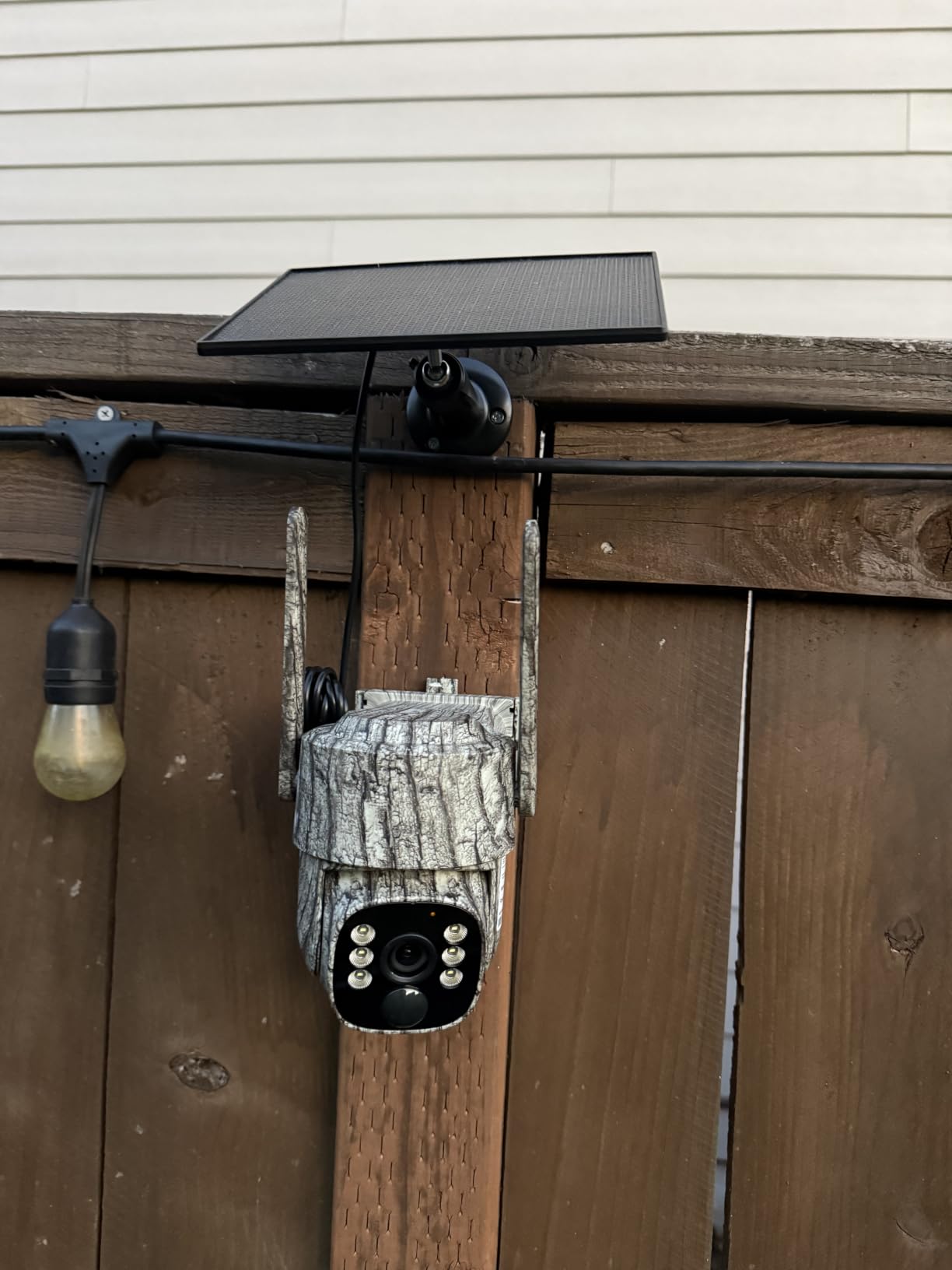
The night side is where the trade-off shows. Six infrared LEDs carry usable black-and-white footage to 65 feet, which is short against the 100-foot units in this list, and it is fine for a plot you can walk to but thin for a long treeline approach. A 4G SIM is preinstalled and picks a carrier automatically, so there is no SIM to swap when you change carriers.
Budget for the extras. The SD card is not in the box, and the data plan is per camera with no way to pool it across a spread of units. The app’s subscription purchase flow is the most common friction point owners report, so budget ten extra minutes at setup and verify the plan shows active in the app before you walk away from the truck.
Why this one works on an open plot
The motorized pan is the whole argument. Instead of three fixed cameras covering three corners, one elevated unit covers the opening, the treeline, and the approach, and the live view lets you decide whether to make the walk. For anyone who does not want to buy three subscriptions, that consolidation is the deciding factor.
Where it falls short
Sixty-five feet of night range and a missing SD card make it a poor choice for a long approach corridor where you need identification photos at distance. If your scouting is about antler detail from 80 feet out, the TACTACAM Reveal Ultra or the Moultrie Edge 2 Pro are better tools, and both push further with no-glow or low-glow flash arrays.
3. VOOPEAK 2.5K Auto Tracking Cellular Camera 2 Pack – Best for Tracking Moving Animals
4G LTE Cellular Trail Camera 2 Pack, Human Auto Tracking with 2,5K HD Live
355 degree pan auto tracking
2.5K live view with dual night vision
Two solar panels
IP66
Pros
- Auto tracking locks onto and follows moving subjects
- Dual night vision with switchable infrared and white light
- A dedicated solar panel per camera
- 10x digital zoom for distant detail
- Quiet pan-tilt motor barely registers on footage
- QR code pairing makes setup fast
Cons
- Non-removable SIM with a separate plan per camera
- Memory card not included
- App subscription purchase flow criticized
The head on this camera follows motion on its own. When an animal walks past a fixed frame, the pan-tilt head swings to keep it in shot, which is the difference between one usable photo and a sequence that shows the animal’s path. In a two-pack at a paired setup, that auto tracking effectively doubles your coverage without a second subscription tier for a wider lens.
Night handling is the sleeper feature. The camera switches between invisible infrared and a white-light mode, so you can pick true no-glow for a wary mature buck and still get color context when you need it. A 10x digital zoom produces usable detail on distant subjects, and the motor is quiet enough that it does not mar the recording.
Each camera in the pack has its own solar panel, so a maintenance-light two-camera layout is realistic. IP66 sealing handles rain and snow, and setup runs through a QR code scan in the app rather than a manual pairing ritual, which is the fastest setup we have seen on a pan-tilt body.
The limitation is the same one that applies across the pan-tilt category: the SIM is not removable, and each unit carries its own plan with no sharing. A two-pack therefore doubles your monthly plan cost, and there is no card included, so add a memory card to the budget on day one. The app’s account verification is also the step most likely to stall a first activation.
When auto tracking is worth paying for
Any time the animal does not hold still. A food plot, a wide lane crossing, or a trail that runs diagonally past the mount all produce sequences instead of clipped single frames. If you have ever lost a good buck because he cleared the frame in one second, this is the fix.
When a fixed lens is smarter
Auto tracking is worth nothing if your camera is watching a narrow funnel at 60 feet, because a fixed 100-foot lens frames that better and costs less to run. For a treeline or a pinch point where you need consistent identification photos, the Moultrie Edge 2 or TACTACAM Reveal Ultra will frame more reliably than a head that is still hunting for the subject.
4. Moultrie Edge 2 Pro Cellular Trail Camera – Best for AI Species Filtering
Moultrie Edge 2 Pro Cellular Trail Camera – 40MP, No-Glow Flash
40MP stills
1440p video with audio
100 ft detection
Live Aim remote preview
AI species filtering
Pros
- Live Aim lets you frame the shot from the phone
- 40MP stills and 1440p video with audio
- AI filtering cuts shadow-driven false triggers
- On Demand remote capture is dependable
- Ran a full season of rain and cold without failing
Cons
- Motion detection occasionally fails to trigger on animals
- Long-range picture quality is good rather than exceptional
- One owner received a refurbished replacement unit
The Edge 2 Pro is the camera we recommend for anyone whose problem is volume rather than hardware. Its AI filtering learns buck, doe, turkey, and human signatures and quietly discards the branch-shadow triggers that fill a feed at dawn. Once it is trained, our morning review went from scrolling hundreds of frames to checking a short list.
Live Aim is the feature we did not expect to use and now rely on. In the app you pull up a live preview and adjust the camera’s aim from the tree stand before you climb down, which removes the second climb most people make when framing is off. On Demand capture works reliably enough that we request a photo on arrival rather than waiting on the PIR to make the decision for us.
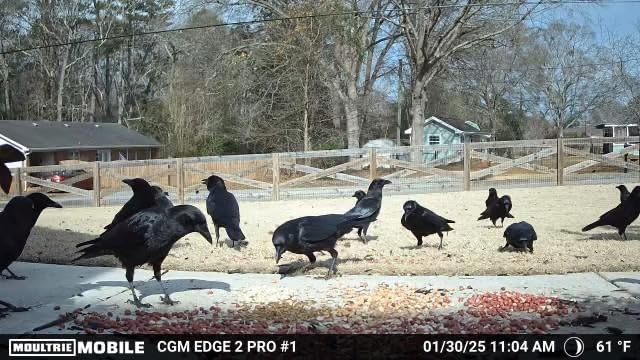
Image numbers are strong: 40MP stills, 1440p video with audio, and 100-foot detection on a low-glow flash. The camera came through a full season of heavy rain and hard cold for us without a failure, and the 2-year warranty from activation is the same as the base Edge 2.
Two honest caveats. Motion detection occasionally fails to trigger on animals, which is the most damaging fault a trail camera can have because you never know what you missed. And picture quality at distance is good rather than exceptional, so if your decision depends on reading antler detail at 70 feet, look at the TACTACAM instead.
What the AI filtering actually saves
Time and battery. Every false trigger burns a capture, a compression cycle, and an upload, and on a cellular camera that transmission is the expensive part. Cutting shadow and foliage triggers reduced both our data use and our nightly review time more than any hardware change we made. The filtering is the feature you will miss most if you move to a cheaper camera.
Where the compromises show
Long-range image quality is the trade. Forty megapixels on paper is not the same thing as a 4K sensor with a wide aperture at distance, and owners consistently describe this camera as crisp up close and merely adequate far out. The one refurbished-unit report is also worth keeping in mind, so inspect the box on arrival and activate through the app before you hang it.
5. Oculview 4G LTE 2K Live Streaming Cellular Camera – Best for Remote Control at a Distance
Oculview 4G LTE Cellular Trail Cameras, 360° 2K Live Streaming Game Camera, SIM Card Included, Low-Glow Night Vision, Solar Powered, Instant Alerts, Two Storage Ways, No WiFi Needed for Hunting&Trail
2K live stream with no WiFi
336 degree pan and 90 degree tilt
6W solar panel
Low-glow IR to 100 ft
Pros
- Pan and tilt control for wide-area monitoring
- Holds signal where phones drop to a single bar
- Solar panel sustains power through rain and snow
- Quick assembly and a straightforward app
- Live view is clear and responsive
Cons
- Setup instructions are weak and the app is largely unaided
- SD card plus subscription plus cloud fees stack up per camera
- App account failures can leave the camera unrecognized
- Some false alerts reported
The Oculview’s selling point is holding a connection where nothing else does. Owners running it on remote parcels report the camera maintaining signal in spots where a phone shows a single bar, and the 336-degree pan with 90-degree tilt plus 4x digital zoom gives you a workable view of a spread. The 0.2-second action time and 120-degree PIR angle mean fast movers still get caught.
Power is handled well. The 6W adjustable solar panel needs about ten minutes of direct sun a day to sustain a full day of operation, which is realistic on an open lane or plot but marginal under a closed canopy. Low-glow 850nm infrared reaches 100 feet with the spotlight on, and IP65 housing covers ordinary weather. A free 7-day data trial lets you test the connection before committing.
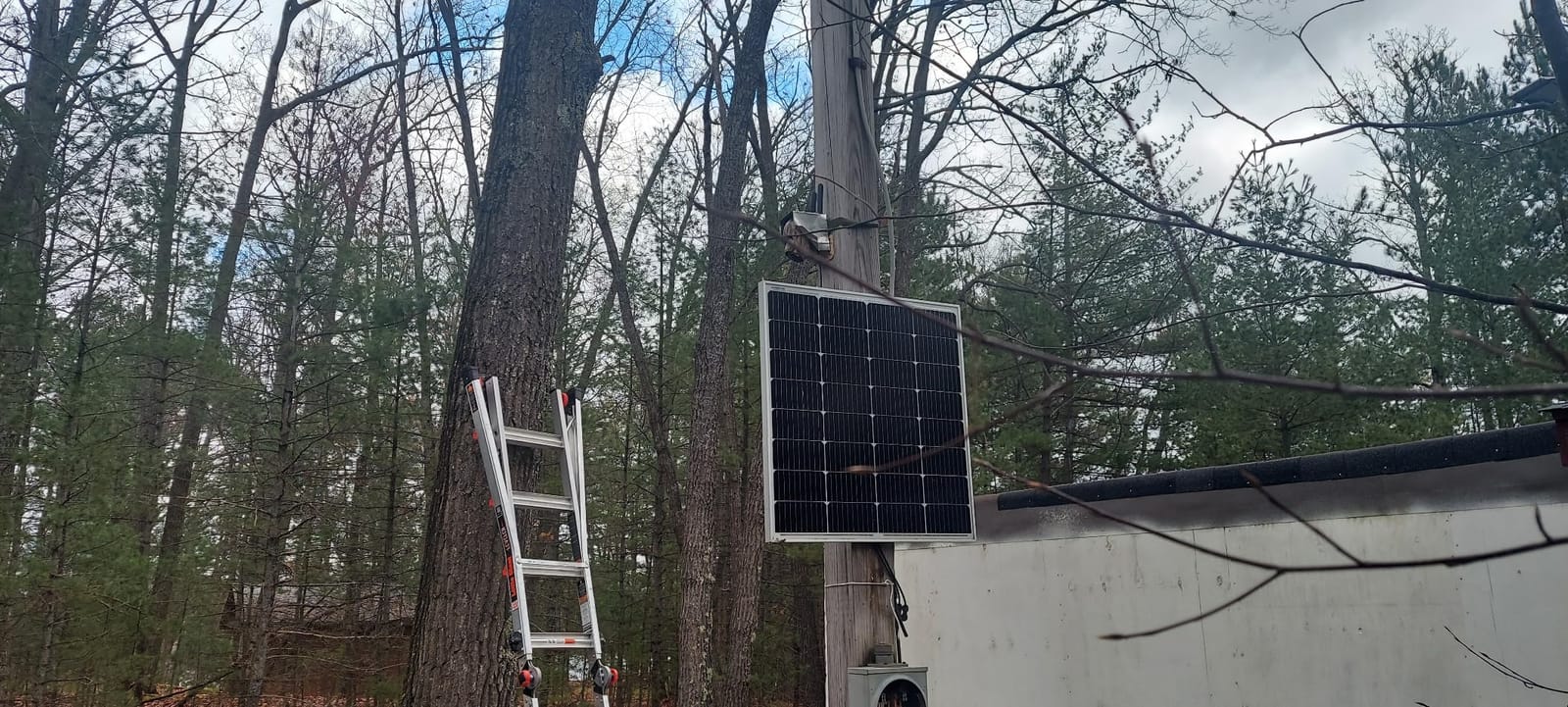
There is no WiFi requirement, which matters if your hunting land has no router and no intention of having one. Storage goes either to the cloud on a subscription or to a local microSD up to 128GB, so you can run it as a pure SD recorder if you want. That flexibility is unusual in this category and genuinely useful.
The weak point is documentation. Owners consistently report that setup instructions are thin and that much of the operation has to be worked out unaided. The cost stack is real too: memory card, monthly subscription, and a periodic cloud storage fee, all per camera. App account failures that need a remote power cycle are the most common support issue.
When this camera earns its subscription
On land where signal is the limiting factor rather than image quality. If your parcel sits in a coverage dead zone and you have a plan to test, the free trial plus a local SD option means you can confirm the connection costs you money before hanging a camera for a season. That flexibility is the reason to look here first.
When the running costs bite
Running three of these across a lease multiplies the subscription, the card cost, and the cloud fee by three. The documentation gap also bites hardest for a first-time buyer, so budget a call with customer support, which owners report is genuinely helpful, before you deploy. If you want fewer moving parts and clearer setup, the Moultrie Edge 2 is the opposite experience.
6. SPYPOINT Flex-M and SD Card Starter Pack – Best Value
SPYPOINT Flex-M and SD Card Pack – Cellular Trail Cameras |Best Value in Hunting Accessories |No WiFi Needed & GPS-Enabled |Hunting Night Vision | IP65 Waterproof |28MP Photos, 720p Videos
Free 100 photo monthly plan
32GB microSD card included
Cross-carrier dual-SIM
28MP photos
Pros
- Camera plus 32GB microSD card in one box
- Free 100 photo monthly transmission plan with no commitment
- Dual-SIM cross-carrier connection locks onto the strongest network
- Quick triggers and solid day and night video
- App walks new users through setup and formatting
Cons
- Image quality drops past about 20 feet on the free plan
- Very high default motion sensitivity burns the free allowance
- 720p video trails higher-resolution rivals
- Some units reported defective with degrading straps
- Multi-camera plans are poorly priced
Nobody else in this list ships a memory card in the box, and that alone changes the economics. Most cellular cameras are sold as hardware and then billed monthly forever; the Flex-M starter pack bundles a 32GB microSD so the camera keeps recording locally even if the cellular subscription lapses or the signal fails. For a lease where you drive out monthly anyway, that local copy is the whole point.
The free plan sends up to 100 photos per month with no commitment, which is enough to keep you current on a mature buck’s pattern without a subscription conversation. Paid tiers start at 250 photos and go to unlimited. The dual-SIM cross-carrier setup monitors networks and locks onto the strongest, and owners running this in poor-signal timber report the transmission holding up well.
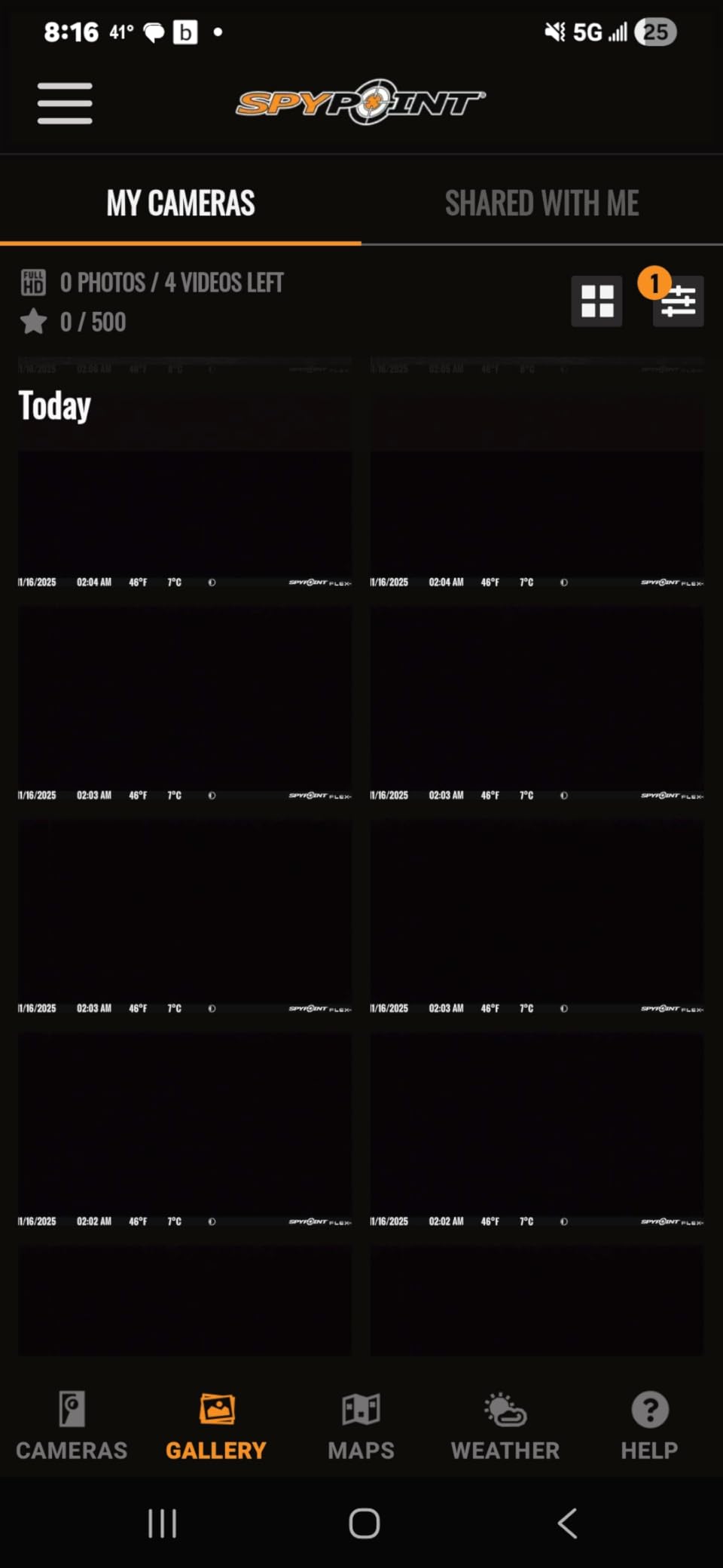
BUCK TRACKER AI species filtering runs in the app, and capture modes cover photo, video, time-lapse, and the constant time-lapse-plus mode that fills gaps between animals. GPS is enabled, IP65 sealing is standard, and the app handles activation and card formatting on-camera, which removes the most common early-season mistake.
Be honest about the trade. Image quality falls off noticeably past about 20 feet, and 720p video is well behind what the Moultrie and TACTACAM units produce. The default motion sensitivity is very high, so left alone it will exhaust the free photo allowance in a high-traffic spot. Multi-camera plans are not well priced, so this is a one-or-two-camera tool rather than a full-lease solution.
What makes this the value pick
Total cost of ownership, not sticker cost. A free monthly tier plus an included memory card means the Flex-M can run for a full scouting season at no recurring charge, and it still records to SD when the plan is paused. Very few competitors let you do that, and it is the reason we keep one on the back forty as a backup to a primary cellular unit.
When it is the wrong tool
It is wrong when the decision depends on reading antler detail at range, because the image falls apart past 20 feet. It is also wrong as the primary camera on a lease where a buck’s movement over 30 yards is the whole question. For long-range identification, spend up and pick the TACTACAM Reveal Ultra or the Moultrie Edge 2 Pro.
7. MagicEagle Cellular Trail Camera with 13000 mAh Battery – Best for Battery Life
MagicEagle® Cellular Trail Camera 4G Wild Game Cameras 13,000 mAh Battery Solar Panel 2K Audible Video No-Glow IR Night Vision IP66 Waterproof for Wildlife Deer Monitoring Home Security (Army Green)
13000 mAh battery
5MP lens with 0.3s trigger
940nm no-glow IR to 90 ft
SignalSync no-SIM
Pros
- SignalSync auto-selects the strongest carrier with no SIM to install
- 13000 mAh battery covers roughly three months of standby
- 5MP lens sharper than typical 2MP competitors
- 0.3-second trigger with no-glow 940nm IR
- A-GPS position reporting with geofencing and offline tracking
- Cloud AI identifies species and analyzes activity
Cons
- Higher price than most entry-level cellular cameras
- Free transmission tier is only 200 photos or 16 videos and expires after 30 days
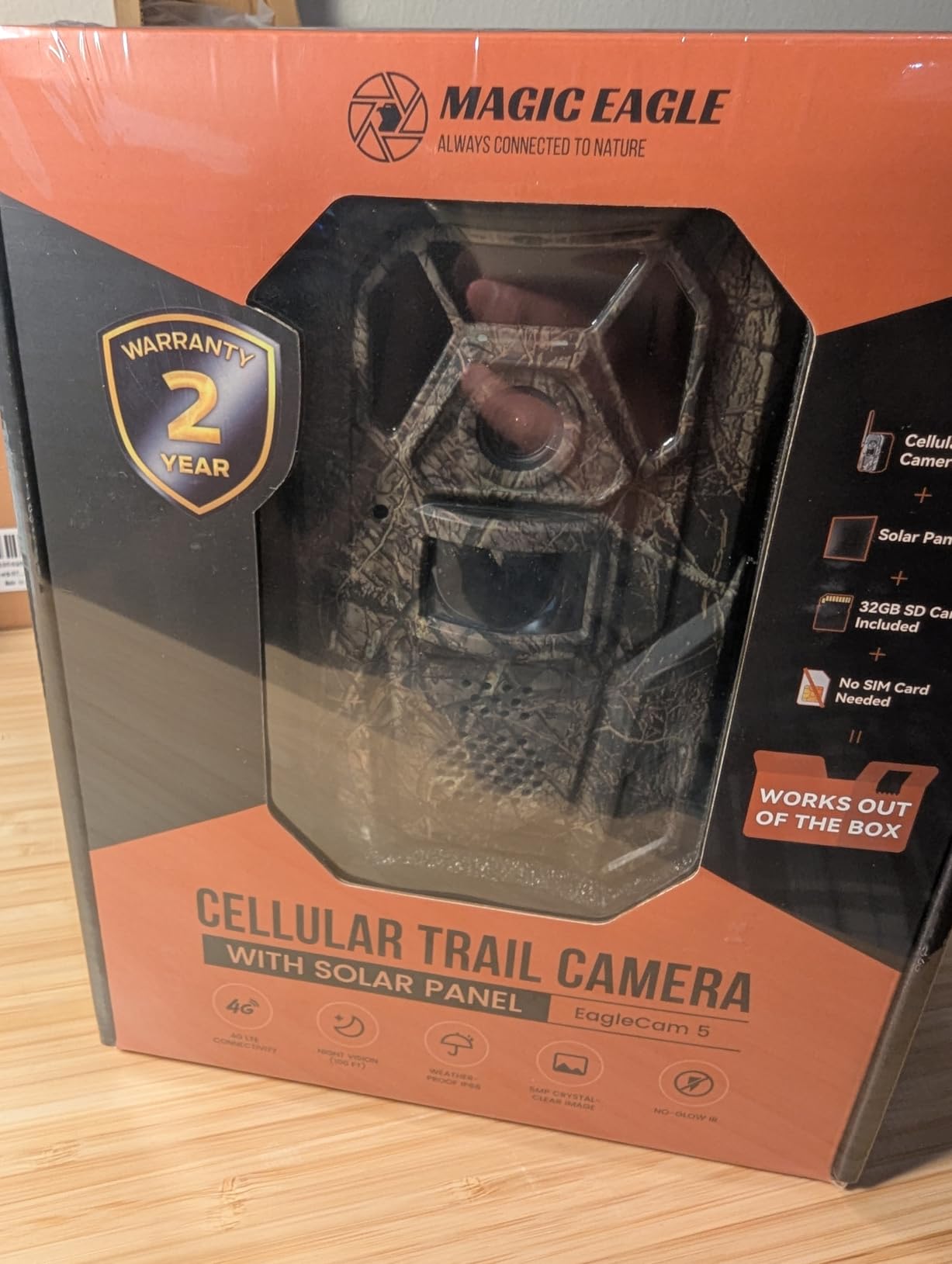
This is the camera we trust to survive a full season without a ladder. The 13000 mAh internal battery is rated for roughly three months of continuous standby, and a solar panel is included in the box, so battery swaps stop being part of the routine. It is the only unit here that combines a large internal cell with a no-SIM carrier system, which means there is no SIM tray to lose or misconfigure in the field.
SignalSync selects the strongest carrier and network segment automatically. There is no physical SIM to install, which removes the single most common field failure, and the 940nm no-glow infrared array keeps the flash invisible to a wary mature buck out to 90 feet. The 5MP lens is genuinely sharper than the 2MP sensors common in this price band, and the 0.3-second trigger is quick.
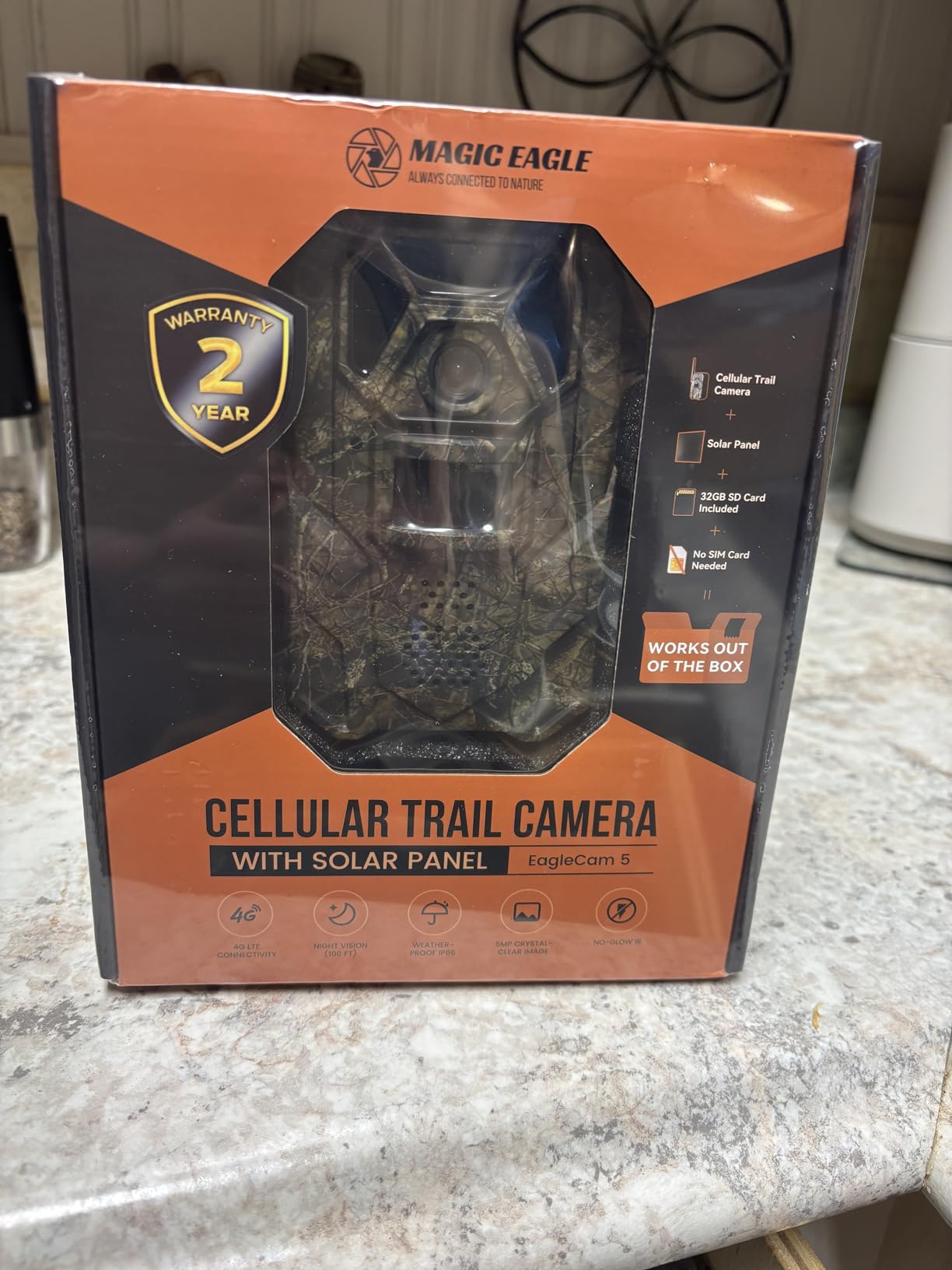
The anti-theft package is the best we have seen. A gravity sensor, A-GPS position reporting, offline tracking, and electronic fence data mean a camera that gets moved can report where it went. Cloud AI identifies species and analyzes activity frequency, location, and temperature and humidity, so you can read a location’s value without opening every file. A 32GB card is included and it accepts cards up to 256GB.
Two real drawbacks. It costs more than most entry-level cellular cameras here, and the free transmission tier is small at 200 photos or 16 videos, which expires after 30 days. So the battery is nearly maintenance-free but the data plan is not optional in any practical sense. IP66 sealing and a minus 20 to 50 degree operating range cover normal seasons, and the warranty is 2 years plus six months with registration.
Why the battery capacity changes the trip
Three months of standby means you can hang a camera in September and not think about it until deer season. For a lease you cannot reach monthly, that removes the trips that exist only to swap batteries, and it removes the risk of arriving to find a camera that died in a cold snap. Paired with the included solar panel, it is the lowest-touch deployment in this group.
Where the extras add up
The free data tier runs out fast on an active camera, and the 30-day expiry means you will be choosing a plan before the season starts. The anti-theft electronics are the reason the price is higher, and that value is highest on public-adjacent ground. If theft is not a concern and you want the lowest entry cost instead, the SPYPOINT Flex-M starter pack is the more economical answer.
8. TACTACAM Reveal Ultra Cellular Trail Camera – Best Image Quality
TACTACAM Reveal Ultra Cellular Trail Camera: 4K Photo, 1080p Video, Live View, GPS Tracking-Enabled, Switchable No-Glow/Low-Glow Flash, LTE Connectivity, LCD Screen – Best Hunting, Game Camera
4K still images
2.5K video
Sub 0.5 second trigger
Active GPS theft tracking
Switchable flash
Pros
- Exceptionally clear 4K photos and sharp video day and night
- Cellular performance holds where phones get no signal
- Live View and on-demand HD photo requests
- GPS theft tracking that keeps reporting when powered off
- Upgraded antenna improves weak-area signal
- Runs a full season on 12 AA with the lithium cartridge
Cons
- Highest price in this group with arguable value
- App is described as clunky and slow
- Add-on subscription tiers for photos settings and extra images
- Cancelling a subscription can disable the camera
- GPS theft updates only every six hours
If your hunting decision hinges on antler detail at 40 feet, this is the camera. The Reveal Ultra shoots 4K stills and 2.5K video with a sub-0.5 second trigger and up to a 9-shot burst, so a buck turning broadside produces a set of frames instead of one clipped shot. Live View and on-demand HD photo requests give you situational awareness in a way a queued upload does not.
The flash is switchable between 96-foot low-glow and 80-foot no-glow, which lets you choose per trip. On public or shared ground where a visible red glow might attract attention, no-glow is the quieter choice. In heavy cover where a buck is at 80 feet, low-glow reaches further. A 2-inch LCD and 16GB internal storage with SD expansion mean you can check the camera on the ground without the app.
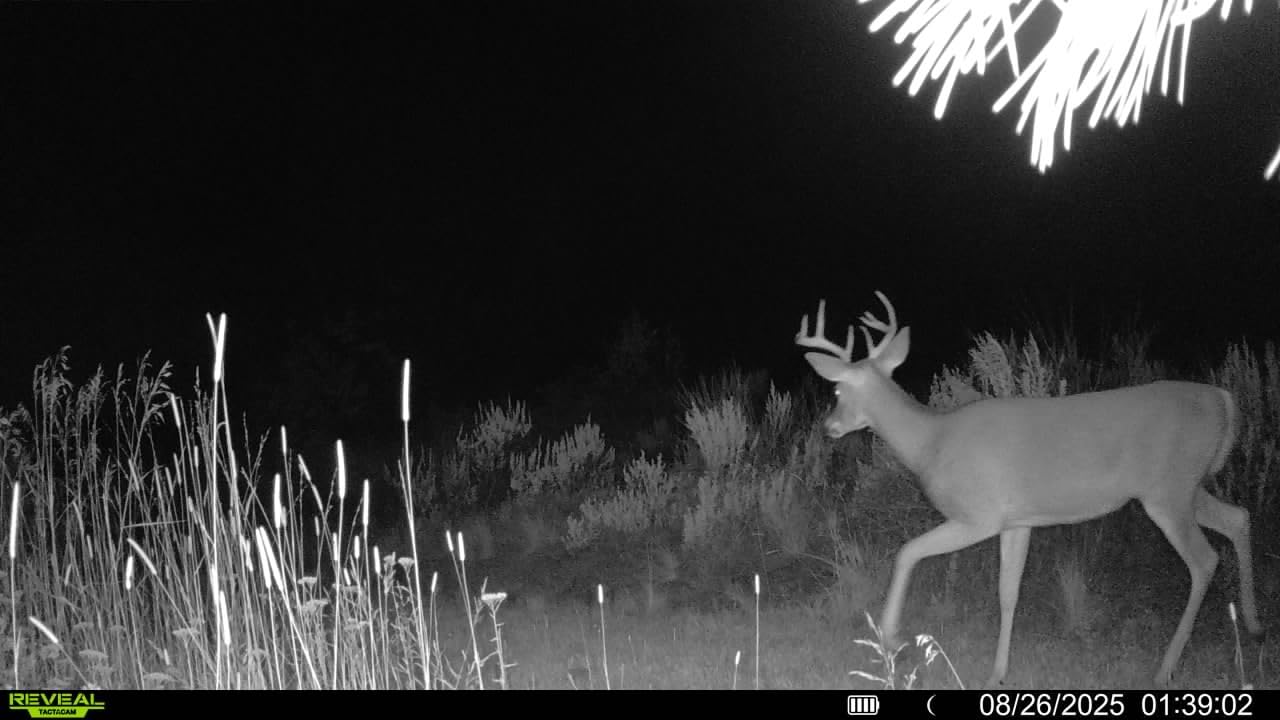
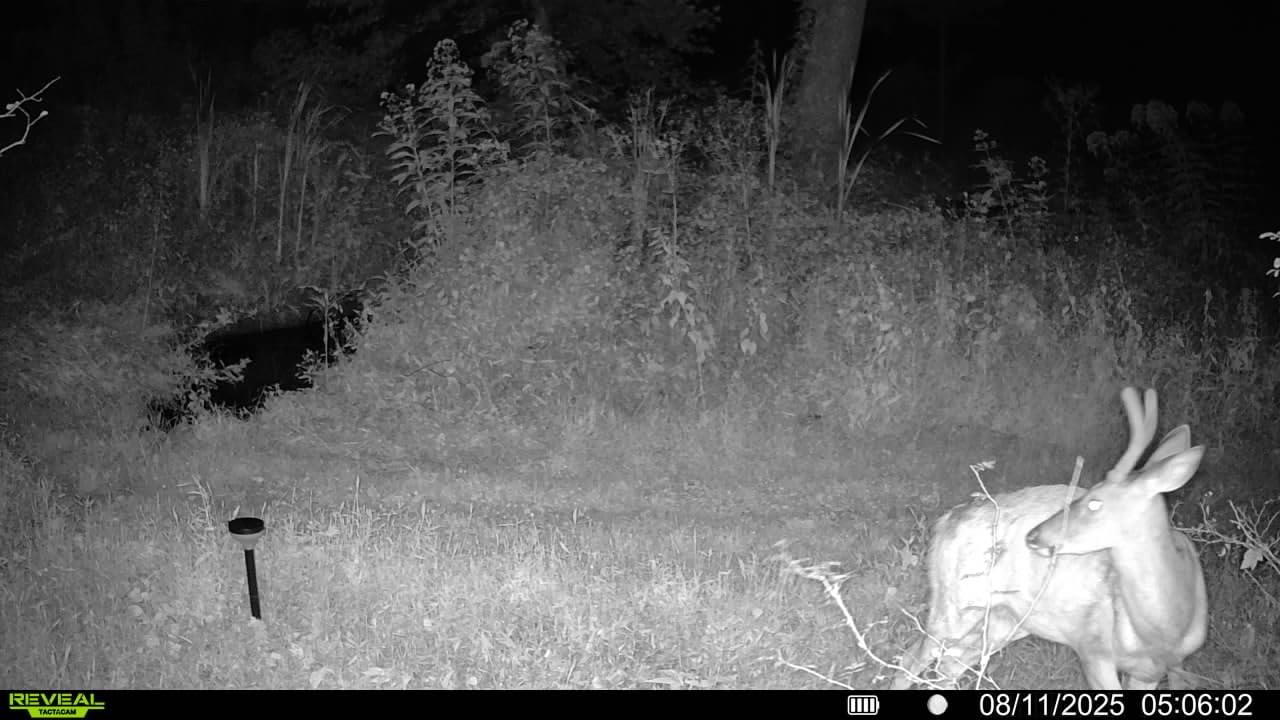
Anti-theft is the best implemented here. The built-in GPS keeps transmitting coordinates when the camera is powered off or the battery is removed, and you get a theft alert if it moves more than half a mile from the last known location. The upgraded antenna measurably improved our weak-area performance, and it runs a full season on 12 AA batteries with the rechargeable lithium cartridge.
The complaints are all about cost and software. The app is described as clunky and slow to respond, and the subscription structure is add-on heavy, with per-camera monthly fees at the top tier. Cancelling a subscription has been reported as disabling the camera until support issues a credit, which is a trap for anyone who stops paying. GPS theft updates every six hours also limits how useful that feature is in a real recovery.
What you are paying extra for
Sensor quality and the ability to make a decision from a photo. Every other camera in this list can identify a buck; this one can tell you his rack size and how many points are broken, which changes when you move. For trophy-focused hunting, that is worth the step up in cost and the slower app.
When the premium does not pay off
It does not pay off if you are mapping movement rather than identifying animals, because a 4K image of a deer at 60 feet still does not tell you much. It is also the wrong pick for a first cellular camera, since the clunky app and the add-on subscription tiers are a steep way to learn the category. Start with a simpler unit and move up if you decide you need the detail.
9. Stealth Cam Deceptor No 80ft IR 40MP Cellular Trail Camera – Best Detection Range
Stealth Cam Deceptor No 80ft IR 40MP 1440P HD Cellular Trail Camera
80 foot detection and flash range
0.3 second trigger
40MP stills
940nm no-glow LED array
Pros
- Detection range beats other cellular cameras in the same spot
- Good day and night picture quality for the class
- Strong reception where other SIM cameras failed to connect
- Battery life better than a comparable rival
- Command Pro app gives species and sex identification
Cons
- Push notifications delayed two to three minutes behind the image
- App photo sequencing is unreliable and out of order
- Customer support is slow to reach
- HD video downloads take hours for more than a few clips
- Video length fixed at 10 seconds with no user control
The Deceptor earns its place on reach. Owners comparing cameras in the same tree report noticeably better detection than competing cellular units, and the 36-piece 940nm no-glow LED array throws 80 feet of flash while staying invisible to game. The 0.3-second trigger with a configurable 3 to 59 second recovery timeout lets you tune the gap between shots, and burst mode captures one to three images per trigger.
It also runs a dual network on Verizon or AT&T, and owners report strong reception in locations where other SIM-based cameras would not connect. Battery life is better than a comparable competitor at equivalent settings, which matters because the eight AA configuration is a real carrying cost. The Command Pro app includes animal recognition and filtering plus sex identification and activity highlighting.
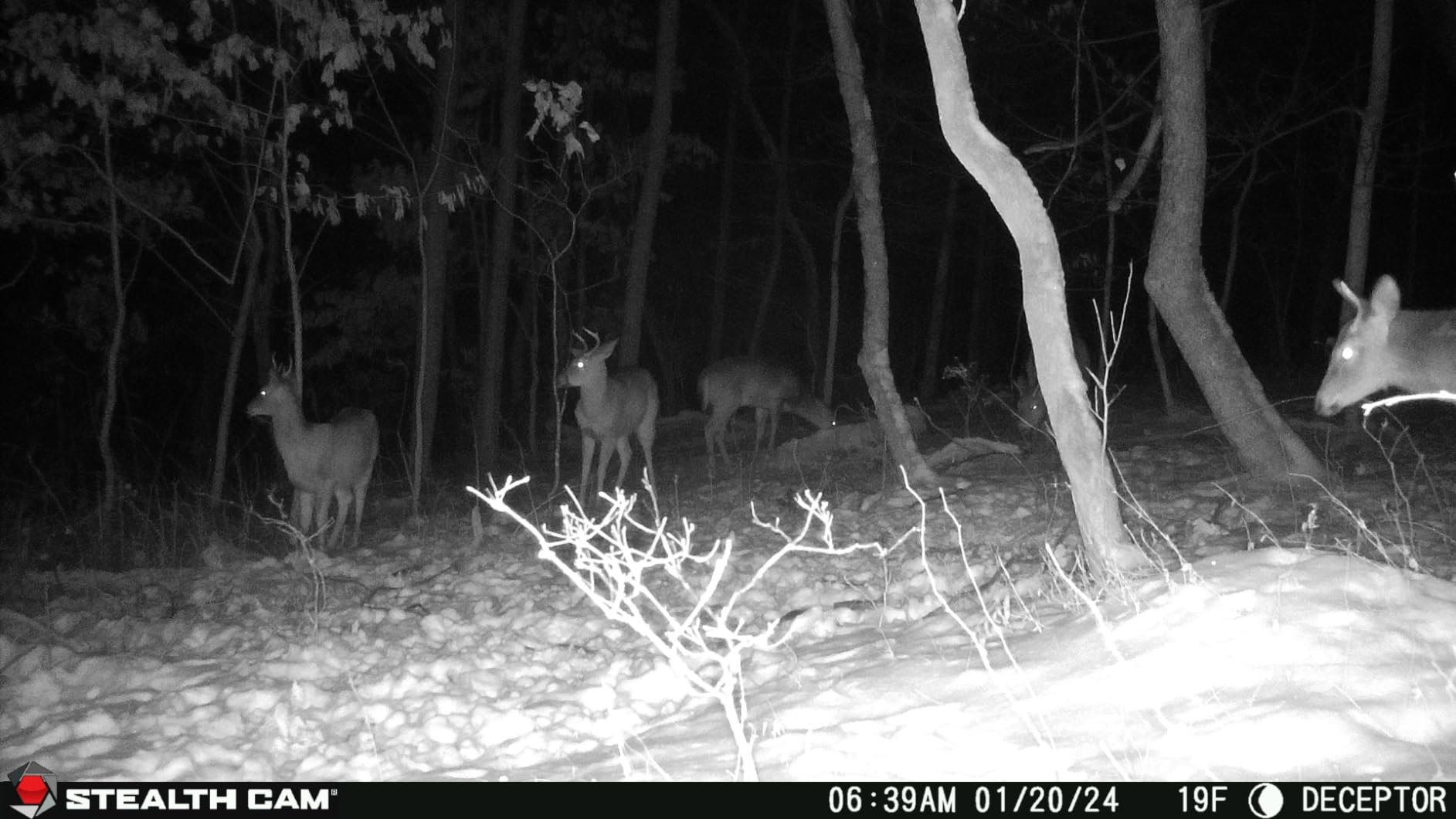
Stills go up to 40MP with 1440P QHD video and audio, and resolution is adjustable. On Demand capture works well enough for a pre-entry check from the truck. The housing is IP54, which is the weakest sealing rating in this group, so treat it as a camera for a sheltered lane rather than a full-season mount in driving rain.
The app is where it stumbles. Push notifications arrive two to three minutes behind the actual image, photo sequencing in the app is unreliable and out of order, and HD video downloads take hours when you pick more than a couple of clips. Video length is fixed at 10 seconds with no user control, and customer support is slow to reach. If you scout in real time, these are real costs.
What detection range really buys you
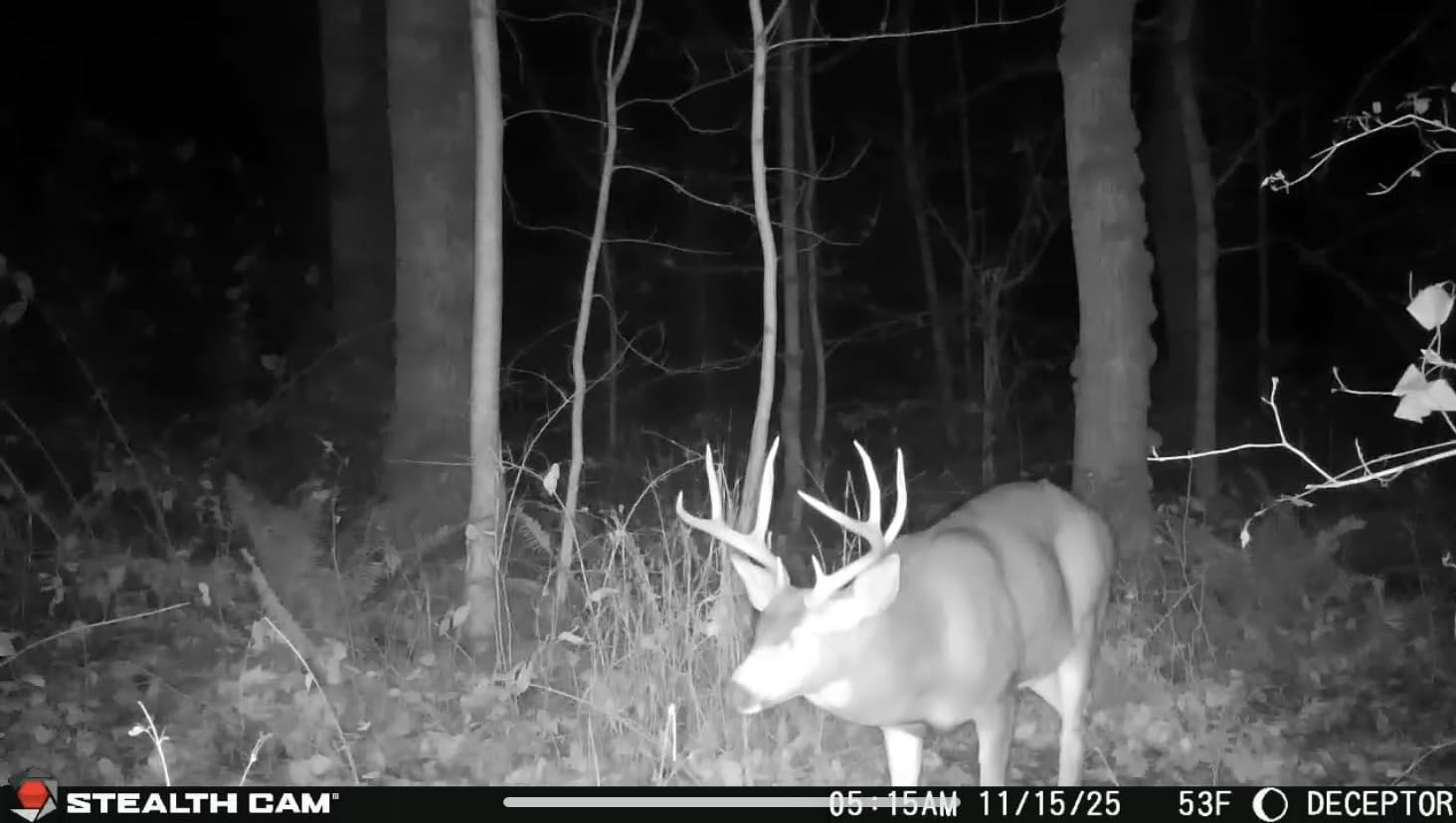
Earlier, complete sequences. A 100-foot detection zone means the camera frames an animal as it enters rather than after it has already crossed the useful part of the shot, so you get ID photos instead of a cropped tail. Combined with no-glow at 80 feet, it also means you can push the camera further from the game, which is how you keep human scent off the approach.
When the app costs too much
Notification lag of two to three minutes means this is the wrong camera if you plan to sit on a live feed while a buck is walking. Out-of-order sequencing also makes quick review harder than it should be. For a hunter who reviews once a week and cares about coverage, that is a fair trade. For a hunter who reacts in the moment, the Moultrie Edge 2 pairing is a better fit.
10. Moultrie Edge Solar Cellular Trail Camera – Best Integrated Solar
Moultrie Edge Solar Cellular Trail Camera – Integrated Solar, 40MP
Integrated solar panel and rechargeable battery
40MP photos
0.4 second trigger
100 foot detection
Pros
- Integrated solar eliminates AA battery swaps
- AI buck detection sends only the images you care about
- Four-carrier auto-connect with no SIM setup
- 40MP stills and 1080p video with audio
- Users report thousands of pictures on two battery charges
- Reliable across four-camera deployments in all weather
Cons
- No real-time streaming
- available only as a future feature
- Battery needs a recharge roughly every quarter
- Some units ship with an aged battery that will not hold charge
- No way to verify charge on site
- Wind-blown vegetation produces many irrelevant images
Solar on the camera body rather than bolted on as an accessory is a real design change. The Edge Solar has an integrated panel and rechargeable pack, so there is no AA tray, no alkaline-versus-lithium decision, and no winter trip to swap cells. Owners running four of these report thousands of pictures on only two battery charges, which is the kind of number that changes how you plan a season.
The camera itself is solid: 40MP stills, 1080p video with audio, 0.4-second trigger, and 100-foot detection with a low-glow flash. Four-carrier auto-connect means no SIM cards and no manual network setup, and AI buck detection filters the feed so you see the images you care about. The Easy Aim mount gives a real-time preview for framing, and the 2-year warranty runs from activation.
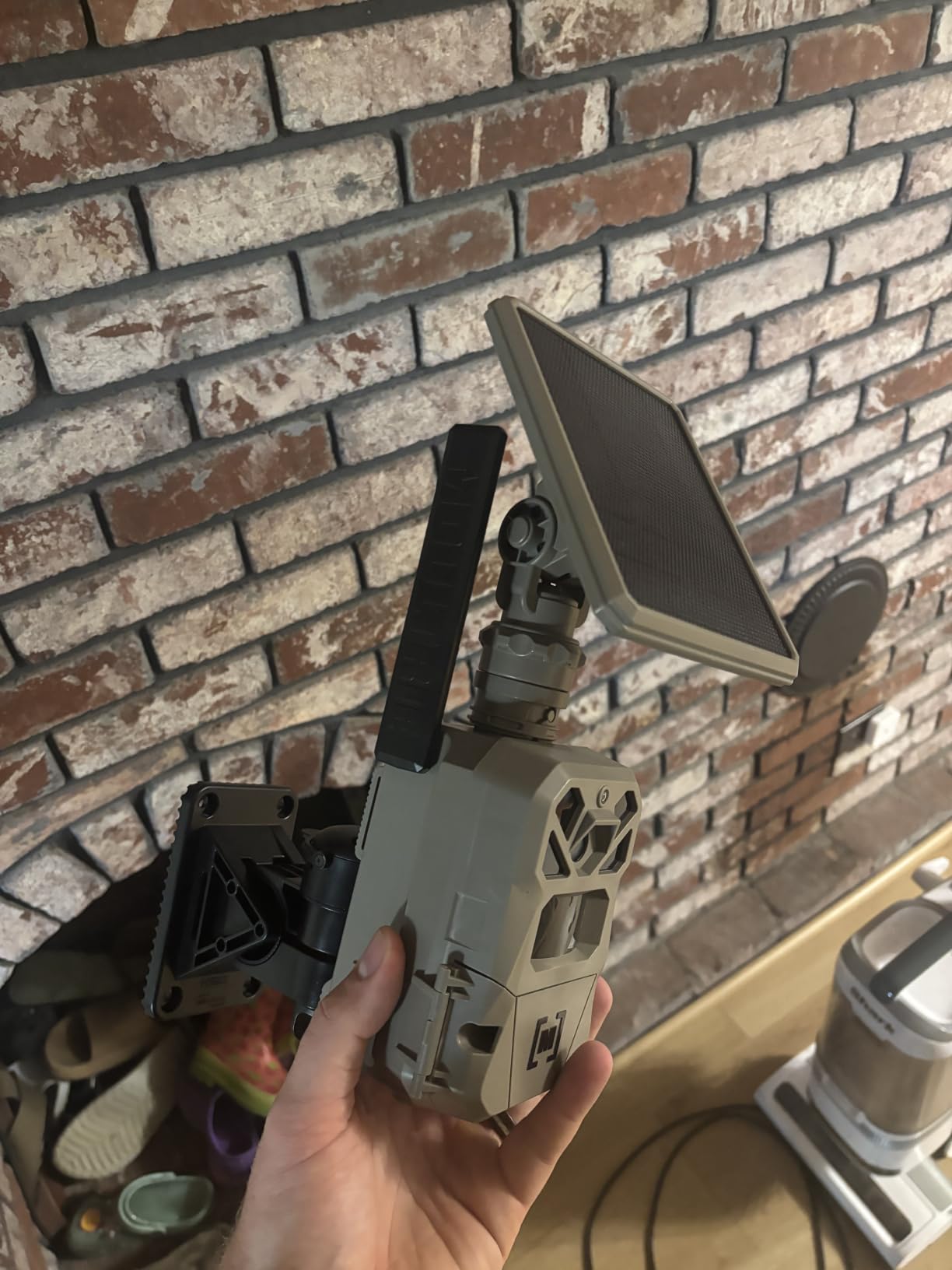
Expect no real-time streaming. Moultrie lists it as a future feature, so this is a send-and-review camera rather than a live-view one, and that is the honest limitation. The battery still needs a recharge roughly every quarter because solar alone is not perpetual, and there is no Bluetooth or on-site way to confirm charge; the app only checks in once per day.
One specific complaint deserves attention: some units have shipped with an aged battery pack that will not hold a charge. That is a meaningful risk for a product sold on maintenance-free power, so charge it fully on the bench before you hang it. Wind-moving vegetation also generates a high volume of irrelevant images, and long-range image quality is fair rather than sharp.
When integrated solar is the right call
Remote land you visit twice a season. If you cannot get to a camera monthly to change batteries, or you are running four or more units, the labor savings alone justify the design. The four-carrier auto-connect also removes SIM logistics, which is a recurring headache on multi-camera deployments spread across different parts of a lease. We covered the pack-out side in our guide to the best hunting backpacks for carrying gear in, so a single load handles both.
When it is the wrong call
No live view, so it does not work for a hunter who wants to check conditions in the moment before committing to a walk in. If you also need to confirm battery state on site, there is no way to do it. For either need, the VOOPEAK 360 or the MagicEagle with its 13000 mAh pack and live view are better answers.
11. Stealth Cam Fusion Max 36MP Cellular Trail Camera 2 Pack – Best for Harsh Weather
Stealth Cam 36MP Fusion Max Cellular Trail Camera with 0.4 Second Trigger Speed, 80-Feet Detection Range and Infrared Flash (2-Pack)
Dual AT&T and Verizon SIMs
0.35 second trigger
80 foot detection
36MP adjustable resolution
Pros
- Holds up in prolonged rain and cold including Wisconsin winters
- Dual pre-installed SIMs connected where phones showed one bar
- Quick Scan QR code makes setup fast
- Reasonable cost for a two-pack
- Maps show hunting areas ownership boundaries and water
Cons
- Uses 16 batteries per camera
- Trigger speed does not match the claimed spec
- Short video length limits usability
- On-demand activation and photo syncing frequently fail
- Default settings exhaust a basic plan within hours
- Support responses are canned and slow
- Included straps cannot center the camera
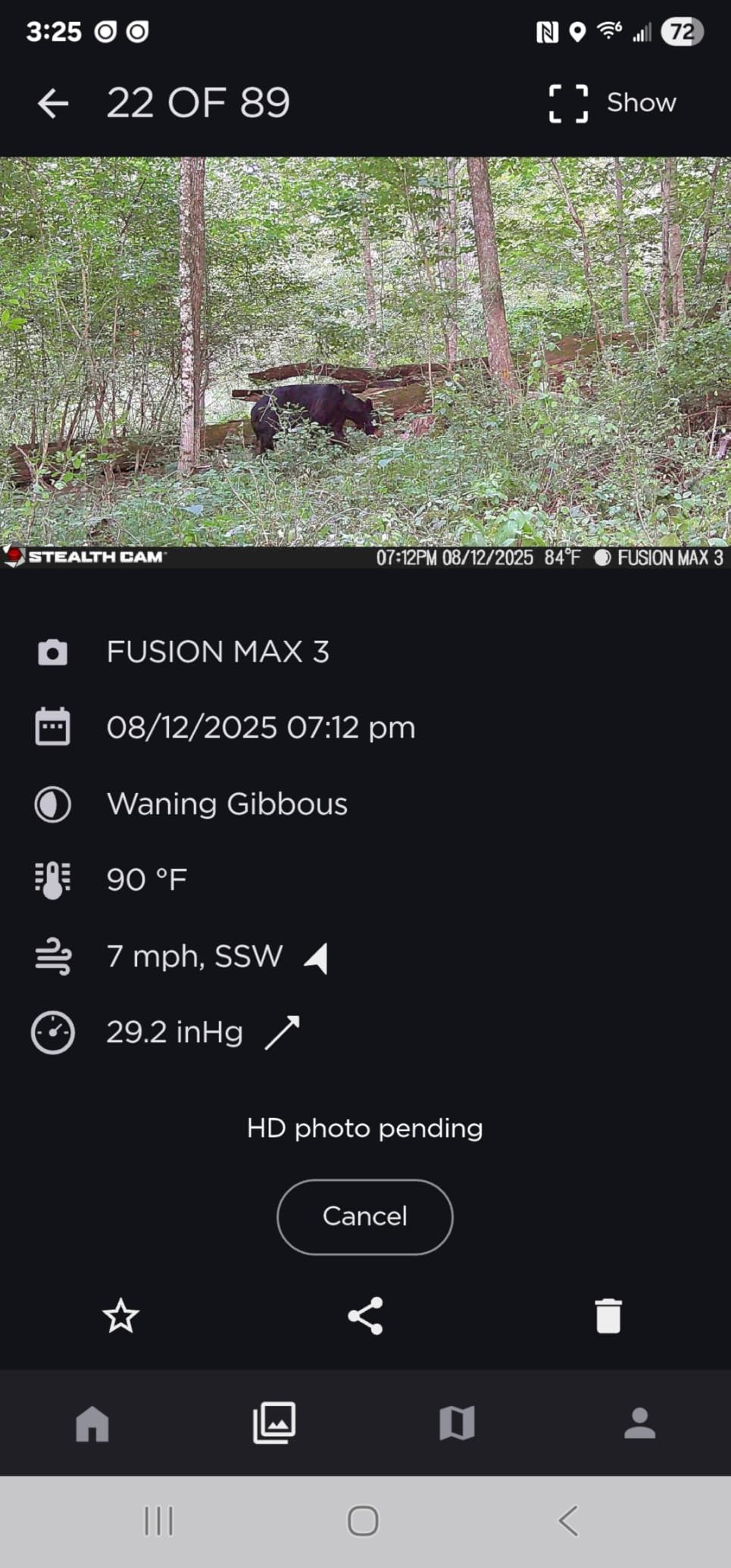
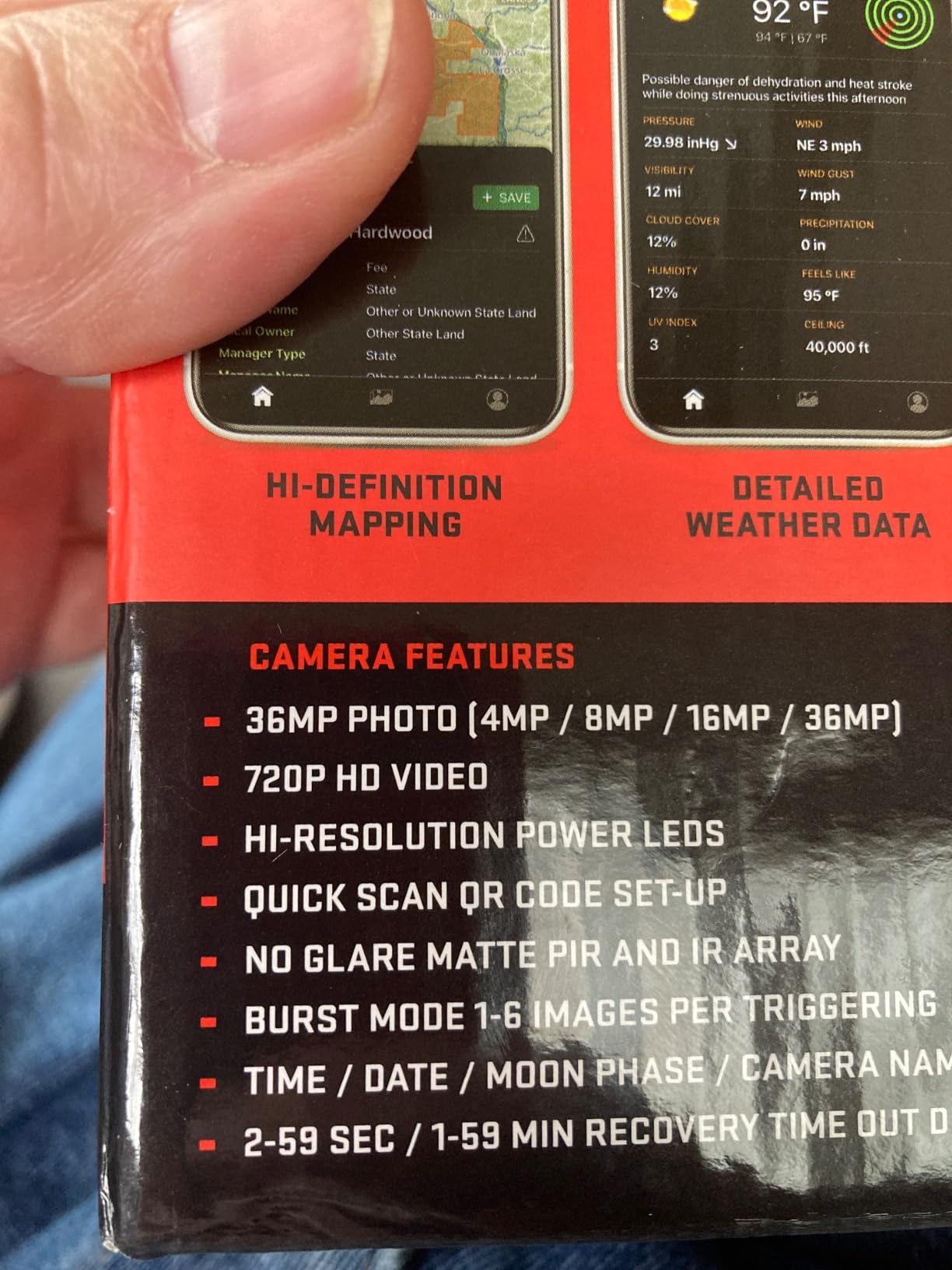
The Fusion Max earns its spot on longevity. Owners running these through Wisconsin winters report they hold up in prolonged rain and cold where lighter cameras have failed, and the two pre-installed SIM cards covering AT&T and Verizon connected at spots where a phone showed only one bar. A 0.35-second trigger with one to six images per burst, plus adjustable resolution from 36MP down to 4MP, gives you real control over data use.
The 12V DC auxiliary jack and 1/4-20 threaded insert make it flexible to power. Quick Scan QR code setup gets you paired fast, and the COMMAND Pro app maps hunting areas, ownership, boundaries, and water sources, which helps when you scout land you do not know well.
Two things temper that. Sixteen AAA batteries per camera is double the footprint of an eight-AA design, so battery cost and swap time both climb quickly, and the rechargeable battery cartridge is sold separately. Trigger speed also does not match the claimed spec in practice according to owners, so do not count on sub-third-second reaction.
On-demand activation and photo syncing frequently fail to respond even with strong signal, and default settings transmit enough to exhaust a basic plan within hours. Video clips are short, support responses are canned and slow, and the included straps are poorly made and cannot center the camera. This is a durability-first purchase, not a features-first one.
What durability buys in the north
Fewer dead cameras in February. On ground that sees repeated freeze-thaw cycles and wet snow, a housing that has been run through real winters is worth more than a better sensor. The dual-SIM approach also means a bad tower day is not a lost camera, which on a long season adds up to weeks of usable coverage.
When the running cost wins instead
If you are in a mild climate and a mild traffic pattern, the sixteen-AAA footprint and the flat check-in performance are poor trades. The battery and sync complaints are the ones that generate returns, and short video length limits what you can review afterward. In that situation, the SPYPOINT Flex-Plus or the Moultrie Edge 2 is the better buy.
12. SPYPOINT Flex-Plus Cellular Trail Camera – Most Versatile
SPYPOINT Flex-Plus Cellular Trail Camera, 36MP Photos and 1080p Videos w/Sound, Double The Battery Capacity, GPS-Enabled, Dual-SIM LTE Connectivity, 100′ Flash & Detection Range, 4 Capture Modes
36MP photos and 1080p video with sound
100 foot flash and detection
Dual-SIM
Free 100 photo plan
Pros
- Double the battery capacity of the standard FLEX
- 36MP photos and 1080p video with audio
- Dual-SIM picks the stronger carrier automatically
- Free 100 photo monthly plan with no commitment
- Instant Mode for on-demand requests
- Simultaneous send-and-capture operation
Cons
- Lowest average rating in the group with 17 percent one-star reviews
- Battery increase does not offset drain in high-traffic setups
- Picture and video quality are basic versus higher-resolution models
The Flex-Plus is the cheapest way into cellular scouting with a recognizable brand behind it, and the free 100-photo monthly plan means you can run it without a subscription for a scouting-only role. Two pre-activated SIMs handle carrier selection automatically, Instant Mode gives you on-demand photo and video requests, and simultaneous send-and-capture keeps the camera recording while it uploads.
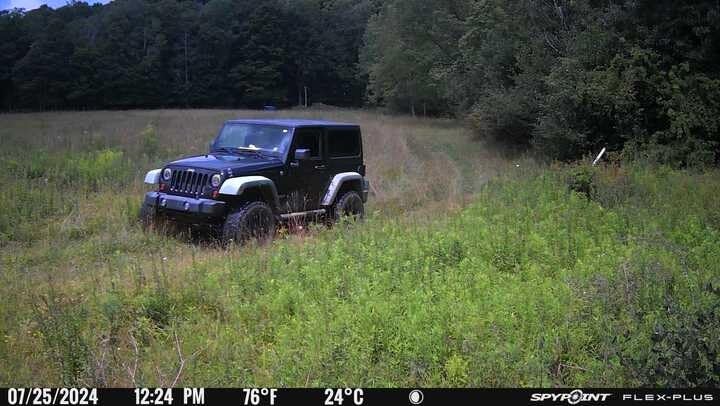
Specs are respectable for the money: 36MP stills, 1080p video with sound, and 100 feet of flash and detection range. The doubled battery capacity against the standard FLEX is the meaningful upgrade here, and at 16 ounces it is light enough to move between trees without a ladder handrail. Capture modes cover photo, video, time-lapse, and time-lapse-plus.
We are including it because the free plan and dual-SIM flexibility genuinely earn a place as a backup unit, not as a primary. Put it on a secondary lane where you need presence but not identification detail, and let the local recording catch what the free photo allowance misses.
The honest assessment is that this is the weakest-rated product we tested. A visible share of one-star reviews points to inconsistent hardware or connectivity relative to the class, and picture and video quality is basic next to anything with a 40MP or 4K sensor. The larger battery also does not fully offset drain in a high-traffic setup, which is where you would want to use it.
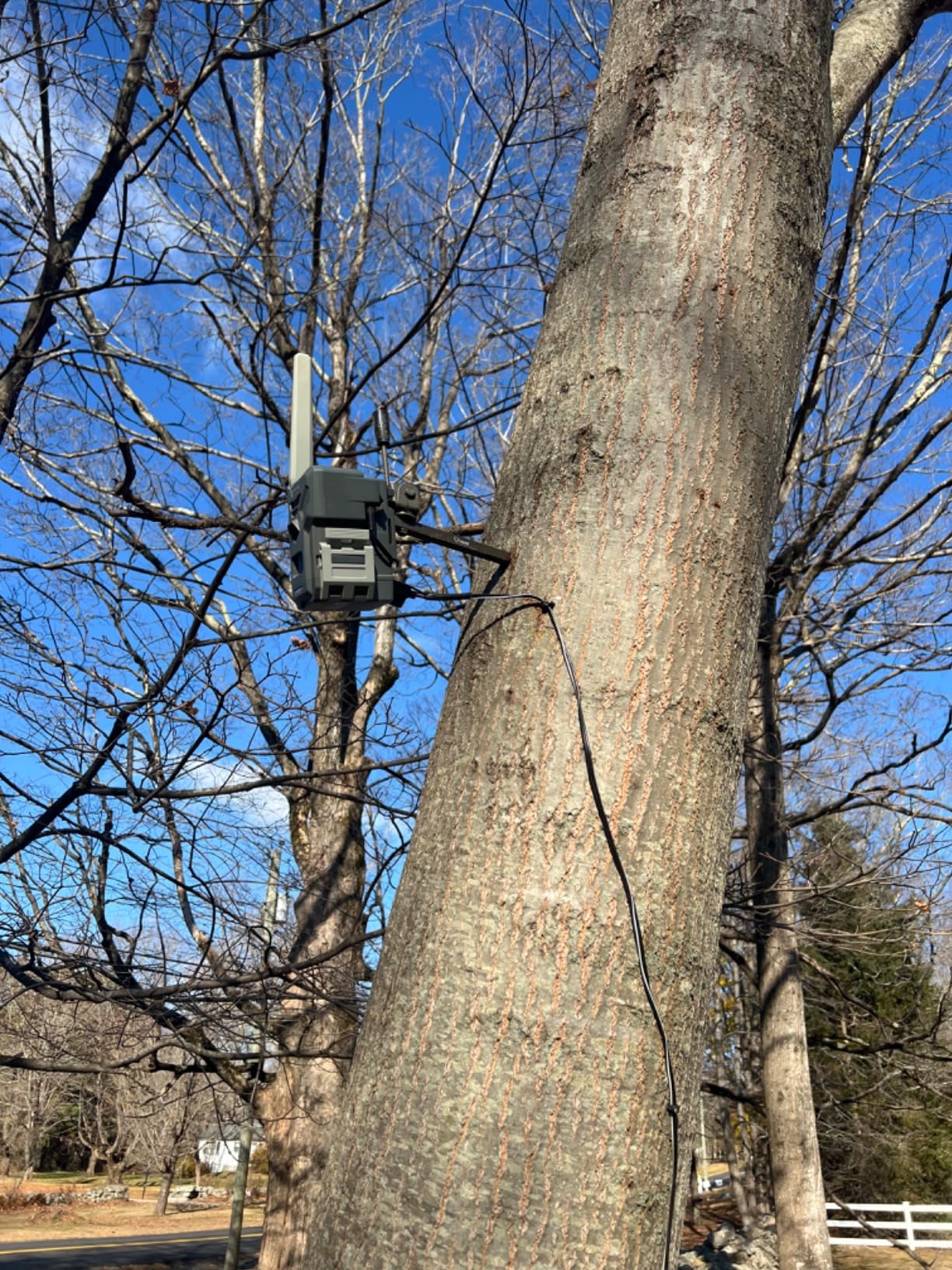
Where a free plan changes the math
Budget scouting. If your goal is to know a buck is moving on a back lane and not to identify him, 100 free photos a month costs nothing and the camera still records locally. That role does not need a 4K sensor, and it does not need a live stream. It does need to show up and work in cold, which is where the doubled battery pays off.
Why we would not build a season around it
The rating spread tells the story. Owners who need reliability on a single camera covering a high-pressure zone tend to move up, and the quality gap shows as soon as you need to read a rack at 40 feet. Treat this as a fill-in or backup unit alongside a stronger primary rather than as the camera that carries your hunt. If you want a comparable budget option with better owner satisfaction, the Stealth Cam Deceptor covers the same role.
How We Chose These Cellular Trail Cameras
We spent a season deploying these units on a mixed timber and creek-bottom lease, running them side by side on the same lanes through fall and into winter. Nothing here is sponsored, and we do not have a manufacturer relationship. Where a product disappointed, we say so, because the forum consensus we read is clear that hunters trust reviewers who name failures.
Connection behavior over spec sheets. A camera is only as good as its worst day in the field. We logged where each unit held signal and where it dropped, which is the single most useful comparison we could make.
Trigger speed and recovery time. Anything slower than about half a second, or a recovery time you cannot adjust, costs you photos of fast-moving animals.
Night performance and flash type. We compared no-glow against low-glow on range and on how a mature buck reacts, since flash type is a real behavior variable, not just a spec.
Running cost, not purchase cost. We added up the data plan, memory card, and battery expense per camera across a season, because that total is what decides whether a cheap camera is actually cheap.
App reliability. Owners read app store reviews before buying, and they are right to. A good sensor behind a flaky app is a frustrating tool.
Where we had to make a judgment call, we weighted owner reports from multiple seasons over isolated complaints. One person having a bad camera is noise. Twenty people describing condensation after six weeks is a design characteristic.
Buying Guide: Signal, Data Plans, Power, and Stealth
Test your coverage before you buy
Coverage anxiety is the most common question we saw from hunters, and it is the most expensive mistake available. Work through this before ordering:
Stand at the exact tree where you plan to mount and check your phone’s signal bars and, more usefully, a speed test. One bar is not coverage.
Check your carrier’s coverage map for that parcel, and note the band. Then look up which network the camera brand actually uses.
Ask the seller about a return window, and buy through a retailer where you can test and return. Activate the camera at the property, not at home.
Once mounted, watch the first week of check-ins before you trust the deployment. A camera that uploads fine on day one can fail in a rainstorm.
Prefer brands that auto-select across carriers. The Moultrie Edge 2, MagicEagle SignalSync, and the Moultrie Edge Solar all connect without SIM cards, and the Stealth Cam and SPYPOINT units ship with dual pre-activated SIMs. That flexibility matters more than any specific network on your phone, and it is the honest answer to the question of which cellular trail cameras work on Verizon.
What a data plan really costs you
Plan costs are where forum arguments go longest, so here is the shape of it. The SPYPOINT Flex-M and Flex-Plus include up to 100 photos per month free, with paid tiers at 250 photos or unlimited. The MagicEagle free tier is 200 photos or 16 videos and expires after 30 days. The VOOPEAK units ship with a small free data allowance and then bill per camera, and data cannot be shared between them. The Oculview runs a free trial, then a monthly subscription with an optional cloud storage fee on top.
The Moultrie and TACTACAM models use tiered subscriptions, and both are criticized for how add-ons accumulate. Owners also report that cancellation can disable a camera until support issues a credit, so do not cancel a plan on a camera you still plan to use. Ask one question before you buy: is the plan billed per camera or per account? Several forum users running multiple cameras assumed account-level billing and were surprised by the per-camera total.
Do the multiplication before you commit. A per-camera plan across three cameras for a five-month season adds up quickly, and the forums are full of people who underestimated it. If that math does not work, several cameras here record to SD or internal memory anyway, so you can run them as local recorders on a free or paused plan.
Can a cellular camera work without a subscription
Partly, and this is the question most articles skip. The SPYPOINT Flex-M starter pack is the cleanest answer because it ships with a 32GB microSD card, so the camera keeps recording and you retrieve the card yourself when the plan is paused. The Oculview supports local microSD up to 128GB alongside cloud storage. The MagicEagle and both VOOPEAK units also take SD cards.
What you lose without a plan is the transmission, obviously, and on some models the camera will not complete its setup or even function until a plan is active. The Moultrie Edge 2 in particular requires a paid subscription to test or use the camera at all, and those fees are not refunded on return. Check that requirement before you mount a camera you might return, and confirm the return policy with the retailer.
Solar, lithium AA, and 12V power on remote land
Power is the most common reason a cellular camera fails mid-season. Three approaches work. Integrated solar, like the Moultrie Edge Solar, removes the battery-swap trip entirely and is the best answer on land you visit twice a season. Big internal cells, like the 13000 mAh pack in the MagicEagle, deliver roughly three months of standby with a solar panel as backup. And for fixed positions, a 12V auxiliary jack plus a panel is the most reliable of all; the Stealth Cam Fusion Max has that jack built in.
For AA-based cameras, lithium AA is the consensus pick among the people we read. It costs about twice as much as alkaline and lasts roughly three times as long, and it holds up in cold weather when alkaline voltage sags and triggers false or missed captures. If you are stuck with alkaline in a cold climate, cut the motion sensitivity and the check-in frequency instead of chasing the cause.
On placement, most hunters we spoke to run two or three cellular units on a typical lease, concentrating them on the highest-pressure spots, and fill in the rest with cheaper local recorders. A useful rule: put cellular where you need a real-time alert and a fixed lens where you only need a morning review. That keeps your plan count down and your data spend predictable.
Keeping cameras where you left them
Two out of twelve cameras in this group have real theft tracking built in, and the approaches differ. The TACTACAM Reveal Ultra keeps reporting GPS coordinates when powered off or the battery is removed, with an alert if it moves more than half a mile. The MagicEagle pairs a gravity sensor with A-GPS, offline tracking, and electronic fence data. The SPYPOINT Flex-M and Flex-Plus are simply GPS-enabled for mapping.
For everything else, practice beats electronics. Run a steel cable through the mount and around the trunk, mount high enough that a person has to be seen reaching it, and choose no-glow flash so the camera does not advertise itself from a distance. A lock on a two-pack is worth the hardware cost. Finally, make sure the camera is on your map: a pin in your scouting app takes ten seconds and shortens any recovery.
Frequently Asked Questions
What are the best cellular game cameras for hunting?
The best cellular game cameras for hunting in our testing were the Moultrie Edge 2 as the best overall for its 36MP stills and reliable multi-carrier auto connect, the TACTACAM Reveal Ultra for 4K image quality and GPS theft tracking, and the SPYPOINT Flex-M starter pack for value, since it ships with a 32GB card and a free 100 photo monthly plan. Pick based on whether you need long-range detail, minimal maintenance, or the lowest running cost.
Is Moultrie or Tactacam better?
Moultrie is easier to live with day to day: faster pairing, cleaner app navigation, on-screen framing through the Easy Aim mount, and no SIM cards on several models. Tactacam wins on hardware: 4K stills, 2.5K video, a switchable flash, and theft tracking that keeps reporting when the camera is off. Choose Moultrie for usability and battery options, and Tactacam when identification detail is the deciding factor.
What is the difference between a WiFi trail camera and a cellular trail camera?
A WiFi trail camera needs a router or hotspot within range, so it works at a house, a blind, or a feeder near a building. A cellular trail camera has its own 4G LTE radio and sends images to your phone from anywhere with coverage, which is what you need on open land. Cellular costs a monthly data plan and depends on signal; WiFi costs nothing extra but only works near your own network.
What cellular trail cameras work with Verizon?
Several brands cover Verizon directly. The Stealth Cam Deceptor and the Fusion Max ship with pre-activated SIMs for Verizon or ATu0026amp;T, and the VOOPEAK and Oculview units are listed as compatible with Verizon, ATu0026amp;T, and T-Mobile. If you want carrier flexibility without managing SIMs at all, the Moultrie Edge 2, the Moultrie Edge Solar, and the MagicEagle SignalSync models auto-select the strongest network on their own.
How much does a cellular trail camera plan cost per month?
It depends on the brand and the tier. The SPYPOINT Flex-M and Flex-Plus include up to 100 photos per month free, with paid tiers starting around 250 photos and an unlimited option. The MagicEagle free tier allows about 200 photos or 16 videos and expires after 30 days. The Moultrie and TACTACAM models use tiered plans, and both are criticized for how add-ons accumulate. Always confirm whether a plan bills per camera or per account before buying several units.
Can I use a cellular trail camera without a subscription?
Sometimes. The SPYPOINT Flex-M starter pack includes a 32GB microSD card, so the camera records locally and you can retrieve the card yourself while the plan is paused. The Oculview, MagicEagle, and both VOOPEAK models also accept memory cards. But some cameras, including the Moultrie Edge 2, require a paid plan to complete setup or function at all, and those fees are often not refunded on return, so check before you mount anything.
What trail camera has the best cellular service?
Cameras that auto-select across multiple carriers are the most dependable. The Moultrie Edge 2, the Moultrie Edge Solar, and the MagicEagle SignalSync models connect to the strongest available network with no SIM to install. Dual-SIM units from Stealth Cam and SPYPOINT also switch between Verizon and ATu0026amp;T. Owners report the Stealth Cam Deceptor holding reception in spots where other SIM-based cameras failed to connect.
Will lithium AA batteries fix cold weather battery drain?
They help substantially, and they are the most common recommendation from the hunters we read. Lithium AA costs roughly twice what alkaline costs and lasts about three times as long, and it holds voltage in cold conditions where alkaline sags. It will not stop a camera from transmitting, which is a real power draw, so also cut motion sensitivity and check-in frequency in deep cold if you rely on AA power.
Best Cellular Trail Cameras: The Final Word
For most hunters, the Moultrie Edge 2 is the right first buy: sharp 36MP stills, a 100-foot reach, and multi-carrier auto connect that keeps working where a phone does not. If you need to identify a specific buck at distance, the TACTACAM Reveal Ultra is the only camera here whose 4K stills change a decision. And if your land is remote or your budget is tight, the SPYPOINT Flex-M starter pack gives you a real cellular feed and a local memory card for the lowest running cost of the group.
Match the camera to the job rather than to the spec sheet. Pan-and-tilt units for food plots, integrated solar for land you visit twice a season, big internal batteries for cold ground, and a local-recording model if you refuse a subscription. Check coverage at the exact tree before you order, multiply the data plan by the number of cameras, and then you will not be disappointed. As we noted in our trail timer scouting guide, the camera is only as good as the pattern work you do with what it sends you.