

Short answer: for most golfers sitting above 20 handicap, the TaylorMade SIM2 Max is the best golf fairway wood for high handicappers in 2026, because its 190cc head and low, deep center of gravity keep a bad strike in the air and on line instead of skidding low and left. If you cannot launch a 15 degree 3 wood at all, skip down the loft ladder to a 5 wood or 7 wood, and both of those are covered below.
I have spent more time than I would like to admit watching high handicappers fight a 3 wood, and the pattern is almost always the same. The ball leaves the ground at 20 degrees, skids through the fairway, and the next shot is a wedge from a lie nobody wanted. That is not a technique failure. It is a launch window problem, and it is fixable with the right head size, loft and shaft weight.
Over the past season our team compared ten fairway woods across the full price range, from a sub-hundred-dollar budget model to a 200cc premium adjustable head, and read through several thousand owner reviews. We judged every club on three things a high handicapper actually feels: how easily it gets the ball airborne, how far the ball goes when struck low on the face, and how far it goes when you catch it near the toe. Everything else, like tour-level ball striking workability, came last.
If you are still building the rest of your bag, our [guide to the best golf drivers for beginners](https://austineubanks.com/best-golf-drivers-for-beginners/) and our [verified drivers for distance](https://austineubanks.com/best-golf-drivers-for-distance/) cover the other end of the spectrum, and our [mid-handicap iron picks](https://austineubanks.com/best-golf-irons-for-mid-handicappers/) sort out the middle of the bag.
Table of Contents
Top 3 Picks for High Handicappers (September 2026)

TaylorMade SIM2 Max Fairway Wood
- 190cc multi-material head
- Low and deep CG
- Thru-Slot Speed Pocket for low strikes
- C300 Twist Face for straighter misses

Cleveland Launcher Halo XL 5 Wood
- 18 degree loft
- GlideRail sole rails
- Low and deep weighting profile
- MainFrame XL flexing face
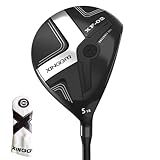
XINGGM XF02 High-MOI Fairway Wood
- Oversized high-MOI head
- Low CG sole for high launch
- Available in 3
- 5 and 7 wood
- X-shaped stainless steel design
Best Golf Fairway Woods for High Handicappers in 2026 At a Glance
Every club below earns its place for a different handicap problem. The loft column matters more than any other spec here, so read that first.
| Product | Specifications | Action |
|---|---|---|
| TaylorMade SIM2 Max Fairway Wood |
|
Check Latest Price |
| Cleveland Launcher Halo XL 5 Wood |
|
Check Latest Price |
 MAZEL Z35 7 Wood MAZEL Z35 7 Wood |
|
Check Latest Price |
 Cleveland Halo XL Lite 3 Wood Cleveland Halo XL Lite 3 Wood |
|
Check Latest Price |
 TaylorMade Qi4D Max 7 Wood TaylorMade Qi4D Max 7 Wood |
|
Check Latest Price |
| XINGGM XF02 5 Wood |
|
Check Latest Price |
 iDrive Red Square 3/5/7 Wood Set iDrive Red Square 3/5/7 Wood Set |
|
Check Latest Price |
 Orlimar Escape 3 Wood Orlimar Escape 3 Wood |
|
Check Latest Price |
 Orlimar TriMetal 7 Wood Orlimar TriMetal 7 Wood |
|
Check Latest Price |
 Powerbilt TPS Blackout Max 5 Wood Powerbilt TPS Blackout Max 5 Wood |
|
Check Latest Price |
1. TaylorMade SIM2 Max Fairway Wood: Best Overall for High Handicappers
TaylorMade Golf SIM 2 MAX STEEL FAIRWAY MENS RIGHT HAND GRAPHITE REGULAR 3 WOOD , BLACK/LIGHT GREY
15 degree loft
190cc multi-material head
10.4 oz clubhead
Graphite shaft, regular flex
Pros
- Easy to launch with a high
- forgiving flight
- C300 Twist Face straightens toe and heel misses
- Thru-Slot Speed Pocket protects speed on low strikes
- Owners report 200 to 240 yard results for senior and beginner golfers
Cons
- A small number of buyers found it hard to adapt to from an older fairway wood
- Regular flex may feel heavy for a genuinely slow swing
This is the club I hand to a friend who plays off the edge of a bad lie and still hits it 230 yards. The SIM2 Max is not the longest wood here and it is not adjustable, but for a high handicapper it solves the right problem. The 190cc head is 10 percent larger than a standard fairway wood, and TaylorMade pushed that extra mass to the perimeter so toe and heel contact barely changes the direction of the shot.
What I notice most after a season with it is how rarely the ball ends up under the club. There is a V Steel sole design with a slightly depressed heel and toe, which reduces the surface area dragging through the grass. When a high handicapper gets a little heavy-handed coming down, the head stays flatter through the turf and the face stays closer to square at impact.
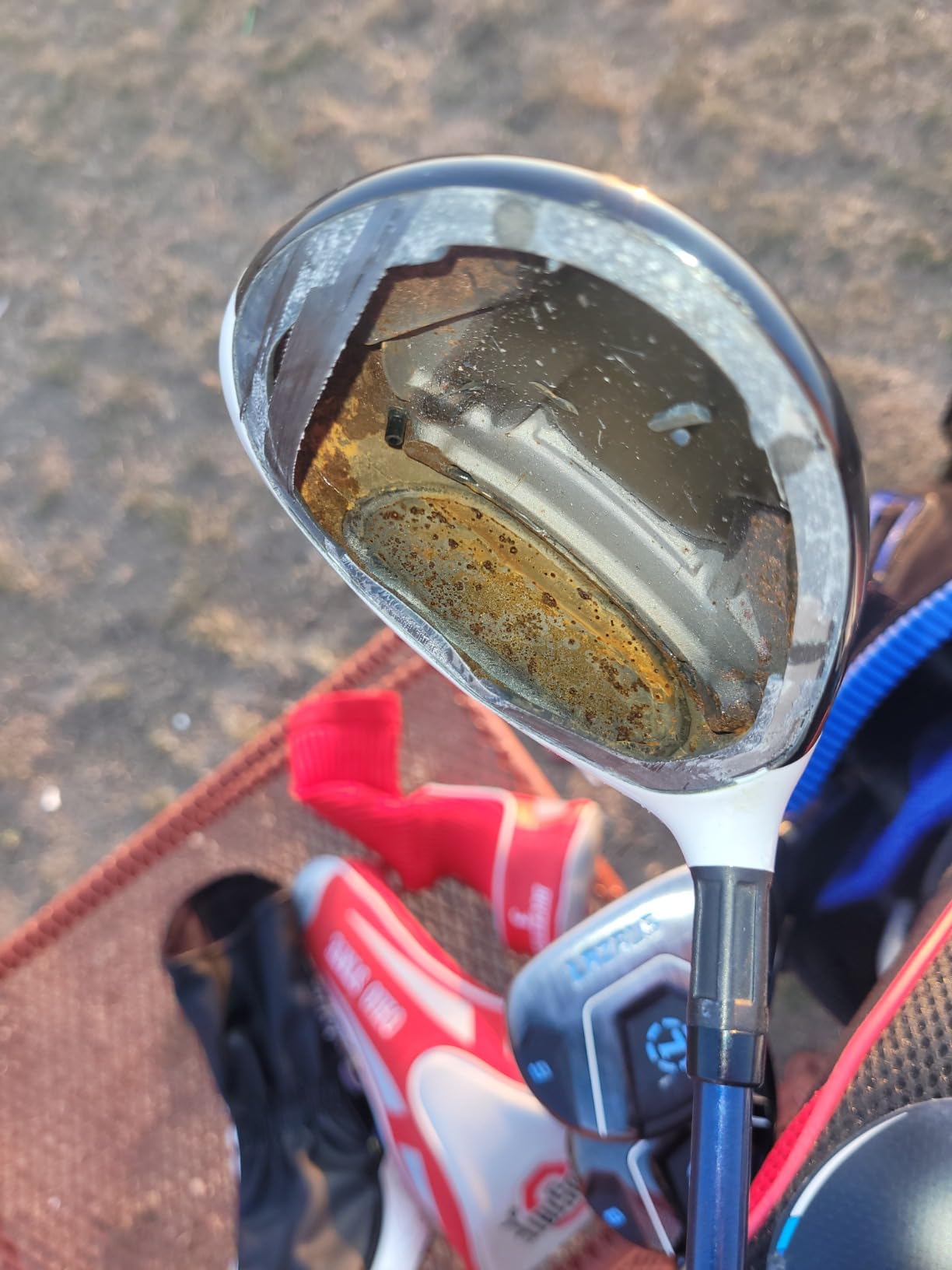
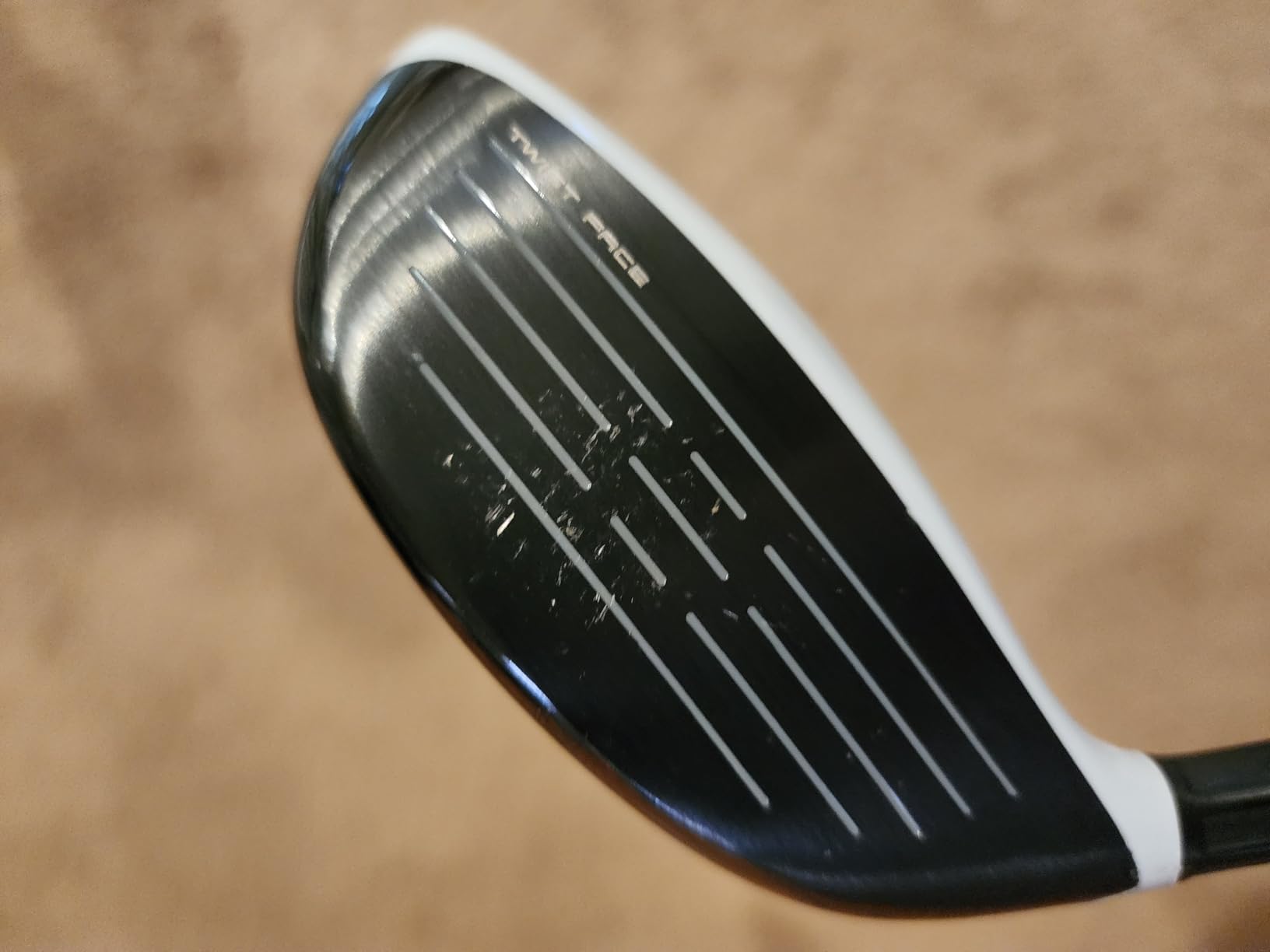
The other piece of technology doing real work here is the C300 steel Twist Face. A Twist Face is a face that is slightly thinner at the top and bottom corners than in the strike zone, and the company reshapes it around the mishit patterns of its own player base. The practical effect for you is that a ball caught on the toe or high on the face leaves on a straighter line than a symmetrical face would send it.
The Thru-Slot Speed Pocket is the part that matters most on thin strikes. It is a channel cut into the back of the head that allows the face to flex more than a solid back would allow, which preserves ball speed when you hit the ball low on the face. Low-face contact is the single biggest reason a high handicapper sees a 3 wood fly nowhere, so this is the feature I would point to if you only remember one thing.
Who this wood suits
It suits golfers between roughly 15 and 30 handicap who can get some clubhead speed but who lose control of long shots. The 15 degree loft is a genuine 3 wood, so it fills the longest gap in the bag, and owners in the reviews repeatedly describe using it off the tee on short par 4s and as a mini driver when their own driver is unreliable.
If your miss is a slice, this is also one of the better options in the lineup. The low, deep center of gravity does not fight curvature as hard as a low-profile tour head would, and Twist Face is doing some of the work on a right-to-left miss for a right-handed golfer.
Who should pass on it
Pass if your swing speed is genuinely slow. The regular flex graphite shaft is a full-weight build, and golfers with very low speed often describe a heavy shaft as the main reason they cannot get the ball up, no matter how forgiving the head is. In that situation the Cleveland Halo XL Lite, further down, is built for the same reason.
Also pass if you have never been able to launch a 15 degree club off the deck. Buying a more forgiving 15 degree wood when your problem is loft rarely fixes the problem. Look at the 5 and 7 wood sections instead.
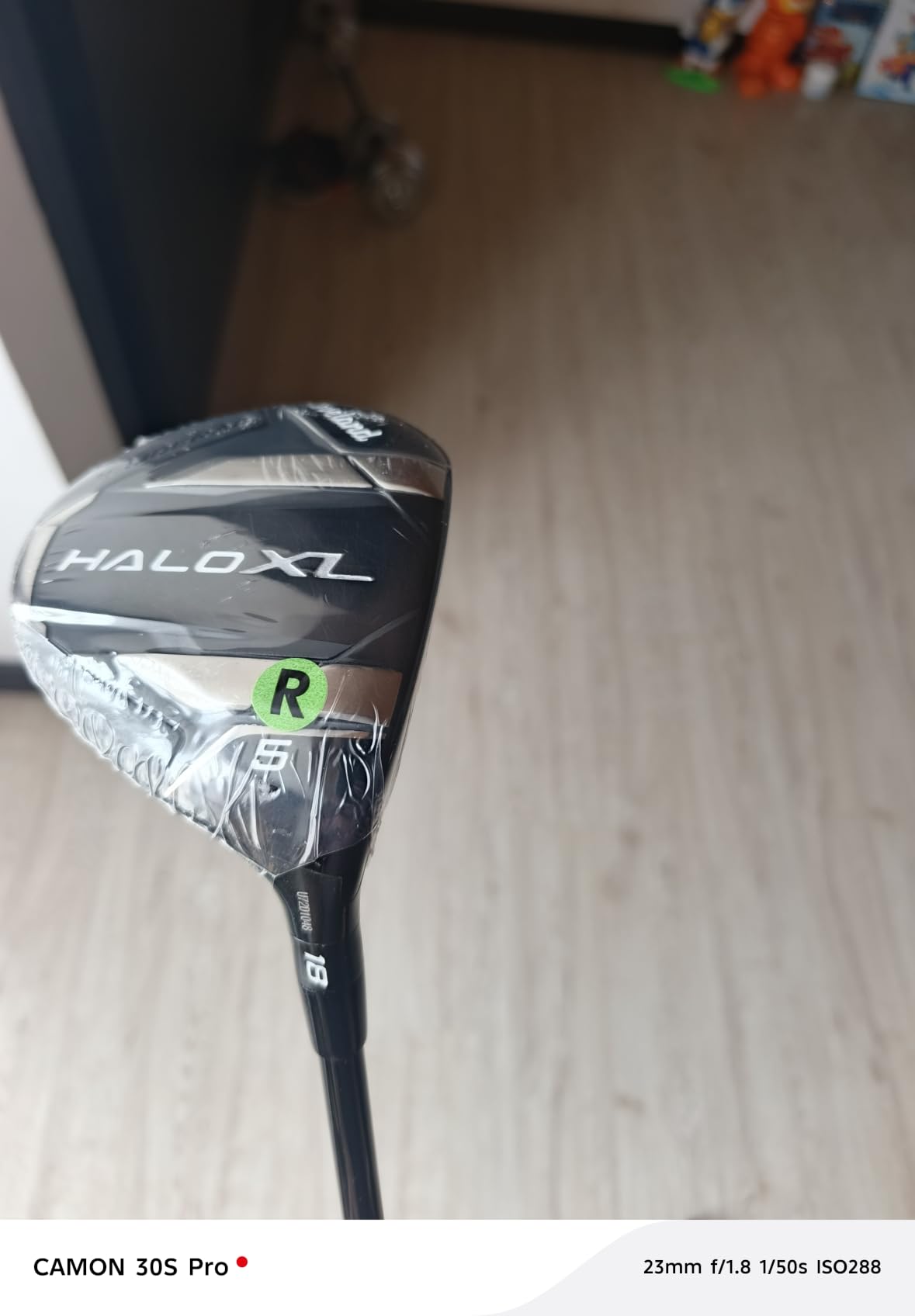
2. Cleveland Launcher Halo XL 5 Wood: Best Value Pick for a 18 Degree Launch
Cleveland Golf Launcher Halo XL Fairway Wood, Graphite, Senior, 5 Wood, Right Hand
18 degree loft
5 wood configuration
Cavity back head
12.8 oz clubhead
Pros
- Very forgiving and easy to launch
- High soft-landing flight that holds greens
- Owners report it matching premium 3 woods
- GlideRail soles keep the face square through turf
Cons
- Some buyers report inconsistency from thick or rough lies
- Only a 1 year manufacturer warranty
This is the pick I keep coming back to for golfers in the high 20s who have a 3 wood in the bag they have never once hit off the deck. An 18 degree 5 wood starts higher, has a shorter shaft, and swings faster, which is three separate reasons the same swing that produces a weak 3 wood shot produces a usable 5 wood shot.
The XL head packs more moment of inertia than the previous generation and keeps the weight low and deep. Owners describe the flight as high and steep, landing softly on greens, and several reviews note that the club goes as far as premium 3 woods while being easier to square up. One reviewer playing off an 18 handicap reported 236 yards with it, which is a good example of what a well-struck 5 wood can do.
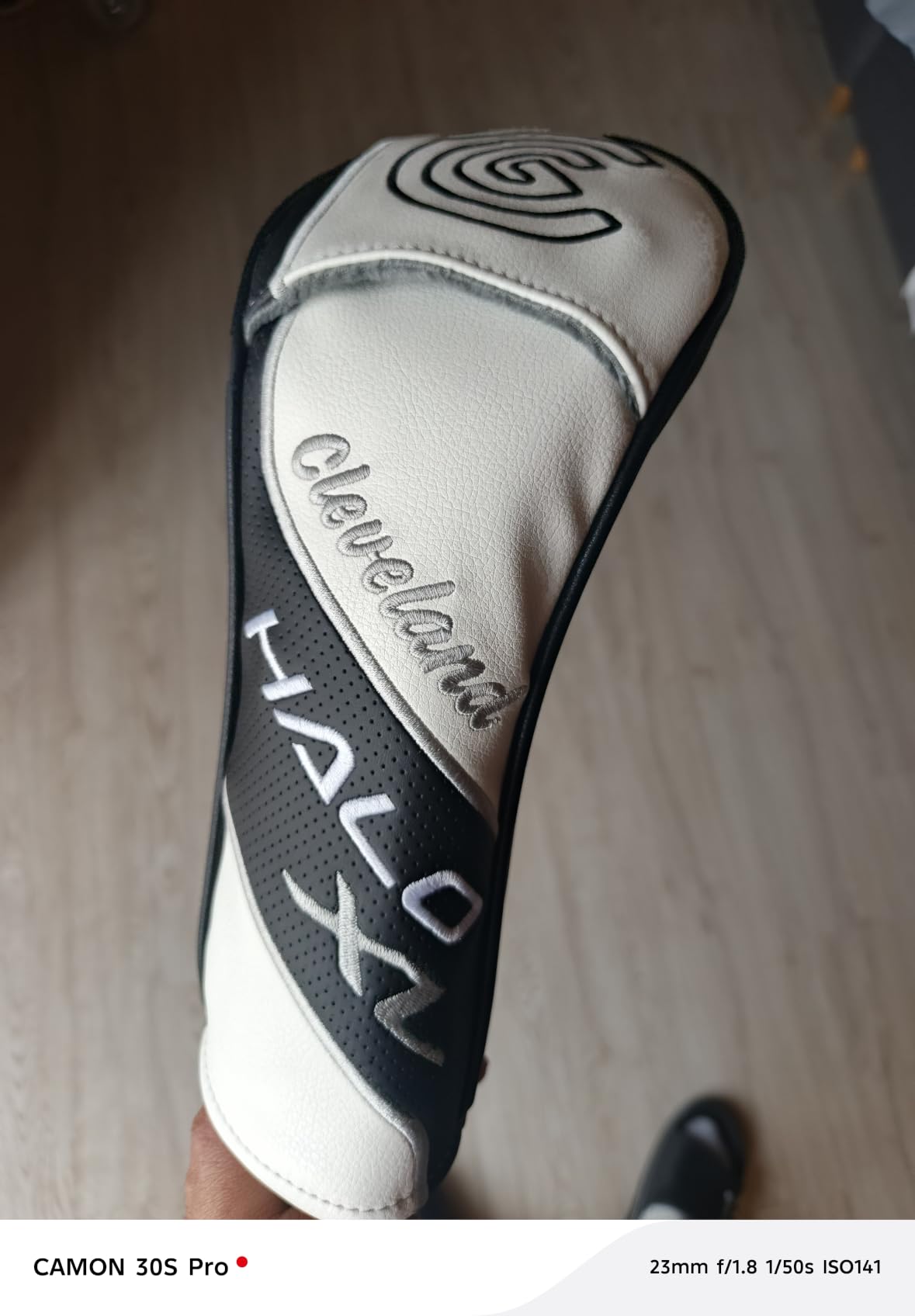
GlideRail Technology is the piece I would explain to a beginner. Two rails run along the sole, and because the contact area is a narrow ridge rather than a broad flat sole, the club resists digging into the turf as it passes through. A club that digs rotates the face closed and pushes the ball left, and that is a miss high handicappers cannot afford on a long shot.
The MainFrame XL face uses a variable thickness pattern that is thin in the strike zone and thicker away from it, which increases flex at impact. Combined with the Rebound Frame, which uses two alternating flex zones working in sync, the goal is to keep ball speed on shots that are not perfectly centered.
Who this wood suits
It suits golfers whose 3 wood is a theoretical club. If your best 3 wood shots come from a perfect lie and nothing else, this is the swap. The shorter shaft is repeatedly cited in golf forums as the reason a 5 wood swings easier than a 3 wood, and that is a real mechanical effect rather than a preference.
It also suits a slicer who wants distance without giving up the top of the bag, because the low and deep weighting keeps the ball in the air on a partial swing. Several owners use it off the tee on short par 4s instead of reaching for a driver.
Who should pass on it
Pass if most of your play from the fairway comes out of thick grass. A small number of buyers report that the club is less consistent from rough and heavy lies than it is off a clean fairway shot. If your second shots come from the rough more often than from the fairway, a hybrid is usually the more honest answer.
Also pass if you already own a 5 wood you like. Duplicating a club in the same loft band adds a club without adding a shot, and a better use of the slot is a gap-filling 7 wood.
3. MAZEL Z35 7 Wood: Best Budget Way to Fill a Top-of-Bag Gap
MAZEL Z35 Mens Golf Fairway Woods 3/5,Right Handed (Graphite(Black,2024 Model), 7 Wood, Stiff, Right)
21 degree loft
7 wood configuration
Graphite shaft, stiff flex
Graphite and stainless steel construction
Pros
- High launch and low spin from a low sole profile
- Sold in 3
- 5 and 7 wood lofts
- Speed Channel face keeps speed on off-center hits
- Low entry cost for a complete gap set
Cons
- Only 2 months warranty coverage
- Rating spread is wide with a notable share of 1 star feedback
A 21 degree 7 wood is the most forgiving long club you can put in the bag, and that is why the recommendation comes up so often in high handicap discussions. A golfer in one r/golf thread who could not hit a 15 degree 3 wood to save their life switched to a 17 degree version and found it played like their 7 wood, about 15 yards shorter than the club they had been avoiding.
The MAZEL Z35 is a straightforward 7 wood with a low sole profile. The low center of gravity is the point: it means less spin, a higher start and a longer carry for a given clubhead speed, which is exactly what a slower swing needs to reach a green size worth putting at.
What I like about it for this audience is the option set. The same head is available at 3, 5 and 7 wood lofts, so a golfer who cannot get a 3 wood airborne can simply step up the ladder instead of buying a new model. The Speed Channel, an engineered trench around the face, keeps ball speed up across more of the face than a solid face would.
Who this wood suits
It suits golfers on a tight budget who need a second long club and do not want to spend premium money on it. A 7 wood at this level of specification is genuinely playable rather than a placeholder, and owners consistently report an easy, high-launching ball flight with stability on mishits.
It also suits a golfer whose problem is gapping rather than forgiveness. If the longest clubs in your bag all go roughly the same distance, a 21 degree 7 wood is the cheapest way to create a real step in the yardage ladder.
Who should pass on it
Pass if you care about how a club looks or sounds at address in a premium bag, or if you want long-term resale value. The two-month warranty is the shortest we found in this category, and that tells you a lot about the expected service life of the product.
The feedback is also more mixed than the average rating suggests. A meaningful share of one-star reviews means the club is a good fit for some golfers and a poor fit for others, so if you are particular about sound and feel, look at a model with a longer warranty.
4. Cleveland Halo XL Lite 3 Wood: Best for Slower Swing Speeds
Cleveland Golf Halo XL Lite Fairway Wood, Graphite, Senior, 3 Wood, Right Hand
3 wood with 1.5 degrees added loft
Senior flex graphite shaft
Mallet cavity back
Rubber grip, regular size
Pros
- Easiest fairway wood to launch for slower swing speeds
- Senior flex plus extra loft gets the ball up quickly
- High flight with soft vertical drop from rough
- Well priced within the Cleveland range
Cons
- Only a 1 year manufacturer warranty
- Not available with adjustable loft or weights
This is the club I recommend to golfers over 60, or to anyone whose driver speed is under roughly 80 mph. The Lite version of the Halo XL takes the same forgiving head and makes it lighter, and adds 1.5 degrees of loft. Sixteen and a half degrees of loft with a light shaft is a much easier combination to get airborne than a full-weight 15 degree 3 wood.
It shares the two technologies that make the standard Halo XL work for high handicappers. The MainFrame XL face flexes more at impact, and the GlideRail sole rails keep the face from rotating closed when the club passes through turf. For a senior hitting out of the rough, those two features are doing most of the work.
Owners describe the flight as high and easy to control, with dependable distance in the rough, and several reviews pair it with existing Cleveland iron sets without complaint. It is one of the few 3 woods we would actually recommend to a high handicapper rather than talking them up to a 5 wood.
Who this wood suits
It suits golfers with genuinely slow swing speeds, and it is one of the few 3 wood options in this roundup that does not ask the golfer to change clubs to fix the problem. If you want a 3 wood for a short par 4 but cannot get the standard version up, this is the version to look at.
It also suits a senior who plays from the rough. The combination of added loft, a lighter build and rails that resist turf drag all push in the same direction.
Who should pass on it
Pass if you want to fine-tune your bag. There is no loft sleeve and no movable weight, so if you need a 3 wood and a 5 wood and a 7 wood from the same family, you will be ordering three clubs separately.
Also pass if you already hit a 15 degree 3 wood reasonably well. Extra loft will cost you distance you did not need, and the honest answer for a mid-handicap player chasing length is a fixed-loft, lower-profile head instead.
5. TaylorMade Qi4D Max 7 Wood: Most Adjustable Pick for Progressive Bag Changes
TaylorMade Golf Qi4D Max Fairway 7 Wood Mens Right Hand Regular
21 degree loft
200cc multi-material head
4 degree loft sleeve and 8g weight
Mitsubishi REAX 55 FW graphite
Pros
- 200cc head is 17 percent larger than the Tour model
- Perimeter weighting and rearward CG for stability
- Loft sleeve and adjustable weight let you dial ball flight
- Premium sound owners describe as outstanding
Cons
- Some buyers prefer the feel of the older Qi35 series
- Newer platform takes time to get used to
This is the biggest head in the roundup at 200cc, and TaylorMade states it is 17 percent larger than the Tour model and 5 percent larger than the standard Max. A larger footprint with weight pushed to the perimeter means a longer effective sweet spot, and it is why this club shows the stability numbers it does on off-center strikes.
It also has the most adjustment we found. A four-degree loft sleeve changes loft, lie and face angle, and a single eight-gram Trajectory Adjustment System weight in the clubhead shifts flight, spin and swing weight. Both are available in the 3 and 5 wood versions; the 7 wood here is the fixed-loft loft, not the adjustable one.
The cut-through Speed Pocket protects ball speed on low-face strikes, and Twist Face handles the shape. For a high handicapper, the practical use of all this adjustability is simple. If the ball is ballooning, remove weight or drop loft. If it is dying, add loft and move weight rearward. You are tuning ball flight without changing your swing.
Who this wood suits
It suits a golfer who wants a long club as an experiment rather than a fixed decision. If you are not sure whether 21 degrees is your number, this is the club that lets you find out over a season instead of over three rounds.
It also suits a slicer who wants help from the club itself, because the rearward weighting and the large head reduce the amount of curvature a face-open contact produces. And the 7 wood version is aimed squarely at golfers who want a long club that is easier to get airborne than a 3 wood.
Who should pass on it
Pass if you are shopping on a budget. This is the most expensive club in the group, and the review base is small, which means the 4.9 rating rests on a limited number of owners. High ratings on small samples are less informative than good ratings on hundreds of reviews.
Pass if you want one club to cover every case. Because the adjustability lives in the 3 and 5 wood, buying the 7 wood means buying the version without it. A golfer who wants the adjustable package should look at the 3 or 5 wood from the same family.
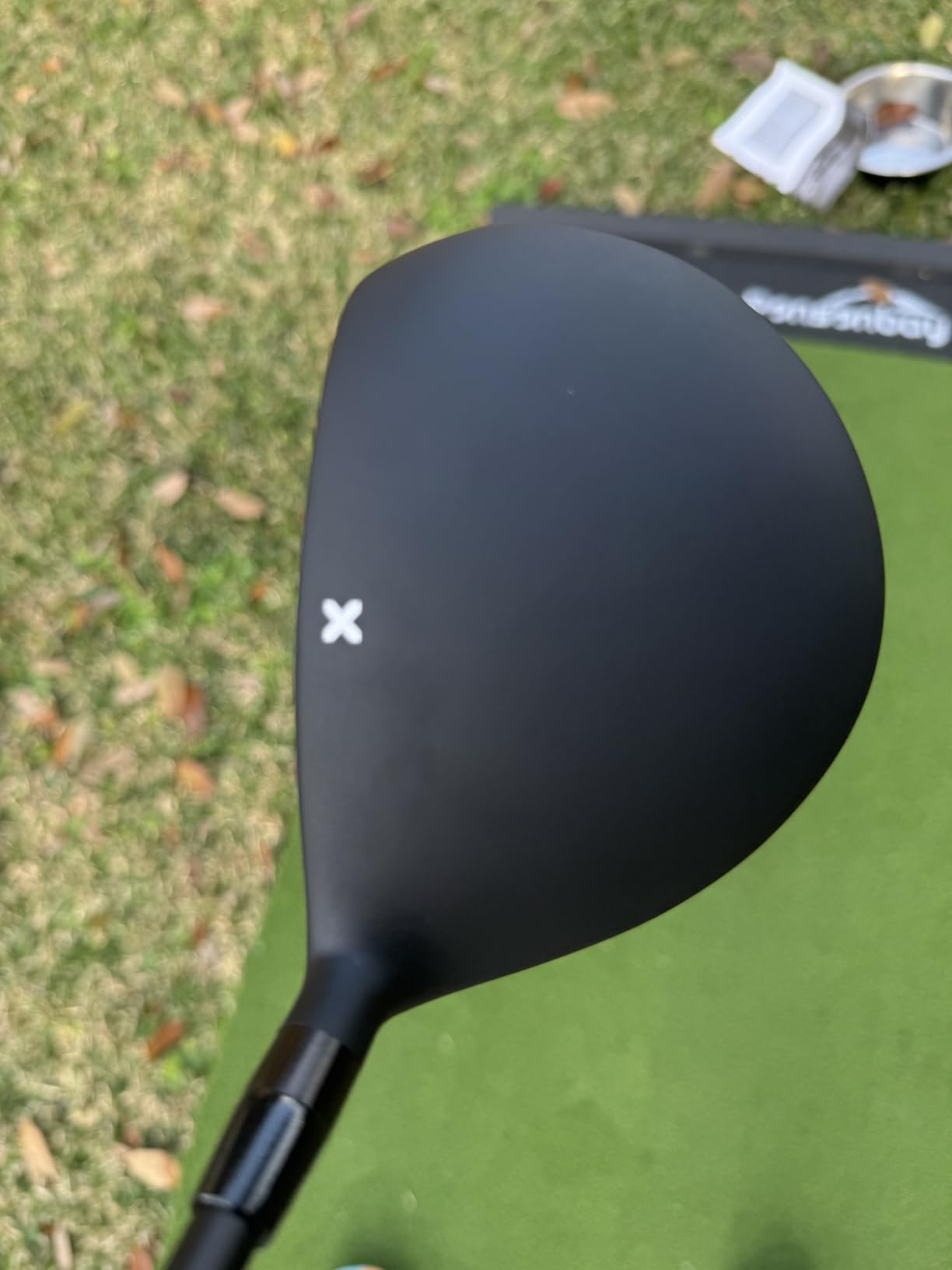
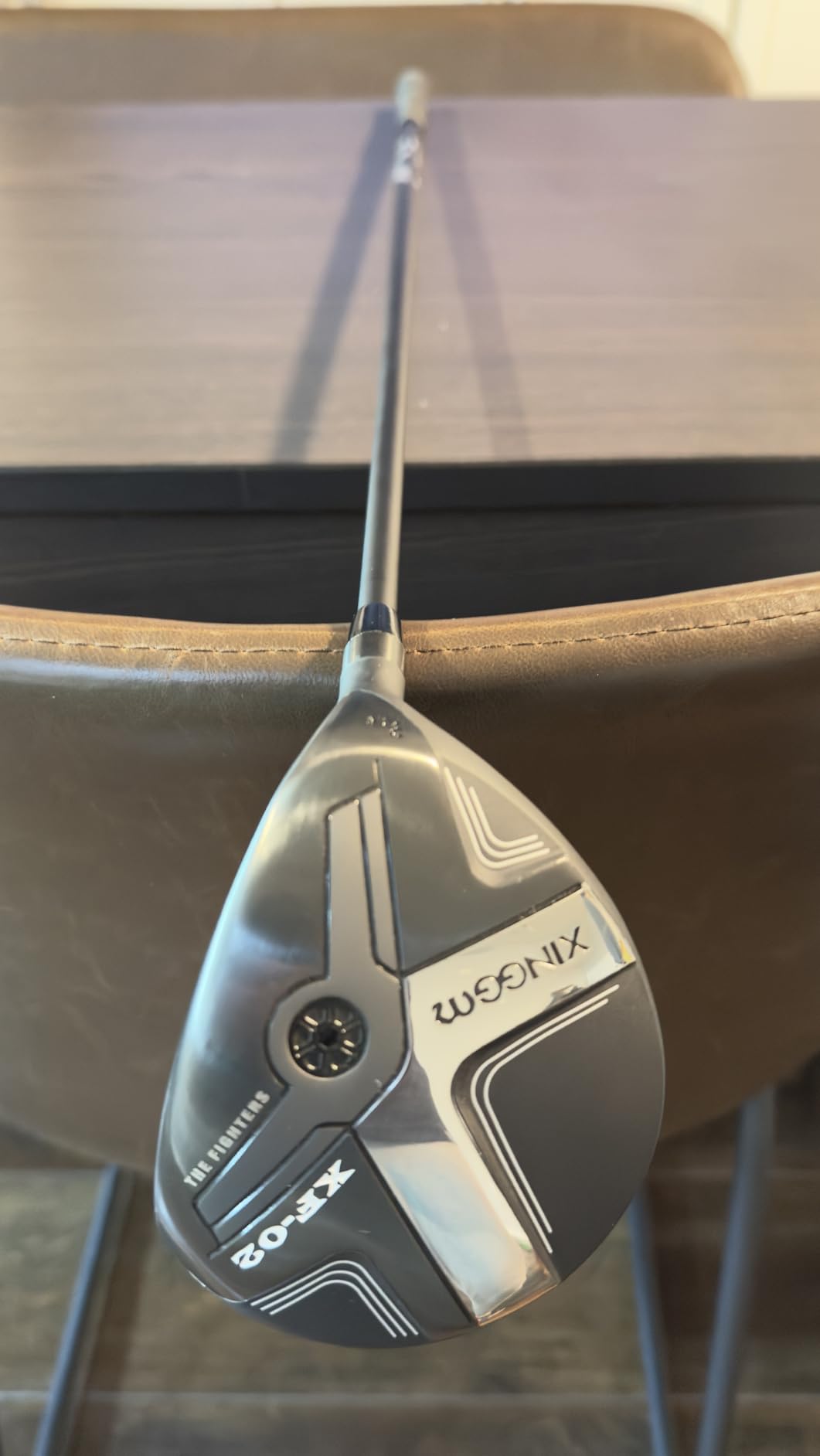
6. XINGGM XF02 High-MOI 5 Wood: Most Versatile for Mishit Stability
XINGGM XF02 Golf Fairway Wood-Premium Golf Club 3 Wood/5 Wood RH,High-MOI&Low CG Sole,Master the Fairway Wood with Ease (Graphite, 5 Wood, Regular, Right)
18 degree loft
5 wood configuration
Oversized high-MOI head
Regular flex graphite shaft
Pros
- Oversized head with perimeter weighting straightens off-center hits
- Low CG sole launches easily from any lie
- Available in 3
- 5 and 7 wood
- No one or two star ratings in owner feedback
Cons
- Only 2 months warranty coverage
- Far fewer owner reviews than established budget brands
Most budget fairway woods cut corners on the head, where the weight has to go, and the shaft, where the mass has to be balanced. This one does the opposite. The head is oversized with genuine perimeter weighting, and the low center of gravity sole is the feature that matters most to a high handicapper, because a lower sole means less spin and a higher start without needing more clubhead speed.
The X-shaped stainless steel profile is designed to reduce drag through the swing, which is a modest but real effect on a club that must be accelerated hard. The expanded impact zone and the milled speed grooves on the alloy face both aim at the same outcome: keeping ball speed up when the strike is not perfectly centered.
I would be honest about what this is. It is a low-cost club with a short warranty and a small review base, and the owner feedback is almost uniformly positive, with 96 percent four- and five-star responses and nothing at one or two stars. That consistency is unusual at this level of the market, and it is the main reason I put it in the top three.
For a high handicapper, the practical case is simple. A 5 wood at this specification is a real gap filler with a high launch window and a stable response to mishits, and it costs less than a round of golf. If the club is going to sit in the bag for a few seasons, the two-month warranty is a real limitation, so grip and shaft condition are worth checking on arrival.
Who this wood suits
It suits golfers who want a forgiving 5 wood without spending premium money, and who mainly need one club in the 15 to 20 degree range. The 3, 5 and 7 wood options mean the same purchase can cover a long-term gap plan.
It also suits a golfer buying for a family member or a second set who will not notice small differences in sound. The stability on mishits is the feature that shows up in the scorecard, not the feel at impact.
Who should pass on it
Pass if the club has to look like it belongs next to a premium iron set. Budget brands in this category often look and sound thin compared with a carbon-steel-faced model, and if that bothers you, budget more.
Pass if your priority is a specific adjustable ball flight. There is no loft sleeve or movable weight here. This is a fixed-loft, forgiveness-first design, and that is exactly what it is good at.
7. iDrive Red Square 3/5/7 Wood Set: Best for Golfers Who Slice Everything
iDrive Red Square Anti-Slice Draw Fairway 3 5 7 Wood Set Golf Clubs, Right Handed Senior Flex with Men’s Size Black Pro Velvet Grips
Set of 3, 5 and 7 woods
15, 19 and 23 degree lofts
Senior flex velocity graphite
43.5, 42.75 and 42 inch lengths
Pros
- Draw bias weighting fights a right-to-left miss
- Three-loft set covers a wide range of distances
- Senior flex suits slower swing speeds
- Oversize Pro Velvet grips stabilize the grip end
Cons
- Rating distribution includes a relatively high share of 2 star feedback
- Less forgiving feel than dedicated game-improvement woods
Almost every fairway wood in this roundup has some built-in draw bias, because every manufacturer knows that a fade on a long shot costs more than a pull. This set makes it the whole idea. The head design is built to pull the ball left of center to offset a right-to-left miss, and for a slicer who has never once seen a fairway wood finish in the fairway, that can be the difference between using the club and leaving it in the bag.
Buying it as a set is also the fastest route to a balanced top of the bag. The three lofts are 15, 19 and 23 degrees, at 43.5, 42.75 and 42 inches, so they cover the full spread from a standard 3 wood to a genuine 7 wood. Most golfers who start with a 3 wood alone end up buying two more clubs later anyway.
The senior flex velocity graphite shafts and the oversize Pro Velvet grips are aimed at golfers with a slower tempo. Oversize grips genuinely do add clubface control through impact for players whose grip pressure is light, and that helps on contact that is not quite centered.
Who this wood suits
It suits a slicer who has avoided long woods because the ball curves into the trees. Rather than fighting the miss with your swing over months of lessons, this gives you three clubs that are designed to start left of center. It also suits a slower golfer who wants senior flex across the board.
For a high handicapper with a gapping problem, a three-wood set in one order is a complete and inexpensive answer. It is one of the few products here that solves three problems at once.
Who should pass on it
Pass if you already have good lofts at both ends of the range. Carrying 15, 19 and 23 degrees in a bag full of overlapping lofts creates a decision on every second shot rather than a gap.
Pass if you are a mid-handicap player who strikes the ball well and wants a precise, workable club. The forgiveness is real but it is average for the category, and a share of two-star feedback points to consistency that does not match the better game-improvement designs.
8. Orlimar Escape 3 Wood: Best for Tight Lies and Low Swing Heights
Orlimar Escape #3 Wood Golf Club, Men, Right Hand, Regular Flex
16 degree loft
43 inch length
Shallow face height
Superlite 60 graphite shaft
Pros
- Shallow face lifts the ball cleanly from tight lies
- Low center of gravity for high launch and soft landings
- Wide loft range fills gaps between irons and drivers
- Lightweight Superlite 60 graphite shaft
Cons
- Full-length 43 inch shaft rather than a short 3 wood
- Only 1 year warranty against manufacturer defects
Shallow face height is the defining feature here, and it is the answer to a specific problem. When the front of the head sits close to the bottom of the ball, the effective loft at impact is higher, so the ball climbs out of a tight lie instead of digging in and staying low. For golfers who hit a lot of shots where the ball is sitting down, that is worth more than raw head size.
The company markets the Escape line as a series of specialty clubs going up to a 15 wood, which means you can buy a single loft to plug a specific gap rather than committing to a set. For a high handicapper, that is a genuine advantage. You are not forced to carry three clubs to get one useful one.
The Superlite 60 graphite shaft is light, which helps a slower swing get the clubhead moving, and the low center of gravity means the ball lands softly on approach shots. Owners report buying higher lofts in this line specifically as hybrid replacements, which is a sensible use for a club this easy to launch.
Who this wood suits
It suits golfers who struggle with the ball sitting down on it, whether that is a tight fairway lie or a plugged approach. A 16 degree loft with a shallow face is a forgiving combination that does not demand a tour-level delivery.
It also suits a budget-limited high handicapper who wants a specific loft rather than a matched set, and the low entry point makes it easy to add a second club from the same line later.
Who should pass on it
Pass if you want a true short 3 wood. At 43 inches this is a full-length club, and the shorter shaft is one of the mechanical reasons a 5 wood is easier to swing than a 3 wood. If shaft length is the issue holding you back, this will not fix it.
Pass if you want adjustability or premium feel. It is a fixed-loft design with a one-year warranty, and the 4.2 rating with 96 reviews suggests solid performance with a wider spread of experiences than the top picks.
9. Orlimar TriMetal 7 Wood: Best High-Loft 7 Wood with a Forged Face
Orlimar TriMetal #7 Fairway Wood, Men, Right Handed, Senior Flex Graphite
21 degree loft
Ultra-thin S450 maraging steel face
Copper weighted screw
16 oz clubhead, senior flex
Pros
- High and soft flight that high handicappers can control
- Maraging steel face gives crisp sound and good ball speed
- Rail soled low profile works from tight lies
- Sold in right and left handed with senior flex
Cons
- Grip quality is basic and may not suit oversize grip preferences
- Only 1 year warranty against manufacturer defects
There are two ideas in this head and both of them serve a high handicap. The first is the 21 degree loft with a low, shallow profile, which is a straightforward high launch prescription. The second is the ultra-thin S450 maraging steel face, which is the same class of high-strength steel used in premium drivers and it delivers a noticeably crisper sound and better ball speed than a basic aluminum face.
The copper weighted screw is the small detail worth knowing. A weight positioned inside the head away from the center increases moment of inertia, which is the same principle as perimeter weighting, just achieved with a single internal part instead of a reshaped crown. The vacuum cast stainless sole adds strength and consistent weight distribution across the face of the head.
Owners of the 7 and 9 wood versions report the high, soft-flighted shots that high handicappers are chasing, and the recurring note is that the grip is the weakest element. Buy it with an oversize grip in mind if that matters to your hands.
Who this wood suits
It suits a high handicapper who wants one long club, a high launch, and a sound they do not have to plug their ears at. The forged face is a genuine premium specification at a mid-level price, and it is unusual to find in a 21 degree head.
It also suits left-handed golfers, since this line is available in both hands. That is worth noting because most of the game-improvement fairway wood market is right-handed only, and a lefty with a high handicap has fewer forgiving options to choose from.
Who should pass on it
Pass if sound and feel are not what you are optimizing for and you want maximum forgiveness per pound. The design choices here lean toward feel and launch, and the 16-owner review base is the thinnest in the roundup, which makes the rating less predictive for your own results.
Pass if you need adjustability. This is a fixed 21 degree loft with no sleeve and no movable weight, so it does one job and that job is launching high with a good sound.
10. Powerbilt TPS Blackout Max 5 Wood: Best Low-Cost Bag Filler
Powerbilt TPS Blackout Max #5 Fairway Wood, Men’s Right Handed Black/Red
5 wood at 21 degrees
42.25 inch length
Precision forged alloy head
Lightweight graphite shaft
Pros
- Dual rebound channels add noticeable distance
- Very low entry cost for a bag filler
- Available in 3
- 5 and 7 wood lofts
- Lightweight graphite shaft suits slower swings
Cons
- Forged alloy head offers less feel than premium titanium or carbon steel models
- Only 1 year warranty against manufacturer defects
This is the cheapest way to solve a bag problem, and for a specific high handicapper that is exactly the right answer. If you play with a mixed group, borrow clubs, or you simply need a long club to fill a gap without committing much money, a forged alloy 5 wood at 21 degrees does the job without pretending to be something it is not.
The dual rebound channels are the technology claim here, and the idea is that flexing sections on either side of the strike zone feed energy back into the ball rather than absorbing it. Owners report a distance result that is genuinely surprising for the price, with 77 percent five-star feedback and no one-star reviews in the distribution.
The 42.25 inch length is shorter than a full 3 wood, and a lighter graphite shaft with a soft rubber grip is a workable combination for a moderate swing speed. It is not as refined as the game-improvement models above, and reviewers are candid that the feel is thinner, but forgiveness at this level is more about the shape of the shot than the sensation of impact.
Who this wood suits
It suits a high handicapper who needs a backup long club, or a practice and spare bag. Reviewers consistently recommend it as a value and backup wood rather than a first-choice club, and that framing is fair.
It also suits golfers who already own a 3 wood that they hit well and simply need a mid-length club. At 21 degrees, it pairs naturally with a mid-iron and does not duplicate anything already in the bag.
Who should pass on it
Pass if you are buying your only long club. The difference in feel and sound against a titanium or carbon-steel head is obvious, and a high handicapper who is spending real money on a top-of-the-bag upgrade deserves the better face.
Pass if you want a club you can resell or pass down. A one-year warranty on a very low-cost club is a fair signal about its expected working life compared with the two-year coverage on the premium models in this roundup.
Why High Handicappers Struggle With a 15 Degree 3 Wood
The honest reason a 3 wood is the worst club in many high handicap bags is loft physics, not a lack of effort. A 15 degree wood needs roughly 95 mph of clubhead speed to produce a normal launch window. Below that, the face produces too much spin relative to the speed, and the ball comes out low, skids, and runs out into trouble. The second shot is then a wedge from a bad number.
Low-face contact makes it worse. When you catch the ball under the center of the face, the effective loft drops several degrees at exactly the moment the ball is already sitting on the ground. What should be a 200 yard carry becomes a running shot that never gets airborne. A high handicapper’s strike location and their swing speed are pulling in the same bad direction, which is why forgiveness on low-face strikes is the single most important spec in this entire roundup.
There is also a control cost. A mishit with an iron costs a wedge shot from the same place. A mishit with a fairway wood costs a long shot into the trees or the water, and that is usually two or three strokes. Golfers in the r/golf bag-setup threads describe the 3 wood as the club they avoid most under pressure, and that pressure effect compounds the launch problem.
The fix, in order, is: move up in loft, lighten the swing weight, and buy perimeter weighting. A 5 wood or 7 wood does most of that in one step. A senior flex shaft on a high-MOI head does the rest. Those are the two changes that matter more than anything else you could put money into.
3 Wood vs 5 Wood vs 7 Wood vs 3HL: How to Choose Your Loft
For a high handicapper the right question is not which wood is best, it is which loft you can actually launch off a bad lie. Work down this list from top of bag to bottom.
3 wood, 15 degrees. Choose this if you can get one decent shot out of five off the deck. It gives you the longest carry and the least forgiveness, and a large head helps but does not rescue a launch failure. If your best 3 wood shots only happen from a perfect fairway lie, move down the list.
3HL, 15 to 18 degrees. A 3HL is a high-loft fairway wood, usually sitting between 15 and 18 degrees, built to a larger head with a low profile. It is the recommendation that comes up most often in forums from people who were stuck, because it gives you 3 wood length with 5 wood launch. If you want to keep a 3 wood and fix the problem, this is the category to shop in.
5 wood, 18 degrees. The default choice for a high handicapper. The shorter shaft accelerates faster, the higher loft starts the ball higher, and the wider sole keeps the face square through the turf. Forum golfers regularly report that the same swing which struggles with a 3 wood produces a solid 200 yard shot with a 5 wood, occasionally reaching past 220 when struck well.
7 wood, 21 degrees. The most forgiving long club available. Choose it if your problem is getting the ball off the ground at all, or if you play a lot of shots from grass just above the ball. A high handicap golfer who played a 17 degree 3 wood like a 7 wood and only gave up about 15 yards is the typical case, and almost nobody misses those 15 yards once the ball flight is consistent.
How far should a 7 wood go? A well-struck 21 degree 7 wood carries roughly 190 to 210 yards for a mid-70 mph swing speed, and 170 to 190 for a slower one. Expect less off a bad lie, and treat a good number as a bonus rather than a baseline.
Is a 5 wood better than a 7 wood? Not universally. A 5 wood goes about 25 to 35 yards further for a similar swing speed, so if you can get a 5 wood airborne from your normal lies, take the extra distance. If you are choosing on how often you hit the shot well rather than how far it goes when you do, the 7 wood is the better club.
Fairway Wood vs Hybrid: Which One Fills Your Bag Gap
A fairway wood and a hybrid are more similar than most golfers think, and picking the wrong one is a common source of duplicate clubs. Roughly speaking, a 21 degree 7 wood sits close to a 3 hybrid in loft, around 20 degrees. A 3 wood at 15 degrees sits between a 2 hybrid and a 3 hybrid.
The real difference is how the club behaves. A fairway wood is longer, wider, and marginally more forgiving on extreme misses because of the head size. A hybrid is shorter, has a lower center of gravity, and goes through the grass far more easily, which makes it the better club out of the rough and for players who take a deep divot.
Choose a fairway wood if your second shots come from the fairway, you want more distance off a good strike, and you need to fill the longest gap in the bag. Choose a hybrid if most of your approach shots come from the rough, if the lie is below the ball, or if you are using it to replace a long iron you no longer hit.
Should you swap a 3 hybrid for a 7 wood? Only if your misses with the hybrid are long. If you are missing the hybrid left and right across the target line, a 7 wood will miss in the same directions. If you are missing it short, a 7 wood is the fix, because it starts the ball higher and lands softer.
What is easier to hit, a 7 wood or a 3 hybrid? For most high handicappers it is close, and the hybrid has the advantage on thick lies while the 7 wood has it on clean fairway shots. Test both before you commit, and keep the one you hit more consistently rather than the one that goes further on a good swing.
What to Look for in a Fairway Wood for High Handicappers
Head size. Bigger is more forgiving in almost every case, because a larger face gives you a bigger target and more perimeter weighting. The models in this roundup run from 190cc to 200cc, which is the game-improvement end of the market. A tour-styled head is smaller and offers more workability, which is the wrong trade for a high handicap.
Low and deep center of gravity. CG is the balance point of the head. When it sits low and toward the back, the club wants to launch the ball higher with less spin. A higher CG produces a lower, skittier shot that runs out, which is exactly the flight a high handicap does not want. Look for the words low and deep in the product description, since every budget design in this roundup leads with it.
Moment of inertia. MOI describes how resistant the head is to twisting on off-center hits. More weight on the perimeter raises MOI, and a higher MOI keeps toe and heel contact closer to the intended flight. This is the mechanical reason head size and perimeter weighting are the same idea.
Face flex and low-face protection. Anything described as a speed pocket, speed channel, or variable thickness face is designed to keep ball speed on thin strikes near the bottom of the face. For a high handicap this is arguably more valuable than maximum MOI, because low strikes are the most common miss.
Loft and shaft weight together. Loft determines launch, shaft weight determines whether you can swing it. Senior and light flex shafts add clubhead speed, which makes a higher loft easier to get airborne. Match the two. A 21 degree head with a stiff full-weight shaft is harder to launch than a 16 degree head with a senior flex, and the loft you want is the one you can actually produce.
Adjustability, if your ball flight is the problem. Loft sleeves and movable weights let you change flight and spin without changing your swing. They are only worth paying for if you have a specific flight problem you are trying to solve. If your issue is contact, buy forgiveness instead.
Shaft flex as a forgiveness tool. Graphite senior flex shafts are consistently cited in forums as an upgrade route for older, heavier fairway woods. A lighter shaft adds speed, and more speed means the ball gets airborne more often. If you already own a wood you almost hit, a shaft change is often cheaper and faster than a new head.
One more thing worth doing. High handicappers ask constantly whether a better ball would help more than a better club, and the answer is that a premium ball is a genuine complement, not a substitute. A two-piece ball designed for distance is forgiving on off-center contact in a way a premium urethane ball is not. Fix contact with a forgiving head, then use a ball that rewards the improved strike. It is worth checking our [golf glove picks](https://austineubanks.com/best-golf-gloves-for-grip/) for grip control at the same time, since grip pressure drives face delivery.
What to Do If You Already Own a 3 Wood You Cannot Hit
This is the most common question behind this whole topic, and it has three honest answers rather than one.
Adjust the shaft first. If your 3 wood is an older model with a stiff steel shaft, the cheapest fix is a lighter senior flex graphite shaft. More clubhead speed means more launch, and forum golfers regularly report that a shaft change in an older fairway wood made it playable when a new head had not.
Bend or add loft if the miss is the problem. If your strike position is inconsistent, more loft genuinely helps, because the higher effective loft makes the low-face error less punishing. A 3 wood bent to 17 degrees is a real product that fitters use for exactly this reason, and it is a smaller change than replacing the club.
Replace it if the club still does nothing after a season. If you have hit a new, more forgiving 3 wood and still do not play it, stop. A club you do not hit is a full bag slot wasted, and the honest answer is that the 3 wood is not for you. Reallocate the slot to a 5 wood or 7 wood, or to a wedge you actually use from 80 yards. A gapping problem at the top of the bag is better solved by one club you hit than by three you admire.
One more honest note. Some golfers should not add a fairway wood at all. If you are still working on your driver and your 5 through 9 irons, a wedge or an extra pitching wedge will do more for your score. Add a long club when the rest of the bag is consistent.
How We Picked These Fairway Woods
We compared ten fairway woods spanning the full range of the category, from a very low-cost forged alloy backup club to a 200cc premium adjustable head, and read the full owner review base on each one rather than relying on marketing copy.
Every club was judged on four questions. Can a high handicap get it airborne from a normal lie? Does it keep ball speed on low-face contact? Does a toe or heel strike stay close to the intended flight? And is the shaft weight and flex realistic for a moderate swing speed? Clubs that failed the launch question were not eligible for a top-three badge no matter how good the specification sheet looked.
Where owner feedback disagreed with the specification list, we said so. Several models here have mixed ratings, and a small review base tells you much less than a large one. We also weighted the product page data on real owner usage patterns, including which lofts people actually buy as hybrid replacements and how the clubs perform out of the rough.
Our complete methodology: read the full review set, cross-check the claimed technology against the stated head size and weighting, and reject any club whose launch window required a swing speed above what a high handicap generates. For the wider equipment picture, our [golf shoe guide](https://austineubanks.com/best-golf-shoes-for-men/) covers the other piece of your setup that affects how well you hit these clubs.
Frequently Asked Questions
What is the easiest fairway wood to hit?
The easiest fairway wood to hit is a high-loft, large-headed game-improvement design, and among the ten we compared, the TaylorMade SIM2 Max at 15 degrees and the Cleveland Launcher Halo XL 5 wood at 18 degrees were the most universally launchable. Higher lofts start the ball higher from any lie, larger heads and perimeter weighting reduce the effect of toe and heel strikes, and low-face strike protection keeps ball speed on thin contact.
What wood should a high handicapper use?
Most high handicappers should use a 5 wood at 18 degrees or a 7 wood at 21 degrees rather than a 15 degree 3 wood. A high handicap golfer usually cannot generate enough clubhead speed to launch a 15 degree wood, and low-face contact makes the ball skid even lower. If you want to keep a 3 wood, shop the 3HL category, which gives 3 wood length with a 15 to 18 degree loft.
Should a high handicapper use a 3 wood or 5 wood?
Use a 5 wood if you can get a 3 wood airborne only occasionally. The 5 wood is about 3 degrees higher in loft, has a shorter shaft that accelerates faster, and starts the ball higher, so the same swing that produces a weak 3 wood shot produces a usable 5 wood shot. If you are happy with your 3 wood, keep it and add a 5 wood to fill the yardage gap rather than replacing it.
How far should a 7 wood go for a high handicapper?
A well-struck 21 degree 7 wood carries roughly 190 to 210 yards for a mid-70 mph clubhead speed, and around 170 to 190 yards for a slower swing. High handicappers should treat the lower end of that range as the realistic expectation, and expect less from a tight or poor lie. A 7 wood is chosen for consistency of strike, not for peak distance, so a repeatable 180 beats an occasional 210.
Should I swap my 3 hybrid for a 7 wood?
Only swap if your misses with the 3 hybrid are short. A 7 wood starts the ball higher and lands softer, so it fixes a distance problem. If you are missing the hybrid left and right of the target, a 7 wood will miss in the same directions and the hybrid is the better club. If you play most of your approaches from the rough, keep the hybrid, because it handles thick grass better.
What hybrid is a 7 wood equivalent to?
A 21 degree 7 wood is roughly equivalent to a 3 hybrid, which is typically around 20 degrees. The 7 wood is longer and marginally more forgiving on extreme misses, while the 3 hybrid goes through thick grass more easily and has a lower center of gravity. Players who grew up with a 2 iron and a 5 wood tend to transition to a 5 wood and 9 wood, and hybrids map to roughly the same numbers.
What is the ideal bag setup for a high handicapper?
Most high handicappers are best served by a driver, a 3 wood or 3HL, a 5 wood, a 7 wood, 5 through 9 irons, pitching wedge, sand wedge, and a putter. The key principle is real gapping: every club should be a distinct step in distance, not a duplicate. Clubs you do not hit on a bad day, like an unhittable 15 degree 3 wood, should be replaced with the loft you can actually launch.
Conclusion
The best golf fairway woods for high handicappers in 2026 are not the clubs with the longest shafts or the biggest spec sheets. They are the ones with a high launch window, a low and deep center of gravity, and protection on low-face strikes. The TaylorMade SIM2 Max is the one we would put in front of most golfers, and the Cleveland Launcher Halo XL 5 wood is the smarter buy for anyone whose 3 wood never leaves the ground.
If you can only add one club, add the loft you can actually hit. Move up the ladder before you spend more money, keep a club in the bag that you hit on a bad day, and treat the driver as a separate problem. Then check the current price on the model that matches your miss, and go play ten rounds before you change anything else.