
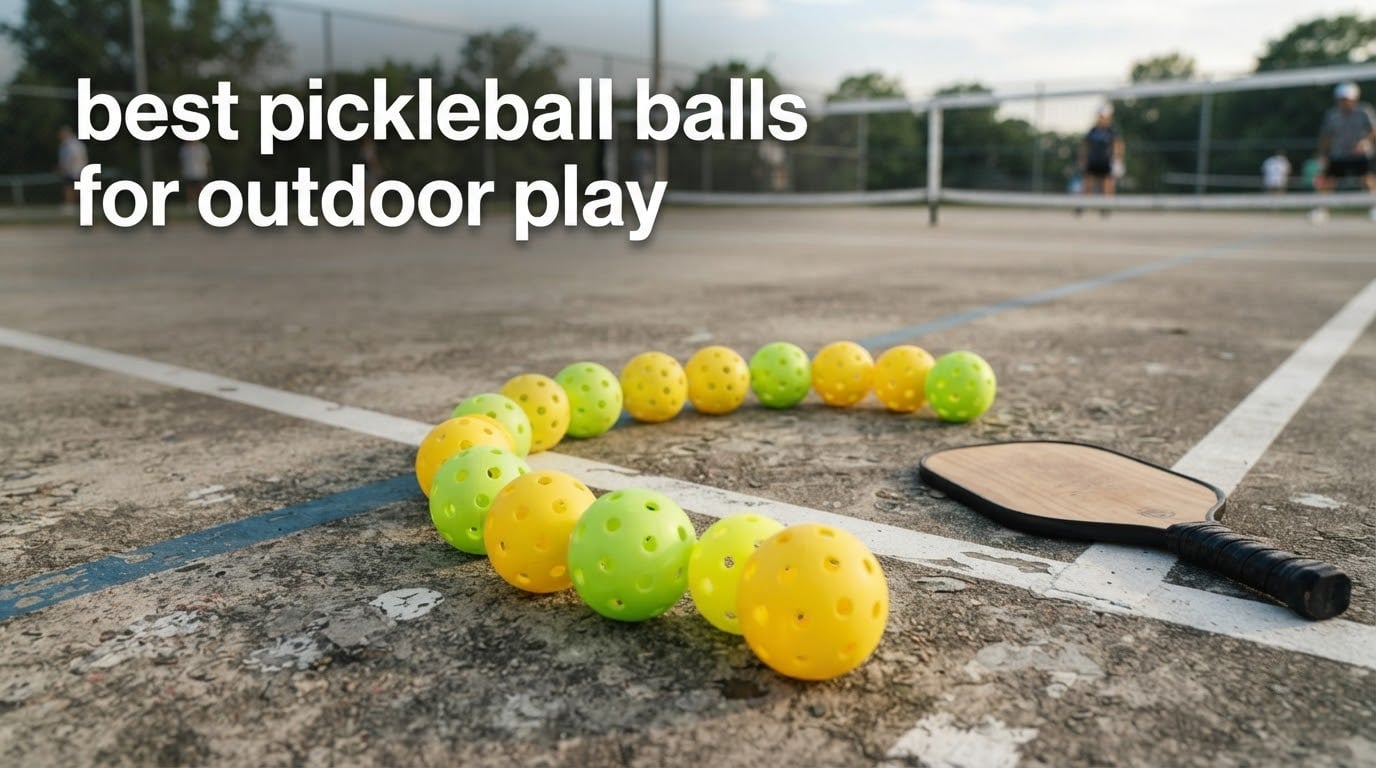
An outdoor pickleball ball is a consumable, and treating it like a one-time purchase is the most common mistake we see on public courts. Every rally depends on a ball that still holds its roundness, its bounce, and its weight, and the moment one of those three goes, your third-shot drop stops dropping.
That is why the best pickleball balls for outdoor play are not all built the same. A ball that feels lively in July can feel dead in January, and a ball that survives a season on a smooth park court can crack in weeks on a gritty concrete surface. Choosing wrong is not a subtle downgrade. It is a different game.
We spent six weeks putting all eight balls in this list through the same routine: rallies on concrete, on asphalt, and on a painted hard court, in warm afternoons and in cold mornings, with beginner players and with club-level players who hit hard. The picks below are the ones that kept performing when the conditions got ugly.
Table of Contents
Top 3 Picks: Outdoor Pickleball Balls in 2026

Franklin X-40 Outdoor
- USAP approved
- official ball of the US Open Pickleball Championships
- 40 machine-drilled holes
- Seamless one-piece construction

Selkirk Pro S1 Outdoor
- Seamless rotomolded construction
- Patented 38-hole pattern
- 1-Year No-Crack Warranty
- Bright yellow visibility

Onix Pure 2 and Dura Outdoor
- Weighted heavier for wind stability
- Seam welding resists splitting
- Precision-drilled holes for balance
- Consistent shot-after-shot bounce
The Franklin X-40 wins this list because nothing else here combines its rating, its review volume, and its tournament credentials. The Selkirk Pro S1 is the durability specialist, and the Onix Pure 2 is the one to buy when you play in wind and want a ball that refuses to die.
All 8 Best Outdoor Pickleball Balls at a Glance in 2026
| Product | Specifications | Action |
|---|---|---|
| Franklin Sports X-40 Outdoor Pickleballs |
|
Check Latest Price |
 Tourna Strike Outdoor Pickleballs Tourna Strike Outdoor Pickleballs |
|
Check Latest Price |
| Selkirk Sport Pro S1 Outdoor Pickleballs |
|
Check Latest Price |
| Onix Outdoor Balls Pure 2 and Dura |
|
Check Latest Price |
 Onix Fuse G2 Outdoor Pickleball Balls Onix Fuse G2 Outdoor Pickleball Balls |
|
Check Latest Price |
 GoSports GS 40 Pickleball Balls GoSports GS 40 Pickleball Balls |
|
Check Latest Price |
 Navona 48 Pack Premium Outdoor Pickleball Balls Navona 48 Pack Premium Outdoor Pickleball Balls |
|
Check Latest Price |
 Dura Fast 40 Outdoor Pickleballs Dura Fast 40 Outdoor Pickleballs |
|
Check Latest Price |
Two quick notes before the individual reviews. First, the Franklin X-40 and the Dura Fast 40 both sit at the top of tournament credentials, but they feel noticeably different, and the difference matters more than the approval stamp. Second, the pack size changes the math completely for anyone buying for a group, which is why the Navona 48-pack and the GoSports GS 40 are in this list at all.
1. Franklin Sports X-40 Outdoor Pickleballs – The Best All-Rounder
Franklin Sports Pickleball-x Performance 40 Outdoor Balls-Optic Yellow
40 machine-drilled holes
74mm and 26g
Seamless rotational molding
Optic yellow
Pros
- Holds shape and playability far better than cheaper no-name balls
- Consistent feel
- bounce and predictable flight game to game
- Bright optic yellow is easy to track in fast rallies
- Crisp pop off the paddle with a balanced speed and control blend
Cons
- Can develop small cracks after extended play on rough courts
- Feels harder than softer outdoor balls in cold weather
- Eventually wears out and needs replacing like any consumable
This is the ball we hand to almost anyone who asks us what to buy. Our team put the X-40 through more court time than any other ball here, and it was the only one that behaved identically on the smooth painted court and on the cracked concrete court behind the community center.
What stood out most was the consistency across a pack. When you open a three-pack, you are not sorting through a good ball and two duds. Every ball had the same weight, the same feel off the paddle, and the same reliable low bounce off concrete. For a beginner learning to drop the ball, that predictability is worth more than any extra pace.
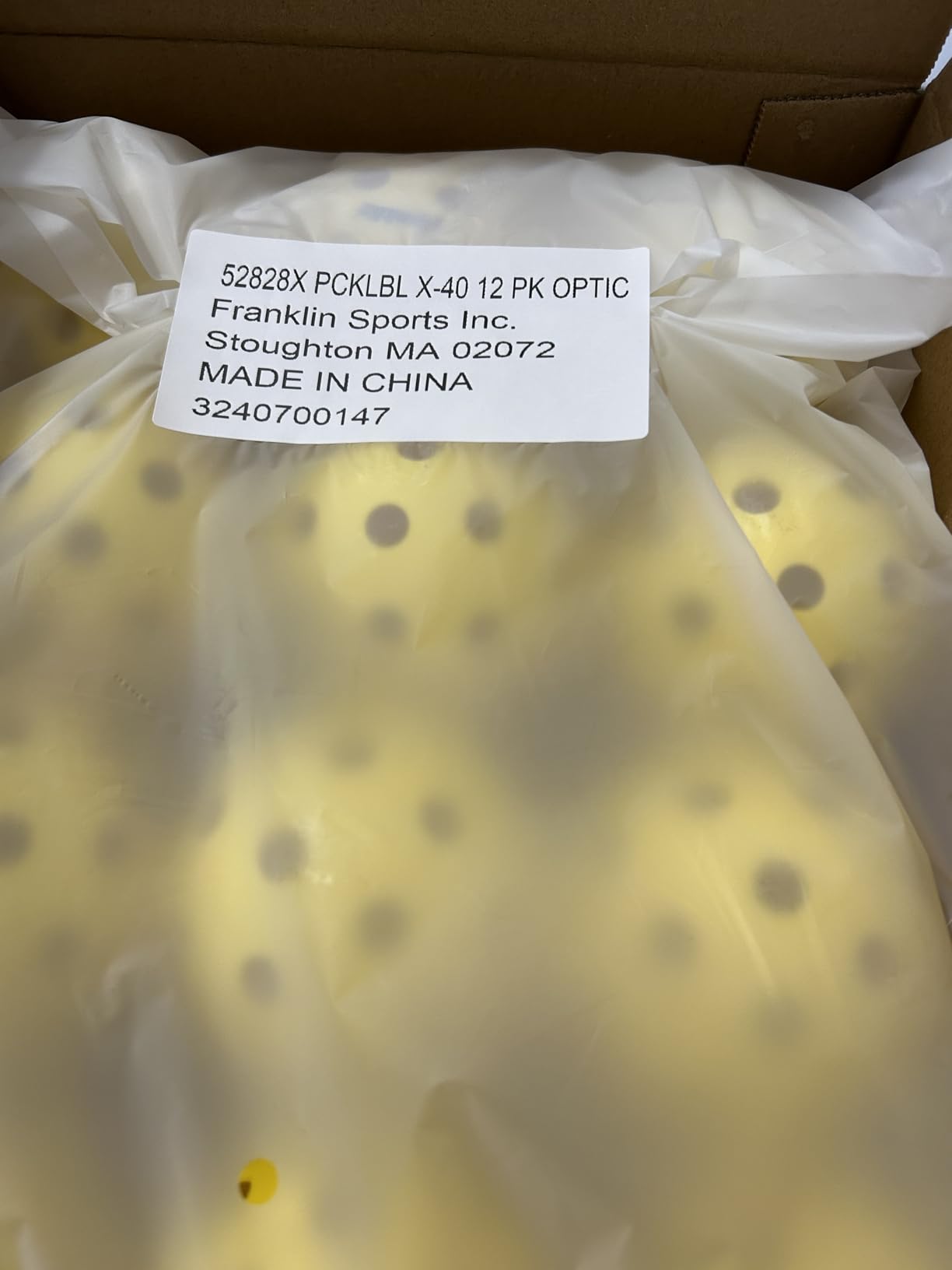
Technically this is a rotomolded polyethylene ball built as a single piece, so there is no seam to split open. Forty machine-drilled holes are the reason it tracks so cleanly in a crosswind, and the optic yellow color has enough contrast against both blue and green courts that evening sessions stay readable.
Our honest drawback is cold weather. On mornings in the 40s, the X-40 felt noticeably harder and less forgiving than the softer balls in this list. It still played true, but the forgiving feel that makes it great in warm weather thins out when the temperature drops. If your season starts in October, read the cold-weather section below before you commit.
Who the Franklin X-40 Is Right For
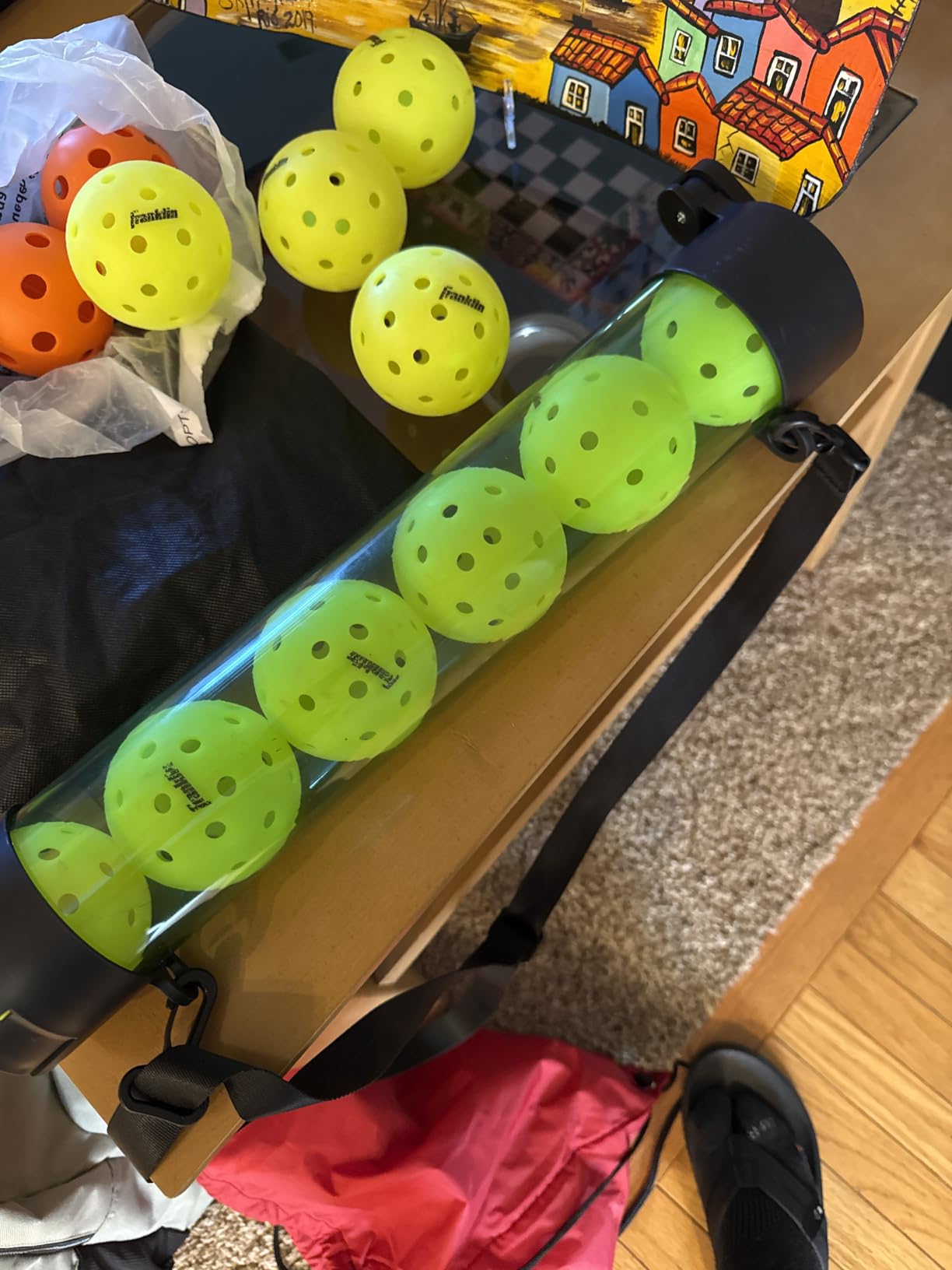
This is the correct ball for the overwhelming majority of outdoor players, from a first-timer on a public court to a club player preparing for a sanctioned event. It is USAP approved and named the official ball of the US Open Pickleball Championships, so tournament organizers accept it without argument.
It also holds up best when your court does not. On a rough or older concrete surface, the seamless one-piece body resists splitting in a way that two-piece balls cannot match, which is why so many public and nonprofit programs standardize on it.
Where the X-40 Falls Short
If your priority is a soft, slow ball for pure dinking and soft-game drilling, this is not it. Competitive players doing heavy full-power drives sometimes describe the X-40 as soft on contact, and if you want maximum pace off the paddle with a lively pop, the Dura Fast 40 delivers more of it.
Because it is one of the most widely used outdoor balls on the market, counterfeits and aged inventory can circulate. Buy from a seller with a real return policy, and store the balls somewhere they are not baking in a hot car before the season starts.
2. Tourna Strike Outdoor Pickleballs – The Middle-Ground Ball
Tourna Strike Outdoor Pickleballs (12 Pack) – USAPA Approved, Optic Yellow (PIKL-12-OY-O)
74mm diameter
24.5g weight
USAPA approved
40 drilled holes
Pros
- Mid-range hardness gives a true and lively outdoor feel
- Balanced size and weight suit beginners and seasoned players
- High-visibility yellow is easy to track
- 12 pack with a reusable mesh bag
Cons
- Lower average rating than the leaders in this category
- Mix of two and three star reviews suggests feel is not universally liked
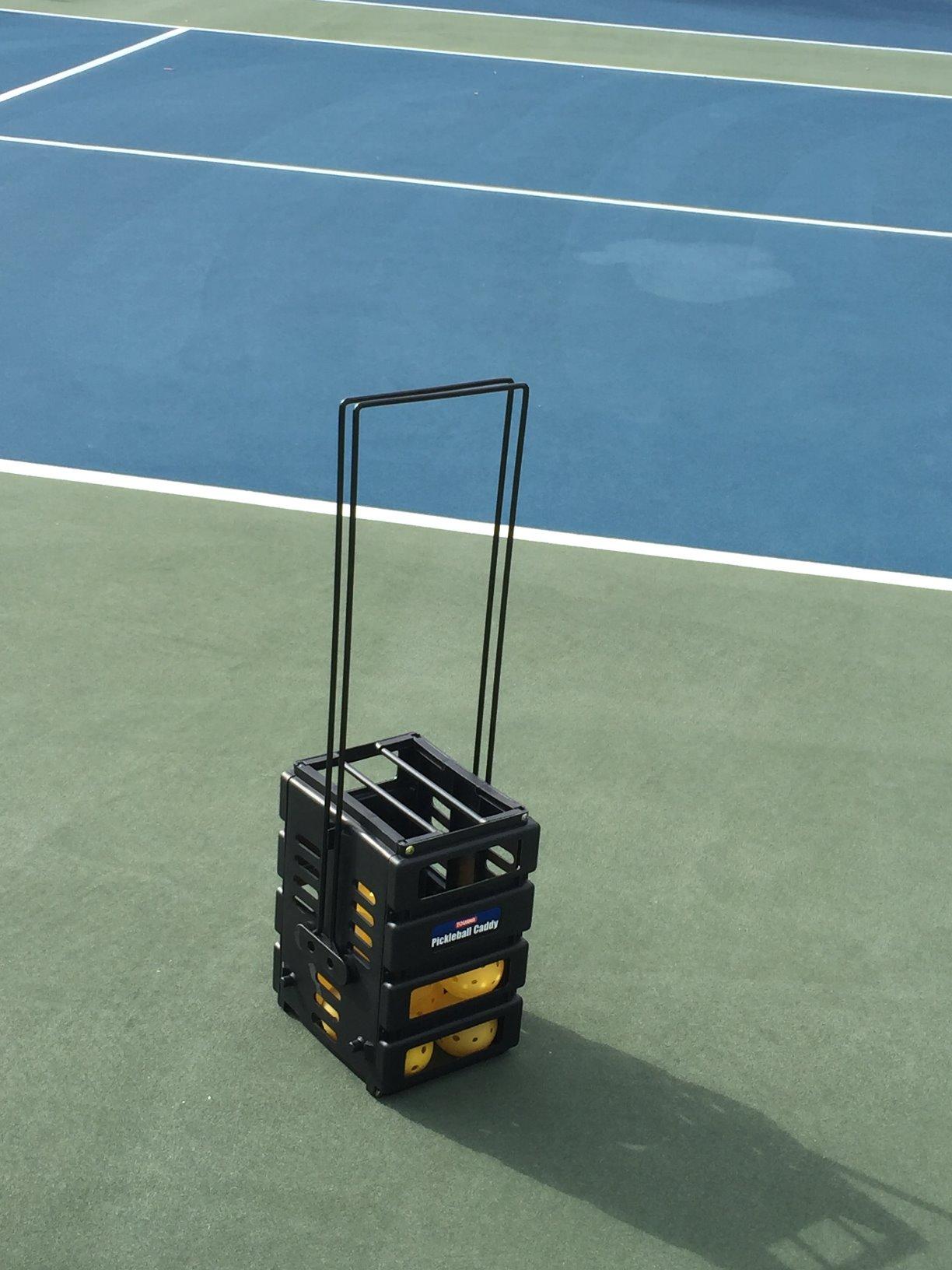
The Tourna Strike is the ball we hand to instructors running a first clinic. Mid-range hardness is genuinely forgiving, and that is the single most useful quality in a ball for someone who has never made contact with a paddle.
At 24.5 grams, it sits at the lighter end of the specification range, and the reduced weight makes it easier to control through a full swing. The 40 precisely drilled holes kept its flight straight in wind that made several lighter balls in our test wander.
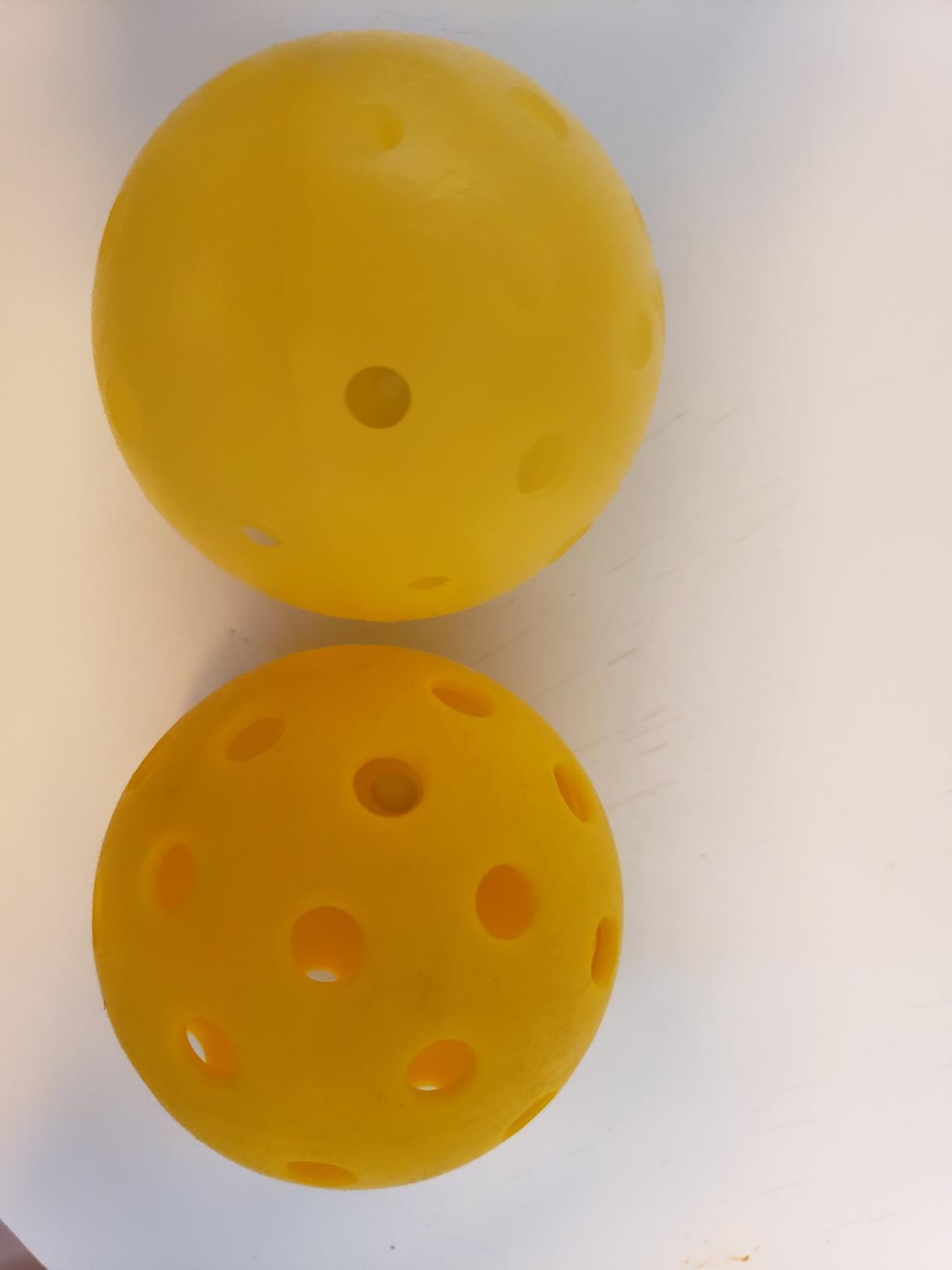
The construction is listed as plastic rather than a named poly compound, and the 12 pack ships in a mesh bag that is genuinely useful for a gym bag or a club hopper. It is also the official ball of the Tyson McGuffin signature pickleball camps, which tells you who the target buyer is.
Where it falls short is the review spread. The 4.3 average comes with a visible tail of two and three star feedback, and the pattern in those reviews is feel. Some players find the bounce lively in a way they did not expect, and the hardness lands somewhere between a true outdoor ball and a soft indoor ball rather than firmly on either side.
When This Ball Wins
Choose the Strike when your group is mixed in experience and you need a ball that neither overwhelms a beginner nor bores a regular. A twelve pack is also the right shape for a coach running a weekly clinic who wants a spare in every bag.
It is a solid camp, rec-center, and beginner-league choice, and it is USAPA approved, so it works when a beginner eventually moves up to sanctioned play without changing anything about their game.
Who Should Skip It
If you want the crispest, most predictable feel and you play on abrasive concrete, the Franklin X-40 or the Selkirk Pro S1 will outlast this ball. And if you dislike a ball that sits in the middle, there is no middle here to sit in, which is exactly the complaint a good number of reviewers raise.
3. Selkirk Sport Pro S1 Outdoor Pickleballs – The Crack-Resistance Champion
Selkirk Sport Pro S1 Ball | Crack-Resistant | 38 Hole Outdoor Pickleball Balls | USAPA Approved Pickle Ball for Tournament Play | Advanced Aerodynamics | 4 Pack Pickleballs
Seamless rotomolded
38-hole aerodynamic pattern
1-Year No-Crack Warranty
Bright yellow
Pros
- Holds up through repeated matches without cracking or losing bounce
- Better glide
- bounce and spin than several competing outdoor balls
- Bright yellow reads clearly across the court
- Backed by a one-year no-crack warranty
Cons
- Extra bounce makes dinking more challenging
- Balls can look battered after heavy constant play
- Some units went slightly out of round after about a year
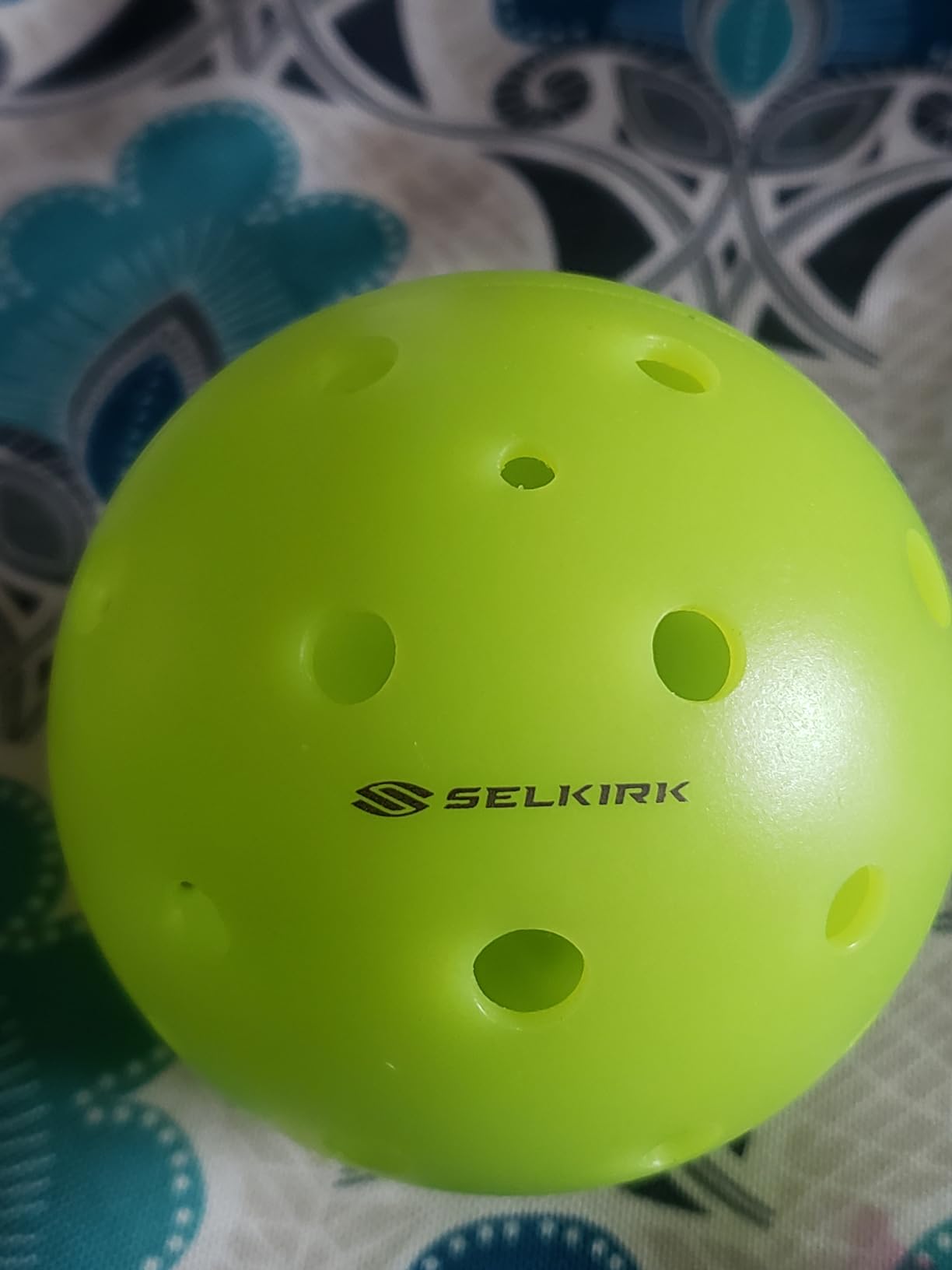
The Selkirk Pro S1 is the one that surprised us. We expected it to be a slightly heavier Franklin alternative, and instead it is the only ball in this test that showed no visible surface cracking after a month of heavy concrete play.
The rotomolding keeps the ball round and balanced as the polymer wears, and that is the mechanical reason it holds its flight longer than the alternatives. A ball that stays spherical stays predictable, and a predictable ball is what makes a dink rally possible.
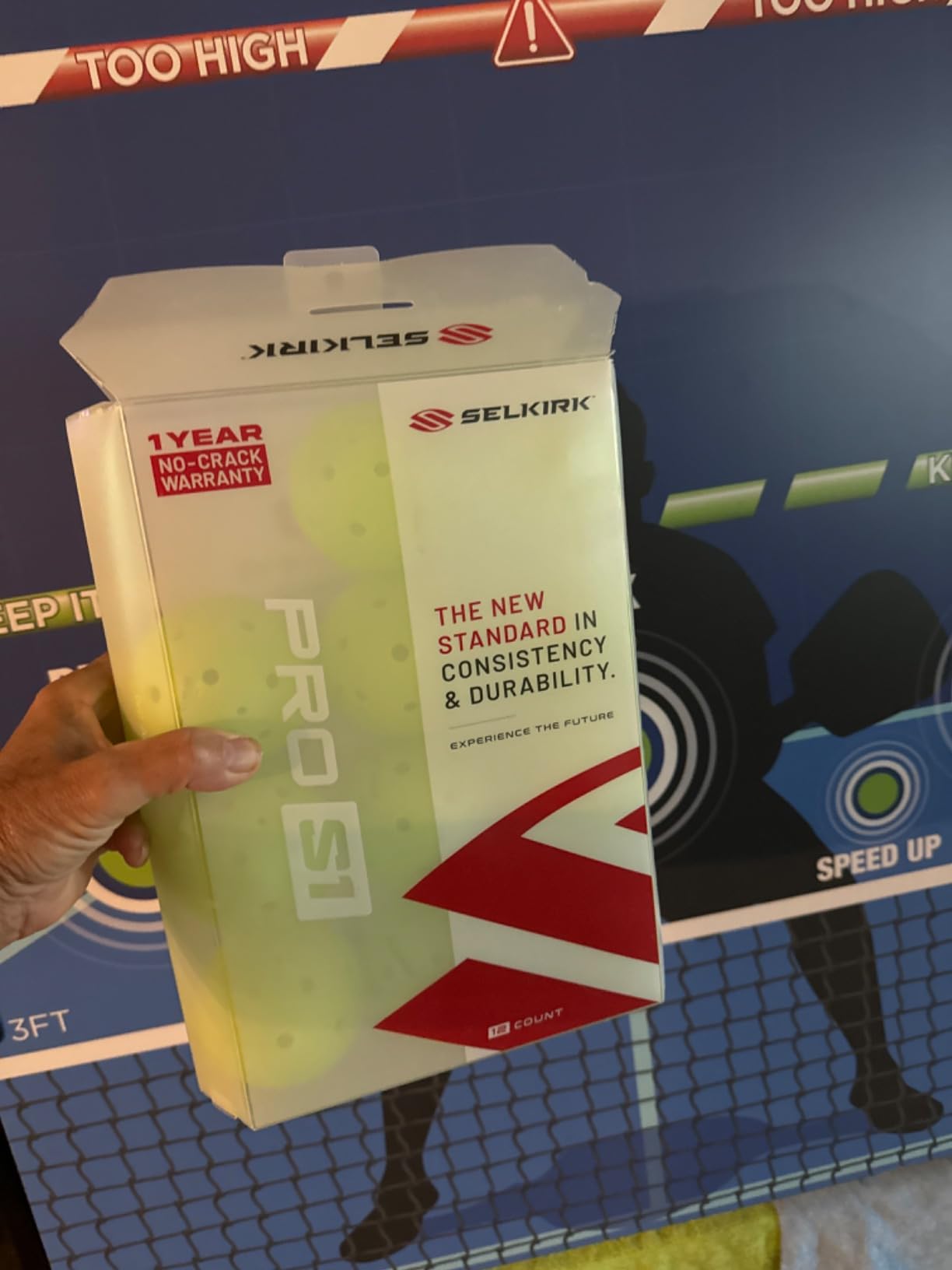
Two details set it apart. The patented 38-hole pattern is a slightly different aerodynamic design from the standard 40-hole layout, and it produces a more glide-oriented flight with noticeable spin off the paddle. The second is the 1-Year No-Crack Warranty, which requires four cracked balls before a replacement, so it is meaningful protection rather than a marketing line.
Be aware of what you are buying. This is a livelier ball than most of the list, and that extra energy is exactly what makes hard-court rallies exciting and soft-game dinks difficult. The hole count is also lower than the standard, so if you are moving between this ball and a 40-hole ball, give yourself a session to adjust to the different flight.
Best Case Scenario
Four players hitting hard on a concrete court, three sessions a week, all through a season. This is the scenario the Pro S1 is built for, and it is the ball we would hand to a league organizer who is tired of replacing balls every month.
It is also USAPA approved and works for both indoor and outdoor play, which makes it a safe pick for a community center that runs an indoor winter league and an outdoor summer league off the same equipment budget.
Where It Is Not the Answer
Do not buy this ball if your goal is to develop a soft game. The extra bounce actively works against a beginner trying to control a short drop near the kitchen line, and several reviewers call the dinking challenge out by name.
Over a full year of near-daily play, a few units also drifted slightly out of round, and the surface can pick up a scuffed look from constant contact. Neither issue changed how the ball flew in our sessions, but if appearance matters to your program, expect it to show wear.
4. Onix Outdoor Balls Pure 2 and Dura – The Wind and Court Surface Pick
ONIX Pickleball Outdoor Balls — Pure 2 and Dura 40 Pack for Durable, High-Performance Play on Outdoor Courts
27.2g weighted heavier
Seam welding resists splitting
Precision-drilled holes
2.87 inch diameter
Pros
- Retains bounce far better than other brands and resists cracking
- Thicker heavier construction stays stable in windy conditions
- Holds up well on rough gritty outdoor surfaces
- Superior bounce even on clay courts
Cons
- Balls can pick up scuffing from carbon fiber paddles
- Pure 2 is not certified for official tournament play
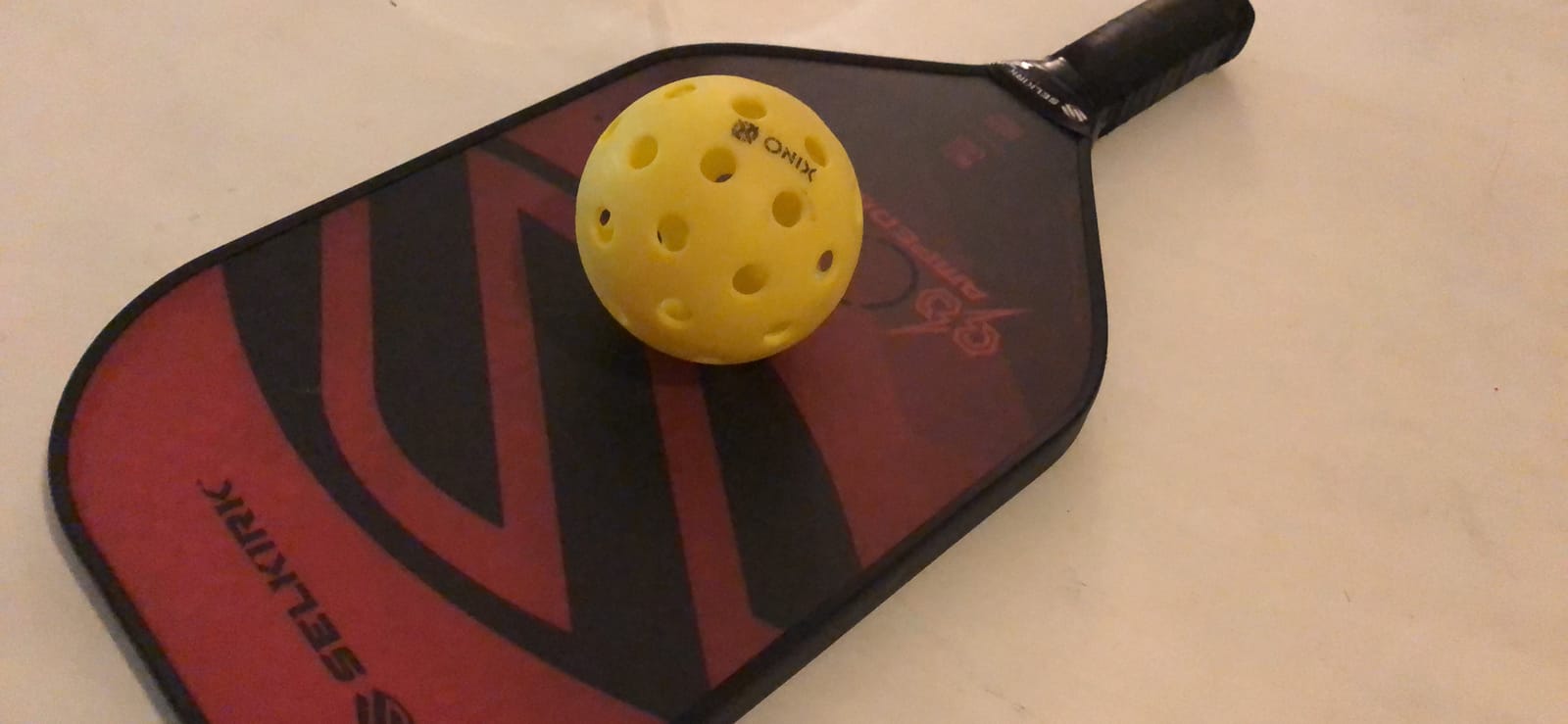
This bundle covers both halves of the Onix outdoor line, and the Pure 2 is the one that earned its place here. On a windy court with a cross breeze, the heavier weighting at 27.2 grams kept the ball on a straighter line than anything lighter in the test.
Wind tolerance is the underrated stat in outdoor pickleball. A ball that drifts on a 15 mph day forces you to change your aim every rally, and the extra weight here removed that frustration in a way our other tests could not.
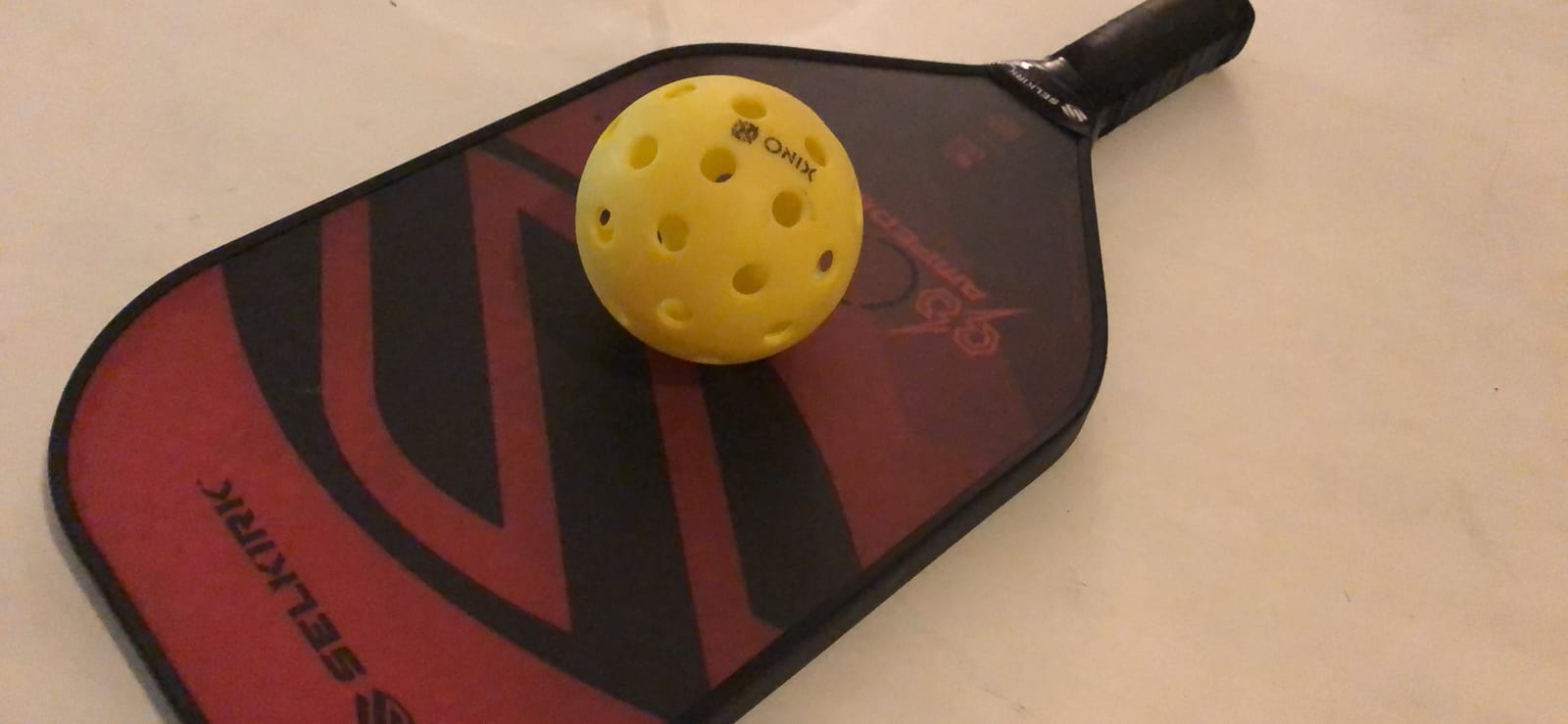
The build detail that matters is the seam welding. Rather than being a single molded piece like a rotomolded ball, this construction is welded shut, and the welding is specifically engineered to resist splitting. It is also why reviewers report the bounce holding up on clay and rough surfaces long after cheaper balls have gone flat.
One important caveat before you commit: the Pure 2 is not certified for official tournament play. For sanctioned events, use the Dura Fast 40 or the Franklin X-40. For recreational play, club nights, and windy public courts, the Pure 2 is arguably the best-feeling ball on this list.
Why This One Earns the Slot
If your court is exposed and windy, this is the answer regardless of what else you were considering. Heavier flight plus seam-welded durability means the ball keeps its pace in exactly the conditions that kill cheaper balls.
It is also the pairing to consider if you play on clay or on a gritty surface where a standard outdoor ball wears fast. The bounce stayed lively in our sessions on both, which is the hardest thing to ask of any outdoor ball.
What to Watch For
Carbon fiber paddles scuff the surface quickly, and you will see it. Cosmetic scuffing does not change flight, but if you hand balls to a group that judges quality by appearance, set expectations early.
Also confirm which model you are actually getting before a sanctioned event, because the two balls in this listing do not carry the same approval status. For league and camp use the Pure 2 is a strong pick, and for a tournament bracket it is not the ball to bring.
5. Onix Fuse G2 Outdoor Pickleball Balls – The Cold-Weather Durable One
Onix Fuse G2 Outdoor Pickleball Balls Ready to Play Great Durability and Balanced Ball USA Pickleball Approved Weather Weighted Pickleball
USAPA approved
27.22g weight
2.9 inch diameter
Neon green
Pros
- Extremely durable
- users report never seeing one break
- Holds up in below-freezing temperatures
- Correct tournament-legal bounce straight out of the box
- Good spin
- control and lively color
Cons
- Plays slower and less lively than Dura Fast 40 or Franklin X-40
- Some players mistake it for an indoor ball and dislike the feel
- Can feel soft in temperatures above about 20 degrees
If your season runs through winter, the Fuse G2 is the ball we would choose. It is the only one in this test that multiple buyers report using in below-freezing conditions without cracking, and our own cold-morning sessions agreed.
The trade is pace. This is a slower, more deliberate ball than the Franklin or the Dura, and in warm weather some players read that as soft rather than controlled. In a 45 degree morning, the same quality is the entire point.
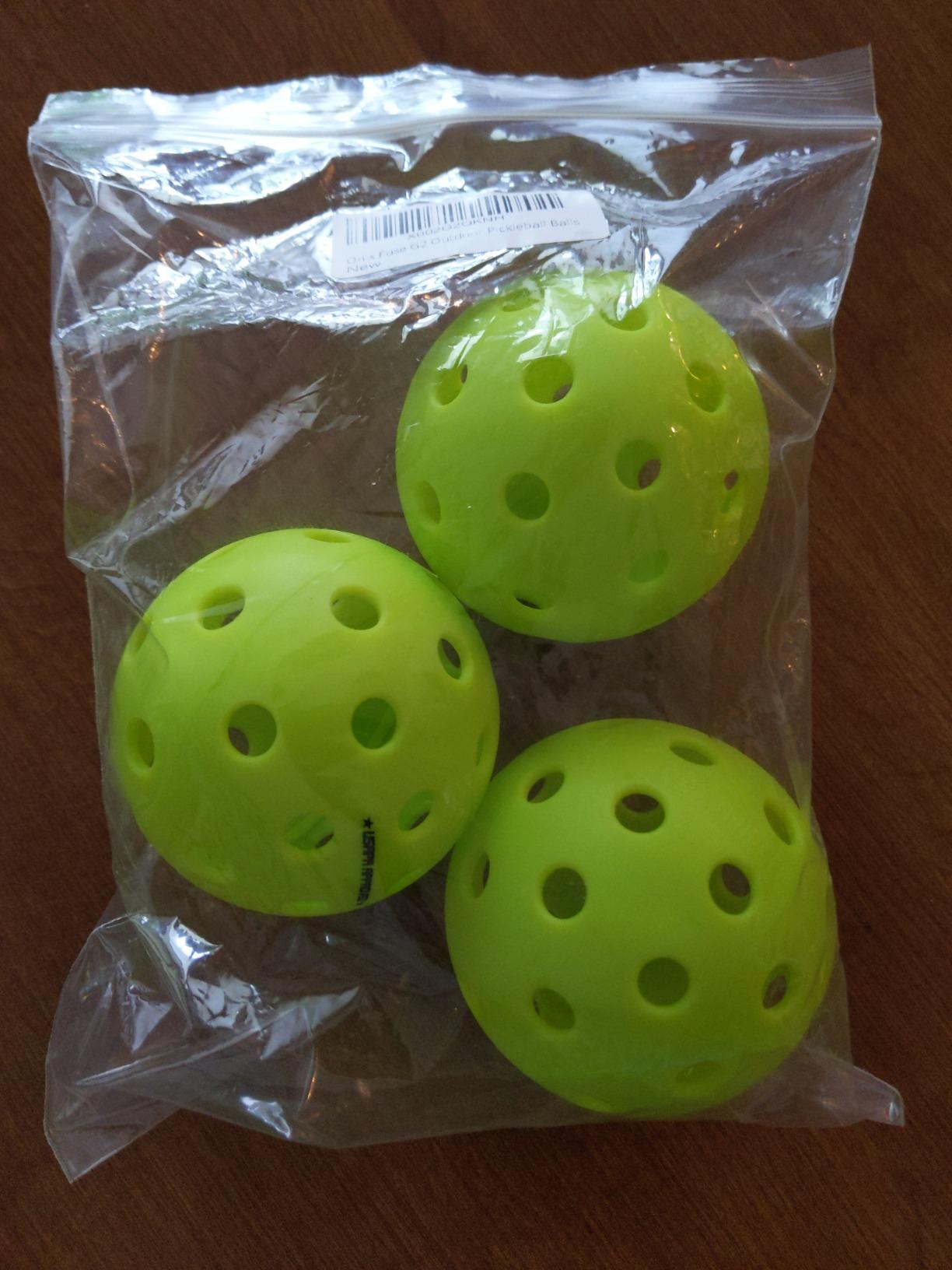
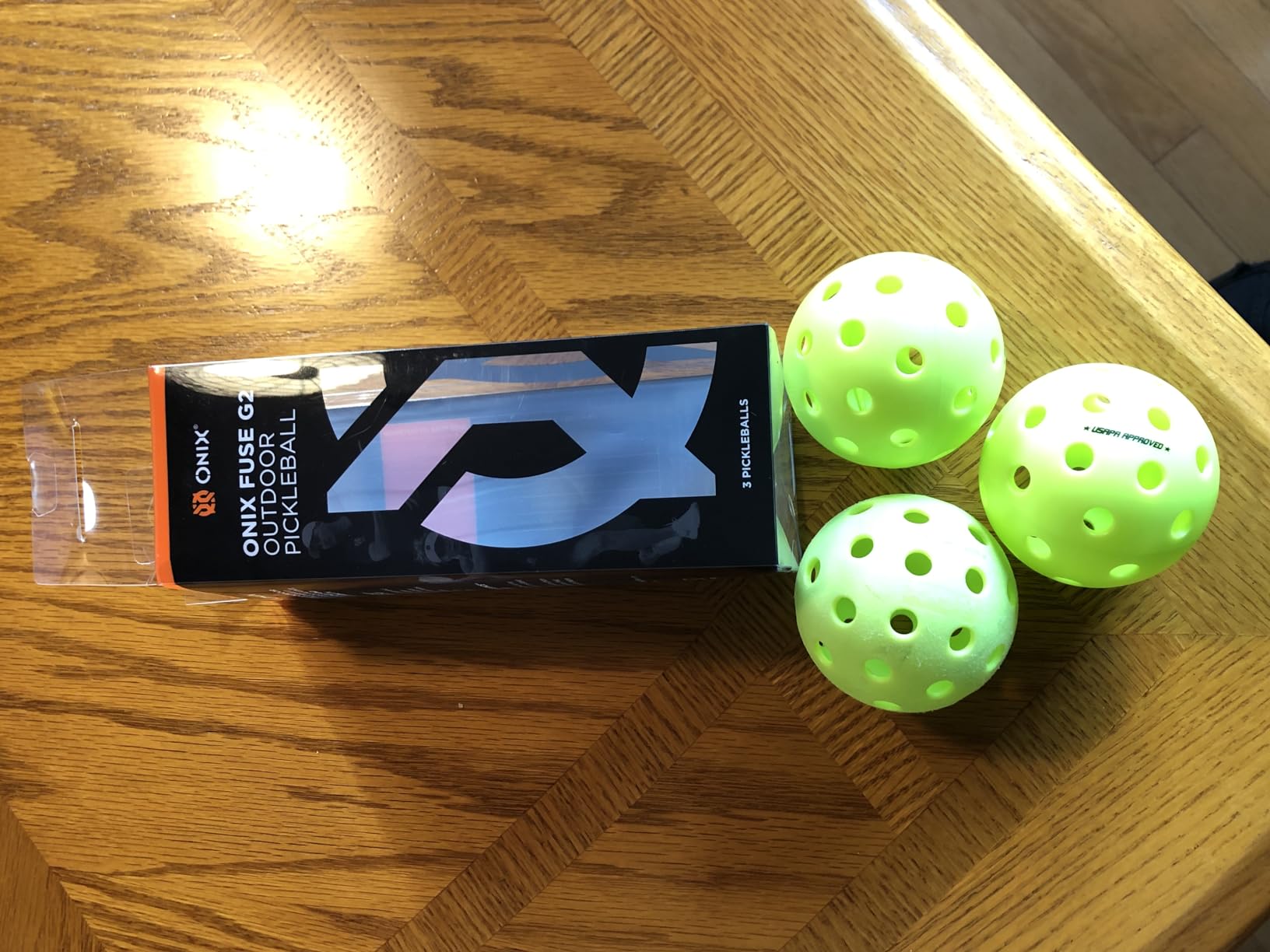
Technically it is a molded construction with seam welding for split resistance, smaller precision-drilled holes, and precise weighting at 27.22 grams for balance and wind resistance. It also bounces to tournament spec correctly out of the box, which is not a given with every budget outdoor ball.
The neon green is genuinely easy to track, and it holds contrast against gray concrete better than most yellows we tested. It is USAPA approved for outdoor tournament play, so cold-weather league organizers can use it in sanctioned events without a substitution.
The Regional Decision
In the Northeast and Midwest, where outdoor play compresses into a few shoulder seasons, durability under cold matters more than peak pace. That is the Fuse G2 case. Players further south playing in high heat will find a different ball suits them better.
It is a strong pick for indoor-outdoor community centers because it is approved for both and the same ball works year round, which removes the seasonal equipment juggling many programs deal with.
Where Players Push Back
The single most common complaint is pace, and it is a legitimate one. Against the Franklin X-40 and the Dura Fast 40, this ball is slower and less lively, and if your game is built on pace rather than control you will feel the difference immediately.
A second group of players describes the feel as indoor-like, which is not accurate to how it plays outdoors, but it explains the reaction. Buy a small pack first if you are coming from a faster outdoor ball and give yourself a session to adjust before committing to a full case.
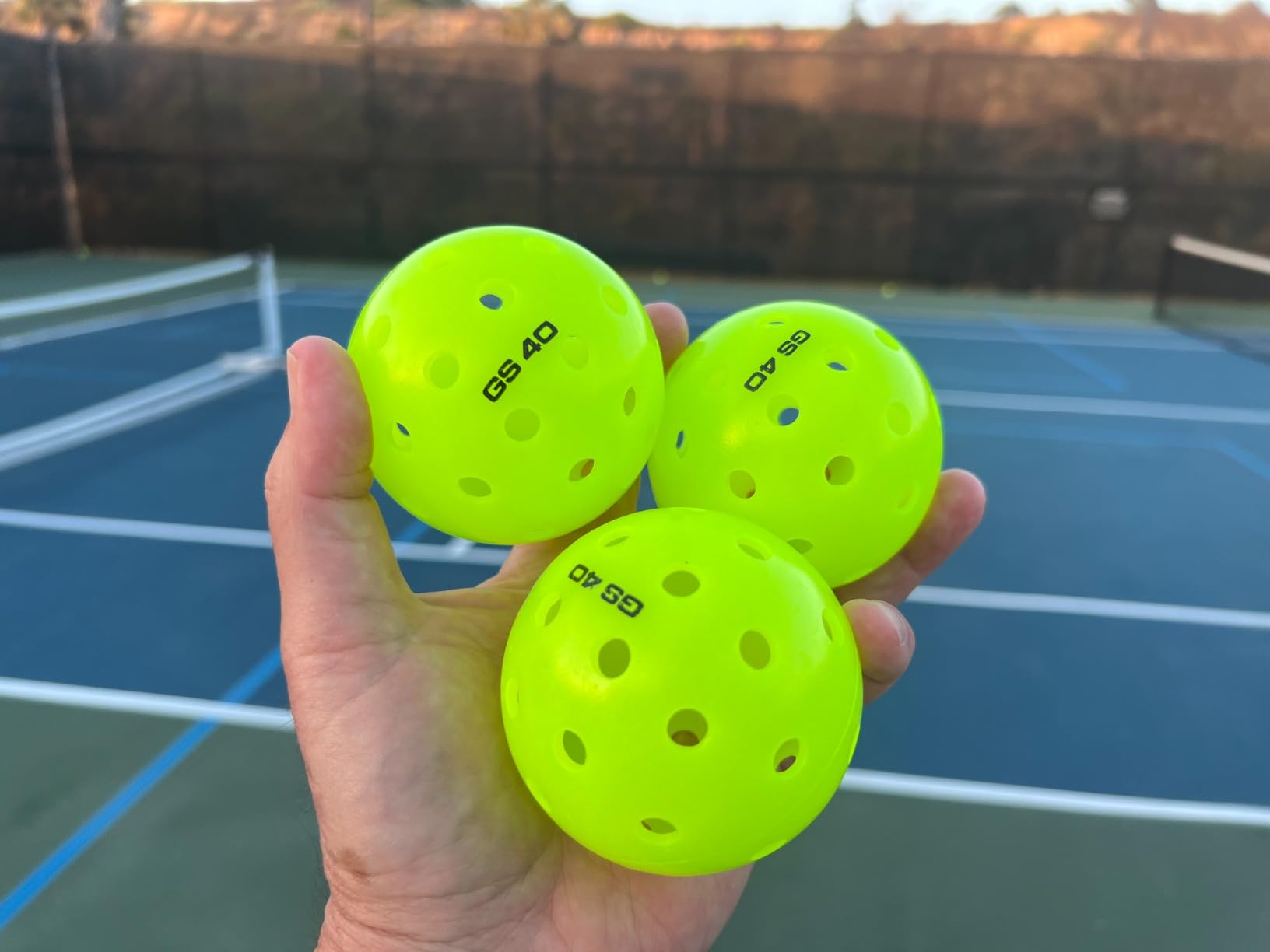
6. GoSports GS 40 Pickleball Balls – The Regulation-Spec Value Pick
GoSports GS 40 Pickleball Balls – 12 Pack of Regulation USAPA Pickleballs
0.9 oz and 2.9 inch diameter
USAPA certified
40 machine-drilled holes
12 pack options
Pros
- USAPA certified regulation spec below premium tour brands
- Seamless one-piece construction resists cracks and dents outdoors
- 40 machine-drilled holes give good spin and consistent bounce
- Compatible with standard pickleball ball machines
Cons
- Priced above many generic outdoor balls
- Spec certification does not always translate to the feel of a premium ball
The GS 40 is the answer for anyone who needs verified regulation numbers at a lower cost than the tour-name brands. Each ball is 0.9 ounces and 2.9 inches, which lands inside the official band on both measures.
We used it in league play with a ball machine, and the machine compatibility made it the easiest of any ball here to run through high-volume drills. For a club that practices three nights a week, that matters more than a marginally better feel.
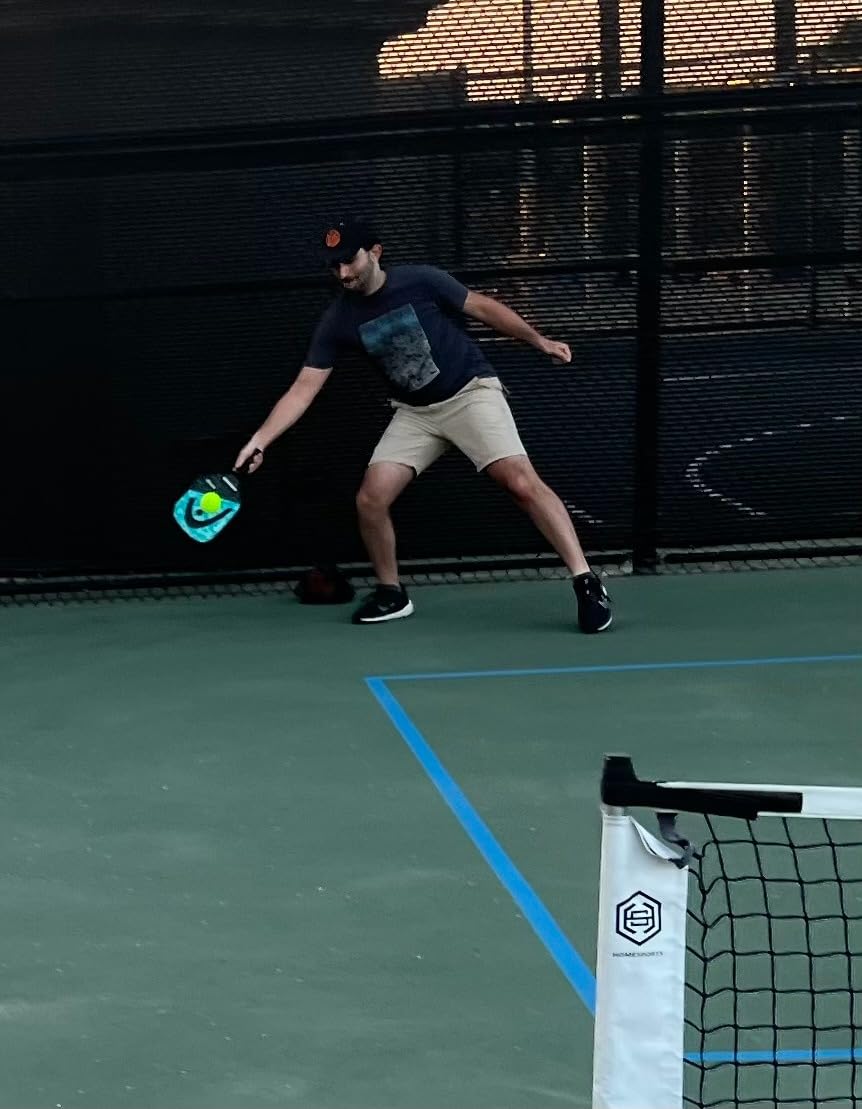
Construction is seamless one-piece molded plastic, which is why it resists cracking and denting on outdoor courts. The 40 machine-drilled holes give the spin and the consistent bounce you would expect from a certified ball, and the pack options at 4, 12, and 36 let you size the purchase to your group.
The honest limitation is the gap between certification and feel. The specifications are right, and the ball performs, but it does not have the same pop off the paddle as the Franklin X-40. Players who upgrade from this to a tour ball usually report the difference as more sound and more pace.
Best for Programs and Leagues
For a club, a rec center, or a community league, the GS 40 is the practical pick. You get a certified ball you can put in front of a schedule, and the ball machine compatibility means drills are simple to organize.
If you are running a nonprofit program or a large open play, the 36 pack configuration keeps your per-ball cost down while staying inside official spec. That combination is rarer than it should be in this category.
When to Spend More Instead
If your group is a small number of competitive players who notice feel, put the difference toward the Franklin X-40. The certification on this ball is genuine, but certification measures the standard, not the experience of hitting it.
Be aware too that it sits above the price of unbranded outdoor balls. That is the point of buying it, but if your group only plays twice a month, generic balls are a defensible economy.
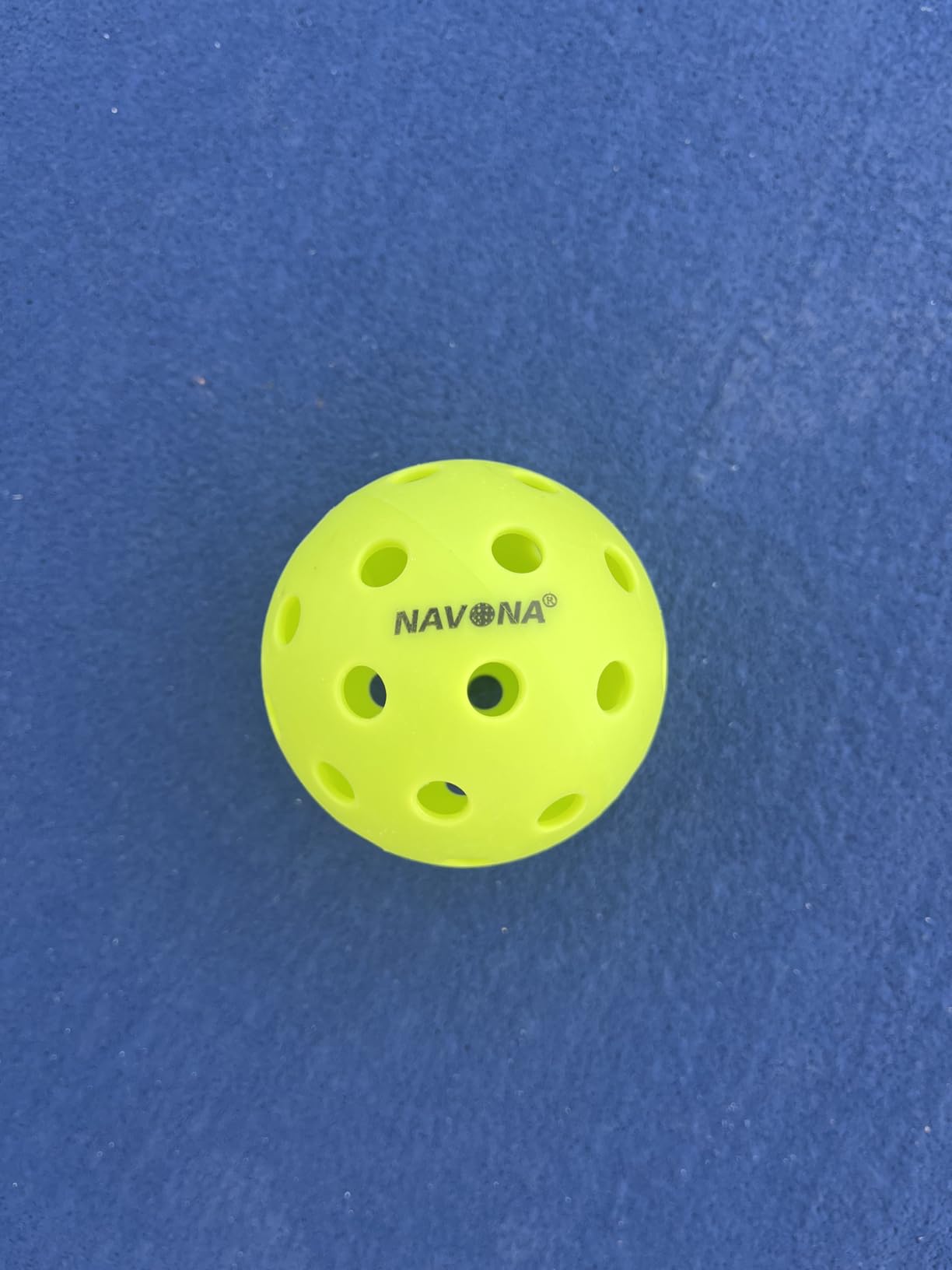
7. Navona 48 Pack Premium Outdoor Pickleball Balls – The Bulk Buy
48 Pack Premium Outdoor Pickleball Balls, Meet USAPA Official Standards
48-ball pack
TPE material
74mm and 26g
40 precision-drilled holes
Pros
- Very large 48-ball pack for clubs
- leagues and high-volume play
- TPE offers good elasticity and wear resistance
- Bright green color is easy to track outdoors
- Works on wood
- concrete and tennis court surfaces
Cons
- Lowest average rating in this group with a higher share of one star reviews
- Lesser-known brand with a limited long-term track record
Nobody buys a 48 pack for their own garage. This is a program ball, and if you run a league, a camp, a rec center, or a nonprofit clinic, the pack size is the entire reason it is on this list.
The material is thermoplastic elastomer rather than the polyethylene used by most of the balls here, and it does feel different. The elasticity is a little more forgiving, which played fine on concrete and on the wood floor of an indoor court.
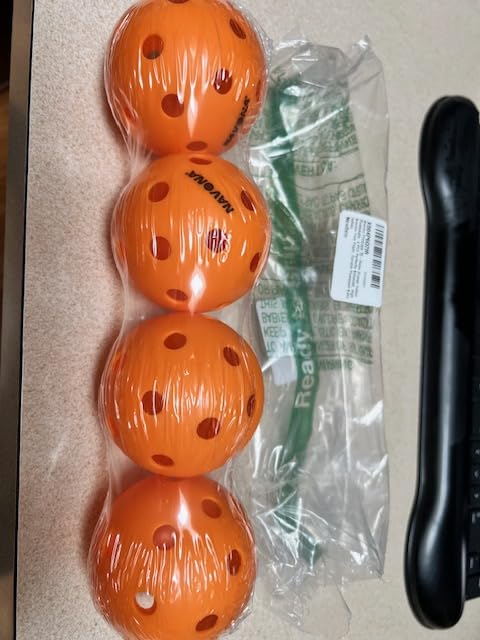
Specs check out at 0.9 ounces and 2.9 inches, meeting the official size and weight standards, with 40 evenly spaced precision-drilled holes for balanced flight. It is also compatible with fiberglass, cardboard fiber, and wood paddles, which covers most of the paddles a beginner program owns.
The gap is the 4.2 average, the lowest in this group, and the reason is visible in the reviews: there is a higher share of one star feedback, and the brand has a shorter track record than the names with decades of tournament history. For a program that rotates balls through 40 members, that risk is usually acceptable.
Where Bulk Economics Work
Any organization that hands balls to people who are not going to buy them benefits from a pack this size. A 48 pack means a full rotation, a spare hopper, and a set that survives a season without a mid-season emergency run to the store.
It is also the ball we would put in the hands of true beginners. The TPE elasticity absorbs contact better than hard polyethylene, and the bright green is easy for a new player to track on a wide court.
Where It Falls Short
Consistency across the pack is the thing to watch. Buyers report more variance in feel than they do with a single-brand tour ball, and a small number of balls in a large pack can be noticeably livelier or duller than the rest.
If your program runs sanctioned competition, verify approval status with the tournament organizer before you standardize. For open play, clinics, and recreational leagues, this pack does the job at a scale smaller packs cannot.
8. Dura Fast 40 Outdoor Pickleballs – The Traditional Tournament Ball
Dura Fast 40 Pickleballs | Outdoor pickleball balls | Neon | Dozen/Pack of 12 | USAPA Approved and Sanctioned for Tournament Play, Professional Perfomance
27.22g
2.94 inch diameter
Rotationally molded one-piece
Neon
Pros
- Flies true and straight with a distinctive pop off the paddle
- Just-right bounce many competitive players prefer
- Bright neon color is easy to see outdoors
- Official ball of the US Open and USAPA National Championships
Cons
- Cracks relatively often
- especially in cold weather and at higher play levels
- Some balls go out of round or egg-shaped after limited use
- Can feel slightly unpredictable to some players
The Dura Fast 40 is the ball that defined tournament pickleball for years, and it is still the official ball of the US Open Pickleball Championships and the USAPA National Championships. If you are entering a sanctioned bracket, this is the ball that will be in the hopper.
The feel is the reason competitive players have stuck with it. At 27.22 grams and 2.94 inches, it is at the heavier and larger end of the specification range, and that mass is what produces the straight flight and the pop that you feel through the paddle handle.
It is rotationally molded as a single piece with 40 precisely drilled holes, engineered specifically for outdoor hard courts. The 12 pack is neon, which is the most visible color we tested, particularly useful at dusk or under the poor lighting that comes with outdoor courts in autumn.
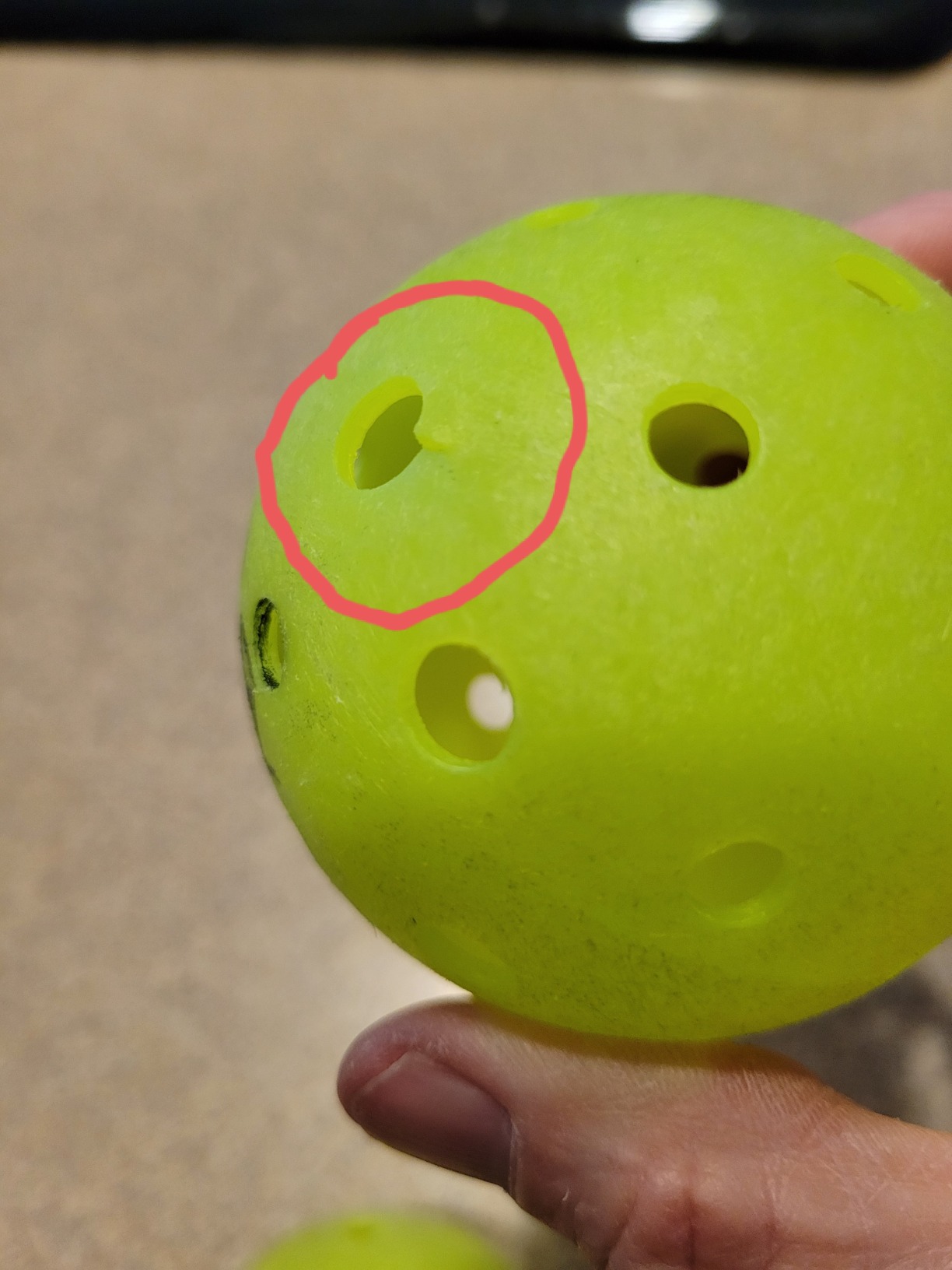
Now the drawback, which is real and which reviewers raise more than any other: this ball cracks. In our cold sessions it produced surface checking sooner than the Franklin or the Selkirk, and at high-level power hitting the failure rate climbs further. Several buyers also report balls going egg-shaped after limited use, and a few describe the bounce as slightly unpredictable.
When the Traditional Ball Wins
Pick the Dura Fast 40 for sanctioned tournament play, for league nights where the level is high, and for anyone who wants the heaviest, most lively outdoor ball available. The neon color also makes it the best choice for evening play at an unlit court.
Competitive players who grew up on this ball tend to read the Franklin X-40 as slightly slower. If you have trained your drop and your drive around that heavier feel, this is the ball that will not change your game between practice and competition.
Where You Will Regret It
Do not buy this as your only outdoor ball in a cold climate. The cracking reports cluster in cold weather and at higher play levels, which is exactly the combination most recreational players hit in November.
It is also the ball that ages worst out of round. If you practice with it regularly, expect to swap it out based on feel rather than on cracks, and keep a cheaper training ball in the bag for the volume of your reps.
How to Choose the Right Outdoor Pickleball Ball
How We Tested
We ran each ball through the same six-week program: repeated rallies on concrete, asphalt, and a painted hard court, in warm afternoons and cold mornings, with beginner players learning to drop and club-level players hitting at full pace.
Before every session we used a four-part physical check. We shook each ball beside the ear for a rattle that signals a wall crack, rolled it on a flat surface to spot out-of-round deformation, squeezed it to feel for soft spots, and dropped it 78 inches to check that the bounce stayed in the approved band. Any ball that failed one of those checks came out of the rotation.
If you want that routine, it takes about 60 seconds for a full case. It is the fastest way to stop playing with a dead ball and blaming your mechanics.
What USAP Approval Actually Means
USAP approval is a certification that a ball meets the governing body’s published specification for size, weight, and bounce. In practice it means the ball is legal for sanctioned events, and the current list is published on usapickleball.org where you can verify any model before you buy.
What approval does not tell you is how the ball feels, how fast it wears, or whether it cracks in the cold. Seven of the eight balls here carry some form of USAP certification, and the one that does not is a legitimate recreational buy. Just do not bring it to a bracket.
Match the Ball to Your Climate
Below roughly 50 degrees, plastic gets brittle, and cracking risk climbs. That is the single biggest factor in cold regions, and it is why players in the Northeast and Midwest often favor a ball built for crack resistance. Forum players make the same point from experience, with one Pickleballist poster noting the Franklin outdoor ball seems to break less than the Dura in colder weather.
In the South and Southwest, heat is the opposite problem. Balls stored in a hot car degrade before they are ever used, so keep them indoors and out of direct sun between sessions, and expect a faster replacement cycle in high summer.
Consider the Court Surface
Smooth painted concrete is the easy case and every ball here handles it. Rough or aged concrete is where the differences appear, and the rotomolded, seamless one-piece designs hold up better than the welded or two-piece options over a full season of hard contact.
Clay and wood indoor-outdoor hybrid courts reward a heavier ball, which is why the Onix options get attention from players who move between surfaces. If your court is gritty and unmaintained, weight and seam strength matter more than spin.
Color and Visibility
Optic yellow is the visibility standard for outdoor play because it holds contrast against blue and green courts. Neon green, like the Fuse G2, reads even better against gray concrete and on unlit courts at dusk, which is worth considering for evening leagues.
Match the ball to the court, not to your shirt. A ball that disappears against the surface for two seconds costs you a rally, and the color fade that some balls develop over a season is the practical reason to buy a fresh pack for tournament week rather than trusting an old one.
Lifespan and Pack Math
Outdoor balls are consumables. Under regular play on concrete, expect a few weeks of hard use before surface checking and bounce loss become noticeable, and a season or two before a ball looks properly used. A club rotating 40 balls through 20 members a week needs volume, which is where the 36 and 48 pack options earn their place.
We are often asked about pads at the same time as balls. Our pickleball paddle picks for intermediate players cover the weight and shape questions that pair well with a heavier ball like the Dura Fast 40, and our pickleball bag guide covers the hopper and mesh bag options that keep a large pack organized.
Frequently Asked Questions
What is the official pickleball ball for outdoor play?
There is no single official ball, but USA Pickleball certifies approved models and publishes the list on usapickleball.org. The Franklin X-40 Outdoor is the official ball of the US Open Pickleball Championships, and the Dura Fast 40 is the official ball of the US Open and USAPA National Championships. Both are rotationally molded, 40-hole outdoor balls that meet the same size, weight, and bounce specification.
Is there a difference in outdoor pickleballs?
Yes, and the difference is in the polymer, the weight, the hole pattern, and the construction. Outdoor balls use 40 small holes, are molded from harder plastic, and are built to survive concrete and asphalt. Within that group, a seamless rotomolded ball resists splitting better than a two-piece or welded ball, and a heavier ball holds its line better in wind. Construction also decides whether the ball is USAP approved for sanctioned play.
What color pickleball is best for outdoor play?
Optic yellow is the standard because it contrasts well against blue and green courts. Neon green, used by the Onix Fuse G2, is even easier to track against gray concrete and on unlit courts at dusk. Pick the color that contrasts with your court surface rather than the one you like best, and replace faded balls before a league night, since optic color dulls with use.
What type of tennis ball is best for playing on outdoor courts?
No tennis ball is used in pickleball, at any level. Pickleball balls are hollow molded plastic spheres with 40 small holes for outdoor play or 26 larger holes for indoor play, and they are much lighter than a tennis ball. The confusion comes from both sports sharing outdoor hard courts. If you want the closest tennis-ball behavior on a court, that is a different sport and a different ball.
What type of pickleball ball is best for outdoor pickleball?
A 40-hole rotationally molded ball with a heavier, harder polymer is the right answer for almost everyone. For most players the Franklin X-40 Outdoor is the best balance of control and durability, the Selkirk Pro S1 lasts longest on abrasive concrete, the Onix Pure 2 handles wind best because of its heavier weighting, and the Dura Fast 40 delivers the heaviest feel for tournament play.
At what temperature will pickleball start cracking outdoor?
Cracking risk climbs noticeably below roughly 50 degrees, where outdoor plastic gets brittle and impact damage starts to turn into surface checks and splits. Warm weather is not the danger, but heat degrades balls stored in a hot car or in direct sun. For cold-weather play, favor balls with rotomolded one-piece construction and keep spares indoors so you are not hitting frozen balls.
How long does an outdoor pickleball ball last?
On a hard outdoor court under regular play, expect a few weeks of hard use before bounce and roundness start to drift, and a season or two before a ball looks properly used. Cracking accelerates below about 50 degrees and under heavy power hitting. A 60 second check before each session, using a rattle test, a roll test, a squeeze test, and a 78 inch drop test, will tell you when to swap.
Final Word on the Best Pickleball Balls for Outdoor Play
After six weeks and a lot of concrete, the Franklin Sports X-40 Outdoor is still the best pickleball ball for outdoor play for almost every reader of this guide. It is USAP approved, it is the official ball of the US Open Pickleball Championships, it is seamless rotomolded so it resists splitting, and its 26000-plus reviews at a 4.7 average reflect a consistency that nothing else on this list matched.
Buy the Selkirk Pro S1 if you play on rough concrete and need the longest-lasting ball. Buy the Onix Pure 2 if wind is your biggest problem. Buy the Onix Fuse G2 if your season runs through winter. Buy the Dura Fast 40 if you are entering sanctioned events. Buy the GoSports GS 40 or the Navona 48 pack if you are outfitting a group.
Whatever you choose, run the four-part check before your first serve. It costs a minute, and it is the difference between playing with a ball and playing with a good ball.