
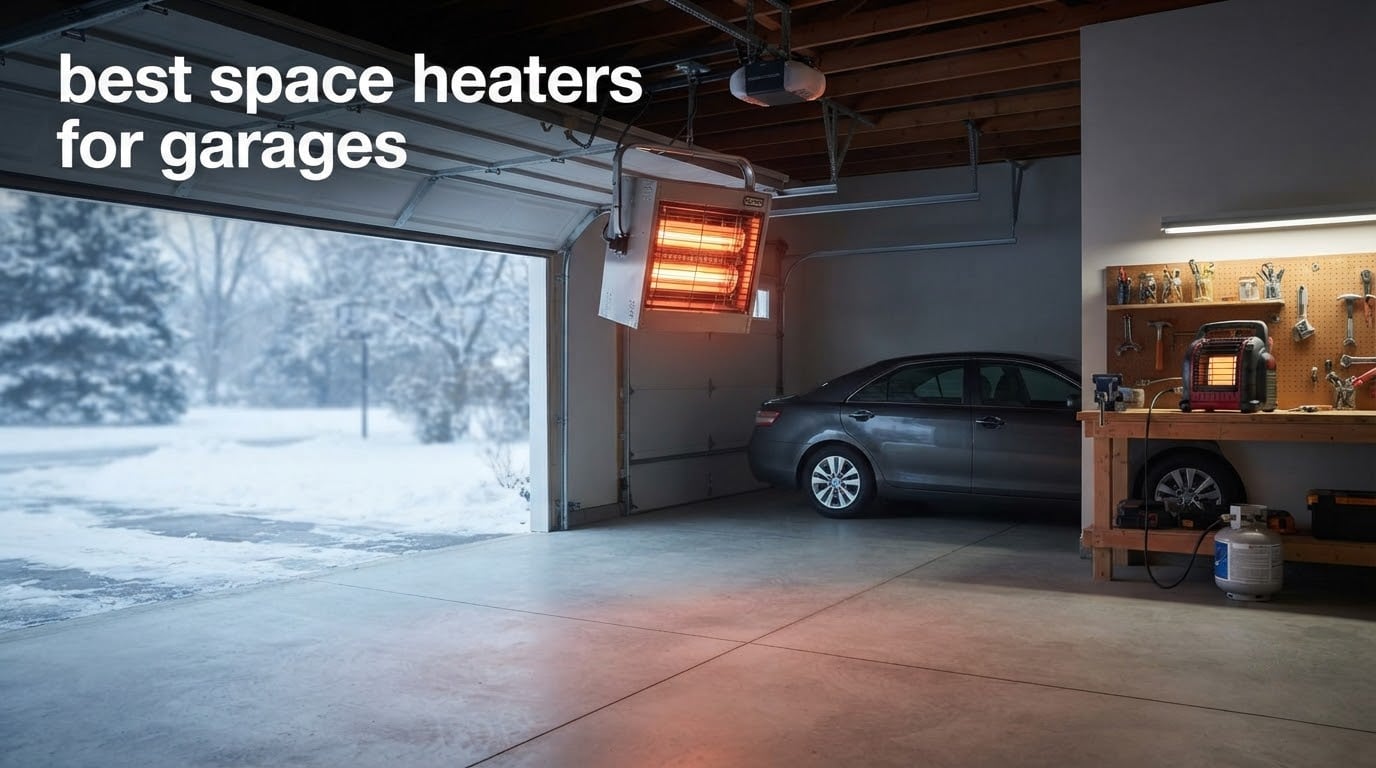
The best space heaters for garages break down by size, not by brand. A 1,500W plug-in unit handles a one-car garage or a workbench corner, a 5,000W ceiling-mounted model covers a two-car space, and a permanently installed 50,000 BTU gas unit is what a three-car garage or workshop really calls for. Ten units earned a place below, tested against output, coverage, safety features and the electrical work each one demands.
Most people buy a garage heater for one of three reasons. A car that will not start on a cold morning, a home gym or woodshop that needs usable temperatures while they work, or a detached workshop where a heater is the only thing standing between the space and freezing. The right pick depends on the square footage, the insulation, and whether you are willing to run new wire.
Our team spent weeks comparing portable electric units, portable propane radiant heaters, hardwired 240V shop heaters and one permanently installed gas furnace-style unit. Every specification below comes from the manufacturer data, and we note the electrical requirements before the features because that is where most buying mistakes happen.
If your garage is really a side porch or a mudroom, skip this guide and read our picks for large rooms or quiet bedroom heaters instead.
Table of Contents
Top 3 Picks: Garage Space Heaters in 2026
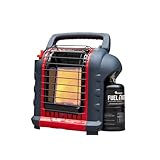
Mr. Heater Portable Buddy
- 9000 BTU radiant heat
- Heats up to 225 sq ft
- Indoor and outdoor approved
- Low-oxygen safety shutoff

Mr. Heater Big Buddy PRO
- 18000 BTU radiant and convection
- 450 sq ft coverage
- Three heat settings
- Floor or wall mount

Comfort Zone 5000W Ceiling
- 5000W fan-forced heat
- 17065 BTU output
- 1000 sq ft coverage
- 240V hardwired
Best Space Heaters for Garages (October 2026)
Here is the full lineup in one place, with the fuel source and the install requirement for every unit. Anything marked hardwired needs a 240V circuit and a qualified installer before it will run.
| Product | Specifications | Action |
|---|---|---|
| Mr. Heater 9,000 BTU Portable Buddy |
|
Check Latest Price |
| Mr. Heater 18,000 BTU Big Buddy PRO |
|
Check Latest Price |
| Comfort Zone 5000W Ceiling Mount Garage Heater |
|
Check Latest Price |
 Dr. Infrared DR-238 1500W Infrared Heater Dr. Infrared DR-238 1500W Infrared Heater |
|
Check Latest Price |
 Dr. Infrared DR-988 5600W 240V Shop Heater Dr. Infrared DR-988 5600W 240V Shop Heater |
|
Check Latest Price |
 Mr. Heater 50,000 BTU Forced-Air Unit Heater Mr. Heater 50,000 BTU Forced-Air Unit Heater |
|
Check Latest Price |
 Remington 60,000 BTU LP Forced Air Heater Remington 60,000 BTU LP Forced Air Heater |
|
Check Latest Price |
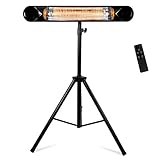 Briza 1500W Infrared Wall and Ceiling Heater Briza 1500W Infrared Wall and Ceiling Heater |
|
Check Latest Price |
 Dr. Infrared DR218 1500W Cabinet Heater Dr. Infrared DR218 1500W Cabinet Heater |
|
Check Latest Price |
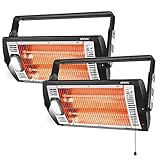 Shinic 2-Pack 1500W Quartz Ceiling Heater Shinic 2-Pack 1500W Quartz Ceiling Heater |
|
Check Latest Price |
1. Mr. Heater Portable Buddy – Best All-Round Pick for a Garage
Mr. Heater 9,000 BTU Portable Buddy Radiant Propane Heater
Propane radiant heater
9000 BTU or 4000 BTU
Heats 225 sq ft
7.1 lb floor unit
Pros
- Selectable 4000 or 9000 BTU radiant output
- Approved for indoor and outdoor use
- Low-oxygen safety shutoff and self-extinguishing construction
- Runs 5.4 hours on low with a 1 lb cylinder
- Light enough to carry between work areas
Cons
- Radiant heat warms people and objects in front of the unit rather than the room air
- Coverage tops out near 225 square feet
- Requires a propane cylinder and open-flame combustion indoors
I have used the Portable Buddy in more single-car garages than any other propane unit, and it keeps earning its place. At 7.1 pounds you can pick it up with one hand, set it in front of the workbench, and move it to the engine bay when the weather turns. The 4,000 and 9,000 BTU settings let you dial it back when the garage is only marginally cold.
The number that matters most here is 29k+ reviews, which makes this the most thoroughly proven heater in this group by a wide margin. Owners consistently point to the same things: strong radiant heat on your hands and chest within a minute of lighting, quick setup, and a chassis that survives being knocked around.
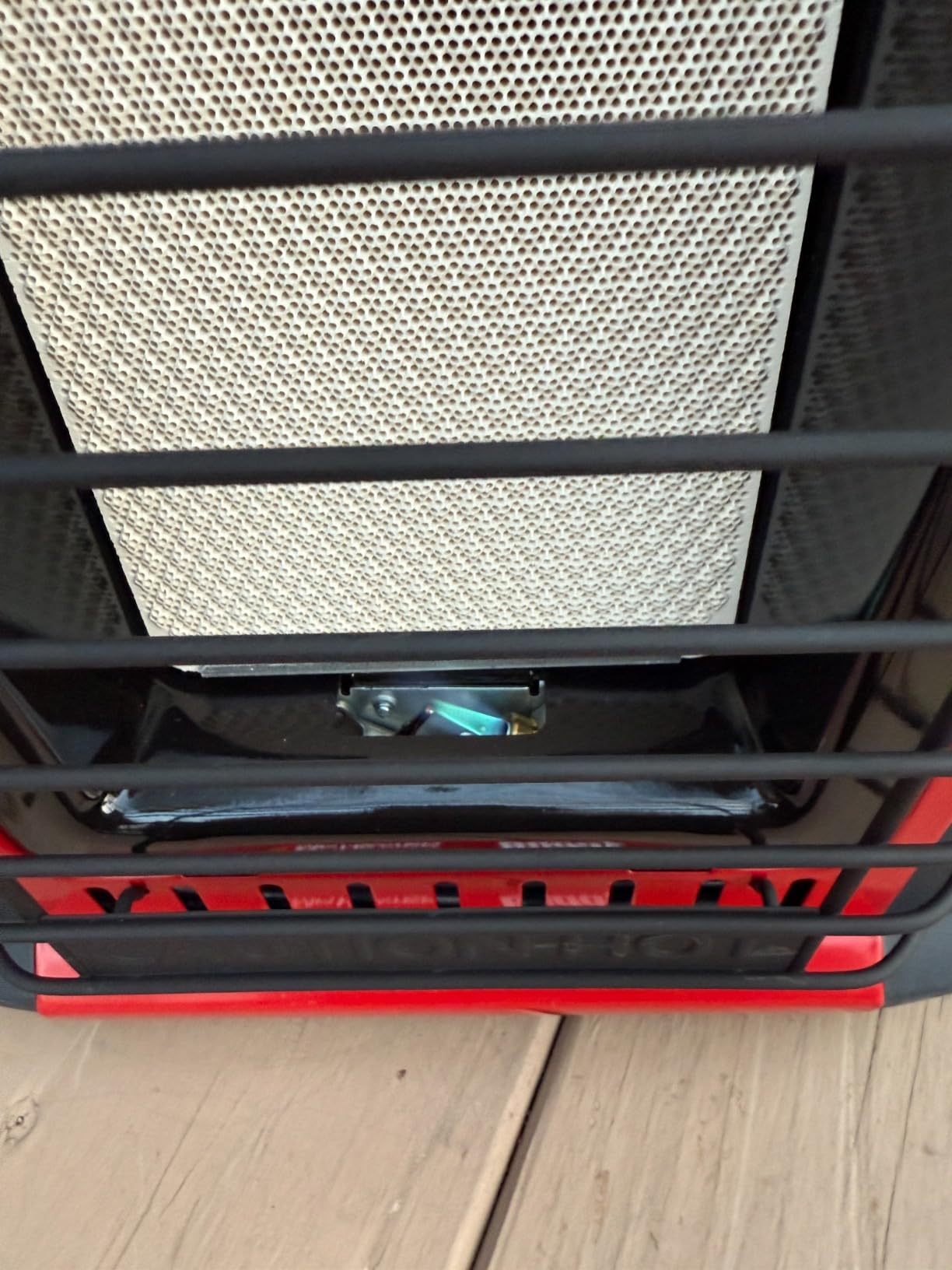
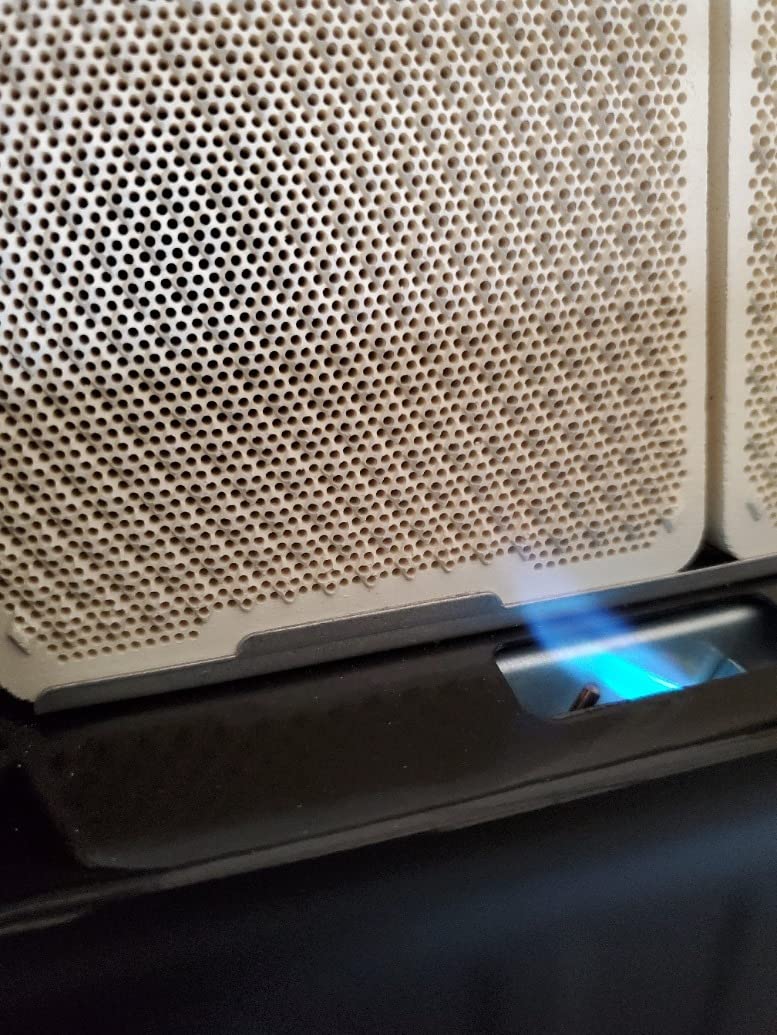
What you give up is room-filling heat. This is a radiant unit, so it warms the zone in front of it and the objects in that zone, not the entire garage volume. Rated coverage of roughly 225 square feet is realistic when you are working in that area, and misleading if you expect to raise the temperature of a 480 square foot two-car bay.
Runtime is honest and well documented. On low with a 1 lb cylinder it runs about 5.4 hours, and on high about 2.4 hours. The low-oxygen safety shutoff and self-extinguishing materials are genuine safety engineering, not marketing language, and the piezo igniter means no matches in a garage full of sawdust.

What to check before you buy
Decide honestly whether you are heating yourself or heating the room. If you spend forty minutes at a bench in a cold garage, radiant heat is more efficient because it goes straight into your body. If you want the whole bay at 60F so a paint job cures evenly, this is the wrong tool.
Buy at least two 1 lb cylinders, and keep a spare indoors. Running out mid-project in an unheated garage at night is a genuinely miserable experience, and r/AskMechanics threads about low-cost garage heating come back to propane logistics again and again.
Where it is the wrong call
Do not install this in an attached garage that shares an air path with living space without understanding combustion air. Every propane heater pulls air to burn, and in a tight attached space that can pull fumes back through the house. A battery-backed CO detector near the ceiling of the garage is not optional in my book.
It is also not a heater for a car wash bay or a plant area where humidity matters. Radiant units add nothing to the air, so the damp stays damp. For a greenhouse-style use case, a fan-forced unit with a thermostat is a better match.
2. Mr. Heater Big Buddy PRO – Best Value for a Medium Garage
Mr. Heater 18,000 BTU Big Buddy PRO Series Heater
Propane radiant and convection
18000 BTU top setting
Heats 450 sq ft
14.1 lb wall-mountable
Pros
- Three heat settings at 4000 9000 and 18000 BTU
- Dual radiant plus convection with a built-in fan
- Up to 216 hours on two 20 lb tanks with an optional hose
- Floor or wall mountable with tip-over and low-oxygen protection
- Three-year limited warranty
Cons
- At 14.1 pounds it is not a grab-and-go portable unit
- Radiant heat is strongest directly in front of the unit
- Burner output settings feel moot once the space is warm
The Big Buddy PRO is the unit I recommend when someone asks for one heater to cover a two-car garage over a full winter. Eighteen thousand BTU with a built-in fan moves real air, and the 450 square foot coverage claim is far closer to the truth than it is on most portable radiant heaters. Reviewers report 82% five-star ratings across more than 3,500 reviews.
The three-stage output is the feature I use most. 4,000 BTU for a cool morning, 9,000 BTU for ordinary working weather, and 18,000 BTU when the temperature really drops. The wall-mount capability matters too, because lifting 14.1 pounds onto a shelf every time is the kind of thing that stops happening by February.
The runtime figure is the standout number. With an optional hose and two 20 lb propane cylinders, the manufacturer rates up to 216 hours on the low setting. That single spec answers the tank-logistics problem better than any portable unit on this list, and it means you are refilling a tank once a season rather than once a week.
The conversion detail that catches people is that the higher BTU settings burn propane proportionally faster, so the 216 hour figure assumes you are on low most of the time. If you plan to run it at full output through a cold snap, budget for refills in proportion.
What to check before you buy
Confirm you have a safe place to store two 20 lb cylinders indoors, upright and away from ignition sources. The hose-and-regulator setup is simple but it needs a leak check every season. If your garage is attached to the house, read the venting guidance in the safety section below before you commit.
Plan where it goes. Radiant output is strongest in the line in front of the unit, so a spot near the garage door pointed inward does more for a parked car than a spot against the back wall. Owners on r/HomeImprovement repeatedly make this point: placement beats raw output in a leaky space.
Where it is the wrong call
It is not a grab-and-go heater. At 14.1 pounds, moving it between the shop and the driveway takes two hands and a plan, and it is awkward on stairs or over a curb. For job-site use, the Remington below is the better tool.
It is also overkill for a one-car garage or a mudroom-adjacent space. You would be paying for capacity you never use and burning fuel to heat empty air. Match the unit to the square footage and the insulation instead of buying the biggest one you can find.
3. Comfort Zone 5000W Ceiling Mount – Best Ceiling-Mounted Electric Heater
Comfort Zone 5000W Ceiling Mounted Garage Heater – 240V Electric Shop Heater with 3 Heat Settings, Overheat Protection, Indoor Use, ETL Listed, Grey
240V hardwired fan-forced
5000W or 17065 BTU
Coverage 1000 sq ft
20.4 lb ceiling mount
Pros
- Ceiling mount frees up valuable floor space
- Fan-forced airflow with louvers and adjustable mounting angle
- Dual knob thermostat with quick on and off
- Heavy-gauge steel housing built for poorly insulated spaces
- Automatic overheat sensor plus power indicator light
Cons
- Requires 240V hardwired installation by a qualified installer
- Manual thermostat is less precise than a digital model
- Louvers direct heat rather than filling the room evenly
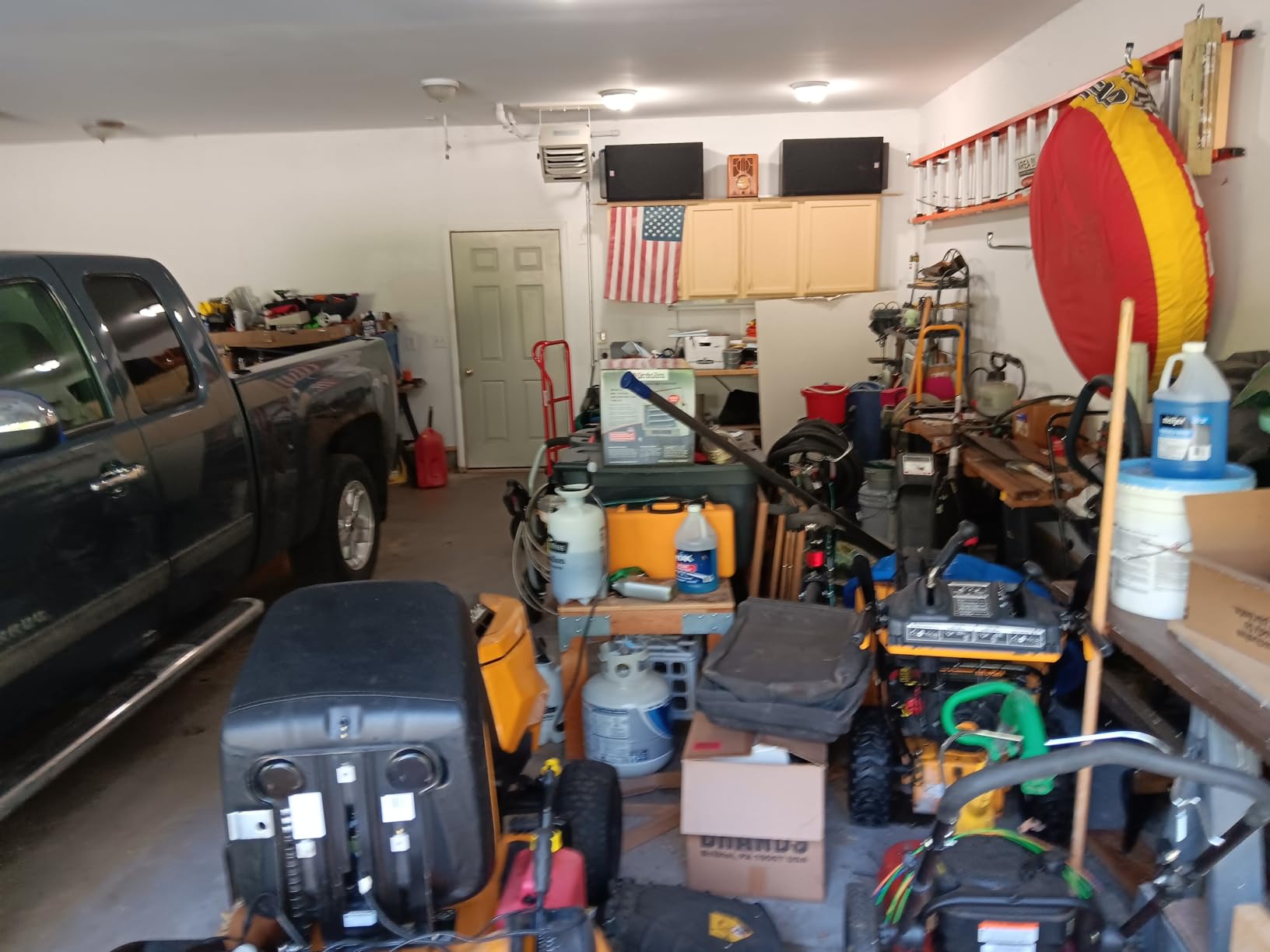
This is the heater I suggest for a two-car garage that already has 240V service or is willing to get it. Seventeen thousand BTU of fan-forced air over a stated 1,000 square feet is a serious amount of heat for a space that size, and the 20.4 pound steel body is built for the rough environment rather than a finished room.
Ceiling mounting is the quiet win. A garage floor is precious working space, and a shop where the floor stays clear is easier to work in. The louvers and adjustable mounting angle let you aim the discharge downward toward a work area rather than straight across the room, which is a real advantage in a bay with high ceilings and a single work zone.
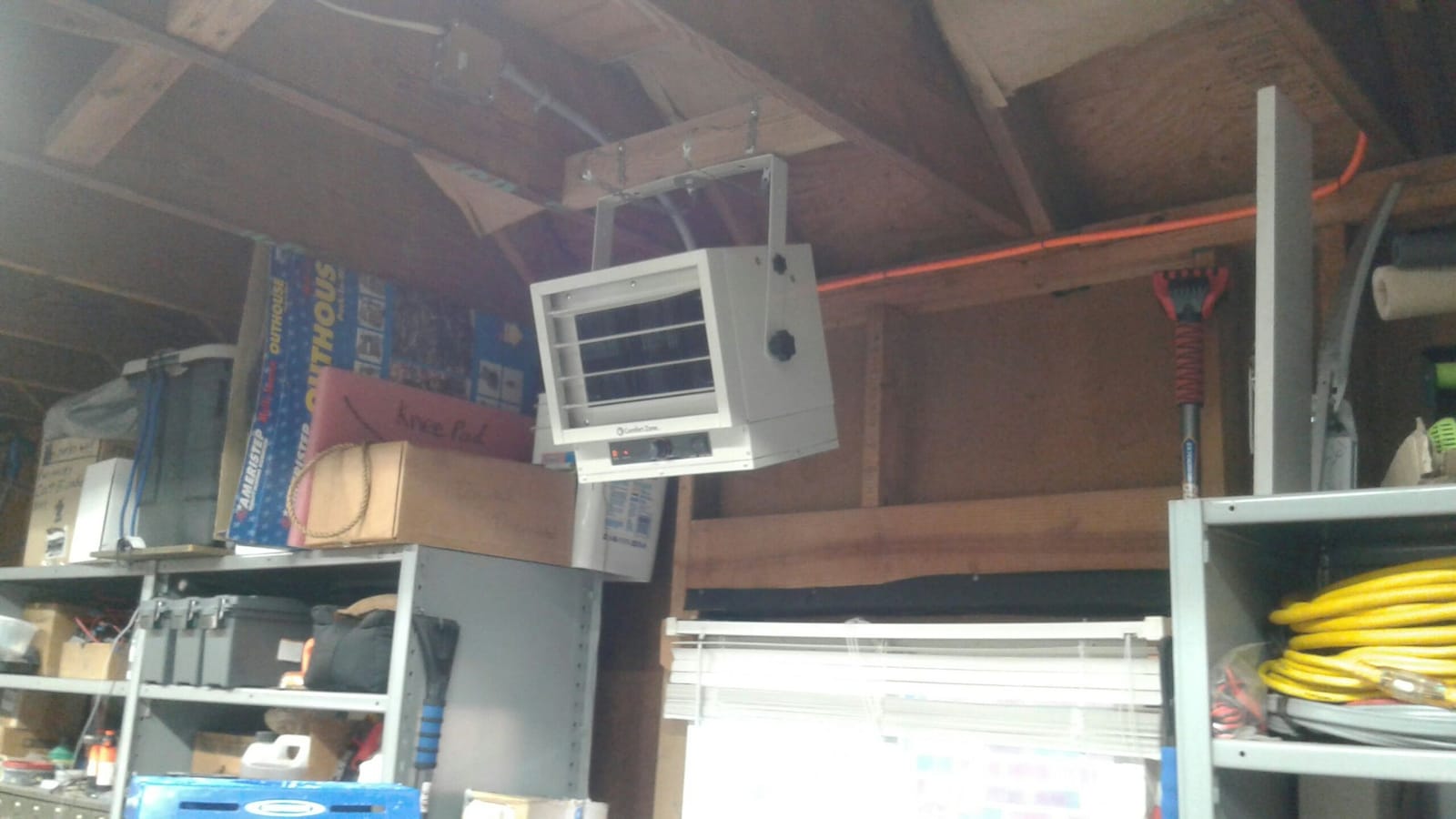
Two numbers to keep in mind. It draws 20.83 amps at 240V, so it needs a dedicated 20A branch circuit, and a 5 foot cable is included for a hardwired connection rather than a plug. The second is the 95F maximum thermostat setting, which is plenty for comfort heating but worth knowing if you are trying to accelerate a paint cure.
The manual thermostat is the one place this unit feels dated. Dual knobs mean you are not getting digital precision or a remote, and cheap units that cycle constantly were a recurring complaint in our research. A dial thermostat is entirely serviceable, it just does not hold a tight band.
What to check before you buy
Look at your electrical panel before anything else. Older detached garages often have a 50A sub-panel already committed to a welder or a subwoofer, and r/HomeImprovement users describe that capacity as too thin for significant new loads. A 50A sub-panel can often host a 20A heater circuit, but confirm the panel rating and the wire gauge before the electrician arrives.
Check the ceiling height and the clearance requirements for the mounting bracket, and plan a location away from the garage door tracks. Remember that a ceiling-mounted forced air unit is the right tool when you want air temperature across a space, and the wrong tool if you only want to feel warm at one spot.
Where it is the wrong call
Do not buy this for a garage with no 240V capacity and no plan to add it. The installation is the expensive part, and electricians charge into the hundreds for a new 240V circuit in an outbuilding. If that work is not in the budget, a portable propane unit is the honest choice.
It is also the wrong heater for a drafty one-car garage where a 1,500W plug-in would do the job for a fraction of the effort. Overheating a small space with a hardwired unit is expensive comfort you do not need.
4. Dr. Infrared DR-238 – Best for Outdoor and Drafty Corners
DR. INFRARED HEATER Portable Infrared Indoor and Outdoor Space Heater for Patio, Garage, Commercial & Residential With Remote Control, Without Thermostat, Black
120V plug-in infrared
900W 1200W or 1500W
IP55 rated
8 lb wall or ceiling mount
Pros
- IP55-rated for both indoor and outdoor use
- Instant odorless infrared heat with three power settings
- Standard 120V plug-and-go with included wall and ceiling brackets
- Remote control plus programmable timer with no wiring
- High-reflectivity mirror aluminum reflector improves efficiency
Cons
- Highly directional so heat is felt only within a few feet of the unit
- Heats objects and people rather than the air
- No thermostat and it relies on remote settings and the timer
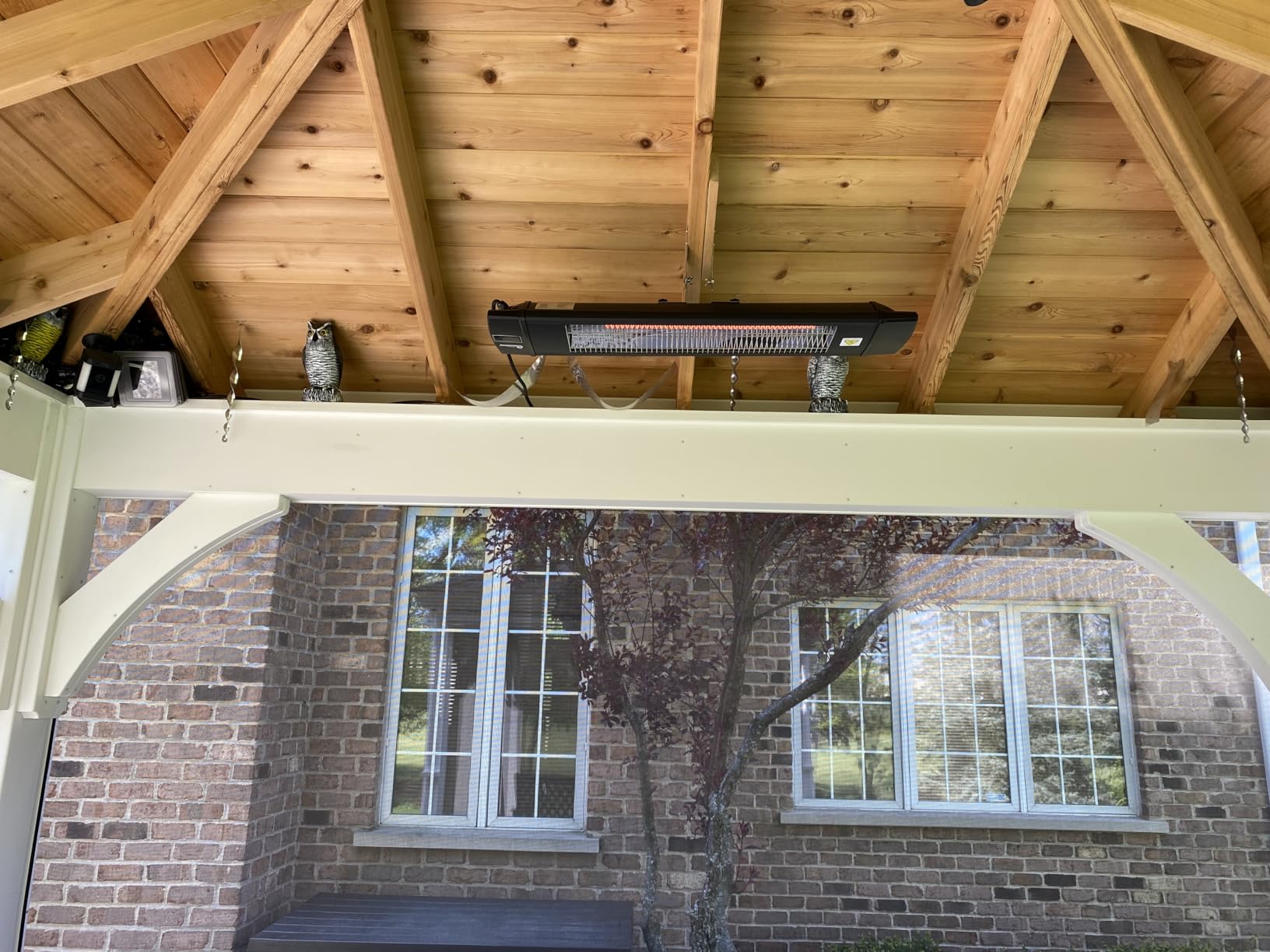
The DR-238 is a flexible infrared unit, and the flexibility comes from the IP55 rating. That means rain, dust and snow are fine, so it works in an open bay, a covered porch, or a garage with a permanently open door. At 8 pounds with included mounting brackets, one person can install it in minutes with no tools beyond a drill.
Three power settings at 900W, 1,200W and 1,500W mean it can run on a lower draw when the circuit is shared. The remote control and programmable timer are genuinely useful for a shop, because you can start warming the space before you walk out to it in the morning. Buyers consistently cite the simple 120V setup and the indoor-outdoor versatility as the deciding factors.
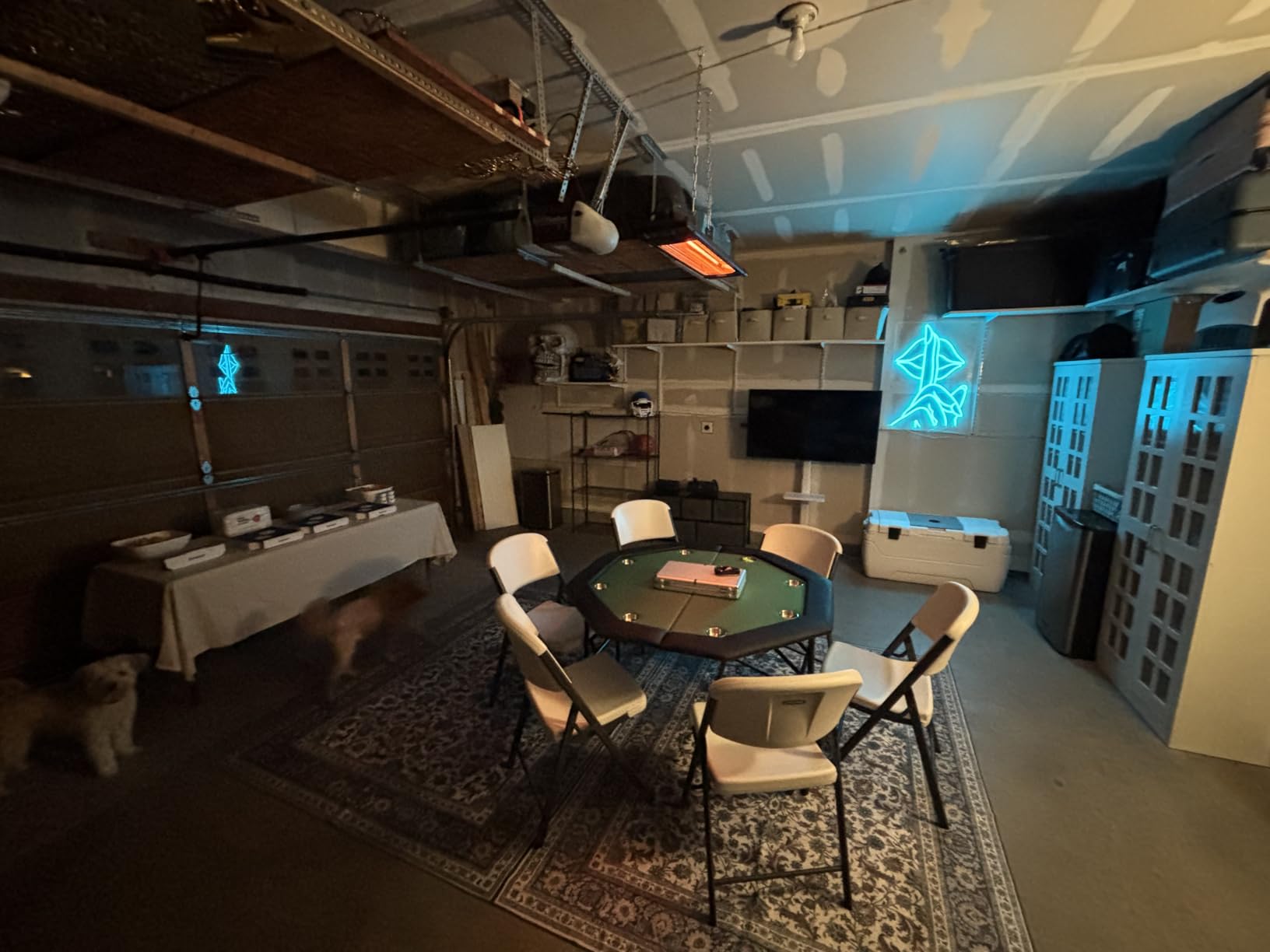
The honest limitation is the same one that applies to every infrared unit. Heat is felt only within a few feet of the reflector, and it warms surfaces and bodies rather than air. If your goal is a warm car interior to get into, this does that. If your goal is a garage that holds 60F all winter, this will not get you there.
Another real-world note from reviews: the PWM power regulation can cause a flicker in LED lighting on a shared circuit, and the unit loses its power state if you switch it off at a smart switch. Neither is a dealbreaker, but both are worth knowing if your garage lighting is sensitive.
What to check before you buy
Measure where you actually sit or stand. Infrared units reward positioning, and a unit aimed at a workbench from eight feet away is dramatically more effective than one aimed at the middle of the room from the same distance. Mount it above and behind the work position, angled down.
If you plan to use it outdoors, confirm the outlet you are plugging into is a GFCI-protected exterior receptacle. An IP55 rating handles weather, but water and a standard indoor receptacle is a combination you do not want to test.
Where it is the wrong call
Do not expect ambient heat. Multiple owners expected this to warm a full garage and were disappointed, and the reality is that the temperature differential you feel is local. Nothing in the air changes measurably outside the beam.
It is also the wrong tool for anyone who wants scheduled heating with a real set point. There is no thermostat here, only power levels and a timer, so you are choosing a level and leaving it. If precise temperature control matters to your work, look at a unit with a thermostat dial.
5. Dr. Infrared DR-988 5600W – Best for Large Insulated Garages
DR. INFRARED HEATER DR-988 240V Electric Industrial Garage, Workshop, Warehouse, Construction Heater, 5600W, Thermostat 37-113 °F, Portable, Wall Ceiling Mount
240V 5600W forced air and radiant
600 sq ft coverage
37-113F thermostat
UL and C-UL listed
Pros
- 5600W output raises garage temperature quickly and holds above freezing
- Adjustable 37-113F thermostat with ON and AUTO fan modes
- Works as a portable floor unit or wall and ceiling mounted
- Heavy-duty all-metal housing with steel safety grille
- UL and C-UL listed with automatic overheat cut-off
Cons
- Requires a dedicated NEMA 6-30R 250V 30 Amp outlet that may need an electrician
- Internal thermostat is mounted high and often cuts off before the space reaches temperature
This is the unit I trust for a properly insulated two-car or small three-car garage where the goal is a stable temperature rather than a warm spot. Long-term owners report holding garages above freezing for years, and the all-metal housing, steel grille and aluminum fan blades are the kind of construction that survives a working shop.
It handles both forced air and radiant output. The thermostat range of 37F to 113F is unusually wide. That range matters more than it looks. The 113F upper setting lets you push heat for accelerated drying, curing or thawing rather than sitting permanently in comfort-heating mode.
The install is the real story here. It needs a dedicated NEMA 6-30R 250V 30 amp outlet, which on an older detached garage may not exist. The six-foot cord with a NEMA 6-30P plug gives you the option of a receptacle instead of a hardwired connection, but you still need the 30A circuit there, and a plug that is a nuisance on many receptacles.
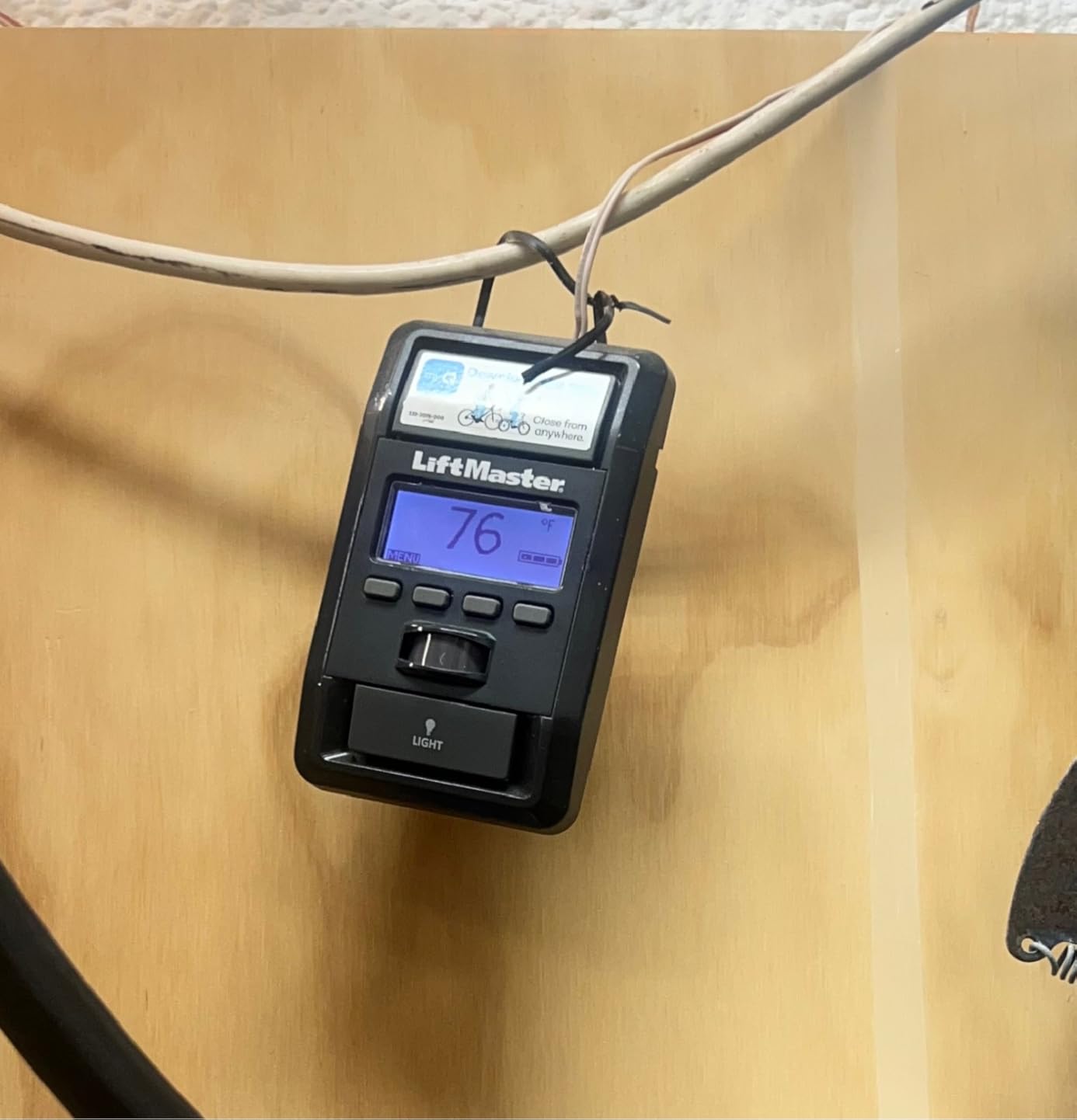
The most consistent complaint is thermostat placement. Because the sensor sits high in the cabinet, the fan cycles off before the floor of the garage is warm, and the output air can feel lukewarm despite very hot elements. An external thermostat solves it, and that is the first accessory I would buy with this unit.
What to check before you buy
Have an electrician look at the panel and the existing receptacle before you order. A 30 amp 250V circuit on 10 AWG copper is the standard route, and r/Tools users describe a 5,000W heater on a 30A 240V breaker in a fully insulated garage as relatively riskless once that circuit is properly run.
Decide between floor placement and mounting. The built-in cord storage and mounting brackets let you wall or ceiling mount to keep the floor clear, but the cord still needs to reach the receptacle. Plan the location around the outlet, not around the bench you wish you had placed there.
Where it is the wrong call
Skip it if your garage is severely uninsulated. Electric capacity you can buy is not unlimited, and 5,600W in a drafty shell is a losing battle that also runs up your power bill. In that situation a combustion unit sized to the actual heat loss is the better investment.
It is also the wrong pick where the 30A circuit does not exist and cannot be added without a panel upgrade. A portable propane heater gets you to work this afternoon; this one needs a project first.
6. Mr. Heater 50,000 BTU Forced-Air – Best Permanent Install for a Three-Car Garage
Mr. Heater 50,000 BTU Forced-Air Unit Heater (Propane or Natural Gas)
Propane or natural gas
50000 BTU forced air
Coverage 1667 sq ft
60.3 lb ceiling mount
Pros
- 50000 BTU covers about 1667 sq ft which is roughly a three-car garage
- Heats a typical insulated garage to 60-70F in about one to two hours
- Very quiet fan and burner that maintains set temperature without cycling
- Works with standard 24V or Wi-Fi enabled thermostats sold separately
- Includes ceiling mounting brackets and a natural gas to LP conversion kit
Cons
- Requires professional gas line and vent kit installation which can cost as much as the unit itself
- Thermostat venting kit and flue hardware are sold separately
- Needs a minimum 10 ft ceiling height and 8 ft clearance
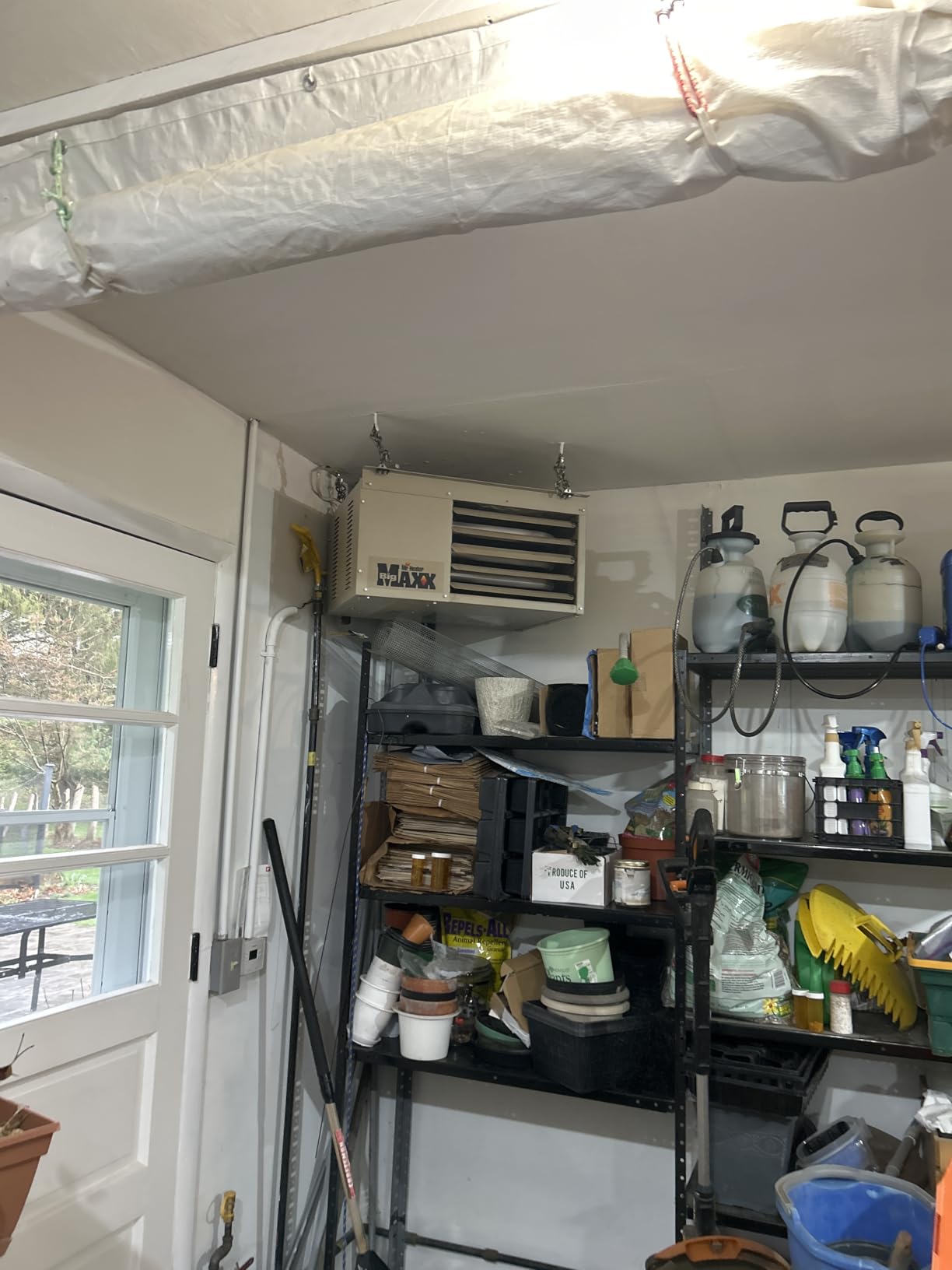
If you want the garage to be a real room rather than a place you visit in a coat, this is the correct answer. Fifty thousand BTU of fan-forced air covering about 1,667 square feet is a genuine three-car capacity, and owners report taking a typical insulated garage to 60-70F in one to two hours from a cold start.
It runs on propane or natural gas, and the included conversion kit handles either fuel. That flexibility is a real advantage: propane keeps you independent of a gas line, and natural gas is cheaper per hour for steady winter use. Owners who install it properly report years of quiet, reliable heat, and the main drawbacks are install cost, separately sold venting parts and occasional fan quality-control issues.
The quiet operation is the sleeper feature. A large fan-forced gas unit that maintains set temperature without constant cycling makes a garage you can hold a conversation in, which is a different experience from a portable blower. Pairing it with a 24V or Wi-Fi enabled thermostat, sold separately, is how most owners get the most out of it.
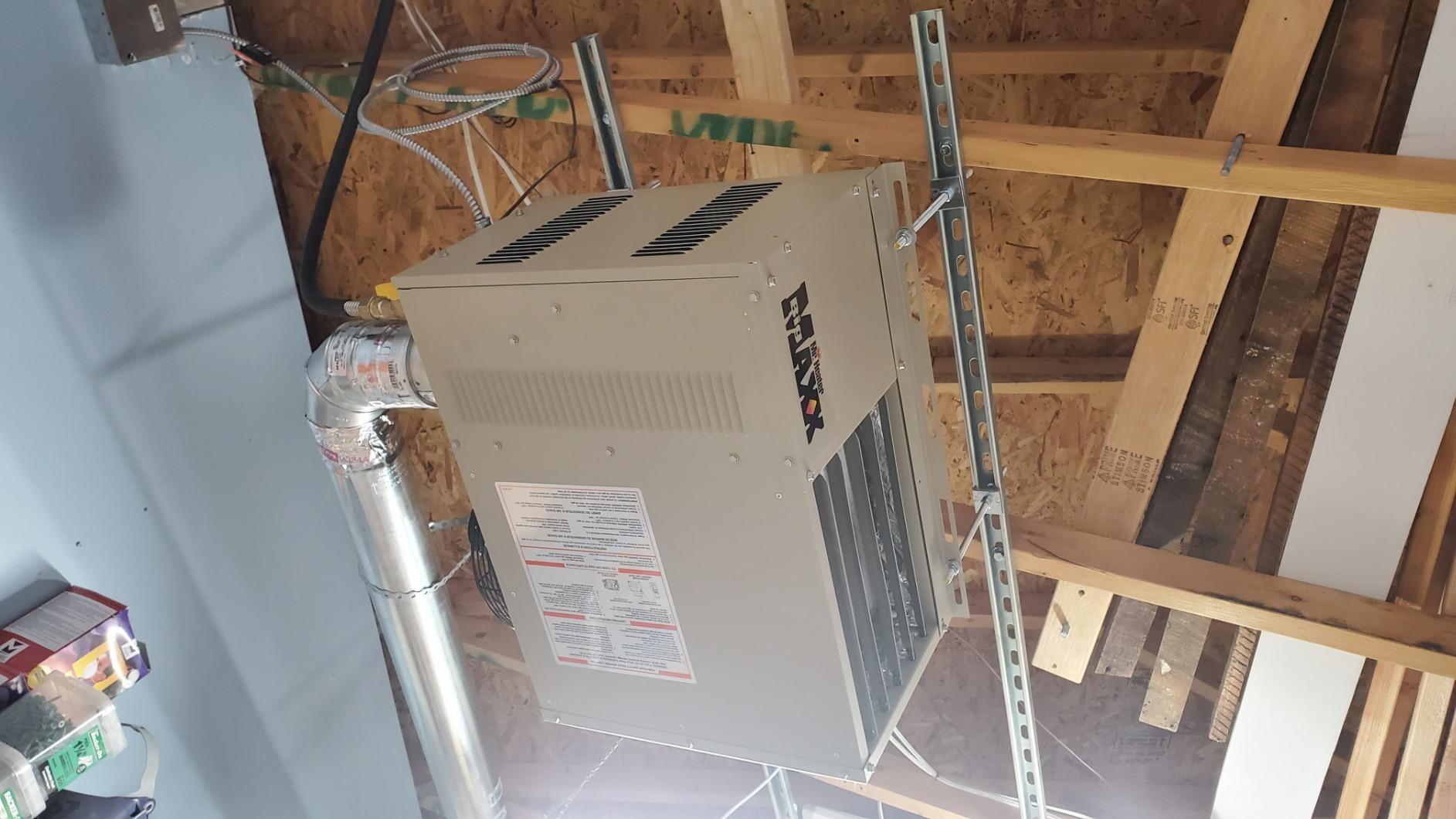
Be honest about the install. A gas line, a vent kit, flue hardware and a thermostat are all additional pieces, and the manufacturer instructions suggest pitching the vent duct upward, which can run condensation back into the unit if the run is not pitched correctly. This is a job for someone who does this work.
What to check before you buy
Measure the ceiling. The low-profile design needs a minimum of 10 feet of ceiling height and 8 feet of clearance, and that rules out many standard eight-foot single-story garages. Check the ceiling joists and the joist spacing as well, since a 60.3 pound unit hanging from a residential ceiling needs to land on structure.
Get a permit question answered before you buy, not after. Gas work in most jurisdictions requires a permit and a licensed installer, and forums show people discovering this cost after purchase. The unit itself is the smaller half of the expense in most cases.
Where it is the wrong call
Do not install any combustion heater in a garage that is attached to living space without modeling the exhaust path. An unvented or improperly vented unit in an attached space can backdraft combustion products into the house, which is the single most serious safety mistake I see people about to make.
It is also the wrong purchase for someone who needs heat occasionally and cheaply. If you work in the garage for an hour twice a week in winter, a portable unit is a fraction of the total cost once you count the install, the vent kit and the thermostat.
7. Remington 60,000 BTU Forced-Air – Best for Fast Heat-Up in Unpowered Garages
Remington LP Forced Air Heater, Portable 60,000 BTU Space Heater for up to 1500 Square Feet – Liquid Propane Gas Powered, Tank Not Included
Propane forced air
60000 BTU
Coverage 1500 sq ft
11 lb freestanding unit
Pros
- 60000 BTU of forced air warms up to 1500 sq ft quickly
- Weighs 11 pounds so it moves easily between garages and job sites
- Continuous electronic ignition with thermocouple high-temp limit and flame-out fuel cut-off
- Variable heat settings and adjustable height let you aim warmth
Cons
- Very loud while running and best suited to work areas
- Propane tank is not included
- Runs continuously at full output so the heat setting offers little fine control
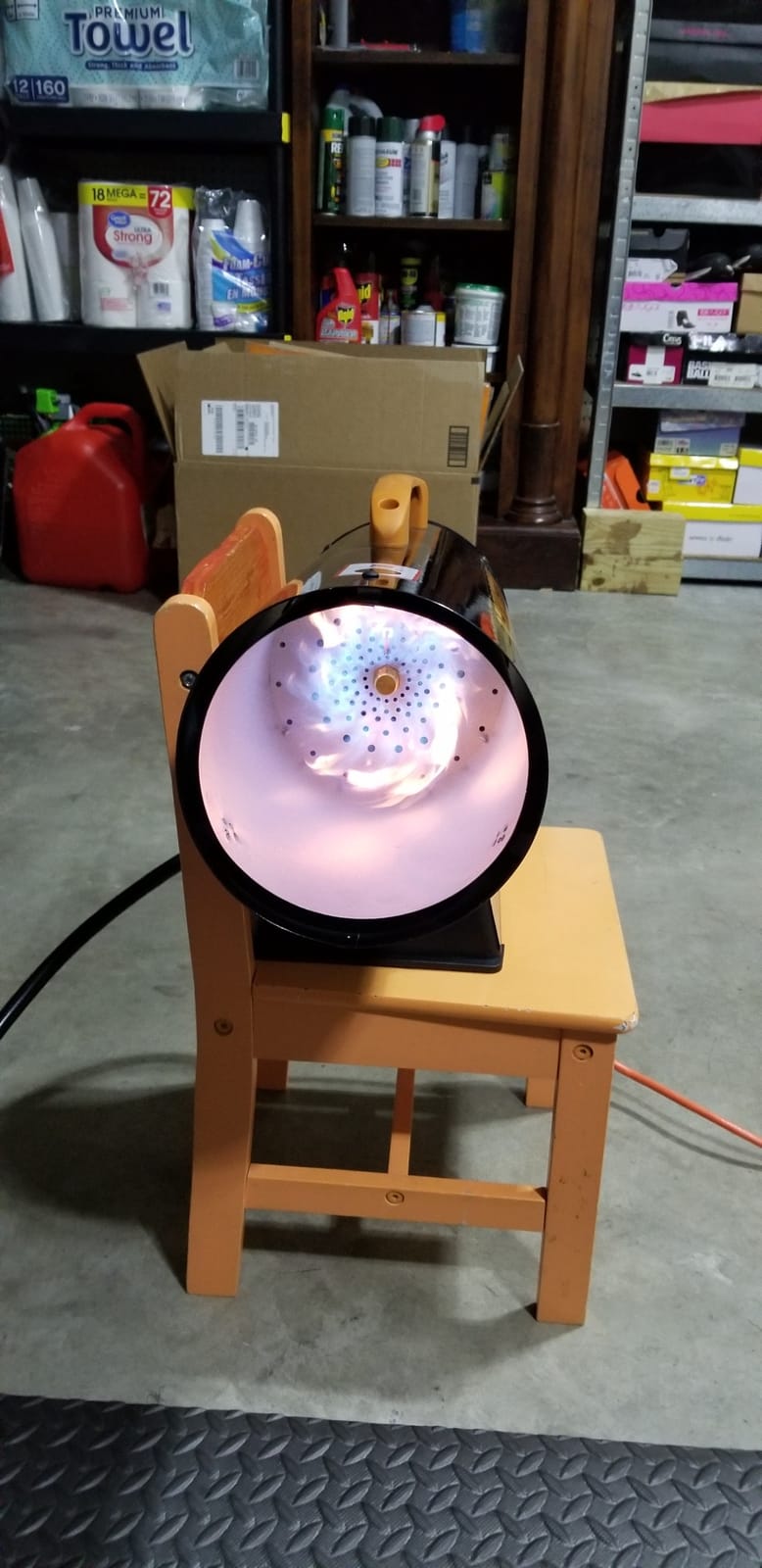
Sixty thousand BTU of fan-forced propane is the highest output of any portable unit in this group, and buyers report warming up to 1,500 square feet in 10 to 20 minutes. For a garage where you want usable temperatures fast and work for a couple of hours, that speed changes the whole experience of a winter project.
At 11 pounds, the Remington is easy to move between garages and job sites for a heater delivering 60,000 BTU. The adjustable height means you can reposition it as your work moves. The included ten foot LP hose and regulator save you a trip to the parts store, and continuous electronic ignition removes the relighting chore.
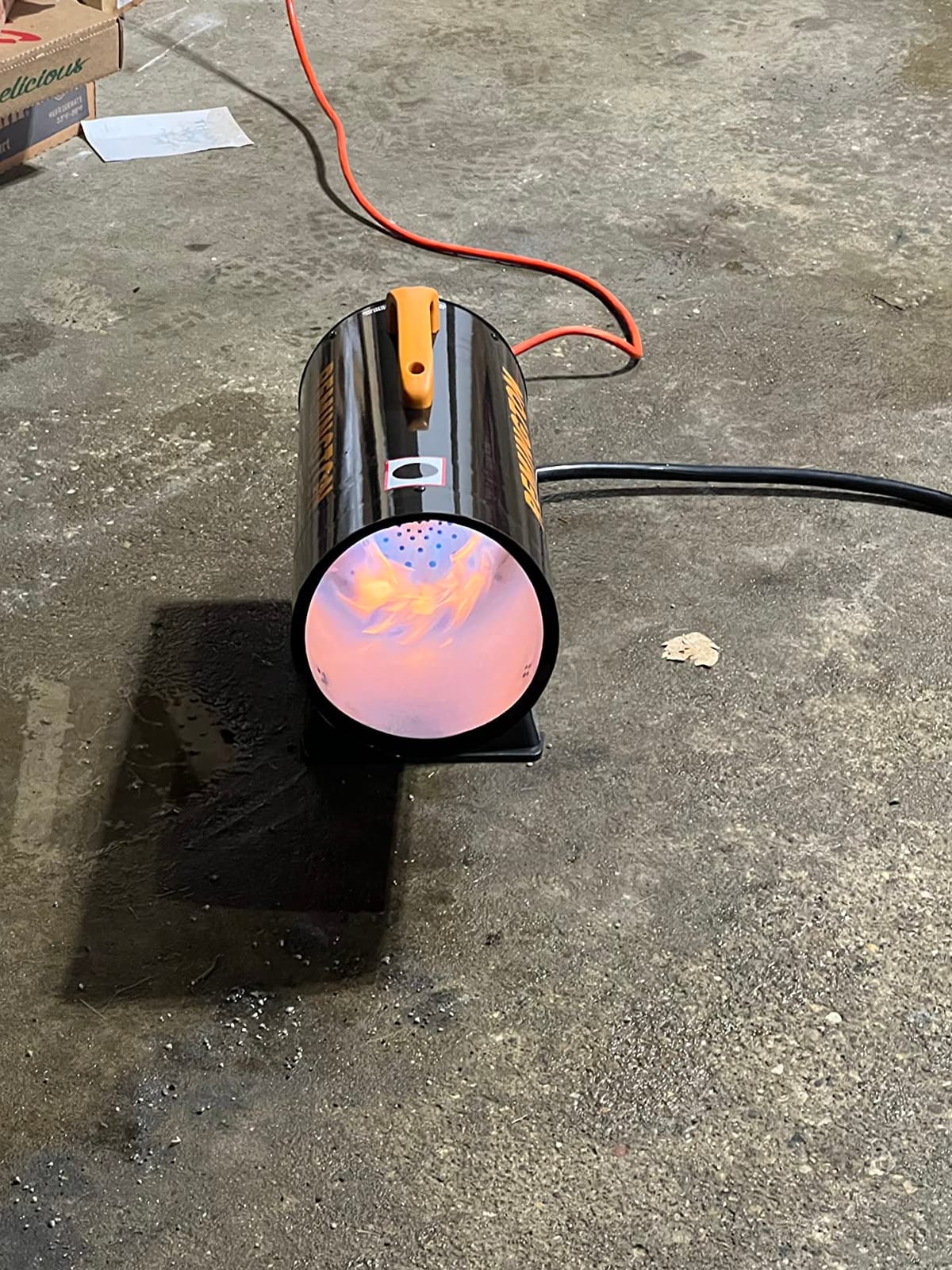
Safety hardware is properly specced: thermocouple, high-temperature limit shut-off, flame-out fuel cut-off. Those three are the difference between a heater that fails safely and one that does not, and they are worth more to me than any convenience feature on a portable propane unit.
The noise is the honest trade-off. Owners describe it as very loud while running, and the practical consequence is that it belongs in a work area where you are wearing hearing protection and moving around, not in a space where you are sitting still or talking. r/homegym users, who want a comfortable room, consistently steer away from forced-air blowers for exactly this reason.
What to check before you buy
Plan your propane supply before the first cold day. A 20 lb cylinder at full output runs through in a few hours, so a single tank will not carry a long workday. Users on Reddit describe hauling cylinders indoors and out, running out mid-workday, and dealing with frost on the tank as the recurring practical problem.
Make sure you have a clear path to run the ten foot hose and a place to set the cylinder upright on a stable surface away from the discharge. The regulator is included but check that it matches your cylinder type before the first use.
Where it is the wrong call
Do not use it as a primary heat source in a quiet space. A garage you sit in to read, lift or relax is a bad match for a forced-air blower at this output level, and you will tire of the noise faster than you tire of the cold.
It is also the wrong call in an attached garage without a proper plan for combustion air. High-output propane combustion pulls a large volume of air, and a closed attached space is exactly the condition where carbon monoxide accumulates. Use a vented unit or a permanently installed vented furnace-style heater in that situation.
8. Briza 1500W Infrared – Best Workbench Spot Heater
Briza Infrared Electric Patio Heater – Indoor/Outdoor Heater – Portable Wall/Garage Heater – 1500W – use with Stand – Mount to Ceiling/Wall)
120V infrared radiant
900W 1200W or 1500W
IP55 rated
wall ceiling or tripod mount
Pros
- Dual mounting hardware for wall or ceiling plus an adjustable tripod stand in the box
- IP55 weather rating for year-round indoor and outdoor use
- Three heat levels with remote on off timer and level control
- Tip-over sensor automatically shuts the unit off
- Silent operation with no hot air blowing across the room
Cons
- Highly directional and heat only reaches you within a foot or two of the unit
- Will not raise the ambient temperature of a garage with several owners reporting only about 5F of gain
- Draws enough current to overload a shared 15A circuit
The Briza runs a silent radiant element with no blower fan, so there is no hot air blasting across your hands while you work. For fine detail work, electronics, or any task where moving air is annoying, silent radiant heat is genuinely the better experience.
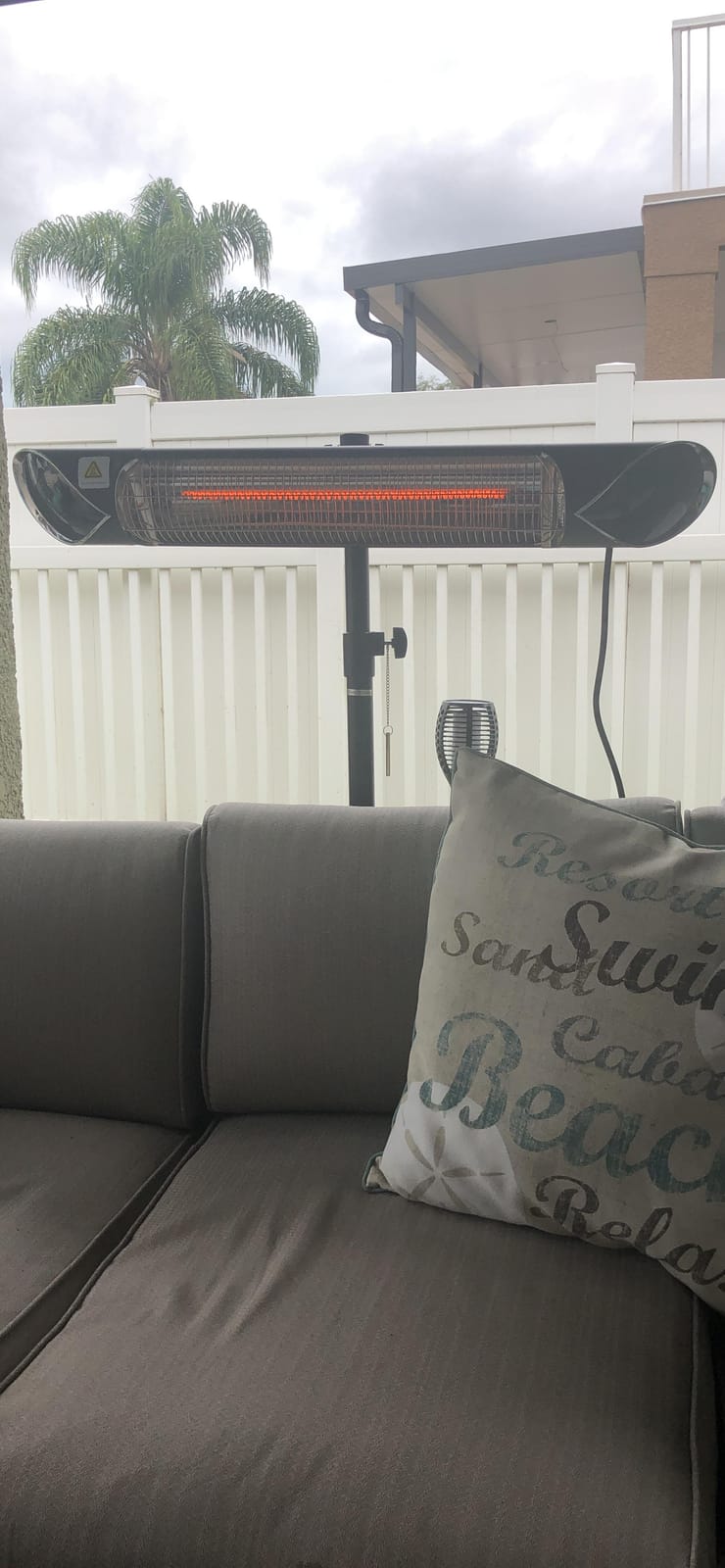
The mounting flexibility separates it from most other infrared units. The box includes hardware for a wall or ceiling mount plus an adjustable tripod stand, so you can reposition it as your work changes without tools. Three heat levels at 900W, 1,200W and 1,500W are controlled from the remote, along with a one to nine hour auto-off timer, and assembly takes about five minutes.
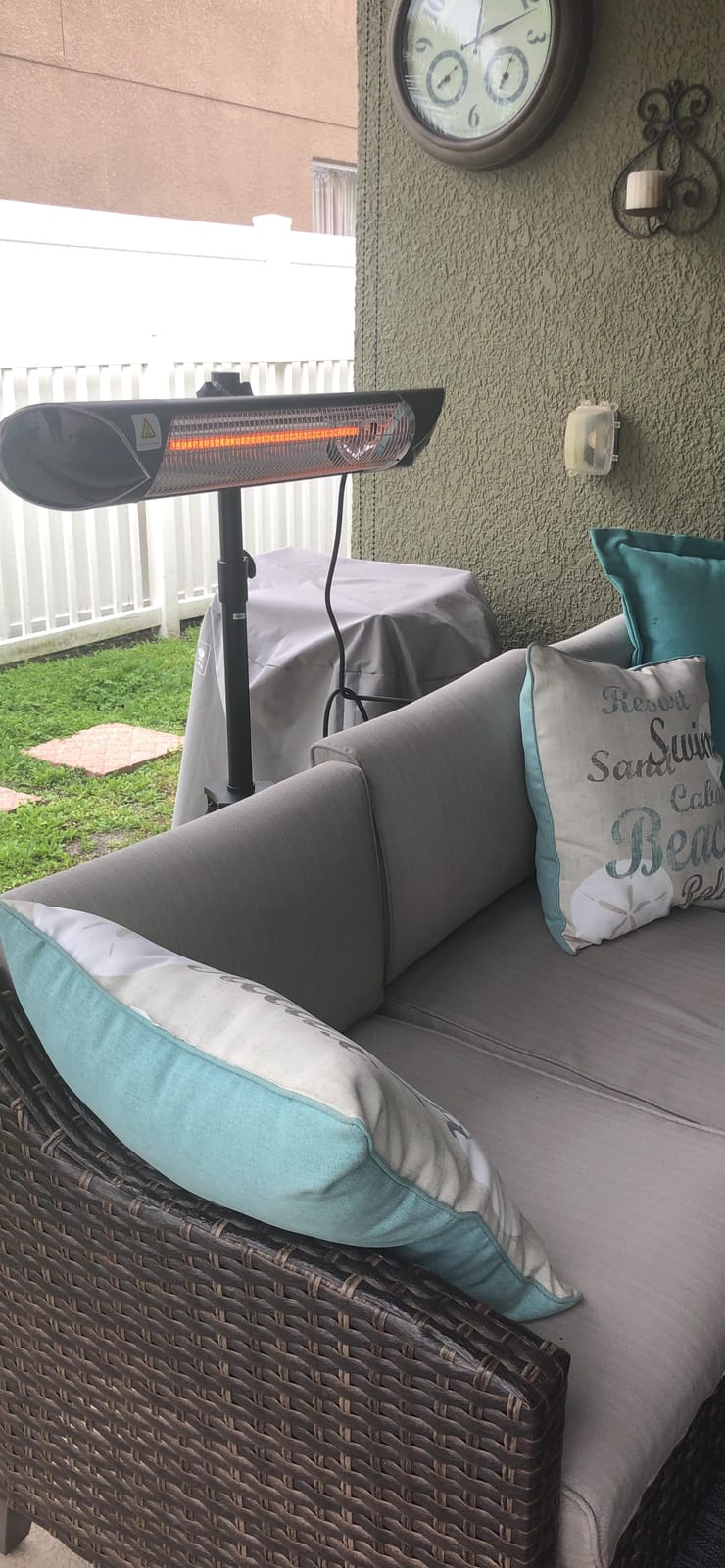
The safety and weather package is solid. A tip-over sensor shuts the unit off automatically, and the IP55 rating handles rain, snow, sand and dust, so it works in a semi-enclosed bay or an open-sided structure. The 84 inch cord is long enough to reach an outlet from a mounted position.
I want to be direct about the limitation, because this unit carries a 4.1 rating with a 12% one-star share for a reason. It is highly directional and heat reaches you within a foot or two. Multiple owners expected garage heating and found only about a 5F ambient gain, and that expectation gap is the main source of disappointment.
What to check before you buy
Confirm you have a dedicated or lightly loaded 15A receptacle. At 12.5 amps on 120V, this heater will trip a shared circuit that is also serving a welder, saw or shop vac, and troubleshooting an overloaded circuit mid-project is a bad afternoon.
Set the tripod carefully. It extends to roughly six feet, so it must be adjusted to aim down at a seated user. If you are mounting overhead, angle the reflector so the heat lands on the work surface rather than across the room where it will do nothing.
Where it is the wrong call
Do not buy it to heat a garage. If your requirement is a room at a usable temperature, this will not get you there no matter how high you set it. It is a personal heater that happens to be rated for outdoor use, not a space heater in the sense most people mean the term.
It is also the wrong choice where you need scheduled warmth through a long session without manual attention. The timer helps, but there is no thermostat, so you are choosing a level rather than a temperature.
9. Dr. Infrared DR218 1500W – Best for Greenhouses and Very Small Spaces
DR. INFRARED HEATER DR218-1500W Greenhouse Garage Workshop Infrared Heater, 1500-watt
120V forced air
1500W single setting
150 sq ft coverage
11.5 lb floor cabinet
Pros
- Compact cabinet that can run continuously for long greenhouse or garage sessions
- Built-in thermostat cycles the unit to hold a set temperature
- IPX4 structure protects against water splashing
- Portable at 11.5 pounds with overheat protection
- Runs on standard 120V circuits
Cons
- Only one listed 1500W power setting with fan speed unchanged across levels
- Several reports of the internal thermostat wiring burning out and destroying the unit
- Audible fan noise though acceptable in a workshop setting
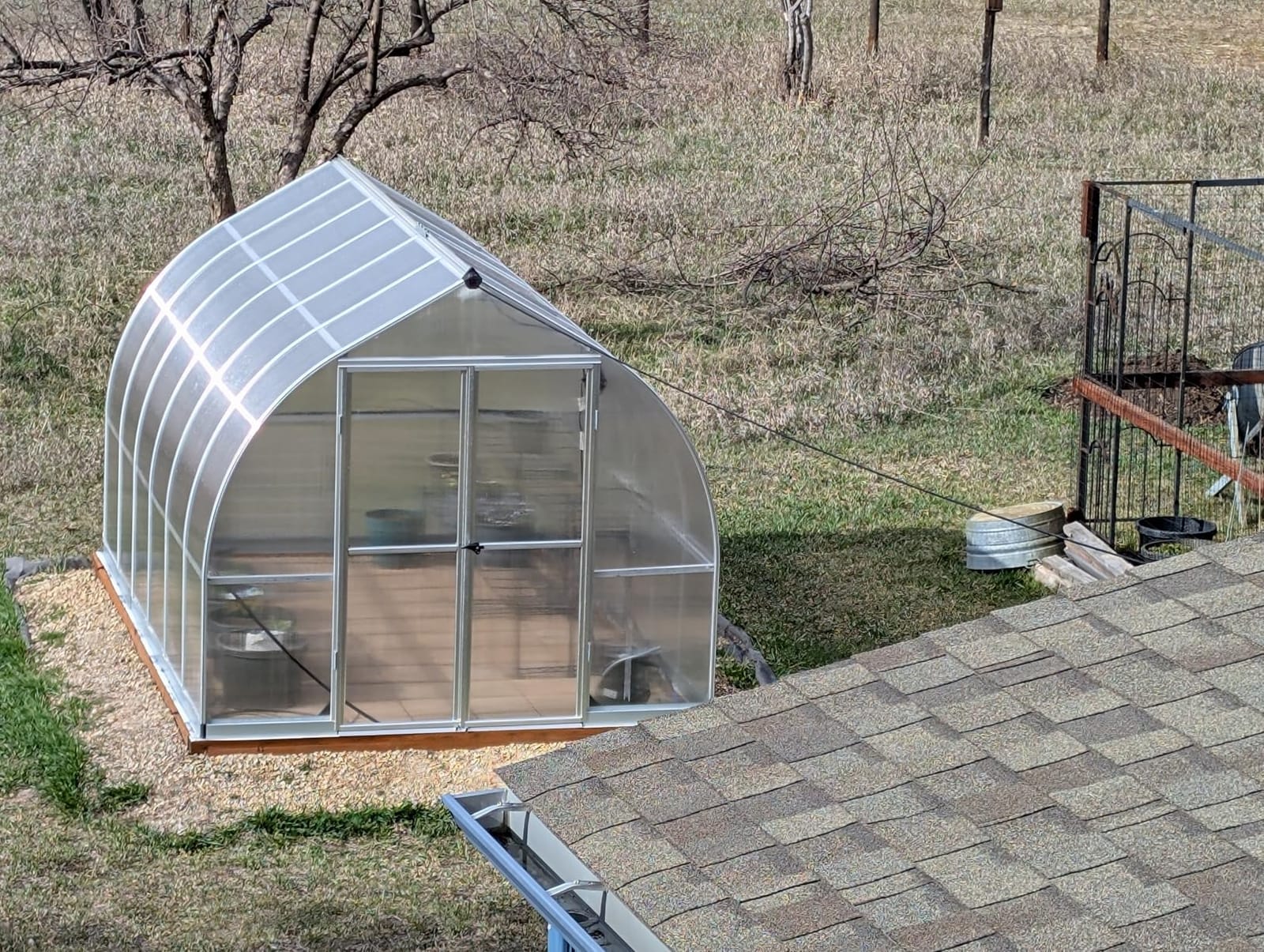
When the space is genuinely small, a 1,500W fan-forced cabinet with a thermostat is hard to beat. One owner kept an eight by twelve foot polycarbonate greenhouse at 38-39F through a night when the outside temperature fell to 17F, and another raised a modest one-car garage from 36F to 65F overnight. That kind of result is what a thermostat-controlled forced-air unit is for.
The IPX4 splash rating is the detail that opens up the use cases. It is protected against water splashing, which makes it appropriate for a greenhouse, a plant area, or a garage where the floor gets wet. At 11.5 pounds it moves easily, and it runs on a standard 120V circuit with overheat protection and low maintenance.

The single-setting design is a real constraint. It has one listed 1,500W power setting, and the fan speed does not change across levels, so your only control is the thermostat cycling the element. That is fine for a stable target temperature and frustrating if you want to warm up fast and then hold.
There is also a durability caveat worth taking seriously. Several reviews report the internal thermostat wiring burning out and destroying the unit. The thermostat dial ranges from 32F to 104F, which covers the use cases, but treat the thermostat as the component most likely to age and buy a unit with a replaceable element controller if that worries you.
What to check before you buy
Measure the space honestly. The rated coverage of 150 square feet is small, and that is the entire point of the unit. One owner found it insufficient for a ten by ten foot greenhouse in single-digit temperatures, so a larger greenhouse needs a unit sized to it, not a small cabinet on a boost setting.
Think about noise before you place it. The fan is audible, which is fine in a workshop or a greenhouse but noticeable in a small enclosed space. If you plan to sit in the space for long sessions, an oil-filled radiator or a radiant unit will be quieter.
Where it is the wrong call
Skip it for a two-car or larger garage. 1,500W is under the ceiling of a standard 15A household circuit, which is the hard limit, and that number is fixed by the outlet rather than by the heater. Anything larger needs a 240V circuit or a combustion fuel.
It is also the wrong choice where you need to raise a temperature quickly. A single low-output setting means the space warms at a fixed, modest rate. If you need a work-ready garage within a few minutes after arriving, size up.
10. Shinic 2-Pack Quartz Ceiling Heater – Best for Two-Zone Garage Setups
Shinic 2-Pack 120V Electric Garage Heater,1500W/750W Ceiling Mounted Heater
Two 120V quartz radiant heaters
1500W or 750W each
400-600 sq ft coverage
ETL listed ceiling mount
Pros
- Two ceiling-mounted heaters in one pack for zoned garage heating
- Dual quartz tubes give instant radiant heat aimed at people and workbenches
- Built-in halogen work light adds visibility for late-night projects
- Bracket rotates up to 90 degrees to direct heat while freeing floor space
- Five pull-string modes plus ETL listing and overheat auto-off
Cons
- Radiant only so it warms people in the beam but not the surrounding air
- Pull-string switch means you must reach up to the ceiling to change settings
- Radiant surface runs hot enough to need clearance from combustible surfaces
The two-pack format is the idea here. One unit aimed at the workbench and one aimed at the vehicle bay gives you two warm zones on two standard 120V circuits, which is more useful than one unit trying to cover a whole garage. Each unit uses dual quartz tubes for instant radiant heat and carries a built-in halogen work light for visibility on late projects.
Ceiling mounting keeps the floor clear and the brackets rotate up to 90 degrees so you can direct the radiant beam where you want it. Each heater has five pull-string modes covering 750W, 1,500W, light combinations and off, so you can run low heat, high heat, or light-only. Coverage is listed at 400-600 square feet per unit, and the whole pack is ETL listed with overheat auto-off and a three-prong grounded plug.
What to check before you buy
Plan the mounting carefully because the radiant surface runs hot. Keep the units clear of combustible surfaces, and remember that quartz radiant elements operate at a high surface temperature. In a woodshop with sawdust and offcuts, that is a genuine consideration and the reason many woodworkers avoid exposed-element radiant units entirely.
Think about the controls before you commit. Pull-string switches mean reaching up to the ceiling to change anything, which is annoying daily and impossible from the floor. If you want remote or app control, this pack does not offer it and you will need a different unit.
Where it is the wrong call
Do not buy it to warm the air. This is a radiant-only design, and the people in the beam get warm while the rest of the garage stays at ambient temperature. If you need a space held at a workable temperature, choose a forced-air unit instead.
It is also the wrong choice for a damp or uninsulated garage and for any enclosed area where you are storing fuel or solvents. The rating is for indoor, enclosed-space use, and radiant heat near flammable storage deserves a second look at your clearance distances.
Electric vs Propane vs Natural Gas: Which Fuel for Which Garage
Electric wins on safety and control, propane wins on speed and flexibility, and natural gas wins on long-term running cost in a permanently heated space. That is the short version of a decision that is really about two variables: how much electricity your panel can deliver, and how many hours a week you need heat.
Electric units turn current directly into heat, either through fan-forced coils that circulate warm air or infrared elements that warm objects and people. They produce no combustion gases, need no venting, and are controlled precisely with a thermostat. The limit is the circuit. A standard 15A household outlet tops out at about 1,500W, which is why every plug-in heater in this guide sits there.
Propane and natural gas burn fuel. Fan-forced combustion heaters move a large volume of heated air and can raise a garage from freezing to workable temperatures in minutes, which is why they dominate the large-garage end of this list. The cost is installation complexity, combustion air, exhaust venting and a carbon monoxide risk in enclosed spaces.
Natural gas differs from propane mainly in supply. A gas line is a permanent utility connection with a lower cost per hour of heat, which makes it the sensible choice for a garage you heat all winter. Propane needs no line and no permit for the fuel, so it wins for seasonal use, outbuildings and any location where running a gas line is not practical.
One practical point about electricity that forum users raise constantly. In an attached garage, electric heat has no combustion path into the house at all, which removes the entire class of backdraft and carbon monoxide concerns. That safety advantage is worth real money to some households, and it is why r/homegym users explicitly choose 240V electric and avoid gas rather than bother with changing propane cylinders.
If you want more on running costs and per-hour figures, our outdoor heater guide covers the weather-rated options in more depth.
Vented vs Ventless: Carbon Monoxide and Garage Safety
A vented heater sends combustion gases outdoors through a flue. A ventless heater does not, and that is the single most important distinction in this entire guide. The ventless design is not inherently defective, but it has a hard requirement: the space must have enough incoming air to support complete combustion, and enough ventilation to carry exhaust out.
A closed garage fails that requirement. Propane and natural gas heaters consume oxygen to burn, and in a sealed space oxygen drops below the level where combustion is complete. Incomplete combustion produces carbon monoxide, which is odorless, colorless, and lethal at concentration. This is not a theoretical risk in a detached garage with a closed door, and it is the reason I will not recommend running any unvented combustion heater in an enclosed space.
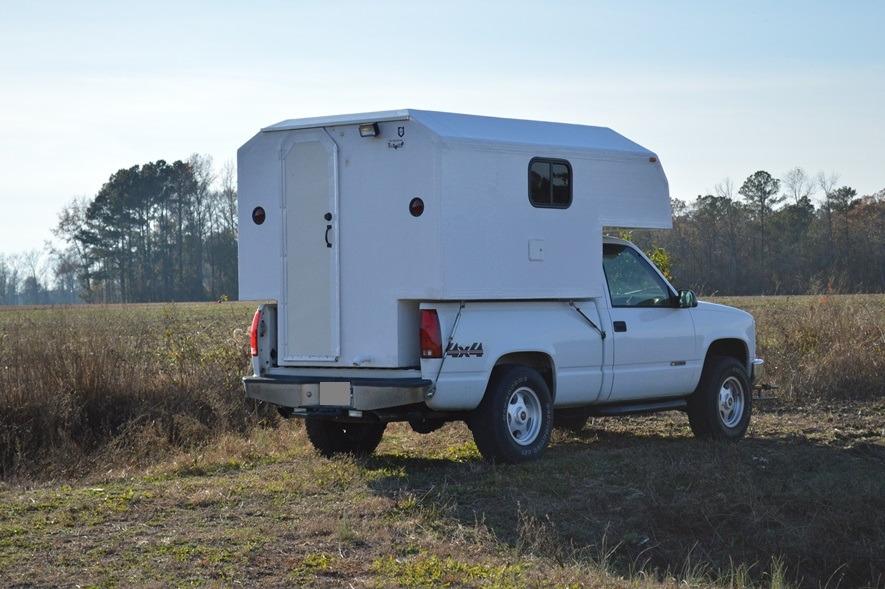
If you use any combustion heater, follow this checklist. Mount a battery-backed carbon monoxide detector on the ceiling of the garage, since CO mixes with warm air and rises. Mount a second detector inside the living space if the garage is attached. Never operate a combustion heater in a garage with the door closed and no venting. Keep the garage door open or cracked when running a portable propane unit, and never run one in a vehicle cargo area or enclosed trailer.
For infrared and radiant electric units, the safety questions are different. They are fire risks near combustibles rather than toxicity risks, so clearance from sawdust, offcuts, fuel cans and tires matters. Users weighing infrared elements in a woodshop ask this constantly, and the honest answer is that a fan-forced unit positioned away from the work area is the safer choice in a shop full of combustible material.
For portable electric heaters, the two protections to verify are tip-over and overheat cutoff, and the certification mark. Look for ETL or UL listing, and confirm the tip-over switch on any freestanding unit. Never leave a portable heater running unattended in an unoccupied garage, and keep it at least three feet from anything that burns.
How Many BTUs Do You Need? Sizing by Garage Size
Most sizing advice in this category is vague, so here is a concrete reference. A one-car garage is roughly 200 square feet, a two-car garage 400 to 480, a three-car garage 600 to 660, and a four-car garage or workshop 800 square feet and up. Multiply by 20 BTU per square foot for an insulated space, and by 35 to 40 for an uninsulated or drafty one.
Insulated, roughly 200 sq ft: about 4,000 BTU, which a 1,500W plug-in electric unit covers. Uninsulated at that size: 7,000 to 8,000 BTU, which points to a portable propane radiant heater or a 2,400W to 3,000W 240V unit.
Insulated, 400 to 480 sq ft: 8,000 to 9,600 BTU, covered by the Big Buddy PRO or a 2,000W to 3,000W 240V shop heater. Uninsulated at that size: 14,000 to 19,000 BTU, so you are looking at 5,000W electric or an 18,000 BTU propane unit.
Insulated, 600 to 660 sq ft: 12,000 to 13,200 BTU. Uninsulated at that size: 21,000 to 26,000 BTU, which pushes you toward a 5,600W to 7,500W 240V heater or a permanently installed 40,000 BTU to 50,000 BTU gas unit.
Insulated, 800 sq ft and up: 16,000 BTU or more, and 28,000 to 32,000 BTU uninsulated. This is workshop territory, and the correct answer is usually a vented gas unit hung from the ceiling with a proper flue.
One reframe before you buy anything bigger. The 80/20 rule applies to garages: a small share of your heat loss comes from the gaps, and weather-stripping the garage door is the cheapest return available. Under-door drafts are a repeated theme in homeowner discussions, and users report wasting money on larger heaters instead of sealing the door. If your garage door has a visible daylight gap along the bottom, fix that first and then re-evaluate your heater size.
Garage Heater Buying Guide: What Actually Matters
Start with the electrical or fuel constraint, because it eliminates options faster than any other factor. A standard 15A household circuit is the ceiling for plug-in electric at about 1,500W. Beyond that you need 240V, which means a dedicated breaker sized to the load, wire gauge matched to the amperage, and often a sub-panel upgrade in an older detached building. Gas means a licensed installer, and in many cases a permit.
Next, decide between heating air and heating people, because the two approaches are not interchangeable. Fan-forced units raise air temperature across a space and are what you want for a parked car, a paint job, or a room you sit in. Radiant and infrared units warm bodies and objects directly, which is more efficient for a person at a bench and nearly useless for warming a whole garage. Forum threads on home gyms and woodshops make this distinction repeatedly.
Then match the mounting to the space. Ceiling mounting keeps the floor clear and is standard for shop heaters, but it needs adequate joist structure and enough clearance. Wall mounting saves floor space and lets you aim the heat. Freestanding units are portable and free of installation, which is exactly why they are the right answer for a garage you heat intermittently.
Controls matter more than most buyers expect. A digital thermostat with a defined differential stops the short-cycling that cheap units do constantly, and a timer or scheduling function lets a garage warm up before you get out to it. Our research turned up repeated complaints about inaccurate displays and constant cycling on budget units, and that is a real operating cost, not just an annoyance.
Safety certification is not optional. Look for ETL or UL listing on the nameplate, tip-over protection on any freestanding electric unit, and overheat cutoff. For combustion equipment, confirm low-oxygen safety shutoff, flame failure cut-off and a high-temperature limit. These are cheap to verify by reading the label and expensive to skip.
Finally, think about noise if you will be in the space. Forced-air blowers are loud, and users building a garage gym consistently choose quiet radiant or oil-filled options for that reason. If you want a quiet space heater for a finished room instead, our office space heater guide covers that category in detail.
Frequently Asked Questions
What is the safest heater to use in a garage?
An electric heater is the safest, because it produces no combustion gases. For combustion units, a permanently installed vented gas heater with a proper flue is safest, followed by portable propane used with the garage door cracked open. Keep a battery-backed carbon monoxide detector on the garage ceiling, keep a second detector inside if the garage is attached, and never run any combustion heater in a sealed space. For electric units, verify ETL or UL listing, tip-over protection and overheat cutoff.
How many BTUs do I need to heat a 24×24 garage?
A 24×24 garage is 576 square feet. At 20 BTU per square foot for an insulated space, you need about 11,500 BTU. In an uninsulated or drafty garage, budget 35 to 40 BTU per square foot, which means 20,000 to 23,000 BTU. That is roughly a 5,000W to 5,600W 240V electric heater, or a 20,000 BTU class portable propane unit.
Is it okay to use a space heater in a garage?
Yes, with the right type. A fan-forced unit on a standard 15A circuit is fine, and 1,500W is the maximum for a normal household outlet. Use a unit rated for damp or splash-prone spaces if water is present, keep it clear of combustibles, and never leave it running unattended in an unoccupied garage. Infrared and radiant units are also fine, but they heat people rather than air.
Is it cheaper to heat a garage with propane or electric?
Per hour, electric is usually cheaper at typical residential rates, because a 1,500W heater consumes about 1.5 kWh. Propane costs more per hour but a combustion heater delivers far more BTU per hour than any plug-in unit. The deciding factor is total cost including installation. A hardwired 240V circuit can run into the hundreds to install, so propane often wins on total cost for a garage heated seasonally.
Which is better for my garage, a gas heater or an electric heater?
Choose gas if you have a large, uninsulated garage or no spare electrical capacity, because combustion output is far higher. Choose electric if your garage is insulated, if you have or can add 240V service, and especially if the garage is attached to living space, since electric produces no combustion gases. A permanently installed vented gas unit is the best option for a three-car garage heated all winter.
How long will a 100 lb propane tank last for heating a garage?
It depends on the unit and the setting. A 100 lb propane tank is a supply measured in hours, not days, at any serious output. The Big Buddy PRO is rated for up to 216 hours on two 20 lb tanks with an optional hose on its low setting, which is the reference point for planning refills. A higher-output forced-air unit such as the 60,000 BTU Remington burns through a cylinder much faster, so buy cylinders accordingly.
Do I need a permit to install a garage heater?
A 240V electric heater on a new branch circuit usually needs a permit and a licensed electrician. Gas work, including a gas line, vent kit and flue installation, requires a permit and a licensed gas fitter in most jurisdictions. A plug-in 120V electric heater or a portable propane heater with a cylinder needs no permit at all. Check your local building department before starting any fixed install.
The Best Space Heaters for Garages, by Use Case
For a one-car garage, a workbench, or a spot you need warm for an hour, the Mr. Heater Portable Buddy at 9,000 BTU is the pick that works without any installation. For a two-car garage with 240V available, the Comfort Zone 5000W ceiling mount or the Dr. Infrared DR-988 5600W will hold a real temperature all winter. For a three-car garage, a workshop, or a space heated all season, a permanently installed gas unit like the Mr. Heater 50,000 BTU is the choice that turns a large garage into a year-round workspace.
Before you commit to any of them, check your electrical panel and seal the bottom of your garage door. Those two steps determine whether the heater you picked is the right one, and in our experience they save more money than upgrading the heater ever does.