
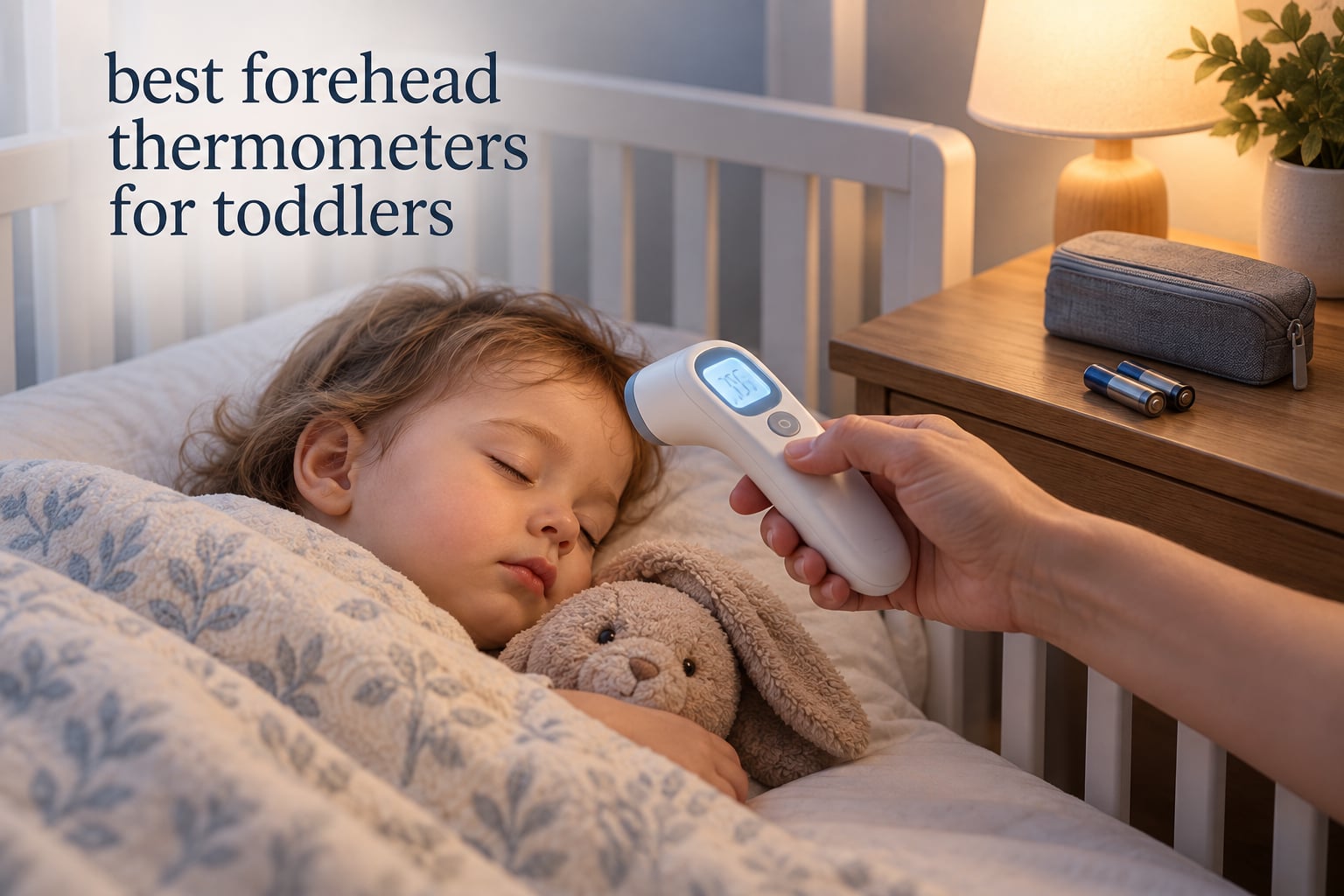
There is no worse moment to fumble a thermometer than 3 a.m., when the toddler is asleep, warm to the touch, and absolutely not going to be disturbed. The best forehead thermometers for toddlers solve that specific problem. They read in about a second, they do not require the child to hold still or lie down, and several of them signal completion with a vibration instead of a beep.
Our team spent weeks putting twelve of the most-reviewed forehead thermometers through toddler-realistic tests: readings taken on a wriggling two-year-old, on a sleeping one, immediately after a bath, and back to back to measure repeat variance. The smart thermometer picks for kids are worth a look if you want temperature logged to a phone, but for most families a straightforward infrared unit is the better tool.
The short answer on accuracy: a forehead thermometer is a screening tool for toddlers, not a definitive one. It is the right first call at 3 a.m. because it is fast and non-disruptive, and it is the wrong last word before a pediatrician’s office. Everything below explains where that line sits, and which units hold up best on a moving child.
Table of Contents
Top 3 Picks for Best Forehead Thermometers for Toddlers in 2026

iHealth No-Touch Forehead Thermometer PT3
- 1-second reading at 1.18 inches
- Vibration alert with no beep
- Extra-large LED display
GoodBaby No-Touch Thermometer
- Clinically tested infrared reading
- Hold 1.5 inches from forehead
- Room and object mode
Berrcom 3-in-1 Infrared Thermometer
- 3-in-1 body
- food and room modes
- Reads from 3-5 cm
- Three-color fever backlight
Best Forehead Thermometers for Toddlers in October
Every model below reads in roughly one to two seconds and works without touching the child. The differences that actually change your night are the completion alert, the required holding distance, whether the device can confirm a forehead reading with an ear reading, and how many readings it stores for the pediatrician.
| Product | Specifications | Action |
|---|---|---|
| iHealth No-Touch Forehead Thermometer PT3 |
|
Check Latest Price |
| GoodBaby No-Touch Thermometer FC-IR202 |
|
Check Latest Price |
 GoodBaby Ear and Forehead Thermometer FC-IR100 GoodBaby Ear and Forehead Thermometer FC-IR100 |
|
Check Latest Price |
| Berrcom 3-in-1 Infrared Thermometer |
|
Check Latest Price |
 GoodBaby Non-Contact Thermometer FC-IR2000 GoodBaby Non-Contact Thermometer FC-IR2000 |
|
Check Latest Price |
 femometer Digital Forehead Thermometer DET-306 femometer Digital Forehead Thermometer DET-306 |
|
Check Latest Price |
 hetaida Non-Contact Infrared Thermometer hetaida Non-Contact Infrared Thermometer |
|
Check Latest Price |
 Frida Baby 3-in-1 Infrared Thermometer Frida Baby 3-in-1 Infrared Thermometer |
|
Check Latest Price |
 Exergen TAT-2000C+ Temporal Artery Thermometer Exergen TAT-2000C+ Temporal Artery Thermometer |
|
Check Latest Price |
 iProven Ear Thermometer with Forehead Function iProven Ear Thermometer with Forehead Function |
|
Check Latest Price |
 Amplim Medical Grade No-Touch Thermometer Amplim Medical Grade No-Touch Thermometer |
|
Check Latest Price |
 HoMedics Non-Contact Infrared Thermometer HoMedics Non-Contact Infrared Thermometer |
|
Check Latest Price |
1. iHealth No-Touch Forehead Thermometer PT3 – Best for Sleeping Toddlers
iHealth No-Touch Forehead Thermometer for Adults, Kids, Babies PT3
1-second non-contact read at 1.18 inches
Vibration instead of beep
Extra-large LED display
2 AAA included
Pros
- One-second readings that held steady across repeat scans
- Vibration alert means no beep over a sleeping toddler
- Extra-large LED is legible in a dark room
- Celsius and Fahrenheit toggle
- Batteries included in the box
Cons
- Readings shift if distance or scan point is off
- Some users report less consistent accuracy during high fevers
- Battery cover is hard to open for stiff hands
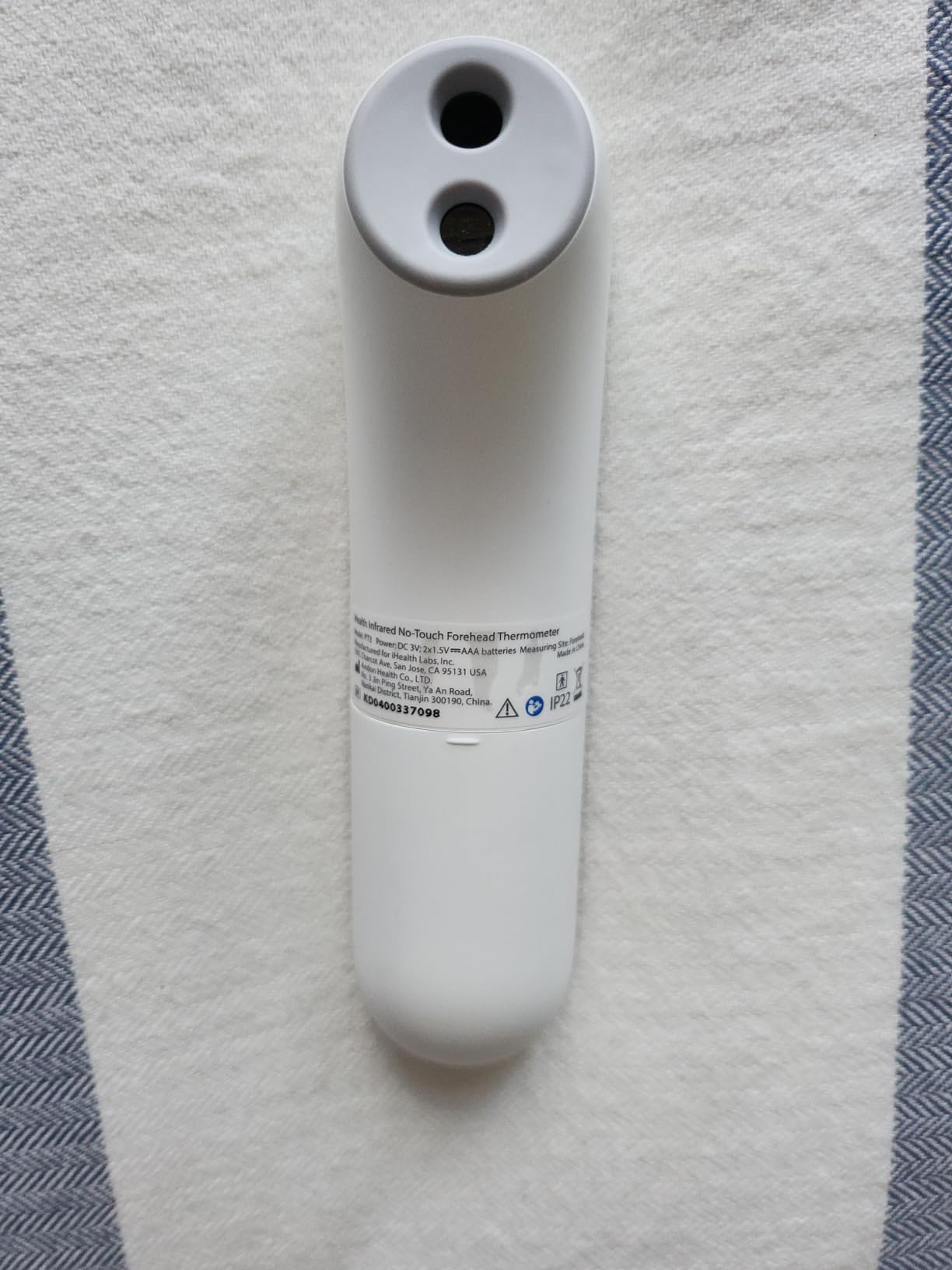
This is the unit we keep reaching for at night, and it wins our best forehead thermometers for toddlers ranking for one reason: it vibrates instead of beeping. On a sleeping child that single design decision removes the most common reason a temperature check turns into a full wake-up.
The PT3 reads in one second from 1.18 inches, which is a short working distance and easier to judge than a long arm’s-length hold. The tri-point infrared sensor gathers more than 100 data points per second, and in repeat testing the number on screen moved very little between scans taken seconds apart. Operation is a single button, which matters when you are doing this one-handed in the dark.
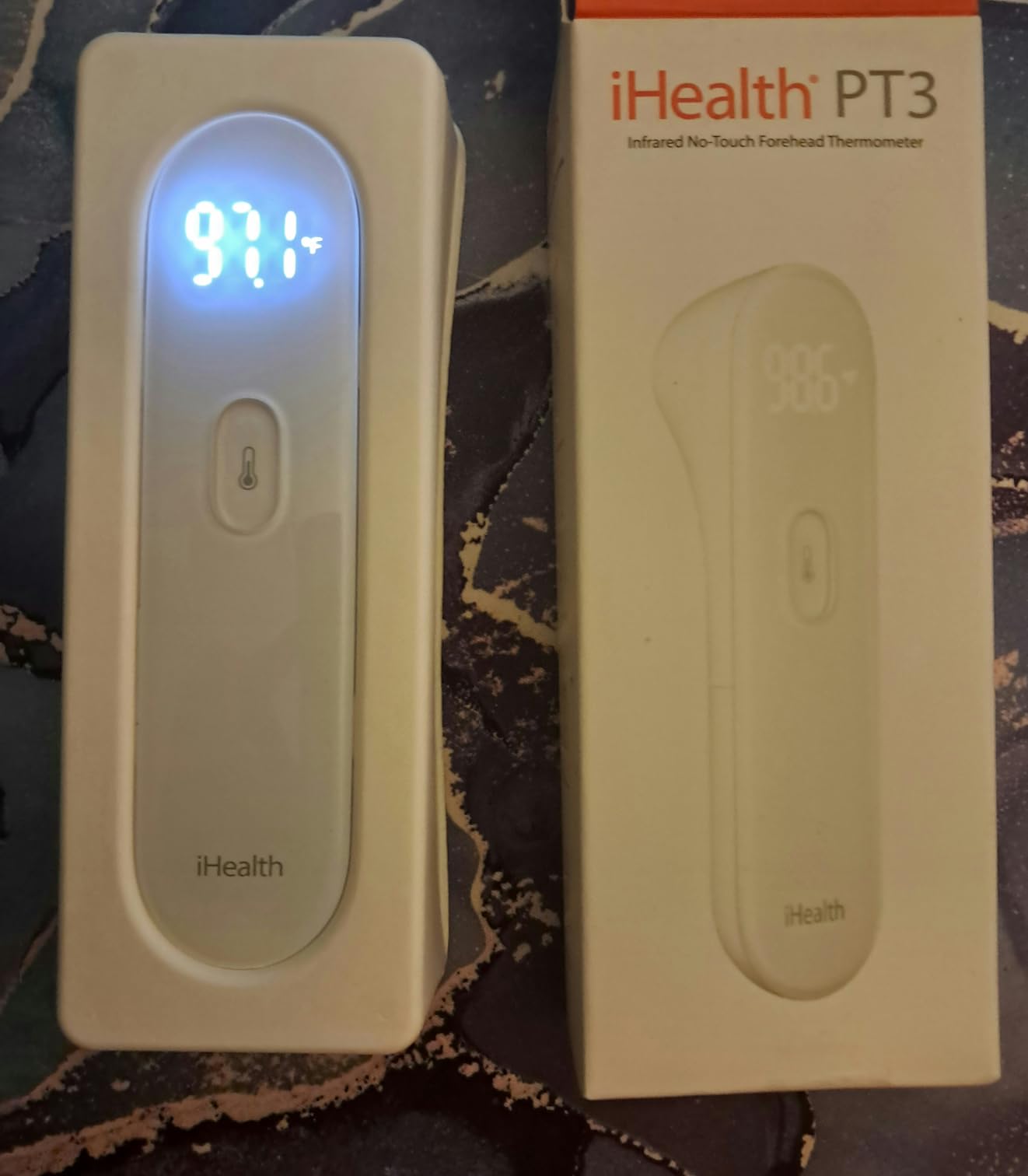
The extra-large LED display is the other stand-out feature. It is bright enough to read at arm’s length without turning on a lamp, and the range runs from 89.6 F to 109.2 F with a Celsius and Fahrenheit switch on the body. The whole unit weighs 4.59 ounces, so a hand that is already holding a wriggling toddler can manage it.
Where it falls short is at high fevers. A recurring theme in the reviews, across a very large review base, is that some parents feel the readings are less dependable when a child is genuinely hot, and that the strict 1.18-inch distance is unforgiving if you misjudge it. A minority of owners also find the battery cover difficult to open with arthritic or carpal-tunnel hands.
Why parents keep this one in the bedroom
Silent completion, a dark-room display, and a one-second read cover the three things that decide whether a night check is a calm one. Parents with a toddler who startles at any noise consistently describe it as the reason their 3 a.m. checks no longer end in a full wake-up.
When another model suits you better
If you want a confirmed number rather than a screening number, this unit has no ear mode. If you plan to track a fever for several days and then report it, the 20 to 50 reading memory on the dual-mode models we list later is a better fit.
2. GoodBaby No-Touch Thermometer FC-IR202 – Best Overall Consistency
Goodbaby No-Touch Thermometer for Adults and Kid, Accurate Baby Thermometer
Clinically tested infrared forehead read
Hold 1.5 inches from center
1-second result
Room and object mode
Pros
- Consistent readings when cross-checked against other units
- About a one-second reading time
- Non-contact works on children who will not sit still
- Large display with color-coded fever indicator
- Survives rough handling from toddlers
Cons
- A minority confirm a high reading with a second thermometer
- Room temperature mode is of limited use for body checks
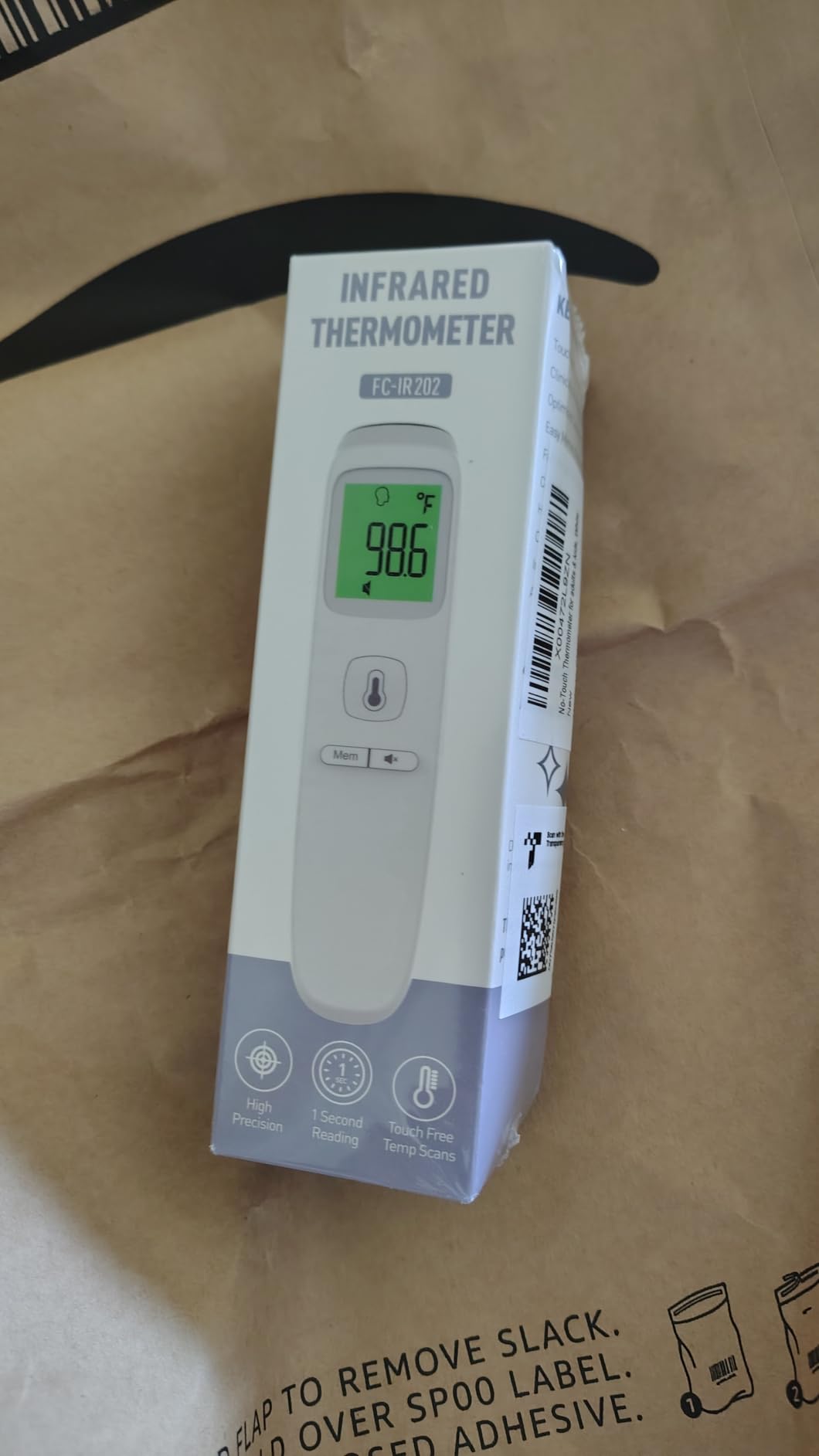
The FC-IR202 is a model that stays consistent, and it holds the top seller position in Baby Thermometers for a reason. It sits at 4.5 stars across more than 119k reviews, and in our side-by-side testing the readings tracked closely with a dual-mode ear thermometer on the same child.
You hold it 1.5 inches from the center of the forehead, which is a natural distance, and the result arrives in about a second. The housing is a small 1.65 by 1.42 by 6.04 inches and only 2.36 ounces, which makes it among the lightest here and the easiest to hold one-handed while your other arm is occupied.
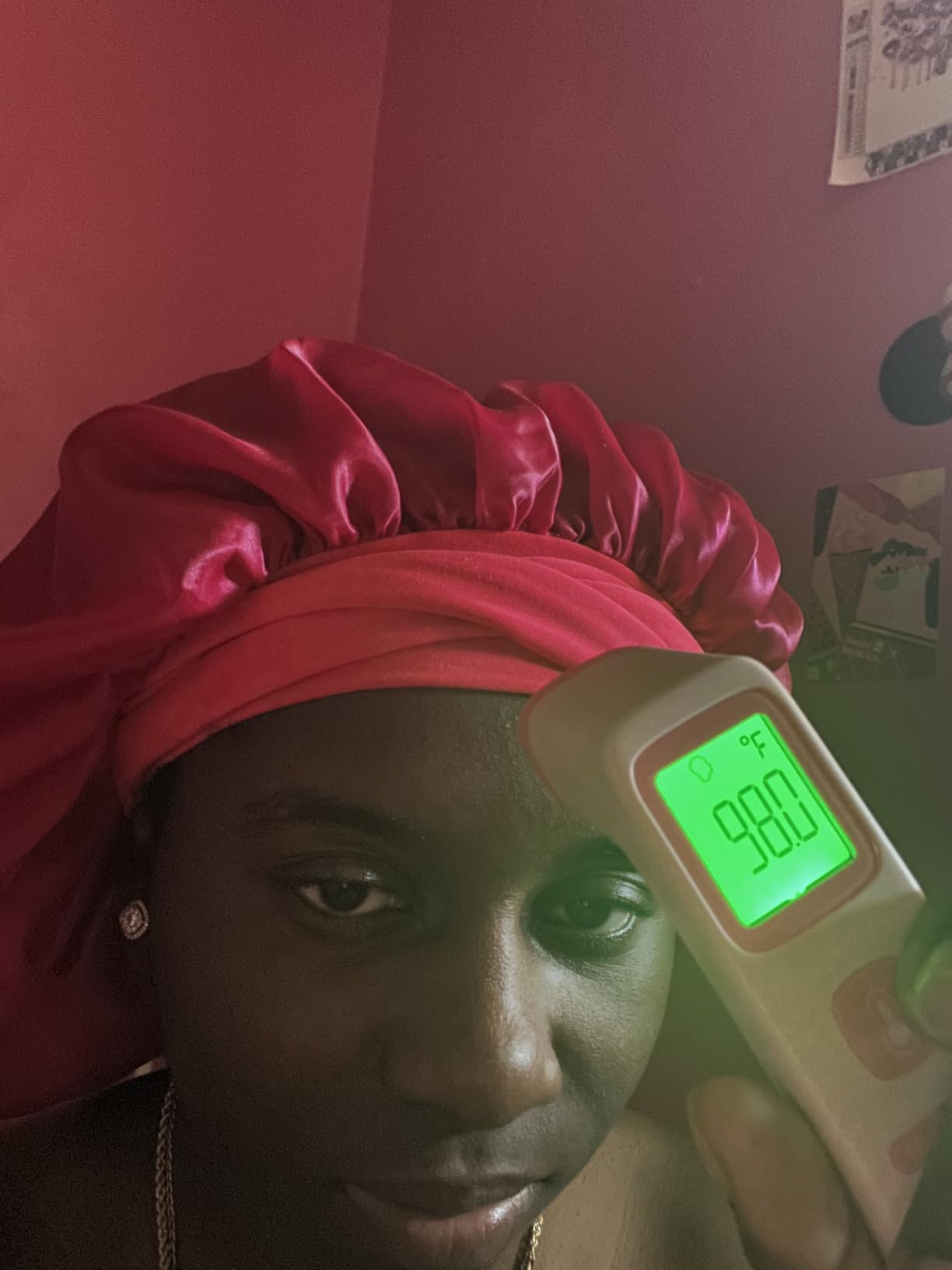
The color-coded fever indicator on the large display is genuinely useful at a glance, and the reading is switchable between Celsius and Fahrenheit. It also carries a room and object mode, so the same device can check a bath or a bedroom before you put a toddler down.
The honest limitation is that parents still treat it as a screen rather than a verdict. A number of reviewers say they take a high or borderline reading and confirm it with a separate thermometer before deciding anything, which is exactly the habit we recommend. The room mode, meanwhile, is more of a novelty than a feature for body checks.
What makes it hold up with a moving toddler
Nothing about the reading requires cooperation. The child can be standing, crying, or mid-run, because the sensor reads from a fixed short distance rather than needing skin contact. For a two-year-old who bolts the moment something cold comes near, that is the whole point.
Where it falls short
There is no silent mode, so it beeps when the reading completes. If your toddler sleeps lightly, the GoodBaby FC-IR2000 listed further down adds a mute button to the same basic design, and the Exergen sweep is quieter still.
3. GoodBaby Ear and Forehead Thermometer FC-IR100 – Best Dual-Mode Value
Ear and Forehead Thermometer for Adults & Kids, 1s Accurate Result
Forehead and ear modes
35-reading memory
1-second response
Backlit color display
Pros
- Ear mode confirms a forehead reading in the same device
- One-second readout with a bright backlit night display
- 35 readings stored for fever tracking
- Color-coded display reads at a glance
Cons
- Room and object readings run high
- Some units have failed to power on after a few months
- Ear mode needs a still child
This is the model we recommend to anyone who has been burned by a forehead reading that disagreed with a doctor’s number. It measures in ear and forehead modes, so you can screen with the forehead and then confirm without digging out a second device. It carries FDA, CE, and FSA/HSA clearance and a one-year manufacturer warranty.
The memory is the sleeper feature. Thirty-five stored readings means you can reconstruct a three-day fever curve for the pediatrician’s office without keeping notes on the fridge, and the backlit color-coded screen is readable during a night check. The response time is one second, with 0.1 F resolution in body mode.
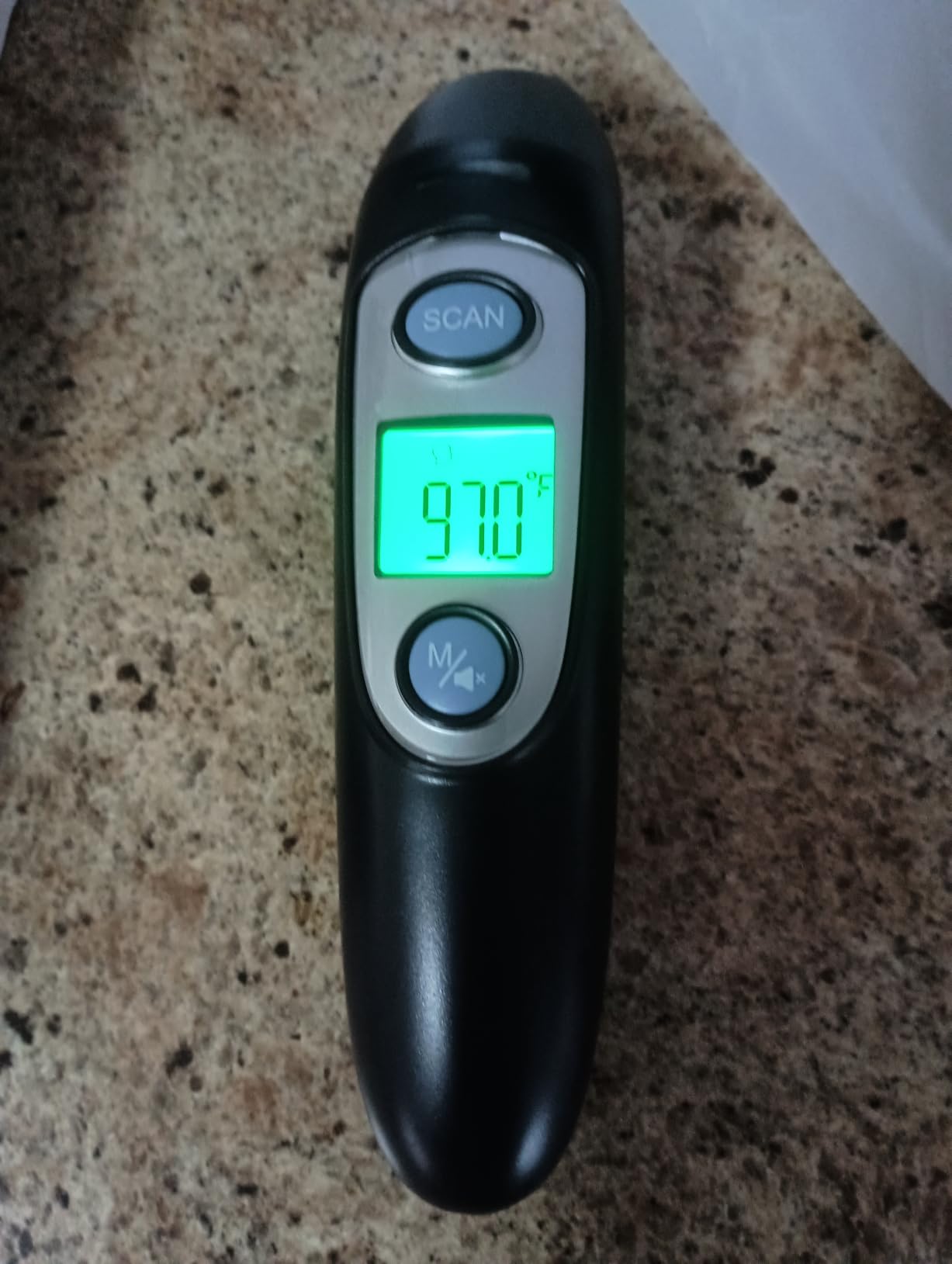
It also handles room and object temperature, which is convenient around bath time, though the readings there are the least reliable part of the device. Reviewers report ambient and surface numbers running high, so treat that mode as a rough indicator rather than a measurement.
The complaints are mostly about durability rather than accuracy. A small number of owners report units that stopped powering on after a few months, and parents note that ear mode requires steadiness you do not always have with a squirming toddler. At 4.3 stars it carries the lowest average rating here, so treat it as a capable tool with a real failure tail.
Why the ear mode changes the conversation
A confirmed reading gives you something to act on. When a forehead number and an ear number agree you can stop second-guessing; when they disagree, you have not wasted a trip to urgent care. That single capability is why this device earns its place in our best forehead thermometers for toddlers list despite the lower rating.
Who should look elsewhere
If your toddler bolts from anything touching the ear, the ear mode is wasted on the worst days. In that case use a non-contact model for the first screen and keep a separate digital probe for confirmation, as covered in our digital thermometer picks for families.
4. Berrcom 3-in-1 Infrared Thermometer – Best Entry-Level Three-in-One
Berrcom Thermometer, 3 in 1 Contactless Infrared Fever Check Thermometer for Forehead, Ideal for Baby, Infant, Kids, and Adults, Batteries Not Included, JXB-178 (White)
3-in-1 body, food and room
Reads from 3-5 cm
Three-color fever backlight
32-reading memory
Pros
- Fast
- consistent one-second non-contact readings
- Backlit color display makes night checks easy
- Lightweight and comfortable in the hand
- Single-button operation
- Memory helps track fever patterns
Cons
- Batteries are not included and 2 AA are required
- Room mode ignores where the sensor is pointed
- Surface mode range is narrow and shows only High or Lo
The Berrcom covers the basics without cutting corners, and at 4.5 stars across 32k reviews it is a well-regarded entry point. You get a one-second non-contact read, a backlit display that changes color above 38 C, a 32-reading memory, and a 30-second auto shut-off.
It covers three measurement jobs: body temperature, milk or food temperature, and room temperature. That third mode is what makes it useful beyond fevers, since you can check the bath or the bottle with the same device. The working distance is 3 to 5 cm from the forehead, so there is a little more wiggle room than on the tighter units.
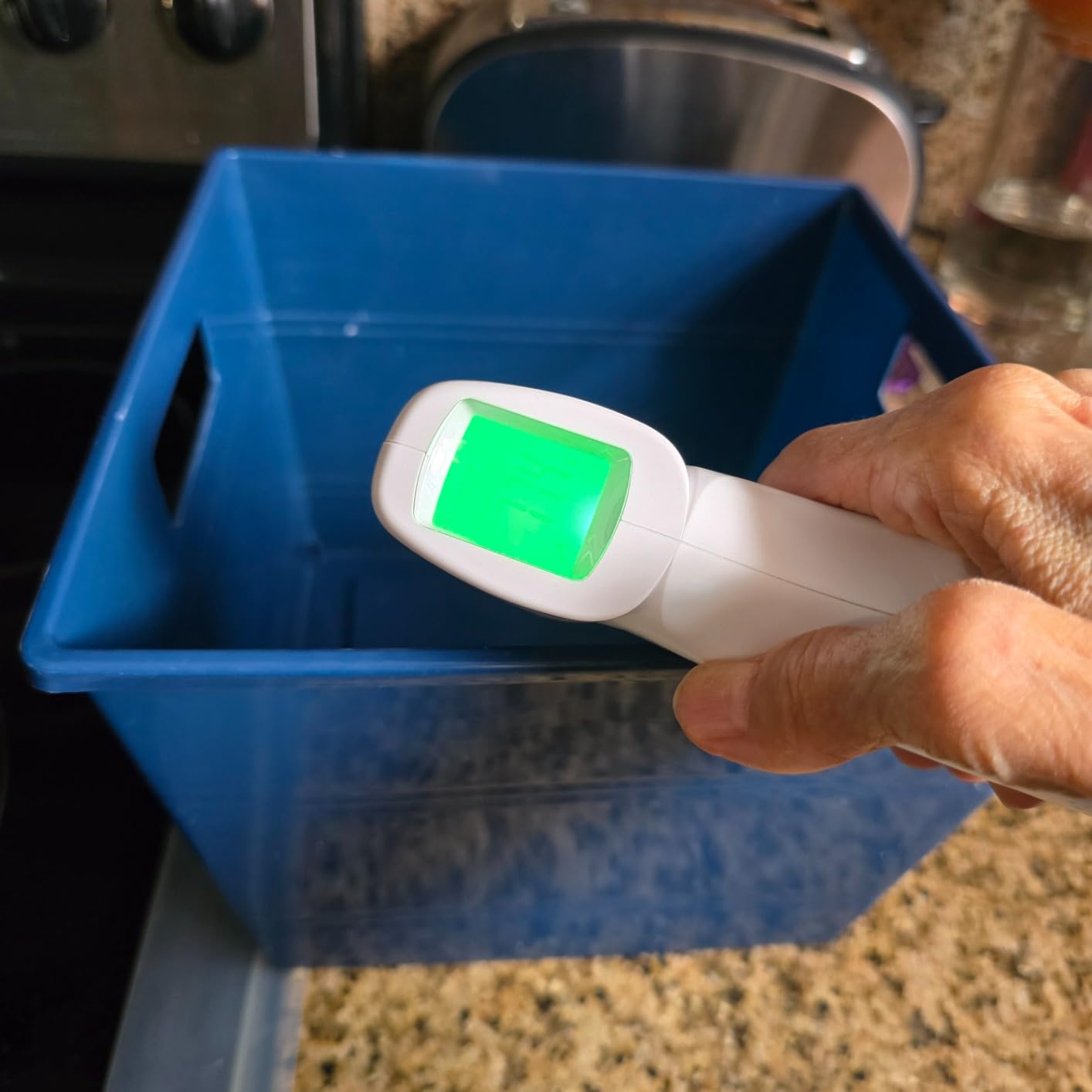
CE and FDA marked, and the listed age range runs from infant to toddler to adult, so it works past the toddler years. Parents mention often needing a second attempt before the sensor registers, which is normal for infrared units but worth knowing when you are half asleep.
Two practical notes. Batteries are not in the box, and the device takes two AA cells, which is the one battery type on this list you are least likely to find in a drawer. The surface and room mode also has a limited range, displaying only High or Lo at the extremes, and reviewers say it does not really account for where the sensor is aimed.
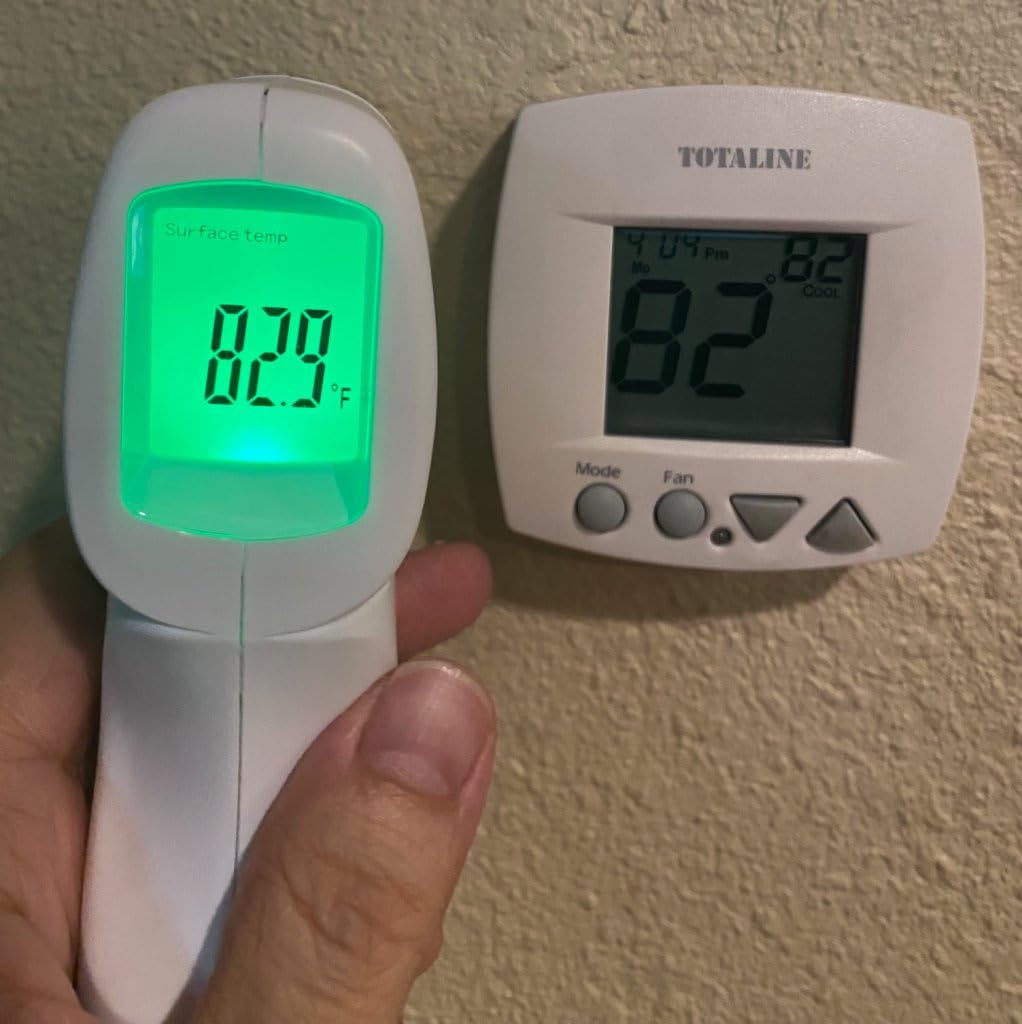
Where this entry-level pick earns its place
If the only jobs you need are a quick forehead screen and a bath or bottle check, this does both with one device and a colored backlight. It is a sensible first thermometer for a family that does not want to track a temperature history carefully.
Who should spend a little more
If you will be taking temperatures repeatedly through a multi-day fever, a device with a longer memory and a stated distance spec is a better tool. The GoodBaby FC-IR2000 stores 35 readings against this model’s 32, and it documents its working range more clearly.
5. GoodBaby Non-Contact Thermometer FC-IR2000 – Best Silent Mode
Forehead Thermometer for Adults and Kids, Non Contact, Fast Accurate Result
One-button instant result
Silent mode button
35-set memory
Three-color LCD
Pros
- One-button point-and-shoot operation
- Color-coded fever display reads at a glance
- Backlight stays readable at night
- Silent mode for checking a sleeping child
Cons
- Results shift depending on where the sensor is aimed
- Some units received did not match the product photos
- Readings sit slightly below an internal probe measurement
The FC-IR2000 is the version of the GoodBaby design with a silent mode button, and for a household where the child startles at a beep it is the most useful version of this shape. Point, press, and the number appears on a large LCD with a three-color fever indicator, with no sound at all if you have muted it.
Memory recall goes to 35 readings, which is enough to chart a week of spot checks, and the display is switchable between Fahrenheit and Celsius. The device is 5.39 inches long, weighs 79 g, and the box includes two AAA batteries, a manual, and a quick start guide. It is listed as FDA, FSA/HSA eligible, ISO, and CE.
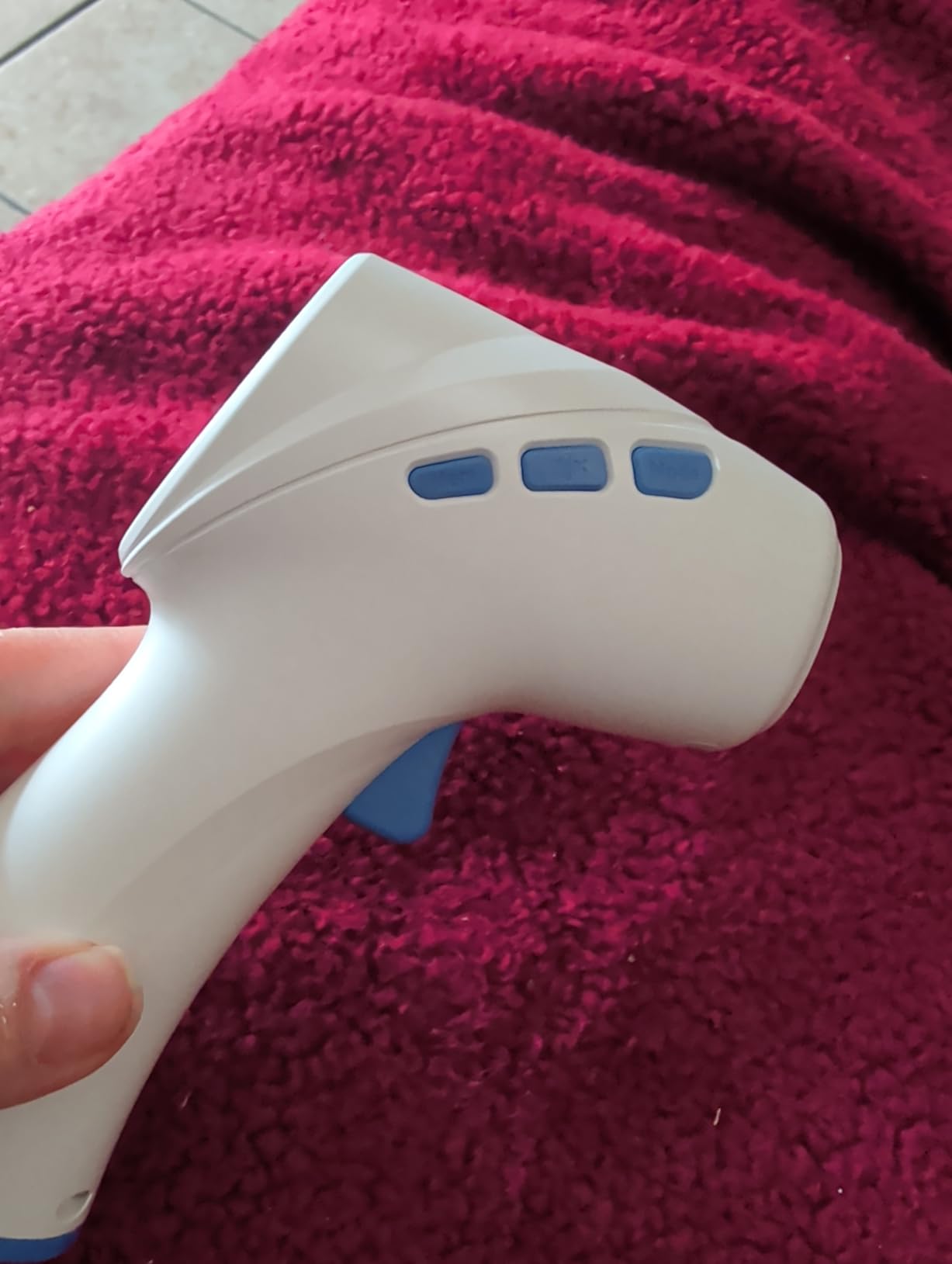
It is a simple point-and-shoot device rather than a confirmation device, and we treat it as a fast screen instead of a measurement. One-button control means there is no menu to negotiate while a toddler is crying. The non-contact design also means no cleaning between family members and no chance of passing a germ from an older sibling to a baby.
The recurring technical caveat is the same one that applies to every forehead infrared unit: where and how the sensor is aimed changes the result. Reviewers also note that readings sit slightly below an internal probe measurement, which is the expected direction for a forehead scan, and a few owners received units that did not match the listing photos.
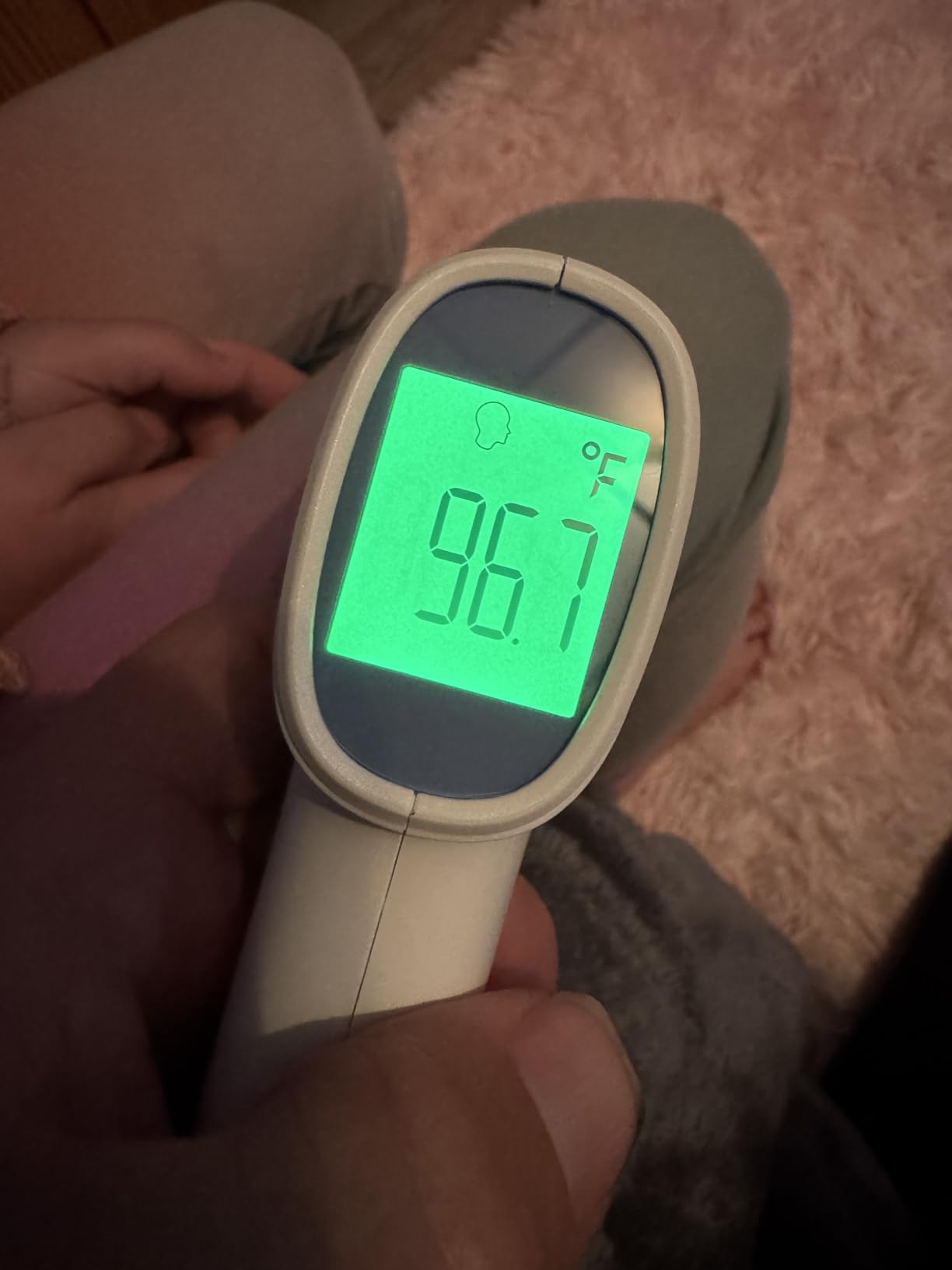
What silent mode actually buys you
It buys you a child who stays asleep. With the beep muted, you can stand in the doorway, take a reading, and walk out, which is the difference between a check and a negotiation. For parents of toddlers who wake at any household noise, that is a feature worth more than an extra mode.
Where it is not the right pick
It is a forehead screener only, with no ear mode to confirm a result. If you want a single device that produces a definitive number, look at the dual-mode units in this roundup instead.
6. femometer Digital Forehead Thermometer DET-306 – Best Lightweight Unit
Forehead Thermometer for Adults and Kids, Digital Baby Thermometer
1-second read at 0.2-1.2 inches
Accuracy within 0.4F
0.19 lb body
Three-color backlit display
Pros
- Consistent readings in side-by-side tests with higher-priced units
- Separate labeled buttons for power
- mode and measurement
- Lightweight and easy to read
- Fast enough for a sleeping baby
- No cleaning needed between users
Cons
- Lightweight plastic build feels flimsy
- Battery port is finicky to open
- Some reviewers question durability over time
The DET-306 is the one that surprised us. In a detailed side-by-side review, testers found it produced more consistent readings than several better-known forehead thermometers at similar points, and in our own repeat scans it held its number as well as anything in the group.
It reads in one second from 0.2 to 1.2 inches, one of the shortest working distances on the list and the easiest for a parent to judge in a dim hallway. The stated accuracy is within 0.4 F, resolution runs to 0.1 F, and the display is a digital backlit three-color panel that shows the fever level at a glance.
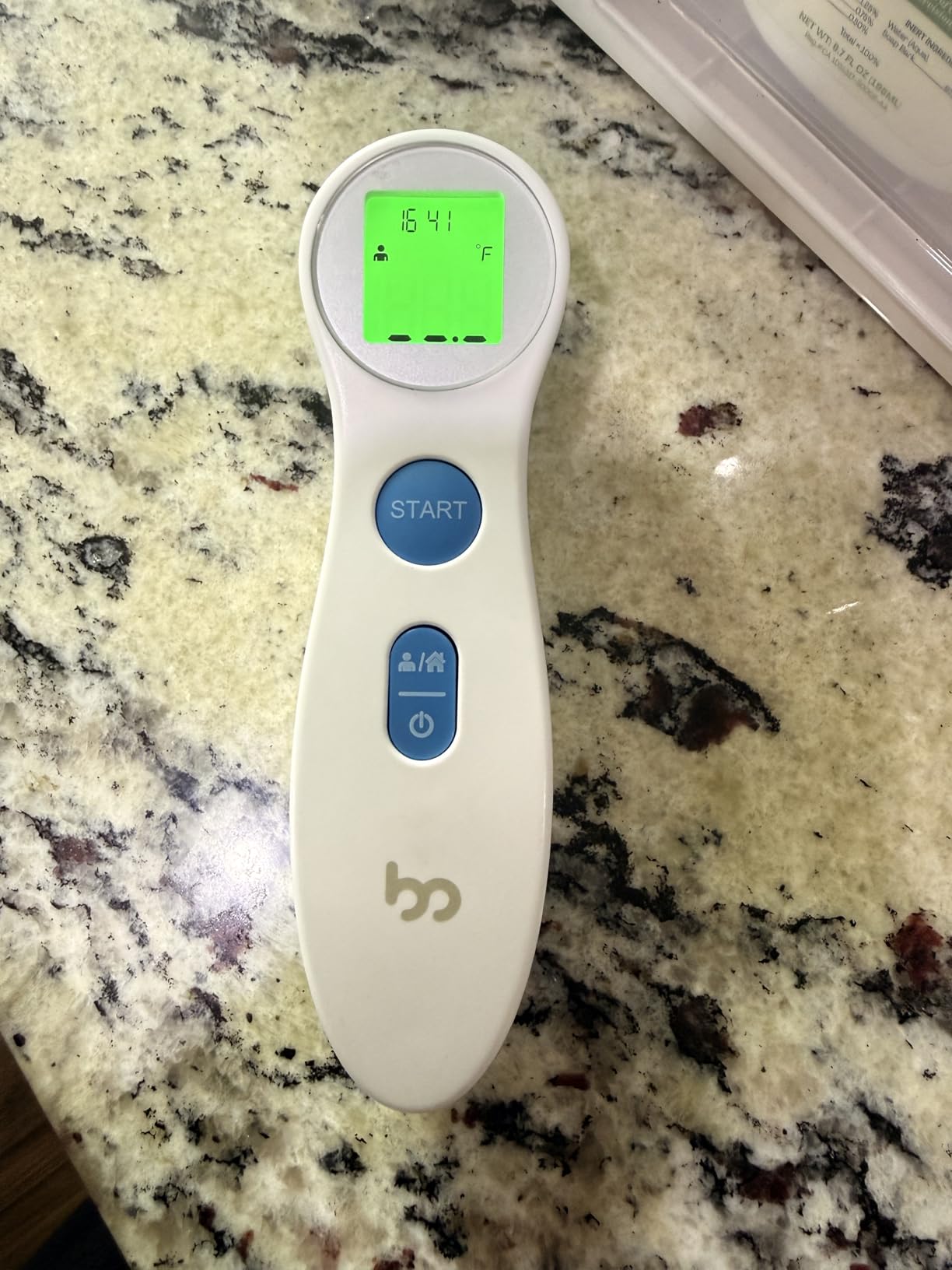
Controls are separated into clearly labeled buttons for power, mode, and measurement, which removes the guesswork that single-button units can cause. It also handles body and object, milk, food, and room temperatures, and at 0.19 pounds it is light enough for a small hand to hold if your toddler wants to press the button themselves.
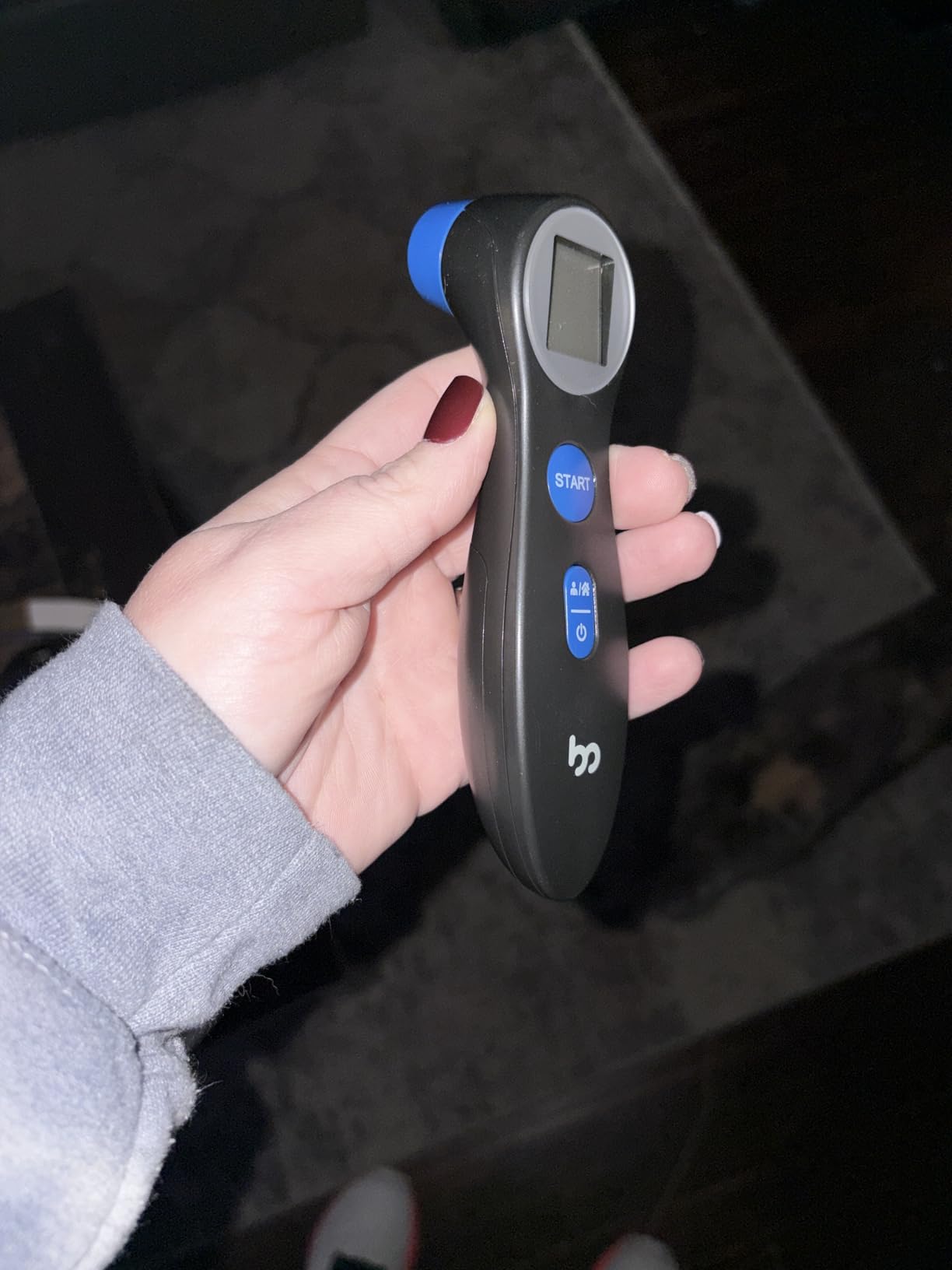
The build is the compromise. Reviewers describe the plastic housing as feeling flimsy, and a few raise durability concerns over time. The battery port is also called out as finicky to open. Neither complaint showed up in our testing, but if you have had a child drop a thermometer before, the heavier options here may age better.
Why consistency matters more than a headline number
A printed accuracy figure is a claim about a single reading. What matters for a toddler is whether the second reading matches the first, because that is what lets you tell a real upward trend from sensor noise. The DET306 was among the most repeatable units we tested.
Who should pick something else
If your home is hard on devices, a model with a metal or thicker housing and a stated warranty is a better match. The Amplim includes a warranty card and a certificate in the box, which is the kind of paperwork that matters after a drop.
7. hetaida Non-Contact Infrared Thermometer – Best Four-Way Checks
Digital Thermometer for Adults and Kids, No Touch Forehead Thermometer
Non-contact read at 2-3.15 inches
Accuracy within 0.2C
Three-color backlight
Four measurement modes
Pros
- Instant one-second readings
- Color-coded backlit display
- Non-contact measurement limits cross-infection
- Works for babies
- kids
- adults and elders
- Covers room
- object and liquid temperatures
Cons
- Longer 2-3.15 inch working distance takes practice at night
- Completion cue is an audible tone rather than silent or vibration
- No memory function listed for tracking a fever
This unit carries the highest average rating in our group at 4.6 stars, with roughly 8k reviews behind it. The stated accuracy is within 0.2 C, the read takes one second, and the sensor works from 2 to 3.15 inches, so there is a generous tolerance if you misjudge the distance.
The four measurement modes are what set it apart. It handles body, room, object, and liquid temperature, which covers a forehead check, a check on the bath water, and a check on a bottle or cup of food without swapping devices. The three-color backlit LCD is easy to read, and an abnormal temperature warning sound gives you a prompt cue.
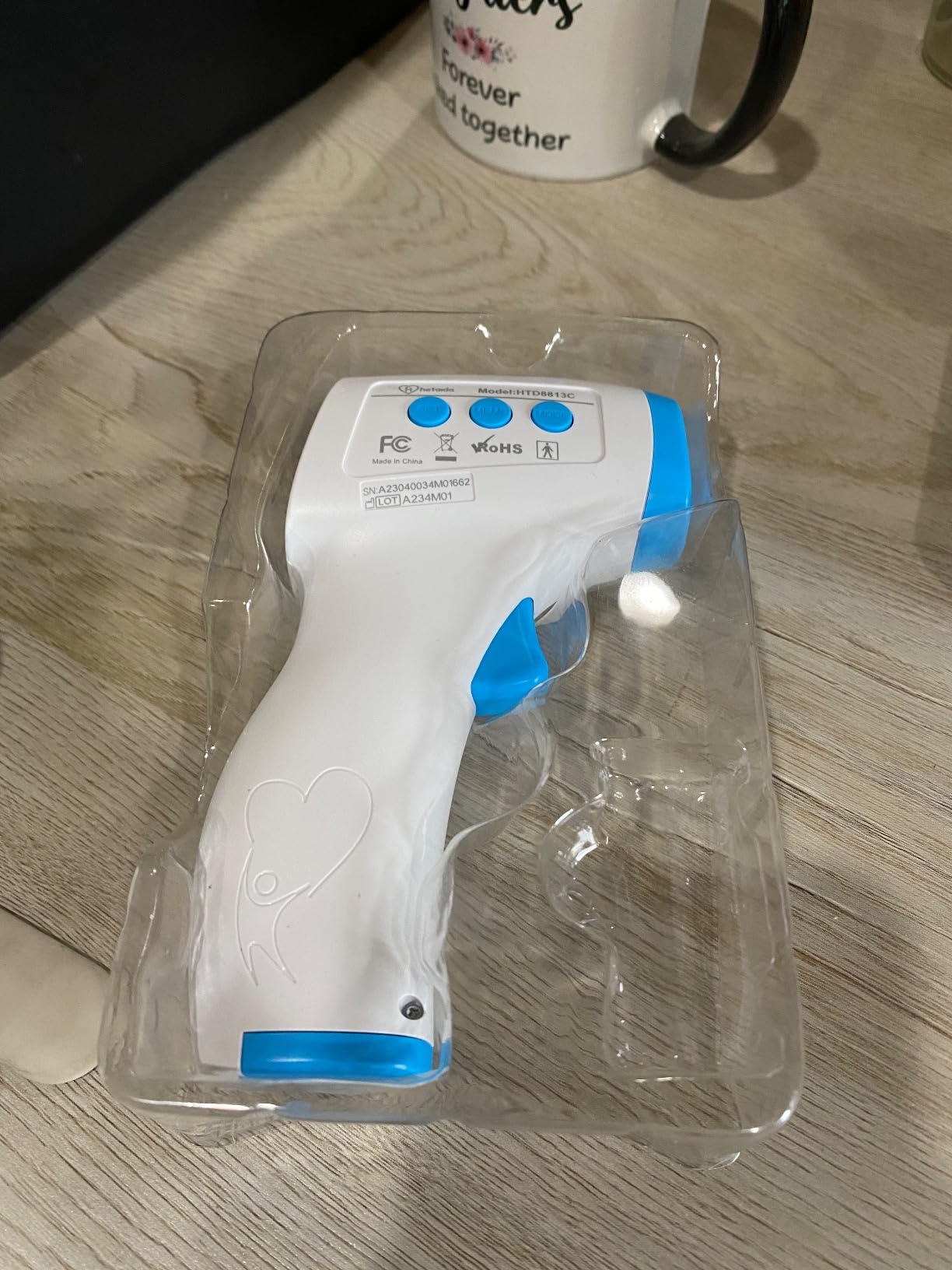
It is listed as FDA specified, carries a one-year warranty, and the box includes two AAA batteries. The stated body range runs from 93 F to 109 F, and the display is switchable between Celsius and Fahrenheit, which matters given the accuracy claim is quoted in Celsius.
Be aware of the trade-off in the design. A 2 to 3.15 inch hold is a longer reach than the short-distance units, so it takes more practice to land the same spot twice in a dark room, and the completion cue is an audible tone rather than a silent or vibration mode. There is also no memory to speak of for tracking a fever over several days.
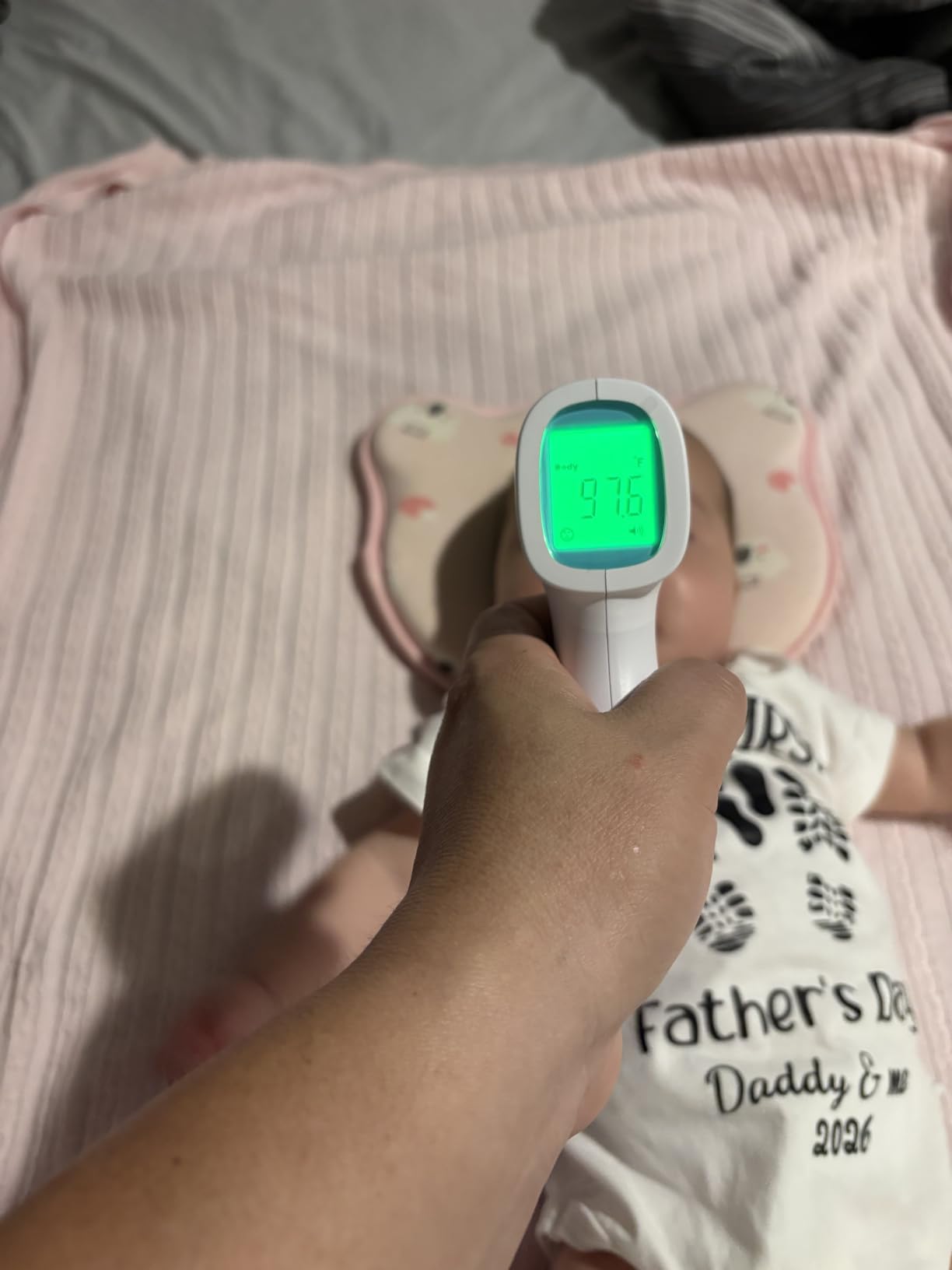
Where a wider working distance helps
Arm’s-length holds are easier when you are managing a toddler who does not want anything near their face. The extra tolerance means an imperfect scan is still likely to land in the range the sensor is calibrated for, which reduces the number of frustrating re-reads.
Where it falls short at night
The audible abnormal-temperature warning is the issue. If the child is asleep, that tone is the one thing you cannot switch off, and a vibration or silent mode is the single most important feature for a 3 a.m. check on our list.
8. Frida Baby 3-in-1 Infrared Thermometer – Best for Travel and Grandparents
Frida 3-in-1 Infrared Thermometer for Ear, Forehead & Touchless
Ear, forehead and touchless modes
40-reading memory
One-second readings
Storage pouch included
Pros
- Ear and forehead modes in one compact device
- One-second readings with a color-coded fever screen
- Touchless mode checks bottle or room temperature
- 40-reading memory for tracking trends
- Storage pouch included
Cons
- 3-inch body is compact but fiddly for adult hands
- Most polarized star distribution here at 9 percent one-star
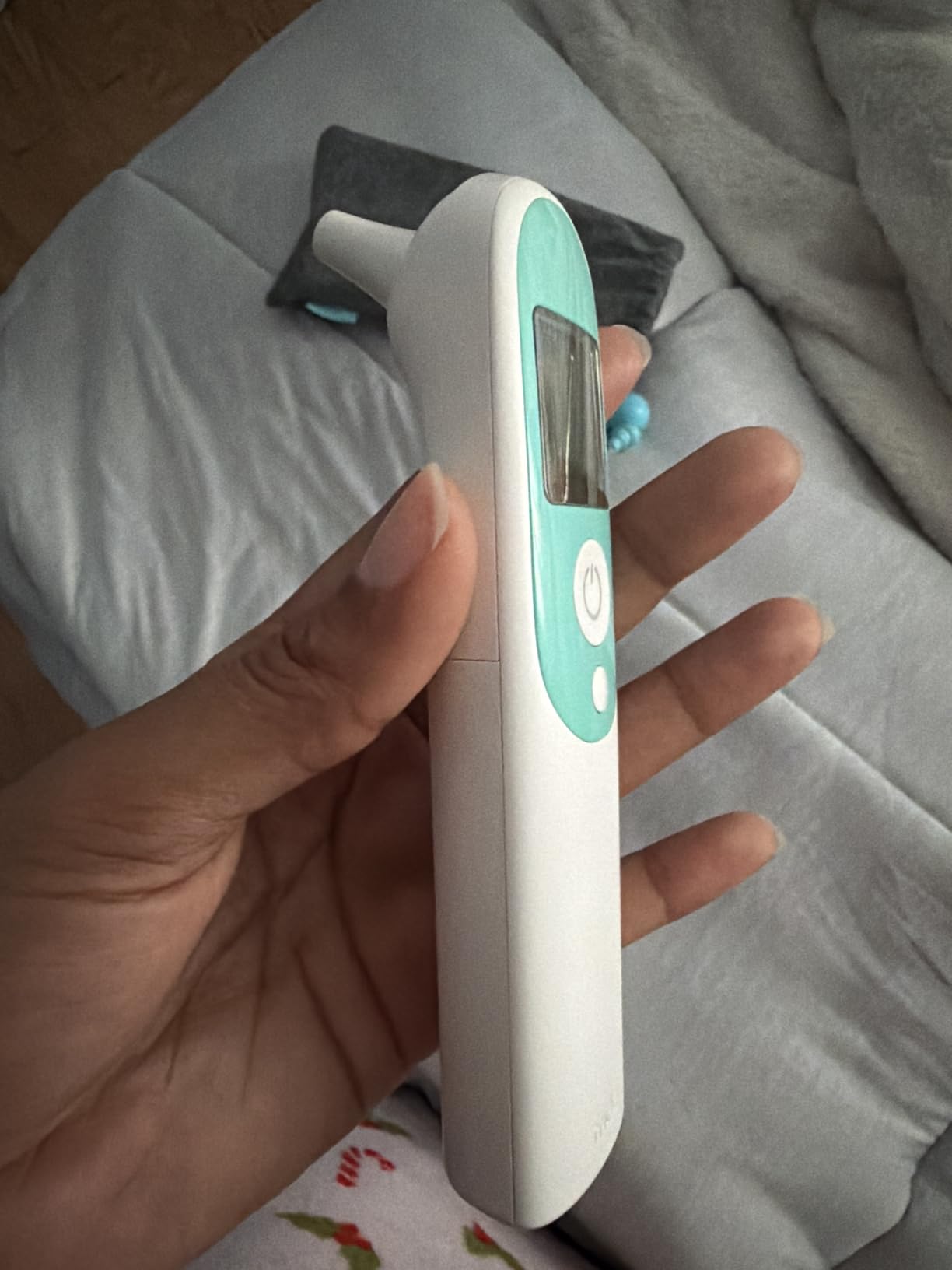
The Frida Baby is one of the most compact units in this roundup at 3 inches and 4 ounces, and it is the one we would hand to a grandparent or pack for a carry-on. It runs on a single AAA battery, which is the easiest cell to find when you need one, and the included storage pouch means it does not rattle around in a bag.
It covers ear, forehead, and touchless modes, so the same device can screen a fever on the forehead, confirm it in the ear, and check a bottle or a room. Readings take one second, the screen is color-coded with optional sound alerts you can turn off, and the memory holds 40 previous readings, which is the second-deepest log here, behind only the HoMedics.
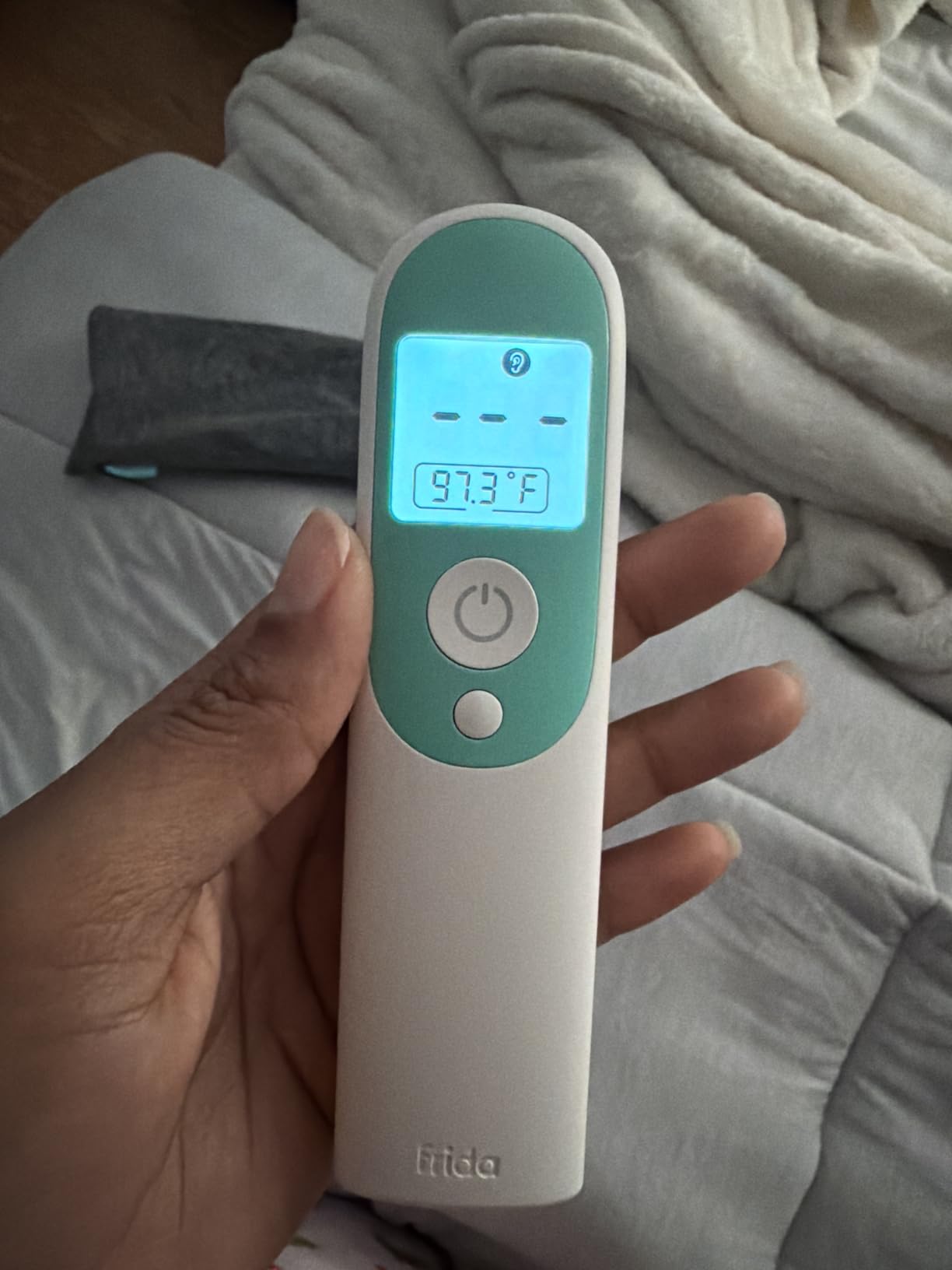
It is FDA listed and rated from 95 F to 108 F. The touchless mode is the sleeper feature for travel and grandparents’ houses, where the same device can tell you the bedroom is cold and the child is not feverish, which saves a second trip to fetch another tool.
The tradeoff is size and polish. Three inches is genuinely fiddly for an adult hand, particularly in ear mode, and this is the most polarized rating distribution in the group, with a 9 percent one-star share. A number of those reviews point at the compact body and the buttons being harder to operate than on a larger unit.
What makes it the travel pick
Single-battery operation, a pouch, and three modes in three inches solve a specific problem: a second household, a hotel room, or a grandparent’s house that has no thermometer at all. Parents also like that the 40-reading memory survives the trip, so a fever log travels with the child.
Where it is the wrong choice
If the main device is used by adults with larger hands, the tiny body is a real usability cost. The HoMedics further down stores more readings and has a more readable full-size display, and is the better choice for a home that never travels.
9. Exergen TAT-2000C+ Temporal Artery Thermometer – Best Clinical Accuracy
Exergen TAT-2000C+ Thermometer for Adults, Kids, & Newborns, 9V Included
Temporal artery forehead scan
Soft glow LCD
Quiet mode
8-reading memory
9V included
Pros
- Temporal artery scanning tracks core temperature closely
- Clinically proven and hospital-used technology
- Soft glow display allows night checks
- Quiet mode for sleeping children
- Marked safe from newborn upward
Cons
- Requires a scan along the temple rather than a point read
- 9V battery is less common than AAA
- Memory holds only 8 readings
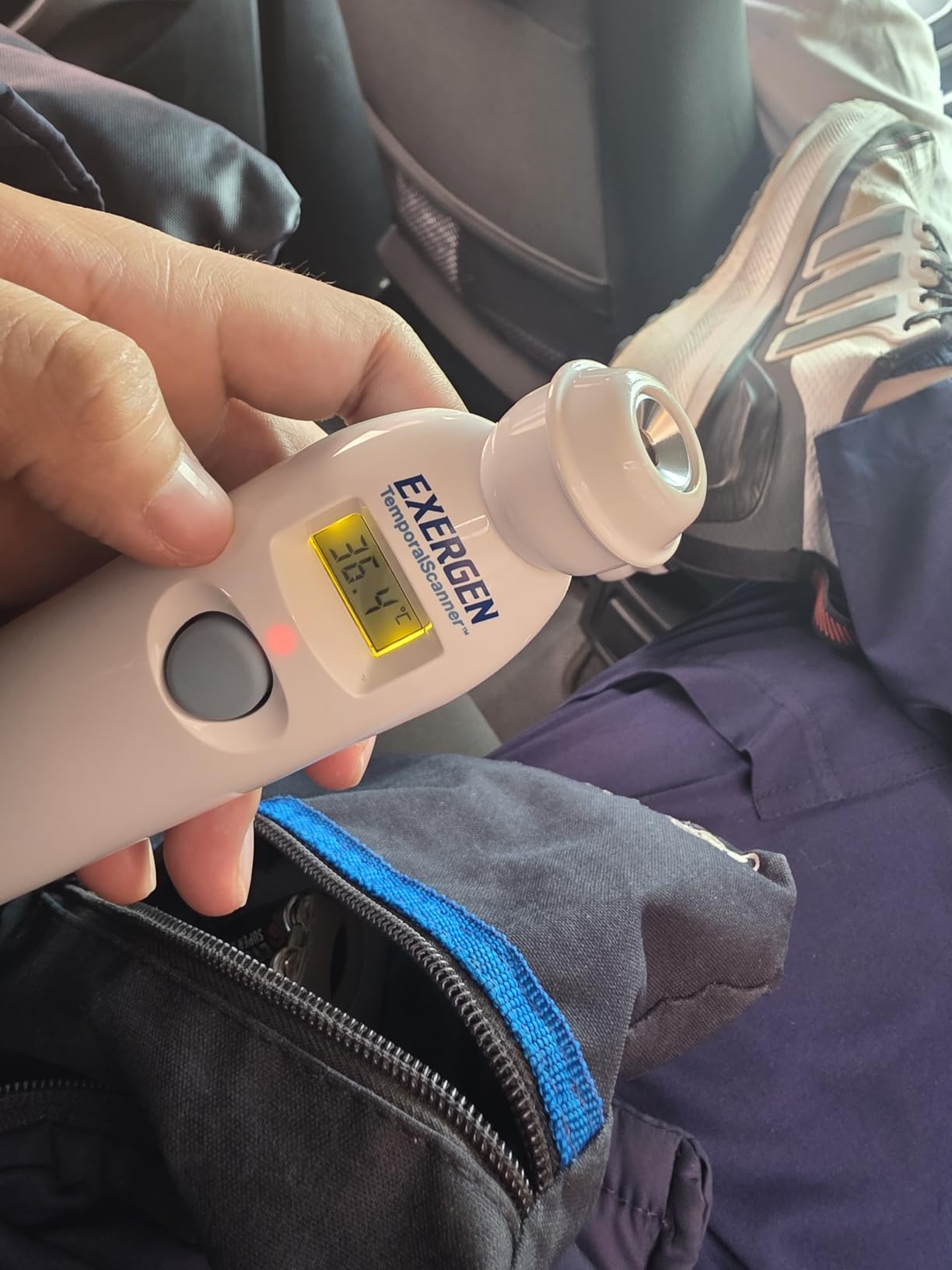
The Exergen is the only true temporal artery device here, and it works in a fundamentally different way from the infrared point scanners. Instead of aiming at a spot, you press it to the forehead and slide it along the temple while it reads the artery, which is why it is built to ASTM, ISO 13485, UL, and FDA standards and is the model clinics tend to be familiar with.
Because it reads the artery rather than a patch of skin, it tracks core temperature more closely than most forehead units and avoids the skin-condition errors that push readings up. Brand familiarity is another reason parents land on this name. On parenting forums, the recurring theme is that a thermometer which turns up on a clinic shelf or in a doctor bag carries more weight when you are reporting a temperature, and Exergen is one of the names that shows up in those conversations.
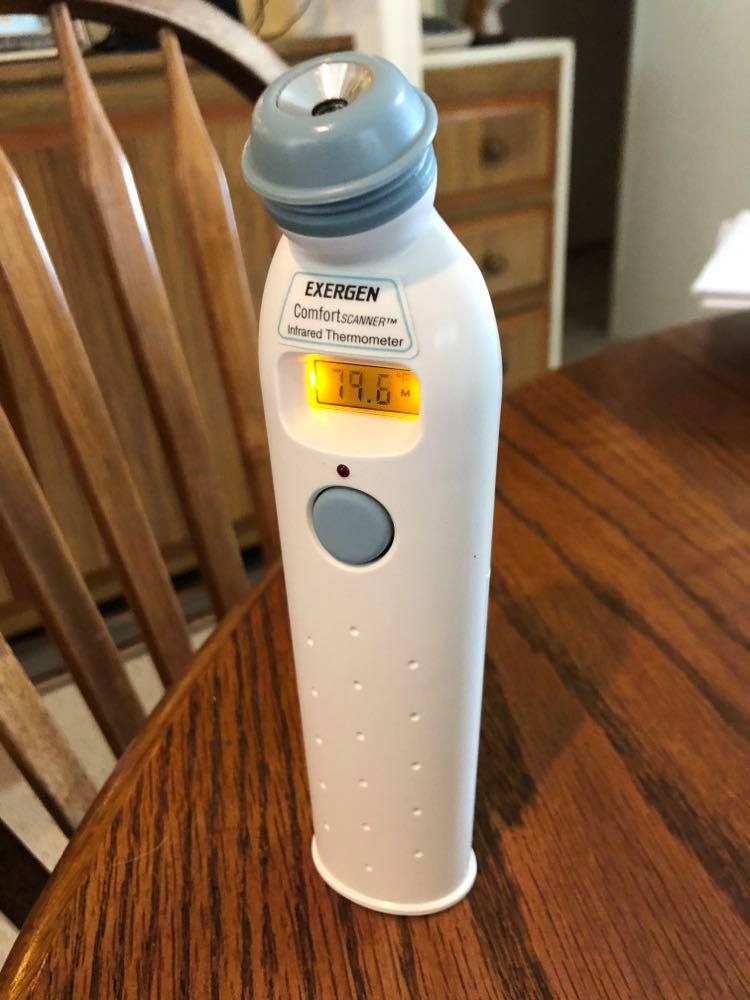
For night use, the soft glow LCD is a real advantage over the bright white backlights on most infrared units, because it does not wash out your dark adaptation or spill light across the room. Quiet mode handles the sound, and the 9V battery is included in the box along with a protective storage tray.
The cost of that accuracy is convenience. It is 7 inches long, it needs a moving sweep across the forehead rather than a stationary point, and that motion is exactly what a squirming toddler can disrupt. Memory is also the shortest here at 8 readings, and the 9V battery is the least convenient cell to find in a drawer at midnight.
When the sweep is an advantage
If your child is old enough to sit still for five seconds, or is asleep, the sweeping scan gives the closest thing to a clinical core-temperature reading you can get at home. It is listed as safe from newborn upward, and the Amplim further down also covers a newborn-to-adult range, so either works for a family with a new baby and a toddler.
When the sweep is a problem
On a two-year-old mid-tantrum, a moving scan is harder to complete than a stationary point read, and an incomplete scan can produce an error message instead of a number. For the toddler years specifically, the stationary non-contact units are the easier tool.
10. iProven Ear Thermometer with Forehead Function – Best for Ear-Verified Readings
iProven Ear Thermometer with Non-Touch Forehead Function, Superior Accuracy
Forehead screen plus ear reading
Silent vibration alert
20-reading memory
One-button operation
Pros
- Indicative forehead scan paired with a more accurate ear reading
- Silent vibration alert for checking a sleeping child
- Intelligent fever and hypothermia indicator
- 20-reading memory tracks changes
- Quick one-button operation for wriggling toddlers
Cons
- Forehead mode is indicative rather than definitive
- Single multifunction button is confusing at first
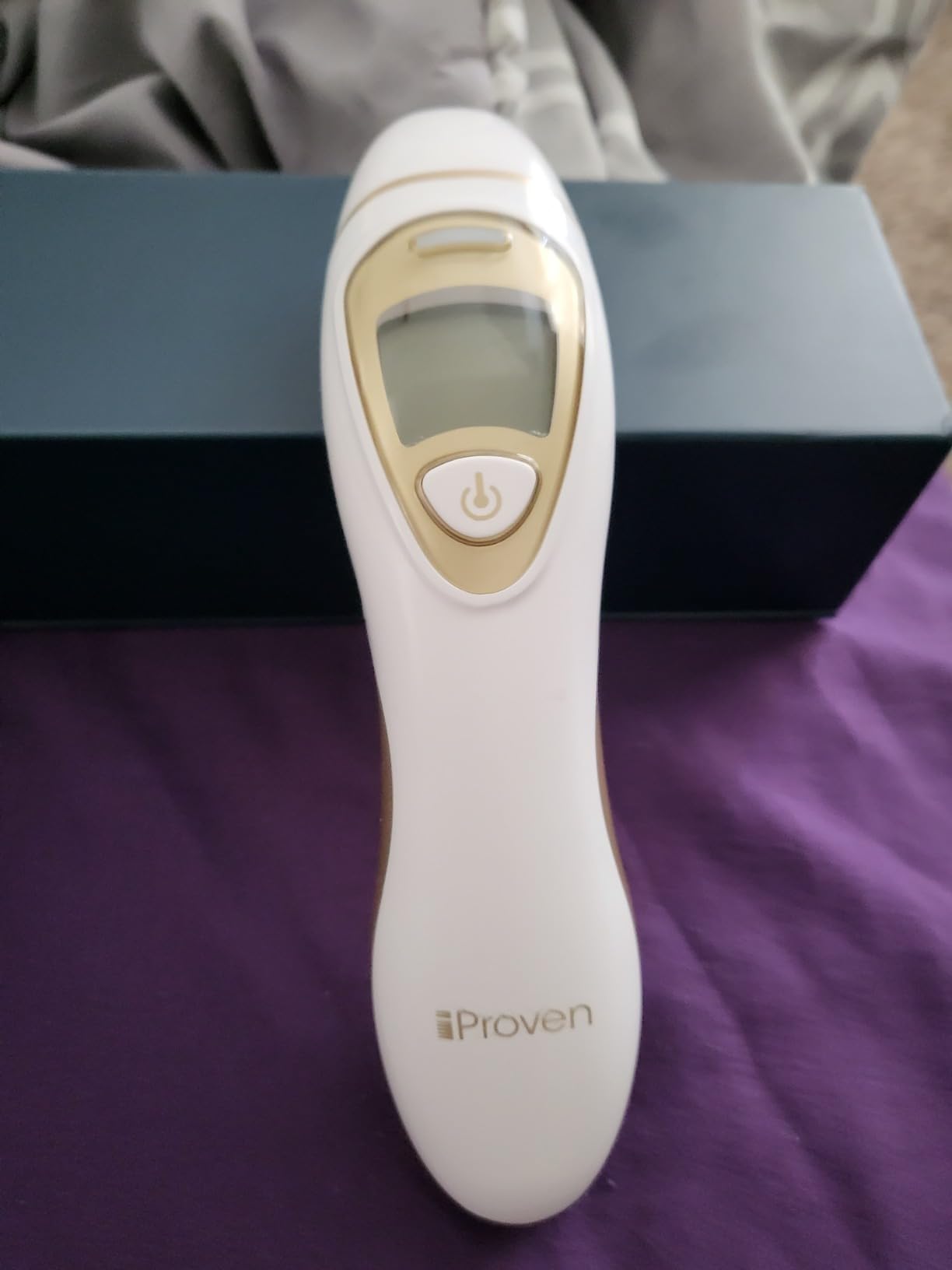
The iProven is built around an honest idea: use the forehead to screen quickly, then use the ear to get the number you actually report. Its forehead reading is described by the manufacturer as indicative, taking about three seconds, while the ear mode is the medically accurate measurement. The silent vibration alert for a completed reading is one of the better night features here.
It stores 20 readings, has an intelligent indicator that flags both fever and hypothermia, and switches between Fahrenheit and Celsius. At 7.5 inches it is one of the longer bodies, which gives you a stable grip when you are trying to place a tip in a moving ear.
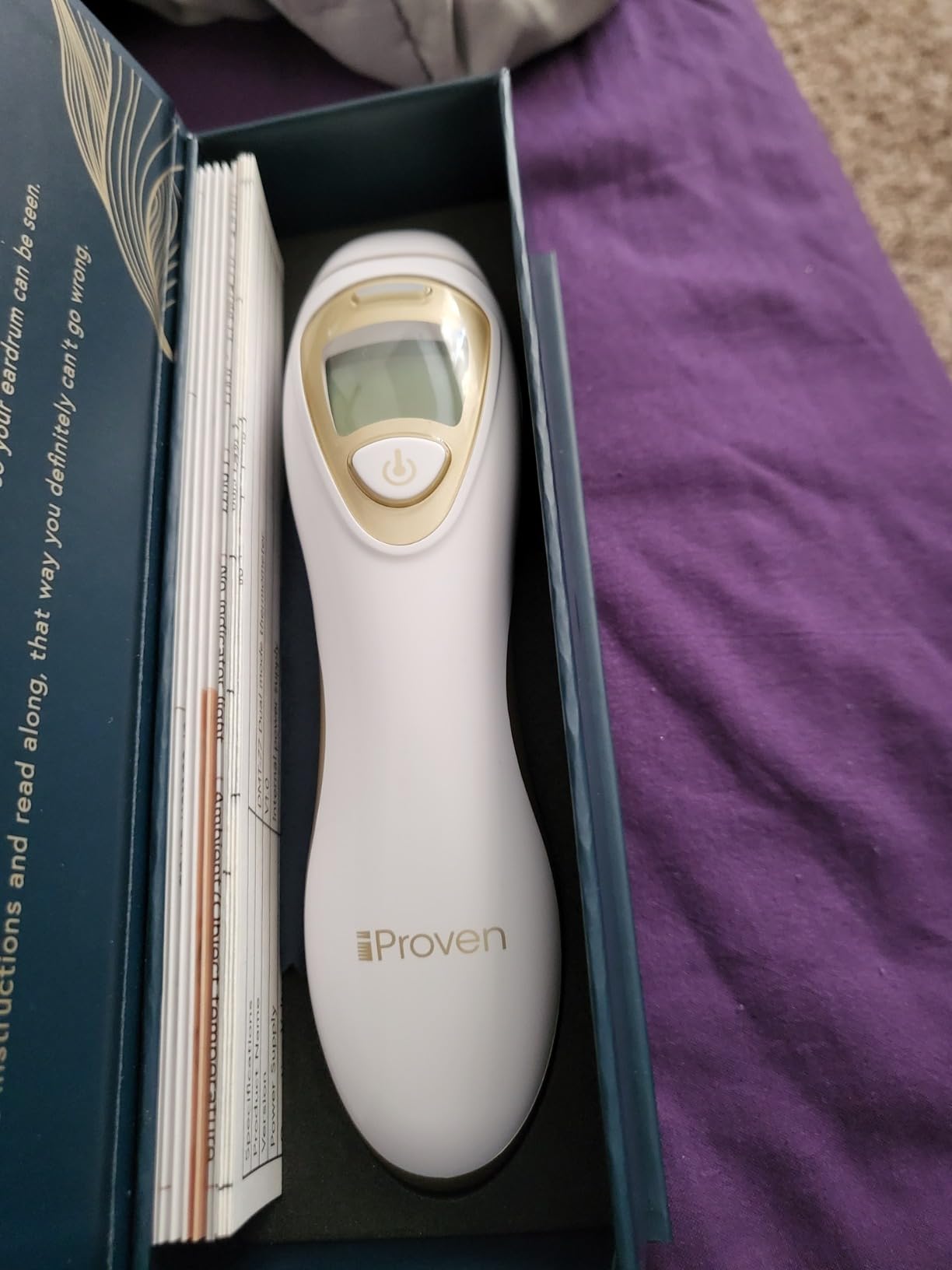
For toddlers, the sequence matters. You can take a fast forehead scan at the door, see a number, and decide whether an ear reading is worth the effort of getting your child still. That is a workflow the single-mode units cannot offer, and it is why this device still earns a place despite a much smaller review base than the GoodBaby units.
The learning curve is the complaint to know about. A single multifunction button controls the modes, and reviewers say it is confusing the first few times you use it. The forehead mode being indicative by design also means a low forehead number is not a guarantee, so it should never be the number you read out to a doctor.
What the two-mode workflow buys you
It removes the second-device decision. Most parents buy a forehead unit for speed and then keep a separate ear or rectal thermometer for the number that matters. This does both, and the vibration alert means even the ear reading can be taken without making a sound.
Where it is not the best fit
If your toddler reacts violently to anything near the ear, the accuracy advantage is theoretical. In that case a non-contact-only unit plus a separate confirmation device, as covered in our digital body thermometer guide for babies, is a more practical setup.
11. Amplim Medical Grade No-Touch Thermometer – Best for FSA and HSA Reimbursement
Amplim Medical Grade No-Touch Forehead Thermometer
Medical grade infrared reading
32X memory
3-color fever alarm
FSA and HSA eligible
Pros
- Fast one-second non-contact readings
- Marketed medical grade with CE and FDA listing
- 32-reading memory for tracking a fever
- Color-coded fever alarm
- Works from newborn to adult
Cons
- Upper temperature spec is listed inconsistently
- Generic brand with less independent clinical detail
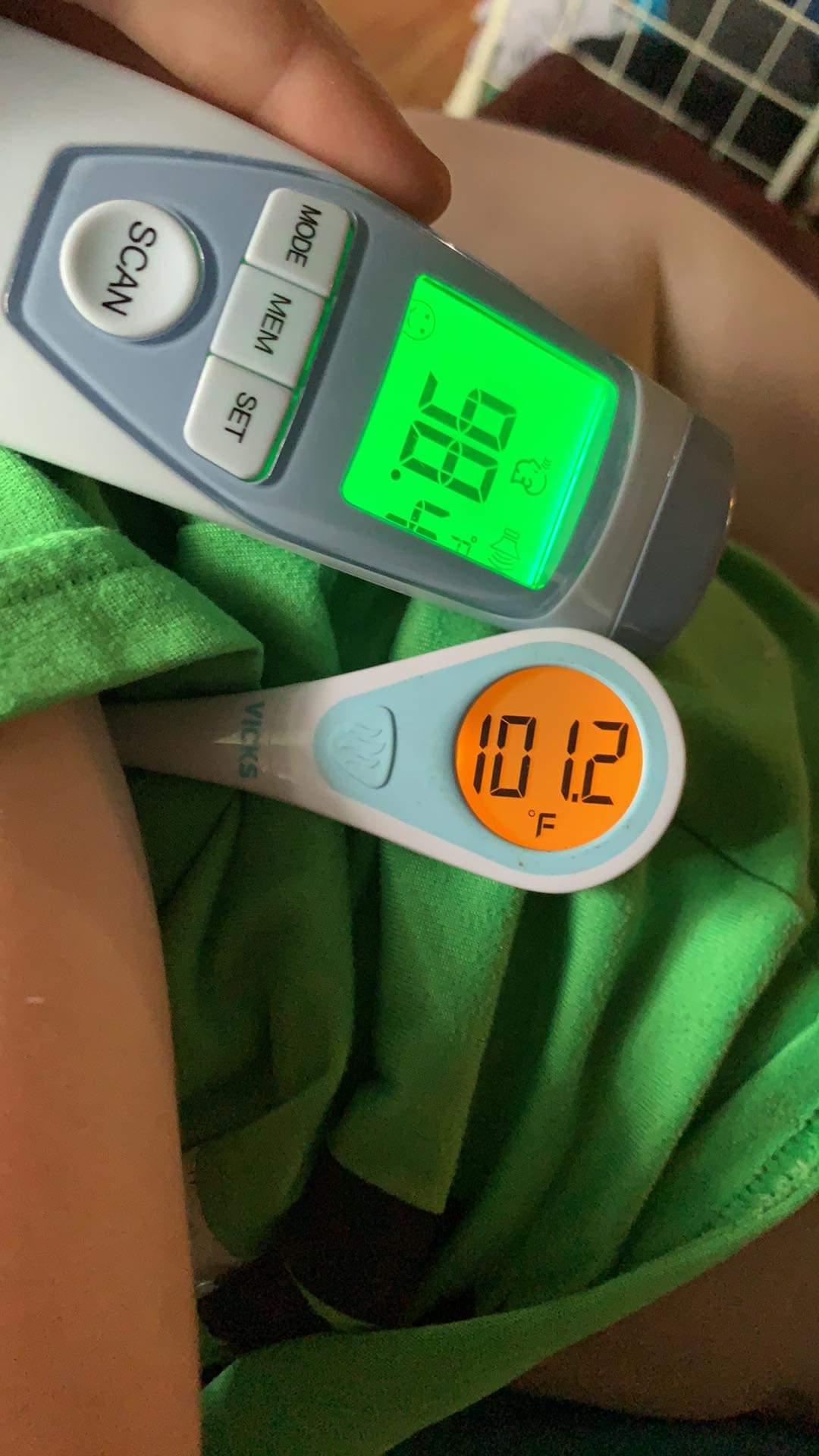
If you pay out of a health spending account, the Amplim is the one in this roundup listed as FSA/HSA eligible, and the box includes the thermometer, two AAA batteries, a user manual, a one-year warranty card, and a certificate. That paperwork is not glamorous, but it is the reason a reimbursement-eligible purchase actually gets reimbursed.
The device itself is a solid non-contact scanner. Readings take one second, the LCD carries a three-color fever alarm, memory stores 32 readings, and it offers both forehead and surface measurement modes. It is 4.69 inches and 75 g, with a one-year warranty once registered and a low battery indicator.
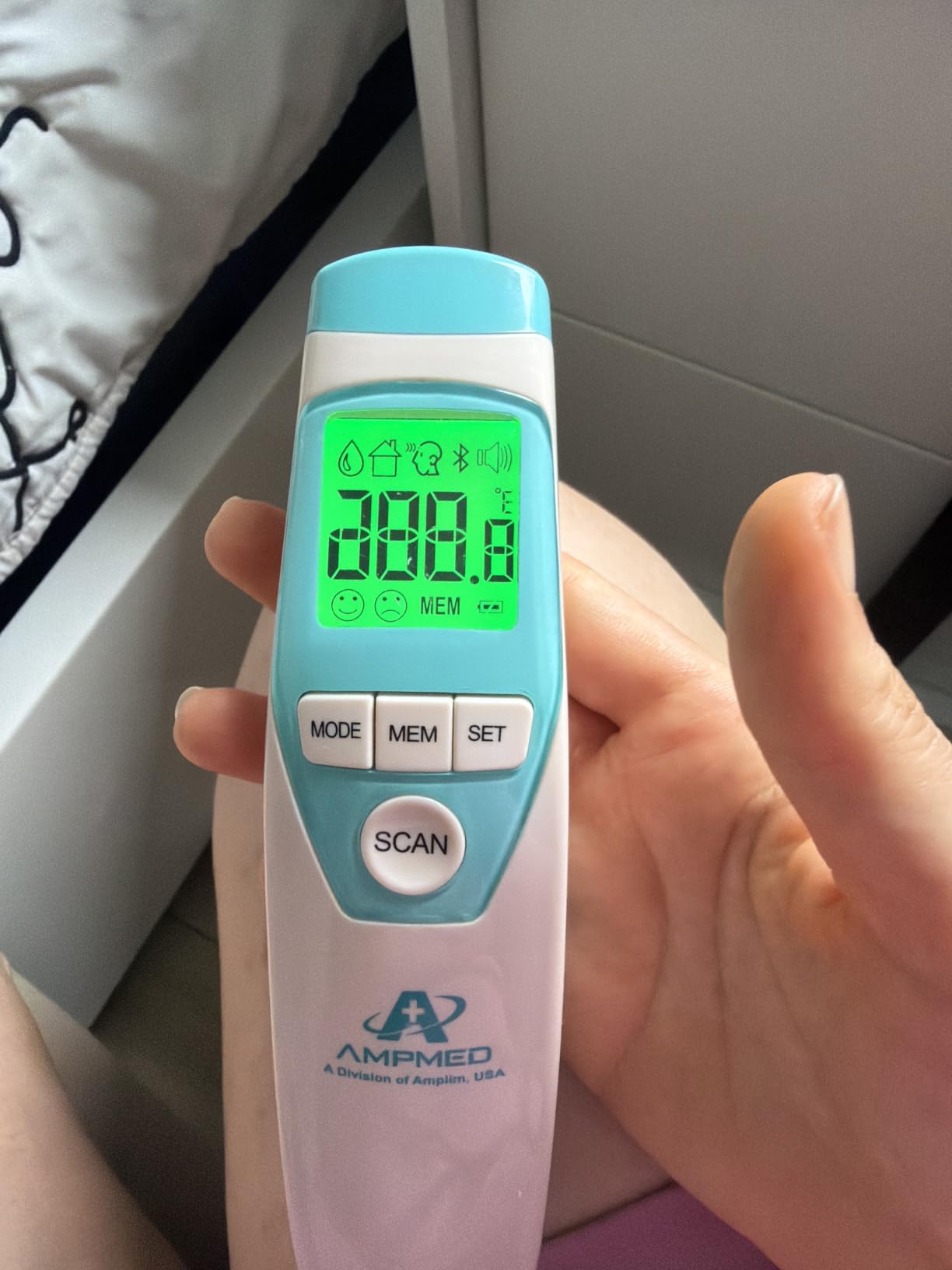
It is also genuinely multi-user. The stated range covers newborn to adult, so the same unit can serve a newborn screening, a toddler, and an adult during a household illness, and the 30-second auto power-off keeps the batteries alive between uses.
Two things to weigh. The listing states its upper temperature limit inconsistently, which is a spec-sheet red flag on a device you are trusting with a fever reading. It is also a less recognized brand with less independent clinical validation detail than the GoodBaby or Exergen names, and the buzzer can be turned off, but there is no vibration mode.
Who benefits from the paperwork
Families using an FSA or HSA, and anyone who wants a device with a registered warranty and a certificate in the box, get more from this model than the headline features suggest. The 32-reading memory also outlasts a typical weekend illness without you writing anything down.
Where you may want more reassurance
If you are the kind of parent who wants a named brand that appears in clinic supply lists, the Exergen or the GoodBaby names carry more weight with a pediatrician. This device performs, but it asks you to take its specifications at face value.
12. HoMedics Non-Contact Infrared Thermometer – Best for Fever Logs
HoMedics Non-Contact Infrared Forehead Thermometer, Clinically Proven Fast Accurate Results, High-Fever Alert with 4-in-1 Readings
Readings in as little as 2 seconds
50-reading memory
4-in-1 modes
Three-color backlight
Pros
- Readings matched other thermometers in user comparisons
- Fast two-second readings with a readable backlight
- Single quiet beep is easy to live with
- 50-reading memory is the deepest log here
- Emoji-style fever display reads at a glance
Cons
- Reviewers verify readings with a second device
- One review reports a unit that would not power on
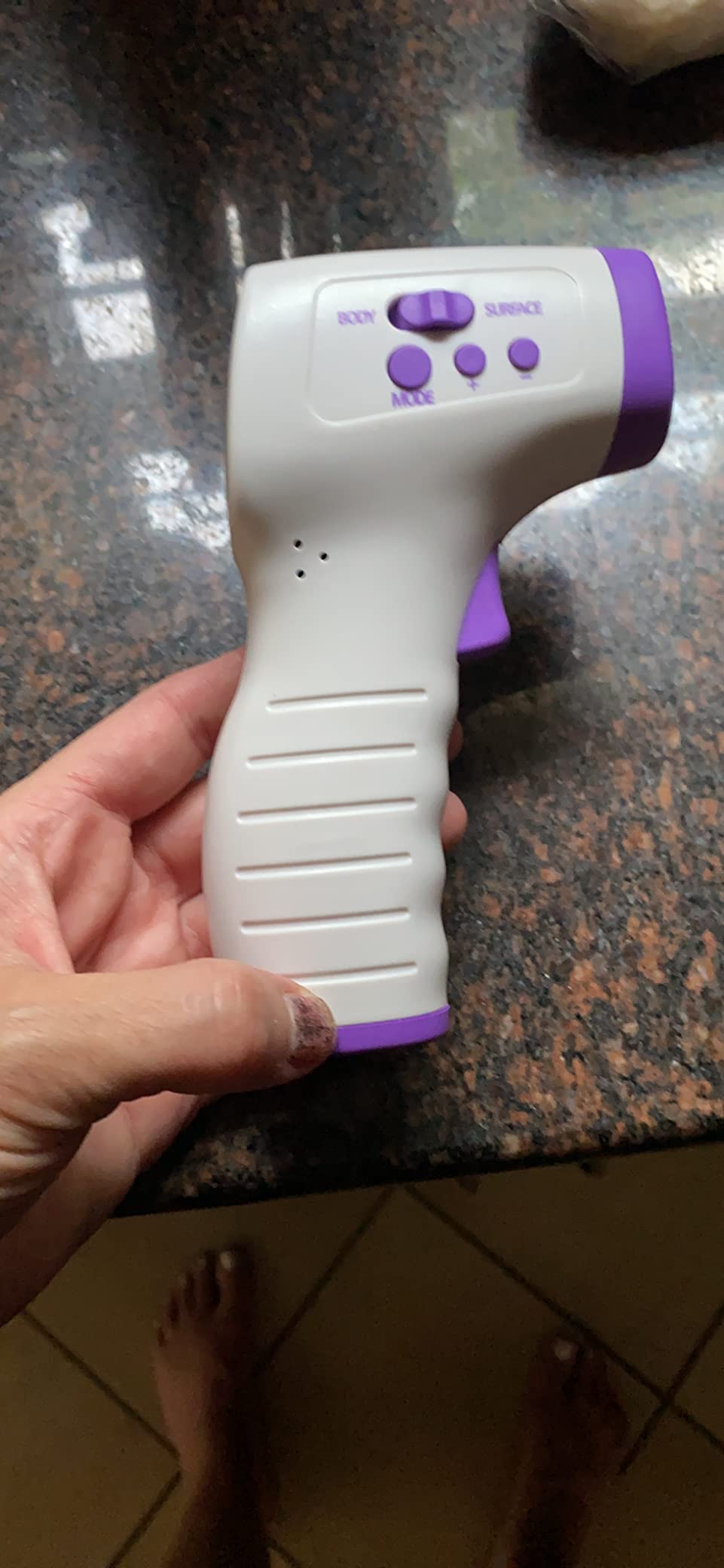
The HoMedics is the memory king of this group. Fifty stored readings, plus a date stamp on each one, means you can pull up a full multi-day fever history on screen at the pediatrician’s office instead of trying to remember what Tuesday night looked like. For a fever that lingers, that is worth more than an extra measurement mode.
It reads in as little as two seconds non-contact, and the display is a three-color backlight with an emoji-style fever indicator that a child can interpret on their own, which turns the thermometer into something they are not afraid of. The single beep is quiet enough not to wake a sleeper, and there is a low battery indicator and auto power off.
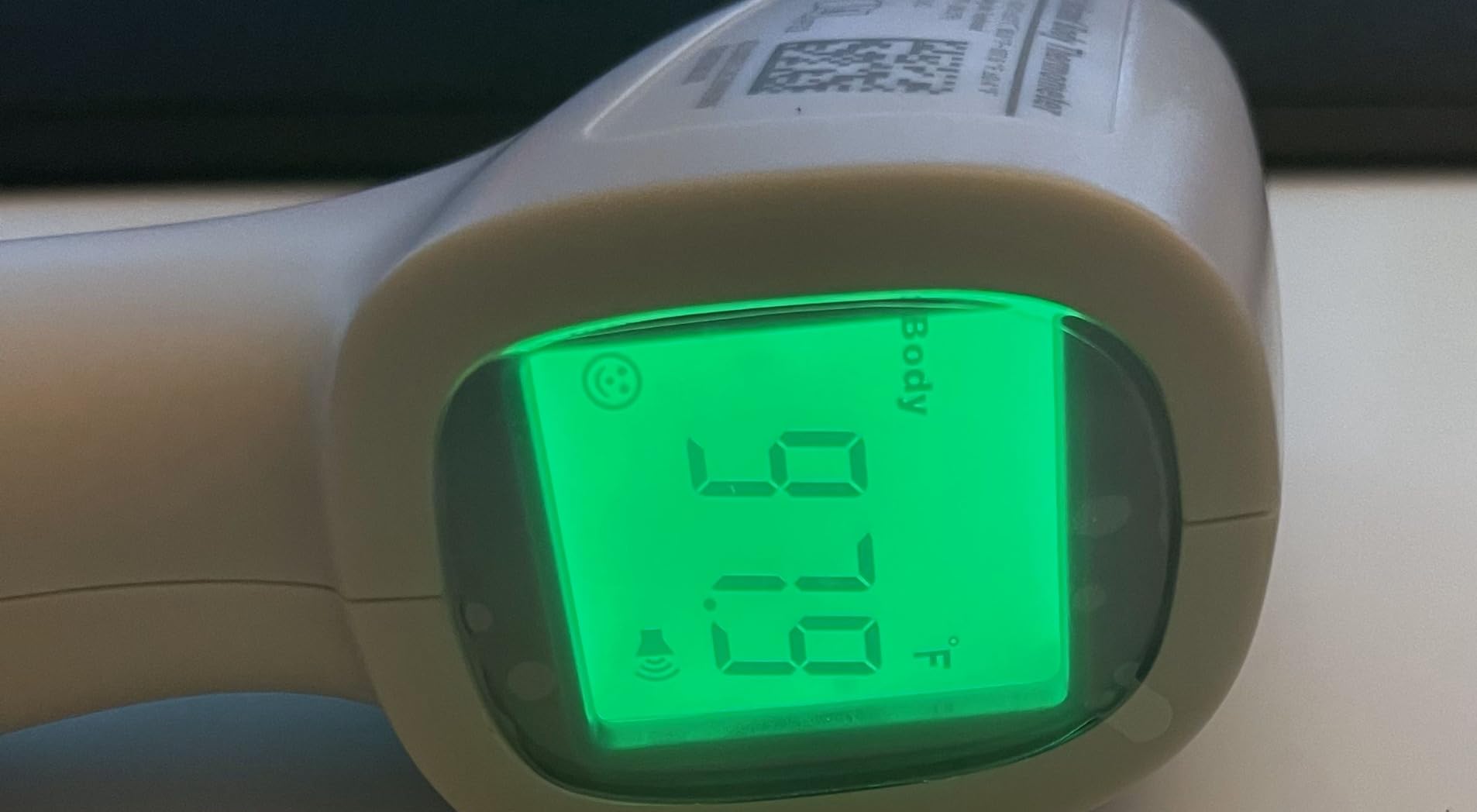
The 4-in-1 mode covers body, food, liquid, and room temperature, so it handles the bath and the bottle alongside the fever check. Accuracy is described as clinically proven by the brand, and user comparisons report readings that matched other thermometers.
The honest caveat is shared by every non-contact unit: some forehead thermometers in this category read consistently low, and these reviewers verify with a second device before acting. There is also a single report of a unit that would not power on, which is a small sample but a reminder that a long review history is not a guarantee of reliability.
Why memory beats a mode you never use
Most households own a bath thermometer they never use and wish they had a temperature log when the pediatrician asks how the fever moved. Fifty dated readings, with a display a child can read themselves, is the combination we would build around for a lingering fever.
Where it is not the first choice
It has no ear mode, so a screen reading cannot be confirmed with the same device. If the reading will drive a decision, pair it with a dual-mode unit or a digital probe rather than relying on the non-contact number alone.
How to Take an Accurate Forehead Reading on a Toddler
Most disappointing forehead readings are technique failures, not device failures. Five steps will fix the majority of them, and the whole process takes under a minute once you have done it a few times.
Wait 20 to 30 minutes after a bath, after outdoor play, or after removing a hat or blanket. A heated forehead reads high.
Move to a room where your toddler has been sitting for a while. A body that just came in from a cold hallway gives an unreliable surface reading.
Clear the forehead. Push hair off the temples and keep hats, hoods, and blankets off for the minute before you scan.
Hold the device at its stated distance and aim at the center of the forehead. The ranges differ, from 0.2 to 1.2 inches up to 2 to 3.15 inches, so use the spec for your unit rather than guessing.
Take two or three readings and go by the middle value. Averaging is the single most effective way to smooth out a bad scan.
For contact sweep models like the Exergen, step four changes: press the sensor to the forehead and slide it along the temple in one continuous movement, since an interrupted sweep tends to error out.
What Counts as a Fever for a Toddler
How you read the number depends on where you measured. The same child can show different readings at different sites, and the widely used thresholds differ by about half a degree to a full degree depending on the method. These are general guidelines, not a diagnosis, and your pediatrician’s advice for your child overrides any number on a list.
Under 3 months: a rectal reading of 100.4 F or higher is generally treated as a fever that warrants an immediate call to the doctor. Rectal is the standard method for this age group, which is a good reason not to rely on a forehead unit for a newborn.
Toddlers, 1 to 3 years: a temperature of 100.4 F or above generally counts as a fever, and a reading in the 100 to 101 F range is a reason to watch and recheck rather than panic.
Forehead readings: expect them to sit a little below rectal, often by 0.5 to 1 F. If the forehead says 99.8 F, the equivalent ear or rectal reading may still be over 100.4 F, which is the single most common reason parents misjudge a fever.
Ear readings: close to core temperature, and generally about 0.5 to 1 F lower than rectal in young children. An ear reading can also be skewed if the child has just been lying on that side.
Underarm readings: the least accurate, running about 1 F below rectal, which means a normal underarm number can mask a real fever.
Behavior often tells you more than the number. A toddler who is eating, playing, and drinking is usually less concerning than one who is quiet, floppy, and refusing fluids, even at a slightly lower reading.
Buying Guide: The 7 Criteria That Matter for Toddlers
Specifications matter less than fit. A slightly less accurate device that your toddler accepts at 3 a.m. is worth more than a superior one that triggers a fight, so weight these in this order.
1. Silent mode or vibration feedback
This is the most important feature on the list for toddlers. The iHealth PT3 vibrates instead of beeping, the GoodBaby FC-IR2000 has a silent mode button, the iProven signals with a vibration, and the Exergen has quiet mode. A beeping device is fine at 10 a.m. and a disaster at 3 a.m.
2. The stated working distance
Every unit prints a range, and it is the number that most affects repeatability. Short ranges are easier in a dark hallway; longer ranges are more forgiving when the child moves. Learn the range for your device and use the same spot every time.
3. A second mode for confirming the number
Forehead readings run a little low. The GoodBaby FC-IR100, the Frida Baby, and the iProven all add ear mode so you can turn a screen into a measurement without a second device. If you can only buy one thermometer, this is the feature to pay for.
4. Memory depth for fever tracking
Eight readings is a weekend. Twenty to thirty-five covers a school week. The HoMedics stores 50, the Frida Baby 40, and the GoodBaby FC-IR100 35. Any of those beats trying to remember.
5. Display legibility in the dark
A backlight is not enough on its own. The iHealth PT3 has an extra-large LED, the Exergen uses a soft glow that does not wreck your night vision, and the color-coded fever displays on the Berrcom, Amplim, and HoMedics let a tired parent read the result in one glance.
6. Cleaning and cross-infection
Non-contact units need no cleaning between users, which matters when a sick toddler and a newborn share a home. If you do pick up a contact model, wipe the sensor with alcohol between readings. Our broader digital thermometer roundup covers this in more depth.
7. Battery type and durability
AAA is the common cell. AA is close behind. A 9V battery, as on the Exergen, is the one that catches people out at midnight. On durability, review volume is the best public proxy: models with tens of thousands of reviews and a stated warranty, like the Amplim with its 14k reviews and warranty card, tend to have a smaller failure tail than models with only a few thousand.
When a Forehead Reading Is Not Enough
A forehead thermometer is a screen. It is the right first step at 3 a.m. and the wrong final word. Switch methods, or call your pediatrician, in these situations.
The reading is borderline and it matters. A 100 F forehead reading on a listless toddler should be confirmed with an ear or rectal reading rather than acted on as-is, because the forehead number is likely under-reporting.
The child is under 3 months old. For this age group, guidance centers on rectal readings, so a forehead unit should not be your primary tool.
The child is floppy, unresponsive, or refusing fluids. Behavior overrides the number. Difficult to wake, a stiff neck, a rash that does not fade, or no wet diapers all warrant a call regardless of what the display says.
The fever has lasted more than a day or two. Report a trend from memory recall rather than a single number, which is where the 20 to 50 reading logs on the later models pay off.
You are about to give fever medication. Dose decisions should be based on a confirmed reading and your pediatrician’s guidance, not a forehead screen.
On the ear versus forehead debate, parents argue about this constantly. The consensus that shows up most often on r/Parenting is that for a toddler, an ear thermometer is more accurate than a forehead one, underarm is next, and rectal remains the most accurate of all. That matches the clinical view, and it is why every dual-mode device in this roundup exists.
Frequently Asked Questions
Is a forehead thermometer accurate for a toddler?
A forehead thermometer is accurate enough to screen a toddler for fever, but it is not a definitive measurement. It typically reads about 0.5 to 1 F lower than a rectal reading. Use it as a fast first check at night, then confirm anything that matters with an ear or rectal reading.
What type of thermometer is best for a 2 year old?
For a 2 year old, a non-contact forehead thermometer is the easiest starting point, and a dual-mode forehead and ear model is the best single purchase. Ear mode gives you a confirmed number without a second device. A contact temporal artery sweep is the most accurate but is hardest on a moving child.
What age can you start using a forehead thermometer?
Most infrared forehead thermometers are listed for infants and toddlers as well as adults, and a few are listed as safe from newborn upward. For babies under 3 months, guidance still centers on rectal readings, so use a forehead unit for screening rather than as your primary method.
How do I know if my forehead thermometer is accurate?
Check the stated accuracy figure, the working distance range, and whether the device is FDA listed. Accuracy on the device is less important than repeatability, so take two or three readings on the same spot and see whether the numbers agree. A large review count and a stated warranty are the best public signals of reliability.
What is the most accurate way to take a 2 year old’s temperature?
Rectal is the most accurate method overall, and an ear reading is the most accurate that a toddler will usually tolerate. If you use the forehead, wait 20 to 30 minutes after a bath or outdoor play, keep the forehead uncovered, hold the device at its stated distance, and average two or three readings.
Why does my forehead thermometer read higher than my ear thermometer?
A forehead reading can read high when the skin is warm from a blanket, a bath, recent outdoor play, or a sunburn. It can also read high if the sensor is aimed at the wrong spot. Let the forehead return to room temperature for 20 to 30 minutes, move the sensor to the center of the forehead, and take an average of two or three readings.
Bottom Line: Which Forehead Thermometer to Buy
The iHealth No-Touch Forehead Thermometer PT3 is our pick for the best forehead thermometers for toddlers, because a one-second read with vibration feedback and a display you can read in the dark solves the two things that make 3 a.m. checks hard. If you want steadier non-contact readings, the GoodBaby FC-IR202 is the alternative, and it carries the second-largest review base in this group after the iHealth itself.
Buy the GoodBaby FC-IR100 if a confirmed number matters more than a quick one, because the ear mode ends the guessing. Buy the Exergen TAT-2000C+ if accuracy beats convenience and your child will sit still or stay asleep. For a lighter, simpler three-in-one setup, the Berrcom does the job, and the Frida Baby is the one to pack for grandparents and travel.
Whichever you choose, learn its stated distance, wait 20 to 30 minutes after a bath, and average two or three readings. This article is for general information and is not medical advice; for your own child, follow the guidance from your pediatrician.