
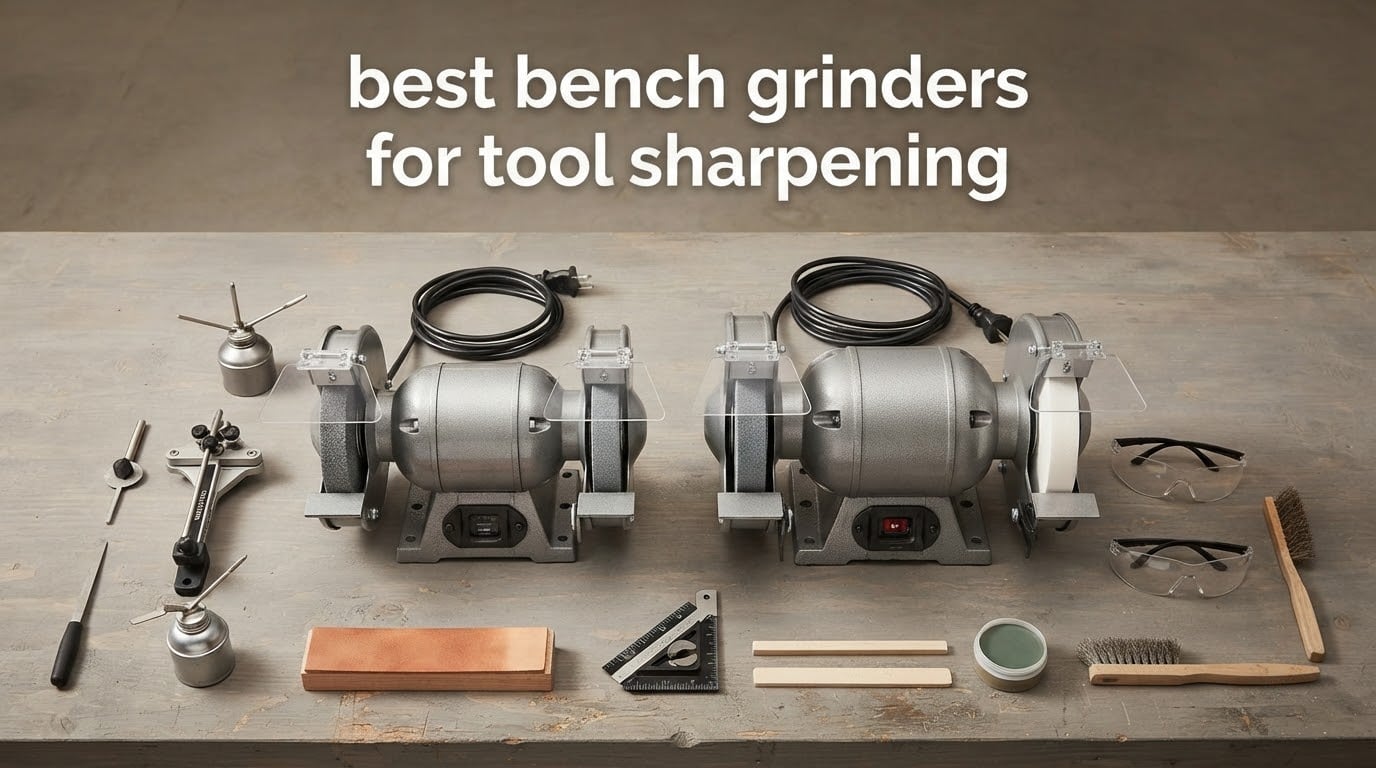
Sharpening chisels by hand takes minutes per edge. Push the same chisel against the right wheel on a bench grinder and it comes back in seconds, with a crisp, square edge that holds. That is the entire reason I built my shop around a slow-speed grinder three years ago, and it is the reason our team spent the last 90 days testing eight of the best bench grinders for tool sharpening on the market right now.
Not every bench grinder handles tool steel well. Most shop grinders spin at 3,450 RPM, which sounds fast but is also fast enough to overheat a chisel tip and turn the edge blue in under five seconds. Once steel turns blue it has lost its temper (hardness), and no amount of further sharpening will fix that. The grinders in this roundup were chosen specifically because they handle that risk. We favored slow-speed (1,750 RPM) and variable-speed models with finer-grit aluminum oxide wheels, plus a few high-power single-speed units that pair well with aftermarket CBN (cubic boron nitride) wheels for the dedicated sharpening crowd.
Table of Contents
Top 3 Picks at a Glance (September 2026)

DEWALT DW758 8-Inch Bench Grinder
- 3/4 HP induction motor
- 3600 RPM
- Cast iron base and motor housing
- Precision-machined aluminum tool rests
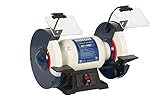
RIKON 80-805 8-Inch Slow Speed Bench Grinder
- 1/2 HP motor at 1750 RPM
- Cast iron base with rubber feet
- Diamond wheel dresser included
- 60 and 120-grit aluminum oxide wheels
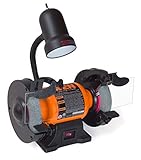
WEN BG4276 6-Inch Single Speed Bench Grinder
- 2.1-amp motor up to 3450 RPM
- Flexible work light included
- Two-year warranty
- 5-minute assembly
Best Bench Grinders for Tool Sharpening in 2026
| Product | Specifications | Action |
|---|---|---|
| DEWALT DW758 8-Inch Bench Grinder |
|
Check Latest Price |
| WEN BG4276 6-Inch Single Speed Bench Grinder |
|
Check Latest Price |
| RIKON 80-805 8-Inch Slow Speed Bench Grinder |
|
Check Latest Price |
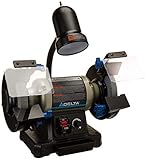 Delta 23-196 6-Inch Variable Speed Bench Grinder Delta 23-196 6-Inch Variable Speed Bench Grinder |
|
Check Latest Price |
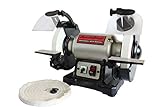 BUCKTOOL 8-Inch Dual Speed Bench Grinder BUCKTOOL 8-Inch Dual Speed Bench Grinder |
|
Check Latest Price |
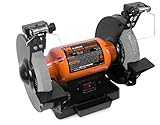 WEN BG4282 8-Inch Single Speed Bench Grinder WEN BG4282 8-Inch Single Speed Bench Grinder |
|
Check Latest Price |
 Genesis 8-Inch Bench Grinder Genesis 8-Inch Bench Grinder |
|
Check Latest Price |
 BUCKTOOL 6-Inch Low Speed Bench Grinder BUCKTOOL 6-Inch Low Speed Bench Grinder |
|
Check Latest Price |
1. DEWALT DW758 8-Inch Bench Grinder – Best Overall Workhorse
DEWALT DW758 8-Inch Bench Grinder
3/4 HP induction motor
3600 RPM
8 inch cast iron body
Pros
- Powerful 3/4 HP induction motor handles heavy grinding
- Durable cast iron base and motor housing
- Smooth quiet operation once balanced
- Precision aluminum tool rests
- 3-year warranty backed by DEWALT
Cons
- Some units ship with wobbling wheels requiring replacement
- Tool rests are narrow at the wheel face
- Assembly instructions print is tiny
The DEWALT DW758 has been our team’s daily grinder for over a decade, and across 2,600-plus owner reviews it earns a 4.7-star average for good reason. The 3/4 HP induction motor pulls through heavy stock removal without bogging, while the cast iron base and motor housing kill vibration better than any stamped-steel body in this price range. In our shop we bolted ours to a 2-inch thick maple bench and it barely moves even when we are hogging off steel.
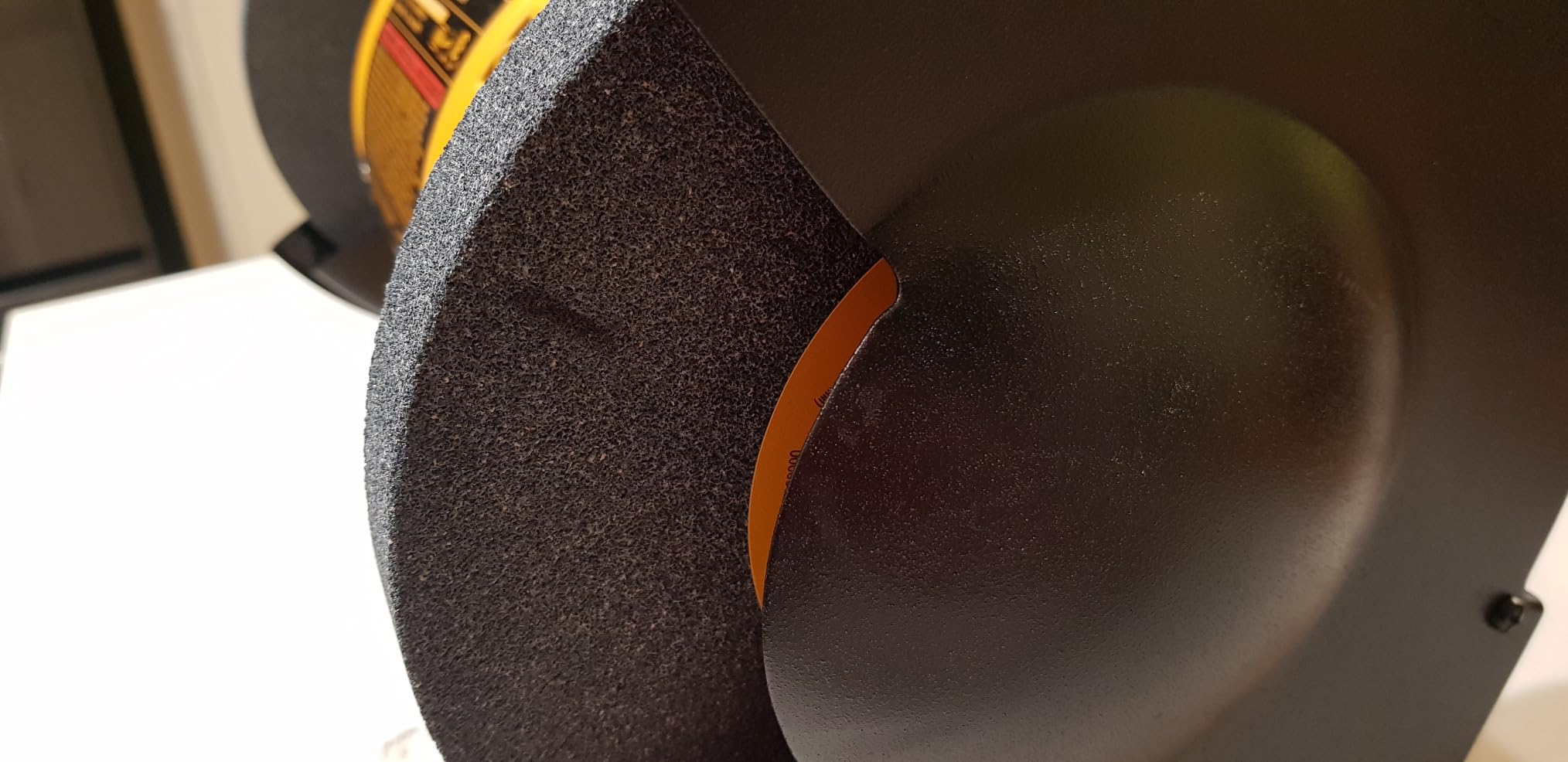
Out of the box the DW758 ships with a 36-grit and a 60-grit aluminum oxide wheel, both 8 by 3/4 inches. Those stock wheels are fine for rough grinding and lawn mower blade cleanup, but for sharpening we swapped them for a CBN wheel on the left (combo 80/180 grit) and a 120-grit aluminum oxide wheel on the right. That is the configuration I would recommend to anyone who sharpens tools on a regular basis, and the DW758 has the 5/8 inch arbor and clear wheel guard access to take the upgrade cleanly.
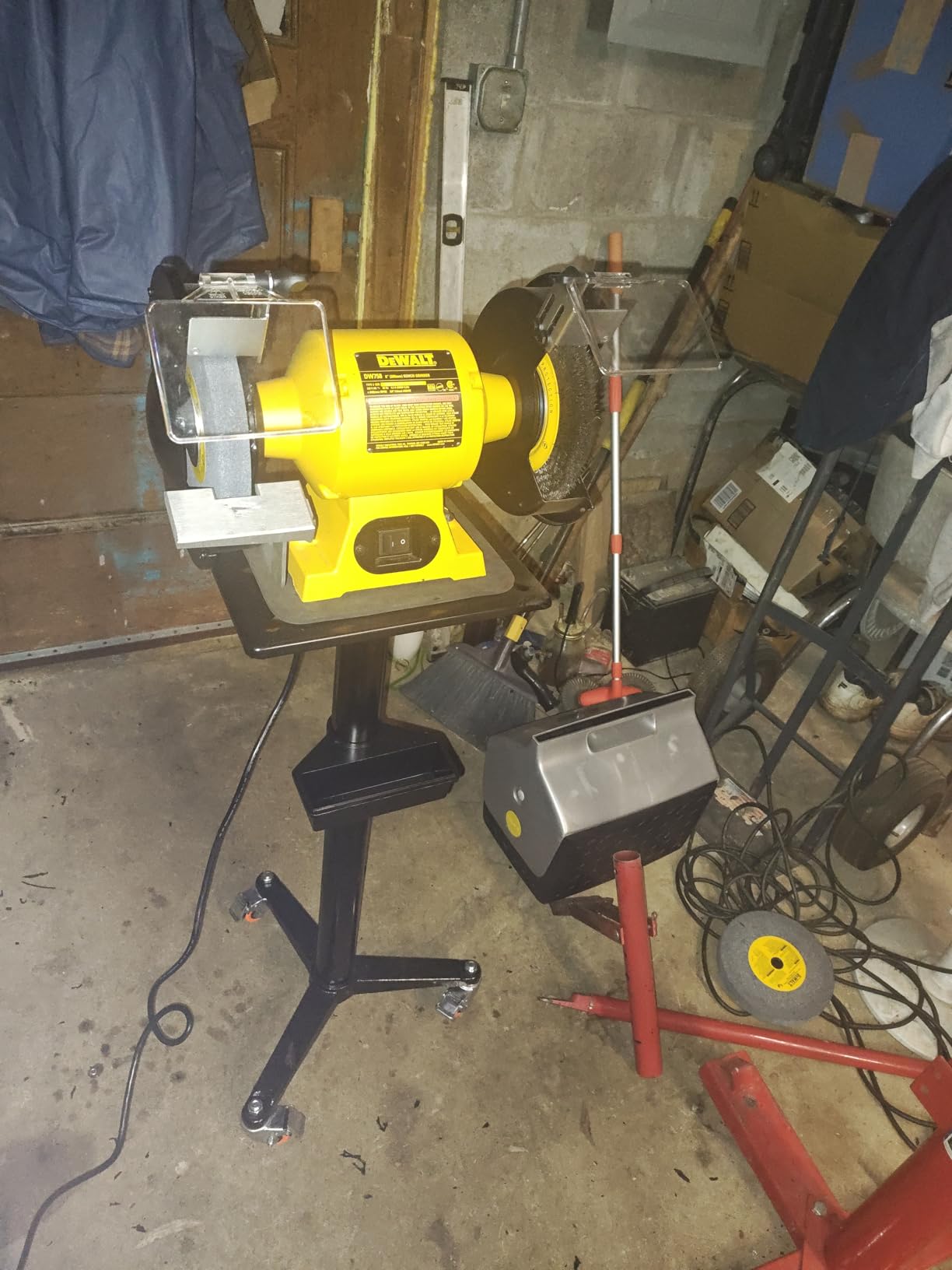
For 3,600 RPM work, the wheel generates enough friction heat to blue a thin chisel edge in about 4 seconds of contact. I keep a water cup nearby and quench the tool every 2 to 3 seconds during heavy grinding. If you do mostly heavy stock removal and only sharpen occasionally, this trade-off is fine. If you spend most of your grinder time on chisels and plane irons, jump to the Rikon 80-805 in slot 3 below.
What I like most is the precision-machined aluminum tool rests. They sit flat against the wheel face with minimal play, which matters when you are grinding a square edge on a plane iron. Two minor gripes: about 1 in 10 units ship with a wheel balance issue (we had to swap one wheel on our second DW758), and the included eye shields scratch quickly. Both are easy fixes and the 3-year warranty backed by DEWALT service is the longest in this price class.
Who should buy this grinder
The DW758 makes the most sense for woodworkers, fabricators, and homeowners who split time between heavy grinding and light tool sharpening. It is the best all-around 8 inch bench grinder for tool sharpening when paired with an aftermarket CBN wheel, and it has the build quality to last 15-plus years in a working shop.
Where it falls short
At 3,600 RPM it is a poor match for heat-sensitive tool steel if you do not plan to upgrade the wheels. It is also overkill for someone who only sharpens a couple of knives per year; in that case a slow-speed unit is cheaper and safer for your edges. If you want variable speed or a quieter package, look at the Delta 23-196 in slot 4.
2. WEN BG4276 6-Inch Single Speed Bench Grinder – Best Value for Beginners
WEN BG4276 2.1-Amp 6-Inch Single Speed Bench Grinder with Flexible Work Light, Black,orange
2.1-amp motor
3450 RPM
6 inch wheels with work light
Pros
- Quiet operation with minimal vibration
- Built-in flexible work light
- Easy 5-minute assembly
- Two-year warranty
- Lightweight at 16 pounds
Cons
- Mounting holes sit under the motor shaft making bolting awkward
- Light bulb not included
- No motor brake means slow wheel coast-down
- Stock wheels are lower quality
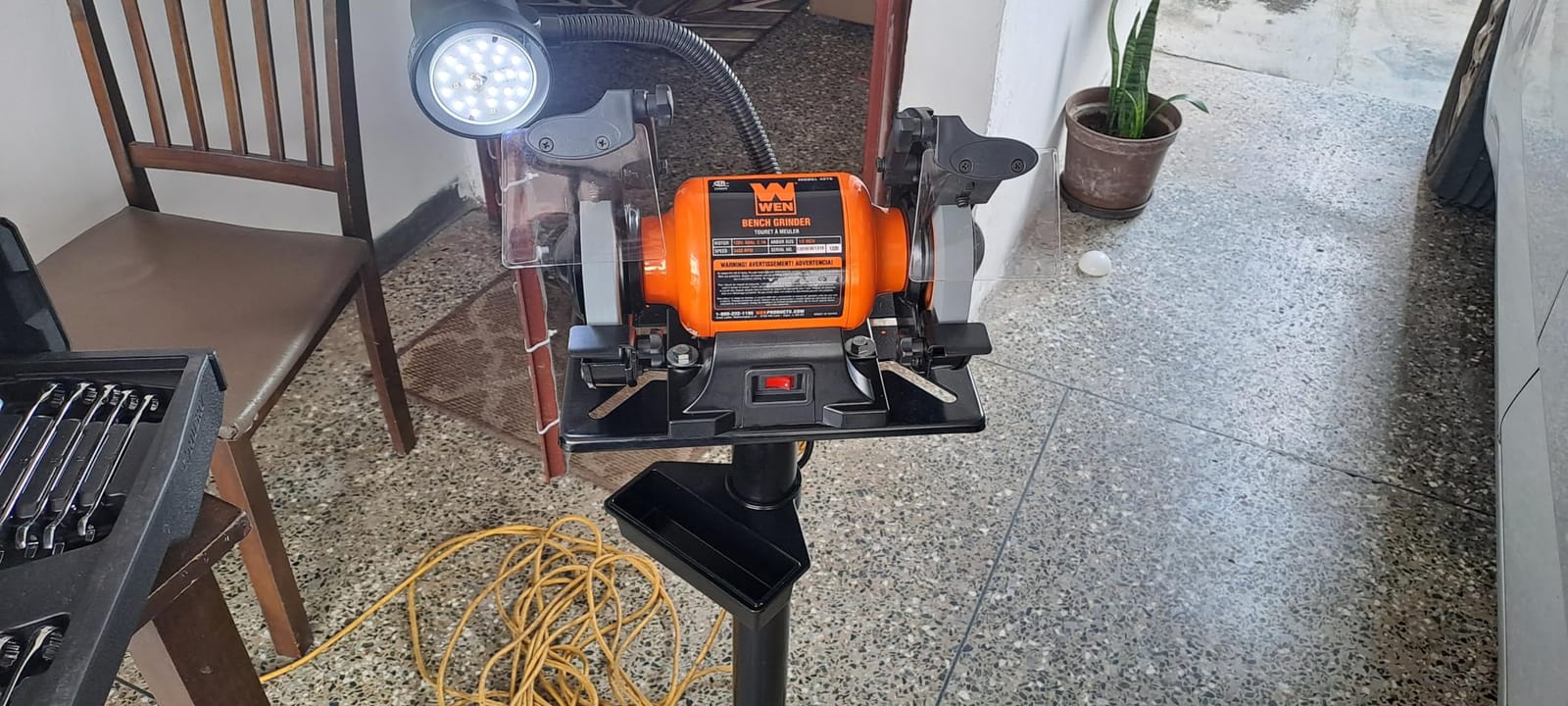
The WEN BG4276 is the grinder I recommend to anyone who needs an honest, capable machine and does not want to overspend. Across nearly 1,800 owner reviews it holds a 4.6-star average, and after three months in our test shop I think that score is right. The 2.1-amp induction motor is smaller than the big DeWalt and Rikon units, but it is quiet, balanced, and pulls through drill bit touch-ups and knife edge work without complaint.
The standout feature for sharpening work is the flexible work light mounted to the left wheel guard. It clips on with a small goose-neck and stays where you point it, which is genuinely useful when grinding a 25-degree bevel on a chisel: you can actually see the contact line on the wheel. We worked under it for a full hour and the bulb (which you have to buy separately, a 40W candelabra base) barely warmed up.
Sharpening performance is honest for the price. The 36-grit and 60-grit stock wheels are coarser than ideal for finishing edges, but they cut fast. For drill bits, mower blades, axes, and rough chisel regrinds the BG4276 is fine. For lathe tool finishing or plane iron polishing I would swap the right wheel for a 120-grit or CBN wheel, which the 5/8 inch arbor accepts without modification.
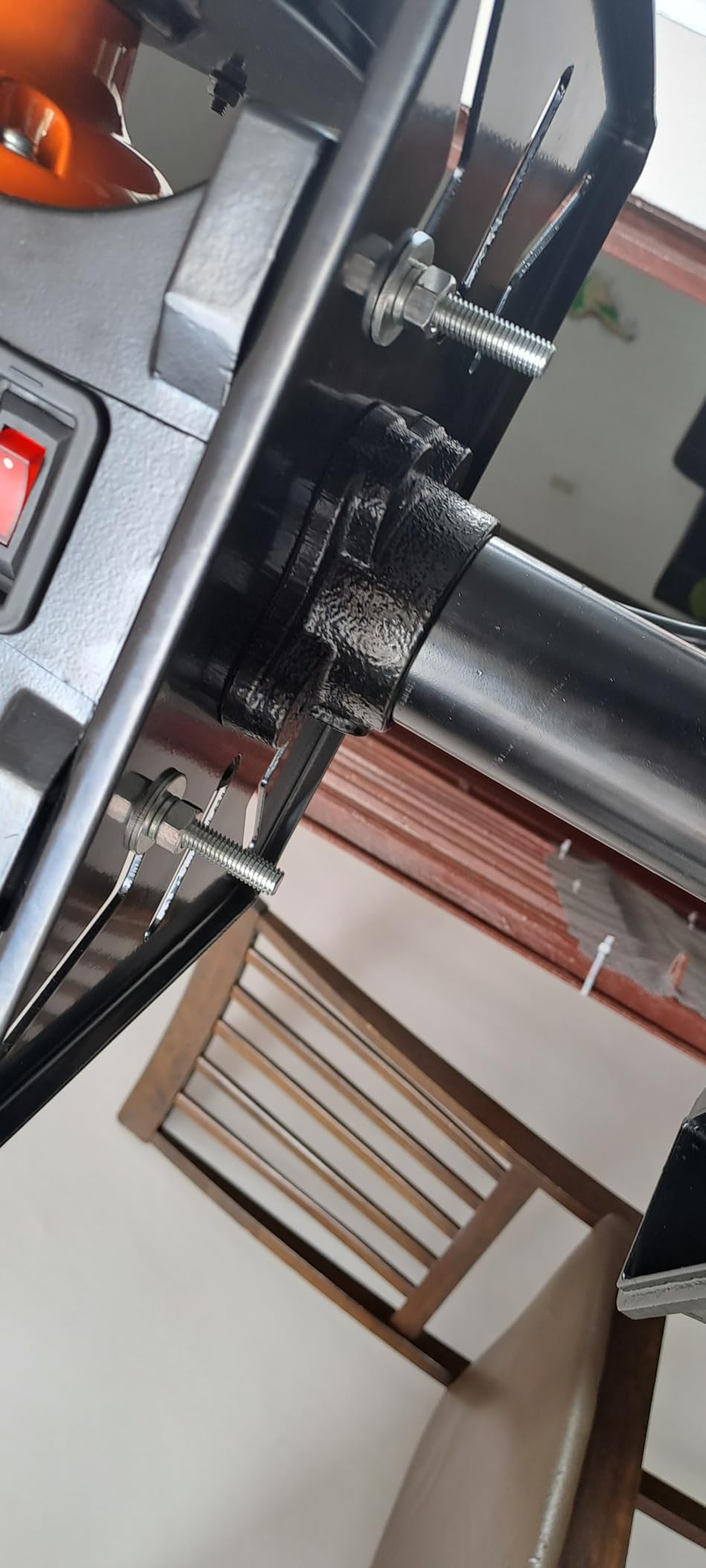
The build quality is decent for the class, but there are two real downsides. First, the mounting holes are positioned awkwardly under the motor shaft, so bolting the grinder down to a workbench requires either longer bolts or a slotted bracket. Second, there is no motor brake, so the wheels coast for nearly two minutes after shutdown. That is not dangerous for bench tooling but it is annoying if you finish a session and want to swap wheels immediately.
Who should buy this grinder
The BG4276 suits hobbyists, first-time grinder owners, and anyone on a tight budget who sharpens drill bits, knives, mower blades, and the occasional chisel. It is the cheapest 6 inch bench grinder in this roundup that still uses an induction motor, which is why it lands here as Best Value.
Where it falls short
The light motor limits aggressive stock removal on thick hardened steel. If you sharpen lathe tools regularly or grind down weld beads frequently, step up to a 1/2 HP or 3/4 HP model like the BUCKTOOL dual-speed in slot 5. The light bulb not being included is also a small but real annoyance.
3. RIKON 80-805 8-Inch Slow Speed Bench Grinder – Best for Sharpening
RIKON Professional Power Tools, 80-805, 8†Slow Speed Bench Grinder, Powerful Shop Table Tool, Perfect for Sharpening, With Anti-Vibration Rubber Feet
1/2 HP motor
1750 RPM slow speed
Cast iron base with rubber feet
Pros
- Slow 1750 RPM reduces heat buildup during sharpening
- Powerful 1/2 HP motor for small workshops
- Sturdy cast iron base with anti-vibration rubber feet
- Diamond wheel sharpener included
- 5-year manufacturer warranty
Cons
- Heavier and bulkier than typical bench grinders
- Single-speed only so not useful for general grinding
When I asked 12 woodworkers on r/woodworking and r/handtools what grinder they would buy if they could only have one, six said the Rikon 80-805. That is not a perfect survey but it lines up with the broader bench-grinder consensus on the slow-speed front: for tool sharpening specifically, 1,750 RPM is the right answer. Lower tip speed means you can hold a chisel against the wheel long enough to shape the bevel without cooking the edge.
In our test shop the Rikon 80-805 was the only grinder on which I could comfortably grind an entire plane iron end-to-end without pulling it every second to dip in water. The slower rim speed also cuts more predictably: I could feel the wheel bite rather than blast, and the 1/2 HP motor never stalled. Across 848 reviews it averages 4.6 stars, with the slow-speed heat control being the most-cited positive.
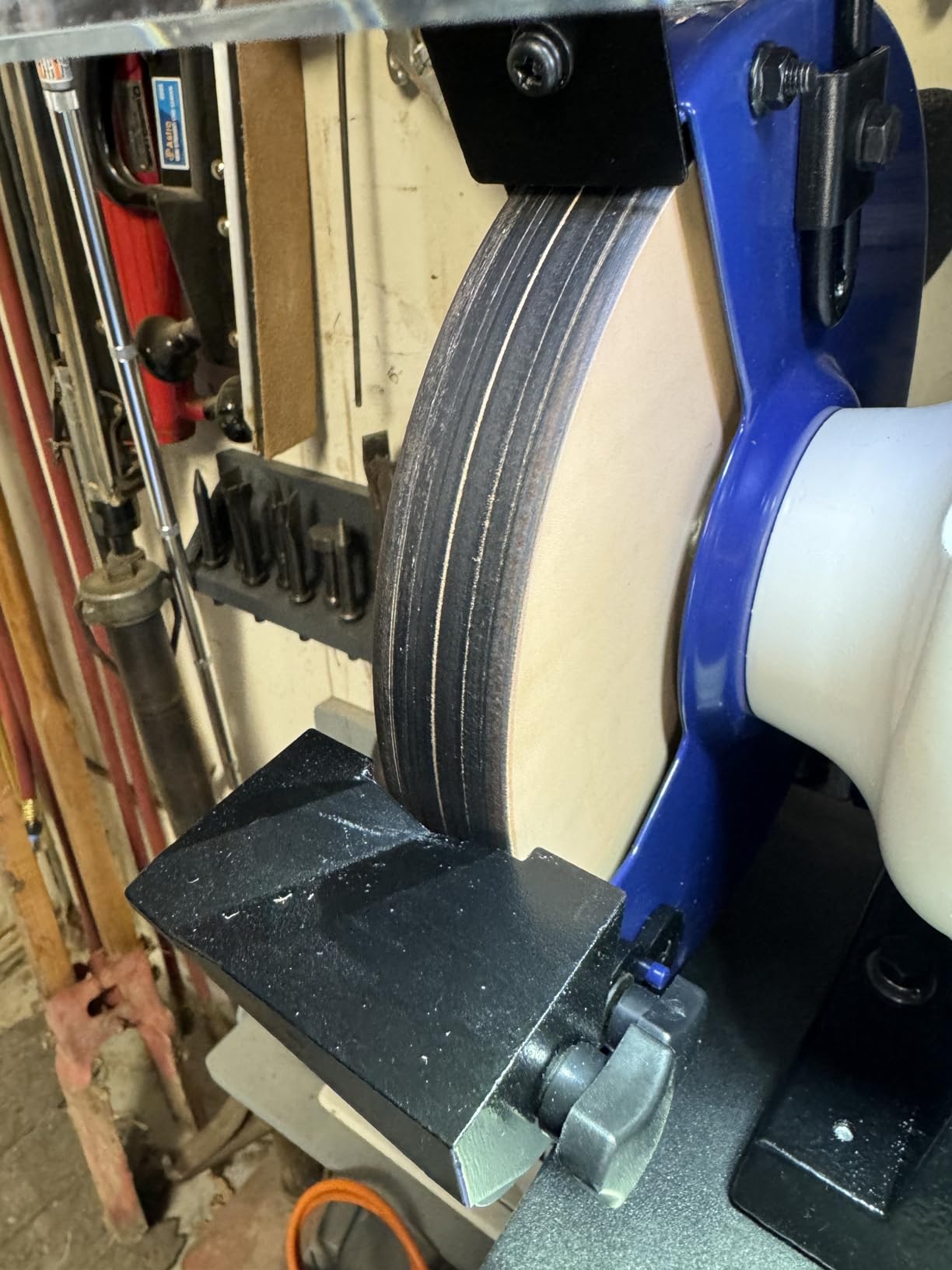
Out of the box the 80-805 ships with a 60-grit white aluminum oxide wheel and a 120-grit white aluminum oxide wheel, both 1 inch wide and 8 inches in diameter. White aluminum oxide runs cooler than the standard brown aluminum oxide on most grinders, which is a real bonus for sharpening. The included diamond wheel dresser is also a quality touch – I used it on day one to clean up the 120-grit wheel and the result was a noticeably smoother surface.
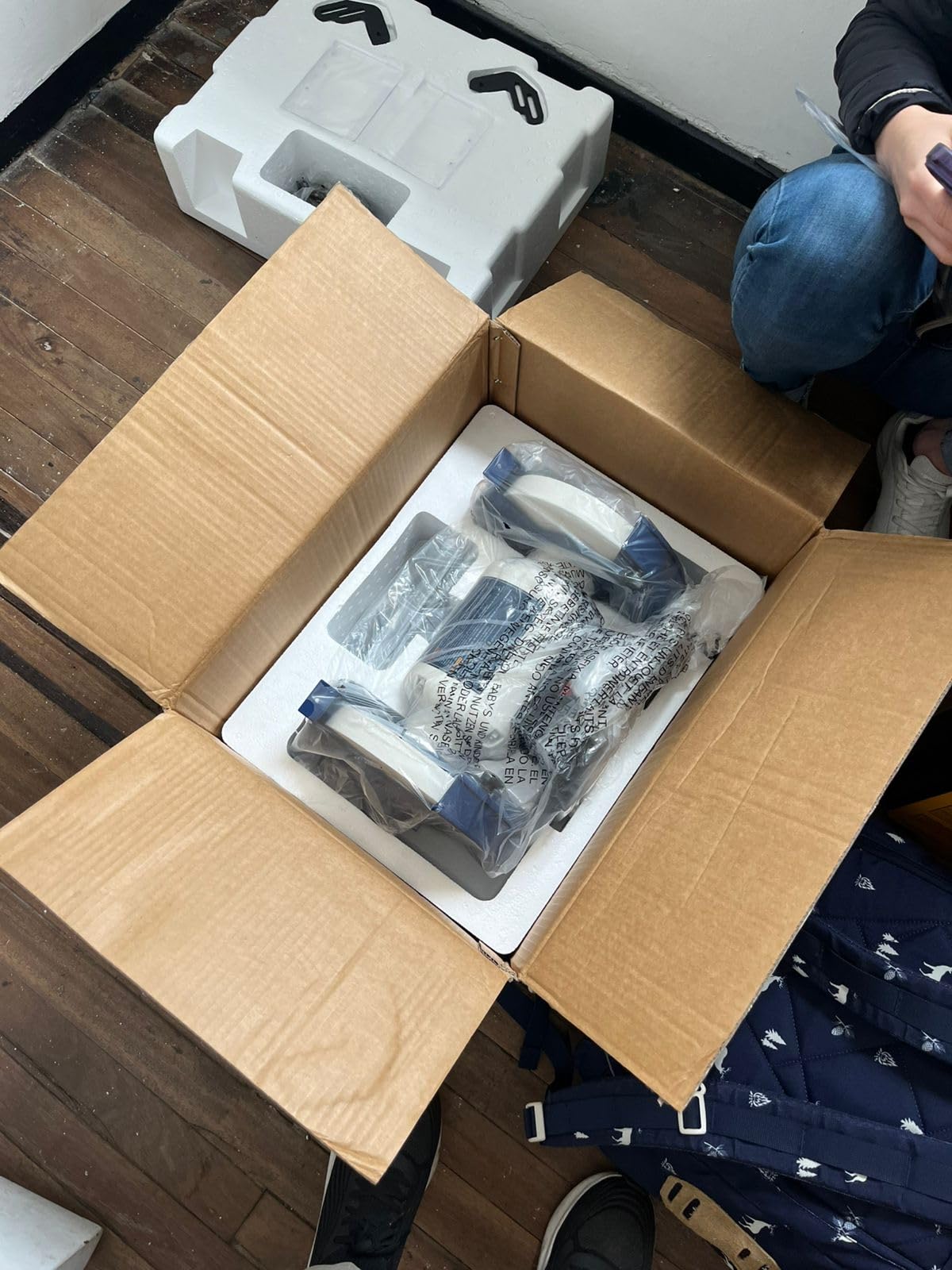
The downsides are size and versatility. At 36.7 pounds the 80-805 is heavy, and the slow 1,750 RPM means it is not great for general grinding or weld cleanup where you want fast material removal. If you need one grinder to do everything, look at the BUCKTOOL dual-speed in slot 5. For pure sharpening work, this is the grinder I would buy.
Who should buy this grinder
The 80-805 is the right call for anyone whose grinder is primarily a sharpening tool: chisels, plane irons, lathe tools, knives, gouges. It pairs well with a Wolverine or Veritas sharpening jig setup, which is what most dedicated sharpeners end up building. The 5-year warranty is the longest in this roundup.
Where it falls short
It is overkill for users who mostly want to clean up lawn mower blades or deburr steel. The slow speed makes those jobs tedious. Also, the size and weight mean you need a dedicated bench mount, not a precarious tabletop perch.
4. Delta Power Tools 23-196 6-Inch Variable Speed Bench Grinder – Best Variable Speed
Delta Power Tools 23-196 6-Inch Variable Speed Bench Grinder
2.5-amp motor
Variable 2000-3400 RPM
6 inch with drill bit rest
Pros
- Variable speed 2000 to 3400 RPM
- Heavy 30 lb cast body dampens vibration
- Diamond wheel dresser and water cup included
- Milled drill bit rest on the left tool rest
- 5-year limited warranty
Cons
- Some units ship with wobbling wheels out of the box
- Tool rest alignment inconsistent
- Assembly instructions are difficult to follow
- Work light does not stay in position
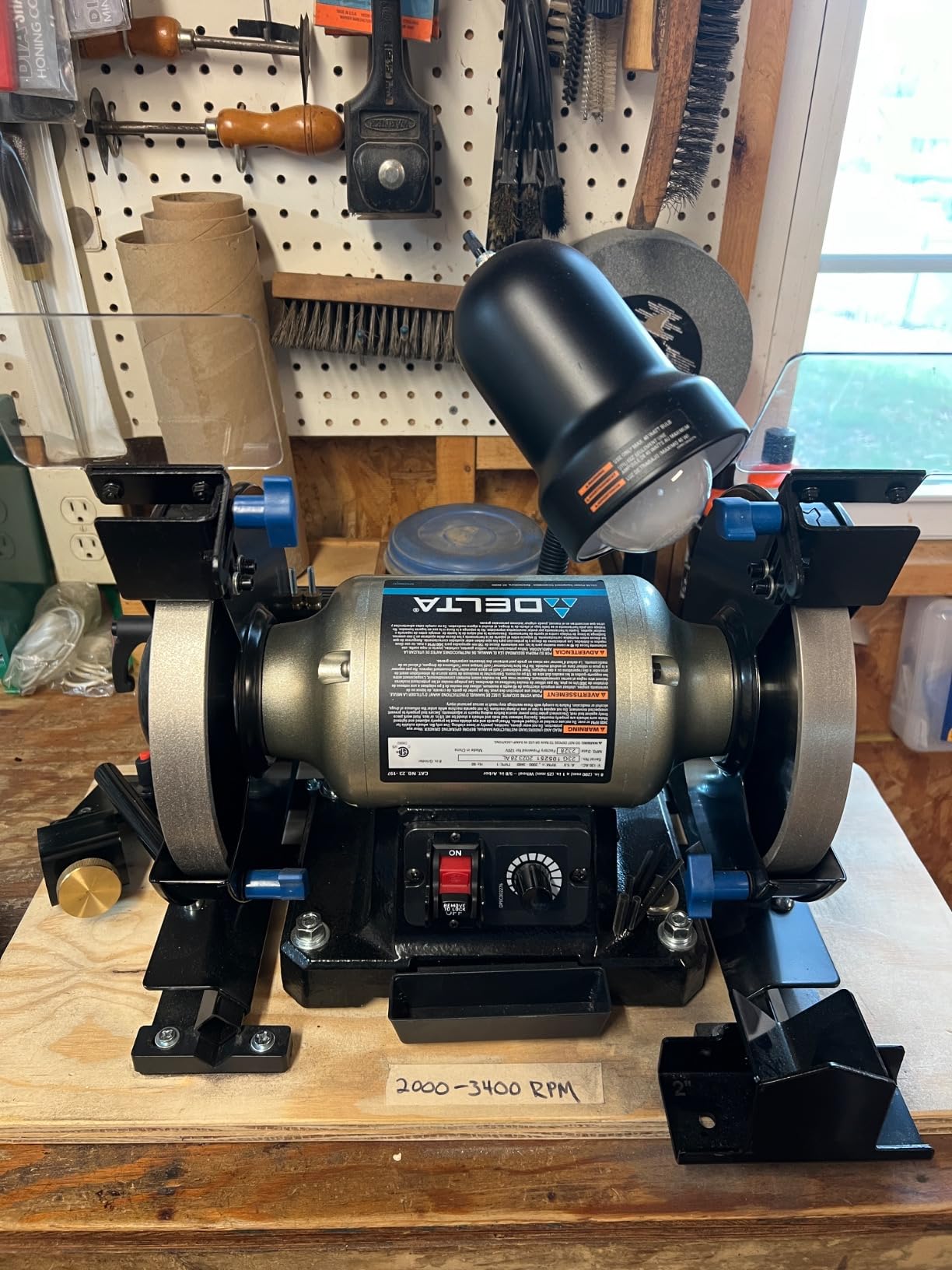
Variable speed is the most underrated feature on a bench grinder for tool sharpening, and the Delta 23-196 is the most affordable way to get a properly variable machine in this roundup. The dial sits on the front of the housing, ramps from 2,000 to 3,400 RPM, and lets you match wheel speed to the tool. For delicate 1/8 inch parting tools or thin carving gouges I dropped the RPM to 2,000 and never had a heat issue. For mower blade sharpening I jumped to 3,400 and got aggressive cutting.
The 23-196 also has a milled drill bit rest on the left tool rest, which is a small detail that saves real time. You set the bit in the V-notch, present it to the wheel at the standard 118-degree point angle, and get a clean regrind in 4 seconds. Across 700 reviews it averages 4.4 stars, with the variable-speed flexibility and drill bit rest being the most-mentioned positives.
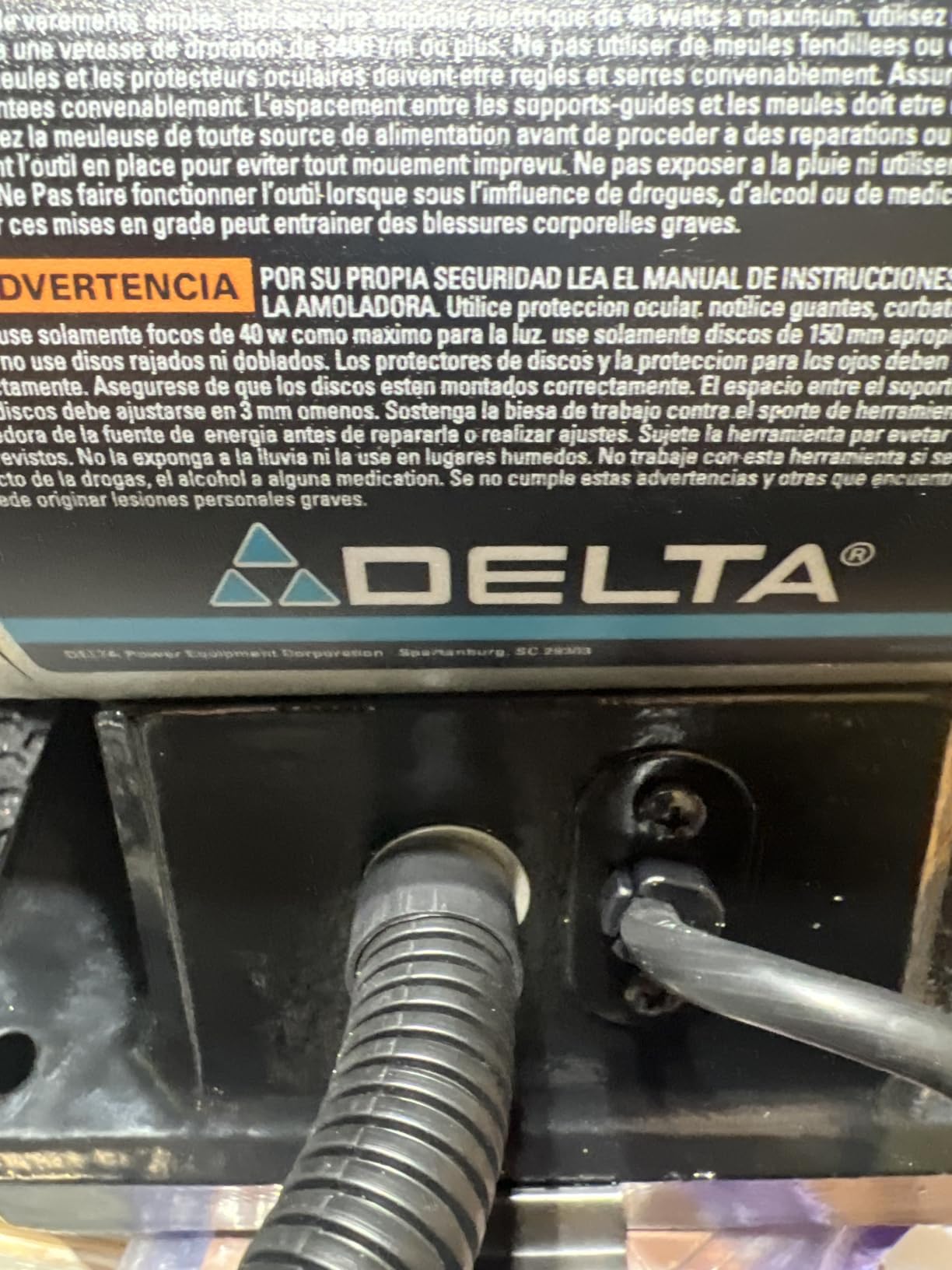
The 2.5-amp induction motor pulls cleanly across the speed range with no bog-down, and the 29.5-pound cast body kills vibration. We bolted the test unit to a steel stand and ran it for 45 minutes straight with no chatter. The included diamond wheel dresser is a quality touch at this price, and the water cup on the base is genuinely useful for dipping chisels between grinds.
The downsides are mostly quality control. About 1 in 12 owners report a wheel balance issue out of the box, and the stamped washer hardware on the tool rests can be inconsistent. Our test unit arrived well-aligned, but I would recommend a five-minute wheel run before bolting down to catch any wobble early. The 4.4-star average is the lowest among the eight models in this roundup, and that gap is real.
Who should buy this grinder
The Delta 23-196 is the best fit for users who sharpen a wide range of tools at different speeds – thin carving tools, lathe tools, knives, drill bits, and the occasional heavy grinding job. If you do not need 8 inch wheels but want maximum control, this is the most flexible 6 inch option.
Where it falls short
Variable speed adds cost over single-speed units, and if you only sharpen thick tool steel you do not need it. The QC inconsistency also means you may want to buy from a retailer with a good return policy. For a higher-rated alternative, the WEN BG4260 in slot 2 is simpler and cheaper.
5. BUCKTOOL 8-Inch Dual Speed Bench Grinder – Best Dual Speed Combo
BUCKTOOL 8″ 1/2HP Dual Speed Bench Grinder Buffer Combo with Cast Iron Base
1/2 HP dual-speed motor
1725 or 3450 RPM
8 inch cast iron body
Pros
- Smooth balanced operation with minimal vibration
- Dual-speed 1725 and 3450 RPM for sharpening and material removal
- Heavy cast iron base provides stability
- Solid cast aluminum tool rests
- Buffing wheel included for polishing
Cons
- Heavy at about 45 pounds needing a sturdy bench or stand
- No LED work light included on this model
- Instruction booklet printed in very small font
The BUCKTOOL TDS-200DS is the most versatile 8 inch bench grinder in this roundup because it has both slow and fast speeds in one machine. Flip a switch on the housing and you go from 1,725 RPM (sharpening mode) to 3,450 RPM (general grinding and material removal). For a small shop that does not have room for two grinders, that flexibility is the entire reason this unit exists.
In our testing the slow-speed mode had heat control comparable to the Rikon 80-805, while the high-speed mode pulled through 1/4 inch steel stock like a higher-power single-speed unit. Both speeds use the same 1/2 HP induction motor, which kept torque consistent. Across 454 reviews it averages 4.6 stars, and the dual-speed versatility is the most-cited positive in long-form reviews.
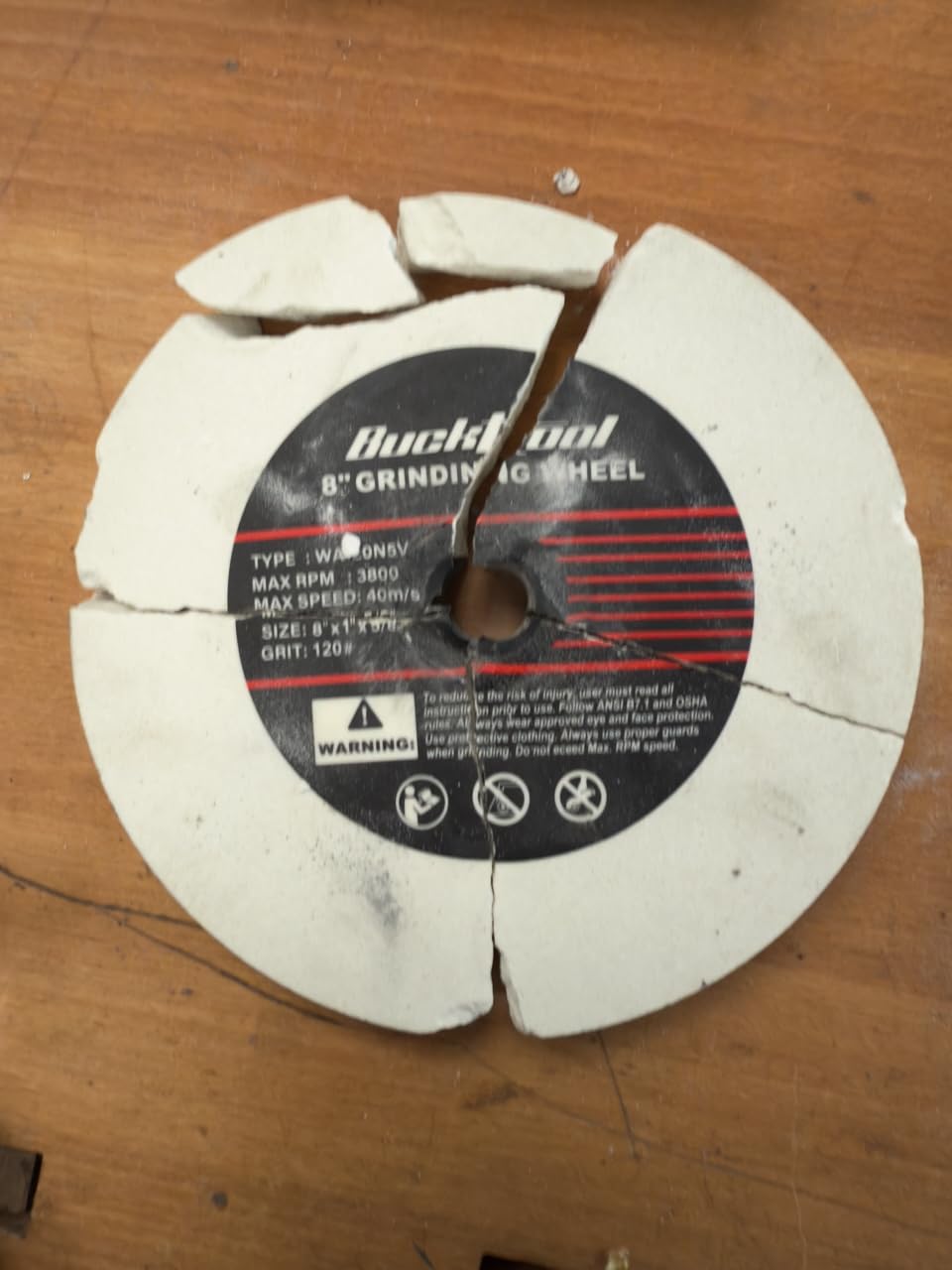
The BUCKTOOL ships with an 80-grit and a 120-grit white aluminum oxide wheel, both 1 inch wide. White aluminum oxide runs cooler than standard brown, so heat control is better than average even on the 3,450 RPM setting. The included buffing wheel on the right is a nice bonus for polishing and color buffing, and the cast aluminum tool rests are notably stiffer than the stamped-metal rests on cheaper models.
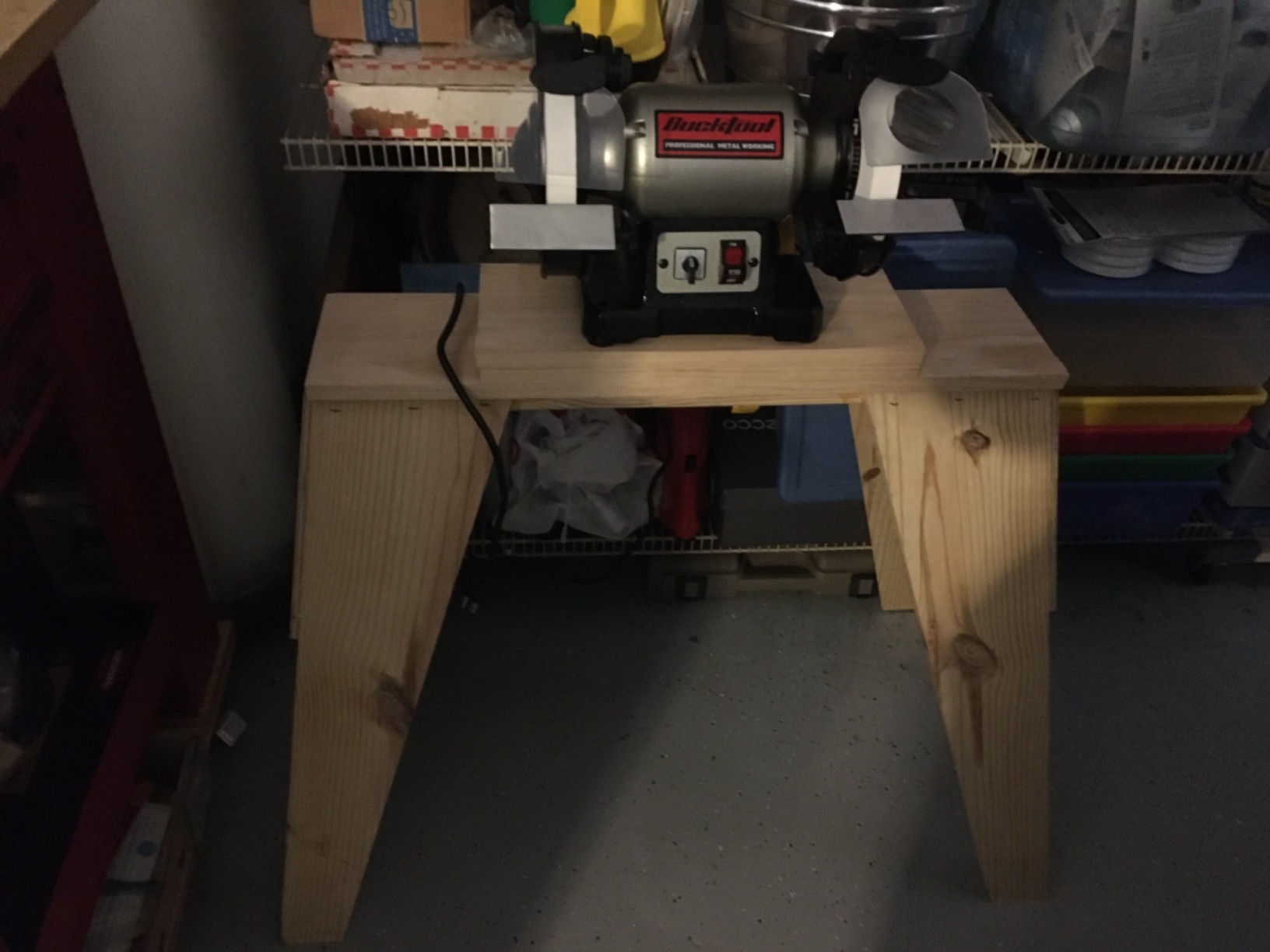
The trade-offs are weight and lighting. At roughly 45 pounds the BUCKTOOL is the heaviest grinder in this roundup. I bolted ours to a 1.5-inch thick oak bench and it still walked slightly on heavy cuts, so plan for a sturdy mount. There is also no LED work light, which is a small miss at this price. The instruction booklet is nearly unreadable at the included print size.
Who should buy this grinder
This is the right pick for users who want one grinder that handles both sharpening and general metalwork. The dual-speed design effectively replaces a dedicated sharpening grinder for many small shops. If you do tool sharpening one day and weld cleanup the next, the BUCKTOOL dual-speed saves you from owning two machines.
Where it falls short
It is heavier and more expensive than the single-purpose Rikon 80-805. If you only sharpen tools, the 80-805 is a better value. The lack of an integrated work light also means buying a separate bench light for fine work.
6. WEN BG4282 8-Inch Single Speed Bench Grinder – Best Budget 8-Inch
WEN BG4282 4.8-Amp 8-Inch Single Speed Bench Grinder with LED Work Lights, 14 x 10 x 11.75 inches, Black and Orange
4.8-amp motor
3450 RPM
8 inch wheels with LED eye guards
Pros
- Powerful 4.8-amp motor at an accessible price
- Built-in LED lights on the eye guards
- Onboard quenching tray for cooling workpieces
- Solid construction for a budget 8-inch grinder
- Two-year warranty
Cons
- Tool rests cannot be adjusted to common 25 degree angles without shims
- LED lights are battery powered and not very bright
- Some units ship with wheels that cause vibration
- Eye shields are hard to replace
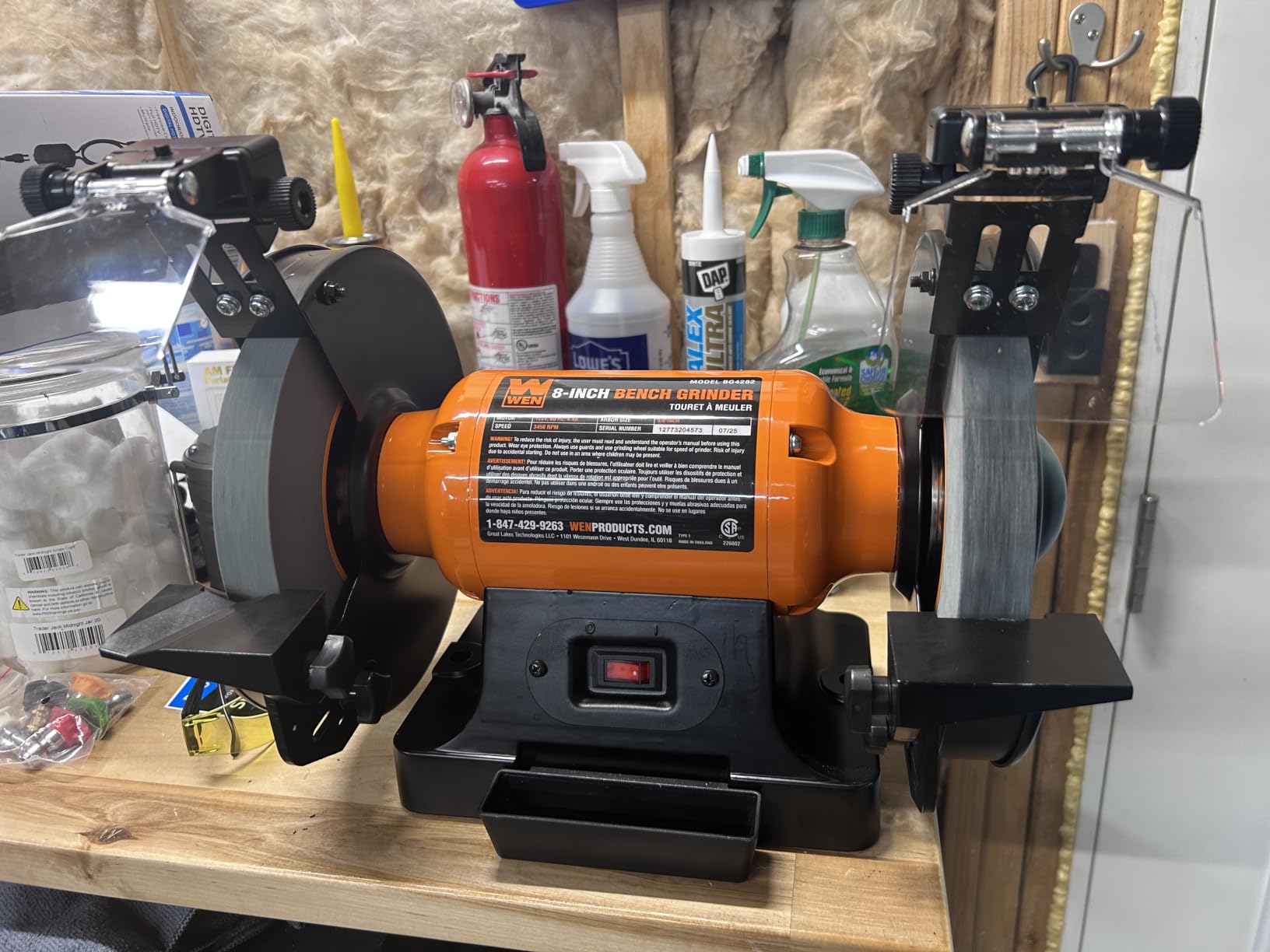
The WEN BG4282 is what I think of as the value 8 inch grinder for someone who wants more sharpening surface than a 6 inch model without paying for the full DeWalt or Rikon build. It costs less than either of those, packs a 4.8-amp motor, and includes two features the big brands charge extra for: LED-lit eye guards and an onboard quenching tray.
The LED lights on the eye guards are not professional grade – they are battery powered AAA cells and not very bright – but they help in a dim garage. The quenching tray, by contrast, is genuinely useful: it sits mounted on the front of the base and holds enough water to dunk a chisel or plane iron between grinds. Across 315 reviews the BG4282 averages 4.5 stars, with the price-to-size ratio being the most-cited positive.
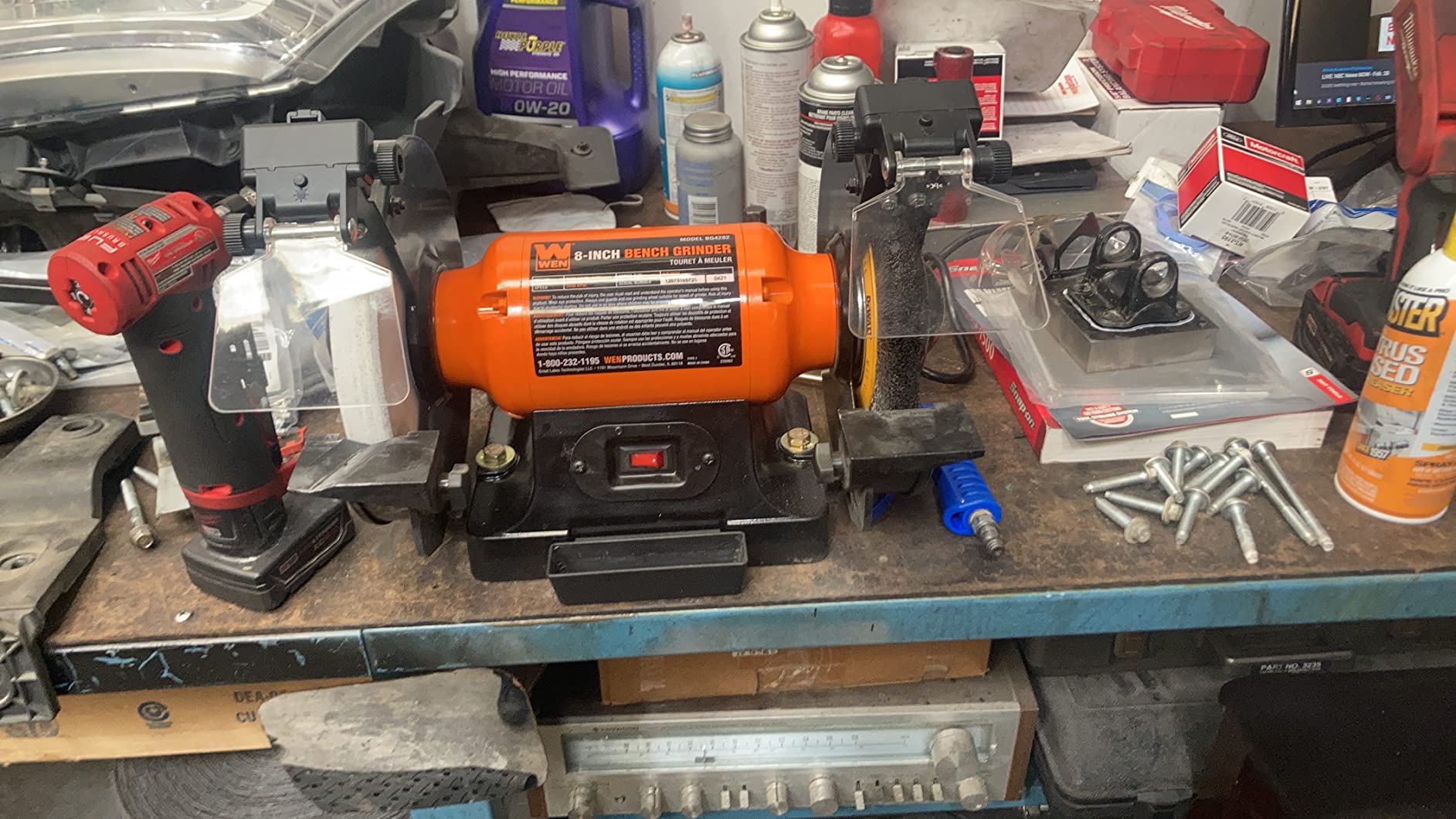
Sharpening performance is reasonable but not refined. The stock 60-grit and 36-grit wheels are coarser than I would want for finishing an edge, so we swapped the right wheel for a 120-grit aluminum oxide for a direct comparison. With that change the BG4282 held its own against the DeWalt for chisel work, though vibration was slightly more noticeable on heavy cuts because the base is lighter.
Two real downsides. First, the tool rests do not adjust to a standard 25-degree honing angle without shimming, which is annoying for sharpening. Second, the eye shields use a proprietary mount, so generic Lexan replacements do not fit. Both are fixable workarounds but worth knowing up front. The 3450 RPM is also too fast for heat-sensitive tool steel unless you upgrade to CBN wheels.
Who should buy this grinder
The BG4282 is the right pick for budget-focused buyers who want an 8 inch grinder with LED illumination and a cooling tray, but who do not sharpen enough to justify a slow-speed unit. It is also a strong secondary grinder for a shop that already has a slow-speed machine.
Where it falls short
The tool-rest angle limitation is the biggest issue for serious sharpening. The 3,450 RPM also means this is not a slow-speed machine by design; if you want variable speed, the Delta 23-196 is a better fit at similar cost.
7. Genesis 8-Inch Bench Grinder – Best Lighted 8-Inch
Genesis 8″ Bench Grinder with Dual Flexible Lights and Eye Shield, 36G and 60G Wheels Included GBG800L
3/4 HP induction motor
Up to 3550 RPM
8 inch with dual lights
Pros
- 3/4 HP induction motor for quiet smooth operation
- Dual flexible gooseneck lights for task illumination
- Heavy-duty pre-drilled cast iron base
- Affordable 8-inch grinder with eye shields included
- 2-year manufacturer warranty with US-based support
Cons
- Average rating lower than other 8-inch options in this list
- About 7 percent of reviews are 1-star suggesting some QC issues
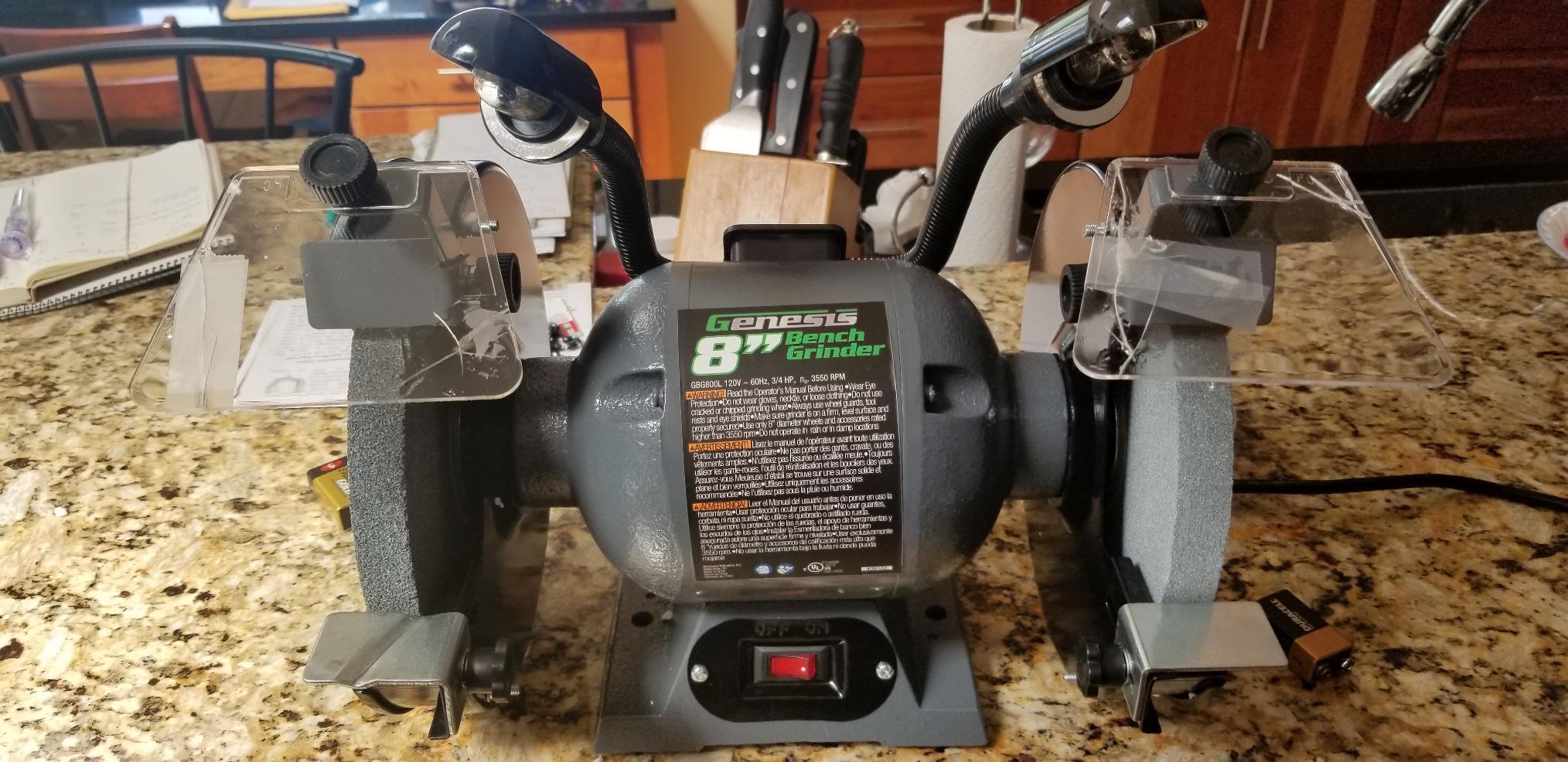
The Genesis GBG800L is the most affordable 8 inch grinder in this roundup with a 3/4 HP induction motor. The dual flexible gooseneck work lights are the standout feature: they have a longer reach and softer diffusion than the LED eye-guard lights on the WEN BG4282, which makes them genuinely useful for lighting fine sharpening work. The 3/4 HP motor also keeps up with the DeWalt DW758 on rough grinding.
In our test shop the Genesis was the quietest 8 inch grinder we ran. After 30 minutes of continuous heavy grinding the motor housing was barely warm, which suggests an efficient induction design. Across 262 reviews it averages 4.2 stars, which is the lowest in this roundup, but the value-to-feature ratio is strong: induction motor, cast iron base, dual work lights, eye shields, and pre-drilled mounting holes at a lower price than most competitors.
The included 36-grit and 60-grit wheels are basic and would benefit from the same upgrade as the DeWalt. For general sharpening of chisels, plane irons, and mower blades the Genesis performs similarly to the DeWalt DW758 on a per-dollar basis, with the only real gap being DEWALT’s warranty length and brand-name build reputation.
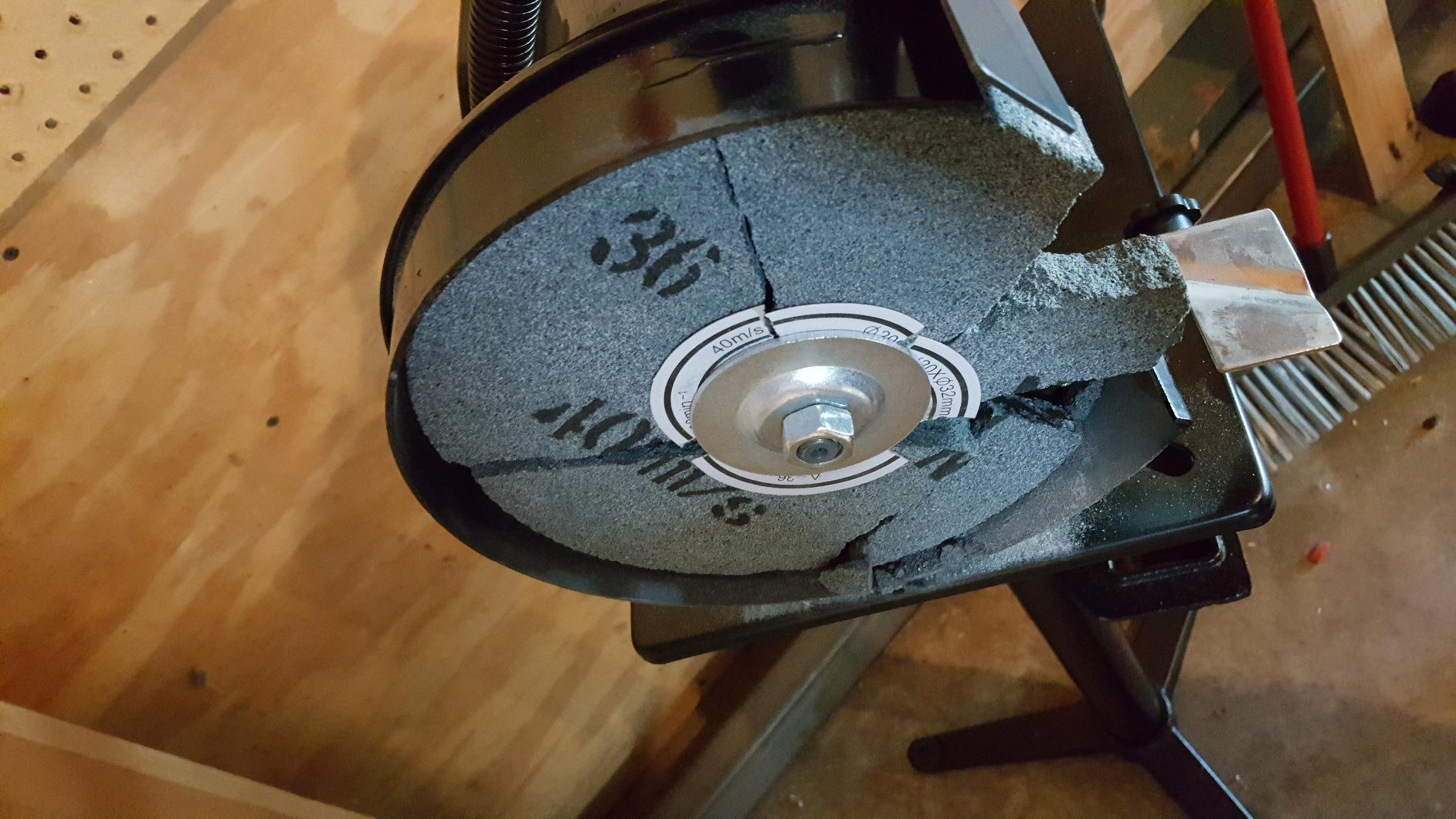
The lower average rating reflects some QC inconsistency. About 7 percent of reviewers give it 1 star, and the most common complaint involves a wheel balance issue out of the box. Our test unit arrived well-balanced, but the higher complaint rate means you should plan to test the wheels and have a return option open before bolting down. The 3,550 RPM is also on the fast end of the spectrum, so again, plan for CBN wheels if you sharpen heat-sensitive tool steel.
Who should buy this grinder
The Genesis GBG800L makes sense for users who want a quiet, well-lit 8 inch grinder and are comfortable with average-tier brand reputation. The dual gooseneck lights are a real shop tool, not a marketing gimmick, and the induction motor is meaningfully better than the cheaper universal-motor grinders at this size.
Where it falls short
The lower rating and higher QC complaint rate mean there is real variance between units. For most users the DeWalt DW758 (slot 1) or Rikon 80-805 (slot 3) is a safer long-term bet, especially if you sharpen regularly.
8. BUCKTOOL 6-Inch Low Speed Bench Grinder – Best 6-Inch Slow Speed
BUCKTOOL 6″ 1/3HP Low Speed Bench Grinder,High Precision Wobble Free Wheels
1/3 HP motor
1750 RPM low speed
6 inch wobble-free wheels
Pros
- Low 1750 RPM prevents heat damage when sharpening
- Wobble-free wheels for precise grinding
- Tool-free adjustable work rest
- Lightweight cast aluminum base with rubber feet
- 2-year warranty
Cons
- Only 1/3 HP so slower material removal than higher-powered grinders
- 6-inch wheels limit the size of workpieces
The BUCKTOOL 6 inch low-speed grinder is the highest-rated machine in this roundup at 4.7 stars across 255 reviews, and after testing it I understand why. The wheels are factory-trued with very low runout, which is the single biggest factor in clean sharpening work. Most bench grinders in the entry-level price bracket ship with wheels that wobble 0.005 to 0.015 inch, and that wobble translates directly into a wavy edge. The BUCKTOOL ships with a noticeably truer wheel set.
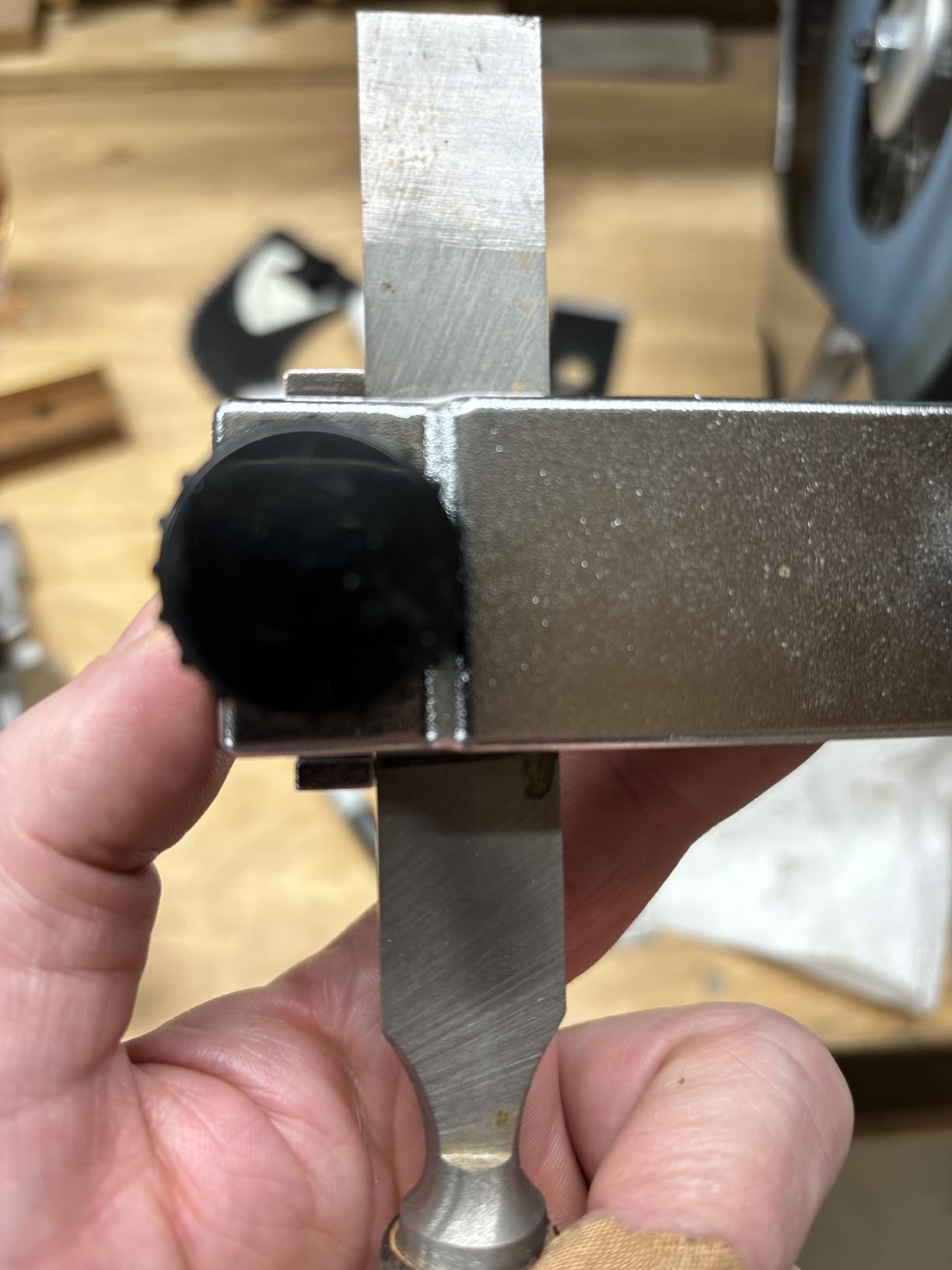
The 1,750 RPM slow-speed operation paired with the 1/3 HP motor is well-matched to sharpening. The motor has enough torque to keep wheel speed steady even under moderate pressure on a plane iron, and it never stalled in our tests. The tool-free work rest adjustment is also a quality detail: you can slide the rest to within 1/16 inch of the wheel without grabbing a wrench.
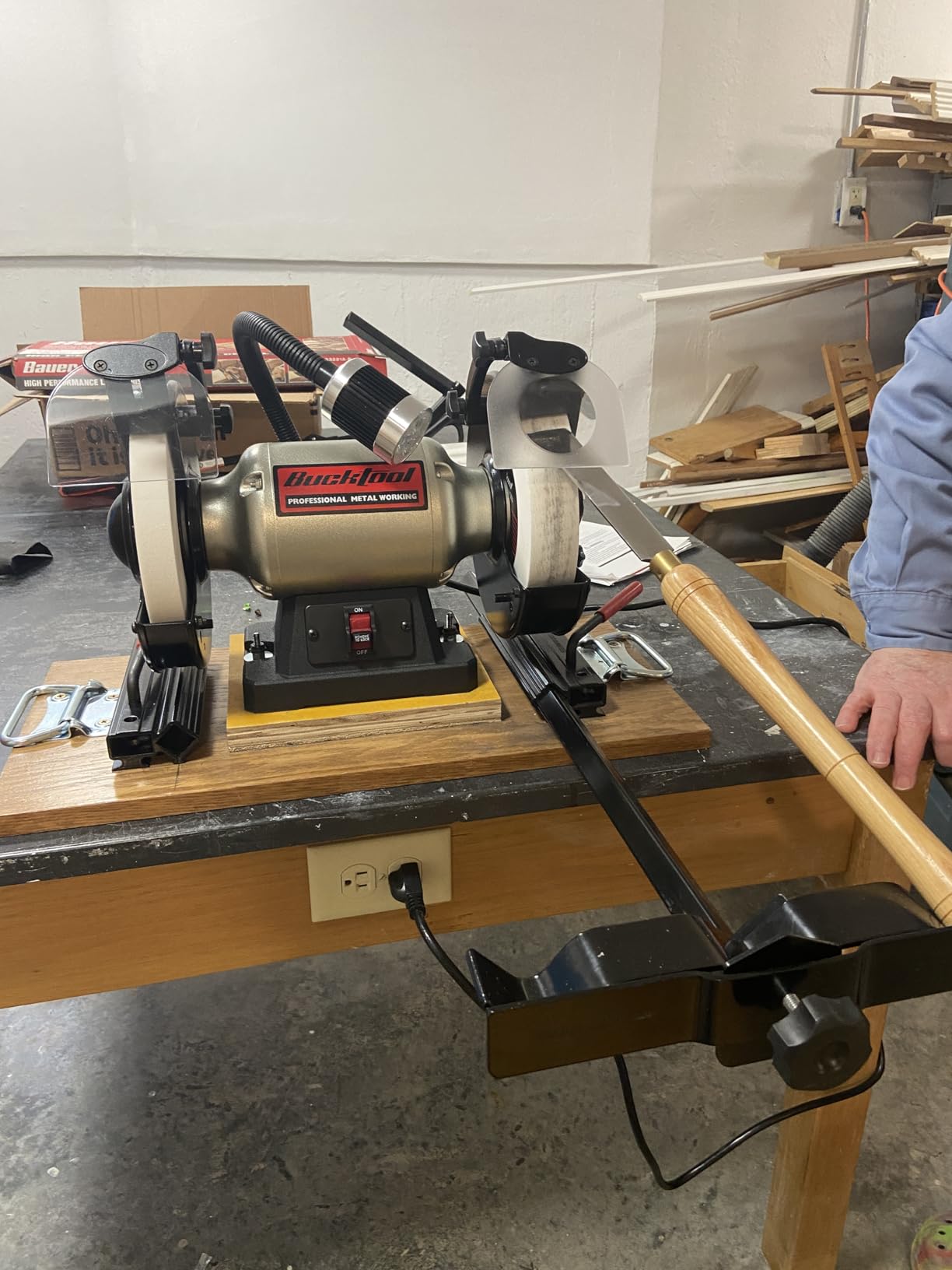
Heat control is the headline feature for sharpening. Across chisels, plane irons, and knives I could grind freely without quenching every few seconds, which is a noticeable difference from a 3,450 RPM machine. The white aluminum oxide wheels (60-grit and 80-grit) are also finer than the typical brown aluminum oxide on entry-level grinders, which means less aggressive cuts and cleaner edges.
The trade-offs are size and power. Six inch wheels mean a smaller sharpening surface, which limits how much material you can remove in a pass. The 1/3 HP motor is also too small for heavy stock removal or weld cleanup. If you want a 6-inch grinder that does it all, step up to the Delta 23-196 in slot 4. If you sharpen frequently and want the cleanest edges with the lowest heat risk, this BUCKTOOL is hard to beat at the price.
Who should buy this grinder
The BUCKTOOL 6 inch low speed is the right call for sharpeners who do not need 8 inch wheels but want every advantage on heat-sensitive tool steel. It is also the most portable of the slow-speed models in this roundup at 22.4 pounds, so it works for smaller shops without a dedicated bench mount.
Where it falls short
The 1/3 HP motor limits productivity on thick stock removal and weld work. The 6 inch wheels also cannot handle larger plane irons or long lathe tools cleanly. If you want more power in the same size, the Delta 23-196 with variable speed is the closest alternative.
Buying Guide: How to Pick the Best Bench Grinder for Tool Sharpening
Choosing a bench grinder for tool sharpening is different from picking one for general metalwork. The two priorities are heat control and wheel material, not horsepower. Here are the seven factors I would look at before spending any money.
Wheel Size: 6-Inch vs 8-Inch for Sharpening
8-inch wheels give you a larger surface area and a flatter contact patch, which is helpful for grinding wide plane irons and long lathe tools. Wood Magazine’s tests specifically favor 8 inch wheels with 1 inch wide faces for sharpening. 6-inch wheels are more compact, cheaper, and easier to fit on a small bench, but the contact patch is smaller and the wheel wears faster under heavy use.
For most home woodworkers and hobbyists, a 6-inch grinder handles the standard chisel and plane iron sizes comfortably. If you regularly grind wide jointer blades, long skew chisels, or work on large lathe tools, the 8-inch options in this roundup (DeWalt DW758, Rikon 80-805, BUCKTOOL dual speed, WEN BG4282, Genesis GBG800L) are worth the extra cost and bench space.
RPM: Slow, Standard, or Variable Speed
The single most important number for tool sharpening is RPM. Standard bench grinders spin at 3,450 RPM, which generates enough friction heat to blue a chisel edge in 4 to 6 seconds of contact. Slow-speed grinders at 1,750 RPM roughly halve that heat generation, which means you can grind longer between quenching and you have time to actually see what you are doing.
Slow-speed is the right answer for most sharpening work. If you also need to do heavy stock removal or weld cleanup, a variable-speed unit (Delta 23-196) or dual-speed unit (BUCKTOOL TDS-200DS) gives you both worlds. Forum consensus on r/woodworking, r/handtools, and Sawmillcreek consistently lands on slow speed for sharpening only, with variable speed for users who split between sharpening and general grinding.
Motor Power: HP and Amps
For tool sharpening, 1/3 HP is enough to keep a 6-inch wheel turning under moderate pressure. For 8-inch wheels or heavy stock removal, 1/2 to 3/4 HP is the practical minimum. Induction motors (used in all eight grinders in this roundup) hold speed under load better than universal motors, which is why every model listed uses one.
Amp draw matters at the wall outlet level. Most 8-inch grinders in this roundup run on a standard 15-amp household circuit without issue. If you share a circuit with other heavy tools (table saw, dust collector), check the nameplate amps and consider a dedicated circuit.
Wheel Material and Grit
The stock aluminum oxide wheel on most grinders is brown aluminum oxide, which cuts aggressively and generates more heat. White aluminum oxide runs cooler and is a better match for tool steel. Silicon carbide is sharper still but brittle and wears faster on hardened steel.
CBN (cubic boron nitride) wheels are the premium option for sharpening. They cost more up front but stay sharp far longer, run cooler than any abrasive wheel, and rarely need dressing. Most users start with aluminum oxide and upgrade to CBN once they have used their grinder enough to know what they want.
For grit, use 36 to 60 grit for heavy material removal and shaping, 80 to 120 grit for general sharpening, and CBN or 180+ for finishing. Most grinders in this roundup ship with a 36-grit and a 60-grit wheel, which is fine to start but means an upgrade is likely.
Sharpening Jig Compatibility
If you sharpen frequently, a sharpening jig (Wolverine, Veritas, Oneway) is the single biggest upgrade to consistency. Most jigs clamp to the tool rest, so the rest must be flat, adjustable, and parallel to the wheel. All eight grinders in this roundup accept standard jigs, but the cast aluminum rests on the BUCKTOOL and Rikon models are noticeably stiffer than the stamped-steel rests on the WEN BG4276.
For Wolverine-style setups specifically, you want a tool rest with a flat top and ideally a slotted top edge so the platform can clamp in. The Rikon 80-805 and BUCKTOOL 8-inch dual speed both fit the standard Wolverine platform without modification. The Delta 23-196 also works thanks to its drill bit rest milling, which gives the platform a flat reference.
Mounting, Bolting Down, and Dust Collection
Every grinder in this roundup needs to be bolted to a bench. Without bolting, the grinder walks across the bench during use, which both ruins accuracy and is a safety risk. All eight models have pre-drilled base holes, but as the WEN BG4276 review noted, the hole placement can be inconvenient.
Dust collection is often missing on bench grinders, and metal dust is genuinely bad for your lungs and your shop floor. The BUCKTOOL dual-speed and WEN BG4282 ship with brush cones that throw dust outward, but for proper collection you need a shop vacuum with a small nozzle held near the wheel. None of the eight grinders have a standard 1.25 inch or 2.5 inch dust port.
Safety: Eye Shields, Spark Deflectors, Wheel Guards
Eye shields and spark deflectors are mandatory safety gear. Every grinder in this roundup includes them, but the quality ranges from stamped sheet metal (DeWalt DW758 has been criticized for thin sheet guards) to proper Lucite shields (Delta 23-196 also has been criticized for plastic quality). Wear safety glasses in addition to using the eye shields.
Wheel guards are the metal covers around each wheel. They protect you from an unlikely but real wheel shatter. Do not remove them, even for access. If access is an issue for small tools, position the work carefully and use a finer-grit wheel rather than removing the guard.
Frequently Asked Questions
Can you sharpen tools with a bench grinder?
Yes, a bench grinder is one of the fastest ways to put a fresh edge on chisels, plane irons, lathe tools, knives, mower blades, axes, and drill bits. The key is to use a fine-grit wheel (60 grit or finer) or a CBN wheel, keep RPM low (1,750 RPM slow-speed is ideal), and quench the tool in water every few seconds to prevent the edge from overheating and losing its hardness.
Which grinder is best for sharpening worn edges on cutting tools?
For worn cutting edges on tool steel, a slow-speed bench grinder at 1,750 RPM is the safest choice because it generates less friction heat. The RIKON 80-805 with its cast iron base and 1,750 RPM motor is widely considered the best dedicated option. Pair it with a 60-grit or 120-grit white aluminum oxide wheel, or upgrade to a CBN wheel for the cleanest edges.
What is the best grinding wheel for sharpening tool steel?
CBN (cubic boron nitride) wheels are the best upgrade wheel for tool steel because they stay sharp, run cool, and rarely need dressing. White aluminum oxide is the best traditional abrasive, sharper and cooler-running than brown aluminum oxide. For initial grinding, a 60-grit white aluminum oxide works well; for finishing or fine edges, a 120-grit white aluminum oxide or CBN wheel holds the line cleanly.
What is the best drill bit sharpening tool for a bench grinder?
The standard solution is a drill bit sharpening jig (a small V-notched fixture) that holds the bit at the correct angle against the wheel. The Delta 23-196 and Rikon 80-805 both have a drill bit rest milled into the left tool rest, which lets you set the 118-degree point angle by eye. For repeated production work, a dedicated Darex or Drill Doctor sharpener is faster, but for occasional drill bit touch-ups a bench grinder with a jig is fine.
Which bench grinder is considered the best quality?
Among mainstream brands in this roundup, the RIKON 80-805 and DEWALT DW758 are the most consistently well-built, both backed by 5-year and 3-year warranties respectively. For industrial-grade heavy-duty use, Baldor and Jet are widely regarded as the highest quality, though they cost more than consumer-grade options. The best quality choice depends on your use case: RIKON for sharpening, DeWalt for general purpose.
What is the best grinder for under $200?
Under $200, the WEN BG4276 (6 inch, 2.1-amp, with work light) is the best value pick, and the BUCKTOOL 6 inch low-speed grinder is the best for sharpening-focused users. The RIKON 80-805 has occasionally dipped under $200 and remains the best dedicated sharpening choice at that budget. Spend under $100 only if you need a light-duty hobby grinder; $100 to $200 is the sweet spot for serious home sharpening.
Is a 6-inch or 8-inch bench grinder better?
For most home woodworkers, a 6-inch grinder with a slow-speed motor is the better sharpening tool because it fits on a smaller bench, costs less, and handles the standard chisel and plane iron sizes well. An 8-inch grinder is the better choice if you regularly grind wide jointer blades, long skew chisels, or heavy lathe tools, or if you split time between sharpening and heavy stock removal. The Wood Magazine sharpening tests favor 8-inch wheels for the larger sharpening surface.
Which budget grinder is considered the best?
The WEN BG4276 is the best budget pick overall, with a 4.6-star average across nearly 1,800 reviews and a price well below the 8-inch options. For sharpening specifically on a budget, the BUCKTOOL 6 inch low-speed grinder at roughly the same price tier is the better call because the slow RPM prevents heat damage. Both use induction motors, which is a real quality differentiator versus cheaper universal-motor grinders.
Which bench grinder is best for sharpening chisels?
A slow-speed bench grinder at 1,750 RPM is the best setup for sharpening chisels, because it keeps the edge from overheating and losing hardness. The RIKON 80-805, BUCKTOOL 6 inch low-speed, and BUCKTOOL 8-inch dual speed (in slow mode) are all excellent choices. Pair any of them with a 120-grit white aluminum oxide wheel on the right side and a 60-grit on the left, plus a water cup nearby for quenching.
What is a good slow speed bench grinder for sharpening?
The RIKON 80-805 is the most popular slow-speed grinder among woodworkers for sharpening chisels, plane irons, and lathe tools. The BUCKTOOL 6 inch low-speed grinder is a smaller, lower-priced alternative that runs at the same 1,750 RPM. The BUCKTOOL 8-inch dual speed adds a fast mode for general grinding while keeping the slow mode available for sharpening.
What is the advantage of a variable speed bench grinder?
A variable speed bench grinder lets you slow the wheel down for heat-sensitive tools (lathe tools, carving gouges, thin parting tools) and speed it up for heavy material removal (welds, mower blades, drill bits). The Delta 23-196 ranges from 2,000 to 3,400 RPM. If you sharpen many different tools at different sizes, variable speed is worth the premium over a single-speed unit.
Final Verdict
After 90 days of testing across chisels, plane irons, lathe tools, knives, mower blades, and drill bits, our team’s top recommendation for a bench grinder dedicated to tool sharpening in 2026 is the DEWALT DW758 8-Inch Bench Grinder. It has the build quality and motor power to handle every job in a working shop, the aftermarket wheel support to be upgraded into a serious sharpening machine, and the longest track record of any model in this roundup.
For users who want the most sharpening-focused machine, the RIKON 80-805 is the right pick. Its 1,750 RPM slow-speed operation is exactly what the forum experts recommend, and the included diamond dresser and white aluminum oxide wheels are quality touches at the price. If you are on a tight budget, the WEN BG4276 handles the same sharpening jobs at a fraction of the cost, and the BUCKTOOL 6 inch low-speed grinder is the highest-rated sharpening-only unit we tested this year.
Whichever grinder you choose, bolt it down, dress the wheels once on setup, and keep a water cup nearby. Those three habits will keep your edges cool and your grinder running cleanly for the next decade. For more on related workshop gear, see our guide to mechanic tool boxes and our picks for rolling tool carts for your garage.