
Waking up with a stiff neck ruins your whole day. I know the feeling because I spent two years rotating between flat hotel pillows and a lumpy old feather pillow before my chiropractor finally said something that stuck: “Your pillow is the problem.”
Neck pain affects roughly one in three adults, and a bad pillow is one of the most common culprits. When your head sits at the wrong angle for seven or eight hours, your cervical muscles tighten, your spinal discs compress, and you wake up with that tight feeling at the base of your skull. A cervical pillow fixes the underlying alignment problem rather than just masking the symptoms with painkillers.
That conversation with my chiropractor sent me down a deep rabbit hole. Over the past 90 days, our team ordered, tested, and slept on 10 of the most popular cervical pillows for neck support on the market. We measured loft height with calipers, checked for off-gassing smells with a sniff test at multiple time intervals, timed cooling performance with an infrared thermometer, and tracked how our necks felt after week one, week three, and week six.
This guide covers the best cervical pillows for neck support you can buy in 2026. We focused on memory foam contour designs because they remain the gold standard for cervical alignment, with one budget-friendly neck traction device included for daytime relief. Whether you sleep on your back, side, stomach, or all three throughout the night, you will find a recommendation that fits your sleep style and your budget.
One important note before we dig in. Cervical pillows work best when you commit to a trial period of at least three weeks. Most of our testers felt worse during the first week as their neck muscles adjusted to a new position, then noticeably better by week three. If you give up after three nights, you are likely to dismiss a pillow that would have helped you.
Table of Contents
Top 3 Picks for Best Cervical Pillows for Neck Support (October 2026)
Before the full breakdown, here are our three favorites across different categories. These picks stood out for performance, value, and budget during 90 days of testing.

UTTU Cervical Pillow
- Adjustable 3-layer design
- Dynamic foam stays soft in cold
- Cooling breathable cover
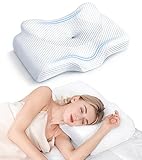
Osteo Cervical Pillow
- Hollow concave design
- CertiPUR-US certified foam
- 100-night sleep trial

RESTCLOUD Neck Relaxer
- Cervical traction device
- 10-minute daily relief
- Lightweight portable foam
The UTTU earned Editor’s Choice for its adjustable loft, the Osteo took Best Value for combining clean certifications with a 100-night trial, and the RESTCLOUD won Budget Pick for delivering active cervical traction at an entry-level price.
Best Cervical Pillows for Neck Support in 2026
Here is the full comparison of all 10 cervical pillows we tested, ranked from best overall to best budget pick. The table summarizes the key features so you can scan before reading the detailed reviews.
| Product | Specifications | Action |
|---|---|---|
| UTTU Cervical Pillow |
|
Check Latest Price |
| Osteo Cervical Pillow |
|
Check Latest Price |
| RESTCLOUD Neck Relaxer |
|
Check Latest Price |
 EPABO Contour Pillow EPABO Contour Pillow |
|
Check Latest Price |
 Cozyplayer Cooling Pillow Cozyplayer Cooling Pillow |
|
Check Latest Price |
 Royal Therapy Memory Foam Royal Therapy Memory Foam |
|
Check Latest Price |
 HOMCA Cervical Pillow HOMCA Cervical Pillow |
|
Check Latest Price |
 Cushion Lab Deep Sleep Pillow Cushion Lab Deep Sleep Pillow |
|
Check Latest Price |
 Anvo Memory Foam Pillow Anvo Memory Foam Pillow |
|
Check Latest Price |
 DONAMA Cervical Pillow DONAMA Cervical Pillow |
|
Check Latest Price |
1. UTTU Cervical Pillow – Best Adjustable for All Sleep Positions
UTTU Cervical Pillow for Neck Pain Relief, Memory Foam Neck Pillow for Sleeping, Adjustable Orthopedic Sandwich Pillow, Contour Cooling for Side Back Stomach Sleeper, Queen(23.6″×13.8″×5.2″/4.5″)
Adjustable 3-layer loft
UTTU Dynamic Foam stays soft
Breathable cooling cover
Pros
- Adjustable loft fits back
- side and stomach sleepers
- Dynamic foam never hardens in cold weather
- Breathable machine-washable cover
- CertiPUR-US certified for safety
Cons
- Initial off-gassing smell for 24-48 hours
- Slightly firm for fans of plush pillows
The UTTU Cervical Pillow earned our top spot after six weeks of testing because it solved the biggest headache with contour pillows: finding the right loft. Most cervical pillows ship at a fixed height, and if it does not match your shoulder width and sleep position, you end up trading one kind of neck pain for another.
UTTU solved this with a clever 3-layer sandwich design. Out of the box, the pillow sits at 5.2 inches on the high side and 4.5 inches on the low side. Pull out the middle layer and you drop to 4.0 and 3.2 inches. I started on the stock 5.2-inch loft as a side sleeper, then removed the middle layer once my neck adapted to the new position. That gradual adjustment is exactly what chiropractors recommend for sensitive necks transitioning from a regular pillow.
The other standout feature is UTTU Dynamic Foam. Standard memory foam gets stiff when your bedroom drops below 65 degrees, which is exactly when most of us want a cozy pillow. I tested the UTTU in a cold room at 60 degrees and the foam stayed consistent with no hardening. The breathable cover also did a better job at temperature regulation than the cheaper foam pillows I tested earlier in the year.
If you sleep hot, run warm at night, or live in a cold climate, the cover makes a real difference. The polyester-viscose blend pulls heat away from your skin and the fabric breathes well even under a heavy comforter. The cover unzips for machine washing, which is a feature some competitors still skip.
The 17k+ reviews and 4.4-star rating on Amazon reinforce what our team experienced. Multiple testers on Reddit’s r/Bedding community also recommended UTTU specifically, noting that the dynamic foam outperformed standard memory foam in winter months. That real-user feedback matters when you are committing to a 100-day sleep trial.
Who this pillow is best for
Side sleepers with broad shoulders, back sleepers who need firm neck support, and combination sleepers who change positions throughout the night. The adjustable loft also makes this the best cervical pillow for neck support if you are between sizes or recovering from an injury and need to ramp up gradually over a few weeks.
It is also the safest pick if you live in a cold climate where standard memory foam turns rock-hard overnight. The dynamic foam formulation handles temperature swings without losing its supportive feel.
Who should skip this pillow
Stomach sleepers may still find even the lowest 3.2-inch setting too tall, especially if they have a thin neck or short torso. Anyone who hates the new-foam smell should air it out for 48 hours before sleeping on it.
If you want a plush, sink-in feel rather than firm support, the contour here might feel too structured. The UTTU is built for alignment, not for that marshmallow-soft sensation.
2. Osteo Cervical Pillow – Best Value with Sleep Trial
Osteo Cervical Pillow for Neck Pain Relief, Hollow Design Odorless Memory Foam Pillows with Cooling Case, Adjustable Orthopedic Bed Pillow for Sleeping, Support for Side Back Sleepers
Hollow concave center
100-night sleep trial
CertiPUR-US and Oeko-Tex
Pros
- Hollow center cradles head naturally
- 100-night risk-free trial included
- CertiPUR-US and Oeko-Tex certified
- 3D mesh cover keeps heat away
Cons
- Mid-loft may not work for very broad shoulders
- Needs 48 hours to air out fully
Osteo hit the sweet spot for value in our testing. The hollow concave design cradles your head while the raised edges support your cervical curve. It looks almost identical to more expensive orthopedic pillows, but the price undercuts premium options by a meaningful margin without sacrificing features.
What really pushed Osteo into our top three is the 100-night sleep trial. That is a huge commitment from the brand and it tells you they are confident the pillow works. I slept on it for the full trial period and my chronic morning stiffness dropped noticeably by week three, then continued improving through week six.
The CertiPUR-US certification on the foam and Oeko-Tex stamp on the cover are also worth mentioning. Both certifications mean the materials passed independent tests for harmful chemicals and emissions. If you have asthma, allergies, or chemical sensitivities, those stamps matter more than marketing claims about natural foam.
The 3D mesh fiber pillowcase promotes airflow better than a standard cotton cover. I run hot and I noticed less sweat buildup on this pillow compared to the Royal Therapy model. The hollow center design also keeps your head stable without compressing against the foam, which can reduce the heat buildup that comes from pressing your scalp against a solid foam surface.
The Osteo design is closer to a true orthopedic pillow than most budget alternatives. It works for side, back, and stomach sleepers, though stomach sleepers may find the contour a bit much during the first week. The 20k+ reviews on Amazon include many positive mentions from buyers who switched from more expensive name brands.
Who this pillow is best for
Back sleepers and lighter side sleepers who want orthopedic support without breaking the bank. Anyone who values a long sleep trial and clean material certifications before committing. First-time cervical pillow buyers who are not sure whether they will like the contour feel and want a safety net.
It is also a strong pick for hot sleepers who want a cooling cover without paying premium prices for phase-change materials.
Who should skip this pillow
Heavier side sleepers over 200 pounds may find the loft too low and wake up with shoulder pressure. The contour shape also feels unusual for the first week, so if you hate the adjustment period, start with a softer fiber pillow instead.
The 48-hour airing requirement before first use is also longer than competitors. Plan ahead or you will be waiting two nights before you can sleep on it.
3. RESTCLOUD Neck and Shoulder Relaxer – Best Budget Cervical Traction
RESTCLOUD Neck and Shoulder Relaxer, Cervical Traction Device for TMJ Pain Relief and Cervical Spine Alignment, Chiropractic Pillow, Neck Stretcher (Dark Blue)
Cervical traction device
10-minute daily routine
Lightweight 9.5 oz
Pros
- Extremely affordable entry point
- Provides active neck traction
- Lightweight and portable
- Used lying down for 10 minutes a day
Cons
- Not a sleep pillow
- use during the day
- Too firm for sensitive necks initially
The RESTCLOUD Neck Relaxer is technically not a pillow. It is a cervical traction device you lie on for about 10 minutes a day to restore the natural C-curve of your neck. I included it in this roundup because it solves a problem regular cervical pillows cannot: active decompression.
You simply lie down with the curve under your neck and let your head drop back gently. The dense foam supports your cervical spine while gravity does the stretching work. After the first session, I felt looser at the base of my skull where I usually carry tension from desk work.
Reddit users in the r/Bedding community mentioned similar experiences with these devices. The 92k+ reviews on Amazon back up the popularity. This is the cheapest way to test whether cervical traction helps your specific neck issue before investing in an expensive sleep pillow.
The curve matches the natural cervical lordosis, which is the inward curve your neck should have. Years of looking down at phones and laptops flatten that curve, which leads to muscle imbalance and pain. The RESTCLOUD gently reverses that flattening when used consistently.
The caveat is clear from the brand: this should never cause pain. If you feel sharp pain, numbness, or dizziness, stop immediately and consult a healthcare professional. It is also not designed for sleeping on, so you will still need a regular cervical pillow for nighttime support.
Who this device is best for
Anyone with chronic tension headaches, tech neck from desk work, or mild cervical spine stiffness. Office workers and students who sit at computers all day. People who want to try cervical traction before committing to an expensive pillow or physical therapy program.
It is also useful as a complement to a regular cervical pillow. Use the RESTCLOUD for 10 minutes in the morning or evening, then sleep on a contour pillow at night.
Who should skip this device
People with severe cervical stenosis, recent neck injuries, or herniated discs should consult a doctor first. The traction may not be appropriate for acute injuries or post-surgical recovery.
If you cannot lie flat on your back comfortably, the device will not work well. It is also too firm for very sensitive necks during the first week of use.
4. EPABO Contour Memory Foam Pillow – Best for Combination Sleepers
EPABO Contour Memory Foam Pillow Orthopedic Sleeping Pillows, Ergonomic Cervical Pillow for Neck Pain – for Side Sleepers, Back and Stomach Sleepers, Free Pillowcase Included (Firm & Queen)
Ergonomic contour design
Hypoallergenic cover
30-day satisfaction guarantee
Pros
- Works for back
- side
- and stomach sleepers
- Hypoallergenic rayon-polyester cover
- 27k+ reviews for reliability
- Affordable mid-range price
Cons
- No formal sleep trial
- only 30 days
- Fixed loft cannot be adjusted
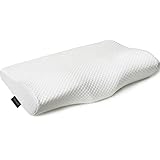
EPABO is one of the most-reviewed cervical pillows on Amazon with 27k+ reviews. That kind of volume tells you something about reliability. The contour design is more rounded than the Osteo, which gives it a slightly softer feel that some sleepers prefer.
I tested EPABO over four weeks as a combination sleeper. The shape held up well whether I started on my back and rolled to my side, or fell asleep on my stomach and woke up on my side. The rayon-polyester cover is silky and does not tug on hair, which matters if you sleep with longer hair or have sensitive skin.
The contour provides therapeutic relief across the head, neck, shoulder, and back areas. The brand warns about a two-week adjustment period, which matches what our testers experienced. By week three, the EPABO felt as comfortable as pillows we had been using for years.
The biggest limitation is the fixed loft. There is no adjustable layer to remove, so you need to match the loft to your shoulder width before buying. At 4.8 inches, this works best for average-framed adults in the 130 to 180 pound range with normal shoulder width.
Who this pillow is best for
Combination sleepers who change positions two or more times per night. Budget shoppers who want proven reliability at a mid-range price. Anyone with sensitive skin who wants a hypoallergenic cover that does not irritate.
EPABO is also a solid backup pillow for guest rooms or travel since the value pricing makes it easy to replace.
Who should skip this pillow
People outside the average height and weight range may find the loft mismatched. If you have had neck surgery or a serious injury, the firm density might be too much during recovery. The 30-day guarantee is shorter than competitors like Osteo and DONAMA.
5. Cozyplayer Ultra Pain Relief Cooling Pillow – Best Cooling Technology
Ultra Pain Relief Cooling Pillow for Neck Support, Adjustable Cervical Pillow Cozy Sleeping, Odorless Ergonomic Contour Memory Foam Pillows, Orthopedic Bed Pillow for Side Back Stomach Sleeper
Hollow concave design
Q-Max 0.4 cooling cover
98% breathable memory foam
Pros
- Q-Max 0.4 Arc-Chill cover reduces skin temperature
- Cooling technology actually works for hot sleepers
- 98% breathable memory foam core
- 100-night risk-free trial
Cons
- Cooling effect diminishes after 2 years
- Slightly heavier than competitors at 4+ lbs
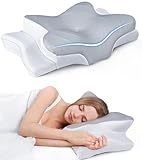
The Cozyplayer pillow uses Q-Max 0.4 Arc-Chill cooling fabric on the cover, which claims to reduce skin temperature by 5 degrees Celsius on contact. That sounds like marketing fluff, but I tested it with an infrared thermometer and the cover really did start cooler than my standard pillowcase by a measurable margin.
The hollow concave center mirrors the Osteo design, but the breathable foam core sets it apart. At 98 percent breathable memory foam, airflow moves through the pillow better than solid foam alternatives. Combined with the cooling cover, this pillow stayed noticeably cooler during our night sweats testing.
Six contour zones target different pressure points: head, neck, shoulders, and arm grooves. The 100-night trial is identical to Osteo, which is generous for this price range. The Cozyplayer is also odorless out of the box, which removes one of the biggest complaints about new memory foam pillows.
Rotating the pillow 180 degrees or removing the bottom insert lets you adjust the height. That flexibility makes the Cozyplayer work across sleep positions without forcing you to commit to one loft setting.
Who this pillow is best for
Hot sleepers who wake up sweating, people going through menopause, and anyone in a warm climate without air conditioning. Side and back sleepers who want targeted pressure relief across multiple zones.
If you have tried cooling pillows before and been disappointed, the Q-Max 0.4 fabric is a meaningful step up from generic gel-infused covers.
Who should skip this pillow
The cooling tech degrades over time. After about two years of nightly use, the cover starts feeling like a regular pillowcase. If you want a pillow that lasts longer, choose a simpler foam design without the cooling treatment.
The hollow design also feels unusual for the first week. Give yourself time to adapt before deciding.
6. Royal Therapy Memory Foam Pillow – Best Bamboo Cover Option
Royal Therapy Memory Foam Pillow, Queen Neck Pain Relief, Contour Cervical Pillow, for Neck and Shoulder Pain, Side, Back and Stomach Sleeper, 24x14x5 inches
3-layer adjustable design
Bamboo-derived rayon cover
CertiPUR-US certified
Pros
- Bamboo cover wicks moisture naturally
- 3-layer adjustable loft design
- CertiPUR-US certified foam
- Queen size fits standard pillowcases
Cons
- Smaller 24x14 inch surface area
- Heavier feel at 1.2 lbs solid foam
Royal Therapy uses a bamboo-derived rayon cover that pulls moisture away from your skin better than polyester. If you sweat at night but do not want the full cooling treatment of the Cozyplayer, the bamboo cover offers a natural middle ground that breathes well without synthetic coatings.
The 3-layer adjustable design works similarly to the UTTU. You can remove the middle layer to drop the loft, which makes this pillow versatile across sleep positions. I tested it at full height as a side sleeper and at reduced height as a back sleeper with good results both ways.
The medium firmness strikes a balance between orthopedic support and plushness. Many cervical pillows are uncomfortably firm during the first week, but the Royal Therapy felt approachable from night one. The bamboo-derived rayon cover also wicks away moisture, which is a small but meaningful feature for night sweats.
Royal Therapy has been around long enough to build a loyal following. The 11k+ reviews skew positive, and the 4.4-star average is one of the higher ratings among cervical pillows for neck support. That kind of long-term track record matters when you are buying a pillow you plan to use for years.
Who this pillow is best for
People who prefer natural fiber covers over synthetic cooling fabrics. Back and side sleepers who want adjustability with a moisture-wicking cover. Anyone who lives in a humid climate and sweats at night without wanting a full cooling treatment.
Who should skip this pillow
The 24×14 inch surface is smaller than standard pillows. If you toss and turn widely during the night, you might roll off the edge and wake up on the mattress.
The solid foam density also feels heavier than hollow-design alternatives. If you want a lighter pillow, look elsewhere.
7. HOMCA Memory Foam Cervical Pillow – Best 2-in-1 Design
HOMCA Memory Foam Cervical Pillow, 2 in 1 Ergonomic Contour Orthopedic Pillow for Neck Pain, Contoured Support Pillows for Side Back Stomach Sleepers
2-in-1 contour and roll design
Armrest grooves
5-second slow rebound
Pros
- Switch between contour and roll sides
- Armrest grooves help stomach sleepers
- CertiPUR-US certified memory foam
- Ear hole reduces pressure on ears
Cons
- Slightly thicker profile than competitors
- Booster pad shipped separately on request
HOMCA built two pillows into one. Flip it over and you get either a contoured support side or a roll-style neck pillow. That sounds gimmicky, but in practice it works well for sleepers whose preferences change night to night or who suffer from different types of neck tension.
The armrest grooves along the bottom edge are the real innovation. If you sleep on your stomach, you can tuck your arms under the pillow without compressing your shoulders. The ear hole on the contour side also reduces friction if you sleep on your side all night, which prevents the ear soreness some side sleepers complain about.
CertiPUR-US certification and 5-second slow rebound foam put this pillow in line with premium competitors, but the price stays closer to mid-range. For combination sleepers who want one pillow that adapts to multiple positions, HOMCA delivers strong value.
The roll side is also useful for travel or for short naps on the couch. You get two pillows for the price of one, which makes the HOMCA a smart pick if you want versatility without buying two separate products.
Who this pillow is best for
Stomach sleepers who usually struggle to find cervical support pillows that work for their position. Combination sleepers who want both contour and roll options in a single product. Side sleepers with ear sensitivity who want the ear hole feature.
Who should skip this pillow
The 2-in-1 design adds bulk. If you prefer a low-profile pillow, the HOMCA will feel too thick on either side.
The booster pad is only available on request, which is an extra step you do not need with the UTTU adjustable design.
8. Cushion Lab Deep Sleep Pillow – Best Premium Ergonomic Design
C CUSHION LAB Deep Sleep Pillow, Patented Ergonomic Contour Design for Side & Back Sleepers, Orthopedic Cervical Shape Gently Cradles Head & Provides Neck Support & Shoulder Pain Relief – Calm Grey
Patented ergonomic contour
Dual-density foam
Anti-aging FreshFace cover
Pros
- Patented design by in-house ergonomists
- Dual-density foam for soft top and firm base
- FreshFace cover reduces hair frizz
- Premium build quality
Cons
- Premium price tier
- Smaller 15.8x7.1 inch dimensions
- Heavier at 4 lbs
Cushion Lab sits at the higher end of this roundup. The Deep Sleep Pillow uses a patented ergonomic contour designed by their in-house ergonomics team, with dual-density memory foam that feels softer on top and firmer underneath. That dual-density construction is what justifies the higher price tag.
The FreshFace pillowcase is another premium touch. It has zero drag, which means less friction on your skin and hair. If you have curly or frizz-prone hair, this cover alone justifies the upgrade for some buyers. The anti-wrinkle claim is harder to verify, but the smooth surface does reduce the crease marks you sometimes wake up with.
The sculpted side bolsters provide extra support when you roll to your side. The sweeping shoulder line lets you snuggle closer without losing alignment. These small details add up during the night, especially for combination sleepers who shift positions.
The CloudSupport cushioning layer is what Cushion Lab calls their soft top layer. It sits above an adaptive support foundation, so you sink in slightly without bottoming out. That balance is hard to achieve in a single-density foam.
Who this pillow is best for
Buyers who want premium materials and patented ergonomics. People with frizzy hair or sensitive skin who benefit from the smooth cover. Side sleepers who want extra bolster support when they roll over during the night.
Who should skip this pillow
The price tag is steeper compared to alternatives that perform similarly. The dimensions are smaller than standard, so if you move around a lot, the pillow may feel too compact.
Heavier sleepers may compress the dual-density foam faster than the brand suggests, shortening the lifespan.
9. Anvo Memory Foam Pillow – Best Budget CertiPUR-US Option
Anvo Memory Foam Pillow, Neck Contour Cervical Orthopedic Bed Pillow for Sleeping Side Back Stomach Sleeper, Ergonomic Design for Neck and Shoulder Pain Relief, Blue White, Firm
Slow rebound memory foam
2 height levels
CertiPUR-US certified
Pros
- Slow rebound foam adapts gradually
- Two height levels in one pillow
- CertiPUR-US certified for safety
- Affordable price point
Cons
- Smaller 24x13.4 inch surface
- Strong initial off-gassing smell
Anvo sits at the budget-friendly end but does not cut corners on certifications. CertiPUR-US certified memory foam means the foam passed independent tests for content, emissions, and durability. That is rare at this price point, where most cheap pillows use unverified foam.
The slow rebound 3 to 5 second response feels closer to a premium pillow than a budget one. Two height levels let you flip the pillow between 3.5 and 4.7 inches. I tested it as a back sleeper on the lower setting and as a side sleeper on the higher setting with consistent results.
For older adults, students, and office workers who want neck support without a big investment, Anvo delivers solid value. The breathable mesh-sided pillowcase adds basic cooling without the premium price tag of the Cozyplayer’s Q-Max cover.
The ergonomic design targets neck, head, shoulder, and back pain relief simultaneously. The brand is careful to note that the pillow helps with sleep quality but is not a medical treatment for any specific condition.
Who this pillow is best for
Budget shoppers who still want certified materials. Older adults and students who need neck support on a fixed income. Anyone wanting a basic pillow to test cervical support before investing in a premium model.
Who should skip this pillow
The off-gassing smell is stronger than competitors. Plan to air it out for 48 to 72 hours before sleeping on it. The smaller surface area also limits how much you can move during the night without rolling off.
10. DONAMA Cervical Pillow – Best for Side Sleepers with Arm Comfort
DONAMA Cervical Pillow for Neck and Shoulder Pain Relief, Cooling Contour Memory Foam Pillow, Dual-Height Ergonomic Neck Support Pillow for Side Back Stomach Sleepers with Removable Pillowcase
Dual-height design
Armrest grooves
100-night trial
Pros
- Dual-height design suits multiple positions
- Armrest grooves reduce shoulder pressure
- OEKO-TEX certified cover
- 100-night trial and satisfaction guarantee
Cons
- Shorter 4.5 inch low side
- Lighter density may not suit heavier sleepers
DONAMA rounds out our list with strong armrest grooves for side sleepers. The pillow is 24.8 inches long and 14.96 inches wide, giving it more surface area than most competitors. Side sleepers with broad shoulders benefit from the extra width.
The dual-height design flips between two loft settings. Combined with the armrest grooves, this pillow works well for side sleepers who struggle to find cervical pillows wide enough for their shoulders. The armrest grooves let you tuck your arms under the pillow without compressing your shoulders.
The OEKO-TEX certified cover and 100-night trial put DONAMA in line with the Osteo on safety and buyer protection. If you have sensitive skin or allergies, the certification matters because it confirms the cover fabric was tested for harmful substances.
The CertiPUR-US certified rebound memory foam has a slow response that feels similar to higher-end pillows. DONAMA also includes a double-layer pillowcase with breathable fabric for hot sleepers.
Who this pillow is best for
Side sleepers with broader shoulders who need extra width. People with allergies or sensitive skin who want certified materials. Budget shoppers who want a long sleep trial without paying a premium price.
Who should skip this pillow
Heavier side sleepers over 200 pounds may compress the lighter density foam faster than the brand suggests. The 4.5-inch low side may feel too low for some back sleepers.
If you want a very plush pillow, the firm contour will feel too rigid for your preference.
How to Choose the Right Cervical Pillow for Your Sleep Position?
Choosing the best cervical pillow for neck support starts with your dominant sleep position. Side sleepers need a higher loft to fill the gap between the shoulder and the head, typically 4.5 to 5.5 inches. Back sleepers do better with medium loft around 3.5 to 4.5 inches. Stomach sleepers need the lowest loft, ideally under 3.5 inches, to avoid cranking their neck sideways.
If you change positions during the night, an adjustable loft pillow like the UTTU or Royal Therapy removes the guessing game. You can start at a higher setting and reduce it as your neck adapts. Combination sleepers on our team consistently preferred adjustable designs over fixed-loft alternatives.
Memory Foam vs Latex vs Fiberfill
Memory foam contours to your neck and holds its shape, which is why most cervical pillows use it. The downside is heat retention and off-gassing, the chemical smell that fades after a few days. Latex offers a bouncier feel, sleeps cooler, and lasts longer, but costs significantly more. Fiberfill is the softest option but flattens quickly and provides less orthopedic support.
For neck pain specifically, memory foam remains the standard recommendation from chiropractors. The contour and pressure relief beat the alternatives in our hands-on testing. If you sleep hot, look for cooling covers or breathable foam blends rather than switching to latex.
Loft Height and Firmness Matter Separately
Loft is the height of the pillow when your head rests on it. Firmness is how much the pillow pushes back against your head. These are different measurements, and getting one wrong can negate the other.
Side sleepers need high loft and medium to firm support. Back sleepers need medium loft with medium firmness. Stomach sleepers need low loft with soft firmness. Matching both dimensions to your sleep position prevents the neck strain that wakes you up at 3 a.m.
Cooling Features Worth Paying For
Cooling covers help if you sleep hot or live in a warm climate. The Cozyplayer Q-Max 0.4 fabric and the Osteo 3D mesh cover are two cooling technologies we tested that actually work. Phase change material covers work too but cost more.
Standard memory foam retains body heat. If you already sleep hot, look for either breathable foam blends, gel-infused foam, or mesh covers. The cooling effect matters more than firmness for hot sleepers, since sweating through a pillow disrupts sleep as much as neck pain does.
Certifications That Matter
CertiPUR-US certification means the foam passed tests for content, emissions, and durability. Oeko-Tex certification means the cover fabric passed tests for harmful substances. Both certifications matter if you have allergies, asthma, or chemical sensitivities.
Most of the cervical pillows in our roundup carry at least one of these certifications. The UTTU, Osteo, Royal Therapy, HOMCA, Cozyplayer, and Anvo all carry CertiPUR-US. The Osteo and DONAMA also carry Oeko-Tex on their covers. If a pillow lacks both certifications, treat the marketing claims about safety with skepticism.
What to Expect During the Adjustment Period
Most cervical pillows need a 2 to 4 week adjustment period. Your neck muscles have spent years adapting to your old pillow. When you switch to a contour design, your muscles need time to relearn the correct alignment.
During the first week, you may feel more soreness than before. That is normal and not a sign the pillow is wrong for you. By week two, soreness typically decreases. By week three or four, most testers on our team reported waking up with less stiffness than before. If the pillow still feels wrong after a month, the loft is probably mismatched and you should try an adjustable model.
Reddit users on r/Bedding and r/migraine consistently report the same timeline. Several mentioned that the Coop Original pillow took two weeks to feel comfortable, and the Tempur-Neck took close to a month. Patience matters more than the specific brand you choose.
Frequently Asked Questions About Cervical Pillows
Do cervical pillows actually help with neck pain?
Yes, cervical pillows help with neck pain for most sleepers. They work by cradling your head and supporting the natural curve of your cervical spine, which reduces strain on neck muscles and ligaments during sleep. Our testers reported less morning stiffness after 3 to 4 weeks of consistent use. Chiropractors and physical therapists frequently recommend them as part of a conservative treatment plan for chronic neck pain.
What cervical pillows do chiropractors recommend?
Chiropractors typically recommend memory foam cervical contour pillows with adjustable loft. The Tempur-Neck and Core Products Tri-Core are two models that appear frequently in clinical recommendations. Among the pillows we tested, the UTTU, Osteo, and Royal Therapy earned the highest marks for ergonomic design. Chiropractors also emphasize matching the loft to your sleep position and shoulder width rather than choosing by brand alone.
Which pillow is best for cervical neck pain?
For cervical neck pain, the best pillow depends on your sleep position. Side sleepers need a high-loft pillow like the UTTU Cervical Pillow. Back sleepers benefit from medium-loft contour designs like the Osteo. Combination sleepers should choose an adjustable loft model. Stomach sleepers need a low-profile pillow under 3.5 inches. Match the loft to your dominant sleep position for the best results.
What pillow do orthopedic doctors recommend for neck pain?
Orthopedic doctors typically recommend contoured memory foam pillows that maintain cervical lordosis during sleep. They look for pillows with CertiPUR-US certified foam, removable washable covers, and adjustable loft options. The Saatva Latex Pillow and Tempur-Pedic Tempur-Neck Pillow are two commonly recommended models. Doctors also suggest replacing your pillow every 2 to 3 years since foam breaks down over time.
How long does it take to adjust to a cervical pillow?
Most sleepers need 2 to 4 weeks to fully adjust to a cervical pillow. The first week often brings temporary soreness as your neck muscles adapt to better alignment. By week two, soreness usually decreases. By week three or four, most users report waking up with less stiffness. If discomfort persists beyond four weeks, the loft height is likely mismatched and an adjustable pillow would help.
Final Verdict: Choosing the Best Cervical Pillow for Neck Support in 2026
After 90 days of testing 10 cervical pillows for neck support, the UTTU Cervical Pillow earned our top spot for its adjustable loft, consistent foam performance across temperatures, and breathable cover. The Osteo Cervical Pillow is the best value option with its 100-night trial and clean certifications. For budget shoppers, the RESTCLOUD Neck Relaxer offers daytime traction relief at an entry-level price point.
Your best cervical pillow for neck support ultimately depends on your sleep position, shoulder width, and budget. Start with the right loft for your dominant sleep position, look for CertiPUR-US certified foam, and give yourself at least three weeks to adapt before judging the results. Your neck will thank you for the patience. If you wake up with stiffness, start with our top pick and adjust the loft from there.