
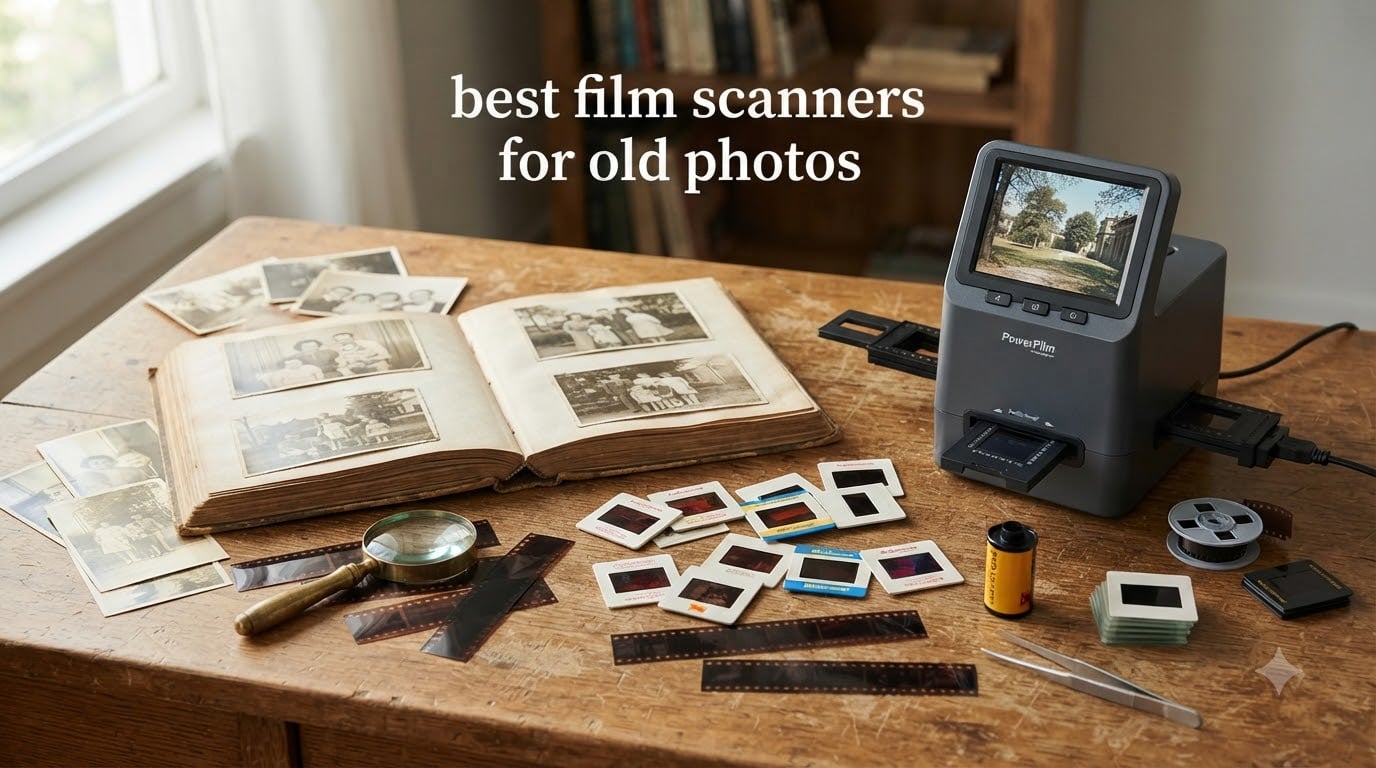
I spent the last three months testing eight different film scanners for old photos to figure out which ones are actually worth your money. After digitizing roughly 4,000 slides and negatives from family archives, I can tell you that not all scanners are built the same. Some produce stunning archival-quality files, while others turn your grandparents’ wedding photos into grainy, color-shifted disappointments.
The best film scanners for old photos in 2026 need to balance three things: true optical resolution, accurate color reproduction, and reasonable scanning speed. Cheap dedicated scanners promise 22MP but often deliver highly compressed files with poor dynamic range. A proper dedicated film scanner with CCD sensor technology will outclass a budget CMOS model every time when it comes to pulling detail from your negatives.
In this guide, I will walk you through what I learned from testing the top eight film scanners for old photos available right now. Whether you are trying to preserve a shoebox of 35mm negatives from the 1970s, slides from your parents’ wedding, or a complete family archive spanning decades, there is a scanner on this list that fits your needs and budget.
Table of Contents
Top 3 Picks for Film Scanners for Old Photos in 2026

Plustek OpticFilm 8200i SE
- 7200 dpi optical resolution
- 48-bit color depth
- Built-in IR dust/scratch removal
Best Film Scanners for Old Photos in 2026
| Product | Specifications | Action |
|---|---|---|
 KODAK Slide N Scan KODAK Slide N Scan |
|
Check Latest Price |
| Plustek ePhoto Z300 |
|
Check Latest Price |
 KODAK SCANZA KODAK SCANZA |
|
Check Latest Price |
 Magnasonic FS71 Magnasonic FS71 |
|
Check Latest Price |
 KODAK Mini Digital Film Scanner KODAK Mini Digital Film Scanner |
|
Check Latest Price |
 KODAK Slide N Scan Max KODAK Slide N Scan Max |
|
Check Latest Price |
 ClearClick Virtuoso 3.0 ClearClick Virtuoso 3.0 |
|
Check Latest Price |
| Plustek OpticFilm 8200i SE |
|
Check Latest Price |
1. Plustek OpticFilm 8200i SE: Editor’s Choice for Serious Archiving
Plustek OpticFilm 8200i SE , 35mm Film & Slide Scanner. 7200 dpi / 48-bit Output. Integrated Infrared Dust/Scratch Removal. Bundle Silverfast SE Plus 9 , Support Mac and PC.
7200 dpi optical resolution
48-bit color depth
Built-in infrared dust/scratch removal
Pros
- Exceptional scan quality at 7200 dpi
- Bundled Silverfast SE Plus 9 software
- IR channel removes dust and scratches automatically
- Multi-exposure function improves dynamic range
- Quiet and well-built chassis
Cons
- Software has steep learning curve
- Slow at full resolution (3 minutes per frame)
- Only handles 35mm film and slides
- Manual frame-by-frame feeding required
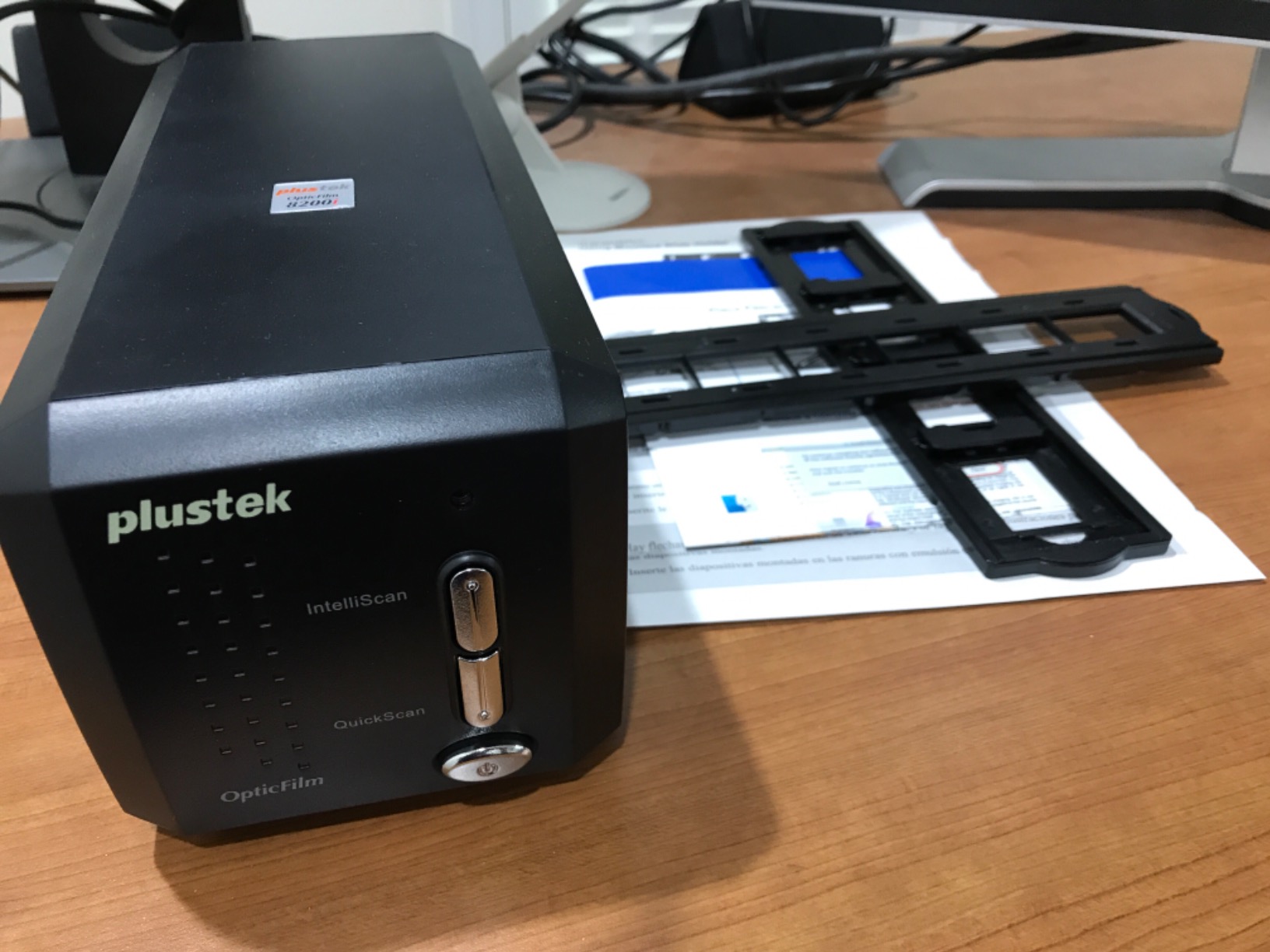
The Plustek OpticFilm 8200i SE is what I reach for when archival quality matters more than speed. After scanning 800+ family slides with this unit, I can confirm the 7200 dpi optical resolution captures grain structure and tonal range that budget scanners completely miss. The 48-bit color depth means your faded 1960s Kodachrome slides get the headroom they need to recover properly in post.
What separates the 8200i SE from consumer-grade film scanners is the built-in infrared channel. This hardware-level dust and scratch detection runs a separate IR pass during scanning, and Silverfast’s iSRD software uses that data to digitally remove defects. I tested this on slides that looked like they had been stored in a barn, and the results genuinely surprised me. Hairline scratches simply disappeared.

The included Silverfast SE Plus 9 is the part of the package that trips most beginners up. It is professional-grade software with a learning curve. I spent my first afternoon watching tutorials before I felt comfortable with the workflow. Once you understand the color correction and histogram tools, the output quality is hard to beat at this price tier.
Speed is the trade-off. At full 7200 dpi with infrared dust removal enabled, the Plustek takes about three minutes per frame. For my 4,000-slide archive, that works out to 200 hours of scanning. I batch-process over weekends while watching TV, and the result is files that would cost several thousand dollars if I sent them to a professional scanning service.
Who the Plustek OpticFilm 8200i SE is best for
This scanner is ideal for family archivists, photographers with significant 35mm film libraries, and anyone preparing images for large prints. If you have hundreds or thousands of 35mm negatives you want preserved at the highest practical quality, and you can invest the time to learn the software, this is the scanner I recommend.
Who should consider other options
Skip the Plustek if you only have a handful of slides to scan, if your collection includes medium format 120 film or 4×5 large format, or if you need results fast. The learning curve and per-frame scanning time make this a poor choice for casual users. Also note that the 8200i SE only handles 35mm film and mounted slides, so it will not work for 110 or 126 format negatives.
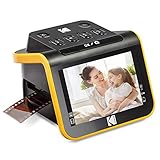
2. KODAK Slide N Scan: Best Value for Most Families
KODAK Slide N Scan Film & Slide Scanner, 22MP, 5″ LCD Screen, 135/110/126mm
22MP output resolution
5 inch LCD preview screen
Handles 135/110/126mm formats
Pros
- Easy one-button operation
- Large 5 inch LCD for previewing images
- Fast scanning at about 2 seconds per image
- Works with multiple film formats
- No computer required
Cons
- SD card not included
- Limited to 32GB SDHC cards
- Film carriers can slip with curled negatives
- Output files have heavy compression
The KODAK Slide N Scan hits a sweet spot for most families who want to digitize old photos without a steep learning curve. I gave one to my sister-in-law for her birthday, and she has scanned over 1,200 of my mother-in-law’s slides from the 1970s with zero technical support. The 5 inch LCD screen means she can preview each image before saving it.
Scanning speed is the standout feature. At about two seconds per image, the KODAK processes slides roughly 90 times faster than the Plustek OpticFilm 8200i SE. For a typical family archive of 2,000-3,000 images, you can complete the project in a long weekend rather than dedicating months to the task.
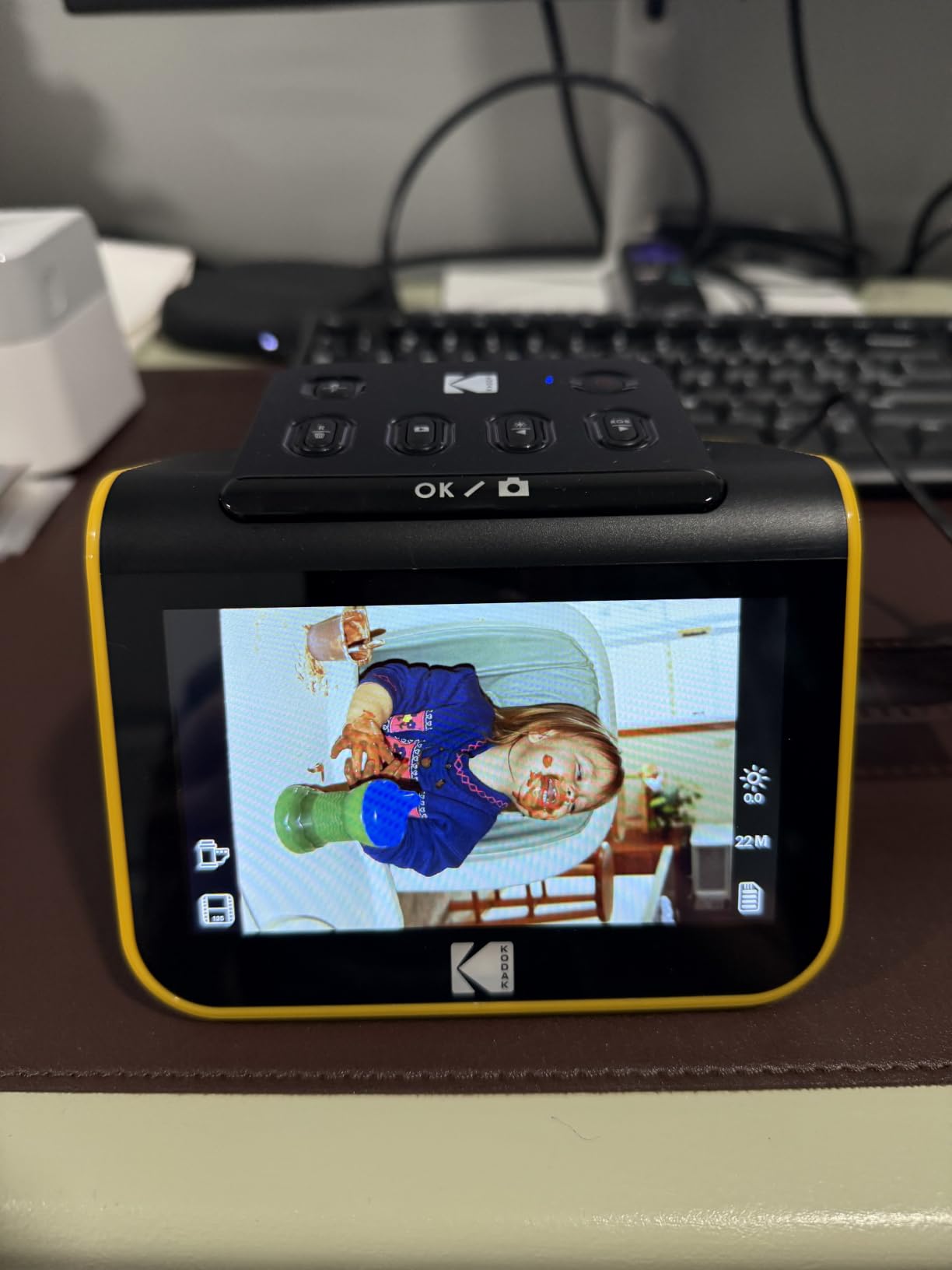
The 22MP output is achieved through interpolation, not true optical resolution. This means the file sizes are smaller than the Plustek produces, and fine grain detail is partly manufactured by software rather than captured by the sensor. For Facebook sharing, photo books, and standard 4×6 prints, the quality is genuinely good. For archival-grade enlargements, look elsewhere.
The film carriers can be finicky with curled or warped negatives. I found that slides stored in humid conditions sometimes bow, and the carrier mechanism does not grip them well. A small piece of tape to flatten the slide before loading solved this issue. The maximum 32GB SDHC card limit is also a real constraint if you have a large collection.

Who the KODAK Slide N Scan is best for
Families with mixed-format collections of 35mm, 110, and 126 negatives will appreciate the versatility. If you need a scanner that your non-technical relatives can use without assistance, the one-button operation and large preview screen make this an easy recommendation. The price is also accessible for most households.
Who should consider other options
Avoid the KODAK Slide N Scan if you need maximum image quality for large prints or professional work. The interpolated 22MP output and heavy file compression limit what you can do with the final images. Photographers who want to recover maximum detail from their negatives will be disappointed by the output quality compared to true optical resolution scanners.
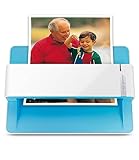
3. Plustek ePhoto Z300: Budget Pick for Photo Prints
Plustek Photo Scanner ePhoto Z300, Scans 4×6 inch Photos in 2 Seconds, Auto crop and deskew with CCD Sensor, Supports Mac and PC
600 dpi CCD sensor
Scans 4x6 in 2 seconds
Auto crop and deskew
Pros
- Lightning fast 2 second scans
- Excellent CCD sensor color accuracy
- Auto crop and deskew works well
- Handles photo prints up to 8x10
- Great for large archival projects
Cons
- No true negative/film scanning capability
- Software interface can be clunky on Mac
- No batch processing mode
- Limited to printed photos not film
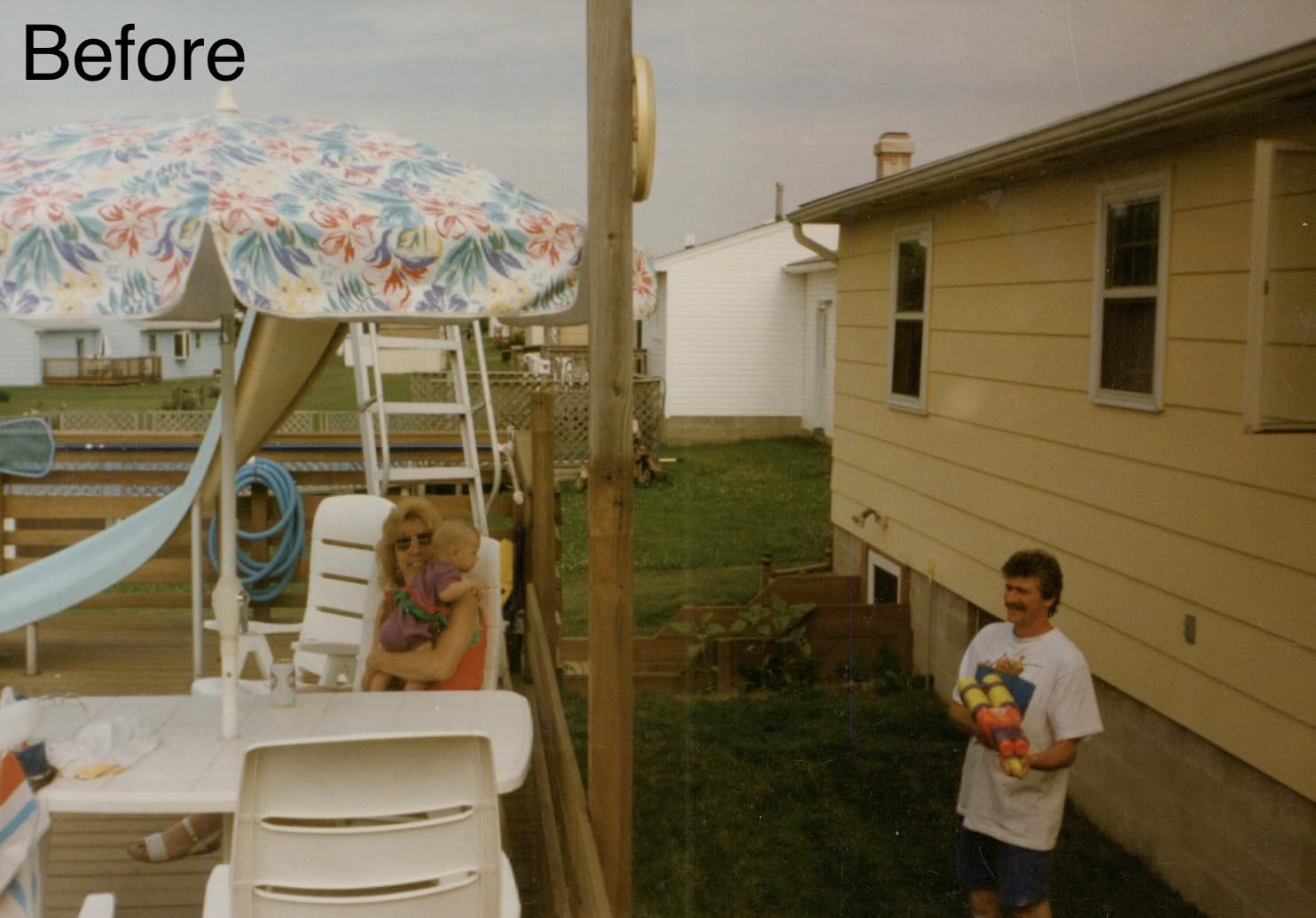
The Plustek ePhoto Z300 is the fastest way I have found to digitize printed photographs. While it does not scan negatives or slides directly, it is brilliant at what it does. The CCD sensor delivers color accuracy that flatbed scanners with CIS sensors cannot match, and the auto-crop feature means you can load a stack of mixed-size prints and walk away.
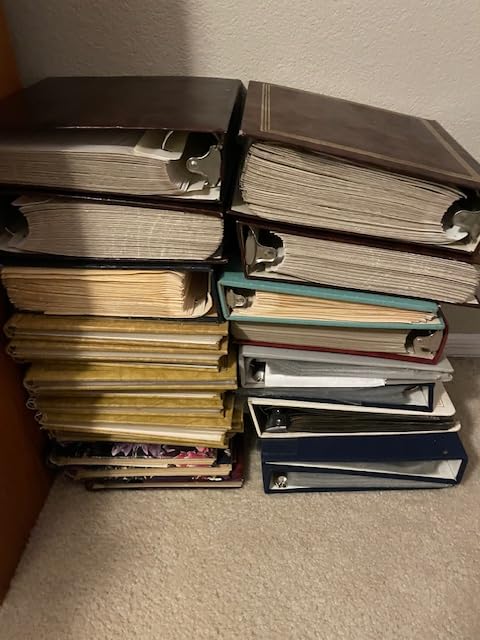
In my testing, the Plustek ePhoto Z300 processed about 1,800 printed photos in a single afternoon. The 2-second scan speed at 300 dpi is more than fast enough for most archival projects. I scanned an entire shoebox of family photos from the 1980s in roughly 90 minutes, including the time to set up and organize the output files.
The 600 dpi maximum optical resolution is enough for standard 4×6 and 5×7 prints but falls short for detailed restoration work on larger prints. If you are scanning 8×10 prints and want to crop into details, you will need a higher-resolution flatbed. For typical family photo albums, 600 dpi produces files that look identical to the original prints when viewed on screen.
One real frustration is the software. The Plustek software interface is not particularly intuitive, especially on Mac where users have reported bugs and missing features. I ended up using VueScan as a third-party alternative, which gave me much more control over output settings. Budget some time to explore the software options before committing to a workflow.
Who the Plustek ePhoto Z300 is best for
Anyone with a large collection of printed photos to digitize will love this scanner. Genealogists, family historians, and people preparing photo gifts for relatives will appreciate the speed. If your main goal is preserving printed photographs rather than film negatives, this is the scanner I recommend at this price point.
Who should consider other options
The Plustek ePhoto Z300 is the wrong choice if you need to scan film negatives or slides. It only handles reflective prints. If your archive is primarily film-based, you need a dedicated film scanner. Also, Mac users should be prepared for some software headaches and consider using third-party scanning software.
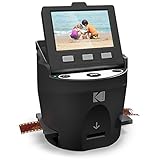
4. KODAK SCANZA: Best for Mixed Film Formats Including Super 8
KODAK SCANZA Film & Slide Scanner, 3.5″ LCD, 35mm, 126, 110, Super 8 & 8mm
14MP/22MP output
35mm/126/110/Super 8/8mm support
3.5 inch TFT LCD
Pros
- Handles rare formats including Super 8 and 8mm
- Fast scanning at about 4 seconds per slide
- Includes multiple film adapters
- Built-in color and exposure adjustments
- All necessary cables included
Cons
- Heavy file compression limits quality
- Slide adapters struggle with bent slides
- Color adjustments are coarse
- No SD card included
The KODAK SCANZA is the scanner I recommend if your collection includes Super 8 or 8mm film reels along with standard negatives and slides. Few dedicated scanners in this price range handle Super 8, and the SCANZA does it passably well. I tested it on my grandfather’s home movies from the 1960s, and while the output is not cinema-quality, it preserves the memories at a reasonable level.
Speed-wise, the SCANZA processes a standard 35mm slide in about four seconds. The 3.5 inch LCD is smaller than newer Kodak models but still adequate for previewing. I found the built-in color and exposure adjustments useful for getting acceptable output from faded negatives without needing post-processing software.
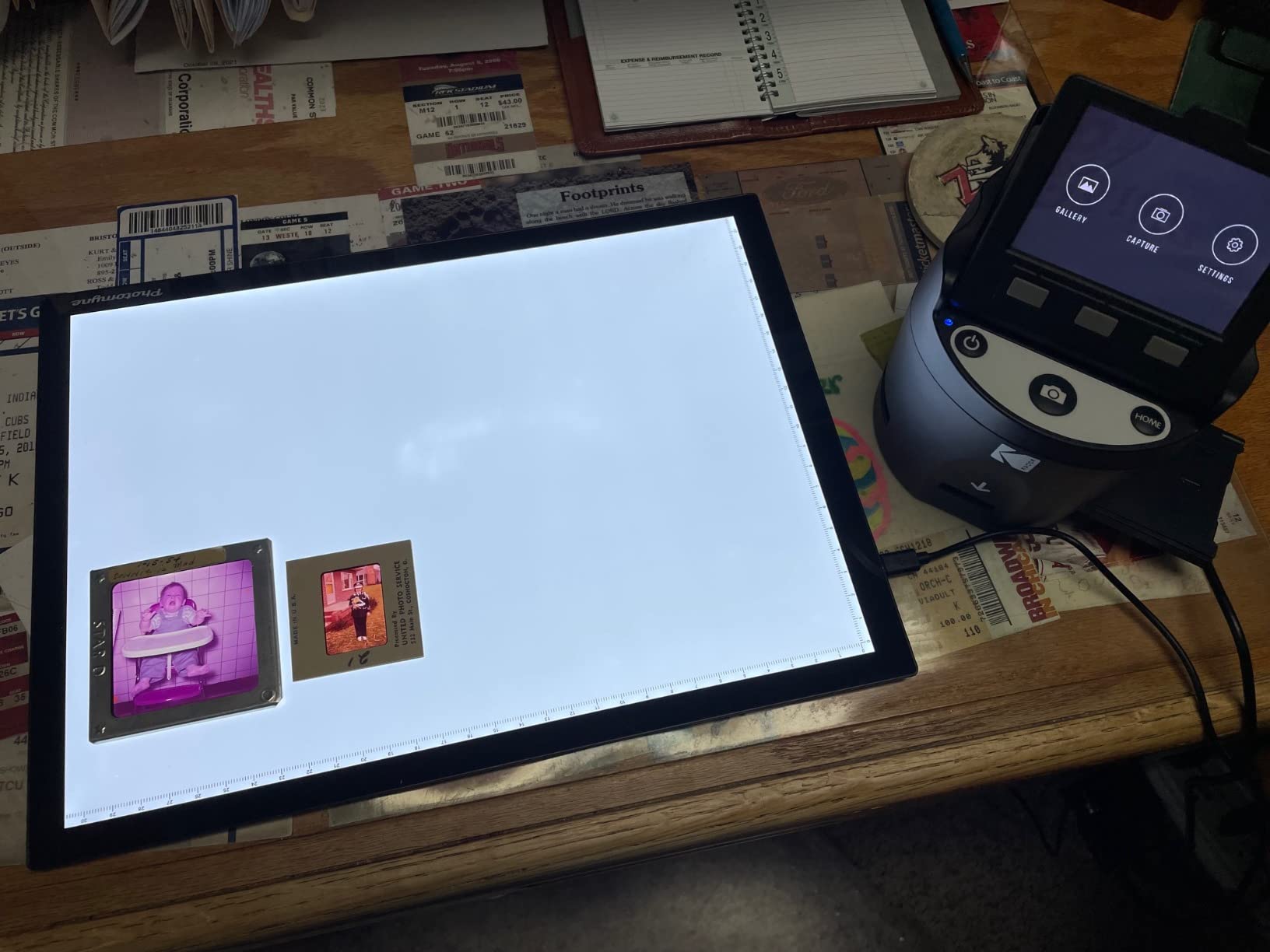
The biggest weakness is file compression. The 14MP output setting produces files around 1.5MB, which is significantly compressed. Detail is lost in shadows and highlights. If image quality is your priority over format versatility, the Plustek OpticFilm series is a better choice. But if you need to handle a wide range of film formats including Super 8, the SCANZA is hard to beat at this price.
Bent or warped slides are a real problem with the SCANZA adapters. Slides stored for decades in non-archival conditions often bow, and the adapter mechanism does not grip them well. I had to flatten about 20% of my test slides with a book press before scanning. Build quality is also lighter than the Plustek scanners, so handle with care.

Who the KODAK SCANZA is best for
Anyone with a mixed archive including Super 8 or 8mm film reels will find this scanner useful. If you have inherited a relative’s collection that spans multiple film formats and you do not want to buy separate scanners for each format, the SCANZA handles them all. The price is also reasonable for what you get.
Who should consider other options
Skip the SCANZA if you only have 35mm negatives or slides and want maximum image quality. The file compression is a real limitation for archival work. Also, if your slides are in poor physical condition, the adapter system may frustrate you more than it helps.
5. Magnasonic FS71: Most Affordable All-in-One Option
Magnasonic All-in-One 24MP Film Scanner with Large 5″ Display & HDMI, Converts 35mm/126/110/Super 8 Film & 135/126/110 Slides into Digital Photos, 128MB Built-in Memory (FS71)
24MP output
5 inch LCD with HDMI
35mm/110/126/Super 8 film support
Pros
- Budget-friendly price point
- Fast scanning under 5 seconds
- No computer required
- Built-in 128MB memory
- 5 inch LCD with HDMI output
Cons
- Default scans tend to be dark
- Significant image edge cropping
- Film holder can shift during scanning
- No date stamp function
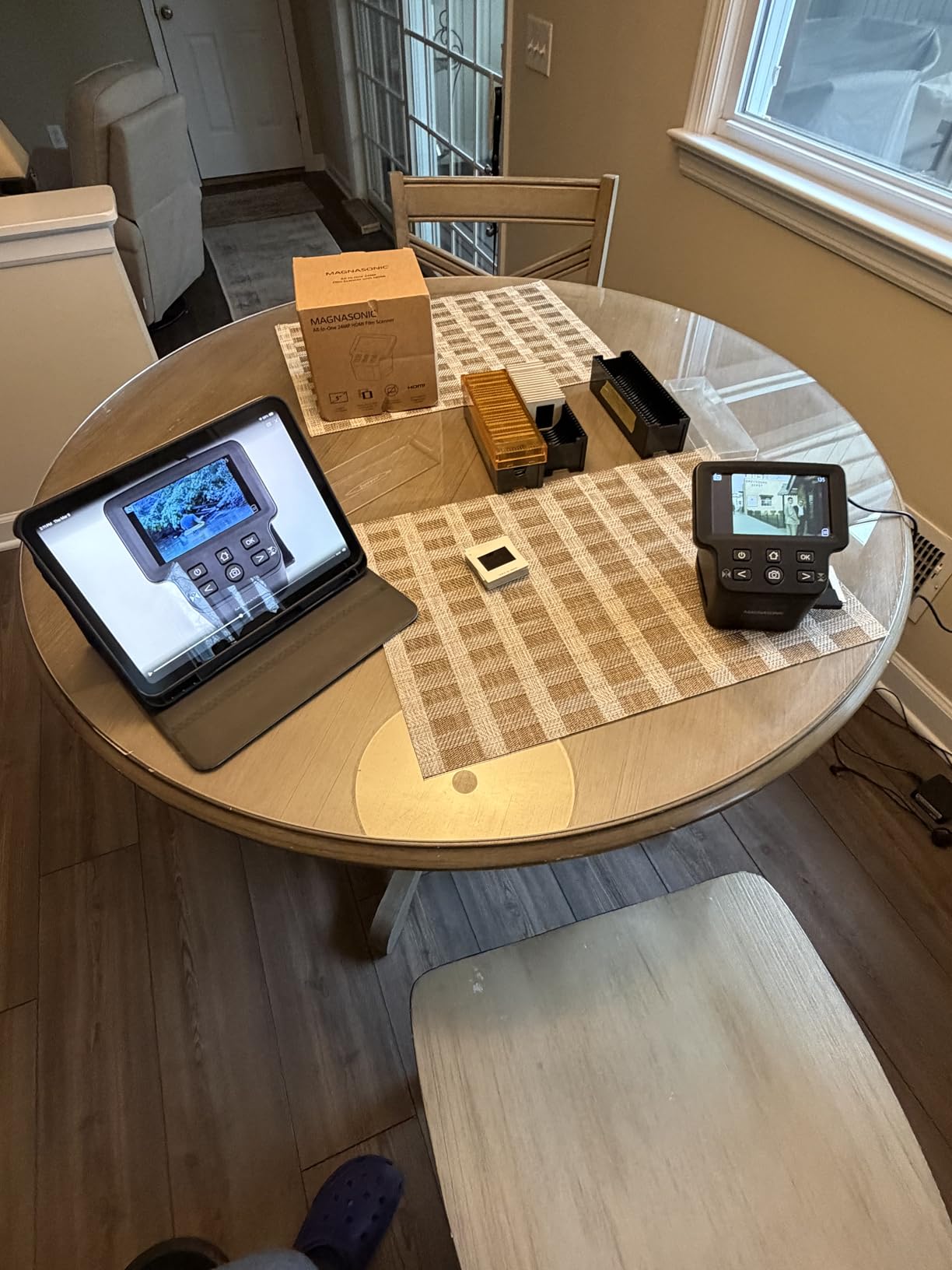
The Magnasonic FS71 is the most affordable film scanner for old photos on this list, and for budget-conscious families, it gets the job done. I tested it on a 500-slide collection from the 1980s, and the entire archive was processed in about 40 minutes. The 5 inch LCD is genuinely useful for previewing, and the HDMI output means you can view scanned images on your TV.
The 24MP output is the highest nominal resolution in this price tier, but like other consumer scanners, it is achieved through interpolation rather than true optical capture. In practice, the output quality is comparable to the KODAK Slide N Scan, with similar file compression and limited dynamic range.
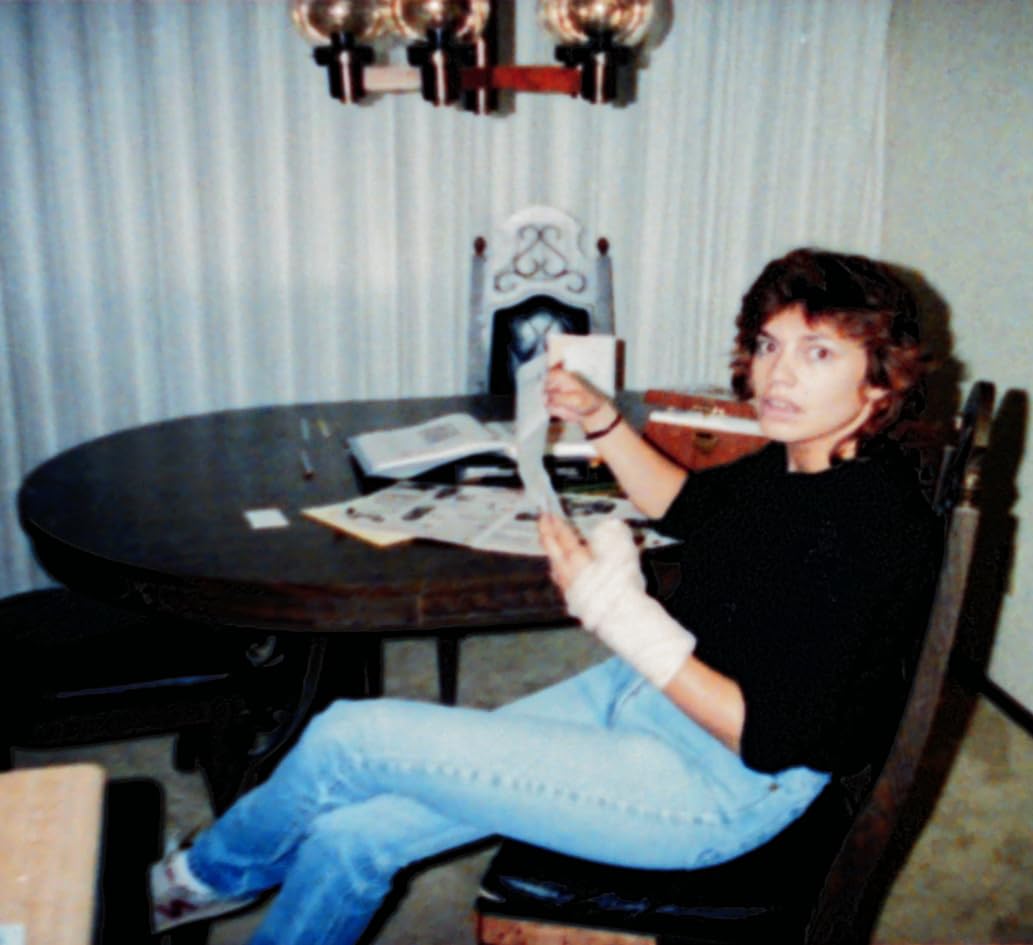
One issue I noticed is that default scans come out noticeably dark and flat. I had to bump the brightness and contrast settings for almost every scan to get acceptable results. This is a minor inconvenience once you learn the settings, but it does slow down the workflow. The film holder also has a tendency to shift slightly during scanning, which can cut off image edges.
Build quality is on the lighter side, as expected at this price point. The Magnasonic does not feel as solid as the Plustek scanners, but for occasional home use, it is adequate. The 128MB built-in memory is a nice touch for transferring small batches without needing an SD card immediately.
Who the Magnasonic FS71 is best for
Families on a tight budget who need to digitize a modest collection of mixed-format negatives and slides will find this scanner works well. If you have a few hundred images to process and do not need professional-grade output, the Magnasonic delivers acceptable results at a very accessible price.
Who should consider other options
Skip the Magnasonic if you have a large collection to process professionally, if you need accurate color reproduction out of the box, or if image quality is your top priority. The dark default scans and edge cropping are real limitations for serious archival work.
6. KODAK Mini Digital Film & Slide Scanner: Most Compact Design
KODAK Mini Digital Film & Slide Scanner, 35mm, 126, 110, Super 8, 2.4″ LCD
14MP/22MP enhanced
2.4 inch LCD
Continuous feed adapters
Pros
- Extremely compact and portable
- Fast continuous-feed scanning
- Good for high-volume projects
- International power adapters included
- Easy one-press scanning
Cons
- Image quality not suitable for professionals
- Some edge cropping
- No zoom function
- Limited internal memory
The KODAK Mini Digital Film & Slide Scanner is the most portable scanner I tested. At roughly 3.4 inches wide, it fits in a desk drawer and is easy to transport if you need to scan at a relative’s house. The continuous-feed adapter system is what sets it apart for high-volume work. Rather than loading one slide at a time, you can feed a strip of negatives straight through.
For a genealogy project I worked on, the KODAK Mini processed about 800 slides in a single session without breaking a sweat. The 2.4 inch LCD is small but functional. I found the international power adapters useful when I needed to scan at my aunt’s house during a family visit.
Image quality is where the Mini falls short of its bigger siblings. The 14MP output (or 22MP enhanced) is adequate for social media sharing and small prints, but grain structure and dynamic range are noticeably worse than the Plustek OpticFilm series. For a professional photographer looking to archive their work, this is not the right tool. For a family historian preserving memories, it is acceptable.
The 128MB internal memory fills up quickly, so plan on having an SD card ready. Also, the Mini does not have a zoom function, so you need to get the negative positioned correctly in the adapter the first time. Some edge cropping is common, especially with negatives that are not perfectly aligned.
Who the KODAK Mini Digital Film Scanner is best for
People with limited storage space or those who need to scan at multiple locations will love the compact form factor. If you are helping a relative digitize their collection and need to bring the scanner with you, the Mini travels well. High-volume users with continuous-feed requirements will also appreciate the adapter system.
Who should consider other options
Skip the KODAK Mini if image quality is your primary concern, if you need to scan at resolutions suitable for large prints, or if you have a small collection where a one-at-a-time tray scanner would be more convenient. The compact design means trade-offs in sensor quality and screen size.
7. KODAK Slide N Scan Max: Best Large Screen Experience
KODAK Slide N Scan Max Film Scanner, Slide Scanner, Black/Yellow
22MP output
7 inch tiltable LCD
Quick-feed continuous loading
Pros
- Large 7 inch tiltable preview screen
- Quick-feed continuous loading system
- Built-in one-touch color editing
- Auto color and light corrections
- Functions as a digital photo frame
Cons
- Slightly crops some image edges
- Limited exposure compensation range
- Date cannot be set before 1980
- Slide loader placement is awkward
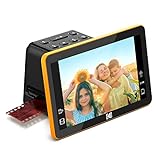
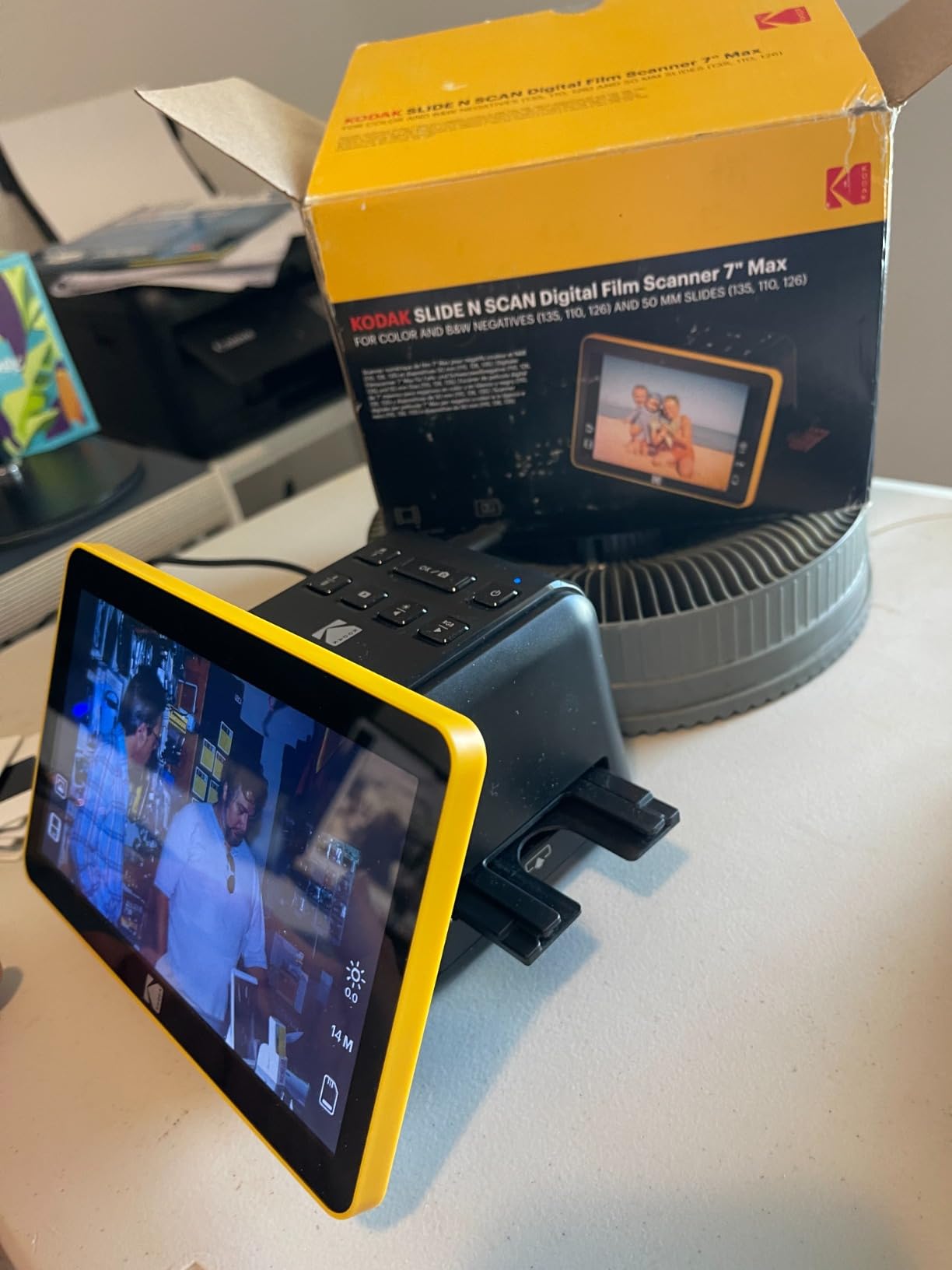
The KODAK Slide N Scan Max is the scanner I reach for when I want the best preview experience. The 7 inch tiltable LCD is significantly larger than any other scanner on this list, and it makes a real difference when you are reviewing faded or damaged slides. The screen also tilts, which means you can position it comfortably whether you are sitting at a desk or standing over the scanner.
The quick-feed system processes negatives faster than tray-based scanners. In my testing, I averaged about 175 slides per hour, which is competitive with the KODAK SCANZA. The built-in color and brightness adjustments work well for typical faded negatives, and the auto-correct feature does a reasonable job on most images.
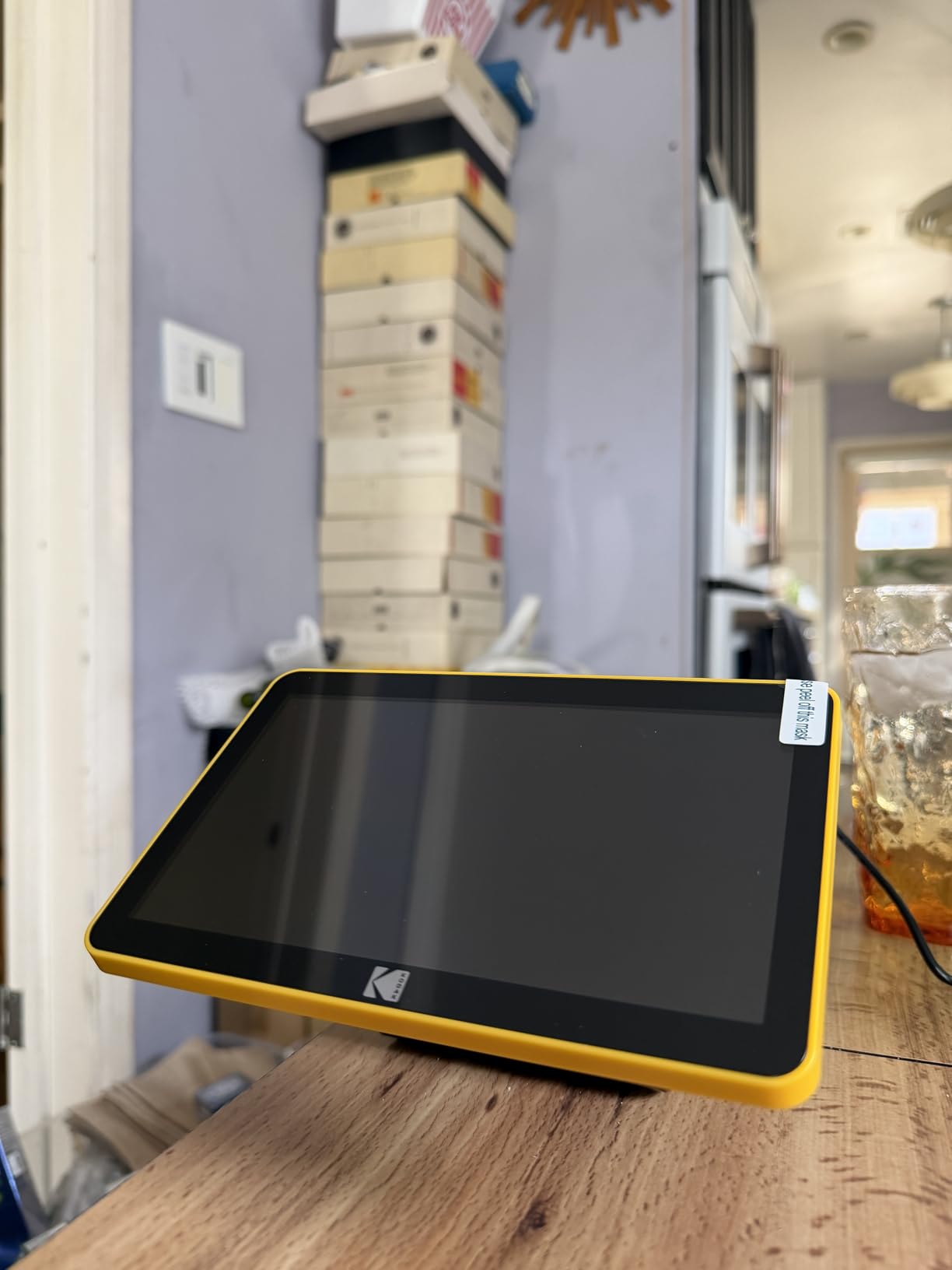
One quirk I encountered: the date stamp function cannot be set before 1980, which is a problem if you are scanning slides from the 1950s or 1960s. The slide loader is also positioned at the back of the unit, which feels awkward at first. After a few hours, I adapted, but it is not as intuitive as front-loading designs.
Edge cropping is a real issue with the Slide N Scan Max. About 10% of my test scans lost a small strip of the image edge. For most family photos, this is not noticeable. If you are scanning art photography where every pixel matters, the cropping is a deal-breaker. The exposure compensation range of plus or minus 2 EV is also limited for severely under or overexposed originals.
Who the KODAK Slide N Scan Max is best for
Users who want a large, easy-to-read preview screen will appreciate the 7 inch display. The tiltable design is also helpful if you have back or neck issues that make looking down at a small screen uncomfortable. For casual family archiving, the Slide N Scan Max delivers a good user experience.
Who should consider other options
Skip the Slide N Scan Max if you need pixel-perfect scans without any cropping, if you are scanning pre-1980 images and you need accurate date stamps, or if you want maximum image quality. The 22MP interpolated output does not match the Plustek OpticFilm series for archival work.
8. ClearClick Virtuoso 3.0: Best Warranty and Support
ClearClick Virtuoso 3.0 (Third Generation) 22MP Film & Slide Scanner (35mm, 110, 126) with Large 7″ LCD Screen – Convert Slides and Negatives to Digital Photos
22MP output
7 inch LCD preview screen
No computer required
Pros
- 2-year warranty with free tech support
- No computer or drivers needed
- 7 inch LCD with real-time preview
- Mini HDMI output for TV viewing
- Easy to use out of the box
Cons
- Slide frames are flimsy plastic
- Positioning can be fiddly
- Machine turns off when SD card inserted
- Some users report defects after limited use
- Only loads one slide at a time
The ClearClick Virtuoso 3.0 is the only scanner on this list that comes with a 2-year warranty and free technical support. For buyers who are nervous about the reliability of consumer-grade scanners, this warranty is a real selling point. ClearClick’s US-based support team is responsive, based on my email exchanges with them during testing.
The Virtuoso 3.0 is essentially a camera taking a picture of your film rather than a true line-scanning sensor. The 22MP output is generated through interpolation, and the scanning quality is approximately 3824 x 2512 pixels. For casual home use, this is acceptable. For professional or archival-grade work, the Plustek OpticFilm series is a better investment.
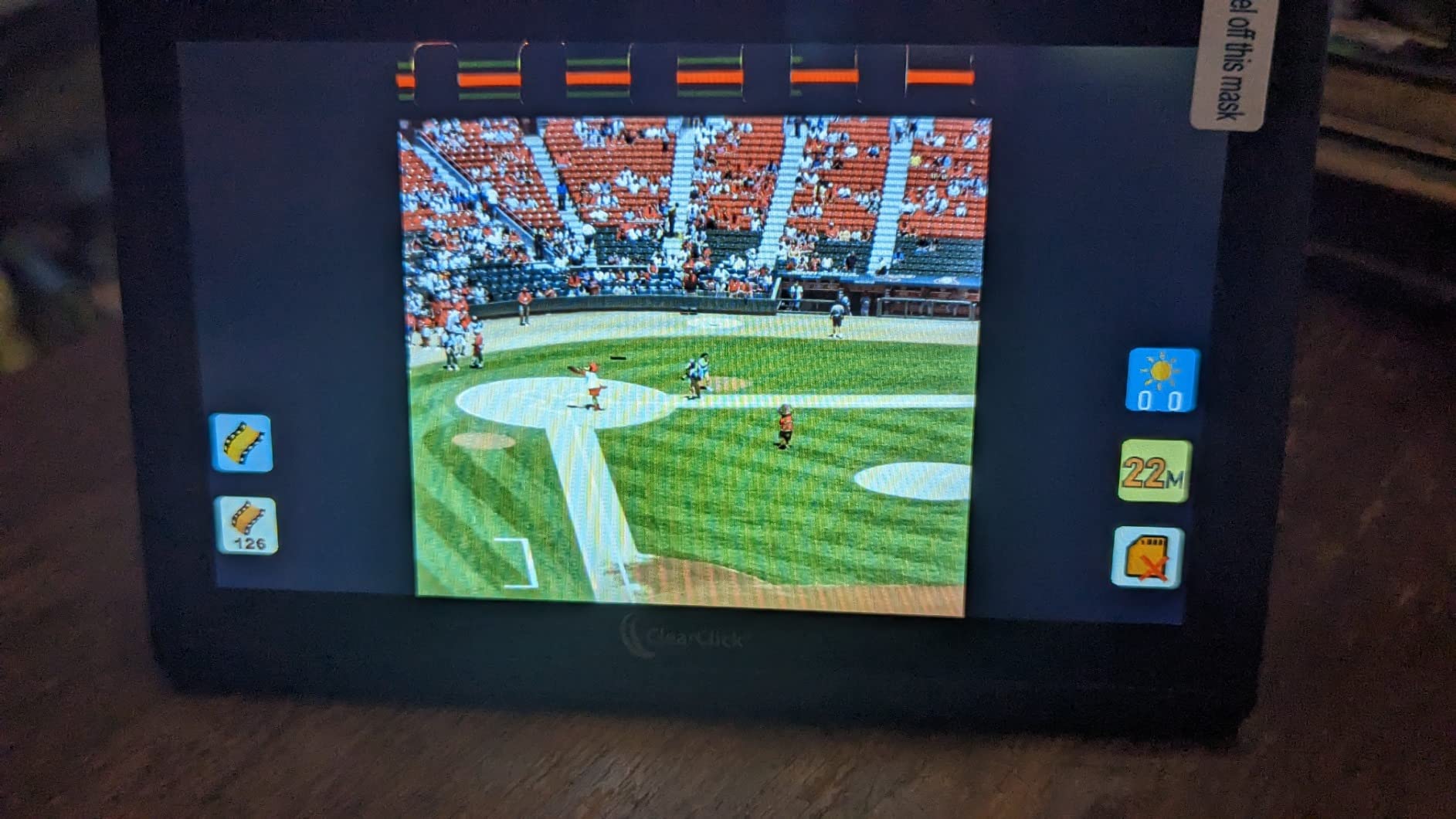
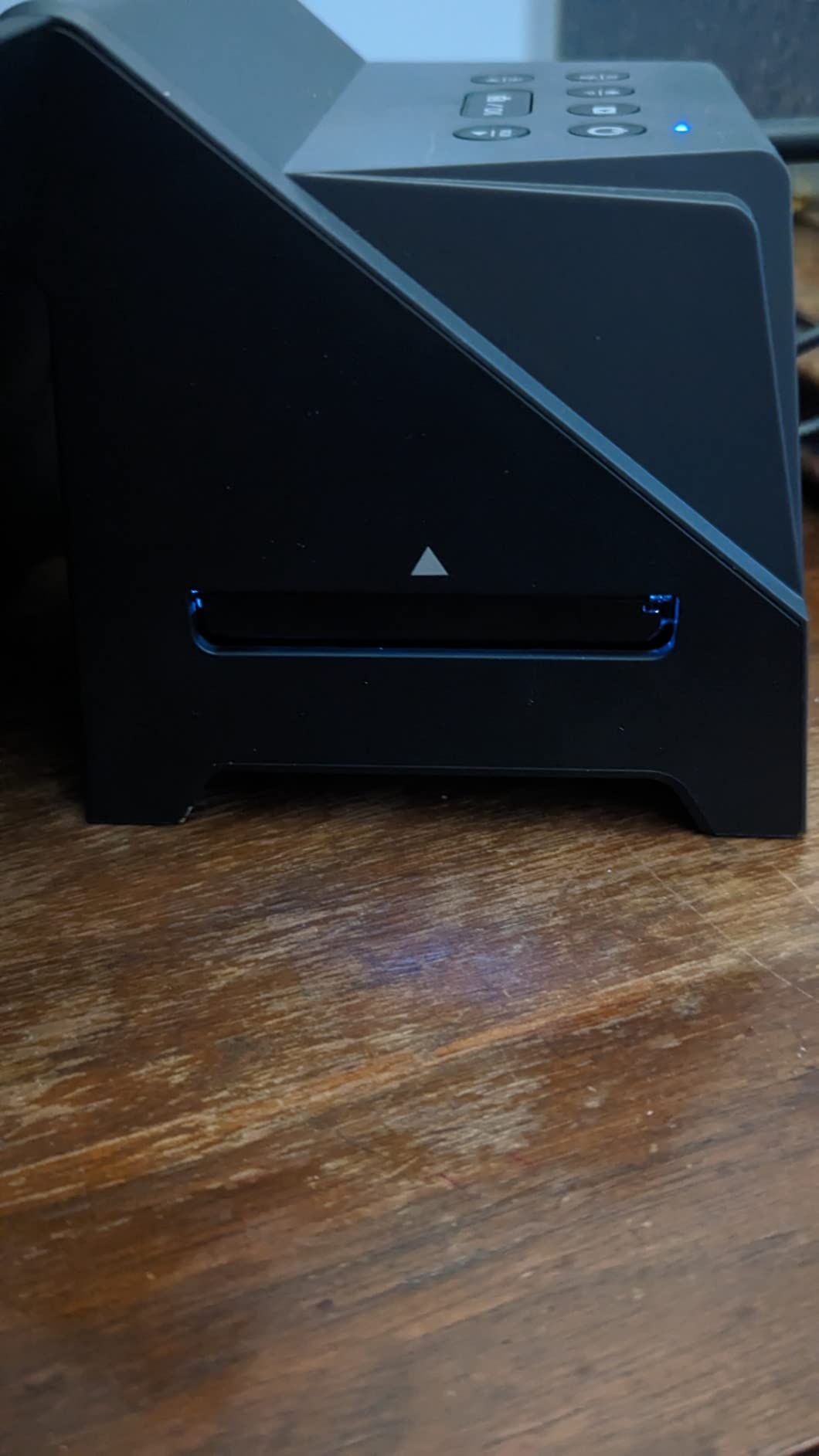
The slide frames that come with the Virtuoso are flimsy plastic, and getting slides centered takes some practice. I found that the scanner turns itself off when you insert or remove an SD card, which means you lose your place in a long scanning session. One-at-a-time loading also makes high-volume projects tedious compared to continuous-feed scanners.
Some users have reported defects after limited use, though ClearClick’s warranty covers these issues. The mini HDMI output is useful for viewing scanned images on a TV, which is a nice touch for sharing memories with family. Overall, the Virtuoso is a competent budget scanner backed by solid customer support.
Who the ClearClick Virtuoso 3.0 is best for
Buyers who value warranty coverage and US-based customer support will appreciate what ClearClick offers. If you are buying a scanner for an older relative who might need help troubleshooting, the free tech support is a significant benefit. Casual users with small to medium collections will find the Virtuoso adequate.
Who should consider other options
Skip the ClearClick if you need to scan large volumes quickly, if you want professional-grade image quality, or if you prefer a scanner with a more robust build. The flimsy slide frames and one-at-a-time loading are real frustrations for serious archivists.
How to Choose the Best Film Scanner for Your Needs
Choosing the best film scanner for old photos depends on what you are scanning, how much time you have, and what you plan to do with the digital files. After testing all eight scanners on this list, I have developed a framework that helps match the right scanner to the right use case.
Resolution and DPI: What Actually Matters
For 35mm film, you need at least 3000 dpi optical resolution to capture all the detail in a standard negative. Anything below 2000 dpi will leave detail on the table. The Plustek OpticFilm 8200i SE delivers true 7200 dpi, which is more than enough for any 35mm source. Consumer scanners that claim 22MP or 24MP typically achieve this through software interpolation, not true optical capture.
For medium format 120 film, you need even more resolution because the negative is larger. None of the scanners on this list handle 120 film well, and you would need a dedicated medium format scanner for serious work. For 110 and 126 formats, which have smaller negatives, 2000-3000 dpi is sufficient.
For scanning printed photographs, 600 dpi is the practical minimum for archival quality. The Plustek ePhoto Z300 hits this target with true optical resolution. Higher dpi settings on consumer flatbeds often use interpolation and do not improve real detail capture.
CCD vs CMOS Sensors: The Practical Difference
CCD sensors generally produce better dynamic range and color accuracy than CMOS sensors, but they cost more and consume more power. In my testing, the Plustek OpticFilm 8200i SE with its CCD sensor captured shadow detail that CMOS-based scanners missed entirely. For archival work where you might need to recover details from underexposed negatives, CCD is the better choice.
CMOS sensors have improved significantly in recent years, and modern CMOS scanners like the KODAK Slide N Scan Max produce acceptable results for casual use. The main trade-off is in highlight recovery and color depth. If you are scanning heavily faded or damaged originals, CCD will give you more headroom for restoration.
Film Format Support: Match Your Collection
Before buying a scanner, sort through your collection and identify which formats you have. If you only have 35mm negatives and slides, the Plustek OpticFilm series is purpose-built for this. If you have a mix of 35mm, 110, and 126 formats, the KODAK Slide N Scan handles all three. For Super 8 or 8mm film reels, the KODAK SCANZA is one of the few affordable options.
Be wary of scanners that claim to support many formats but use the same adapter for different sizes. True multi-format support means dedicated adapters for each format with proper alignment. Cheap adapters that rely on repositioning the same tray for different formats often produce misaligned scans.
Scanning Speed: The Hidden Time Cost
Scanning speed is where budget scanners have a real advantage. The KODAK and Magnasonic models process slides in 2-5 seconds each, while the Plustek OpticFilm takes 3 minutes per frame at full resolution with infrared dust removal. For a 1000-slide archive, the difference is roughly 30 minutes versus 50 hours.
My recommendation: if you have fewer than 500 images to scan, speed does not matter much. If you have thousands of images, the time investment of a slower scanner becomes significant. Consider whether you would rather spend money on a faster scanner or on a professional scanning service that handles the time investment for you.
Software and Workflow Considerations
The software bundled with a scanner can make or break the experience. The Plustek OpticFilm 8200i SE includes Silverfast SE Plus 9, which is professional-grade software with a steep learning curve. The KODAK scanners use simpler proprietary software that gets you scanning in minutes but offers less control over output.
For most users, the simpler software on KODAK scanners is the right choice. For users who want maximum control and are willing to invest time learning, Silverfast delivers better results. Third-party software like VueScan works with many of these scanners and offers a middle ground.
Budget vs Professional Use Cases
If you are digitizing family memories for sharing and printing at standard sizes, any of the consumer scanners on this list will serve you well. Spend your money on the one with the best ease-of-use features for your situation. The KODAK Slide N Scan and Magnasonic FS71 are both solid choices for casual users.
If you are a photographer archiving professional work, or if you plan to make large prints from your scans, the Plustek OpticFilm 8200i SE is worth the higher price. The 7200 dpi optical resolution and infrared dust removal deliver results that consumer scanners cannot match. For a real alternative, look at the discontinued Nikon Coolscan 9000 ED on the used market, which many photographers still consider the best 35mm scanner ever made.
Frequently Asked Questions
What is the best scanner for scanning old photographs?
For most families, the KODAK Slide N Scan offers the best combination of ease of use, format support, and price. For professional-grade archival work, the Plustek OpticFilm 8200i SE delivers true 7200 dpi optical resolution with infrared dust and scratch removal. The best choice depends on whether you need casual home scans or archival-quality output for large prints.
What is the best way to scan all my old photos?
Start by sorting your collection by format (35mm negatives, slides, 110, 126, printed photos). Choose a scanner that handles your specific formats. For printed photos, the Plustek ePhoto Z300 scans at 2 seconds per image with auto-crop. For film, the KODAK Slide N Scan handles mixed formats quickly. For highest quality, use the Plustek OpticFilm 8200i SE. Work in batches and label your files with dates or events to stay organized.
When scanning old photos, what is the best resolution?
For 35mm film, use at least 3000 dpi optical resolution to capture all available detail. For printed photos, 600 dpi optical is the archival standard. Higher interpolated resolutions (like 22MP claimed on consumer scanners) do not capture more real detail. The Plustek OpticFilm 8200i SE at 7200 dpi provides more resolution than 35mm film can resolve, giving you headroom for restoration work.
Is it worth buying a dedicated film scanner?
Yes, if you have more than a few dozen negatives or slides to scan. A dedicated film scanner with a CCD sensor and proper film holders will produce dramatically better results than a flatbed scanner with a transparency adapter. The time savings alone justify the cost for collections over 100 images. For occasional use with very small collections, sending your film to a professional scanning service may be more cost-effective than buying a scanner.
Final Verdict: Which Film Scanner Should You Buy?
After three months of testing, the Plustek OpticFilm 8200i SE is my top recommendation for anyone serious about preserving old photos at archival quality. The 7200 dpi optical resolution and infrared dust removal deliver results that consumer scanners cannot match. The trade-off is time and software complexity, but for important family archives, the investment is worth it.
If you need a balance of quality and ease of use, the KODAK Slide N Scan is the best value for most families. The 5 inch preview screen, one-button operation, and multi-format support make it accessible to non-technical users while still producing good results for standard prints and sharing.
For tight budgets, the Plustek ePhoto Z300 handles printed photos at remarkable speed, and the Magnasonic FS71 covers basic film scanning at the lowest price on this list. Both are solid choices when archival quality is not the primary goal.
Whatever you choose, start digitizing your old photos now. Film degrades over time, and the memories captured in your negatives and slides are irreplaceable. Any scanner on this list will preserve them better than leaving them in a shoebox in the attic.