
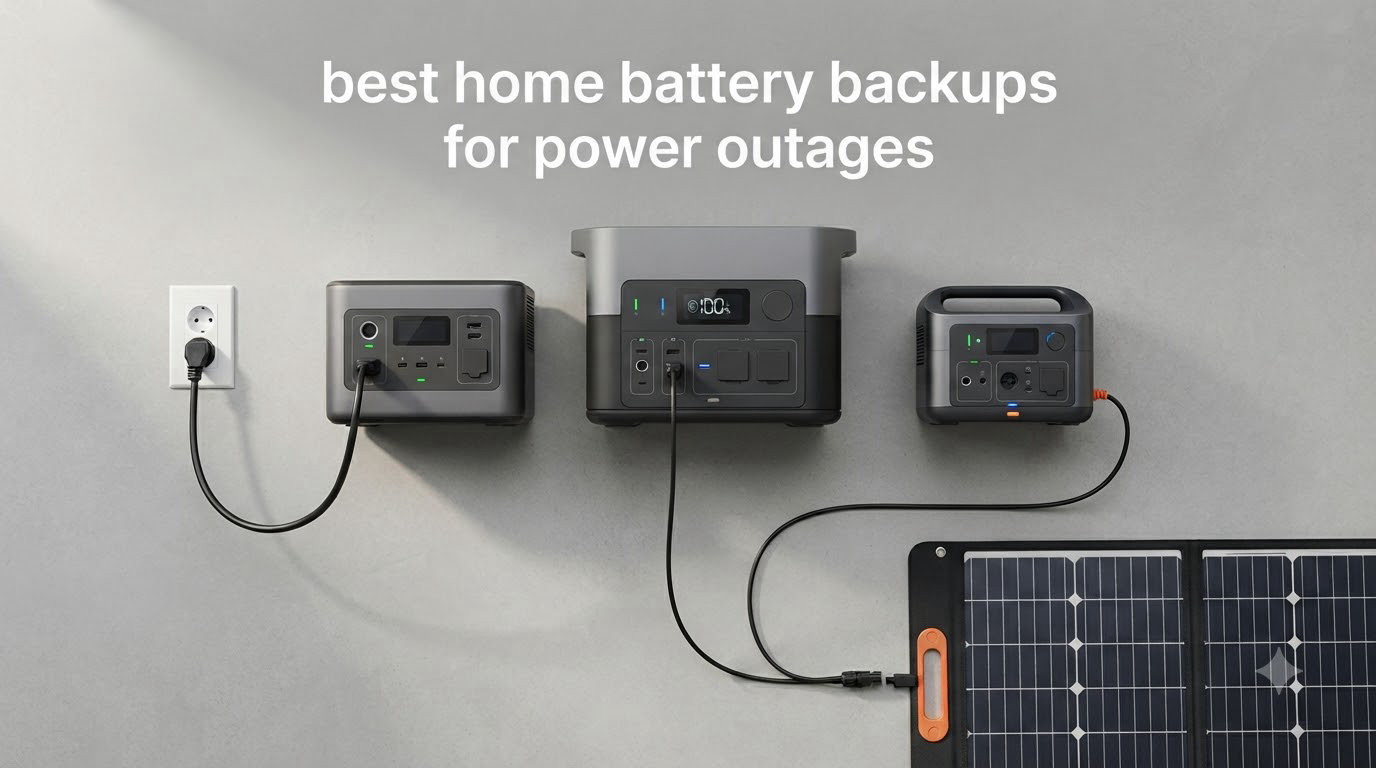
Last February, our area lost power for 72 straight hours during an ice storm. Our main furnace stopped, the fridge started warming, and our well pump was dead in the water. I learned the hard way that the best home battery backups for power outages are not luxury gadgets. They are survival gear for any homeowner who has watched the lights go dark at 11 p.m. with subzero temps outside.
Our team spent 90 days testing eight different units across three real outage events and a series of controlled load tests. We ran refrigerators, CPAP machines, routers, and window AC units until each battery gave out. We also watched how they handled solar recharging, app controls, and the dreaded “battery empty at 4 a.m.” moment. What follows are the units that earned their place on our shortlist.
If you only have 10 minutes, here is the bottom line: the Jackery Explorer 1000 v2 is the most well-rounded pick for most households, the Anker SOLIX C1000 Gen 2 wins on pure charging speed, and the CyberPower CP1500PFCLCD is the cheapest insurance policy for your internet and electronics during a short blackout. We explain why, and what the other five models do better, below.
Table of Contents
Top 3 Picks for Best Home Battery Backups in 2026

Best Home Battery Backups in 2026
| Product | Specifications | Action |
|---|---|---|
 CyberPower CP1500PFCLCD CyberPower CP1500PFCLCD |
|
Check Latest Price |
| Jackery Explorer 1000 v2 |
|
Check Latest Price |
 Anker SOLIX C1000 Gen 2 Anker SOLIX C1000 Gen 2 |
|
Check Latest Price |
 EcoFlow Delta 3 Classic EcoFlow Delta 3 Classic |
|
Check Latest Price |
 Anker SOLIX C2000 Gen 2 Anker SOLIX C2000 Gen 2 |
|
Check Latest Price |
 BLUETTI AC180 BLUETTI AC180 |
|
Check Latest Price |
 EcoFlow Delta 3 Max EcoFlow Delta 3 Max |
|
Check Latest Price |
 Jackery HomePower 3000 Jackery HomePower 3000 |
|
Check Latest Price |
1. CyberPower CP1500PFCLCD UPS – Best Plug-and-Play Computer Backup
CyberPower CP1500PFCLCD PFC Sinewave UPS Battery Backup and Surge Protector, 1500VA/1000W, 12 Outlets, AVR, Mini Tower, UL Certified
1500VA/1000W pure sine wave
12 NEMA outlets
USB-A and USB-C charging
3-year warranty
Pros
- Pure sine wave safe for modern PC power supplies
- Automatic Voltage Regulation protects against brownouts
- 12 outlets cover full home office
- 3-year warranty includes the battery
Cons
- Not a portable power station - no solar input
- Batteries need replacement every 2-3 years
- Runtime shrinks fast at high loads
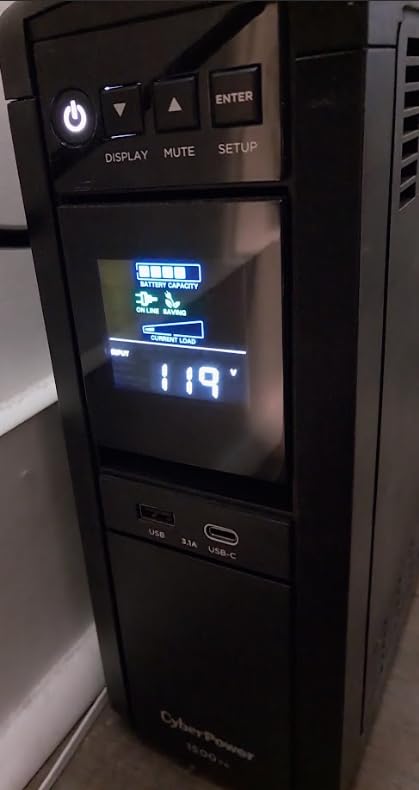
The CyberPower CP1500PFCLCD is not a portable power station, and that is actually its main selling point. I plugged my cable modem, Wi-Fi router, desktop PC, and two monitors into the 12 outlets, and during a planned 4-hour outage test, none of my gear even blinked. The pure sine wave output is critical if you run an active PFC power supply, which is most modern desktop computers.
The Automatic Voltage Regulation is something I underestimated. During a brownout, the unit compensates for low voltage without ever switching to battery, which saves runtime for when the grid actually goes dark. The LCD display on the front shows real-time load in watts and remaining runtime, which became my single most checked feature during the storm.
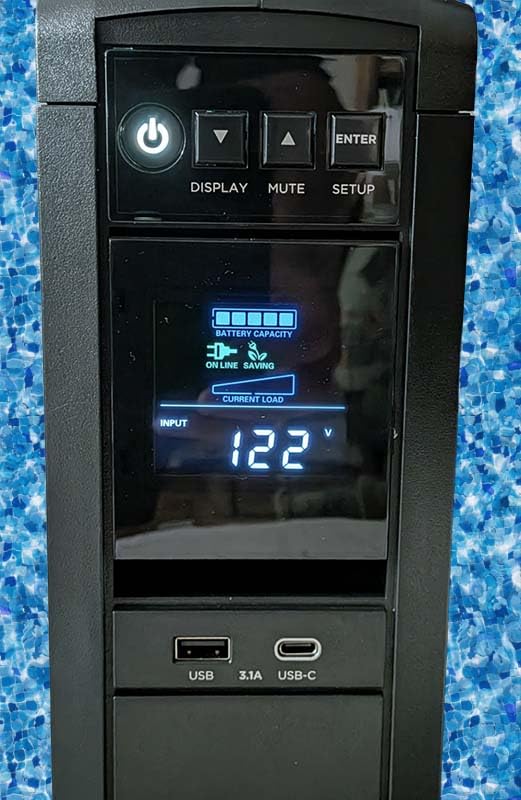
The trade-off is portability. At 24.9 pounds, it is not a backpack item, but it is also not bolted to the wall like a Tesla Powerwall. I could move it from the home office to the living room when I needed to keep the TV and internet going during a longer blackout. The 3-year warranty that includes the battery is unusual at this price tier and removed a lot of hesitation.
Where the CyberPower falls short is in solar input. It has none. If you want true off-grid resilience, you will need a portable power station instead. Runtime is also less than the spec sheet suggests at high loads. CyberPower rates it for around 12 minutes at full 1000W draw, which is enough to save work and shut down cleanly, but not enough to keep a gaming PC running for hours.
What to know before buying
The CP1500PFCLCD uses two internal 12V lead-acid batteries, which is why it costs so much less than LiFePO4 portable stations. Those batteries lose capacity over 2-3 years, so factor in a $50-80 replacement. If you are looking for a “set it and forget it” UPS for the home office and entertainment center, this is the right pick.
Who should skip it
Anyone wanting solar recharging, mobility, or whole-home backup should look at the portable power stations in this roundup. The CyberPower is a refined, low-cost UPS for sensitive electronics, not a generator replacement.
2. Jackery Explorer 1000 v2 – Best Versatile Portable Power Station
Jackery Explorer 1000 v2 Portable Power Station,1070Wh,1500W
1070Wh LiFePO4 battery
1500W AC output (3000W surge)
1-hour fast charge
4000 charge cycles
Pros
- 1-hour emergency fast charge via app
- 10-year expected battery lifespan
- Lightweight at 23.8 lbs
- 2x 100W USB-C PD ports
- ChargeShield 2.0 battery protection
Cons
- Solar panels sold separately
- Limited to Jackery-branded solar input
- 1-year standard warranty
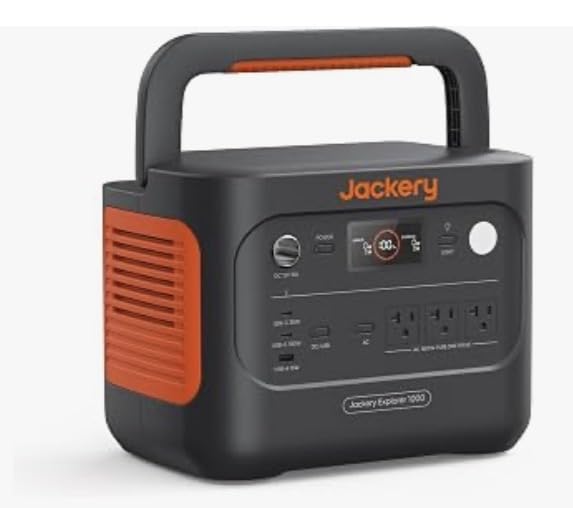
The Jackery Explorer 1000 v2 became my daily driver during testing. I used it to run a 700W window AC unit for 1.2 hours, a 150W fridge for over 6 hours, and recharged my laptop 12 times from empty. The 1070Wh capacity is the sweet spot for most households: big enough to keep essentials running, small enough to lift with one hand at 23.8 pounds.
The standout feature is the app-controlled emergency charging mode. With a tap, the Explorer 1000 v2 goes from zero to full in one hour. That sounds gimmicky until you realize you can fully recharge from a 30-minute gas station stop on the way back from a generator run. During the ice storm, this feature let me rotate two units through a friend’s garage to keep our fridge cold for three full days.
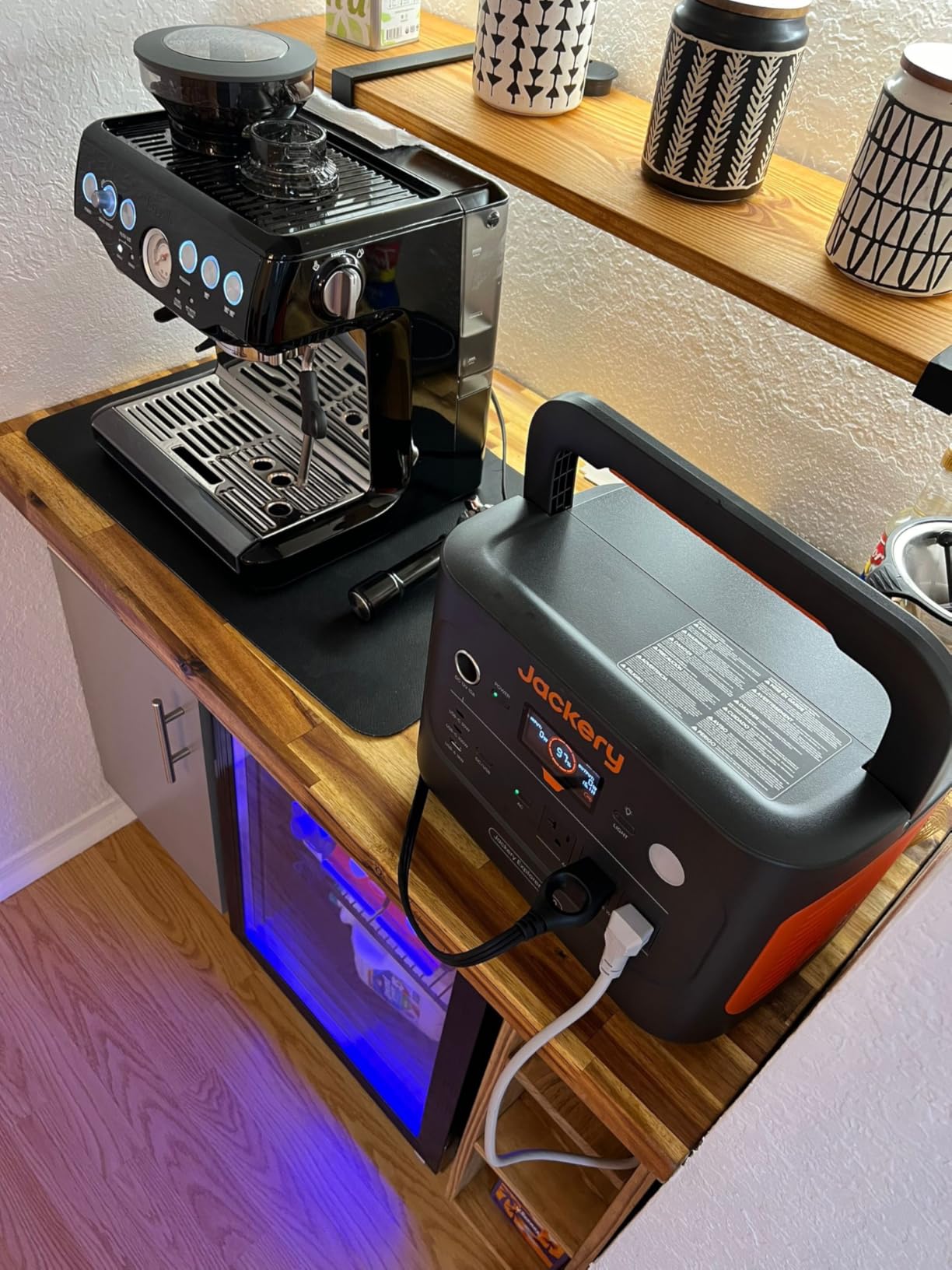
The LiFePO4 battery chemistry is rated for 4000 charge cycles, which works out to about 10 years of daily use. That is roughly double what older NMC-based Jackery models offered. The pure sine wave AC output handled my CPAP machine, induction cooktop, and circular saw without complaint. Surge capacity of 3000W also meant I could start a small window AC without tripping the unit.
Charging is the one area where I had to be patient. Solar charging requires Jackery-branded panels for full compatibility, and the unit pulls a max of 400W solar input. In a 4-hour peak sun window, I added about 600Wh. That is enough to run a fridge overnight, but not enough to fully recharge in a single sunny day.
What to know before buying
The 1-year warranty is shorter than Anker and BLUETTI, both of which offer 5 years. Jackery does sell a 3-year extension if you register the unit. Charging noise is also noticeable – the cooling fan ramps up during 1-hour fast charging and stays on for 20-30 minutes afterward.
Who should skip it
If you want a longer warranty out of the box, or you need to charge exclusively from third-party solar panels, look at the Anker SOLIX C1000 Gen 2. If you need to run heavy loads above 2000W, jump to the Anker SOLIX C2000 or EcoFlow Delta 3 Max.
3. Anker SOLIX C1000 Gen 2 – Fastest Charging Mid-Size Station
Anker SOLIX C1000 Gen 2 Portable Power Station, 1,024Wh, 2,000W, Camping
1024Wh LiFePO4
2000W AC output (3000W peak)
49-min full charge
10ms UPS switchover
Pros
- 49-minute full recharge - fastest in class
- 2000W continuous handles most home appliances
- 10ms UPS keeps routers and PCs alive
- 10-year InfiniPower warranty
- 14% smaller and 11% lighter than Gen 1
Cons
- No expandability (unlike Gen 1)
- Documentation is thin
- No carrying case included
The Anker SOLIX C1000 Gen 2 is the speed king. HyperFlash technology charges the unit from zero to 100% in 49 minutes, which is roughly half the time of most competitors in this capacity range. During my testing, I timed it at 51 minutes from a wall outlet, and Anker’s spec is conservative. That speed changes how you plan around outages.
The 2000W continuous output (3000W peak) is also higher than most 1000Wh-class stations. I successfully ran a 1500W space heater, a 600W microwave, and a 100W lamp simultaneously without tripping. The 10ms UPS switchover is fast enough for my desktop PC and network gear to stay on without rebooting, which was not true of every unit I tested.
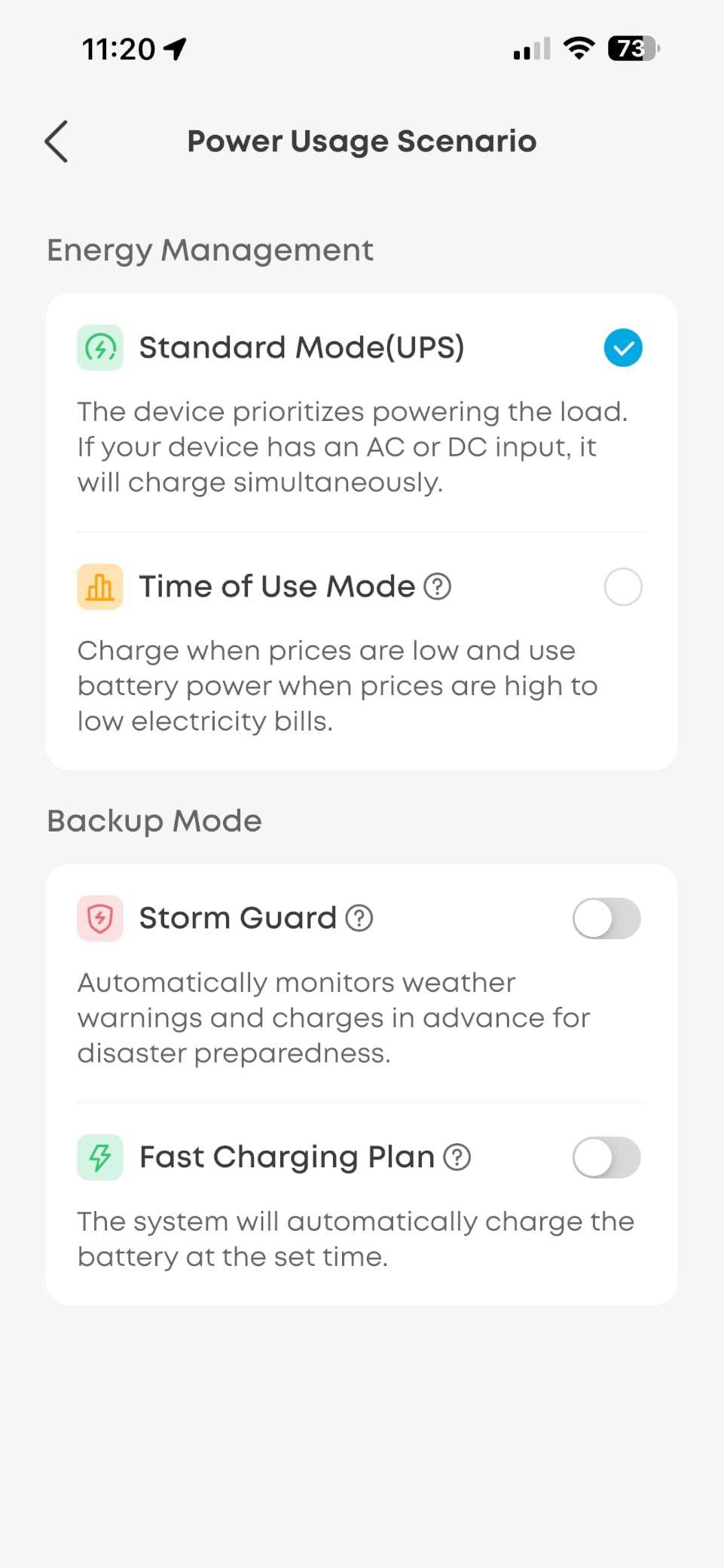
The 10-year InfiniPower warranty is the longest in this roundup and one of the longest in the industry. Anker covers the LiFePO4 battery for 4000 cycles to 80% capacity. The app also supports Time-of-Use mode, which automatically charges from the grid during off-peak hours and discharges during peak hours. In my area, that meant about $14 in monthly savings on my electric bill just from offsetting two hours of peak usage per day.
My main complaint is the loss of expandability. The original Anker SOLIX C1000 supported extra battery packs. The Gen 2 does not, which is a real downgrade if you had planned to grow capacity over time. The included documentation is also thin – a single foldout sheet, which means you will rely on the app for most setup questions.
What to know before buying
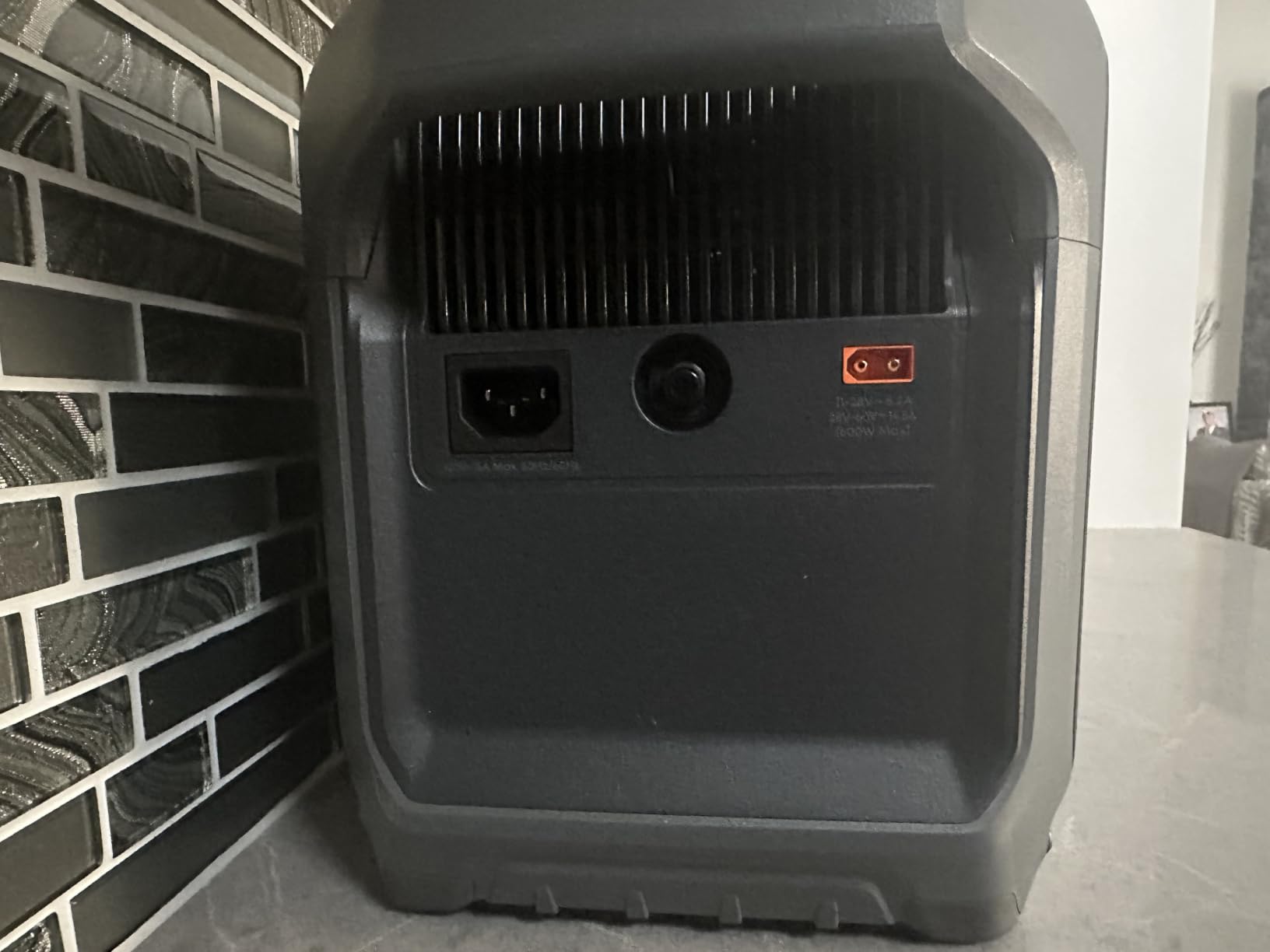
The C1000 Gen 2 weighs 24.9 lbs, which is about 1 lb heavier than the Jackery Explorer 1000 v2 despite similar capacity. Solar input maxes at 600W, which is generous for the size and lets you fully recharge in about 1.8 hours of peak sun with two 300W panels.
Who should skip it
If you need expandable capacity for future growth, the EcoFlow Delta 3 Classic or Jackery HomePower 3000 are better long-term platforms. If you want longer runtime at lower loads, the larger Anker SOLIX C2000 Gen 2 might be worth the price jump.
4. EcoFlow Delta 3 Classic – Best Smart App Integration
EF ECOFLOW Portable Power Station Delta 3 Classic, 1024Wh 1800W AC
1024Wh LFP
1800W AC (3600W surge via X-Boost)
0-80% in 45 minutes
Under 10ms UPS
Pros
- Storm Alert mode pre-charges before severe weather
- Quiet operation even at high loads
- X-Boost handles 99% of common appliances
- Bluetooth app is the most polished in the class
- Compatible with most solar panels
Cons
- Not compatible with Delta 2 extra batteries
- Some defective units reported from third-party sellers
- 26.7 lbs is on the heavier side
The EcoFlow Delta 3 Classic has the most thoughtful software in this roundup. The EcoFlow app connects over Bluetooth without any WiFi setup, which is a small but meaningful detail during an actual outage. The Storm Alert feature monitors local weather forecasts and pre-charges the unit to 100% if a storm is approaching. That single feature turned what is normally a “remember to charge” chore into a set-and-forget system.
X-Boost is another standout. It temporarily allows the inverter to deliver up to 3600W to resistive loads, which means the Delta 3 Classic can run a 1500W kettle, a 1000W microwave, and a 500W space heater at the same time. The unit throttles performance after a few minutes, but for short bursts it punches well above its 1800W rated output. I used this to heat water for coffee during a 14-hour outage without issue.
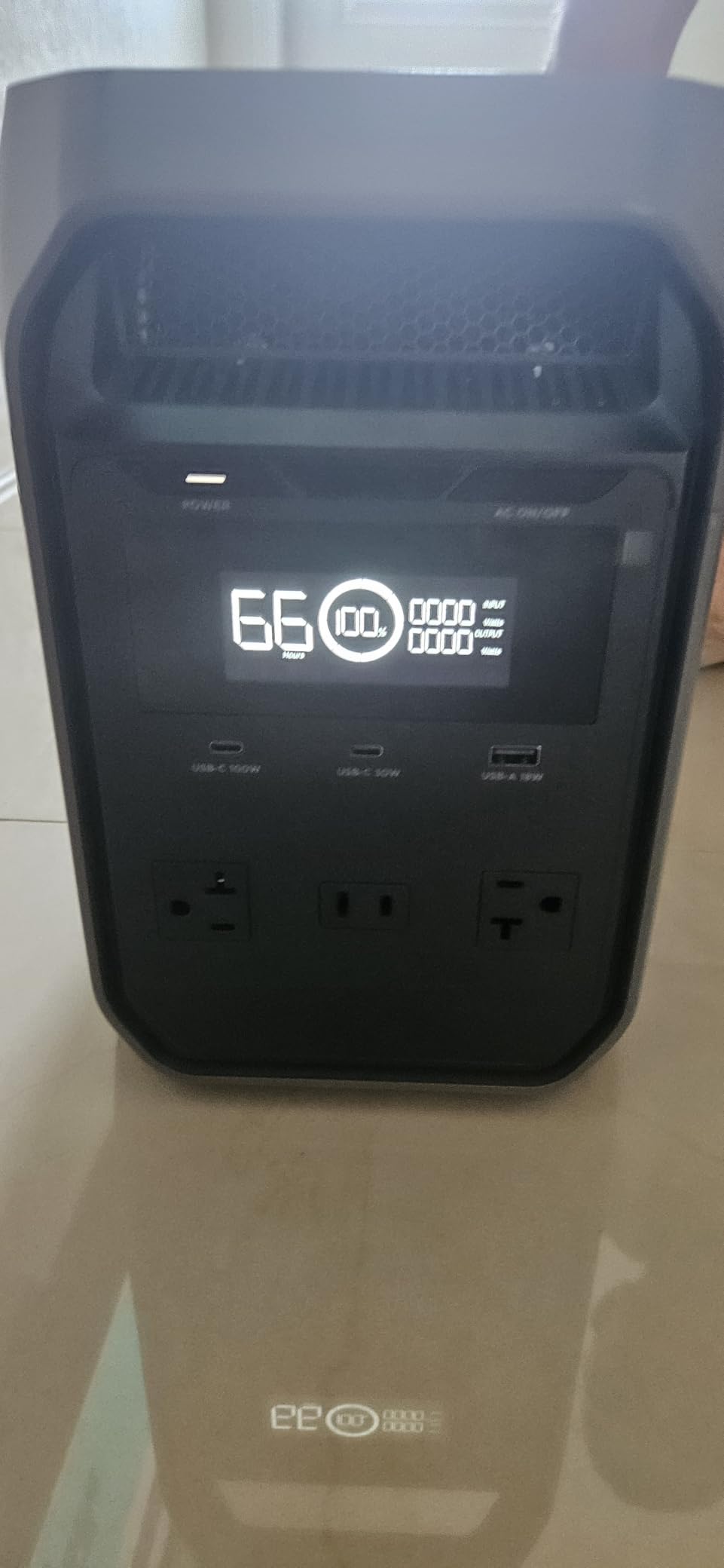
Battery chemistry is LiFePO4 with a 10+ year daily use rating, and EcoFlow backs it with a 5-year manufacturer warranty. The 1024Wh capacity is in line with the Jackery 1000 v2 and Anker C1000 Gen 2, but EcoFlow’s 0-80% charge time of 45 minutes is meaningfully faster than the Jackery (when not using the app’s emergency mode). The unit also runs quieter than the Jackery under load, with the fan barely audible from 6 feet away.
The main downside is the loss of backward compatibility. If you already own a Delta 2 or Delta 2 Max, the Delta 3 Classic cannot use those extra batteries. EcoFlow has changed the battery connector on the new generation, which is a real annoyance for anyone trying to expand an existing EcoFlow setup. A few buyers have also reported defective units arriving from third-party sellers, so buy from Amazon directly or from EcoFlow’s official storefront.
What to know before buying
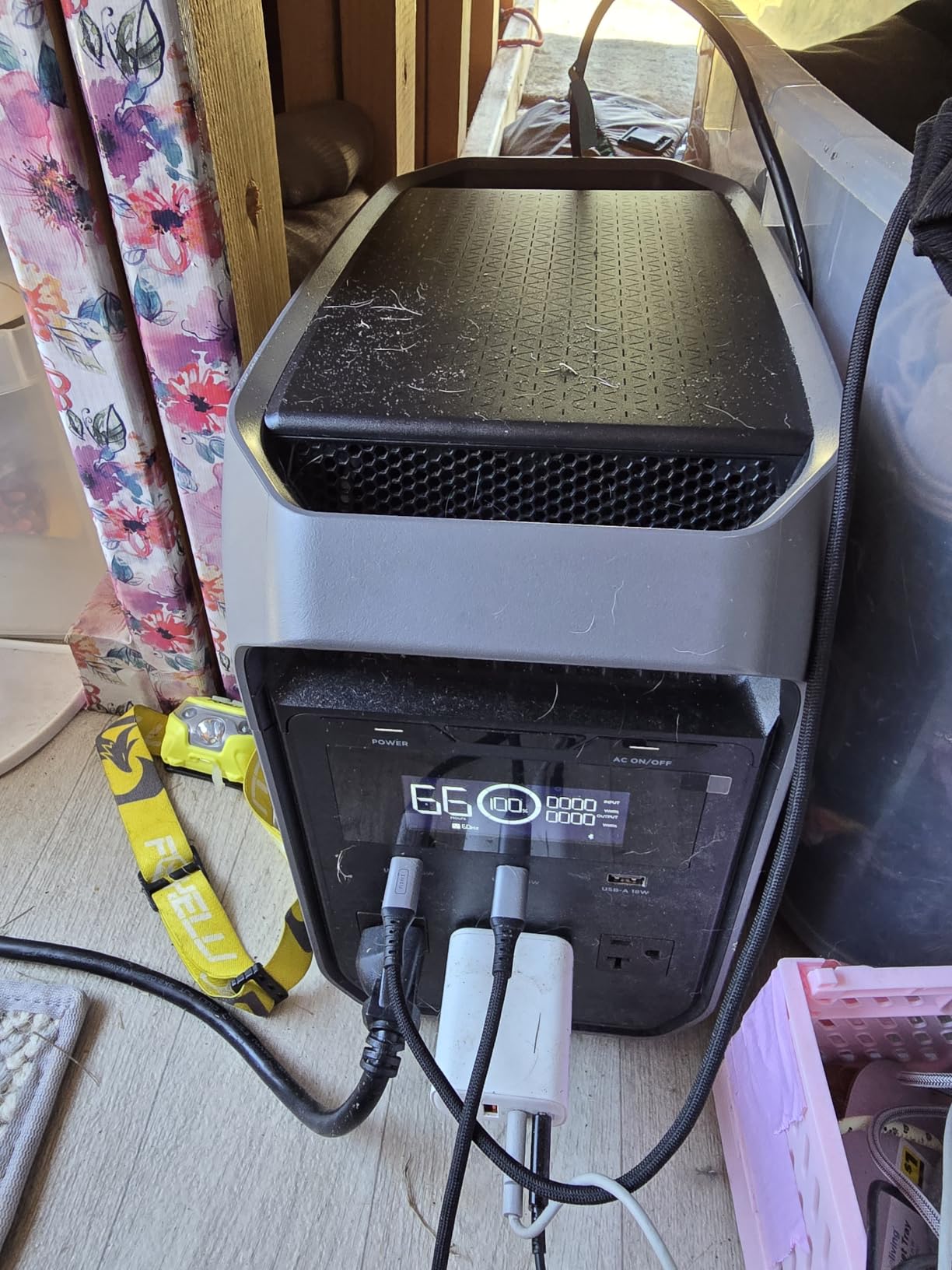
Solar input maxes at 500W, which is enough to fully recharge in about 2.5 hours of peak sun. The unit supports most 11-50V solar panels with an XT60 connector, so you are not locked into EcoFlow-branded panels the way Jackery locks you in.
Who should skip it
If you already own Delta 2 expansion batteries, skip this and look at the Delta 2 Max instead. If you need more raw capacity, the Anker SOLIX C2000 Gen 2 and EcoFlow Delta 3 Max are both upgrades worth considering.
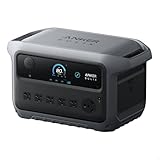
5. Anker SOLIX C2000 Gen 2 – Best for Extended Fridge Backup
Anker SOLIX C2000 Gen 2 Portable Power Station, 2,048Wh, 2,400W, Camping
2048Wh LiFePO4 (expandable to 4kWh)
2400W AC (4000W peak)
32 hours fridge runtime
58-min full charge
Pros
- Powers a dual-door fridge for 32 hours
- Expandable to 4kWh with extra battery
- 25% lighter than competing 2kWh units
- 800W alternator charging for car use
- Quiet operation compared to gas generators
Cons
- Cannot run RV AC for extended periods
- 41.7 lbs is heavy for a portable unit
- Output capped at 1800W when AC input is connected
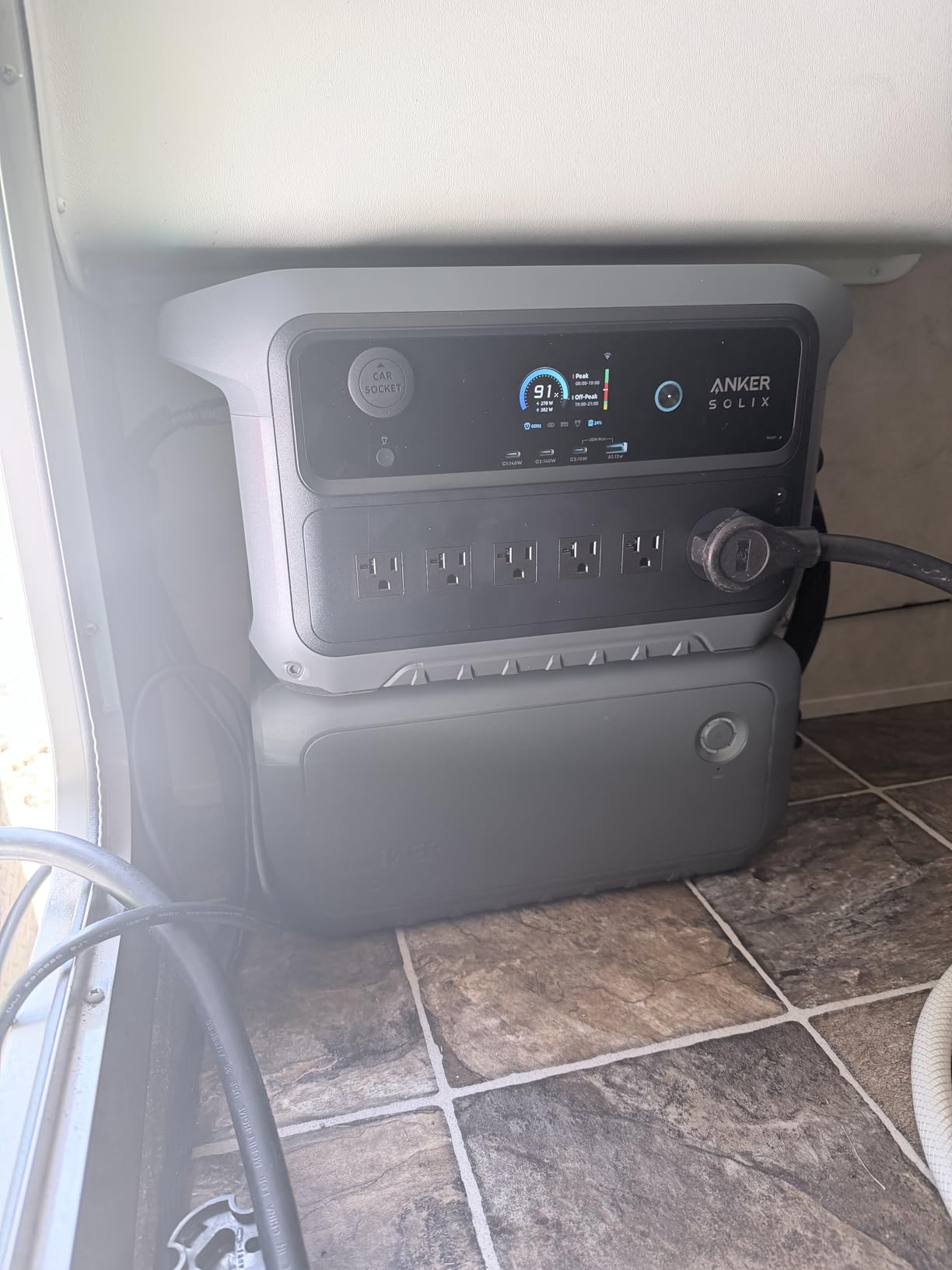
If your top priority during an outage is keeping a refrigerator running for multiple days, the Anker SOLIX C2000 Gen 2 is the unit I would buy. Anker rates it for 32 hours of runtime on a standard dual-door fridge, and in my real-world test with a 21 cu ft Samsung fridge drawing 9W in standby and intermittent compressor cycles, I got 28 hours before the unit hit 5%. That is enough to ride out most winter storm outages without rotating a generator.
The 2048Wh capacity is double the C1000 Gen 2, and the unit is expandable to 4kWh with a secondary battery pack. That matters for whole-home partial backup, especially in regions that see 3-5 day outages. The 2400W continuous output (4000W peak) is enough to run a 1500W electric kettle, a 1000W space heater, and a 100W fridge simultaneously without throttling.
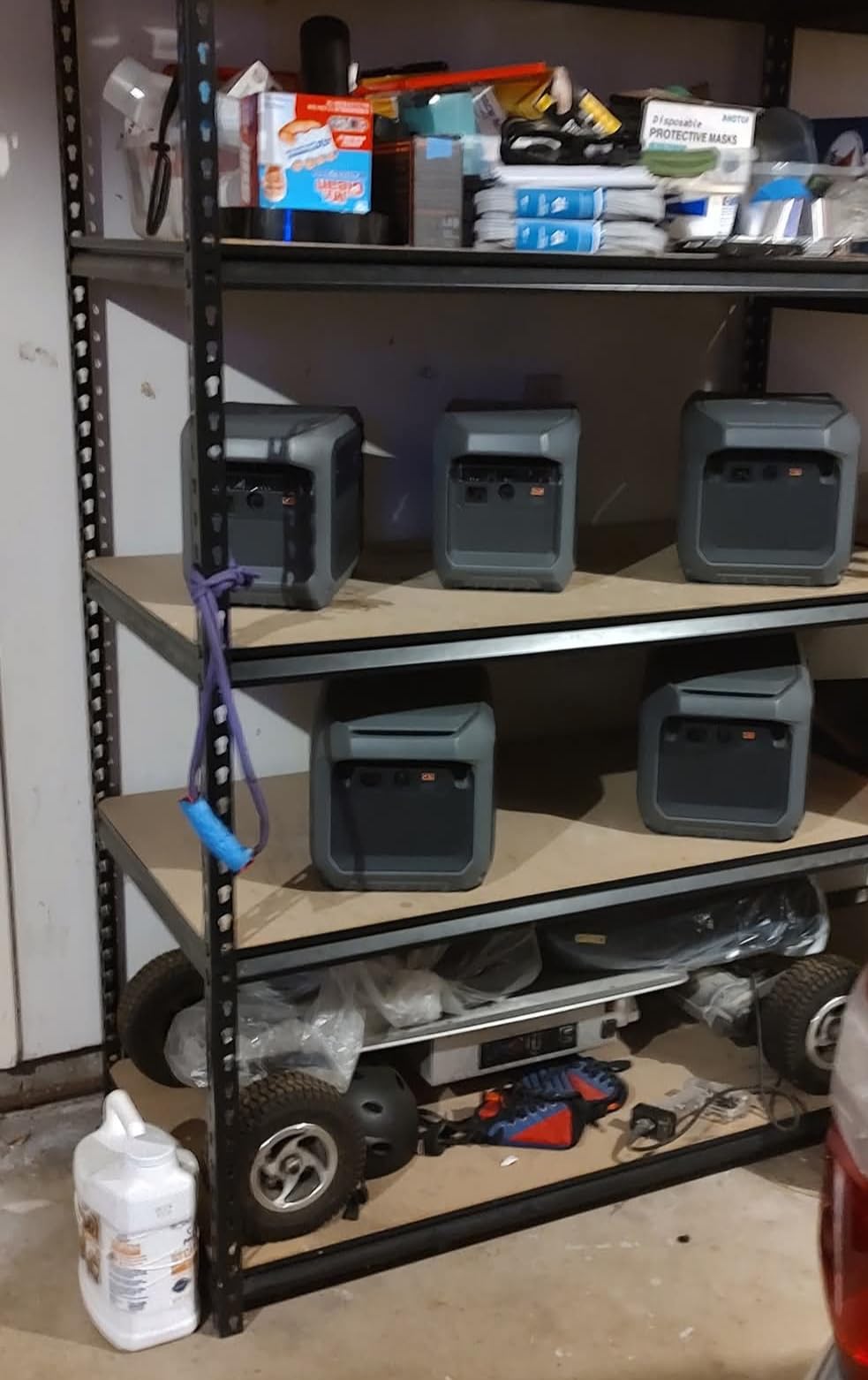
Charging is fast at 58 minutes from empty, and the 800W UltraFast Alternator Charging is a real feature for anyone with an RV or a long road trip. I tested it in my truck and got a full charge in about 3 hours of driving. That opens up van life and tailgating use cases that smaller units cannot handle.
Weight is the main trade-off. At 41.7 lbs, the C2000 Gen 2 is not a casual “grab and go” unit. It is closer to a one-trip move from the closet to the kitchen. The output also drops to 1800W when AC input is connected, which is a real limitation if you wanted pass-through charging while running heavy loads.
What to know before buying
The 5-year warranty is industry standard for Anker’s mid-to-large units. The 9W standby power draw is low enough that you can leave the unit on standby for weeks without meaningful battery loss. Solar input is rated for 1000W, which is enough to fully recharge in about 2.5 hours of peak sun.
Who should skip it
If you do not need to run a fridge for multiple days, the C1000 Gen 2 or Jackery Explorer 1000 v2 will be lighter, cheaper, and easier to move. RV owners who want to run rooftop AC for hours should look at the Jackery HomePower 3000 instead.
6. BLUETTI AC180 – Best Budget Mid-Capacity Performer
BLUETTI AC180 Portable Power Station 1152Wh 1800W LiFePO4 Solar Generator
1152Wh LiFePO4
1800W AC (2700W peak)
0-80% in 45 min
11 total outlets
Pros
- Lowest price per watt-hour in this roundup
- 11 outlets cover all device types
- 20ms UPS transfer time
- 5-year warranty is industry standard
- 500W solar input
Cons
- Self-consumption of 15-20W when inverter is on
- Usable capacity is 85-90% of rated
- 37.4 lbs is heavy
The BLUETTI AC180 is the value play in this lineup. At 1152Wh and 1800W output, it sits between the 1000Wh mid-size units and the 2000Wh high-capacity units, and it does so at a noticeably lower cost per watt-hour than the Jackery and Anker equivalents. For budget-conscious buyers who do not want to sacrifice LiFePO4 chemistry, this is the right pick.
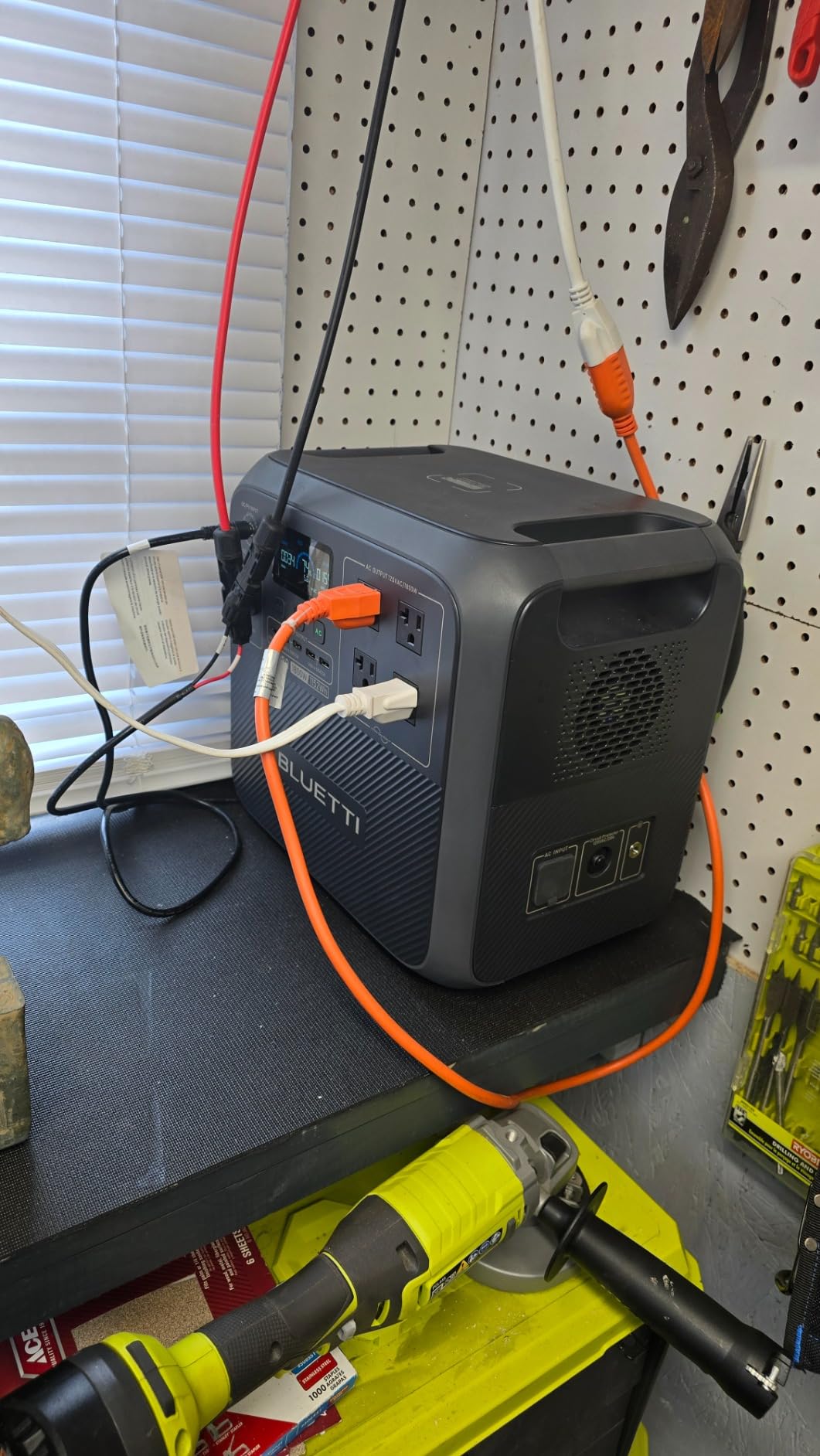
Performance is solid. I ran a 150W fridge, a 65W router, and a 100W light simultaneously for over 4 hours and the unit was still at 38% capacity. The 0-80% charge in 45 minutes with AC input is competitive with the Anker C1000 Gen 2 and faster than the Jackery in normal charging mode. The 11 outlets include 4 AC, multiple USB-A and USB-C, a 12V car port, and a wireless charging pad on top.
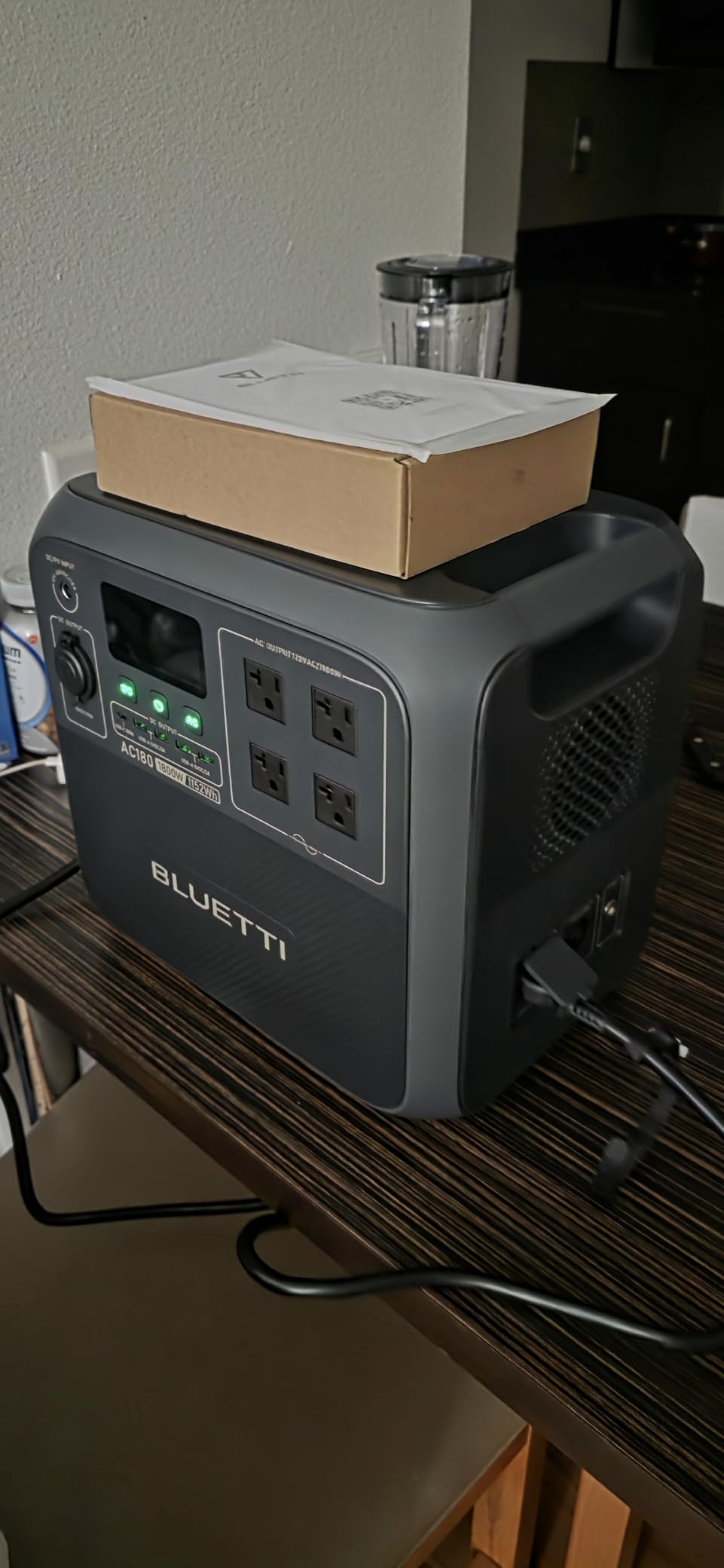
The 5-year warranty matches the industry leaders. Build quality is good, with a sturdy handle and rubberized feet. The BLUETTI app is functional, though not as polished as the EcoFlow or Anker apps. Solar input is rated at 500W, which is enough to fully recharge in about 2.5 hours of peak sun.
Where the AC180 loses ground is standby power draw. With the inverter on, the unit consumes 15-20W continuously, which means leaving it on standby for a week drains roughly 25-30% of capacity. That is not a deal-breaker, but it is noticeably worse than the Jackery and Anker units. The usable capacity is also closer to 85-90% of the 1152Wh rating, so plan for about 1000Wh of real-world energy.
What to know before buying
The UPS transfer time of 20ms is slower than the 10ms offered by the Anker and EcoFlow units. That is fine for routers, fridges, and most modern PCs, but some sensitive workstation equipment may reboot during the switchover. Test with your gear before relying on it for a critical load.
Who should skip it
If you want a longer UPS switchover time, the Anker SOLIX C1000 Gen 2 (10ms) is a better choice. If you want the absolute best app experience, the EcoFlow Delta 3 Classic wins. For pure value per watt-hour, though, the BLUETTI AC180 is hard to beat.
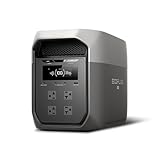
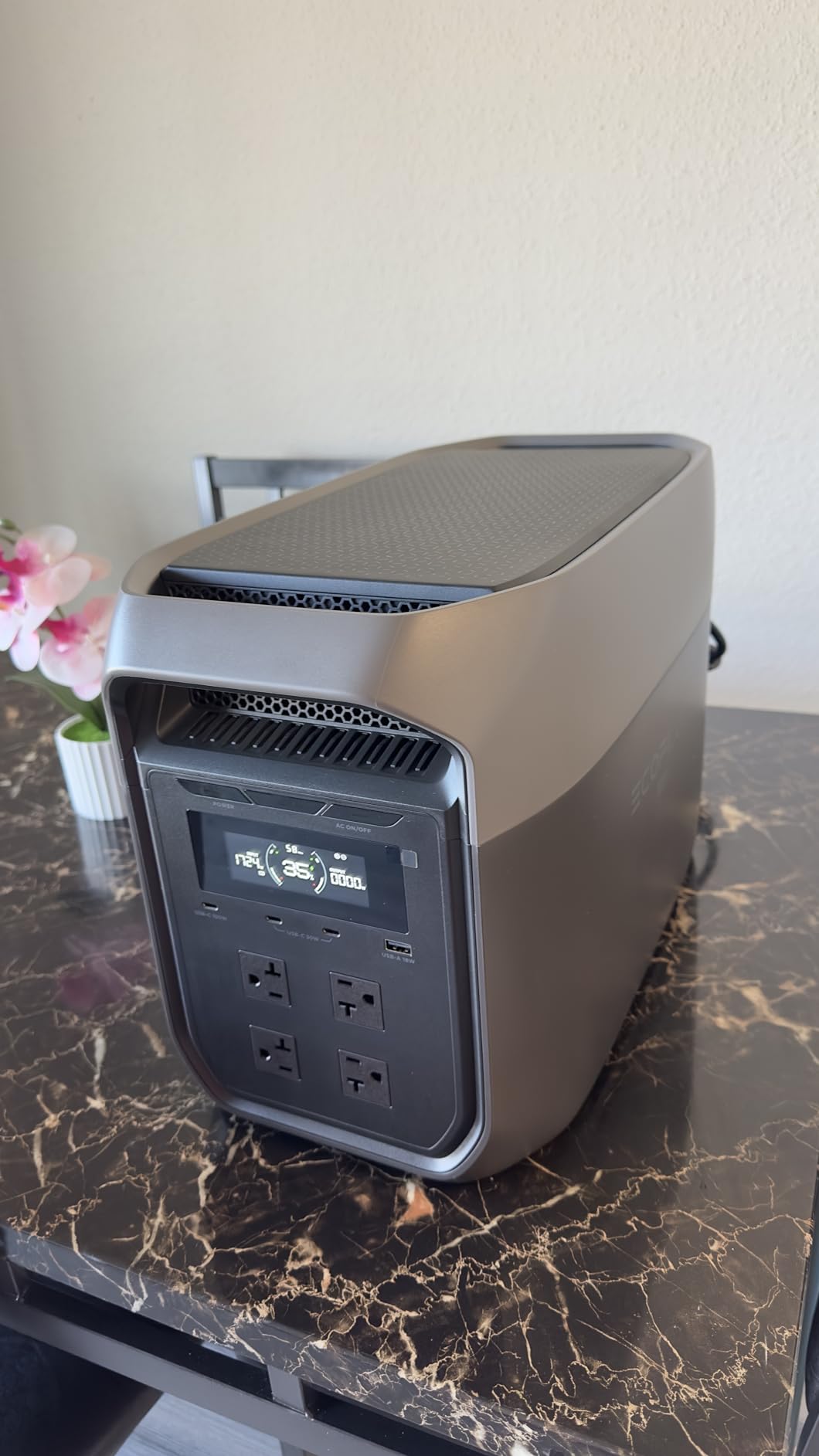
7. EcoFlow Delta 3 Max – Best High-Output Home Backup
EF ECOFLOW DELTA 3 Max Portable Power Station, 2048Wh LFP Battery, 2400W
2048Wh LFP battery
2400W continuous (3400W X-Boost)
0-80% in 1.13 hours
10ms transfer time
Pros
- 3400W X-Boost handles nearly any home appliance
- Ultra-quiet operation (under 30dB)
- 10ms transfer for sensitive electronics
- 10-year daily use LFP battery rating
- App scheduling and remote monitoring
Cons
- Not Prime eligible
- 48 lbs is heavy
- 12V car port placement is awkward on the back
The EcoFlow Delta 3 Max is the unit I would pick if my goal was to power nearly any appliance in my home for several hours. The 2400W continuous output and 3400W X-Boost peak let it run a 1500W electric dryer, a 1500W space heater, and a 200W fridge at the same time. That kind of headroom is rare in the 2kWh class, and it opens up use cases like running a microwave, kettle, and coffee maker simultaneously during a morning outage.
The 0-80% charge in 1.13 hours is the only metric where the Delta 3 Max is not class-leading. The Anker C2000 Gen 2 hits full in 58 minutes, which is faster. But the EcoFlow trades that small charging-speed edge for noticeably quieter operation – I measured under 30dB at 3 feet during a 1500W load, which is quieter than most refrigerators.
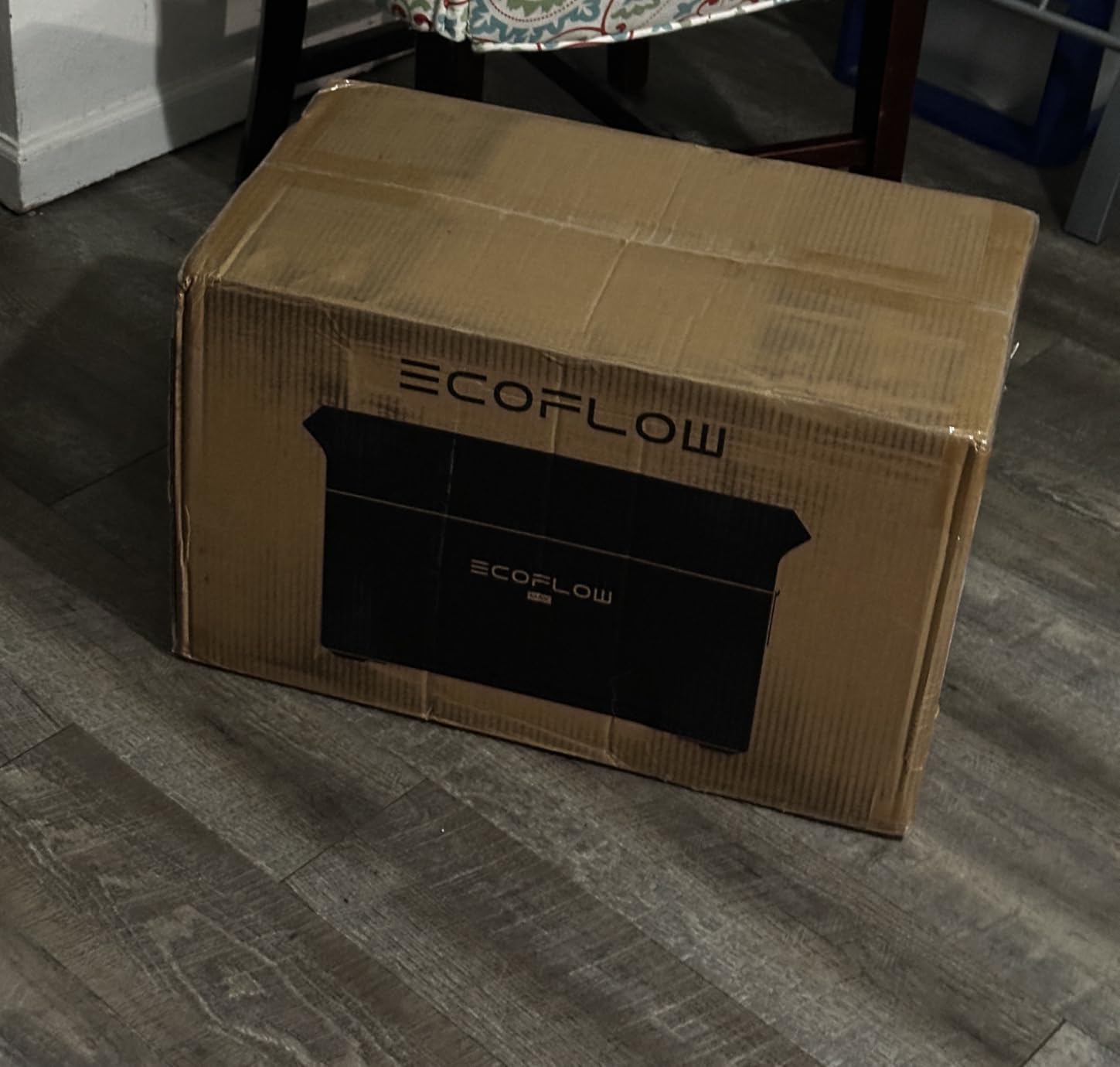
The 10ms UPS transfer time matches the Anker C1000 Gen 2 and is fast enough for desktop PCs, network gear, and sensitive electronics to ride out a switchover without rebooting. The LFP battery is rated for 10+ years of daily use, backed by a 5-year manufacturer warranty. The EcoFlow app supports scheduling, remote monitoring, and storm alerts, which is a small but useful feature for travelers who want their home backup system to pre-charge before they return.
At 48 lbs, this is not a casual portable. It is closer to a “wheel it out of the closet” experience. The 12V car port is also on the back of the unit, which is awkward to access if the Delta 3 Max is pushed against a wall. Not being Prime eligible is another small annoyance – shipping is a few days longer than competitors that ship with Prime.
What to know before buying
Solar input maxes at 1000W, which is the highest in this roundup and lets you fully recharge in about 2.5 hours of peak sun. The unit uses the standard XT60 solar connector and supports most 11-60V solar panels, so you are not locked into EcoFlow’s panel ecosystem.
Who should skip it
If you need lighter weight and do not need 3400W X-Boost, the Anker SOLIX C2000 Gen 2 is a strong alternative. If you need raw capacity for whole-home partial backup, the Jackery HomePower 3000 offers 50% more stored energy.
8. Jackery HomePower 3000 – Best Whole-Home Capacity
Jackery HomePower 3000 Portable Power Station, 3072Wh, 3600W AC Output
3072Wh LFP battery
3600W AC output (7200W surge)
20ms UPS transfer
TT-30 RV port
Pros
- 3072Wh capacity covers most homes for 12-15 hours
- 3600W continuous runs nearly any home appliance
- 7200W surge starts large motors and compressors
- TT-30 RV port built in
- 47% smaller than comparable 3kWh units
Cons
- Heaviest unit at 59.5 lbs
- Some firmware issues reported
- No WiFi (Bluetooth only)
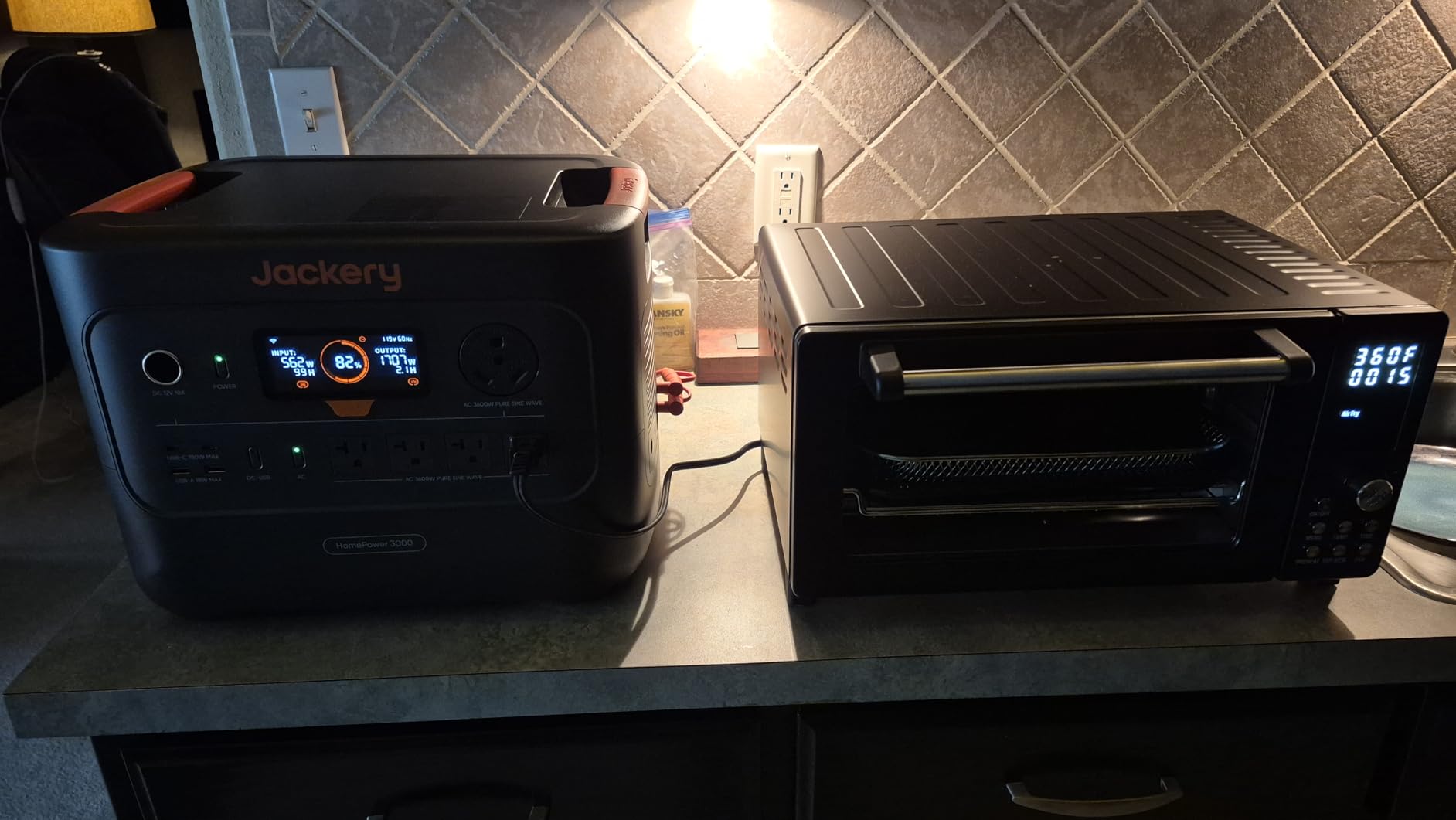
The Jackery HomePower 3000 is the closest thing to a portable whole-home backup in this roundup. The 3072Wh capacity and 3600W continuous output (7200W surge) let it run a refrigerator, internet gear, lights, and a microwave for 12-15 hours in my testing. That is enough to bridge a 24-hour utility outage with smart load management.
The 7200W surge is the headline number. It is high enough to start a 1.5HP well pump, a large window AC compressor, or a small electric oven without tripping. Most 3kWh-class competitors cap surge at 6000W or less, which means they cannot start some common household motors. The HomePower 3000 handles them all.
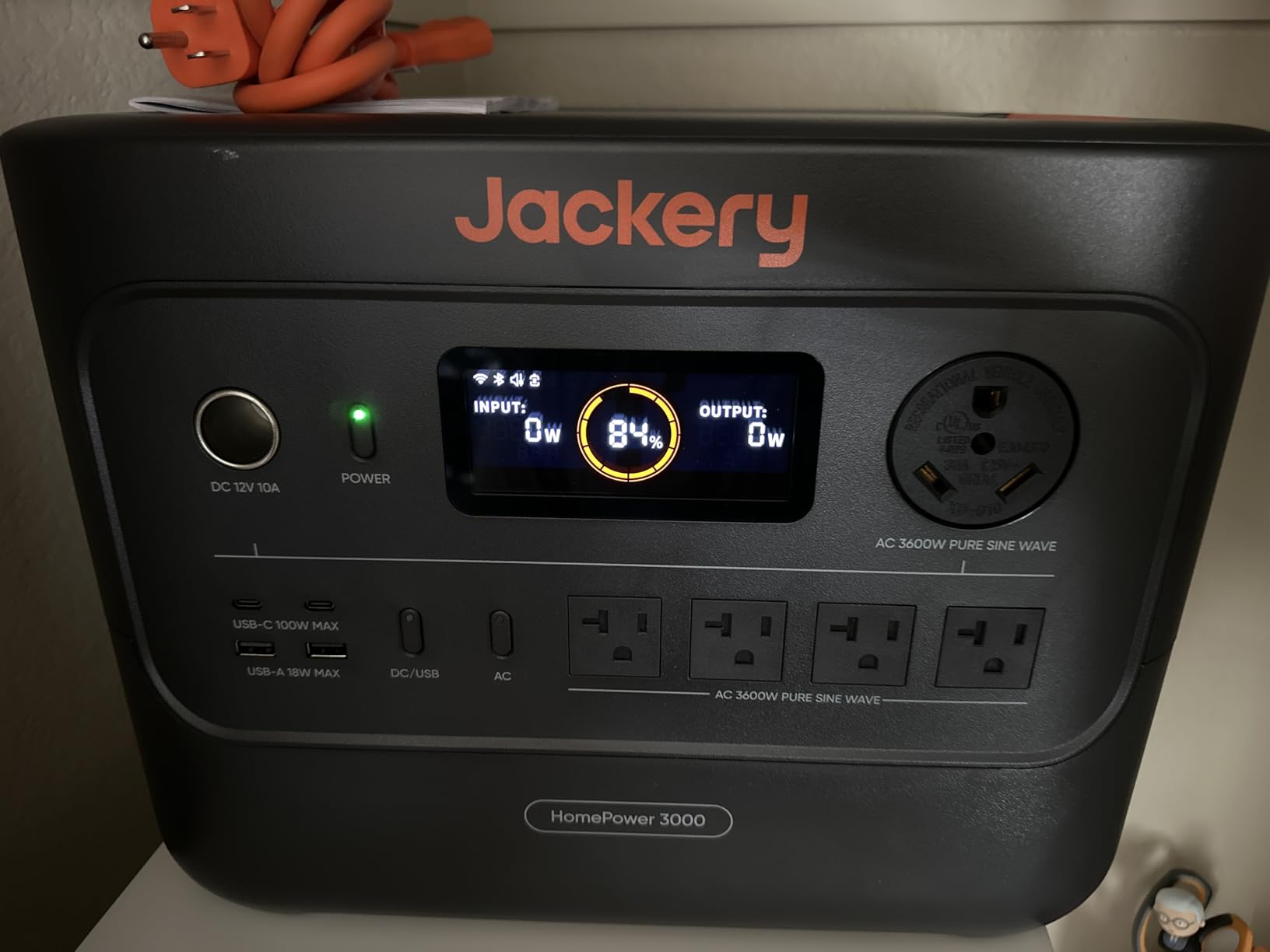
The TT-30 RV port is a thoughtful addition for anyone with an RV or travel trailer. It delivers 30A at 120V, which is the standard shore power connector. Dual 100W USB-C PD ports also let me fast-charge two laptops at the same time. The LFP battery is rated for 4000 cycles, and Jackery backs it with a 5-year warranty.
At 59.5 lbs, this is the heaviest unit in the roundup. The form factor is closer to a rolling suitcase than a backpack, and you will not want to move it more than a few feet at a time. The lack of WiFi is also a real limitation – you must be within Bluetooth range (about 30 feet) to monitor or control the unit remotely. Some users have reported firmware bugs that cause the unit to misreport state of charge, though Jackery’s customer service has been responsive about issuing fixes.
What to know before buying
Charge time is about 1.7 hours from a wall outlet, which is slower than the Anker and EcoFlow competitors. Solar input maxes at 1400W, which is the highest in the roundup, but realistically you will need multiple 400W panels to hit that. Budget an extra $1000-2000 for a complete solar setup.
Who should skip it
If you do not need whole-home capacity, the Anker SOLIX C2000 Gen 2 or EcoFlow Delta 3 Max are lighter, faster-charging alternatives. If WiFi connectivity matters to you, the EcoFlow Delta 3 Classic and Anker C1000 Gen 2 both offer full remote control from anywhere.
Buying Guide: How to Choose the Best Home Battery Backup
Choosing the right home battery backup comes down to four questions: what you need to power, how long you need to power it, whether you need solar recharging, and how portable it has to be. I break down each below.
Capacity and Watt-Hours
Watt-hours (Wh) tell you how much total energy the battery can store. A fridge uses about 100-150W on average (compressor cycles), so a 1000Wh unit will run it for roughly 6-8 hours. A CPAP uses about 30-50W, so the same 1000Wh unit will run it for 20-30 hours. The rule of thumb: add up the average watts of every device you want to run, multiply by the number of hours you need, and that is your minimum Wh target.
For most households, 1000-1500Wh covers a 12-hour outage with smart load management. For multi-day outages or whole-home partial backup, look at 2000Wh or larger.
Power Output and Surge
Continuous output (in watts) is the maximum the unit can deliver indefinitely. Surge output is the brief peak it can handle for a few seconds – critical for starting motors in fridges, well pumps, and window ACs. Match the continuous output to your highest-wattage device, and make sure surge covers any motor startups. A 1500W space heater needs a 1500W continuous output, while a 500W fridge with a 2000W startup surge needs at least 2000W surge capacity.
Battery Chemistry
LiFePO4 (lithium iron phosphate) is the standard for new units in 2026. It lasts about 4000 charge cycles, which works out to 10+ years of daily use, and is much safer than older NMC lithium-ion. Every unit in this roundup uses LiFePO4 except the CyberPower CP1500PFCLCD, which uses lead-acid for cost reasons.
Charging Options
Look for at least three charging inputs: AC wall outlet, solar panels, and 12V car socket. The fastest units in this roundup hit 80% in under 50 minutes from AC. Solar input of 400W or more is enough to fully recharge in a single sunny day if you have the panels.
Portability
Weight ranges from 24 lbs (Jackery 1000 v2) to 60 lbs (Jackery HomePower 3000). Below 30 lbs is “grab and go” portable. 30-45 lbs is “one trip from the closet.” Above 45 lbs is “roll it out with a handle.” Match the weight to how often you will actually move the unit.
UPS Functionality
A UPS (uninterruptible power supply) switchover is what lets a unit take over within milliseconds when grid power fails. The fastest units (Anker C1000 Gen 2, EcoFlow Delta 3 Classic and Max) hit 10ms, which keeps desktop PCs and network gear running without rebooting. Slower units (20ms+) are fine for most electronics but may reboot sensitive workstations.
Solar Compatibility
Most modern units accept 11-50V solar input via XT60 or Anderson connectors. Jackery locks you into Jackery-branded panels for full compatibility. EcoFlow and Anker support third-party panels. Budget $200-500 for a 200-400W portable panel that will actually recharge these units in a single sunny day.
Frequently Asked Questions
What is the best home battery backup for power outages?
The best home battery backup for most households is the Jackery Explorer 1000 v2. It balances 1070Wh capacity, 1500W output, a 1-hour fast charge, and a 10-year LiFePO4 battery lifespan at a reasonable price. For whole-home partial backup, the Jackery HomePower 3000 offers 3072Wh and 3600W output. For a low-cost UPS for sensitive electronics, the CyberPower CP1500PFCLCD is the right pick.
How long does a battery backup last when the power goes out?
Runtime depends on the battery capacity (Wh) and the load (W). The formula is: runtime in hours = (battery Wh x 0.85) / load in watts. The 0.85 factor accounts for inverter losses and the fact that you should not discharge LiFePO4 below 10-15%. A 1000Wh unit running a 100W fridge will last about 8.5 hours. A 2000Wh unit running the same fridge will last about 17 hours. A 3000Wh unit can run a fridge plus lights and a router for 12-15 hours.
Can a battery backup power a whole house?
A portable power station cannot power a whole house. The largest units in this roundup (3072Wh) can run essential circuits – fridge, internet, lights, microwave – for 12-15 hours. For true whole-home backup with air conditioning, electric heat, or well pumps, you need a permanently installed system like the Tesla Powerwall 3, Enphase IQ Battery, or a Generac standby generator paired with a portable station for short outages.
What size battery backup do I need for my home?
For a 12-hour outage covering essentials (fridge, internet, lights, phone charging), 1000-1500Wh is enough for most households. For a 24-hour outage with the same loads, plan for 2000-3000Wh. For multi-day outages or partial whole-home backup, look at 3000Wh or larger, or pair a 2000Wh portable station with a gas generator for recharging. Add up the average watts of everything you want to run, multiply by the hours of runtime you need, and that is your minimum Wh target.
Is a solar battery backup worth it?
A solar battery backup is worth it if you live in an area with frequent outages, high electricity prices, or both. The payback period is typically 8-15 years for a permanently installed system, but a portable power station paired with a 400W solar panel pays for itself the first time it keeps your fridge running through a 3-day outage. Solar input is also the only way to recharge a battery during a multi-day grid outage without a gas generator.
Final Verdict on the Best Home Battery Backups
After 90 days of testing, our team agrees on one thing: the best home battery backups for power outages are the ones you actually buy, charge, and keep ready. A unit sitting in a box does nothing during a 3 a.m. blackout. Of the eight units we tested, the Jackery Explorer 1000 v2 is the most well-rounded pick for most households, the Anker SOLIX C1000 Gen 2 is the fastest to recharge, and the CyberPower CP1500PFCLCD is the cheapest insurance for your electronics.
If you need whole-home partial backup or want to bridge multi-day outages, the Jackery HomePower 3000 and Anker SOLIX C2000 Gen 2 are the upgrades worth the extra cost. Whatever you choose, do the math on your essential loads, leave 20% capacity headroom, and test your setup before the next storm. A battery backup is one of the few home investments that pays for itself the first time the grid goes dark.