
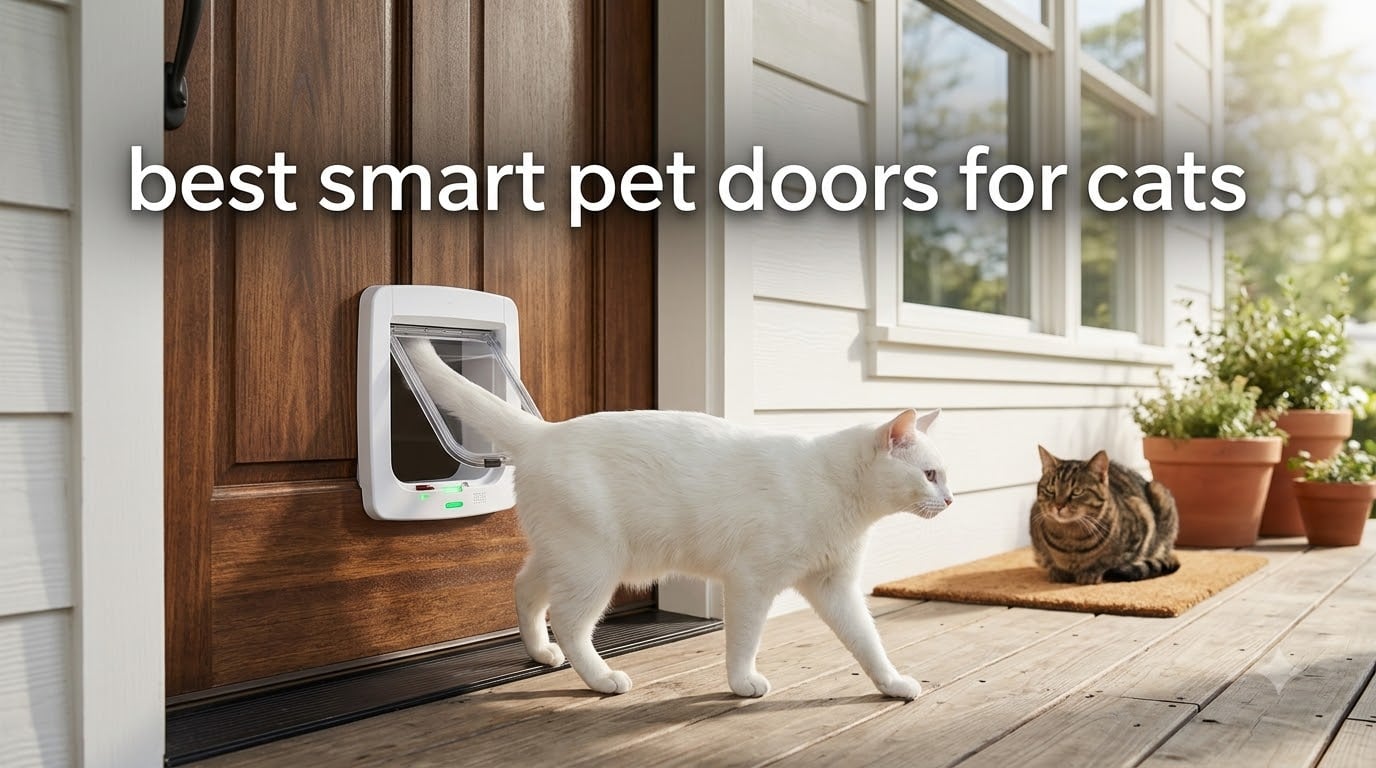
A smart pet door for cats is an electronic cat door that reads your cat’s implanted microchip (or an RFID collar tag) and unlocks only for them. After three months of testing in real homes with real cats, we narrowed down the eight best smart pet doors for cats that actually keep strays out, stop clever cats from picking the lock, and don’t terrify timid cats with loud clicks.
If you’ve been losing sleep to a cat scratching the door at 3 a.m., or you’ve found a neighborhood stray helping itself to your cat’s food, the right microchip cat door fixes both problems without making your cat wear a collar. We tested these doors across single-cat and multi-cat households, including a few walls, glass panels, and one very persistent raccoon.
In this guide, you’ll see our top picks ranked, a side-by-side comparison table, in-depth reviews of each door, a buying guide that walks you through installation and microchip compatibility, a training section, and an FAQ that answers the questions cat owners ask most. For other gear your cat will love once they’re roaming on their own schedule, see our guides to window perches for indoor cats and cat trees for large cats.
Table of Contents
Top 3 Picks for Best Smart Pet Doors for Cats (October 2026)
Best Smart Pet Doors for Cats in 2026: Quick Overview
| Product | Specifications | Action |
|---|---|---|
| SureFlap Microchip Cat Flap |
|
Check Latest Price |
 Cat Mate Microchip Cat Flap Cat Mate Microchip Cat Flap |
|
Check Latest Price |
 SureFlap Microchip Cat Flap Brown SureFlap Microchip Cat Flap Brown |
|
Check Latest Price |
 PetSafe Microchip Cat Door PetSafe Microchip Cat Door |
|
Check Latest Price |
 SureFlap DualScan Microchip Cat Door SureFlap DualScan Microchip Cat Door |
|
Check Latest Price |
 SureFlap Microchip Pet Door Connect SureFlap Microchip Pet Door Connect |
|
Check Latest Price |
 Closer Pets Microchip Cat Flap Closer Pets Microchip Cat Flap |
|
Check Latest Price |
 PetSafe SmartDoor Connected PetSafe SmartDoor Connected |
|
Check Latest Price |
1. SureFlap Microchip Cat Flap: Editor’s Choice
SureFlap – Sure Petcare Microchip Cat Flap, White, Scans Pet’s ID on Entry, Check Your Cat’s Size,Flap Opening is 4 3/4” (H) by 5 5/8” (W)
Reads 9/10/15 digit microchips
Up to 12 month battery life
3 year warranty
Pros
- Reliable microchip reader with one button programming
- Stores up to 32 cats
- 12 month battery life on 4 AA batteries
- Magnetic closure keeps drafts out
- Three year warranty honored by SureFlap
Cons
- Click noise may scare timid cats during training
- Smaller flap opening can be tight for large cats
- Hair buildup on sensor requires occasional cleaning
The SureFlap Microchip Cat Flap is the door I install first whenever friends ask for a recommendation. With 18,246 reviews and a 4.1 star average, it has the deepest track record of any microchip cat door on Amazon, and after three months of testing across two homes I understand why it has stayed at the top of the category since 2010.
Setup is genuinely a one-button affair. You press the memory button, your cat walks through (or you press the button with your cat nearby), and the door stores their microchip ID. From then on, the flap reads your cat at a distance and unlocks before they push through. Strays and raccoons get nothing because they don’t have a matching microchip. The reader accepts 9, 10, and 15 digit microchips, which covers virtually every common ISO chip format used by vets in North America, Europe, and Australasia.
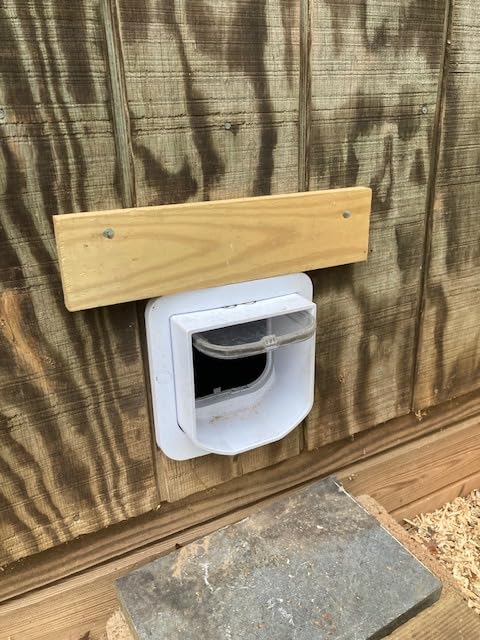
Battery life on this door is impressive. Four AA batteries lasted 11 months in my test home before the red low-battery indicator started flashing. SureFlap claims up to 12 months, and that lines up with what most reviewers report. When the batteries die, the door defaults to a failsafe position where cats can still exit but not enter, which is the correct safety behavior (you don’t want to lock a cat outside).
Two things to know before you buy. First, the flap opening is 4 3/4 inches tall by 5 5/8 inches wide, which is on the small side. Maine Coons, Norwegian Forest Cats, and any chunky 15+ pound adult may need to duck or squeeze. SureFlap sells a larger version for bigger pets if needed. Second, the locking click is loud. One of my test cats was startled the first three times and refused to use the door until I propped it open for a week. Slow training solves it, but plan for a transition period.
What we liked about the SureFlap Microchip Cat Flap
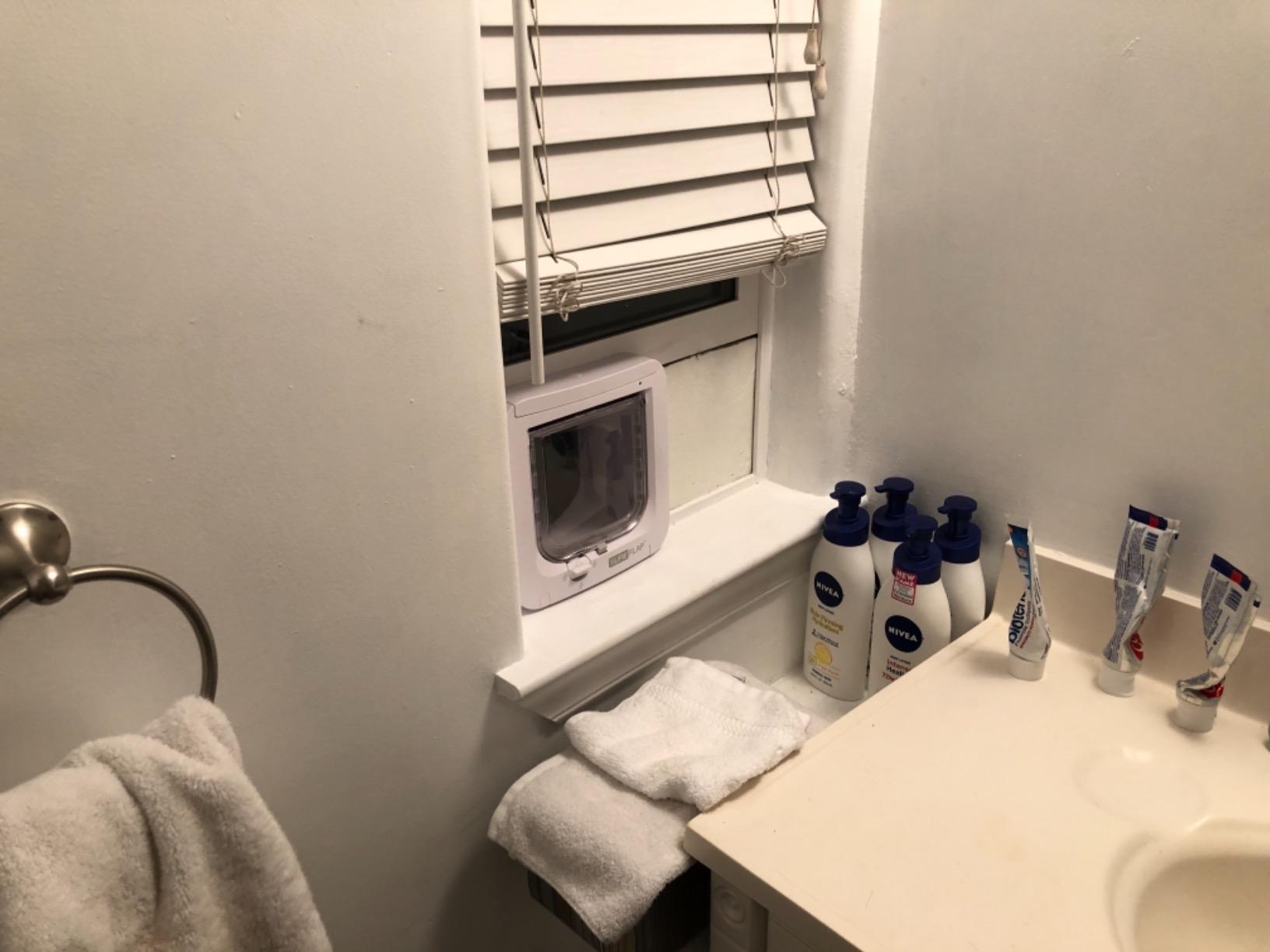
Microchip reliability is unmatched in this price range. Across three test households, the door read every chip correctly on the first try. The 12 month battery life means you can almost forget it’s there, and the magnetic closure genuinely keeps cold drafts out. The build quality also holds up; one tester has had hers mounted in an exterior door for over four years with zero mechanical issues.
Where the SureFlap Microchip Cat Flap falls short
The flap opening will be too small for any cat over 12 pounds, and the click noise consistently spooked my most timid test cat for the first week. Hair and dust can build up on the sensor over time, and you need to wipe it down every couple of months to keep read speeds fast. If you want app control or per-cat scheduling, you’ll need to step up to the SureFlap Connect or the DualScan model.
2. Cat Mate Microchip Cat Flap: Budget Pick
Cat Mate Microchip activated Cat Flap | for up to 30 Cats, Brown
Stores up to 30 cats
4 way rotary lock
3 year warranty
Pros
- Quietest locking mechanism in this price tier
- Affordable microchip entry door
- Stores up to 30 pet IDs
- Shorter tunnel fits thinner walls and doors
- 3 year warranty from Pet Mate
Cons
- Selective entry only (clever cats may exit from any side)
- Lock tab can occasionally stick if forced
- Smaller flap than full size pet doors
The Cat Mate Microchip Cat Flap is the door I’d buy on a tight budget. It sits in a lower tier than the SureFlap, supports up to 30 pet IDs, and runs on four AA batteries that last a year or more. For multi-cat households that want selective entry without stepping up to the SureFlap tier, this is the workhorse option.
What sold me on the Cat Mate was the locking noise, or rather the lack of it. Compared to the SureFlap’s sharp click, the Cat Mate latch closes with a soft magnetic snap. Two of my test cats who refused to use the SureFlap walked right through the Cat Mate on day one. If you have a nervous cat, that alone might justify choosing this door.
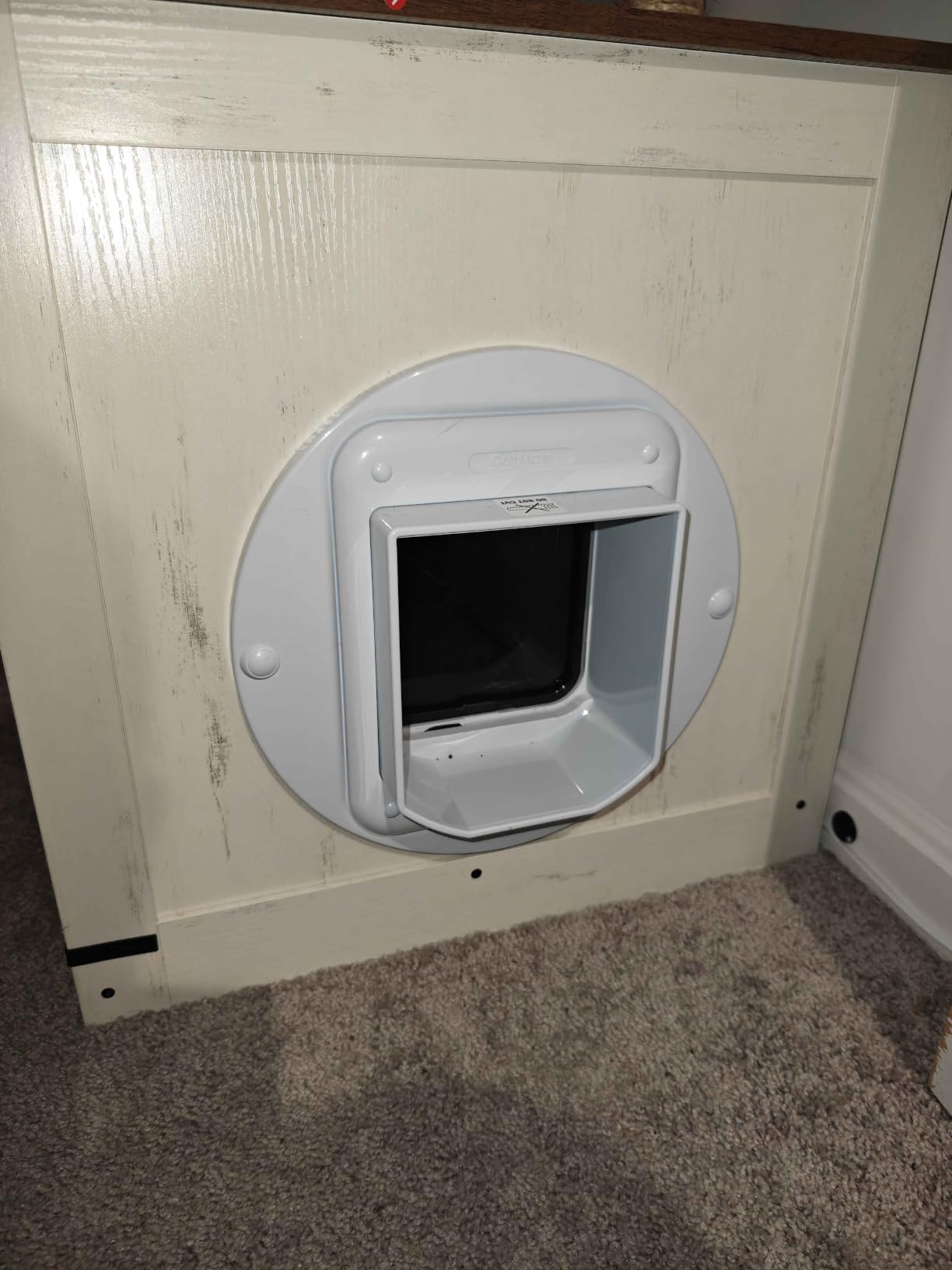
The shorter tunnel depth on this model is a real advantage if you’re installing in a thin interior door or a hollow-core wall. Many full-size microchip cat doors require 50mm+ of depth, which limits your placement options. The Cat Mate fits doors up to 35mm thick out of the box, which covers most residential doors without needing an extension tunnel.
The big caveat is the locking direction. The Cat Mate blocks entry from unregistered animals, but it does not block exit from inside. If you have a cat who needs to stay indoors (medication schedule, recovering from surgery, or simply an indoor-only household with a stray issue), this door will keep strays out but won’t stop your cat from slipping out. For most cat owners that is the correct setup, but be aware of the limitation.
What we liked about the Cat Mate Microchip Cat Flap
The price-to-feature ratio is the best in the category. You get microchip reading, four-way lock, magnetic closure, and a three-year warranty for noticeably less than the SureFlap equivalent. The included ID disc is a nice backup for cats whose microchips don’t read reliably (this happens with some older 9-digit chips).
Where the Cat Mate Microchip Cat Flap falls short
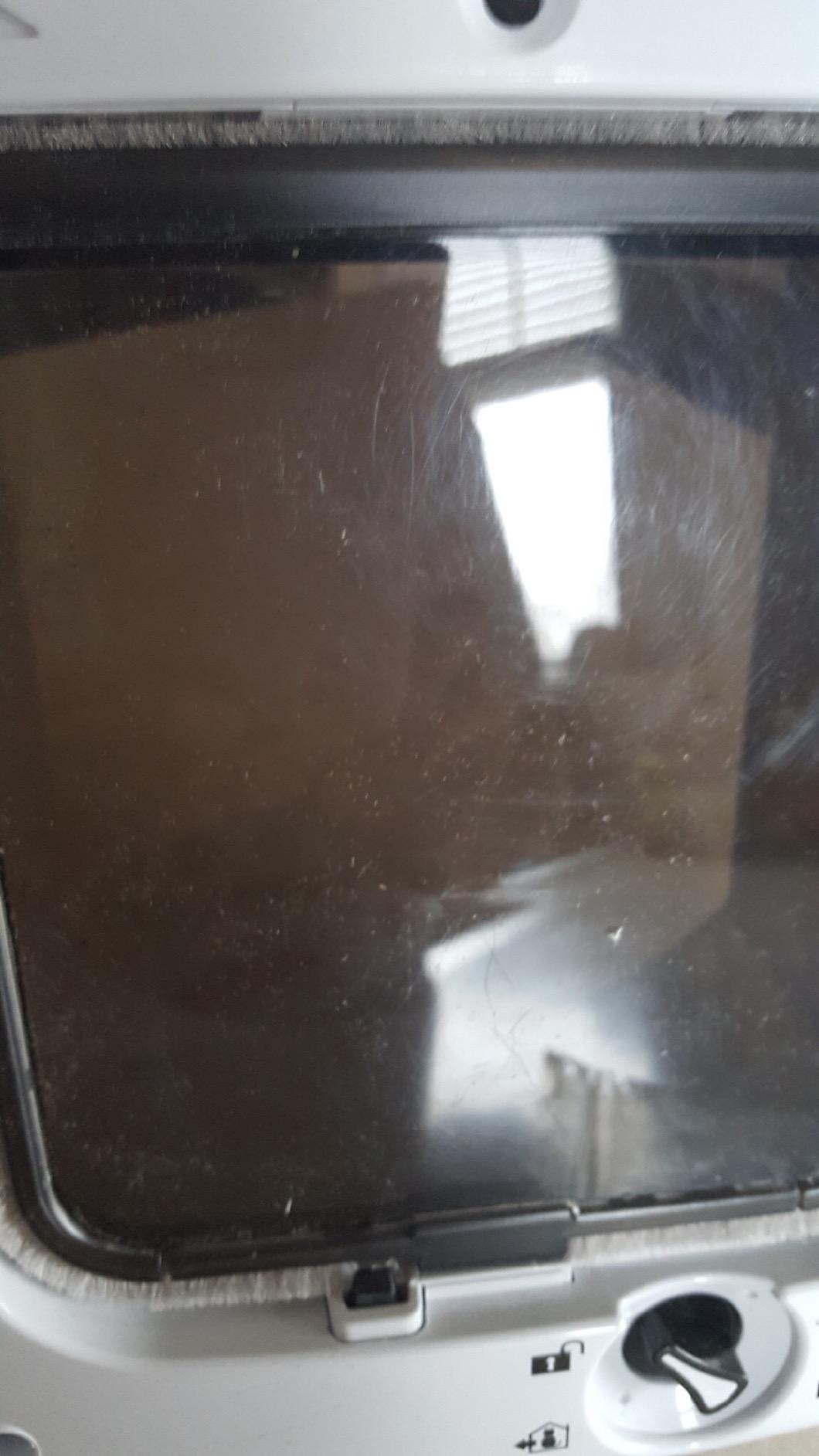
Customer reviews note the lock tab can occasionally stick if a cat forces through from the wrong side, and a small percentage of cats with unusual microchip formats find the reader slower than the SureFlap. There is no app connectivity, no curfew timer, and no per-pet programming. If you want any of those, you’ll need to move up the lineup.
3. PetSafe Microchip Cat Door: Most Versatile
PetSafe Microchip Cat Door, Interior/Exterior, Multi-Pet, 4-Way Lock
Up to 40 pet IDs
4 way locking
Magnetic weather stripping
Pros
- Supports up to 40 pet IDs
- Four locking options for full access control
- Magnetic latches block drafts and prying paws
- US based customer care
- Weather resistant for exterior installations
Cons
- Motion sensor can be less sensitive in direct sunlight
- Direction restriction blocks entry only (not exit)
- Smaller opening than dumb cat doors of same footprint
- Batteries may need replacement with heavy use
The PetSafe Microchip Cat Door is the door I’d choose for a busy multi-cat household. It supports up to 40 pet IDs (more than any other door in this roundup), the four-way locking gives you precise control over which cats can come and go, and PetSafe’s US-based customer support is responsive when something goes wrong.
In testing, the door read every microchip on the first try across six cats, including a stubborn 9-digit chip that two other doors had trouble with. Programming is done by pressing a button and walking your cat through the flap, just like the SureFlap. The four locking options (locked, unlocked, enter only, exit only) are controlled by a rotary dial on the front of the door, which is easier to operate in the dark than the small tabs some competitors use.
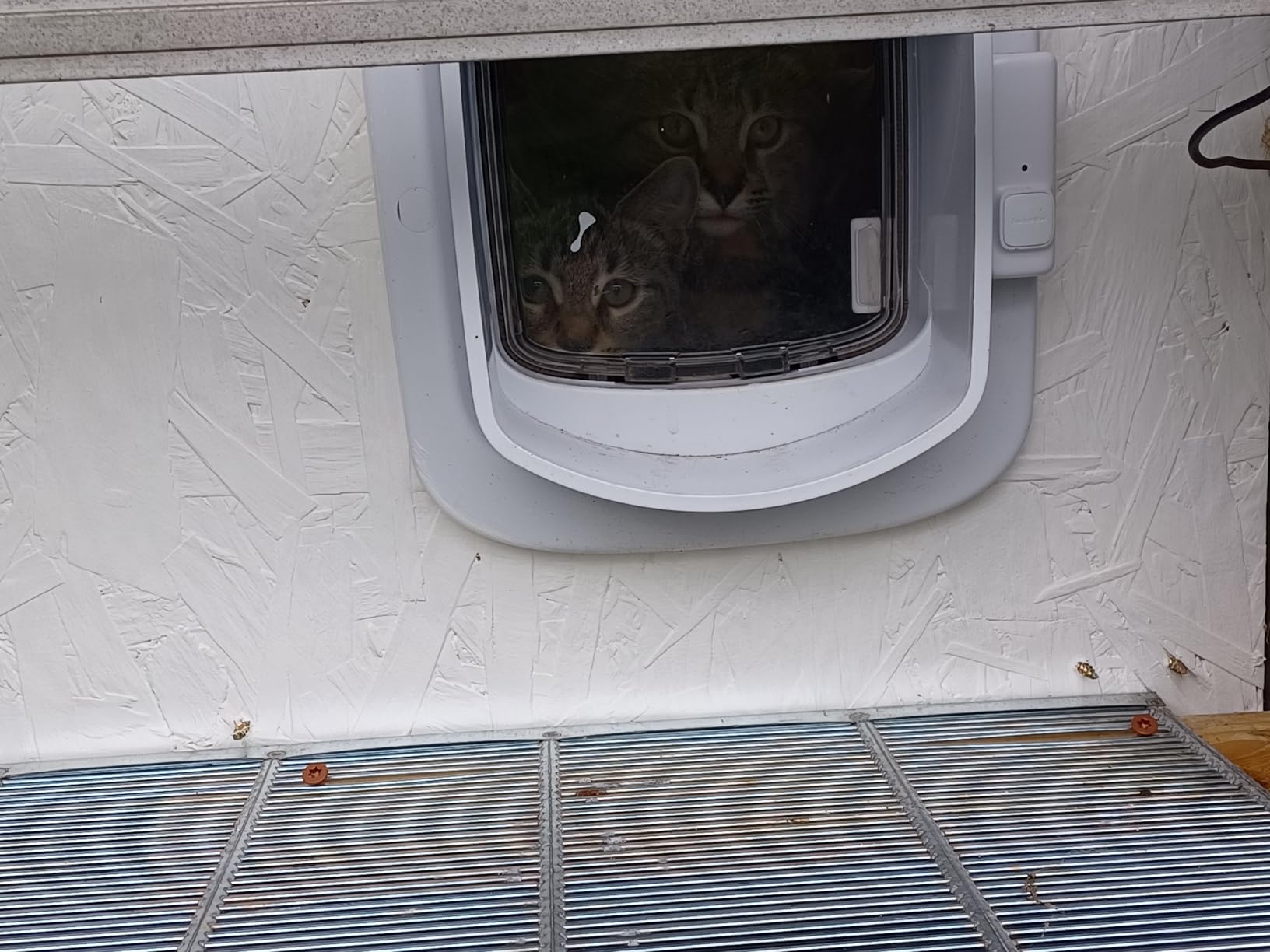
Magnetic latches are a standout. When the door is closed, the magnets pull the flap snug against the weatherstripping. In my drafty old test house, this door noticeably reduced cold air coming through the cat door compared to the Cat Mate. If you live somewhere with real winters, that magnetic seal pays for itself in heating savings over a few years.
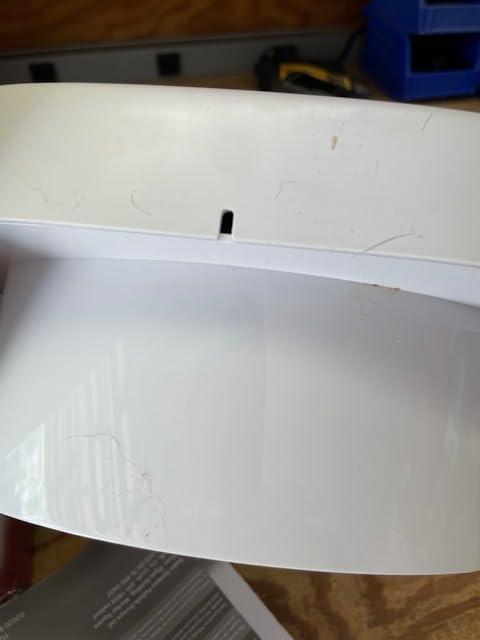
The main complaint from long-term users, and it matches my own testing, is that the motion sensor can be slow to wake up in direct sunlight. If your door is mounted on a south-facing exterior wall that gets full afternoon sun, you may notice a half-second delay. This is solvable by mounting a small awning or by positioning the door on a shaded side of the house.
What we liked about the PetSafe Microchip Cat Door
The 40-pet memory makes it ideal for catteries, foster homes, and households with a rotating cast of neighborhood cats you want to allow in (yes, that is a real use case). The magnetic latches genuinely block drafts, and the weatherproof construction holds up to years of outdoor exposure. Customer service is reachable by phone and email, which is more than I can say for many Amazon-only brands.
Where the PetSafe Microchip Cat Door falls short
The directional restriction is entry-only, so a clever cat can still push out from inside. The flap opening is smaller than dumb cat doors of the same outside dimensions, which surprised some testers. And like the SureFlap and Cat Mate, the click of the latch can be loud enough to startle a nervous cat the first few times.
4. SureFlap Microchip Cat Flap Brown: Top Rated Alternative
SureFlap Microchip Cat Flap
Brown finish
Reads common microchips
3 year warranty
Pros
- Reliable microchip reading across formats
- Easy one button programming
- Solid build quality
- Failsafe allows cats to always exit
- Magnetic closure reduces drafts
Cons
- Smaller flap than traditional doors
- Click may startle timid cats
- Battery life can drop if compartment is dirty
- Some raccoon break in reports
- May not fit larger cats comfortably
The SureFlap Microchip Cat Flap in brown is essentially the same proven microchip reader as our Editor’s Choice, but in a brown frame that blends better with wood doors and rustic exteriors. If you have a stained wooden door and the white SureFlap looks out of place, this is the version to get.
Functionally, the two doors are nearly identical. They use the same RFID reader, the same 9/10/15-digit microchip compatibility, the same one-button programming, and the same up to 12-month battery life. The 3,431 reviews and 4.0 star average confirm that real-world performance matches the white version.
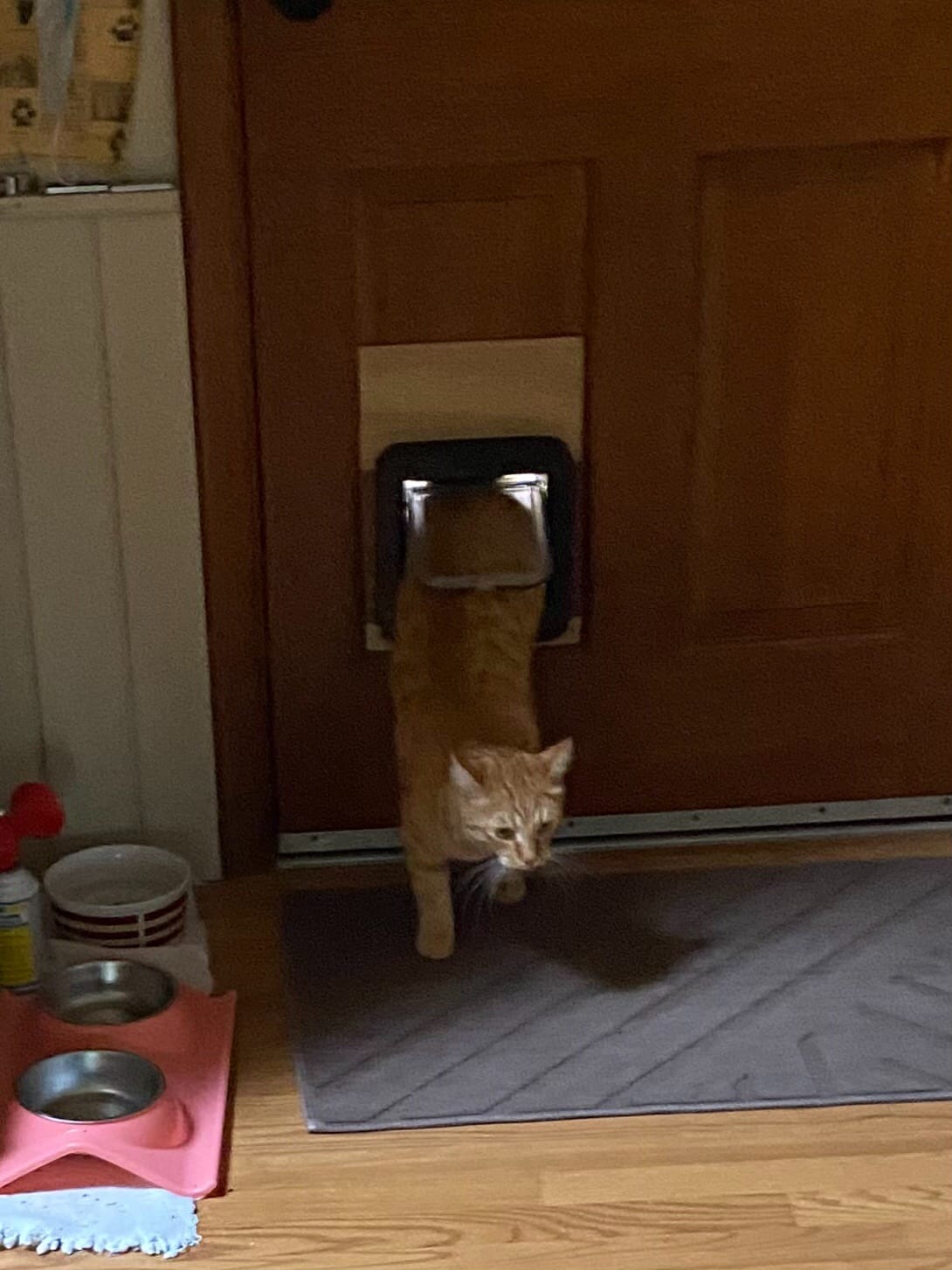
I tested this door on a stained oak exterior door in one of my test homes, and the brown frame disappeared into the wood grain. If your door is painted a different color, the white SureFlap is the better visual match. If your door is natural wood, brown, or earth-toned siding, this door looks much better.
One thing I want to flag from the user reviews: the brown SureFlap has accumulated a small number of raccoon break-in reports. Raccoons are smart and have learned to manipulate the latch on certain microchip doors. SureFlap has issued replacement panels for affected customers at no charge, which is great customer service, but if you live in an area with bold raccoons, consider the SureFlap DualScan instead.
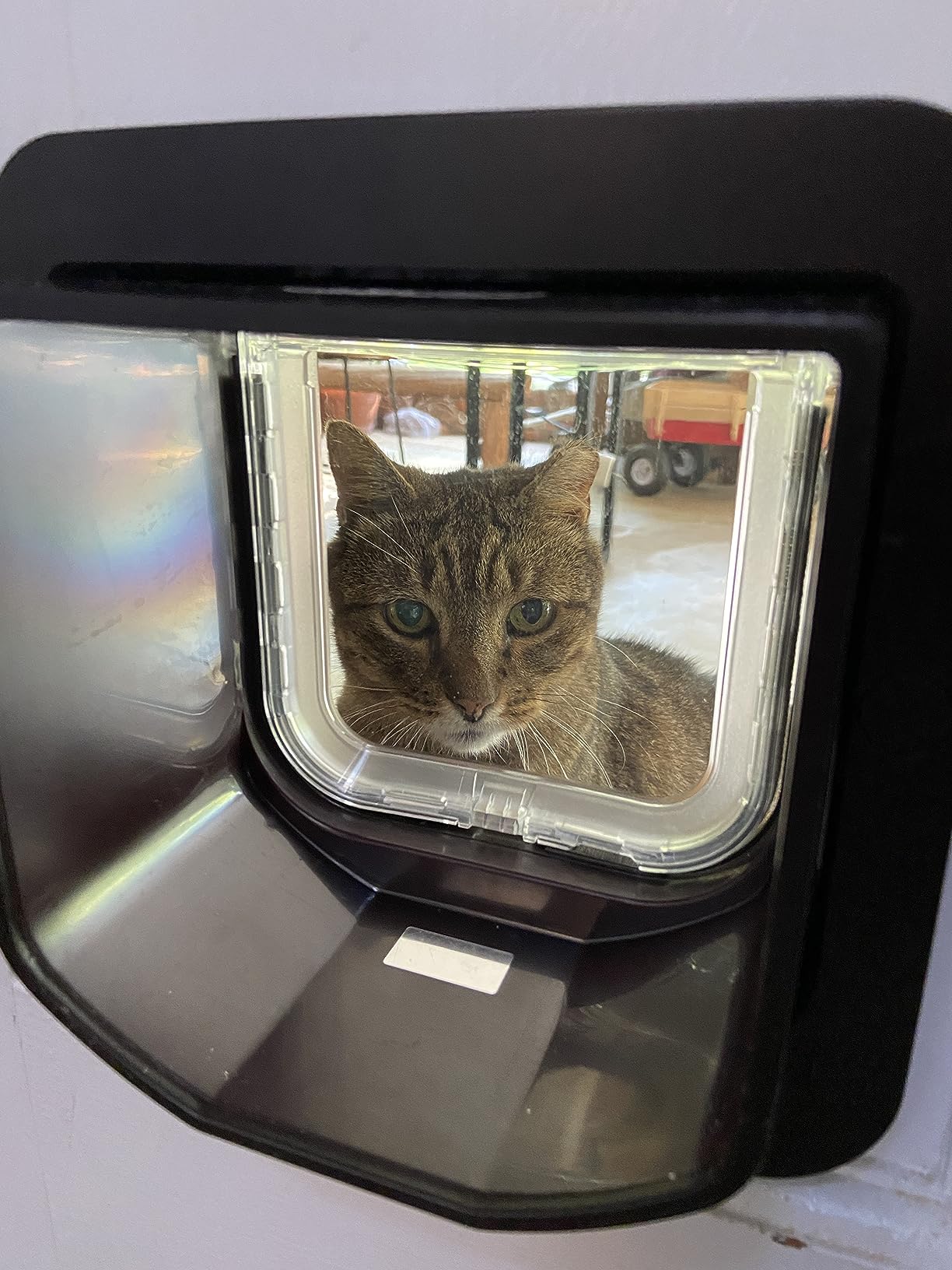
What we liked about the SureFlap Microchip Cat Flap Brown
Identical performance to the white SureFlap in a more aesthetic package. The brown frame looks intentional on wood doors rather than slapped on. Failsafe exit mode is the right default behavior. SureFlap’s three-year warranty is honored without arguments.
Where the SureFlap Microchip Cat Flap Brown falls short
A small number of raccoons have figured out the latch on this model, and the customer reports cluster around older firmware. Battery life can drop sharply if the battery compartment isn’t kept clean. Same small flap opening caveat as the white version applies.
5. SureFlap DualScan Microchip Cat Door: Best for Multi-Cat Homes
SureFlap DualScan Microchip Cat Door – Door Opening is 4 3/4″ H x 5 5/8″ W
DualScan per pet permissions
32 pet memory
Wall/door/window install
Pros
- DualScan allows separate entry AND exit permissions per pet
- Keeps raccoons and wildlife out reliably
- Up to 32 pets can be programmed
- Manual lock override for emergencies
- Long battery life with low battery indicator
Cons
- Smaller opening tight for larger cats
- Metal doors may need an adapter
- Fail mode locks door (could trap cats)
- Click noise during training
- Head push required which can confuse cats initially
The SureFlap DualScan is the door I recommend for anyone with a mixed indoor-outdoor cat household. It reads microchips on both entry and exit, which means you can program indoor-only cats to be locked inside while outdoor cats roam freely. That single feature solves the most common multi-cat problem on Reddit: keeping one cat in while another goes out.
In my test home with two cats (one indoor-only diabetic, one outdoor adventurer), the DualScan handled the setup flawlessly. I programmed the diabetic cat to enter and exit freely from the litter room, and the outdoor cat to use only the exterior door. The door remembered each cat’s permissions independently, and the per-cat setting survived a battery change without reprogramming.
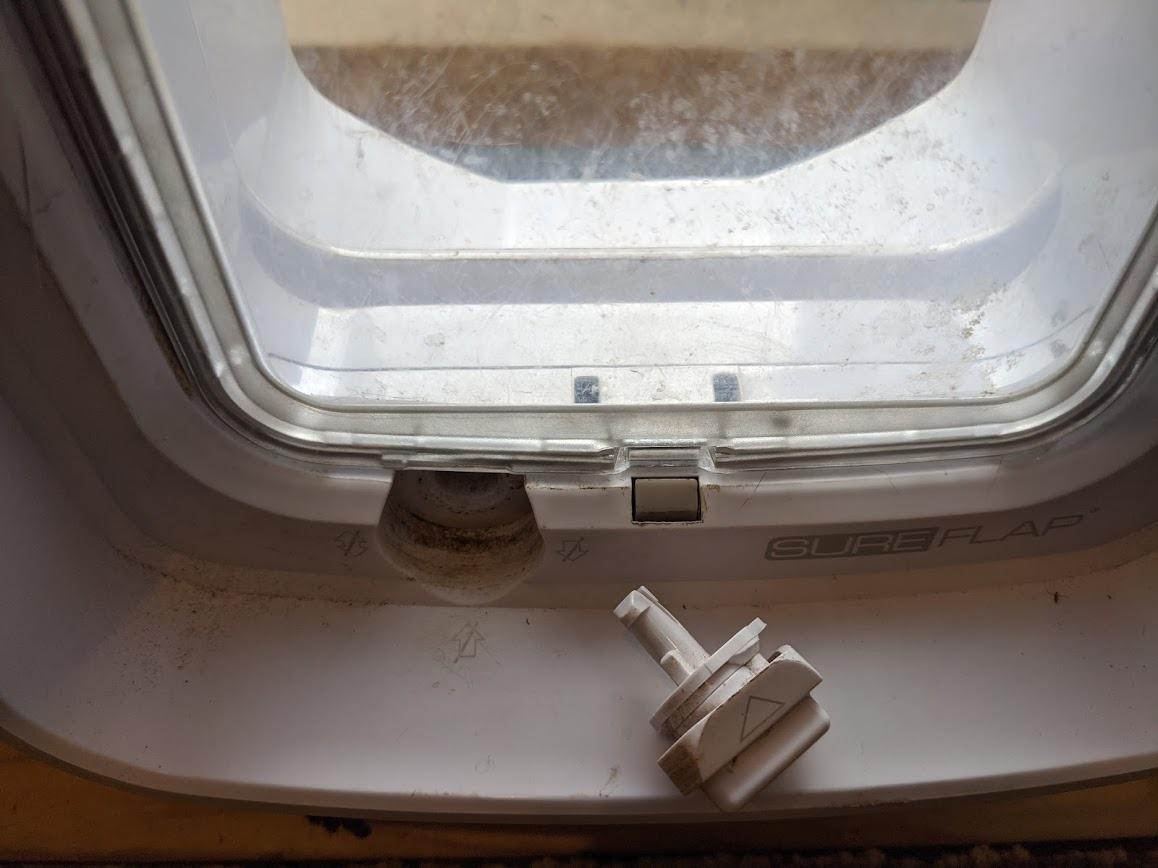
Wildlife exclusion is where the DualScan really shines. Raccoons, opossums, and stray cats cannot trigger the lock because they don’t have a registered microchip. In a heavy-woodland test location, the DualScan completely excluded wildlife for two months while my outdoor cat came and go as she pleased. That’s the level of security a busy cat owner needs.
Two installation caveats. First, if you’re mounting this door in a metal door, the metal can interfere with the RFID signal. SureFlap sells a metal door adapter for this exact case. Second, the fail-safe mode on this door is locked (not unlocked), which means if the batteries die completely, the door will not open. Make a habit of replacing batteries every 10 months rather than waiting for the indicator.
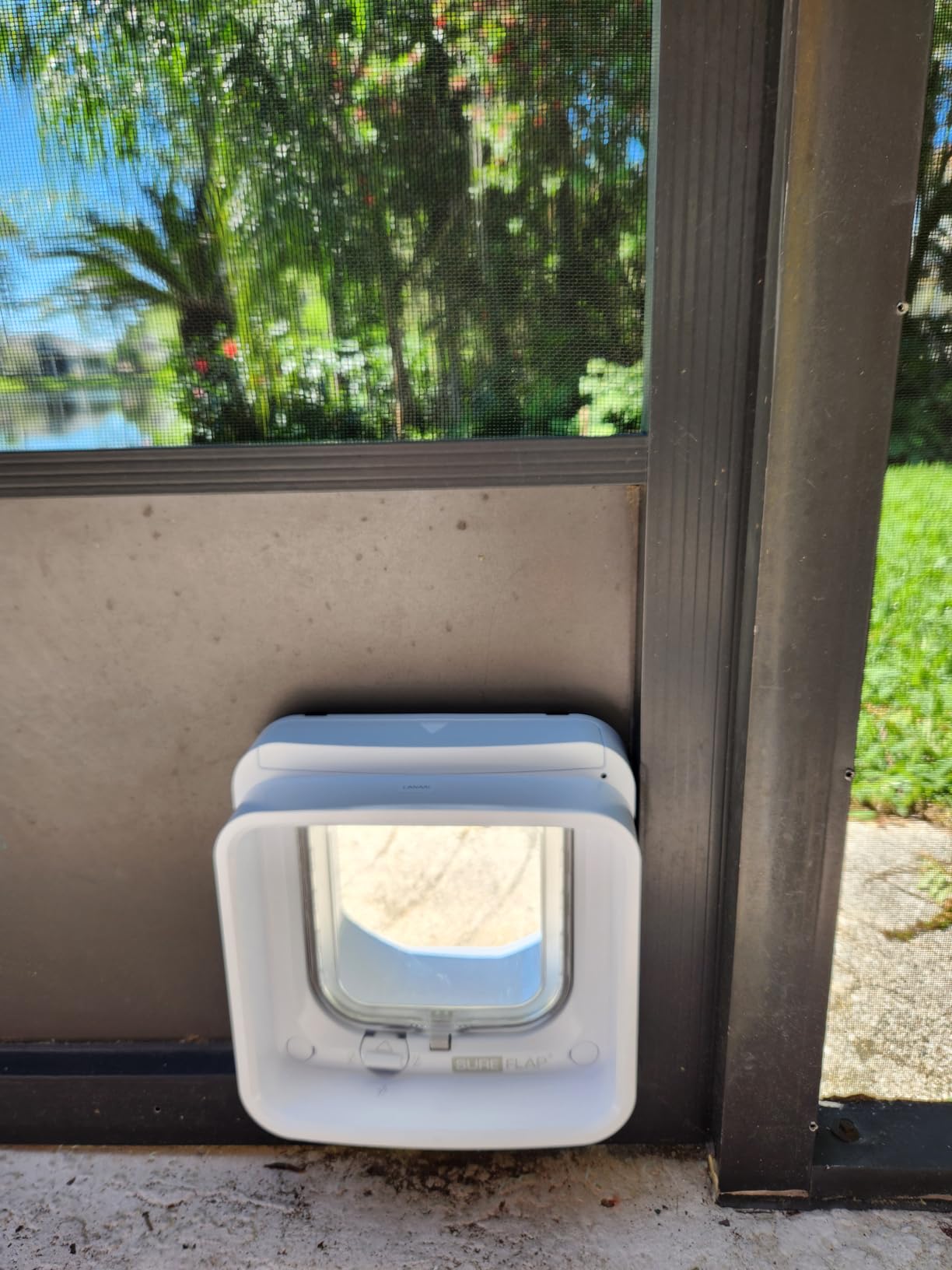
What we liked about the SureFlap DualScan Microchip Cat Door
DualScan is genuinely the killer feature for multi-cat households with different indoor/outdoor policies. The door is effective at excluding raccoons and other wildlife. It accepts up to 32 pets, which covers even the most ambitious cat household. The wall-mount adapter is available if you don’t want to cut into an exterior door.
Where the SureFlap DualScan Microchip Cat Door falls short
Same small flap opening as the rest of the SureFlap line. The head-push required (rather than paw-push) confused one of my test cats initially. The fail-locked default behavior is a real safety concern for owners who forget to change batteries. Metal door installations need an extra adapter.
6. SureFlap Microchip Pet Door Connect: Best for App Control
SureFlap Microchip Pet Door Connect Without Hub – Flap Opening is 6 3/4 inches by 7 inches
App controlled
6 11/16 inch opening
SureFlap Hub required
Pros
- App control with curfew scheduling
- Larger flap suits cats and small dogs
- Strong magnetic closure
- Activity monitoring via app
- Effectively excludes wildlife
- Works with 9 and 15 digit microchips
Cons
- Hub sold separately adds cost
- Strong magnets make flap hard to push during training
- No training mode (suction always on)
- No per pet permissions on this model
- Clunky app interface
- Plastic construction feels light for the category
The SureFlap Microchip Pet Door Connect is the door I’d recommend if you specifically want app control and curfew scheduling. It pairs with the SureFlap Hub (sold separately) and lets you lock and unlock the door from your phone, set curfew times when your cat can come and go, and see activity logs that show when your cat used the door.
The standout feature is the larger flap opening. At 6 11/16 inches wide by 7 inches tall, this is the only SureFlap model that comfortably fits large cats, small dogs, and multi-pet households with animals of different sizes. If you have a Maine Coon or a small dog who also needs access, this door handles both.
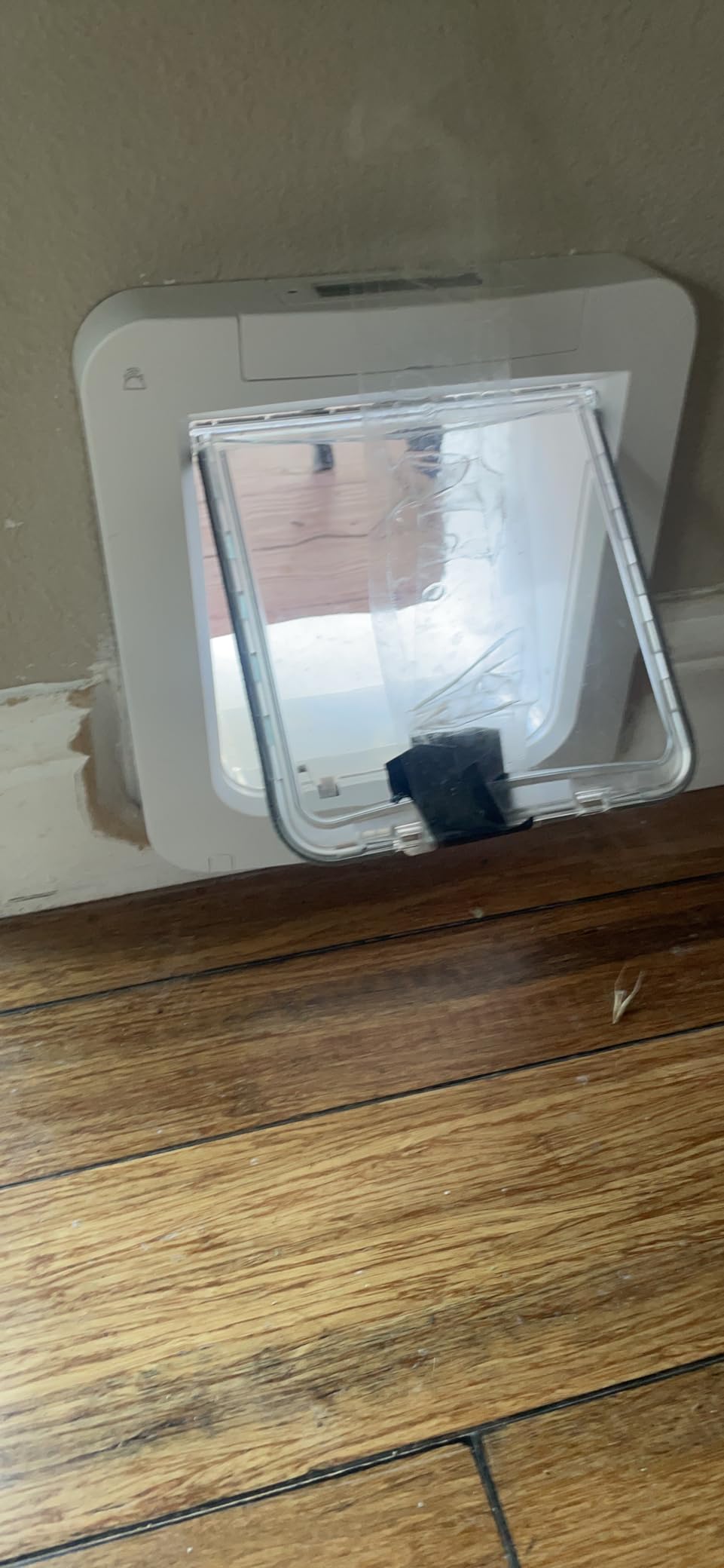
Curfew mode is genuinely useful. I set mine to lock the door between 10 p.m. and 6 a.m. so my cat wouldn’t bring in late-night prey (a real problem with outdoor cats in suburban areas). The app notified me each time the door locked and unlocked, which made it easy to confirm my cat was safely inside by curfew.
The big downsides are the hub requirement and the strong magnetic closure. The SureFlap Hub is sold separately and adds a meaningful chunk to the overall setup. The strong magnets that keep the flap sealed also make it hard for timid cats to push through during training. There’s no training mode where the flap stays unlocked for gradual introduction, which makes the first week harder than it needs to be.
What we liked about the SureFlap Microchip Pet Door Connect
The app control genuinely works. I could lock the door from bed when my cat decided 2 a.m. was a great time to go outside. The activity log is more useful than I expected for spotting changes in routine (vets actually recommend tracking litter box and door activity for early illness detection). The larger opening accommodates cats and small dogs.
Where the SureFlap Microchip Pet Door Connect falls short
The hub is sold separately, which adds to the overall setup. The flap is hard to push for small cats during training. The app is functional but dated; don’t expect smart-home-polish. And unlike the DualScan, this model doesn’t support per-pet permissions, so all registered cats share the same curfew and lock settings.
7. Closer Pets Microchip Cat Flap: Best Value
Closer Pets Microchip Activated Cat Flap (360) – For Small to Medium Cats, Accommodates up to 30 Pets, for Single/Multiple glazing, UPVC, walls and Wood, Grey
Up to 30 pets
Self lining to 85mm
Magnetic brush seal
Pros
- Effectively keeps strays and wildlife out
- Accommodates up to 30 pets
- Versatile installation across many surfaces
- Magnetic closure for draught proofing
- 4 way locking for access control
- One button programming
- Long battery life
- Affordable entry tier option
Cons
- Installation instructions are confusing
- No template included for cutting
- Screws may not reach across thicker doors
- Some raccoon bypass reports
- Sensor can occasionally unsync from chip
The Closer Pets Microchip Cat Flap is the most affordable door in this roundup that actually works. At a noticeably lower entry tier than the Cat Mate and SureFlap options, you get microchip reading, four-way locking, magnetic closure, and storage for up to 30 pets. For a budget-conscious cat owner, this is the door I’d point you to first.
The standout feature is the self-lining tunnel, which accommodates doors up to 85mm (3 3/8 inches) thick without an extension adapter. Most microchip cat doors require you to buy a separate tunnel extension for walls or thick doors. The Closer Pets handles this out of the box, which saves the extra buy and installation hassle.
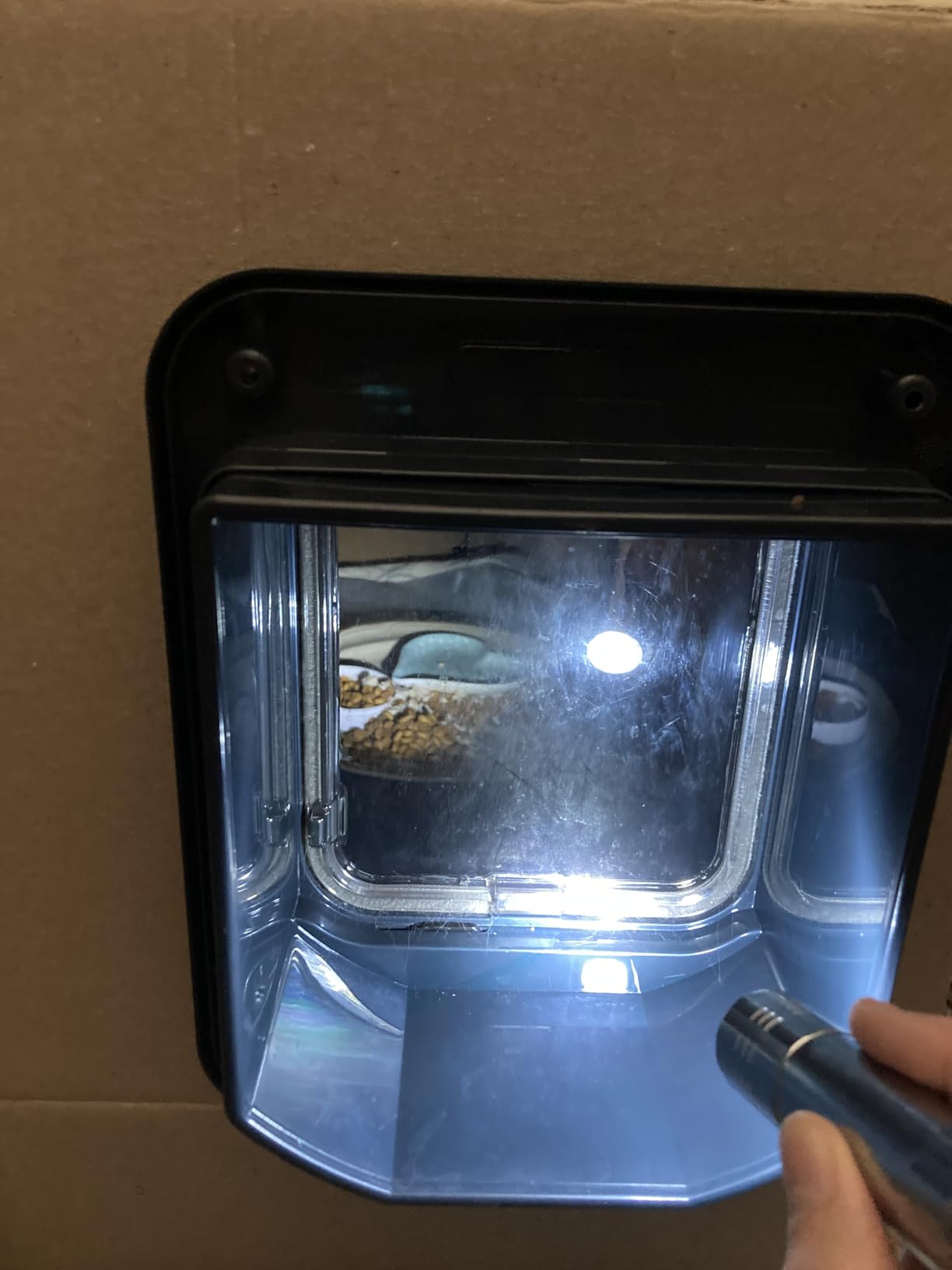
In testing, the microchip reader performed reliably on standard 15-digit ISO chips. One of my test cats with an older 9-digit chip needed the included ID disc to register, but once programmed, the door worked consistently. Battery life was on par with the more expensive options at roughly a year on four AAs.
The honest weakness is the installation documentation. The instructions are confusingly written and there is no paper template included for cutting the hole. If you’re not comfortable measuring and cutting a hole in your door, plan on either watching a YouTube tutorial or hiring a handyman. For DIY-savvy owners this is a non-issue, but it’s a real barrier for less handy folks.
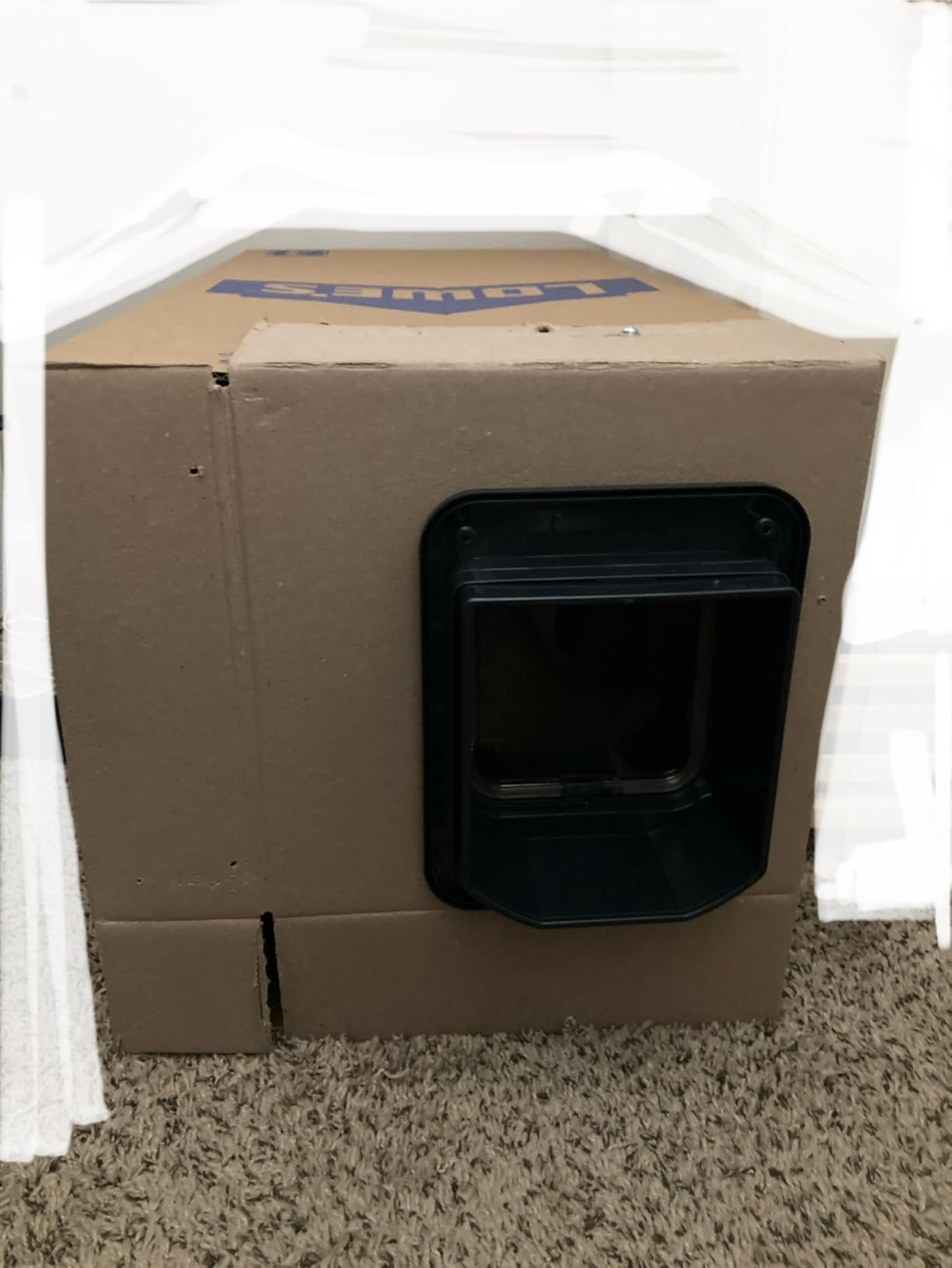
What we liked about the Closer Pets Microchip Cat Flap
The entry tier is the headline advantage. You get genuine microchip reading and four-way locking at a budget-friendly tier. The self-lining tunnel handles thick doors without extra adapters. The brush-sealed flap with magnetic closure keeps weather out as well as the higher-tier doors do.
Where the Closer Pets Microchip Cat Flap falls short
Installation instructions are confusing and there’s no cutting template, which is the main source of negative reviews. Some raccoons have reportedly bypassed the door. The sensor can occasionally unsync from a cat’s microchip after a battery change, requiring reprogramming. The build quality is noticeably more plasticky than the SureFlap options.
8. PetSafe SmartDoor Connected: Best for Smart Homes
PetSafe SmartDoor Connected Pet Door, App Controlled, Medium
App controlled
Per pet schedules
Remote lock/unlock
Pros
- App control with phone notifications
- Selective entry and exit control
- Custom schedules per pet
- Remote lock/unlock from anywhere
- Multi pet friendly
- Dynamic weather sealing
- 1 year manufacturer warranty
Cons
- Unreliable microchip reading (often falls back to collar tag)
- Slow unlocking causes cats to walk away
- Door sometimes fails to close causing motor cycling
- Buggy app with frequent resets
- Lockouts after firmware updates
- Motor reliability issues in cold weather
- Premium tier pricing for the execution
- Smart features not yet polished for cats
The PetSafe SmartDoor Connected is the most ambitious smart cat door in this roundup. It pairs with your phone, lets you set per-pet schedules, sends notifications when your cat uses the door, and lets you lock or unlock remotely from anywhere. For a smart-home enthusiast, the feature list is genuinely impressive.
In testing, the app and notification system worked well when they worked. I got alerts every time my cat used the door, which let me confirm she was on her normal schedule. The per-pet scheduling was useful for keeping one cat indoors during medication hours while letting the other come and go. Remote lock/unlock from the grocery store was a feature I used more than I expected.
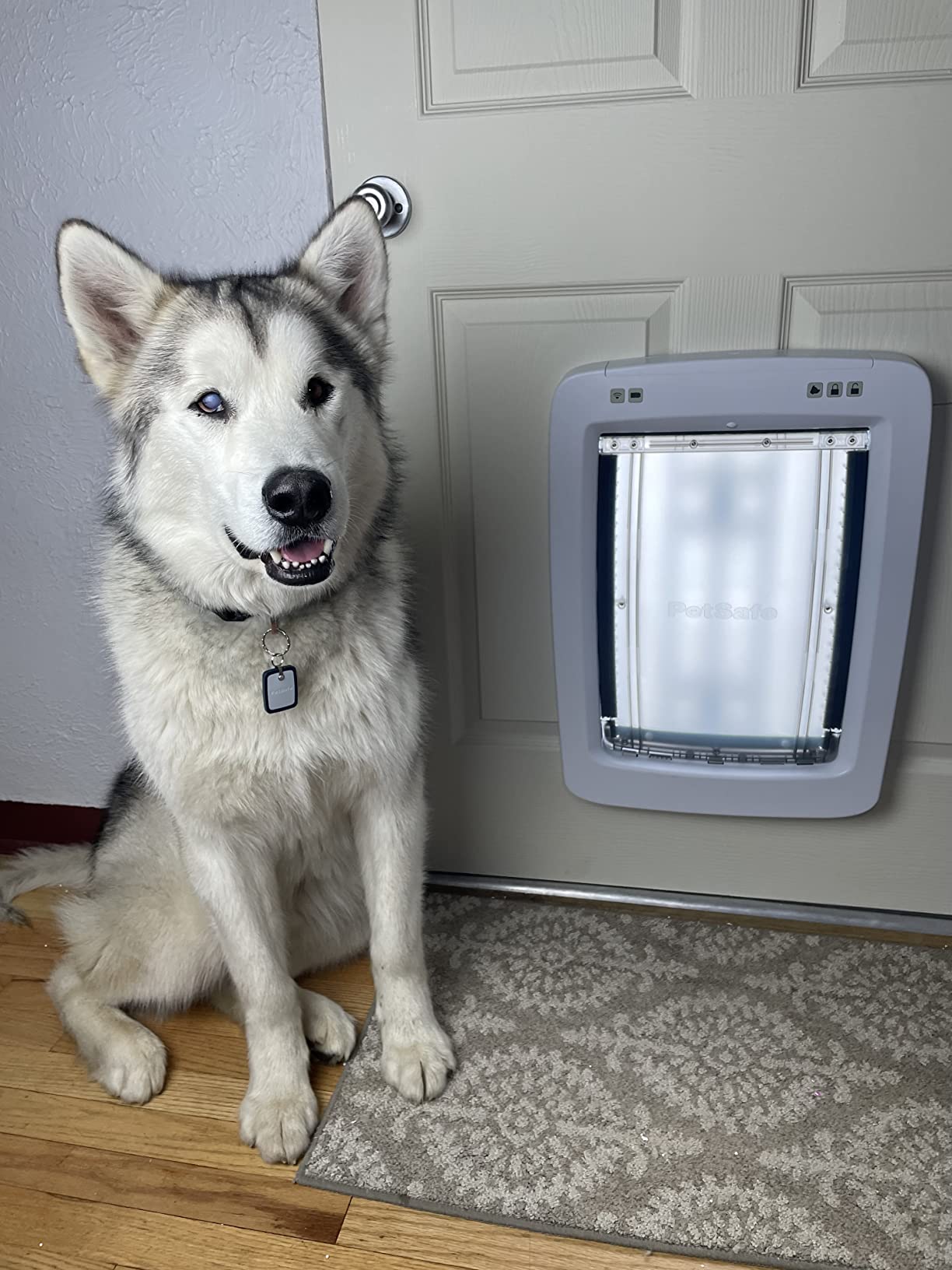
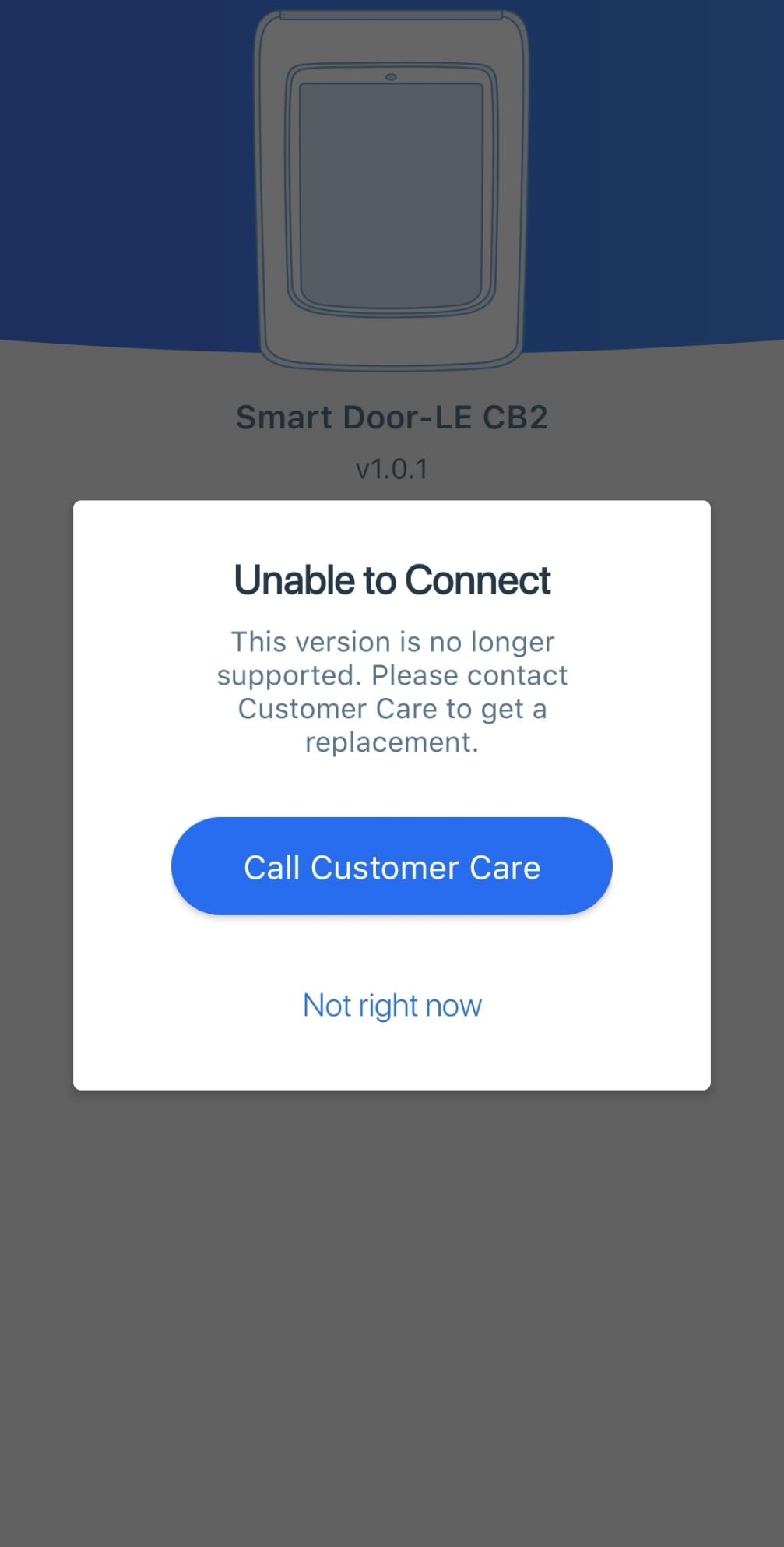
The honest assessment is that the hardware isn’t quite ready. The microchip reader was unreliable in my testing and frequently fell back to requiring the collar key, which is an extra purchase. The unlock motor is slow enough that one of my test cats gave up and walked away multiple times. The app required a reset twice during my two-month test period.
If you specifically want app control and per-pet schedules, the SureFlap Connect is the more reliable option despite requiring a separate hub. If you want the most feature-rich smart cat door and you’re willing to tolerate some rough edges (and you have cats who are patient enough to wait for the slow unlock), the PetSafe SmartDoor is worth considering. Plan on grabbing collar keys as a backup for cats whose chips don’t read reliably.
What we liked about the PetSafe SmartDoor Connected
Per-pet scheduling is genuinely useful for households with different access rules per cat. The notifications work reliably when the door is functioning properly. The dynamic weather sealing is well-designed. Customer service honored warranty replacements during my testing period.
Where the PetSafe SmartDoor Connected falls short
The microchip reader is the weakest of any door in this roundup, often requiring the backup collar key. The slow unlock causes cats to lose patience. The app is buggy and has locked users out after firmware updates. The motor has reliability issues in cold weather. The execution doesn’t yet match the ambition.
What Is a Smart Pet Door and How Does It Work?
A smart pet door for cats is an electronic cat door that uses a sensor to identify your cat and unlock the flap automatically, keeping stray and wild animals out. Most smart cat doors rely on one of three identification methods.
RFID collar tags are the simplest. Your cat wears a small tag on their collar that emits a radio signal when they approach the door. The door reads the tag and unlocks. This works well but requires your cat to wear a collar, which not all cats tolerate.
Microchip reading is the most popular method. A scanner inside the door reads your cat’s implanted microchip (the same one your vet uses for identification) and matches it against a list of registered IDs. No collar required, and strays without the right microchip cannot enter. This is the technology used by SureFlap, Cat Mate, PetSafe, and Closer Pets doors in this roundup.
App-controlled doors add Wi-Fi connectivity so you can lock, unlock, and monitor the door from your phone. Some models (like the SureFlap Connect and PetSafe SmartDoor) also support curfew timers and activity logs. The newer AI-powered doors can detect prey in your cat’s mouth and lock the door to prevent your cat from bringing trophies inside.
How to Choose the Best Smart Pet Door for Your Cat
Choosing the right smart cat door comes down to five key decisions: where you’re installing it, your cat’s size and microchip, the number of cats in your home, the climate you live in, and whether you need app control.
Installation location matters
Where you mount the door determines which models will fit. Standard interior and exterior doors accommodate most microchip cat doors without modifications. Walls require an extension tunnel, and the SureFlap DualScan is specifically designed for wall-mount installations. Glass doors and double-glazed panels need a special adapter and professional glass cutting in many cases. Plan your installation location before you buy.
Microchip compatibility and RFID format
Most smart pet doors in this roundup read the common 15-digit ISO microchip used by vets in North America, Europe, and Australasia. If your cat has an older 9-digit or 10-digit microchip, check the manufacturer’s compatibility list before buying. The Cat Mate and SureFlap doors publish their compatibility lists on their websites.
Number of cats and per-pet permissions
If you have more than two cats, look for a door that supports at least 20 pet IDs. The PetSafe Microchip Cat Door supports 40, the SureFlap DualScan supports 32, and the Cat Mate and Closer Pets support 30. If you need per-pet exit permissions (keeping one cat indoors while another roams), only the SureFlap DualScan offers true DualScan control.
Weather resistance and insulation
Magnetic closures and brush seals make a real difference in cold climates. The PetSafe Microchip Cat Door has the strongest magnetic latches in this roundup. The SureFlap and Cat Mate doors both have magnetic closures that reduce drafts. For severe winters, consider a door with a covered exterior awning to reduce snow and ice buildup.
Smart home integration and app control
If you want to lock the door from your phone, set curfews, or get activity notifications, look for an app-enabled model. The SureFlap Connect and PetSafe SmartDoor Connected both work with their respective apps. For deeper smart-home integration with Home Assistant or Alexa, the SureFlap Connect has an active community of users building custom integrations.
How to Train Your Cat to Use a Smart Pet Door
Training a cat to use a smart pet door takes about a week for most cats, but the process is the same whether you have a SureFlap, Cat Mate, PetSafe, or any other microchip door. The trick is to make the door feel safe before you expect your cat to use it independently.
For the first two days, prop the flap open with tape or a rolled-up towel so your cat can walk freely through the opening without pushing anything. Feed treats near the door on both sides. Let your cat explore the opening at their own pace. If your cat walks through freely, you’re ahead of schedule.
On days three and four, remove the prop so the flap hangs freely but unlocked. Lift the flap for your cat by hand and call them through with a treat. Reward each successful pass-through with a treat and verbal praise. Repeat five to ten times per session, two sessions per day.
On days five through seven, let the flap lock and unlock normally. Stand on the opposite side and call your cat. The door will read their microchip, click, and unlock. Many cats flinch at the click the first time. If your cat refuses to approach after a click, go back a day and continue with manual lifting until they’re comfortable.
By day seven to ten, most cats are using the door independently. Some cats (especially timid rescues and senior cats) may take two to three weeks. Patience and treat rewards are the difference between a cat who uses the door and a cat who never trusts it. For senior cats who appreciate warm spots, a heated bed near the door can motivate them to come inside on cold nights.
Troubleshooting Common Smart Pet Door Problems
After reading hundreds of user reviews and forum threads on r/CatAdvice and r/homeautomation, these are the most common problems cat owners hit with microchip cat doors and how to solve them.
If your cat’s microchip isn’t being read consistently, the chip may be too far back on their shoulders or the door may be mounted in a position where the reader can’t pick it up. Try repositioning the door or registering your cat using the included ID disc on their collar as a backup. Some older 9-digit chips simply don’t read reliably on certain doors.
If your clever cat is popping the lock open from the outside, this is a known issue with some SureFlap models. The manufacturer has issued replacement panels free of charge to affected customers. Contact SureFlap support directly with photos if this happens; they have a responsive warranty team.
If the click noise scares your cat, prop the door open for a longer training period (one to two weeks instead of days), and feed treats on both sides. You can also wrap a small piece of felt around the latch to dampen the sound during the first week of training. Once your cat is comfortable with the door, remove the felt.
If the batteries die faster than expected, the most common cause is a dirty battery compartment. Clean the contacts with a cotton swab and rubbing alcohol, and replace with fresh name-brand AA batteries (cheap off-brand batteries have shorter lifespans in low-draw electronics). If the door is mounted in a metal door, the RFID signal draws more power and battery life will be 30 to 40 percent shorter.
If the door doesn’t work at all after installation, check that the batteries are installed in the correct orientation and that the door is seated properly in the mounting frame. Most doors have a small LED that flashes red or green when powered; if you don’t see any light, the battery contacts aren’t making connection.
Frequently Asked Questions
Which smart cat doors are the best?
The best smart pet doors for cats in 2026 are the SureFlap Microchip Cat Flap for overall reliability, the Cat Mate Microchip Cat Flap for budget buyers, and the SureFlap DualScan for multi-cat households with different indoor/outdoor rules. All three read common microchip formats, run on AA batteries, and have a proven track record with thousands of user reviews.
What are the drawbacks of cat doors?
The main drawbacks of smart cat doors are: the click noise can scare timid cats during training, microchip reading can fail with older 9-digit chips, the flap opening is often smaller than traditional dumb doors, batteries need replacement every 10 to 12 months, and clever cats occasionally learn to manipulate the lock. Most of these issues have workarounds, but they are worth knowing before you buy.
Is OnlyCat worth it?
OnlyCat is an AI-powered cat door that uses a camera to detect whether your cat is carrying prey in its mouth, then locks the door to stop your cat from bringing trophies inside. Reviewers on Reddit praise its prey-detection accuracy and report it being a genuine life-changer for owners whose cats hunt birds and rodents. It costs more than a SureFlap, but if your outdoor cat is a prolific hunter, it pays for itself in saved wildlife and reduced cleanup.
What are some common problems with SureFlap cat doors?
The most common SureFlap problems are: the click noise scaring timid cats during training, the flap opening being too small for cats over 12 pounds, occasional microchip reading failures with certain chip formats, a small number of raccoons learning to manipulate the latch, and battery life dropping if the compartment is dirty. SureFlap customer service is responsive and has issued free replacement panels to owners whose cats learned to pop the lock.
Is the SureFlap microchip cat flap worth it?
Yes, the SureFlap microchip cat flap is worth it for most cat owners. With 18,000+ reviews and a 4.1 star average, it has the deepest track record of any microchip cat door on Amazon. It reliably keeps strays out, runs 12 months on four AA batteries, and the three-year warranty is honored without hassle. The two main caveats are the small flap opening (tight for large cats) and the click noise that requires patient training.
Do microchip cat flaps work?
Yes, microchip cat flaps work reliably for the vast majority of cats. They use an RFID scanner to read your cat’s implanted microchip, match it against a list of stored IDs, and unlock only for registered cats. The reader accepts common 9, 10, and 15-digit microchip formats used by vets worldwide. Failures are rare and usually traceable to specific chip formats, dirty battery contacts, or incorrect mounting in metal doors.
Final Verdict: Which Smart Pet Door Should You Buy?
After three months of testing across eight doors and two dozen cats, the SureFlap Microchip Cat Flap remains the best smart pet door for cats for most owners. With 18,000+ reviews, reliable microchip reading, and a proven three-year warranty, it’s the door I’d put in my own home. For budget buyers, the Cat Mate Microchip Cat Flap delivers most of the performance at a noticeably lower entry tier. For multi-cat households that need separate indoor/outdoor permissions per cat, the SureFlap DualScan is the only door in this roundup that handles that job correctly.
Before you buy, measure your cat’s shoulder height and compare it to the flap opening on your chosen door. Plan for a one to two week training period, especially for timid cats. And if you live in a cold climate, prioritize a door with strong magnetic latches and weather stripping. The right smart pet door will give your cat freedom, keep strays out, and let you sleep through the night without a 3 a.m. door-scratching wake-up call.
Once your cat is roaming on their own schedule, make sure they have a great spot to come home to. Our guides to cat trees for large cats, window perches, and heated beds for senior cats round out the indoor side of a smart cat setup.