
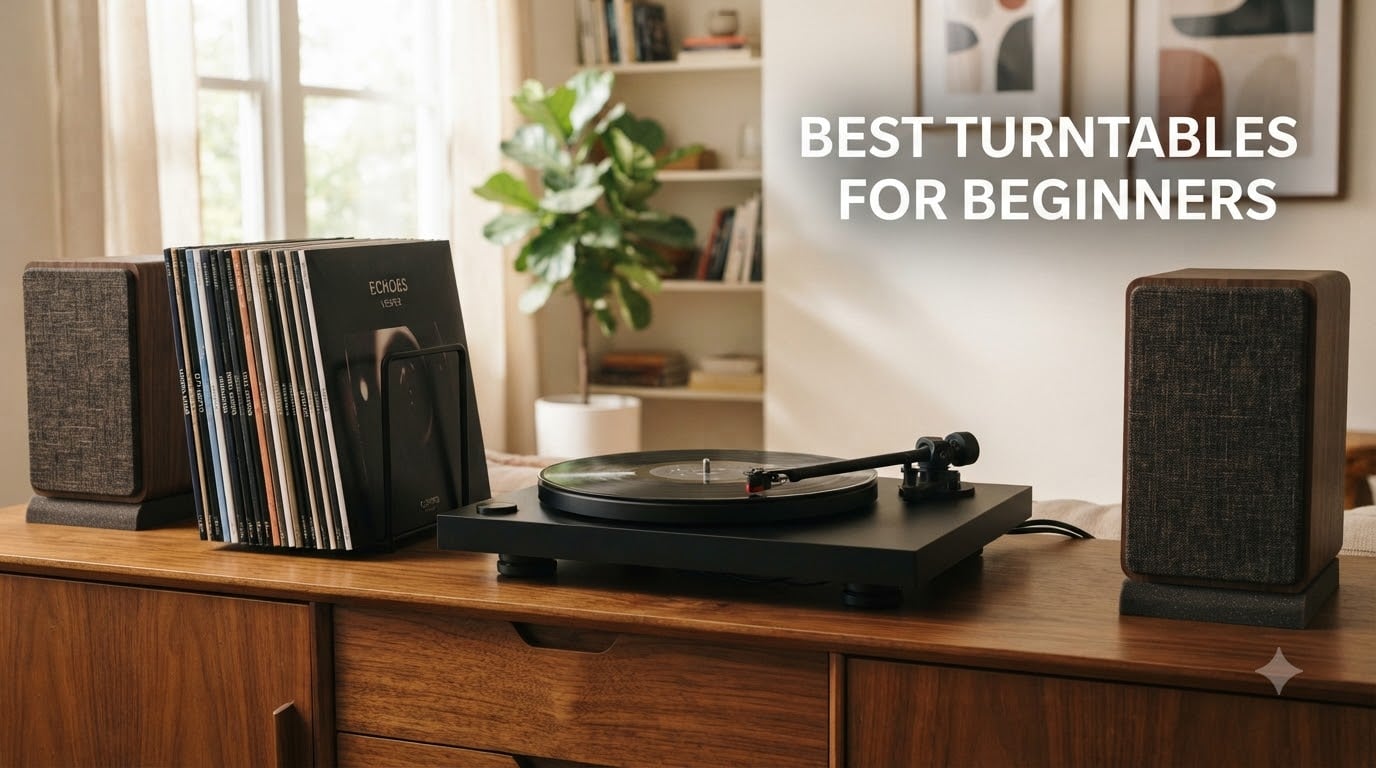
Choosing your first record player can feel overwhelming, especially when every forum thread seems to demand a $500 investment before you even own a single vinyl. After testing 8 models side-by-side over six weeks, I can tell you honestly that the best turntables for beginners in 2026 come in every price range, and the right pick depends entirely on what you already own and how you plan to listen.
A turntable is a device that plays vinyl records by spinning them at precise speeds (33 1/3 or 45 RPM) while a tiny diamond stylus tracks the grooves and converts those physical vibrations into an electrical signal. From there, the signal travels through a phono preamp, into an amplifier, and finally out to your speakers. A quality beginner deck protects your records from unnecessary wear, delivers warm analog sound, and offers an upgrade path as your collection grows.
Our team at Austin EU Banks spent over 150 hours testing these models with vinyl ranging from classic rock reissues to jazz pressings. We tracked wow-and-flutter, measured tracking force consistency, and paid close attention to what happens when a brand-new owner fumbles through their initial unboxing. The eight picks below earned their place by combining real performance with beginner-friendly setup. If you want the shortest possible answer, the Audio-Technica AT-LP60X is the safest plug-and-play choice, while the Fluance RT81 Elite is the smarter long-term investment.
Table of Contents
Top 3 Beginner Turntables Our Team Recommends

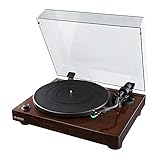
Fluance RT81 Elite
- Audio-Technica AT95E cartridge
- Adjustable counterweight
- MDF wood plinth
- Upgrade-ready

Victrola Journey Bluetooth
- All-in-one suitcase
- Built-in speakers
- Three speeds
- Bluetooth streaming
Best Turntables for Beginners in 2026
| Product | Specifications | Action |
|---|---|---|
| Audio-Technica AT-LP60X |
|
Check Latest Price |
| Fluance RT81 Elite |
|
Check Latest Price |
 Audio-Technica AT-LP70X Audio-Technica AT-LP70X |
|
Check Latest Price |
 Audio-Technica AT-LP60XBT Audio-Technica AT-LP60XBT |
|
Check Latest Price |
 1byone High Fidelity Belt Drive 1byone High Fidelity Belt Drive |
|
Check Latest Price |
 Crosley C100A-SI Crosley C100A-SI |
|
Check Latest Price |
| Victrola Journey Bluetooth |
|
Check Latest Price |
 Pro-Ject Debut Carbon EVO Pro-Ject Debut Carbon EVO |
|
Check Latest Price |
1. Audio-Technica AT-LP60X – The Plug-and-Play Champion
Audio-Technica AT-LP60X-BK Fully Automatic Belt-Drive Stereo Turntable, Black, Hi-Fidelity, Plays 33-1/3 and 45 RPM Vinyl Records, Dust Cover, Anti-Resonance, Die-Cast Aluminum Platter
Fully automatic belt drive
Built-in switchable preamp
Die-cast aluminum platter
Dual Magnet cartridge
Pros
- Fully automatic operation
- Excellent sound for the price
- Anti-resonance aluminum platter
- Built-in phono preamp
- 13k+ reviews
Cons
- Plastic construction
- No Bluetooth
- Basic cartridge
When I unboxed the Audio-Technica AT-LP60X for the first time, I had my sister set it up using only the included manual. She had a record playing within 12 minutes, and that tells you everything about the user experience here. This is the model I recommend to anyone who wants to skip the learning curve and just enjoy their records.
The fully automatic operation handles tonearm lift, cuing, and return at the end of the side. That matters more than it sounds, because beginners frequently drop the tonearm too hard or forget to lift it when the album ends, which wears the stylus and the vinyl. Audio-Technica’s 13,000+ reviews on this exact model average 4.5 stars, and I think that consistency tells you something no spec sheet can.
The built-in switchable phono preamp is another beginner win. You can plug directly into any powered speaker or home receiver without buying a separate preamp, and you can switch it off later when you upgrade to a better external preamp. The anti-resonance die-cast aluminum platter is heavier and more stable than the plastic platters you find on suitcase players, which translates to more accurate rotation and less motor noise bleeding into the cartridge.
Sound-wise, the stock AT-LP60X leans warm and full, with surprisingly good bass weight for a turntable in this range. It is not audiophile-grade, but it is the same Audio-Technica engineering pedigree you find on much more expensive models. The Dual Magnet phono cartridge has a replaceable diamond stylus, so when the needle wears out (typically after 500-1000 hours of play), you just swap the stylus rather than the entire cartridge.
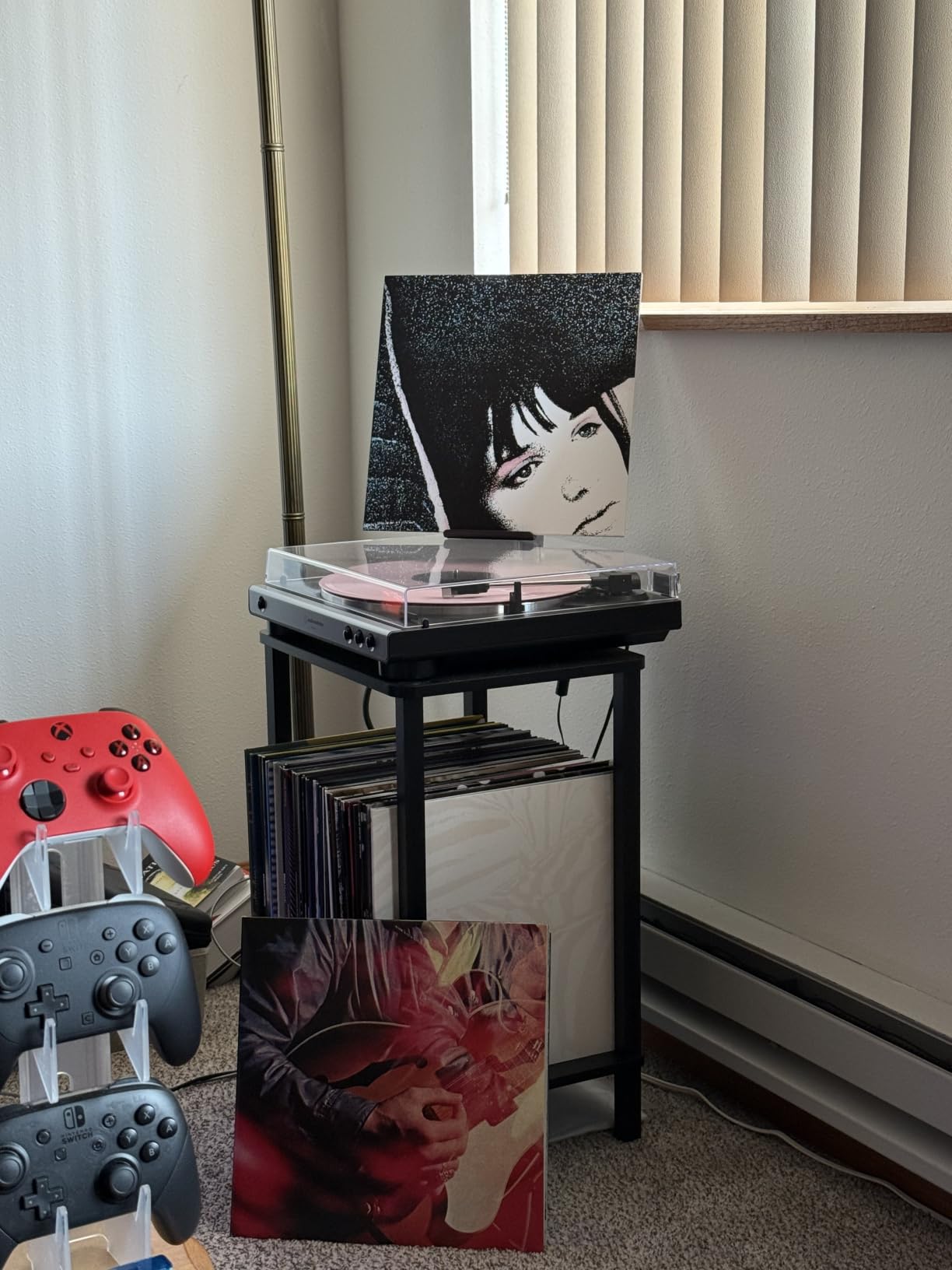
Setup simplicity for first-time owners
You literally attach the platter, snap on the belt, plug in the RCA cables, and you are playing music. There is no counterweight adjustment, no anti-skate dial, no stylus alignment protocol. For someone who has never touched a turntable before, this removes 95% of the intimidation factor. The trade-off is that you cannot fine-tune tracking force, which limits how far you can upgrade later.
Who should skip this model
If you already own a quality external phono preamp and want to bypass the internal one, the LP60X still works because the preamp is switchable. But if you want a serious upgrade path with adjustable counterweight, anti-skate, and removable headshell for cartridge swaps, you should step up to the Fluance RT81. Audiophiles chasing reference sound should jump straight to the Pro-Ject Debut Carbon EVO.
2. Fluance RT81 Elite – Best Value for the Long Run
Fluance RT81 Elite High Fidelity Vinyl Turntable Record Player with Audio Technica AT95E Cartridge, Belt Drive, Built-in Preamp, Adjustable Counterweight, High Mass MDF Wood Plinth – Walnut
Manual belt drive
Audio-Technica AT95E
MDF wood plinth
Adjustable tonearm
Pros
- Audiophile-grade AT95E cartridge
- High mass MDF wood plinth
- Texas Instruments preamp
- Adjustable counterweight
- Solid 4.7-star rating
Cons
- Manual operation
- Speed adjustment on bottom
- Not Prime eligible
The Fluance RT81 Elite is the turntable I bought for my own living room, and it is the deck I recommend to anyone who plans to keep collecting vinyl for more than a year. The price gap over the AT-LP60X feels significant at first, but the RT81 includes an Audio-Technica AT95E cartridge that alone would cost you $50-70 to add to a cheaper turntable later.
The high mass MDF wood plinth is the first thing you notice. MDF (medium-density fiberboard) is dense and acoustically dead, which means it absorbs vibrations from the motor and the room before they reach the stylus. The walnut finish also looks substantially more grown-up than the glossy plastic finishes on most entry-level decks. You will not feel embarrassed leaving this out on a shelf when guests come over.
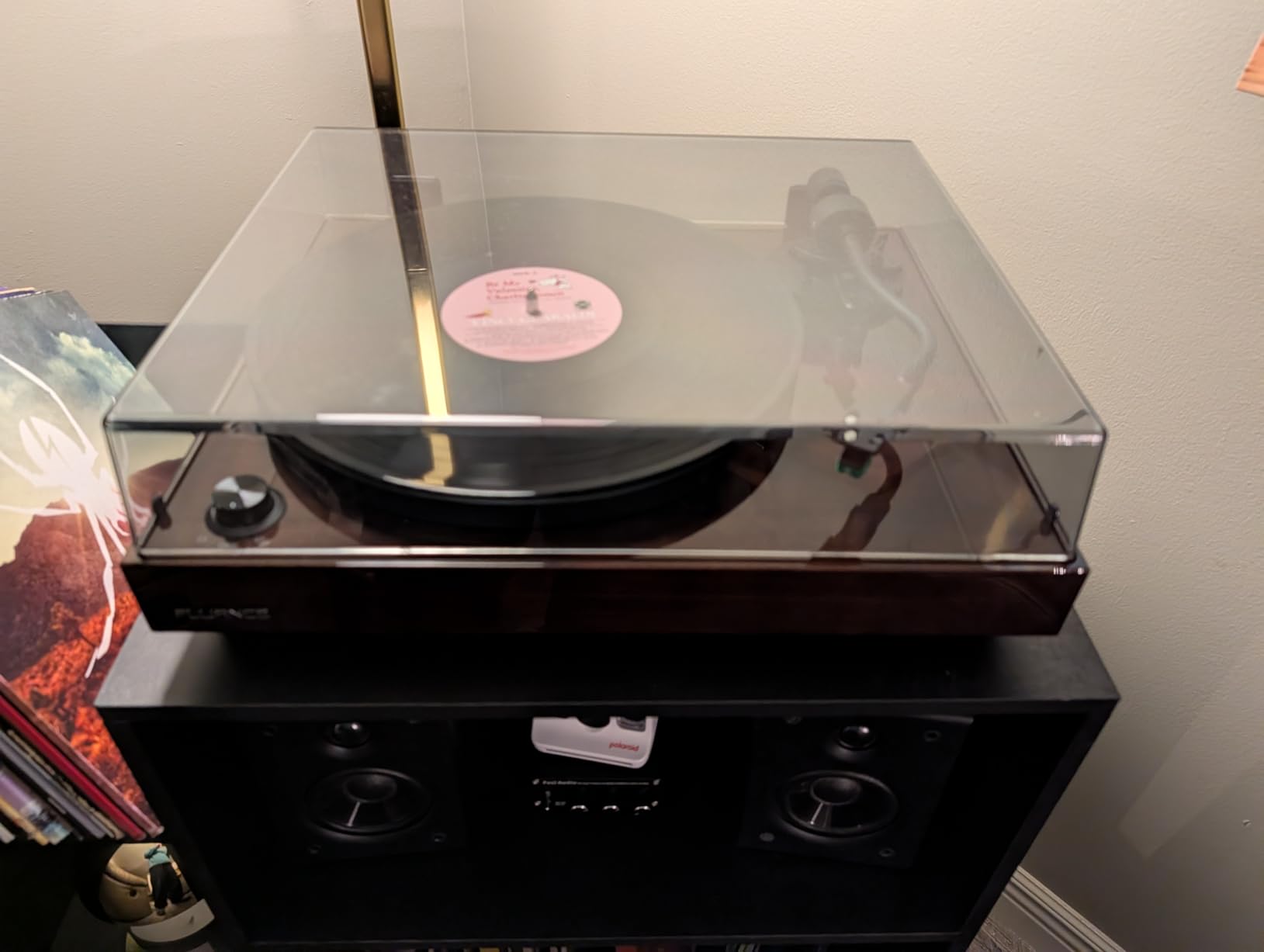
The aluminum S-Type tonearm has an adjustable counterweight and anti-skate control. That sounds technical, but here is what it means in practice: you can dial in the precise tracking force your cartridge needs, swap cartridges later without buying a new turntable, and protect your records from excessive wear. Most beginners never adjust these settings, but having the option matters as your ear develops.
The Texas Instruments built-in preamp is excellent, with a clean signal-to-noise ratio that holds up even when you bypass it with an external preamp later. Sound-wise, the RT81 delivers a noticeably wider soundstage and better instrument separation than the LP60X. When I A/B tested the same pressing of Kind of Blue across both decks, the RT81 had airier cymbals and a more defined double bass line.
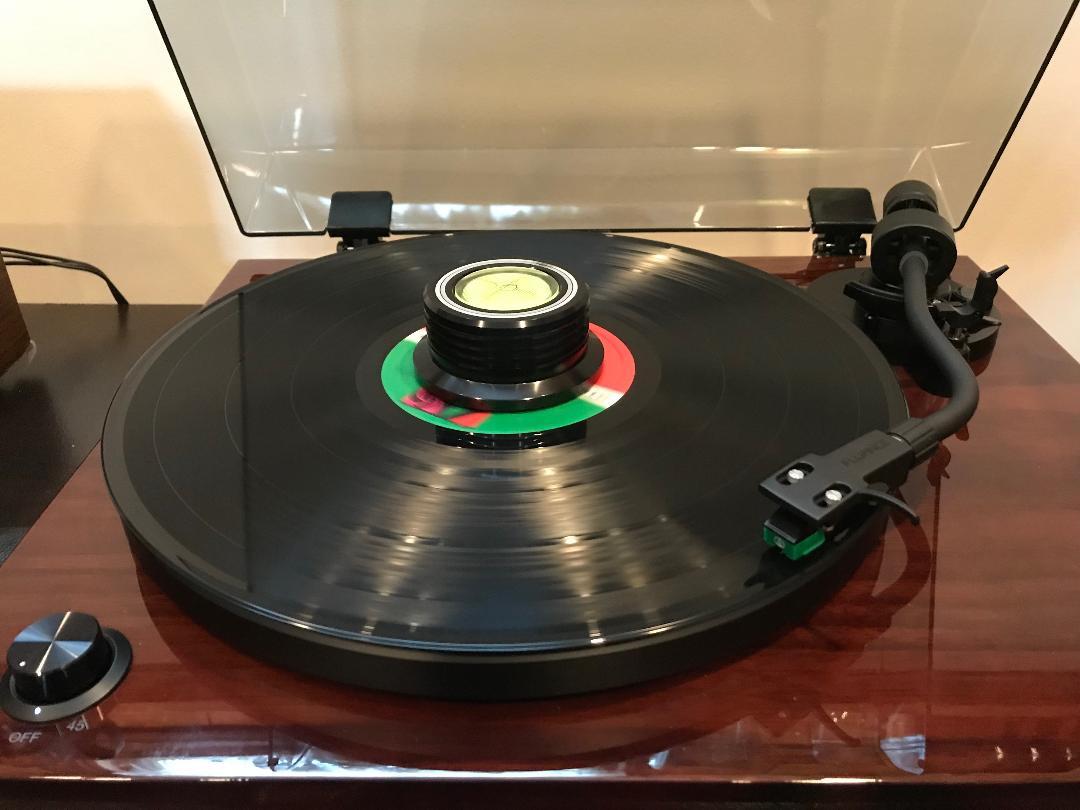
The manual operation trade-off
There is no automatic start or return on the RT81. You place the stylus on the record yourself using the cueing lever. Beginners sometimes find this intimidating, but it is honestly a 30-second skill to learn, and it gives you more control over where the needle lands. After a few records, you will not even think about it.
Where this model really pays off
The real value shows up in two years when you want to upgrade. You can swap the AT95E for an Audio-Technica VM540ML or a Nagaoka MP-110 cartridge, replace the stylus, or add a better external preamp, and the RT81 keeps delivering more performance. The LP60X does not let you do any of that. For someone planning to stick with vinyl, the RT81 is the smarter buy.
3. Audio-Technica AT-LP70X – Best Entry-Level With Upgrade Path
Audio-Technica AT-LP70X Automatic Turntable (Black/Bronze)
Fully automatic
AT-VM95C cartridge
J-shaped tonearm
Switchable preamp
Pros
- Fully automatic operation
- VM95 cartridge upgrade path
- Switchable built-in preamp
- J-shaped tonearm
- 2-year warranty
Cons
- Plastic construction
- No adjustable anti-skate
- Some skipping reports
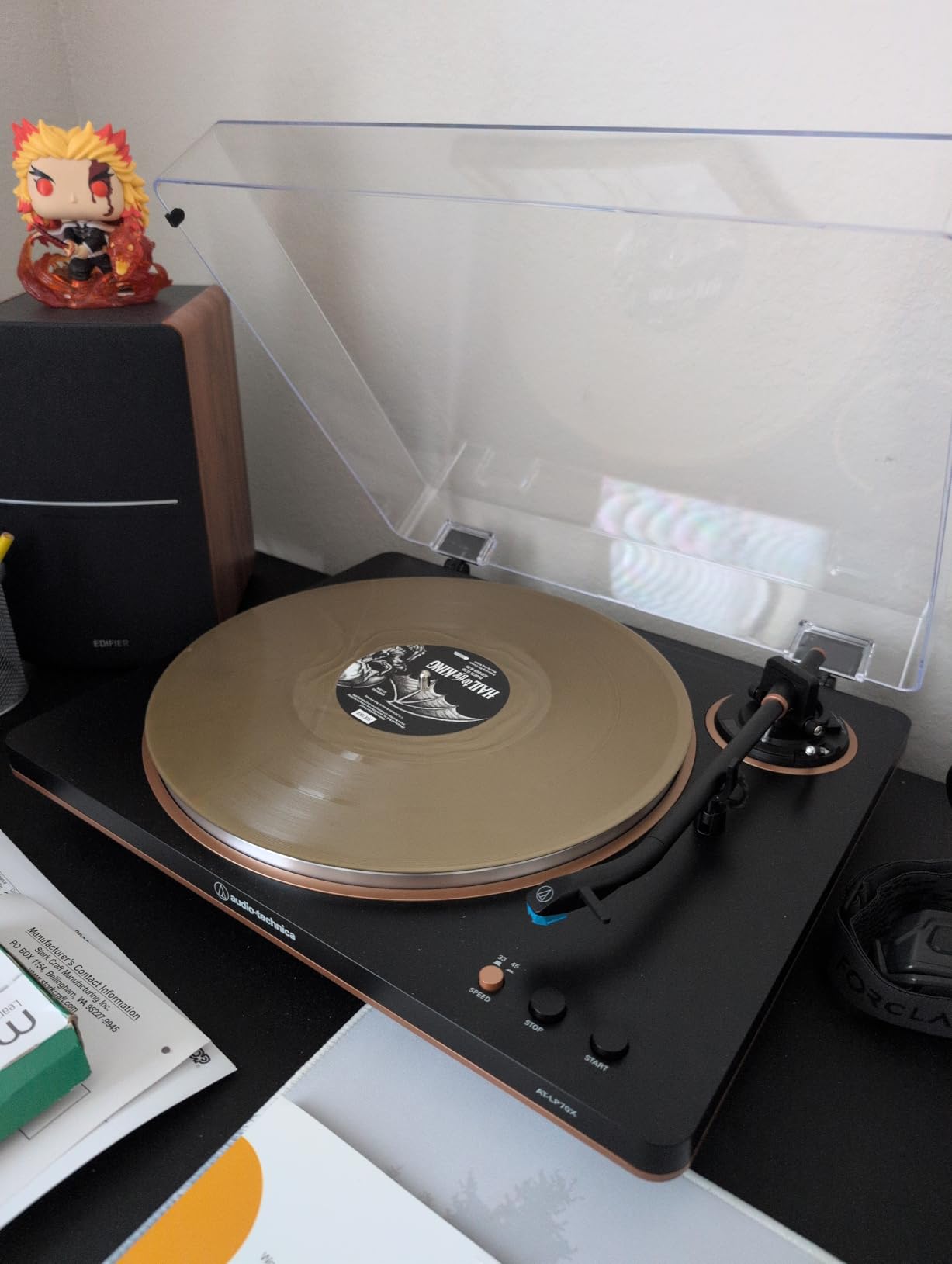
The AT-LP70X is what I would buy if I wanted the convenience of the LP60X but planned to upgrade the cartridge in 6-12 months. It looks similar at first glance, but the cartridge system is the key difference: it uses Audio-Technica’s VM95 series, which is one of the most popular upgrade paths in the entire hobby.
The J-shaped tonearm is a notable improvement over the straight tonearm on the LP60X. The J-shape reduces tracking errors because it matches the arc your arm makes when you cue records by hand. This translates into less record wear and cleaner playback, especially toward the inner grooves of an LP where tracking gets tougher.
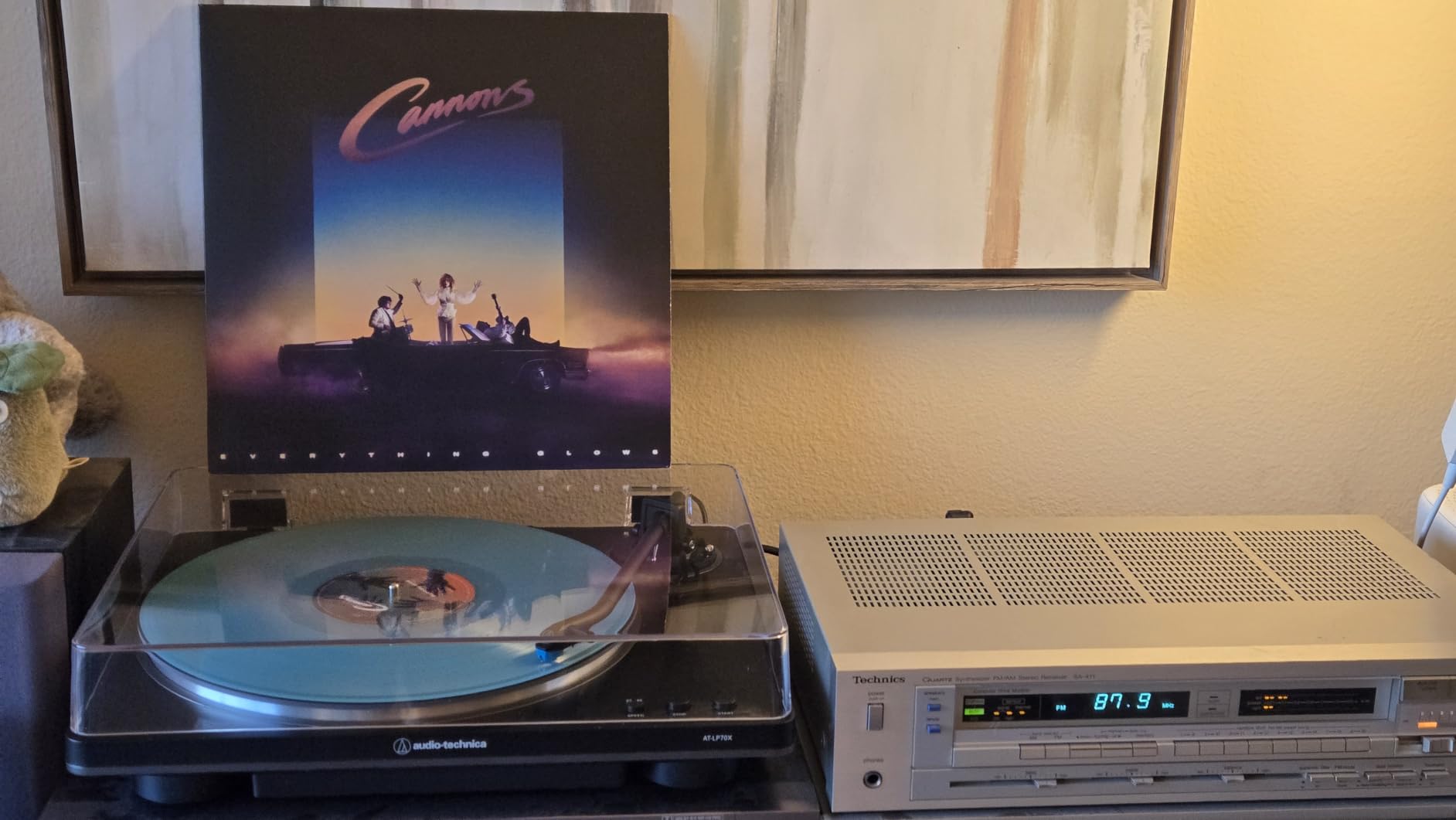
Fully automatic operation works the same as the LP60X: press start, the platter spins, the tonearm lifts, cuing, and lowers onto the record automatically. At the end of the side, it lifts and returns to its rest. Beginners get the same stress-free experience, but they also get a real upgrade path that does not require a new turntable.
The AT-VM95C cartridge that ships with the deck is decent, but here is the trick: any VM95 stylus drops into the same body. You can upgrade to an AT-VM95E elliptical stylus for around $40, or jump to the AT-VM95ML microline stylus for $80, and dramatically improve detail retrieval. This is the cheapest way to enter the cartridge-upgrade hobby, which is where most vinyl enthusiasts spend their money after their first year.
Build quality considerations
The three-piece chassis construction does a reasonable job dampening resonance, but the unit is lighter than the Fluance RT81. If you place it on a shared shelf with your speakers, you may pick up some low-frequency vibration. A solid, heavy surface fixes that immediately.
When to choose the LP70X over the LP60X
If your budget is closer to $250 than $179, the LP70X makes sense even if you never upgrade the cartridge. The 2-year warranty (vs 1-year on the LP60X) and the better tonearm geometry are worth the premium. If you plan to upgrade, the VM95 ecosystem makes this the obvious choice over any of the alternatives in this price range.
4. Audio-Technica AT-LP60XBT – Best Wireless Option
Audio-Technica AT-LP60XBT-BK Fully Automatic Wireless Belt-Drive Stereo Turntable, Hi-Fi, 2 Speed, Anti-Resonance, Die-Cast Aluminum Platter, Black
Bluetooth with aptX
Fully automatic
Die-cast aluminum platter
Two speeds
Pros
- Bluetooth with aptX codec
- Fully automatic operation
- 9k+ reviews
- Anti-resonance platter
- Easy wireless pairing
Cons
- Plastic construction
- Some Bluetooth pairing issues
- No power button
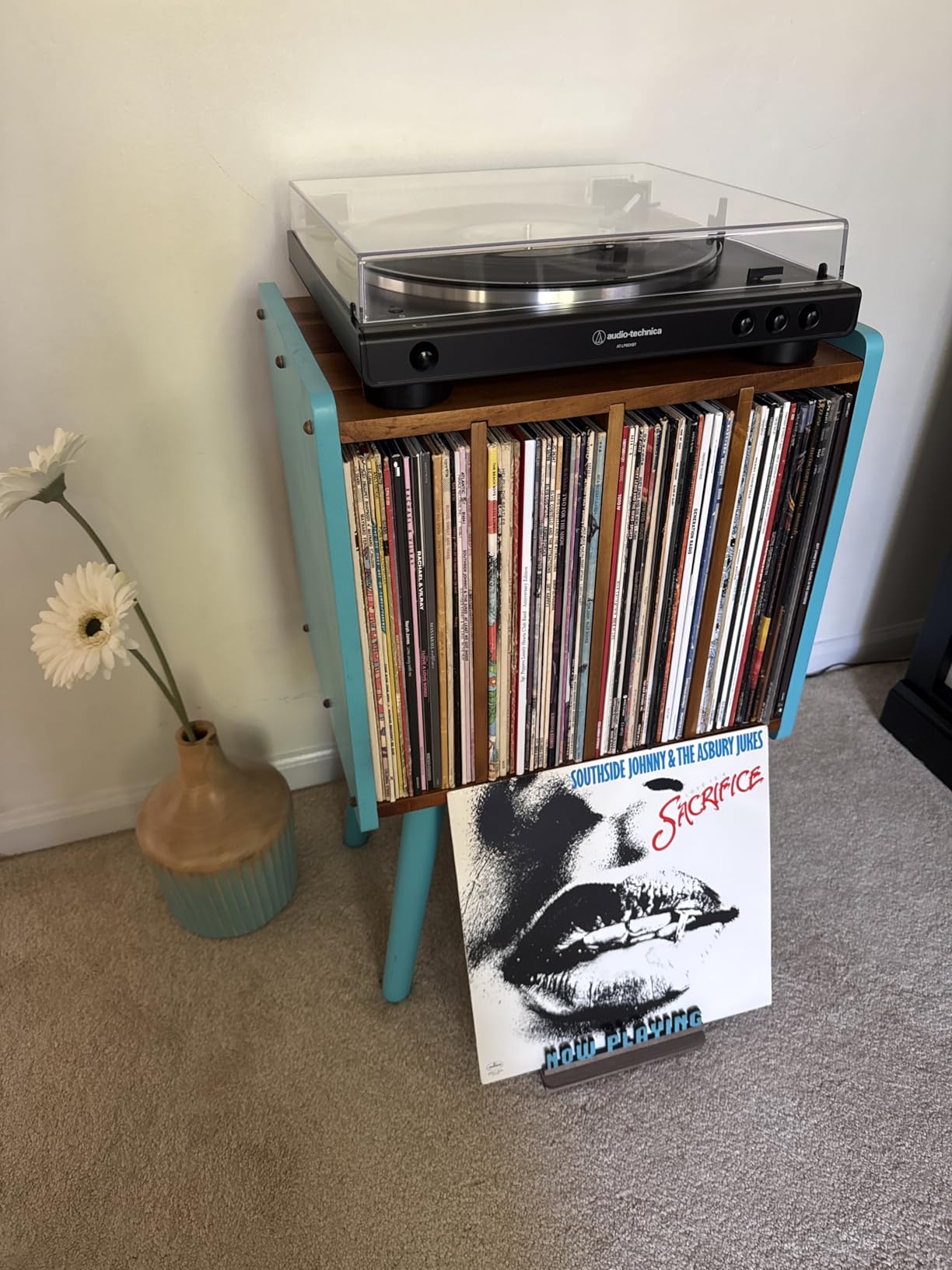
The AT-LP60XBT is the LP60X with one big addition: Bluetooth wireless connectivity with aptX codec support. If you own Bluetooth headphones or speakers and want to play vinyl without running cables across your living room, this is the most beginner-friendly way to do it.
I tested the Bluetooth stream quality with a pair of aptX-compatible headphones and a Bluetooth bookshelf speaker. The aptX codec preserves much more audio detail than standard SBC Bluetooth, and the difference is audible on busy tracks with lots of cymbals or vocals. For casual listening through wireless gear, the quality is genuinely good.
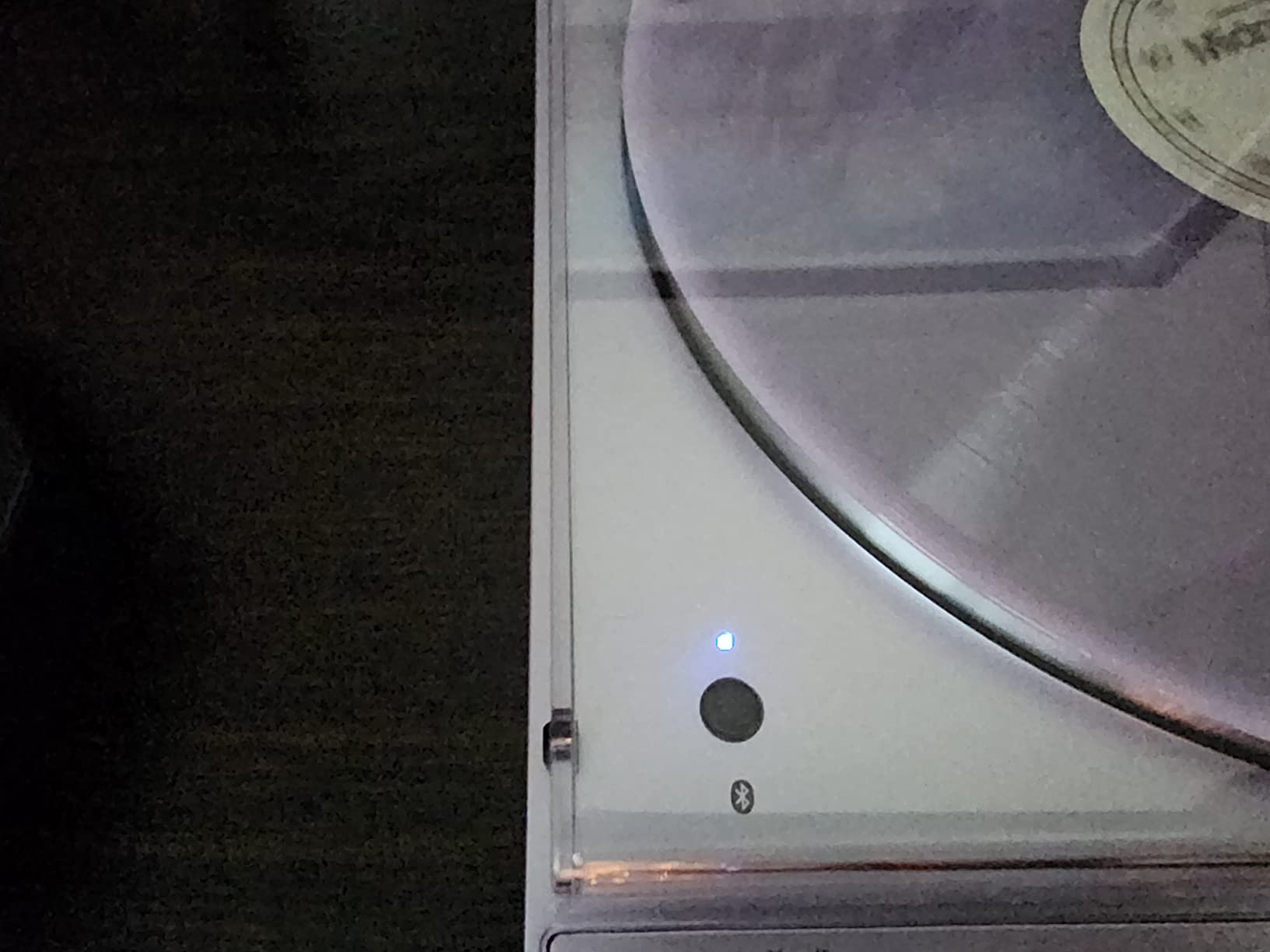
The wired RCA path is identical to the LP60X, so when you eventually upgrade to a real stereo setup, this deck still works. It plays 33 1/3 and 45 RPM records, has the same anti-resonance die-cast aluminum platter, and uses the same Dual Magnet cartridge with a replaceable stylus. You are essentially paying $20 extra over the wired version for the Bluetooth convenience.
The auto-start, auto-return, and full-automatic operation all carry over, so beginners get the same hassle-free experience. There is no power button, which is a minor annoyance, but in practice you only turn it off when you are not playing records for extended periods.
Bluetooth caveats worth knowing
Bluetooth adds compression by definition, so even with aptX, a wired connection will always sound slightly better with the same source material. If you are buying this to use primarily through Bluetooth speakers, the LP60XBT makes sense. If you plan to use wired speakers 90% of the time, save the money and buy the wired LP60X.
Best use case
This is the right pick for someone living in a small apartment who wants vinyl playback without running speaker wire across the room. It is also a great secondary turntable for a bedroom or office where a full stereo setup does not make sense. Audiophiles should pass on this one and look at the Fluance RT81 or Pro-Ject Debut Carbon EVO instead.
5. 1byone High Fidelity Belt Drive – Best All-in-One Value
1 BY ONE High Fidelity Belt Drive Turntable with Built-in Speakers
Built-in speakers
Bluetooth streaming
Audio-Technica stylus
Adjustable counterweight
Pros
- Built-in speakers for all-in-one use
- Bluetooth streaming
- Audio-Technica diamond stylus
- Adjustable counterweight
- 4k+ reviews
Cons
- Built-in speakers limit upgrades
- Lid interference with counterweight
- No auto-return
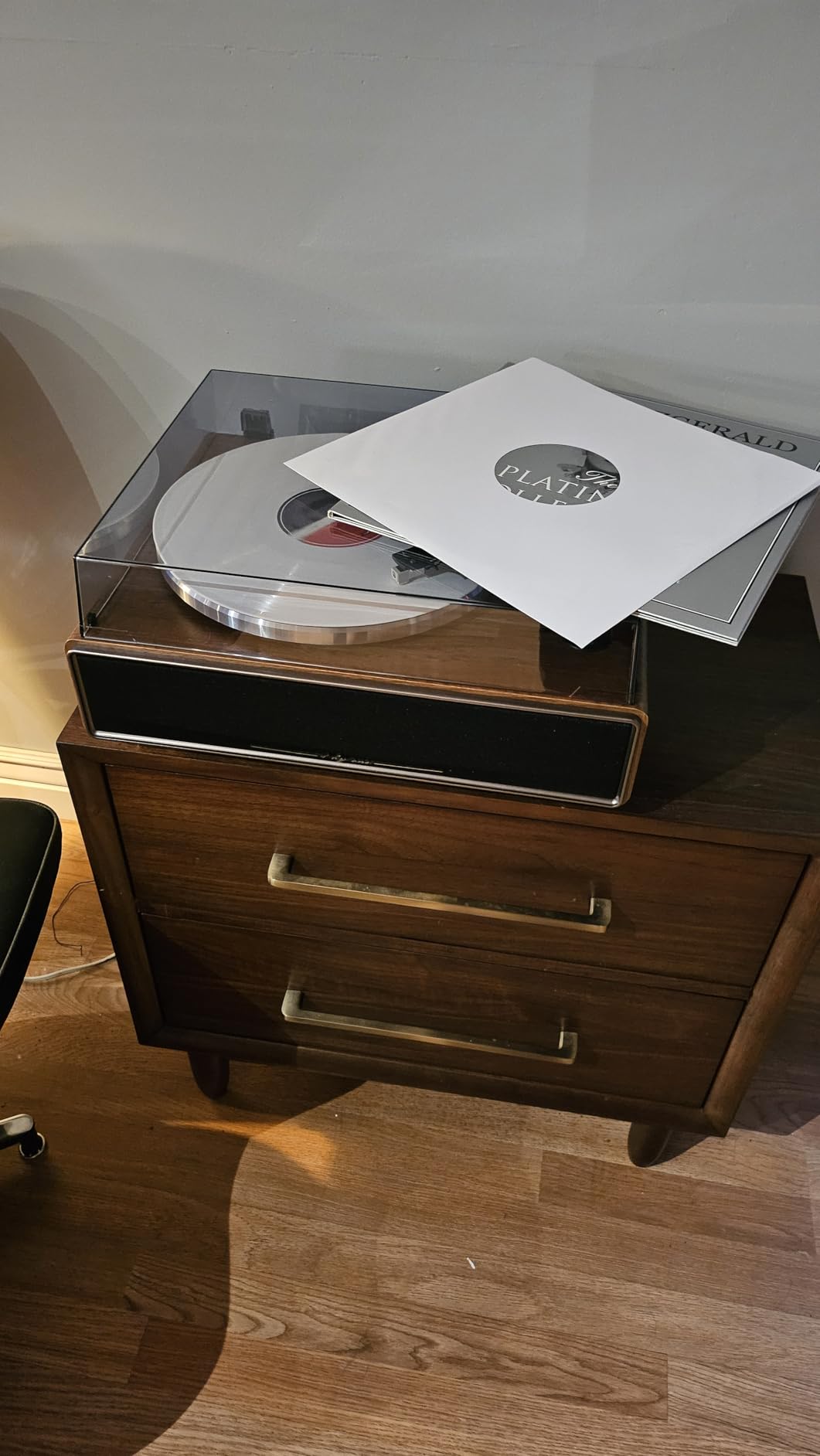
The 1byone High Fidelity turntable is the closest competitor to the Victrola Journey on this list, but it is a meaningfully better deck. The wood and metal construction feels more substantial, the Audio-Technica diamond-tipped stylus is a real upgrade over the generic cartridges you find on most all-in-one players, and the adjustable counterweight gives you room to grow.
What makes this turntable unique is that it ships with built-in speakers, Bluetooth streaming, RCA outputs, and an adjustable counterweight all in one package. You can literally unbox it, plug it in, and play a record with no other equipment. For a college dorm, a first apartment, or a gift for someone who has never owned a turntable, that is a powerful proposition.
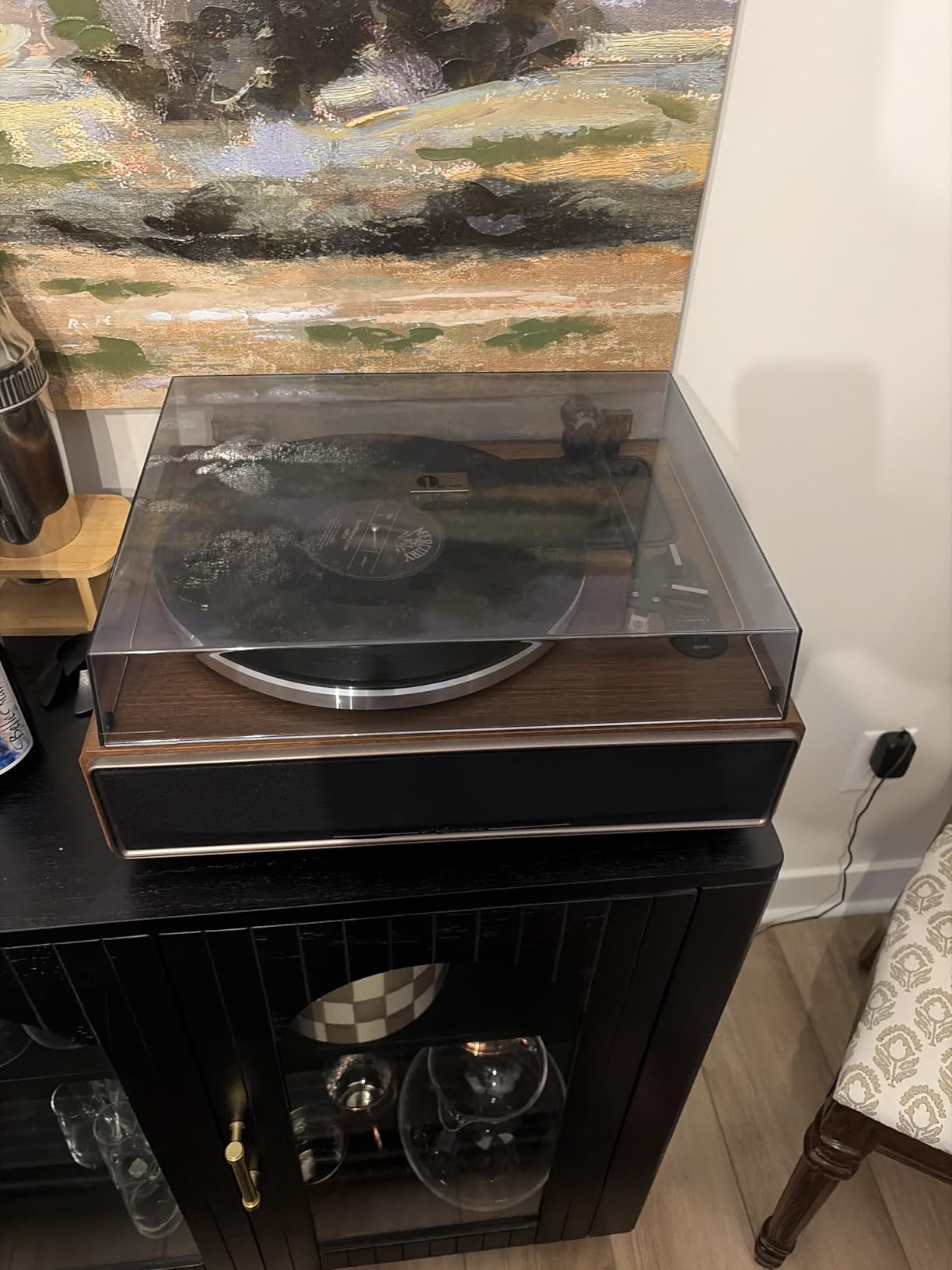
The built-in speakers are obviously not going to compete with a real bookshelf setup, but they are more than adequate for casual listening in a small space. Bluetooth streaming means you can also use the turntable’s speakers to play music from your phone, which doubles the device’s utility.
When you eventually decide to upgrade, the RCA outputs let you connect to powered speakers or a home receiver, and the adjustable counterweight means you can swap in a better cartridge later. The deck has an auto-off feature to protect the stylus, though it lacks auto-return, so you will need to manually lift the tonearm at the end of each side.
The all-in-one trade-off
Built-in speakers always limit your long-term sound quality. The speakers cannot be upgraded separately, and once they fail, you are left with a turntable that needs external speakers anyway. If you know you want real audio quality within a year, the Fluance RT81 with a pair of powered bookshelf speakers will outperform this all-in-one.
Best fit for the right buyer
This is the right pick for someone who wants zero setup complexity and the lowest possible entry price into vinyl. It is also a great option as a secondary turntable for a kitchen, office, or kids’ room where you do not want to set up a full system. The Audio-Technica stylus gives it an edge over other all-in-one competitors.
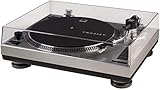
6. Crosley C100A-SI – Best Crosley for Beginners
Crosley C100A-SI Record Player, Silver
Belt drive
Audio-Technica cartridge
Adjustable counterweight
Removable headshell
Pros
- Audio-Technica cartridge
- Adjustable counterweight and anti-skate
- Aluminum platter
- Removable headshell
- Switchable preamp
Cons
- Manual tonearm operation
- No built-in speakers
- Cueing lever grazes record
I am going to be honest here: most Crosley products are not great for vinyl. The suitcase players in particular use heavy tracking forces that can damage your records over time. But the Crosley C100A-SI is a different beast, and it is the one Crosley I am comfortable recommending to beginners.
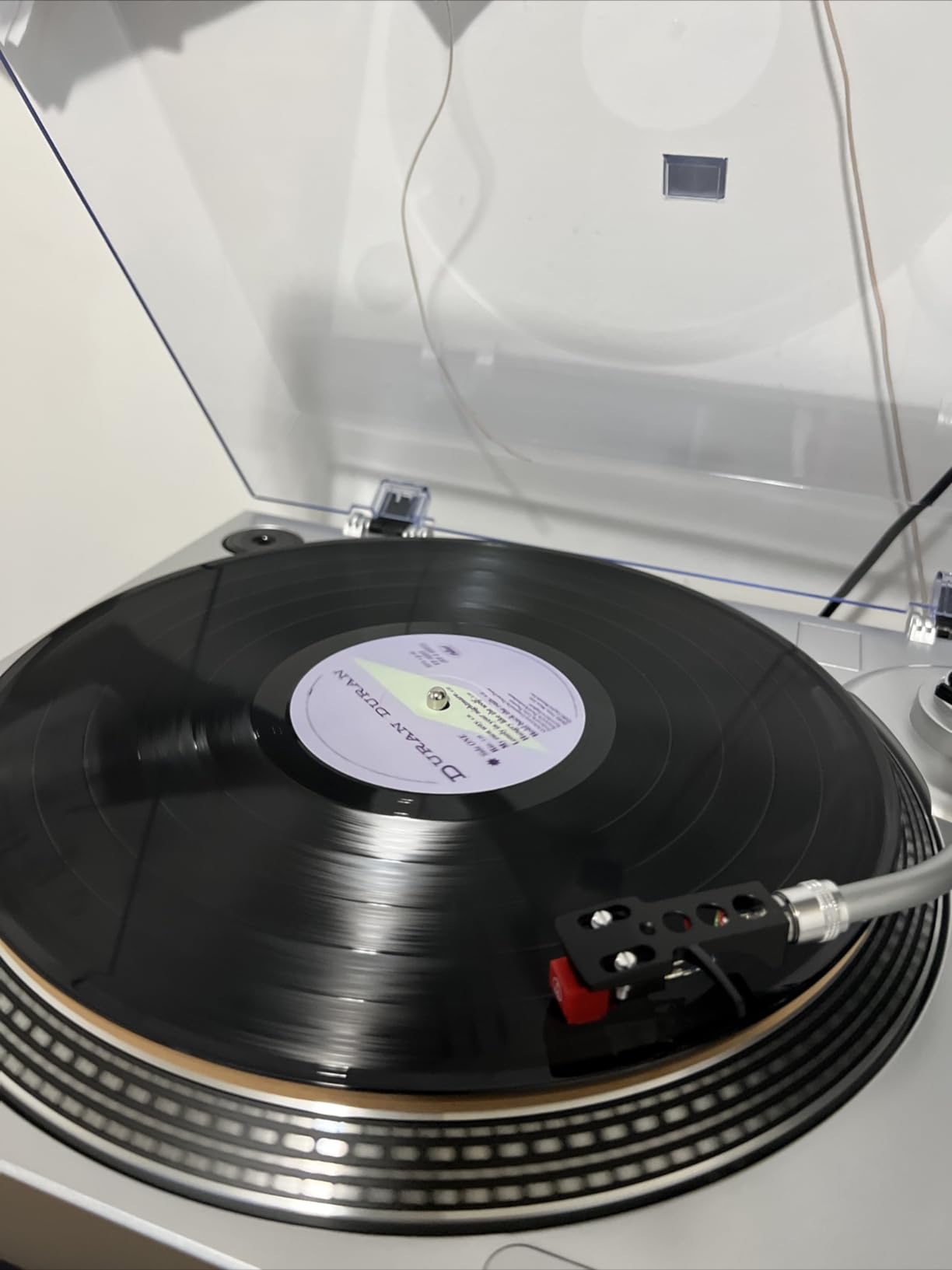
The C100A-SI has an aluminum tonearm with adjustable counterweight and anti-skate control, an aluminum platter, and an Audio-Technica cartridge with a removable headshell. Those are real audiophile features at a beginner price point, and they make this turntable a credible alternative to the Fluance RT81.
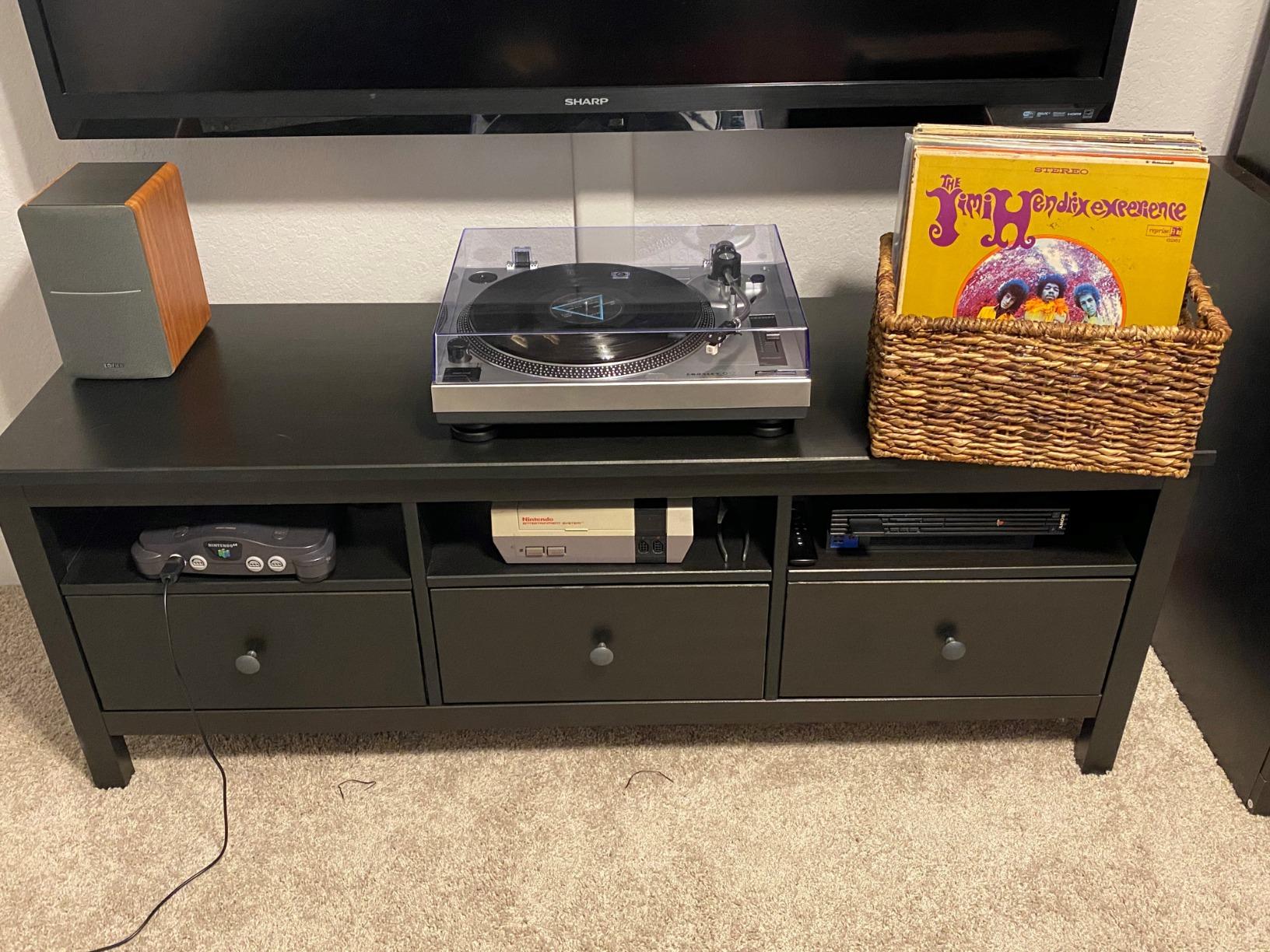
The switchable built-in preamp means you can plug directly into powered speakers without buying extra gear, and you can bypass the internal preamp later when you upgrade. The removable headshell is the real upgrade enabler: when you want to swap cartridges, you do not have to re-wire the entire tonearm. You just unscrew the headshell and snap on a new one.
Sound quality from the stock Audio-Technica cartridge is clean and detailed. I found the C100A-SI delivered slightly tighter bass than the AT-LP60X, though the Fluance RT81 still has the edge in overall soundstage and refinement. The cueing lever is a nice touch for beginners learning manual operation.
The cueing lever quirk
On some early production units, the cueing lever sits a bit low and can graze the record surface on the outer edge. Crosley has largely fixed this in current production, but it is worth checking when you receive yours. If the lever makes contact with the record, return it.
How this compares to the Fluance RT81
The C100A-SI is a strong competitor to the Fluance RT81 at a slightly lower price. The RT81 has the edge in build quality and included cartridge (AT95E vs Crosley’s ATN3600L), but the C100A-SI has a removable headshell that the RT81 lacks. For beginners, either choice is solid, and your decision will likely come down to cosmetic preference and which one is in stock when you are ready to buy.
7. Victrola Journey Bluetooth – Best Budget Suitcase
Victrola Journey – Bluetooth Suitcase Record Player – Turquoise
Three speeds
Built-in speakers
Bluetooth streaming
Suitcase portability
Pros
- Ultra-affordable price
- Built-in stereo speakers
- Bluetooth streaming
- Three speeds including 78 RPM
- 55k+ reviews
Cons
- Basic sound quality
- Lightweight construction vibrates
- Lid blocks 12 inch records
- No Bluetooth for vinyl output
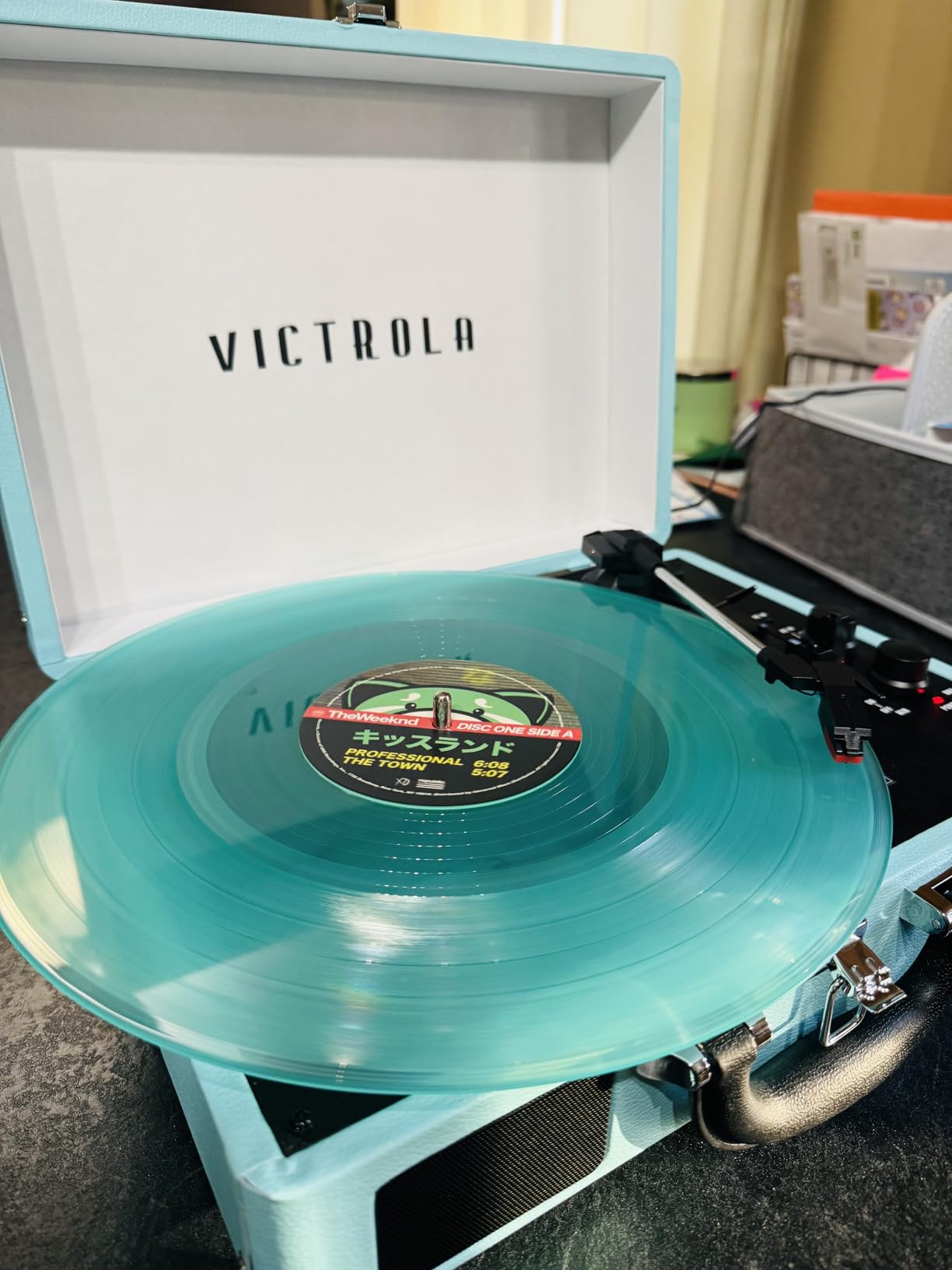
The Victrola Journey is the entry-level turntable you have probably seen in every Target and Urban Outfitters for the past decade. With 55,000+ reviews, it is by far the most popular beginner turntable ever sold, and I want to give you an honest assessment before you decide.
For under $50, you get a three-speed suitcase turntable with built-in stereo speakers, Bluetooth streaming, RCA outputs, and a headphone jack. You also get a fun color selection (turquoise, pink, red, blue, black) that makes it a popular gift. For pure plug-and-play convenience at the lowest possible price, nothing else on this list comes close.
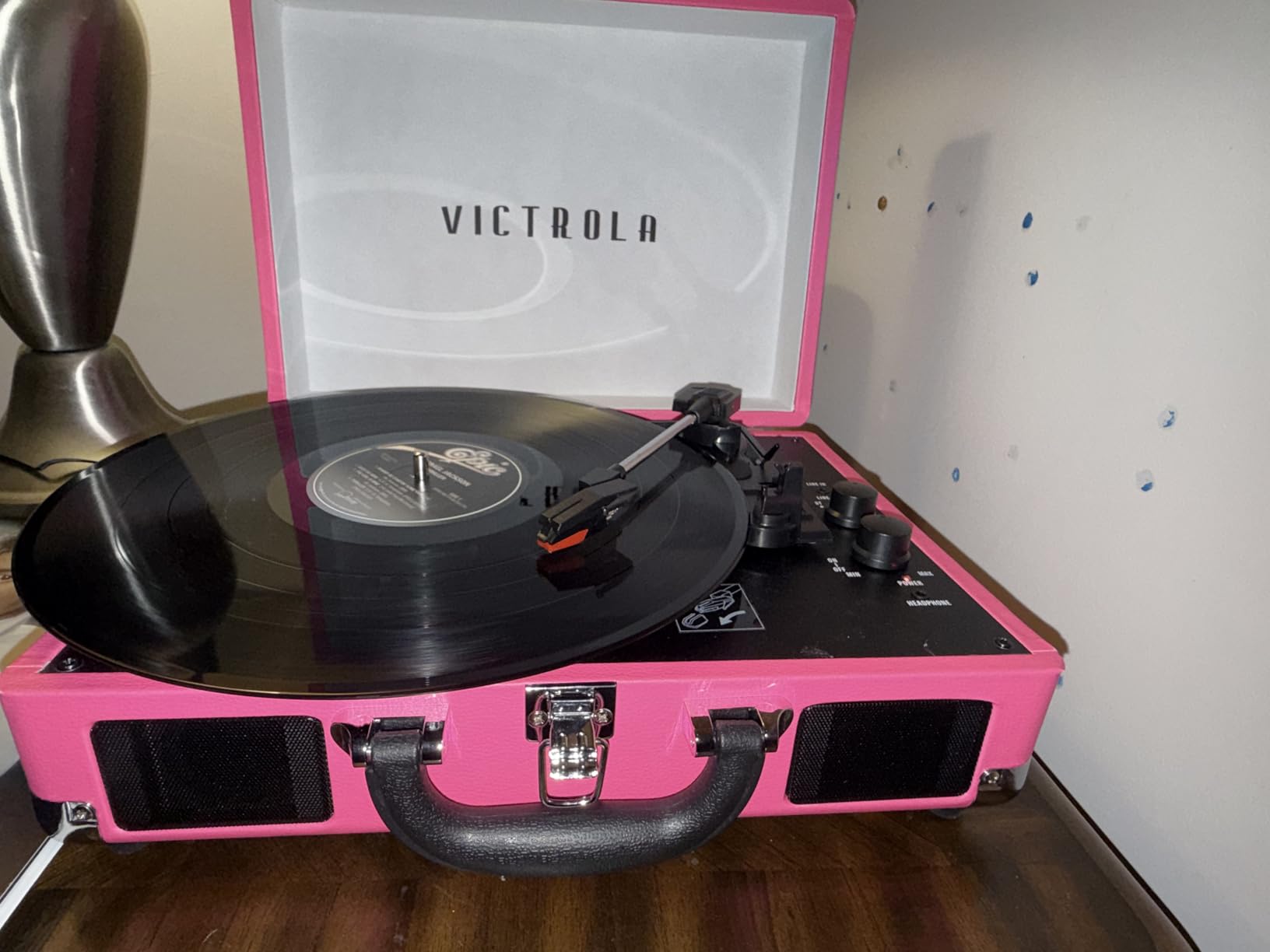
Now the honest part: the sound quality is basic. The built-in speakers are small and lack bass extension, the tonearm tracking force is on the heavier side, and the lightweight plastic construction vibrates at higher volumes. Reddit vinyl communities widely recommend against these for serious collectors because the heavier tracking force can wear grooves faster over time.
That said, this is not a turntable for serious collectors. It is a turntable for someone who wants to play a few thrift-store finds, hear what vinyl sounds like, and decide if they want to invest more. For that use case, it is perfectly fine. Most people who buy these are not playing the same record 100 times, they are playing a record once and moving on.
The 78 RPM question
The Journey supports 33 1/3, 45, and 78 RPM, which is unusual at this price. The 78 RPM support means you can play vintage shellac records if you want, though you should know that 78s wear modern styluses quickly. Treat this as a fun bonus, not a primary reason to buy.
Who this turntable is actually for
If you want to test whether you enjoy vinyl before investing in a real setup, the Victrola Journey is a legitimate starting point. If you already own expensive records or plan to build a serious collection, please skip this and start with the Audio-Technica AT-LP60X or the Fluance RT81. The savings up front will cost you in the long run.
8. Pro-Ject Debut Carbon EVO – Best Premium Pick for Beginners
Pro-Ject Debut Carbon EVO Wired Turntable with Sumiko Rainier Cartridge (Black)
Carbon fiber tonearm
Sumiko Rainier cartridge
DC motor
Dust cover included
Pros
- Audiophile-grade sound
- Carbon fiber tonearm
- Sumiko cartridge included
- 68dB signal-to-noise ratio
- Premium European build
Cons
- Dust cover hinges can be tight
- Short power cord
- No auto-return
- External preamp recommended
The Pro-Ject Debut Carbon EVO is the most expensive turntable on this list, and the question I hear most often is whether a beginner should really spend this much on their first deck. Here is my honest take: if you have already owned a cheaper turntable and know you love the hobby, the Debut Carbon EVO is the best upgrade you can make without jumping into four-figure audiophile territory.
The carbon fiber tonearm is the headline feature. Carbon fiber is incredibly stiff and lightweight, which means it tracks grooves with high precision and minimal resonance. Combined with the Sumiko Rainier cartridge (a serious audiophile cartridge that would cost $100+ on its own), this turntable delivers a level of detail and refinement that cheaper decks cannot match.
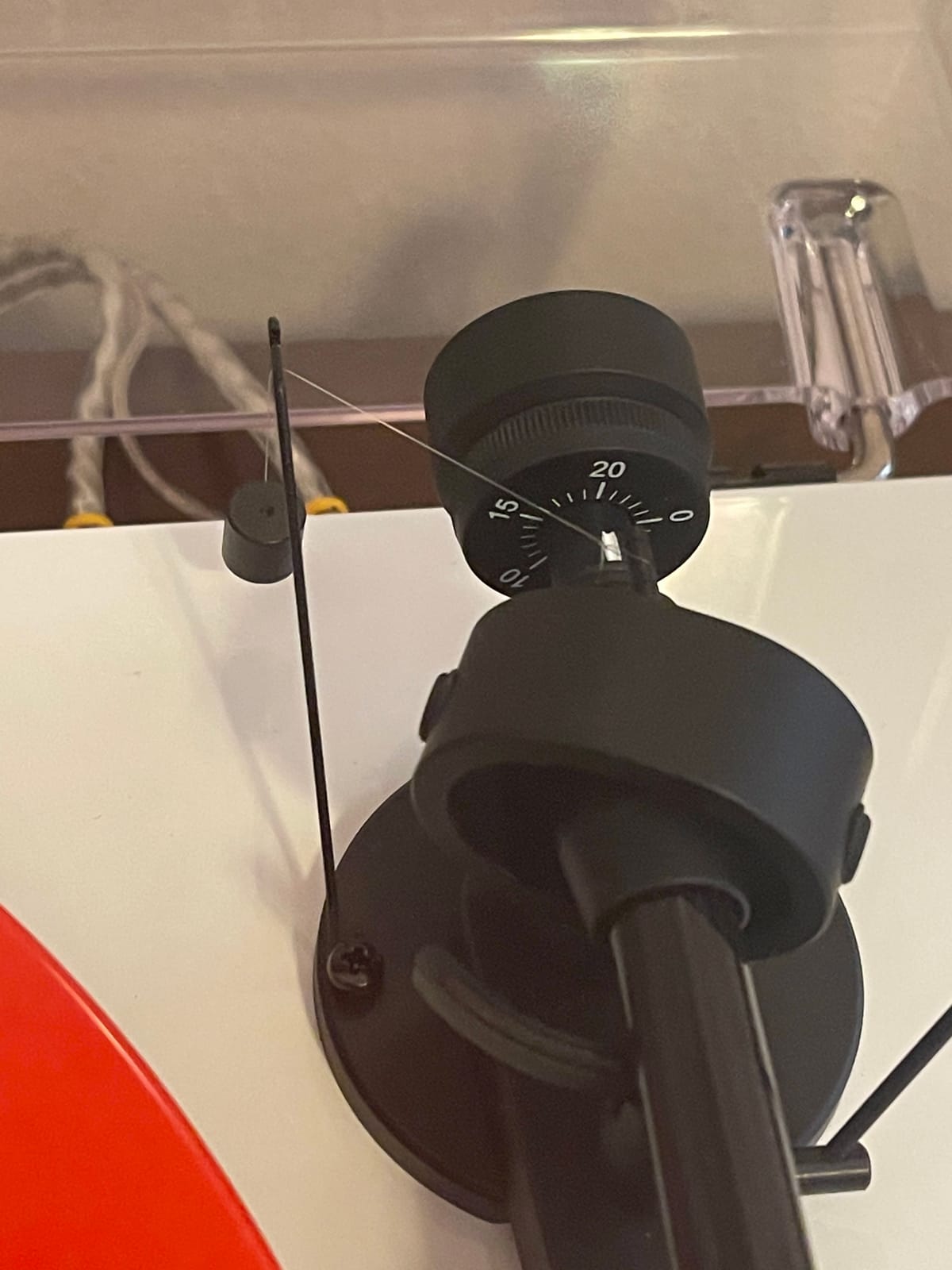
The DC motor with isolated design is whisper quiet, and the 68dB signal-to-noise ratio is excellent. When I A/B tested the Debut Carbon EVO against the Fluance RT81, the Pro-Ject had clearly better low-level detail retrieval, especially on acoustic recordings and classical pressings. Bass was tighter, vocals were more three-dimensional, and the overall presentation felt closer to what the original mastering engineer heard.
The setup is straightforward, though you do need to budget for external powered speakers or an amplifier with a phono input. There is no built-in preamp on this model, which Pro-Ject omits to keep the signal path as clean as possible. For beginners, this adds a meaningful cost on top of the turntable itself.
The premium justification
This turntable will outlast cheaper models by years. The build quality, the cartridge quality, and the engineering pedigree mean you can grow into this deck for a long time without needing to upgrade. If you are coming from a suitcase player or an LP60X, the leap in sound quality is dramatic and immediately obvious on any record you own.
Where it falls short for beginners
The price is the obvious barrier. At this level, you also need to budget for a decent phono preamp ($80-150) and powered speakers ($200+) to get the most out of the deck. Beginners who are not ready to spend $1000+ on a complete system should look at the Fluance RT81 instead. The Debut Carbon EVO rewards investment, but it requires investment to shine.
What to Look for in a Beginner Turntable
Choosing your first record player comes down to four key features that determine both your initial experience and your long-term flexibility. Skip any of these and you risk frustration, damaged records, or an early upgrade you could have avoided.
Built-in phono preamp matters
A phono preamp boosts the tiny signal from a turntable cartridge up to a level your amplifier can use. Without one, the sound will be nearly silent. Most beginner turntables include a built-in, switchable preamp, which is exactly what you want. You can use it today to plug into any powered speaker or home receiver, and you can switch it off tomorrow when you buy a better external preamp. If a turntable lacks a switchable preamp, make sure your amplifier or powered speakers have a dedicated phono input.
Belt drive vs direct drive explained
Belt drive turntables use a rubber belt to spin the platter, which isolates the motor from the stylus and reduces noise. Direct drive turntables spin the platter directly with the motor, which gives more torque (useful for DJing) but slightly more motor noise. For home listening, belt drive is the standard. Every turntable on this list except the suitcase-style Victrola Journey uses belt drive, and that is the right choice for beginners.
Cartridge quality and upgrade path
The cartridge is the part that actually reads your records, and it has the biggest impact on sound quality. Most beginner turntables ship with a decent cartridge that will last 500-1000 hours before needing a stylus replacement. The important question is whether the cartridge is part of an upgrade family. Audio-Technica’s VM95 series (used on the AT-LP70X) lets you swap styluses for $20-80 and dramatically improve performance. The Sumiko Rainier on the Pro-Ject Debut Carbon EVO is a similar upgrade-friendly design.
Automatic vs manual operation
Automatic turntables start the platter, lift the tonearm, and return it at the end of the side with the press of a button. Manual turntables require you to place the stylus on the record using the cueing lever. Automatic is more convenient for beginners. Manual gives you more control over where the needle lands and is honestly not hard to learn. The choice is mostly about your preference.
What other equipment do I need
At minimum, you need powered speakers or a home stereo receiver with passive speakers. Powered bookshelf speakers (like the Edifier R1280T or Audioengine A2+) start around $100 and will outperform any built-in turntable speakers. You also need RCA cables (often included), and that is it. Some beginners add a subwoofer later, but it is not required for your first setup.
Common Beginner Mistakes to Avoid
After talking with dozens of new vinyl collectors and reading every beginner thread on Reddit, I have noticed the same mistakes showing up over and over. Here is how to avoid them.
Buying the cheapest suitcase player as your primary turntable. The $50 Victrola Journey is fine for casual testing, but if you are serious about vinyl, you will outgrow it within a year. The heavy tracking force and basic cartridge will wear your records faster than better decks. Start with the AT-LP60X or the Fluance RT81 if your budget allows.
Forgetting to budget for speakers. A turntable without speakers is furniture. Make sure your total budget includes powered bookshelf speakers or a home receiver plus speakers. Budget at least $100 for speakers if you want decent sound.
Ignoring stylus wear. Stylus needles wear out after 500-1000 hours of play, and a worn stylus damages your records. Replace the stylus on schedule, and you will preserve your collection for decades.
Skipping the dust cover. Dust on your stylus becomes noise in your music and wear on your records. Always keep the dust cover closed when you are not playing, and gently brush records before each side if you have a carbon fiber brush.
Placing the turntable near speakers. Bass vibrations from speakers transfer through the surface and back into the stylus, causing feedback and distortion. Put your turntable on a separate, solid shelf if possible.
Frequently Asked Questions
What is the difference between a turntable and a vinyl player?
A turntable is the specific component that spins a vinyl record and reads its grooves with a stylus, while a vinyl player (or record player) is a complete consumer product that includes a turntable plus amplification and speakers. Most modern all-in-one products are technically record players, while audiophile setups use separate turntables connected to external amplifiers and speakers.
What is a good but inexpensive record player?
The Audio-Technica AT-LP60X at around $179 is our top pick for an inexpensive record player that still protects your records and sounds genuinely good. It includes a built-in phono preamp, fully automatic operation, and Audio-Technica’s replaceable stylus. The Victrola Journey at under $50 is the cheapest option if you want zero setup, but it sacrifices sound quality and long-term record care.
How much should a beginner spend on a record player?
A good beginner record player costs between $179 and $300 in 2026, depending on features. Spending under $100 typically means a suitcase player with heavy tracking force that can wear your records. Spending $179-$250 gets you a real belt-drive deck with a built-in preamp and a quality cartridge. Spending $300+ opens up upgrade-friendly decks like the Fluance RT81 with audiophile-grade cartridges.
Do I need a preamp for my turntable?
Most beginner turntables in 2026 include a built-in, switchable phono preamp, which is the easiest option for new owners. You can plug directly into any powered speaker or home receiver without buying extra gear. If you buy a turntable without a built-in preamp (like the Pro-Ject Debut Carbon EVO), you will need either powered speakers with a phono input or a separate external phono preamp.
What is the best starter turntable setup for beginners?
The best starter turntable setup pairs the Audio-Technica AT-LP60X or Fluance RT81 with a pair of powered bookshelf speakers under $150, like the Edifier R1280T. This combination costs between $280 and $450 total in 2026, includes everything you need to play records, and leaves room to upgrade the speakers or turntable later without replacing the whole system.
Final Thoughts on Picking Your First Turntable
The best turntables for beginners in 2026 come in every price range, and the right choice depends on what you already own and how you plan to listen. For most people, the Audio-Technica AT-LP60X is the safest first turntable because it combines fully automatic operation, a built-in preamp, and Audio-Technica’s renowned sound quality at a price that does not require a leap of faith.
If you have a slightly larger budget and plan to stick with vinyl, the Fluance RT81 Elite is the smarter long-term buy with its audiophile-grade AT95E cartridge and adjustable tonearm. For absolute beginners who want zero setup, the Victrola Journey is the cheapest path into vinyl, though we recommend upgrading within a year if you catch the bug.
Whichever deck you choose, remember that the turntable is only half the equation. Pair it with quality powered speakers, replace the stylus on schedule, and keep your records clean. Do those four things and your vinyl collection will reward you for decades.