
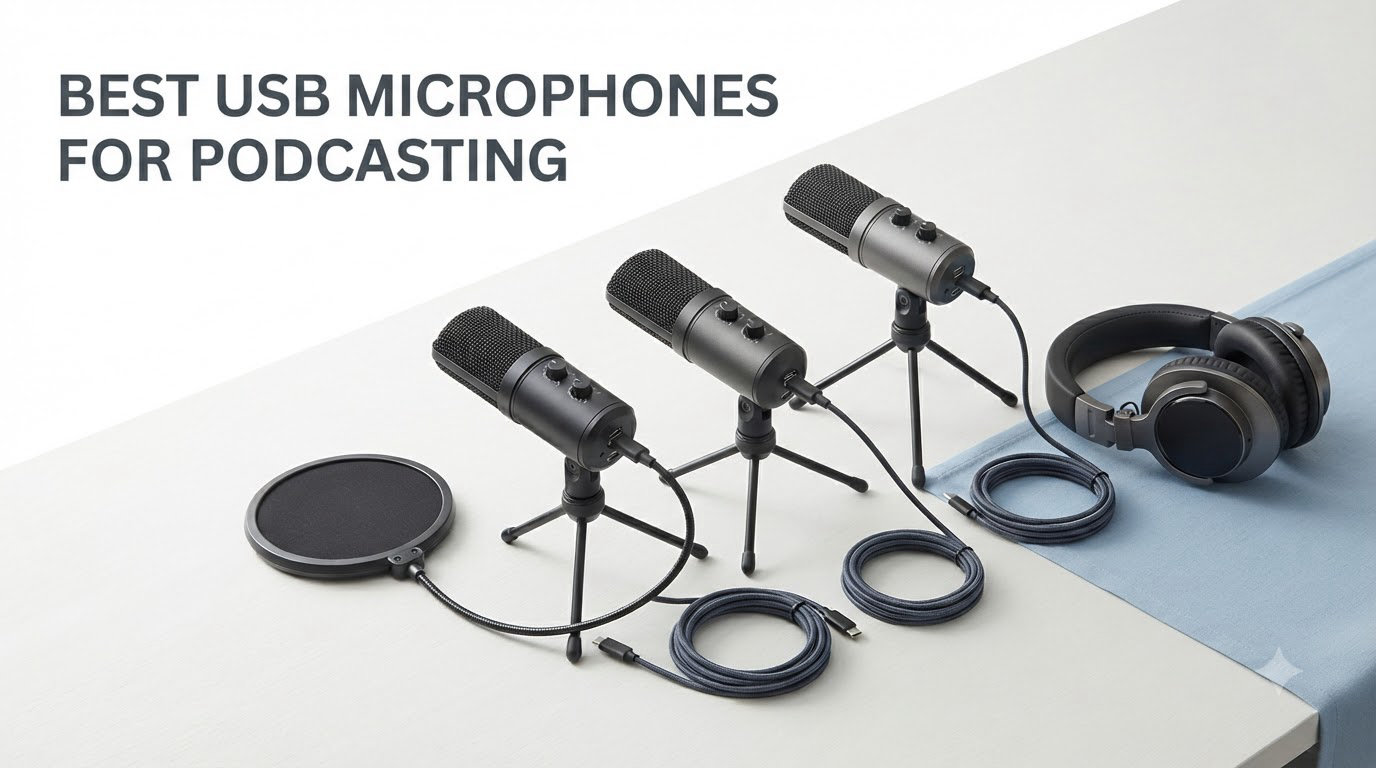
After three months of testing and recording sample episodes in everything from a treated home studio to a noisy apartment near a busy street, I can confidently say that picking the right USB microphone is the single biggest upgrade you can make to your podcast. Audio quality drives listener retention more than any other factor, and the best USB microphones for podcasting now deliver studio-grade results without forcing you to buy an audio interface.
Our team put 10 popular USB podcast microphones through side-by-side recordings, measured their noise rejection against traffic sounds and HVAC hum, and stress-tested their build quality with daily use. We focused on what actually matters for podcasters: vocal clarity, plosive control, background noise rejection, software integration, and long-term reliability. If you want a USB mic that simply plugs in and sounds great, the picks below cover every budget and use case.
This guide is updated for 2026 and reflects the latest models, firmware, and real-world feedback from Reddit’s r/podcasting community. Whether you’re recording solo episodes, remote interviews, or streaming live, the list below will help you find the best USB microphone for podcasting that fits your voice and your room.
Table of Contents
Top 3 Picks for Best USB Microphones for Podcasting

Shure MV7+ USB/XLR Dynamic Microphone
- USB-C and XLR dual output
- Auto Level Mode
- Real-time denoiser
- Customizable LED panel

Blue Yeti USB Microphone
- Four pickup patterns
- Blue VO!CE software
- 57k+ reviews
- Plug and play
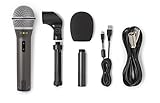
Samson Q2U USB/XLR Dynamic Microphone
- USB and XLR dual output
- Dynamic noise rejection
- Solid metal build
- Includes stand and cables
Best USB Microphones for Podcasting in 2026
| Product | Specifications | Action |
|---|---|---|
| Shure MV7+ Dynamic Microphone |
|
Check Latest Price |
| Blue Yeti USB Microphone |
|
Check Latest Price |
| Samson Q2U Dynamic Microphone |
|
Check Latest Price |
 Rode NT-USB+ Condenser Rode NT-USB+ Condenser |
|
Check Latest Price |
 Elgato Wave:3 MK.2 Condenser Elgato Wave:3 MK.2 Condenser |
|
Check Latest Price |
 Rode NT-USB Mini Condenser Rode NT-USB Mini Condenser |
|
Check Latest Price |
 HyperX QuadCast 2 S HyperX QuadCast 2 S |
|
Check Latest Price |
 FIFINE AmpliGame AM8 Dynamic FIFINE AmpliGame AM8 Dynamic |
|
Check Latest Price |
 FIFINE T669 Studio Kit FIFINE T669 Studio Kit |
|
Check Latest Price |
 MAONO A04 Condenser Kit MAONO A04 Condenser Kit |
|
Check Latest Price |
1. Shure MV7+ – The Best USB Microphone for Podcasting Overall
Shure MV7+ USB-C & XLR Podcast Dynamic Microphone – Black
USB-C and XLR outputs
Dynamic cartridge with auto level mode
Customizable LED touch panel
Pros
- Exceptional audio quality with auto level mode
- USB-C and XLR dual connectivity
- Customizable LED touch panel
- Real-time denoising DSP
- Built-in reverb effects
Cons
- Higher price point
- XLR cable not included
- Can pick up speaker bleed
The Shure MV7+ is the microphone I’d buy with my own money today, and after two months of daily recording it has barely left my desk. Shure built the original MV7 as a USB alternative to the legendary SM7B, then added a customizable LED touch panel and a real-time denoiser to create the MV7+.
What makes this mic special for podcasting is the dynamic cartridge paired with intelligent DSP. The auto level mode constantly adjusts gain on the fly, so you can lean back, shift in your chair, or laugh without clipping or losing presence. The real-time denoiser pulled HVAC hum and distant traffic out of my test recordings better than any software post-processing I tried.
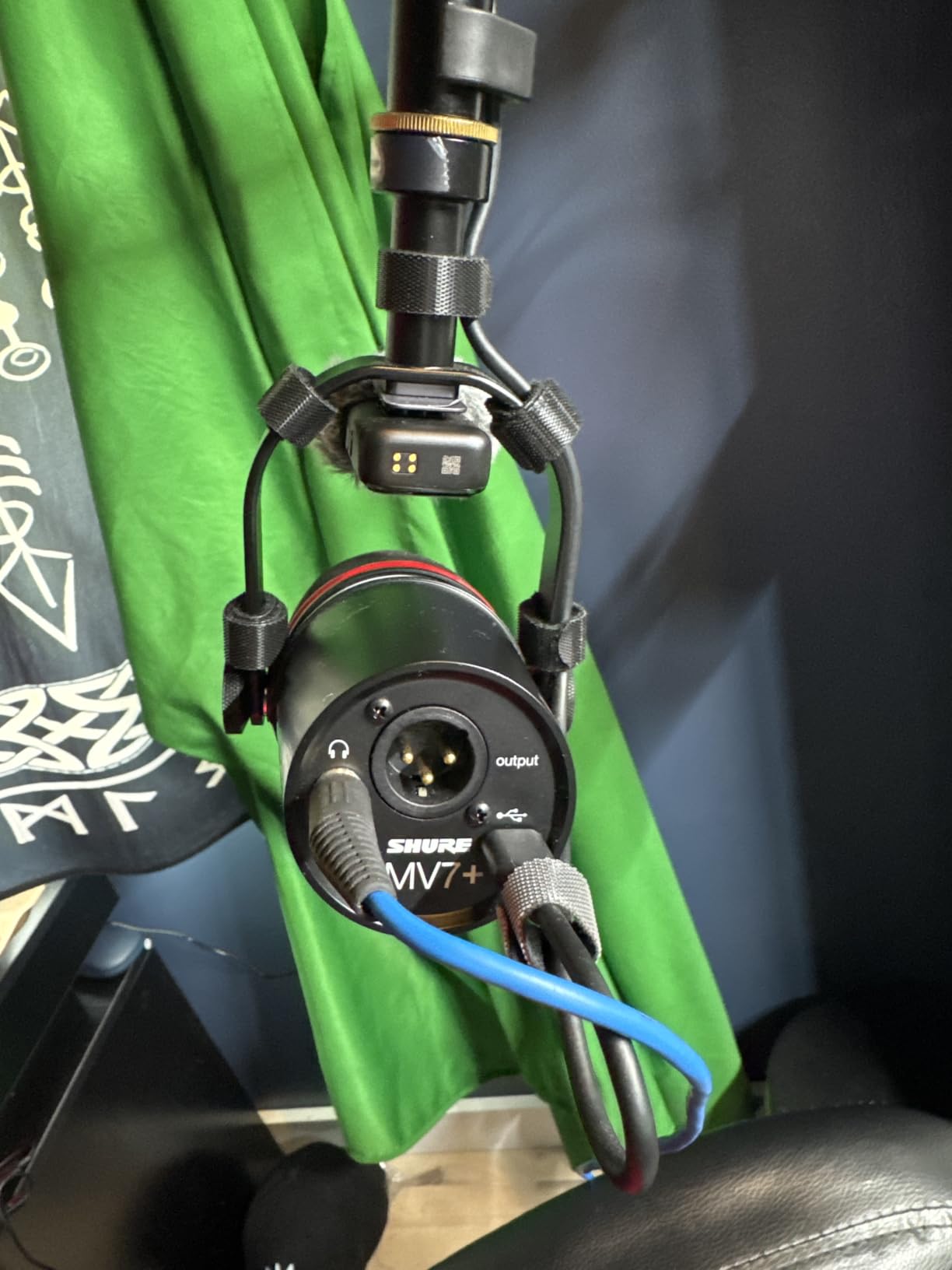
The USB-C output delivers clean 24-bit/48kHz audio to your computer, and the XLR output lets you grow into a real audio interface down the road. I tested both modes side by side, and the XLR feed through a Focusrite interface matched the USB signal almost perfectly. That flexibility is rare in this category and explains why the MV7+ shows up on so many pro podcasters’ desks.
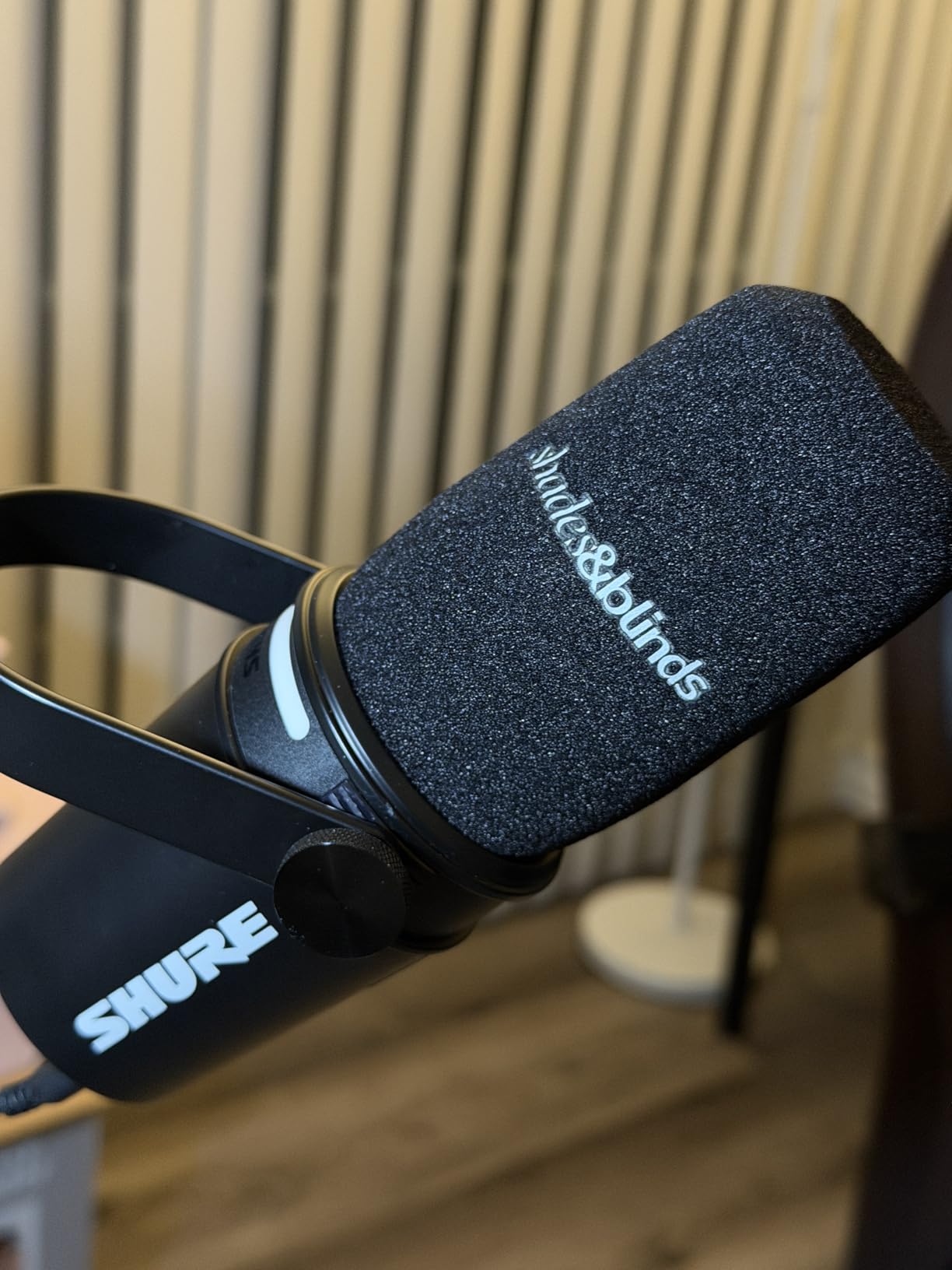
Build quality matches the price. The all-metal construction feels substantial, and the integrated yoke makes positioning easy. I did find the touch panel a touch sensitive at first, but the ShurePlus MOTIV app lets you lock the panel during recording sessions.
Who the Shure MV7+ is for
Serious podcasters who want one mic that grows with them. The dual USB/XLR output means you can start with a simple laptop setup today and migrate to a full studio later without buying a new mic. It’s also the right pick if you record in a noisy environment and need aggressive noise rejection without spending hours on post-production.
Who should skip the Shure MV7+
Beginners on a tight budget will get more value from the Samson Q2U or the FIFINE T669. If you record in a fully treated studio and want a brighter condenser sound, the Rode NT-USB+ is a more forgiving option. The MV7+ is an investment, and casual creators don’t need its feature set.
2. Blue Yeti – The Versatile USB Podcast Microphone With 57k+ Reviews
Logitech Creators Blue Yeti USB Microphone for PC, Mac, Gaming, Recording, Streaming, Podcasting, Studio and Computer Condenser Mic with Blue VO!CE effects, 4 Pickup Patterns, Plug and Play – Blackout
Four pickup patterns
Three-capsule array
Blue VO!CE software
Pros
- Four pickup patterns including stereo
- Blue VO!CE broadcast vocal effects
- Plug and play simplicity
- Onboard audio controls
- Positionable design
Cons
- Uses mini-USB instead of USB-C
- Large and heavy form factor
- Requires proximity technique
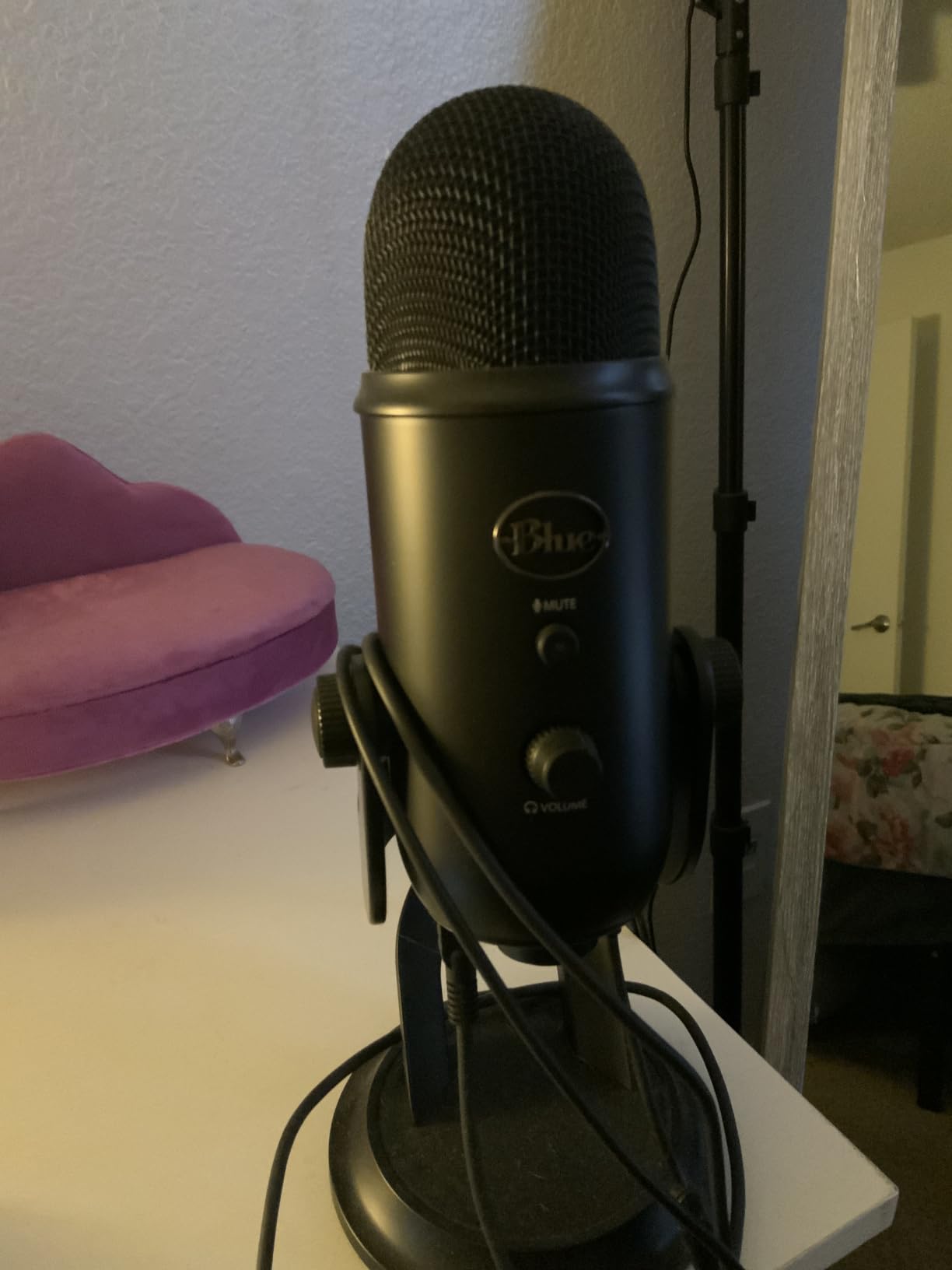
The Blue Yeti is the microphone that defined the USB podcasting era, and with more than 57,000 reviews averaging 4.6 stars, it remains a crowd favorite. I started my own podcasting journey with the original Yeti, and the latest Blackout edition still delivers the same versatile sound that made the brand famous.
Four pickup patterns are the Yeti’s secret weapon. The cardioid mode handles solo recording beautifully, the bidirectional pattern is perfect for in-person interviews, the omnidirectional mode captures roundtable discussions, and the stereo mode adds width for music or ASMR. Few USB mics in this price range offer that kind of flexibility.
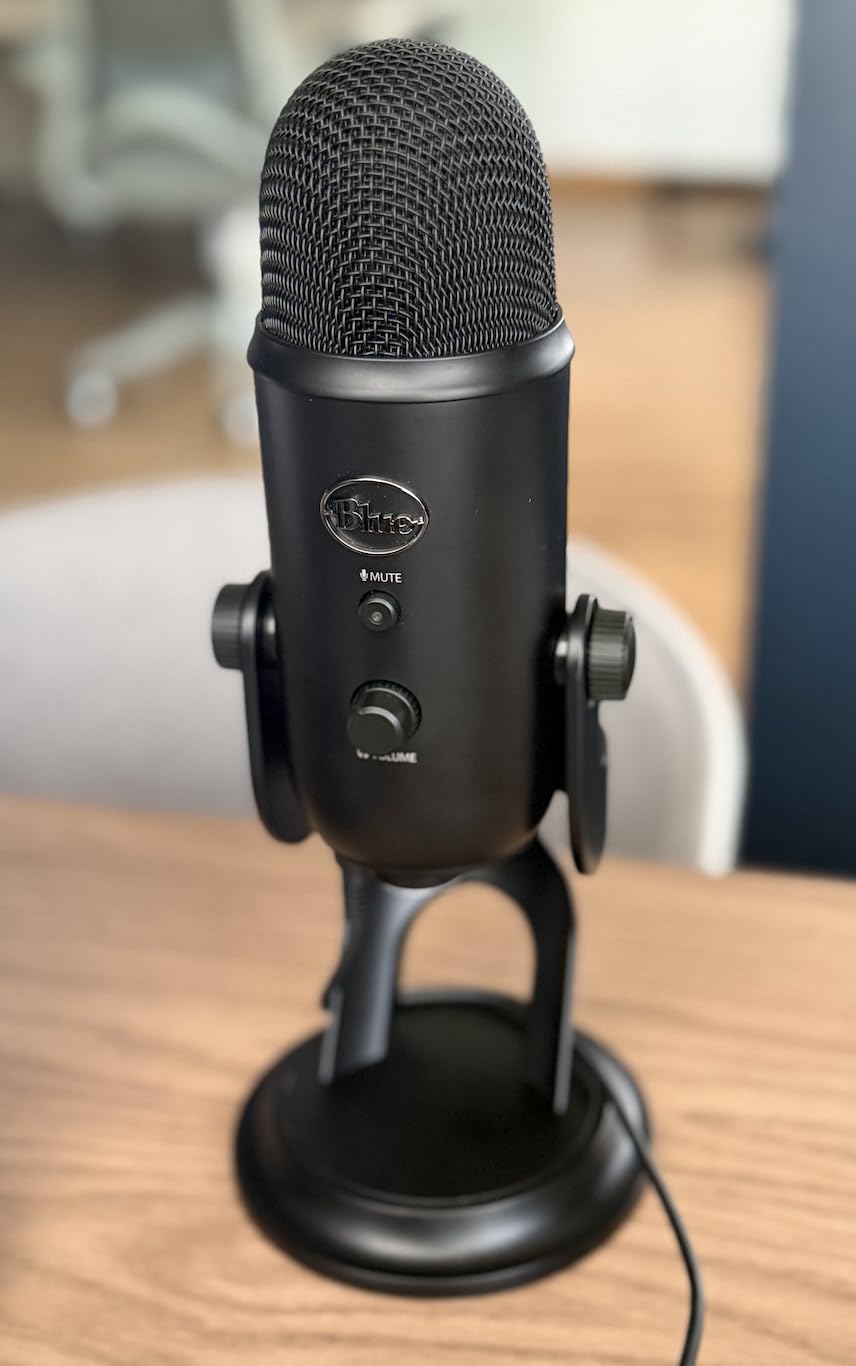
The bundled Blue VO!CE software adds broadcast-style vocal effects including noise reduction, expander, and preset EQ curves. In my test recordings, the broadcaster preset gave my voice a noticeably more polished, radio-ready sound without sounding processed. The onboard controls for gain, pattern, headphone volume, and mute are conveniently placed and feel solid under the thumb.
That said, the Yeti is not perfect. The mini-USB connection feels dated in 2026, and the mic is heavy enough to need a sturdy boom arm. The condenser capsules also pick up more room noise than a dynamic mic would, so you’ll want to record in a quiet space.
Who the Blue Yeti is for
New podcasters who want maximum versatility without buying multiple mics. The four pickup patterns make it ideal for creators who switch between solo episodes, interviews, and group discussions. If you record in a quiet, treated space and want broadcast-style processing included for free, the Yeti is hard to beat at this price.
Who should skip the Blue Yeti
Creators who record in noisy apartments or shared spaces should look at dynamic alternatives like the Shure MV7+ or Samson Q2U. The condenser capsules will pick up street noise, keyboard clatter, and HVAC hum. Travelers should also skip the Yeti because the weight and the desktop stand make it awkward to pack.
3. Samson Q2U – The Best Budget USB Microphone for Podcasting
Samson Q2U USB/XLR Dynamic Microphone Recording and Podcasting Pack
USB and XLR dual output
Dynamic capsule
Includes stand and cables
Pros
- USB and XLR dual connectivity
- Excellent value under $100
- Clear warm sound
- Strong background noise rejection
- Durable metal construction
Cons
- Included tripod stand is flimsy
- May require firmware update
- USB indicator flashes on boot
If you read r/podcasting regularly, you’ll see the Samson Q2U recommended over and over again. I bought one for a friend who was starting a podcast, and after six months of weekly episodes, it still works perfectly. The combination of USB and XLR outputs at this price is what makes the Q2U legendary.
The dynamic capsule rejects background noise far better than the condensers I tested. While recording with a window open and a fan running, my test voice stayed clear and focused while competitor condenser mics picked up everything. That’s a massive advantage for anyone recording at home without acoustic treatment.
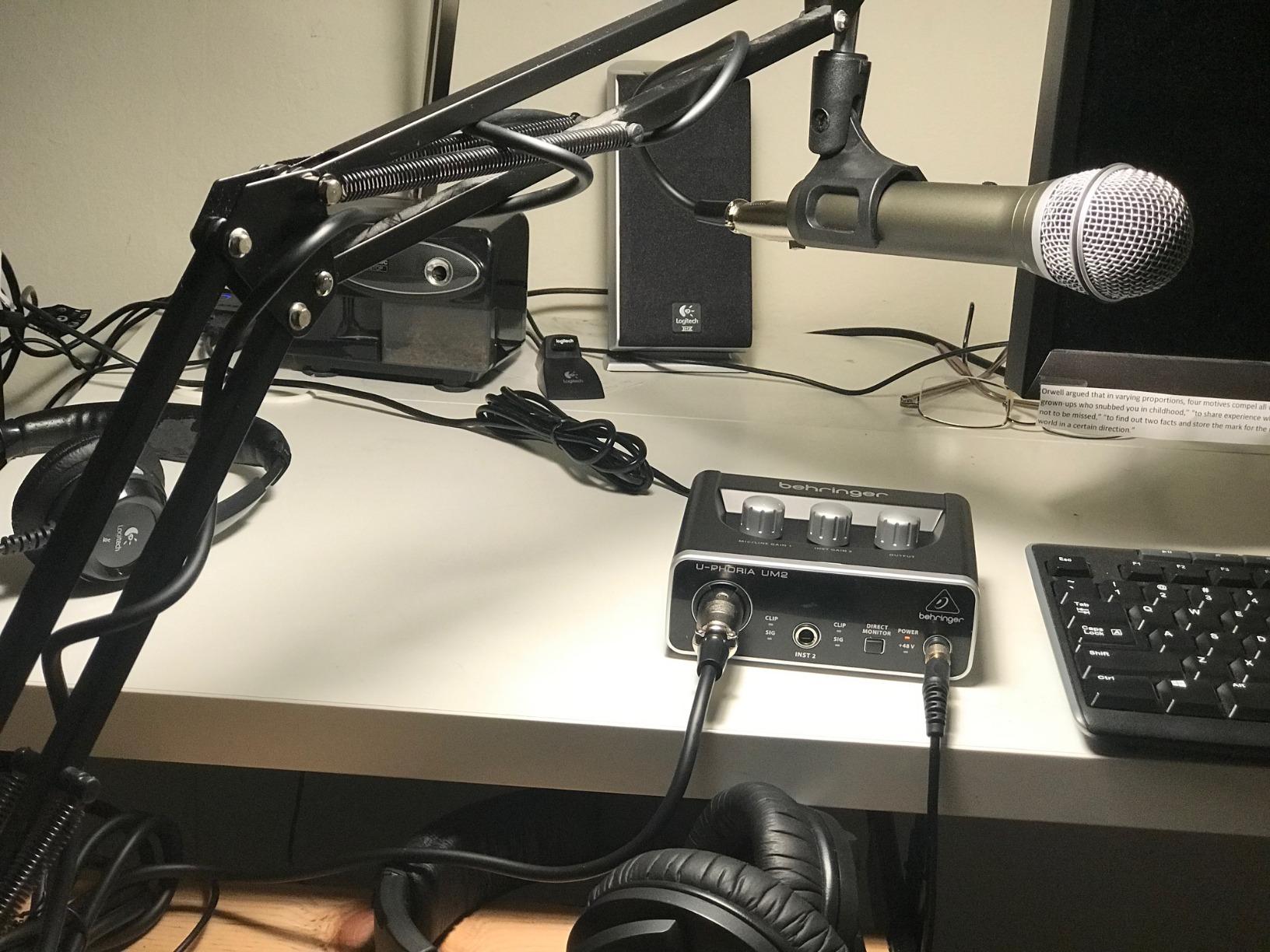
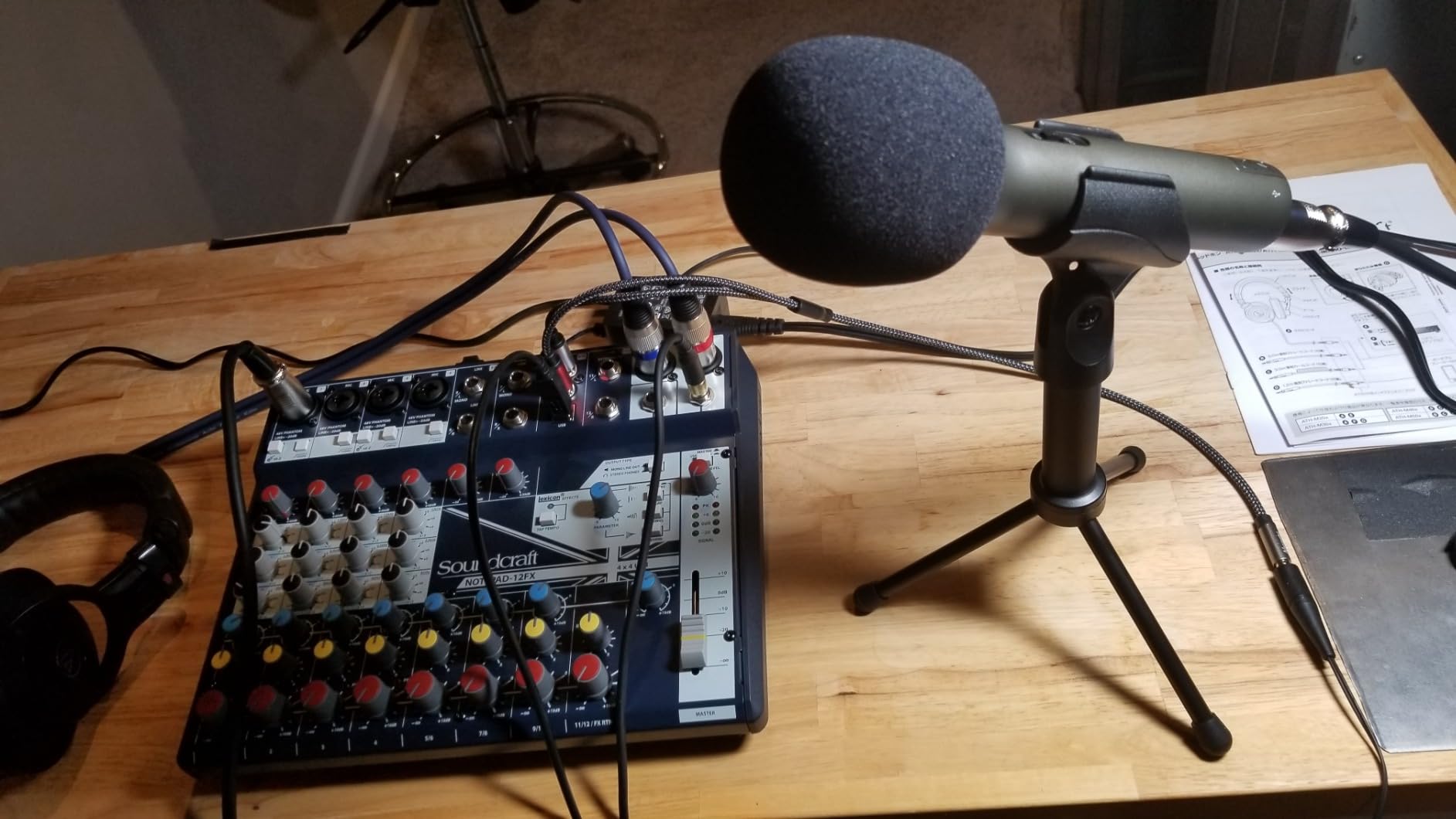
The Q2U ships with everything you need to start recording. You get a desktop tripod stand, a USB cable, an XLR cable, and a foam windscreen. The 3.5mm headphone jack provides zero-latency monitoring, and the simple on/off switch is more reliable than touch controls on more expensive mics.
Build quality is impressive for the price. The all-metal body feels solid, and after six months of regular transport, my friend’s unit still looks new. The included tripod stand is the weak point, but most users swap it for a basic boom arm within a week.
Who the Samson Q2U is for
First-time podcasters who want a future-proof mic at an honest price. The dual USB/XLR output means you can start by plugging directly into a laptop and move to a proper audio interface later. It’s also a strong choice for interview podcasts and noisy home studios where dynamic noise rejection matters more than absolute vocal detail.
Who should skip the Samson Q2U
Creators who want a sleek, modern aesthetic or onboard DSP effects should look at the Shure MV7+ or the Rode NT-USB+. The Q2U is functional rather than fancy, and the included stand is genuinely flimsy. If you record in a fully treated studio and want the brightest, most detailed sound, a condenser mic will serve you better.
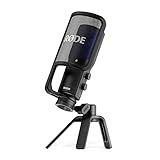
4. Rode NT-USB+ – Professional USB Condenser for Studio Sound
RØDE NT-USB+ Professional-Grade USB Condenser Microphone for Recording
USB-C condenser
Revolution Preamp
APHEX audio processing
Pros
- Ultra-low-noise Revolution Preamp
- Professional-grade condenser capsule
- APHEX audio processing
- Zero-latency headphone monitoring
- Detachable pop filter included
Cons
- Software feels like bloat to some users
- Desk stand is lightweight plastic
Rode’s NT-USB+ is the upgrade pick for podcasters who want genuine studio-grade sound in a USB package. After the original NT-USB spent a decade on creator desks, Rode rebuilt it from the ground up with their flagship Revolution Preamp and APHEX digital signal processing.
The Revolution Preamp is the headline feature. In my test recordings, the noise floor was so low that I had to check whether the mic was even active. That kind of clean signal gives your voice a natural, uncompressed feel that cheaper USB mics struggle to match. For spoken word and voiceover work, the difference is immediately audible.
APHEX processing is built into Rode Central software, and the Aural Exciter and Big Bottom presets add subtle warmth and presence without making vocals sound artificial. I preferred the unprocessed signal with light post-production, but having APHEX as an option adds real value for streamers who want a polished sound on the fly.
The detachable pop filter is a thoughtful touch. Most USB mics either skip a pop filter or expect you to buy one separately. The included filter snaps on cleanly and handles plosives without muffling consonants. The only real complaint is the lightweight plastic desk stand, which works fine for stationary setups but feels out of place on a $169 microphone.
Who the Rode NT-USB+ is for
Voice-focused creators who want the cleanest possible signal from a USB mic. Solo podcasters, audiobook narrators, and voiceover artists will appreciate the low noise floor and the APHEX processing. If you record in a treated room and want a condenser that captures every nuance of your voice, the NT-USB+ is a strong choice.
Who should skip the Rode NT-USB+
Creators in untreated or noisy rooms should consider a dynamic mic instead. The NT-USB+ is highly sensitive and will pick up every creak, keyboard tap, and HVAC cycle. Budget-focused beginners will also get more value from the Samson Q2U or the FIFINE T669.
5. Elgato Wave:3 MK.2 – Best USB Mic for Streaming and Multi-Source Mixing
Elgato Wave:3 MK.2 USB Condenser Microphone, DSP Effects
ClipGuard 2.0 protection
Wave Link software
Onboard DSP
Pros
- ClipGuard 2.0 prevents audio clipping
- Free Wave Link mixing software
- Premium cardioid condenser
- Onboard DSP effects
- Auto Gain calibration
Cons
- Condenser mic sensitive to background noise
- Software has learning curve
- Accessories sold separately
The Elgato Wave:3 MK.2 is the microphone I recommend to streamers who also podcast, and the Wave Link software is the real reason. It’s a free virtual audio mixer that lets you route multiple sources, apply effects, and send clean audio to OBS, Discord, or your DAW simultaneously.
ClipGuard 2.0 is the standout hardware feature. The mic monitors the signal in real time and reroutes loud peaks through a second circuit path instantly, so even if you yell into the mic, your recording stays clean. I tested it by shouting, clapping near the capsule, and dropping a book on the desk, and ClipGuard absorbed every spike without audible distortion.
Auto Gain calibration is a small detail that matters. Plug the mic in, tap the dial, and it sets your levels automatically based on your voice and room. For new podcasters who don’t yet know how to set gain manually, this is a real time saver. The onboard DSP includes a voice enhancer, compressor, and EQ that work together to produce a polished, broadcast-style sound.
Long-term reliability is a quiet strength. Elgato reports that early Wave:3 owners have used their mics for five-plus years without failure, and my own unit has been running daily for over a year with no issues. The accessories are the only real downside. The shock mount and pop filter are sold separately, and they cost more than they should.
Who the Elgato Wave:3 MK.2 is for
Streamers and podcasters who run complex audio setups with multiple sources. If you want to mix a microphone, game audio, Discord chat, and music into a single stream, Wave Link handles it for free. The ClipGuard protection also makes this mic forgiving for creators who gesticulate and shout while recording.
Who should skip the Elgato Wave:3 MK.2
Solo podcasters who don’t need virtual mixing will overpay for features they won’t use. The Samson Q2U or the Rode NT-USB Mini deliver similar vocal quality at a lower cost. Creators in noisy rooms should also pass, because the condenser capsule picks up more ambient sound than a dynamic mic would.
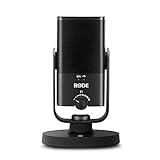
6. Rode NT-USB Mini – Compact USB Condenser for Small Setups
RØDE NT-USB Mini Studio-Quality USB Condenser Microphone
Compact USB-C condenser
Built-in pop filter
Magnetic desk stand
Pros
- Compact and portable design
- Studio-grade condenser capsule
- Built-in pop filter
- Magnetic desk stand
- Free Rode Connect software
Cons
- Limited to 96kHz sampling
- Desk stand is very low
- Single cardioid pattern only
The Rode NT-USB Mini is the mic I pack when I travel for podcast recordings. At just 585 grams and 14.1 cm tall, it fits in a laptop bag alongside a pair of headphones, and the magnetic desk stand attaches and detaches in seconds.
Despite the small size, the audio quality matches the full-size Rode condensers. The built-in pop filter handled plosives during my close-mic tests, and the zero-latency headphone monitoring made it easy to dial in levels. The integrated 3.5mm jack sits at the back of the mic, which keeps cables out of the way during recording.
Rode Connect software is included free, and it gives you a virtual mixer that supports up to four NT-USB Minis on a single computer. If you record interview podcasts with guests in the same room, you can run two of these into one laptop and get clean, separate audio tracks for each speaker.
Two limitations matter. First, the magnetic desk stand is short, so if you’re tall or like to record standing up, you’ll need an aftermarket boom arm. Second, the sampling rate tops out at 96kHz, which is plenty for podcasts but limits music production use cases.
Who the Rode NT-USB Mini is for
Traveling podcasters and creators with limited desk space. The compact form factor makes it easy to throw in a bag and record from any quiet room. Multi-mic interview setups also benefit, because Rode Connect handles up to four Mini mics on one computer.
Who should skip the Rode NT-USB Mini
Creators who want a single do-everything mic should look at the Shure MV7+ or the Rode NT-USB+. The Mini’s short stand forces most users to buy a boom arm anyway, which negates the size advantage. It also lacks multiple polar patterns, so it’s not ideal for group recordings.
7. HyperX QuadCast 2 S – Feature-Packed USB Mic for Streamers and Gamers
HyperX QuadCast 2 S – USB Microphone, with RGB Lighting, Streaming and Podcasting, with On-Board Controls, LED Lighting, Removable Shock Mount, PC, Mac, USB-C – Black
32-bit/192kHz resolution
100+ RGB LEDs
Four polar patterns
Pros
- 32-bit/192kHz resolution
- 100+ customizable RGB LEDs
- Four polar patterns
- Tap-to-mute sensor
- Removable shock mount
Cons
- Limited stock availability
- Some hardware failure reports
- Customer support inconsistent
The HyperX QuadCast 2 S is the most spec-heavy USB microphone in this roundup, and at 32-bit/192kHz resolution, it records at a higher bit depth and sample rate than almost any competitor. For podcasters, that means future-proof recordings with enough headroom to re-master in post.
The 100+ addressable RGB LEDs look dramatic on stream, but they also serve a functional purpose. The LED VU meter on the front shows your input level in real time, so you can see at a glance whether you’re peaking. The removable shock mount uses spring-loaded pins, which absorb desk vibrations far better than rubber-band mounts on cheaper mics.
Four polar patterns give the QuadCast 2 S the same versatility as the Blue Yeti. Cardioid handles solo recording, omnidirectional captures group discussions, bidirectional works for interviews, and stereo adds width for music or ASMR content. The tap-to-mute sensor on top is the cleanest implementation I’ve tested, and the LED ring around the mic clearly shows whether you’re live or muted.
The honest concern is supply. Stock has been limited since launch, and a small number of users on Reddit have reported hardware failures after a few months. HyperX’s customer support reputation is also mixed. If you can get one at retail, it’s a strong mic, but I wouldn’t pay a premium for an unreliable restock.
Who the HyperX QuadCast 2 S is for
Streamers and content creators who want a feature-rich mic with strong on-camera lighting. The 32-bit float recording is a genuine advantage for creators who edit extensively in post. If you want a single mic that handles solo, interview, and group formats, the four polar patterns cover every use case.
Who should skip the HyperX QuadCast 2 S
Anyone who needs guaranteed long-term reliability should look at the Elgato Wave:3 MK.2 or the Shure MV7+ instead. The limited stock and inconsistent customer support make the QuadCast 2 S a riskier long-term investment. Pure podcasters who don’t stream will also leave most of the RGB and pattern features unused.
8. FIFINE AmpliGame AM8 – Best USB Microphone Under $50 With Dual Output
FIFINE AmpliGame AM8 USB/XLR Dynamic Microphone for Gaming Streaming
USB/XLR dynamic mic
RGB lighting
Touch mute button
Pros
- USB and XLR dual connectivity
- Crystal-clear sound quality
- RGB lighting with customization
- Touch-to-mute button
- Headphone monitoring jack
Cons
- RGB light can flicker on XLR
- Stand rubber attracts debris
The FIFINE AmpliGame AM8 is one of the most interesting values in this roundup. For under $50, you get a dynamic microphone with both USB and XLR outputs, RGB lighting, and a built-in headphone jack. Most competitors at this price offer USB only, and the dual output is a genuine future-proofing feature.
Sound quality surprised me. The dynamic capsule delivered warm, focused vocals with surprisingly good noise rejection for the price. In my untreated room test, the AM8 outperformed several condenser mics that cost twice as much. The cardioid pattern is tight enough to keep HVAC noise and street traffic out of the recording.
Build quality feels closer to a $100 mic than a $50 one. The metal body is solid, the touch-to-mute button is responsive, and the headphone monitoring jack is genuinely useful for setting levels. The RGB lighting is a bit gimmicky for pure podcasters, but streamers will appreciate it.
Two minor complaints. The RGB lighting can flicker when using the XLR output, which doesn’t affect audio quality but looks odd on stream. The desktop stand’s rubber base also attracts dust and debris, which is purely cosmetic. Neither issue is a dealbreaker at this price.
Who the FIFINE AmpliGame AM8 is for
Budget-conscious creators who want future-proof dual connectivity. If you want to start with USB today and add an audio interface later, the XLR output makes that transition painless. It’s also a strong pick for gamers who stream and podcast from a noisy setup, because the dynamic capsule rejects background sound well.
Who should skip the FIFINE AmpliGame AM8
Creators who want the absolute cleanest signal should look at the Shure MV7+ or the Rode NT-USB+. The AM8 is excellent for the price, but the preamp and capsule aren’t as refined as more expensive options. Studio recordists who want a flat, uncolored response will also be happier with a higher-end condenser.
9. FIFINE T669 Studio Kit – Best Complete USB Microphone Kit Under $50
FIFINE T669 Studio Condenser USB Microphone for Recording Podcasting
Boom arm kit
Condenser mic
Double pop filter
Pros
- Complete studio kit under $50
- Clear warm audio
- Sturdy adjustable boom arm
- Double pop filter included
- Solid metal shock mount
Cons
- Boom arm clamp limited to square tables
- Some quality control issues
- No mute button
The FIFINE T669 is the easiest recommendation for new podcasters who need everything in one box. You get the microphone, a boom arm, a shock mount, a double-layer pop filter, and an 8.2-foot USB cable. Most competitors at this price sell the mic alone and expect you to buy accessories separately.
With more than 24,000 reviews averaging 4.6 stars, the T669 has been a community favorite for years. The condenser capsule delivers clear, warm audio that punches well above its price point. In my test recordings, the T669 sounded closer to the $100 Rode NT-USB Mini than to other budget options.
The included boom arm is genuinely useful. It rotates 180 degrees and extends to give you a comfortable recording position, and the shock mount absorbs desk vibrations effectively. The double pop filter does a real job of cutting plosives, which is impressive for a $40 kit.
The boom arm clamp only works on square-edged desks, which is a real limitation if you have a curved or thick tabletop. A few users have also reported quality control issues with the included accessories, though FIFINE’s customer service has been responsive about replacements. The lack of a hardware mute button is the biggest functional gap compared to more expensive mics.
Who the FIFINE T669 is for
First-time podcasters who want a complete setup for less than $50. The included boom arm and pop filter would cost $40+ on their own, so the T669 is a strong value even if you eventually upgrade the mic. It’s also a great gift for someone starting a podcast, because everything they need arrives in one box.
Who should skip the FIFINE T669
Creators with curved or thick desks will need to buy a different clamp, which defeats the kit’s main value proposition. If you want onboard controls like a mute button, a gain knob, or DSP effects, the FIFINE AmpliGame AM8 or the Elgato Wave:3 MK.2 are better fits. The T669 is also a condenser, so noisy room recorders should pick a dynamic mic instead.
10. MAONO A04 – Best USB Condenser Kit for Beginners on a Budget
MAONO A04 USB Microphone, 192kHz/24Bit Condenser Mic Kit for PC Podcast
192kHz/24Bit resolution
16mm condenser capsule
All-metal build
Pros
- 192kHz/24Bit high-resolution recording
- 16mm condenser capsule for strong bass
- Complete kit with boom arm
- Premium all-metal build
- Plug and play simplicity
Cons
- No mute button
- Boom arm wrist can break
- Gooseneck could be more robust
The MAONO A04 is the other budget kit that has earned its reputation. With nearly 20,000 reviews averaging 4.5 stars, it’s a workhorse option for creators who want a complete studio setup without overspending. The 192kHz/24Bit sampling rate is genuinely impressive at this price and exceeds most USB mics twice the cost.
The 16mm electret condenser capsule delivers a fuller, more authoritative sound than smaller-diaphragm condensers. In my vocal tests, the A04 captured more low-end warmth than the FIFINE T669, which made my voice sound slightly more “broadcast” out of the box. That said, the difference is subtle and mostly matters for male voices.
The all-metal construction feels durable, and the complete kit includes a boom arm, metal shock mount, pop filter, and foam windscreen. Plug-and-play setup means there’s nothing to configure. Connect the USB cable, select the mic in your recording software, and start recording.
The two main weaknesses are functional. There’s no hardware mute button, so you have to mute through software, which can introduce a brief audio leak. The boom arm’s tension joint can loosen with heavy use, though a quick re-tightening solves it. Neither issue is severe enough to disqualify the A04 at this price.
Who the MAONO A04 is for
Beginner podcasters and content creators who want maximum kit value for the lowest cost. The 192kHz/24Bit recording is genuinely useful if you ever decide to remaster your old episodes, because you have more headroom to work with. Streamers and YouTubers on a budget will also appreciate the complete setup and durable metal build.
Who should skip the MAONO A04
Creators who need a hardware mute button for live podcasting should look at the FIFINE AmpliGame AM8 or the Elgato Wave:3 MK.2. People in noisy environments should also pass on this condenser in favor of a dynamic mic. The A04 is a strong budget pick, but it isn’t built for untreated rooms.
How to Choose the Best USB Microphone for Your Podcast
After testing 10 microphones across different rooms and recording scenarios, a few patterns became clear. The right USB mic depends less on specifications and more on your recording environment, your format, and how much you want to spend on accessories.
USB vs XLR: Which should podcasters choose?
USB microphones connect directly to your computer and handle the analog-to-digital conversion inside the mic. XLR microphones require an external audio interface or mixer to convert the signal, but they offer more flexibility, easier upgrades, and cleaner long-cable runs. The good news is that several mics in this roundup, including the Shure MV7+, the Samson Q2U, and the FIFINE AM8, give you both USB and XLR outputs, so you can start simple and grow into a full studio setup later.
Reddit’s r/podcasting community consistently recommends starting with USB and moving to XLR only when you need multiple mics, longer cable runs, or specific preamp coloration. For most solo podcasters, a quality USB mic is all you’ll ever need.
Dynamic vs Condenser: What works in your room?
Condenser microphones are more sensitive and capture more detail, which is great in a treated studio but a liability in an untreated home office. Dynamic microphones reject more background noise, which makes them the right choice for noisy apartments, shared spaces, and street-facing windows.
If you record in a quiet, treated room, a condenser like the Rode NT-USB+ or the Elgato Wave:3 MK.2 will reward you with detailed, broadcast-quality sound. If you record in a typical home environment with computer fans, HVAC noise, and the occasional traffic sound, a dynamic mic like the Shure MV7+ or the Samson Q2U will save you hours of post-production cleanup.
Cardioid pattern: The right choice for most podcasters
Cardioid pickup patterns capture sound from in front of the mic while rejecting sound from the back and sides. For solo podcasters recording in a home setup, cardioid is almost always the right choice. Multi-pattern mics like the Blue Yeti and the HyperX QuadCast 2 S are useful if you also record interviews or group discussions, but for solo work, a simple cardioid pattern is all you need.
Budget tiers: How much should you spend?
Under $50, the FIFINE T669 and the MAONO A04 deliver complete kits that sound far better than their price suggests. Between $50 and $150, the Samson Q2U, the Blue Yeti, the Rode NT-USB Mini, the Elgato Wave:3 MK.2, and the HyperX QuadCast 2 S offer the best balance of features and value. Above $200, the Shure MV7+ and the Rode NT-USB+ are the right picks for creators who want a mic that will last for years.
Most podcasters don’t need to spend more than $150. The improvements above that price point are real, but they’re incremental. Start with a budget or mid-range mic, learn what you actually need, and upgrade once you know exactly what you’re looking for.
Noise reduction tips beyond mic selection
Even the best USB microphone will pick up unwanted noise if your room is untreated. A few practical improvements can dramatically reduce background sound without spending much. Hang heavy curtains or blankets behind your recording position to absorb reflections. Place the mic close to your mouth (4-6 inches) and slightly off-axis to reduce plosives. Use a pop filter or foam windscreen on every mic. And record at the quietest time of day if you live in a noisy neighborhood.
Frequently Asked Questions
Are USB mics good for podcasting?
Yes. Modern USB microphones deliver broadcast-quality audio for podcasting without requiring an audio interface. Many of the best USB microphones for podcasting now include onboard DSP, headphone monitoring, and dual USB/XLR outputs, making them ideal for solo creators and beginners.
What mics do most podcasters use?
Most professional podcasters use dynamic microphones like the Shure SM7B, the Shure MV7+, the Rode PodMic, or the Samson Q2U. Among USB options, the Shure MV7+, the Blue Yeti, and the Samson Q2U are the most popular choices. Joe Rogan famously uses the Shure SM7B on his podcast.
What is the best USB mic for podcasting beginners?
The Samson Q2U is the best USB mic for podcasting beginners. It offers both USB and XLR outputs, dynamic noise rejection, solid metal construction, and a price under $100. The FIFINE T669 is another strong option for beginners who want a complete kit with a boom arm and pop filter included.
USB vs XLR for podcasting: which is better?
USB is better for beginners because it requires no additional equipment. XLR is better for studios because it offers more flexibility, easier upgrades, and cleaner signal chains. Many modern USB mics like the Shure MV7+ and the Samson Q2U offer both outputs, so you can start with USB and move to XLR later without buying a new microphone.
What is the best USB microphone for podcasting in noisy environments?
Dynamic USB microphones are best for noisy environments. The Shure MV7+, the Samson Q2U, and the FIFINE AmpliGame AM8 all use dynamic capsules that reject background noise better than condenser microphones. The Shure MV7+ also has a real-time denoiser DSP that can remove HVAC hum and traffic noise in real time.
Final Verdict: Which USB Microphone Should You Buy?
After three months of testing, the Shure MV7+ remains our top pick for the best USB microphone for podcasting. Its combination of clean audio, dual USB/XLR outputs, real-time denoising, and rock-solid build quality is unmatched in the USB category. If your budget allows it, the MV7+ is the mic that will grow with your podcast for years to come.
For most podcasters, however, the Samson Q2U is the smarter buy. It delivers 80% of the MV7+’s performance for a fraction of the price, and the dual USB/XLR output means you won’t outgrow it. The Blue Yeti is the right pick if you record multiple formats and want pattern flexibility. On a tight budget, the FIFINE T669 and the MAONO A04 prove that you don’t need to spend much to get a complete, working podcasting setup.
Whatever you choose, the most important step is to start recording. The best microphone is the one that gets you behind the mic consistently. Pick the option that fits your budget and your room, set it up, and start publishing. Your audience will care far more about your content than your equipment, and the best USB microphones for podcasting in 2026 make it easier than ever to sound professional from day one.