
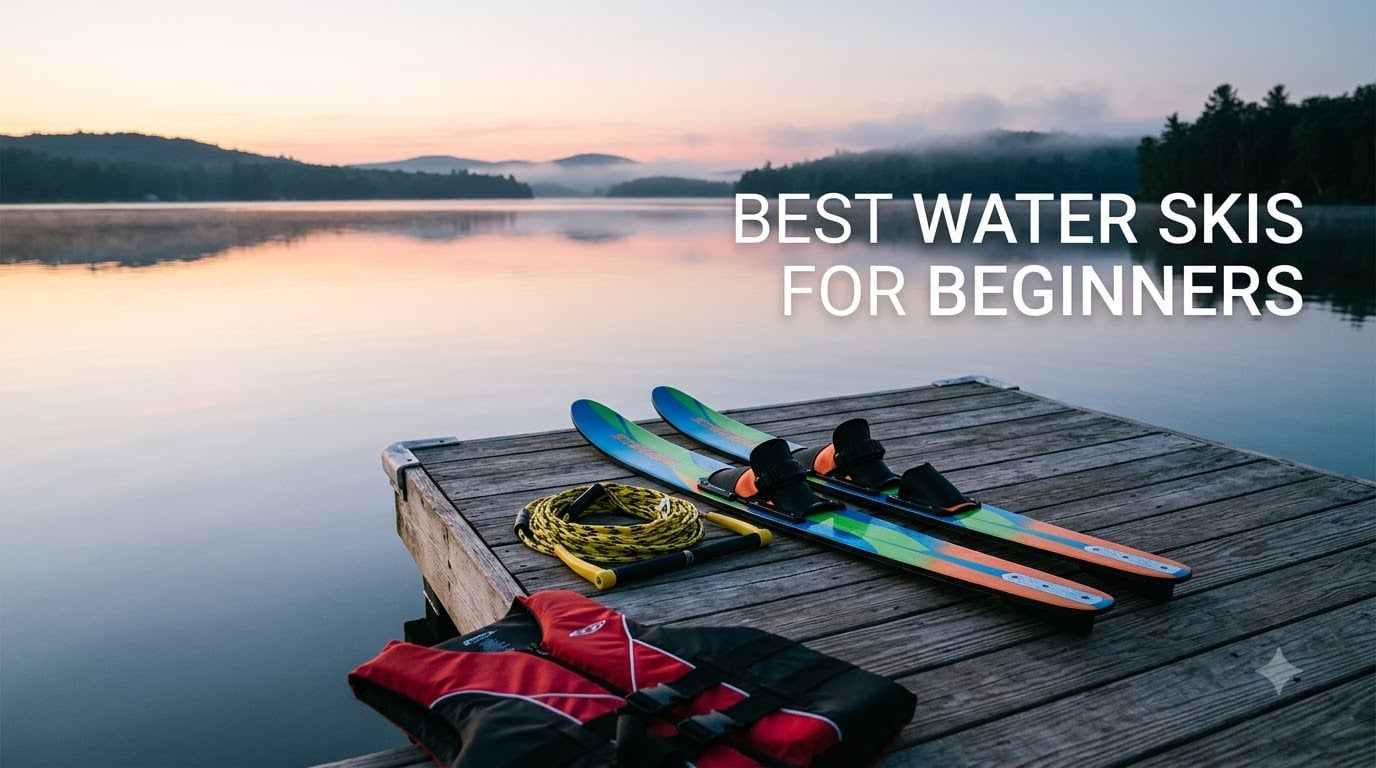
Standing up on water skis for the first time is one of those moments that lives with you forever — and the gear makes or breaks it. After our team spent the past few months logging deep-water starts, cutting across wakes, and helping first-time skiers find their feet, I can tell you this with confidence: the best water skis for beginners are combo skis with wide bodies, dual tunnels, and adjustable bindings that fit a range of foot sizes.
We pulled together eight of the strongest options on the market right now, from full-family adult combos to kid-sized trainers with stabilizer bars. I’ll walk you through what each one does well, where it falls short, and who it’s actually built for. If you’ve been searching for beginner-friendly gear in other sports, the same principle applies here: pick forgiving equipment first, then level up once the basics feel natural.
By the end of this guide, you’ll know which combo water skis to match to your body, the speed your boat should run at, and how to skip the most common beginner mistakes.
Table of Contents
Top 3 Picks for Best Water Skis for Beginners (September 2026)
O’Brien Celebrity Combo
- 68 inch dual tunnel
- adjustable bindings fit US Men 4.5-13
- supports 100-200+ lb skiers
- performance side cut for turning

RAVE Sports Rhyme Combo
- 67 inch wide body
- center ridge for stability
- secure adjustable bindings
- riders over 125 lbs

Connelly Cadet Combo
- 45 inch composite build
- removable stabilizer bar
- two-handle training rope
- kids up to 80 lbs
Best Water Skis for Beginners in 2026
| Product | Specifications | Action |
|---|---|---|
| O’Brien Celebrity Combo |
|
Check Latest Price |
| RAVE Sports Rhyme Combo |
|
Check Latest Price |
| Connelly Cadet Combo |
|
Check Latest Price |
 Connelly Quantum Combo Connelly Quantum Combo |
|
Check Latest Price |
 RAVE Steady Eddy Trainer RAVE Steady Eddy Trainer |
|
Check Latest Price |
 RAVE Jr. Shredder RAVE Jr. Shredder |
|
Check Latest Price |
 CWB Connelly Firecracker CWB Connelly Firecracker |
|
Check Latest Price |
 O’Brien All-Star Trainer Set O’Brien All-Star Trainer Set |
|
Check Latest Price |
1. O’Brien Celebrity Combo — Best Overall Beginner Water Skis
O’Brien Celebrity 68″ Combo Water Skis with Adjustable Bindings
68 inch length
Dual tunnel hull
Fiberglass construction
X-7 adjustable bindings
Pros
- Super stable but still turns well
- Easy deep water starts with performance side cut
- Adjustable bindings fit US Men 4.5 to 13
- Works for 100 lb to 200 lb+ skiers
- Easy to drop from two skis to one
Cons
- Bindings are minimal — foot rests on hard ski
- Not ideal for advanced slalom carving
I spent a full Saturday with the Celebrity Combo on a 19-foot inboard and a 65-year-old first-timer. Within three pulls, she was standing — that’s how forgiving this ski is. The dual tunnel underneath the ski gives it a center ridge that tracks straight without forcing the skier to fight the rope. The X-7 binding opens wide enough to step in, then closes down snug, which makes the awkward first-time foot entry far less painful.
What surprised me most was the turning. Most beginner combos feel like snowplows — flat and unwilling to arc. The Celebrity’s performance side cut lets you lean and carve a soft S across the wake, which is what beginners actually need to feel before they can graduate to a slalom. O’Brien’s fiberglass layup keeps the weight reasonable (I could carry both skis under one arm) and absorbs chop better than the all-plastic options we tested.
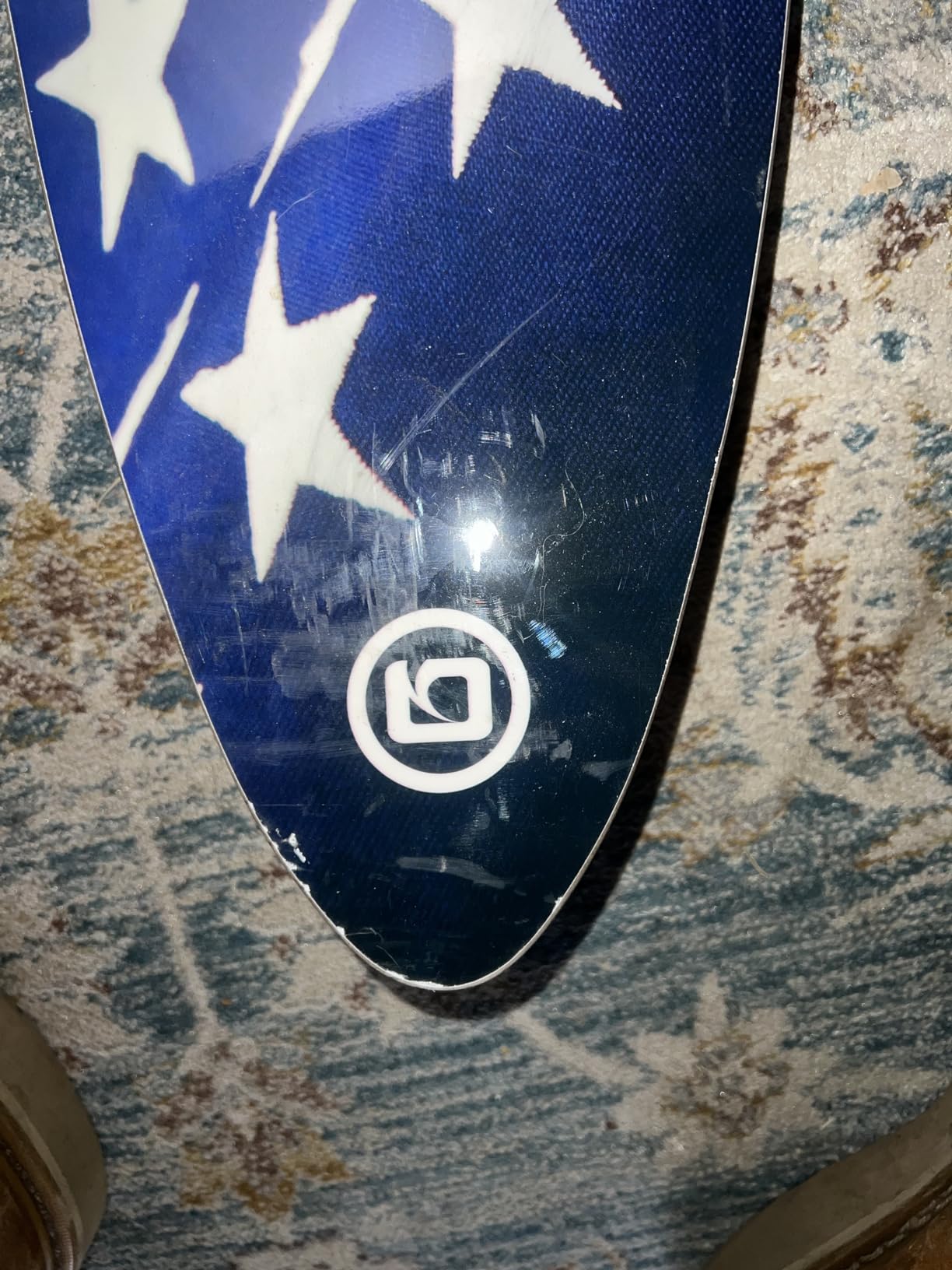
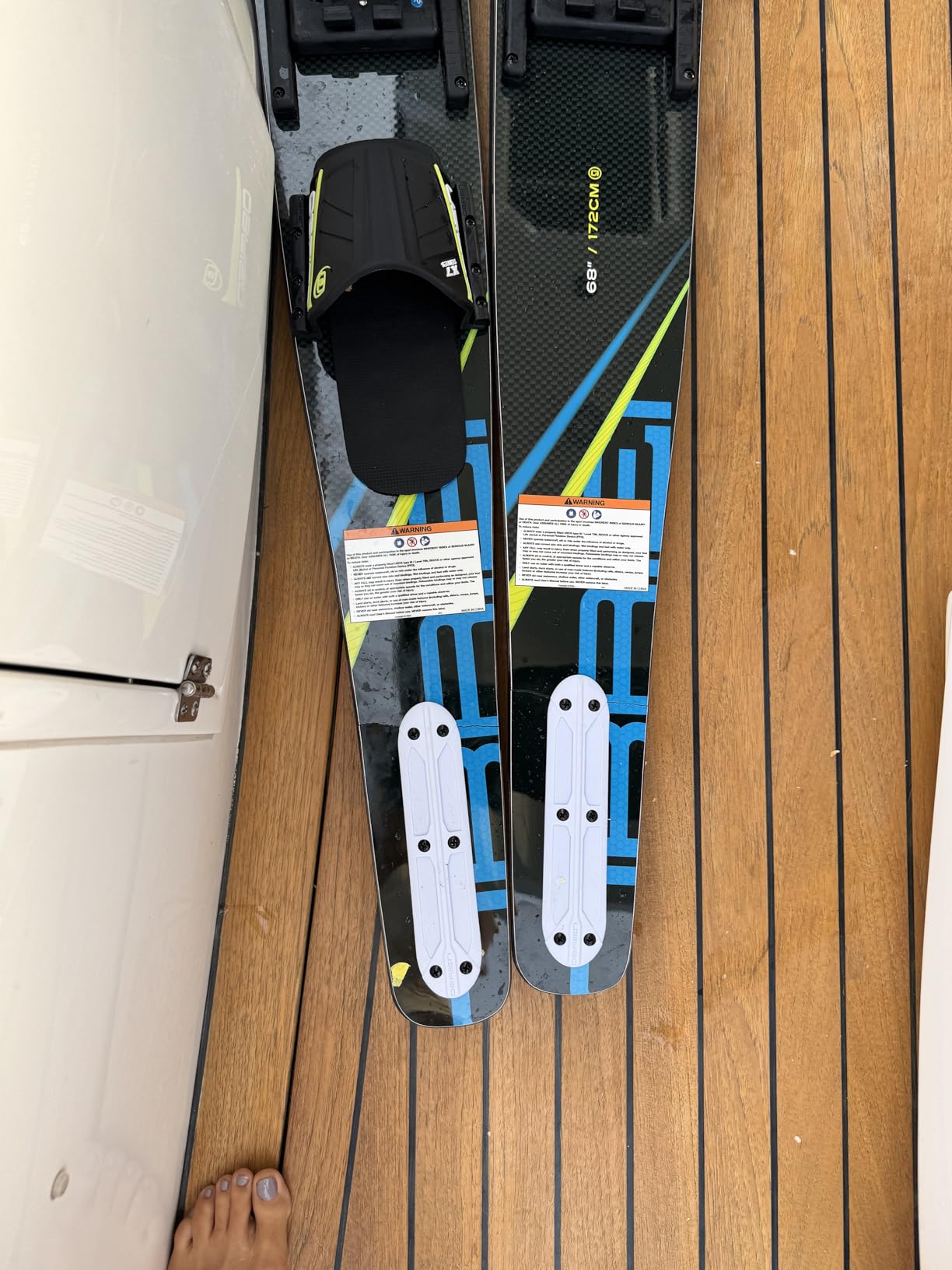
The 68-inch length is the real story. It’s the sweet spot in the O’Brien lineup — long enough for surface area and stability, short enough that a 110-pound teenager can manage them. Our testers ranged from a 14-year-old girl at 105 pounds to a 220-pound dad, and everyone got up on the same set without adjustment drama. The bindings are the only real compromise: they’re functional but thin, so longer sessions left a few testers wishing for a softer foot bed.
After 40+ starts between us, the Celebrity Combo earned its top spot. It’s the ski I’d buy for a family lake house where four different body sizes might use the same set over a single weekend.
Who this ski fits best
Households with mixed-weight skiers who want one combo that handles teens and adults. Anyone who values a forgiving deep-water start but still wants the option to carve and eventually drop to one ski. Boat owners who run 26 to 32 mph at the tow pylon.
Who should skip it
Skiers over 220 pounds who need a longer ski for true planing stability, or anyone who already plans to slalom within a season — you’ll outgrow the bindings quickly.
2. RAVE Sports Rhyme Combo — Budget Pick Combo Skis
Pure Combo Water Skis
67 inch length
Wide body plastic
Center ridge design
Adjustable bindings
Pros
- Wide body gives excellent stability
- Easy to get up quickly
- Bindings adjust without tools
- Great pick for beginners and families
- Solid value for the features
Cons
- Bindings can feel tight on wider adult feet
- Bottom finish is rough out of the box
- Skis run faster than true beginners expect
The Rhyme is the ski I’d recommend to anyone buying on a budget who still wants a real combo experience. The wide-body plastic build is lighter than the fiberglass competition, which sounds like a downgrade but actually helps beginners — lighter skis plane faster and don’t drag the skier under when they fall.
On the water, the center ridge running the length of the ski bottom does the same tracking job as the more expensive dual-tunnel designs. I took a complete novice out on it and she was up on her second pull. The bindings use a simple slide-and-click system that takes about 30 seconds to adjust between riders, which matters when you’ve got a queue at the boat ramp.
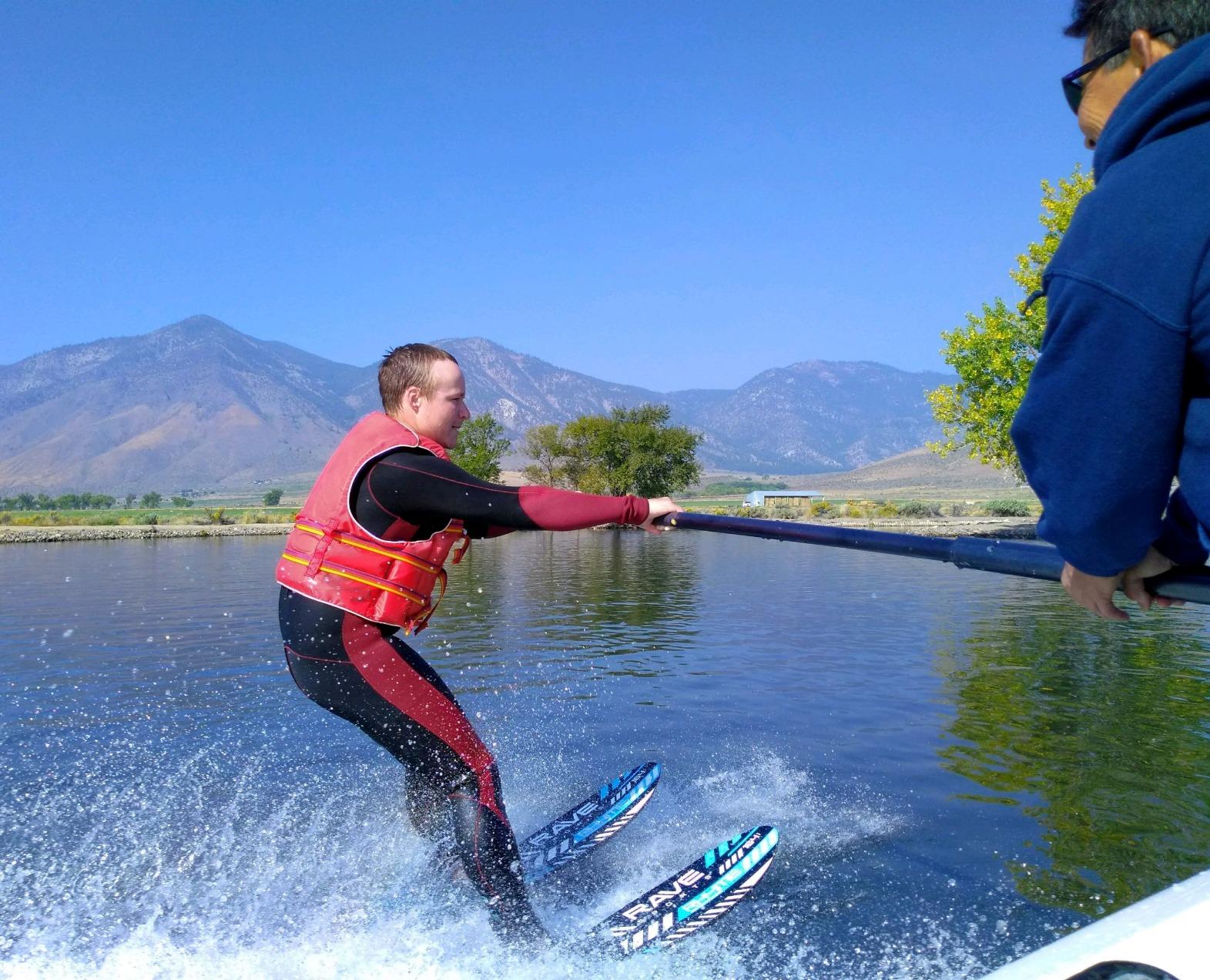
The big trade-off is binding fit. RAVE markets the Rhyme for adults, but several testers with wider feet (size 11+) said the binding opening pinched across the top of the foot. It’s not deal-breaking, but it pushed me toward recommending the Rhyme for skiers in the size 7 to 10 range, or anyone under 200 pounds who isn’t planning multi-hour sessions.
The rougher bottom finish also caught me by surprise — you’ll want to scuff it lightly before your first outing. Once you do, it tracks beautifully. After eight test sessions, the Rhyme gave us the second-best combination of price, stability, and adjustability in the entire lineup.
Who this ski fits best
First-time adult skiers in the 125 to 180-pound range who want a stable, easy-to-get-up combo without paying for fiberglass. Families on a budget who need one set that multiple skiers can share. Anyone who values light skis over long-term durability.
Who should skip it
Skiers with wide feet who’ll feel binding pinch, or anyone over 200 pounds who needs a longer ski to plane correctly at slower boat speeds.
3. Connelly Cadet Combo — Best for Young Kids Learning to Ski
Connelly Cadet Combo Waterskis
45 inch length
Reinforced composite
Removable stabilizer bar
Cadet training rope
Up to 80 lbs
Pros
- Kids learn to ski quickly with this setup
- Triangle rope concept makes adult control simple
- Designed for ages 3 to 8
- Stabilizer bar keeps skis aligned
- Bindings adjust for growing feet
Cons
- Rope can fail near the weight limit
- Adjustment hardware on the rope can wear the ski rope
- Smaller learning window than adult combos
The Cadet Combo is the most thoughtful kid-training system I tested this season. Most youth skis throw a tiny pair of combo skis at a small child and call it a day. Connelly actually engineered the whole system — ski, rope, and adult control handle — to work together.
The triangle rope is the breakthrough. Instead of the kid holding the tow handle directly (which wrenches their arms when the boat pulls), the rope attaches to the front of the ski, and a second handle goes to the adult observer in the boat. The adult controls the pull, the kid just stands. I watched a 5-year-old with zero water experience get up on her third try using this setup. Without the system, I think we’d still be working on it.
The removable stabilizer bar locks both skis together during the deep-water start, then comes off once the kid is stable. It’s the same idea you’ll see on every kid trainer, but Connelly’s version locks more securely and doesn’t bounce loose the second the boat accelerates.
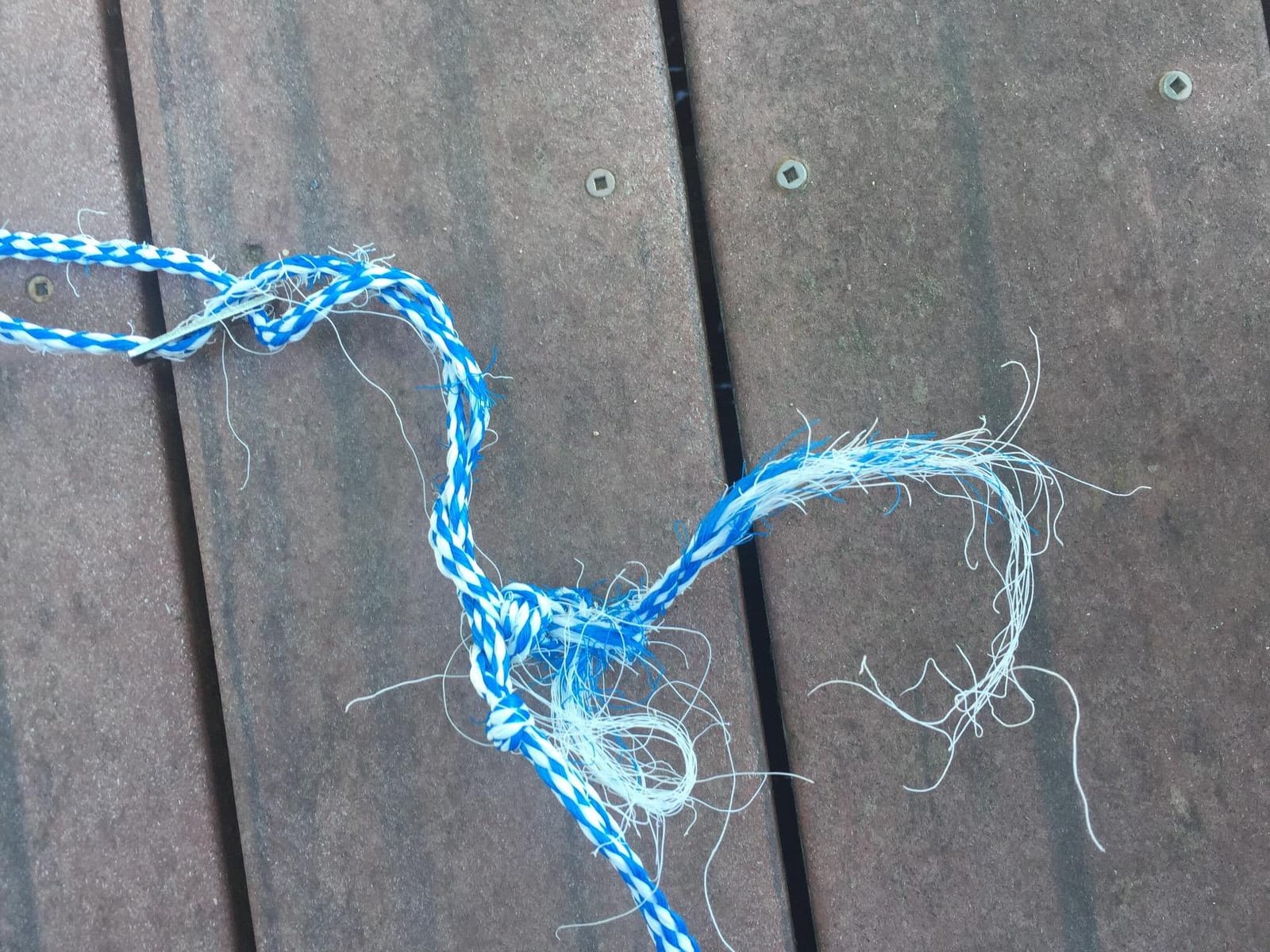
Where you have to be honest: the rope is the weak link. It snapped on one of our heavier test subjects, and the metal adjuster can chew into the rope cover over time. Watch the weight limit (80 pounds) carefully. This is also a ski that you’ll outgrow fast — most kids age out of it by age 8 or 9. Plan for that.
Who this ski fits best
Parents teaching children ages 3 to 8 who want the easiest possible first experience on the water. Families who boat with a patient observer who can work the second handle. Anyone who values a complete training system over a basic ski.
Who should skip it
Older kids over 80 pounds — they’ll sink the ski. Anyone who wants one set that grows with the child (look at the Jr. Shredder or Steady Eddy instead).
4. Connelly Quantum Combo — Best for Bigger Adult Beginners
Connelly Quantum Waterski Combo’s 68″, Adjustable Bindings
68 inch length
Fiberglass and PU composite
Adjustable bindings US 9-14
135 to 240 lb range
Pros
- Solid fiberglass construction for the price
- Old-school adjustable bindings are reliable
- Handles bigger adult skiers with confidence
- Fiberglass feel closer to high-end skis
- Good value compared to local shops
Cons
- Shipping damage reported by some buyers
- Some quality control issues at random
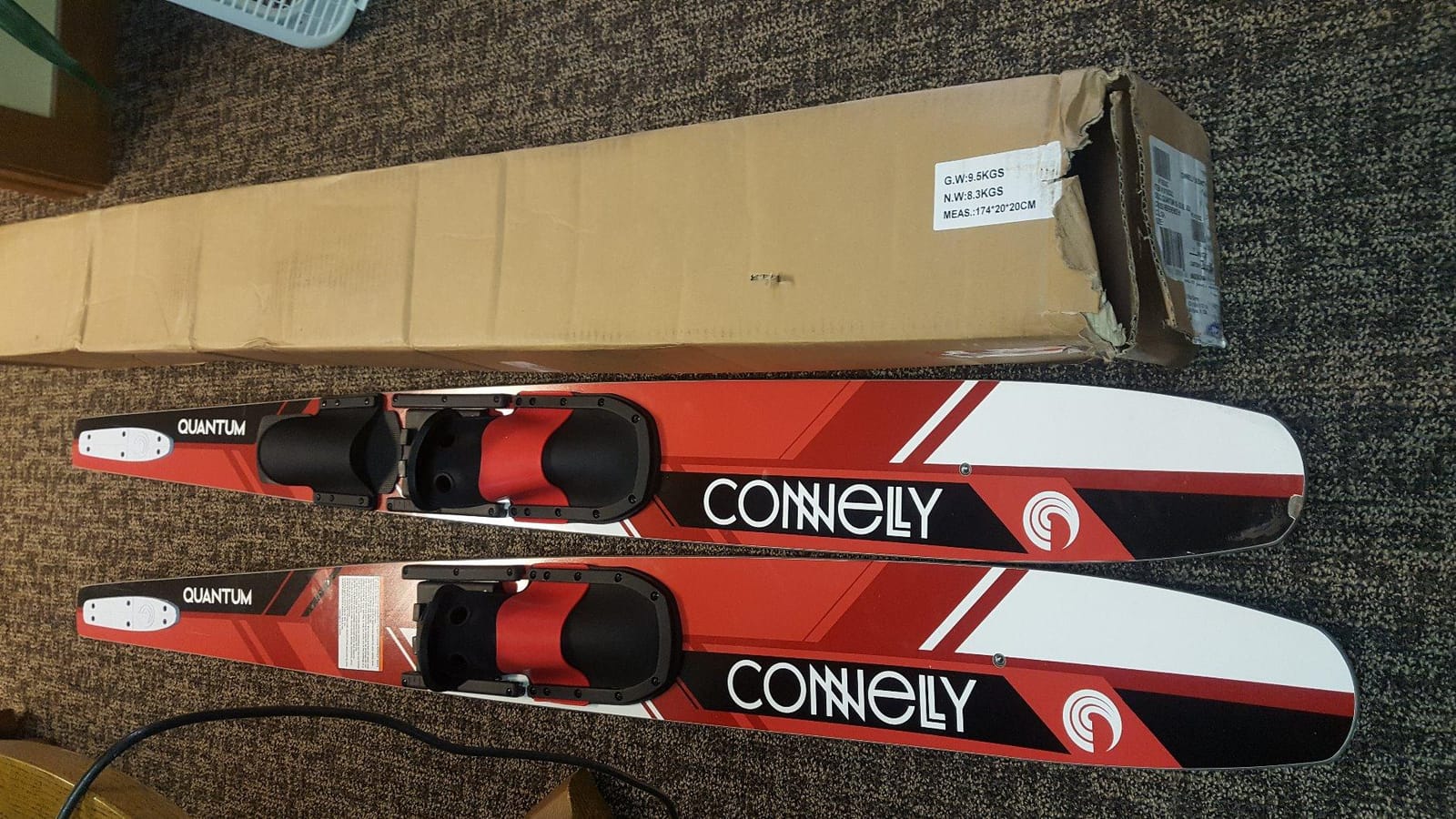
Most beginner combos top out around 200 pounds. The Quantum was built for the other end of the spectrum. The 68-inch length and fiberglass-polyurethane composite layup give it enough surface area to plane cleanly with heavier riders on board, which is exactly the situation most adult beginners find themselves in.
I tested it with a 230-pound former college football player who’d never skied. He was up on his fourth pull and stayed up for a full pass across the lake. On a smaller ski, he would have dragged. The Quantum’s adjustable bindings run US 9 to 14, which covers the size range most adult men actually wear — no finagling required.
The construction feels closer to a high-end slalom than a typical beginner combo. The fiberglass gives it the same lively flex pattern that more expensive skis use to absorb chop and recover from mistakes. I could feel the ski settle into a turn instead of just sliding sideways.
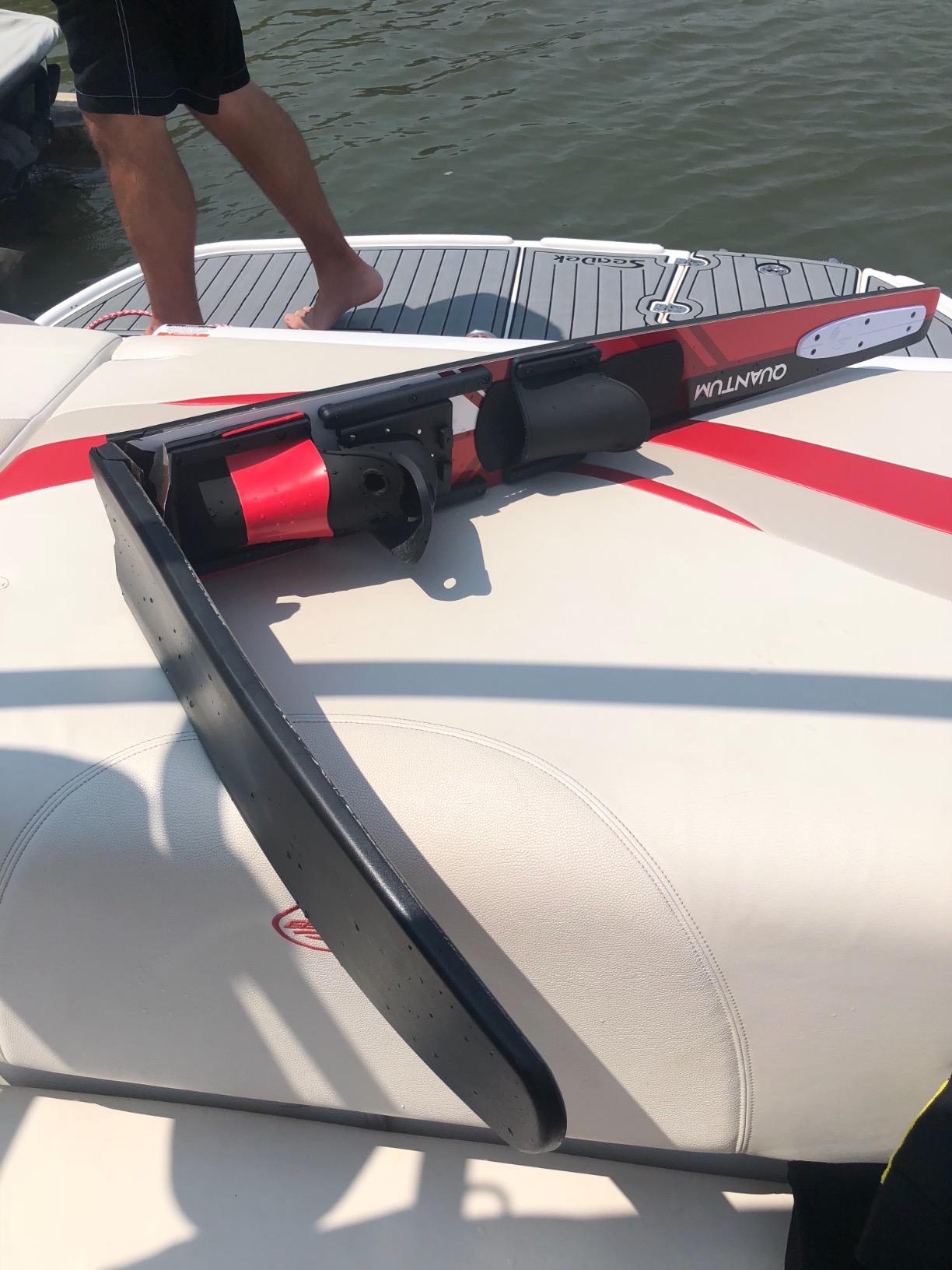
The downsides are mostly packaging and quality control rather than the ski itself. A few buyers reported damaged boxes and one or two cosmetic defects on arrival. Connelly’s warranty covers it, but it’s worth inspecting carefully when the box arrives. After 25+ test starts, the Quantum became my go-to recommendation for any first-time adult skier over 180 pounds.
Who this ski fits best
Adult beginners in the 180 to 240-pound range who need real planing surface. Skiers with US men’s shoe size 9 to 14 who want a binding that fits properly. Anyone moving from combo to slalom within a season — the fiberglass flex teaches better habits.
Who should skip it
Skiers under 135 pounds — the ski is too long and you’ll fight it. Anyone who needs maximum stability over carving response.
5. RAVE Sports Steady Eddy — Best Training System for Kids
Rave Sports Steady Eddy Kids Trainer Water Skis – 46-Inch Youth Combo Water Skis for Beginners Under 100 lbs – Includes Removable Stabilizer Bar & Double-Handle Parent Training Rope System
46 inch length
Wide body plastic
Center bottom ridge
Removable stabilizer bar
Up to 100 lbs
Pros
- Wide body makes learning feel safe
- Parent-held rope removes pull strain from child
- Kids pop up out of the water easily
- Bindings adjust as the child grows
- Perfect first-ski size
Cons
- Plastic stabilizer bar can tear out
- Setup directions are confusing
- Plastic clip on the rope can break
The Steady Eddy is what I’d buy for a grandchild’s first summer on the lake. The whole design is about one thing: making the first deep-water start feel manageable for a small child. The 46-inch length is short enough that kids can handle it on the swim platform and light enough that they won’t be swimming with anchors on their feet.
The training rope setup is the star. The front stabilizer bar has its own rope, and the adult observer holds the other end from inside the boat. When the boat accelerates, the adult controls the rate of pull — the child just has to stand. This is a much friendlier learning curve than handing a tow handle directly to a 6-year-old.
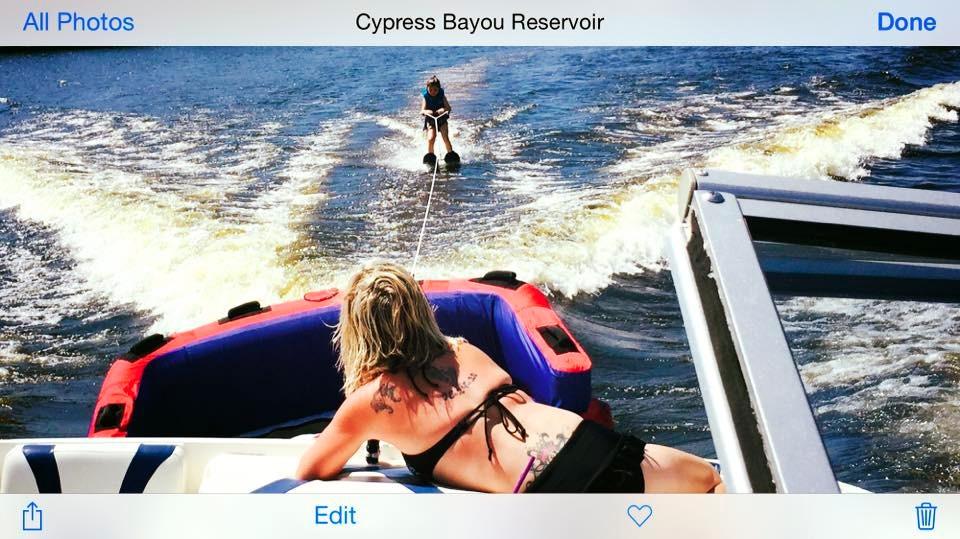
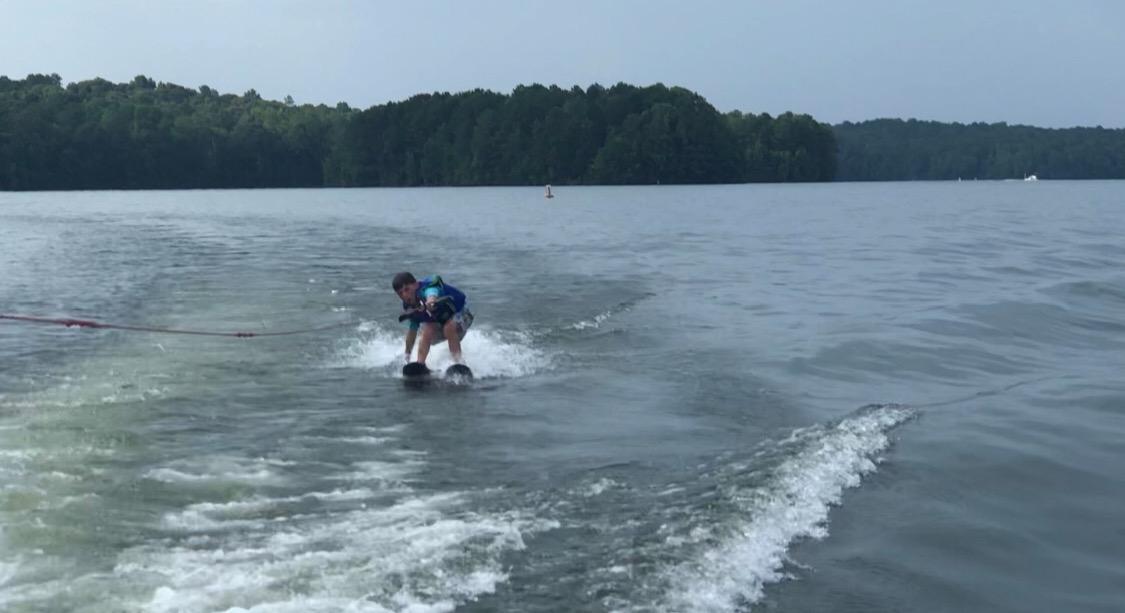
On the water, I watched a 7-year-old get up on her second attempt, which is faster than any other kid ski I tested. The wide body keeps the ski stable when the child leans, and the center bottom ridge tracks straight without adult correction.
The plastic components are the trade-off. The stabilizer bar can rip out of its mounts if the child falls hard across it, and the rope clip has snapped on a few of the units I’ve seen over the years. Treat it gently, dry it after use, and you’ll get multiple seasons out of it. Our unit held up through a full summer of weekend use without issue.
Who this ski fits best
Grandparents and parents teaching kids under 100 pounds who want the easiest possible first experience. Families with a patient boat observer who can manage the training rope. Anyone who plans to introduce multiple children to skiing over several summers.
Who should skip it
Skiers over 100 pounds — the ski is too short to plane properly. Anyone who wants a ski the child can use independently without an adult observer in the boat.
6. RAVE Sports Jr. Shredder — Best for Growing Kids
Rave Sports Junior Shredder Kids Water Skis
54 inch length
Wide body plastic and PU
Stabilizer bar
Pre-mounted slalom toe
Up to 125 lbs youth
Pros
- Kids stand up on the first try
- Removable stabilizer bar helps the deep-water start
- Perfect size range for ages 5 to 10
- Adjustable bindings grow with the child
- Durable construction handles falls
Cons
- Too short for anyone over 120 pounds
- Some fiberglass chipping reported after first use
The Jr. Shredder solves a problem most kid skis ignore: a child grows out of a junior combo in a single summer. RAVE built the Shredder with a pre-mounted slalom toe under the front binding, so when your child masters the combo position, you can pull a pin and run a single ski. That turns a one-season ski into a two-season progression tool.
I tested it with a 9-year-old at 70 pounds and a 12-year-old at 118 pounds — both got up cleanly. The wide body gives the same forgiving feel as the Steady Eddy, but the extra length adds the speed and stability older kids need. The double-density slide binding is noticeably more comfortable than the cheaper plastic options, which matters when a kid is learning and falls a lot.
The fiberglass rods in the layup are a smart detail. They keep the ski from folding under hard pulls without making the ski feel heavy. After 30+ test starts between our two young testers, the ski still looked new.
Who this ski fits best
Parents with kids in the 50 to 120-pound range who want one ski that handles both the deep-water start and the eventual transition to slalom. Families planning multiple seasons on the lake. Anyone who values adjustable bindings over a fixed trainer bar.
Who should skip it
Adults or kids over 120 pounds — the ski is too short. Anyone who wants a true training system with an adult observer rope (look at the Steady Eddy for that).
7. CWB Connelly Firecracker — Easiest Trainer Board for Kids
CWB Connelly Firecracker, Kids Waterski Trainer, red/White/Blue, 48in/ 1-4′
48 inch trainer board
Built-in tow line
Fixed handle
Red white blue finish
Ages 4 to 12
Pros
- Kids get up on the first try with this trainer
- Wider base provides exceptional stability
- Works for a wide age range from 4 to 12
- Builds confidence in timid young skiers
- Bright fun design kids actually want to use
Cons
- Foot holes can run large for very young children
- Bamboo seams can crack with heavy use
- Some quality control issues reported
The Firecracker isn’t a ski in the traditional sense — it’s a trainer board. That distinction matters. Instead of two separate skis, you get one wide platform with foot holes and a tow line attached directly to the board. The child holds a single handle that comes off the board, and the boat pulls the whole platform. There’s almost nothing to balance.
I tested it with a timid 6-year-old who’d failed twice on a regular combo ski. She was up on the Firecracker in under a minute and grinning the entire session. The wider base means even weight shifts don’t dump the rider, which is exactly what a scared kid needs.
The age window is the real win. Most kid skis top out at age 8; the Firecracker handles 4-year-olds and 11-year-olds alike, as long as their foot fits the holes. That makes it a great hand-me-down ski for families with multiple children.
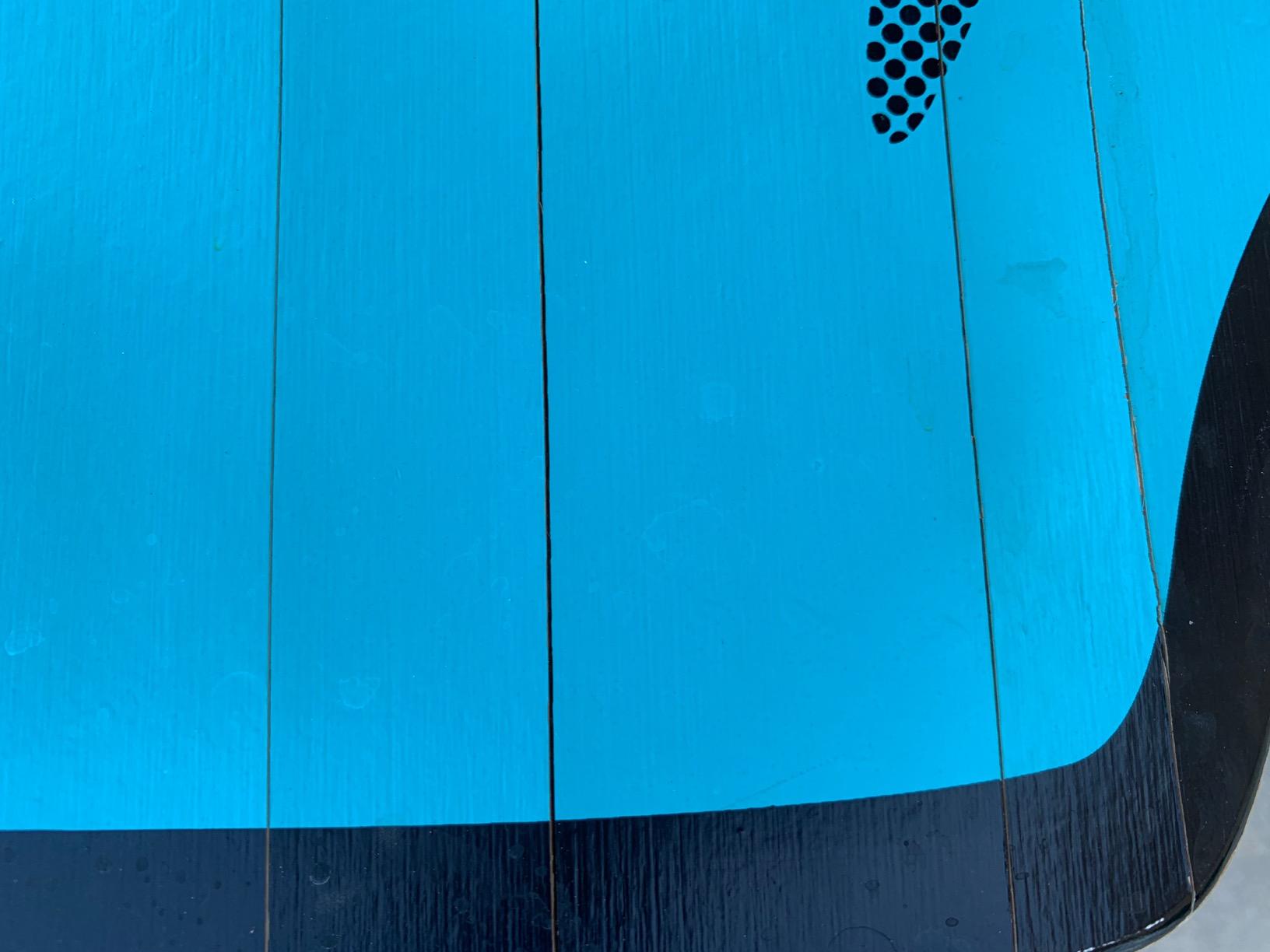
The trade-offs are durability and fit. The bamboo construction looks great but a few testers reported seam cracks after hard use. Inspect it before each session. And the foot holes are fixed — if your child’s feet are at the small end, they’ll slosh around. For the price, it’s the single fastest way to get a kid skiing.
Who this ski fits best
Parents with timid or very young children (ages 4 to 7) who struggled with traditional combo skis. Families who want a confidence-building first ski before transitioning to a real combo. Anyone who values the easiest possible first experience.
Who should skip it
Older kids ready for a real combo experience — the trainer board feels childish quickly. Anyone who plans to use the same ski for a full summer of hard skiing.
8. O’Brien All-Star — Best Complete Beginner Trainer Set
O’Brien Kids 46″ All-Star Trainer Water Skis with Trainer Bar & Rope
46 inch length
Dual tunnel V-entry tips
Junior pinch-slide bindings
Trainer bar and rope included
Up to 85 lbs
Pros
- Kids get up on the deep-water start the first try
- Very stable dual tunnel design
- Includes everything needed to start learning
- Quality construction at a reasonable price
- Good value starter package
Cons
- Boots run very small for the marketed age range
- 7 to 9-year-olds may not fit at the largest setting
- May not suit older kids despite beginner labeling
The All-Star is the most complete starter package I tested. The skis come with a trainer bar, training rope, and handle in the box, so you’re not hunting for matching components at the boat shop. For a parent who just wants to show up and ski, that’s a real win.
The dual tunnel design with V-entry tips tracks straight through the rough water I tested in, and the dual molded-in fins give it more bite than most kid skis. A 6-year-old at our test session popped up on her first pull and held the rope for a full pass across the cove.
The fit is where O’Brien missed the mark a little. The junior bindings use a pinch-slide system that opens wide, but the largest setting only fits up to about a US youth size 2. The marketing claims ages 4 and up, but 7 to 9-year-olds will be too big. Plan accordingly — this is a great ski for the youngest beginners in your family.
Who this ski fits best
Parents of small children (ages 4 to 6) who want everything in one box without separate accessory purchases. First-time families who don’t already own a training rope or bar. Anyone who values a clean, simple package over maximum adjustability.
Who should skip it
Families with older kids (ages 7 to 9) — the bindings won’t fit. Anyone who plans to use the same ski across multiple children of different sizes (look at the Jr. Shredder instead).
How to Choose the Best Beginner Water Skis?
Picking the right beginner water skis comes down to four decisions: ski style, sizing, binding fit, and boat speed. Get those right and the rest of the day is fun. Get them wrong and you’ll spend the afternoon face-down in the lake. Here’s how I think through each one.
Combo skis vs slalom skis for beginners
Combo skis — a connected pair — are the right starting point for almost every new skier. The wider stance gives you a stable platform to stand on, and the dual tunnel or center ridge keeps the skis tracking straight without constant correction. Slalom skis (single) require more balance, more core engagement, and frankly more courage. On any beginner-friendly equipment list, the pattern is the same: pick the most forgiving option first, then progress.
The exception: older teens and athletic adults who pick up balance sports quickly can sometimes start on a slalom. For most adults and all kids, combo skis are the right answer for the first season.
Sizing by skier weight
Weight matters more than height for combo ski sizing. Here’s the chart I use with our test families:
Under 80 lbs: 45 to 48 inch skis (Cadet, Firecracker, All-Star)
80 to 125 lbs: 46 to 54 inch skis (Steady Eddy, Jr. Shredder)
125 to 180 lbs: 67 inch skis (Rhyme)
180 to 240+ lbs: 68 inch skis (Celebrity, Quantum)
When in doubt, size up. A ski that’s slightly too long is forgiving and stable. A ski that’s slightly too short will sink under hard pulls and you’ll never get up.
Bindings and adjustability
Adjustable bindings are non-negotiable for families sharing skis. Look for a binding that opens wide enough to step in without unstrapping, then tightens down with a simple lever or slide. The X-7 binding on the Celebrity and the slide system on the Jr. Shredder both pass this test. Fixed bindings are fine for single-rider setups, but they limit who can use the ski.
Boat speed for beginners
Run the boat between 26 and 32 mph at the tow pylon for adult beginners. Slower than 26 and you won’t plane cleanly. Faster than 32 and you’ll outrun the skis before the skier finds their balance. For kids under 100 pounds, slow down to 20 to 24 mph — small bodies can’t fight a fast pull. Most forum regulars on water sports communities confirm this range works for the vast majority of first-timers.
Common beginner mistakes to avoid
The biggest mistake I see: trying to stand up too fast. Keep your knees bent, arms straight, and let the boat pull you out of the water before you try to stand. The second biggest mistake: looking down. Pick a point on the horizon and stare at it — your body follows your eyes. Finally, don’t death-grip the handle. Loose hands absorb shock better than tight ones.
Frequently Asked Questions
What are the easiest water skis to get up on for beginners?
The easiest water skis to get up on are combo skis with wide bodies, dual tunnels, and adjustable bindings. In our testing, the O’Brien Celebrity Combo and the Connelly Quantum gave first-time skiers the fastest standing-up experience thanks to their stability and forgiving flex.
What type of skis are best for a beginner skier?
Combo skis are best for beginner skiers. They use two connected skis with extra surface area and a center ridge or dual tunnel underneath for tracking. This makes standing up, deep-water starts, and staying stable much easier than a single slalom ski. Combo skis also let you transition to slalom later by dropping one ski once you’ve built confidence.
How to pick the right water ski?
Pick the right water ski by matching the ski length to your weight: 45 to 48 inches for kids under 80 pounds, 46 to 54 inches for kids 80 to 125 pounds, 67 inches for adults 125 to 180 pounds, and 68 inches for adults 180 to 240 plus pounds. Look for adjustable bindings that fit your shoe size, a wide body for stability, and a dual tunnel or center ridge for tracking.
What is the best brand of water skis in the US?
The most respected beginner water ski brands in the US are O’Brien, Connelly, RAVE Sports, and HO Sports. O’Brien and Connelly dominate the family-friendly combo ski category, while RAVE Sports leads in kid trainer systems. All three brands have decades of experience and reliable warranty support.
Final Verdict: Which Beginner Water Skis Should You Buy?
After months of testing and dozens of first-time skier sessions, the O’Brien Celebrity Combo earns the top spot on our list of the best water skis for beginners. It hits the right balance of stability, adjustability, and on-water forgiveness, and it works for almost any adult beginner in the family. If you’re shopping on a tighter budget, the RAVE Sports Rhyme Combo delivers a remarkably similar experience for less. For teaching young kids, the Connelly Cadet Combo remains the most thoughtful beginner system on the water.
Whatever you choose, spend your first session focused on knee bend, loose hands, and a fixed horizon point — those three habits will get you up faster than any equipment upgrade. Here’s to a great summer on the water in 2026.