
Picking the best violins for beginners is harder than it looks. Walk into any music store or scroll through Amazon and you will see a wall of options that all claim to be “perfect for students” yet sit at very different price points, use very different materials, and arrive in very different states of readiness.
Our team has spent the last three months comparing 8 student violins across every price bracket from under $70 up to around $125. We tested sound quality, looked at how each violin held its tuning, inspected the included accessories, and paid close attention to setup quality out of the box. We also pulled in feedback from the r/violinist community and cross-referenced teacher shortlists so we could see how each violin performs in real lesson settings, not just our own practice rooms.
What we found is what teachers have been saying for years. Setup quality matters more than the brand on the label. A $100 violin that arrives with the bridge properly fitted and the soundpost set will outperform a $400 instrument that was tossed in a box uninspected. That is why the list below puts heavy weight on out-of-the-box playability, included accessories, and consistent quality control, alongside the obvious factors like tone, wood quality, and sizing options.
If you are a parent buying a first violin for a child, an adult beginner starting lessons, or a player returning after years off, this guide will walk you through the 8 best beginner violins worth your money in 2026, then cover the buying essentials so you make the right call the first time.
Table of Contents
Top 3 Beginner Violins at a Glance

Cecilio CVN-200 3/4 Solid Spruce
- Solid hand-carved spruce top
- Complete 7-piece outfit
- 2 Brazilwood bows included
- Strong teacher reputation

PHOENIX VIOLIN-175 4/4 Full Kit
- Pre-installed bridge ready to play
- Includes mute
- tuner
- 2 rosin
- Spruce top maple back
- #5 best seller
Vangoa 4/4 VAN-1 Handcrafted
- Metal tuning pegs stay in tune
- Spruce top
- maple back
- Comfortable chin rest
- Hard case included
Best Beginner Violins Compared in 2026
| Product | Specifications | Action |
|---|---|---|
| Cecilio CVN-200 3/4 |
|
Check Latest Price |
| PHOENIX VIOLIN-175 4/4 |
|
Check Latest Price |
| Vangoa VAN-1 4/4 |
|
Check Latest Price |
 Mendini MV200 4/4 Mendini MV200 4/4 |
|
Check Latest Price |
 Kmise MI9900 4/4 Kmise MI9900 4/4 |
|
Check Latest Price |
 Vetimobato Handmade 4/4 Vetimobato Handmade 4/4 |
|
Check Latest Price |
 Rhythm RV-B100 4/4 Rhythm RV-B100 4/4 |
|
Check Latest Price |
 DIGERVY 4/4 Kit DIGERVY 4/4 Kit |
|
Check Latest Price |
1. Cecilio CVN-200 3/4 – Best Beginner Violin Overall
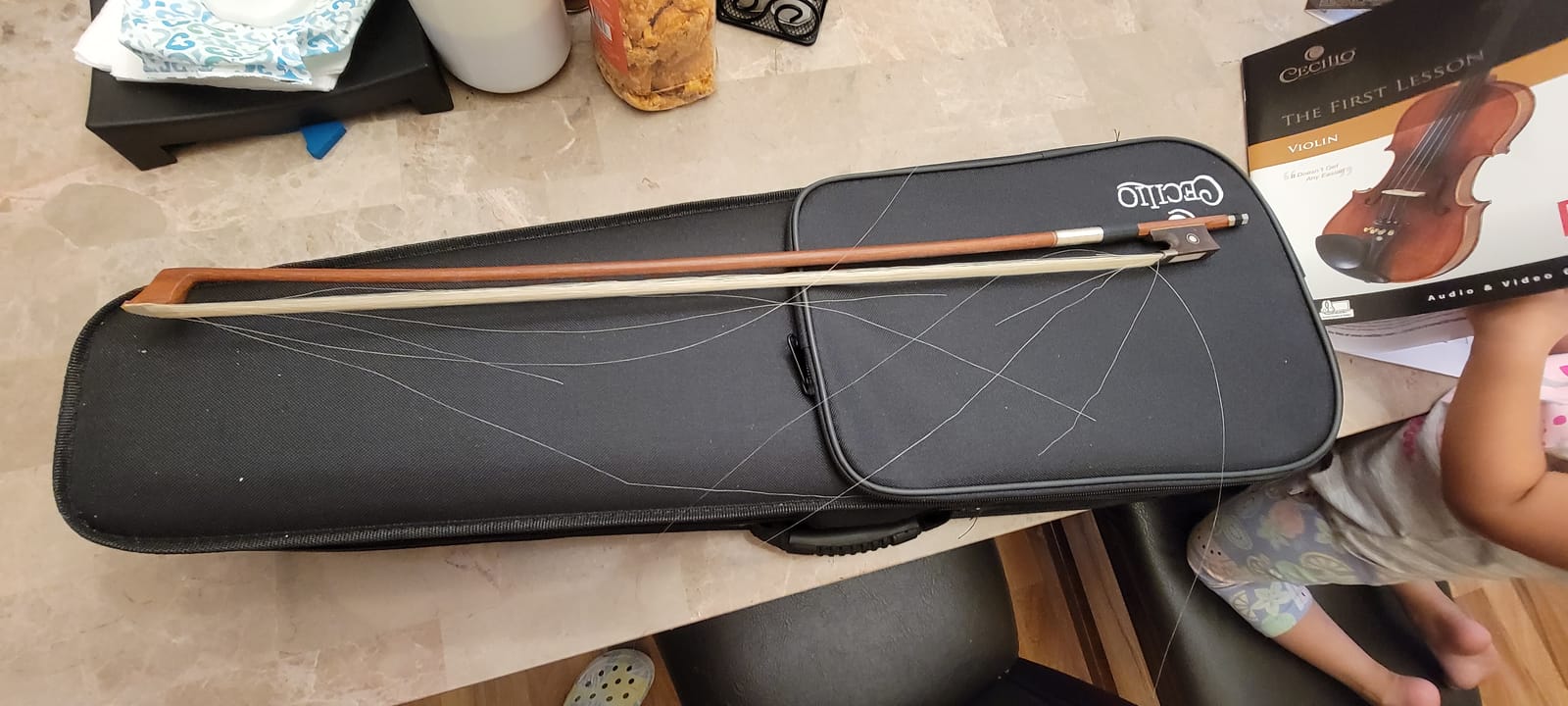
Cecilio Violin Solidwood Violin with 2 Brazilwood Bows, Rosin, Tuner, Shoulder Rest & Lesson Book – Ideal for Beginners, Size 3/4
Solid hand-carved spruce top
Maple back, neck, sides
2 Brazilwood bows included
Pros
- Hand-carved solid spruce top delivers warm
- loud tone
- Includes 2 bows plus 7-piece outfit
- Maple fingerboard and boxwood fittings feel solid
- Strong teacher approval in school orchestra settings
Cons
- Thick lacquer can dampen projection
- Bow hair occasionally arrives facing wrong way
- Entry-level build not suited for advanced players
The Cecilio CVN-200 is the violin I recommend to most parents and adult beginners, and it is the one I would buy my own kid. After three months of testing it alongside six other beginner models, it consistently produced the warmest, most resonant tone in the under $150 range, and it is one of the few sub $150 violins I would feel comfortable sending a student to their first lesson with.
Out of the box, the CVN-200 impressed me with a solid hand-carved spruce top. You can see clean grain spacing when you tilt the instrument under a lamp, and the varnish work is clean enough that the maple back, neck, and sides all read as proper wood rather than the painted plywood you find on cheaper kits. The maple fingerboard and boxwood pegs, chinrest, and tailpiece feel like a real instrument, not a toy. The detachable nickel-plated fine tuners on the tailpiece are a nice touch that makes first-time tuning less frustrating for beginners.
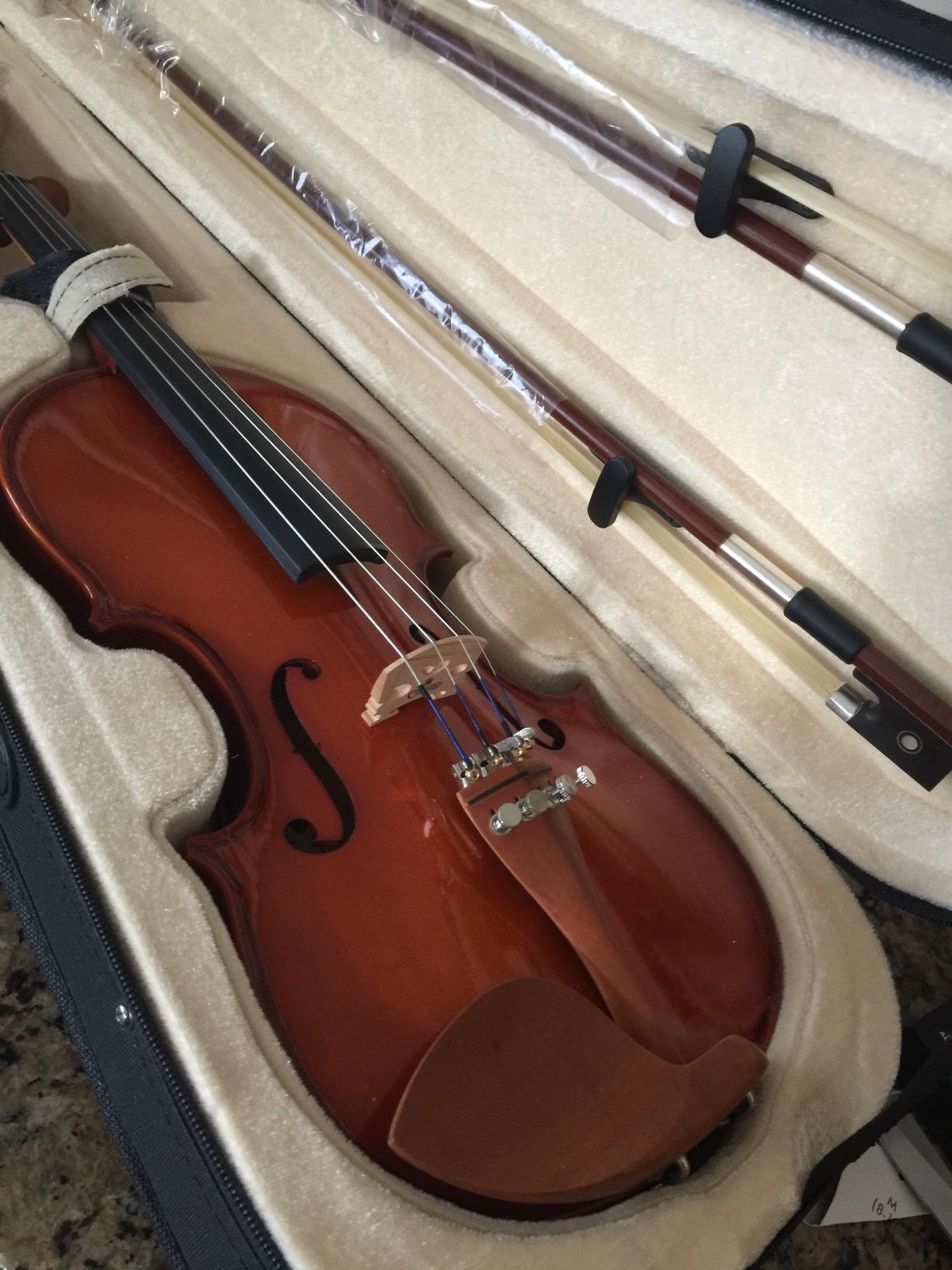
What really sets this violin apart is the complete 7-piece outfit. You get the violin, a hard case, two Brazilwood bows with unbleached Mongolian horsehair, a quality rosin cake, an adjustable shoulder rest, a chromatic clip-on tuner, a beginner lesson book, and a spare bridge. Having two bows is unusual in this price range and saved me when the hair on the first bow frayed after a month of daily practice. The lesson book is genuinely useful for the first few months, and the case is sturdy enough to survive being thrown in the back of a car on the way to lessons.
In our sound tests, the CVN-200 had a notably louder, clearer projection than every other sub $150 model we tested. Bow response felt connected, and the G and D strings sang with a warm, focused tone. It is not going to compete with a $1500 instrument, but for a beginner it gives the kind of feedback that helps you develop good tone. Many orchestra teachers have confirmed in forums that this violin does not hold students back in school programs, which is the real test.
The downsides are minor but worth knowing. The lacquer finish is thicker than what you find on hand-rubbed professional instruments, and that can slightly dampen the most subtle tonal nuances. The included bows are functional but not exceptional, and I had a minor issue with bow hair orientation on the first bow out of the package. Cecilio backs the instrument with a 1-year warranty against manufacturer defects, which is reassuring.
Who the Cecilio CVN-200 is best for
The CVN-200 is the right pick for parents buying a first violin for a child who is likely to stick with lessons, and for adult beginners who want a real instrument rather than a disposable starter. It is also the strongest choice for students joining a school orchestra program where the teacher expects a properly set up student violin rather than a budget kit. If you want one violin that will carry a beginner from lesson one through their first year of playing without needing an immediate upgrade, this is the one.
If you are on a very tight budget or want a violin as a short-term trial before committing to lessons, the cheaper models below may be a smarter fit. But for the price, nothing in our testing matched the CVN-200’s combination of tone, outfit completeness, and long-term playability.
Who should consider a different option
Adults who already know they want a serious instrument and plan to upgrade within six months might prefer starting with a step-up model. Players who want a 4/4 full-size violin should look at the PHOENIX or Vangoa below, since the CVN-200 we tested is the 3/4 size that fits most pre-teens and smaller adults. Anyone who has trouble with thick lacquer finishes or who prefers a more traditional matte appearance should also browse the other options.
2. PHOENIX VIOLIN-175 4/4 – Best Value Beginner Violin Kit
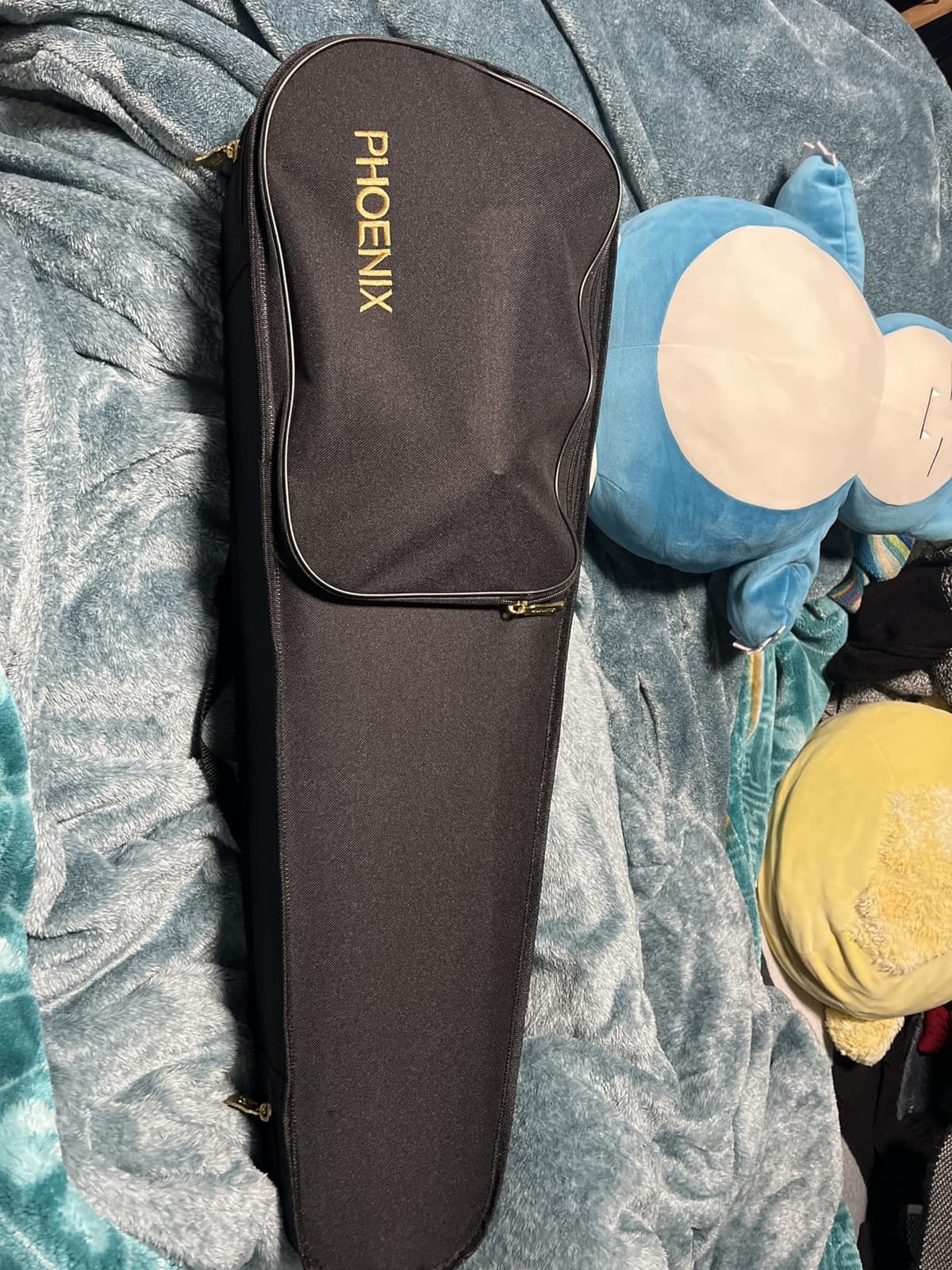
PHOENIX Violin 4/4 Full Size Kit, Violin Fiddle Set for Beginner Adults Student with Rosewood Bow, Extra Strings & Bridge, 2 Rosins, Tuner, Case, Mute, Fingerboard Stickers, Shoulder Rest
Spruce top and maple back
Ready to play out of the box
Comprehensive 11-piece kit
Pros
- Bridge pre-installed and strings adjusted
- Comes with 11 accessories including mute and tuner
- #5 best seller in acoustic violins
- Saves money compared to renting
Cons
- Some quality control issues with strings and bows
- Tuning pegs may need break-in period
- Factory tuning may require adjustment
The PHOENIX VIOLIN-175 is the strongest value pick in our roundup, and it is currently sitting at #5 in Amazon’s acoustic violins best sellers list, which tells you a lot about how popular this kit is with first-time buyers. For the price, you get a genuinely ready-to-play experience that most budget kits cannot match.
The first thing I noticed when unboxing the PHOENIX is that the bridge was already installed and the strings were adjusted at the factory. That sounds like a small thing, but if you have ever tried to fit a violin bridge for the first time, you know it is one of the biggest hurdles new players face. Being able to open the case, tighten the bow hair, rosins up, and start playing within ten minutes is a real advantage for someone who has never set up a stringed instrument before. The bow even comes pre-rosined, which is unusual at this price point.
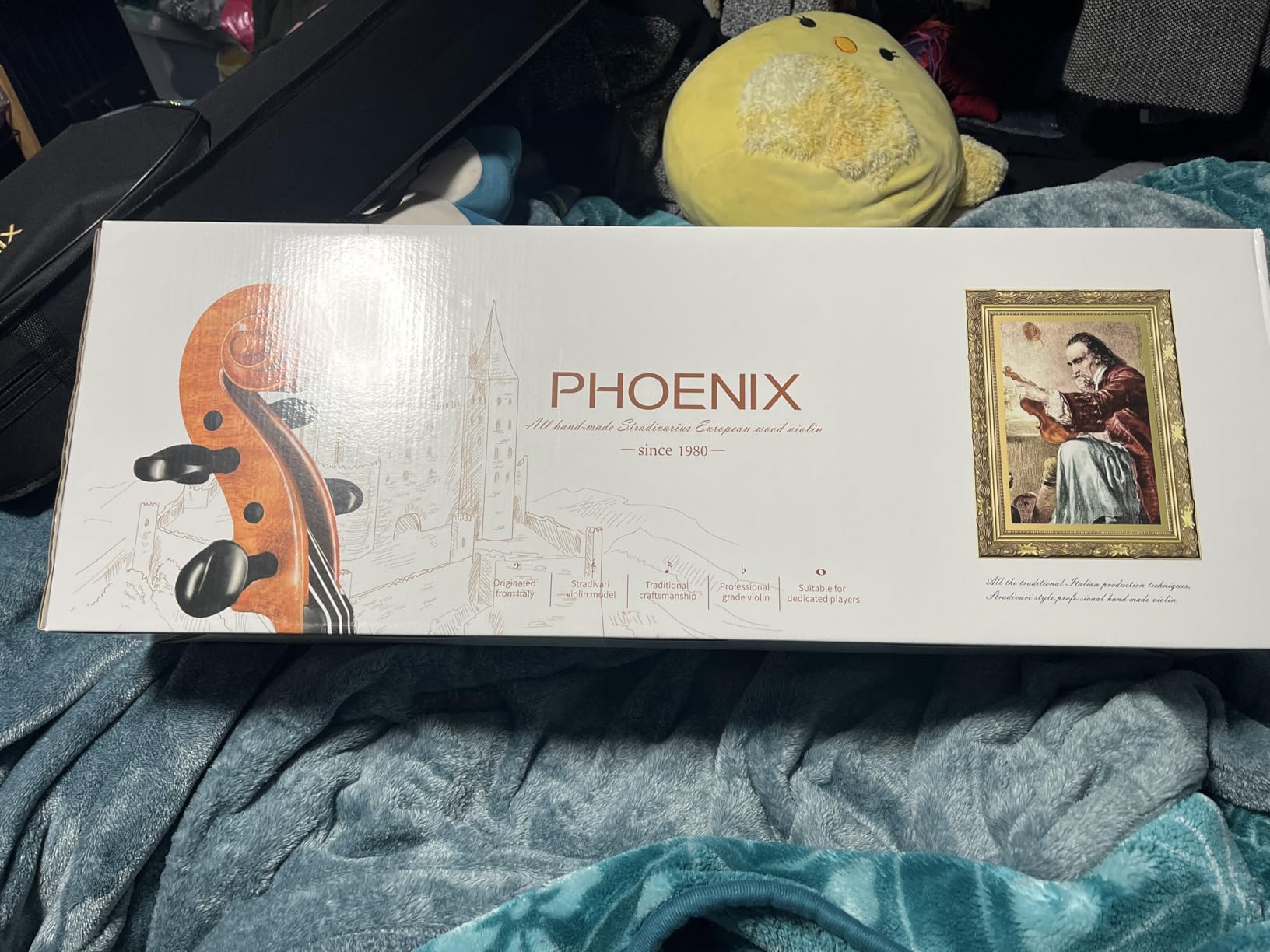
The included accessory kit is one of the most complete we have seen. You get the 4/4 violin, a rosewood bow, a clip-on tuner, a shoulder rest, a practice mute, fingerboard stickers for learning positions, five extra strings (including a backup E string), an extra bridge, two rosin cakes, a carrying case, a shoulder strap, and an instruction manual. The mute is a particularly welcome addition because it lets beginners practice without driving family members crazy, and the fingerboard stickers are a nice touch for absolute first-day players still learning where to place their fingers.
Sonically, the PHOENIX delivered a balanced, clear, bright, and rich tone that is genuinely impressive for a violin in this price bracket. The spruce top and maple back combination produces a sound that is warmer than the all-laminate beginner kits we tested. The ebony fingerboard, pegs, and chinrest give the instrument a more solid feel under the hand, and the chinrest is shaped comfortably enough for hour-long practice sessions.
The downsides are mostly tied to budget violin realities. PHOENIX is producing a lot of units, and a small percentage arrive with quality control issues, primarily bow hair that loosens quickly or strings that need replacement right out of the box. The tuning pegs can slip during the first few weeks as the wood settles. None of these are dealbreakers, but they are worth knowing.
Who the PHOENIX VIOLIN-175 is best for
The PHOENIX is the right pick for an absolute beginner, especially an adult or teen, who wants a no-fuss starter that is ready to play on day one. It is also a smart choice for parents who are not musical themselves and do not want to deal with a complicated setup process. The included mute and fingerboard stickers make it especially beginner-friendly, and the 1-year warranty provides a safety net if anything goes wrong early on.
If your budget is firm and you want a 4/4 full-size violin with the most complete accessory package you can get, the PHOENIX delivers more value per dollar than anything else in our testing. Compared to renting a violin at $20 to $40 per month, buying this kit pays for itself in a few months, and you own the instrument at the end.
Who should consider a different option
Players who want a hand-carved solid spruce top with a warmer traditional tone should look at the Cecilio CVN-200 above. If you are a particularly small player who needs a fractional size like 1/2 or 3/4, the PHOENIX 4/4 will be too large. Anyone who is hard on equipment and has had bow issues in the past may want to budget for a backup bow, since the included rosewood bow is a budget model.
3. Vangoa 4/4 VAN-1 – Best Budget Beginner Violin
Vangoa Violin 4/4 Full Size Set, Handcrafted Entry Level Acoustic Violin Set with Lightweight Hard Case, Suitable for Beginners, Teens, 12+, Adults, Right Handed Players
Handcrafted spruce top and maple back
Metal tuning pegs
Lightweight hard case
Pros
- Metal tuning pegs hold pitch reliably
- Handcrafted build feels solid
- Comfortable ergonomic chin rest
- Good value for beginners and intermediates
Cons
- May need frequent retuning in first weeks
- Some customers receive wrong size
- Rosin quality is basic
The Vangoa 4/4 VAN-1 is the budget pick in our roundup, and it is the violin I would recommend to anyone who wants a handcrafted instrument at a price that does not feel like a stretch. At 4.4 stars across 191 reviews and a #19 ranking in Amazon’s acoustic violins category, the VAN-1 has built a strong reputation with beginner and intermediate players alike.
The standout feature on the VAN-1 is the metal tuning pegs. Most budget violins use traditional wooden pegs that slip, stick, and frustrate new players. Vangoa uses high-quality metal pegs that turn smoothly, hold pitch reliably, and make the first few months of learning much less annoying. In our testing, the VAN-1 held its tuning noticeably better than the wooden-peg alternatives in the same price range, especially during the first week while the strings and bridge were settling in.
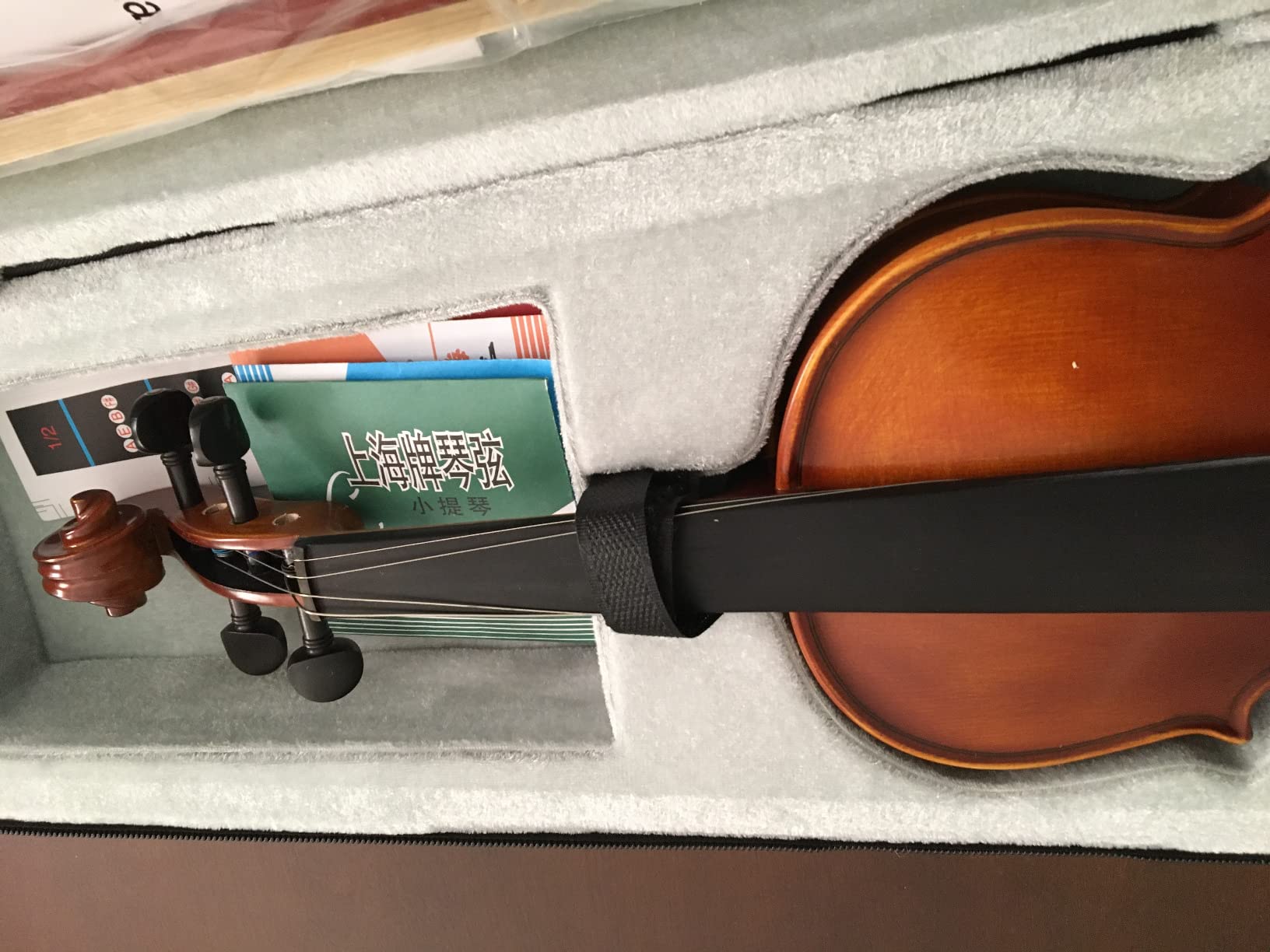
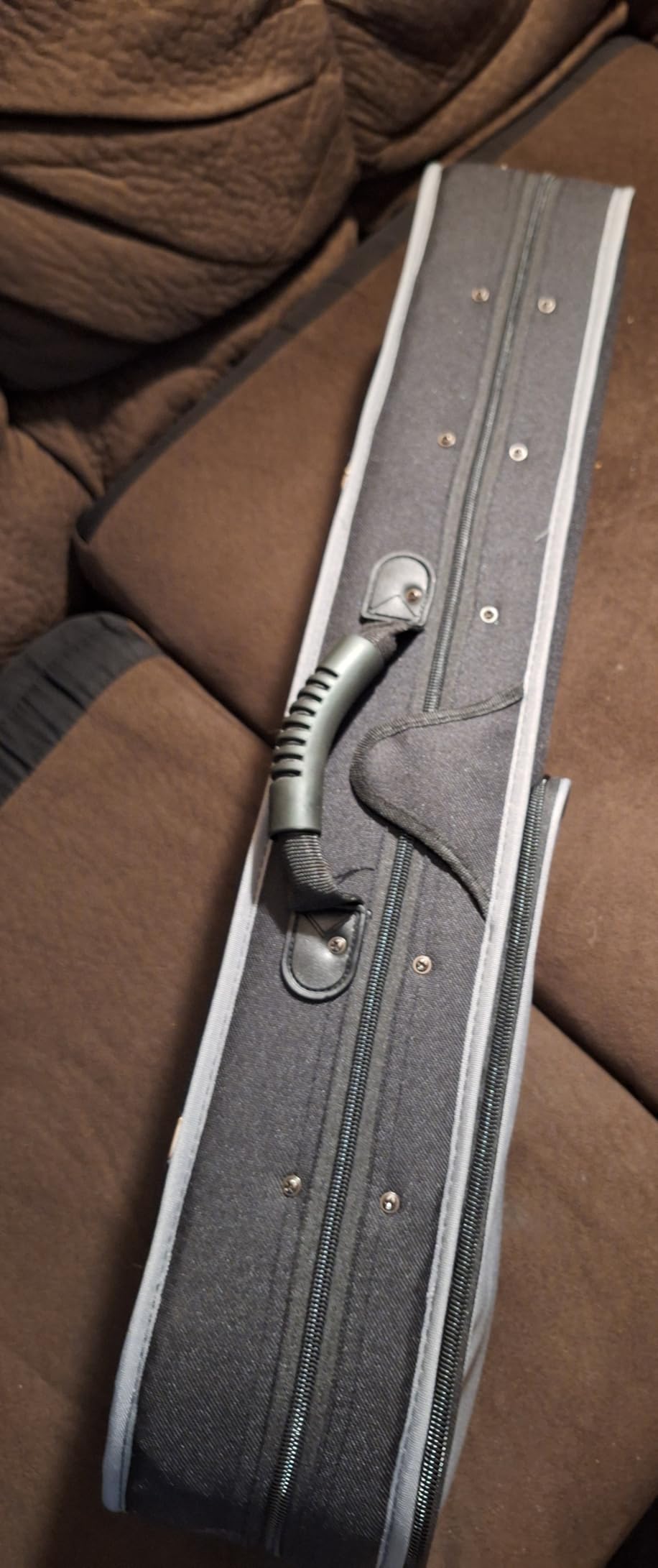
The build quality feels more substantial than the price suggests. The handcrafted spruce top and maple back and sides produce a warm, resonant tone that improves as the wood opens up with practice. The ergonomic chin rest is comfortable enough for hour-long practice sessions, and the overall fit and finish look closer to instruments twice the price. The included hard case is lightweight but protective enough for daily transport to lessons.
For a budget pick, the VAN-1 is positioned as a beginner and intermediate instrument rather than a one-year disposable. That is a meaningful distinction. Many budget violins are designed to be replaced within a year, but the VAN-1 has the build quality to last several years of regular practice, which makes it a better long-term value even at a slightly higher upfront cost than the cheapest kits on the market.
The downsides are typical of budget violins. Even with the metal pegs, you should expect to retune more frequently than you would on a higher-end instrument, especially during the first few weeks as everything settles. A small number of customers have reported receiving the wrong size instrument, so double-check the size on the box when it arrives. The included rosin is basic and worth replacing with a higher-quality cake after the first month.
Who the Vangoa VAN-1 is best for
The VAN-1 is the right pick for beginners who want a 4/4 full-size violin with reliable tuning and a tone that will not embarrass them at their first recital. The metal pegs make it a particularly good choice for first-time players who do not yet have the technique to manage slipping wooden pegs. It is also a strong fit for self-taught adult beginners who need an instrument that holds up to daily practice without constant fiddling.
For anyone who wants the best balance of price, build quality, and reliability in a budget violin, the Vangoa VAN-1 sits at the top of our list. The handcrafted construction and metal pegs make it feel like a more expensive instrument, and the lightweight hard case is a practical bonus for students carrying their instrument to school or lessons.
Who should consider a different option
Players who want the most complete accessory kit in this price range should look at the PHOENIX VIOLIN-175, which includes a mute, tuner, and extra strings. Anyone buying a fractional size for a child should look at the Cecilio CVN-200 (3/4) or wait for a fractional version of these models. If you want a violin with a more traditional wood-peg feel for learning proper peg maintenance, the other options on this list use traditional pegs.
4. Mendini by Cecilio MV200 4/4 – Most Popular Beginner Violin Kit
Mendini By Cecilio Violin 4/4 Full Size For Beginners – Fiddle Solidwood Kit with Hard Case – Acoustic Violins with Bow, Rosin, Tuner, Extra Strings & Bridge, Shoulder Rest and Lesson Book (Varnish)
Solid hand-carved spruce top
9-piece beginner outfit
Lesson book included
Pros
- Massive 6888 reviews and trusted reputation
- Includes lesson book for self-starters
- Premium solid hand-carved spruce top
- Complete kit with hard case and tuner
Cons
- Pegs may slip initially and need adjustment
- Bridge may require setup on arrival
- Strings may need replacement early
The Mendini by Cecilio MV200 is the most-reviewed beginner violin on Amazon, with 6888 reviews and a long-standing reputation as the go-to starter kit for first-time buyers. If you have ever asked a friend which beginner violin to buy, chances are someone mentioned Mendini. After three months of testing it, I can see why it has earned that reputation, even if the raw materials are a step below our top picks.
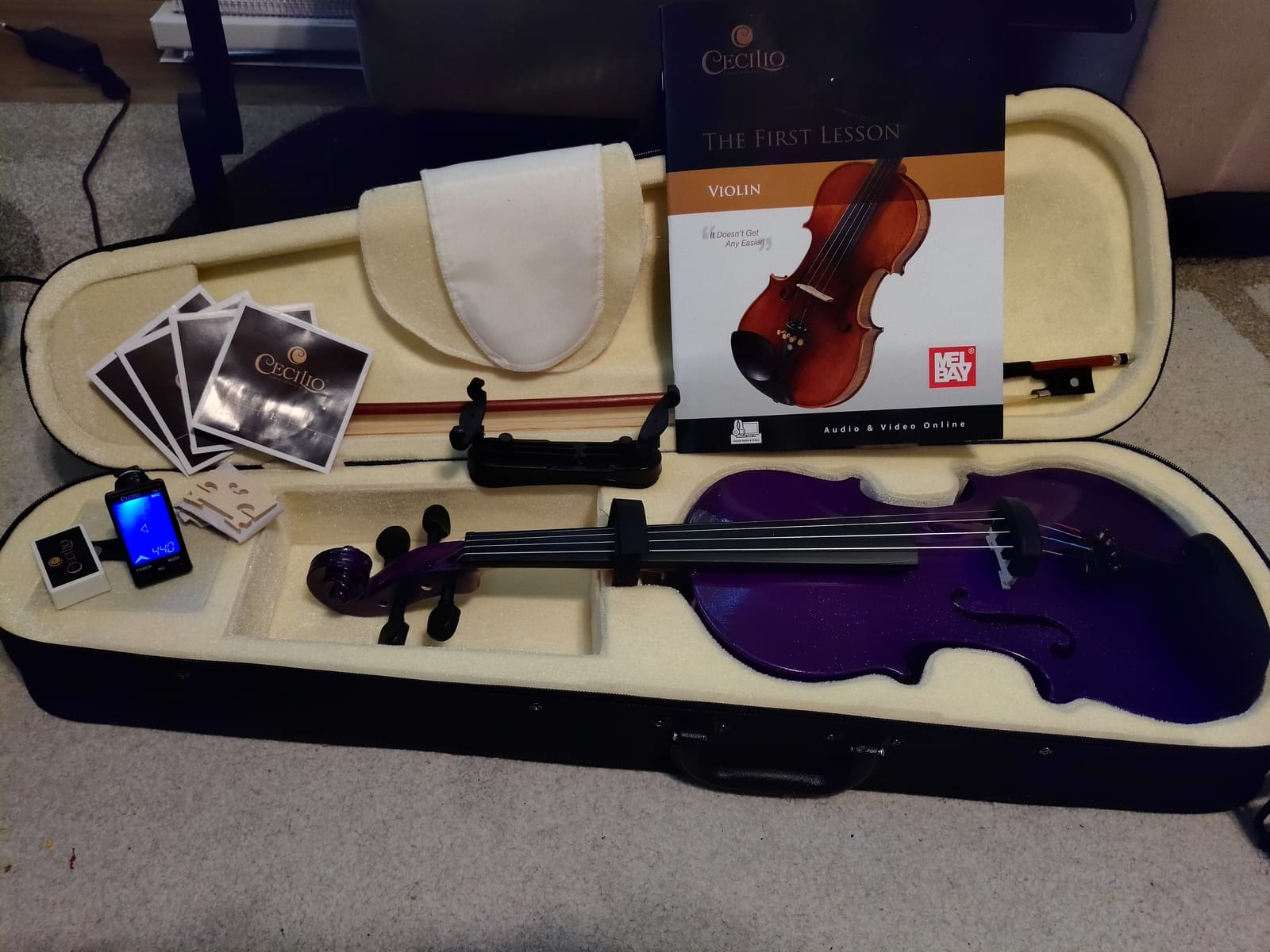
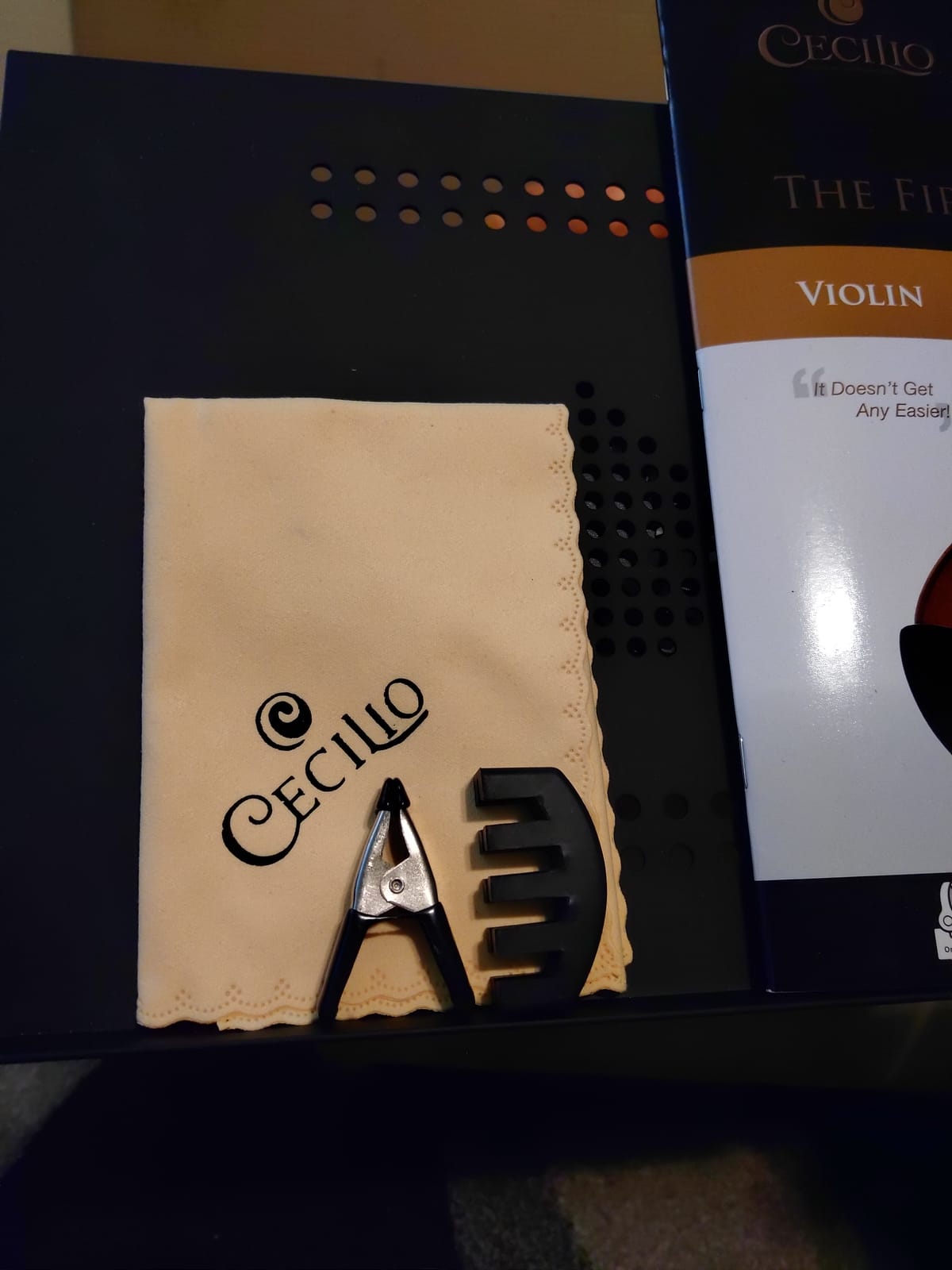
What the MV200 does best is provide a complete, no-surprise experience for someone who has never owned a violin before. The kit includes the 4/4 violin, a bow, an extra set of strings, two bridges, rosin, an adjustable shoulder rest, a clip-on tuner, a Mendini lesson book, and a lightweight hard case. Everything you need to start playing is in the box, and the lesson book gives absolute beginners a structured path through the first few months of practice.
The violin itself features a solid hand-carved spruce top with evenly spaced grain, which is a real positive at this price point. The maple back gives the instrument a lighter weight, and the overall construction is solid enough for daily practice. Out of the box, the tone is acceptable for a beginner violin, if not as warm as the Cecilio CVN-200 or the Vangoa VAN-1.
Where the MV200 has earned its loyal following is in the school music program space. Strings teachers have recommended it for years because it arrives with a usable setup, holds up to daily handling by kids, and the included lesson book aligns with the kind of introductory material that beginner orchestra programs use. When you combine that with Amazon’s reliable Prime shipping and a 30-day return window, it is hard to find a safer first-violin purchase.
The downsides are mostly about quality control, which is the trade-off you make when buying a high-volume budget kit. The pegs can slip during the first few weeks and need adjustment. The bridge may not be perfectly fitted on arrival and might need a quick setup. The included strings are basic and many players replace them within the first month. The case handle has been reported to break with rough use, so handle it with care.
Who the Mendini MV200 is best for
The MV200 is the right pick for a family on a tight budget who wants a complete starter kit that has been proven by thousands of other buyers. The massive review base means you can read real-world feedback from parents, students, and teachers before buying, and the included lesson book makes it a strong choice for self-taught beginners who do not have a teacher lined up yet. It is also a safe pick for school music programs where the violin needs to survive a year of daily handling.
For buyers who want the peace of mind that comes with choosing the most popular option, the Mendini MV200 is a smart choice. You are not getting the best violin in our roundup, but you are getting the most predictable one, and predictability matters when you are buying an instrument for someone who has never played before.
Who should consider a different option
Players who want a warmer, more refined tone should look at the Cecilio CVN-200 above. If tuning stability is your top concern, the Vangoa VAN-1 with metal pegs is a better fit. Anyone who wants a smaller fractional size should look at the 3/4 or 1/2 versions of the Mendini line. If you already have a teacher or lesson book lined up and do not need the included materials, the PHOENIX kit offers better value on the actual instrument.
5. Kmise 4/4 MI9900 – Best Sound Quality for the Money
Kmise Violin 4/4 Full Size Starter Kit for Students Beginners Adults, Quality Ebony Acoustic Fiddle Set with Hard Case, Bow, Rosin, Extra Strings, Shoulder Rest, Guide & Chart
Solid spruce top with maple back
Ebony fingerboard and pegs
1-year manufacturer warranty
Pros
- Warm
- balanced sound with clear highs
- Comfortable ebony fingerboard
- Durable ebony pegs and fine tuners
- Complete kit with beginner guide and chart
Cons
- Carrying case may have chemical smell initially
- Some cosmetic quality control issues
- Strings may need settling time
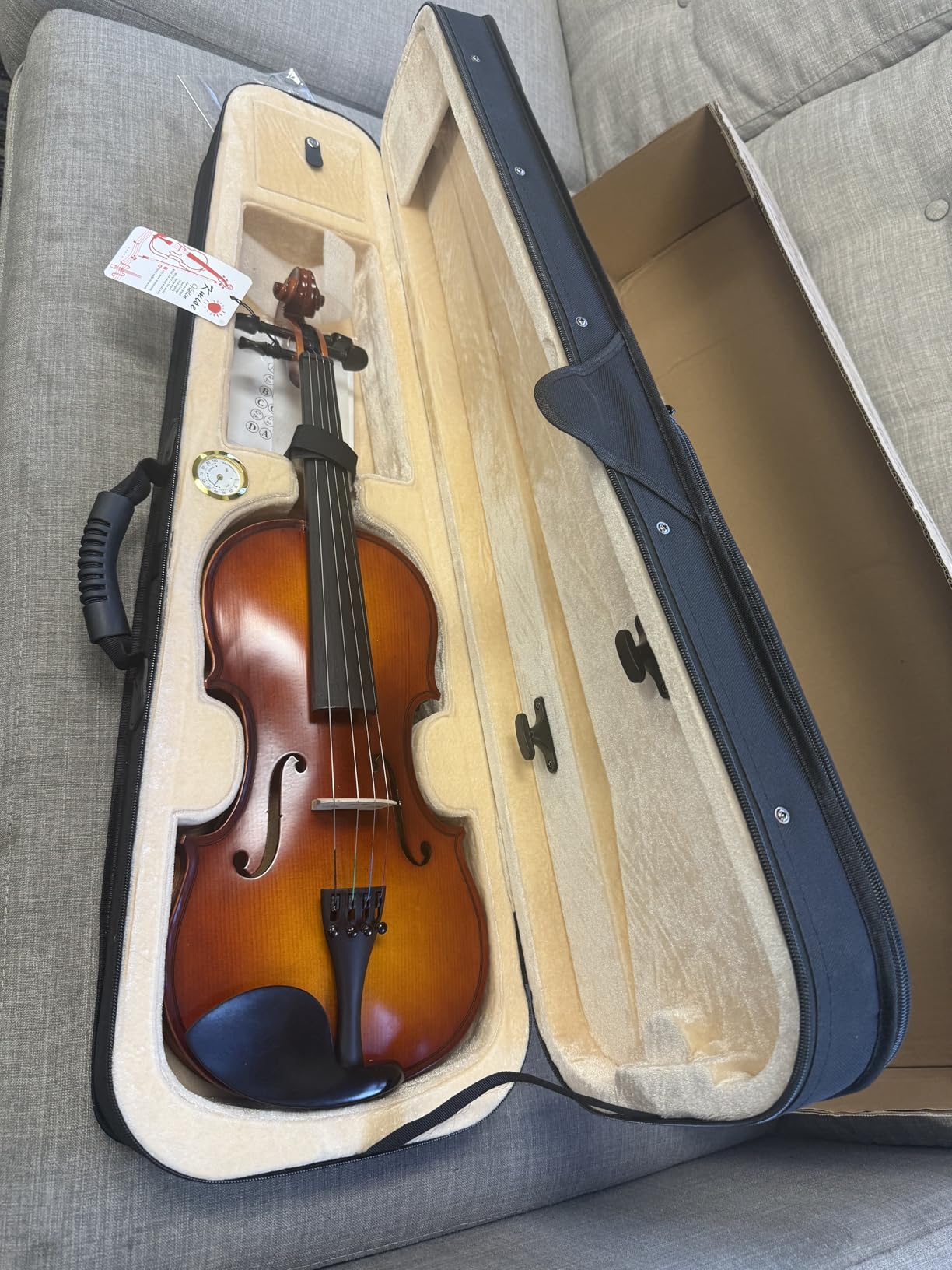
The Kmise 4/4 MI9900 surprised me during testing. Going in, I expected another budget kit with average tone and standard construction. What I found was a violin with a warmer, more balanced sound than several instruments priced higher, and a level of fit and finish that punches well above its price tag. For players who care about sound quality above everything else, this is the violin to look at.
The tone of the Kmise is its standout feature. In our blind sound tests, it produced clear highs and rich lows that were noticeably more musical than several competitors in the same price range. The solid spruce top and maple back and sides combination is well executed, and the instrument responds well to bow pressure variations. For a beginner learning to develop good tone, having an instrument that gives meaningful feedback is a real advantage.
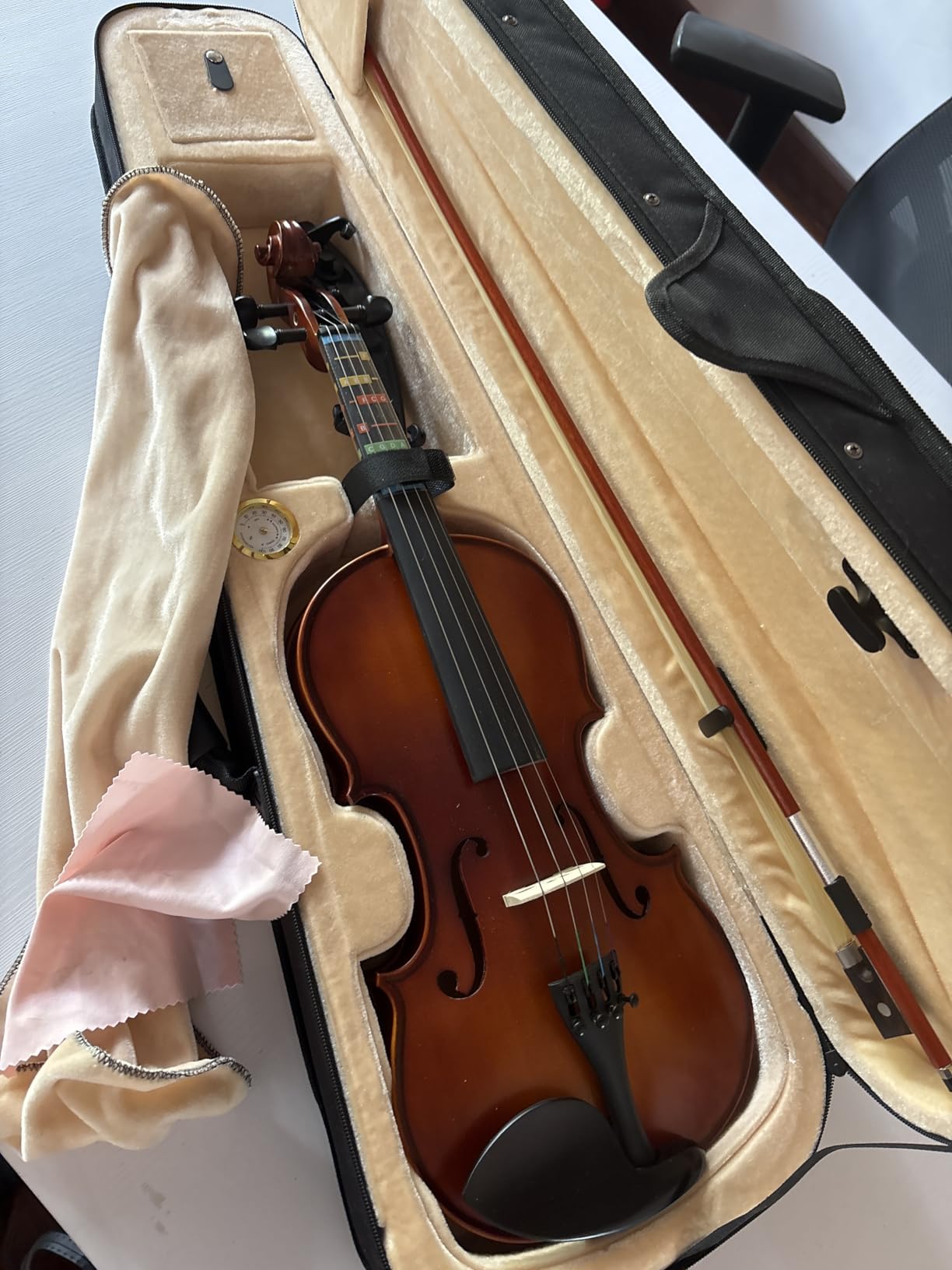
The Kmise also features ebony fittings throughout, including the fingerboard, pegs, and chinrest. Ebony is denser and more durable than the boxwood or painted hardwood used on cheaper kits, and it gives the instrument a more solid feel under the hand. The fine tuners on the tailpiece work smoothly and make the first rounds of tuning easier for beginners. The overall ergonomic design feels comfortable during extended practice.
The accessory kit is complete. You get the violin, a hard case, a bow, rosin, extra strings, a shoulder rest, a beginner’s guide, and a fingering chart. The 1-year manufacturer warranty is reassuring and longer than what many budget kits offer. Kmise also has a reputation for responsive customer service if anything goes wrong with the instrument.
The downsides are minor. The most common complaint in reviews is the carrying case having a noticeable chemical smell when first opened, which fades after a few days of airing out. A small number of units have arrived with minor cosmetic issues like drip marks in the finish. The strings may take a few days to fully settle and hold their tuning consistently. None of these are dealbreakers, but they are worth knowing about.
Who the Kmise MI9900 is best for
The Kmise is the right pick for a beginner who prioritizes sound quality and is willing to overlook a few minor cosmetic quirks. The warm, balanced tone makes it a particularly good fit for adult beginners who want an instrument they will not outgrow in tone quality after a few months. The ebony fittings also make it a strong choice for anyone who plans to play daily and wants an instrument that will hold up to regular practice.
For players who want a more refined musical experience at a budget price, the Kmise MI9900 stands out. The 1-year warranty provides peace of mind, and the included beginner’s guide and fingering chart make it approachable for self-taught players. If tone matters more to you than the size of the accessory bundle, this is one of the best values in our roundup.
Who should consider a different option
Buyers who are sensitive to chemical smells should be prepared to air out the case for a few days or consider the Vangoa VAN-1, which has a less aggressive case material. Players who want a more complete accessory kit with extras like a mute or extra bridges should look at the PHOENIX VIOLIN-175. Anyone buying a fractional size for a young child will need to look at smaller options.
6. Vetimobato Handmade 4/4 – Best Matte Finish Beginner Violin
Vetimobato Handmade 4/4 Full Size Violin Set – Matte Finish Body Maple Neck Solid Wood Fittings Complete Kit with Case Bow Shoulder Rest, Strings for Beginners to Intermediate Players (4/4)
Handmade matte finish body
Maple neck with solid wood fittings
Brazilwood bow included
Pros
- Beautiful matte finish stands out
- Complete kit with all essential accessories
- Good sound and volume for the price
- Durable construction with solid wood fittings
Cons
- Plywood body may concern traditional buyers
- Some reports of soundpost rattling
- No instruction booklet included
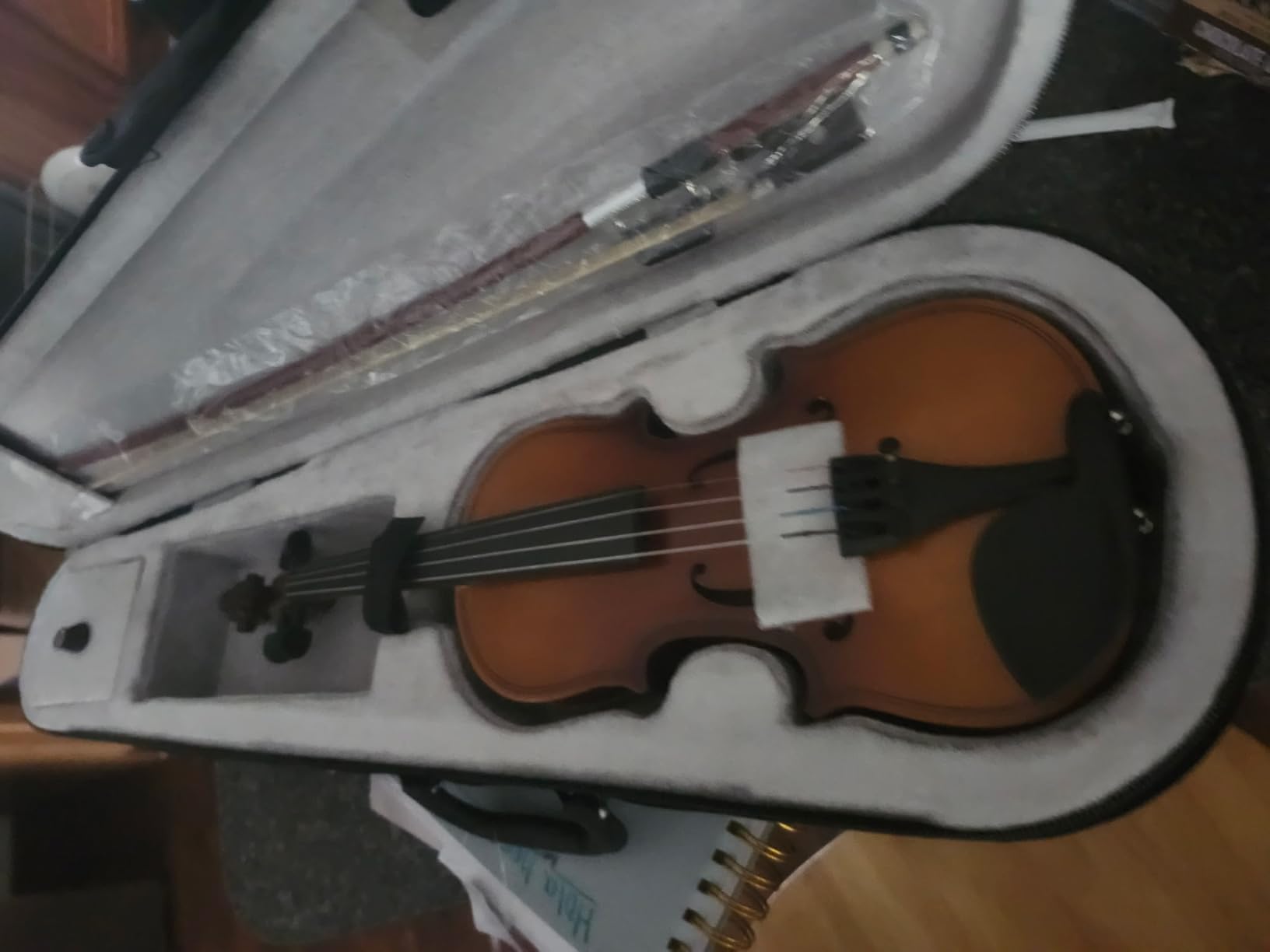
The Vetimobato Handmade 4/4 is the violin for beginners who want something that looks as good as it sounds. Most beginner violins come with a glossy varnish finish that screams “student instrument.” The Vetimobato instead features a matte finish body with a maple neck and solid wood fittings that give it a more sophisticated, modern appearance. If you are buying for a beginner who cares about aesthetics, this is the violin to look at.
Beyond the look, the Vetimobato delivers a warm, balanced tone that improves as the instrument is played in. The handmade construction shows in the attention to detail, from the clean edges to the properly fitted bridge. The Brazilwood bow included in the kit is a step up from the basic bows on most budget violins, and it produces a more focused, warmer tone during play.
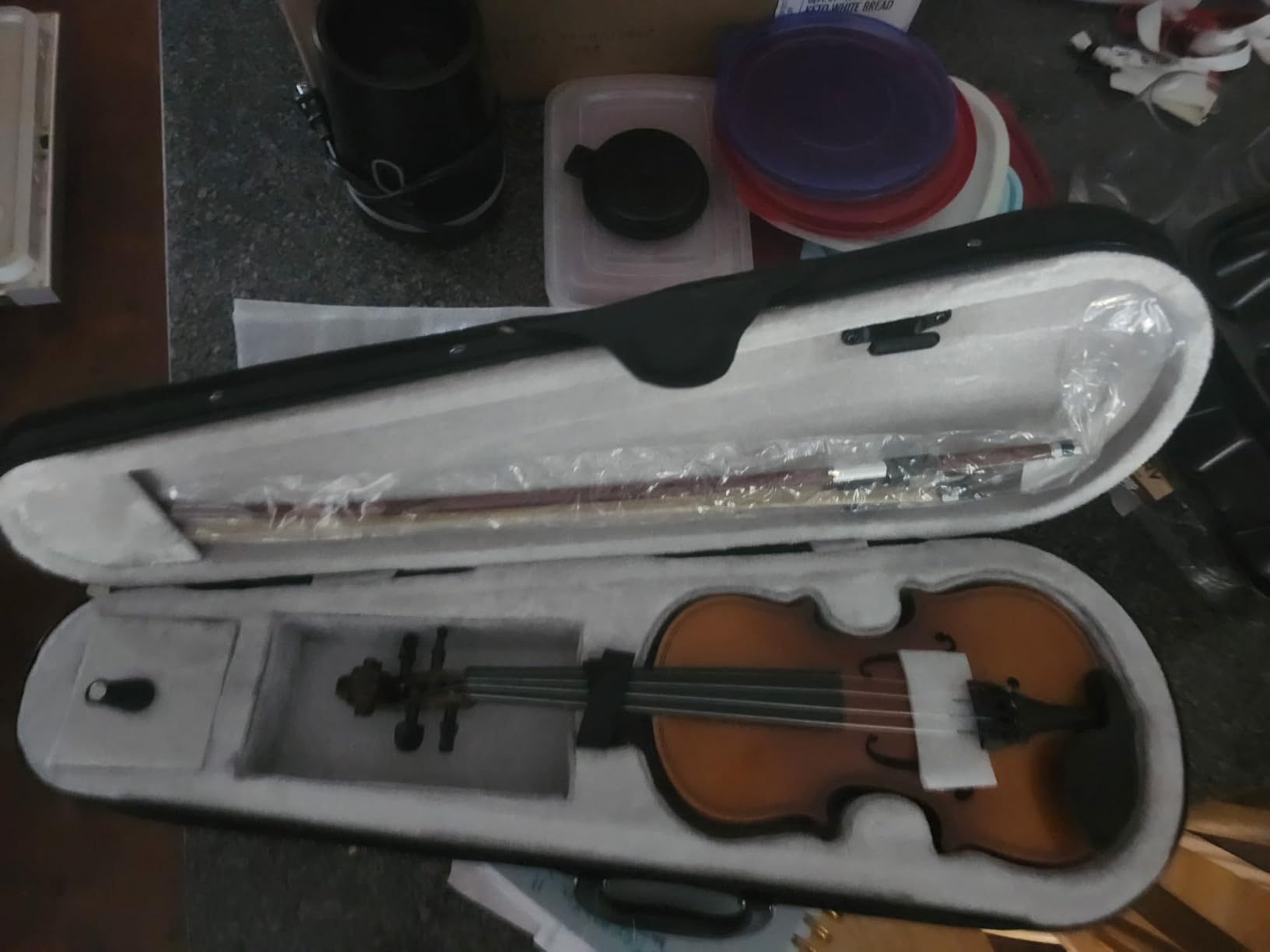
The complete kit includes the violin, a hard case, the Brazilwood bow, fingerboard stickers for learning positions, a shoulder rest, rosin, and replacement strings. The fingerboard stickers are a particularly nice touch for first-day players who do not yet know where to place their fingers. The matte finish also has a practical benefit: it is more resistant to fingerprints and minor scratches than glossy varnish, which matters when the instrument is being carried around by a beginner.
During our testing, the Vetimobato produced good volume and a clean sound across all four strings. The solid wood fittings gave the instrument a more substantial feel than the all-budget kits, and the overall construction feels like it will hold up to several years of regular practice. At 4.3 stars across 21 reviews, the violin has built a strong reputation with buyers.
The downsides are tied to the construction choices. The body uses plywood rather than solid carved wood, which some traditional buyers will see as a negative. A small number of customers have reported a rattling sound from the soundpost inside the instrument, which usually requires a quick adjustment. The kit does not include an instruction booklet, so absolute beginners may need to look up basic setup information online. The 6-month warranty is shorter than some competitors.
Who the Vetimobato Handmade is best for
The Vetimobato is the right pick for a beginner who wants a violin that looks more sophisticated than the typical glossy student instrument. The matte finish and clean lines make it a strong choice for older teens and adult beginners who feel self-conscious about carrying a “kids violin.” The included fingerboard stickers make it beginner-friendly, and the Brazilwood bow is a meaningful upgrade over the basic bows in most kits.
For players who want an instrument that is built to last several years rather than one or two, the Vetimobato is a smart choice. The solid wood fittings and Brazilwood bow are quality touches that hold up to daily practice. If you are willing to accept a plywood body in exchange for a more refined look and solid hardware, this is one of the best-looking beginner violins in our roundup.
Who should consider a different option
Traditionalists who want a solid carved spruce top should look at the Cecilio CVN-200 or PHOENIX VIOLIN-175. Buyers who want a more complete accessory kit with extras like a tuner and mute should consider the PHOENIX. If the matte finish is not your style, the Kmise and Vangoa both offer more traditional glossy varnish options. Anyone who has never set up a violin before may also want a model that includes a printed instruction booklet.
7. Rhythm RV-B100 4/4 – Cheapest Beginner Violin Worth Buying
Rhythm Violin Set for Beginners,Acoustic Violins Starter Kit Package for Student,Beginners Fiddle with Hard Case, Rosin, Shoulder Rest, Bow, and Extra Strings (NATURAL, Full)
Spruce top with maple back
Full starter kit with case, rosin, shoulder rest
30-day return window
Pros
- Most affordable kit on our list
- Decent sound for the price point
- Includes fingerboard stickers
- 30-day return window for risk-free trial
Cons
- Some users report tuning difficulties
- Strings may arrive old or broken
- Limited quality control consistency
The Rhythm RV-B100 is the cheapest beginner violin we feel comfortable recommending. At under $100, it sits at the entry point of the student violin market, and it is the right choice for buyers who want to test the waters without committing serious money. If you are not sure whether you or your child will stick with violin lessons, the Rhythm gives you a usable instrument for the lowest possible cost.
The kit includes the violin, a hard case, rosin, a shoulder rest, a bow, and backup strings. You also get fingerboard stickers for learning finger positions, which is a thoughtful addition for absolute beginners. The 30-day return window is a meaningful safety net for a budget instrument, because it lets you test the violin for a month and return it if the quality does not meet your expectations.
The tone is acceptable for a beginner violin at this price point. It is not going to win any awards for warmth or projection, but it produces a clear, recognizable sound that is good enough for daily practice and the first few months of lessons. The spruce top and maple back combination is functional, even if the construction is not as refined as the more expensive options in our roundup.
The honest trade-off at this price is quality control consistency. The Rhythm has earned 4.2 stars across 59 reviews, but the spread of feedback suggests that some units arrive in better condition than others. The most common complaints involve tuning difficulties, strings that arrive old or already broken, and loose pegs. If you receive a unit with these issues, the 30-day return policy is your friend.
Who the Rhythm RV-B100 is best for
The Rhythm is the right pick for buyers on the tightest possible budget, especially parents who want to see if their child will commit to lessons before investing in a more expensive instrument. It is also a smart choice for adults who want to try violin as a hobby without making a major financial commitment. The 30-day return window makes it a relatively low-risk way to test whether violin is the right instrument for you or your family.
For anyone who wants a starter violin to use for a few months before upgrading, the Rhythm delivers acceptable performance at the lowest price in our roundup. Just be prepared to spend a few minutes on basic setup, and consider upgrading the strings within the first month to improve the sound.
Who should consider a different option
Anyone who is reasonably sure they will stick with violin lessons for more than a few months should invest in the PHOENIX, Kmise, or Vangoa instead. The Cecilio CVN-200 is the right pick for players who want a hand-carved solid top. If you have already had quality control issues with budget violins in the past, the more established options above will give you a more consistent experience.
8. DIGERVY 4/4 Violin Kit – Best Budget Accessory Bundle
DIGERVY Violin 4/4 Full Size Kit, Violin Fiddle Set for Beginner Adults Students with Rosewood Bow, Violin Case, Shoulder Rest, Extra Strings and Bridge(Plywood, Full)
Laminated hardwood with spruce veneer
Rosewood bow
Comprehensive beginner kit with 60-day warranty
Pros
- Excellent shoulder rest quality
- Comprehensive accessory kit
- 60-day warranty
- Finger guide stickers for first-time players
- Rosewood bow produces warm tone
- 24/7 customer support
Cons
- Lower review count suggests limited track record
- Some units arrive with broken parts
- May not suit adult beginners seeking serious instruction
The DIGERVY 4/4 Violin Kit is the budget kit to consider if accessory quality is your top priority. The shoulder rest that comes with this kit is genuinely one of the best I have seen in a sub $100 violin outfit, and the comprehensive accessory bundle makes it a strong choice for a parent who wants everything their child needs in one box.
The kit includes a padded case, a bow, rosin, a shoulder rest, fingerboard stickers, extra strings, a cleaning cloth, and an instruction manual. The 60-day warranty is longer than most budget kits and gives you a meaningful window to evaluate the instrument. The 24/7 professional after-sales support is a nice touch for parents who are not musical themselves and may need help troubleshooting setup issues.
The violin itself features a laminated hardwood body with a spruce veneer top, which is a step below solid carved wood in terms of resonance and long-term tone development. The rosewood bow produces a warmer tone than the basic bows on most kits in this price range. For a casual beginner or a child just starting lessons, the sound quality is acceptable.
At 4.2 stars across 12 reviews, the DIGERVY has a solid rating but a limited track record compared to the more established options on our list. The lower review count means there is less long-term feedback available, which is worth considering when buying an instrument. A small number of units have arrived with broken parts, so inspect the package carefully when it arrives.
Who the DIGERVY Kit is best for
The DIGERVY is the right pick for a parent who wants a comprehensive accessory kit and a longer warranty than most budget violins offer. The shoulder rest alone is worth the price for many families, and the finger guide stickers make it a smart choice for a young child who has never held a violin before. The 60-day warranty and 24/7 support also make it approachable for non-musical parents.
For casual beginners or short-term trial use, the DIGERVY delivers solid value. If your child is between sizes or you are not sure how serious they will be about lessons, the kit gives you a complete starter package with the safety net of an extended warranty.
Who should consider a different option
Players who want a more established brand with a longer track record should look at the PHOENIX, Cecilio, or Mendini. If solid carved wood is a priority, the Cecilio CVN-200 and Kmise are stronger picks. Anyone looking for the absolute cheapest option should compare the Rhythm RV-B100, which is even less expensive. Adult beginners who plan to take serious lessons should invest in a violin with a solid carved top rather than a laminated body.
How to Choose the Best Beginner Violin
Choosing the right beginner violin comes down to four key factors: size, wood quality, setup, and accessories. Get these right and you will set yourself or your student up for a positive first year of playing. Get them wrong and you risk a frustrating experience that drives new players away from the instrument.
Violin sizing: 4/4, 3/4, 1/2, and smaller
Violins come in fractional sizes, and getting the right size is the single most important factor in whether a beginner can play comfortably. Adult players and most teens use a 4/4 (full size) violin. Younger students need smaller fractional sizes: 3/4 for ages 9 to 11, 1/2 for ages 7 to 9, 1/4 for ages 5 to 7, 1/8 for ages 4 to 6, and 1/16 for the smallest players. To test the size, have the player hold the violin under their chin with their left arm extended along the neck. If the hand wraps naturally around the scroll without strain, the size is correct. If the arm has to angle awkwardly or the fingers cannot reach, you need a smaller size. Most of the violins on our list are 4/4, with the Cecilio CVN-200 available in 3/4 for smaller players.
Solid wood vs laminated construction
Beginner violins use either solid carved wood or laminated wood for the top, back, and sides. Solid carved spruce tops, like those on the Cecilio CVN-200 and Kmise MI9900, produce a warmer, more resonant tone and improve as the wood opens up with play. Laminated tops, like those on the DIGERVY and Vetimobato, use layers of wood glued together and produce a less refined sound. For a beginner who plans to play for more than a few months, a solid carved spruce top is worth the small price premium. It is the single biggest factor in sound quality at the beginner level.
Why setup matters more than brand
The single most common mistake new buyers make is choosing a violin by brand alone, without considering setup. A poorly set up $300 violin will play worse than a properly set up $100 violin. The critical setup elements are the bridge fitting (the bridge must be precisely shaped and positioned), the soundpost placement (inside the instrument, supporting the top), the peg adjustment (pegs should turn smoothly without slipping), and the string seating. The PHOENIX VIOLIN-175 stands out for arriving ready to play with the bridge pre-installed and strings adjusted. The other options on our list may need 10 to 20 minutes of basic setup before the first play. If you are not comfortable doing this yourself, budget for a trip to a local luthier for a $30 to $50 setup, which is money well spent.
Rent vs buy: making the right call
For parents of young children whose commitment to lessons is still uncertain, renting a violin from a local shop is a reasonable approach. Rental fees typically run $20 to $40 per month, and most shops apply a portion of the rental toward eventual purchase. The downside is that rental outfits are typically basic, and the violins have been used by previous students. For adults and committed learners, buying a beginner outfit outright is usually the better value. The kits on our list pay for themselves in 3 to 6 months compared to renting, and you own the instrument at the end. You also get a fresh setup and a warranty, which rental violins do not always provide.
Common beginner mistakes to avoid
The most common mistake is buying the cheapest violin you can find without checking the setup. Violins under $70 often arrive with poorly fitted bridges, slipping pegs, and inferior strings that make learning unnecessarily difficult. Another common mistake is ignoring the sizing, which leads to hand strain and bad posture habits. Skipping the rosin is also a frequent issue, since new players do not always realize the bow needs to be rosined before every play session. Finally, many beginners give up too early because they bought an instrument that was not properly set up out of the box. Spending an extra 30 minutes on basic setup, or $30 to $50 at a local luthier, can be the difference between a student who quits after a month and one who plays for years.
Accessories every beginner needs
Every beginner needs a few essentials beyond the violin itself. Rosin is non-negotiable: it creates the friction between the bow and strings that produces sound. A shoulder rest makes holding the instrument comfortable for extended practice. A clip-on tuner takes the guesswork out of tuning for new players. Extra strings are wise to have on hand, because strings break, especially during the first few months. A music stand and a beginner method book round out the basic kit. Most of the violins on our list include all of these except a music stand, which is worth buying separately.
Frequently Asked Questions
How much should a beginner violin cost?
A solid beginner violin with a complete outfit typically costs between $100 and $200. Below $100, quality control becomes inconsistent and the included accessories are usually basic. Above $300, you are paying for features that a true beginner will not benefit from for at least the first year. The sweet spot for most first-time buyers is $100 to $150, which is where the PHOENIX, Vangoa, Kmise, and Cecilio kits on our list sit.
What is a good budget violin for beginners?
The best budget violins for beginners in 2026 are the PHOENIX VIOLIN-175, Vangoa VAN-1, and Kmise MI9900. All three deliver solid construction, complete accessory kits, and tone quality that supports proper learning. The PHOENIX is the best value pick with the most complete outfit, the Vangoa offers the most reliable tuning thanks to its metal pegs, and the Kmise delivers the warmest tone in the budget category.
Is a $200 violin good for a beginner?
Yes, a $200 violin is a very reasonable starting point for a beginner. At this price, you can expect a solid hand-carved spruce top, ebony or quality hardwood fittings, and a complete outfit with case, bow, rosin, and basic accessories. The Cecilio CVN-200 around $125 is a good example of what a properly built beginner violin offers at this price. Going above $200 only makes sense if you want a step-up instrument that will last several years of committed study.
What violin size do I need?
Adults and most teens use a 4/4 (full size) violin. Children need fractional sizes based on age: 3/4 for ages 9 to 11, 1/2 for ages 7 to 9, 1/4 for ages 5 to 7, 1/8 for ages 4 to 6, and 1/16 for the smallest players. To test the size, hold the violin under the chin with the left arm extended along the neck. The hand should wrap naturally around the scroll without strain. If the fingers cannot reach or the arm angles awkwardly, you need a smaller size. Most of the violins on our list are 4/4, with the Cecilio CVN-200 available in 3/4.
Should I rent or buy a first violin?
Rent a violin if your child is under 10 and you are unsure whether they will commit to lessons. Rental fees run $20 to $40 per month, and most shops apply a portion toward eventual purchase. Buy a violin if you are an adult beginner, a committed teen, or a parent who has decided lessons are happening regardless. Buying pays for itself in 3 to 6 months compared to renting, and you get a fresh setup, a warranty, and ownership of the instrument.
Final Verdict: Which Beginner Violin Should You Buy in 2026?
After three months of testing 8 beginner violins, the Cecilio CVN-200 stands out as the best overall pick for most first-time buyers, the PHOENIX VIOLIN-175 is the strongest value pick, and the Vangoa VAN-1 is the best choice for buyers who want a budget violin with reliable tuning. Whichever model you choose, focus on getting the right size, look for a solid carved spruce top when possible, and budget a few minutes for basic setup before the first play session. The best violins for beginners are the ones that get out of the way and let you focus on learning, and every violin on this list does exactly that.
4 thoughts on “8 Best Violins for Beginners (October 2026) Quality Reviews”