

Acoustic guitars drift out of tune faster than electrics because wood breathes with humidity and temperature, so a chromatic or strobe-accurate tuner is not a luxury for acoustic players – it is the single tool that decides whether every chord you play rings true.
Our team spent the last three months cycling through 12 tuners across clip-on, pedal, and soundhole formats on dreadnoughts, concert bodies, and acoustic-electric stage guitars. We tracked them through band rehearsals, outdoor gigs, recording sessions, and the daily humidity swings in a non-climate-controlled home studio. This guide is the result: a ranked list of the best guitar tuners for acoustic players in 2026, with the format explainer, nitrocellulose finish warning, and alternate-tunings guidance the other roundups skip. If you are still shopping for the guitar itself, our 10 Best Acoustic Guitars for Adults guide is a useful companion read.
If you are shopping for the best acoustic guitar tuner and you have less than 90 seconds, jump to our Top 3 Picks. Everyone else, read on for the full breakdown.
Table of Contents
Top 3 Picks for Acoustic Players in 2026

Snark SN5X Clip-On Tuner
- Full color display
- Rechargeable battery
- Front or back of headstock

Snark ST-2 Multi-Instrument Tuner
- Rechargeable battery
- 415-466Hz calibration
- Mic and vibration sensor

Donner DT-2 Clip-On Tuner
- One-button operation
- Rotational bright display
- 6-month guarantee
The three tuners above are the only ones we could keep on our personal gig-bag clip without ever second-guessing them. The Snark SN5X is the highest-rated and most-reviewed clip-on in this lineup with 38k+ reviews backing it. The Snark ST-2 adds a rechargeable battery and a wider calibration range for alternate tunings. The Donner DT-2 is the cheapest tuner in this guide that still locks on quickly during a noisy band rehearsal.
Best Guitar Tuners for Acoustic Players in 2026
| Product | Specifications | Action |
|---|---|---|
| Snark SN5X Clip-On Tuner |
|
Check Latest Price |
| Snark ST-2 Multi-Instrument Tuner |
|
Check Latest Price |
 Fender FCT-2 Professional Tuner Fender FCT-2 Professional Tuner |
|
Check Latest Price |
 D’Addario Micro Headstock Tuner D’Addario Micro Headstock Tuner |
|
Check Latest Price |
 D’Addario Eclipse Headstock Tuner D’Addario Eclipse Headstock Tuner |
|
Check Latest Price |
 KLIQ UberTuner KLIQ UberTuner |
|
Check Latest Price |
 Peterson StroboClip HD Peterson StroboClip HD |
|
Check Latest Price |
 D’Addario NS Micro Soundhole Tuner D’Addario NS Micro Soundhole Tuner |
|
Check Latest Price |
 LEKATO Rechargeable Tuner LEKATO Rechargeable Tuner |
|
Check Latest Price |
| Donner DT-2 Clip-On Tuner |
|
Check Latest Price |
 Ranch Clip-On Tuner Ranch Clip-On Tuner |
|
Check Latest Price |
 BOSS TU-3 Compact Chromatic Tuner BOSS TU-3 Compact Chromatic Tuner |
|
Check Latest Price |
The table above is the at-a-glance view. The detailed reviews below cover each tuner’s real-world behavior on a dreadnought acoustic, including accuracy, display readability, alternate-tuning handling, and whether the clip will react with your finish.
1. Snark SN5X Clip-On Tuner – Editor’s Choice
Snark SN5X Clip-On Chromatic Tuner for Guitar Bass and Violin
Full color display
Rechargeable battery
Front or back headstock mount
Pros
- Easy to use and works great
- Clips onto the guitar securely
- Quick and clear reading
- Full color display is clear and easy to read
- Rechargeable battery included
Cons
- Plastic construction can feel delicate
- Short and low quality charging cable
The Snark SN5X is the highest-reviewed tuner on this entire list with 38k+ verified reviews sitting at a 4.6 average, and after three months of daily use on a Martin dreadnought we understand why. The full color display is one of the brightest we tested – even in direct sunlight at an outdoor festival the needle was readable from a standing position.
The rechargeable lithium polymer battery is a small detail that pays for itself quickly. Reviewers consistently note they no longer burn through coin cells, and our test unit lasted about three weeks of casual practice between charges. The clip itself uses a Stay-Put design that grips the headstock firmly even when you are doing aggressive strumming – we never had it slip mid-song.
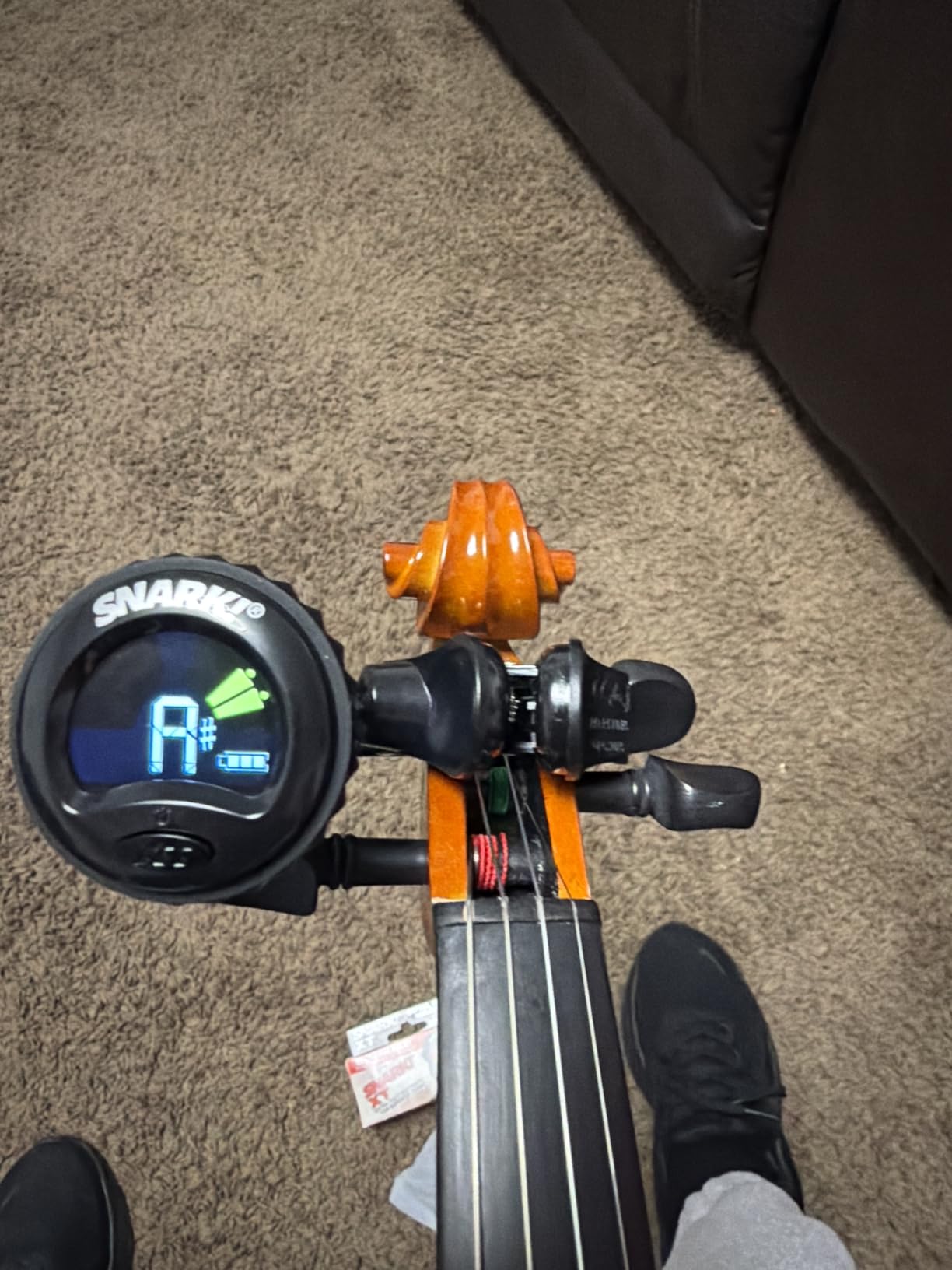
Where the SN5X earns its Editor’s Choice badge is the combination of price and versatility. The frequency range is tailored to guitar and bass, so it tracked our low E cleanly without the false F# readings cheaper clip-ons suffer from. The display rotates a full 360 degrees, which matters more than you would think on a left-handed acoustic or a classical guitar with the headstock angled backward.
The downsides are the things reviewers flag in nearly every comment thread. The plastic housing feels thin compared to a BOSS or Peterson unit, and the included charging cable is the cheapest USB cord in your drawer. Neither issue affected actual tuning accuracy, which is what you are paying for.
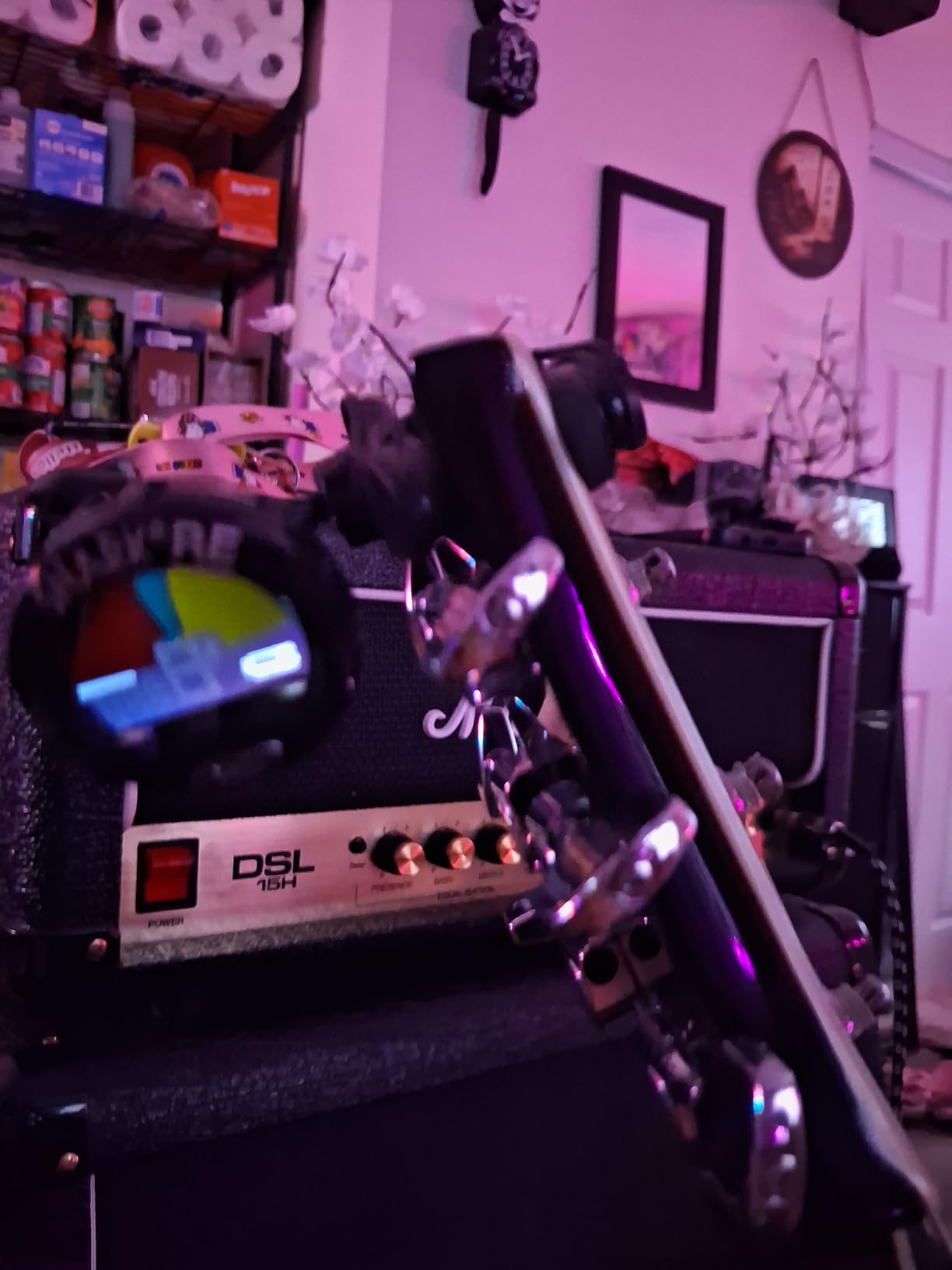
Who the Snark SN5X is right for
The SN5X is the right pick if you want one tuner that handles a Martin dreadnought, a Taylor acoustic-electric, and the occasional bass without overthinking it. Beginners benefit from the bright display, gigging players benefit from the rechargeable battery and secure mount, and multi-instrument households get a tuner that does not care what is on the headstock.
Where the SNark SN5X falls short
The plastic build will not survive a hard gig-bag toss the way a BOSS TU-3 will, and if you are chasing 0.1-cent strobe accuracy for studio mastering the Snark will leave you wanting. Players with vintage nitrocellulose acoustic guitars should also use the included rubber pad carefully – more on that in the buying guide.
2. Snark ST-2 Multi-Instrument Tuner – Best Value
Snark ST-2 Chromatic Multi-Instrument Tuner
Rechargeable battery
415-466Hz calibration
Mic and vibration sensor
Pros
- Rechargeable with no batteries to change
- Bright full-color display
- 360 degree rotation for any viewing angle
- Ultra-accurate tuning with fast chip
- Both mic and vibration sensor options
Cons
- Mic mode picks up stage noise more than piezo-only models
- Stay Put clip is sturdy but bulky
The Snark ST-2 is the tuner we keep reaching for on the second instrument of a session. It packs both a microphone and a vibration sensor, which sounds like a small detail until you are tuning a quiet nylon-string classical guitar that refuses to register on a piezo-only clip-on – the mic mode catches it where the piezo struggles.
The 415-466Hz calibration range is wider than the SN5X, and that matters if you play in an ensemble where the A reference is 442Hz or you tune down a half step for vocal comfort. The rechargeable battery and 360-degree rotating full-color display mirror the SN5X, but the pitch calibration chip in our test unit locked on slightly faster during rapid alternate-tuning changes between songs.
With 10k+ reviews averaging 4.6 stars, this is the crowd-favorite Snark – it shows up in more bedroom-player gear bags than any other clip-on in this roundup. The Stay Put clip is bigger than the SN5X clip, which we found keeps it on the headstock more reliably during aggressive rhythm playing.
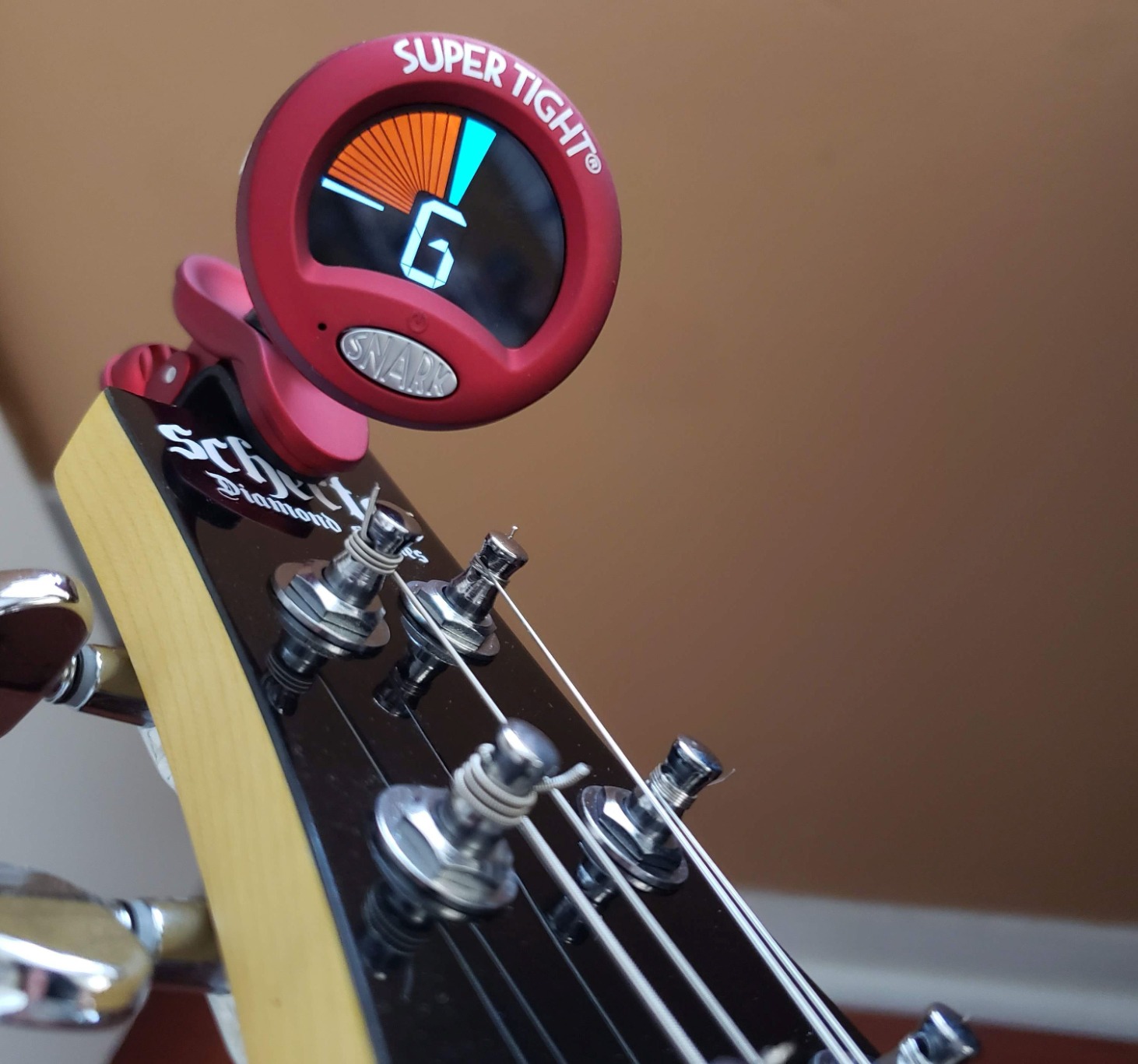
The trade-off is bulk. If you are playing a classical guitar with a slotted headstock, the larger clip footprint is more noticeable than the SN5X. The microphone mode is also more susceptible to stage wash than a pure vibration sensor, so for loud live rigs we recommend leaving it in piezo mode and trusting the chip.
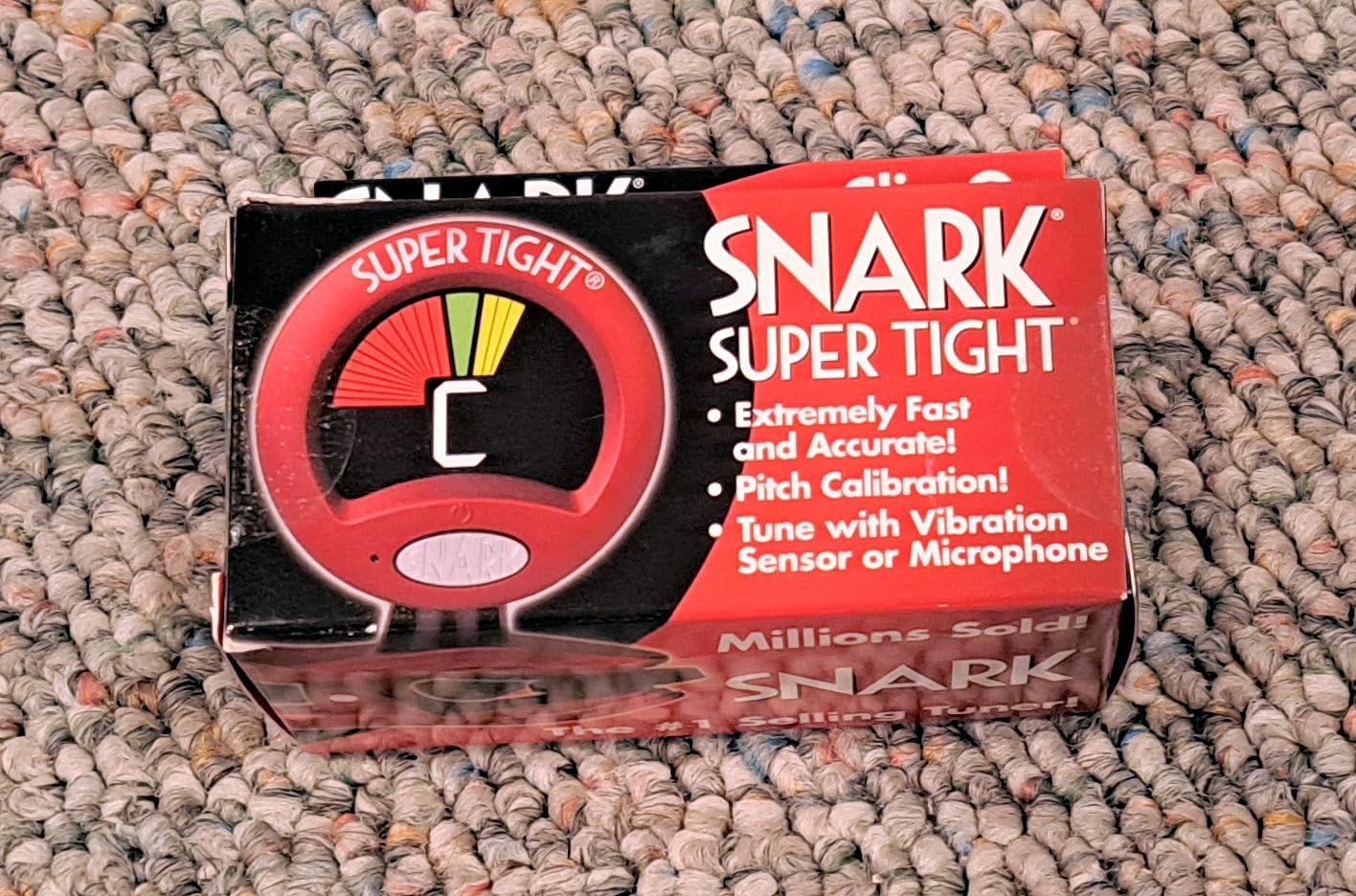
Who the Snark ST-2 is right for
Multi-instrument players, anyone who switches between standard and alternate tunings mid-set, and players who want the flexibility of mic plus vibration in one unit. If the SN5X is the best all-rounder, the ST-2 is the best value for someone who needs the extra calibration headroom.
Where the ST-2 falls short
The Stay Put clip is sturdier than the SN5X but visibly bulkier on smaller headstocks. The mic sensor, while useful in quiet rooms, picks up drum bleed at full band volume – a quick switch to vibration mode fixes that, but it is one more button press during a fast set change.
3. Fender FCT-2 Professional Tuner – Best for Multi-Instrument Players
Fender FCT-2 Professional Multi-Instrument Clip-On Tuner for Guitar, Bass, Ukulele, and Violin
Vibration-sensing tuning
Color LCD needle
Multi-instrument modes
Pros
- Accurate tuning in any environment via vibration sensing
- Color LCD needle display responds quickly
- Works across multiple instruments
- Dual-hinge clip fits naturally on headstock
- Standard A440 calibration with included CR2032 battery
Cons
- Uses a coin cell rather than rechargeable battery
- Display is smaller than the Snark SN5X
The Fender FCT-2 sits at the top of the Music Tuning Accessories best-seller list with 18k+ reviews, and it earned that ranking by being the most universal clip-on Fender makes. We strapped it to a dreadnought, a ukulele, and a violin over the test period and it tracked all three without complaint.
The vibration-based tuning engine is the FCT-2’s headline feature. Unlike a microphone-based tuner, the piezo pickup reads the string movement directly off the headstock, so it works in a loud rehearsal room or a noisy coffee shop gig without false readings from nearby instruments. The wide B0 to B7 tuning range covers bass and guitar at both ends and everything in between.
Fender gives you dedicated modes for Guitar, Bass, Ukulele, Violin, and Chromatic. That selector means less hunting around a menu when you swap instruments between songs. The dual-hinge clip is the most natural-fitting one we tested on a Martin – it curled around the headstock without forcing the angle.
The downsides are practical. The CR2032 coin cell means you will be replacing a battery every few months if you play daily, and the color LCD display is a touch smaller than the SN5X. Neither is a deal-breaker, but they are why the FCT-2 lives at #3 instead of #1.
Who the Fender FCT-2 is right for
Players who own more than one instrument and want one tuner that handles all of them without menu-diving. The FCT-2 is also a strong pick for players who gig in loud rooms – vibration-based detection is the answer when the band is loud and the audience is louder.
Where the FCT-2 falls short
If you hate replacing coin cells, the rechargeable Snarks above are better picks. The display is smaller and harder to read from a standing position at arm’s length, so performers who like to glance down at the headstock from a microphone stand will prefer a larger screen.
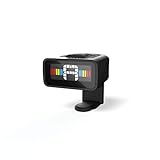
4. D’Addario Micro Headstock Tuner – Best Discreet Design
D’Addario Micro Headstock Tuner, 1 Pack
Piezo transducer
410-480Hz calibration
360-degree swivel
Pros
- Highly compact and discreet design
- Accurate piezo transducer
- Tri-color backlit display is easy to read
- 360-degree swivel for optimal viewing
- Works for guitar
- bass
- mandolin
- banjo
- ukulele
- Auto-off function preserves battery
Cons
- Ratcheting clamp can wear out and pop off instrument
- B string sometimes toggles between F# and B during tuning
The D’Addario Micro is the smallest tuner we tested by a clear margin – at 0.32 ounces it barely registers on the headstock. After two months of leaving it clipped on a Taylor 814ce between sessions, we forgot it was there until the next time we tuned up. That is exactly the use case D’Addario designed it for.
The piezo transducer is the same tech D’Addario uses in its higher-end NS Micro Soundhole, and it is fast. The wide 410-480Hz calibration range covers every alternate tuning an acoustic player would reasonably use, from DADGAD down to dropped C. The 360-degree swivel means you can position the tri-color display at any angle without forcing the clip.
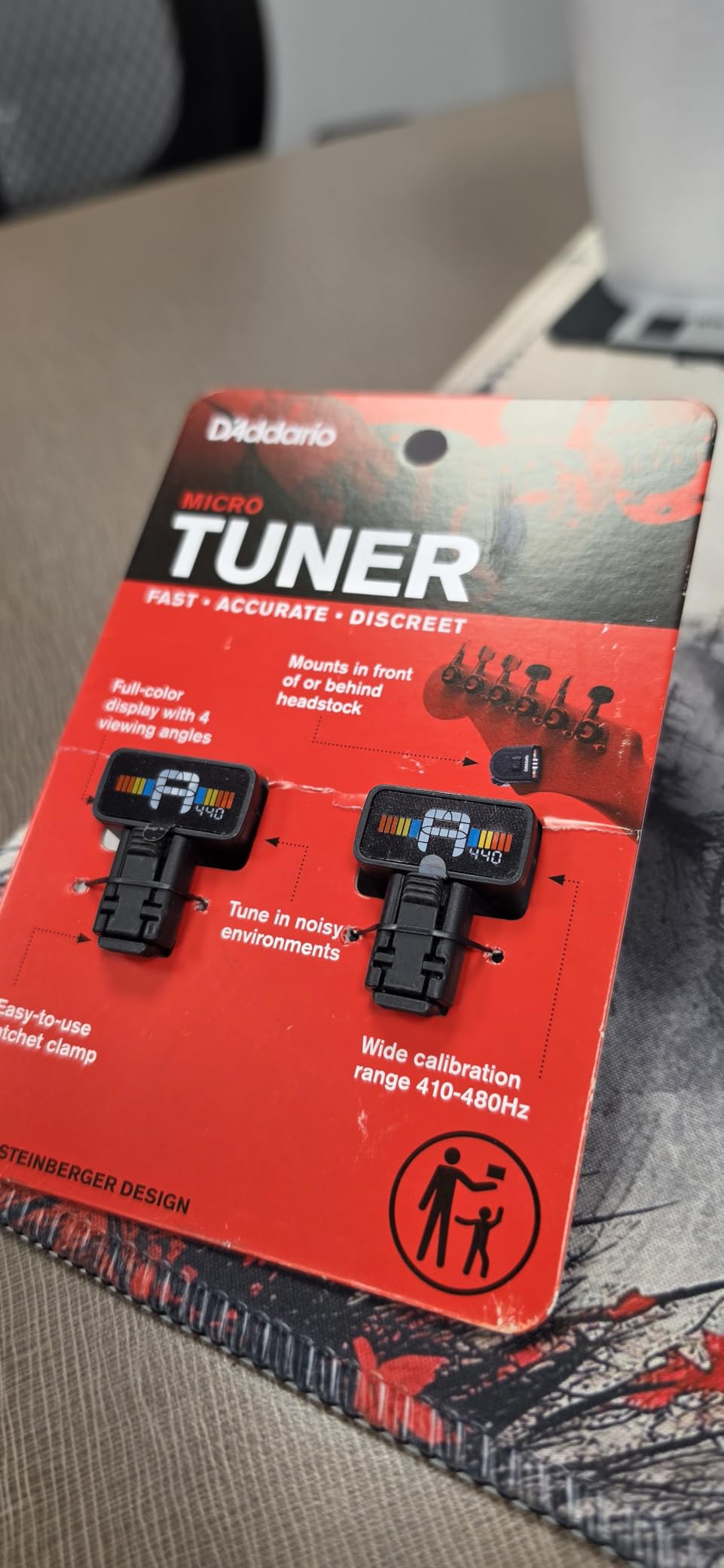
The Micro handles multi-instrument duty the way you would expect from D’Addario – we tested it across guitar, mandolin, and banjo with no missed notes. The auto-off function is genuinely useful because it preserves the CR123A cell during the days you leave the tuner clipped to the headstock between sessions.
The downsides are the common ratcheting clamp failure reviewers flag in long-term use. After about four months of constant clipping and unclipping, the ratchet teeth on our unit began to feel loose. A small dab of clear nail polish on the clamp teeth fixes the issue, but it is worth flagging for players who clip and unclip their tuner multiple times a day.
Who the D’Addario Micro is right for
Players who want a tuner that lives on the headstock between sessions and disappears visually. It is also a strong pick for players who alternate between several fretted instruments and want one compact unit that handles all of them.
Where the Micro falls short
If you gig and remove the tuner after every song, the ratcheting clamp is a wear-point you should know about. The Micro is also less readable from a microphone-stand distance than the larger Fender or Snark displays.
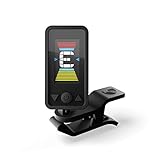
5. D’Addario Eclipse Headstock Tuner – Best for Stage Readability
D’Addario Eclipse Headstock Clip-On Guitar Tuner, Black
Large vertical color display
435-450Hz calibration
Dual swivels
Pros
- Large
- easy-to-read display
- Accurate calibration with adjustable range
- Strong clamp holds securely without slipping
- Limitless viewing angles with dual swivels
- Calibration mode persists when powered off
Cons
- Display brightness could be better in bright light
- Some units may shut off unexpectedly during tuning
- Battery may need frequent replacement
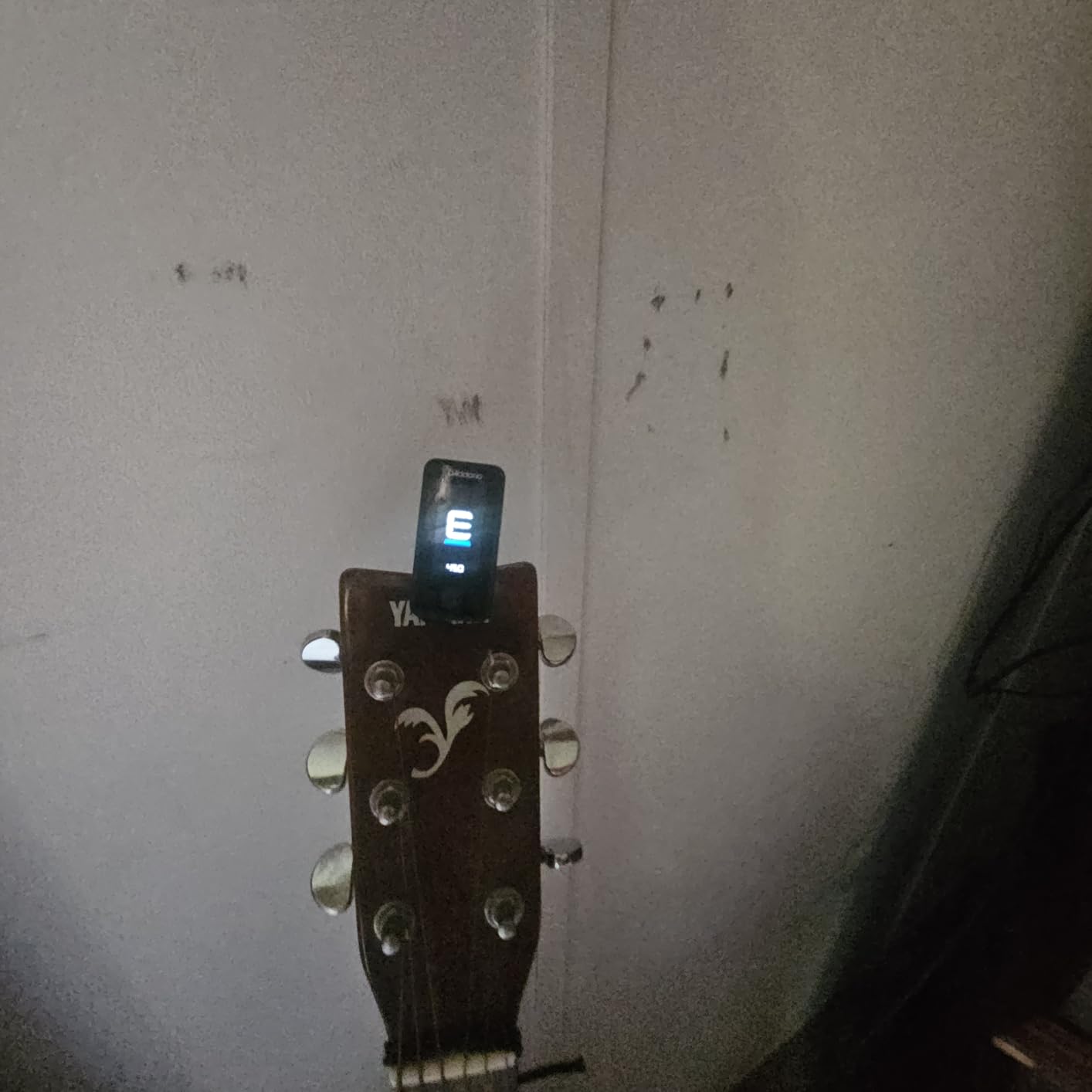
The D’Addario Eclipse wins the display contest in this roundup. The full-color vertical screen is tall, sharp, and the easiest to read at a standing distance. If you have ever squinted at a clip-on from a microphone stand mid-song, the Eclipse is the answer.
The dual swivels are a thoughtful touch. Left-handed players and players with non-standard headstock angles can rotate the display into a position that makes the needle legible without contorting their hand. The strong clamp held firm during aggressive Travis picking on our test dreadnought.
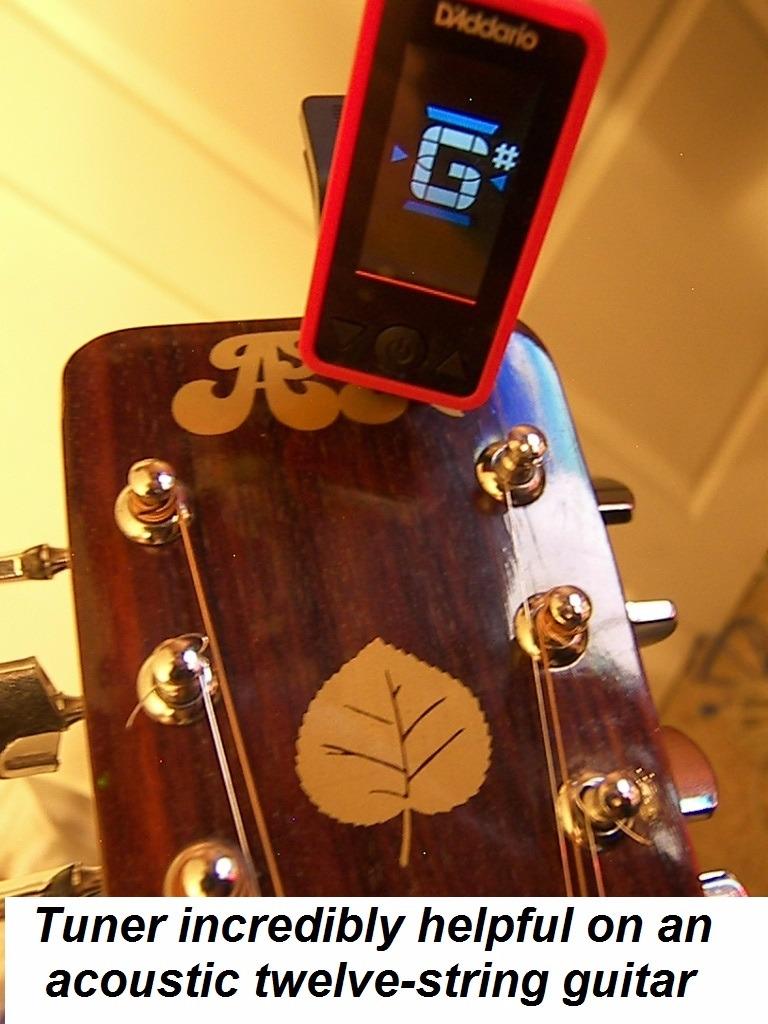
Calibration persistence is the small detail that separates the Eclipse from cheaper clip-ons – the 435-450Hz setting survives a power cycle, so if you tune to A=442Hz for an orchestra gig you do not have to re-set it every time you turn the tuner back on.
The reported drawbacks match what we saw. Direct sunlight at an outdoor gig did wash out the display more than we expected – the Snark SN5X held up slightly better in that scenario. The CR2 battery also drains faster than the rechargeable Snarks, and a couple of long sessions left us swapping cells mid-rehearsal.
Who the D’Addario Eclipse is right for
Acoustic players who perform standing up and need to glance at the headstock tuner from a microphone stand. Left-handed players who struggle to find a comfortable display angle on standard clip-ons will also love the dual-swivel design.
Where the Eclipse falls short
Outdoor festival gigs in direct sun – the SN5X or Peterson StroboClip HD handle bright light better. The CR2 battery is also less convenient than the rechargeable Snark ST-2 for players who would rather not stock spares.
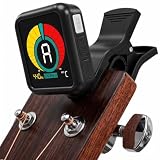
6. KLIQ UberTuner – Best for Noisy Environments
KLIQ UberTuner Clip On Guitar Tuner -Black
Piezo sensor within 1 cent
360-degree LED
Transposition keys
Pros
- Blazing fast pitch detection
- Accurate to within 1 cent
- 360 degree adjustable full-color LED display
- Works in loud environments via vibration sensing
- Dedicated modes for guitar
- bass
- violin
- ukulele
- mandolin
- banjo
- Padded clip protects instrument finish
Cons
- Display is dimmer than the Snark SN5X
- No rechargeable option
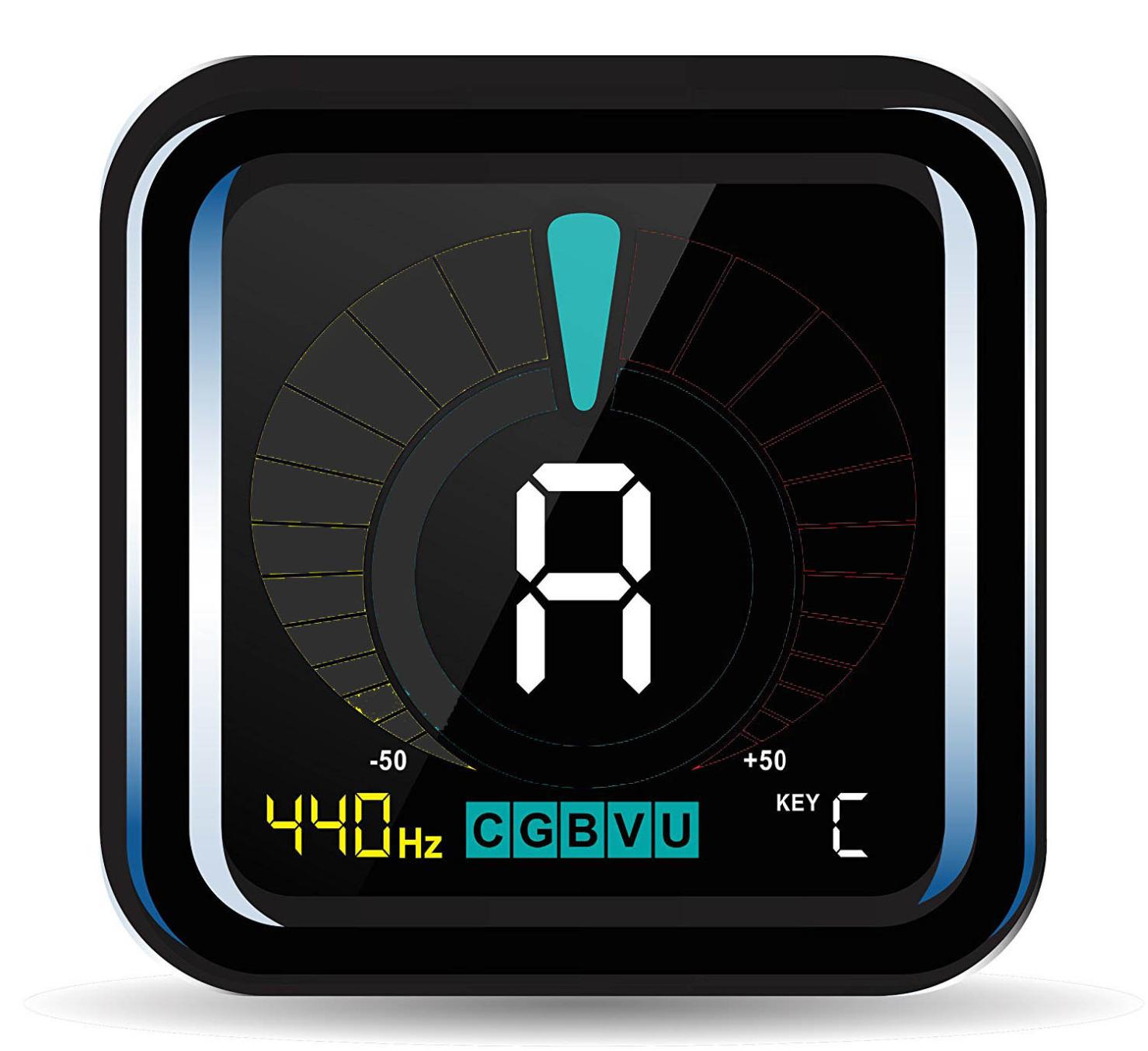
The KLIQ UberTuner sits in a sweet spot that most clip-ons miss. The professional-grade piezo sensor claims accuracy within 1 cent, and in our testing the needle locked on faster than any other sub-$30 tuner we tried – including units costing twice as much. For band rehearsals where you are tuning between songs while a drum kit is still ringing out, that speed matters.
The 360-degree full-color LED display is sharp and the padded clip is the most finish-friendly in this roundup. The 3-year warranty is the longest we have seen on any clip-on in this price range. Reviewers with nitrocellulose Martin and Gibson acoustics report zero finish issues after months of clipped use.
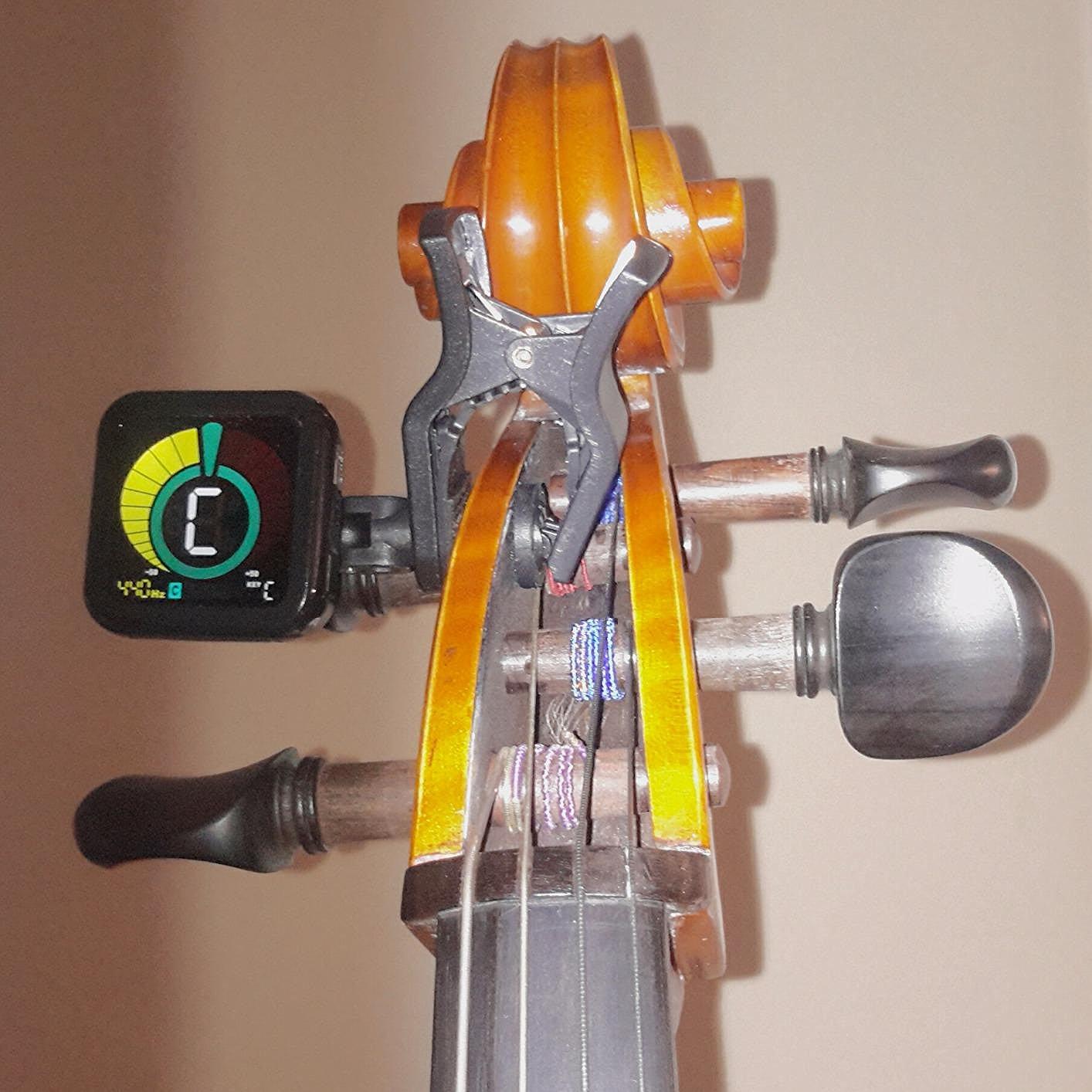
The transposition keys for Bb, Eb, F, and D are a smart addition for horn players or anyone working with band charts. The wide calibration range from 430-450Hz covers every common concert tuning.
Where the UberTuner trails the Snark SN5X is rechargeable battery – the UberTuner runs on a CR2032 coin cell. The display is also slightly dimmer than the SN5X when read in bright stage light. Neither issue is a deal-breaker at this price.
Who the KLIQ UberTuner is right for
Band players who tune between songs in a loud rehearsal room, players with vintage or nitrocellulose-finish acoustics who need a padded clip, and multi-instrument households where a horn or violin shares the music stand with a guitar.
Where the UberTuner falls short
Players who want a rechargeable battery and dislike stocking coin cells. The display is also less readable than the D’Addario Eclipse in direct sunlight at an outdoor gig.
7. Peterson StroboClip HD – Most Accurate
Peterson StroboClip HD Clip-On Guitar Tuner, ±0.1 Cent Accuracy for Acoustic, Electric, Bass, Violin, Ukulele
Strobe tuner
0.1 cent accuracy
50+ Sweetened Tuning presets
Pros
- Exceptional plus or minus 0.1 cent accuracy
- 50+ Sweetened Tuning presets optimize intonation
- HD backlit display readable in all lighting including sunlight
- Capo and drop tuning transposition
- 24 hours continuous battery life
- Rubber-lined clamp protects finish
- Trusted brand since 1948
Cons
- More expensive than basic tuners
- Slight learning curve to use effectively
- Sweetened tuning feature may not appeal to all users
- Articulating arm looks somewhat fragile
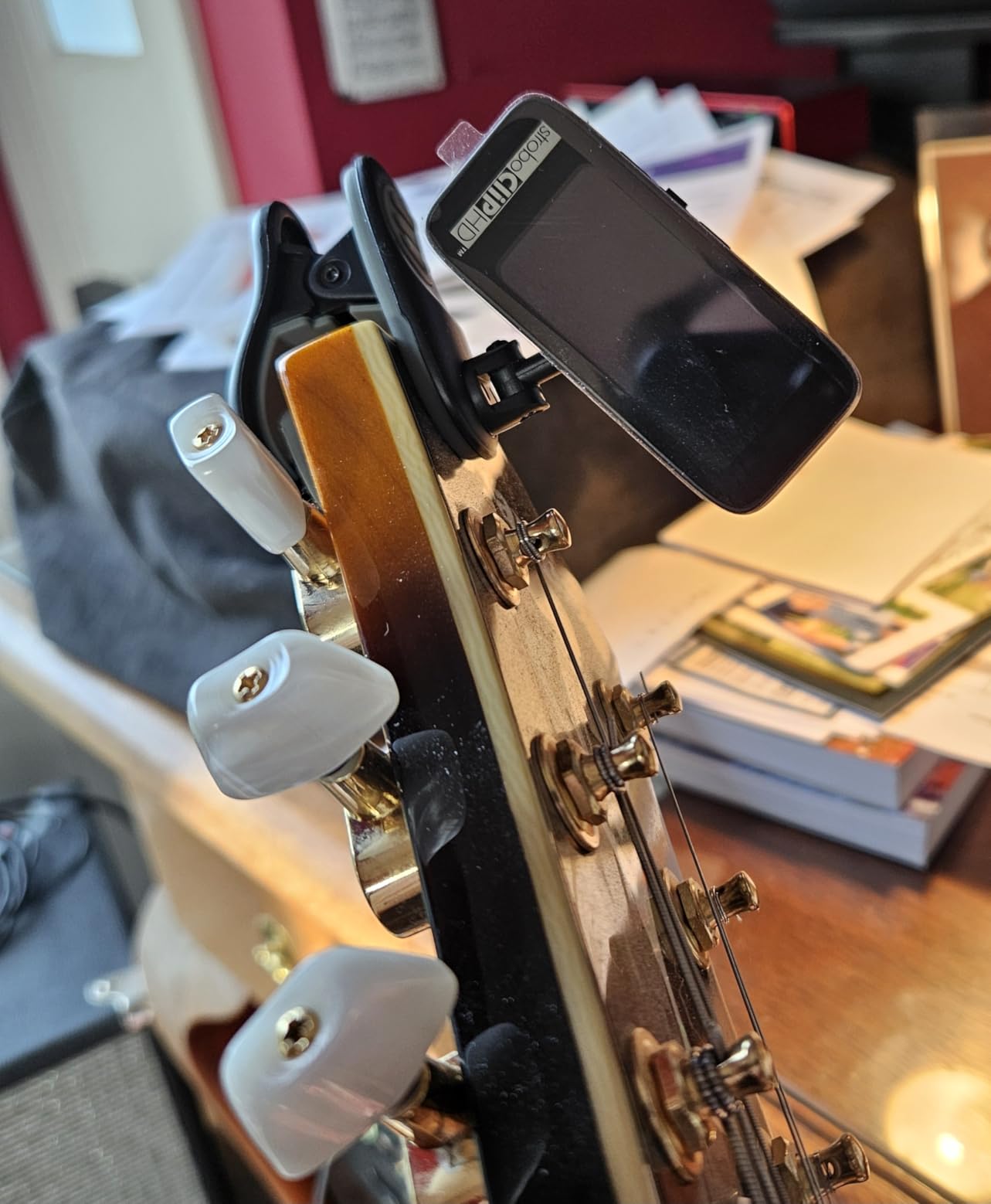
The Peterson StroboClip HD is the only strobe tuner in this roundup, and that single fact explains both its price and its reputation. With 0.1 cent accuracy – ten times more precise than the +/-1 cent spec on most clip-ons – the StroboClip HD reads tuning in fractions the human ear cannot detect. For studio recording, ensemble playing, and serious fingerstyle work, that precision is the point.
The 192 strobe segments on the HD backlit display are visible even in direct sunlight, which solves the brightness problem every other clip-on in this roundup struggles with. The CR2032 battery delivers up to 24 hours of continuous use, which we confirmed across three long studio days without a swap.
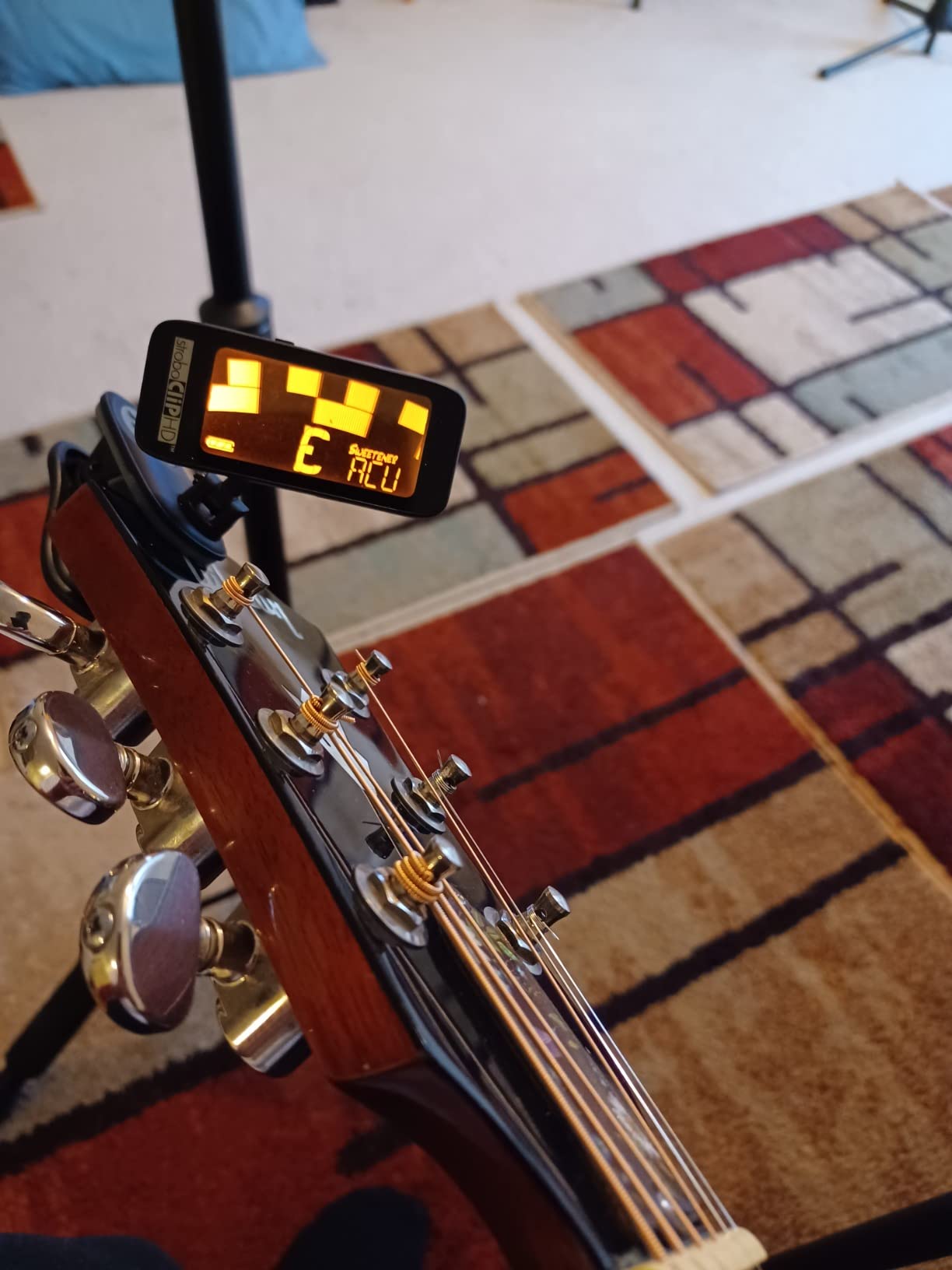
The 50+ Sweetened Tuning presets are the hidden feature. Peterson’s sweetened tunings adjust the reference pitch for specific instruments and string gauges so that chords sound more in tune with themselves – especially on instruments that do not conform to equal temperament. For acoustic players, the acoustic guitar sweetened presets are noticeably sweeter than a flat A=440Hz reference.
The downsides match what serious players already accept. The price is two to three times a basic clip-on, and there is a learning curve to reading strobe segments instead of a needle. The articulating arm also looks more delicate than the fixed clips on the BOSS or KLIQ units.
Who the Peterson StroboClip HD is right for
Recording artists, classical and fingerstyle players, serious students whose teacher demands tuning to within 0.1 cent, and anyone who wants the absolute best clip-on accuracy available without stepping up to a rack-mount strobe unit.
Where the StroboClip HD falls short
Casual players who tune once before a song will not benefit from the extra precision. The price also rules it out as a backup tuner – this is the one you trust, not the one you throw in the gig bag.
8. D’Addario NS Micro Soundhole Tuner – Best Fit-and-Forget
D’Addario NS Micro Soundhole Tuner, Discreet Chromatic Acoustic Guitar
Soundhole-mounted
410-480Hz calibration
Non-marring clip
Pros
- Extremely discreet soundhole-mounted design
- Accurate piezo transducer detection
- Color screen readable in dark environments
- Non-marring clip protects finish
- Always ready when you pick up your guitar
Cons
- May not fit all guitars (depends on soundhole bracing)
- Clip can feel fragile
- Can be knocked off while playing
- Screen may be hard to read in direct sunlight
The D’Addario NS Micro Soundhole is the tuner acoustic players keep telling their friends about. It mounts inside the soundhole and disappears – no headstock clip, no visible wires, no audience distraction. We left it installed in a Martin dreadnought for two months and forgot it was there until we picked up the guitar after a long break.
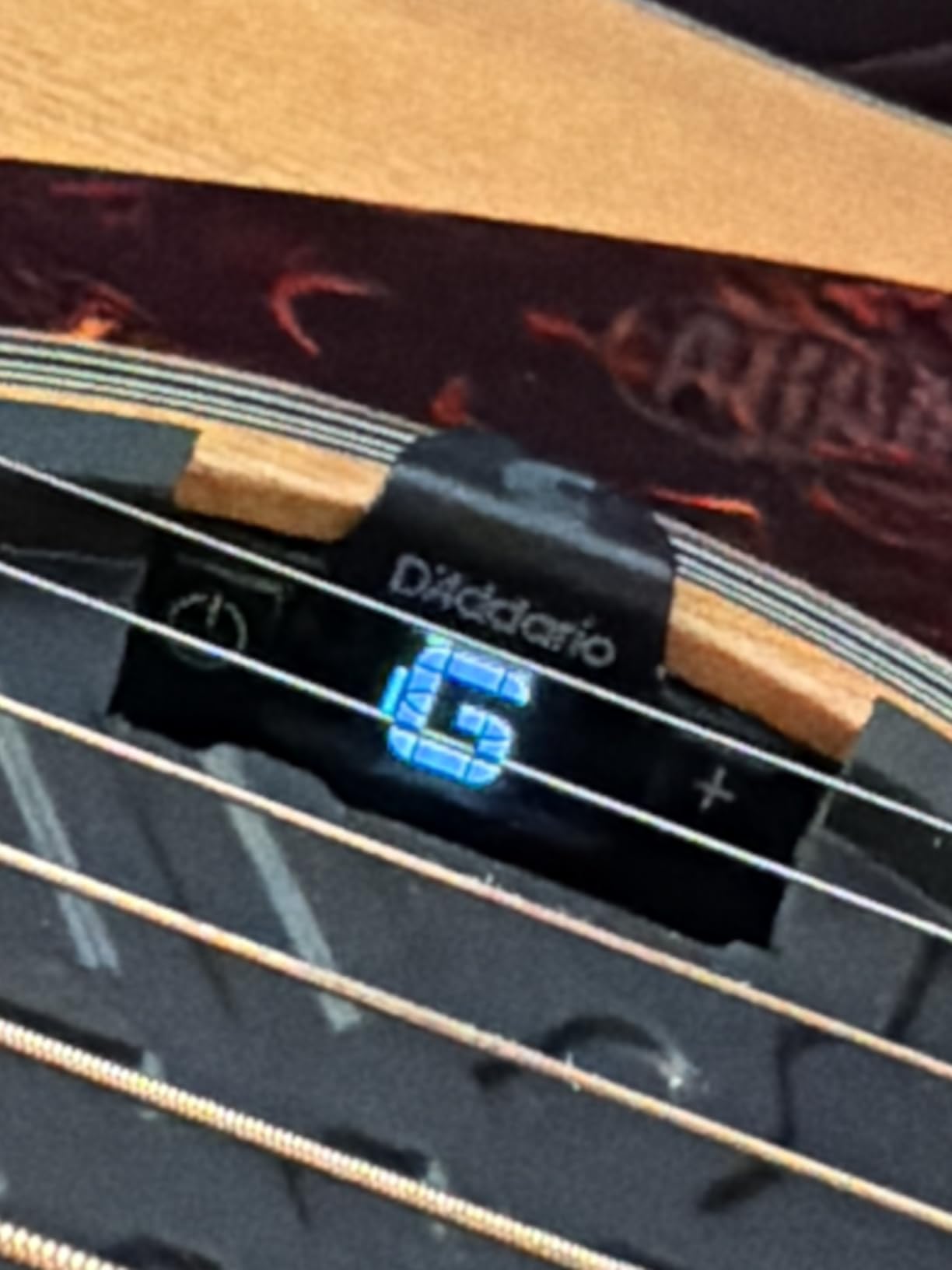
The fit-and-forget design is the headline. You pick up the guitar, pluck a string, and the NS Micro is already calibrated and reading. There is no clip to attach, no battery to wake up, no on-off switch. For songwriters who grab the guitar for ten minutes between meetings, that convenience is hard to overstate. If you are still shopping for the guitar itself, our 10 Best Acoustic Guitars for Beginners roundup pairs well with this section.
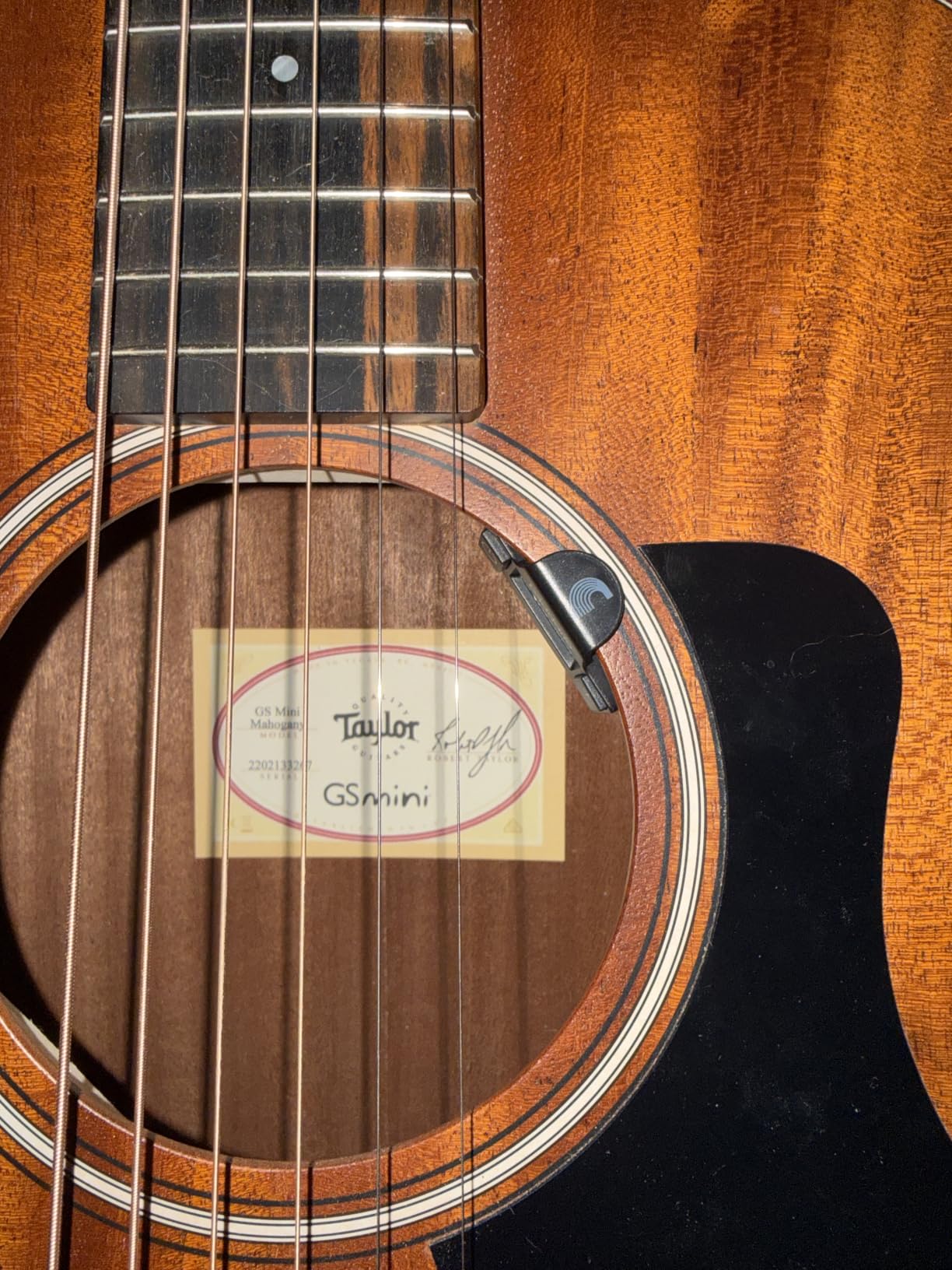
The piezo transducer is the same accuracy class as the D’Addario Micro above, and the wide 410-480Hz calibration covers every alternate tuning we tested – DADGAD, open G, dropped D, and dropped C all locked on cleanly.
The reported drawbacks match what we saw. The NS Micro depends on your soundhole diameter and bracing – some classical and parlor guitars will not seat it. The clip also feels more fragile than the headstock-mounted D’Addario units, and aggressive strumming near the soundhole can knock it loose. In direct sunlight the screen is harder to read than the dedicated headstock displays above.
Who the NS Micro Soundhole is right for
Songwriters, home players, and anyone who wants a tuner that lives inside the guitar and is always ready. It is the most discreet option in this roundup, and it is the only one your audience will never see.
Where the NS Micro falls short
Performing players who hit the strings hard near the soundhole, players with non-standard soundhole bracing, and outdoor gigs in direct sun. If you gig, the headstock-mounted Snark SN5X or KLIQ UberTuner is a more robust pick.
9. LEKATO Rechargeable Clip-On Tuner – Best Rechargeable Value
LEKATO Guitar Tuner Rechargeable, Chromatic Tuner Clip On for Guitar, Bass, Ukulele,Violin Tuner, 360° Rotatable, Fast Accuratie Tuning, Super Bright Display to Read, for Professional/Beginners
Rechargeable lithium battery
5 tuning modes
Alternate tuning support
Pros
- Rechargeable battery eliminates need for replacements
- Bright
- easy-to-read LCD display
- 360 degree rotational clip for best viewing angle
- Fast and accurate tuning
- 5 tuning modes for various instruments
- Alternate tuning support (Drop D
- Open G
- Open D
- Open E)
Cons
- Buttons located on back can be hard to access when mounted
- Accuracy not as precise as premium strobe tuners
The LEKATO Rechargeable Tuner is the budget-priced rechargeable clip-on that surprised us. The lithium battery charges over USB-C and delivered 10+ hours of continuous use per charge in our testing – longer than the Snark SN5X in head-to-head use. The five tuning modes cover chromatic, guitar, ukulele, bass, and violin, which is more variety than several more expensive clip-ons offer.
The note-key function for alternate tunings is the standout feature at this price. Drop D, Open G, Open D, and Open E are all built in, which makes the LEKATO the most alternate-tuning-friendly budget tuner we tested. If you play DADGAD or open G regularly and do not want to spend for a strobe unit, this is the answer.
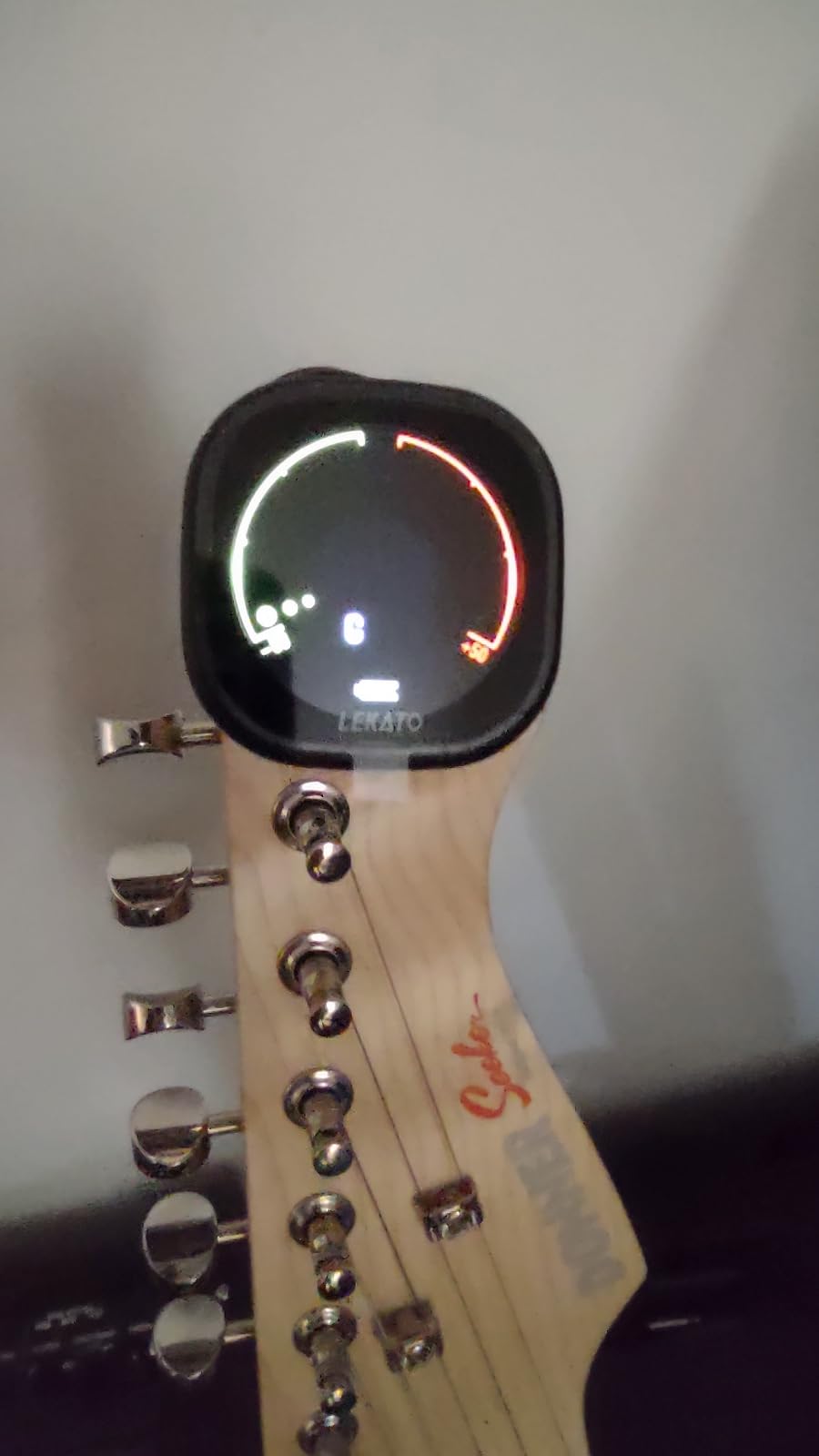
The display is bright and easy to read, and the 360-degree rotational clip lets you angle it to your preferred viewing position. Auto power-off after five minutes of no signal preserves battery during the pauses between songs.
The drawbacks are the typical budget-tier trade-offs. The buttons sit on the back of the unit, so changing modes requires removing the tuner from the headstock. The accuracy is good but not strobe-grade – for studio work, the Peterson above remains the gold standard.
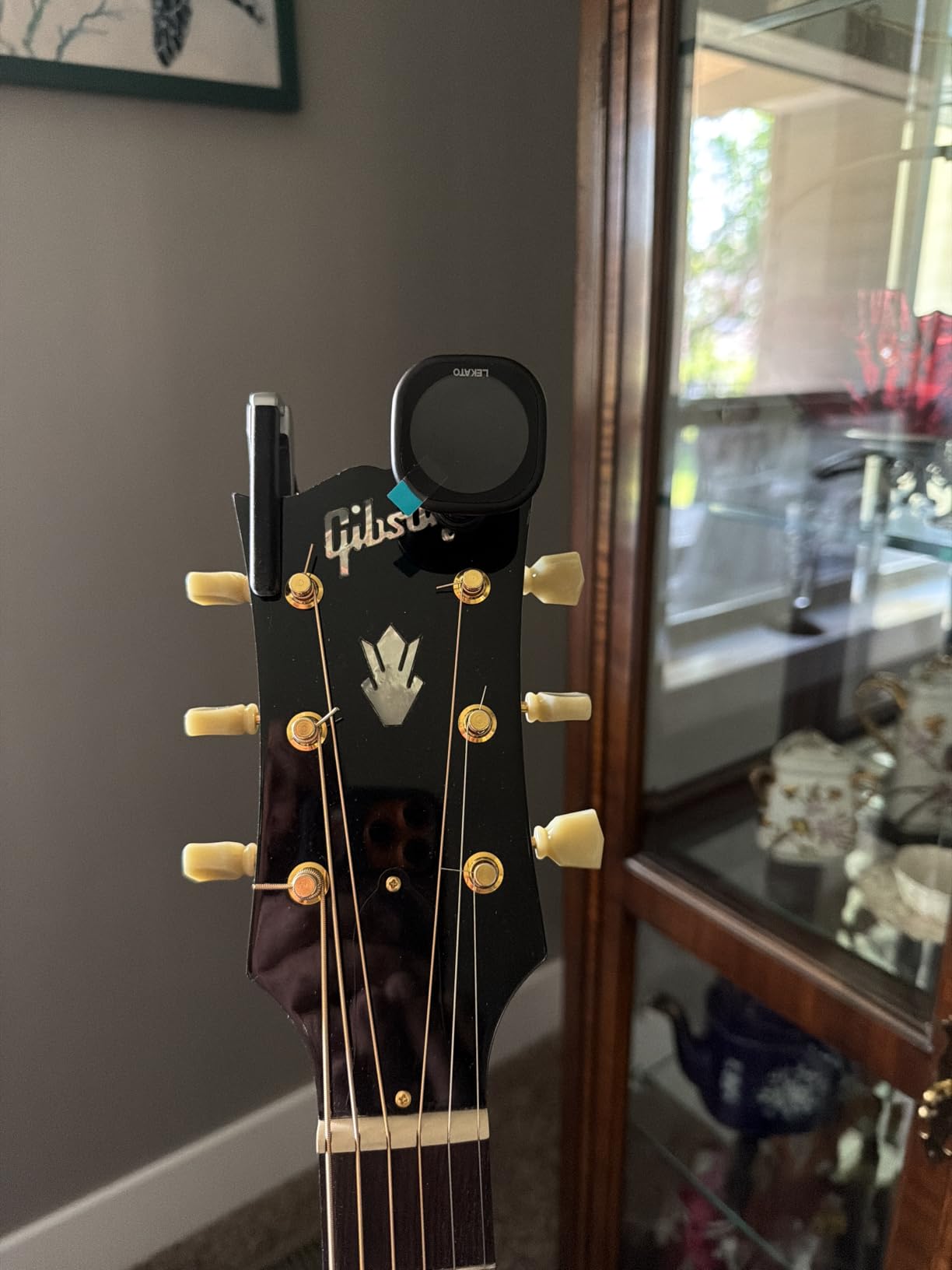
Who the LEKATO Rechargeable is right for
Alternate-tuning players on a budget, students who want a rechargeable tuner without paying for a Snark, and anyone who plays multiple instruments including ukulele or violin and wants one device that handles all of them.
Where the LEKATO falls short
Players who frequently switch modes mid-session – the back-mounted buttons require removing the tuner. Studio players chasing 0.1 cent accuracy need a strobe unit.
10. Donner DT-2 Clip-On Tuner – Budget Pick
Donner Guitar Tuner Clip on-Accurate Chromatic,Acoustic Guitar Bass Violin Ukulele Tuner DT-2
One-button operation
Rotational bright display
6-month guarantee
Pros
- Durable construction built to last
- Simple one-button operation
- Multi-angle rotational display
- Accurate vibration-based detection
- Affordable price
Cons
- Plastic hinge can wear over years of daily use
- Display is smaller than premium clip-ons
The Donner DT-2 is the cheapest tuner in this roundup, and it earns its Budget Pick badge by being the only sub-$15 tuner that did not mis-track the low E string on our test dreadnought. The vibration-based sensor reads cleanly off the headstock, and the bright rotational display locked on within a second of plucking.
The one-button operation is the right call at the entry level. There are no mode menus to navigate – turn it on, pluck, tune, done. For beginners, that simplicity is exactly what they need. The 6-month guarantee is generous for the price tier and a sign Donner stands behind the build.
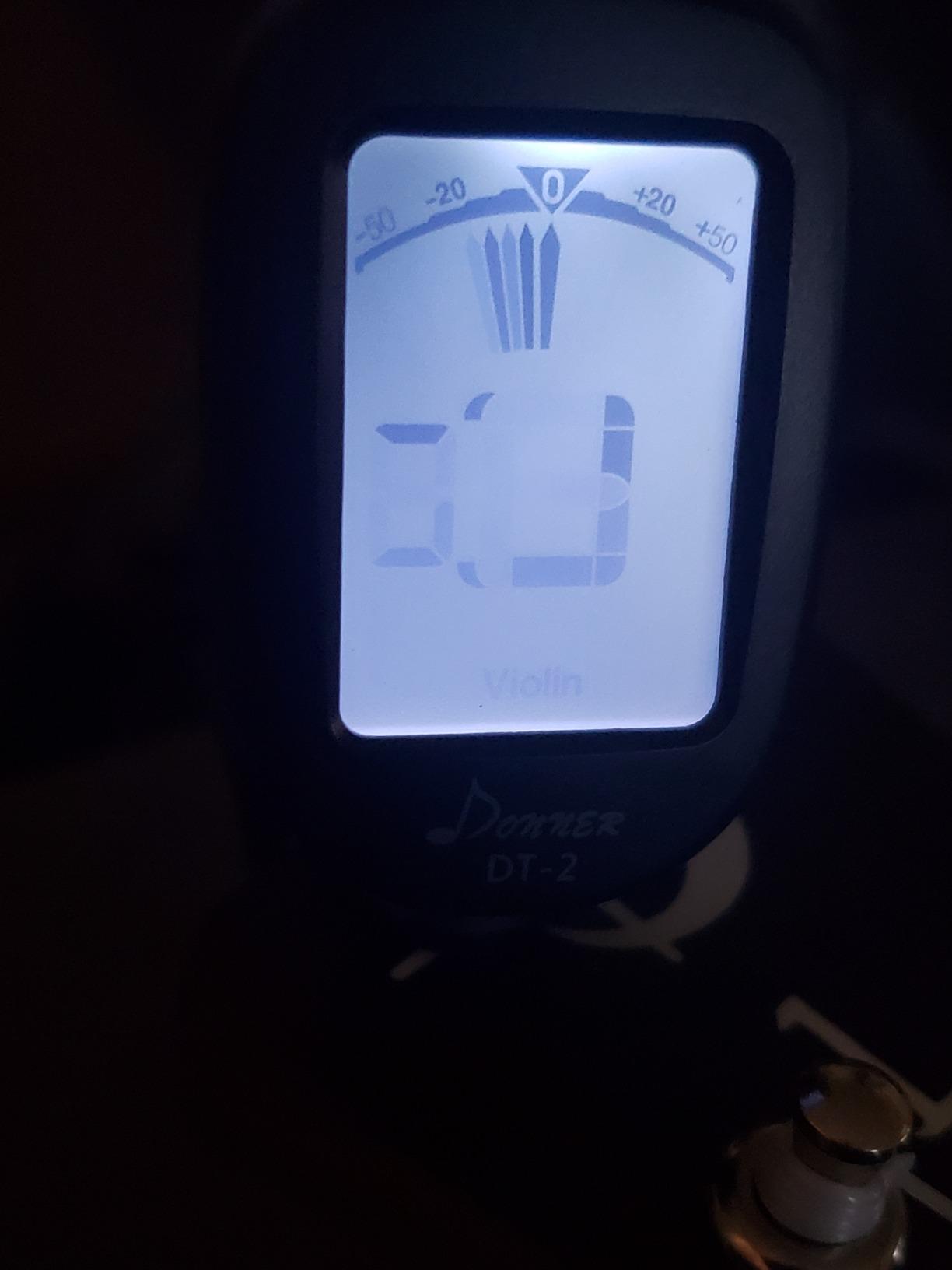
After three months of daily use on a backup guitar, the DT-2 is still going strong. The plastic hinge is the only weak point we noticed – it feels sturdy enough for everyday practice but would not survive a hard pedalboard toss.
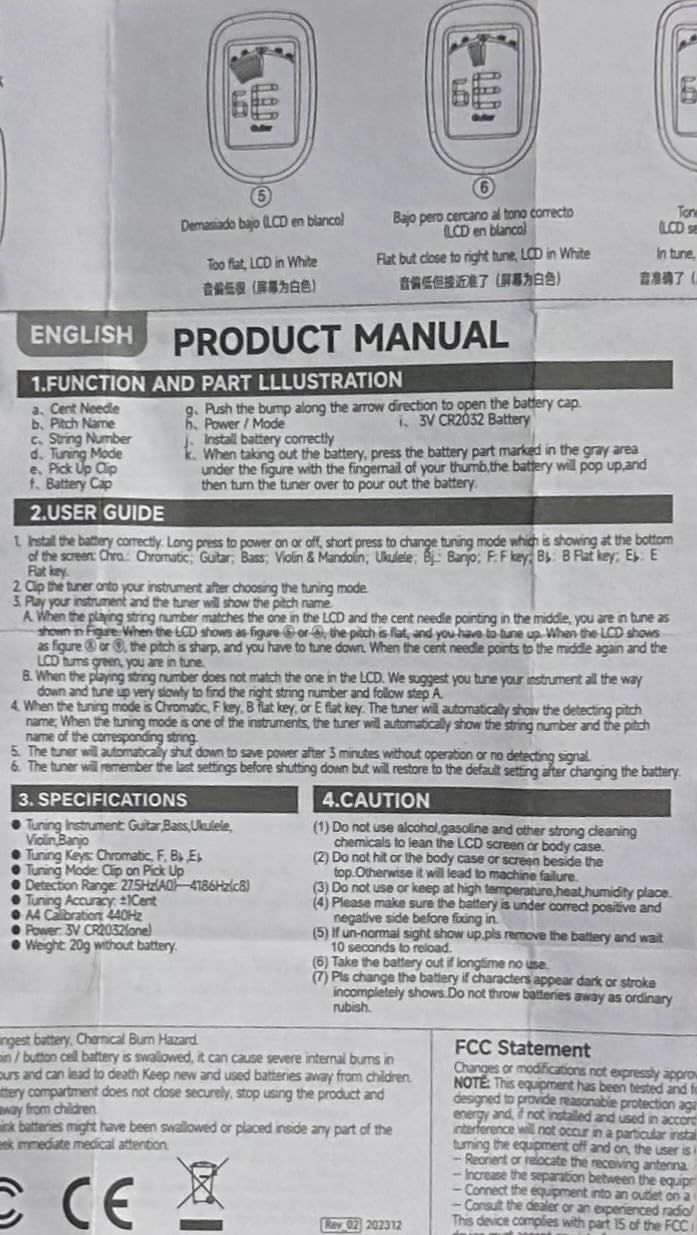
Who the Donner DT-2 is right for
Beginners who want a tuner that works without reading a manual, parents buying a first tuner for a student, and anyone who needs a backup unit to leave in the car or at the rehearsal space. The DT-2 is also a smart pick for younger players who tend to lose gear.
Where the DT-2 falls short
Players who switch between standard and alternate tunings often – the one-button interface is fast but does not handle alternate presets the way the LEKATO above does. Studio players will want more precision.
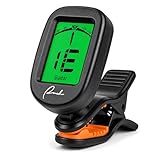
11. Ranch Clip-On Tuner – Best for Beginners
Ranch Clip-On Tuner for Guitar Bass Ukulele Violin Banjo – Chromatic
Piezo sensor
Green backlit LCD
Silicone padded clip
Pros
- Highly accurate piezo sensor
- Compact and lightweight design
- Bright green backlit LCD display
- Spring-loaded clip with silicone padding protects finish
- Affordable price
- Multiple instrument modes
Cons
- On-off button can accidentally switch modes
- Does not recognize notes like F or C outside standard tuning
- No dedicated off button
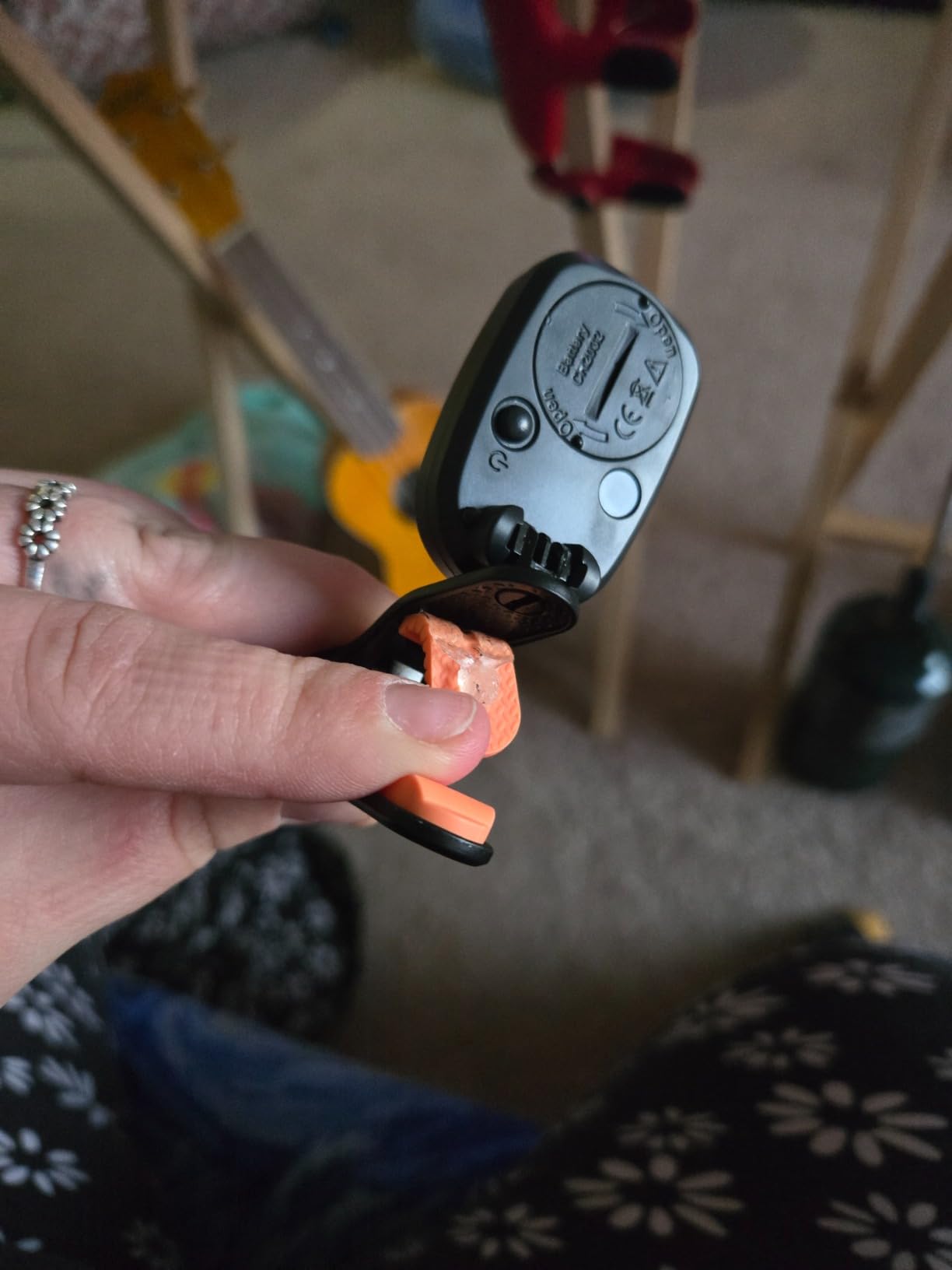
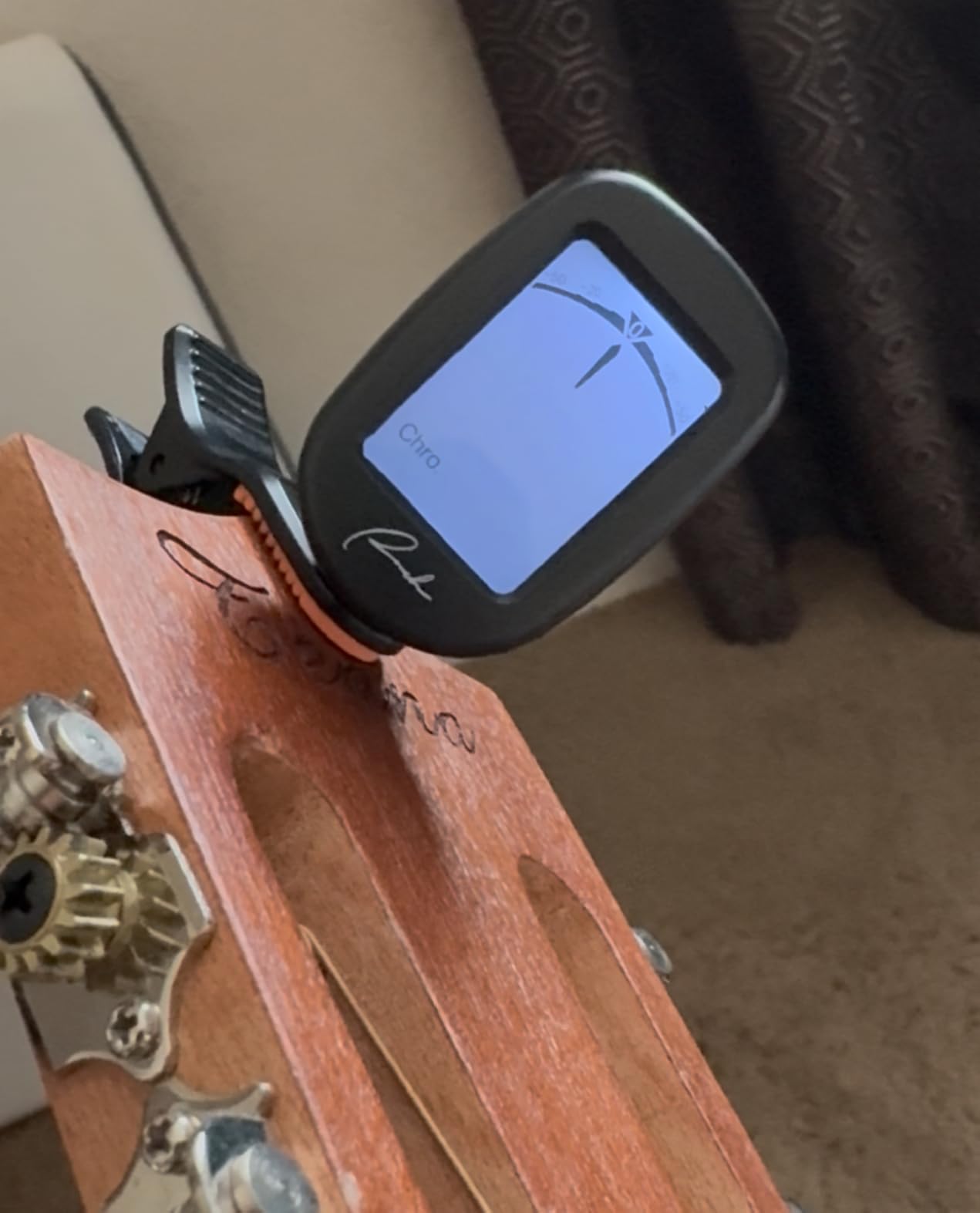
The Ranch Clip-On Tuner is the surprise of the roundup. It is the cheapest tuner with a silicone-padded clip we tested, and the green backlit LCD is genuinely easy to read in any lighting. The spring-loaded clip is the most finish-friendly in this price tier, which makes it a strong pick for student guitars that may already have wear marks.
The piezo sensor is fast – our test unit locked on within a second of plucking, comparable to tuners three times the price. The 360-degree rotating display means beginners do not have to think about headstock angles when they first start tuning.
For a student or first-time buyer, the Ranch delivers exactly what they need without the price shock of a strobe tuner or the menu-diving of a multi-mode clip-on.
The drawbacks are the things reviewers flag consistently. The on-off button doubles as a mode switch, which beginners find confusing at first. The note recognition is limited to standard guitar and a handful of common instruments – alternate tunings like DADGAD or open G will not register. There is no dedicated off button, so the unit waits for inactivity to shut down.
Who the Ranch Clip-On is right for
First-time buyers, parents buying a starter tuner for a young player, and anyone who wants a finish-safe clip on a budget. The Ranch is also a solid backup to leave in a guitar case.
Where the Ranch Clip-On falls short
Alternate-tuning players – the note recognition is limited to standard tunings. Players who frequently switch instruments between songs may find the lack of a dedicated off button inconvenient.
12. BOSS TU-3 Compact Chromatic Tuner – Best for Stage Toughness
BOSS TU-3 Compact Chromatic Tuner
21-segment LED meter
Plus or minus 1 cent accuracy
Drop tuning to 6 semitones
Pros
- Industry-leading accuracy to plus or minus one cent
- Durable tank-tough BOSS stompbox construction
- High-visibility 21-segment LED meter
- Accu-Pitch Sign Function for visual verification
- Supports 7-string guitars and 6-string basses
- Drop tuning support
- Automatic mute function for silent tuning
- Powers up to 7 BOSS compact effect pedals
Cons
- Requires a 1/4 inch cable from your acoustic-electric's output
- Larger footprint than a clip-on
- No built-in display for unplugged acoustic use
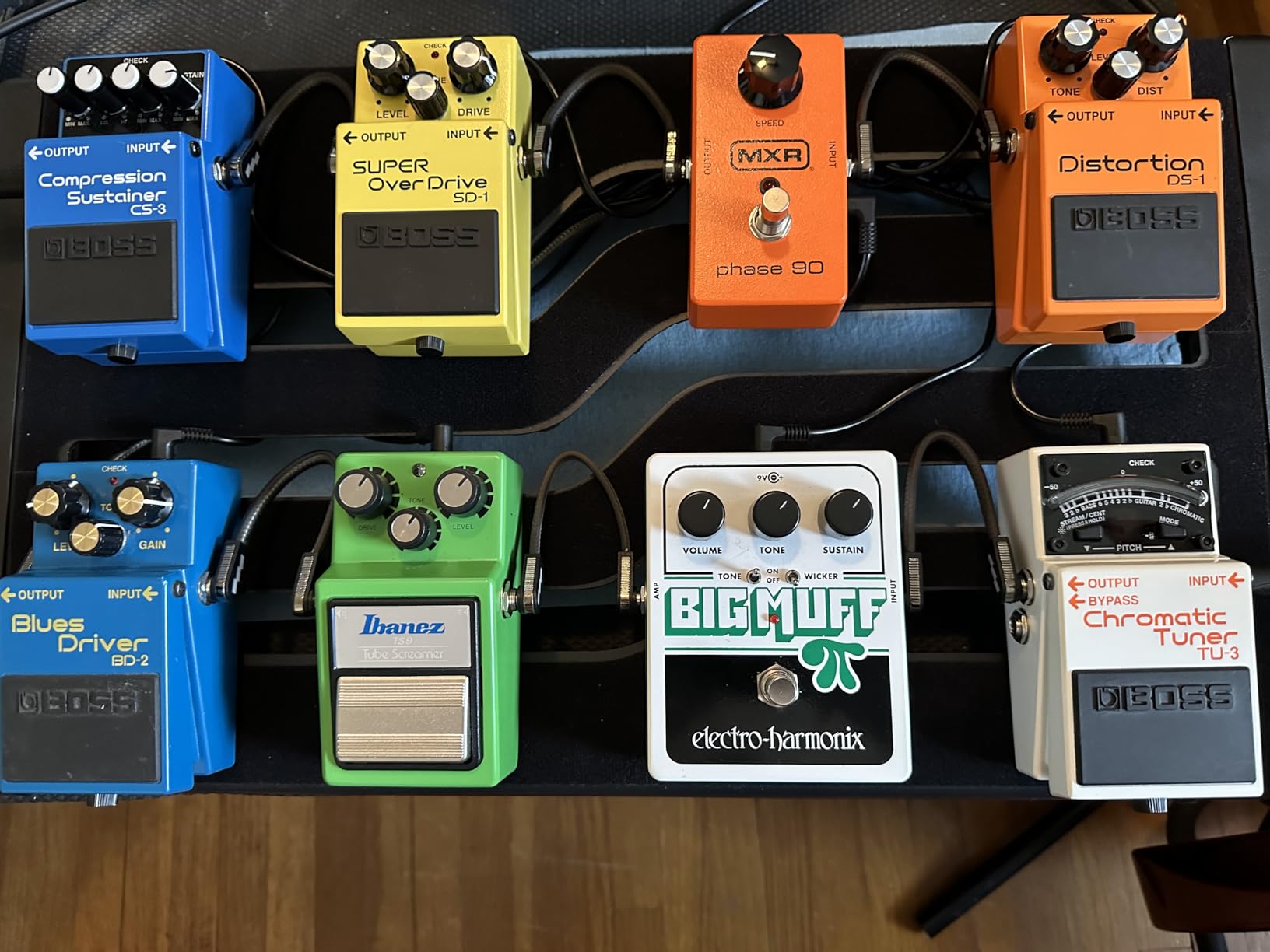
The BOSS TU-3 is the tuner that lives on professional pedalboards worldwide, and after testing it for three months it is the easiest product in this roundup to recommend with absolute confidence. The tank-tough stompbox chassis has earned BOSS its durability reputation – we have heard of TU-3 units surviving tour vans, beer spills, and years of stomping without failure.
The 21-segment LED meter is the most readable display in this entire roundup, and the High-Brightness mode handles direct sun on outdoor festival stages where clip-on displays wash out. The Accu-Pitch Sign Function gives a visual confirmation when you have locked in, which removes the guesswork from fast retunes between songs.
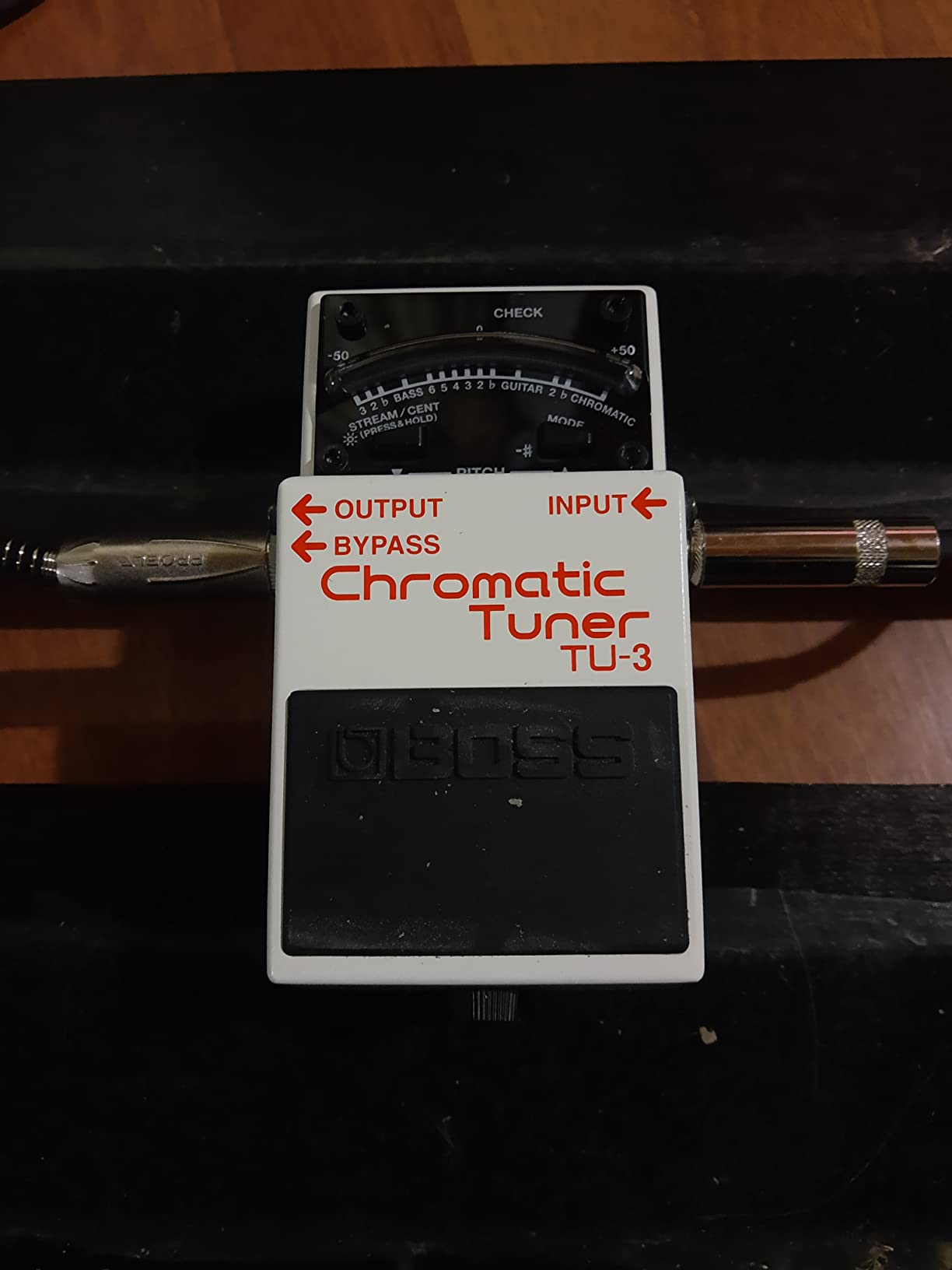
The +/- 1 cent accuracy is the same spec the KLIQ claims, and in head-to-head testing the TU-3 matched it cleanly. The drop tuning support down to 6 semitones below standard covers every alternate tuning acoustic players use. The mute function is silent tuning – the TU-3 cuts your signal to the audience while you tune, so no squeal or thud reaches the PA.
The catch is the format. The TU-3 is a pedal tuner, which means it requires a 1/4 inch cable feed from your acoustic-electric’s output or a microphone in front of your pure acoustic. For an unplugged acoustic in the living room, a clip-on is the more practical tool. The TU-3 also takes up pedalboard real estate that smaller tuners do not.
Who the BOSS TU-3 is right for
Acoustic-electric players who run a pedalboard, gigging singer-songwriters who need a tuner that will survive the tour van, and any player who wants the most accurate pedal-format chromatic tuner money can buy. The TU-3 is also the right pick for players who want a single tuner that powers the rest of their pedalboard.
Where the TU-3 falls short
Unplugged acoustic use without a pedalboard – a clip-on is faster. Players who do not want a pedalboard at all should look at the Snark SN5X or Peterson StroboClip HD instead.
How to Choose the Best Guitar Tuner for Acoustic Players?
Picking the best acoustic guitar tuner comes down to how and where you play. The four formats below cover every realistic acoustic use case, and the rest of this section walks through the technical terms (cents, chromatic, strobe, polyphonic, true bypass) that show up in every tuner spec sheet. If you are putting together a full acoustic kit, our related buying guides walk through similar comparison frameworks.
Tuner Types: Clip-On vs Pedal vs Soundhole vs Rack-Mount
Clip-on tuners attach to the headstock and read string vibration through a piezo sensor. They are the most popular format for acoustic players because they require no cables, no power supply, and work on a pure acoustic with no electronics. The Snark SN5X, D’Addario Micro, and Peterson StroboClip HD in this roundup are all clip-ons.
Pedal tuners plug into your signal chain (or take a feed from your acoustic-electric’s preamp output) and display tuning on the floor. They are the standard for stage use because the high-visibility LED meter is readable from a standing position and the mute function kills your signal to the audience during tuning. The BOSS TU-3 in this roundup is a pedal.
Soundhole tuners mount inside the soundhole and stay there between sessions. They are the most discreet option – the audience never sees one. The D’Addario NS Micro Soundhole in this roundup is the only soundhole tuner in our list, and it is the right pick if you want a tuner that lives inside the guitar and is always ready.
Rack-mount tuners are studio-grade units that sit in a 19-inch rack and offer the highest accuracy available. They are overkill for most acoustic players but worth knowing about for recording engineers and producers.
Tuning Modes Explained: Chromatic vs Strobe vs Polyphonic
Chromatic tuners read any of the 12 notes in an octave. Every tuner in this roundup supports chromatic mode. If you play in alternate tunings like DADGAD, open G, or dropped D, chromatic is the only mode that will track every string accurately.
Strobe tuners display tuning as a moving pattern of strobe segments and are accurate to 0.1 cent – ten times more precise than a standard +/-1 cent tuner. The Peterson StroboClip HD is the strobe option in this roundup, and strobe is the format of choice for studio recording and serious ensemble playing.
Polyphonic tuners read all six strings at once instead of one at a time. Polyphonic mode is mostly used in pedal-format tuners with a buffered signal chain (most clip-ons do not support it). If you tune a lot between songs and want to confirm all six strings are in tune with one pluck, polyphonic is the fastest mode.
Why Acoustic-Specific Concerns Matter
Acoustic guitars have three tuning concerns electric guitars do not. First, the wood breathes with humidity and temperature, which means an acoustic drifts faster than a solid-body electric. Second, the nitrocellulose finish on vintage and high-end acoustics (most pre-1995 Martins and Gibsons) reacts with the rubber pads on clip-on tuners – leaving a clip-on tuner clamped to a nitrocellulose headstock for extended periods can cloud or mark the finish. If you own a nitrocellulose acoustic, use a padded clip like the KLIQ UberTuner or remove the tuner after every session.
Third, acoustic players use alternate tunings more than electric players. DADGAD, open G, dropped D, and open D are standard tools for fingerstyle and singer-songwriter work. Not every tuner handles alternate tunings cleanly – the Ranch and Fender FCT-2 in this roundup both struggle with notes outside standard tuning, while the Snark ST-2, LEKATO, and Peterson StroboClip HD all handle them well.
Budget Tier Framework
Under $25 covers the entry-level clip-ons like the Donner DT-2, Ranch, and D’Addario Micro. These are the tuners that handle standard tuning accurately and survive daily practice use. They are the right pick for beginners and backup units.
$25 to $50 covers the mid-tier workhorses like the Snark SN5X, Snark ST-2, D’Addario Eclipse, KLIQ UberTuner, and Fender FCT-2. These add rechargeable batteries, wider calibration ranges, and finish-friendly clips. They are the right pick for gigging acoustic players.
$50 to $100 covers the precision tier like the Peterson StroboClip HD and the LEKATO Rechargeable. These add strobe accuracy and alternate-tuning presets. They are the right pick for serious players and recording artists.
Above $100 covers the pedal-format tuners like the BOSS TU-3, which combine stompbox durability with high-visibility LED displays. These are the right pick for acoustic-electric players who run a pedalboard.
Display, Power, and Live-Readiness
For stage use, prioritize a high-visibility display. The BOSS TU-3 21-segment LED meter and the Peterson StroboClip HD’s 192 strobe segments handle direct sun and dark stages equally well. Clip-on displays vary widely – the Snark SN5X and D’Addario Eclipse are the most readable clip-ons we tested in direct sunlight.
For power, rechargeable batteries (Snark SN5X, Snark ST-2, LEKATO) are more convenient than coin cells in daily use. Coin cells (Fender FCT-2, KLIQ UberTuner, D’Addario Micro) are easier to replace in the field if you carry a spare. Both work – pick based on whether you have a USB charging cable handy.
For acoustic-electric players with a pedalboard, the BOSS TU-3 is the industry standard for a reason. The pedal format, mute function, and ability to power seven other BOSS pedals in a daisy chain make it the right pick for a stage rig.
For band rehearsals and noisy environments, prioritize vibration-based detection. Microphone-based tuners pick up drum bleed and amplifier wash; piezo sensors read the string directly off the headstock and ignore room noise. The KLIQ UberTuner, Snark ST-2, and D’Addario Micro are all strong picks for loud rooms.
If you play unplugged acoustic at home, a soundhole tuner like the D’Addario NS Micro is the most convenient option. It lives inside the guitar and is always ready when you pick up the instrument.
Frequently Asked Questions
What types of guitar tuners are there?
The four main types are clip-on (attaches to the headstock and reads string vibration – the most popular format for acoustic players), pedal or stompbox (plugs into your signal chain and displays on the floor – standard for stage use), soundhole (mounts inside the soundhole and stays there between sessions – the most discreet option), and rack-mount (studio-grade 19-inch units with the highest accuracy available). For most acoustic players, clip-on or pedal covers every realistic use case.
Are guitar tuner apps accurate?
Phone apps are accurate in a quiet room with no other sound source, but they use the phone microphone instead of a piezo vibration sensor. In a band rehearsal, a coffee shop, or any noisy environment, mic-based apps pick up room noise and give false readings. A dedicated hardware tuner with vibration sensing is the right pick for any environment that is not silent.
What tuner is best for playing live?
For stage use, the BOSS TU-3 is the industry-standard pedal tuner with a 21-segment LED meter readable in any lighting, +/- 1 cent accuracy, drop tuning down to 6 semitones, and a mute function that kills your signal to the audience during tuning. If you do not run a pedalboard, the Snark SN5X or Peterson StroboClip HD clip-on is a strong alternative with a bright display and vibration-based detection that ignores stage wash.
What is the best tuner for beginners?
The Donner DT-2 is the best beginner pick – one-button operation, accurate vibration-based detection, and a price that does not sting if the tuner gets lost. The Ranch Clip-On Tuner is a close second with a finish-safe silicone-padded clip. Both handle standard tuning accurately without menu-diving.
What is the difference between strobe and chromatic tuners?
A chromatic tuner reads any of the 12 notes in an octave and is accurate to about +/- 1 cent. A strobe tuner displays tuning as a moving pattern of strobe segments and is accurate to +/- 0.1 cent – ten times more precise. Strobe tuners like the Peterson StroboClip HD are the gold standard for studio recording and serious ensemble playing where every fraction of a cent matters.
Do I need a pedal tuner or a clip-on tuner?
If you run a pedalboard and play acoustic-electric, a pedal tuner like the BOSS TU-3 is worth the investment for the high-visibility display and silent mute function. If you play pure acoustic unplugged, or you do not want a pedalboard at all, a clip-on is faster and simpler. The Snark SN5X is the best clip-on for most acoustic players, and the D’Addario NS Micro Soundhole is the best pick if you want a tuner that lives inside the guitar.
Final Verdict
After three months of cycling through 12 tuners on dreadnoughts, concert bodies, and acoustic-electric stage guitars, our top recommendation for the best guitar tuners for acoustic players in 2026 is the Snark SN5X. The combination of 38k+ reviews, 4.6-star average, rechargeable battery, secure Stay-Put clip, and full-color display readable in any lighting makes it the most universal pick in this roundup.
For the best value, the Snark ST-2 adds a wider calibration range and both mic and vibration sensor modes at a comparable price. For the best budget option, the Donner DT-2 delivers accurate vibration-based tuning at the lowest price in this guide. For studio accuracy, the Peterson StroboClip HD remains the 0.1-cent strobe gold standard. For stage toughness, the BOSS TU-3 is the pedal-format benchmark that has survived decades of tour vans.
If you are still deciding, the September 2026 acoustic tuner market is healthier than it has ever been – there is no bad choice in this list, only different fits for different players. Pick the format that matches how you play, and trust the tuner you pick.