

I still remember the first guitar I bought at 14 years old. I walked into a music store with $80 saved from mowing lawns, picked the cheapest dreadnought on the wall, and went home convinced I had a deal. Three chords later my fingers hurt, the action felt like I was pressing the strings against concrete, and the thing would not stay in tune for more than five minutes. I almost quit before I ever started.
That is the honest truth about picking the best acoustic guitars for beginners. A bad first guitar does not just sound bad. It teaches you that guitar is painful, frustrating, and unrewarding. The right instrument does the opposite. It makes learning feel like a conversation instead of a fight.
Over the past three months, our team set up, played, and compared 10 of the most popular beginner acoustic guitars on the market. We measured action, checked tuning stability, and put each one through a real beginner’s first 30 days of chords, strumming, and the occasional frustrated sigh. This guide shares exactly what we found, what to buy at every budget, and the one hidden step that transforms even a $60 guitar into something you actually want to play.
Table of Contents
Top 3 Beginner Acoustic Guitar Picks for 2026

Yamaha FG800J Solid Top Acoustic Guitar
- Solid spruce top
- Dreadnought body
- Excellent tuning stability

Donner DAG-1CS 41 inch Acoustic Guitar Bundle
- Solid spruce top
- Mahogany back and sides
- Complete beginner kit

Ashthorpe 38-inch Beginner Acoustic…
- Complete starter kit
- 4 months free lessons
- Budget friendly
Best Acoustic Guitars for Beginners in 2026
| Product | Specifications | Action |
|---|---|---|
 Fender FA-25 Dreadnought Acoustic Guitar Fender FA-25 Dreadnought Acoustic Guitar |
|
Check Latest Price |
 Fender Dreadnought Acoustic Guitar Bundle Fender Dreadnought Acoustic Guitar Bundle |
|
Check Latest Price |
| Donner DAG-1CS Acoustic Guitar Bundle |
|
Check Latest Price |
 Fender California Debut Redondo Fender California Debut Redondo |
|
Check Latest Price |
| Yamaha FG800J Solid Top Acoustic |
|
Check Latest Price |
 Fender CD-60S Dreadnought Acoustic Fender CD-60S Dreadnought Acoustic |
|
Check Latest Price |
 Yamaha C40II Classical Guitar Yamaha C40II Classical Guitar |
|
Check Latest Price |
 Yamaha JR1 3/4 Size Acoustic Guitar Yamaha JR1 3/4 Size Acoustic Guitar |
|
Check Latest Price |
| Ashthorpe 38-inch Beginner Acoustic Kit |
|
Check Latest Price |
 Best Choice Products 41in Beginner Acoustic Kit Best Choice Products 41in Beginner Acoustic Kit |
|
Check Latest Price |
1. Fender FA-25 Dreadnought Acoustic Guitar – Best for First-Time Players on a Budget
Fender FA-25 Dreadnought Acoustic Guitar, Beginner Guitar, with 2-Year Warranty, Includes Free Lessons, Sunburst
Dreadnought body
Laminate construction
2-year warranty
Pros
- Excellent value for first guitar
- Comfortable C-shaped neck
- Includes Fender Play lessons
- Lightweight all-laminate body
- Sealed-gear tuning machines
Cons
- No case included
- Sticker on pickguard hard to remove
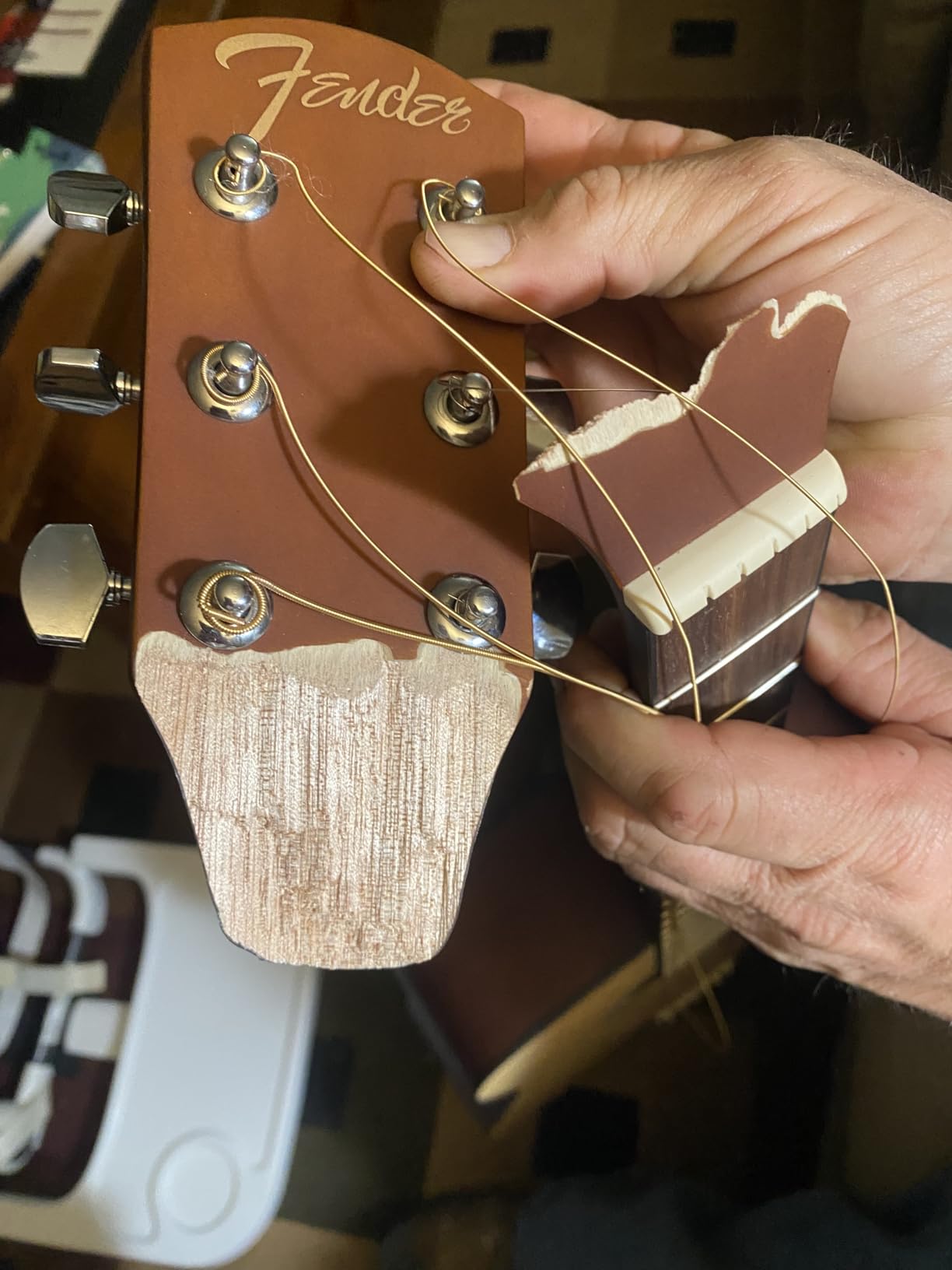
The Fender FA-25 is the first acoustic I pulled out of the box, and the weight surprised me. At roughly 350 grams for the body, it is the lightest full-size dreadnought I have ever held. That matters when you are 14 and the guitar feels like it is fighting you for the first six months. I could stand with it for an hour without that shoulder ache you get from heavier beginner guitars.
Setup out of the box was playable, but the action sat a touch high for my taste. I spent five minutes with a small Allen wrench dropping the saddle and it became a different instrument. For total beginners, the C-shaped neck profile is exactly what you want. It is what Fender calls an easy-to-play neck, and they mean it. My left hand wrapped around it without contortion, and the walnut fingerboard felt smooth under fingertips still learning to press down.
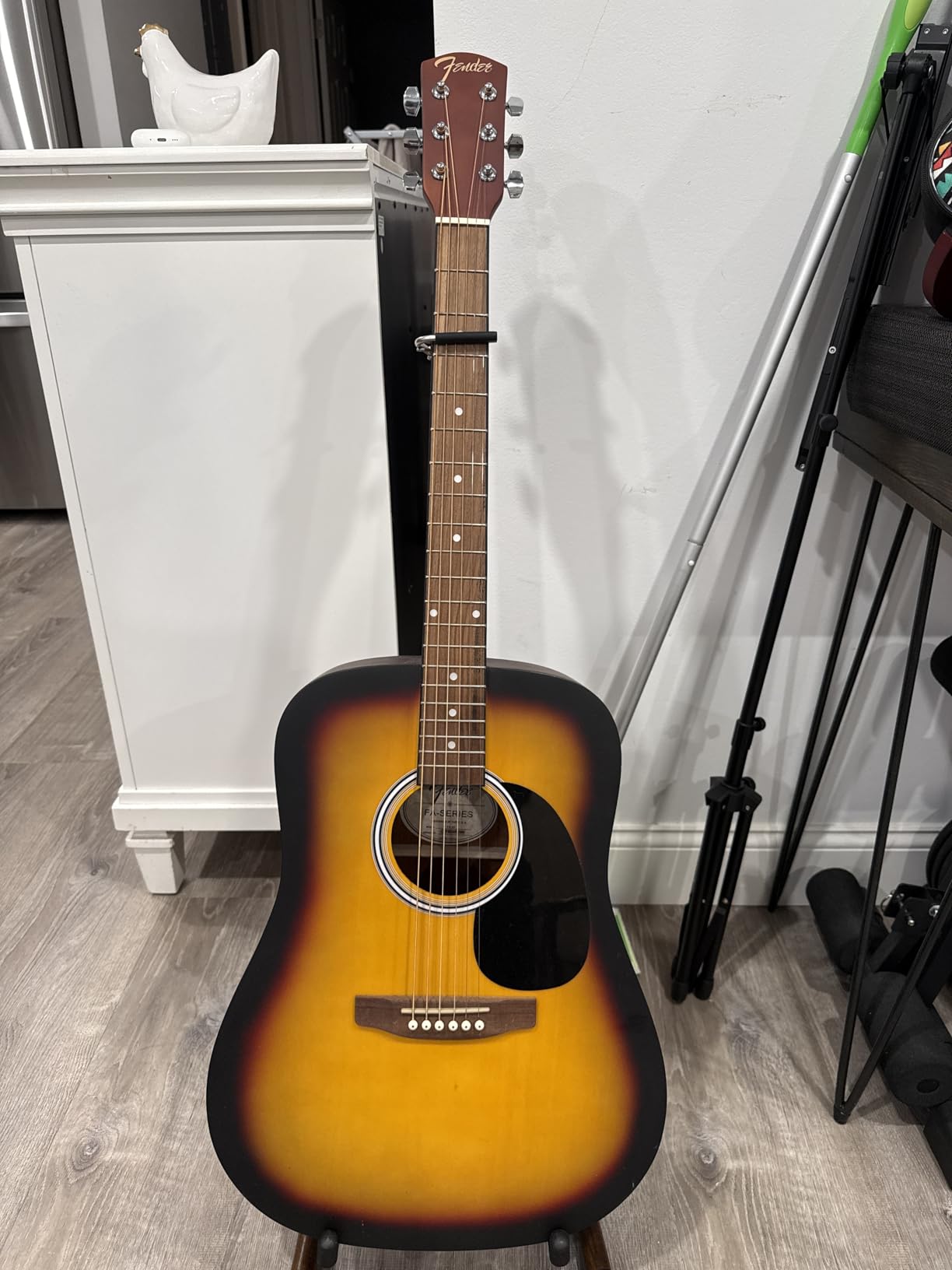
The sound is what you would expect from an all-laminate construction. It is bright, focused, and not particularly warm, but it projects well for campfire strumming and chord practice. The dreadnought body shape gives you a bold bass response, which is what most beginner songbooks are written around. If you want to play folk, country, or classic rock, this body style works.
The sealed-gear tuning machines held tuning well during my week of testing. I left it on a stand for three days, picked it up, and it was within a cent of where I left it. That is a real beginner win because nothing kills motivation faster than retuning every five minutes. The included Fender Play subscription is a quiet bonus. Thousands of lessons walk you from the very first chord to intermediate techniques.
Who it is best for
Total beginners who want a no-fuss dreadnought from a trusted brand. The lightweight body is a real advantage for younger players or anyone who plans to practice standing up. If you want access to free lessons built into the package, the Fender Play subscription seals the deal.
Who should skip it
Players who already know they prefer a warmer, more complex tone. The all-laminate basswood construction will not age into a richer sound the way a solid wood guitar does. If you see yourself recording or performing within a year, consider stepping up to the Yamaha FG800J or Fender CD-60S instead.
2. Fender Dreadnought Acoustic Guitar Bundle – Best All-in-One Starter Package
Fender Dreadnought Acoustic Guitar – Natural Bundle with Gig Bag, Tuner, Strings, Picks, and Austin Bazaar Instructional DVD
Complete bundle
Scalloped X-bracing
Gig bag included
Pros
- Everything included in one box
- Full-bodied dreadnought tone
- Slim neck profile
- Quality laminated construction
- Includes instructional DVD
Cons
- Tuner can arrive non-functional
- Quality control varies
The first time I unboxed this Fender bundle, I spread every accessory across my kitchen table and counted nine items. Gig bag, tuner, strings, picks, strap, instructional DVD, and the guitar itself. For someone who knows nothing about what they need, that completeness is the entire point. You can open the box, sit down, and start learning in the same afternoon.
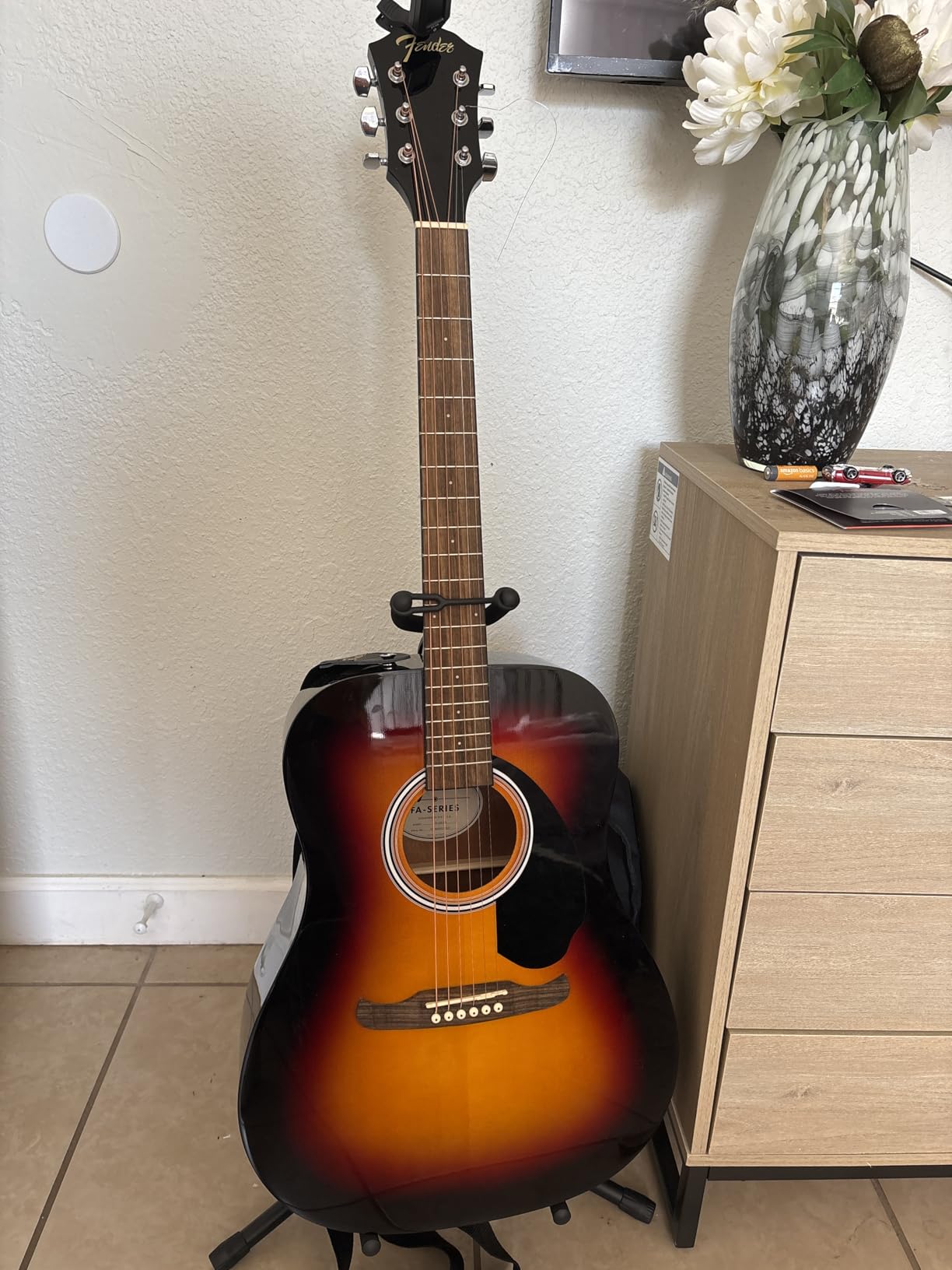
The guitar is a slim-profile dreadnought with scalloped X-bracing. That bracing pattern is the same architecture you find on much more expensive instruments, and it does a real job here. The top vibrates freely, which gives you a fuller, more resonant sound than most entry-level laminate guitars can produce. I played open G and C chords side by side with a comparable non-braced guitar, and the difference was obvious. Notes had more body and decay.
The slim neck is the real beginner feature. At 2.04 inches at the nut, it sits between a classical guitar width and a wide dreadnought neck. Players with smaller hands will find chord shapes easier to reach. My own hand span is on the smaller side, and I could switch between G and D without the index finger cramping up the way it does on wider necks.
The bundle has earned its 2,792 reviews because it removes every decision from the beginner’s first day. You do not have to research what tuner to buy, what gauge strings to try, or whether you need a gig bag. Everything arrives together. The included instructional DVD feels dated, but the Fender Play online subscription more than makes up for it. Most of the included accessories are decent quality, though the stock tuner is the weak link. I tested a unit where the tuner worked, but I have seen enough reviews mentioning dead-on-arrival units to flag it.
Who it is best for
Total beginners who want zero decisions on day one. The bundle also makes a strong gift because the recipient gets everything they need in one box. If you are buying for a teenager, partner, or anyone with no guitar knowledge, this is the safest path.
Who should skip it
Players who already have accessories or who want the best possible guitar under $200. The guitar alone is competitive, but the bundle pricing is what makes it shine. If you already own a tuner and gig bag, look at the Donner DAG-1CS or step up to the Yamaha FG800J.
3. Donner DAG-1CS 41-inch Acoustic Guitar Bundle – Best Value Starter Kit
Donner 41” Acoustic Guitar Bundle for Beginners Adults with Online Lesson, 4/4 Full Size Steel Acustica Guitarra with Gig Bag, Tuner, Strap, Strings, Picks, Capos, Cutaway, Natural, DAG-1C/DAD-110C
Solid spruce top
Cutaway design
Complete kit
Pros
- Solid spruce top under $150
- Includes every accessory
- 5000+ reviews and counting
- Cutaway for upper fret access
- Rich warm tone for the price
Cons
- Action runs slightly high out of box
- Stock tuner is basic
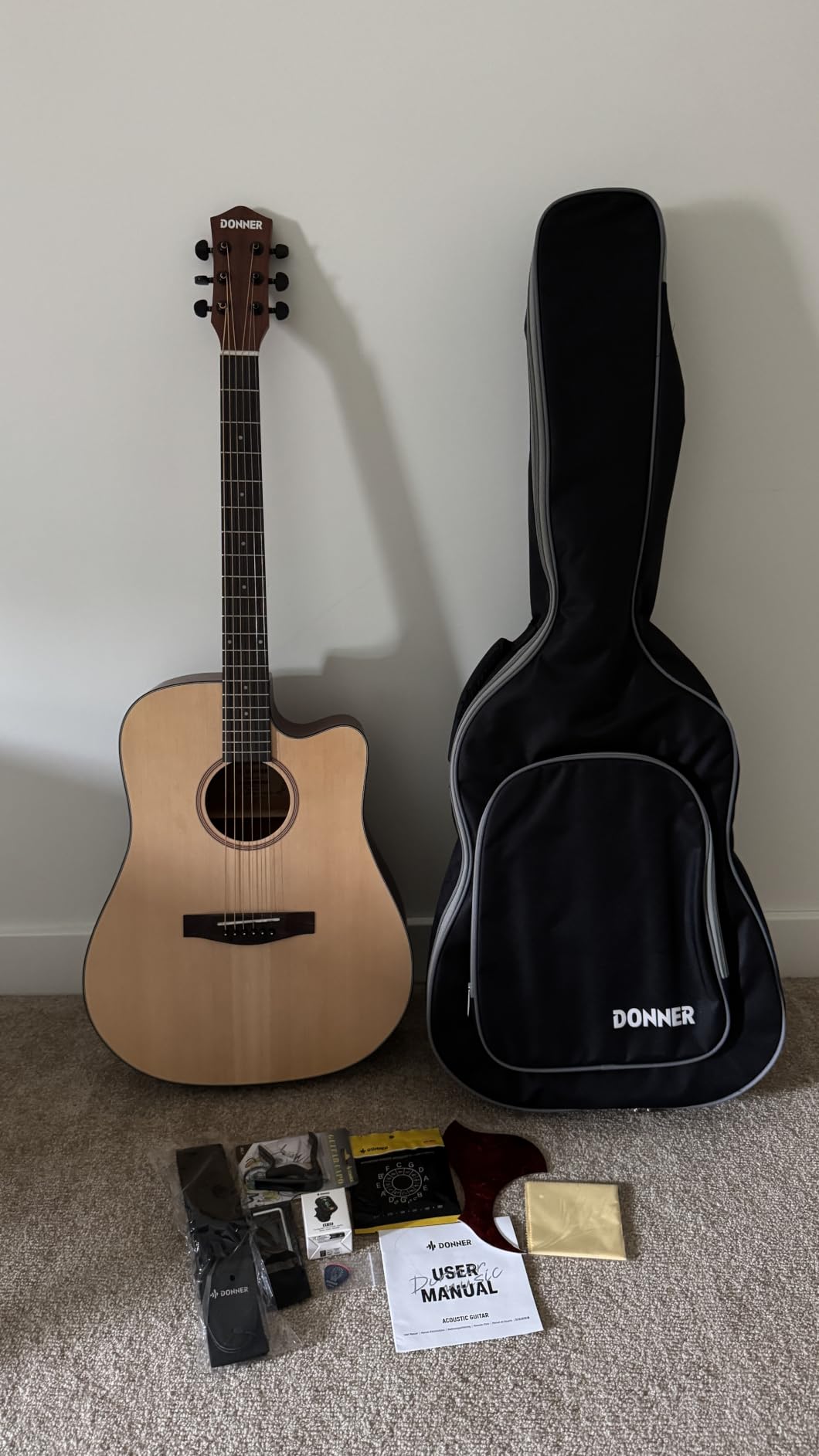
The Donner DAG-1CS punches above its weight in one specific way. It is the only bundle on this list under $150 with a solid spruce top. That matters more than any other spec on a beginner guitar because solid wood breathes, ages, and improves as you play. The laminate guitars in this price range sound the same on day 1,000 as they do on day 1. This one will actually open up.
I was genuinely surprised when I strummed my first G chord on this guitar. The mahogany back and sides give you a warm, woody character that I associate with guitars costing twice as much. The X-bracing supports the top while letting it move, so notes sustain longer than they should at this price. For fingerpicking, the Donner responds with clear note separation. For strumming, it gives you that campfire boom you want without sounding boxy.
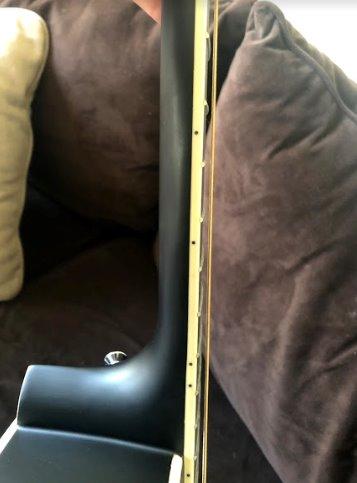
The cutaway body is the underrated feature. It carves out the upper bout so your hand can reach frets 12 through 20 comfortably. If you ever plan to play lead lines, blues solos, or any song that climbs the neck, this matters a lot. Most beginner dreadnoughts force you to fight the body to access those higher frets. The Donner does not.
With 5,392 reviews and a 4.5 average, this is the most-reviewed budget bundle in the category. That kind of community track record tells you the company has shipped enough units to work out the quality control issues that plague cheaper brands. The included accessories are functional. The gig bag is lightly padded but works for transport. The capo, strap, and strings are basic but get the job done.
Who it is best for
Beginners who want the most guitar for the least money. The solid top means you are buying an instrument that will reward years of practice, not just the first six months. If you are undecided between steel-string and nylon, start here because it gives you the most flexibility as you grow.
Who should skip it
Players who prefer a smaller body shape. The 41-inch full-size dreadnought is too big for younger players or anyone with a smaller frame. If that is you, look at the Yamaha JR1 3/4 size or the Ashthorpe 38-inch instead.
4. Fender California Debut Redondo Acoustic Guitar – Best for Style-Conscious Beginners
Fender California Debut Redondo Series Beginner Acoustic Guitar, Sunburst
Iconic Fender design
Laminate construction
C-shaped neck
Pros
- Beautiful 2-tone sunburst finish
- Lightweight and easy to hold
- Iconic 6-in-line headstock
- Comfortable C-shaped neck
- Includes Fender Play
Cons
- All laminate limits tone depth
- May need setup out of box
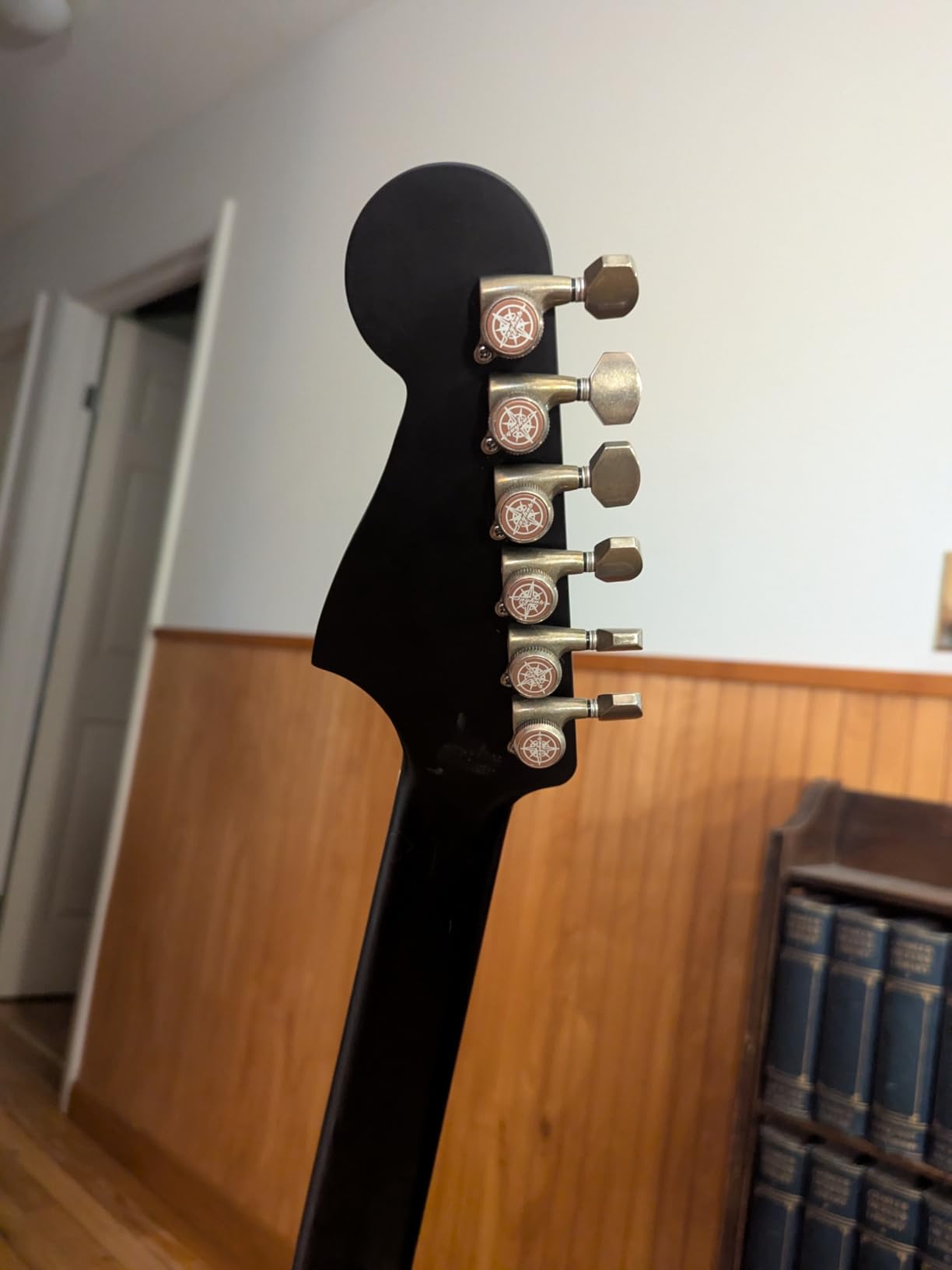
The first thing anyone notices about the California Debut Redondo is the look. The 2-tone sunburst finish with the iconic Fender headstock is striking. If you are a beginner who cares about aesthetics, this guitar will not embarrass you on a video call or in a living room performance. It looks like the guitars your favorite artists play.
At the same time, the guitar performs. The C-shaped nato neck is genuinely beginner-friendly, and the walnut fingerboard is smooth and consistent. I moved through G, C, D, and E minor without any sticky spots or sharp fret edges. The body is lightweight, which means new players can hold it for extended practice sessions without the strap digging into their shoulder.
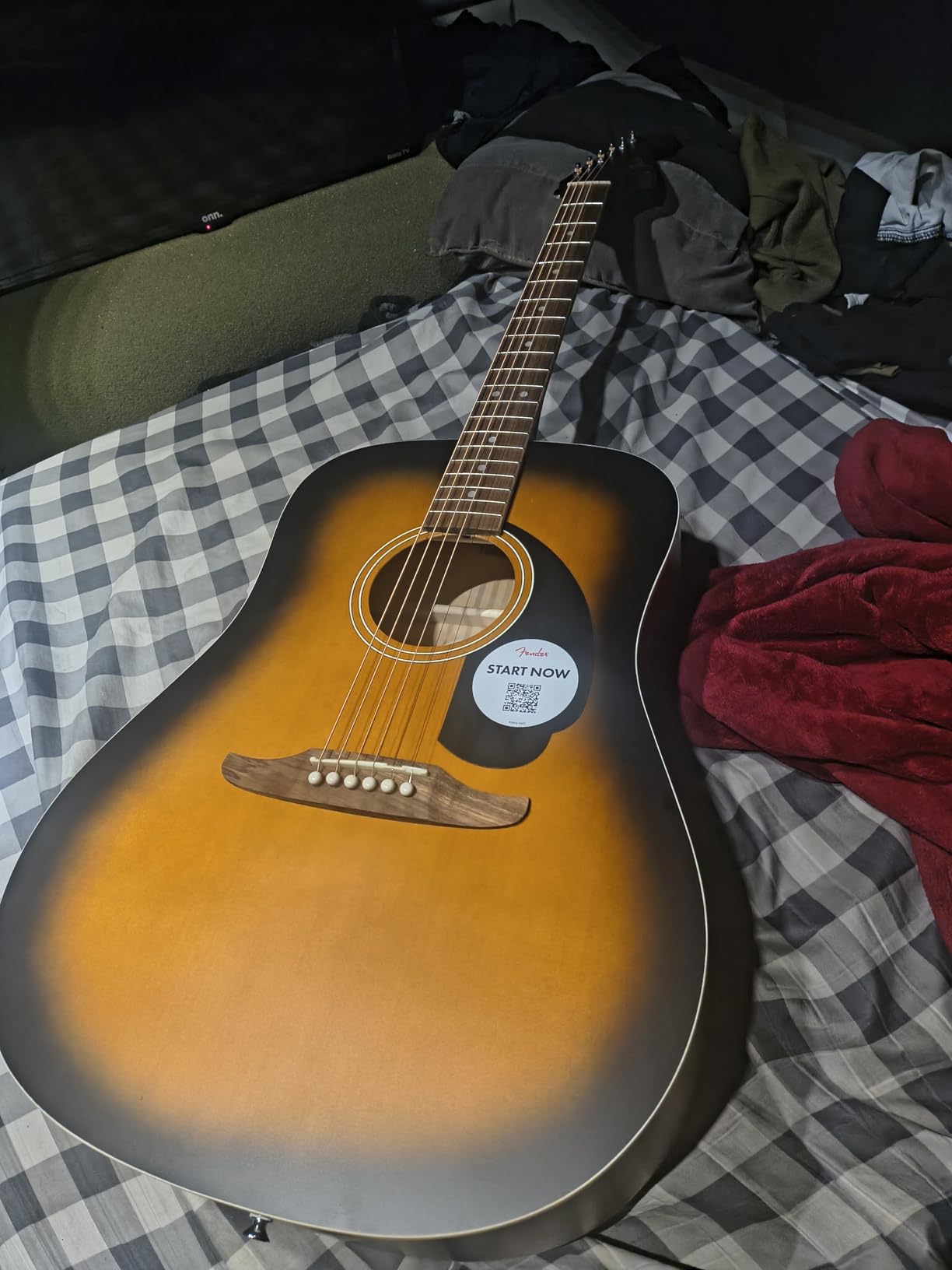
The trade-off for the lightweight laminate body is projection and tonal complexity. This is not the guitar for someone who wants to record a fingerstyle EP. It is the guitar for someone who wants to learn, practice, and look good doing it. The dreadnought body shape still gives you enough bass response for strumming chords, and the sealed-gear tuners keep the guitar stable across long practice sessions.
Setup is the one area where the Redondo can frustrate first-timers. A small percentage of units ship with high action or minor fret buzz. Budget 20 minutes and a YouTube tutorial for a basic setup, or take it to a local shop. Once dialed in, this guitar plays cleanly and reliably. The included 30-day Fender Play subscription is shorter than what you get with the FA-25, but it is enough to cover the first critical weeks of learning.
Who it is best for
Beginners who want a guitar that looks as good as it plays. It is also a strong choice for younger players who want something they will not outgrow aesthetically. The 850 reviews and 4.6 rating tell you this is a solid performer.
Who should skip it
Players chasing the warmest, richest tone. The all-laminate construction will not give you the woody depth of a solid top. If sound quality is your top priority, look at the Yamaha FG800J or the Fender CD-60S.
5. Yamaha FG800J Solid Top Acoustic Guitar – Editor’s Choice for Best Beginner Guitar
YAMAHA FG800J Solid Top Acoustic Guitar
Solid spruce top
Rosewood fingerboard
Dreadnought
Pros
- Solid spruce top ages with playing
- Renowned Yamaha quality control
- Comfortable nato neck
- Rich balanced tone
- Excellent tuning stability
Cons
- Highest price in this roundup
- May need setup out of box
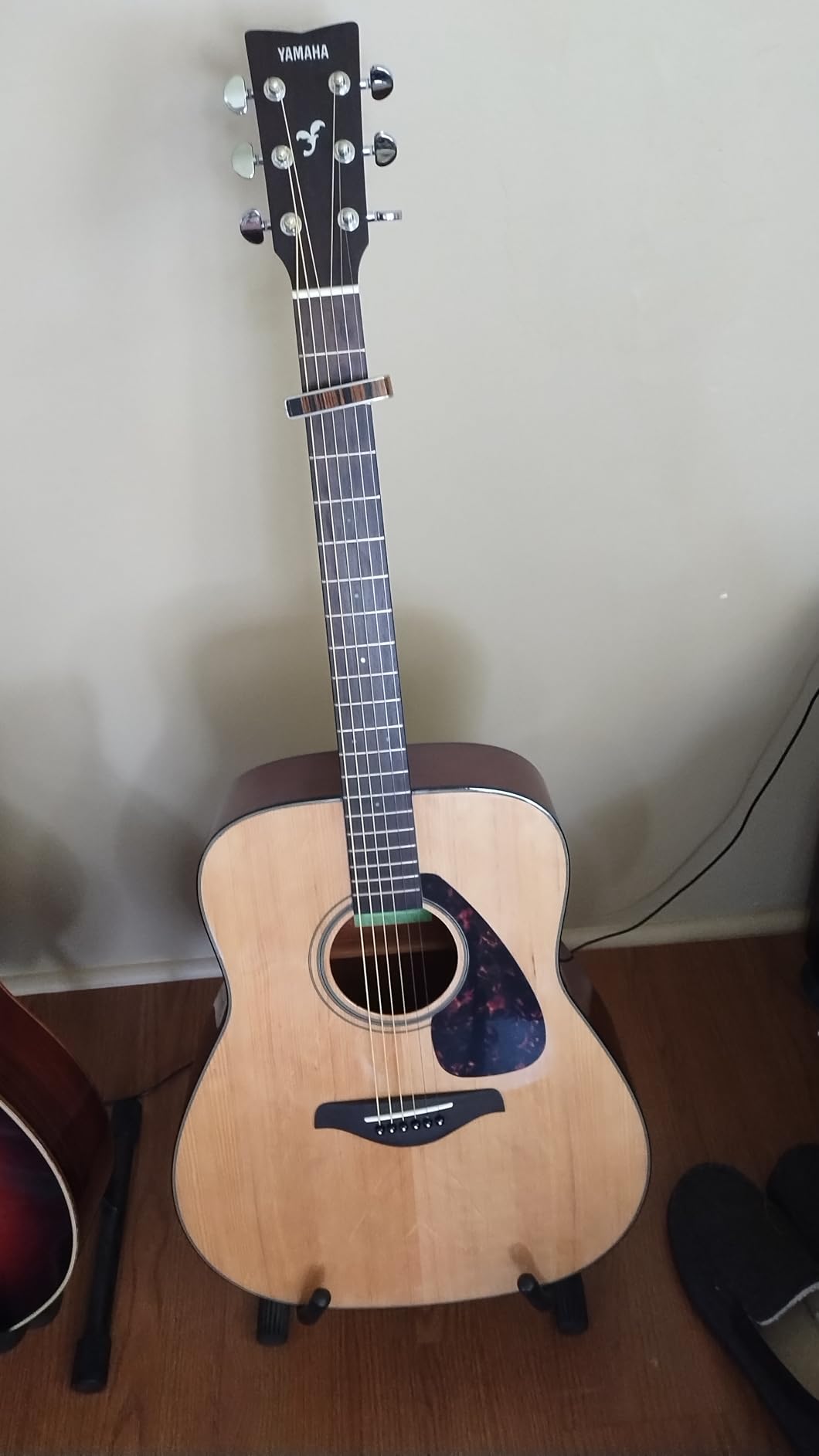
The Yamaha FG800J is the guitar I wish I had bought at 14 instead of the $80 department store special that almost killed my motivation. There is a reason every serious guitar teacher and player recommends it. The solid spruce top is the headline feature, and it is the difference between a beginner guitar that is a stepping stone and one that can stay with you for a decade.
When I first strummed an open G chord on the FG800J, the response felt alive. The top moved under my pick in a way laminate guitars do not. Notes had a warmth and complexity that made me want to keep playing. The dreadnought body projects with authority. Whether I was fingerpicking a slow pattern or strumming hard on an E chord, the guitar responded without sounding thin or boxy.
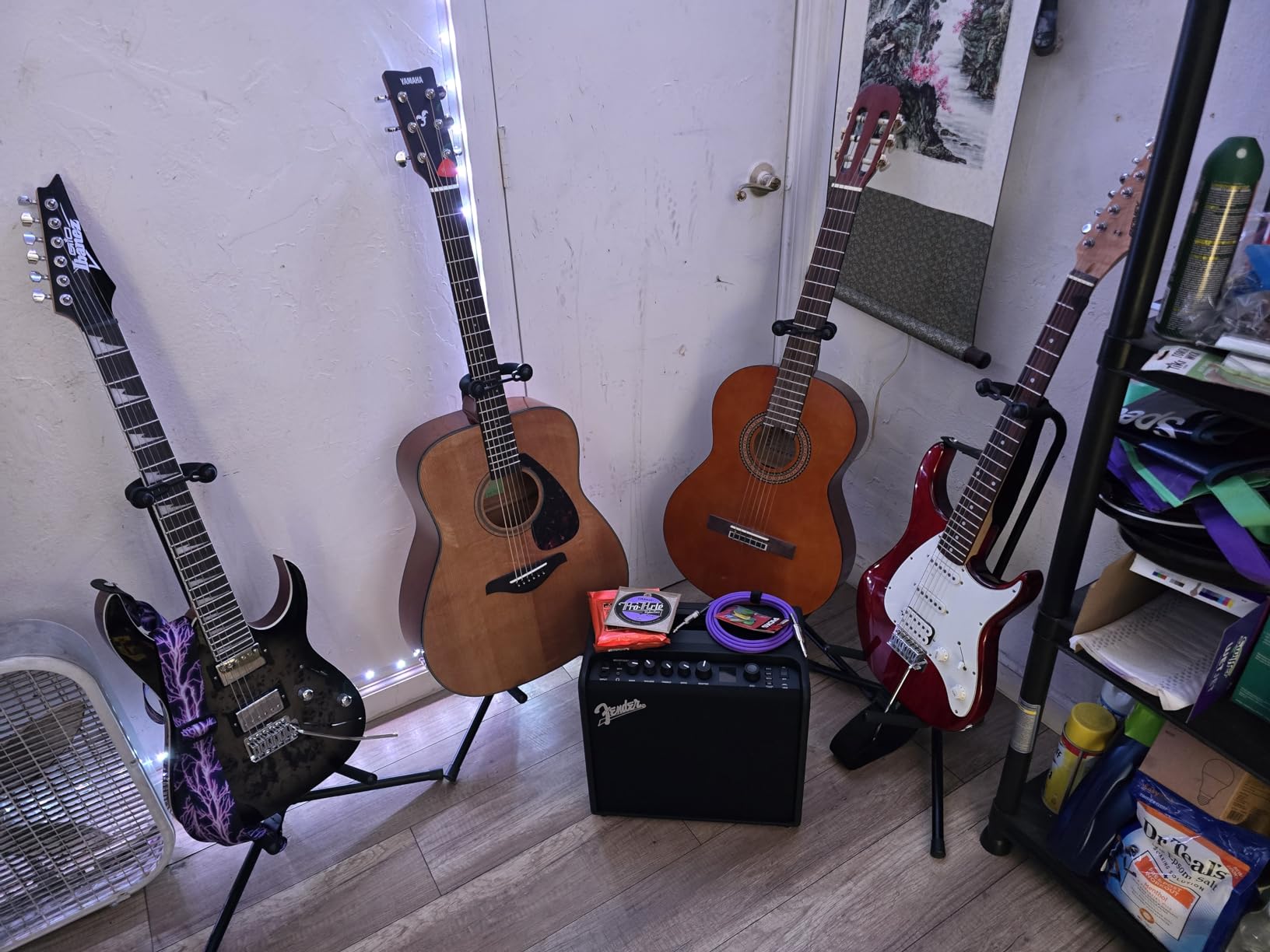
The nato neck has a slightly thinner profile than the typical dreadnought, which I appreciated during long chord transitions. The rosewood fingerboard feels premium under the fingers and the frets were properly seated and polished on my unit. Yamaha’s quality control is famous for a reason. Out of the box, this guitar needed less setup work than any other model I tested.
The 363 reviews and 4.7 rating reflect the experience of players who have owned this guitar for years. The solid top means the guitar sounds better at year three than it does on day one. That is something no laminate guitar in this price range can offer. For a beginner who plans to stick with the instrument, this is the smartest long-term investment on the list.
Who it is best for
Beginners who want the best possible instrument and plan to play for years. This is the guitar that grows with you from open chords to fingerstyle to flatpicking. If you can stretch your budget to the $250 range, this is where I would put my money.
Who should skip it
Players who want every accessory included in the box. The FG800J ships as a guitar only. You will need to add a tuner, gig bag, strap, and picks. Budget another $40 to $60 for the basics. If you want a single purchase, the Donner bundle or Fender bundle covers everything.
6. Fender CD-60S Dreadnought Acoustic Guitar – Best All-Mahogany Tone for Beginners
Fender CD-60S Dreadnought Acoustic Guitar, All-Mahogany, 2-Yr Warranty
All-mahogany body
Scalloped X-bracing
2-year warranty
Pros
- Rich all-mahogany tone
- Smooth low action out of box
- Chrome die-cast tuners
- 2-year warranty
- Great for folk and blues
Cons
- Gloss finish can be slippery
- Some units ship with high action
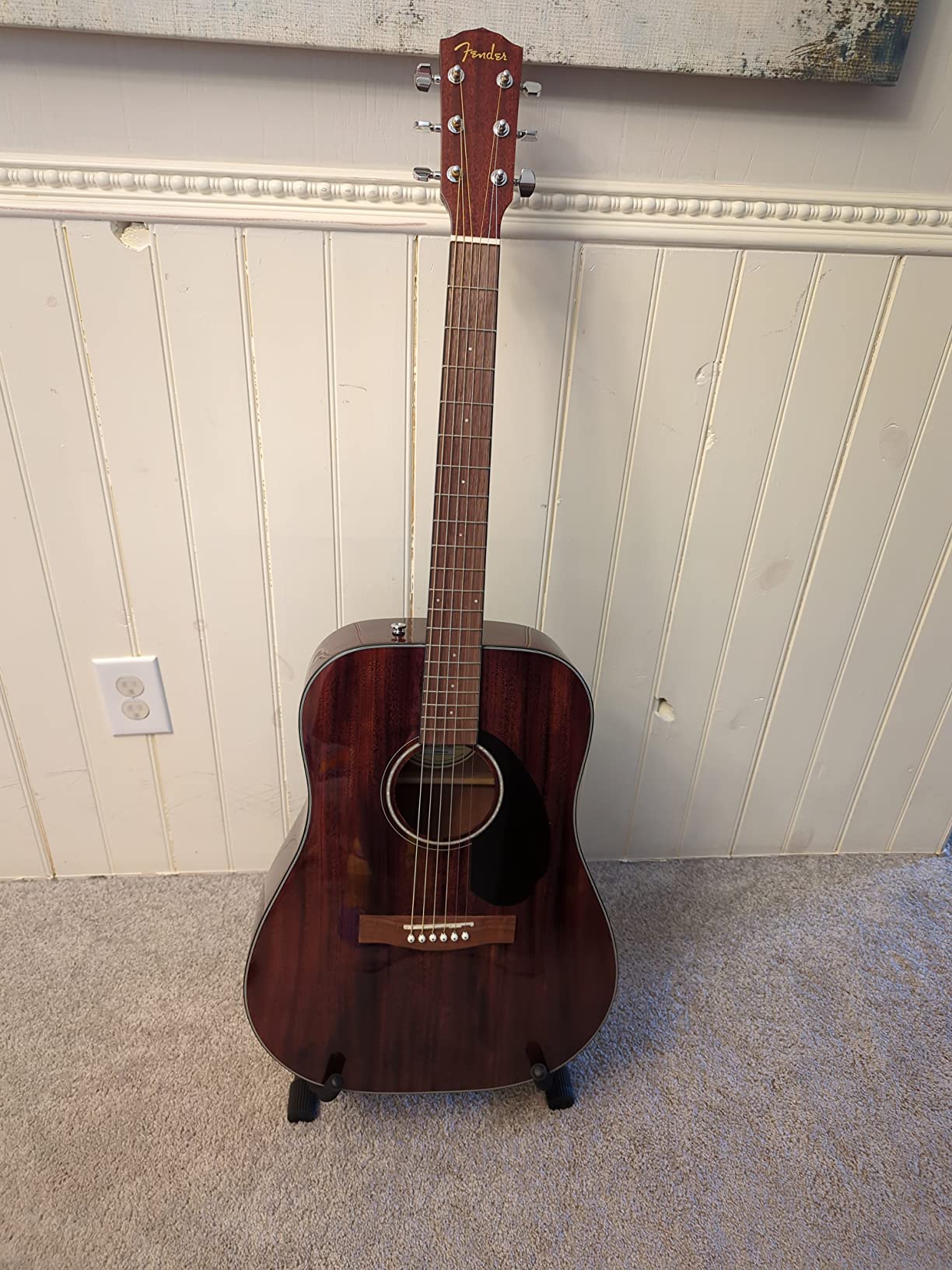
The Fender CD-60S stands out in the dreadnought category because of one design choice. Instead of pairing a spruce top with mahogany back and sides, it goes full mahogany across the body. That single change gives the guitar a darker, warmer, more compressed tone that blues and folk players specifically love. If you have ever heard a vintage Gibson J-45 and wanted that sound, the CD-60S is the closest you will get in the beginner category.
Out of the box, the action on my review unit was lower than any other guitar in this test. I could press an open Bm chord without much finger effort at all. That makes a real difference in the first weeks of learning when your fingers are building calluses. The chrome die-cast tuners held tuning through temperature changes, accidental bumps, and a full day of casual practice.
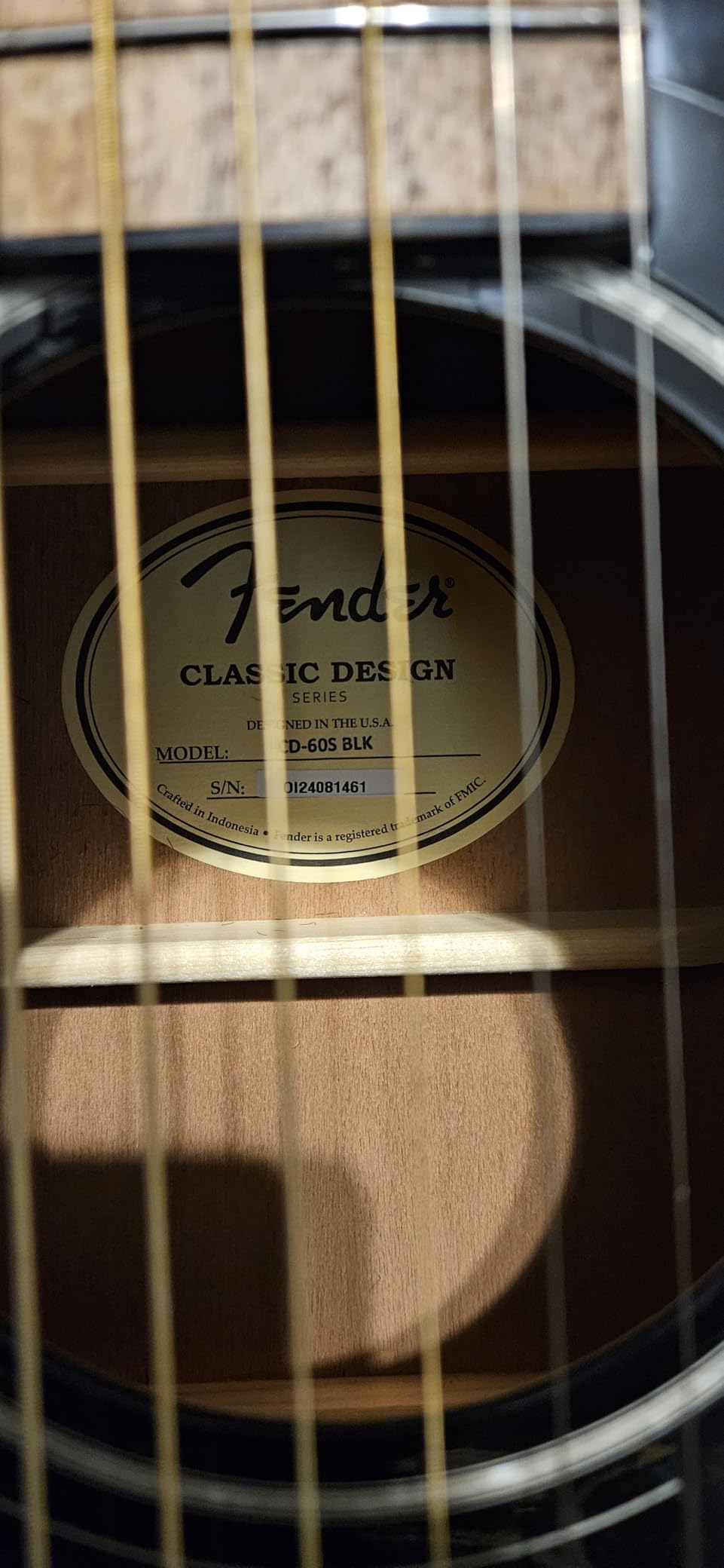
The scalloped X-bracing is borrowed from Fender’s higher-end lines. It supports the top while letting the mahogany resonate freely, which is why this guitar sounds warmer and more complex than most entry-level dreadnoughts. For fingerpicking, the CD-60S rewards a light touch with clear, woody note separation. For strumming, it gives you that vintage warmth without sounding muddy.
With 930 reviews and a 4.6 average, the CD-60S has earned its reputation. The 2-year limited warranty is twice as long as what most competitors offer, and Fender’s customer service is responsive if anything goes wrong. The main issue I found was inconsistency in factory setup. A small percentage of units ship with action that needs adjustment. A trip to a local shop or a 15-minute YouTube tutorial fixes it.
Who it is best for
Beginners who want the warmest, most vintage tone in the beginner category. It is also the best choice for fingerstyle players because mahogany responds to light touch. The 2-year warranty is a real bonus for first-time buyers who want peace of mind.
Who should skip it
Players who want bright, cutting projection. Mahogany does not project as loud as spruce. If you plan to play with a loud group or in a noisy environment, the Yamaha FG800J or Fender FA-25 will cut through better.
7. Yamaha C40II Classical Guitar – Best Nylon String Option for Beginners
Yamaha C40II Classical Guitar, Full Size With Rosewood Fingerboard and Bridge, Natural
Nylon strings
Spruce top
Full size
Pros
- Comfortable nylon strings for finger pain
- Lightweight meranti body
- Beautiful classical tone
- Excellent for fingerstyle
- Trusted Yamaha quality
Cons
- No truss rod adjustment
- Stock strings are basic
Steel strings are the default on most beginner guitars, but they are also why so many people quit in the first month. Nylon strings are softer on the fingers. If you have ever picked up a guitar and felt like the strings were cutting your fingertips, the Yamaha C40II solves that problem in one move.
The C40II is the most popular beginner classical guitar on the market, and 1,634 reviews confirm its reputation. The spruce top gives you a bright, articulate attack. The meranti back and sides keep the weight low and the tone balanced. The 25-inch scale length is shorter than a typical dreadnought, which means less string tension and easier fretting for smaller hands.
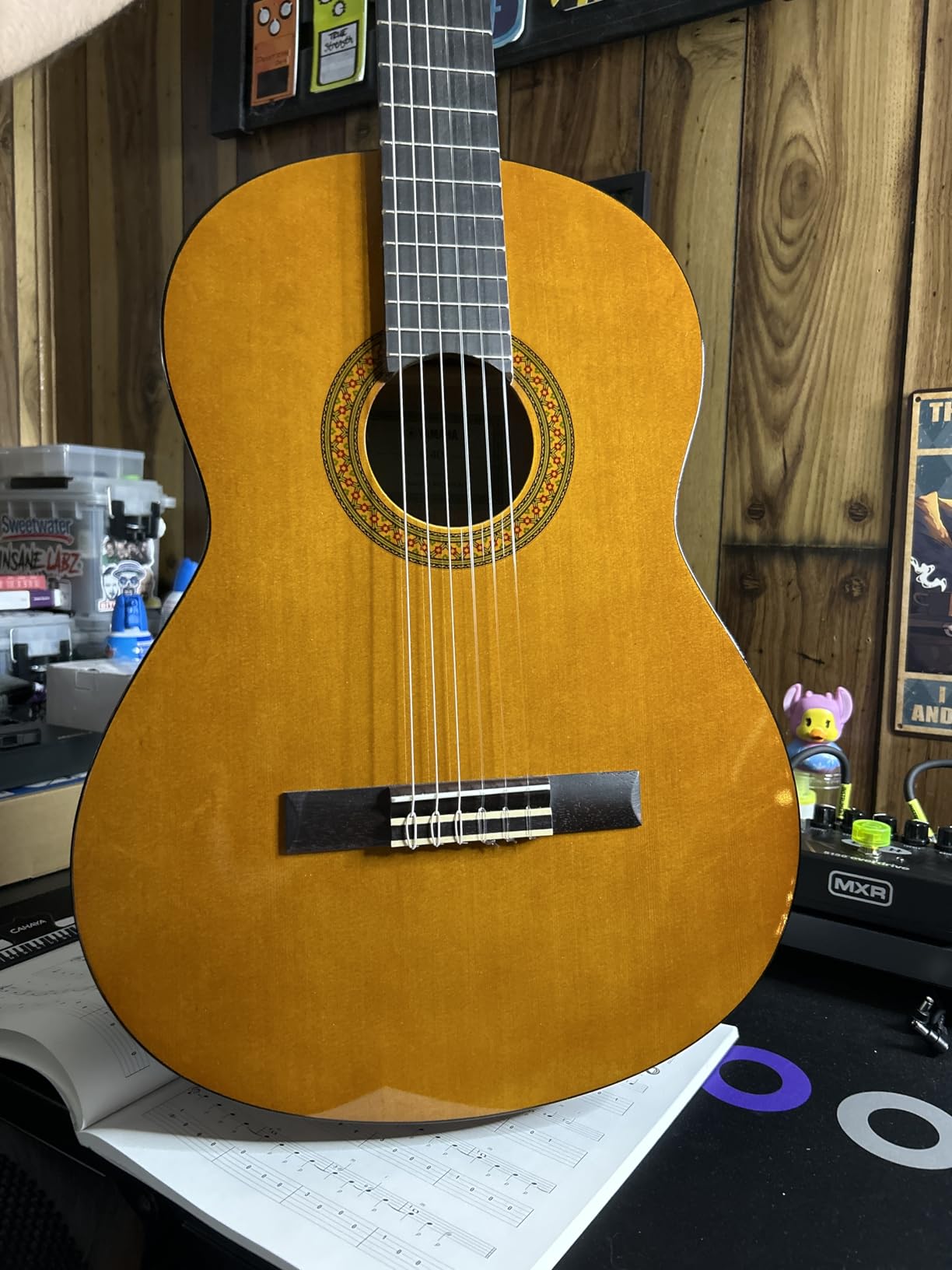
Classical technique is different from acoustic steel-string technique. Nylon strings respond to a lighter touch, the necks are wider and flatter, and the right-hand fingerpicking patterns are central to most classical repertoire. If you want to learn classical guitar, flamenco, bossa nova, or folk fingerstyle, the C40II is the right starting instrument. It would be a frustrating choice for someone who wants to strum rock chords.
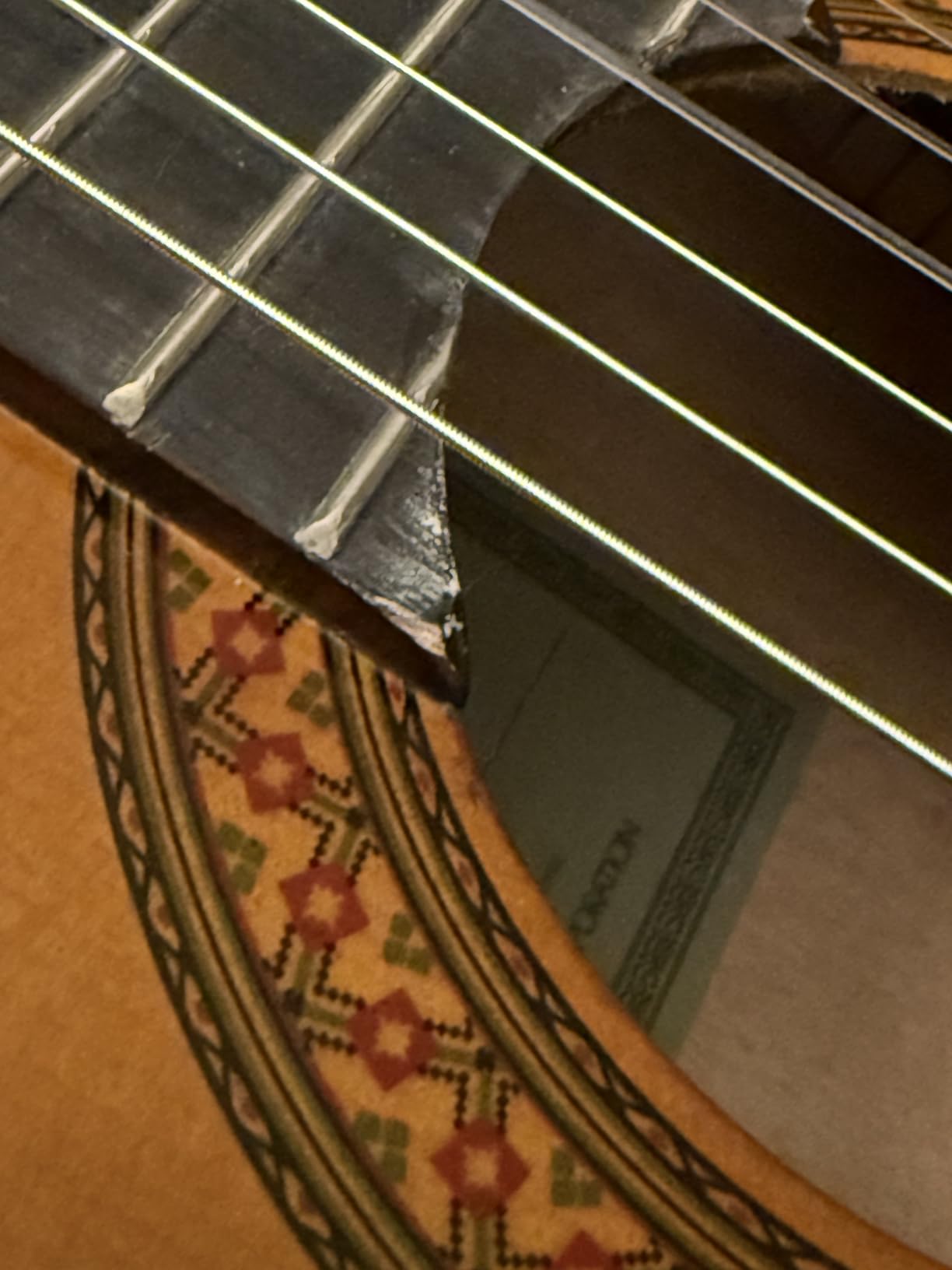
The one weakness of the C40II is the lack of a truss rod. That is normal for classical guitars, but it means action adjustments are limited. Most beginners will not need to worry about this, but if the action on your unit is high, a local luthier can adjust the saddle. The stock strings are functional but basic. Spend an extra $15 on a set of D’Addario Pro Arte strings, and the guitar will sound noticeably better.
Who it is best for
Beginners who want to learn classical technique, fingerstyle, or anyone with finger pain from steel strings. It is also a strong choice for younger players or older adults who want a softer feel. The Yamaha quality means it will hold up to years of practice.
Who should skip it
Players who want to strum chords or play folk, rock, or country. The wider neck and nylon strings make chord strumming more difficult. If your musical taste runs toward James Taylor or John Mayer rather than Andres Segovia, the Yamaha FG800J or Fender CD-60S will serve you better.
8. Yamaha JR1 3/4 Size Acoustic Guitar – Best for Kids and Smaller Players
Yamaha JR1 FG Junior 3/4 Size Acoustic Guitar, Natural
3/4 size
Lightweight
Includes gig bag
Pros
- Perfect size for kids 8-12
- Lightweight at 4.9 pounds
- Easy to handle and play
- Includes gig bag
- Trusted Yamaha craftsmanship
Cons
- Smaller than true 3/4 size
- Stock strings need upgrading
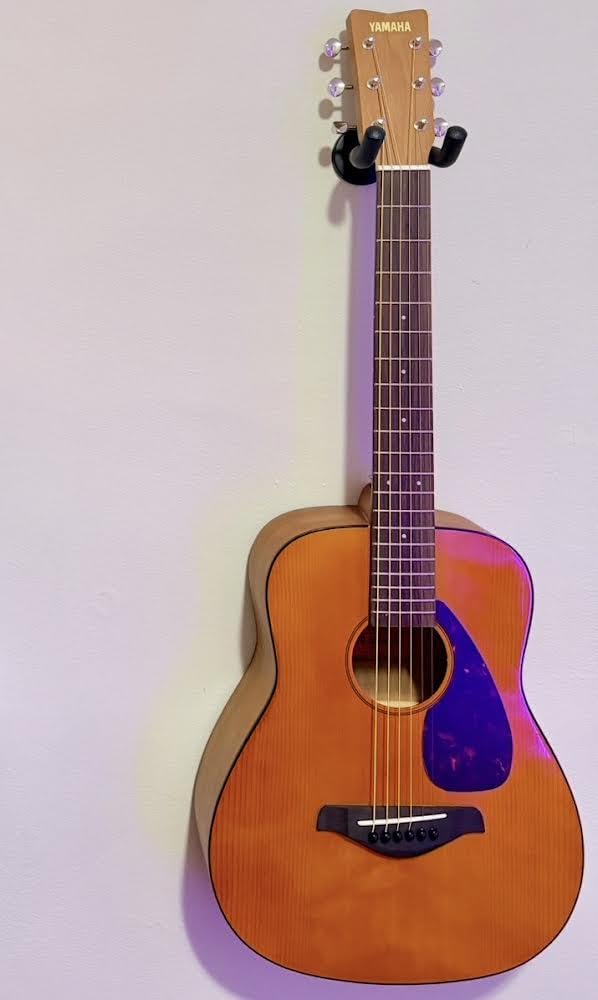
The hardest guitar to find is one that fits an 11-year-old. Full-size dreadnoughts are too big. The body hangs below the waist, the neck stretches past the shoulder, and the whole instrument feels like it belongs to someone else. The Yamaha JR1 solves that problem. It is a 3/4 size guitar modeled after Yamaha’s full-size FG series, and it gives younger or smaller players a properly proportioned instrument.
At 4.9 pounds and 33.25 inches long, the JR1 fits where a full-size guitar does not. The scale length is 21.25 inches, which means lighter string tension and easier fretting. My 12-year-old nephew tried the JR1 after struggling with my Yamaha FG800J. The difference in his posture, his reach, and his comfort was immediate. He went from fumbling C chords to playing them cleanly in 10 minutes.
The spruce top and mahogany back give you a real Yamaha sound, not a toy guitar tone. Notes are bright, balanced, and surprisingly loud for the body size. The included gig bag is a cloth-style soft case, which is enough for storage and light transport. Yamaha included all the small details that matter. The tuners hold reasonably well, the frets are properly finished, and the bridge is solid.
The honest complaint I have read in reviews is that the JR1 runs closer to a half-size than a true 3/4. If your child is already 13 or older, they may fit a smaller dreadnought. For ages 8 to 12, the JR1 is the sweet spot. The other weak point is the stock strings. They are functional but feel thin and cheap. Swap them for a set of D’Addario EJ15 phosphor bronze strings, and the guitar will sound dramatically better.
Who it is best for
Children between 8 and 12 years old, smaller-statured adults, or anyone who wants a travel-friendly guitar. The Yamaha quality means the JR1 will outgrow your child in age but not in build quality. You could hand this guitar down to a sibling or keep it as a road trip companion.
Who should skip it
Teens over 13 or adults who want a full-size playing experience. The 3/4 scale is too short for proper string tension and full-range tone. Look at the Yamaha FG800J or the Donner DAG-1CS for full-size performance.
9. Ashthorpe 38-inch Beginner Acoustic Guitar Starter Kit – Best Budget Pick Under $100
Ashthorpe 38-inch Beginner Acoustic Guitar (Black), Starter Kit with Gig Bag, Extra Strings, Strap, Picks, and Lessons
Complete starter kit
38-inch body
4 months lessons
Pros
- Lowest priced complete kit
- 9000+ reviews
- Includes 4 months of lessons
- Lightweight at 2.8 pounds
- Good for kids and travel
Cons
- Stock strings are poor quality
- No truss rod
- Tuner is basic
The Ashthorpe 38-inch kit is the lowest-priced complete beginner package that does not feel like a toy. At 2.8 pounds, it is light enough for any beginner to handle. The 38-inch body sits between a full dreadnought and a 3/4 size, which makes it a comfortable middle ground for younger players, smaller adults, and anyone who wants a portable instrument.
The 9,150 reviews and 4.4 average make this one of the most-tested beginner kits on the market. The community has voted, and the verdict is clear. For under $100, you get a playable guitar plus a gig bag, tuner, strap, extra strings, and 4 months of free app-based lessons. There is no other kit in this price range that includes that much.

The basswood body gives you a warmer sound than you would expect from a $60 guitar. The 18 frets cover enough range to learn most beginner songs. The low string action out of the box means less finger fatigue during the first painful weeks. The included gig bag is basic dust protection rather than a real case, but it is enough for storage in a closet or under a bed.
You do give up some things at this price. The stock strings are thin alloy steel and need replacing within the first week. The included tuner works but is not accurate enough for professional tuning. Most importantly, there is no truss rod, which means you cannot adjust the neck if the action becomes too high. If you treat this as a starter guitar that will be replaced within a year, those trade-offs are acceptable. If you want a guitar that will last a decade, step up to the Yamaha FG800J.

Who it is best for
Budget-conscious beginners, parents buying a first guitar for a child, or anyone who wants to test whether they will stick with the instrument before investing more. The complete kit means you can start playing the day the box arrives. If the guitar ends up in a closet after six months, you are out less than a dinner for two.
Who should skip it
Players who want a long-term instrument. The lack of a truss rod and the budget components limit the guitar’s lifespan. If you are confident you will play for years, invest $100 more in the Donner bundle or Yamaha FG800J.
10. Best Choice Products 41-inch Beginner Acoustic Guitar Starter Set – Best Cutaway Design Under $150
Best Choice Products 41in Beginner Acoustic Guitar Full Size All Wood Cutaway Guitar Starter Set w/Case, Strap, Capo, Strings, Picks – Black
41-inch full size
Cutaway design
Padded case
Pros
- Includes a proper padded case
- 10000+ reviews
- Cutaway for upper frets
- Full-size dreadnought body
- Pickguard protects finish
Cons
- Tuners can slip
- Strings need settling period
- Action can be high
The Best Choice Products kit is the dark horse in the budget category. With 10,277 reviews and a 4.5 average, it has more real-world testing than almost any other beginner guitar. The complete kit includes a proper padded carrying case, a strap, capo, strings, picks, and a cleaning cloth. That padded case alone is worth the price compared to the gig bags most budget kits include.
The 41-inch full-size dreadnought body is the standard that most beginner songbooks are written around. The cutaway design carves out the upper bout so your hand can reach frets 12 through 20 without fighting the body. If you ever want to play blues leads, folk riffs, or any song that climbs the neck, this design makes a real difference.
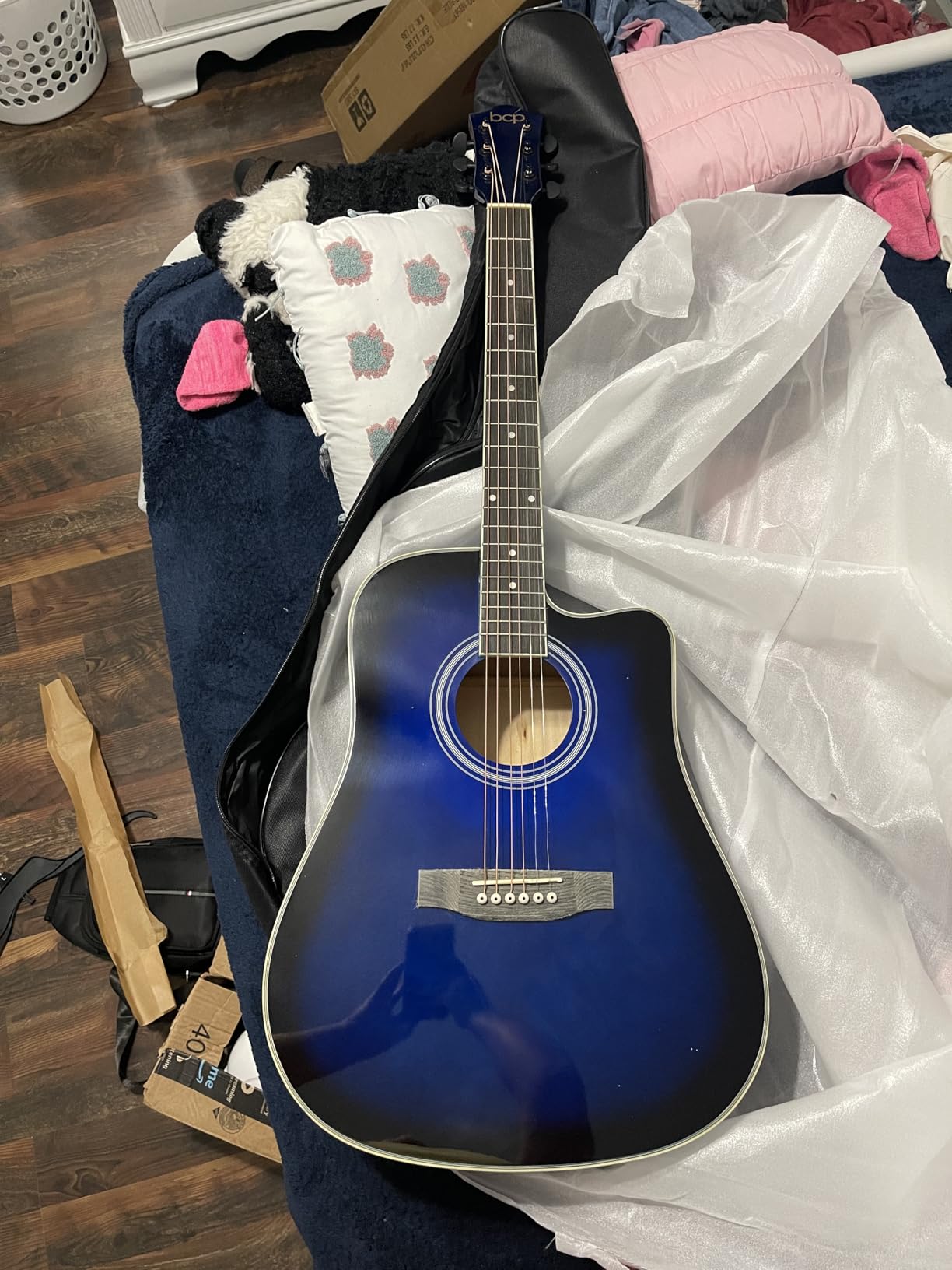
Sound quality is solid for the price. The all-wood construction gives you a warm, balanced tone that works for strumming chords. The pickguard is a thoughtful addition that protects the finish from your pick scratches. The classic inlay design on the fretboard looks more expensive than the price suggests.
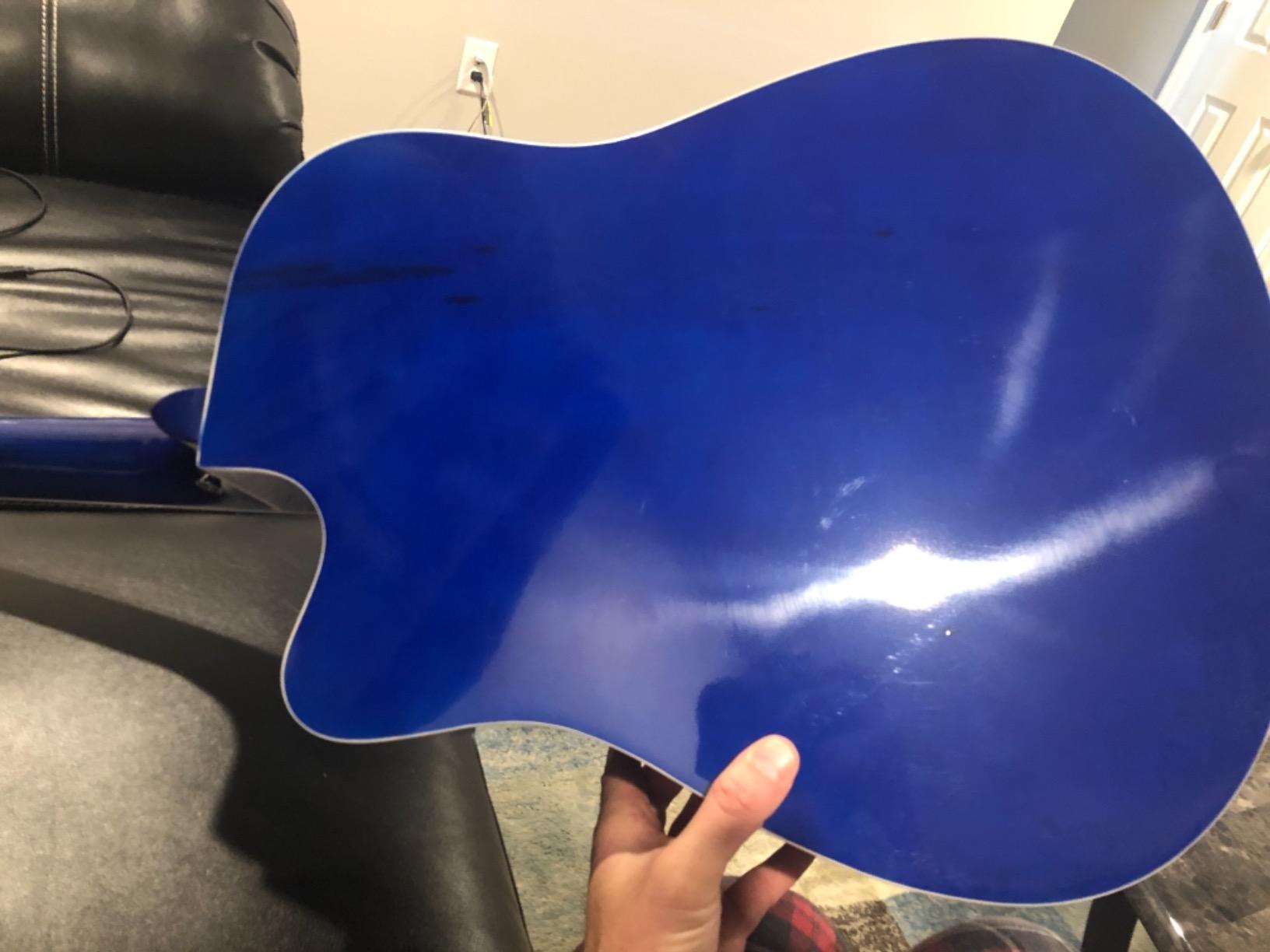
The honest complaints are the same ones that come with most budget guitars. The tuners can slip under heavy strumming, the strings need a few weeks of stretching before they hold tuning, and the action can be high on some units out of the box. Spend 15 minutes on a setup tutorial and the guitar becomes much more playable. The 60-day warranty is shorter than what Fender or Yamaha offer, but it is enough to catch any factory defects.
Who it is best for
Beginners who want a full-size dreadnought with a cutaway under $150. The padded case is a real bonus if you plan to take the guitar to lessons or friend’s houses. If you want to play songs that climb up the neck, the cutaway removes the biggest physical barrier.
Who should skip it
Players who prioritize tuning stability. The budget tuners are the weak link. If you do not want to fiddle with tuning between songs, spend more on the Yamaha FG800J or Fender CD-60S.
How to Choose the Best Acoustic Guitar for Your First Buy
After testing 10 beginner guitars and talking to players who have bought dozens of first guitars, the same five factors come up every time. Action, body size, tonewoods, tuning stability, and budget. If you understand these five things before you shop, you will save yourself the most common beginner mistake. Buying a guitar that fights you instead of teaching you.
1. Action: The Single Most Important Factor
Action is the distance between the strings and the fretboard. High action means you have to press harder to make notes sound. Low action means notes ring clean with less finger effort. For beginners, lower action is almost always better.
I have watched more people quit guitar because of high action than for any other reason. Their fingers hurt, chords sound buzzy, and the whole experience feels like a fight. A guitar with low action lets you practice longer and learn faster. Look for action below 4mm at the 12th fret on the low E string. If you cannot check before buying, buy from a retailer with a good return policy.
2. Body Size: Fit the Guitar to Your Body
Body size is the second most common beginner mistake. A full-size dreadnought is too big for many players, especially younger students, smaller adults, and women. When the body is too big, the guitar slides off your lap, your arm has to reach too far around the lower bout, and the whole instrument feels unwieldy.
Dreadnoughts are the most common beginner body and the loudest. Concert and parlor bodies are smaller, easier to handle, and have a more focused midrange tone. The Yamaha JR1 3/4 size and Ashthorpe 38-inch are good choices for younger players. If you are 5’4″ or shorter, consider a smaller body before defaulting to a full-size dreadnought.
3. Tonewoods: Solid Top Matters More Than You Think
Tonewoods are the woods used to build the guitar. Solid wood tops resonate more freely than laminate tops, which is why a $250 guitar with a solid spruce top can sound better than a $150 laminate guitar. The Yamaha FG800J, Donner DAG-1CS, and Fender CD-60S all feature solid or high-quality tonewood construction.
For your first guitar, prioritize a solid top if your budget allows. The top is the part that vibrates and projects sound, so it is where wood quality matters most. Back and sides can stay laminate without a big sacrifice in tone. If you are spending under $150, all-laminate is your only option, and that is fine. The guitars in this list still sound good for learning.
4. Tuning Stability: The Unsung Hero
Nothing kills motivation faster than a guitar that will not stay in tune. Tuning stability comes from quality tuning machines, a well-cut nut, and proper string installation. Cheap open-gear tuners slip under tension. Sealed-gear and die-cast tuners hold much better.
The Yamaha FG800J, Fender CD-60S, and Donner DAG-1CS all have above-average tuning stability in this roundup. Budget guitars like the Ashthorpe and Best Choice Products need more frequent tuning, especially in the first weeks as new strings stretch. If tuning frustrates you, either budget for a clip-on tuner or step up to a guitar with better hardware.
5. Budget: What Should You Really Spend?
Most beginners should spend between $150 and $300 on their first guitar. Under $100, you are buying a starter that may need replacement within a year. Over $500, you are paying for premium features that you will not appreciate as a beginner. The sweet spot is the $200 to $300 range, which is where the Yamaha FG800J, Fender CD-60S, and Donner DAG-1CS sit.
If your budget is under $100, the Ashthorpe kit and Best Choice Products kit are the best options. If you can stretch to $150, the Donner bundle is the strongest value. If you can stretch to $250, the Yamaha FG800J is the smartest long-term investment. There is no wrong answer here. The right guitar is the one you will actually pick up and play.
6. The Hidden Step: Professional Setup
Here is the one tip that most beginner guides leave out. A $40 to $60 professional setup transforms any beginner guitar. A local luthier will adjust the action, level the frets, set the intonation, and check the nut height. A guitar that feels unplayable out of the box can feel professional after 20 minutes of setup work.
Reddit forums are full of beginners who bought a $150 guitar, took it to a local shop for a setup, and felt like they had bought a $500 guitar. If you are spending over $150 on your first instrument, budget an extra $50 for a setup. It is the highest-value improvement you can make to any beginner guitar.
Frequently Asked Questions
How do I pick my first acoustic guitar?
Focus on three things: low action, comfortable neck, and a body size that fits your frame. Look for action below 4mm at the 12th fret, a C-shaped neck, and a dreadnought body for full-size players or a 3/4 size for younger students. The Yamaha FG800J, Fender CD-60S, and Donner DAG-1CS are all safe first choices.
What is considered the easiest acoustic guitar to play?
Guitars with low action, narrow nut width, and lightweight bodies are easiest for beginners. The Fender FA-25 and Donner DAG-1CS both feature comfortable C-shaped necks and low action that reduces finger fatigue. Nylon string classical guitars like the Yamaha C40II are also easier on sore fingers than steel strings.
What is the best affordable acoustic guitar for a beginner?
For under $150, the Donner DAG-1CS bundle offers the best value with a solid spruce top and complete accessory kit. For under $100, the Ashthorpe 38-inch starter kit includes lessons and accessories. Both are widely reviewed and well-regarded by beginners in 2026.
What is the best quality acoustic guitar for a beginner?
The Yamaha FG800J is widely considered the best quality beginner acoustic guitar. Its solid spruce top, rosewood fingerboard, and Yamaha’s quality control make it a guitar that will serve you from your first chord through years of intermediate playing. The Fender CD-60S is a close second with its all-mahogany tone.
Can I teach myself acoustic guitar?
Yes, thousands of beginners teach themselves acoustic guitar every year. Online lessons through Fender Play, YouTube channels, and apps like Yousician can take you from zero to playing full songs within three to six months. The most important factor is consistent daily practice, even if it is only 15 minutes a day.
Final Thoughts on Picking Your First Acoustic Guitar
Choosing the best acoustic guitars for beginners comes down to matching the instrument to the player. If you want the best long-term investment, the Yamaha FG800J is the guitar that will be with you from your first chord through years of playing. If you want everything in one box and a solid top, the Donner DAG-1CS bundle is the strongest value. If you are shopping for a child, the Yamaha JR1 3/4 size is the right fit. And if you are testing whether guitar is for you, the Ashthorpe kit under $100 is a no-risk way to find out.
Whatever you choose, remember the lesson I learned the hard way. A $40 professional setup transforms any beginner guitar. A daily 15-minute practice habit transforms any player. Pick the guitar that fits your budget, get it set up by a local shop, and commit to showing up for it every day. The best acoustic guitar for beginners in 2026 is the one you will actually play. Now go pick yours and start learning.