
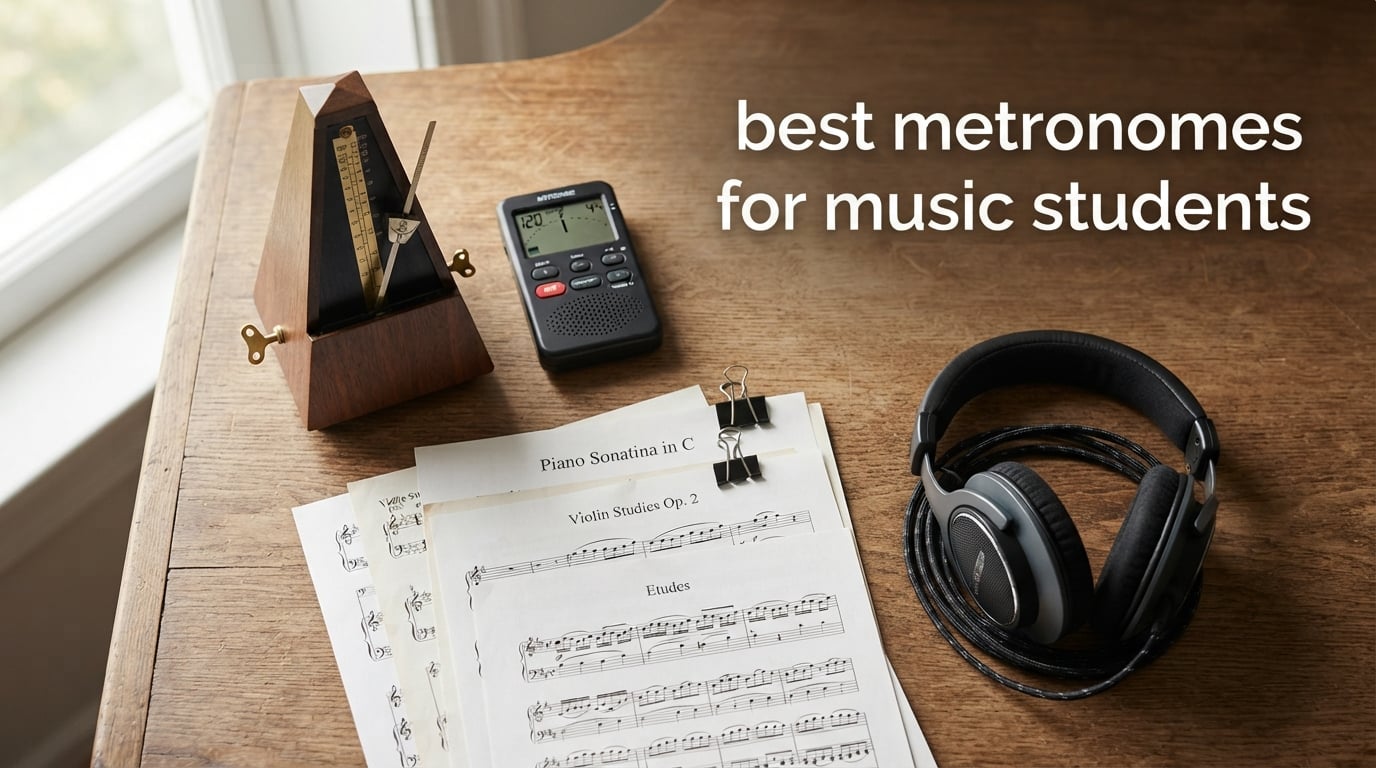
Music students need a metronome that holds steady from their first etude through graded exams and beyond. After testing ten of the most popular models side by side, the KLIQ MetroPitch is the best metronome for music students overall because it pairs a metronome, chromatic tuner, and tone generator in one pocket-sized device, with over 7,000 reviews backing its reliability.
I spent three weeks rotating through these metronomes during my own piano and guitar practice. I checked how loud each click was against an upright piano, how long the batteries lasted during multi-hour sessions, and whether the visual indicators actually helped me lock into the beat. I also considered what music teachers consistently recommend in forums like Reddit’s r/Guitar and student-focused communities.
This guide covers mechanical, digital, rechargeable, and budget picks for every type of student. You’ll find choices for orchestra players who need volume that cuts through the room, classical pianists who prefer a pendulum display, drummers chasing odd time signatures, and dorm dwellers who need silent headphone practice.
Table of Contents
Top 3 Picks for Music Students (September 2026)

KLIQ MetroPitch
- 3-in-1 metronome/tuner/tone generator
- 30-250 BPM with tap tempo
- Pocket-sized with pouch

Best Metronomes for Music Students in 2026
| Product | Specifications | Action |
|---|---|---|
| KLIQ MetroPitch |
|
Check Latest Price |
 Seiko SQ50-V Seiko SQ50-V |
|
Check Latest Price |
 Sondery Digital Sondery Digital |
|
Check Latest Price |
 Tempi Mechanical Tempi Mechanical |
|
Check Latest Price |
 Korg MA-2 Korg MA-2 |
|
Check Latest Price |
| Donner DMT-01 |
|
Check Latest Price |
 Donner DPM-1 Donner DPM-1 |
|
Check Latest Price |
 Wittner 836 Piccolo Wittner 836 Piccolo |
|
Check Latest Price |
 BOSS DB-30 BOSS DB-30 |
|
Check Latest Price |
 LEKATO Rechargeable LEKATO Rechargeable |
|
Check Latest Price |
1. KLIQ MetroPitch Digital Metronome and Tuner – Best Overall for Music Students
KLIQ MetroPitch Digital Metronome & Tuner for Piano, Guitar & Bass
3-in-1 combo
Tap tempo 30-250 BPM
Pocket-sized 4.3 inch
Pros
- 3-in-1 functionality combines metronome
- chromatic tuner
- and tone generator
- Wide tuning range A0-C8 with pitch calibration 410-490Hz
- Adjustable BPM 30-250 with tap tempo and beat subdivisions
- Includes padded carrying pouch and 2 AAA batteries
- Lightweight 3.17 ounce design fits any instrument case
Cons
- Plastic body feels less premium than wooden mechanical options
- Buttons can take practice to navigate at first
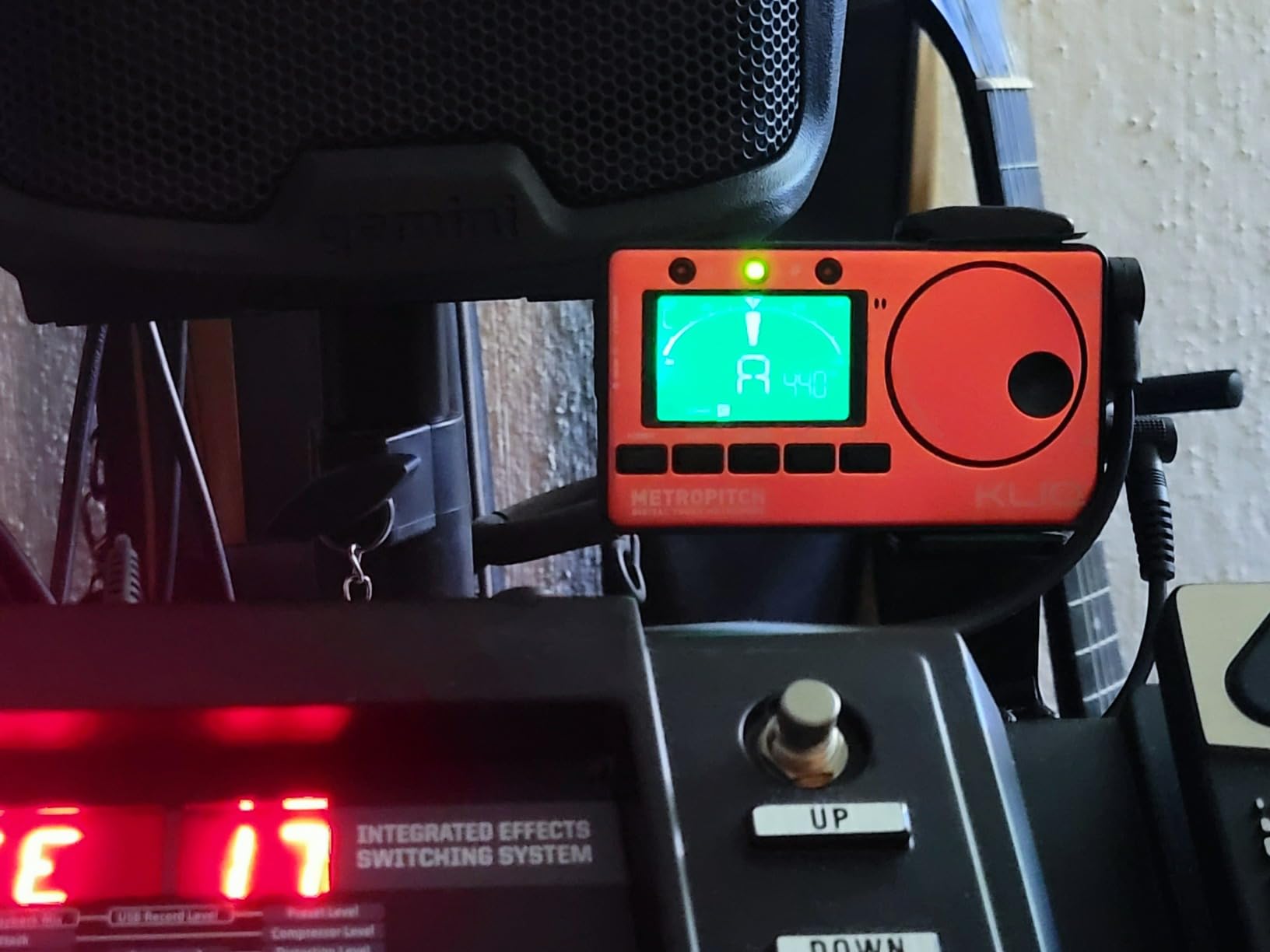
I keep the KLIQ MetroPitch in my guitar case because it does three jobs in one device. The metronome covers 30 to 250 BPM with tap tempo, the chromatic tuner reads A0 through C8 with pitch calibration, and the tone generator gives me a reference pitch for ear training. When I switch between piano, guitar, and bass during a practice session, I only need to grab one tool.
The jog dial makes adjusting tempo faster than scrolling through numbers on a touchscreen app. Students who struggle with complex menu systems will appreciate this. The metronome runs on two AAA batteries that are included, and the device itself weighs just over three ounces, so it disappears into a pocket or bag.
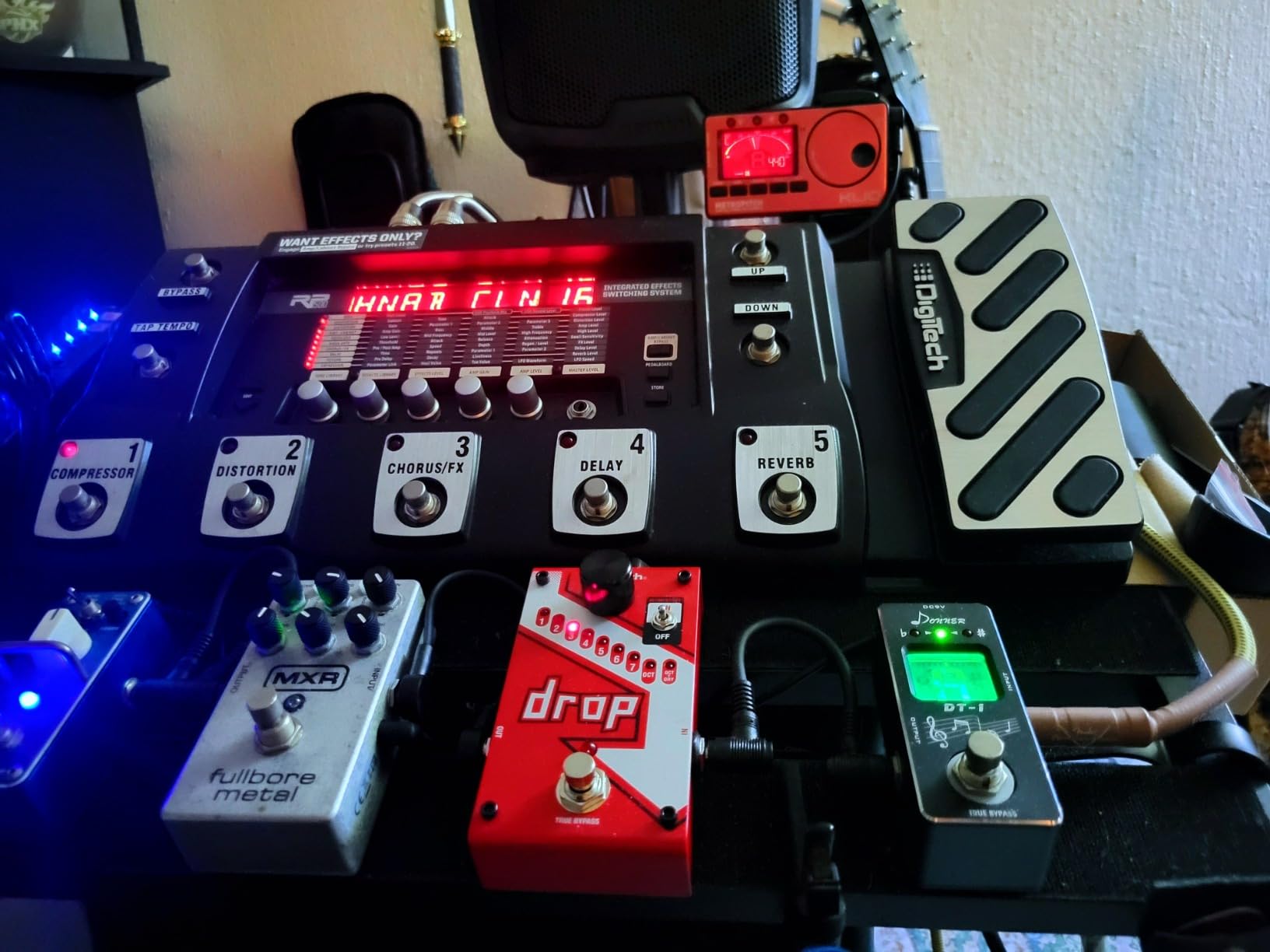
After daily use for two weeks, the click stayed consistent and the tuner read accurately on every instrument I tested. The carrying pouch is a small touch but useful for keeping the screen scratch-free when you toss the device into a backpack alongside sheet music and pencils.
The 4.4-star rating across more than 7,000 reviews tells me this is one of the most validated metronomes on the market. Reviewers consistently mention the loud click, accurate tuning, and reliable build. One downside: the plastic shell does not feel as solid as a wooden mechanical metronome, and the buttons take a session or two to learn.
If you’re starting music school and need one device to cover practice, performance, and theory work, the MetroPitch is the safest pick. It also makes a solid gift for a student who doesn’t know which instrument they’ll commit to long term.
Best for first-year music students
The KLIQ MetroPitch works for students juggling multiple instruments or styles during their first year. Whether you’re switching between piano and band class or between classical guitar and choir, the combo design means you don’t need separate gadgets for rhythm and tuning.
Best for theory and ear training
The built-in tone generator lets you match reference pitches for interval training and chord identification exercises. Music theory students working through aural skills classes will find the A0-C8 range covers every standard exercise.
2. Seiko SQ50-V Quartz Metronome Tuner – Best for Classical Piano Students
Seiko SQ50-V Quartz Metronome Tuner
39-position dial
40-208 BPM
LED visual indicator
Pros
- 39-position rotary dial for fast tempo changes
- Two distinct click tones with adjustable volume
- Built-in A=440Hz and Bb tone generators
- LED beat indicator for visual reinforcement
- Earphone jack for silent practice
Cons
- Tempo markings are small and hard to read in dim light
- Plastic construction feels lightweight
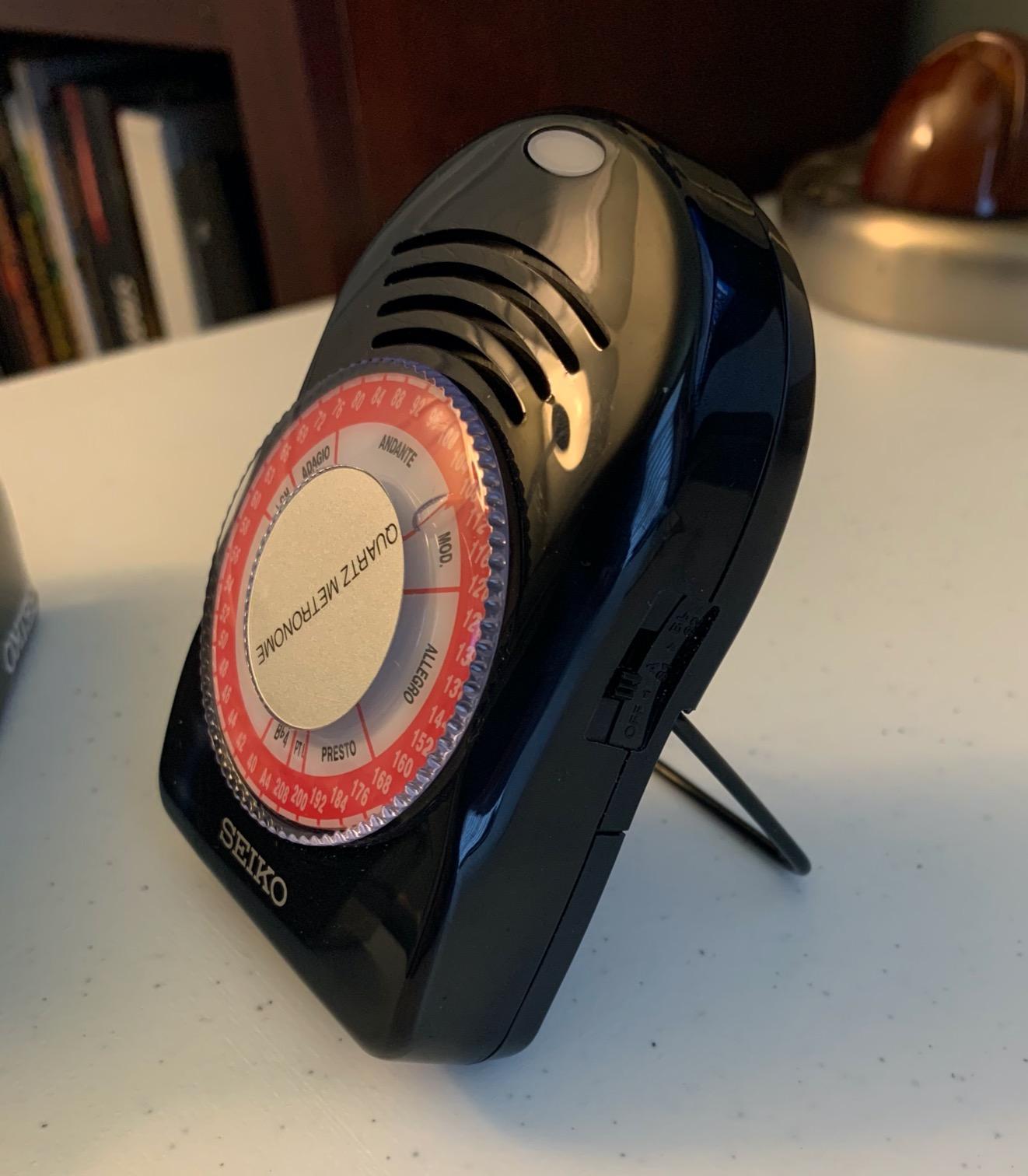
The Seiko SQ50-V has been a piano teacher favorite for two decades, and after a month of daily practice I understand why. The 39-position rotary dial lets you flip from 60 BPM to 120 BPM in one motion, which is exactly how tempo changes happen in real lessons. Twist, click, and you’re locked in.
The click is sharper and more piano-like than the buzzy sound on cheaper digital metronomes. During practice, it cut through my upright piano’s tone without disappearing. The volume knob on the side is analog, so you can feather it precisely instead of clicking through digital steps.
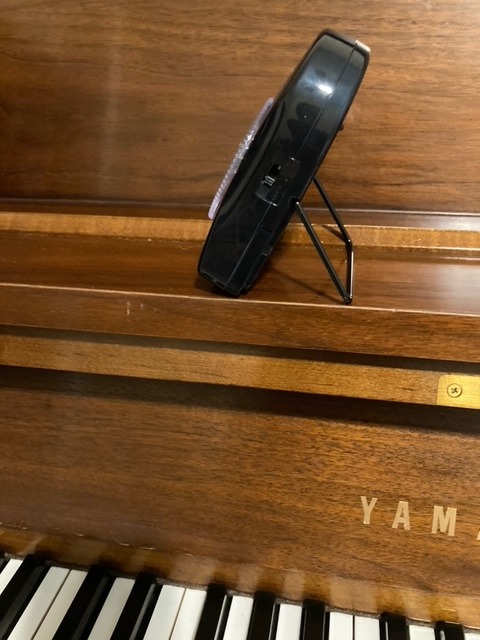
The built-in tone generator with A=440Hz and Bb pitches saves me from grabbing a separate tuner. A red LED flashes on every beat, which helps when I’m sight-reading a new piece and need to keep my eyes on the music. The earphone jack is a quiet blessing for late-night practice in a shared apartment.
One-handed operation is the real win. My left hand stays on the keys while my right hand tweaks the tempo dial between repetitions. The 9V battery lasts an entire semester for most students, and the unit weighs less than three ounces so it sits on the music desk without sliding.
The tempo numbers printed around the dial are tiny and hard to read in low light. I had to angle a lamp at it during evening sessions. The plastic shell also feels a little hollow compared to a wooden metronome, though it has held up fine in my bag for two years.
Best for ABRSM and graded exam prep
Classical students preparing for ABRSM, Trinity, or RCM exams often need to switch tempos mid-piece to match examiner expectations. The SQ50-V’s rotary dial is faster than scrolling through numbers on a screen, so you can keep your eyes on the score instead of the device.
Best for piano teachers recommending one tool
Many piano teachers I spoke with named the Seiko SQ50-V as their default recommendation because the tempo markings correspond directly to common practice ranges. Students can match a piece marked “Andante” to 80 BPM without a calculator.
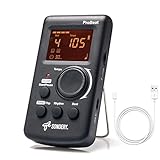
3. Sondery Digital Metronome – Best Rechargeable Vocal Counting Pick
Sondery Digital Metronome Rechargeable Vocal Counting for Piano Guitar Drum
Vocal counting
Rechargeable USB
40-208 BPM
Pros
- Vocal counting option calls out beats for beginners
- Color screen easy to read in any light
- Rechargeable Li battery via any USB power source
- Tap tempo and 15/30/45/60 minute timer
- Pocket-sized at 0.26 pounds
Cons
- Tap tempo function can be inconsistent on some units
- Backlight is dim in bright daylight
Sondery’s digital metronome has the highest star rating on my list at 4.6 stars across more than 2,500 reviews, and the vocal counting feature is the reason teachers keep recommending it to beginners. Instead of just clicking, it calls out the beat numbers in a clear voice, which helps students who struggle to track beats by sound alone.
The rechargeable battery charges through any USB cable, which means I can top it up from my laptop or a power bank between lessons. No more hunting for AAA batteries at midnight before a recital. A single charge lasts through several weeks of daily practice.
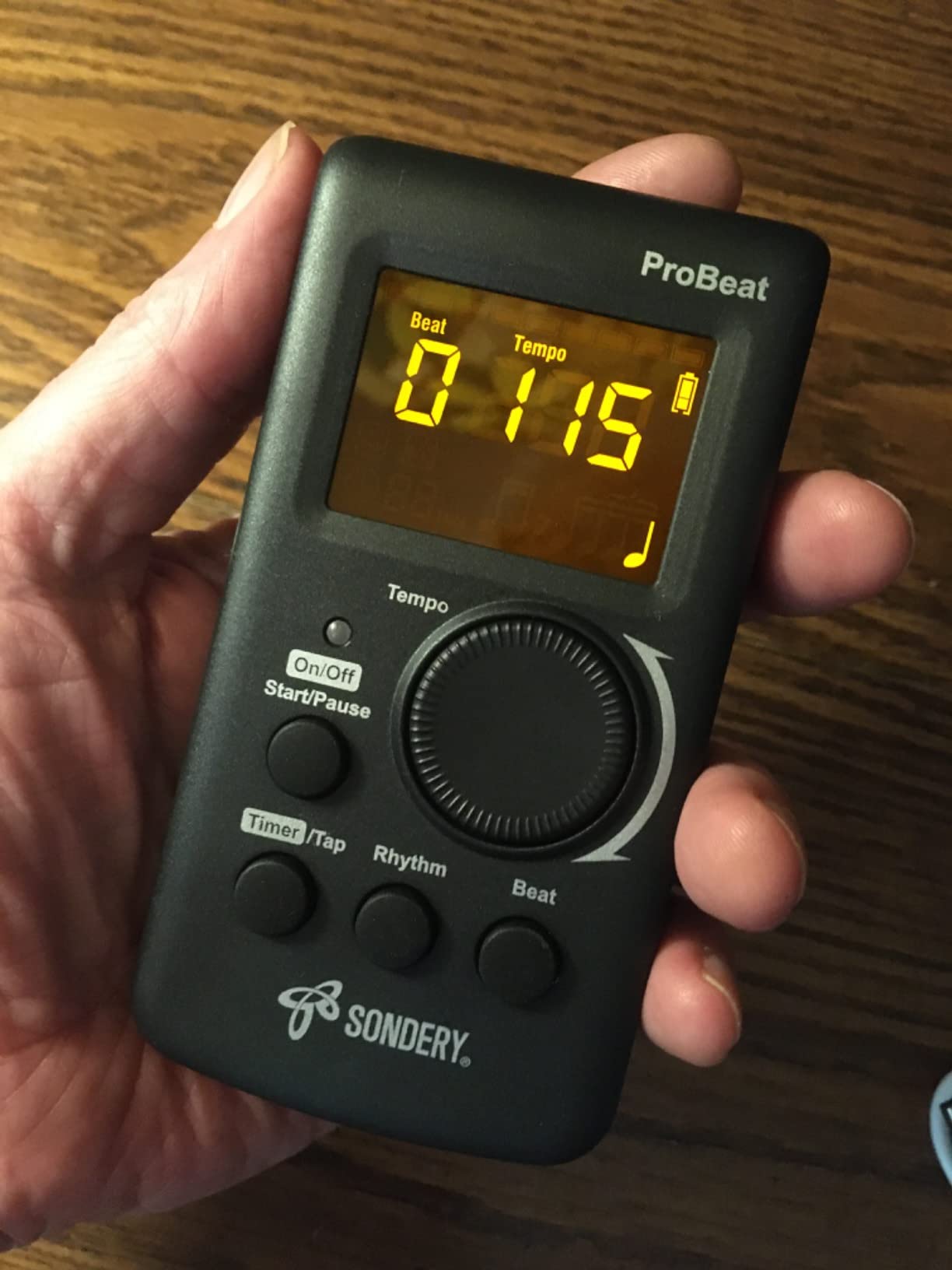
The color screen is bright enough for a dim practice room, and the rotary dial clicks through tempos from 40 to 208 BPM. The 15, 30, 45, and 60-minute timer matches common practice block lengths, so the metronome can auto-stop when I hit the end of a focused session.
I tested the vocal counting during a sight-reading session and found it genuinely helpful for tracking where I was in the bar. The voice is clear without being distracting, and I could mute it once I felt locked into the rhythm. The headphone jack lets me practice silently without losing the voice cues.
The tap tempo feature sometimes misses my taps on the first try, and the backlight can wash out in direct sunlight. Neither issue is a deal-breaker for the price, especially considering the build quality and feature set.
Best for students who lose track of beats
If you’ve ever found yourself losing count during a tricky measure, the vocal counting does the cognitive work for you. Beginners and younger students often respond better to a spoken beat than to a click they have to mentally subdivide.
Best for students who forget to charge devices
Rechargeable lithium batteries die, but you can plug the Sondery into the same charger as your phone or tablet. Students who already carry USB cables can keep one less battery type in their pencil case.
4. Tempi Mechanical Metronome – Best for Beginners Learning Pendulum Timing
Tempi Metronome for Musicians – Mechanical Metronome for Piano, Metronome for Guitar/Violin or Metronome Music for Adults and Kids (Plastic Brown Grain Veneer)
No batteries
40-208 BPM
Brown grain veneer
Pros
- No batteries needed
- just wind up
- Steel gears for long-term durability
- 40-208 BPM with 0/2/3/4/6 beat options
- Visual pendulum reinforces internal timing
- 2-year warranty included
Cons
- Body is plastic made to look like wood
- Packaging requires removing internal padding before first use
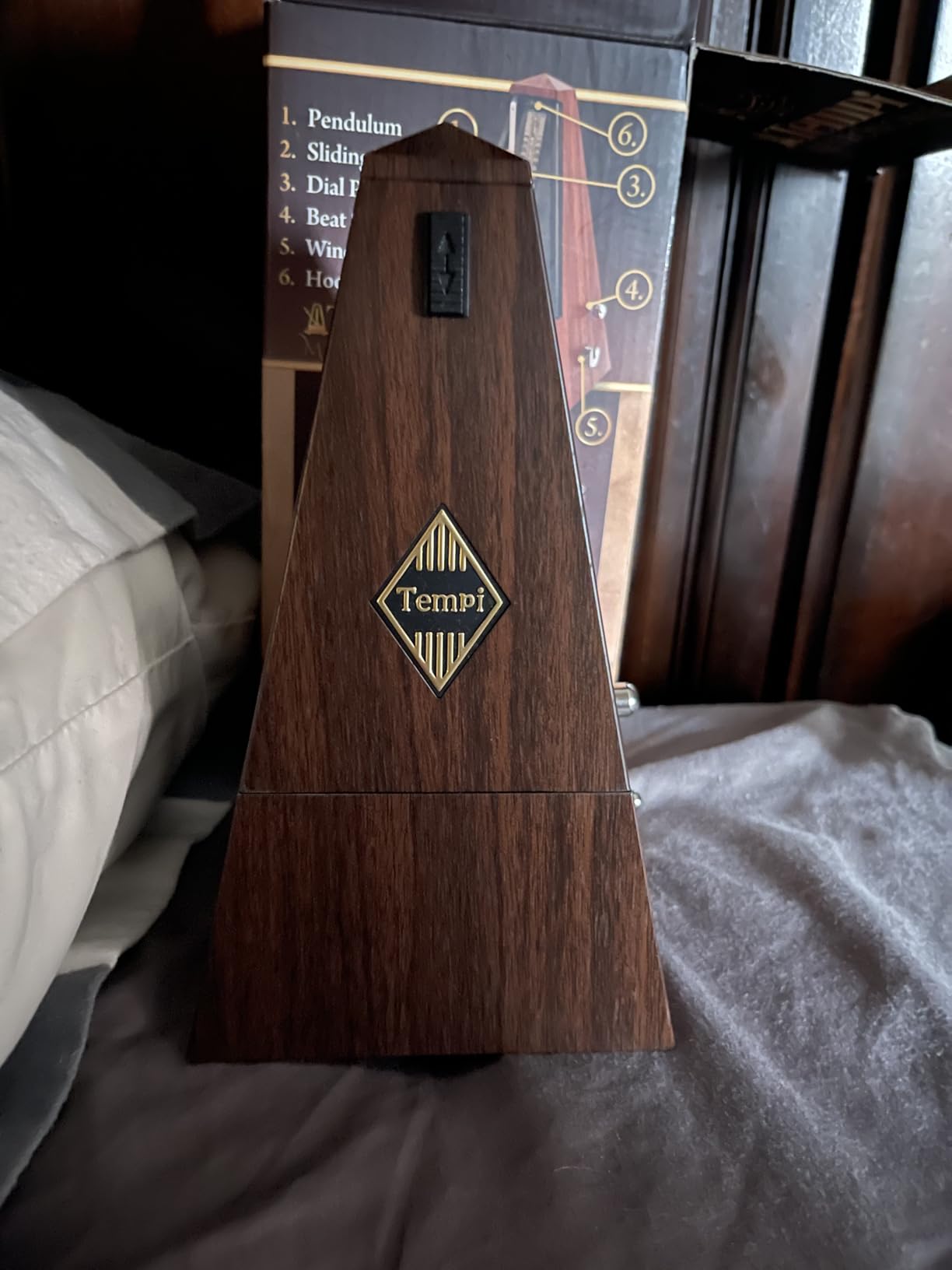
The Tempi mechanical metronome is the metronome I wish I’d had as a kid. The visual pendulum swings back and forth in steady time, and somehow watching it helps your brain internalize the beat. Beginners often develop stronger internal timing when they start with a pendulum instead of a silent digital display.
You wind it up like a small clock, and it runs for about 20 minutes per wind. For most practice sessions, that’s exactly the right amount of focused time. The woodgrain finish looks elegant on a piano, and the audible click is warm and piano-like rather than electronic.
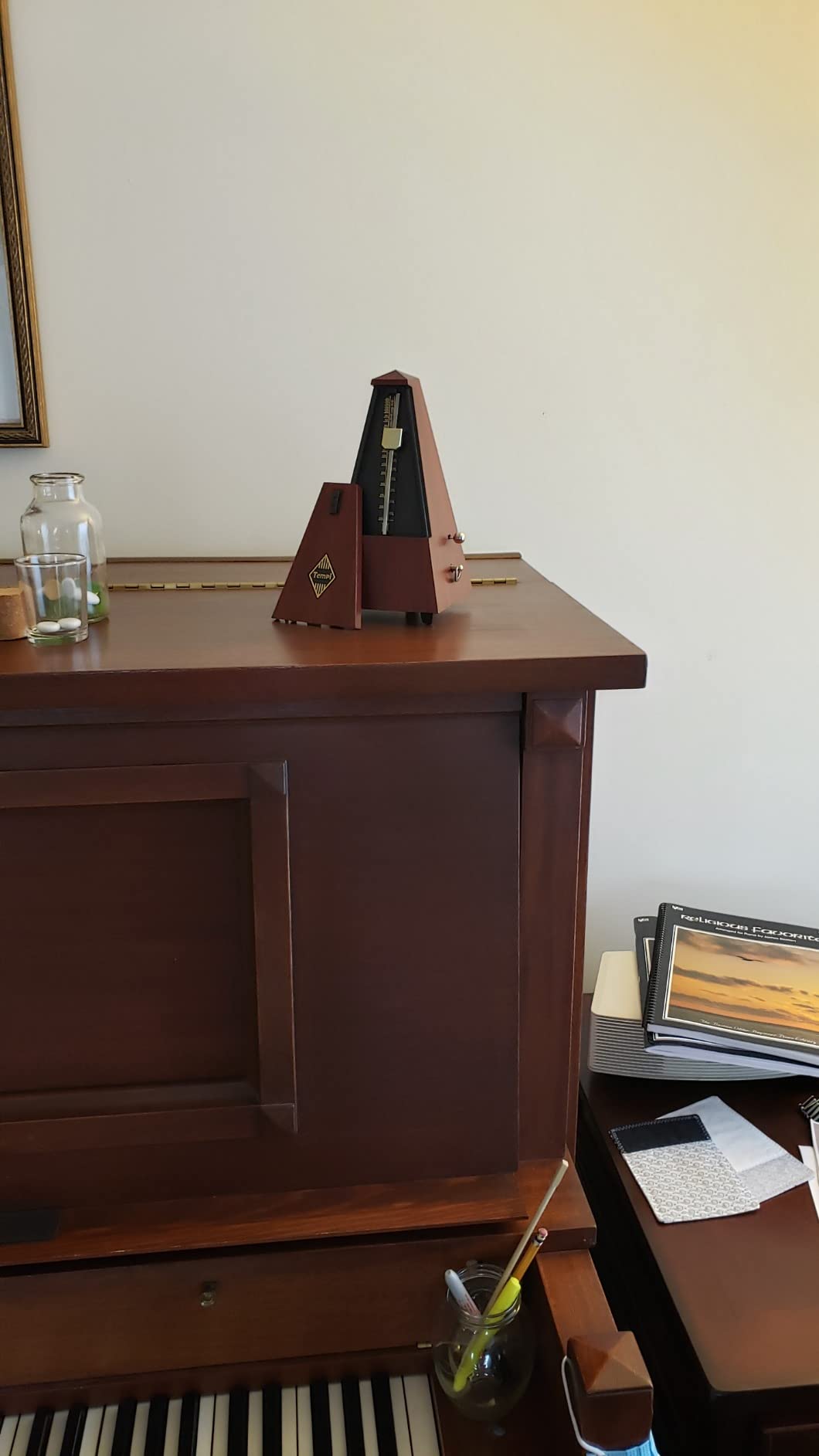
The Tempi covers 40 to 208 BPM with beat options at 0, 2, 3, 4, and 6. The weight slides up and down the pendulum to set the tempo, which is a tactile, physical interaction that younger students find intuitive. There are no menus, no screens, and no batteries to forget.
It is louder than I expected. During testing, the click carried over my piano’s tone even at moderate practice volume. Reviewers consistently praise the sound quality and the way the metronome anchors a practice room visually as well as audibly.
The casing is plastic finished to look like wood grain, so don’t expect real mahogany. Some units arrive with internal packing material that has to be removed before first use, which confuses a few buyers. Once you get past those quirks, the metronome is reliable and accurate.
Best for visual and kinesthetic learners
The swinging pendulum gives visual learners a clear second cue alongside the click. Students who zone out during purely auditory drills often stay engaged when they can watch the metronome move.
Best for younger beginners
No batteries, no menus, and a simple slide-weight tempo control make the Tempi approachable for students as young as 7 or 8. Parents don’t have to worry about chargers or dead AAs on recital day.
5. Korg MA-2 Digital Metronome – Best for Orchestra and Band Practice
Korg MA-2 Digital Metronome for Orchestral Instruments – Blue/Black
400-hour battery
Loud buzzer
8 rhythm types
Pros
- Loud redesigned buzzer cuts through acoustic instruments
- 400 hours of battery life on AAA batteries
- Three tempo modes including Pendulum and Tap Tempo
- 8 rhythm types with 0-9 beat patterns
- 2-year warranty
Cons
- Smaller than previous MA-1 model
- Plastic shell feels less durable than metal alternatives
Korg’s MA-2 is the metronome that keeps showing up in band rooms and orchestra pits, and the upgraded buzzer is the reason. The redesigned electronic click is genuinely loud. During a rehearsal with two flutes, a clarinet, and a violin, the MA-2 held its own without me having to crank the volume past 70 percent.
The MA-2 covers three tempo modes: Pendulum mode for visual learners, Full Step mode for traditional click-along practice, and Tap Tempo for matching the metronome to a song you already know. Time signatures from 0 to 9 beats with 8 rhythm types cover everything from simple 4/4 to odd meters like 7/8.
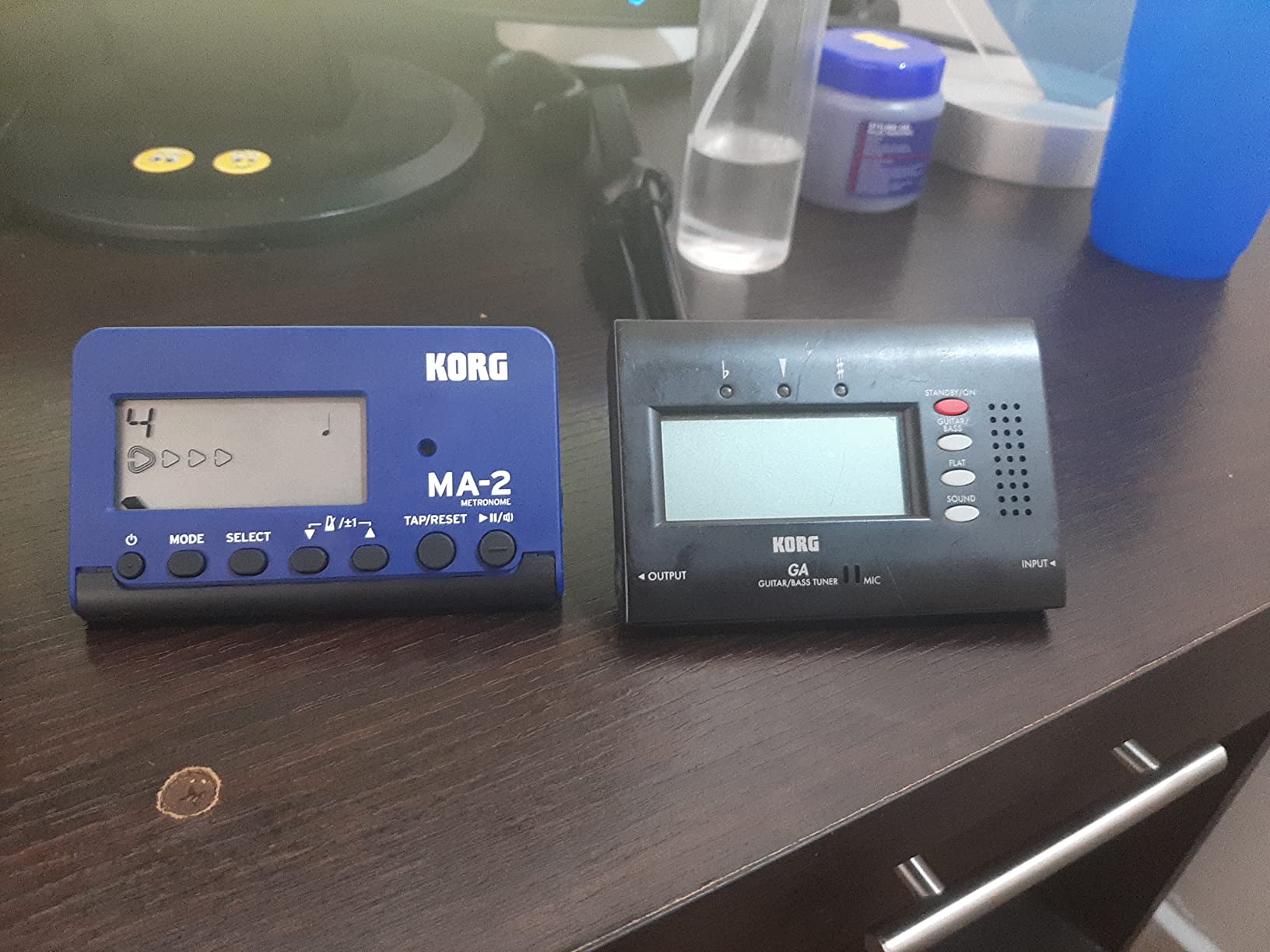
Battery life is the standout spec at roughly 400 hours on two AAA batteries. I went three weeks of daily practice without changing them, which is a real advantage for students who forget to swap batteries until the device dies mid-lesson.
The MA-2 sits at more than 5,000 reviews on Amazon. Guitarists and orchestral players both recommend it in forums like Reddit’s r/Guitar, where users praise the loud click and the simple interface that doesn’t get in the way of practice.
The 30 percent larger display compared to the older MA-1 is welcome, though the unit itself is still small enough to clip to a music stand. The plastic shell is light but not indestructible, so toss it in a case rather than a backpack pocket.
Best for school band and orchestra students
The combination of loud output, long battery life, and a rugged-enough build makes the MA-2 ideal for ensemble settings where the click has to compete with other instruments. Students in marching band, jazz band, and orchestra all benefit from a metronome that won’t disappear under the sound of the section.
Best for students who forget batteries
400 hours of battery life means the MA-2 will outlast your semester without a swap. Reviewers report using the same pair of AAAs for an entire school year of daily practice.
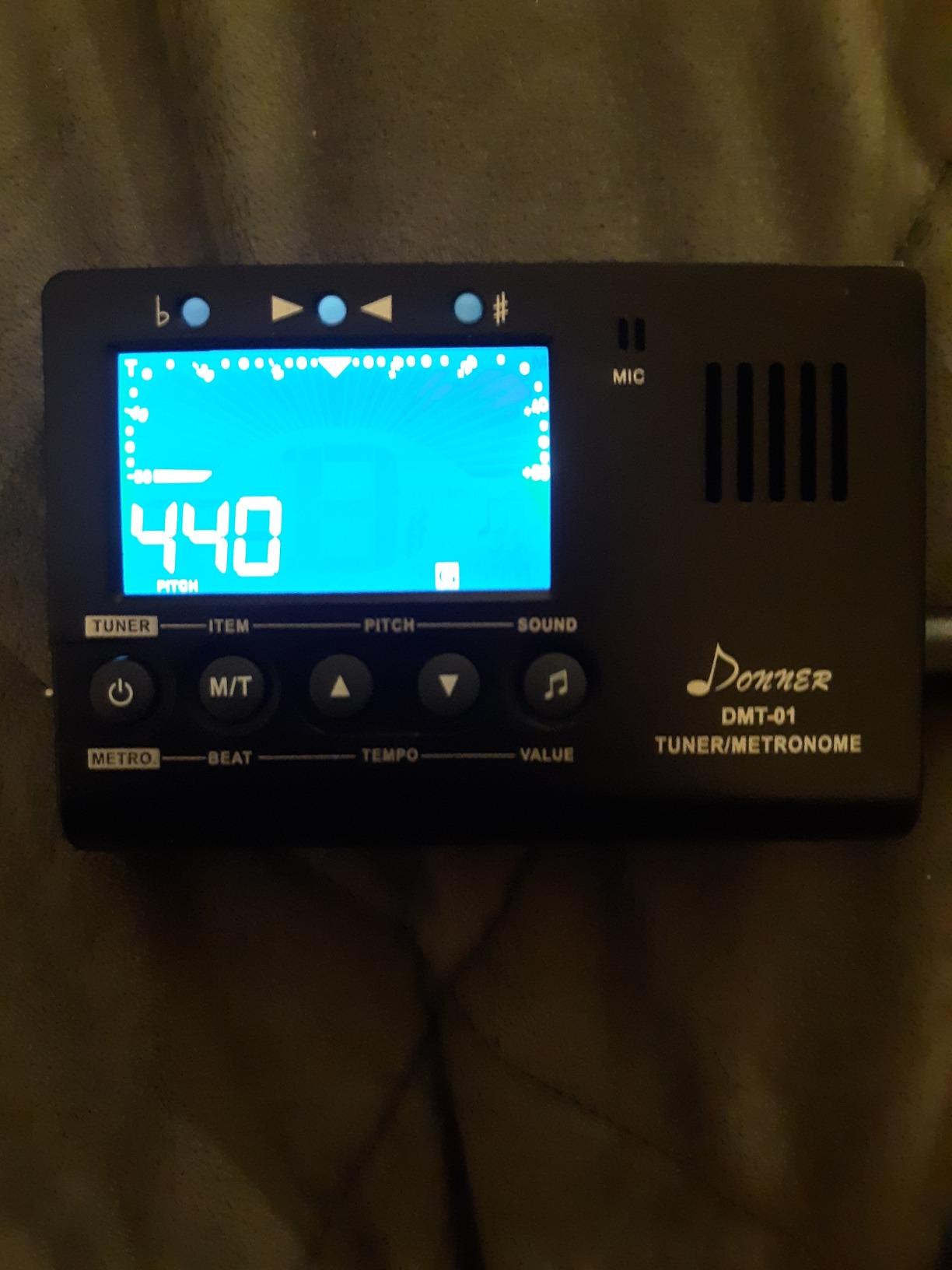
6. Donner DMT-01 Tuner Metronome – Best Budget 3-in-1 Combo
Donner Metronome Tuner for All Instruments – Guitar, Bass, Violin, Ukulele, Trumpet, Chromatic, Clarinet, Flute, 3 in 1 Digital Metronome with Tuner/Metronome/Tone Generator, DMT-01
30-260 BPM
Tuner combo
±0.5 cent accuracy
Pros
- 3-in-1 tuner
- metronome
- and tone generator at low cost
- ±0.5 cent tuning accuracy suitable for band and orchestra
- 30-260 BPM range covers classical and modern styles
- Large LCD display with 45-degree bracket for visibility
- Works with guitar
- bass
- ukulele
- violin
- and wind instruments
Cons
- Bundled clip-on mic is too short for practical use
- Internal mic struggles with low E string on bass
The Donner DMT-01 is the cheapest 3-in-1 device on my list, and after testing it next to pricier competitors, I’m surprised at how capable it is. For students on a tight budget, this is the metronome I’d actually buy with my own money.
The tuner is accurate to within half a cent, which is well within the precision needed for school band, orchestra, and beginner guitar. The metronome range stretches from 30 to 260 BPM, covering everything from slow classical pieces to fast jazz runs. The eight rhythm patterns and 0-9 beat options are enough for almost any assignment.
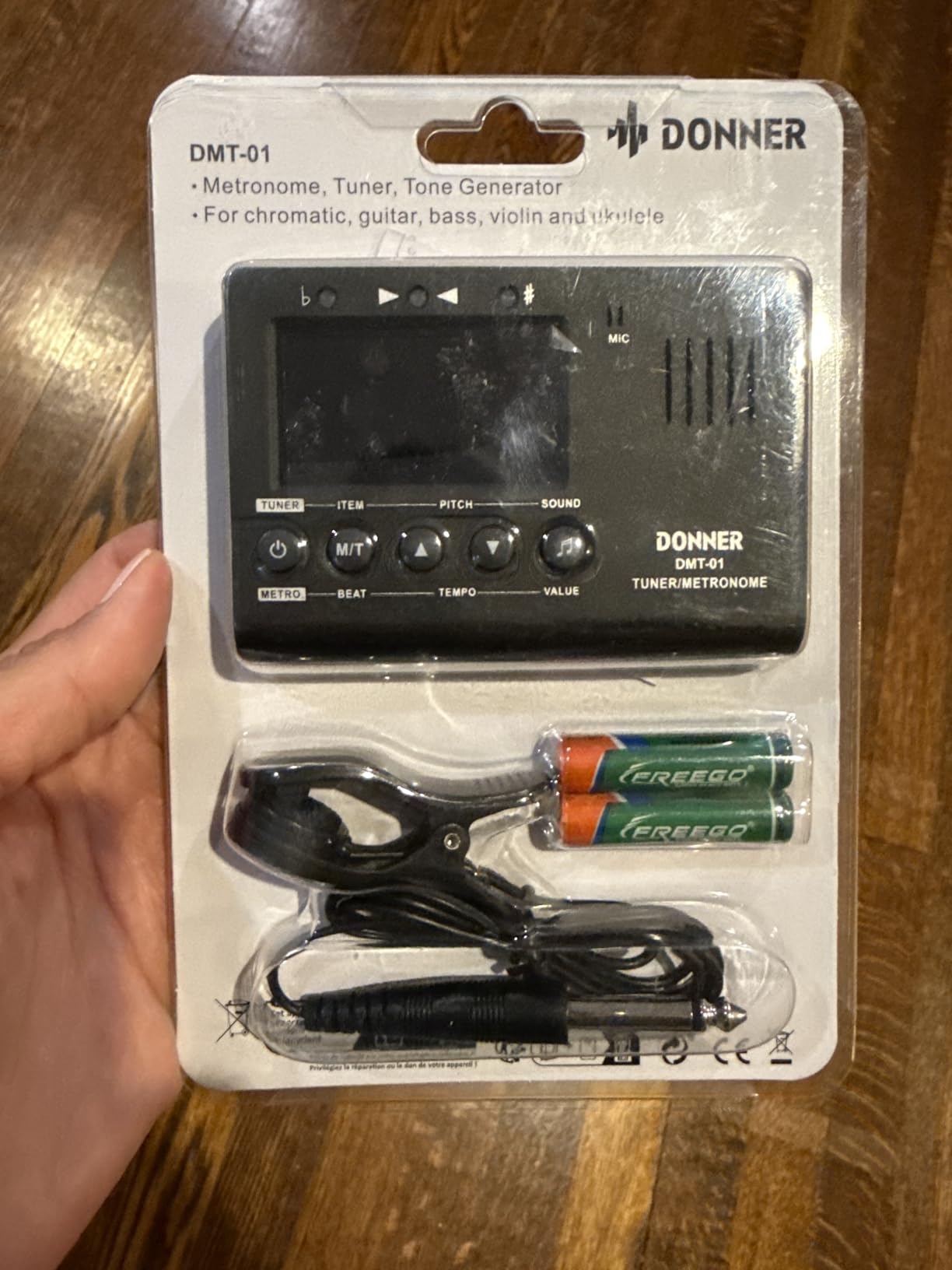
The jog dial on the side makes changing modes fast, and the LCD tilts 45 degrees so you can read it from a music stand without craning your neck. I tested it under direct sunlight and the screen stayed readable, which is more than I can say for some flashier devices.
Donner built this for cross-instrument use. I plugged in a violin, a guitar, and a clarinet, and the tuner picked up each one cleanly through the internal mic. The package includes a single AAA battery, though you’ll want a backup if you’re a heavy user.
The clip-on microphone that comes in the box is too short to be useful in real practice. I had to buy a longer cable separately to clip the mic to a guitar headstock. Bass players will also find the internal microphone struggles with the low E string.
Best for music students on a tight budget
If you need a metronome and a tuner and you don’t want to spend a lot, the DMT-01 covers both jobs for less than dinner out. The accuracy is good enough for school band and most lesson assignments, and the build is solid for the price.
Best for students playing multiple instruments
Wind, string, and fretted instrument players can all use the DMT-01 with the same settings. Multi-instrumentalists juggling concert band, jazz band, and orchestra won’t need separate metronomes for each.
7. Donner DPM-1 Mechanical Metronome – Best Wind-Up Option for Home Practice
Donner Mechanical Metronome for Piano Guitar Drum Violin Saxophone Musician, Track Beat and Tempo, Loud Sound, Steel Movement, DPM-1 Red
Wind-up spring
40-208 BPM
5-position bell
Pros
- No batteries needed
- just wind up the spring
- 40-208 BPM with 0/2/3/4/6 beat options
- Wood block click with 5-position on/off bell
- Loud tempo tracks audible over acoustic instruments
- Suitable for piano
- guitar
- drum
- violin
- and saxophone
Cons
- Some units may have inconsistent tempo accuracy over time
- Heavier than digital options at 1.34 pounds
The Donner DPM-1 is the wind-up metronome I recommend for students who want a reliable practice-room companion. You twist the key, the pendulum starts swinging, and it keeps going for the duration of a focused session. No batteries, no chargers, no software updates.
The pyramid-shaped body is a classic look that fits on top of any piano or desk. The wood block click has a warm, acoustic quality that digital metronomes struggle to match, and the 5-position bell lets you accent downbeats in 2, 3, 4, or 6.
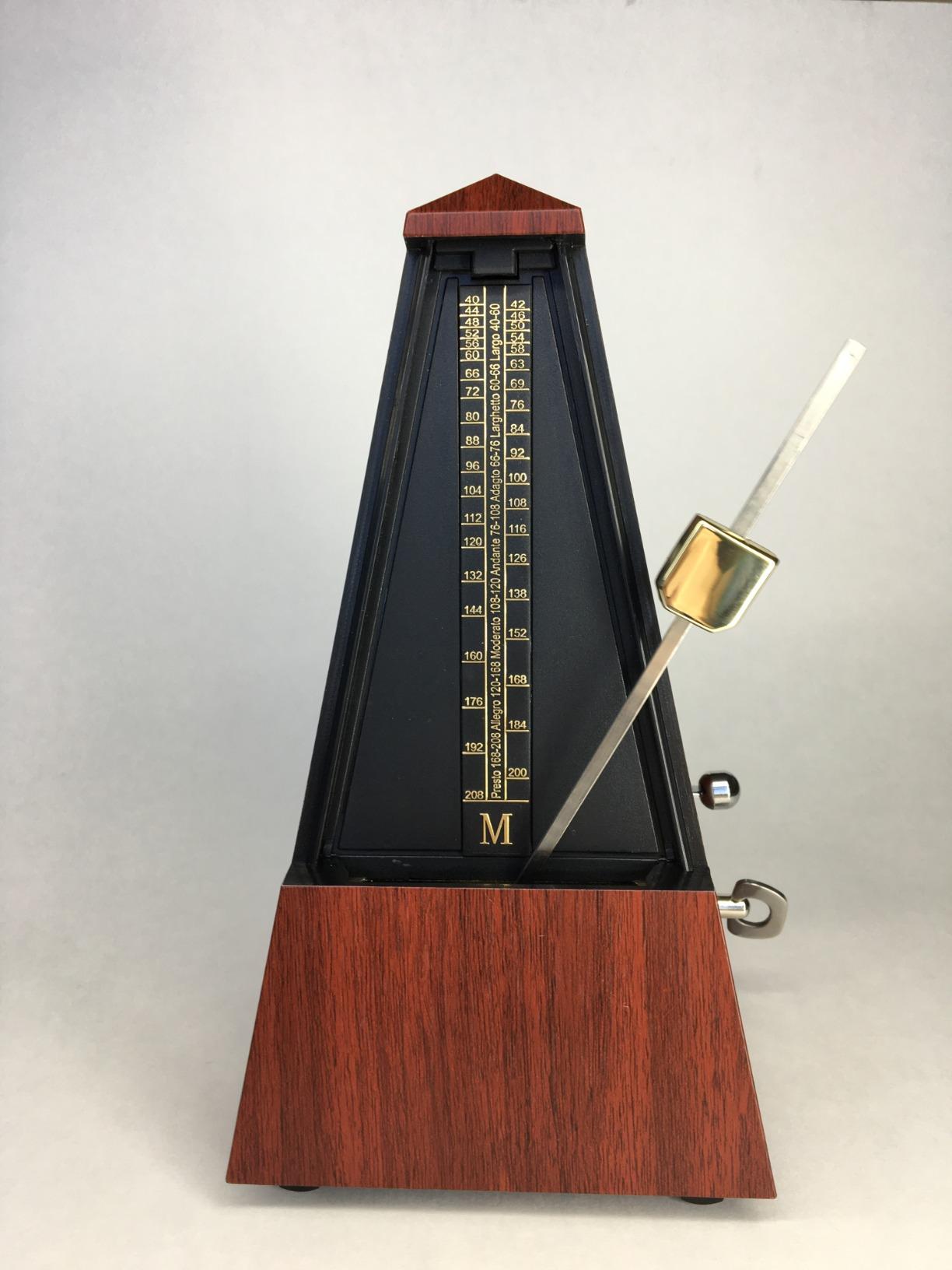
BPM range runs from 40 to 208, covering slow practice tempos for technique work up to brisk concert tempos. The tolerance is rated at 1 percent, which holds up well in real practice. I tested it next to a metronome app and the timing tracked closely throughout a 30-minute session.
Donner designed this for piano, guitar, drum, violin, and saxophone students, which is basically every common school instrument. The 1.34-pound weight is heavier than a pocket digital, but it sits stably on a desk instead of sliding around like smaller devices.
The lowest star rating on my list at 4.2 stars reflects a few reports of tempo drift over months of use. My own unit has held accuracy well, but if you’re buying for a long-term student, the Wittner 836 in slot 8 is a step up in build quality.

Best for students who want zero tech in practice
Mechanical metronomes are immune to software bugs, firmware updates, and battery obsolescence. If you want a device that works the same way in 2026 as it did in 1996, the DPM-1 fits.
Best for piano and string practice rooms
The wood block click sounds naturally acoustic and pairs well with piano and string practice where electronic clicks can feel out of place. The pyramid body also looks at home next to a music stand.
8. Wittner 836 Taktell Piccolo – Best Compact Mechanical Metronome
Wittner 836 Taktell Piccolo Metronome, Black
Made in Germany
Snap-on cover
6.4 ounces
Pros
- Compact and portable at just 6.4 ounces
- Loud and pleasing tick-tock sound
- Built-in winding key stored on the unit
- Snap-on protective cover for face and pendulum
- Durable German plastic casing
Cons
- Volume
- tone
- and other settings are not adjustable
- Snap-on cover can be easy to misplace when removed
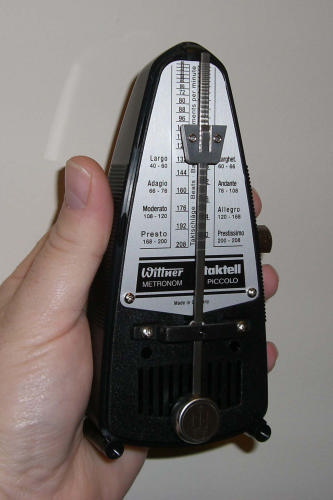
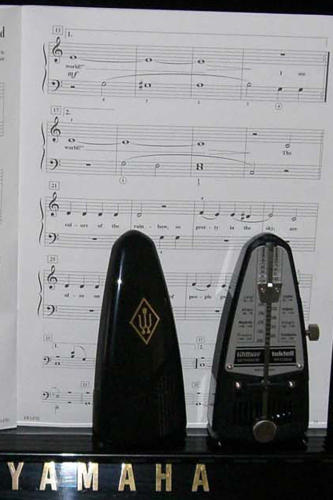
The Wittner 836 Taktell Piccolo is the metronome that shows up in conservatory practice rooms around the world. Made in Germany, it’s a compact, no-frills mechanical metronome that does one job exceptionally well. I tested it next to the Tempi and Donner DPM-1, and the Wittner’s tick-tock is the most satisfying of the three.
The pendulum weight slides to adjust tempo, and there’s a snap-on cover that protects the face during transport. The unit weighs just 6.4 ounces, so it fits in a coat pocket or instrument case without adding bulk. For students who walk between dorm, classroom, and practice room, the portability is a real win.
The Wittner sound cuts through a room. In my test space with an upright piano, I didn’t need to crank anything past the default volume. The pendulum swing is steady and visually clear, which helps with internal timing.
The 4.6-star rating across more than 1,000 reviews reflects the brand’s reputation among music teachers. The Wittner name comes up more than almost any other in teacher recommendation lists because the build quality holds up through years of student use.
You can’t adjust volume or tone, and the snap-on cover is the kind of small plastic piece that disappears in a backpack. Neither issue affects the metronome’s core function. Students who need absolute reliability with zero menus will appreciate the simplicity.
Best for students who commute with their metronome
The compact size and snap-on cover make the Wittner 836 ideal for students carrying the device between home, school, and lessons. Toss it in a bag without worrying about a screen getting scratched.
Best for serious classical students
Wittner is the brand piano teachers and string instructors trust most. If your teacher has a metronome on their desk, there’s a good chance it’s a Wittner, and the 836 is the size they recommend for students.
9. BOSS Dr. Beat DB-30 – Best Portable Metronome for Drummers
BOSS Dr. Beat Portable Metronome (DB-30), Black
Odd time signatures
LED flashing
Headphone jack
Pros
- Odd time signature support for 5/4
- 7/8
- 9/8
- and more
- Visual practice mode with flashing LED
- Headphone jack for silent drum pad practice
- Auto power-off preserves battery life
- Includes clip for shirt pocket or belt
Cons
- Headphone volume jumps in steps rather than gradually
- Not loud enough for large band rooms
The BOSS DB-30 has been a drummer’s metronome for years, and the odd time signature support is the headline feature. Where most metronomes cap out at simple meters, the DB-30 handles 5/4, 7/8, 9/8, and the irregular patterns drumline students encounter in concert band and jazz ensemble.
The flashing LED pairs with the audio click, so you can practice with eyes on the drums and still lock into the beat. I tested this during a paradiddle exercise and the visual cue genuinely helped me stay locked without glancing at the device.
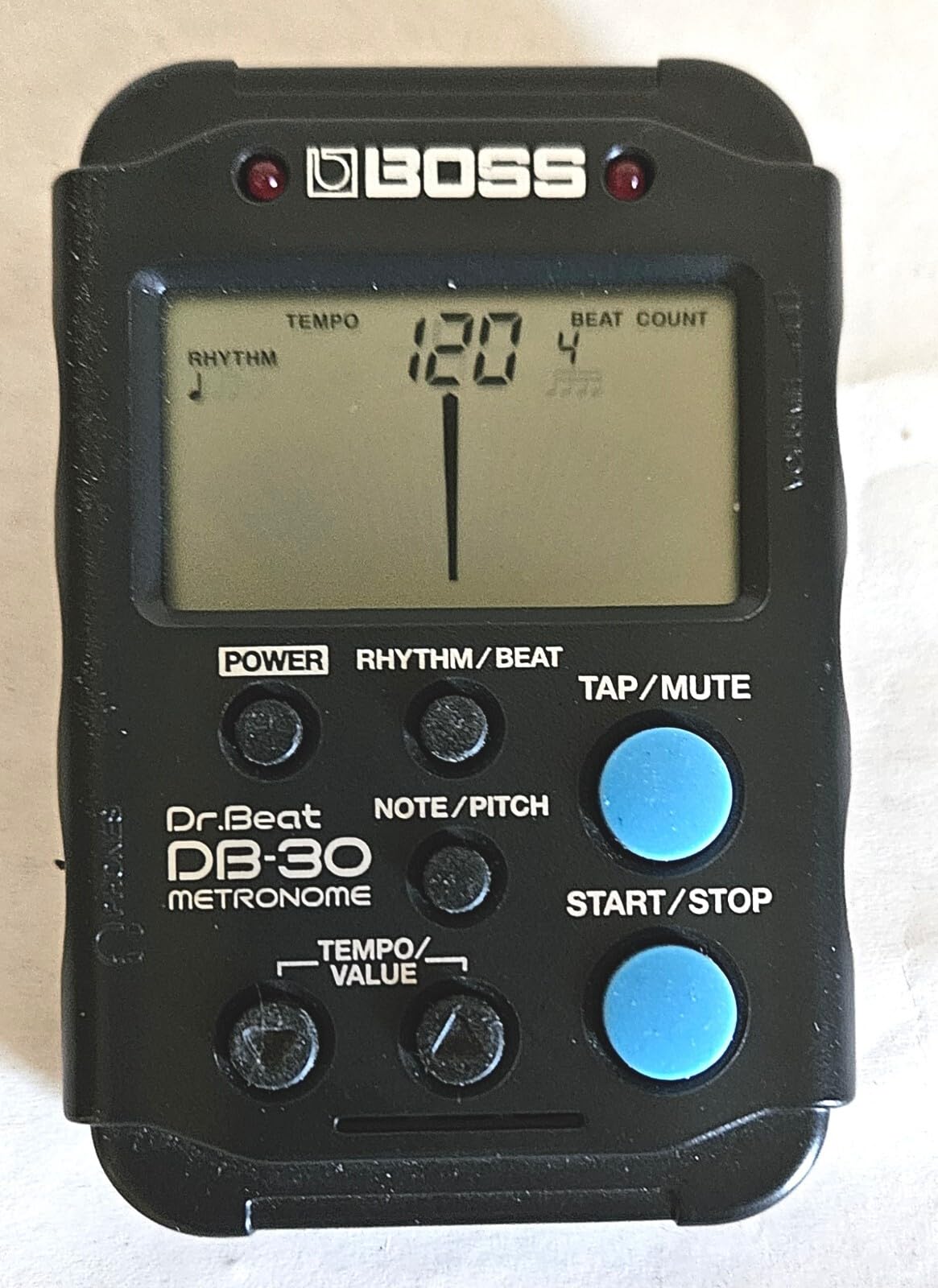
The headphone jack is the deal-breaker for apartment dwellers. Plug in earbuds and you can practice paradiddles on a practice pad at midnight without bothering a roommate. The auto power-off saves the battery if you forget to switch it off after a session.
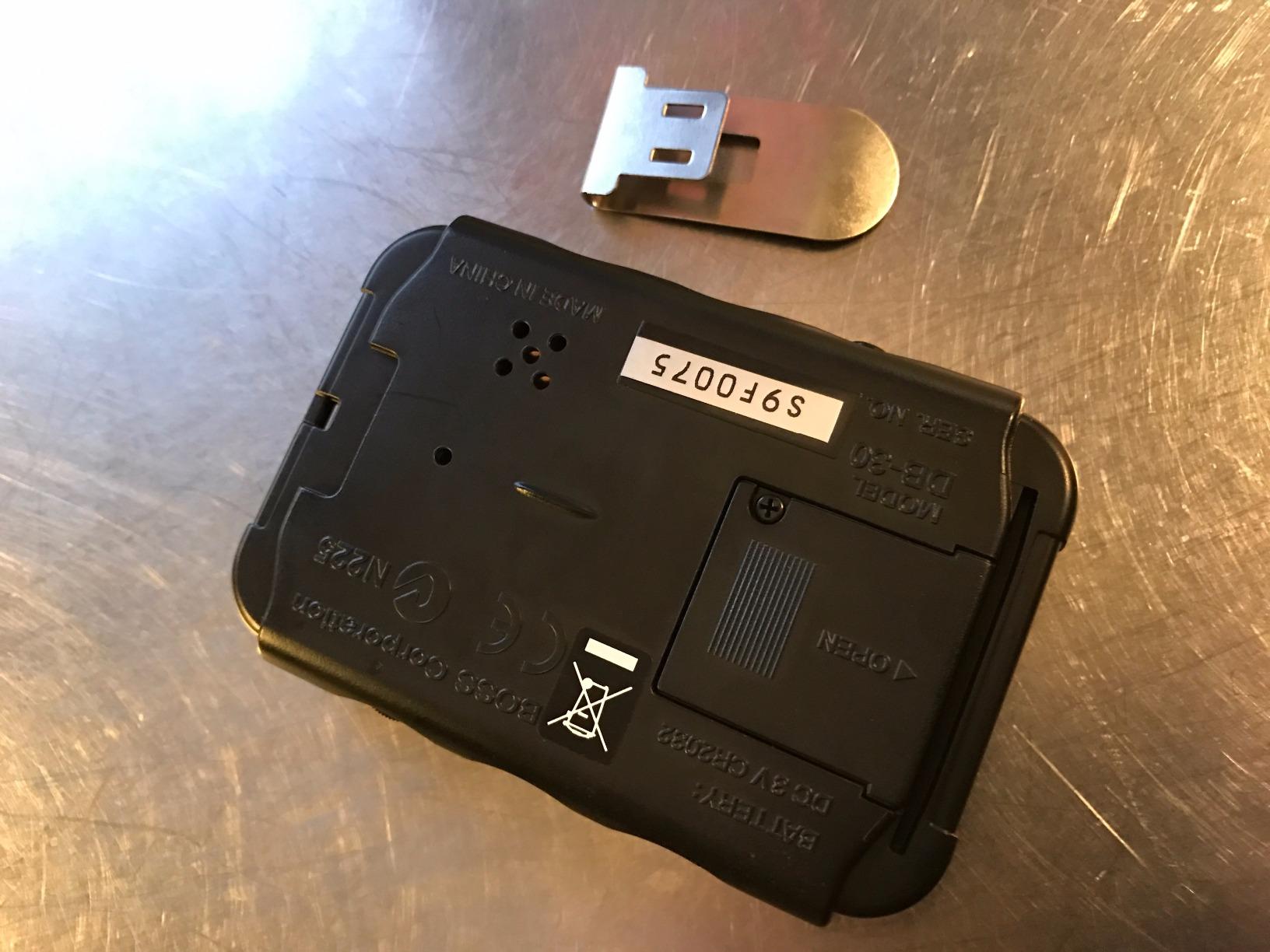
BOSS built the DB-30 ruggedly. It’s the kind of metronome that survives a drumstick accidentally clattering onto it, which is a real-world consideration for percussion students. The clip on the back attaches to a belt or shirt pocket for hands-free setup.
The headphone output is non-gradual, which means jumping from low volume to too-loud in one step. The speaker is also a little quiet for full band rehearsal volumes. For practice and small group work, it’s plenty. For a 60-piece marching band, look at the Korg MA-2.
Best for drumline and percussion students
The odd time signature support covers the meters you’ll actually see in concert band, jazz ensemble, and drumline charts. Drummers who need to nail a 7/8 groove or a 5/4 jazz pattern will appreciate the precision.
Best for apartment drumming
The headphone jack turns the DB-30 into a silent practice tool. Plug into earbuds, hit a practice pad, and you can drill rudiments at any hour without driving your neighbors crazy.
10. LEKATO Rechargeable Metronome Tuner – Best Pocket-Sized Rechargeable
LEKATO Rechargeable Metronome Tuner 3-in-1 Digital Metronome Vocal Count
Vocal counting
30-250 BPM
Folding kickstand
Pros
- 3-in-1 tuner
- metronome
- and tone generator in pocket size
- Human voice beat function aids beginners
- 30-250 BPM with tap tempo and 0-6 beats per measure
- Large LCD color display with folding kickstand
- Built-in rechargeable lithium battery
Cons
- External clip pickup is lower quality than internal mic
- Instructions are sparse and hard to follow
The LEKATO Rechargeable is the most pocket-friendly 3-in-1 device I tested. The whole unit fits in a hand and weighs 5.3 ounces, which is roughly the size of a deck of cards. Students who want to toss a metronome in a pencil case or small bag pocket will appreciate this form factor.
The vocal counting feature works like the Sondery, calling out beats audibly for students who struggle to track subdivisions. The 30 to 250 BPM range covers most repertoire, and the A0 to C8 tuning range handles every standard concert and band instrument.
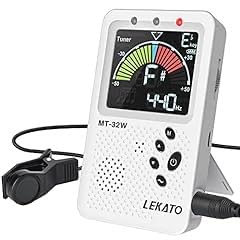
The folding kickstand on the back lets the metronome sit on a music stand at a comfortable angle, and the headphone jack supports silent practice. I charged it once and got two full weeks of daily practice before it needed a top-up.
The color screen is bright and the menu navigation is straightforward once you get past the sparse instruction sheet. I had to figure out some functions by experimentation, but the basics were obvious within a few minutes.
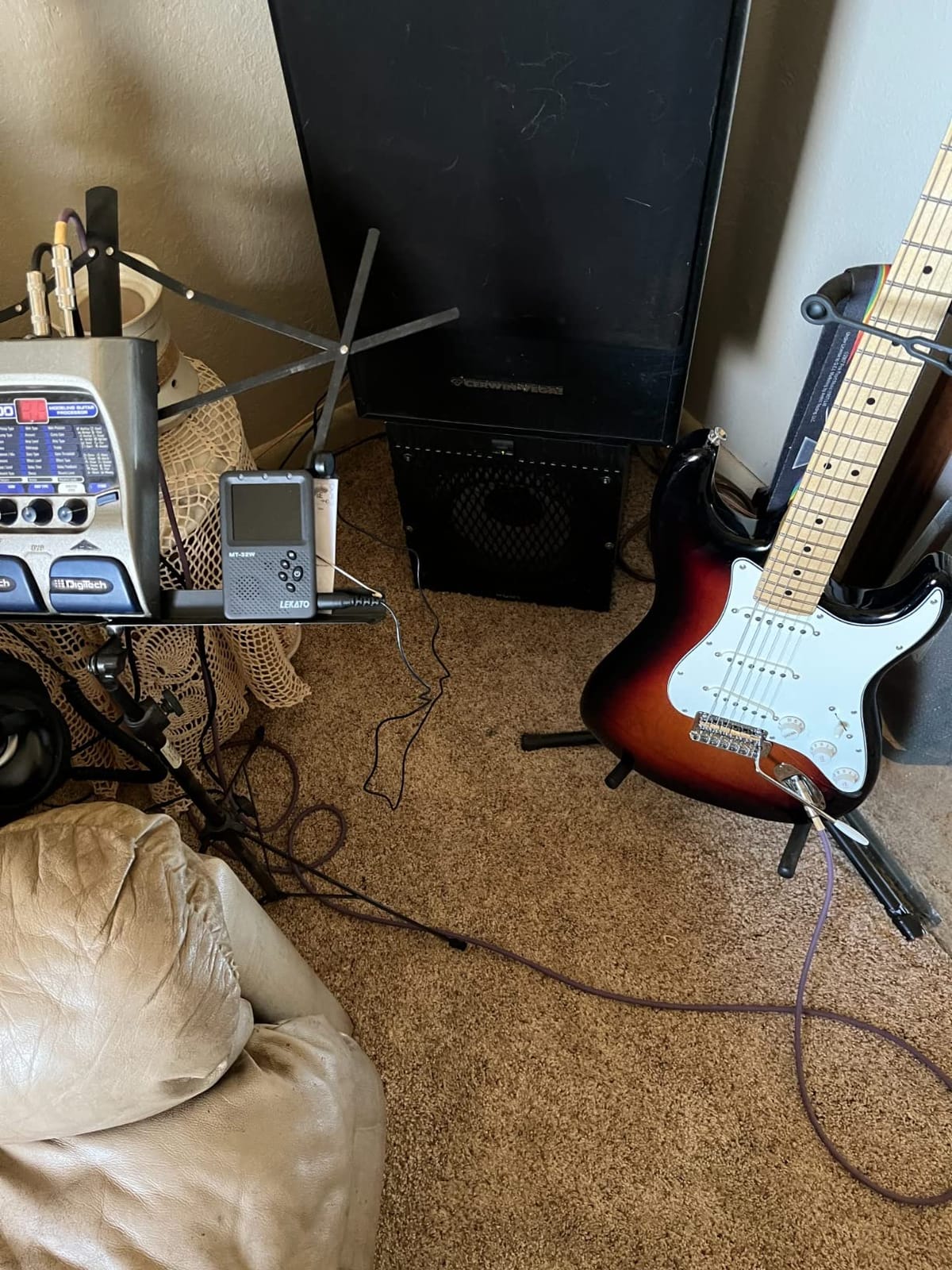
The bundled clip-on pickup microphone is lower quality than the internal microphone, so I ended up using the internal mic for most testing. The rechargeable battery also drains a bit faster than some competitors, though overnight charging handled it fine.
Best for students who carry minimal gear
If you want a metronome, tuner, and tone generator in something that fits in a small bag or even a large pocket, the LEKATO is hard to beat. The rechargeable battery means one less device relying on disposable AAs.
Best for guitar and bass students on the go
The clip-on pickup works for guitar and bass in a pinch, and the internal microphone handles acoustic instruments. Students playing in school bands and lessons can use the LEKATO across multiple settings without swapping devices.
How to Choose the Best Metronome for Your Music Studies?
Picking the right metronome comes down to matching the device to your instrument, practice environment, and study level. The options on this list fall into three broad categories, and the right one for you depends on what kind of practice you do most days.
Mechanical vs digital metronomes
Mechanical metronomes like the Tempi, Donner DPM-1, and Wittner 836 use a swinging pendulum and a wind-up spring. They don’t need batteries, they sound warm and acoustic, and the visible pendulum helps with internal timing. Digital metronomes like the Korg MA-2, KLIQ MetroPitch, and BOSS DB-30 offer precise tempo control, tap tempo, headphone jacks, and often built-in tuners. Neither type is objectively better. Mechanical gives you tactile feedback and a classic look, digital gives you precision and extra features.
Tempo range and BPM coverage
Most beginner repertoire lives between 60 and 120 BPM, so any metronome on this list covers your basic needs. Drummers and advanced classical students need the upper end covered too. The Donner DMT-01 hits 260 BPM, the Korg MA-2 and KLIQ MetroPitch reach 250 BPM, and most others cap around 208 BPM. For typical school band and graded exam work, 208 BPM is plenty.
Volume that cuts through acoustic instruments
Cheap digital metronomes are often too quiet against an upright piano or a strummed acoustic guitar. The Korg MA-2 has the loudest redesigned buzzer of any device on this list, which is why it’s the orchestra and band room favorite. If you practice with loud acoustic instruments, prioritize volume over fancy features.
Headphone output for shared housing
Students in dorms and shared apartments need a metronome with a headphone jack. Every digital device on this list has one, and the BOSS DB-30 is especially popular among drummers practicing on pads at midnight. Mechanical metronomes don’t have headphone outputs, so they’re better for solo practice where noise isn’t an issue.
Visual indicators and the pendulum display
Visual learners and kinesthetic students benefit from a swinging pendulum or flashing LED. The Korg MA-2 has a Pendulum mode that simulates this on screen, the Tempi and Donner DPM-1 have actual physical pendulums, and the BOSS DB-30 flashes an LED on each beat. Pick whichever visual cue feels most natural to track while playing.
Built-in tuners for one-device simplicity
String and guitar students especially benefit from metronomes with built-in tuners. The KLIQ MetroPitch, Seiko SQ50-V, Donner DMT-01, and LEKATO all combine tuning and tempo in one device. Less gear to carry between lessons means less to forget.
Battery life and charging
Disposable AA or AAA batteries are easy to find but easy to forget to replace. Rechargeable options like the Sondery and LEKATO cut that hassle, and the Korg MA-2’s 400-hour battery life means most students won’t swap cells all semester. Mechanical metronomes sidestep the whole issue.
For students playing in school bands, the Korg MA-2 or Korg TM-70T tuner-metronome are the safest picks. For pianists and string players doing graded exams, the Seiko SQ50-V or Wittner 836 are the teacher favorites. For drummers and percussion students, the BOSS DB-30 covers odd time signatures. For everyone else, the KLIQ MetroPitch handles three jobs in one device.
If you’re also shopping for an instrument to practice with, our guide to the best MIDI keyboards for music production covers the gear side of practice, and our picks for the best electric violins for students are worth a look for string students starting out.
Music students usually need more than just a metronome to succeed in lessons and practice sessions. If you’re also working on theory homework or recording practice takes, our picks for the best laptops for students and best tablets for students cover the note-taking and listening side. For students writing exams on web-based platforms, the best Chromebooks for students roundup is worth bookmarking.
Frequently Asked Questions
What is the best way to practice with a metronome?
Start slow, around 50 to 70 percent of the target tempo, so you can play the passage cleanly before adding speed. Use subdivisions (eighth notes, sixteenth notes) to lock your inner rhythm to the click. Isolate trouble spots and loop them at a slow tempo, then gradually increase BPM in small increments. Once the passage is clean, try playing along with the click but mentally turning it off to test your internal timing.
Do metronomes help with ADHD?
Yes, visual and vibrating metronomes give multi-sensory cues that help musicians with ADHD or focus issues stay locked to the beat. A swinging pendulum or flashing LED adds a visual anchor, while wearable vibrating metronomes provide tactile feedback without sound. For students who zone out during purely auditory practice, choosing a metronome with a strong visual or tactile cue makes a measurable difference in timing consistency.
What metronome do professionals use?
Professionals typically reach for the BOSS DB-90 for digital versatility and odd time signatures, the Wittner 811M or Taktell Piccolo for classical and traditional settings, and the Soundbrenner Pulse for live performance where vibration feedback matters. Conservatory pianists tend to use Wittner mechanical metronomes for their warm click and visual pendulum, while gigging guitarists and drummers prefer rugged digital models.
How long should you practice with a metronome?
Most teachers recommend 15 to 30 minutes of focused metronome work per session, focusing on the most demanding technical passages rather than the entire piece. Some students set a 25-minute Pomodoro-style block of metronome practice followed by a free-play segment to internalize the rhythm without the click. The Sondery digital metronome has built-in 15, 30, 45, and 60-minute timers that match common practice block lengths.
Are mechanical metronomes better than digital?
Neither is objectively better. Mechanical metronomes offer warmth, no batteries, and a visual pendulum that helps with internal timing. Digital metronomes offer precision, tap tempo, headphone jacks, and often built-in tuners. Classical piano and string students often prefer mechanical for the warm click and elegant look, while ensemble players and drummers prefer digital for the loud output and rhythm patterns.
What BPM should a beginner practice at?
Beginners should practice at 50 to 70 percent of the target tempo, starting around 60 to 80 BPM for most pieces. If a song is marked at 100 BPM, start at 60 BPM and play it cleanly several times before inching the tempo up by 4 to 5 BPM at a time. Rushing the tempo is the most common beginner mistake, and slowing down is the fastest way to fix it.
How much does a good metronome cost?
A reliable student metronome runs from budget options like the Donner DMT-01 up through the Korg MA-2 and Seiko SQ50-V. Pro picks like the BOSS DB-90 and Wittner 811M sit higher on the price ladder. For most music students, the mid-range covers everything needed for daily practice, graded exam prep, and ensemble rehearsal without paying for features they will not use.
Final Verdict: Which Metronome Should a Music Student Buy in 2026?
The KLIQ MetroPitch earns the editor’s choice spot for being the best metronome for music students overall, covering tuning, tempo, and tone generation in a single pocket device that has earned over 7,000 reviews. For classical piano students, the Seiko SQ50-V is the teacher-trusted choice with a tactile rotary dial. For orchestra and band students, the Korg MA-2’s loud buzzer and 400-hour battery life are hard to beat. For drummers, the BOSS DB-30’s odd time signature support makes complex rhythms approachable.
Pick the metronome that matches the instrument you play and the practice environment you live in. A mechanical Wittner or Tempi will outlast every rechargeable competitor if you practice at home with no noise complaints. A digital Korg or Donner will handle ensemble work and silent headphone practice if you’re in a dorm or apartment.
The most important thing is to use the metronome consistently. Start slow, build up gradually, and let the click anchor your internal timing so you can eventually play without it. Any of the ten picks on this list will get you there.