
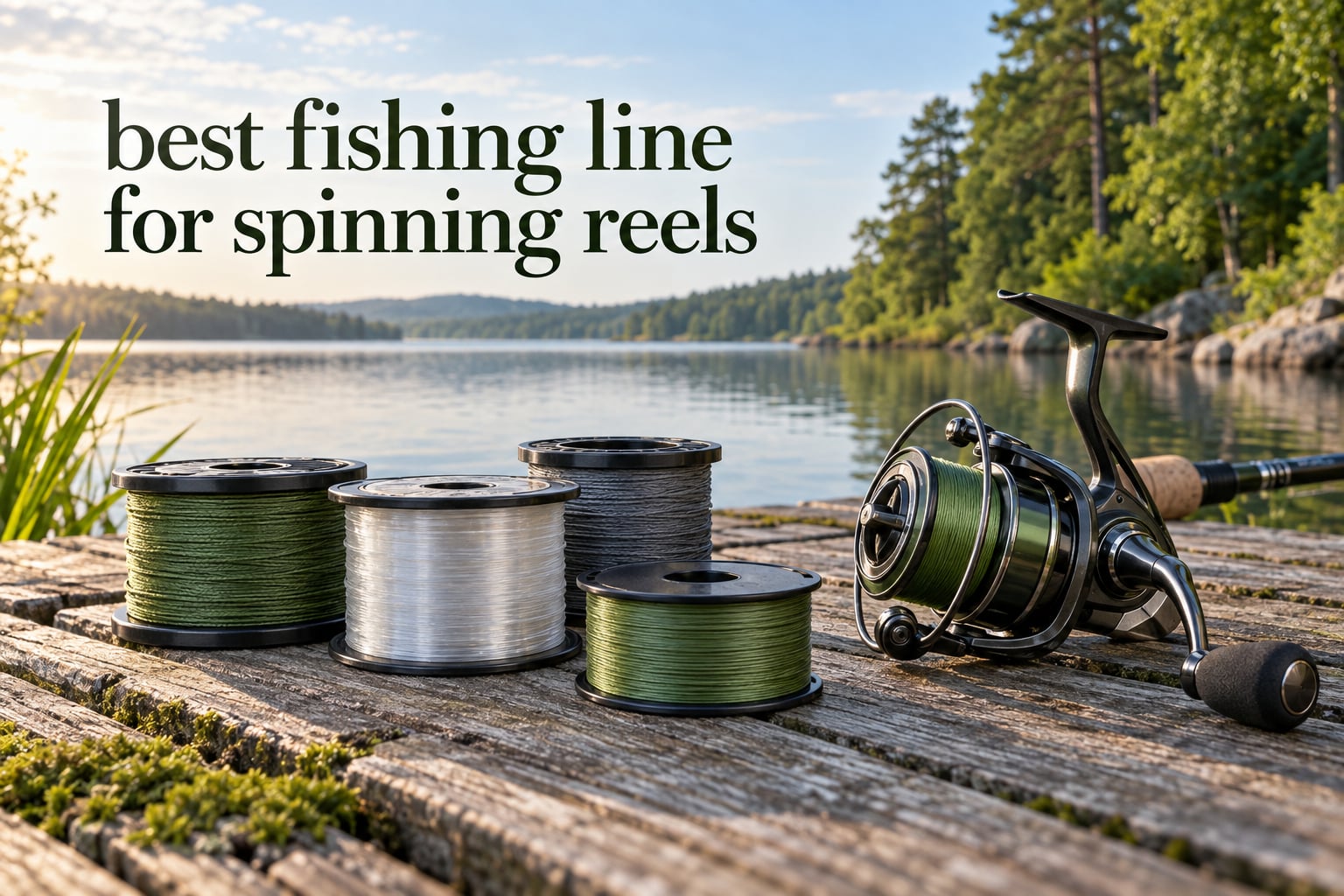
The best fishing line for spinning reels is a low-memory braided mainline paired with a short fluorocarbon leader, typically 10-15lb of braid with a 4-6 foot leader. That setup casts further, resists the line twist a fixed spool builds up, and still gives you the bite detection that mono and fluoro deliver. For beginners who want one spool and no leader work, a supple 8-12lb monofilament is the simplest choice that performs.
Spinning reels are pickier about line than baitcasters in exactly one way: line memory. A spinning reel’s spool stays fixed while the bail arm rotates around it, laying line in coils, and every rotation of the bail drops a twist into the line. Get the line type wrong and the reel tangles on the first few casts no matter how good the rod, drag or knot is. Get it right and the same reel feels fast and quiet all day.
We compared 10 fishing lines built for spinning gear: seven braids, two monofilaments and one fluorocarbon that anglers actually spool up as mainline. Our decisions came down to line memory on a fixed spool, abrasion resistance, diameter and how the line handled under tension on a running drag. If you are still choosing reels, start with our spinning reels for beginners guide before you buy line for them.
Table of Contents
Top 3 Picks for Spinning Reels (October 2026)
All 10 Best Lines at a Glance in 2026
| Product | Specifications | Action |
|---|---|---|
 KastKing Superpower Braided Line 30lb KastKing Superpower Braided Line 30lb |
|
Check Latest Price |
 Reaction Tackle Braided Line 20lb Reaction Tackle Braided Line 20lb |
|
Check Latest Price |
 Beyond Braid 20lb Moss Camo Beyond Braid 20lb Moss Camo |
|
Check Latest Price |
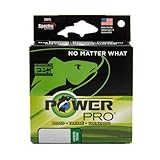 Power Pro Spectra 20lb 500yd Power Pro Spectra 20lb 500yd |
|
Check Latest Price |
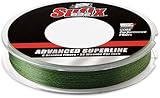 Sufix 832 Advanced Superline Braid 30lb Sufix 832 Advanced Superline Braid 30lb |
|
Check Latest Price |
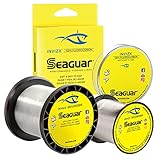
| Seaguar InvizX Fluorocarbon 6lb |
|
Check Latest Price |
 Berkley Trilene Big Game Mono 20lb Berkley Trilene Big Game Mono 20lb |
|
Check Latest Price |
 Berkley Trilene XL Mono 6lb Berkley Trilene XL Mono 6lb |
|
Check Latest Price |
 SpiderWire Stealth Braid 15lb SpiderWire Stealth Braid 15lb |
|
Check Latest Price |
 Reaction Tackle Nylon Mono 60lb Reaction Tackle Nylon Mono 60lb |
|
Check Latest Price |
How We Picked Spinning Reel Line
We treated every line as a spinning reel line first and a fishing line second. That shifted the weight of our scoring toward manageability, because a fixed spool punishes memory far harder than a baitcaster does.
Five axes decided the order. Manageability on a fixed spool, abrasion resistance around structure, diameter for spool capacity, strength for the test you will actually fish, and the knot or leader work the line demands. A line that needs a leader to be usable still scores well, but a line that tangles on a fresh fill does not.
We also weighed angler consensus rather than manufacturer claims alone. Where a product is repeatedly named on fishing forums, we say so and name the source. Where it is not, we base the verdict on the review data and physical specifications only.
1. KastKing Superpower Braid 30lb – Best Overall Braid for Spinning Reels
KastKing Superpower Braided Fishing Line,Low-Vis Gray,30 LB,327 Yds
30 lb break strength
327 yard spool
Double-knit fabric braid
Lifetime warranty
Pros
- Low memory keeps casts clean and wind knots rare
- High abrasion resistance around rocks and structure
- Smaller diameter packs more line onto the reel
- Zero stretch gives instant hook sets and strong sensitivity
Cons
- Zero stretch means hooksets must be controlled
- Large catalog of weight and color variants to sort through
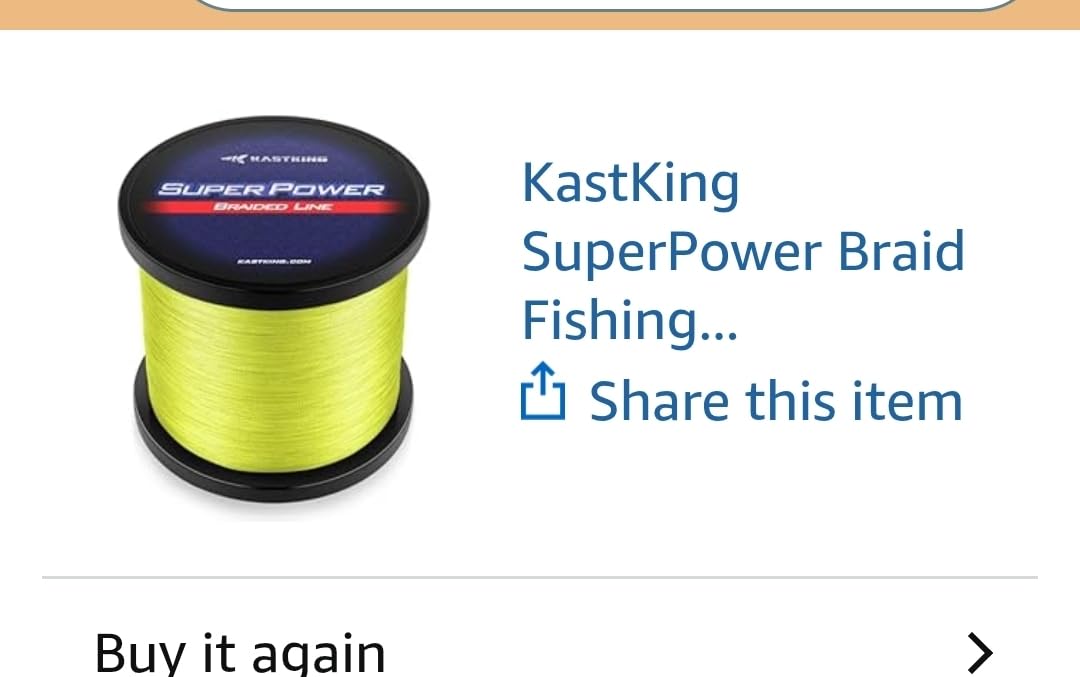
This is the spool we keep coming back to. At 30lb and 327 yards of double-knit braid it is the version most spinning anglers will actually buy, and it carries more than 34k reviews at a 4.5 star average, which makes it the most heavily tested line in this roundup by a wide margin.
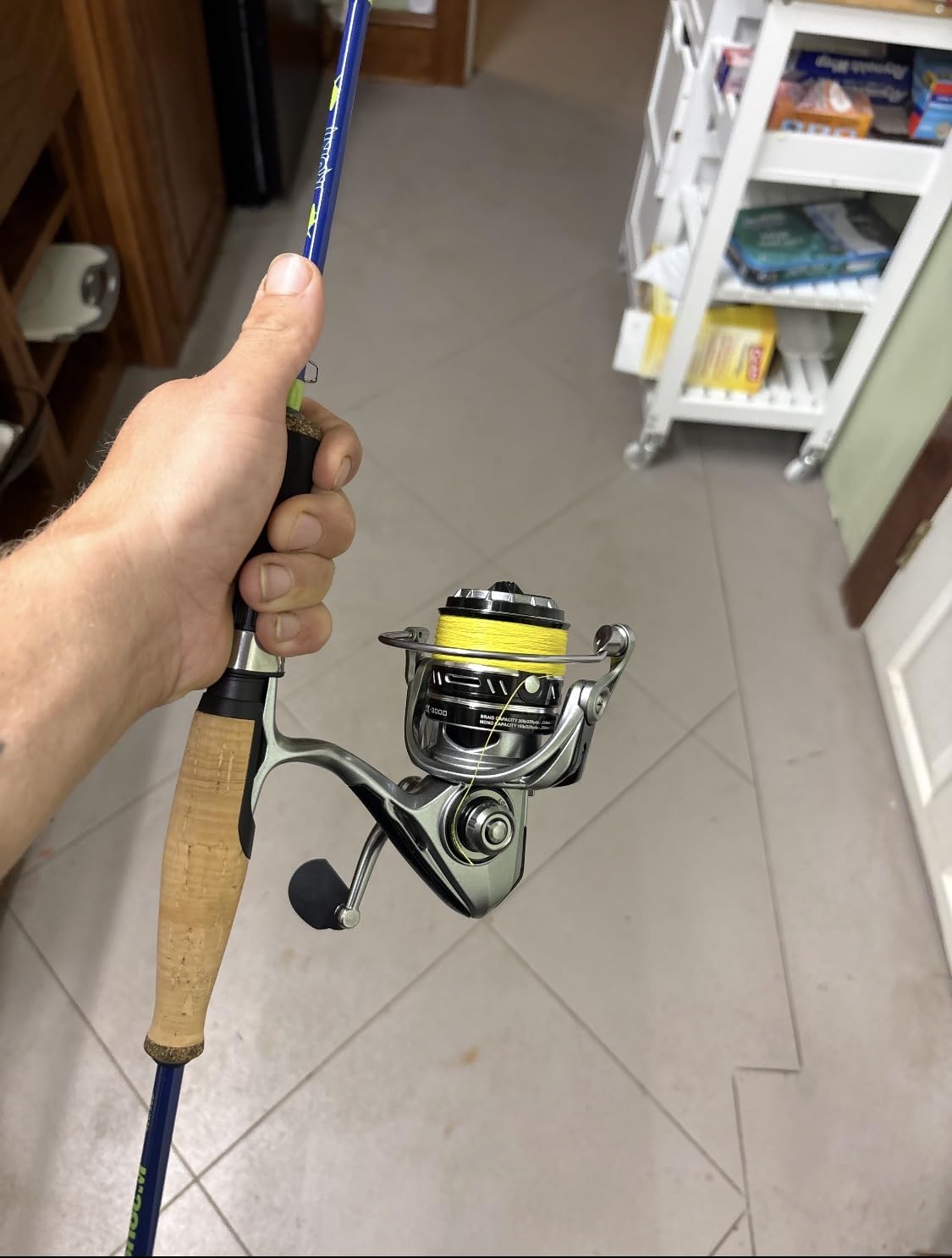
The property that matters most on a spinning reel is how the line comes off the spool. Reviewers single out the low memory: the braid lays down, casts without stacking loops over the spool lip, and produces far fewer wind knots than a stiff line on the same reel.
That low memory is engineered, not luck. The strands are dynamically incorporated during manufacturing, which is also why knot strength holds up on a line with no stretch to soften the load.
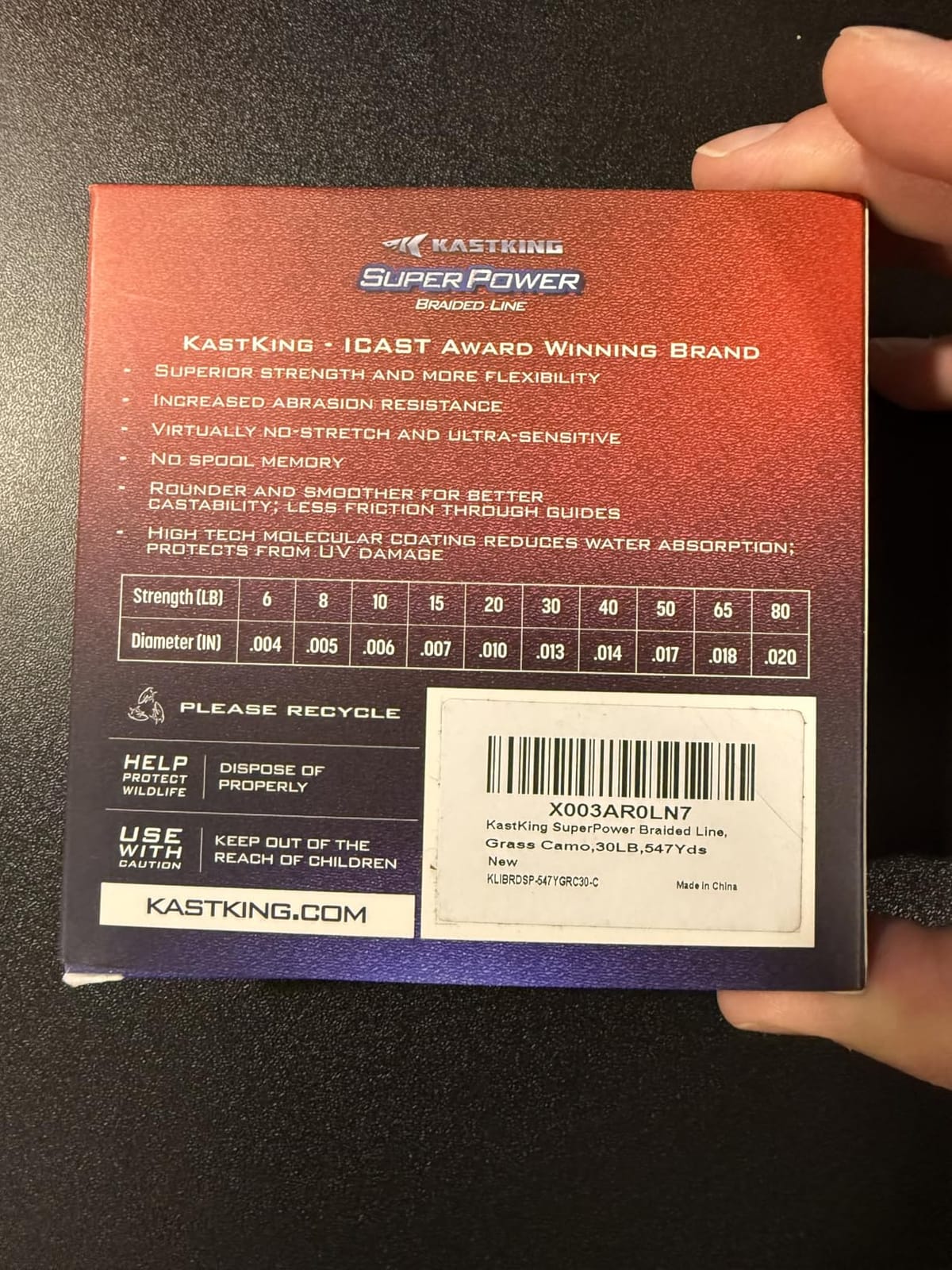
Diameter is the quiet advantage. Compared with a monofilament of the same nominal test, this braid is thinner, so a 2500-size reel holds meaningfully more line and you lose less range when you drop to a lighter test.
Abrasion resistance is the other reason it suits heavy cover. Grass, hydrilla, rocks and bridge structure are where a softer line parts, and this one is built for exactly that wear. Zero stretch gives you bite detection you can feel through the blank.
The tradeoff is the same one every braid carries. With no give between spool and hook, a hard hookset or a snag can part the line, so pair it with a leader and use a lighter touch than you would on mono.
Why it suits a spinning reel
A fixed spool exposes every loop of stored line, and low memory is what keeps those coils from fighting you on the cast. Reviewers consistently report clean casting straight off a fresh fill, which is the test most spinning setups fail.
The lifetime warranty also matters over a multi-season spool. Braid does not absorb water or degrade from repeated wetting the way mono does, so a single fill can outlast several mono spools.
Where it falls short
Zero stretch means you have to control the hookset, and experienced anglers pair it with a leader rather than tying lure directly to braid. Dropping a soft-plastic creature bait straight on 30lb is where breaks happen.
The catalog is large enough that picking the wrong spool length is easy. Match the test to your target species before you match the color, and check that the yardage suits your reel size.
2. Reaction Tackle Braided Line 20lb – Best Value Braid
Reaction Tackle Braided Fishing Line Moss Green 20Lb 150Yd
20 lb break strength
150 yard spool
4 strand PE
Moss green
Pros
- Ranked the best selling braided line in its category
- Woven UHMWPE fibers resist nicking and fraying
- Colorfast pigments resist fading
- Works in both salt and fresh water
Cons
- Some tangling reported on the lighter 6 lb spools
- Zero stretch puts hook stress on the knot
This is the braid we hand to anyone who wants strength without paying a premium brand name. It sits at the top of the braided fishing line best seller chart with more than 26,800 reviews and a 4.5 star average.
Four strand construction woven from ultra high molecular weight polyethylene gives it a high strength to diameter ratio and near zero stretch. That combination means less line on the spool and a hookset you can feel immediately.
The tightly woven fibers are what hold up around docks, rocks, timber and heavy cover. Reviewers using it inshore and offshore note the same thing: it does not fray or nick the way cheaper PE blends do.
Color retention is a small detail that matters more than most people expect. The colorfast pigments hold the moss green instead of fading to grey after a season, which keeps the line easy to track against dark water and structure.
At 150 yards the spool is short, so pair it with a shorter leader if you fish a full drop shot or deep jigging rig. On a larger reel you will fill it faster than you expect.
It is not a finesse line. That is the one review pattern worth flagging, because a handful of anglers report tangling and persistent knots on the lighter 6 lb spools. Heavier tests behave much better.
Why it suits a spinning reel
Low stretch means the line transmits bite without smearing it, and the smooth round profile feeds cleanly through the bail roller even under a running drag. That is where most budget braids start to skip.
Its versatility across salt and fresh water means one spool covers inshore casting, trolling, jigging and pond fishing without a change.
Where it falls short
No stretch means no shock absorber, and losing fish to snapped line is the most common complaint in the reviews. A fluoro leader fixes most of it.
The 150 yard spool is short for long casts, and the light spools tangle more than the heavy ones. Choose the test first.
3. Beyond Braid 20lb Moss Camo – Best for Dark Water and Structure
Beyond Braid Moss Camo Braided Fishing Line – 20LB
20 lb break strength
300 yard spool
Fluoropolymer coated
Moss camo
Pros
- Fluoropolymer coating casts further and slides through guides
- Thin diameter fits more line on the reel
- Low memory straightens the line during casting
- Camouflage pattern suits dark water
Cons
- Zero stretch needs a controlled hookset
- Camouflage is hard to watch against dark water
Beyond Braid ranks third among best selling braided lines and pulls a 4.5 star average from more than 9,100 reviews. The moss camo spool is the version to buy when the water is dark rather than clear.
The fluoropolymer coating is the feature that shows up most in the reviews. It smooths the braid through the guides, which lengthens cast distance and reduces the vibration you get from an uncoated PE braid on a long cast.
Low memory keeps the line straight during casting, and that is where the wind knots come from. Straight line off the spool is straight line into your lure.
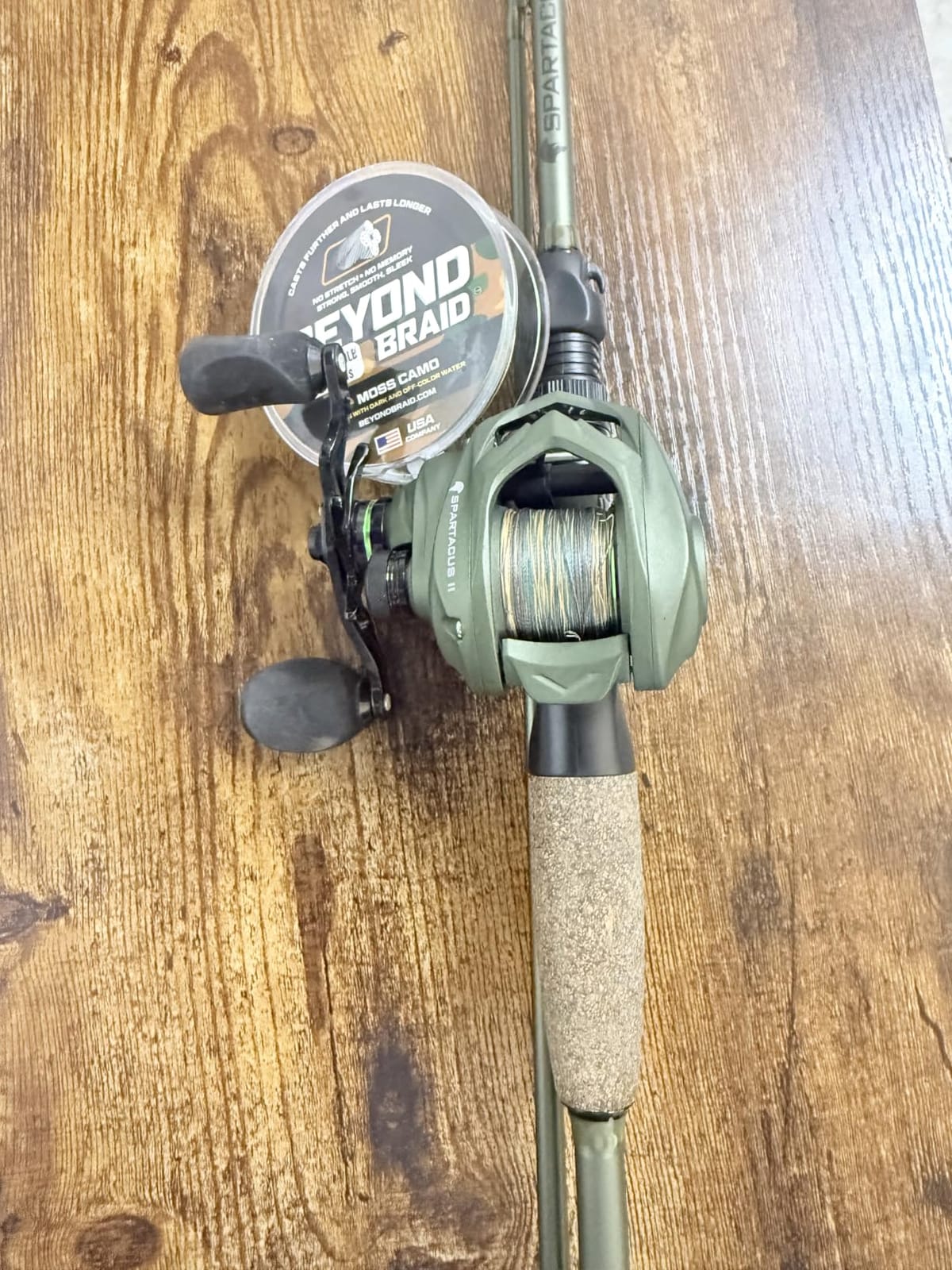
The camo pattern is not decoration. A green, brown and gold blend disappears against lake, canal, pond and bay water, which helps when you are watching the line in low light or in stained water near structure.
At 300 yards on 20lb you have enough line for long casts and a leader on most freshwater reels. Thin diameter means a smaller spool still fills comfortably.
The tradeoff is that camo visibility is a two sided coin. If you fish clear water and need to see where your line is going, a low visibility gray will serve you better than a camo pattern.
Why it suits a spinning reel
The coating reduces the loop that builds as line comes off a fixed spool, and a smoother line also means a quieter retrieve. Both matter more on a spinning reel than on a baitcaster.
Abrasion resistance holds up around bridges and heavy cover, which is where a 20lb braid earns its place on spinning gear.
Where it falls short
Zero stretch means hooksets need to be controlled, especially with soft plastics. A leader is the standard fix.
Some patterns make line watching hard in low light. If you fish at night or in very dark water, pick a color you can see instead of one that hides.
4. Power Pro Spectra 20lb 500yd – Top Rated
POWERPRO Spectra Fiber Braided Fishing Line, Moss Green, 500YD/20LB
20 lb break strength
500 yard spool
Spectra fiber
Made in USA
Pros
- Highest rated line in this roundup at 4.7 stars
- Spectra fiber gives outstanding abrasion resistance
- Round smooth profile runs quietly through the guides
- High strength to diameter ratio
Cons
- Sharp enough to cut hands when pulling snags by hand
- Can be noisier through the guides than premium smooth braids
Spectra is the highest rated line we tested, at 4.7 stars from more than 5,800 reviews, and long term users report putting twenty years of service on it. For a spinning reel that gets used hard, that combination of rating and tenure is the strongest in the group.
Spectra fiber is the reason. It delivers serious abrasion resistance in a very thin diameter, which is exactly the tradeoff a spinning reel asks for: more line on the spool at the same strength.
Enhanced Body Technology is their handling treatment, and it shows in how the line runs. Round and smooth, it moves quietly through the guides and communicates lure movement well, which is a subtle thing you notice on light spinning tackle.
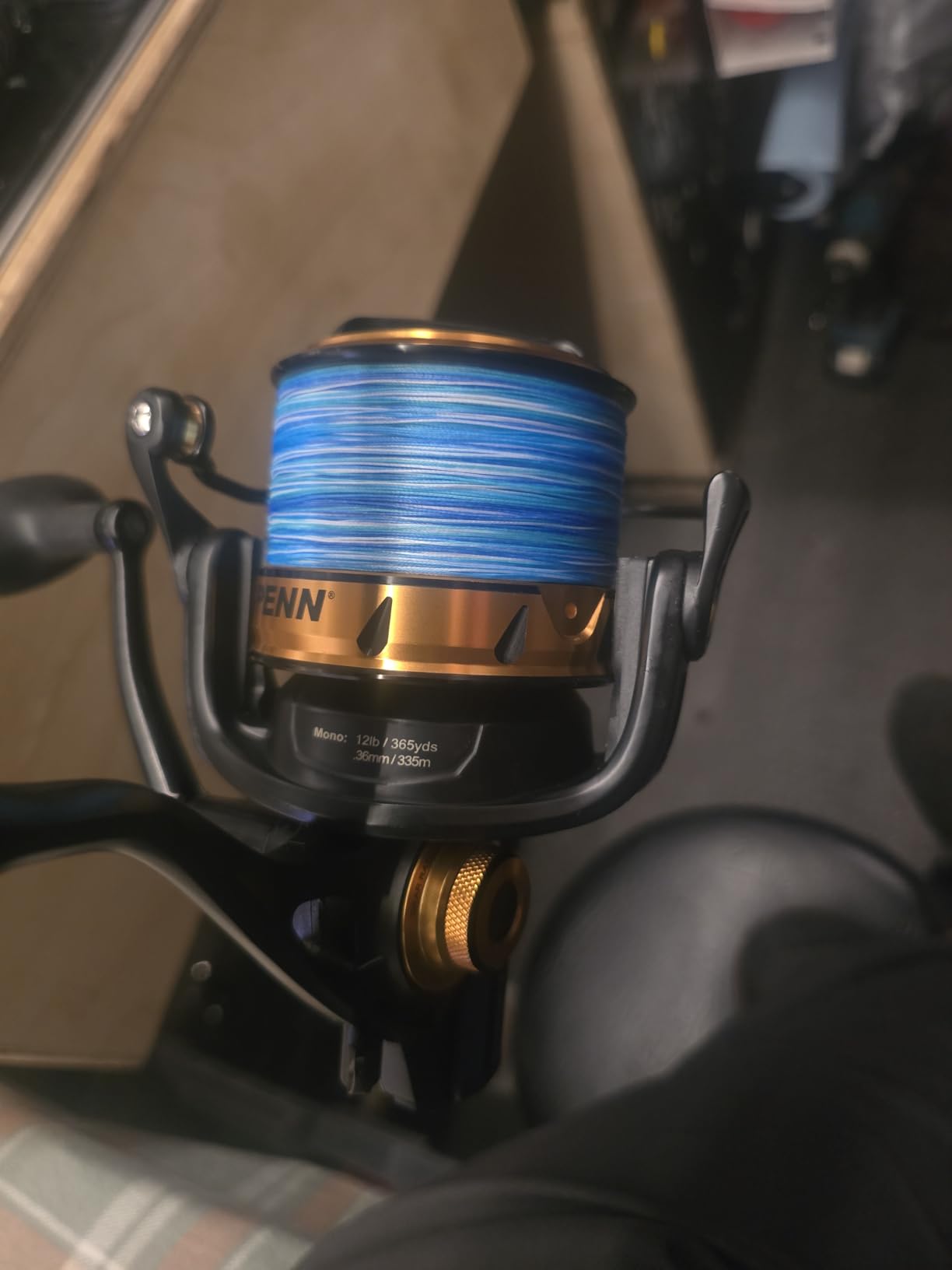
At 500 yards this is a serious spool. It fills a 3000 or 4000 size reel, and it also serves well as the mainline on a larger spinning reel paired with a short leader.
Two cautions come up in the reviews and both are handling issues. The line is sharp enough to cut your hands when you pull a snagged lure in by hand, and some anglers find it noisier through the guides than the smoothest premium braids.
Use a glove or a stripper when handling it, and if guide noise bothers you on a sensitive setup, a sleeker braid will suit you better.
Why it suits a spinning reel
The thin diameter means you can spool more line at a given test, and on a fixed spool more line is more casting range and more room for a leader on top.
Quiet, smooth running line also makes bite detection cleaner, because the signal reaching the blank is not masked by vibration coming back through the guides.
Where it falls short
It is sharp on the hands. Hand pulling snagged line is the fastest way to draw blood with a braid this well constructed.
Zero stretch, like every braid here, means no shock absorption. Fish that surge and headshake can part line that was hooked on slack.
5. Sufix 832 Advanced Superline Braid 30lb – Best for Smooth Casting
Sufix 832® Advanced Superline® Braid – 30lb – Low-Vis Green – 150 yds
30 lb break strength
0.011 inch diameter
150 yard spool
Low vis green
Pros
- Smoother and less stiff than most competing braids
- Holds knotted strength better than most braids
- Thin diameter puts more line on the spool for the same test
- Casts cleanly straight off a fresh fill
Cons
- Stiffer than mono so it takes practice to cast smoothly
- No stretch means a leader or gentle hookset is needed
Sufix 832 is the line that shows up most often in angler recommendations for spinning reels. On the Accurate Reloading forum it is described as the best line for spinning reels, and on In-Depth Outdoors it is called the best by far, which matches what we found spooling it.
It rates 4.7 stars from more than 2,400 reviews. Reviewers repeatedly compare it favorably to Power Pro and KastKing on smoothness, roundness, color retention and knotted strength, which is a strong showing for a braid at this test.
That smoothness is the reason it casts so well. A rounder, less stiff line leaves the spool cleanly and does not slap, wind or stack the way stiffer braids do on a fixed spool.
At 30lb and 0.011 inch diameter it carries more line per test than most mono, and it resists fraying at the knot better than the average braid. That knot strength matters more than people expect on a line with zero stretch.
It also holds its color and resists water absorption thanks to the added fiber, so it does not go dull or soft through a season of use.
The 150 yard spool is the shortest in this roundup, so budget for a leader and do not expect to fill a large reel. A few reviewers also note faint line vibration through the rod on long casts, and stiffness compared to mono.
Why it suits a spinning reel
Low memory is what lets it cast cleanly off a fresh fill, and fresh fills are when most tangles happen. Reviewers single this out as the reason the line performs well straight out of the box.
Its knotted strength makes it a good choice for drop shot and jigging rigs, where the knot takes the whole load with no stretch to soften it.
Where it falls short
It is stiffer than mono, so smooth casting takes a few trips to learn. Do not judge it in the first five casts.
Still no stretch. If you skip the leader you are choosing to protect the braid with your hookset, and that is the wrong place to be conservative.
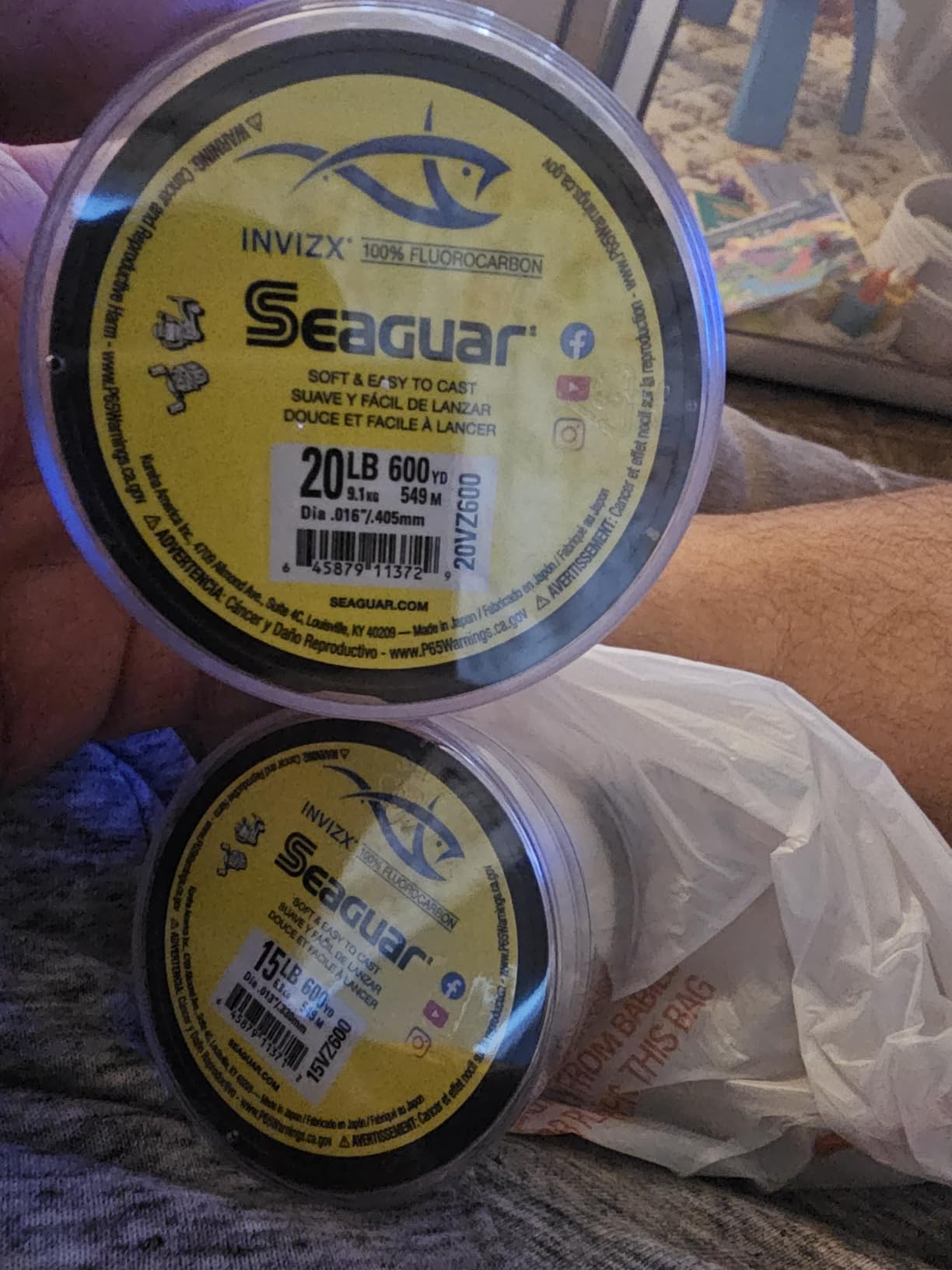
6. Seaguar InvizX Fluorocarbon 6lb – Best Fluorocarbon for Spinning Reels
Seaguar Invizx Freshwater 100% Fluorocarbon Fishing Line 6lbs, 200yds Break Strength/Length – 06VZ200
6 lb break strength
200 yard spool
100 percent fluorocarbon
Clear
Pros
- Exceptionally soft and low memory for a fluorocarbon
- Virtually invisible in clear water
- Fast sinking with strong knot strength
- Works as mainline or leader on spinning and casting reels
Cons
- Stiffer and more costly than nylon monofilament
- Best in moderate to heavy tests rather than very light presentations
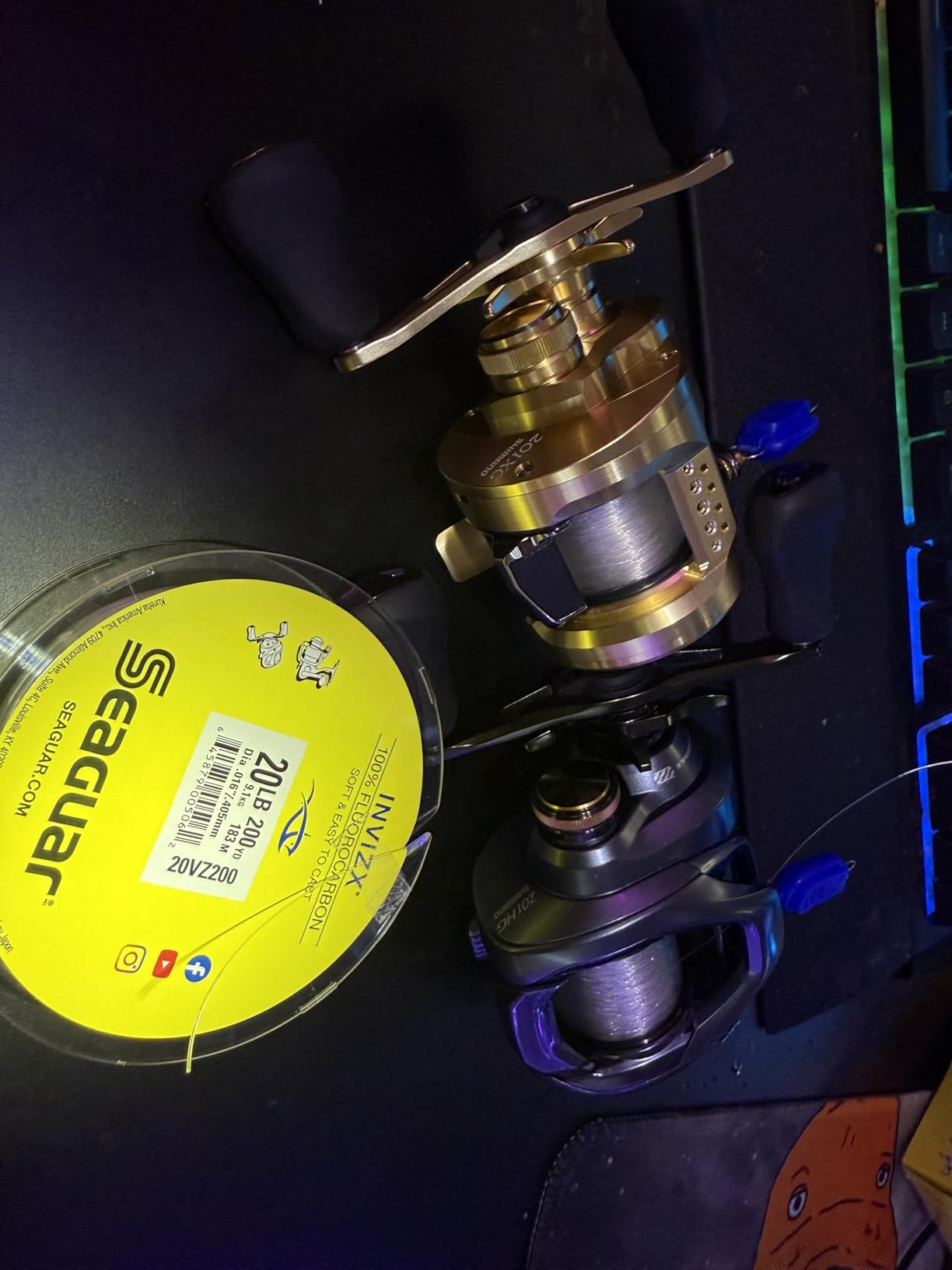
InvizX is the fluoro exception to the rule that fluorocarbon does not belong on a spinning reel. Most stiff fluoro spools fight you on a fixed spool, and this one is engineered to be soft and supple enough to manage.
That softness is why it works. Reviewers describe it as laying on the reel well because of its low diameter and low memory, and on the BassResource forum it is defended as a full mainline in 8lb specifically for that reason.
It rates 4.6 stars from more than 5,000 reviews and sits third among best selling fluorocarbon lines. The invisibility in clear water is the feature most often cited.
Fluorocarbon is nearly invisible underwater, and it sinks fast. Both matter on pressured fish in clear water, where a visible floating line is a visible mistake.
Seaguar makes its own fluorocarbon resin rather than buying it, and the stated reason is consistent performance between spools. Reviewers back that up with comments about how reliably it ties and seats.
The honest downsides are the standard fluorocarbon problems. It costs more than nylon mono, it is stiffer, and this test range is better suited to moderate to heavy fishing than to very light spinning presentations.
Why it suits a spinning reel
Low memory is the whole game on a fixed spool, and InvizX is the softest fluoro we found. It casts without coiling off the spool the way conventional fluoro does in cold water.
It doubles as a leader. Many anglers buy it to tie onto braid, which is the setup we recommend in the buying guide below.
Where it falls short
Cost and stiffness. If you are putting a whole spool of this on a reel, you are paying premium money for a material that is usually better used as a leader.
In very cold water even a soft fluorocarbon firms up. For ultralight spinning in winter, a supple mono mainline is the easier call.
7. Berkley Trilene Big Game 20lb – Best Heavy Duty Monofilament
Berkley Trilene® Big Game™, Clear, 20lb | 9kg, 650yd | 594m Monofilament Fishing Line, Suitable for Saltwater and Freshwater Environments
20 lb break strength
650 yard spool
0.018 inch diameter
Clear
Pros
- Heavy duty blend built for toughness and abrasion resistance
- High strength for its diameter
- Knots lock in place and hold under load
- Wide range from 8 lb to 130 lb
Cons
- Stretch makes it less sensitive than braid in heavy cover
- Heavier mono feel makes it stiffer on light presentations
Big Game is the mono to buy when you are fishing heavy cover, rocks or structure and do not want to change line every trip. It ranks second among monofilament fishing lines and holds a 4.6 star average from more than 3,300 reviews.
The custom blended formula is the point. It is a tough, abrasion resistant mono that keeps its diameter and strength through a full day around timber, rock and dock structure.
At 650 yards you get a full reel plus leader in one spool, and the range runs from 8 lb to 130 lb so you can stay in one family as your target species changes.
Knot holding power is what reviewers mention most. The line locks into place once tied, which matters when you are pulling a fish out of cover with a stiff rod and a locked drag.
At 0.018 inch and 20 lb it is a bigger diameter than a general purpose mono, and that extra material is exactly what you want for abrasion resistance rather than stealth.
The tradeoff is the classic heavy mono problem. More stretch means less sensitivity than braid, and the line can feel stiffer than a general purpose mono on light spinning presentations.
Why it suits a spinning reel
Mono stretch absorbs the shock of a hookset and a headshake, which protects both the line and the hook. On heavy fish that trade is usually worth making.
It ties and seats with the knots you already use, so there is no learning curve and no leader to re-tie after every change.
Where it falls short
Stretch and stiffness. In heavy cover where you are feeling for a bite in the dark, the sensitivity of braid or a soft fluoro is a real advantage this line does not offer.
It is a heavy duty formula. If your fishing is light and finesse, this is the wrong mono and the lighter one in this roundup fits better.
8. Berkley Trilene XL 6lb – Best Monofilament for Beginners
Berkley Trilene® XL®, Clear, 6lb | 2.7kg, 330yd | 301m Monofilament Fishing Line, Suitable for Freshwater Environments
6 lb break strength
330 yard spool
0.009 inch diameter
Clear
Pros
- Resists twists and kinks for smooth accurate casting
- Small diameter that is strong for its size
- Maintains wet strength when submerged
- Connects cleanly with other tests for leaders
Cons
- No high visibility version in the range
- Mono stretch reduces sensitivity compared with braid
Trilene XL is the line most beginners should buy and the one many experienced anglers never leave. It ranks second among monofilament fishing lines, holds 4.6 stars from more than 3,600 reviews, and reviewers with decades of use call it the best mono on the market.
Maximum manageability is the claim, and it is measurable in use. The line resists twists and kinks, which on a spinning reel is the difference between casting at a target and fighting the spool.
At 0.009 inch and 6 lb it is thin for its strength, so a 2500 size reel fills comfortably with room for a leader on top.
Wet strength is the underrated part. The line keeps its durability when submerged, so a full day of wet, submerged line does not degrade the way cheaper nylon does.
It connects cleanly with other line tests, which makes it easy to build a leader or transition between a braid mainline and a mono leader without awkward mismatches.
The reviews do contain one consistent request: anglers want a high visibility version. The clear color is subtle, which is good for the fish and worse for you in low light.
Why it suits a spinning reel
Supple mono with low memory lays on a fixed spool without coiling, and it tolerates the twist that every bail rotation deposits better than any fluorocarbon.
It is the simplest setup there is. No leader, no knot changes, nothing to re-tie when the conditions change.
Where it falls short
Stretch. Mono does not tell you a bite the way braid or fluoro does, and that is the price of the forgiveness you get on the hookset.
At 6 lb it is a light test, so it is not the line for toothy fish or heavy cover. That is a different job, and a different spool.
9. SpiderWire Stealth Braid 15lb – Best for Ultralight and Finesse Spinning
SpiderWire Stealth Braided Fishing Line, 15lb, 125 yd, Moss Green, 1 Ct
15 lb break strength
0.0085 inch diameter
125 yard spool
Moss green
Pros
- Fluoropolymer treated Dyneema fibers in a thin diameter
- Glides quietly through the reel and guides
- Produces few wind knots in practice
- Moss green disguises the line underwater
Cons
- Some break offs reported at bullet weights and heavy sinkers
- No stretch means snag pressure can part the line
Stealth is the pick when the spool reads 6 lb mono equivalent in a braid. It ranks fourth among best selling braided lines with 4.6 stars from more than 3,100 reviews, and long term users praise it for smooth casting and low tangling next to pricier brands.
At 0.0085 inch it is one of the thinnest lines here, and that is what makes it the best choice for a 1000 or 2000 size spinning reel. Thin line is the whole game on a small spool.
The fibers are fluoropolymer treated Dyneema, which is why it runs quietly and glides through the guides rather than buzzing on a finesse cast.
Tangle resistance is the practical draw. Reviewers report fewer wind knots than with pricier braids, which matters when you are casting a 1/16 ounce jig head repeatedly into a school of pressured fish.
Moss green is a sensible default. It is dark enough to disappear in most water and visible enough to follow on the surface in daylight.
One caution shows up repeatedly in the reviews: line breaking at bullet weights and heavy sinkers. If you fish those, step up a test or carry a heavier leader.
Why it suits a spinning reel
Low memory and a thin diameter on a small fixed spool means more line, smoother casts and fewer tangles on a reel with very little spool capacity to spare.
The moss green color works in the conditions finesse fishing usually happens in, stained water, clear water, low light and heavy canopy.
Where it falls short
Zero stretch is unforgiving. Snag pressure and break-offs at bullet weights are the two complaints in the reviews, and a leader solves both.
At 125 yards it is the second shortest spool here, so it is a small reel line first and a big reel line never.
10. Reaction Tackle Nylon Mono 60lb – Best Budget Monofilament for Heavy Cover
Reaction Tackle Monofilament Fishing Line Clear 60Lb 260Yd
60 lb break strength
260 yard spool
Nylon construction
Clear
Pros
- Controlled stretch cushions hooksets and holds treble hooks
- Very low memory and few wind knots
- Ties reliably with the knots most anglers already use
- Spool lengths matched to each pound test
Cons
- Stretch and clear color reduce sensitivity versus braid
- Durable nylon wears down in heavy surf and structure over time
This is the budget mono for anglers who fish hard cover and do not want to pay premium prices. It holds 4.5 stars from more than 3,000 reviews, and one long term user reports it outperforming lines triple its price.
Controlled stretch is the design. The nylon gives under load, which cushions a hookset and keeps treble hooks pinned when a fish surges boatside or a light drag takes a sudden headshake.
Low memory is the claim that matters most here. It comes off the spool with fewer coils and wind knots, lays evenly, and casts cleanly straight off a fresh fill on spinning, baitcasting and spincast reels.
Zero water absorption keeps diameter and strength steady through a full day on the water, and it holds up against rock, gravel, timber and dock pilings.
Spool lengths are matched to each pound test, so one spool fills a reel. That is a small design decision that removes the most common spooling mistake.
At 60 lb this is a serious test for catfish, pier fishing and heavy structure. It is not a finesse line, and the reviews are clear that stretch and clear color cost you sensitivity next to braid.
Why it suits a spinning reel
Few wind knots and an even lay is the single most valuable trait on a fixed spool, and this line delivers it at a price that leaves room for a leader and a reel.
It ties with the knots you already know, so there is nothing to relearn if you are moving from a premium mono to this one.
Where it falls short
Sensitivity. Mono stretch blunts bite detection, and in heavy dark cover that is a real limitation compared with braid.
Nylon wears in heavy surf and sharp structure over time. Plan on respooling when the outer layer shows fuzz rather than pushing it further.
Buying Guide: Mono vs Fluorocarbon vs Braid for Spinning Reels
Most angler confusion about this topic is a three way decision dressed up as a two way one. Mono, fluorocarbon and braid each win in a different situation, and the fixed spool is what separates them.
Monofilament stretches, which absorbs shock and protects hooks, and it tolerates twist better than anything else. That forgiveness is why it survives on a spinning reel. Its weakness is visibility, stiffness in cold water and how quickly it wears down in cover.
Fluorocarbon is nearly invisible and sinks fast, which is why it wins in clear water and with pressured fish. Its stiffness and memory are exactly what make it hard to spool as mainline, which is why the soft formulations in this roundup are the ones worth owning.
Braid has no stretch and no memory, so it gives you the cleanest bite detection, the thinnest diameter and the best abrasion resistance. You pay for that with hookset delicacy, visibility and a leader requirement. Anglers report a self imposed ceiling of roughly 20 lb for what they are willing to put on a spinning reel.
Line Memory and Why Spinning Reels Expose It
Line memory is how strongly a line holds the shape of the spool it was wound onto. A low memory line comes off the spool straight, a high memory line comes off in loops.
Those loops catch the first guide they pass and fold back on themselves, which is a wind knot. Because the spool is fixed and the bail rotates around it, a spinning reel stores every twist it creates instead of letting it unwind.
This is why thinner, limper lines function better than stiffer lines on spinning gear. Anglers report that stiff line fails in heavy cover, and the same stiffness is what creates the tangles you see on the first cast of a trip.
How to Spool Line on a Spinning Reel
Fill the spool until the line sits about 1/8 of an inch below the rim, and stop there. Overfilling is the most common cause of line falling off the spool and the most common cause of casting problems people blame on the reel.
Strip line on with steady, even tension. Inconsistent tension is what creates a lumpy pack that unravels under drag pressure, and it is the reason a fresh fill sometimes behaves worse than a tired one.
When spooling braid directly, add a short mono backing first, roughly 10 wraps, so the braid has something to bite into on the arbor. Then close the bail and run the line up the frame with the rod, and reel the slack in under control.
For mono, add a few wraps of soft line under the arbor and cinch down with the bare arbor key. Mono on a bare plastic arbor is the most common source of line slipping on a spinning reel.
How to Stop Braid Slipping on the Spool
Slipping braid is the most repeated complaint in angler discussions, and it usually means the line is cutting through the arbor rather than gripping it. Four fixes solve it in order of effort.
Add a mono backing of about 10 wraps and tie the braid on with an Arbor knot. If the slip is on a spool with a drag washer, fit a slip ring or use a knotless spool that grips line without a washer cutting into it.
Check the spool lip. A rough, gouged lip will cut any line you put on it, and no amount of tension fixes hardware damage. If your line is sitting above the rim line, drop the test one size.
Some anglers also back the drag washer with a thin washer of their own to spread the clamping force across more surface area.
Managing Line Twist and Wind Knots
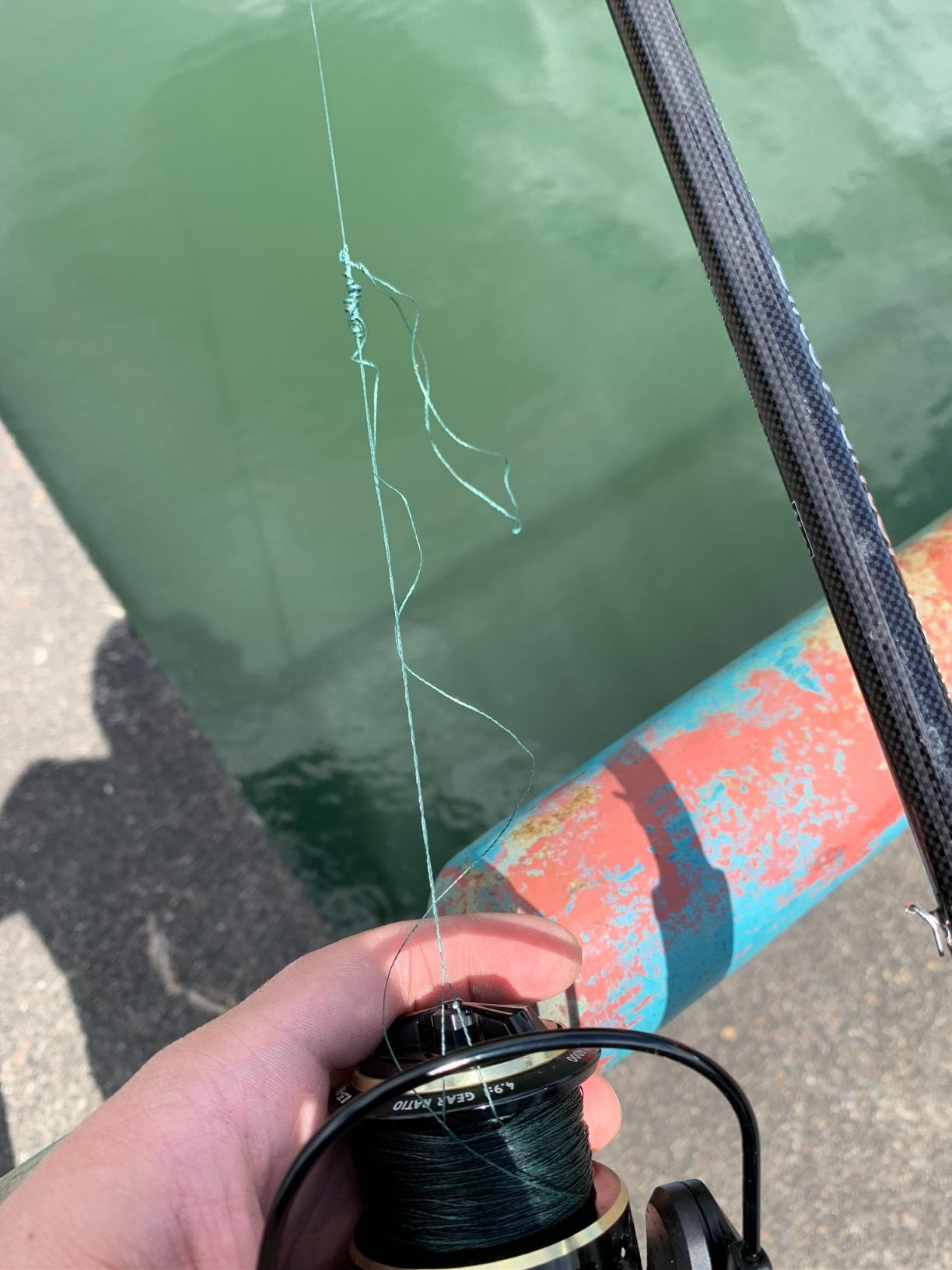
The symptoms of twist are familiar: a rig that will not cast straight, a lure that spins on retrieve, or a loose overhand loop that appears mid line. All three come from the same cause.
Fill the spool correctly and release the drag before the line has a chance to build slack. Never reel hard against a slipping drag, because that is where most of the twist is created.
For a fix, put the rod in the boat and drag 30 to 40 yards of line behind a moving boat. The current pulls the twist out of the line and it comes off the spool straight on its own.
Open and close the bail a few times before casting. It sounds trivial, but it resets the line so the first cast is the cast you planned.
Pound Test by Target Species and Water Type
Pound test is break strength, not the size of fish you can land. A stronger line is not automatically better, because thin line bites better and clears cover that heavy line snags.
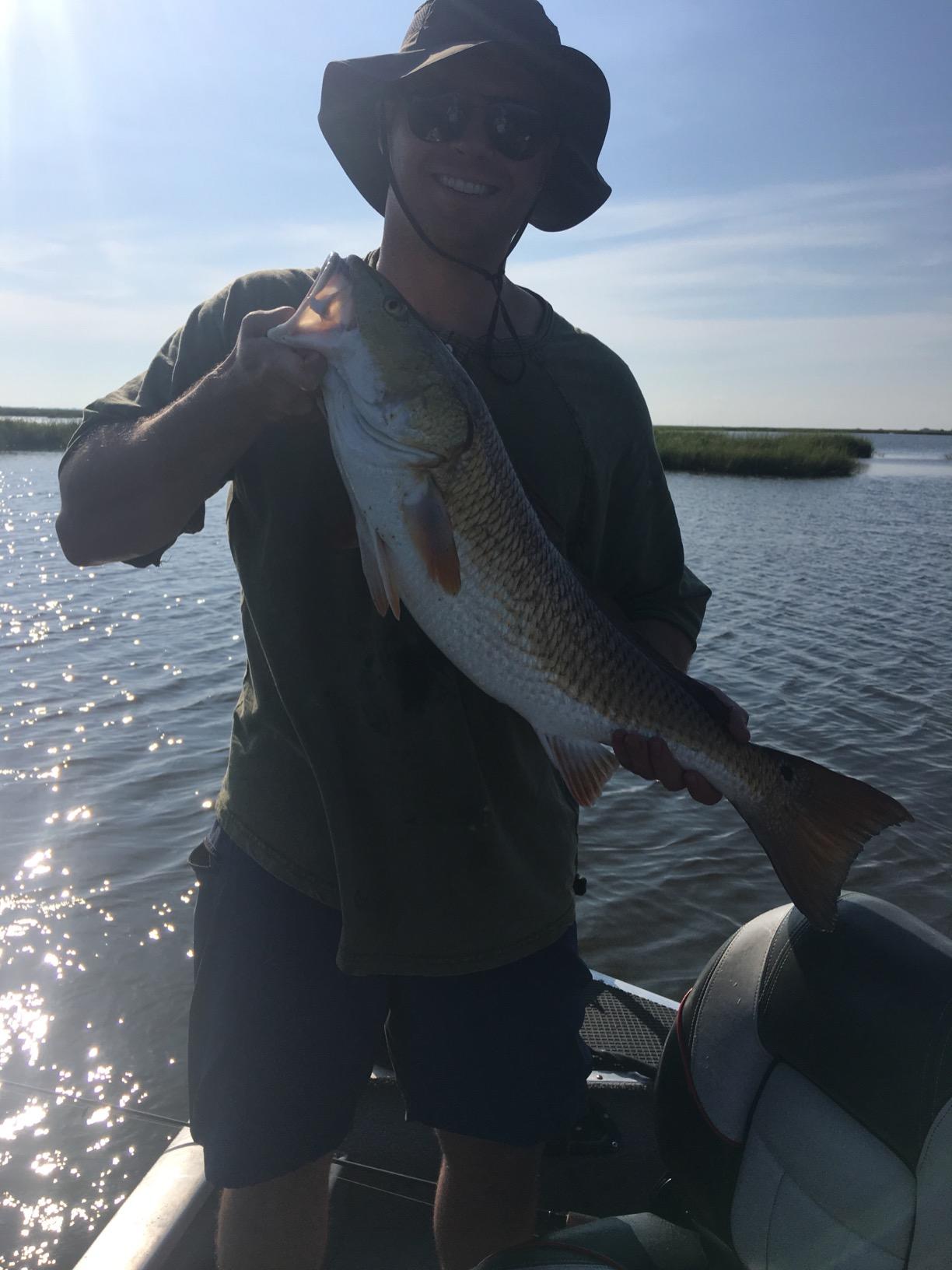
For panfish and trout, 2 to 6 lb mono or a 6 lb Stealth class braid. For bass in open water, 8 to 10 lb mono or 10 to 15 lb braid with a leader. For walleye and sauger, 10 to 15 lb.
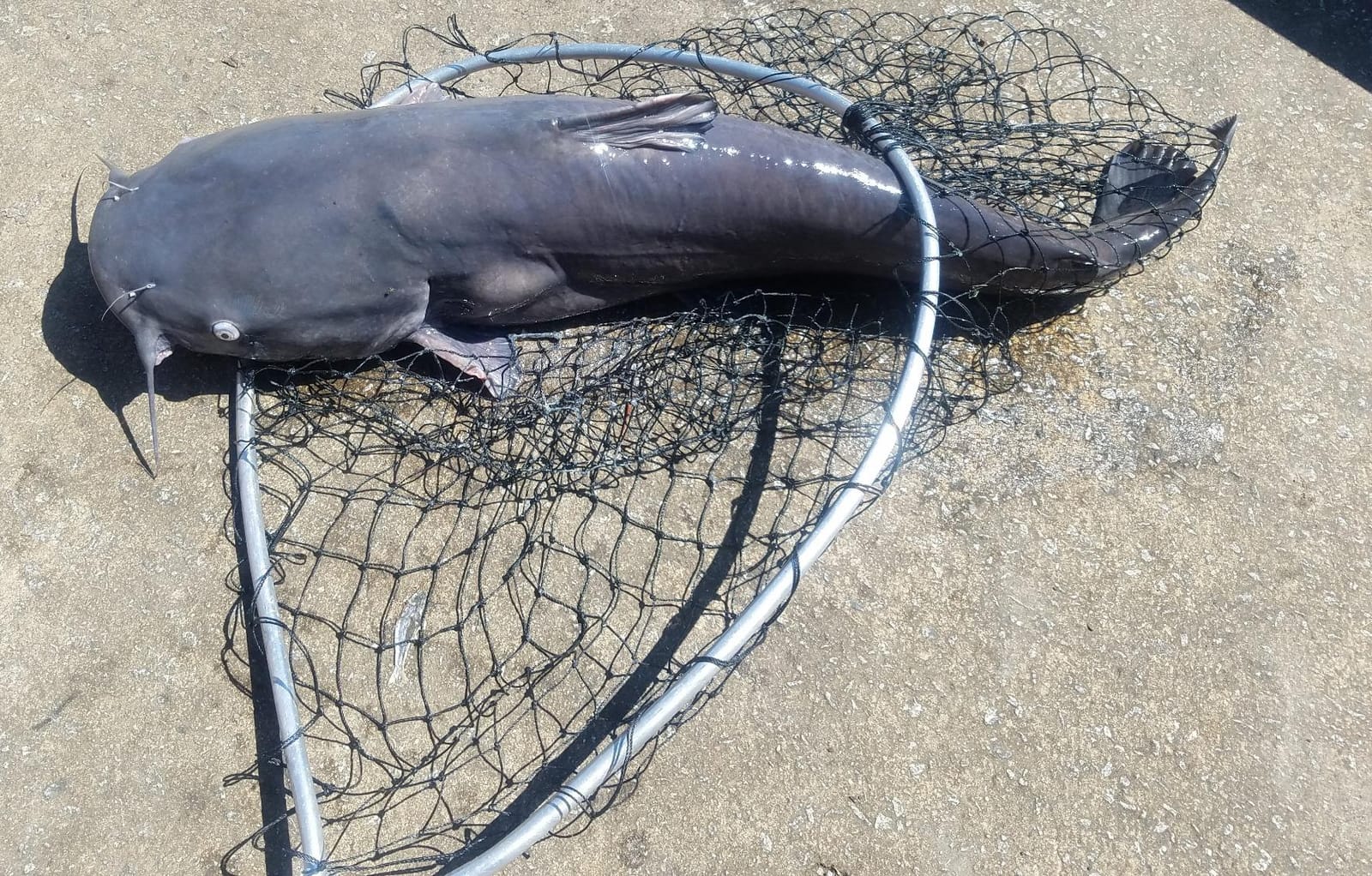
For catfish, pike and heavy cover, 20 lb mono or 20 lb braid, and expect to pair braid with a leader every time. For saltwater inshore, 15 to 20 lb braid with a fluoro leader. Offshore and pier fishing step up from there.
Match the test to the water rather than the fish. Clear water takes a lighter line because visibility matters more, and stained or dark water lets you run heavier without giving anything away.
The Braid and Fluorocarbon Leader Setup
This is the most repeated recommendation in angler forums, described as working for all kinds of fishing in salt and fresh water, and it is the setup we recommend for most spinning reels.
Step one: spool 10 to 15 lb braid on the arbor over a short mono backing. Step two: tie the braid to the leader with an FG knot for fluorocarbon, or a Palomar with a drop of glue for mono.
Step three: run 4 to 6 feet of leader, and size it roughly two-thirds of the braid so it breaks first if something goes wrong. Step four: tie the lure to the leader with a Palomar or improved clinch.
The leader absorbs the shock of the hookset that the braid cannot, and the fluorocarbon gives you an invisible, fast sinking last few feet. It is the reason braid and fluoro are often the answer to the same question rather than competitors.
Respooling and Line Lifespan
Mono and fluorocarbon absorb water and abrade, so plan on replacing them at the first sign of fuzz, stiffness or a rough cast. A season of regular use is normal for mono, and less for fluoro in rocky water.
Braid does not absorb water and shrugs off UV exposure far better, so it stays usable much longer, though the outer layer still wears first. Watch the surface, not the break strength, because a fuzzy outer layer cuts before it fails.
Because a braid is often spooled directly and lasts longer, the cost per trip works out lower than a mono spool that gets replaced twice a year, even when the braid costs more per spool.
Frequently Asked Questions
Is mono or fluoro better for spinning reels?
Mono is better for most spinning reels because it stretches, tolerates the twist a fixed spool builds up, and ties with knots you already know. Fluorocarbon wins on visibility and sink rate, but its stiffness makes it difficult to spool as mainline on most reels. The exception is a soft, low memory fluorocarbon such as InvizX, which is specifically engineered to manage well on a spinning spool.
Which is better for spinning reels, braided line or monofilament?
Braid is better for sensitivity, casting distance, abrasion resistance and spool capacity because it has no stretch and a very thin diameter. Monofilament is better for forgiveness, because its stretch cushions the hookset and protects the hook, and it is easier to tie. Most experienced anglers spool braid and add a fluorocarbon leader so they get both.
Is it okay to put braided line on a spinning reel?
Yes, braid is one of the best choices for a spinning reel, provided you spool it correctly. Add about 10 wraps of monofilament backing under the braid so it grips the arbor instead of slipping, fill the spool to 1/8 of an inch below the rim, and plan on using a leader so the lack of stretch does not cost you fish.
What pound braid for spinning reel?
For freshwater bass, 10 to 15 lb braid is the standard range with a fluorocarbon leader. Anglers report a self imposed ceiling of about 20 lb for spinning reels, and beyond that a baitcaster is the better tool. Inshore saltwater sits in a similar range at 15 to 20 lb, and ultralight spinning needs the thinnest braid you can find in the 6 lb class.
Do fish not like braided lines?
Braid is highly visible in clear water, and that is a real consideration rather than folklore. In stained, dark or deep water it makes little difference, but in clear water fish can pick it out. Adding a fluorocarbon leader makes the last 4 to 6 feet invisible, and a dark or camo color helps with the rest of the line.
What are the downsides of using fluorocarbon line?
The main downsides are stiffness, memory, cost and cold water behavior. Fluorocarbon coils off a fixed spool more readily than mono, it costs more per spool, and it firms up noticeably in cold water. A few reviewers also report break-offs from a stiff fluorocarbon leader, which is why a leader should be tied with a knot rated for the material.
Final Verdict: The Best Fishing Line for Spinning Reels in 2026
KastKing Superpower is our pick for the best fishing line for spinning reels, because low memory, a thin diameter and more than 34k reviews make it the safest bet on a fixed spool. If your budget stretches, Power Pro Spectra rates highest in the group at 4.7 stars, and Seaguar InvizX is the fluorocarbon to own when you want one soft enough to spool as mainline.
For beginners, Berkley Trilene XL is the simplest call. For heavy cover, Berkley Big Game or the budget nylon mono. For small reels, SpiderWire Stealth in the thinnest diameter available here.
Whichever line you pick, spool it to 1/8 of an inch below the rim with steady tension, add a leader if you choose braid, and check the forum threads before you buy. Once you have the reels picked out, our offshore reel guide covers the saltwater side, and our baitcasting reel picks cover what to run when you step past 20 lb.