
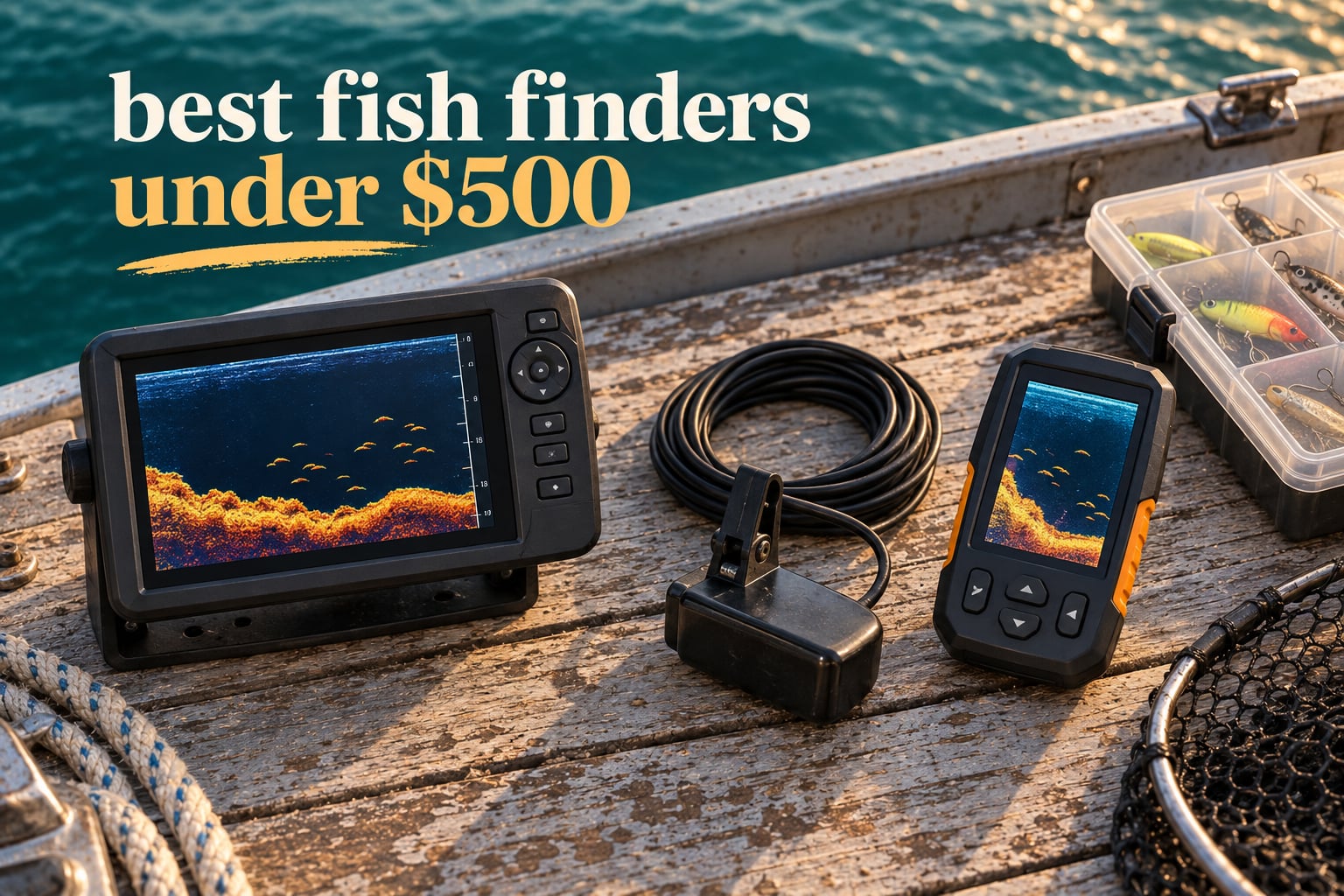
The hardest part of shopping for a fish finder is not finding good units. It is finding good units that fit inside a fixed ceiling once you count the transducer, the mount and the wiring. We spent weeks going through the specs, owner reviews and forum threads on the entry-level end of the market to build this list of the best fish finders under 500 for 2026.
What surprised us most is how much usable sonar you can get for a few hundred dollars, and how quickly a bargain unit can turn into an expensive one the moment you add accessories. Ten picks are covered below, from a 3.5-inch Garmin that more anglers own than any other, to castable sonar for kayaks, to the one down imaging unit that fits the budget.
If you are still working out which category you are in, our fish finder picks for boats and fish finder picks for kayaks guides cover the bigger picture. This page sticks to the budget question.
Table of Contents
What Is the Best Fish Finder Under 500?
The best fish finder under 500 dollars right now is the Garmin Striker 4, and for most buyers it is not close. It pairs CHIRP traditional sonar with ClearVu scanning sonar, includes the transducer and the trolling motor mount in the box, and pulls only 0.23 amps at 12V, so it runs happily off a small battery pack. The Garmin STRIKER Vivid 4cv is the better buy if you want a color screen and auto contour mapping, and the Humminbird HELIX 5 Chirp DI is the only unit on this list that gives you down imaging.
That is the honest answer to the top question in this category, and the rest of the article explains why, what the hidden accessory costs are, and which of the ten fits your boat.
Top 3 Picks for Fish Finders Under $500 in 2026

Garmin Striker 4
- CHIRP traditional sonar
- ClearVu scanning sonar
- 3.5-inch sunlight-readable LCD
- Transducer and trolling motor mount included

Garmin STRIKER Vivid 4cv
- Vivid color palettes
- GT20 CHIRP transducer
- Quickdraw Contours mapping
- 4-inch color display

Humminbird HELIX 5 Chirp DI
- CHIRP Down Imaging
- Dual Spectrum CHIRP
- 5-inch color TFT
- AutoChart Live mapping
The Garmin Striker 4 takes the editor spot because it is the safest recommendation in the category. It has the largest review base of anything on this list, a transducer in the box, and mounting hardware for both a transom and a trolling motor. Nothing else here combines that much proven reliability at that low a total cost of ownership.
The Vivid 4cv earns the top rated slot on the strength of its picture. Vivid color palettes and a GT20 transducer carrying both CHIRP traditional and CHIRP ClearVu give you cleaner separation between fish and structure than the plain LCD units below it, and Quickdraw Contours builds your own maps as you fish.
The HELIX 5 Chirp DI is the specialist. It is the highest-cost unit of the ten and its review count is much smaller than the two Garmins, but it is the only one here with down imaging, a 5-inch color TFT screen and AutoChart Live, which makes it the pick for anyone who fishes deep structure off a small boat.
All 10 Best Picks Compared Side by Side in 2026
| Product | Specifications | Action |
|---|---|---|
| Garmin Striker 4 |
|
Check Latest Price |
 Deeper Start Deeper Start |
|
Check Latest Price |
 Garmin Striker Plus 4 Garmin Striker Plus 4 |
|
Check Latest Price |
| Garmin STRIKER Vivid 4cv |
|
Check Latest Price |
 Humminbird PiranhaMAX 4 Humminbird PiranhaMAX 4 |
|
Check Latest Price |
 Deeper PRO+ 2 Deeper PRO+ 2 |
|
Check Latest Price |
 LUCKY FFC1108 LUCKY FFC1108 |
|
Check Latest Price |
 LUCKY AE-1108C-ICE LUCKY AE-1108C-ICE |
|
Check Latest Price |
| Humminbird HELIX 5 Chirp DI |
|
Check Latest Price |
 Lowrance Eagle 4 inch Lowrance Eagle 4 inch |
|
Check Latest Price |
A few patterns jump out of that comparison. Only one unit here has a screen larger than 4.3 inches, and it is the only one with down imaging. Two of the ten do not have a display of their own at all, because they cast a sonar puck and put the picture on your phone, and four more are small-screen units you hold in your hand or strap to a boat.
Six of the ten come with a transducer in the box. That single detail does more for your total cost than any other spec on the list, and we explain why in the buying guide.
1. Garmin Striker 4 – the entry point that sets the standard
Garmin 010-01550-00 Striker 4 with Transducer, 3.5″ GPS Fishfinder with Chirp
3.5-inch LCD
1600 ft freshwater depth
CHIRP and ClearVu sonar
Transducer included
Pros
- Largest review base among the ten
- Over 9000 owners and a 4.6 average
- Transducer transom and trolling motor mounts all included
- Draws 0.23 amps at 12V
- Screen readable in full sunlight
Cons
- 3.5-inch screen is tight for split-screen use
- Bundled power wiring is thin and fragile
- Sonar can cut out at higher trolling speeds
We kept coming back to the Striker 4 because there is almost nothing wrong with it for the money. The box contains the fishfinder, a tilt and swivel mount, a transducer, and both transom and trolling motor mounts, which means you can bolt it to a jon boat rail or strap it to a trolling motor without drilling anything.
The sonar is the reason it beats cheaper handheld depth sounders. CHIRP traditional sonar sends a continuous sweep of frequencies instead of a single tone, and owners report crisper fish arches with better target separation than the narrow-beam units in this list. ClearVu scanning sonar layers a near-photographic view of structure underneath the traditional picture, which is what makes brush piles and rock edges readable.
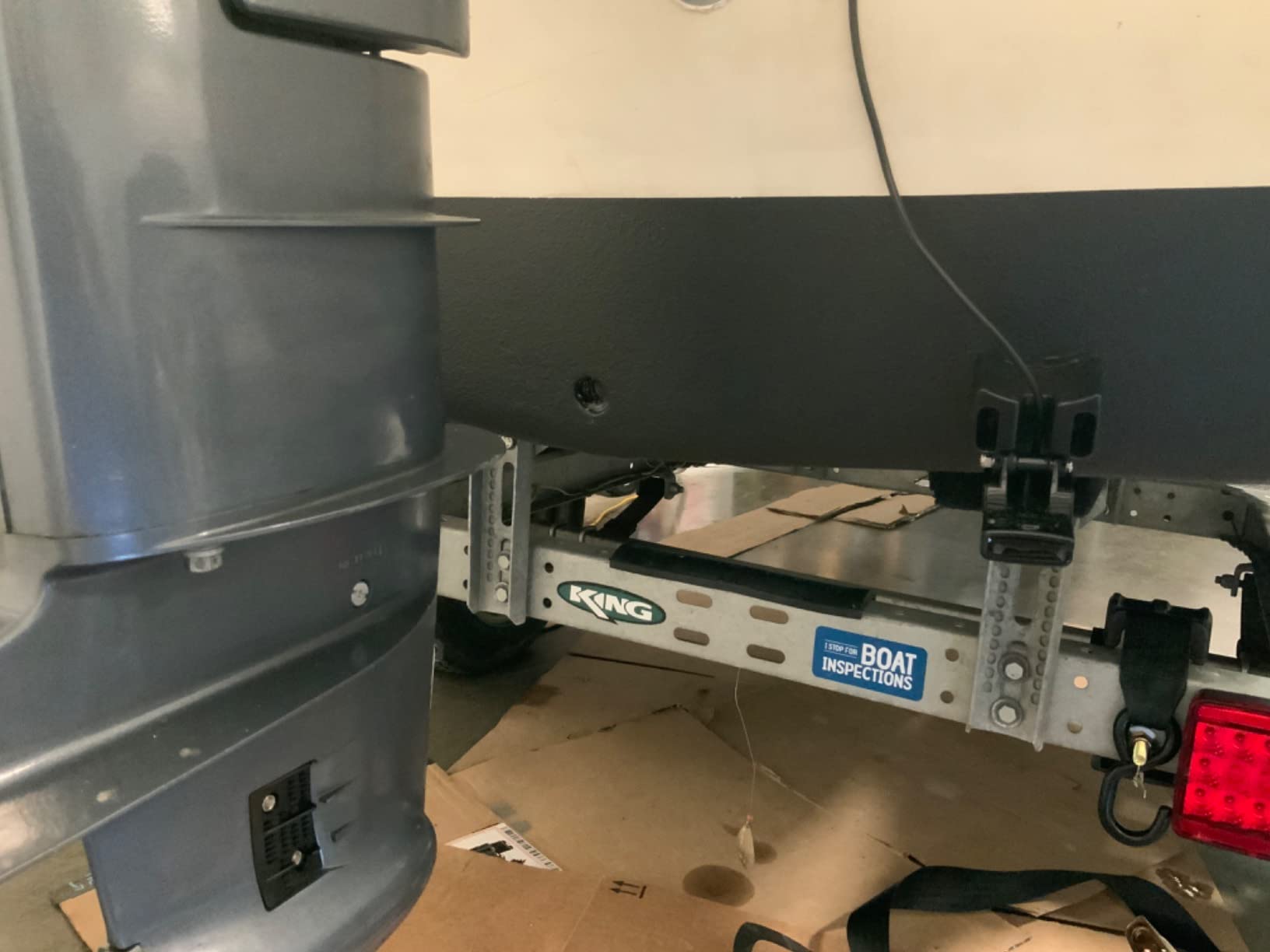
It also draws 0.23 amps at 12V, so a small sealed battery runs it for a full day of trolling. That figure matters more than people expect, because a hungry unit is the reason many anglers end up buying a power pack they did not plan for.
Max depth is quoted at 1600 ft in freshwater and 750 ft in saltwater, and there is a built-in flasher mode for ice fishing or vertical jigging. The waypoint map lets you mark brush piles, stumps and docks and navigate back to them, which is the feature that turns a depth sounder into something you actually use twice a season.
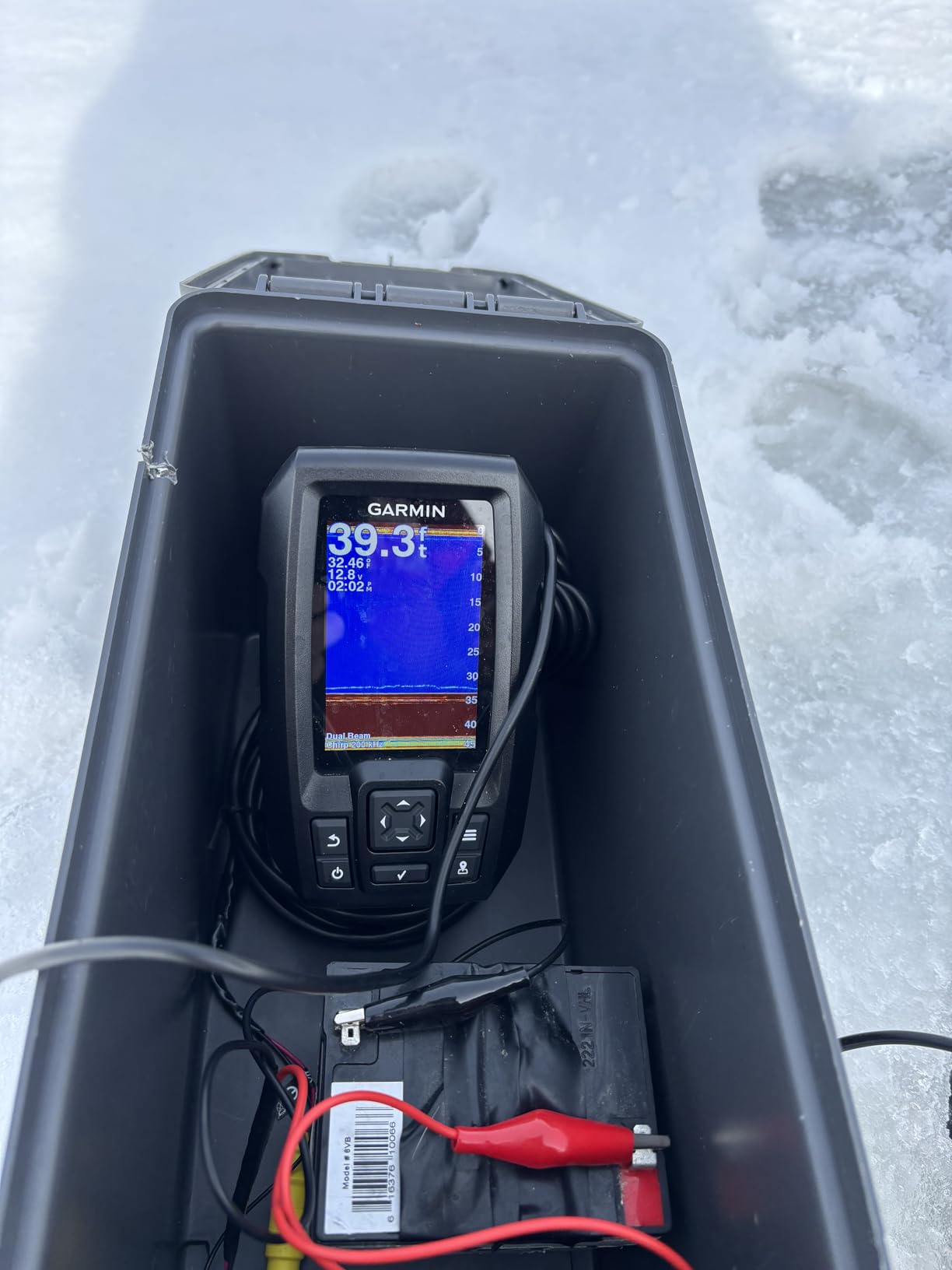
How the Striker 4 handles a small boat in bright sun
The 3.5-inch LCD is genuinely readable in direct sunlight, and Garmin rates the unit IPX7 for water ingress. At a 3.6 by 1.6 by 5.9 inches and 8 ounces, it disappears on a console until you need it.
What the small screen costs you is layout. Split-screen sonar and map at once turns both panes into postage stamps, so most owners run one view at a time and flip modes with the keypad. If you fish structure-heavy water where you want to watch the map while you watch the arch, this is the compromise.
What to watch for before you buy
The bundled power and data cable is the weak link. Owners repeatedly mention needing to crimp and tape the connection properly because the supplied wiring is thin, and the documentation is thin on the hookup itself. Budget ten minutes and a pack of heat-shrink for a clean install.
There is also a recurring report of the sonar signal degrading at higher trolling speeds on some hulls, and the keyed interface is not the fastest way to switch modes. Neither is a deal breaker, but both are reasons some owners step up a tier rather than stay here.
2. Deeper Start – cable-free casting sonar for shore and kayak anglers
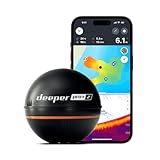
Deeper Start Fish Finder – Portable and Depth Finder for Recreational Fishing from Dock, Shore, Bank or Kayak | Castable Deeper Smart Sonar with Free User Friendly App
Castable sonar
165 ft range
No screen, phone app display
Up to 6 hours battery
Pros
- No wires and no external battery
- Casts and reels in cleanly
- Generates its own Wi-Fi so it uses no mobile data
- Saves every scan with time and location
- Light enough to carry between trips
Cons
- Picture quality depends on the phone you pair it with
- Less target separation than a fixed-mount unit
- Battery covers roughly a half-day outing
- 4.1 average rating reflects mixed consistency reports
The Deeper Start is a completely different idea from a mounted unit. You cast a tethered puck from shore, a dock, a bank or a kayak, and it sends data to the free Fish Deeper app on your phone. There is no wiring, no mounting hardware and nothing to install on the hull.
Range is 165 ft for both casting and depth, with a 40-degree beam, and the puck generates its own Wi-Fi network so it works well away from cell coverage. A full charge takes 2.5 hours and delivers up to 6 hours of use, which covers a long day of shore fishing with room to spare.
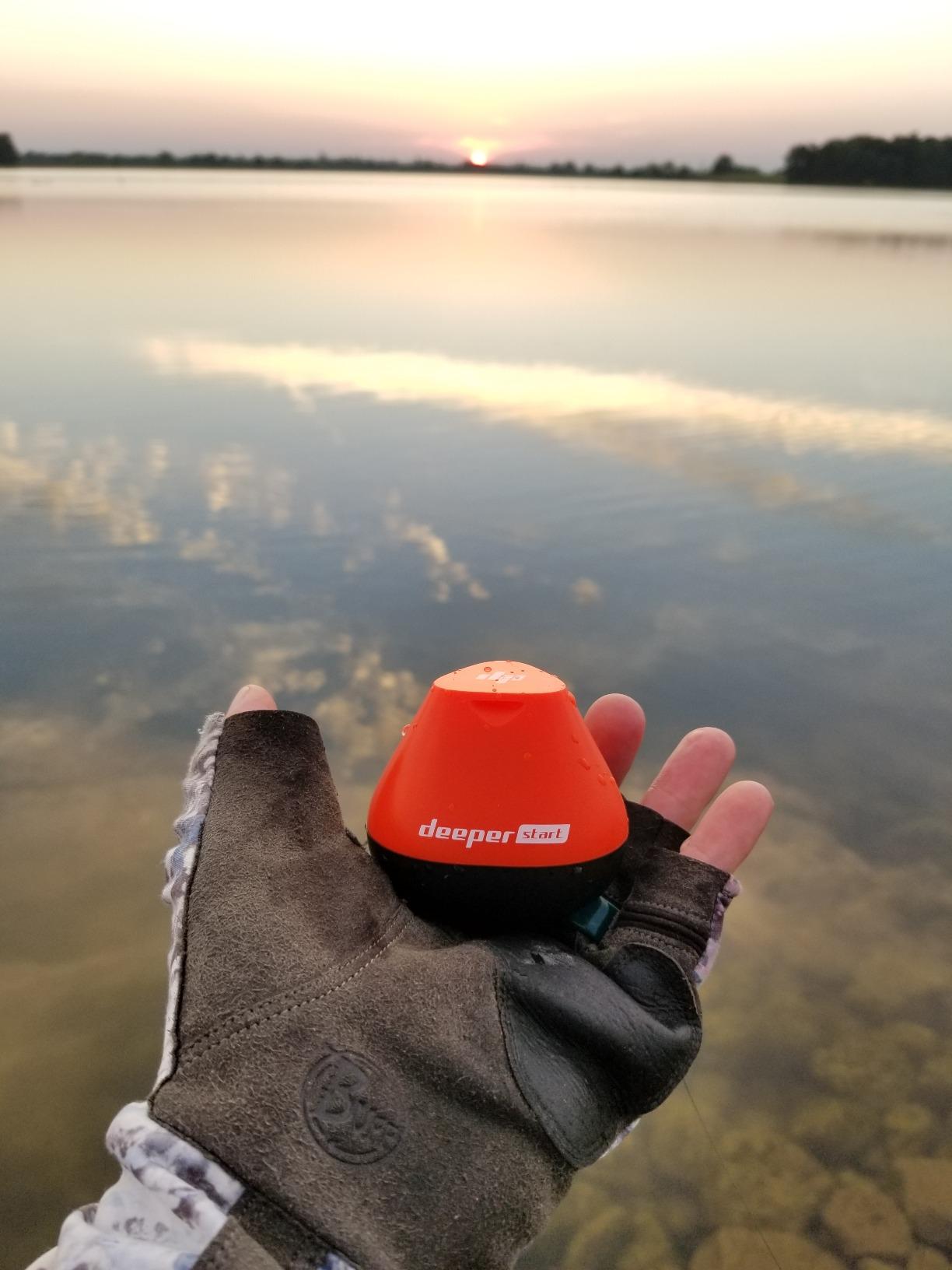
The tradeoff is that the unit has no display of its own. Everything is rendered on your phone, so a cracked screen, a small display or an old handset directly degrades the experience. Target separation is also coarser than what a fixed head gives you, which shows up when several fish hold in the same spot.
For a kayak angler without a trolling motor cable, or someone fishing a river bank with no boat at all, there is no simpler way to find structure. Just know you are buying an accessory to your phone, not a replacement for one.
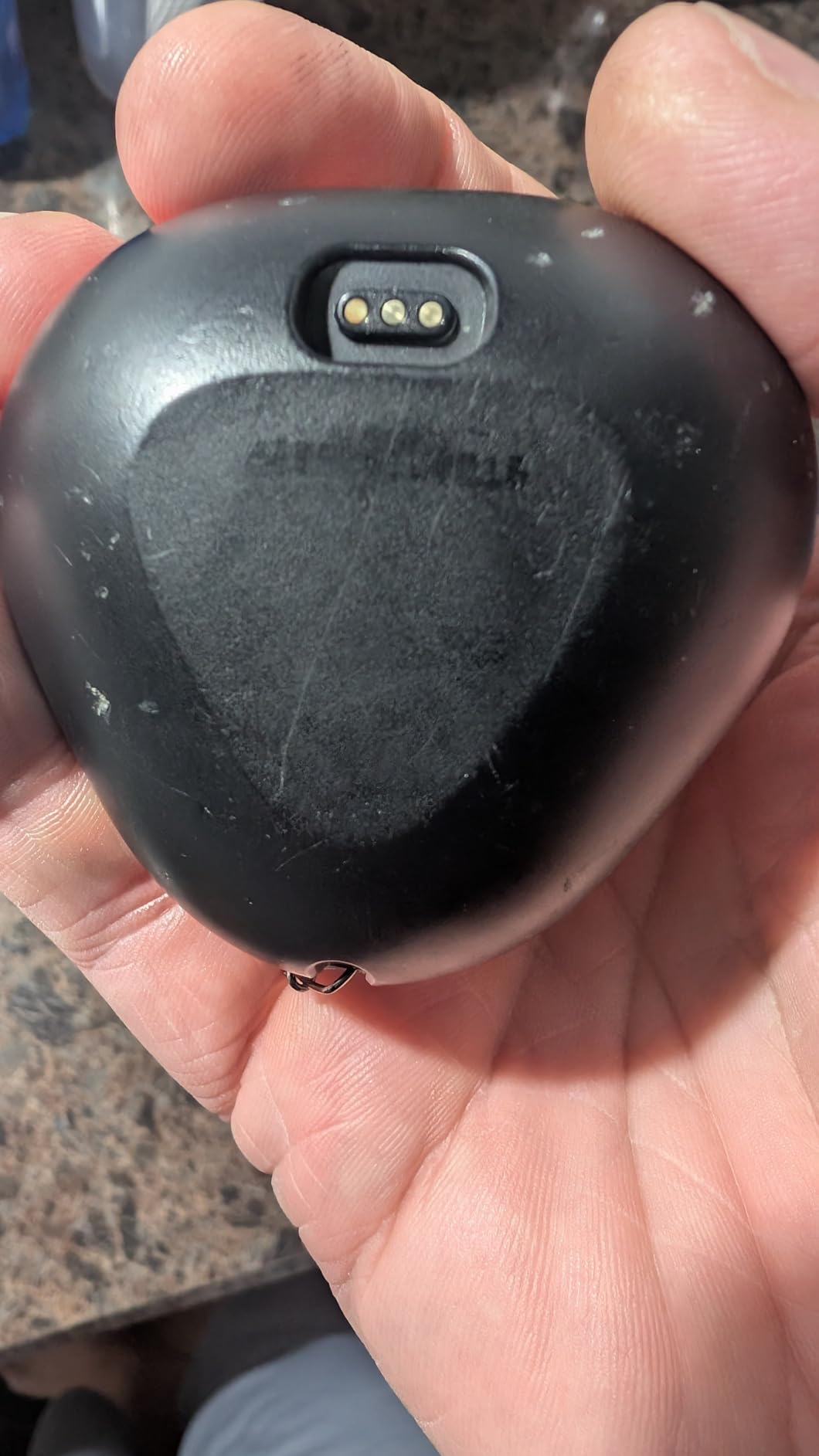
What casting sonar is actually good for
This is a shallow water tool. Casting out from a dock and pulling the puck back gives you bottom contour, weed edges and depth, and the app saves each scan with a timestamp and coordinates so you can build a picture of a spot you cannot fish continuously.
It is a poor substitute for a console unit when you need to find fish holding tight to a drop-off in real time, because you are reading a phone screen at the end of a retrieve rather than watching a live picture while you fish.
What to watch for before you buy
Battery life is the practical limit. Six hours sounds generous until you are casting all day, and there is no way to top it up mid-trip. Owners also report occasional inconsistency at depth, which is where the 4.1 average rating comes from.
Make sure your phone will survive a wet hands, bright sun and a paddle in the water. If it will not, the Striker 4 or a handheld LUCKY unit is the safer path for a kayak.
3. Garmin Striker Plus 4 – the first unit in the list with auto contour mapping
Garmin 010-01870-00 Striker Plus 4 with Dual-Beam transducer
4.3-inch QSVGA display
Quickdraw Contours auto-mapping
200 W RMS
20 meter depth
Pros
- Quickdraw builds 1-foot contours as you fish
- Dual-beam transducer causes no interference with other units
- Bright screen readable through a canopy
- Works for ice fishing and open water
- Days of runtime on a 7Ah SLA battery
Cons
- Screen resolution looks less crisp than older Garmin models
- No battery fittings included so extra hardware is needed
- Maps cannot be uploaded or downloaded on this model
- Setup documentation is thin
The Striker Plus 4 is the point in Garmin’s lineup where you start getting your own maps. Quickdraw Contours records depth as you run and builds 1-foot contour lines covering up to 2 million acres automatically, with no subscription and no card required. Owners consistently call this the feature that justifies stepping up from the base Striker 4.
The screen is 4.3 inches at QSVGA, among the largest non-color displays in this group, and it stays readable through a boat canopy in bright sun. Transmit power is 200 W RMS, supporting traditional frequencies at 50, 77, 83 and 200 kHz, and the dual-beam transducer runs without interference even if another unit is on the boat.
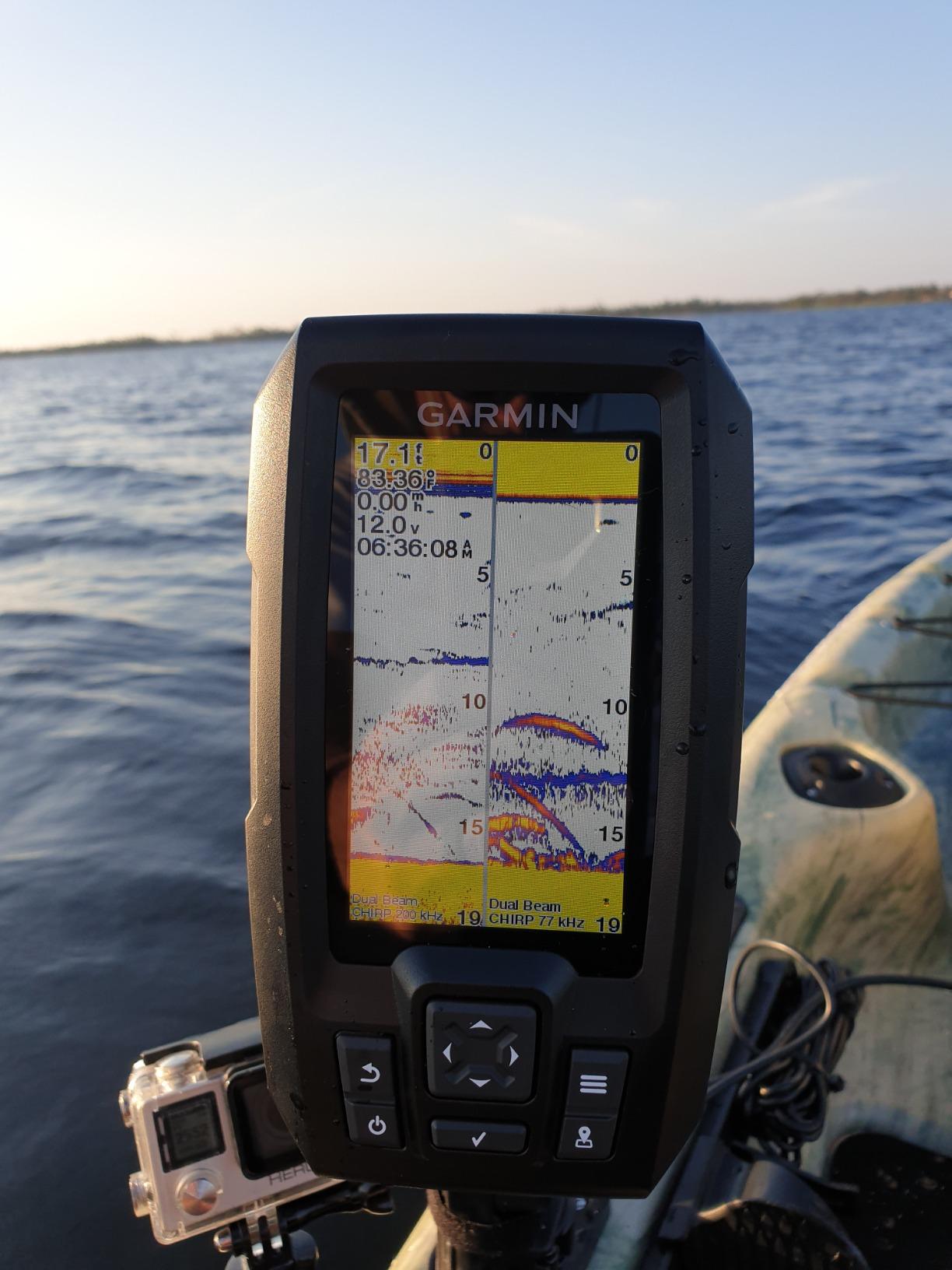
Bluetooth is included, along with touch control, so you can pair a phone for notifications and settings without giving up the physical buttons. Rated depth is 20 meters, which covers essentially any lake you will fish.
Owners report running it for days on a 7Ah sealed lead acid battery, and many use the same unit for ice fishing in winter and open water trolling in summer. That versatility is why it keeps 4.6 stars across more than 2,400 ratings.
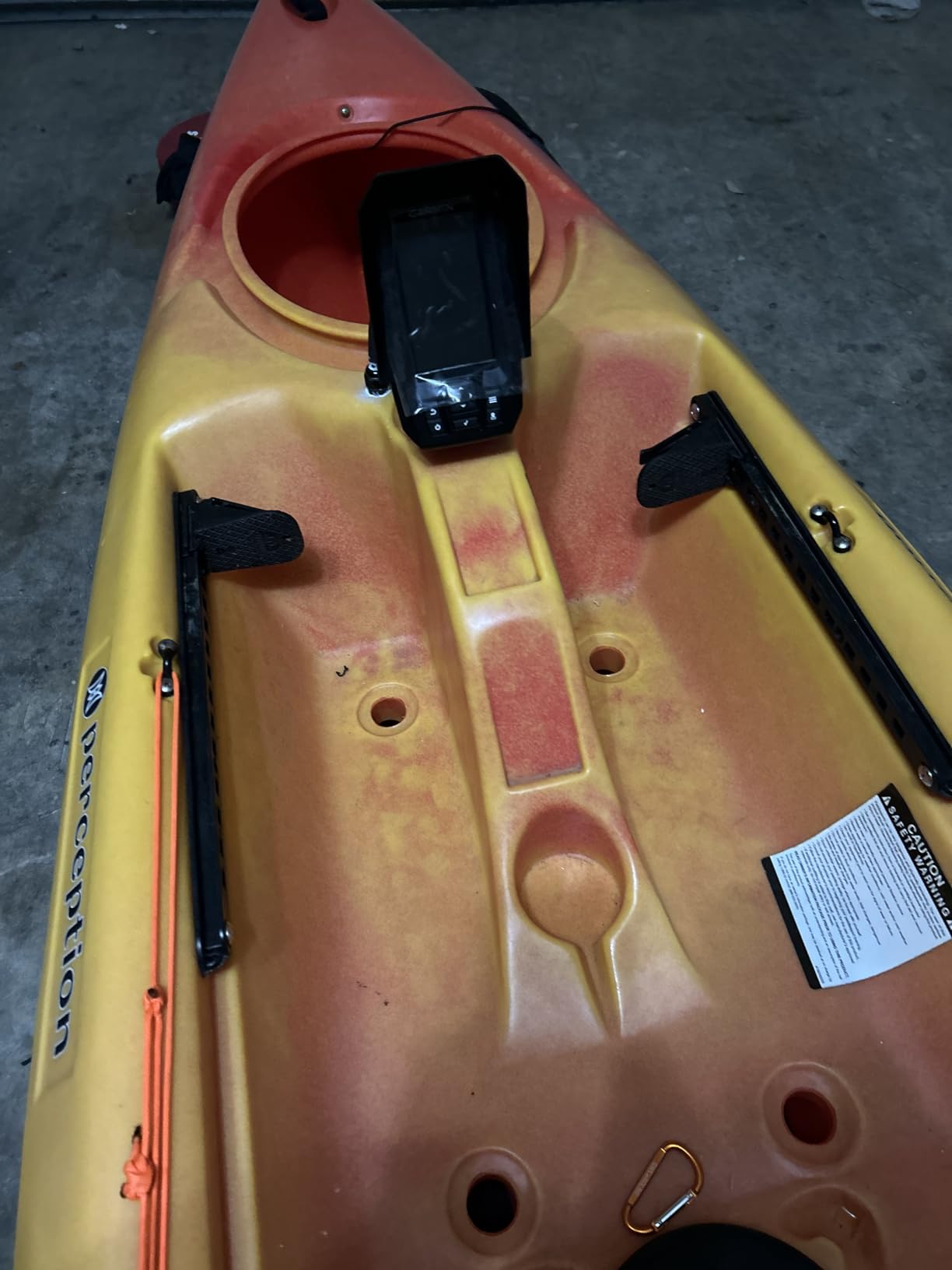
Whether the auto mapping is worth the step up
Quickdraw Contours is genuinely useful on water you fish repeatedly. The first pass looks rough, the second is better, and by the end of a season you have a contour map of a lake that was not charted before. That is the kind of feature that keeps paying for itself.
It is not a substitute for real cartography. There are no downloadable maps on this model, and you cannot upload or download charts. If you need to navigate unfamiliar water or follow a marked channel, this is the wrong unit.
What to watch for before you buy
Crispness is the common complaint. QSVGA on a 4.3-inch panel is serviceable but visibly softer than older Garmin screens, and reviewers who have owned older units notice the difference immediately. If you have strong eyes and good light, it is a non-issue.
No battery or power fittings are included, so you will need a battery, a cable and connectors before it runs. And the documentation is thin for a first-time installer, which is worth an afternoon of research before you start cutting wire.
4. Garmin STRIKER Vivid 4cv – the highest-rated sonar picture in the group
Garmin Striker Vivid 4cv Fishfinder with Transducer – 4-inch LCD Display – Easy-to-Use Scanning Sonar – Color Palettes, 11.2 Ounces (010-02550-00)
4-inch color LCD
Vivid scanning sonar palettes
GT20 CHIRP transducer
2 year warranty
Pros
- Highest average rating among these ten units
- Color palettes separate fish from structure cleanly
- GT20 transducer carries CHIRP and ClearVu together
- Quickdraw Contours mapping included
- Two year warranty
Cons
- 4-inch screen is small for split-screen sonar and map
- Button-driven interface rather than a touchscreen
- No side scan or down imaging on this model
The STRIKER Vivid 4cv takes the same hardware idea as the Striker 4 and adds color. Vivid scanning sonar palettes give fish, structure and bottom a different color each, and that single change does more for readability than a jump in raw resolution would. 83 percent of its reviews are five star, the highest share of five star reviews here.
The GT20 transducer in the box handles both CHIRP traditional sonar and CHIRP ClearVu scanning sonar, so you get arches and a down-looking picture from a single mount. Quickdraw Contours is built in, and the high-sensitivity GPS handles waypoints, routes and boat speed.
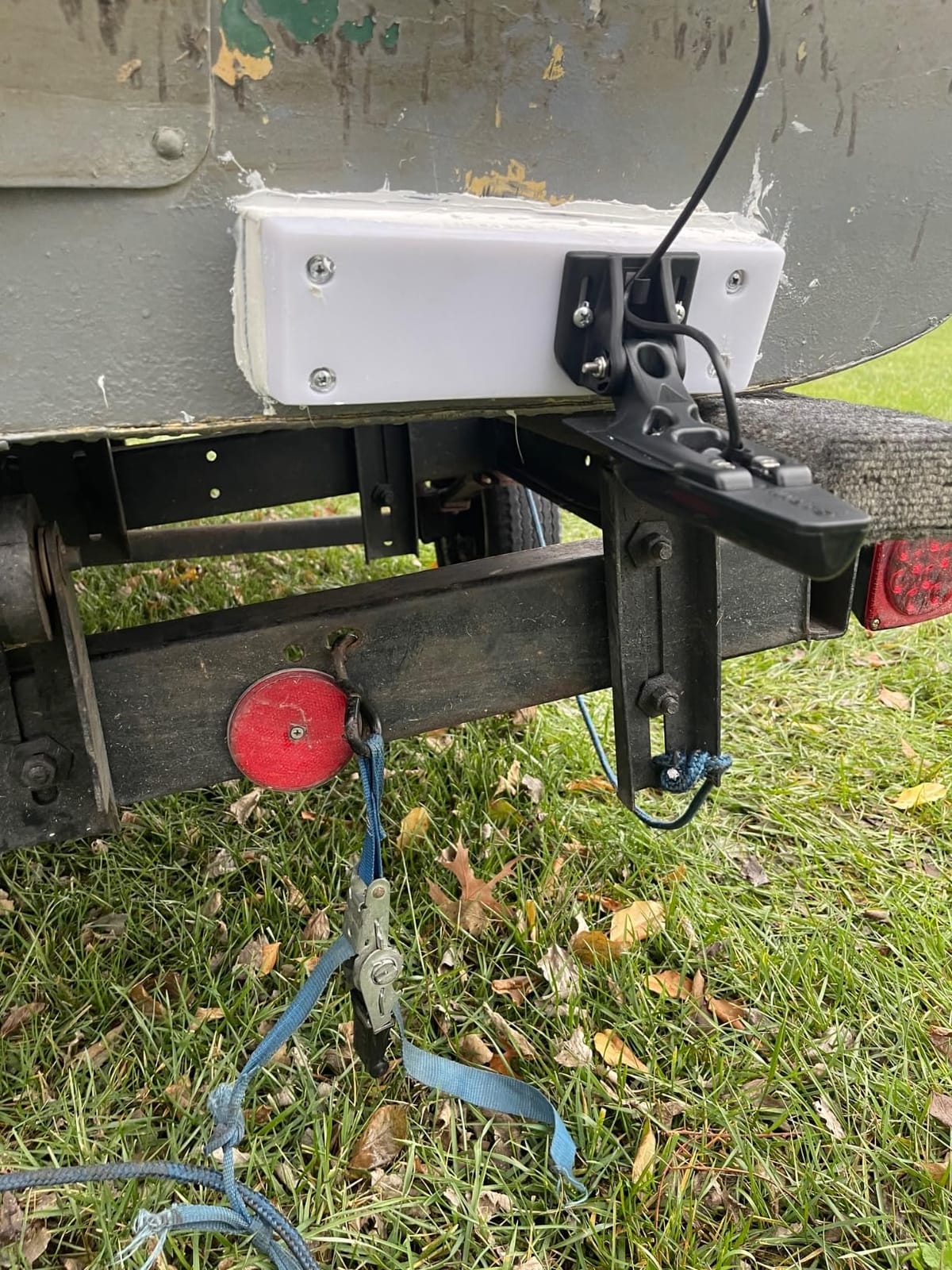
A tilt and swivel bailmount bracket is included, so mounting is a single bracket on the transom or a rail. The unit is 11.2 ounces and the warranty runs two years, which is longer than the one year most of this list offers.
The same family also exists in larger sizes. The listing notes 4-inch, 7-inch and 9-inch variants of the STRIKER Vivid line, and if a larger screen lands inside your ceiling, that is the single best way to get more screen for the same money.
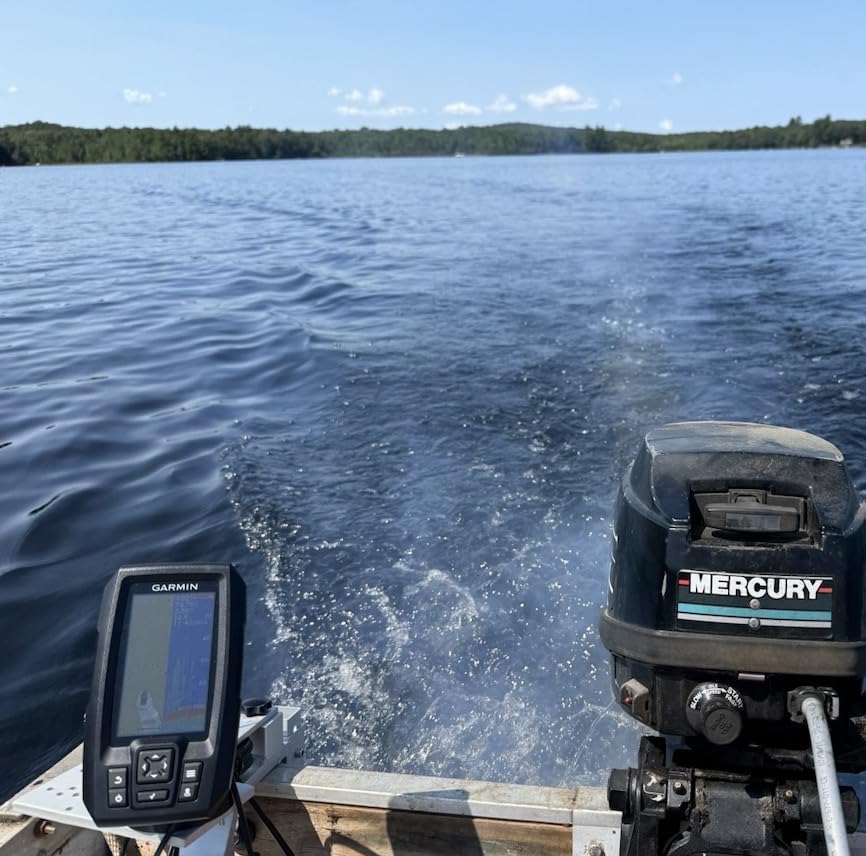
Why color sonar changes the way you read a screen
Traditional sonar draws everything as the same colored trace, so separating a fish from a stump is a matter of shape and shade. With Vivid palettes, structure and fish occupy different parts of the color range, and users report picking up suspended fish and brush piles they previously missed on monochrome units.
The payoff is largest on structure-heavy water: rock, vegetation and drop-off edges. On open water with scattered fish, the difference is smaller, and the 4-inch panel still limits how much of the picture you can study at once.
What to watch for before you buy
There is no side scan and no down imaging here. Anyone shopping this category hoping to get side scan under the ceiling will be disappointed, and should look at a used higher tier unit instead, which is the subject of a later section.
The interface is fully button driven. That is a genuine advantage with wet hands in a boat, but it is slower than a touch panel for moving through menus. And at 4 inches, side-by-side sonar and map views are cramped.
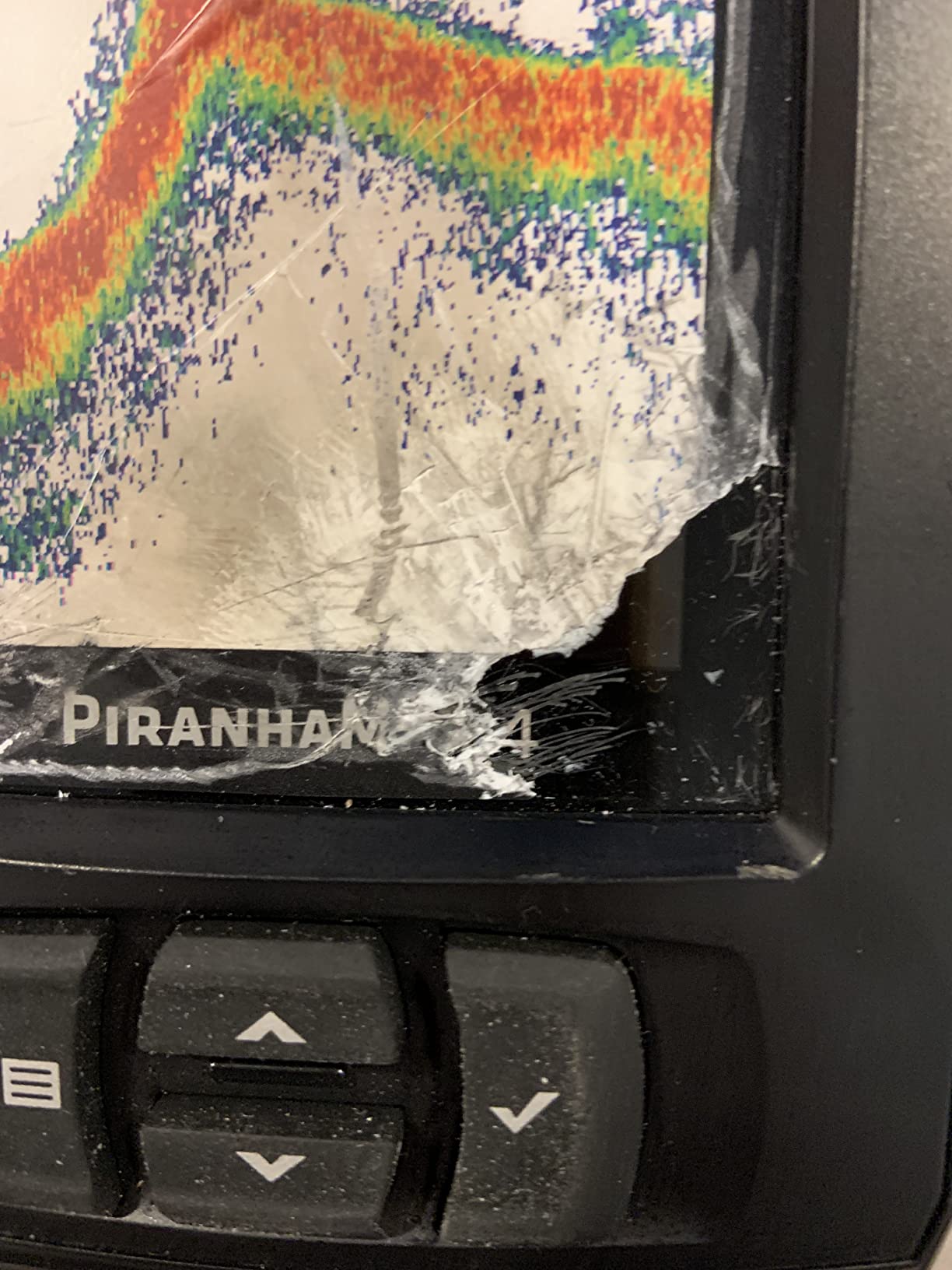
5. Humminbird PiranhaMAX 4 – a dependable no-GPS depth sounder
Humminbird PiranhaMAX 4 Fish Finder with Transducer, Dual Beam Sonar
4.3-inch LCD
Dual Beam sonar
XNT 9 28 T transom transducer
600 ft depth
Pros
- Dual Beam toggles narrow detail and wide coverage
- Tilt and swivel mount adjusts viewing angle fast
- Transom transducer included in the box
- Simple setup on small boats and kayaks
- 4.6 average across more than 1300 ratings
Cons
- No GPS or chartplotter capability
- Traditional dual beam only with no CHIRP or down imaging
- 600 ft depth rating is shallower than the Garmin units
The PiranhaMAX 4 does one job: it shows you depth, bottom shape and fish, and it does it without fuss. The 4.3-inch LCD is a good size for the money, the tilt and swivel mount adjusts to any seated or standing position, and the XNT 9 28 T transom transducer is in the box.
Dual Beam sonar lets you toggle between a narrow beam for detail on a specific spot and a wide beam for coverage when you are moving. That flexibility is the main argument for it over a single-beam handheld, and owners rate it as a solid 4.6 across more than 1,300 reviews.
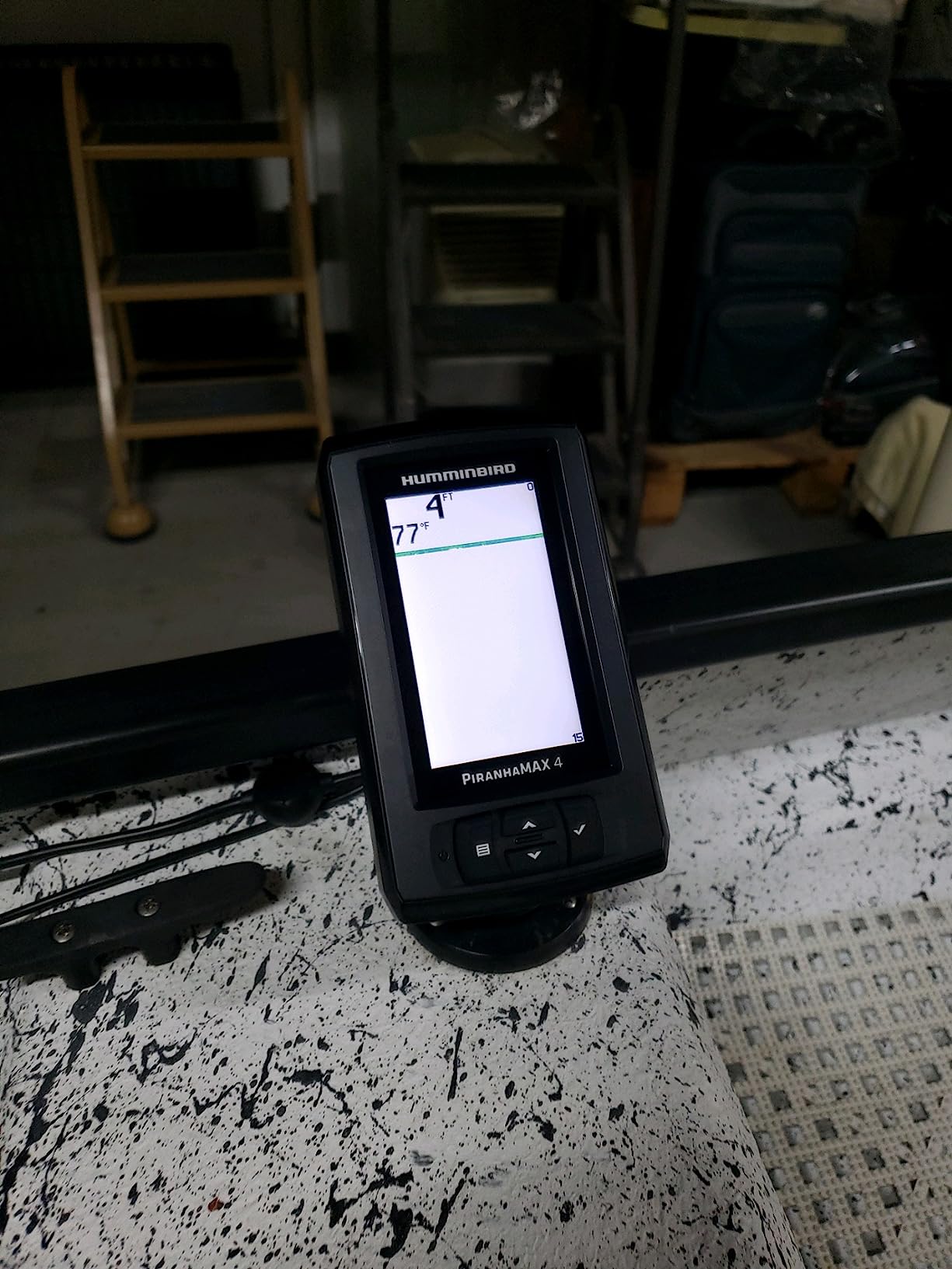
At 2 pounds it is a substantial unit for a console, and a bit awkward for a sit-on-top kayak where every ounce counts. The installation is genuinely straightforward, and the mount hardware means you are not sourcing parts separately.
The warranty is one year from the manufacturer, which is the industry norm at this price and the same as most of the units here.
Is a fish finder without GPS still worth buying
It depends entirely on whether you already know where you are fishing. If you are working a familiar lake and marking spots by eye, GPS adds little. If you are moving to new water, the inability to mark a brush pile and return to it is the thing you will miss first.
For beginners, this is a reasonable first unit precisely because it does not demand much from you. You learn to read arches and contours on a clean, uncluttered screen before the software starts competing for your attention.
What to watch for before you buy
No GPS means no waypoints, no routes and no speed, and there is no way to add them later. Know that going in, because owners who expected chartplotter features are the ones who return it.
Sonar is traditional dual beam, so you are giving up CHIRP target separation and any form of down or side imaging. The 600 ft depth rating is also the shallowest of the mounted units here, which limits it in deep water compared with the Garmins.
6. Deeper PRO+ 2 – castable sonar with a built-in GPS
Deeper PRO+ 2 Sonar Fish Finder – Portable Fish Finder and Depth Finder For Kayaks, Boats and Ice Fishing with GPS Enabled | Castable Deeper Fish Finder with FREE User Friendly App
Wireless 3.2 oz castable sonar
Built-in GPS
330 ft range
0.4 in target separation
Pros
- Built-in GPS records bathymetric maps you create yourself
- Narrow beam separates targets down to 0.4 inches
- 330 ft depth range is far beyond the other castable here
- Weighs 3.2 ounces and fits a tackle box
- Maps save straight into the Fish Deeper app
Cons
- No display of its own so a phone is required
- 12 percent one-star share is the highest reported here
- Wi-Fi connection can drop in rougher conditions
The PRO+ 2 is the Deeper Start with the two features that make castable sonar genuinely useful: a built-in GPS and a much deeper range. Accuracy goes to 330 ft, which is double the Start, and the narrow beam resolves targets down to 0.4 inches, so you can pick out an individual fish or a weed edge instead of a general blob.
Because the puck has its own GPS, you can create bathymetric maps from shore, dock or bank and save them in the app. That turns a day of casting into a repeatable map of water that no chart covers, and it is the closest thing to auto mapping in the portable category at this price.
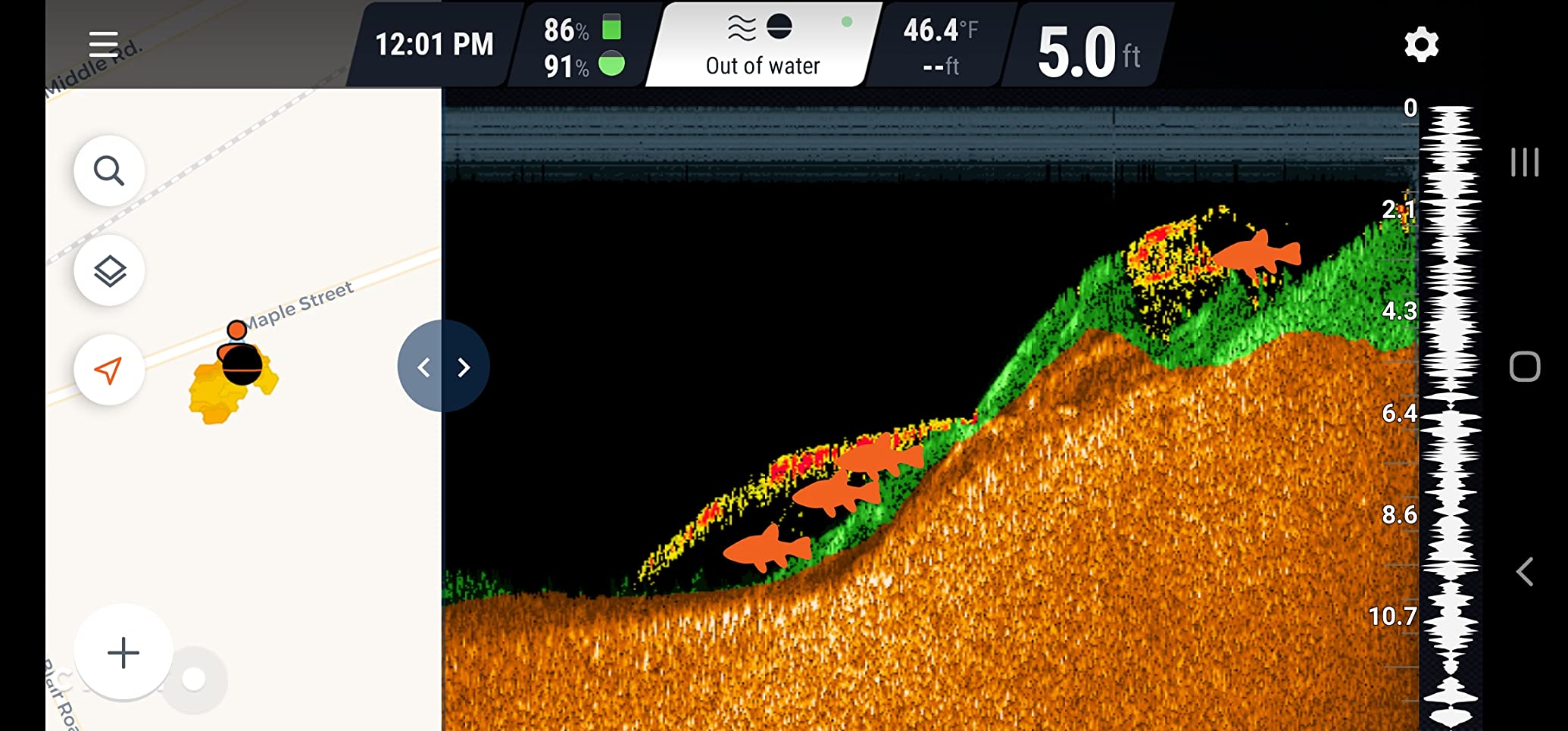
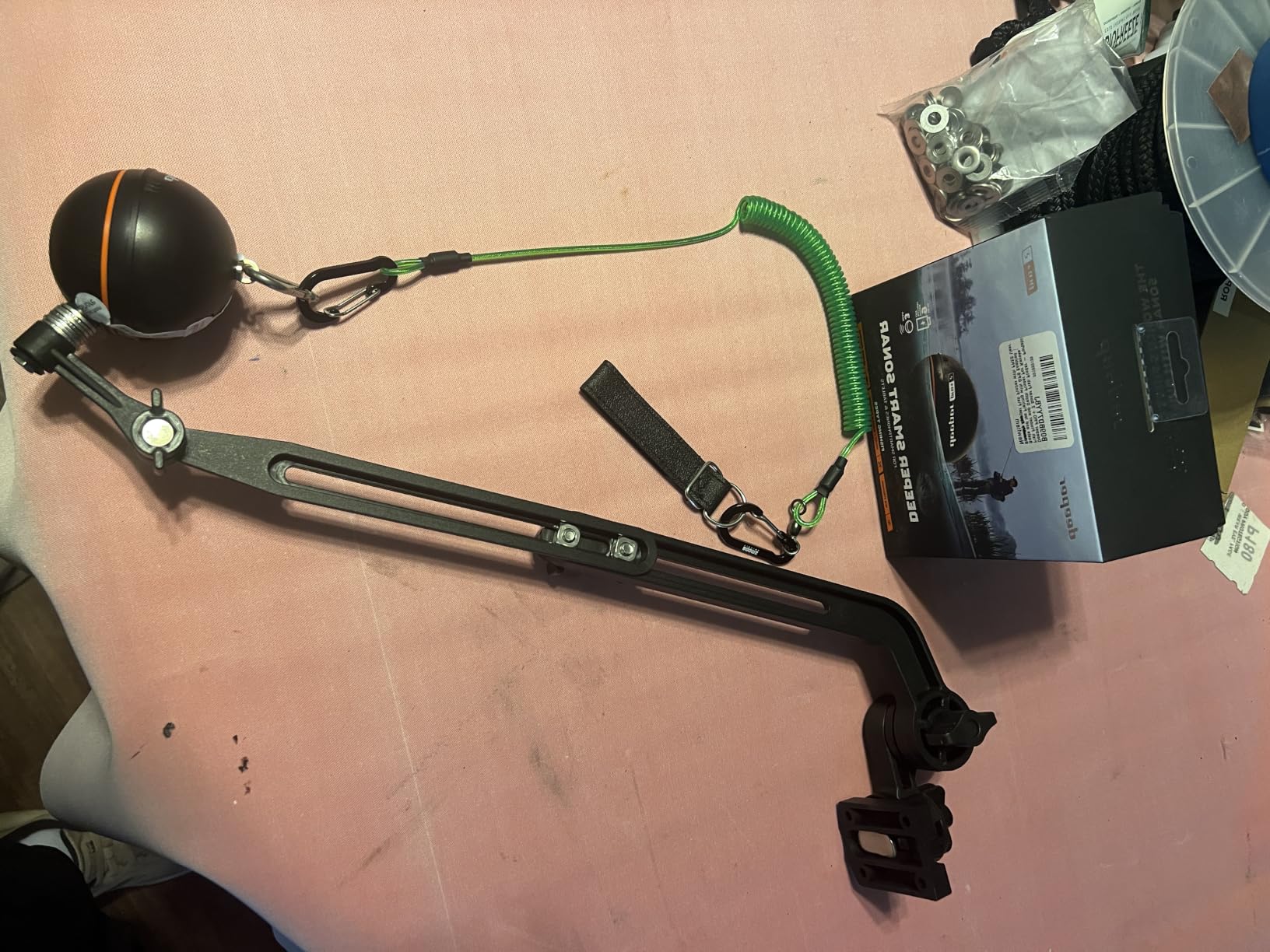
You can switch between wide, mid and narrow beams depending on whether you want coverage or detail, and the whole unit weighs 3.2 ounces in a 2.56-inch cube. A neoprene pouch and attachment bolts are included along with a USB cable, and the warranty runs two years.
Owners who came from the Start usually describe it as the version they wish they had bought first. The step up in range and precision is real, and the GPS turns it from a curiosity into a mapping tool.
How narrow beam target separation changes your approach
Target separation is the gap the unit can distinguish between two objects sitting at similar depth. At 0.4 inches on the narrow beam, a single fish standing off a rock reads as one fish. At the 1 inch separation of the wide and mid beams, the same scene smears into one return.
For jigging over a specific spot or working a drop-off edge, that difference is the whole point. For broad scanning while you cruise, the wide beam is faster and you will rarely notice the loss.
What to watch for before you buy
It still has no display, so everything depends on your phone. That is fine with a modern handset in a dry cockpit and frustrating with a waterproof phone case in cold weather with numb hands.
The 12 percent one-star share is the highest among the Garmin and Humminbird units here, and the complaint behind most of those reviews is the Wi-Fi link dropping in chop. Deep water and rough surface are where this category struggles most, so treat the picture as a guide rather than a survey.
7. LUCKY FFC1108 – a simple depth sounder for kayaks and small boats
LUCKY Kayak Portable Fish Depth Finder Water Handheld Fish Finder Sonar Castable Kayak Boat Fishfinder Transducer Fishing LCD Display FFC1108
2-inch handheld LCD
3 to 328 ft depth range
Bottom structure display
Five sensitivity levels
Pros
- Depth and bottom ledge readings are accurate for the money
- Reads through a kayak hull consistently
- Backlit screen works in sun and darkness
- Five sensitivity levels handle clear and turbid water
- Neck strap makes it easy to carry
Cons
- Will not read through fiberglass hulls
- Cannot be used from shore
- No fish size discrimination so minnows register as big fish
- Some reports of units failing to power on
The LUCKY FFC1108 is a handheld unit with a tethered transducer, and it fills a gap the castable products do not. You hold the 2-inch backlit LCD, drop the transducer over the side or run it under a kayak hull, and you get depth from 3 to 328 feet plus a bottom structure display that picks out weeds, sand and rock.
Five sensitivity levels let you tune the picture in clear or turbid water, and a fish and fish-school alarm gives you an audible cue. Depth units switch between feet and meters, and the neck strap keeps it out of your hands.

Owners specifically call out kayak hull compatibility, reporting that readings taken through the hull match those taken in open water. That is one of the questions anglers ask most often on kayak fishing forums, and this unit answers it for plastic hulls.
At 4.1 stars across more than 3,200 ratings, it carries more owner feedback than any other product here except the Striker 4, which tells you how many people have bought it.

What you can and cannot expect from a handheld sounder
This is a depth and bottom tool, not an imaging tool. It will tell you how deep the water is and roughly what the bottom looks like, and it will register fish. It will not draw a fish in profile or separate a school into individuals, so treat a return as a fish and a shape as a shape.
The practical value is speed. A kayak angler who can see a ledge in shallow water instead of guessing will fish that ledge instead of casting into open water, and that one change pays for the unit in a season.
What to watch for before you buy
It will not read through fiberglass, so it is irrelevant on a fiberglass kayak or a jon boat with a fiberglass shell. You must be in a boat or kayak, which rules out shore and bank fishing entirely.
There is also no fish size discrimination, so minnows and shad register alongside a bass. And a small share of owners report early power failures, so keep the return window in mind and test it as soon as it arrives.
8. LUCKY AE-1108C-ICE – the pick aimed at ice anglers
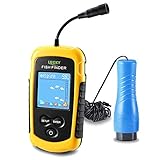
LUCKY Small Portable Fish Finder Kayak Sonar Handheld Fish Finders Ice Fishing Castable Depth Finder Boat Fisherman Gifts
2-inch LCD
Ice optimized sonar housing
45 degree beam
3 to 328 ft range
Pros
- Ice housing improves sonar penetration through ice
- Depth readings match higher-end flashers
- Blue transducer housing casts further
- 4 to 5 hours in power saving mode
- Backlit display for day and night
Cons
- Handheld display is not waterproof and must stay dry
- Needs sensitivity tuning to mark fish properly
- Less accurate in small water areas
- Some owners report units not working on ice at all
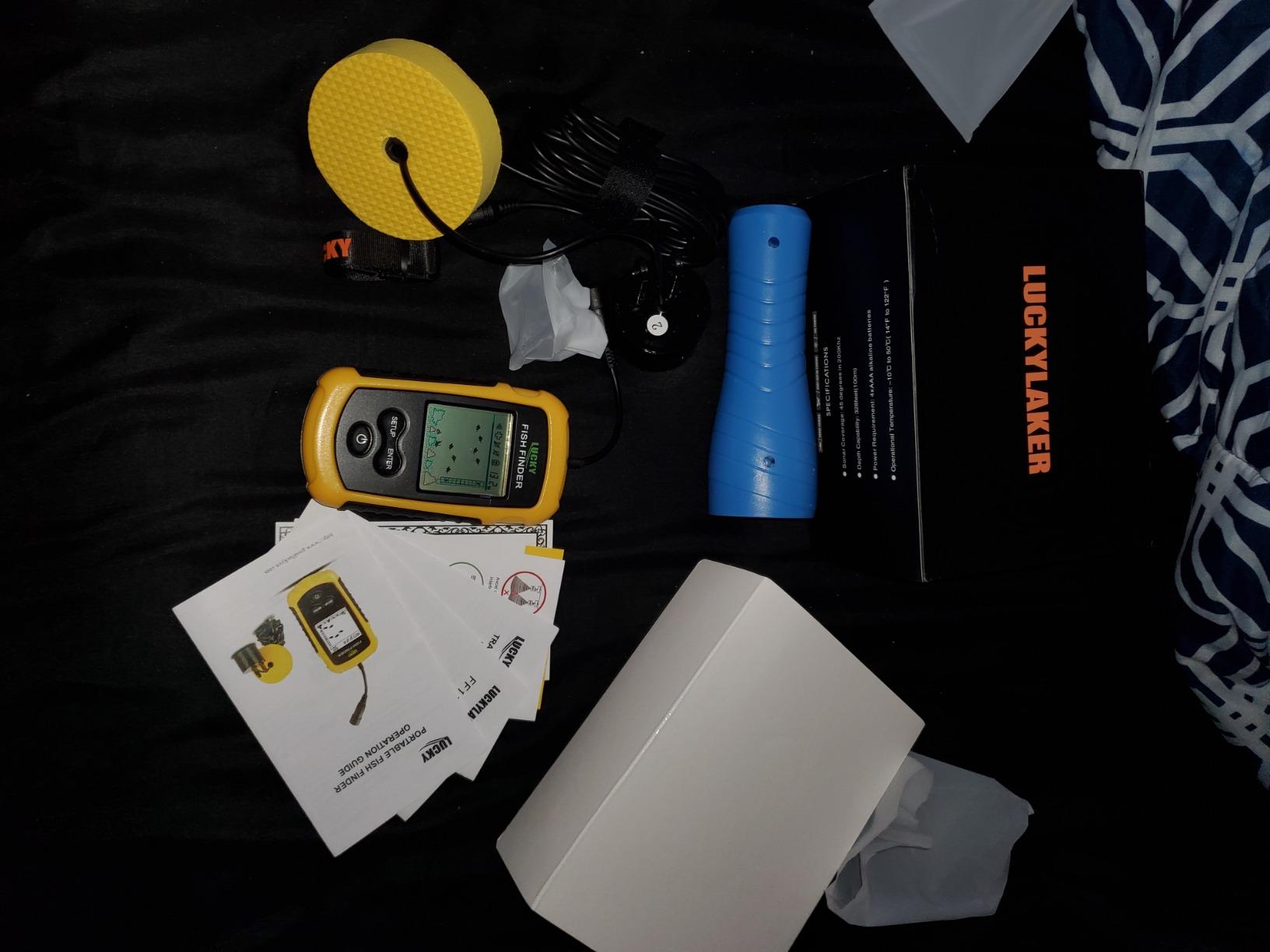
This is the FFC1108 with an ice-focused housing. The upgraded shell improves sonar performance through ice by roughly 30 percent, and the blue transducer housing throws further when you are casting from a bank or a dock in open water. Depth range stays at 3 to 328 feet with a 45-degree beam.
Power saving mode delivers 4 to 5 hours of continuous use, which covers a full ice outing. The backlit 2-inch LCD reads in low light and in daylight, and the fish alarm function lets you fish with your eyes on the hole rather than the screen.
Owners report that depth readings hold up against more expensive flashers, which matters when you are marking a channel or a drop-off under the ice. Customer service and exchanges are also mentioned favorably, which matters for a seasonal purchase.
It carries a 4.1 average, and its 493 ratings are the smallest review base among the Garmin, Humminbird and Deeper units here, so the track record is shorter than the numbers on the Striker 4 or the PiranhaMAX 4.
What an ice flasher does that an open water unit cannot
Sonar through ice is a harder problem than sonar through water. The housing change here is the entire engineering point, and it is why a flasher built for ice is not simply a cheaper open water unit. The beam and housing geometry both matter once you are looking through ice into deep water.
The other difference is workflow. An open water unit assumes you are moving; a flasher assumes you are stationary over a spot, watching for a return to move. The alarm is more useful on ice than anywhere else.
What to watch for before you buy
The handheld display is not waterproof and must be kept away from water and rain. On a windy ice day that is a real constraint, and a soft goods bag is not optional.
Sensitivity needs adjusting to mark fish properly, the unit is less accurate in small water areas, and a portion of owners report the unit simply not working on ice. Test it at home before you drive to the lake.
9. Humminbird HELIX 5 Chirp DI GPS G3 – the only down imaging unit on the list
Humminbird Helix 5 G3 GPS Fish Finder with Transducer, Dual Spectrum Chirp Sonar & Down Imaging
5-inch color TFT
CHIRP Down Imaging
Dual Spectrum sonar
AutoChart Live mapping
Pros
- Down Imaging separates fish from structure very clearly
- Dual Spectrum sonar has wide and narrow modes
- Basemap covers more than 10000 lakes plus the coast
- AutoChart Live maps depth hardness and vegetation
- Softkey controls work reliably in any weather
Cons
- Highest-cost unit in this roundup
- No touchscreen and menus have a learning curve
- Down Imaging adds setup complexity
- Fuse and fuse holder are not included
The HELIX 5 Chirp DI is the reason this list contains a five-inch color screen. CHIRP Down Imaging filters out visual noise and looks directly beneath the boat, which is how you see fish hovering over structure that traditional sonar draws as a smear. For anyone fishing deep drop-offs off a small boat, that is a real capability, not a spec sheet item.
Dual Spectrum CHIRP sonar runs in Wide and Narrow modes with 2D target separation through the Low-Q transducer. The XNT 9 HW DI T transom transducer is included, along with a power cable, a gimbal bracket and mounting hardware.
The Humminbird Basemap covers more than 10,000 lakes and the continental US coastline, and it accepts LakeMaster, CoastMaster and Navionics cards. AutoChart Live records depth contour, bottom hardness and vegetation maps as you navigate, with eight hours of built-in recording and compatibility with AutoChart Zero Line SD cards for more.
Reviewers consistently describe this as the most capable unit of the ten, and the softkey keypad keeps working reliably in any weather, which a touchscreen does not always do in cold or wet conditions.
Whether down imaging is worth changing brands for
Down Imaging is a different picture, not a better picture. You see a beam looking downward and can read the shadow a fish casts over a ledge, which tells you what is holding the fish. Traditional sonar alone will not give you that picture at any price.
The trade is software. Down Imaging adds setup complexity, the softkey menus have a learning curve, and there is no touchscreen to make the deeper menus pleasant. If you are patient enough to learn it, the picture is worth the effort. If you want something you will understand in ten minutes, this is not it.
What to watch for before you buy
This is the most expensive unit in the group, and once you add a transducer, a mount and wiring it is the one most likely to push a total install past the ceiling you started with. The 3 amp fuse and fuse holder are not in the box, so plan for that.
The review count of 338 is much smaller than the Garmin units here, so you are buying into a less proven sample. And with no touchscreen, every menu change is buttons, which is a real consideration on a wet helm.
10. Lowrance Eagle 4 inch – a 4-inch IPS screen built for full sun
Lowrance Eagle 4X Fish Finder with Bullet Transducer
4-inch IPS portrait screen
Auto-Tuning Sonar
44 degree beam
500 ft depth
Pros
- IPS screen stays clear in sun and through polarized sunglasses
- Auto-Tuning Sonar removes manual setup
- Twist-lock connector makes transducer swaps fast
- 200 kHz Bullet Skimmer has a broad 44 degree beam
- Fuse and fuse holder are included in the box
Cons
- Entry sonar only with no imaging or C-MAP charting
- No audible fish alarm
- Smallest review base here at 116 ratings
- Portrait screen limits split-screen layouts
The Lowrance Eagle is built around one thing: a 4-inch IPS portrait screen that stays readable in bright sunlight, at wide viewing angles and through polarized sunglasses. Every other complaint about small fish finder screens is usually a brightness complaint, and this panel is the direct answer to it.
Auto-Tuning Sonar sets the optimized parameters automatically, so there is nothing to adjust before you fish. The included 200 kHz Bullet Skimmer transducer has a broad 44-degree beam, which is sized for kayaks and small boats where a narrow cone would miss the fish next to you.
A twist-lock connector makes installation and later transducer swaps fast, and the box includes the bracket, locking collars, a power cable, a fuse and a fuse holder. Max depth is 500 feet. The fish icon display shows depth with zoom, though there is no audible fish alarm.
Worth noting for anyone shopping this brand: the Eagle line also comes in 5-inch SplitShot, 7-inch TripleShot and 9-inch TripleShot configurations, several with C-MAP Discover charting. Those larger variants are where the imaging capability lives, and they are the version to watch for if you can catch one inside your ceiling.
The trade against all of that is that this specific listing is the entry sonar model. No imaging, no charting, and a 4.3 average across just 116 ratings, the smallest review base in this roundup. You are buying a very good screen and a very good beam, and not much else.
What the IPS screen actually solves
Sunlight readability is a hardware property, not a software setting. IPS panels hold consistent color and contrast at wide viewing angles, which means the picture looks the same from a seated position at the helm and from a standing position leaning over the console, and it stays visible through polarized lenses, which a standard LCD often does not.
If you fish in open sun for long sessions, or you wear polarized glasses, that is a bigger practical improvement than another sonar mode. It is also the reason we would pick this over a same-sized monochrome unit.
What to watch for before you buy
There is no imaging sonar and no C-MAP charting on this model, so the picture is arcs and icons only. There is also no audible fish alarm, which some ice and kayak anglers rely on heavily.
With 116 ratings, you have the least long-term data of any unit here, and owners who compare it with higher tier Lowrance models sometimes find the basic picture lacking. The portrait format also constrains split-screen layouts, so map and sonar at once is not really an option.
How to Choose a Fish Finder Under 500
The buying decision at this price is less about features and more about fitting a ceiling. Every unit here is capable. What separates them is how well the screen, the sonar and the included hardware match your boat and your water, so work through these questions in order.
Screen size is the first budget fight
The most common frustration on forums around this budget is that a 500 dollar ceiling lands you on a 4-inch or 5-inch screen while the buyer actually wants 7 inches for visibility from the console. That tension is real and there is no clever way around it.
What helps is being honest about where you fish. Under a canopy on a bass boat, a 4-inch to 4.3-inch screen is genuinely sufficient, and the extra brightness of an IPS panel can be worth more than the extra inches. On an open jon boat where you stand and look down, you want the biggest screen you can get, which is why we would watch the STRIKER Vivid and Eagle family for a 7-inch variant rather than settle for 4 inches.
Traditional sonar, CHIRP, down imaging and side imaging
Traditional sonar sends one or a few fixed frequencies and draws what comes back. CHIRP sweeps a continuous band of frequencies over time, which produces cleaner arches and better target separation for the same money. Down Imaging looks straight down and shows you what is beneath the boat. Side Imaging looks to either side of the boat and paints a picture of structure behind you.
At this ceiling you can have CHIRP and ClearVu comfortably, and down imaging in exactly one unit on this list. Side imaging is not achievable in a new unit at this price, and no amount of clever shopping changes that. Live imaging and high-resolution side scan sit well above the ceiling.
Does the transducer come in the box
This is the most important line item in the whole purchase. A transducer can cost more than the unit itself, and six of the ten products here come with one. Striker 4, Striker Plus 4, STRIKER Vivid 4cv, PiranhaMAX 4, HELIX 5 Chirp DI and the Lowrance Eagle all include a mount-appropriate transducer.
That said, the bundled transducer is a basic unit. Forum regulars consistently argue that transducer quality drives image quality more than the head does, and that an Airmar B175HW is praised on fishing forums for producing clear fish arches. If you end up wanting a better picture later, that is the upgrade to research, and it is also the upgrade most likely to break your ceiling.
Depth range, power and the transducer that is included
Check three numbers before you buy: rated maximum depth, transmit power and the current draw at 12V. The Striker 4 quotes 1600 ft freshwater and 750 ft saltwater, the Striker Plus 4 quotes 20 meters, the PiranhaMAX 4 quotes 600 ft and the Lowrance Eagle quotes 500 ft.
Current draw decides how small your battery can be. The Striker 4 pulls 0.23 amps at 12V, which is why owners run it for days on a small sealed lead acid battery. A hungrier unit changes your wiring, your battery and your total cost, so this number belongs in the same category as the price you are trying to stay under.
GPS, mapping and what free contours actually give you
GPS at this price is common but not universal. The PiranhaMAX 4 has none, and neither do the two LUCKY handhelds. Everything else here can mark waypoints, and the PiranhaMAX is the one product on this list that cannot be expanded to do so later.
On mapping, the realistic options are Garmin Quickdraw Contours and Humminbird AutoChart Live, both of which build your own contours as you fish, plus the Deeper PRO+ 2 which does the same from a castable puck using its built-in GPS. Paid chart packages are a separate cost entirely, and the Lowrance Eagle entry model does not accept them.
The hidden costs that push a unit over the ceiling
Budget readers on forums keep describing the same surprise: a unit that looks well inside the limit becomes an over-budget project once it is installed. The components people forget are a battery, if the unit is not powered from the boat, a power and data cable, an inline fuse and holder, a mounting bracket if you want transom rather than bail mounting, and a second transducer if you want side scan later.
Our rule is to pick the unit that arrives with the most hardware in the box, then add a battery and cable. On this list that points at the Garmin Striker 4, the Striker Plus 4 and the STRIKER Vivid 4cv, each of which comes with a transducer, a power and data cable and a tilt and swivel mount, and the Striker 4 and Plus 4 also include transom and trolling motor mounts. Two products here explicitly omit parts: the Striker Plus 4 has no battery fittings and the HELIX 5 has no fuse or fuse holder.
Used versus new at this price band
The recurring question in the forums is whether to buy a cheaper new unit or save up for a used higher tier one. The answer depends almost entirely on side imaging. If you want side scan and you cannot buy it new at this ceiling, a used unit two tiers up is the only realistic route, and owners report that used deals are where most of them end up.
The risk in buying used is buying a discontinued model at a discount that still feels current. Model naming in this category is genuinely confusing, with Striker, Striker Plus, STRIKER Vivid and HELIX generations all sold side by side. Check that the unit has a current-generation transducer available before you commit, because that is what limits how long you can keep it.
Matching the unit to your boat
For a kayak, portability and hull compatibility come first. The LUCKY FFC1108 reads through a plastic kayak hull and needs nothing installed, the Deeper units cast from the kayak without any wiring, and the Lowrance Eagle ships with a broad 44-degree beam sized for small boats.
For a jon boat, a transom mount and a battery-powered unit is the sweet spot. The Striker 4 and the PiranhaMAX 4 both handle this cleanly with included hardware. For a bass boat with a console, brightness and screen size matter most, which is where the IPS Lowrance screen and the color STRIKER Vivid earn their places. If you are wiring to a trolling motor, confirm the cable reaches and that the unit draws little enough current to run off a small battery.
Garmin versus Humminbird versus Lowrance
Owners on the forums tend to converge on a consistent split: Humminbird for side scan and lake mapping, Lowrance for the interface and waypoint handling, Garmin for general value. That maps cleanly onto this list, where the two Humminbird units differ sharply, since the HELIX 5 is the only one with imaging and the PiranhaMAX 4 has no GPS at all, the Lowrance is defined by its screen, and the Garmins cover three tiers with the strongest review histories.
No brand wins outright at this ceiling. What differs is the software, the available charts and the transducers you can buy later, so if you already own one ecosystem, staying inside it is usually the cheaper path.
How to read a sonar screen in three parts
First, the bottom line. A flat, even line means soft sediment. A jagged, sharp line with sudden depth changes means rock, and those transitions are where fish hold. Learn to spot a ledge or a drop-off before you worry about individual fish.
Second, the arches. A fish suspended above the bottom draws an arc, and a tight arc usually means a single fish. A smear close to the bottom with no clear shape is more often a bump, a branch or a school seen edge-on. Arch height above the bottom tells you how far up the fish is holding.
Third, the color. On a color unit, structure and fish often sit in different parts of the palette, which is why the Vivid and HELIX units are easier to read. On a monochrome unit you are reading shape and shade, which is why CHIRP matters, since it produces cleaner, better separated returns than a single frequency.
Frequently Asked Questions
What is the best fish finder under 500 dollars?
The Garmin Striker 4 is the best all-round choice at this ceiling because it includes the transducer, a transom mount and a trolling motor mount, and runs on 0.23 amps at 12V. The Garmin STRIKER Vivid 4cv is the better upgrade if you want a color screen and Quickdraw Contours mapping, and the Humminbird HELIX 5 Chirp DI is the only unit in this price range with down imaging.
What is the best budget friendly fish finder?
For a tight budget, the Garmin Striker 4 gives you CHIRP traditional sonar, ClearVu scanning sonar, a built-in flasher and a GPS waypoint map at the lowest total cost once the transducer and mounts are counted. If your boat is a kayak or you fish from shore, the LUCKY FFC1108 or a Deeper castable unit will spend the money more usefully than a mounted head.
What is the best fish finder for kayak fishing?
For a kayak, the LUCKY FFC1108 is the simplest choice because it reads through a plastic hull with nothing installed and shows depth from 3 to 328 feet. The Lowrance Eagle 4 inch pairs a sunlight-readable IPS screen with a broad 44-degree beam and a twist-lock connector, which suits a permanently rigged kayak. The Deeper Start and PRO+ 2 suit anglers who cast rather than mount.
Is Humminbird or Garmin better?
Garmin wins on value and hardware at this budget. Three different Striker generations appear on this list, each with a transducer and a mount in the box. Humminbird wins on imaging, since the HELIX 5 Chirp DI is the only unit here with down imaging, and on chart options through LakeMaster, CoastMaster and Navionics compatibility. If you want imaging, Humminbird; if you want the most complete package, Garmin.
Is side imaging possible on a budget fish finder?
Not in a new unit at this price point. Side imaging needs a wide-beam transducer array and the processing to paint a side picture, and the units that carry it sit well above the ceiling, alongside live imaging and high-resolution side scan. The realistic options are a used higher tier unit from a previous model generation, or a new entry unit now and a side scan transducer later. The Garmin units here accept a better traditional transducer more readily than a side scan array.
Do I need a transducer for my fish finder?
Yes, and this is where budgets break. Six of the ten units on this list include a transducer, which is why we rate them as the safer buys. The Striker 4, Striker Plus 4, STRIKER Vivid 4cv, PiranhaMAX 4, HELIX 5 Chirp DI and Lowrance Eagle all include one, while the two Deeper castables carry theirs in the body. A replacement transducer can cost more than the unit, so check the box contents carefully.
Is it better to buy a used fish finder?
It depends on what you are missing. If a new unit at this ceiling meets your needs, new gives you a warranty and known support. If you specifically want side imaging, a used unit from a higher tier is the only realistic route, and forum regulars report that used deals are where most buyers in this situation end up. Watch for discontinued models sold at a discount, and confirm a current-generation transducer is still available for whichever unit you pick.
The Best Fish Finder Under 500 for 2026
The Garmin Striker 4 remains the pick we would put in the boat, because a bundled transducer, included trolling motor mount and a 0.23 amp draw add up to the lowest total cost of ownership in this category. The Garmin STRIKER Vivid 4cv is the upgrade for anyone who wants color and auto contour mapping, and the Humminbird HELIX 5 Chirp DI is the specialist for anglers who need down imaging on deep structure.
For kayaks and shore fishing, the LUCKY FFC1108 and the Deeper castables solve problems a mounted head cannot. Check the box contents, budget for a battery and cable, and buy from these ten rather than paying more for a smaller feature list.