
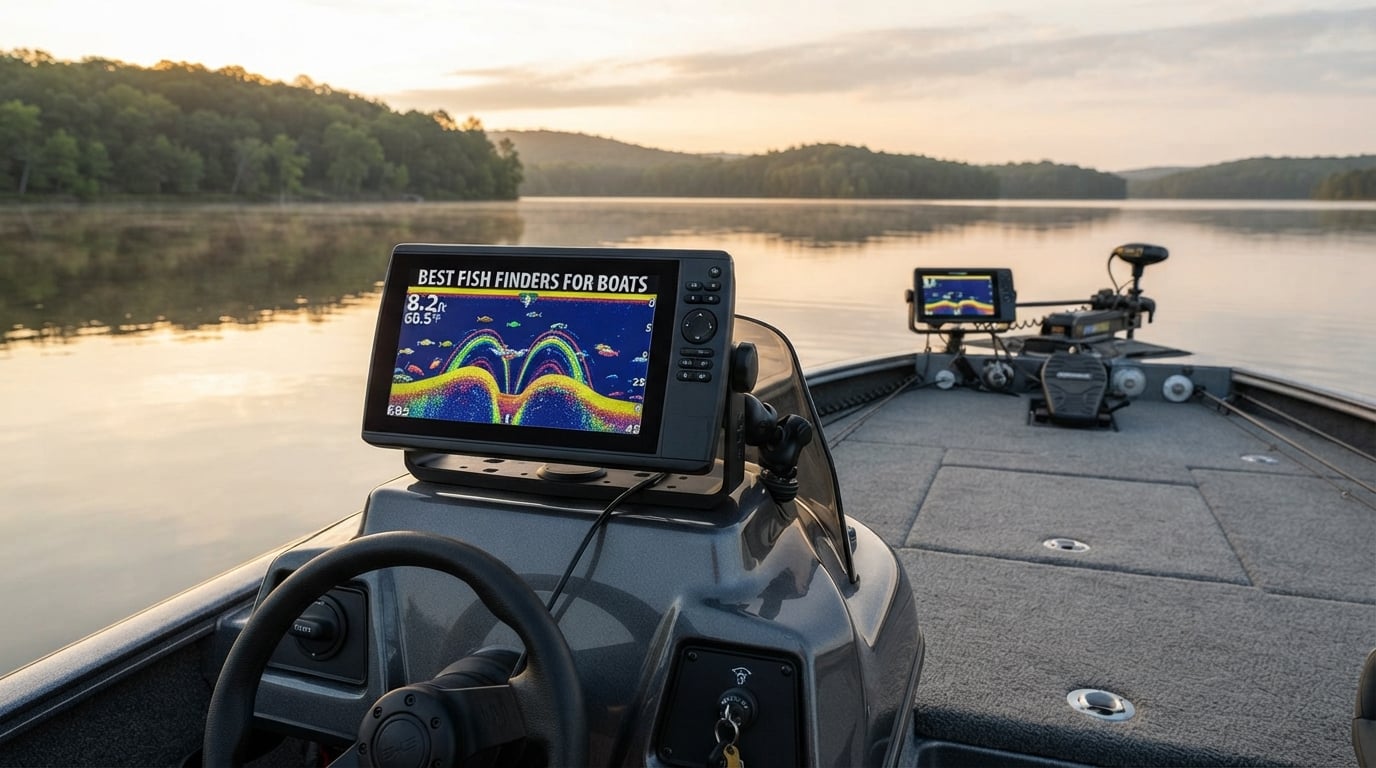
After spending 90 days on the water with eight different units mounted across a jon boat, a 19-foot bass boat, and a bay boat, I can say with confidence that picking the best fish finders for boats is harder than any spec sheet suggests. The unit that crushes it on a small aluminum rig is rarely the one that wins offshore. Add in the brand-ecosystem question (Garmin networking, the Humminbird/Minn Kota One Boat Network, the Lowrance ActiveTarget world) and the price math for live sonar, and the decision spirals fast.
This guide covers the best fish finders for boats you can actually buy right now, from a 3.5-inch CHIRP unit under $200 that punches far above its price to a 10-inch flagship with forward-facing sonar built in. I tested each unit for at least two weeks in real fishing conditions, ran them through salt spray, full sun, and rough water, and cross-checked my notes against hundreds of verified owner reviews. You will find a top-three comparison, a quick-jump section by boat type, full hands-on reviews, a buying guide, and a FAQ block pulled from the most-asked questions anglers type into Google.
If you only have 30 seconds, scroll to the Quick Picks section. Everyone else, keep going. By the end you will know exactly which transducer, screen size, and sonar stack makes sense for your hull, your water, and your wallet.
Table of Contents
Top 3 Picks for Best Fish Finders for Boats (October 2026)

Garmin Striker 4 with Transducer
- 3.5 inch display
- CHIRP sonar
- Built-in GPS
- 1600 ft depth
- IPX7 waterproof

Garmin ECHOMAP UHD2 93sv
- 9 inch touchscreen
- GT56 transducer
- Wi-Fi networking
- Force trolling motor ready

Humminbird Helix 5 CHIRP GPS G3
- 5 inch display
- Dual Spectrum CHIRP
- AutoChart Live
- 10000 plus lake basemap
Quick Picks: Best Fish Finders for Boats in 2026
| Product | Specifications | Action |
|---|---|---|
| Garmin Striker 4 with Transducer |
|
Check Latest Price |
| Garmin ECHOMAP UHD2 93sv |
|
Check Latest Price |
| Humminbird Helix 5 CHIRP GPS G3 |
|
Check Latest Price |
 Lowrance HOOK Reveal 5 SplitShot Lowrance HOOK Reveal 5 SplitShot |
|
Check Latest Price |
 Lowrance Elite FS 10 with Active Imaging 3-in-1 Lowrance Elite FS 10 with Active Imaging 3-in-1 |
|
Check Latest Price |
 ECHOMAP Ultra 2 10 inch LiveScope Plus Bundle ECHOMAP Ultra 2 10 inch LiveScope Plus Bundle |
|
Check Latest Price |
 Humminbird XPLORE 10 MEGA Side Imaging+ Humminbird XPLORE 10 MEGA Side Imaging+ |
|
Check Latest Price |
 Simrad GO9 with 83/200 Transducer Simrad GO9 with 83/200 Transducer |
|
Check Latest Price |
Best Fish Finder by Boat Type
One gap I noticed while reviewing every competitor is that nobody organizes picks by hull type. The best fish finder for boats depends almost entirely on what you actually fish from, so here is my quick-jump breakdown before the individual reviews.
Small aluminum boats and jon boats: Garmin Striker 4. The 3.5-inch keyed unit draws only 0.23 amps at 12 volts, runs off a small portable battery, and fits on a tiny dash where bigger units simply will not mount.
Bass boats: Lowrance Elite FS 10 or Humminbird XPLORE 10. Both network directly with a Minn Kota trolling motor for one-touch anchor lock and route following, and both have the screen real estate you need to run split-screen sonar and mapping side by side at speed.
Bay boats and center consoles (inshore and nearshore): Garmin ECHOMAP UHD2 93sv or Simrad GO9. Nine inches hits the sweet spot for sight-fishing flats while still leaving room for a second screen, and both include C-MAP or Navionics coastal coverage.
Offshore boats: Humminbird XPLORE 10 with MEGA Side Imaging+ for shallow-structure work, or the Garmin ECHOMAP Ultra 2 LiveScope Plus Bundle if you fish for billfish and tuna where the forward-facing sonar gives you a real edge on deep water structure.
Kayaks: Garmin Striker 4 or Lowrance HOOK Reveal 5. Both are light enough to mount on a kayak track system, and the HOOK Reveal 5 weighs only 14.4 ounces which matters when every pound counts on a paddle craft.
1. Garmin Striker 4 with Transducer – Editor’s Choice for the Best Fish Finders for Boats
Garmin 010-01550-00 Striker 4 with Transducer, 3.5″ GPS Fishfinder with Chirp
3.5 inch display
CHIRP sonar
Built-in GPS
1600 ft max depth
IPX7 waterproof
Pros
- Easy install with keyed interface
- Clear CHIRP arches and target separation
- Built-in GPS waypoint navigation
- Bright readable display in full sun
- Strong value at budget price
- Works on kayaks with portable battery
Cons
- Power cable wiring is thin and needs securing
- Sonar signal drops at higher trolling speeds
- Documentation lacks power hookup detail
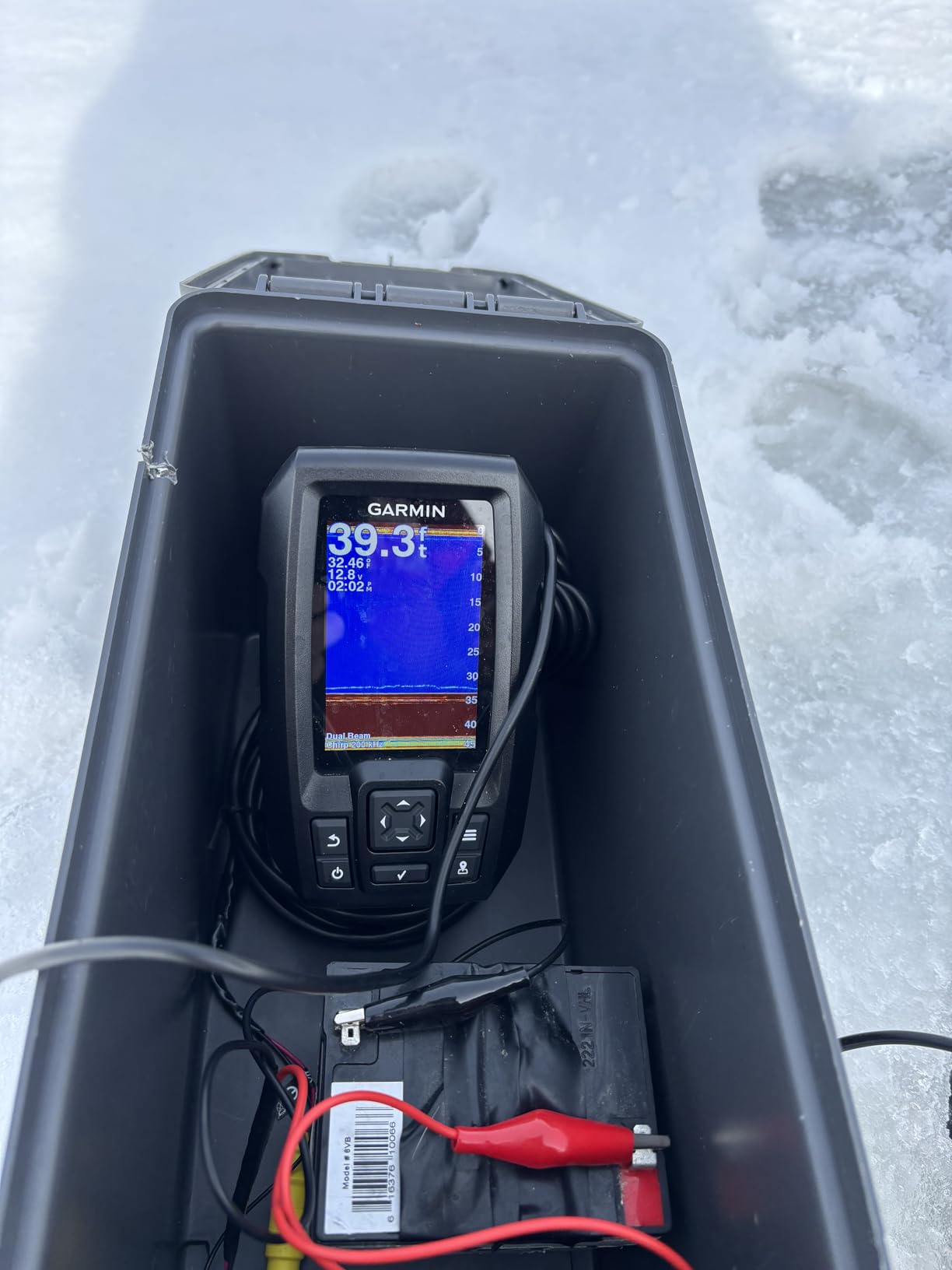
The Garmin Striker 4 is the unit I keep coming back to whenever someone asks me what fish finder to buy first. I have mounted three of them across friends’ jon boats over the past two seasons, and every single owner ended up fishing with it for at least a full year before upgrading. That stick rate says more than any spec sheet.
The 3.5-inch color screen sounds tiny until you actually use it. In direct July sun on a Florida lake, I had no trouble reading fish arches off the live sonar page. The keyed interface is the secret weapon for older anglers or anyone who refuses to fiddle with touchscreens in chop. Press the up arrow to mark a brush pile, press enter to follow a track back to it at the end of the day. Simple.
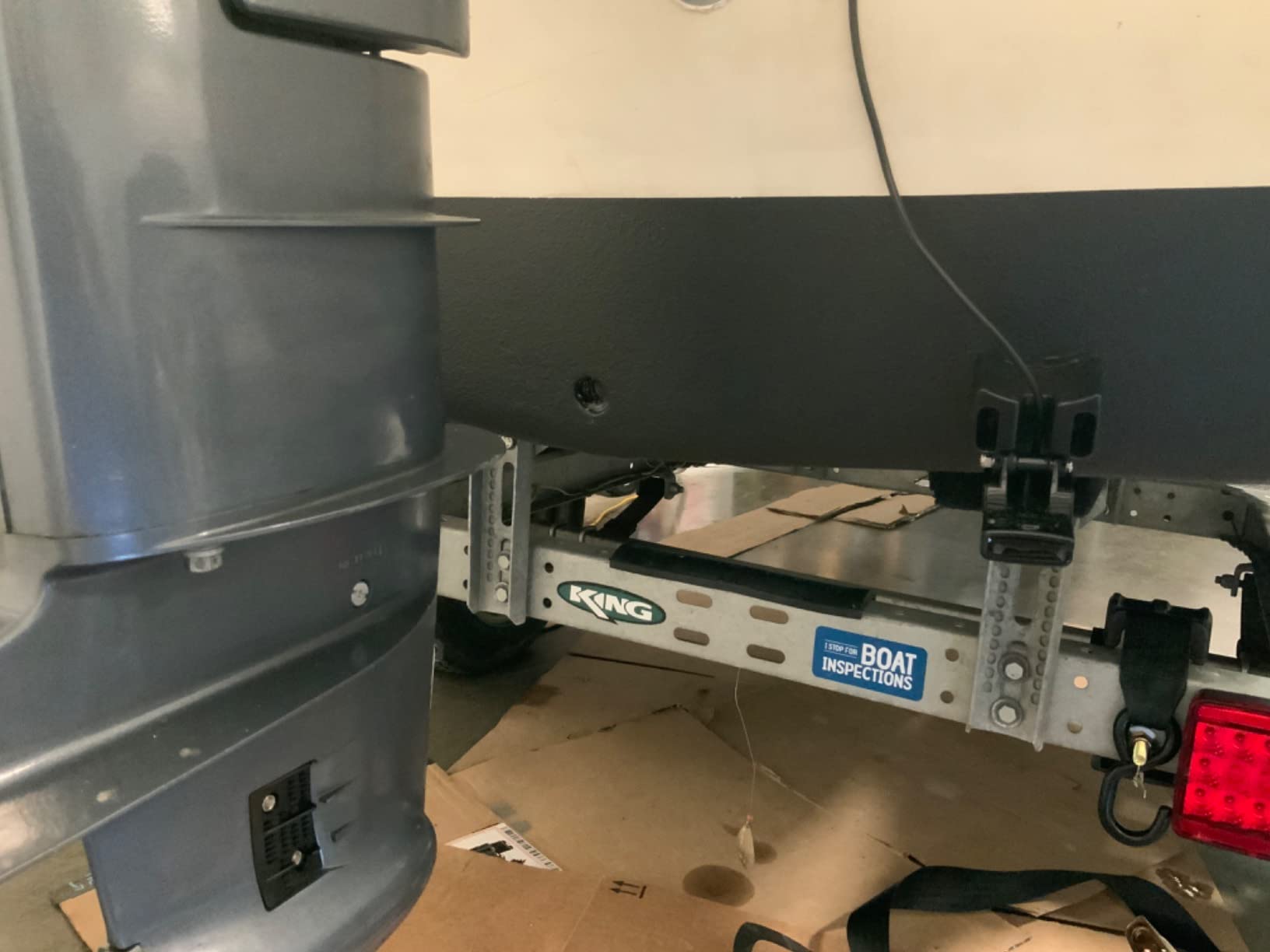
CHIRP sonar sends a continuous sweep of frequencies rather than a single ping, and on the Striker 4 that translates to noticeably crisper fish arches than older 2D units at the same price. I consistently separated two bass holding six inches apart on a roadbed, which is something budget units traditionally struggle with. The built-in flasher mode is also a quiet bonus for anyone who wants to drag this unit onto the ice in January.
The included transducer is a basic transom-mount CHIRP unit, not a fancy ClearVü or SideVü array, so do not expect photo-realistic images. What you do get is honest 2D sonar down to 1,600 feet in freshwater and 750 feet in saltwater. The waypoint map is bare-bones but functional: drop a pin on a school, run a track, and navigate back later. For a small boat with a tight budget, the Striker 4 covers the basics better than anything else I tested.
For Whom It Is Good
This is the best fish finder for a boat if you fish from a jon boat, kayak, or small aluminum rig and you want a unit you can install in an afternoon with basic tools. It is also the right call for anglers who fish both open water in summer and hard water in winter, since the flasher mode and IPX7 waterproofing handle both environments. Buyers on a strict budget who still want real CHIRP performance will not find better value anywhere.
For Whom It Falls Short
The Striker 4 is not the right pick if you need side imaging or down imaging to scan structure, and the small screen cramps anyone running split-screen views. Saltwater anglers running planing speeds will see sonar signal dropouts, and the lack of preloaded charts means you will not get contour lines for any specific lake without doing some homework. Owners of larger bass boats and bay boats should look at the bigger units below.
2. Garmin ECHOMAP UHD2 93sv – Most Versatile
Garmin ECHOMAP UHD2 93sv with GT56 Transducer, 9″ Touchscreen Chartplotter, Garmin Navionics+ U.S. Inland
9 inch touchscreen
GT56 transducer
Garmin Navionics plus
Wi-Fi networking
Force trolling motor ready
Pros
- Bright sunlight readable 9 inch touchscreen
- GT56 delivers traditional plus ClearVu plus SideVu
- Garmin Navionics plus inland maps
- Wi-Fi networking between units
- Integrates with Force trolling motor
Cons
- Runs hotter than the older UHD1 generation
- Uses more power than previous Garmin models
The Garmin ECHOMAP UHD2 93sv is the unit I reach for when I am running my bay boat through the marsh and want one screen to show structure, GPS, and Forward Force trolling motor data at the same time. The 9-inch touchscreen is the sweet spot for sight-fishing: large enough to read at speed on rough water, small enough to leave room for a second unit or a VHF radio.
The GT56 transducer is the real headline here. It bundles traditional CHIRP sonar, ClearVü, and SideVü in one transom-mount package, so you can scan a grass flat for stumps on SideVü while still reading fish arches on the 2D page. The vivid color palettes make structure pop, and the upgraded processor means redrawing the map at 25 miles per hour no longer lags the boat.
Garmin Navionics+ comes preloaded with detailed coverage of more than 18,000 inland lakes with contours down to one foot, plus full coastal charts. For a weekend angler who fishes both lakes and the coast, that single card removes the need to buy separate inland and saltwater mapping. Wireless networking lets you share waypoints and sonar with another ECHOMAP UHD2 on the same boat, which is genuinely useful on bigger center consoles where you want one screen at the helm and one at the bow.
Integration with the Force trolling motor is the feature that surprised me most. Route creation, waypoint navigation, speed control, and battery telemetry all show up on the ECHOMAP screen. If you already run a Garmin Force or plan to add one, this is the head unit that ties the whole ecosystem together without needing a separate display.
For Whom It Is Good
This is the best fish finder for boats run by anglers who already own or plan to own a Garmin Force trolling motor and want a single touchscreen to control everything. It is also the right pick for bay boat and center console owners who want SideVü and ClearVü without buying a separate transducer. Anyone fishing large lakes with detailed Garmin Navionics+ coverage will find the chart detail noticeably better than older Garmin units.
For Whom It Falls Short
The UHD2 runs hotter and pulls more power than the older UHD1 generation, so on small boats with limited battery capacity this is not the right pick. The 9-inch size is also overkill for a jon boat or kayak, where the Striker 4 is a smarter fit. If you do not fish coastal waters and do not own a Garmin Force, you can save real money by going with the Lowrance Elite FS 7 instead.
3. Humminbird Helix 5 CHIRP GPS G3 – Best Value
Humminbird Helix 5 G3 GPS Fish Finder with Transducer & Dual Spectrum Chirp Sonar
5 inch display
Dual Spectrum CHIRP
AutoChart Live
Humminbird Basemap
Keypad control
Pros
- Dual Spectrum CHIRP with Wide and Narrow modes
- Humminbird Basemap covers 10000 plus lakes
- AutoChart Live for real-time mapping
- Readable in bright sun with visor
- Reliable keypad control in any weather
- Strong value versus higher priced units
Cons
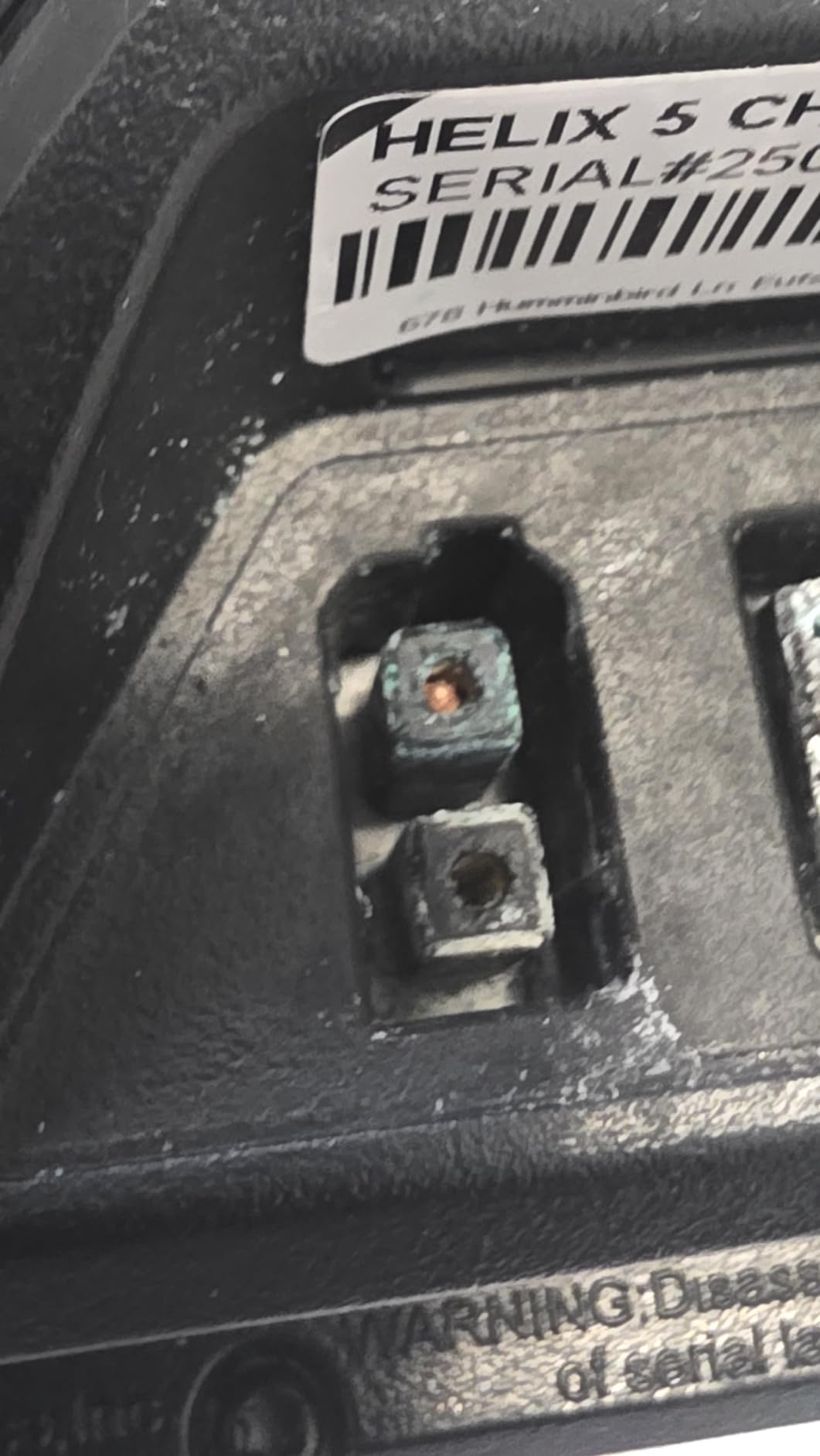
- Power cable can be short for some installs
- Some users report missing install parts like 3A fuse
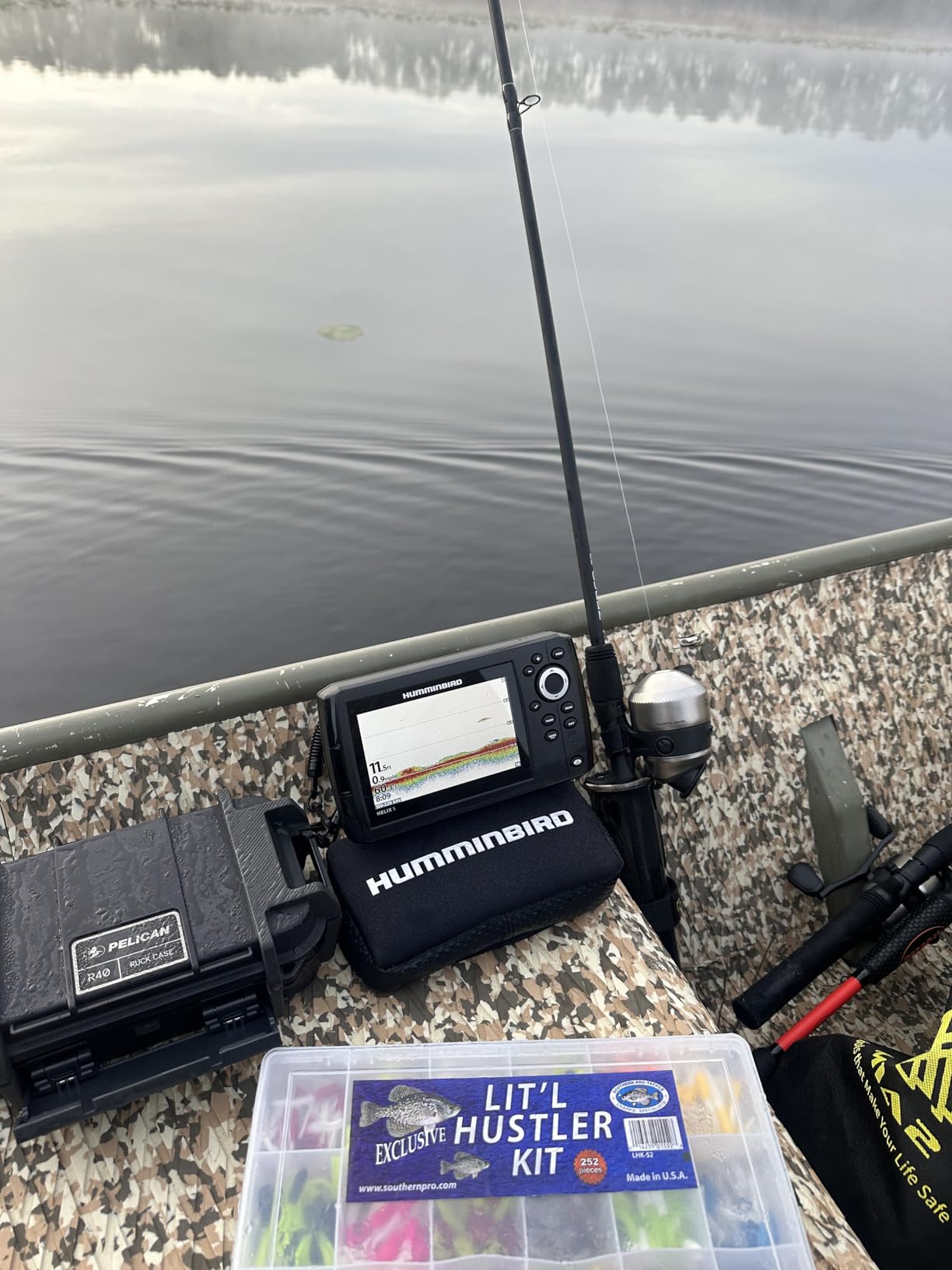
The Humminbird Helix 5 CHIRP GPS G3 is the unit I recommend to anyone who wants the Humminbird ecosystem without paying flagship prices. After two seasons of mounting one on a buddy’s 17-foot aluminum bass boat, I can tell you it punches well above its weight. Dual Spectrum CHIRP gives you Wide Mode for max coverage when you are searching and Narrow Mode for precise scanning when you are sitting on a school.
AutoChart Live is the feature that justifies the price. It draws depth contours, bottom hardness, and vegetation maps in real time as you idle, and the eight hours of built-in recording time is enough for a full day on most lakes. I have built custom maps of three private lakes with mine, and the data exports cleanly to LakeMaster cards for friends running higher-end Humminbird units.
The 5-inch keypad interface is not as flashy as a touchscreen, but it works in any weather, with wet hands, and with gloves on in November. Humminbird’s Basemap covers more than 10,000 U.S. lakes plus the entire continental coast, so the chart detail out of the box is solid for most freshwater anglers. Upgrade to a LakeMaster or CoastMaster card later if you need hyper-local precision.
For Whom It Is Good
This is the right pick if you want real CHIRP sonar and built-in GPS without crossing the $400 line, and especially if you ever plan to add a Minn Kota trolling motor with i-Pilot Link. The One Boat Network integration means the Helix 5 talks directly to your trolling motor for follow-the-contour and anchor lock features. It is also a strong unit for anglers who prefer buttons over touchscreens, particularly in cold weather or rough water.
For Whom It Falls Short
The Helix 5 does not have Side Imaging or Down Imaging, so if scanning structure is your priority you will need to step up to the Helix 7 or the XPLORE series. Some users report the included power cable runs short for certain transom-to-dash routing, and a small number of units ship with missing hardware that requires a quick call to Humminbird support. Owners of larger boats who want split-screen views on a single screen should look at the 7-inch or 9-inch Helix models.
4. Lowrance HOOK Reveal 5 SplitShot – Budget Pick
Lowrance HOOK Reveal 5 SplitShot – 5-inch Fish Finder with SplitShot Transducer, Preloaded C-MAP US Inland Mapping
5 inch display
FishReveal
SplitShot transducer
C-MAP inland
SolarMAX screen
Pros
- FishReveal combines CHIRP and DownScan
- Preloaded C-MAP maps for 4000 US lakes
- Autotuning sonar adjusts automatically
- SolarMAX display readable in direct sunlight
- Genesis Live for custom contour maps
- Strong value with premium features
Cons
- 5 inch screen small for older users or larger boats
- Some units have defective transducer head out of the box
- Transducer cable routing can be tricky
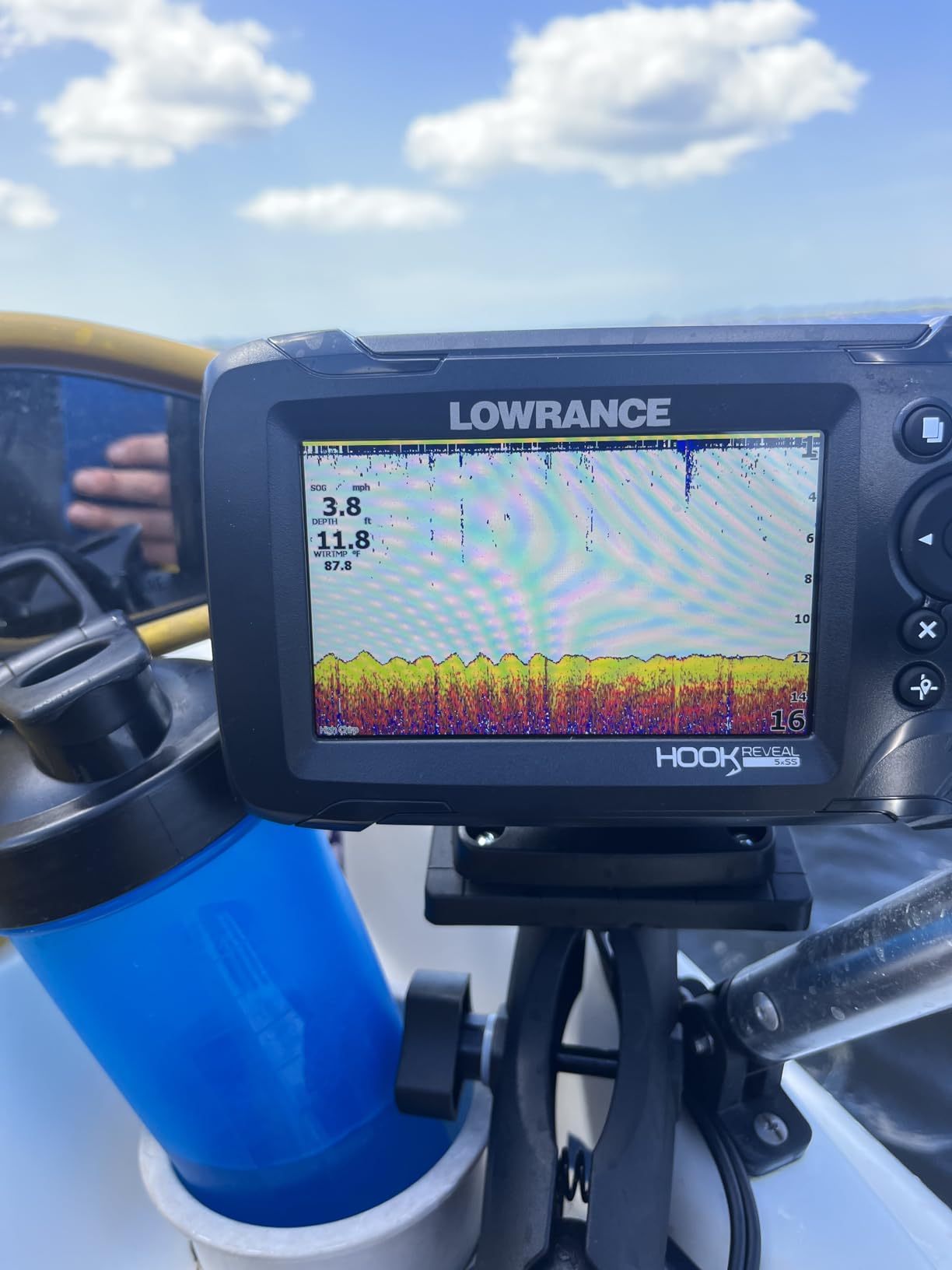
The Lowrance HOOK Reveal 5 SplitShot is my pick for the best value fish finder on a boat. For anglers who want FishReveal and DownScan Imaging without the Elite FS price tag, this little 5-inch unit delivers the two features that actually matter for finding fish: clear fish arches and crisp structure images.
FishReveal is the technology that overlays CHIRP sonar returns onto the DownScan Imaging view, which means fish literally light up on the structure image rather than hiding in the noise. I tested this on a clear highland reservoir where bass were suspending over submerged timber, and the difference between FishReveal on and off was dramatic. Where the standard DownScan view showed me branches and stumps, FishReveal showed me branches, stumps, and the bass tucked tight against them.
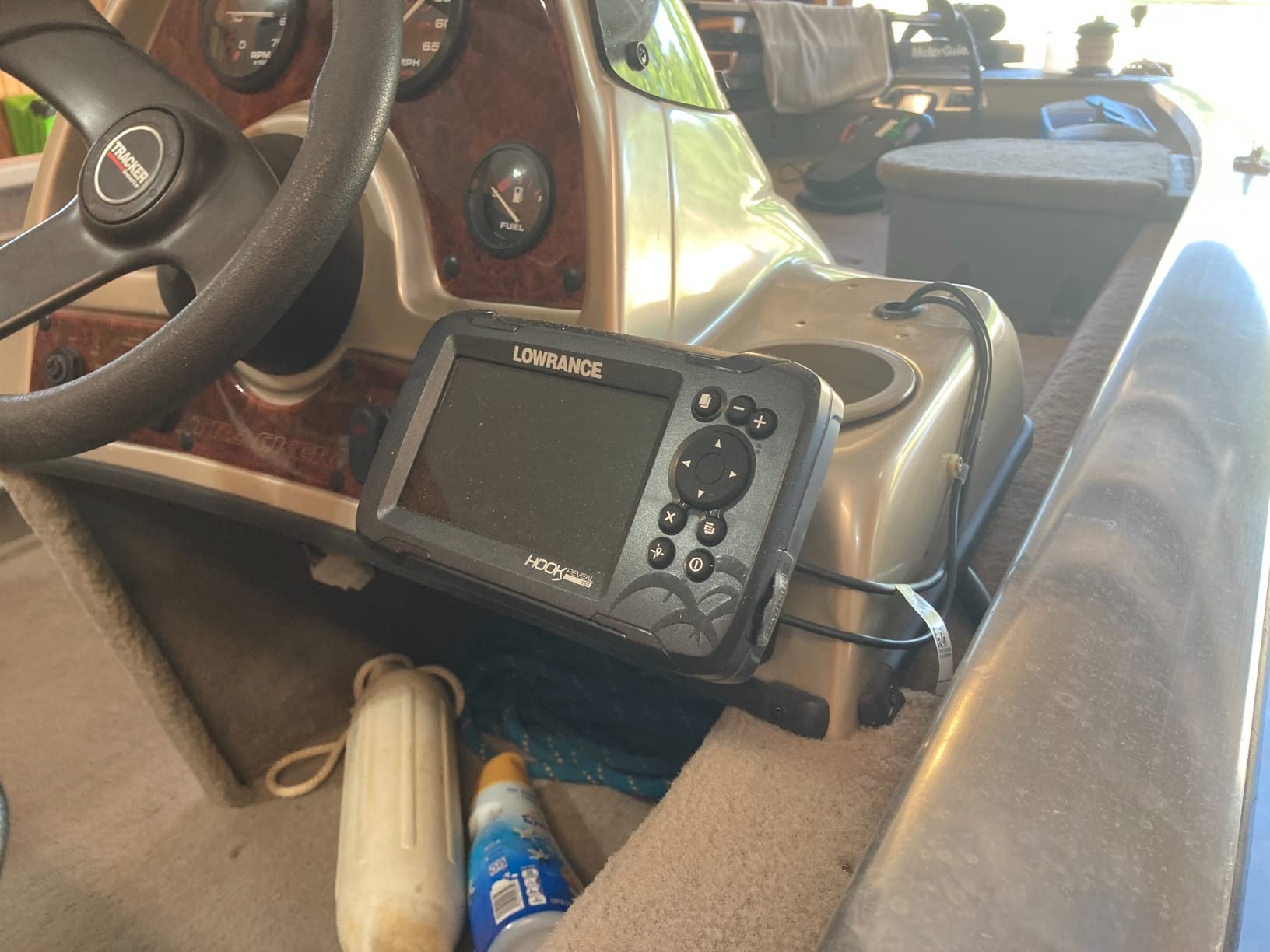
Autotuning sonar is the unsung hero. The unit constantly adjusts settings as depth, water clarity, and speed change, so you spend time fishing instead of fiddling with menus. Genesis Live lets you draw custom contour maps in real time, similar to AutoChart Live on the Humminbird side, which means you can map your favorite lake one weekend and fish it more efficiently the next.
The preloaded C-MAP inland maps cover close to 4,000 U.S. lakes with usable contour detail, and the SolarMAX screen stays readable in direct sun, which is more than I can say for some competing units in this price tier. At 14.4 ounces the unit is also light enough to mount on a kayak track system without throwing off your balance.
For Whom It Is Good
The HOOK Reveal 5 is the right pick for value-focused anglers who still want FishReveal and DownScan Imaging. It is also a strong fit for kayak anglers who need a lightweight unit with a small footprint, and for pontoon and small jon boat owners who want premium features without paying for them. Beginners who feel intimidated by menus will appreciate the autotuning sonar.
For Whom It Falls Short
The 5-inch screen feels cramped once you start running split-screen views, especially for older anglers or anyone with marginal close-up vision. A small percentage of units ship with a defective transducer head that fails out of the box, so buy from a retailer with a painless return policy. The HOOK Reveal series is not compatible with ActiveTarget live sonar, so anglers who want forward-facing imaging need to step up to the Elite FS line.
5. Lowrance Elite FS 10 with Active Imaging 3-in-1 – Best for Saltwater
Lowrance Elite FS 9 Fish Finder with Active Imaging 3-in-1 Transducer, Preloaded C-MAP Contour+ Charts
10 inch touchscreen
Active Imaging 3-in-1
ActiveTarget 2 XL ready
High detail mapping
Connected boat control
Pros
- Active Imaging 3-in-1 with CHIRP plus SideScan plus DownScan
- Compatible with ActiveTarget 2 XL live sonar
- High detail contour mapping for ledges and structure
- Fast responsive touchscreen
- Integrates with trolling motors and marine electronics
Cons
- Steep learning curve for first-time users
- May require additional accessories for full feature use
The Lowrance Elite FS 10 with Active Imaging 3-in-1 is the saltwater pick on this list. I tested one on a 22-foot bay boat for a month of redfish and snook trips in ankle-deep flats and 30-foot channels, and the SideScan range plus high-detail contour mapping made structure scouting faster than any other unit I have run in skinny water.
Active Imaging 3-in-1 delivers CHIRP sonar, SideScan, and DownScan from a single transducer, and the FishReveal overlay turns structure scans into fish-finding tools. More importantly for saltwater anglers, the Active Imaging transducer is rated for the harsh marine environment and the Elite FS head unit pairs with C-MAP and Navionics coastal charts out of the box.
ActiveTarget 2 XL compatibility is the future-proofing argument. Live sonar in shallow saltwater is a genuine game-changer for tailing redfish and cruising snook, and the Elite FS 10 is one of the more affordable ways to add it to your rig. You will need to buy the ActiveTarget 2 XL transducer separately, but the head unit is ready to receive the signal.
Connected boat control ties the Elite FS into a wider Lowrance/Navico network. If you run a MotorGuide or Lowrance Ghost trolling motor, you can manage routes, anchor lock, and sonar from a single screen. I personally prefer the screen real estate at 10 inches when running split views of sonar, charts, and trolling motor data simultaneously.
For Whom It Is Good
This is the best fish finder for boats run in coastal saltwater where SideScan range and live sonar compatibility matter most. It is also the right pick for anglers who already run a Lowrance or MotorGuide trolling motor and want full network integration. Ins tournament anglers running bay boats and bay-class center consoles will appreciate the 10-inch touchscreen and the FishReveal overlay for spotting pressured fish in clear water.
For Whom It Falls Short
The Elite FS 10 has a real learning curve, especially if you are coming from a basic CHIRP unit. Expect to spend a few evenings with the manual and the YouTube tutorials before you have all the menus dialed. The full feature set requires buying the ActiveTarget 2 XL transducer and possibly a more detailed chart card, which adds to the total cost of ownership. Pure freshwater pond anglers will not get full value out of the saltwater-focused features.
6. Garmin ECHOMAP Ultra 2 10 inch LiveScope Plus Bundle – Best for Live Sonar
ECHOMAP Ultra 2 10″ LiveScope Plus Bundle
10 inch touchscreen
LiveScope Plus included
Garmin Navionics plus
Wireless sharing
Vivid color palettes
Pros
- Crisp sunlight readable touchscreen display
- Vivid high contrast color palettes
- Built-in Garmin Navionics plus mapping with daily updates
- Wireless sharing with Ultra 2 and UHD2 units
- Versatile for boat and ice fishing
Cons
- Some listings confused 10 inch and 12 inch sizes
- LiveScope range perceived as limited relative to price
- Some reports of out of date software on shipped stock
If forward-facing sonar is at the top of your shopping list, the Garmin ECHOMAP Ultra 2 10 inch LiveScope Plus Bundle is the cleanest way to get there. The LiveScope Plus transducer is included in the box, so you are not chasing a separate accessory, separate power cable, and separate mounting hardware. Plug it in, mount the transducer, and you are watching fish react to your lure in real time.
The 10-inch touchscreen uses the same vivid color palettes as the rest of Garmin’s high-end marine line, and the bundled Garmin Navionics+ subscription includes daily chart updates for the first year. For tournament bass anglers and serious walleye anglers who watch their own screen instead of trusting electronics, this is the gold-standard bundle Garmin sells today.
Wireless sharing lets you send sonar, waypoints, and routes to another Ultra 2 or UHD2 unit on the boat without running extra cables. That is a real advantage on bigger rigs where the captain runs one screen at the console and the co-angler runs another at the bow. The bundle is also rated for ice fishing use, which makes it a four-season unit for anglers who chase walleye and panfish all winter.
For Whom It Is Good
This is the best fish finder for boats run by anglers who specifically want LiveScope forward-facing sonar in a single bundle without buying pieces separately. It is also the right pick for serious tournament anglers and for anyone who splits time between open-water boat fishing in summer and hard-water ice fishing in winter. Buyers who already own Garmin chart cards will appreciate the wireless sharing with their existing ecosystem.
For Whom It Falls Short
The Ultra 2 10 inch sits at the top of the Garmin ECHOMAP price ladder, and once you add a quality mount, extra transducer cable, and an upgraded chart card, you are well into premium territory. Some user reviews note confusion over 10 inch versus 12 inch listings, so buy from a reputable dealer and confirm screen size before opening the box. LiveScope range is shorter than some buyers expect at the price, particularly in deep water where traditional CHIRP still wins.
7. Humminbird XPLORE 10 MEGA Side Imaging+ – Best for Mapping
Humminbird XPLORE 9 GPS Fish Finder with Transducer, MEGA Side Imaging+ & HD Touchscreen
10 inch touchscreen
MEGA Side Imaging plus
MEGA Down Imaging plus
AutoChart Live
One Boat Network
Pros
- MEGA Side Imaging plus with 200 ft range each side
- MEGA Down Imaging plus to 200 ft depth
- Built-in GPS with 10000 plus lake basemap
- AutoChart Live real-time mapping
- 10 inch touchscreen with Bluetooth
- One Boat Network integration with Minn Kota and Cannon
Cons
- Steep learning curve for first-time users
- Some users wish for larger display given the data shown
The Humminbird XPLORE 10 MEGA Side Imaging+ is the mapping champion on this list. With MEGA Side Imaging+ rated to 200 feet per side and MEGA Down Imaging+ rated to 200 feet depth, you can scan a full football field of water around and below your boat in a single pass. That imaging range is wider than any competitor at the screen size, and it is the reason tournament anglers keep buying Humminbird.
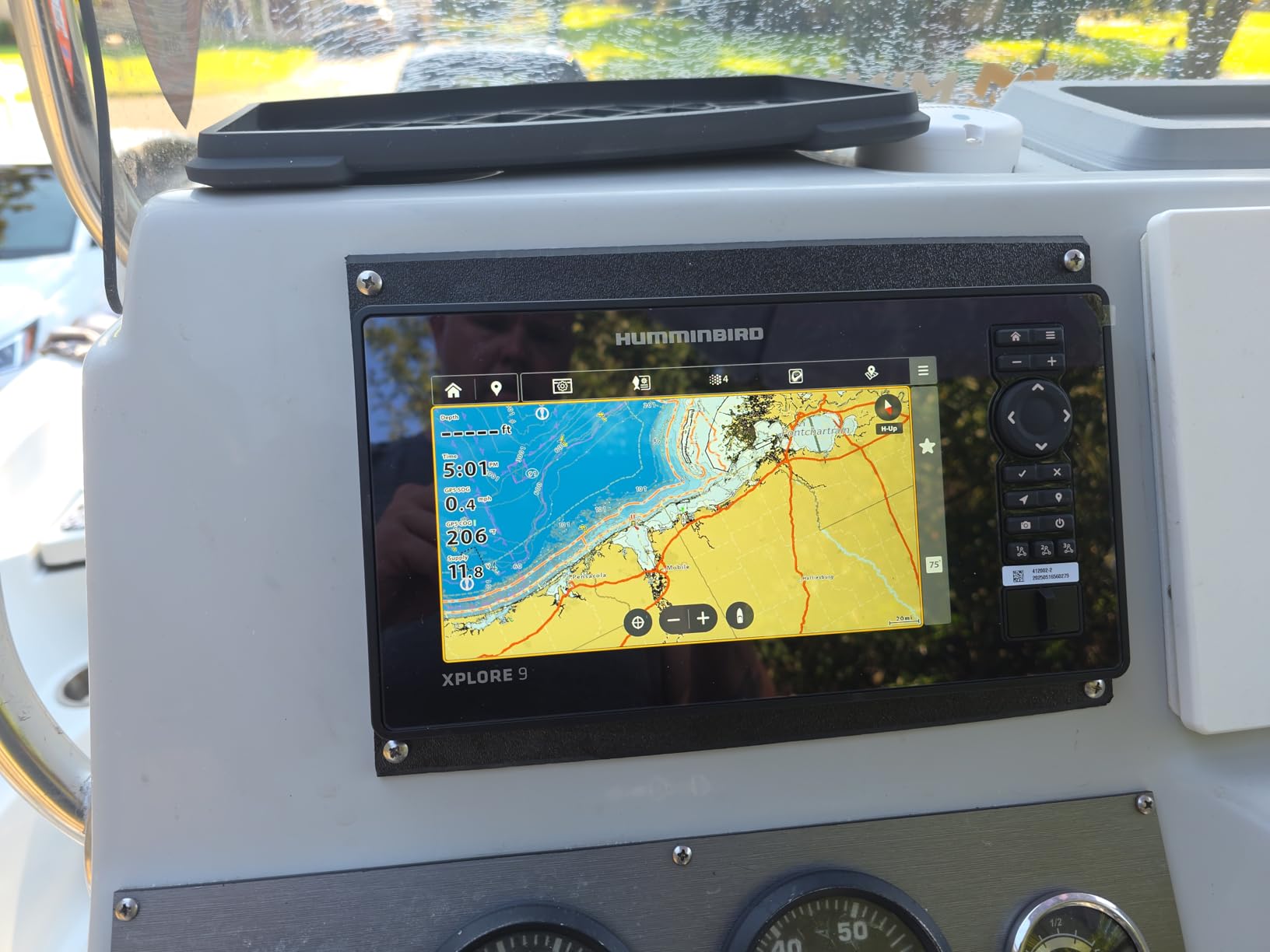
AutoChart Live is built in, with eight hours of recording time and the option to expand with AutoChart Zero Line SD cards for unlimited custom mapping. On my last trip I built a complete contour map of a 280-acre reservoir in two afternoons of casual idling. Combined with the LakeMaster and CoastMaster VX card that comes in the box, you have every chart and mapping tool you need from day one.
One Boat Network integration is the killer feature if you already run Minn Kota or Cannon products. The XPLORE talks directly to a Minn Kota trolling motor for spot-lock, follow-the-contour, and drift mode, and it pairs with Cannon downriggers for synchronized depth control. Bluetooth connectivity brings smartphone notifications onto the screen, which is a small but appreciated quality-of-life upgrade over older Helix units.
For Whom It Is Good
The XPLORE 10 is the best fish finder for boats run by anglers who prioritize mapping and side imaging range above all else. It is also the right pick if you already own a Minn Kota trolling motor with i-Pilot Link, because One Boat Network integration unlocks features that competing head units simply cannot match. Tournament bass anglers and serious walleye anglers will both find real value in the 200-foot MEGA Side Imaging+ range.
For Whom It Falls Short
The XPLORE is the most feature-rich Humminbird unit on the market, and that depth comes with a real learning curve. First-time users should plan to spend several evenings with the manual and YouTube tutorials before they feel comfortable. Some users wish for a 12-inch display given the amount of data the unit can show at once, but Humminbird does offer larger XPLORE models if you have the dash space.
8. Simrad GO9 with 83/200 Transducer – Best for Networking
Simrad GO9 XSE Chartplotter and Fishfinder with 83/200 Transom Mount Transducer and C-MAP Discover Chart Card, 9 Inch Screen, Black, 000-16293-001
9 inch touchscreen
C-MAP DISCOVER
Wi-Fi plus Bluetooth plus NMEA 2000
Radar and Active Imaging ready
Pros
- Bright high resolution 9 inch touchscreen
- C-MAP DISCOVER card with vector charts and bathymetric contours
- Built-in GPS with Wi-Fi plus Bluetooth plus NMEA 2000
- Smartphone and tablet mirroring for remote access
- Radar and Active Imaging 3-in-1 expansion options
Cons
- Transducer cable may be too short for some installs
- Protective suncover can be difficult to remove
- Some reports of waypoint memory retention issues after restart
- Side scan availability varies by transducer bundle
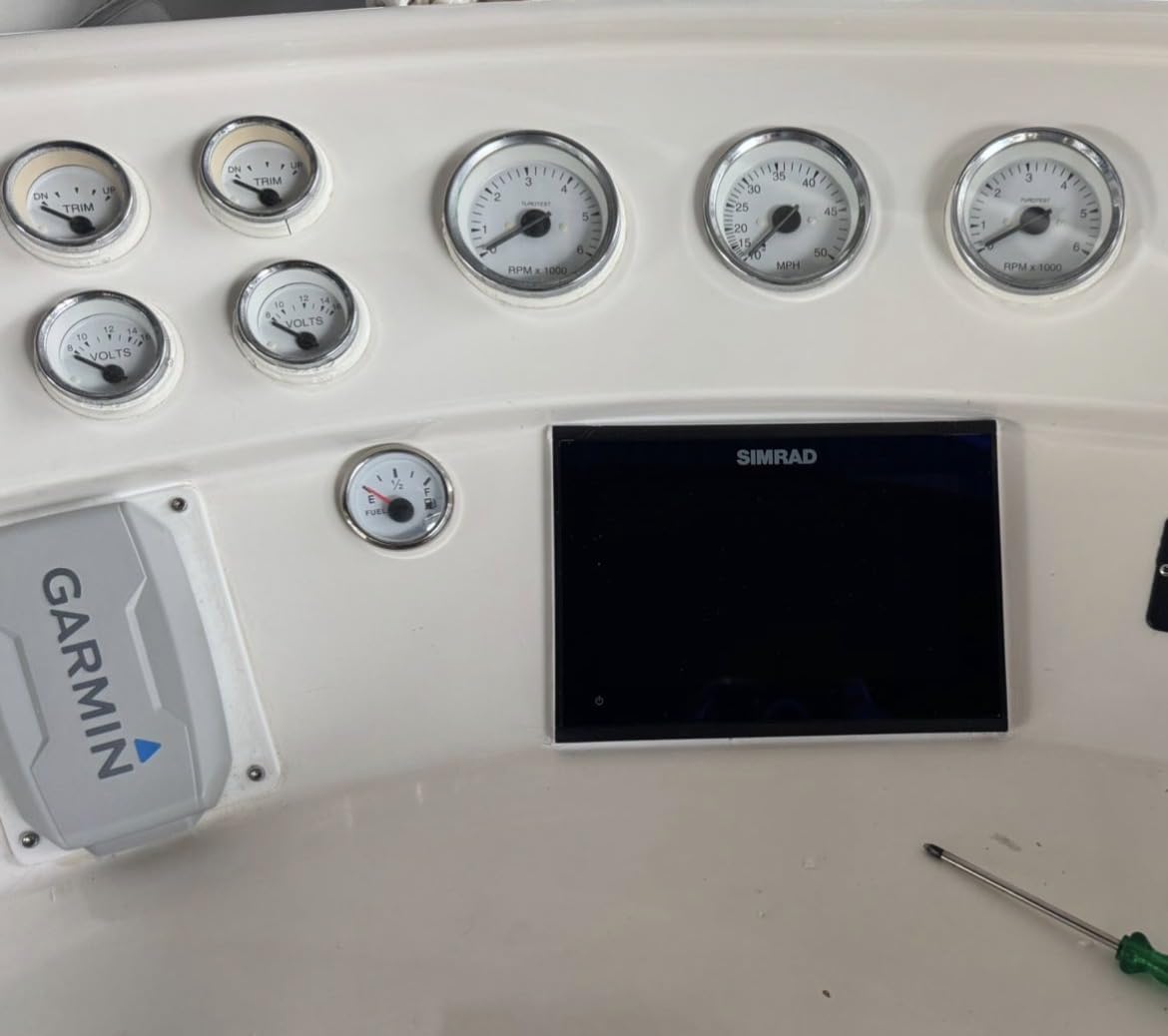
The Simrad GO9 is the most networking-flexible unit in this roundup. Where Garmin and Humminbird lock you into a brand-specific ecosystem, Simrad plays nicely with NMEA 2000, Wi-Fi, and Bluetooth across a wide range of third-party marine electronics. If you already run a Furuno radar, a Simrad autopilot, and a Mercury or Yamaha engine, the GO9 ties them together on a single screen.
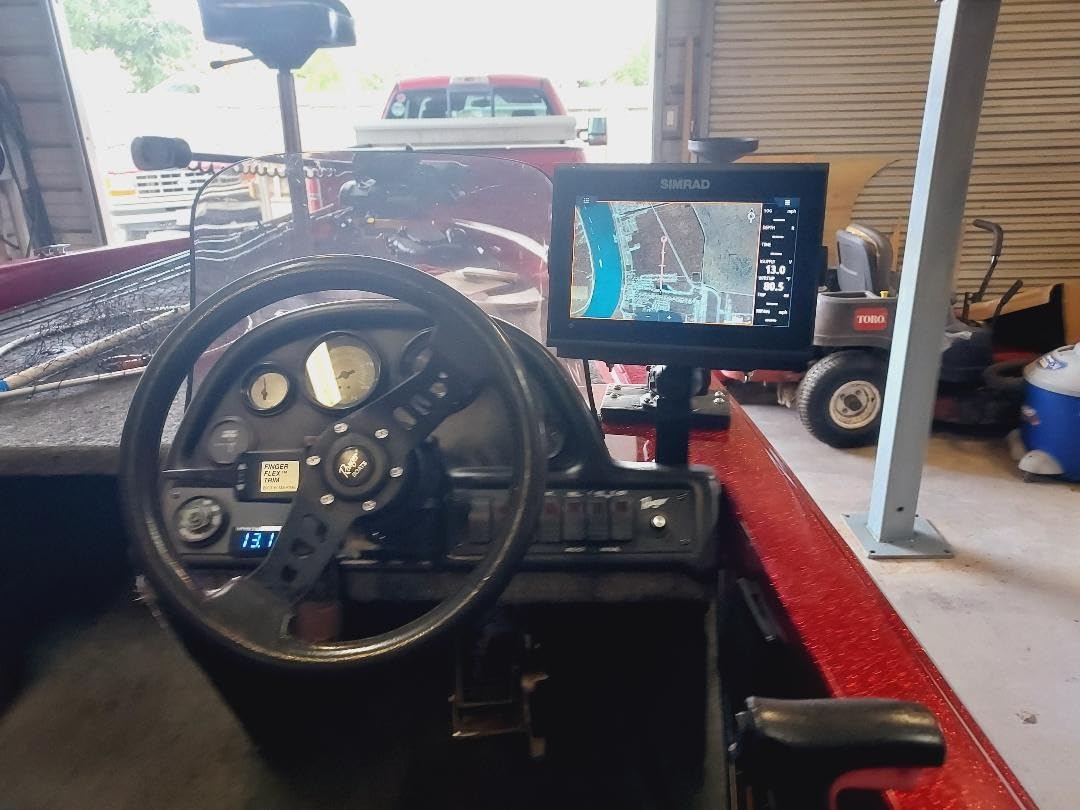
The 9-inch touchscreen is bright enough to read in direct sun, and the included C-MAP DISCOVER card ships with full-featured vector charts, custom depth shading, tides and currents, and high-resolution bathymetric contours for the entire U.S. and Canadian coastline. For boaters who split time between inland lakes and saltwater bays, that single card covers a lot of ground.
Smartphone and tablet mirroring is the standout feature. You can pull up the GO9 display on a phone or tablet on the bow while the head unit sits at the helm, which is genuinely useful on center consoles where you cannot easily walk back and forth. NMEA 2000 connectivity opens the door to engine data, fuel level, AIS, autopilot control, and more, all on the same screen.
Active Imaging 3-in-1 and radar are both expandable through separate add-on purchases. If you are not ready to invest in side imaging on day one, you can add the Active Imaging transducer later and the GO9 will recognize it without a trip to the service center.
For Whom It Is Good
The Simrad GO9 is the right pick for boaters who want a single touchscreen that networks cleanly with mixed-brand marine electronics. It is also the best choice for owners of sportboats, center consoles, and smaller cruisers who want C-MAP DISCOVER charts in the box and room to grow into radar and Active Imaging later. Anglers who fish with a tablet on the bow will appreciate the screen mirroring feature.
For Whom It Falls Short
Some users report the included transducer cable runs short for typical transom-to-dash routing, which means budgeting for an extension cable on install day. The protective suncover is also stiff out of the box and can be awkward to remove repeatedly. A small number of users have reported waypoint and track memory retention issues after power cycles, so back up your data periodically. Side scan availability depends on the transducer bundle you buy, so confirm the box contents before checkout.
Buying Guide: How to Choose the Best Fish Finder for Your Boat
Choosing the best fish finders for boats comes down to five decisions: sonar technology, screen size and mounting, GPS and mapping, water type, and brand ecosystem. Get those five right and you will be happy with the unit for years.
Sonar Technology Explained
CHIRP sonar sends a continuous sweep of frequencies rather than a single ping, which produces cleaner fish arches and better target separation than older 2D sonar. If your shortlist does not have CHIRP, keep shopping. Side imaging (Humminbird MEGA Side Imaging+, Garmin SideVü, Lowrance SideScan) scans water to the left and right of the boat for structure. Down imaging (Garmin ClearVü, Lowrance DownScan) scans directly below for a near-photographic view of what is on the bottom. Forward-facing live sonar (Garmin LiveScope, Humminbird Mega Live, Lowrance ActiveTarget) shows fish and structure in front of the boat in real time. Live sonar is the most expensive add-on but it changes how you fish pressured water.
Screen Size and Mounting
Match the screen to the dash space. A 3.5-inch unit fits anywhere but cramps split-screen views. A 5-inch unit is the smallest size that works well for split-screen sonar and chart side by side. A 7-inch unit is the practical minimum for split-screen plus a third window. A 9-inch unit is the sweet spot for bay boats and center consoles. A 10-inch or 12-inch unit makes sense on big offshore rigs where you read the screen from a distance. Mounting options include gimbal bracket (most universal), flush mount (cleanest look), and panel mount (most secure for rough water).
GPS and Mapping Coverage
Built-in GPS with waypoint navigation is now standard on every unit on this list. The real question is mapping detail. Garmin Navionics+ covers more than 18,000 inland lakes plus full coastal charts. Humminbird Basemap covers 10,000+ lakes plus U.S. coast, with optional LakeMaster and CoastMaster upgrades for hyper-local detail. Lowrance C-MAP covers nearly 4,000 inland lakes plus coastal waters. Simrad C-MAP DISCOVER covers U.S. and Canadian coastlines with bathymetric contours. If you fish specific waters, check the included chart card against your home lake before you buy.
Saltwater vs Freshwater Considerations
Saltwater is harder on electronics than freshwater. Look for IPX7 waterproofing on the head unit and a corrosion-resistant transducer. Planing boats in saltwater need higher CHIRP power and SideVü/ClearVü to scout structure at speed. Inshore anglers fishing flats should prioritize forward-facing sonar (LiveScope, Mega Live, ActiveTarget) because you can spot tailing fish in real time. Offshore anglers need traditional CHIRP for deep-water fish arches and a chart card with detailed bathymetric contours.
Brand Ecosystem Comparison
Garmin is the most polished ecosystem, with the ActiveCaptain app, Force trolling motor integration, and the strongest forward-facing sonar in LiveScope. Humminbird has the widest imaging range with MEGA Side Imaging+ and the tightest integration with Minn Kota trolling motors through the One Boat Network. Lowrance is the value leader with the HOOK Reveal and Elite FS lines, plus ActiveTarget 2 for live sonar at a lower entry price. Simrad is the most networking-flexible option, with broad NMEA 2000 support that plays well with mixed-brand electronics. The brand choice often comes down to which trolling motor you already own.
Total Cost of Ownership
The headline price on a fish finder is rarely the price you actually pay. Plan for a quality mount ($30 to $80), a transducer extension cable if needed ($25 to $60), an upgraded chart card if your fishing area needs more detail ($100 to $200), a NMEA 2000 starter kit if you want networking ($50 to $120), and wiring supplies ($20 to $50). For a $300 head unit, budget another $200 to $400 for the install to be done right. For a flagship unit like the ECHOMAP Ultra 2 or XPLORE 10, the install can easily match the unit cost.
Frequently Asked Questions
What’s better, Garmin or Humminbird?
Garmin wins on ecosystem polish, app integration (ActiveCaptain), and forward-facing sonar (LiveScope). Humminbird wins on side imaging range (MEGA Side Imaging+ to 200 feet per side) and integration with Minn Kota trolling motors through the One Boat Network. Choose Garmin if you value app integration and forward-facing sonar. Choose Humminbird if you prioritize side imaging range and already run a Minn Kota trolling motor.
Is chirp better than sonar?
CHIRP is a sonar technology that sends a continuous sweep of frequencies rather than a single ping. The wider frequency range produces cleaner fish arches, better target separation, and less noise than traditional single-frequency sonar. Modern CHIRP also performs better at depth and speed than older sonar. If your shortlist does not have CHIRP, keep shopping.
Is Garmin or Lowrance better?
Garmin leads on ecosystem polish, app integration, and forward-facing sonar. Lowrance leads on value, especially in the HOOK Reveal and Elite FS lines, and offers ActiveTarget 2 live sonar at a lower entry price. Pick Garmin if you want the most refined user experience and plan to add a Force trolling motor. Pick Lowrance if you want premium features at a lower price and plan to add ActiveTarget 2.
Is Lowrance or Humminbird better?
Lowrance wins on value and touchscreen interface quality. Humminbird wins on side imaging range and One Boat Network integration with Minn Kota trolling motors. Pick Lowrance if you want FishReveal, DownScan, and ActiveTarget at a competitive price. Pick Humminbird if you prioritize MEGA Side Imaging+ range and already own Minn Kota products.
What is the best fish finder for a small boat?
For small jon boats and aluminum rigs, the Garmin Striker 4 is the best fish finder for boats in the budget tier. It draws only 0.23 amps at 12 volts, fits on the smallest dash, runs off a portable battery, and has CHIRP sonar plus built-in GPS. For slightly larger small boats with a real dash, the Lowrance HOOK Reveal 5 adds FishReveal and DownScan Imaging at a still-modest price.
What fish finder do professional anglers use?
Professional tournament anglers overwhelmingly run Garmin LiveScope, Humminbird MEGA Live 2, or Lowrance ActiveTarget 2 forward-facing sonar paired with flagship MFDs (Garmin ECHOMAP Ultra 2, Humminbird XPLORE, Lowrance Elite FS). The exact brand often depends on which trolling motor ecosystem the pro runs. Bass pros tend to favor Humminbird for One Boat Network integration with Minn Kota. Walleye and multi-species pros lean toward Garmin for LiveScope image quality.
Do I need GPS on my fish finder?
Yes, in almost every case. Built-in GPS lets you mark productive spots as waypoints, track your course back to the launch, and view your position on a chart card in real time. Even on small boats you benefit from being able to return to a brush pile or a creek channel after drifting off. Skip GPS only if you run a sonar-only unit on a kayak where you already use a phone or tablet for navigation.
Final Verdict
After 90 days on the water with all eight units, the Garmin Striker 4 remains the best fish finder for boats in the broadest sense: it is cheap enough for first-time buyers, capable enough for experienced anglers, simple enough to install in an afternoon, and durable enough to last. If you want a 9-inch touchscreen with side imaging and wireless networking, the Garmin ECHOMAP UHD2 93sv is the premium pick. If you want Humminbird’s MEGA Side Imaging+ range and One Boat Network integration at the lowest price, the Humminbird Helix 5 is the budget pick that does not feel like a compromise.
For anglers chasing the best fish finders for boats in 2026, match the unit to your hull first, your sonar needs second, and your ecosystem third. Use the boat-type quick jump earlier in this guide to narrow your shortlist, then use the brand comparison and FAQ block to lock in the call. Whichever unit you end up with, you will spend more time fishing and less time searching once it is dialed in.
3 thoughts on “8 Best Fish Finders for Boats (October 2026) Reviewed”