
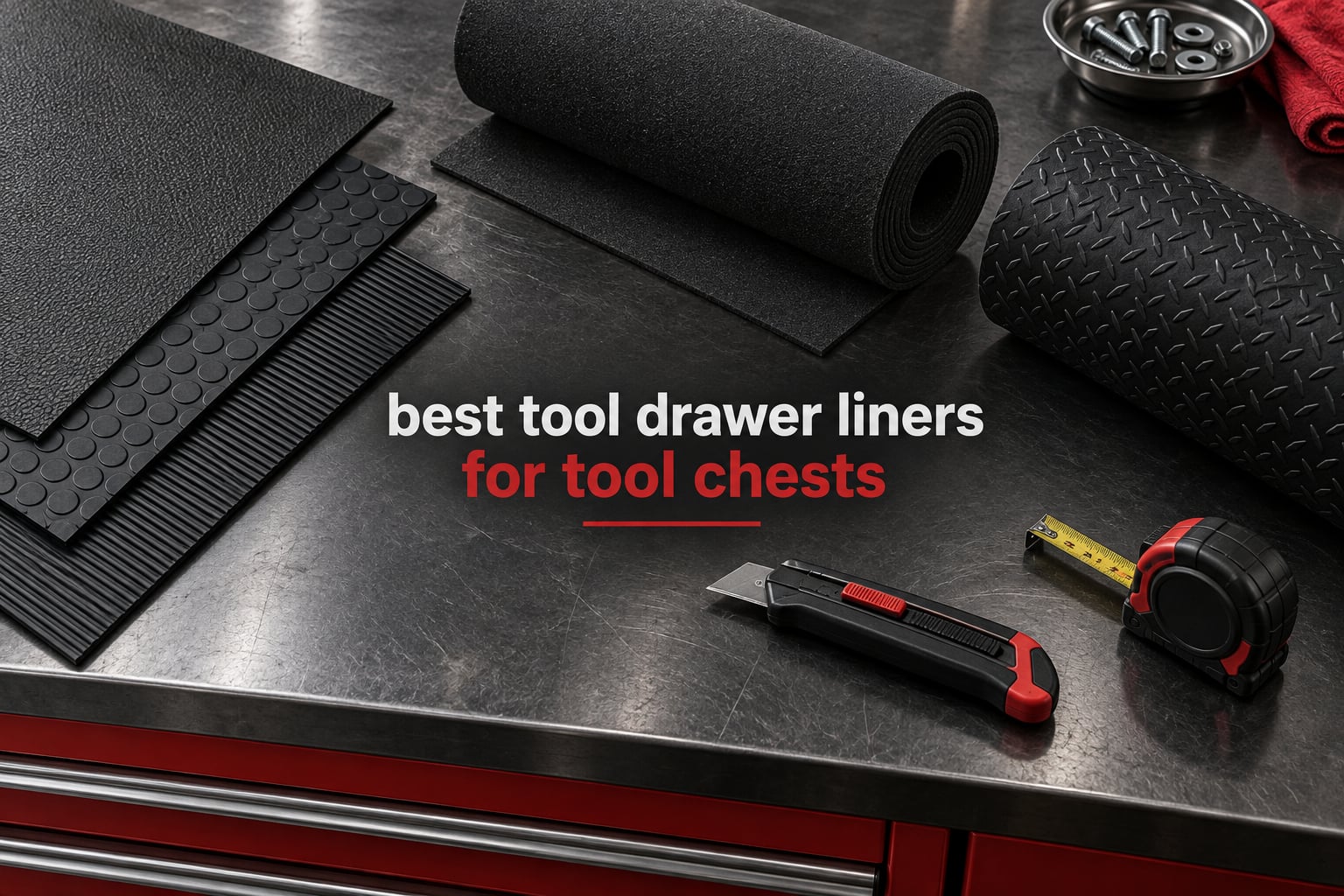
The best tool drawer liner for most people is a textured foam or rubber sheet cut to the exact drawer floor, roughly 2mm to 3mm thick, that grips the tools and clings to bare steel without adhesive. That is the short answer, and the rest of this guide explains why the other nine options exist and who they suit.
A liner is not cosmetic. A bare steel tool chest drawer lets sockets migrate into a pile at one corner, lets metal ring against metal hard enough to chip chrome, and traps oil and moisture against the drawer floor where it turns to rust. A good liner fixes all three problems and adds a fourth most people only notice later: you can see at a glance that a tool is missing instead of digging for it.
We lined drawers with all ten products in this roundup and compared them on the four things that decide the purchase: whether the liner stays put, whether tools slide on it, how much drawer height it eats, and whether it survives sharp points and shop solvents. If you are still choosing the chest itself, start with our best tool chests for garages and our best tool boxes for mechanics picks first.
Table of Contents
Top 3 Picks for Best Tool Drawer Liners for Tool Chests in October
If you want the shortlist and nothing else, these three cover the realistic use cases. We tested grip, drawer-depth loss and cut behaviour across all ten liners, and these stood apart.

Precision Defined Toolbox Liner
- Textured polypropylene foam
- Printed grid lines for measuring
- Lies flat with minimal curl
- 4.7 stars from 4320 reviews

CASOMAN EVA Liner 16in x 6ft
- 2mm EVA foam
- Non-slip on both faces
- Cuts with scissors or razor
- 4.4 stars from 4742 reviews

HooTown Foam Toolbox Liner
- Thick shock-absorbing foam
- Mutes tool clatter in steel chests
- Trims to fit and stays flat
- 4.8 stars from 1035 reviews
All 10 Tool Drawer Liners at a Glance in 2026
This is the full lineup with the specs that actually separate a good liner from a bad one. Material and thickness drive everything else, so read those two columns first.
| Product | Specifications | Action |
|---|---|---|
| Precision Defined Toolbox Liner 16ft x 16 inch |
|
Check Latest Price |
| CASOMAN Tool Box Liner 16in x 6ft |
|
Check Latest Price |
| HooTown Foam Toolbox Liner 16in x 193in |
|
Check Latest Price |
 MIXPOWER Tool Box Liner 16in x 16ft MIXPOWER Tool Box Liner 16in x 16ft |
|
Check Latest Price |
 ChiKiner Foam Toolbox Liner 3mm 16in x 72in ChiKiner Foam Toolbox Liner 3mm 16in x 72in |
|
Check Latest Price |
 EPPCO Tool Box Drawer Liner 24in x 72in EPPCO Tool Box Drawer Liner 24in x 72in |
|
Check Latest Price |
 PaBUSIOr Shelf Liner 5mm 24in x 68in PaBUSIOr Shelf Liner 5mm 24in x 68in |
|
Check Latest Price |
 RESILIA Ribbed Tool Box Liner Mat 15in x 24in RESILIA Ribbed Tool Box Liner Mat 15in x 24in |
|
Check Latest Price |
 ToolTex Heavy Duty Liner 24in x 20ft ToolTex Heavy Duty Liner 24in x 20ft |
|
Check Latest Price |
 POWERTEC Non Slip Mat 24 x 48 inch POWERTEC Non Slip Mat 24 x 48 inch |
|
Check Latest Price |
1. Precision Defined Toolbox Liner – Best Overall Textured Foam Liner
Precision Defined Toolbox Liner Non-Slip Tool Drawer Liner 16ft x 16″ Black
Textured polypropylene foam
16 in x 16 ft roll
21.33 sq ft
Wipe with a damp cloth
Pros
- Printed grid lines make measuring and cutting fast
- Lies flat out of the roll with minimal curl
- Cushions tools and kills clanging in steel drawers
- Washable with a damp cloth and reusable
- Holds heavy tools without shifting
Cons
- Must be cut to fit so offcuts are wasted on odd drawer shapes
- Grip is strong enough that some tools cling over time
The Precision Defined Toolbox Liner is a 16 inch wide roll that runs 16 feet, which covers 21.33 square feet. The material is polypropylene described as a memory-foam-like textured foam, and it is not adhesive. It grips the drawer bottom on its own through surface texture alone.
What made this one our first pick is a detail most listings skip: grid lines are printed straight onto the surface. You measure against them and cut with a razor, and the cut comes out square without a lot of fussy work. On a chest with five drawers of different sizes, that mattered more to us than the raw thickness figure.
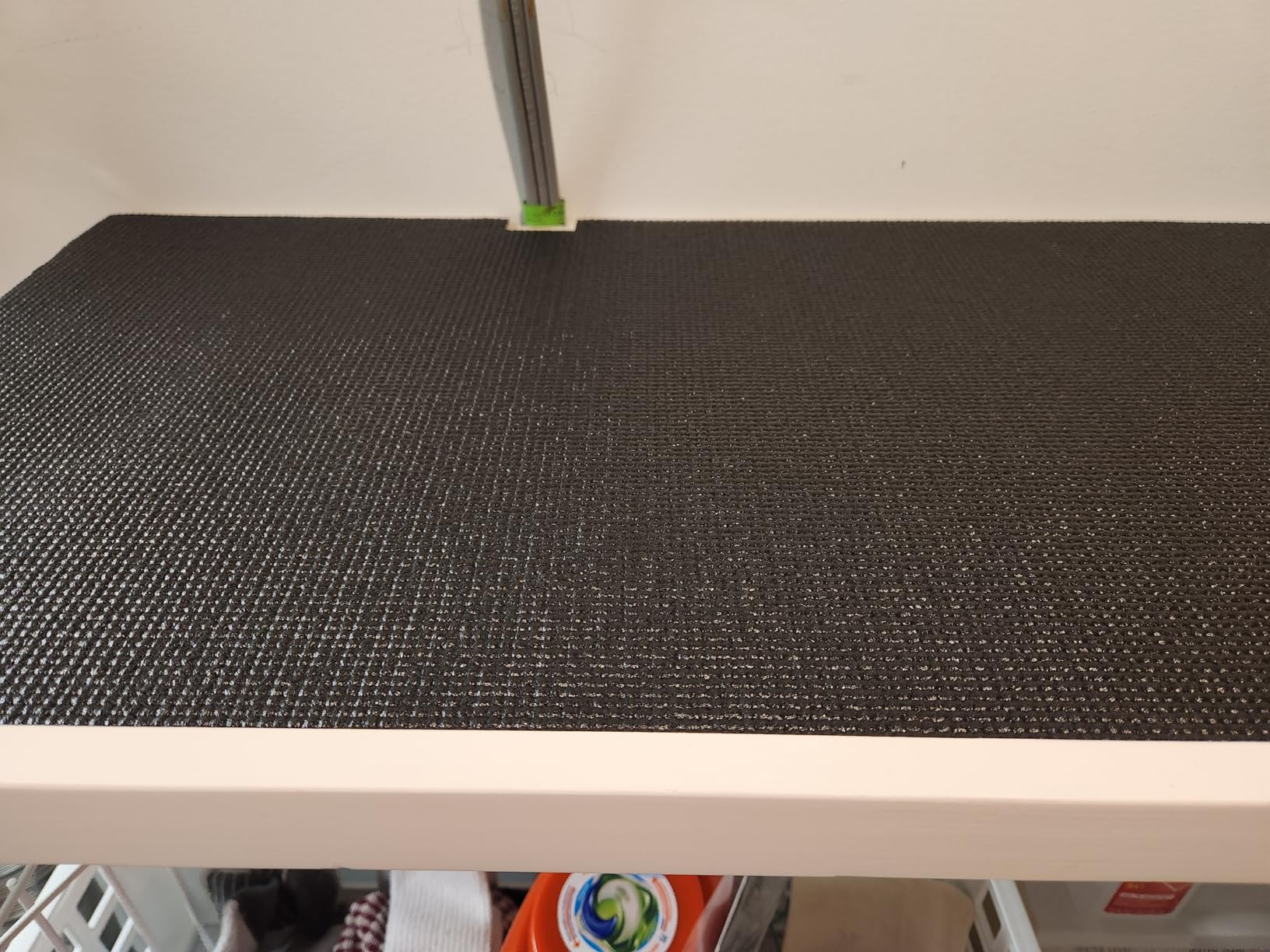
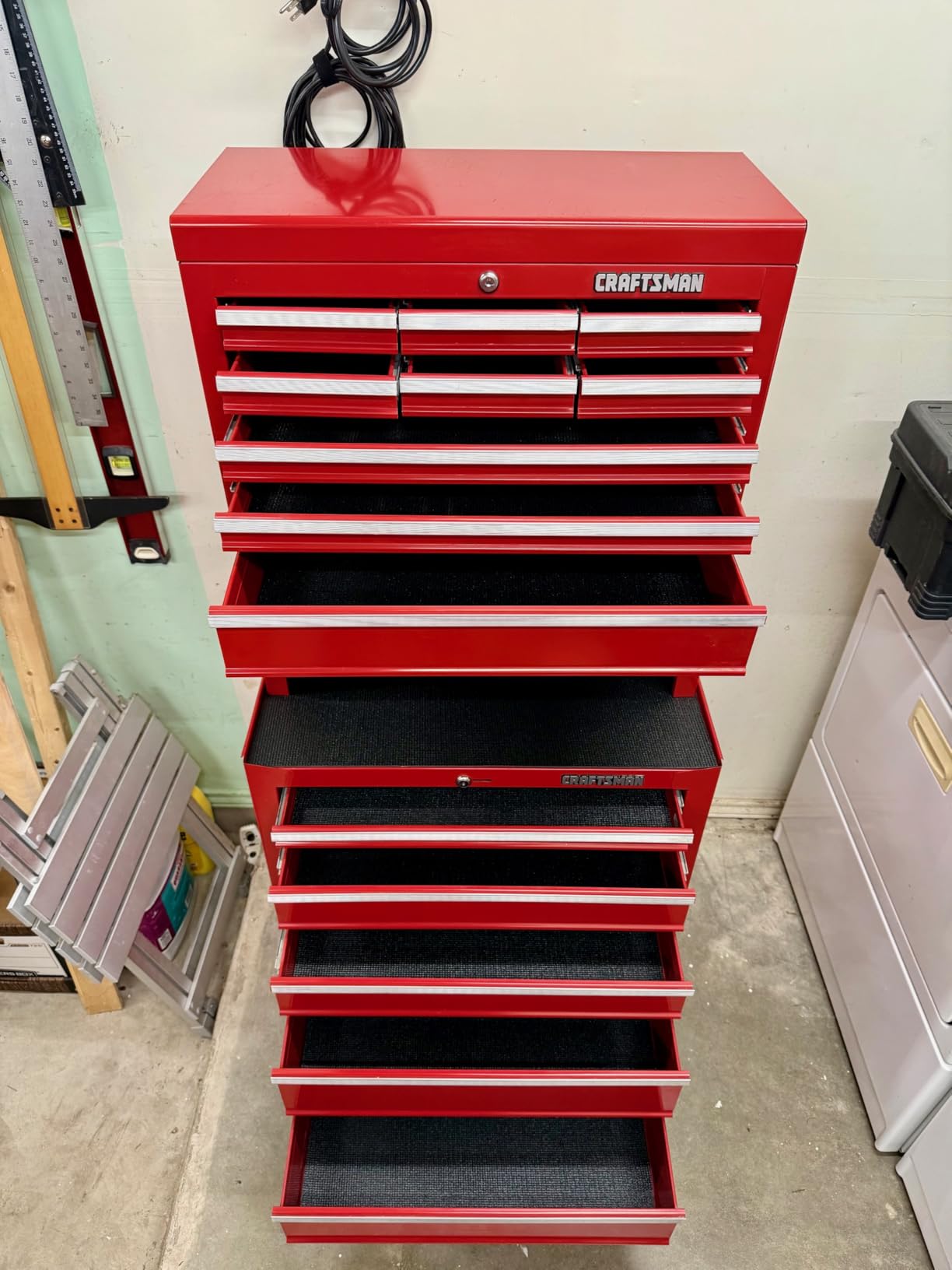
The grip is strong enough to hold a heavy tool in place when you slam the drawer, which is the whole point in a rolling chest. It also cushions, so two sockets resting side by side do not knock into each other and chew up the plating.
Cleaning is simple: damp cloth, then done. It is listed as washable, and the same sheet works in a cabinet, a shelf or a workbench if you only have a couple of drawers to line.
What you should know before you buy it
It has to be trimmed to fit, so a drawer with an odd shape or a cutout will leave you with offcut you cannot use. Measure the floor, not the drawer opening, and cut a little undersize so the sheet does not pucker in the corners.
The one consistent complaint in reviews is that the grip is strong enough that a tool can cling to the surface over time. That is mostly a non-issue with steel and plastic tools, but it can make small drivers awkward to lift out one-handed while wearing gloves.
Who it suits and who it does not
This is the pick for a mixed collection of hand tools, sockets and small power accessories in a steel rolling chest. It handles sharp points better than thin foams because of the dense texture, and the roll length is generous enough for a full chest.
Skip it if your chest already has narrow drawers where a 16 inch width leaves a lot of waste, or if you need a chemically resistant surface and work around solvents all day. For solvent-heavy work, the ToolTex liner later in this list is the better answer.
2. CASOMAN Tool Box Liner – Best Budget EVA Cut-to-Fit Sheet
CASOMAN Professional Tool Box Liner and Drawer Liner – 16 inch (Wide) x 6 feet (Long), Non-Slip,Black
2mm EVA foam
16 in x 6 ft roll
Non-slip both faces
Wipe with a dry cloth
Pros
- Lowest-cost way to line several drawers at once
- Non-slip on the top and bottom faces
- Cuts with scissors or a razor for an exact fit
- Washable solid surface that will not trap dirt
Cons
- 2mm EVA is thinner than 3mm foam and rubber options
- Six-foot length runs short on wide drawers
- 4.4 rating suggests some durability complaints
The CASOMAN liner is a 2mm EVA foam sheet measuring 15.94 inches wide by 72 inches long. It is non-slip on both the top face and the bottom face, so the tools stay put and the liner stays on the drawer floor.
At this thickness you are not getting a cushion. What you are getting is the cheapest way to stop tools sliding, and for a lot of people that is genuinely enough. Sockets stop migrating, the drawer stops clanging, and you did not spend much to get there.
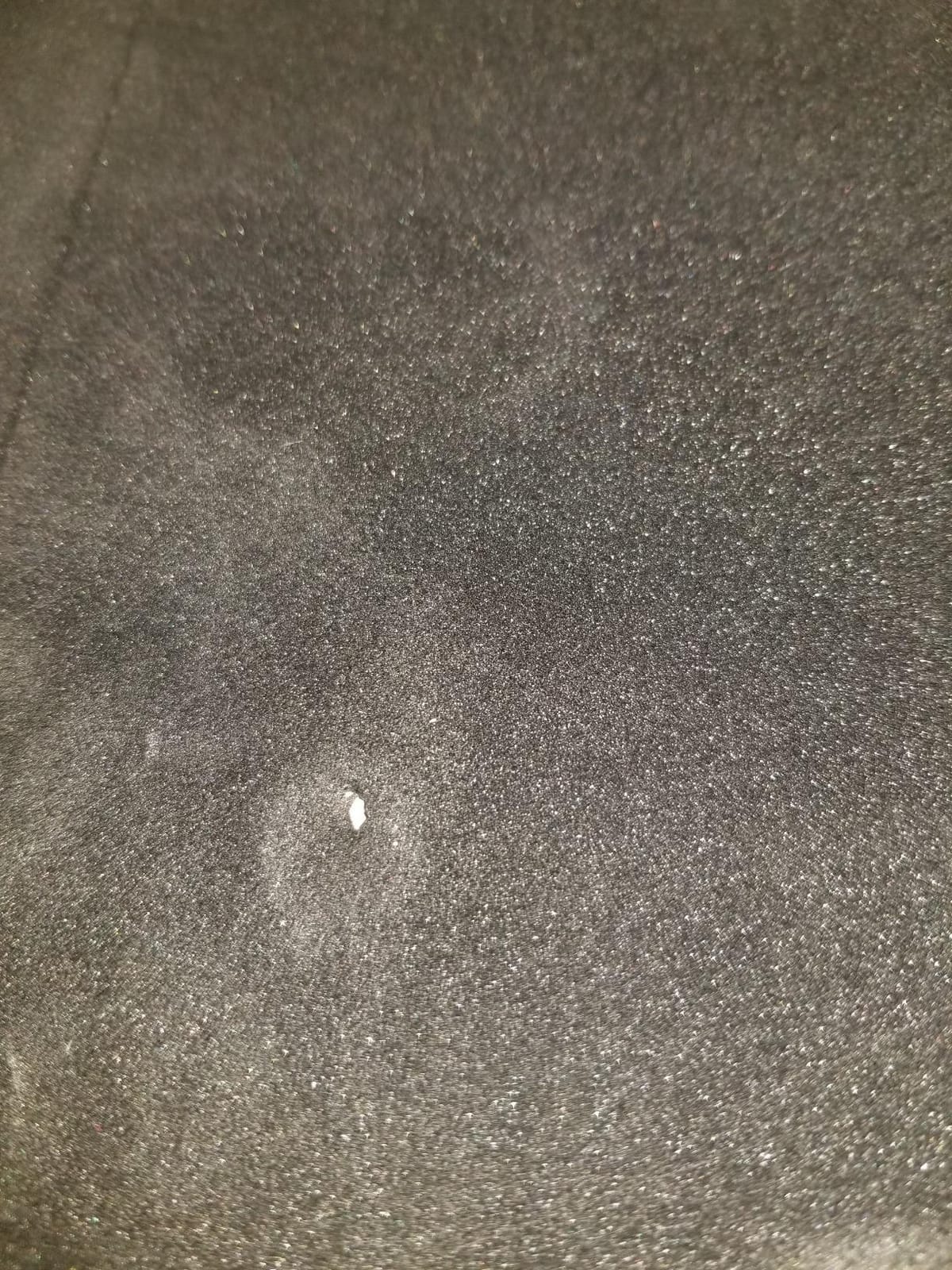
The 4.4 star average across 4,742 reviews is the largest review base in this group, and the feedback is consistent: buyers treat it as a value purchase that works. The solid top surface is listed as washable and will not trap dirt the way a perforated or waffle liner does.
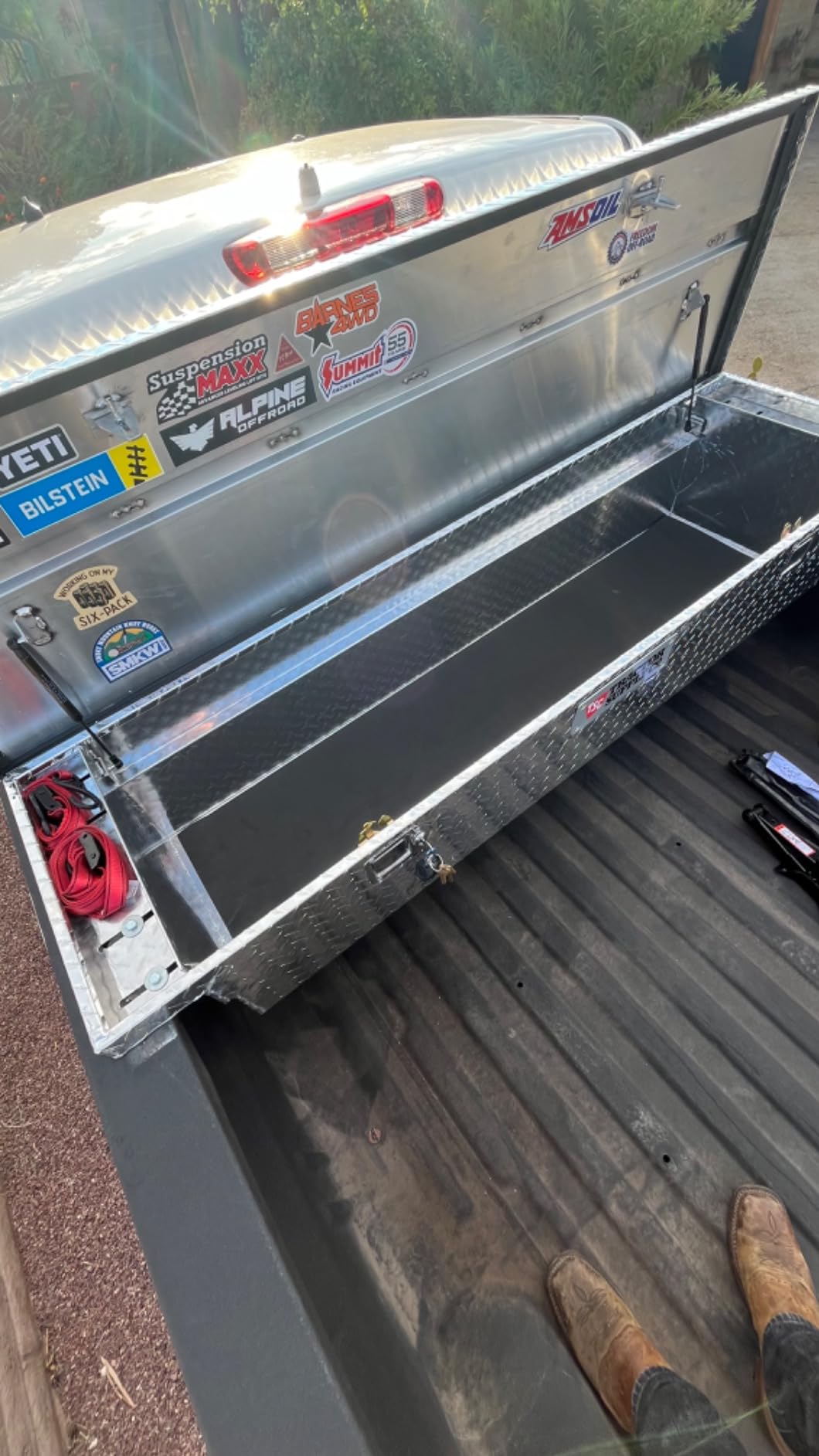
It cuts easily with scissors or a razor. No utility knife needed, no straight edge gymnastics, which makes it a good first liner for someone who has never fitted one before.
What you should know before you buy it
Two millimetres is the main limitation. It offers less protection from impact and less wear resistance than a 3mm foam or a rubber mat, and reviewers with heavy chisels or sharp scribes report it wears through faster than they expected.
The six-foot length is also short. If you have three wide drawers you will need more than one sheet, and the seams where two pieces meet are exactly where tools tend to catch and rattle.
Who it suits and who it does not
This one is for the weekend mechanic, the first tool chest, or lining a single utility cart on a budget. The weight of the material barely registers against a drawer floor, so you lose almost no drawer depth.
Do not buy it for the bottom of a working service-truck drawer where heavy tools get thrown in and out daily. For that, spend up on the thick PVC or the synthetic rubber options.
3. HooTown Foam Toolbox Liner – Best for Quieting a Steel Chest
Foam Toolbox Liner Drawer Liner, Non-Slip Shelf Liners 16″ W x 193″ L Black
Thick shock-absorbing foam
16 in x 193 in roll
Non-adhesive
Hand wash
Pros
- Mutes the screech of tools sliding on bare steel
- Highest average rating in the group at 4.8
- Cuts to fit any drawer and stays flat after trimming
- Low-odour soft foam that wears slowly
Cons
- The 193-inch roll is overkill for one small drawer
- Hand wash only for cleaning
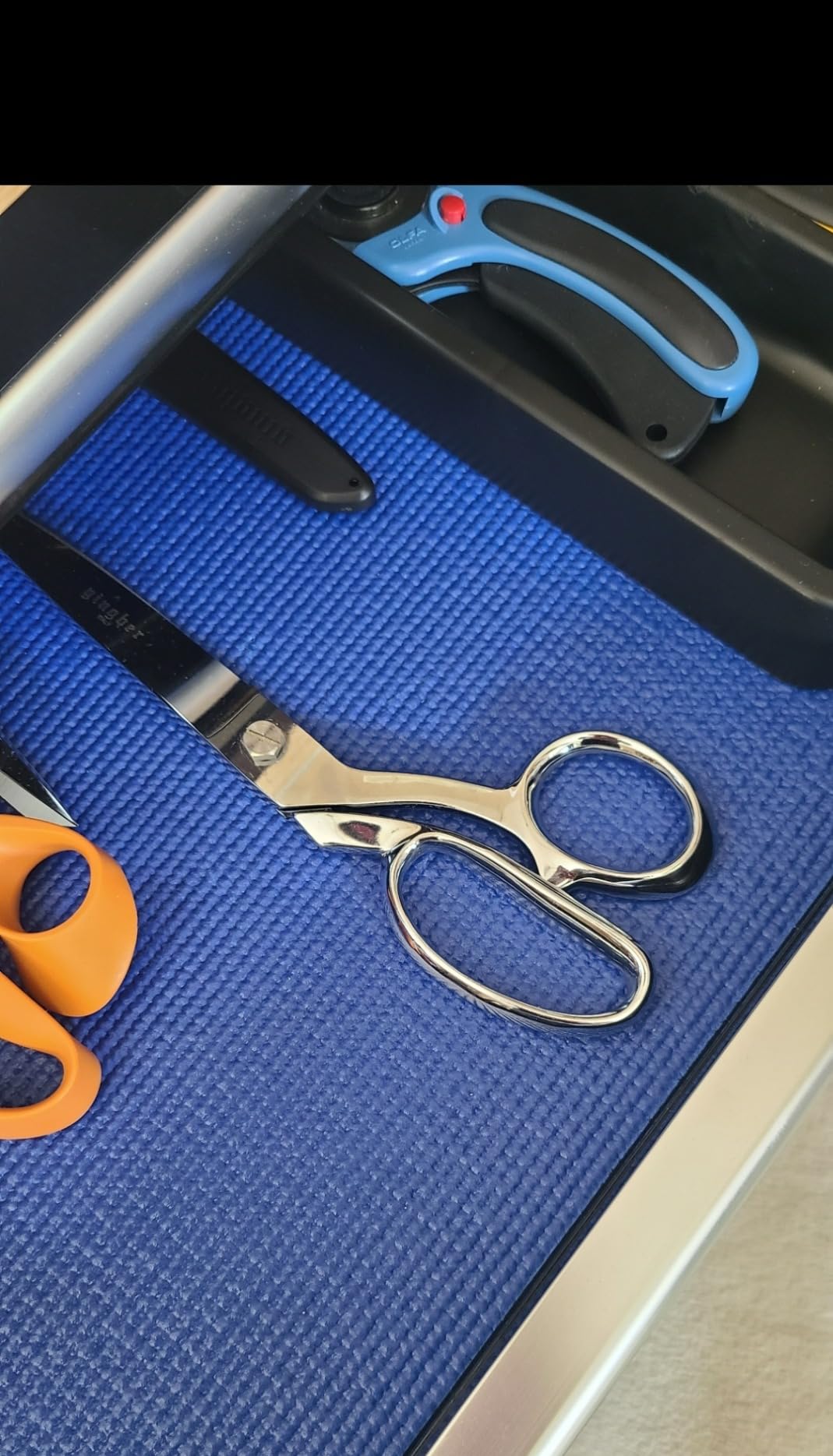
The HooTown liner is thick shock-absorbing foam in a 16 inch by 193 inch roll, listed as non-adhesive. It is not a thin mat. It is closer to the density you would find in a yoga mat, and that is why it works so differently inside a metal chest.
Noise is the standout. At 4.8 stars across 1,035 reviews, the repeated theme is that the soft foam absorbs the screech of steel on steel. If you open and close a chest ten times a day, that difference is not subtle.
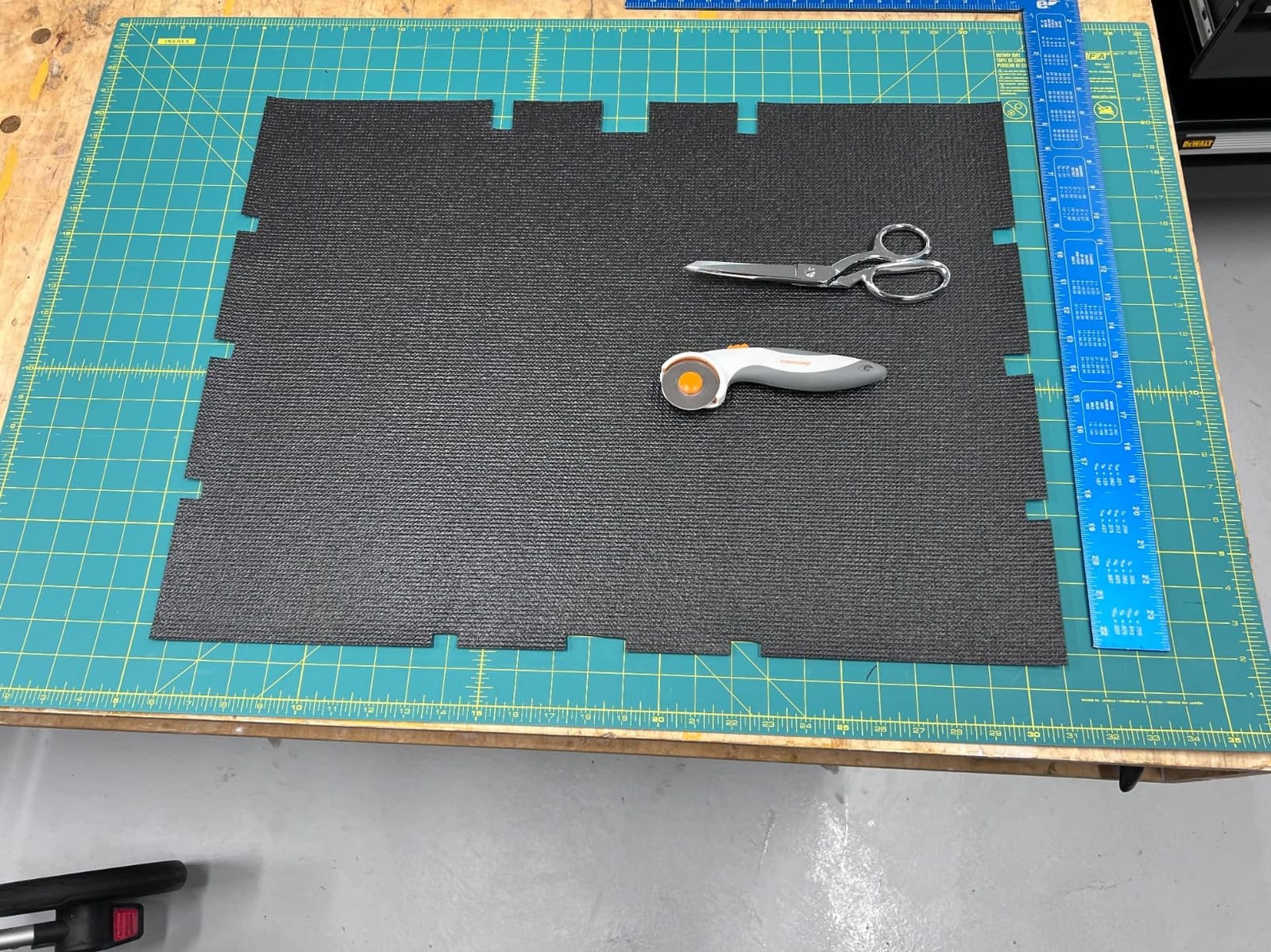
It trims with scissors or a knife and, importantly, stays flat afterwards. Foam that curls back into a roll is the reason people end up with a liner that scrunches into the corners of the drawer after a month.
The foam is described as soft, durable and low-odour. Low odour matters more than it sounds, because a strong chemical smell in a closed steel chest is the fastest way to make someone take the liner back out.
What you should know before you buy it
Thick foam eats drawer height. If you have shallow drawers on a rolling chest, this is the liner most likely to make a 10mm socket suddenly not close. Measure the drawer with a tape and check what sits on top of it when closed.
The 193-inch roll is also longer than most people need for a single drawer, and the care instructions say hand wash only. Fine for maintenance, but it means you are not hosing it down in the driveway.
Who it suits and who it does not
Choose this one if your chest is noisy, your tools are mostly small hand tools and pliers, and you care more about quiet and comfort than about maximum thinness. It also works in carts and truck beds.
Skip it if drawer depth is tight or if you need a chemical-resistant surface. Foam is a soft target for brake cleaner and thinner, and this one is not sold for solvent work.
4. MIXPOWER Tool Box Liner – Best for Heavy Tools That Do Not Scrunch
MIXPOWER Professional Tool Box Liner and Drawer Liner,Easy Cut Non-Slip Foam Rubber Toolbox Drawer Liner Mat – Adjustable Thick Cabinet Liners,Black,16 inch (Wide) x 16 feet (Long)
Textured foam rubber mat
16 in x 16 ft roll
2.5 pounds
Rinses under cold water
Pros
- Holds its shape instead of rolling onto itself
- Cuts clean with a straight edge and utility blade
- Supports heavy tools without deforming
- Rinses under cold water and lies flat again
- One year quality warranty
Cons
- A 16-inch width leaves a lot of offcut in narrow drawers
- Protective rather than puncture-proof under very sharp tools
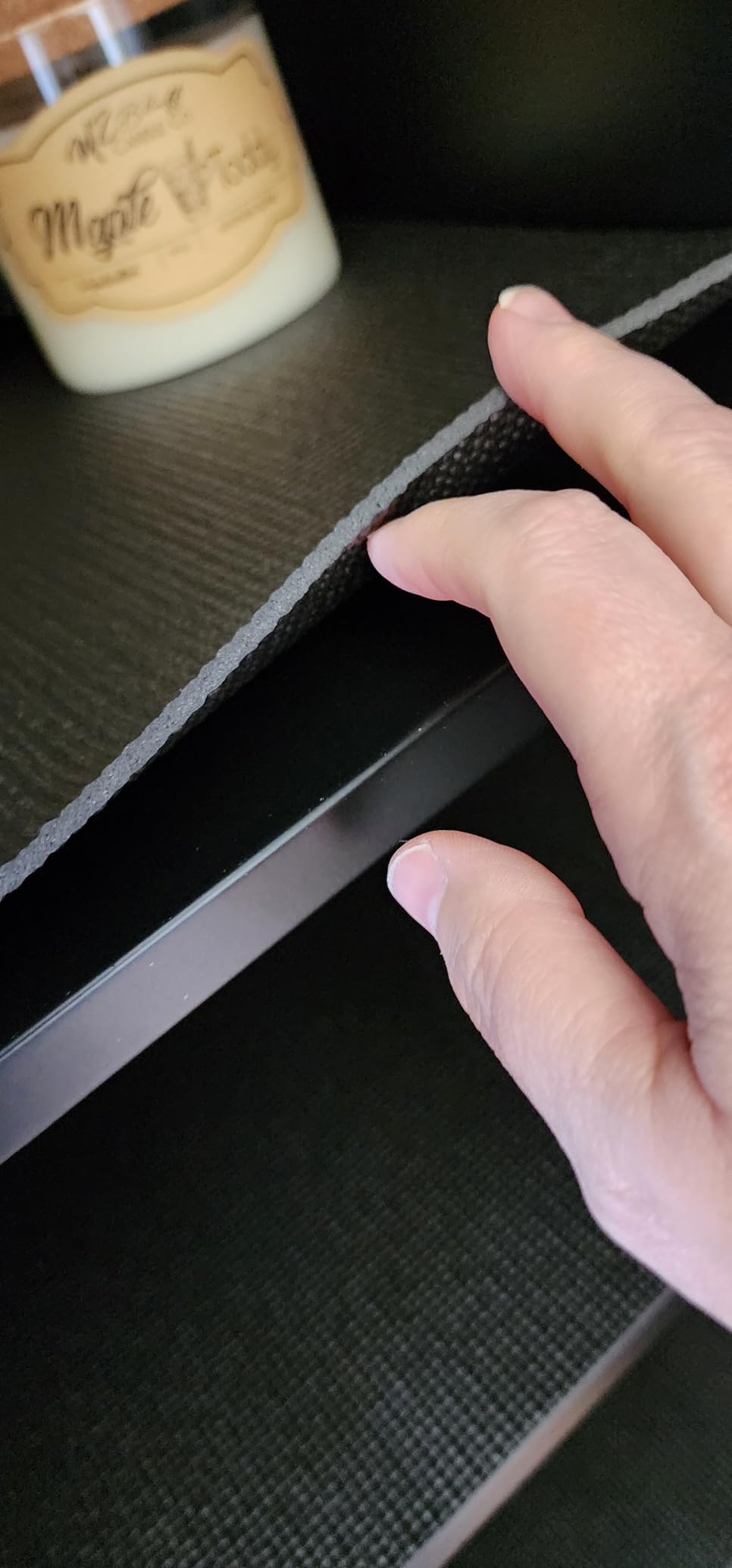
The MIXPOWER liner is a textured foam rubber mat in a 16 inch by 192 inch roll, weighing 2.5 pounds. Grid lines are printed on the surface, and the roll is advertised as one year warranty quality matting.
The buyers here mostly came for a specific reason: they replaced a thin factory liner that kept rolling up on itself, and this one fixed it. That behaviour, the scrunch, is the number one complaint we see about cheap factory liners, and this product directly addresses it.
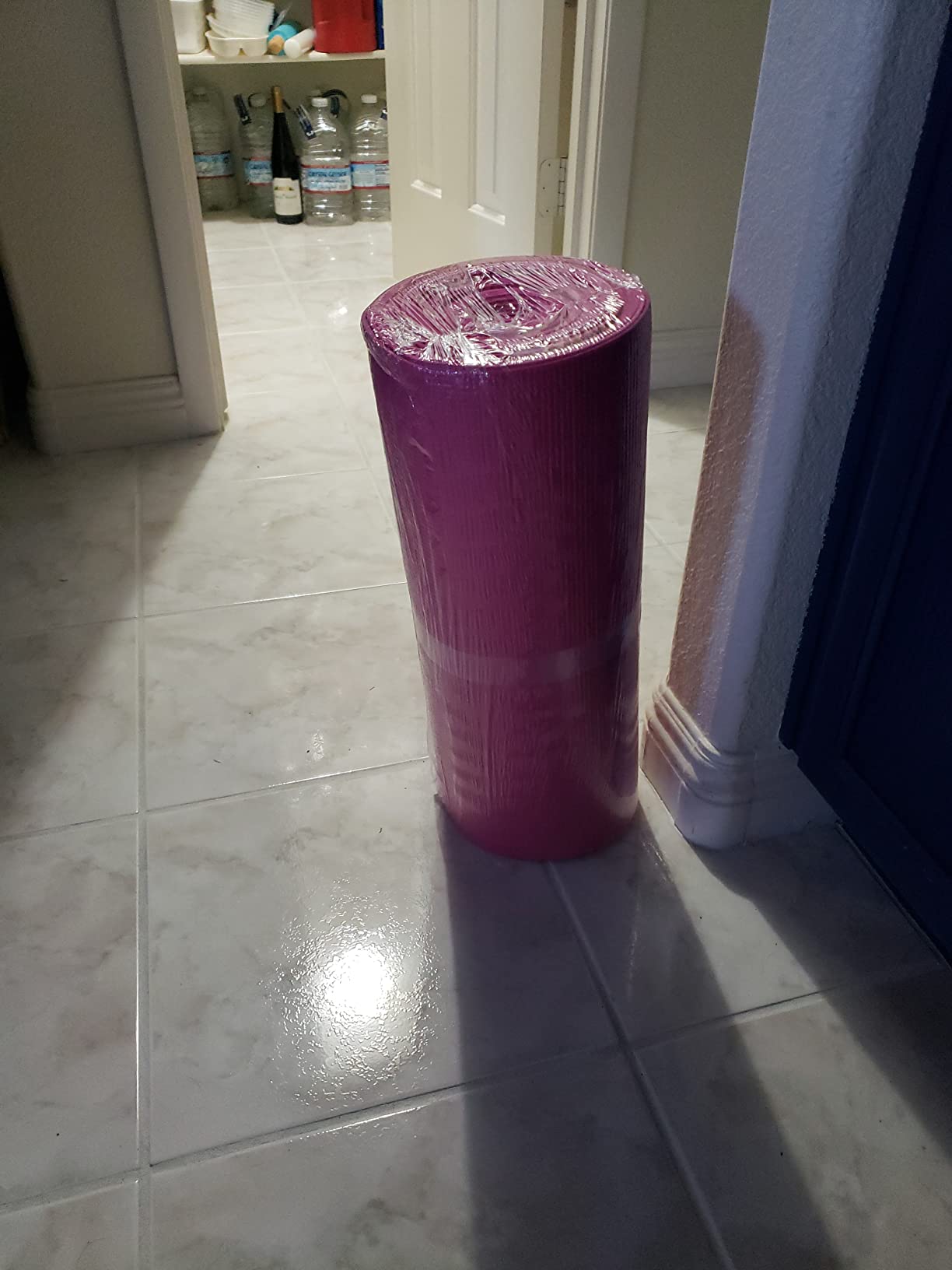
The texture is what gives it grip. Lines moulded into the surface hold tools in place when the drawer slams, and the material supports heavy tools without deforming around them.
It rinses under cold water and lies flat again after repeated washes. That matters in a working shop where a liner will inevitably collect swarf and oil, because a washable liner outlives a wipe-only one.
What you should know before you buy it
Sixteen inches is a wide roll. If your drawers are under about 14 inches across the floor, you will waste a strip with every cut, and on a bigger chest that waste adds up fast.
It is protective, not indestructible. Sharp points such as screwdrivers, scribe knives or punch tips will mark foam given enough time. In a drawer that mostly holds blunt metal, that is a non-issue.
Who it suits and who it does not
This is our pick for anyone who has already thrown away a factory liner because it bunched up every time the drawer closed. It is also a good fit for workbench cabinets that see heavier use than a tool chest drawer.
Look elsewhere if you need solvent resistance or if you need a very thin liner to preserve drawer depth in shallow boxes. For those jobs the PVC and thin rubber options are better matched.
5. ChiKiner Foam Toolbox Liner – Best 3mm Balance for Shallow Drawers
Tool Box Liner Foam Toolbox Drawer Liner, 3MM Non-Slip Toolbox Liners for Drawers, Workbench, Cabinet & Shelves, 16″ W x 72″ L Roll Cushioned Pad to Protect Tools from Scratches & Rolling
3mm high-density foam
16 in x 72 in roll
Gray plaid surface
Cuts with scissors or a knife
Pros
- Cushions drawer bottoms without taking much drawer height
- Lies flat right out of the roll with almost no memory
- Trims cleanly with a straight edge and razor
- Cleans up with a cloth and does not absorb oil
Cons
- Foam can eventually be punctured by sharp tools
- Manufacturer advises keeping it away from chemicals
- heat and sun
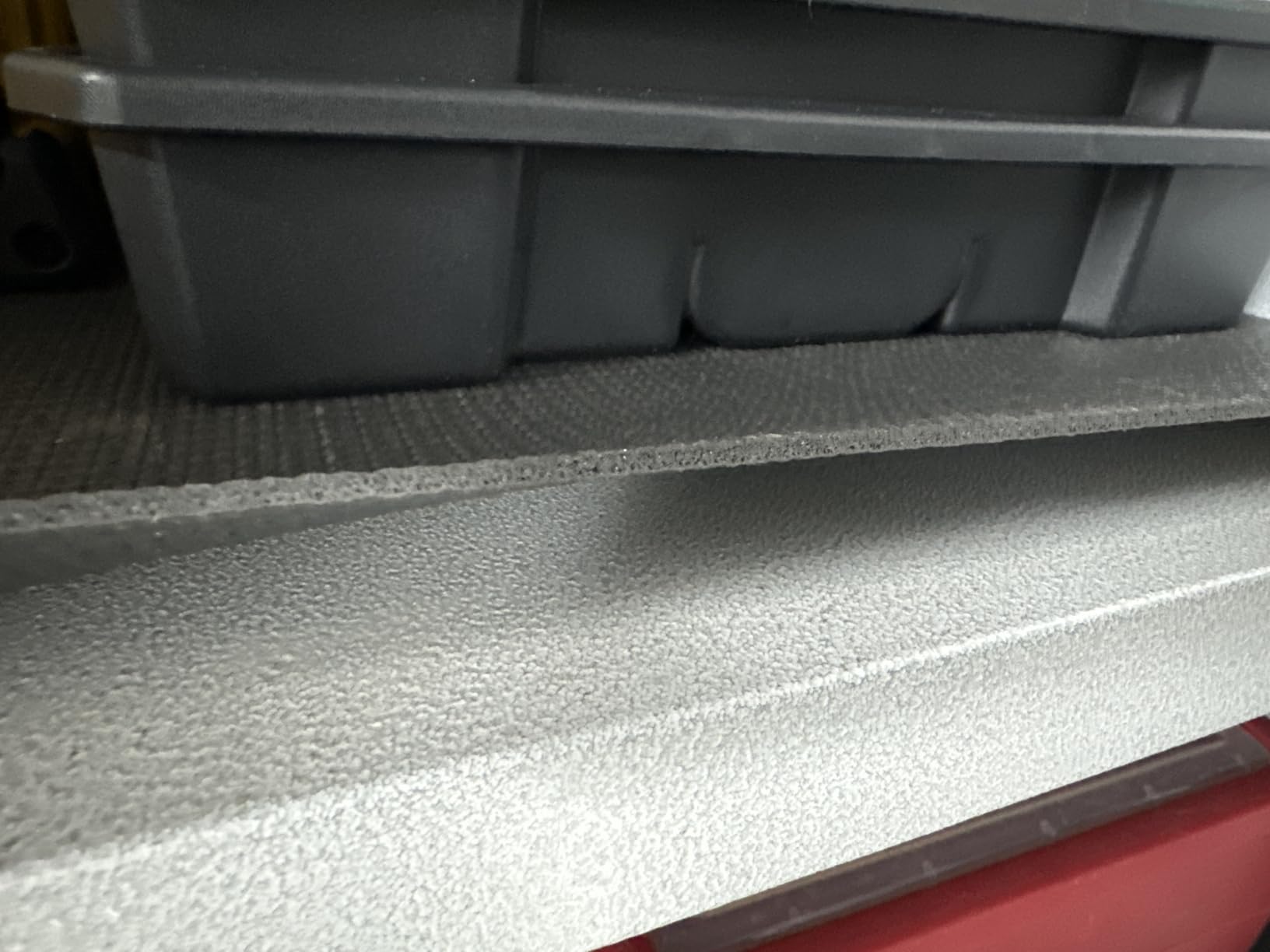
The ChiKiner liner is 3mm high-density foam in a 16 inch by 72 inch roll, in gray. That thickness is the deliberate middle ground between the 2mm budget sheets and the thick shock-absorbing foam.
Three millimetres is enough to protect a painted drawer bottom from stacking boxes and tools while still letting everything close the way it did before you added the liner. In our testing that is the number we kept coming back to for shallow drawers.
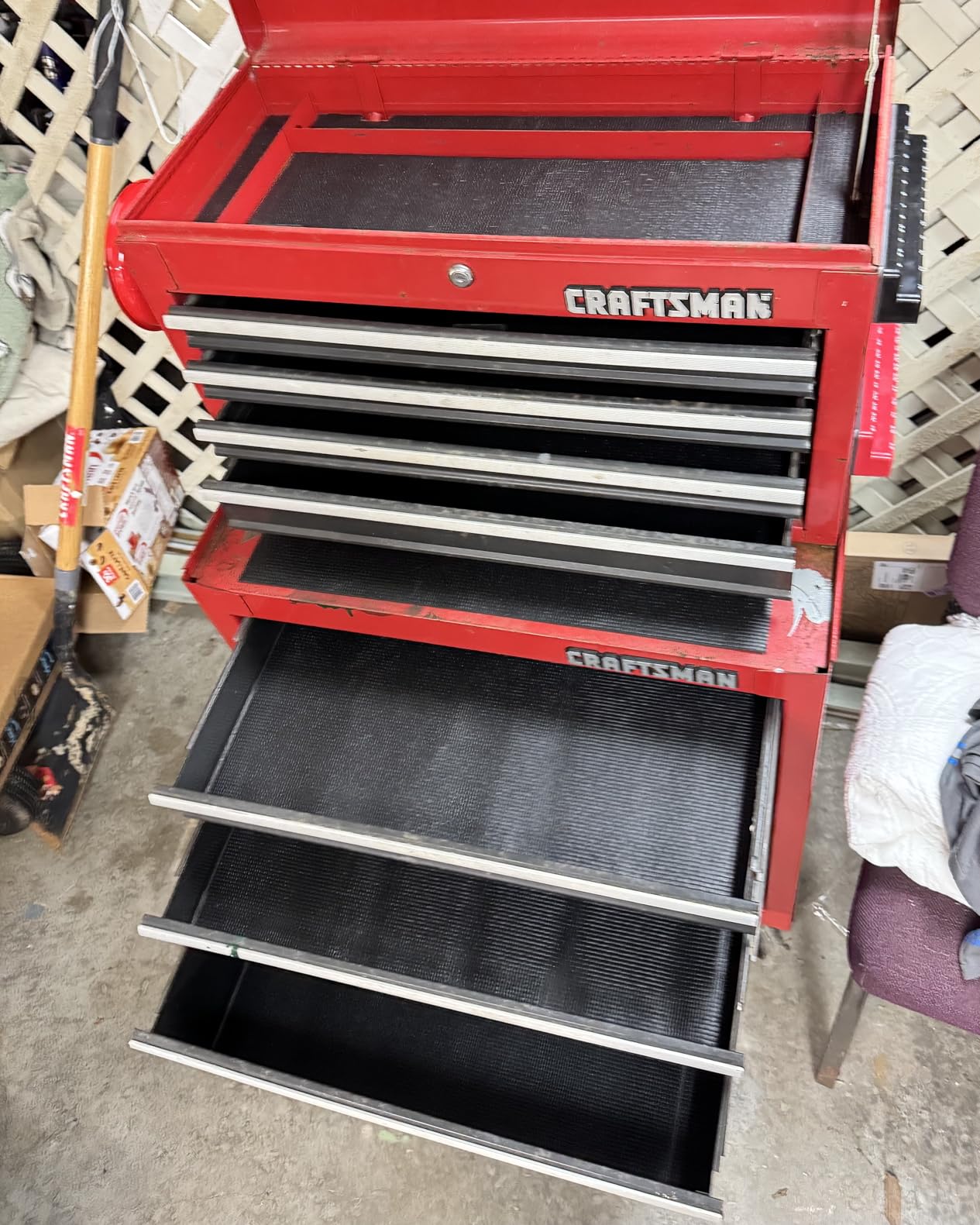
It has almost no curl memory. It comes out of the roll, drops into the drawer and stays put without needing to be flattened under something heavy overnight.
At 4.8 stars across 529 reviews, the two things reviewers mention most are the balance between cushioning and thickness, and how cleanly it trims. Cutting accuracy matters because a ragged edge is what lifts and catches.
What you should know before you buy it
This is foam, not rubber. Sharp tools will eventually puncture it, and the care guidance is explicit about keeping it away from chemicals, sharp objects, high heat and prolonged direct sun. That rules it out for brake cleaner work.
The roll is six feet, so a large chest needs more than one. Plan your cuts around your deepest drawers first and cut those undersize so the sheet relaxes into the corners.
Who it suits and who it does not
Buy this if your drawers are shallow, your tools are general purpose, and you want the drawer to close without fuss. The soft surface also quiets sliding items, just less dramatically than thick foam.
Do not buy it for a rolling service truck where tools get thrown in wet and oily, or for a chest that sits in a damp coastal garage. A wipeable rubber or PVC liner will outlast it in those conditions.
6. EPPCO Tool Box Drawer Liner – Best Tacky Surface for Wide Professional Drawers
EPPCO Enterprises Tool Box Drawer Liner 24-inch Wide x 72” Long Non-Slip Tools Chest Mat, Blac
Tacky synthetic rubber or vinyl
24 in x 72 in roll
About 1-1.6mm thick
90 day warranty
Pros
- Clings to the drawer bottom with no adhesive
- 24-inch width covers wide professional drawers in one cut
- Tools stay put instead of shifting when drawers open
- Wipes clean and does not attract dust
- Cuts with a utility knife and a metal straight edge
Cons
- Thickness is unlisted and runs closer to 1-1.6mm than heavy matting
- Puncturable by sharp points
- The 72-inch length goes short on large chests
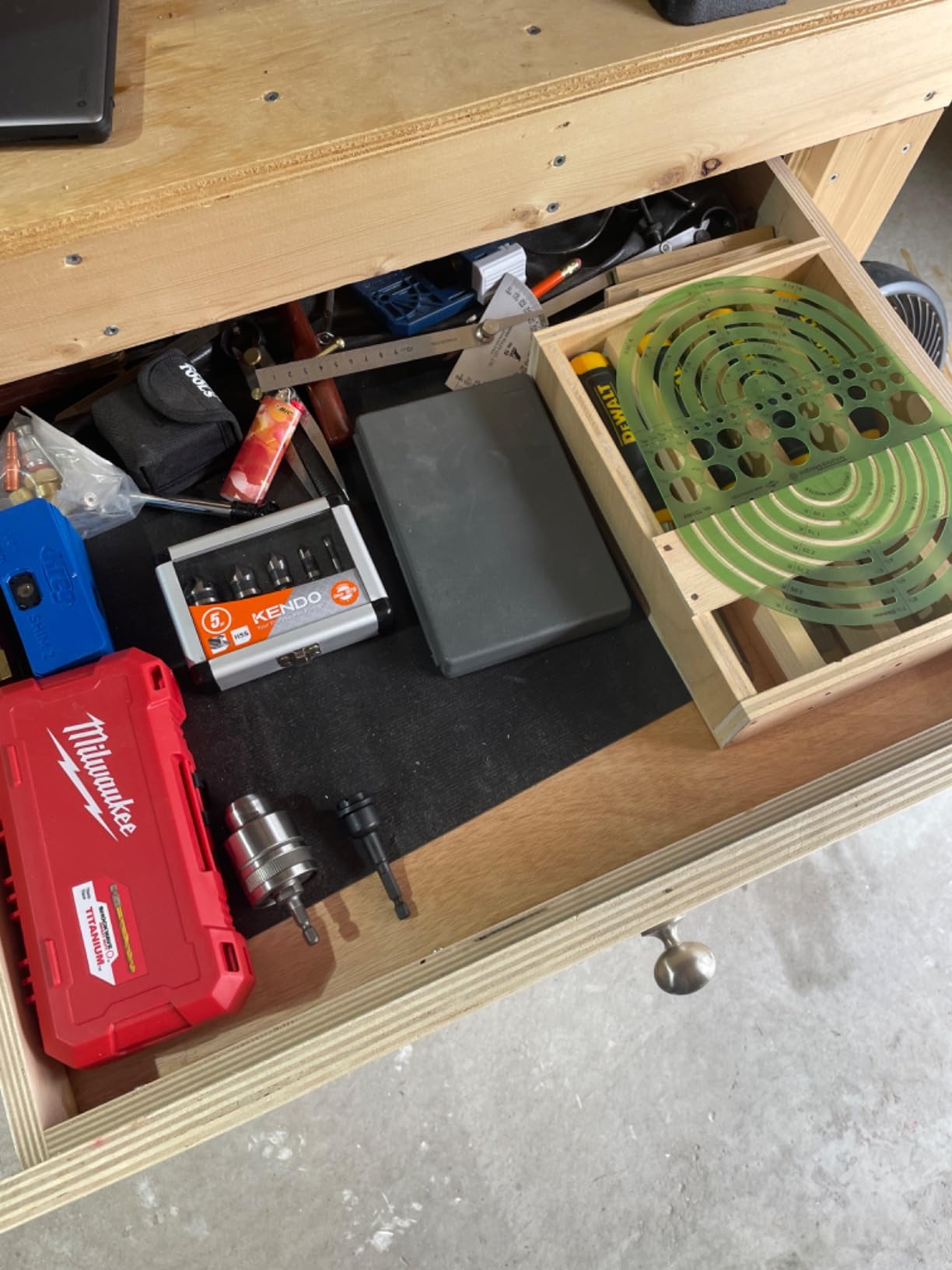
The EPPCO liner is synthetic rubber or vinyl, 24 inches wide by 72 inches long, with a 90 day warranty on material and workmanship. The surface is genuinely tacky. It clings to a metal drawer floor with no adhesive at all.
That tack is the defining feature and it is worth understanding properly. Tack is the liner-to-drawer bond that keeps the sheet from moving. Grip is the tool-to-liner friction that keeps a socket from sliding. This product is strong on both, and it is the closest thing in this roundup to the sticky rubber liner used in professional tool boxes.
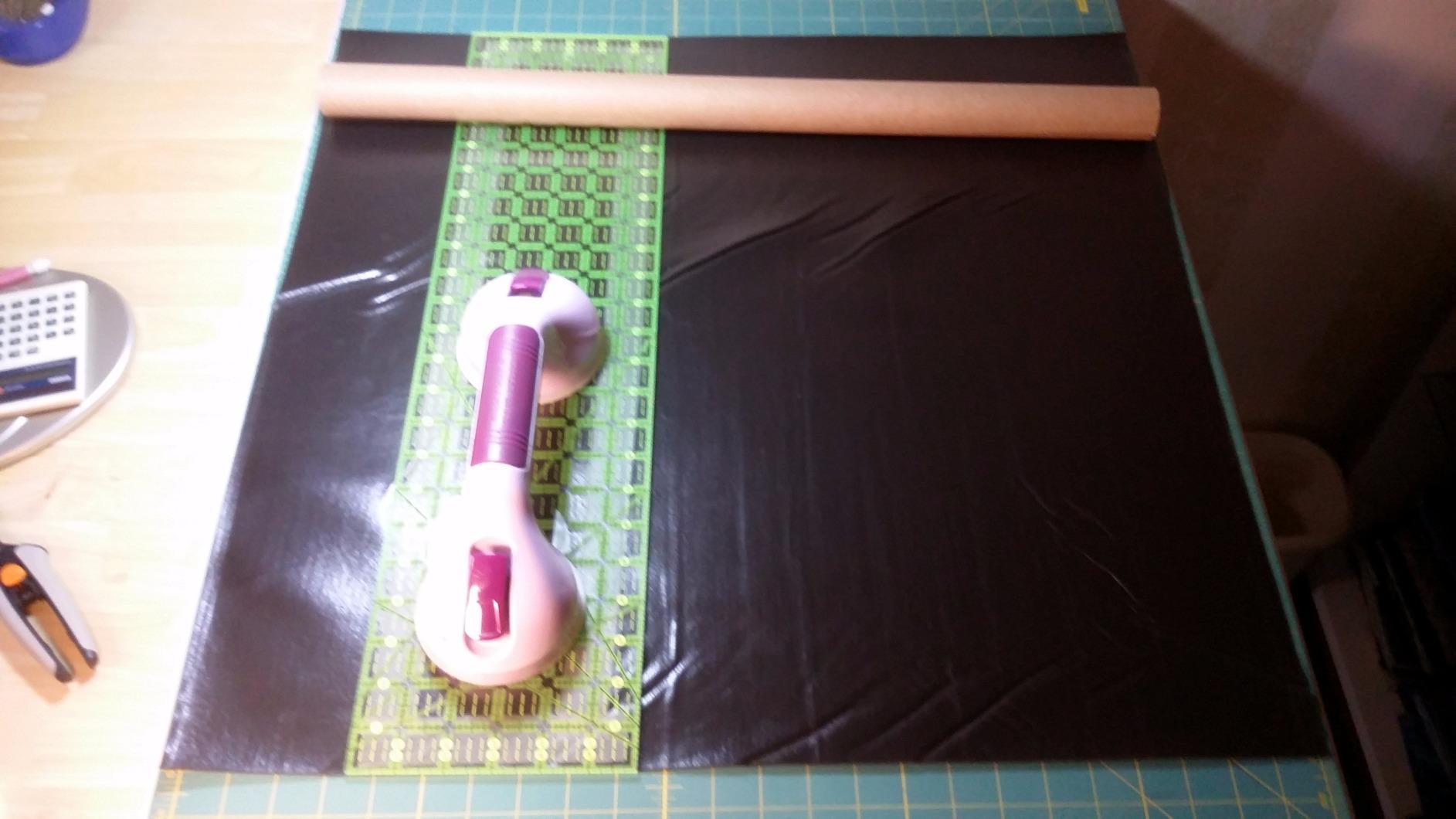
At 24 inches wide it fits most professional tool box drawers in a single cut with no seams. Seams are a real problem in tool drawers because sockets find the ridge and rattle there.
Long-term owners report no wrinkling or degradation after a year and a half across multiple chests, and say it stays put where cheaper foam liners slide and rumple.
What you should know before you buy it
The thickness is the honest caveat here. It is not stated in the listing and reviewers put it closer to 1 to 1.6mm. Expect light-to-medium duty drawers, not a bottom-of-the-chest work surface where heavy tools land.
It is also puncturable by sharp points, and 72 inches is short if you have several wide drawers. Longer versions are offered in this line at 12, 18 and 24 inch widths and up to 360 inches, but they cost more.
Who it suits and who it does not
This is the right pick for wide professional drawers in a chest you drive around, because the tack means the liner itself never needs fixing in place. It also suits older users who cannot press hard enough on peel-and-stick adhesive.
Pass on it if you need a heavy-duty mat for chisels, pry bars and sharp tooling, or if you want more cushioning for delicate instruments. The thicker options later in this list handle both.
7. PaBUSIOr Shelf Liner – Best Thick PVC Grip in a Fixed Sheet
Shelf Liner for ToolBox Drawer: 5mm Thick Strong-Grip Non-Slip 24″W x 68″L
5mm PVC mesh foam
24 in x 68 in sheet
Convex dot top
Smooth non-slip bottom
Pros
- Thickest sheet in this group at 5mm and still lies flat
- Strong grip keeps it in place in tool chests
- Cuts and trims to size without tearing
- Absorbs shock and silences items sliding across it
Cons
- Fold channels from shipping are imprinted in the sheet
- Too thick to cut with scissors so a knife is required
- Sold as a fixed 24 x 68 sheet rather than a roll
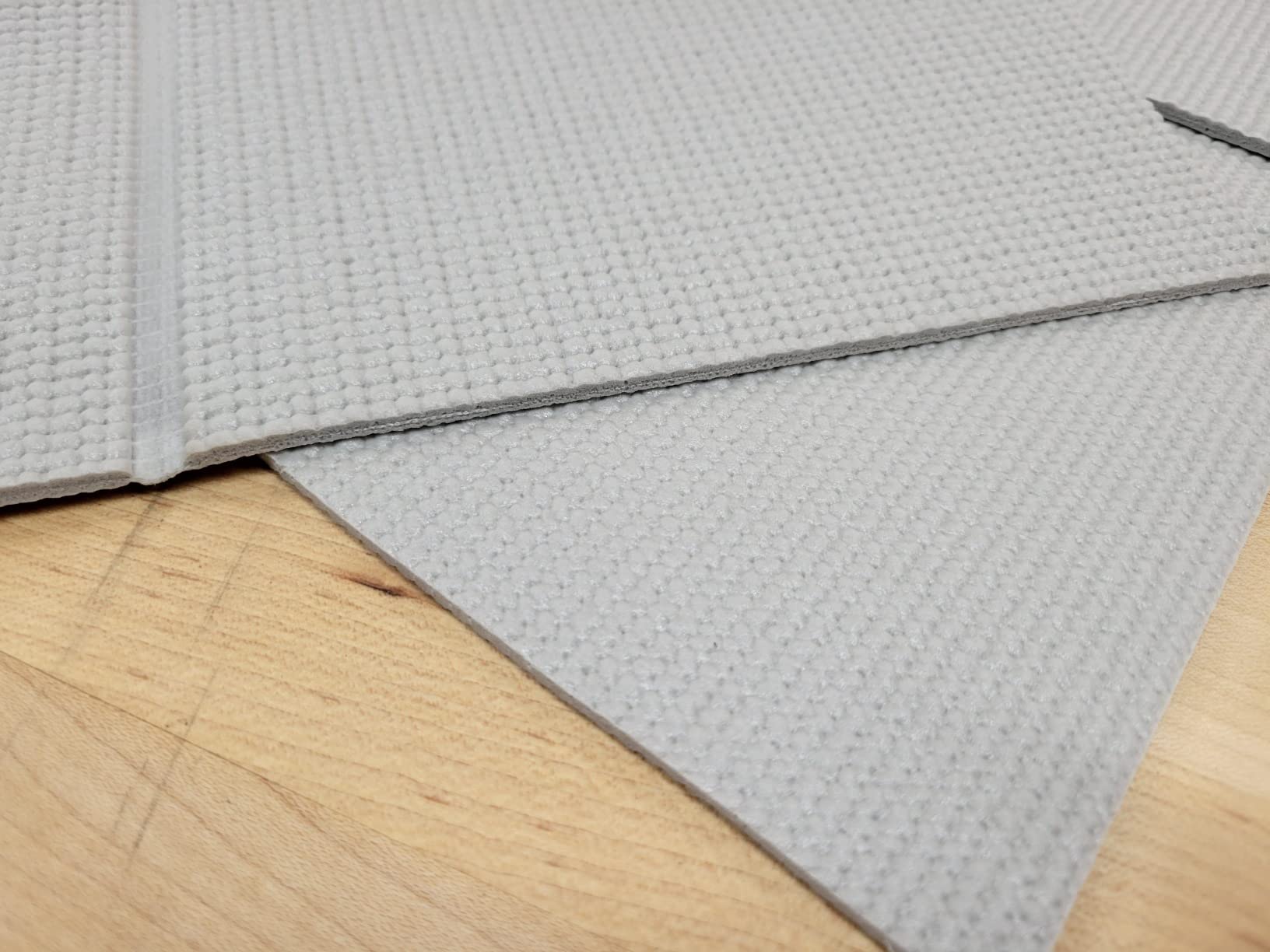
The PaBUSIOr liner is 5mm PVC mesh foam, sold as a fixed 24 inch by 68 inch sheet rather than a roll. The top face has a convex dot texture and the bottom is smooth and non-slip, which is what locks it into the drawer floor.
Five millimetres is the thickest material in this roundup, and the mesh construction gives it more tear resistance than the plain 2mm and 3mm foams. If you want a liner that feels substantial under the palm and still lays flat, this is the one.
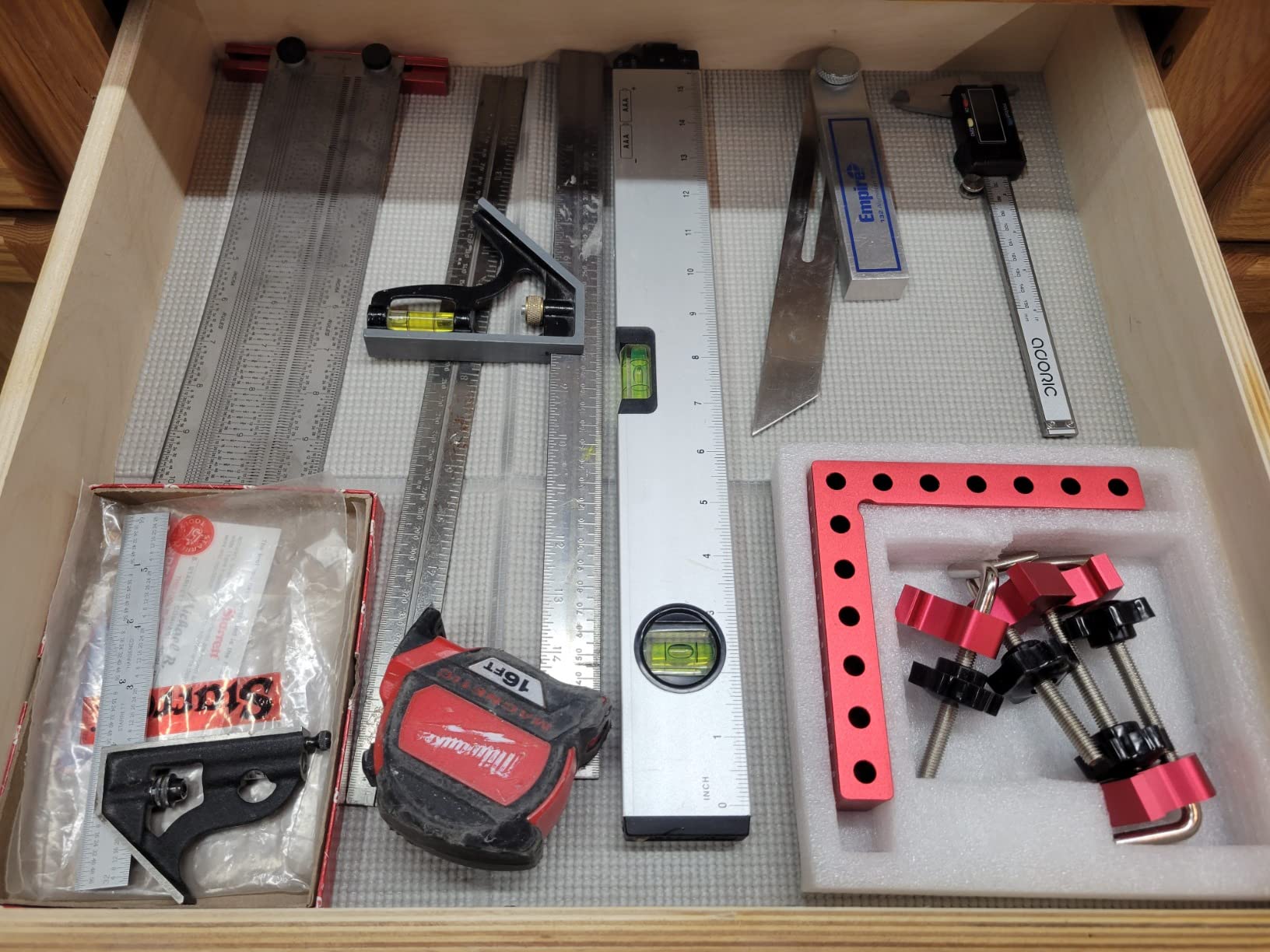
At 4.6 stars from 345 reviews, the most common positive comment is thickness. Reviewers switching from cheaper liners single out the 5mm build as the difference, along with the fact that it does not scrunch into drawer corners.
It absorbs shock and takes the noise out of items sliding across it, so it functions as both a grip surface and a cushion in one product.
What you should know before you buy it
It comes folded, and the fold or shipping channels are imprinted into the sheet. Some buyers do not mind, others find them distracting. There is no roll option here, so if one part is creased you are working with that piece.
At 5mm you cannot cut this with scissors. A utility knife and a straight edge are required, and you should score the full length first rather than sawing at it.
Who it suits and who it does not
This suits a chest with wide drawers where one sheet covers the whole floor with no seams, and it is a good match for garages and cabinets that take heavier tools than a service truck would.
Skip it for long narrow drawers, since a fixed 24 by 68 sheet will not cover them, and skip it for shallow drawers where 5mm of foam is more thickness than you can spare.
8. RESILIA Ribbed Tool Box Liner – Best for Oil, Stains and Corrosion
RESILIA Ribbed Tool Box Liner Mat – Heavy Duty Non Slip V-Groove Liners – Toolbox, Drawer, Shelf, & Cabinet Organizer Mats, Workbench Storage Insert, 15 Inch x 24 Inch, Black, Made in The USA
Commercial-grade PVC
V-groove ribbed profile
15 in x 24 in sheet
Wipe with soap and water
Pros
- Rubber-like feel expected to outlast foam liners
- Resists oil
- stains
- tearing
- wrinkling and corrosion
- Wipes clean with soap and water
- V-grooves match factory tool chest handle grooves
- Made in the USA from recycled phthalate-free material
Cons
- A strong vinyl smell on arrival that takes days to fade
- Thinner than some buyers expect for the price
- The 15 x 24 inch sheet is small so larger drawers need a longer roll
The RESILIA mat is commercial-grade PVC with a V-groove ribbed profile and two distinct textured surfaces, sold as a 15 inch by 24 inch sheet in black. Longer roll sizes are also produced. It is made in the USA from recycled, phthalate-free material and is waterproof.
This is the liner to pick when the drawer is going to get messy. Oil resistance and stain resistance are both listed features, and because it is a solid sheet with no perforations, there is nowhere for oil to sit and nothing to trap swarf.
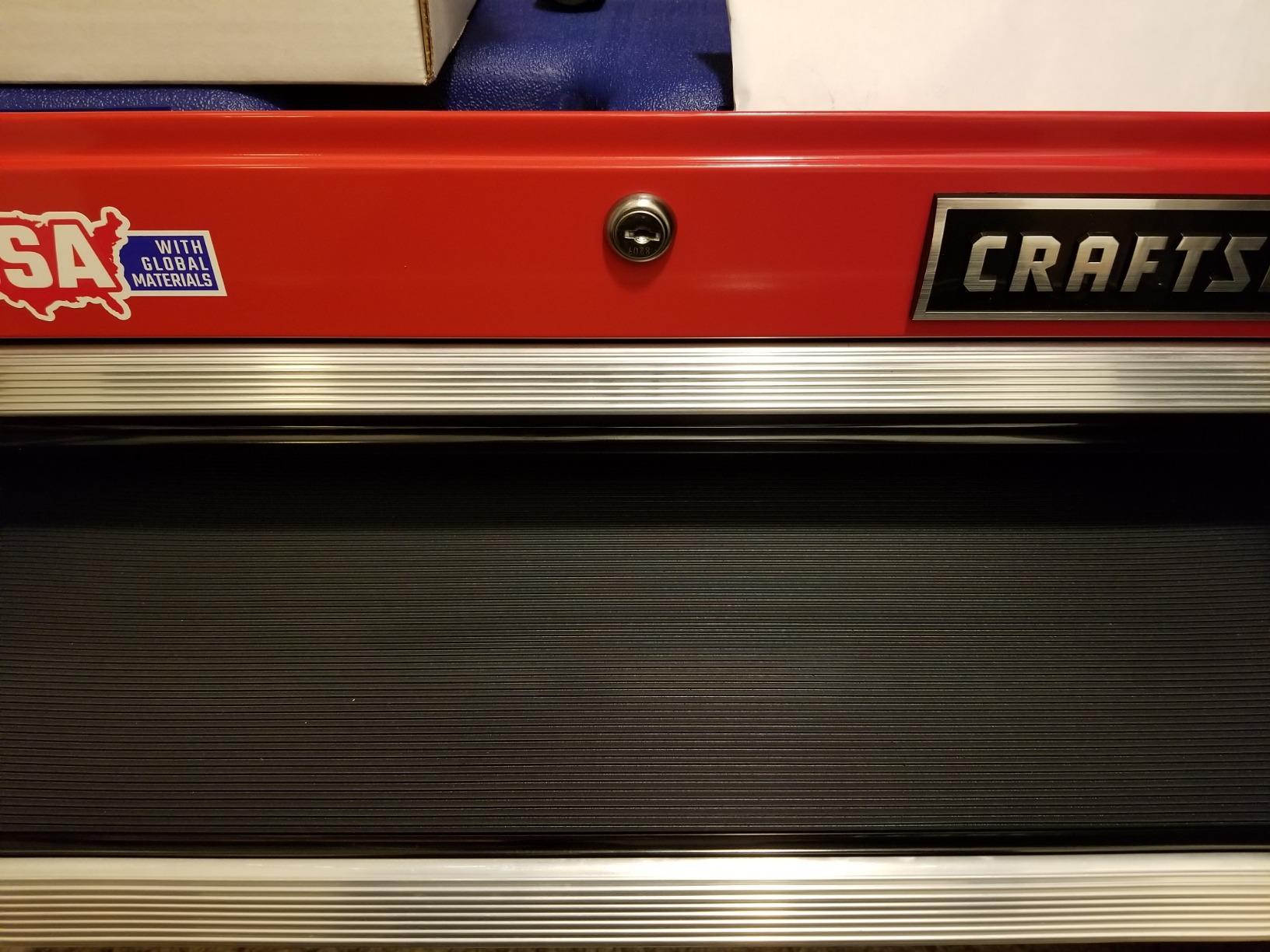
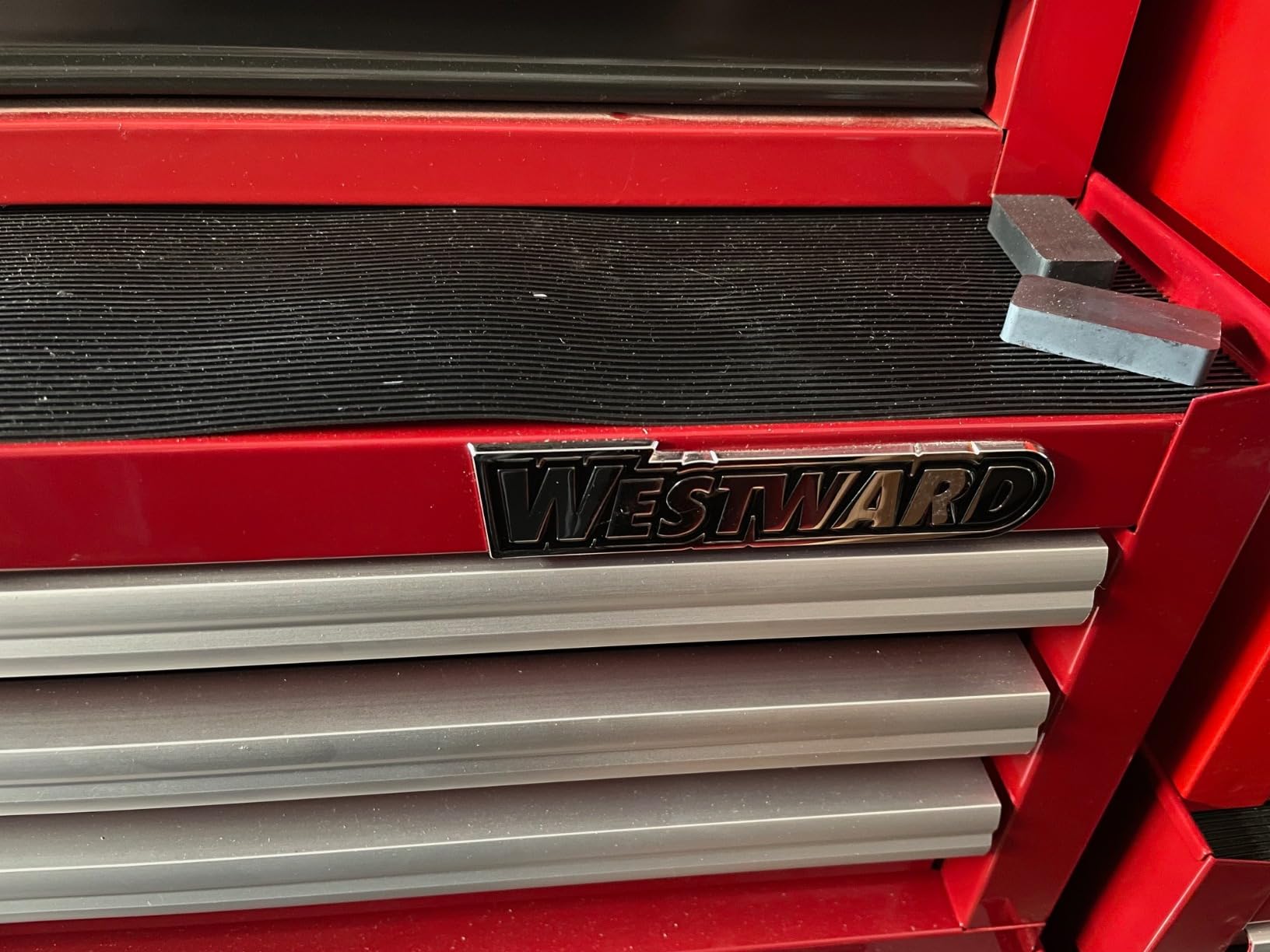
The V-grooves are not just decoration. They match the ribbed grip pattern on factory tool chest pull handles, so a lined chest looks like a factory-lined chest rather than a drawer with an odd mat in it.
It lies flat almost immediately out of the package, which is more than we can say for foam that has been rolled tight for weeks. It also trims with scissors or a utility knife, with or against the grain.
What you should know before you buy it
There is a vinyl smell on arrival. It is noticeable and it takes a few days of airing out to fade, so line a drawer with it well before you need the tools in there.
The material feels thinner than buyers sometimes expect at this tier, and the 15 by 24 inch sheet is small. For a full chest you will want the roll sizes rather than one sheet.
Who it suits and who it does not
Choose it for humid garages, coastal shops and any drawer that sees grease, oil or coolant. It is also the easiest liner here to keep looking clean, which matters in a chest you show clients.
Do not pick it if you need maximum thickness or a heavily cushioned surface. The ribbed profile is thin PVC, not foam, so it grips well but does not absorb much impact.
9. ToolTex Heavy Duty Liner – Best for Solvent and Puncture Resistance
ToolTex Heavy Duty No-Slip Tool Box Liner & Garage Drawer Liner – Black 24″ x 20′, Anti-Crinkle Mat Protects Drawers & Keeps Tools in Place
0.08 inch synthetic rubber
24 in x 240 in roll
About 26 pounds
1 year limited warranty
Pros
- Rigid anti-crinkle build will not bunch into drawer corners
- 0.08 inch synthetic rubber resists puncture and tear
- Stands up to acetone
- lacquer thinner and water
- Water beads on the surface for quick cleanup
Cons
- The roll is genuinely heavy at about 26 pounds and hard to cut
- Some buyers received a smooth untextured version instead
- Needs a day or two to relax after unrolling
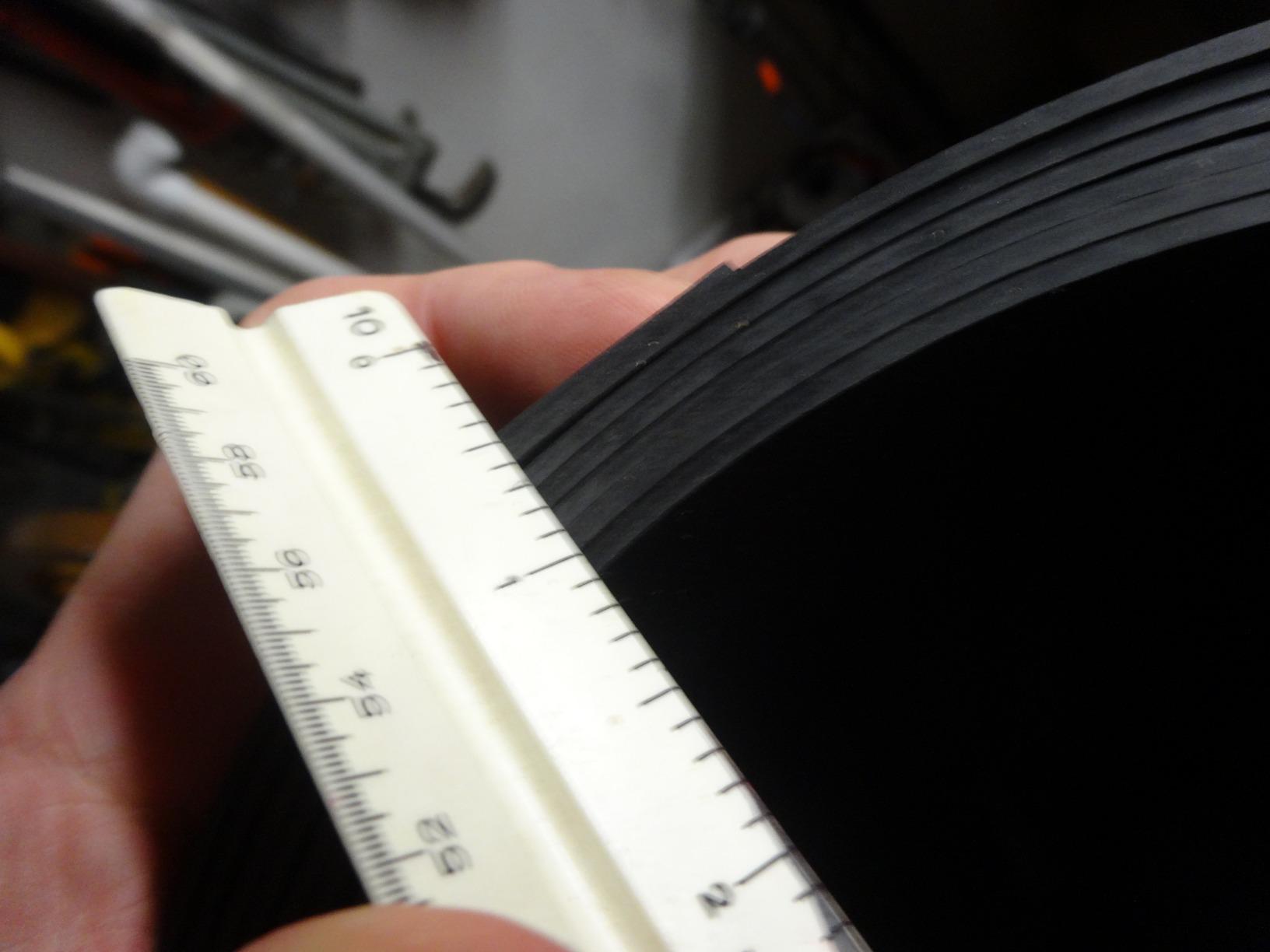
The ToolTex liner is 0.08 inch synthetic rubber, roughly 2.1mm, in a 24 inch by 240 inch roll. It is the heavy-duty end of this category and the only one here that claims resistance to acetone and lacquer thinner, which matters if you work on brakes or paint prep in the same bay.
The construction is described as rigid and anti-crinkle. That means it will not bunch up into the corners of a drawer the way flexible foam does, which is the failure mode that makes people abandon a liner entirely.
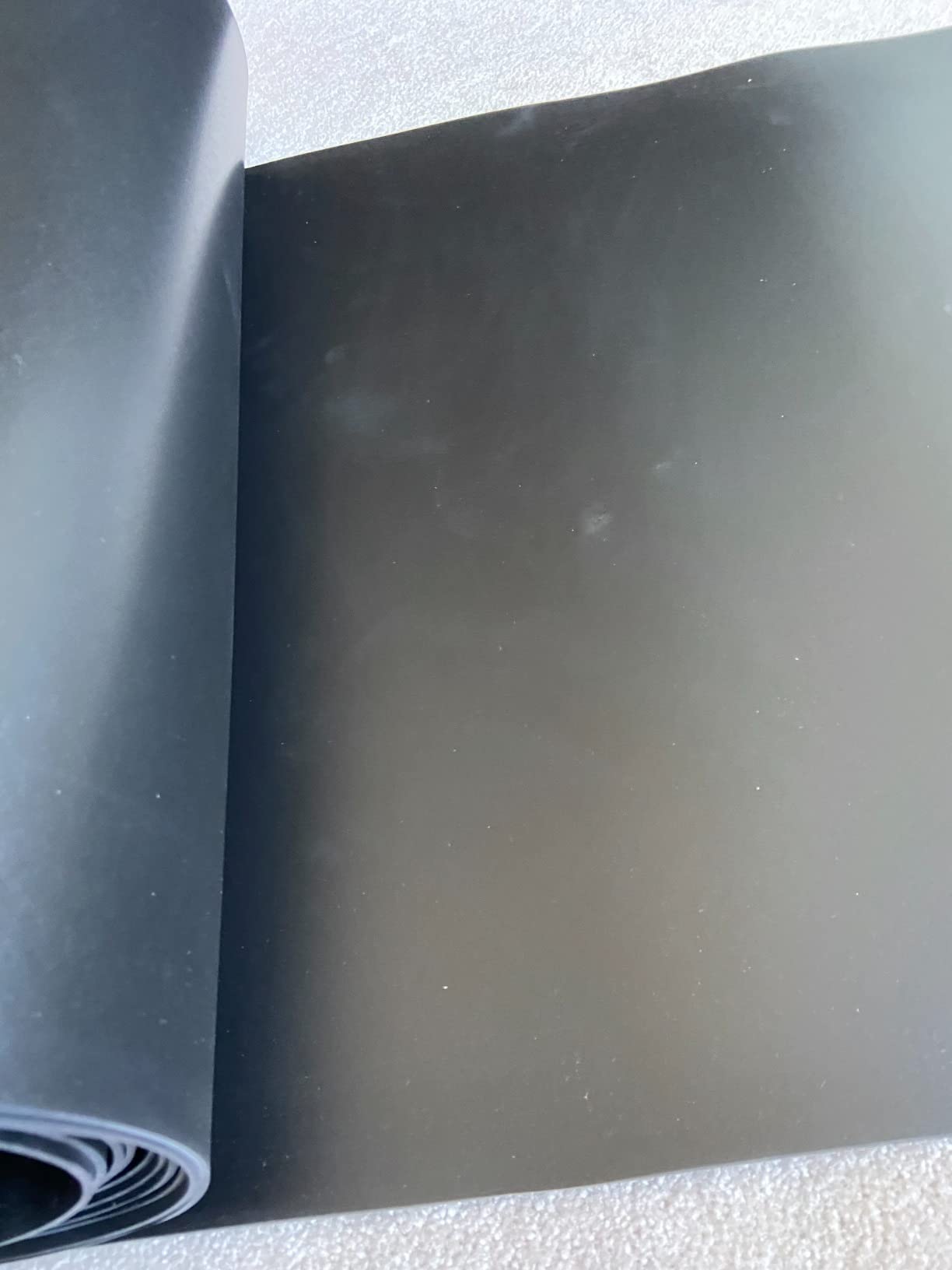
Buyers moving up from flimsy factory foam consistently praise the way it holds its shape and resists puncture under heavy tools. Water beads on the surface, so wiping it down takes seconds.
It is also genuinely chemical resistant, which none of the foams in this roundup can claim. If a thinner spills on it, you wipe it off rather than replacing it.
What you should know before you buy it
The roll weighs about 26 pounds at this size and it is stiff. Cutting it takes effort with a sharp blade and a metal straight edge, so plan your cuts and do them on a surface you can put a knee against.
There is a consistency complaint worth knowing about: a number of buyers report receiving a smooth, untextured rubber instead of the advertised textured mat. Check the surface under light before you cut the whole chest out of one roll.
Who it suits and who it does not
This is the pick for a professional chest that lives in a shop full of solvents, for bottom-of-the-chest drawers that take abuse, and for anyone who keeps punching holes in foam liners and getting tired of replacing them.
Skip it if you want a thin liner to preserve drawer depth, if you want softness under delicate instruments, or if twenty feet will not cover a seven-drawer chest. Measure first.
10. POWERTEC Non Slip Mat – Best for Using a Drawer and a Bench Together
POWERTEC Heavy Duty Non Slip Mat, Anti Slip Mat, 24″ x 48″ Non Slip Pad Tool Mats for Woodworking Router, Workshop, Sanding, Cabinet, Workbench, Toolbox Drawer & Shelf Liner (71014)
Polyethylene non-slip pad
24 x 48 inch pad
UV resistant
Wash with mild soap
Pros
- Firm grip holds workpieces without clamps
- Thick and substantial rather than flimsy
- Cushions workpieces and leaves no marks or residue
- UV resistant for indoor and outdoor use
- Washes with mild soap and rolls flat for storage
Cons
- Grip drops off once fine sanding dust coats the surface
- Firm rubber gives off an odor for the first few days
- Fixed 24 x 48 inch size means measuring drawers first
The POWERTEC pad is a polyethylene anti-slip mat in a fixed 24 by 48 inch size, model 71014. It was designed for routing and sanding, where it replaces clamps by holding a workpiece still, but the same firm grip makes it a perfectly good drawer liner.
That dual purpose is the appeal. One pad for the bench top and one for the drawer means the same material handles both jobs, and at 4.6 stars across 783 reviews the grip on a workpiece is the most-praised feature.
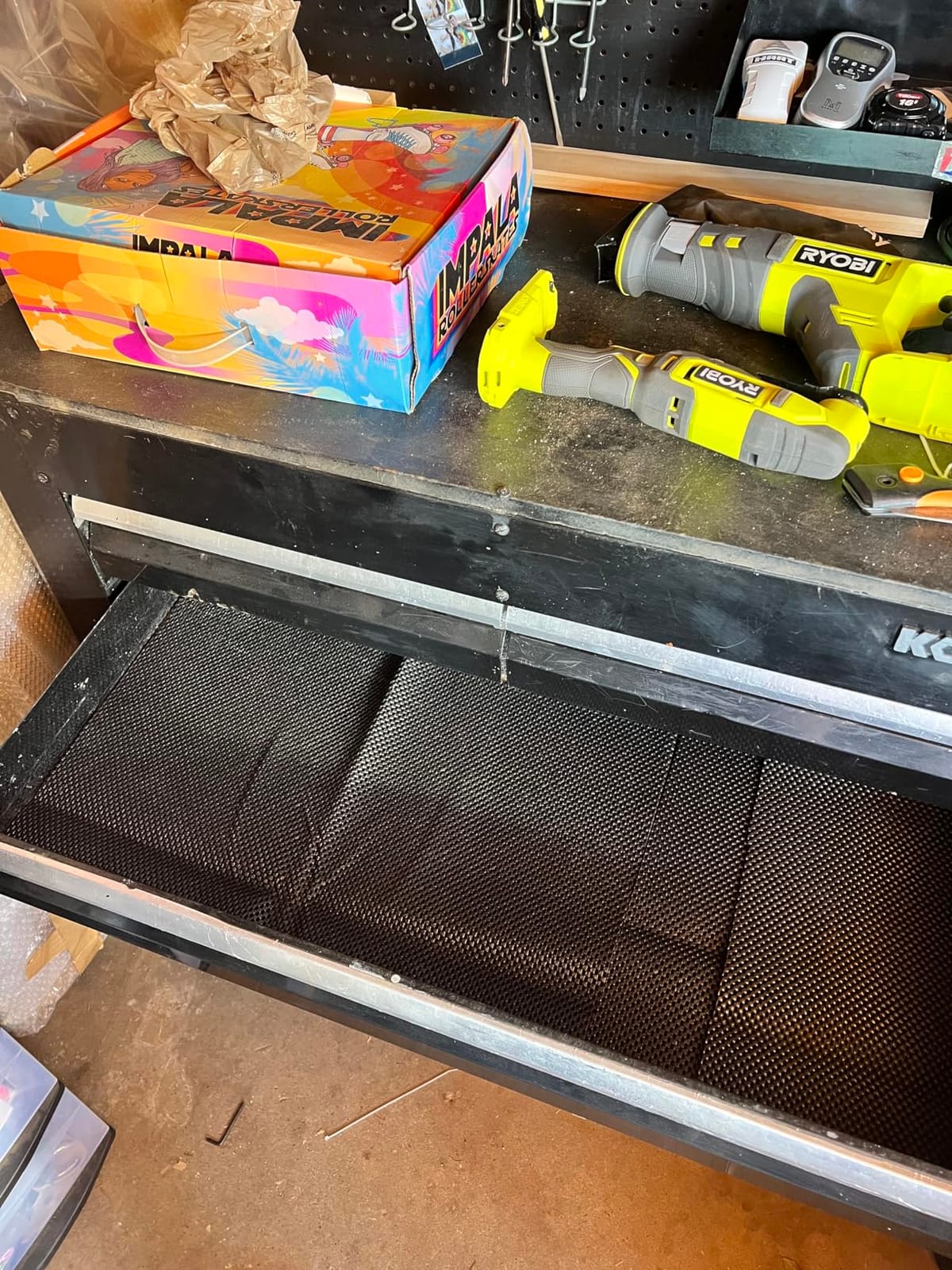
The pad is thick and substantial rather than flimsy, and it cushions workpieces without leaving marks or residue on the surface. That last point matters if you are routing finished wood or painted parts.
It is UV resistant, so it works outside as well as in, and it washes with mild soap and water then rolls flat for storage between jobs.
What you should know before you buy it
Fine sanding dust defeats the grip. That is by design for its primary job, but it means this is a poor choice for a dusty metalworking drawer where swarf and grinding dust settle on the floor daily.
The firm rubber has a new-material smell that takes a few days to fade, and the fixed 24 by 48 inch size means you need drawers close to those dimensions or you are trimming a lot off.
Who it suits and who it does not
Choose it if you want one material that handles both the bench and the drawer, if you work outside as well as in, and if you want a grip surface firm enough to hold a part without clamps.
Do not choose it for oily service-truck drawers or for anyone who needs the liner to hug an oddly shaped drawer floor. A cut-to-size foam or rubber roll fits irregular shapes better than a fixed rectangle.
How to Choose the Right Tool Drawer Liner
Start with the material, not the brand
The best material for a tool chest drawer liner is solid PVC or synthetic rubber if you want tools to stop sliding and you work around oil and solvents. Foam is the better answer if you want quiet and cushioning for delicate hand tools. There is no single winner, because the two materials solve different problems.
Rubber and vinyl do not absorb oil, wipe clean and resist puncture when they are dense enough. They are thin, so they cost you almost no drawer depth. Foam cushions and mutes noise but holds oil and swarf in its structure, so it wants a routine wipe-down.
One term trips people up constantly. Tack is the bond between the liner and the drawer floor. Grip is the friction between the liner and your tools. A product can have one without the other, and both have to work for the liner to do its job.
Measure your drawers before you buy a roll
Measure the drawer floor first, not the drawer width. Then decide depth. A 24 inch roll covers wide professional drawers in one piece with no seams, a 16 inch roll suits standard tool chest drawers, and anything narrower than about 12 inches means you will be cutting strips all day.
Roll length is the second number. Six-foot rolls suit a couple of drawers. Sixteen-foot rolls suit a single chest. A twenty-foot roll at 24 inches wide covers a large multi-drawer cabinet, and if you are lining seven drawers or more you may need two.
Get the thickness right
For most people 2mm to 3mm is the sweet spot. Below 2mm you have very little cushioning and less grip. Above 5mm you start losing drawer height, which reduces how many tools each drawer holds, and that cost adds up across a whole chest.
Be careful with claims. Thickness is the least reliable number in this category. One product here does not even state it, and reviewers put it at 1 to 1.6mm rather than the heavy matting people assume from the photo.
Skip the wrong liner for the job
Do not buy a waffle or perforated kitchen-cabinet liner for a tool chest. The holes let small tools drop through and catch on the edges when you reach for them. Do not buy thick carpet or felt, which scrunches into drawer corners every time you close them and which holds moisture against steel.
Be careful with exercise mats and yoga mats. They work as a cheap DIY liner, but they are thick, they smell when new, and they slide. Use them in a cabinet drawer, not in a rolling chest that gets driven around.
Know when a liner is not enough
A liner stops tools moving. It does not prove a tool is missing. Under aviation and factory 5S rules, tool shadowing is a separate requirement where every tool has a visible footprint in cut foam, and aviation maintenance also bans the polystyrene and layered cut-and-peel foams that shed debris. If you need audit compliance, you need foam cut for the tool, not a sheet of liner.
For everything else, a liner under your dividers is a good combination. The liner stops the whole tray from sliding, and the dividers stop individual tools from reaching each other.
How to Cut and Fit a Liner So It Does Not Slide
The most common complaint about any liner is that it shifts. The fix is mostly about cutting and cleaning, not about buying a stickier product.
Measure the floor of the drawer, not the outside of the chest. Mark the width first and the depth second.
Clean the drawer floor before fitting. Dust, oil and old liner fragments are the main reasons a new liner peels or slides.
Mark and cut slightly undersize. A sheet cut a quarter inch small relaxes into the corners and lays flat; a sheet cut exactly to the drawer will pucker.
Use the printed grid lines where the product has them, and score the full length with a utility knife against a drywall square or metal straight edge before finishing the cut.
Lay it in and press the corners down, then leave the drawer closed for a day so the foam relaxes flat.
The tools you need are minimal: a tape measure, a drywall square, and a utility knife with fresh blades. Scissors only work on the thin 2mm and 3mm foams, never on 5mm material or heavy rubber.
Once it is in, maintenance is a wipe-down. Solid PVC and rubber can be sprayed with a light oil directly on the surface, which is how a lot of technicians condition them. Foam wants a damp cloth and air time rather than saturation, because trapped oil in foam is what leads to odour and mildew in a humid shop.
If a liner needs replacing, the signs are consistent: the corners have lifted, it no longer holds a tool at an angle, or it has gone stiff and cracked. Pull it out, clean the floor properly, and refit rather than layering a new sheet on top of an old one.
Frequently Asked Questions
What is the best toolbox drawer liner?
For most steel tool chests, the best toolbox drawer liner is a textured foam or rubber sheet around 2mm to 3mm thick, cut to the exact drawer floor. Dense rubber and PVC give the best grip and tolerate oil and solvents, while foam gives better cushioning and noise reduction. Our top pick is the Precision Defined textured polypropylene liner at 4.7 stars from 4,320 reviews.
What thickness drawer liner should I use?
Most people do best with 2mm to 3mm. Below 2mm you get very little cushioning or grip, and above 5mm you start losing usable drawer height and reducing how many tools each drawer holds. Check the stated thickness carefully, because some listings do not publish a real figure.
What is the best material to line drawers with?
Solid PVC or synthetic rubber is best for tools in a working chest because it does not absorb oil, wipes clean and resists sharp points. Closed-cell foam such as EVA is better if you want to quiet a noisy steel drawer and cushion delicate hand tools. Both are cut to size with a utility knife.
What is the best type of foam for toolboxes?
Closed-cell foam is the right choice for toolbox liners, and among those EVA and cross-linked polyethylene give the best combination of cushioning, grip and low odour. Expanded polystyrene and expanded polypropylene shed debris and are not appropriate for aviation tool kits. Open-cell foam is not worth using in a drawer at all.
Will drawer liners hold heavy tools?
Yes, as long as the liner is dense enough and the drawer is not lined with very thin material. Dense rubber and PVC rated around 2mm hold heavy tools without deforming, while 2mm foam is better suited to general hand tools. Extremely thin tacky material grips well but can be punctured by sharp points.
Can you cut tool box drawer liners to size?
Yes. Cut foam and vinyl liners with a utility knife against a drywall square or metal straight edge, scoring the full length before finishing. Scissors handle thin 2mm and 3mm foam, but 5mm material and heavy synthetic rubber need a sharp blade. Cut slightly undersize so the sheet relaxes flat into the drawer corners.
The Best Tool Drawer Liner for 2026
After lining drawers with all ten of these, the Precision Defined Toolbox Liner is our pick for 2026 because it combines the highest review volume in the group with printed grid lines that make an accurate cut easy the first time. For a budget build, the CASOMAN EVA sheet does the job for very little. For a noisy steel chest, the HooTown foam is the quiet one. For shop solvents and heavy abuse, the ToolTex 0.08 inch synthetic rubber is the toughest. For a chest where nothing should ever slide, the tacky EPPCO liner in a 24 inch width covers wide drawers in a single piece.
Whichever you pick, cut it slightly undersize, clean the drawer floor first, and use the best tool drawer liner you can actually afford to replace every couple of years rather than the cheapest one that fails in six months. If you are still deciding on the storage itself, our best rolling tool carts for garages guide covers the narrower option.