
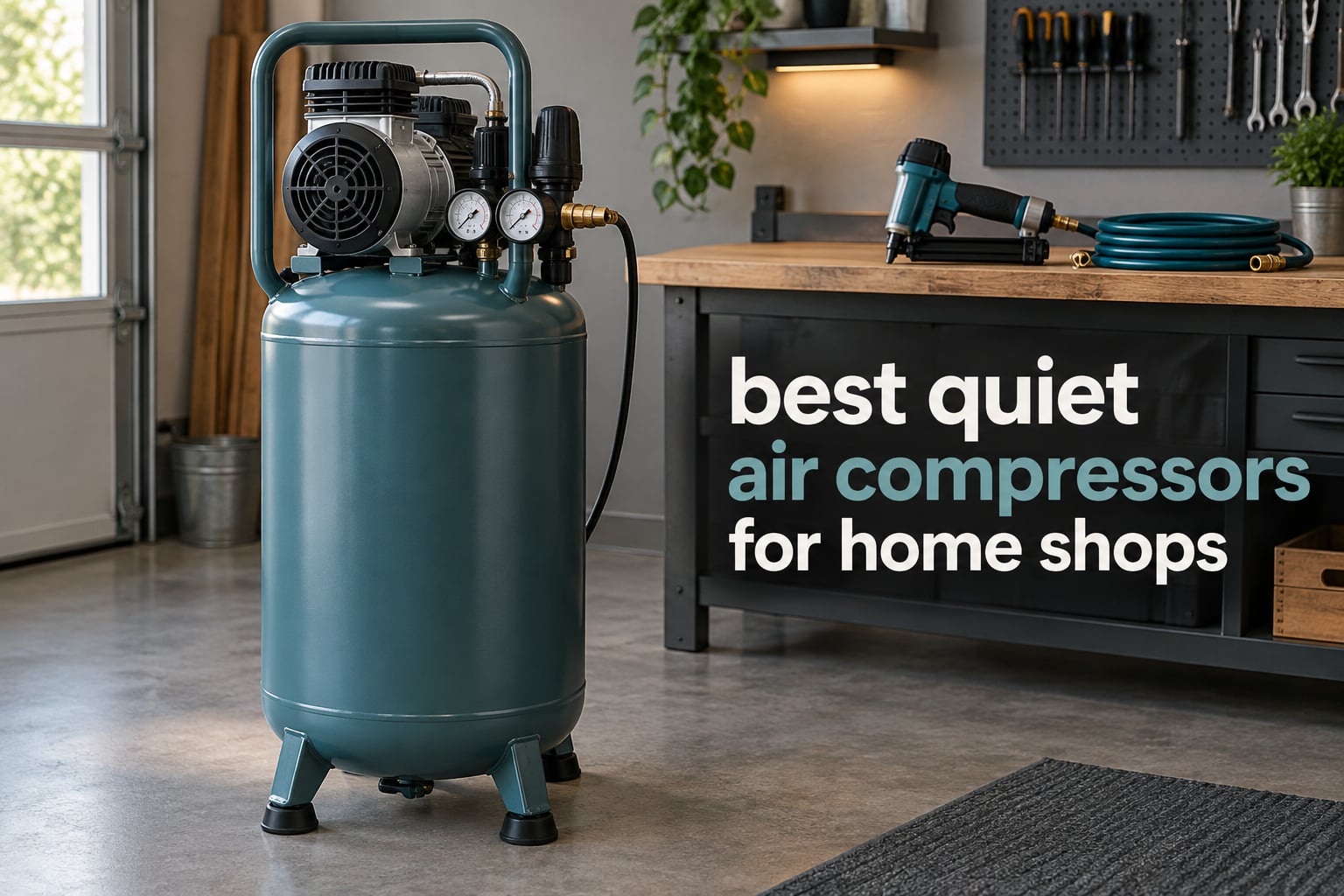
Most air compressors are sold on horsepower, and then the noise arrives at 6 AM on a Saturday when you planned to sand a table. A home shop lives or dies on whether the compressor can run while you keep working, whether you can talk over it, and whether the neighbours ever file a complaint. That is why the best quiet air compressors for home shops are not simply the highest-rated machines on a shelf. They are the ones whose published noise figure survives contact with a real garage.
Before anything else, here is the definition this whole guide uses: a quiet air compressor is rated under 70 dB, and an ultra-quiet one sits around 60 dB. Anything at 78 dB or above is a conventional shop compressor that happens to be compact. Every decibel figure below is taken from the manufacturer’s published specification, and every airflow figure is quoted at 90 PSI, because a CFM number measured at 40 PSI flatters a compressor by roughly a third and makes two completely different machines look identical.
We compared ten quiet compressors across the whole home-shop range, from a 37-pound oil-free pancake to a 20-gallon vertical unit, and read the review patterns behind each rating rather than trusting the headline. The short version: the California Air Tools 10020C is the one we would put in a working shop, the 8010A is the quietest machine money can buy for a small space, and the VEVOR 13-gallon is the value pick if your tools are intermittent. If your shop is a garage that shares a wall with your living space, noise tolerance should be decided before tank size does. We also mapped each pick to the tools it actually runs, and linked our other compressor guides for framing nailers and for off-road tire inflation at the end.
Table of Contents
Top 3 Best Quiet Air Compressor Picks for Home Shops in 2026

California Air Tools 10020C
- 70 dB noise
- 5.3 CFM at 90 PSI
- 10 gal vertical tank
- Oil-free dual piston pump


All 10 Quiet Compressors Side by Side in October
Airflow below is quoted at 90 PSI wherever the manufacturer publishes it, so the columns can be compared directly. The tank and voltage columns matter as much as the decibel column, because tank size controls how often the pump restarts and voltage controls whether your electrical panel can start it at all.
| Product | Specifications | Action |
|---|---|---|
| California Air Tools 10020C |
|
Check Latest Price |
| California Air Tools 8010A |
|
Check Latest Price |
 DEWALT DWFP55130 Trim Compressor DEWALT DWFP55130 Trim Compressor |
|
Check Latest Price |
| Makita MAC320Q Quiet Series |
|
Check Latest Price |
 Stealth 20 Gallon Ultra Quiet Stealth 20 Gallon Ultra Quiet |
|
Check Latest Price |
 VEVOR 4.8 Gallon Oil Free VEVOR 4.8 Gallon Oil Free |
|
Check Latest Price |
 Stealth 12 Gallon Ultra Quiet Stealth 12 Gallon Ultra Quiet |
|
Check Latest Price |
 VEVOR 13 Gallon Oil Free VEVOR 13 Gallon Oil Free |
|
Check Latest Price |
 Craftsman 10 Gallon CMXECXA0201041 Craftsman 10 Gallon CMXECXA0201041 |
|
Check Latest Price |
 California Air Tools 15020C California Air Tools 15020C |
|
Check Latest Price |
1. California Air Tools 10020C – Best Overall Quiet Compressor for a Home Shop
California Air Tools 10020C 2.0 HP Ultra Quiet and Oil-Free Air Compressor, 10 Gallon Steel Tank with Wheels, 70 dBA Noise Level
70 dB noise
5.3 CFM at 90 PSI
2.0 HP
10 gal tank
110 volt
Pros
- 70 dB rating holds a conversation beside it
- 1680 RPM motor runs cooler and quieter
- Oil-free dual piston pump over 3000 hour life
- Vertical footprint saves floor space
- 5.3 CFM at 90 PSI covers trim and impact tools
Cons
- Not built for continuous duty
- 82.5 lb weight makes the wheel kit essential
- Some early machines had fan or pressure switch failures
This is the compressor we would buy first for a garage that gets used, and it is the most reviewed model in the group with 4.4 stars across more than 1500 owner reviews. The 70 dBA figure is the useful part: owners report being able to hold a conversation next to it while it runs, which is exactly the test a home shop applies.
The mechanical story is simple and it works. A 2.0 HP motor turning at only 1680 RPM feeds an oil-free dual piston pump rated past 3000 hours, and that low motor speed is where the quiet comes from rather than from clever soundproofing. The Easy Start valve cuts the starting amps so it will spin up on an ordinary household circuit.
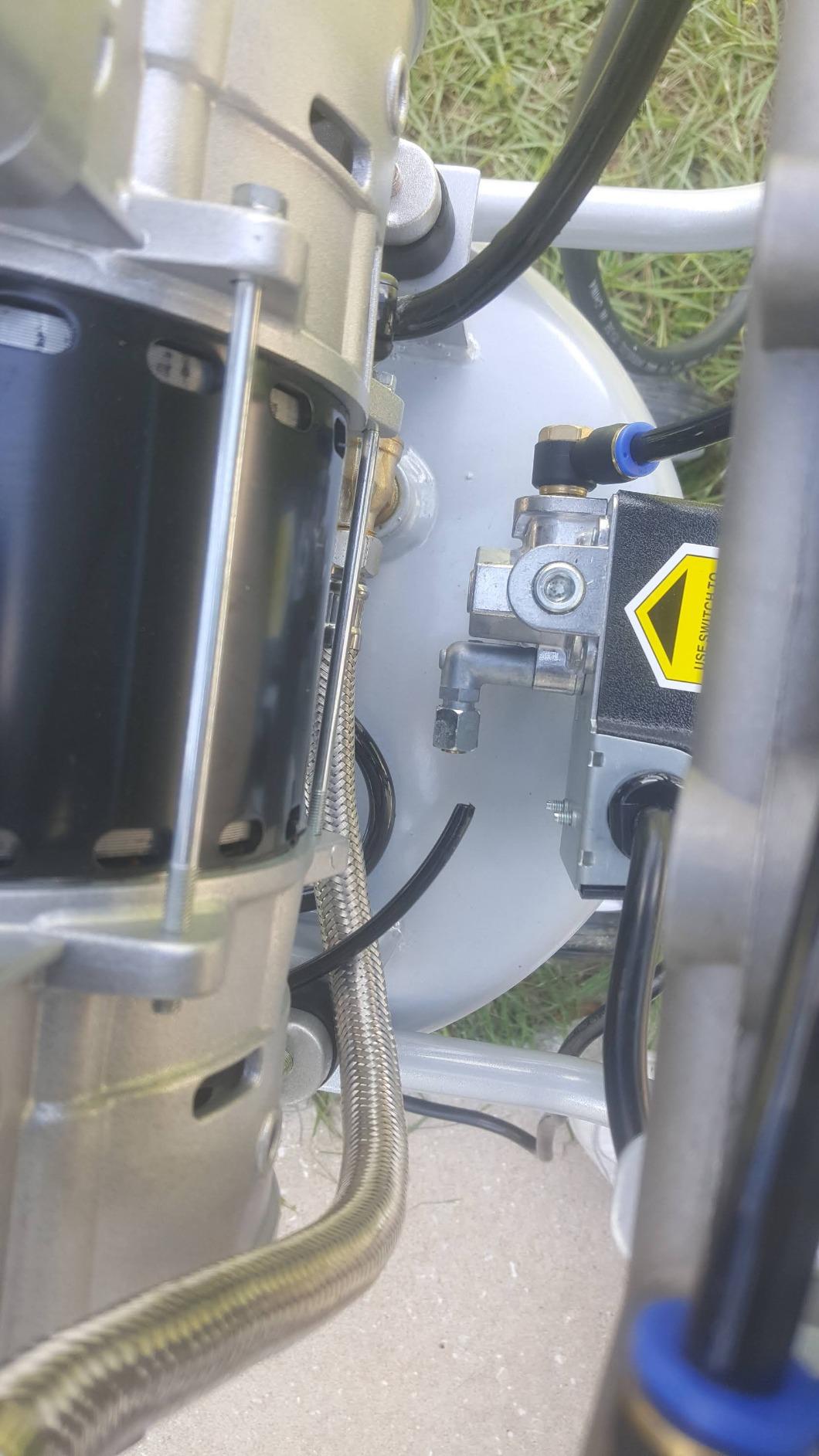
Airflow is 6.4 CFM at 40 PSI and 5.3 CFM at 90 PSI, which is the number that matters. That figure comfortably feeds a finish nailer, a stapler, a small orbital sander for intermittent passes, and impact work in short bursts, and the 10-gallon stainless steel tank refills quickly enough that the pump rarely waits on you.
The vertical tank is the layout choice that makes it fit. At 16 by 15.1 by 35.9 inches it holds a floor footprint roughly the size of a coffee table, which in a single-car garage is the difference between a usable machine and one that lives in the corner permanently. Wheels and a handle are included, and at 82.5 pounds you will use them every time you move it.
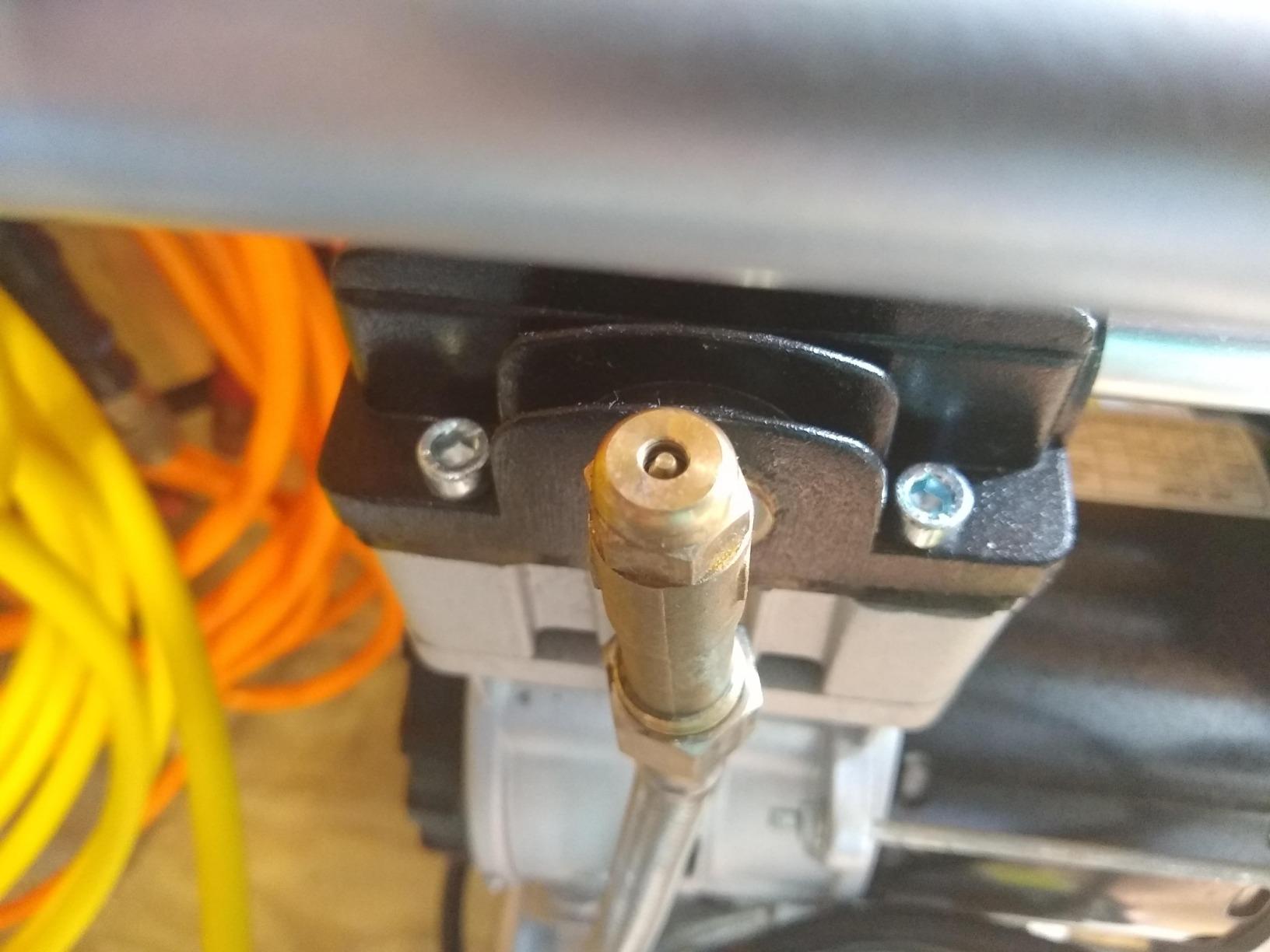
What the 10-gallon tank means for shop work
Ten gallons is the smallest tank here that still feels like a shop machine rather than a job box, and it spends longer at load and less time re-launching, so you hear a steady hum instead of a repeated surge. On a 2.5-gallon pancake the same sequence becomes a start-stop cycle, and those cycles are the loudest thing in a garage.
Where it falls short
It is not a continuous-duty machine: owners report a thermal cut-out after roughly 30 to 45 minutes of hard running followed by a long cool-down. A minority also report a cooling fan or pressure switch failure a few years into service, and some machines seem calibrated to cut out near 120 PSI rather than the advertised 125.
2. California Air Tools 8010A – The Top Rated Machine Here for Small Spaces
California Air Tools 8010A 1.0 HP Ultra Quiet and Oil-Free Air Compressor, 8 Gallon Aluminum Tank, Lightweight with Wheels, 60 dBA Noise Level
60 dB noise
2.2 CFM at 90 PSI
8 gal aluminum tank
37 lb
1.0 HP
Pros
- Quietest rating in the group at 60 dBA
- 37.3 lb with a wheel kit
- 165 second tank fill and 60 second recovery
- Oil-free dual piston pump over 3000 hours
- Highest rating in the lineup at 4.7 stars
Cons
- 2.2 CFM at 90 PSI suits light tools only
- 120 PSI is the lowest ceiling here
- Unsuitable for sustained spray or sanding
At 60 dBA this is the quietest compressor in the roundup, and it carries the highest average rating here at 4.7 across more than 1100 reviews. In a basement shop, a bedroom-adjacent workshop, or an apartment-adjacent garage, that rating is the whole reason to own it. You can sit beside it and work without raising your voice.
The build is the same quiet philosophy as its bigger sibling taken to its limit. A 1.0 HP motor runs at 1680 RPM driving an oil-free dual piston pump, so the mechanical design is scaled down rather than reinvented. Airflow is 3.1 CFM at 40 PSI and 2.2 CFM at 90 PSI, which sets the ceiling on what it can drive.
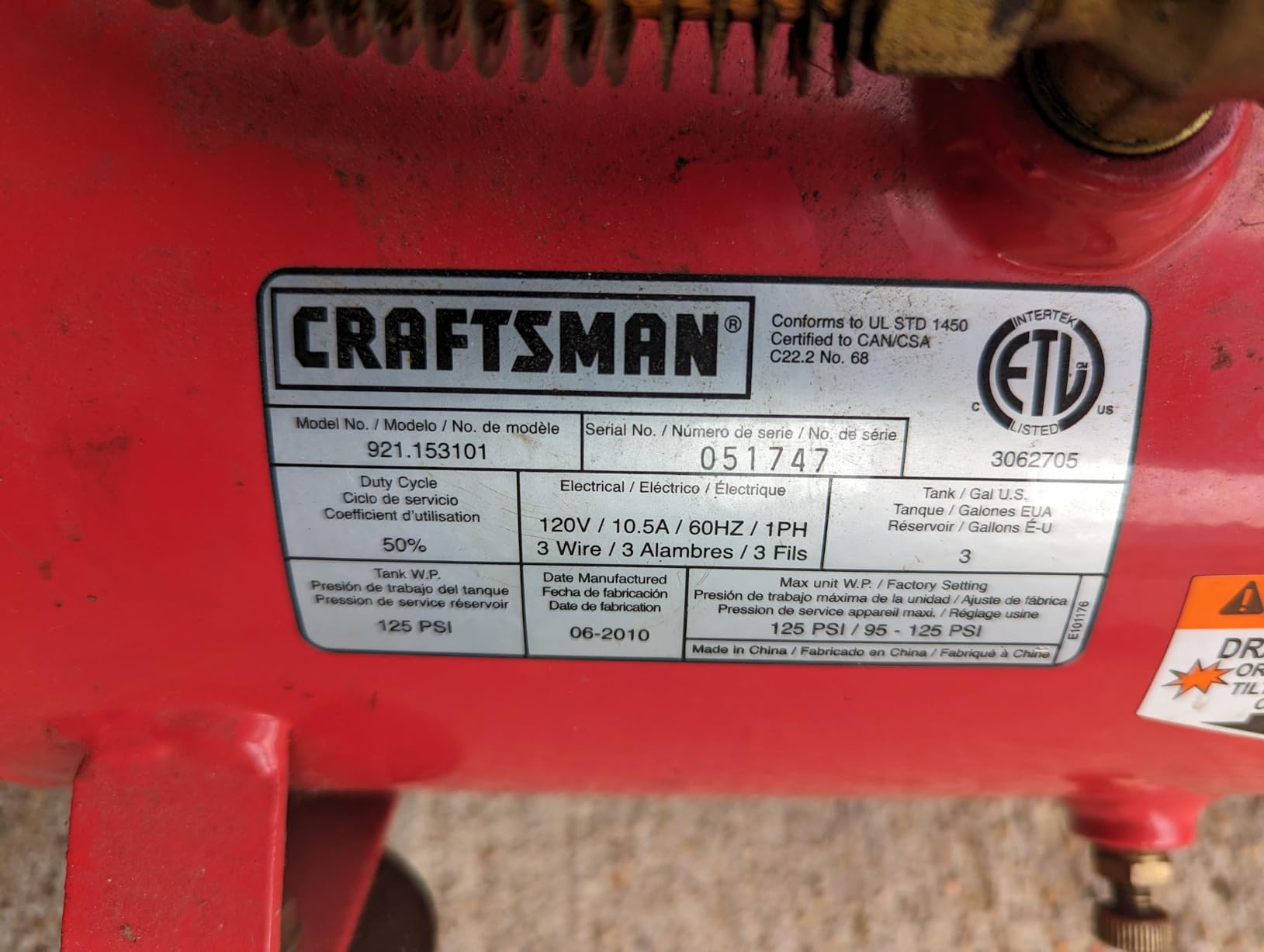
Weight is the second surprise. At 37.3 pounds with a wheel kit, you can carry it up basement steps or move it between a shop bench and a workroom without planning the lift, and the aluminum tank keeps that weight down. The 8-gallon aluminum tank fills in about 165 seconds and recovers from 90 to 120 PSI in roughly a minute.
That 120 PSI ceiling is worth understanding before you buy rather than after. It is the lowest maximum pressure in this lineup, and it means the compressor reaches cut-out sooner and restarts sooner, which is exactly the behaviour that makes quiet machines feel loud. Used for inflation, cleaning, airbrushing and light trim work, it never hits that limit.
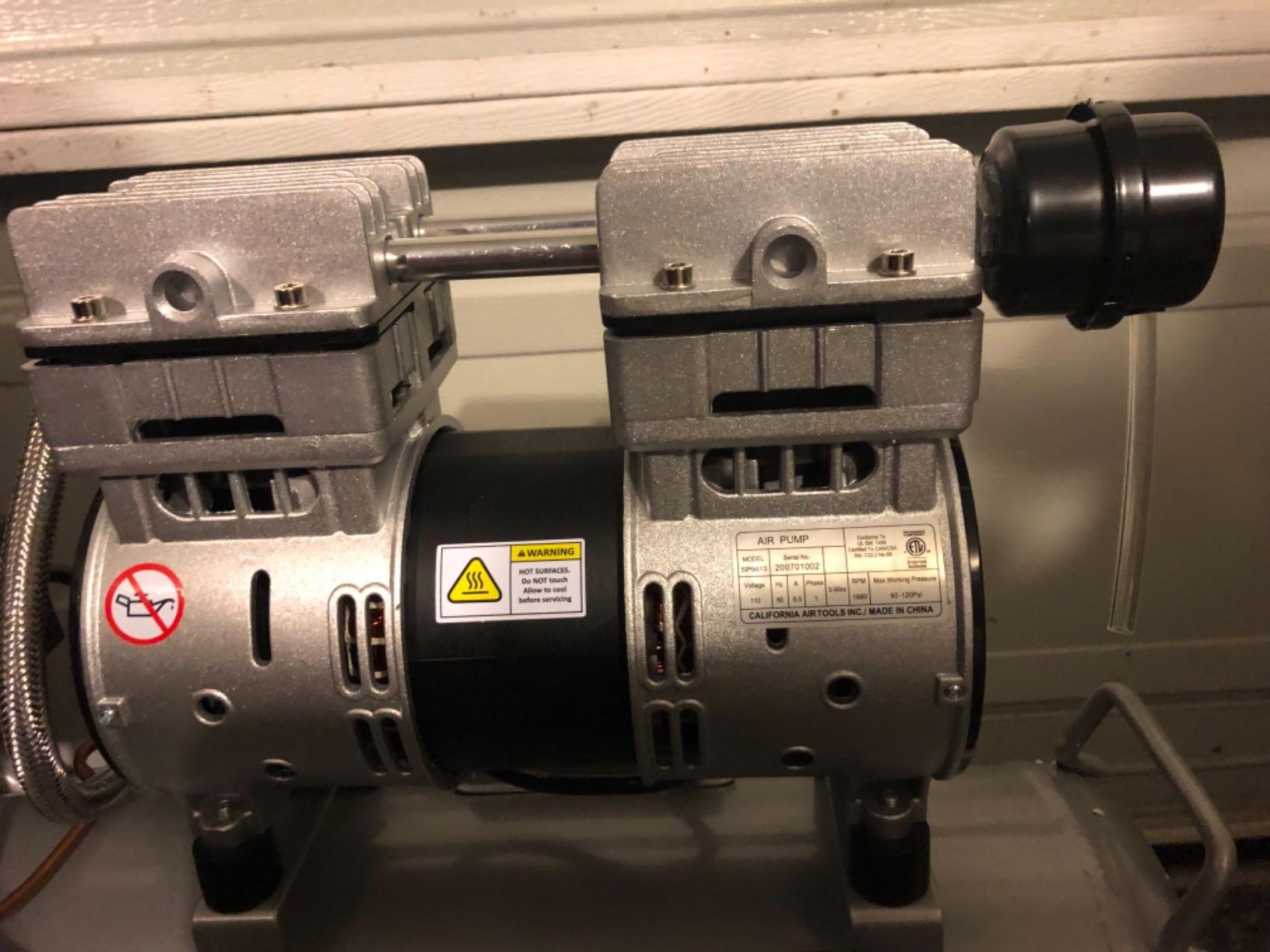
What it actually runs well
Think of it as the detail and finishing machine of the quiet group. Airbrushing, ball inflation, blowing dust off tools, inflating tires, staplers and short-duration light nailers all sit well within 2.2 CFM at 90 PSI. On an orbital sander or an HVLP spray gun it runs continuously and cycles often, which is unpleasant to listen to and hard on the motor. Forum users on r/Tools single out the California Air Tools pancake format as the one that handles most home use quietly.
Where it falls short
Do not buy it expecting it to run air tools in general. Buyers love the noise and the weight, then discover the airflow limit when they try a sander or a spray gun, and it is the least capable machine here for sustained production work. We treat the 8010A as a second machine for most shops rather than the only one.
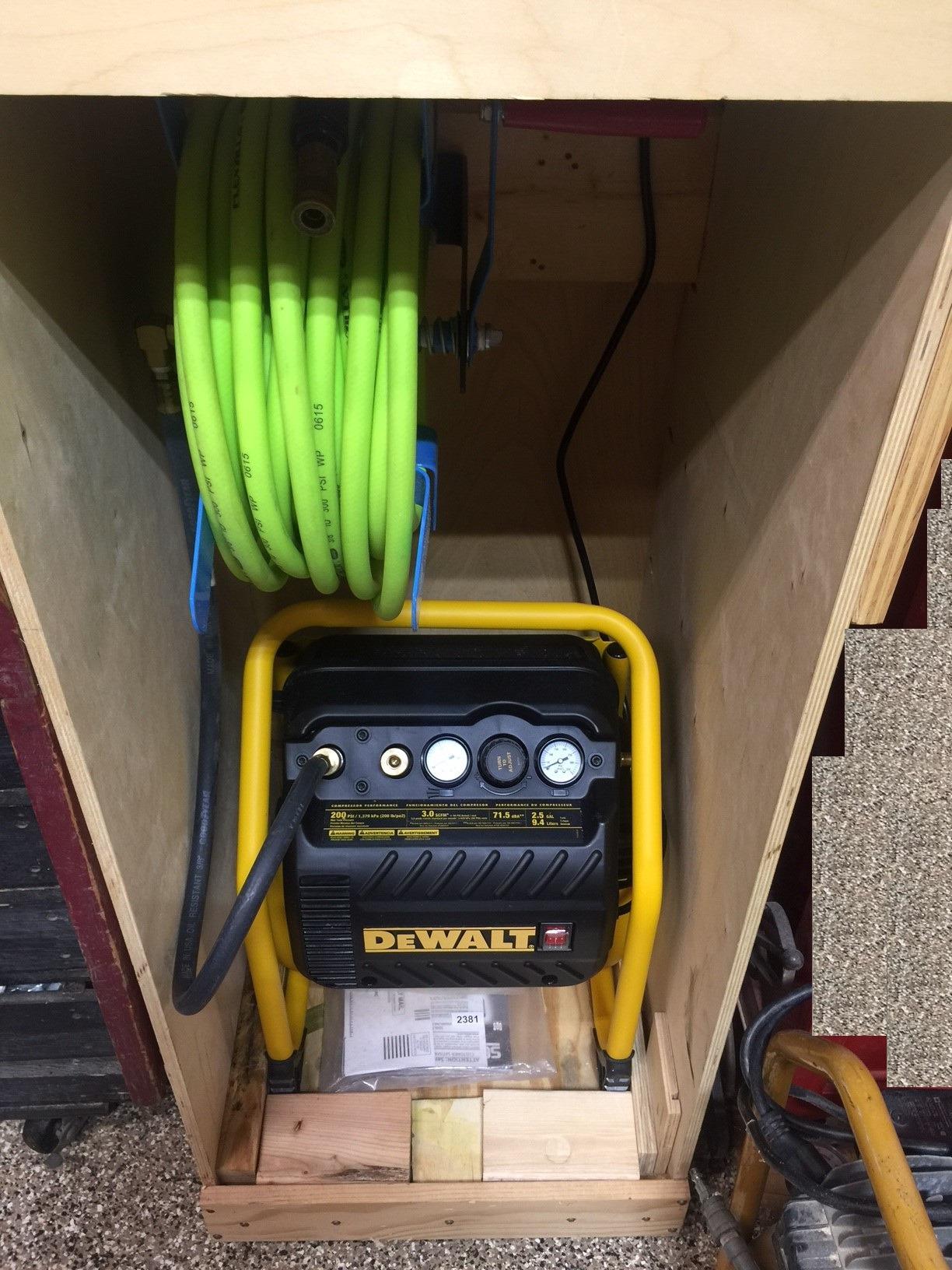
3. DEWALT DWFP55130 – Best Quiet Compressor for Trim Carpentry
DEWALT Air Compressor for Trim, 200-PSI Max, Quiet Operation (DWFP55130)
71.5 dBA noise
3.0 SCFM at 90 PSI
200 PSI max
2.5 gal tank
12 amp draw
Pros
- 200 PSI max is the highest ceiling in the group
- Only 12 amp draw so it starts on a normal circuit
- Dual quick couplers run two nailers at once
- Stores vertically or horizontally
- Tests at 71.5 dBA per ISO3744
Cons
- 2.5 gal tank is small for sustained work
- 3.0 SCFM at 90 PSI pauses often on large fasteners
- Roll cage adds weight to a portable design
This is the compressor to buy if your work is interior trim and finish carpentry and you care about two specific numbers: a 200 PSI ceiling and a 12 amp draw. Trim carpenters consistently favour the combination, because a 200 PSI nailer needs the head pressure to seat fasteners consistently on hardwood and the low amperage means you do not need an electrician before the first day of work.
The 71.5 dBA figure is measured per ISO3744, which is a more meaningful test than most marketing numbers. It is not the quietest machine here, and owners say so plainly: the compressor is the quiet part of the setup, and the nailer dominates the noise. That is the correct expectation for this class of machine.
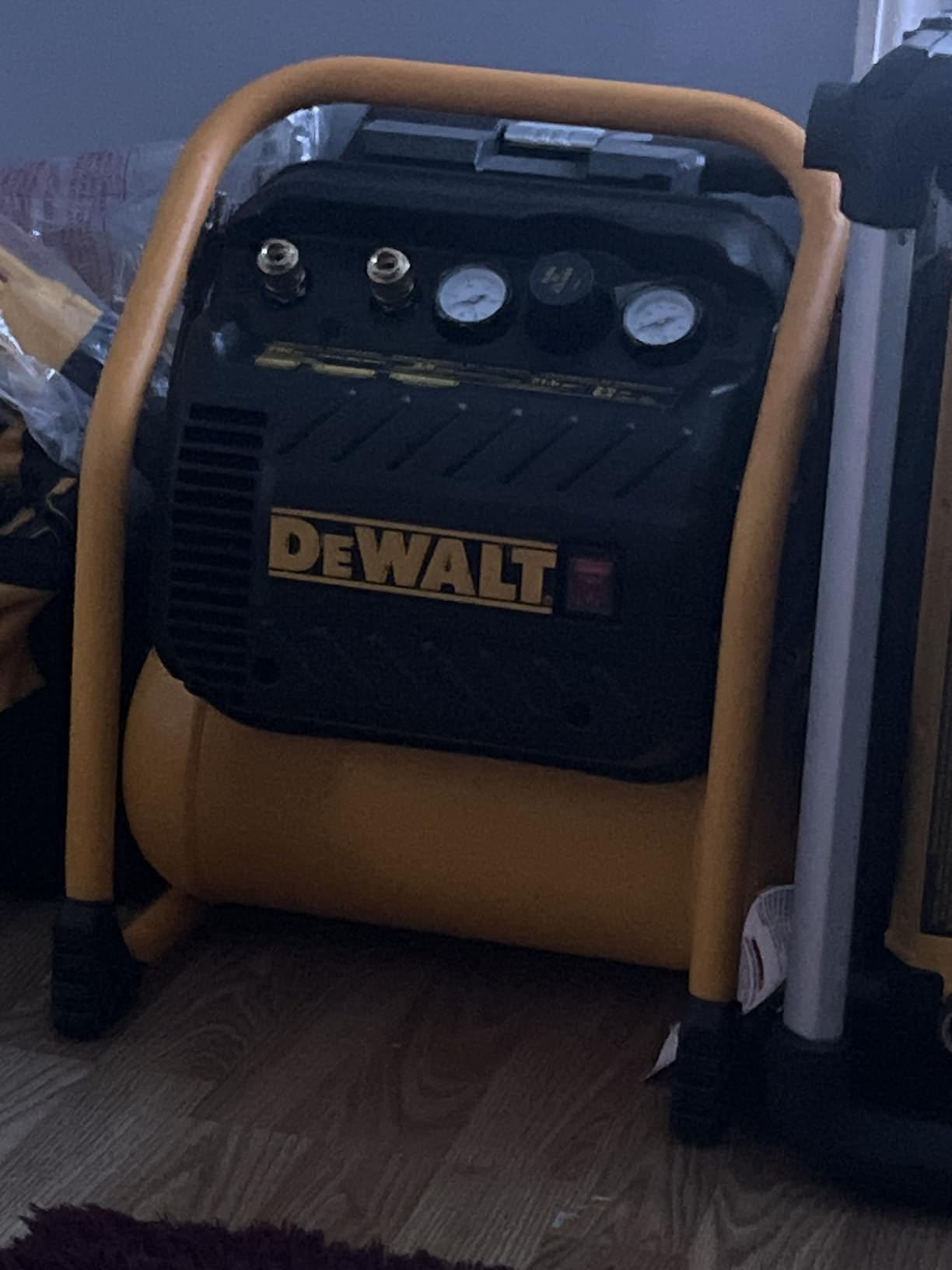
Airflow is 3.0 SCFM at 90 PSI, delivered through an oil-free pump that needs no maintenance. That figure handles finish and brad nailers well and pauses on a framing nailer, and the 2.5-gallon tank means it will be waiting for the pump more often than not when you fire long nails into dense material.
Two quick couplers let a brad nailer and a finish nailer run at once, which owners on trim jobs describe as the feature that removes the most friction in a workday. The unit can be operated or stored in either orientation, measures 12.5 inches across the body, and a ball valve drain empties the tank quickly for storage in a closet or job box over winter.
Why 200 PSI matters more than tank size
Pressure and capacity solve different problems. The 200 PSI ceiling gives your tools a reserve so the first shot of a long nail is not delivered at a sagging tank pressure, and higher pressure generally means a nailer cycles less per stroke. The 2.5-gallon tank only controls how long you can go before the pump refills, so on trim work that tradeoff is invisible. On continuous sanding it is not.
Where it falls short
This is a trim compressor, not a shop compressor, and the 2.5-gallon tank is the reason. Owners who bought it for sanding or spray work report the machine pausing constantly, which is both slower and louder than the specification suggests. The roll cage that protects the pump in transit also adds weight to an otherwise very portable design.
4. Makita MAC320Q – Most Versatile Quiet Series Build for Finish Work
Makita MAC320Q Quiet Series 1-1/2 HP, 3 Gallon, Oil-Free, Electric Air Compressor
60 dB noise
3 gal tank
1.5 HP oil-free dual piston
135 PSI max
120 volt
Pros
- 60 dB Quiet Series design allows normal conversation
- Two regulated outlets run a nailer and blow gun together
- Refills faster than most owners can discharge it
- Complete roll-cage build protects the pump
- Padded feet stop it walking across the floor
Cons
- 135 PSI ceiling causes more frequent cycling
- Heavier than competing 3 gallon machines
- Factory quick-connect fittings can leak or stick
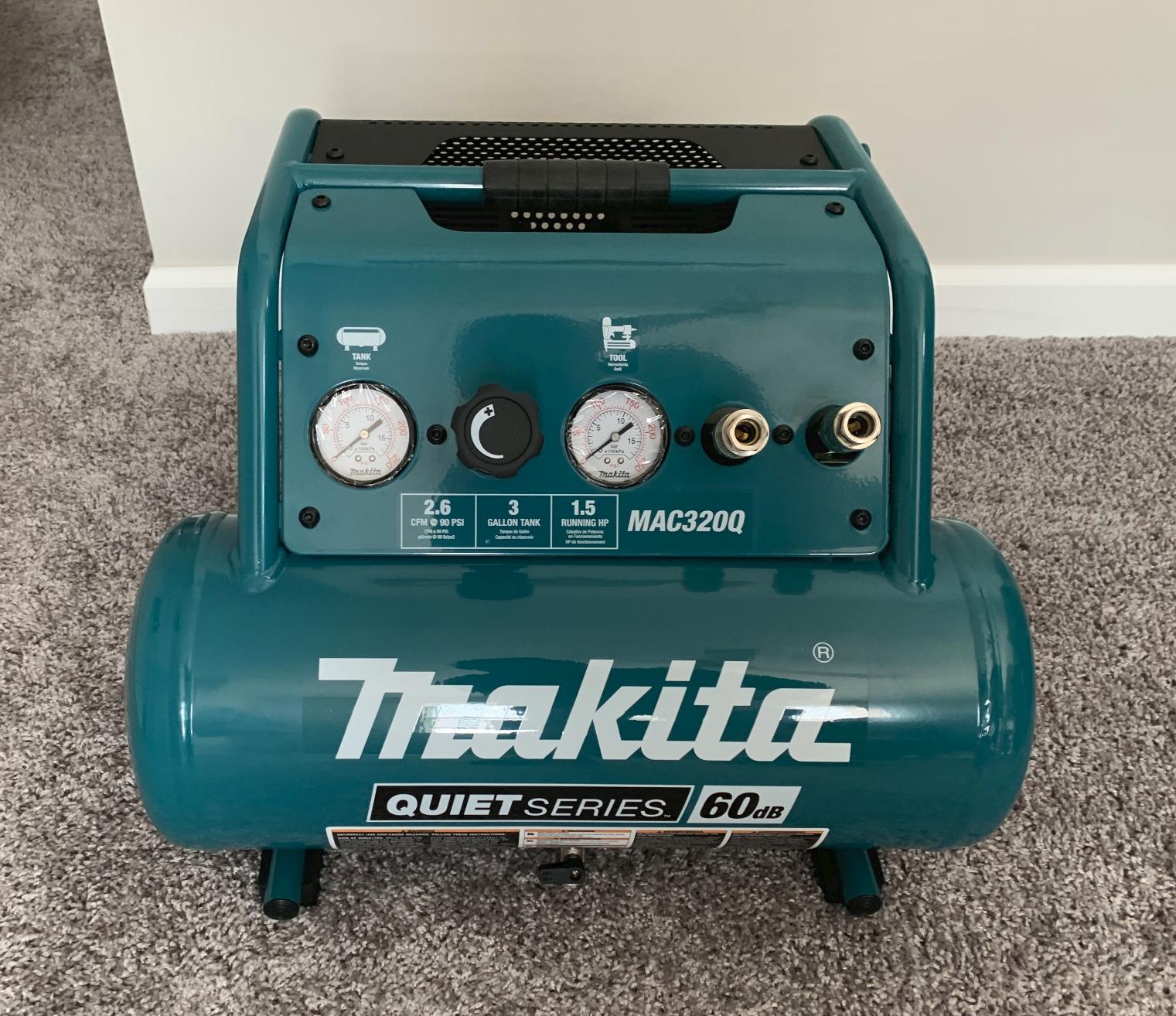
The Makita MAC320Q earns its place on build quality and outlet count as much as on noise. At 60 dB it matches the quietest figure in this roundup, and owners consistently describe the result as being able to talk while it runs, with the tools themselves becoming the loudest part of the job.
Under the shell is a 1.5 HP oil-free dual piston pump turning a 1,750 RPM motor. That lower motor speed is a deliberate lifespan choice rather than a performance one, and it pairs with a complete roll-cage frame that protects the pump in transit and storage, which matters if the compressor lives in a truck.
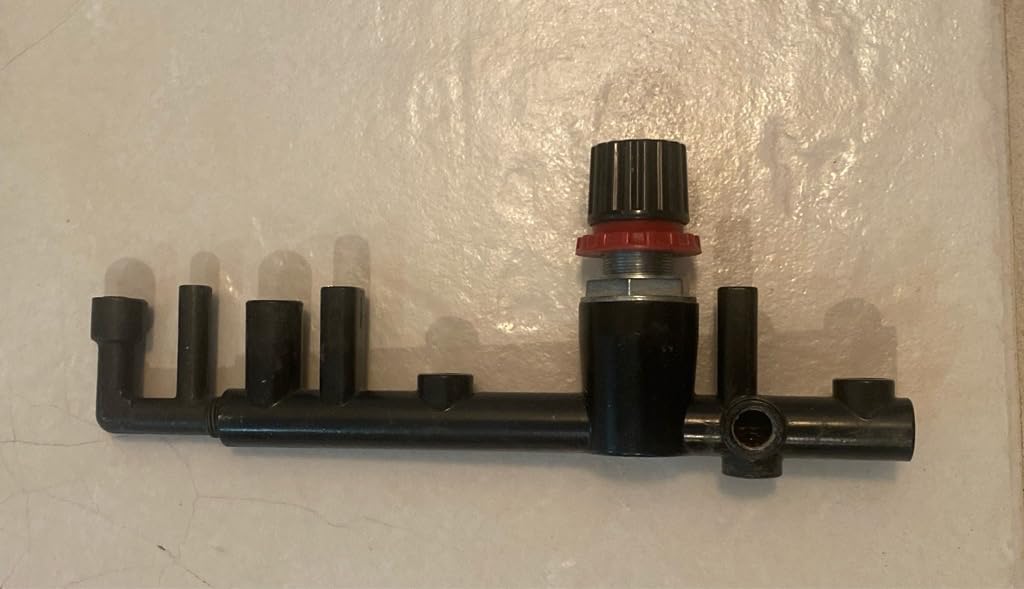
The two regulated air outlets are the feature finish carpenters care about most. Separate tank and tool pressure gauges with adjustable output let one line run a finish nailer at a lower working pressure while the other feeds a blow gun, and you avoid the cross-talk that makes a single-regulator setup inconsistent between tools.
Recharge speed is the other quiet advantage. Owners report it refilling from empty faster than they can discharge it through a nailer, so the machine spends most of its time silent. Padded feet reduce vibration transfer into the bench or floor, which stops it walking and also reduces the low-frequency hum that carries through a garage wall.
How it compares with the pancake compressors
The MAC320Q sits between the 37-pound California Air Tools pancake and the 82-pound vertical tanks, and it beats both on outlet control: where the pancake gives you 2.2 CFM at 90 PSI, this delivers noticeably more, and where the vertical machines give you one useful coupler plus a second, this gives you two genuinely regulated ones. That makes it a strong pick for a finish carpenter working alone through a long trim-out.
Where it falls short
135 PSI is the tightest ceiling among the mid-size machines here, so the pump cycles more than a 150 or 175 PSI machine would on the same work, and more cycling is more noise. Several owners also replaced the stock quick-connect fittings with brass after the originals leaked or stuck, and if the breaker trips the compressor will not restart until it is unplugged and the tank manually drained.
5. Stealth 20 Gallon Ultra Quiet – Best Tank Capacity in the Group
Stealth 20 Gallon Ultra Quiet Air Compressor,1.8 HP Oil-Free Peak 150 PSI 68 Decibel, 5.5 CFM @ 40 PSI 5 CFM @ 90 PSI Silent Long Life Electric Air Compressor W/Wheel for Garage
68 dB noise
5.0 CFM at 90 PSI
20 gal vertical tank
150 PSI peak
1.8 HP
Pros
- 20 gal tank is the largest here
- 68 dB is quieter than most conventional compressors
- 5 CFM at 90 PSI with 150 PSI peak recovers quickly
- Quality rubber tires roll well at 121 lb
- Two quick couplers for tool changes
Cons
- 121.4 lb is the heaviest in the lineup
- May not start with a full tank on a weak circuit
- Early unit failures and weak support contact
- Shipping damage reported often
When a compressor spends a long time refilling, it is quiet, and this is the machine where that principle pays off most. The 20-gallon vertical tank is the largest in the roundup, and paired with 5 CFM at 90 PSI and a 150 PSI peak it holds pressure through longer jobs without the pump restarting every few minutes.
The 68 dB rating is genuinely lower than a conventional shop compressor. One owner logged 65 dB at eight to ten feet, which is the kind of measurement that matters more than the spec sheet, because most of the noise you hear from a shop compressor is low-frequency sound that travels through a garage wall. This machine generates less of it.
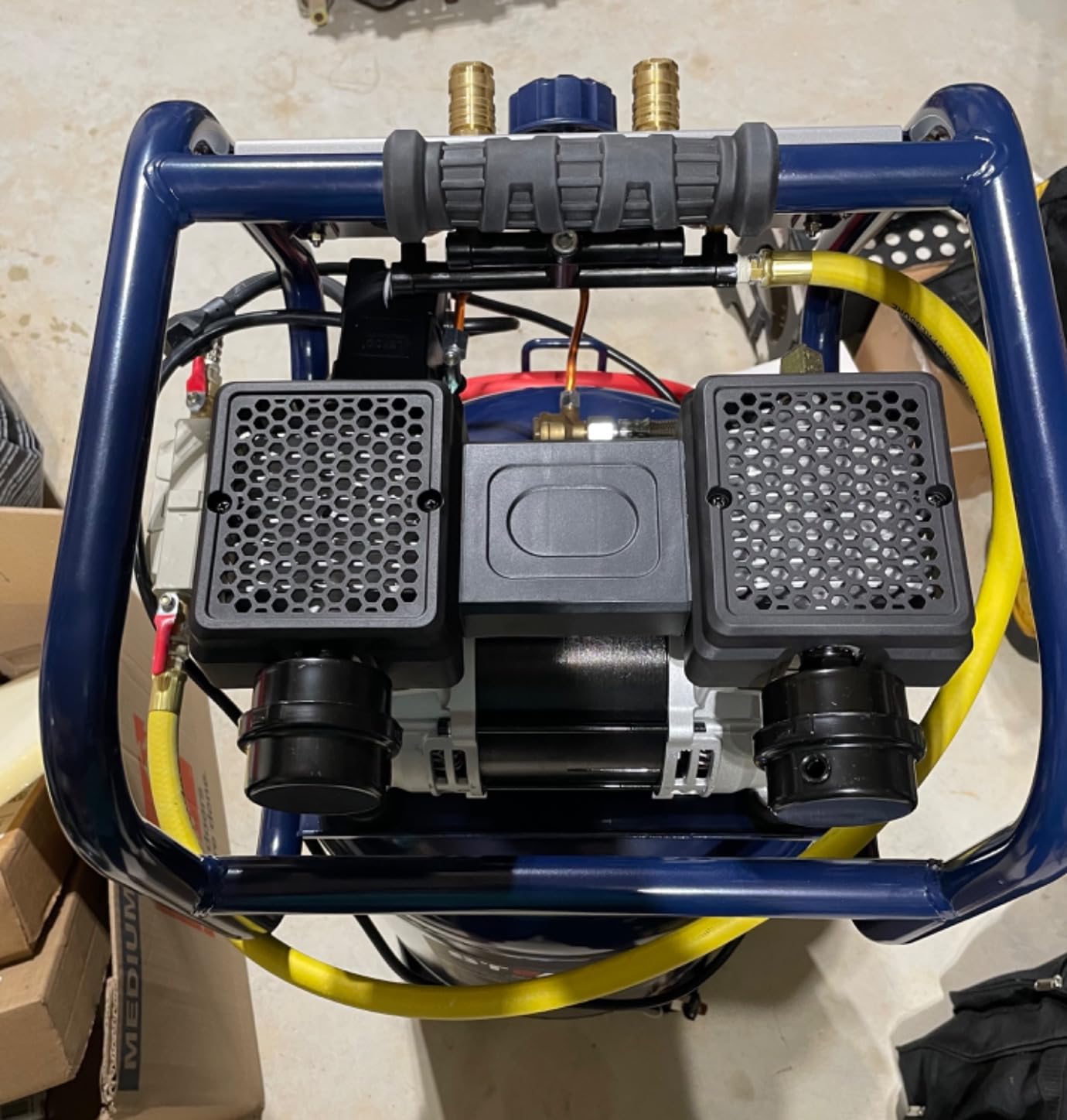
The drive train is a 1.8 HP oil-free motor with a maintenance-free pump, and airflow is 5.5 CFM at 40 PSI falling to 5 CFM at 90 PSI. That combination handles tire inflation, blow-off cleaning, airbrushing, bolting and moderate nailing across a long session without constant cycling.
The vertical layout measures 20 by 18 by 42 inches, which is tall and narrow, so it fits beside a workbench rather than under one. An EngiMarket reader describes this model as a dream for lacquer spraying and noticeably quieter than the conventional compressor it replaced, which matches what the review pattern shows about finishing work.
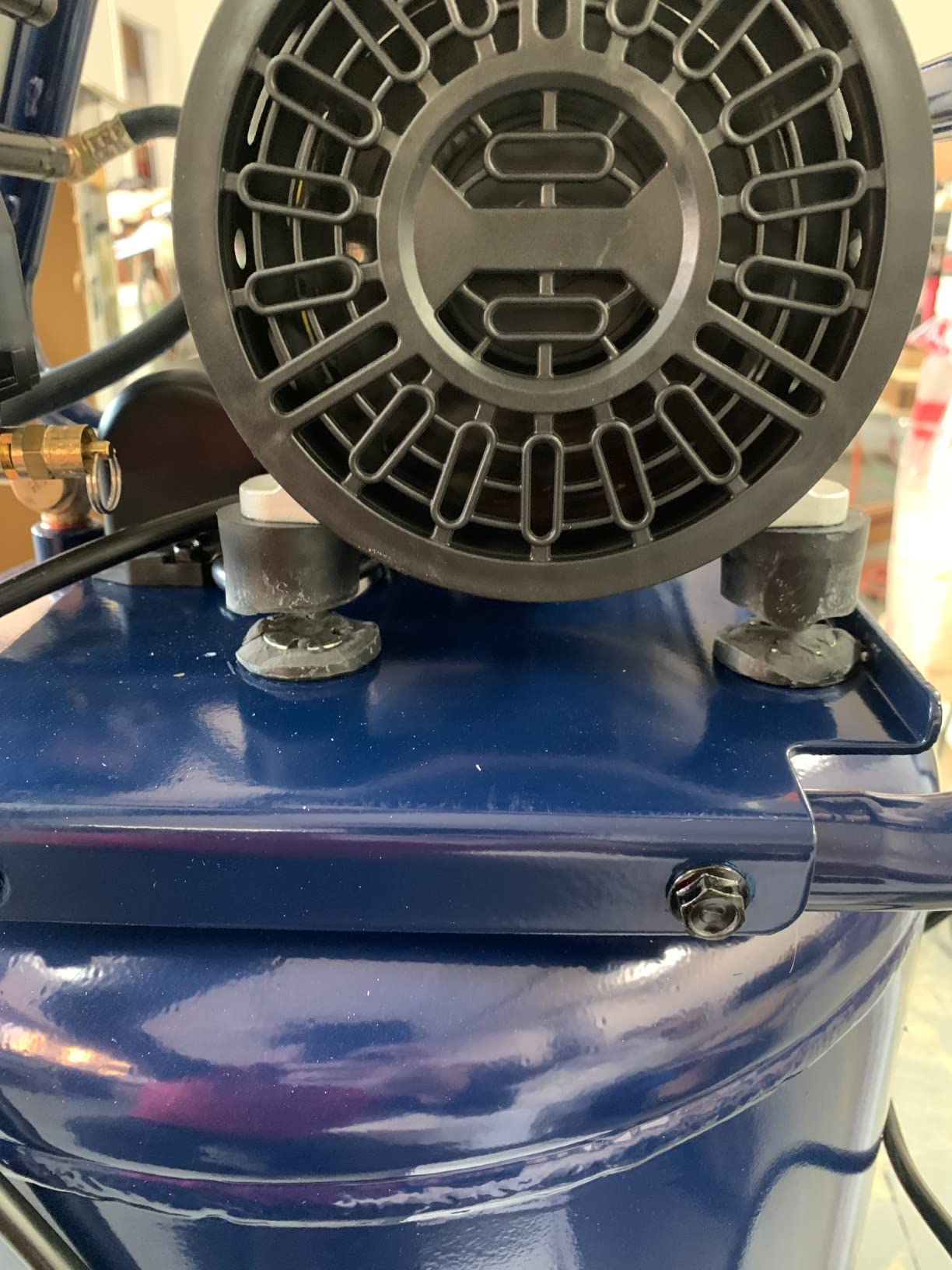
Whether a 20-gallon tank is worth the weight
A 20-gallon tank changes the sound of the machine as much as the run time. With that much stored air, a nailer or a sander can draw hard without triggering a restart, so the compressor drops to a low background hum. If your shop gets loud exactly when tools stop, that is short cycling, and tank capacity is the direct answer. The cost is 121.4 pounds, painful in a truck bed, so measure the route before you order.
Where it falls short
Owners report the compressor may not start with a full tank on an underpowered circuit, and that draining it completely is sometimes the only way to get it to turn over. The 4.2 average is also the second-lowest here, reflecting early unit failures, a manufacturer contact form that owners say does not work, and shipping damage to the packaging and tank body that is reported fairly often.
6. VEVOR 4.8 Gallon Oil Free – Budget Pick for Intermittent Shop Tasks
VEVOR 4.8 Gallon Air Compressor, 1.2HP 2.2 CFM@90PSI Oil Free Air Compressor Tank & Max. 116PSI Pressure, 70 dB Ultra Quiet Compressor for Auto Repair, Tire Inflation, Spray Painting, Woodwork Nailing
70 dB noise
2.2 CFM at 90 PSI
4.8 gal tank
116 PSI max
1.2 HP oil free
Pros
- Lowest cost in the group at a 70 dB rating
- Dual silencers with filter cotton and rubber piping
- Double-tube double-cylinder intake fills quickly
- 3-layer Q235B steel with seamless welds
- Automatic overheat and over-pressure shutoff
Cons
- 116 PSI is the lowest ceiling in the lineup
- 2.2 CFM at 90 PSI is light for sanders and spray guns
- 3500 RPM motor runs faster than premium units
This is the budget entry in the roundup, and it is not a token pick. At 70 dB, 4.5 stars across 464 reviews, and a body weighing 34 pounds, it delivers the quiet-shop experience for anyone who only needs inflation, blow-off cleaning, light nailing and spraying.
The noise treatment here is physical rather than electronic. Two silencers with thickened covers, rubber piping and filter cotton sit on the intake path, and a 392 degree F silicone intake pipe with a stainless steel braided mesh handles the hot exhaust side. That is why a 1.2 HP machine with a 3500 RPM motor can still claim a 70 dB figure.
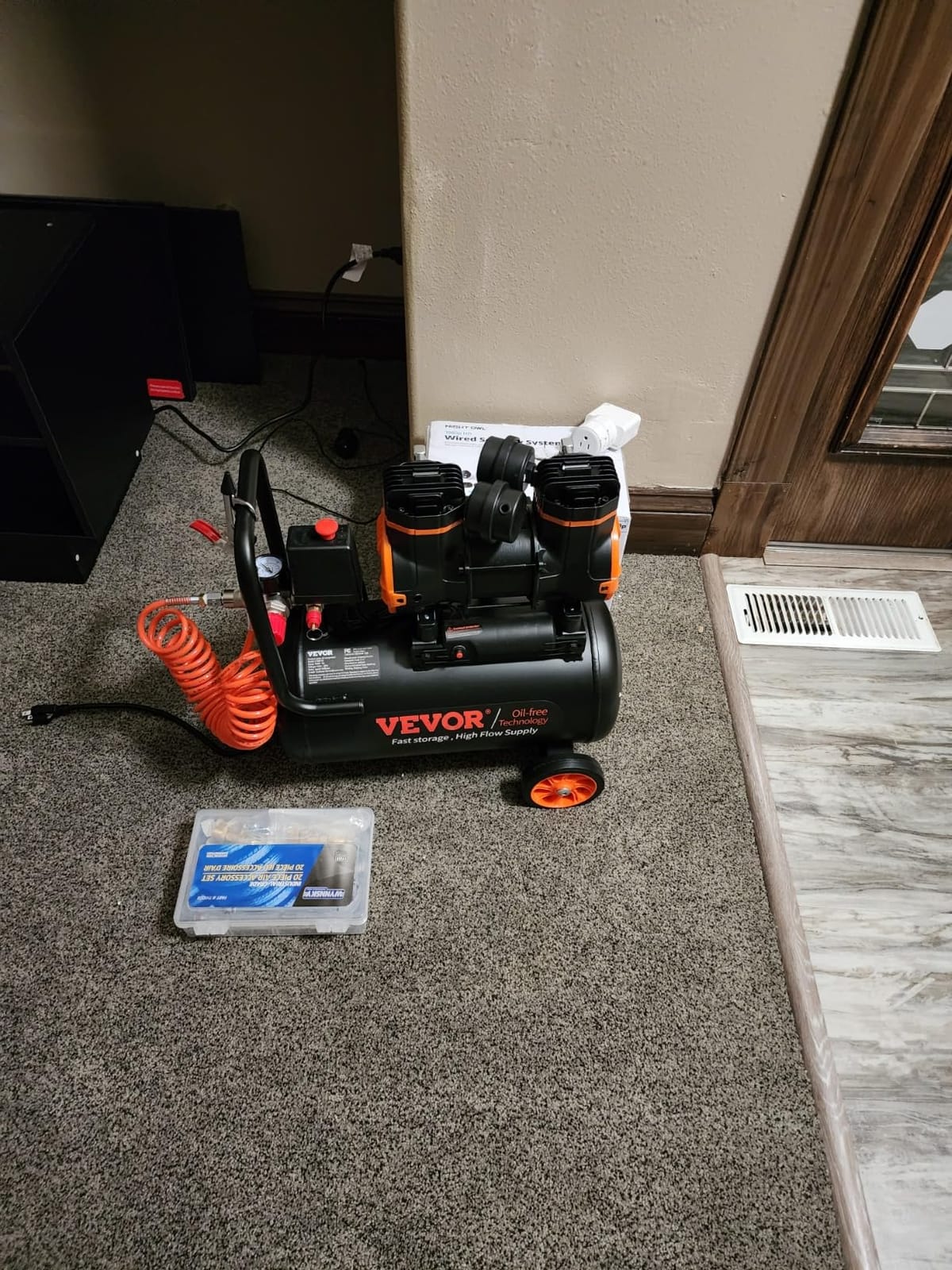
Tank size is 4.8 gallons, airflow is 2.2 CFM at 90 PSI, and maximum pressure is 116 PSI, the lowest ceiling among these ten. Construction is 3-layer Q235B structural steel with seamless welds, and it includes casters and foot pads for stability. Two large cooling fans with automatic overheating protection back up the motor.
Automatic shutoff and pressure relief kick in if current draw or stored pressure goes too high, which is a sensible safety story for a garage machine that may sit for weeks between uses. It arrives with two casters, a foot pad, and two silencers in the box, so there is nothing to add before the first use.
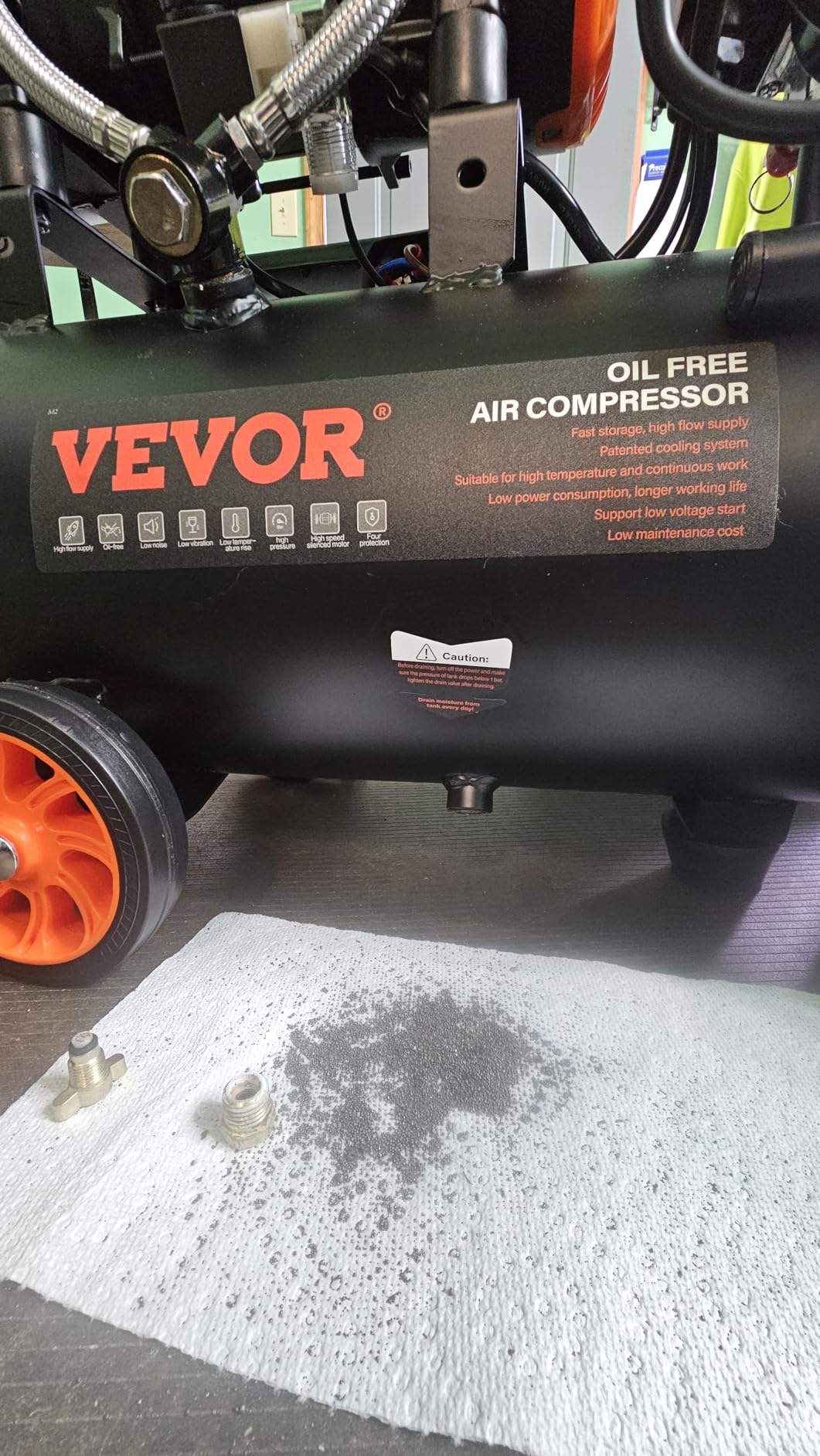
How the 3500 RPM motor changes the noise character
Almost every quiet compressor here turns a motor between 1680 and 1750 RPM, and that low speed is the main reason they are quiet. This machine spins a 900W motor to 3500 RPM, so it produces a higher-pitched sound rather than a low hum and the silencers do more of the work. In practice that means it is acceptable rather than pleasant, and quietest in short bursts.
Where it falls short
Two limits are structural rather than fixable. The 116 PSI maximum gives up head pressure quickly, and 2.2 CFM at 90 PSI rules out sustained sanding, spraying and framing work, so treat this as the second compressor in a two-machine shop rather than the only one. Expect less refinement than a nameplate brand on gauge readability, fittings and parts availability over a decade.
7. Stealth 12 Gallon Ultra Quiet – Best Value Tank for a Working Garage
Stealth 12 Gallon Ultra Quiet Air Compressor, 1.5 HP Oil-Free Peak 150 PSI 68 Decibel,5 CFM @ 40 PSI 4 CFM @ 90 PSI Silent Portable Long Life Electric Air Compressor W/Wheel for Garage
68 dB noise
4.0 CFM at 90 PSI
12 gal tank
150 PSI peak
1.5 HP induction motor
Pros
- 12 gal tank is a middle ground that covers most shop work
- 68 dB with an induction motor for long service life
- 150 PSI peak recovers quickly
- Q235B steel body on 7 inch reinforced wheels
- Limited lifetime warranty
Cons
- 95 lb still takes two hands to move
- 4 CFM at 90 PSI runs dry on sustained spray or sand work
- Around 9 percent one-star durability complaints
- Less demand than the 20 gallon sibling
Where the 20-gallon Stealth is the tank play, this 12-gallon is the compromise that most garages actually need. It holds 4 CFM at 90 PSI with a 150 PSI peak, sits at 68 dB, and weighs 95 pounds rather than 121. The difference is a tank you can reposition without a second person.
The motor is an induction type rated for a service life cycle of more than 1000 hours, and the pump is oil-free with no scheduled maintenance. The Q235B steel tank sits on 7-inch rubber reinforced wheels, which matters on a garage floor that is not level and keeps the machine from creeping while it runs.
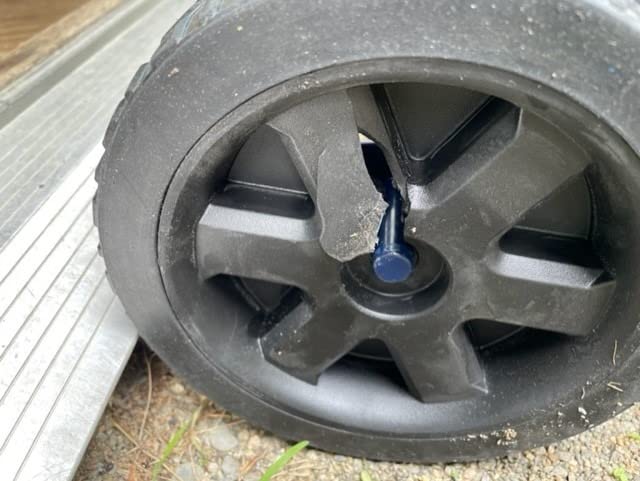
At 20 by 18 by 29 inches the vertical body is a foot shorter than the 20-gallon version, so it fits under a workbench overhang that the taller machine would not. The 150 PSI peak with 5 CFM at 40 PSI and 4 CFM at 90 PSI gives quick recovery after a tool stops demanding air.
Owners who want large capacity in a quieter, smaller package than the 20-gallon find this the sensible middle option. The recommended uses cover airbrushing, drilling, nailing and spraying, which is a reasonable spread for a mixed-work garage, and a limited lifetime warranty is included.
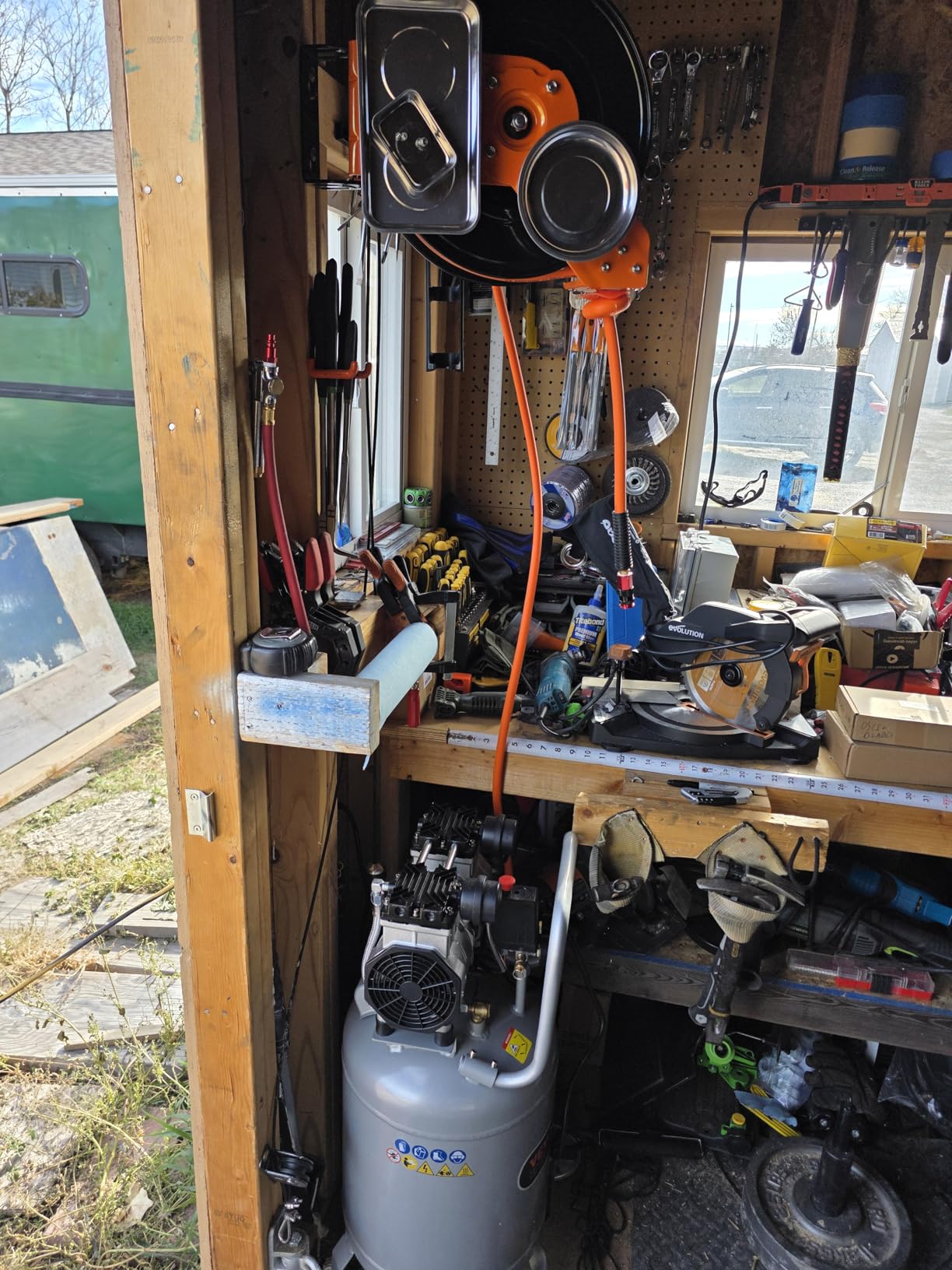
Choosing between the 12 and 20 gallon Stealth
Pick the 12-gallon if your compressor lives in one spot you can reach easily, or if you need to move it occasionally. Pick the 20-gallon if it is going in a corner and never moving again, because the extra 26 pounds buys stored air that reduces short cycling during back-to-back tool use. Both sit at 68 dB and 150 PSI peak, so noise and head pressure are not the deciding variables.
Where it falls short
The 4.2 rating is tied to durability complaints rather than noise, with around 9 percent of reviews one-star reflecting an early failure rate worth knowing about before you depend on it daily. At 95 pounds it still needs two hands to move, and the listed maximum current figure of 50 A looks like a listing data error, so verify the electrical requirements against the manual before wiring anything.
8. VEVOR 13 Gallon Oil Free – Best for Weekend DIY and Intermittent Work
VEVOR 13-Gallon Air Compressor, 2HP, 4.6 SCFM@90PSI, Oil-Free Tank, 66dB Quiet Operation, Ideal for Tire Inflation, Woodworking, Auto Repairs, and Spray Painting (Maximum Pressure 125 PSI)
66 dB noise
4.6 SCFM at 90 PSI
13 gal tank
2 HP oil free
125 PSI max
Pros
- 66 dB is among the quietest ratings here
- 13 gal tank and 2 HP deliver air in under three minutes
- Reinforced leak-proof valve system
- Two 7 inch reinforced rubber wheels
- Complete accessory kit in the box
Cons
- Documented failures to repressurize and thermal overload
- Continuous output closer to 2.7 CFM than the advertised 4.6
- High amperage and overheating under sustained load
- Some units arrive with shipping damage
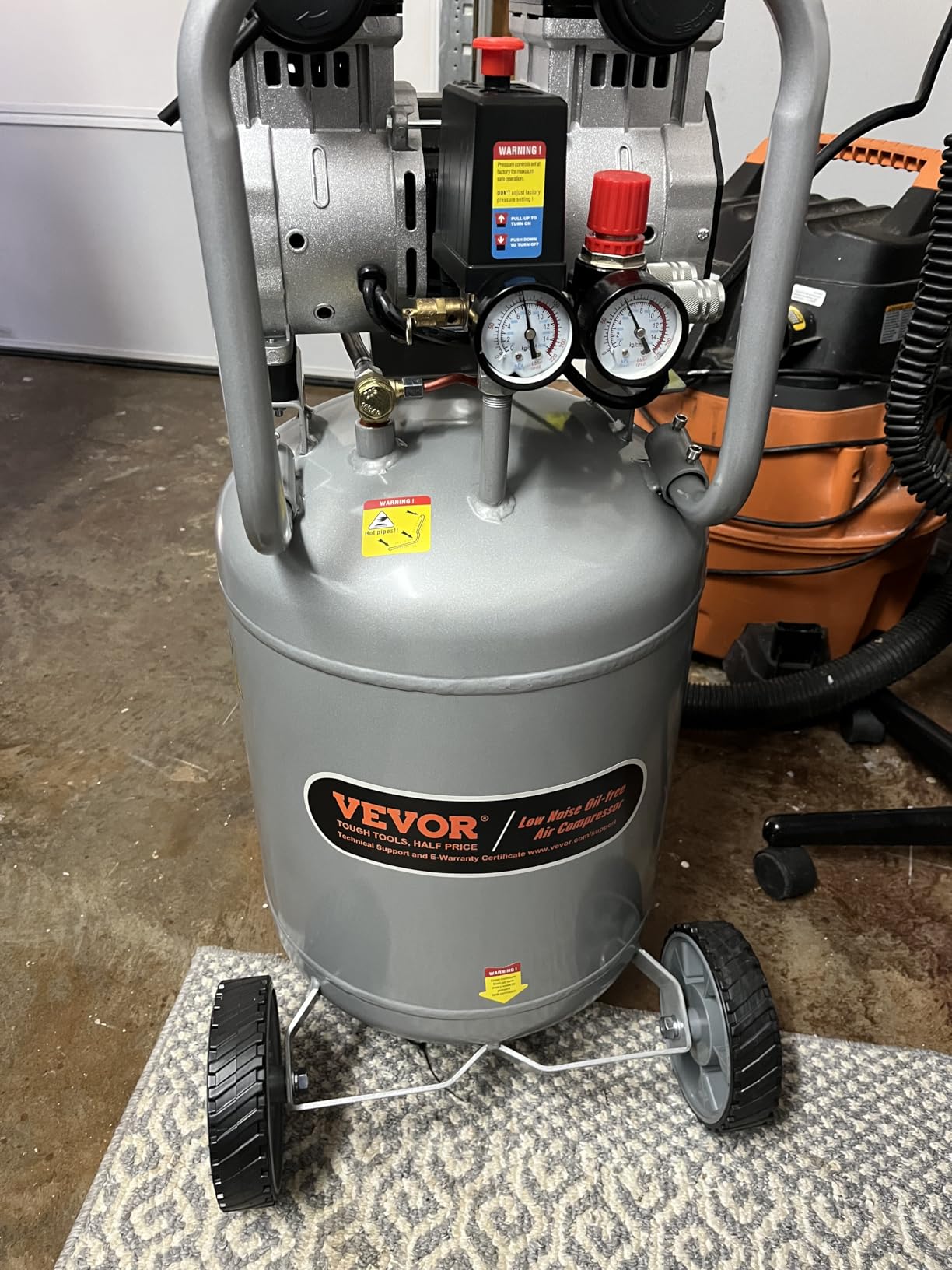
At 66 dB this is the second-quietest rating in the roundup, and owners report not needing hearing protection beside it. The 13-gallon tank and 2 HP motor are sized for a garage that gets used on weekends rather than every day, and the body comes with a complete accessory kit so there is nothing to buy to get started.
The pump is oil-free with noise-reducing technology and needs no maintenance, and the reinforced leak-proof valve system is meant to hold output steady. Two large 7-inch reinforced rubber wheels handle a garage floor, and the vertical body measures 17.5 by 16.5 by 33.3 inches.
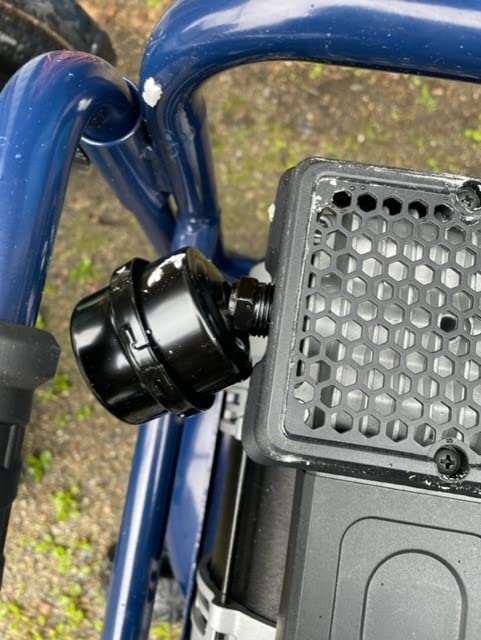
In the box you get two quarter-inch plastic shell air filters, two 7-inch rubber wheels, foot pads, mounting screws, two pressure gauges and a manual. That is unusually complete for this category, and it removes the most common first-week purchase for someone setting up a garage compressor.
Most owners use it for inflation, blowing out equipment and light nailing, which is a fair match for 4.6 SCFM at 90 PSI on paper and a 125 PSI maximum. The rating is 4.4 across 215 reviews, and the review pool skews toward weekend users who like the noise level and the fill time.
The SCFM figure to read carefully
One detailed critical review documents failures to repressurize and thermal overload, and cites a manufacturer response conceding real continuous output of about 2.7 CFM rather than the advertised 4.6 SCFM, so we treat the lower figure as the realistic planning number for sustained work. Users also report high amperage draw and overheating under sustained load, which suggests the 2 HP rating is optimistic in real conditions.
Where it falls short
Durability evidence is thinner here than anywhere else, partly because the review pool is smaller and partly because the negative pattern is concentrated and specific, and some machines arrive with bent feet or other shipping damage. The value case holds for intermittent work and does not hold for a shop that runs air daily; for a similar footprint with a more established parts network, the Craftsman or the California Air Tools vertical machines are safer long-term bets.
9. Craftsman CMXECXA0201041 – Highest Pressure, Under-Bench Horizontal
Craftsman 10-Gallon Air Compressor, 1.8 HP, Max 175 PSI, 4.0 CFM @ 90PSI, 5.0 CFM@40PSI, Oil-Free, Quiet Shop Air Compressor with Wheels for Spraying Pneumatic Tool, Model: CMXECXA0201041
78 dBA noise
4.0 CFM at 90 PSI
175 PSI max
10 gal tank
1.8 HP oil free
Pros
- 175 PSI max for driving stubborn fasteners
- 4.0 CFM at 90 PSI with 5.0 CFM at 40 PSI
- Oil-free pump cuts maintenance
- Rubber wheels and handle for under-bench storage
- Horizontal 23.6 inch footprint
Cons
- 78 dBA is the loudest figure in the roundup
- Horizontal layout needs more shelf length
- Some listings show wheels and handle as included when they are not
Included as a capacity and pressure reference rather than a quiet pick, this Craftsman is the loudest machine in the roundup at a listed 78 dBA. If noise is your primary filter, skip it. If you need a 175 PSI ceiling and a horizontal tank that slides under a workbench, it does that job at 4.4 stars across 212 reviews.
The pump is oil-free with 1.8 HP, delivering 4.0 CFM at 90 PSI and 5.0 CFM at 40 PSI into a 10-gallon stainless steel tank rated to 175 PSI. That head pressure is the reason to consider it at all, since it is well above the 125 to 150 PSI ceilings most compact machines carry.
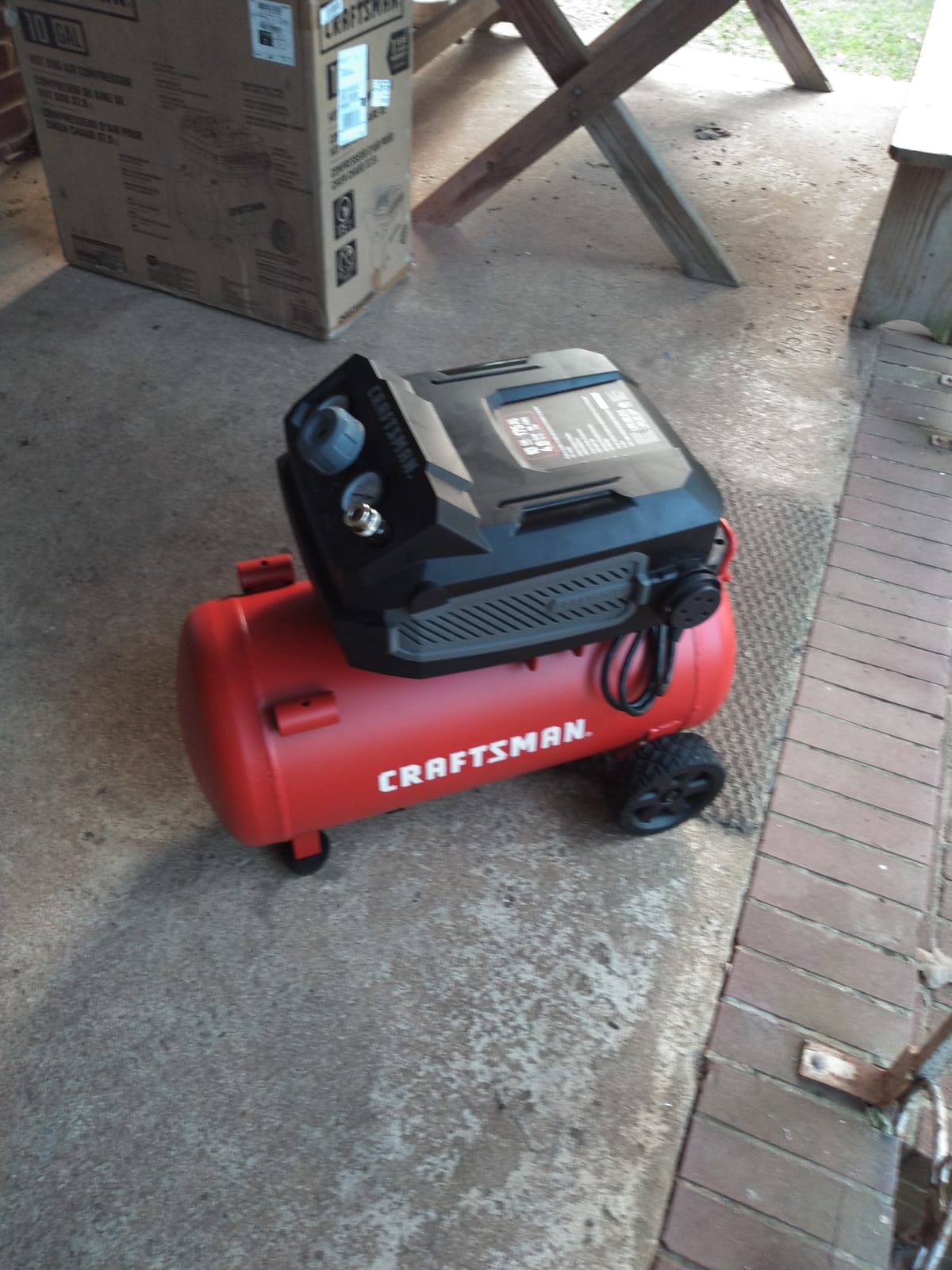
The horizontal body measures 23.6 by 21.4 by 15.9 inches, and rubber foot stabilizers reduce vibration and extend unit life. A 1.5-metre hose, a quick coupler, a 6-foot cord, two 1.5-inch gauges and an air filter are listed in the box contents, and the 120-volt corded power fits ordinary household circuits.
Owners use it for staple guns, brad and roofing nailers, airbrushes and HVLP spray guns, which is a spread that suits a general shop rather than a specialist. It runs at 120 volts AC, so unlike the larger two-stage machines you will see in commercial shops, there is no electrical project to plan.
When 78 dBA is acceptable anyway
A decibel figure only describes the compressor. If your shop is detached, or your tools have their own noise far above 78 dBA, the compressor stops being the loudest thing in the room and the rating matters much less, so a 78 dBA machine with a 175 PSI ceiling and 4 CFM at 90 PSI can be the more useful purchase than a 60 dBA unit that cannot drive your work.
Where it falls short
For a guide about quiet compressors the noise specification is the disqualifier, and if your garage shares a wall with living space you will hear 78 dBA clearly. The horizontal layout also needs more shelf length than a vertical machine of the same tank size, and some listings describe wheels and a handle as included while owners show a bare unit, so check the carton. It comes with a one-year limited warranty.
10. California Air Tools 15020C – Best for Indoor Renovation Work
California Air Tools 15020C Powerful 2.0 HP Ultra Quiet and Oil-Free Air Compressor with Wheels, 15 Gallon Tank Capacity, 70 dB Noise Level, Electric, Portable
70 dB noise
6.4 CFM airflow
15 gal tank
110 volt
130 PSI max
Pros
- 15 gal tank paired with 6.4 CFM gives real airflow
- 70 dB allows normal conversation beside it
- 15 amp draw works on standard household circuits
- No leaks as received and easy tank draining
- Full pressure build in roughly two minutes
Cons
- 90 lb is heavy to reposition
- Vertical only at this capacity
- Downward-facing gauges are hard to read
- Recessed drain plug is awkward to reach
This is the California Air Tools approach at 15 gallons, and it is the version that suits indoor renovation work where a compressor has to live in a hallway or a spare room during a project. At 70 dB, 6.4 CFM and 110-volt power, it is a capable machine that still behaves like a quiet one.
The 2.0 HP ultra quiet oil-free pump is the same slow-turning design as the 10020C, delivering 6.4 CFM airflow into a 15-gallon alloy steel tank rated to 130 PSI. Made in Mexico, it draws 15 amps, which still fits an ordinary household circuit without a new breaker.
Owners report the tank builds full pressure in roughly two minutes, and that it arrived without air leaks and drained easily. Repeat buyers of the California Air Tools line tend to cite the same three things: 70 dB, 110-volt power, and enough tank capacity to finish a job without stopping.
The vertical layout measures 28 by 17 by 31 inches, and at this capacity it is vertical only, so it needs floor space rather than shelf space. Rubber feet handle a garage floor, and a one-year limited warranty covers the machine.
When to pick this over the 10-gallon
Both models share the 70 dB rating and the 2.0 HP motor, and the differences are tank size, weight and layout rather than character. The 15-gallon gives you 50 percent more stored air and roughly 18 percent more peak PSI headroom, at the cost of 7.5 pounds and a larger floor footprint, so choose it if you run tools back to back or work in a spare room during a renovation.
Where it falls short
The 90-pound weight is the main annoyance, and it is why we do not put this ahead of the 10020C as our overall pick. Vertical-only at this capacity means it occupies a corner permanently, the pressure gauges face downward and are hard to read without kneeling, the drain plug is recessed enough to need an extension, and a small number of owners report motor or pressure switch failures within two years.
What Actually Makes a Compressor Loud in a Home Shop
Three sources dominate, and only the first is what the spec sheet measures. The pump itself produces noise through piston count, motor speed, and whether oil lubricates the cylinder. The motor and its cooling fan add a steady tone. And the pressure valve venting on unload adds the hiss you hear when a compressor stops pumping before it fully stops running.
The gap between the published figure and your experience comes from two things manufacturers do not test for. First, that dB number is usually measured at idle with no tool attached, so the moment you connect a sander the pump runs harder and louder. Second, and more important in a home shop, vibration travels through the slab and the wall studs. A compressor that measures 70 dB two feet away can be clearly audible in the next room because of what it is bolted to.
This is why the shortest useful test is not a decibel meter. Stand next to the machine, run it empty, then run the loudest tool you own, and decide whether the compressor is the sound you can live with. A long-term Ingersoll Rand owner in a forum thread put it well: moving the machine to a corner and insulating the wall behind it fixed the problem, while the machine itself never changed.
How Many Decibels Is a Quiet Air Compressor?
Under 70 dB is quiet, and around 60 dB is ultra-quiet. A compressor at 78 dB is not quiet, whatever the box says, and the difference between 68 and 70 dB matters far less than most buyers assume. Here is how the numbers map onto sounds you already know.
60 dB is a refrigerator humming in a quiet kitchen, or a quiet office at the end of the day. 66 dB is a normal conversation at three feet. 68 to 70 dB is a clothes dryer in another room, or a vacuum cleaner running in the next room. 78 dB is a workshop you can hear from the hallway, which is why our Craftsman pick is included as a capacity reference rather than a quiet recommendation.
One number worth keeping: a 2 dB difference is roughly the threshold of noticeable change for most listeners, but placement and vibration can easily add or remove 5 dB or more. Forum buyers asked this question directly, and the consistent answer is that treatment beats specification. If your compressor sits on bare slab against a shared wall, no 2 dB difference on the spec sheet will matter as much as moving it.
How Big a Quiet Compressor Do You Need? CFM at 90 PSI
Match CFM at 90 PSI to the tool that demands the most air, not to the tank size and not to the horsepower. HP describes the motor, CFM describes what your tool actually receives, and the tank only controls how long you can draw before the pump catches up. A compressor running constantly is both loud and hot, so you want enough CFM to finish a tool demand before the tank empties.
For reference, these are typical air demands at 90 PSI that home shop tools put out. Add roughly 20 percent headroom to the highest figure on your list.
Air brusher: under 1 CFM. Ball and tire inflation: under 1 CFM. Finish and brad nailer: 2 to 3 CFM. Stapler: 2 to 3 CFM. Orbital sander: 3 to 4 CFM. HVLP spray gun: 3 to 5 CFM. Air hammer: 4 to 5 CFM. Impact wrench: 4 to 6 CFM for a short burst. Framing nailer: 5 to 7 CFM while you pull the trigger.
So is 4 SCFM at 90 PSI good? It is a good number for a mixed shop doing trim work, inflation, cleanup and light sanding, and it is the honest ceiling for a weekend machine. It is not enough for sustained HVLP spraying or a framing nailer on a continuous framing day, and buying a compressor at 4 CFM for that work is how people end up with a 70 dBA spec sheet and a noisy shop.
On tank size, the pattern across this roundup is simple: 2 to 4 gallons suits mobile trim work where the tank lives in a job box, 8 to 10 gallons is the general-purpose home shop sweet spot, and 15 to 20 gallons earns its keep when you want fewer start-stop cycles and the machine stays in one place. A bigger tank does not add power, it adds stored air, and that is the whole difference. If you want framing capacity, our dedicated framing compressor guide covers the larger machines in detail, and our portable air compressors for cars guide covers the small-tank end of the market.
Oil-Free vs Oil-Lubricated, and 110V vs 220V
Oil-free pumps need no oil changes, run cooler in short bursts, and are standard on nearly every compressor in this roundup. Their weakness is durability under heavy daily duty, which shows up in the reviews as earlier failures on machines bought for production work. Oil-lubricated pumps are quieter at load, run cooler, and last far longer, at the cost of periodic oil checks and the risk of oil in the airstream for finish work unless you fit a separator.
For a home shop, oil-free is the right default because the duty cycle is intermittent and maintenance-free operation is worth more than the extra service life. If you are a full-time trim carpenter or a hobbyist restoring a car every weekend, the right move is usually to add a small moisture separator and a dryer to the line rather than to switch pump type.
On voltage, every machine in this roundup is 110 or 120 volts, which is why we could build this list without an electrician conversation. Amperage is the number to watch: the DEWALT trim unit draws 12 amps, the 10020C draws 14, and the 15020C draws 15, so all three run on a standard 15-amp household circuit. Anything in the 2 HP oil-free range with a bigger tank will want a dedicated 20-amp circuit, and a true 220V two-stage machine is a different purchase with a different electrical requirement entirely.
If you go beyond this list to a 5 HP or larger machine, get an electrician to install a dedicated 220V circuit and check your panel’s capacity before ordering. Shop owners repeatedly mention that the wiring, not the compressor, is the expensive surprise in a garage installation.
How to Make Any Air Compressor Quieter in a Garage
These are the fixes forum users actually apply, and several of them cost nothing. They work because most of the noise leaving a compressor is structure-borne, not airborne.
First, move the machine. A corner with a shared wall is the worst spot in a garage because the slab and the studs conduct the low-frequency hum straight into the house. Setting the compressor on an isolated corner away from the door, or building a small insulated closet around it, changes the perceived noise more than any specification difference.
Second, extend the air inlet outside the shop with a flexible duct and a filter at the end so insects do not follow it in. Forum users treat this as the single most effective trick, because it removes the intake restriction that makes the pump work harder and louder.
Third, decouple the machine from the floor. Rubber or neoprene vibration pads under the feet, or anti-vibration feet under the tank, cut the path into the slab. One owner who insulated an attached shed housing a 30-gallon oil-free compressor went from very loud to effectively quiet using this approach alone.
Fourth, fit an acoustic blanket over the pump and motor section while the machine runs. Blankets are cheap and reduce the airborne component noticeably, and they are the easiest fix for a compressor that must stay in a shared space.
Fifth, address the workload. If your compressor cycles constantly, add a larger ASME receiver tank rather than buying a bigger pump. Extra stored air means fewer start-stop spikes, and the spikes are what people describe as the compressor suddenly being loud.
Sixth, keep the intake and the cooling path clear and clean, and drain the tank on a schedule so moisture does not carry into the air line. A blocked intake filter makes the motor run hotter and the whole machine louder for no gain in output.
Seventh, set expectations honestly. Reviewers repeatedly note that placement and vibration make a bigger difference than a couple of decibels, so spend your effort on treatment before you spend it on a 2 dB upgrade. If your real problem is inflating tires rather than running tools, our off-road tire inflation guide covers the specific airflow those jobs need.
Frequently Asked Questions
How many decibels is considered a quiet air compressor?
Under 70 dB is considered quiet, and around 60 dB is ultra-quiet. Anything at 78 dB or above behaves like a conventional shop compressor. Note that published figures are usually measured at idle, so the sound you hear under tool load can be higher. Placement and vibration isolation often change perceived noise more than a few decibels do.
What is the quietest air compressor for a shop?
Among the machines we compared, the California Air Tools 8010A and the Makita MAC320Q are both rated at 60 dB, making them the quietest options available. The 8010A is lighter at 37 pounds and cheaper to move, while the MAC320Q offers two regulated outlets and a faster refill. Neither is built for sustained high-airflow work.
What size air compressor is best for a home garage?
For most home garages, a 10-gallon vertical compressor between 4 and 6 CFM at 90 PSI covers trim work, inflation, cleanup and intermittent sanding. Smaller 2.5 to 3 gallon units suit mobile trim carpentry, while 15 to 20 gallon tanks reduce start-stop cycles for heavier work. Match CFM at 90 PSI to the loudest tool you own before choosing tank size.
Are quiet air compressors less powerful?
Not necessarily. Quiet models often run slower motors and use oil-free dual piston pumps, which produce less noise at a lower speed. The tradeoff is that the smallest ultra-quiet units deliver only 2 to 3 CFM at 90 PSI. Larger quiet compressors such as the California Air Tools 10020C deliver 5.3 CFM at 90 PSI at 70 dB, so noise and capacity can be traded independently.
Is 78 dB loud for an air compressor?
Yes. 78 dB is the loudest figure in this roundup and sounds like an active workshop from another room, comparable to a vacuum cleaner or clothes dryer. It is acceptable in a detached shop or when your tools are louder anyway, but it is a poor fit for an attached garage or any space near where you live. Every unit rated under 70 dB is a better choice for noise-sensitive rooms.
How to silence a loud compressor?
Move it to a corner away from a shared wall, extend the air inlet outside the shop with a filter, and put the machine on rubber vibration pads. An acoustic blanket over the pump and motor reduces the airborne component cheaply. If it cycles constantly, adding a larger ASME receiver tank cuts the start-stop spikes that people hear as sudden loudness.
What is the best CFM for an air compressor?
It depends on the tool. Airbrushing and inflation need under 1 CFM, finish and brad nailers take 2 to 3 CFM, orbital sanders 3 to 4 CFM, HVLP spray guns 3 to 5 CFM, and framing nailers 5 to 7 CFM while firing. Add about 20 percent headroom above your highest requirement, and always compare figures quoted at 90 PSI rather than 40 PSI.
Final Verdict on the Best Quiet Air Compressors for Home Shops in 2026
The California Air Tools 10020C is our pick, and the reason is balance rather than a headline number. At 70 dB, 5.3 CFM at 90 PSI, and a 10-gallon vertical tank on 110-volt power, it is the only machine here that covers trim, cleanup, impact and light sanding work without constant cycling, and it carries the most owner reviews of any compressor in this roundup.
For the smallest footprint, the 8010A at 60 dB and 37 pounds is the quietest thing you can put in a small room, with the caveat that 2.2 CFM at 90 PSI only reaches light tools. For volume on a fixed budget, the VEVOR 13-gallon gives you 66 dB and 4.6 SCFM at 90 PSI with a complete accessory kit, though plan for intermittent work rather than daily production.
Whatever you choose, treat the noise figure as a starting point and the placement as the finishing move. A compressor on pads, in a corner, with its intake outside the room will beat a quieter machine sitting bare on the slab next to your bedroom wall. Check the CFM against your loudest tool before you order, and check your electrical panel before it arrives.