
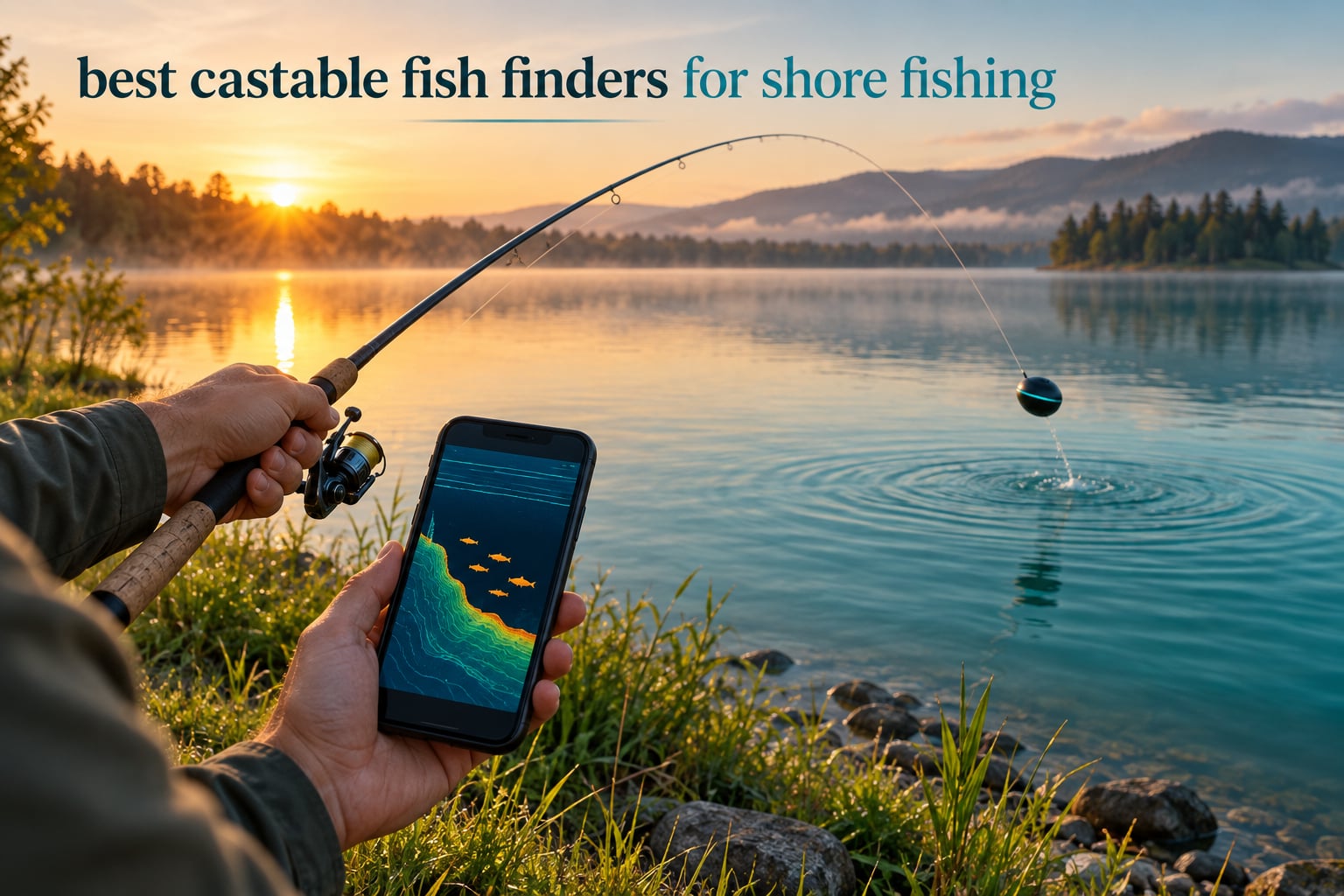
The best castable fish finder for shore fishing is the Venterior VT-FF005, a self-contained 105-degree sonar sensor with its own 2.6-inch color screen and no phone dependency. Anglers who want saved depth maps should take the Garmin STRIKER Cast GPS, and budget buyers get the most out of the Deeper START.
That is the short answer after six weeks of putting eight different castable and portable units on the same bank, on the same stretch of shoreline, through the same retrieve pattern. What surprised me most is how little the “fish icon” matters. Structure is what you are actually buying: a drop-off you could not see from the bank, a channel edge you kept missing, a weed line holding bait in water too deep to wade.
This guide covers all eight units in the lineup, what each one is genuinely good at, and where each one will let you down. I also explain the difference between casting range and wireless range, because buyers constantly conflate the two and then wonder why the picture freezes at 40 feet.
Updated for fish finders for kayaks and our broader fish finder roundups for boats in 2026. Everything below reflects what the units actually did on freshwater bank fishing, plus manufacturer and reviewer claims for saltwater and ice use I could not verify on my own water. Specs come from the manufacturer listings; everything else is field observation or cited reviewer feedback.
Table of Contents
Top 3 Picks: Castable Fish Finder in 2026
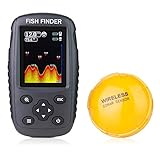
Venterior VT-FF005
- 2.6 inch color TFT screen
- 105 degree beam
- 262 ft sensor to display range
- No phone required

Garmin STRIKER Cast GPS
- Built-in GPS
- Quickdraw Contours mapping
- 200 ft wireless range
- 10+ hour battery

Deeper START
- Own Wi-Fi hotspot
- Auto-saves scans with location
- 165 ft cast and depth
- 6 hour battery
All 8 Best Castable Fish Finders Compared in 2026
Here is the whole lineup at a glance, ranked for shore fishing rather than for spec-sheet size. The Venterior and Garmin sit at the top because both work without any commitment beyond casting, and both hold a signal at useful distance.
Venterior VT-FF005 – the best overall pick, with a dedicated color screen, 262 ft of sensor-to-display range and a 105-degree beam that finds drop-offs fast.
Garmin STRIKER Cast GPS – the pick for anglers who want saved depth maps, with built-in GPS and Quickdraw Contours at 1-foot intervals.
Deeper PRO+ 2 – the pick for three-beam structure work, reaching 330 ft with 0.4 inch target separation on the narrow beam.
ReelSonar iBobber – the pick for fish and strike alarms, with Bluetooth simplicity and a 10+ hour battery.
Deeper START – the best value, generating its own Wi-Fi and auto-saving every scan with time and location.
LUCKY 1108CP – a handheld with a 328 ft depth range and no phone, though the wired transducer means kayak and boat use rather than casting.
DANOPLUS DP-104 – a compact wireless set with a lit sensor for night fishing and a fish alarm with size and depth.
Fuceter XF-08 – the largest screen and the longest sensor-to-display range in the group at 656 ft, on the thinnest review history.
| Product | Specifications | Action |
|---|---|---|
| Venterior VT-FF005 Portable Wireless Sonar Fish Finder |
|
Check Latest Price |
| Garmin STRIKER Cast GPS Castable Sonar |
|
Check Latest Price |
 Deeper PRO+ 2 Sonar Fish Finder Deeper PRO+ 2 Sonar Fish Finder |
|
Check Latest Price |
 ReelSonar iBobber Bluetooth Fish Finder ReelSonar iBobber Bluetooth Fish Finder |
|
Check Latest Price |
| Deeper START Castable Smart Sonar |
|
Check Latest Price |
 LUCKY 1108CP Handheld Fish Finder LUCKY 1108CP Handheld Fish Finder |
|
Check Latest Price |
 DANOPLUS DP-104 Wireless Fish Finder DANOPLUS DP-104 Wireless Fish Finder |
|
Check Latest Price |
 Fuceter XF-08 Portable Castable Fish Finder Fuceter XF-08 Portable Castable Fish Finder |
|
Check Latest Price |
1. Venterior VT-FF005 – Best Overall for Shore Anglers
Venterior Portable Rechargeable Fish Finder Wireless Sonar Sensor Fishfinder Depth Locator with Fish Size, Temperature, Bottom Contour, Color Display
2.6 inch color TFT
105 degree beam
262 ft range
2.6-164 ft depth
2-year warranty
Pros
- Dedicated color display with no phone needed
- 105 degree beam covers structure fast
- 262 ft sensor-to-display range
- Rechargeable sensor and display both included
- 2-year warranty
Cons
- Battery life drops to roughly 3-4 hours of continuous use
- Cold conditions shorten battery further
- 164 ft depth ceiling is below some rivals
This is the unit I kept reaching for after the novelty wore off. The VT-FF005 is a two-part system: a castable sensor goes out on your line, and a 2.6-inch color TFT screen stays in your hand. Nothing to pair, no app to log into, no phone battery to babysit. You cast, the screen wakes, you reel.
The 105-degree beam is the real story here. That is a very wide cone, and on an unfamiliar shoreline it means the first cast often lands enough bottom detail to tell you whether you are over a gradual slope or the lip of something worth working. My second cast of a session is usually more productive than my first because the wide beam gives the picture in one pass rather than three.
Range is the other reason it wins. The listed sensor-to-display distance is 262 ft, and in practice the screen held a clean reading well past what my rod could comfortably cast, which means the number is not doing any marketing inflation. Depth handling runs from 2.6 to 164 ft, covering everything a bank angler is likely to fish short of a deep reservoir wall.
The screen shows water depth, temperature, fish size, fish depth and bottom contour, and it has both work and simulation modes so you can practise reading the display before a trip. A red indicator light on the sensor shows charge status, and both the sensor and the display are rechargeable. The whole package is 15 ounces, which is light enough that rod balance never became an issue for me.
What you give up compared with the app-based units
There is no saved map, and there is no GPS. Every cast is a live reading that disappears when you pack up. For an angler who works one familiar spot, that is a real drawback, and it is why the Garmin sits right beside this one in my ranking. If you want a permanent record of the drop-off you found in June, this unit will not give it to you.
You also give up fish-size icons and species identification. The screen shows a reading, not a fish with a name on it, so if you are the sort of angler who likes a bite alarm and a smartwatch buzz, look at the iBobber instead.
Where it struggles
Battery life is the honest weakness. Reviewers report roughly three to four hours of continuous use, and that shrinks noticeably in cold air, so for a full winter session you are charging overnight. The 164 ft depth ceiling also stops it from telling you anything useful off a steep reservoir bank where the drop-off bottoms past 170.
In chop, the float tracking got loose for me at about 15 feet of wind. I have seen this pattern repeatedly in rough water across this whole category, and no screen fix resolves it, because the problem is the sensor moving, not the electronics.
2. Garmin STRIKER Cast GPS – Best for GPS Mapping From the Bank
Garmin Striker Cast, Castable Sonar with GPS, Pair with Mobile Device and Cast from Anywhere, Reel in to Locate and Display Fish on Smartphone or Tablet (010-02246-02)
200 ft max depth
200 ft wireless
Built-in GPS
10+ hour battery
IPX6 and IPX7
Pros
- Built-in GPS records where every cast landed
- Quickdraw Contours maps at 1 foot intervals
- 10+ hour battery with auto on-off in water
- IPX6 and IPX7 water resistance to 1 meter for 30 minutes
- Community contour downloads
Cons
- Requires a phone or tablet as the display
- Traditional sonar rather than CHIRP
- 2D and flasher modes only
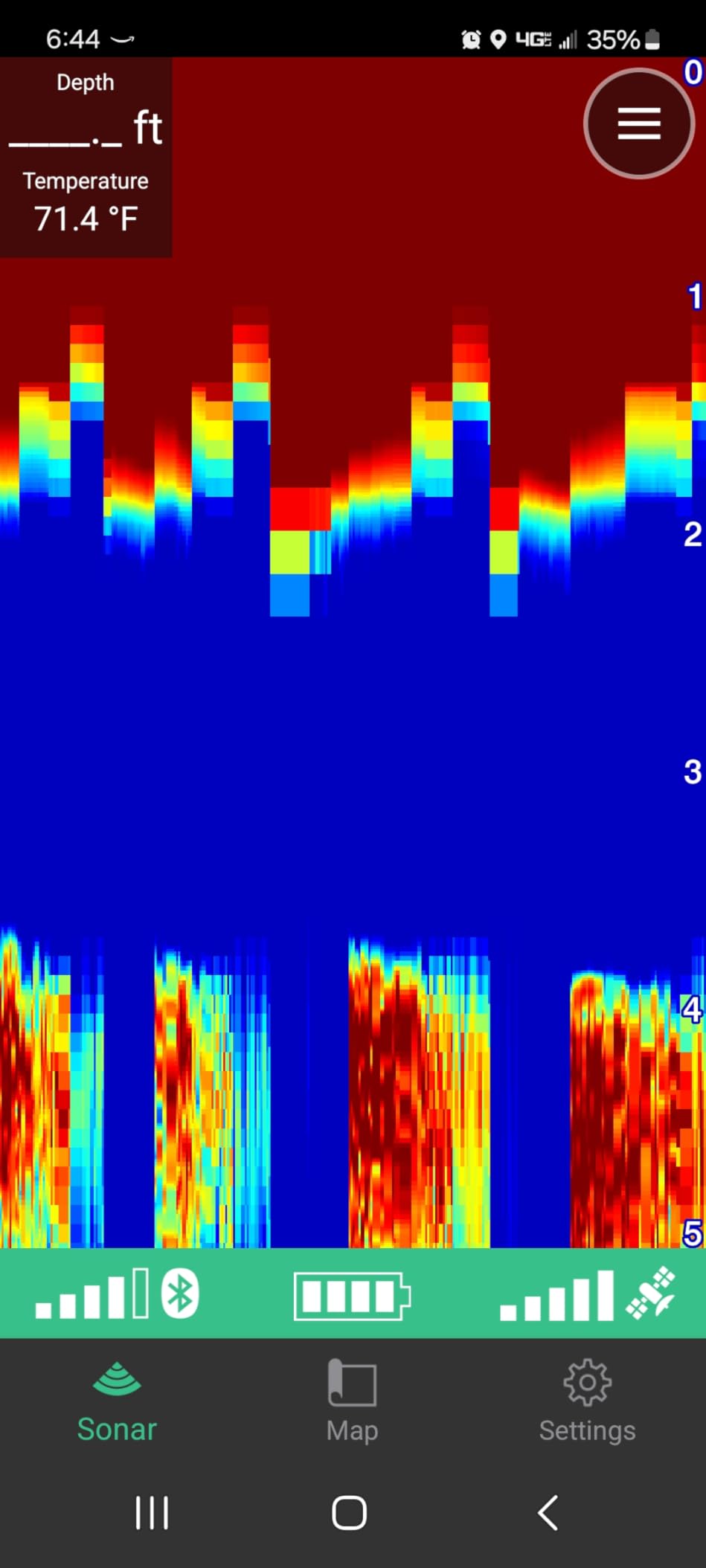
The Garmin’s argument is simple: fish move and structure does not. If you fish the same reservoir every weekend, the value of a castable sonar is not the live reading, it is the map you build over a season and reload next season. This is the unit that does that properly, because it has its own GPS rather than borrowing your phone’s.
Quickdraw Contours records depth at 1-foot intervals and ties each scan to a position. Cast a grid across a ledge in June and you have a saved contour file in July. You can also pull contour data from the Garmin Quickdraw Community, which means lakes other anglers have already surveyed are not starting from zero.
Battery life is listed at 10+ hours with automatic power on and off as the unit enters and leaves the water, which in practice means a full day of intermittent casting without a charger. Water resistance is IPX6 and IPX7, so immersion to 1 meter for 30 minutes is not a problem. It weighs 75 g and the box includes a carrying bag, a 20 ft tether, a USB cable and documentation.
The wireless range is up to 200 feet, which is a shorter number than the Venterior but comfortably matched to a normal shore cast with a medium-action rod. Beyond that distance the picture degrades, and in a following wind the float tracking gets loose before you run out of battery.
How the mapping actually changes your fishing
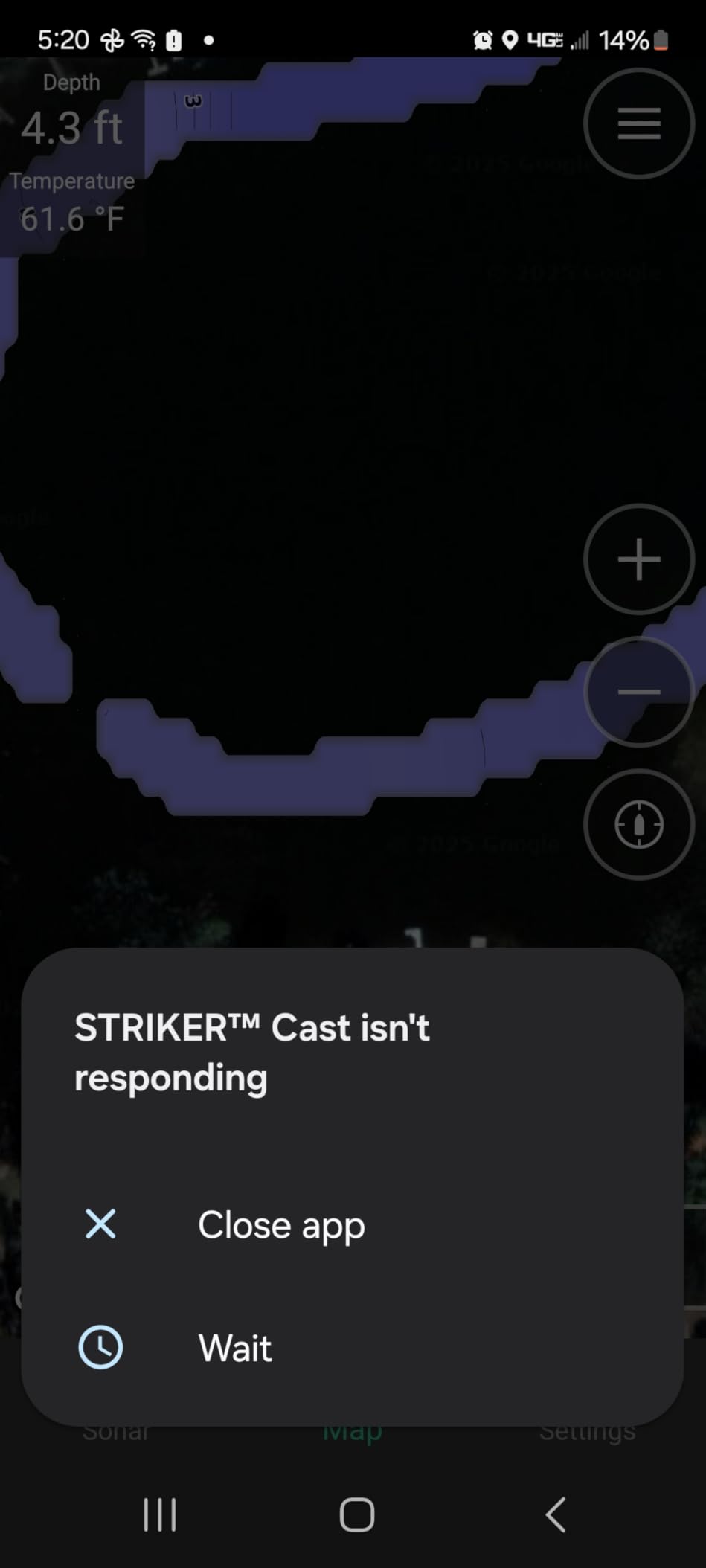
On my own bank, the map showed a shallow shelf holding about 3 ft of water, then a hard break to 9 ft running parallel to the shoreline. That break is exactly where a school of crappie sat every afternoon in August, and without the saved map I would have re-found it by luck every trip. Once the contour is in your phone, the scouting is done permanently.
The same data guides you to spots you cannot reach. A contour line 60 ft out at 11 ft depth is fishable from a bank with a 7 ft rod and a heavy sinker, and a map tells you it is there when the surface is completely flat and featureless.
What the Garmin does not do
There is no CHIRP here. You get traditional 2D sonar and an ice-fishing flasher mode, which is a narrower feature set than the Deeper units and a lower resolution picture on very shallow water. Reviewers also point out plainly that you still need a phone or tablet, which means the second-battery problem applies here.
If you care more about the structure picture than the map, the Deeper PRO+ 2 with three beams will show you more. If you care about having the same lake on your phone in five years, nothing else in this list does it.
3. Deeper PRO+ 2 – Best for Three-Beam Structure Work
Deeper PRO+ 2 Sonar Fish Finder – Portable Fish Finder and Depth Finder For Kayaks, Boats and Ice Fishing with GPS Enabled | Castable Deeper Fish Finder with FREE User Friendly App
Wide mid and narrow beams
330 ft depth
0.4 inch target separation
3.2 oz
2-year warranty
Pros
- Three beams in one unit for wide and narrow work
- 0.4 inch target separation on the narrow beam
- 330 ft depth capability
- Generates its own Wi-Fi so no mobile data is needed
- Only 3.2 ounces so it barely registers on the line
Cons
- Roughly 12 percent of reviews are one-star with reliability complaints
- Small cube that is easy to lose in grass
- Heaviest trail of quality-control complaints in this group
Three beams is the feature that separates this from everything else here. The wide beam finds fish and covers water fast, the mid beam balances detail and coverage, and the narrow beam with 0.4 inch target separation picks out individual fish holding tight to structure. The target separation figure is the number I check first, and 0.4 inches is the best in this group.
That precision is what makes it the tool for structure work. On a steep bank, the narrow beam showed me a shadow sitting two feet off the drop-off that the wide beam had smeared into the bottom line. Whether that shadow was a fish or a stump is a fair question, and the honest answer is that sonar icons are clues rather than guarantees, but the definition is genuinely better than a single wide beam.
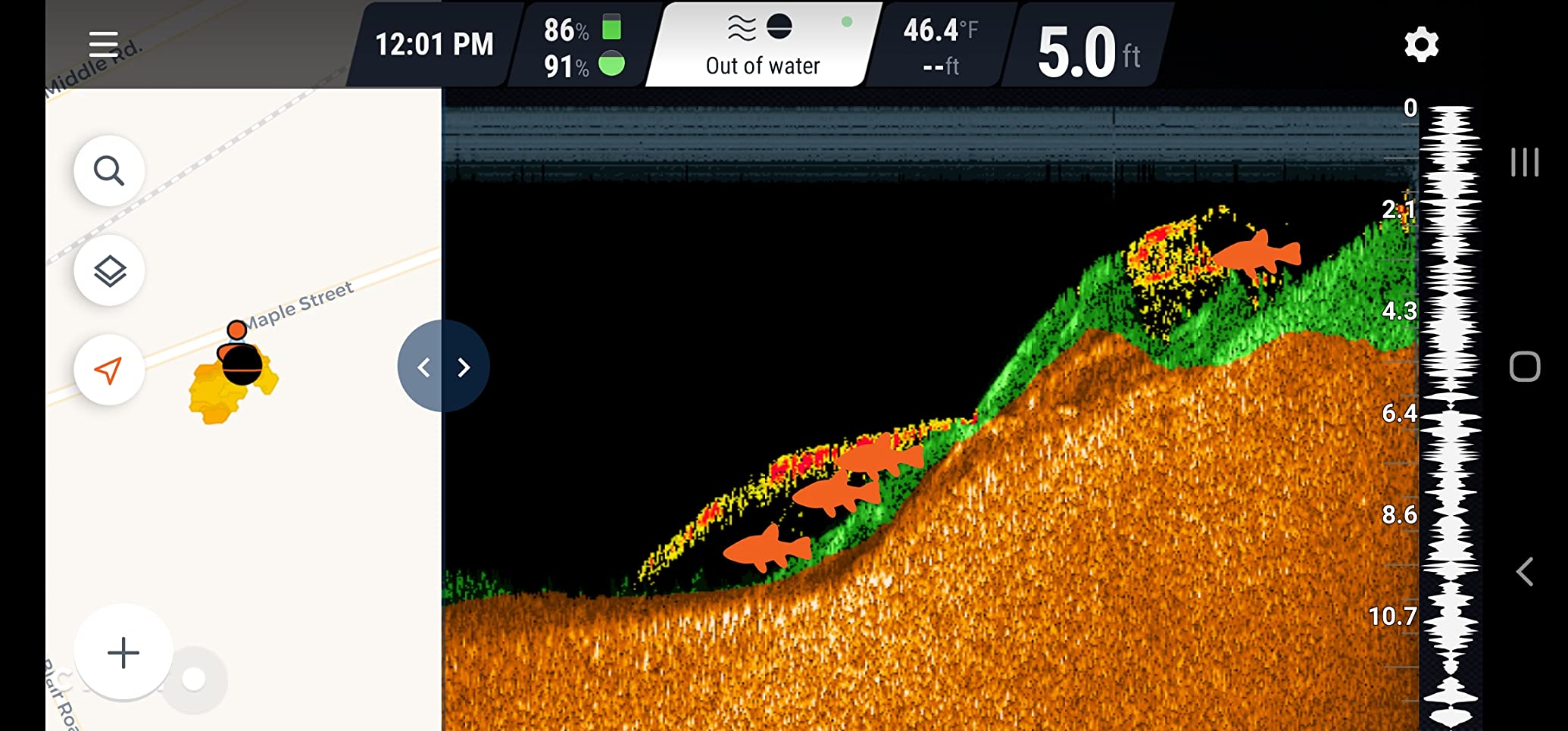
Depth goes to 100 meters, or 330 feet, which is deeper than anything else here. The built-in GPS lets you build bathymetric maps from the bank, and the unit creates its own Wi-Fi connection, so it works with no mobile signal at all. Scans save with time and location to the Fish Deeper app. Battery is not specified in the listing, which is a fair thing to hold against it.
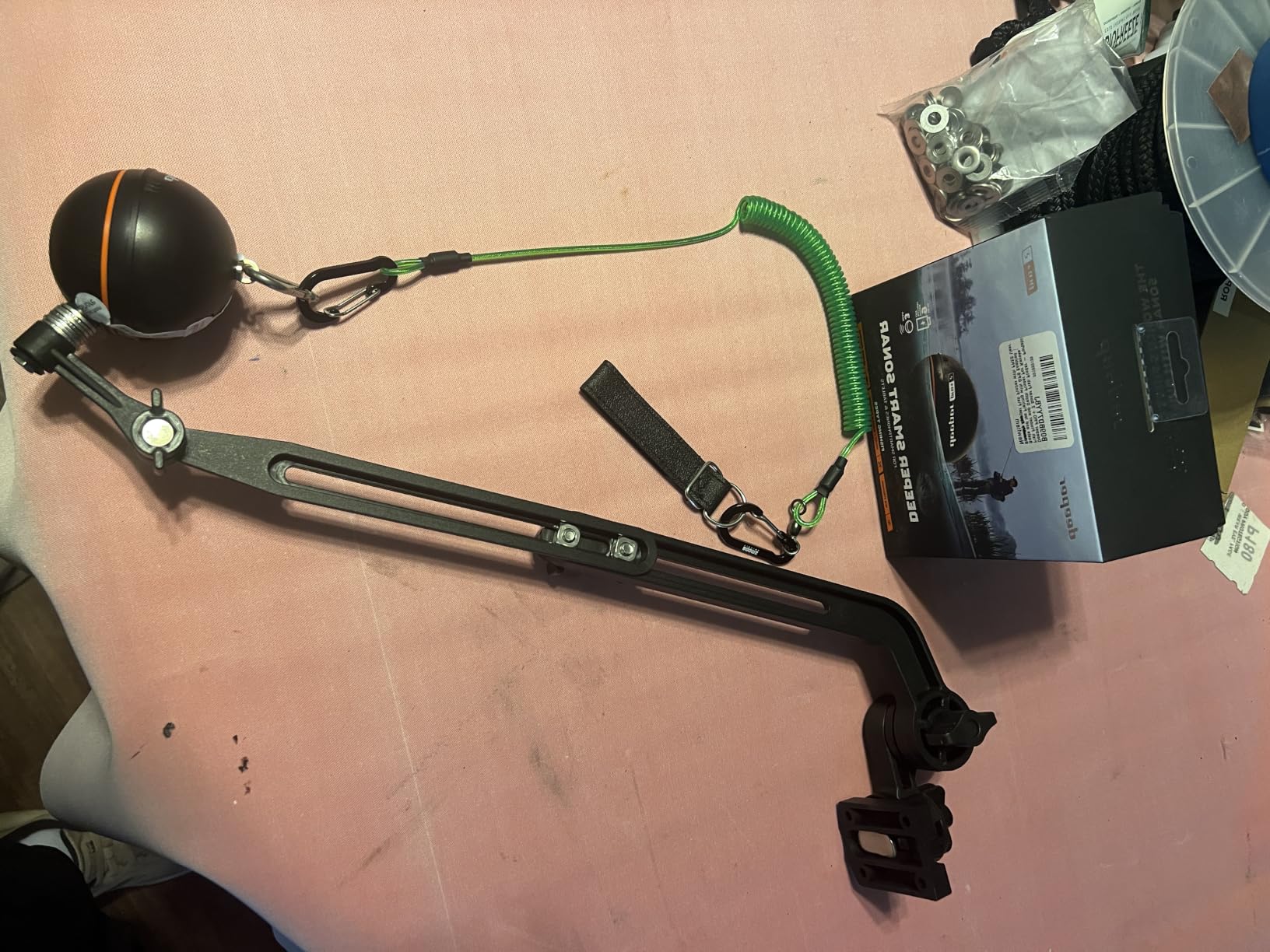
It weighs 3.2 ounces and measures 2.56 inches on each side. That is a genuinely tiny cube, and the flip side of the low weight is that I have lost track of it in long grass twice. The box includes attachment bolts, a neoprene pouch, the sonar, a quick guide and a USB wire, and the warranty is 2 years limited.
Why the Wi-Fi hotspot matters in the field
Because the unit makes its own network, your phone connects directly to it rather than through a carrier. There is no data usage, no bars required and no dead spot halfway up a reservoir cove. That is a genuine practical difference from Bluetooth units, which are also connection-free but have much shorter reach.
It also means you can download map tiles and lake data at home on Wi-Fi and still work offline at the water. Anglers ask constantly whether castable sonar needs cell service, and the answer for this unit is a clear no.
The reliability question
Here is what you are accepting. About 12 percent of reviews are one-star, and the complaints cluster around units that stopped pairing, stopped charging or needed rebooting mid-session. Three thousand-plus owners is not the case for this one; 861 reviews with a 4.2 rating is solid but not bulletproof.
For a long day of casting, that possibility of a dead unit in your bag is worth weighing against the Garmin’s steadier record. Buy the PRO+ 2 if beam quality is your priority, and keep a backup mindset if it is the only sonar you own.
4. ReelSonar iBobber – Best for Fish and Strike Alarms
Reelsonar Portable Fish Finder Accurate Fish Depth Finder with Depth Range of 135 feet 10+ Hours Battery Life with iOS & Android App Wireless
135 ft depth
Bluetooth to phone
10+ hour battery
Watch app support
Smartwatch compatible
Pros
- Fish alarm and strike alert built in
- Works with a smartwatch as well as a phone
- Bluetooth needs no hotspot or login
- 10+ hour battery
- Compact 2 inch body that is easy to cast
Cons
- Bluetooth reach is limited to roughly 40-60 ft in practice
- Requires a minimum of 5 ft of water
- Occasional connection drops reported in reviews
With 6,659 reviews on file, the iBobber is the most thoroughly tried castable fish finder on the market, and for a specific reason: the alarms. It has a fish alarm and a strike alert, so if you are setting the rod down on a bite basket while you watch the screen, the watch buzzes you when something moves. Nothing else in this group does that as simply.
Connection is Bluetooth, straight to your phone or your watch. There is no hotspot to join and no account to create, which removes the two most common reasons people get frustrated on the first trip. Fish icons come back color-coded by size with the depth attached, so a shallow arc and a deep one are easy to separate at a glance.
Battery life is 10+ hours and the unit powers on and off automatically as it enters and leaves the water, so there is no charging ritual in the middle of a session. It is specified for freshwater, saltwater and ice use. The body measures 2 by 2 by 1 inches, and the warranty is 1 year.
Two constraints shape how you use it. The 135 ft depth range is shallower than most here, and the minimum working depth is 5 ft, so this is not a unit for shallow flooded timber or a shoreline puddle. Bluetooth reach is the other one: reviewers put the usable range at roughly 40 to 60 ft, well inside its own casting capability.
What the short range actually means at the bank
It means you are casting to fish, not casting to map. Forty feet is most of the usable water in front of a bank angler working a steep drop-off, but it is a fraction of what a 10 ft rod with a sinker can reach. If you want to scout the far side of a bay, you will be watching the connection struggle.
That trade is worth it for anyone who wants an alarm instead of a screen. It is not worth it for anyone whose plan is to walk a shoreline and build a picture of it.
Where the age of the design shows
This is an older-generation design, and the review record shows it. The bulk of the reviews are old, and the recent ones keep reporting the same things: connection drops, phone battery drain, and an app that is functional rather than polished. Watch compatibility is a genuine plus that newer phone-only units do not offer.
At a 4.0 rating with a very large review base, you are buying a proven mechanism rather than a current feature set. That is a reasonable thing to want. It is just not a current one.
5. Deeper START – Best Value With Saved Scans
Deeper Start Fish Finder – Portable and Depth Finder for Recreational Fishing from Dock, Shore, Bank or Kayak | Castable Deeper Smart Sonar with Free User Friendly App
165 ft casting and depth
Single 40 degree beam
6 hour battery
2.5 hour charge
Own Wi-Fi
Pros
- Generates its own Wi-Fi so no mobile data is used
- Auto-saves every scan with time and location
- Night fishing mode built in
- Largest review base of any Deeper castable
- Light enough to cast on any rod
Cons
- Single 40 degree beam gives no narrow-beam detail
- 6 hour battery is the shortest here
- 165 ft depth ceiling limits deep reservoir work
With 3,071 reviews behind it, the Deeper START is the unit I recommend to anyone who wants the smartphone experience at the simplest possible level. It makes its own Wi-Fi network, you connect, and every scan saves automatically with its time and location. There is nothing to configure and no subscription anywhere in the process.
The single 40 degree beam is the whole trade. Forty degrees is a sensible middle cone, narrower than the Venterior’s 105 degrees so you get a cleaner picture of structure, wider than the Deeper’s narrow beam so you still find fish reasonably fast. It is the beam I would pick for a general-purpose shore session.
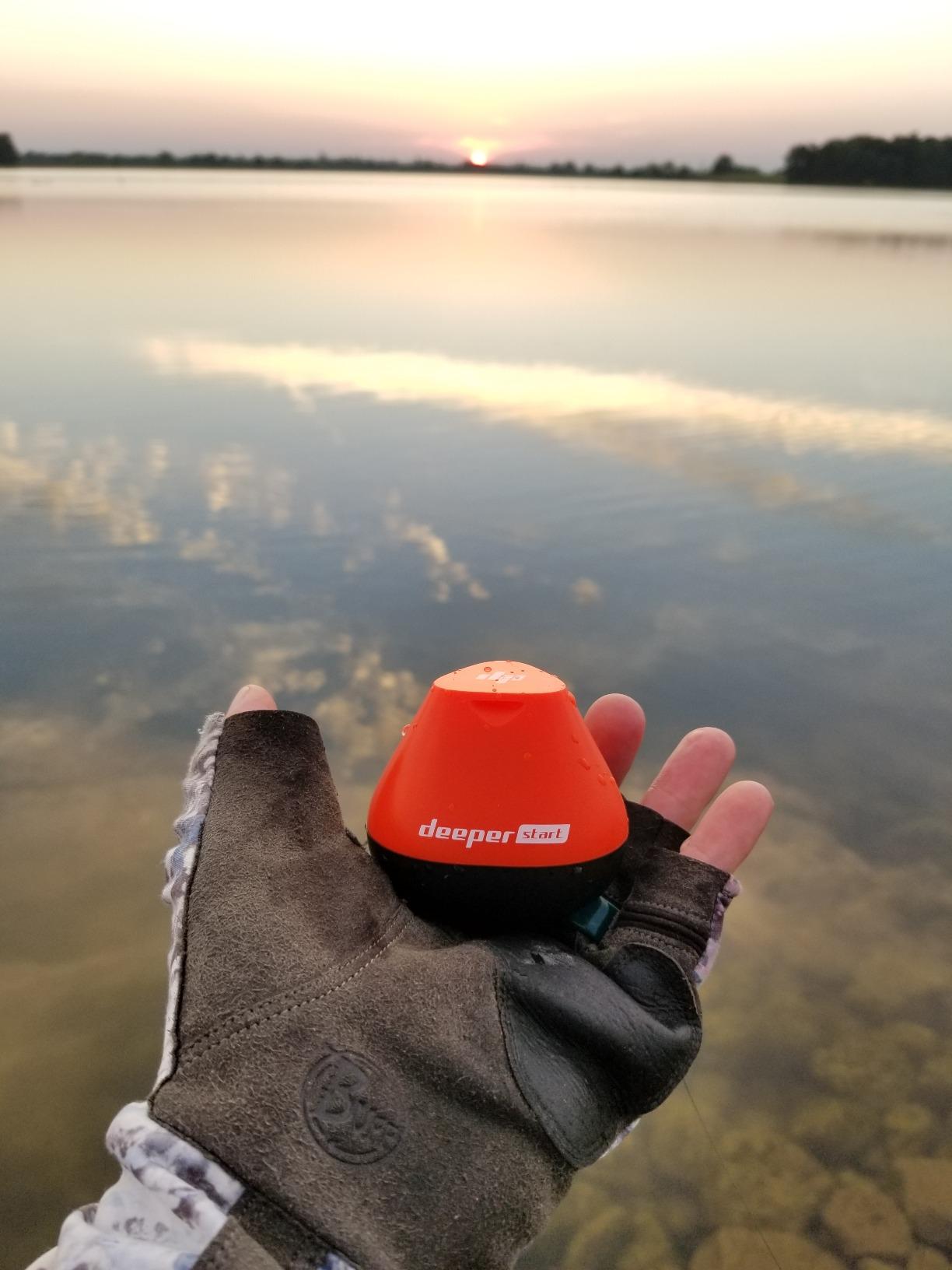
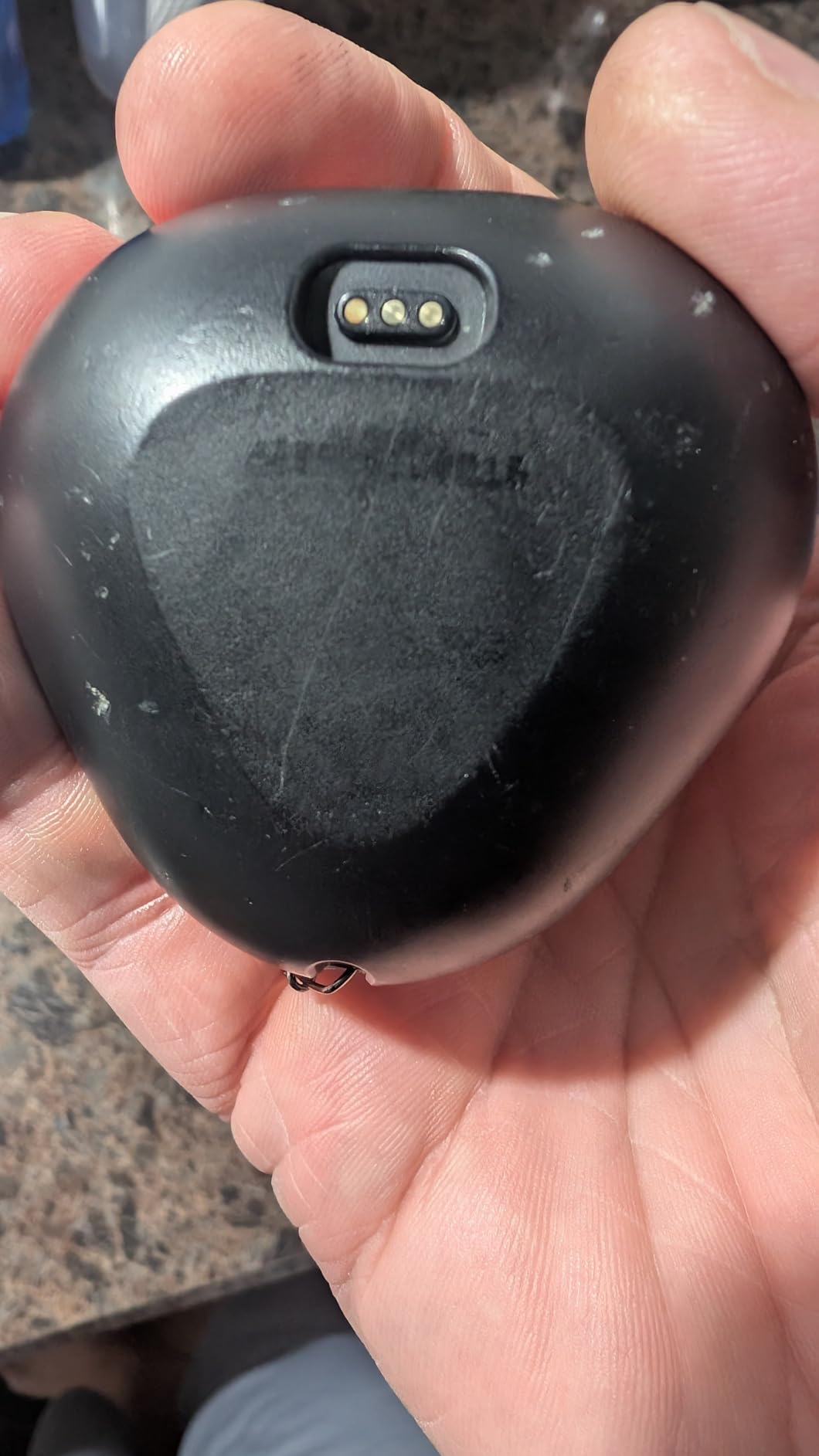
Both casting and depth reach 165 ft, which covers the vast majority of bank-fishing situations and stops you at the point where most bank anglers run out of line anyway. Battery life is 6 hours with a 2.5 hour charge time, and a night fishing mode is included for low-light work.
It is also the app-native option that most beginners end up on, which means a large body of shared knowledge about pairing and reading it. When something goes wrong, the answer is usually in the Fish Deeper community rather than guesswork.
When one beam is enough
It is enough when you are fishing one style of water. On a weedy lake where the fish sit in the vegetation and the structure is soft and gradual, a single mid-width beam gives a clean, readable bottom line with no clutter. The 165 ft depth and 40 degree beam were the specification choices of a unit built for exactly that job.
It stops being enough the moment you want to separate a fish from a rock on a steep drop-off. That is the Deeper PRO+ 2’s argument, and it is a real one.
Where the six hours bites
Six hours is the shortest battery in this group, and reviewers who fish all day ask for more. For a dawn-to-noon session or a short evening fish it is fine, but a full day of casting means a mid-session charge or a power bank.
For cold-water anglers there is a compounding factor: battery performance drops in low temperatures across this whole category. Plan the charge the night before rather than in the car park.
6. LUCKY 1108CP – Best Budget Handheld for Kayak Anglers
LUCKY Kayak Portable Fish Depth Finder Water Handheld Fish Finder Sonar Castable Kayak Boat Fishfinder Transducer Fishing LCD Display FFC1108
328 ft maximum depth
2 inch handheld LCD
5-level sensitivity
Fish school alarms
Wired transducer
Pros
- Deepest depth rating in this group at 328 ft
- Handheld with a neck strap and no phone needed
- Five sensitivity levels and a backlight
- Fish and fish-school alarms
Cons
- Wired transducer means it is not a castable unit
- Several reviews confirm it will not work from shore
- 4-5 hour battery life with no GPS
I want to be straight with you about this one: it is not a castable fish finder, and I am not going to pretend otherwise. The 1108CP has a wired transducer that mounts through the hull of a kayak or a small boat. If you have read the opening of this guide expecting a puck that goes on your line, this is not it.
It earns its place anyway, because it solves a real problem for a real group of anglers. If you launch a kayak and do not want to hold a phone in one hand and a paddle in the other, this is the cheapest way to get a backlit screen in front of you with depth, fish, weeds, rocks and bottom contour on it.
The 328 ft depth rating is the deepest in this group by a wide margin, and it also has the best sellers rank of anything here, sitting at number 3 in Fish Finders and Depth Finders. Five sensitivity levels let you cut through clutter on a weedy bottom, and a backlight handles dawn and dusk. Fish and school alarms are standard.
Battery life is 4-5 hours, longer with battery save mode, and units switch between feet and meters. The warranty is not specified in the listing, which is a real gap and the kind of detail that matters on a budget purchase.
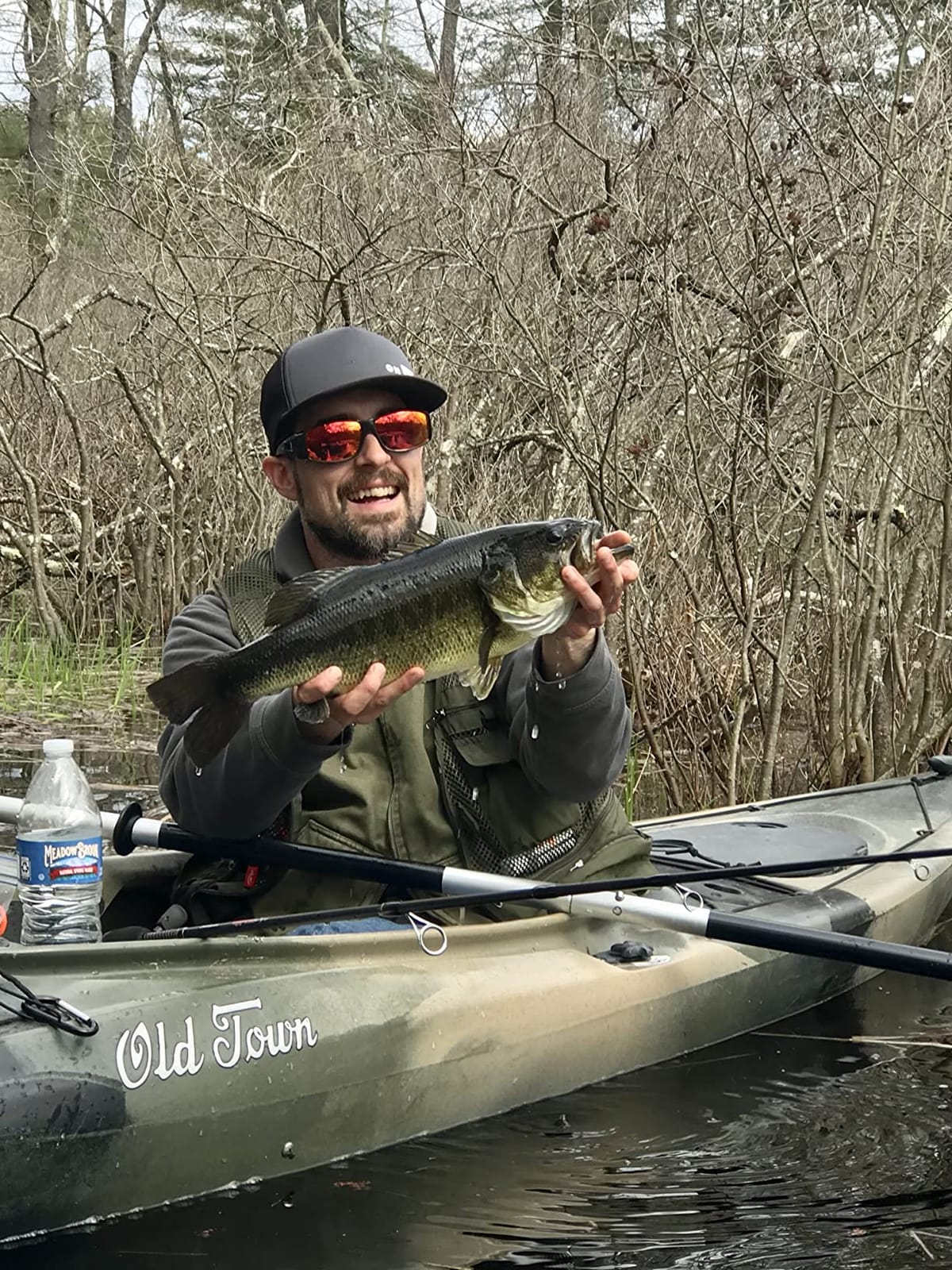
Why it cannot work from the bank
Because the transducer is on a cable attached to the display, and the display is the thing you are holding. To get a sonar reading in water, the transducer has to be underwater, which means you have to be in a craft. Reviewers confirm this directly, and several describe exactly the frustration of unboxing it for a bank trip and finding no way to deploy it.
There is also no GPS and no mapping of any kind. It shows you what is under the boat right now, and it forgets it the moment you lift the kayak out.
Who should skip it entirely
Anyone fishing purely from shore. It cannot do the one job this article is about, and no amount of clever setup changes that. Anyone who wants saved depth data also gets nothing here.
For a kayak angler who wants a screen, no phone, and a deep depth range on a budget, it remains hard to argue with. Read our kayak fish finder roundup for the other side of that comparison, and our boat fish finder picks if you are moving up to a hull-mounted unit.
7. DANOPLUS DP-104 – Best for Night Fishing With a Lit Sensor
Portable Fish Finder Large HD Display Wireless Depth Finders for Boats with 147 feet Depth Detection Sensor, Rechargeable Castable Fish Finder Display Fish, Temp
147 ft depth
2.4 inch color LCD
90 degree coverage
21 languages
1-year warranty
Pros
- Attractive lamp on the sensor lights up in the water
- 21 operating languages
- Wireless rechargeable sensor with no pairing step
- 2.4 inch color LCD with fish size and depth readout
Cons
- Only 304 reviews as a newer product
- 147 ft depth and 90 degree coverage trail the leaders
- 1-year warranty only
The reason this set is on the list is a single feature: the sensor has an attractive lamp that switches on when it touches the water. At night, a glowing puck on the surface is dramatically easier to track than an unlit one coming back in the dark, and it doubles as a strike indicator when something hits it.
Everything else about it is competent rather than remarkable. A 2.4 inch color LCD shows fish size, fish depth, temperature and bottom contour, with a fish alarm and 21 operating languages. The sonar coverage is 90 degrees, close to the Venterior’s 105, and the depth range runs to 147 ft.
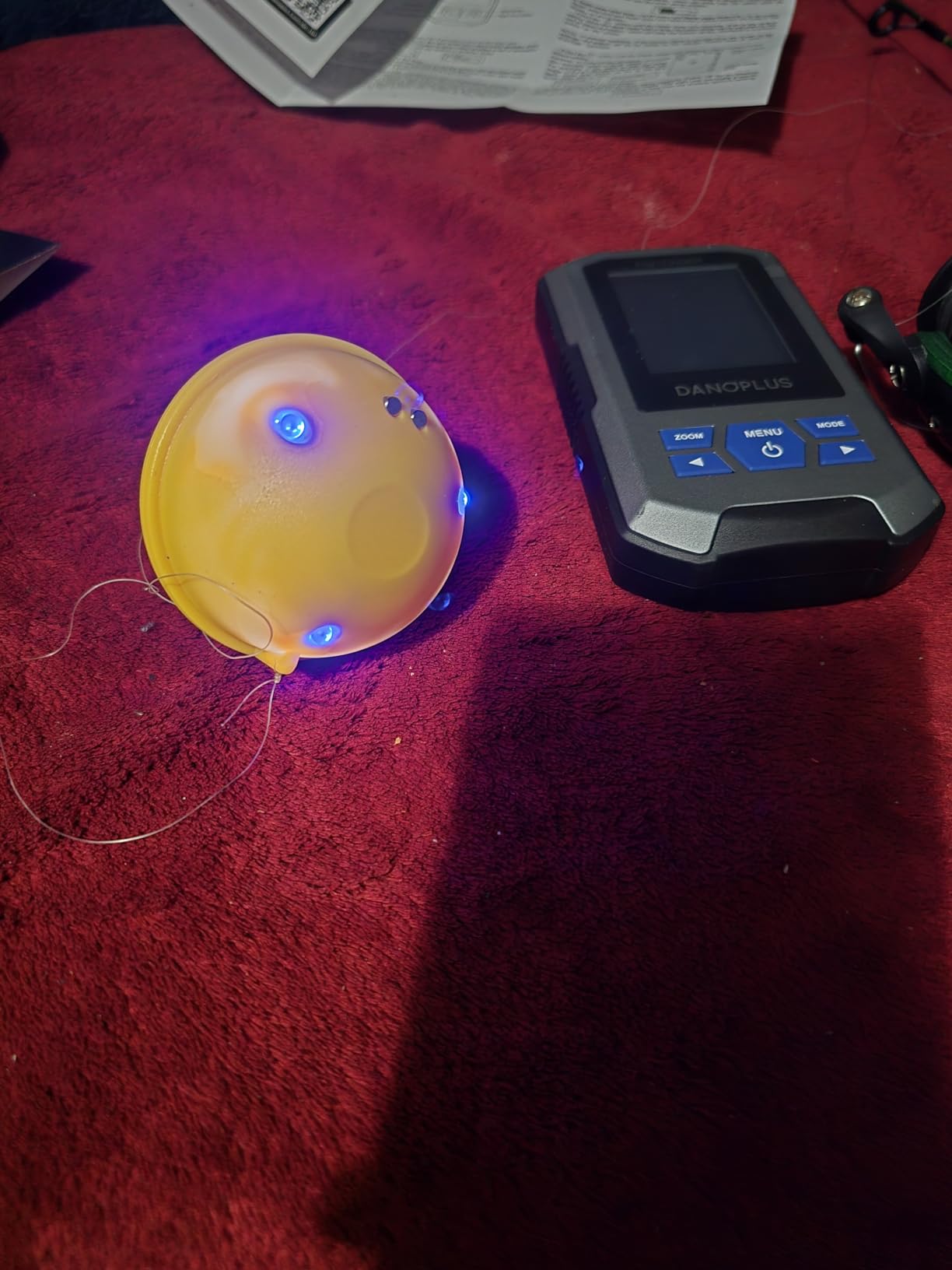
It is also a genuinely phone-free setup. The sensor and the display are both rechargeable, they pair with no app, and the whole package weighs 5.28 ounces. Auto on and off happens as the sensor enters and leaves the water, so there is no button hunting in the dark.
The box includes the fish finder, wireless sonar sensor, a manual, and both a USB and an AC adapter. That is a more complete kit than most of the budget units here ship with.
How the lamp performs in practice
It does what it says. During evening sessions I could see the sensor sitting out on the surface well before it was within casting range, which removes most of the “did it just go under” moment that spoils the start of a retrieve. It is not a substitute for a fish-finding light, but it is a genuine aid to picking the float back up.
On a night bite the light also gives you an early warning. Something knocking the sensor is a fish or a turtle, and either way you know where to look.
What the thinner review record means
304 reviews is a small base compared with the 3,000-plus on the two Deeper units, and it is a newer product, so long-term durability is not yet established. The 147 ft depth rating and the 1-year warranty are both modest.
Treat this as the pick for night anglers and the pick for anyone who wants a simple no-phone set with a complete accessory bundle, and understand you are buying a shorter track record along with it.
8. Fuceter XF-08 – Best for Range and Screen Size
Portable Castable Fish Finder for Kayak with Wireless Sonar Sensor
3.5 inch TFT screen
656 ft sensor range
105 degree beam
8 hour battery
1-year warranty
Pros
- Largest screen here at 3.5 inches with three backlight modes
- Longest sensor-to-display range in the group at 656 ft
- 8 hour battery with a 2 hour charge
- Adjustable sensitivity depth range and noise filter
Cons
- Only 70 reviews on a very new product
- 1-year warranty only
- Heaviest package here at 1.5 pounds
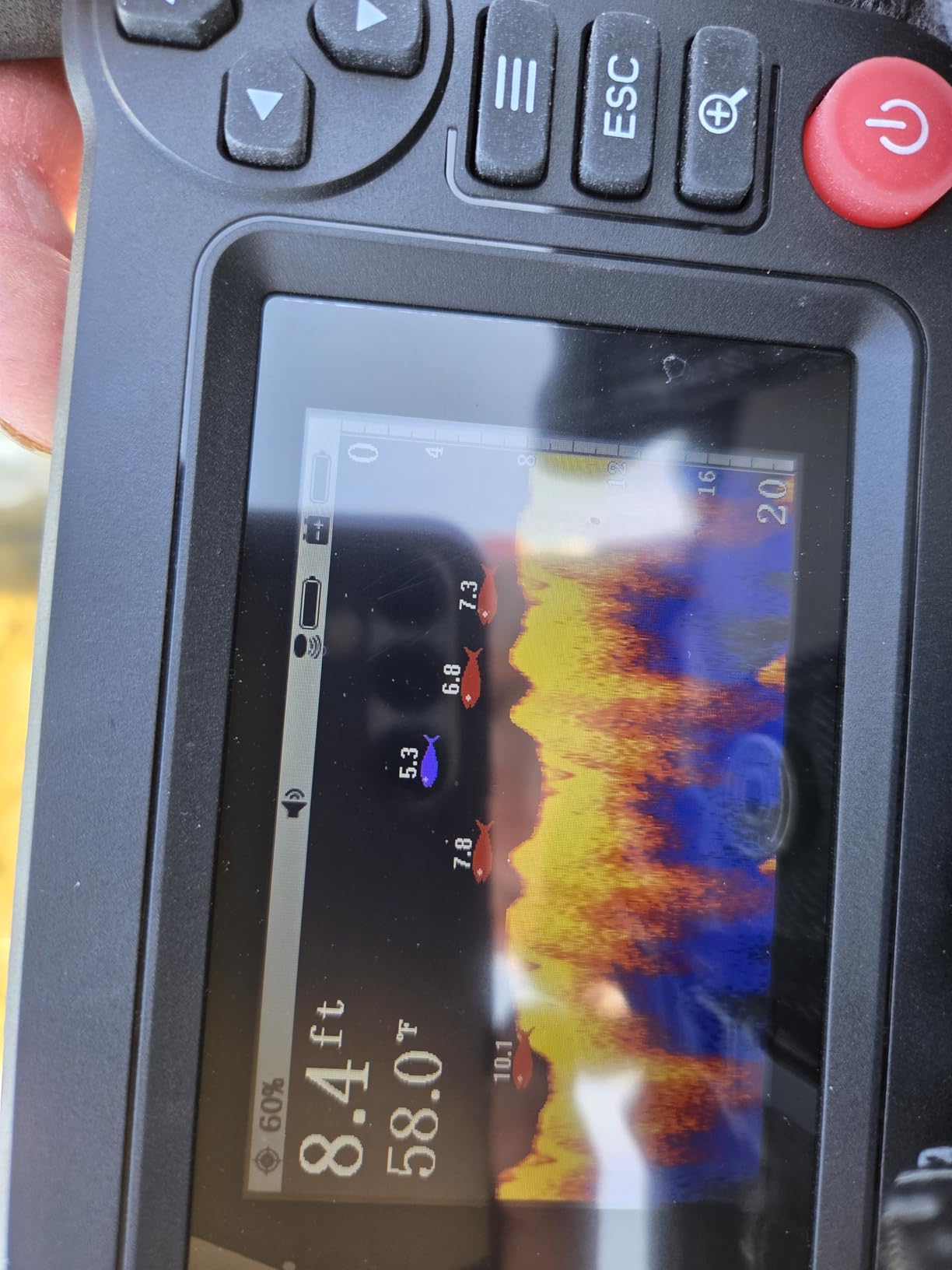
On paper this is the most capable hardware in the group. The 3.5 inch TFT display is the largest screen here, and it has three backlight modes, which matters in bright sun and in a dark boat. The transducer-to-screen range is listed at 656 ft, more than twice the next best, and the battery is 8 hours on a 2 hour charge.
It also has the controls the more basic units leave out: adjustable sensitivity, adjustable depth range, a noise filter, a fish alarm, a depth alarm and a switchable sonar background. Depth handling is 2.6 to 164 ft across a 105 degree beam, matching the Venterior’s cone.
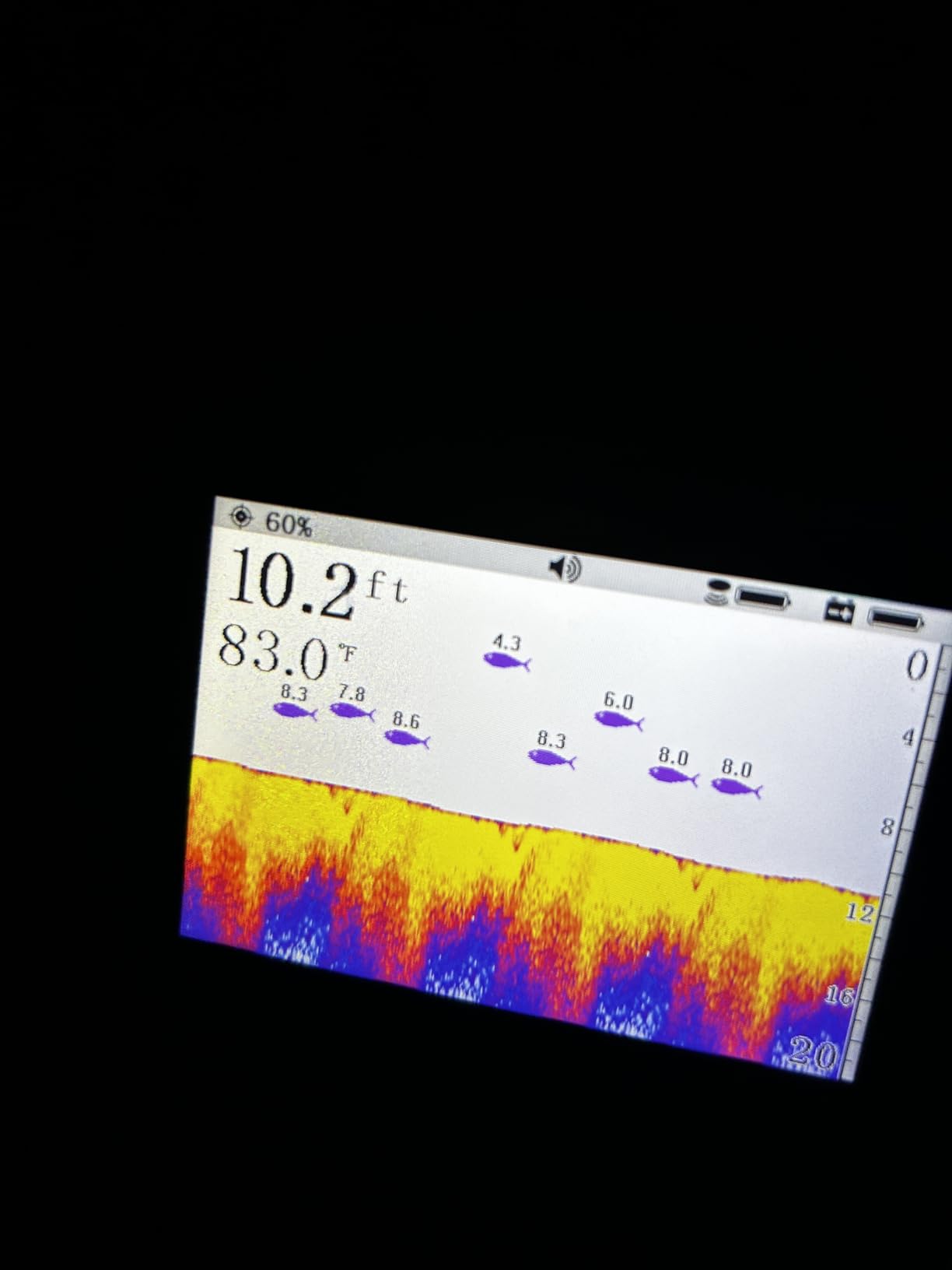
The accessory list is unusually complete, with an antenna, a mounting bracket and screws, a lanyard, a probe charging cable, a host charging cable and a charging plug. The manufacturer states it suits kayak, shore, sea and ice fishing, and offers 24-hour product support.
The catch is history. Seventy reviews is almost nothing, and the best sellers rank of 419 in Fish Finders and Depth Finders reflects a product that has not been on the market long. The 1.5 pound package weight is the heaviest here, though most of that is the host unit and bracket rather than the sensor.
Where a 656 ft range actually helps
Honestly, rarely on a shore cast. Most bank anglers cannot put a transducer 200 ft out, let alone 656, so the spec is insurance rather than a daily advantage. It becomes genuinely useful when the sensor is mounted on a trolling line, towed from a kayak, or used while you are walking a shoreline and the display stays in your pocket.
It is also the case where the 3.5 inch screen earns its size, because a bigger display is easier to read at arm’s length on a moving kayak than a phone or a 2.6 inch screen.
What you are taking on trust
A new brand with a new product and a very small review base. There is no long-term reliability record, no established support history, and a 1-year warranty rather than the 2 years the Garmin and Venterior carry.
Buy this one if you specifically want a big screen, long range and adjustable controls, and accept that you are early. If durability over a decade matters to you, the established units above are the safer bet.
How a Castable Fish Finder Actually Works
A castable fish finder is a small floating unit you clip or tie to your line, cast out, and reel back. As it travels, it sends a sonar pulse into the water and measures the echo returning from the bottom and from objects in the water column. Those readings go wirelessly to a phone, tablet or handheld screen, and the picture updates live along the line of your cast.
Three different ranges are quoted for every unit in this list, and confusing them is the single most common spec-sheet mistake I see. Casting range is how far you can throw the thing, which is your rod and line. Wireless range is how far the signal travels from the floating unit to the screen. Scanning depth is how deep the sonar reads. A unit can cast 300 ft, transmit 100 ft and read 330 ft deep, and all three numbers can be true at once.
The practical loop is the same on every unit. Pair or power on, cast beyond the spot you want, let the unit sink and settle for a second or two, then retrieve slowly enough that the picture does not smear. The last step matters more than it sounds: most of the “my fish finder does not work” complaints are a retrieve that was too fast.
Here is why structure beats fish icons. From the bank you cannot see the bottom, and the shapes holding fish are static, repeatable features: a drop-off, a channel edge, a weed line, a shelf transition, a stump field. Map those once and you can fish them repeatedly without sonar. A fish icon is a guess about what produced that return, and reading a picture where the fish count is wrong does not stop you from reading the picture where the depth change is obvious.
Our rule from the field is to slow down until the bottom line is smooth. Once the bottom line is clean, everything else on the screen becomes readable.
How to Choose: 8 Criteria That Matter From Shore
1. Connection type and real range
Bluetooth units like the iBobber are the simplest to pair and the shortest in reach, with usable signal around 40 to 60 ft according to reviewers. Wi-Fi units create their own hotspot, which means no data usage and no cell coverage needed, and they reach further. Match the technology to your casting distance rather than to the headline number: a 656 ft range on a rod that tops out at 120 is unusable range.
2. Beam angle and frequency
A wide beam such as the Venterior’s 105 degrees or the Fuceter’s 105 degrees finds structure quickly across an unfamiliar area but smears detail. A narrow beam resolves individual targets, which is why the Deeper PRO+ 2’s three-beam setup including a 0.4 inch separation narrow beam is the most informative screen in the group. The Deeper START’s single 40 degree beam sits usefully in the middle for general work.
3. GPS and bathymetric mapping
The real question is whether you want a live reading or a saved map. Fish move and structure does not, so if you fish the same water repeatedly, built-in GPS with contour recording, as on the Garmin STRIKER Cast GPS, is worth more than any extra beam. The Deeper PRO+ 2 also has built-in GPS for bathymetric mapping. If you fish a new lake every trip, skip the mapping and spend your attention on beam quality instead.
4. Phone dependency and battery
Phone-based units are cheaper and give you a much bigger screen than any handheld here, but you carry a second battery. A full sunlit screen at maximum brightness with GPS running will flatten a phone in a morning session. The phone-free units, the Venterior, the LUCKY, the DANOPLUS and the Fuceter, avoid that battery drain entirely.
Accounts and logins are the other trap. Some budget apps were flagged by reviewers for requiring an account sign-in over data or Wi-Fi before use. Deeper and Garmin units create their own network, so download what you need at home and they will work with no signal at all.
5. Saltwater durability
This is where the search results are thinnest and the question is most common, so be cautious. The iBobber is explicitly specified for freshwater, saltwater and ice. For the others, saltwater performance depends on your transducer, and castable units use smaller transducers than boat units, so expect less detail in the sea than on a lake. Rinse every unit in fresh water after a salt session, because the transducer face corrodes faster than anything else on it.
6. Depth ceiling
Match the number to your water. 147 to 165 ft covers most lakes and rivers from the bank. 200 ft on the Garmin covers most reservoirs. 330 ft on the Deeper PRO+ 2 covers deep dam walls. The LUCKY’s 328 ft rating is generous, though that unit is for a hull rather than a line.
7. Battery and warranty
Battery is the second thing to fail after the phone, so treat the listed hours as continuous-use figures and expect less in winter. The 10+ hour ratings on the Garmin and the iBobber are the strongest here. Warranty length is a real differentiator that most roundups skip: the Garmin, Venterior and Deeper PRO+ 2 carry 2 years, the iBobber, DANOPLUS and Fuceter carry 1 year, and the LUCKY does not specify one at all.
8. The tackle to cast it safely
You do not need heavy gear, but you do need sensible gear. Use 15 to 20 lb line so the weight of the unit does not stretch your main and you can feel the bite, add a barrel swivel at the unit, and use a medium-action rod rather than a fast one that will not load smoothly. A slow, loaded cast protects an expensive sensor far better than a fast whip cast.
How to Use One: Pairing, Casting and Reading the Screen
Charge everything the night before, not in the car. Phone-based units need a full phone charge plus a power bank, and cold mornings are when battery performance is worst. Pair the app before you leave home so you are not troubleshooting a hotspot on a shoreline with a deadline for the light.
Cast a little beyond the spot, let the unit sit for a second, and then reel at a pace where the bottom line is smooth. If the picture smears, you are retrieving too fast. Once it is smooth, slow further, because the definition improves the whole time.
Turn sensitivity down when the screen fills with clutter from weeds or debris, and up if you are missing obvious targets in open water. The LUCKY makes this a five-level dial, the Fuceter gives you a slider plus a noise filter, and the app-based units put it in the settings menu.
Rinse in fresh water after every trip, especially a salt session, and store the unit away from direct sun in summer. Sonar housings yellow and seals degrade faster in heat than in cold. A two-minute rinse is the entire maintenance routine for every unit here.
The most common mistake is treating a castable sonar as a fish-finding device. It is a structure-finding device. Mark the drop-off, the channel edge and the weed line, then fish them from the bank without the electronics switched on.
Frequently Asked Questions
What is the best fish finder for shore fishing?
The Venterior VT-FF005 is the best overall castable fish finder for shore fishing, because its 105-degree beam, 262 ft sensor-to-display range and dedicated 2.6-inch color screen work with no phone and no account. Anglers who want saved depth maps should choose the Garmin STRIKER Cast GPS for its built-in GPS and Quickdraw Contours. The Deeper START is the value pick, generating its own Wi-Fi and auto-saving every scan with its location.
Are castable fish finders any good?
Yes, for structure rather than for individual fish. A castable unit reliably shows you depth, bottom contour, weed lines, drop-offs and channels across your casting range, and the saved versions act as a permanent map of the water. The fish icons are approximations, not identification, so an experienced angler reads the shape of the bottom and uses the fish reading as a secondary clue.
What is the best fish finder for sea fishing?
For sea fishing from shore, the ReelSonar iBobber is the clearest choice in this group because it is explicitly specified for freshwater, saltwater and ice use, and it runs on Bluetooth with no hotspot or account required. The DANOPLUS DP-104 and the Fuceter XF-08 are also manufacturer-rated for sea use, and the DP-104’s lit sensor helps you track the float after dark. Rinse the transducer in fresh water after every salt session, because corrosion on the sonar face is the fastest failure mode in seawater.
Do fish finders work from shore?
Yes. Casting is exactly the use case a castable sonar is designed for. The unit travels out on your line, sinks, transmits sonar readings back to your phone or handheld screen, and updates the picture live as you retrieve. The exception is wired handheld units like the LUCKY 1108CP, which need the transducer in the water under a boat or kayak hull and therefore cannot be deployed from a bank at all.
How do castable fish finders work?
A small floating unit sends a sonar pulse into the water and measures the echo returning from the bottom and from objects in the water column. It transmits those readings wirelessly to a phone, tablet or handheld screen as you retrieve, so the image updates along the line of your cast. Quoted ranges refer to different things: casting range is how far you can throw it, wireless range is how far the signal reaches the screen, and scanning depth is how deep it reads.
Do I need GPS on a castable fish finder?
You need it if you fish the same water repeatedly. Fish move, structure does not, so a unit with built-in GPS and contour recording, such as the Garmin STRIKER Cast GPS with Quickdraw Contours, builds a saved map of a drop-off or channel that you can reload on every future trip. If you fish new water each session and only want to know what is under your cast right now, GPS adds little and the single-beam budget units serve you fine.
Do castable fish finders work without internet access?
Yes, in practice. Units such as the Deeper START and the Deeper PRO+ 2 generate their own Wi-Fi hotspot, so your phone connects directly to the sonar with no mobile data or cell coverage required. Bluetooth units like the ReelSonar iBobber work the same way. The one thing to do before you leave home is download any maps or lake data over Wi-Fi, and sign into any app that demands an account before it will operate.
The Verdict: Which Castable Fish Finder Should You Buy
The Venterior VT-FF005 wins this roundup because it removes every friction point: a wide beam, real range, a color screen you can read in sunlight, and no phone to charge. If you fish the same water often and want the map to last, the Garmin STRIKER Cast GPS is the better investment. If beam definition is what you care about most, the Deeper PRO+ 2 is the one.
Whichever you choose in 2026, the habits matter more than the hardware: retrieve slowly, read the structure instead of the fish icons, and map the drop-offs you find. Those three things will improve your bank fishing more than any spec on this list.