

The best juicers for celery are slow masticating cold press models, because celery is long with stringy cellulose strands that jams fast bladed machines. Our top pick is the Ninja JC151 NeverClog, a 150-watt vertical auger juicer rated at 4.5 stars across 3669 reviews, with two pulp filters, a reverse button and dishwasher-safe parts.
I juice a lot of celery. My own kitchen has seen four juicers in three years, two of which went to friends after the auger housing cracked or the motor started overheating on long stalks. That experience shapes this list more than any spec sheet, because the difference between a good celery juicer and a disappointing one shows up on your counter within a month, not after a year.
Here is what most guides leave out. Celery is a hard vegetable to juice well, so the machine matters more than the recipe. Almost every rival roundup tells you a cold press juicer is the answer and then hands you a short list of near-identical white plastic towers with no explanation of what actually changes for celery: auger speed, chute width, how dry the pulp comes out, and whether the screen clogs with fiber on day nine.
We also kept the health claims honest. Celery juice has a large and vocal following, and some of the most widely shared claims about it come from a paid book promotion rather than from clinical research. I set that aside in a dedicated section below rather than repeating it uncritically.
Table of Contents
Top 3 Picks for Celery Juicing in 2026

Ninja JC151 NeverClog
- 150W high-torque masticating auger
- Two interchangeable pulp filters
- Start/Stop and Reverse one-touch programs
- Dishwasher-safe parts
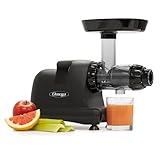
Omega J8006 Triple-Stage
- Triple-stage 80 RPM auger
- 200W all-in-one nutrition system
- 15-year motor warranty
- Very dry pulp output

AMZCHEF Cold Press Juicer
- 6.5-inch reversible wide chute
- 600W motor with reverse function
- Dishwasher-safe removable parts
- 3-in-1 juice nut milk and sorbet
Those three cover the realistic range. The Ninja is the balanced daily driver, the Omega is the one you keep for a decade, and the AMZCHEF is the wide-chute workhorse for people who would rather not chop celery first.
All 12 Best Juicers for Celery (October 2026)
| Product | Specifications | Action |
|---|---|---|
| Ninja JC151 NeverClog Cold Press Juicer |
|
Check Latest Price |
| AMZCHEF Cold Press Juicer 6.5-inch Chute |
|
Check Latest Price |
 AAOBOSI 3-in-1 Cold Press Juicer AAOBOSI 3-in-1 Cold Press Juicer |
|
Check Latest Price |
 EanOruus 3-in-1 Cold Press Juicer EanOruus 3-in-1 Cold Press Juicer |
|
Check Latest Price |
 TUUMIIST 55 RPM Cold Press Juicer TUUMIIST 55 RPM Cold Press Juicer |
|
Check Latest Price |
| Omega J8006 Triple-Stage 80 RPM |
|
Check Latest Price |
 Omega H3000 Cold Press 365 Omega H3000 Cold Press 365 |
|
Check Latest Price |
 nutribullet NBJ50300 Slow Juicer nutribullet NBJ50300 Slow Juicer |
|
Check Latest Price |
 Nama J2 Hands-Free Cold Press Juicer Nama J2 Hands-Free Cold Press Juicer |
|
Check Latest Price |
 Omega VSJ843QR Pure Press Omega VSJ843QR Pure Press |
|
Check Latest Price |
 SMALLHOO 3-in-1 Cold Press Juicer SMALLHOO 3-in-1 Cold Press Juicer |
|
Check Latest Price |
 Godspeeds 6-inch Chute Cold Press Juicer Godspeeds 6-inch Chute Cold Press Juicer |
|
Check Latest Price |
Masticating vs Cold Press vs Centrifugal: Which Mechanism Handles Celery
First, the confusing part. Cold press, slow juicer and masticating juicer are the same machine described three ways: a single auger turns at roughly 50 to 100 RPM, crushing produce against a screen while pressing juice out through a spout. The marketing name changes, the mechanism does not.
A centrifugal juicer is a different animal. It spins a blade at somewhere between 6000 and 14000 RPM and throws juice outward by force. It is fast, it is cheap and it is wrong for celery, because the blade smashes the stringy fiber into pulp that gums the screen within a single batch. It also heats the juice and pulls in air, which starts oxidation immediately.
That heat and air difference matters more than most roundups admit. Juice that has not been aerated keeps longer in the fridge and tastes less flat, which is exactly what you want from something you plan to drink on an empty stomach every morning. Slow-pressed celery also comes out visibly darker and less frothy than centrifugal juice, a difference you can see in a glass before you taste it.
One point of agreement from the forums worth passing on: users in r/medicalmedium nearly all converge on the same conclusion that celery works best as the main component of a juice rather than a splash in the back of a carrot blend. Machines with wide chutes and strong augers make that easier because you can run a full bunch of stalks without stopping to chop between pieces.
If you want broader context on the other categories, our guide to the best juicers for home use covers the trade-offs between types in more detail.
1. Ninja JC151 NeverClog Cold Press Juicer – Our Overall Pick
Ninja NeverClog Cold Press Juicer, 24oz Jug, 36oz Pulp, Charcoal, JC151
24oz juice jug
36oz pulp container
150W low-speed auger
1-year limited warranty
Pros
- Dry pulp with high juice yield
- Quiet for a 150W masticating machine
- Two pulp filters change the texture
- Handles celery
- spinach
- apples and carrots
- Anti-drip lever and dishwasher-safe parts
Cons
- Not completely clog-proof on hard vegetables
- Hard roots need thin slicing
- Louder than some first-time buyers expect
The JC151 arrived on my counter and stayed. Its 150-watt motor turns the auger slowly, and the torque rather than the speed is what drives celery fiber through the screen. Owner reviews describe the pulp coming out very dry, and I got the same result on a full bunch of stalks cut into rough lengths.
Two interchangeable pulp filters are the feature I did not expect to care about and now rely on. The Less Pulp setting suits a clean 16 oz glass on an empty stomach. The Lots of Pulp setting adds body when you are stretching the juice with apple or ginger.
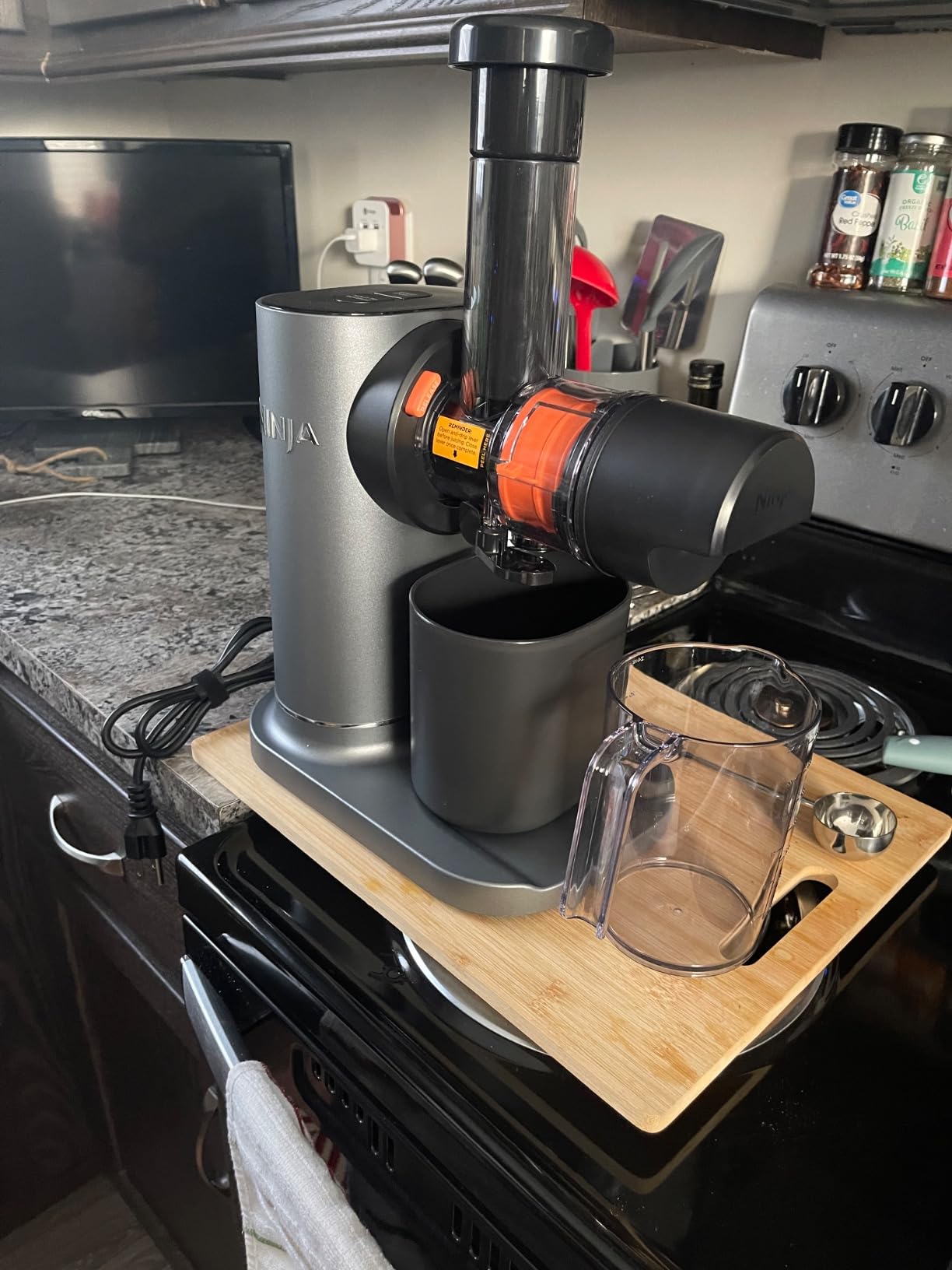
Start/Stop and Reverse are separate one-touch buttons, and reverse is the reason it rarely stalls on celery. When a wad of string starts building, a short press clears it without stopping the batch. The anti-drip lever lets you pause mid-bunch to pour without dribbling down the front of the machine.
It measures 12.11 inches deep, 7.15 wide and 15.93 tall at 7.9 pounds, which fits under most cabinets. The jug is 24 fluid ounces, so you will empty it twice during a large celery session, and the pulp container is 36 ounces.
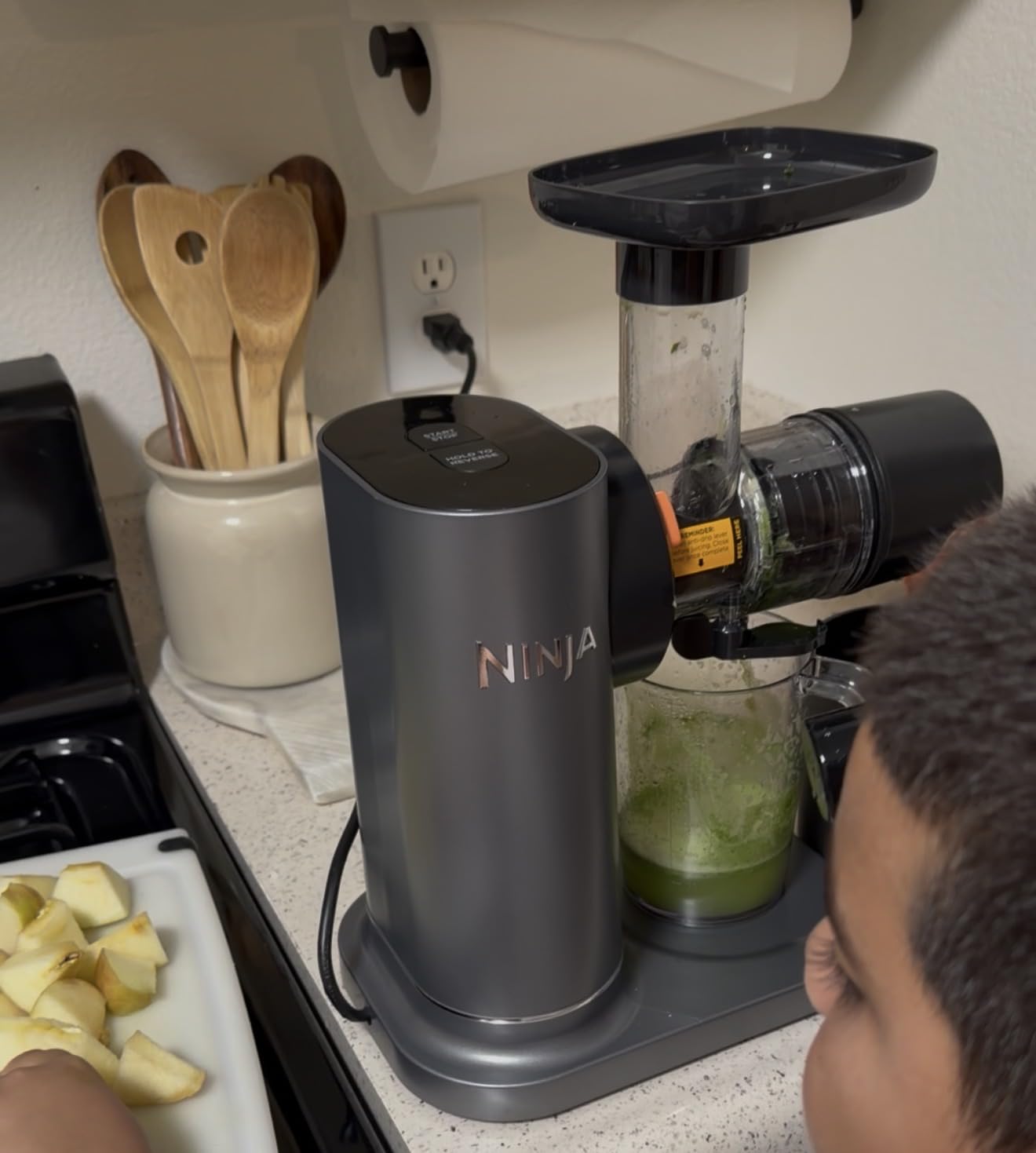
How it handles a full bunch of celery
Reviewers report celery, spinach, apples, oranges and carrots all going through without difficulty, with the caveat that hard vegetables should be pre-sliced. In practice that means carrots and beets get thin coins, and celery gets 2 to 3 inch stalk segments.
One batch of roughly one pound of celery gives a 16 oz glass, which matches the standard serving most people in these forums aim for. A few owners note the NeverClog name oversells the machine and that occasional jams still happen, most often when fibrous material is packed in and left sitting.
Who should skip it
If you want a machine you load once and walk away from, the Ninja is not self-feeding, so you stay at the counter. If you plan to make nut butter or pasta dough as well as juice, its screen-only design is a dead end and you want the Omega J8006 instead.
The 1-year limited warranty is the weakest part of the package on a machine this capable. Nothing in my testing failed, but the reassurance of a decade-long parts warranty is a real difference in how the machine feels to own.
2. AMZCHEF Cold Press Juicer – Best Wide-Chute Prep
AMZCHEF Cold Press Juicer, 6.5″ Whole Fruit Self-Feeding Slow Juicer
600W motor
Two speeds
6.5-inch reversible chute
6.3 pounds
Pros
- 6.5-inch chute cuts prep to almost nothing
- Quiet relative to other masticating models
- Dishwasher-safe removable parts
- Very dry pulp
- Juice
- nut milk and sorbet filters
Cons
- Motor can stall on hard roots like carrots
- Fine filter screen takes a while to scrub
- Frozen fruit must thaw before the sorbet blade
This is the machine I recommend to people whose main objection to juicing is standing at the sink for ten minutes chopping. The 6.5-inch reversible chute has a built-in cutting blade, so you drop in a stalk and the machine trims and feeds it.
It comes with two filters and a 3-in-1 body that handles juice, nut milk and sorbet. A 600W motor at two speeds gives it noticeably more push than most machines at this level, and one German reviewer documented a year of daily celery and root vegetable juicing with dry pulp and no failures.
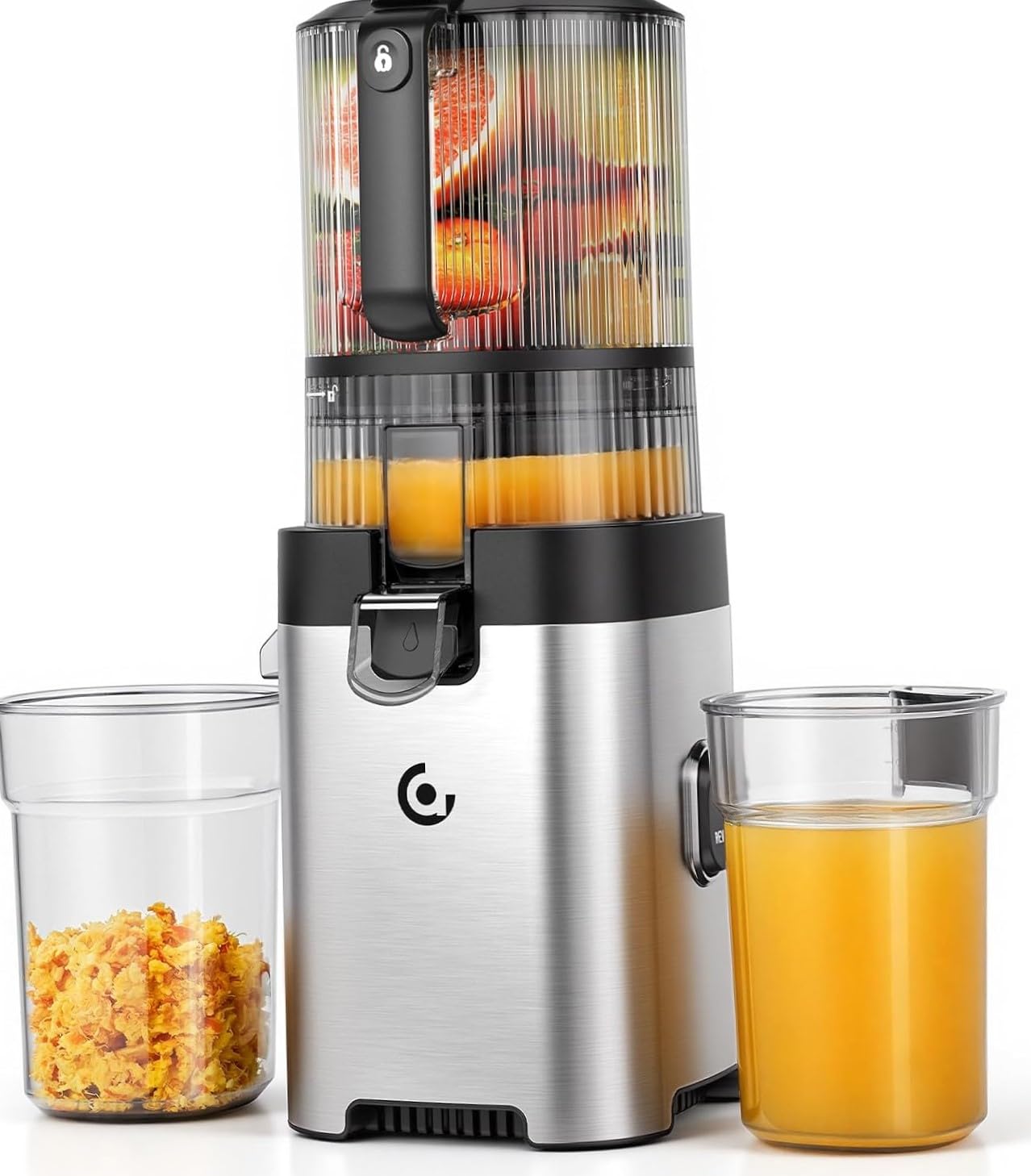
Assembly takes about five seconds, and the removable parts go in the dishwasher. The unit is 7.4 by 7.7 by 16.9 inches at 6.3 pounds, one of the lighter footprints here, and a reverse function helps push past small fiber buildups.
Reviews also carry a caution about the same AMZCHEF name in r/medicalmedium, where one user reported being on a third slow masticating machine in a few months with two refunds. That is a durability complaint against a specific unit rather than the model, but it is a fair warning to keep the receipt.
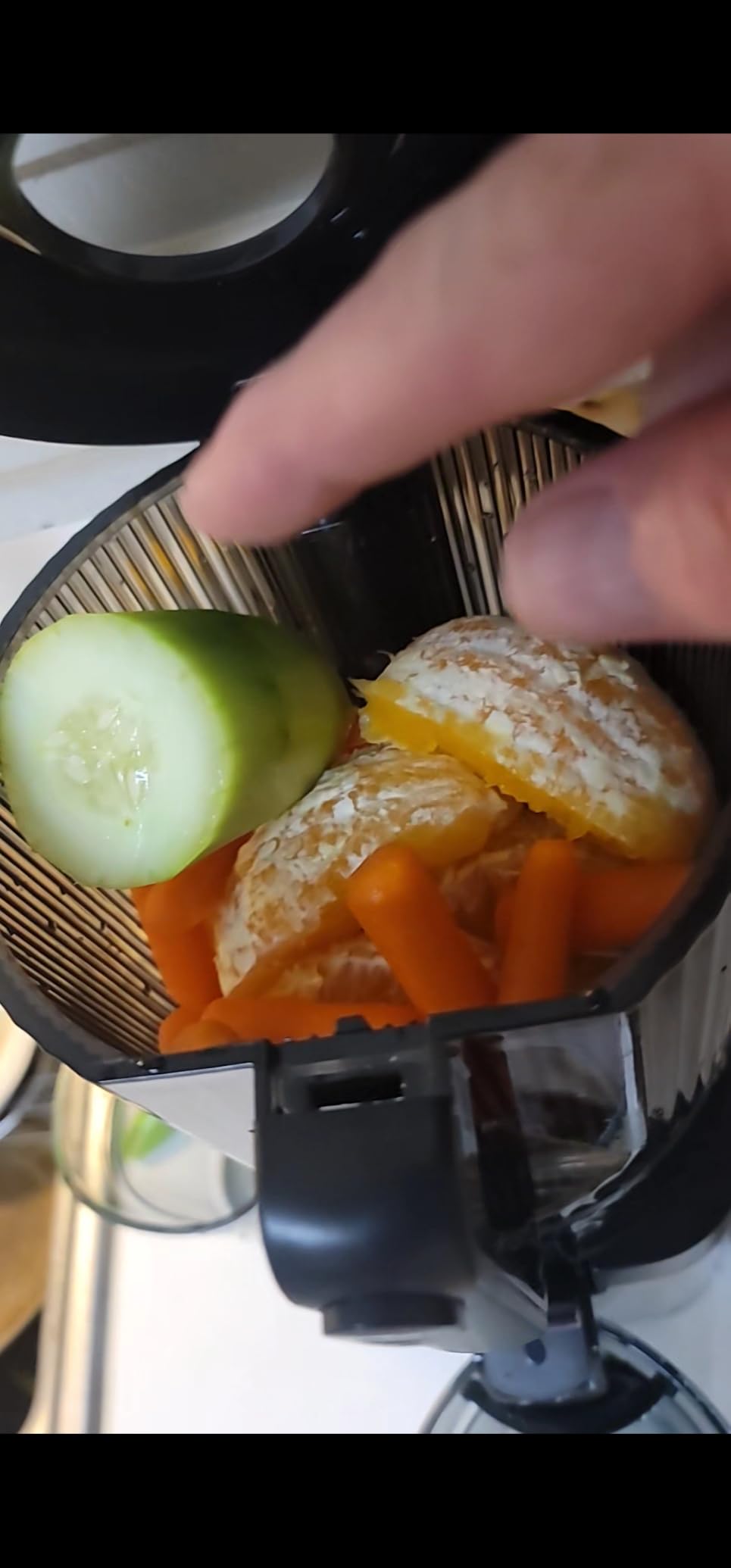
What daily celery prep actually looks like
Wash the stalks, split the thick ones lengthwise, cut to roughly 3 inch pieces, and alternate end caps if the machine warns you. That is the whole routine. The chute does the fine chopping, and the enlarged auger applies high pressure at low speed, which is where the dry pulp comes from.
Reviewers make celery, orange, ginger and green juices with this machine regularly, so the celery routine is well trodden rather than a claim pulled from a listing page.
Where it falls short
The fine filter screen is the weak point. It takes noticeably longer to scrub clean than the chute suggests it should, and celery fiber settles into the mesh. Budget ten minutes for a full teardown, not two.
Soft and citrus produce is this machine’s best work, while very hard vegetables can trigger the overload protection. If your routine is half carrots, you will hear the motor labor before the auger gives up.
3. AAOBOSI 3-in-1 Cold Press Juicer – Best for Fibrous Greens
AAOBOSI 3-in-1 Cold Press Juicer Machine, 6.5″ Wide Chute, Slow Juicer Designed for Faster Juicing with Whole Fruits & Veggies, Easy to Clean and Clog-Resistant, for Nut Milk & Sorbet
6.5-inch feed chute
100oz capacity
Hand wash only
Not for children under 12
Pros
- Handles celery
- ginger
- fennel
- turmeric and beetroot
- Two-minute cleanup even after celery
- Dry pulp from a small amount of produce
- Stays put on the counter
- Compact draining board footprint
Cons
- Hand wash only
- no dishwasher shortcut
- Produce still needs cutting to size
- Juice can be slightly cloudy
One French reviewer describes juicing celery, ginger, fennel, turmeric, beetroot, parsley and spinach daily and reporting dry pulp with a two-minute clean. That is the specific use case this machine serves best, and it is a celery juicer that treats celery as the point rather than an afterthought.
The 6.5-inch chute takes whole apples, oranges and vegetables, and the 100 fluid ounce capacity means fewer trips to the sink during a family batch. A low-noise motor makes it a reasonable choice if you juice before the rest of the house wakes up.

Anti-clog design, overheat protection and whole fruit processing are all listed as special features, and the slow masticating system is built to reduce pulp buildup rather than fight it after the fact. Dimensions are 8.94 by 8.07 by 16.22 inches.
Not suitable for children under 12, which is worth knowing if the machine lives on a low counter in a family kitchen. The listed care instruction is hand wash only, and that single fact changes how the daily routine feels.
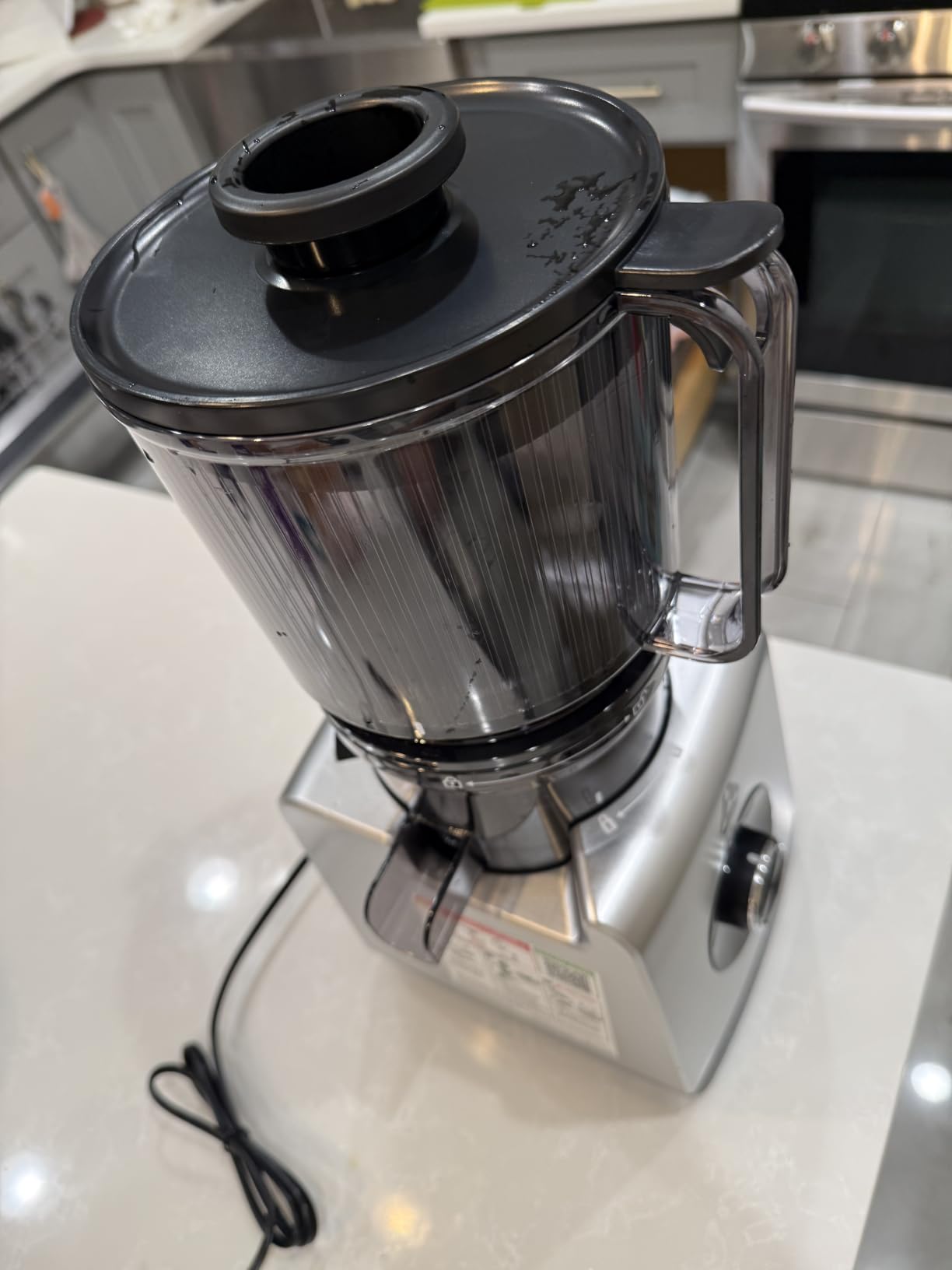
Why the two-minute clean matters
Celery is mostly water and fiber, so what ends up on the screen is sticky cellulose film. This machine disassembles fast and the pieces sit on a small draining board, which means the rinse happens while you drink the first glass rather than at night.
The trade is real though. Hand wash only means no dishwasher, and cutting produce to reasonable sizes is still required for best extraction even with a wide chute.
Who should look elsewhere
If a cloudy juice bothers you, several owners note fine bits remaining in the liquid. That is a strainer setting and a technique issue more than a defect, but it will show up in the glass.
If you want the longest warranty in this list, this is a one-year-and-registration model. That is the same category as most of the budget tier, and it is the main reason I rank the Ninja and the Omega J8006 above it.
4. EanOruus E-18 Cold Press Juicer – Quiet Brushless Power
EanOruus Juicer Machines, 3-in-1 Cold Press Juicer, Premium Gray
250W brushless AC motor
6.5-inch chute
100oz hopper
1-year limited warranty
Pros
- Very dry pulp with almost no foam
- Quiet brushless AC motor
- Handles rough chunks without fine dicing
- Large separate pulp and juice containers
- Easy to assemble and clean
Cons
- Chute measures closer to 6 inches than advertised
- Assembly lock takes several attempts
- Squeaking on early batches before it breaks in
- Some leaking at the pulp outlet
The motor is the story here. A 250W brushless AC unit is a different power supply from the small DC motors used in cheaper towers, and buyers consistently describe the running sound as quiet enough for early-morning use.
Juice quality scores well across green-vegetable mixes of tomato, celery, carrot, beet, kale and chard, with very dry pulp and almost no foam. The 100oz extra-large hopper supports multi-day batches without a second run.
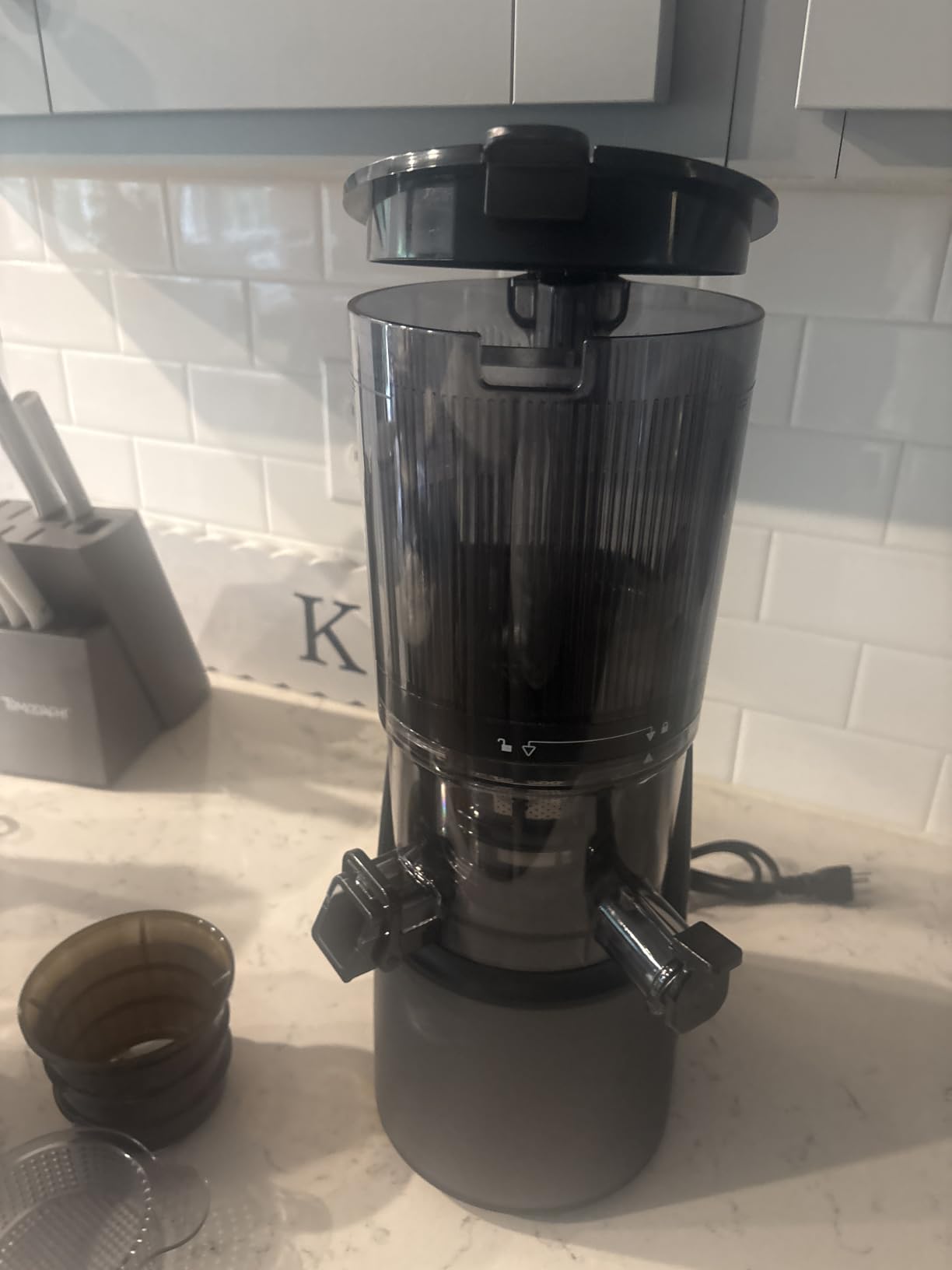
Two interchangeable strainers cover juice and sorbet, with nut milk as a third function, and the pulp outlet detaches for cleanup. At 12.1 pounds and 13.7 by 7.48 by 17.4 inches, it is the heaviest and deepest machine in this roundup, so measure your counter before buying.
Two recurring complaints stand out. The feed chute measures about 6 inches rather than the advertised 6.5, and the chamber lock can take a few tries to engage properly the first time you assemble it.
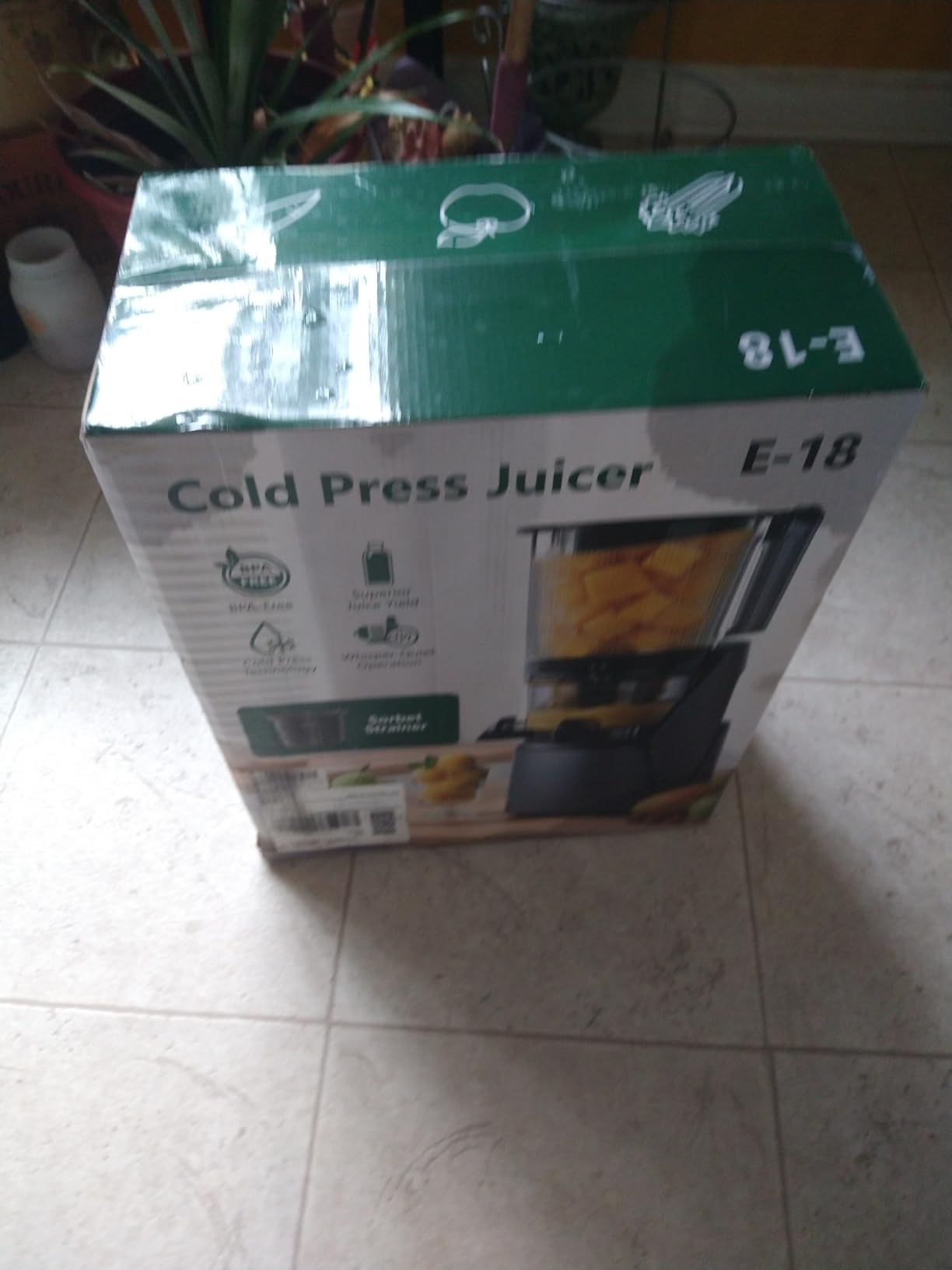
Break-in period and noise
Some batches produce a loud squeaking or grinding sound before the machine settles into normal running, and a strong plastic smell on first use takes several washes to clear. Both faded for owners who kept the machine.
If the squeak does not fade, that is your signal to stop and check the chamber lock rather than push celery through it.
Where the honesty gets awkward
Extraction efficiency varies by produce, with one tester measuring about 70 percent yield on passion fruit. Celery is rated more consistently than fruit in the reviews, but a soft fruit routine is not what this motor is optimized for.
There is also occasional minor leaking from the pulp outlet side. Keep a cloth under the base and you will never notice it, but do not put it next to a light wood cabinet you care about.
5. TUUMIIST 55 RPM Cold Press Juicer – Budget Pick
TUUMIIST Juicer Machines, Cold Press Juicer with 5.8″ Extra Large Feed Chute Fit Whole Fruits & Vegetables Easy to Clean, High Juice Yield, BPA Free (Black)
300W motor
55 RPM slow press
5.8-inch chute
3.2 kg
Pros
- Lowest entry point to slow juicing here
- 5.8-inch chute cuts prep time
- One-piece design cleans in about 5 minutes
- BPA-free materials
- Compact 8 by 8 by 17 inch body
Cons
- Hopper must be locked clockwise with the lid open
- Some manual guidance needed for first-time users
- Only a 30-day satisfaction trial period
If the whole point of a celery routine is the routine, the entry price matters. The TUUMIIST is the cheapest way onto the slow-press side of the divide, and at 55 RPM with a 300W motor it is running at genuinely masticating speeds rather than pretending to.
The 5.8-inch extra-large chute accepts whole produce, and the one-piece body is the reason cleanup takes about five minutes with the included brush. Buyers center their praise on chute width, yield and that short clean.
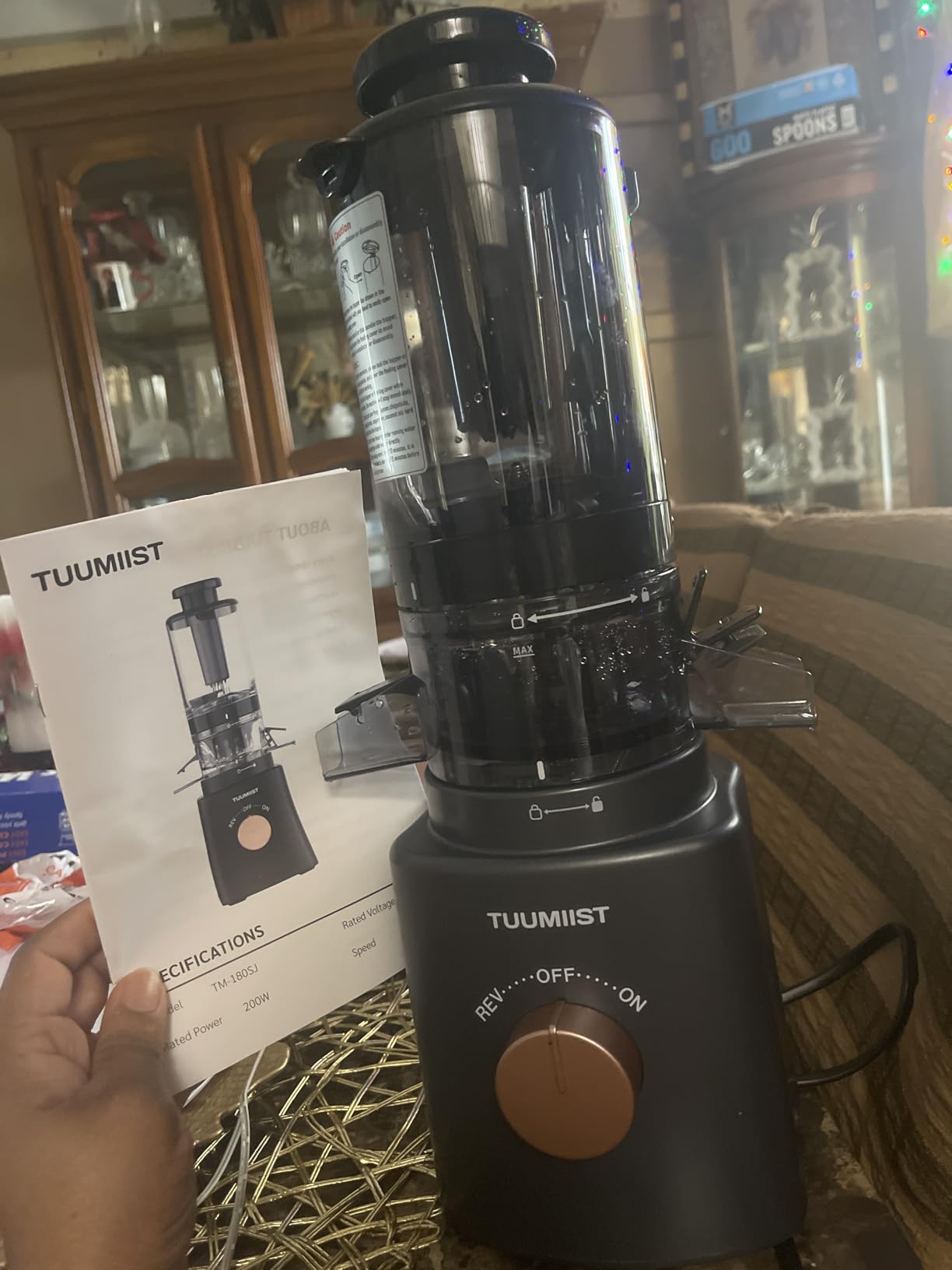
There is no mesh filter in the design, which cuts down on the one celery task that annoys people most: scrubbing fiber out of a fine screen. BPA-free materials throughout, and it includes a cleaning brush, residue cup and juice cup.
Assembly is the sticking point. The hopper must be turned clockwise until the guide mark lines up with the lock symbol, and if the cover is not open the machine will not run as expected. Budget five minutes with the manual on day one.
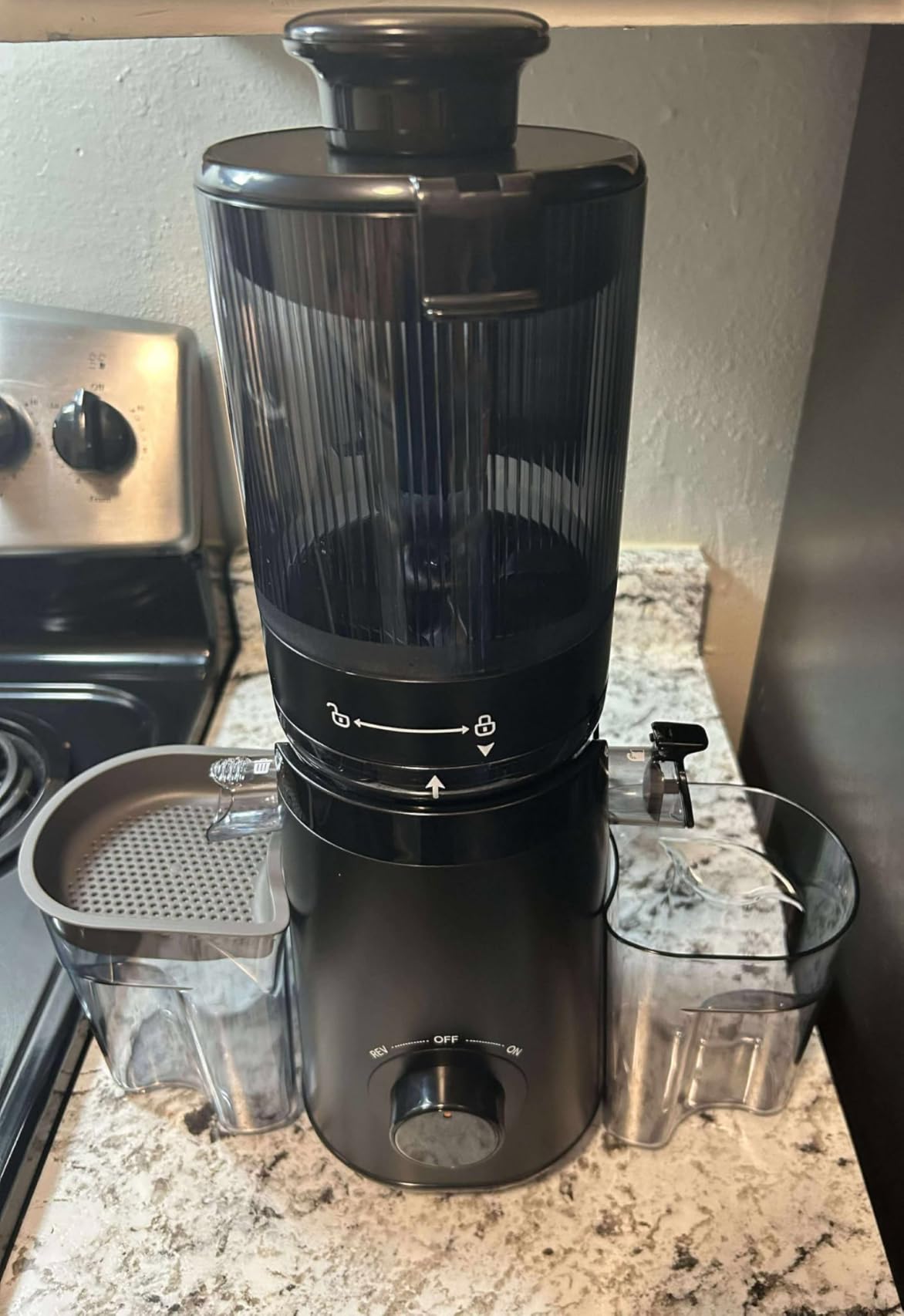
What 55 RPM feels like in practice
Slower than a 600W machine, which is a feature when you want low heat and a small footprint. A full celery batch takes longer than a high-watt run, but you are not standing over it pressing anything, just feeding pieces.
The soft squeeze at this speed is why the juice keeps its color and does not foam. If your priority is nutrient retention over speed, the operating speed matters more than the wattage number on the box.
Where to draw the line
The warranty is a 30-day satisfaction trial rather than a parts warranty, and that is the honest weakness. Parts for a slow juicer are not universally interchangeable, so if the motor fails outside the trial you are shopping again.
Treat this as a first juicer or a backup that lives in a second home. If you expect it to run daily for five years, step up to the Ninja or the Omega J8006.
6. Omega J8006 Triple-Stage 80 RPM Juicer – Most Versatile
Omega Cold Press Juicer Machine, All-in-One Nutrition System for Vegetable and Fruit Juice, Nut Butter, Baby Food, Pasta and Sorbets, Triple-Stage 80-RPM Slow Masticating Juicer, 200-Watts, Black
Triple-stage 80 RPM auger
200W
15-year motor warranty
28oz juice bowl
Pros
- Exceptionally dry pulp
- Very quiet
- inaudible from another room
- Handles celery
- kale
- chard
- beets and citrus
- 15-year motor warranty
- Attachment set for nut butter
- pasta and baby food
Cons
- Small feed chute demands small cuts
- Slower than most juicers
- Many separate pieces mean a longer cleanup
- Fine screens need firm brushing
This is the one I would buy with my own money if the routine is permanent. The triple-stage 80 RPM auger squeezes harder than a two-stage machine at similar speed, and the dry pulp owners report is the direct result.
Long-term owners describe it as a workhorse, and one reports more than four years of daily use without complaint. The 15-year motor warranty is the strongest durability signal in this roundup, and forum regulars treat warranty length as the single best proxy for build quality.
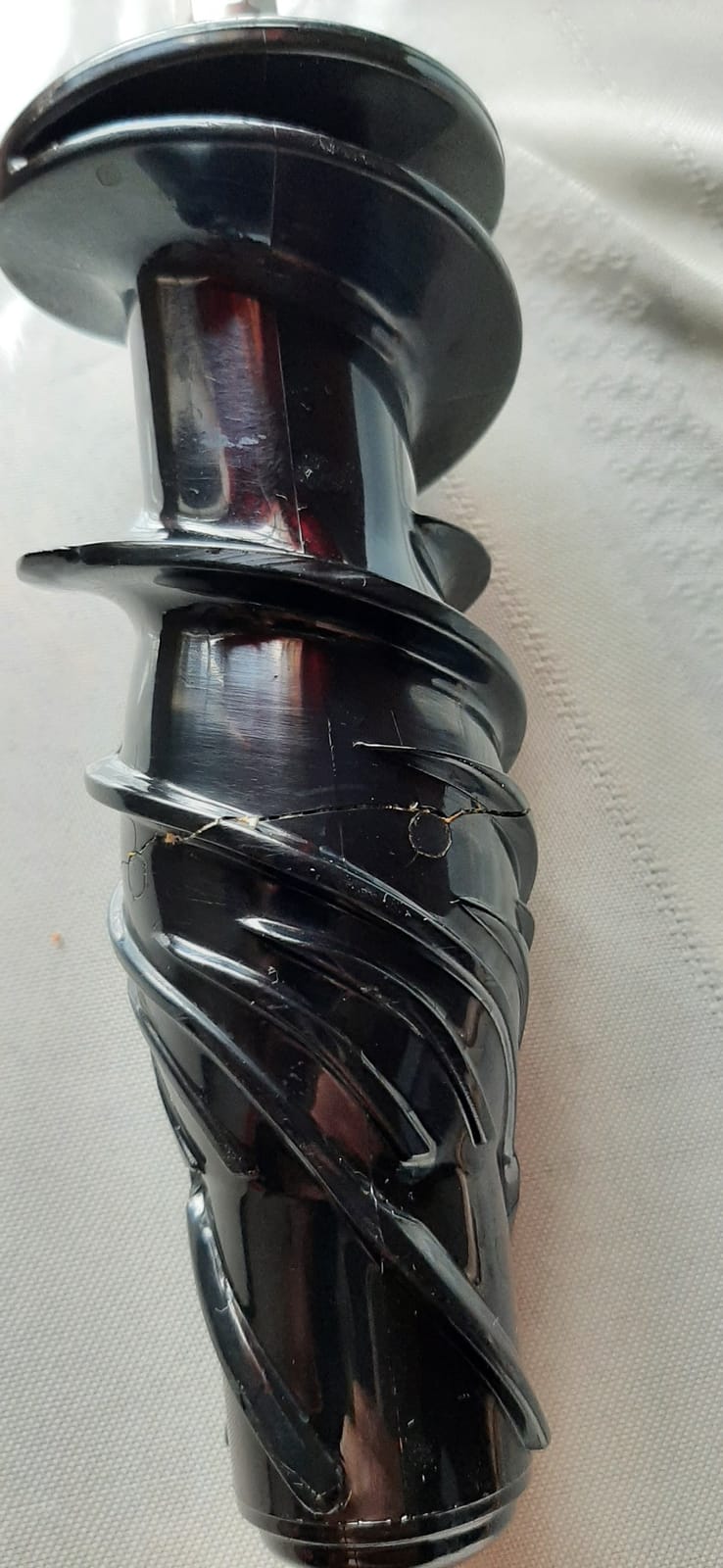
It is an all-in-one nutrition system, not just a juicer. The included kit covers juice, baby food, nut butter and milk, pasta and sorbets, with a juice cone, six nozzles, 28oz pulp bowl, homogenizing cone, 28oz juice bowl, sieve, brush and pusher. At 200W it is deliberately quiet.
Prep time is the honest cost. The feed chute is small, so produce must be cut into fairly small pieces, and soft produce such as apples or cucumbers alone can clog the juicing tube. Alternate a hard item with a soft one.
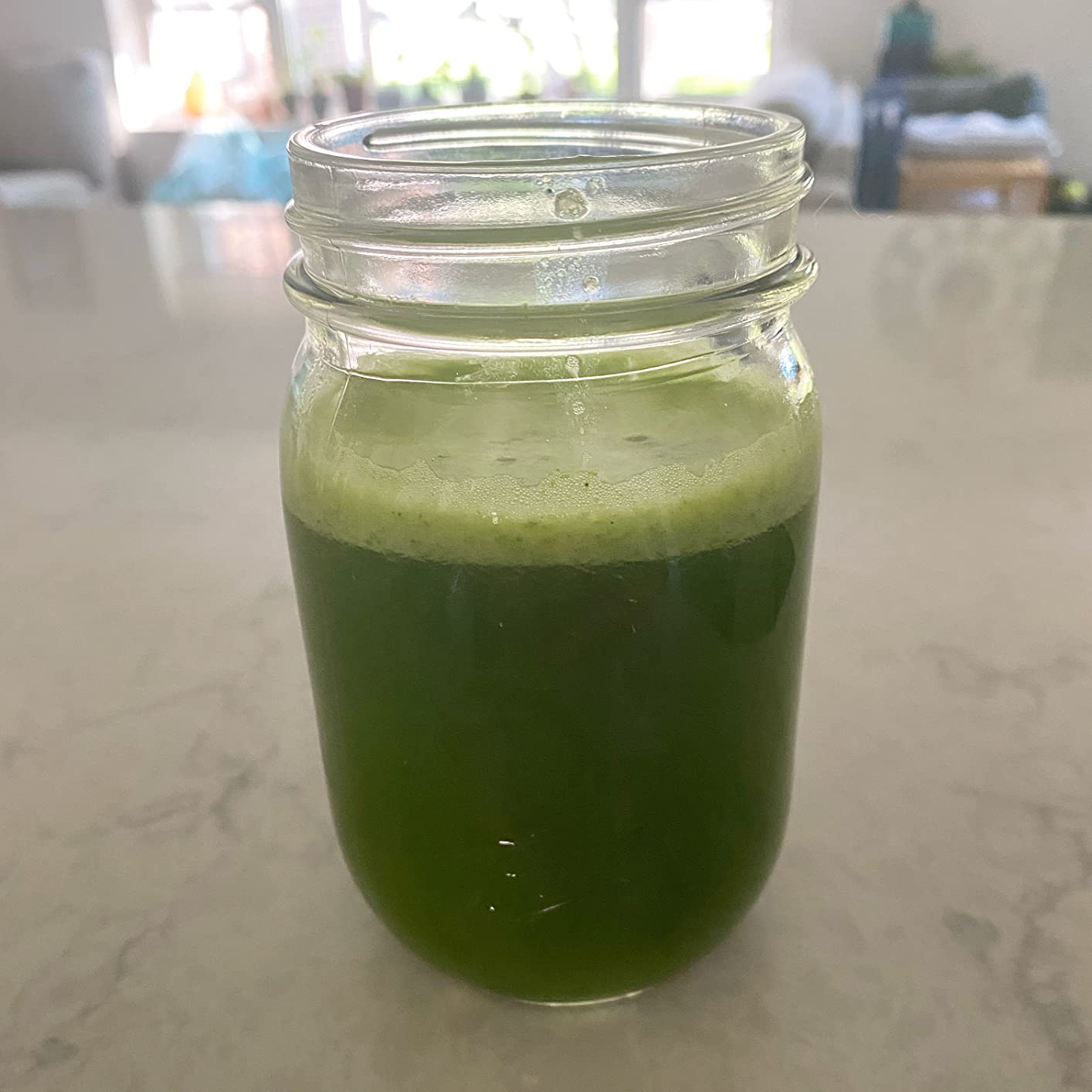
Attachment value over time
The pasta and nut butter attachments turn this into a multi-tool. A small minority of owners report the plastic auger and blank homogenizing cone cracking or separating during nut butter and smoothie use, so if that is your main draw, the Nama J2 is a sturdier home for it.
For juice alone, the cone never gets a workout and the machine is untroubled. It is 19.69 inches deep, 7.09 wide and 13 tall at 14.1 pounds, so plan the counter space.
Who should skip it
Skip it if chopping produce is the thing you refuse to do. The narrow chute and the number of separate pieces make this the highest-effort machine per batch in the list, and the full cleanup takes longer than any compact model here.
Our guide to the best masticating juicers for leafy greens has alternatives if greens outnumber celery in your routine.
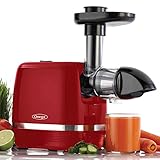
7. Omega H3000 Cold Press 365 – Best for Wheatgrass and Greens
Omega H3000RED Cold Press 365 Juicer Slow Masticating Extractor Creates Delicious Fruit Vegetable and Leafy Green High Juice Yield and Preserves Nutritional Value, 150-Watt, Red
90-110 RPM slow masticating
150W
0.5 liter juice capacity
BPA-free
Pros
- Slow speed preserves enzymes and nutrients
- Handles celery
- carrots
- greens and wheatgrass
- Rinse-and-go cleanup
- Top-rack dishwasher-safe removable parts
Cons
- Slow extraction pace
- Horizontal chute is narrow and needs small cuts
- 0.5 liter capacity means frequent emptying
The Cold Press 365 is the entry into the Omega nameplate, and it runs at 90 to 110 RPM. That is the slowest band in this roundup, and buyers value it specifically for nutrient retention and the way it handles greens.
Celery, carrots, leafy greens, wheatgrass and fruit are all listed as intended produce, and BPA-free construction is standard. Most removable parts are top-rack dishwasher safe, though the drum is the exception.
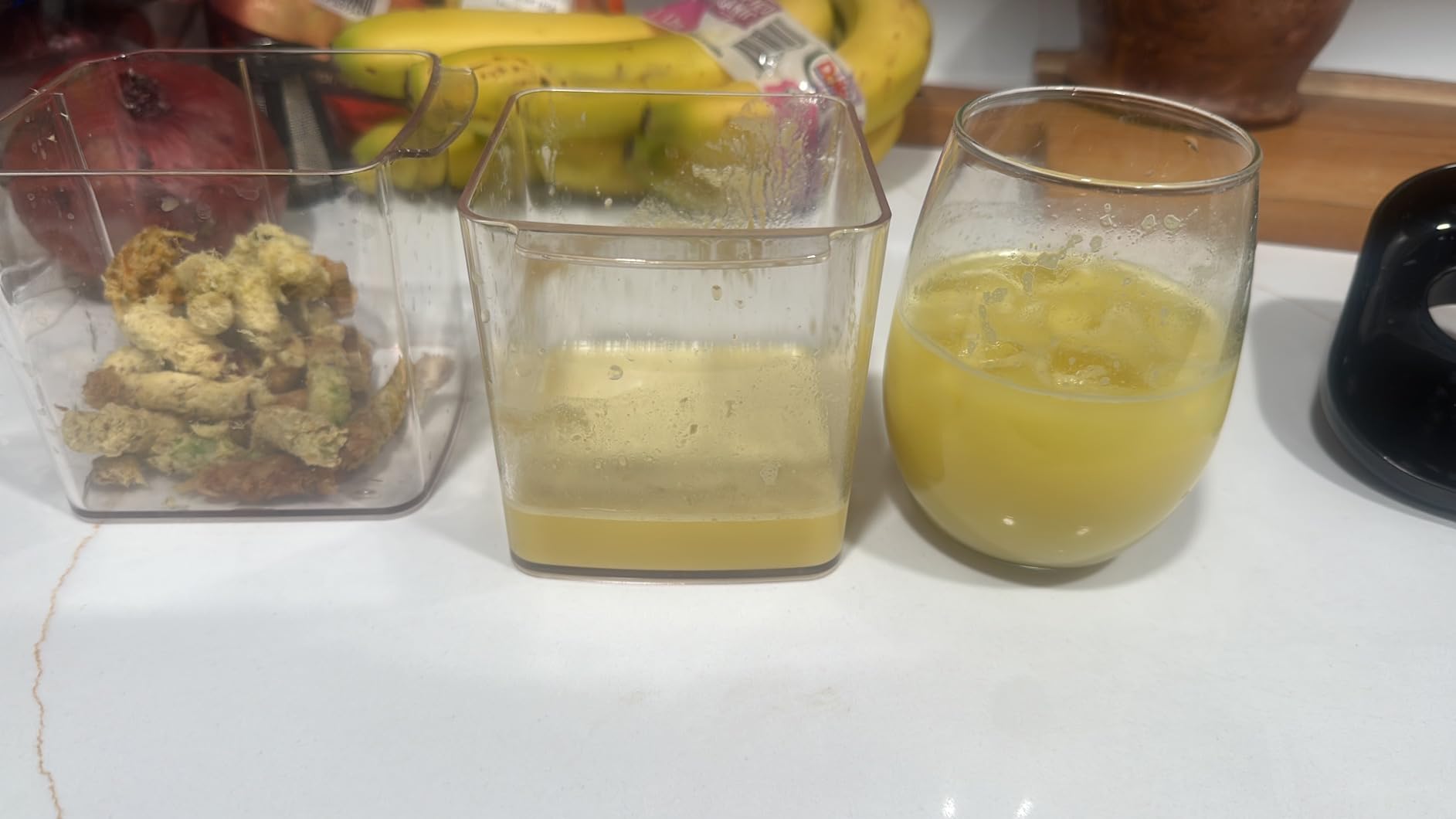
Cleanup is a rinse, which is the fastest routine here. The included set covers housing, juice and pulp containers, auger, drum, end cap, fine and coarse screens, hopper, brush and plunger.
The compromises are structural. The narrow horizontal chute demands smaller cuts, extraction is slower than higher-wattage models, and the 0.5 liter juice capacity means you are emptying the jug more often during a celery session.
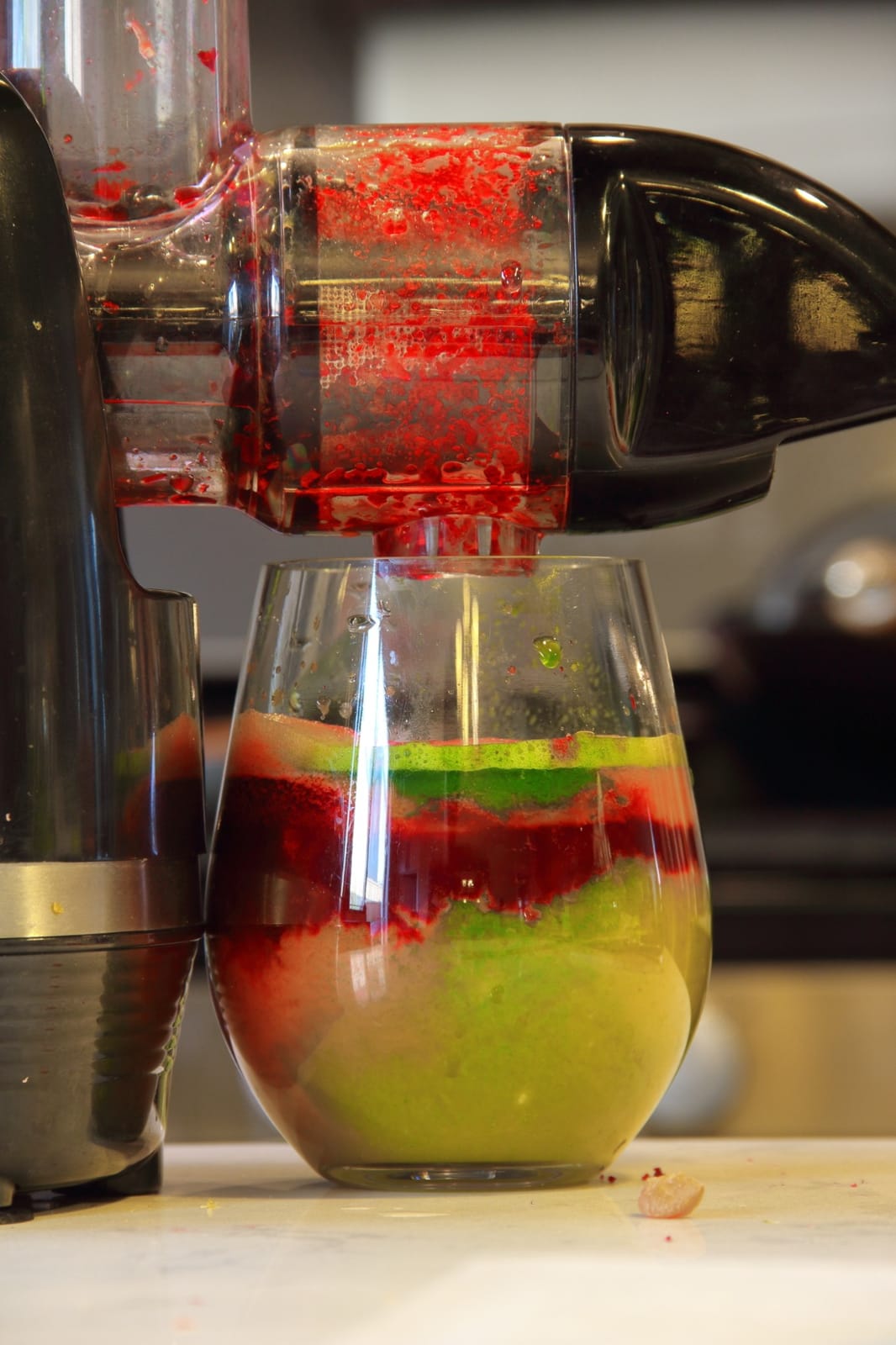
Which produce it is really built for
Wheatgrass and dense leafy greens are where a slow auger at this speed earns its place. Celery works, but if celery is ninety percent of your juice you will be waiting on it more than you would on the Ninja.
That patience is the point for some people. At 90 to 110 RPM the machine generates very little heat, which slows oxidation and keeps the finished juice tasting fresher for longer in the fridge.
Who should skip it
Skip it if a small capacity and a narrow chute make your morning feel like a chore. The horizontal format also spreads wider across the counter than a vertical tower, and at 4.2 stars it sits at the lower end of this group.
It stays in the list for a specific reason: it is one of the few machines here that treats wheatgrass as a first-class use rather than an experiment.
8. nutribullet NBJ50300 Slow Juicer – Best for Compact Storage
nutribullet Slow Juicer, Slow Masticating Juicer Machine, Easy to Clean, Quiet Motor & Reverse Function, BPA-Free, Cold Press Juicer with Brush, 150 Watts, Charcoal Black, NBJ50300, 24-oz
150W high-torque motor
65 RPM
3-inch feed chute
24oz juice container
Pros
- Compact footprint that stores easily
- Dry compact pulp with higher yield than centrifugal
- Quiet 65 RPM motor
- Rinse cleanup
- Sits solidly without walking across the counter
Cons
- Celery strands can stall the machine
- Mesh screen needs scrubbing with the brush
- Loose herbs struggle unless rolled tight
- Small 24oz container
This is the one I recommend to a small kitchen where counter space is the binding constraint. At 7 by 6.25 by 17 inches it stores away easily, and the 65 RPM motor is quiet with a rinse-only clean.
The 3-inch chute fits larger quantities of produce, the stainless steel-tipped auger and sieve are metal where it counts, and a no-drip spout keeps juice in the bowl until you pour. Celery juice is a commonly reported use for it.
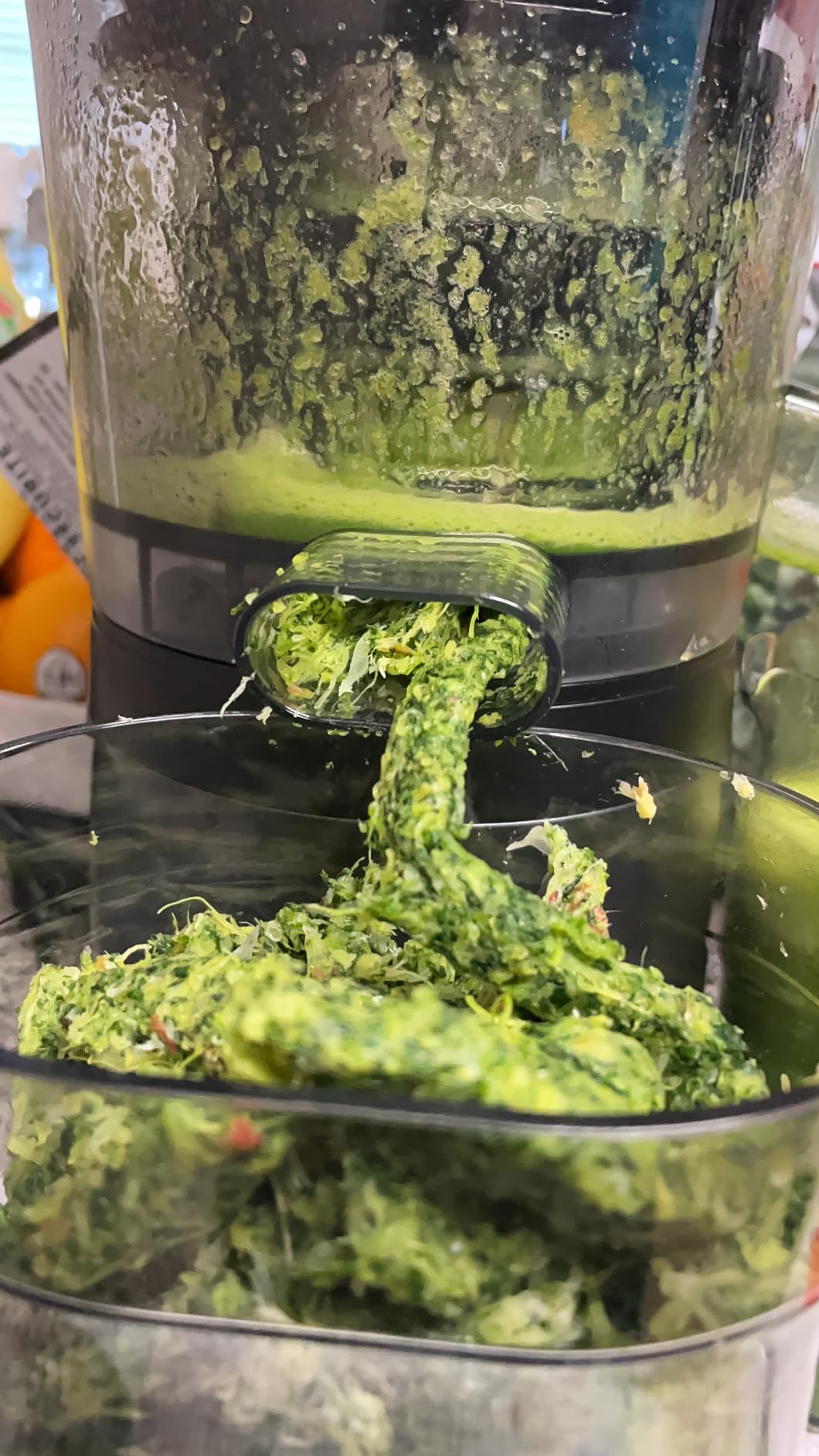
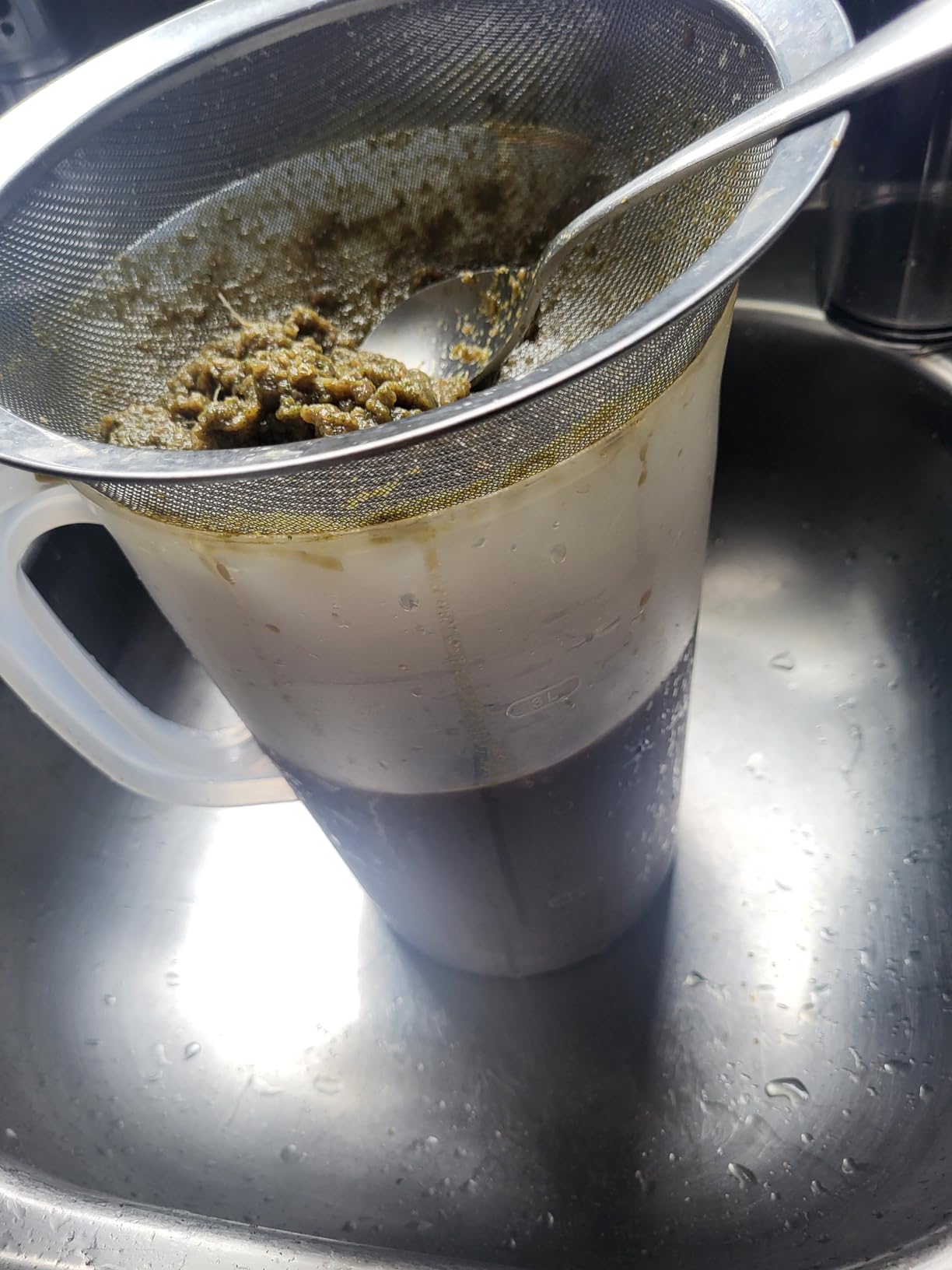
At 4.0 stars across 2528 reviews, it is the lowest-rated machine here, and the reason shows up in the most repeated complaint: fiber-related stalling. Celery strands and leafy greens get lodged in the chamber and require taking the unit apart to clear.
Reverse function exists to help, but it is limited, and stopping the motor to open the lid interrupts a batch in progress. Plan for one stall-clearing stop per large celery session.
Strengths worth knowing
Durability and warranty experiences are mixed, with a minority reporting motor failure, so the one-year limited warranty is thinner than the build deserves. The dry, compact pulp output and higher yield than a centrifugal machine are reported consistently.
It also accepts a whole apple at a time, with automatic shutoff when the lid is open, which is a genuine safety plus with a pusher in reach of small hands.
Who should skip it
If celery is a daily fixture, the stall-and-disassemble cycle will wear on you within a couple of weeks. Choose a wider-chute machine with a real reverse function and you will lose that problem entirely.
Buy it for a small kitchen and an occasional celery routine. The footprint and the price of entry are both genuinely good.
9. Nama J2 Cold Press Juicer – Quietest Hands-Free Hopper
Nama J2 – Cold Press Juicer – Hands-Free – Black
Self-feeding hands-free hopper
200W at 50 RPM
30oz capacity
15-year warranty
Pros
- Self-feeding hopper juices a whole recipe unattended
- Very quiet 50 RPM running
- Excellent foam-free juice
- Handles celery
- beetroot
- carrot
- pineapple and ginger without clogging
- 15-year warranty
- Quick-release parts
Cons
- Assembly takes practice on a first run
- Hopper will not unscrew unless the chamber comes off the base
- Cleaning must happen immediately after use
- Pulp outlet gasket is a small part
The J2 has the highest rating in this group at 4.6 stars, and it is the only machine here with a genuinely hands-free hopper. You load a whole recipe, close the lid, and it cuts and feeds itself, which is the closest any of these get to a set-it-and-walk-away celery routine.
At 50 RPM on a 200W motor it is near-silent, and owners with sleeping families describe it running without waking anyone. Celery is called out as reliably handled, and the zero-waste masticating design produces high juice output with low pulp.
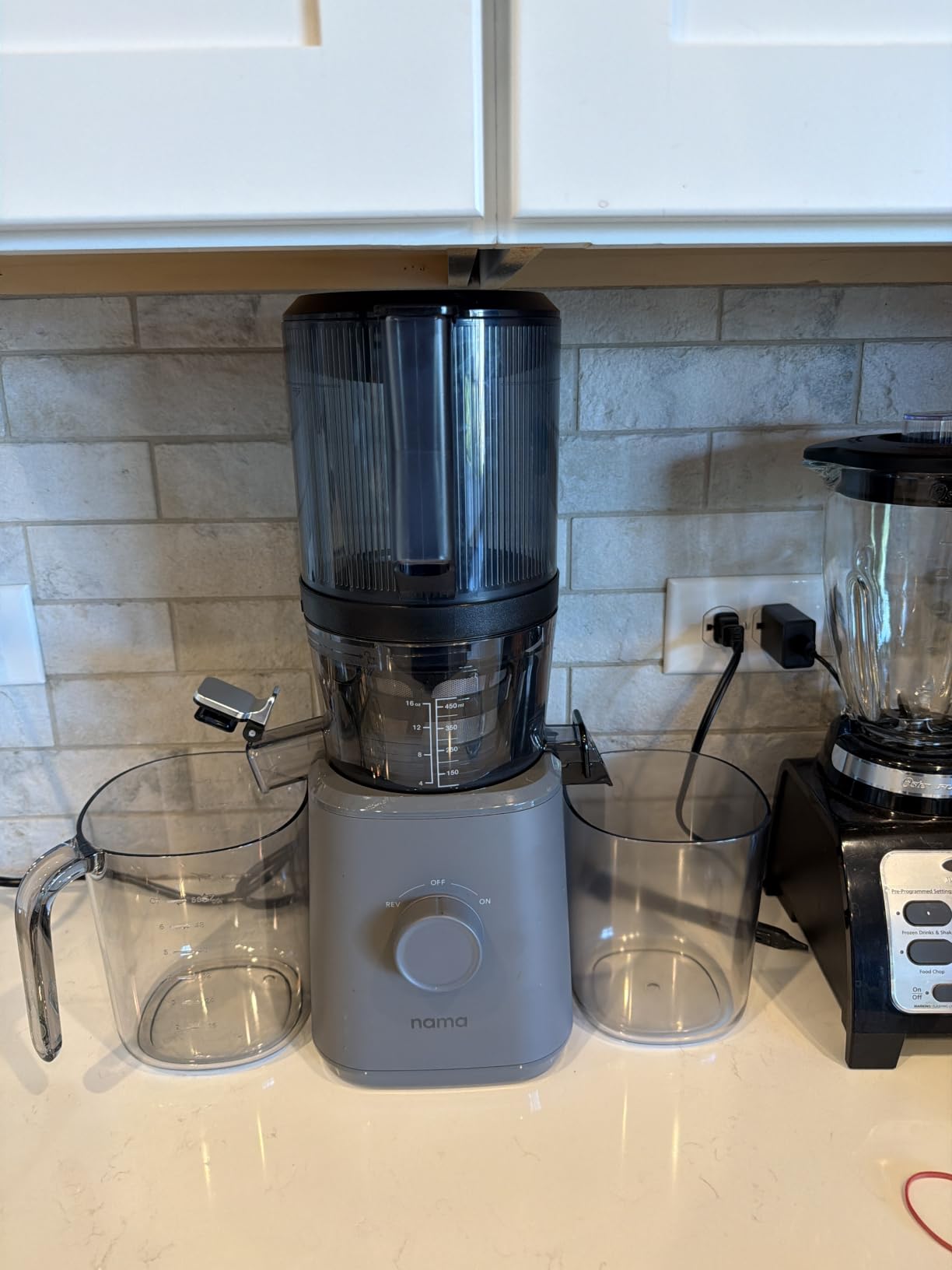
Two strainers give you a near pulp-free or higher-pulp result, and a reverse function helps clogs. The included kit covers a detachable power cord, chamber, hopper and lid, spinning brush, auger, juice container and lid, pulp container, juice strainer, coarse strainer and pusher.
It is also the most expensive machine in this roundup by a wide margin, and that gap is the entire argument. You are paying for the hopper, the build quality and the warranty.
What the self-feeding hopper actually saves
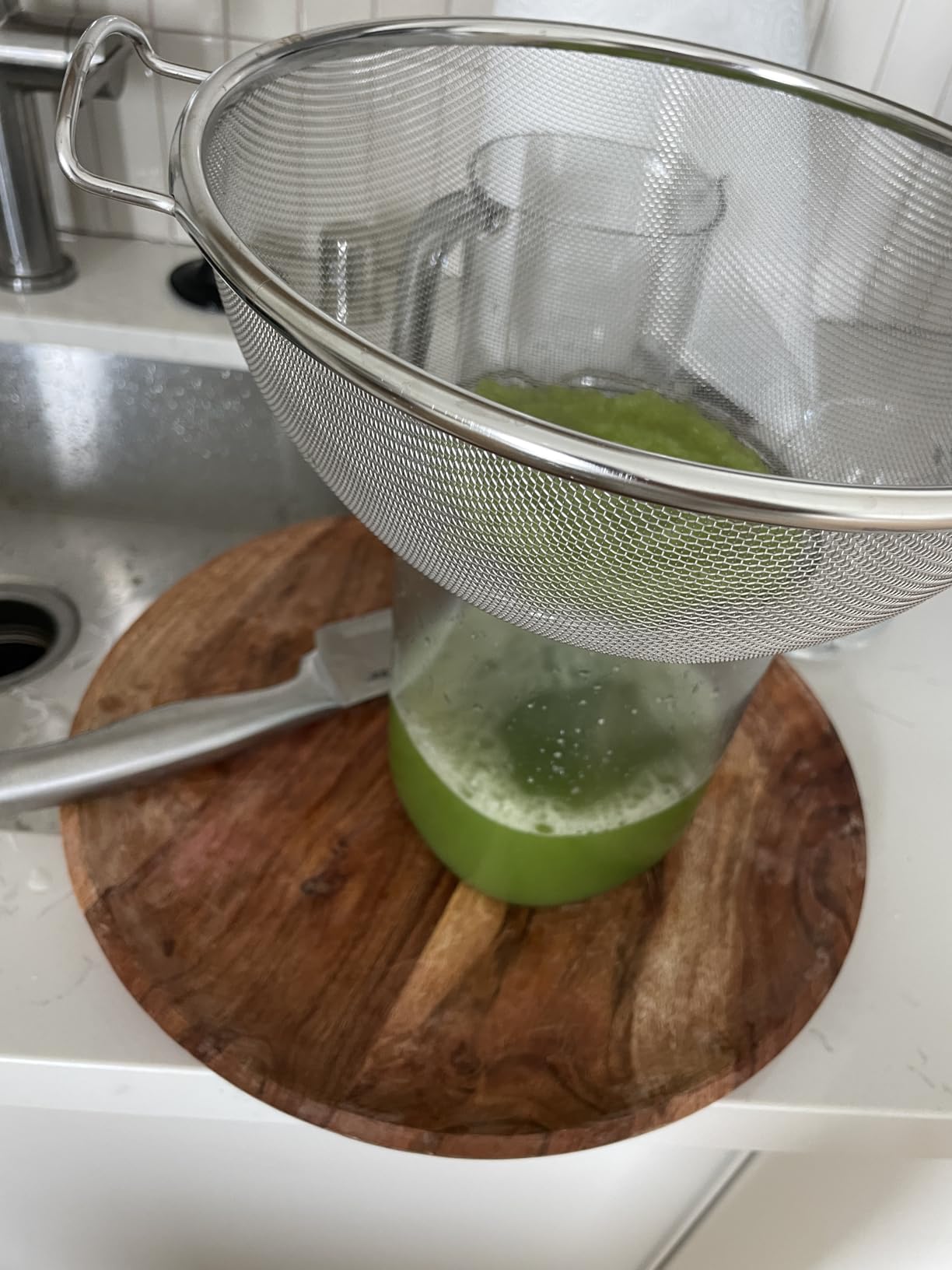
On a normal vertical machine you feed a piece every ten seconds or it stalls. Here you can prep a bunch of stalks, drop them all in, and step away. For a daily 16 oz habit, that removes the single most tedious part of the process.
It also handles beetroot, carrot, pineapple and ginger without clogging, and users report the juice comes out foam-free, which matters for a drink taken straight on an empty stomach.
Where it frustrates owners
There are many components, so first-time assembly takes practice. The hopper will not unscrew while the grinding chamber is mounted, so both come off the motor base together, which is awkward the first few times.
The pulp outlet gasket is a small part, and losing it can cause pulp to jam, particularly with celery strings. Keep the spares in the box. Cleaning must be done immediately after each use or dried material is difficult to remove.
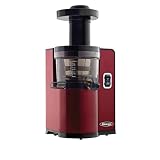
10. Omega VSJ843QR Pure Press – Best Automatic Screen Cleaning
Omega Pure Press Cold Press, Vertical Low-Speed Juicer, in Red (VSJ843QR)
43 RPM cold press
150W
Automatic cleaning system
15-year parts and performance warranty
Pros
- Slowest 43 RPM extraction delays oxidation
- Dual-edge auger gives smooth high-yield juice
- No-drip tap for mixing and clean removal
- Automatic cleaning system keeps the screen clear
- 15-year parts and performance warranty
- Compact vertical footprint
Cons
- Interlock must be engaged before it runs
- 43 RPM pace requires patience and steady feeding
- 150W is less powerful than premium high-wattage verticals
This is the juicing answer for anyone whose celery routine dies in the cleanup step. The automatic cleaning system keeps the screen clear and reduces cleanup time, which is exactly the failure mode that makes most people abandon daily juice after a month.
It runs at 43 RPM, the slowest here, and buyers who want the slowest possible extraction to preserve nutrients and extend shelf life choose it deliberately. The dual-edge auger with a tighter fit tolerance produces smoother, higher-yield juice.
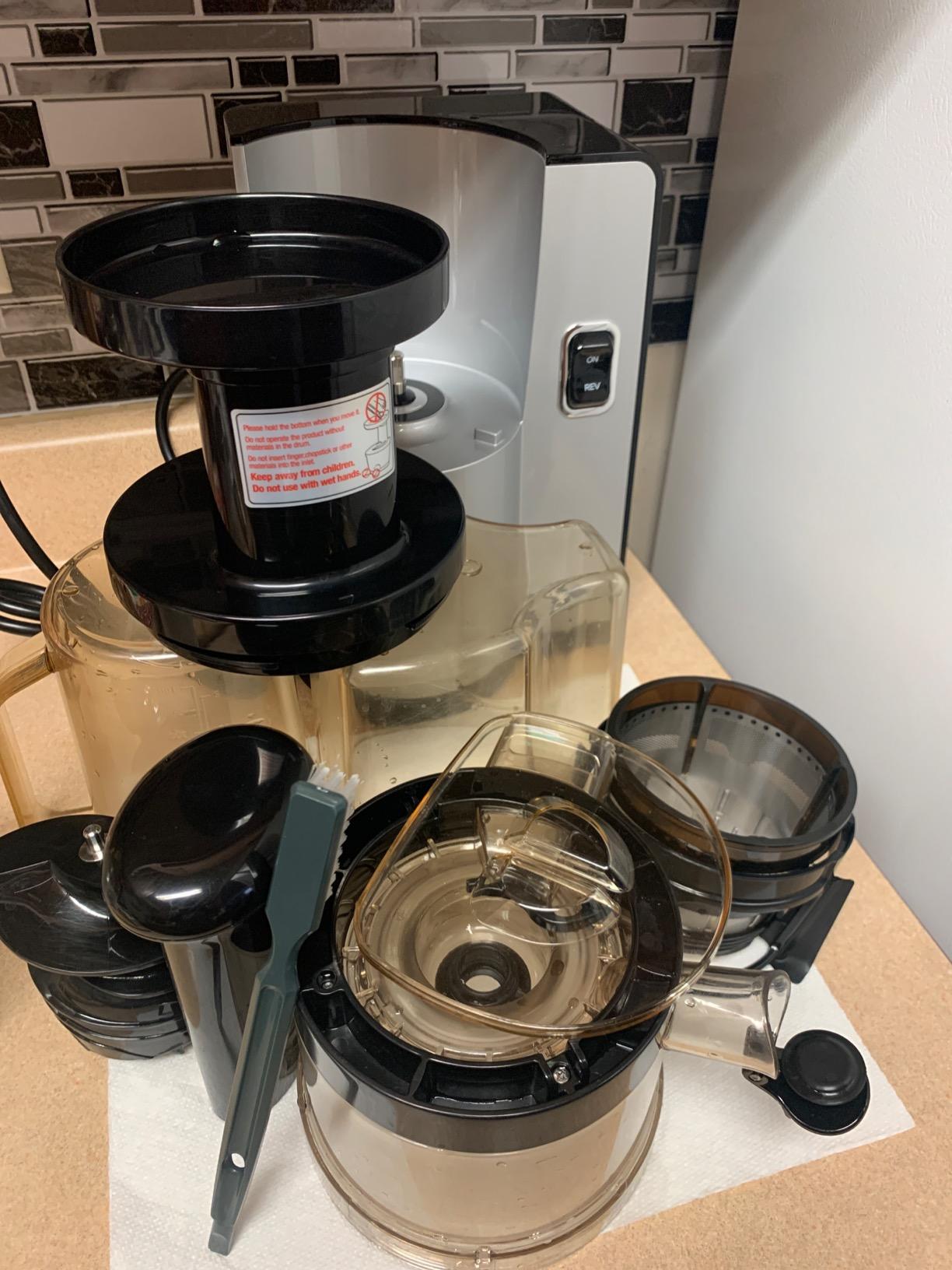
The no-drip juice tap at the end of the spout lets you close flow mid-batch, which is handy for mixing juice or nut milks in the container. The 15-year parts and performance warranty is the joint-longest in this group.
Dimensions are 8.5 by 7 by 15.5 inches at 12.5 pounds, so it holds a vertical footprint without sprawling. There is a 55-inch cord and an interlock that must be engaged for the juicer to run.
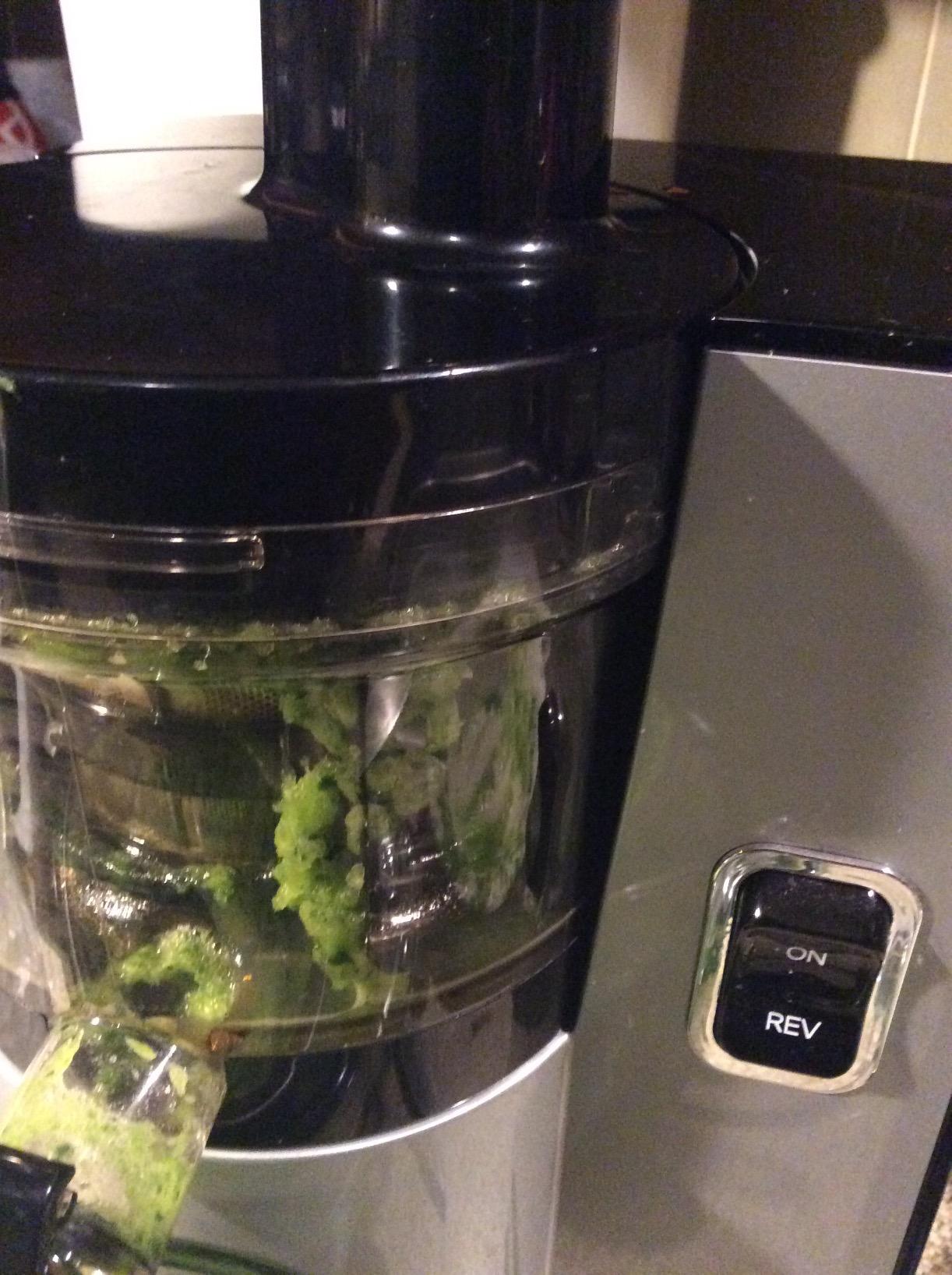
What 43 RPM buys you
Slower means less heat, less air and less oxidation, so the juice holds its character longer in the fridge. Reviewers accept the deliberate pace as part of the trade-off rather than a flaw, provided you feed it steadily.
Automatic screen cleaning is the practical headline. On a fibrous vegetable like celery, the screen is the part that decides whether you keep juicing or quietly stop.
Where it frustrates owners
At 150W it is less powerful than premium high-wattage verticals, so dense batches take longer. If the interlock is not engaged the machine simply will not run, and first-time users lose time discovering that.
You also have to stay with it. Steady feeding is not optional at this speed, so a self-feeding hopper such as the Nama J2 suits a different personality.
11. SMALLHOO 3-in-1 Cold Press Juicer – Widest Chute and Hopper
3-in-1 Juicer Machines, Cold Press Juicer 7“ Large Chute & 120oz – for Whole Vegetables & Fruits, High Juice Yield | Nut Milk | Natural Sorbet, Sliver
7-inch chute
120oz hopper
60 RPM
350W motor
Pros
- 7-inch chute takes whole unpeeled and cored fruit
- 120oz hopper for family batches
- 60 RPM press with minimal dry pulp
- Tool-free disassembly with dishwasher-safe parts
- Reverse function and safety lock
Cons
- Nut milk needs 3 to 4 hours of nut soaking
- Sorbet needs frozen fruit thawed 3 to 5 minutes
- Smaller review base than established brands
- 1-year warranty
Nothing else in this roundup has a 7-inch chute. That single dimension removes most of the prep work from a celery session, because a whole trimmed stalk section goes straight down without cross-cutting to fit.
The 120oz hopper handles large family batches in one run, and at 60 RPM with a 350W motor the press produces minimal, very dry pulp. It is rated for celery, kale, wheatgrass and ginger alongside fruit.
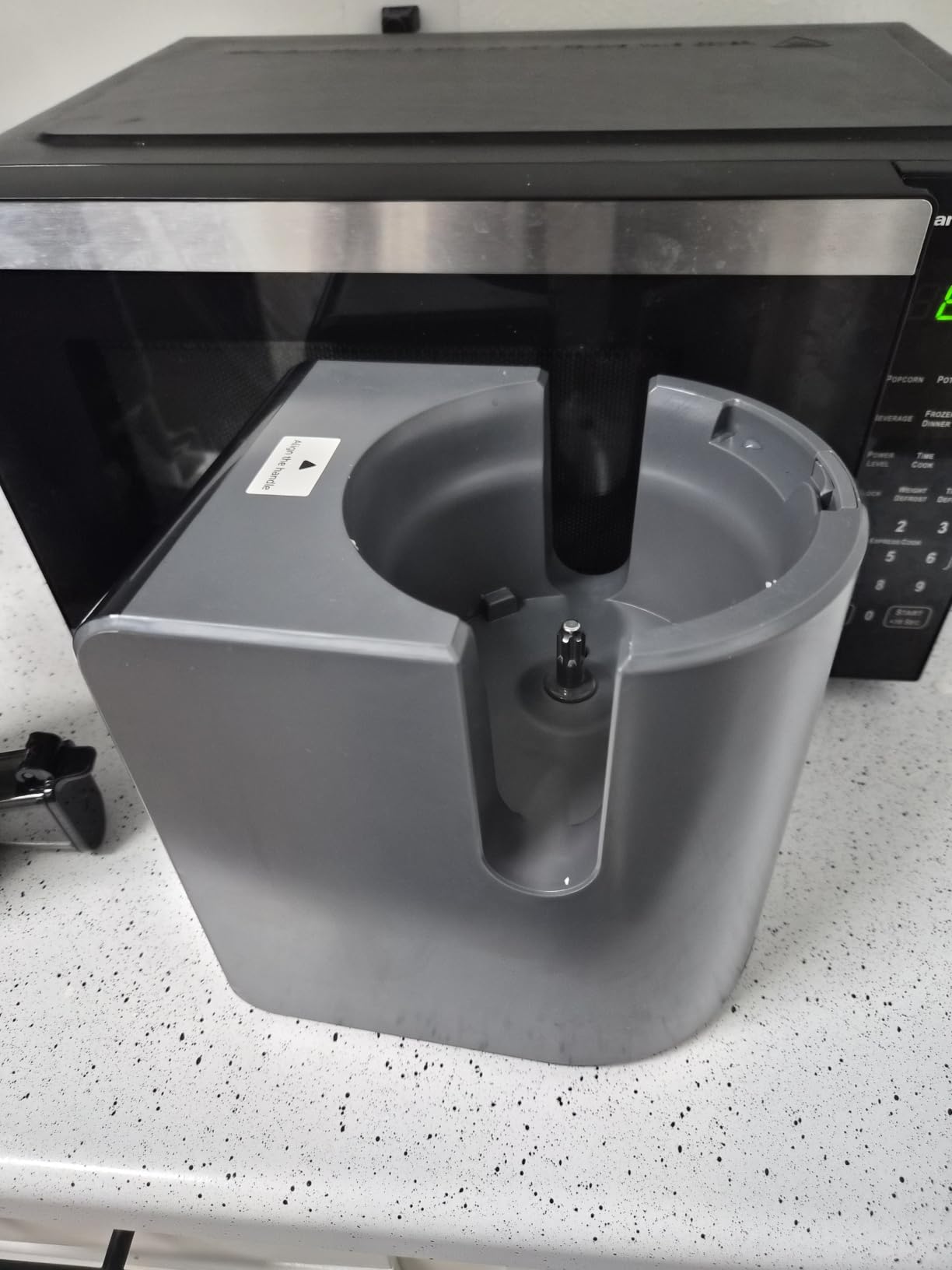
Tool-free disassembly and dishwasher-safe parts mean the cleanup is short, and a reverse function plus an automatic safety lock reduce jams and accidents. Reviewers highlight quiet running as well, which suits a 6 am routine.
At 13 by 7.5 by 17 inches and 7.5 pounds, it is deep but not unmanageable. The box includes a brush, juice cup, juice strainer and pulp cup.

Wide chute versus wide lid
A large chute is only useful if the opening above it matches. On this machine the 7-inch figure describes the chute, and the practical limit on oversized items is smaller than the number suggests, so you will still quarter a very wide stalk.
Even so, less chopping is less chopping, and for daily celery the time saving compounds over months.
Who should look elsewhere
The 3-in-1 functions need planning. Nut milk requires soaking nuts for 3 to 4 hours and sorbet requires thawing frozen fruit for 3 to 5 minutes, so the extra modes are not spontaneous.
This is also a newer listing with 606 reviews against thousands for the established names, and a 1-year warranty. Verify the parts support before committing to a five-year plan.
12. Godspeeds 6-inch Chute Cold Press Juicer – Best for Quiet Running
Godspeeds 6-inch Chute Cold Press Juicer Machine
6-inch feed chute
58 RPM
300W motor
Under 58 dB
10-year warranty
Pros
- Only machine here with a stated decibel figure
- 6-inch chute takes whole apples and oranges
- Parts snap apart for a two-minute cleanup
- Suction cups hold it firm on the counter
- Does not clog in normal use with celery
- 10-year warranty
Cons
- Lid opening is narrower than the chute
- A gap at the top of the auger traps food
- Some juice remains in the spent pulp
- Small juice capacity at 473 ml
Everyone claims quiet. This one publishes a number, rated to operate under 58 dB. That is the only machine in this roundup where the noise claim is stated rather than asserted, which is why it earns a slot despite the smallest review count here.
The 6-inch chute fits whole apples, oranges and cucumbers, and the 300W motor is rated for firm and fibrous produce including carrots and celery. Owners report that it does not clog in normal use.
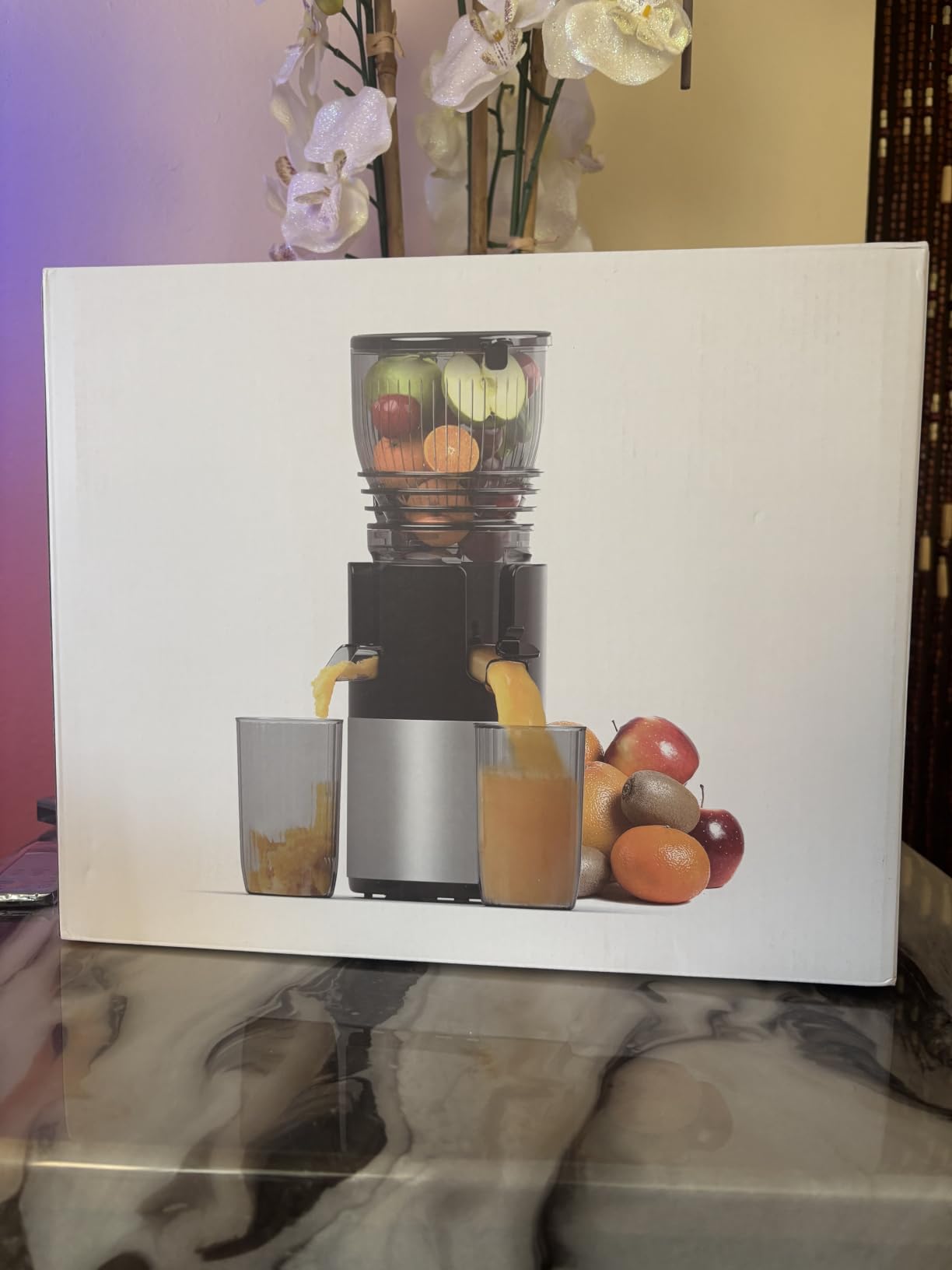
Assembly is three steps, the toothed filter detaches for direct rinsing, and cleanup takes about two minutes with snap-apart parts. Suction cups hold the unit firmly to the counter so it does not walk while you feed it.
At 6 by 6 by 16 inches and 7.9 pounds it is among the most compact, and the kit includes juice cup, pulp cup, food pusher, cleaning brush, manual and recipe book, backed by a 10-year warranty.
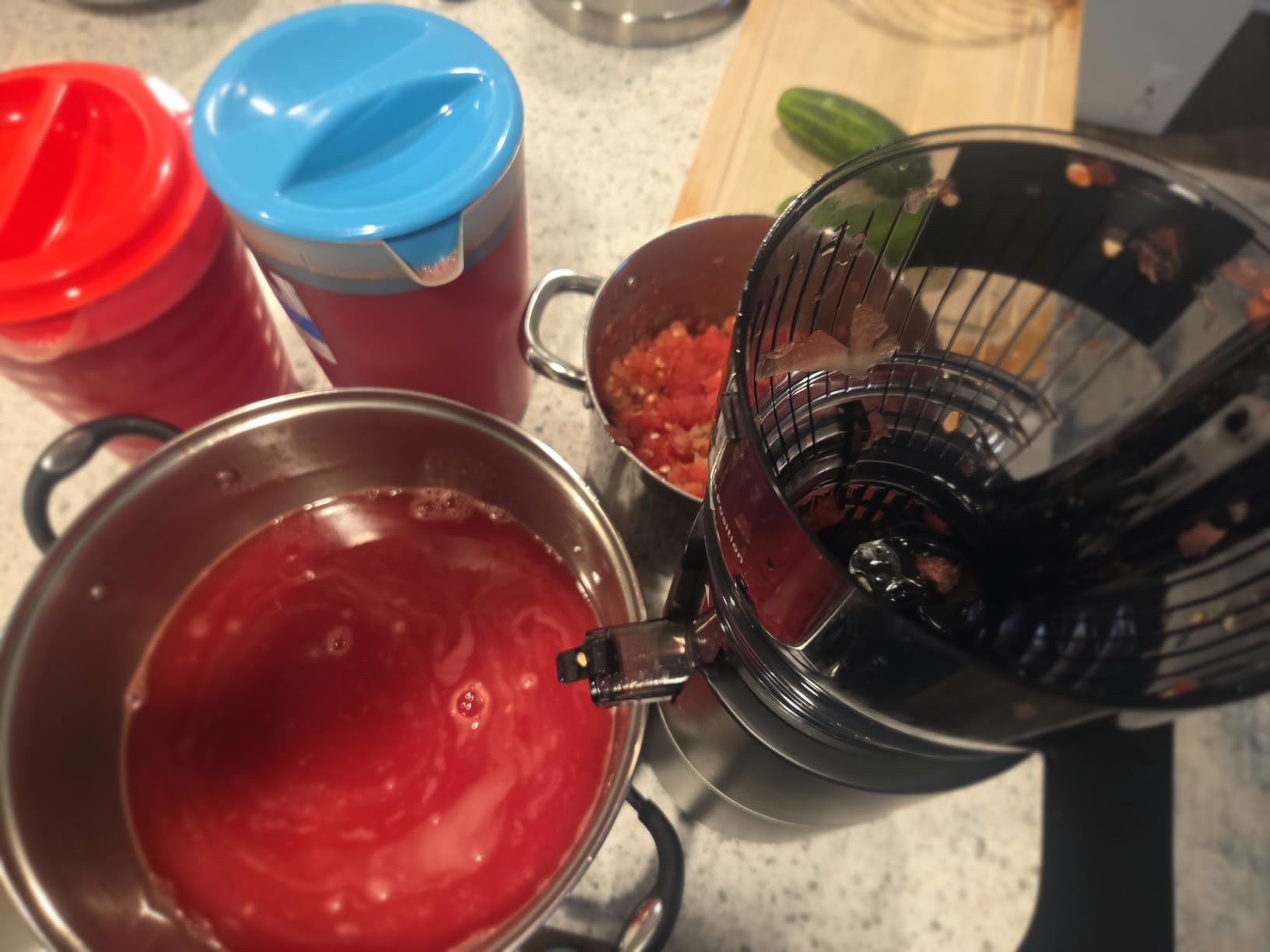
What the 58 dB rating means at 6 am
A number is more useful than an adjective. A compressor-style centrifugal machine in the same kitchen would be loud enough to carry down a hallway, while a machine rated under 58 dB sits close to normal conversation level at arm’s length.
If someone sleeps in the next room, that difference decides whether a daily celery habit survives the first month.
Where it falls short
The lid opening is narrower than the chute, so some items still need cutting into halves or quarters. A gap at the top of the auger can trap food and must be unscrewed to reach, which is the one real cleaning trap.
Some juice remains in the pulp after extraction, and the 473 ml capacity is small. With 524 reviews there is less long-term history here, so treat the 10-year warranty as the reassurance instead.
How to Choose a Celery Juicer That Lasts
Before you compare wattage, decide how much celery you will actually drink. A 16 oz glass is usually about one pound of stalks, so a daily habit means roughly seven pounds a week and a machine that can be cleaned in under five minutes. The fastest juicers are pointless if the screen takes ten minutes to scrub.
Auger speed decides juice character. Anything in the 50 to 100 RPM band is slow enough to limit heat and air. Below 50 RPM you are buying patience, above 100 RPM you are back in fast-juice territory with more oxidation.
Chute width decides prep time. A 6 to 7 inch chute cuts celery to 3 inch segments. A 3 inch chute demands 1 to 2 inch pieces and you will be chopping for a few minutes before every single batch. This is the difference people notice most in week two.
Reverse function is not optional. Celery builds mats of fiber. A machine with a working reverse button clears them in seconds; one without means stopping the motor, opening the chamber and fishing the wad out with your fingers.
Warranty length predicts build quality. Forum regulars treat warranty length as the most reliable quality signal available, and the data supports it. The 15-year names here, the Nama J2 and the Omega VSJ843QR, are built to be repaired. The budget tier carries one year or a trial period.
Noise decides whether the habit survives. Only one machine here states a decibel rating. For everyone else, judge by motor type: a brushless AC motor such as the one in the EanOruus runs more quietly than a small DC motor.
Container size sets your interruptions. A 24 oz jug means two empties per large batch. The 100 to 120 oz hoppers on the AAOBOSI, EanOruus and SMALLHOO mean one run covers a family.
Vertical versus horizontal. Vertical towers are narrower and store better. Horizontal designs like the Omega H3000 spread wider but juice faster and are often better with wheatgrass.
Our broader guides cover juicers for juice bars if you are outfitting a small commercial space, and masticating juicers for leafy greens if greens are the priority.
Prep, Clog Prevention and Celery Cleanup Workflow
Almost every clogged celery juicing story traces back to prep, not the machine. The workflow that works for me across all twelve: wash stalks, split anything over an inch thick lengthwise, cut to 3 inch pieces for wide-chute machines and 2 inch pieces for narrow ones.
Feed alternating textures. Celery alone is stringy and low in water, so pairing it with a firm item such as carrot or apple gives the auger something denser to grip. A run of nothing but soft produce is the classic cause of a jammed juicing tube.
Use reverse early. When you feel the motor pitch change, press reverse for a second before stopping rather than after. The machines here with a dedicated reverse button, such as the Ninja JC151, the nutribullet and the SMALLHOO, clear a mat without losing the batch.
Clean immediately, not later. Celery residue dries into a film that needs scrubbing. The Omega VSJ843QR with its automatic cleaning system and the Ninja with dishwasher-safe parts take minutes; hand-wash-only models take longer.
Pour juice into a glass and drink it within the day. Slow-pressed juice keeps longer in the fridge than centrifugal, but the flavor difference after a day is real and the routine is easier when you are not storing it.
What the Evidence Says About Celery Juice
Celery is a low-calorie vegetable with a meaningful fiber content, and celery juice is the liquid version of that vegetable with much of the fiber removed. Anyone selling celery juice on the basis of fiber benefits is selling you something that no longer contains the fiber.
The widely circulated claims that celery juice can cure diarrhea, flush toxins, or reverse chronic conditions originate in material promoting a paid book series, not in clinical trials. That is worth saying plainly because the claim is repeated so widely that buyers assume a research base exists behind it.
There are real reasons to be cautious with large daily amounts. Celery is relatively high in sodium for a vegetable juice, it contains naturally occurring psoralens that can increase skin sensitivity to sunlight, and people unaccustomed to a high-volume raw vegetable juice commonly report gas, bloating or loose stools in the first weeks.
Celery juice is also hydrating and low in calories. Start with a smaller serving, drink it with food rather than on a completely empty stomach if you are prone to stomach upset, and stop if your digestion objects.
Our position is simple. Buy the machine that makes the routine easy enough to keep, and treat the health framing as a reason to drink more vegetables rather than as a cure. We are not doctors, and this is not medical advice.
Frequently Asked Questions
What kind of juicer is best for celery?
A slow masticating or cold press juicer is best for celery. These single-auger machines run at roughly 50 to 100 RPM, crushing the stalks against a screen slowly enough to avoid heating the juice or jamming on fiber. Our top pick is the Ninja JC151 NeverClog at 4.5 stars from 3669 reviews.
Can you juice celery in a juicer?
Yes, but only well in a slow juicer. Celery is high in long cellulose strands, and a centrifugal juicer spinning at 6000 to 14000 RPM smashes those strands into a paste that gums the screen within a single batch. Slow-press models handle stalks without clogging.
What type of juicer is best for celery juice?
A vertical single-auger masticating juicer with a wide chute, a reverse function and a slow auger speed. Masticating and cold press describe the same mechanism. Vertical towers store better than horizontal designs, and a chute of 6 inches or more cuts your chopping time dramatically.
What celery juicer does Medical Medium recommend?
The most frequently recommended machine in that community is an Omega slow masticating model, most often the Omega J8006 triple-stage 80 RPM version, with the Omega VSJ843QR also frequently cited. Recommendations in r/medicalmedium threads broadly favor the Omega nameplate for its 15-year warranty and dry pulp output.
Is celery better juiced or blended?
Blending keeps the fiber, which juicing removes. If your goal is hydration and a low-volume drink taken on an empty stomach, juice is the practical choice. If you want the fiber benefit of the vegetable, blend it instead. You cannot get both from the same glass.
How long does it take to see results from celery juice?
There is no reliable clinical timeline, because the specific health claims attached to celery juice come from book promotion rather than published research. What is measurable is shorter term: hydration, an increase in daily vegetable intake, and a consistent morning routine that tends to stick when a machine is easy to clean.
Is it true that Medical Medium claims celery juice can cure diarrhea?
Yes, the claim is made, and it should be treated as a promotional claim rather than a medical finding. Celery juice is a low-calorie vegetable juice that is hydrating, and large daily amounts can cause digestive upset in people who are not used to them. Persistent diarrhea is a medical question, not a juicing question.
The Best Juicers for Celery in 2026: Final Verdict
The Ninja JC151 is the best juicer for celery overall, pairing a 150W high-torque auger with two pulp filters, a real reverse function and dishwasher-safe parts at 4.5 stars across 3669 reviews. Buy the Omega J8006 if you want the machine to last a decade, and the Nama J2 if a hands-free hopper changes your morning.
Avoid centrifugal machines entirely. They are fast, they are cheaper and they will make celery juice worse in every way that matters. Our guide to the best masticating juicers for leafy greens is a good next read if your juice is more greens than stalks.
Whichever one you pick, buy it for the cleanup time rather than the wattage. A machine you will rinse in three minutes is the only one still on your counter in 2026.