
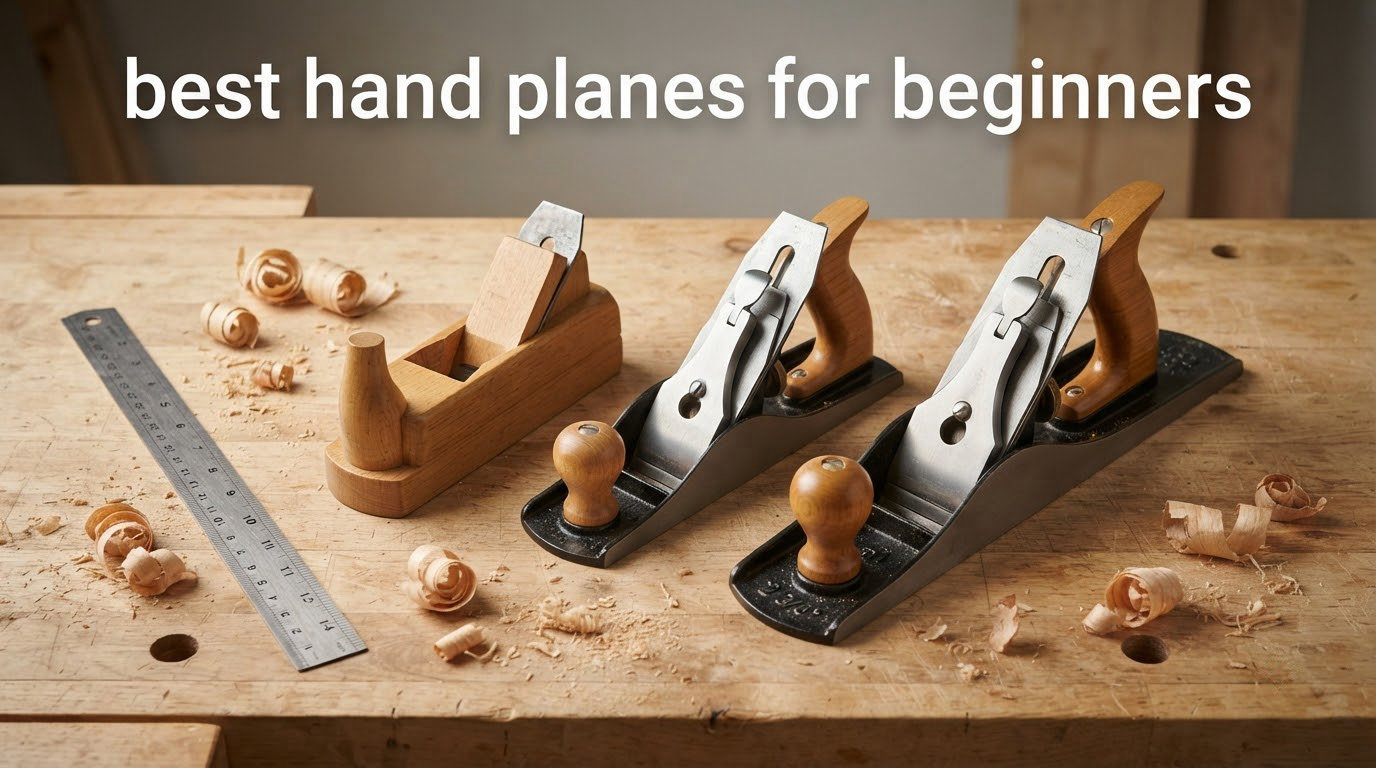
The best all-around first hand plane for a beginner is a bench plane with a cast or ductile iron body, an adjustable mouth and an easy-to-sharpen iron, because those four details decide whether the tool cuts on your first afternoon or sits dead on the bench. The textbook answer is a jack plane, whose length lets it act as a scrub plane, a mini-jointer and a smoother in turn, and on this list the Amazon Basics No.4 bench plane fills that role most closely.
We put all eight planes through the same bench routine: a straightedge across the sole, a check of the iron for flatness, a hone to a burr, then test shavings in softwood and hardwood. What separated them was not the spec sheet. It was how much setup a beginner has to do before the first shaving comes off.
One quick note. This guide is about woodworking hand planes, the tools that shave a controlled slice off a board. It has nothing to do with model aircraft. If you landed here looking for a trainer to fly, read our guide to the best RC planes for beginners instead.
Table of Contents
Top 3 Picks: Best Hand Planes for Beginners in 2026

Jorgensen No.101 Mini Plane
- Arrives sharp and dialled in
- Ductile iron body
- One-handed palm grip
Amazon Basics No.4 Bench Plane
- Cast iron body
- 2 inch steel blade
- Adjustable mouth and depth

Jorgensen 60-1/2 Block Plane
- Low-angle bed
- Depth and mouth adjust by knob
- O1 tool steel blade
The Jorgensen No.101 is the one to buy if you want a shaving the same day it arrives. The Amazon Basics No.4 is the one to buy if you want a bench plane that does the heavy lifting once you have a sharpener. The Jorgensen 60-1/2 is the one for end grain and cross grain work.
Best Hand Planes for Beginners in October
| Product | Specifications | Action |
|---|---|---|
| Jorgensen No.101 Mini Wood Planer |
|
Check Latest Price |
| Amazon Basics No.4 Adjustable Bench Plane |
|
Check Latest Price |
| Jorgensen No.60-1/2 Low-Angle Block Plane |
|
Check Latest Price |
 KAKURI Japanese Hand Plane 42mm KAKURI Japanese Hand Plane 42mm |
|
Check Latest Price |
 Jorgensen No.4 10 Inch Smoothing Plane Jorgensen No.4 10 Inch Smoothing Plane |
|
Check Latest Price |
 Stanley Surform 6 Inch Pocket Planer Stanley Surform 6 Inch Pocket Planer |
|
Check Latest Price |
 WoodRiver Low Angle Block Plane WoodRiver Low Angle Block Plane |
|
Check Latest Price |
 Stanley Block Plane No. 9 Stanley Block Plane No. 9 |
|
Check Latest Price |
Two of these are bench planes, three are block planes, one is a Japanese pull plane and two are trim and repair tools. That spread is deliberate, because the most common beginner mistake is buying a bench plane when the job calls for something small, or the reverse.
1. Jorgensen No.101 Mini Wood Planer – the first plane that works out of the box
JORGENSEN No.101 Mini Wood Planer – Mini Hand Planer for Woodworking
Ductile iron body
1.25 inch blade width
O1 tool steel
3.5 inch total length
Pros
- Arrives sharp flat and dialled in so no tuning is needed
- Ductile iron body feels substantial
- Knob depth adjustment
- Pushable with a single finger
- 2205 reviews at a 4.5 star average
Cons
- Only takes fine shavings so it cannot flatten a board
- Depth adjustment takes a few attempts to dial in
- Palm grip is uncomfortable over long sessions
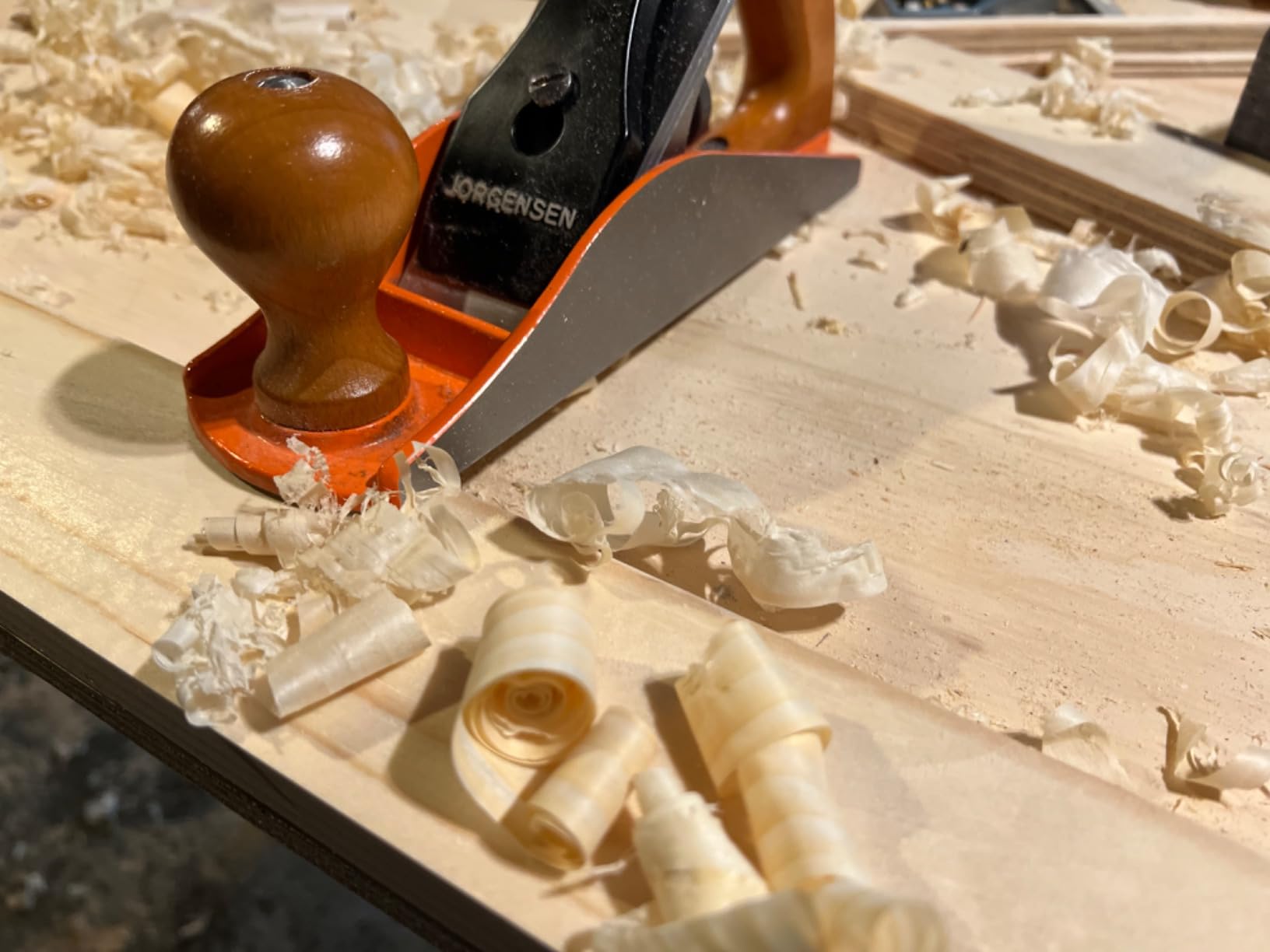
This is the plane I would hand someone who wants a shaving on their first afternoon. The Jorgensen No.101 arrives flat, sharp and already dialled in, which removes the biggest source of early frustration: a plane that skids or refuses to cut because nobody has set the depth or mouth.
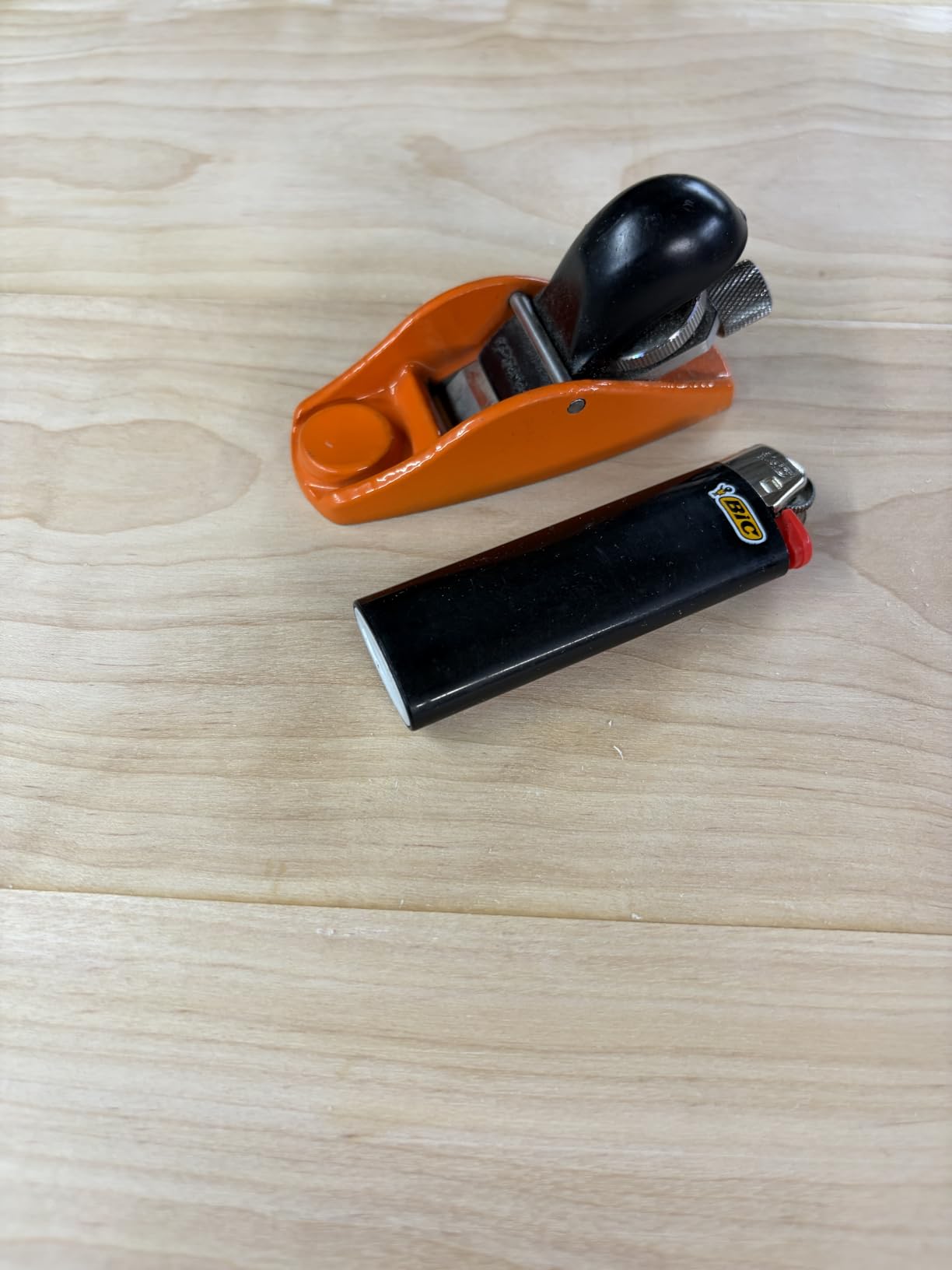
At 3.5 inches long with a 1.25 inch blade it fits fully in one hand, and owners describe pushing it with a single finger for control on door edges and tight fitments. The ductile iron body and O1 tool steel blade match the larger Jorgensen bench planes, so nothing here is a throwaway part.
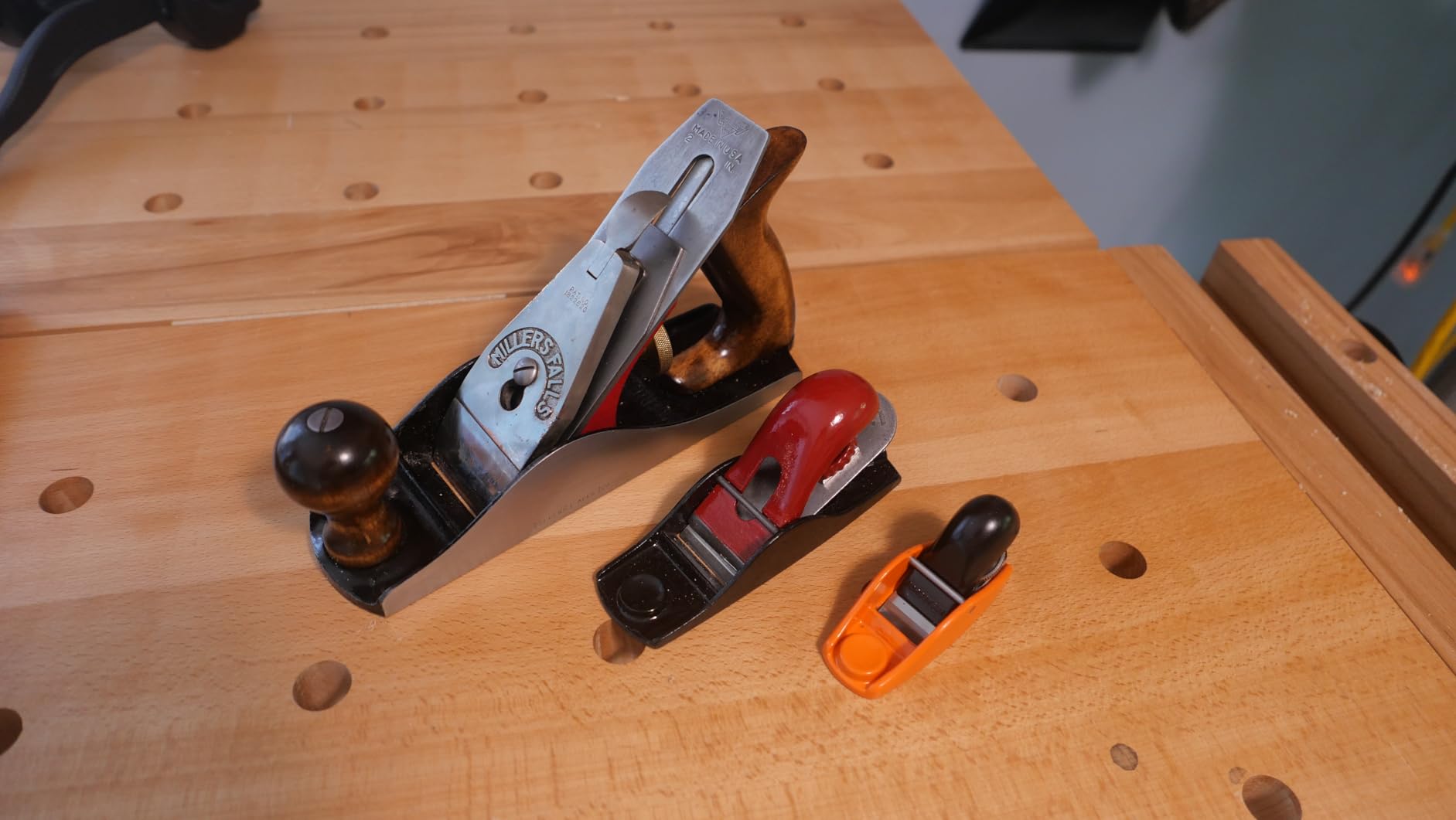
The limit is capacity. It removes fine shavings only, so it is a trimming and detail tool rather than something you flatten a rough-sawn board with, and the small blade means more passes over the same task. Reviewers also note the depth adjustment takes a couple of attempts to settle.
Why it works as a first plane
It removes the setup step. You can wax the sole, take a shaving and learn how depth and mouth feel before touching a stone, which matters more for a nervous beginner than any spec on the page.
When to skip it
Skip it if your project list is mostly flattening and jointing, because you will be shopping for a second tool within a month. It suits trim carpentry, furniture touch-ups and small parts.
2. Amazon Basics No.4 Adjustable Bench Plane – the most useful single bench plane
Amazon Basics Woodworking Hand Planer – No.4 Adjustable Bench Plane with 2-Inch Steel Blade for Quality Wood Smoothing Cuts, Grey/Black
Cast iron body
2 inch steel blade
9.8 inch total length
Adjustable mouth and depth
Pros
- Cast iron body cuts cleaner than stamped steel
- 2 inch blade with adjustable mouth and depth gauge
- Front tote and rear grip for long sessions
- 4061 reviews at a 4.3 star average
Cons
- Iron edge is straight corner to corner until you round it
- Sole and frog usually need a light flattening
- Depth adjuster has noticeable play
This is the closest thing on the list to the classic first bench plane. At 9.8 inches long with a 2 inch blade it behaves like a small smoothing or jack plane, and owners treat it as the best value bench plane in the entry class.
What makes it teach well is the mouth. The adjustable mouth and depth gauge let a beginner go from a shaving thicker than paper down to a translucent sheet without changing tools, and the cast iron body damps vibration enough to leave a cleaner face than stamped steel.
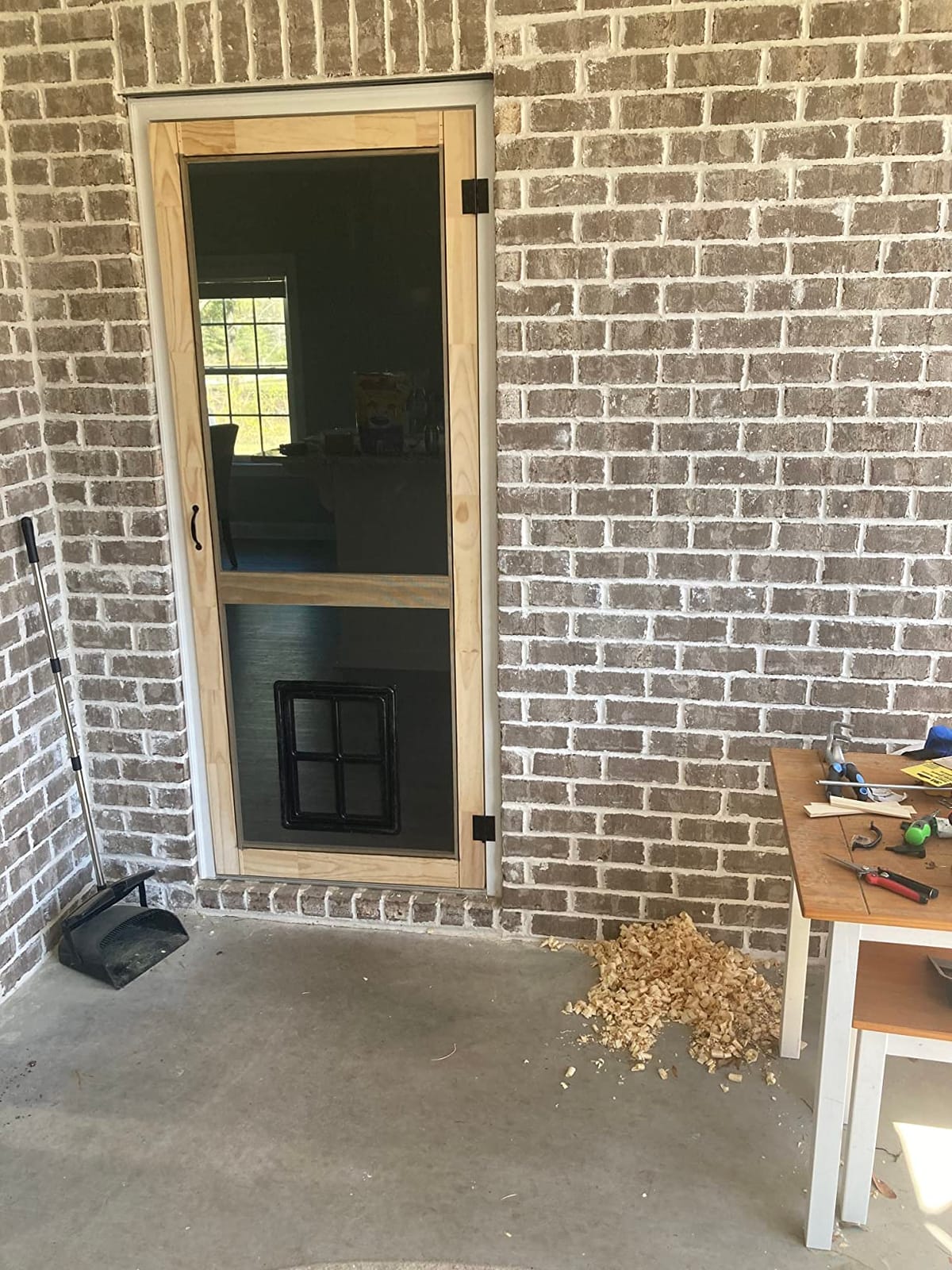
It does need work out of the box. Nearly every reviewer mentions lapping the sole, lapping the chipbreaker so it seats, and rounding the corners of the straight-cut iron before final smoothing. That is a normal first session, not a defect.
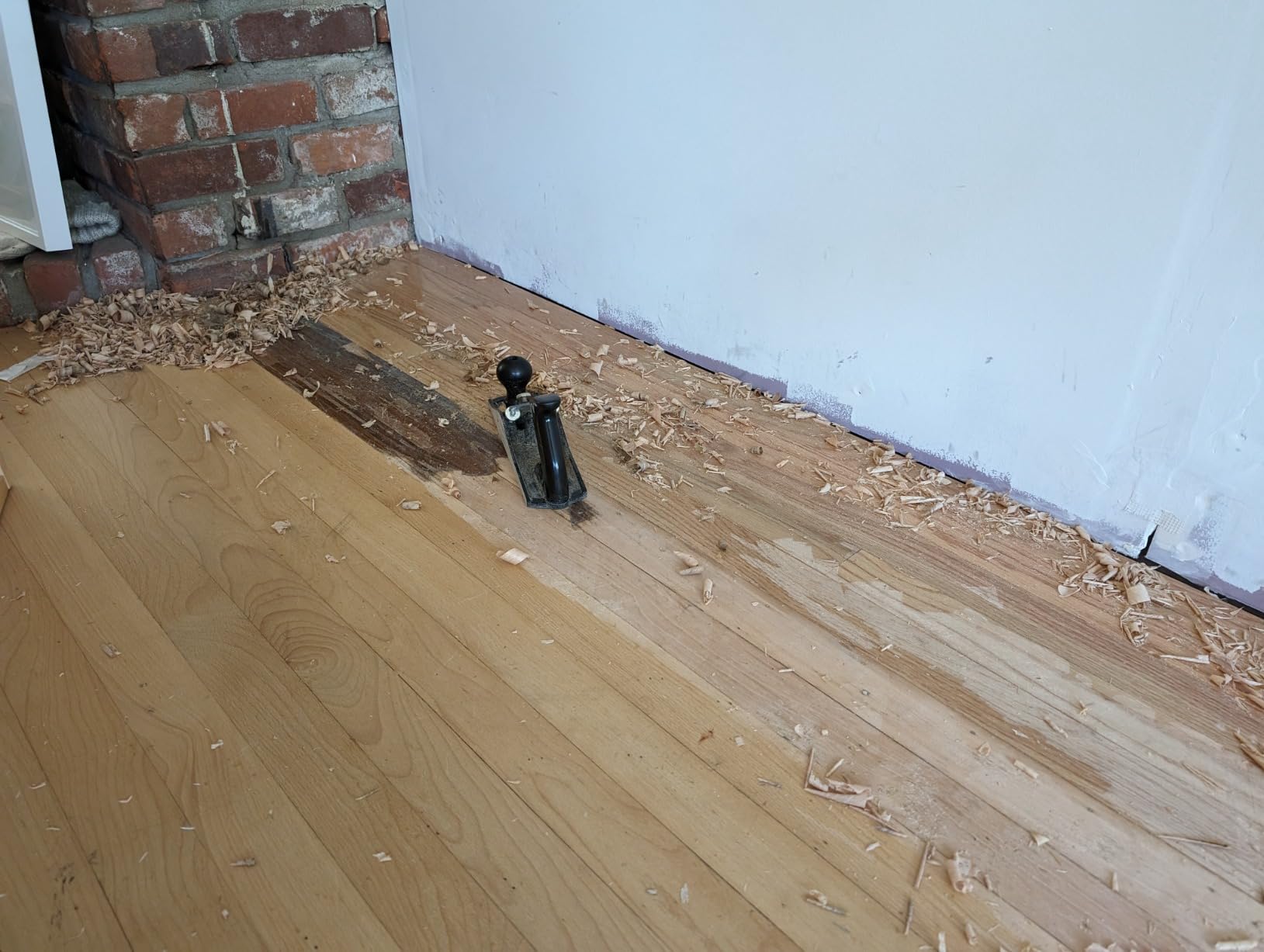
The two trade-offs are weight and backlash. At 2.7 pounds it is heavy for a bench plane, and the depth adjuster has visible play compared with a Bailey-pattern adjuster, so the screw must be turned a fair distance before the yoke engages.
Why it works for a first bench plane
It is a Bailey-pattern layout with familiar adjustability, so the skills you learn transfer straight to a vintage Stanley or a premium smoother later. Nothing about it is a dead end.
When to skip it
Skip it if your first projects are small parts and trim. A 9.8 inch plane needs both hands and a clear board, so buy this one for panels, edges and furniture work.
3. Jorgensen No.60-1/2 Low-Angle Block Plane – the best plane for end grain
JORGENSEN NO.60-1/2 6-1/4″ Wood Planer, Hand Planer for Woodworking
Ductile iron body
1.38 inch cutting width
O1 tool steel
Depth and mouth both adjust by knob
Pros
- Highest rating in this roundup at 4.7 stars
- Cutting depth and mouth width both adjust by knob
- Ductile iron body with zinc alloy lever cap
- O1 blade arrives finely sharpened
Cons
- Low angle bed digs in on hard or figured grain
- Some units need a light sole flattening on arrival
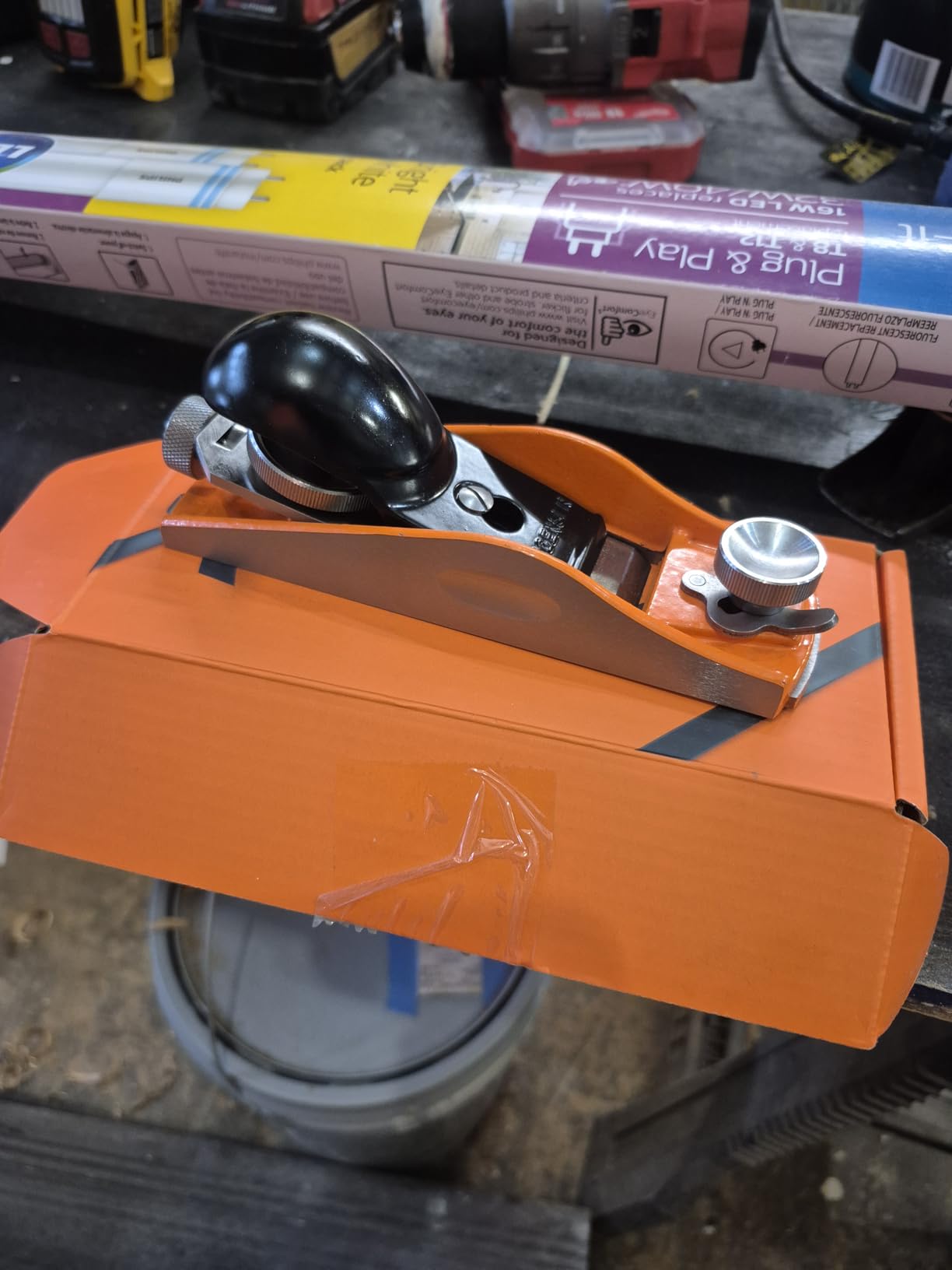
The 60-1/2 is the most capable block plane on the list and the highest rated at 4.7 stars. At 6-1/4 inches long it is a bench-model block plane rather than a toy, and the low bed angle means the iron slices with far less force than a 45 degree bed.
The feature experienced users praise most is the dual adjustment. Cutting depth and mouth width both move by knob, so one tool covers rough trimming and fine smoothing instead of forcing a compromise setting. The O1 blade arrives finely sharpened and can be re-set as often as you like.
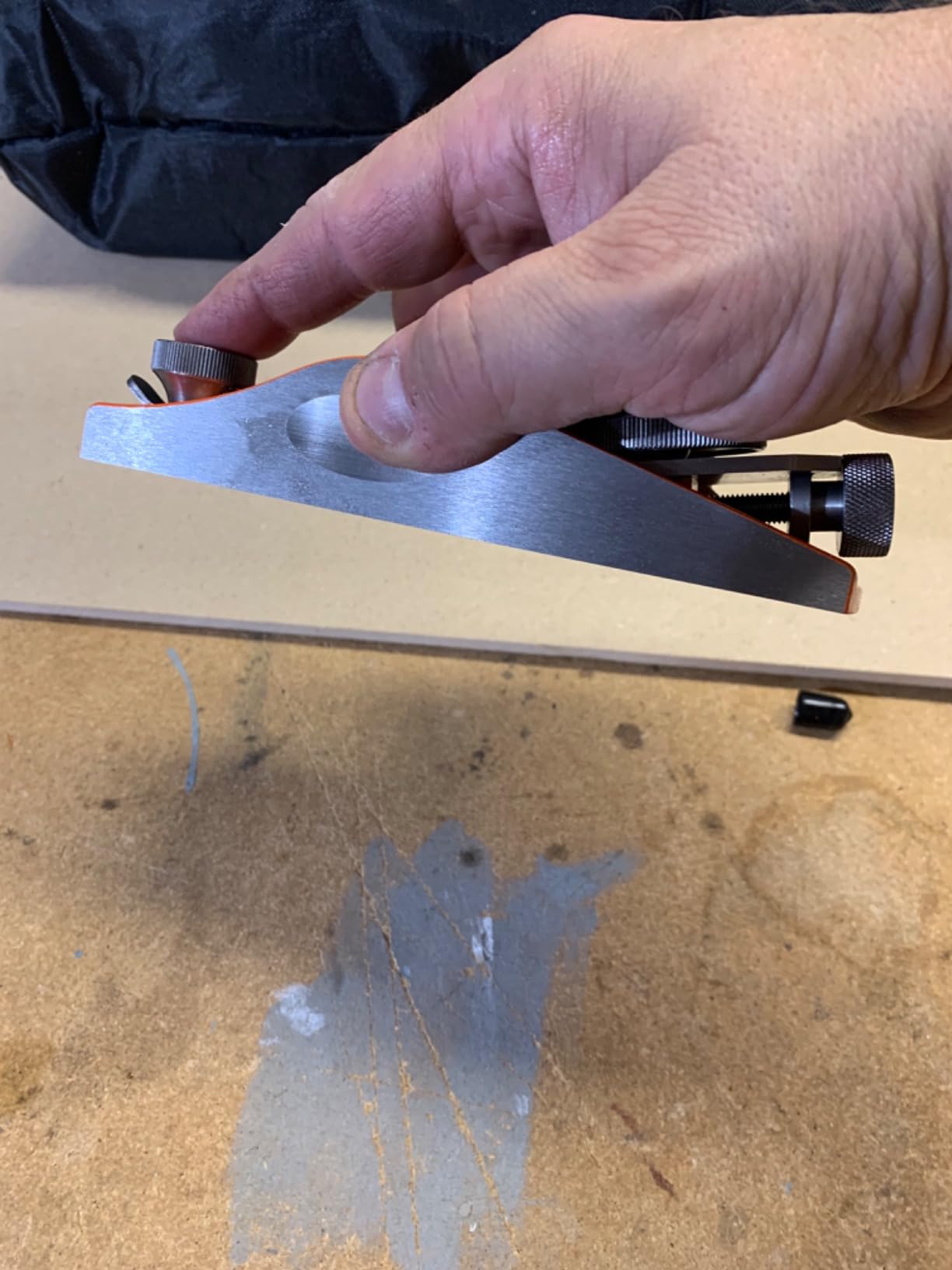
Factory finish is a genuine strength. Owners describe a polished, flat sole and a sharp iron usable immediately, with only occasional light flatting or a small mouth adjustment needed. The drop-tested ductile iron body and stainless fittings resist the corrosion that ruins cheap block planes.
The catch is the one every low-angle plane carries. Because the bed is shallow, the blade digs in on hard, figured or cross-grain wood if the chipbreaker is not set close, and that digging-in is the main complaint in the reviews.
Why it suits a beginner
One plane covers both roughing and smoothing because the mouth is adjustable, so you learn one tool instead of two. It also pushes with one hand, so control comes quickly.
When to skip it
Skip it if premium tooling tempts you by badge alone. Its 594 reviews are a thinner base of evidence, and if you have never sharpened an iron, learning on a cheaper block plane costs less when you drop it on concrete.
4. KAKURI Japanese Hand Plane 42mm – the lightest plane here
KAKURI Japanese Hand Plane 42mm, Woodworking Block Plane 5.9″ x 2.1″
Eco oak body
42 mm high carbon steel blade
Pull-cut kanna design
5.9 by 2.1 inches
Pros
- High carbon steel blade holds an edge a long time
- Solid oak body is light and will not mar a finished face
- Excellent on end grain and softwood
- English instructions and blade guard included
Cons
- Bed typically needs flattening before first use
- Depth is set by tapping the blade with a hammer
- Chipbreaker can arrive crooked and need hand dressing
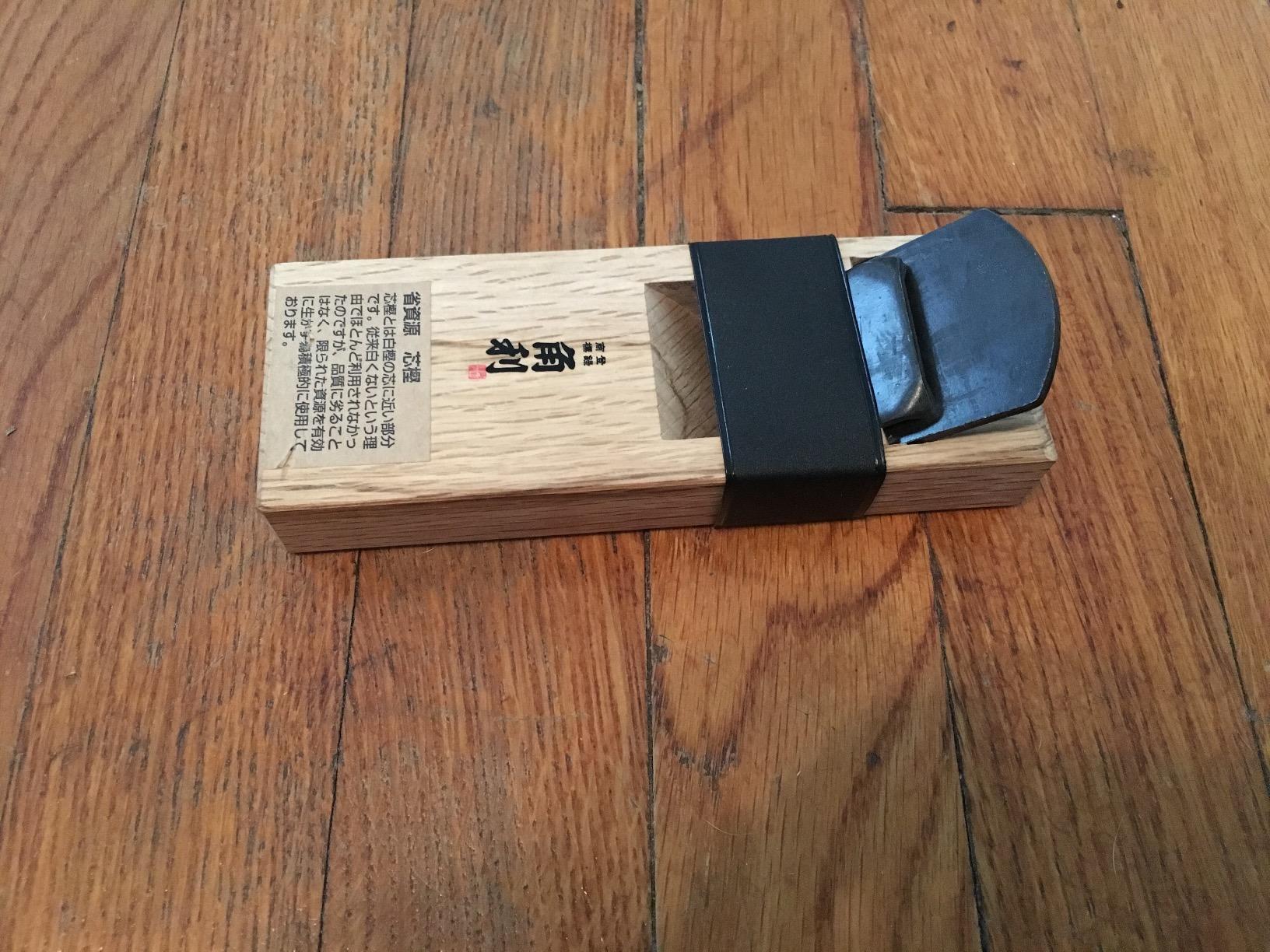
This is a Japanese kanna, a pull-cut plane, and that single design choice changes everything about how it feels. You draw it toward you, which gives far more control over the finish of the cut than a push plane and makes it very effective on end grain and softwoods.
The body is solid Japanese oak rather than metal, so it is the lightest plane in this roundup and it will not mark a face you already finished. The high carbon mono-steel blade is sharpened by hand before shipping, and at 5.9 by 2.1 inches it genuinely fits in a tool bag.
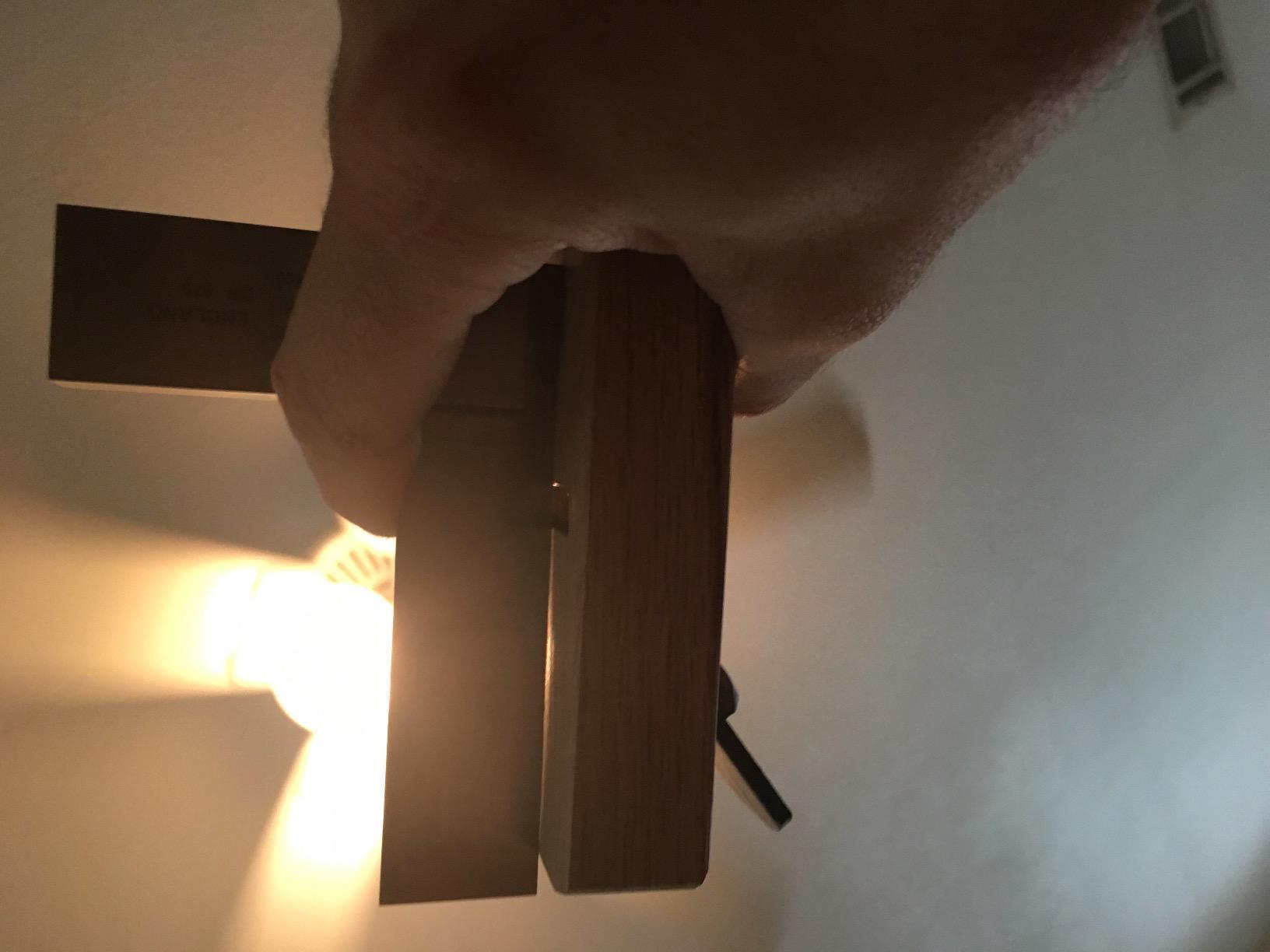
Owners report 20 to 30 minutes of tuning before it behaves, mostly flattening the bed and honing both the blade and the chipbreaker. After that it produces very thin, clean shavings, and the review base of 3588 ratings at 4.4 stars is the second largest here.
The learning curve is the hammer. Blade depth is set by tapping the iron with a hammer, which is unfamiliar if you have only turned a brass knob, and beginners on forums report struggling before it clicks. The chipbreaker can also arrive slightly crooked and need hand dressing.
Why it suits a beginner
The pull stroke is forgiving on mistakes. A push plane that dives gouges the wood, while a kanna that dives just lifts a shaving, so the failure mode is far cheaper while you are learning.
When to skip it
Skip it if you want a single tool that also flattens and jointies. A 42 mm kanna is a smoothing tool, and pairing it with a bench plane is the sensible route.
5. Jorgensen No.4 10 Inch Smoothing Plane – the best plane for a glue-up panel
JORGENSEN No.4 10″ Wood Plane, Professional Hand Planer for Woodworking
Ductile iron body
10 inch total length
O1 tool steel blade
Beechwood tote and knob
Pros
- Bailey pattern frog lets the mouth run tight or wide
- Casting typically arrives dead flat and square
- O1 blade sharpens readily and holds its position
- Beechwood tote and knob outlast the iron parts
Cons
- Heavy for its size at 2.24 kg
- Depth adjuster has a lot of backlash
- Chipbreaker needs lapping before it seats gapless
The No.4 is the plane you reach for when a board is glued up and needs to be truly flat. A 10 inch sole covers most of a panel width in one pass, so it removes power planer swirl marks far faster than any block plane and finishes the surface in the same pass with a finer setting.
The Bailey-pattern frog is the reason to pay attention. It lets you set the mouth very tight for final smoothing or open it wide for roughing, so the same plane covers both ends of the job. Owners with collections of premium and vintage planes rate it as the best value No.4 available.
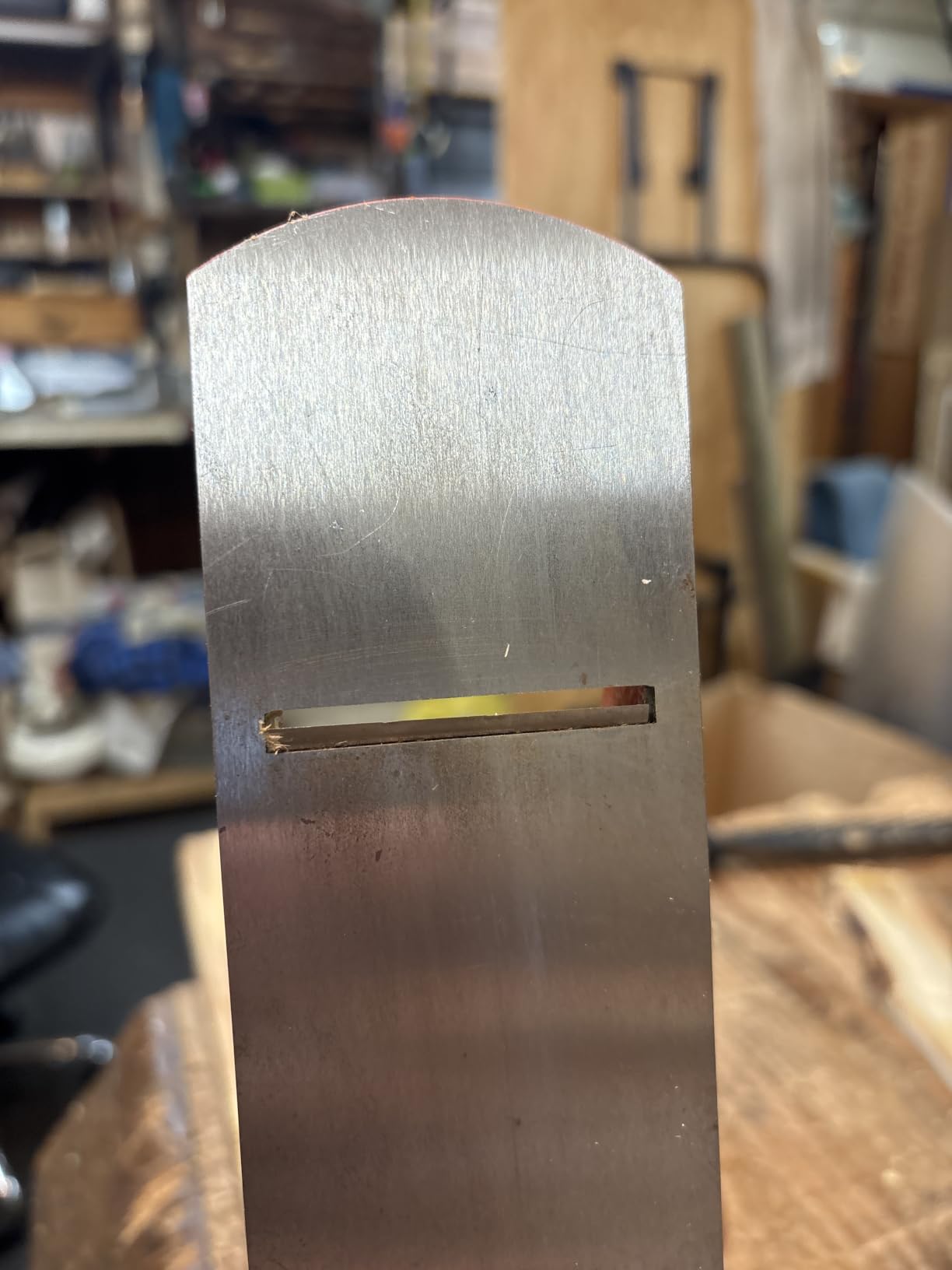
It usually arrives in good shape. The casting is reported as dead flat and square with no lapping needed for most users, the beechwood tote and knob are smooth, and the blade holds its position through a session without shifting.
The repeated criticisms are the adjuster and the weight. At 2.24 kg it is noticeably heavy, and the depth adjuster has a lot of backlash, so the screw must be turned well before the yoke picks it up. A small number of units shipped with an uneven frog that would not set the iron straight.
Why it suits a beginner
It is the most versatile tool on the list, which matters when a beginner does not yet know which job a plane is for. One plane covers flattening, jointing and finish smoothing without a second purchase.
When to skip it
Skip it if your work is small parts, trim or model making, where a 10 inch plane is dead weight in your hand. Also skip it if back problems are a concern.
6. Stanley Surform 6 Inch Pocket Planer – the least expensive repair tool here
STANLEY 6 in SURFORM Pocket Planer, Compact Block Plane (21-399)
Die cast zinc alloy body
6 inch pocket size
Toothed surform blade
One-handed control
Pros
- Compact body fits in one hand and travels easily
- Sharp teeth out of the box on a fine-cut blade
- Die cast body built for repeated job site use
- Blade can run teeth up or teeth down
Cons
- Surform teeth cannot flatten a face truly flat
- No handle so the body is held in the palm
- Dust collects in the chamber and must be plucked out
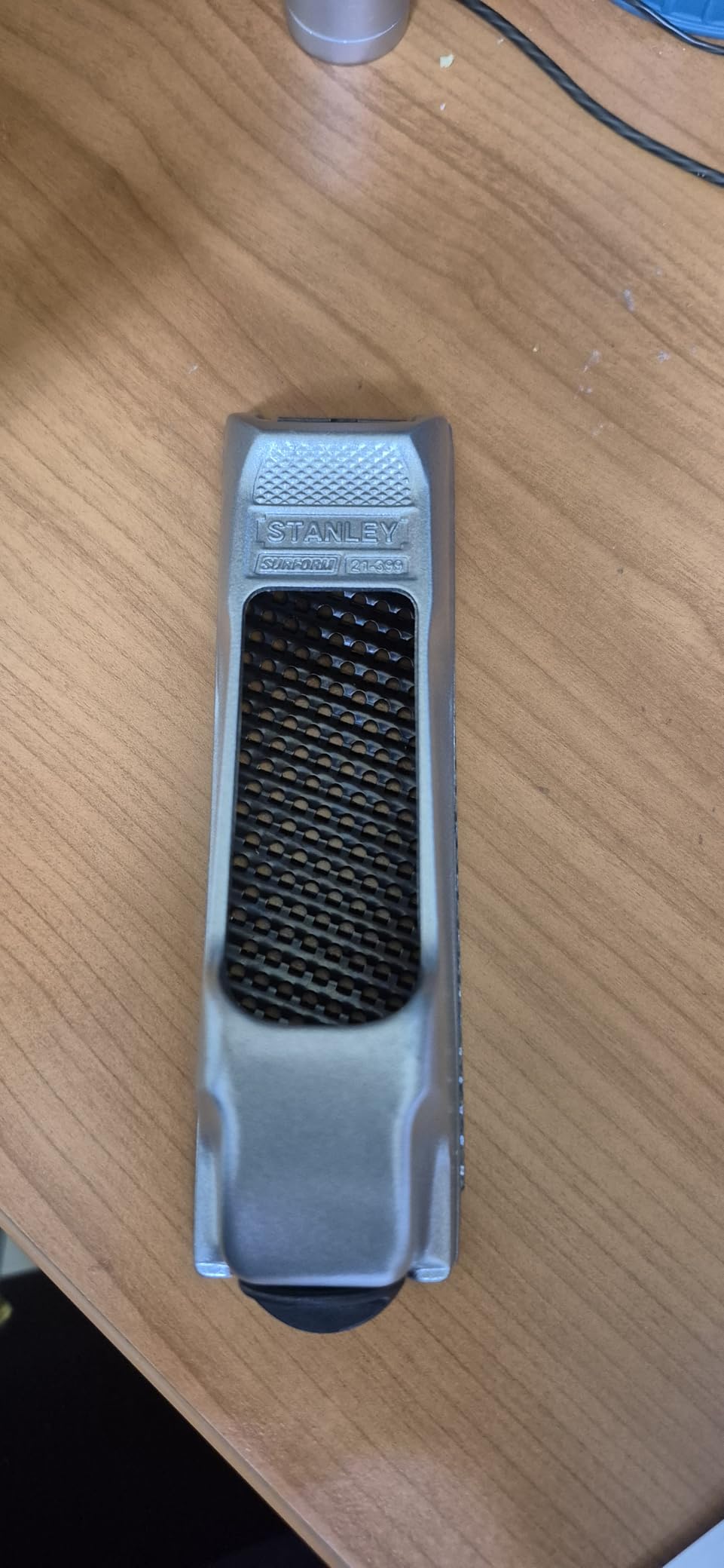
This is not a smoothing plane and it is worth saying so early. The Stanley Surform uses a toothed blade that shaves a thin layer the way a miniature rasp does, which makes it superb at trimming doors, easing bevels, cleaning up drywall and taking the edge off laminate.
At 6 inches and 5.6 ounces it is the least expensive plane in this roundup and the most portable, and it is the tool most likely to end up in a toolbox rather than on a bench. The 1242 reviews at 4.6 stars describe a fast, dependable fix-it tool with teeth that arrive sharp.
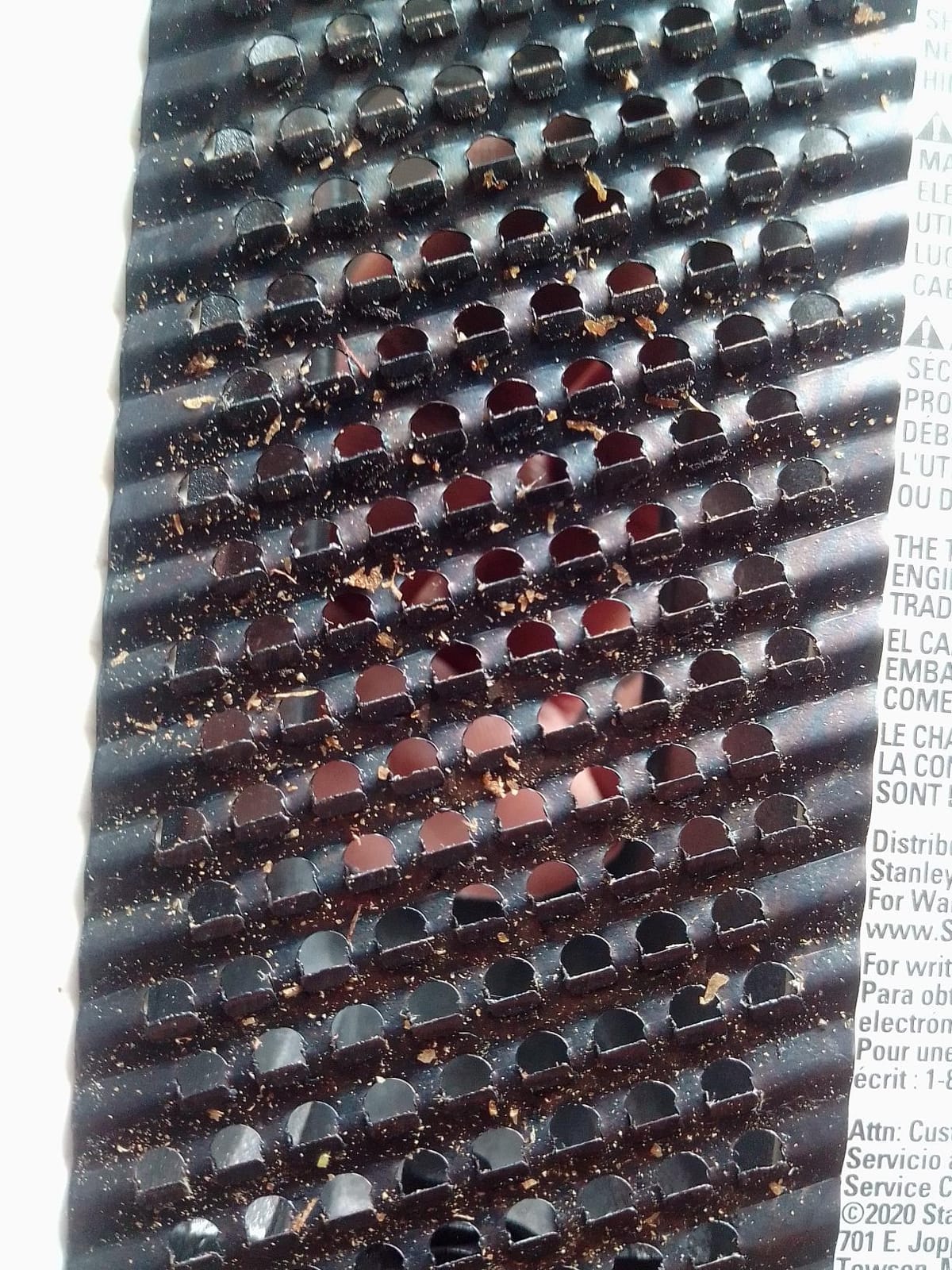
The removable blade is a nice touch. It can be mounted teeth up or teeth down, so you can cut on the push or the pull depending on the material, and replacement blades are widely available, which matters for a tool that meets sheet material.
Understand the ceiling before you buy. Because the blade is toothed rather than flat-edged, it shaves and scuffs a surface rather than planing it true, so it cannot flatten a face. Wood dust also collects inside the chamber and has to be plucked out periodically.
Why it suits a beginner
There is almost nothing to learn. No adjuster to fumble, no depth to set, no stone to find, so it gives a new woodworker a satisfying result on day one and teaches that trimming and planing are different jobs.
When to skip it
Skip it as your only plane. If your goal is a flat, finished face, the disappointment shows up fast, so pair it with a smoothing plane or keep it for site trim and repair work.
7. WoodRiver Low Angle Block Plane – the most refined one-handed plane
Woodriver Low Angle Block Plane With Adjustable Mouth
Ductile iron body
12 degree bed angle
High carbon tool blade
7.85 inch total length
Pros
- Classic 12 degree bed cuts end grain and softwood easily
- High carbon blade holds a keen edge and re-sharpens indefinitely
- Knuckle style lever cap gives even pressure on the iron
- Adjustable mouth for fine or wider cuts
Cons
- Most expensive pick in the roundup
- 12 degree bed grabs on hard figured or cross grain
- Needs a little assembly and first adjustment
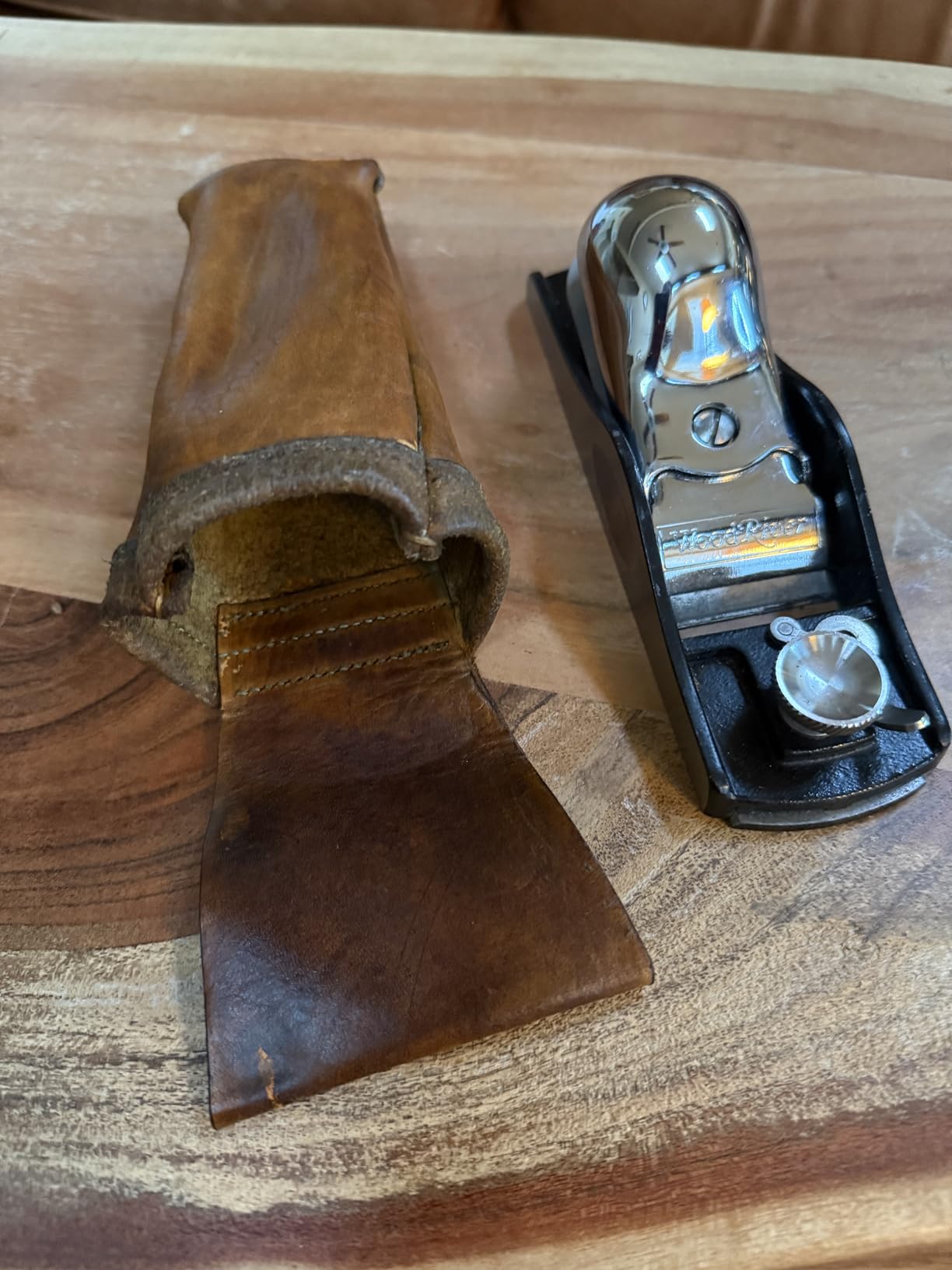
The WoodRiver is a faithful execution of a proven low-angle design, and owners who already own a decent block plane rate it as well made, with a quality casting and a blade that takes an edge cleanly. At 7.85 inches long it sits between a small block plane and a bench plane in feel.
The 12 degree bed is the reason to consider it. Shallow beds take a finer edge with less force, so the plane glides through end grain and softwoods such as pine with less wrist effort, and the knuckle-style lever cap spreads pressure evenly across the iron for consistent shaving thickness.
The adjustable mouth adds the range a plain low-angle block plane lacks. You can close it down for a translucent finish shaving or open it for wider cuts, and the high carbon blade can be re-sharpened indefinitely rather than replaced.
Two cautions come straight from the reviews. Experienced users note that at this price a first-time buyer may be better served by a cheaper block plane, and that the shallow bed is twitchy on hard end grain unless the iron is set well. The 149 ratings also mean less long-term data than the picks above.
Why it suits a beginner
It is the most refined one-handed plane here, and the even lever cap pressure means fewer skipped shavings while you are still learning to set the mouth correctly.
When to skip it
Skip it on a tight budget, or if your work is mostly cross grain and hard exotics, where a low-angle bed works against you. A high-angle block plane suits figured wood better.
8. Stanley Block Plane No. 9 – the best light-duty trim plane
Stanley 1-12-020 Block Plane No. 9, Black/Silver
Cast iron body
40 mm cutter width
21 degree cutter angle
Adjustable jaw
Pros
- 21 degree cutter angle handles cross grain well
- Iron depth and mouth adjustments are simple to dial in
- Good for edges
- end grain and lightly cupped boards
- Long-established pattern with solid hand feel
Cons
- Recent production quality is inconsistent in reviews
- Cast iron body rusts quickly if stored damp
- Not built to remove heavy material or flatten large boards
The No.9 is a fine-finish block plane, and its 21 degree cutter angle is the standout number. A high bed angle like that resists cross-grain cutting, which is why long-term owners rate it as superb for edges, end grain and lightly cupped boards, and why it outperforms a rasp or sandpaper on those jobs.
Adjustments are simple enough for a beginner. Both the iron depth and the mouth are straightforward to dial in, and at 1.9 pounds the cast iron body has enough mass to glide over uneven grain instead of bouncing.
Reviewers are sharply split, and you should read the split. Owners of older stock describe a superb, easy-to-adjust plane, while a substantial block of current one-star reviews targets recent manufacturing, citing curved soles, poor machining marks and thinner castings than the classic tool. That pattern is why the rating sits at 4.2 across 1540 reviews.
One more thing the reviews repeat: the raw machined sole needs a light flattening before it will glide properly, and cast iron stored damp will spot with rust within weeks.
Why it suits a beginner
Its high bed angle is forgiving on the grain direction that trips beginners up most, and the adjustments are simple enough to set without a manual.
When to skip it
Skip it if you need a bench plane, or if you cannot accept the chance of a badly finished casting, because the reviews show that risk is real. It is a fine-finish tool only.
How Many Hand Planes Does a Beginner Actually Need?
One, to start, and the honest forum consensus is that the question matters less than beginners make it. The repeated advice across woodworking forums is to buy a single tool and use it until it stops teaching you something. If the limiting factor is how long you can hold the tool rather than which tool to reach for, our guide to the best grip strengtheners for forearm training covers the hand work that keeps a long bench plane session comfortable.
One plane: correct for anyone making small items, boxes, trim or furniture repairs. The Jorgensen No.101 or the Stanley Surform covers this list, and nothing more is needed for months.
Two planes: correct for furniture and cabinet work. Pair a low-angle block plane for end grain and detail with a 10 inch bench plane for panels and edges, which is the combination the No.60-1/2 and the Amazon Basics No.4 give you.
Three planes: correct only once you are working rough lumber and large panels. Add a longer bench plane for flattening rough-sawn boards once you can sharpen well enough to keep a coarse iron flat.
A word on the advice that beginners should deliberately buy the cheapest plane and learn on it. It is good advice, and plenty of experienced woodworkers give it, because a first plane will be dropped and abused. It suits someone who already owns a sharpening setup. If you are buying everything at once, one mid-range plane that arrives sharp is the better path.
New or Vintage: Which Hand Plane Should a Beginner Buy?
Buy new if you want to start planing this week. A new Bailey-pattern bench plane arrives with a body already close to flat, an iron that responds to a few strokes on a stone, and adjusters that turn instead of seizing, which removes every known beginner frustration.
Buy vintage if you want the best iron per pound of money and you enjoy a project. Stanley Bailey and Record irons are widely praised on forums for taking an edge easily and holding it well, and old irons that have not been abused drop straight into the tool without modification.
Know what you are avoiding. The most common vintage traps are rabbet, plough, moulding, rooster and router planes, which appear constantly in second-hand listings and are almost always the wrong first purchase. Skip any vintage plane with pitted or missing irons, a sole out of true with no affordable fix, or an adjuster that will not move.
One mixed option is worth naming. Diamond Edge and Keen Kutter rebrand houses make bench planes in a Bedrock style that reviews describe as acceptable alternatives, so a second-hand listing under those names is not automatically a bad bet.
Bed Angle, Blade Steel and the Sharpening Reality
Bed angle is the angle the iron sits at, measured from the sole. A low bed under 30 degrees takes a finer edge with less force and suits end grain and softwood. A high bed near 45 degrees or more holds its line better across cross grain and figured wood. For most beginners, one low-angle plane plus one bench plane covers both needs.
Blade steel matters less than beginners expect. O1 tool steel sharpens quickly and takes a keen edge easily, and it is found in most picks above. A2 steel holds an edge longer but is harder to sharpen by hand. Plain hardened carbon steel is easiest of all to hone and entirely adequate for a first plane. Pick the steel you can sharpen.
Sharpening is the real cost of entry and where most new owners underestimate. A workable setup is a sharpening guide, coarse abrasive to flatten the iron, a hone to raise a burr, and something to remove the burr. That is a separate purchase from the plane and it decides whether you keep using the tool.
Four stages get you there. Flatten the back of the iron on coarse abrasive, establish a 25 degree bevel, hone until a burr runs the full width of the edge, then take one light stroke to remove the burr. A dull iron is why a new plane feels broken, so sharpen before you judge it. If hand strength is the limit on the hone, low-load abrasive practice sessions matter more than buying a finer stone, and the daily routines in our guide to the best hand exercisers for arthritis relief double as grip practice between sharpening sessions.
Tear-out is the other common complaint, and it has three causes: a dull or misaligned iron, a chipbreaker set too far from the edge, or a very high bed on figured wood. Sharpening, moving the chipbreaker closer and a finer shaving thickness fix most of it, because a thin shaving cannot tear out what it lacks the leverage to lift.
Finally, a hand plane does not replace a power planer. A planer is still the fastest way through rough lumber, and many beginners keep one for stock prep. The plane is the finish layer that removes what the power tool left behind and gets a surface ready for finish without a drum sander.
Frequently Asked Questions
What is the best all-around hand planer for beginners?
A 10 inch bench plane with a cast or ductile iron body, an adjustable mouth and a knob depth adjuster is the most useful single first tool, because one setting change lets you go from flattening to a finish shaving. In this roundup the Amazon Basics No.4 fills that role, and the Jorgensen No.101 mini plane is the easiest tool of all to learn on.
Is a jack plane the same as a smoothing plane?
No. A jack plane is built to remove material and true an edge, so it is shorter and quicker on the cut. A smoothing plane has a longer sole and takes very fine shavings across a wide surface. The numbering follows sole length in the Bailey system, which is why a No.4 with a 10 inch sole is a smoother and a No.5 with a 9 inch sole is a jack.
What are the best budget hand planes?
The Jorgensen No.101 mini plane and the Stanley Surform pocket plane are the two lowest-cost picks here, and both earn their place. One is a sharp one-handed trim plane for end grain and tight spots, the other a toothed trimming tool for doors, drywall and laminate. Neither flattens a face, so budget buyers should plan on adding a bench plane later.
Are Harbor Freight hand planes any good?
Experienced woodworkers on forums generally describe Harbor Freight bench planes as serviceable tools that need real tuning before they work well, and often advise beginners to buy a plane with an adjustable mouth and an iron that can be re-sharpened instead. Every pick in this roundup has an O1 or high carbon iron that can be honed again rather than thrown away.
How do I sharpen a hand plane blade?
Work in four stages. Flatten the back of the iron on coarse abrasive, establish a 25 degree bevel, hone until a burr runs the full length of the edge, then remove the burr with one light stroke. Do this before you judge a new plane, because a dull iron is the most common reason a plane seems broken on arrival.
Should you sand after planing?
Usually not. A properly sharpened plane with a tight mouth leaves a surface flat enough to take finish directly, and sanding dulls the crisp look a hand planed surface has. If you do sand, use 180 grit or finer, go lightly, and keep the edges crisp.
What is the easiest plane to fly for a beginner?
That is a different question entirely. If you mean a model aircraft, our guide to the best RC planes for beginners covers trainer aircraft and the controls you need. This page is about woodworking hand planes and the irons inside them.
Final Verdict: The Best Hand Planes for Beginners in 2026
The best hand planes for beginners, ranked by how quickly they get you to a good shaving, start with the Jorgensen No.101, which needs no setup and teaches you control. Buy the Amazon Basics No.4 if you want one bench plane for panels and edges, and add the Jorgensen 60-1/2 when end grain becomes a regular part of your work.
Whatever you choose, budget for a sharpening setup in 2026 and expect a tuning session on anything with a cast iron body. A plane that is sharp and set properly will outlive several power tools, and it is the only one of them that gets better the more you practise.