
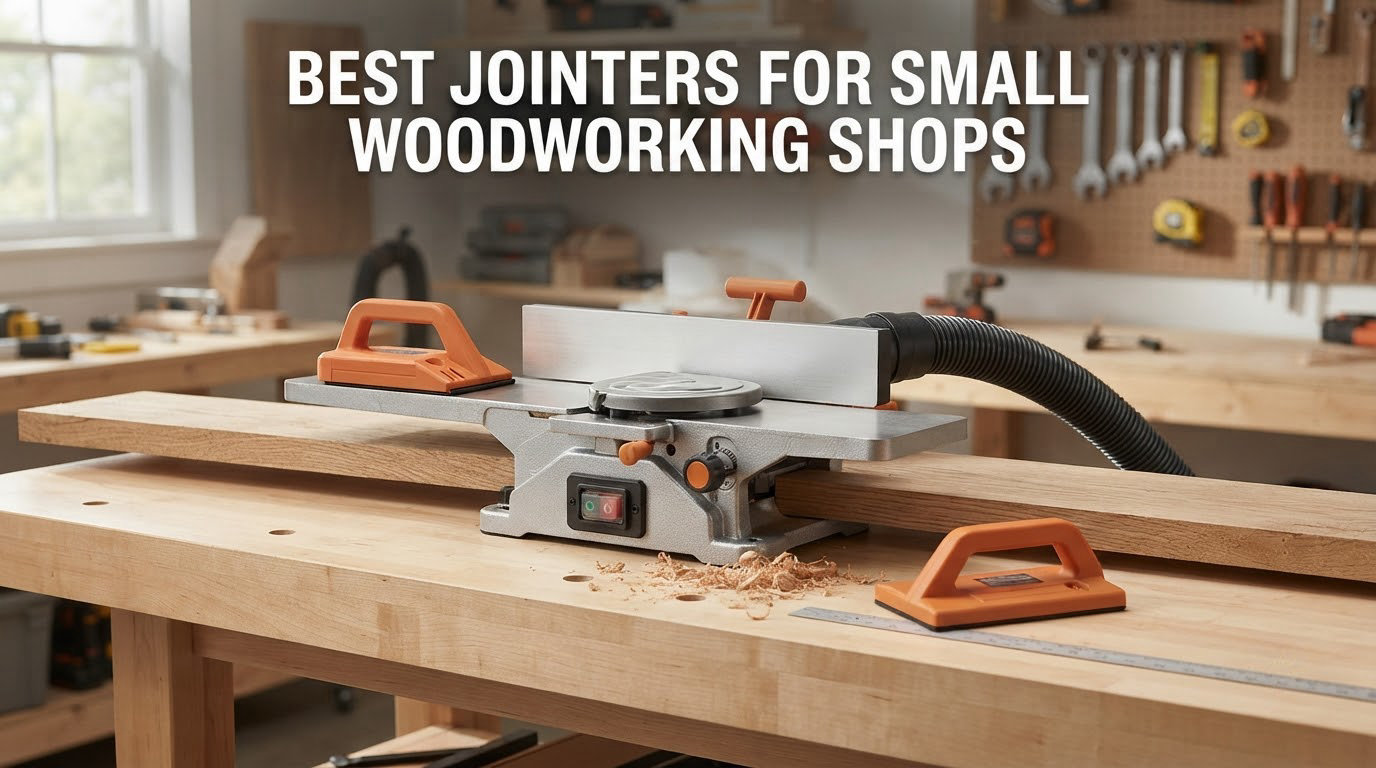
Short answer: for a small shop, the best benchtop jointer is the WEN JT630H, a 6-inch machine with a 12-blade spiral cutterhead, a 30-by-6-inch table, and a chassis light enough at 36.8 pounds to carry up basement stairs by two people. Buy the 6-inch class if your widest stock is under about 6 inches, and step up to 8-inch only when you regularly work boards 7 to 8 inches wide.
A jointer is the only machine in the shop that can make one face and one edge of a board flat and square to each other. That reference surface is what every later milling operation depends on, and it is the prerequisite for a glue-up that does not gap. Everything else in the shop assumes the jointer did its job first.
I spent months putting these eight machines side by side, weighing the spec sheets against what owners actually report after living with them. What follows is our ranking of the best jointers for small woodworking shops, arranged so you can see the entry point, the width upgrade, and the machine you buy when space is not the constraint.
Table of Contents
Top 3 Picks for Small Woodworking Shops in 2026

WEN JT630H 6-Inch Spiral Jointer
- 12-blade spiral cutterhead
- 30-by-6-inch table
- 36.8 pounds
- 0 to 1/8 inch per pass

Cutech 40160HB 6-Inch Spiral Jointer
- 12 TC inserts in 6 rows
- 6H Teflon-coated tables
- 19-5/8-inch fence
- 44.2 pounds

Wahuda 50180CC 8-Inch Spiral Jointer
- 16 four-sided carbide inserts
- cast iron tables with extensions
- 49.9 pounds
- 120V at 12000 RPM
The WEN JT630H wins because it is the only machine in this group that balances a real cutterhead, a genuinely portable weight, and a deep enough review base to trust. The Cutech 40160HB is the value pick if you want a carbide spiral head and tables that resist marking at an entry-level price. The Wahuda earns its badge as the premium cast iron option if table mass and four-sided carbide inserts matter more to you than a quick setup.
Best Jointers for Small Woodworking Shops in October
| Product | Specifications | Action |
|---|---|---|
| WEN JT630H 6-Inch Spiral Jointer |
|
Check Latest Price |
| WEN JT3062 6-Inch 2-Blade Jointer |
|
Check Latest Price |
| Cutech 40160HB 6-Inch Spiral Jointer |
|
Check Latest Price |
 CRAFTSMAN CMEW020 Jointer CRAFTSMAN CMEW020 Jointer |
|
Check Latest Price |
 WEN JT833H 8-Inch Spiral Jointer WEN JT833H 8-Inch Spiral Jointer |
|
Check Latest Price |
 Cutech 40180HI 8-Inch Spiral Jointer Cutech 40180HI 8-Inch Spiral Jointer |
|
Check Latest Price |
| Wahuda 50180CC 8-Inch Spiral Jointer |
|
Check Latest Price |
 Powermatic 54HH 6-Inch Helical Jointer Powermatic 54HH 6-Inch Helical Jointer |
|
Check Latest Price |
1. WEN JT630H 6-Inch Spiral Benchtop Jointer – The Best Overall Pick
WEN JT630H 10-Amp 6-Inch Spiral Benchtop Jointer
6-inch cutting width
30-by-6-inch table
36.8 pounds
10-amp motor
0 to 1/8 inch per pass
Pros
- 12-blade spiral head leaves a clean tear-out-free surface in maple and mahogany
- Tables arrived close to coplanar and needed only minor leveling
- Light enough at 36.8 pounds to carry between benches
- Quiet for a benchtop jointer
Cons
- Fence is the weakest part and needs careful squaring before each job
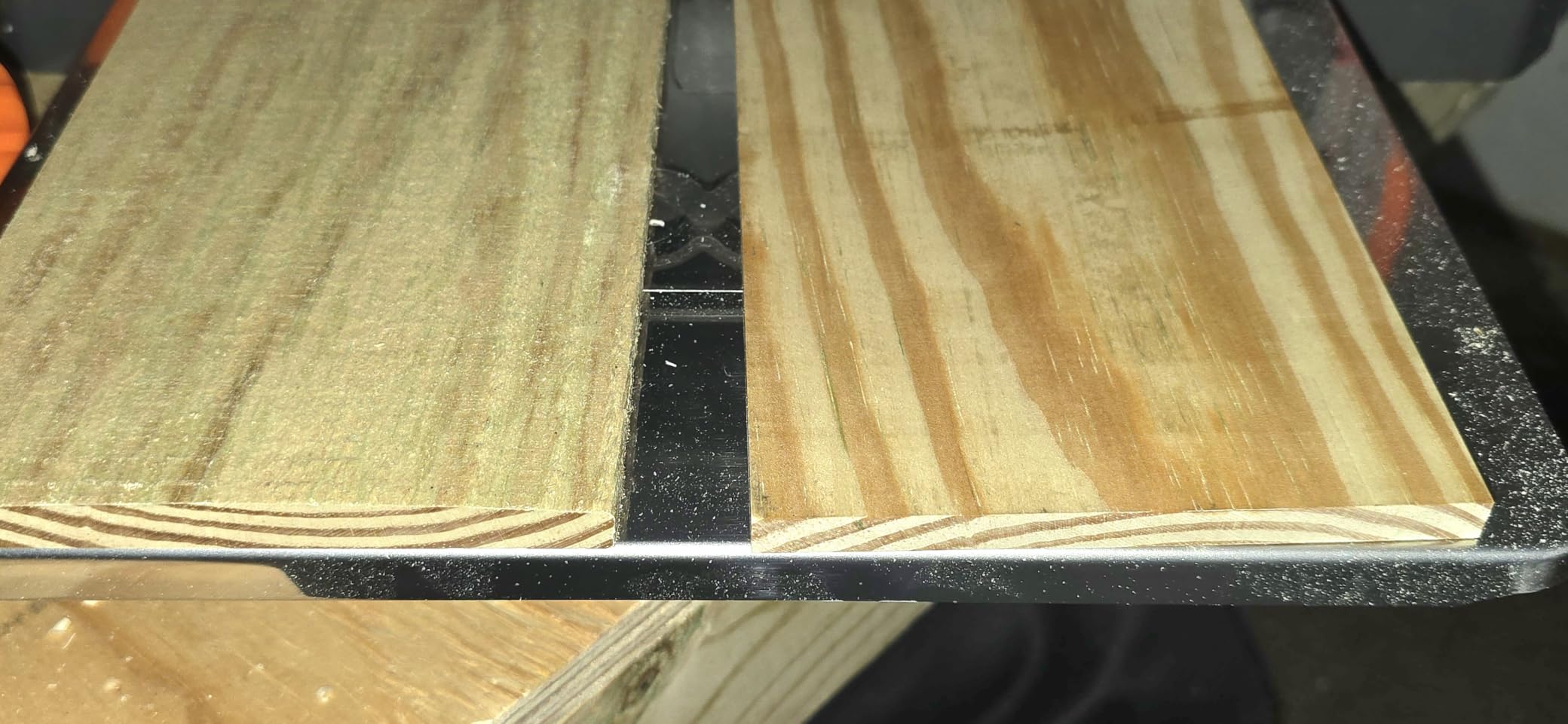
- Aluminum tables mark and scuff easily
- Bed suits boards in the 3 to 4 foot range
This is the machine I put in a corner of my own shop, and the reason is unromantic: at 36.8 pounds it is the only one in this roundup I can move without a second person or a ramp. That single fact changes how you use a jointer in a small space, because you stop treating the machine as furniture and start treating it like a tool you bring to the work.
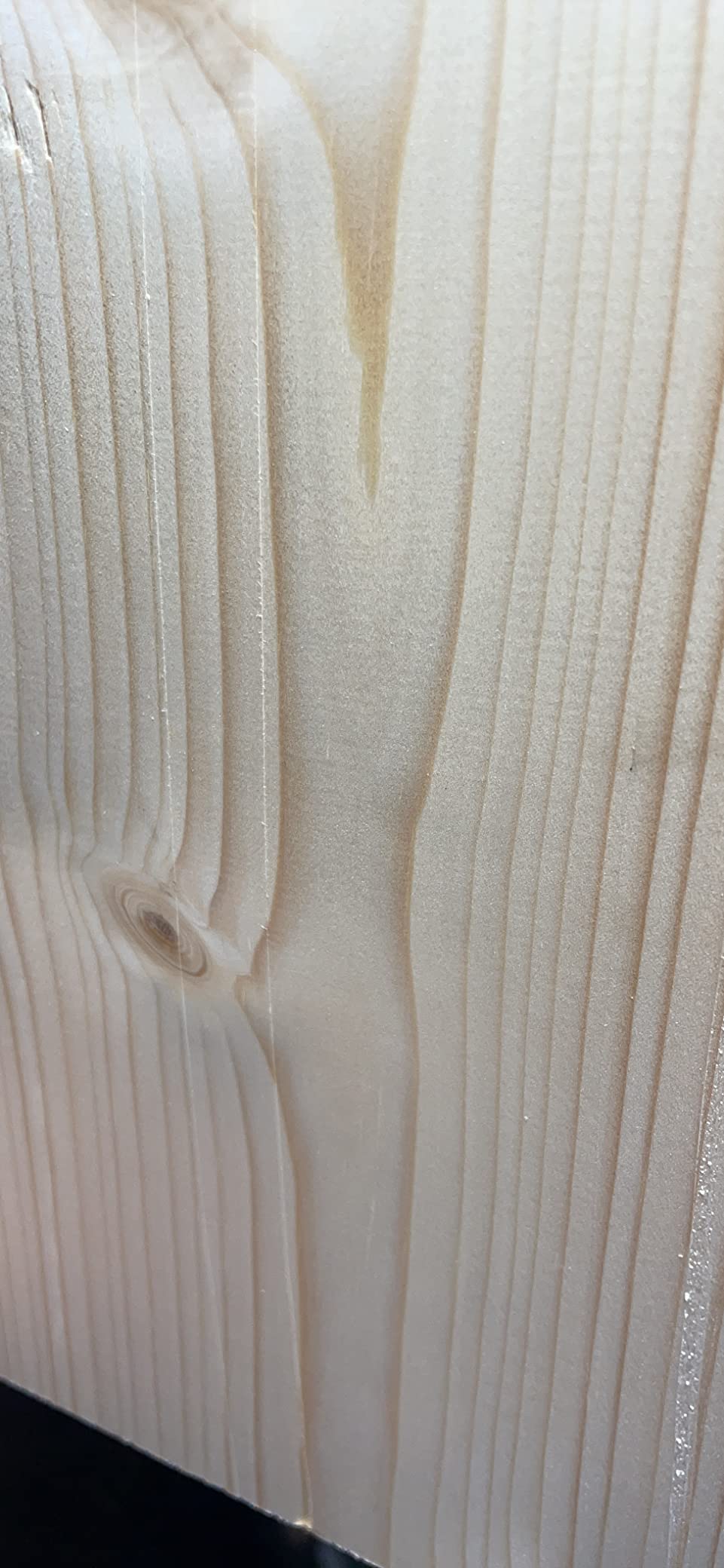
The cutterhead is the story here. Twelve staggered HSS blades running in a spiral configuration produce a shearing cut that owners consistently report as tear-out-free across maple, oak, and mahogany, which are exactly the woods that punish a straight-knife head. You can take a light pass on figured stock without watching the surface shred itself.
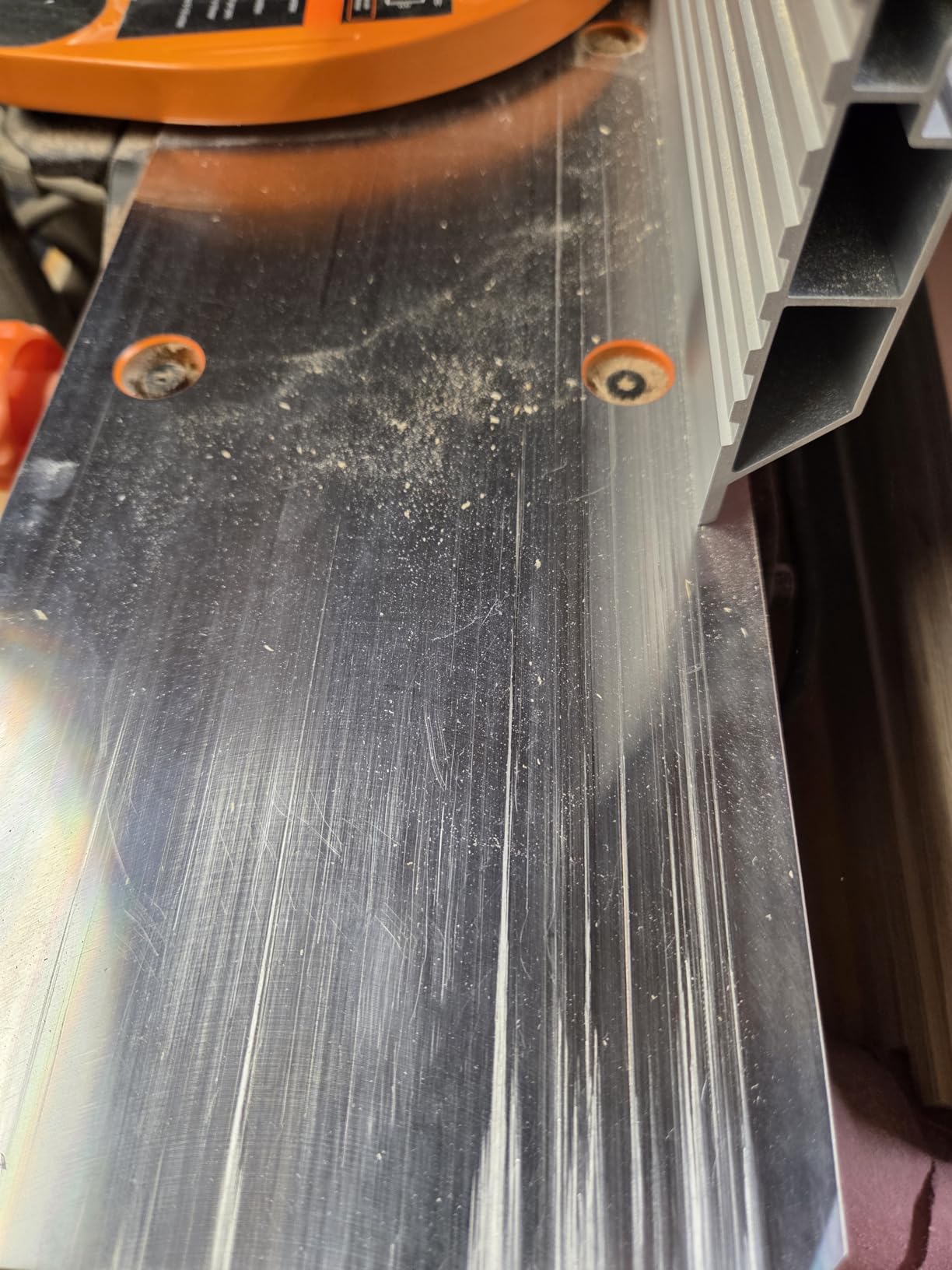
Depth of cut runs from zero to 1/8 inch per pass, which covers everything from flattening rough boards to cleaning up glue squeeze-out. The onboard depth-of-cut scale and two push blocks are included, and the dust port on the back is the one feature that changes your working conditions most once you hook up a collector.
What I would not gloss over is the fence. The 19-3/4 by 4-1/4-inch aluminum fence is the same part used across the WEN benchtop range, and owners repeatedly report it needs a careful squaring pass with a good try-square before you trust an edge joint. The tables are aluminum too, which means rough sawn lumber will leave marks you cannot sand out.
Who this suits
This suits a first serious machine in a garage or basement shop, especially if you build small furniture, boxes, panels, and cutting boards. It also suits anyone who moves machines around or works in a room where a permanent floor stand is not possible.
It is a good match if your rough stock is roughly 3 to 4 feet long. If you routinely flatten 6-foot boards, the 30-inch table becomes the bottleneck long before the 6-inch cutting width does.
Who should skip it
Skip it if you work rough lumber straight from a mill and hate the idea of ripping every board first. The 8-inch WEN JT833H below handles wider stock, though it inherits the same fence design.
Also skip it if you will not spend twenty minutes squaring the fence and leveling the tables on day one. This machine rewards that setup work and frustrates people who expect it to cut straight out of the carton.
2. WEN JT3062 6-Inch 2-Blade Benchtop Jointer – The Straight-Knife Value Pick
WEN JT3062 10-Amp 6-Inch 2-Blade Benchtop Jointer, Black
6-inch cutting width
30-by-6-3/16-inch table
22000 cuts per minute
10-amp motor
2-blade head
Pros
- Cut quality is high for a two-blade machine with no tear-out on hard maple end grain
- Motor does not bog down on hard or soft stock at typical depths
- Quiet running with a low hum
- Arrived level and easy to assemble
Cons
- Adjustment knobs are plastic and feel inexpensive
- Needs a deliberate squaring pass before first use
- Table length suits boards in the 4 to 5 foot range
This is the straight-knife counterpart to the spiral models, and it is the sleeper of the group. A 10-amp motor delivering up to 22,000 cuts per minute sounds like marketing, but owners report it does not bog down on either hard or soft stock at typical depths, which is the failure mode that actually ruins a cheap jointer’s reputation.
The 4.7 rating across 220 reviews is higher than the spiral-head WEN, and the reason is consistency. There is no head to rotate, no inserts to lose, and nothing to go out of alignment between knife changes. For someone who wants one machine that simply works, that simplicity has real value.
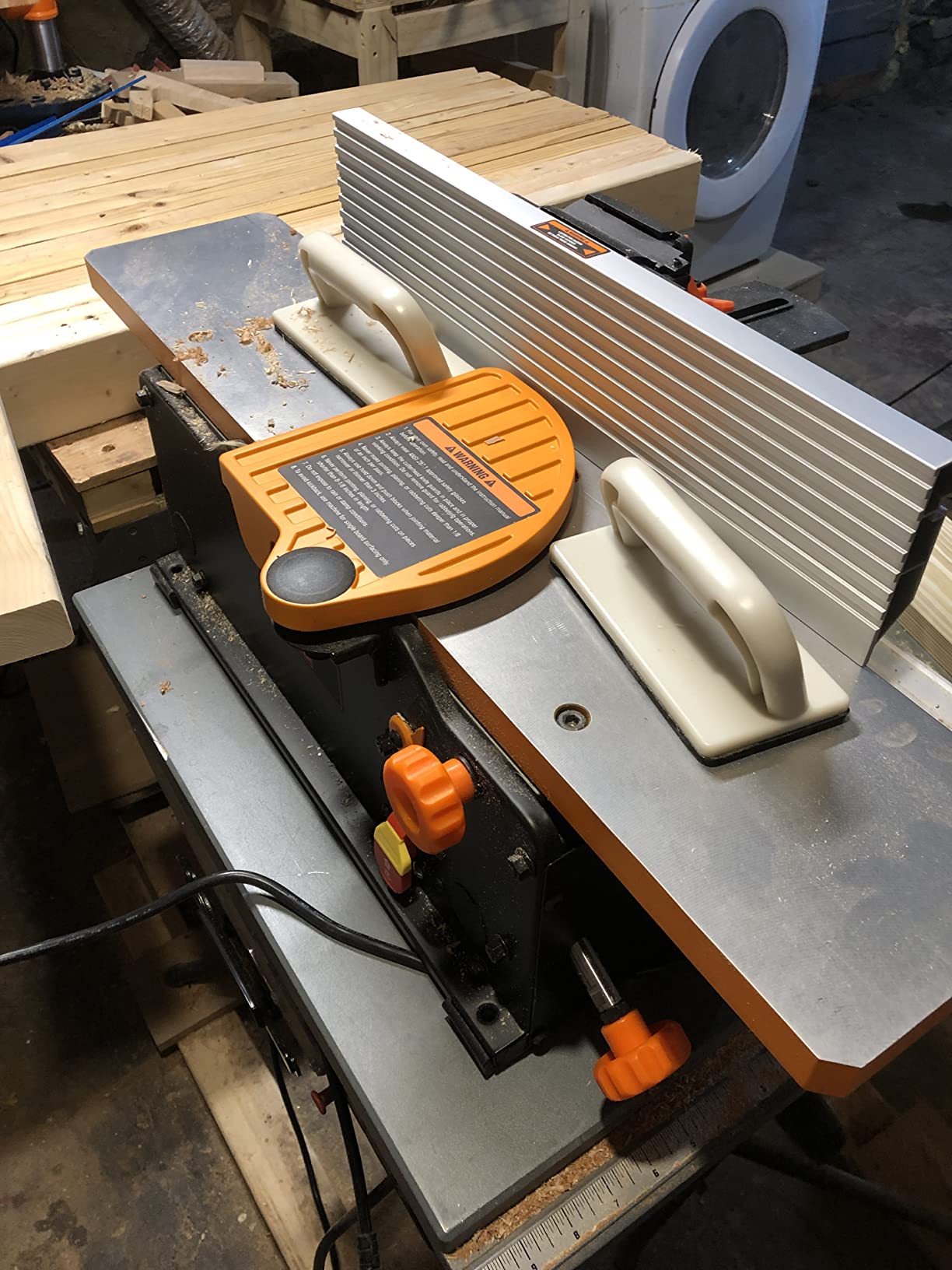
One detail worth knowing before you order: older listings describe cast iron table beds, while the current model ships with aluminum. That change is the main reason older reviews and new reviews can feel like they describe different machines.
Several buyers report swapping a CRAFTSMAN benchtop jointer for this one and getting better results, which tells you something about where the quality differences actually sit. They are in the head and the setup, not in the badge.
Who this suits
This suits a beginner who wants a traditional two-knife head and plans to learn knife changing and jointing technique on something inexpensive. The sliding fence also lets you work different areas of the blade without resetting the whole setup.
It is a strong choice for a shop that runs mostly pre-milled lumber and only needs the jointer for flattening glue-ups and squaring edges.
Who should skip it
Skip it if you work figured or curly-grained wood, where a two-knife head is at its weakest. There is no tear-out on hard maple end grain, but wild grain is a different test.
Skip it if you mind plastic adjustment hardware, which owners consistently describe as inexpensive-feeling. It works, but it is the part you will touch most.
3. Cutech 40160HB 6-Inch Spiral Jointer – The Best Finish for Beginners
Cutech 40160HB 6-Inch Spiral Cutterhead Benchtop Jointer with teflon-Coated Aluminum Tables, 12 TC Inserts, 19-5/8” Aluminum Fence, and a 10-amp Motor (Rifle Green, 6 inch)
6-inch width
12 TC inserts in 6 rows
6H Teflon-coated aluminum tables
19-5/8-inch fence
44.2 pounds
Pros
- Two-sided carbide inserts in a 6-row spiral head cut smoothly at low amp draw
- Teflon-coated tables scratch far less than bare aluminum
- Depth-of-cut pointer and scale make repeat cuts accurate
- Fence has quick stops at 90 and 135 degrees
- Lower noise than a straight-knife head
Cons
- Aimed at smaller 6-inch workpieces
- Heavier and bulkier footprint than the 6-inch WEN units
A 4.8 rating makes this one of the highest-rated machines here, though the review base of 59 is the second smallest in the roundup, so treat it as strong rather than proven. What the reviews do agree on is the table coating.
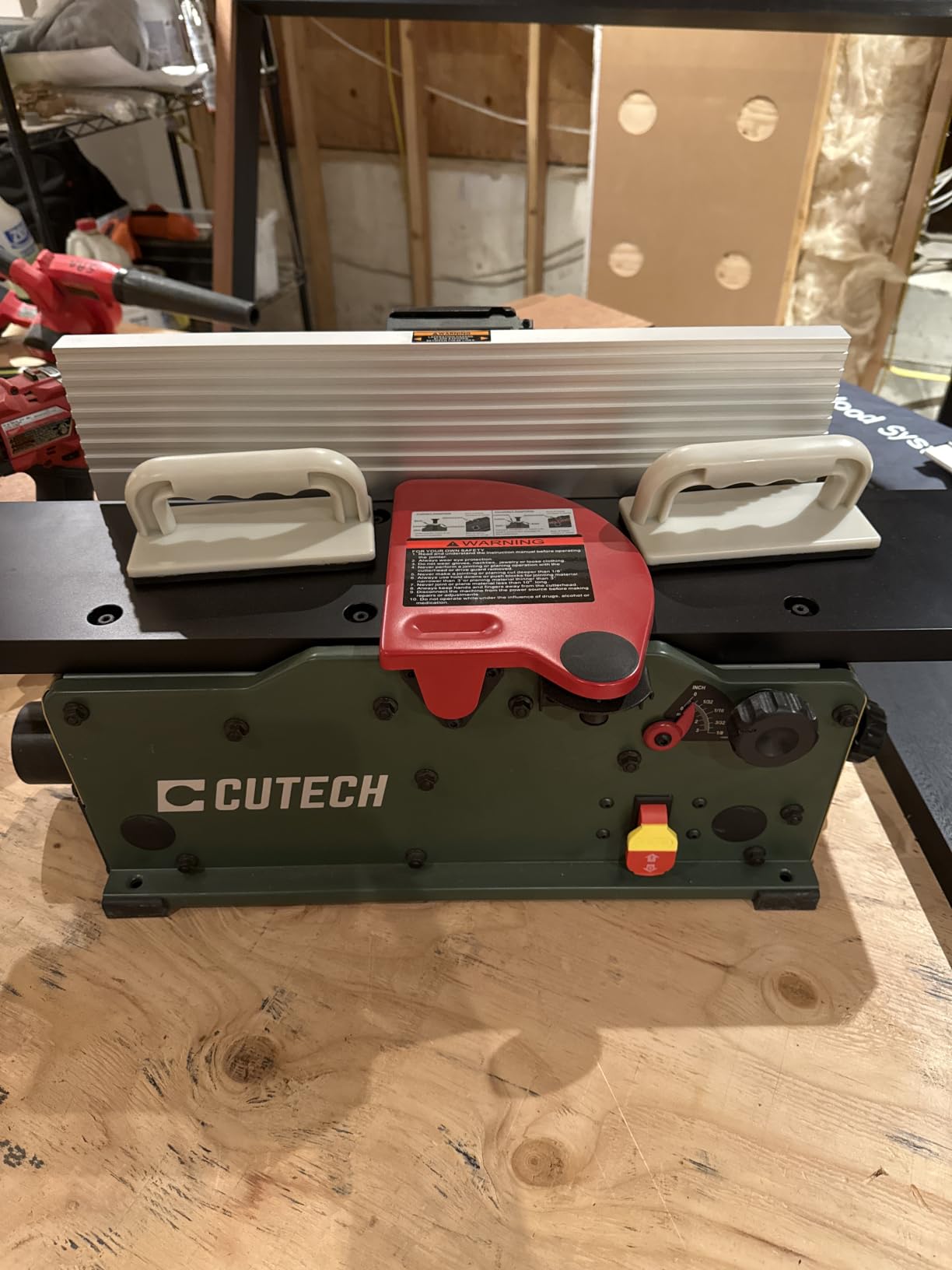
The 6H Teflon coating on the aluminum tables is the direct answer to the complaint that dominates every other aluminum benchtop in this list. Bare aluminum tables mark and scuff; treated tables resist scratching, and that difference shows up in your workpiece, not just your machine.
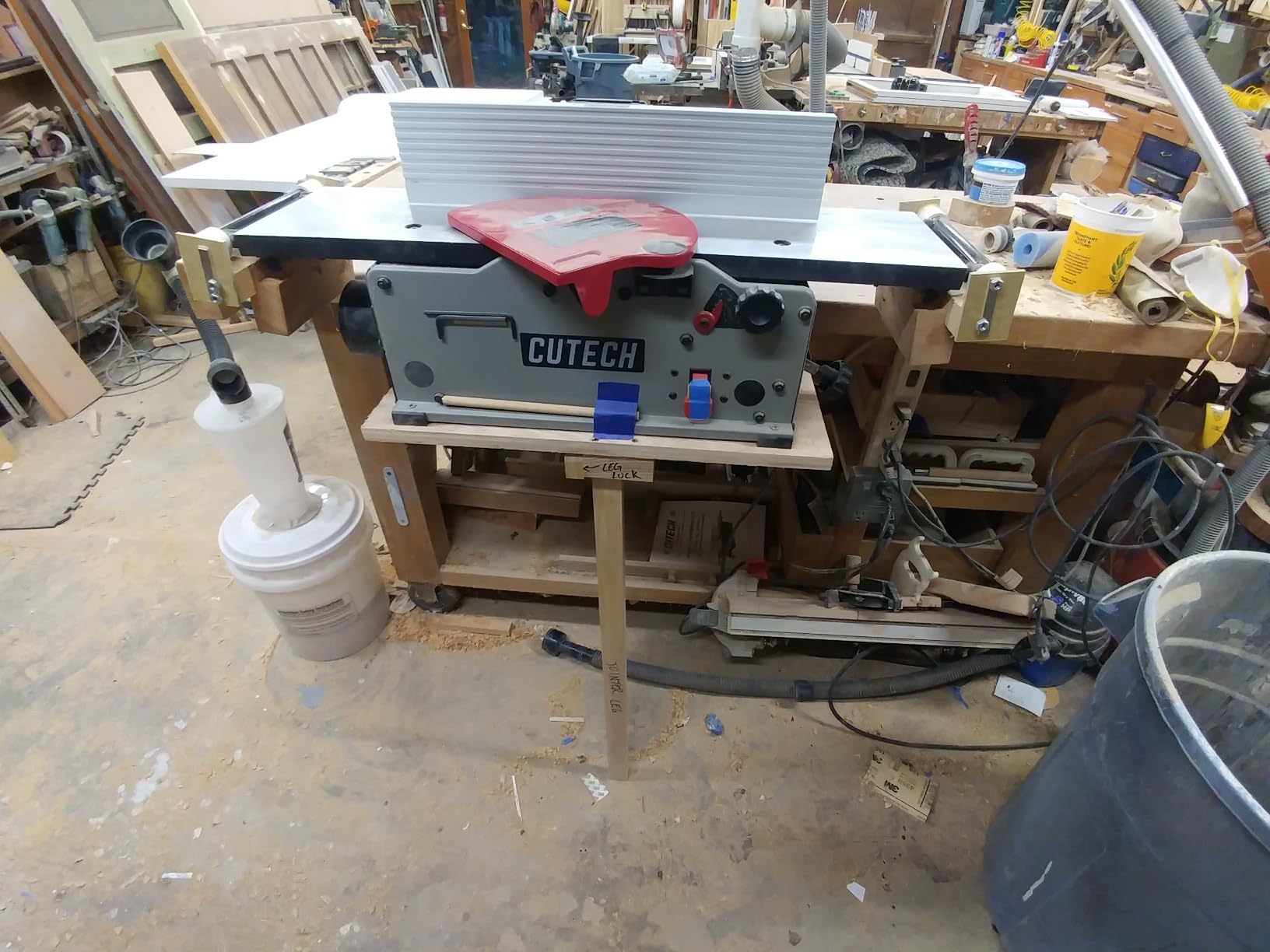
The cutterhead uses 6 rows of staggered two-sided inserts, and the non-cutting edge on each insert is designed to keep inserts from skewing as they pass through the wood. Low amp draw is a real advantage on a 10-amp circuit, because it leaves headroom for the motor on dense hardwood.
For a first jointer, the ergonomics are unusually well considered. A clear depth-of-cut pointer and scale means repeat cuts land where you intended, and the 19-5/8-inch fence carries quick stops at 90 and 135 degrees so you are not measuring bevels by eye.
Who this suits
This suits a beginner who wants a professional-looking surface on their first machine and who cares more about the finished board than about the lowest possible entry point. The brand positions it explicitly at beginners wanting good results without the noise and tear-out of a two-knife head.
It also suits anyone who has been disappointed by aluminum tables picking up every mark from rough lumber.
Who should skip it
Skip it if your material is routinely wider than 6 inches, or longer than the 30-inch table can support well. This is a 6-inch machine first and foremost.
At 44.2 pounds it is heavier than the 6-inch WEN units, so if your real constraint is carrying the machine up a flight of stairs, weigh that before you choose.
4. CRAFTSMAN CMEW020 Benchtop Jointer – The Best Variable Speed Option
CRAFTSMAN Benchtop Jointer, Up to 22,000 cuts per Minute, 10 Amp, Corded (CMEW020)
4.25-inch width
6000 to 11000 RPM variable speed
two-knife head with jackscrew leveling
10-amp motor
Pros
- Only machine here with a true 6000 to 11000 RPM variable speed dial
- Speed control lets you match RPM to material size and hardness
- Jackscrew knife leveling makes blade changes straightforward
- Center-mounted fence supports the cut for accurate edge jointing
Cons
- Shortest infeed and outfeed tables in the group
- Blade guard can contact the knives if pressed
- Aluminum tables scratch easily and a small share report early motor failure
Variable speed is the reason to look at this machine, and nothing else in the roundup has it. The dial runs from 6,000 to 11,000 RPM, and that range lets you slow down for figured or soft material and speed up for clean hardwood passes, which is something no other machine here lets you do.
The 4.25-inch cutting width is narrower than the 6-inch class, and that is a real limitation on wider boards. But for small projects like cutting boards and trays, the narrow head is an advantage, because the cutter is easier to keep fed and does not bog on light stock.
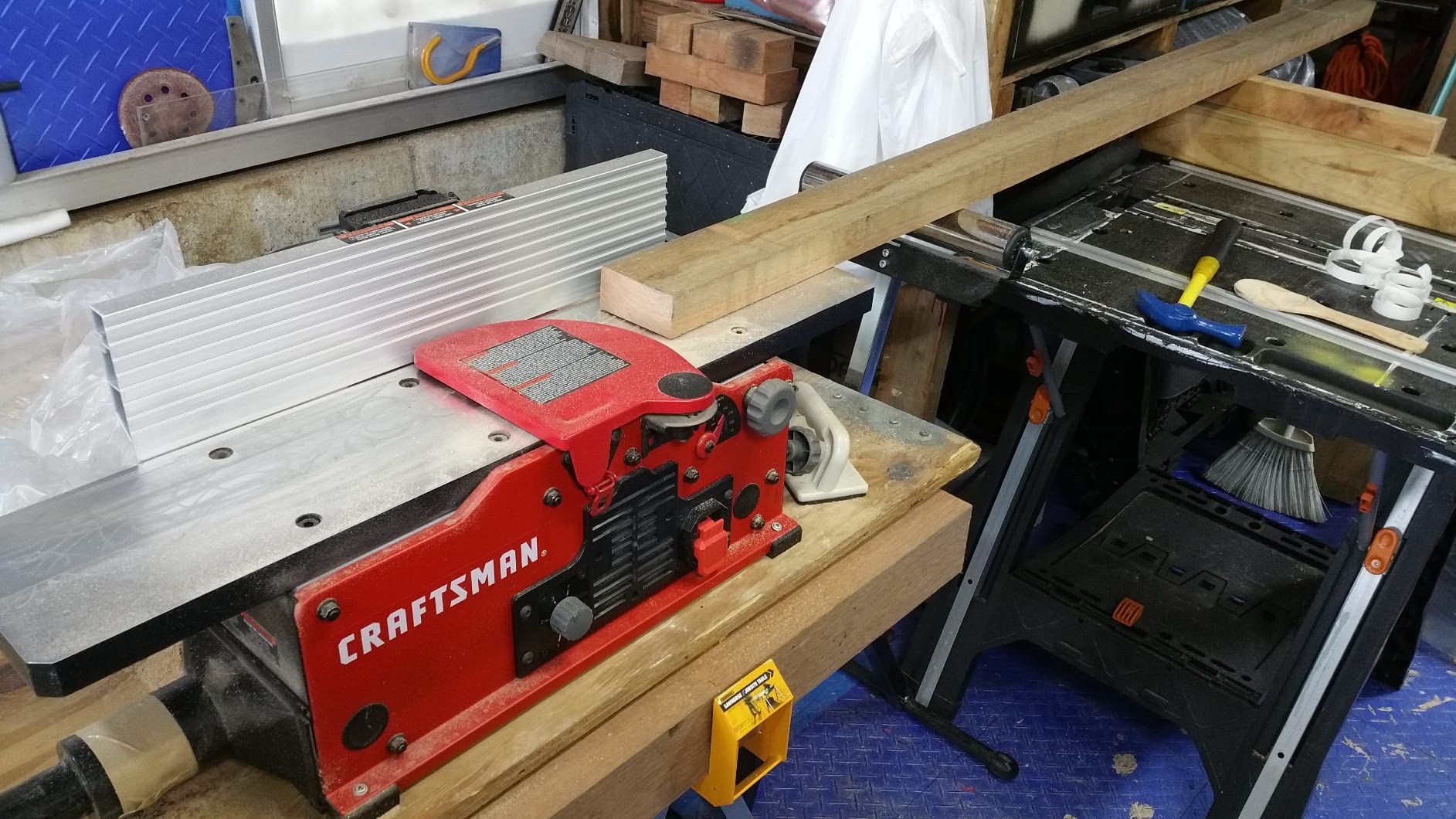
The two-knife head uses a jackscrew knife leveling arrangement, so changing or adjusting blades is straightforward rather than a precision ritual. The center-mounted 4-1/4-inch fence supports the cut through its length, which helps accuracy on edge joints.
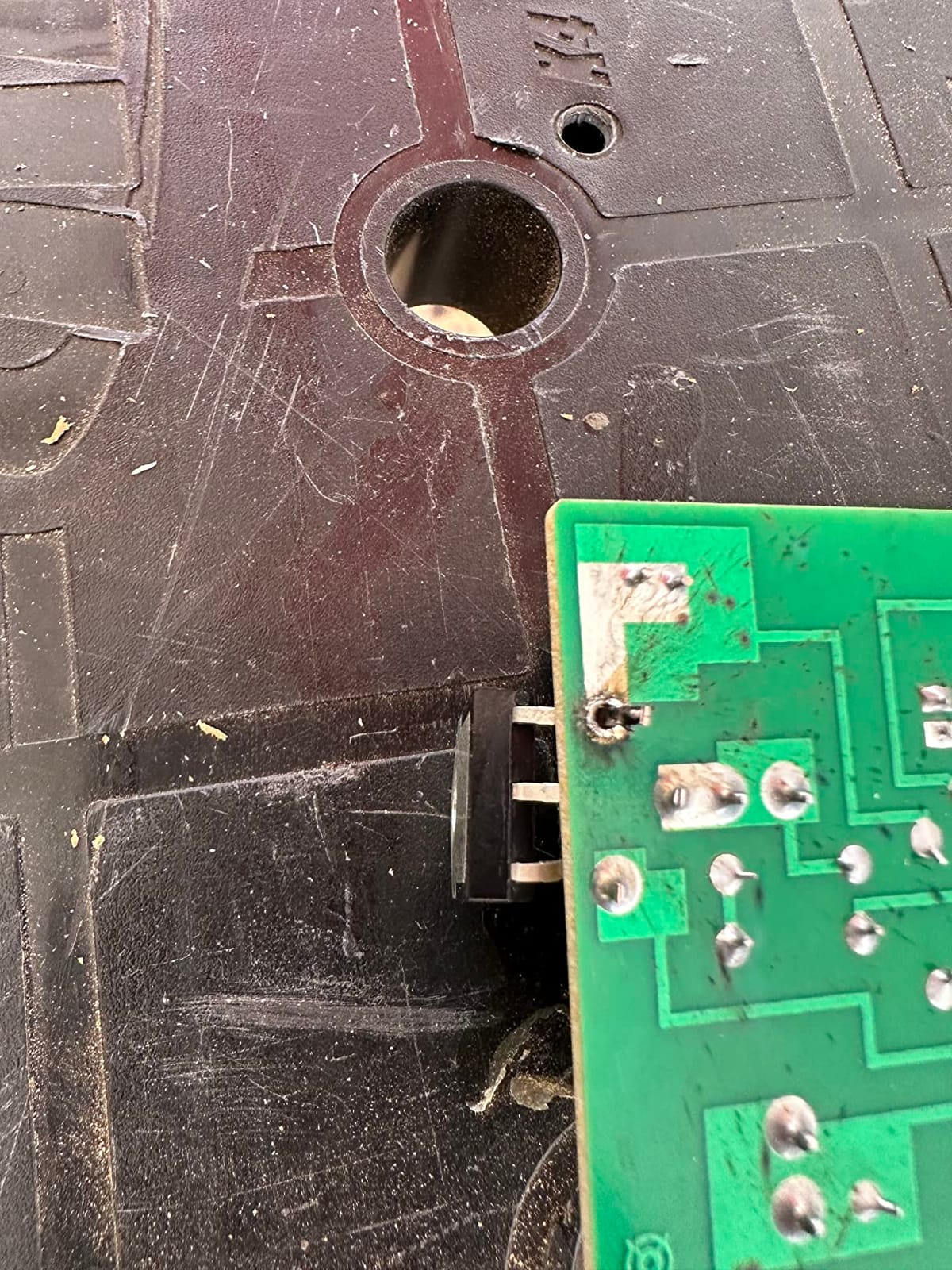
With 673 reviews, this has one of the larger review bases here, and the 4.4 average carries a visible caveat: a durable minority of owners report motor failure within months, and roughly a tenth of reviews are one star, the largest negative share in the roundup. Most owners use it for small projects and report excellent dust collection with a shop vac or cyclone combination.
Who this suits
This suits a woodworker who works small pieces and cares about controlling cut speed more than capacity. If you make cutting boards, trays, and small boxes, the narrow head and the speed dial are a good pairing.
It is also a reasonable first machine, since owners consistently report a simple setup of about fifteen minutes and a machine light enough to move around the shop by hand.
Who should skip it
Skip it if you flatten rough lumber. The 4.25-inch width means more ripping, and the tables are the shortest in the group, which limits you to roughly 4 to 5 foot stock.
Skip it if you want the longest service life per dollar. The early motor failure reports are a minority, but they are real enough that you should have a plan for the machine’s end of life.
5. WEN JT833H 8-Inch Spiral Benchtop Jointer – The Best Width per Footprint
WEN JT833H 10-Amp 8-Inch Spiral Benchtop Jointer with Extendable Table
8-inch width
33-by-8-inch table extending to 51 inches
16 staggered HSS blades
Pros
- 16-blade spiral head gives a finer finish than the 6-inch WEN models
- Extendable support arms reach 51 inches for longer and wider stock
- Both 2-1/2-inch and 4-inch dust ports for flexible hookup
- Spiral head needs no depth-of-cut adjustment between passes
Cons
- Shares the basic aluminum fence design and squaring quirks of the smaller WEN models
- HSS blades rather than carbide so edge durability lags the carbide units
This is the upgrade step inside the WEN line, moving from a 6-inch bed to an 8-inch bed with extendable support arms. The 16-blade spiral cutterhead is the main technical difference from the 6-inch model, and it produces a visibly finer finish on hardwood.
The table story matters more than the width story here. A 33-by-8-inch table with support arms that extend out to 51 inches is a real answer to the sagging-stock problem that shows up in every forum thread about benchtop jointers, and it does more for a small shop than the extra two inches of cutting capacity.
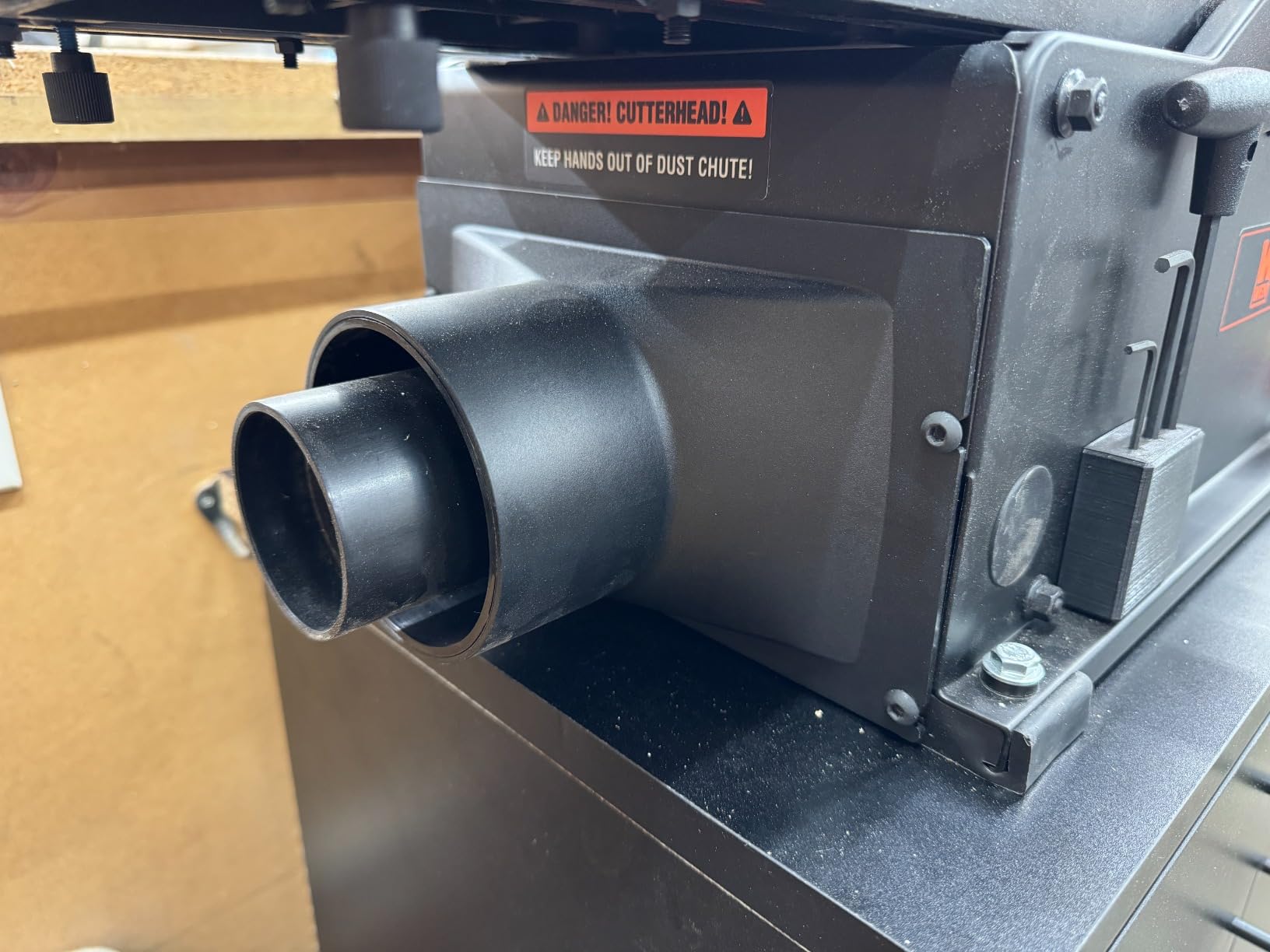
Dual dust ports in 2-1/2-inch and 4-inch sizes is a small detail that pays off if your shop runs different collectors for different machines. Owners who have had both a 6-inch and an 8-inch WEN report that the dust port options eliminate a common source of friction between a jointer and a shop vacuum.
There is a catch worth being honest about. The blades are HSS, not carbide, so edge durability and finish on hardwoods lag the Cutech and Wahuda carbide units even though the head is spiral. The fence is also the same 19-3/4 by 4-1/4-inch aluminum design used on the smaller WEN machines, including its squaring quirks.
Who this suits
This suits a small shop that works rough lumber but cannot commit floor space to a full-size jointer. Eight inches covers the majority of mill stock, and the extendable arms keep longer boards from pitching as they leave the outfeed table.
It is also a good step up for someone who started on a 6-inch machine and kept finding themselves ripping boards before they could flatten them.
Who should skip it
Skip it if your priority is a carbide head that holds its edge through hardwood work. You will need to rotate or replace HSS blades more often, and the finish will not match the carbide machines.
Skip it if you are extremely space-constrained. The 8-inch table and the extending support arms take up noticeably more bench than the 6-inch models.
6. Cutech 40180HI 8-Inch Spiral Jointer – The Best Factory-Set Tables
Cutech 40180HI 8-Inch Spiral Cutterhead Benchtop Jointer with Cast Iron Tables, 16 TC Inserts, Extra Long 24″ Aluminum Fence, Additional 7-3/8″ Fence Brackets, and a 10-amp Motor
8-inch width
16 TC inserts in 6 rows
24-inch fence with end brackets
cast iron tables
82.8 pounds
Pros
- Cast iron tables arrived well greased and coplanar requiring little or no adjustment
- 16 tungsten carbide inserts cut smoothly through pine and rough sawn oak
- 24-inch fence with extra end brackets stabilizes both fence ends
- At 82.8 pounds the machine will not shift during a cut
- Damaged inserts rotate in seconds by loosening one screw
Cons
- Fence alignment mechanism is crude for the price class
- Universal motor is loud at idle with a high-RPM whine and ear protection is always needed
- Heavy for a machine meant to be portable
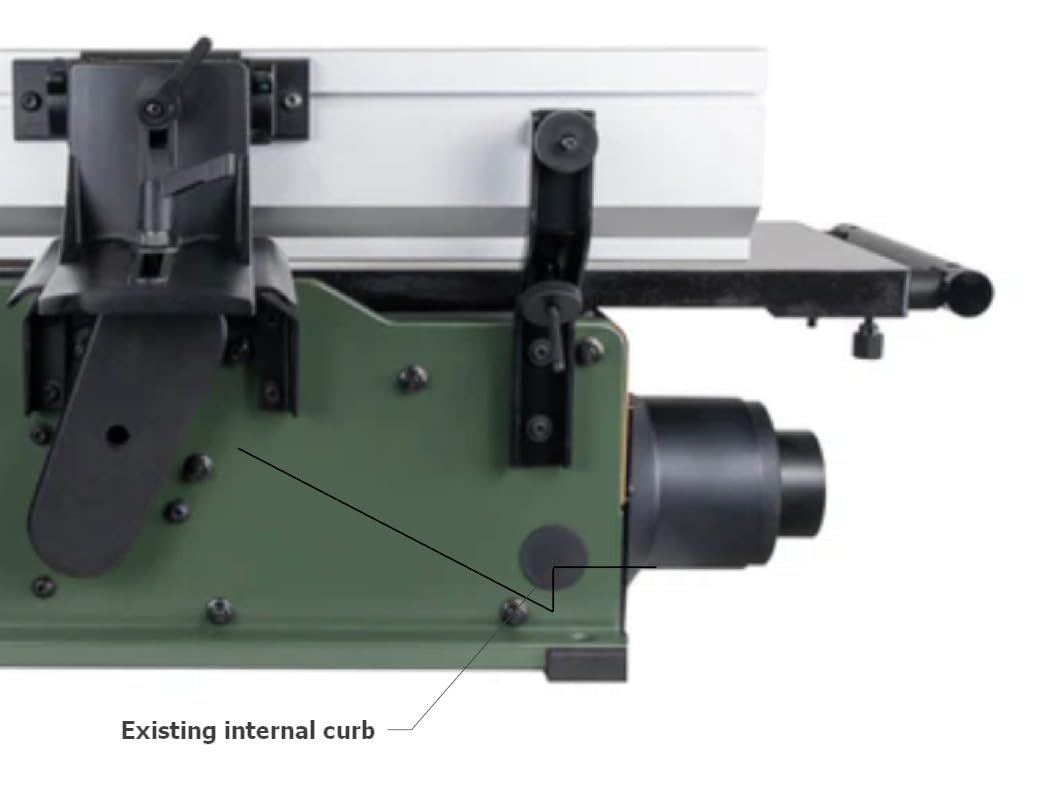
Setup is the standout strength. Multiple buyers report cast iron tables arriving well greased from the factory and coplanar out of the crate, needing little or no adjustment, which is the single thing most owners of budget benchtop jointers complain about. Coplanar tables are the most valued quality signal in this whole category, and this machine is the one that delivers it most consistently.
The fence is the other differentiator. A 24-inch long aluminum fence with the included fence enhancement brackets is the only design in this class that stabilizes both ends of the fence, and that is exactly the fix for the fence deflection and taper that people report on shorter fences.
The cutterhead runs 6 rows of staggered tungsten carbide inserts with in-house made inserts aimed at low amp draw, and the elevation control guide post is designed to keep the translating tables producing straight cuts at any depth rather than only at the top of the range.
The main criticism is acoustic, and it is a fair one. The universal motor whines at idle with a 12,000 RPM sound, and multiple reviews note it is loud enough that ear protection is needed at all times. Owners comparing it to induction-motor machines hear the difference immediately.
Who this suits
This suits someone who wants cast iron tables, a carbide head, and a wide fence in a package that arrives ready to cut, and who is not planning to move the machine often. At 82.8 pounds it stays put during a cut, which is a genuine advantage when you are jointing wide stock.
It is a strong choice for a shop doing 8-inch work on short to medium boards where fence stability matters more than portability.
Who should skip it
Skip it if noise tolerance is a factor, such as in a basement shop under a finished floor or a shared building. The 12,000 RPM whine is the most common complaint in the reviews.
Skip it if you need to carry the machine to different locations. At 82.8 pounds this is a benchtop jointer in footprint only, and the crude fence alignment mechanism is the other common source of frustration.
7. Wahuda 50180CC 8-Inch Spiral Jointer – The Best Cast Iron 8-Inch
Wahuda Tools Jointer – 8-inch Benchtop Wood Jointer, Spiral Cutterhead Portable Jointer, Cast Iron Tables w/Pull Out Extensions, 4-Sided Carbide Tips & 10amp Motor, Woodworking Tools (50180CC-WHD)
8-inch width
16 four-sided carbide inserts
cast iron tables with extensions
49.9 pounds
Pros
- Four-sided carbide inserts are a genuine upgrade over two-sided HSS cutters in the same price band
- Cast iron tables are more stable and durable than most aluminum tables here
- Markedly quieter than a two-blade Porter-Cable unit
- Head does not need leveling after a knife change
- Support is repeatedly praised as fast and generous with replacements
Cons
- Infeed and outfeed tables usually require extended iterative leveling often two hours or more
- Aluminum fence finish is rough and needs frequent waxing
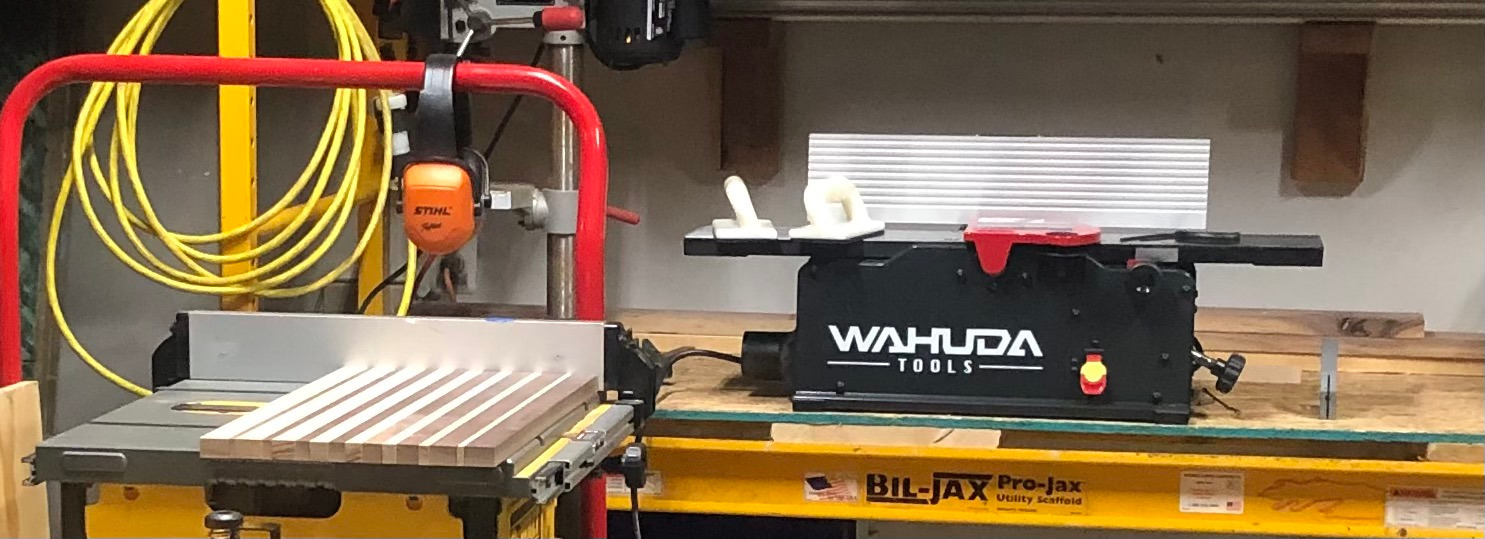
This machine divides opinion almost exactly along one axis, and understanding that axis tells you whether to buy it. On one side are owners who persist through table alignment and describe clean, crisp edges with no snipe. On the other are owners who give up during that process, sometimes after a month of effort, and rate the machine as unusable.
Everything good about this jointer follows from the hardware. Sixteen four-sided carbide inserts mean no knife leveling after a change, cast iron tables are more stable and durable than the aluminum tables on most competitors, and the 10-amp motor at a fixed 12,000 RPM is described by several owners as almost alarmingly quiet compared with a two-blade unit.
Customer service is the standout nobody expects. Multiple reviewers received full replacement machines for defective cutterheads and uneven table castings, and several raised their rating after support intervened. If you are the type who wants a company to stand behind a part, that is worth more than any spec line.
The tradeoff is the setup. Infeed and outfeed tables almost always require extended iterative leveling, commonly two hours or more, and adjusting one table screw disturbs the others, which turns the process into a slow back-and-forth loop. Cast iron tables also need to be kept dry and clean or they rust.
Who this suits
This suits someone who is patient with calibration and rewards a good setup with a machine that stays calibrated. The four-sided carbide head and cast iron tables are a durable combination, and the extension arms help on longer stock even though results diminish past about 40 inches.
It is also a good pick if support quality matters to you, because the replacement history here is unusually strong for the price class.
Who should skip it
Skip it if you want a machine that works immediately out of the box. If the two-hour alignment loop would frustrate you, buy the Cutech 40180HI instead, which reports factory-coplanar tables.
Skip it if you work long boards. The support extensions do not form a reference surface and are not part of the bed, so a long board can still pitch as it passes.
8. Powermatic 54HH 6-Inch Helical Jointer – The Best Full-Size Bed
Powermatic 6-Inch Jointer, Helical Cutterhead, 1 HP, 115/230V 1Ph (Model 54HH)
6-inch width
40 four-sided carbide inserts
66-inch bed
38-inch tilting fence
1 HP motor
Pros
- 40 four-sided carbide inserts produce the finest finish in the roundup
- 66-inch bed runs 7 and 8 foot rough lumber a class apart from any benchtop machine
- Tables arrived within 0.002 inch of level so almost no setup was needed
- Large dust port moves a high volume of chips
- Five-year manufacturer warranty
Cons
- Fence is not perfectly flat and can teeter when raised off the table
- Helical head leaves faint scallop marks needing one or two passes of 120 grit
- Assembly needs two people and an engine hoist
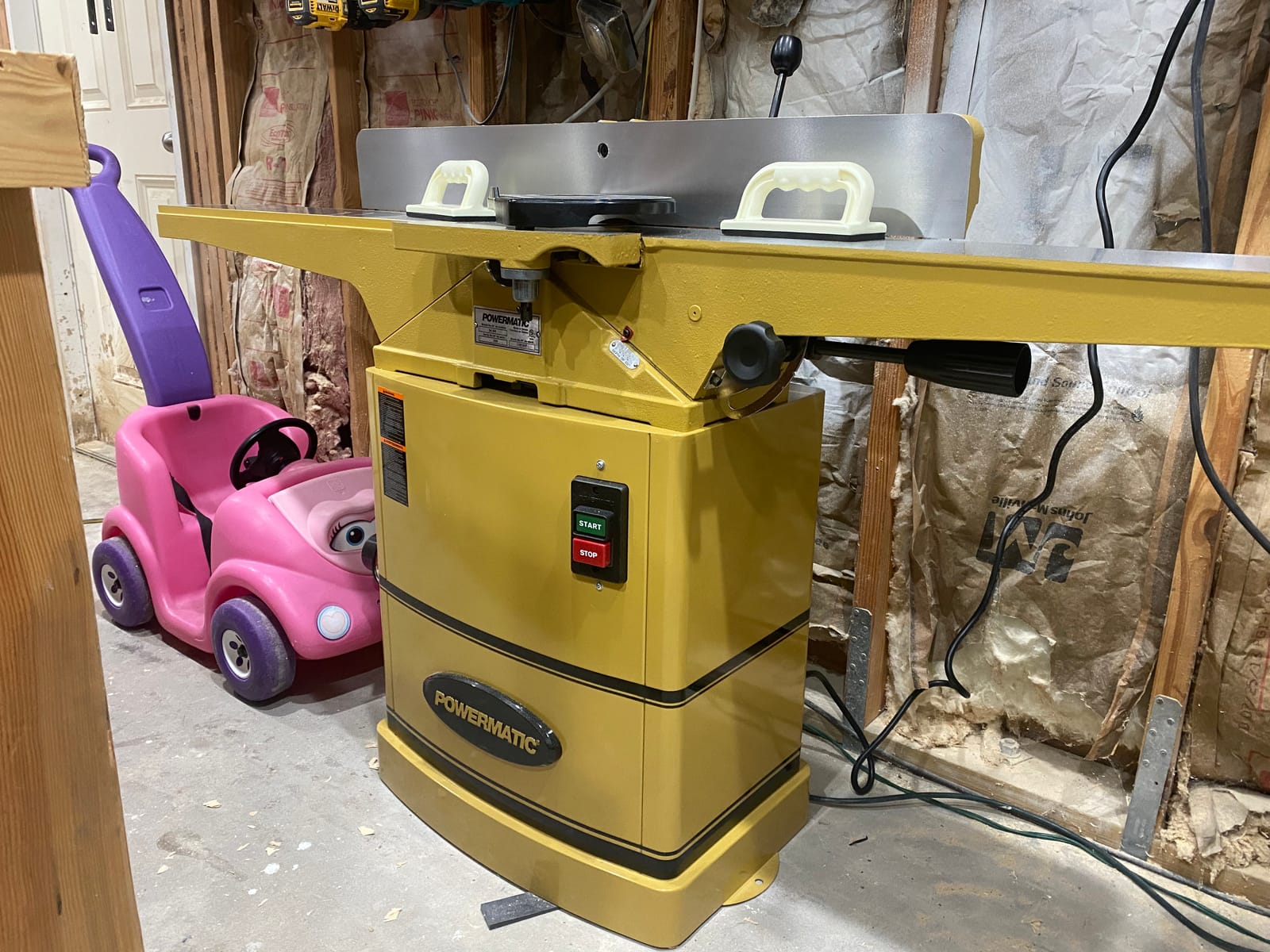
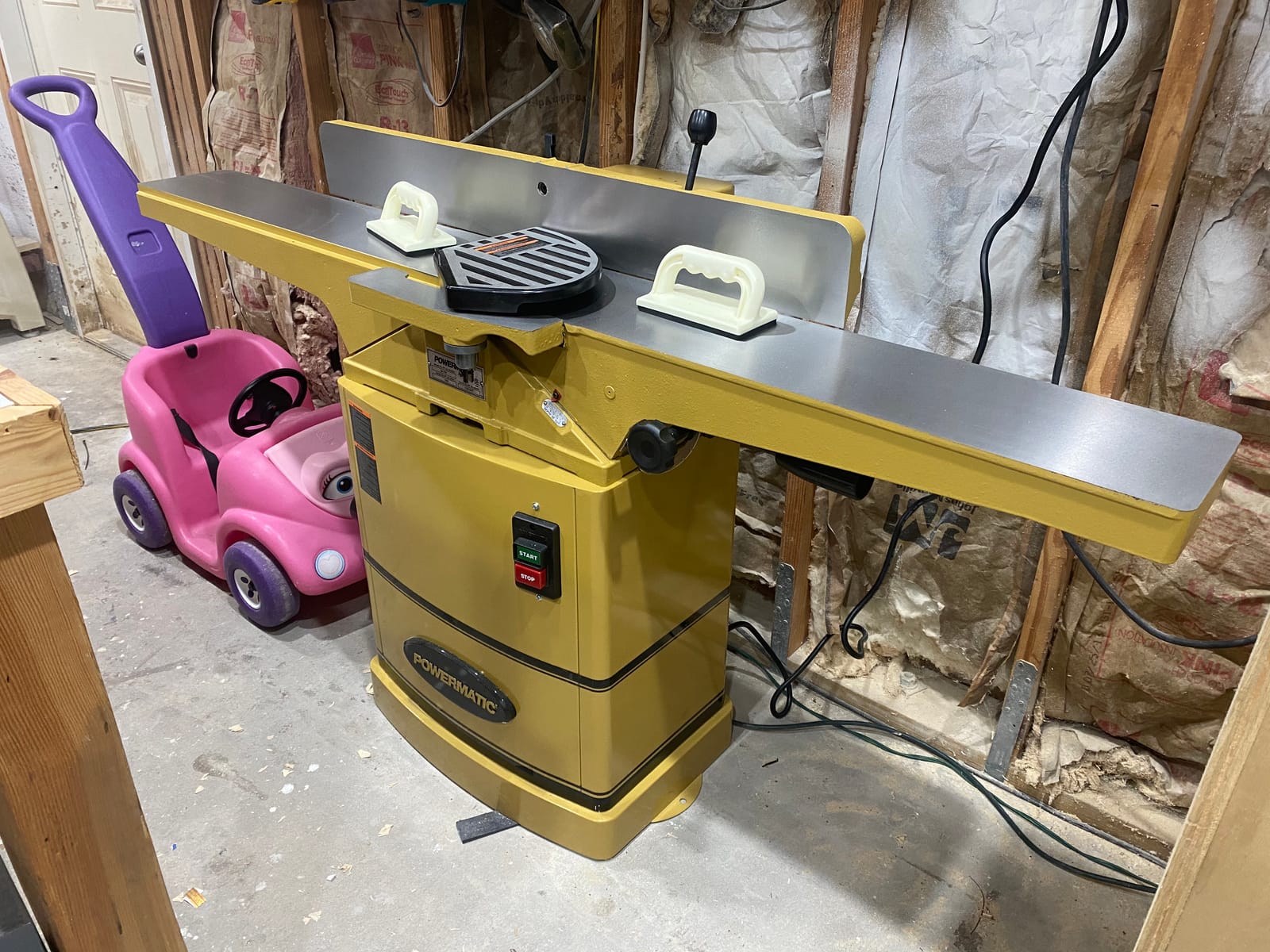
This is the only true floor machine in the roundup, and the jump in capability is immediate. A 66-inch bed handles 7-foot and 8-foot rough lumber, which no benchtop machine here can do without an extension that is not part of the bed, and the 40 four-sided carbide inserts in a true helical head produce the finest finish in the group.
The setup story is the strongest of any machine here. Owners report tables arriving within 0.002 inch of level out of the factory, so almost no setup was required, which is remarkable for a machine of this class. The 1 HP motor at 115/230V single phase handles hard reclaimed oak and walnut without straining, and there is a five-year manufacturer warranty behind it.
Two finishing details keep it from being flawless. The helical head leaves faint scallop marks on the edge that need one or two passes of 120 grit to remove, and the working width is a bit under 6 inches when a longer cutterhead would have given 6.5. Neither is a serious problem, but both are things you feel at the sanding stage.
The fence is the other wrinkle. It is not perfectly flat, with one end measurably squarer than the other, and it can teeter when raised off the table. A 38-inch two-way tilting fence with positive stops is still far more capable than anything else in this list, but expect to check it with a straightedge rather than trusting it blind.
Who this suits
This suits a shop that already has a home for a floor machine and works long rough lumber. If you have a 12-by-14 garage or better, a dedicated 20-amp circuit, and help moving heavy equipment, this is the machine that removes the ripping step from your workflow entirely.
It also suits anyone who has outgrown a 6-inch benchtop machine and has already done the 6-inch to 8-inch to helical upgrade path that so many small shops describe.
Who should skip it
Skip it if your shop is under about 10 by 12 feet, or if the machine has to go down a flight of stairs. Assembly needs two people and an engine hoist, and it is a floor machine despite the compact 6-inch capacity.
Skip it if you are still deciding whether a jointer is the right machine for you at all. There is a less painful way to find out, and it costs a fraction of this.
Straight Knives vs Helical Cutterheads: What a Small Shop Actually Needs
A helical cutterhead is worth the premium in a small shop because it removes two recurring chores: no knife loosening, no leveling, and no tear-out on figured grain. Across the reviews in this roundup, owners with carbide spiral heads report going years without touching the cutters, and one r/woodworking poster described going four years on a planer before rotating cutters, with a three-year-old jointer still untouched.
Straight knives still make sense in two situations. If you already know how to change, level, and set knives, the skill is paid for and a two-knife head gives you a coarser but effective cut at a lower entry point. And if your material is mostly pre-milled dimensional lumber, the tear-out advantage of a spiral head barely matters.
The one thing a spiral head does not fix is the machine around it. Owners of the straight-knife machines in this roundup mostly report trouble with fences, table leveling, and plastic hardware, not with the cutterhead itself. A helical head bolted to a crooked fence still produces a crooked edge, which is why the calibration checklist below matters more than the head choice.
Watch for one finish detail specific to spiral heads. The Powermatic’s review notes faint scallop marks that need one or two passes of 120 grit, and that is characteristic of the design rather than a defect in that machine. If you plan to use a jointer as a final surface operation and stop there, know that one more sanding step exists.
Will It Actually Fit? Doors, Stairs, and Shop Footprint
This is the disqualifier that catches more purchases than any other, and it is the one topic none of the editorial roundups on this subject cover. The advice from the comment threads is blunt: if you have ever had a hard time getting a 6-inch machine down the stairs, do not plan on doing that with an 8-inch machine.
The weight numbers in this roundup tell the story clearly. The 6-inch WEN JT630H is 36.8 pounds, the Cutech 40160HB is 44.2 pounds, the Wahuda is 49.9 pounds, and the Cutech 40180HI is 82.8 pounds. Those are four very different logistics problems, and only the first two are casual two-person carries up a basement stairway.
Measure your narrowest point, not your average. Check the garage door opening with the door fully raised, the interior door swing, and the turn at the top and bottom of any stairs.
Measure the largest machine dimension, which is usually table width plus overhang, not the height. Machines arrive on casters sometimes and not others, so plan for the worst orientation.
Check the circuit before you measure anything else. Every 120V machine here plugs into a standard household circuit, and a single floor model on 230V may need an electrician.
Decide where the machine will live before it arrives. A benchtop jointer on a folding stand can move to a shelf; an 82.8-pound cast iron machine cannot.
Budget for the support furniture. A mobile base, a folding stand, or a bench rated for the weight costs less than discovering the problem later.
The 12-by-14 garage is the most common small shop size people describe, and in that space a 6-inch benchtop fits comfortably with room to move. The same garage with a 66-inch bed floor model is a much tighter negotiation, which is why the bed-length argument has to be weighed against footprint rather than taken on faith.
110V or 220V: Check Your Panel First
Every machine in this roundup except one runs on 120V, which is a genuine advantage in a small shop. A standard 15- or 20-amp household circuit handles a 10-amp jointer motor without any electrical work at all, and that removes the single most common install cost people hit when they step up a machine.
The Powermatic 54HH runs a 1 HP motor at 115/230V single phase, so you can use it on 115V in a small shop. Be aware of the tradeoff: a 1 HP motor on 115V draws 13 amps, which is close to what a 15-amp circuit will give you before anything else is plugged in.
If you later move to a bigger jointer that needs 230V, that is where the install cost appears, and it is worth pricing an electrician before you shop rather than after. A dedicated 20-amp 230V circuit is not difficult work, but it is not a weekend project for most people, and basement panels are frequently full.
The practical takeaway for a small shop is simple. Staying within the 120V class keeps your options open and your install costs at zero, and it is the reason five of the eight machines here are 10-amp machines you can plug into a wall outlet you already have.
Dust Collection for a Small Shop
Benchtop jointers produce a surprising volume of chips for their size, and running one without a collector is unpleasant in a way that photos do not convey. Multiple owners of the WEN machines note that chips scatter across the bench and floor without a collector attached, and dust collection is one of the first things people add after the jointer itself.
Start with what you have. Owners of the CRAFTSMAN report excellent results from a shop vac or cyclone combination, and the 2-1/2-inch dust port on the smaller WEN machines fits standard 2-1/2-inch hose. That is a zero-cost first improvement.
Plan for port size when you upgrade. The WEN JT833H ships with both 2-1/2-inch and 4-inch dust ports, which lets you match whatever collector you own, and the Powermatic’s large dust port is designed to move a high volume of chips from a full-size machine. If you are buying a collector to match a specific jointer, check the port diameter before you buy either one.
One design note from the reviews: on some benchtop designs the fence blocks the dust port depending on fence position. With an adjustable fence, check that the port stays clear with the fence raised, which is the position you will use most for flattening.
How to Calibrate Tables and Fence on Arrival
Every machine in this roundup benefits from a calibration pass, and this is where most of the difference between a jointer that stays accurate and one that frustrates you gets decided. The target most shops work to is tables flat within about 0.003 inch, checked with a long machined straightedge and a set of feeler gauges.
Set the machine on a level, solid surface and let it settle. A bench that flexes will make every measurement you take wrong, and this is the most common reason a jointer will not stay calibrated.
Place a long straightedge across the infeed table, over the cutterhead opening, and onto the outfeed table in several positions along the bed. Wiggle the feeler gauges under the straightedge and note where it rocks.
Zero the infeed table with the outfeed table. The fine and quick adjustment lever on the Powermatic is the reference example here, but the principle is the same on every machine: the gap at the cutterhead is what sets your depth of cut.
Check the fence for twist, not just for squareness. Hold a straightedge along the fence face and check with feeler gauges at each end; a fence that is square but twisted still produces a tapered edge joint.
Re-check after the first real cut. Cut a test board, sand the face, and check for taper across the width, because a 24-inch fence that is stable at both ends behaves very differently from a short fence with one support point.
On arrival, inspect the tables and fence before you plug anything in. Shipping damage to cast iron tables and fences is the most-reported real-world failure mode in this category, and it is the cheapest problem to catch with a straightedge and ten minutes of patience.
How to Choose: The Specs That Actually Matter
Cutterhead type is the first decision, and for most small shops a spiral head with carbide inserts is the right answer. Straight knives make sense if you have the skills to maintain them or your material is already milled.
Bed length is the spec buyers most consistently undervalue. A longer infeed and outfeed is what keeps a long board from sagging and tapering as it leaves the outfeed table, and extension arms that are not part of the bed do not count. Check whether the advertised length is the bed or the maximum with arms deployed.
Fence height and support determine whether you can joint a wide edge without chatter. A tall fence with both ends supported, like the 24-inch fence with enhancement brackets on the Cutech 40180HI, is meaningfully better than a short single-point fence.
Table lift geometry matters less than most marketing suggests, but the parallelogram design used on floor models keeps the table translating in a straight line as depth changes, so your setup holds across the whole depth range. Benchtop machines with a fixed table and a depth scale are simpler and adequate for small work.
Motor and electrical are where the 10-amp versus 1 HP split shows. A 10-amp motor wants light, steady passes of about 1/32 inch, and there is no penalty for going slower. If you want to compare machine capacity against other stationary tools, our band saw roundup covers resawing capacity in similar terms.
Weight and mobility is the deciding factor in a small shop, as discussed above. If you are building out a bench tool lineup, the drill press picks and scroll saw picks cover the other two machines that get mounted to the same benches.
Dust port size is worth matching to your collector before you buy, as covered above. And if you already own a router, the router roundup is the natural companion read, because a jointer and a router together handle both faces of a panel.
When a Used Jointer Makes More Sense
The used market is genuinely strong for jointers, and the numbers people report are not marginal. One r/woodworking owner described buying a 1950s Powermatic 60 8-inch jointer for a modest outlay plus a variable frequency drive and a two-hour car ride, and calling it the best tool decision they have made.
That is the argument for buying used: a cast iron machine from a major brand is mechanically simple, and a well-used 8-inch floor model will outlive most benchtop machines. What you give up is warranty coverage, and what you take on is unknown service history plus the shipping damage risk that comes with moving heavy castings.
Now the honest part. If you are still deciding whether you need a jointer at all, a hand plane and a planer sled will get you surprisingly far, and several people in these threads describe the 6-inch jointer as the thing that taught them to flatten boards by hand. If your work is mostly pre-milled lumber, a jointer-planer combo is usually a false economy, since a combo priced well below either a decent jointer or a decent planer is giving something up in both.
My own advice: if you are not yet flattening rough lumber regularly, start with a plane. When you are doing it every week and resawing rough boards, buy the WEN JT630H. When the ripping step starts to annoy you, move up.
Frequently Asked Questions
What is the best inexpensive jointer for a small shop?
The WEN JT630H is the strongest pick at the entry of this roundup. Its 12-blade spiral cutterhead leaves a tear-out-free surface in maple, oak, and mahogany, the 30-by-6-inch table suits stock in the 3 to 4 foot range, and at 36.8 pounds it is light enough to move between benches. Budget ten minutes to square the fence and level the tables before the first cut.
What are the best table top jointers for small woodworking shops?
The WEN JT630H and WEN JT3062 lead the benchtop class, and the WEN JT833H is the width upgrade with an 8-inch bed and support arms extending to 51 inches. The Cutech 40160HB adds Teflon-coated tables that resist scratching. If tables and a wide fence matter more than portability, the Cutech 40180HI has cast iron tables and a 24-inch fence with both ends stabilized.
Do I need a 6 or 8 inch jointer?
Buy 6 inches if you build small furniture, boxes, and cabinets, and buy 8 inches if you buy rough lumber. Mill stock is routinely 6 to 8 inches wide, so a 6-inch machine forces you to rip every board before flattening it. Note that 6-inch machines also need a slower feed rate to avoid snipe, so the smaller machine is smaller and slower, not just smaller.
Why are jointers so expensive?
A jointer is a precision machine built around cast iron or machined tables that must stay coplanar, a rigid fence, and a cutterhead that runs at thousands of rpm. Small shops drive the price up further because a jointer-planer combo priced well below either a decent jointer or a decent planer is giving something up in both, and because cast iron castings are heavy and expensive to ship.
What is the best 8-inch jointer for the money?
The Wahuda 50180CC is the pick here, with 16 four-sided carbide inserts, cast iron tables with pull-out extensions, and a 120V motor at a fixed 12,000 RPM that owners describe as markedly quiet. The catch is setup: the infeed and outfeed tables usually require iterative leveling that can run two hours or more, so buy it only if you will finish the job.
Final Verdict
The WEN JT630H is our pick for the best jointers for small woodworking shops in 2026, and the reason is not a spec sheet. It is a spiral cutterhead that will not tear out your hardwoods, tables that arrive close to coplanar, and a 36.8-pound machine you can actually move around a small shop, which is the constraint that decides most purchases in this category.
Buy the WEN JT3062 instead if you want a straight-knife head and the highest rating in the group. Buy the Cutech 40160HB if scratched aluminum tables bother you. Buy the Cutech 40180HI if factory-calibrated cast iron tables and a wide fence are worth the weight and the noise. Buy the Wahuda 50180CC if you are willing to do the alignment work and want cast iron with carbide.
Measure your doorway and check your panel before you order anything, square the fence on day one, and hook up the dust collector before the first cut. Those three steps matter more to how a jointer feels in daily use than another inch of cutting width.