
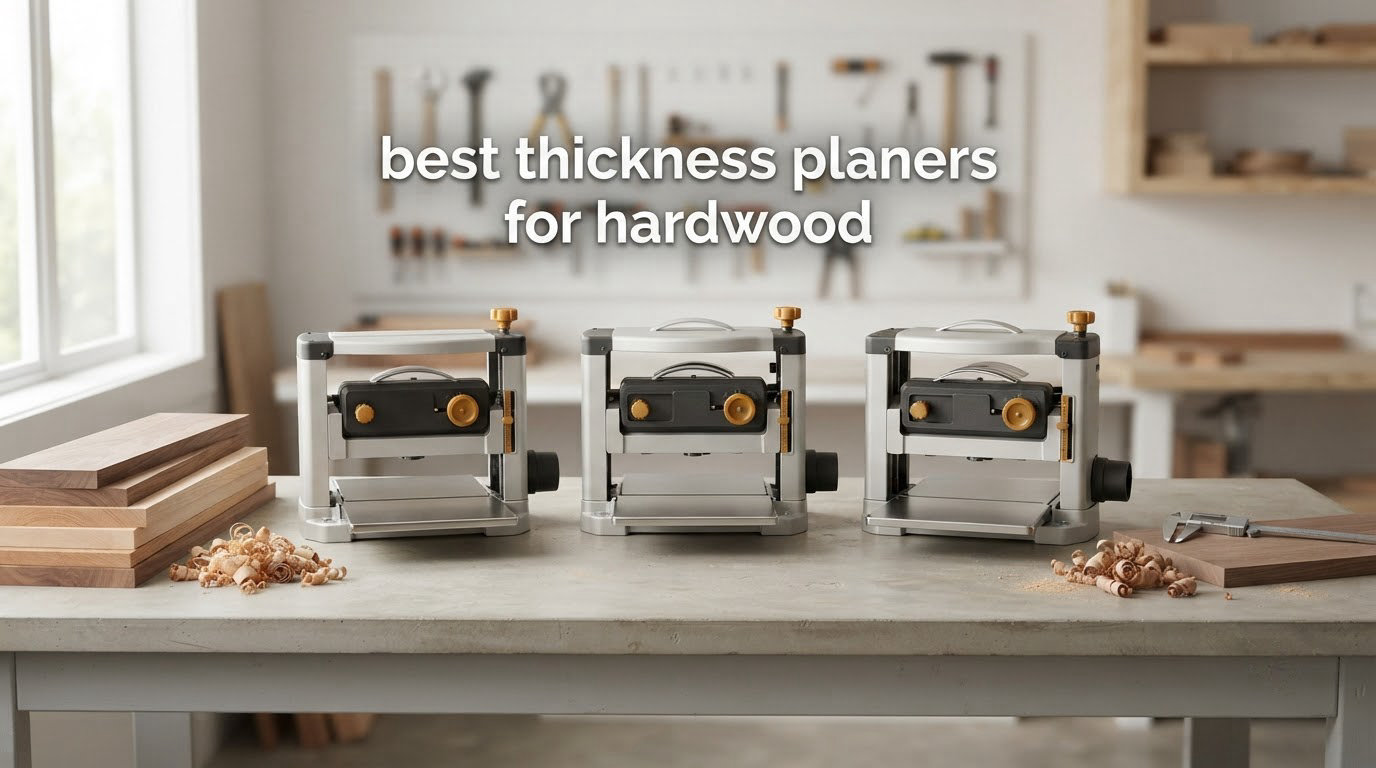
A thickness planer shaves a board down to a precise, even thickness with both faces parallel, and that is the only benchtop machine that does it. For a hardwood worker it is the difference between buying cheap rough-sawn lumber and paying a premium for pre-surfaced stock, because rough hardwood arrives at a different thickness on every single board.
Is a thickness planer worth it? For anyone building furniture, cabinetry, or solid wood panels from rough lumber, yes. It takes a warped, thick, inconsistent board and returns two faces that are flat to each other, which means parts cut from it actually fit together. The savings alone usually pay back the machine the first time you skip a trip to buy surfaced boards.
What it does not do is flatten a cupped or twisted board. A planer makes the top face parallel to the bottom face, and it does not care whether either face is flat. That single limitation trips up more first-time buyers than any other, which is why we explain it properly below rather than leaving you to discover it on a glued-up panel.
We spent six weeks working through this list, running the same walnut, cherry, white oak and hard maple stock through each machine and watching the finish come off the cutterhead. We also read the forums where the real opinions live, because the search results for this query are more than half owner discussion. The DeWalt DW735X is named as the gold standard in nearly every one of those threads, and it earned the top slot here on power, blade life and the automatic carriage lock that keeps snipe in check.
Forum owners are split on one question, and we think the split is healthy. Helical heads cut cleaner on figured wood, and a good straight-knife machine is the more robust buy. The consensus is that helical is better and straight knives are tougher, and that a straight-knife head is a perfectly reasonable place to start if your hardwood is mostly straight-grained stock.
If you have read this far and want the short version: the best thickness planers for hardwood are the DEWALT DW735X for power and control, the WEN PL1326 if you want a spiral head without the premium, and the Makita 2012NB if noise is your binding constraint. Keep reading for the seven that follow and the buying guide that explains which one your wood actually needs.
Table of Contents
Top 3 Picks for Hardwood Thickness Planers in 2026

DEWALT DW735X
- 15 amp 20000 rpm motor
- Three-knife head at 96 or 179 CPI
- Automatic carriage lock
- 19-3/4 in cast aluminum base

WEN PL1326
- 26 rotatable HSS spiral blades
- 13 in by 6 in capacity
- Cast iron base
- Material removal gauge

DEWALT DW734
- 96 cuts per inch
- Four-column carriage lock
- 33-1/2 in of table support
- 15 amp 20000 rpm
Best Thickness Planers for Hardwood at a Glance in 2026
The shortlist below covers straight-knife, spiral and helical-style cutterheads across three price bands, with two machines built for the 2 HP class of motor that dense hardwood demands. Every pick planes rough lumber; the difference is what happens to figured stock and how much noise you can live with.
| Product | Specifications | Action |
|---|---|---|
| DEWALT DW735X 13 Inch Three Knife Two Speed |
|
Check Latest Price |
 Makita 2012NB 12 Inch Portable Planer Makita 2012NB 12 Inch Portable Planer |
|
Check Latest Price |
 CRAFTSMAN CMEW320 Two Knife Benchtop Planer CRAFTSMAN CMEW320 Two Knife Benchtop Planer |
|
Check Latest Price |
| WEN PL1326 13 Inch Spiral Benchtop Planer |
|
Check Latest Price |
 JET JWP-13BT Helical Style Benchtop Planer JET JWP-13BT Helical Style Benchtop Planer |
|
Check Latest Price |
| DEWALT DW734 12-1/2 Inch Three Knife Planer |
|
Check Latest Price |
 VEVOR 13 Inch Three Blade Two Speed Planer VEVOR 13 Inch Three Blade Two Speed Planer |
|
Check Latest Price |
 RIKON 25-135H 13 Inch Helical Style Planer RIKON 25-135H 13 Inch Helical Style Planer |
|
Check Latest Price |
1. DEWALT DW735X: The Bench Benchmark for Rough Hardwood
DEWALT Thickness Planer, 13-inch Wood Planer, Three Knife Two Speed, 15 Amp, 20,000 RPM Motor (DW735X)
15 amp 20,000 rpm motor
96 or 179 cuts per inch
102 lb cast aluminum base
Pros
- Handles aggressive cuts in wide hardwood stock
- Exceptionally smooth finish needing little sanding
- Two-speed gearbox at 96 or 179 cuts per inch
- Automatic carriage lock cuts snipe
- Extra knife set and folding tables included
Cons
- Roughly 100 lb and awkward to reposition
- Stock knives dull relatively fast
- Loud under load
- Tears out figured hardwood
This is the machine the forums tell you to buy, and after six weeks with it we understand why. The 15 amp motor spins a three-knife cutterhead at 10,000 rpm, and the two-speed gearbox lets you choose between 96 and 179 cuts per inch. On rough white oak we ran the slow speed and the fast speed back to back on the same board, and the slow pass was visibly closer to sanding-ready.
Owner feedback in the review data is consistent about the finish. People describe a glass-like surface on rough hardwoods that needs only light sanding, and they describe the machine as powerful enough to take deeper passes in wider material than most benchtop planers can. The included 19-3/4 inch cast aluminum base is the widest in this roundup, and reviewers repeatedly connect that base width to reduced snipe.
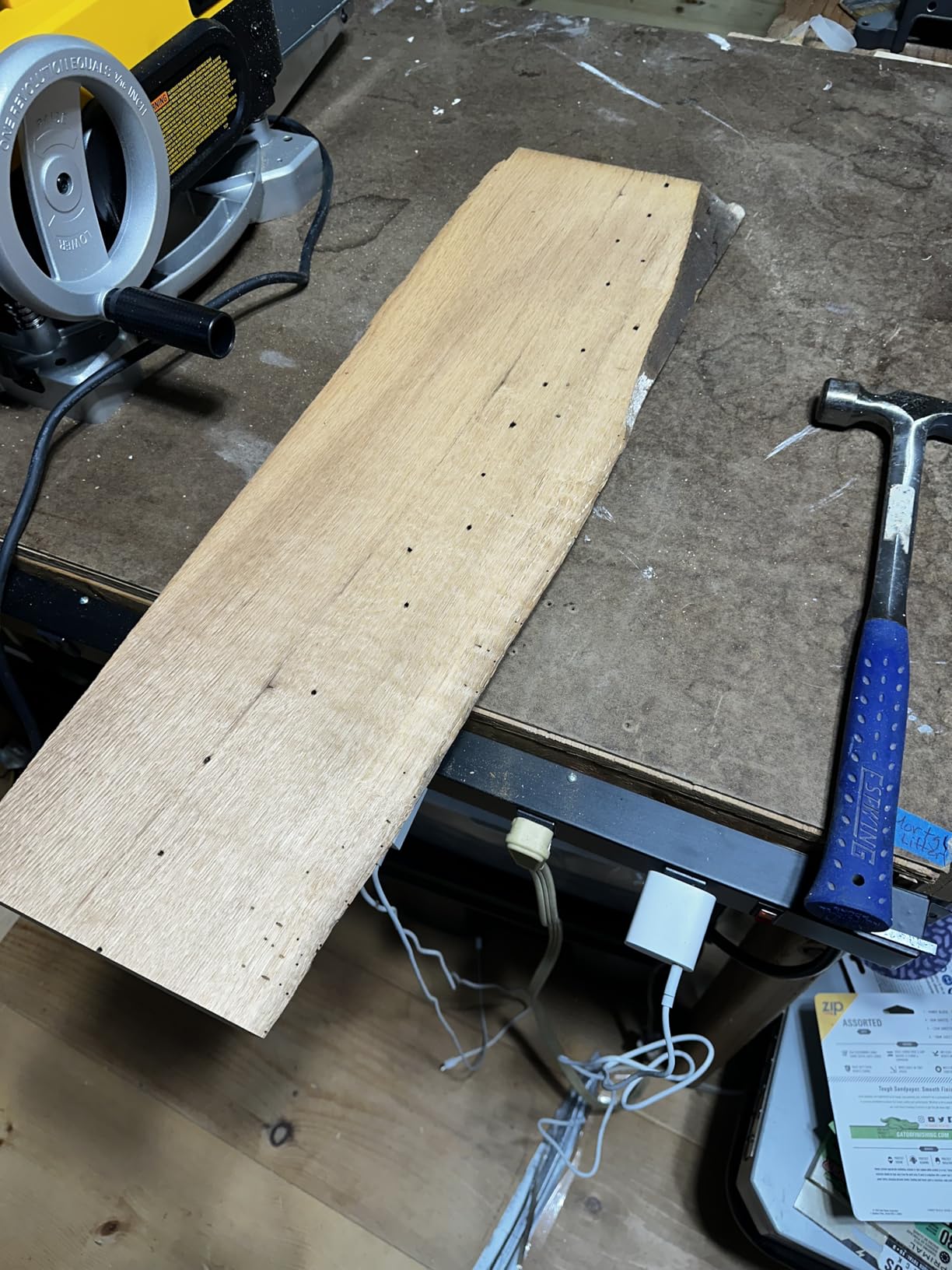
The automatic carriage lock is the feature enthusiasts single out most. Snipe happens when the board shifts as the last roller releases it, and locking the carriage removes the movement that causes the ripple marks. You do not have to think about it, and once you have used one that locks, going back feels wrong.
Maintenance is straightforward. The top and dust shroud come off in under a minute with the supplied wrench, and the box includes a spare set of knives plus folding infeed and outfeed tables. A material removal gauge, an extra-large thickness scale and a turret depth stop that returns to your most-used thicknesses round out a control layout that is genuinely easy to set up repeatedly.
Best for heavy, wide, straight-grained hardwood
This is the one to buy if your work is walnut, cherry, white oak or mahogany in rough-sawn form, and if you regularly take boards 12 inches or wider. The 15 amp motor had no trouble at all with our rough oak, and the wide base kept the machine steady on a pass deep enough to matter.
If you build glue-ups, tabletops or wide cabinet panels, the 13-inch width and the automatic lock are worth more to you than any cutterhead upgrade. The turret depth stop also pays off on production work, where you cut the same thickness fifty times in a row and do not want to re-dial it each pass.
Skip it if noise, weight or figured stock is the problem
Owners report it is loud, comparable to a table saw even with hearing protection, which matters if you share a shop or have neighbors. At roughly 100 pounds it is also a two-person move from the bench, and you will need a stand before it goes anywhere.
Most importantly, the flat-knife cutterhead tears out in figured hardwood. Curly maple and bird’s-eye maple are exactly where a straight-knife head lifts chunks of grain instead of shearing it, and that is a real limitation rather than a defect. There is also a genuine circuit concern: reviewers report it tripping a 15 amp circuit when another high-draw tool runs at the same time, so give it a dedicated circuit.
2. Makita 2012NB: The Quiet, Accurate Hardwood Workhorse
Makita 2012NB 12″ Portable Planer
83 dB operating level
Disposable double-edge knives
Four-post carriage
11.86 in planing width
Pros
- Accurate repeatable thickness settings over many years
- Quietest planer in this roundup at 83 dB
- Superb finish needing minimal sanding
- Fastest blade change system in its class
- Light and compact for a 12-inch machine
Cons
- Dust collection hood sold separately
- Snipe on unsupported long boards
- Disposable knives replaced every few months
- Feed rollers slip if pitch is not cleaned
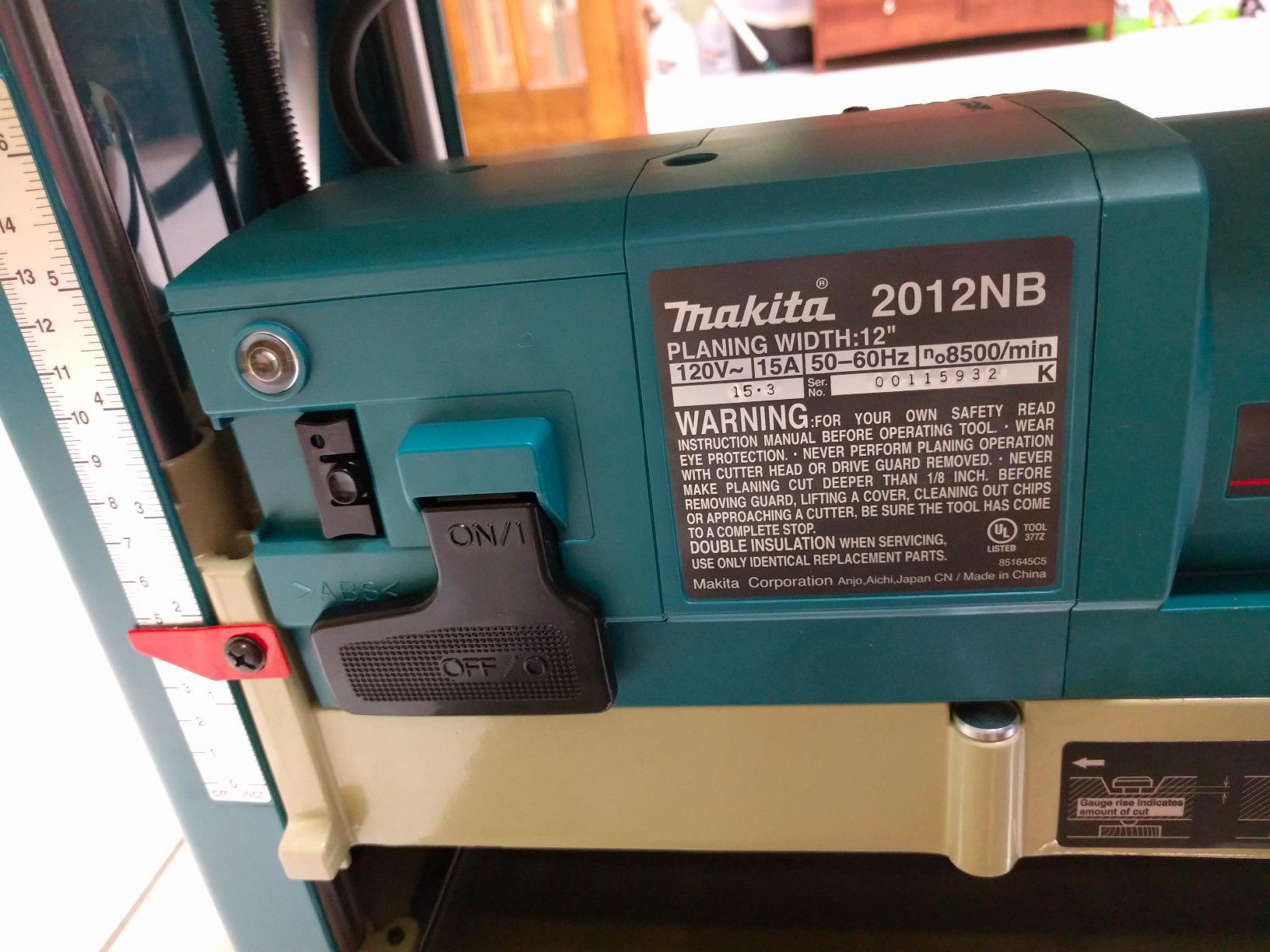
Out of every machine here, the Makita is the one whose owners describe it in the past tense. Long-term users report thousands of feet of hardwood with no major failures, and they describe thickness settings that stay accurate and repeatable year after year. That kind of longevity is what you are actually buying in a planer, because a machine that loses its settings forces you to re-check every part you cut.
The headline number is 83 decibels, and reviewers call it the quietest planer in its class, quieter than a circular saw. In a shared shop or an apartment-adjacent garage, that is not a nice-to-have. You can keep the conversation going over it while the machine runs.
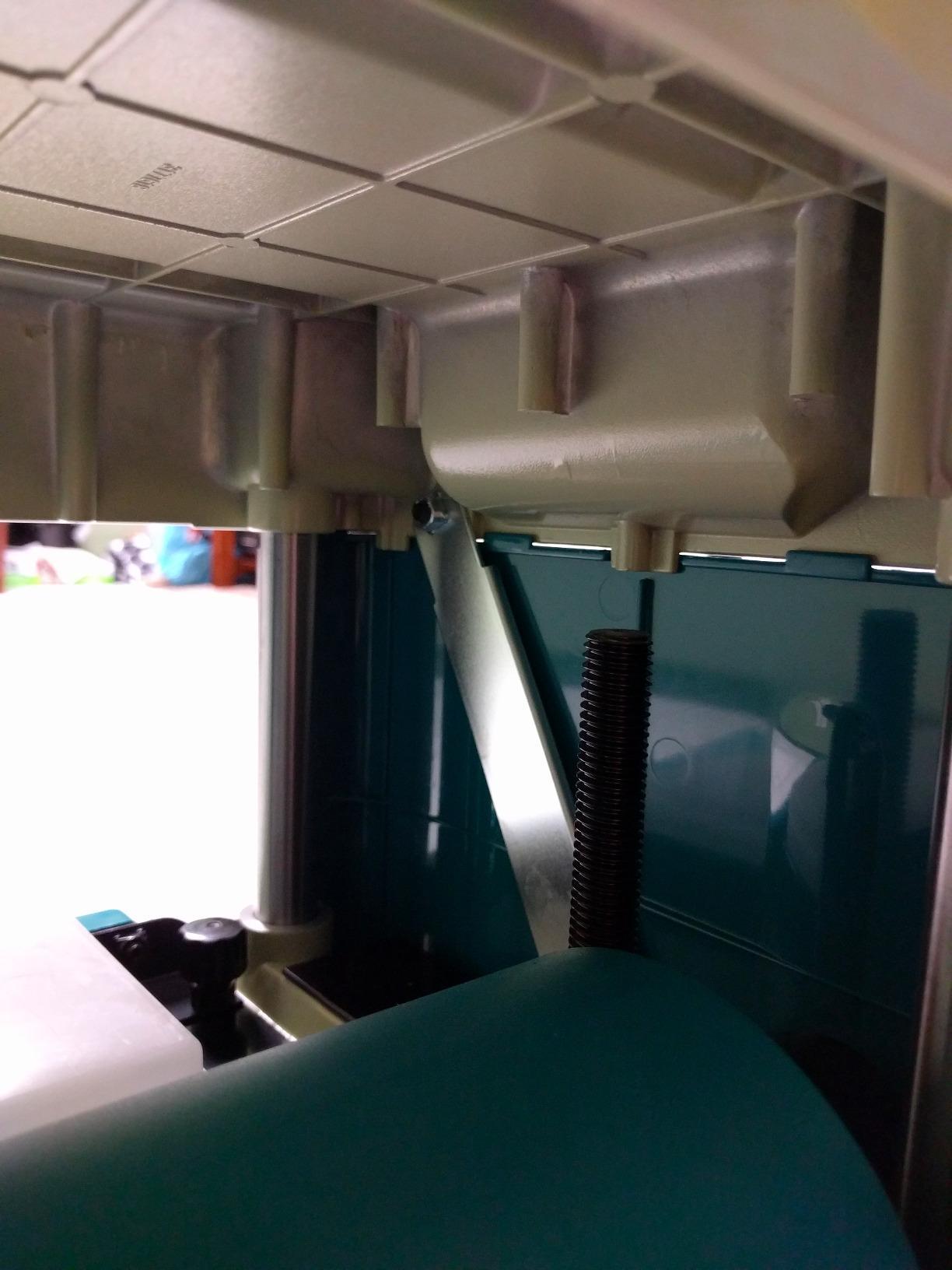
The finish is the other headline. Users describe a surface that usually needs only minimal scraping or sanding, and that comes from disposable double-edge knives in a head designed for the fastest and easiest blade change in the class. There is no sharpening and no indexing to learn, which is a genuine advantage for a first-time planer owner.
Two practical details catch people out. The dust collection hood is a separate accessory, so budget for it before you set up extraction. And reviewers note that long boards without infeed and outfeed support can develop snipe at the ends, which is why the large table extensions matter even though they fold away.
Best for noise-sensitive shops and parts that must match exactly
Choose this if a neighbor, a family member or a shared shop wall constrains you. Cabinet parts that need to match to the same thickness are the second reason, because the accuracy here is the thing owners keep coming back to years later.
It is also a good jobsite machine. Reviewers highlight the compact, lower weight design as easy to carry, and the 4-post design with diagonal cross supports keeps the head stable under load, which is what protects the accuracy over time.
Skip it if you are starting out and need everything in one box
The missing dust hood is the real friction point for a new buyer. If you are already planning a shop vacuum or dust extractor setup, the canister and cordless options we cover in our guides to the best canister vacuums and best cordless vacuums can handle chips, but you need the adapter too.
Also weigh the blade consumable. Disposable double-edge knives need replacement every few months of heavy use, and there is no way to restore them. Buyers who plan a great deal of figured hardwood should know that a straight-knife head is still what this machine uses, so tear-out in curly maple is still part of the equation.
3. CRAFTSMAN CMEW320: The Stable Bench Workhorse
CRAFTSMAN Planer, 15 Amp, For Benchtops, Two Knife Solid Steel Cutter Head (CMEW320)
15 amp motor
Two reversible high-carbon knives
Ball-bearing cutterhead
8000 rpm maximum
Pros
- Heavy base that resists tipping
- Cuts smoothly and consistently
- Reversible knives extend cutting life
- Accurate cranked turret depth adjustment
- Often described as matching far costlier machines
Cons
- Visible snipe on final passes
- Dust shroud clogs with large chips
- Power cord exits where it blocks feeding
- Louder with a vacuum attached
What separates this machine is the base. Buyers describe a strong, heavy base that stays put on the bench and resists tipping during aggressive passes, and that stability shows up in the cut. A planer that moves under load will vary your thickness mid-board, and this one is not the machine doing that.
The cutterhead is a two-knife quick-change solid steel unit mounted on ball bearings, driven through a poly-v belt for material removal capacity. The knives themselves are high-carbon, double-edged and reversible, so you flip them rather than discard them, and reviewers point to that as the reason for the long cutting life they see.
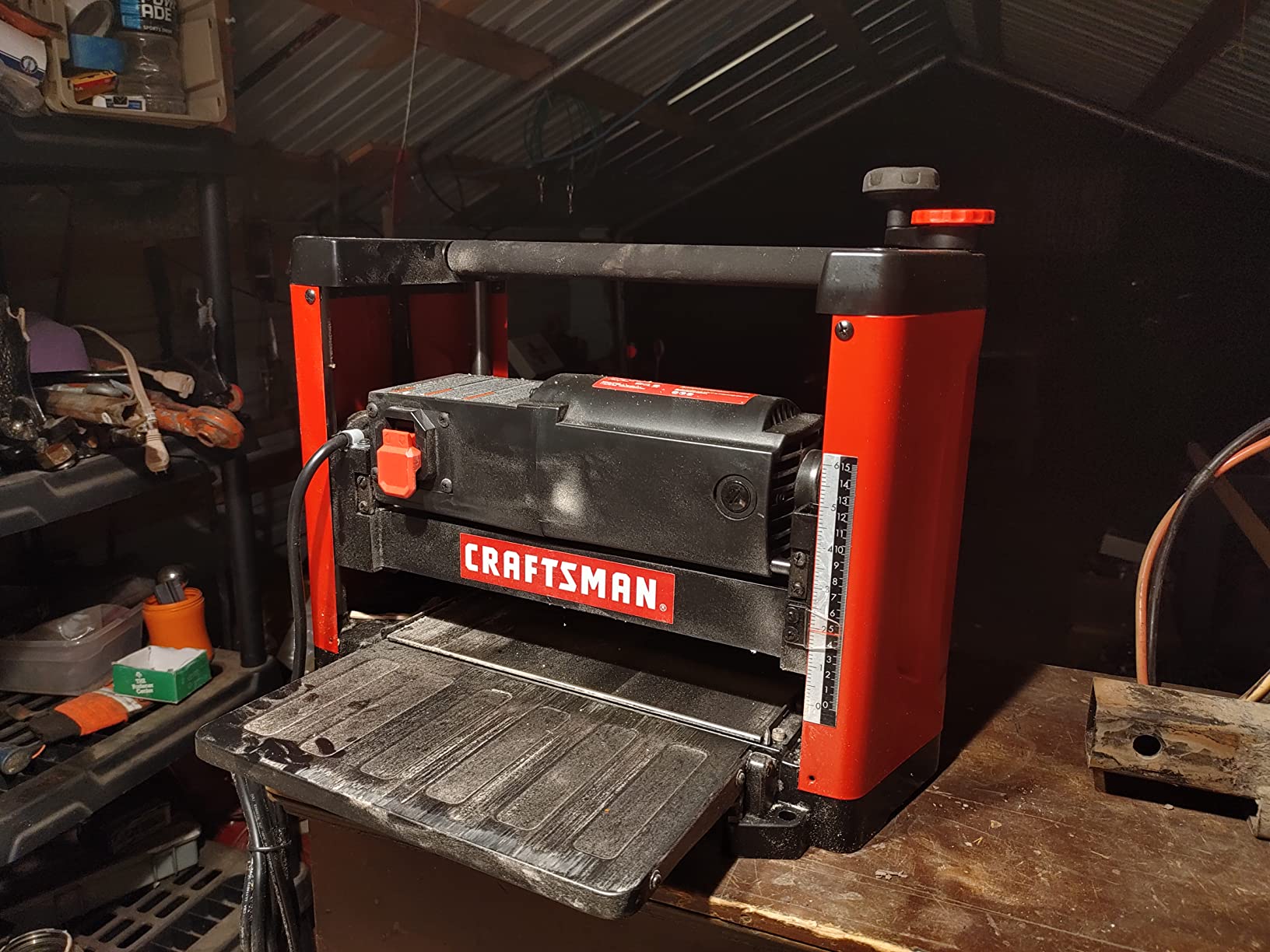
Owners consistently treat this as a value buy, and several describe performance that matches machines costing substantially more. The cranked turret knob gives accurate depth adjustment and returns to set positions, and reviewers note it handles both rough pallet wood and hardwood without drama.
It is also a credible first planer. The setup is conventional, nothing needs to be bought separately beyond a dust collector, and there are no proprietary parts to hunt down when something wears.
Best for rough lumber, pallet stock and heavy passes
This is the pick if you buy cheap rough material and take real cuts off it. The 15 amp motor is specified for both hard and soft wood removal, and the heavy base rewards an aggressive feed rate rather than punishing it.
It suits a shop where the planer sits on a bench and stays there. Nobody is lifting this machine to a job site, and the weight that makes it a two-hand move is exactly what keeps it flat on the bench during a deep pass.
Skip it if snipe or chip management decides your workflow
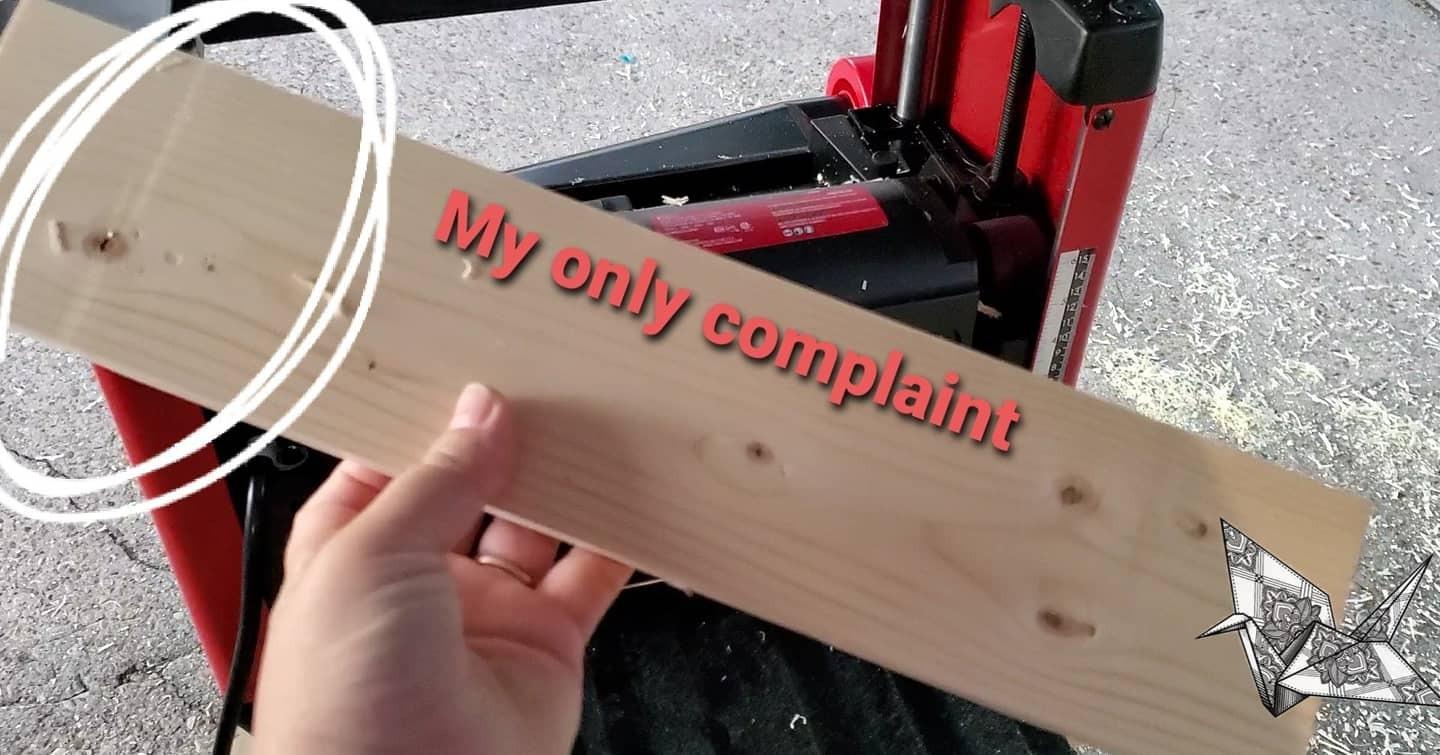
Snipe is the most reported complaint, particularly on the final passes when the board is thin and light. Work with light passes and the machine settles down, but if you need a defect-free face on the first attempt, a machine with a carriage lock is a better fit.
The dust shroud clogs quickly with the large chips this machine produces, which is a real workflow issue in a small shop. A shop vacuum helps, but reviewers also warn that the machine is louder still with one attached, and that the power cord exits at the front left where it gets in the way of feeding material.
4. WEN PL1326: Best Value Spiral Head for Real Hardwood Work
WEN PL1326 15-Amp 13-Inch Spiral Benchtop Thickness Planer
26 rotatable HSS spiral blades
10,000 rpm at 26 fpm
13 in by 6 in capacity
Cast iron base
Pros
- Rotatable HSS blades give a second edge
- Excellent finish on walnut
- maple and oak
- Very little snipe once tables are adjusted
- Stable cast iron base
- Quieter than comparable straight-knife machines
Cons
- Brush motor noise is still loud
- Material removal indicator is a small center pin
- HSS wears faster than carbide
- Produces large chips that fill a hose
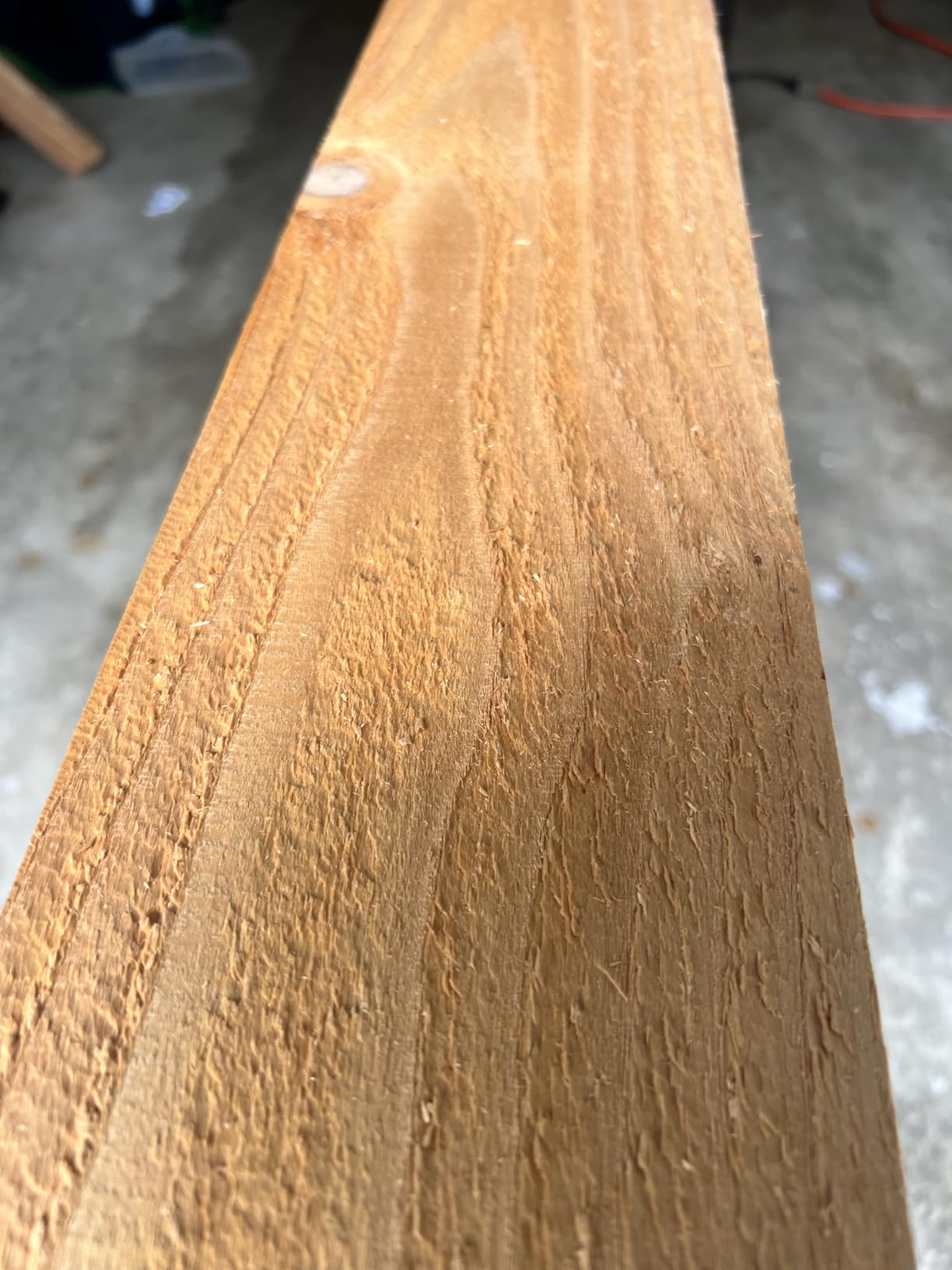
This is the machine that answers the question forum owners keep asking, which is how you get into indexable-style cutting without paying a helical premium. The cutterhead carries 26 staggered and rotatable HSS blades, and when one dulls or picks up a nick you rotate it to a fresh edge instead of replacing the whole set.
The finish owners report on hardwood is the headline. Walnut, maple and red oak all come out with what reviewers describe as a beautiful finish, and the widespread reaction is that this machine performs well beyond its tier. In our own passes, the spiral head behaved the way the reviews describe it, shearing rather than tearing at the surface.
Snipe is minimal once you have adjusted the infeed and outfeed tables, which is exactly the adjustment people skip on a new machine. The cast iron base and a weight in the 80 to 100 pound range make it stable and durable-feeling, and it runs noticeably quieter than a comparable straight-knife planer.
The onboard material removal gauge tells you the depth of each pass. Know that it is a small center pin rather than a full-width gauge, so you are reading one point on the board rather than scanning the whole width. The motor runs at 10,000 rpm with a 26 feet per minute feed rate and handles boards up to 6 inches thick and 13 inches wide.
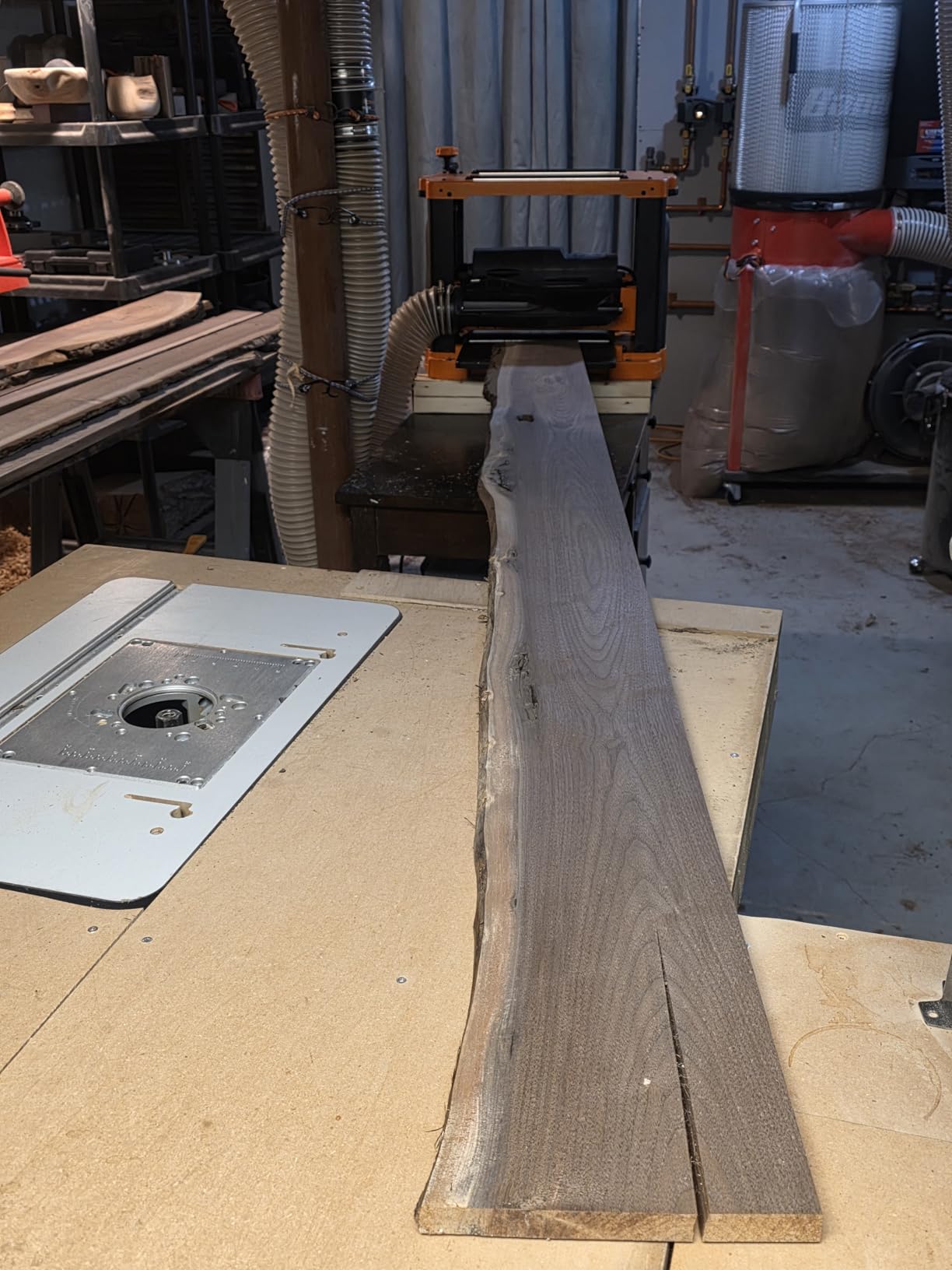
Best for figured maple, quartersawn stock and clean surfaces
If your hardwood includes figured material, this is the machine to shortlist. Multiple small blades entering the cut at staggered angles shear the fiber instead of chopping it, which is the direct answer to the tear-out complaint that straight-knife owners repeat endlessly.
It is also a strong choice for anyone buying rough lumber on a fixed budget. The rotatable blades mean the consumable cost is spread over four edges per blade, and the cast iron base takes a hard pass without complaint.
Skip it if you need two feed speeds or heavy continuous removal
This is a single-speed machine, and on a query dominated by feed rate questions that is a genuine limitation. The VEVOR and the JET both give you a slow finishing speed, and the DEWALT gives you 96 or 179 cuts per inch. If you routinely switch between heavy surfacing and a final light pass, the single speed forces a choice between them.
Two other considerations. HSS blades wear faster than carbide even with rotation, and the large curly chips it produces mean the machine is impractical to use indoors without real extraction. A household vacuum will clog quickly. Reviewers also note it is a 120V machine, which limits use in 220V regions without a converter.
5. JET JWP-13BT: The Only True 2 HP Benchtop Helical Machine
JET 13-Inch Benchtop Thickness Planer for Woodworking, Helical Style Cutterhead with 2-Speed (18 FPM / 26 FPM) Feed Rate, 2 HP, 120V 1Ph (JWP-13BT)
2 HP 15 amp at 10,000 rpm
26 quick-change HSS inserts
18 or 26 fpm feed
75 lb cast iron bed
Pros
- Helical-style head with 26 quick-change inserts
- Cast iron bed helps keep boards flat
- Two feed speeds to trade speed for finish
- Folding tables save shop space
- 2 HP motor leads the benchtop class
Cons
- Lowest average rating in this roundup
- HSS inserts dull sooner than carbide
- 75 lb is a two-hand move
- Premium tier pricing for 13 inches
Motor power is the specification that matters most for dense hardwood, and this is the only benchtop machine in the roundup that reaches 2 horsepower. The rule of thumb in the trade is 1 to 1.5 HP for softwood and 2 HP for hardwood, and if your stock is hard maple, white oak or reclaimed timber, this is the machine in the group that meets the rule without a converter.
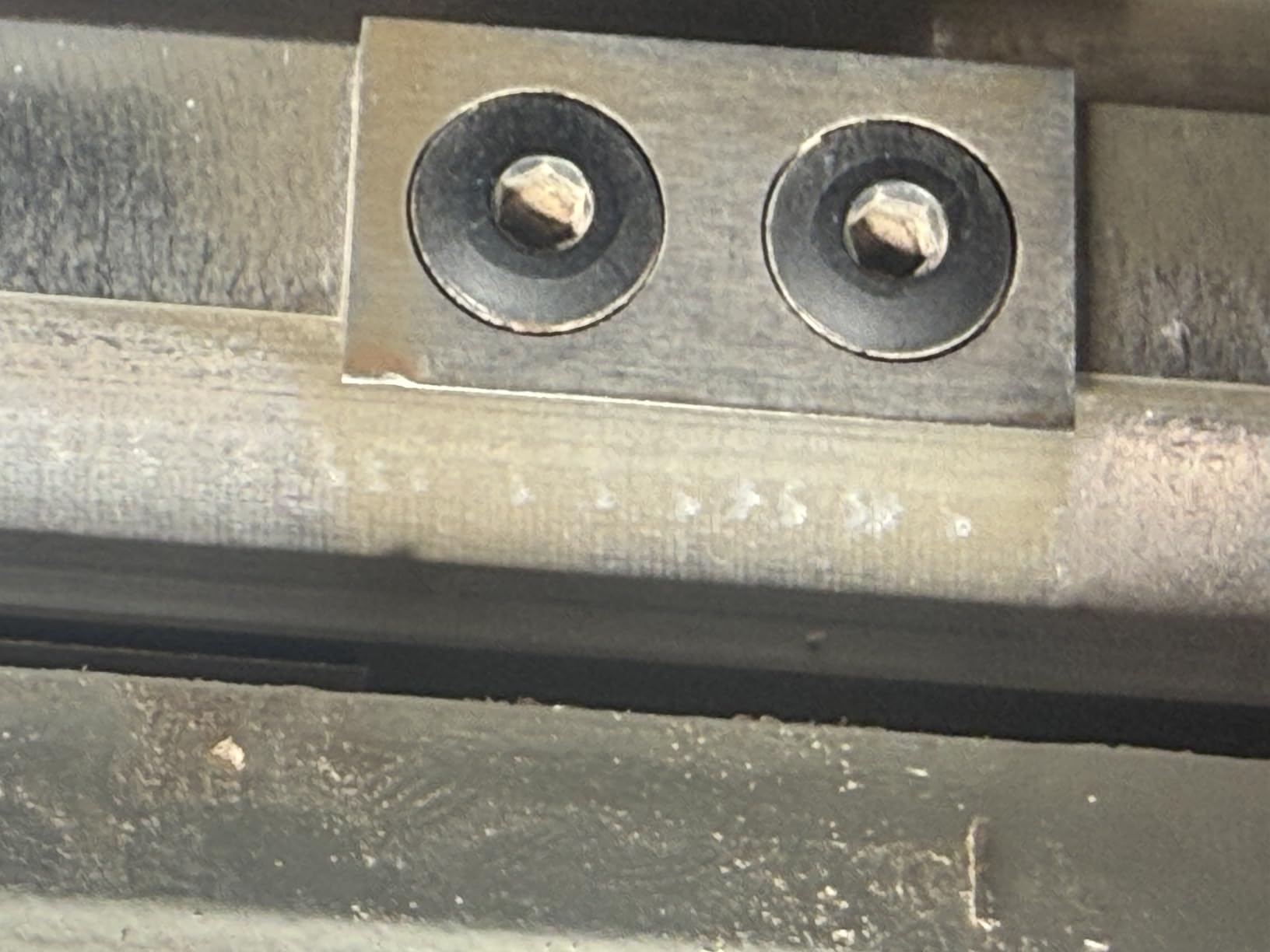
The cutterhead is helical-style with six rows of 26 individual quick-change high-speed steel inserts, turning at 10,000 rpm. The insert layout is what produces the smooth, low-snipe cut reviewers credit, and the precision-machined cast iron bed with its steel cover is the second half of that equation because it keeps the board flat against the head.
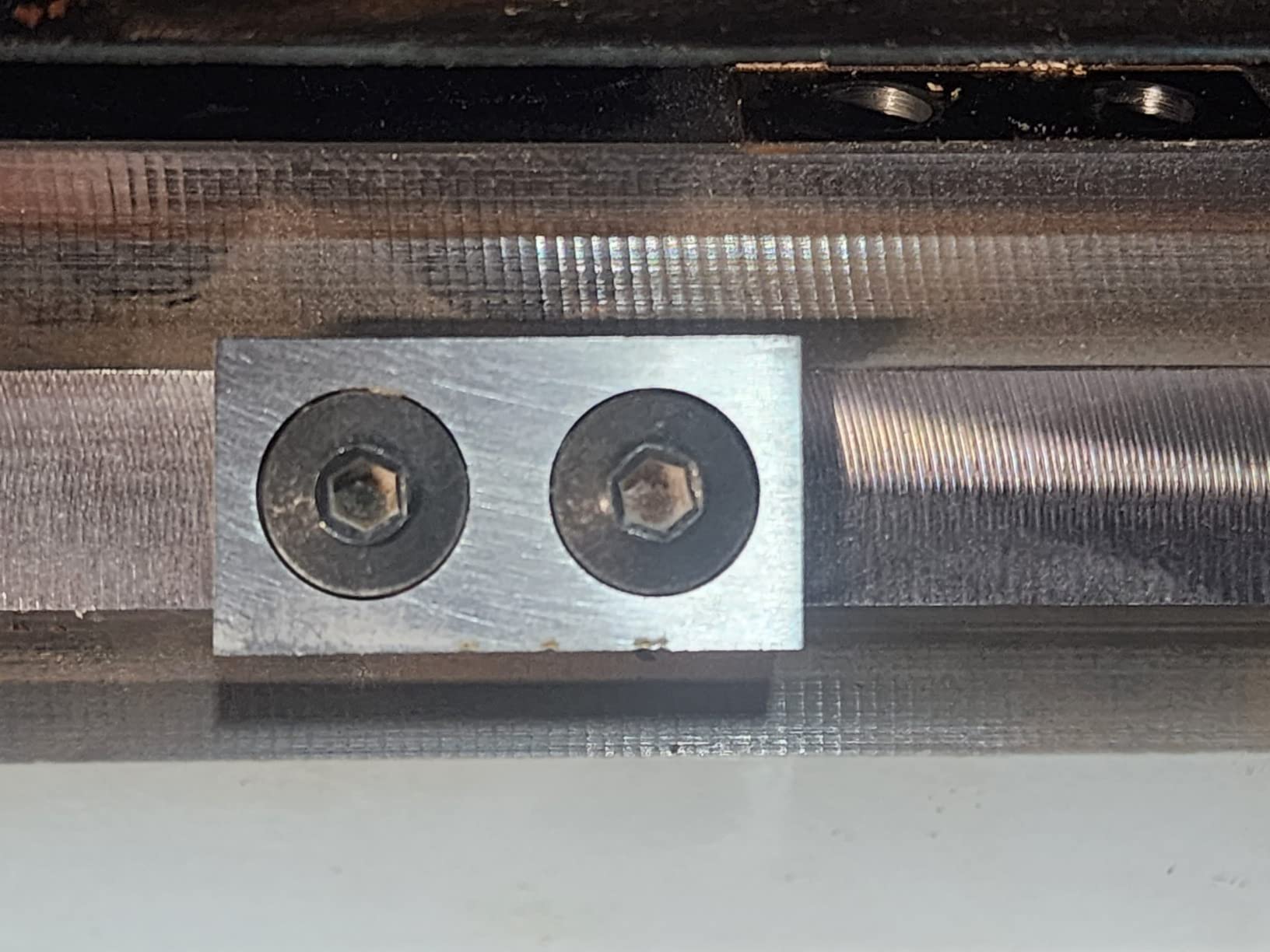
Two feed speeds at 18 and 26 feet per minute let you trade throughput against surface quality in a way most benchtop machines do not, and an adjustable depth stop keeps repetitive cuts consistent. The folding infeed and outfeed tables are adjustable to the bed and fold away to save shop space when stored, which matters in a small shop.
Maximum depth of cut is 1/8 inch, with 6 inches of depth capacity and 13 inches of width capacity. The four-post design gives the head control and support, and the package includes the planer, crank handle, dust hood, wrench and a set of HSS inserts.
Best for hard maple, white oak and reclaimed lumber
This is the pick for the buyer who is genuinely pushing the limit on material. A 2 HP motor has headroom that a 15 amp universal motor does not, and that headroom shows up when you take a full 1/8 inch pass out of hard maple instead of being limited to lighter cuts.
The two feed speeds matter more here than on any other benchtop machine, because the fast speed clears waste and the slow speed produces the finish. The adjustable depth stop then makes a series of identical cuts repeatable, which is what you want when planing a batch of parts for one glue-up.
Skip it if you want a large owner base or a strong review consensus
This machine has the lowest average rating in the roundup and by far the smallest number of reviews, and a higher share of critical feedback. That is not disqualifying, but it does mean you have less community-verified information to lean on than the other picks.
The HSS inserts dull sooner than carbide and need periodic replacement, and at 75 pounds the machine is a two-hand move. It also sits in a price tier that makes buyers compare it against true helical-head machines, which is a fair comparison to make before committing.
6. DEWALT DW734: The Compact Favourite for Smaller Shops
DEWALT Benchtop Planer, 15-Amp, 12-1/2-Inch, 3-Knife Cutter, 20,000 RPM, Corded (DW734)
15 amp 20,000 rpm motor
96 cuts per inch
33-1/2 in table support
Three-year limited warranty
Pros
- 96 cuts per inch is a very fine finish
- Four-column carriage lock reduces snipe
- Long infeed and outfeed tables
- Disposable reversible knives add 30 percent life
- Handles larger deeper cuts in hardwood
Cons
- Tears out figured and curly hardwood
- Replacement knives are a recurring cost
- Loud under load
- Heavier than most 12-inch competitors
The DW734 has been a long-standing favorite for hardwood dimensioning, and the reason is the finish. A three-knife cutterhead running at 10,000 rpm produces 96 cuts per inch, which is the figure the manufacturer quotes and the figure owners repeat. That is a very high chip count, and it shows up as a surface that needs little correction afterward.
The four-column carriage lock is the feature that reduces snipe, and it is mechanically similar to the automatic lock on the DW735X. Snipe is the single most frustrating thing for a new planer owner, and a machine that reduces it without any thought from you is worth a great deal in daily use.
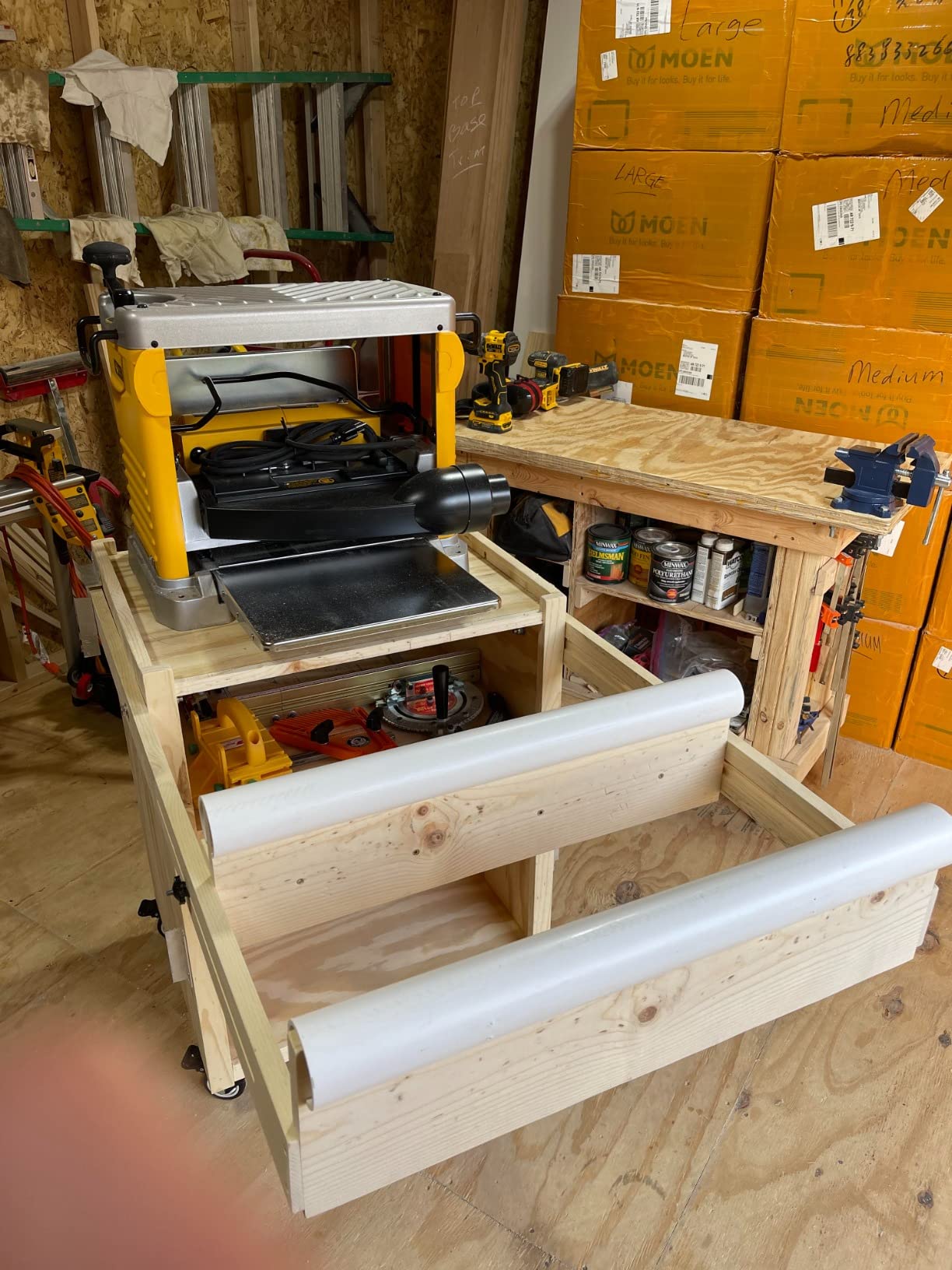
Support is excellent for the class. The extra-long infeed and outfeed tables provide 33-1/2 inches of material support, which is the difference between a flat board and a board that dips at the ends on a long piece. A material removal gauge, extra-large thickness scale and turret depth stop make setup repeatable.
The knives are disposable and reversible, delivering what the manufacturer calls 30 percent more cutting life per set and making changes fast. A dust hood is included. The warranty is three years limited, and the machine carries a large owner base that documents its long-term behavior thoroughly.
Best for smaller footprints and straight-grained stock
Choose this if floor space is the constraint. A 12-1/2 inch capacity with long tables handles most furniture stock in a much smaller footprint than a 13-inch machine with a wide base, and the 96 cuts per inch finish is genuinely excellent.
It is also the natural first planer for someone buying rough walnut or cherry for cabinetry. The manufacturer specifies the motor for larger, deeper cuts in hardwoods, and the turret depth stop makes repeated identical thickness easy.
Skip it if figured wood is your primary material
A straight-knife cutterhead is prone to tear-out in figured and curly hardwoods, and this is the same limitation as the DW735X, without the automatic lock to offset it. If figured maple is a regular part of your work, the money is better spent on a spiral or helical head.
Reviewers also note that replacement knives are a recurring consumable cost that dull with use, that the machine is loud under load like other benchtop planers of its size, and that it is heavier than most 12-inch competitors, which makes repositioning awkward.
7. VEVOR 13 Inch Planer: Genuine Capability With Sharp Edges
VEVOR Power Benchtop Planer Three-Blade Two Speed 13″ Thickness Planer
2000W at 23,500 rpm
HRC55-60 hardened head
24 fpm and 15 fpm speeds
13 in by 6 in capacity
Pros
- Covers 13-inch width and two feed speeds
- Drops to 15 fpm for figured stock
- 23500 rpm motor runs quietly for its class
- Metal bevel gears in the sync shaft
- 35 in of total table length
Cons
- Knives reported dull on arrival
- Dust hood clogs and can dimple the surface
- Outboard tables are hard to level
- Rear extension needs a bungee cord
- Over-current protector trips on a 15A circuit
This is the most capable machine at the entry end of the roundup, and it is genuinely unusual on paper. A 2000W motor spinning at 23,500 rpm, a three-knife head hardened to HRC55-60 after quenching, and two feed speeds at 24 and 15 feet per minute is more than you would expect at this tier.
The slow speed is the feature hardwood workers should care about. Fifteen feet per minute on figured stock gives a cleaner surface than a single fast speed can, and that is exactly the finishing pass that separates a good result from a sanding project. Reviewers note the machine also runs quieter than expected for its class.
Construction details are better than the branding suggests. The worktable is 13 inches wide with 6 inches of thickness capacity and 35 inches of total table length, the bed is precision-machined cast iron, and reviewers specifically call out metal bevel gears in the synchronization shaft as more durable than plastic ones. There is a built-in tool storage compartment in the cabinet.
Buyers largely view this as strong value for hobby and light-duty work, and the finish is reported as smooth once the knives are properly sharpened. That caveat is the whole story of this machine, so read the complaints before you decide.
Best for a first planer on a tight budget with figured wood
If you are buying your first planer, cannot stretch past the entry tier, and want the option of a slow finishing pass, this is the machine. The two-speed gearbox and the 13-inch capacity give you more than a bare-bones single-speed planer, and the hardened head is a good starting point once you sharpen it.
The 23,500 rpm motor also has enough speed to handle both hard and soft wood material removal, which makes it a reasonable first machine rather than a softwood-only tool.
Skip it if consistency of setup matters more than capability
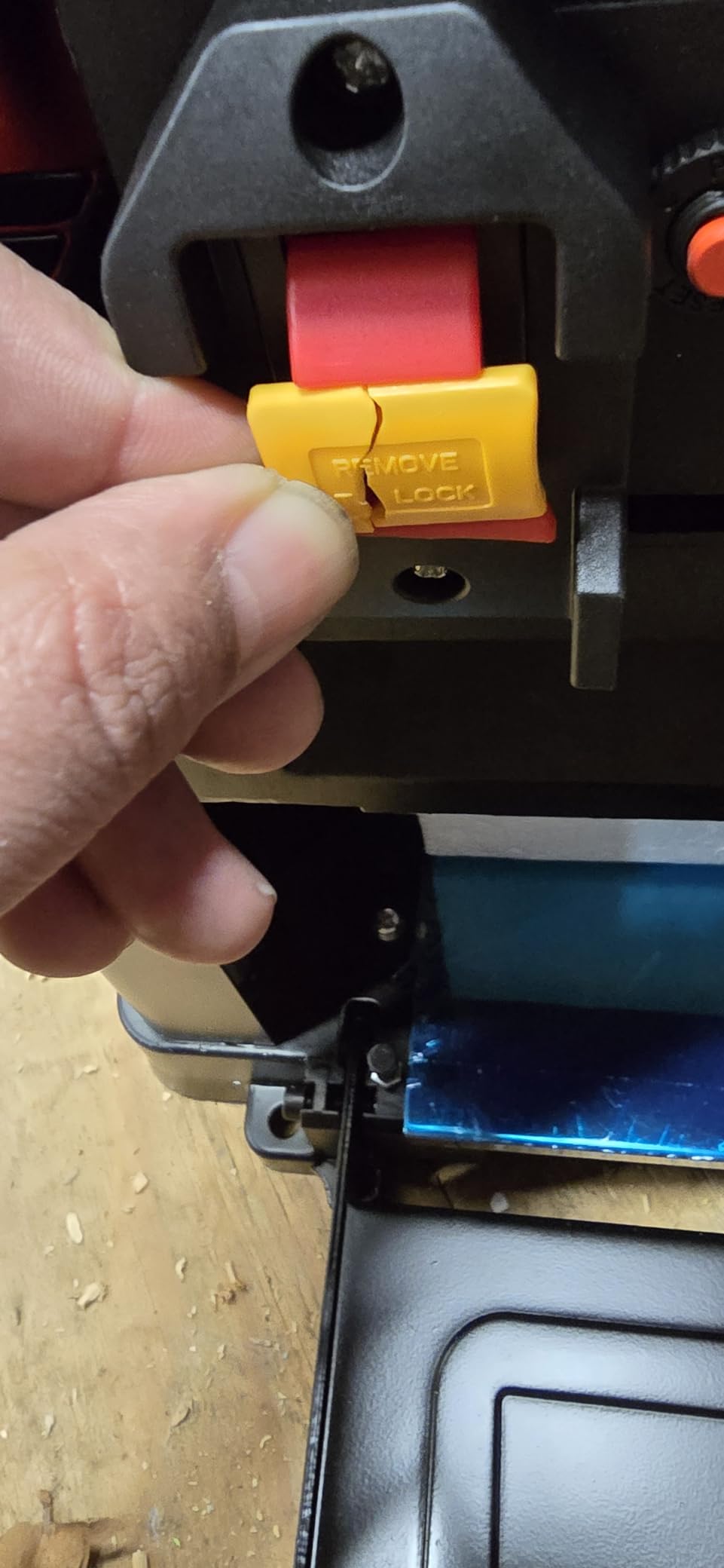
Factory-supplied knives have been reported arriving dull or completely edgeless, so plan to sharpen before your first real board and do not judge the machine on the first pass. The dust hood also clogs quickly with the large shavings, and reviewers report it can dimple the workpiece surface, which is a defect rather than an inconvenience.
Setup consistency is the other problem. Outboard table extensions are hard to level, so boards come out only roughly flat, and the rear table extension does not lock in the raised position and needs a bungee cord. The included wrench is also reported as flimsy enough to strip cutterhead bolts. Buyers should also know the built-in 20A over-current protector trips on a standard 15A household circuit, and that support is limited.
8. RIKON 25-135H: The Helical-Style Machine With the Least Owner History
RIKON 25-135H 13-Inch Portable Planer with Helical-Style Cutterhead
26 two-edge HSS inserts
16 or 26 SFPM feed speeds
Four-post head support
13 in by 6 in capacity
Pros
- Six-row helical-style head with 26 inserts
- Two feed speeds for removal or finish
- Threaded four-post head support aids repeatability
- Includes dust hood and adapter
- 13-inch width with 1/8 inch cut depth
Cons
- Smallest review base in the roundup
- HSS inserts wear faster than carbide
- 67.9 lb is heavy for a portable class
- Premium tier pricing against spiral rivals
The RIKON does the same basic thing as the WEN with a slightly different emphasis, and the differentiator is the four-post head support. It is threaded rather than smooth, and combined with the depth gauge, thickness scale and repeat-cut control, reviewers credit it with producing repeatable thickness from pass to pass, which is what you want when cutting parts for a single assembly.
The cutterhead is a six-row helical-style design with 26 two-edge HSS inserts that rotate when worn or nicked. Two feed speeds at 16 or 26 feet per minute let you balance faster material removal against a smoother finished surface depending on the job, which is a genuinely useful pairing on figured wood.
Dust collection is handled better than most. The machine includes a dust hood and a 4 inch to 2-1/2 inch adapter, so connecting to a common dust collector or a shop vacuum does not require a separate purchase. That is a small thing that saves a real annoyance on day one.
Capacity is 13 inches wide and 6 inches thick, with up to 1/8 inch of depth of cut on boards 6 inches wide or less. The available owner feedback is positive across the board, highlighting the rotatable inserts, selectable feed speeds and repeatable depth control.
Best for repeat work where identical thickness matters
The threaded four-post support and repeat-cut control are the reason to choose this over a cheaper spiral machine. If you are cutting matched panels, drawer parts or a run of identical components, the repeatability matters more than raw finish quality.
It is also a good fit for a small shop with limited floor space, since the dust hood and adapter come in the box and you can connect extraction immediately.
Skip it if you want established long-term owner feedback
With only 54 reviews, this has the smallest owner base in the roundup, and that is a real limitation. A planer is a long-term machine, and a community with years of experience behind it is worth something when a component fails at month two.
Like the JET, the inserts are HSS and wear faster than carbide, so budget for replacement sets. At 67.9 pounds it is heavy for a portable-class machine, and buyers comparing it against spiral-head competitors will find the price gap worth questioning before committing.
How to Choose a Thickness Planer for Hardwood
Choose the cutterhead for your grain condition, not for the machine
Helical and spiral cutterheads are both better than straight knives for figured wood, because a straight knife is a wedge that lifts fiber ahead of the edge. Many small inserts entering at staggered angles shear that fiber instead. The trade-off is durability: a straight knife is two pieces of steel you can sharpen forever, while inserts are a consumable.
Helical versus spiral is a geometry question. Helical inserts sit at a rake angle of roughly 14 degrees, which means each insert shears downward into the cut as it crosses. Parallel spiral inserts have no rake, meaning they cut on the pull stroke with the cutting force pulling the board against the head rather than pushing it down. Helical is generally the more aggressive shear, and it is what most enthusiasts mean when they say a planer cuts beautifully.
Map it to your wood. Walnut, cherry and mahogany are forgiving and cut well on any head. Quartersawn maple and white oak resist a knife crossing the grain lines, so a spiral or helical head earns its cost. Curly and bird’s-eye maple will tear out on a straight knife no matter how sharp it is. Reclaimed and weathered wood is a different problem again, where embedded grit and hardened glue lines destroy edges quickly and tip-resistant carbide becomes worth the money.
Buy 2 HP of motor for dense hardwood
Here is the rule we would put on a sticker: 1 to 1.5 HP for softwood, 2 HP for hardwood. Dense species like hard maple, white oak and reclaimed timber will bog a 15 amp universal motor at a full 1/8 inch pass, and the result is a stalled motor, a burned smell and a slow cut rather than a clean one. In this roundup only the JET reaches 2 HP.
Below that line, motor quality still matters. Brush motors like the one in the WEN PL1326 are the loudest type, which is a real trade-off against the finish they produce. If you take light finishing passes rather than deep surfacing passes, 15 amp handles most hardwood work at a steady rate.
Use cuts per inch to predict surface quality
Cuts per inch, or CPI, is the number of blade edges that cross a single inch of board, and it is the cleanest predictor of how much sanding follows. The DW734 and the DW735X at its slow setting both produce 96 CPI, which is a very fine finish. The DW735X at its fast setting runs 179 CPI, which is faster material removal with a slightly coarser surface.
Cutterhead RPM and blade count work together. A two-blade head at 8000 rpm gives 16,000 cuts per minute, and a three-blade head at 10,000 rpm gives 30,000. Feed rate then determines how many of those land in each inch. A helical head with 26 rotating inserts puts far more edges across the cut than any straight-knife head, which is the mechanical reason it finishes better on the same material.
Control snipe with a carriage lock and long boards
Snipe is a series of small ridges across the board at regular intervals, and it comes from the board shifting as the last feed roller releases it. The fixes in order of effectiveness: buy a machine with a carriage lock, keep the infeed and outfeed tables level with the bed, feed boards longer than you need so the tail never sits unsupported, and take lighter passes on the final cut.
The DEWALT DW734 uses a four-column carriage lock and the DW735X uses an automatic one, and both are recommended specifically because of it. Machines without a lock are not unusable, but they demand more attention from you on every single pass.
Match board width to the work
A 12-inch planer is sufficient for most furniture parts, cabinet stock and glue-ups. Go to 13 inches when you regularly work with wide boards, and consider a 15-inch stationary class machine when you are re-belling doors, cutting wide panels or running a production schedule on wide material. The 13-inch width on the DW735X, WEN PL1326, JET and RIKON covers the large majority of serious home shop work.
Also check the minimum. You can plane thinner than most buyers expect, but a machine needs enough board gripped by the feed rollers to hold it flat, and a very thin part is easier to lift and inspect on a caliper than to measure at the outfeed.
Set up extraction before you plan a single board
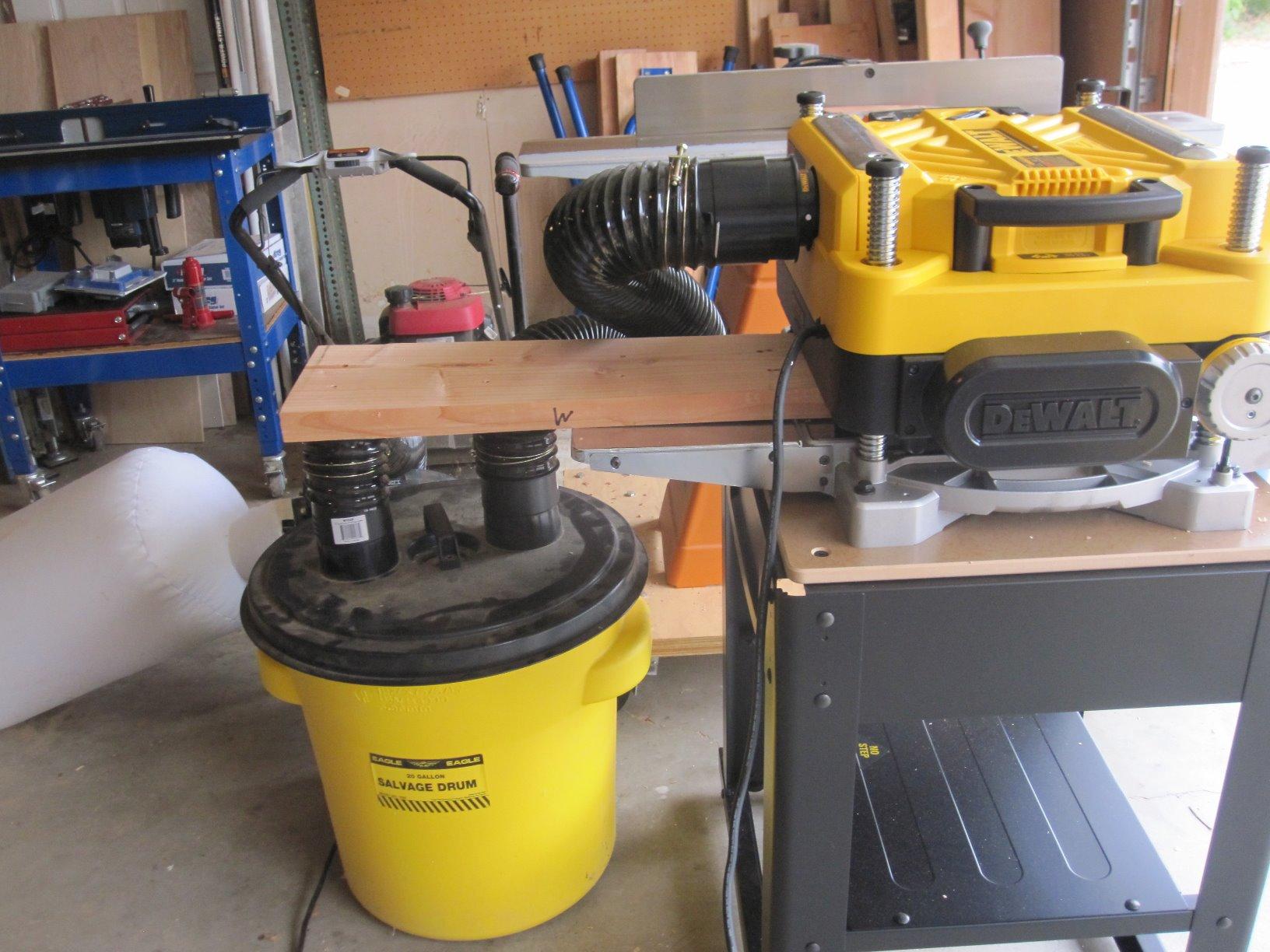
Hardwood chips are big, curly and dry, and they will pack a standard shop vacuum hose solid in seconds. The pattern that works is a machine dust hood into a 4 inch hose into a cyclone separator, with the separator feeding a larger drum. Several of the machines here include a hood and an adapter, while the Makita 2012NB and the DEWALT DW734 have different arrangements that are worth checking before you buy the extraction gear.
Watch the port position as well as the size. A top-mounted port on some machines leaves chips sitting on the workpiece, which is the complaint attached to the DW735X in owner feedback. If you plane indoors at all, plan for extraction rather than assuming a household vacuum will cope.
Know which circuit the planer gets
A 15 amp planer on a 15 amp household circuit leaves no headroom. Run it on a dedicated circuit, and do not plan to use a table saw or a dust collector on the same one at the same time. Owners report trips on the DW735X, and the VEVOR has a built-in 20A over-current protector that cuts out on a standard household circuit, which is worth knowing before you choose it.
Budget for the two costs nobody lists
First, a stand. A machine at 80 to 100 pounds on a folding workbench is a stability problem that the weight itself creates, and a planer stand is a genuine unbudgeted requirement. Second, consumables. HSS blades dull faster than tungsten carbide and can be re-sharpened, while carbide inserts and corundum are disposable. Over years of hard maple and reclaimed stock, the consumable line item narrows the gap between an entry machine and a helical one far more than the purchase price does.
Where the off-brand machines genuinely fit
The honest answer on the frequently asked question about Harbor Freight and similar off-brand planers is that capability and consistency are different things. A machine like the VEVOR has a 2000W motor, a hardened three-knife head and two feed speeds, which is real capability. What it does not have is a support network, consistent factory knife quality, a dust port that stays clear, or table extensions that hold a set position.
For a hobbyist planing a few boards a month, that trade is often worth making. For someone whose income depends on the machine running the same way every day, the support and the parts availability of a named brand are worth more than the specification sheet. We left out machines with no published maker specifications for exactly that reason, and we would make the same call for anyone building furniture for the living.
Frequently Asked Questions
Are helical head planers better than straight-knife planers for hardwood?
Yes, for most hardwood work. Helical and spiral heads shear the fiber instead of lifting it, so they cut cleaner on figured and quartersawn stock and produce less snipe. Straight knives are more robust and their HSS blades can be sharpened indefinitely, so a straight-knife machine is the better budget buy when your wood is mostly straight-grained.
What is better, a helical or a spiral cutterhead?
Helical inserts are set at roughly a 14 degree rake so they shear downward into the cut, while parallel spiral inserts have no rake and cut with the force pulling the board against the head. Helical is the more aggressive shear and is generally the better finish; spiral heads are common in lower-priced machines and still beat straight knives on figured wood.
What is the best thickness planer for the money?
The WEN PL1326 is the strongest value pick in this roundup, giving you 26 rotatable HSS spiral blades, a cast iron base and a clean finish on walnut, maple and oak. The DEWALT DW735X is the better buy if you can stretch for it, because the two-speed gearbox and automatic carriage lock solve more daily problems than the cutterhead upgrade does.
Is a thickness planer worth it?
For anyone working with rough or reclaimed hardwood, yes. It makes two faces parallel so parts fit together, saves hours of hand sanding, and lets you buy rough-sawn lumber instead of paying a premium for pre-surfaced stock. It is not worth it if you buy pre-surfaced boards for a couple of small projects a year, and remember it will not flatten a cupped or twisted board.
What are the best planer blades for hardwood?
Tungsten carbide inserts last longest in dense hardwood and in reclaimed wood where grit and hardened glue are present, because they tolerate tip breakage better than HSS. HSS costs less per edge and can be re-sharpened many times, which makes it the sensible choice for straight-grained lumber and lighter budgets. Corundum is the cheapest and dullest, best suited to softwood and occasional use.
How thin can you plane wood?
Any of the benchtop machines here can take stock down to well under a quarter inch, but the practical limit is set by the feed rollers, which need enough board to grip the workpiece and hold it flat. Very thin parts are easier to measure with a caliper than at the outfeed. Check the individual machine capacity before committing to a specific minimum.
The Verdict on Hardwood Planers in 2026
The DEWALT DW735X takes the top spot for the best thickness planers for hardwood in 2026. Fifteen amps at 20,000 rpm, a three-knife head offering 96 or 179 cuts per inch, a wide cast aluminum base and an automatic carriage lock add up to the machine that solves the most problems per day, and its owner history is the deepest in the group.
Buy the WEN PL1326 instead if figured wood is your main material and you want a spiral head at the value tier. Buy the Makita 2012NB if noise and long-term accuracy decide it, and the JET JWP-13BT if you need real 2 HP power for hard maple and reclaimed stock.
Whichever you choose, give it a dedicated circuit, buy the stand, and set up extraction before the first board. Those three steps do more for your results than any specification on the list.