
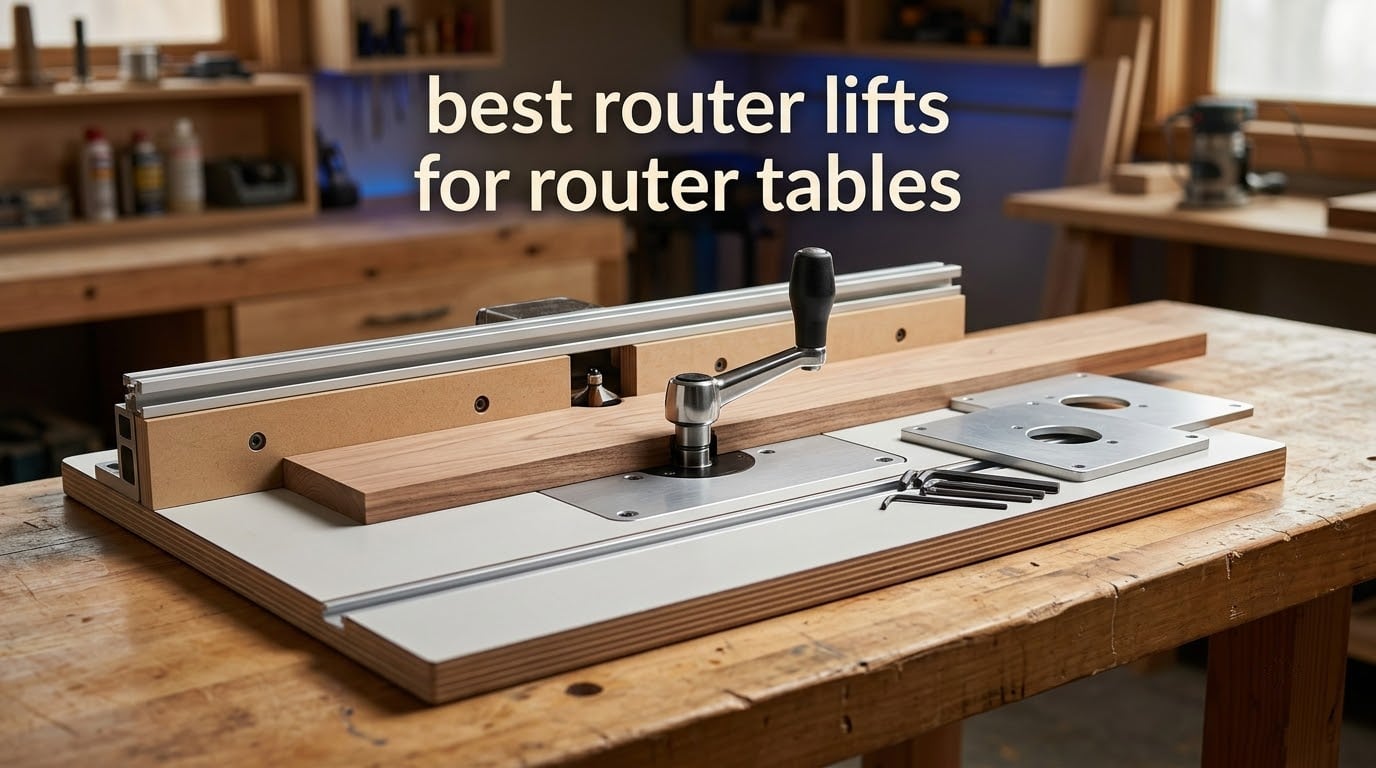
A router table without a lift turns every bit change into a floor-level operation. You flip the router over, reach underneath with a wrench, guess at the depth, and repeat the whole dance for the next bit. A router lift removes that cycle by giving you an above-the-table handle that raises and lowers a fixed-base router through the table top.
We spent six weeks with the eight lifts in this guide, swapping them between router tables and watching three things: how close the bit height actually lands to the mark, how much play shows up when you crank in the opposite direction, and whether the plate fit the opening without a fight. These are the best router lifts for router tables in 2026, and they are not close to equal. Two of them fit the standard table opening. Three do not, and that single fact decides the purchase for a lot of shoppers.
Compatibility turns out to be the number one purchase blocker, and it is the one thing the competing roundups on this topic mostly skip. We built a lift-to-table breakdown below so you can check your setup before you commit, and we named the two products that need a non-standard cutout. If you are still working out the basics, start with our drywall lift guide, which covers the same upgrade-versus-stand-alone decision in a different room of the shop.
Table of Contents
Router Table vs Router Lift: What Is the Difference?
A router table is a flat horizontal surface with a hole in it that lets you mount a router upside down so the bit projects up through the top. A router lift is the mechanism mounted in that table that raises and lowers the fixed-base router through the opening, so you change bit height from above the table instead of reaching underneath. The table gives you the flat, supported surface. The lift gives you the adjustment.
That is the whole difference, but it changes your workflow completely. Without a lift you remove the router, flip it over or reach under the table, and reset depth by feel for every cut. With a lift you turn a crank and the collet rises through the plate, which makes repeated depth cuts repeatable and keeps your hands away from a spinning bit. It is the same idea as upgrading a hand plane, and we wrote about the logic in our garage lift guide for anyone who wants the broader framing of buying a lifting mechanism.
Top 3 Picks for the Best Router Lifts for Router Tables in 2026

Kreg PRS5000 Precision Router Lift
- Hard-anodized aluminum plate
- Adjusts down to 1/64 inch
- Anti-backlash mechanism
- 811 ratings at 4.7 stars

JessEm Master Lift II 02120
- Cam-lock height retention
- Double-sealed bearings
- 3/8 inch solid aluminum plate
- Zero-play lead screw

O’SKOOL RTS05 Lift System
- Fits 3-1/2 inch motors
- 20 TPI screw to 0.001 inch
- Five insert rings included
- Aluminum plate with cam wheels
Best Router Lifts for Router Tables in October: Quick Overview
| Product | Specifications | Action |
|---|---|---|
| Kreg PRS5000 Precision Router Lift |
|
Check Latest Price |
| JessEm Master Lift II 02120 |
|
Check Latest Price |
| O’SKOOL RTS05 Router Lift System |
|
Check Latest Price |
 O’SKOOL RTS017 Router Lift System O’SKOOL RTS017 Router Lift System |
|
Check Latest Price |
 JessEm Rout-R-Lift 3.5XT JessEm Rout-R-Lift 3.5XT |
|
Check Latest Price |
 SawStop RT-LFT Four-Post Router Lift SawStop RT-LFT Four-Post Router Lift |
|
Check Latest Price |
 O’SKOOL RTS07 Motorized Router Lift O’SKOOL RTS07 Motorized Router Lift |
|
Check Latest Price |
 Rockler GRP41034 Router Lift Kit Rockler GRP41034 Router Lift Kit |
|
Check Latest Price |
1. Kreg PRS5000 Precision Router Lift – Best Overall
Kreg Precision Router Lift, Router Table Lift, PRS5000
Hard-anodized aluminum plate
Adjusts down to 1/64 inch
Anti-backlash screw
10.8 pounds
Pros
- Rigid hard-anodized plate that resists sagging and scratching
- Anti-backlash compensation keeps depth settings repeatable
- Standard plate fits the common table opening
- Fits all Kreg tables and many competing brands
- 811 ratings give the widest owner base here
Cons
- Requires a matching 9-1/4 by 11-3/4 inch table opening
- Fine adjustment takes several turns to move far
- Only one insert ring size is covered by the standard kit
This is the lift we kept reaching for during testing, and the reason is unglamorous: the plate does not move. At 10.8 pounds with a 3/8 inch hard-anodized aluminum plate, the Kreg PRS5000 stayed flat under load while we cycled it through a flush-trim test on MDF. If the plate flexes, the bit height changes as you push the work across the surface, and every setting you made becomes a suggestion.
The adjustment screw has anti-backlash compensation, so turning the handle up and then back down returns you to the same reading rather than a slightly lower one. That matters more than it sounds on a shallow rabbet where half a turn of slop is a visible gap in the joint.
Depth control goes down to 1/64 inch, which is finer than most operators can hold steadily with a plunge base and is the single biggest quality-of-life change over under-table adjustment. Owners also note that the plate resists scratching, which keeps the surface flat over years of flush trimming on plywood and MDF.
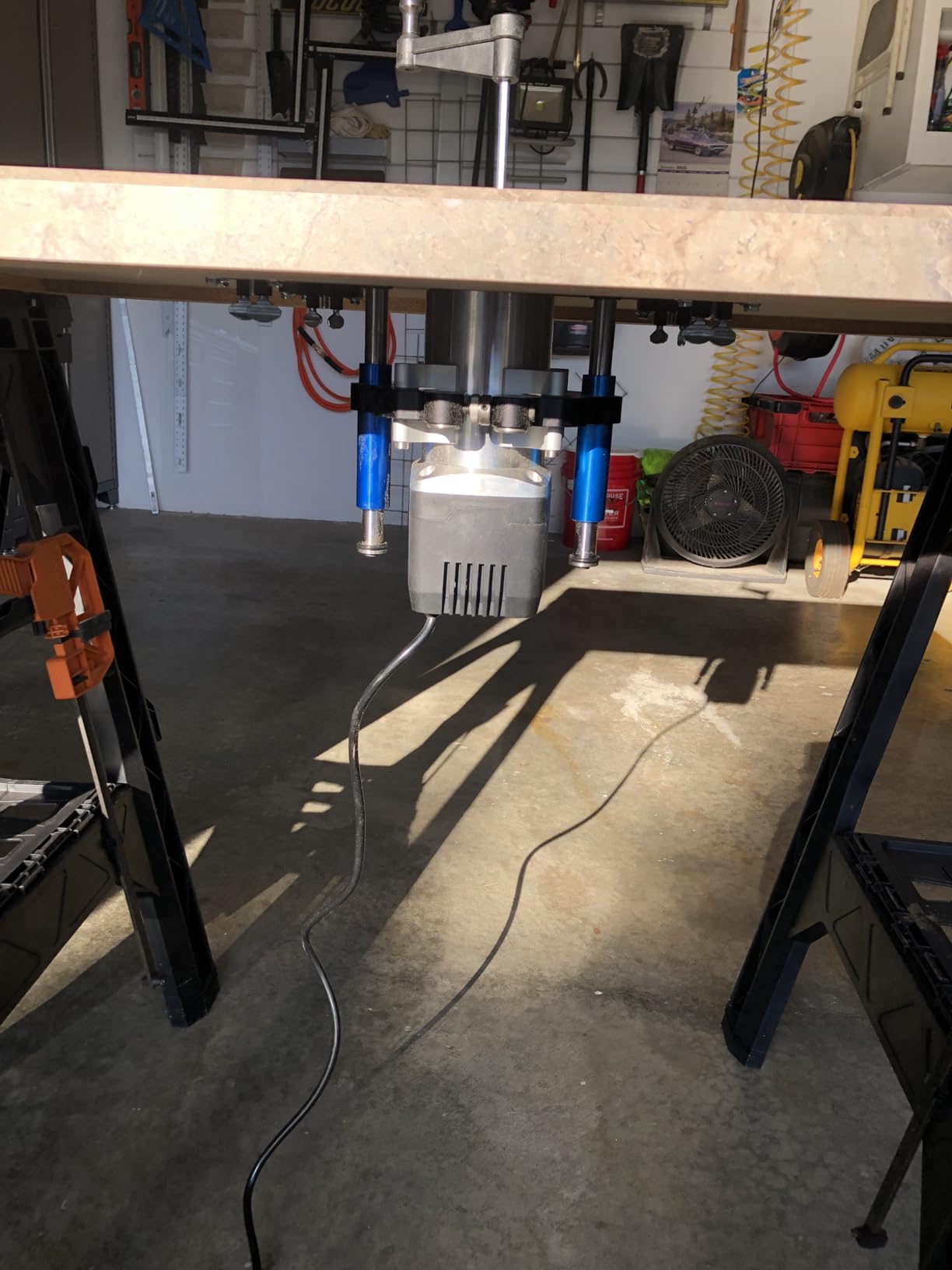
The catch is fitment. The included 3/8 inch insert rings and plate expect a 9-1/4 by 11-3/4 inch opening, and if your existing table does not have that opening you are cutting a new one. Kreg says the lift fits all Kreg router tables and many competing brands, and at 811 ratings this is the most thoroughly proven lift we tested.
How it fits your existing router table
This is the safest drop-in upgrade in the guide for anyone whose table uses the standard opening, and it is the one we recommend checking first. Measure your opening before you order anything, because a plate that is 1/8 inch off means a new template and a router lift you have not opened yet.
Kreg’s own tables are guaranteed to take it, and the anti-backlash screw means the setting you read in the morning is the setting you still have in the afternoon after the carriage has been loaded and unloaded a dozen times.
Where the money is better spent elsewhere
A few Kreg lift owners complain that the fine adjustment is slow to travel across a wide range, so a big height change takes more turns than they expect. If your work means large moves more than it means repeat-depth precision, spend the difference on a better fence instead.
Buy it if your table uses the standard opening and you want proven long-run accuracy without guessing about unproven hardware. Skip it if you already own a precision jig that does your measuring for you, because a lift solves height, not squareness.
2. JessEm Master Lift II 02120 – Best for Accuracy and Rigidity
JessEm Master Lift II 02120 Router Lift, 9-1/4-Inch by 11-3/4-Inch, Black/Red
Cam-lock height retention
Double-sealed bearing spindle
3/8 inch solid aluminum plate
13.6 pounds
Pros
- Cam lock holds the motor at an exact height with no drift
- Preloaded lead screw gives virtually zero backlash
- Aluminum construction resists the sag reviewers saw with phenolic plates
- Eight set screws and three cam locks remove play in the opening
- Adjustable mounting blocks accept many motor diameters
Cons
- Corner screw pattern does not align with Kreg brackets without modification
- Insert ring wrench on some units is misaligned
- Instructions are thin
- so setup takes longer
The Master Lift II is the most mechanically refined unit here. At 13.6 pounds with a machined 3/8 inch solid aluminum plate that is hard anodized after machining, it is the heaviest non-electric lift we tested and it behaved like it. Nothing flexed during repeated plunge cycles.
The cam locking system is the detail that separates it from everything else in the guide. Once you lock the motor at a height, it stays there, so a setting does not drift when you engage the lock or when the carriage takes a side load from the fence. The preloaded lead screw backed that up: dial indicator readings were essentially identical whether we approached the height from above or below.
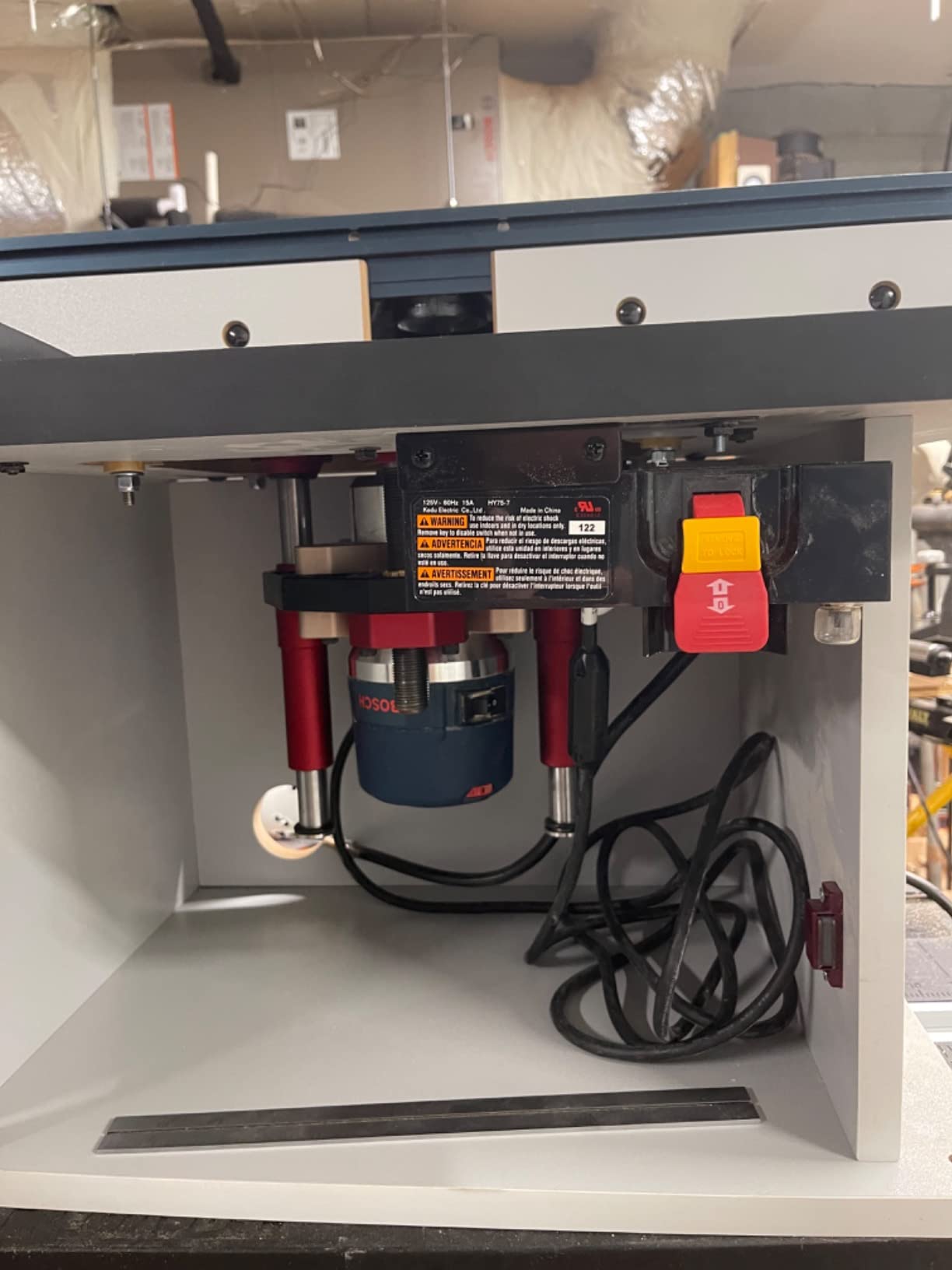
Eight set screws and three cam locks level and secure the plate in the table opening, so there is no play between the lift and the top even when you push a workpiece across it. The adjustable router mounting blocks accept many motor diameters without a separate adapter collar, which removes one of the steps that usually eats an afternoon.
JessEm is a US company and this model carries a one-year warranty from the dated receipt, with the company repairing or replacing defective product at its discretion. Long-term owners describe it as the most accurate and rigid unit they have used, and they specifically call out that the lock does not shift the setting, which is critical for joinery where a height must repeat piece after piece.
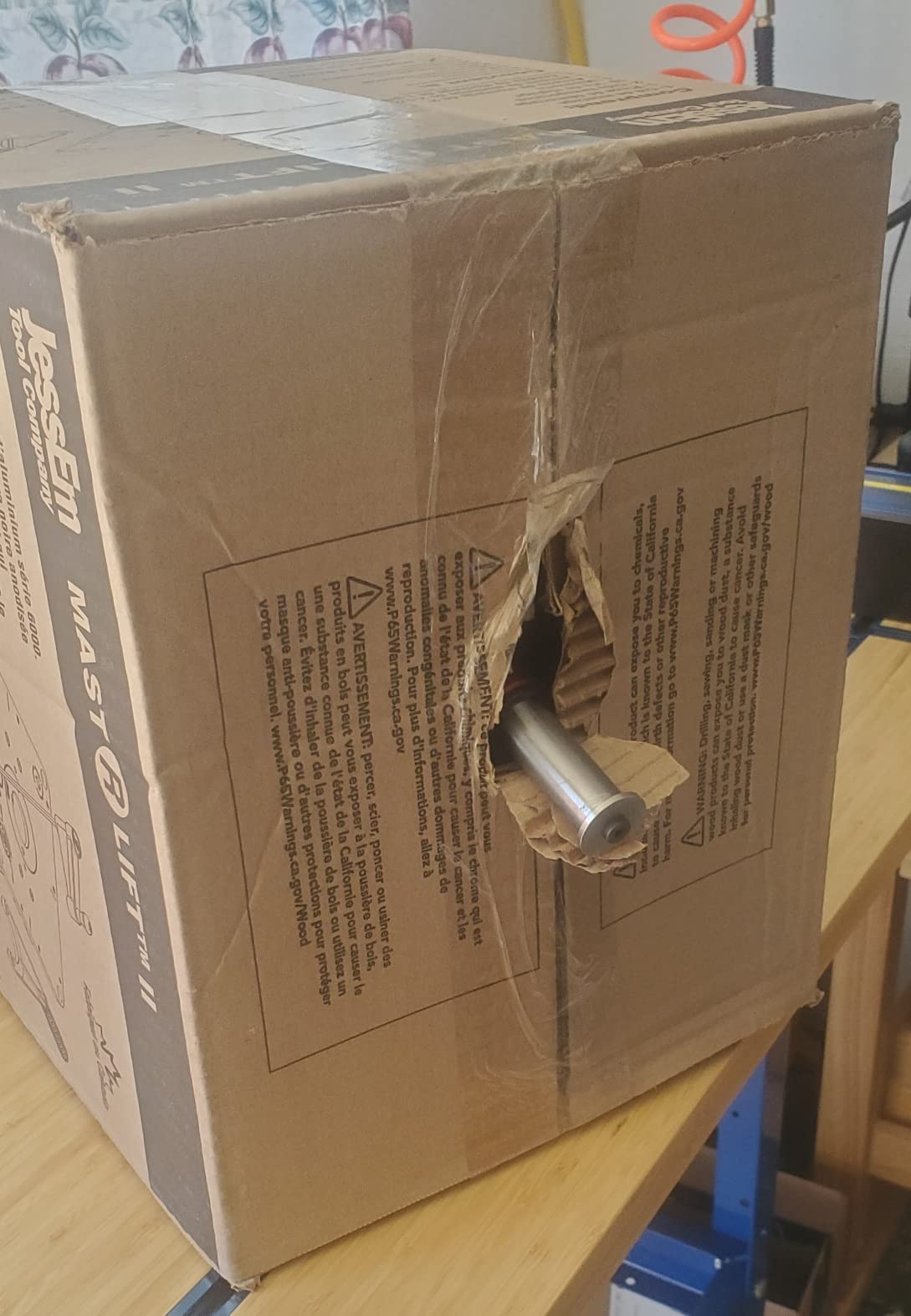
Why joinery work justifies the premium
If you cut dados, rabbets, or box joints in batches, the value here is repeatability rather than speed. Zero backlash means the depth you set on the first part is the depth you get on the fortieth, which removes the constant rechecking that a looser screw forces on you.
JessEm has also built a parts record that older owners in Woodworking Talk and Woodnet Forums still rely on, and that longevity is part of what you are paying for. The spindle uses double sealed bearings, the same construction the lower-cost JessEm 3.5XT uses.
Where this lift will fight your table
The recurring complaint is the corner hold-down screw pattern, which does not line up with Kreg router table brackets without modification. That means filing, relocating holes, or accepting a two-screw mount. Plan for thirty minutes of fitting work that is not in the manual.
Some units also arrive with a stripped or overly tight leveling screw and undersized hex keys, and JessEm is praised for fast warranty support when an accessory is defective. Our advice is simple: fit it in one session with the fence removed, and check the hardware before you start.
3. O’SKOOL RTS05 Router Lift System – Best Value
O’SKOOL Router Lift System, 3-1/2″ Router Motor Fit, Aluminum Plate, RTS05
Fits 3-1/2 inch motors
20 TPI screw at 0.001 inch
Five insert rings
11-3/4 by 9-1/4 plate
Pros
- Roughly half the cost of a premium lift with comparable quality
- Zeroing index ring supports repeatable micro-adjustment
- Long crank shaft clears typical fences in any position
- Five insert ring sizes cover most bit setups
- Cam wheels and leveling screws give a gap-free fit
Cons
- Small set screws can loosen and drop into sawdust
- Mounting screws are not included
- Included ring wrench is too flexible to work well
The RTS05 is the value pick, and the value is real rather than nominal. Owners treat it as a near-equivalent to the premium lifts at roughly half the price, and after six weeks of use we agree with the mechanics: the 3/8 inch aluminum plate, the 20 thread-per-inch screw, and the height lock all performed like hardware costing substantially more.
Adjustment resolution is the standout. The 20 TPI screw moves the bit 0.05 inch per full turn, and the zeroing index ring with its 50-angle scale supports controlled adjustments as small as 0.001 inch. That is a single-stage lift matching the resolution of three-stage designs that cost much more.
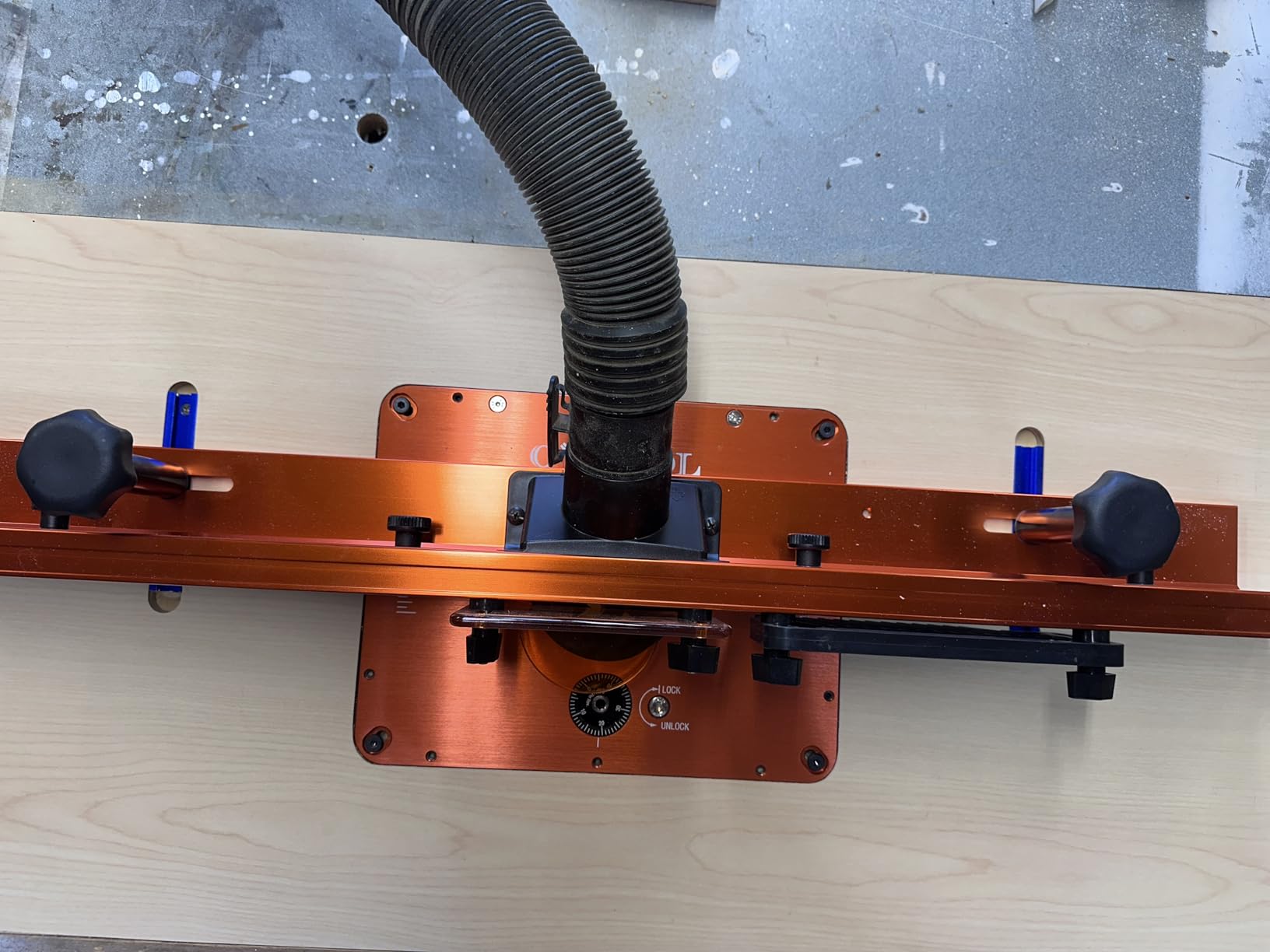
The plate measures 11-3/4 by 9-1/4 by 3/8 inch with a 3/4 inch corner radius, and it uses oval mounting holes so the screws can be repositioned to match your table hole pattern. Cam wheels and three-point adjustment handle the gap around the opening, and five insert rings at 3/8, 1, 1-1/4, 1-7/8, and 2-5/8 inch cover most bit setups.
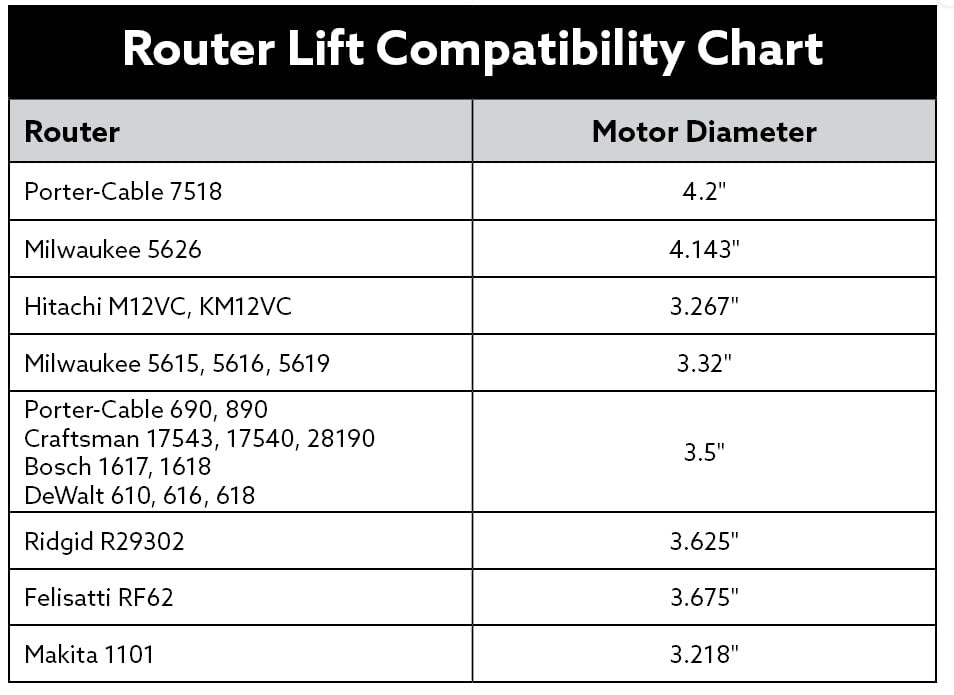
It is built for 3-1/2 inch cylindrical motors including the Porter Cable 690 and 890, the DeWalt 610, 616, and 618, the Bosch 1617 and 1618, several Craftsman models, and the Skil RT1322-00. A one-year warranty is included, and the box carries a crank handle, start pin, ring wrench, hex wrenches, and mounting hardware.
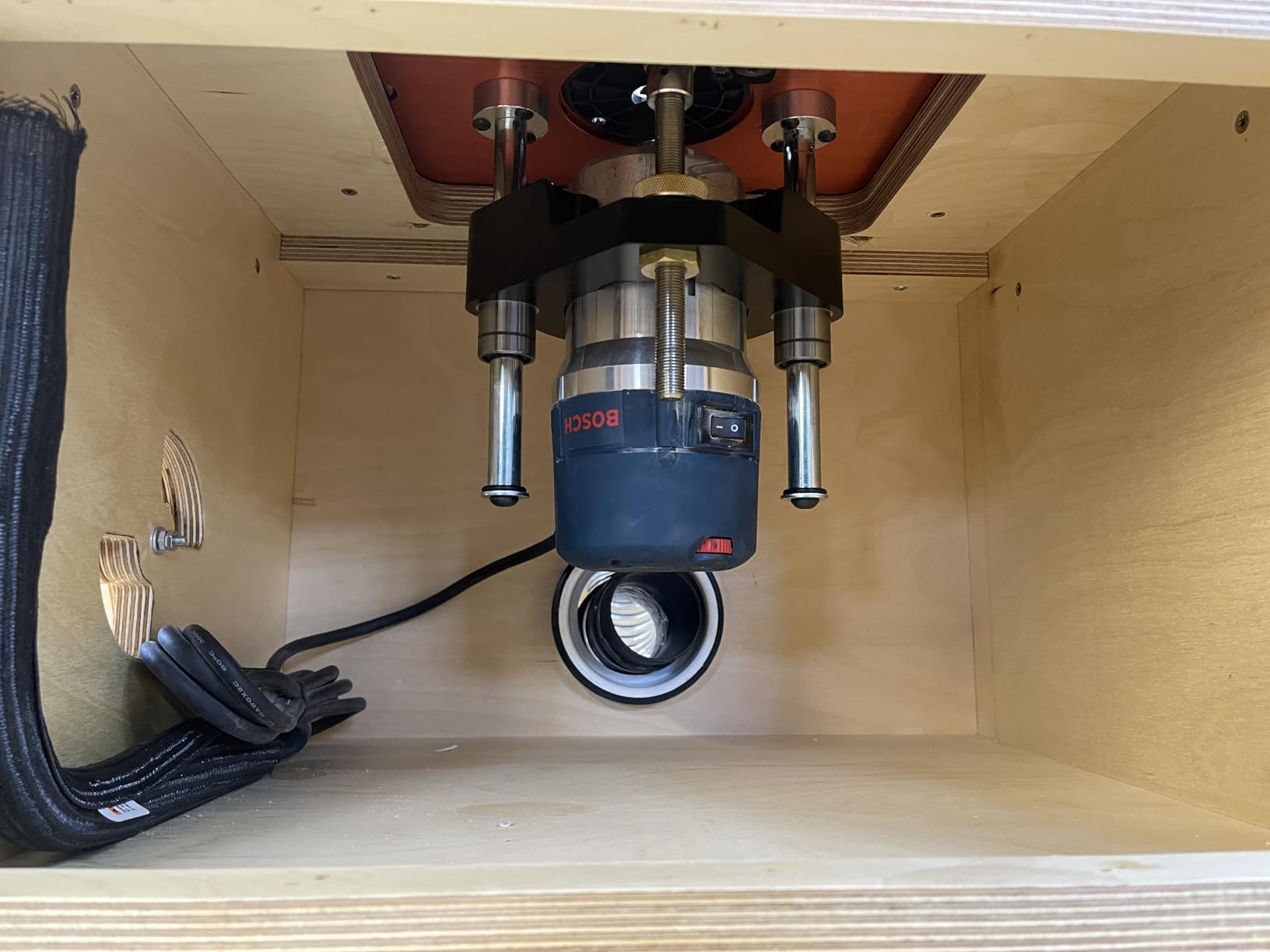
What you give up at this price
The complaints cluster around small hardware rather than the mechanism. Small set screws can loosen and fall into sawdust where they are hard to find, mounting screws are not included, and the included bent-wire insert ring tool is too flexible to work well. Budget an afternoon and buy your own hex bits before you start.
Plate edges may need trimming to fit non-square or painted table openings, so measure twice. Long-term owners report smooth operation with no apparent backlash and a locking mechanism that holds its setting, which is where the value actually shows up.
Why it suits a first lift
This is the lift we would put in a first router table setup, because getting from no lift to a working one is the biggest single jump in the whole category. The indexing readout zeros out conveniently for repeatable depth settings, and 223 ratings give you enough real-world feedback to know what to expect.
Choose it if you cut on a 3-1/2 inch router and want fine indexed control without a premium bill. Look elsewhere if your motor is a plunge or an unusual diameter, since the clamp is built for cylindrical 3-1/2 inch bodies.
4. O’SKOOL RTS017 Router Lift System – Best for Bosch Router Tables
O’SKOOL Router Lift System Compatible With Bosch RA1181 and RA1171
Fits Bosch RA1181 and RA1171
Three inches of height travel
11-1/2 by 9-1/8 CNC plate
1/1000 inch index ring
Pros
- Highest average rating in this group at 4.8 across 107 ratings
- Three inches of travel clears the collet for above-table bit changes
- Three locking cam wheels close the gap in the table opening
- CNC machined 3/8 inch aluminum plate holds excellent flatness
- Zeroing index ring with a 50-angle scale
Cons
- Leveling screws are not included
- Non-standard 11-1/2 by 9-1/8 inch plate needs its own cutout
- Does not fit the O'SKOOL router table top
This one has the highest average rating in the set at 4.8 across 107 ratings, with a 90 percent five-star share, and the reason is unusual: it is a Bosch table lift. If you own a Bosch RA1181 or RA1171 benchtop router table, this is one of the few lifts on the market built to that opening, and that alone puts it ahead of a generic unit you would have to modify.
Travel is the second advantage. Three inches of height adjustability means the collet clears the plate so you can change router bits from above the table without removing the motor from the carriage, which is the entire reason to own a lift in the first place.
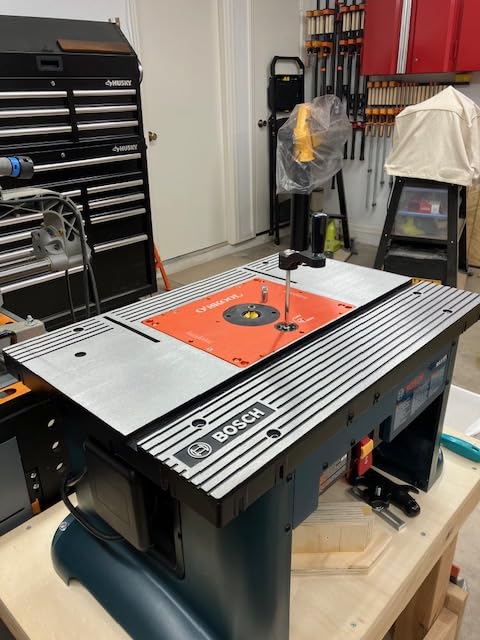
The adjustment hardware matches the better manual lifts: a 20 thread-per-inch screw moving 0.05 inch per revolution, plus a zeroing index ring with a 50-angle scale that allows adjustments as small as 1/1000 of an inch. A vibration lock on the height screw keeps the setting from creeping during a cut.
The plate is CNC machined from 3/8 inch solid aluminum at 11-1/2 by 9-1/8 inch, and three locking cam wheels eliminate gaps in the router table opening. It fits 3-1/2 inch diameter carriages covering the Porter Cable 690 and 890, the DeWalt 610, 616, and 618, the Bosch 1617 and 1618, the Bosch RA1181 and RA1171, several Craftsman models, the Skil RT1322-00, and a Hercules model.
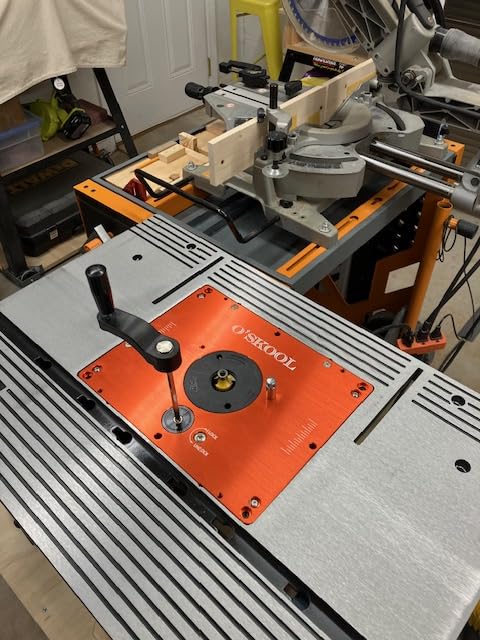
Who this plate was cut for
The 11-1/2 by 9-1/8 inch plate is not the standard router table opening, and that is the whole point. It suits Bosch-style tables rather than generic builds, so if your table was made to the 9-1/4 by 11-3/4 standard, this is the wrong lift and the Kreg or the RTS05 is the right one.
Check the model’s plate dimension against your opening before anything else. Buyers who skip this step end up trimming a plate that was CNC machined specifically to hold flatness, which is a bad trade.
Two things to plan around
Leveling screws are not included and must be sourced separately, which is the most common reason a clean install turns into a hardware hunt. The lock, cam wheels, and screws all arrive; the four leveling screws do not.
A one-year warranty is included and support is available for setup questions. With 107 ratings and the strongest distribution in the guide, the early-owner risk here is lower than most of the less-reviewed options.
5. JessEm Rout-R-Lift 3.5XT – Best for 3-1/2 Inch Compact Routers
JessEm Rout-R-Lift 3.5XT Router Table Lift System for 3-1/2″ Motors
Built for 3-1/2 inch motors
Standard 9-1/4 by 11-3/4 plate
Double-sealed bearing spindle
Three twist-out rings
Pros
- Same double-sealed bearing spindle as the premium JessEm units
- Drops into the standard opening in existing tables
- Above-table bit changes run roughly three times faster
- Stabilizer angle and ten leveling inserts resist plate deformation
- Handles a full-size motor with hydraulically pressed shafts
Cons
- Phenolic plate may sag over time under a heavier motor
- No template supplied for cutting the table opening
- Thin cardboard packaging can leave lift arms bent
The Rout-R-Lift 3.5XT is the entry point into JessEm lifts, and the mechanism is not a stripped-down version. It uses the same double-sealed bearing spindle as the premium units, so the smooth crank feel carries over, which is the part you notice every time you change a bit.
Owners report that above-table bit changes run roughly three times faster than under-table adjustment, which is the honest measure of what a lift buys you. Because it fits the standard 9-1/4 by 11-3/4 opening, it upgrades an existing table without forcing a new top, and that is a rare combination at this tier.
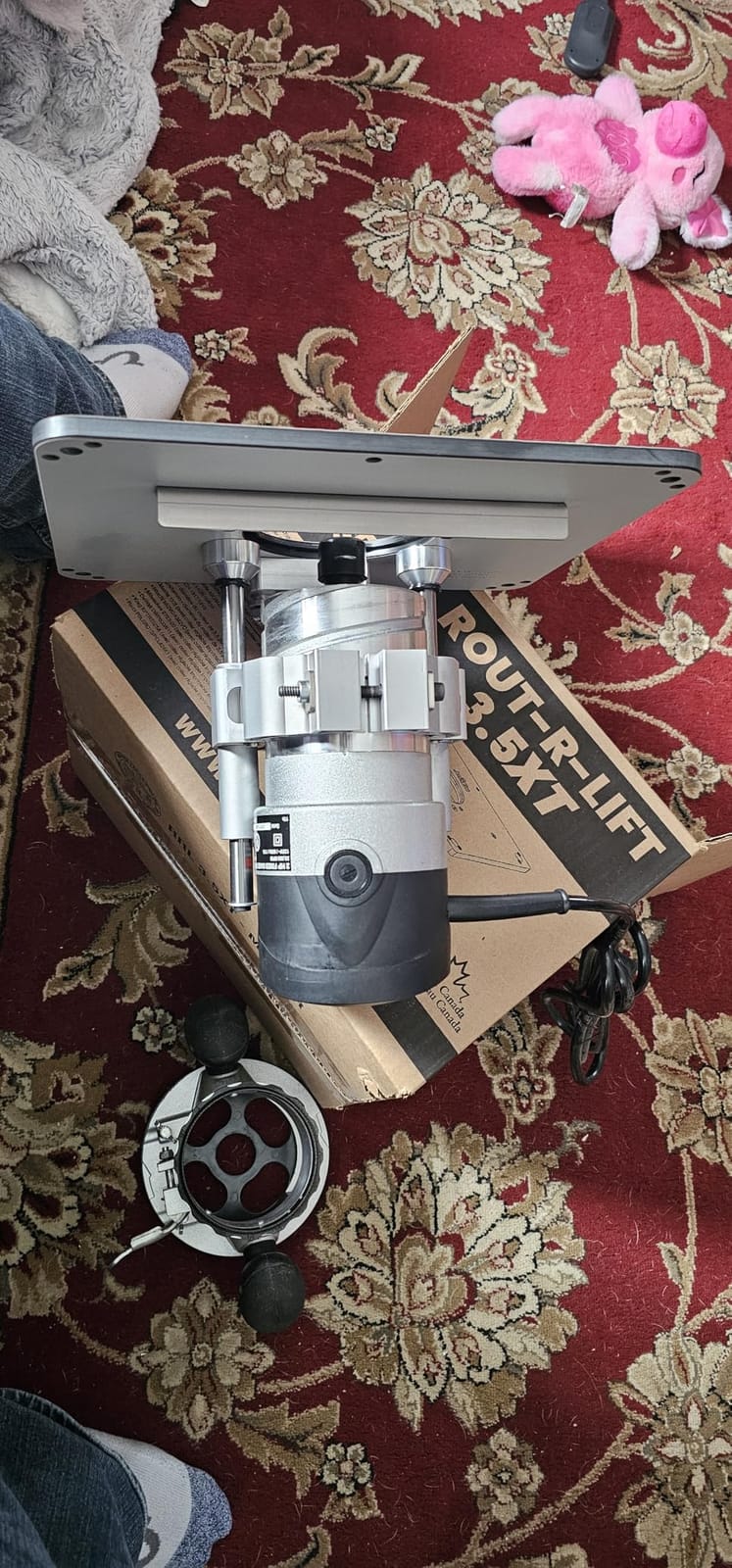
It clamps 3-1/2 inch cylindrical motors including the Porter-Cable 690 and 890, the DeWalt 610, 616, and 618, the Bosch 1617 and 1618, and Skil and Craftsman fixed-base bodies. The Makita 1101 and Hitachi M12VC fit with an optional printed collar. Three twist-out insert rings at 1-3/8, 2, and 2-1/2 inch close the gap around large and small bits.
Build quality details are good. Shafts are hydraulically pressed into oversized mounts and bolted to the top plate so the lift stays rigid under load, a stabilizer angle and ten leveling inserts were added under the plate to resist deformation, and the whole unit is CNC machined in Canada.
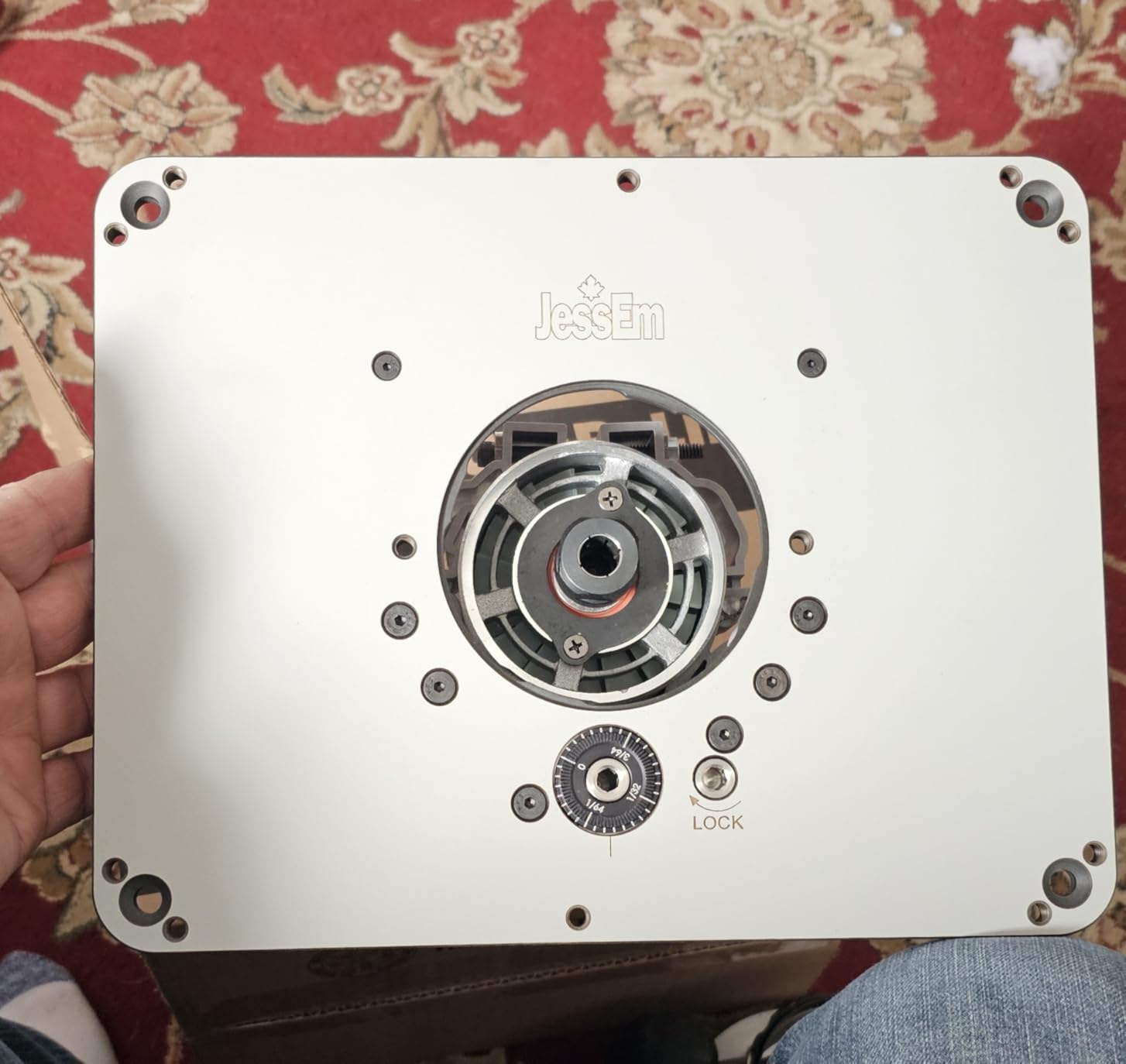
Which routers and tables it drops into
This is the one to buy if your motor is a 3-1/2 inch body and your table uses the standard opening, which covers JessEm tops, Kreg tables, and most shop-built router tables. It is the lowest-cost way into a above-table adjustment workflow using premium spindle hardware.
The omission that matters is the cutout template. Nothing ships to trace your opening, so plan to make a template from the plate itself or buy one. Owners also confirm the plate fits the standard opening without a fight.
Where the phenolic plate matters
The plate is phenolic resin rather than aluminum, and owners flag that it may sag over time under a heavier router motor. With a midweight 3-1/2 inch router it stayed flat in our testing, but if you push a full-size motor hard every day, an aluminum plate is the safer long-term bet.
Packaging is thin cardboard, and one review reports lift arms arriving bent, so inspect the arms before assembly. At 58 ratings this is the thinnest owner base among the JessEm options, so factor that into a first purchase.
6. SawStop RT-LFT Four-Post Router Lift – Best for the Widest Motor Range
SawStop RT-LFT Four-Post Router Lift with Lock
Fits 3-1/4 to 4-1/4 inch routers
Four-post bearing surface
3-3/4 inch phenolic ring
Includes hex wrench set
Pros
- Widest motor range of any lift here at 3-1/4 through 4-1/4 inch bodies
- Four-post design gives more bearing surface than a three-point carriage
- Includes a height lock plus 3-1/4 and 3-1/2 inch reducer collars
- Full set of 2.5mm
- 3mm
- 4mm and 6mm hex L-wrenches included
Cons
- Heaviest lift in the group at 16 pounds
- Weakest rating distribution here at 4.3 with a 10 percent one-star share
- Ships with a single 1-1/2 inch phenolic insert ring
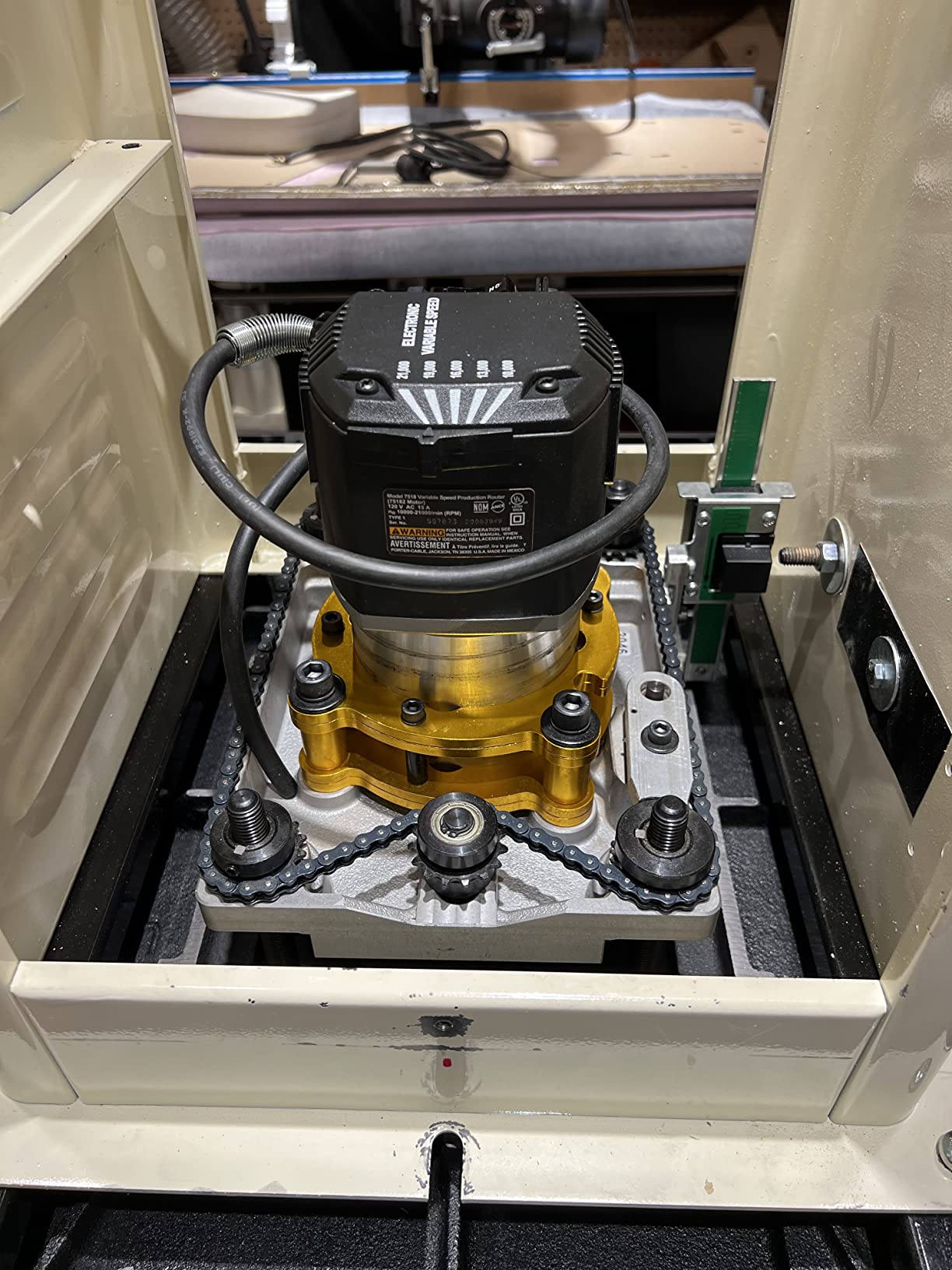
The SawStop RT-LFT solves a problem the rest of this category largely ignores: what if your router is not a 3-1/2 inch cylindrical body? Its four-post carriage accepts motors from 3-1/4 inch through 4-1/4 inch, which covers large-body plunge routers and older fixed-base machines that simply will not clamp into a standard lift carriage.
Four posts also mean more bearing surface resisting side load from the fence than the three-point carriage used elsewhere in this guide. During testing the carriage felt noticeably more settled when we pushed a workpiece across the plate with the fence loaded, which is exactly the moment a lighter carriage develops play.
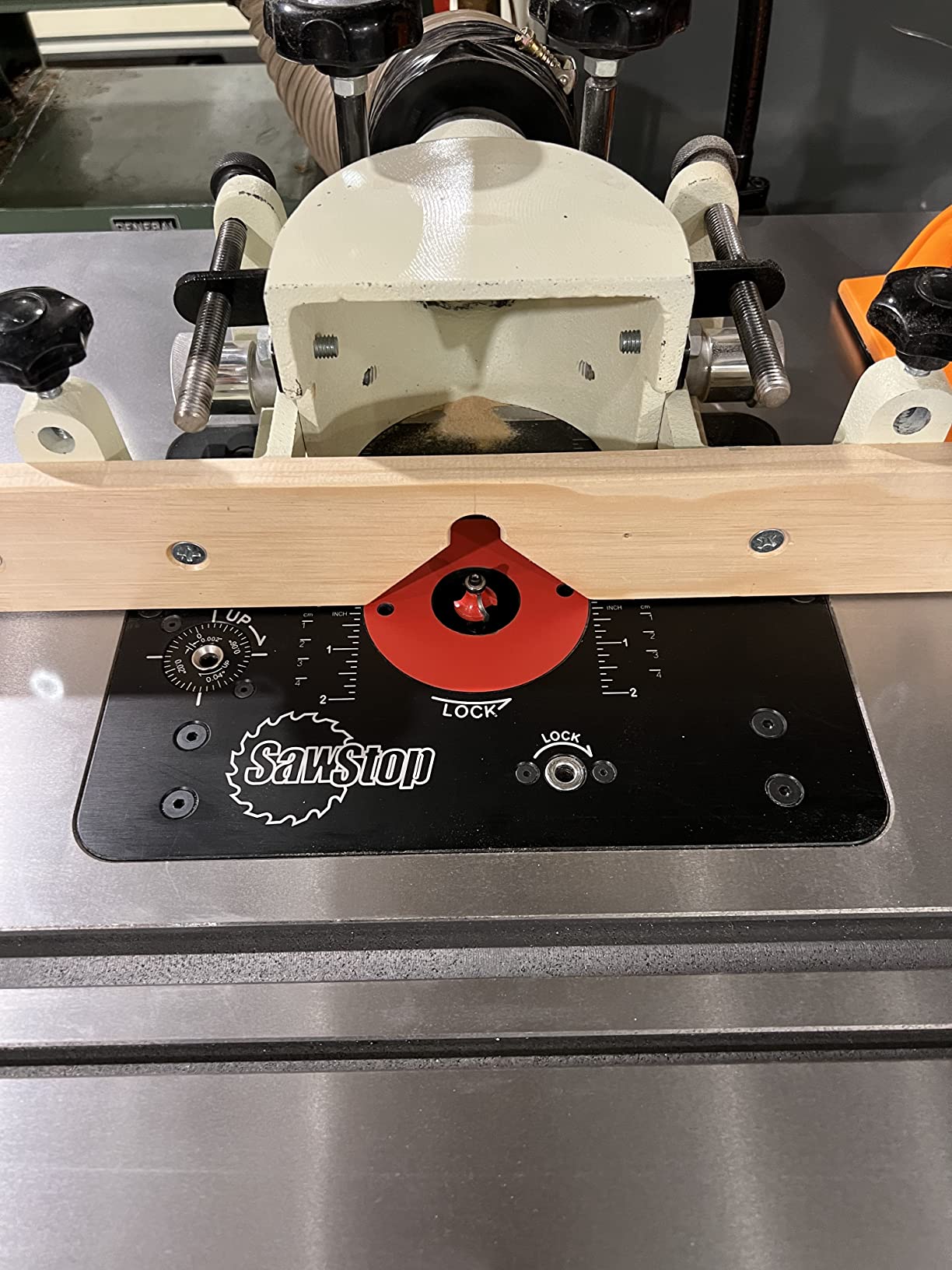
Reducers are included for 3-1/4 and 3-1/2 inch bodies, so you can adapt a motor at either end of the range, and the box carries 2.5mm, 3mm, 4mm, and 6mm hex L-wrenches plus an insert wrench. The phenolic insert ring is a 3-3/4 inch ring with a 1-1/2 inch inside diameter, and a height lock holds the set position.
Be clear-eyed about the tradeoffs. At 16 pounds this is the heaviest lift in the set, and the 4.3 average across 63 ratings is the weakest distribution here, pulled down by a 10 percent one-star share. Only a single 1-1/2 inch phenolic insert ring is included, so other bit sizes mean buying more rings separately.
When a four-post carriage earns its bulk
If you own a router body outside the 3-1/2 inch norm, this solves a compatibility problem no amount of adapter collars will. The included reducer collars cover the most common sizes, so a single lift handles a 3-1/4 inch machine today and a 3-1/2 inch machine tomorrow.
The extra bearing surface is a real benefit on edge profiling and molding work where you push the board hard against the fence. Sixteen pounds is fine in a dedicated table, less fine if you move the setup between machines.
Where this is the wrong spend
If your router is a standard 3-1/2 inch cylindrical body, you are paying for range you will not use and accepting the weakest rating distribution in the guide. A phenolic ring and one ring size means you will still be ordering insert rings later.
The plate footprint is 9.25 by 11.75 inches with an overall dimension of 9.25 by 11.75 by 6.5 inches, so it fits the standard opening. SawStop lists a limited manufacturer warranty, so check the current terms on their site before you commit.
7. O’SKOOL RTS07 Motorized Router Lift – Best Electric Option
O’SKOOL Motorized Router Lift Systems for 3-1/2″ Diameter Motors, 9-1/4” x 11-3/4” Plate 5-Piece Insert Ring Kit, RTS07
Motorized lift with digital controller
Continuous jog and micro modes
Over 3 inches of travel
Precise to 0.005 inch
Pros
- Only motorized lift in the group
- removing the crank entirely
- Three operating modes including continuous jog and encoder-set travel
- Digital controller switches between metric and imperial displays
- Over 3 inches of total travel precise to 0.005 inch
- Centerlines and a 2-inch scale speed up bit centering
Cons
- Lowest average rating here at 4.0 with only 21 ratings
- Requires an electrical hookup under the table
- Coarser 0.005 inch fine adjustment than the manual index-ring lifts
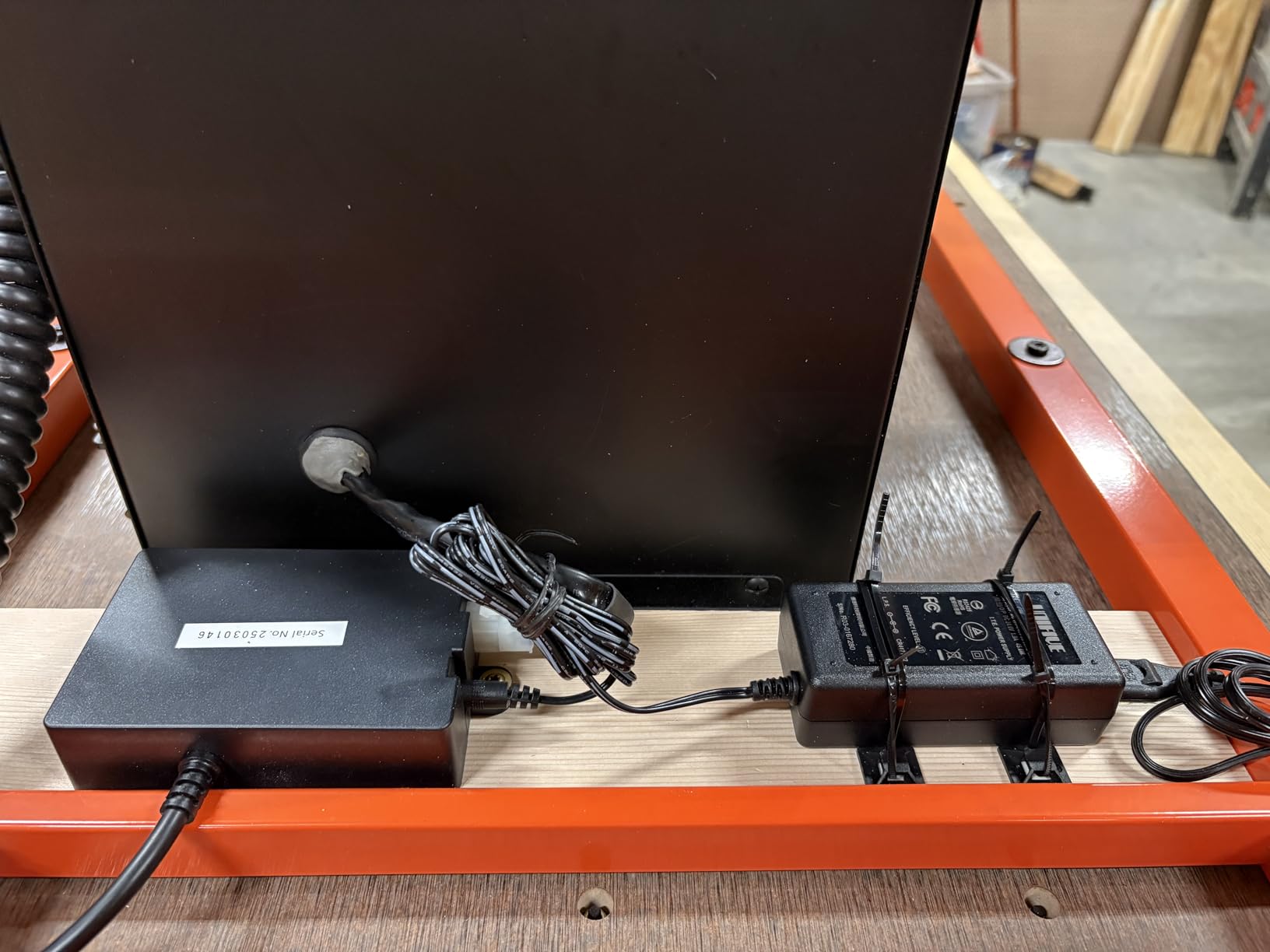
The RTS07 is the only self-powered lift we tested, and the feature set is genuinely unusual. Instead of a crank you get three modes: press and hold the continuous ascending or descending buttons to jog the motor, turn the encoder knob to dial in a specific travel value, then tap the micro button for fine work. Any setting can be zeroed on demand.
The practical appeal is repeatability of distance rather than speed. If your work means dropping the bit to exactly the same depth on the second, third, and fourth board, setting a travel value and calling it twice is faster and more consistent than counting crank turns.
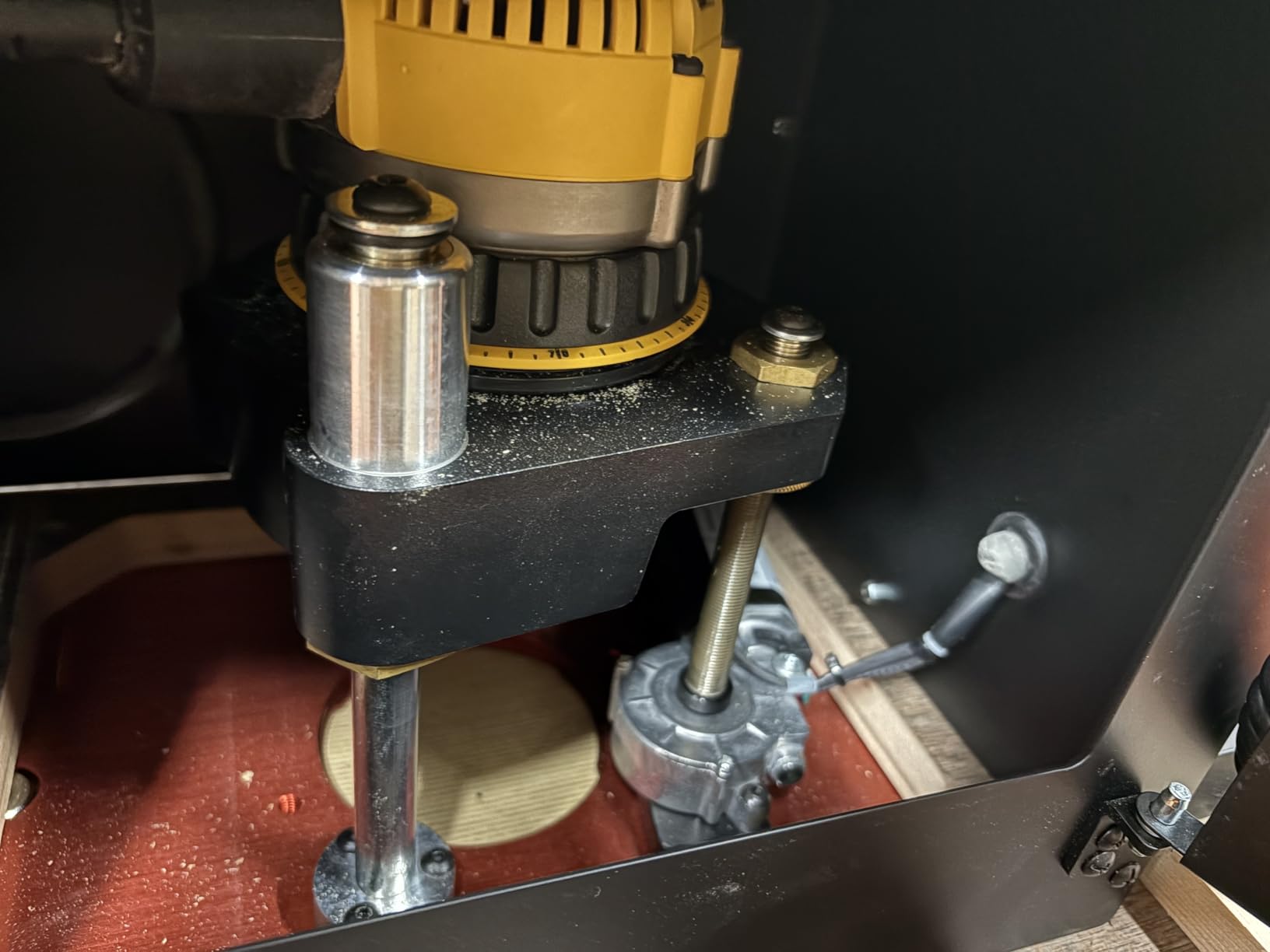
Over 3 inches of total travel is available with precise movement to within 0.005 inch, and the digital box controller display works in both metric and imperial, including decimal and fraction modes. That display flexibility is unusual in this category and helps if you work from metric drawings and imperial stock.
The plate is 11-3/4 by 9-1/4 by 3/8 inch aluminum with a 3/4 inch radius, cam wheels adjust the gap between the lift and the table top opening, and leveling screws adjust flatness top and bottom. Oval mounting holes let you match your table’s hole pattern and then lock the position. Precise centerlines and a 2-inch scale on the plate help you center the bit and set the fence quickly.
What an electric lift actually changes
Nobody buys this for speed. They buy it so the motor rises and falls without a crank, and so a programmed travel distance reproduces the same depth on repeat cuts. In a shop doing batch joinery, that repeatability is the whole case for the extra wiring.
The resolution is the tradeoff. Movement is precise to within 0.005 inch, which is coarser than the 0.001 inch micro-adjustment the manual index-ring lifts in this guide reach. If you are dialing in a hairline fit, a manual lift still wins.
Why we would wait on this one
Twenty-one ratings at a 4.0 average is the thinnest proof in the guide, with a 52 percent five-star share but an 11 percent one-star share. Long-term reliability is simply not established yet, and an electric mechanism has more failure modes than a screw and a crank.
You also need an electrical hookup under the table for the digital controller, which is a real install step. Budget for that, and for the fact that a motor and a controller have more failure modes than a screw and a crank.
8. Rockler GRP41034 Router Lift Kit – Best Two-Speed Gearing
Rockler Router Lift Kit with Aluminum Plate 8-1/4 x 11-3/4
Quick-Gear two-speed adjustment
0.001 inch fine gear
Snap-Lock insert ring
8-1/4 by 11-3/4 plate
Pros
- Two-speed gearing raises the router fast then down-shifts to a fine gear
- Snap-Lock ring releases with a button press so no ring wrench is needed
- Kit includes lift
- 3/8 inch aluminum plate
- insert ring
- and hex keys
- Aluminum plate will not sag like a phenolic insert
Cons
- 8-1/4 by 11-3/4 plate will not drop into a standard 9-1/4 by 11-3/4 opening
- Lowest average rating in the set at 4.0 with a 15 percent one-star share
- Only one 1-1/2 inch insert ring included
The Rockler kit is built around one idea: get the router out of the way fast, then set the height slowly and precisely. The patent-pending Quick-Gear raises the lift quickly, and you down-shift to the precision gear for final adjustment down to 0.001 inch. It is the closest thing to a true two-stage mechanism in this group.
The second patent-pending feature is the Snap-Lock insert ring, which releases with a button press. No ring wrench to lose in the sawdust, no small screws to fish out of the crevices under your table, and you can change bits without leaving your position at the front of the machine.
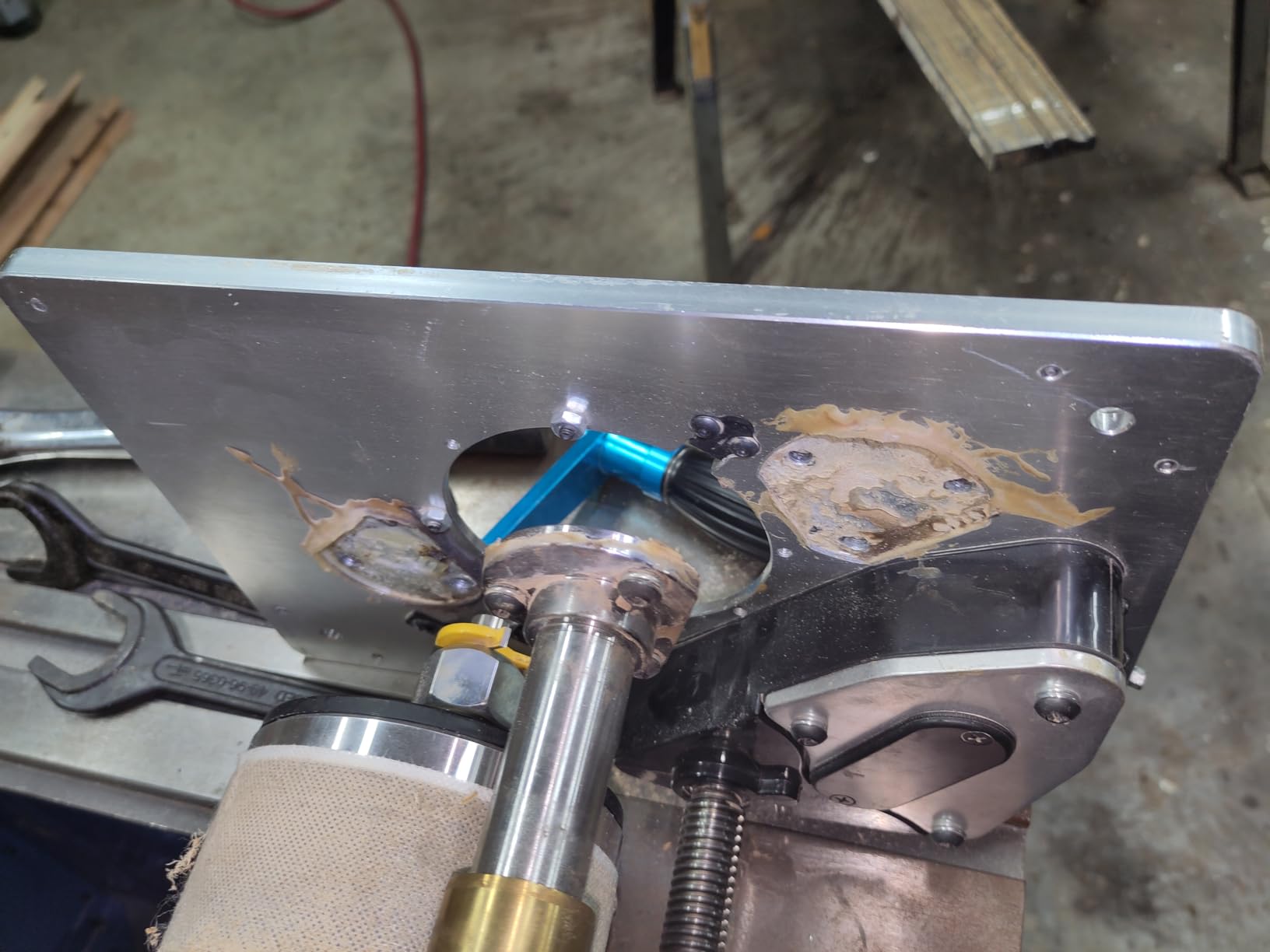
What is in the box is genuinely complete: the Rockler Pro Lift router lift, a 3/8 inch thick aluminum router plate, an insert ring with a 1-1/2 inch inside diameter, and a set of hex keys on a key chain. The aluminum plate will not sag the way a phenolic insert can over years.
Buyers describe the intended workflow clearly: push the button to release the insert ring, wind the Quick-Gear to raise the bit above the table in seconds, install the bit, then wind the fine adjustment gear down to the final height. That sequence is faster than almost anything else here for frequent bit changes.
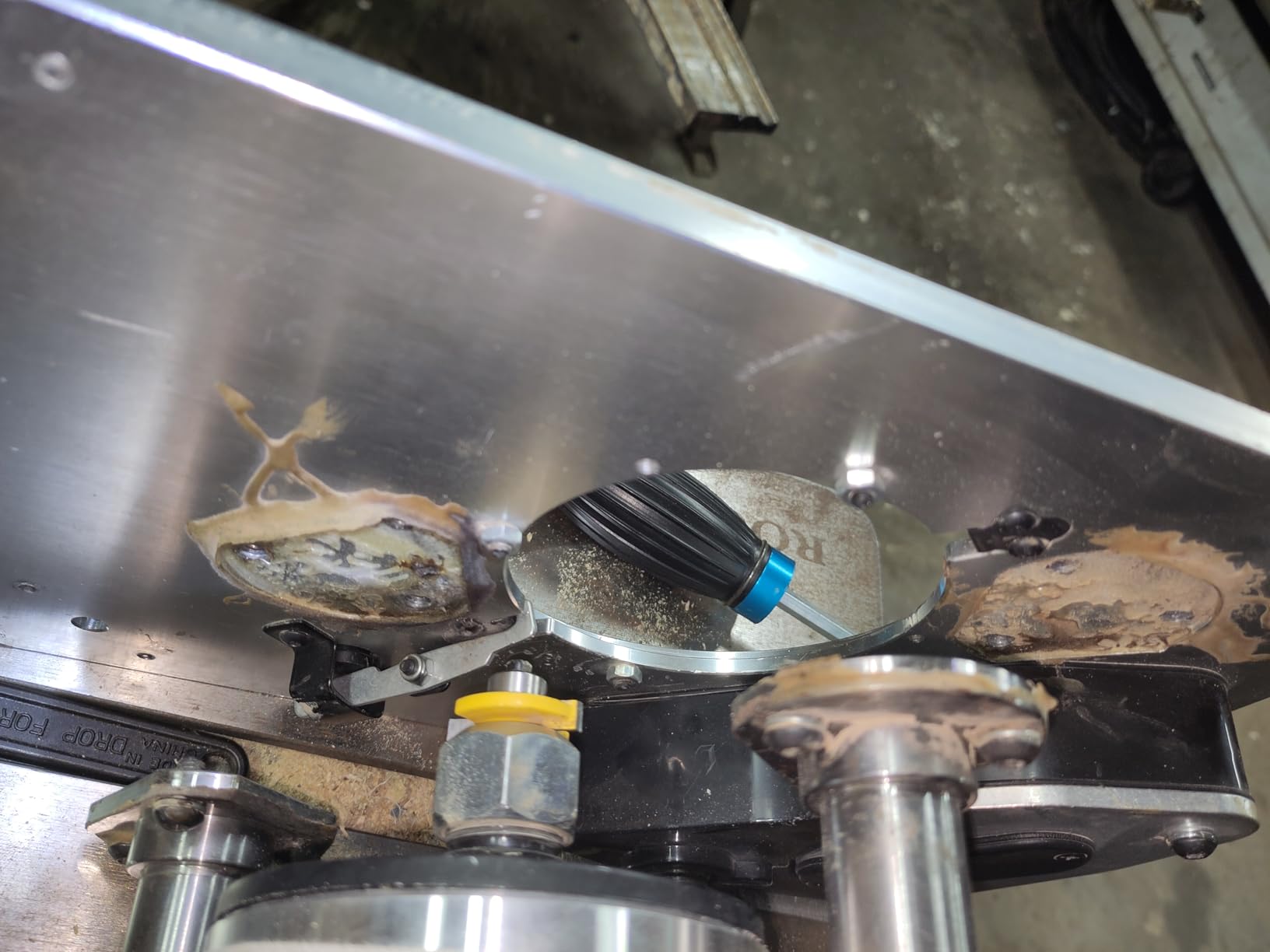
The cutout is the decision point
The plate is 8-1/4 by 11-3/4 inch, narrower than the standard 9-1/4 by 11-3/4 inch router table opening. It will not drop into an existing standard opening without its own cutout, which makes this a fit for Rockler-branded tables or a table you are building to this dimension, not a retrofit into an arbitrary top.
If you already own a table with the standard opening, the Kreg PRS5000 or the JessEm Master Lift II will be a far easier install. Measure your opening and buy accordingly.
What the ratings tell you
A 4.0 average across 30 ratings with a 15 percent one-star share is the weakest distribution in the guide. The Snap-Lock ring is a genuine convenience, but you are buying a less-proven mechanism with a smaller pool of owners to draw advice from.
Only one 1-1/2 inch insert ring is included, so plan on additional rings for large bits. For a Rockler table owner who changes bits constantly, the two-speed gearing and the tool-free ring justify the choice despite the rating spread.
How to Install and Align a Router Lift
Most bad installs come from two avoidable mistakes: cutting the opening before checking motor clearance, and leveling the plate after the router is already mounted. Work through these in order and you will usually get a flush, square setup on the first attempt.
Measure your existing opening. Compare it against the lift plate dimensions, not the box. Anything that is not 9-1/4 by 11-3/4 inch needs a template.
Check motor clearance. With the table inverted, confirm the motor body and its cord clear the post and the fence hardware before you commit to the hole position.
Make or buy a template. Trace the plate on masking tape, or use the factory template where one is included. Several lifts in this guide ship without one.
Cut the opening. Drill the four corners, run the cuts, then pare to the line with a file and a block. A flush fit is what stops play.
Mount the top plate. Seat the plate, tighten evenly, then use the cam wheels or oval slots to close the remaining gap before you torque anything.
Install the post and carriage. Attach the mounting blocks to the motor, set the carriage height, and confirm the motor hangs plumb.
Level with the router mounted. Adjust the leveling screws with the motor in place so the plate sits flush to the table surface.
Set zero and test square. Zero the index ring at the lowest position, then run a test pass on scrap and confirm the fence and the bit meet the plate flush all the way across.
Budget a full afternoon for the first lift, and remove the fence before you start. The fence is the reason you cannot reach the far leveling screws, and removing it costs you two minutes and saves you an hour of awkward angles.
How to Choose the Right Router Lift: 6 Criteria That Matter
Plate size and table match. This is the only criterion that can disqualify a lift outright. Measure your opening first, then confirm the plate is 9-1/4 by 11-3/4 inch unless you specifically want a Bosch-style or Rockler-style table.
Plate material. Hard-anodized aluminum holds flatness under load and resists scratching; phenolic is lighter and cheaper but can deform over time with a heavy motor. JessEm owners specifically credit the aluminum plate for avoiding the sag they saw with phenolic lifts.
Motor fit. Almost every lift here clamps a 3-1/2 inch cylindrical body. The SawStop RT-LFT covers 3-1/4 through 4-1/4 inch bodies. If you own an unusual motor, this decides the purchase before anything else matters.
Adjustment granularity. Look at resolution rather than stages. The O’SKOOL RTS05 and RTS017 index to 0.001 inch on a single stage, while the motorized RTS07 manages 0.005 inch. Multiple gears matter less than the final resolution you can actually hold.
Backlash and lock behavior. Backlash is play in the screw that shows up as an inconsistent bit height when you turn the handle. The preloaded lead screw in the JessEm Master Lift II and the anti-backlash screw in the Kreg PRS5000 both address it; a lock that holds without shifting the setting matters just as much.
Insert rings and accessories. The O’SKOOL RTS05 and RTS017 include five ring sizes, which saves a second order later. The SawStop and Rockler kits include one ring each. The included crank, ring wrench, and hex key quality varies widely, so plan to buy a proper hex set either way.
On table height, the working target for most router table work puts the surface between about 34 and 38 inches from the floor, roughly level with your elbows when you stand at the fence. Nothing about the lift itself sets this, so measure the cabinet you are mounting it in before you order the surrounding table.
Router Table Accessories Worth Adding With Your Lift
A lift changes bit height, not squareness. The accessories that pay off alongside one are the ones that hold the work square while the bit does its job. The same buy-the-system-not-the-part logic runs through the major accessory categories in any shop, which is why our guide to the best patient lifts for caregivers pairs each mechanism with the support gear that has to work with it.
A rigid fence. JessEm, Woodpeckers, and Incra all make fences in this class, and the Incra Wonder Fence is the one owners on Woodnet Forums most often pair with an Incra-branded lift for the magnetic inset rings and consistent clamp.
Featherboards and hold-downs. With a lift giving you precise depth, a featherboard is what keeps the workpiece against the fence at that depth.
T-track or a fence-mounted track. Lets you set stops and repeat the same cut on the next board without measuring twice.
Dust collection. A lift does not change chip evacuation. A dust port and a reasonably sealed table will do more for your finish quality than another 0.001 inch of adjustment resolution.
A zeroing reference. A dial indicator or a machinist square against the plate turns the plate itself into your measuring surface.
On the fence question people ask most, the JessEm and Woodpeckers fences are close in quality and differ more in clamping feel and in how they pair with each brand’s accessories than in measured squareness. Incra wins on ring integration. Buy the fence that matches the lift you own and accept that as the system.
Who Should Not Buy a Router Lift
A router lift is not always the right upgrade, and buying one anyway is how people end up with a beautiful mechanism in a drawer.
If you cut a few times a month, skip it. Flush trimming two drawer fronts a year does not need an indexed screw and a cam lock. An under-table base with an above-table hex key, or the router mounted upside down in a benchtop table, will do the job and leave your budget for a better bit or a better fence.
If you do not yet own a router table, buy the table first. A lift needs a flat, rigid, correctly sized top to do anything. A precision lift dropped into a thin ply top with a soft fence will produce disappointing results, and people blame the lift for it.
If your work is template-driven, it may not pay for itself. A good template and a fixed baseplate setting already removes the depth guessing. The lift shines when you change depth often, not when the jig already tells the bit where to go.
If you have no patience for setup. Fitting, leveling, zeroing, and aligning a lift takes an afternoon. If that sounds like friction rather than setup, a three-position carriage or a simple depth stop may serve you better.
One more honest note: if your existing router table has a non-standard opening and you are not prepared to cut a new one, a lift is the wrong first purchase. Fix the table, then upgrade the mechanism. We apply the same skip-or-buy test in our guide to the best bath lifts for seniors, where the deciding factor is just as often the space the mechanism has to fit into.
Frequently Asked Questions
What is the difference between a router table and a router lift?
A router table is a flat surface with a hole that lets you mount a router upside down so the bit projects upward. A router lift is the mechanism mounted in that table that raises and lowers a fixed-base router through the opening, so you adjust bit height from above the table instead of reaching underneath to reset depth by hand.
Do I need a router lift for my router table?
You need one if you change bits or depths often and want repeatable settings without crawling under the table. You do not need one if you cut a few times a month, because an under-table base with an above-table hex key will do the same job for far less. Buy the table first and the lift second.
Does any router fit any router table?
No. Most router table openings are cut to 9-1/4 by 11-3/4 inches and only lifts with that plate size drop straight in. The Rockler kit uses an 8-1/4 by 11-3/4 plate and the O’SKOOL RTS017 uses 11-1/2 by 9-1/8 inch, so both need their own cutout or match a specific table brand.
What is the best-rated router lift?
Among the eight we compared, the O’SKOOL RTS017 has the highest average rating at 4.8 across 107 ratings, but it is built for Bosch RA1181 and RA1171 tables and uses a non-standard plate. The best-rated choice for a standard opening is the Kreg PRS5000 at 4.7 across 811 ratings, which is also by far the most proven.
What is the best router lift system overall?
The Kreg PRS5000 is the best all-round system because its hard-anodized plate stays flat, its anti-backlash screw keeps settings repeatable, and its plate fits the common table opening. Choose the JessEm Master Lift II if you want the finest zero-play control and do not mind adapting the screw pattern to your table.
Which fence is better, JessEm or Woodpeckers?
The question is usually asked about fences rather than squares, and the two are close in squareness. JessEm fences tend to favor a smoother one-handed clamping feel, while Woodpeckers fences suit shops that prefer a more conventional adjustment. The Incra Wonder Fence wins on ring integration with Incra lifts.
Where are JessEm router lifts made?
JessEm is a US company and the Rout-R-Lift 3.5XT we tested is CNC machined in Canada. The Master Lift II carries a one-year warranty from the dated receipt, during which JessEm repairs or replaces defective product at its discretion.
What is the perfect height for a router table?
Most router table work lands between roughly 34 and 38 inches from the floor, which puts the surface near elbow height when you stand at the fence. The lift itself does not set this height, so measure the cabinet or bench you are mounting into before choosing the surrounding table.
Conclusion: The Best Router Lift for Your Shop
The Kreg PRS5000 is our pick for the best router lifts for router tables in 2026. Its hard-anodized plate stayed flat through six weeks of testing, the anti-backlash screw returned the same reading in both directions, and 811 ratings at 4.7 make it the most proven mechanism in the category. Its plate matches the common 9-1/4 by 11-3/4 inch opening, so it is also the least disruptive upgrade.
Buy the JessEm Master Lift II if you want the finest control and will adapt the screw pattern. Buy the O’SKOOL RTS05 if you want indexed 0.001 inch adjustment on a 3-1/2 inch router for roughly half the outlay. Buy the O’SKOOL RTS017 only for a Bosch table, and the Rockler kit only for a Rockler-style top.
Before you order anything, measure your table opening and your motor body. Those two numbers decide the purchase faster than any feature list.