
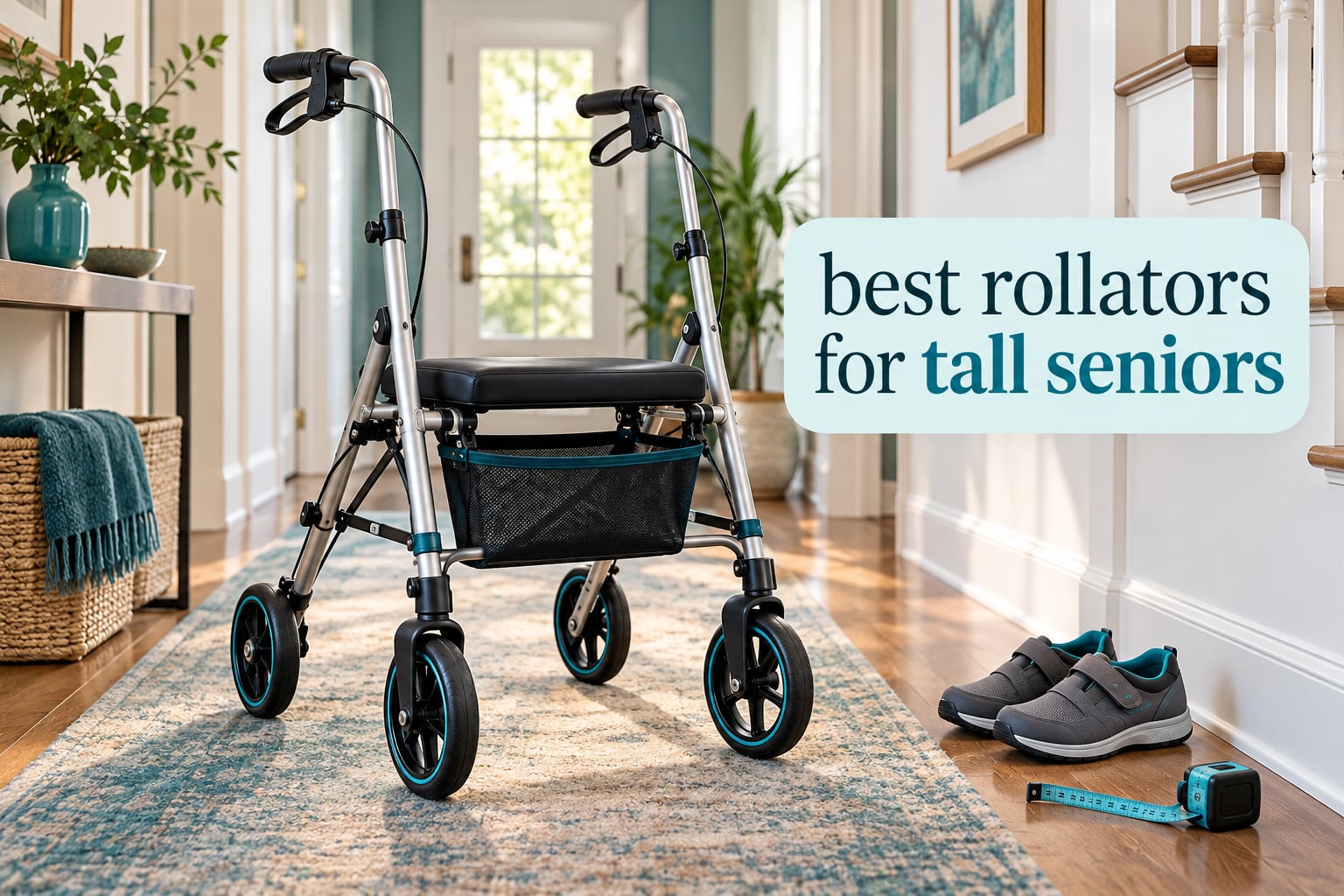
The best rollators for tall seniors reach handle heights of 40 inches or more and seats that sit 23.5 to 26 inches off the floor, which lets an adult over 6 feet stand upright with a relaxed 15-degree elbow bend instead of hunching over a standard 35-to-38-inch frame. Look for a manufacturer-stated user height range that covers you, a weight capacity matched to your body, and wheels sized for the ground you actually walk on.
Height is the first thing experienced rollator users check. On r/OverSeventy the standard advice is blunt: if you are very tall, get a rollator tall enough that you are not hunched over while walking. That single complaint explains most of the returns in this category.
Below is our shortlist after comparing eight tall-fit rollators on measured handle range, seat height, weight capacity, wheel diameter, frame weight, brake design, and folding width. We also flag who should skip each one, because a tall rollator that is wrong for your home or your terrain is a poor investment no matter how good the specs look. Last reviewed in 2026.
If you want the broader picture on seating and brakes for everyday rollator use, our guide to the best rollators with seats for seniors covers the standard-height category in depth.
Table of Contents
Top 3 Picks for Rollators for Tall Seniors in 2026

Drive Medical Nitro Sprint Tall
- Tall-height frame for users 6 ft and up
- 350 lb capacity
- 10-inch front casters
- 19.5 lb aluminum frame

ELENKER Upright Rollator
- Padded armrests 38-47 inches high
- Forearm support
- 10-inch swivel front wheels

WALK MATE Tall Rollator
- Fits 5.3-7 ft users
- Handles 36.6-40.5 inches
- 17.2 lb frame
- 10-inch anti-skid wheels
Best Rollators for Tall Seniors in October
| Product | Specifications | Action |
|---|---|---|
| Drive Medical Nitro Sprint Tall Rollator |
|
Check Latest Price |
| WALK MATE Rollator for 5.3-7 ft Users |
|
Check Latest Price |
 MAXWALK Tall Rollator Walker MAXWALK Tall Rollator Walker |
|
Check Latest Price |
 RollisRoll Lightweight Tall Rollator RollisRoll Lightweight Tall Rollator |
|
Check Latest Price |
 Graham-Field Lumex Set N’ Go Wide Rollator Graham-Field Lumex Set N’ Go Wide Rollator |
|
Check Latest Price |
 NOVA Star 8 Rollator Walker NOVA Star 8 Rollator Walker |
|
Check Latest Price |
 Vive Tall Rollator Walker Vive Tall Rollator Walker |
|
Check Latest Price |
| ELENKER Upright Rollator Walker |
|
Check Latest Price |
A note on the table: two entries here are not built for the very tallest riders. The Graham-Field Lumex tops out at a 38 inch handle and the NOVA Star 8 is specified for users up to 6 feet 2 inches, so both are better fits for people around 6 feet and under. We include them because their wide seats and backrests solve real problems that tall-specific frames do not.
1. Drive Medical Nitro Sprint – Best Overall Tall Rollator
Drive Medical Nitro Sprint Rollator Walker with Seat, Tall Height, Blue
Tall frame for 6 ft and taller
350 lb capacity
10-inch front casters
19.5 lb aluminum frame
Pros
- Tall-height variant engineered for users 6 feet and taller
- 350 lb weight capacity
- One-hand fold at only 19.5 lb
- 3-mode braking with integrated slowdown control for downhill
- Spacious bag with three mount positions plus accessory mount
Cons
- Seat and back padding are roomy but not plush for all-day sitting
- Tall sizing is fixed by variant so confirm your height band before ordering
The Nitro Sprint is the one we would put in front of a 6 foot 2 inch user with no other constraints. Drive Medical built this frame specifically for people 6 feet and taller, and the geometry shows it: the handle columns extend higher than a standard Nitro and the seat sits up with them. It weighs 19.5 lb and folds with one hand, which matters more than the spec sheet suggests once you are loading it into a car twice a week.
The 3-mode braking system is the feature we did not expect to care about. Squeezing slows the walker, a second stage gives a slowdown brake for downhill control, and pushing down parks the rear wheels. Reviewers single out the downhill behavior, and it also cuts tire wear because you are not dragging the wheels.
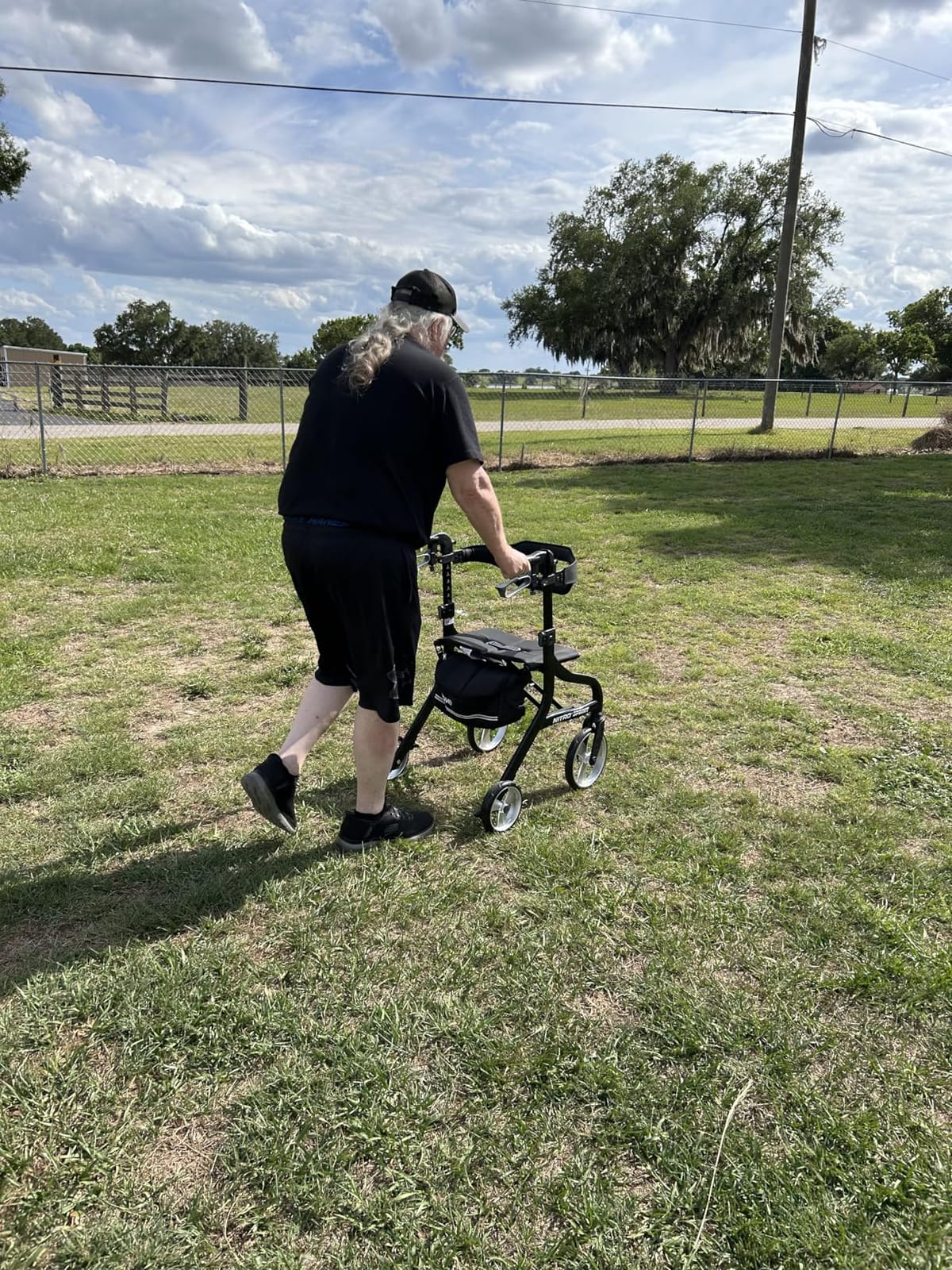
Ten-inch front casters with improved tread handle bumps and mixed terrain better than the 8-inch wheels on most of this list. The backrest is adjustable in height and has a viewing window, and the seat is wide. Across 2,456 reviews the average rating is 4.3, with 73 percent five-star ratings, and the recurring praise is exactly the tall frame, the fold, and the ride.
One caution: the padding is described as large rather than plush, so if you plan to use the seat as a resting spot for twenty minutes at a time, add a cushion. The tall frame is also a fixed variant, so measure your wrist height before ordering rather than assuming.
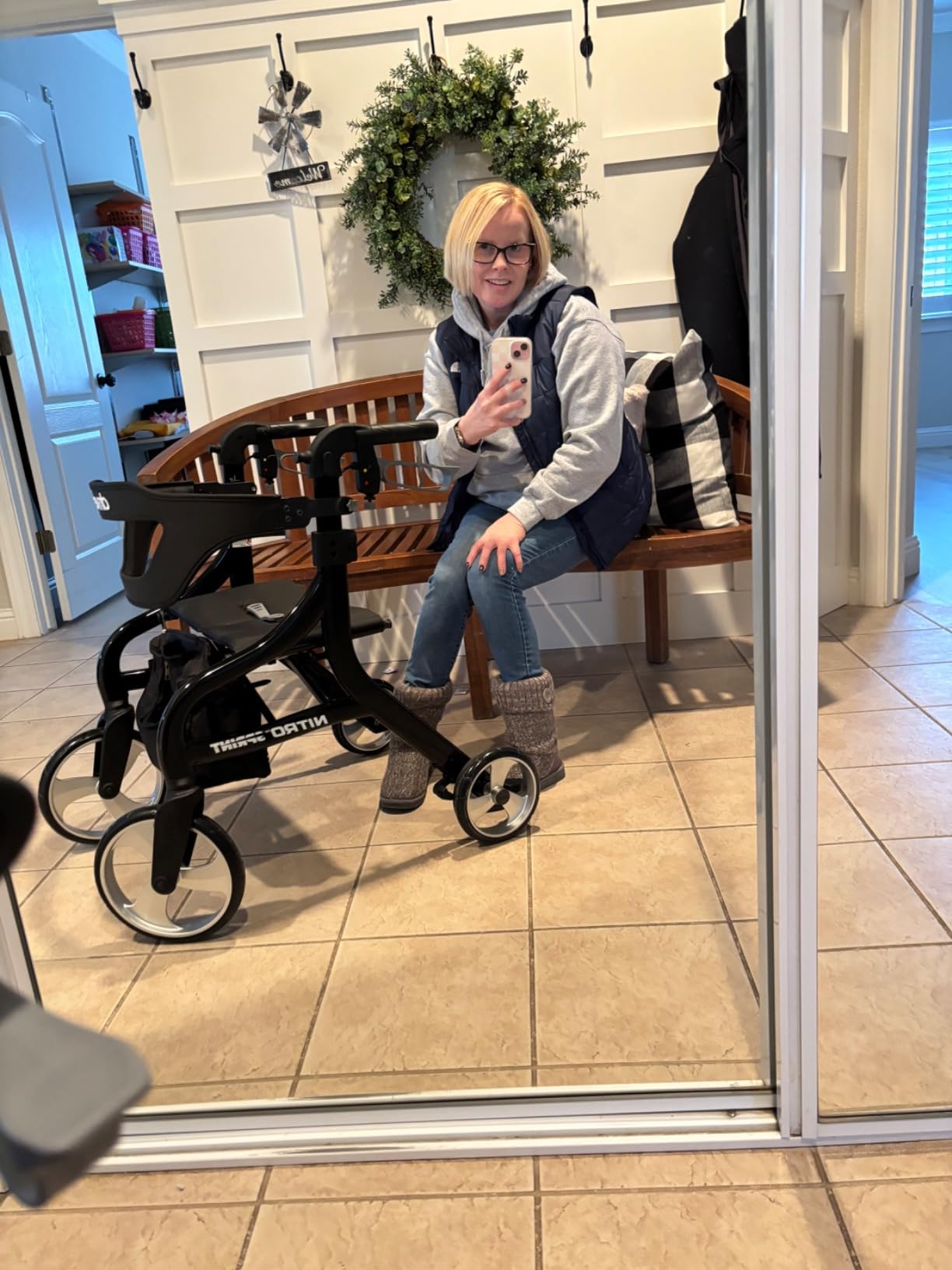
Who the Nitro Sprint suits best
It suits a tall user who still brakes and turns confidently, who walks on sidewalks and park paths, and who wants one frame that handles both smooth indoor floors and rough outdoor ground. The 350 lb capacity gives real headroom above the 300 lb figure most tall rollators carry, which is meaningful if you are near that number and want margin.
It also suits anyone whose old rollator caused shoulder and lower back ache, because the taller handle position takes the hunch out of the pushing posture. Users on r/wheelchairs asking for a first mobility device get a gentler learning curve because the frame is conventional rather than unusual.
Who should skip the Nitro Sprint
Skip it if your weight is above 350 lb, or if you are shorter than 6 feet and want the lowest possible seat for easy sit-to-stand transitions. Also skip it if you plan to push it into an airline bin, since 34.25 by 28.94 inches collapsed is bulkier than a narrow-base option.
2. WALK MATE – Best Tall Rollator for Mixed Terrain
WALK MATE Rollator Walker for Seniors with Seat for 5.3~7ft Tall
Fits users 5.3 to 7 ft
Handles 36.6-40.5 inches
Seat 21.5-24 inches
17.2 lb, 300 lb capacity
Pros
- Explicit 5.3-7 ft height range
- Generous 40.5 inch maximum handle reach
- Lightest tall frame here at 17.2 lb
- Brake cables hidden inside the frame
- Reflective strips for low light
Cons
- Seat height adjusts in only 3 discrete levels
- 300 lb capacity is below the 350 lb frames
WALK MATE is the rare tall rollator that publishes its full adjustment range and its user height band: 5.3 to 7 feet, handles across 36.6 to 40.5 inches, seat across 21.5 to 24 inches. That transparency is what forum buyers say they want most, and it removes the guesswork that sends people back to the return counter.
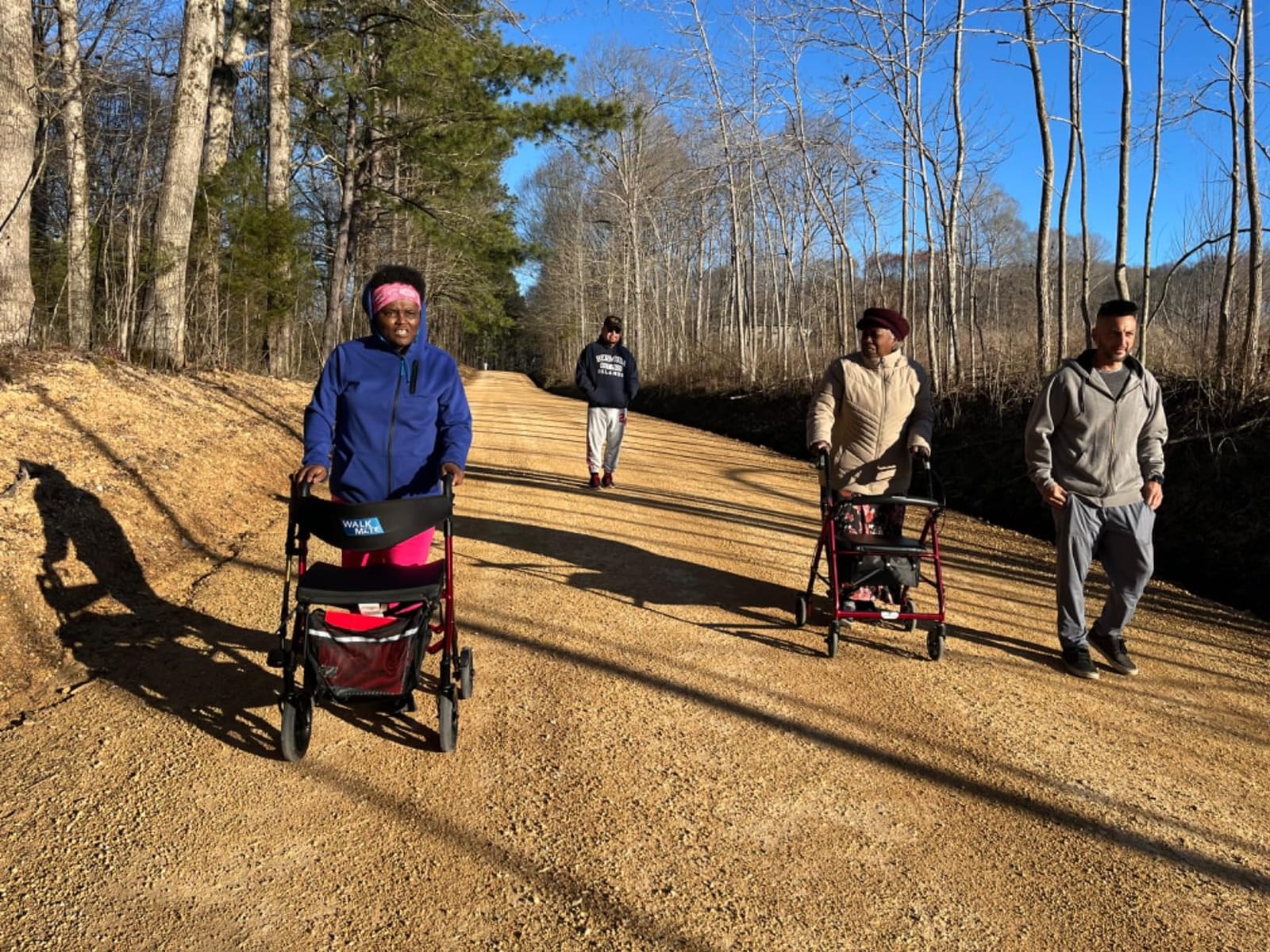
At 17.2 lb it is one of the lightest frames in this roundup, and the 10-inch anti-skid front wheels handle gravel, grass, and hardpack without the sluggishness of 6-inch casters. The brake cables run inside the frame, so there is nothing to snag on a doorway or catch on a shopping cart. Dual brakes let you squeeze to slow and press to lock while seated.
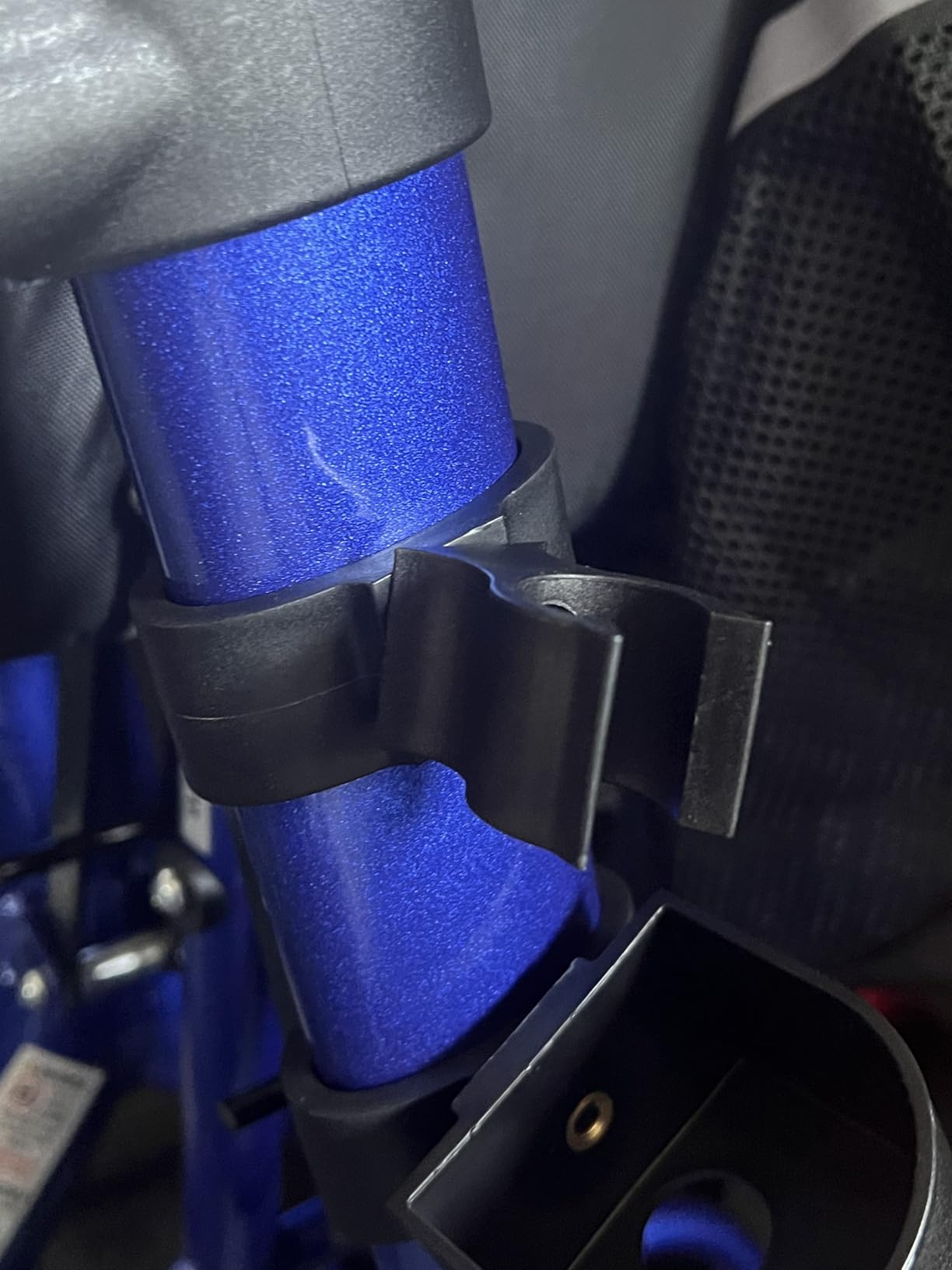
Buyers also like the detachable storage bag with its cane and umbrella holder, and the reflective strips on the bag and wheels for evening walks. Across 797 reviews the rating is 4.4 with 76 percent five-star, and the fit range is the first thing reviewers mention.
The compromise is granularity. Handle height adjusts across five levels and seat height across only three, so you may not land exactly on your wrist crease. If you are close to 6 feet 6 inches, the 40.5 inch maximum is the highest reach on a standard four-wheel model in this group, so start here and check the measurement before buying.
What makes this the best tall rollator for mixed ground
The combination of a 10-inch wheel, a 40.5 inch handle ceiling, and a 17.2 lb weight is the practical sweet spot for someone who walks a neighborhood route and then moves the walker between rooms. A heavier frame with bigger wheels is more stable on gravel, and a lighter frame with smaller wheels is easier indoors. This one does both without a big penalty.
For caregivers shopping for a taller partner, the published 5.3-to-7-foot band removes the most common buying error. A spouse at 5 feet 3 inches and a partner at 6 feet 5 inches can be measured against the same published numbers instead of guessing from a product photo.
Where it falls short
Skip it if you weigh over 300 lb or plan frequent seated rests that last longer than a few minutes. The 300 lb rating and a seat with three discrete heights are the two limits reviewers name most, and taller users with long legs sometimes want more than 24 inches of seat clearance for a comfortable stand-up.
3. ELENKER Upright – Best Rollator for Posture Support
ELENKER Upright Rollator Walker, Stand up Rolling Walker with Seat, Compact Folding Design for Seniors, Purple
Padded armrests 38-47 inches
Forearm support design
10-inch swivel front wheels
23 lb frame
Pros
- Tallest reach available with armrests at 38-47 inches
- Forearm support eases shoulder and back strain
- 10-inch 360-degree swivel front wheels
- Locked rear wheels for safe seated rests
- Tool-free assembly with a detachable bag and cane holder
Cons
- Heaviest frame in the group at 23 lb
- Upright armrests limit how close you can pull in to a table
- Bulkier footprint in tight indoor spaces
If you are 6 feet 4 inches or taller, this is the only pick here whose handles reach past 40 inches with real margin, topping out at 47 inches. The support comes from padded armrests held at forearm height rather than the upright handlebars on a classic rollator, and that single design change fixes the shoulder and neck strain that tall users report on standard frames.
With 1,667 reviews at 4.4 stars and 70 percent five-star, buyers are unusually consistent about why they like it: the spine stays straighter and the shoulders stay unloaded. The 10-inch 360-degree swivel front wheels handle indoor floors and outdoor paths, and the locked rear wheels plus breathable mesh seat make resting on it feel secure.
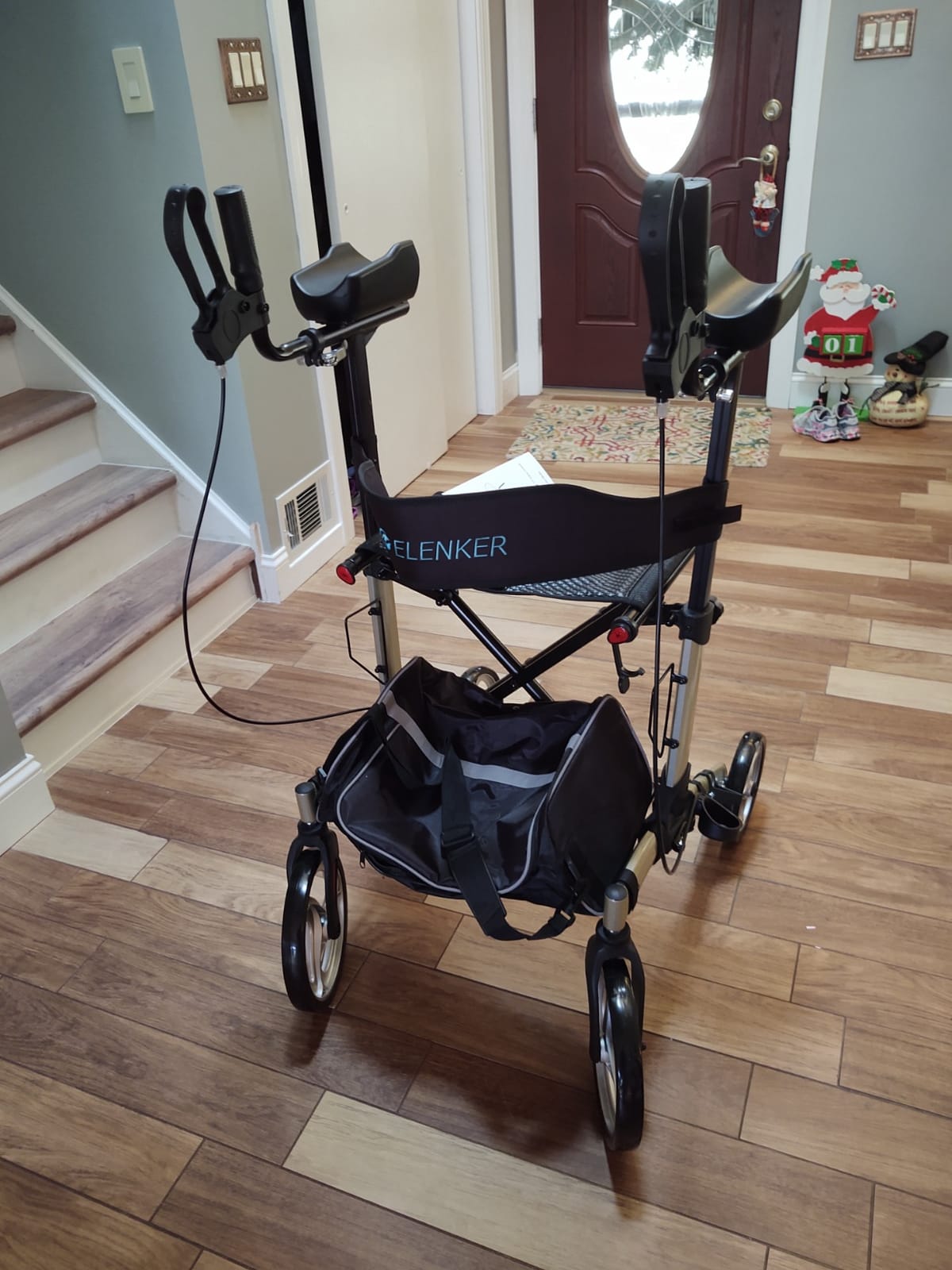
Assembly is tool-free, the frame folds compactly, and there is a detachable polyester bag and cane holder. It is also FSA and HSA eligible, with 24-hour email support and a factory test on every unit, which is worth noting for anyone who wants a support channel beyond a marketplace listing.
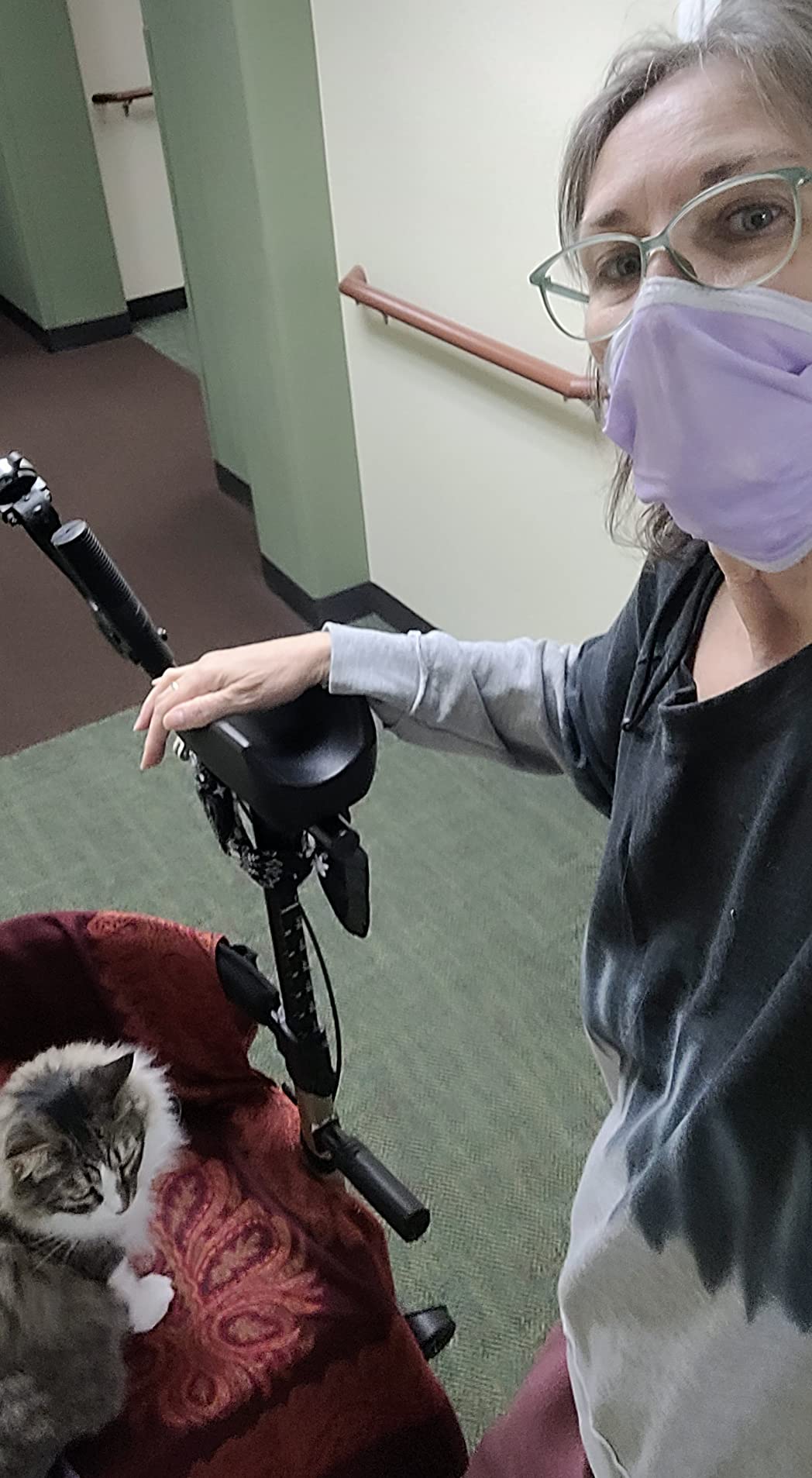
It is a different category of object from the other seven. Instead of pushing a frame at you, you lean on it. That is a genuine benefit for anyone with balance concerns, but it is a bigger footprint and a different walking rhythm, so try one in a showroom if you can.
Why posture support matters more as you get taller
The reason tall users hunch is mechanical. When the handle sits below your wrist crease, you have to reach down and forward to hold it, which tilts the torso and pushes the load into the lumbar spine and the neck. Over months, that pattern shows up as lower back ache, a stiff neck, and tight shoulders, and it reduces your leverage for braking and turning.
An armrest-style rollator removes the reach entirely. Your forearms rest at their natural height, the spine stacks more vertically, and steering and braking take less shoulder effort. On a 6 foot 5 inch user this is usually the difference between a mobility aid you tolerate and one you actually use.
Who should not choose an upright rollator
Skip it if you plan to pull up to a kitchen counter or work table, because the armrests stop you getting close, and skip it if loading a walker into a vehicle is a solo task, since 23 lb is the heaviest frame here. It is also bulkier in narrow hallways than a standard four-wheel model.
4. MAXWALK – Best Tall Rollator for Large Wheels
MAXWALK Walkers for Seniors with Seat, Tall Rollator Walker, Foldable
12-inch front and 10-inch rear wheels
Handles to 40.1 inches
20.6 lb frame
Pros
- Largest wheel package in the group
- Built-in cable routing prevents tangling
- Cord-pull quick fold
- Triangular aluminum frame rated to 300 lbs
- 18-month warranty with lifetime support
Cons
- Heaviest of the standard tall frames at 20.6 lb
- Seat height adjusts in only 2 positions
Wheel diameter is the spec that matters most if your walks happen on broken asphalt, grass verges, or gravel paths, and MAXWALK has the biggest package in this group at 12-inch front and 10-inch rear rubber tires with 360-degree swivel. Bigger wheels roll over obstacles instead of stopping at them, which means fewer stumbles for a user who is already unsteady.
It is specified for 5.3 to 7 feet users, with handles across 36.6 to 40.1 inches and a triangular aluminum structure rated to 300 lb. Built-in brake cable routing keeps the frame clean and prevents tangling, and the cord-pull fold collapses it in seconds without you having to hunt for a latch.
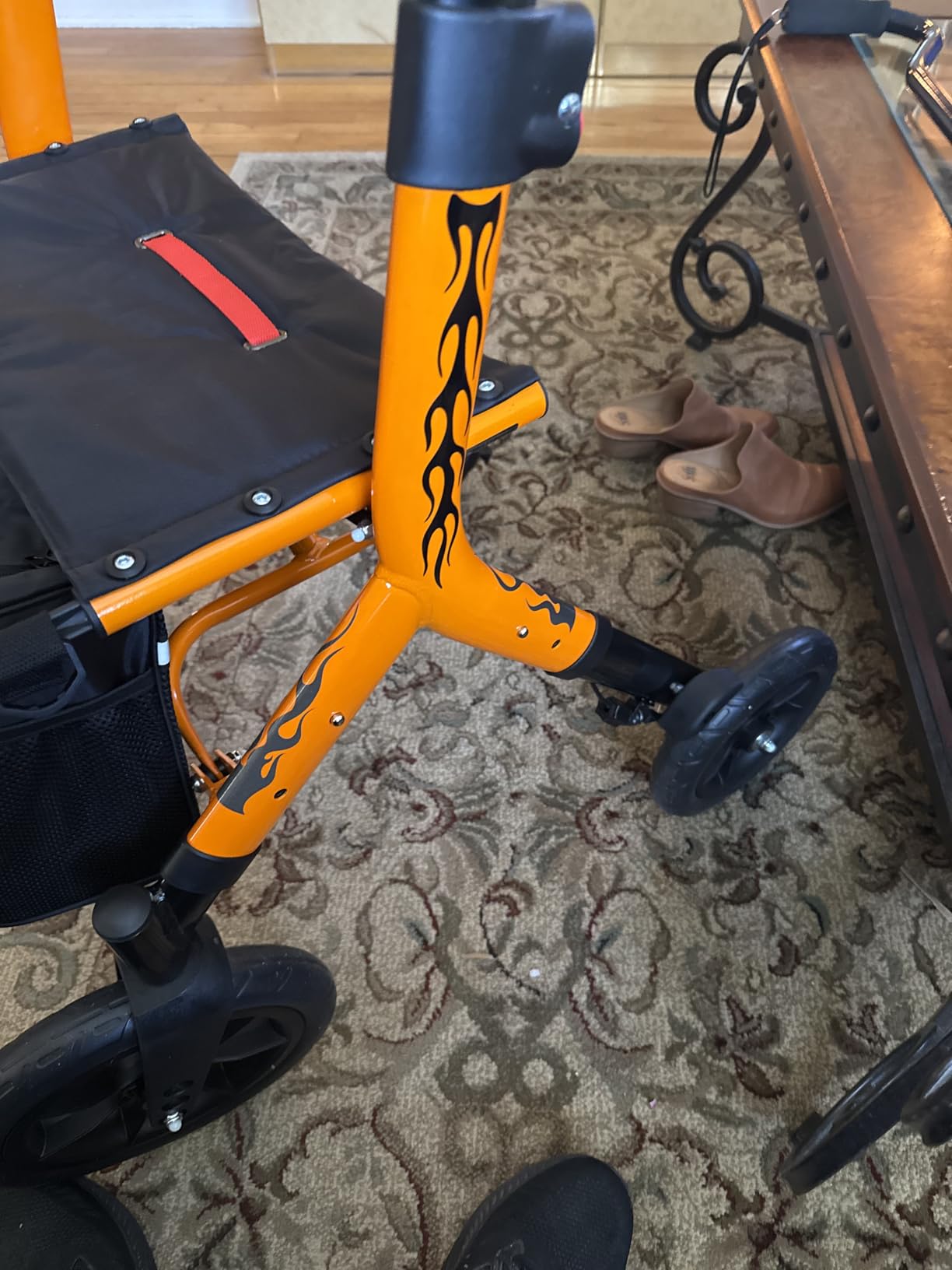
Around 449 reviews at 4.4 stars with 74 percent five-star, the wheel package and the fast fold are what buyers mention first. It also includes a removable cup holder, cane holder, storage pouch, and installation videos, backed by an 18-month warranty and lifetime support from the manufacturer.
The trade-offs are weight and seat granularity. At 20.6 lb it needs a two-handed lift into a car, and the seat adjusts in only two positions between 22.8 and 24.4 inches, so a user with a very precise seated-height preference may want a different model.
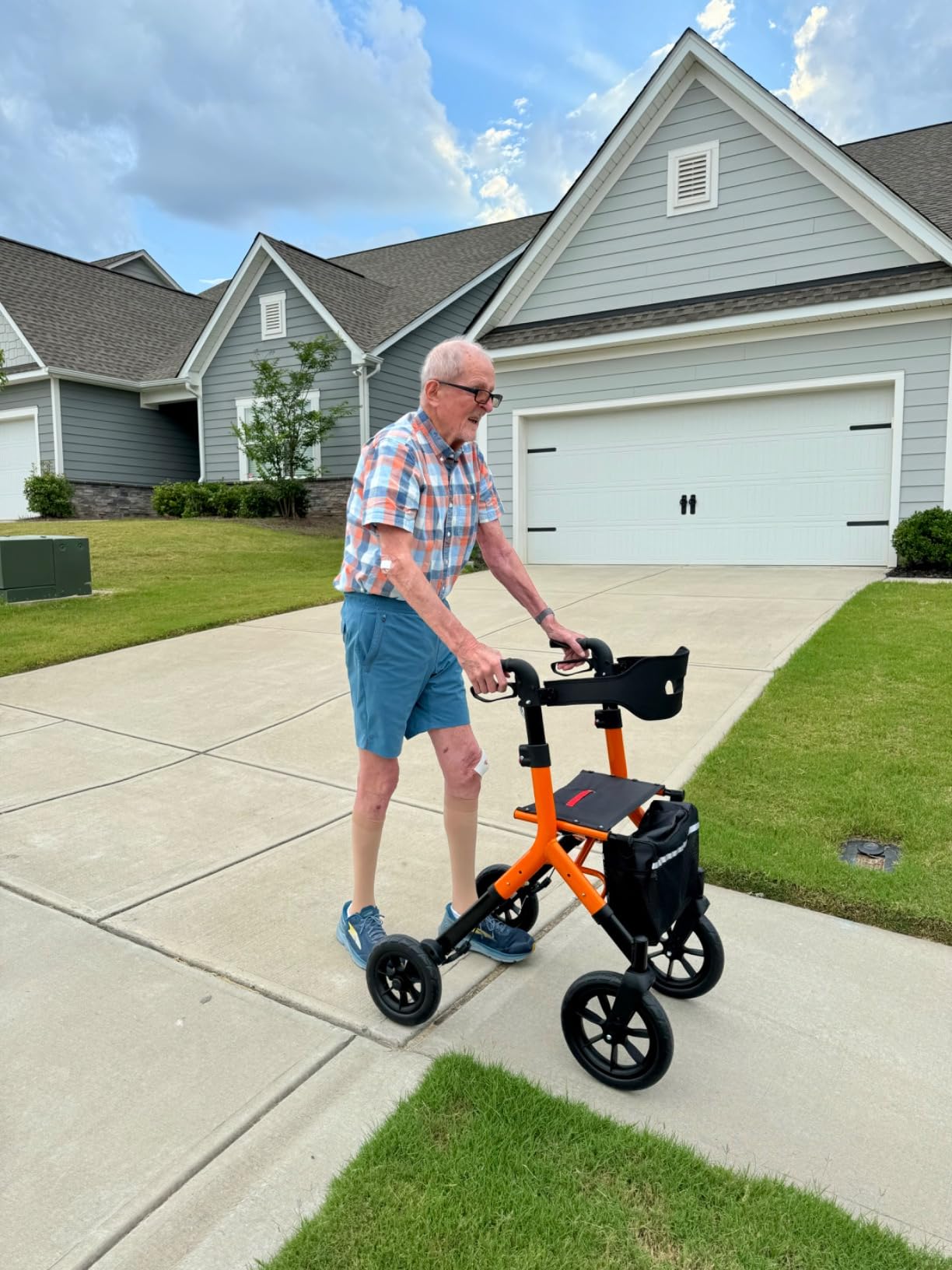
Who should choose bigger wheels
Choose them if your route includes anything looser than a sidewalk. Asphalt cracks, gravel drives, grass, and uneven neighborhood paths are where 8-inch wheels start to feel like the walker is fighting you, and where 12-inch front casters change the effort required to keep moving. Indoors, the tradeoff is that large wheels are slightly less precise around tight corners and thresholds.
It is also a good match if you make long outings and use the seat often, since the fast cord-pull fold means a quick transition from walking to sitting and back. Reviewers who travel between home and a relative’s place mention that setup and packing are simple.
Where MAXWALK is not the answer
Skip it if you need to load the walker into a car by yourself, or if you are under 5 feet 3 inches and want a low seat for short-leg sit-to-stand. If you weigh more than 300 lb, the reinforced frame on pick five handles the load better.
5. RollisRoll – Best Tall Rollator for Narrow Spaces and Higher Capacity
RollisRoll Walkers for Seniors Taller 5.3~7ft, Lightweight Foldable Rollator Walker, Built in Cable, Reinforced Aluminum Frame, 8″ Big Rubber Wheels for All Terrain, 350lb Weight Capacity, Black
350 lb capacity at only 17.4 lb
Seat 22-25 inches
24.4 inch frame width
3-second quick fold
Pros
- 350 lb rating in a 17.4 lb frame
- 24.4 inch width still clears standard doorways
- 3-second fold for small cars
- Three-way height adjustment including the backrest
- Reflective strips and an 18-month warranty
Cons
- Front swivel casters can track loosely
- Handlebars can feel loose in the lower frame leg
- Frame feels less settled on rough asphalt
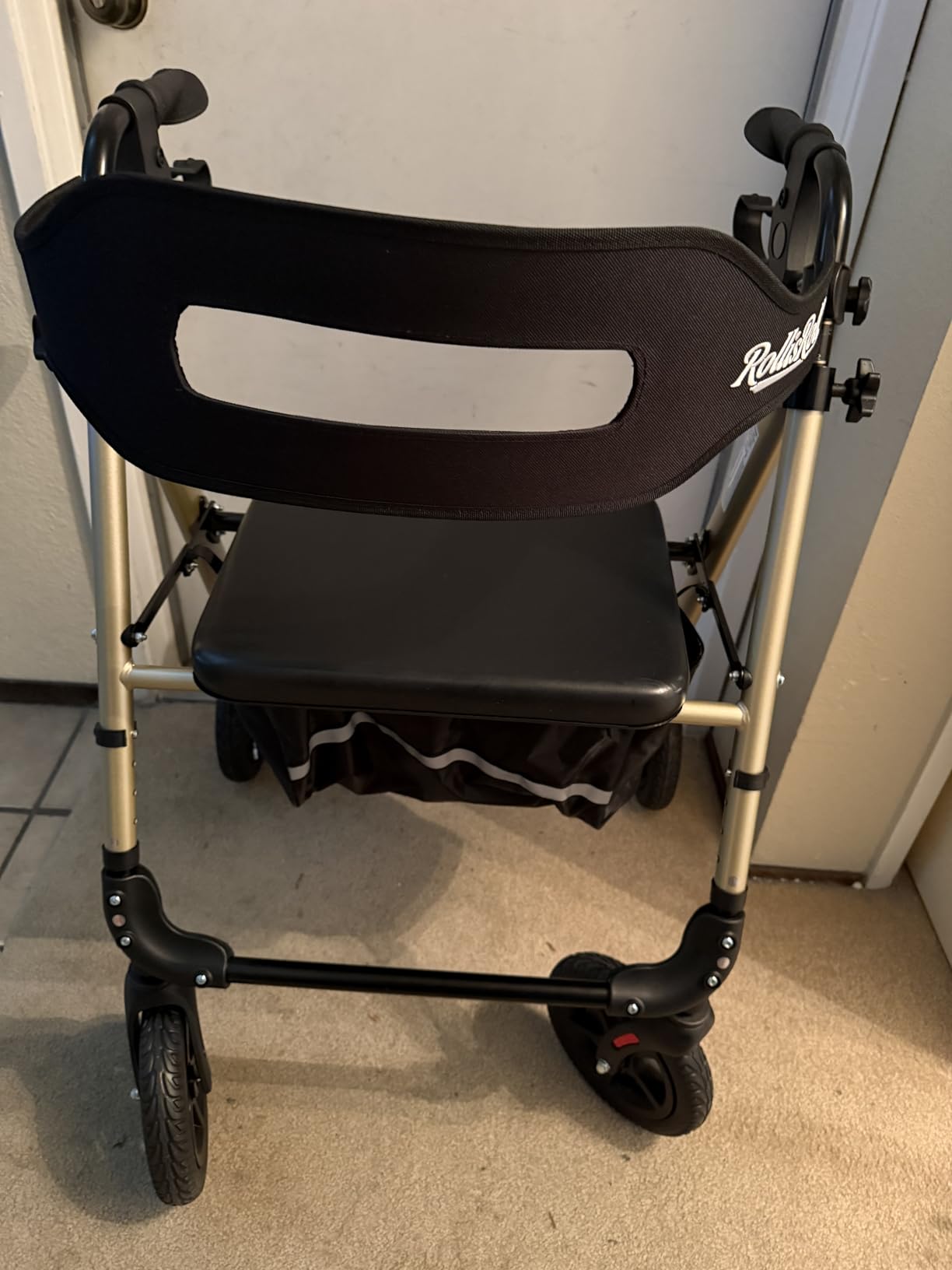
Two numbers make this the standout value in the group: 350 lb of rated capacity on a frame that weighs only 17.4 lb, and a 24.4 inch overall width that still clears a standard doorway. Tall frames usually get wider as they get stronger, so finding both at once solves the problem buyers post about in tall-senior groups, where a wide base and a heavy-duty rating were wanted in the same product.
Height adjustment runs in three directions. The seat adjusts 22 to 25 inches, the handles 33 to 39 inches, and the backrest adjusts too, which is unusual at this weight. The reinforced aluminum alloy frame uses double support bars, and the 3-second quick fold fits small cars and tight storage spaces.
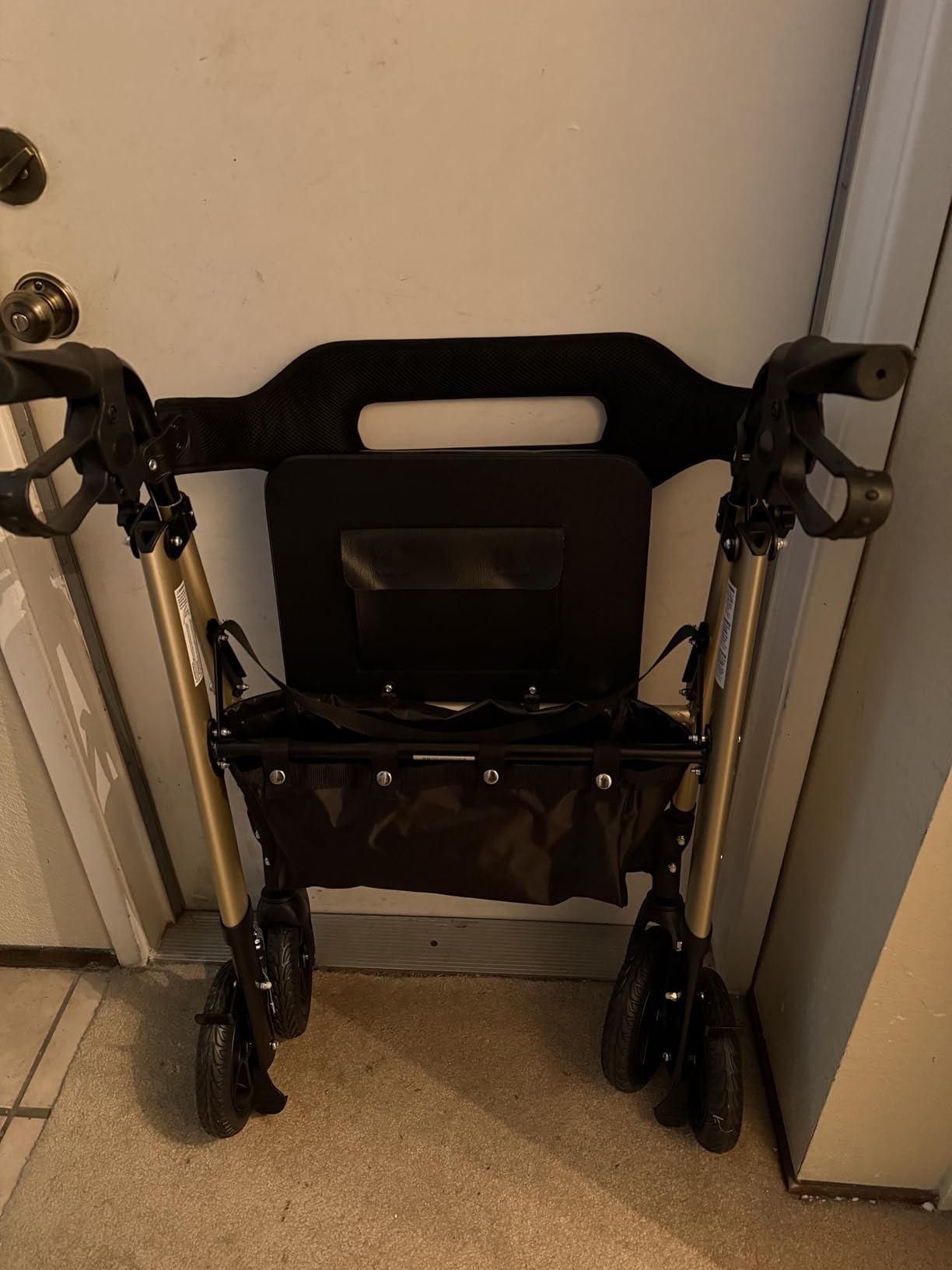
Several tall reviewers around 6 feet 1 inch describe it as one of the few walkers that lets them stand upright, and the 167 reviews average 4.4 stars with 70 percent five-star. After-sales support came in fast for one buyer whose front wheel broke and was replaced within two days. The 8-inch puncture-resistant rubber wheels with textured tread and swivel front casters roll over gravel, roots, carpet, and smooth floors.
The honest drawbacks: some riders find the front swivel wheels a bit twitchy or tracking loosely, the handlebars can feel slightly loose in the lower frame leg, and a few buyers found assembly tricky. On rough asphalt the frame can feel less settled than the heavier models.
Why capacity and weight together matter
Capacity is a safety number, not a comfort number. A 300 lb rated frame used by a 285 lb user has almost no margin for a dropped bag, a pet, or a stumble onto a curb. A 350 lb frame gives you headroom, and headroom is what lets a user keep walking confidently on uneven ground rather than hesitating before every step.
Getting that capacity without adding 6 lb is the reason this frame is interesting. The 24.4 inch width also matters in apartments: tall rollator frames are often wider, and a wider base that will not clear a doorway forces you to turn sideways in the hall, which is exactly the kind of thing that makes people stop using a mobility aid.
Who should skip it
Skip it if you are very sensitive to steering feedback, because loose front-wheel tracking is the most repeated complaint, and skip it if your priority is a plush ride over broken pavement. Users who want the highest possible handle reach should look at the upright design instead, since the handle range here stops at 39 inches.
6. Graham-Field Lumex Set N’ Go – Best Wide-Seat Rollator
Graham-Field RJ4718B Lumex Set N’ Go Wide Rollator Height-Adjustable Walker with Wide Seat, Short and Tall Use, Blue
15.75 inch wide padded seat
Seat 19.5-23.5 inches
16.5 lb frame
6-inch wheels
Pros
- Widest seat in the group at 15.75 inches
- Seat and handles adjust independently in 1-inch increments
- Lightest frame here at 16.5 lb with 350 lb capacity
- Under-seat pouch folds with the frame
- Tool-free assembly
Cons
- 6-inch wheels limit rough terrain
- 38 inch handle maximum is the shortest reach here
- Audible brake click
Be clear about what this is. The handle range stops at 38 inches, so it is not a tall rollator in the 40-inch sense and it is the wrong answer for a 6 foot 3 inch user who needs to stand fully upright. What it is, and what makes it worth a place here, is the widest seat in the group and the most precisely adjustable fit.
The padded seat measures 15.75 by 12 inches, nearly two inches wider than standard, which is the difference between sitting comfortably and sliding off for a larger-framed user. Seat height adjusts 19.5 to 23.5 inches and handle height 32 to 38 inches, both in one-inch increments with markings, so you can match your wrist crease closely instead of picking from three or four stepped positions.
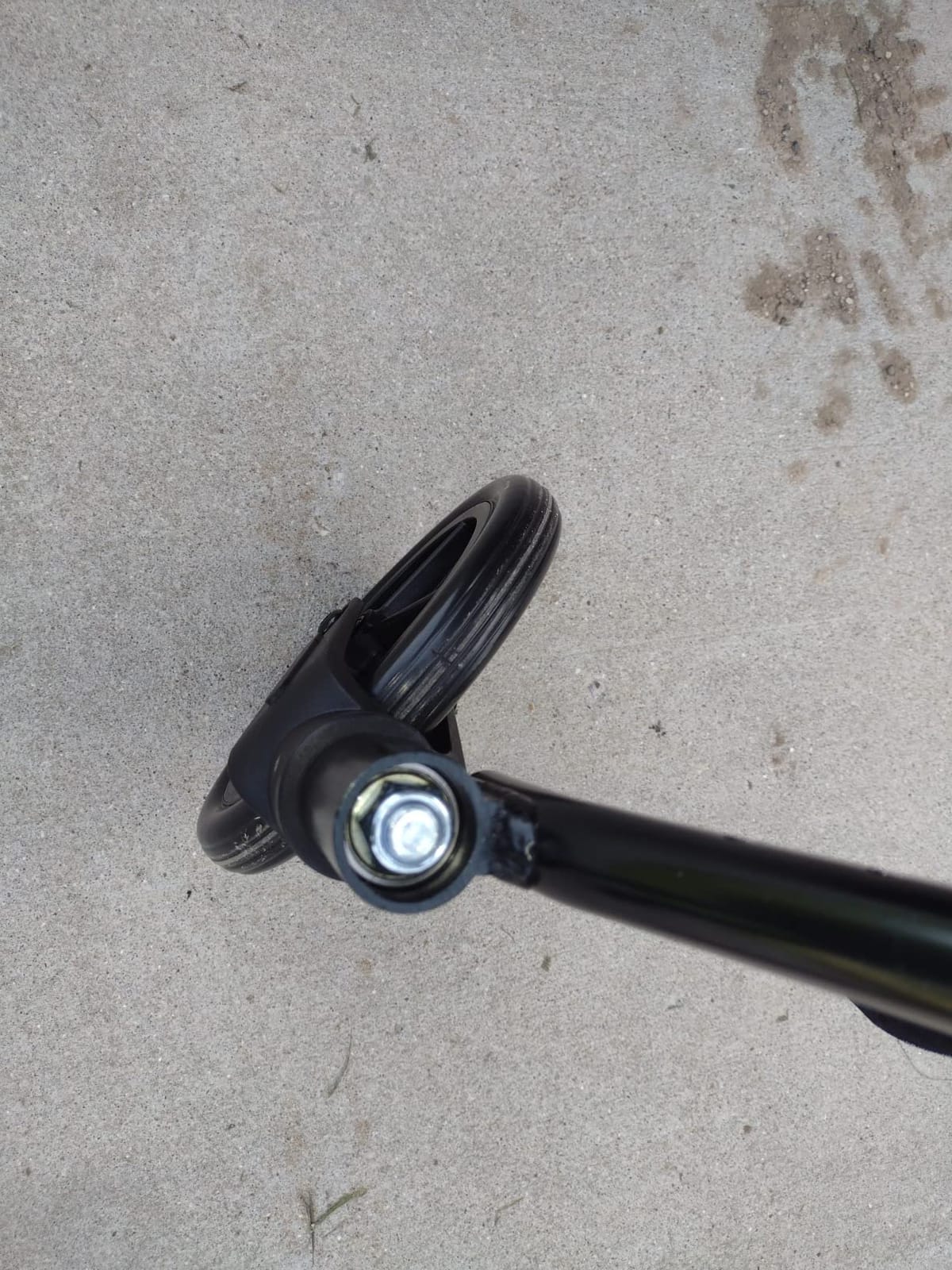
It weighs 16.5 lb, the lightest frame in this roundup, and still supports 350 lb. The frame stays under 27 inches wide so it clears standard doorways, the ergonomic rubber handgrips are 19.4 inches wide, and the under-seat storage pouch stays attached when the walker folds. Tool-free assembly takes reviewers about 15 minutes.
With 204 reviews at 4.6 stars and 80 percent five-star ratings, it has the highest average score of anything we tested. Owners cite the wide seat, the independent inch-marked adjustment, the light weight, and the pouch that stays put.
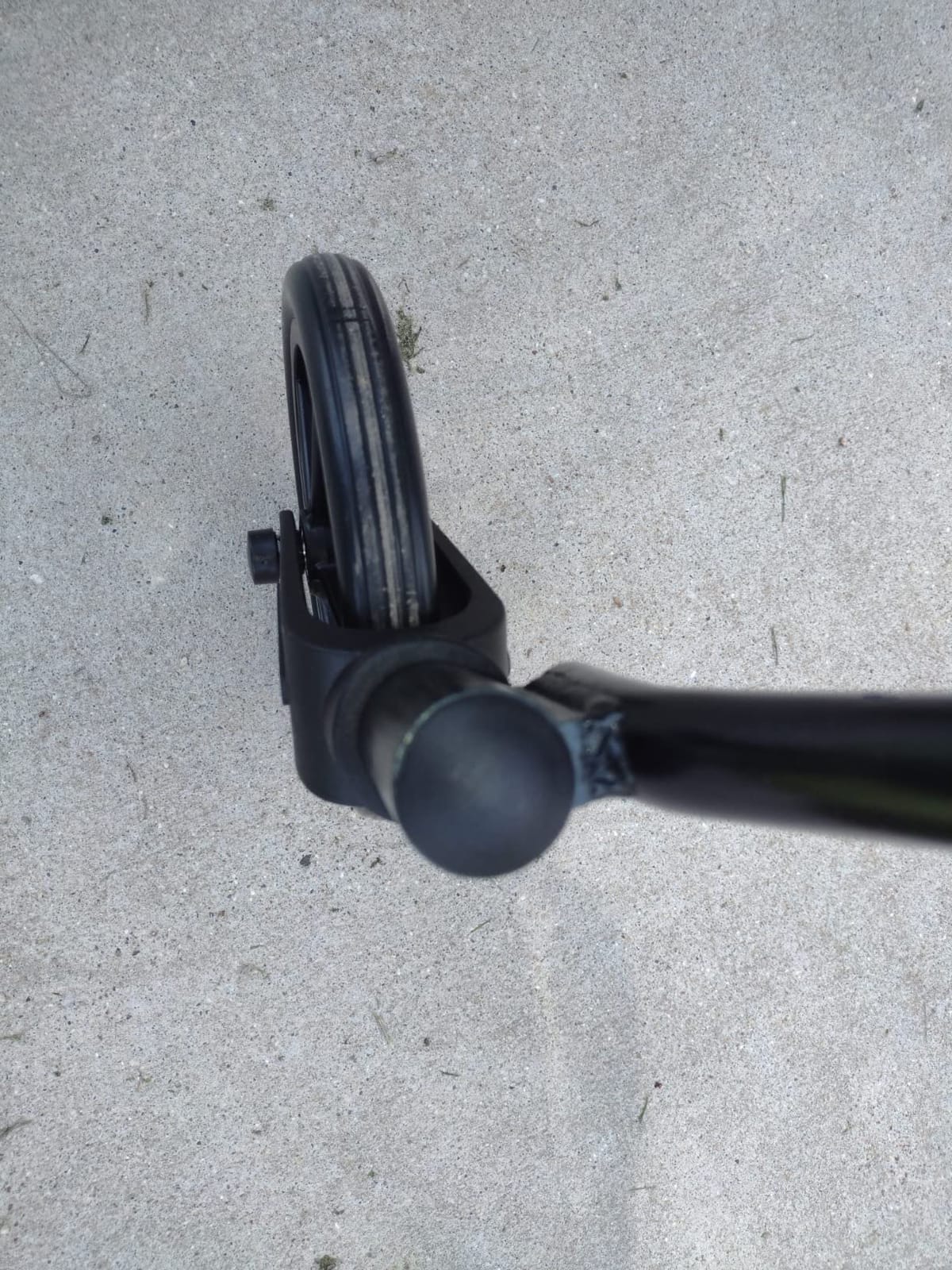
When a wide seat is the deciding feature
Seat width matters more than most buyers expect. If you have a larger frame, or you use the seat during longer outings such as shopping trips or waiting at appointments, a narrow seat means you perch instead of sit. Perching on the edge of a rollator seat is uncomfortable and less stable, especially when standing back up.
The one-inch increments are the quiet advantage here. Most stepped adjustments give you two to four choices, and if none of them lines up with your wrist crease or your seated height, you are stuck leaning or bending. This frame lets you dial it in.
Why the wheels are the real limitation
Six-inch wheels are noticeably smaller than the 8, 10, and 12-inch wheels elsewhere in this list, and that caps it to smooth indoor floors and light outdoor paths. If your walking is mostly indoors on carpet and hardwood, that is a fair trade. If you walk gravel or broken pavement, choose a larger-wheel model instead.
7. NOVA Star 8 – Best Rollator for Long Rest Breaks
NOVA Star 8 Foldable Rollator Walker for Seniors (5’3″–6’2″), Wide Padded Backrest with Seat, 8” All-Terrain Wheels, Easy-Grip Locking Hand Brakes, Height Adjustable, Red
Wide padded backrest with seat
Fits 5 ft 3 in to 6 ft 2 in
16 lb frame
8-inch wheels
Pros
- Wide padded backrest built for longer rests
- Standard and Petite variants clarify sizing
- 8-inch wheels work indoors and out
- Lightest listed weight at 16 lb
- Backed by a lifetime warranty
Cons
- Top of the size range is 6 ft 2 in
- 8-inch wheels are smaller than the largest options here
The NOVA Star 8 is built around the seat rather than the wheels. It has a wide padded backrest for supported seated rests, which is the feature that matters if your day involves frequent stops: waiting rooms, benches between walks, a shopping trip with a heavy basket. A rollator you are willing to sit in gets used more often.
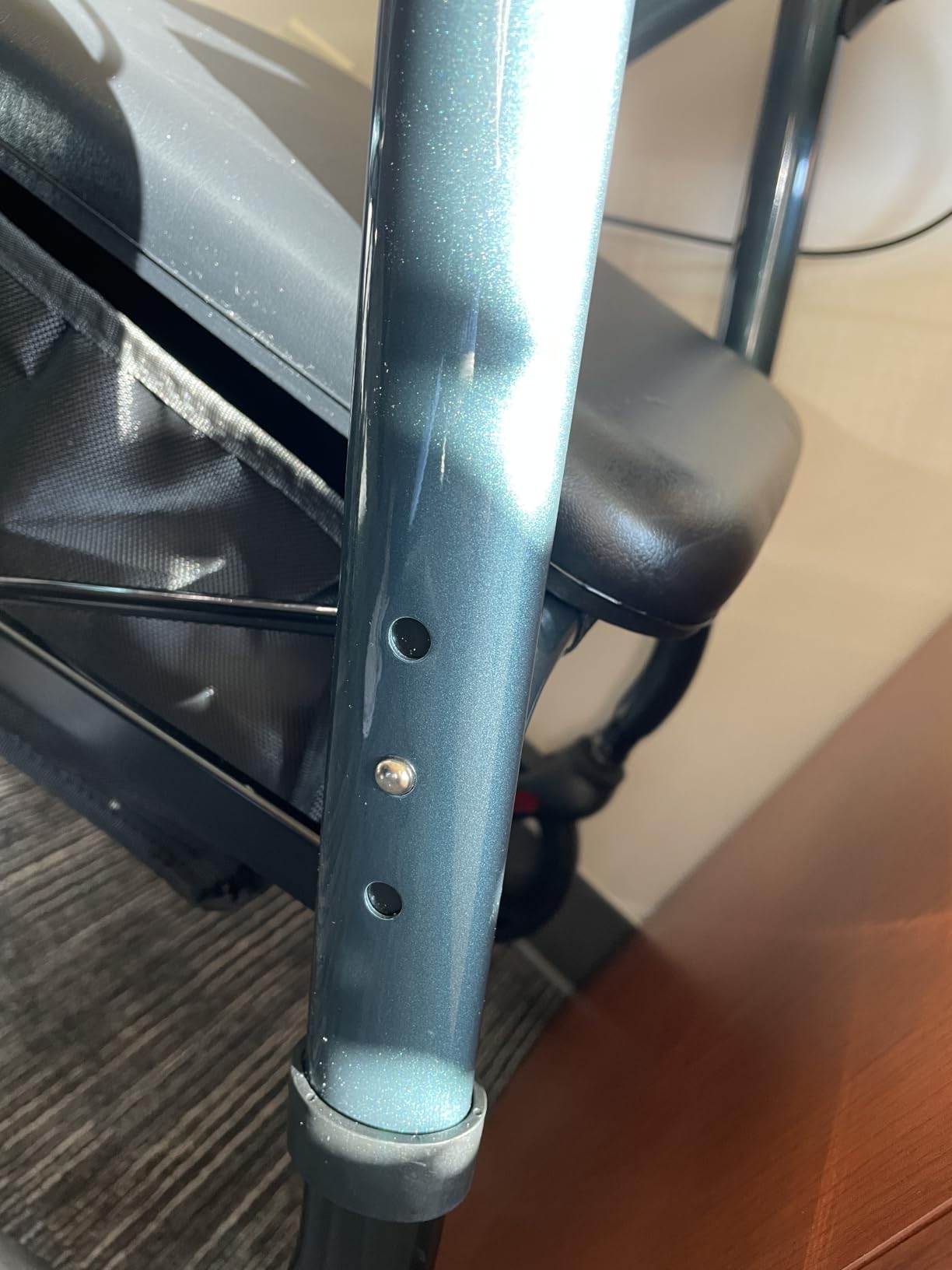
Sizing is published clearly, which is unusual and helpful. The Standard model fits 5 feet 3 inches to 6 feet 2 inches, and a Petite variant covers 4 feet 10 inches to 5 feet 4 inches, so you can match the frame to your height without guessing. The 8-inch all-terrain wheels handle both indoor floors and outdoor paths, and the patented locking brakes work by squeezing to slow and pushing down to park.
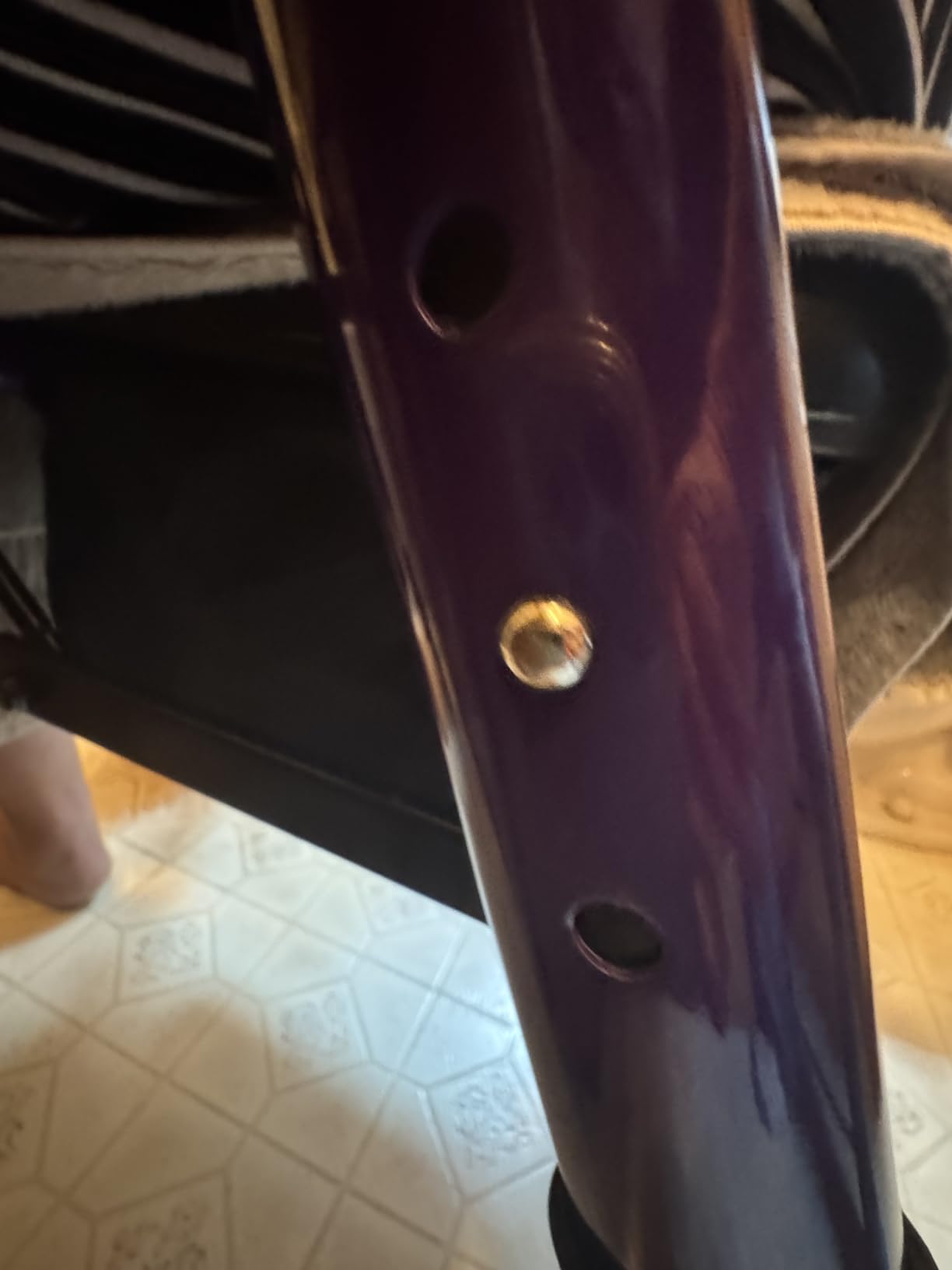
At 16 lb it is the lightest listed weight in the group, the built-in handle bar makes the fold and lift straightforward, and the frame is backed by a lifetime warranty, which is unusual in this category. With 164 reviews at 4.4 stars and 75 percent five-star, buyers highlight the backrest comfort, the clear variant sizing, and the easy-lock brakes.
The hard limit is height. The top of the range is 6 feet 2 inches, so a 6 foot 4 inch rider will still be reaching down and forward. For people at or under 6 feet 2 inches it is one of the better-balanced options, especially for anyone whose day is a series of seated rest breaks.
Buying for a household with two different heights
Households with a tall user and a shorter user often try to share one walker and end up with two bad fits. Publishing a Standard band and a Petite band makes it easy to buy two correctly sized frames instead of compromising on one, which is a real advantage in a multi-user home or when one spouse is the primary caregiver.
The lifetime warranty also matters for shared equipment. A frame that gets used twice as often will develop play in the height adjustment sooner, and a lifetime warranty transfers with the unit.
Where the fit ceiling bites
Skip it if you are taller than 6 feet 2 inches, and skip it if your walking is on loose gravel where 8-inch wheels are not enough. The ergonomic contoured grips and lifetime warranty make it a comfortable choice within its band, but the band itself is the deciding factor.
8. Vive Tall Rollator – Best for Riders at the Top of the Range
Vive Tall Rollator Walker with Seat for Seniors, Men – All Terrain
Fits 5 ft 5 in to 6 ft 5 in
19 lb aluminum frame
8-inch wheels
300 lb capacity
Pros
- Named Tall model with a published 6 ft 5 in ceiling
- Praised by 6 ft 4 inch owners for upright posture
- 8-inch all-terrain wheels for mixed surfaces
- One-step fold with removable front wheels for trunk storage
- 19 lb frame one reviewer loads by herself
Cons
- Seat padding feels sling-like on long rests
- Storage pouch uses weak Velcro and flimsy fabric
- Cup holders are undersized
The Vive Tall is a named tall variant rather than a standard frame cranked to maximum, and it is specified for 5 feet 5 inches to 6 feet 5 inches. That published ceiling is the second highest reach among the four-wheel models here, which makes it a sensible first look for someone who knows they are near the top of the range but does not need forearm support.
At 19 lb with a corrosion-resistant aluminum frame rated to 300 lb, it folds in one step with removable front wheels and hinged rear wheels, so it drops into a car trunk or back seat. The 8-inch all-terrain wheels work on muddy paths, gravel, and indoor floors, and the wide seat and pouch have carried a full camera kit for at least one reviewer.
With 115 reviews at 4.5 stars and 71 percent five-star, the dominant theme is fit: multiple 6 foot 4 inch owners say the tall frame lets them walk upright without hunching. One 70-year-old reviewer notes she can lift and load the 19 lb frame herself, and it is HSA and FSA eligible with a 1-year manufacturer guarantee.
Owners also name the weak points plainly: the seat padding feels soft and sling-like on long rests, the storage pouch uses weak Velcro with a flimsy front pocket, the cup holders are undersized, and one buyer needed to adjust the right brake after delivery. Most telling, a reviewer at 6 feet 4 inches to 6 feet 5 inches wishes it were a couple of inches taller still.
That is the honest limitation of this whole category. Past about 6 feet 5 inches, the four-wheel rollator runs out of geometry, and the forearm-supported upright design in pick three is the only option in this roundup with real reach above 40 inches.
Who should buy the Vive Tall
Buy it if you are between roughly 6 feet 1 inch and 6 feet 5 inches, you want a conventional rollator rather than an upright one, and your walking is a mix of indoor floors and neighborhood paths. The removable front wheels are a genuine advantage for anyone loading a car on their own.
It also suits buyers who want a recognizable brand with a published height range and a guarantee rather than a marketplace listing with a vague fit claim, which is a reasonable concern given how many tall-specific SKUs carry very few reviews.
Where it falls short
Skip it if you plan to sit on the walker for extended periods, since the seat padding is the weak point. Also skip it if you are above 6 feet 5 inches, because you will be reaching for the top of the range and your posture will show it, or if you need more than 300 lb of capacity.
How to Measure Your Rollator Handle Height
Measure your wrist crease to the floor while standing, wearing the shoes you walk in. That number is your handle height. Set the rollator grips to match it, then check that your elbows sit at roughly a 15 degree bend when you are standing behind the walker with your hands on the grips.
Four steps, in order:
Stand upright in your walking shoes, arms relaxed at your sides.
Measure from the crease of your wrist straight down to the floor.
Set the handle height to that number, then push down on the grips and check the elbow angle is about 15 degrees.
Sit on the seat with your feet flat. Your knees should be at roughly 90 degrees, with hips level or slightly above the knees.
If the grips sit below your wrist crease you will lean forward, and if they sit well above it you will push down on your shoulders. Both errors show up within weeks as neck, shoulder, or lower back discomfort rather than as an obvious problem, which is why people keep using a badly fitted walker for months.
Your height band and the range you need
Use this as a starting point, then confirm with the wrist measurement above. Manufacturer ranges are approximate, and individual proportions vary a lot inside a single height band.
5 ft 10 in to 6 ft 1 in: look for handles at 37 to 40 inches and a seat at 20 to 23 inches. Any standard tall frame works here, and wheel size matters more than anything else.
6 ft 0 in to 6 ft 4 in: look for handles at 39 to 41 inches and a seat at 23 to 24.5 inches, with a published maximum handle reach and reinforced tubing.
6 ft 3 in to 6 ft 6 in and up: look for 41 inches and above with a seat at 24 inches and above, which points you toward a forearm-support upright frame or a verified tall variant.
Past about 6 feet 5 inches, the four-wheel rollator geometry runs out. That is the point where a forearm-supported upright rollator, like pick three, becomes the practical answer rather than a preference.
Why a short rollator hurts more than it looks like it should
Reaching down and forward to hold low grips tilts your torso, compresses the lumbar spine, and over-extends the neck to keep your eyes level. The shoulders take the steering load, and that combination reduces the leverage you have when you need to brake or turn quickly. Fall risk goes up quietly rather than obviously.
A low seat creates a second problem. Sitting down drops you into a deep squat, and pushing back up loads the knees and hips hard. For anyone recovering from hip or knee surgery, that transition is often the moment that ends a successful day out.
Rollator, upright walker, or standard picker
A four-wheel rollator gives you the most stability, a seat to rest on, and braking control, at the cost of bulk and a need for decent balance. An upright rollator raises your center of support to your forearms, which helps posture and stability but is wider and heavier. A standard two-wheeled walker, sometimes called a picker, is the lightest and narrowest option, best for short indoor trips where you can pick it up and move it.
For tall users the honest comparison is between the first two. If you are over 6 feet, an upright design is the only one of the three that reliably gives you an upright posture, because it matches the height of your arms rather than your hands. The price is a wider, heavier, less compact object. If your walking is mostly indoors and short, a standard walker may suit you better than either.
Buying Guide: Six Factors for Choosing a Rollator for Tall Seniors
1. Maximum handle height, published in inches
Do not trust the word tall on a listing. Many rollators marketed for tall seniors still top out at 39 or 40 inches, and a standard frame often stops at 35 to 38. Look for the actual adjustment range, and treat a published maximum under 40 inches as a warning for anyone over 6 feet 1 inch.
Also check whether height adjustment is continuous or stepped. One-inch increments, as on pick six, let you land on your number. Five stepped positions, as on pick two, may not. Push-button or tool-free adjustment is worth paying for, because clamping screws that loosen over time change your fit without you noticing.
2. Seat height and seat width together
Seat height is the number tall users check second, and it matters for a specific movement: standing back up. If you sit and your feet are flat and your knees are near 90 degrees, the stand-up is manageable. If your feet barely reach or your knees are sharply bent, the transition loads your knees and hips.
Seat width is the number most buyers ignore. A seat around 15 to 16 inches wide accommodates a larger frame, and a padded backrest matters if you use the seat for real rests rather than a quick breather. A sling-style seat that is fine for five minutes becomes uncomfortable at twenty.
3. Weight capacity with headroom
Rated capacity is a hard number, and you want margin above your own body weight rather than equality with it. Most tall rollators in this roundup are rated 300 lb, and two are rated 350 lb. A 350 lb frame in a 17.4 lb package, as on pick five, is the best of both if you are near the 300 lb line.
Note that the narrow-base designs and the lightest frames are usually the ones with the lowest rating. Capacity and weight trade against each other, and there is no model here that is simultaneously the narrowest, the lightest, and the strongest.
4. Wheel diameter matched to your ground
Six to 8 inch wheels suit indoor floors, carpet, and smooth paths. Ten inch wheels handle sidewalk cracks and grass verges. Twelve-inch front casters, as on pick four, are the choice for gravel, broken asphalt, and uneven ground. Larger wheels roll over obstacles instead of stopping at them, but they are less precise in tight indoor corners.
Soft or puncture-resistant rubber tires trade a little speed for a lot fewer flats. If you walk anywhere without a repair kit, that trade is worth making. A rollator with hard plastic wheels on rough ground is the fastest way to end a walk early.
5. Brake design and cable routing
Every rollator here has a dual braking system, but the feel differs. Squeeze to slow and push down to park, as on pick seven, is intuitive. The integrated slowdown stage on pick one adds downhill control that matters on sloped paths. Locking rear wheels matter most if you sit and stand regularly, because they stop the walker rolling away while you transfer weight.
Cable routing is a safety detail worth reading. Cables routed inside the frame, as on picks two, three, and four, cannot snag on a doorway, a shopping cart, or a threshold. External cables are easier to service but are the thing that catches most often in daily use.
6. Folding, storage, and how you will actually move it
Weight matters more than buyers expect, because the frame is lifted into a car and out again. The frames here run from 16 lb to 23 lb, and that spread decides whether you can load it alone. If you cannot, the built-in handle bar and one-step folds on picks seven and eight make a real difference.
Check the folded width against your storage space. Some frames collapse to under 12 inches, others stay near 30 inches wide. A compact fold is also what makes an airport overhead bin or a car back seat realistic rather than theoretical.
Indoor and outdoor use are different problems
Indoors, base width and turning radius decide whether you can turn around in a hallway or get through a doorway without angling. The narrowest frame here is 24.4 inches wide, which still clears a standard door, and the Lumex stays under 27 inches.
Outdoors, wheel size and weight decide whether the walk is pleasant. The heaviest frame with 12-inch wheels is the most confident on rough ground and the least convenient to carry. A lot of buyers end up owning two, which is a legitimate answer when the indoor and outdoor needs are genuinely different.
What rollators will Medicare pay for
Medicare Part B can cover a rollator walker as durable medical equipment when a doctor documents that you need it for mobility and an approved supplier bills Medicare directly. In practice you need a prescription from a clinician, an item that meets Medicare’s definition, and a supplier enrolled as a Medicare provider. Many of the products here are also FSA and HSA eligible, which is a separate and much simpler route.
Because rules and coverage vary, confirm your specific situation with your supplier and your plan before you buy. Coverage is not automatic, and the paperwork is usually the part that confuses people, not the walker.
A note on safety and fit
Everything above is a buying framework, not medical advice. If you are starting to lose balance, recovering from a fall or surgery, or managing a new diagnosis, talk to a physical therapist or occupational therapist first. They can measure you properly, tell you whether a rollator is the right category of aid, and set the height for you. Stop using any walker and ask for help if you feel unsteady while standing.
Re-measure rather than assume over time. Adults lose height with age, and a walker adjusted years ago can quietly become too tall. A ten-minute wrist measurement once a year is cheap insurance.
Frequently Asked Questions
What is the best rollator for a tall person?
The best rollator for a tall person is one whose published handle range reaches at least 40 inches, with a seat between 23.5 and 26 inches off the floor and a weight capacity above your body weight. For most tall adults the Drive Medical Nitro Sprint fits, because it is built on a tall-height frame for users 6 feet and taller, rates 350 lb, and rolls on 10-inch front casters. If you are above 6 feet 5 inches, look at a forearm-supported upright rollator instead, since those reach 47 inches and remove the hunch entirely.
How do I measure my correct rollator handle height?
Stand upright in your walking shoes and measure from the crease of your wrist straight down to the floor. Set the rollator grips to that number, then confirm your elbows sit at roughly a 15 degree bend while you stand behind the walker. If the grips sit below your wrist crease you will lean forward, and if they sit well above you will push down on your shoulders.
What size walker do I need if I am 6 feet tall?
At 6 feet tall you want a handle range of roughly 39 to 41 inches and a seat between 23 to 24.5 inches. Most standard rollators stop at 35 to 38 inches, which is what forces taller adults to hunch. Check the published adjustment range rather than the word tall on the listing, since many frames labelled for tall users still top out below 40 inches.
What rollators will Medicare pay for?
Medicare Part B can cover a rollator walker as durable medical equipment when a clinician documents that you need it for mobility and an enrolled supplier bills Medicare directly. You generally need a prescription, a qualifying item, and an approved supplier, and coverage is not automatic. Several picks here are also FSA and HSA eligible, which is a separate and simpler route to use.
Is cranking a standard rollator to its maximum height good enough for a tall user?
Usually not. A standard frame that maxes out at 35 to 38 inches still leaves a 6 foot 1 inch user reaching down, which tilts the torso and pushes the load into the lower back, neck, and shoulders. If you have to crank a walker to the top of its range and still feel like you are leaning, you are a tall-frame user and should look for a published maximum of 40 inches or more.
What is the best adjustable height walker for senior citizens?
The best adjustable height walker is the one whose range actually covers your measured wrist height, with tool-free or push-button adjustment so the setting does not drift, and a seat height you can stand up from comfortably. One-inch increment adjustment gives the closest match, while stepped positions may not land on your number. For tall users, prioritize a published maximum handle height of 40 inches or more over any other feature.
Conclusion: The Best Rollator for Your Height
Our pick for the best rollators for tall seniors overall is the Nitro Sprint from Drive Medical. It is built on a tall-height frame for users 6 feet and taller, carries a 350 lb rating at only 19.5 lb, rolls on 10-inch front casters, and folds with one hand. Across 2,456 reviews it holds a 4.3 rating, and the complaints are cosmetic rather than structural.
Pick the ELENKER upright if you are above 6 feet 4 inches or you are already dealing with back and shoulder pain, since the forearm support reaches 47 inches and takes the hunch out entirely. Pick WALK MATE if you need a 40.5 inch reach you can still lift into a car at 17.2 lb, and pick MAXWALK if your walking is on gravel and broken pavement rather than pavement and carpet.
Whatever you choose, measure your wrist crease to the floor before you order, and check the published maximum handle height in inches rather than trusting the word tall on a listing. Related reads: our picks for the best comfort recliners for tall seniors if sitting support is also on your list, and our best portable camping cots for tall adults if you plan to travel with someone using a tall frame.