
Here is the short answer most CPAP users need: are sanitizer machines worth the money? Mostly no. Ozone and UV boxes cost far more than a good soap and a hose brush, they do not scrub the inside of your tubing, and the FDA has warned that ozone can leave residue in CPAP equipment. What does work is a short daily routine built around mild detergent, a brush that reaches the hose core, and a disinfectant spray for the parts you cannot immerse.
I spent weeks comparing the best cpap cleaners for home use across masks, hoses, and humidifier chambers, focusing on what each product actually removes rather than what it claims. The lineup below covers sprays, wipes, soaps, dissolvable soak sheets, brushes, drying kits, and one genuine ultrasonic machine so you can match a tool to the job instead of buying a box that only half-solves the problem.
One thing worth stating plainly. Nothing on this list replaces washing your equipment. Soap lifts skin oils, brushes reach biofilm, and air drying prevents mold. A sanitizer adds a disinfection step on top, and that step is optional for most people and worth doing after an illness.
If you also track your therapy data, our picks for the best pulse oximeters for home use and the best blood pressure monitors for home use cover the other devices most CPAP patients keep beside the machine.
Table of Contents
Top 3 Picks for the Best CPAP Cleaners for Home Use (October 2026)
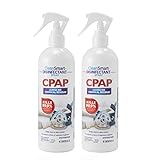
CleanSmart Disinfectant Spray
- Kills 99.9% of germs
- Ozone free
- No rinsing required
- Works on mask tubing and chamber

RespLabs Unscented Mask Wipes
- Unscented formula
- 110 wipes per pack
- No rinsing needed
- Cleans full face and nasal masks

Aveen Hose and Mask Brush
- Fits 15mm and 19mm hoses
- Reaches deep inside tubing
- Durable bristles
- Lightweight and compact
Best CPAP Cleaners for Home Use in October
Every product below appears in the table with its technology type and the job it does best. Sort it by what you actually need to clean rather than by brand name.
| Product | Specifications | Action |
|---|---|---|
| CleanSmart Disinfectant Spray 16 oz 2 pack |
|
Check Latest Price |
| RespLabs Unscented CPAP Mask Wipes 110 ct |
|
Check Latest Price |
| Aveen CPAP Tube and Mask Brush Kit |
|
Check Latest Price |
 Purdoux CPAP Mask and Hose Soap 3 pack Purdoux CPAP Mask and Hose Soap 3 pack |
|
Check Latest Price |
 RawRock CPAP Cleaning Kit and Hanging Dry Kit RawRock CPAP Cleaning Kit and Hanging Dry Kit |
|
Check Latest Price |
 IMPRESA CPAP Pre-Wash Solution 8 oz IMPRESA CPAP Pre-Wash Solution 8 oz |
|
Check Latest Price |
 PAPMD Unscented Lint-Free Wipes 300 ct PAPMD Unscented Lint-Free Wipes 300 ct |
|
Check Latest Price |
 Snugell Fresh Citrus Pre-Wash Soap 8.4 oz Snugell Fresh Citrus Pre-Wash Soap 8.4 oz |
|
Check Latest Price |
 Essential Values Scent-Free Pre-Wash 16 oz Essential Values Scent-Free Pre-Wash 16 oz |
|
Check Latest Price |
 PAPMD Dissolvable Cleaning Sheets Pro 30 ct PAPMD Dissolvable Cleaning Sheets Pro 30 ct |
|
Check Latest Price |
 iSonic Ultrasonic CPAP Deep Cleaner 2.5L iSonic Ultrasonic CPAP Deep Cleaner 2.5L |
|
Check Latest Price |
 Snugell Travel Size Aloe Wipes 150 ct Snugell Travel Size Aloe Wipes 150 ct |
|
Check Latest Price |
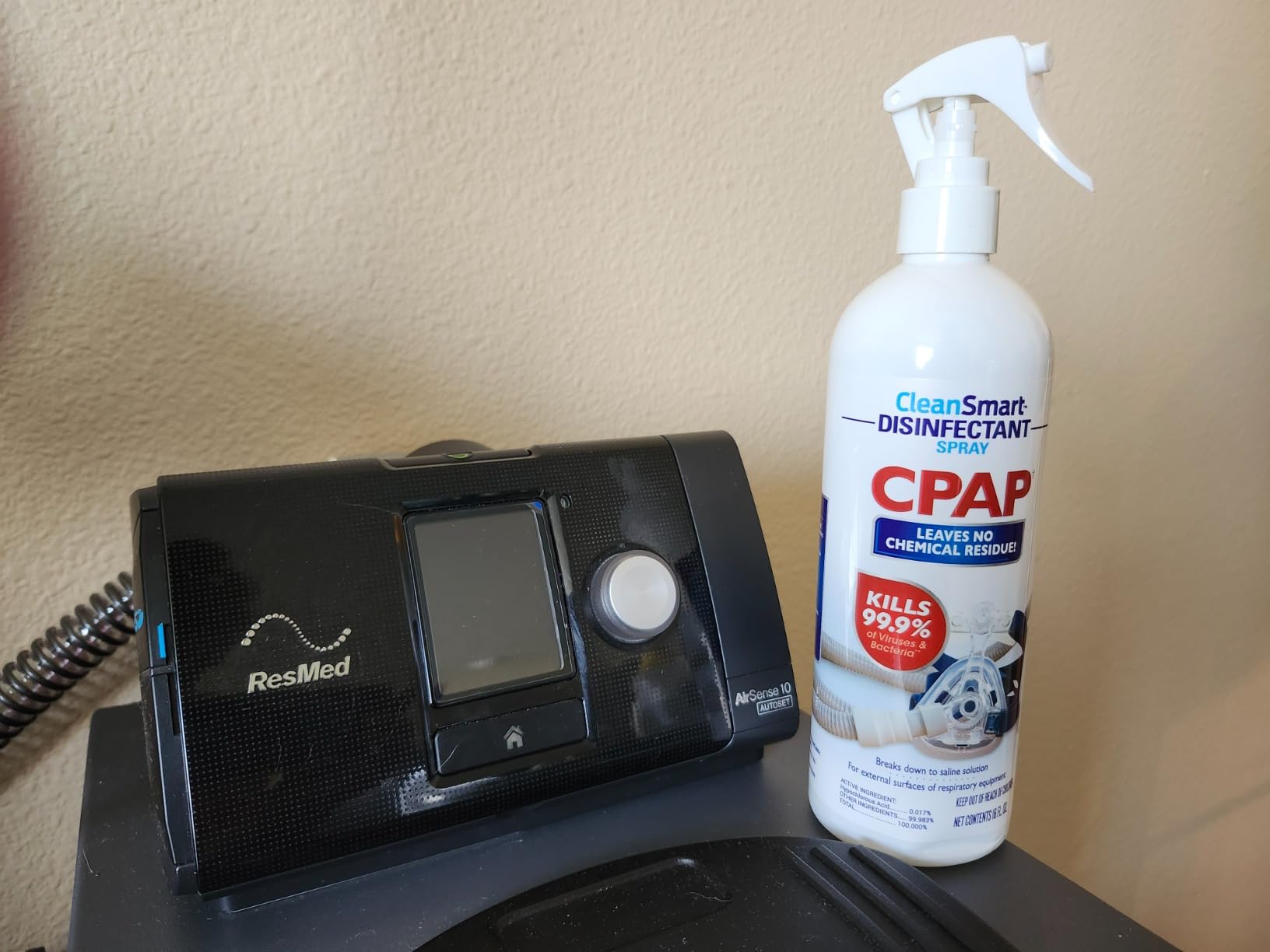
1. CleanSmart Disinfectant Spray – kills 99.9% of germs with no rinse and no ozone
CleanSmart CPAP Disinfectant Spray for Face Mask and Hose, 16 oz (2 pack)
Disinfectant spray
16 oz two pack
Kills 99.9% of germs
Ozone free
No rinsing
Pros
- Disinfects rather than just cleans
- Ozone free with no fumes or film
- No rinsing so parts air dry and go back on
- Safe across mask tubing reservoir and humidifier
- Made in USA
Cons
- Parts must fully air dry before reassembly
- Does not replace scrubbing for heavy buildup
This is the product I keep within arm’s reach of the bed. The active ingredient is hypochlorous, which is what makes it different from every scented CPAP soap on the shelf. Soap removes oils; this kills what lives in the film those oils create.
The workflow is genuinely simple. You turn the notched wheel below the sprayer, mist the mask and hose interior, and walk away. There is no rinse step because the formula leaves nothing behind, and there is no ozone because the chemistry is water-based rather than gas-based.
With more than 11,900 ratings averaging 4.5 stars, this is one of the most proven disinfectants sold for this equipment, and the feedback consistently centres on the no-rinse formula and the absence of a chemical smell. My own caveat is about timing rather than performance. A sprayed mask that goes back on while still damp will trap moisture, so the air-dry window matters as much as the spray.
How it fits a nightly routine
Spray after you remove the mask in the morning, then hang the hose and frame to dry. By evening everything is dry and disinfected, which is a better sequence than spraying at night when you want to sleep immediately.
For tubing, run the spray through the full length so the inside is coated, then let it drain in the sink or over the basin. It is also the one product here approved for the humidifier reservoir and chamber, which matters if you skip the wash on a given week.
Where it falls short
It does not scrub. If a hose has mineral staining or a mask cushion has hardened skin oil, spraying will disinfect that surface but it will not lift the deposit. Those parts still need soap, a brush, and time.
It is also a spray bottle you have to store upright somewhere out of reach of children. Travelers who want a single flat pack should look at a wipe canister instead.
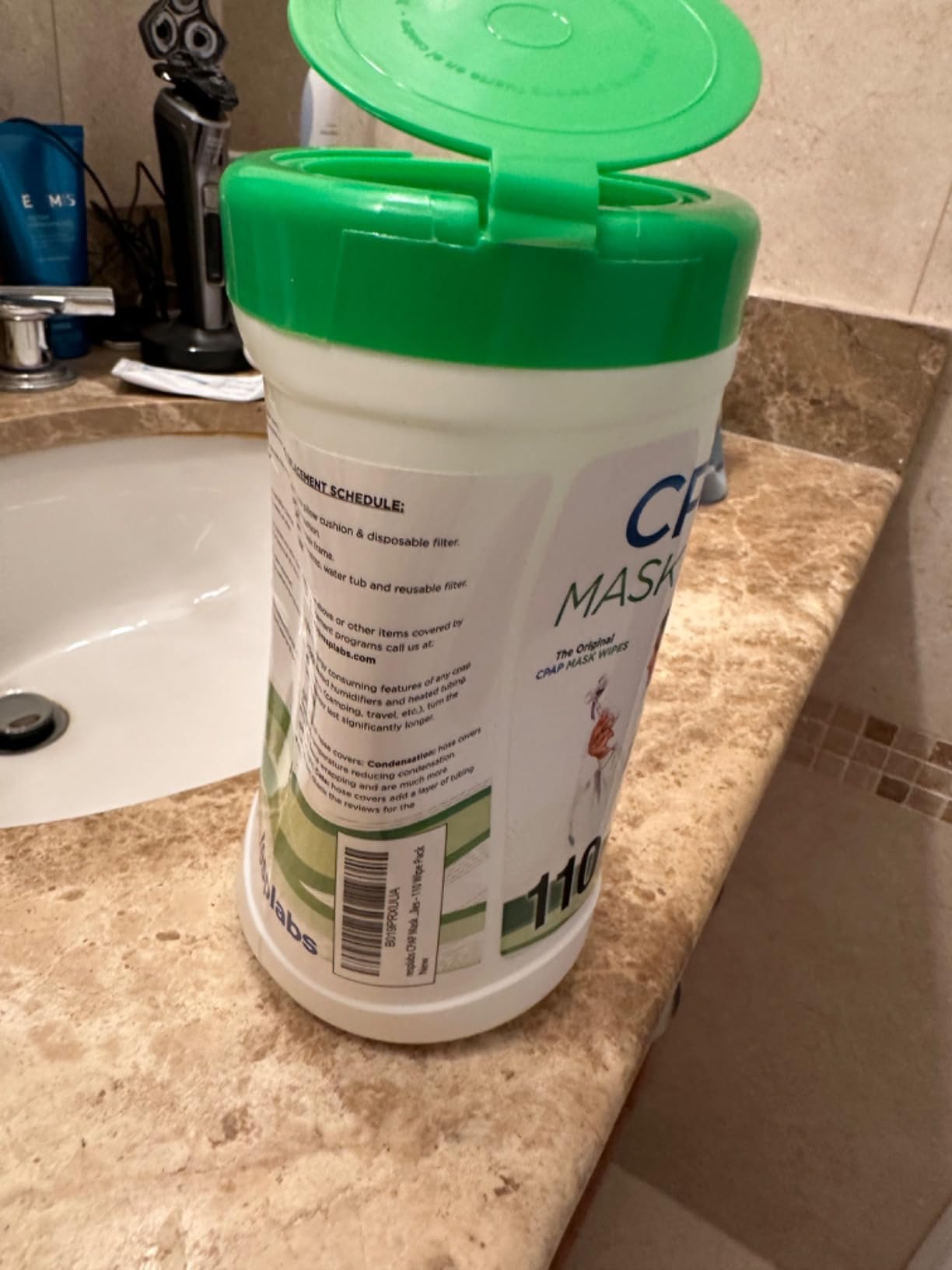
2. RespLabs Unscented Mask Wipes – the daily canister with the most reviews on Amazon
resplabs CPAP Mask Wipes, 110 Count Unscented – Safe for All CPAP Masks, Cushions, and Supplies – Daily Use Cleaning Wipes
110 unscented wipes
No rinsing required
Full face and nasal masks
About a 90 day supply
Pros
- Genuinely fragrance free
- Gentle on soft cushion material
- 110 wipes covers roughly three months
- Removes oils before they cause leaks
Cons
- Flip top lid does not always stay shut
- Wipes are smaller than some competing brands
- Occasional reports of unsealed wipes in the tub
Over 33,000 ratings at a 4.4-star average makes this the most widely reviewed product in the roundup, and the reason is easy to understand. It solves the small nightly problem that bigger machines ignore. You touch your mask twice a day, and a wipe takes fifteen seconds.
What matters most here is the absence of fragrance. Many CPAP users are sensitive to scented products because the smell gets absorbed into silicone over time, and an unscented tub simply avoids that whole category of complaint. The formula also lifts facial oils from the cushion without drying it out, which supports a better seal.
At roughly a 90-day supply per canister, it also works out to one of the least expensive habits in this article. The most common criticism across reviews is the lid, not the wipes. The flip top is reported as loose on some units, and a tub that does not seal will dry out wipes you were saving for later in the week.
When a wipe is enough
A wipe is a cleaning step. It removes the oil film that causes leaks and mask noise, and for most nightly maintenance that is genuinely all that is required between deeper washes.
Keep one canister at the bedside and a second in the bathroom if you use a humidifier. Wipe the mask frame, cushion, and the hose connection points, not the whole tube every night.
When you need more than a wipe
Wipes do not disinfect. If you are recovering from a cold or flu, or you want a true sanitation step, pair this with the CleanSmart spray above or a weekly soak rather than assuming the wipe handled it.
Travel is the other weak spot. A 110-count tub is bulky for a carry-on, so for frequent flying the travel-size wipe pack later in this list is the better fit.
3. Aveen Hose and Mask Brush Kit – the only tool that reaches the inside of your tubing
Aveen CPAP Tube and Mask Cleaning Brush, Suitable for All CPAP Hoses and Masks, CPAP Hose Cleaning Brush Kit, Enhance Your CPAP Machine and CPAP mask, CPAP mask Cleaner.
Brush kit for all CPAP hoses
Fits 15mm and 19mm tubing
Long reach tube brush
5.29 ounces
Pros
- Fits both common hose diameters
- Long enough to scrub the full hose length
- Holds shape through repeated use
- Lightweight and easy to store
Cons
- Cannot disinfect on its own
- Narrow diameter means several passes per hose
This is the least glamorous product here and probably the most useful. Every sanitizer machine on the market treats the outside of your hose, and the biofilm that causes odor lives on the inside wall where nothing except a brush reaches.
The kit includes brushes sized at 15mm and 19mm, which covers the two standard CPAP hose diameters. The long brush is what matters. Push it all the way through after a soak, rotate it as it goes, and pull it back the other way. That single habit removes more trapped material than any cycle a machine can run.
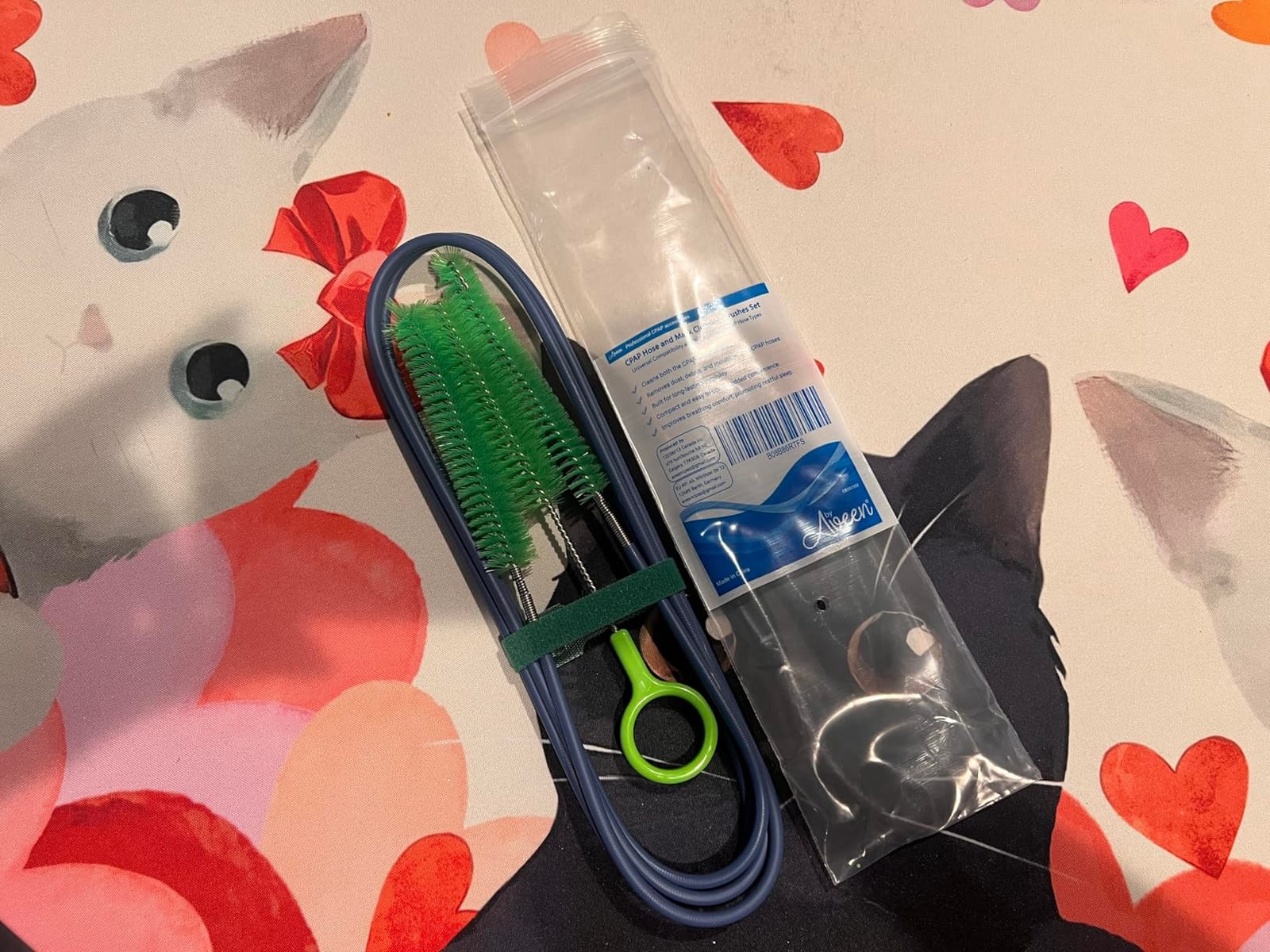
With 5,170 ratings at a 4.6-star average and an 80 percent five-star share, the durability comments stand out. Reviewers repeatedly note that the bristles keep their shape and that the fit works across different machine brands, which is the main failure point with cheaper brush sets.
Why this matters more than any machine
Wipes cannot enter a hose. Soaps and sprays coat the interior but do not dislodge attached film. A brush is the only item in this roundup that physically removes buildup rather than dissolving it.
Use it after every soak, not just weekly. A thirty-second pass through the tube keeps the airflow smooth and stops the odor that drives people to buy a sanitizer in the first place.
What it cannot do
A brush is a mechanical tool, so it has no disinfectant action at all. Always follow it with soap, and use a disinfecting spray afterward if you want that step covered.
Because the brush is narrow, a full-length hose takes several passes to cover completely. Rushing it is the usual reason people conclude the brush did not work.
4. Purdoux CPAP Mask and Hose Soap – three bottles of concentrated wash
CPAP Mask & Hose Soap (Pack of 3 Bottles x 250mL) Green Tea Mint Scent
3 bottles of 250mL
Green tea mint scent
Alcohol and bleach free
Preserves silicone
Pros
- Concentrated so a small amount lathers well
- Rinses clean with no film
- Helps masks seal more leak free
- Subtle scent that does not linger
Cons
- Scented formula may bother fragrance sensitive users
- Needs scrubbing soaking and rinsing rather than a quick wipe
This is the workhorse liquid wash. It is alcohol-free, bleach-free, latex-free, and conditioner-free, which matters because harsh surfactants are what gradually destroy silicone elasticity and turn a good seal into a leak.
Concentration is the underrated feature here. About half a tablespoon produces a rich lather in a full sink of warm water, so one bottle covers a long stretch of daily cleaning. Three 250mL bottles in the pack mean less repurchasing than with an 8-ounce bottle.
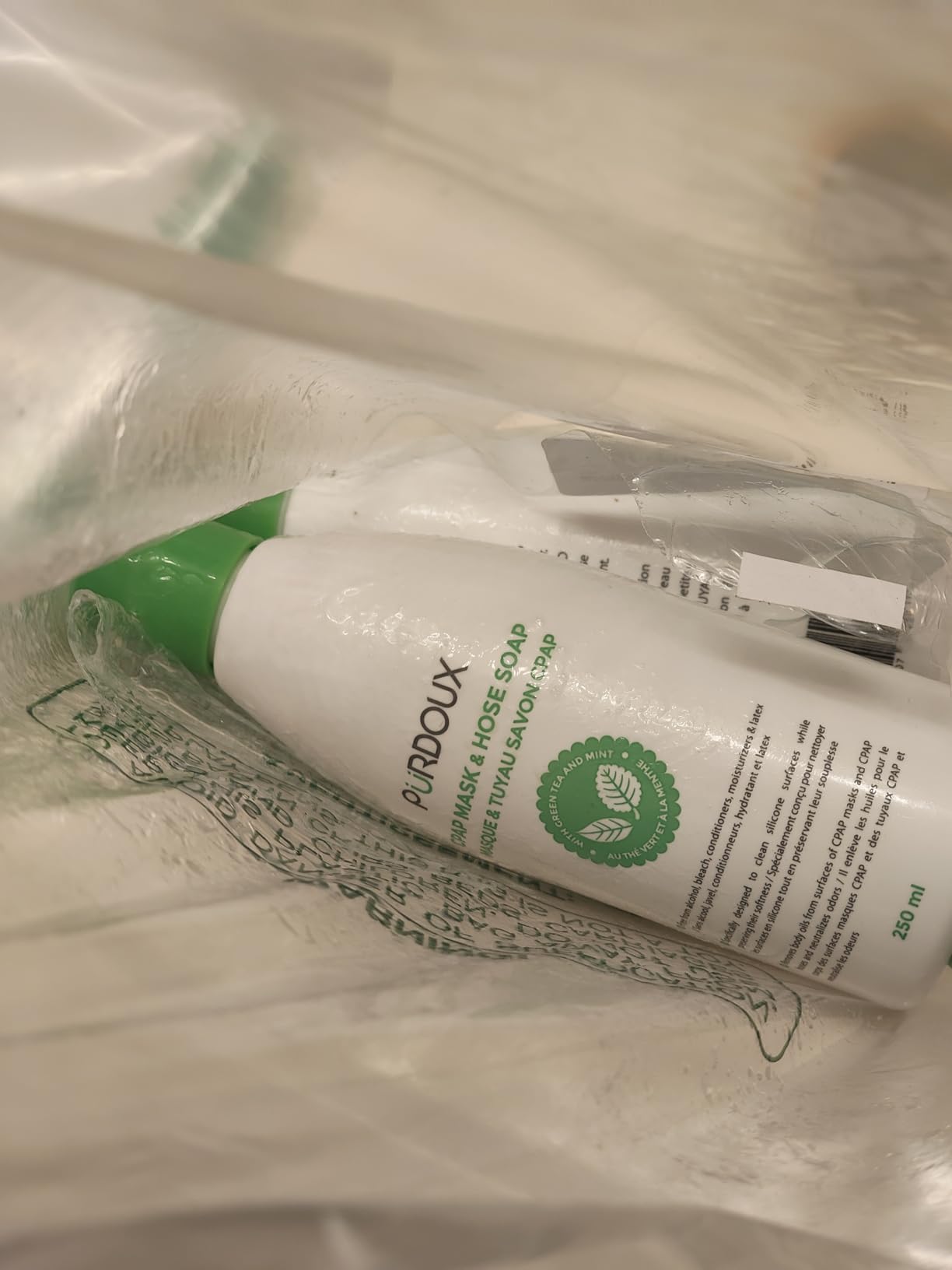
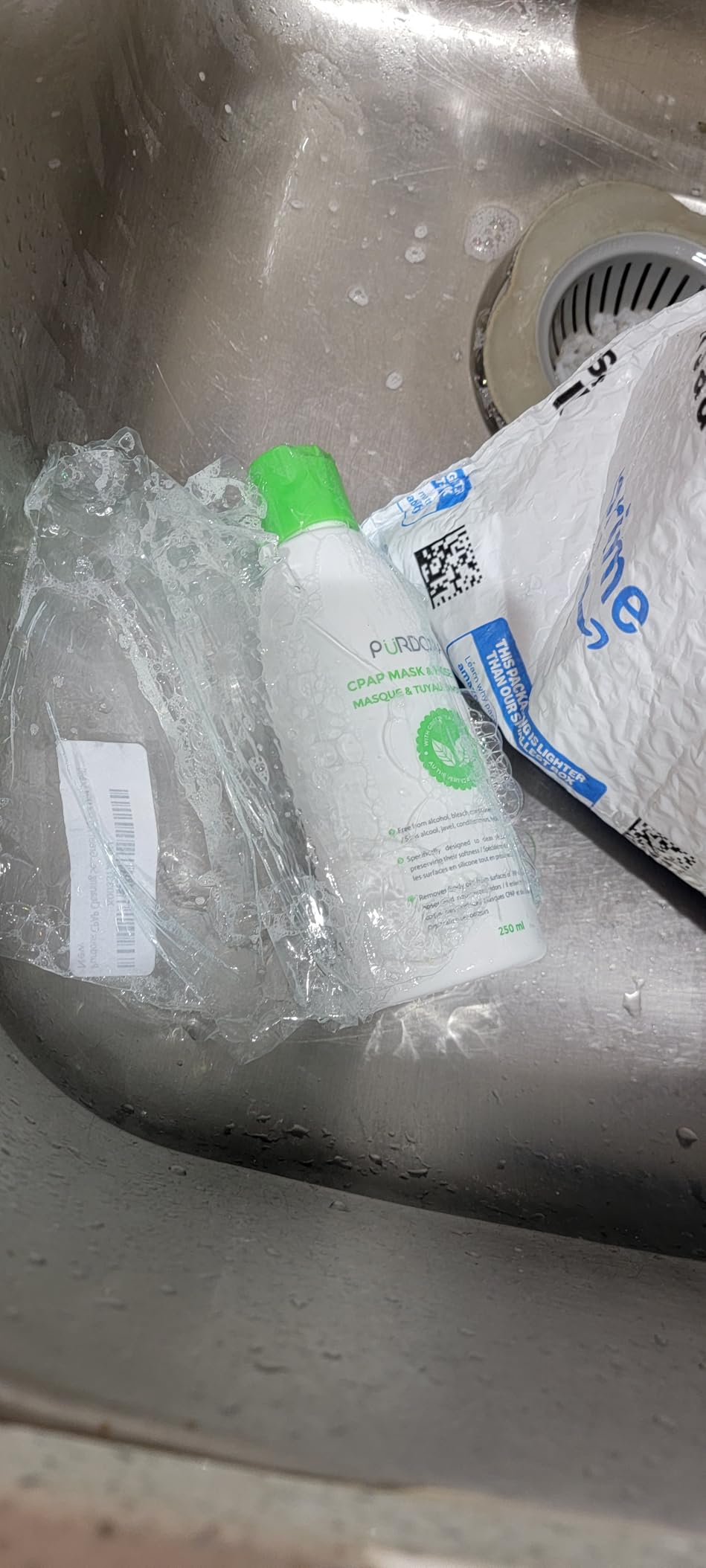
With 3,450 ratings averaging 4.6 stars and 79 percent five-star, the most common theme in the reviews is the clean rinse. Users report no soapy film left on silicone after drying, and several describe repeat purchases over several years, which is a reasonable indicator of long-term silicone compatibility.
How I use it in a full wash
Fill a basin with warm water and a small amount of this soap. Submerge the mask, hose, and any removable humidifier parts, and let them sit for ten to fifteen minutes. Then brush the hose and cushion, rinse thoroughly, and hang everything to air dry.
The soak is what softens the skin oils enough to remove them. Skipping it and going straight to scrubbing spreads the oil around instead of lifting it.
Who should pick something else
If you are fragrance-sensitive, the green tea mint scent is a genuine issue. Because silicone is porous, a scented soap can leave a trace smell that you breathe all night, and this formula does not leave residue behind to prevent it.
This is also a manual process with real time cost. If washing by hand is not going to happen consistently, a no-rinse product suits you better.
5. RawRock Hanging Dry Kit – basin, long brush, and hanger in one bag
CPAP Cleaning Kit for Hose and Mask, CPAP Hose Cleaning Brush, Collapsible Wash Basin, Hose Hanger, Compatible with Standard and Slimline CPAP Tubing (Hanging Dry Kit)
2.5 gallon collapsible basin
6.9 foot tube brush
Integrated hose hanger
Storage bag included
Pros
- Everything needed for a full wash in one purchase
- Basin sized to soak a mask and hose without overflow
- Folds flat and stores or travels easily
- Long brush covers full length tubing
Cons
- Storage bag is a little tight for the folded basin
- Small detail brush is too wide to fit inside tubing
- Lightweight plastic build
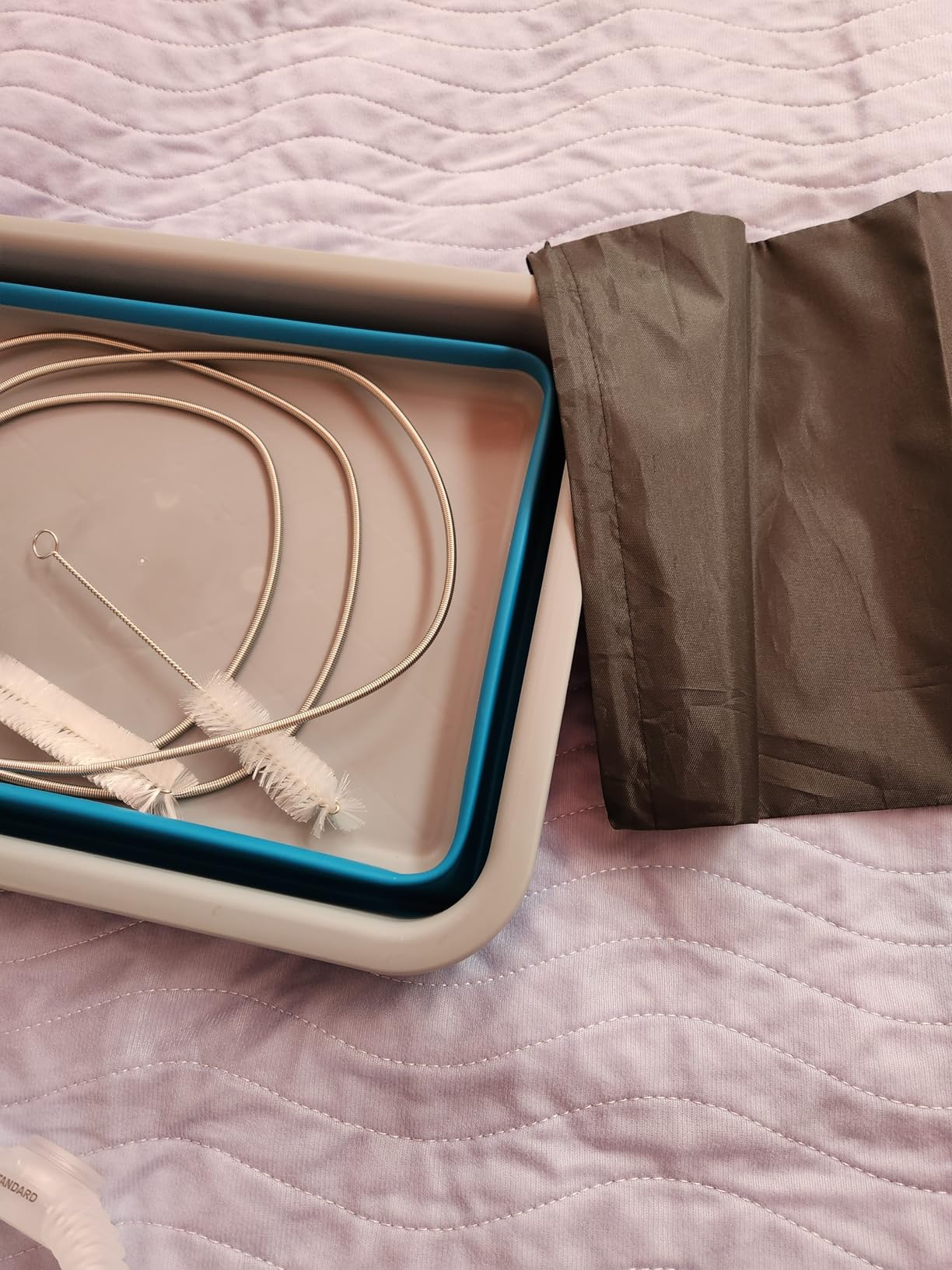
This is the answer to the most common complaint in CPAP forums, which is that people own a brush with no basin and no way to let a hose dry without touching a bathroom wall. The kit bundles a 2.5-gallon basin, an extra-thick 6.9-foot tube brush, a small detail brush, and an integrated hose hanger.
The basin dimensions of 14.75 by 10.75 by 5.5 inches expanded are what make it work. That is enough room to soak a full mask and a coiled hose without overflow, and it collapses flat when the routine is done.
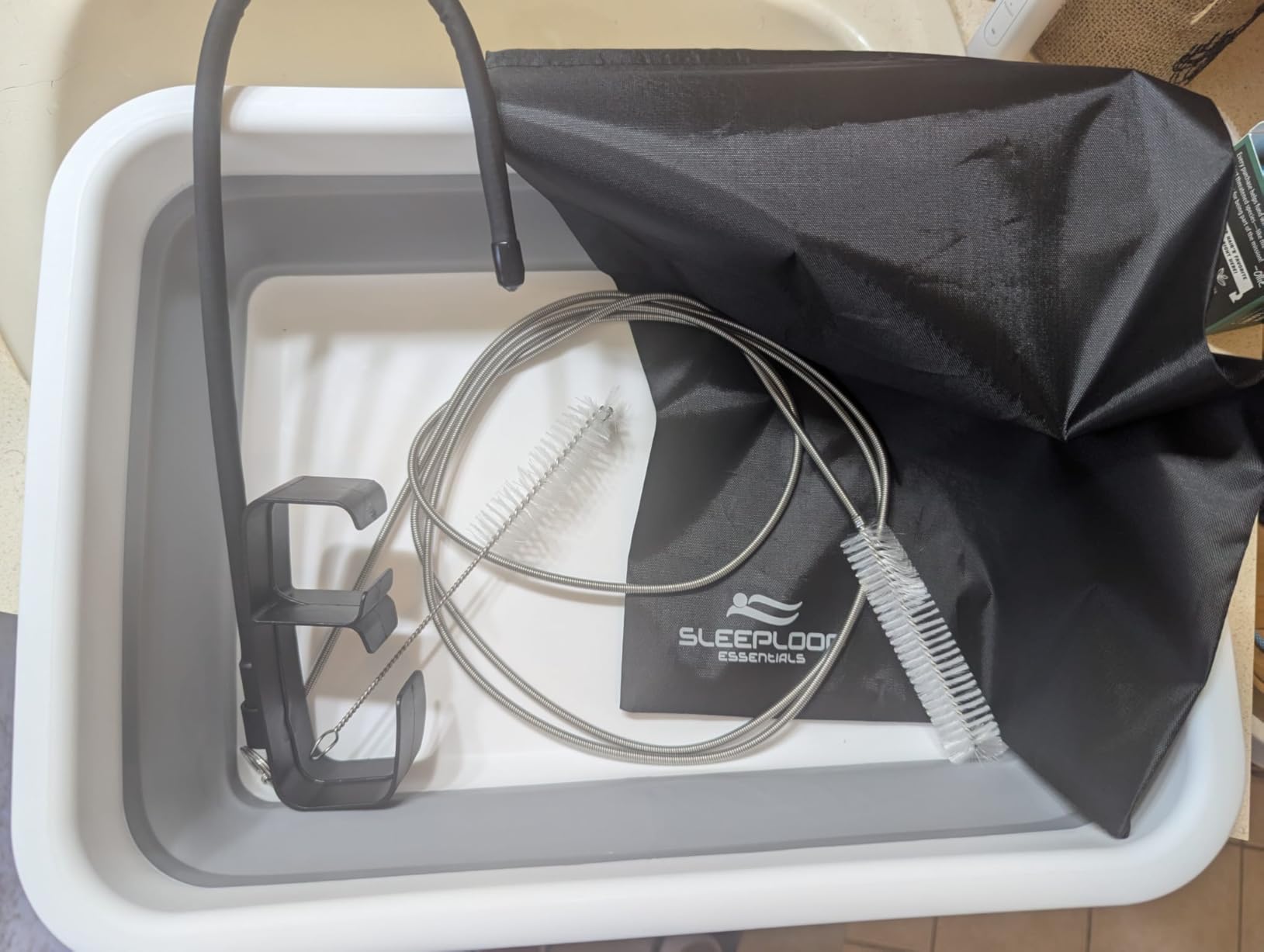
Keeping CPAP parts in a dedicated basin rather than the kitchen sink is a small habit with a large effect. It stops you from accidentally washing a mask with dish residue, and it gives you a defined drying station instead of a towel on the counter. With 1,115 ratings at 4.6 stars, buyers single out the basin sizing and fold-flat storage most often.
Why the hanger is the underrated piece
Most mask damage comes from drying with the cushion folded against itself or the hose coiled in a tight bend. A dedicated hanger keeps the hose hanging in a loose loop so water drains out of the lowest point instead of pooling in the tubing.
Pair the hanger with a clean towel underneath and the whole wash-and-dry cycle becomes a five-minute job rather than a chore that never gets done.
Where it falls short
The storage bag is a little too tight for the folded basin, so the bag is better used for the brushes and hanger. Plan on storing the basin elsewhere.
The small detail brush is sized for mask frames and hard surfaces, not tubing, since it is too wide to enter a hose. Use the long brush for anything cylindrical.
6. IMPRESA Unscented Pre-Wash Solution – odor control without any scent
IMPRESA CPAP Pre-Wash Cleaning Solution, 1 Pack Mask & Hose Soap, 8oz
Unscented dye free soap
8 fl oz bottle
One capful per wash
Odor neutralizing
Pros
- Completely unscented and dye free
- Highly concentrated so one capful cleans a full tub
- Foams well and rinses off without residue
- Made in USA
Cons
- 8 oz bottle runs out faster than 16 oz options
- Requires a full soak scrub and rinse cycle
This is the pre-wash step most guides describe and few people actually do. You soak the parts in this solution first, lift the oils off, and then whatever disinfection step you prefer is working on a clean surface rather than a greasy one.
The defining feature is that it is unscented and dye-free. That makes it the pick for anyone whose CPAP has picked up a persistent smell, because odor molecules get absorbed into porous silicone and a scented cleaner can lock them in rather than remove them.
It is also genuinely concentrated. One capful is usually enough for a standard cleaning tub, which stretches an 8-ounce bottle further than the size suggests.
Why the pre-wash step changes results
Disinfectants work by contact, and a film of skin oil is exactly what blocks contact. Ten minutes in this solution before you spray or soak means the disinfection step reaches the actual surface you care about.
Reviewers using it on heated tubing report that the machine keeps smelling fresh week to week, which is where most odor problems start in the first place.
What to know before buying
Eight ounces is the smallest bottle in this roundup and it will run out first in a two-parts-per-day household. Order it alongside a larger 16-ounce unscented option if you do not want to repurchase often.
It is a wash, not a wipe. There is a scrub, a soak, and a rinse in the process, so treat it as the first step of a full weekly clean rather than a nightly shortcut.
7. PAPMD Unscented Lint-Free Wipes – 300 wipes for a full year of nights
PAPMD Unscented CPAP Mask Wipes, 2x 150-Pack, Lint-Free for Tube
2 packs of 150 wipes
Lint free non woven
No rinsing required
Pull-out resealable tub
Pros
- No rinsing so parts are ready for the night
- Wipes stay moist to the bottom of the second pack
- Lint free material leaves no fibres behind
- Good size for daily mask and hose work
Cons
- Sometimes pulls out two or three at a time
- Not a disinfectant step on its own
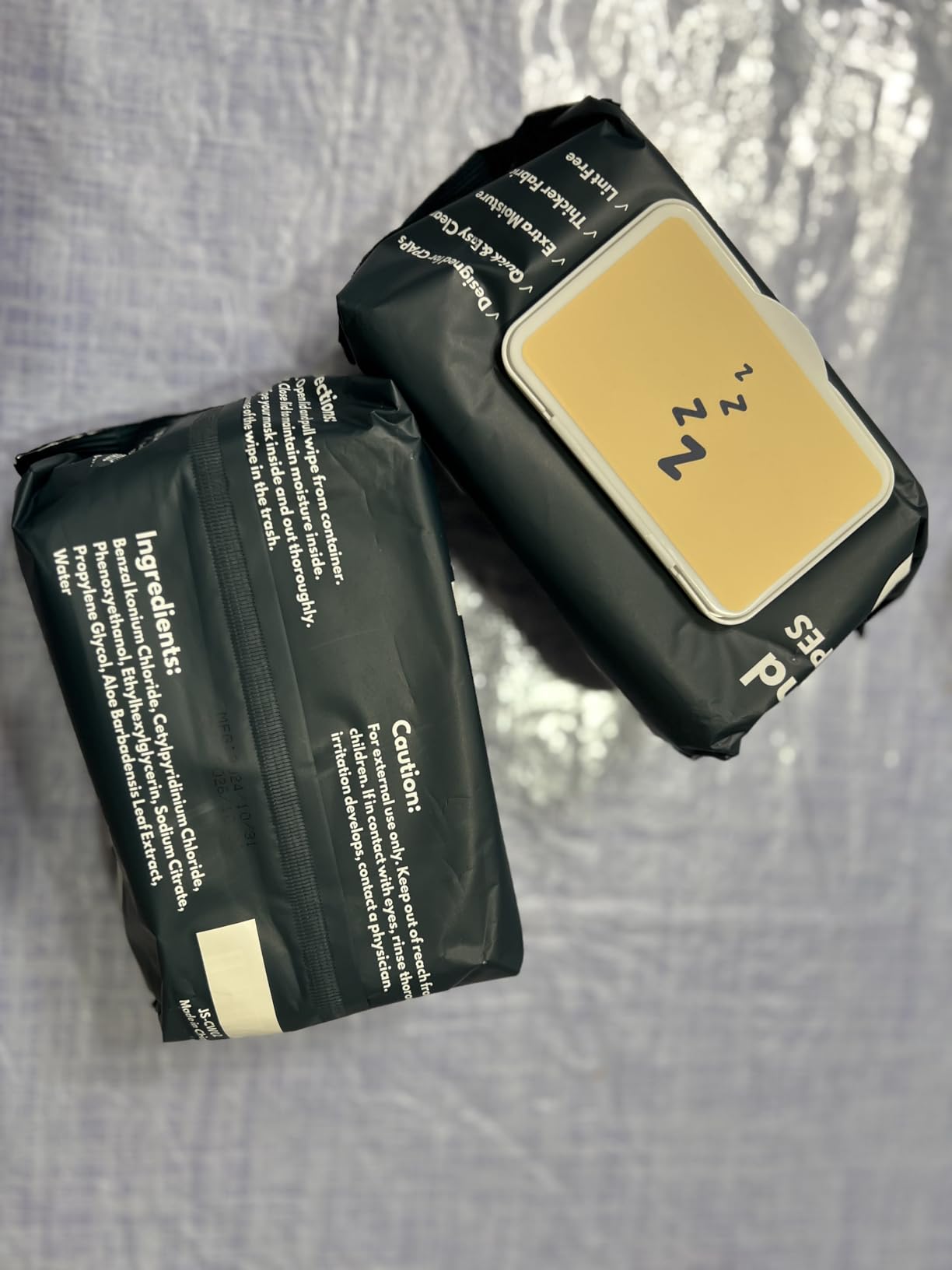
Two 150-count packs give you 300 wipes, and with roughly two uses a night that is comfortably over a year of daily care. The high count is the main reason this wipes option stands apart from a standard 110-wipe tub.
The material is premium non-woven fabric, free of perfume, latex, and lint. That lint-free claim is not marketing trivia on CPAP equipment. Fibres left on a cushion or inside a hose are one more thing for microbes to latch onto.
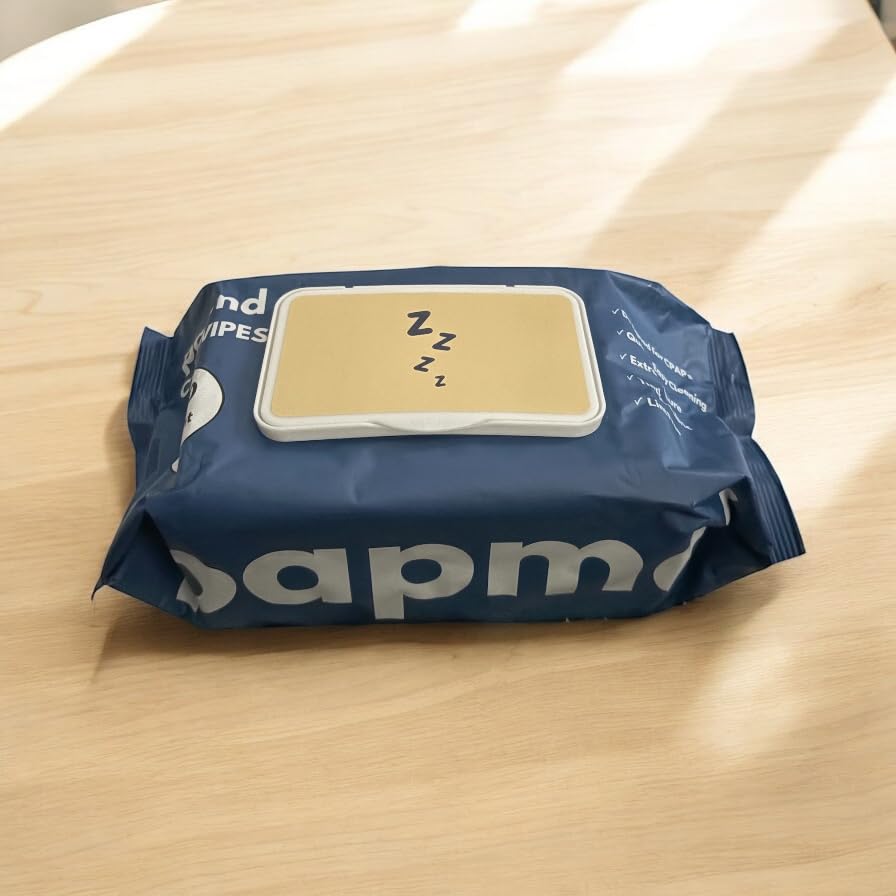
The resealable pull-out design is the detail that gets singled out most in reviews, since moisture retention is the usual reason wipes go bad. With 1,045 ratings at 4.6 stars and 80 percent five-star, buyers treat these as the daily-driver refill rather than a specialist product.
Best used as the end-of-day step
Wipe the cushion, frame, and the top few inches of hose before putting the equipment away. Because there is no rinse, the parts are usable again the moment you are finished.
Keep a pack by the machine and a second pack in a travel bag, since the tubs are flat and stack without leaking.
Where expectations need adjusting
This cleans oils and surface dirt. It is not a disinfecting product, so if you are recovering from an illness you still want a spray or a soak afterward.
Dispensing runs slightly heavy on some units, pulling two or three wipes at a time. If that happens, separate them before use and know that you are burning through the count faster.
8. Snugell Fresh Citrus Pre-Wash Soap – concentrated wash that rinses away clean
Snugell CPAP Soap Cleaner 8.4oz – Fresh Citrus Scent – Pre-Wash Solution – Mask and Hose Cleaning Soap – Neutralizes Odor and Removes Body Oils from CPAP Mask (1-Pack)
8.4 oz pre-wash
1 to 3 squeezes per set
Concentrated formula
No dyes alcohol or bleach
Pros
- One or two drops handle a full mask and tube
- Rinses clean with no film
- Odour neutralising and gentle on hands
- Cleans mask hose and chamber
Cons
- 8.4 oz bottle feels small
- Not unscented despite some listing copy
This is a small bottle of concentrated citrus-scented pre-wash. It earns a place here because it neutralises odor, lifts body oils out of silicone, and rinses away without leaving a film, even though a larger unscented bottle would be the safer choice for sensitive users.
Concentration is impressive for an 8.4-ounce bottle. One to three squeezes is enough for a full mask and hose set, and it lathers with warm water and rinses without residue.
It is free of dyes, alcohol, bleach, conditioners, and moisturisers, all of which are the ingredients most likely to leave a film on silicone. Reviewers also note it does not irritate hands, so gloves are optional.
Why the clean rinse matters
A residue-free rinse is what keeps a cushion sealing properly, and that is the single most common complaint about cheaper soaps. This one lathers readily in warm water, carries odor-neutralising action, and rinses out completely.
Use it as a pre-wash in the sink, or soak heavily soiled parts for longer before working on them with a hose brush.
The scent question
Fresh citrus is pleasant and it does not read as chemical, but it is a fragrance. If you are specifically avoiding scented products, this is not the bottle for you.
Some listing copy suggests otherwise, so read the label rather than the product name. The 8.4-ounce size is also the smallest of the concentrated soaps here and goes quickly at one to three squeezes per session.
9. Essential Values Scent-Free Pre-Wash – the 16 oz bottle for stained chambers
Essential Values CPAP Cleaner Pre-Wash, Safe & Scent-Free – 16 Fl Oz – Hose CPAP Cleaning Kit Supplies with Dye-Free Prewash Soap – Compatible with All C PAP Equipment & Machines
16 fl oz fragrance free
Fragrance and dye free
Pre-wash before sanitizing
Made in USA
Pros
- Completely fragrance free for overnight use
- Concentrated 16 oz bottle lasts a long time
- Rinses clean and leaves no film
- Restores stained water chambers
Cons
- Pre-wash only so a disinfecting step is still needed
- Modest results on heavily soiled parts
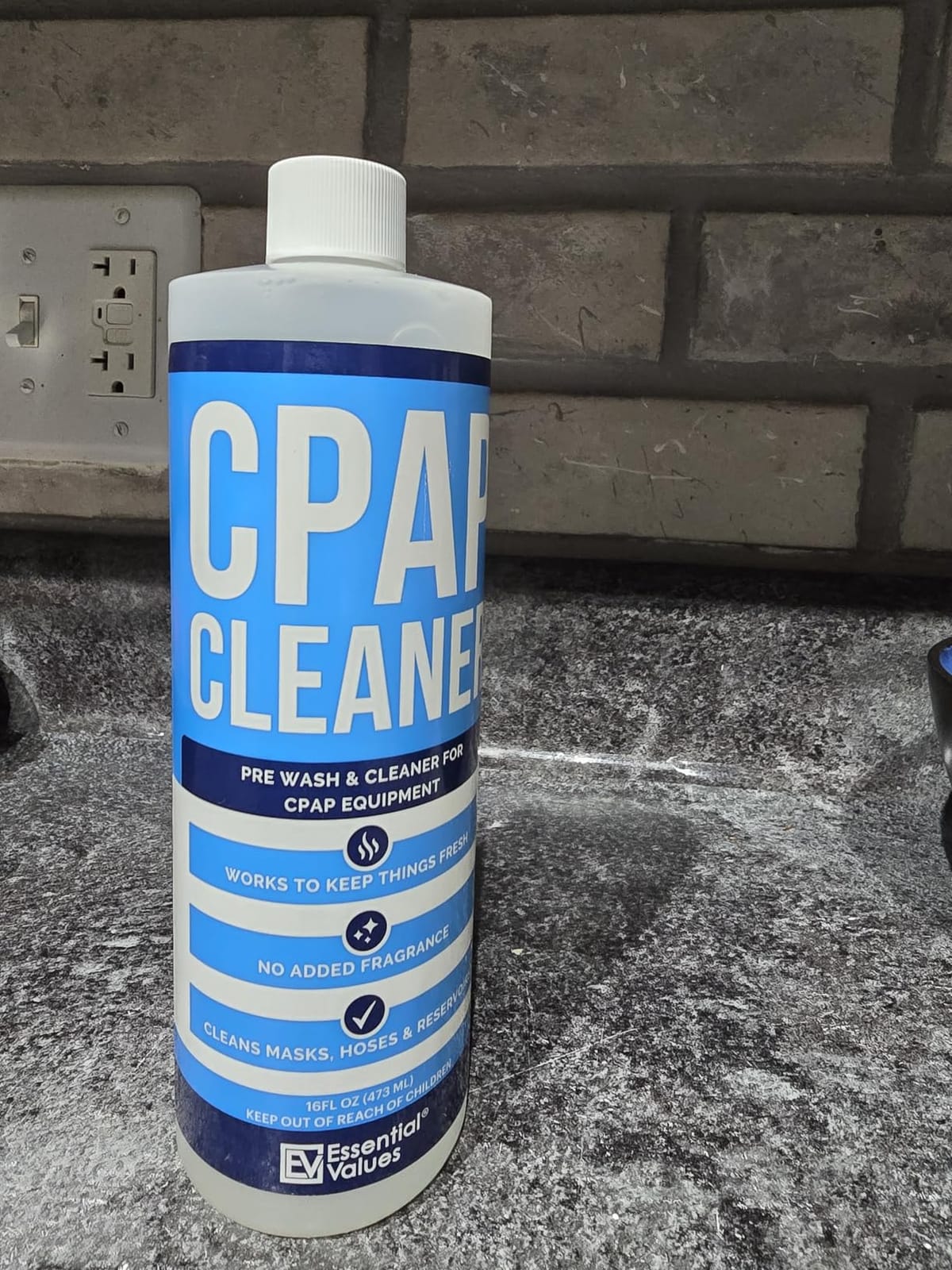
The unscented pre-wash slot with real bottle size. At 16 fluid ounces it is double the volume of the 8-ounce options, and the formula contains no fragrance and no dye, which is the combination sensitive users search for most.
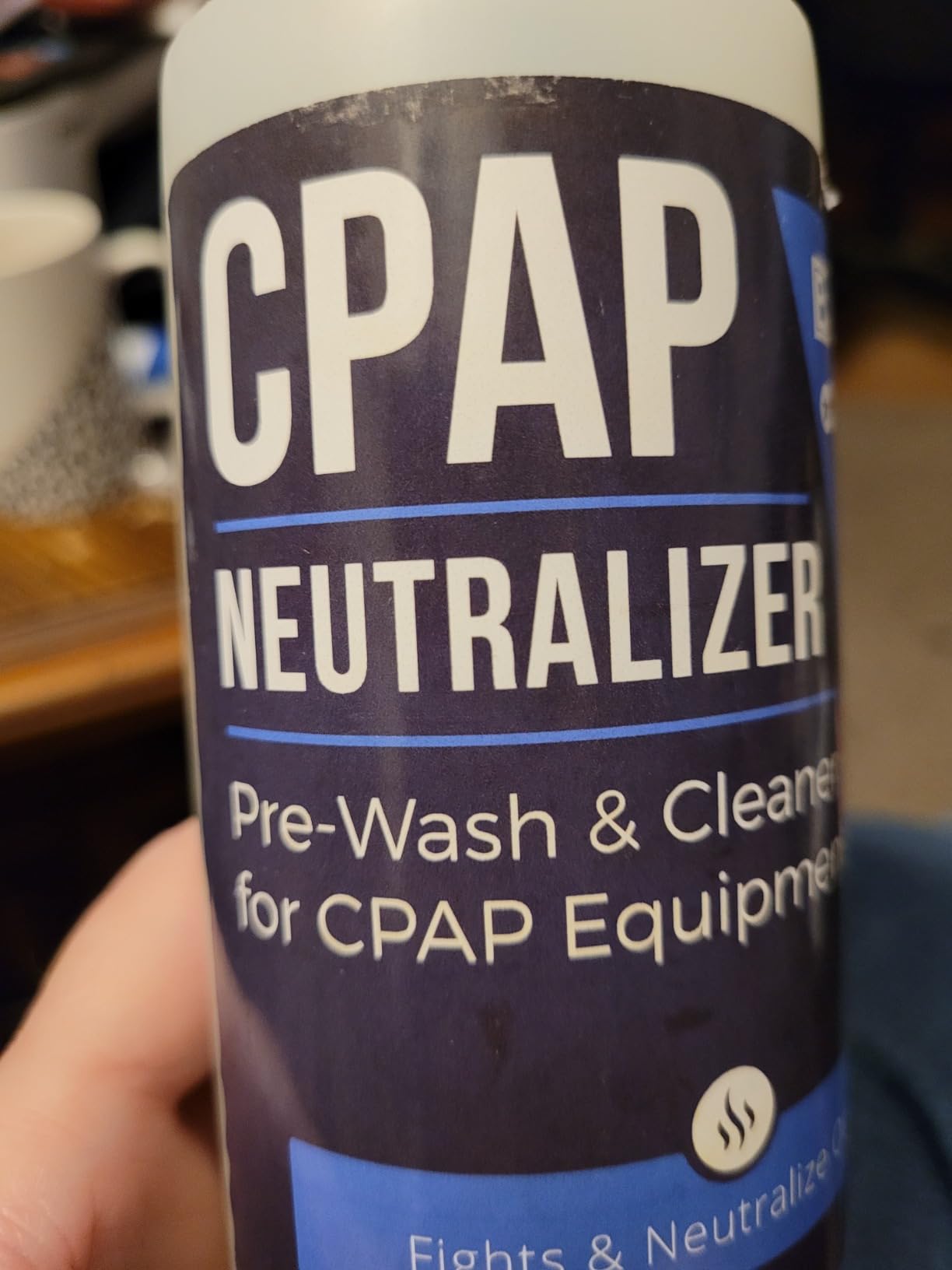
Humidifier chambers are where this earns its place. Hard-water staining builds up in the reservoir and base plate over months, and unscented solution that rinses without film is what gets that discoloration off before it becomes permanent.
It also works on masks, tubes, and reservoirs, so a single bottle covers the full equipment set. Developed and manufactured in a certified US facility.
Where it fits in the order of operations
Treat it as step one. Soak stained or greasy parts in warm solution, let the concentrated formula work on the buildup, then rinse and follow with whatever disinfection step you use.
Reviewers mention multi-year repeat use, which suggests the formula stays gentle on silicone over a long period rather than only looking good in the first month.
Its limits
It is a pre-wash. On its own it does not disinfect, so skipping the sanitizing step leaves you with a clean but not sanitized mask.
On badly neglected equipment the results are modest. Deep staining and thick biofilm need a scrub with a hose brush, and heavily soiled parts may be past the point where cleaning helps at all.
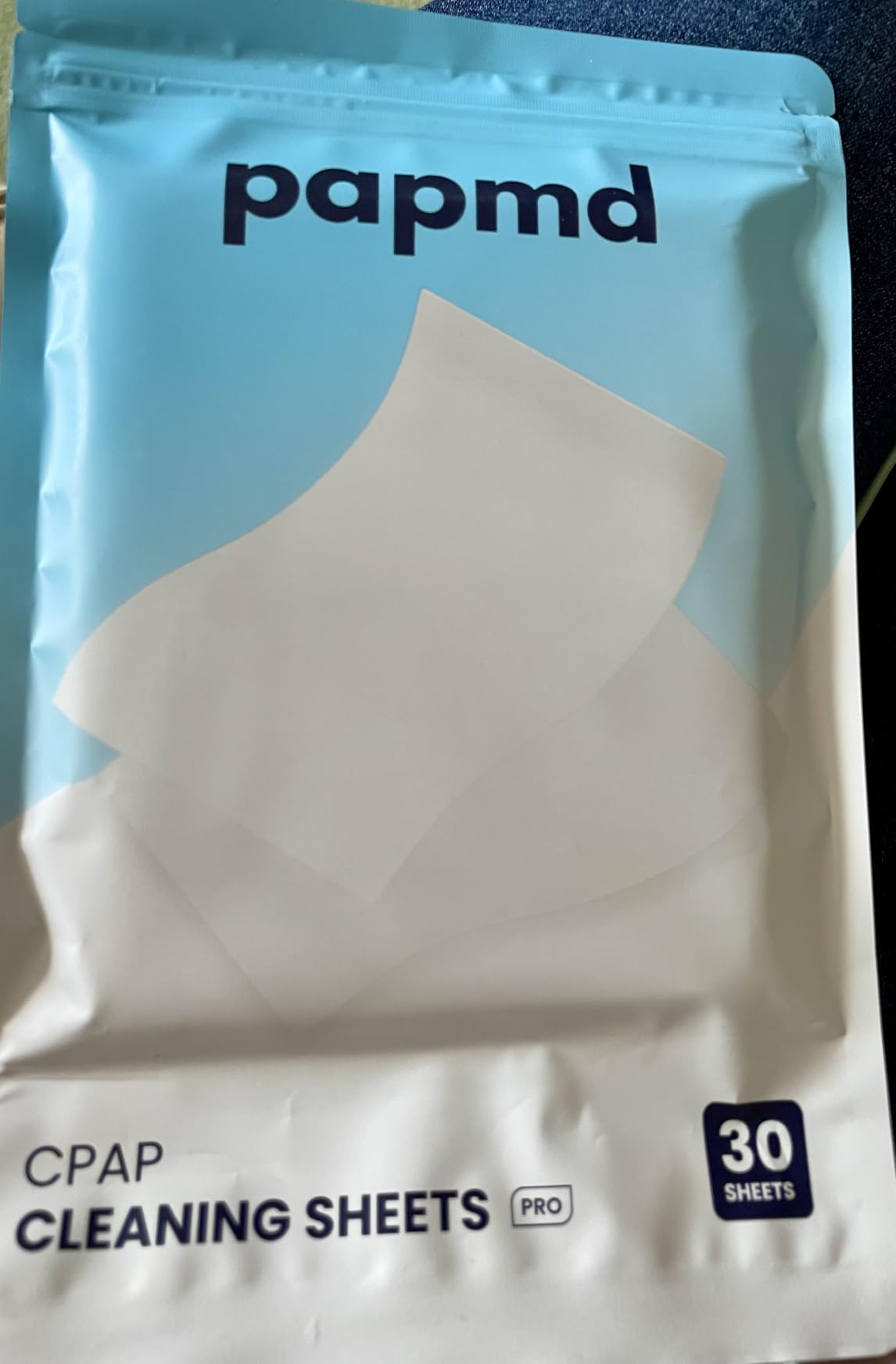
10. PAPMD Dissolvable Cleaning Sheets Pro – no-scrub soak that reaches inside tubing
PAPMD CPAP Dissolvable Cleaning Sheets Pro, Light-Moderate Buildup | 30 PCS
30 dissolvable sheets
5 minute cycle
Reaches inside tubing
No residue left behind
Pros
- Highest rated in the roundup at 4.8 stars
- Dissolves in water and reaches tubing and mask folds
- No brushing needed
- Flat sheets store and travel easily
Cons
- Aimed at light to moderate buildup only
- Cost per clean is higher than bulk liquid soap
This is the newest product in the roundup and the most rated, sitting at 4.8 stars across 322 ratings with 86 percent five-star. The format is unusual. Each sheet dissolves on contact with water and forms a cleaning solution, so you get a soak without measuring liquid.
The claim that matters is reach. A soak solution enters the tube bore, the mask folds, and the tight junctions where a wipe or a brush cannot physically get. That is a real difference from the daily-wipe approach.
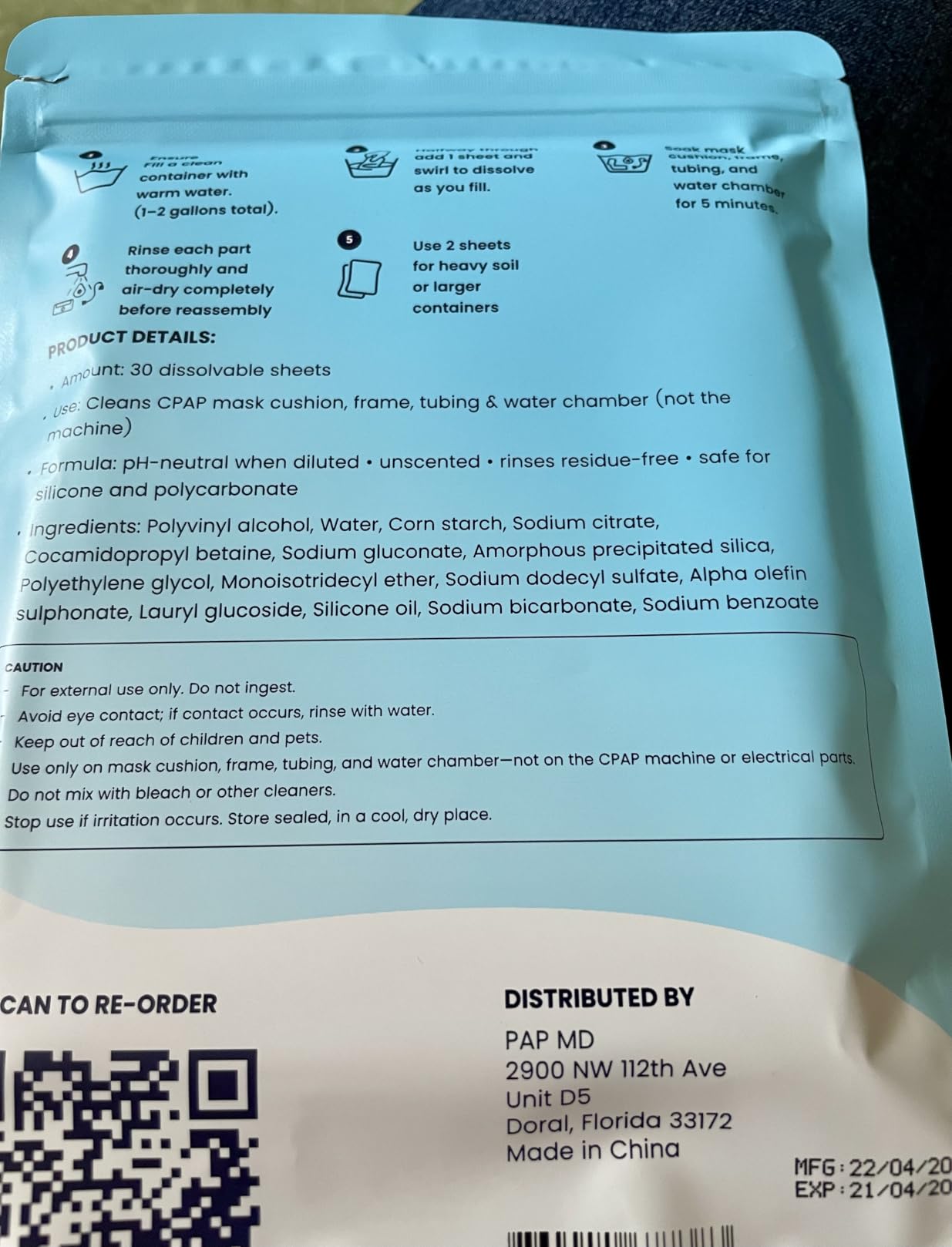
The cycle is simple: dissolve, soak, rinse, dry. No scrubbing, no brush, and nothing is left behind on the parts, which is what keeps silicone and plastic in good condition over time. The flat sheets also pack flat, which is unusual for cleaning products.
Best fit for a hose you cannot scrub
For anyone with limited dexterity, a stiff shoulder, or a hose you simply do not want to brush, a dissolving soak removes the mechanical step entirely. The liquid does the reaching.
It is also the easiest option here to keep at a bedside table or in a small apartment, since there is no basin required and the flat pack stacks with nothing else.
What it will not replace
The sheets target light to moderate buildup, which is exactly the correct goal for routine maintenance but not for neglected equipment. A hose with visible sludge still needs a brush pass.
Cost per clean runs higher than buying liquid soap in bulk. At 30 sheets per pack it is priced as a premium consumable, so it works best as a weekly deep clean layered on top of cheaper daily wipes rather than as your only cleaning method.
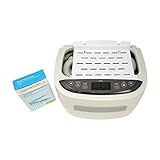
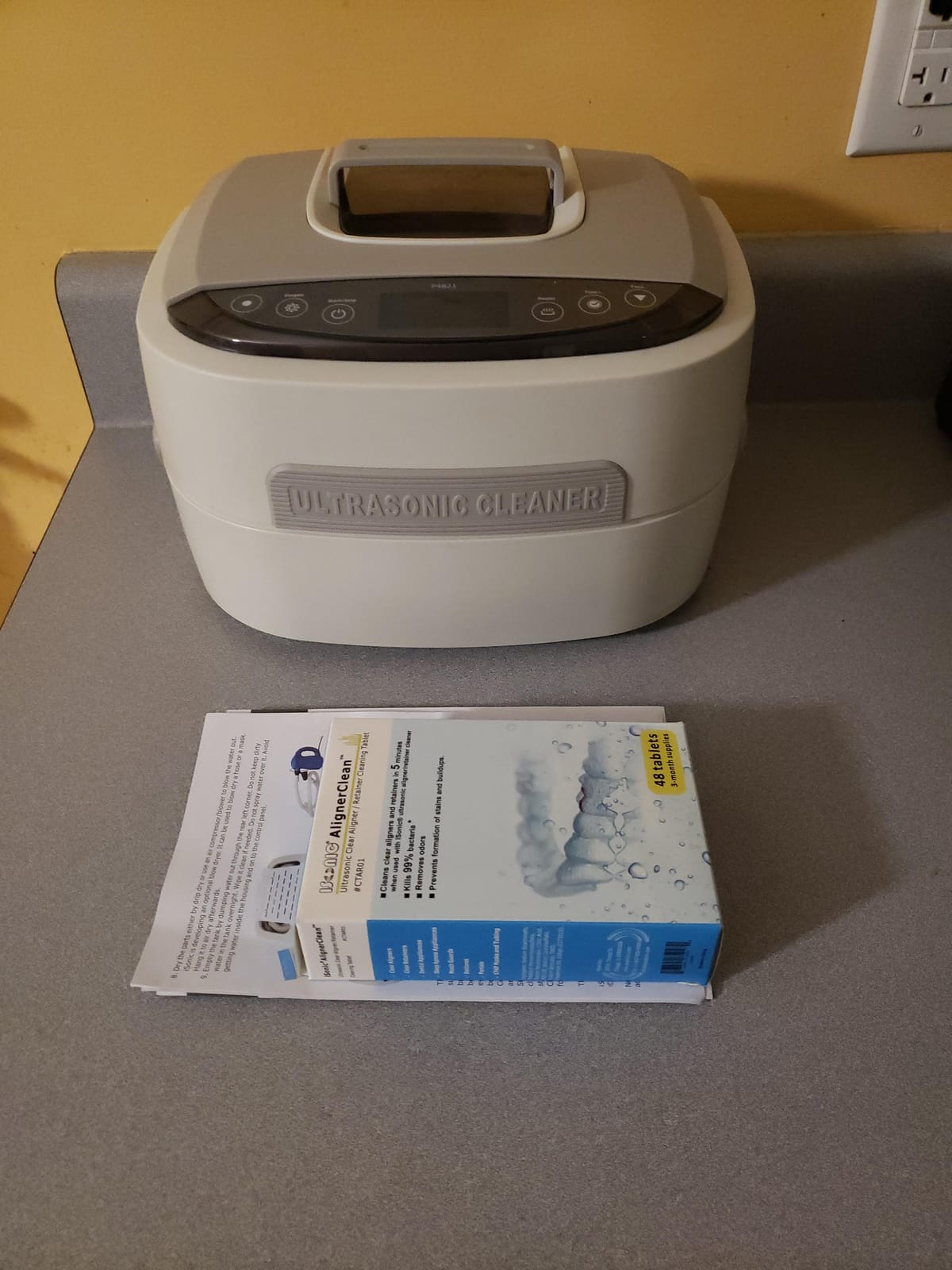
11. iSonic Ultrasonic CPAP Deep Cleaner – cavitation that reaches the hose core
iSonic Ultrasonic CPAP Deep Cleaner (Small) P4821-CPAP, 2.6Qt/2.5L, 110V for North America, with SS. Weight Bracket, Cleaning Tablet, Beige
60W transducer
2.5 litre tank
110V North America
Weight bracket and tablet included
Pros
- Cavitation reaches hose interiors and mask crevices
- Automated repeatable cleaning cycle
- Bracket and cleaning tablet included in the box
- Compact tank suits a mask and short hose
Cons
- Small tank only fits a short hose
- Powered unit needs a separate drying step
- Consumes cleaning solution on top of the purchase
- Least portable option here
This is the only powered machine in the roundup, and it works in a way no spray or wipe can. A 60W ultrasonic transducer produces cavitation, meaning millions of tiny bubbles form and collapse against surfaces, physically dislodging debris from hose interiors and mask crevices.
That is the mechanism CPAP forums recommend most for the problem no other product solves. Nothing else here gets water and agitation into the middle of a corrugated tube. Add a proper detergent, and the cavitation carries it into the biofilm.
It ships with a stainless steel weight bracket, which holds parts below the water line where the bubbles are most active, and a cleaning tablet to get you started.
At 4.1 stars across 521 ratings, this is the lowest-rated product here, and the reasons are consistent. Owners like the repeatable hands-free clean and the included accessories, but they point out the tank sizing, the separate drying step, and the running cost of consumable solution.
Before you buy, check your hose length
The tank measures 9.6 by 5.9 by 3 inches, or 2.6 quarts. That fits a mask and a short hose, and standard-length tubing needs one of the larger models in this range. Measure your hose before ordering, because this is the single most common complaint.
Coil the hose to fit the tank and weigh it down with the bracket so it stays submerged. If it floats, part of the tube will not be cleaned.
The drying problem nobody mentions
The machine cleans but does not dry. You still hang everything afterward, and a blow dryer on high heat can damage silicone parts, so a cool setting or air drying only.
Then there is the footprint. At 12.4 by 9.6 by 8 inches and 8 pounds, it needs a counter, a nearby outlet at 110V, and a permanent spot in your cleaning routine. For that reason it suits a dedicated CPAP corner rather than a small apartment or a travel bag.
12. Snugell Travel Size Aloe Wipes – 150 cotton wipes that pack flat
Snugell CPAP Mask Wipes – Travel Size 150 Count (Pack of 1), Unscented
150 aloe cotton wipes
Unscented and alcohol free
Compact travel pack
No lint or streaks
Pros
- Aloe vera cotton is gentle on sensitive skin
- Alcohol free with no lint or streaks
- Compact pack that fits a carry on
- 150 wipes supports a long daily routine
Cons
- Cleans surface dirt but does not disinfect
- Cotton can shed more fibre than non woven wipes
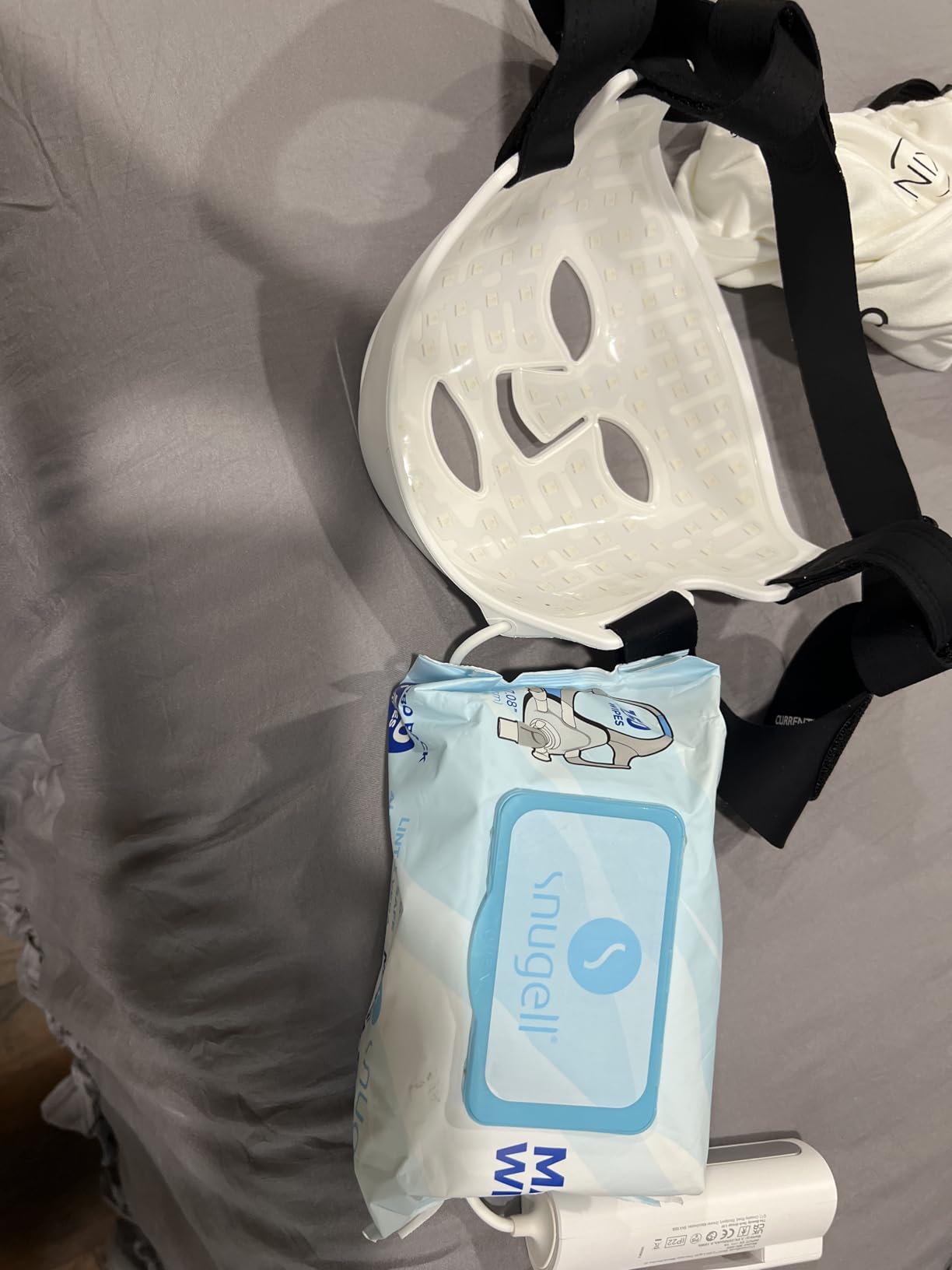
This is the travel pick, and the format is the entire point. 150 wipes in a flat pack that fits in a carry-on or a weekend bag, with none of the bulk of a standard canister.
The wipes are 100 percent cotton with aloe vera infused, which makes them comfortable on skin and appropriate for a full face mask that sits on the nose and cheeks all night. There is no alcohol, and the formula leaves no residue, streaks, or lint.
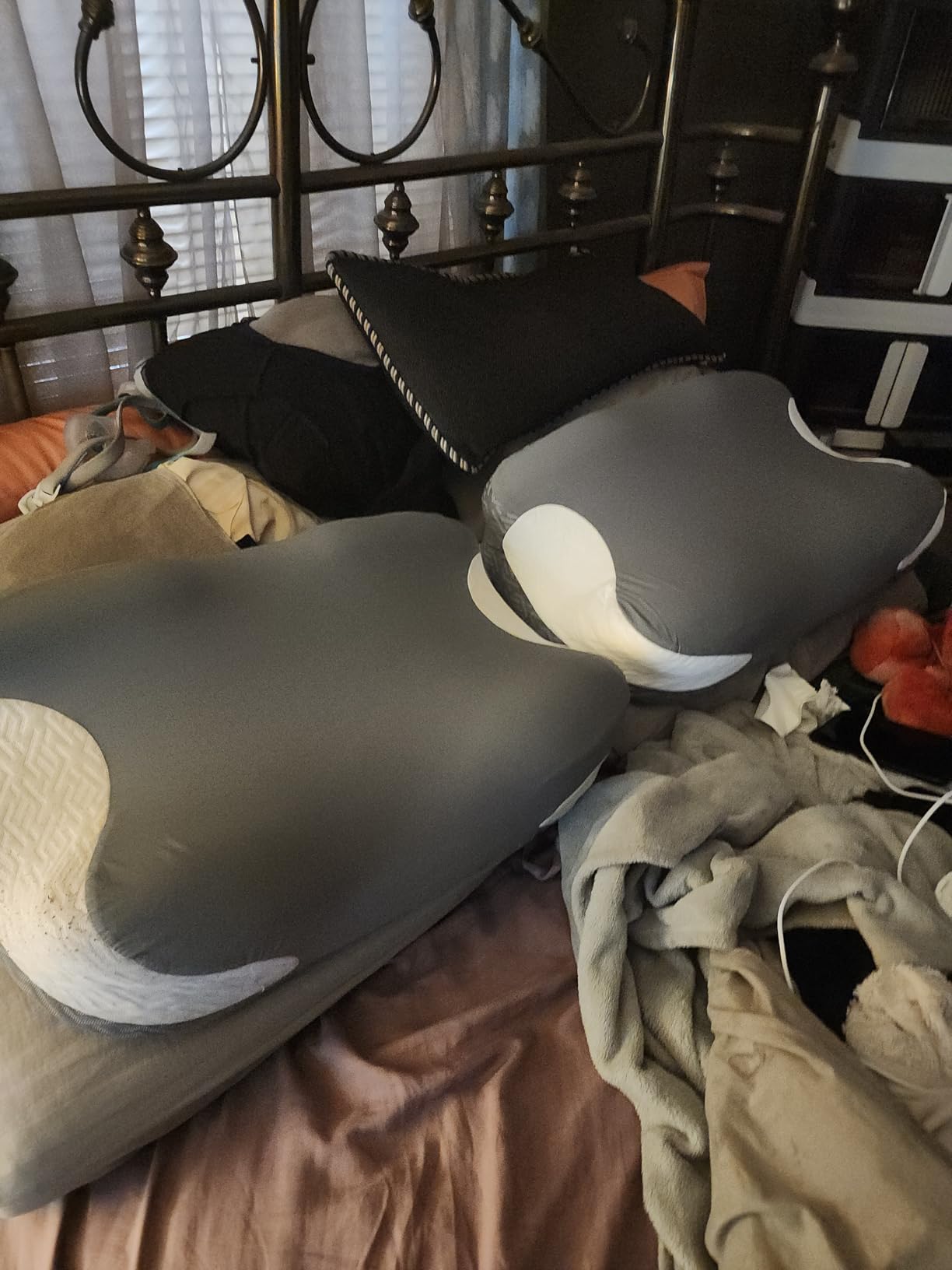
With 2,994 ratings at 4.6 stars and 78 percent five-star, feedback centres on value and gentleness, with the most common limitation being that wipes clean and do not disinfect.
How I pack a CPAP cleaning kit for travel
Wipes for nightly maintenance, a small bottle of unscented soap for the weekly wash, and a travel-size brush for the hose core. That covers a week away without a powered machine.
On trips I wash in a hotel sink, coil the hose loosely, and hang it over a shower door rail to dry. Weight on the hose is what prevents kinks, not any cleaning device.
Its limits
As with every wipe here, this removes surface oils and dirt. If you want a disinfection step on the road, add a small spray bottle to the bag rather than assuming the wipe covered it.
Cotton sheds slightly more fibre than synthetic non-woven material. It is a minor concern, and it is the reason the lint-free non-woven pack is a better choice if fibre on your cushion bothers you.
What Type of CPAP Cleaner Should You Buy?
There are four ways to clean CPAP equipment, and they solve different problems. Picking the wrong one is why people end up with a device that does nothing for the odor that made them buy it in the first place.
1. Soap and water (the baseline). Mild detergent, warm water, ten minutes of soaking, a brush, and air drying. This is what ResMed and Philips Respironics both recommend in their own guidance, and it is the step that does the real work. Every other category is an addition to this, not a replacement.
2. Alcohol-free disinfectant spray. A hypochlorous formula sprayed on and left to air dry, with no rinsing. This is the only category on the list that provides a genuine disinfection step, and it is worth owning if you want one. A round of spray after removal, then dry overnight, covers the after-an-illness case that soap cannot.
3. Wipes. The fastest option for nightly oil removal and the best travel format. Wipes clean, they do not sanitize, and they work best on the mask surface and the top of the hose rather than the full length of tubing.
4. Soak solutions and dissolvable sheets. Either a liquid pre-wash in a basin or a sheet that dissolves in water. Both reach inside tubing without a brush, and both are unscented versions available, which matters for anyone who reacts to fragrance absorbed into silicone.
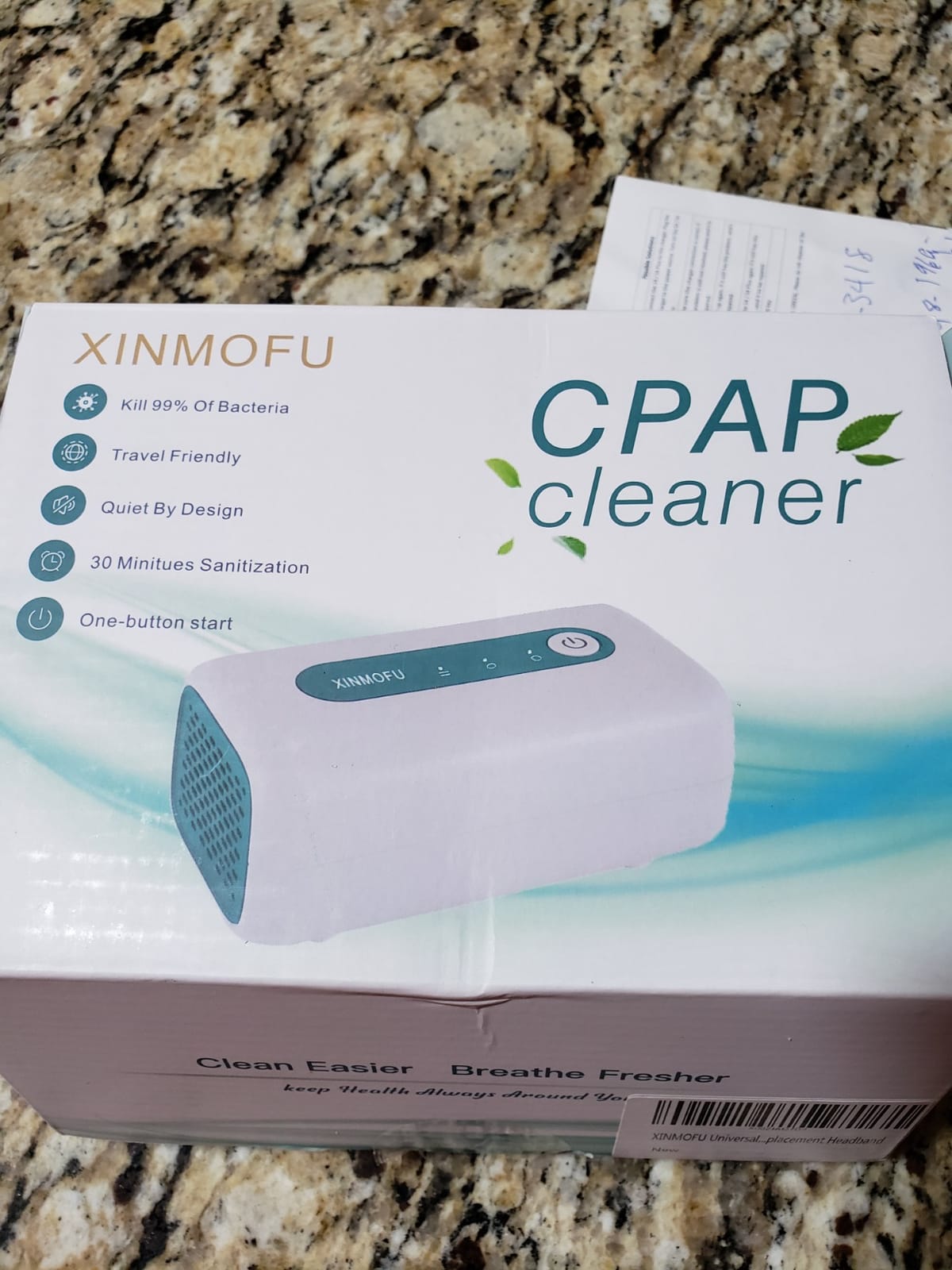
Ultrasonic cavitation is a fifth option, technically a machine rather than a consumable, and it is the only approach that puts agitated water inside a corrugated hose. The catch is tank size, consumable cost, and the fact that it still does not dry anything.
Match the tool to the part. The mask cushion needs soap and gentle handling, the hose interior needs a brush or a soak, and the humidifier chamber needs enough solution to cover a large surface. Nasal pillow masks have small, delicate seals that respond best to wipes and mild soap, while full face masks collect more oil and tolerate a full soak more readily.
Check the material list. Silicone and polycarbonate tolerate mild detergent and short soaks. Avoid bleach, alcohol-based sprays, and anything labelled a solvent, since those are what degrade silicone and cause cracking over time.
The FDA Ozone Warning and Why It Decides This Purchase
The FDA has warned that ozone-based cleaning devices can leave harmful residue inside CPAP tubing, and both ResMed and Philips Respironics treat ozone and UV sanitizers as a warranty risk. The practical effect is bigger than the health question.
Ozone gas does not scrub. It floods a chamber, sits for a cycle, and purges. Anything coated in skin oil may not be reached at all, and the material left on the inside wall of a corrugated tube is exactly where you cannot see it.
That is why no product in this roundup is an ozone or UV box. The only machine included is ultrasonic, because water and cavitation physically remove material instead of relying on chemistry or light, and because it carries no residue claim and no purge cycle.
The same logic applies to UV-C sanitizers, which are popular with sensitive users. UV light cannot reach the inside of a corrugated hose either. If you want a machine, buy one that puts water inside the tubing.
How Often to Clean Each Part
Consistency beats intensity. The biggest improvement CPAP users report comes from a routine that happens every day, not from the most expensive device on the shelf.
Daily. Wipe the mask cushion and frame, or spray and let air dry. Take the hose connection off and let it hang loose overnight so condensation drains instead of pooling.
Weekly. Take the hose, mask, and humidifier chamber apart. Soak them in warm soapy water for ten to fifteen minutes, scrub the hose with a long brush inside and out, rinse thoroughly, and air dry fully before reassembly.
Monthly. Deep clean the humidifier chamber and base plate, check the hose for hardened or discolored sections, and confirm your filter replacement is on schedule. A deep soak or ultrasonic cycle fits here rather than in the daily slot.
After an illness. Skip the routine and do a full clean immediately. Wash everything, then run a disinfecting spray or soak on every part you can reach, and give the humidifier chamber extra attention since standing water is the highest-risk surface in the system.
Replace rather than clean. Masks, filters, and hoses have a service life. Cleaning extends it, but a cushion that will not hold a seal or a hose that stays discolored after cleaning should be replaced rather than cleaned again.
Frequently Asked Questions
Are CPAP sanitizers worth the money?
For most users, no. A daily mask wipe, a weekly wash with mild soap and a hose brush, and proper air drying handle the overwhelming majority of cleaning. A sanitizer is worth adding if you want a true disinfection step, particularly after an illness, or if you have limited dexterity. Machines that flood a chamber with ozone or UV light cannot reach biofilm inside a corrugated hose, so they leave the main odor source untouched.
What is the most effective CPAP cleaner?
For removing biofilm from the inside of tubing, an ultrasonic cleaner with a proper detergent is the most effective option because cavitation puts agitated water into the hose bore. For everyday maintenance, a combination of mild soap, a long hose brush, and air drying is more effective than any single device. Spray disinfects, wipes clean, and ultrasonic physically dislodges. The strongest routine uses all three in sequence.
Do CPAP ozone cleaners really work?
They sanitise the surfaces the gas reaches, which is largely the mask and the outside of the tubing. The FDA has warned that ozone can leave harmful residue inside CPAP equipment, and it cannot scrub biofilm off a hose wall. Both ResMed and Philips Respironics treat ozone device use as a warranty risk. If you already own one, running the manufacturer purge cycle and rinsing the tubing thoroughly addresses the residue concern.
Is there an FDA approved CPAP cleaning machine?
No cleaning machine is FDA approved as a treatment or a sterilisation device for CPAP equipment. The FDA’s involvement in this category is a safety communication warning that ozone-based cleaners can leave harmful residue inside tubing. That is why manufacturers’ own guidance centres on soap, water, and regular washing rather than on a specific machine, and why we left ozone and UV boxes out of this roundup.
Is Dawn dish soap good for cleaning CPAP?
It works as a degreaser, and many users rely on it, but it is not designed for silicone. Fragranced dish soap can leave a smell that porous silicone absorbs and that you then breathe all night, and surfactants accelerate cushion and seal degradation over time. A CPAP-specific soap is alcohol-free, bleach-free, and fragrance-free, and rinses without film. If you do use dish soap, choose unscented and rinse very thoroughly.
What does ResMed recommend for cleaning CPAP machines?
ResMed guidance centres on washing the mask, tubing, and humidifier chamber daily with warm water and mild liquid detergent, rinsing thoroughly, and letting everything air dry fully before reassembly. Weekly cleaning of the tubing and chamber is called out separately because biofilm builds up inside the hose within days. ResMed does not endorse ozone or UV sanitizers and treats their use as a warranty risk.
Is it worth getting an ultrasonic cleaner?
It is worth it if the inside of your hose is your main problem. Ultrasonic cavitation is the only method that puts agitated water into the bore of a corrugated tube, and CPAP forums treat it as the most recommended machine type for that reason. Check the tank size against your hose length first, and budget for cleaning solution on an ongoing basis, since the machine cleans but does not dry.
The Verdict on the Best CPAP Cleaners for Home Use in 2026
Start with the CleanSmart disinfecting spray as your daily disinfection step, add the Aveen brush for the hose interior, and pair them with a wipe canister at the bedside. That combination covers mask, tubing, and humidifier for a fraction of what an ozone or UV machine asks, and it carries no warranty risk.
Wash the humidifier chamber with an unscented solution such as IMPRESA or Essential Values, and reach for the PAPMD dissolvable sheets when scrubbing a hose is not realistic for you. If hose interiors are your persistent problem, the iSonic ultrasonic cleaner is the only device here that puts water inside the tubing.
Consistency beats any single purchase. The routine in 2026 is ten minutes a day and a deeper wash once a week, and no machine substitutes for it. For related home health gear, see our guides to the best teeth whitening kits for home use.