
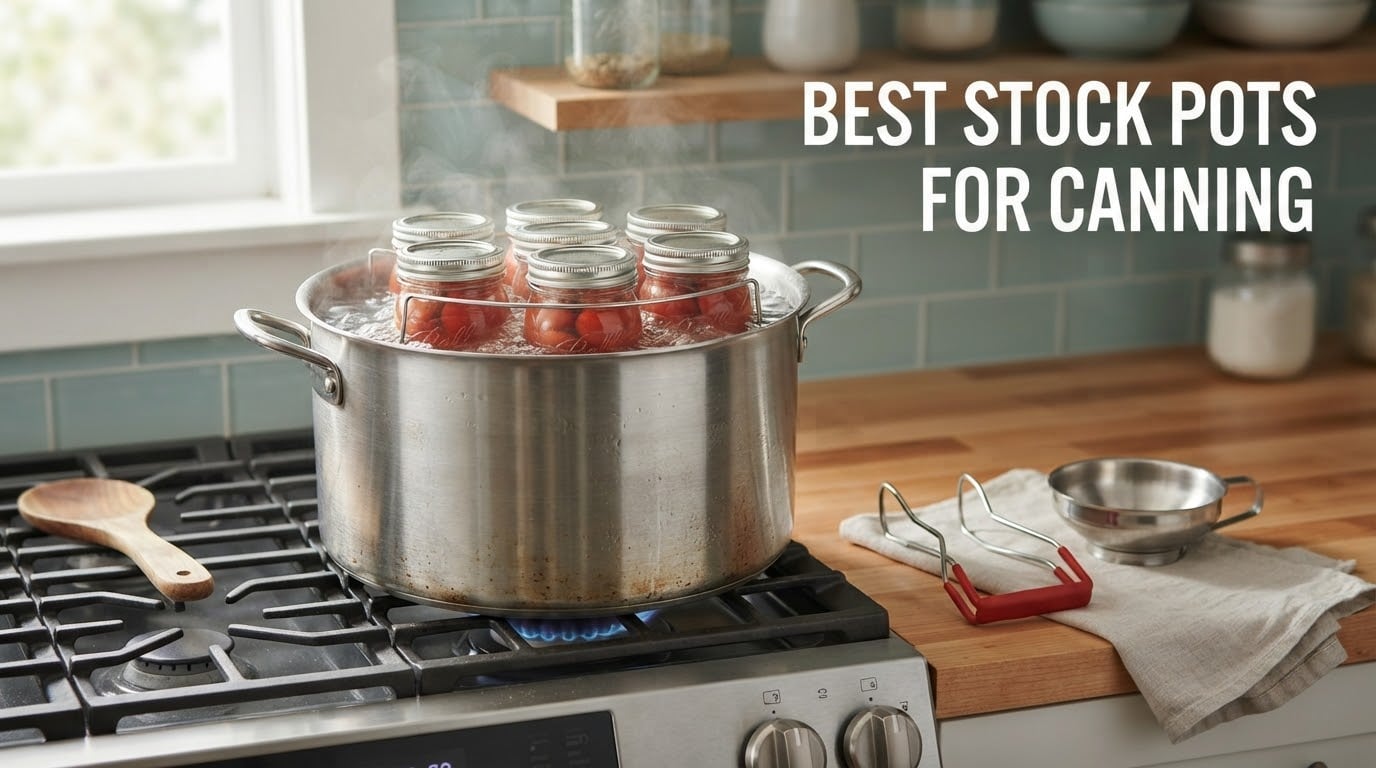
The best stock pot for canning is a heavy-base stainless steel pot in the 12 to 21 quart range, deep enough to keep jars submerged under 1 to 2 inches of boiling water for the entire processing time, and used with a canning rack on the bottom. Anything shallower, thinner, or non-reactive will not hold a rolling boil or will react with the acid in your food.
That is the whole answer, and it is the same one you will read on every serious canning page. The details are what decide which pot you should actually buy, so here is the short version of the requirements before we get into the picks.
Material: stainless steel, clad or impact-bonded with an aluminum core, no coating
Depth: tall straight sides that leave 1 to 2 inches of water above the jar lids
Capacity: 12 to 21 quarts for most households, 20 to 24 quarts for bulk harvest canners
The rack: a lift-out or loop-over rack so water circulates under the jars
Handles: riveted and sturdy enough to lift the pot when it is full of boiling water and jars
Cooktop compatibility: gas, electric, glass, and induction if your kitchen runs induction
A tight lid: a lid that stays put at a rolling boil and slows heat loss
I have spent more time with these pots than I care to admit, mostly testing full batches of jam, pickles, and acidified tomatoes and taking notes on everything that annoyed me: rack handles that swing inward, lids that steam-leak, pots that will not clear a low cabinet, and handles that get hot halfway through a two-hour run. The ten below are the ones that survived that process.
We also cover what you can and cannot safely can in a pot like this, how many jars each size actually processes, and the accessories you need on the counter alongside it. If you already own a big stainless pot with a flat base, you may not need to buy anything except a rack, and I will explain how to check.
If low-acid vegetables are on your list, read the pressure canning note in the buying guide before you buy. A stock pot is only part of the answer, and a [pressure canner for home canning](https://austineubanks.com/best-pressure-canners-for-home-canning/) is a separate purchase for that work. Pairing either pot with a [food mill for canning](https://austineubanks.com/best-food-mills-for-canning/) makes the prep side much faster once the cooking starts.
Table of Contents
Top 3 Best Stock Pots for Canning in 2026
Cook N Home 20 Qt Stock Pot
- 20 qt 18/10 stainless
- Impact-bonded aluminum base
- Induction gas electric glass ceramic

Granite Ware 21.5 Qt Canning Set
- 21.5 qt enameled steel
- Rack holds 12 half-pint jars
- Full 8-piece tool set

Harvest 20 Qt Canning Pot
- Flat clad induction-safe base
- Flips rack for steam canning
- Lid thermometer
Best Stock Pots for Canning in October
| Product | Specifications | Action |
|---|---|---|
| Cook N Home 20 Quart Stock Pot |
|
Check Latest Price |
| Granite Ware 21.5-Quart Canning Set |
|
Check Latest Price |
 McSunley Prep N Cook 21.5 Qt Canner McSunley Prep N Cook 21.5 Qt Canner |
|
Check Latest Price |
| Harvest 20 Qt Stainless Canning Pot |
|
Check Latest Price |
 Supa Ant 24-Quart Canning Kit Supa Ant 24-Quart Canning Kit |
|
Check Latest Price |
 Concord 20 Quart Canning Pot Set Concord 20 Quart Canning Pot Set |
|
Check Latest Price |
 HOMKULA 20 Qt Water Bath Pot HOMKULA 20 Qt Water Bath Pot |
|
Check Latest Price |
 HOMICHEF 24 Quart Stock Pot HOMICHEF 24 Quart Stock Pot |
|
Check Latest Price |
 NutriChef 19-Quart Stock Pot NutriChef 19-Quart Stock Pot |
|
Check Latest Price |
 NutriChef 20 Quart Stock Pot NutriChef 20 Quart Stock Pot |
|
Check Latest Price |
1. Cook N Home 20 Quart Stock Pot – Best Overall for Home Canning
Cook N Home 20 Quart Stainless Steel Large Stock Pot with Lid
20 qt capacity
18/10 polished stainless
Impact-bonded aluminum disc base
Tempered glass vented lid
Pros
- Even heating with no hot spots from the bonded base
- Works on induction gas electric glass and ceramic
- Dishwasher safe and oven safe to 400F
- The most reviewed pot in this group
- Residue wipes off with a mild abrasive
Cons
- Very heavy and bulky when full
- Tall enough that cabinet clearance is a real issue
- A small ridge at the base seam catches dripped sauce
This is the pot I keep reaching for, and the reason is boring: it just works and nobody complains. The 20 quart size is big enough to matter for a real batch without being a piece of furniture, and the aluminum disc bonded into the base gets a rolling boil going faster than a single-layer stainless pot ever will.
I ran a full load of acidified tomato salsa through it on an induction burner, and the difference between a fast boil and a slow one is the difference between a 40 minute processing window and one where you are standing there watching the thermometer. This pot delivered heat to the base quickly and held it evenly across the bottom.
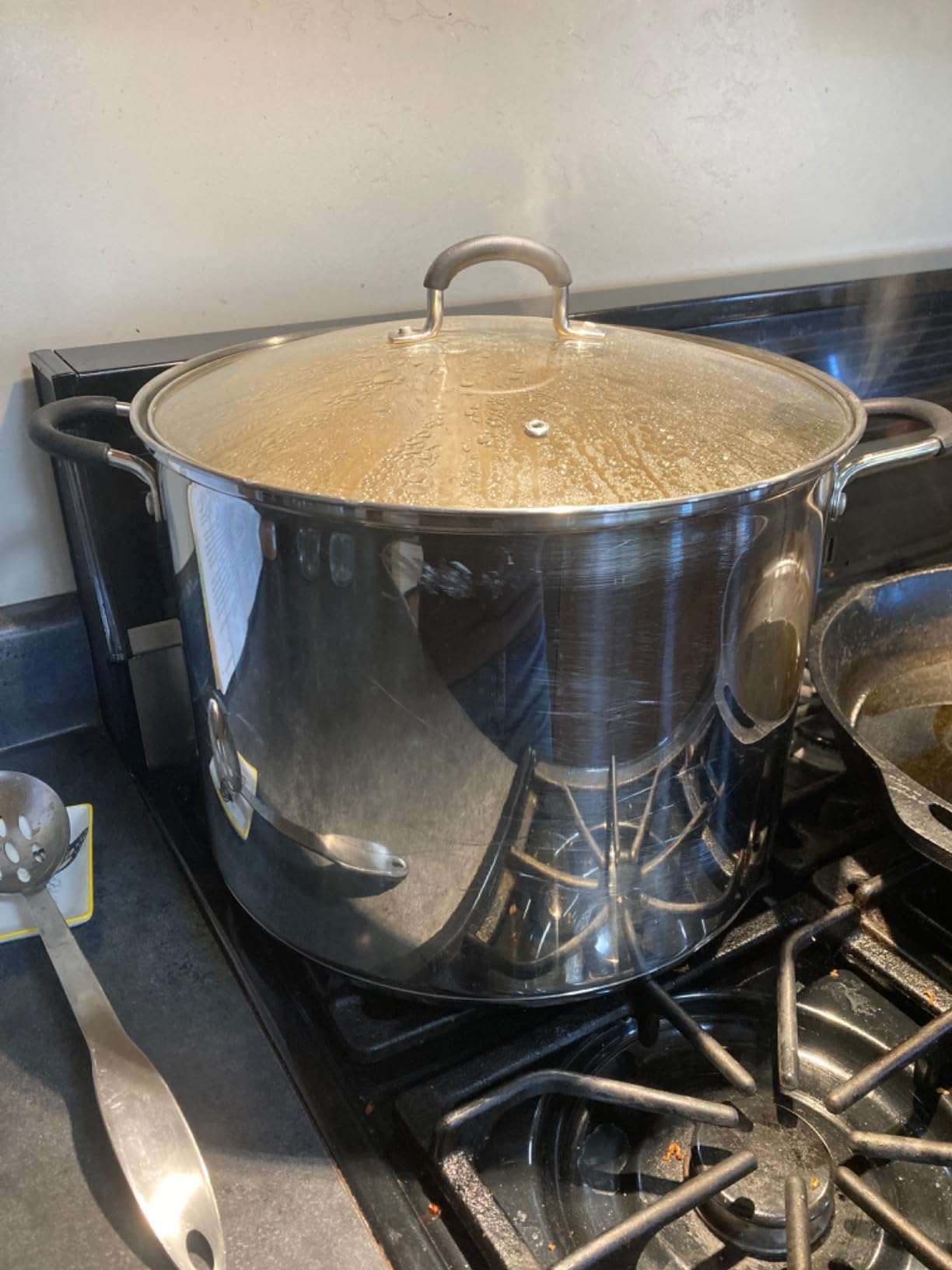
At 7.5 pounds empty and 20 quarts full, this is a genuinely heavy object. When I lifted it off the burner to pour off water I used two dry oven mitts and both hands, and I would still not attempt it one-handed with a wet cloth. That is not a flaw, it is physics, but it does mean you need a clear path from burner to sink.
Two smaller details came up repeatedly in reviews and in my own use. The tempered glass lid has a steam vent, so you can check the water level without dropping the heat, and the silicone-wrapped main handle stayed cool enough to grip bare-handed at the end of a long batch. The riveted side handle is the one you use for the two-handed lift.
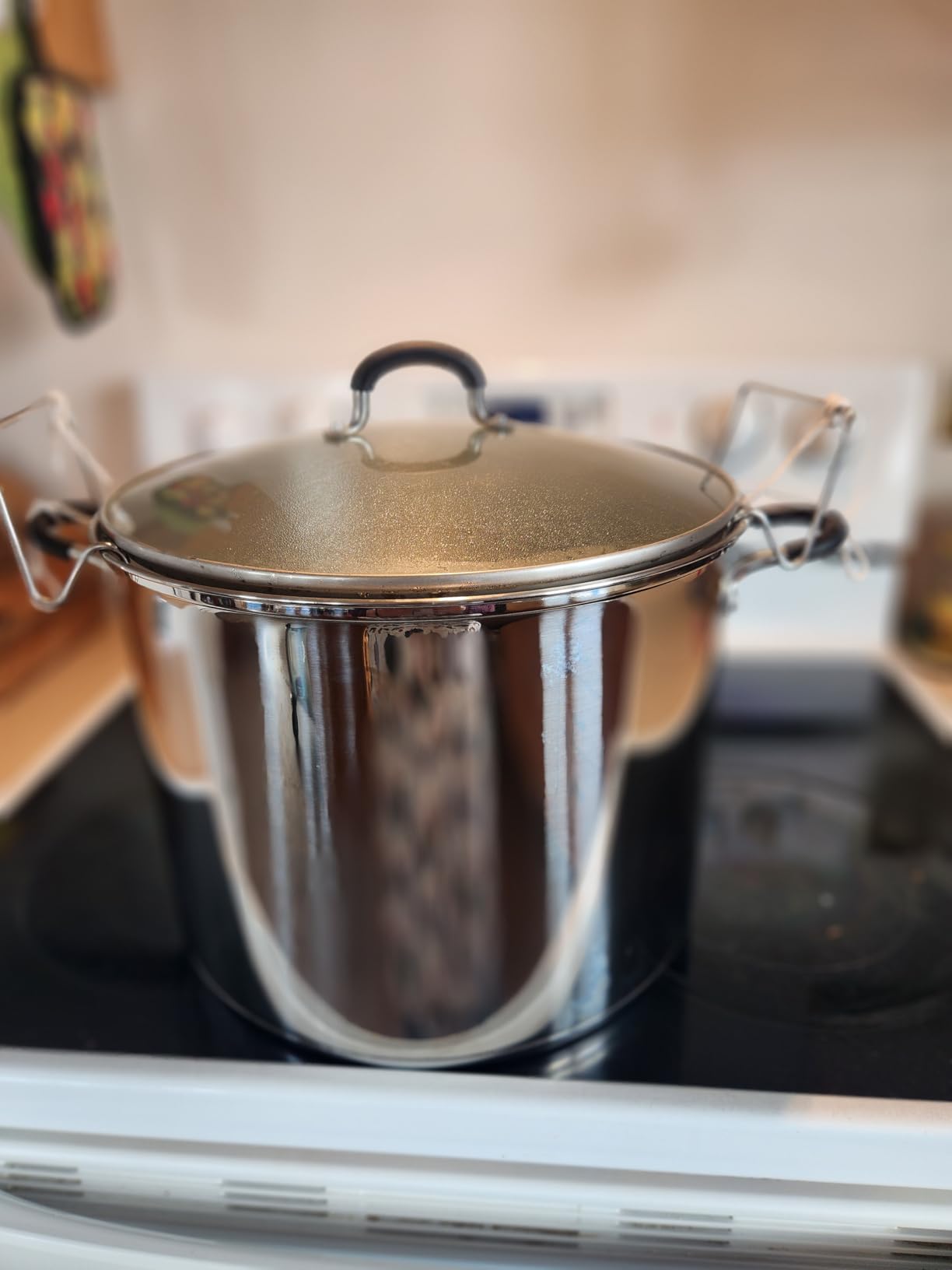
Who this pot suits
It suits most households outright. If you are canning jams, pickles, applesauce, or acidified tomatoes in batches of six to ten jars, 20 quarts with a separate rack is the sweet spot, and this pot is the one I would hand to a friend starting out.
It also suits people who want one pot for two jobs. A 20 quart stainless stockpot earns its space making stock, cooking a seafood boil, or simmering a whole pot of chili, and the reviews are full of owners doing exactly that between canning sessions.
Who should skip it
Skip it if your kitchen has low cabinets and limited counter real estate. The dimensions run 12.6 inches deep by 17.3 inches wide by 9.6 inches high, and storing a full 20 quarts somewhere other than the back of a lower cabinet is genuinely annoying.
Also skip it if canning is the only thing you will ever do with it. There is no jar rack included, and the bottom seam ridge is an extra scrubbing step on every single clean. Buy a pot built for canning and you get the rack, the lid, and the tools in the same box.
2. Granite Ware 21.5-Quart Canning Set – Best All-in-One Kit
Granite Ware Canning Pot with Rack – 8 Piece Set Enamelware Water bath canner – Canning Starter Kit
21.5 qt enameled steel canner
Rack holds 12 half-pint jars
8-piece starter set
4 pounds empty
Pros
- Light enough to lift safely when loaded
- Includes the whole tool set from rack to lid lifter
- Everything nests into one unit for storage
- Speckled enamel resists chipping and washes easily
Cons
- Cannot be used on induction or glass cooktops
- Chrome rack is light gauge and can feel loose
- Enamel can chip on a bottom rim bump
This is the pot to buy if you want one box and nothing else to think about. The canner, the lid, the chromed steel rack, a jar lifter, a magnetic lid lifter, a jar wrench, a funnel, and a bubble remover with a headspace ruler all ship together and nest into the pot for storage.
What stood out for me was the weight. At 4 pounds empty, this is the only pot in the group I was comfortable lifting with one hand under each handle while full, and that matters when you are moving boiling water and hot glass at the end of a long session.
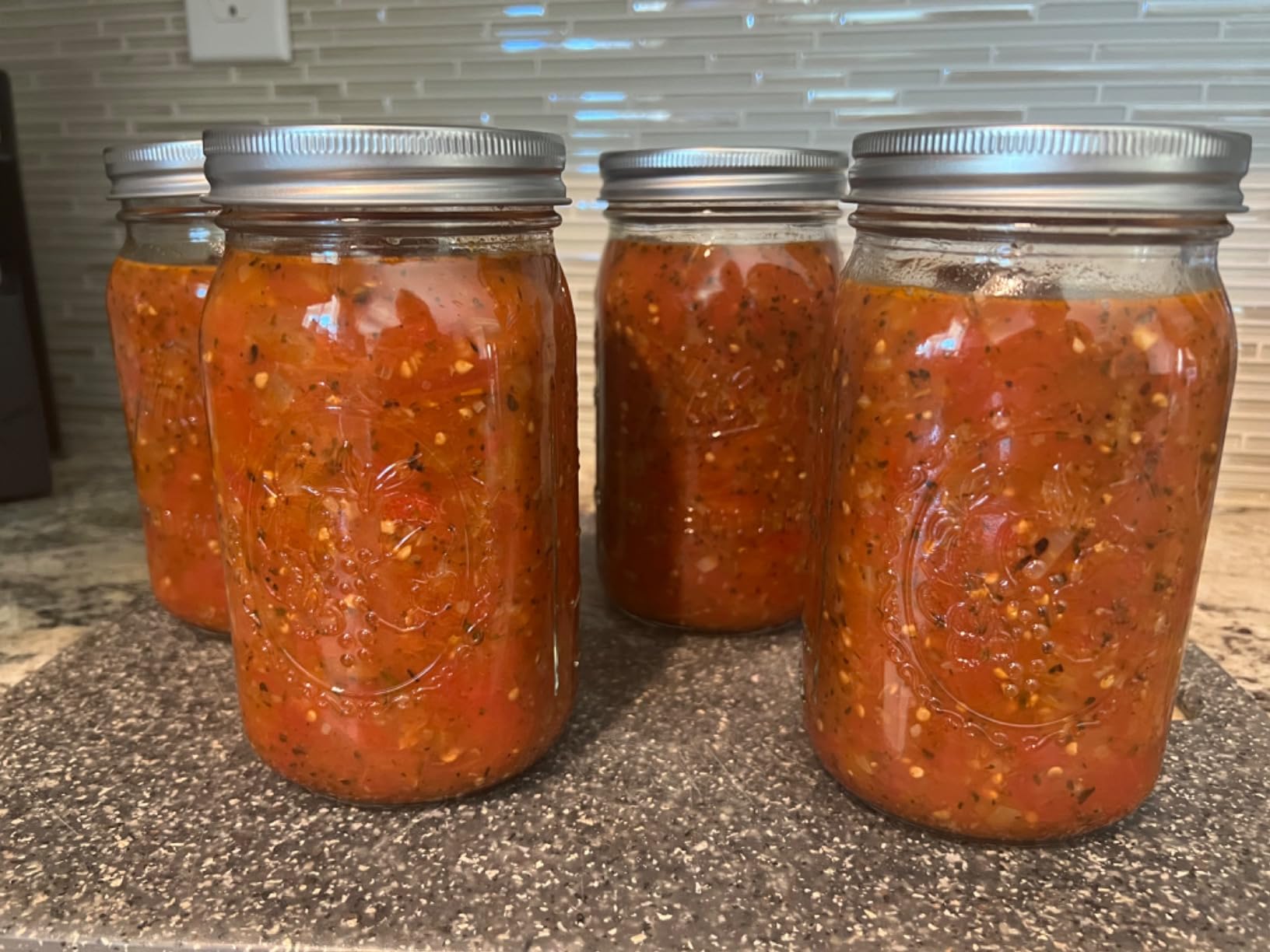
The rack specification is the honest selling point here. It holds 7 quart jars, 9 pint jars, or 12 half-pint jars, which is the same capacity several 21.5 quart stainless canners offer, so you are not trading batch size to get the lighter build.
Vitified enamel needs no seasoning and does not rust, and the surface washes by hand and dries fast. The one maintenance habit that matters is storing it dry, because trapped moisture at the exposed steel rim is what eventually causes rust marks.
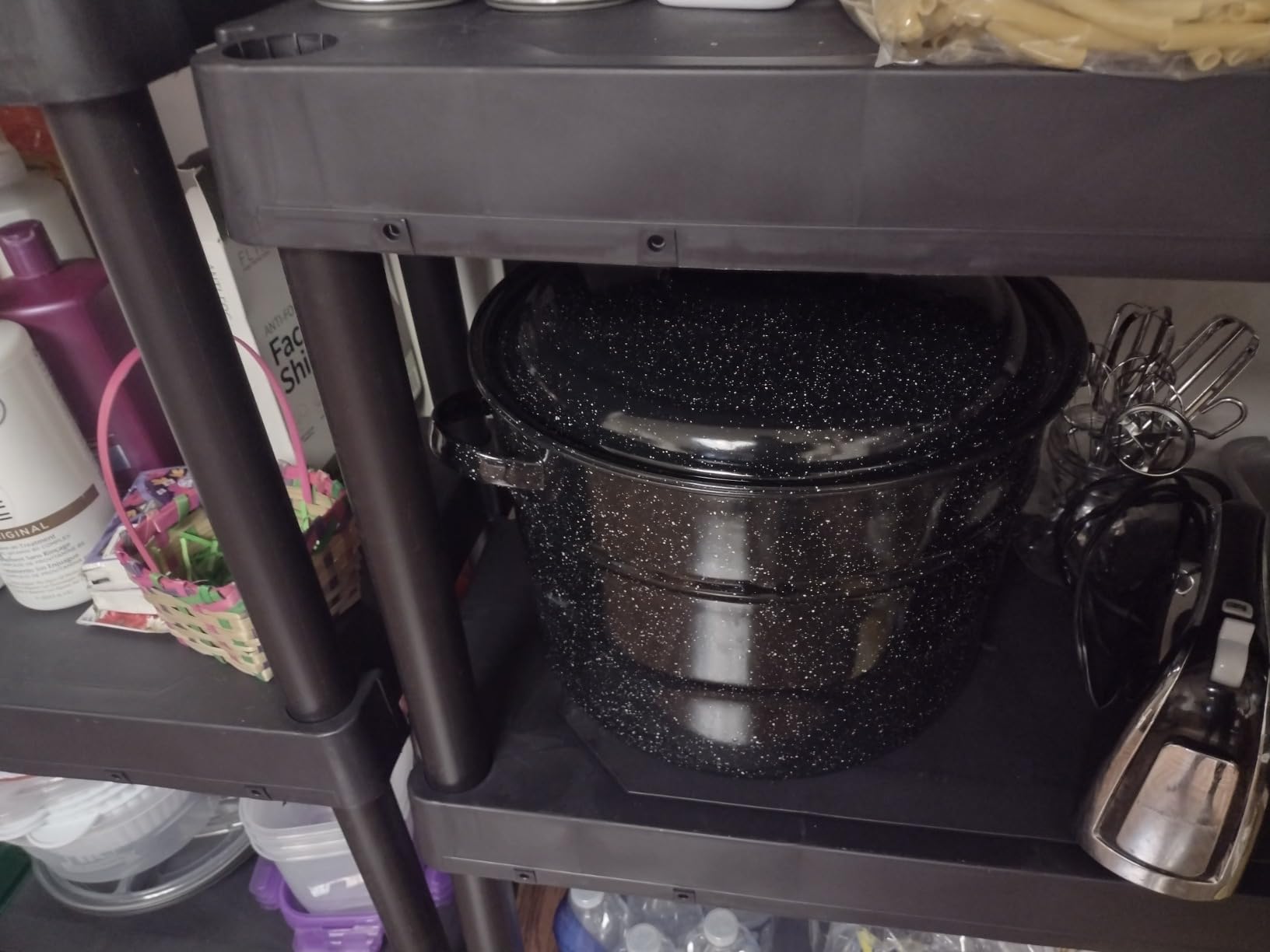
Who this pot suits
It suits beginners, older canners, and anyone who does not want to assemble gear piecemeal. If you have bought jars, bands, a funnel, a lifter, and a rack in four separate orders, this set replaces all of that with a single purchase.
It also suits households that canner a lot of small jars. Twelve half-pints per load is a decent evening of work, and a light pot means you are not exhausted by the second batch.
Who should skip it
Skip it if you cook on induction or a glass cooktop. The manufacturer states plainly that this pot is not suitable for glass cooktops or induction stovetops, and no amount of enamel enthusiasm changes that.
Skip it if you are processing very acidic food in large batches for a very long time. Enamelled steel is a sound material, but heavy clad stainless is what the canning community reaches for when a pot is going to sit in a rolling boil for hours on end, and the light-gauge chromed rack here is the part most likely to disappoint over years.
3. McSunley Prep N Cook 21.5 Qt Canner – Best Budget Water Bath Setup
Prep•N•Cook by McSunley 21.5Qt Stainless Steel Water Bath Canner
21.5 qt stainless steel
Flat aluminum encapsulated base
Rack holds 12 half-pint jars
8.5 pounds empty
Pros
- Flat base gives even heat and fewer hot spots
- Rack rests on the pot sides so jars load easily
- Riveted handles stay cool during processing
- Shatter-resistant tempered glass lid
- Doubles as a soup or seafood pot
Cons
- No induction claim so it is limited to gas electric and glass
- Glass lid feels less robust than a solid metal lid
- 21.5 quarts is awkward to store
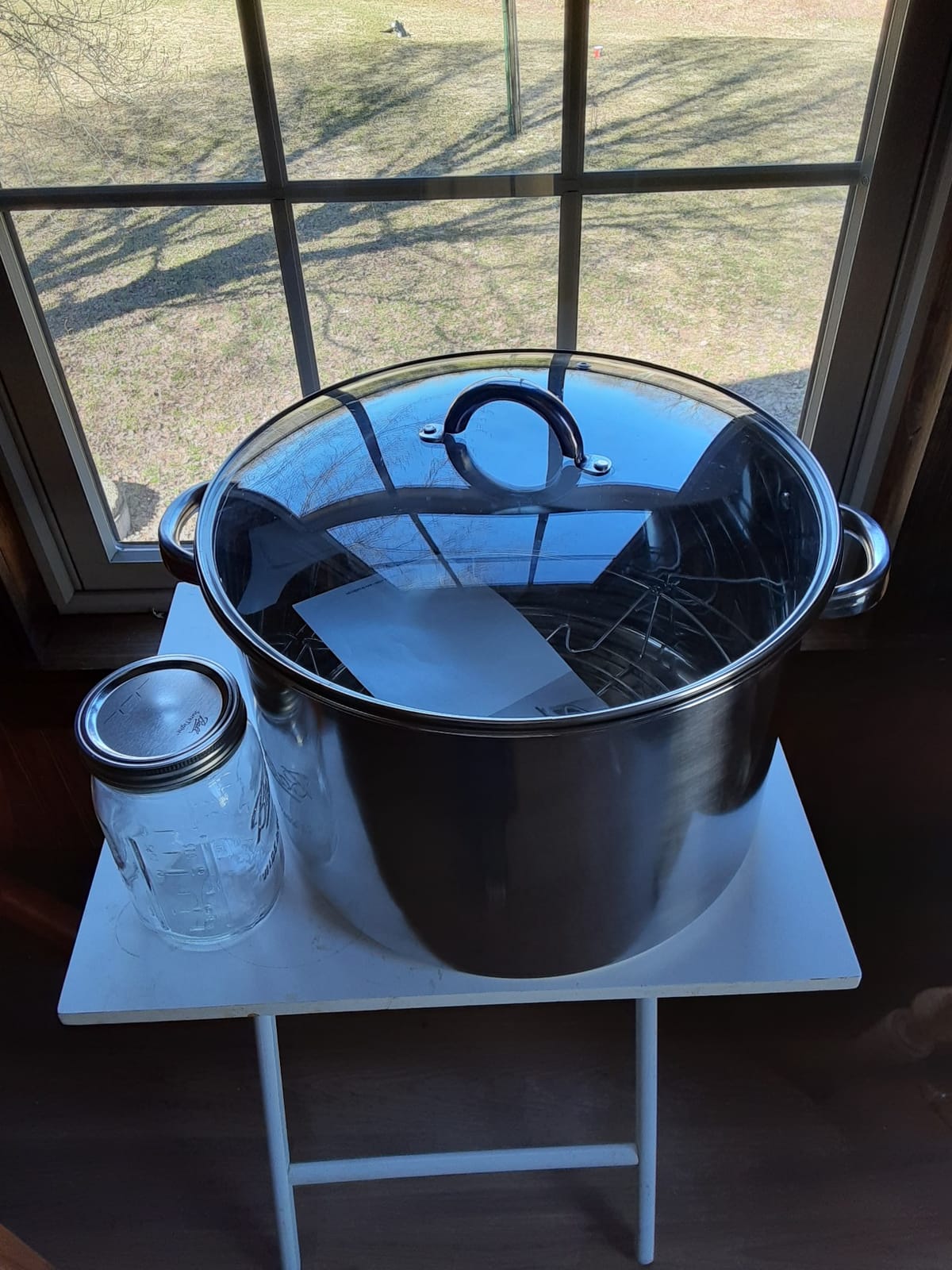
This is the pot that answers the question can you use a stock pot for canning with a straight yes. It is a purpose-built 21.5 quart stainless water bath canner with an easy-lift jar rack, and for a first season of jam and pickles it does everything a larger pot does at a fraction of the size and weight of a premium one.
The design detail I appreciate most is the rack. It rests on the sides of the pot rather than sitting on the bottom, so you load your jars at counter height and lower the whole rack in, rather than crouching over a pot of near-boiling water trying to place glass carefully.
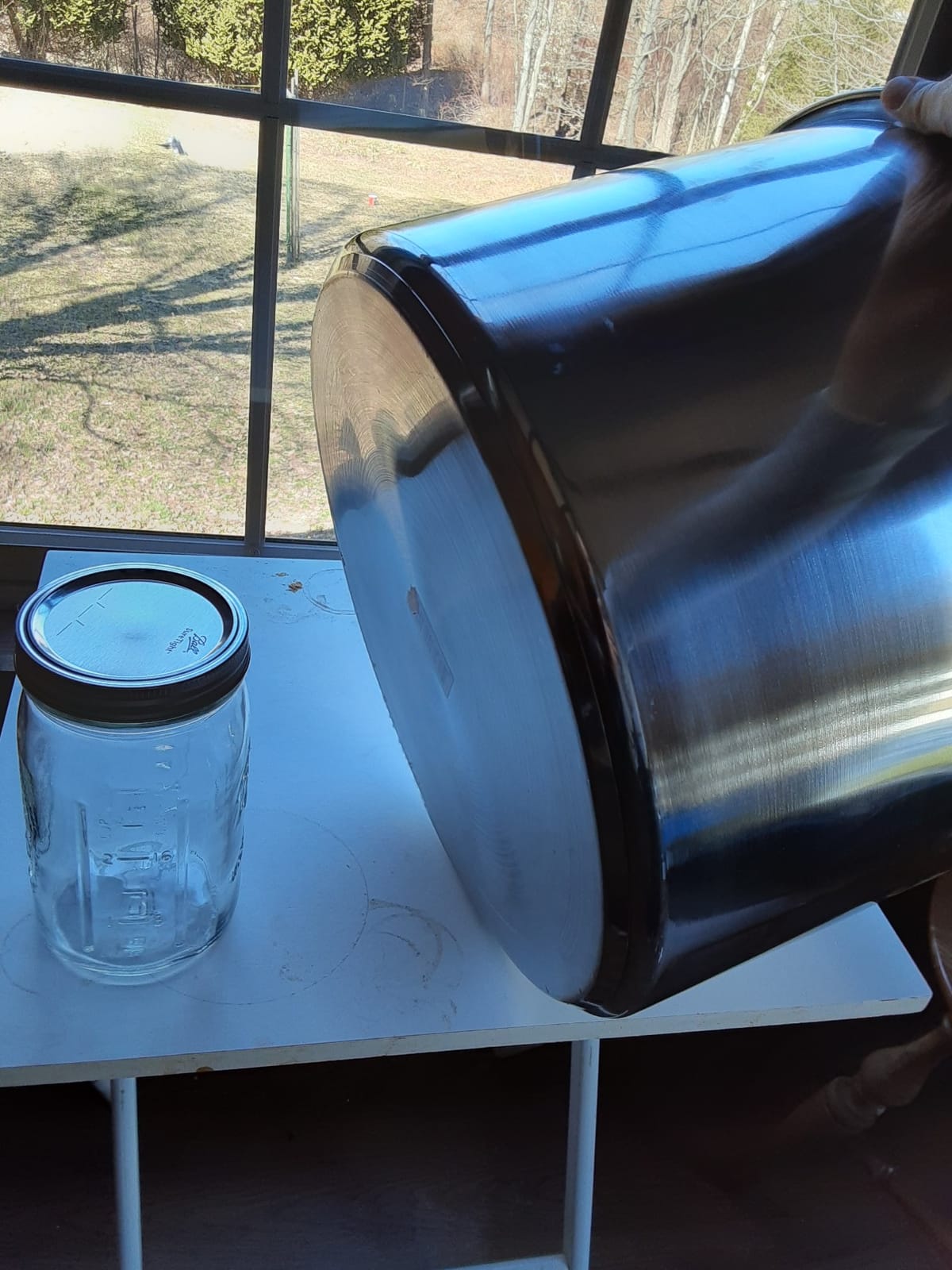
Heat distribution is handled by a flat aluminum encapsulated base, and the listing is specific about why: uniform heat minimises hot spots that can lead to uneven processing or jar breakage. That is the exact failure mode that ruins a batch, and a flat bonded base is the cheapest insurance against it.
At 8.5 pounds empty and 21.5 quarts, this is a big pot. I would measure your cabinet before ordering, and note that at 4.6 stars it carries the lowest average rating in this group, with a 3 percent one-star share.
Who this pot suits
It suits a first-time canner working with a single burner and a limited kitchen. You get a real canner rather than a stockpot with an adapter rack, at a price that leaves room in the budget for jars, a funnel, and a jar lifter.
It also suits anyone who wants one vessel for canning and cooking. Reviews are full of owners using it for soups, stews, lobster, and corn on the cob, which is a fair return on the purchase.
Who should skip it
The cooktop claim covers gas, electric, and smooth glass-top ranges only, with no induction compatibility listed, and guessing on induction is how you end up with a pot that barely registers on the burner.
Skip it if you canner more than nine or ten jars at a time, or if you are looking for a pot you can leave on a low simmer for a full day making stock. It is a 21.5 quart canner first and a general stockpot second.
4. Harvest 20 Qt Stainless Canning Pot – Best Rated and Induction Ready
Harvest Stainless Steel 20 Qt Canning Pot with Rack | Water Bath or Steam Canning | Works on All Stovetops Including Induction, Glass, Gas (Stainless Steel Canner + Tools) (Stainless Steel Canner)
20 qt stainless steel canner
Flat clad bottom for all cooktops
Double-sided rack for water bath or steam
Built-in lid thermometer
Pros
- Highest average rating in this group
- Flat clad base makes full burner contact
- Rack flips over to switch to steam canning
- Lid thermometer removes timing guesswork
- Backed by a 5-year warranty
Cons
- Very heavy even when empty
- Depth leaves roughly an inch of water above jars
- Rack handles shift jars while loading
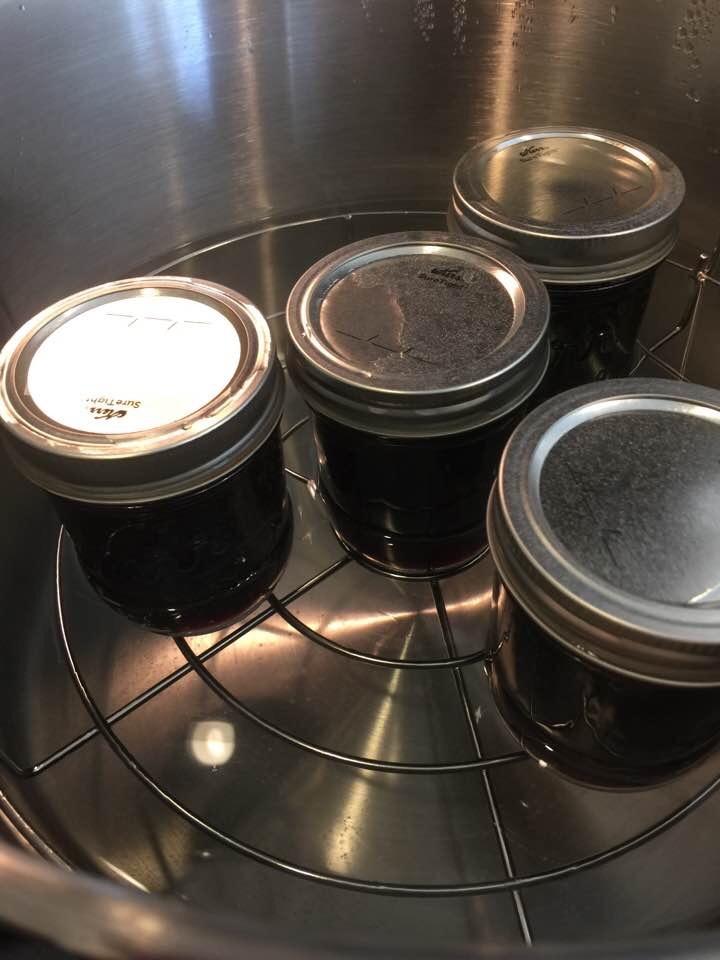
At 4.8 stars across close to 3,000 ratings, this is the highest-rated pot in the group and the one enthusiasts describe as the upgrade from basic enamelware. I use it as my reference canner because the flat clad bottom makes full contact with every burner type, including induction, with no overhang.
The feature that changed my routine is the rack. It is double-sided: one way for a traditional water bath, flipped over for steam canning. Switching to steam cuts start-up time and water use, and on a hot day when I do not want a kitchen full of steam, that is a real difference in comfort.
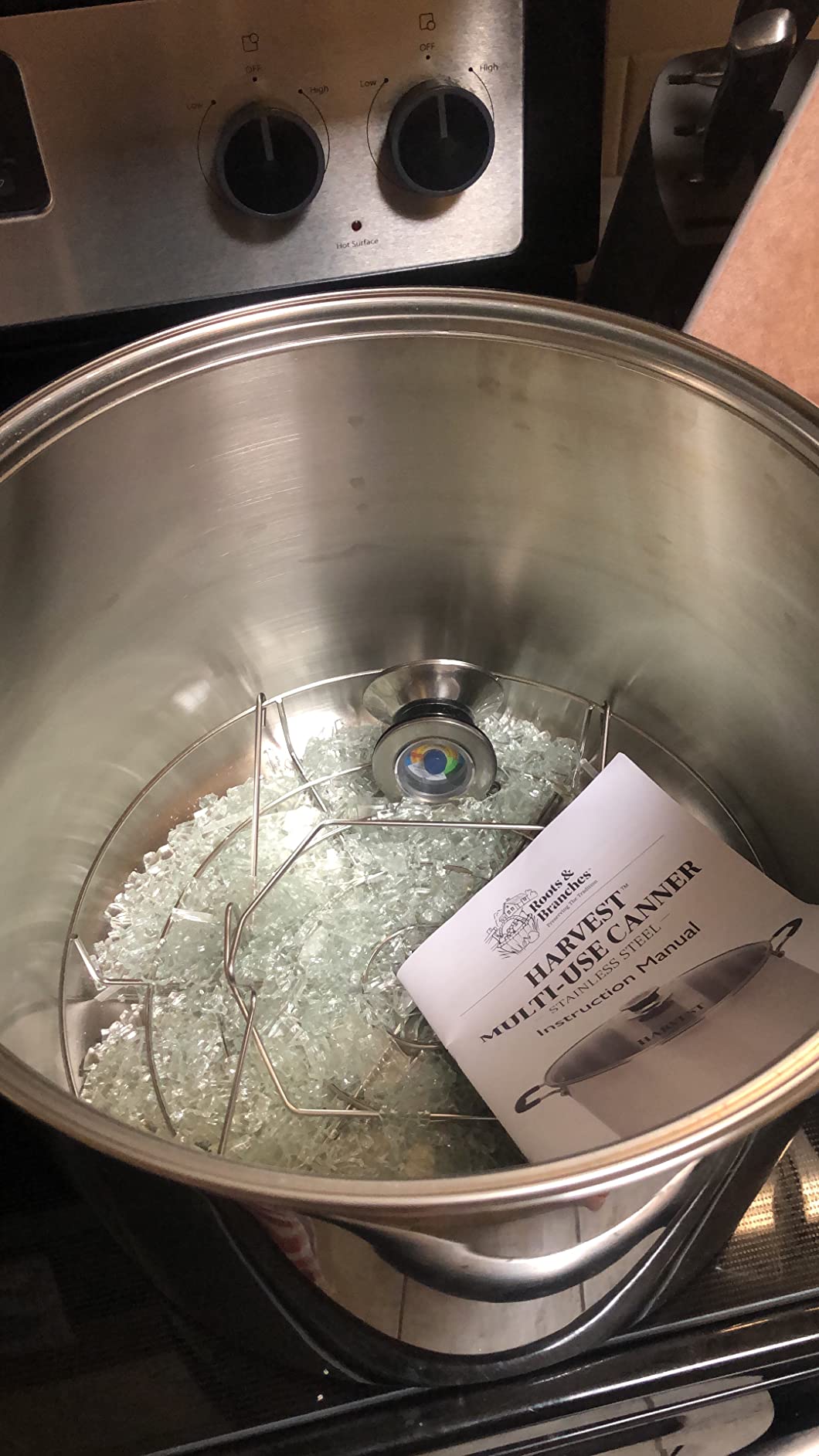
The second feature nobody else in this group has is the temperature indicator built into the knob of the tempered glass lid. Instead of guessing when your pot has come back to a full boil after adding cold jars, the needle tells you when to start the processing timer, which is the single most common place beginners lose time and heat.
Capacity is 20 quarts of liquid with room for 8 pint or 7 quart jars. It weighs 10.1 pounds empty, which is the heaviest pot here, and the depth is tight enough that you get about an inch of water over the jars rather than the full two inches.
Who this pot suits
It suits canners on induction or smooth-top ranges, because the flat clad base is the whole point and it performs on every burner. It also suits anyone who wants to try steam canning without buying a second appliance.
It suits careful canners who want the timing handled for them. The lid thermometer and the 5-year warranty both say this is a pot built to be trusted with food that has to stay safe in a pantry for a year.
Who should skip it
Skip it if lifting a 10 pound empty pot is not something you want to do while it is full of boiling water and glass. At 10.1 pounds it is among the heavier pots here, which is a real consideration for anyone with back or shoulder issues, and for anyone working on a glass cooktop with a low weight rating.
Skip it if your recipes need the full two inches of headroom over tall jars. The depth here is on the short side, and the glass lid is more flexible than an all-metal canning lid, so it flexes and pops as it cools and can leak steam at a hard boil.
5. Supa Ant 24-Quart Canning Kit – Best for First-Time Beginners
Canning Supplies-24 Qt. Water Bath Canning Pot with Rack & Lid -Starter Kits Set for Beginners – Stainless Steel Water Bath Canner Kit & Rack-Rack, XL Ladle, Measuring Cups, Kitchen Funnel by Supa Ant
24 qt porcelain enamel over steel core
Complete tool set in the box
PFOA and PTFE free
Not for induction or glass hubs
Pros
- One box covers the pot and every tool a beginner needs
- Light enamel over steel core is easy to lift
- No chip prone coating seams
- High visibility tools
- Stores back in the supplied box
Cons
- Excluded from induction and glass cooktops
- Steel core enamel differs from heavy clad stainless
- Very large 24 quart footprint is hard to store
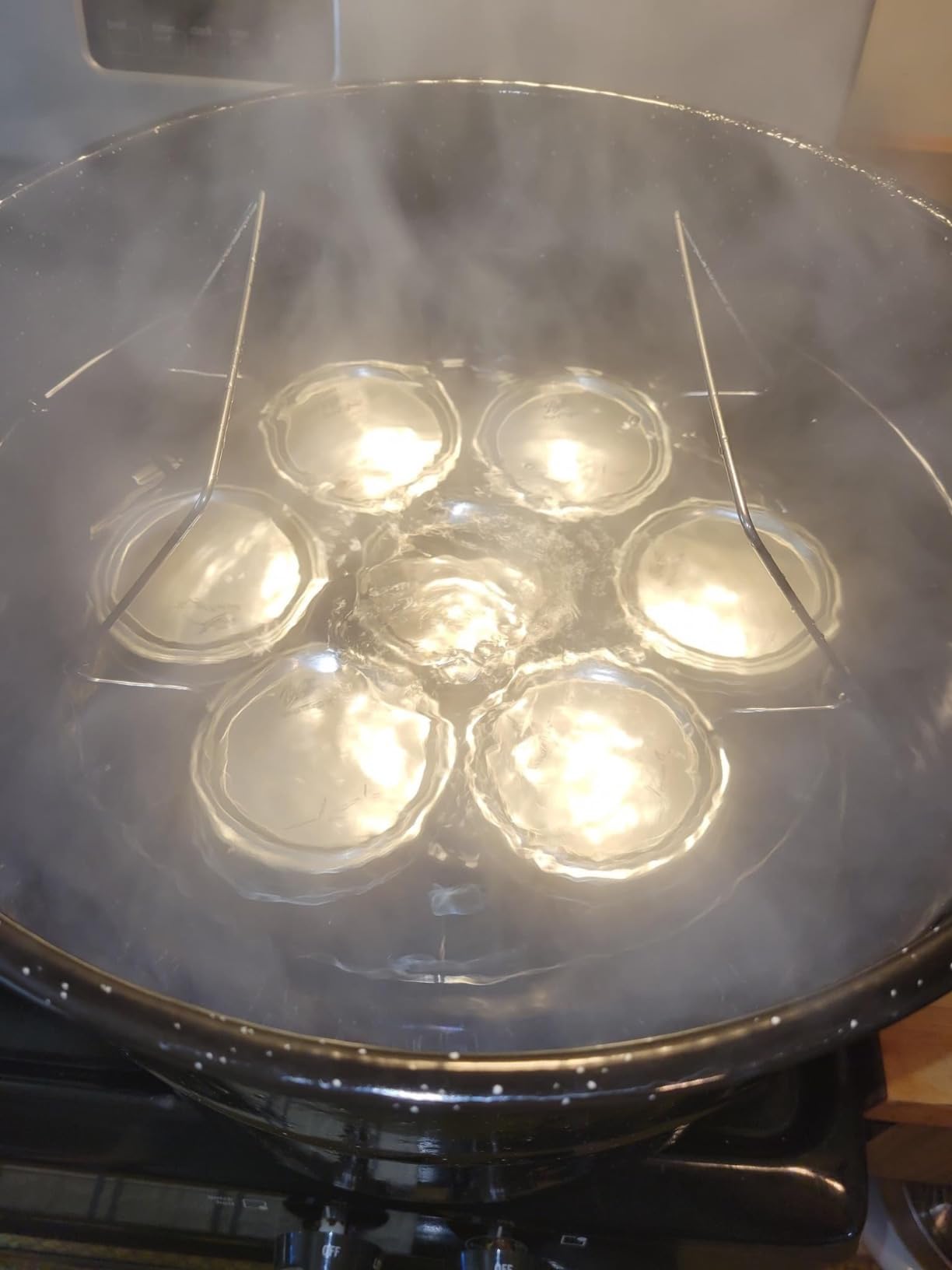
This kit answers the beginner version of the question: what do I actually need to buy. The pot is 24 quarts with a lid and rack, and the box also holds a canning funnel, jar lifter, bubble popper, magnetic lid lifter, jar wrench, canning tongs, an extra large scoop, six measuring cups, and homemade labels.
The listed capacity sits at the top of what most households need, and the construction is porcelain enamel over a steel core, which makes it noticeably lighter to lift than a solid stainless canner of the same size. The surface is free of PFOA and PTFE, and there are no coating seams to chip.
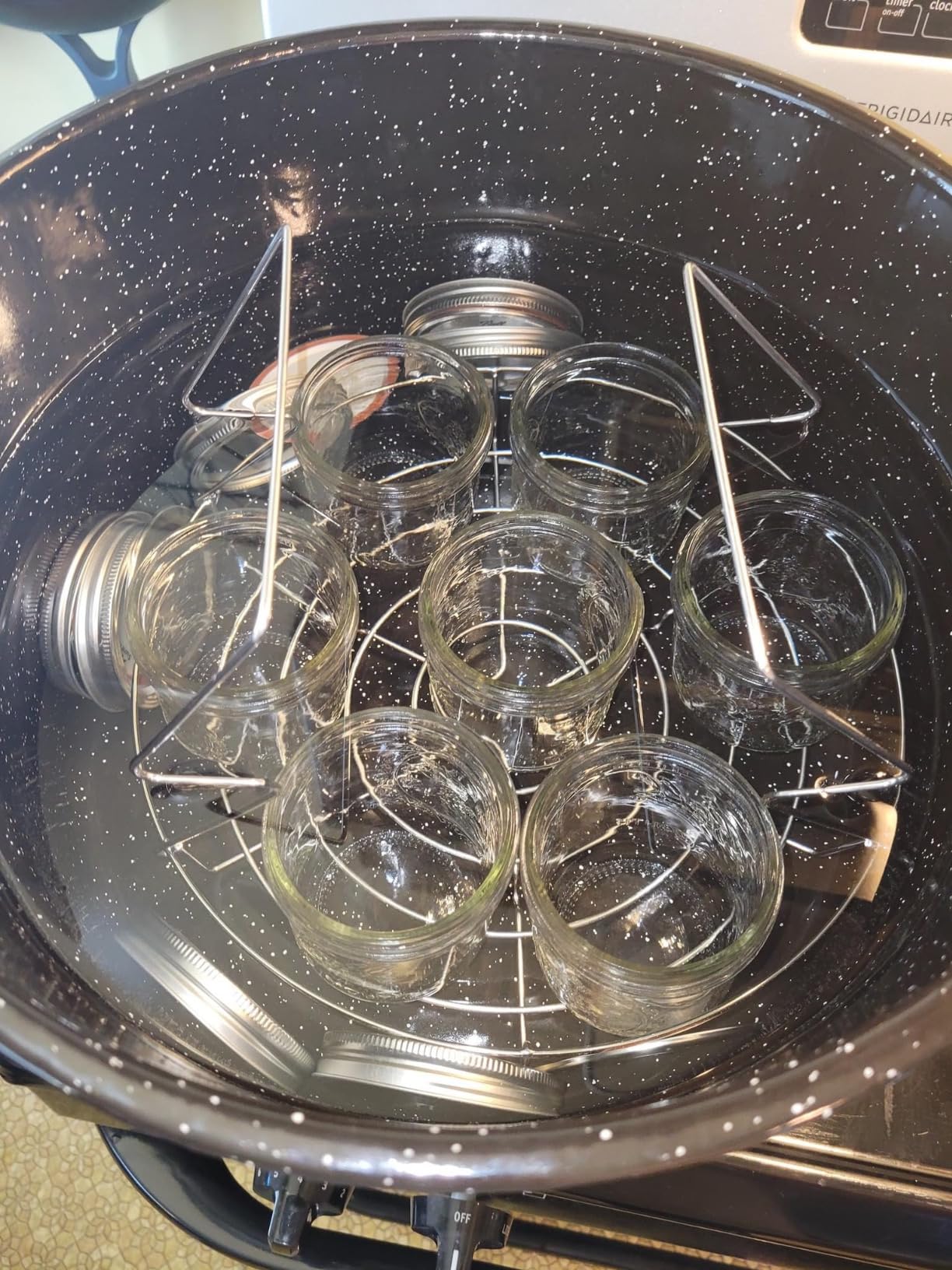
Two practical details stand out. The fluorescent green tools are genuinely easy to find in a cluttered kitchen, which sounds trivial until you are hunting for a bubble remover with wet hands, and the whole set stores back in the supplied box between seasons rather than occupying nine drawers.
The kit is assembled in the USA and carries a 365-day warranty with US and UK based support. The same range is also sold as 6-piece, 8-piece, 10-piece, and 13-piece versions if you want to pay for fewer tools.
Who this pot suits
It suits someone who has decided to start canning this season and would rather not research which eight tools are actually required. Everything in the process, from filling to sealing, is in the box, and the pot handles a large batch when the harvest comes in.
It also suits a canner who cooks on a gas or electric range and stores equipment seasonally, because the box means the whole thing goes back on a shelf in one move.
Who should skip it
Skip it on induction or glass cooktop hubs, which the listing excludes outright. If your kitchen runs on induction, this pot simply is not an option no matter how good the rest of the package is.
Skip it if you already own a stainless pot and a rack. Buying a second large vessel for the sake of the accessories is a lot of cupboard for a small gain, and steel core enamel behaves differently from heavy clad stainless during a long water bath.
6. Concord 20 Quart Canning Pot Set – Best for Thick Racks
CONCORD 20 Quart Stainless Steel Canning Pot Set. Includes Canning Rack, Tongs, Jar Lifter, Funnel, Wrench, Lid Lifter, Mixer/Measurer (Induction Compatible)
20 qt stainless canner
Triply three-layer bottom
3 mm stainless rack wires
Holds 8 pint or 7 quart jars
Pros
- Rack wires are thicker than most rivals at 3 mm
- Thick walls resist denting better than cheaper kits
- Triply bottom spreads heat evenly
- Made in the USA
- Eight pieces cover every step
Cons
- At least one buyer disputes the induction claim
- Included hand tools feel basic
- Large size is a storage and sink challenge
This set is defined by one part more than any other: the rack. It is built from 3 mm stainless steel wire, and the listing is quick to point out that most competitors use 2 mm or less. In use that difference is not subtle, because thin rack wires let half-pint jars shift and tip while you are lowering them into hot water.
The pot itself is 20 quarts with a triply, three-layer bottom for even heat distribution, and the walls are thick enough that buyers consistently rate it as more dent resistant than lighter kits. The set is made in the USA, which several owners treat as a quality signal rather than a marketing line.
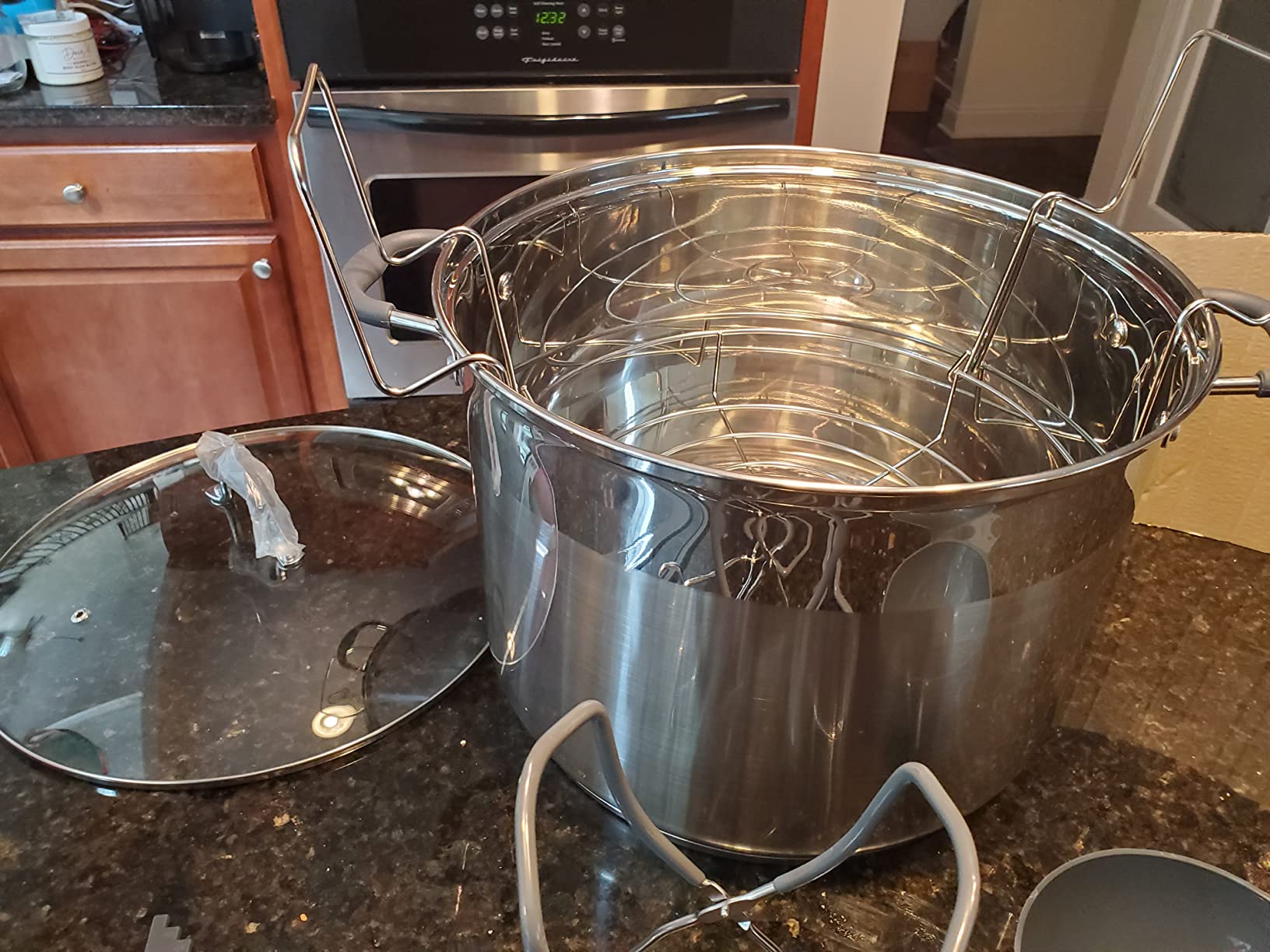
Everything else in the box covers the full sequence: vinyl-coated tongs, a jar lifter, a jar wrench, a funnel, a magnetic lid lifter, and a mixer and measurer. That is eight pieces, and jars are the only thing not included. The rack also flips upside down to serve as a steaming rack, so the pot is not single purpose.
The pot measures 13.25 inches wide by 10 inches high. That height is one of the better numbers in this group for a 20 quart canner, and it is a meaningful difference when you are trying to keep two inches of water over tall jars.
Who this pot suits
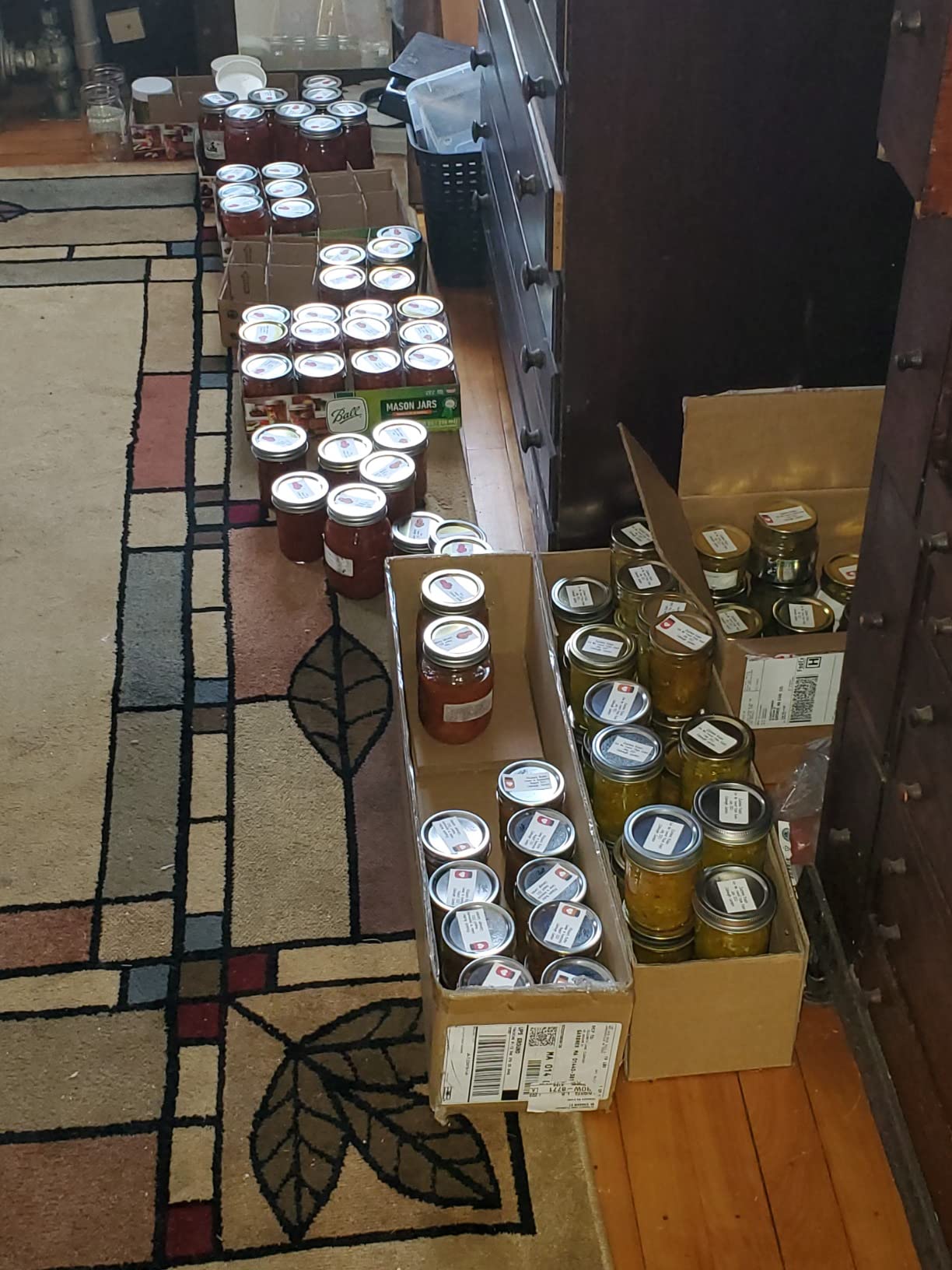
It suits a canner who loads a lot of small jars. Buyers note the rack fits 8 to 12 half-pint jars in a single batch depending on layout, and the heavy gauge wires are what make that reliable rather than lucky.
It also suits anyone who wants a rack that will still be straight and secure in five years, and who does not mind a stainless lid and pot that will outlive several canners.
Who should skip it
Skip it if induction compatibility is non-negotiable for you. The set is advertised as induction compatible, but at least one buyer reports the pot did not work on their induction cooktop, so treat the claim as something to verify against your own burner.
Skip it if you were hoping for heavy duty accessories. The hand tools are described as basic next to the pot itself, and a couple of units have arrived with a dent in the body, though the manufacturer replaced one quickly.
7. HOMKULA 20 Qt Water Bath Pot – Best Tool Bundle for Labels and Gloves
HOMKULA 20 QT Water Bath Canning Pot with Rack and Lid, Canning Supplies
20 qt stainless water bath pot
Thickened rack for upright jars
Includes 100 date labels and gloves
Induction cooktop suitable
Pros
- Gloves labels and a jam spoon are in the box
- Thickened rack helps keep jars upright
- Food grade stainless resists warping
- Foldable rack stores flat
- Dishwasher safe apart from the lid lifter
Cons
- Under 400 ratings so durability is less documented
- Blue finish marks a polished steel more readily
- Bulky 20 quart size is awkward to store
The hook on this kit is not the pot, it is the extras. You get heat-resistant gloves, 100 date label stickers, a jam spoon, a funnel, a jar lifter, a magnetic lid lifter, tongs, a jar wrench, and a bubble remover with a headspace measurer. Jars are not included.
The pot is 20 quarts of food grade stainless steel with a rack and lid, and the thickened rack is designed to keep jars stable and upright. The handle design is specific about its job too, giving you something to grip while lowering hot jars rather than reaching into the pot.
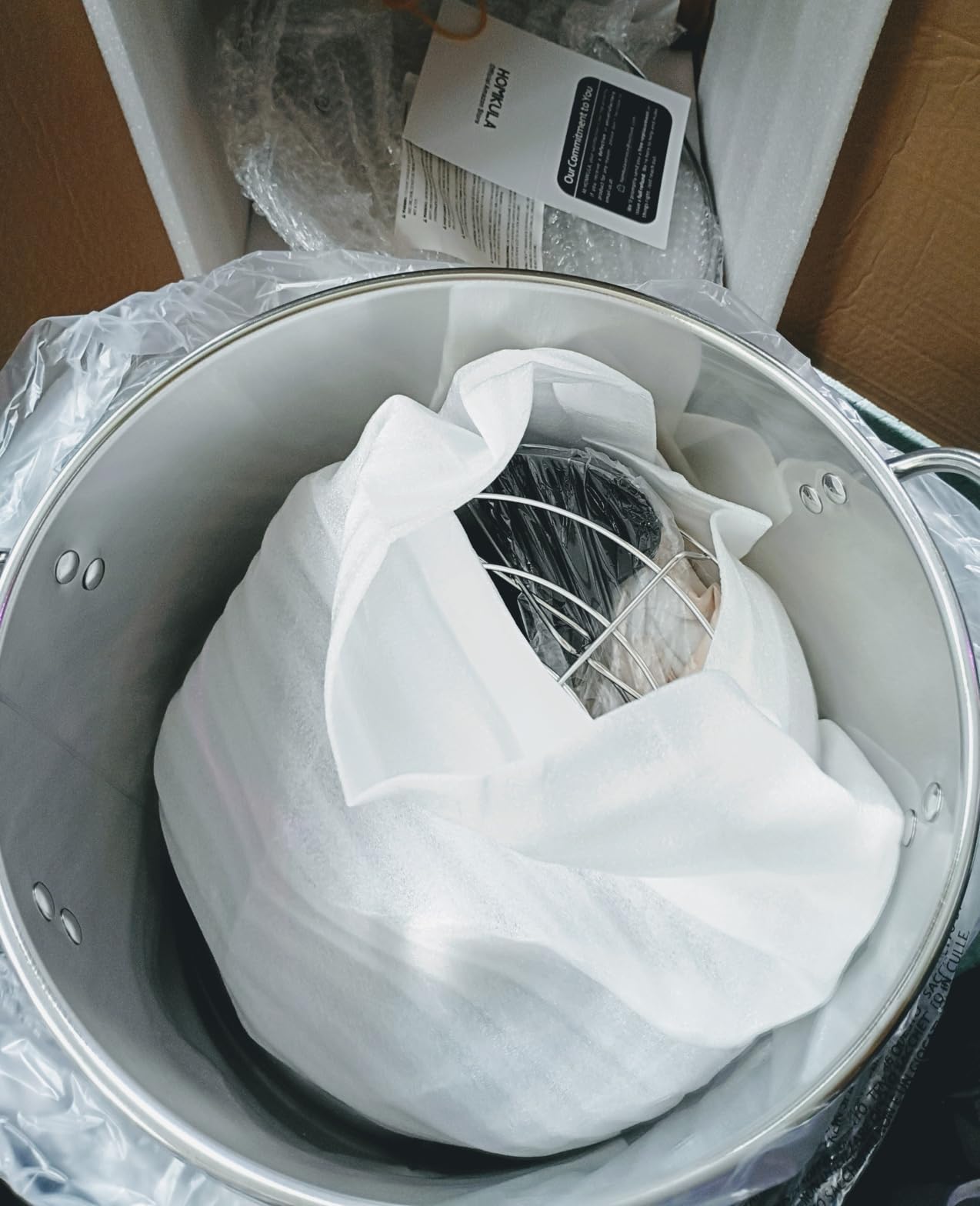
Everything is dishwasher safe except the magnetic lid lifter, and the rack folds flat so the whole thing compresses for storage. That matters more than it sounds if you only can in season, because a full canning setup otherwise occupies a cabinet for eleven months.
It is listed as suitable for induction cooktops, which widens where it can be used, and the stainless is described as resisting corrosion, discoloration, and warping. Those are the three failure modes that end a pot’s canning life.
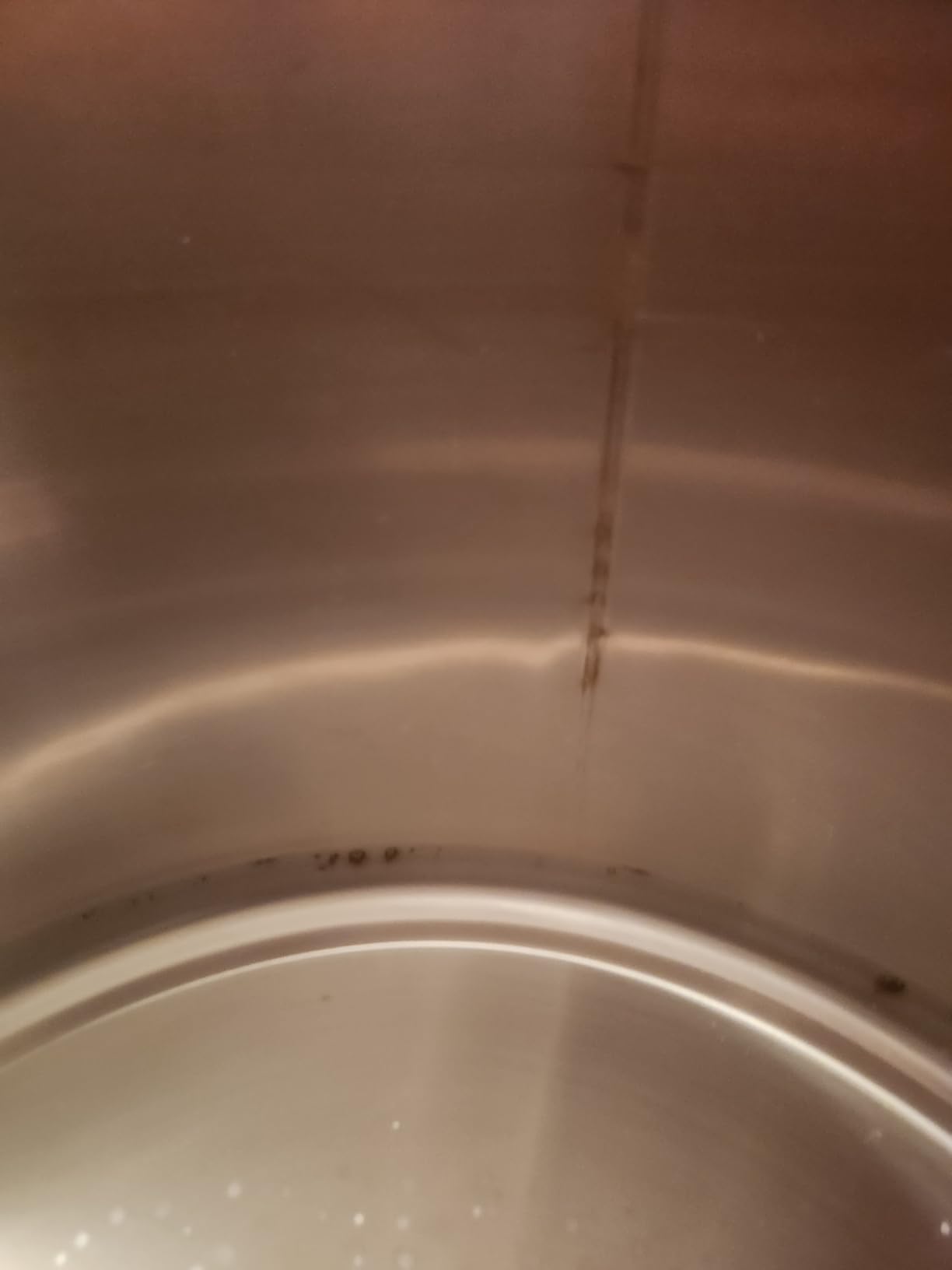
Who this pot suits
It suits a new canner who wants the small consumables handled in the same order as the pot. Gloves and date labels are the two things beginners most often forget, and having them in the box removes a trip to a supplier.
It suits anyone with limited storage space, since the foldable rack and compact tool design mean the set goes away cleanly at the end of the season.
Who should skip it
Skip it if long term durability is your priority. With fewer than 400 ratings, this is the smallest review base in the group, and it is a newer listing, which means there is very little evidence about how the pot looks after five canning seasons.
Skip it if you mind a colored finish on a polished steel body. Reviewers note the blue finish shows marks more readily than plain silver, and a plain stainless pot hides water spots better over a season of wet work.
8. HOMICHEF 24 Quart Stock Pot – Best for Bulk Batching
HOMICHEF LARGE STOCK POT 24 Quart With Lid – Nickel Free Stainless Steel Cookware Stockpot 24 Quart – Healthy Cookware Polished Stockpots – Heavy Duty Induction Pot Soup Pot With Lid
24 quart capacity
Nickel-free stainless steel
4.2 mm 3-ply base with aluminum core
8 pounds empty
Pros
- Nickel-free steel suits allergy sufferers
- 4.2 mm 3-ply base resists warping
- Works on gas electric induction ceramic glass halogen
- Lighter than other pots at 24 quarts
- 6-year warranty
Cons
- Lid handle heats up during long cooks
- 24 quart height is hard to store and wash
- Nickel-free steel needs more care to avoid corrosion
This is the pot I reach for when a season arrives all at once. At 24 quarts with a 4.2 mm three-ply base and an aluminum core, it takes a large batch of high-acid produce in one pass and holds an even heat across a base that is wide and flat enough to actually make contact with a burner.
It is also the only nickel-free option in the group. The body and inner base use JYH21CT, and the outer base is 430 stainless, which is the material you want if nickel-bearing stainless causes you problems. For everyone else it is simply a well-built pot with a warranty that outlasts most rivals.
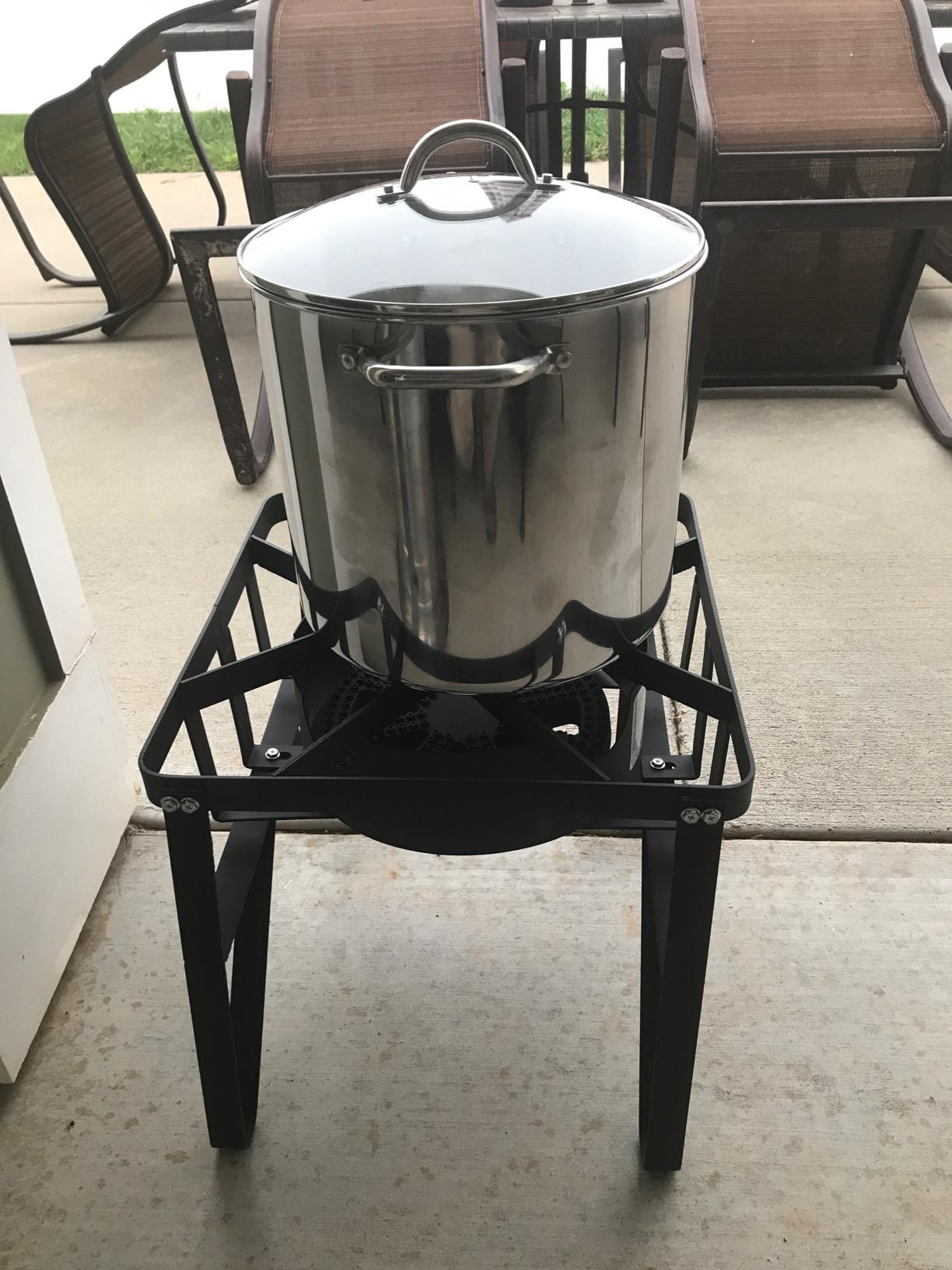
At 8 pounds empty it is lighter than most pots of this size, and the ergonomic stainless handles stay comfortable during a long soak. The mirror-polished exterior with a rounded, spill-free pouring lip is genuinely pleasant to work with when you are decanting stock.
Owners who cook twenty or more times a month report it still looks pristine. The clear tempered glass lid has a steam vent, and the manufacturer backs the pot with a 6-year warranty and lifetime customer service.
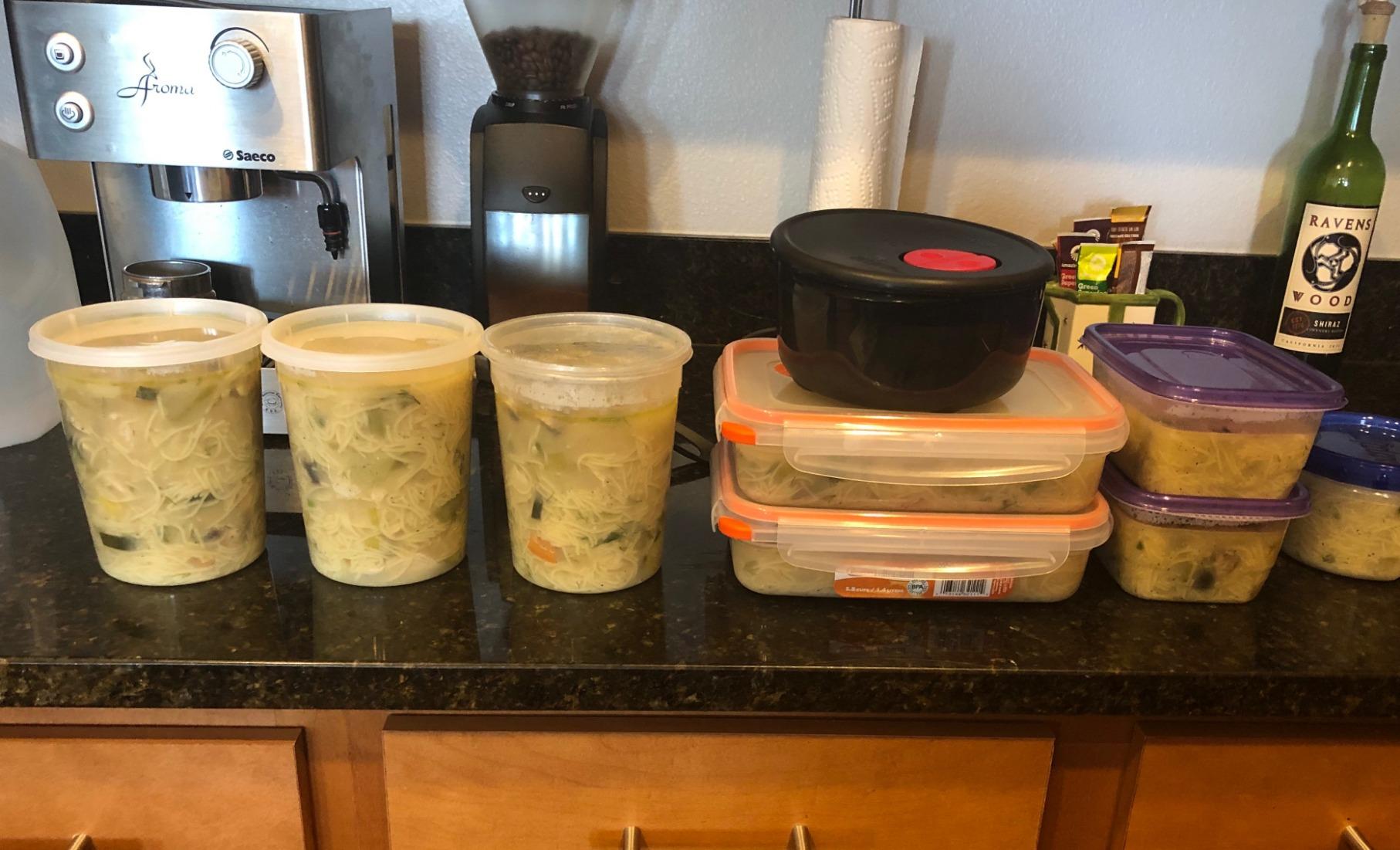
Who this pot suits
It suits a bulk canner who wants to process a harvest in as few batches as possible, and anyone who cooks large volumes of stock, broth, or seafood boil and wants one vessel to do both jobs well.
It also suits a nickel-sensitive household. That is a narrow but real group, and buying a dedicated nickel-free pot is easier than tracking which of your other pans are 304 grade.
Who should skip it
Skip it if you lift the lid often during a long cook. The pot handles stay cool but the lid handle heats up, so you need a mitt every time you check the water, which on a pot this size is often.
Skip it in a small kitchen. At 24 quarts and 12.7 inches tall it is a serious storage and sink problem, and the manufacturer recommends hand washing and drying immediately, which is more work than a dishwasher-safe pot of a smaller size.
9. NutriChef 19-Quart Stock Pot – Best for Light Handling
NutriChef 19-Quart Stainless Steel Stockpot – 18/8 Food Grade Heavy-Duty Induction-Compatible Pot with See-Through Lid, Ideal for Stews, Broths, Simmering & Soups, Dishwasher Safe – NCSP20
19 quart capacity
18/8 non-reactive interior
7.4 pounds with the lid
Interior volume markings
Pros
- Light and balanced on the burner for its size
- Interior volume markings ease liquid checks
- Reliable on induction including portable burners
- Non-reactive interior cleans easily
- Sold in matching smaller sizes
Cons
- Not a canner so jars need a separate rack
- Labeled capacity runs a little optimistic
- Maker advises medium heat or lower
Weight is the reason this one is worth a look. At 7.4 pounds with the lid, this is a light pot for a 19 quart capacity, and that balance is what lets you lift and tilt it without two people. For anyone who does not want a full pot of boiling water in their hands, that is the deciding factor.
The interior is 18/8 food grade stainless with an impact-bonded base measured at 0.228 inches, and the sides carry volume markings so you can judge liquid level without a measuring jug. Those markings are a small feature that shows up constantly during a canning session.
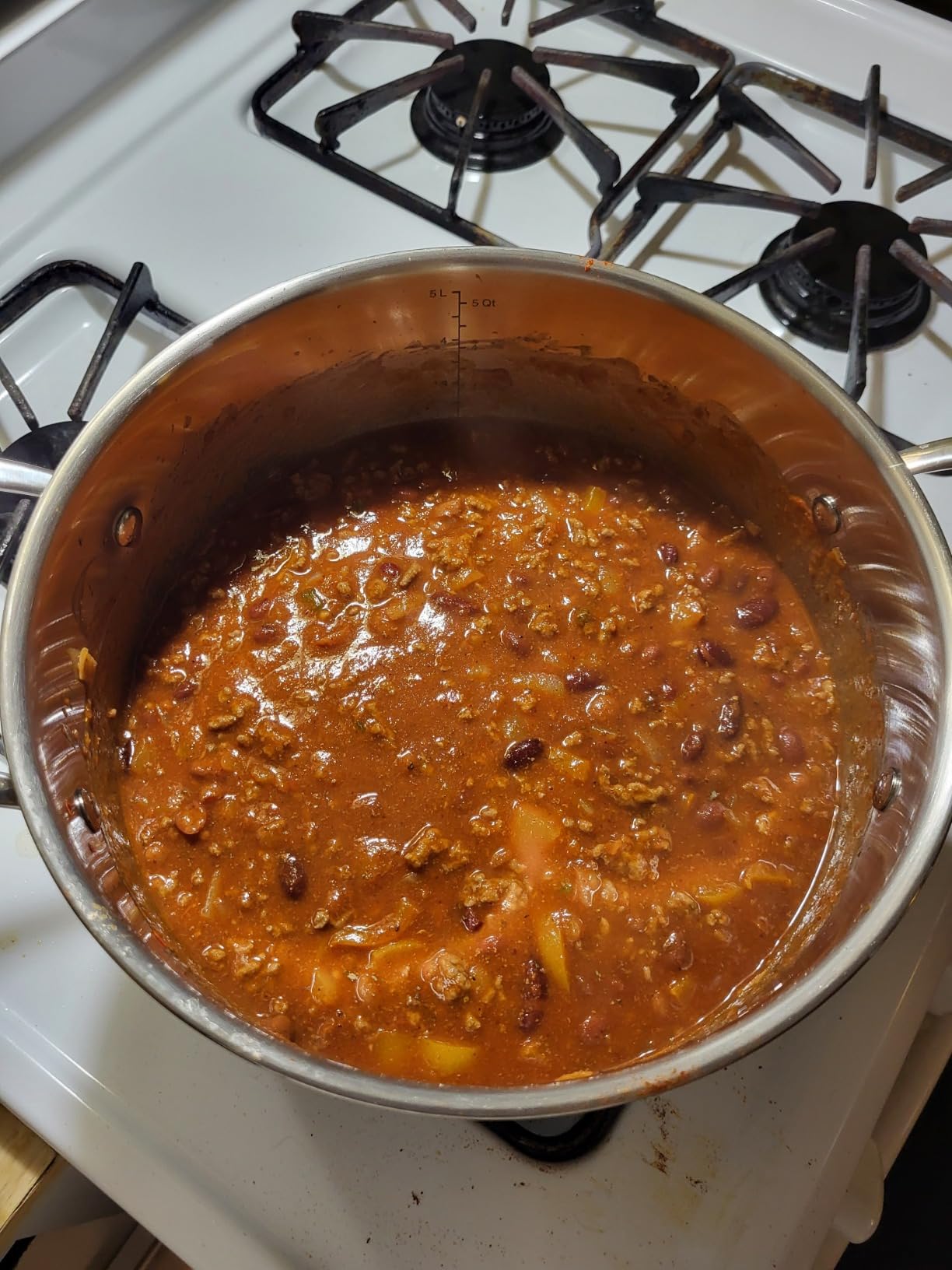
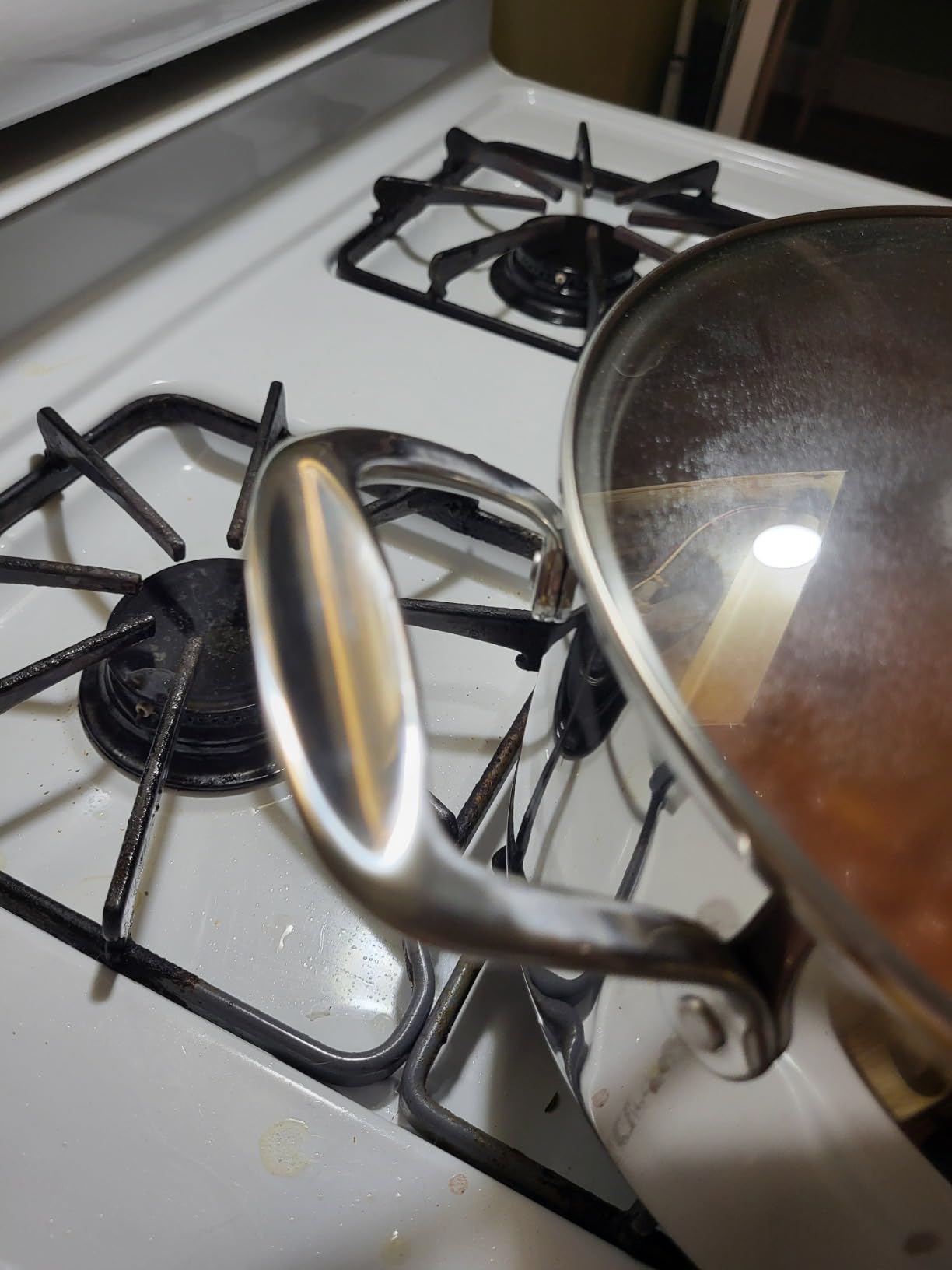
Induction performance is reliable, including on portable induction burners used outdoors, which is useful if your kitchen has limited burner space. The vented glass lid cuts down on condensation when you lift it, so you lose less heat each time you check the batch.
It is a general stockpot rather than a canner, so there is no jar rack and jars would need to be held off the base by other means. The same line is also sold in 6, 8, 12, 15, and 19 quart sizes if you want a matching set.
Who this pot suits
It suits a canner who wants a light, general-purpose pot they will genuinely use every week for stock, soup, and sauce, and who is happy to buy a separate canning rack sized for the base.
It suits anyone cooking on induction who has been put off by heavy steel, and anyone who wants a lighter pot to move from burner to sink without help.
Who should skip it
Skip it if you want canning hardware included. No rack, no jar tools, and no canning-specific design, so you are buying a stockpot and building the canning setup yourself.
Skip it if you like to run a hard boil. The manufacturer recommends not using heat above medium to avoid warping the base, and the tall 13.4 inch profile is awkward under low cabinets and in a standard sink. Rated capacity also tends to run a little optimistic against real volume.
10. NutriChef 20 Quart Stock Pot – Best Solid Stainless Lid
NutriChef 20 Quart Heavy-Duty Stockpot with Stainless Lid – Large Pot for Induction, Gas & Electric Cooktops, Perfect for Soups & Stews
20 qt heavy-duty stainless steel
Solid stainless steel lid
Impact-bonded base
3.4 kg empty
Pros
- Steel lid is easier to handle with wet hands
- 20 quarts handles large batch soups and sauces
- Impact-bonded base works on induction gas and glass
- 18/8 non-reactive interior suits acid recipes
- Brushed finish hides marks
Cons
- No canning rack so you need a separate one
- One-year warranty is short against some rivals
- Color listings are inconsistent for a steel pot
The reason to buy this one over another 20 quart stainless is the lid. It is solid stainless steel rather than glass, and when your hands are wet, wearing canning gloves, and holding a jar lifter in the other hand, a steel lid is a much better thing to grab than a hot glass knob that can slip.
Underneath, it is a conventional and well-executed pot: 20 quarts, impact-bonded base, mirror-polished belt with a brushed interior and exterior, and an 18/8 non-reactive interior that suits acidic recipes such as tomatoes, fruit, and pickles.
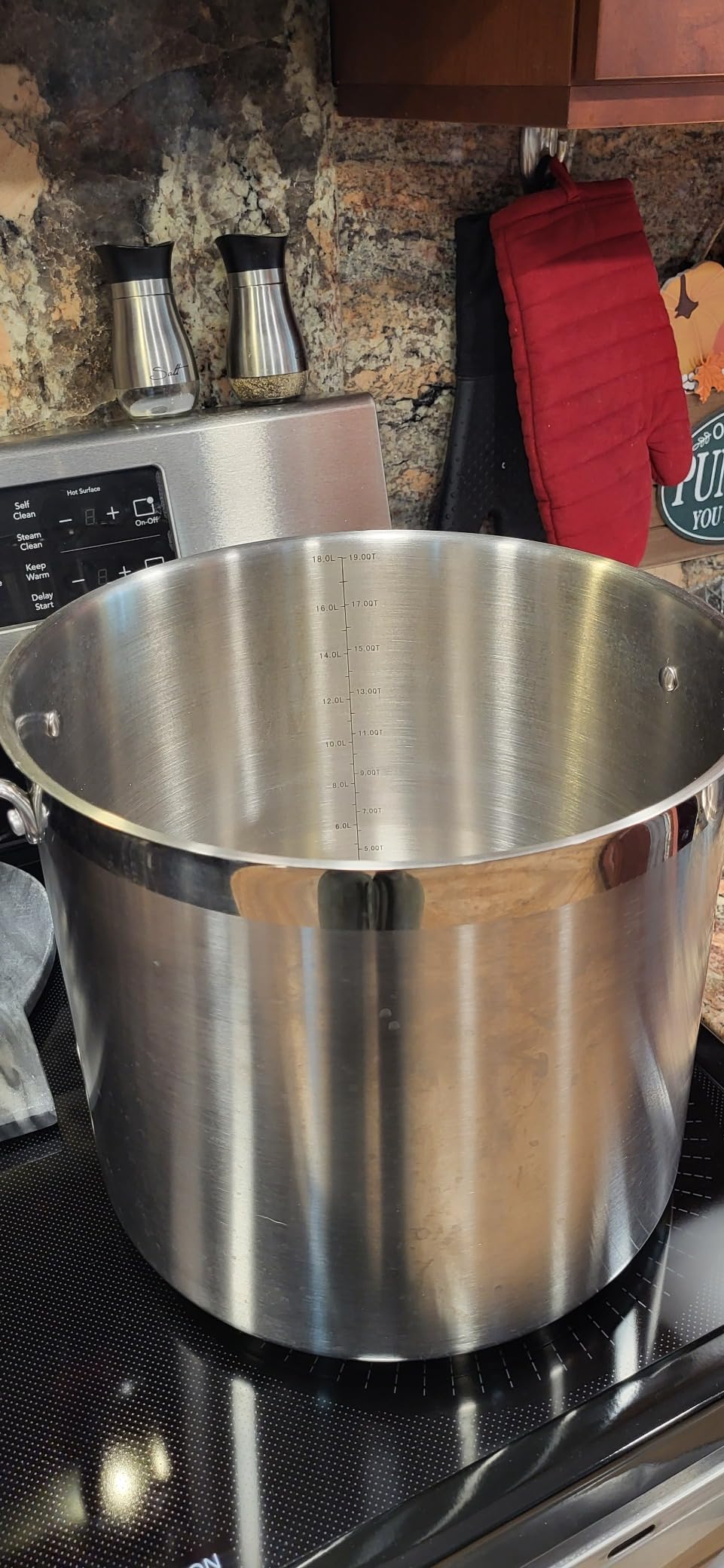
Cooktop coverage is the broad one, covering gas, induction, ceramic, glass, and halogen. It weighs 3.4 kg empty and measures 12.45 by 15.95 by 11.65 inches, which is a more manageable footprint than some of the taller pots in this group.
The brushed finish is a quiet win, because it shows fingerprints and water spots far less than the mirror-polished exteriors that dominate this category. A solid lid also insulates better, so heat loss across a two-hour processing run is lower than with a vented glass lid.
Who this pot suits
It suits a canner who wants a solid, dependable everyday pot and is comfortable adding a separate rack for canning. The same line runs from 5 quarts up to 40 quarts, so it is easy to match with other pots you already own.
It also suits anyone who does not want glass above a rolling boil, whether because of children in the kitchen, limited cabinet clearance, or simple preference.
Who should skip it
Skip it if you want a ready-made canning setup. No rack is included, so water bath processing means buying a rack sized to the base and a lid that lets you keep the heat up while you work.
Skip it if warranty length matters to you. The 1-year coverage here is short against the 5-year and 6-year warranties offered by several picks in this group, and a few color listings for the line are inconsistent for what is a stainless pot.
How to Choose a Stock Pot for Canning: 7 Criteria That Matter
Material: stainless steel wins, and here is why
Stainless steel is the right material for canning because it is non-reactive, it does not rust, it will not chip, and it needs no seasoning. Canning is dominated by acidic foods, from pickles and relish to acidified tomatoes and fruit, and a reactive metal in contact with acid is exactly what you do not want in a pot that processes food for a year in your pantry.
On the question of stainless steel versus Granite Ware, the honest answer is that they are not equal. Granite Ware is vitrified enamel over steel, which is also non-reactive and very durable, but it cannot be used on induction or glass cooktops, its enamel can chip on a rim impact, and its light-gauge rack is the part most likely to fail first. Solid or clad stainless wins on cooktop compatibility and on long-duration heat stability. A [pressure cooker used for canning](https://austineubanks.com/best-pressure-cookers-for-canning/) is another route for low-acid food, but it is a different appliance entirely.
Avoid aluminum, which reacts with acid, and avoid cast iron for canning because of weight and seasoning. Non-stick coatings are a poor idea for a pot that sits in a rolling boil for hours.
Size: how many quarts you actually need
Match the pot to the batch you will realistically process, not to the batch you imagine. A household of one or two can comfortably live with 12 to 16 quarts. A canner working a garden harvest wants 20 to 24 quarts. Anything under about 10 quarts forces dozens of small batches, which defeats the point of preserving food in the first place.
A 12 quart pot typically processes six to eight pint jars or a similar number of half-pints. A 16 quart pot handles roughly nine to twelve. A 20 to 21 quart pot is where the full 7 quart, 9 pint, or 12 half-pint rack capacity becomes achievable, and a 24 quart pot gives you the same jar count with more boiling room around them.
Depth and the 1 to 2 inch water rule
Jars must stay covered by 1 to 2 inches of boiling water for the entire processing time. That is the single most repeated rule in the canning community and the one most often broken by an undersized pot, because you need enough depth to hold the jars plus the rack plus that water headroom plus room for the water to move without spilling.
So depth matters more than most shoppers assume. Two 20 quart pots can behave completely differently if one is tall with straight sides and the other is wide and shallow, and the wide shallow one may leave you with an inch of water over the jars where the tall one leaves you with two.
The canning rack is not optional
Jars need to sit off the bottom of the pot so water circulates beneath them. Without a rack, glass sits on hot metal, and the thermal shock and uneven heating that follows is a genuine cause of jar breakage and unsealed lids.
There are two rack types and the difference affects capacity. A lift-out rack sits inside the pot and consumes usable volume. A loop-over rack hooks onto the rim, so it uses none of the pot’s capacity, and many canners prefer that when a pot is sized right at the limit. Some loop-over and folding rack handles swing inward as you lower them, which nudges jars off position, so check that before a full batch is sitting in the pot.
Handles, lid, and the weight of a full pot
A full 20 to 24 quart pot of boiling water and glass jars is heavy, and the handles are the safety system. Look for riveted handles rather than screw-attached ones, and for a main handle that stays cool enough to grip with a dry oven mitt, plus a second side handle for the two-handed lift when the pot is full.
On lids, glass lets you watch the process without opening, which is convenient, but glass flexes and pops as it cools and can leak steam at a hard boil. A solid stainless lid is heavier and safer to handle with wet hands. Neither is wrong, but know which one you are lifting at hour two of a processing run.
One safety note that rarely gets stated plainly: check the weight rating on a glass cooktop before you set a full 20 quart canner on it. There are documented cases of a glass-top range failing under a full canning load, and most glass tops are rated well below a loaded canner plus a stockpot.
Cooktop compatibility, including induction
Match the pot to your burners. Gas and electric accept almost anything. Smooth-top ceramic and glass accept flat-bottomed stainless. Induction requires a magnetic flat base, and a pot with an aluminium or steel core that is not magnetic will sit on the burner doing nothing.
Check the listing rather than assuming, because induction claims are asserted more often than they are verified. Two picks in this group specifically exclude induction cooktops despite being stainless and enamel, so a base design matters more than the material name on the box.
Stock pot or dedicated water bath canner?
If you already own a tall stainless pot with a flat, heavy base and straight sides, you do not need a dedicated canner. A canning rack and a few tools turn almost any deep stock pot into a working water bath canner, and enthusiasts in the r/Canning community say exactly that. If you are starting from nothing, a kit that includes the rack, lifter, funnel, and wrench will get you canning sooner.
Buy a dedicated canner when you want rack and tools in one box, when you canner enough to want a lid thermometer or steam canning, or when a heavier, purpose-built base gives you confidence. Buy a stockpot when you want one pot for both canning and everyday cooking and will add a rack separately.
Neither option processes low-acid food safely. Vegetables like green beans, corn, and carrots, plus meat, poultry, seafood, soups, and stocks, require a pressure canner to reach the processing temperature a boiling water bath cannot deliver. A stock pot is a water bath tool only.
What else you need on the counter
Budget for a canning rack sized to your pot, a jar lifter, a stainless funnel, a ladle, a bubble remover with a headspace ruler, and a magnetic lid lifter if you want to avoid touching flat lids with your fingers. Jars, bands, and lids are consumables and lids should be new for every batch.
Work to a tested canning recipe, keep the correct headspace in the jar, cover the jars by 1 to 2 inches of water, bring the pot back to a full rolling boil before starting the timer, and if the boil breaks, restart the timer. Let the jars sit undisturbed for 12 to 24 hours before checking for a seal. Above 1,000 feet, processing times need to be adjusted, and above 1,000 feet you should follow a tested high-altitude guideline rather than the standard table.
Frequently Asked Questions
What size stock pot is best for canning?
For most households, a 12 to 16 quart pot is the right starting size, and a 20 to 21 quart pot is the sweet spot for anyone canning a real harvest. A 20 quart pot with a good rack can process 7 quart, 8 to 9 pint, or up to 12 half-pint jars per load. Below about 10 quarts you will end up running dozens of small batches, which takes far more time than it saves in storage space.
Can you use a stock pot for canning?
Yes, for water bath canning of high-acid foods, as long as the pot is stainless, has a heavy flat base, straight sides deep enough to keep jars under 1 to 2 inches of water, and a canning rack on the bottom. A stock pot cannot process low-acid vegetables, meats, poultry, seafood, or soups, because a boiling water bath does not reach the temperature those foods require.
How much water should cover the jars when canning?
Jars should be covered by 1 to 2 inches of boiling water for the entire processing time. Keep the pot at a full rolling boil, and if the boil drops below a rolling boil, stop the timer and start it again once the pot returns to a full boil. A pot too shallow to hold that water level will not process food safely.
Is stainless steel or granite ware better for canning?
Stainless steel is the better all-round choice. It is non-reactive, will not rust, is induction compatible when it has a magnetic base, and holds heat well through long processing runs. Granite Ware is enamel over steel, which is also non-reactive and lighter to lift, but it cannot be used on induction or glass cooktops, and its enamel can chip on a rim impact.
Do I need a dedicated canning pot?
No, not if you already own a tall stainless pot with a heavy flat base and straight sides. Add a canning rack and basic tools and it will function as a water bath canner. A dedicated canner is worth buying if you want the rack, lid, and tools in one box, if you plan to can large batches, or if you want a lid thermometer or the option to steam can.
Which Stock Pot for Canning Should You Buy?
After all of that, the best stock pots for canning come down to a few clear winners. The Cook N Home 20 Quart Stock Pot is the one I recommend to most people, because the impact-bonded base reaches a rolling boil fast, it works on every common cooktop including induction, and it has by far the largest body of owner feedback behind it. Buy a canning rack for it and you have everything you need.
Pick the Harvest 20 Qt canner instead if you want induction performance you can verify, a rack that flips for steam canning, and a lid thermometer that tells you when to start the timer. Pick the Granite Ware set if you want one box with every tool in it and you cook on gas or electric. Pick the HOMICHEF 24 Quart if you process a whole harvest at once or need nickel-free steel, and pick the NutriChef 19-Quart if weight is the thing that stops you from lifting a full pot.
Whichever you choose, buy the rack, follow a tested recipe, keep the jars under 1 to 2 inches of water, and reach for a pressure canner the moment low-acid food is on the list. Use the buttons below to check the current listing details and the accessory bundles that pair with each pot.