
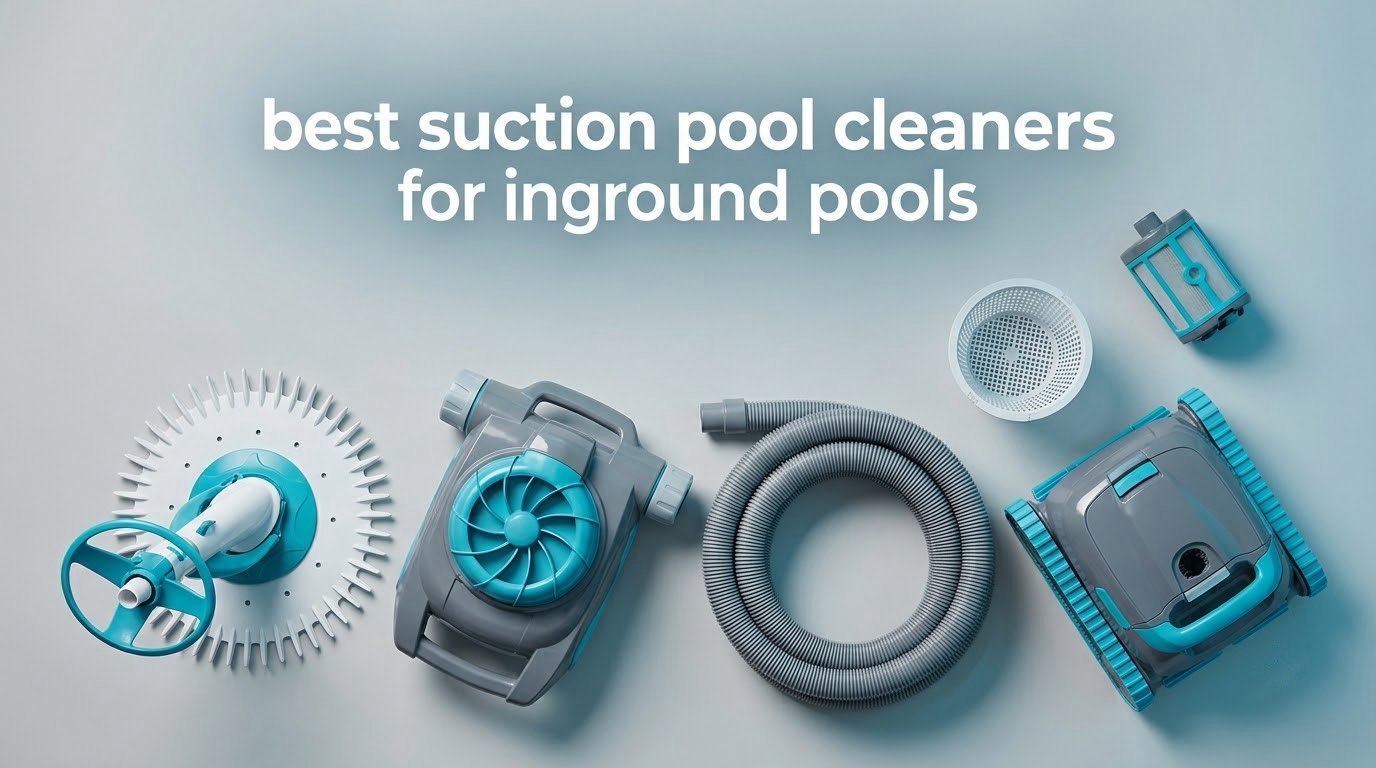
The Zodiac MX6 is the best suction pool cleaner for inground pools overall, because its cyclonic turbine and X-Drive hydraulic navigation give it the most consistent floor and wall coverage in this group while running entirely on the suction from your existing pool pump. No booster pump, no electricity, no batteries.
That is the whole pitch, and it is why these machines still make sense in 2026. A robotic pool vacuum does more on its own per cycle, and most owners we talk to have already moved that direction. But a suction-side cleaner costs a fraction of a robot, installs in about three minutes, and runs off hardware you already own.
We put ten of the leading suction-side cleaners through the criteria that actually decide whether one works in your pool: how it behaves when flow is set correctly, what happens when it meets a corner, how much of your filter it loads, and whether its wear parts are still easy to find. Along the way we benchmarked one cordless robot, because if you want true hands-off coverage that is the honest comparison.
If you are still shopping for the rest of your pool gear, our guides to robotic pool cleaners for inground pools and pool vacuums for above ground pools cover the other common setups.
Table of Contents
Top 3 Picks for Best Suction Pool Cleaners for Inground Pools in October

Zodiac MX6
- Cyclonic turbine with X-Drive navigation
- 32 ft twist-lock hose
- Runs on variable-speed pumps


The MX6 wins because it is the most heavily reviewed suction cleaner available and holds its coverage across pool shapes better than anything cheaper. The G3 is the smarter first purchase for a standard rectangular pool because there is only one moving part to go wrong. The VINGLI 277 is the pick if your pool is quiet-neighborhood quiet and you do not want a machine that hammers all night.
The 10 Best Suction Pool Cleaners for Inground Pools in 2026
Every cleaner below is genuinely suction-side, meaning it draws power from your pump through a hose, with one deliberate exception at the end of the list where we include a robot as a benchmark. Here is the full field at a glance.
| Product | Specifications | Action |
|---|---|---|
| Zodiac MX6 |
|
Check Latest Price |
| Zodiac Baracuda G3 |
|
Check Latest Price |
| VINGLI 277 |
|
Check Latest Price |
 Hayward Poolvergnuegen 2-Wheel Hayward Poolvergnuegen 2-Wheel |
|
Check Latest Price |
 XtremepowerUS Automatic Cleaner XtremepowerUS Automatic Cleaner |
|
Check Latest Price |
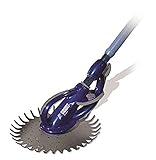 Pentair Kreepy Krauly Kruiser Pentair Kreepy Krauly Kruiser |
|
Check Latest Price |
 U.S. Pool Supply Octopus U.S. Pool Supply Octopus |
|
Check Latest Price |
 Polaris MAXX Premium Polaris MAXX Premium |
|
Check Latest Price |
 Hayward Poolvergnuegen 4-Wheel Hayward Poolvergnuegen 4-Wheel |
|
Check Latest Price |
 WYBOT C1 Cordless Robot WYBOT C1 Cordless Robot |
|
Check Latest Price |
What a Suction-Side Pool Cleaner Is and How It Works
A suction-side pool cleaner is a small self-propelled machine that plugs into your skimmer or a dedicated vacuum line and floats on the pool surface while it cleans. It has no motor. Every bit of movement and every bit of suction comes from the negative pressure your pool pump creates through the hose.
That pressure pulls water up through the cleaner, along the floating hose, into the skimmer basket, and then through your filter. Everything the machine sweeps off the floor, walls, and waterline ends up in the filter, not in a canister you have to empty. It is a genuinely elegant way to reuse equipment you already own.
Steering works by reversing flow. Inside the body, a diaphragm or turbine flips the direction of the water moving past it, which momentarily pushes the machine the other way. Because the direction changes are semi-random, these cleaners wander rather than map, and that single fact explains almost every limitation you will read about them.
Two practical consequences follow. Coverage is a function of runtime, because a machine that wanders needs hours, not one cycle, to reach every corner. And because debris routes to your filter instead of into a bucket, filter pressure climbs faster during a cleaning run and you will backwash more often than you would in normal operation.
1. Zodiac MX6 – Best Overall for Most Inground Pools
Zodiac MX6 Suction-Side In-Ground Pool Cleaner, Cyclonic Suction
Cyclonic turbine with X-Drive navigation
32 ft twist-lock hose
Skimmer or suction line hookup
Pros
- Compact body clears typical inground skimmer openings
- Cyclonic turbine holds downforce for wall climbing
- X-Drive navigation gives systematic coverage
- Works on variable-speed pumps with no batteries
Cons
- Flow calibration takes patience to dial in
- Can lose traction in corners and on steps
The Zodiac MX6 is the machine we keep coming back to, and it earned that by being boring in the best possible way. Roughly 9,400 owners have reviewed it, and the pattern across those reviews is consistent: performance depends almost entirely on getting flow right, and once you do, it cleans thoroughly for years.
The compact body is the quiet advantage here. At 40.4 by 14.8 by 9.9 inches it clears a typical inground skimmer opening without argument, which matters more than it sounds, because a cleaner that is too tall never makes it out of the skimmer and never gets used.
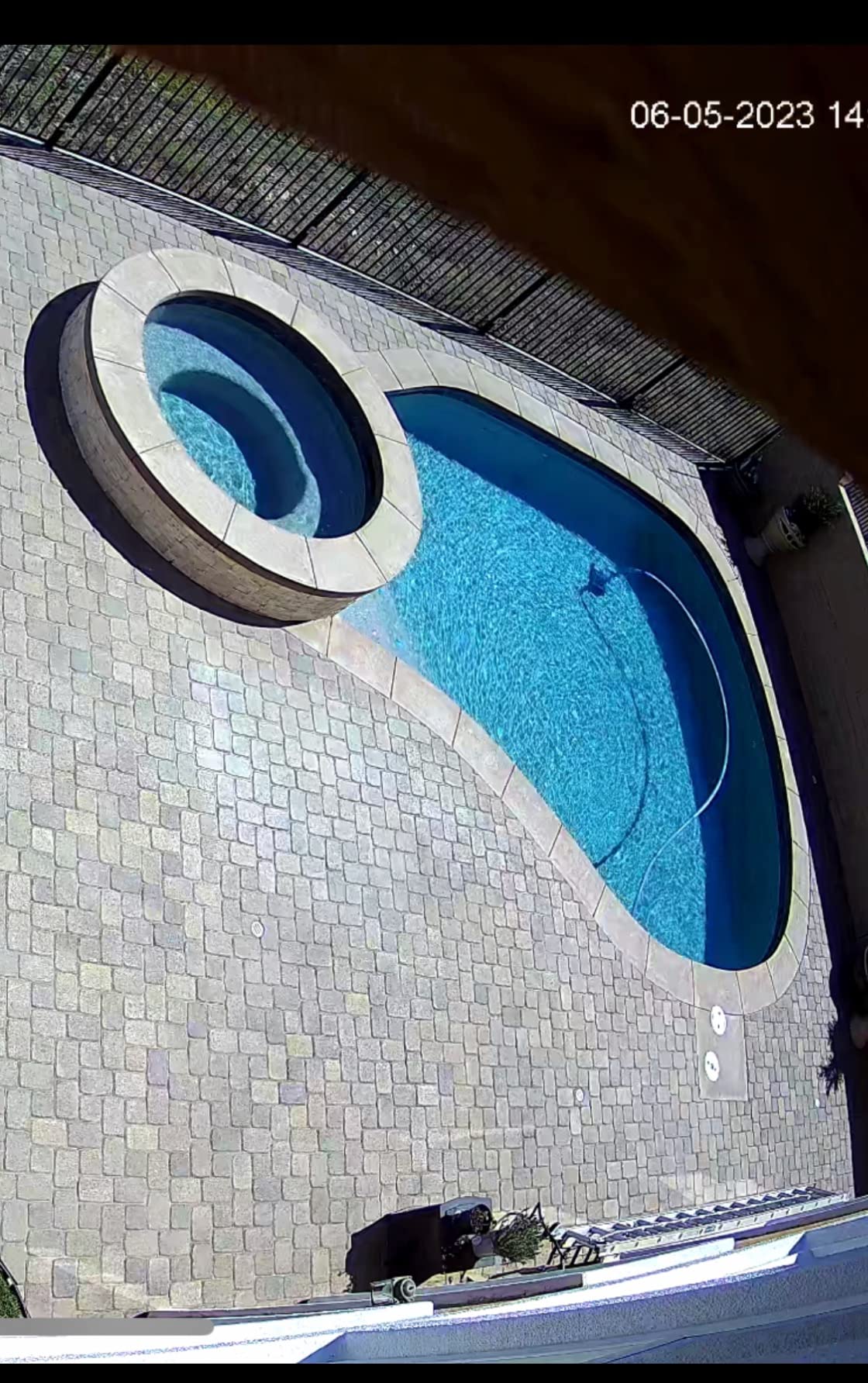
Its cyclonic turbine creates downforce while the X-Trax foot pads give it grip, and the X-Drive system uses hydraulic suction to drive internal gears. In practice that combination climbs straight walls and covers the floor in a pattern that feels less random than the category average, which is why it handles deep ends and transitions better than most rivals.
Calibration is the one real skill you need. Set the flow too high and the machine rides up out of the pool at the waterline on a shallow end. Set it too low and it stalls or loses traction. Owners who time ten wheel rotations and aim for roughly 20 to 25 seconds report the cleanest, most repeatable results.
Check your pump before you buy
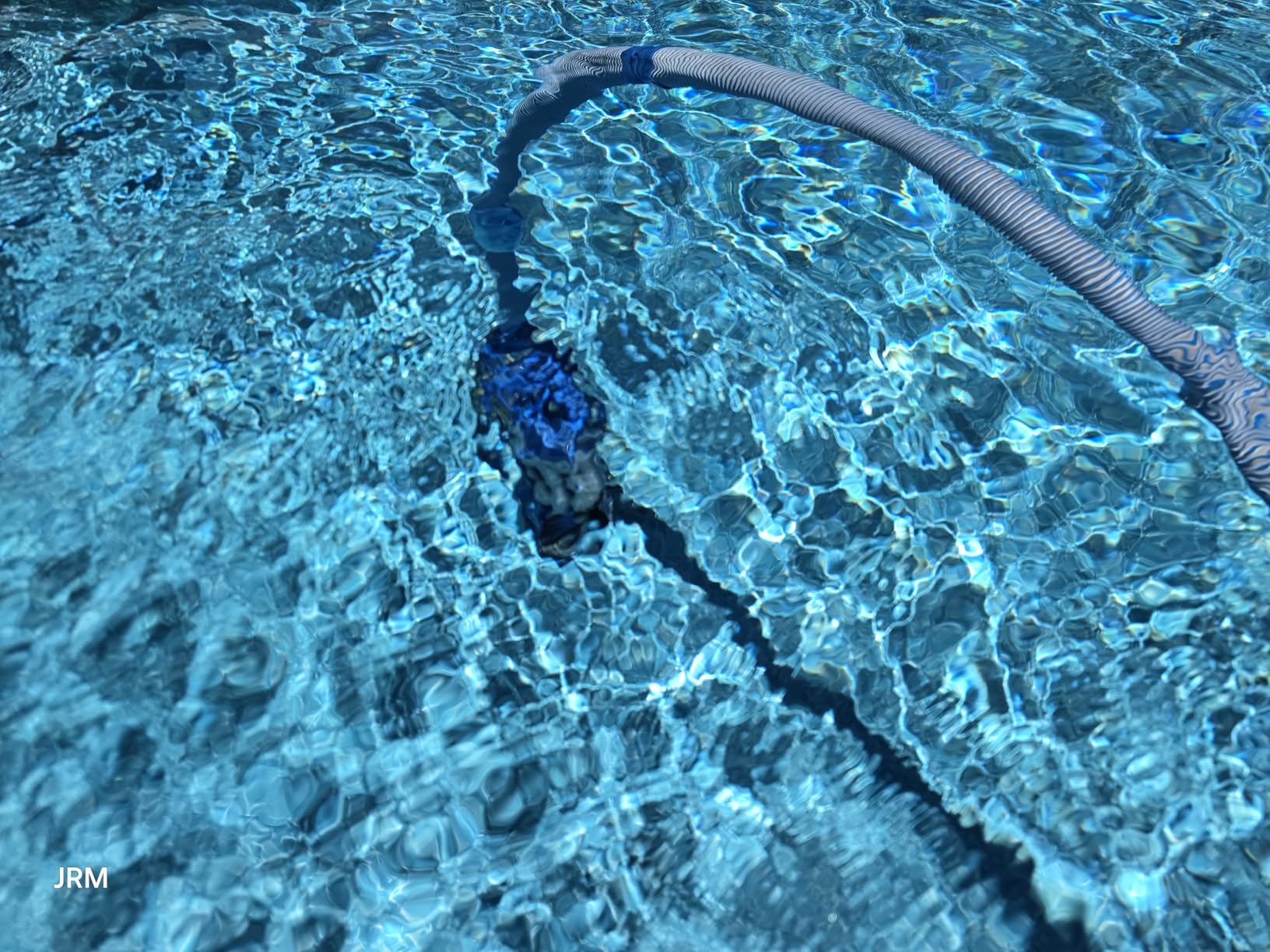
The MX6 works well with variable-speed pumps, but it needs enough flow to function. If your pump is well under 3/4 HP, or if you run your variable-speed pump at a low energy setting most of the day, wall climbing and drive performance will suffer no matter which cleaner you choose.
It is also the machine most likely to need a rebuild rather than a replacement. Complaints concentrate on the flapper and diaphragm assembly rather than outright failure, and those wear parts are cheap and easy to swap.
Know when to skip it
Skip the MX6 if your pool is heavily shaded by deciduous trees. Leaf loads clog the intake faster than a random-walk machine can clear them, and a pressure-side cleaner is the correct tool for that job. It is also not the right pick if you expect waterline scrubbing, since it has no active brush.
If those do not apply to you, the MX6 is the default answer for an inground pool, and it is the pick we would put in most people’s hands first.
2. Zodiac Baracuda G3 – Best Value With One Moving Part
Zodiac G3 Suction-Side Inground Vacuum Pool Cleaner
36-fin adhesion disc with wheel deflector
39 ft push-fit hose
One moving part
Every in-ground surface
Pros
- Only one moving part so almost nothing can fail
- 36-fin disc grips tile vinyl gunite and fiberglass
- Wheel deflector handles tight corners and steps
- Works with low-flow and variable-speed pumps
Cons
- No scrubbing brush for stuck-on debris
- Wall climbing drops on curved walls at low flow
The Zodiac Baracuda G3 is the easiest first suction-side purchase, and for good reason: it is simple enough that you will actually keep using it. Setup is three steps with no tools. Attach the disc, attach the wheel deflector, connect the hose, and it goes in the pool.
About 71% of its 6,500-plus reviews are five-star, which makes it the most consistently well-liked machine in this roundup. Owners credit the 36-fin disc for sticking to the pool surface without catching on lights, drain covers, or fittings, and the wheel deflector for getting out of tight corners on its own.
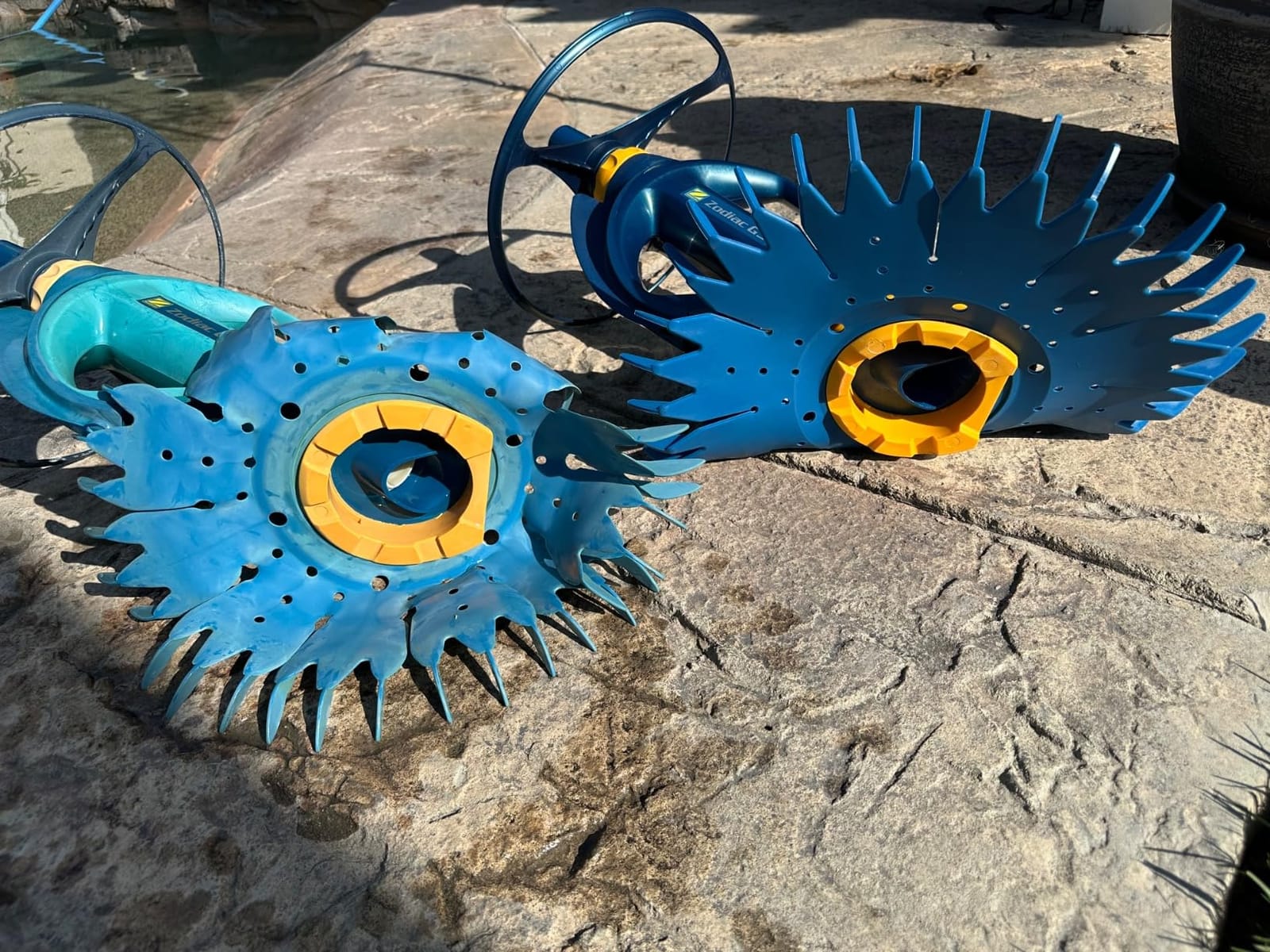
The design choice that defines the G3 is simplicity. There is one moving part, which means there is no gear train, no drive motor, and no track assembly to wear out. When the machine slows down, you replace a diaphragm or a disc rather than hunting down a specialty assembly.
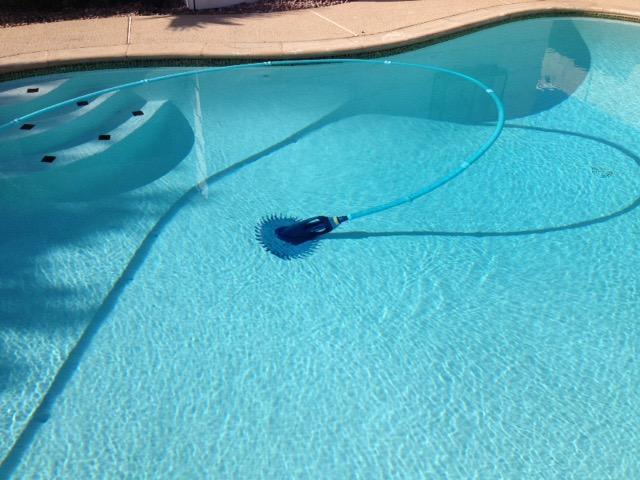
It is rated for tile, vinyl, gunite, and fiberglass, and it is explicitly listed as compatible with low-flow and variable-speed pumps. The 39-foot push-fit hose covers nearly every residential inground pool without an extension kit.
Why the long-standing forums keep recommending it
The G3 has been the reliable classic recommendation on Trouble Free Pool for years, and that consensus holds up against the spec sheet. Owners with straightforward rectangular pools report years of service with nothing more than occasional disc and diaphragm changes.
Warranty is also worth noting. The manufacturer warrants it against defects for two years, which is longer than many competitors in this price range and is a reasonable proxy for confidence in parts availability.
Know when to skip it
The G3 has no active brush, so debris that has actually stuck to a surface stays there until you hand-scrub it. Wall climbing is also limited on curved walls and at low flow settings, so owners of freeform pools should manage expectations.
In oddly shaped pools with deep ends and ledges, it periodically needs re-aiming. If your pool is straightforward, that is a small price for a machine with almost nothing to break.
3. VINGLI 277 – Quiet Most Versatile That Runs All Night
VINGLI Pool Cleaner, Automatic Wall-Climbing Pool Vacuum -Navy Blue&White
33 ft hose in ten sections
Requires 3/4 HP pump or 1600 gph
Adjustable suction regulator
Pros
- Quiet operation with no hammering or flapper noise
- Solid suction for a budget machine
- Scuff-resistant hoses that will not scratch tile or vinyl
- Assembles in about three minutes
Cons
- Diaphragm membrane can split within a year
- Needs a 3/4 HP pump or 1600 gph
- Weak in kidney shapes steps and ledges
The VINGLI 277 does something almost none of the other budget cleaners manage, which is staying quiet. Owners repeatedly single out the absence of the clicking, hammering noise that flapper-style cleaners make while reversing, and for a machine that runs for hours on end that difference is bigger than it sounds.
Suction performance is closer to machines costing several times more than the sticker suggests. It handles leaves and settled dirt effectively, climbs walls, and uses a wheel deflector to negotiate corners. The ten 3.3-foot hose sections total 33 feet and are scuff-resistant so they will not scratch tile or vinyl.
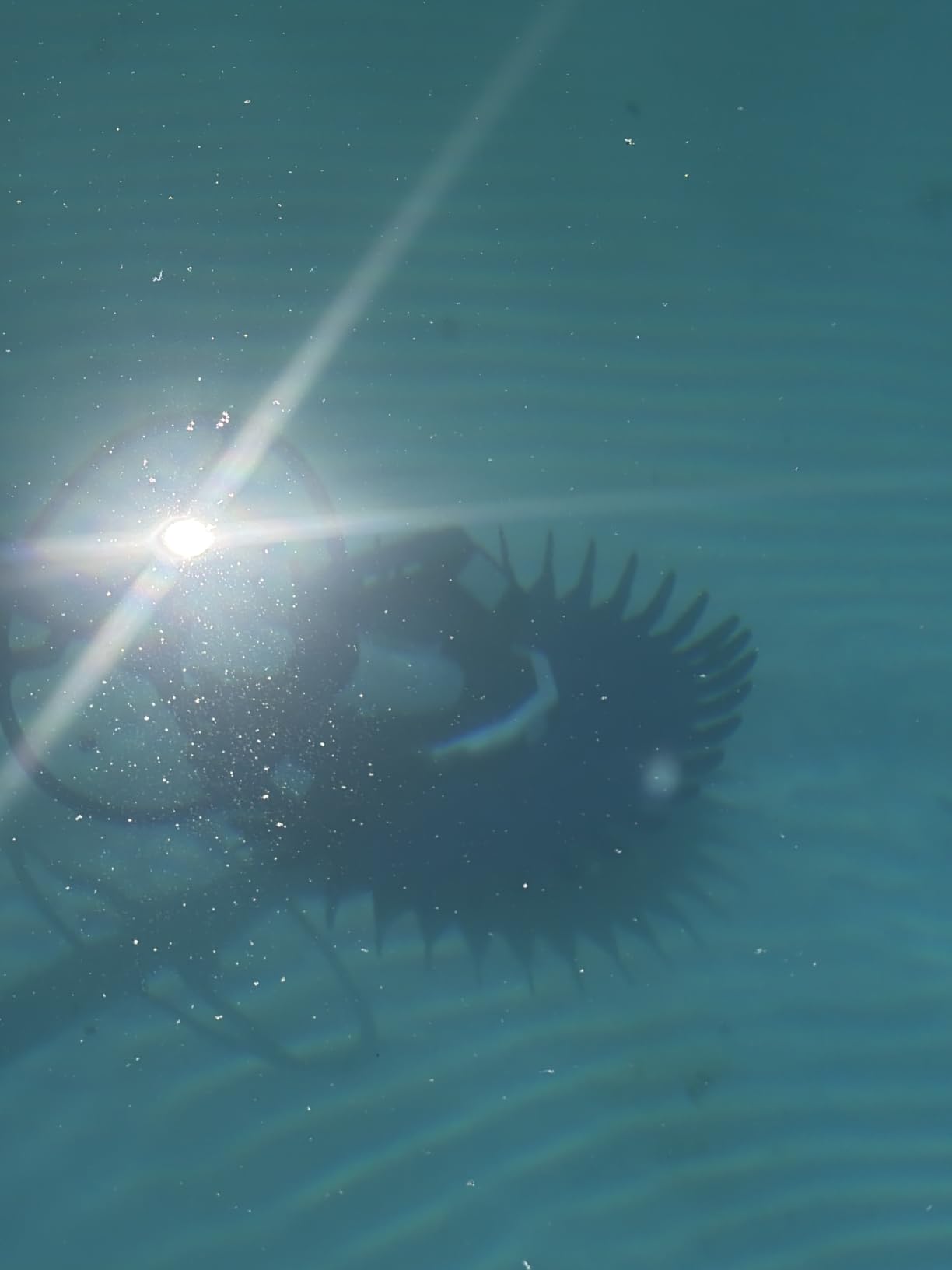
Setup takes about three minutes and the box includes an adjustable suction regulator. The manufacturer states a minimum of a 3/4 HP pump or 1600 gallons per hour, so this is not the machine for a low-flow setup.
Customer service responsiveness is a genuine positive that reviewers call out more than once, and the warranty covers one year with free replacement parts, which matters more for a budget unit than it does for a premium one.
The durability question to ask about
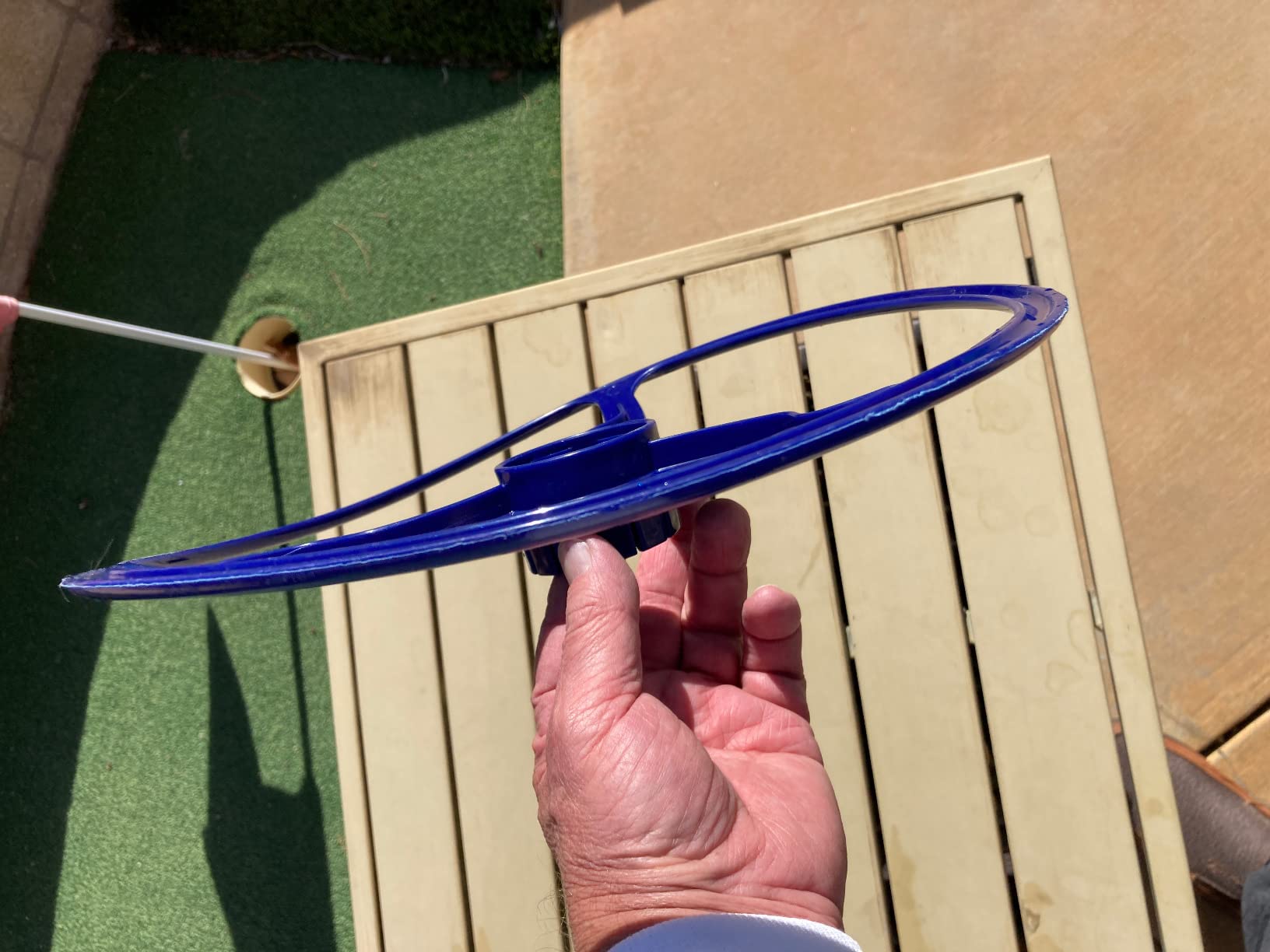
The dominant negative theme is the diaphragm membrane. Multiple owners report it splitting within six to twelve months, which stops suction entirely rather than degrading it. Some worked around it by using the supplied regulator to reduce suction pressure, but the fix is a replacement part, not a settings change.
Budget for a rebuild kit in year one rather than treating this as a throwaway. If you service it once, the machine has plenty of life left in it.
Know when to skip it
Skip the VINGLI if you have a kidney-shaped pool, built-in bar stools, ledges, or steps. Owners specifically flag those shapes as the spots that stay dirty, because the machine lacks the steering logic to work its way back out.
It is also the wrong choice for a pool with a variable-speed pump that spends most of its day at low speed, since it needs a firm flow to work at all.
4. Hayward Poolvergnuegen 2-Wheel – Top Rated for Pools Up to 16 by 32
Hayward Poolvergnuegen Suction Pool Cleaner (2 Wheel) Pools up to 16 x 32ft
Anti-clog turbine vanes
33 ft hose
Two-wheel drive
Built for pools to 16 by 32 ft
Pros
- Strongest review profile in the roundup
- Turbine vanes resist clogging at almost any flow
- Roller skirts hold suction on uneven surfaces
- Programmed steering escapes corners unaided
Cons
- Capped at 16 by 32 ft pools
- Two-wheel chassis is less stable on stepped floors
The Hayward Poolvergnuegen 2-Wheel has the highest average rating in this group, with roughly 79% five-star ratings and 90% four-or-better. Community consensus treats this series as exceptionally durable for standard pool layouts, and that reputation lines up with what owners actually report.
Its patented turbine vanes are the standout engineering choice. They prevent clogs and hold maximum power at virtually any flow rate, which matters because flow rates vary constantly in real pools. The adjustable roller skirts do similar work on uneven surfaces by maintaining suction as the machine moves over transitions.
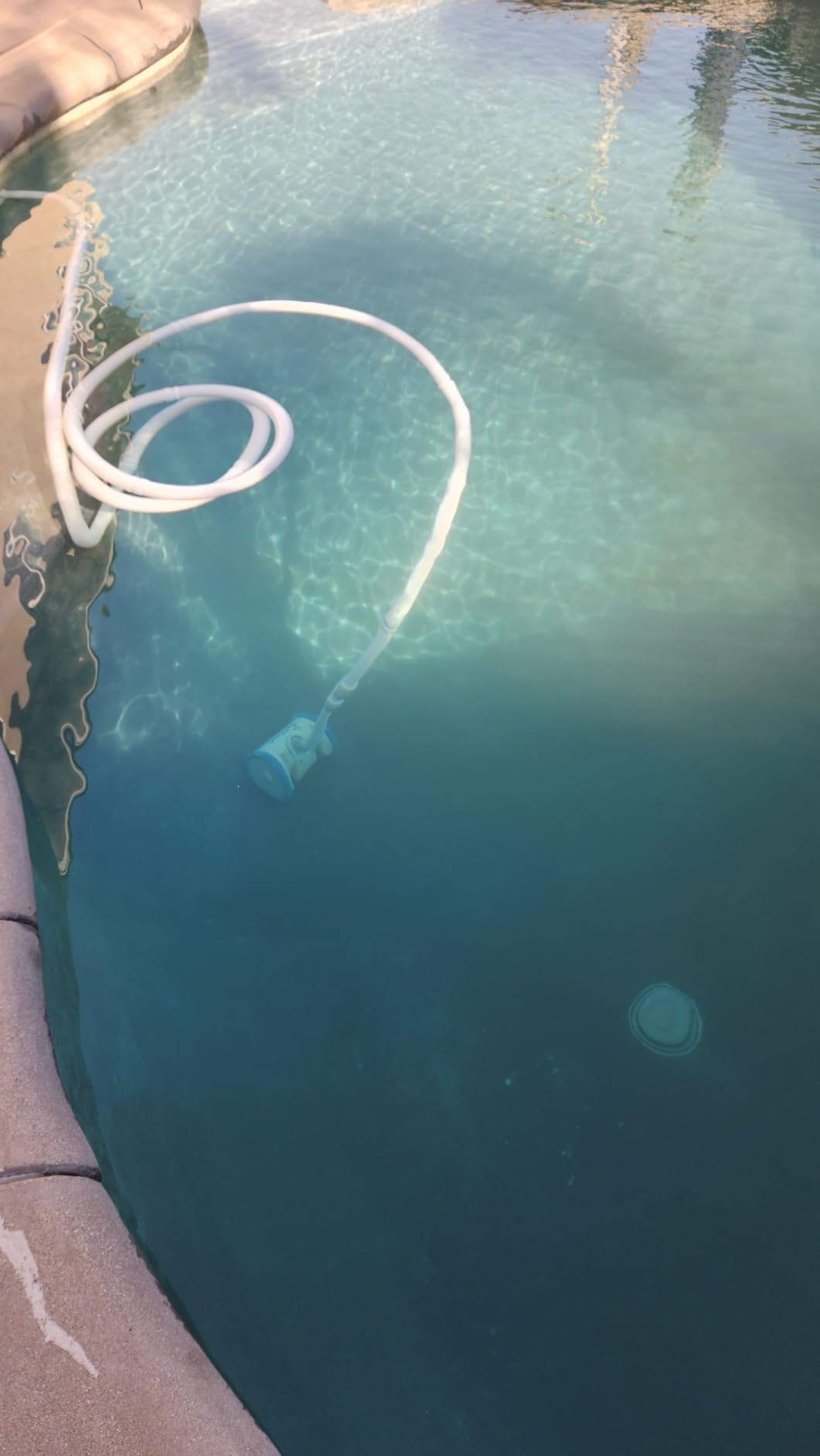
Steering is handled by multiple pre-programmed internal sequences that periodically reverse one wheel to change direction. In practice this is what lets it recover from corners and main drains without you walking over and re-aiming it, and it is the single biggest difference between this machine and cheaper random-walk units.
It covers the floor, steps, and waterline in one cycle, attaches to a suction port or skimmer, and needs no booster pump. Patented tire treads improve climbing ability and obstacle maneuverability.
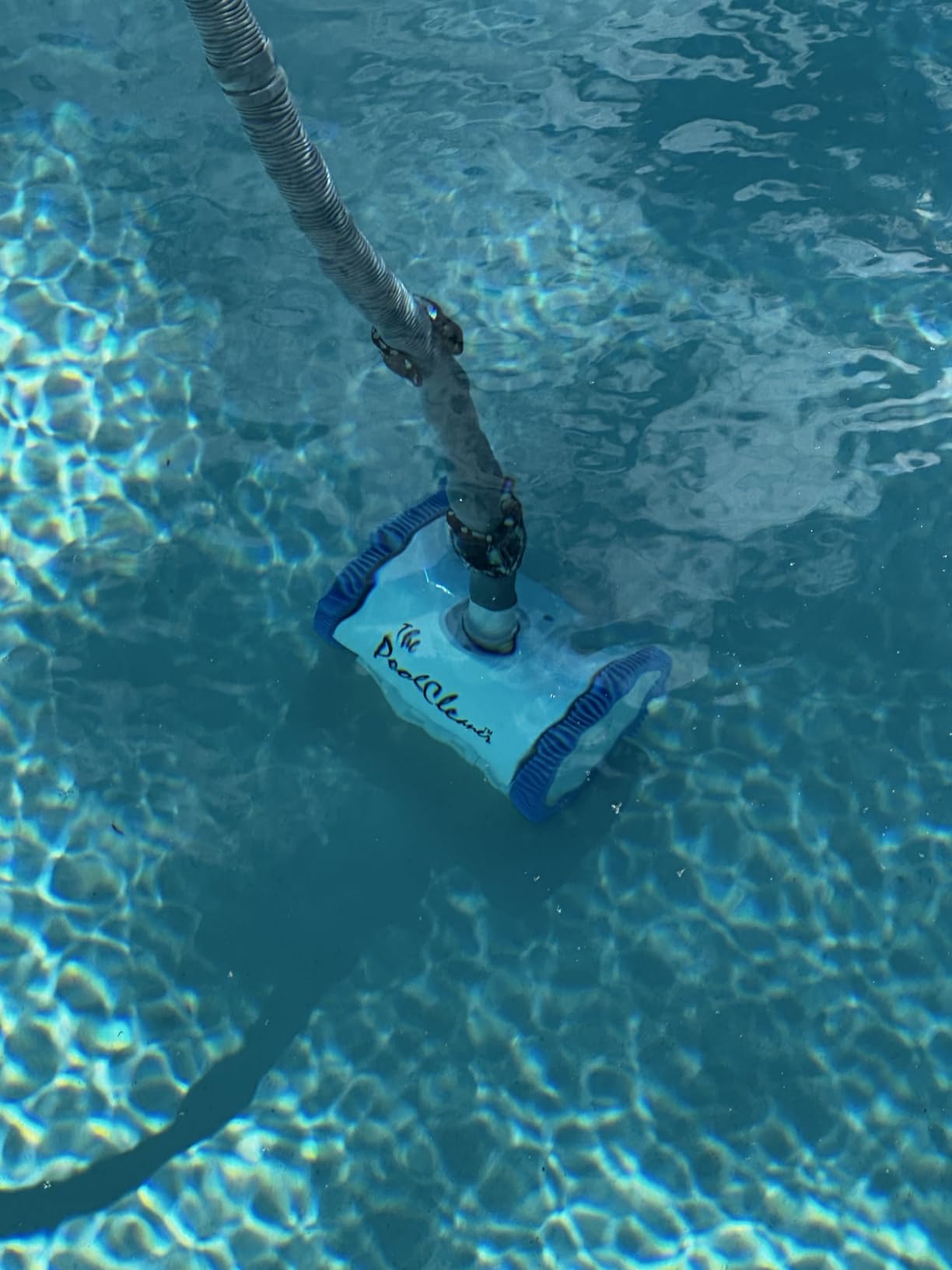
Pick two-wheel or four-wheel by pool size
This two-wheel version is built for pools up to 16 by 32 feet. That limit is the most frequently cited complaint, and owners of larger pools are pointed to the four-wheel sibling further down this list rather than to a different brand.
The two-wheel chassis is also less stable on very uneven or heavily stepped floors. If your pool has deep transitions or unusual geometry, budget for the extra stability of the four-wheel version.
Know when to skip it
Both Poolvergnuegen versions are routine-maintenance machines. They perform well against normal weekly debris but are not the answer after heavy leaf fall or a season-opening cleanup, where clogging becomes the limiting factor.
Owners also report that hose sections and roller skirt parts can need replacement after extended use. That is normal wear rather than a defect, but it is worth factoring into a multi-year ownership calculation.
5. XtremepowerUS Automatic Cleaner – Best for Standard Rectangular Pools
XtremepowerUS Automatic Pool Cleaner Sweeper Vacuum Pool Cleaner Sweep High Flow Side Suction Wall Climb for In-Ground Swimming Pool with Hose Suction Set (Blue)
30 ft hose in ten sections
Needs 1 HP pump or 1600 gal/h
Adjustable weights and regulator
Pros
- Lowest cost of the powered cleaners we tested
- Suction handles sand silt and lawn debris
- Quiet enough to run without constant clicking
- Lightweight and easy to carry
Cons
- Requires 1 HP and careful regulator tuning
- Clogs on large leaf debris
- Can stick in corners and needs watching
The XtremepowerUS splits its owner base into two distinct camps, and understanding the split tells you whether to buy it. Owners who dial in the regulator and the weights report suction and coverage comparable to name-brand machines at a fraction of the cost. Owners who cannot get it tuned report a machine that stays in the deep end, repeats the same patch, and hammers.
The tuning is the whole product. Adjustable weights and a regulator valve control how the machine rides, and the manufacturer states a minimum of a 1 HP pump or 1600 gallons per hour. Owners with variable-speed pumps note that a mid-range speed setting is essential.
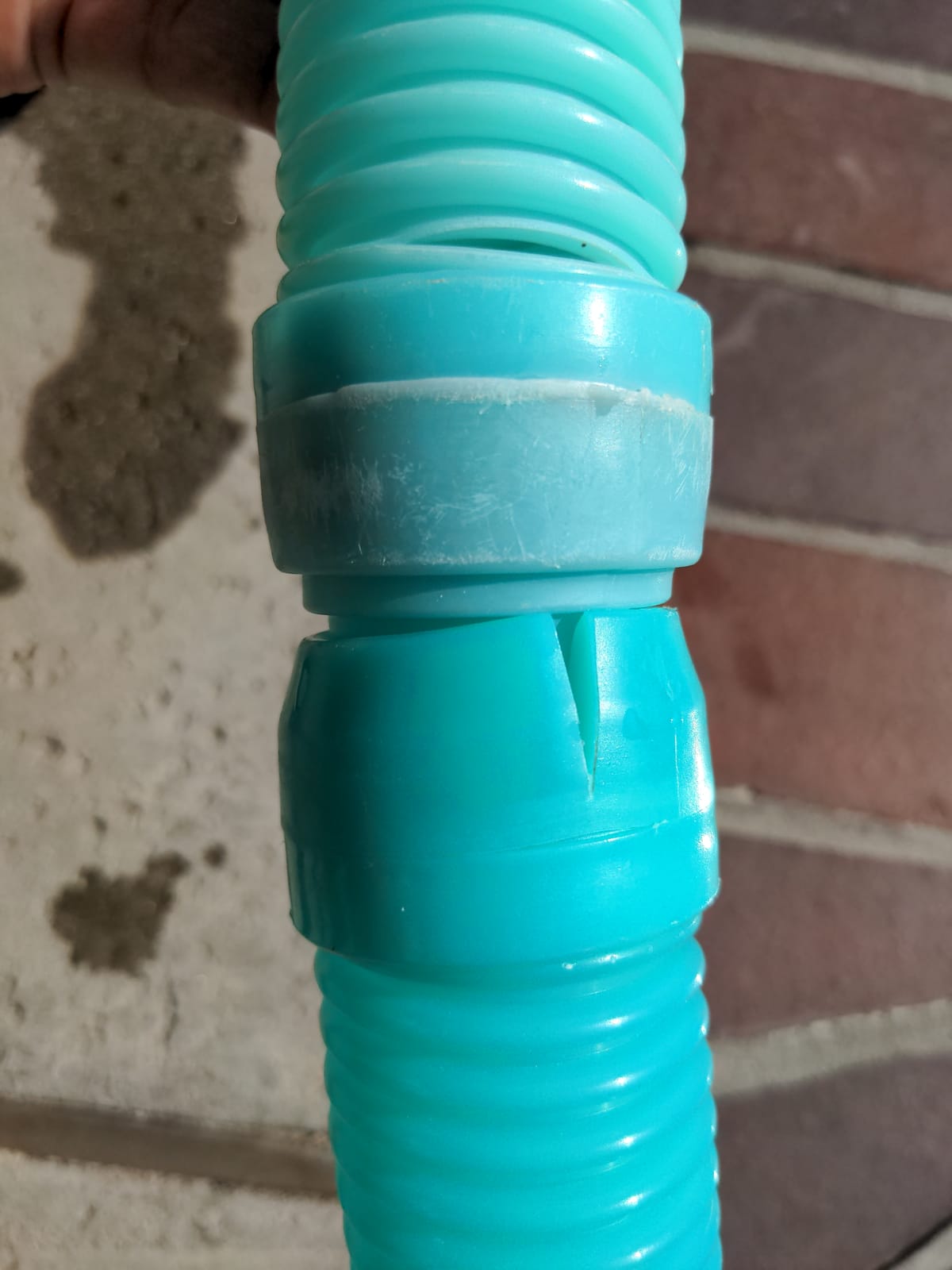
What it does well, it does surprisingly well. It picks up sand, silt, and lawn debris, runs quietly compared with several machines in this class, and the ten hose sections in the box total 30 feet. The hose sections are interchangeable with earlier models from the same manufacturer, which is a genuine long-term advantage.
At 41 by 6 by 18 inches it is light and easy to carry in and out of the pool, which matters if you are retrieving it manually rather than watching it from inside.

Be honest about the tuning effort
This is not a set-and-forget machine. If you are not willing to spend an afternoon adjusting weights and the regulator until the coverage pattern looks right, buy something else. The difference between a good experience and a bad one with this product is entirely in that setup session.
Give it a fair shot and the payoff is strong suction at the lowest cost of any powered option here.
Know when to skip it
Skip it for pools under heavy leaf fall. Clogging on large leaves is the recurring complaint, and pre-cleaning the pool before each run becomes a permanent chore rather than a seasonal one.
Several owners also report a short service life of a few months, and the skimmer connection fitting is oversized and does not seat tightly, so expect to check that connection every time you start a run.
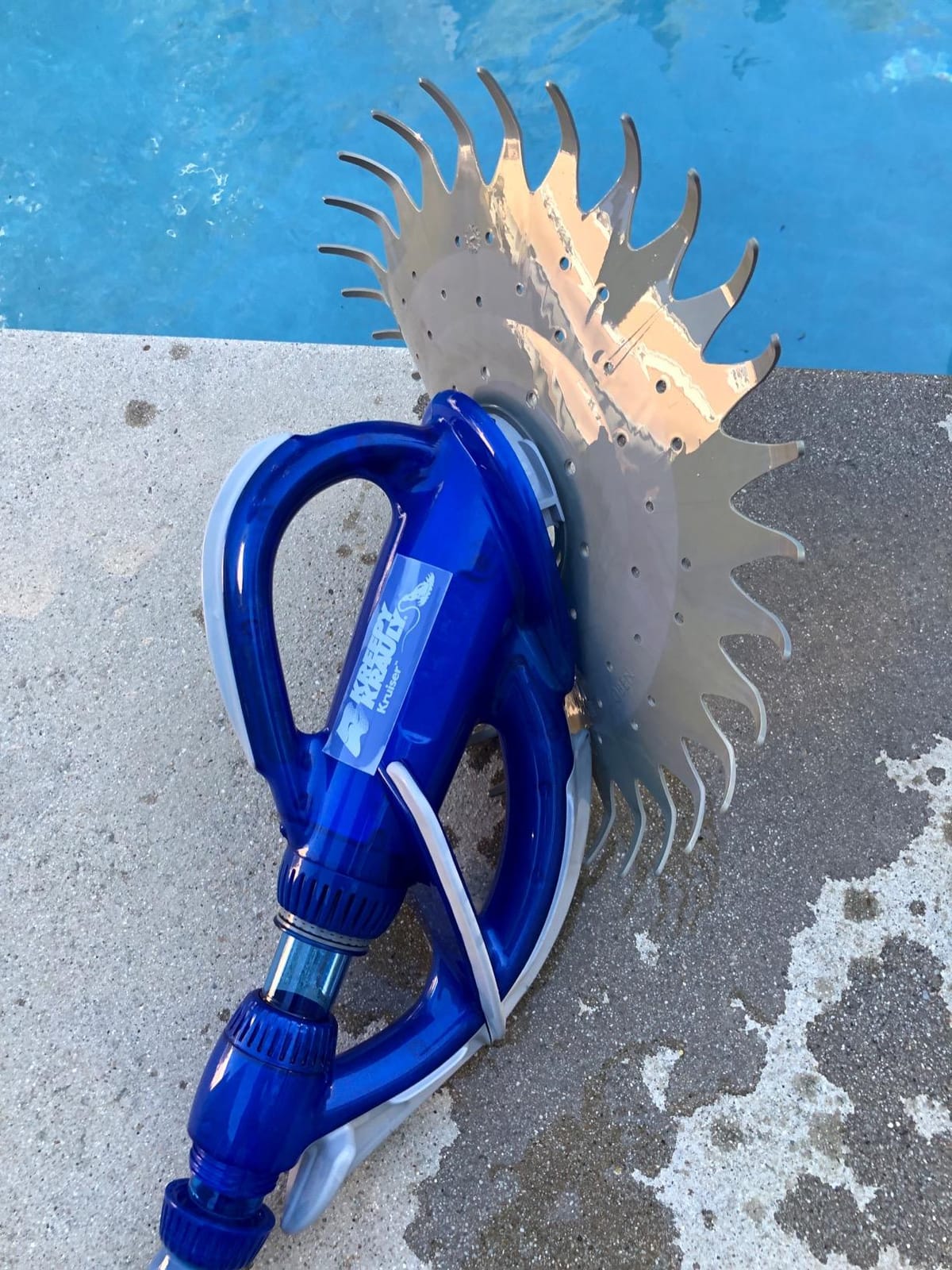
6. Pentair Kreepy Krauly Kruiser – Best for Sand and Silt Pickup
Pentair K60430 Kreepy Krauly Kruiser Automatic Inground Pool Cleaner
Wide-mouth intake for large and small debris
32 ft hose
Single moving part
Strong seal
Pros
- Wide intake mouth takes large and small debris in one pass
- Only one moving part to maintain
- Superior seal design holds suction in the line
- Minimal installation with a 32 ft hose
Cons
- Heaviest and bulkiest machine in the roundup
- Older platform with aging parts availability
- Needs re-aiming around deep ends and steps
The Pentair Kreepy Krauly Kruiser earns its place through one specific strength: its wide intake mouth. That opening takes both large debris and fine particles in a single pass, which makes it the cleaner to reach for when a deep end has accumulated sand and silt rather than leaves.
Like the G3, it is a one-moving-part design, which is why owners report minimal maintenance. The superior seal design holds suction in the line better than cheaper fittings, and installation is described as minimal with a 32-foot hose included.
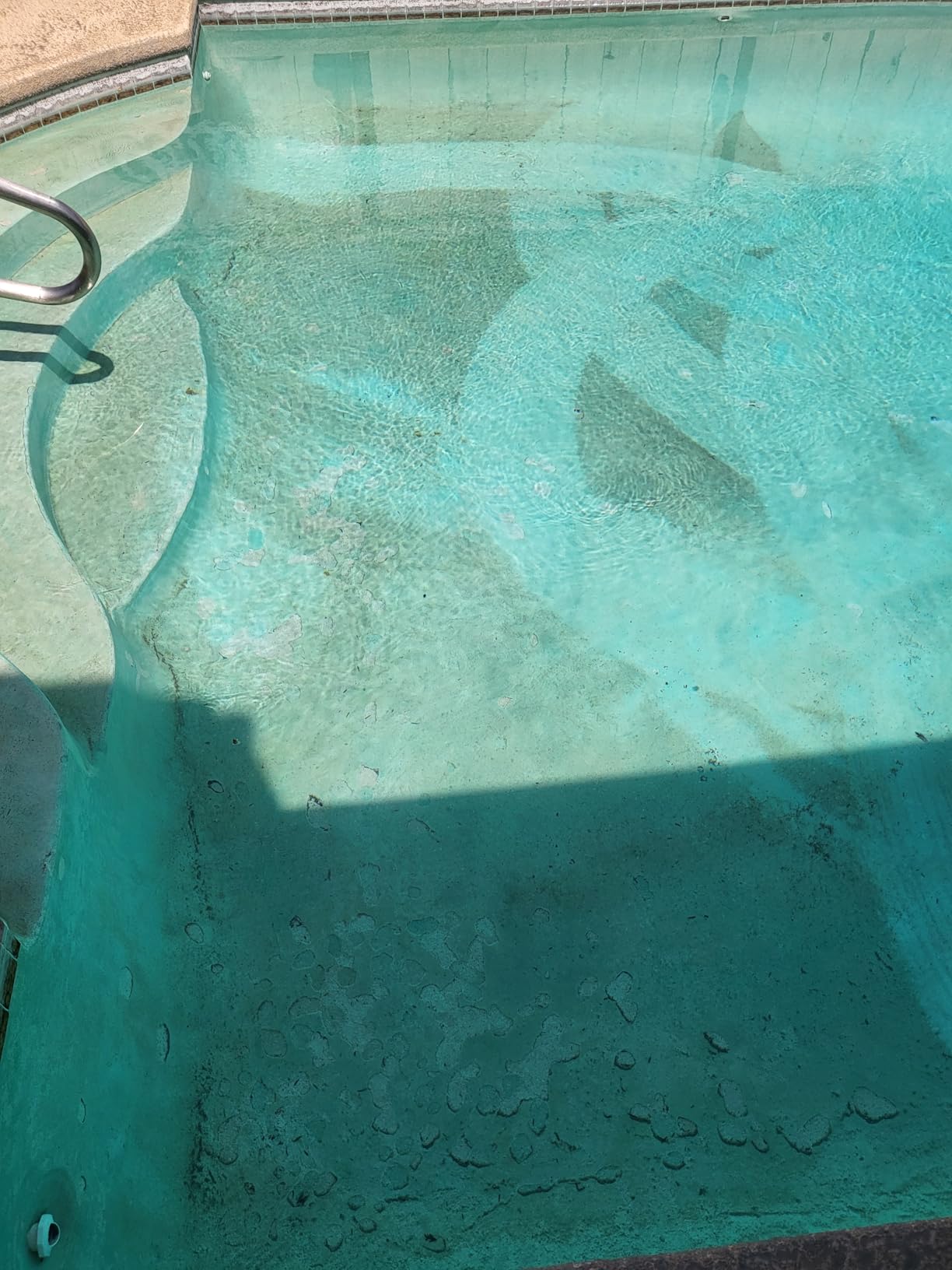
At 4.2 average with roughly two thirds of buyers rating it five stars, the reviews focus consistently on suction power and low maintenance. There is no gimmick to understand and nothing to calibrate beyond flow, which makes it a low-friction option for standard pools.
It is also one of the heavier machines at 18 pounds, and that bulk is the most common complaint. Getting it in and out of the deep end of a pool without help is a real consideration if you are older or the machine sits at the bottom of a deep section.
Think about parts availability over the long haul
This is an older platform, and owners considering multi-year ownership should check wear part availability before committing. Pentair is a major brand with broad distribution, but a machine that is a decade past its original model year carries more sourcing risk than a current release.
That matters most for diaphragms and seals, the parts most likely to need replacing, and it is the main reason we would not make this the first pick for a brand-new purchase.
Know when to skip it
Skip it if lifting 18 pounds out of a deep end is going to be a problem, or if you want a machine that is easy to move to the spot where the dirt actually is. The weight works against you every time you need to redeploy it.
Owners with pools that have deep ends or built-in steps also report periodic re-aiming, so treat it as a routine-maintenance machine rather than something that will finish a neglected pool on its own.
7. U.S. Pool Supply Octopus – Best for Smaller 1/2 HP Pumps
U.S. Pool Supply Octopus Suction Pool Cleaner, Inground Automatic Pool Vac
Quiet long-life diaphragm with spare
33 ft spiral hose
Deflector wheel
Needs 1/2 HP
Pros
- Long-life diaphragm eliminates flapper hammering noise
- A replacement diaphragm is included in the box
- Deflector wheel navigates steps ladders and corners
- Lowest flow requirement of any cleaner here at 1/2 HP
Cons
- Weakest average rating in the roundup
- Not suitable for vinyl-lined or soft-wall pools
- Many short hose sections are fiddly to connect
The U.S. Pool Supply Octopus solves one specific problem better than anything else here: it runs on very little flow. It needs only a 1/2 HP pump or 1,000 gallons per hour, the lowest requirement of any cleaner in this roundup, which makes it the practical answer for older pools with undersized pumps.
Its second strength is silence. The long-life diaphragm membrane eliminates the flapper hammer noise common to this class, and a replacement diaphragm is included in the box, so the most common failure point is already covered.
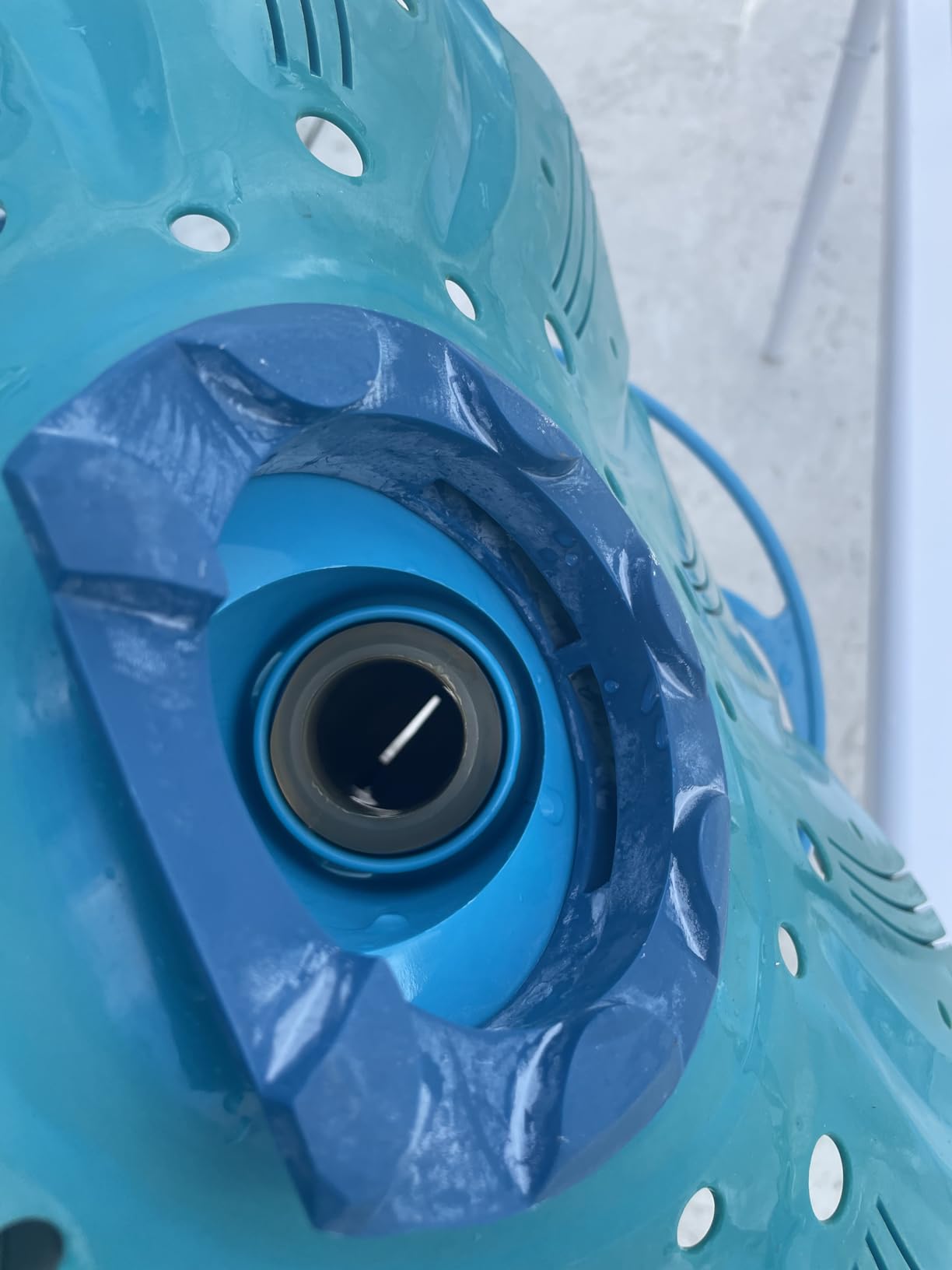
The deflector wheel is a genuinely useful piece of design. Owners credit it with helping the machine work around steps, ladders, and corners instead of wedging against them, which is the failure mode most complained about in this category.
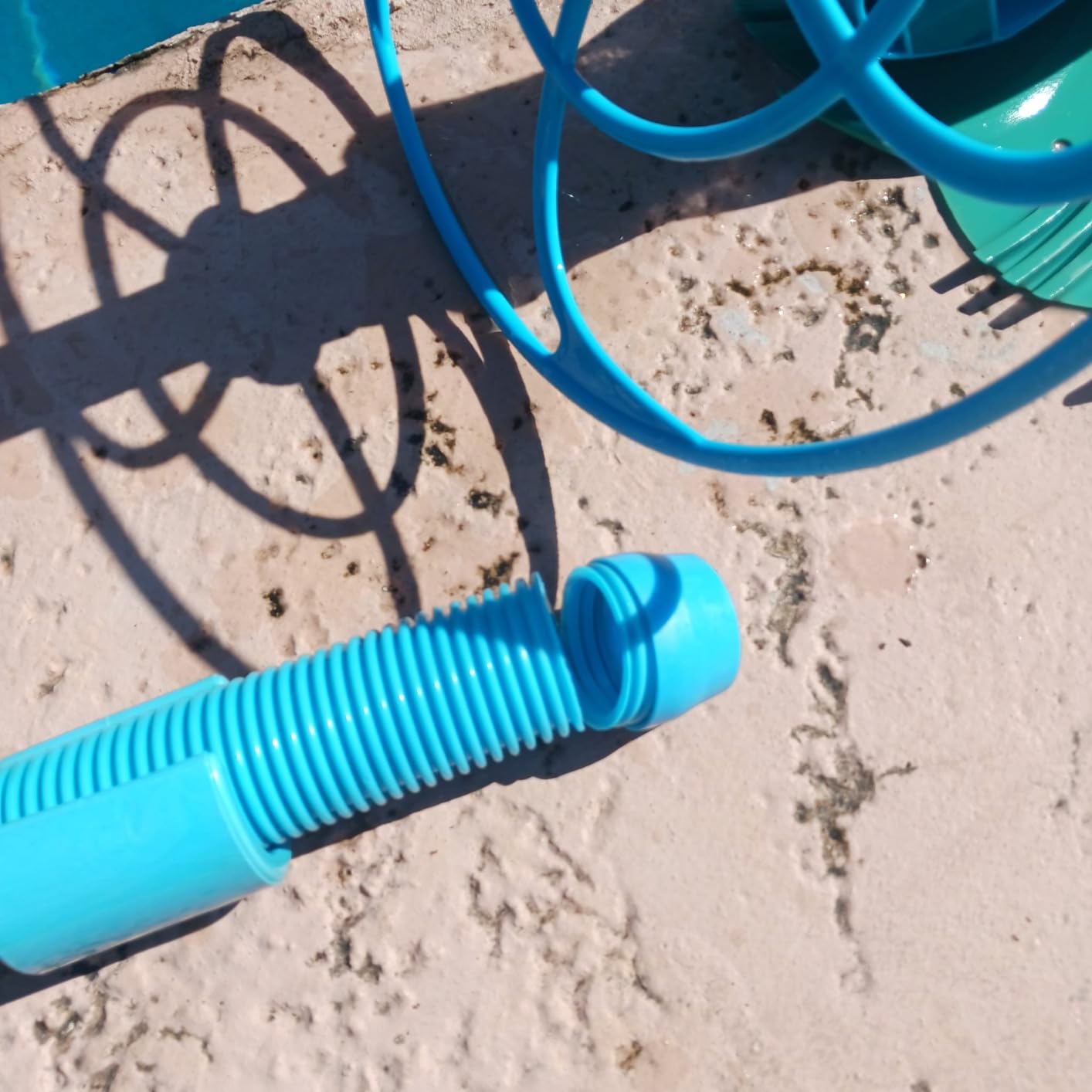
The hose is 33 feet of premium spiral wound vacuum in 20-inch sections, and the length is adjustable by adding or removing sections. That flexibility is useful for small pools where 33 feet is more than enough.
Two setup details that decide success
Dip the hose ends in water before connecting them. The manufacturer calls this out directly and owners confirm it, because the spiral wound hose makes a noticeably tighter seal once the ends are wet. Skipping this step is the most common cause of a poor first impression.
The second detail is that this is not a set-and-forget machine in irregularly shaped pools. It needs supervision to keep moving, and owners in complex layouts report a lot of hands-on time.
Know when to skip it
This one carries the lowest average rating in the roundup, with a meaningful share of one-star reviews concentrated on durability and recurring diaphragm problems. If you want a machine you set and forget for years, look elsewhere.
It is also not suitable for soft-wall or vinyl-lined pools, and that is a hard exclusion rather than a preference. Check your pool construction before you order.
8. Polaris MAXX Premium – Best for Stubborn Stuck-On Debris
Polaris MAXX Premium Suction-Side Automatic Pool Cleaner
Active scrubbing brushes and HALO intake
Tracked drive
39 ft hose
Pros
- Scrubbing brushes attack stuck-on debris passive cleaners skip
- HALO intake handles fine silt and large leaves without clogging
- Tracked drive climbs straight and 90 degree walls
- Two-year manufacturer warranty and replaceable brushes
Cons
- Most expensive cleaner in the roundup
- Weak wall climbing on curved walls
- Flow must be timed rather than gauged
The Polaris MAXX Premium is the only suction-side cleaner in this group with active scrubbing brushes, and that single feature changes what it can clean. Passive suction machines only pick up what is loose. The MAXX concentrates scrubbing action on stubborn stuck-on debris and directs the particles toward the suction inlet.
Owners who get the flow calibrated correctly describe it as a step change over earlier suction cleaners, with visibly cleaner paths across the pool bottom and strong climbing performance. The scrubbing brushes and the HALO intake are the most praised features, especially for pools surrounded by trees.
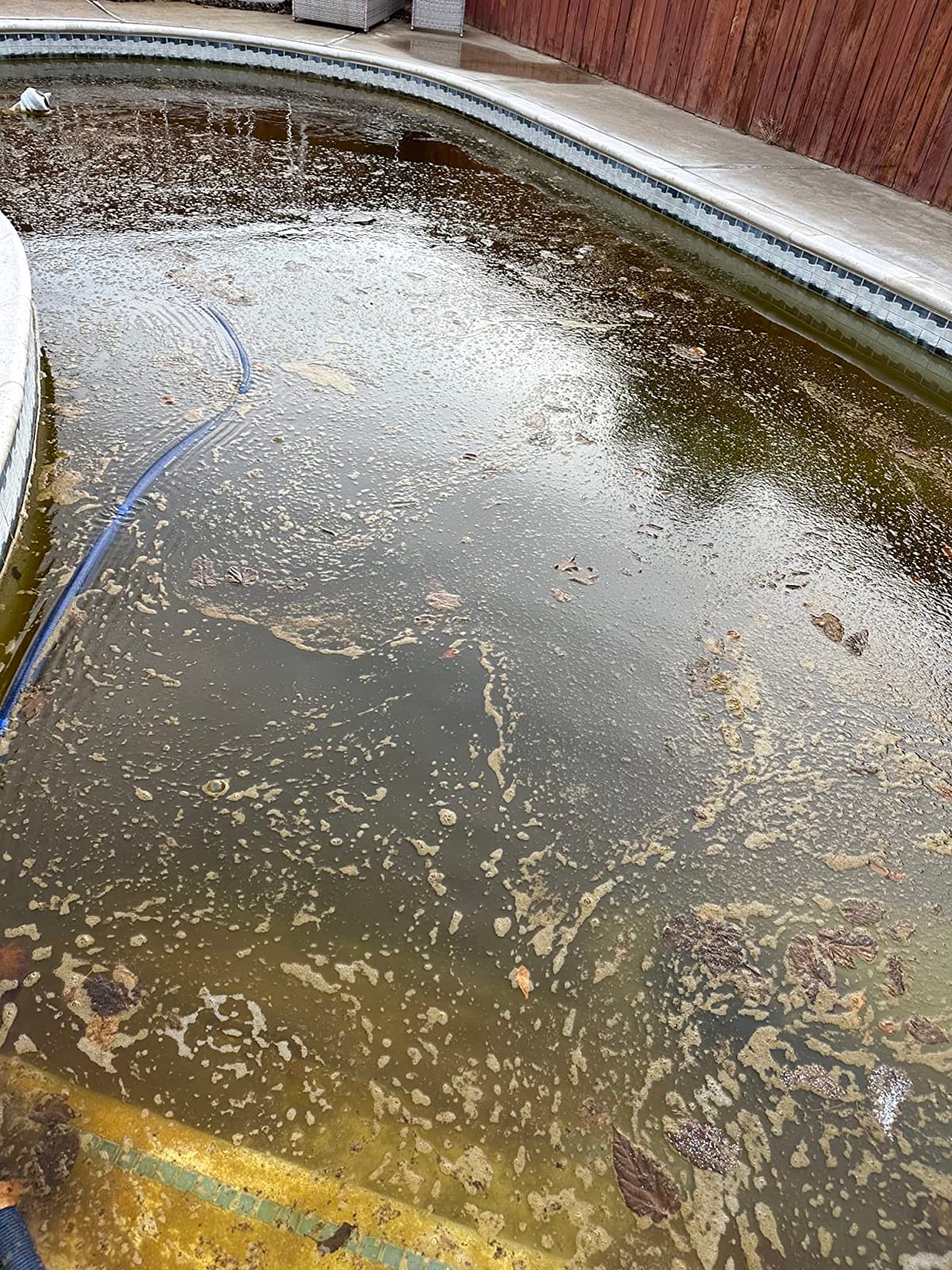
The HALO technology provides unobstructed clearance so the machine handles fine silt and sand alongside larger debris without choking. Smart multi-directional navigation works with an automatic regulator valve that controls excess water flow, which reduces wear on the rest of the system.
The tracked drive gives it the traction to climb straight walls and 90-degree transitions reliably, and the replaceable brushes plus the life-extending regulator valve are what make it viable as a long-term purchase rather than a season purchase.
How to calibrate flow without a gauge
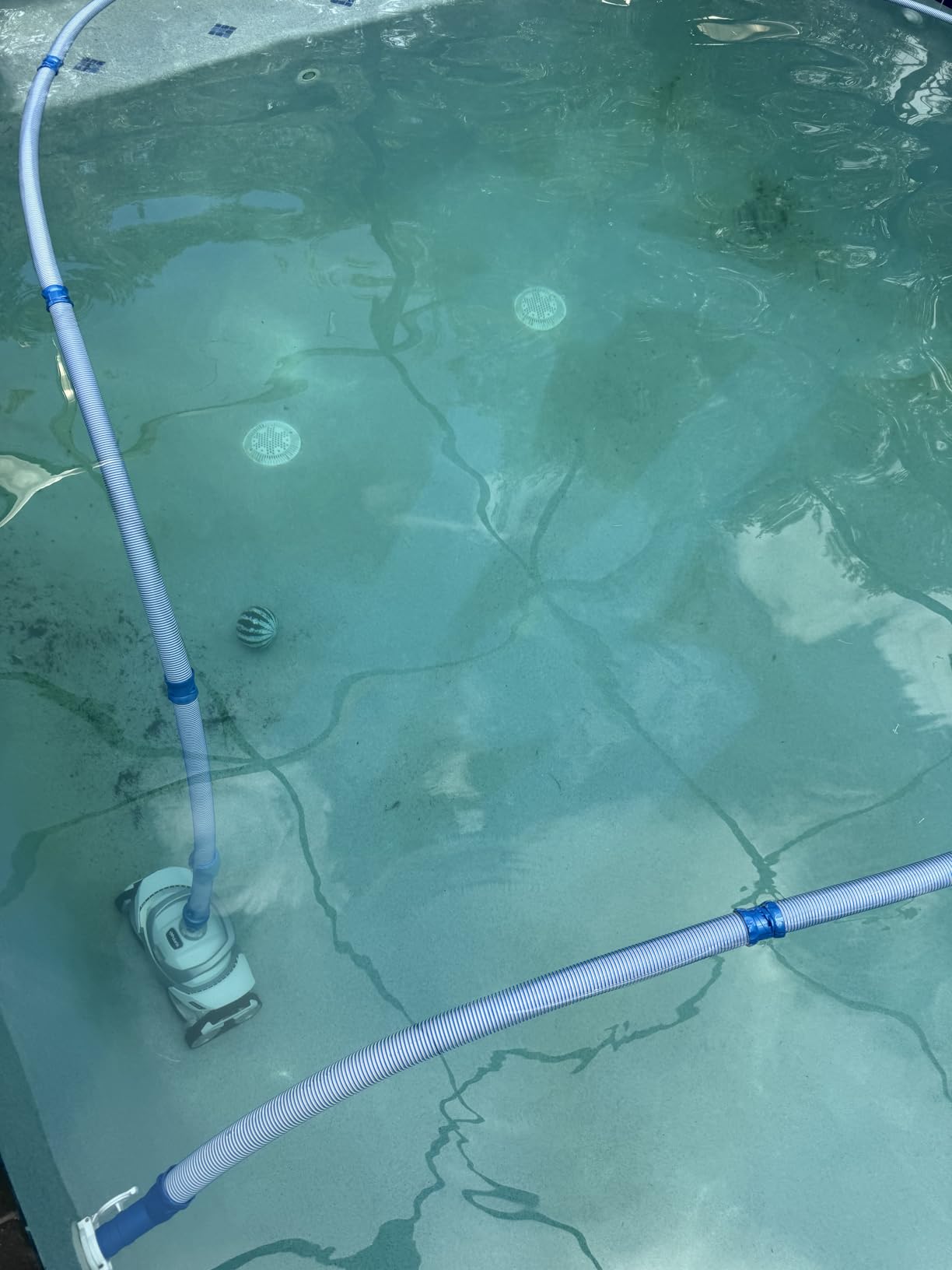
Polaris does not supply a suction gauge with this machine. Instead, you check suction by timing ten wheel rotations, aiming for about 20 seconds. The listing recommends getting a flow gauge before installation, which is the cleanest way to dial it in the first time.
Getting this right matters more than usual here, because the tracked drive needs correct downforce to grip. Under-grip shows up as the treads spinning in place on a wall.
Know when to skip it
Skip it for freeform pools with curved walls. The dominant complaint is exactly that: on rounded surfaces the treads spin without grip and climbing stops. Straight walls and right-angle transitions are where this machine is at its best.
It is also the most expensive cleaner here, it is not designed for post-construction or seasonal opening cleanup, and some units stop mid-pool and spin in place. Those are real limitations for the money.
9. Hayward Poolvergnuegen 4-Wheel – Best for Large Pools
Hayward Poolvergnuegen Suction Pool Cleaner (4 Wheel) Pools up to 20 x 40ft
Anti-clog turbine vanes and tire treads
40 ft hose
Pools to 20 by 40 ft
Pros
- Rated to 20 by 40 ft pools with a 40 ft hose
- Four-wheel chassis is steadier on uneven and stepped floors
- Same anti-clog turbine vanes as the two-wheel model
- Light at 6.6 pounds for its size
Cons
- Second-highest cost in the roundup
- Tire tread and drive parts wear after a few seasons
- Routine maintenance only
If your pool is bigger than 16 by 32 feet, the four-wheel Poolvergnuegen is the correct version and the two-wheel is not. It is rated to 20 by 40 feet and comes with a 40-foot hose, which is exactly the extra reach a larger pool needs.
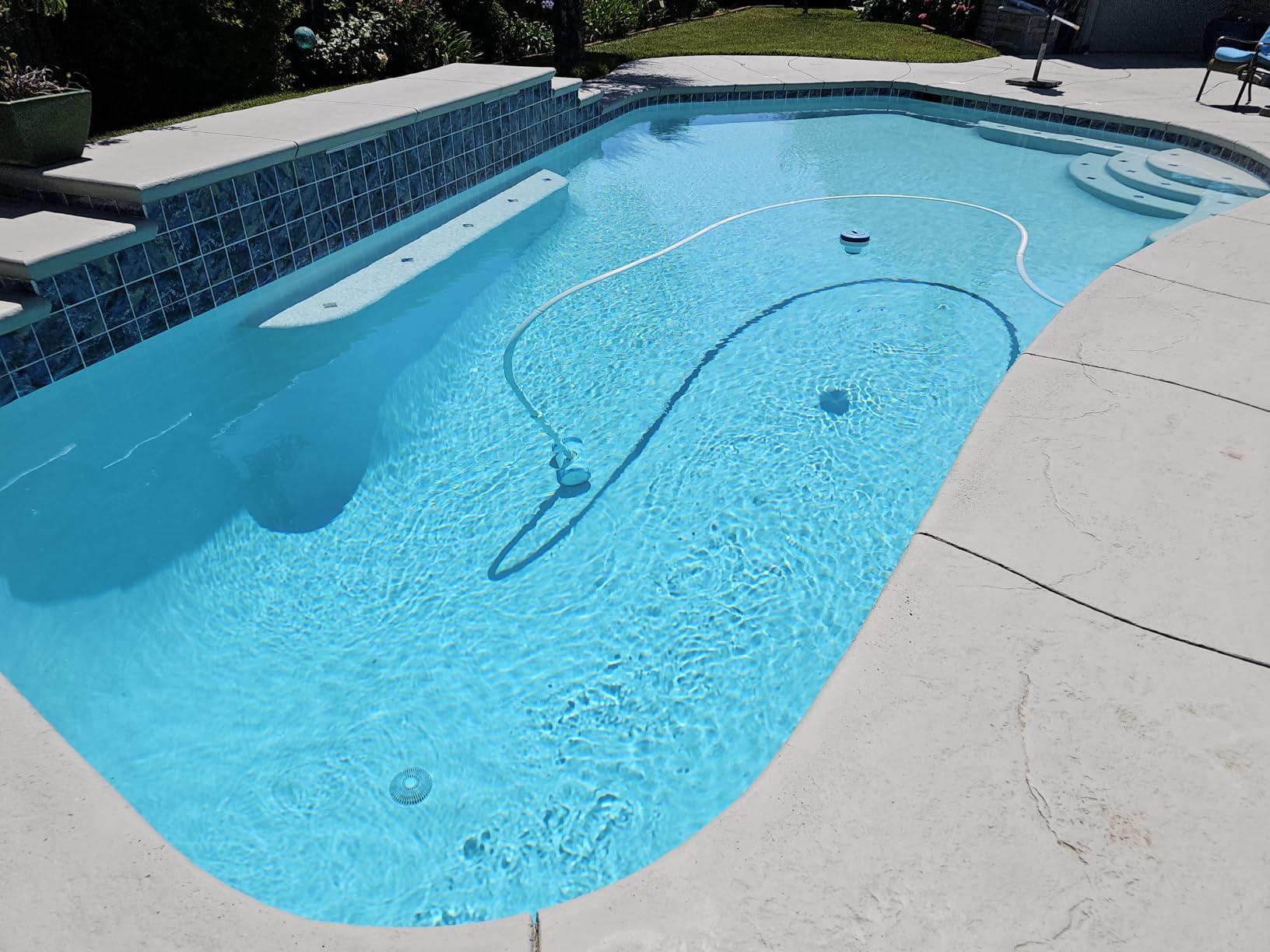
Beyond size, the four-wheel chassis is the reason to choose it. Reviewers consistently report a noticeably steadier ride on stepped and uneven floors, and that stability translates directly into better coverage in pools with deep transitions and benches.
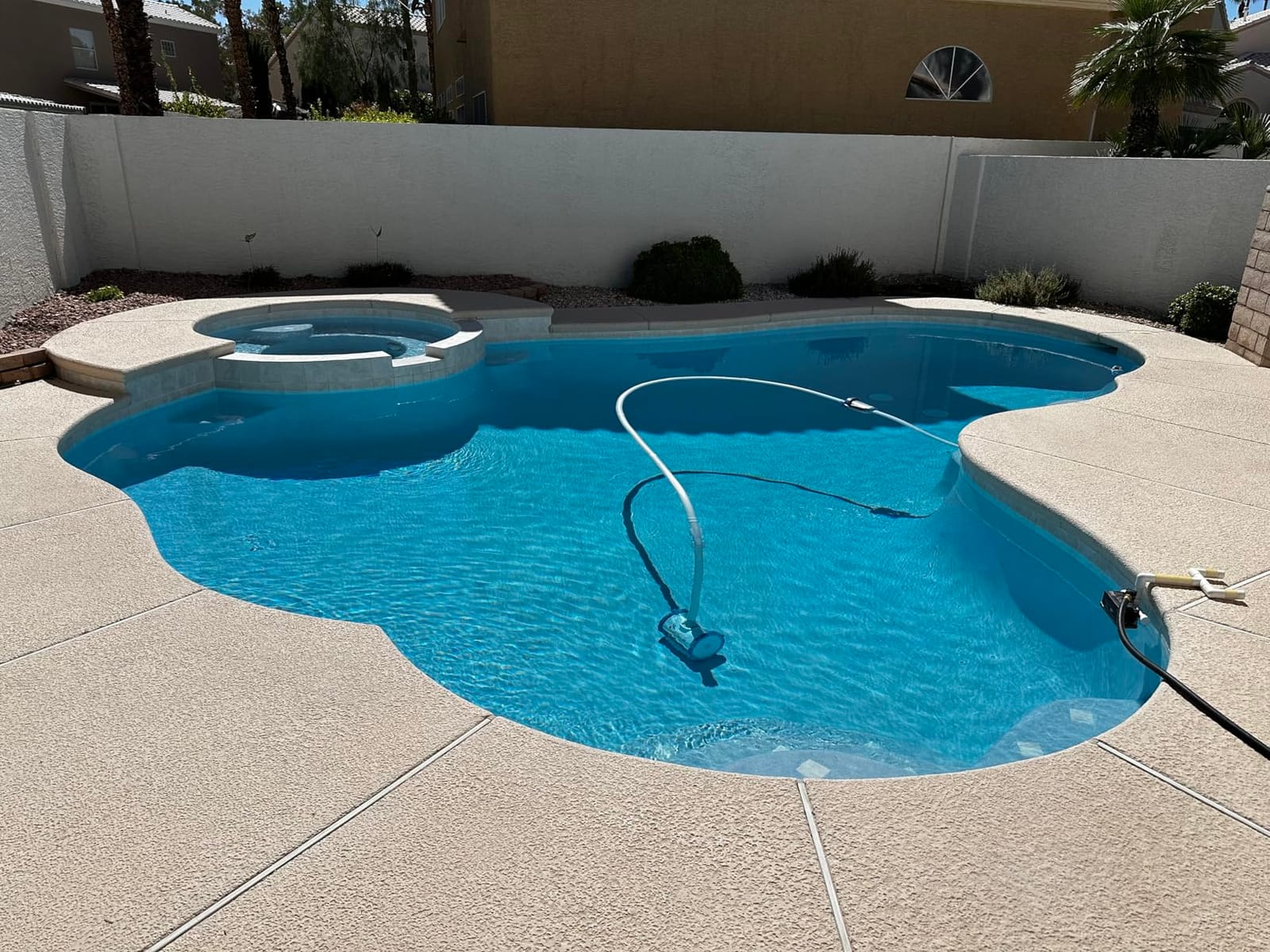
The rest of the engineering is shared with the two-wheel version. Patented turbine vanes prevent clogs at nearly any flow rate, adjustable roller skirts hold suction across uneven surfaces, and multiple pre-programmed internal steering sequences let it reverse one wheel to escape corners without intervention.
It attaches to a suction port or skimmer and needs no booster pump. At 6.6 pounds it is lighter than most machines of its class, which makes retrieval easier when it settles somewhere inconvenient.
Plan for drive part wear
The criticisms of this machine are mostly long-term. Owners report worn tires and drive parts after a few seasons, which is normal for a hydraulic drive system but should be part of your ownership calculation from the start.
Because it requires regular filter cleaning to keep suction at full strength, pair it with a consistent backwashing habit. If your filter is allowed to load up, this machine loses performance faster than the turbine vanes can compensate.
Know when to skip it
Skip it if your pool is under 16 by 32 feet, because the two-wheel version covers the same ground more cheaply and you are paying for capacity you will not use. It is also intended for routine maintenance rather than heavy debris loads.
If you are on a tight budget and own a modest pool, the two-wheel version in this roundup is the same design at a lower cost.
10. WYBOT C1 Cordless Robot – Best for Hands-Off Coverage
WYBOT C1 Cordless Robotic Pool Vacuum for Inground Pools, Professional
Cordless robot with 160 minute runtime
45 degree climbing
Gyroscope path navigation
Pros
- Removes heavy leaf loads pet hair and scale without help
- App scheduling with multiple cleaning modes
- Navigates complex pools with steps and rails without sticking
- No hose or vacuum sections to maintain
Cons
- Runtime means frequent removal and recharging
- Proprietary charging plug and a flimsy filter basket
- Leaves micro-fines in wrinkles and divots
The WYBOT C1 is not a suction-side cleaner, and we want to be direct about that. It is here because it is the honest alternative, and if you are deciding whether to buy a suction machine at all, this is what the other option looks like in 2026.
On a per-cycle basis it simply does more. Owners report it removing heavy leaf loads, pet hair, and calcium scale without manual intervention, and navigation is the standout feature: multiple owners with complex pools containing steps, rails, shelves, and multiple access points report no getting stuck at all.
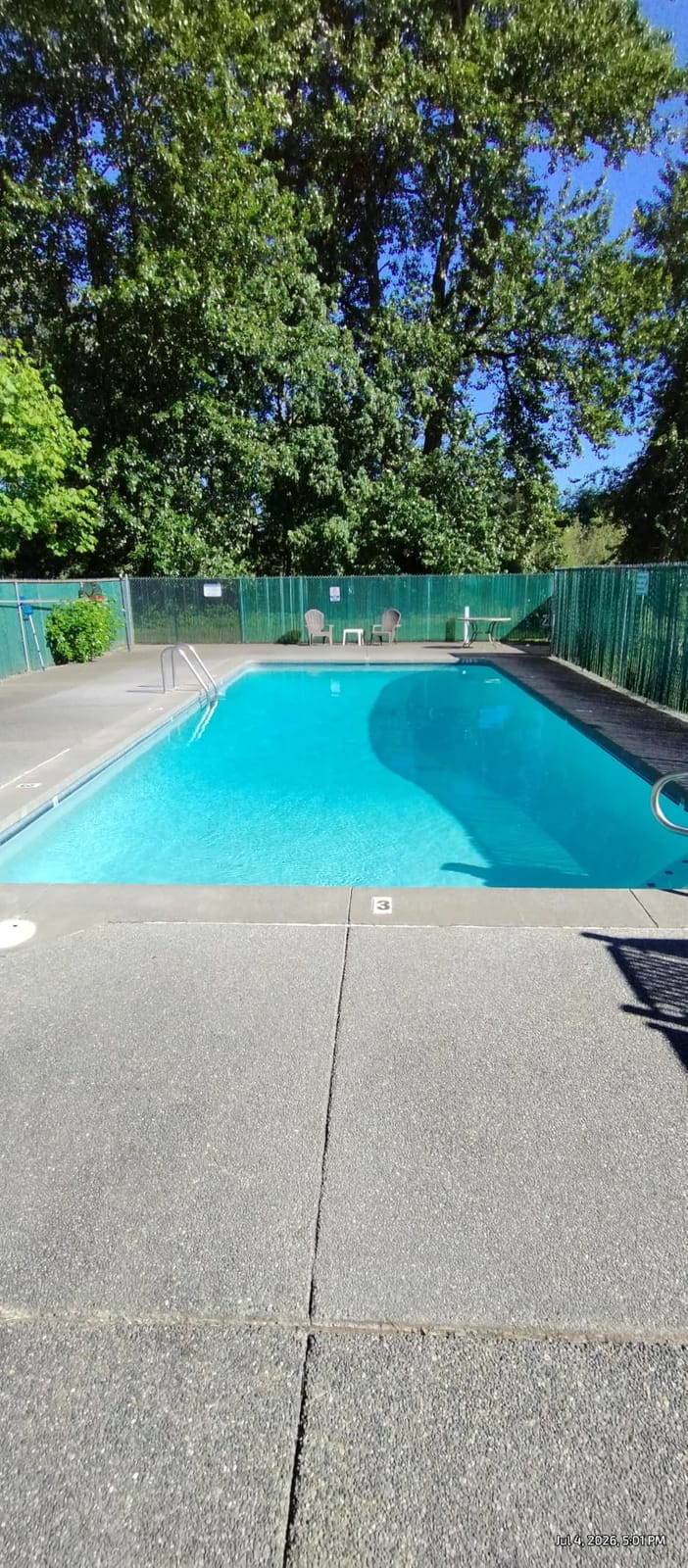
The triple-motor system climbs slopes up to 45 degrees and a gyroscope follows optimized N-path and S-path patterns to reduce missed spots. Coverage spans floor, walls, waterline, and steps. A lithium battery gives up to 160 minutes of operation on a four-hour charge, for pools up to 1,618 square feet and 9.86 feet deep.
There are no hose sections, no vacuum line, and no filter impact on your pool filter, because debris goes into its own basket. You can schedule runs and change modes from an app with over-the-air firmware updates, and it carries a two-year manufacturer warranty.
What you give up for that autonomy
The compromises are operational rather than performance-related. A 160-minute runtime on a four-hour charge means you are pulling it out and putting it back regularly, and it cannot be controlled once submerged, so setup has to happen before placement.
The charging plug is proprietary rather than standard, the filter basket feels flimsy and is awkward to remove while plugged in, and a smaller group report battery charging failure around the one-year mark alongside slow warranty support.
Know when to skip it
Skip it if micro-fines matter to you. Owners with uneven floors or wrinkled vinyl liners report it leaves debris in divots and creases, which is the one job a dedicated in-ground suction vacuum still does better.
If you want one machine that runs for a week without attention, this is the answer. If you want cheap, simple, and already plumbed, go back to the MX6.
How to Set Up a Suction Pool Cleaner So It Actually Works
Most disappointing suction cleaner experiences are setup failures, not product failures. The same machine that seems useless on Monday can look competent on Friday after twenty minutes of adjustment.
Pick the connection. A dedicated vacuum line is the better option because it does not steal skimmer suction. Using the skimmer works fine, but while the cleaner runs your skimmer is no longer skimming, which owners raise as a recurring annoyance.
Get the hose length right. Measure to the furthest corner of the pool, then add one extra hose section. Too short and the cleaner cannot reach the deep end. Too long adds drag that reduces flow and hurts climbing.
Check the pump basket first. A clogged basket starves the entire system. Empty it, rinse the filter, and start the run with clean hydraulics before you blame the cleaner.
Calibrate flow. Most machines in this category are checked by timing ten wheel rotations against roughly 20 to 25 seconds. Turn the flow regulator until you land in that window. Polaris specifies the same 10-rotation check, and Hayward owners commonly compare against a 33 to 40 RPM reference.
Watch the first full run. Stay poolside for the first twenty minutes. If the machine rides up over the waterline on a shallow end, reduce flow. If it stalls or loses traction, increase it. Adjust the regulator in small steps.
Give it time. These machines wander, so coverage is a function of runtime. Expect to run it for several hours a day rather than one nominal cycle, and expect more frequent backwashing because the debris is going into your filter.
Suction vs Pressure vs Robotic: When Each One Wins
A suction-side cleaner sends debris to your existing pool filter, needs no booster pump or dedicated return line, and costs a fraction of a robot. Its weaknesses are wandering coverage, no active scrubbing, and a real load on your filter.
A pressure-side cleaner works the opposite way, using a dedicated return line and usually a booster pump. Debris goes into the cleaner’s own canister. That makes it dramatically better for heavy leaf fall and it means no filter impact, but the pump and plumbing costs are real, and buyers often report reliability issues that push them toward a robot.
A robotic cleaner is self-contained, cordless or corded, and navigates rather than wanders. It is the most capable option and the most expensive by a wide margin, and it is where most buyers have landed.
So: suction-side for a standard pool on a decent pump where you want the cheapest path to automatic cleaning. Pressure-side for a pool under heavy tree cover. Robotic for a pool with demanding coverage and no patience for babysitting a wandering machine.
Buying Guide: Match the Cleaner to Your Pool
Check your pool surface. Gunite and concrete accept everything in this list. Vinyl liner is fine for most suction-side machines, but the U.S. Pool Supply Octopus is explicitly excluded for soft-wall and vinyl-lined pools. Fiberglass is listed as compatible by the G3. If you are unsure, a gunite-versus-vinyl shoe or trim mismatch is a common and entirely avoidable purchasing error.
Match the pump. The general rule is a 3/4 HP minimum. The VINGLI needs 3/4 HP or 1600 gph, the XtremepowerUS needs 1 HP or 1600 gal/h, and the Octopus needs only 1/2 HP or 1,000 gal/h. If your pump is below 3/4 HP, wall climbing and drive performance will collapse regardless of which cleaner you choose.
Size it to the pool. The two-wheel Poolvergnuegen stops at 16 by 32 feet. The four-wheel version goes to 20 by 40 feet. Measure before you order, and remember that random-walk coverage needs longer runtime as the pool grows.
Match the debris. Leaves clog intakes, so a pool under heavy deciduous cover is the wrong environment for any of these machines. Sand and silt call for the wide intake of the Pentair Kruiser. Stuck-on debris on steps and benches needs the active brushes of the Polaris MAXX, because no passive machine will scrub.
Count your hours honestly. These cleaners wander. If you cannot run yours for several hours a day, a robot will produce a cleaner pool for the same total effort.
Price in the wear parts. A machine that has slowed down usually needs a diaphragm, a disc, or a turbine, not a replacement. The one-moving-part designs like the G3 and the Pentair make that repair trivial, and manufacturers like VINGLI and Pentair carry the parts broadly.
For non-inground setups, our guides to pool vacuums for above ground pools and pool heaters for above ground pools cover the equipment those setups need instead.
When Not to Buy a Suction Pool Cleaner
Your pool is under heavy deciduous tree cover. Leaf loads clog intakes faster than a wandering machine can clear them. A pressure-side cleaner is built for exactly this situation, and no amount of calibration fixes it.
You have no vacuum line and do not want to install one. A skimmer hookup works, but you give up surface skimming while the cleaner runs. If that tradeoff is unacceptable, look elsewhere.
Your pump is under 3/4 HP. Drive performance and wall climbing will be disappointing with every model in this roundup.
Your pool is very large or very irregular. Random-walk coverage cannot finish an awkward shape in a practical runtime. You will be re-aiming the machine all season.
You expect waterline scrubbing quality. Only a true robot delivers that consistently, and only the Polaris MAXX has any active brush here.
If two or more of those describe you, a robot is the better purchase and we would not try to talk you out of it. Our guide to robotic pool cleaners for inground pools covers that category properly.
Frequently Asked Questions
Which is the best suction pool cleaner?
The Zodiac MX6 is the best overall suction pool cleaner for inground pools, with the most reviews of any machine in this group and the most consistent coverage across pool shapes. Its cyclonic turbine and X-Drive hydraulic navigation climb walls and cover the floor systematically, and it runs on variable-speed pumps with no batteries. The Zodiac Baracuda G3 is the better value choice if you want a simpler machine with only one moving part.
Are suction side pool cleaners good?
Yes, for the right pool. A suction-side cleaner attaches to your skimmer or a dedicated vacuum line and is powered entirely by your existing pool pump, so it needs no booster pump, no electricity, and no extra plumbing. It pulls debris from the floor, walls, and waterline into your filter. The trade-offs are that coverage is semi-random rather than mapped, there is no active scrubbing brush, and your filter loads faster than normal.
Which is better, robotic or suction pool cleaner?
A robot is better if you want consistent, mapped coverage and do not want to supervise a machine that wanders. A suction-side cleaner is better if you want the cheapest path to automatic cleaning, already have a dedicated vacuum line or are happy to use the skimmer, and will run it several hours a day. Robots cost several times more and need no pool plumbing, while suction-side machines send debris into your filter and require backwashing more often.
Do I need a booster pump for a suction pool cleaner?
No. That is the main advantage of the suction-side category. A booster pump is required for pressure-side cleaners, which draw from a dedicated return line, but a suction-side cleaner is powered by the vacuum your pool pump already creates. The real requirement is pump capacity rather than extra hardware, and most models here need at least a 3/4 HP pump, with some specifying 1 HP or a minimum flow rate.
Can I use a suction pool cleaner with a variable speed pump?
Yes, and most models in this roundup are built for it. The Zodiac MX6 and the Zodiac Baracuda G3 are both listed as compatible with low-flow and variable-speed pumps, and several manufacturers recommend setting the pump to a mid-range speed while the cleaner runs. Avoid running a variable-speed pump at its lowest energy setting during cleaning, because drive performance and wall climbing depend on a steady flow rate reaching the machine.
How long should a suction pool cleaner run each day?
Plan on several hours rather than one cycle. Suction-side cleaners cover the pool by wandering semi-randomly rather than by mapping it, so coverage is a function of runtime. Running it for one nominal cycle will leave corners and deep-end transitions dirty. Expect to increase backwashing during a run too, since all the debris is being routed into your pool filter instead of into a canister.
Final Verdict
The Zodiac MX6 is our pick for the best suction pool cleaners for inground pools, and for most pools the decision ends there. Choose the Zodiac Baracuda G3 if you want fewer parts to fail, the Hayward Poolvergnuegen 4-Wheel if your pool exceeds 16 by 32 feet, and the Polaris MAXX Premium if stuck-on debris is your main problem.
Match the machine to your pump, your pool surface, and your debris, then give it a proper calibration session before you judge it. That single hour of setup is the difference between a cleaner you use every week and one gathering leaves in a corner.